30 Cover Up Tattoo Ideas for Every Woman
A cover-up is not damage control, it is a redesign. These 30 directions run from fine-line botanicals to full blackout, each chosen for how well it hides saturation, absorbs lettering, or reframes a scar, so you walk into your consultation knowing what actually covers and what only looks pretty.
 Edited by Lena Rose · Published July 11, 2026 · 42 min read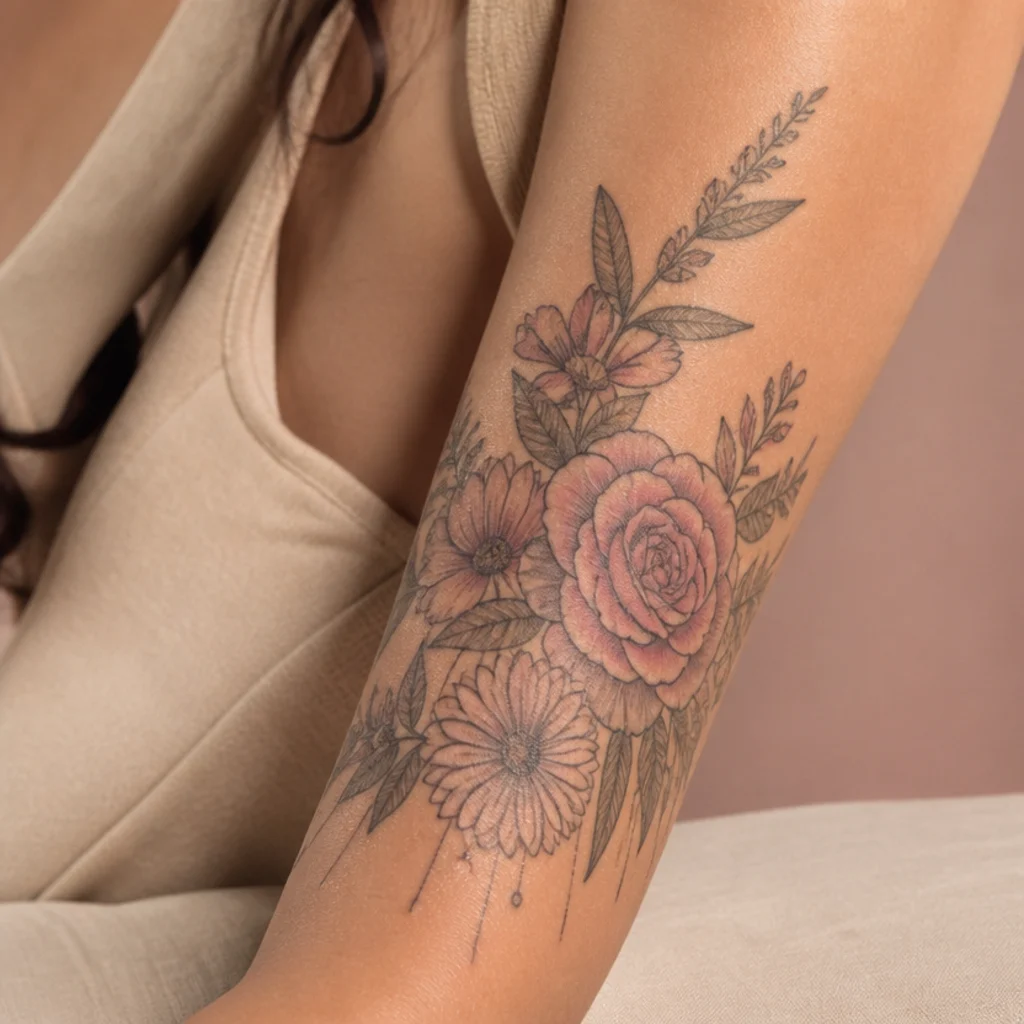
Quick Answer
- Best for: Anyone reworking dark, faded, or high-contrast ink, an outgrown name, or a healed scar they want to reframe with a design they chose.
- Who might skip it: Anyone whose original ink is still fresh (under 6 to 12 months and not fully healed), or who wants a minimal, pale, single-line tattoo over dense black; that usually needs laser fading first, not a cover-up.
- Maintenance: Healed cover-ups need daily SPF over the area and a touch-up roughly every 3 to 8 years; dense black and heavily saturated pieces hold longest, fine lines and soft color fade first.
- Difficulty: Advanced. Most cover-ups need a cover-up specialist and frequently 2 or more sessions.
- Cost: Variable. Cover-ups run higher than fresh work of the same size because of design time and saturation; small pieces sit in the low hundreds, large multi-session botanicals in the four figures. Laser fading, if needed, is billed separately per session.
- Wear time / longevity: Permanent, but legibility depends on saturation; darker, denser designs stay clean longest.
- Standout variation: Layered botanical sleeves that use leaves, blooms, and negative space to break up old outlines without reading as a patch job.
- How to ask your tattoo artist: Bring clear, flash-lit photos of the current piece and ask, "How much of this can this design realistically cover in one pass, and do we need fading first?"
In This Guide
- Small Blackwork Rose
- Watercolor Wildflower Wash
- Bold Peony Shoulder Piece
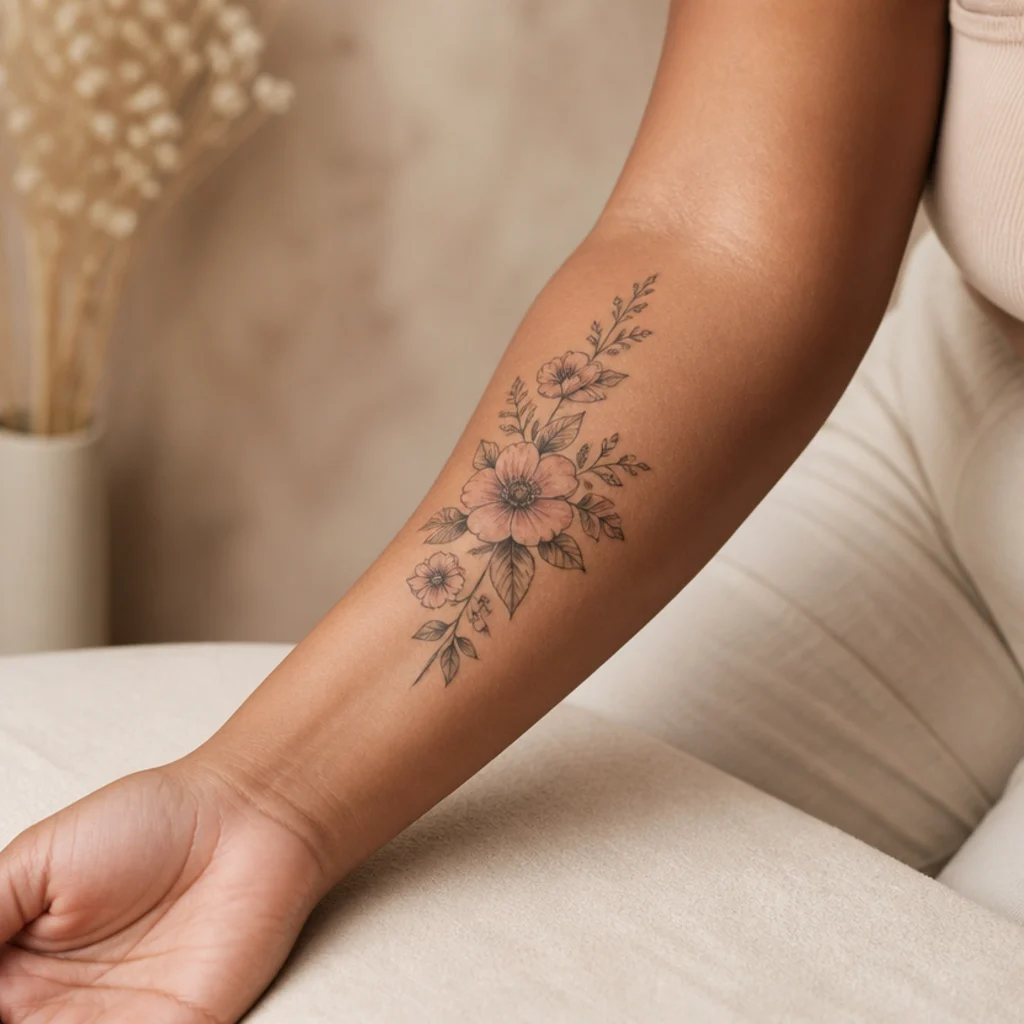
- Delicate Botanical Sprig
- Solid Black Band
- Moth and Moon Motif
- Layered Leaf Sleeve Start
- Geometric Mandala
- Name Turned Into Vine
- Ornamental Filigree Panel
- Small Butterfly Regrowth
- Dark Florals Over an Ex's Name
- Scar-Framing Fern
- Neo-Traditional Songbird
- Constellation Dot Work
- Blackout Sleeve Section
- Koi and Water Flow
- Small Crescent and Stars
- Ornate Snake Wrap
- Rose and Lace Garter Style
- Abstract Brushstroke Cover
- Hummingbird and Blooms
- Minimalist Wave Line
- Blackwork Raven Silhouette
- Chrysanthemum Cluster
- Small Heart Redesign
- Ivy Around a Scar
- Ornamental Lace Cuff
- Bold Lotus Bloom
- Full Botanical Statement
Intro
Reworking old ink is a fresh start, not a confession. One fact decides everything: a cover-up has to be darker and denser than what's underneath it, because tattoo pigment is translucent and old lines read straight through anything paler. That's why an experienced artist studies your current piece under bright, raking light before sketching anything, checking saturation, line weight, and how much black is buried in the shadows. Saturated tribal work, solid names, and old high-contrast lettering need bold botanicals, ornamental density, or laser fading first. Faint or partially removed pieces, on the other hand, open the door to small cover-up tattoos and fine-line work. Scars are a separate conversation, judged on healing and texture rather than color. This guide covers 30 directions, from blackwork and watercolor to neo-traditional, dot work, and full botanical statements, organized so you can match a style to what's actually on your skin. Treat them as a starting point, not a rulebook, and confirm design, sizing, placement, coverage feasibility, and healing with a licensed tattoo artist who can assess your tattoo or scar in person.
01Small Blackwork Rose
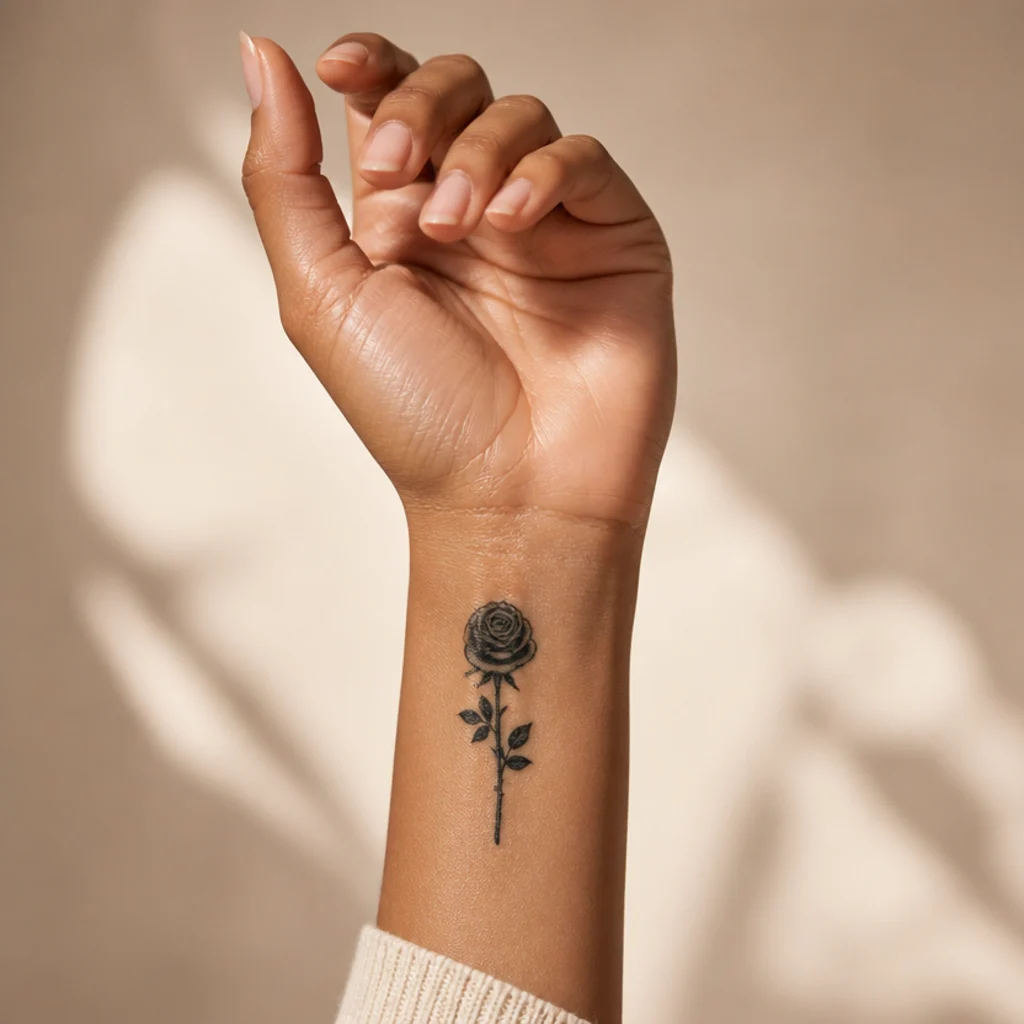
A compact blackwork rose is one of the most forgiving small cover-up tattoos, because dense, fully saturated petals hide a faded outline the way spilled ink hides a pencil mark. Go with a warm-black or blue-black pigment rather than gray wash — gray is translucent and lets old lines ghost through. Inner wrists, the outer ankle, and the back of the shoulder all work well, and the design reads evenly across skin tones since it leans on solid saturation rather than delicate shading. At 2 to 3 inches, the scale flatters slim placements where a bigger piece would crowd. Upkeep is low once healed, though the darkest petals do best with a refresh every 5 to 7 years. Pro tip: overlapping petals should fall directly over the strongest surviving lines, not beside them, so the negative space between petals never lands on old ink. Ask your tattoo artist for a "high-saturation blackwork rose sized to fully swallow the outline," and whether one pass covers it or you'll need a second saturation session.
02Watercolor Wildflower Wash
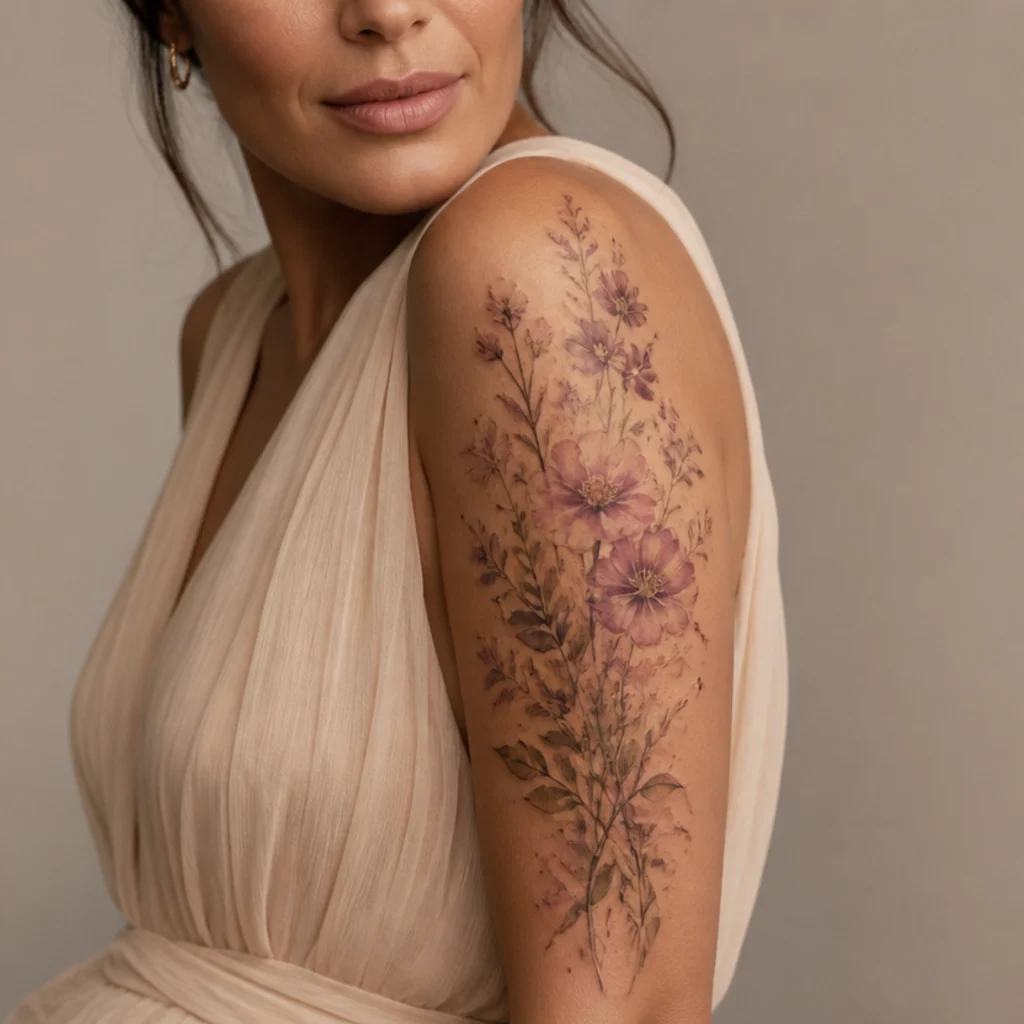
Watercolor styling trades hard outlines for translucent washes of blush, lilac, and soft violet that can dissolve the edges of a lighter, older piece. Its ceiling is real, though: pastel pigment is thin, so it works best over faded, low-saturation ink and can't mask heavy black on its own without a blackwork anchor underneath. The outer upper arm, shoulder cap, and the space below the collarbone all give color room to bleed naturally. Soft pigments sit shallow and photodegrade faster, so maintenance runs higher — daily broad-spectrum SPF is non-negotiable, and expect a color refresh sooner than you would with blackwork. Difficulty is high, since the artist has to balance real coverage against a deliberately loose finish. Pro tip: a subtle gray or blackwork stem-and-leaf skeleton laid down first gives the washes something opaque to hide behind, so the coverage does the work while the color stays airy. Ask your tattoo artist whether your existing tattoo needs that anchoring base layer before the wildflowers go over it.
03Bold Peony Shoulder Piece
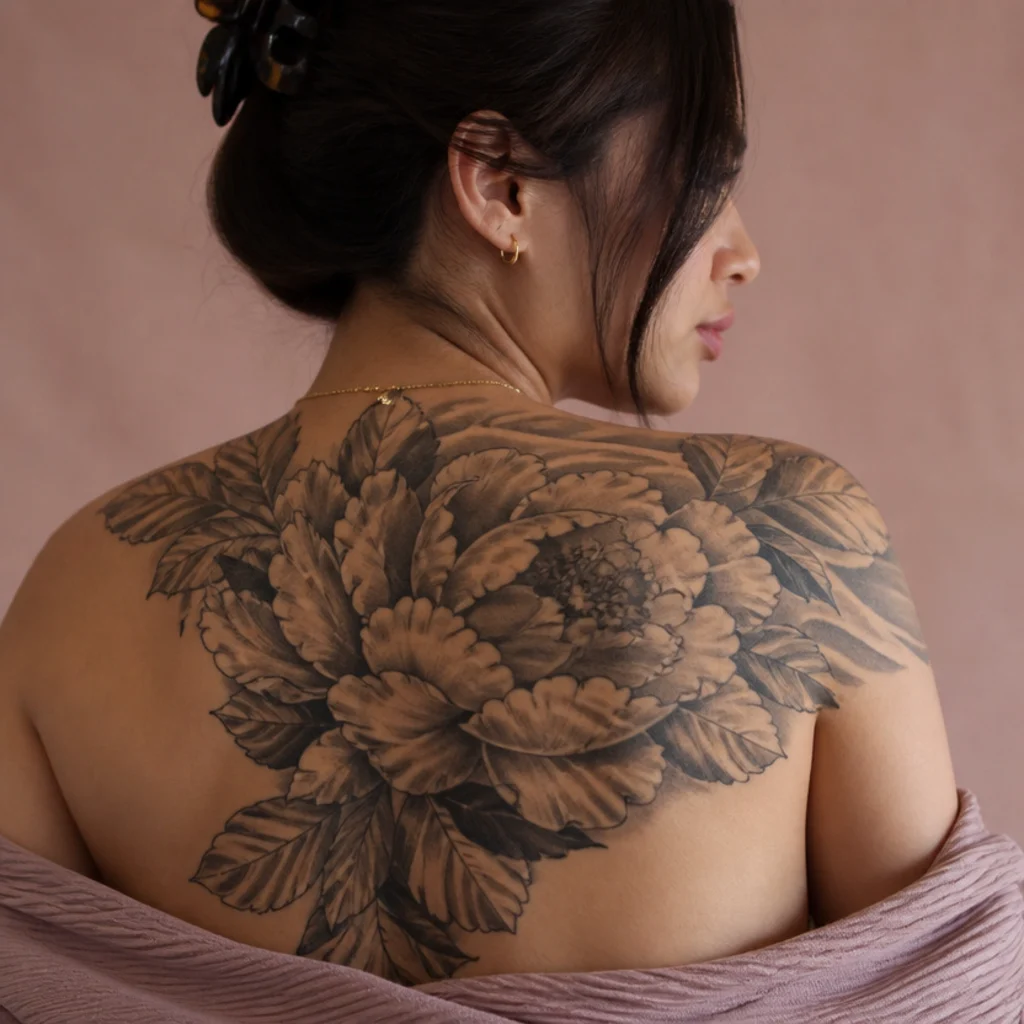
Among large cover-up tattoos, a single oversized peony is a specialist favorite: its ruffled, overlapping petals create dozens of natural shadow pockets to bury old lines inside. At 5 to 8 inches, the scale lets the artist place the deepest core shading exactly where the previous ink is strongest, then fade outward into softer petals. The shoulder cap, upper back, and outer thigh all take it well, and it reads beautifully on any skin tone once the contrast is dialed in correctly. Upkeep is moderate, and you should plan on two sessions spaced 6 to 8 weeks apart so the first pass heals before saturation is pushed further. Difficulty is advanced. Pro tip: the flower's dark center should sit off-set over the busiest area of the old tattoo rather than dead-center on your body, so the composition disguises coverage instead of announcing it. Bring a clear, flash-lit photo so your tattoo artist can map the peony's core over the most saturated zone and confirm whether a bud or leaves are needed to reach the old edges.
04Delicate Botanical Sprig
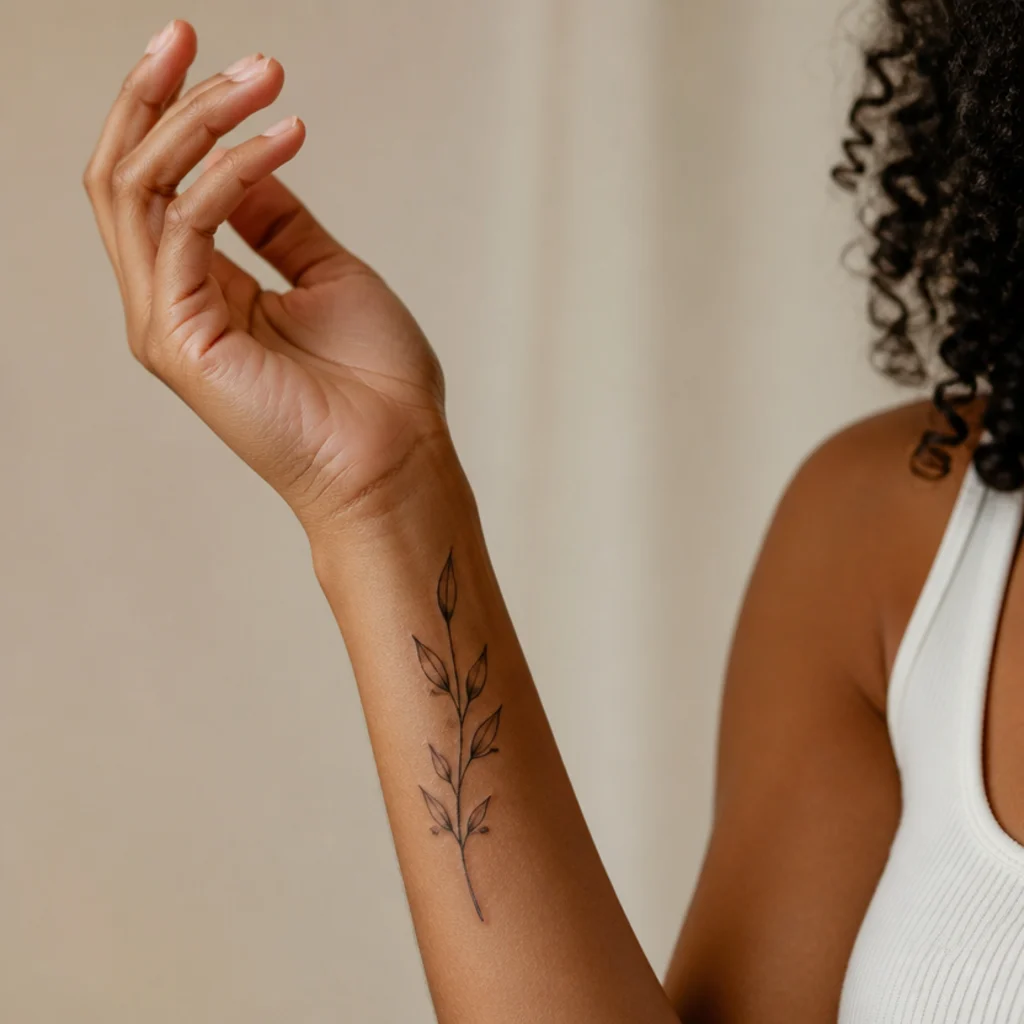
A slim botanical sprig appeals to anyone who wants small cover-up tattoos with an airy, modern feel, but it's the least concealing option here and needs the right base to work. Fine single-needle line work has almost no opacity, so it only holds up over very faint, patchy, or partially lasered ink, never over solid saturation. Inner forearms, the side of the ankle, and behind the ear are natural homes, especially on narrow limbs where a bold piece would overwhelm. Thin lines soften and spread with age, so plan on a touch-up roughly every 3 to 5 years to keep them crisp. Difficulty is deceptively moderate — the real challenge is honesty about coverage, not execution. Pro tip: negative space is the enemy of a delicate cover-up, so any gaps between leaves have to fall on clean skin, not over surviving lines. If your original tattoo is still dark, ask your tattoo artist about 2 to 4 laser fading sessions first, so a design this delicate can actually do the job instead of floating over a visible ghost.
05Solid Black Band
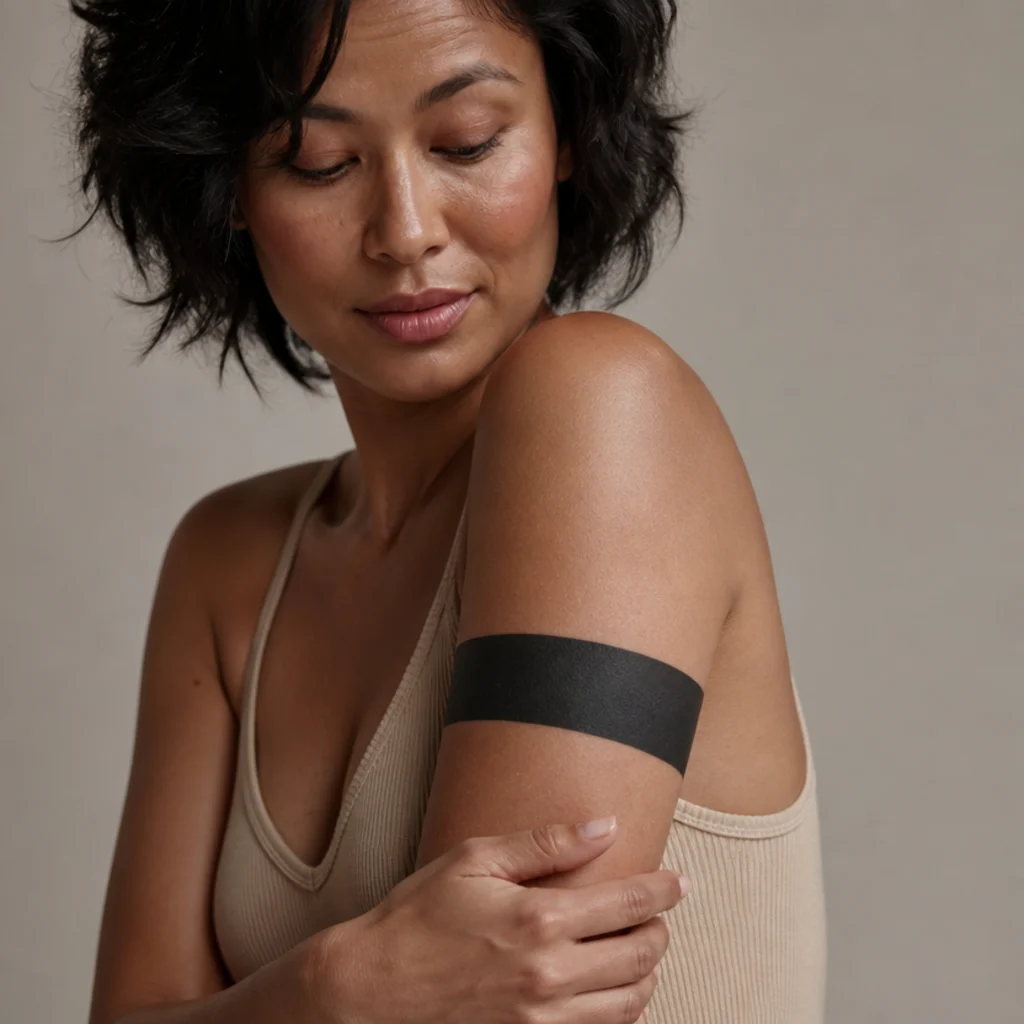
A solid black band is the most reliable way to fully conceal stubborn ink, and it's why the technique anchors so many black cover-up tattoos. The uniform fill erases old outlines completely, which makes it the go-to for names, tribal work, and dense saturated pieces where nothing translucent stands a chance. Good spots include the upper arm, wrist, above the ankle, and around the calf, and it stays sharp for years with minimal care once the skin heals evenly. Difficulty is straightforward for a skilled artist, though flawless solid black takes patience and often a second pass to close any healing gaps. Pro tip: the band has to be a touch wider than the old design on every edge, because a name peeking past a black border is far more obvious than no band at all. Ask your tattoo artist whether your skin tone will read the fill as true black or slightly warm, how wide it needs to be for full coverage, and whether a subtle sheen or negative-space detail can be added later once it settles.
Save this to Pinterest to keep your favorite cover-up directions in one place.
06Moth and Moon Motif
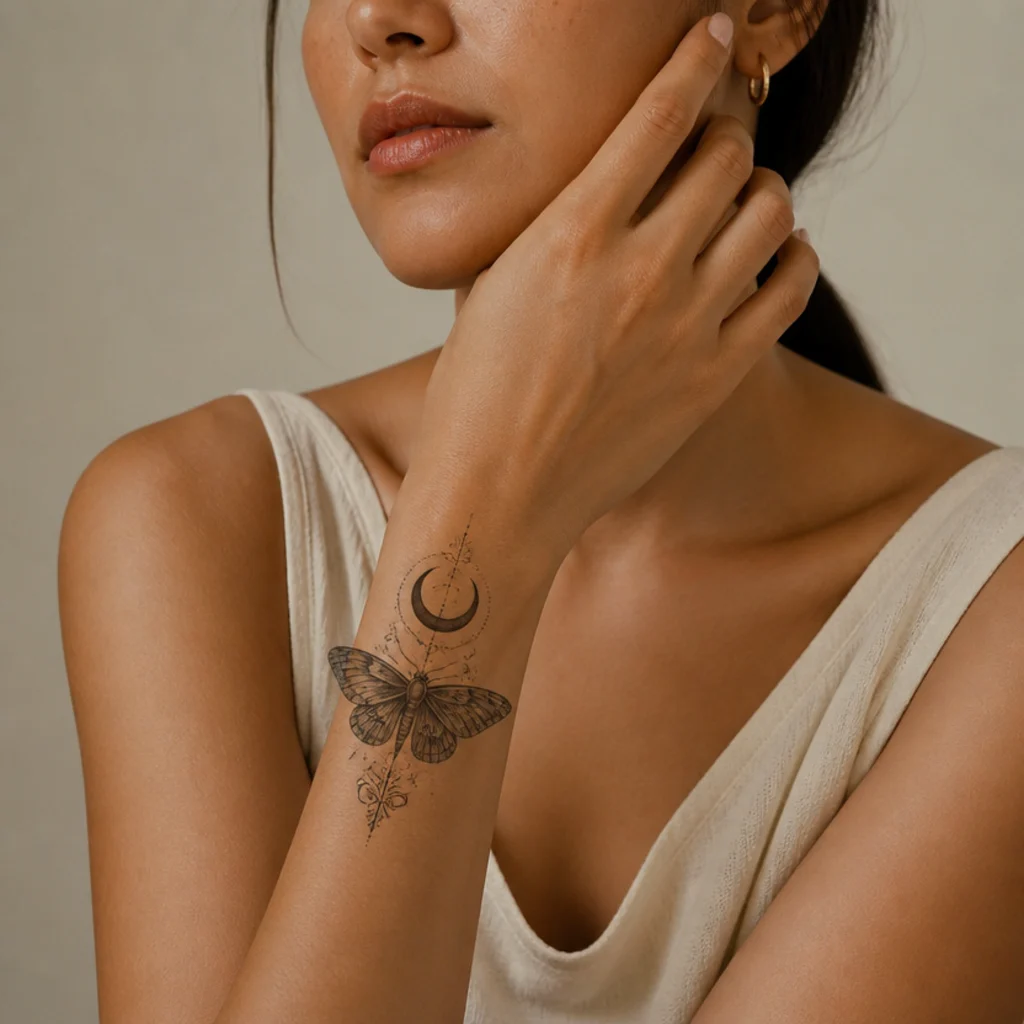
A moth paired with a crescent moon delivers the rich, busy texture that disguises older work, because the eye reads pattern before it reads a buried outline. The wings carry stippled and smooth-shaded detail that can be routed around and over existing lines, while the filled moon adds a saturated anchor point. The center forearm, sternum, and calf all give the symmetrical shape room to sit upright. Maintenance is moderate, with the finest wing veining wanting an occasional refresh. Difficulty is advanced, since the symmetry has to feel intentional over an uneven, asymmetrical base. Pro tip: place the moth's dense thorax and inner wing shading over the darkest surviving section, and let the lighter wing tips fall on cleaner skin, so saturation matches what it needs to hide. Ask your tattoo artist how the wing pattern can be positioned over the strongest part of your current tattoo and whether the moon should be enlarged to swallow a stubborn corner.
07Layered Leaf Sleeve Start
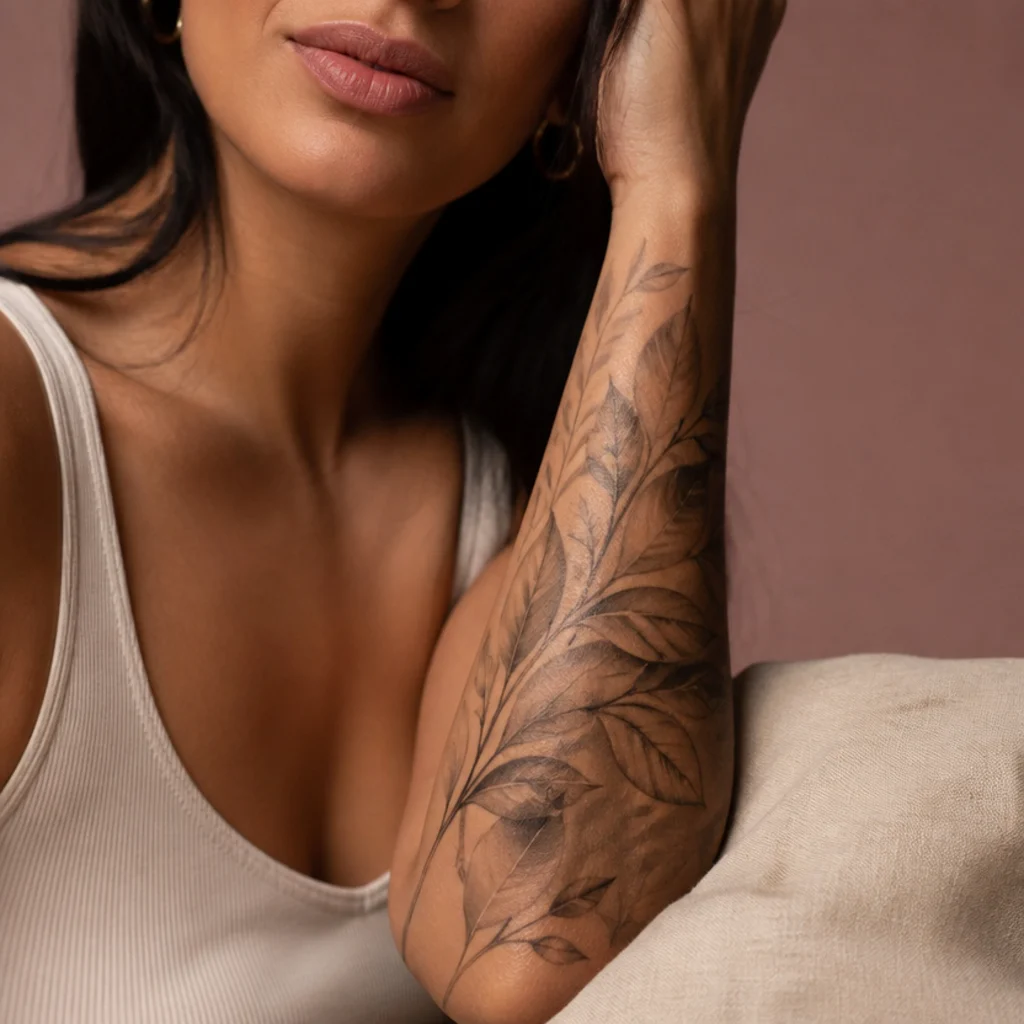
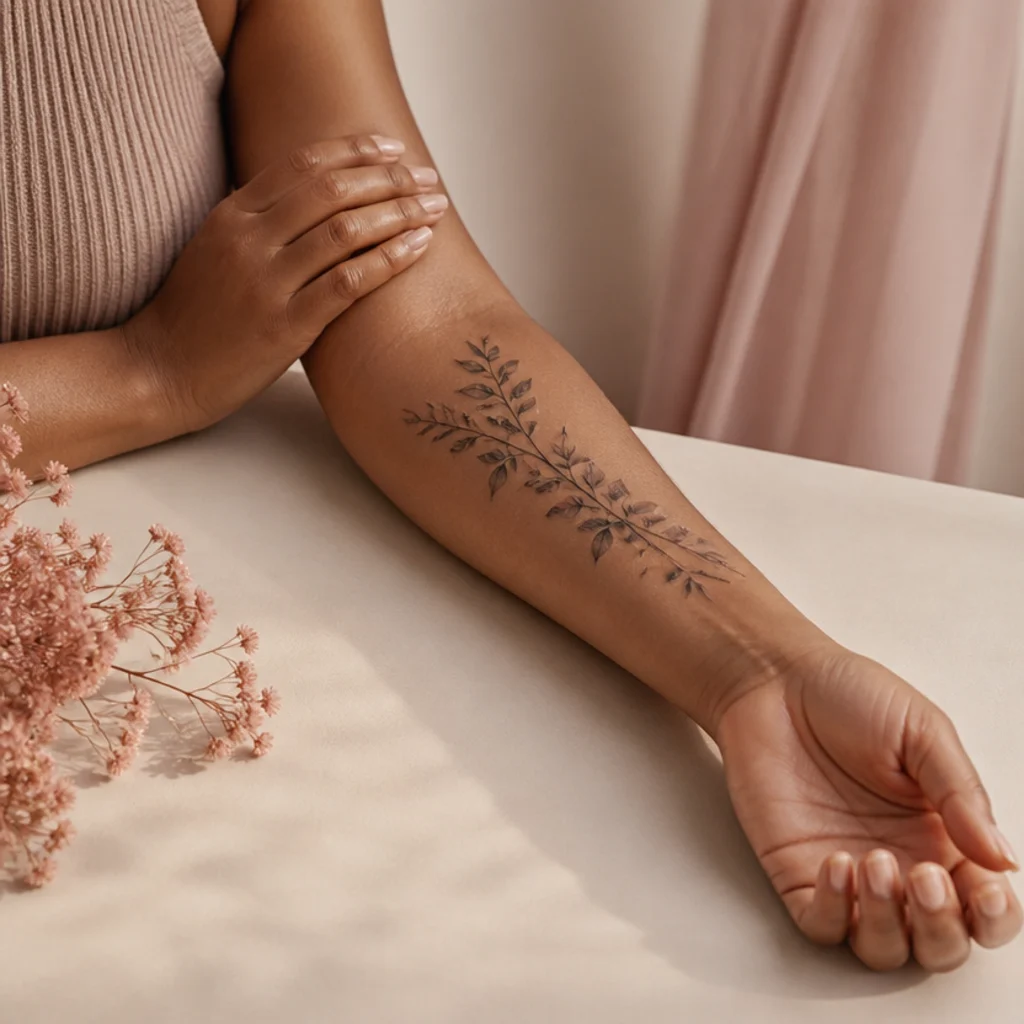
Overlapping leaves and branches make a smart foundation if you're thinking about larger cover-up tattoos or a future sleeve, because greenery uses depth and layering to break an old outline into scattered fragments the eye can't reassemble. Vary the leaf species — fern, olive, eucalyptus — so the shapes feel organic rather than repetitive, and let darker leaves sit in front over the busiest zones. The forearm and outer upper arm work best here, since the piece is meant to grow section by section over time. Upkeep is moderate; green and warm-black tones may want a touch-up every 5 to 7 years. Difficulty is advanced given the planning needed to keep flow consistent across future add-ons. Pro tip: photograph the piece after this first session so a later artist can match leaf direction and value when extending it. Ask your tattoo artist to plan a leaf base that covers now while leaving natural entry points to expand the sleeve later without fighting the original ink.
08Geometric Mandala
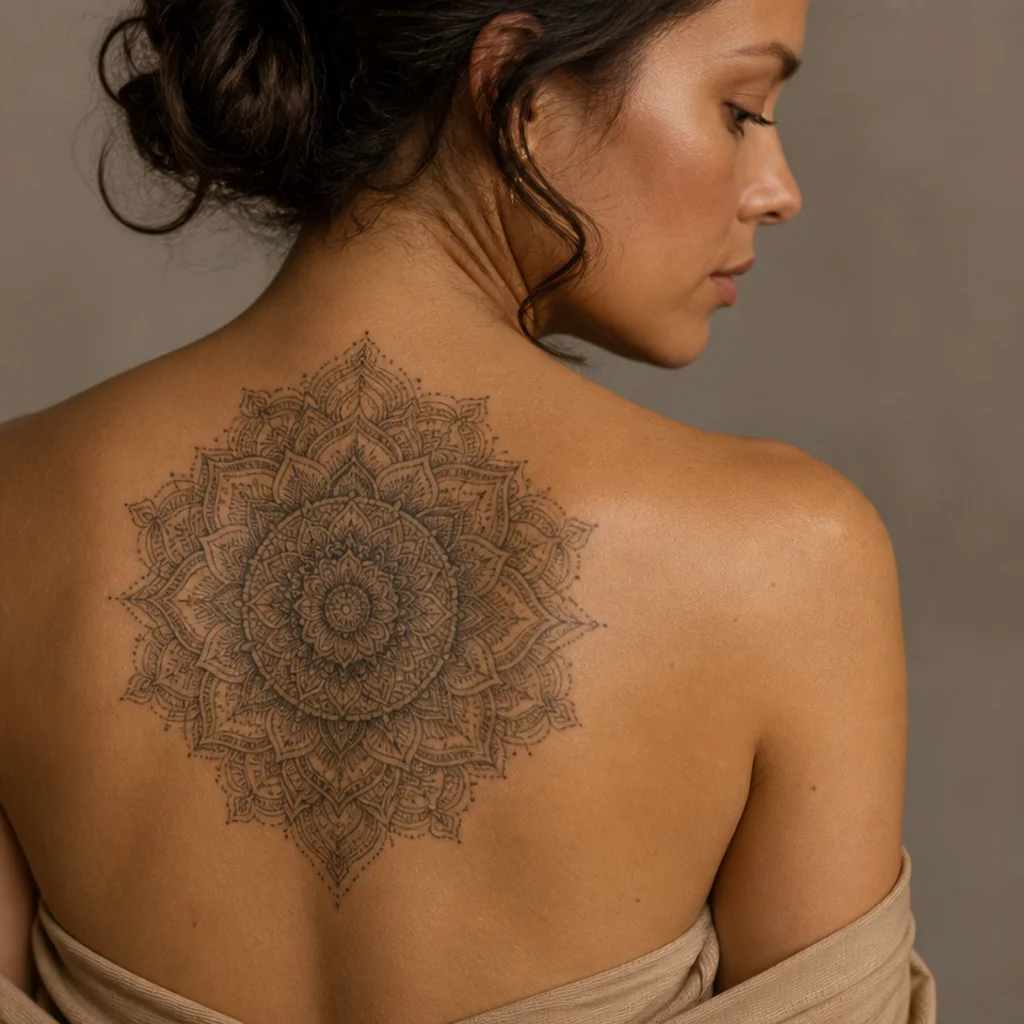
A mandala's dense, repeating symmetry is a proven cover-up tool: layered geometry and heavy dot work fill negative space and camouflage what sits beneath through sheer visual busyness. The shoulder blade, center forearm, and outer thigh all suit it, and the radial balance flatters rounded body contours. Maintenance is low to moderate once healed, though tightly packed dot work can blur if it's placed too closely, so an experienced hand matters here. Difficulty is high, because true symmetry over an uneven, off-center base takes careful stencil mapping. Pro tip: the mandala's dense center should land over the most saturated part of the old tattoo, with the pattern radiating outward and typically running larger than you first pictured, so it fully clears the old edges. Ask your tattoo artist how big the design needs to be for complete coverage, and whether the outermost ring should carry extra weight to hide anything reaching past the original outline.
09Name Turned Into Vine
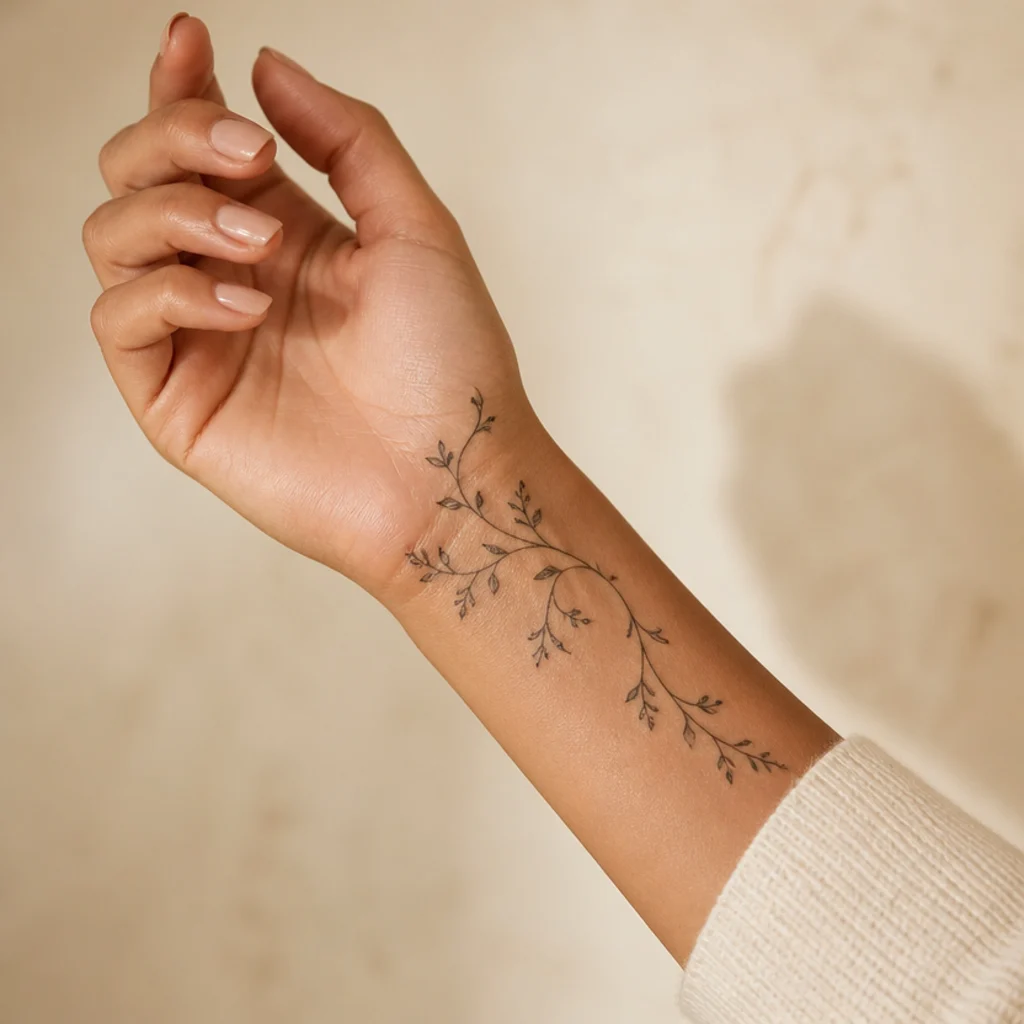
Reworking lettering is one of the most requested name cover-up tattoos, and a trailing vine is the most graceful solution, since its curves can trace and absorb the strokes of the old letters, turning uprights into stems and dots into buds. Names are stubborn, though: letterforms are high-contrast and instantly recognizable, so the vine usually needs added leaf clusters and soft shading over the letter bodies to break up their silhouettes. The wrist, inner forearm, and collarbone all suit a linear design like this. Upkeep is moderate, especially for fine leaf tips. Difficulty is high. Pro tip: ascenders and crossbars — the tall lines of letters like T, H, and L — are the hardest to hide, so those should sit under the densest leaves or a bud, never in open vine gaps. Ask your tattoo artist to be honest about whether the name can be fully absorbed, or whether light shading or a few laser sessions are needed so the original text never peeks through.
10Ornamental Filigree Panel
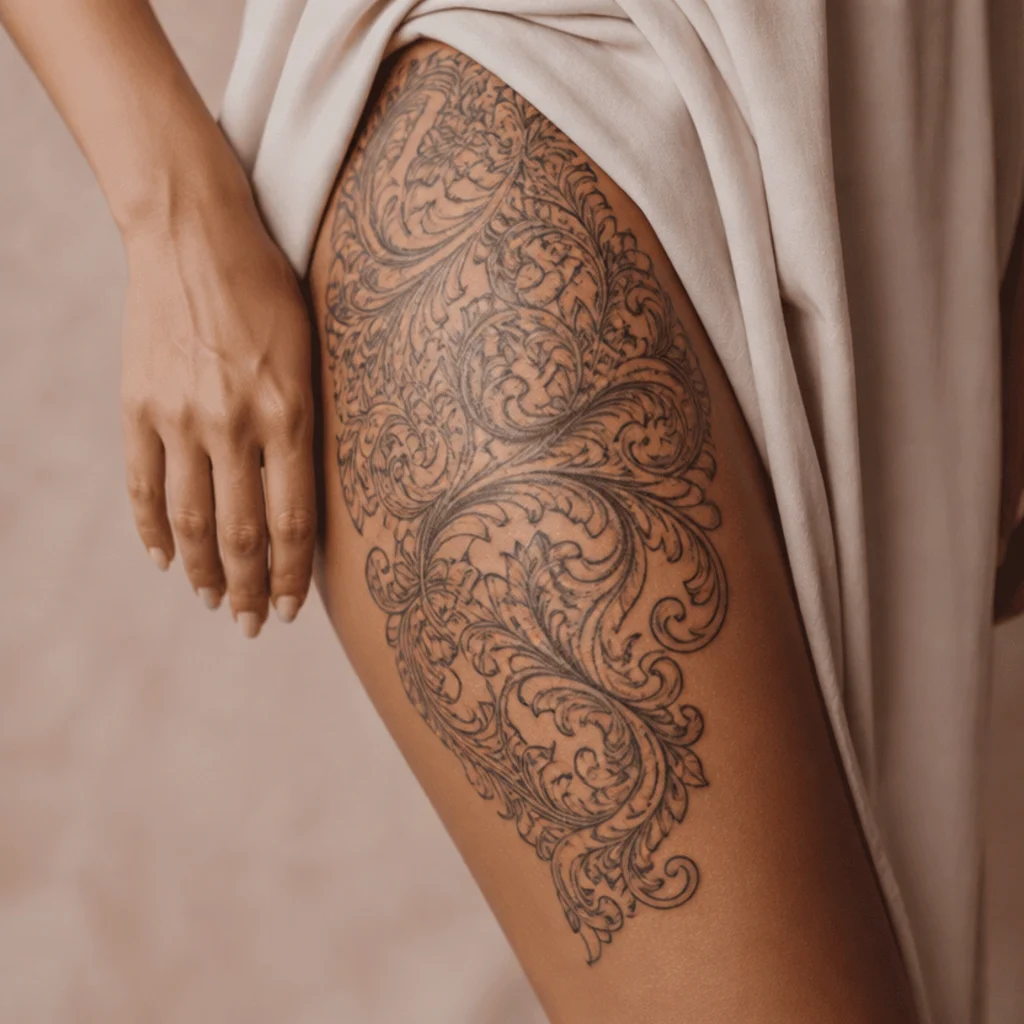
Ornamental filigree — swirls, scrollwork, lace-like flourishes — gives an artist endless places to route decorative movement over old lines while looking deliberately elegant rather than corrective. The density and depth of black make it effective over darker ink, which is why it turns up in so many black cover-up tattoos. The outer thigh, spine, and forearm all work, letting an elongated panel follow the body's line. Maintenance is moderate, since fine scrollwork can soften over the years. Difficulty is advanced given the precision the mirrored pattern demands. Pro tip: the heaviest scroll junctions and solid teardrops should sit directly over the strongest surviving lines, using the pattern's natural high-contrast points as coverage rather than fighting them. Ask your tattoo artist how the flourishes can be routed over the most saturated zones, and whether the panel should extend slightly beyond the old edges so the finish reads as one intentional piece.
Save this to Pinterest and build your consultation mood board as you scroll.
11Small Butterfly Regrowth
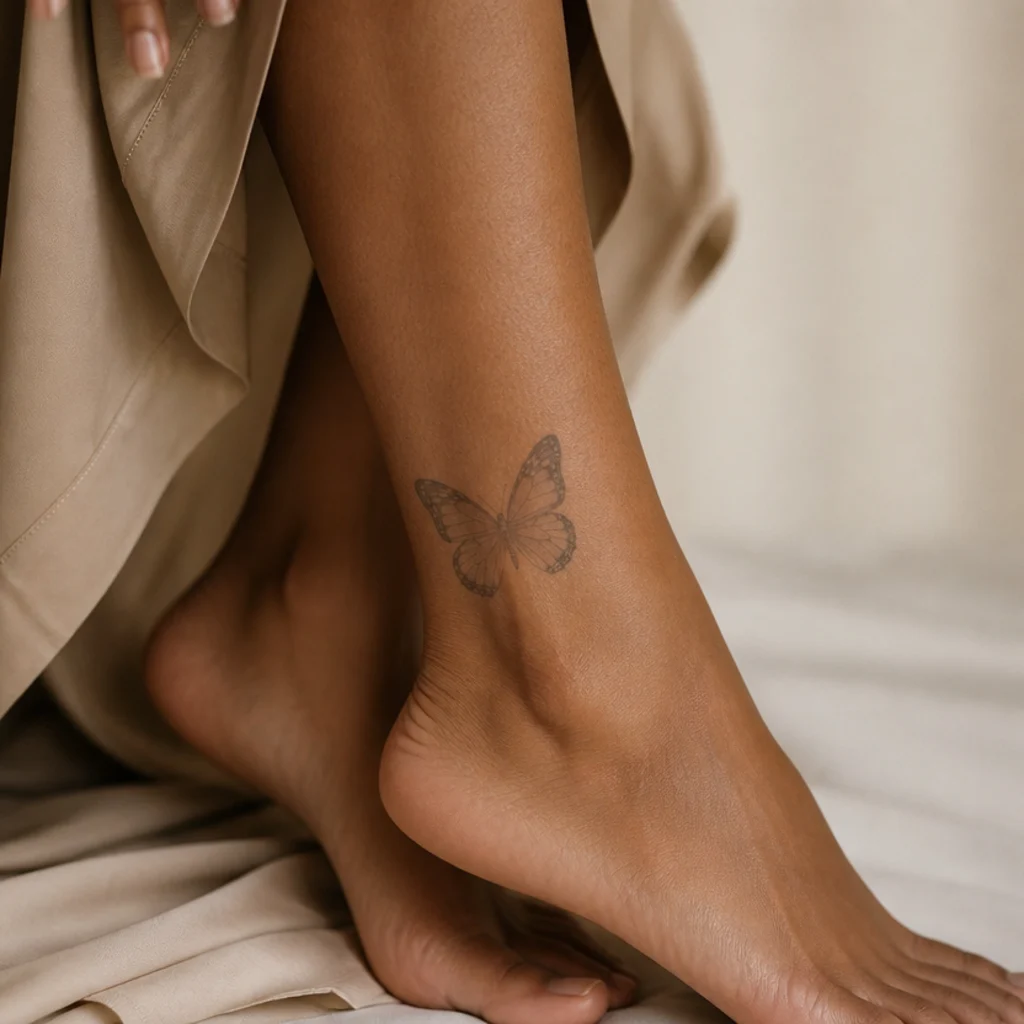
A small butterfly carries a quiet sense of change, which makes it a meaningful pick among small cover-up tattoos, and its two symmetrical wings give more shaded surface area than most compact designs of the same footprint. The ankle, shoulder cap, and back of the neck all suit it, and it complements any skin tone once the contrast is balanced right. Because the wings can hold anything from soft gray to dense black, it flexes to match what it covers: pale ink takes light shading, a stubborn dark spot needs a saturated wing over it. Upkeep is moderate, with fine wing detail wanting occasional care. Difficulty is moderate. Pro tip: butterflies fool the eye because the two wings don't need to match in value, so weight the wing that falls over the old ink darker and let the other stay soft — most viewers never notice. If your original is small but dark, ask your tattoo artist whether the butterfly needs heavier wing saturation or a slightly larger span to cover it fully rather than partly.
12Dark Florals Over an Ex's Name
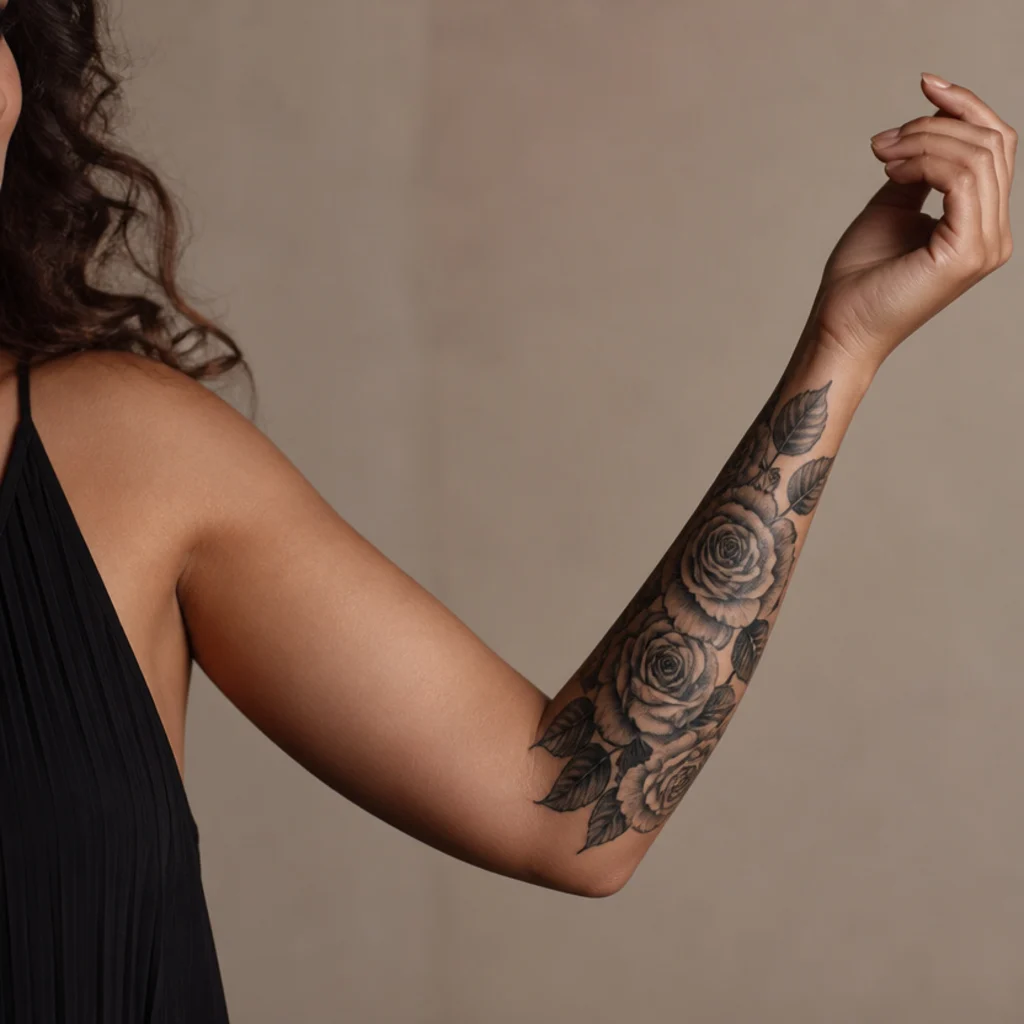
Dense, dark florals are the classic answer for name cover-up tattoos, and few things feel better than routing deep roses and leaves over an ex's name you're ready to close the book on. Clustered blooms in heavy shading sit over the letters and absorb their strokes inside petals, shadow, and negative-space leaves. The inner forearm, ribs, and shoulder all work, since a horizontal cluster matches the shape of most tattooed names. Maintenance is moderate, and the darkest blooms hold saturation longest. Difficulty is advanced, because lettering resists coverage. Pro tip: a name almost always needs a design roughly one and a half times its length, so the florals can spill past both ends — otherwise the first and last letters tend to escape at the edges. Ask your tattoo artist how many blooms it takes to fully break up the text, and whether a leaf or bud should anchor specifically over the tallest, most legible letters.
13Scar-Framing Fern
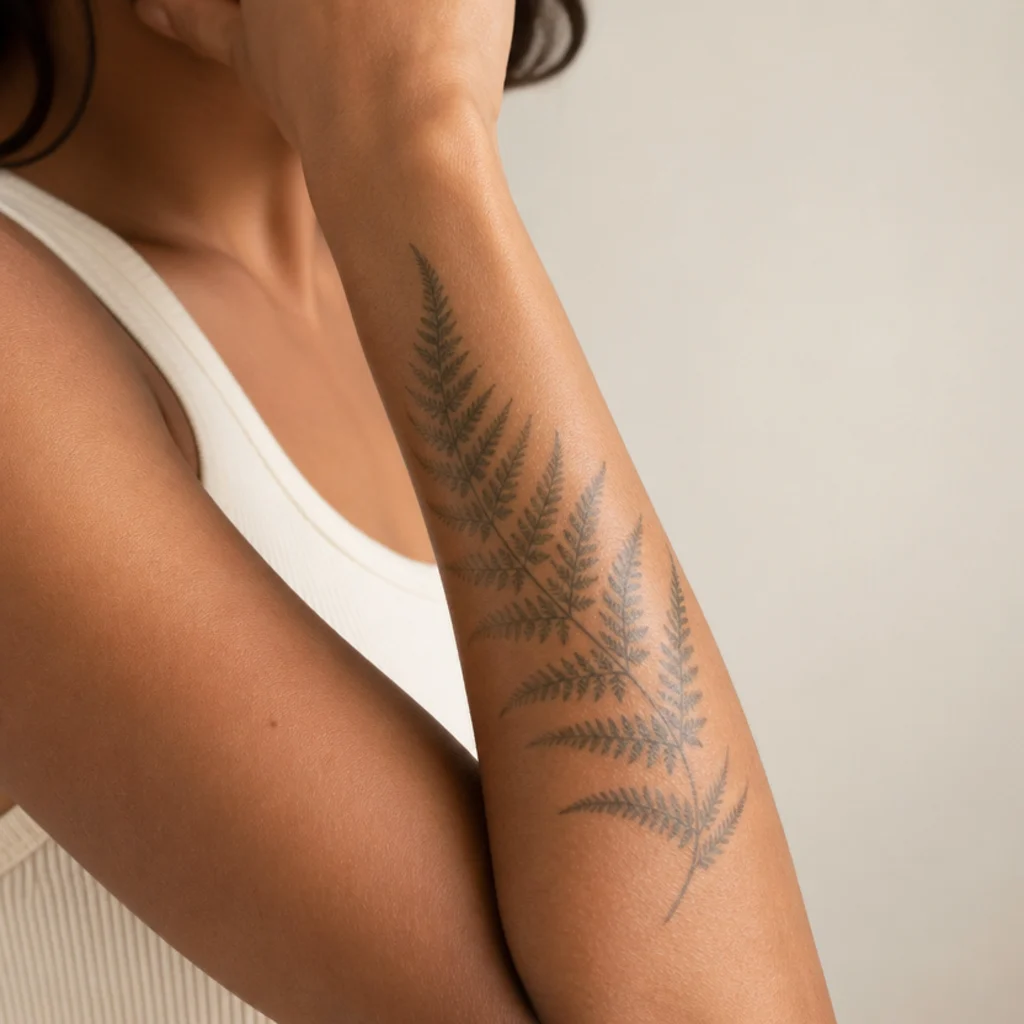
A delicate fern that arcs alongside a mark is a gentle option among scar cover-up tattoos, working with the scar rather than against it. Instead of trying to paint over raised or shiny tissue, the fronds frame the area and pull the eye into the design — reframing, not erasing. The forearm, calf, and upper arm give a long, curving frond room to travel. Scarred skin holds pigment unpredictably, sometimes blowing out, sometimes rejecting ink, so upkeep varies and touch-ups are common. Difficulty is high, since every scar behaves differently. Pro tip: routing the fronds beside and across the scar's edges, rather than saturating directly on the toughest tissue, gives the most reliable, even-healing result. Professional judgment matters most here: a licensed tattoo artist must assess whether your scar is fully healed, flat, and suitable for tattooing, usually at least 12 to 18 months old. No design can be promised to fully hide a scar, so approach it as reframing rather than covering.
14Neo-Traditional Songbird
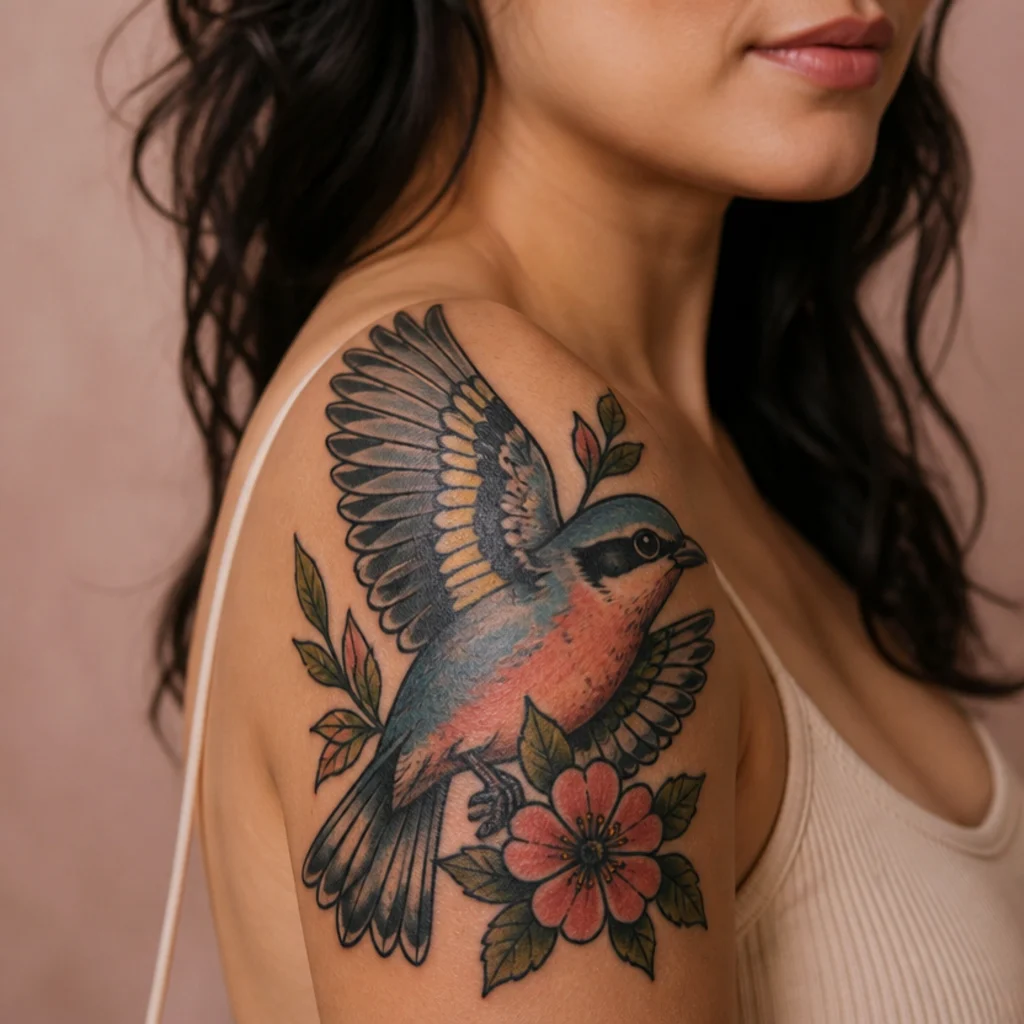
Neo-traditional work is built for cover-ups: its confident, weighted outlines and richly saturated color both carry the opacity needed to bury older ink. A songbird mid-flight brings movement and a strong, readable silhouette that can be shaped to trace over an existing design. The shoulder cap, upper arm, and thigh all give the bird's diagonal energy room to move. Maintenance is moderate, with color occasionally wanting a refresh, and jewel tones like teal, plum, and deep crimson hold up better over old ink than pastels do. Difficulty is advanced. Pro tip: the bold black keyline that defines neo-traditional work should be routed directly along the strongest surviving lines, doing double duty as style and coverage, while saturated body color fills the interior. Ask your tattoo artist how the outline can be positioned over your current tattoo's darkest lines, and whether the palette needs to lean deeper than usual to guarantee the old piece stays hidden beneath.
15Constellation Dot Work
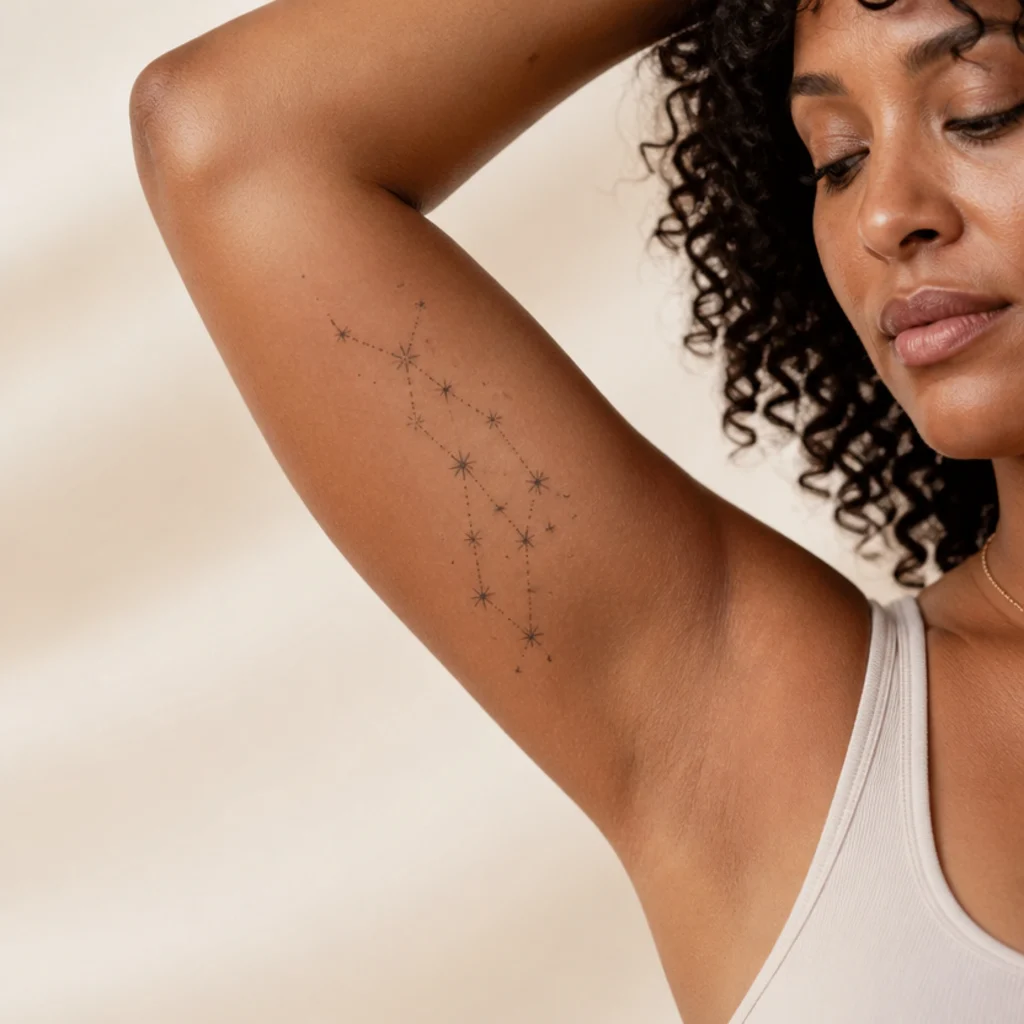
Scattered stars linked by fine lines feel modern and personal, but light dot work is among the least opaque options here, so it belongs firmly in the small cover-up tattoo category, and only for very pale or partially lasered ink. Isolated dots and thin connectors can't mask heavy saturation, and pretending otherwise just leaves a visible ghost beneath the stars. The inner arm, ankle, and behind the shoulder all suit a scattered, drifting layout like this. Upkeep is moderate, since fine single points can soften and blur over time if they're placed too shallow. Difficulty is moderate in execution, higher in honest assessment. Pro tip: a slightly heavier, filled star can be dropped precisely over the one stubborn spot that survives, disguising it as the constellation's brightest point. If your original tattoo is still clearly visible, ask your tattoo artist whether a few laser fading sessions first would let a constellation read cleanly instead of competing with what's underneath.
Save this to Pinterest so these ideas are handy when you book.
16Blackout Sleeve Section
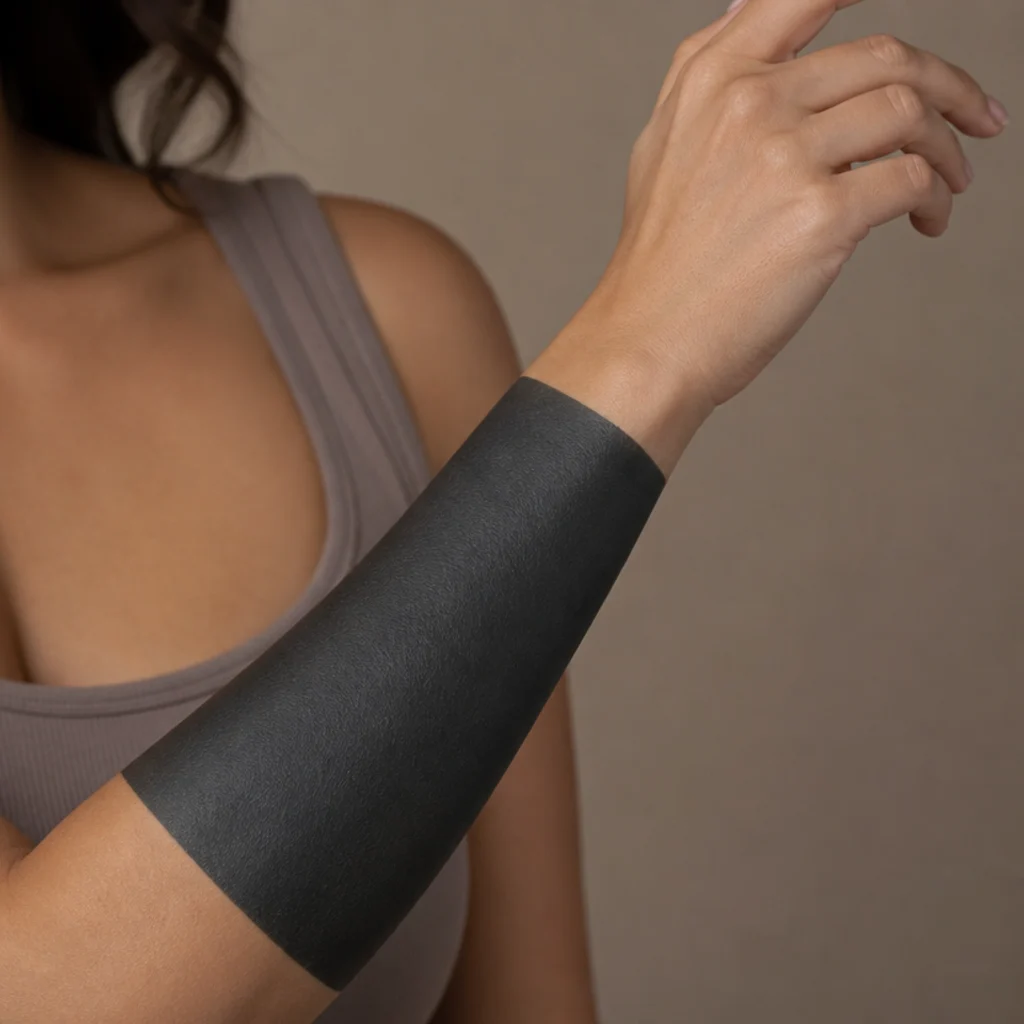
Blackout work floods an area with solid, saturated black and is the most complete of all black cover-up tattoos, capable of concealing even the densest, most stubborn old designs that nothing else would touch. It reads as a bold, graphic, intentional statement and can be softened later with negative-space or white-over-black work once it's fully healed. The forearm, upper arm, and calf all take it well, especially paired with a clean, defined border. Maintenance is low once it's settled, but the process demands patient aftercare, since large solid fills stress the skin and heal in stages. Difficulty is advanced and almost always spans multiple sessions to reach true, even opacity. Pro tip: blackout is essentially permanent and very hard to reverse or lighten with laser, so commit only when you're certain, and let each pass heal fully before the next. Ask your tattoo artist how your skin tone will carry a large solid field, how many sessions full opacity realistically takes, and whether a soft or hard edge suits your placement.
17Koi and Water Flow
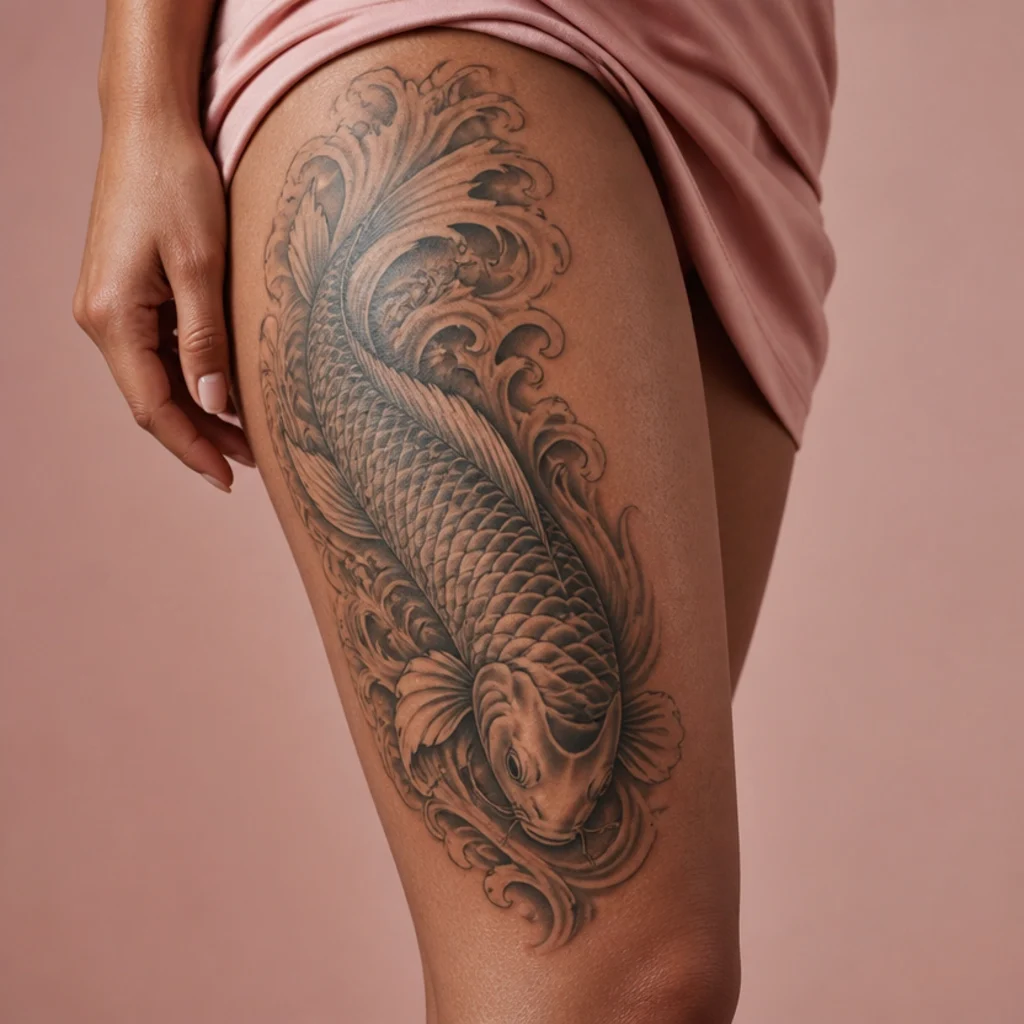
A koi surrounded by moving water is a strong candidate for large cover-up tattoos because the swirling current is functional as well as decorative: it gives the artist a flexible field of shading to route around and over old lines while the fish anchors the eye. Splashes, foam, and finger-wave patterns can be darkened selectively wherever coverage is needed. The outer thigh, calf, and upper arm all work, letting the composition's natural diagonal flow follow the limb. Maintenance is moderate. Difficulty is advanced given the flow, shading gradients, and detail involved. Pro tip: the densest whitecaps and dark water troughs should be plotted over the busiest parts of the old tattoo, so the current does double duty as camouflage while the koi stays a clean visual anchor. Ask your tattoo artist how the water can be shaped over the most saturated zone of your existing tattoo, and whether the composition should extend past the original edges so it blends in cleanly.
18Small Crescent and Stars
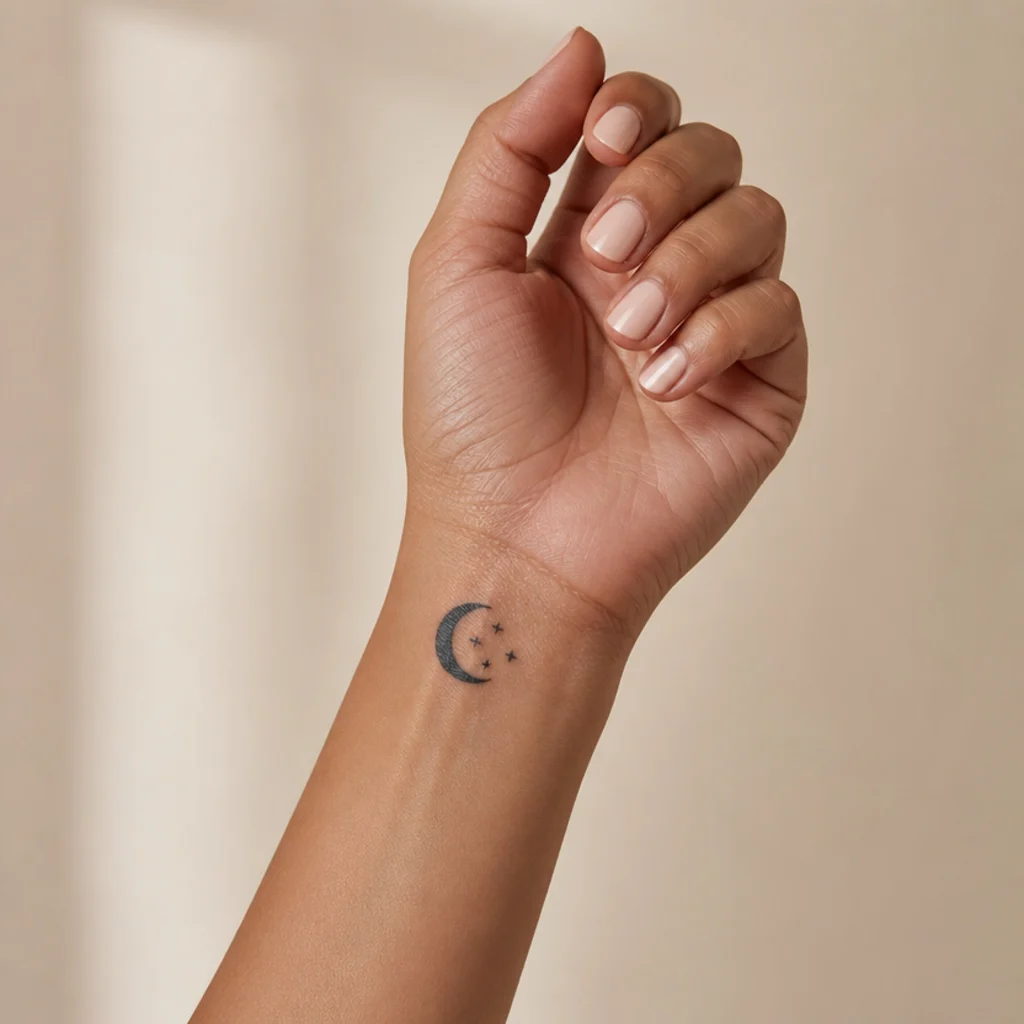
A small crescent moon with a scatter of stars is a subtle, understated refresh among small cover-up tattoos. The key piece is the filled crescent, which offers a pocket of solid ink to cover a modest old design, while the surrounding stars balance the composition and pull the eye away. The wrist, behind the ear, and the collarbone all suit it, and it flatters any skin tone. Upkeep is low to moderate. Difficulty is moderate. Pro tip: the crescent has to be fully saturated, not a thin outline, and positioned so its solid body — not the open inner curve — lands over the old ink, or the design's own negative space will expose what you're trying to cover. If your original is compact but bold, ask your tattoo artist whether the crescent needs to run slightly larger and fully filled to swallow it entirely rather than leaving faint edges peeking past the moon.
19Ornate Snake Wrap
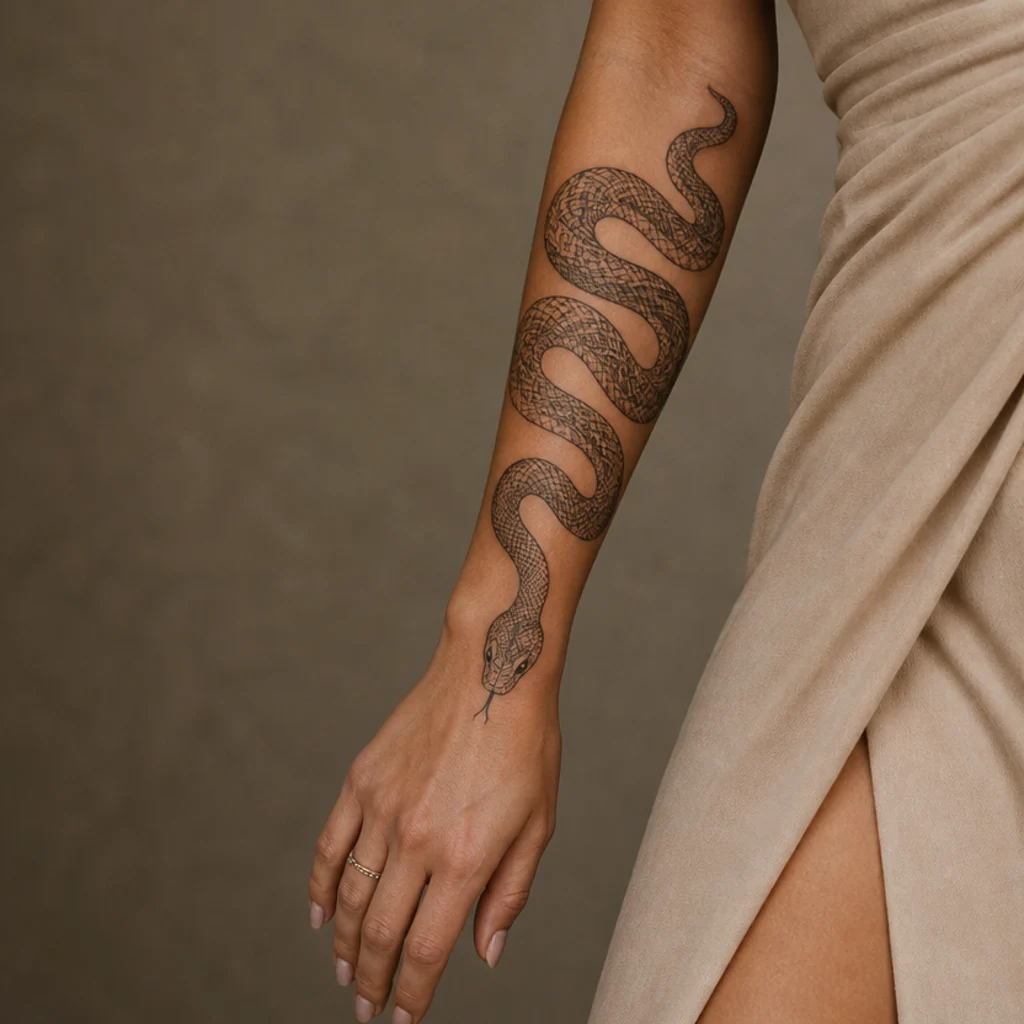
A snake's long, winding body is one of the most naturally suited shapes for cover-ups, because it can follow and trace existing lines as it wraps a limb, absorbing them into its form. Detailed, overlapping scales add texture that hides old ink within the pattern, and the tail and head give flexible end points to extend coverage further. The forearm, calf, and thigh all give the body length to coil. Maintenance is moderate, with fine scale detail wanting occasional care. Difficulty is advanced. Pro tip: route the snake so its widest, most saturated mid-body sections sit over the darkest surviving areas, and darken the scales specifically in those spots, using the body's natural rhythm to disguise where the real coverage is happening. Ask your tattoo artist how the snake's path can be plotted over the strongest parts of your current tattoo, and whether the belly or head should be enlarged to reach a stubborn edge.
20Rose and Lace Garter Style
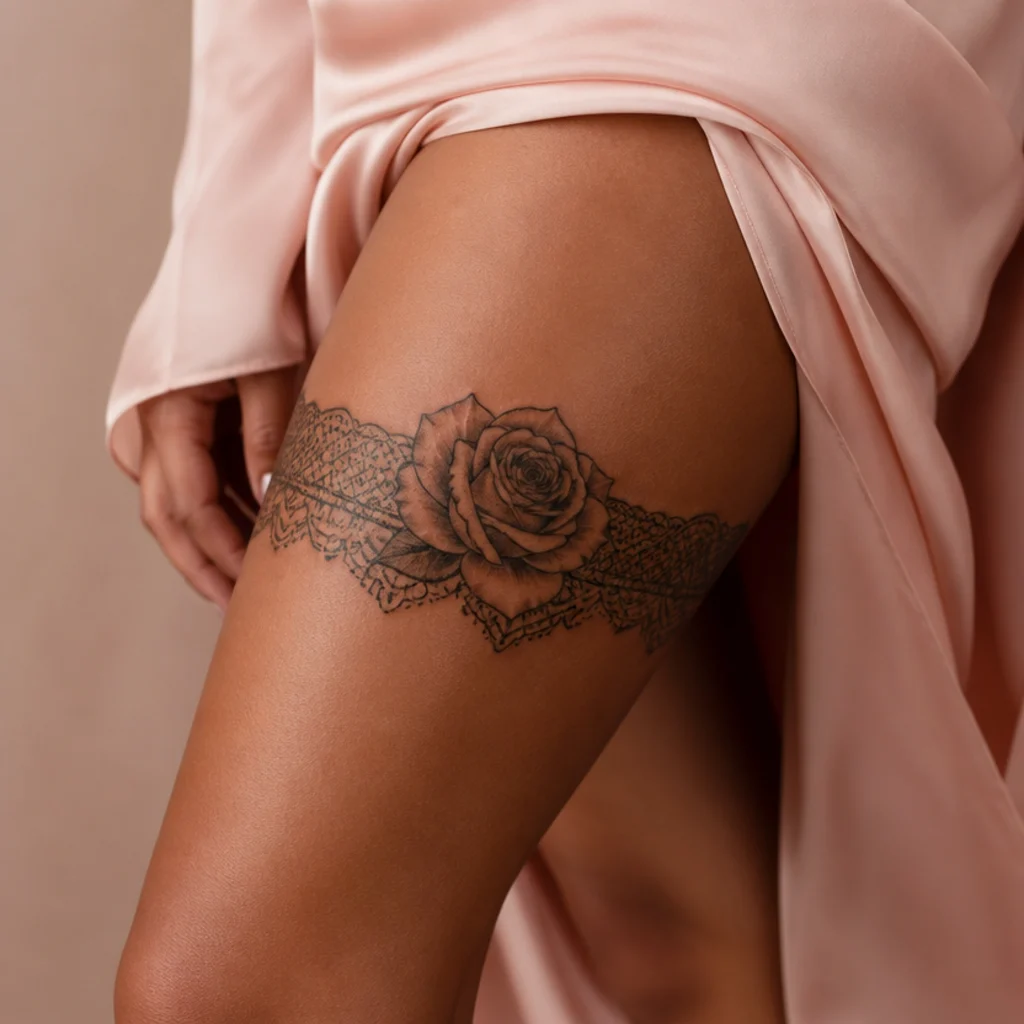
A rose paired with lace detailing, wrapped garter-style around the thigh, blends soft romance with real functional density. The intricate lace pattern is excellent at masking old lines within its repeating texture, while the rose provides a saturated anchor point. The thigh, upper arm, and calf all let a wrapping band follow the limb's curve. Maintenance is moderate, particularly for the fine lace, which can blur if it's packed too tightly. Difficulty is advanced. Pro tip: position the solid rose over the single most saturated part of the old ink, and let the lace — with its scalloped edges and small solid motifs — carry coverage across the rest, adding a few extra lace beads or a ribbon wherever a stubborn line needs hiding. Ask your tattoo artist whether the band should wrap fully around the limb, since a garter that stops short can leave the original piece exposed at the sides.
Save this to Pinterest and revisit your top picks before your appointment.
21Abstract Brushstroke Cover
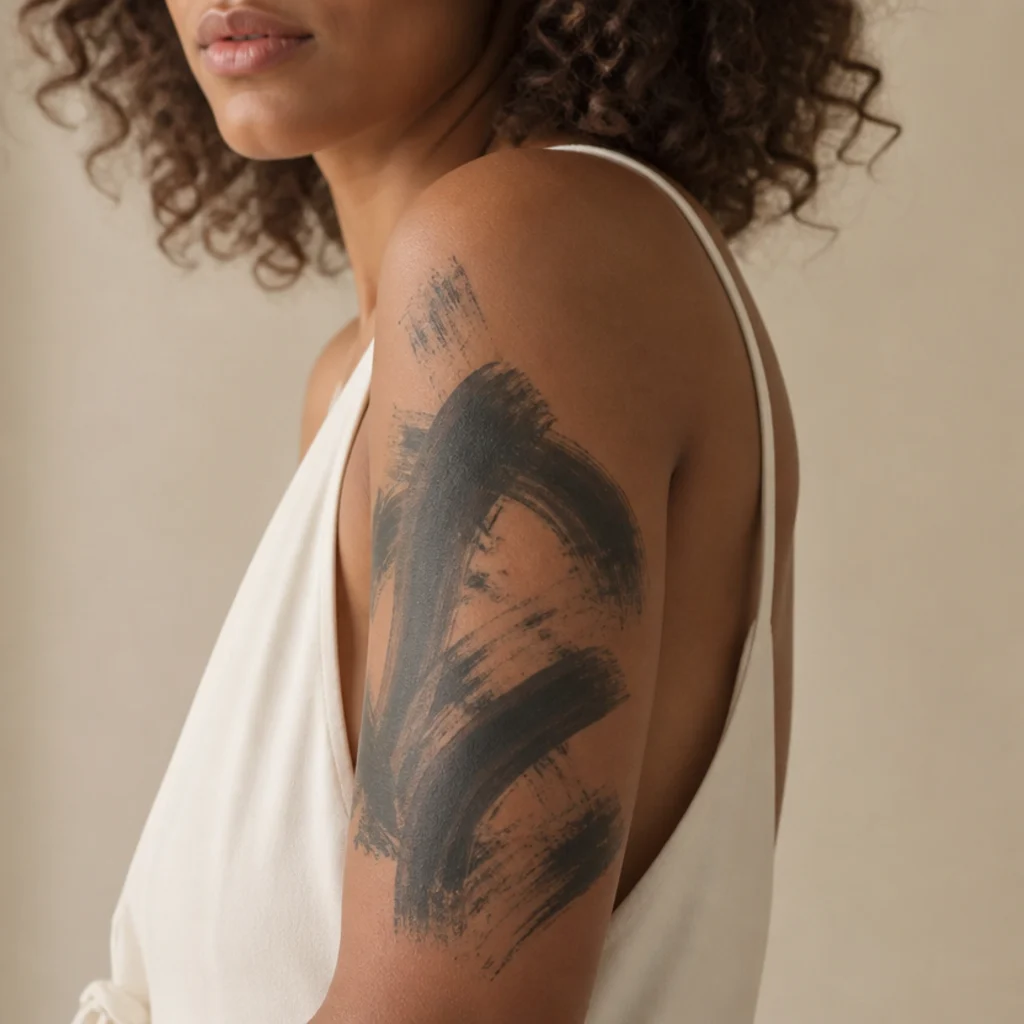
Abstract brushstrokes bring an artistic, painterly feel while doing real cover-up work, since bold, saturated sweeps of black sit over old designs and read as intentional art rather than a patch job. The loose, gestural texture — frayed edges, dry-brush drag, layered strokes — disguises coverage as style. The upper arm, forearm, and shoulder all give a diagonal or vertical sweep room to move. Maintenance is low to moderate, since large black areas hold well. Difficulty is high, because balancing an intentionally loose look against full, gapless coverage takes real experience. Pro tip: the danger zone is the negative space between strokes, so the composition needs every gap to fall on clean skin while the solid strokes blanket the old ink; a splatter or fine-line accent can bridge any spot that would otherwise show through. Ask your tattoo artist how the strokes can be arranged to conceal the darkest parts of your current tattoo, and where extra density is needed so nothing shows through.
22Hummingbird and Blooms
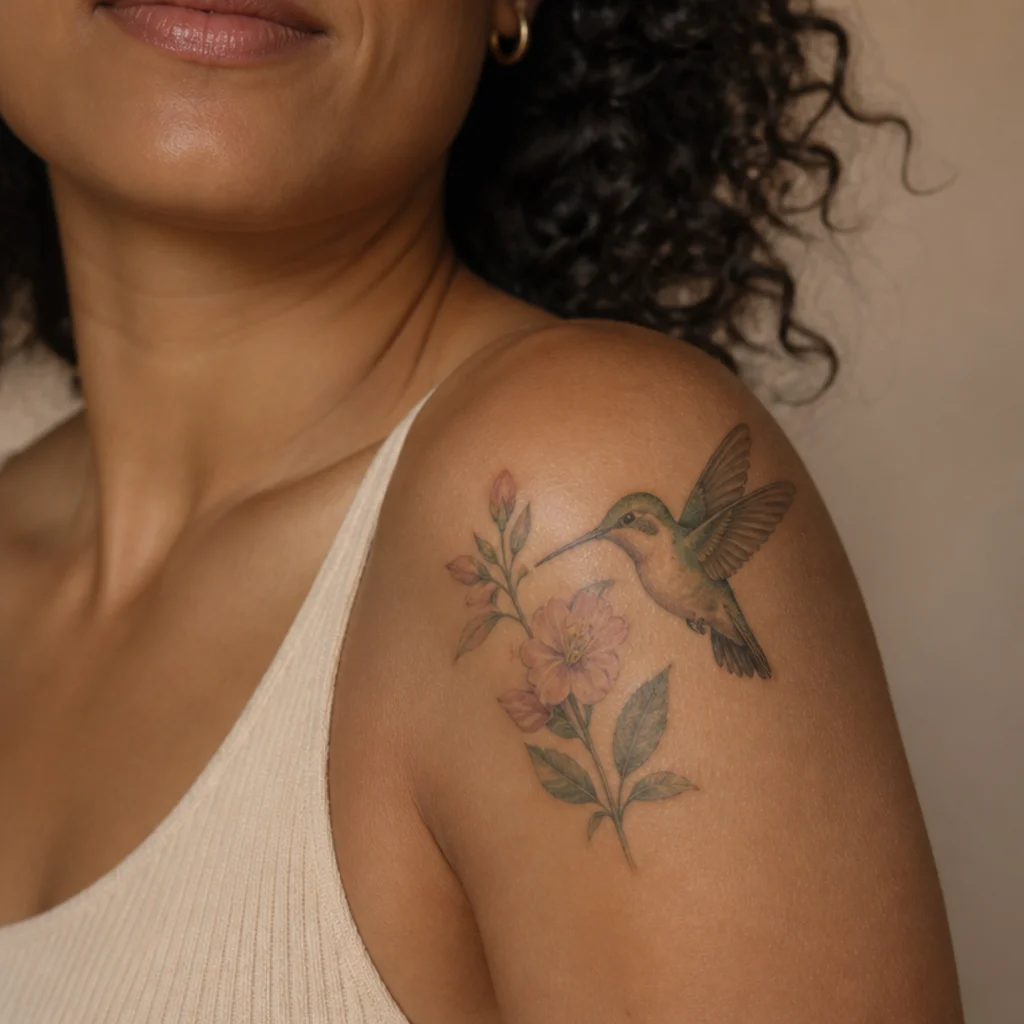
A hummingbird hovering near small blooms brings graceful movement and just enough detail to disguise a modest older design, with the wings and flowers offering shaded surface area to work over. The blurred, fast-wing effect is a hidden asset, since soft, layered wing shading spreads coverage naturally without hard edges. The shoulder, forearm, and upper back all work for this one. Maintenance is moderate, with color and fine detail wanting occasional refreshes. Difficulty is advanced. Pro tip: cluster the blooms, rather than spacing them out, over the busiest part of the old ink, and let the bird occupy cleaner skin, so the densest, most opaque elements do the real covering while the hummingbird stays crisp. Ask your tattoo artist how the blooms and wing shading can be positioned over the strongest part of your existing ink, and whether the palette should lean deeper than usual so the old design stays hidden beneath the new color.
23Minimalist Wave Line
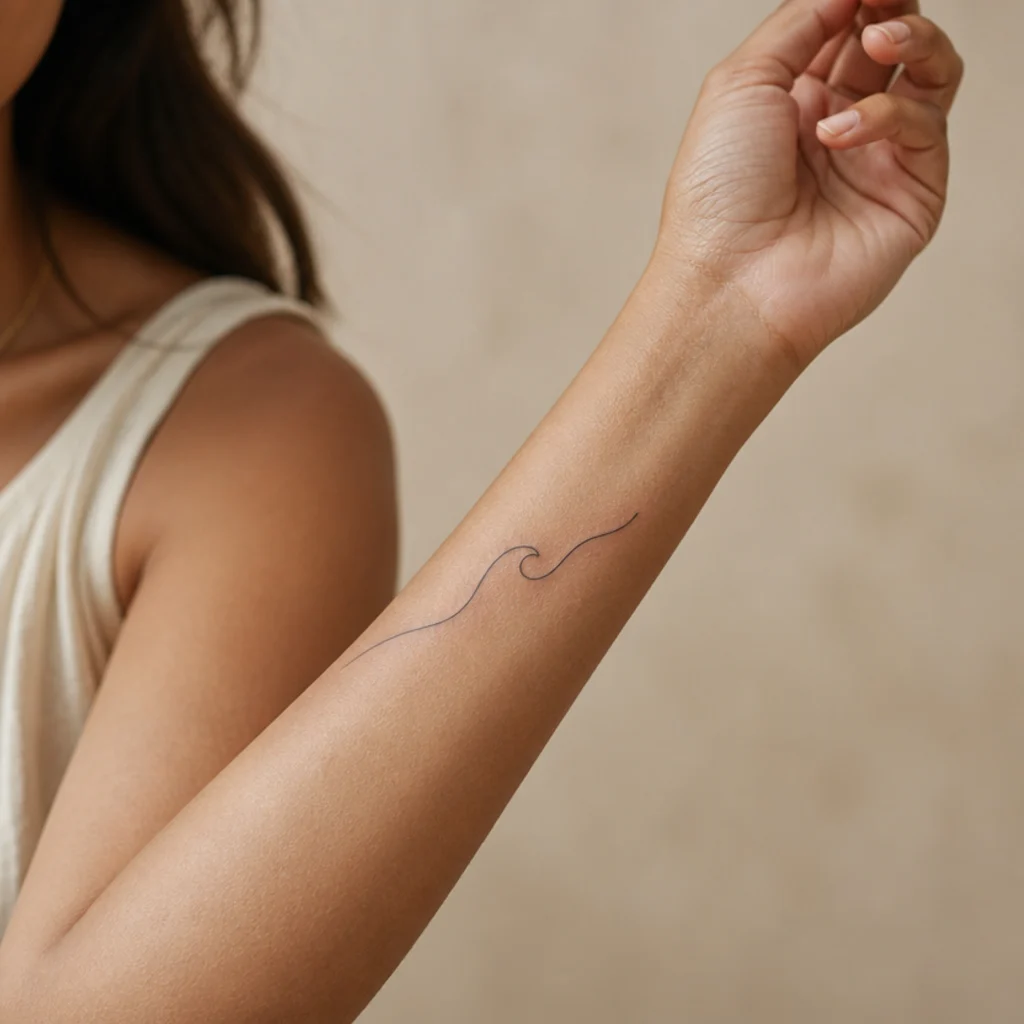
A single flowing wave line suits anyone drawn to small cover-up tattoos with a calm, modern feel, but it's the most limited concealer in this guide, and only honest over very faint or nearly removed ink. A thin, unshaded line has essentially no opacity, so it can't mask bold saturation, and layering it over a visible tattoo just leaves the old piece showing around a pretty line. The inner forearm, side of the wrist, and ankle all suit a horizontal line like this. Upkeep is moderate, as fine lines soften and can spread over time. Difficulty is moderate in execution. Pro tip: if a single faint remnant survives, the wave's one deliberate crest can be dropped exactly over it, turning the last visible spot into the line's high point. If your original tattoo is still noticeable, ask your tattoo artist whether laser fading first would let a minimalist line finally work, since delicate styles rarely cover dense old ink alone.
24Blackwork Raven Silhouette
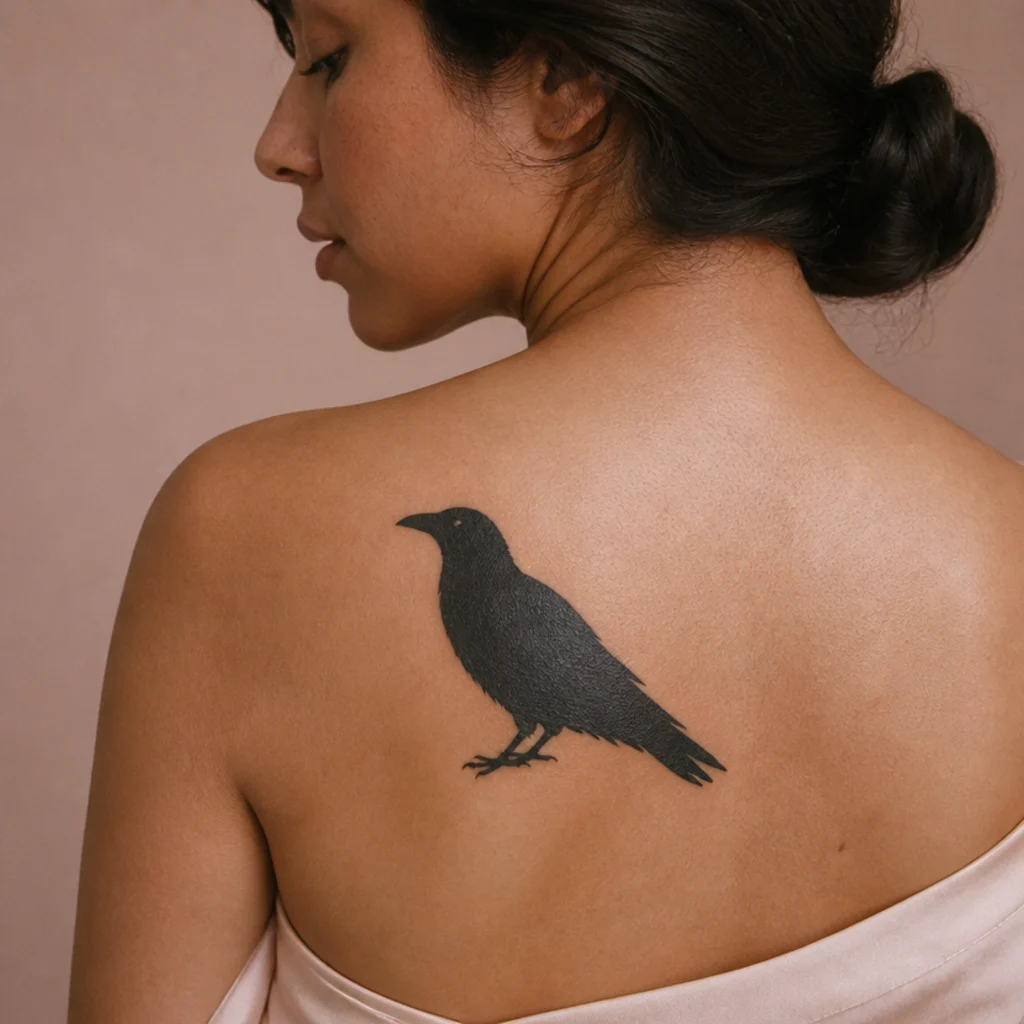
A solid raven silhouette is a striking, high-coverage entry among black cover-up tattoos, because the fully filled black body offers the same complete concealment as a blackout while keeping a recognizable, elegant shape. The bird's outstretched wings and tail add flexible surface area to extend over stubborn edges. It works well on the shoulder blade, forearm, and calf. Maintenance is low once healed, since solid black holds up beautifully. Difficulty is moderate for a skilled artist. Pro tip: silhouettes live or die on their outline, so the raven's shape should be drawn to fully enclose the old design with a saturated margin on every side, with the wings or tail lengthened wherever the original tattoo threatens to escape the border. Ask your tattoo artist how large the silhouette needs to be for full coverage, and whether a spread wing or trailing tail feather should extend further to guarantee no part of the original design peeks past the edges.
25Chrysanthemum Cluster
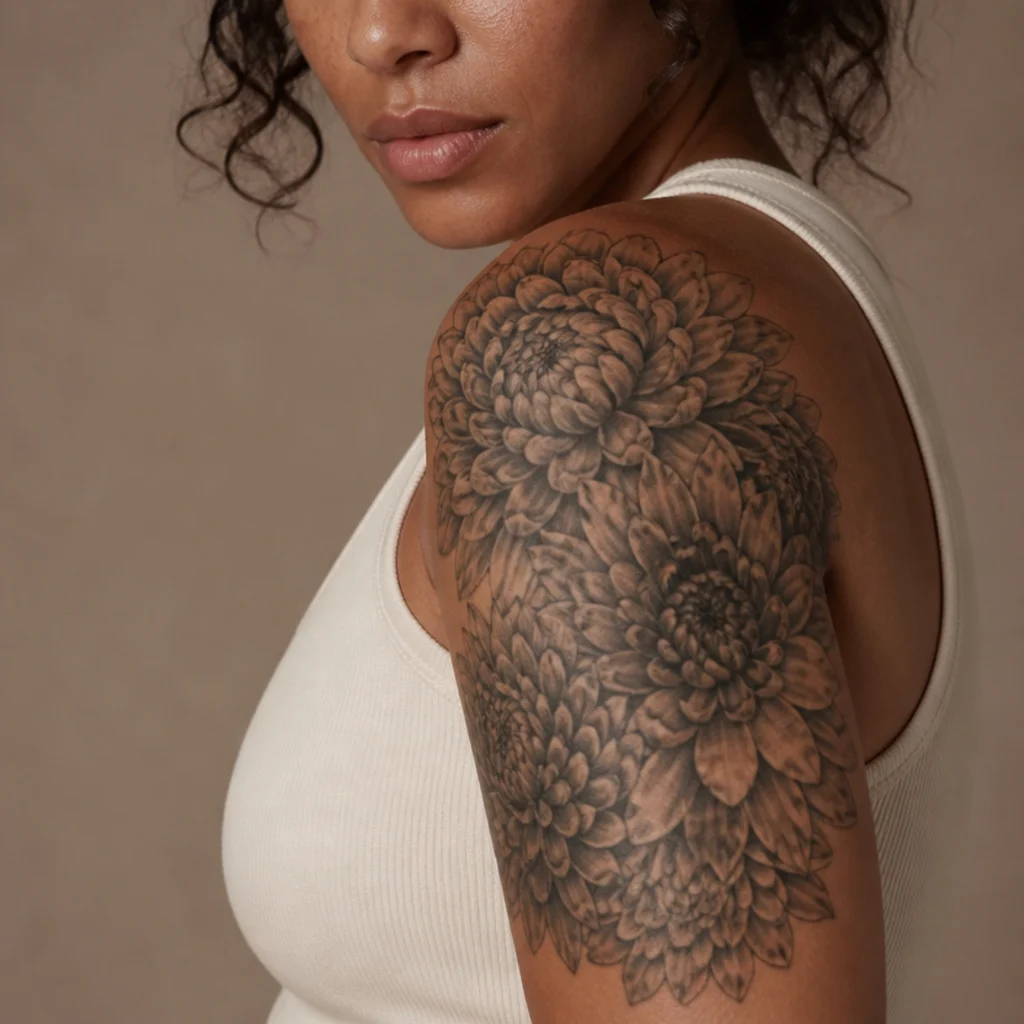
Chrysanthemums carry more tightly packed petals than almost any other flower, and that natural density is ideal for cover-ups, since each bloom is essentially a built-in field of overlapping shadow. A cluster creates a rich, textured surface that absorbs old lines within its many folds. The upper arm, thigh, and shoulder all suit it, and the design scales comfortably into larger cover-up tattoos when several blooms are combined. Maintenance is moderate. Difficulty is advanced given the layered shading involved. Pro tip: turn one central bloom fully open, its densest petal core, directly over the most saturated part of the old ink, and let partially turned buds and leaves fill the surrounding gaps so no clean line of old work survives between flowers. Ask your tattoo artist how many blooms it takes to cover your existing ink completely, and whether the darkest shading can be concentrated over the strongest zone so the finished piece stays clean and even.
Save this to Pinterest to keep your cover-up inspiration organized.
26Small Heart Redesign
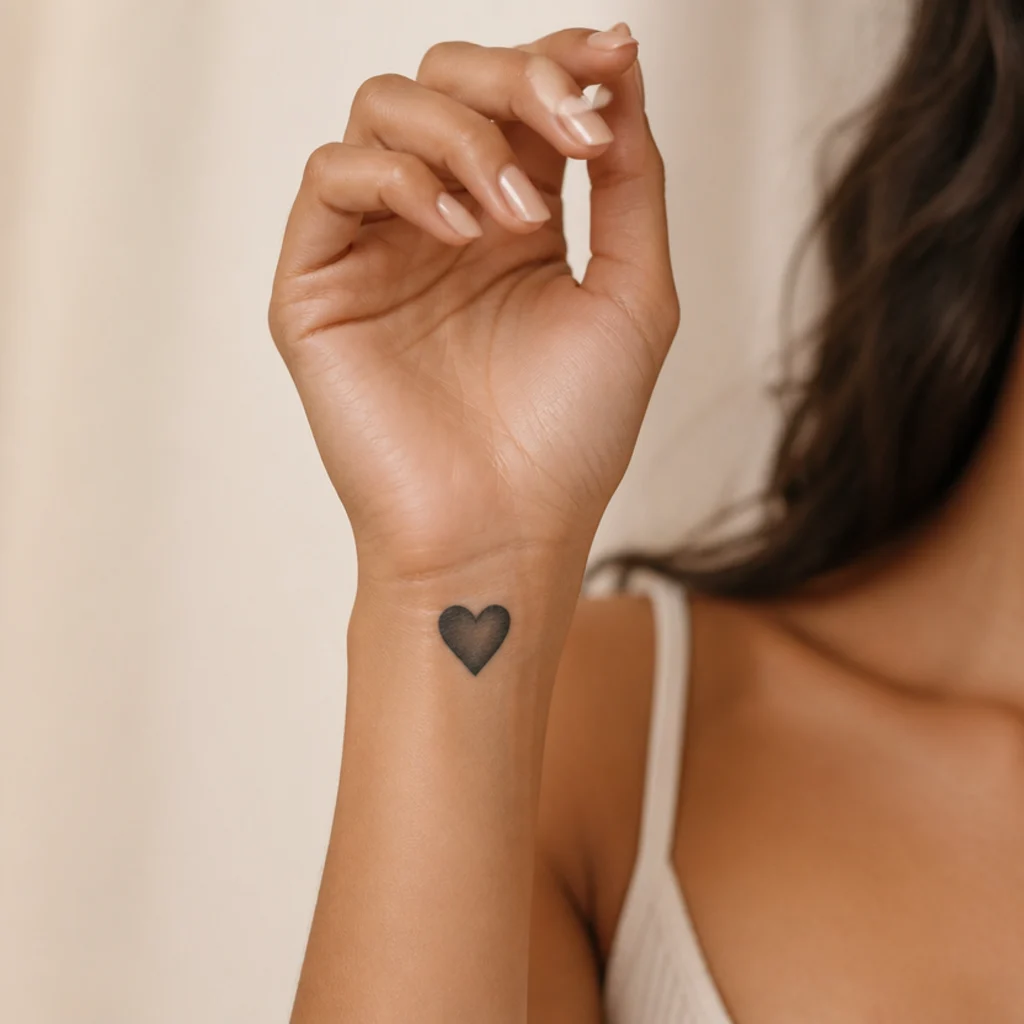
Reworking an old heart, initials, or a tiny faded symbol into a refined new heart is a sweet, sentimental option among small cover-up tattoos, best suited to a base that's actually small and faint. A filled or softly shaded heart gives a compact pocket of saturation over the old shape and updates it to a cleaner, more current form — a solid silhouette, a fine-line outline with shading, or a soft watercolor blush. The wrist, ankle, and behind the ear all work well. Upkeep is low to moderate. Difficulty is moderate, and the honest limit is scale: this only works when the original is small and pale enough to sit inside the new heart. Pro tip: if the base is a name or a darker shape, a solid or heavily shaded heart covers far more reliably than a delicate outline, which would let the old ink show through the center. Ask your tattoo artist whether the heart needs full saturation, or a slightly larger footprint, to cover the base entirely.
27Ivy Around a Scar
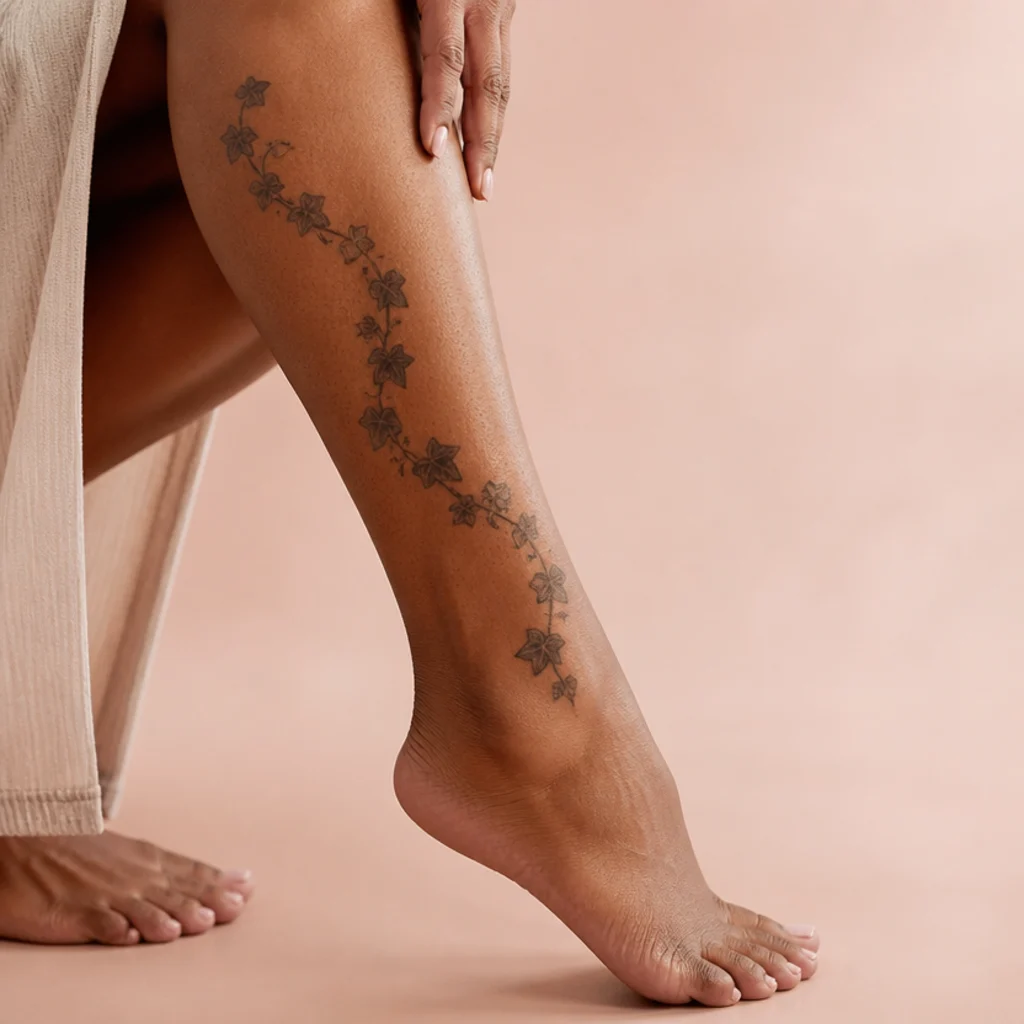
Trailing ivy that curves around a mark is a thoughtful, restrained choice among scar cover-up tattoos, designed to reframe rather than paint over. The winding leaves lead the eye into a piece you chose instead of toward the scar, and the irregular, organic path of a vine hides a scar's own irregular shape better than any symmetrical design would. The calf, forearm, and shoulder all give a long vine room to travel. Scarred skin takes ink unpredictably and can blow out or heal unevenly, so upkeep varies and touch-ups are likely. Difficulty is high. Pro tip: routing leaves so they cross the scar at angles, with clean skin between them holding the crisp detail, heals more reliably than saturating a solid mass over the tissue itself. A licensed tattoo artist must confirm the scar is fully healed, flat, and suitable before any work begins — a tattoo can reframe a scar, but it's never guaranteed to fully hide one.
28Ornamental Lace Cuff
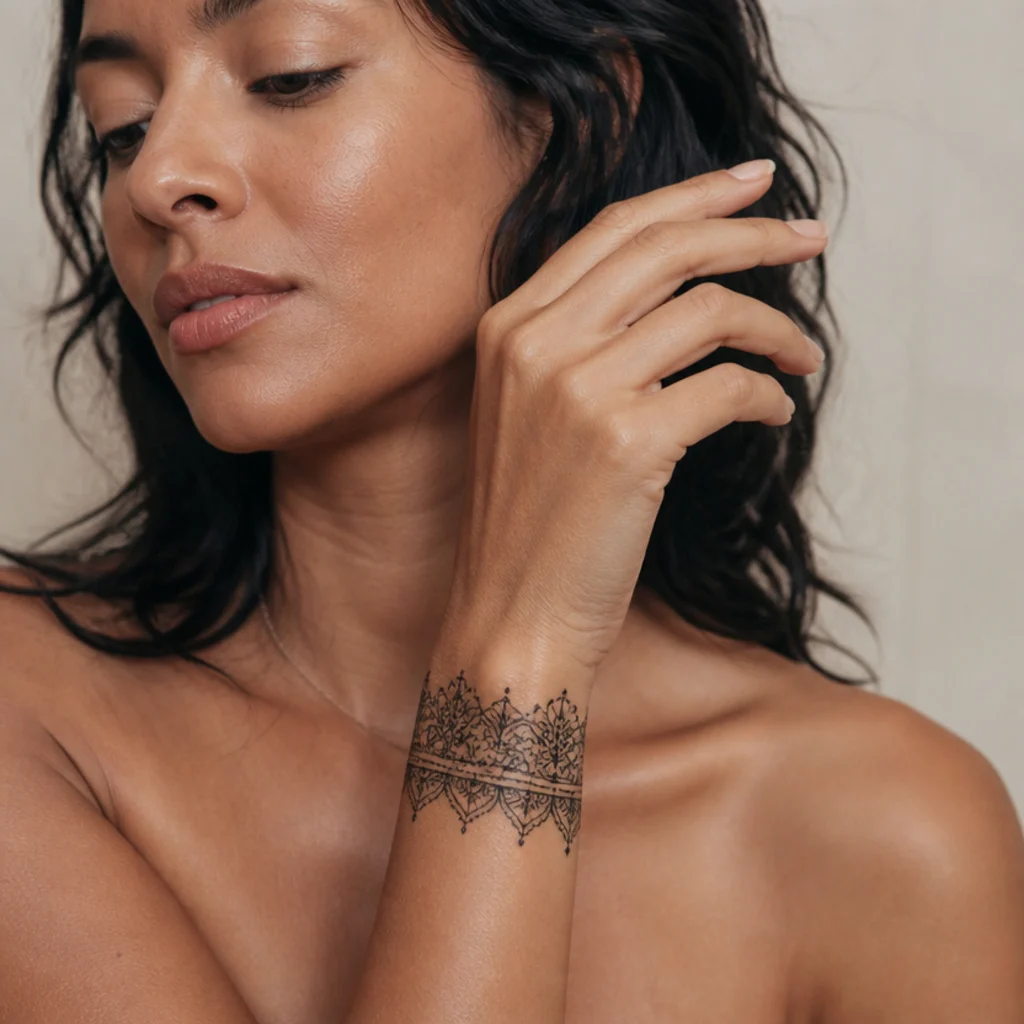
A lace cuff wraps the wrist or ankle in fine, patterned detail, and that intricate density makes it a quiet cover-up workhorse that looks like chosen jewelry rather than a fix. The repeating scallops, teardrops, and solid motifs of lace give the artist many small saturated points to place over old lines while the openwork feel keeps it light. The wrist, ankle, and upper arm all let a full wrapping band follow the limb. Maintenance is moderate, since fine detail can blur over time, so the lace shouldn't be packed too tightly. Difficulty is advanced. Pro tip: use the lace's solid elements — the beads, bows, and dense scallop edges — as the actual coverage over surviving lines, and let the true openwork fall only on clean skin. Ask your tattoo artist whether the cuff needs to wrap fully around the limb to cover the entire original design, since a partial band can leave the back of an old piece exposed.
29Bold Lotus Bloom
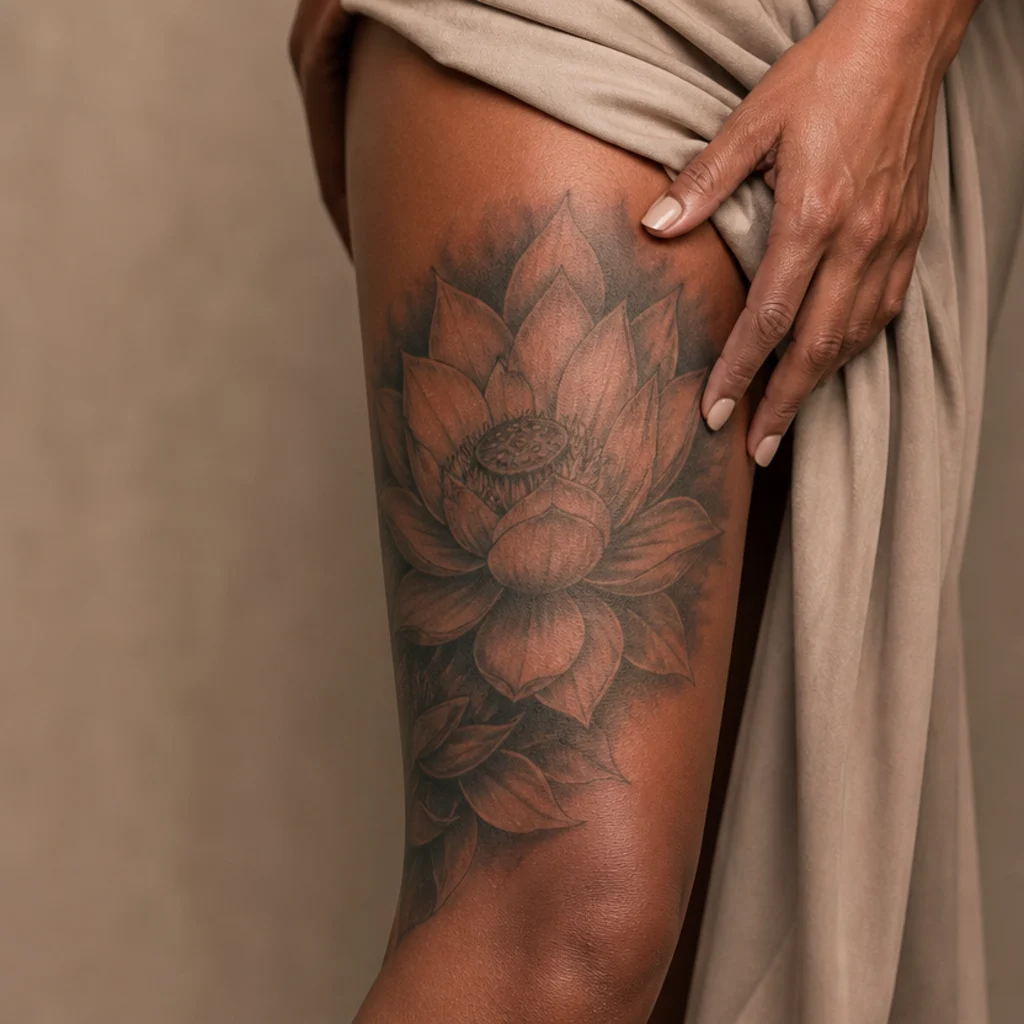
A bold lotus with layered, cupped petals brings both symbolism and strong cover-up potential, since the overlapping petal rows and deep central shading create natural depth to bury old ink inside the bloom's structure. The thigh, shoulder, and forearm all suit it, and the design scales comfortably into larger cover-up tattoos when paired with pads or buds. Maintenance is moderate. Difficulty is advanced. Pro tip: the lotus's dark, shadowed base, where the petals gather, is its most saturated zone, so plan the composition from the coverage outward, placing that base over the busiest part of the old tattoo and letting the petals open across cleaner skin. Ask your tattoo artist how the lotus can be centered over the strongest part of your current tattoo, and whether the outer petals should extend beyond the original edges so the coverage looks intentional and complete rather than boxed in.
30Full Botanical Statement
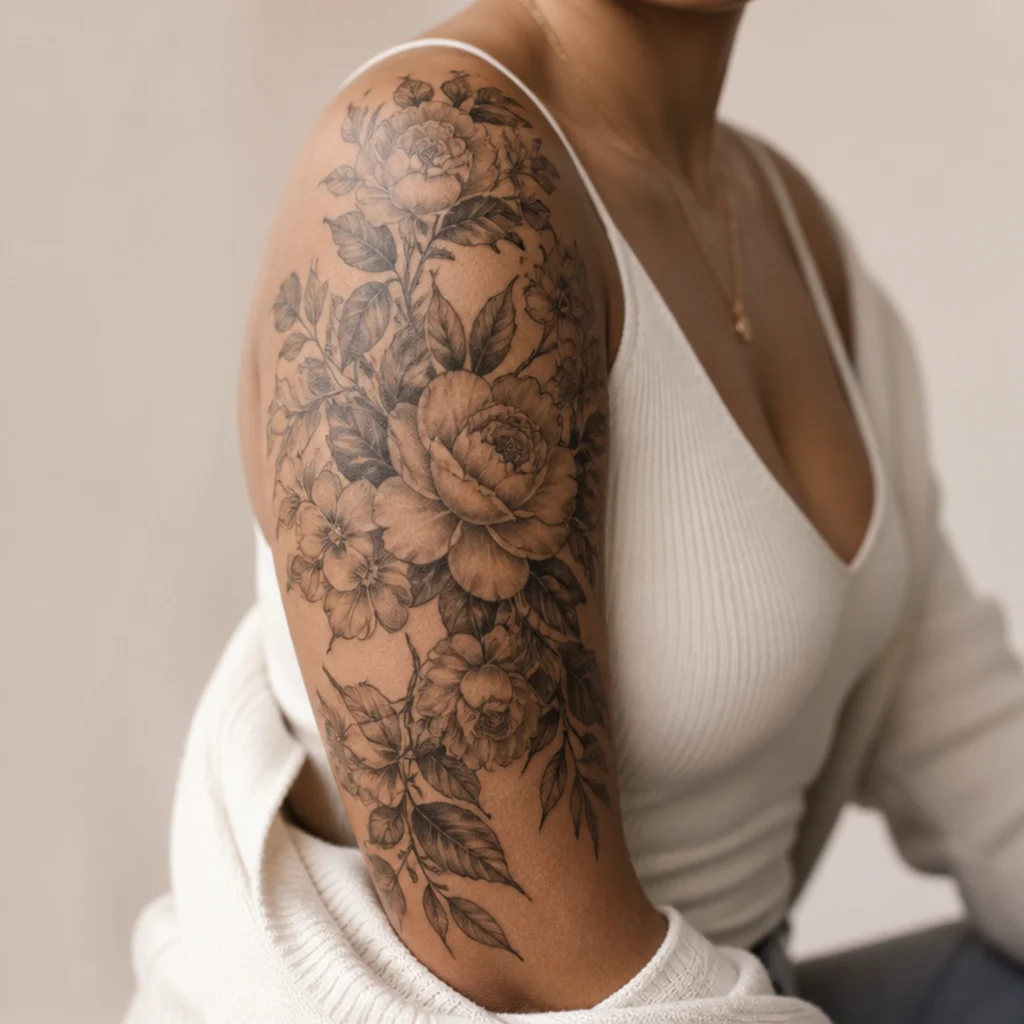
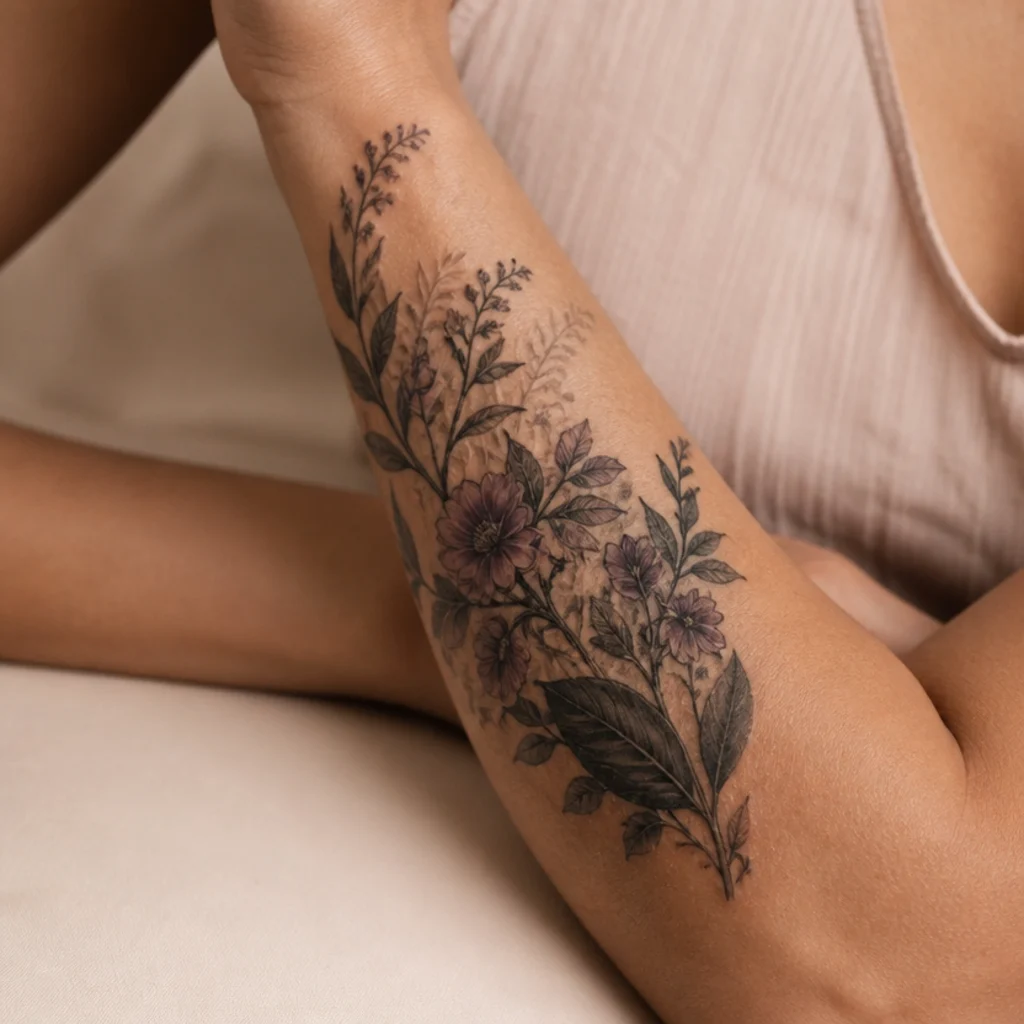
When old ink is large, dark, or heavily saturated, a full botanical composition is often the single most effective of the large cover-up tattoos, because it combines every advantage: overlapping flowers, buds, leaves, deep shadow, and negative space give the artist maximum freedom to route saturation exactly where it's needed. The upper arm, thigh, and back all give a sprawling piece room to breathe. Maintenance is moderate, and a piece this size may want touch-ups over the years to keep the deepest areas crisp. Difficulty is advanced and almost always multi-session, typically two to three passes spaced weeks apart. Pro tip: the biggest, most fully shaded bloom should anchor over the darkest surviving ink, with smaller flowers and leaves cascading outward to disguise the piece's true boundaries, so no one can guess where the old tattoo ended. Ask your tattoo artist to map the densest blooms over the darkest parts of your current tattoo and to design large enough to guarantee full coverage with no gaps.
Pro Tips from the Editor
- Contrast is the only rule that matters. New ink must be darker and denser than the old, because pigment is translucent; if a design cannot go darker where the old work is strongest, it will not cover, however lovely it looks on paper.
- Book a cover-up specialist, not a general artist. Ask straight out how many cover-ups they do monthly, and ask to see healed, not fresh, before-and-after photos of pieces similar to yours; a healed shot tells the truth about coverage.
- Consider laser fading before you commit ink. Two to four fading sessions on dense or dark work dramatically widens your design options and can turn an impossible "must go blackout" situation into a botanical or color piece.
- Photograph your existing tattoo well for the consult. Bright, direct flash under raking light reveals buried black and true saturation far better than a soft, flattering photo, and it helps the artist plan honestly.
- Expect bigger and darker, and budget for more than one session. A cover-up almost always runs larger and deeper than the original and frequently needs a second saturation pass; plan the size and cost around coverage, not around what you wish it could be.
- Protect the investment with SPF. Daily broad-spectrum sunscreen over a healed cover-up is the single biggest factor in how long the saturation, and therefore the concealment, lasts; fine lines and soft color need it most.
- Match placement to density. High-friction, thin-skin spots like fingers, feet, and inner wrists hold saturation poorly, which matters more on a cover-up than on fresh work; favor flatter, less-worn areas for anything doing heavy concealing.
Coverage Feasibility at a Glance
| Original ink | Realistic approach | Typical sessions | Fading first? |
|---|---|---|---|
| Faint / partially lasered | Fine-line sprig, wave, constellation, small heart | 1 | Rarely |
| Medium saturation, no lettering | Peony, moth, mandala, snake, koi | 1 to 2 | Sometimes |
| Names / lettering | Dark florals, vine, filigree, solid band | 2 | Often helpful |
| Dense black / tribal | Blackout, blackwork raven, solid band | 2 to 3+ | Not needed for blackout |
| Healed scar (12+ months) | Framing fern, ivy, scattered botanicals | Varies | N/A, assess in person |
How to Choose / Get the Look
Work through it in order, because the right design is dictated by your skin, not by the prettiest picture. First, assess the base. Under bright, direct light, judge how dark and saturated the existing ink really is; the darker it reads, the bolder and denser your cover-up must be. Second, identify the type. Faint or partially removed pieces open the door to delicate small cover up tattoos and fine-line work; medium saturation suits layered botanicals, moths, mandalas, and animals; names and lettering need busy florals, ornamental work, or solid fills to break their recognizable shapes; dense black or tribal usually means blackout, a blackwork silhouette, or a solid band, since nothing translucent will touch it. Third, decide on fading. If your dream design is lighter or more delicate than your base allows, two to four laser sessions can bridge the gap; ask whether it is worth it for your case. Fourth, treat scars separately. They are judged on healing and texture, not color, and must be assessed in person. Fifth, prepare for the consult: bring bright, flash-lit photos of the current tattoo plus two or three saved ideas showing the style and scale you like. Then ask your artist candidly how much a given concept can realistically cover, whether more than one session is needed, and how size and placement might grow for clean coverage. Above all, choose a licensed, experienced artist who specializes in cover-ups, and confirm design, sizing, placement, coverage feasibility, and healing with them directly. No design should ever be promised to fully hide an existing tattoo or scar, so plan for reframing rather than erasing.
Frequently Asked Questions
Can any tattoo be covered up?
Many can, but not all in a single design, and not all with the style you first pictured. Very dark, dense, or high-contrast ink may need laser fading first or a larger, bolder, darker piece over it. The deciding factor is contrast: the cover-up has to be darker than what's underneath. A licensed artist can tell you what's realistic for your specific tattoo after seeing it in person.
Are cover-up tattoos usually bigger than the original?
Often yes. Extra size and density give the artist room to route shading over old lines and to spill the design past the original edges, where escaping lettering or outlines tend to show. A cover-up is frequently larger and darker than the piece underneath, and your artist will advise on the scale needed for clean, even coverage.
Do cover-ups work over names?
Names are among the harder things to cover because letters have tall, recognizable, high-contrast shapes. Busy florals, trailing vines, ornamental filigree, and solid fills tend to work best, usually sized about one and a half times the length of the text so the design covers the end letters. Ask your artist honestly whether the lettering can be fully absorbed or will need added shading or a few fading sessions first.
Can a tattoo hide a scar completely?
No design can be promised to fully hide a scar. A tattoo can reframe the area and draw attention into new artwork, but scarred skin takes ink differently and can heal unevenly. A licensed tattoo artist should confirm the scar is fully healed, flat, and suitable, usually at least 12 to 18 months old, before any work begins, and you should approach the result as reframing rather than erasing.
How many sessions does a cover-up take?
It varies with the size and darkness of the original. Small cover up tattoos over faint ink may take a single session, medium pieces one to two, and large, dark, or heavily saturated work often needs two, three, or more passes spaced several weeks apart to build full opacity. Your artist will map out a realistic plan at your consultation.
Should I get laser removal before a cover-up?
Sometimes it is the smartest move. Two to four laser fading sessions lighten dense or dark ink enough to widen your design options dramatically, letting you choose color, finer detail, or a smaller piece instead of being forced into blackout. It adds time and cost, but for stubborn or beloved-but-outgrown tattoos it often delivers a far better final result. Ask your artist whether your base would benefit.
How much do cover-up tattoos cost compared to regular tattoos?
Cover-ups generally cost more than fresh work of the same size because they demand extra design time, larger scale, and denser saturation, often across multiple sessions. Small pieces sit in the low hundreds, while large multi-session botanicals reach the four figures, and any laser fading is billed separately per session. Get a written estimate that accounts for the likely number of sessions rather than a single-visit price.
How long should I wait before covering an old tattoo?
An existing tattoo should be fully healed before it is covered, which typically means waiting at least a few months after the original was done, and longer if it is still settling. Covering ink that is not fully healed risks poor results and skin trauma. For scars, the wait is longer, generally 12 to 18 months of healing. A licensed artist will confirm your skin is ready before planning anything.
Will the old tattoo ever show through the cover-up?
With a well-planned, high-saturation cover-up by a specialist, the old design should stay hidden, but faint ghosting can appear over time, especially with sun exposure, on thin-skinned areas, or if the cover-up relied on soft color rather than density. Daily SPF and choosing a design dark enough for your base are the best insurance. Ask your artist how likely ghosting is for your specific combination of old ink and new design.