15 Scar Cover Up Tattoo Ideas for Women
Scars carry stories, and the right tattoo reframes the skin around them into something you chose on purpose. These 15 ideas run from whisper-fine linework to saturated botanicals, with real notes on scar texture, undertone, healing timelines, and the exact language to use with a licensed artist.
 Edited by Lena Rose · Published July 11, 2026 · 25 min read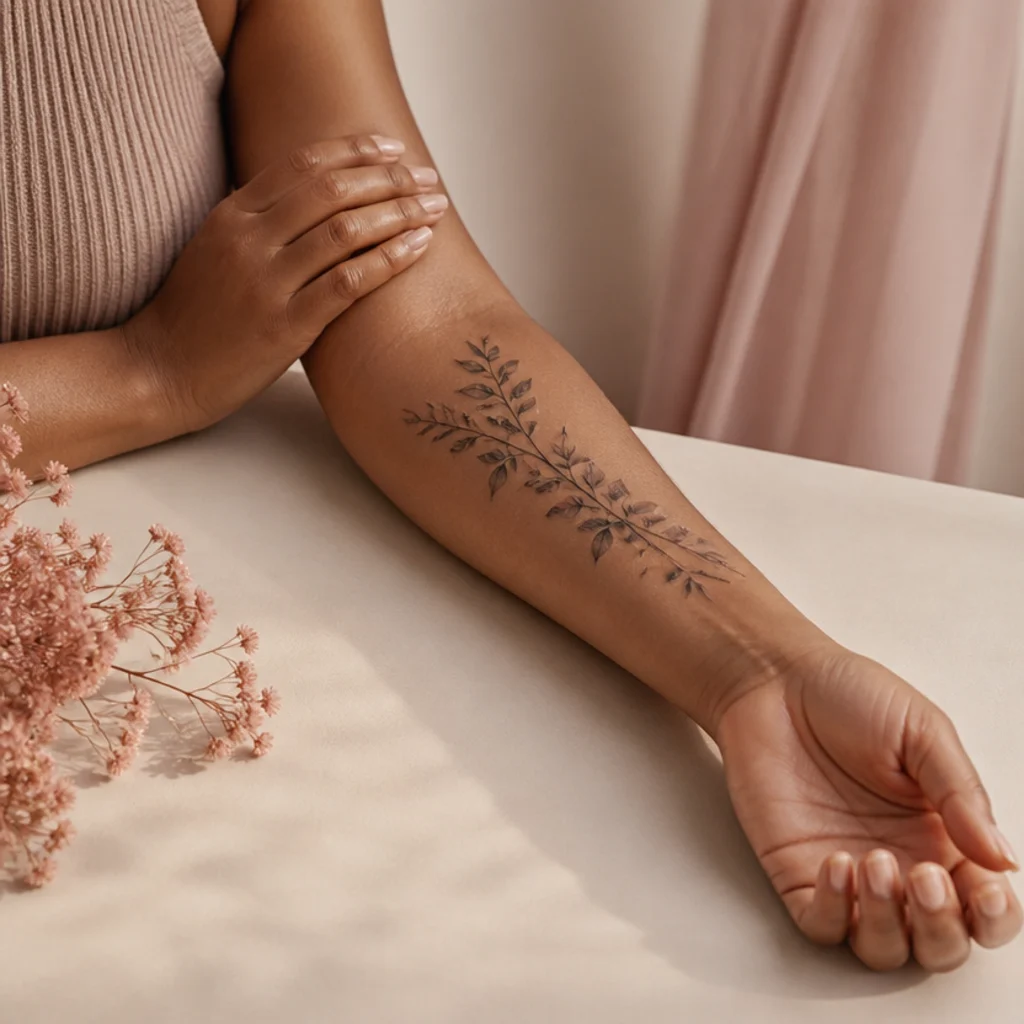
Quick Answer
- Best for: Women who want to redirect the eye around a settled scar with a design they actually connect with, from barely-there to full statement.
- Who might skip it: Anyone with a scar under 12 months old, keloid or actively raised tissue, or a mark still changing color, work is usually best delayed until it stabilizes.
- Maintenance: Low to moderate. Hairline linework and watercolor may want a touch-up around years three to five; saturated blackwork and bold color hold longest with disciplined SPF.
- Difficulty: Moderate to advanced. Flat, faded scars behave close to normal skin; raised, textured, or shiny atrophic scars are technical and demand a cover-up specialist.
- Cost: Variable. Small linework often falls in the lower shop-minimum range, while multi-session panels run to several hundred and up, always quoted after an in-person assessment.
- Wear time / longevity: Permanent, with color and fine detail softening gradually; a well-placed cover-up typically reads clean for years before any refresh.
- Standout variation: Botanical linework that flows with the scar's direction instead of cutting across it, the single most flattering trick here.
- How to ask your tattoo artist: "I have a [age]-year-old [surgical / burn / acne] scar here, it's [flat / raised / shiny]. Can you design something that works with its direction, and can you show me healed cover-ups you've done over scar tissue?"
In This Guide
- Fine-Line Botanical Sprig
- Watercolor Wildflower Wash
- Small Blackwork Symbol
- Trailing Vine Along the Scar
- Geometric Line Bracelet
- Soft Floral Bouquet
- Delicate Bird in Flight
- Name Cover-Up Reimagined
- Bold Dark Rose
- Constellation Dot Work
- Ocean Wave Ribbon
- Large Botanical Sleeve Panel
- Minimalist Single-Line Shape
- Moth and Moon Motif
- Abstract Brushstroke Accent
Scars sit wherever life put them, and the smartest cover-up designs meet the mark where it is instead of fighting it. A scar's direction, its texture, and how the surrounding skin catches light matter more than whatever motif you fell for on Pinterest, so the strongest scar cover up tattoos get planned around the mark, not stamped over it. Whether you're drawn to small cover up tattoos that read like a quiet accessory or large cover up tattoos that turn the whole area into a canvas, the goal is a look you're comfortable wearing every day. This guide covers 15 directions women return to again and again, from airy fine-line florals to saturated black cover up tattoos and reworked name cover up tattoos. For each one, you'll find who it flatters, the scar textures it handles, the upkeep to plan for, and how to brief your artist. Small cover up tattoos are a common on-ramp since they let you test placement and comfort before a bigger commitment. One rule underpins all of it: design, sizing, placement, coverage feasibility, and healing must be confirmed with a licensed tattoo artist, and no tattoo can be promised to fully hide an existing scar or older tattoo.
01Fine-Line Botanical Sprig
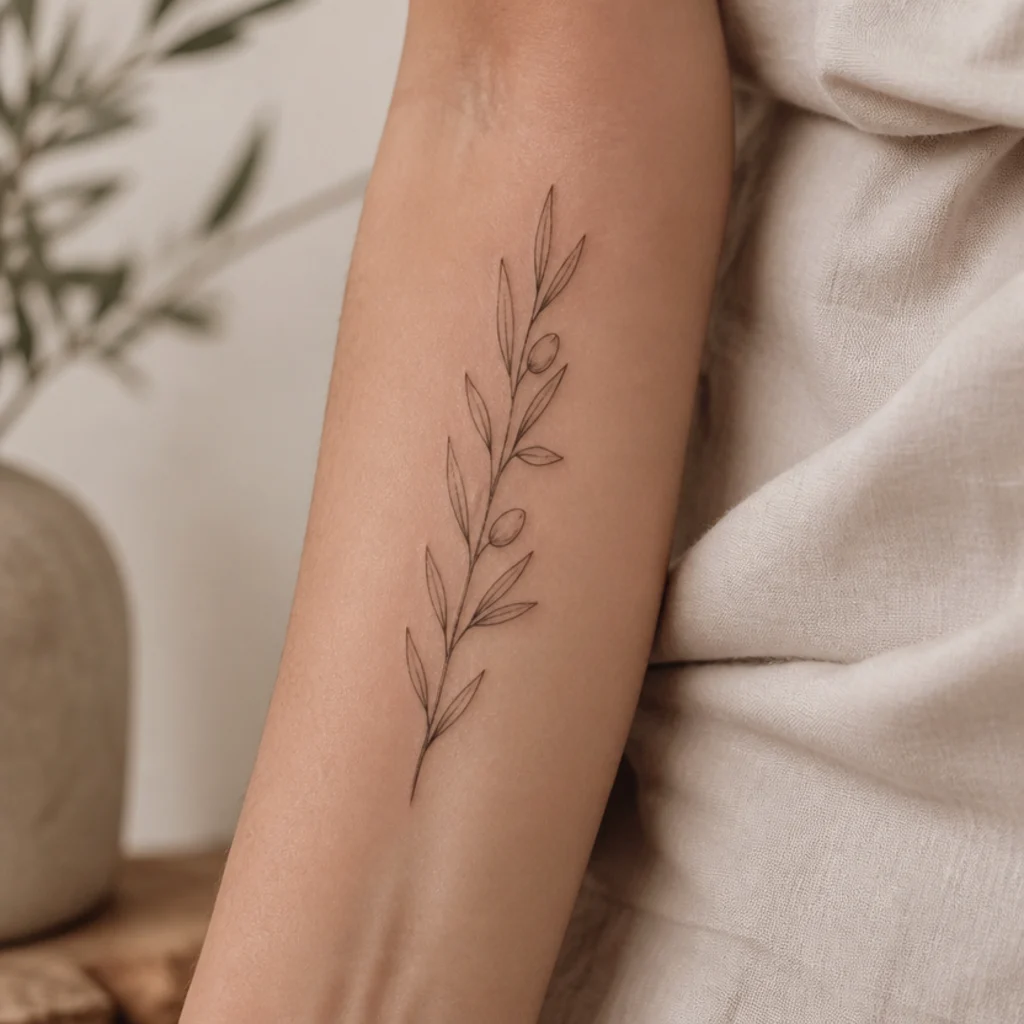
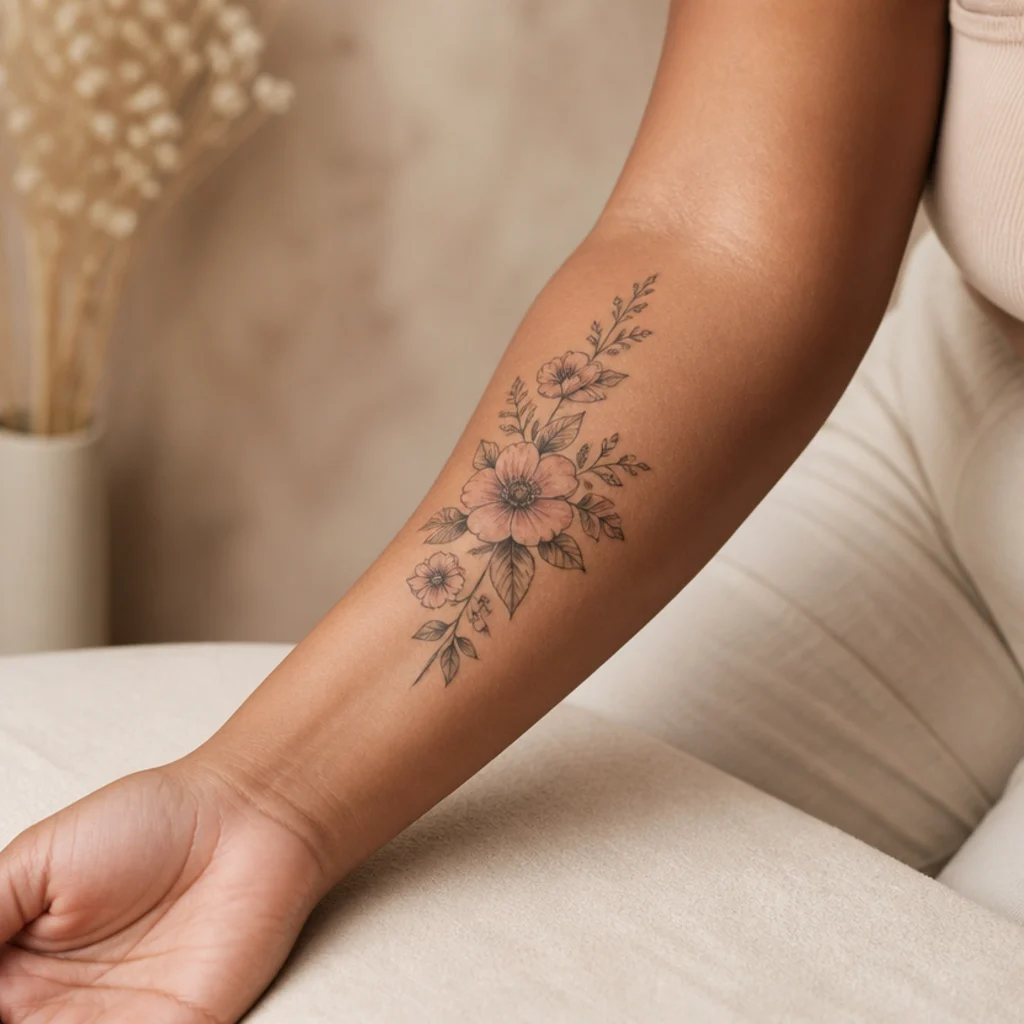
A single slender sprig, olive, eucalyptus, or wheat, is the gentlest way to shift focus, because it decorates the space around a scar instead of trying to bury it. Rendered in single-needle or 3RL work with soft black or warm sepia, the thin stems drape without a saturated fill, which reads approachable for a first piece. It performs best over flat, faded, well-toned scars where skin accepts ink evenly; it does the least for raised or shiny atrophic marks, where fine lines can pool or skip. Placement on the inner forearm, wrist, or ankle keeps it discreet, and it flatters minimalist, understated styling. Expect the finest lines to soften around years three to five and want a light refresh. Pro tip: have the artist orient the main stem parallel to the scar's long axis so the eye travels the greenery, not the mark. Bring this up with your artist: can the stems follow your scar's natural direction instead of crossing it?
02Watercolor Wildflower Wash
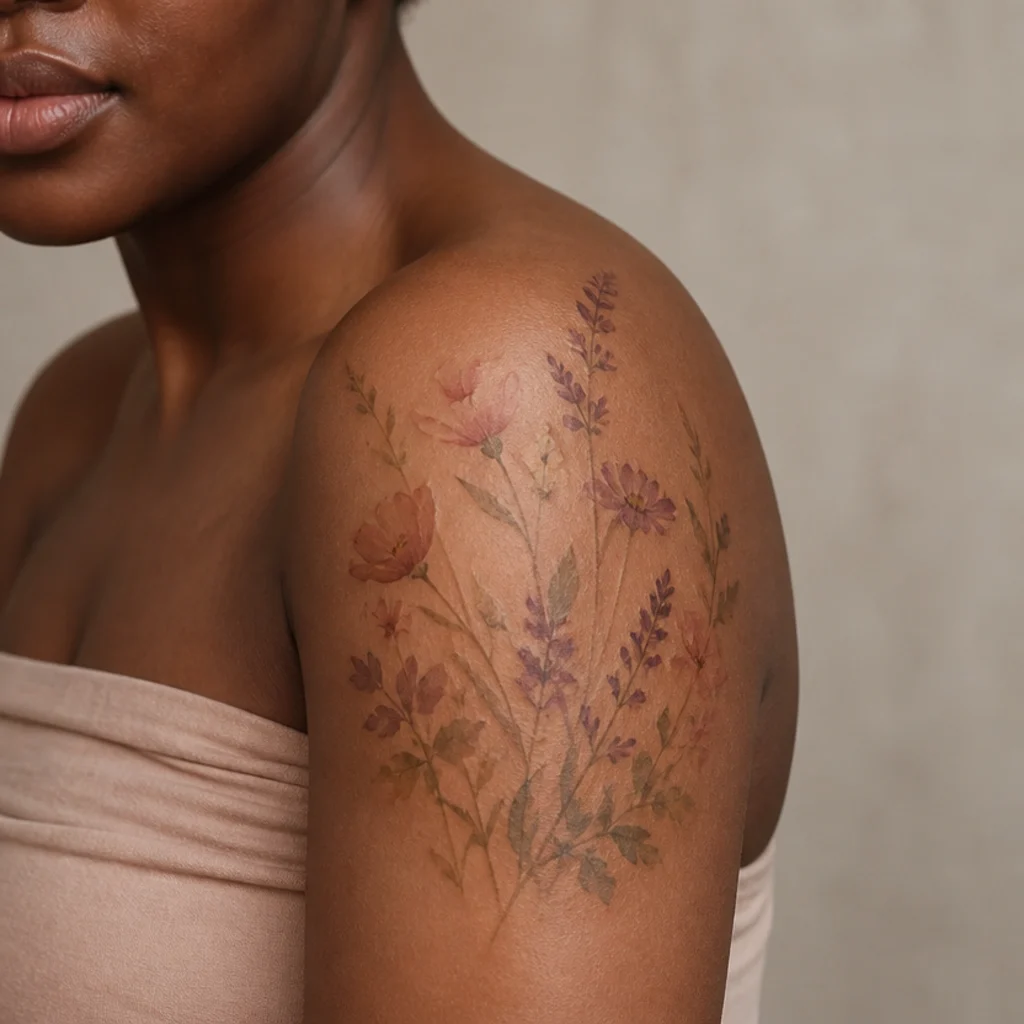
Watercolor styling leans on soft, blended pigment with few hard outlines, so the wash itself breaks up the surface and pulls the eye toward color rather than texture. Muted blush, sage, and dusty lavender read painterly and modern, and a palette tuned warmer or deeper flatters warm and rich skin tones without going chalky. It suits medium to larger scars where a little visual coverage helps, and it's forgiving over slightly uneven surfaces because there's no crisp line to betray a bump. The trade-off is longevity: unanchored color can soften faster than outlined work, so plan on a possible touch-up around years three to five and stay strict with SPF 30-plus once healed. Pro tip: the pieces that age best hide a whisper of blackwork or dot-work underneath to hold structure. Ask how your artist anchors watercolor with subtle linework so it stays legible as it settles.
03Small Blackwork Symbol
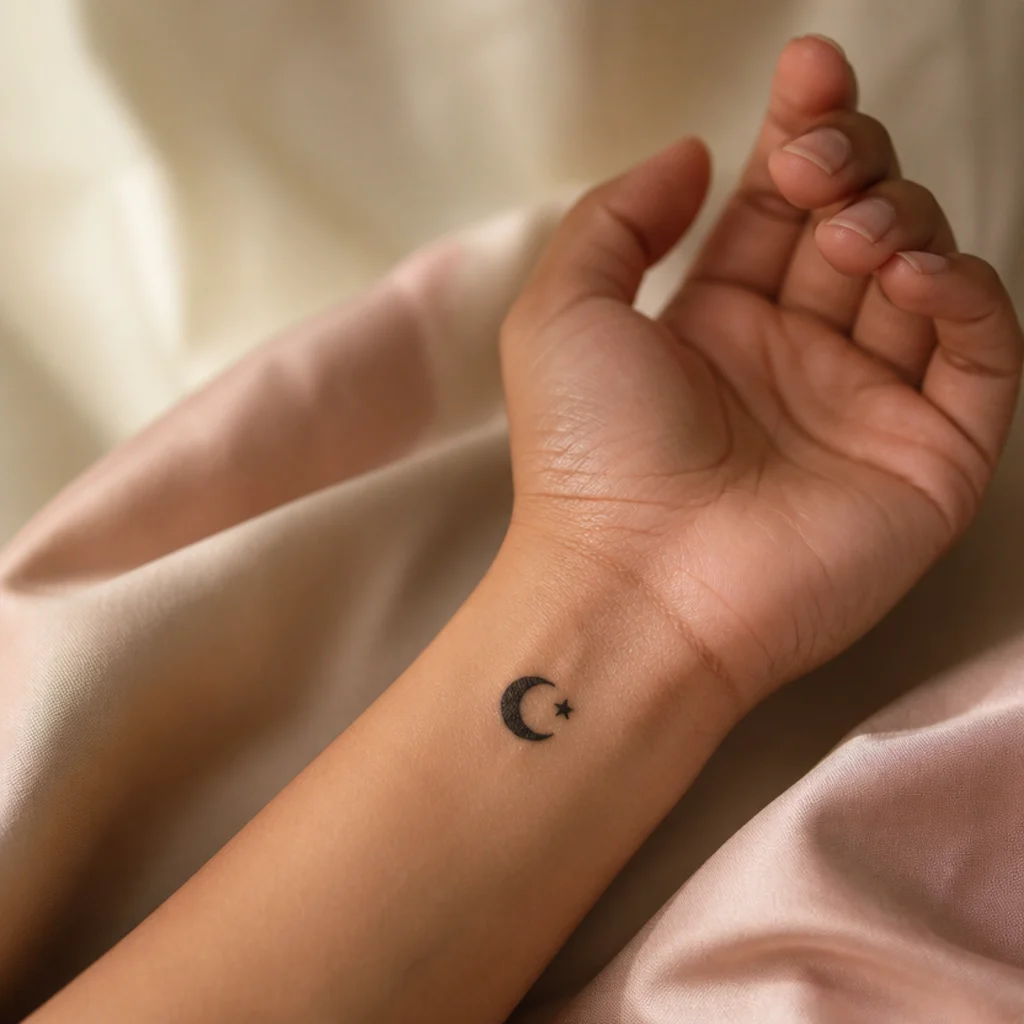
Among black cover up tattoos, a compact solid symbol, a crescent, a small sun, a clean sigil, gives dense, even coverage in a tidy footprint. Saturated black conceals more than open linework because a packed fill masks discoloration that airy designs leave visible. That makes it one of the more honest small-scale coverage options. It suits women who like graphic minimalism and low fuss, and it holds its shape for years thanks to the solid fill. The wrist, behind the ear, or the back of the upper arm keeps it versatile and easy to style. The caveat is scar tissue: fibrous or shiny areas can accept a solid pack unevenly, sometimes needing a second pass. Pro tip: a shape with a strong silhouette (crescent, teardrop, arrowhead) forgives minor patchiness better than one relying on tiny internal detail. Worth asking: will a solid fill pack evenly on your specific scar, or is a follow-up session more realistic?
04Trailing Vine Along the Scar
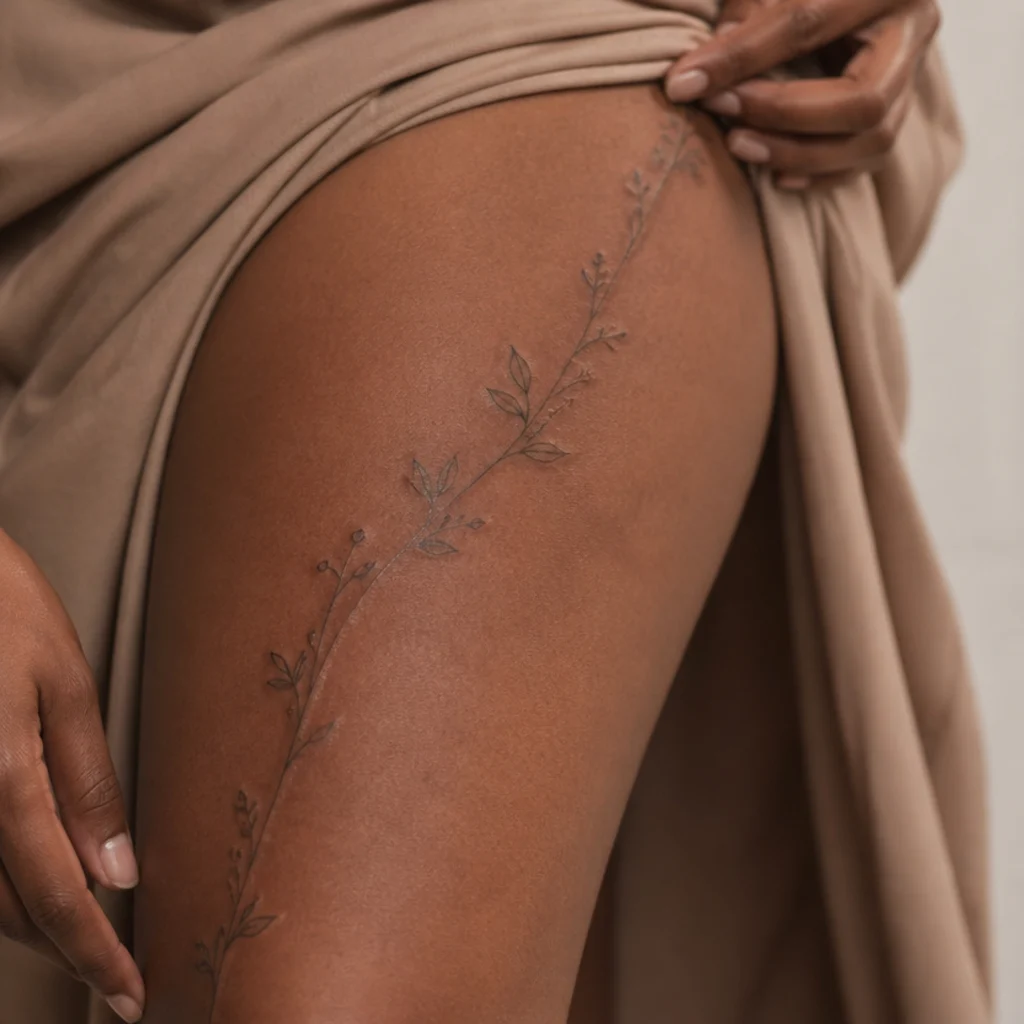
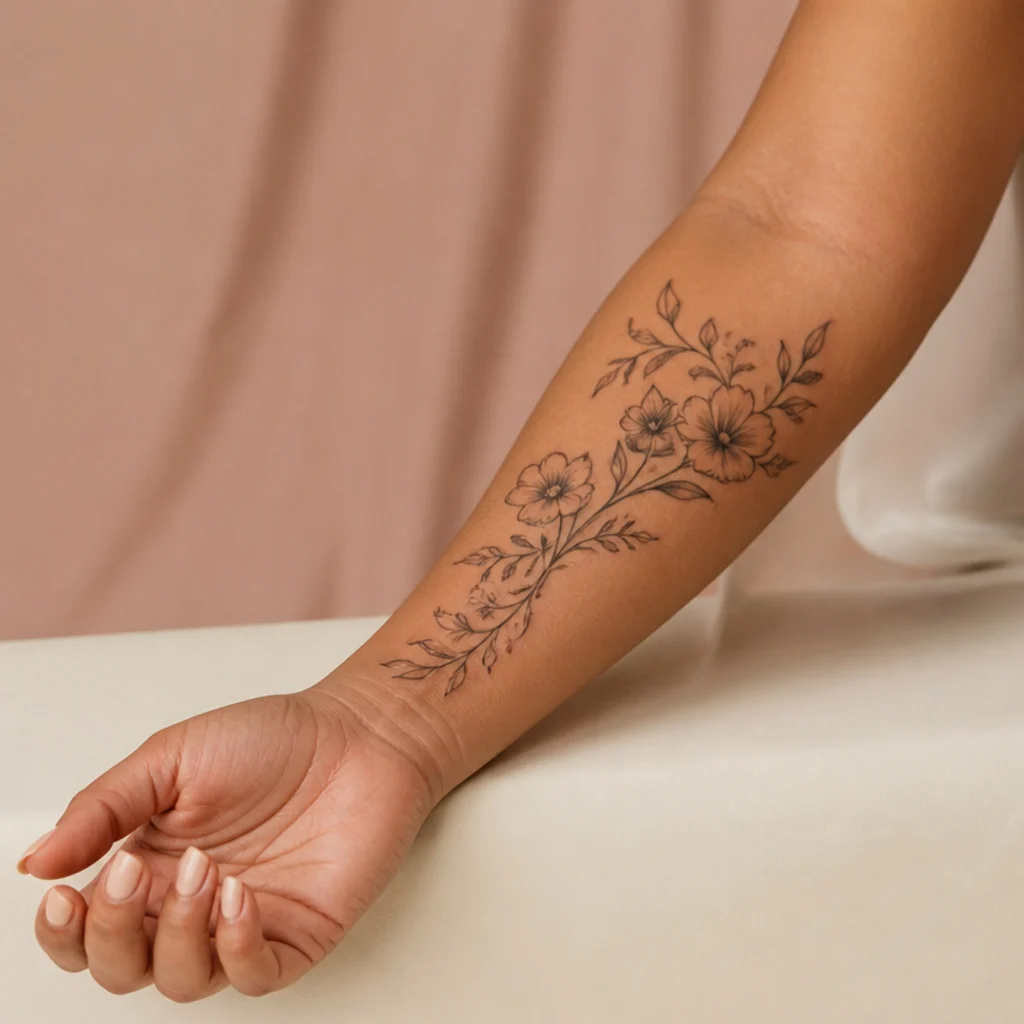
For long, linear scars, a trailing vine turns the line into the spine of the design. Rather than hiding the mark, the vine follows it, and small leaves and buds soften the edges so the scar recedes into foliage, one of the most flattering moves for surgical, C-section, or straight scars on the thigh, upper arm, or ribs. It reads delicate at a slim scale and can be built up with denser leaves and berries for fuller coverage when a mark is wider or more textured. Maintenance is moderate; fine leaf tips may want occasional attention, while the vine's main stem holds well. Pro tip: ask for the heaviest cluster of leaves to land over the busiest or most raised stretch of the scar, and lighter negative space where skin is smooth, so coverage sits exactly where you need it. Have your artist map the densest foliage over the part of the scar you most want quieted.
Save this to Pinterest to build your consultation mood board.
05Geometric Line Bracelet
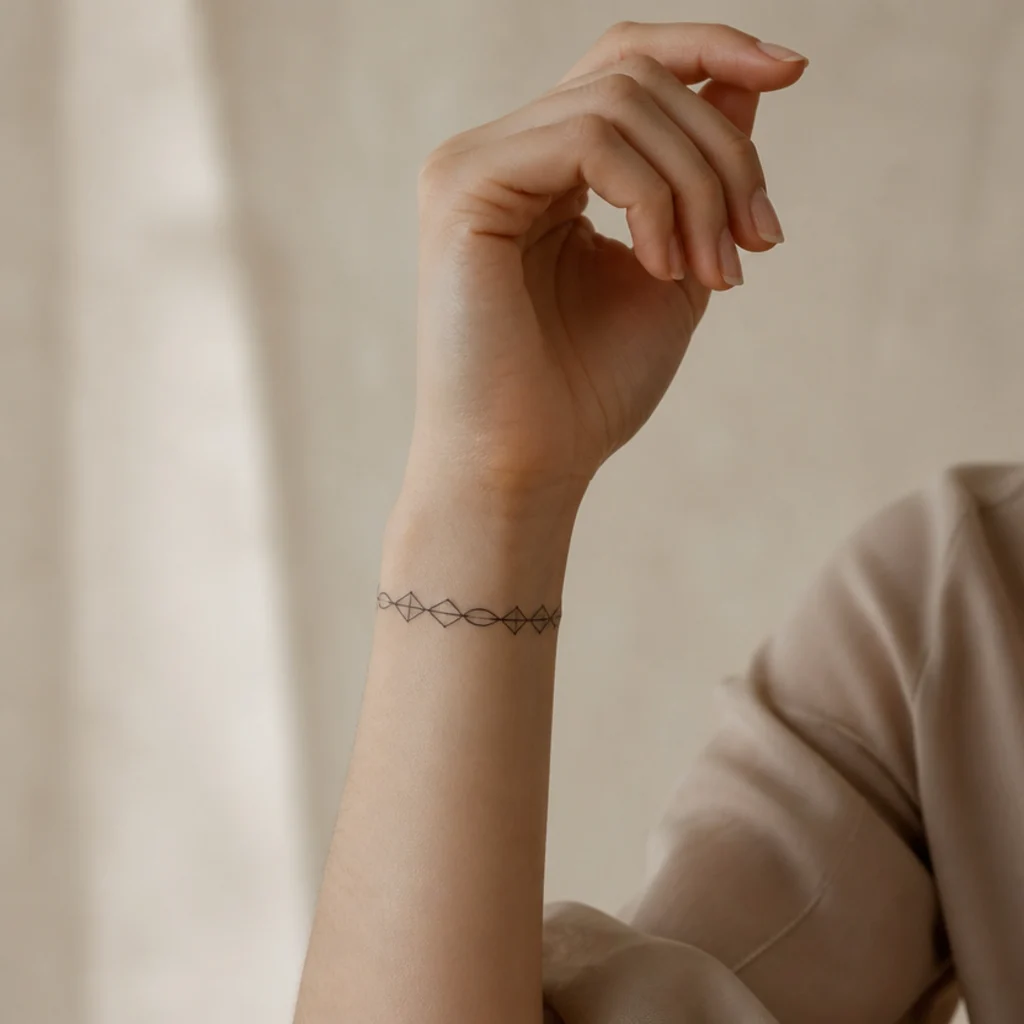
A geometric band that wraps the wrist, ankle, or upper arm frames the whole circumference with clean, repeating lines, so the eye travels around the limb and reads the scar as one deliberate part of a styled band rather than a flaw. It suits women drawn to modern, structured looks that wear like jewelry, and slim bands heal quickly with easy upkeep. The technical catch is that precise geometry is unforgiving: any wobble where a line crosses raised texture shows, so this rewards an artist with a steady hand and careful measuring. A slightly wider line or a small dot-work motif at the crossing point can sit more smoothly over uneven skin than a single hairline stroke. Pro tip: wrap the band so its most detailed segment falls on the flattest skin and the plainest segment crosses the scar. It's worth asking whether a marginally thicker line will ride raised tissue more evenly than a fine one.
06Soft Floral Bouquet
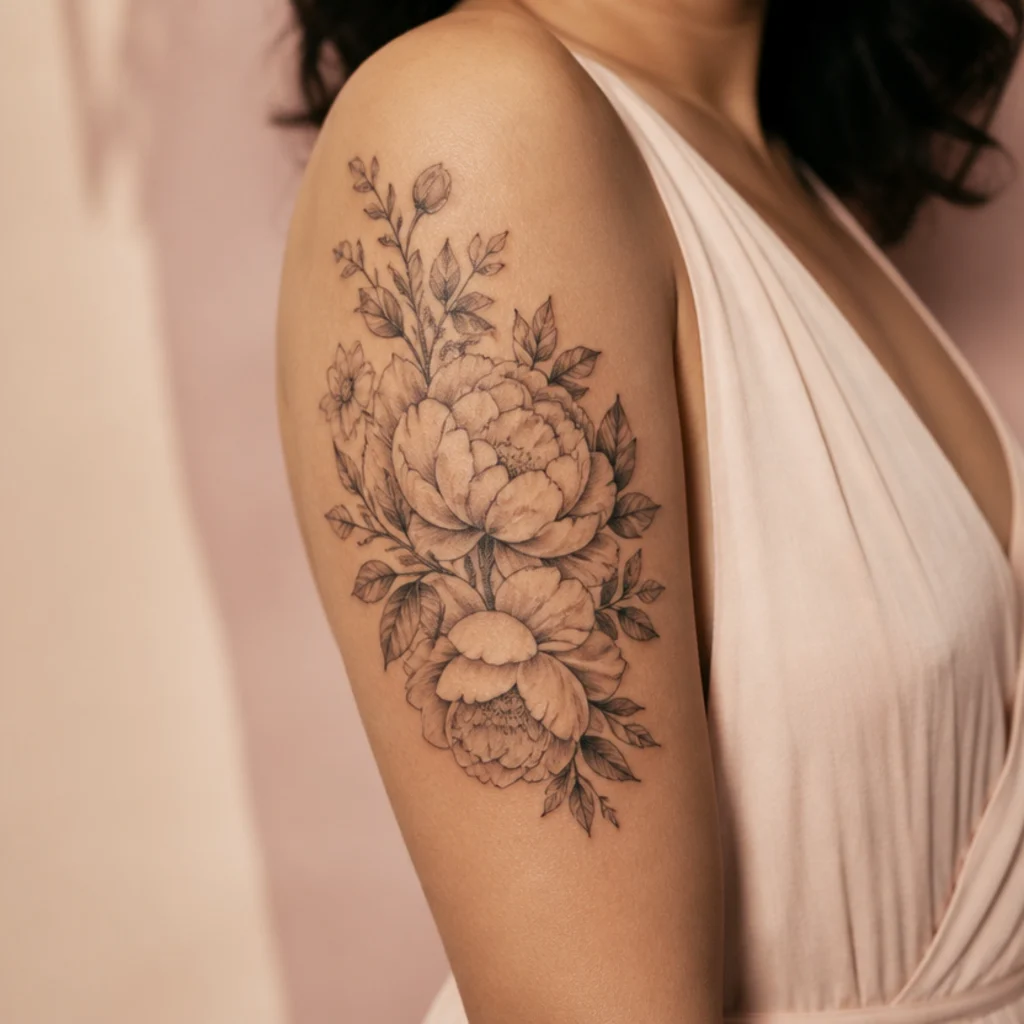
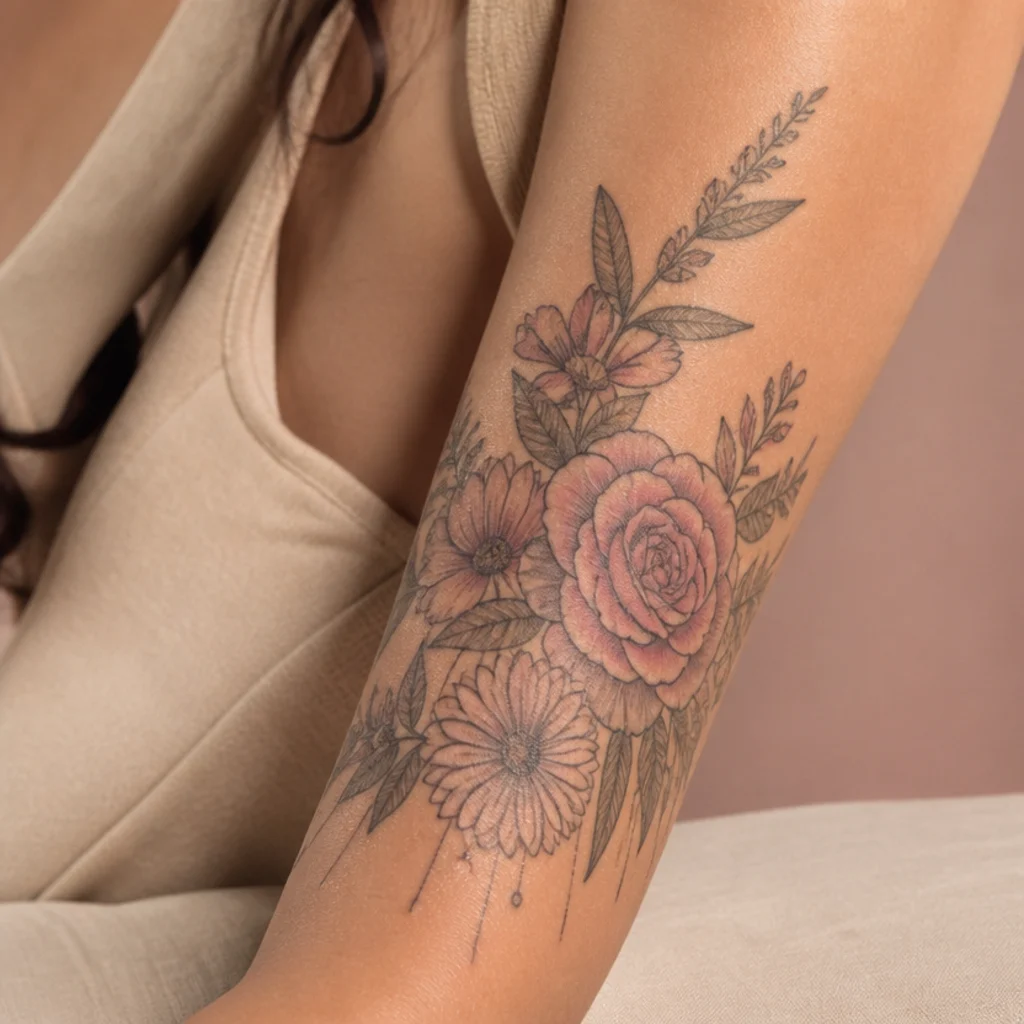
A gathered bouquet, peonies, ranunculus, or poppies, hands the artist generous shape and layered shading to work with, and those overlapping petals create natural pockets to concentrate coverage while keeping the whole piece romantic and full. It flatters the rounded planes of the upper arm, shoulder, or calf and reads well across skin tones when shading depth is matched to your complexion rather than defaulting to one gray. It sits neatly between small cover up tattoos and larger work, giving you room to extend the design later. Expect moderate upkeep on the shaded areas and diligent sun care to keep petals from going flat. Pro tip: the physical overlap of petals is your coverage tool, so ask the artist to stack the fullest, darkest bloom directly over the busiest part of the scar. Have your artist sketch the bloom placement around the mark before any needle touches skin.
07Delicate Bird in Flight
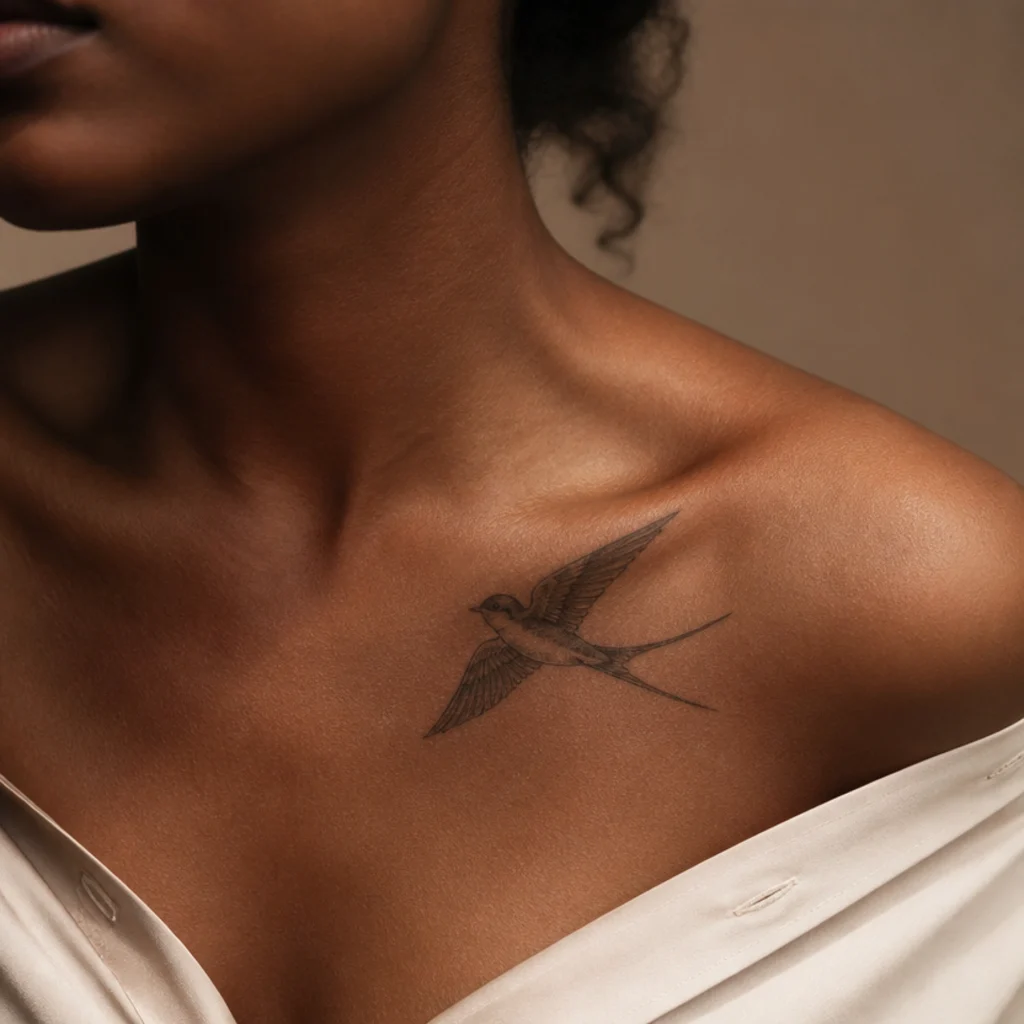
A small bird, a swallow, sparrow, or swift, carries movement and meaning in a compact silhouette, and the wings can be angled to sweep across a scar so the shape, not the mark, leads the eye. It suits the collarbone, shoulder blade, or forearm and pairs beautifully with airy, feminine styling. Because it lives in fine feather detail, it stays firmly in small cover up tattoos territory, ideal when you want something meaningful but understated, with the honest note that those thin lines may soften and want a refresh in later years. Over a scar, the wing is doing quiet work: a fuller, more shaded wing conceals more than a spare outline. Pro tip: position the bird mid-flight with the nearer wing angled down and over the scar, so the densest feather shading falls where coverage matters. Ask how they'll orient the wings so the composition flows with your body's natural lines.
08Name Cover-Up Reimagined
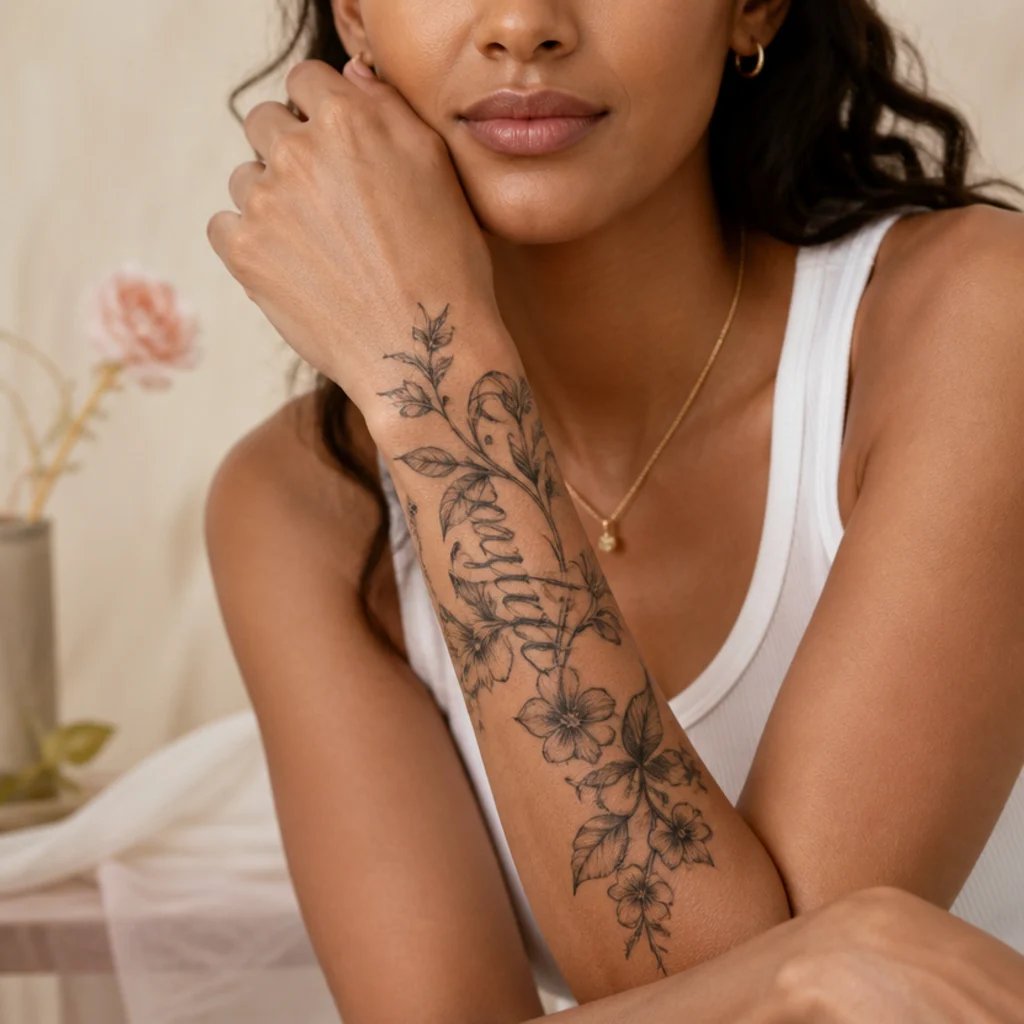
Name cover up tattoos are one of the most common requests, whether you are reworking old lettering or a scar sitting near sentimental text. A graceful route dissolves the letters into a flowing floral vine, weaving blooms and leaves through the existing strokes so the name reads as botany at a glance. It suits the forearm, wrist, or shoulder and appeals to women who want a new chapter without a heavy blackout. Covering previous ink is a different problem from covering skin: old saturated lines and ascenders often need to be absorbed into the darkest elements of the new design, which is why an experienced cover-up specialist is non-negotiable here. Fully erasing older lettering isn't guaranteed, and a laser lightening session or two beforehand sometimes makes coverage far cleaner. Pro tip: bring a flat, well-lit photo of the existing ink to the consult so the artist can plan where the darkest new foliage must land. At the consult, ask what's realistically achievable over your specific lettering, and whether pre-lightening would help.
09Bold Dark Rose
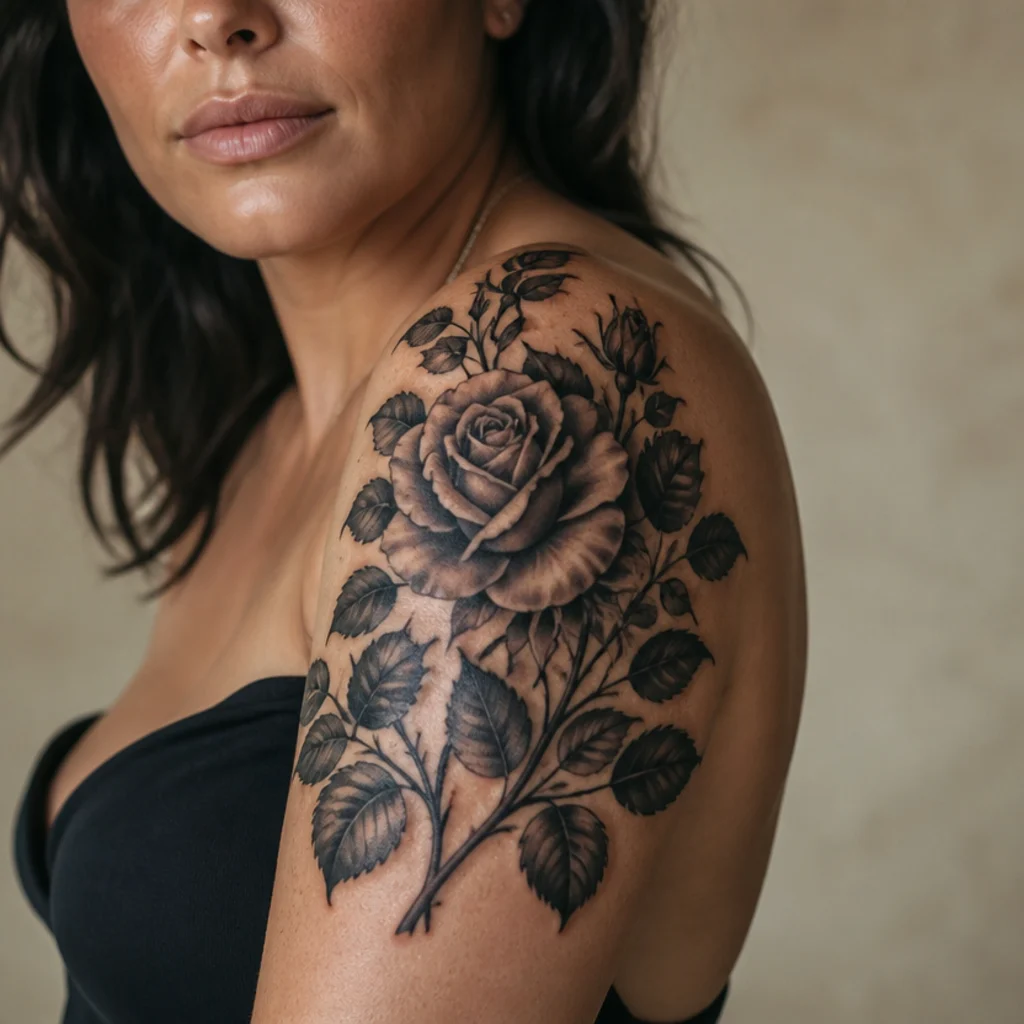
When you want real coverage, a bold dark rose brings dense shading and confident linework to bear. Among black cover up tattoos, a saturated single bloom is a classic because the depth of the petals masks far more discoloration than airy designs can, and the high contrast reads striking on every skin tone. It suits women drawn to statement pieces on the shoulder, forearm, or thigh, and bold work holds its shape for years, asking only occasional touch-ups to keep the blacks deep. The trade-off is that heavy saturation over scar tissue can behave unpredictably, fibrous areas may need a second pass, and very raised tissue can distort a crisp petal edge. Pro tip: ask for a subtle stem, leaf, or thorn spray extending past the bloom so the design has somewhere to breathe on smoother skin and the scar sits under the densest petals. Confirm with your artist that the scarred area can take an even saturated fill before committing to heavy shading.
10Constellation Dot Work
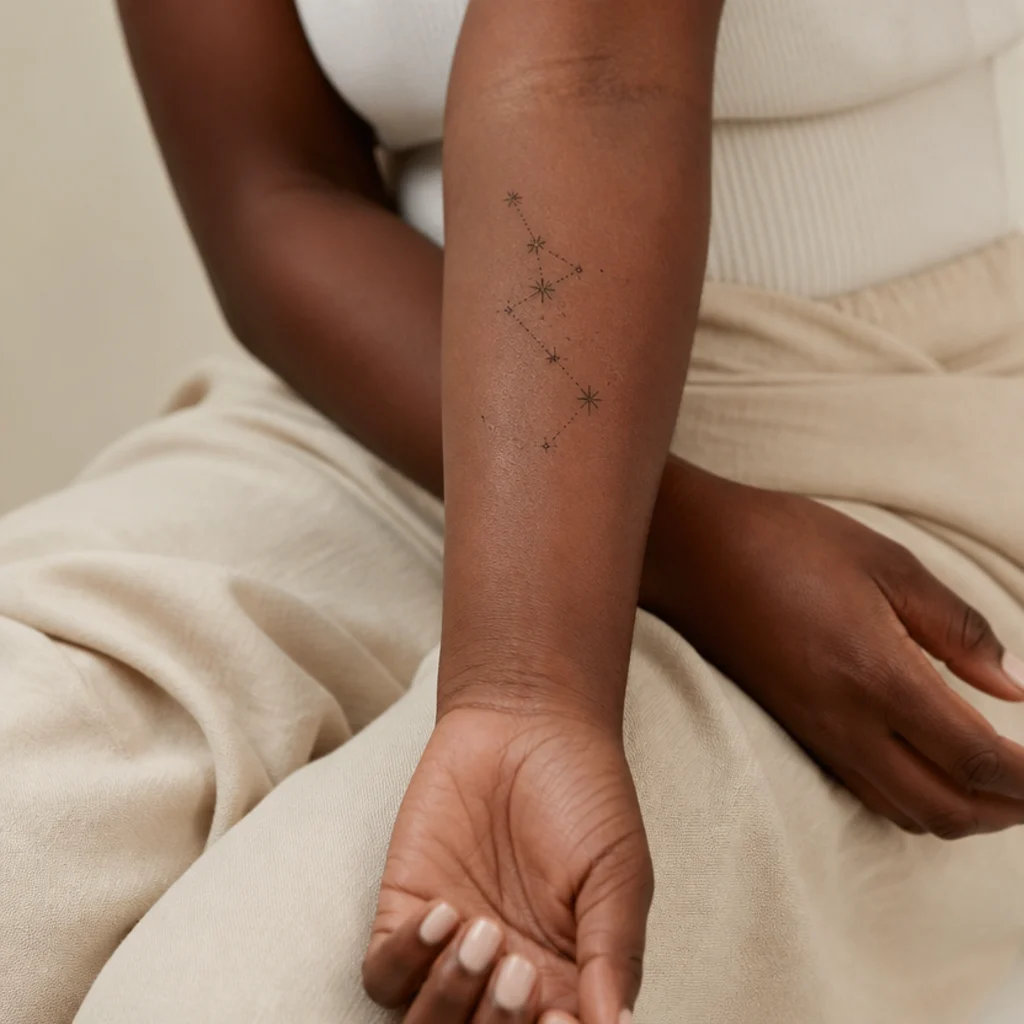
A scattered constellation of fine dots and hairline connectors is quietly clever over faint or freckled scars, because the stippling reads like an extension of the skin's own texture rather than a patch laid over it. You can map a meaningful star pattern, a birth sign, a coordinate, or keep it abstract. It suits minimalists and works on the inner forearm, spine, or behind the shoulder, staying in small cover up tattoos territory unless you extend it into a fuller galaxy with wash shading. Dot work is low maintenance and ages gracefully when the spacing is planned, though raised scar tissue can make individual dots settle unevenly, so density and dot size matter. Pro tip: cluster the brightest, largest stars over the most visible part of the scar and thin the field out toward smooth skin, so the eye reads a night sky, not a cover-up. Ask whether dot work or a solid line will read cleaner over your particular scar texture.
Save this to Pinterest and note which placements suit your everyday style.
11Ocean Wave Ribbon
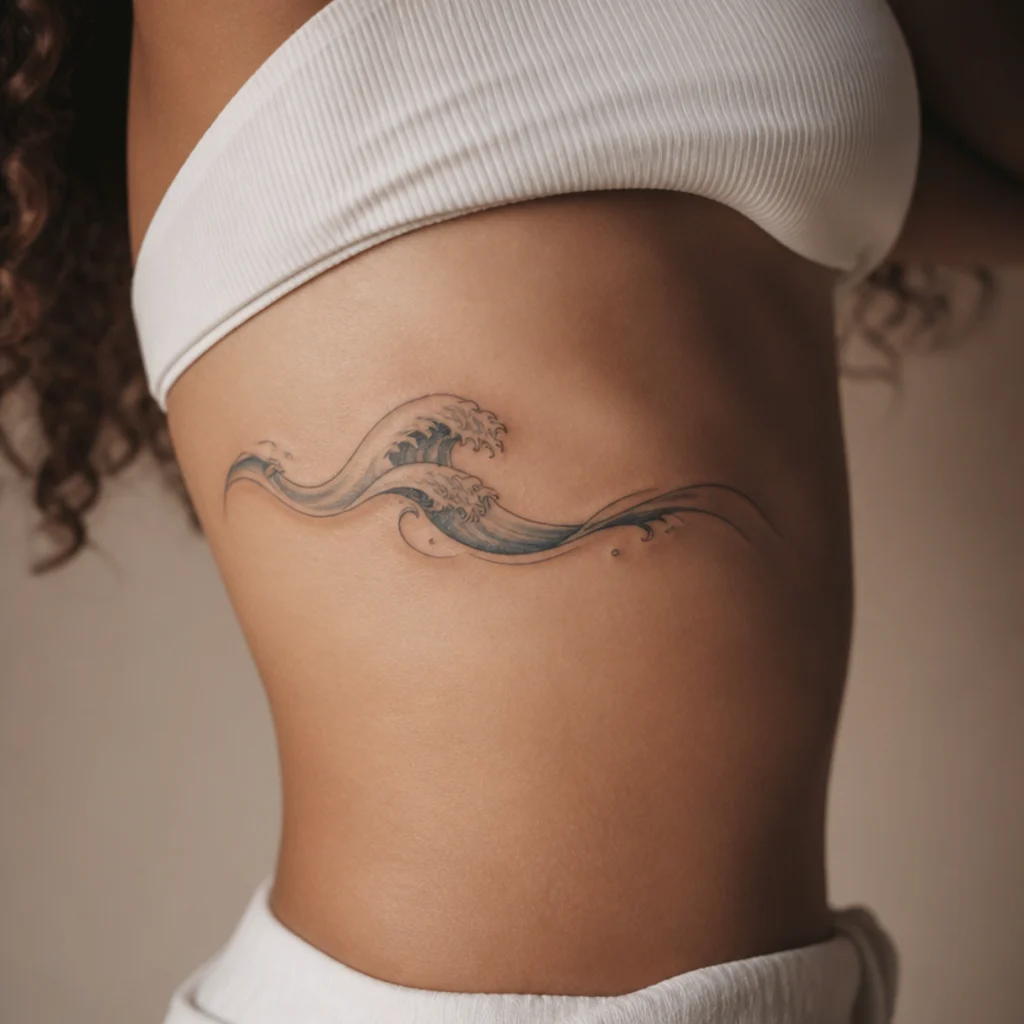
A flowing wave, rendered as a curling ribbon of line and soft shading, brings gentle movement to longer scars, and like the trailing vine it follows the mark's line rather than crossing it, which keeps the whole composition feeling natural. It suits the ribs, hip, or outer forearm and appeals to women who love coastal, fluid imagery, with soft blue-grey or muted teal shading keeping it calm rather than busy. Maintenance is moderate on the shaded sections, and the linework holds well. The practical notes are placement-specific: ribs and hips sit close to bone and move a lot, so they tend to be more tender and the skin flexes as it heals. Pro tip: let the wave's foaming crest, the busiest detail, break directly over the scar while the smooth trough runs along clear skin. Talk through how to angle the wave with your scar's direction, and plan session length around a tender area.
12Large Botanical Sleeve Panel
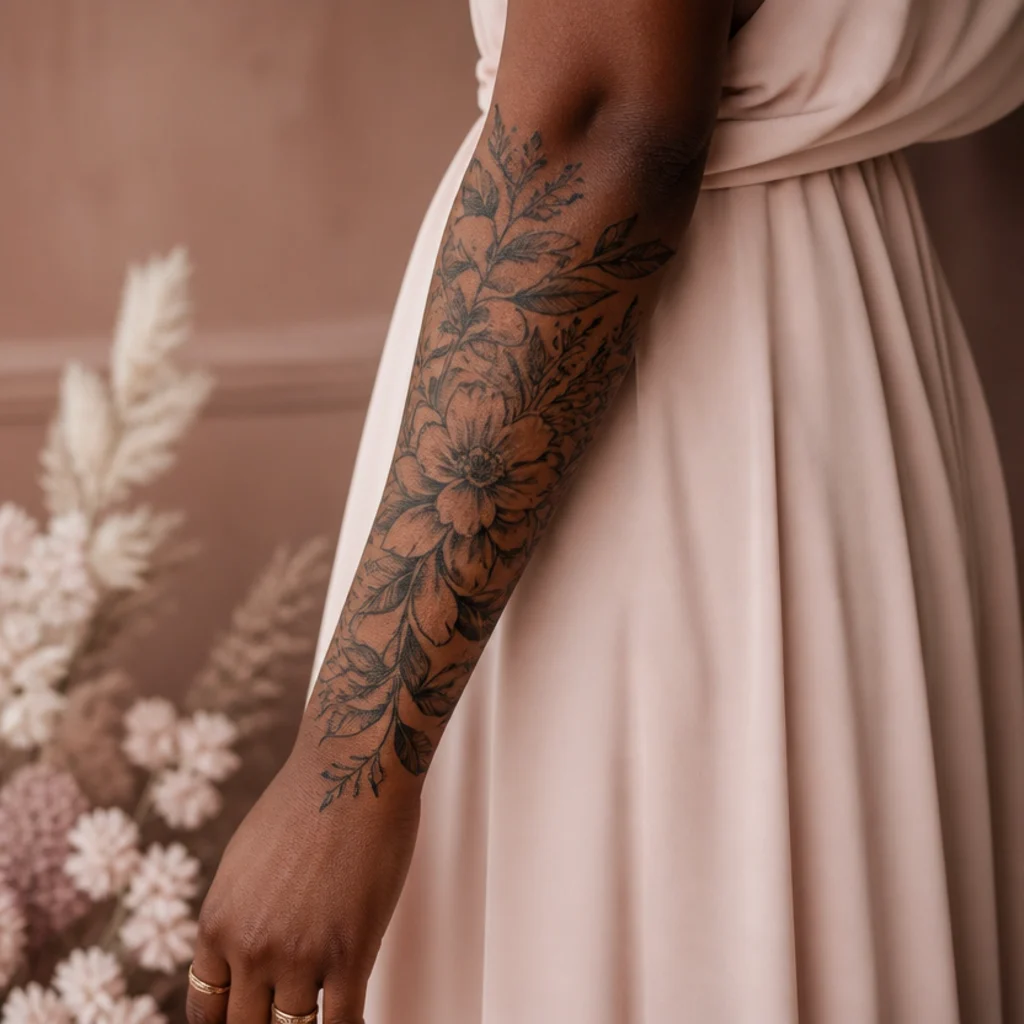
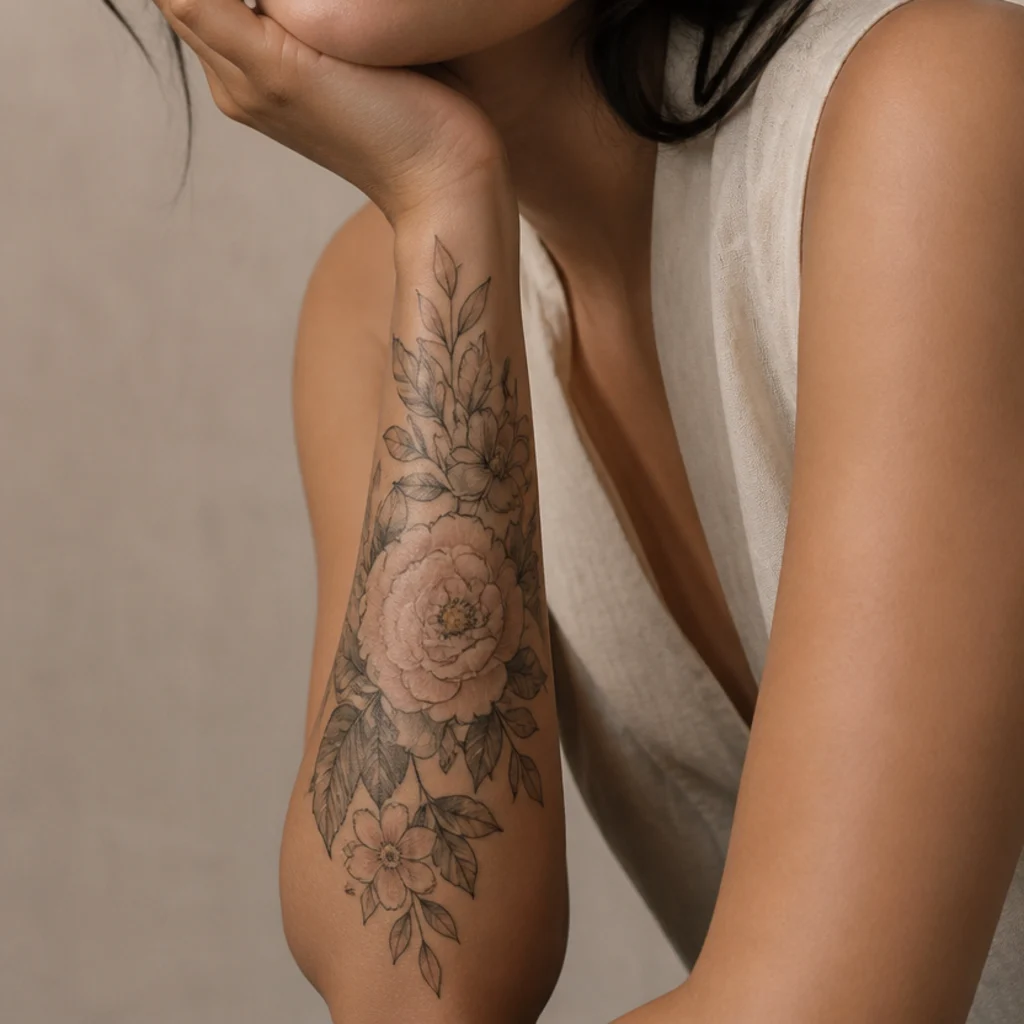
When a scar is sizable, or you just want an immersive piece, large cover up tattoos like a botanical panel or partial sleeve give the most creative freedom of anything here. Layered leaves, blooms, and deliberate negative space let the artist route the composition so the scar becomes one small note inside a much bigger picture. With that much visual information competing for the eye, it's often the most effective concealment strategy of all. It suits women ready for a multi-session commitment on the forearm, upper arm, or calf, and it rewards patience: expect staged sessions, real healing time between them, and diligent SPF to keep the greens and darks true. Pro tip: ask the artist to place a naturally dense element, a cluster of leaves or an overlapping bloom, exactly where the scar runs, and to use open negative space over clear skin so the piece breathes. Get your artist to map placement early so the busiest detail lands where you want the most coverage.
13Minimalist Single-Line Shape
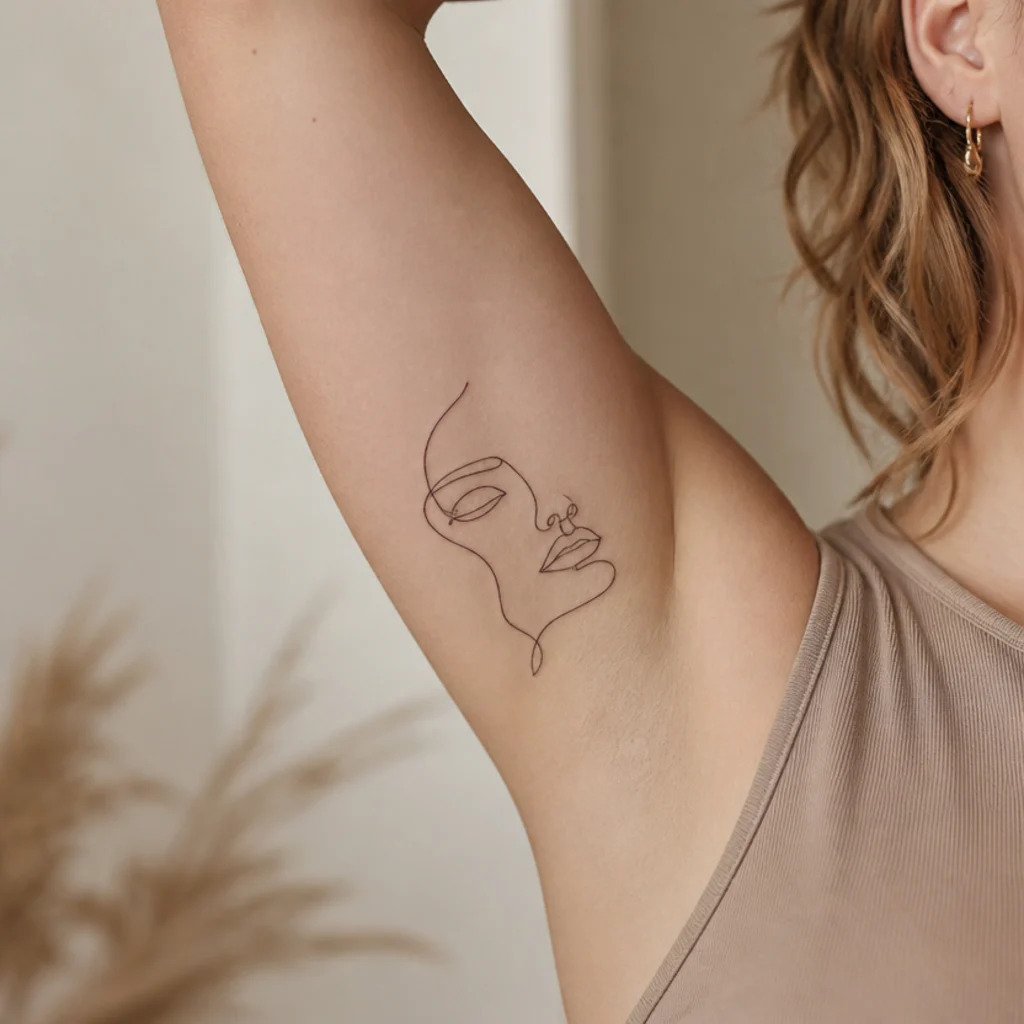
A single continuous line, an abstract face, a simple flower, a small heart, is understated, modern, and calming, because the unbroken stroke draws the eye along its path rather than concentrating attention on any one spot. It suits fans of minimalist design and lives well on the inner bicep, ankle, or wrist, staying comfortably among small cover up tattoos and healing quickly. Be clear-eyed about what it does and doesn't do: a single line reframes and distracts from a small, flat mark, but it offers little actual coverage, so it's best over faint scars rather than raised or discolored ones. Because the whole design is exposed line, precision is everything and very fine work may soften over the years. Pro tip: have the line deliberately loop around or graze alongside the scar so the mark becomes an intentional part of the negative space. Ask your artist to route the line so the shape stays clean and reads as a choice, not a patch.
14Moth and Moon Motif
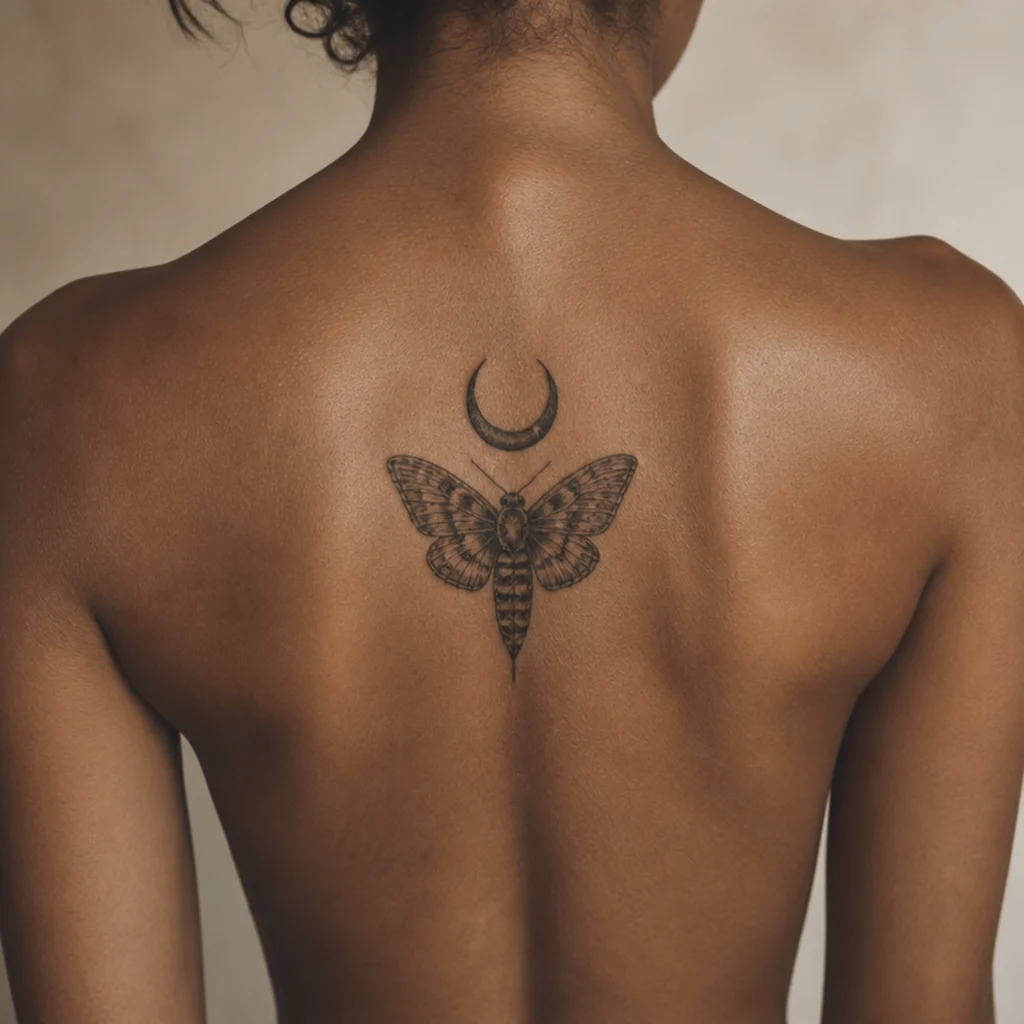
A moth paired with a crescent moon blends symmetry with symbolism, and those broad wings offer a surprising amount of patterned surface to fold coverage into. Fine wing detailing against a soft, shaded moon reads both delicate and grounded, and the symmetry can be centered over a scar so the mark tucks beneath the densest wing pattern. It suits the spine, sternum, or upper back and appeals to women who like a celestial edge. Maintenance is moderate given the fine patterning, and the mirrored layout is doing quiet coverage work. The placement demands care: spine and sternum skin stretches and moves, so the design has to be planned for how the body flexes and heals. Pro tip: center the thorax, the moth's darkest, most detailed core, directly over the busiest part of the scar so coverage concentrates where it counts. Ask how they plan the layout for skin that moves, and request to see healed spine or sternum work.
15Abstract Brushstroke Accent
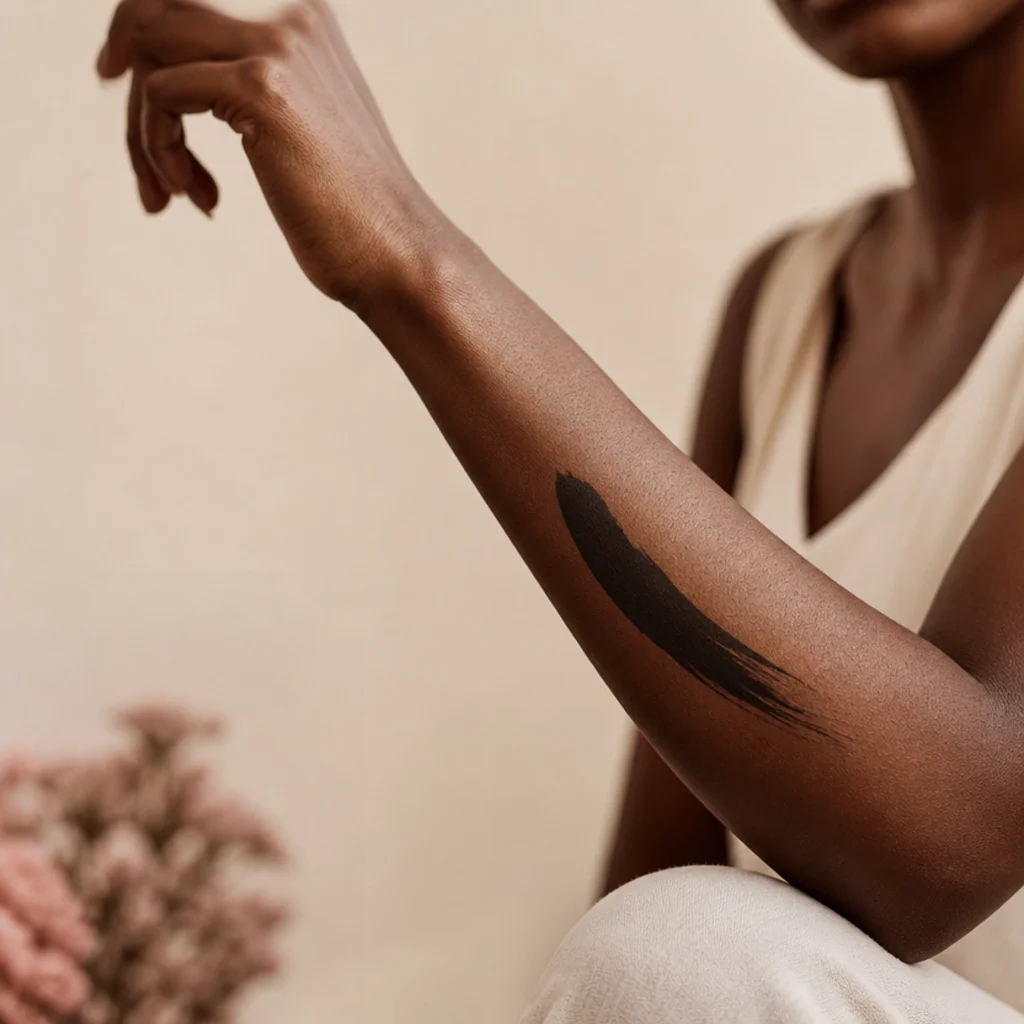
For an artful, unexpected look, an abstract brushstroke, one expressive sweep of black or muted pigment, turns the area into a piece of contemporary art. The loose, painterly form has no rigid edges to align, so it's unusually forgiving over irregular or slightly raised scars where crisp linework would struggle. It suits creative women drawn to gallery-style work on the outer forearm, shoulder, or calf. Push the saturation up and it leans toward the bolder end of black cover up tattoos, with more coverage muscle than its casual look suggests. Upkeep is generally low for a solid stroke. The whole effect hinges on confident, intentional marks, so a shaky or overworked stroke fails where a decisive one sings. Pro tip: let the thickest, most saturated part of the sweep, the "loaded brush" moment, fall over the scar and taper the dry-brush tail across clear skin. Ask to see fluid abstract pieces in your artist's portfolio, and confirm how the stroke will sit over your scar.
Pro Tips from the Editor
- Let the scar's direction lead. The single most flattering choice is a design whose main line runs with the scar's long axis, not across it, vines, waves, sprigs, and single-line work all exploit this.
- Use density as a tool. Concealment comes from where you concentrate the darkest, busiest detail. Ask for the heaviest element over the scar and open negative space over clear skin.
- Age matters more than motif. Many artists want a scar settled and stable, often a year or more, and no longer changing color before tattooing. Fresh, pink, or shiny scars are usually asked to wait.
- Consider a two-session plan for scar tissue. Fibrous or shiny skin can accept ink unevenly on the first pass; budgeting for a touch-up session gives a far cleaner healed result than forcing it in one sitting.
- Ask specifically for healed cover-up-over-scar photos. Fresh work photographs beautifully; healed work over scar tissue is the real test of an artist's skill. Portfolios of both are the green flag.
- SPF is the maintenance. UV is what flattens color and blurs fine line over time. Daily SPF 30-plus on the piece, once fully healed, does more for longevity than any product.
- For old lettering or dark ink, ask about pre-lightening. A laser session or two before a name cover-up often lets the new design breathe instead of being forced dark to hide the old shapes.
How to Choose / Get the Look
Start with the scar itself, because it sets the ceiling on what is possible. Read three things: texture (flat and faded gives the most freedom; raised, keloid, or shiny atrophic is technical), age (settled and color-stable, often a year-plus, versus fresh and still changing), and direction (which way the line runs, since the best designs follow it). A quick self-check the night before your consult, photograph the scar in flat, even light and note its length, is exactly the information an artist needs.
Then match the design to the job. Use the framework below as a starting point, and confirm everything with your artist.
| If your scar is... | Strong directions | Watch-outs |
|---|---|---|
| Long and linear (surgical, C-section) | Trailing vine, ocean wave, single-line shape | Follow the line, don't cross it |
| Small and flat | Fine-line sprig, small blackwork symbol, bird | Great for small cover up tattoos |
| Discolored or textured | Bold dark rose, blackwork, botanical panel | Saturation conceals more; plan a possible touch-up |
| Faint or freckled | Constellation dot work, watercolor wash | Subtle designs distract more than they cover |
| Over old lettering/ink | Name cover-up vine, large botanical panel | Needs a cover-up specialist; ask about pre-lightening |
Next, weigh scale against your life. Small cover up tattoos are ideal if you want something subtle or are new to tattoos; large cover up tattoos give room to reframe a bigger area but ask for multiple sessions and healing time. Reworking text sits in its own bucket, name cover up tattoos demand a genuine cover-up specialist, not just any linework artist.
Finally, vet the artist. Bring clear reference images, be honest about the upkeep you'll actually maintain, and ask to see healed cover-up work over scar tissue, not only fresh photos. Above all, design, sizing, placement, coverage feasibility, and healing must be confirmed with a licensed tattoo artist, and no design can be promised to fully hide a scar or previous tattoo.
Frequently Asked Questions
Can a tattoo completely hide a scar?
Not guaranteed, and any artist who promises full concealment is overselling. A well-planned tattoo can strongly redirect attention and change how a scar reads, but complete coverage depends on the scar's texture, color, elevation, and age. Saturated designs conceal more than airy ones. A licensed artist will assess your specific skin and tell you what is realistic before you book.
How long should I wait after a scar forms before tattooing over it?
Most artists want a scar fully settled and color-stable, commonly a year or more, and no longer raised, red, or changing. Surgical scars, burns, and acne scarring all mature on different timelines. Tattooing tissue that's still healing risks poor ink retention and irritation, so the timing call belongs to your artist after an in-person look.
Are small cover up tattoos enough to cover a scar?
Small cover up tattoos work best over small, flat, faded scars, or as a way to draw the eye elsewhere rather than blanket the mark. Larger, raised, or discolored scars usually need more surface area or bolder saturation for meaningful coverage. If a scar is bigger than your palm or noticeably textured, ask about scaling up.
Do scars affect how the tattoo heals?
They can. Scar tissue often holds ink differently than surrounding skin, sometimes patchy, sometimes over-absorbing, and can be more sensitive during the session. Raised or fibrous areas are the most unpredictable. An experienced artist will assess the tissue, may plan a two-pass approach with a touch-up, and may recommend waiting until the scar is fully mature.
Are black cover up tattoos better for coverage?
Generally, yes, for concealment. Denser, saturated black cover up tattoos mask discoloration more effectively than open linework because solid ink covers what airy designs leave visible. Whether that's right for you depends on your design goals, your skin tone, and how your particular scar accepts a solid fill, worth confirming at the consult.
Can you tattoo over raised or keloid scars?
Sometimes, but it's advanced and case-by-case. Keloid-prone skin can react to the trauma of tattooing by forming more scar tissue, so many artists are cautious and may decline or ask for a small test. Raised but stable scars can often be worked with a forgiving, painterly design. This is firmly a conversation for a licensed artist, and sometimes a dermatologist, first.
Should I get laser scar or ink lightening before a cover-up?
For dark old tattoos or stubborn discoloration, a laser lightening session or two beforehand can make a cover-up dramatically cleaner by giving the artist a lighter canvas. It's optional and adds time and cost, but for name cover up tattoos and heavy old ink, it's often worth asking about. Discuss it with both your tattoo artist and a licensed laser provider.
How do I ask an artist about a scar cover-up?
Book a consultation, bring reference images, and describe the scar's age, texture, and how it got there. Say plainly what you want, softening versus full coverage, and ask to see healed cover-up examples over scar tissue. Let the artist advise on placement, sizing, timing, and whether one session or two will give the best result.
How much does a scar cover-up tattoo cost?
It varies widely with size, detail, sessions, and your artist's rates, so treat any figure as a placeholder until you are quoted in person. Small linework often sits near a shop minimum, while multi-session panels run considerably higher. Scar tissue that needs a touch-up can add to the total. Ask for a full estimate, including any touch-up, at the consultation.