15 Small Cover Up Tattoo Ideas for Women
Small cover-up tattoos win on strategy, not square inches. These 15 ideas show exactly how value, texture, and placement can reframe a dated design or a mark you'd rather see differently, plus what to ask before you sit down.
 Edited by Lena Rose · Published July 11, 2026 · 25 min read
Quick Answer
- Best for: Women reworking a small, faded, or dated tattoo, or softening a matured fine mark, inside a compact footprint (roughly palm-sized or less)
- Who might skip it: Anyone whose original is large, jet-black, and recent—those usually need a bigger canvas or laser fading first
- Maintenance: Low to moderate; fine lines and soft washes soften faster than solid black and want a refresh sooner
- Difficulty: Moderate to high; layering new ink over old is one of the hardest asks in tattooing and may take more than one session
- Cost: Variable—expect a premium over a same-size fresh tattoo because of the planning and density involved; blackout and laser-assisted work sit at the higher end
- Wear time / longevity: Permanent; saturated styles hold their read longest, delicate work needs periodic touch-ups
- Standout variation: A layered botanical that uses overlapping petals and leaves to break up and absorb the shape underneath
- How to ask your tattoo artist: "Can you assess what's underneath in person, tell me honestly how much will be hidden, and whether fading first would give a cleaner result?"
In This Guide
- Blackwork Bloom Cluster
- Fine-Line Botanical Sprig
- Solid Blackout Band
- Watercolor Wash Petal
- Geometric Mandala Patch
- Small Butterfly Overlay
- Rose With Layered Leaves
- Ornamental Lace Motif
- Name-to-Symbol Rework
- Scar-Softening Vine
- Moth With Detailed Wings
- Dotwork Moon Phase
- Bold Traditional Heart
- Feather and Foliage Blend
- Compact Snake and Stem
Covering an existing tattoo in a small footprint is one of the hardest requests an artist takes on — there's just less room to bury old ink under new. The physics don't bend: new pigment sits in the same skin layer as the old, so it blends with what's underneath rather than painting over it like wall paint. That's why value (how dark a design reads) matters more than color, and why a good small cover-up leans on darker tones, denser texture, and shapes built to pull the eye somewhere new. Some ideas below rely on solid black for full concealment; others fold an older mark into a fresh composition through layering, which usually suits fine or faded work better. A few shades of laser fading beforehand can also open up options that wouldn't otherwise work. Whether you're reworking faded lettering, softening a matured scar, or moving on from a shape you've outgrown, these 15 directions give you a real vocabulary for your consultation. Final design, sizing, placement, coverage feasibility, and healing must always be confirmed with a licensed tattoo artist.
01Blackwork Bloom Cluster
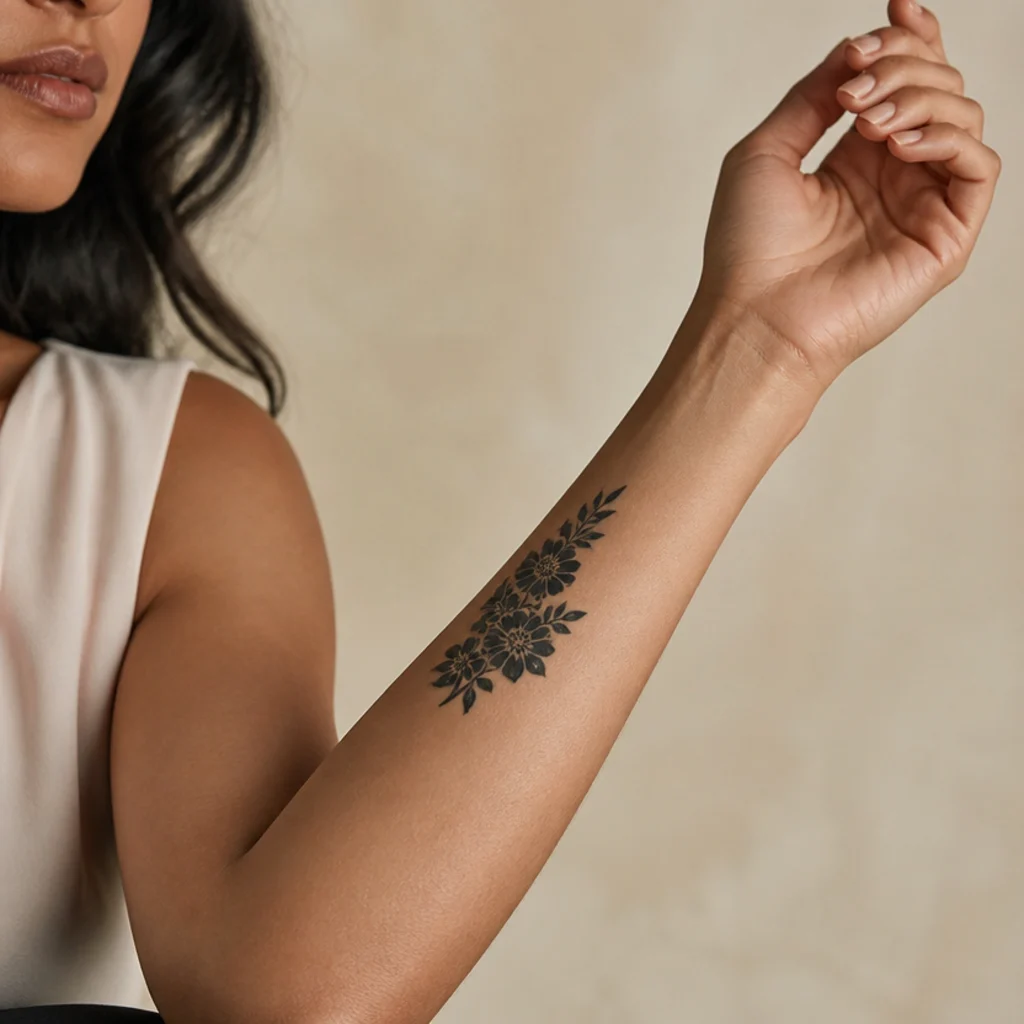
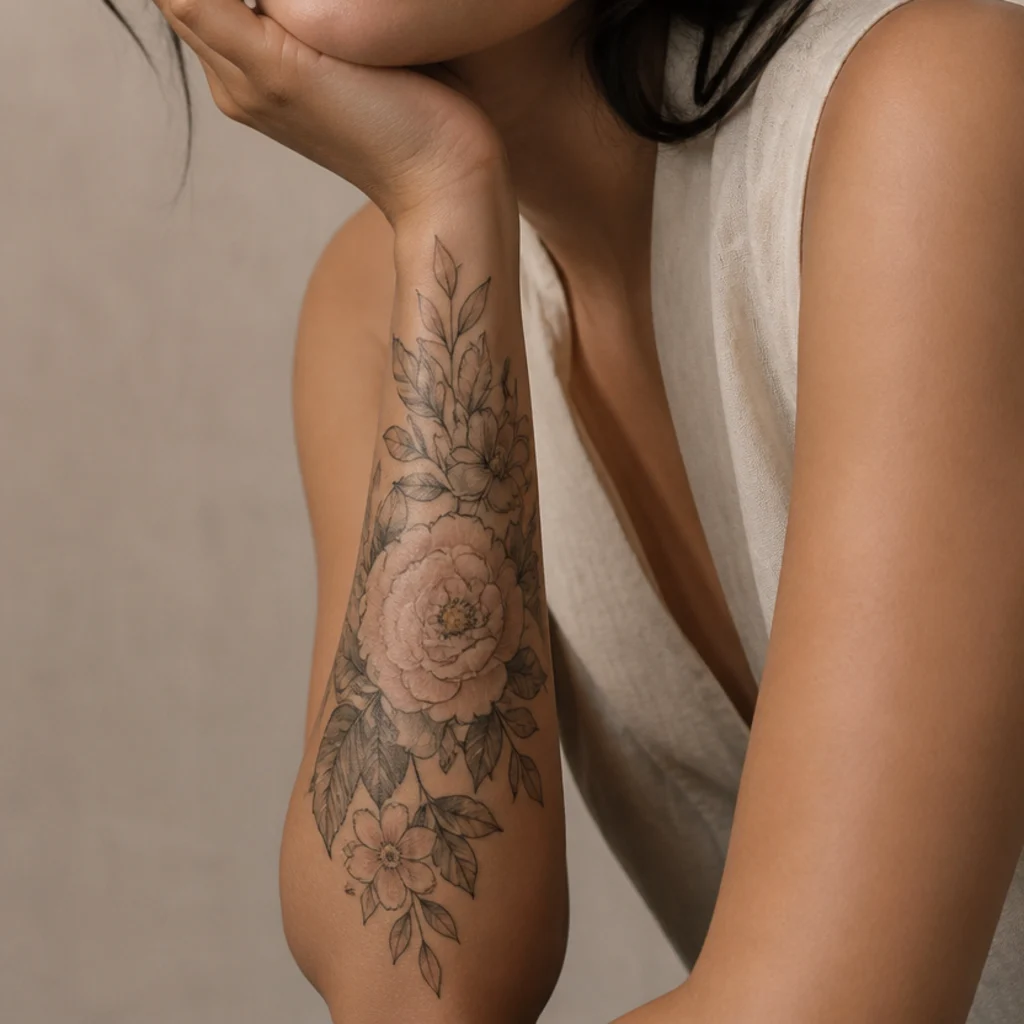
Blackwork florals are the workhorse of real concealment, because saturated black is the one value that reliably wins out over darker ink beneath it. Dense, filled petals and blacked-in negative space between leaves let the artist park solid coverage right over the busiest part of the original while keeping an intentional silhouette. If you want something graphic and high-contrast rather than soft, this is the direction — it flatters flat, generous planes like the inner forearm, deltoid cap, and outer calf, where a rounded cluster reads clean without wrapping. Design the bloom asymmetrically so the darkest flower centers land over the old ink and the airy edges feel deliberate. Upkeep is low, since solid black holds its shape for years, though crisp outer edges can soften and want a touch-up around the five-to-eight-year mark. Difficulty runs moderate to high, because balancing full coverage with a shape that still looks composed takes real skill. Ask your artist to map how much of the original will disappear versus ghost through before you commit.
02Fine-Line Botanical Sprig
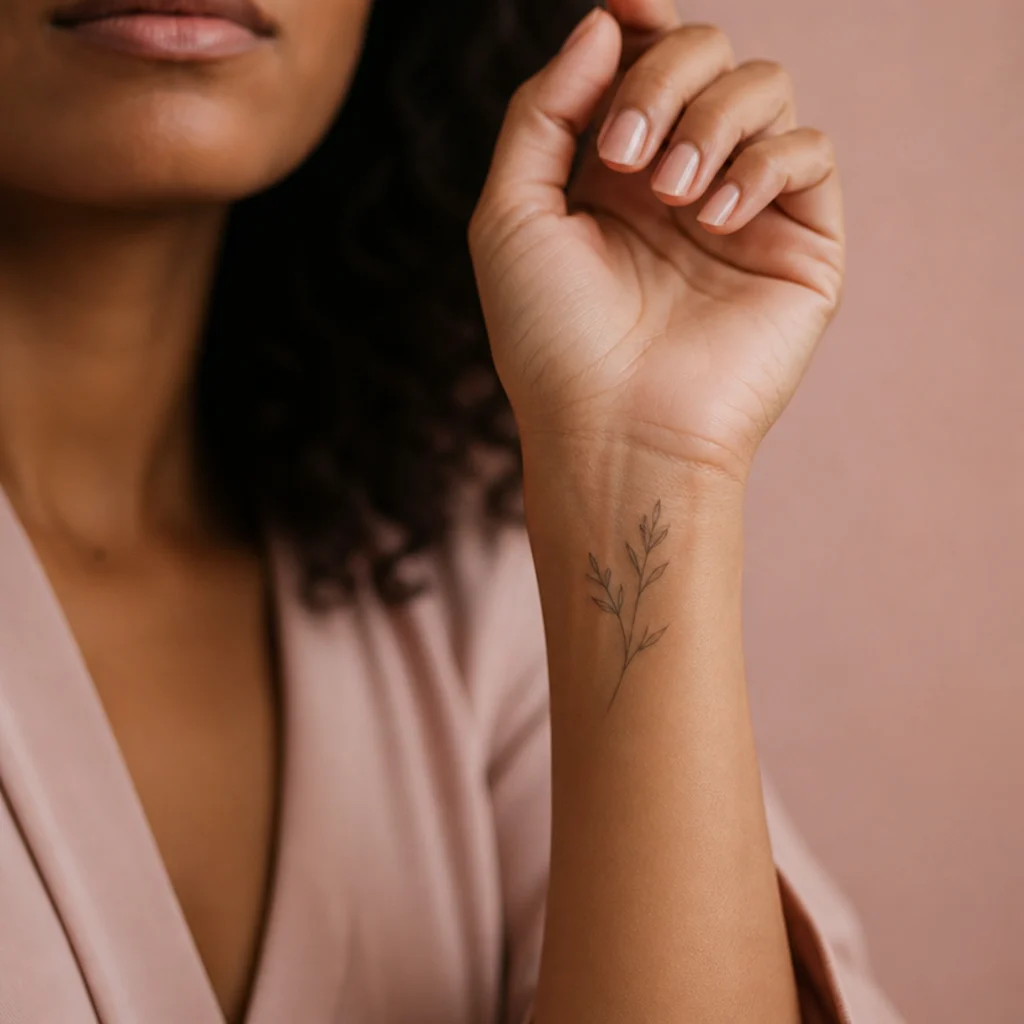
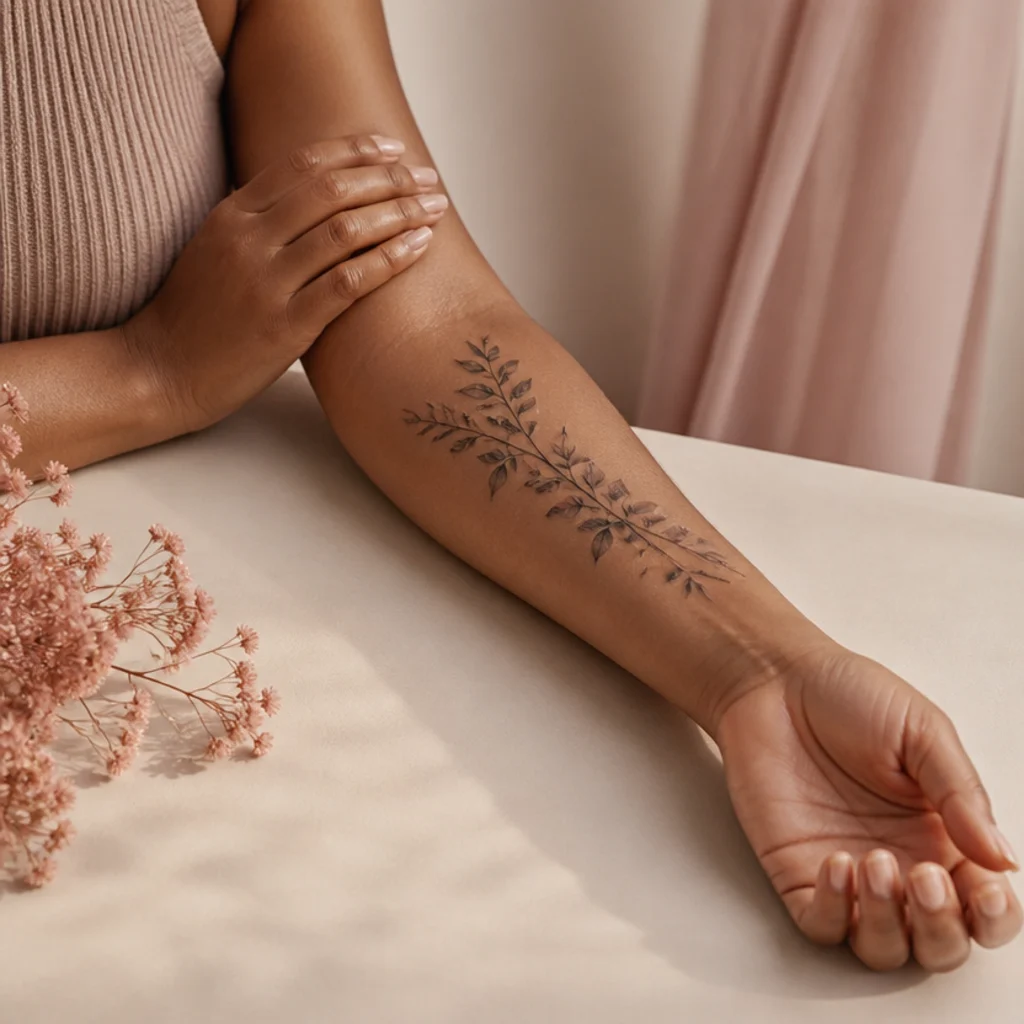
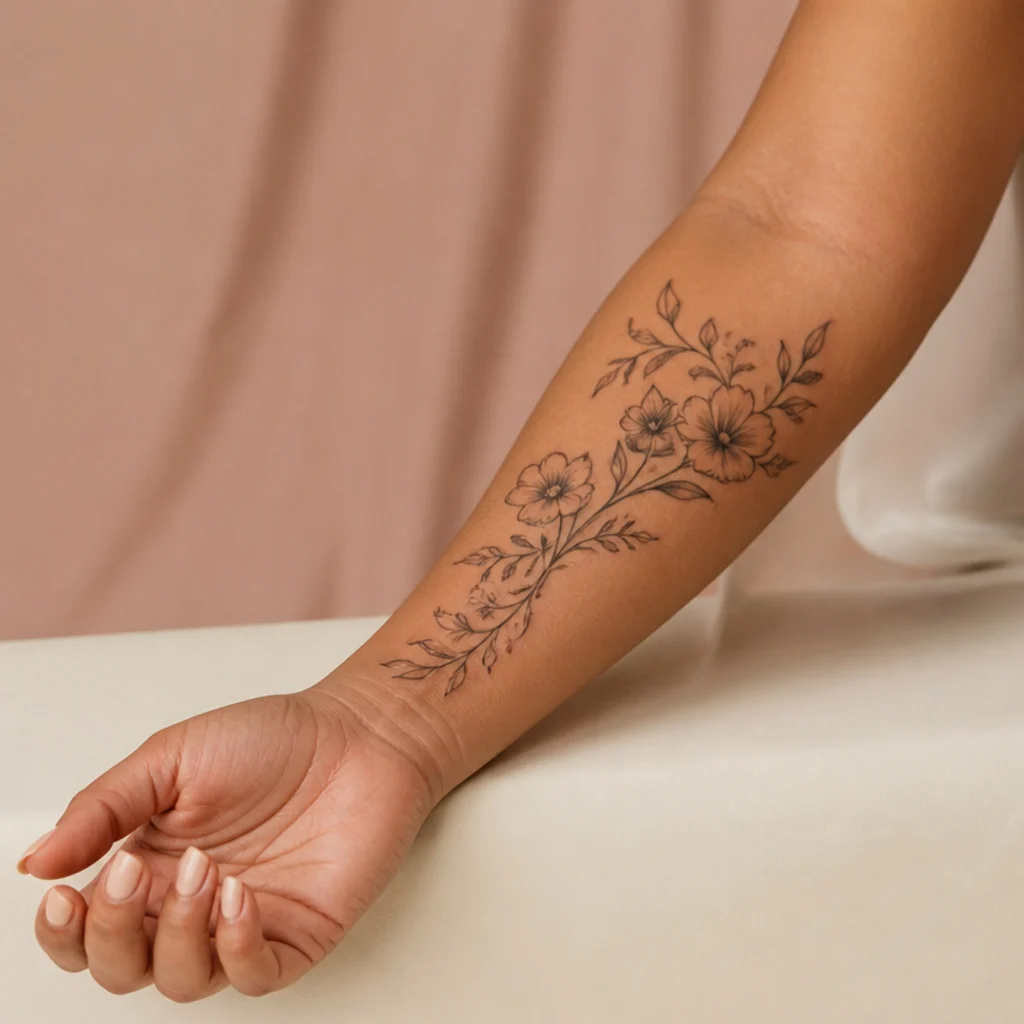
A fine-line sprig is the most honest option here about its own limits: single-needle work can't conceal heavy old ink on its own, so it works best when the original is already faint, or after one or two laser sessions have lightened it. It's a good fit for delicate real estate — the inner wrist, ankle bone, or behind the ear — where bold work would feel heavy, and for women who want something quiet and airy rather than a statement piece. The open spacing does the work: the artist routes stems and leaves so linework threads around the surviving fragments of the old design instead of fighting them. Thin lines carry no reserve of pigment, so they blur first; plan on a refresh every three to five years, sooner on high-friction spots. Treat it as a project rather than a single sitting — fade first, then decorate. Ask your artist whether pre-fading would let the sprig sit clean instead of half-hiding a shadow.
03Solid Blackout Band
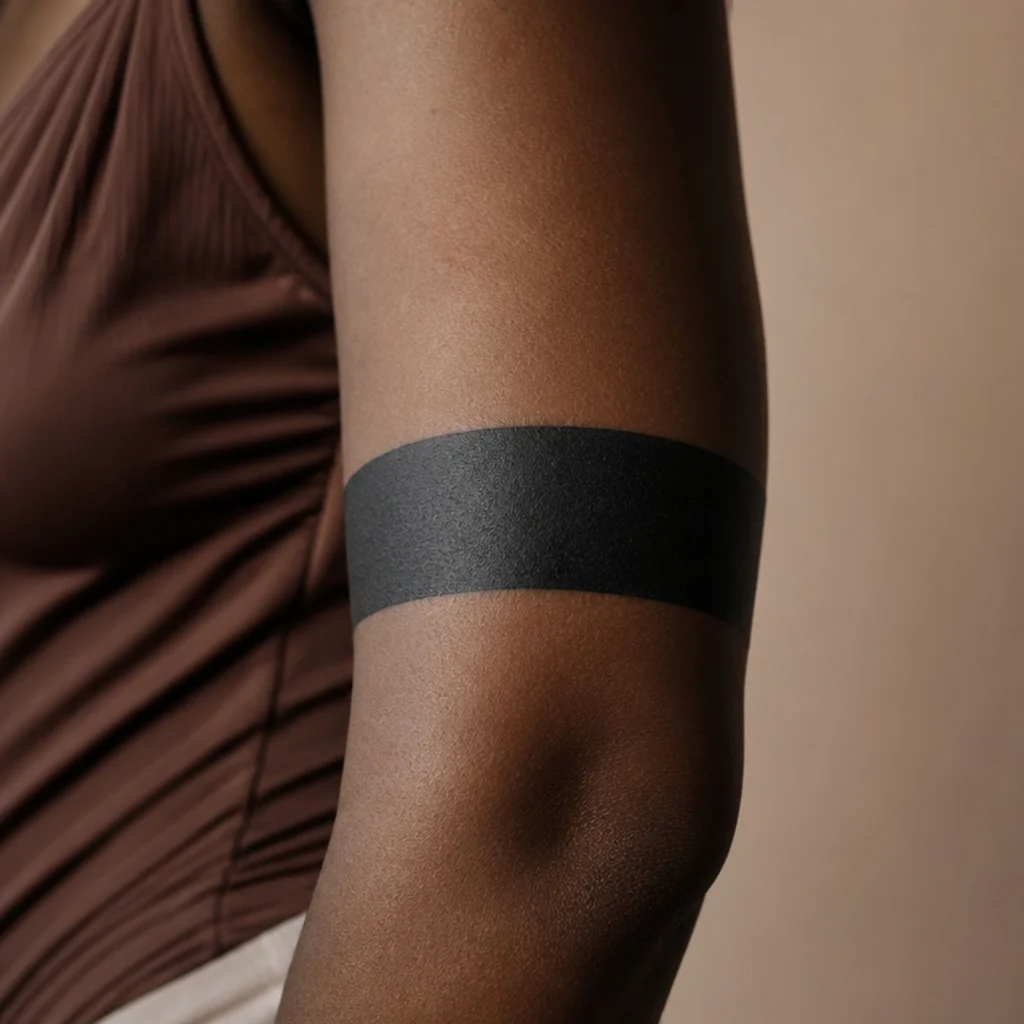
When concealment is the whole brief, a blackout band is the most decisive answer among small cover-up tattoos: a clean ribbon of solid black around the wrist, upper arm, or finger fully saturates the field and erases what was there. It suits women drawn to minimalist, architectural styling who don't want a busy replacement motif competing for attention. The craft is all in the saturation. Patchy or "salt-and-pepper" fill is the classic tell of a rushed blackout, so a second pass to even it out is normal and worth the wait. Once healed, maintenance is low, though edges can lighten, and dense black over deeper skin tones sometimes heals slightly cooler — something a skilled artist accounts for in ink choice. The real caveat is reversibility: solid black is the hardest thing to rework or laser later, so treat it as a genuine commitment. Ask your artist how your skin tone will read against dense black, and whether a soft-edged or hard-edged band suits your anatomy.
04Watercolor Wash Petal
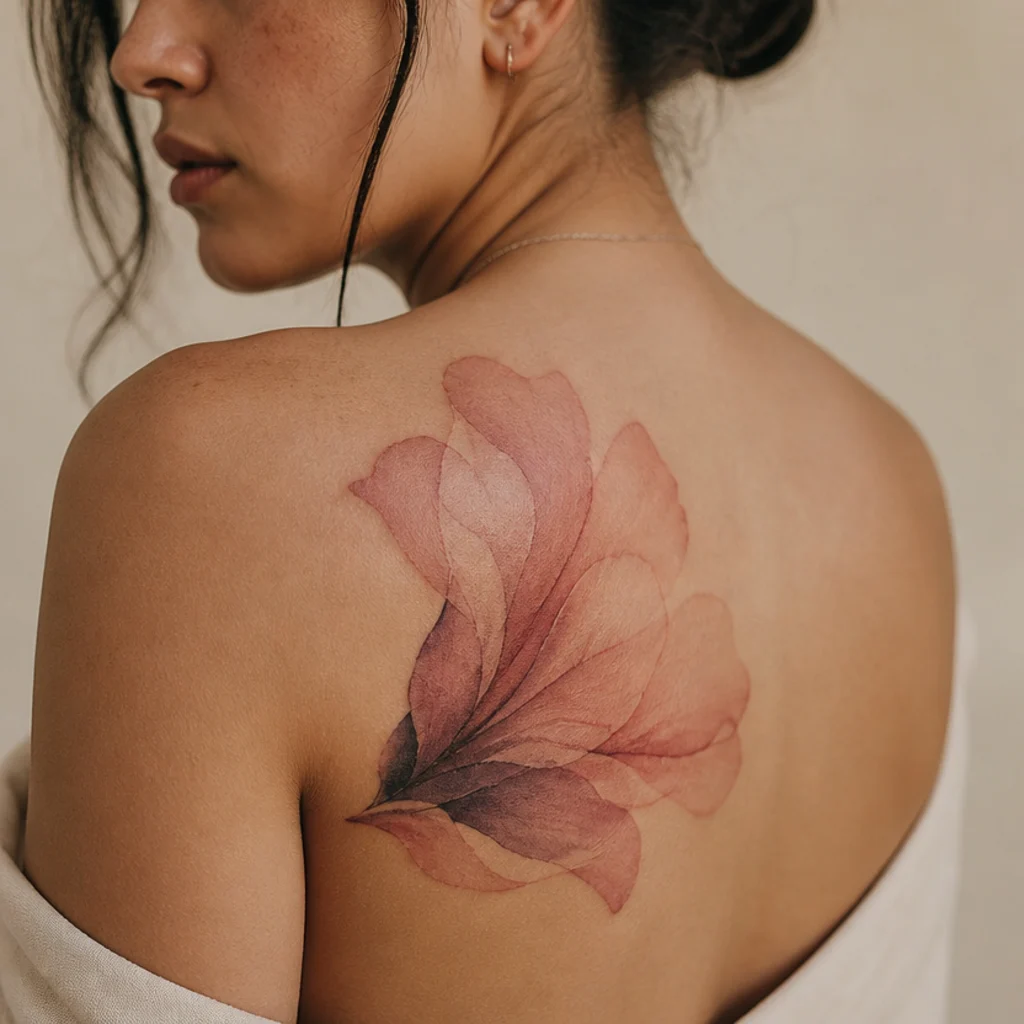
A watercolor petal distracts rather than deletes, using layered pigment and painterly bleed to pull focus away from an older shape. Washes of blush, dusty rose, and muted plum can sit over a small faded mark, but only if there's a discreet darker anchor or line structure underneath the color doing the actual hiding. Pure translucent washes let old ink ghost straight through, so the strongest watercolor cover-ups pair soft color with a subtle shaded base. Women who want warmth and movement instead of hard outlines tend to gravitate here — it sits well on the shoulder blade, upper arm, and ribs, where the skin is smooth and forgiving. Expect moderate upkeep: unlined color lightens faster than outlined work and may want refreshing every few years. Difficulty for true coverage runs high. Bring reference images and ask straight out what the original will look like beneath the wash before booking.
05Geometric Mandala Patch
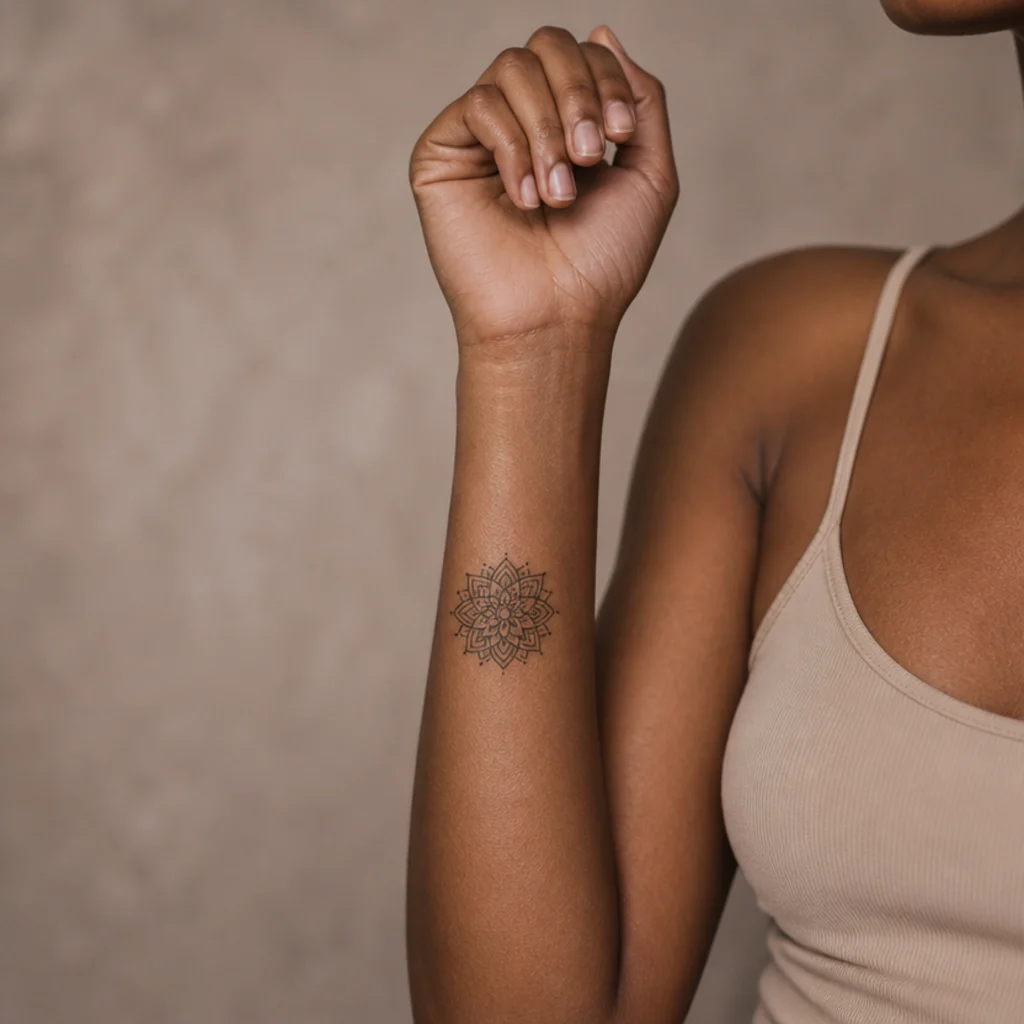
A compact mandala works as a cover because its dense, symmetrical detail gives the eye so much to track that whatever sits beneath it recedes into busyness. It's suited to women who love structure, repetition, and ornamental order, and it needs a rounded form with room to breathe without distorting across a joint — the forearm, back of the shoulder, or upper thigh. The artist can concentrate the heaviest dotwork and filled petals directly over the darkest fragments of the original, so the concealment hides inside the pattern. Maintenance is moderate: fine stippling reads slightly softer as individual dots mature and merge, which is normal rather than true fading. Difficulty is high, because symmetry is merciless (a mandala even a few degrees off looks off), and the coverage has to be plotted precisely against the old shape. Ask your artist to freehand or stencil the mandala directly onto the area so you can see how the geometry lands over your existing tattoo before the needle starts.
Save this to Pinterest and start a board for your cover-up consultation.
06Small Butterfly Overlay
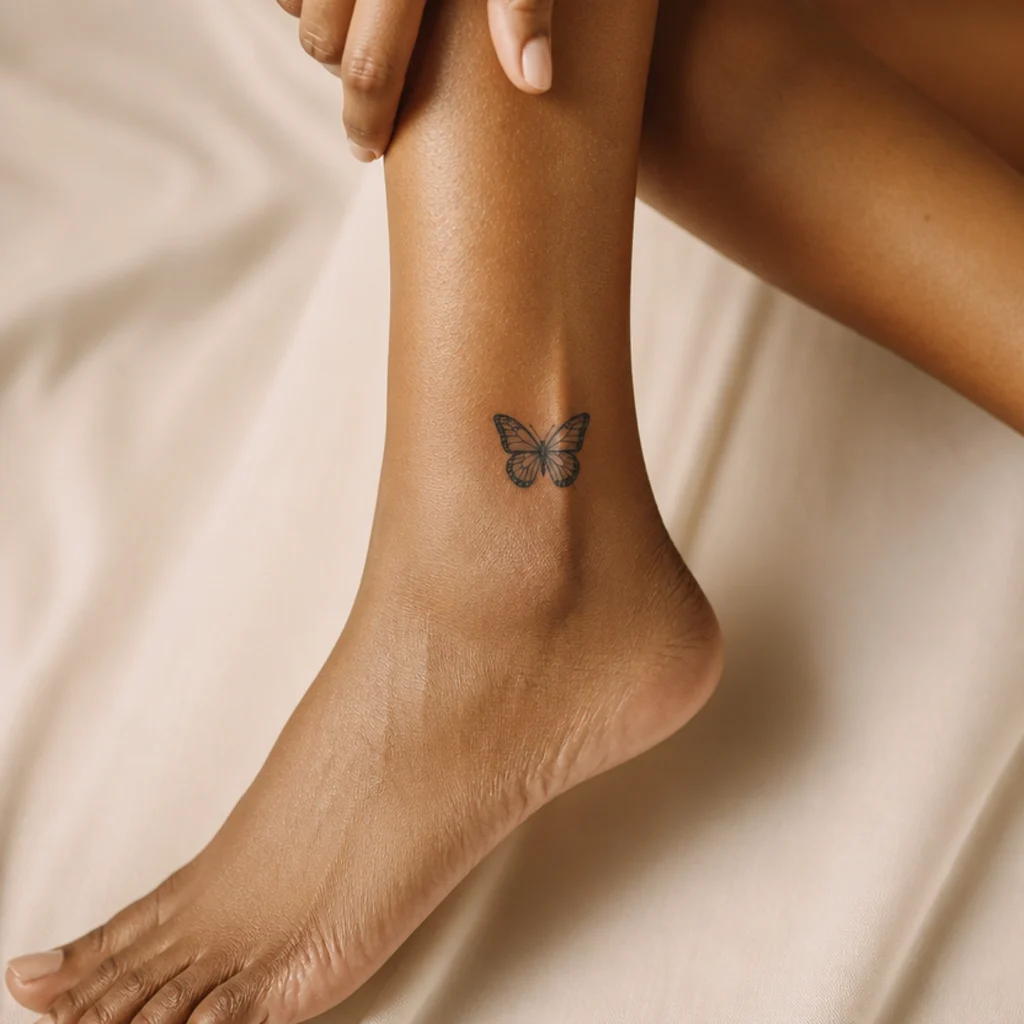
The butterfly stays a cover-up classic for a structural reason: two broad wings offer generous shaded planes that can absorb an old mark, while the body and antennae give the eye a natural centerline to land on. It works well for women who want something recognizable and feminine without a large footprint — ankles, shoulders, and the upper back all carry it well. Scale matters most here: the wings need to be sized to fully overlap the original, which gives the artist room to work black-and-grey gradients and darker accents exactly where needed. A slightly oversized butterfly conceals far better than a dainty one perched beside the old ink. Maintenance is moderate; the finest wing detail softens over the years and refreshes easily. Difficulty runs moderate to high depending on what's underneath. It also adapts well for name cover-up tattoos, since the body can be routed straight down a line of former lettering. Ask your artist to angle the wings so the darkest markings fall over the busiest old strokes.
07Rose With Layered Leaves
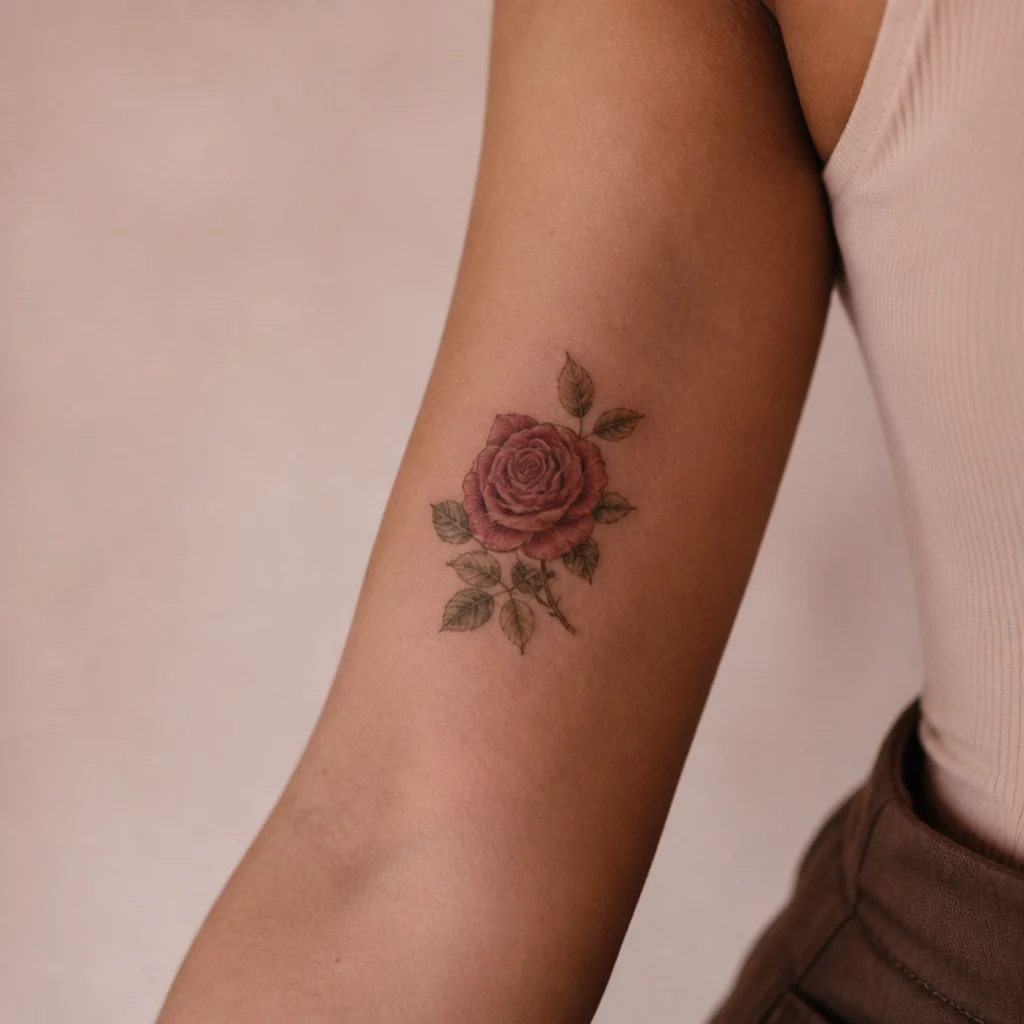
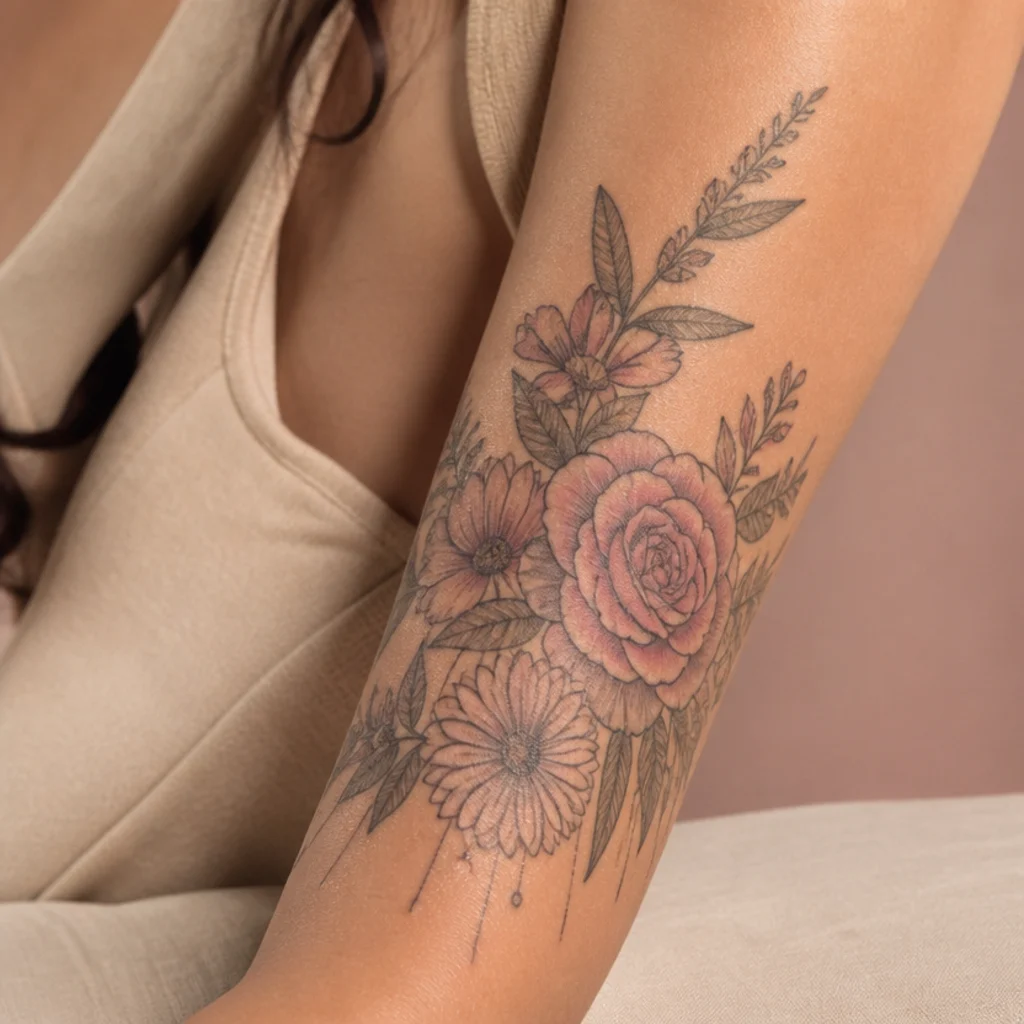
The rose earns its cover-up reputation because overlapping petals plus surrounding foliage build real layers of value, letting an artist bank darker tones precisely where the old design needs burying. It suits women who want something romantic without chasing trends, and it flatters the inner arm, shoulder, and calf. The strategic move is extending leaves, buds, and a stem beyond the bloom itself, which stretches coverage past the flower when the original runs a little larger than a single rose — reach closes the gap as much as density does. A traditional bold-outline rose conceals more aggressively; a soft black-and-grey rose blends more gently, so pick based on how heavy the old ink is. Maintenance is moderate: saturated petals hold well, but occasional refreshing keeps depth crisp. Difficulty is moderate. Ask your artist whether the leaf-and-stem extension should grow toward the part of the old tattoo that shows most, so the composition does the hiding for you.
08Ornamental Lace Motif
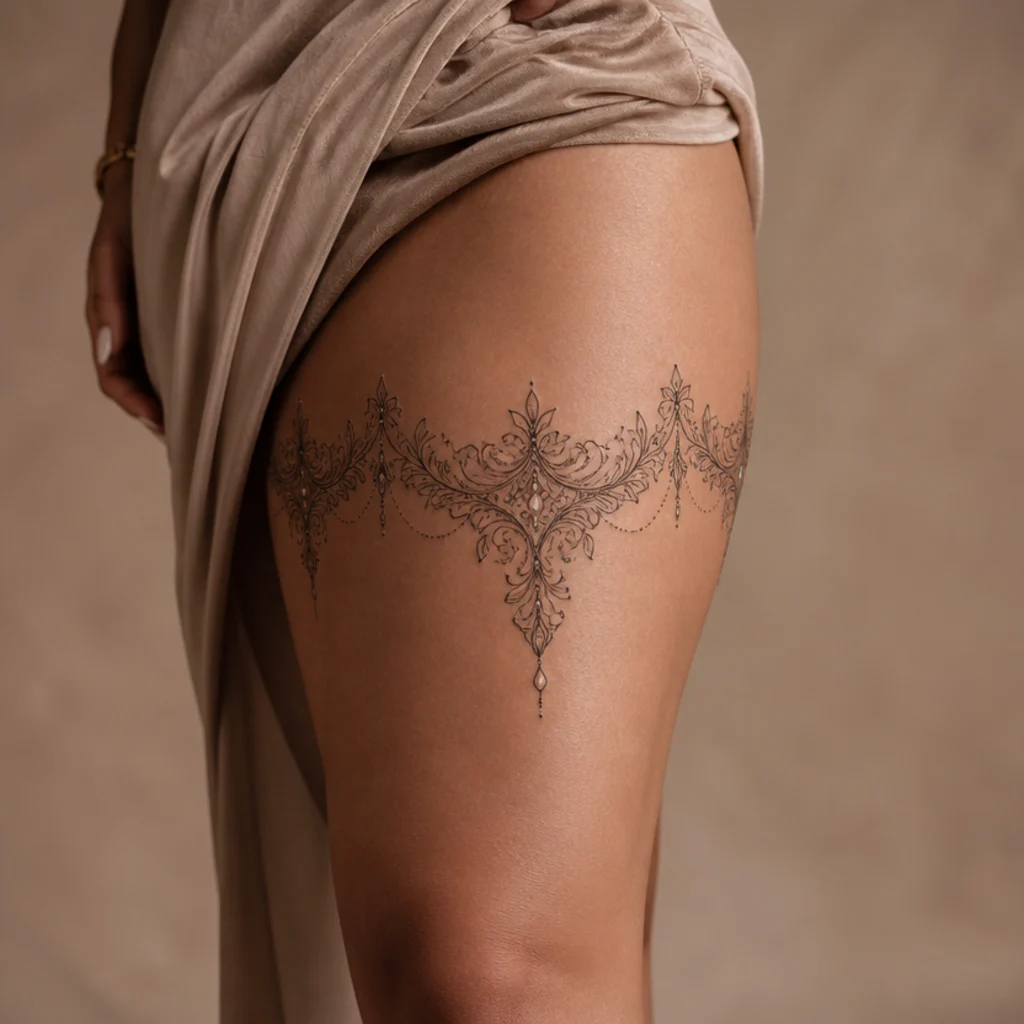
Lace and filigree patterns conceal quietly by keeping the eye in constant motion across an intricate, repeating field, so no single spot invites scrutiny. Women drawn to decorative, ornamental styling with a delicate, draped feel tend to like this one, and it sits well where the body offers a long or symmetrical plane — the thigh, shoulder, or sternum. The real advantage is that the density of the linework is adjustable: the artist can thicken and darken the pattern over the stubborn parts of the original so the filigree doubles as camouflage while the lighter passages stay airy. Maintenance is moderate; fine filigree softens over time and a refresh restores its crispness. Difficulty is high, because the pattern has to stay balanced and legible while it's also covering something — two goals that pull against each other. Bring examples of the lace weight and drape you like, and ask your artist how dense the design needs to be to actually conceal what's there rather than just veil it.
09Name-to-Symbol Rework
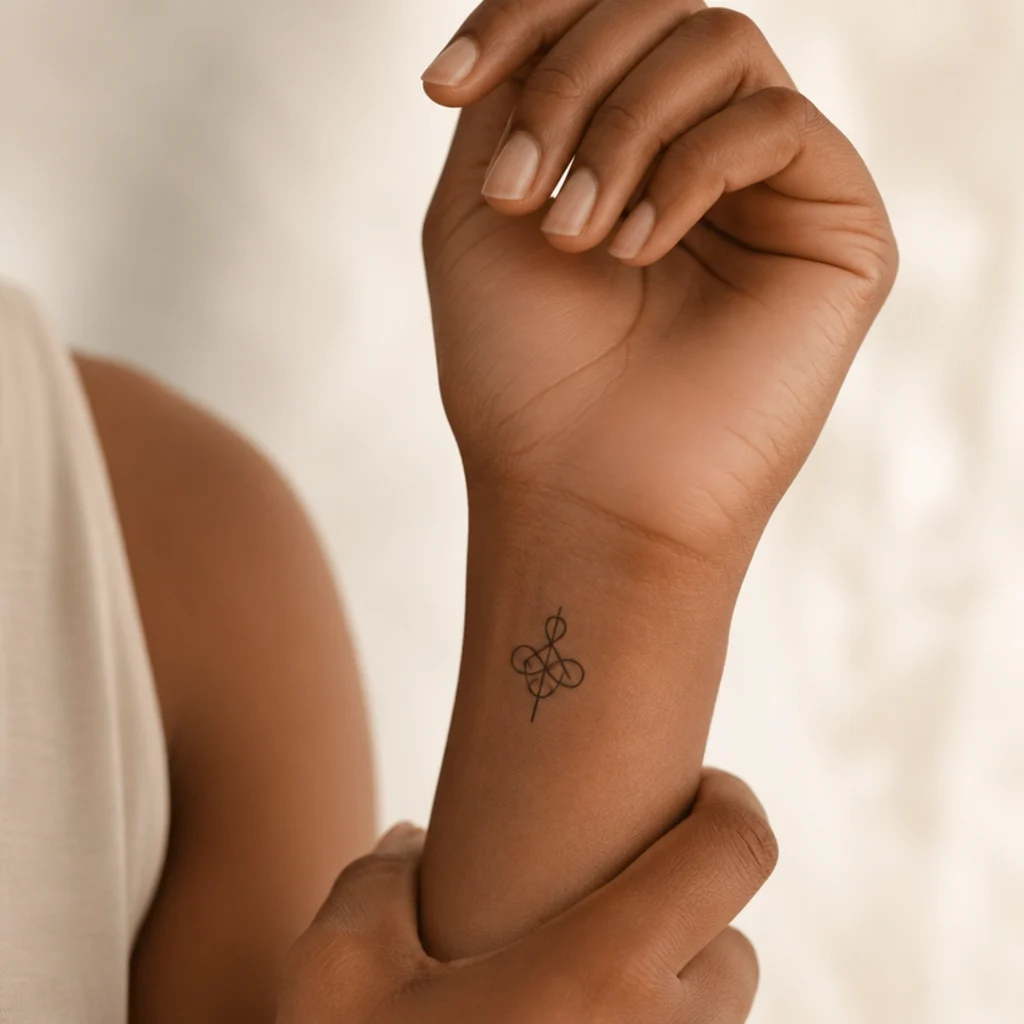
Reworking lettering is one of the most common cover-up requests, and translating a name into a symbol is the most graceful fix. Former letters can dissolve into a compact motif — a knot, a small bird, a botanical glyph — with lines that cross the old strokes at deliberate angles to break their recognizable rhythm. Wrists, inner forearms, and the ribcage are the usual homes for this, and it's a good fit for women moving on from name cover-up tattoos who want meaning without literal text. The challenge: lettering is dark, linear, and evenly spaced, so the new design generally needs bold lines, targeted shading, or negative-space play to fracture the reading. Anything too delicate lets the letters resurface. Maintenance is moderate. Difficulty scales with how heavy and recent the text is; script fades and reworks more easily than thick block capitals. Ask your artist whether a session of laser fading first would let the new symbol sit clean instead of straining to hide sharp old edges.
10Scar-Softening Vine
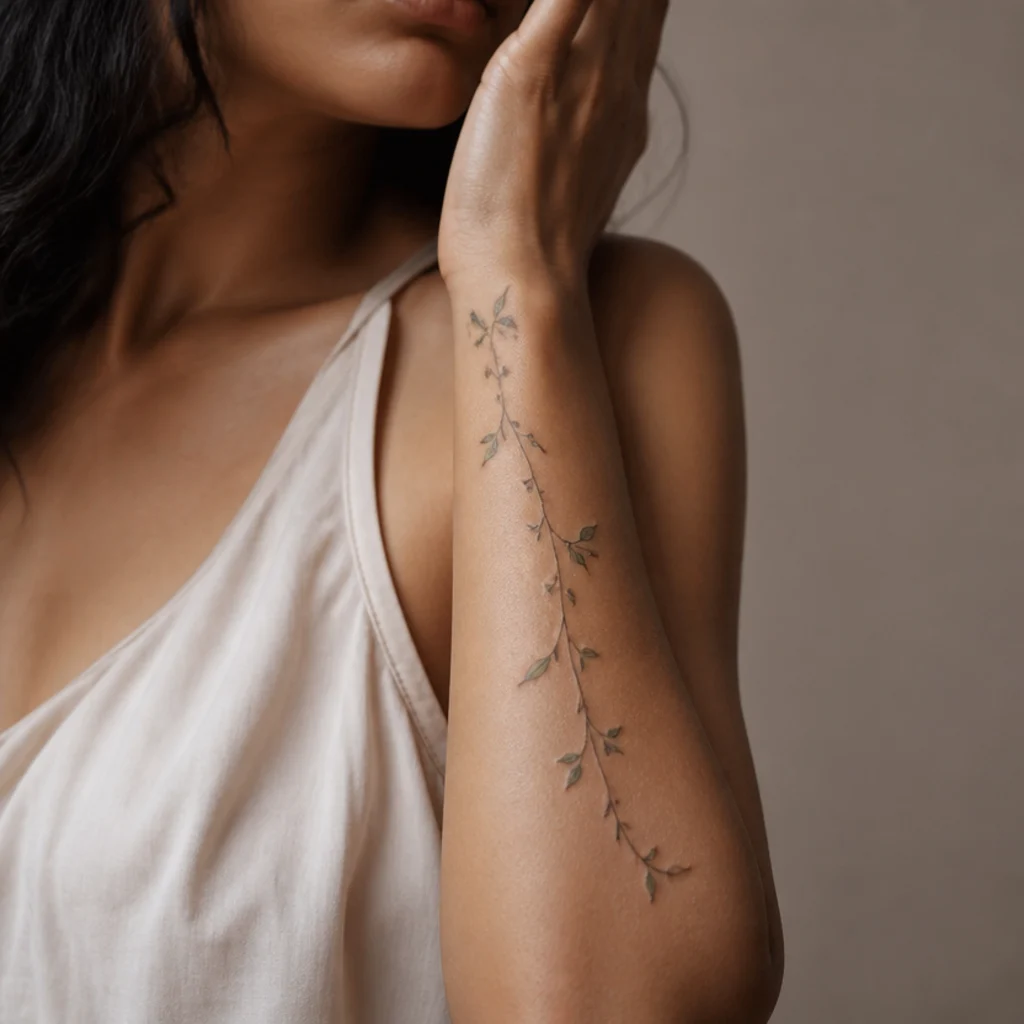
A trailing vine is a gentle strategy that draws the eye along a mark rather than sitting squarely on top of it, and it's often the more realistic approach for scar cover-up tattoos. Artists route thin stems and small leaves near, across, or weaving around a healed, matured scar so the natural texture reads as part of the design's organic flow. It suits women who want something understated and nature-led, and it works on forearms, ankles, and the ribs, wherever a meandering line has room to travel. The medical reality matters here: scarred skin can be raised, indented, or slick, and it holds ink unpredictably, so the scar has to be fully healed and settled — typically at least a year old and no longer pink or firm — before any work begins. How pigment takes still varies from tissue to tissue. Maintenance is moderate. Never assume a tattoo will fully hide a scar; ask your licensed artist to assess the tissue in person and set honest expectations before you plan the design.
Save this to Pinterest to compare placement options side by side.
11Moth With Detailed Wings
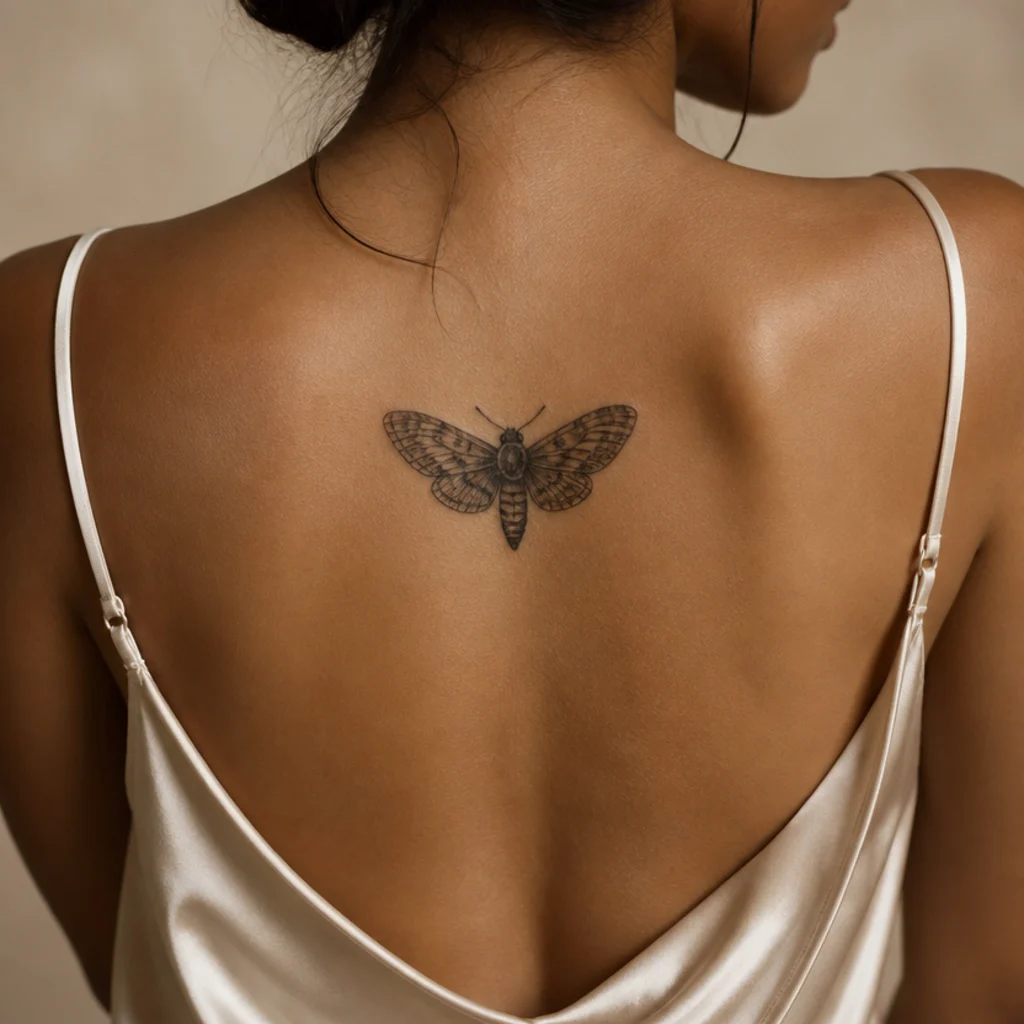
A moth offers even more wing surface than a butterfly, and its naturally dense, patterned wings make it a quietly powerful cover-up when you need broad shaded fields with character. The intricate markings can carry heavy black-and-grey shading to absorb an old mark, while the plush thorax anchors the center and hides the busiest fragment. Women drawn to a moodier, more detailed aesthetic tend to pick this one, and it sits well along the spine, upper back, and outer forearm, where its symmetry has room to read. Because the wing patterning tolerates so much detail, the artist has real latitude to concentrate darker values exactly where the original shows through, then lighten the outer wing tips to keep it elegant. Maintenance is moderate; fine wing detail softens over the years and refreshes well. Difficulty runs moderate to high. If you want black cover-up tattoos with texture rather than flat fill, a moth balances dependable coverage with intricate personality. Ask your artist to place the body over the darkest point of the old ink.
12Dotwork Moon Phase
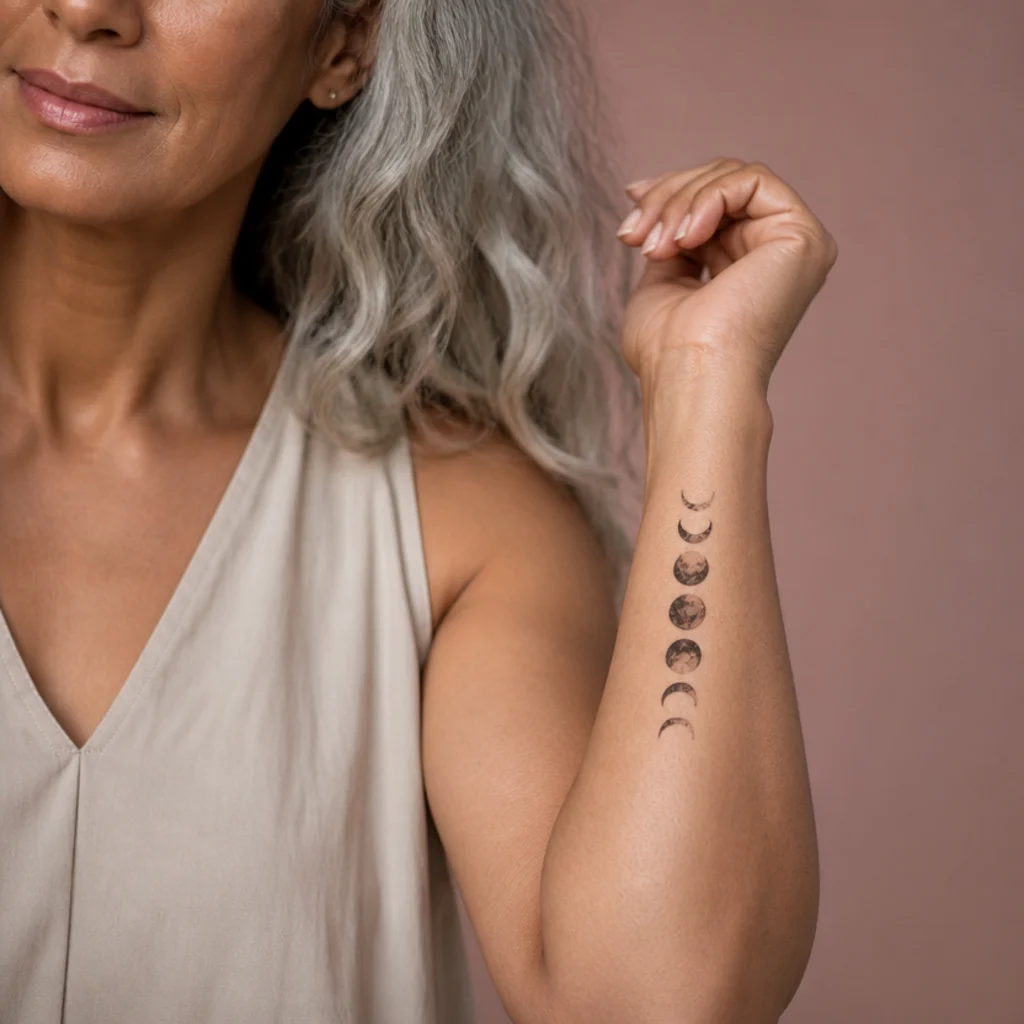
A row of moon phases spreads visual interest across a narrow strip using repeated circles and stippled gradients, which makes it unusually adaptable to awkward, long marks. It works for women who like celestial, minimal-but-detailed motifs, and it runs neatly along the forearm, spine, or collarbone. The layout does the real work: the solid or heavily stippled full moon can sit over the section needing the most coverage, while the crescents and slivers lighten the overall composition and stretch the design to match the length of whatever you're hiding. You can add or subtract phases like beads on a string to fit the exact footprint. Maintenance is moderate; dotwork appears to soften as individual dots blur and merge slightly with age, which is inherent to the technique rather than true fading. Difficulty is moderate, though even, rhythmic spacing takes a patient, steady hand. Ask your artist to align the fullest moon over the darkest fragment of the original.
13Bold Traditional Heart
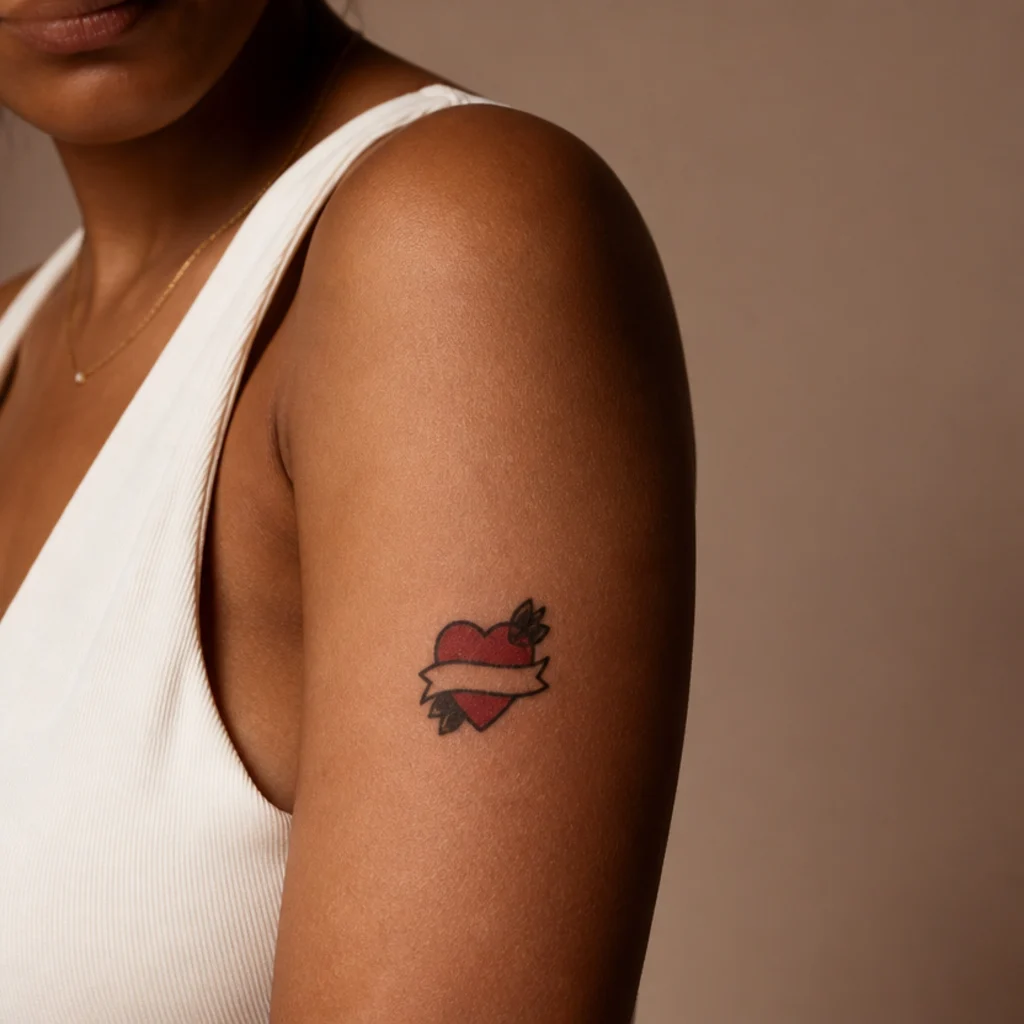
American traditional is practically built for cover-ups: thick, confident outlines paired with fully saturated fills give an artist two layers of concealment in one style. A bold heart, often with a small banner, packs enough solid red and black to bury a compact older design, and the heavy black keyline does much of the hiding on its own. It suits women who love vintage, high-contrast Americana — upper arms, forearms, and calves all carry the look with confidence. That same saturation is why traditional work covers so reliably and also why it ages so well: bold lines and solid color stay legible for decades and touch up easily. Maintenance is low to moderate. Difficulty is moderate. If you have adjacent space, a traditional heart scales up naturally toward large cover-up tattoos, giving the artist even more room to fully conceal what's underneath. Ask your artist whether adding banner or filler elements would extend coverage past the edges of the original.
14Feather and Foliage Blend
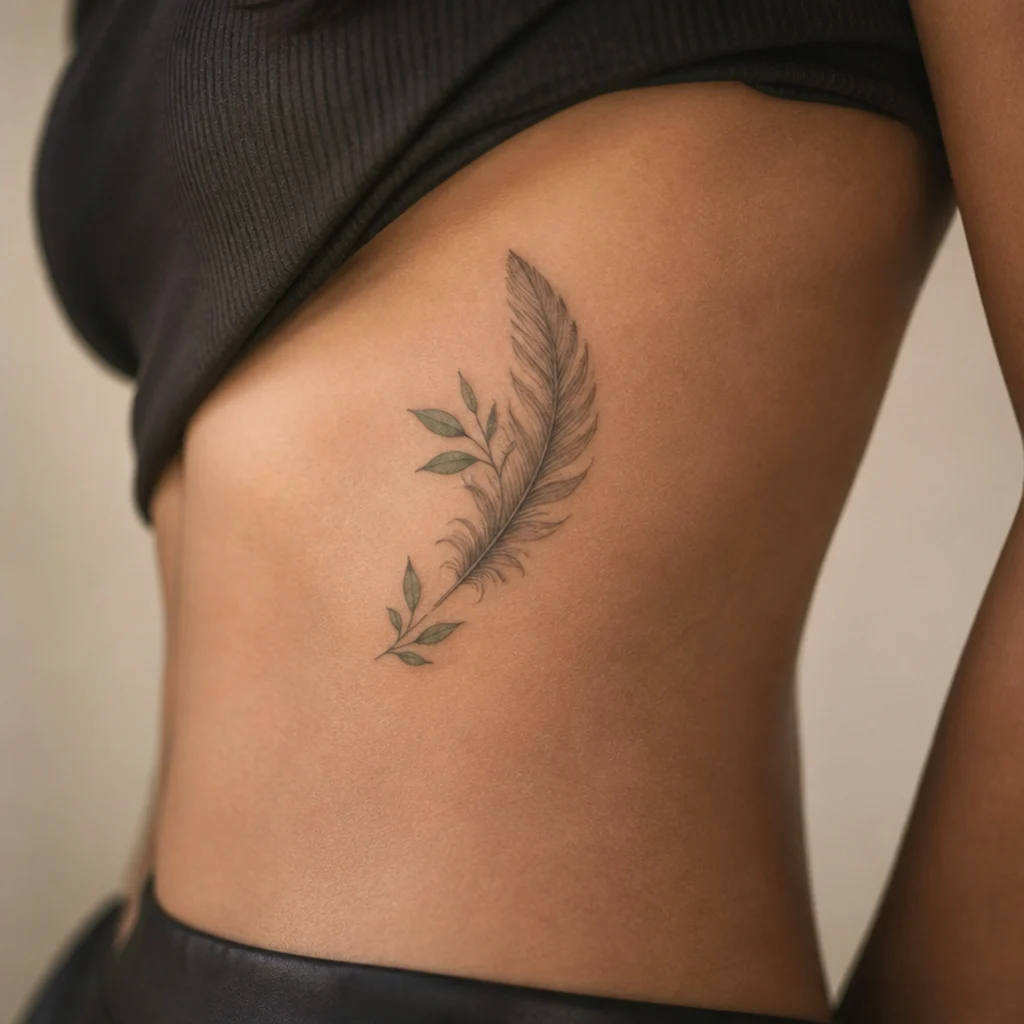
Pairing a feather with a few leaves creates a soft, flowing shape that reads as organic rather than obviously parked there to hide something, and that's half the trick of a convincing cover-up. The feather's shaded barbs and the surrounding foliage let an artist distribute darker values across an irregular or awkwardly shaped old mark, filling the gaps a rigid motif would leave exposed. Women wanting a gentle, nature-led design with movement tend to reach for this, and the ribcage, forearm, and shoulder blade all flatter its elongated, tapering form. Because the shape can bend, curl, and thin out at the tip, it molds around irregular original outlines better than a symmetrical design ever could. Maintenance is moderate; delicate barb detail softens over time and refreshes cleanly. Difficulty runs moderate to high depending on how much coverage is required. Ask your artist to draw the feather's curve so it follows your body's natural line and lands its densest shading over the areas that most need hiding.
15Compact Snake and Stem
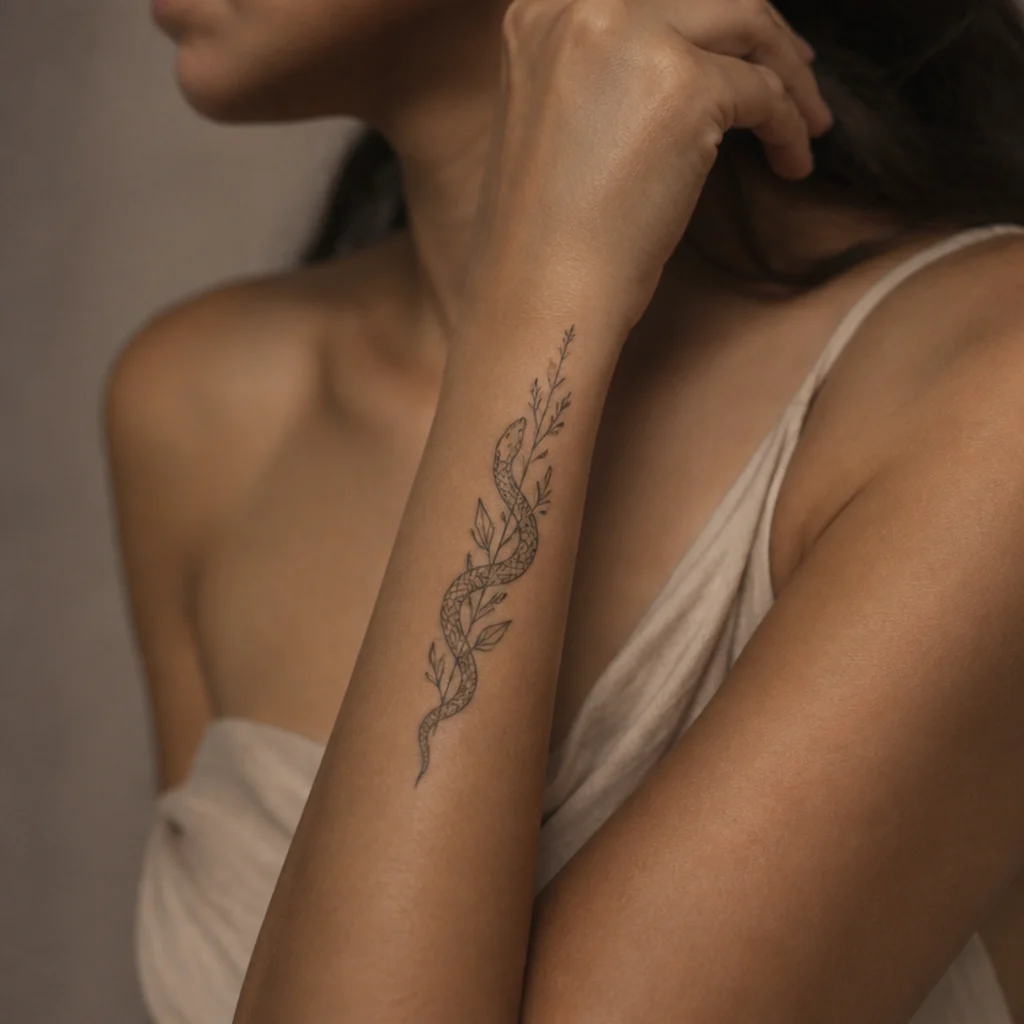
A slender snake winding around a stem is one of the most adaptable cover-ups here, because its long, curving body can be routed to trace almost any old outline exactly. It works for women who like a sleek, slightly edgy motif with symbolic weight, and forearms, the outer thigh, and the spine all suit its vertical, sinuous flow. The snake's body is really a coverage tool: the artist can widen it, shade it, and detail the scales to build density precisely where concealment is needed, while the botanical stem softens the overall feel so it never reads as purely functional. Because the path is drawn to your anatomy and your old ink, no two are alike. Maintenance is moderate; scale detail and shading can be refreshed as they mature. Difficulty runs moderate to high, because the body's route has to be planned around the original before a single line is committed. Ask your artist to sketch the snake's path directly over the area so you can confirm it crosses every part you want gone.
Pro Tips from the Editor
- Value beats color, always. A cover-up succeeds when the new design is darker where the old ink is darkest. Bring a black-and-white photo of your existing tattoo to the consult; it strips out color and shows the artist exactly where coverage has to land.
- Budget for two visits, hope for one. Even skilled artists often build coverage in layers or recommend one or two laser-fading sessions first. Treat it as a short project instead of a single sitting and you'll almost always get a cleaner result.
- Go 20–30% larger than feels comfortable. The single most common regret is a cover-up sized to just meet the old edges. A little extra room lets the artist feather the transition so nothing ghosts at the border.
- Match the new style to the old ink's weight. Delicate fine-line and translucent watercolor can't override heavy black. Save those for faint or pre-faded originals, and lean on blackwork, blackout, or traditional for stubborn dark ink.
- Ask to see the stencil on your skin before you commit. A design that looks balanced on paper can shift once it wraps a forearm or crosses a joint. Confirm the darkest elements sit over the busiest part of the original.
- Respect the healing calendar for scars and recent work. Skin needs to be fully matured, generally at least a year for a scar, and any previous tattoo fully healed, before it takes new ink predictably.
- Vet the portfolio for cover-ups specifically. A gorgeous flash portfolio doesn't guarantee cover-up skill. Ask to see healed before-and-after cover-up photos, not just fresh work under good lighting.
How to Choose / Get the Look
Start by being honest about what lies underneath, because the size, darkness, age, and saturation of the existing tattoo or mark drive every other decision. Use this quick framework to narrow your direction before the consult, then let a licensed artist confirm what's realistic in person.
| If your original is... | Best-fit directions | Fading first? |
|---|---|---|
| Faint, old, or already faded | Fine-line sprig, watercolor petal, dotwork moon phase | Usually not needed |
| Medium and moderately dark | Rose with leaves, butterfly, moth, feather blend, mandala | Optional; helps sharpness |
| Dark, dense, or recent | Blackwork bloom, traditional heart, snake and stem | Often recommended |
| Solid coverage is the only goal | Blackout band | Sometimes, for even fill |
| Lettering or a name | Name-to-symbol rework, butterfly over the line | Often helps for block text |
| A healed, matured scar | Scar-softening vine, feather blend | N/A—assess tissue in person |
Bring reference images of the styles above, and stay open to a design a little larger or darker than you first pictured — more coverage almost always means a cleaner, longer-lasting result. Fully saturated styles like blackwork, blackout, and traditional conceal most reliably, while fine-line and watercolor typically shine after one or two laser sessions have lightened the base. For scar cover-up tattoos, the tissue has to be fully healed and matured, and outcomes vary with skin, so let your artist assess it directly. Factor in placement and lifestyle too: high-friction, sun-exposed areas fade faster and may want a more forgiving, saturated design. Confirm design, sizing, placement, coverage feasibility, and healing expectations with your artist, and remember that no cover-up is guaranteed to fully hide what's already there.
Frequently Asked Questions
Can a small tattoo really cover an older one?
Sometimes, but it depends on the size, darkness, age, and saturation of the original. Small cover-ups work best over faint or already-faded ink, and denser, higher-value styles conceal far better than delicate ones. Because new pigment blends with old rather than painting over it, the new design has to be darker where the old is darkest. A licensed artist can tell you what's realistic for your specific tattoo in person.
Do dark or black cover-up tattoos hide old ink better?
Generally yes. Solid black and heavily saturated black cover up tattoos absorb old ink more reliably than light or fine-line work, because black is the one value that can override darker pigment beneath it. The trade-off is commitment: dense black is the hardest style to rework or laser later, so weigh that permanence before choosing full blackwork or a blackout band.
Are cover-ups a good option for covering a name?
Name cover up tattoos are among the most common requests. Lettering is dark, linear, and evenly spaced, so artists usually break up the recognizable shapes with bold motifs, targeted shading, or negative-space designs routed across the old strokes. Thick block text is harder to hide than script and sometimes benefits from a fading session first. A symbol or botanical whose lines cross the letters at deliberate angles tends to read cleanest.
Can a tattoo cover a scar?
Tattooing over a scar is possible only once it's fully healed and settled, usually at least a year old and no longer pink, raised, or firm. Scarred skin takes ink unpredictably because its texture and density differ from surrounding skin, so this has to be assessed by a licensed artist in person. No tattoo is guaranteed to fully hide a scar; a design that flows around or along the tissue often reads better than one placed squarely on top.
What if my tattoo is too dark or large to cover small?
You will likely need a larger design, one or more laser-fading sessions first, or both. Fading lightens the base so a smaller or more delicate cover-up becomes feasible, and scaling up toward large cover up tattoos gives the artist enough room to conceal the original cleanly. Your artist can map out which combination makes sense for your ink and your budget.
How many sessions does a small cover-up usually take?
It varies with what's underneath. A faint original might be handled in a single sitting, while dark or dense ink often needs the tattoo built in layers, a touch-up once it heals, or a round of laser fading beforehand. Plan mentally for the possibility of two or more visits, so a multi-step recommendation feels like good practice rather than bad news.
Will my old tattoo eventually ghost through the cover-up?
It can, especially if the cover-up relied on lighter tones or translucent color over heavy black. Well-planned, saturated cover-ups minimize this, but old ink sits in the same skin layer and can become faintly visible over decades as the new work softens. Choosing enough value and density up front is the best insurance, and periodic touch-ups keep the concealment strong.
Does skin tone affect how a cover-up heals?
Yes. Denser black and heavy saturation can heal slightly cooler or read differently across deeper skin tones, and a skilled artist accounts for this in pigment choice and layering. It's a normal part of the consultation: ask your artist how your skin tone will interact with the style you're considering, and to show healed examples on a similar complexion.
How much does a small cover-up cost compared to a regular tattoo?
Expect a premium over a same-size fresh tattoo. Cover-ups demand more planning, denser work, and sometimes multiple sessions or laser fading, all of which add to the price. Costs vary widely by region, artist experience, and complexity, so treat any figure as a range rather than a quote and get a personalized estimate at your consultation.