20 Olive Green Nails That Are Simply Stunning
 Edited by Lena Rose · Published July 11, 2026 · 32 min read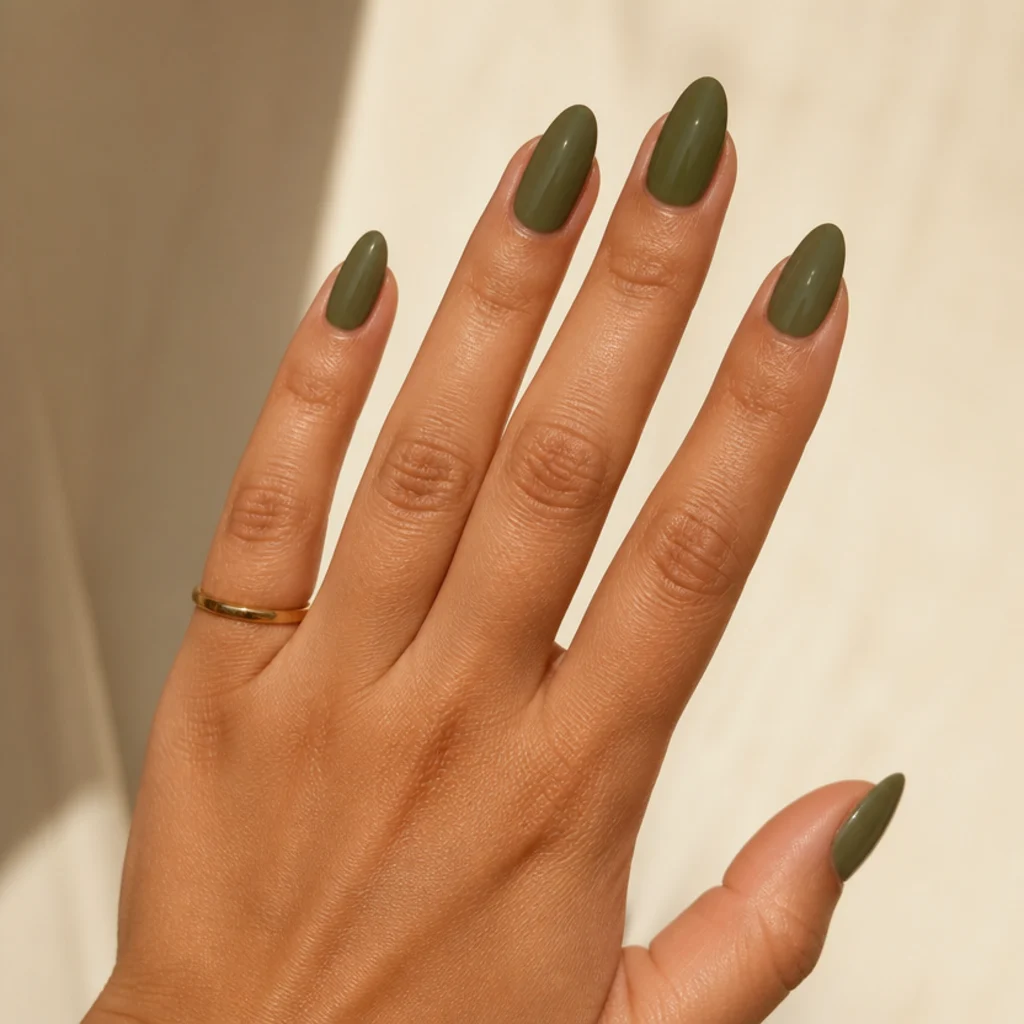
Quick Answer
- Best for: Anyone who wants a green that behaves like a neutral. Olive flatters warm, tan, deep, and olive-undertoned skin especially well, and softens beautifully against cool undertones when you lean muted, grayed, or sage-tinted.
- Who might skip it: Very cool, pink-based complexions who prefer high contrast may find a true army olive reads sallow next to the skin; a grayed sage-olive or a sheer jelly formula solves this instantly.
- Maintenance: Two to three weeks with gel or acrylic before regrowth shows; roughly five to seven days for regular lacquer before the earthy pigment starts to look muddy and dull.
- Difficulty: Easy for a solid cream at home; moderate to advanced for chrome, cat-eye, aura, marble, and velvet, which reward a booked appointment.
- Cost: Variable by region and salon tier, from a low-cost solid gel to a premium spend for structured acrylic sets or hand-painted art. Add-ons like chrome powder or foil usually carry a small surcharge.
- Wear time / longevity: Gel holds a fresh face for two to three weeks; hard gel and acrylic extend structure for three-plus weeks with a fill; lacquer is the shortest-lived at under a week.
- Standout variation: Olive green chrome, which turns a flat army tone into a liquid-metal finish that shifts between bronze and green as your hand moves.
- How to ask your nail tech: Name the shade in three words (dusty and grayed, true army, or deep forest-olive), then the shape, length, and finish. Bring a saved photo for anything textured.
In This Guide
- Classic Muted Olive Almond
- Olive Green Chrome Mirror
- Olive Green French Tips
- Olive Green and Gold Foil
- Dark Olive Almond Ombre
- Matte Army Olive Squoval
- Olive Green Acrylic Coffin
- Sheer Olive Jelly Nails
- Olive and Cream Color Block
- Olive Green Cat-Eye Magnetic
- Micro-French Olive Tips
- Olive Green with Gold Foil Flecks
- Sage-Olive Short Round Nails
- Dark Olive Croc-Print Accent
- Olive Green Aura Nails
- Glazed Olive Milky Overlay
- Olive Green and Gold Marble
- Deep Olive Stiletto
- Olive Green Abstract Line Art
- Olive Green Velvet Powder
Olive green nails have quietly become one of the most requested earthy shades at the salon, and there's a structural reason for that beyond the season. Olive is a green muted with yellow, brown, and gray, which is why it behaves like a neutral instead of a novelty: it sits beside skin the way a camel coat or a khaki trouser does, grounded and grown-up rather than loud. That desaturation also makes it forgiving. A bright emerald or lime demands the right undertone and lighting, but olive flexes across a huge range, from soft sage-tinted greens that whisper to deep army and forest tones that carry real drama.
That range is wide enough to fit almost every skin tone, nail shape, and occasion, which is the whole reason it earns a full roundup here. Each of the 20 olive green nails designs below notes who the look tends to flatter, the undertone and finish that make it work, a realistic upkeep timeline, and the exact words to use with a professional, so you can decide rather than just scroll. Skim the table of contents for a finish you love, whether that's a high-shine olive green chrome, a soft olive green french tip, a moody dark olive, or a warm olive green and gold, then save the images you want to bring to your appointment.
01Classic Muted Olive Almond
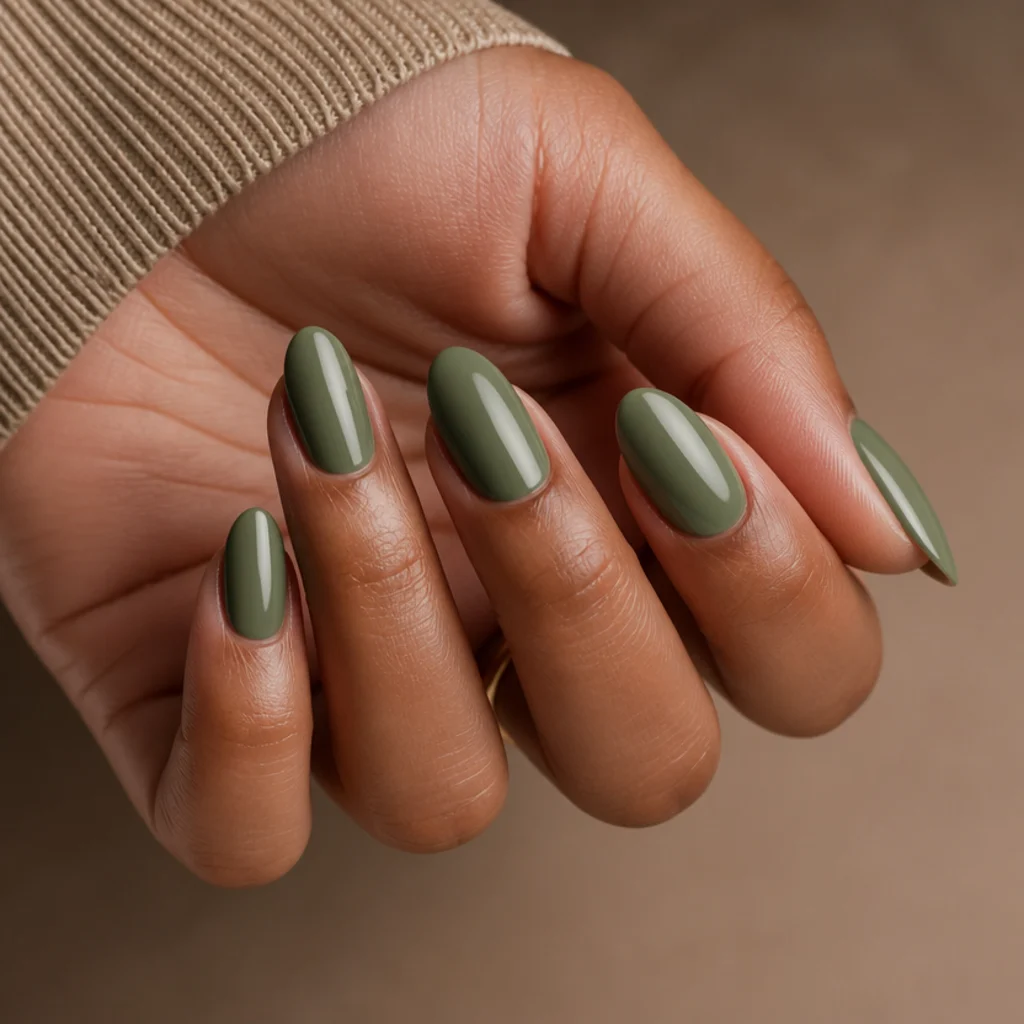
The quiet anchor of the whole collection: a soft, slightly grayed olive in a full-coverage cream finish on a medium-length almond. The gray-green undertone is what makes this near-universal; it pulls the pigment back from harsh military territory and keeps it flattering on cool and warm skin alike. The almond shape does quiet visual work too, tapering the free edge to slim and lengthen shorter or wider fingers and nail beds. This is your two-week, low-drama option, and it is the most beginner-friendly to maintain because a solid cream hides brush strokes better than a sheer or a shimmer. Pair it with warm gold jewelry and camel or cream knits to lean into the neutral read, or cool silver for a sharper, more modern contrast. Pro tip: one thin, sheer base color coat before your two opaque coats prevents the streaky patches olive creams are prone to. Ask your nail tech for a single-color gel in a dusty or grayed olive, medium almond with a softly rounded tip rather than a sharp point.
02Olive Green Chrome Mirror
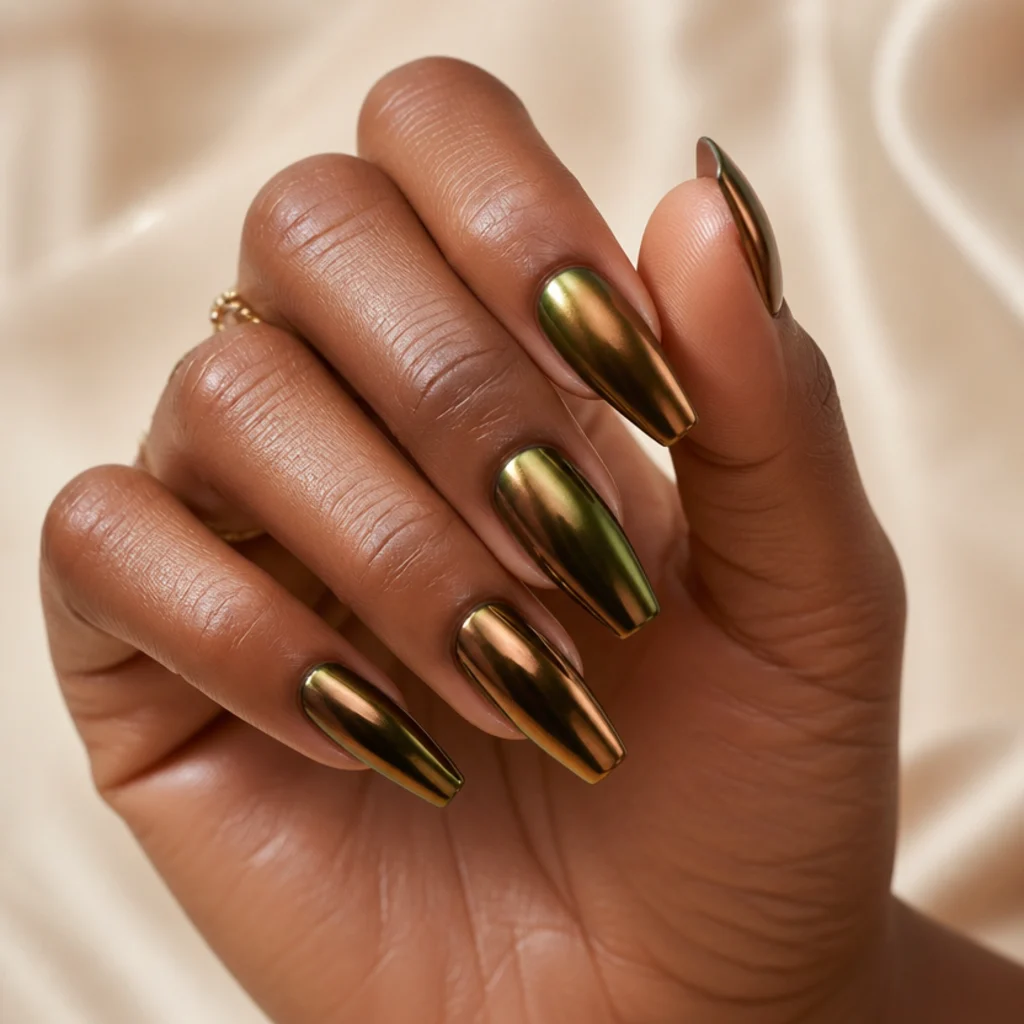
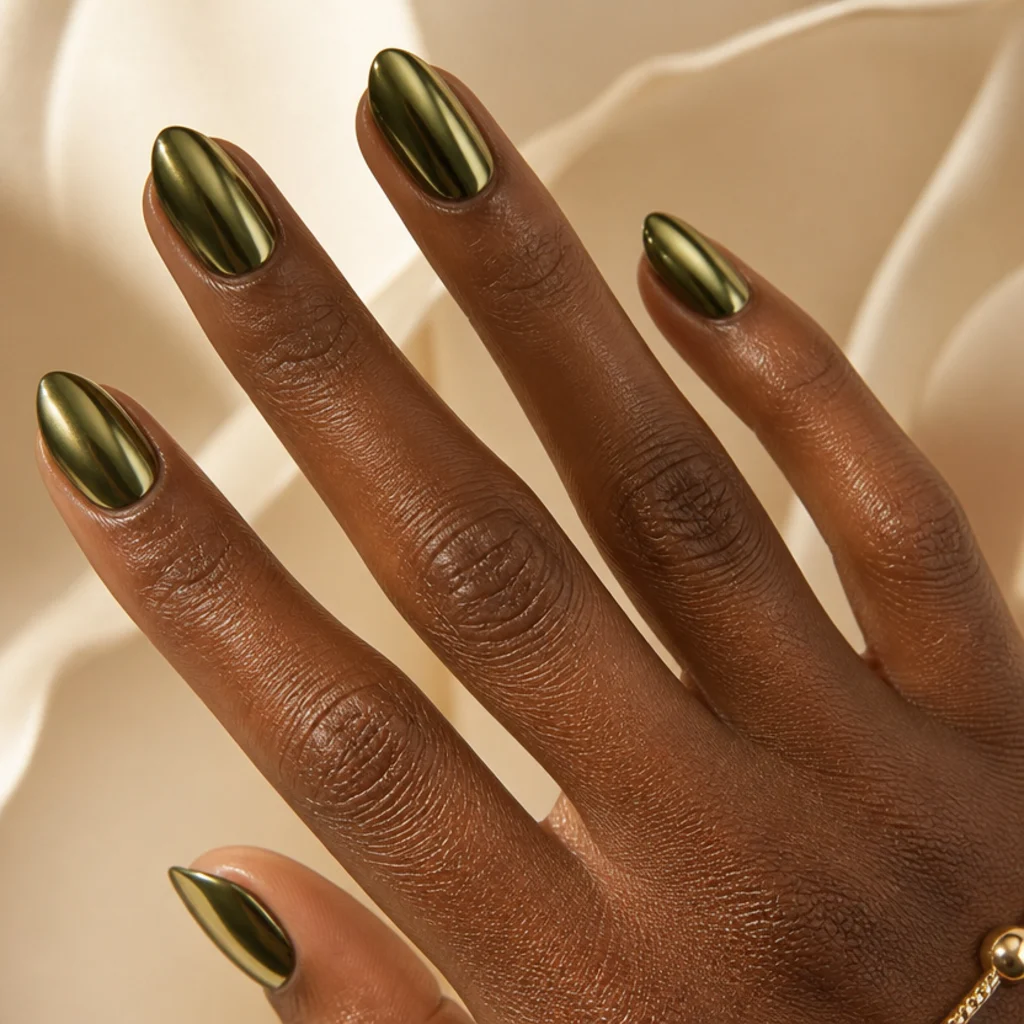
Olive green chrome nails take a flat earthy tone and give it a liquid, mirror-like shine that travels between bronze, khaki, and green as your hands move. It is the most editorial pick here and the one that photographs hardest, which makes it a favorite for events and content. The effect is built, not painted: a technician cures a dark olive no-wipe gel base, buffs ultra-fine chrome or aurora powder into the tacky surface until it turns reflective, then seals with a top coat designed to hold the shine without clouding. Because the surface is a mirror, every millimeter of regrowth reads, so it suits a two-week cadence rather than a stretched-out one. Deep and tan skin tones carry the bronze-green shift especially richly. Pro tip: the finish dulls first at the cuticle from natural oils, so a fresh brush-on top coat at the one-week mark buys back the gleam. Ask your nail tech for olive chrome powder over a dark olive gel base, sealed with a chrome-safe top coat.
03Olive Green French Tips
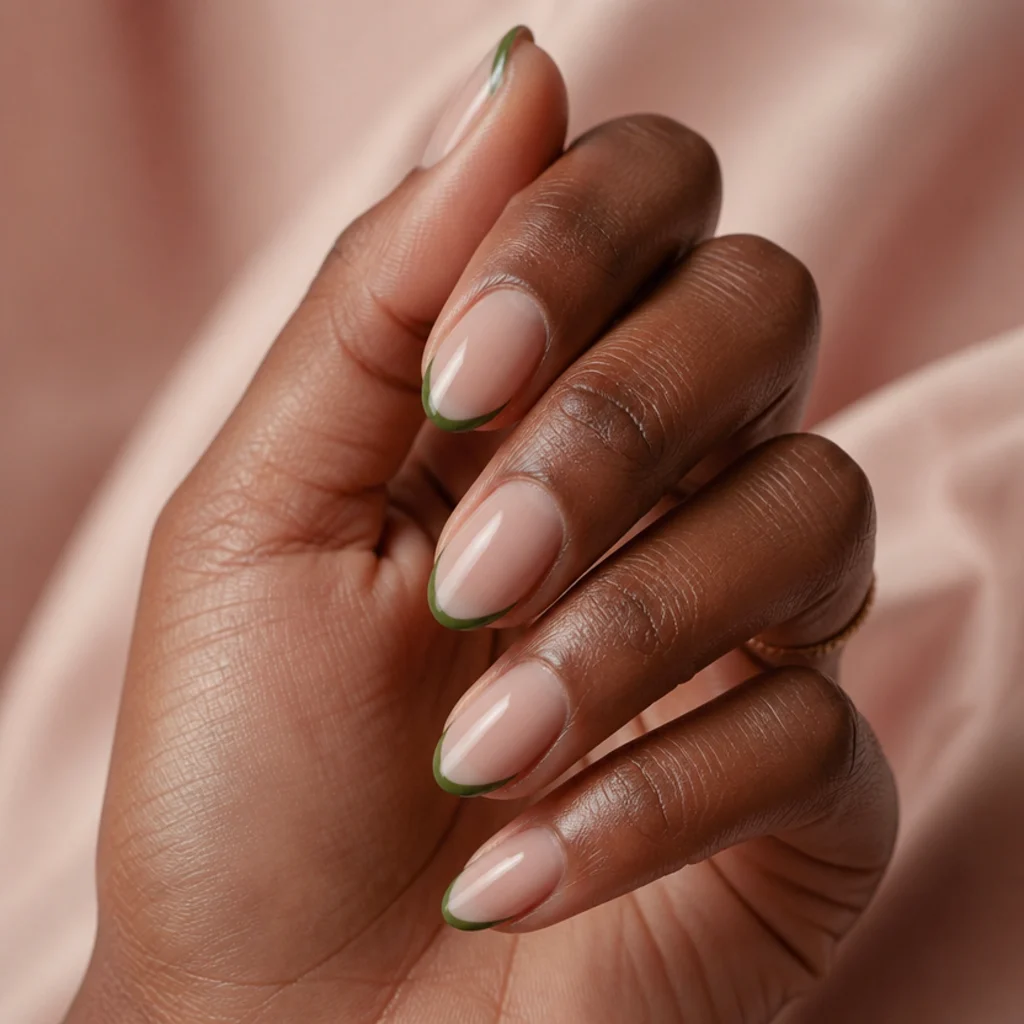
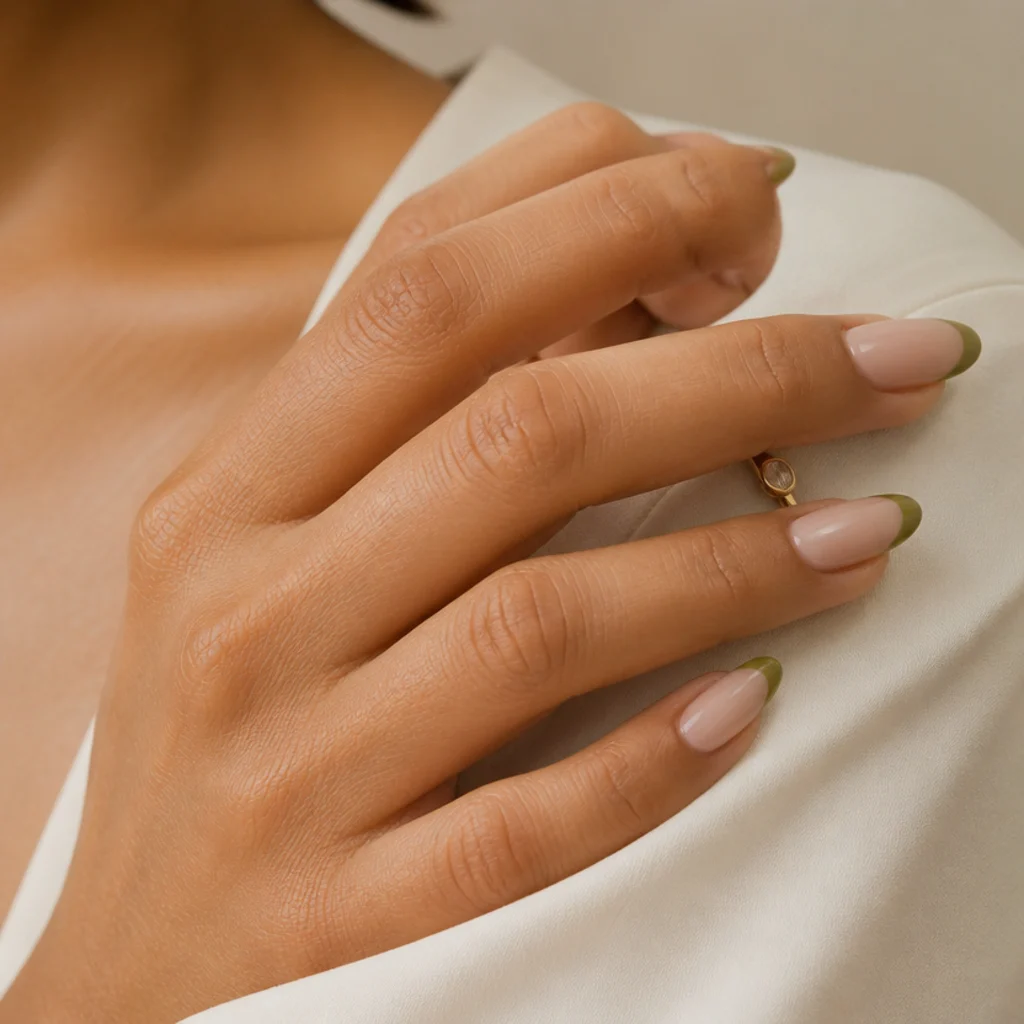
A modern rewrite of the french manicure that swaps the white tip for a clean band of olive, so it reads polished without ever tipping into loud. Olive green french tip nails are a genuine crossover look: subtle enough for an office, refined enough for a wedding, and an easy first step for anyone nervous about full color. The negative-space nude base visually lengthens the bed, which is why the design flatters both long extensions and short natural nails. Difficulty lives in the smile line; a crisp, symmetrical freehand curve is hard to pull off, so techs often use guide stickers or a fine detail brush. Line weight is the styling lever: a hair-thin band feels quiet and expensive, while a chunkier tip reads playful and current. Pro tip: matching the tip color to your undertone (grayer olive on cool skin, warmer army on deep skin) keeps the contrast intentional. Ask your nail tech for a sheer nude base with an olive french tip, and specify the exact line thickness you want.
04Olive Green and Gold Foil
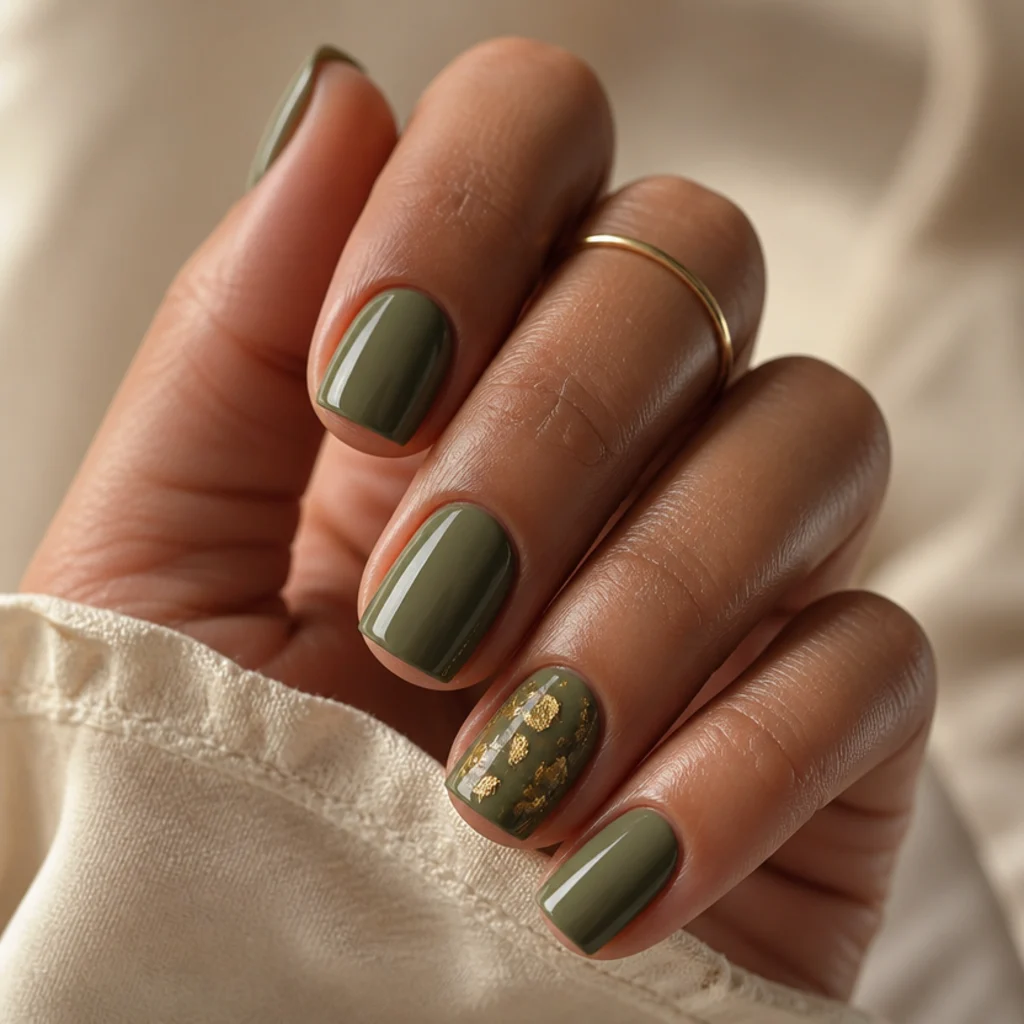
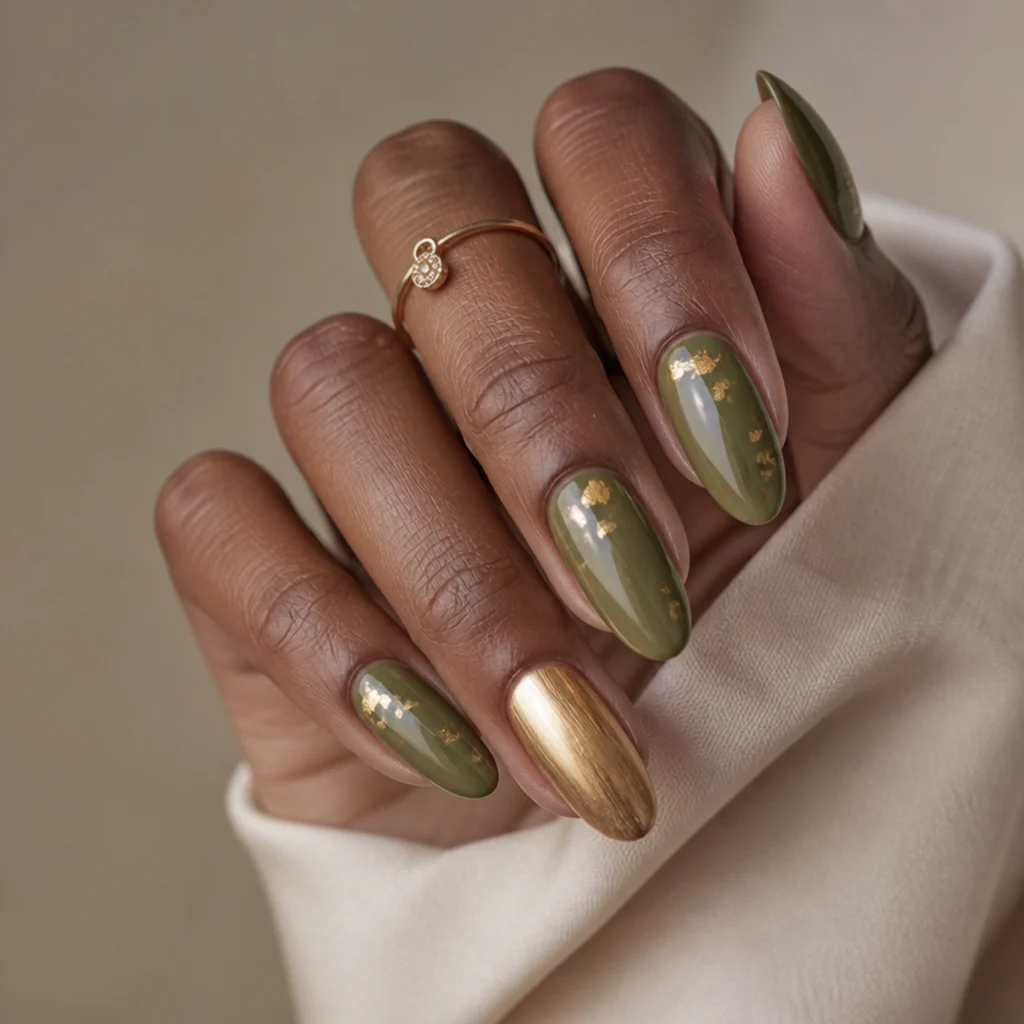
Olive green and gold nails are a near-perfect pairing because gold is a warm metal and olive is a warm-leaning green, so the two amplify each other and the whole hand reads expensive. Here, torn gold leaf sits over a solid olive base for an organic, hand-applied texture that never looks two identical nails the same way. The look skews festive and celebratory, ideal for holidays or evenings, and it suits every skin tone because the metallic warmth sits close to the fingers. Restraint keeps it from tipping into costume territory: stick to foil on one or two accent nails against solid olive. The practical catch is that torn foil has edges, and edges catch on hair and fabric. Pro tip: ask for the foil to be pressed flat and buried under two top-coat layers so nothing peels or snags. Ask your nail tech for an olive base with gold leaf foil accents on the ring fingers, sealed under a generous gel top coat.
Save this to Pinterest for your next gold-accent manicure inspiration.
05Dark Olive Almond Ombre
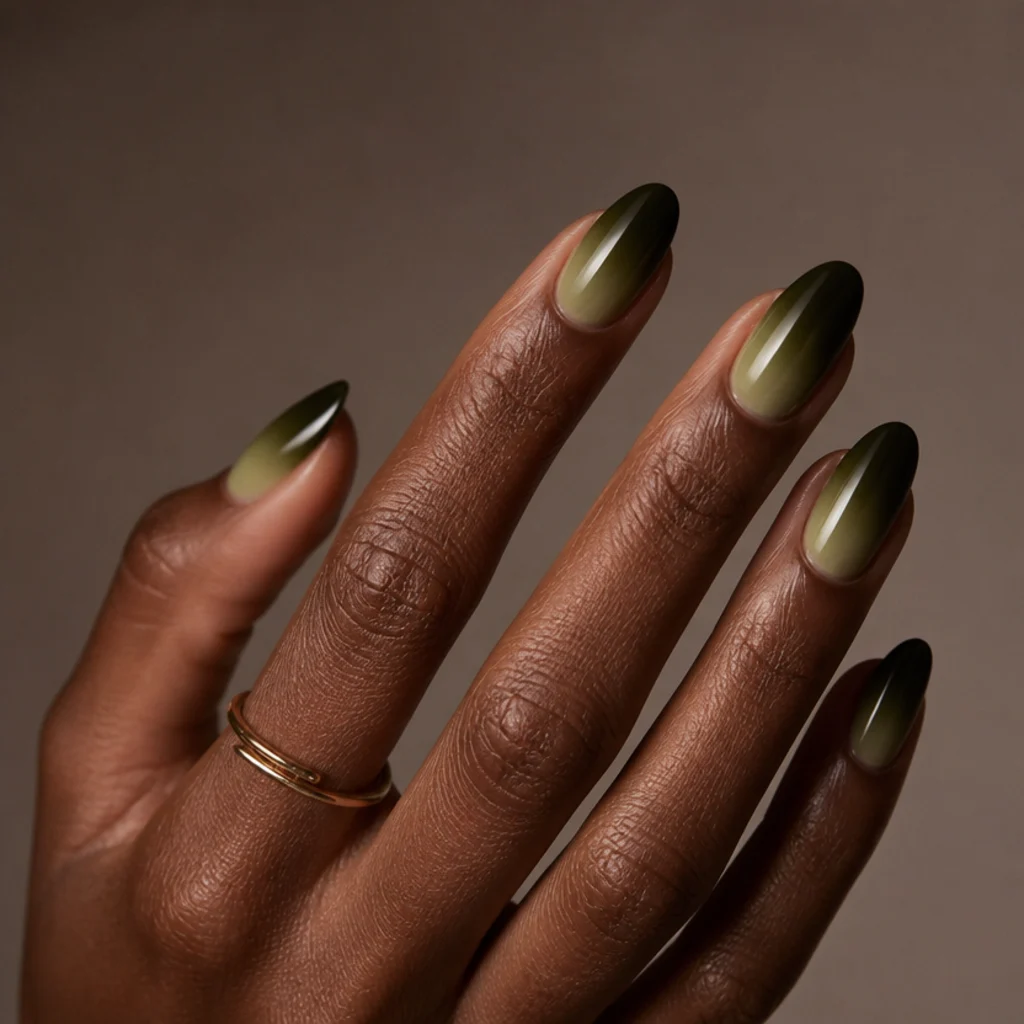
For a moodier register, this dark olive green nails design melts from a deep, forest-leaning olive at the free edge down to a lighter, dustier olive near the cuticle. The vertical gradient adds real dimension and exaggerates the length of an almond, making it a smart choice for shorter beds that want to look longer. Dark olive glows on deep and tan skin, and the softened base keeps it from feeling heavy on cooler complexions too. Ombre is an advanced build created by stippling colors together with a makeup sponge or feathering them with an airbrush, so blend quality varies enormously between artists, which is why a reference photo matters more here than almost anywhere else. Style it with minimal gold and a matte or satin topcoat for a suede-like, autumnal finish. Pro tip: a thin veil of the lighter olive dragged over the seam erases the harsh line where two shades meet. Ask your nail tech for a vertical olive ombre, dark tip to light base, and bring a photo showing the contrast level you want.
06Matte Army Olive Squoval

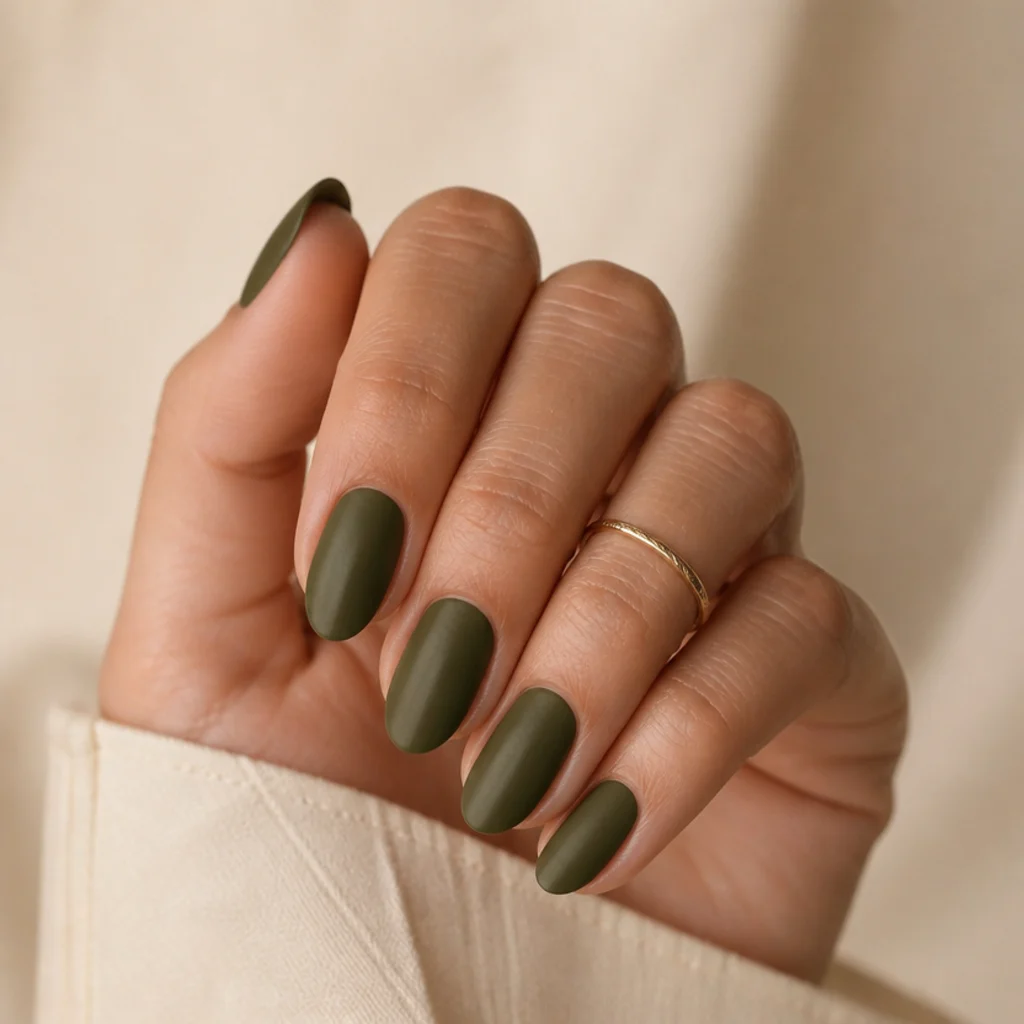
A matte top coat turns a true army olive into something velvety, chalky, and quietly utilitarian, in the best possible way. Killing the shine deepens the pigment and mutes surface reflections, which also disguises minor ridges or an uneven free edge. The squoval, a square with softened corners, is one of the most practical shapes going, reading clean and modern while resisting the corner snags that plague a true square. This combination suits anyone who finds high gloss too flashy and wants color with a matte, understated confidence. The trade-off is that matte finishes show fingerprints, hand cream, and oils as glossy patches. Pro tip: skip lotion right before your seal, and keep a travel matte top coat to re-buff any shiny spots between appointments. Ask your nail tech for army olive with a matte top coat in a squoval shape, and mention if you want the color a shade deeper for more contrast against lighter skin.
07Olive Green Acrylic Coffin
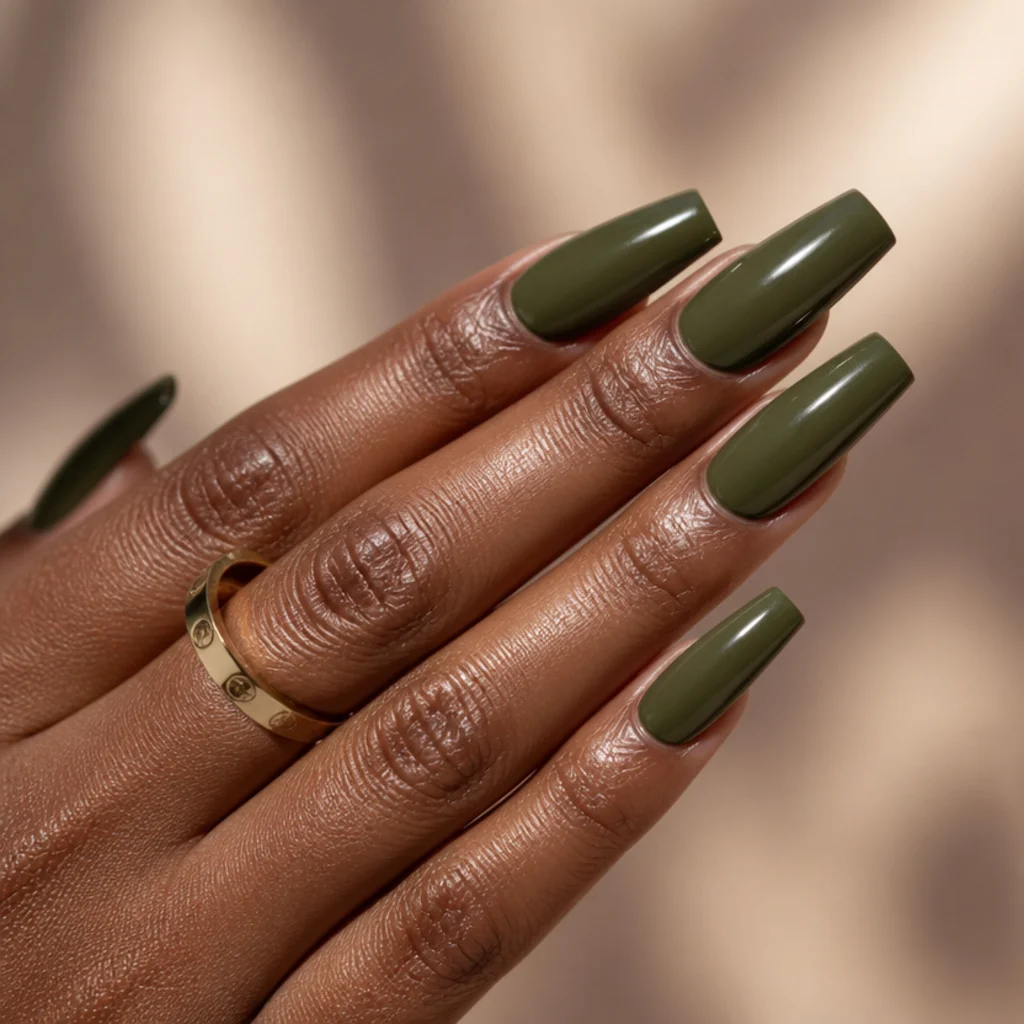
If you want length and structure, olive green acrylic nails in a coffin shape deliver both, plus a fashion-forward silhouette that gives the earthy color real presence. The coffin (or ballerina) tapers along the sidewalls before squaring off at the tip, offering a wide, flat canvas that is ideal if you plan to layer chrome, foil, or art later. Acrylic is the most durable system for people who are hard on their hands, though the trade-offs are honest ones: more visible regrowth at the cuticle, a required fill every two to three weeks, and a length that can interfere with typing or buttoning until you adjust. A glossy olive keeps the look rich rather than flat. Pro tip: request a medium coffin rather than an extra-long one for your first set, since apex strength and daily function both improve at a moderate length. Ask your nail tech for medium-long coffin acrylics in a glossy olive, and be candid about your lifestyle so the length is one you can actually live with.
08Sheer Olive Jelly Nails
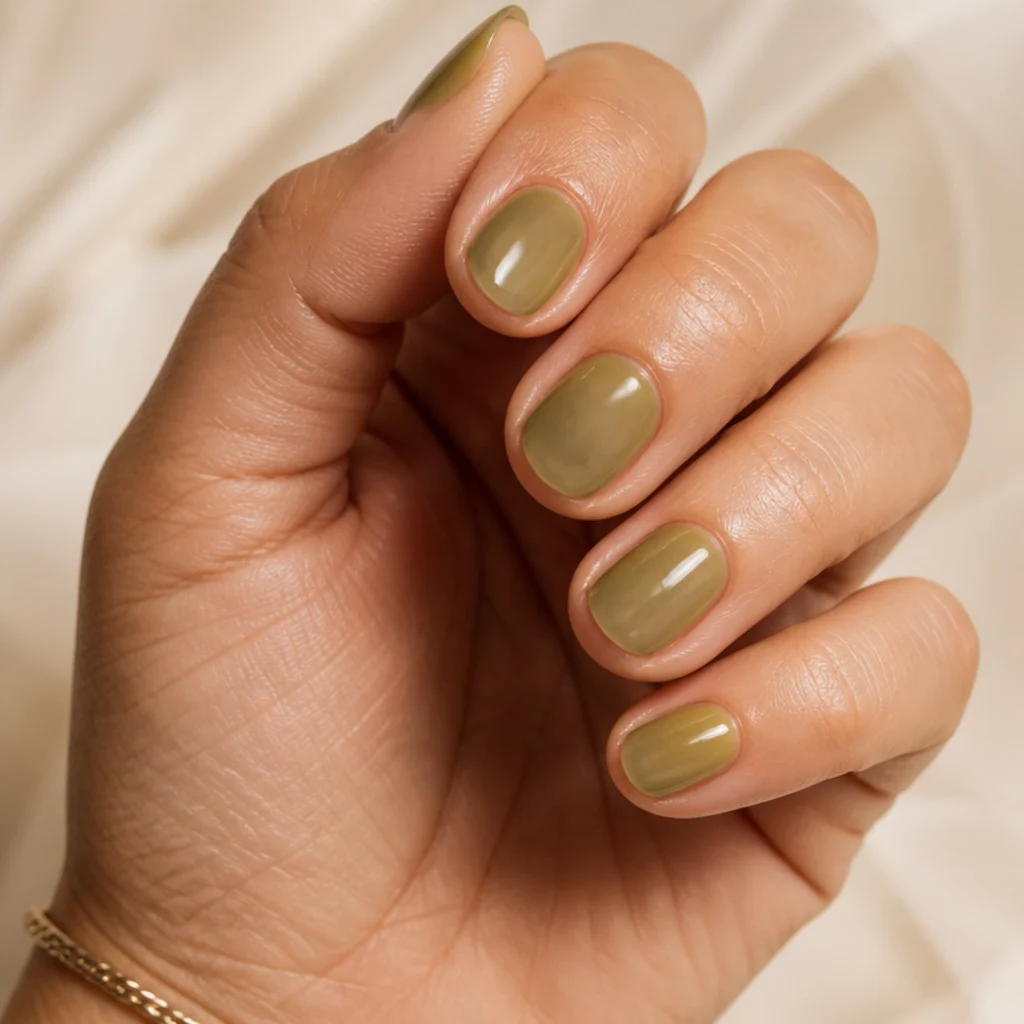
Jelly nails use a translucent, tinted gel that lets the natural nail glow through for a fresh, glassy, sun-through-a-bottle effect. A sheer olive jelly is the youngest, most low-key member of this roundup, delivering color that still looks a little bare, which is ideal for minimalists and anyone in a strict workplace. The translucency is also strategic: because you can see through it, regrowth blurs rather than lining up in a hard shadow, so you can comfortably stretch the time between appointments. Depth is buildable, so more coats mean more saturation without ever going fully opaque. It looks softest on short round or squoval nails and pairs naturally with a bare-skin, no-makeup aesthetic. Pro tip: a glossy, non-matte top coat is essential here, since the wet, glassy shine is the entire point of the jelly finish. Ask your nail tech for a sheer olive jelly, buildable and translucent rather than fully opaque, kept short and rounded.
09Olive and Cream Color Block
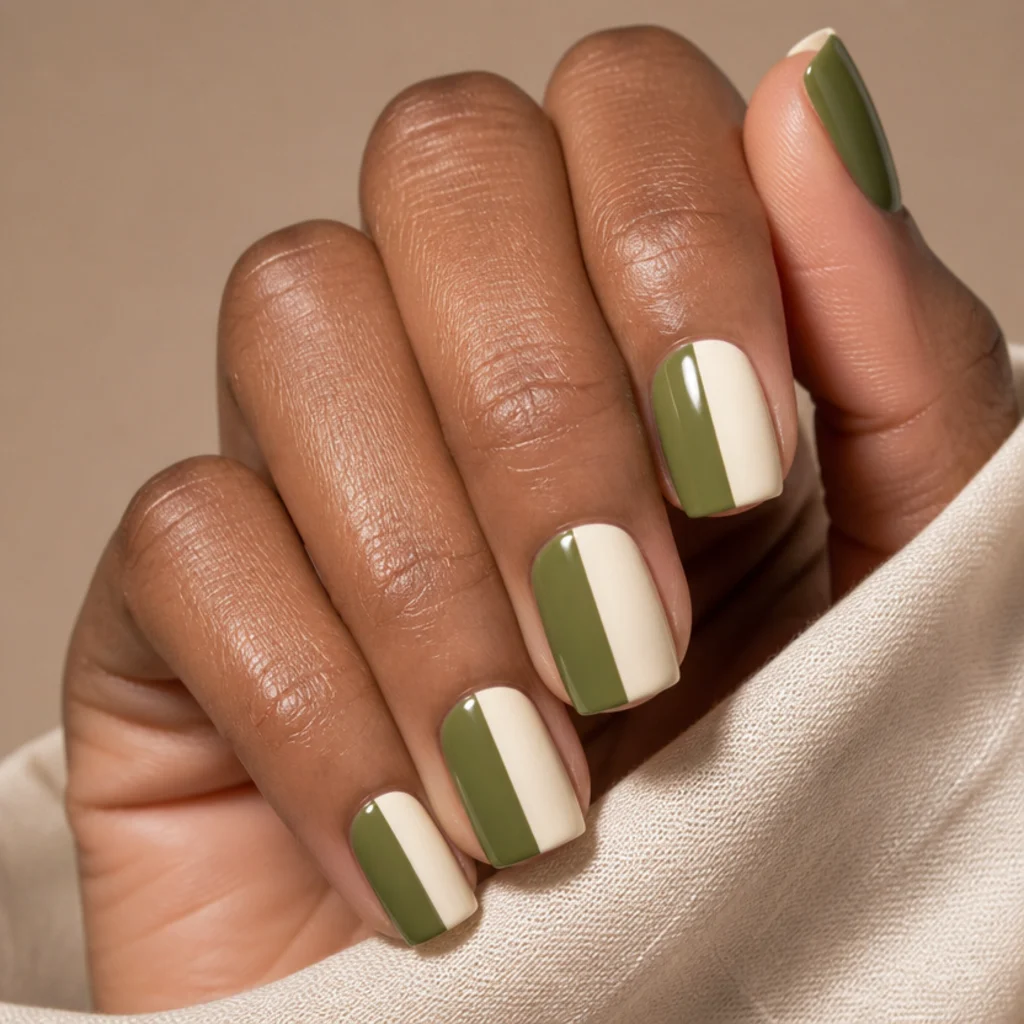
Color blocking pairs olive with a soft cream in graphic halves, diagonals, or vertical splits for a design-forward, architectural statement that still stays minimalist. The pairing is clever: cream is a warm, quiet neutral that keeps olive from feeling weighty, and the crisp boundary between them makes the whole thing look intentional rather than accidental. This suits anyone drawn to clean lines and a hint of artistry without committing to full nail art. Precision is everything, since the design lives or dies on a sharp, bubble-free edge, which is why it is a moderate-to-advanced ask usually taped or lined with a striper brush. Style it across every nail for a bold graphic hand, or on just two accents for a wearable nod. Pro tip: a matte or satin finish makes the color division read more like considered design and less like a mistake. Ask your nail tech for olive and cream color block in a straight vertical split, and specify whether you want it on all ten nails or as accents.
10Olive Green Cat-Eye Magnetic
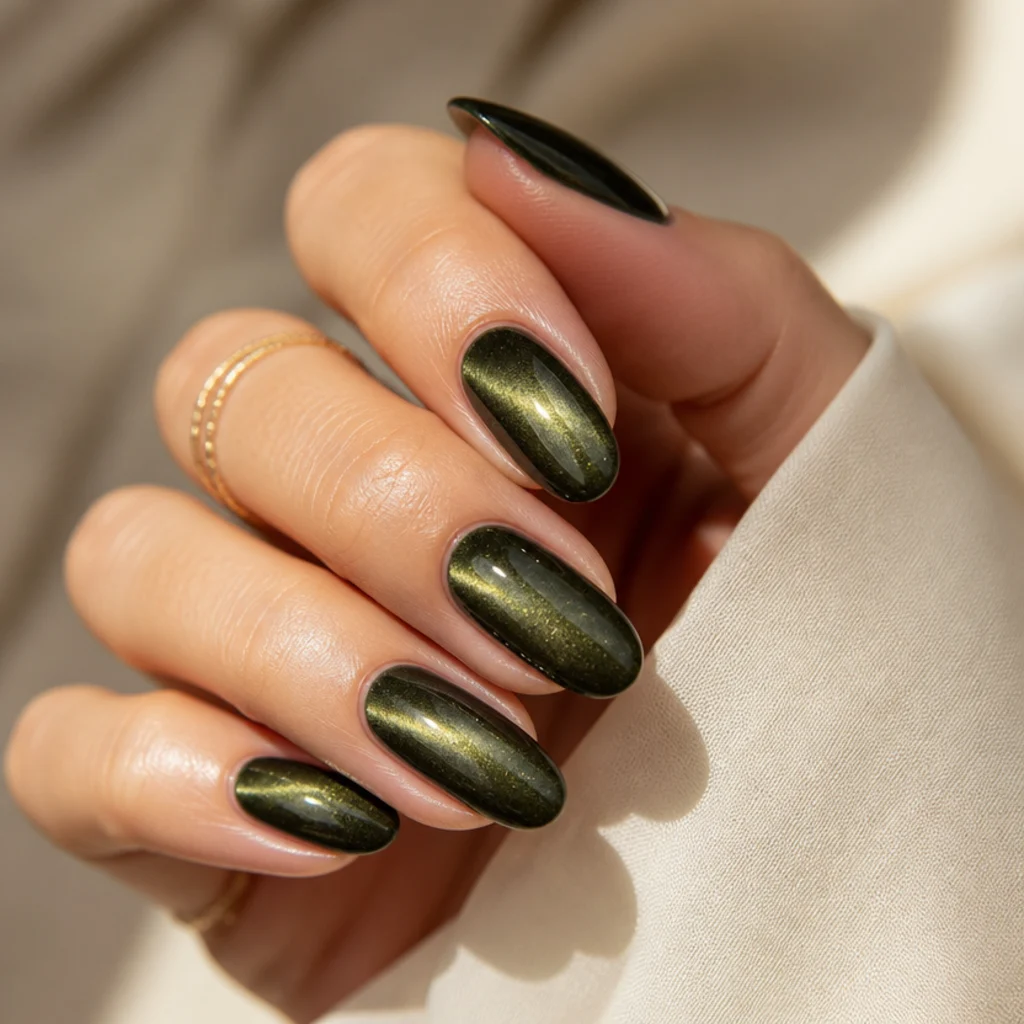
Cat-eye nails use a magnetic gel packed with fine metallic particles; holding a magnet near the wet surface pulls those flecks into a bright, concentrated band, giving olive a gemstone-like depth that seems lit from within. The glowing stripe travels as you move your hand, which is why it reads far more expensive than the effort suggests, and it delivers dimension without any added texture or hand-painted art. Almond and oval shapes give the light beam room to run the length of the nail. It is firmly a salon look, because magnet distance, angle, and timing before the gel cures all shape where the light lands. Deep, saturated olive bases produce the highest-contrast, most jewel-like glow. Pro tip: a diagonal beam flatters and elongates more than a straight horizontal one, so name the direction you want. Ask your nail tech for an olive cat-eye magnetic gel with a diagonal light stripe, and say whether you want a subtle shimmer or a strong, high-contrast beam.
Save this to Pinterest so you can show your tech the exact magnetic effect.
11Micro-French Olive Tips
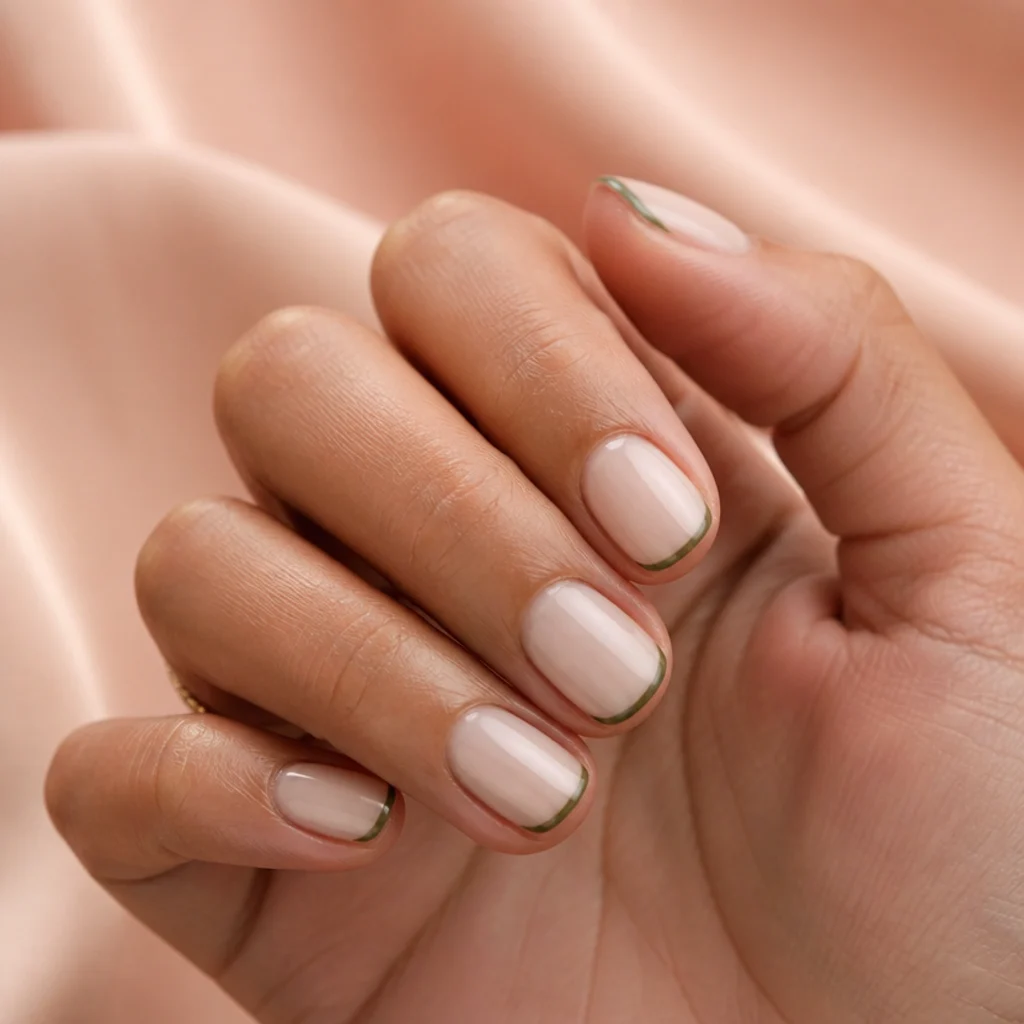
A refined, minimalist update to the standard french, the micro-french traces a barely-there sliver of olive right along the free edge. It's the most understated of the olive green french tip nails and looks remarkably clean and modern on short, natural nails, which makes it a favorite for anyone who wants color to register only on a second glance. Because the line hugs the very tip, regrowth is nearly invisible, so despite the precision the design demands, it stays low-maintenance week to week. A bare, milky, or sheer nude base keeps the focus on that hairline of green. The paradox is that the thinner the line, the steadier the hand it requires, so guide stickers or a needle-fine detail brush do a lot of the work. Pro tip: matching the base to your skin, milky on fair, warmer nude on deep, makes the tip look like it floats. Ask your nail tech for a micro-french, the thinnest possible olive line right on the free edge, over a bare or milky base.
12Olive Green with Gold Foil Flecks
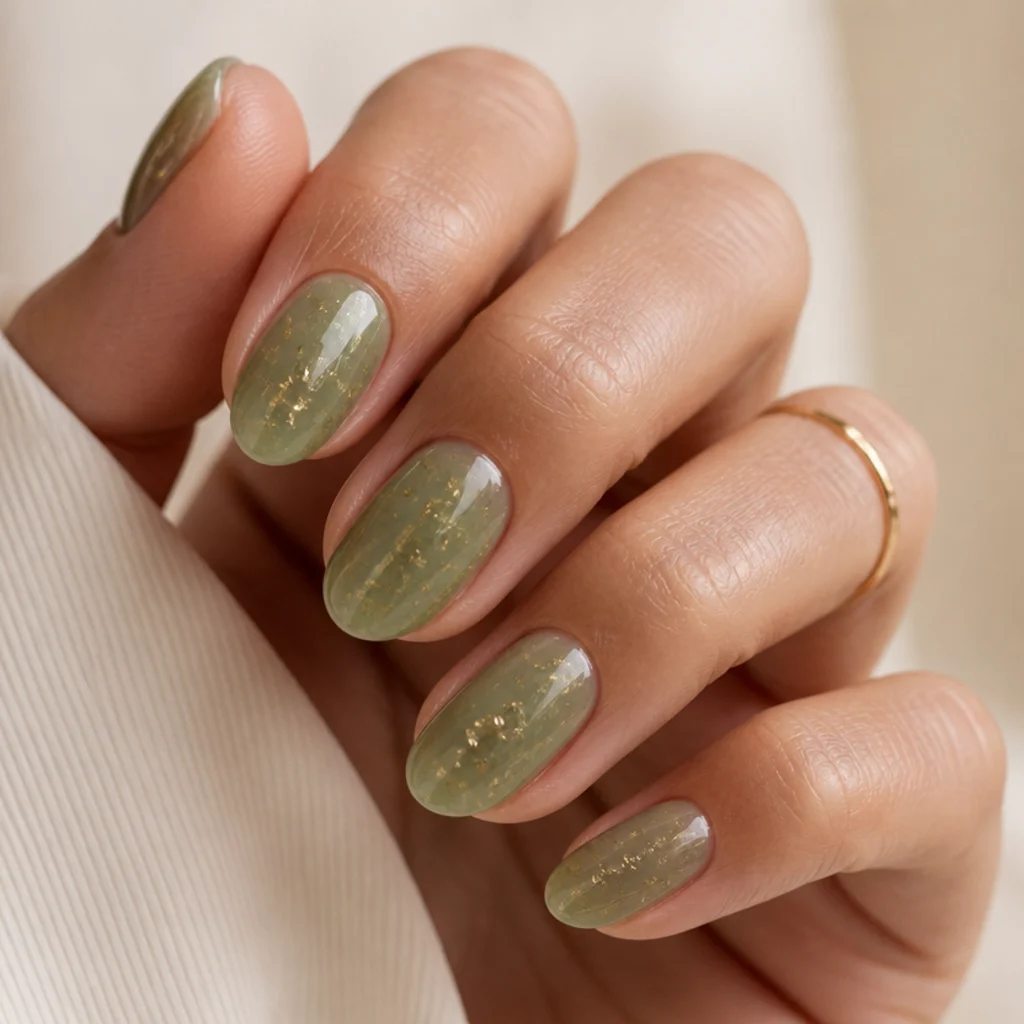
A quieter cousin of full gold leaf, this design suspends tiny gold flakes throughout a semi-sheer olive so the metal glints from inside the color rather than sitting on top of it. The effect catches light softly and shifts as you move, which is what makes it work equally for a desk day and a dinner out. Olive green and gold nails in this scattered style flatter every skin tone, because the warm flecks add a lit-from-within glow close to the fingers without the hard shine of a solid metallic. Maintenance is easy: the smoothing top coat locks flakes flat so nothing snags, and the semi-sheer base blurs regrowth. You can dial the flake density up or down, from a whisper of sparkle to a heavy shimmer. Pro tip: keep the flecks to a warm yellow-gold rather than a cool silver, since yellow-gold harmonizes with olive's underlying warmth. Ask your nail tech for olive with fine gold flake suspended in the gel, and specify light or heavy fleck density.
13Sage-Olive Short Round Nails
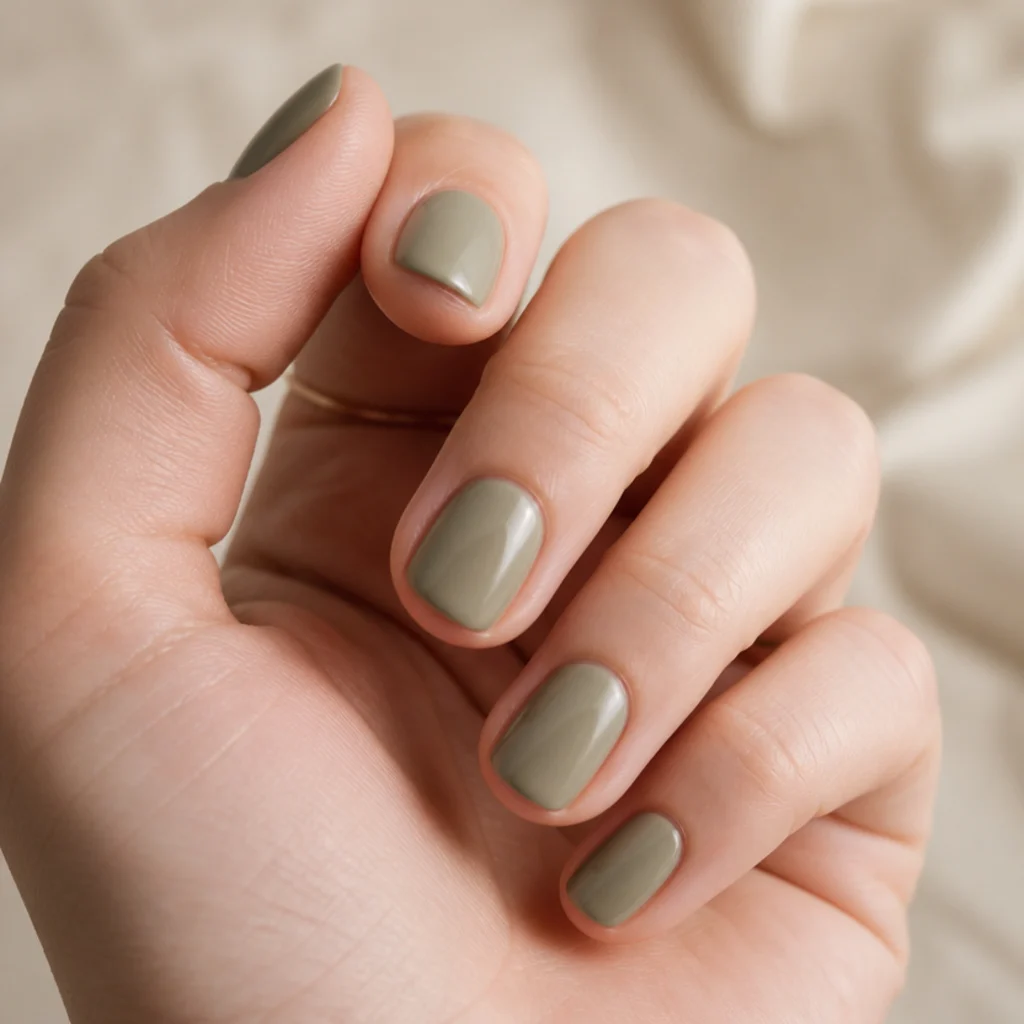
When olive is cooled and grayed until the yellow drops out, it edges toward sage, and this soft, dusty version on short round nails is one of the single most flattering picks for cool and pink undertones. It is gentle, tidy, and thoroughly office-friendly, the kind of color that reads as an intentional neutral rather than a statement. The round shape earns its place practically too: with no corners to catch, it is the most durable silhouette for anyone who types, cooks, or works with their hands all day, and it needs the least filing to maintain. Both regular lacquer and a single gel coat suit it, so it is an easy at-home option. Style it with silver or brushed-metal jewelry to echo the cool cast. Pro tip: if a swatch looks too yellow on your skin, ask for a drop of gray or a sage top-shade mixed in to push it cooler. Ask your nail tech for a soft sage-olive cream, short and rounded, on the grayer end of the olive family.
14Dark Olive Croc-Print Accent
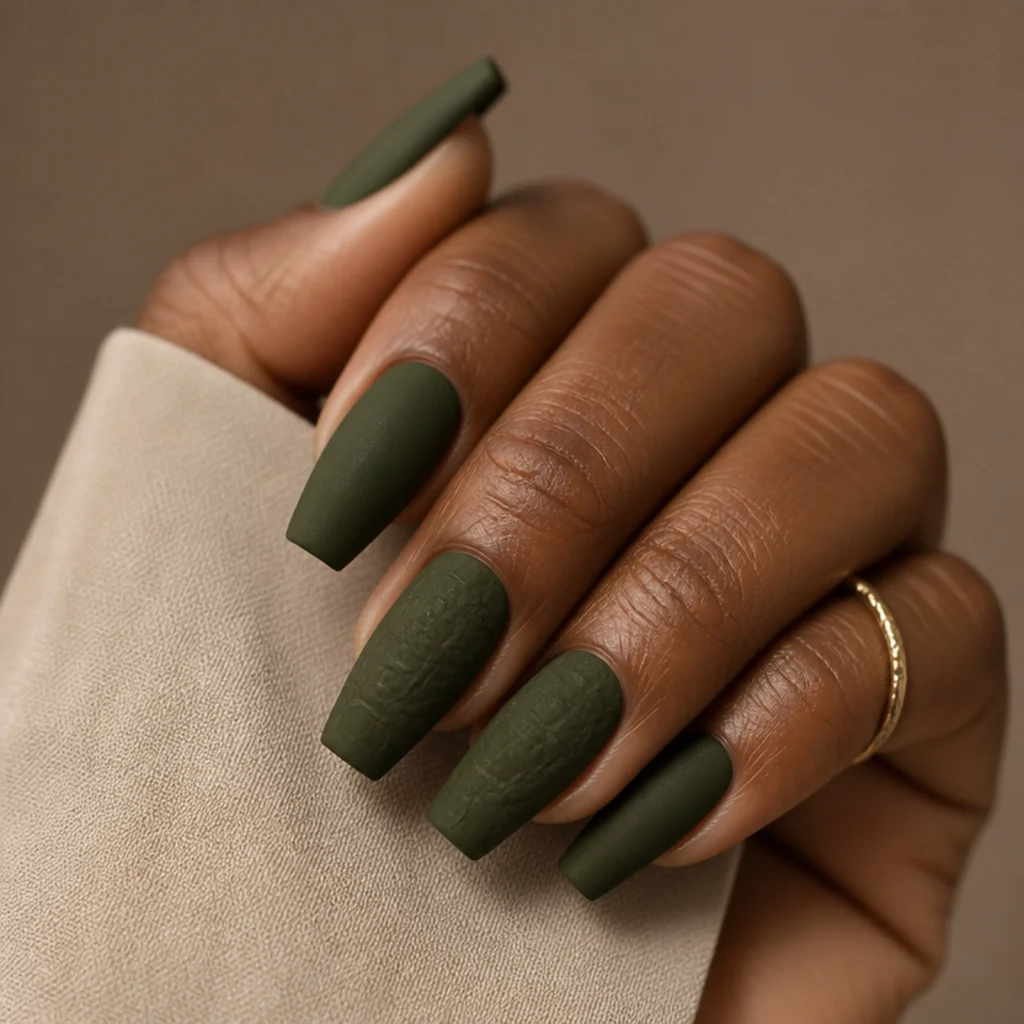
For an editorial, animal-inspired twist, a tonal croc or snakeskin print in a slightly darker olive layers texture onto the color without introducing a clashing second hue. Kept strictly tonal, olive-on-olive, this reads like fine textured leather rather than costume animal print, so dark olive green nails in this style feel properly luxe. The discipline is in restraint: reserve the print for one or two accent nails and leave the rest solid, or the effect tips from refined to busy. It is an advanced design, built either freehand with a fine liner and a sponge or stamped with a plate and squished for organic scales, so it warrants dedicated salon time. A matte or satin seal is doing quiet work here, softening the scales so they catch light like suede. Pro tip: keep the print color no more than one or two shades off the base for the most expensive, tone-on-tone result. Ask your nail tech for a tonal dark-olive croc print on the accent nails with a matte finish.
15Olive Green Aura Nails
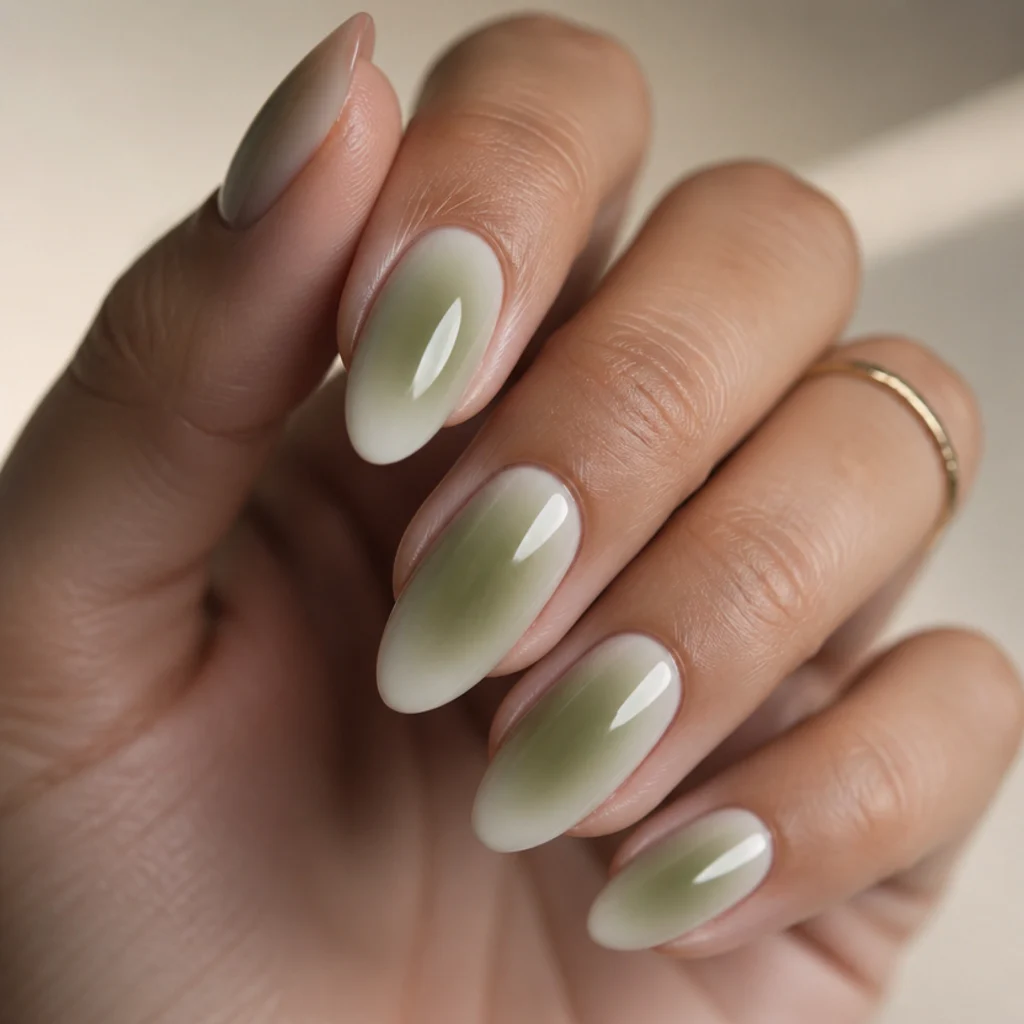
Aura nails feature a soft, airbrushed halo of color that glows from the center of the nail and diffuses outward into a sheer or milky base, like a lens flare caught under gel. In olive, the effect is dreamy and atmospheric, a genuine middle ground between plain color and full art that still looks wearable day to day. It suits anyone chasing something trend-forward without heavy coverage or fuss, and it flatters most shapes, though almond and oval give the halo the most room to breathe. The blur is the hard part: a clean, smooth glow comes from an airbrush or expertly stippled sponge, so it's a pro technique where results swing widely between artists. Style it minimally and let the nails be the moment. Pro tip: a tighter, smaller halo reads bold and graphic, while a large, barely-blended one feels soft and ethereal, so name the size you want. Ask your nail tech for an olive aura with a soft glowing center over a milky base, specifying a tight or diffuse halo.
16Glazed Olive Milky Overlay
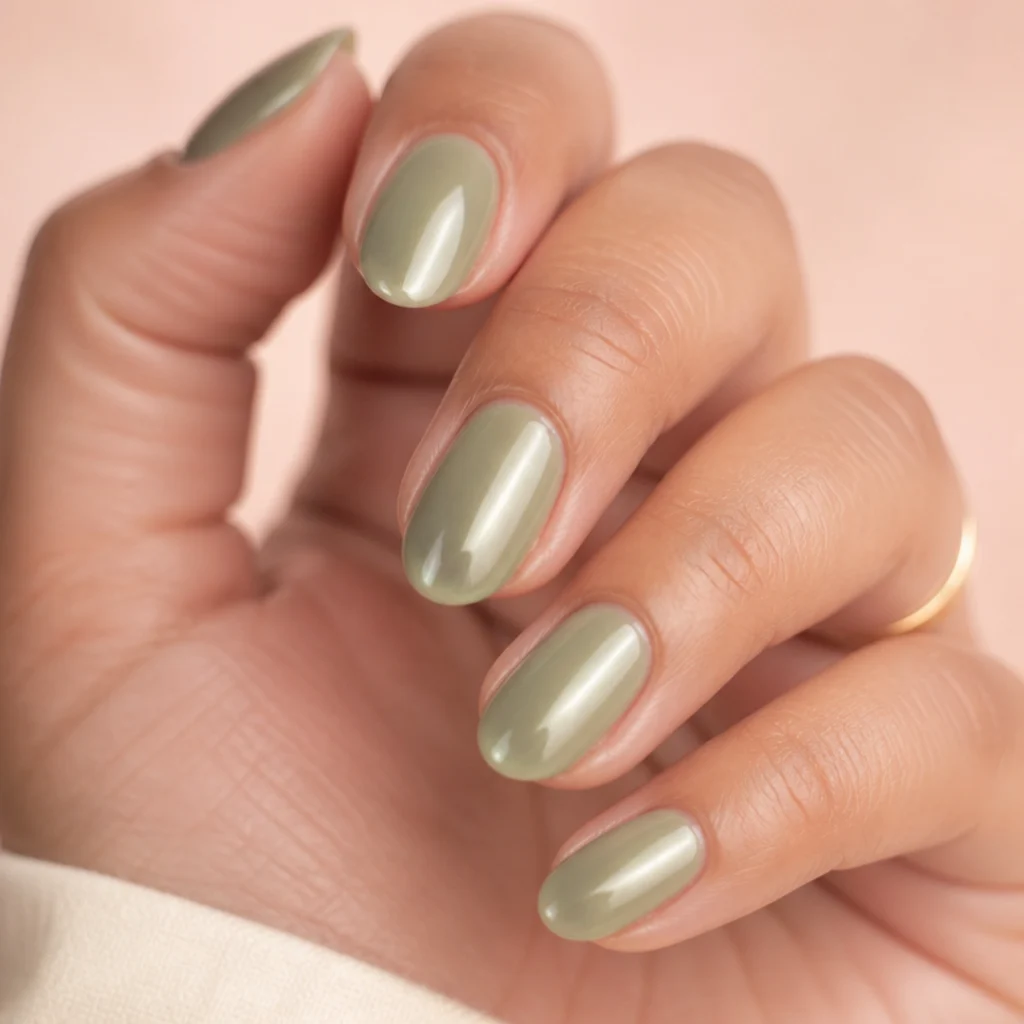
Borrowed from the glazed-donut finish, this look floats a sheer milky-white pearl over an olive base, frosting and cooling the color into something soft, pearly, and lit from within. The overlay mutes olive's depth into a delicate, cool-toned wash that feels fresh and modern, which makes it a natural pick for cooler undertones and an almost-bare aesthetic. It flatters shorter nails particularly well, where the frost stays subtle and neat. Upkeep is forgiving, since the pearly veil diffuses light and hides small surface flaws and early regrowth. The finish is a layered build, olive base, sheer milky pearl, then a glazed chrome or pearl top, so the sequence matters for that wet, glassy glow. Pro tip: keep the milk overlay actually sheer; too many coats turn the effect chalky and flat instead of luminous. Ask your nail tech for an olive base with a sheer milky pearl overlay and a glazed chrome top, kept short and neat for the cleanest effect.
17Olive Green and Gold Marble
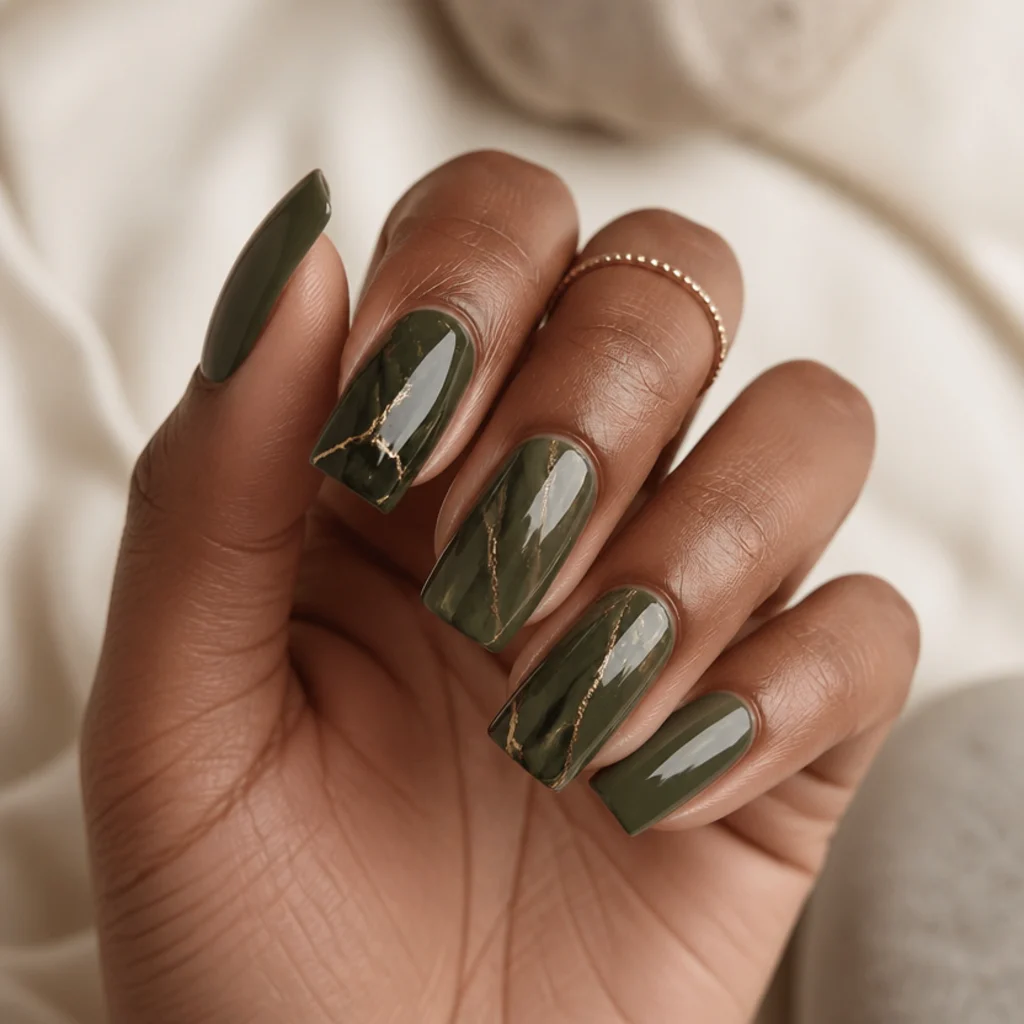
Marble nails swirl olive with thin gold veins to mimic polished stone, delivering a high-end, geological texture that looks far more intricate than it feels to wear. It is one of the dressier olive green and gold nails options, purpose-built for events or anyone who wants a statement without a loud, saturated color. Because the pattern is inherently busy, it works best isolated on one or two accent nails set against solid olive, letting the marbling breathe. The veining is an advanced hand-painted skill, dragged with a fine liner or floated on water and transferred, so no two artists produce the same result, and a reference photo is essential. Style it with delicate gold jewelry to echo the veins. Pro tip: fine, sparse gold lines read like real marble, while thick or dense veining tips into an abstract look, so specify delicate. Ask your nail tech for olive and gold marble veining on the accent nails, and bring a reference for the vein style you want.
18Deep Olive Stiletto
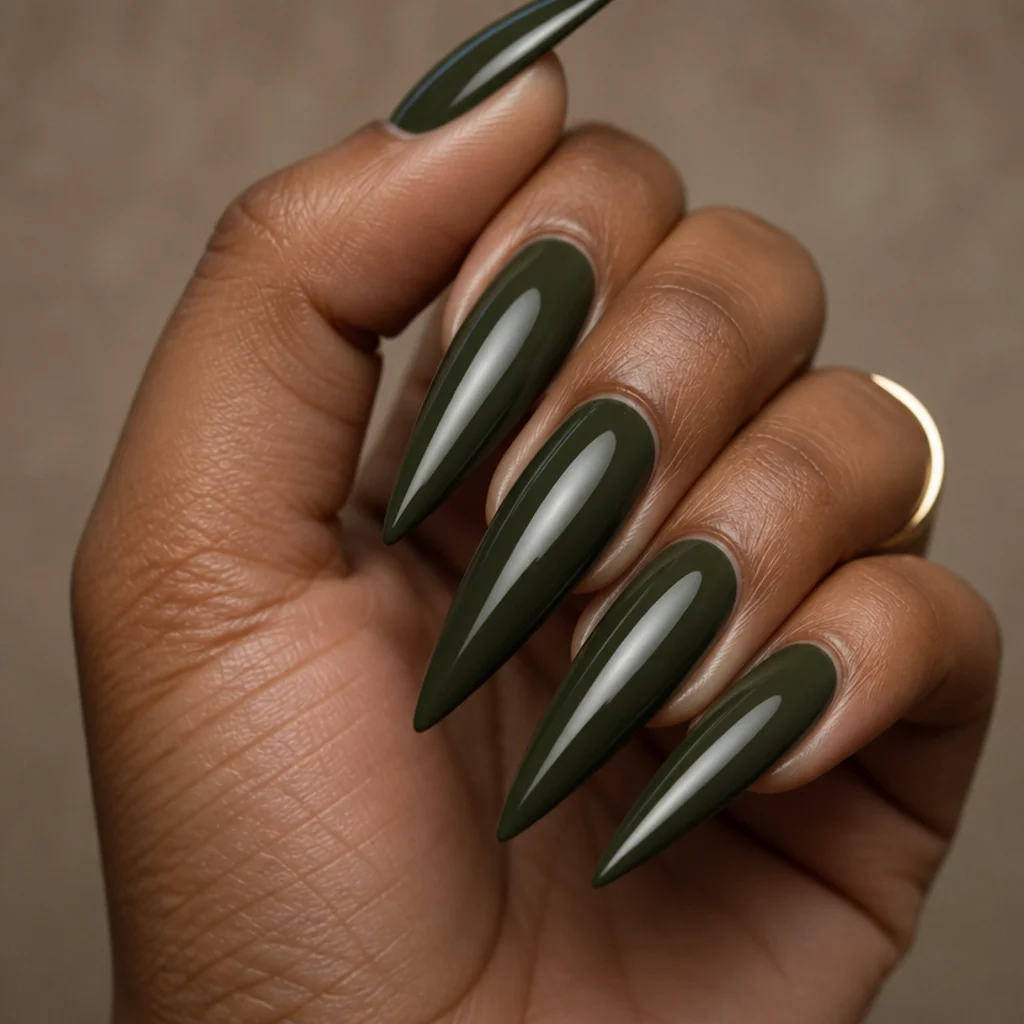
For maximum drama, a deep, glossy olive on a long stiletto pairs high fashion with an elongating, dagger-sharp silhouette in a single set. The pointed tip and rich, near-forest olive read bold and self-assured, and the tapered shape gives the dark color the runway of length it needs to make an impact. Be clear-eyed about the commitment: stilettos are the least durable shape, the fine point is prone to catching and snapping, and the build (acrylic or hard gel) needs fills every two to three weeks. This is a salon-only service and a poor match for anyone rough on their hands. A high-gloss top coat deepens the color and amplifies the drama. Pro tip: if this is your first stiletto, request a soft or medium point rather than a needle tip, which balances the look with real-world durability. Ask your nail tech for a long stiletto in a deep glossy olive, and consider a slightly blunted point if you use your hands often.
19Olive Green Abstract Line Art

Fine olive line work over a nude or milky base gives you playful, gallery-adjacent nail art that still reads grown-up rather than kitschy. Thin abstract squiggles, single arcs, off-center strokes, or sparse geometric lines in olive keep the whole hand airy and negative-space-forward instead of crowded. It suits anyone who wants personality and a little wit without heavy pigment coverage, and it flatters short and long nails alike since the base does most of the visual work. Difficulty is high, because freehand detail with a long striper brush is unforgiving and every wobble shows. The charm lies in variation: letting each nail carry a different stroke keeps it feeling hand-drawn rather than stamped. Pro tip: a milky, slightly translucent base makes olive line art look like ink floating under glass, which is softer than lines on a stark nude. Ask your nail tech for minimal olive line art over a sheer base, one distinct design per nail, and let the artist vary each stroke.
20Olive Green Velvet Powder
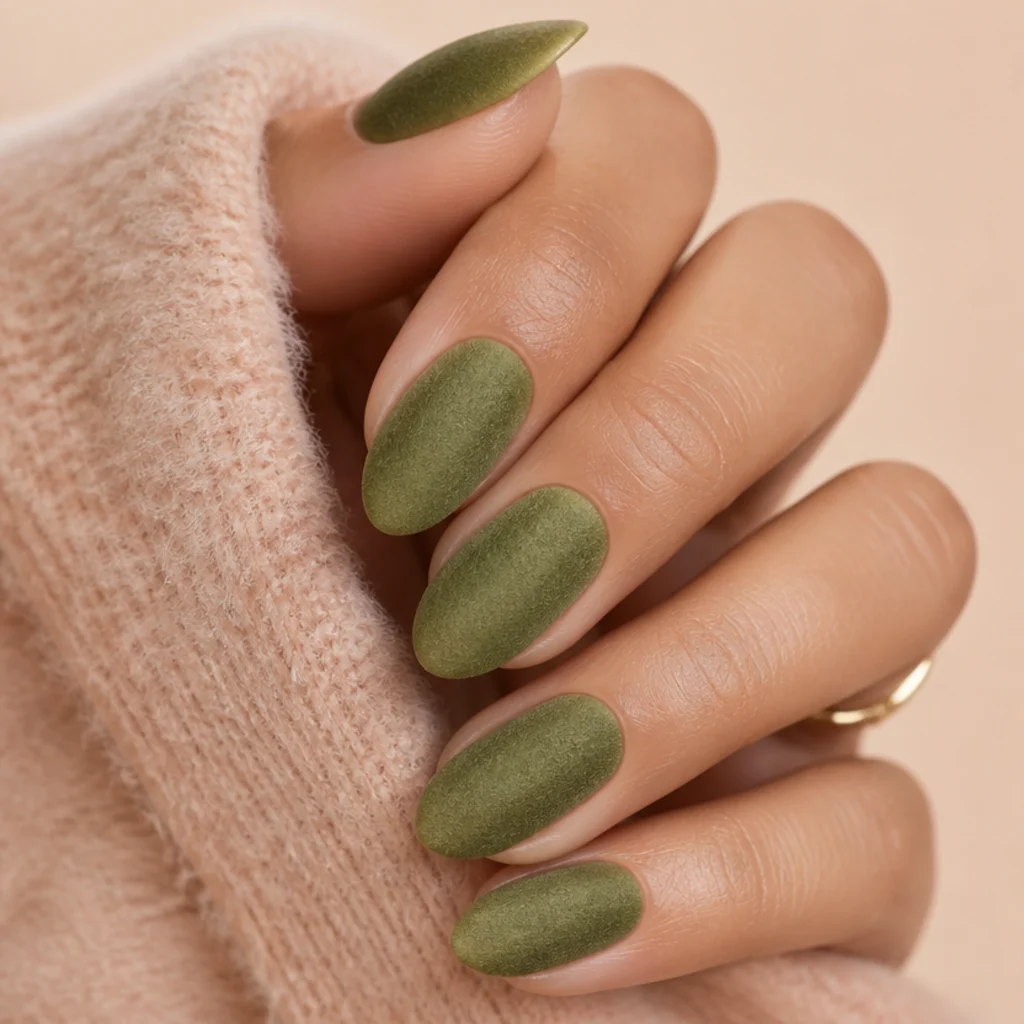
Velvet nails use a reflective powder or a magnetic velvet gel to raise a soft, brushed, fabric-like sheen, giving olive a cozy, tactile dimension that suits cooler months. The finish reads like suede or crushed velvet, catching light in a directional, napped way that adds warmth and richness to the earthy tone. It looks best on medium-length almond or oval shapes, where the sheen has room to shift and travel as the light moves. Because it is a specialty finish, it is a pro service, and the seal is doing careful work: too glossy a top coat flattens the velvet, so a matte-leaning or purpose-made velvet finish preserves the texture. Style it with knitwear and warm metals for a full autumnal moment. Pro tip: velvet powder is delicate at the edges, so avoid filing or heavy hand-washing right after application while the texture settles. Ask your nail tech for an olive velvet powder or magnetic velvet effect with a brushed finish and a texture-preserving seal.
Save this to Pinterest to remember the cozy velvet finish for fall.
Pro Tips from the Editor
- Name the olive in three words. Techs read "dusty grayed olive," "true army," and "deep forest-olive" completely differently. Those three phrases eliminate more guesswork than any photo, because they lock the undertone before the shape conversation even starts.
- Match your metal to your undertone, not the trend. Warm yellow-gold accents amplify olive's built-in warmth and flatter deep and tan skin; cool silver sharpens a grayed sage-olive on cool complexions. Choosing the wrong metal is what makes an expensive manicure read cheap.
- A sheer color base coat saves olive creams. Olive pigments streak more than most because of the brown and gray mixed in. One thin, sheer pass before your opaque coats gives the color something to grip and prevents patchy cuticle-to-tip coverage.
- Textured finishes want a matte or satin seal. Croc print, velvet, ombre, and marble all read more luxe under a softened top coat. High gloss flattens the very texture you paid for and can make hand-painted art look like a sticker.
- Chrome and matte both fail first at the cuticle. Natural oils dull chrome and leave shiny fingerprints on matte right where regrowth shows. Keep hand cream off the nail plate before sealing, and carry a brush-on top coat for a mid-cycle refresh.
- Let shape follow lifestyle before it follows fashion. Short round and squoval survive typing and dishwashing; coffin and stiletto demand fills and careful hands. Choosing a shape you can't live with is the fastest route to a set you pick off early.
- Save two references, not one. Bring a color photo and a separate shape-and-length photo. Artists interpret a single image loosely; two targeted references pin down exactly what you mean.
How to Choose / Get the Look
Choose by feature. Start with undertone, because it's what decides your whole olive lane. Warm, tan, deep, and olive-undertoned skin can wear the entire range, including rich army and forest-leaning darks. Cool and pink undertones look softest in grayed, sage-tinted olives, or in sheer jelly and milky-overlay formulas that lower the contrast. Then read your nail bed and finger length: almond and stiletto slim and elongate shorter or wider beds, while round and squoval keep short, hard-working hands tidy and durable. Coffin gives you the widest canvas for future art.
Prep and longevity. Durability starts before color. A gentle cuticle push, a lightly buffed plate, and a dehydrator-plus-base sequence are what make gel last its full two to three weeks. Solid olive is doable at home with a good base and two thin coats; textured and optical finishes are where a professional earns their fee. For upkeep, plan a fill or fresh set every two to three weeks for gel and acrylic, and expect lacquer to look its best for under a week before the earthy tone muddies.
When to see a pro. Book the appointment for anything built or optical: chrome, cat-eye, aura, marble, ombre, velvet, croc print, and all acrylic or hard-gel length. These rely on specific powders, magnets, airbrushing, or structural sculpting that home kits rarely replicate cleanly. Then arrive prepared: name the shape and length, describe the exact olive in those three words, bring your two saved photos, and ask your nail tech for the specific finish by name. That combination is what turns a vague "something olive" into the manicure you actually pictured.
Frequently Asked Questions
Does olive green suit every skin tone?
Very close to it, as long as you choose the right olive. Warm, tan, deep, and olive-undertoned skin carries rich army and dark forest olives easily, while cooler, pinker undertones look best in grayed, sage-tinted olives or in sheer jelly and milky-overlay formulas that soften the contrast. The family spans yellow-warm to gray-cool, so the trick is matching the olive's undertone to yours rather than assuming one shade fits all.
How long do olive green nails last?
A gel or acrylic set typically holds a fresh look for two to three weeks before regrowth at the cuticle becomes noticeable. Hard gel and acrylic can stretch past three weeks with a fill because of the added structure. Regular lacquer usually stays true for about five to seven days, after which olive's brown and gray content can start to look muddy, so a fresh top coat helps buy a few extra days.
What is the difference between olive green chrome and regular olive polish?
Regular olive polish gives a flat or glossy solid color that sits evenly on the nail. Olive green chrome adds an ultra-fine metallic powder buffed over a cured no-wipe gel base, creating a reflective, mirror-like surface that shifts between green and bronze as light moves across it. Chrome is a salon technique, it needs a chrome-safe top coat to avoid clouding, and it shows regrowth more clearly because the reflective surface shows off any gap.
How do I ask my nail tech for olive green french tips?
Ask for a sheer nude or milky base with an olive french tip, then specify the line weight precisely: a thin, delicate smile line for a quiet look or a bolder, chunkier band for something more current. Match the tip's undertone to your skin, grayer olive on cool tones, warmer army on deep tones, and bring a saved photo, since smile-line curve and thickness vary a lot between artists.
Are olive green almond nails good for short nails?
Yes. The almond shape tapers the free edge to create the illusion of length even on a short bed, and a muted or sage olive keeps the result tidy rather than heavy. If you want more durability on short nails, a round or squoval shape wears longer with no corners to catch while keeping the same earthy color. Both pair well with a solid cream, which is the most forgiving finish to maintain.
What colors go with olive green nails?
Olive is a warm-leaning neutral, so it plays with more than you might expect. Gold and bronze amplify its warmth for a rich, expensive read; cream and nude keep it soft and minimalist; deep burgundy, rust, and terracotta lean autumnal; and crisp white or milky bases make it look fresh and modern. For jewelry, warm yellow-gold flatters standard and army olives, while cool silver suits grayed sage-olives.
Is olive green a good nail color for every season?
It really does cross all four. Deep army and forest olives, velvet powder, and matte finishes feel cozy and autumnal for fall and winter, while sheer olive jelly, sage-olive creams, and glazed milky overlays read fresh and light for spring and summer. Olive behaves like a neutral, so it rarely looks out of place; you're mostly shifting finish and depth to match the season rather than abandoning the color.
Can I do olive green chrome or cat-eye nails at home?
You can attempt chrome at home with the right no-wipe gel base, chrome powder, an applicator, and a UV or LED lamp, though a clean, cloud-free mirror finish takes practice and a chrome-safe top coat. Cat-eye is harder to replicate solo, because it needs a specific magnetic gel and precise magnet timing before the gel cures. For a polished, even result on either, a salon visit is the more reliable route.
How do I make olive green nails look more expensive?
Keep the color clean and undertone-matched, then let one detail do the work. A single gold-foil or marble accent against solid olive, a matte or satin seal on textured finishes, and a precise, symmetrical shape read far more luxe than busy, all-over art. Warm-gold jewelry, tidy cuticles, and a properly sheer overlay (rather than a thick, chalky one) are the quiet upgrades that make an olive manicure look considered.