20 Dimensional Brunette Ideas That Are Stunning
Flat brown reads one-note; dimensional brunette layers light and shadow through the mid-shaft and ends so your color shifts as you move. This guide breaks down 20 distinct takes, from warm chestnut balayage to cool bob melts and hidden copper panels. Each one names who it flatters, the real upkeep timeline, and the exact wording that gets you the reference photo instead of a guess.
 Edited by Lena Rose · Published July 11, 2026 · 33 min read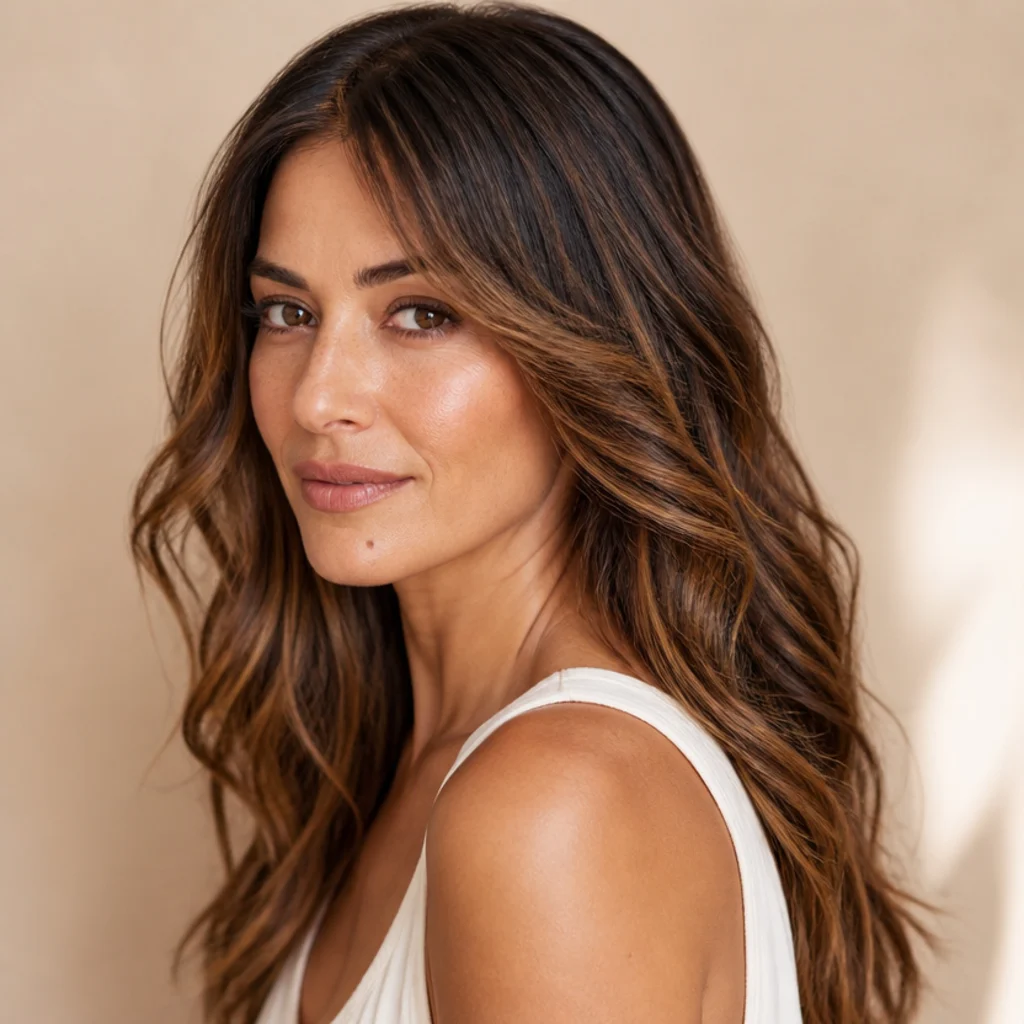
Quick Answer
- Best for: Anyone with natural or color-treated brown hair who wants depth, shine, and movement without changing their base level.
- Who might skip it: Anyone wanting a single solid block color, hair too compromised to lift safely until it is reconditioned, or those unwilling to maintain a toning gloss.
- Maintenance: Low to moderate. Root-blurred balayage and lived-in placements stretch 10-16 weeks; money pieces, bobs, and red-family tones want attention every 4-7 weeks.
- Difficulty: Salon-recommended for multi-tonal foil or freehand work; a single face-frame or gloss refresh is a lower-lift ask.
- Cost: Variable. Expect a gloss/toner at the low end, a partial balayage or money piece in the mid range, and a full-head dimensional foil or corrective session at the higher end; multi-session lightening costs more.
- Wear time / longevity: Placement lasts until it grows out; tone is the shorter clock, with ash and red fading fastest between glosses.
- Standout variation: Warm chestnut balayage with a soft caramel money piece.
- How to ask your colorist: Bring 2-3 saved photos, name your desired root depth and tone (warm vs cool), and ask how many sessions your goal realistically takes.
In This Guide
- Warm Chestnut Balayage
- Cool Espresso With Ash Ribbons
- Caramel Money Piece on Dark Brown
- Mushroom Brown Melt
- Golden Bronde Face Frame
- Mahogany With Copper Ribbons
- Smoky Cocoa Bob
- Sun-Kissed Beachy Brunette
- Toffee Root Smudge
- Cinnamon Spice Warm Brunette
- Dimensional Bob With Babylights
- Chestnut Curtain Bangs
- Berry-Brown With Plum Undertone
- Bronde Ombre for Long Hair
- Reverse Balayage Ash Lowlights
- Peekaboo Copper Panels
- Honey Ribbons on Curls
- Cool Mocha Shadow-Root Bob
- Hazelnut Teasylights
- Bronzed Brunette for Deep Skin Tones
Dimensional brunette isn't really one shade, it's a technique. Your colorist weaves lighter and darker tones through a brown base so hair catches light unevenly instead of sitting flat. The same starting level can read as a soft, lived-in brunette or a high-contrast statement, depending on three things: placement, contrast, and where the brightness lands relative to your face. A ribbon painted from mid-shaft down reads expensive and low-key; take that same tone to the root and it reads bold. That's why dimensional brunette works on almost everyone, from cool porcelain to deep skin, on fine straight strands and dense coils alike.
This roundup exists to help you narrow the field before you sit down in the chair. Every idea below names who it tends to suit by undertone and texture, roughly how much upkeep to expect, the difficulty level, and the actual words that move you closer to the reference photo instead of a guess. Whether you're growing out old highlights, refreshing a dimensional brunette balayage, or going darker for the first time, there's a version here that fits your length, density, and how often you want to sit in a salon chair. Save the ones that speak to you and bring two or three to your consultation.
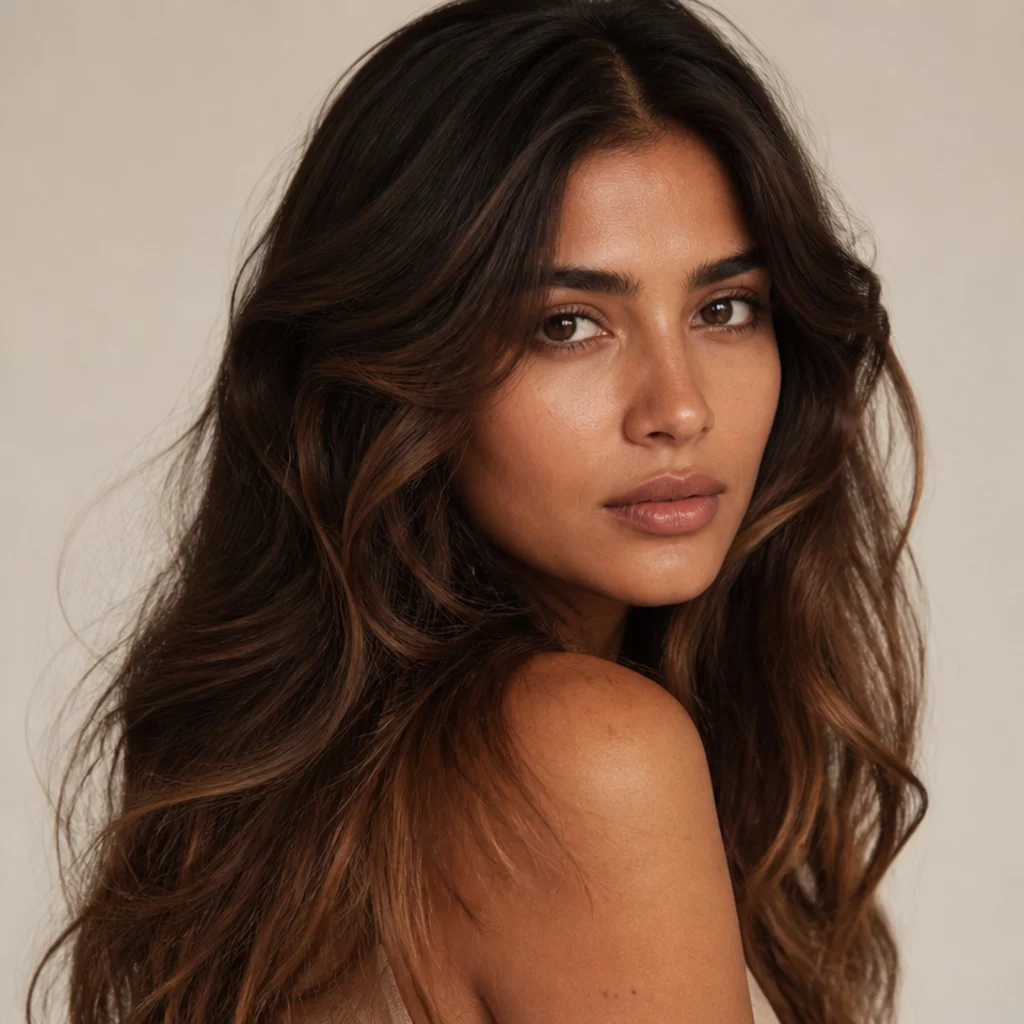
01Warm Chestnut Balayage
A warm dimensional brunette usually starts here. Chestnut, a level 5-6 with a red-gold undertone, holds the mid-shaft while hand-painted caramel opens up the lengths and ends for that golden-hour glow without crossing into blonde. Freehand balayage means no hard regrowth line, so the grow-out is soft and forgiving; most people stretch to 12-14 weeks between paints, with a gloss around week 6 to stop the caramel drifting brassy-orange.
Warm and neutral undertones get the most out of this one, and it looks best on medium-to-long hair where the swept pieces have room to blend down the shaft. Straight hair shows the ribbons as clean sweeps; waves scatter them into a lived-in effect. Ask for the brightness to start below your jaw, not at the temple, so it lifts the face without widening it. Tell your colorist you want "a warm chestnut base with a soft caramel balayage, hand-painted, kept shadowed at the root." Pair it with a shine-boosting gloss, and cool it half a level if it ever tips too golden for you.
02Cool Espresso With Ash Ribbons
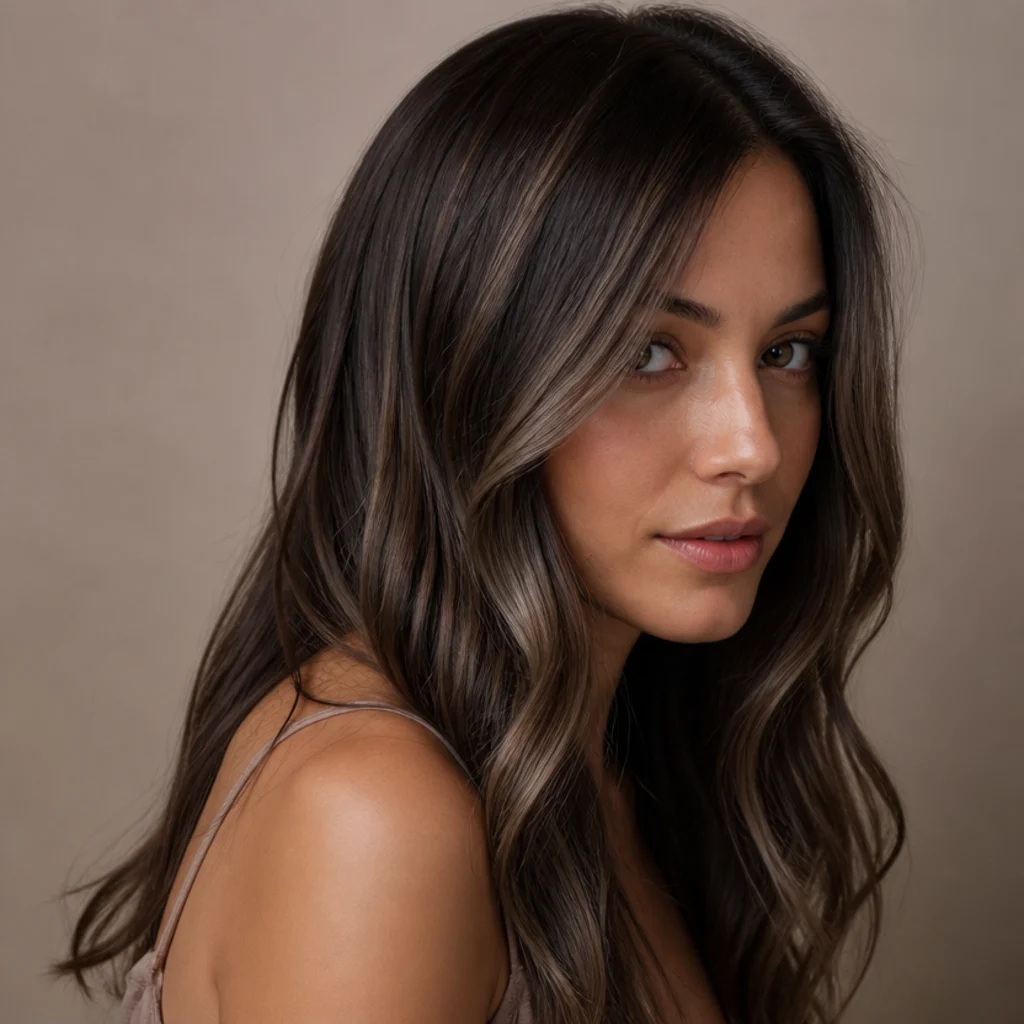
If warmth reads too golden or ruddy against your skin, take the whole thing cooler. A deep espresso base, roughly a level 3-4, carries fine ashy ribbons a shade or two lighter, for depth that stays rich and low-contrast while still moving in the light. Cool and neutral undertones suit it best, and it's a good pick for anyone who wants dimension quiet enough for a boardroom.
The catch with cool tones: ash sits on the hair as a deposit and fades faster than the placement grows out, so plan a toning gloss roughly every 6-8 weeks to keep unwanted warmth from surfacing at the mid-lengths. Fine, straight hair does well here because the thin ribbons add the look of separation without bulk. Ask that the ribbons stay off the very front hairline so regrowth reads as intentional shadow rather than roots. Tell your colorist you want "a cool espresso base with subtle ash babylights, no warmth, kept fine and blended." It photographs sleek in a flat wrap and holds surprising depth in a loose blowout.
03Caramel Money Piece on Dark Brown
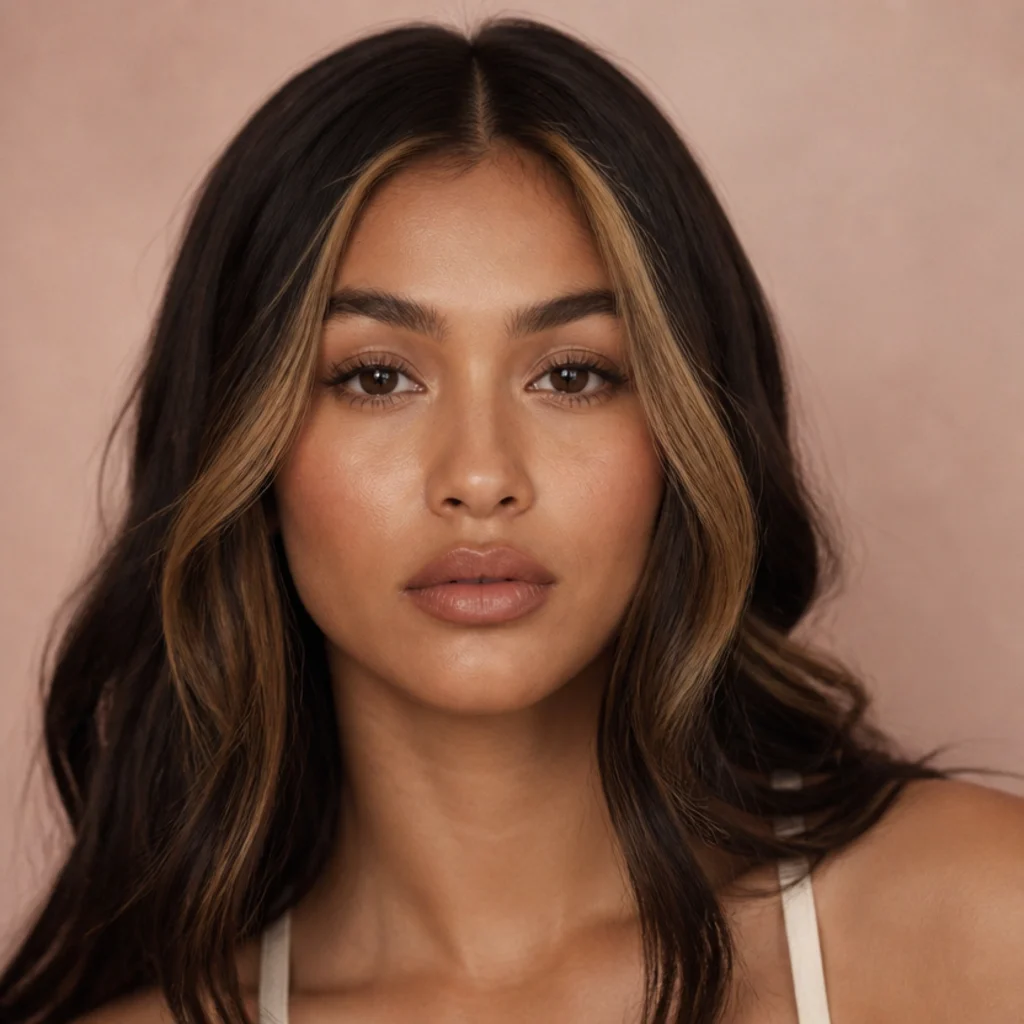
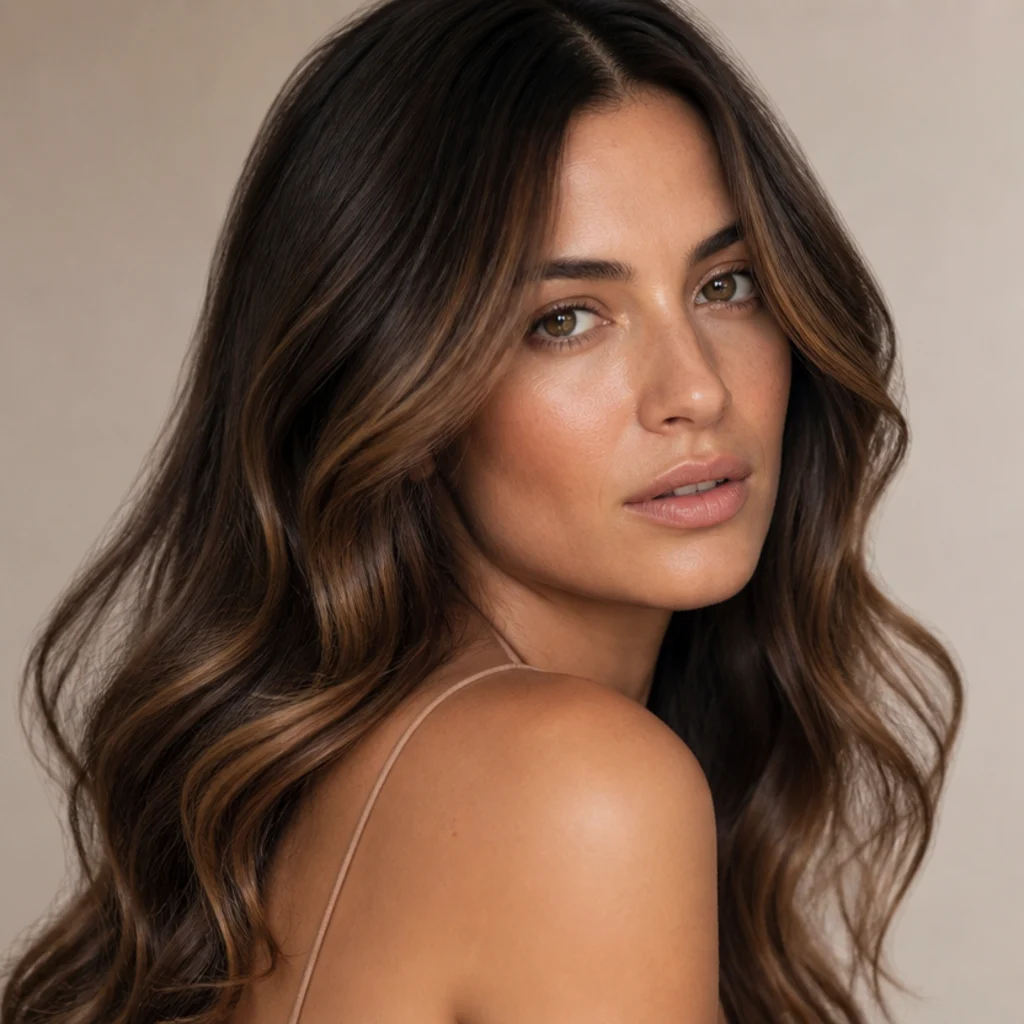
Dimensional brunette with money pieces is the lowest-commitment gateway to brightness. Two caramel panels, painted a few levels lighter than a dark brown base, frame the face and pull light up toward the eyes and cheekbones with almost no allover lifting. The change is concentrated where you actually see it, so it works on nearly every length and grows out gracefully, the panels just soften instead of leaving a stripe.
Most undertones can wear this once the caramel is toned to match, warmer for golden skin, cooler for neutral. A face-framing money piece can flatter a longer or rounder face when it starts at the cheekbone and angles outward. Keep the two front pieces slightly asymmetrical in width so the frame looks organic instead of pasted-on. Ask your colorist for "a face-framing money piece in caramel, a few levels lighter than my base, brightest from the cheekbone down." Refresh with a gloss and root touch-up as needed; the panels themselves are easy to maintain between visits.
04Mushroom Brown Melt
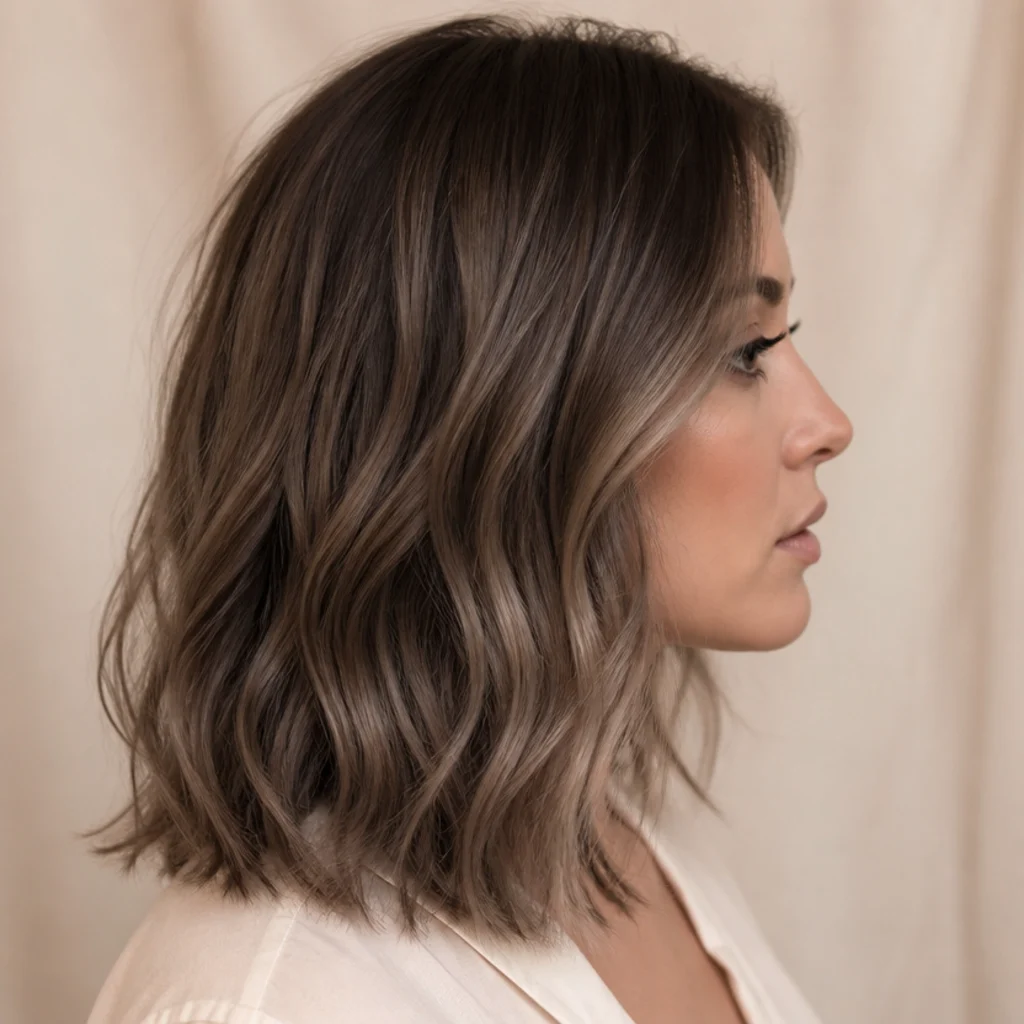
Mushroom brown blends cool taupe and soft greige through a neutral brown base for a muted, expensive finish that never announces itself as dye. Cool and olive undertones suit this soft dimensional brunette best, and it's a smart pick for anyone who finds gold tones overwhelming or aging on their skin. A true melt has no defined regrowth line, so it's low-maintenance on placement, you're stretching color for the tone, not the roots.
The trade-off is that greige is a fragile balance of pigment and lifts warm as it fades; a violet- or blue-tinted gloss every 6-8 weeks keeps it from creeping mousey-brassy. It looks best kept slightly matte rather than mirror-shiny, since the muted quality is the whole point. Straight and loosely waved hair show the tonal shifts most clearly. This look lives or dies on toning, so book a colorist who can show you healed mushroom results, not fresh-out-of-foil photos. Describe it as "mushroom brown, cool and smoky, melted root to tip, kept neutral to slightly matte."
05Golden Bronde Face Frame
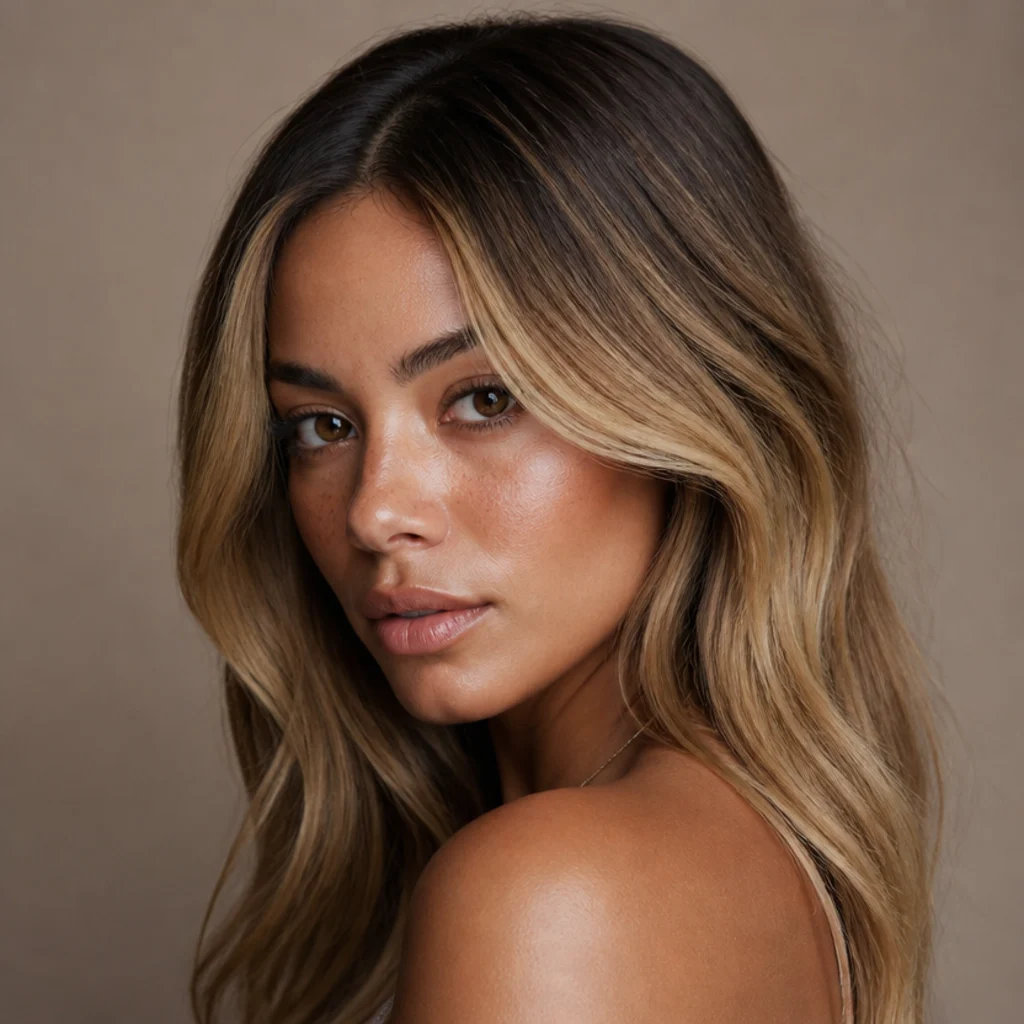
Bronde sits right on the brown-blonde border: a brunette root and depth through the back, brightening steadily toward the face and ends. Medium skin with warm-to-neutral undertones tends to suit it, and it's the natural landing spot for anyone slowly transitioning lighter without committing to full blonde upkeep. Because the root stays deliberately dark, regrowth is gentle and can be pushed to 10-12 weeks, but the lightened ends need a toning gloss every 8 weeks or so to stay clean rather than yellowing.
The face-frame emphasis is what makes this flattering when you want brightness that lifts the complexion without a full lightening commitment. Ask for the transition to begin higher on the front sections than the back, so the face reads bright while the interior keeps brunette weight and shine. Tell your colorist you want "a bronde melt, brunette at the root, brightest around the face and ends, blended not striped." It's the flexible middle ground if you love blonde luminosity but want a brunette's easier grow-out and lower gloss frequency.
Save this to Pinterest — these first five are the most-requested starting points.
06Mahogany With Copper Ribbons
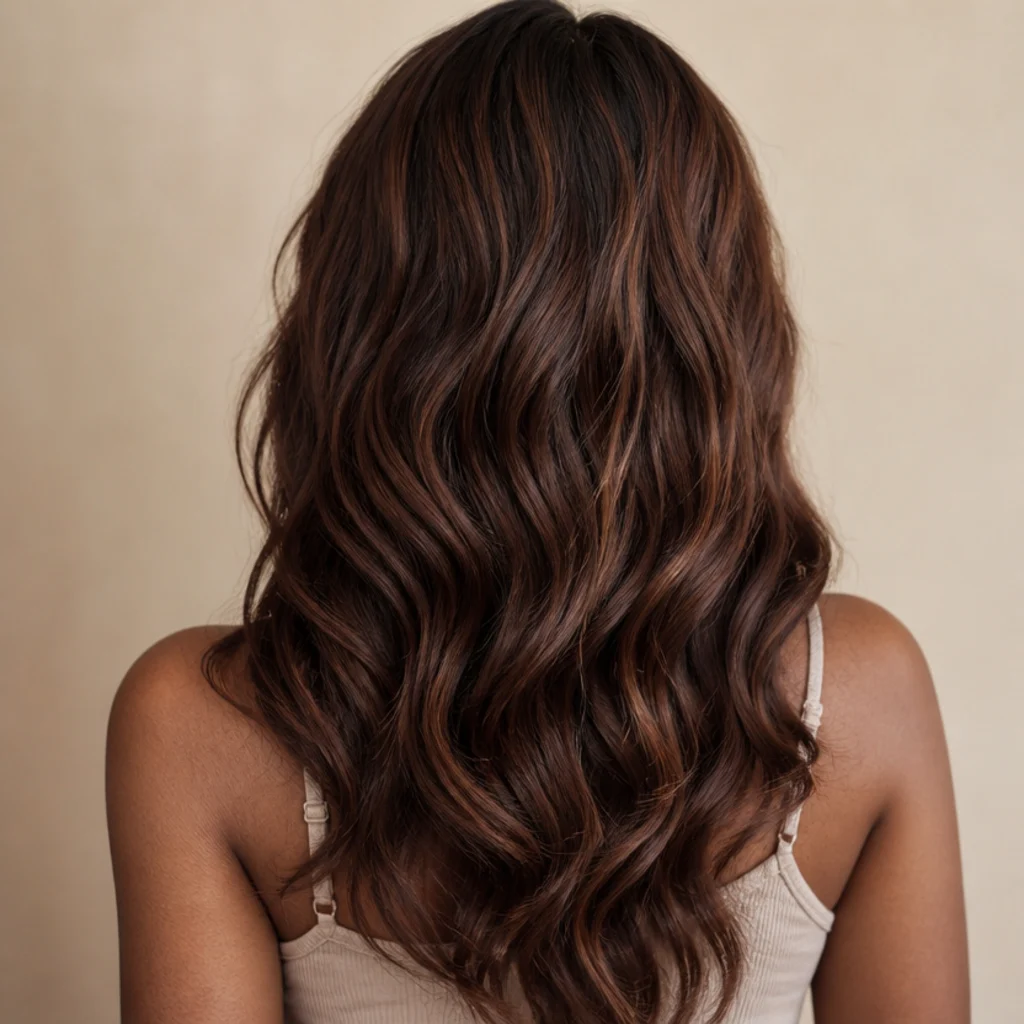
For a redder, more saturated take, mahogany brings a cool-red depth while copper ribbons add glow through the lengths, dimension built from warmth rather than lightness. Warm and deep undertones get the most from this warm dimensional brunette, and it turns vivid in autumn light and under warm indoor bulbs.
Be realistic about the upkeep, though. Red-family molecules are the smallest and escape the cuticle fastest, so every wash pulls a little color. Color-safe, sulfate-free washing, cooler water, and a refreshing gloss every 4-6 weeks aren't optional if you want the copper to stay lit instead of fading to flat brown. Shine sells this look, so it's best on healthy mid-to-long hair, glossy waves show the copper best. A red-boosting or copper-depositing conditioner once a week at home extends the vibrancy and buys you time between salon visits. Ask your colorist for "a mahogany base with fine copper ribbons, kept dimensional not solid, toned warm." Choose this when you want more saturation and drama than caramel delivers.
07Smoky Cocoa Bob
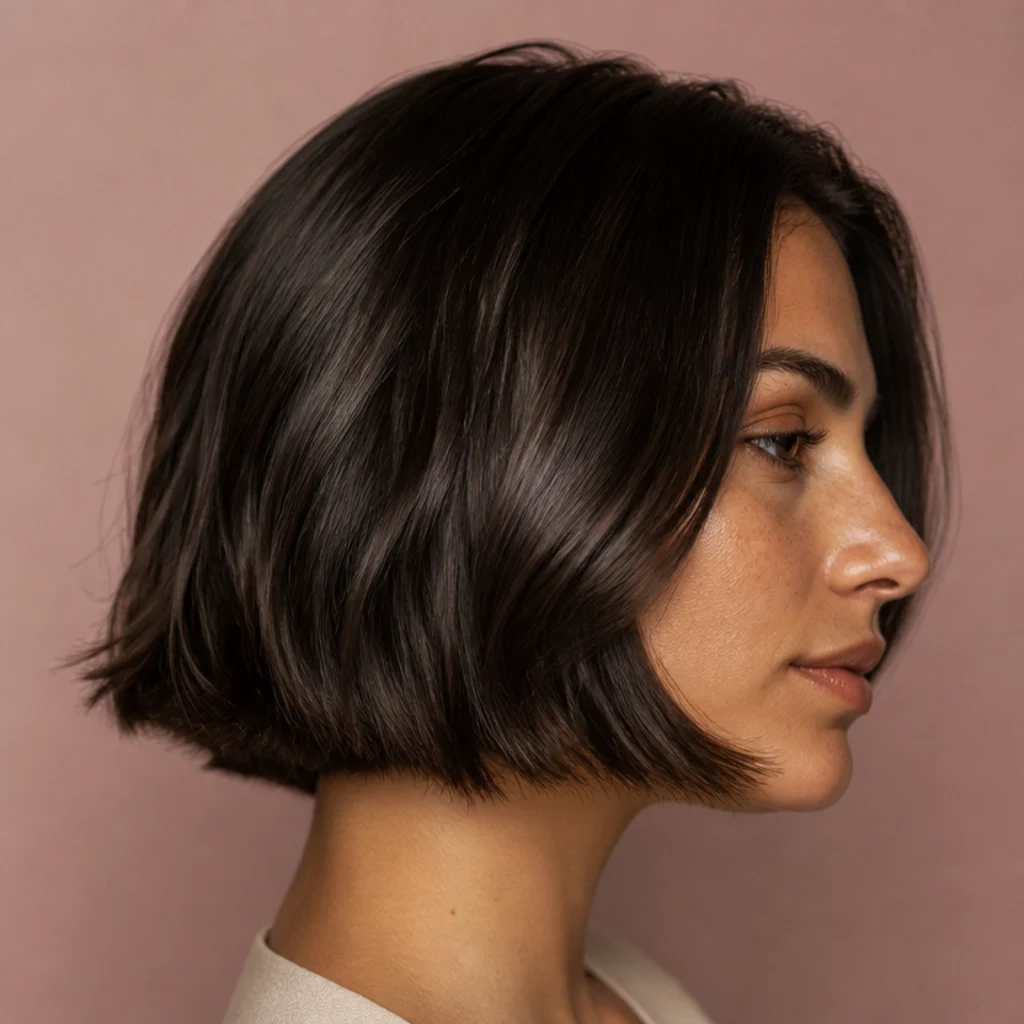
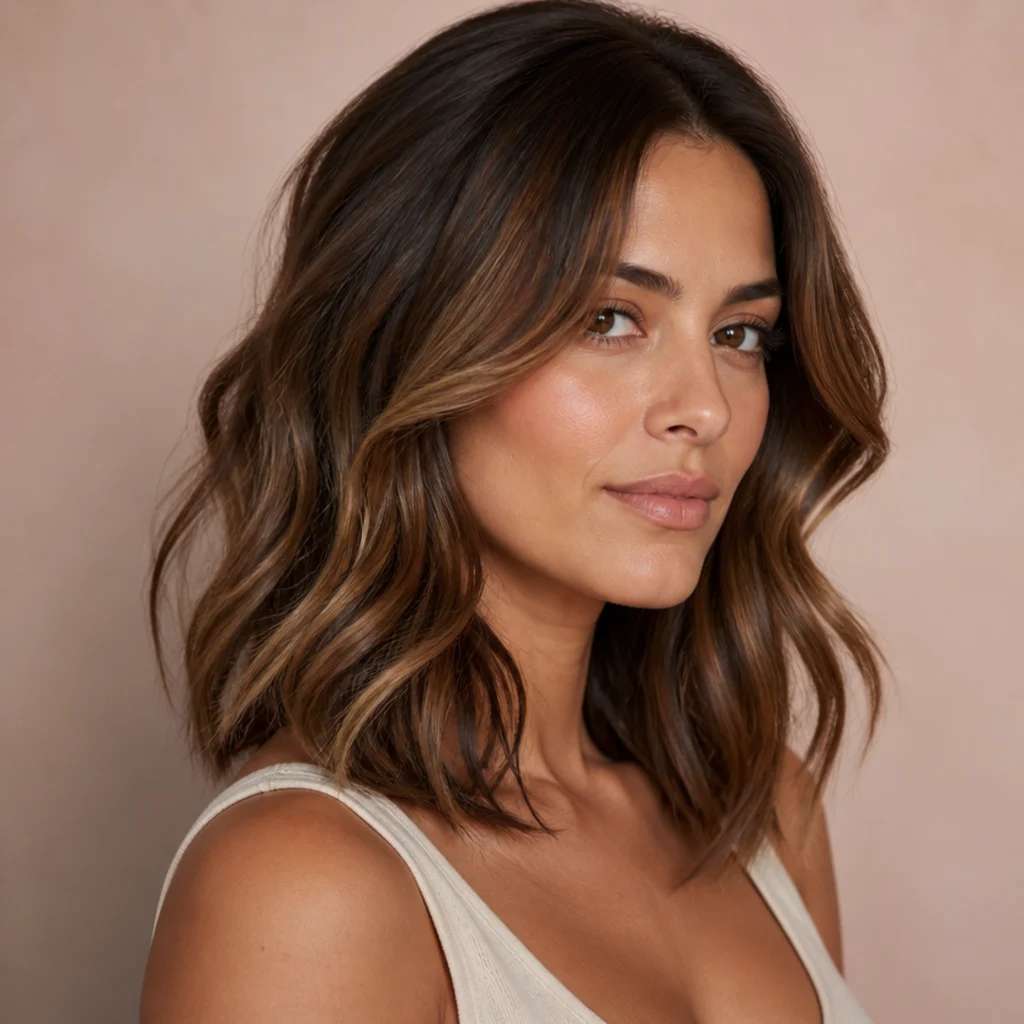
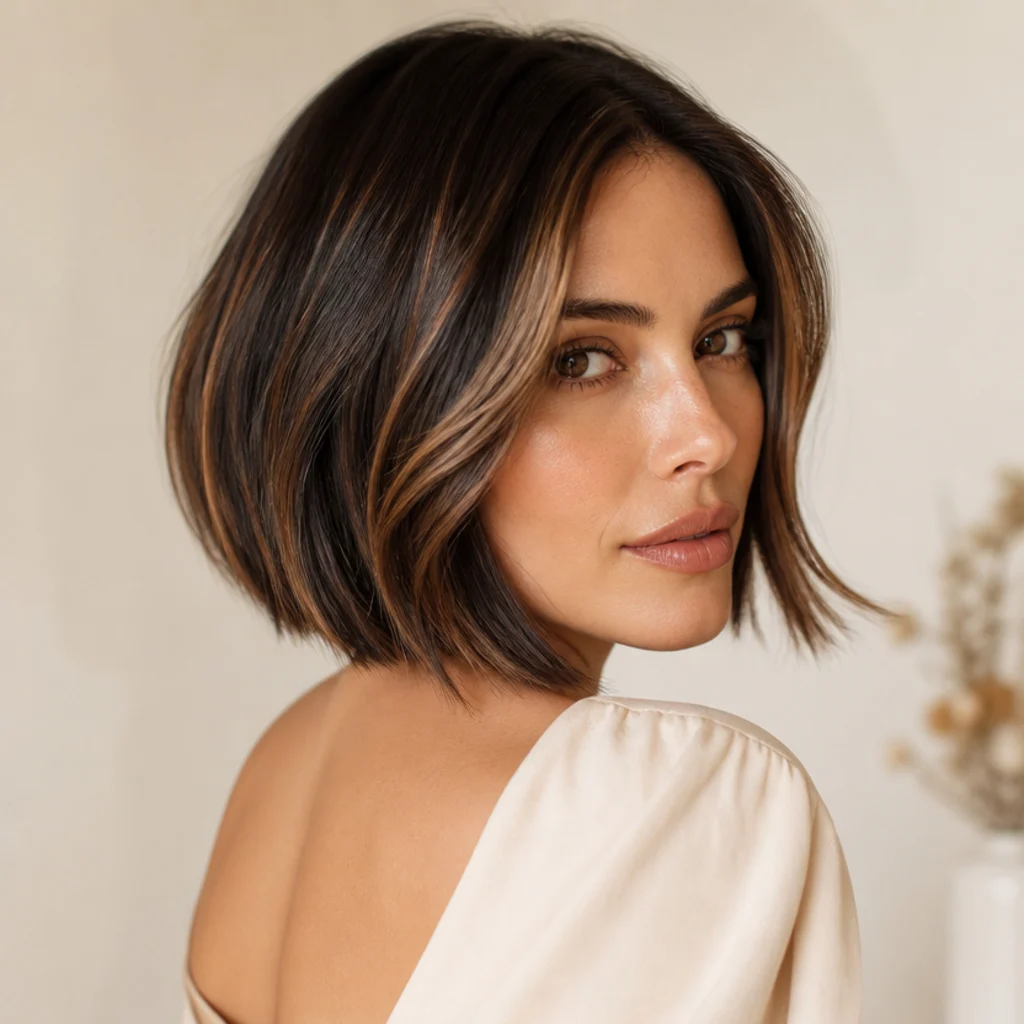
A dimensional brunette bob proves short hair can hold just as much depth as long. Smoky cocoa layers a soft, neutral level-4 brown with slightly deeper interior shadows so the shape looks thick, glossy, and expensive without any face-framing brightness. Most skin tones can wear it, and it's ideal if you want dimension through tone rather than contrast.
Here's the honest trade-off with any bob: the cut carries the look, so it needs a shape-up every 5-7 weeks, which pushes total upkeep higher than a long balayage even though the color itself is low-lift. Style with a slight bend or a blunt tuck to reveal how the shadows move against the lighter body. Ask for the deepest tone to sit at the nape and underneath, where it creates the illusion of density and makes a fine bob look fuller. Ask for "a smoky cocoa bob with subtle low-lit depth underneath for movement, glossy finish." A polished, grown-up option that always reads intentional.
08Sun-Kissed Beachy Brunette
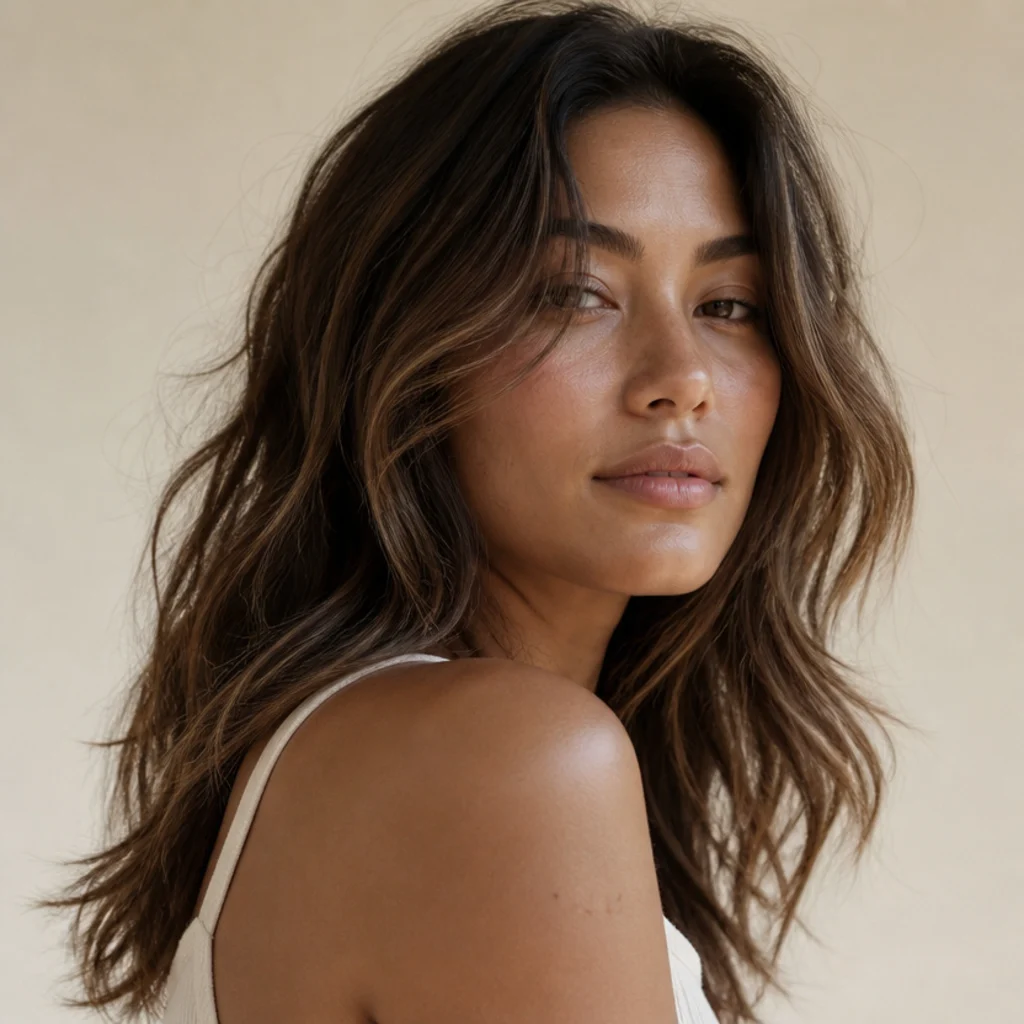
This is the look of a brunette after a long summer outdoors: soft, diffuse lightness scattered through the mid-lengths and ends with no defined pattern, no stripes, no map. Warm and neutral undertones suit it, along with anyone who wants dimension that reads accidental rather than salon-fresh. The brightness stays airy and off the root, so it grows out with almost no visible line, making it one of the lowest-maintenance options on this list, realistically a paint every 14-16 weeks with an occasional gloss.
It looks most natural on wavy or textured hair, where the diffusion mimics real sun exposure. Skip it if you want crisp, high-contrast highlights, this leans deliberately undone. Bring a photo of yourself as a child with sun-lightened hair if you have one; it shows your colorist exactly where your hair naturally brightens, and mimicking that pattern is what makes the effect convincing. Ask for "a lived-in, sun-kissed brunette, soft and diffuse, nothing too placed or rooted."
09Toffee Root Smudge
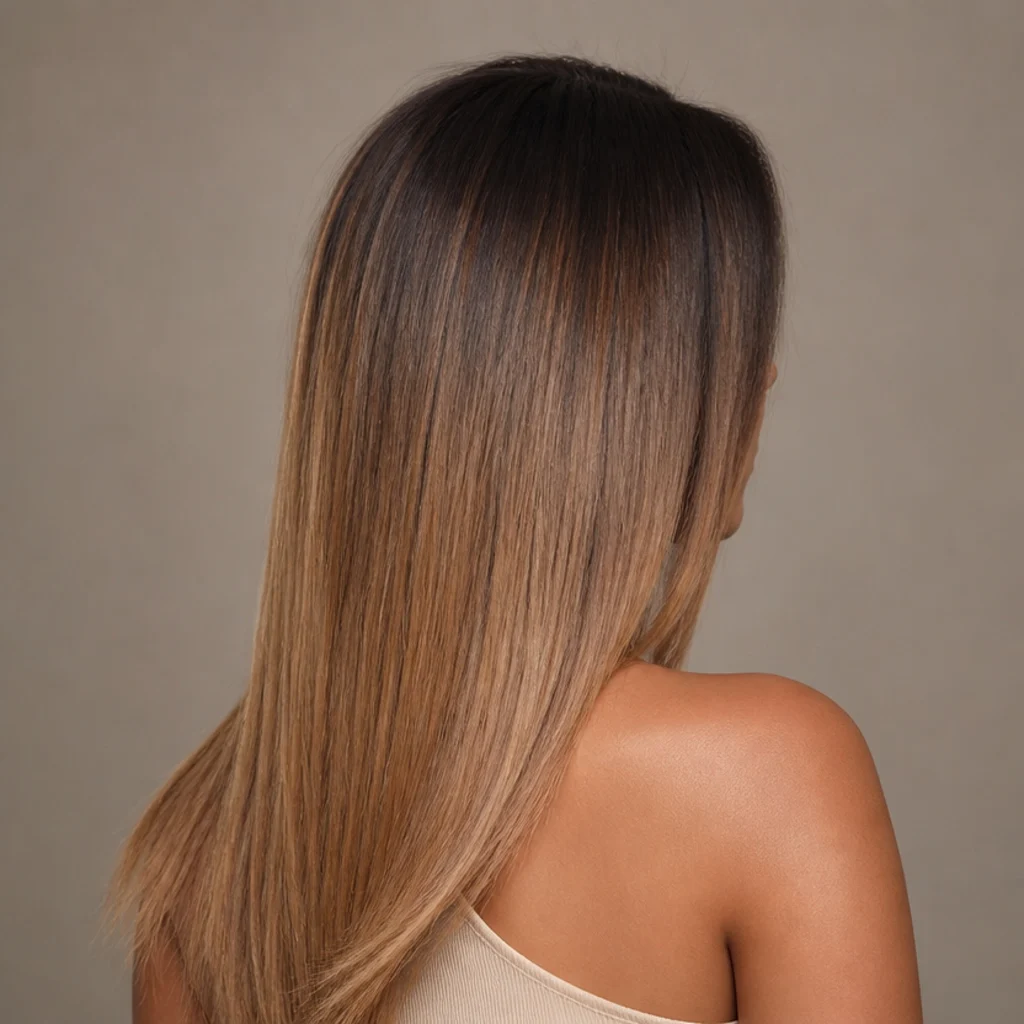
A root smudge, or shadow root, blurs the line between your natural base and lighter lengths so a deep root melts into toffee ends. It's the single most useful trick for stretching any dimensional brunette between salon visits, since regrowth blends into the deliberate shadow instead of forming a stripe. Just about everyone can wear it, and it's especially smart for busy schedules, plenty of people comfortably push appointments to 14-16 weeks.
The technique layers over almost any look on this list; think of it as insurance against harsh grow-out rather than a standalone color. Ask for the smudge to fade over roughly two inches, a short, abrupt smudge can read like a mistake, while a long, feathered one looks intentional and expensive. Pair it with a gloss to keep the toffee mid-lengths clean and warm-neutral rather than orange. Ask your colorist for "a soft shadow root or root smudge, feathered into a toffee melt, blended over a couple of inches." It's as much a technique as a shade, and worth requesting on top of most of these ideas.
10Cinnamon Spice Warm Brunette
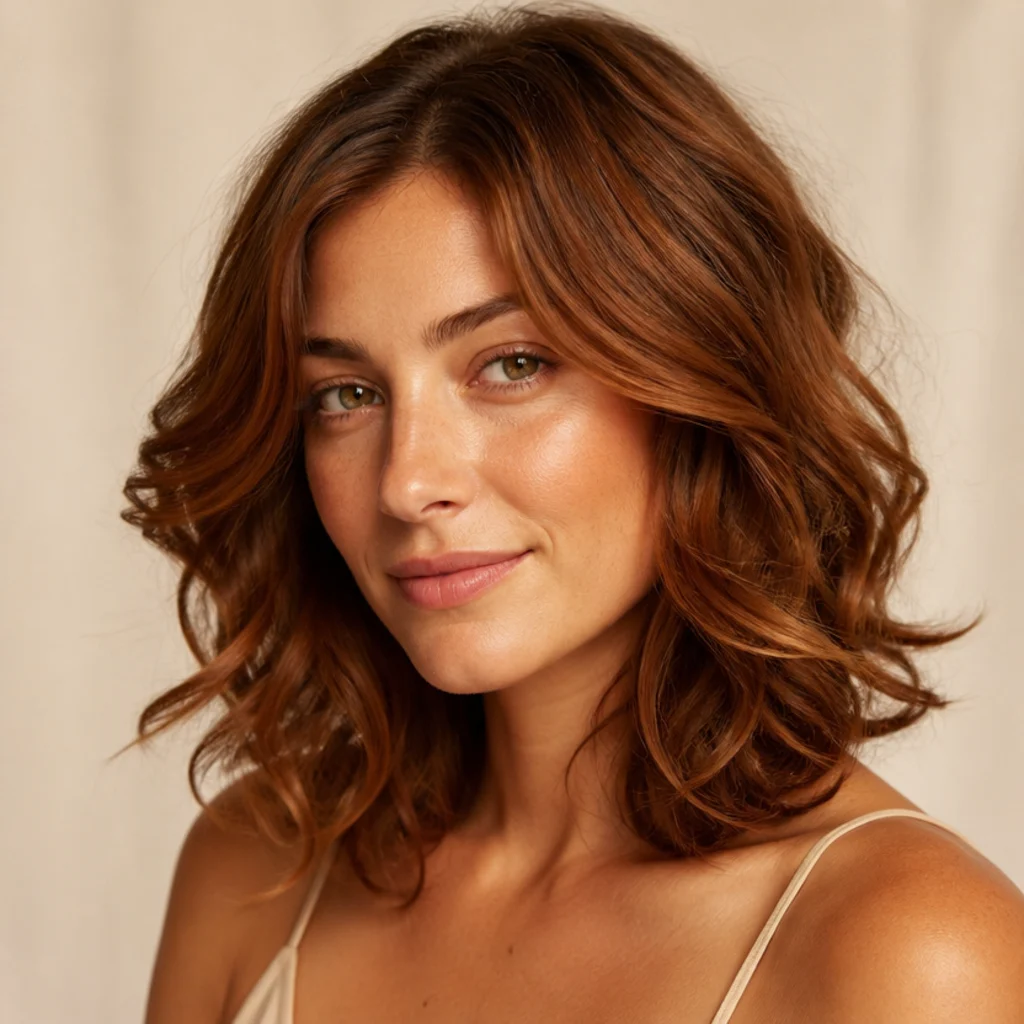
Cinnamon spice blends warm brown with soft reddish-gold for a cozy, saturated warmth that stops just short of full copper. Warm, golden, and deep undertones suit it, and it brings visible life to olive complexions that plain ashy brown tends to flatten. Like all warm-red tones it fades toward brass, so a color-depositing conditioner and a periodic gloss keep it reading true cinnamon rather than muddy orange, plan tonal upkeep every 5-7 weeks even when the placement holds longer.
It looks loveliest on curls and waves, where the reddish light catches every bend and the dimension multiplies across the curl pattern. If you run warm and want the color to look richer without more lightening, ask your colorist to add a low-light a level deeper than your base, the contrast makes the cinnamon read more vivid without extra brass. Ask for "a cinnamon-spice brunette, warm with a hint of red, kept dimensional not flat." Choose this if plain brown always goes dull on you and you want unmistakable warmth.
Save this to Pinterest to keep the warm-tone ideas together.
11Dimensional Bob With Babylights
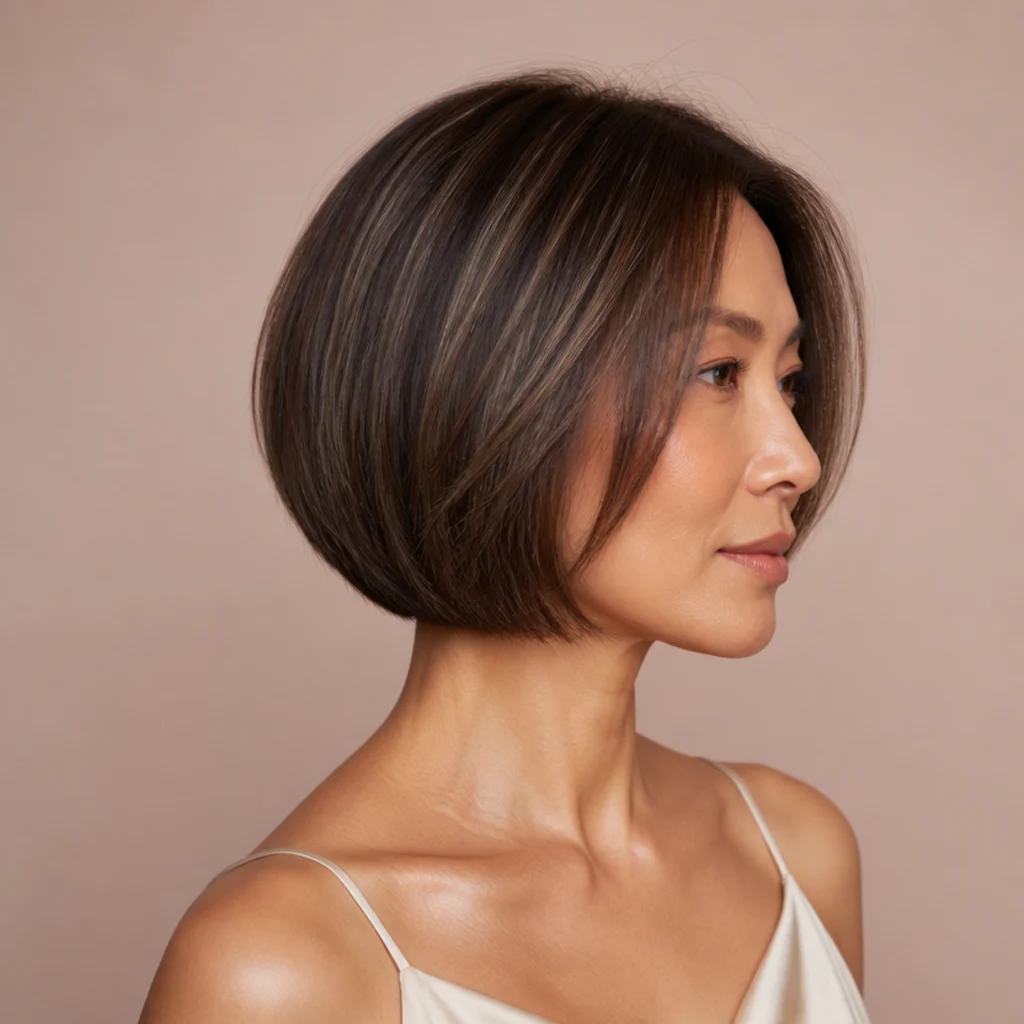
Babylights are ultra-fine, closely woven highlights that mimic the delicate natural brightness of children's hair; threaded into a bob, they create the illusion of depth and thickness without heavy contrast. Fine hair suits this dimensional brunette bob especially well, since the near-invisible weave adds the look of density along the crown and face. Most undertones can wear it depending on the highlight shade you choose, cooler for neutral skin, warmer for golden.
Maintenance is real on two fronts: the cut needs shaping every 5-7 weeks and the babylights grow out, though softly. Concentrate the finest babylights right at the part and around the hairline, where light hits first, so the whole bob reads brighter and fuller than the amount of lightening actually used. Style smooth to show the shine, or tuck behind the ears for a clean architectural line. Ask for "a brunette bob with fine babylights around the face, part, and crown, nothing chunky." A refined pick for anyone who wants subtle polish over drama.
12Chestnut Curtain Bangs
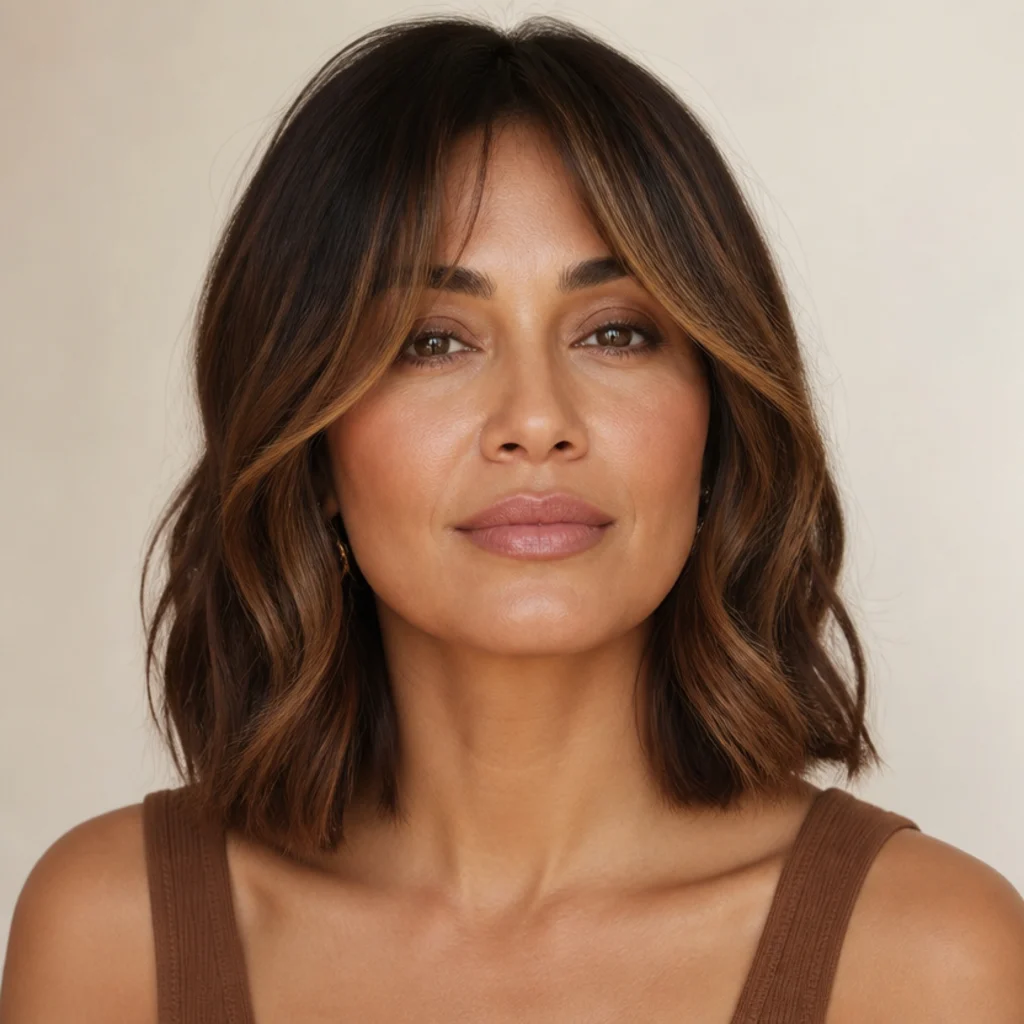
Pairing dimensional color with a cut, chestnut curtain bangs sweep away from the face while lighter pieces at the fringe add brightness exactly where it flatters. Oval, round, and heart face shapes suit this especially well, the soft parted shape draws the eye down and narrows a fuller face, while the lighter fringe pieces open up the complexion.
Be honest about the commitment, though: bangs need a trim every 3-4 weeks even when the color stretches far longer, so factor that recurring visit in. It looks best on medium hair with a little natural wave or a loose blow-dry, which gives the curtain shape its signature bend. Ask for the two innermost fringe pieces to be lifted just a half-shade brighter than the rest, that tiny lift frames the eyes and makes the whole cut look more expensive. Ask for "curtain bangs with soft face-framing highlights a couple of shades lighter than my chestnut base." A strong choice when you want color and cut working together rather than competing.
13Berry-Brown With Plum Undertone
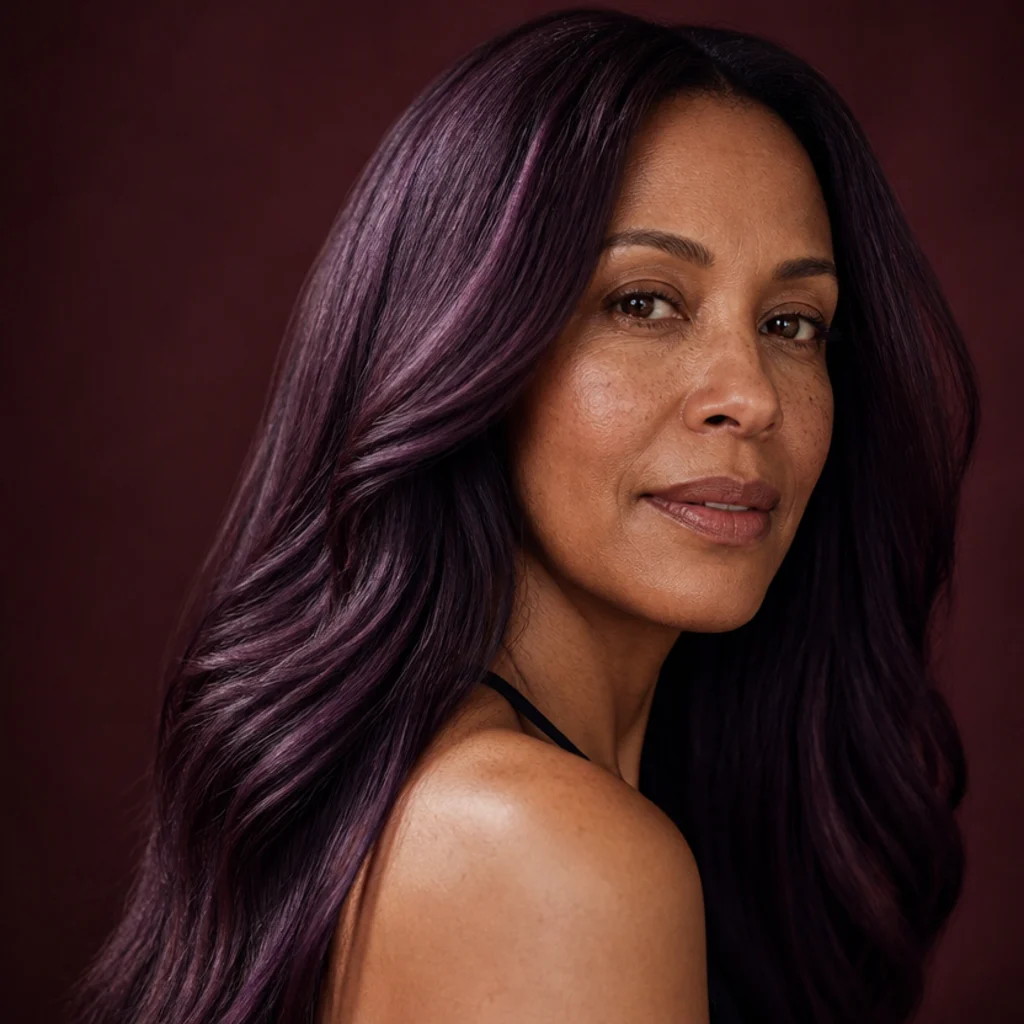
For depth with a cool, jewel-toned twist, a deep brown carries a subtle berry-plum undertone that surfaces only when the light hits it, dimension through tone rather than lightness. Cool and deep undertones suit it, along with anyone drawn to richness without an obvious all-over dye job. The violet-red family fades gradually and gracefully, but it does fade, so a color-safe routine and an occasional depositing gloss keep the plum from washing out to flat neutral brown, plan a refresh every 5-7 weeks.
It looks most striking on sleek, glossy hair, where the smooth surface lets the tone reveal itself as you turn, high shine is what makes the undertone visible in the first place. Keep the base itself deep, a level 3-4, because plum surfaces best against darkness; on a lighter base it can read purple rather than subtly berried. Ask your colorist for "a berry-brown, deep base with a soft plum undertone, subtle not purple, kept glossy." Choose this when you want cool dimension and a hint of the unexpected.
14Bronde Ombre for Long Hair
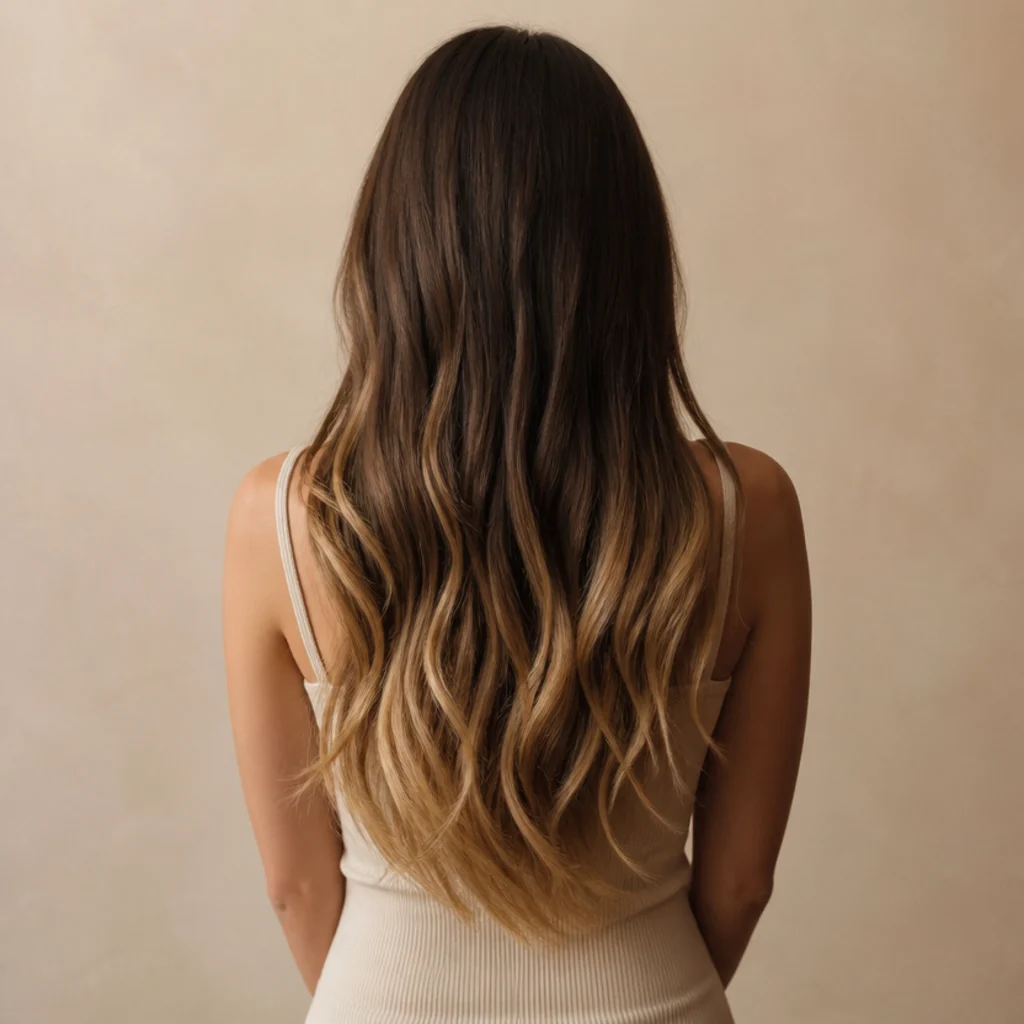
Ombre concentrates the brightness at the ends, fading from a dark brunette root to bronde lengths in a smooth vertical gradient, dimension read top-to-bottom rather than woven through. On long hair the transition has real estate to blend gracefully, which is exactly why length flatters this technique. Warm-to-neutral undertones suit it, along with anyone who wants maximum end-brightness with minimal root upkeep, since the top stays deliberately dark and grows out invisibly.
The ends carry the cost, though: lightened lengths need toning to stay clean and consistent conditioning to stay healthy, the oldest hair on your head is doing the brightest work. Ask for the gradient to start no higher than the collarbone and to stay soft-edged, a high or hard ombre line dates quickly, while a low, feathered melt reads modern and expensive. Ask for "a soft bronde ombre, dark root melting to bright ends, blended not blocky, starting around the collarbone." Pick this over balayage when you want the lightness pooled at the bottom rather than painted throughout.
15Reverse Balayage Ash Lowlights
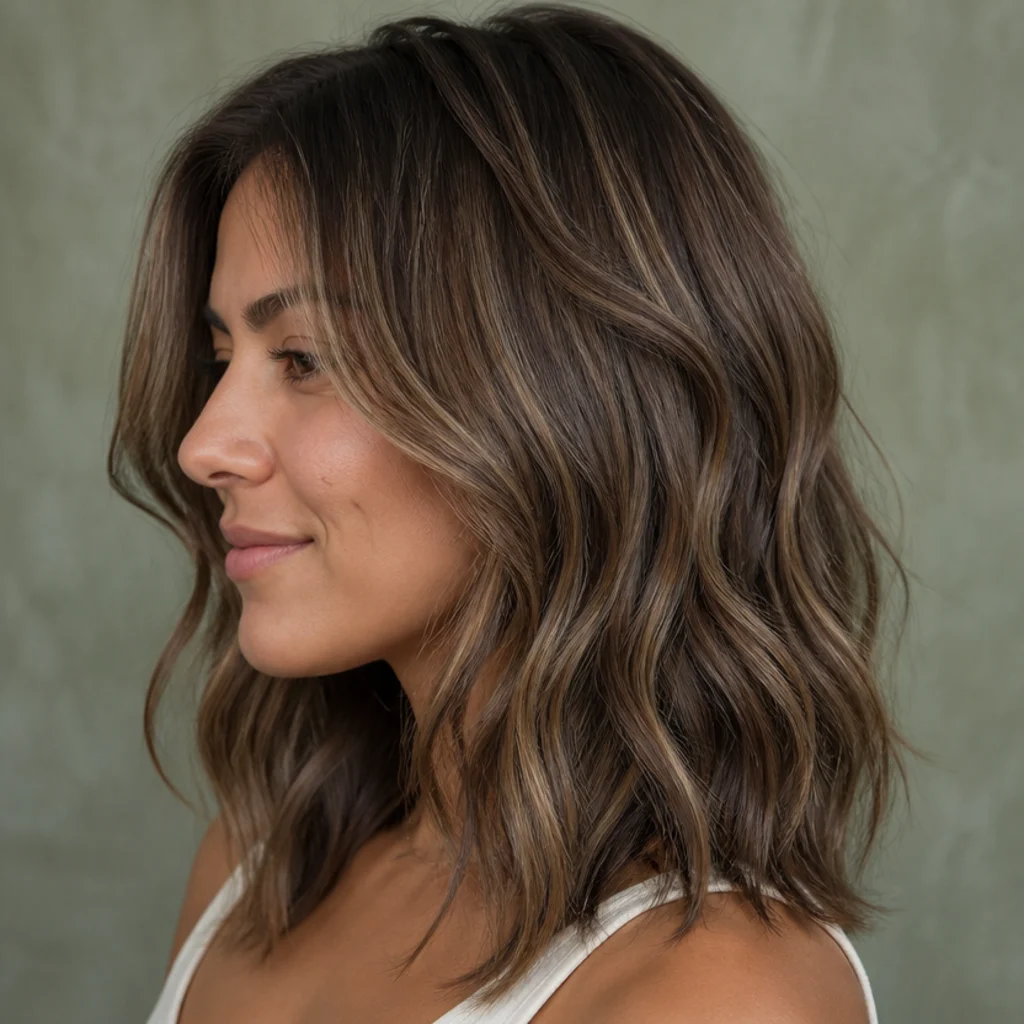
If your highlights have crept too light, too warm, or too one-note, reverse balayage paints ash-brown lowlights back in to rebuild depth and shadow. It's the standard fix for over-highlighted or "stripey" hair and delivers a richer dimensional brunette result for cool and neutral undertones. Since you're depositing darker tone rather than lifting, it's far gentler on already-processed hair and grows out softly, the lowlights blur into regrowth instead of clashing with it.
Ask your colorist to leave a few of your brightest existing pieces untouched around the face, keeping some contrast so the result reads dimensional rather than flatly darkened, the mistake here is over-correcting into a solid box color. A finishing gloss ties the new lowlights and old highlights into one cohesive tone. Ask for "reverse balayage with ash-brown lowlights to add depth back into my highlights, keeping brightness around the face." Smart when you love your lightness but miss the shadow that makes brunette look expensive and multi-tonal.
Save this to Pinterest — bookmark the reverse-balayage fix for later.
16Peekaboo Copper Panels
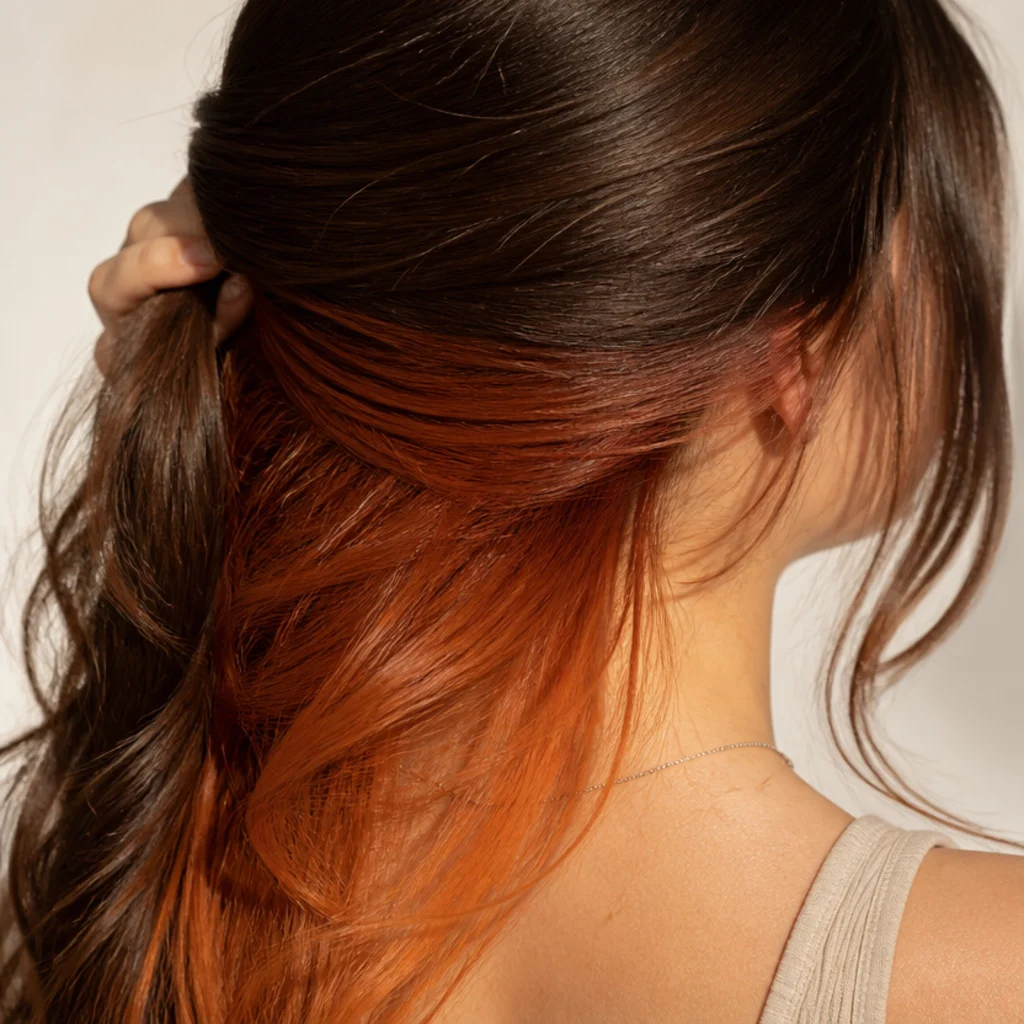
Peekaboo color hides brighter copper panels beneath a brunette top layer, so the warmth flashes only when you move, part, or tuck your hair, dimension you control on demand. Anyone wanting a playful, reversible-feeling change can wear it, and warm undertones show the copper best. The panels sit concealed under a classic brunette surface, so grow-out is discreet and workplace-friendly, you decide when it shows.
The honest caveat: copper is the fastest-fading tone there is, so the hidden panels still need refreshing every 4-6 weeks to stay vivid. It looks best on medium-to-long hair with enough length to layer over completely. Ask for the panels to sit in the lower-middle section behind the ears rather than at the very nape, that placement flashes when you flip your part or push hair back, but stays hidden in a normal down style. Ask your colorist for "hidden copper peekaboo panels underneath a brunette base, placed to flash when I move." A fun, low-visibility way to test vivid warmth while keeping a classic brunette everyday surface.
17Honey Ribbons on Curls
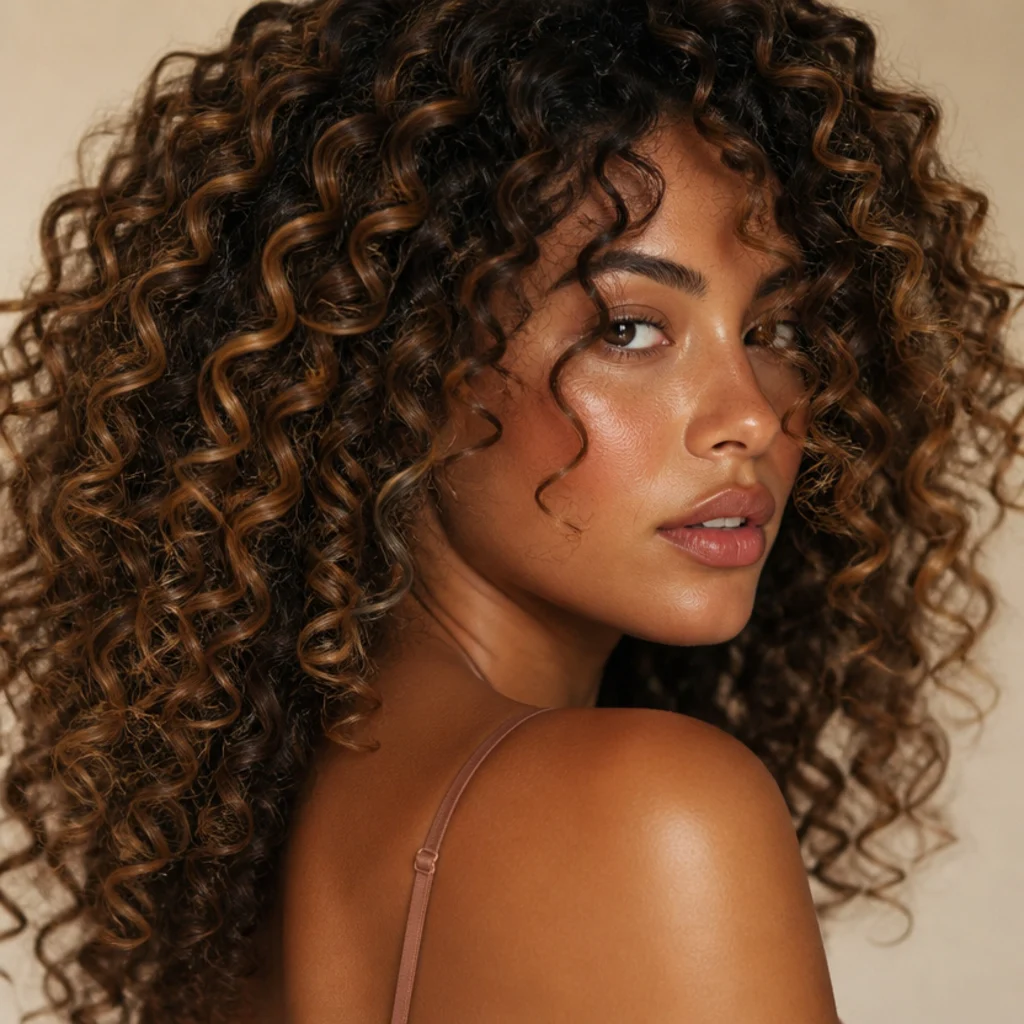
Curls read dimension differently from straight hair, so placement should follow the curl pattern, not a flat-hair foil map. Honey ribbons painted along the coils light up each spiral for glowing, natural depth that multiplies as the curls stack and fold. Warm and deep undertones suit it, across every texture from loose waves to tight coils.
The key is a colorist who paints on dry, defined curls so they can see exactly where the light will land, on stretched or wet hair the brightness often ends up in the wrong place. Ask for the ribbons to be concentrated on the curls that frame your face and sit on top, where they catch the most light, rather than evenly spread, so you get maximum glow for minimal lightening and less bond stress. Upkeep is moderate; bond-building treatments plus a gloss keep curls healthy and the honey true. Ask a texture-experienced colorist for "honey ribbons painted to my curl pattern on dry hair, brightest where the curls catch light."
18Cool Mocha Shadow-Root Bob
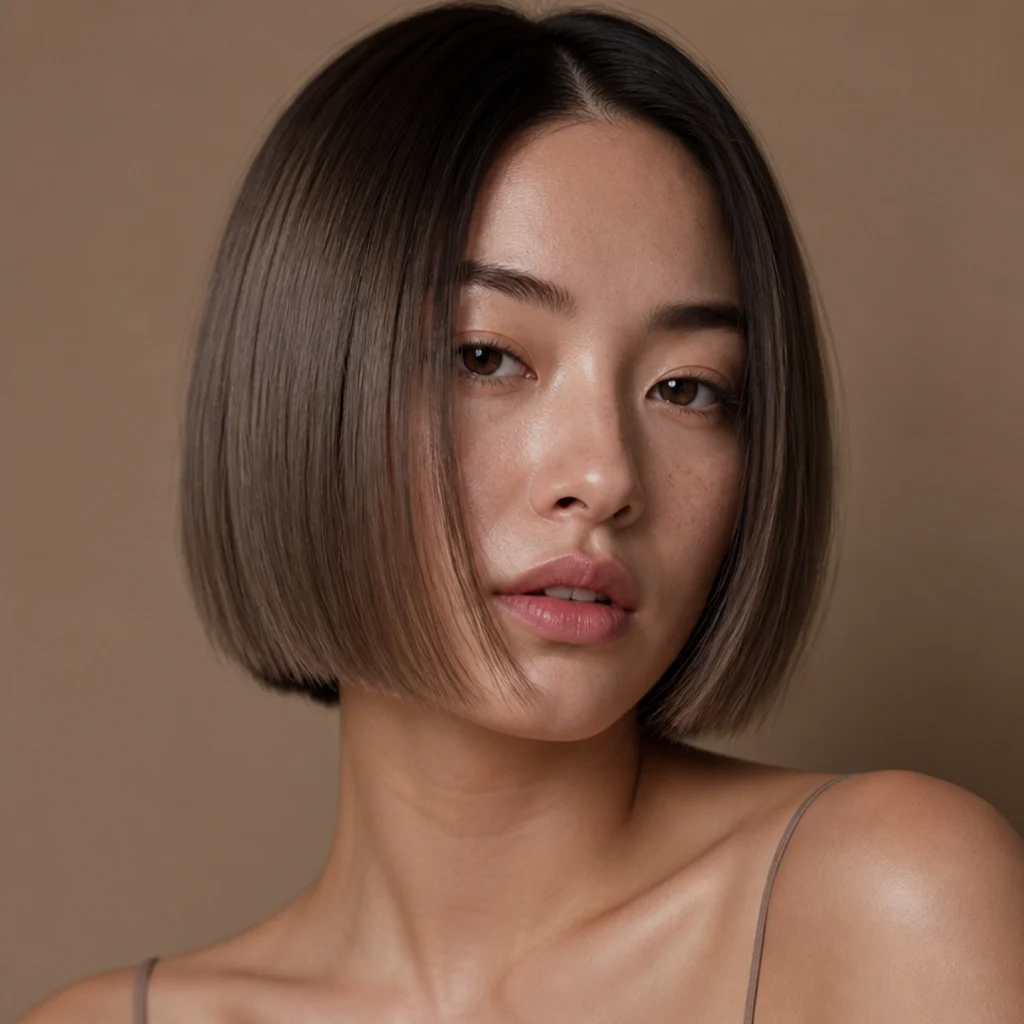
This dimensional brunette bob pairs a cool mocha body with a deliberately darker shadow root for built-in depth and remarkably easy grow-out. Cool and neutral undertones suit it, and it's a good match for anyone who wants a low-maintenance color living on a higher-maintenance cut, the shadow root means color appointments stretch to 12-14 weeks even while the bob itself needs regular shaping.
The built-in root shadow is the whole strategy: as your natural base grows, it just extends the intentional darkness rather than creating a line. Style sleek and straight to show the smooth root-to-mid gradient, which is where the dimension lives. Ask for the mocha to stay a cool level 5, warmer than that and the shadow root can look like a mistake instead of a design; the contrast between cool body and deep root is what makes it read polished. Ask your colorist for "a cool mocha bob with a soft shadow root, glossy finish, kept neutral-cool." A modern, editorial option if you love a sharp bob but hate frequent root touch-ups.
19Hazelnut Teasylights
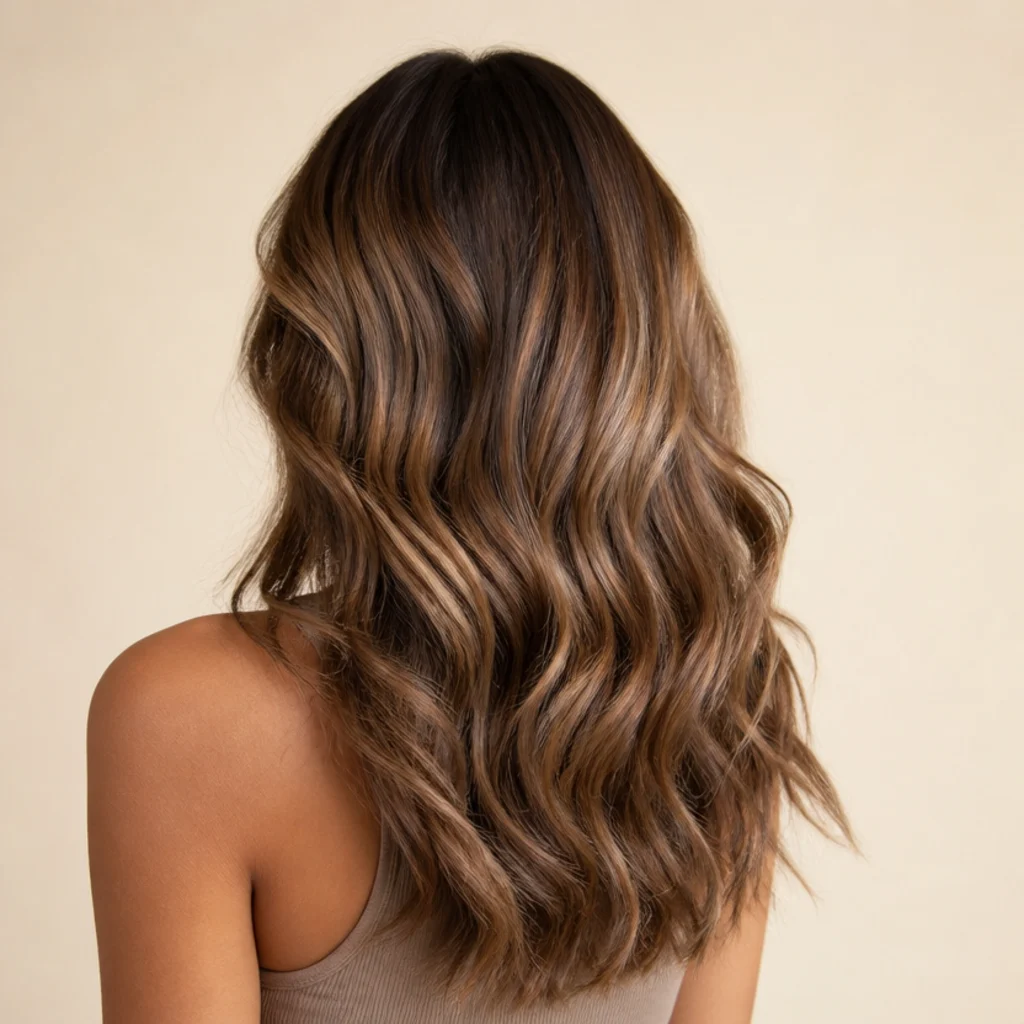
Teasylights combine backcombing and foils, the hair is teased at the root before the foil goes in, so brightness blends into a soft-shadowed root while still delivering more contrast than balayage. Hazelnut keeps it warm, golden, and inviting rather than stark. Warm and neutral undertones suit it, along with anyone who wants brighter, more lifted dimension without a hard highlight line at the regrowth.
It's a full foil service with a teasing step, so it takes longer in the chair and costs more than a paint, budget accordingly, with a gloss between full appointments to hold the tone. It looks best on medium-to-long hair where the blended brightness has length to travel. Teasylights are technique-dependent, so ask to see a colorist's healed grow-out photos, a well-executed teasylight should look diffused at six weeks, not lined. Ask for "hazelnut teasylights for soft-rooted, blended contrast, brighter than balayage but no visible regrowth line." Choose this over balayage when you want real lift while still hating grow-out.
20Bronzed Brunette for Deep Skin Tones
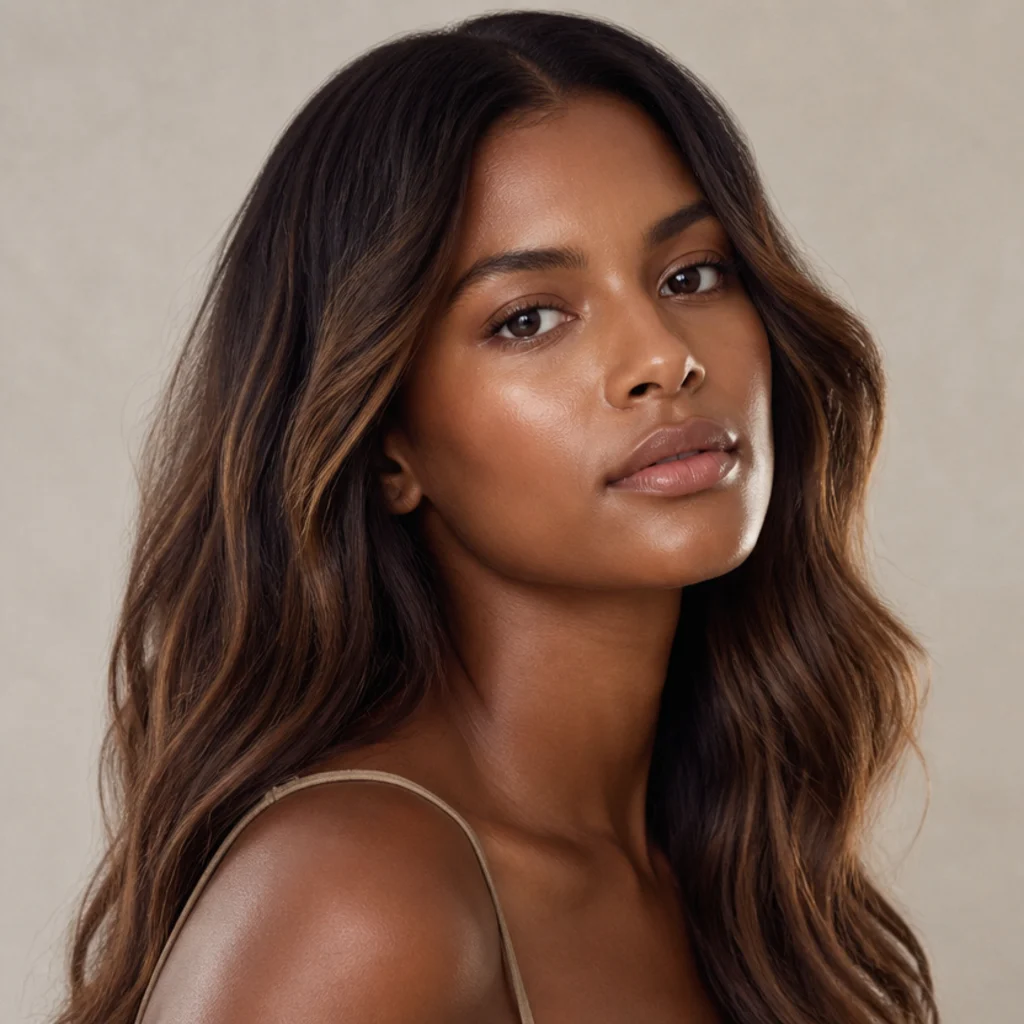
Bronzed brunette pairs a deep brown base with warm caramel and bronze dimension built to read luminous against deep skin tones. Warm and rich undertones suit it best, and it adds real glow to the complexion, where cool ashy browns can look dull or gray on deeper skin, warm bronze reflects light back at it.
The warm tones are also forgiving to grow out, though the caramel and bronze want a gloss to stay clean and keep from muddying. It looks best on healthy medium-to-long hair where the bronze can travel and build through the lengths. Ask your colorist to place the warmest, brightest bronze around the face and jaw, that's where reflected warmth does the most for the complexion, and keep the interior slightly deeper for contrast. Ask for "a bronzed brunette, deep base with warm caramel and bronze dimension, brightest around the face, kept rich." A warm, luminous choice built to complement deeper complexions rather than wash them out.
Pro Tips from the Editor
- Tone is a separate clock from placement. Your highlights or balayage grow out in months, but the tone shifts in weeks, especially ash, copper, and red. Budget a gloss between full color services rather than waiting for regrowth.
- Contrast, not lightness, controls how bold it reads. You can look dramatically more dimensional at the same base level just by adding a lowlight a shade deeper, cheaper and less damaging than lifting brighter.
- Where the brightness starts matters more than how much you use. Brightness beginning below the jaw lifts the face without widening it; brightness at the temple can broaden a rounder face.
- Always ask to see healed, grown-out results, not just fresh-from-foil photos. A good dimensional brunette should still look intentional at week eight.
- Warm and red tones fade fastest; wash in cool water, use sulfate-free color-safe products, and add a weekly color-depositing conditioner to buy time between salon visits.
- On curly or coily hair, insist on dry cutting and dry painting so placement follows your actual curl pattern and the brightness lands where the coils catch light.
- Bring 2-3 saved photos and describe root depth, tone, and placement in words, not just a shade name, "shadowed root, warm caramel from the cheekbone down" gets you far closer than "caramel balayage."
Dimensional Brunette at a Glance
| Variation | Best for (undertone / texture) | Upkeep timeline | Difficulty |
|---|---|---|---|
| Warm Chestnut Balayage | Warm/neutral · medium-long | Paint 12-14 wks, gloss ~6 wks | Salon |
| Cool Espresso + Ash Ribbons | Cool/neutral · fine, straight | Gloss every 6-8 wks | Salon |
| Caramel Money Piece | Most tones · any length | Gloss + root as needed | Lower-lift |
| Mushroom Brown Melt | Cool/olive · straight, wavy | Toning gloss 6-8 wks | Salon |
| Toffee Root Smudge | All · all textures | 14-16 wks | Add-on technique |
| Mahogany + Copper Ribbons | Warm/deep · healthy mid-long | Gloss 4-6 wks (fades fast) | Salon |
| Dimensional / Shadow-Root Bob | Varies · any density | Cut 5-7 wks, color 12-14 wks | Salon |
| Honey Ribbons on Curls | Warm/deep · curly, coily | Moderate + bond care | Texture specialist |
| Hazelnut Teasylights | Warm/neutral · medium-long | Foil service + gloss between | Salon (advanced) |
| Bronzed Brunette | Warm/rich · deep skin, mid-long | Gloss to keep caramel clean | Salon |
How to Choose / Get the Look
Choose by your strongest feature. Start with undertone: if gold and warmth flatter your skin, lean into chestnut, caramel, cinnamon, honey, mahogany, and bronze; if you glow in silver and cool jewelry, choose ash espresso, mushroom, cool mocha, or berry-brown. Then let your face shape guide placement, brightness from the cheekbone down slims and lifts, curtain bangs and face-frames soften rounder and heart shapes, and interior shadow adds fullness to fine hair.
Match the technique to your texture and length. Teasylights and babylights suit fine and straight hair because the delicate weave reads as density; balayage and ombre want medium-to-long length for the paint to blend; curly and coily hair needs placement mapped to the curl pattern on dry hair, not a flat foil grid.
Be honest about longevity and upkeep. Root smudges, balayage, and ombre place brightness away from the root and stretch to three months or more. Money pieces, bobs, curtain bangs, and any red or copper tone need more frequent trims or glosses, plan the recurring visit before you commit.
Know when to see a pro versus DIY. Multi-tonal placement, any lifting, and corrective work (like reverse balayage) belong in a salon. A single face-frame, a gloss refresh, or a color-depositing conditioner are reasonable at-home maintenance. Going meaningfully lighter often takes more than one session, ask directly how many visits your goal requires and what each will cost before you start. Finally, invest in a color-safe, sulfate-free routine and periodic gloss; that upkeep is what separates rich, expensive-looking dimensional brunette from color that turns brassy or flat.
Frequently Asked Questions
What exactly makes brunette hair "dimensional"?
Dimension comes from placing lighter and darker tones through a brown base so the color reflects light unevenly and appears to move as you turn. A single solid brown looks flat because light hits it uniformly; adding highlights, lowlights, or a tonal melt creates the interplay of shadow and shine that reads as depth. Contrast, not just brightness, drives the effect, which is why even a very dark brunette can look richly dimensional with the right lowlight work.
How much does dimensional brunette cost?
It varies widely by region, salon, and how much work your goal takes. As a rough framework, a standalone gloss or toner sits at the low end, a partial balayage or money piece in the mid range, and a full-head dimensional foil, teasylight service, or corrective session at the higher end. Going several levels lighter usually requires multiple sessions, which multiplies the cost, so ask for a full quote across all planned visits at your consultation rather than a single-appointment price.
Is dimensional brunette high-maintenance?
It depends entirely on the technique. Balayage, ombre, and root smudges grow out softly and can stretch 10-16 weeks between placement services. Money pieces, bobs, curtain bangs, and any defined cut need more frequent upkeep. Remember that tone and placement are two separate clocks, even a low-maintenance balayage benefits from a gloss every 6-8 weeks to keep the color from shifting brassy.
Can I get dimensional brunette without lightening my hair much?
Yes. A money piece, hidden peekaboo panels, or reverse-balayage lowlights add contrast with minimal overall lifting. Root smudges and tonal melts create depth through tone rather than brightness, which is gentler on the hair. Adding a lowlight a shade or two deeper than your base is one of the least damaging ways to look dramatically more dimensional, since you're depositing color rather than lifting it out.
How do I keep dimensional brunette from turning brassy?
Use color-safe, sulfate-free products, wash in cooler water, limit direct heat and sun, and schedule a toning gloss on the timeline your stylist recommends. Warm and red tones fade fastest, so those benefit from a weekly color-depositing conditioner between salon visits. For cool tones like ash, espresso, and mushroom, a purple- or blue-tinted gloss or occasional toning shampoo keeps warmth from surfacing at the mid-lengths.
Will dimensional brunette work on curly or textured hair?
Absolutely, but placement is everything. Highlights should follow your curl pattern, ideally painted on dry, defined curls, so brightness lands where the coils actually catch light rather than disappearing into the folds. Seek a colorist experienced with textured hair, prioritize bond-building and moisture care since curls show damage quickly, and expect the dimension to read even richer than on straight hair because the coils stack the light.
Which dimensional brunette lasts the longest before a touch-up?
Techniques that keep brightness off the root last longest, root smudges, sun-kissed balayage, and low ombre routinely stretch 14-16 weeks because there's no hard regrowth line. Anything with a cut component (bobs, curtain bangs) or a fast-fading tone (copper, mahogany, red) needs attention soonest. If low maintenance is your priority, ask specifically for a shadowed or smudged root, that single step does the most to extend time between visits.
What should I ask my colorist for to avoid a stripey result?
Describe placement and softness, not just a shade. Ask for "hand-painted, blended, no hard lines," request a shadowed or smudged root, and say you want it to "grow out softly." Bring photos of healed, grown-out color rather than fresh-foil shots, and ask the colorist to show you their own week-six results. Stripey outcomes usually come from too much contrast placed too high with no root blur, so naming the root shadow specifically is your best safeguard.
Can I go from highlighted hair back to dimensional brunette safely?
Yes, and it's one of the gentler transitions since you're depositing rather than lifting. Reverse balayage or an all-over tone-down with strategic lowlights rebuilds depth while keeping some brightness around the face for dimension. Previously lightened hair is porous and can grab color unevenly or fade quickly, so a good colorist will often fill or pre-tone first. Keep a few bright pieces to avoid flattening into a solid box color, and finish with a gloss to unify old and new tones.