3 Things to Know About Cover Up Tattoos
A cover-up is half art, half engineering: you're asking new pigment to out-argue ink that's already living in your skin. Know what a fresh design can actually do with the original before you book, and the whole process gets calmer, cheaper, and more likely to please you.
 Edited by Lena Rose · Published July 11, 2026 · 13 min read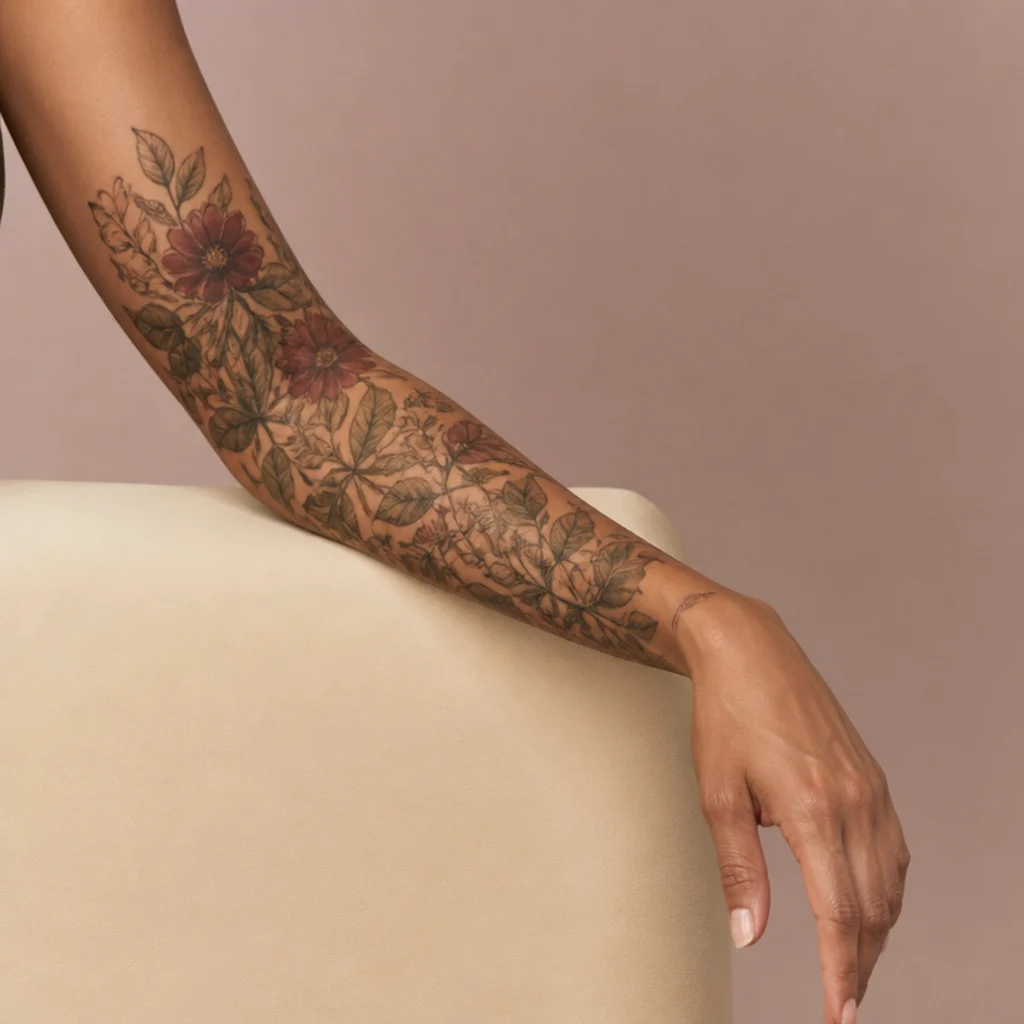
Quick Answer
- Best for: Reworking a faded, dated, dark, or emotionally loaded tattoo into artwork you actually want on show
- Who might skip it: Anyone wanting a tiny, pale, minimalist result over dense black ink; laser removal or fading is usually the smarter first move
- Maintenance: Same as any healed tattoo (daily SPF 30+, fragrance-free moisturizer); saturated darks and blackwork hold longer, delicate color may need a touch-up in 5-10 years
- Difficulty: Very high for the artist and the design brief; your job is choosing a true cover-up specialist and staying flexible on size and palette
- Cost: Variable and usually higher than a fresh piece of the same size; expect a premium for the extra passes, plus possible separate laser-fading fees. Ask for a written range at consultation
- Wear time / longevity: Permanent when done well; the more the new design breaks up the old lines, the less it "ghosts" as skin ages
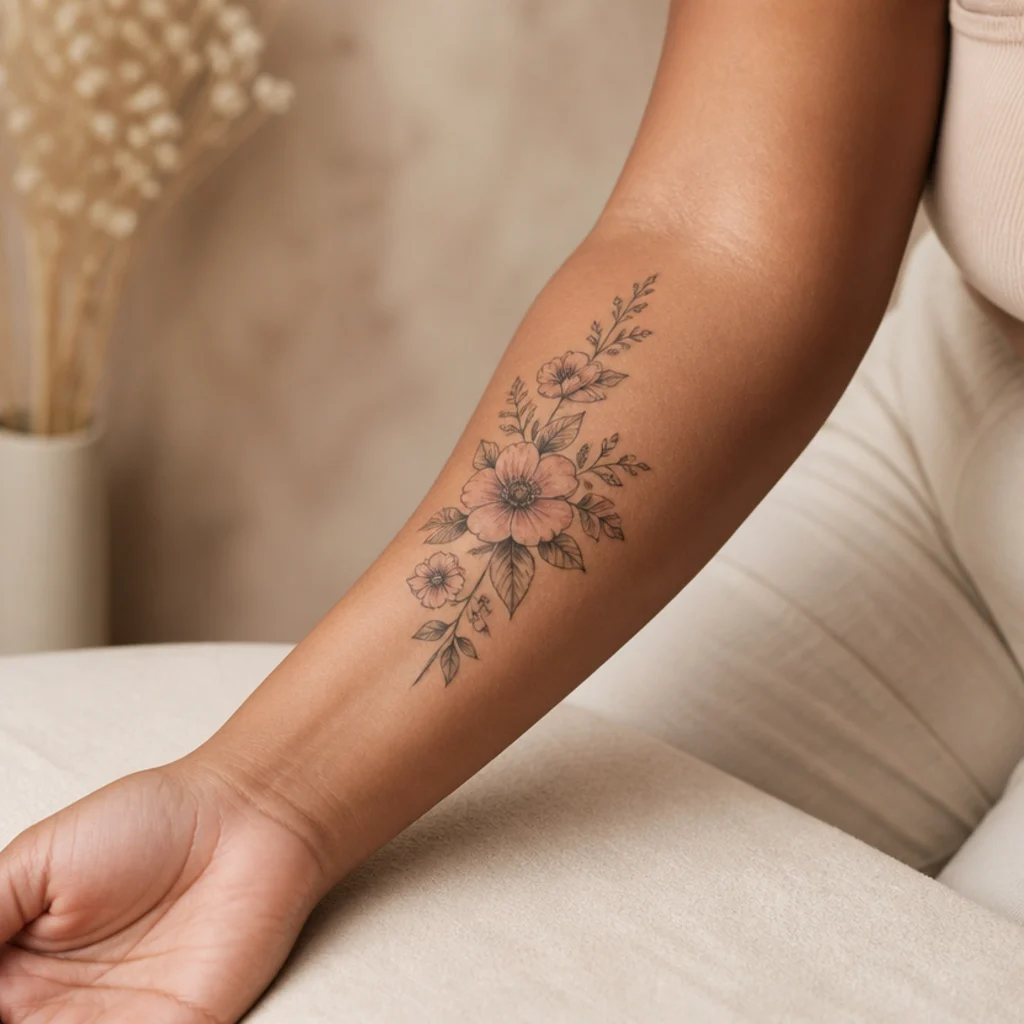
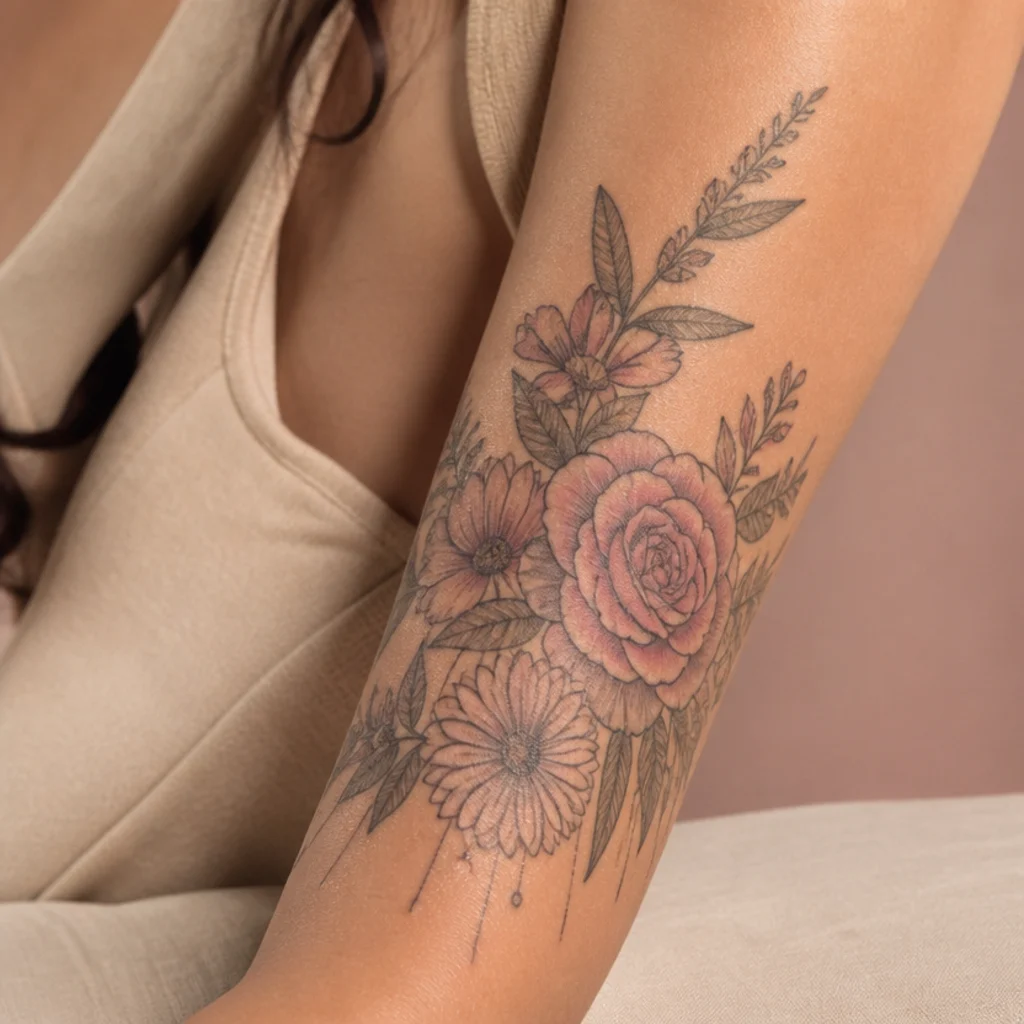
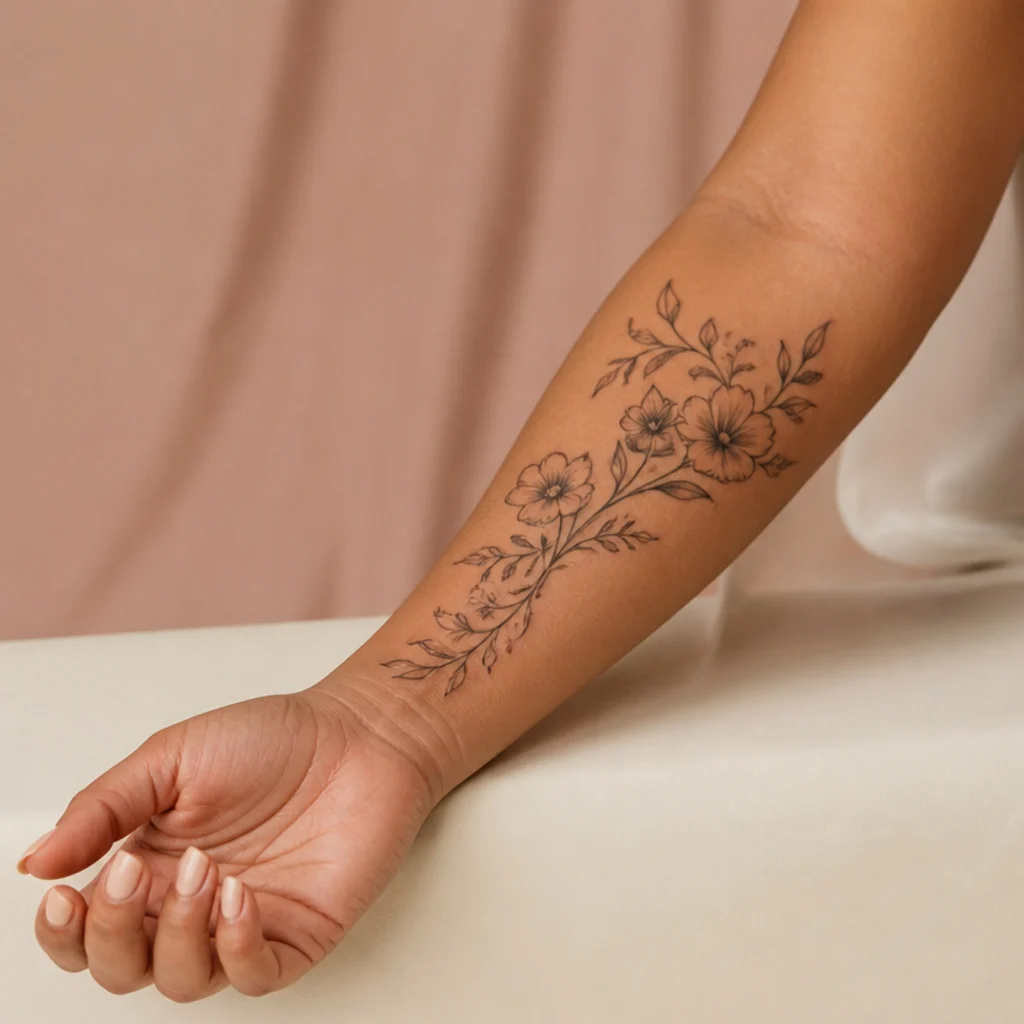
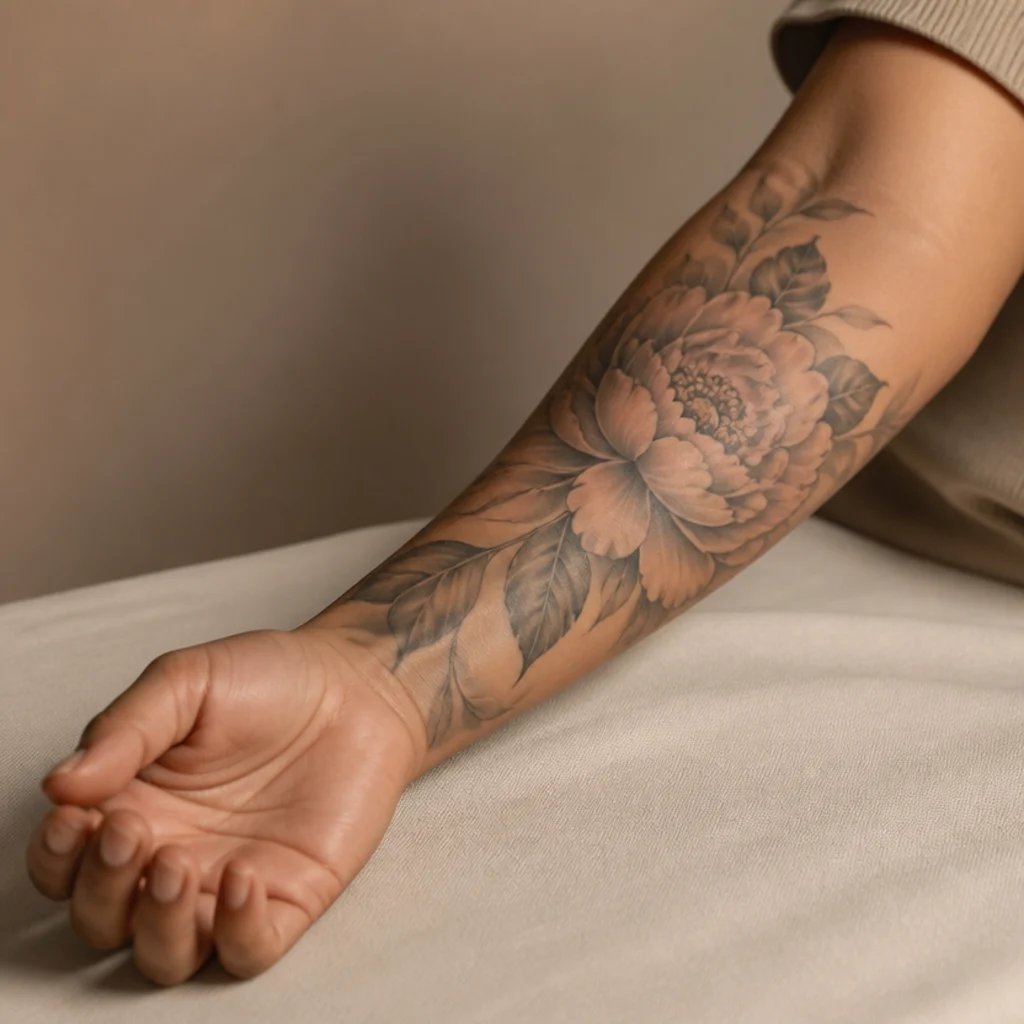
- Standout variation: Botanical and floral motifs, where organic edges and layered shading dissolve hard geometry better than almost anything
- How to ask your tattoo artist: "Here are natural-light photos of my existing tattoo — can you cover this convincingly, roughly how much bigger will it need to be, and would a laser fading session first give us more design freedom?"
In This Guide
Intro
Cover-up work is one of the busiest categories in any studio, and one of the most misunderstood. Clients picture a clean slate, then feel blindsided when the artist starts talking bigger, darker, and busier than they imagined. That's not upselling — it's optics. Skin is translucent, so old pigment shows through anything lighter placed on top, and the only reliable way to hide a saturated line is to out-saturate or out-distract it. Whether you're researching small cover up tattoos to redo a wrist piece, black cover up tattoos over an old tribal band, or a full sleeve to reinvent a dated design, the same physics apply: the existing ink, your skin tone and undertone, and the new artwork all have to cooperate. There's no single template for a good result here: what works is a design built around your specific skin rather than a trend, and it rewards patience and honest expectations going in. More artists now specialize purely in cover-ups and reworks, so vetting portfolios carefully pays off. Here are three things worth understanding before your consultation. Design, sizing, placement, coverage feasibility, and healing must always be confirmed with a licensed tattoo artist who can assess your skin in person — no online guide can promise a cover-up will fully hide an existing tattoo or scar.
01The Old Tattoo Sets the Rules
The single biggest variable is what's already on your skin. Density, saturation, ink color, and age all decide what's possible. Light, blown-out, or sun-faded work is forgiving; dense modern black, old India-ink homemade tattoos, and heavy tribal bands are the hardest to conceal, which is why black cover up tattoos often need an equally bold new design to swallow the original lines. Warm, dark ink like faded green-black is easier to disguise than a cool solid black. Artists lean on darker palettes, negative-space illusions, blackwork, and organic shapes that break up straight edges, because the eye reads a leaf or wave far more happily than a suspiciously placed dark patch. Thick lettering or a tribal armband typically needs a new piece noticeably larger than the original footprint, often extending past the old edges by a centimeter or more so nothing peeks out as skin moves. Plan on the design being locked only after the stencil is tested on your arm, and expect one to three sessions for dense work. Pro tip: photograph your tattoo in three lighting conditions (bright daylight, shade, indoor lamp), since artists judge concealability by how the ink reads across all of them, not one flattering shot. Ask your tattoo artist for a candid read on whether your existing piece is a straightforward cover, a "needs fading first" case, or a stretch.
02Size and Color Do the Heavy Lifting
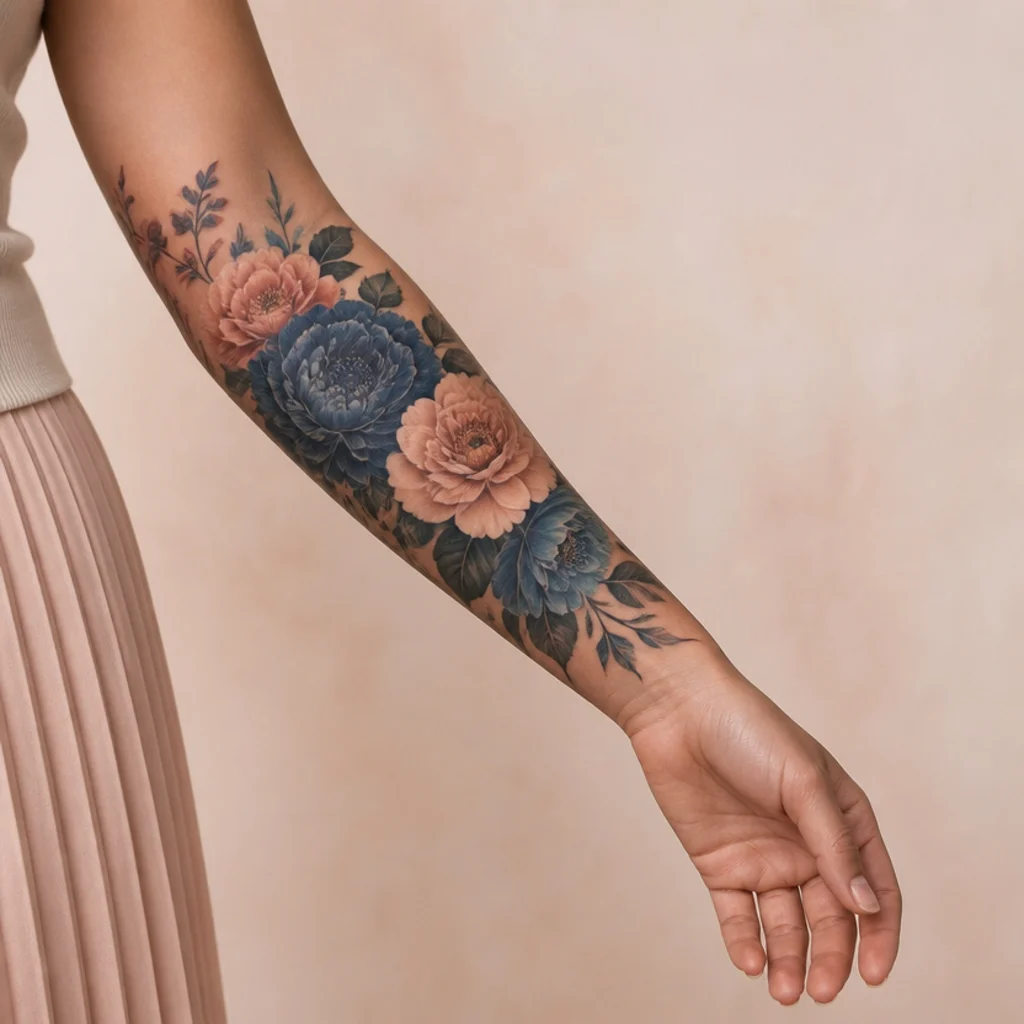
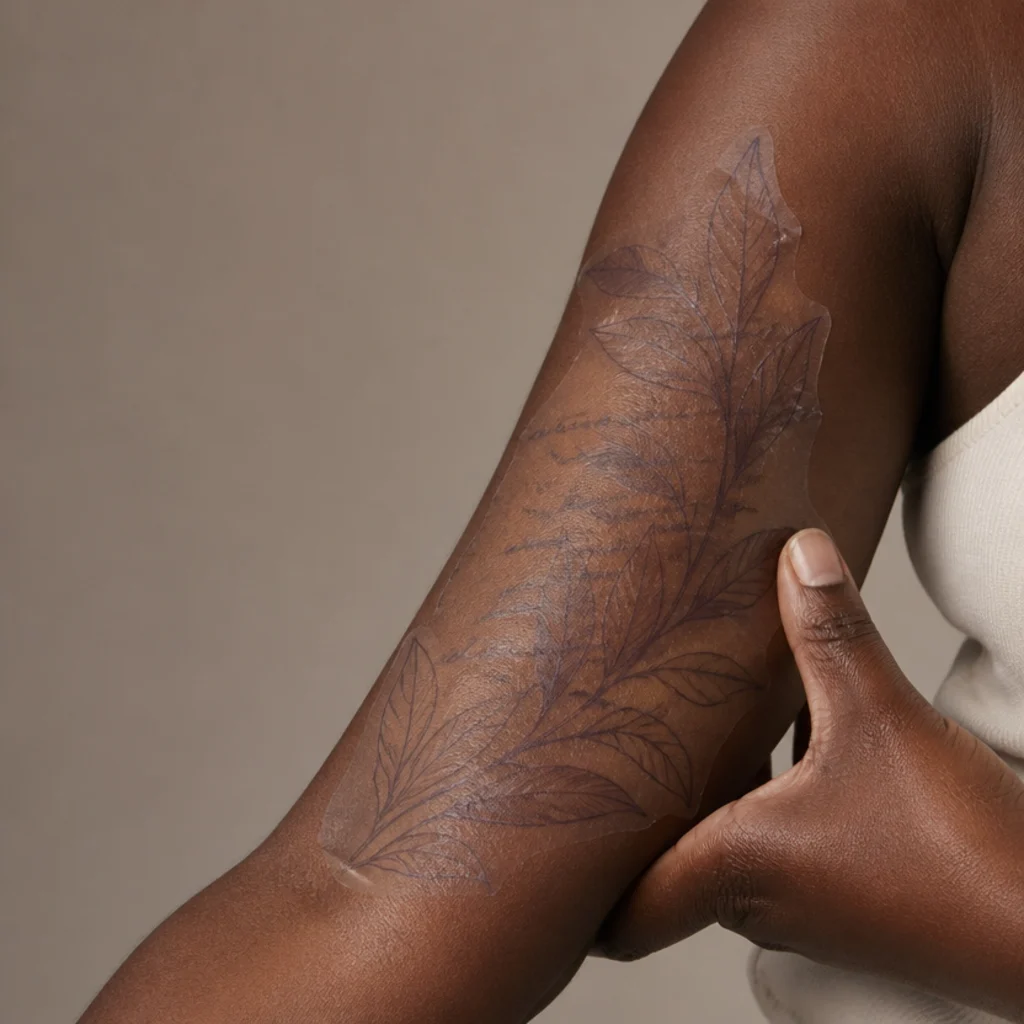
Two things do most of the concealment work: scale and pigment. Expect the new piece to end up bigger than the original. Extra real estate gives the artist room to scatter detail and shading so no solid block of ink reads as a patch. That's the honest trade-off between small cover up tattoos and large cover up tattoos: a compact, faded original may vanish under a modest design, while a bold, saturated piece almost always calls for something more expansive to spread the visual weight around. Color choice matters just as much. Rich botanicals, deep indigo and teal, burgundy, forest tones, and full blackwork can absorb old lines that pale watercolor, fine-line gray-wash, or pastel styles simply can't cover. Undertone matters too: on deeper or warm skin tones, jewel and earth palettes tend to sit more convincingly than cool pastels. If your heart is set on a delicate, minimal aesthetic, say so at the very first consultation. It may not deliver enough coverage, and you might prefer to fade first instead. A texture-rich subject (florals, feathers, foliage, mandalas, koi) hides edges better than geometric or lettering-based work with its own hard lines. Pro tip: ask to see the stencil placed directly over your old tattoo and check it in a mirror at arm's length. If you can still trace the original silhouette, the design needs more size, more density, or a busier fill. Ask your tattoo artist which palette their specific machine and pigments cover best on skin like yours.
03Scars and Names Need Extra Planning
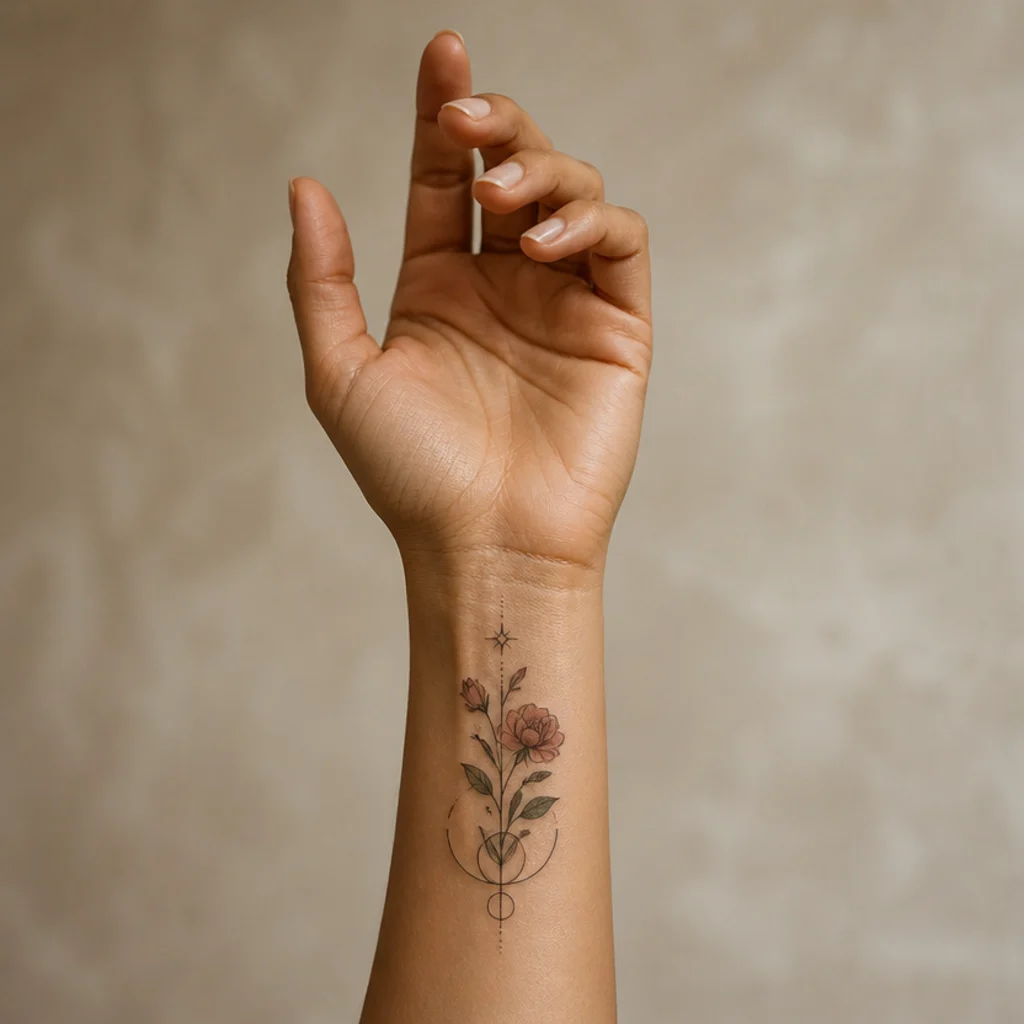
Two situations deserve their own conversation. Scar cover up tattoos involve skin that behaves unlike unmarked areas: raised keloid or thin atrophic tissue holds pigment unevenly, heals unpredictably, and can distort fine detail, so a licensed artist has to assess whether the scar is fully mature (usually at least 12 to 18 months old, flat, pale, and no longer changing) before working over it. Never treat a tattoo as a medical or therapeutic fix for scarring, and clear any recent or medical scarring with your physician first. Name cover up tattoos bring a different problem: tall, dark, high-contrast letters resist hiding under delicate work, and long names take up an awkward horizontal footprint. Reliable routes include absorbing the lettering into a larger illustration, wrapping it in floral or foliage framing, converting it into a bold graphic or ornamental motif, or reworking the letters themselves into a new word or symbol. In both cases patience pays off: an artist may recommend one or two laser fading sessions first, spaced six to eight weeks apart, so the final cover-up settles cleaner and needs less brute-force darkness. Pro tip: for a name, bring the exact spelling and any emotional context to the consult. The artist designs very differently depending on whether you want it gone entirely or subtly transformed. Ask your tattoo artist whether your scar or lettering is a "cover now" or "fade first" candidate, and get that answer in writing before you commit.
Cover-Up Feasibility at a Glance
| Original tattoo | Concealment difficulty | Typical new-design strategy | Fade first? |
|---|---|---|---|
| Faded fine-line or old color | Low | Modest size bump, mid-tone florals or color | Rarely |
| Small solid black symbol | Low-medium | Slightly larger organic motif, dark fill | Sometimes |
| Thick tribal band or lettering | High | Much larger blackwork or dense botanical | Often |
| Dense modern black / large piece | Very high | Expansive dark design, multi-session | Usually 1-3 sessions |
| Over mature, flat scar tissue | High + medical caution | Soft texture-rich design, artist-assessed | Case by case |
Pro Tips from the Editor
- Vet portfolios for healed cover-up photos, not fresh ones. Fresh ink always looks crisp, but healed work six-plus months out is the only honest proof an artist can conceal rather than just color over.
- Budget for the whole project, not one appointment: dense cover-ups often run multiple sessions plus possible laser fading, so ask for a total realistic range up front rather than a per-hour rate alone.
- If you love minimal or fine-line aesthetics, invest in two or three laser fading sessions first. It's slower, but it opens up your design options and keeps you from ending up with a heavier result than you wanted.
- Bring reference images that show subject and mood — "dark botanical, lots of negative-space leaves, no bright color" briefs an artist far better than a single saved pin.
- Watch placement carefully: elbows, knees, hands, feet, and inner wrists hold ink less predictably and can blur, so build in extra concealment margin there.
- Protect the result: daily broad-spectrum SPF 30+ once healed is the single biggest factor in a cover-up staying crisp instead of ghosting as it ages.
- Never rush the design lock. The best cover-up artists redraw the stencil on your skin two or three times before the needle touches down, and that iteration is a green flag, not a delay.
How to Choose / Get the Look
Choosing a cover-up artist is hiring a specialist, plain and simple. Work through this checklist:
- Shortlist true specialists. Search for artists whose portfolios are heavy on reworks and cover-ups, not generalists who post one every few months. Filter hard for healed before-and-after pairs.
- Judge the healed evidence. Ask directly to see the same piece fresh and healed. If an artist only ever shows day-of photos, treat that as a caution flag.
- Consult with the right materials. Bring sharp photos of your current tattoo in daylight and indoor light, plus 3-5 reference images for style and mood, and the exact spelling or context if a name is involved.
- Ask the decisive questions. How much bigger will this realistically need to be? Will color or blackwork cover best on my skin tone? Would laser fading improve the outcome, and how many sessions total? Which placements heal most predictably for this design?
- Weigh fade-first vs. cover-now. If your dream design is delicate or light, fading first is usually worth the wait; if you are happy going darker and busier, you may cover in one to three sessions.
- Confirm logistics in writing. Get the realistic session count, total cost range, healing timeline, and aftercare plan documented before you book.
A good artist welcomes every one of these questions and answers honestly, even when the honest answer is "not the way you're picturing it." Above all, design, sizing, placement, coverage feasibility, and healing must be confirmed with a licensed tattoo artist who can see your skin in person — and no one can guarantee a cover-up will completely erase, or a design fully hide, what's underneath.
Frequently Asked Questions
Can any tattoo be covered up?
Most can be reworked to some degree, but very dark, dense, or large tattoos may need laser fading first or a significantly bigger, bolder design. A licensed artist should assess your specific piece in person before promising anything.
Do small cover up tattoos actually work?
They can, when the original is small, light, or faded. A compact original gives the artist more freedom to work within a modest footprint. Heavily saturated or dark pieces usually need more space and detail to disguise convincingly.
How much bigger does a cover-up need to be?
There's no fixed ratio, but expect the new design to extend beyond the old edges so nothing peeks out, often noticeably larger for thick lettering or tribal work. The stencil test on your skin is what settles the real size.
Are cover-ups more painful than regular tattoos?
Sensation varies by person and placement, but cover-ups often involve more passes to build coverage, which can mean longer, more intense sessions. Ask your artist how they pace long appointments and manage comfort.
Will a cover-up completely hide my old tattoo?
Not guaranteed. Coverage depends on the old ink, your skin, the new design, and how it heals. A reputable artist aims to disguise it convincingly and won't promise total concealment — be wary of anyone who does.
Should I get laser fading before a cover-up?
Often yes for dense or dark ink. Even one or two sessions lighten stubborn pigment and expand your design options, especially if you want a lighter or more delicate result. Your artist and a laser provider can advise on timing and session count.
How much do cover-up tattoos cost?
Costs vary widely by size, density, session count, region, and artist demand, and cover-ups typically carry a premium over a fresh piece of the same size because of the extra work. Ask for a written total range, including any separate laser-fading fees, at your consultation.
How long should I wait between a cover-up and any laser fading?
Laser sessions are usually spaced roughly six to eight weeks apart to let skin recover, and the cover-up itself waits until fading is complete and the area has fully healed. Follow the specific timeline your laser provider and artist give you rather than a generic online figure.
Can a tattoo cover a scar or self-harm scars?
Sometimes, but only once the scar is fully mature, flat, and stable, and never as a medical or therapeutic treatment. Texture and healing over scar tissue are unpredictable, so a licensed artist must assess it in person, and any recent or medical scarring should be cleared by your physician first.