20 Clever Name Cover Up Tattoos for Women
A name that no longer fits your story doesn't have to stay on your skin. These 20 cover-up directions turn old lettering into florals, script, shapes and shading you'll actually want to wear, with enough technical detail to make the coverage hold.
 Edited by Lena Rose · Published July 11, 2026 · 32 min read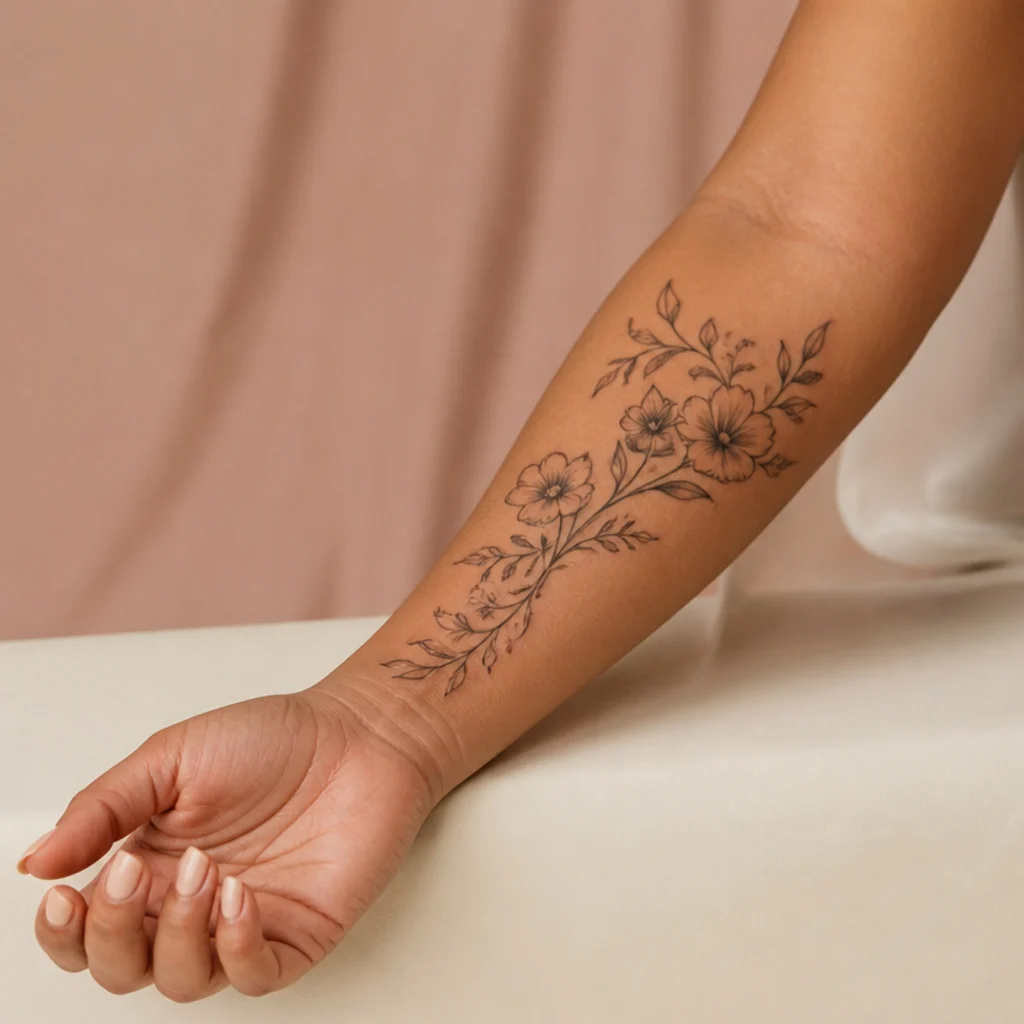
Quick Answer
- Best for: Women reworking an old name, initials or a partner's name into fresh art, from a compact monogram to a full forearm script.
- Who might skip it: Anyone whose lettering is very dark and recently done. Laser lightening first often gives a cleaner, less compromised result than covering fresh saturated ink.
- Maintenance: Most cover-ups need one healing touch-up at 6 to 8 weeks. Black-and-gray holds for years, while color and watercolor usually want a refresh every 3 to 5 years.
- Difficulty: Moderate to advanced. Covering existing pigment is a specialist skill, not something to hand to a first-timer or book as a flash appointment.
- Cost: Variable. A small cover-up may run in the low hundreds, while multi-session large pieces and sleeves climb into four figures depending on artist rate and hours.
- Wear time / longevity: Permanent by nature. Visual quality depends on density, placement and sun protection over the years.
- Standout variation: Botanical script pieces that hide old lettering inside leaves, petals and reworked letterforms.
- How to ask your tattoo artist: Bring a clear photo of the existing name, say "I want a cover-up, not a rework of the same word," and ask them to sketch the new design mapped directly over your tattoo.
In This Guide
- Delicate Floral Bouquet
- Bold Blackwork Panel
- Small Star Cluster
- Watercolor Wash Abstract
- Script Reimagined as a New Word
- Butterfly in Motion
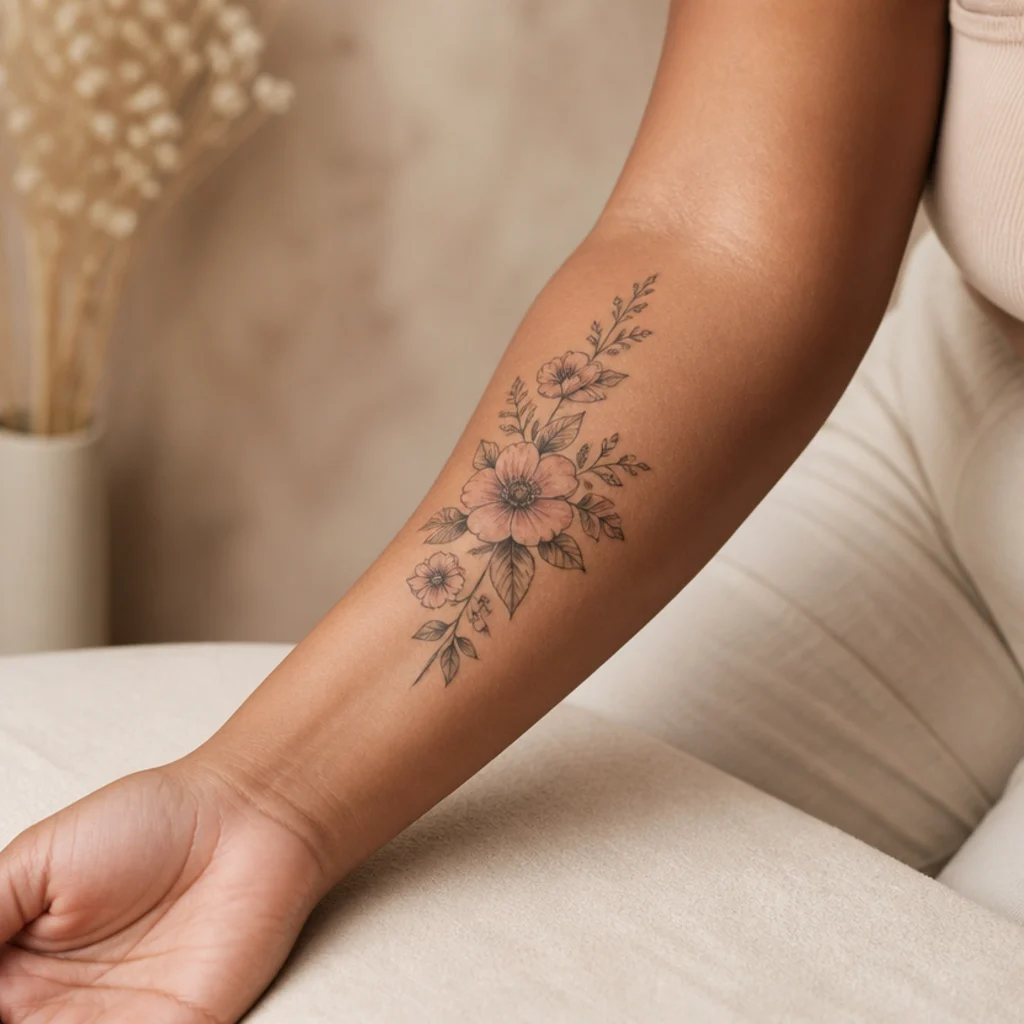
- Fine-Line Botanical Sprig
- Ornamental Mandala
- Rose with Layered Shading
- Geometric Line Bands
- Bird in Flight
- Lavender and Wildflower Stem
- Dark Serpent Wrap
- Small Moon Phases
- Peony Blackout Blend
- Ocean Wave Curl
- Constellation Dot Work
- Feather with Soft Gradient
- Vine Wrap for the Wrist
- Statement Sleeve Transition
An old name is one of the most common reasons women book a cover-up, and it's also one of the most workable. Lettering is mostly straight strokes, predictable spacing and open negative space between characters, which gives an artist far more to build around than a dense circular logo would. The craft comes down to three things: the new design has to be larger than the original, at least as dark in its key areas, and structured so the heaviest shading falls exactly over the boldest letters. Get those right and a name you've outgrown reads as intentional art instead of a patch.
This guide walks through 20 directions, from small cover up tattoos that tuck a monogram inside a single bloom to bold black cover up tattoos and full sleeves, with candid notes on undertone, placement, face and body proportion, healing timelines and where each design realistically falls short. Some of these suit faded or laser-lightened ink only; others can swallow a saturated name whole. Whichever direction you lean toward, treat the descriptions here as briefing notes to bring to a licensed artist, not a promise, because your skin, your existing pigment and your healing are what ultimately decide the outcome.
01Delicate Floral Bouquet
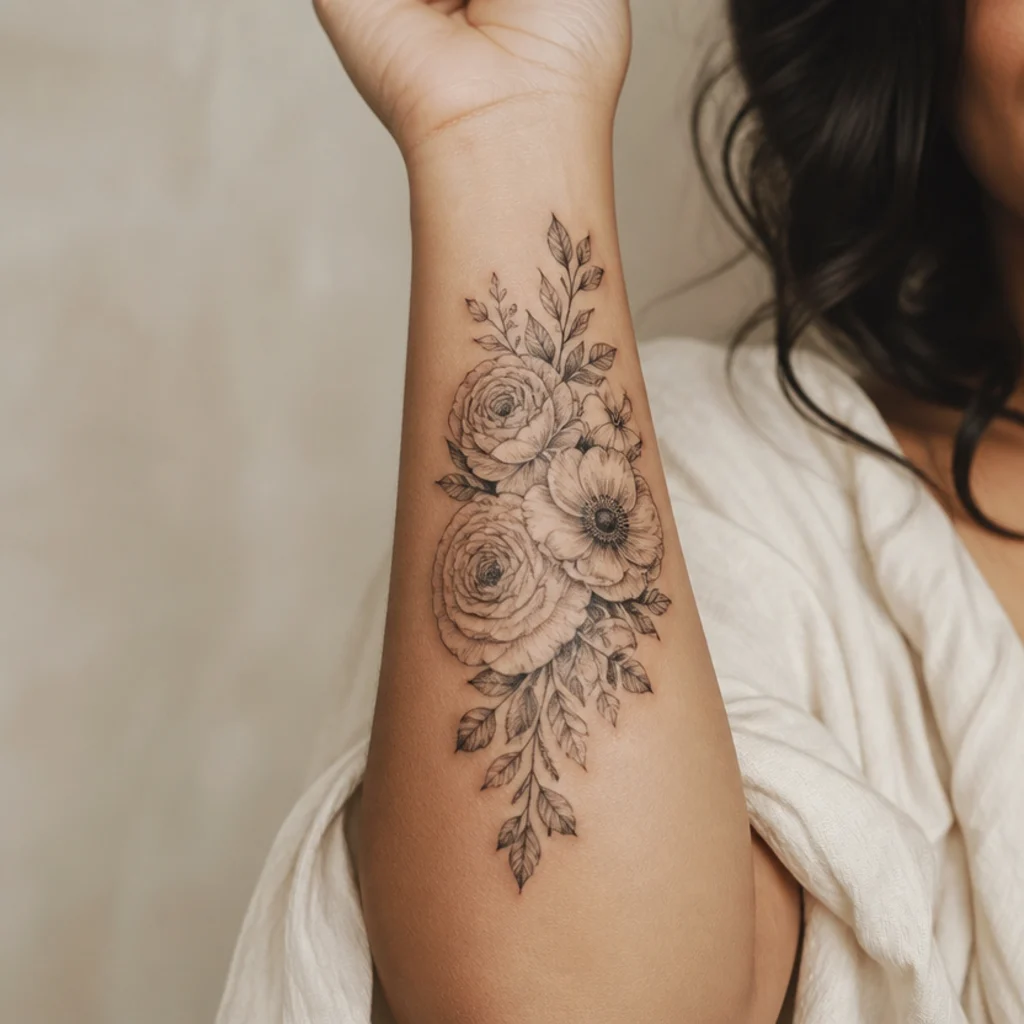
A loose gathered bouquet is one of the most forgiving ways to bury short lettering, since clustered blooms and trailing stems scatter the eye so the old strokes dissolve into petals. Bloom choice is what makes it work: flowers with dense, dark centers such as ranunculus, anemones and closed peony buds give the artist saturated cores to drop directly over the heaviest ink, while airy fillers like baby's breath soften the outer edge. Nearly any skin undertone can wear this, and the inner forearm, upper arm and outer thigh all offer the flat, generous canvas a bouquet needs. Keep the composition slightly oversized relative to the name, roughly one and a half times its footprint, so the letters never peek between stems. A small cluster reads as jewelry; a larger spray becomes a feature. Maintenance is straightforward, usually one touch-up after healing, plus daily SPF once peeled to keep the gray wash from ghosting. Ask your artist to map the flower centers over the letters first, then grow the arrangement outward from those anchor points.
02Bold Blackwork Panel
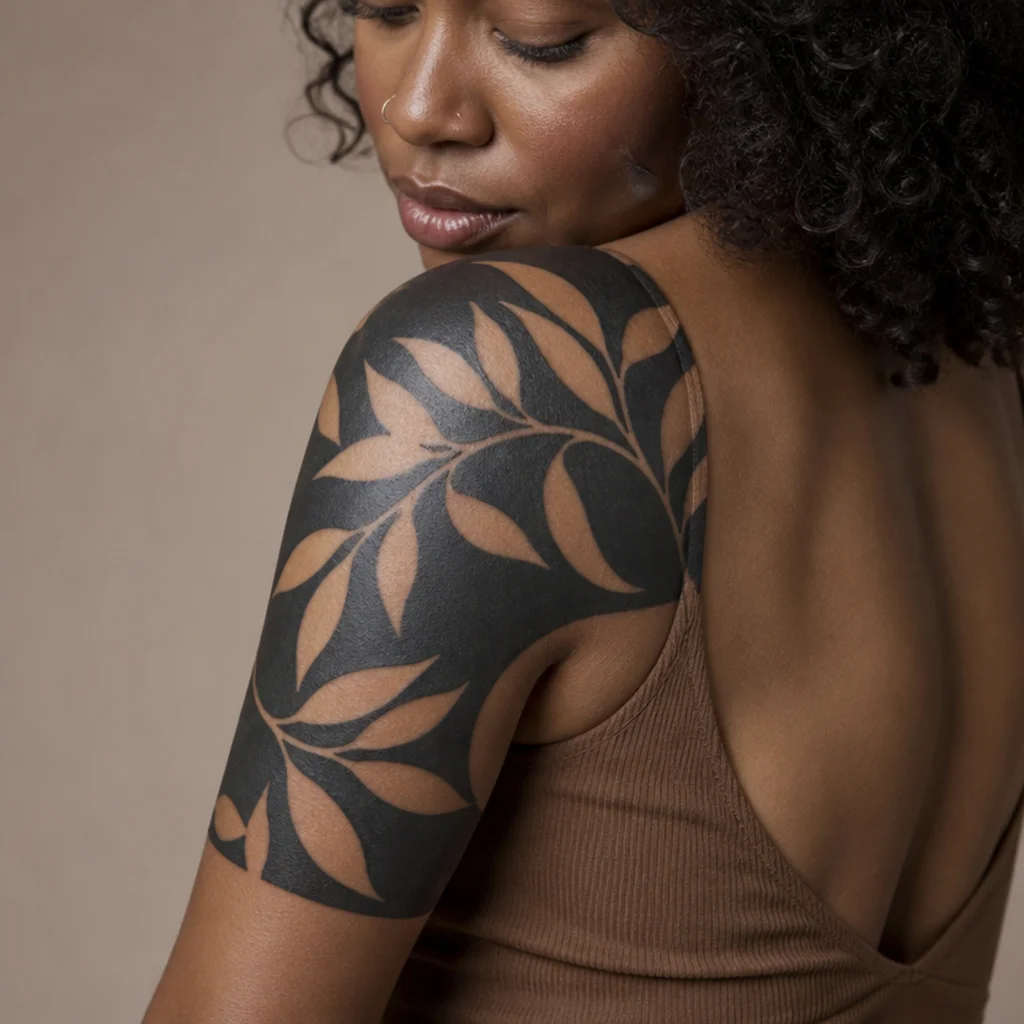
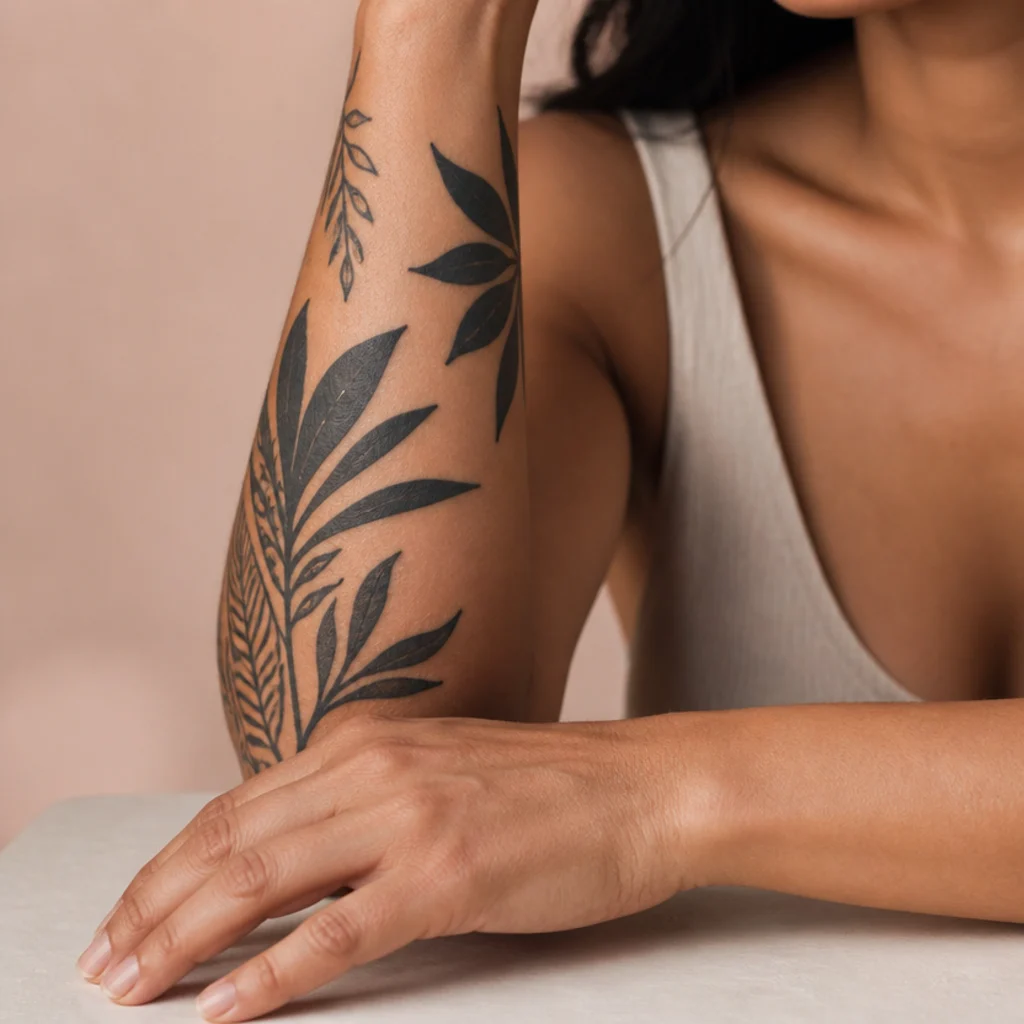
When a name was laid in thick, freshly saturated ink, the most reliable fix is often more black rather than a fight with delicate work. Blackwork panels use solid fields and carved negative space, so old lettering isn't hidden so much as absorbed into a larger shape. Density covering density is the most dependable principle in cover-up work, which makes this the safest category among black cover up tattoos. It works well for women drawn to graphic, high-contrast style who are comfortable with a committed footprint on the shoulder, outer upper arm or calf, all placements with enough uninterrupted surface to build a clean silhouette. On deeper skin tones, warm-black pigment reads truer than blue-black, so ask about ink selection. The trade-off is permanence of scale: solid black is hard to lighten later, so sit with the size and outline for a week before booking. Upkeep stays low once healed, though solid fields stay crispest with consistent sun protection. Ask your artist to design the negative-space shapes so the letter gaps become part of the pattern instead of filler.
03Small Star Cluster
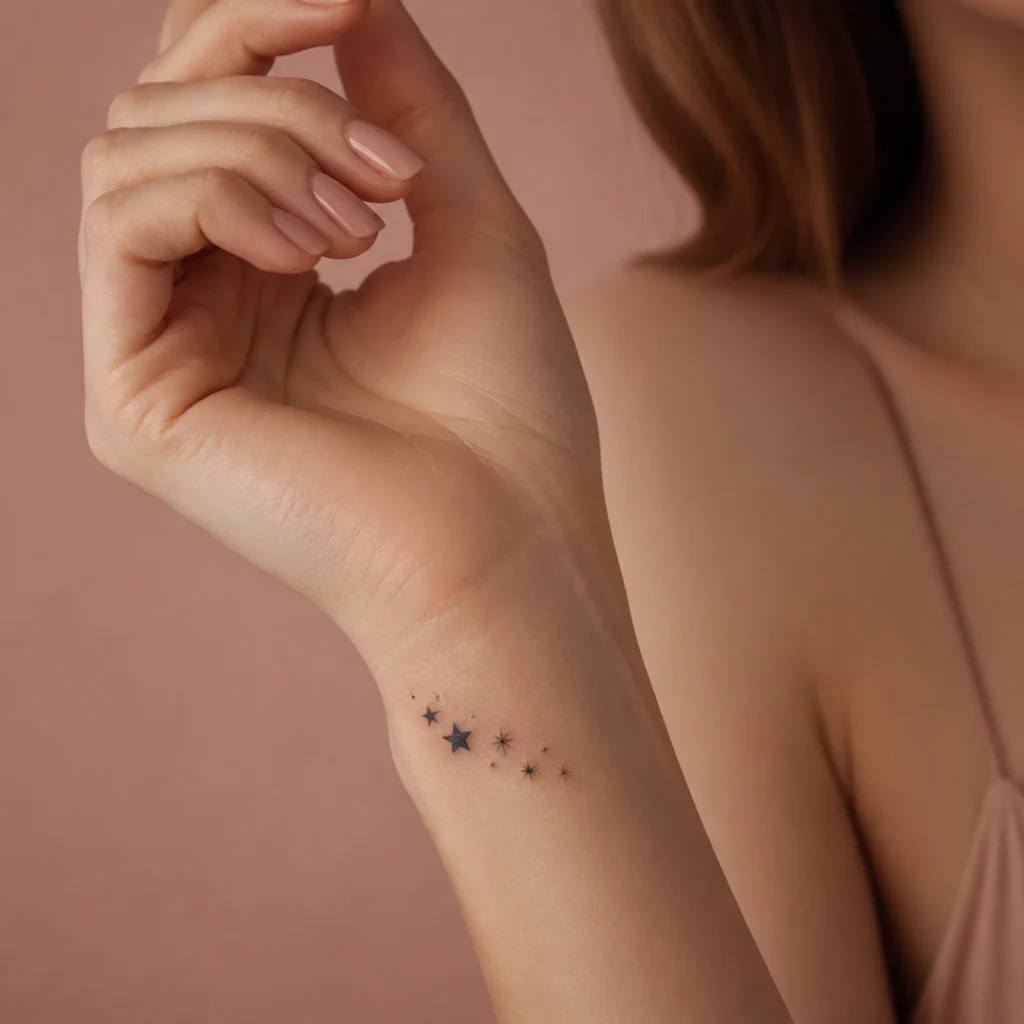
For a short name or a set of initials, a scattered star cluster keeps the cover subtle and unfussy. A few solid-filled stars sit over the letters as the working coverage, while smaller sparkles and fine points trail outward to distract the eye and soften the arrangement. This is a smart pick for small cover up tattoos on the wrist, behind the ear, along the collarbone or on the back of the neck, all spots where a compact motif feels natural, and it works well for minimalists easing into the idea of covering old ink without a large piece. The limit is pigment load: a handful of small stars carries far less ink than a solid panel, so this direction only works over faint, fine-line or already-faded lettering, not a bold saturated name. On any skin tone, a couple of denser anchor stars do the real hiding while the delicate ones set the mood. Maintenance is minimal, though tiny points can soften over the years. Ask your artist to place two or three solid stars precisely over the darkest letters and let the smaller sparkles float free.
04Watercolor Wash Abstract
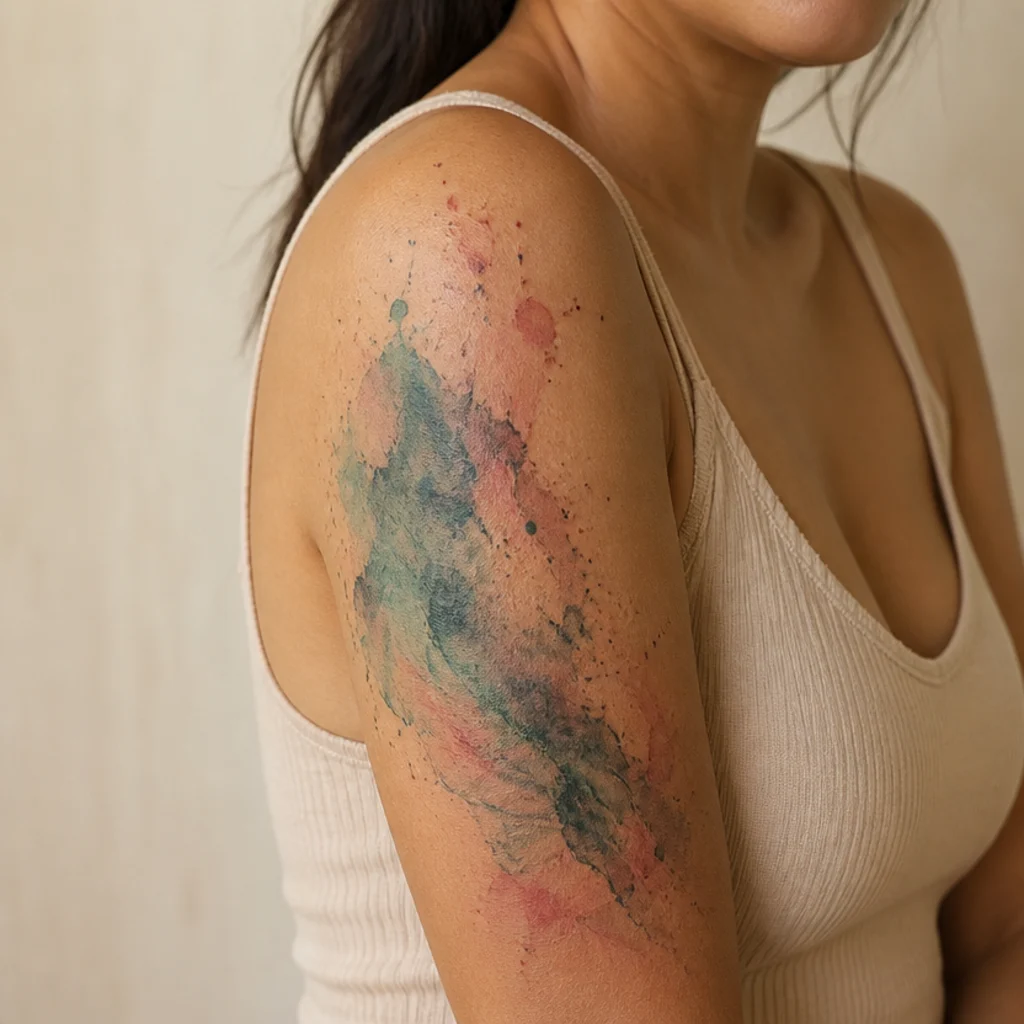
Soft washes of color layered over a prepared base can lift an old name into something painterly and modern. Watercolor styles trade hard outlines for blended pigment, splatter and bleed, so the eye follows movement rather than searching for edges where letters used to be. Translucent color alone won't mask dark ink, so a skilled artist typically lays a muted neutral or gray base first to neutralize the old strokes, then builds brighter tones on top. Warm and medium undertones especially get the benefit, where coral, blush and teal stay vivid rather than turning muddy; on very cool or deep skin, saturated jewel tones tend to hold better than pastels. Size is flexible, from a palm-sized patch to a larger feature on the upper arm, shoulder or thigh. The real cost is longevity: color and soft edges fade faster than black, so plan a refresh every three to five years. Ask your artist to plan the underlying base layer as its own step and bring your palette references so tone and coverage get designed together.
05Script Reimagined as a New Word
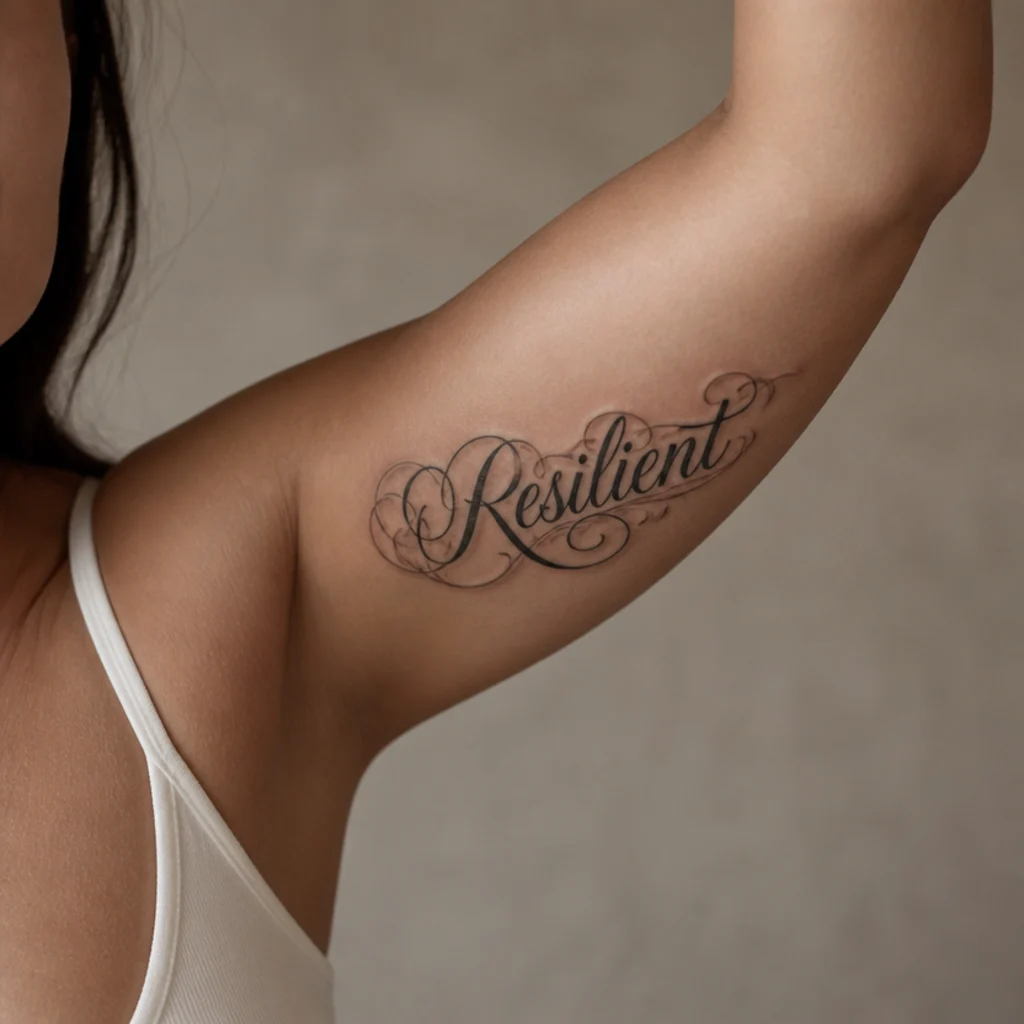
Sometimes the cleverest answer to an unwanted name is a different word entirely. A strong letterer can reroute the existing strokes into new cursive, a meaningful phrase, a place name, a date or your own name, reusing the old lines instead of fighting them. This is one of the smartest name cover up tattoos because letters convert into letters efficiently, but it has rules: the new word almost always needs to be larger, more flourished or bolder than the original, since a same-size swap leaves telltale ghosting where old ascenders and descenders poke out. Serifs, swashes and heavier weight give the artist material to bury stray strokes. Women who still love lettering but want fresh meaning tend to gravitate here, and it usually stays in the original placement, whether that's the inner forearm, ribcage or collarbone. Choose wording with enough character length to overlap the old text generously. Maintenance mirrors any fine lettering, with a possible touch-up as thin lines settle. Ask your artist to sketch the new letterforms directly over a photo of the old name so you can see exactly how the strokes overlap before you commit to the word.
Save this to Pinterest to compare these first five directions side by side.
06Butterfly in Motion
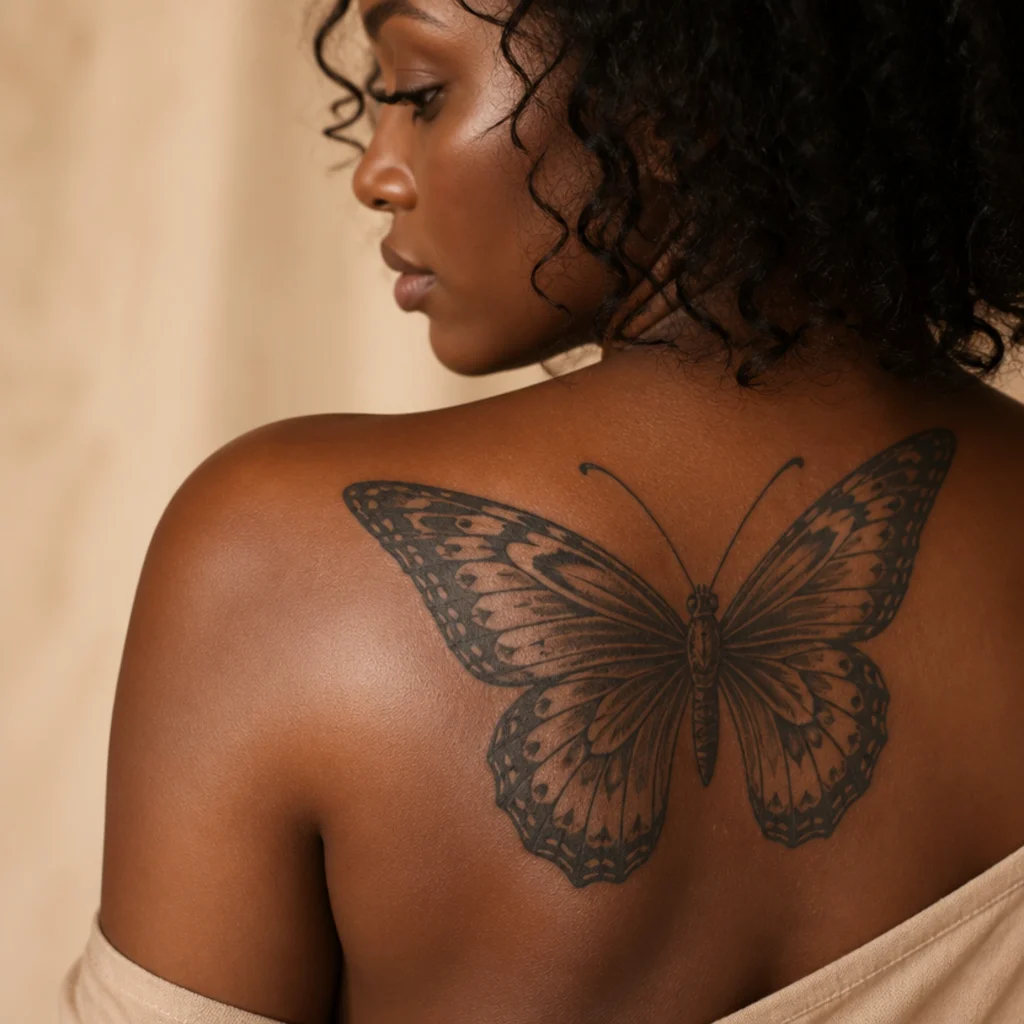
A butterfly with open, detailed wings is a genuine coverage workhorse, not a pretty motif that happens to sit on top. The two wing panels create large fields of pattern and shading that swallow lettering, while the slim body runs neatly along a former line of text, so the design's structure mirrors the shape of a name almost perfectly. It adapts across styles, from delicate fine-line to bold neo-traditional color with heavy dark bases. Placement on the shoulder blade, outer thigh or upper arm gives the wings room to spread symmetrically, which matters, since a cramped butterfly loses its coverage advantage. On deeper complexions, strong dark outlines and high-contrast wing markings read cleaner than pale gradients. Maintenance runs moderate if you add color, low if you keep it black-and-gray. The one caution is over-open, airy wing designs, which leave gaps where old ink shows through, so favor wings with dense internal pattern. Ask your artist to angle the wings so the busiest, darkest markings land over the boldest part of the original name and the body traces its baseline.
07Fine-Line Botanical Sprig
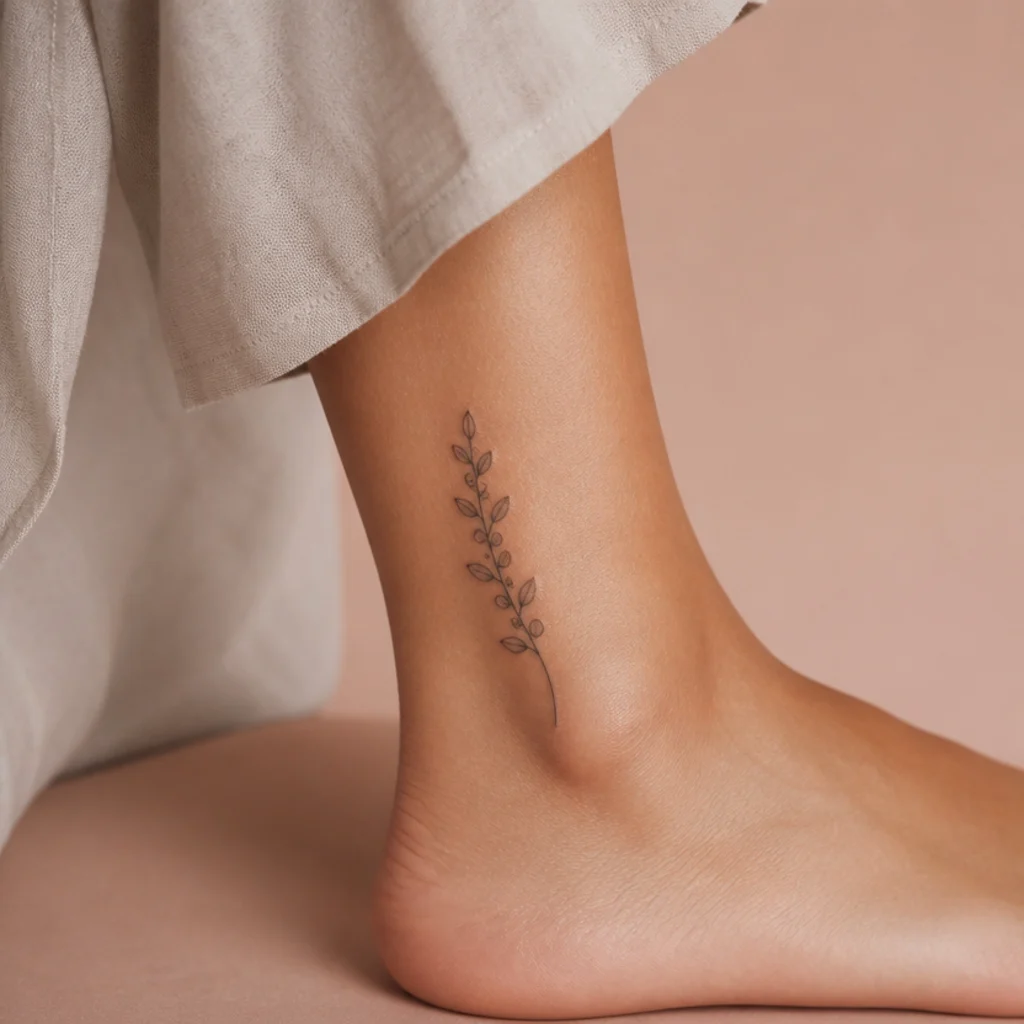
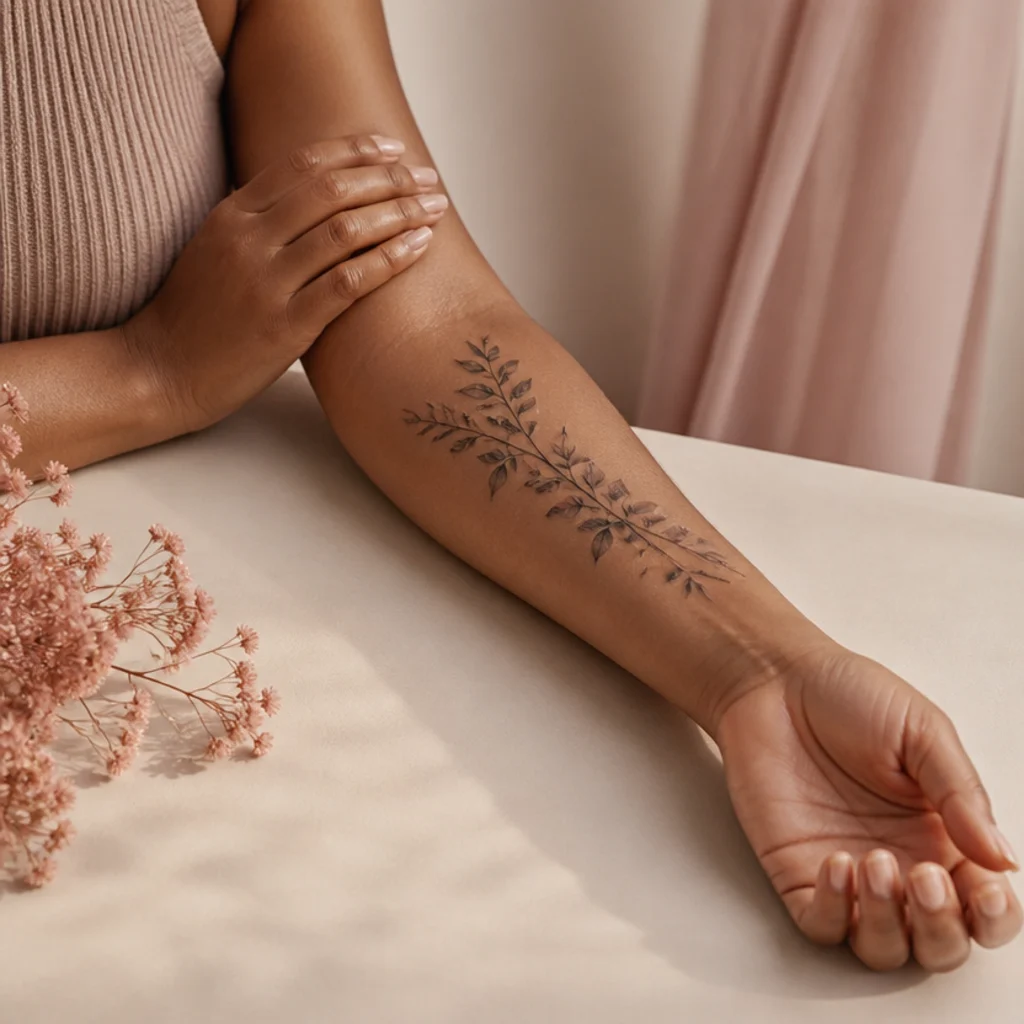
A single slender sprig, olive branch or eucalyptus stem is quietly elegant, but it's the most limited coverage option on this list and needs to be treated that way. Fine-line work deposits very little pigment, so it can't reliably bury a dark, saturated name on its own. Where it shines is refreshing an already-faint old tattoo or dressing up a laser-lightened one that's been softened first. Minimalists who love understated small cover up tattoos on the ankle, inner forearm or along the spine will like this, and it flatters every skin tone since there's no dense field competing with the complexion. Longevity is the trade-off common to thin work: fine lines can blur and spread slightly over the years and may want a touch-up sooner than solid designs. Be candid in your consultation about how visible the original still is, because an honest artist will tell you when fine-line alone won't do the job. Ask your artist whether a session of laser lightening beforehand would let a sprig this delicate actually work over your specific tattoo.
08Ornamental Mandala
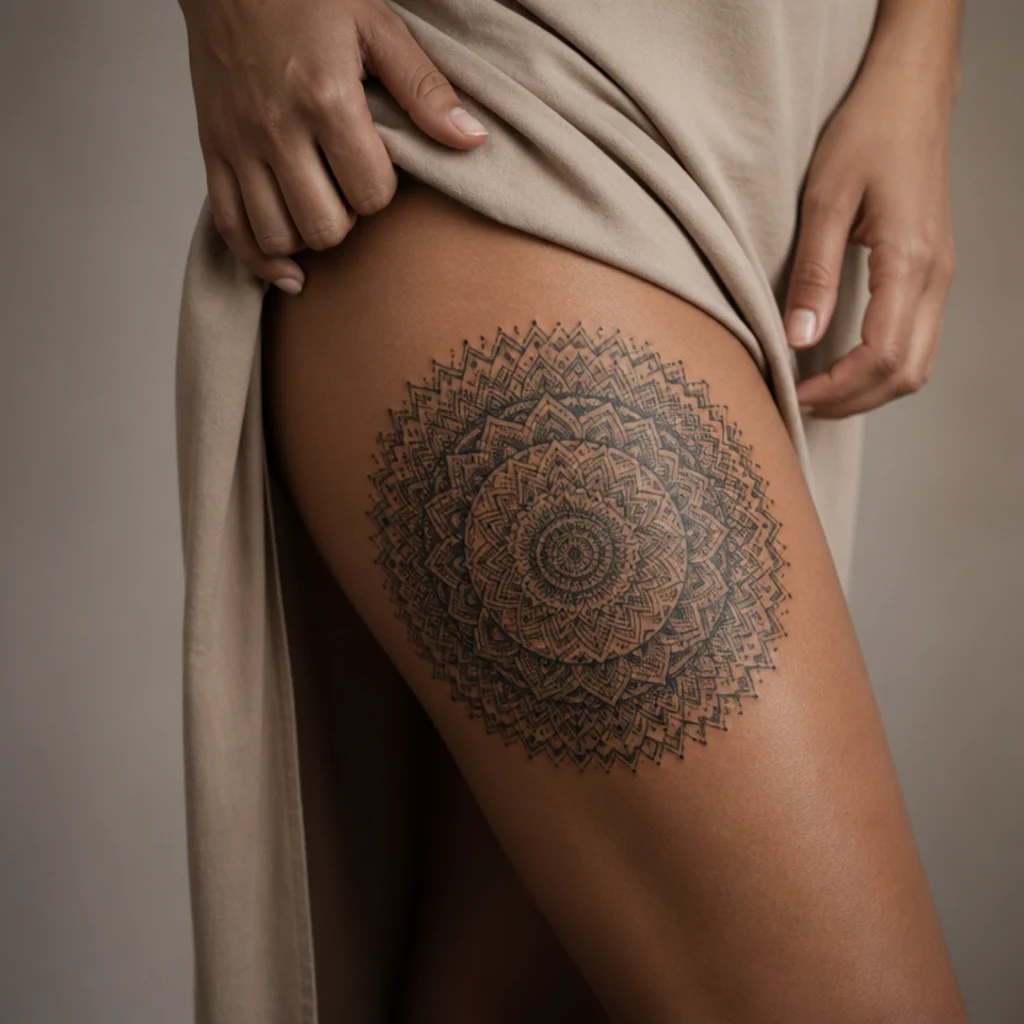
Mandalas are built from dense, repeating pattern, which is exactly what makes them effective over text: the layered rings, petals and dotwork generate so much detail that the eye never settles on a single letter. Women who love symmetry and are open to a rounder medium-to-large shape do well here, and it sits beautifully on the thigh, shoulder cap, sternum or the rounded back of the upper arm, all areas where a circular form follows the body's curve. Dotwork and linework carry dark, dense pigment, so mandalas rank among the more dependable black cover up tattoos, though the coverage lives in the filled sections rather than the open geometry. That means the pattern has to be planned around the letters instead of placed on top of them. On any undertone, stippled gray shading builds gradual depth that hides ghosting. Expect a longer session, sometimes two, and one healing touch-up. Ask your artist to center the mandala so its busiest, most heavily stippled ring aligns with the heaviest old ink and the open filigree falls over bare skin.
09Rose with Layered Shading
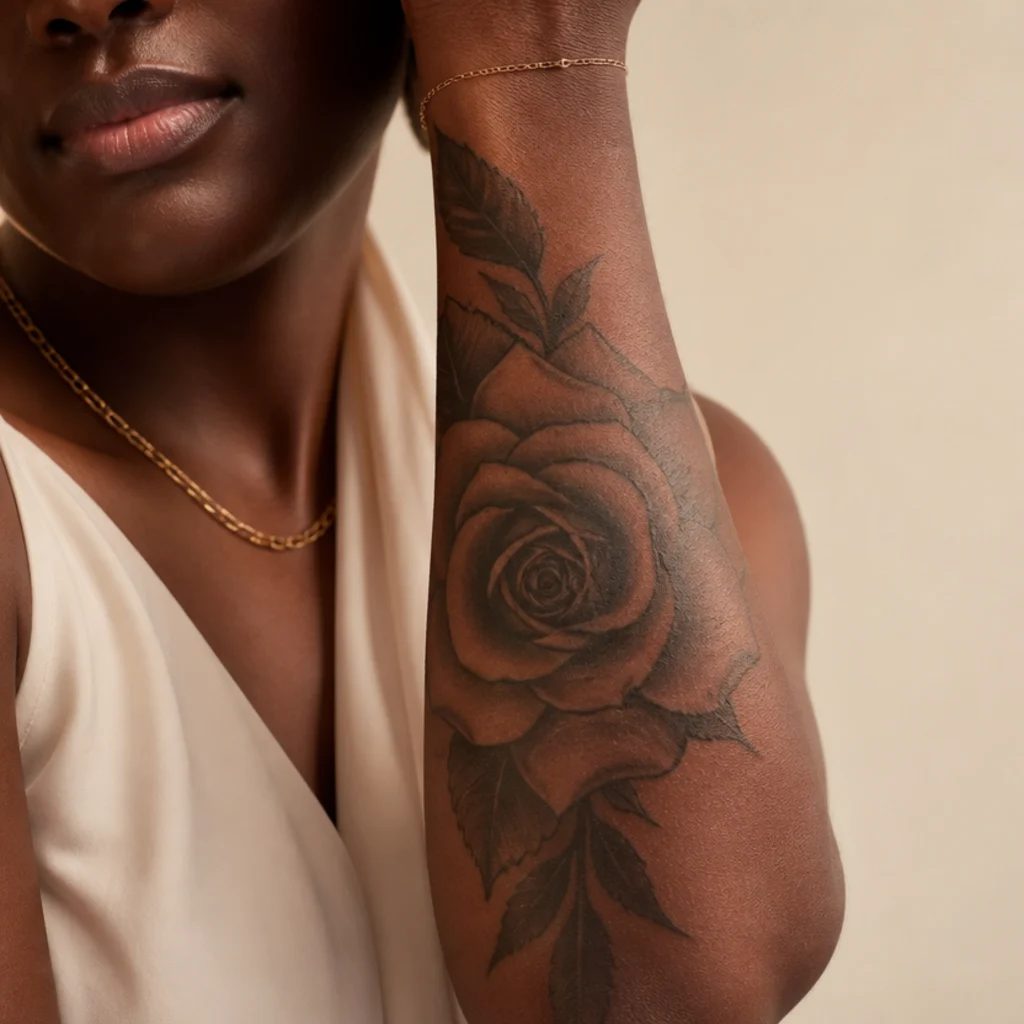
The rose earns its place as a cover-up staple through sound technical logic, not sentiment. Its overlapping petals and deeply shaded core hand the artist generous dark zones to lay over old lettering, and the folds between petals absorb stray strokes naturally. A single large rose covers a short name, while a small cluster of two or three handles a longer one, letting the composition stretch to match the text. Classic and romantic tastes suit this best, and it translates cleanly into blackwork, black-and-gray or full color on the forearm, shoulder or calf across every skin tone. Longevity depends on style: black-and-gray holds its depth for many years, while red and pink petals soften sooner and want refreshing. The key is petal architecture, building the darkest inner folds precisely over the most saturated part of the name and letting the outer petals fade into cleaner skin so the edge looks organic. Ask your artist to structure the shading so the rose's deepest core sits directly over the boldest lettering, then feather the outer petals to blur the transition.
10Geometric Line Bands
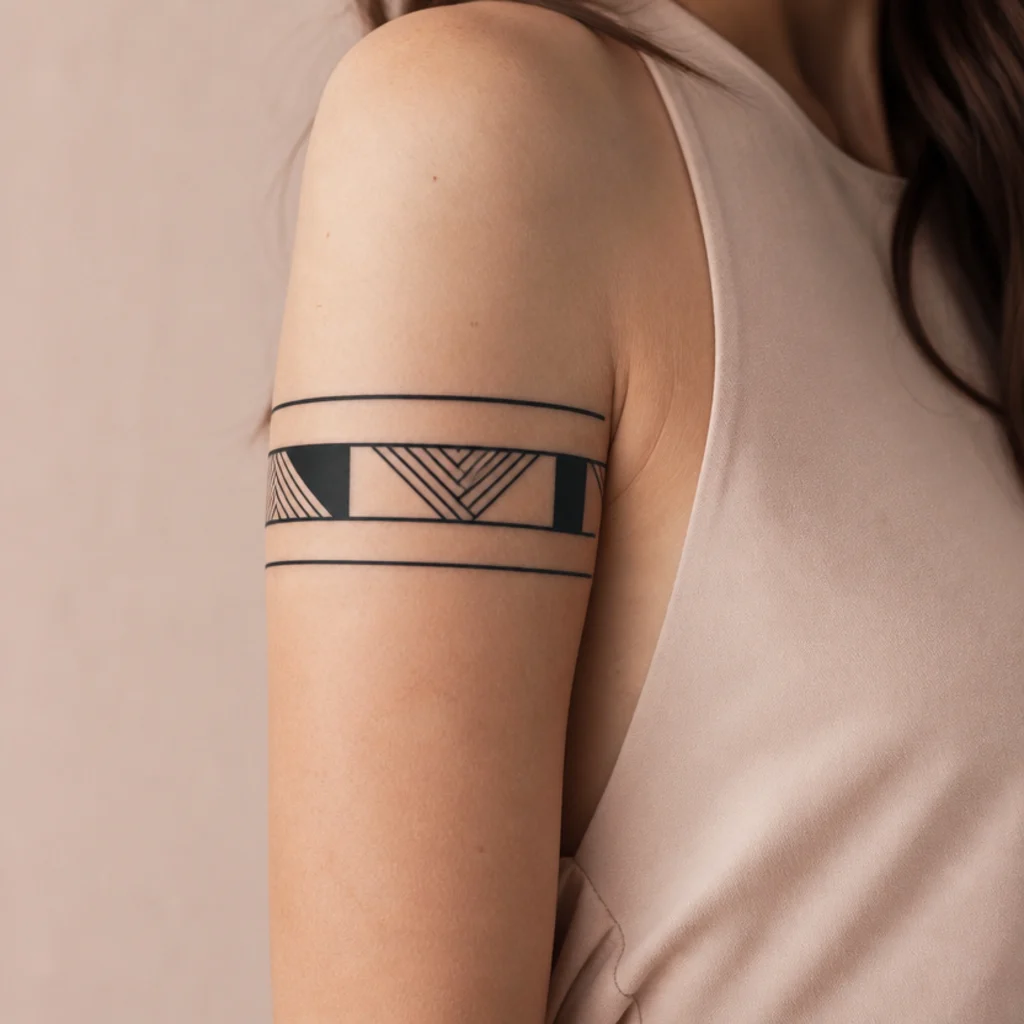
Clean geometric bands wrapping the arm or leg, alternating thin lines with solid fills, offer a modern, architectural way to reframe old ink. The working principle is simple: a fully solid band can sit directly over lettering and cover it, while the surrounding thin lines and negative space redirect the eye and give the design rhythm. Contemporary, minimalist taste suits this, and it reads striking on the upper arm, forearm, wrist or ankle, following the limb's natural taper. Thin lines alone carry too little pigment to hide bold strokes, so the composition needs at least one broad solid band positioned over the heaviest ink. Balance between filled and open bands is where this design succeeds or fails. On all skin tones, solid black bands stay bold, while thin lines can soften slightly over time. Upkeep is low for the solid work. Ask your artist which specific bands must be filled solid to guarantee coverage over the boldest strokes, and let the thinner bands handle the styling above and below.
Save this to Pinterest before you move into the second half of the list.
11Bird in Flight
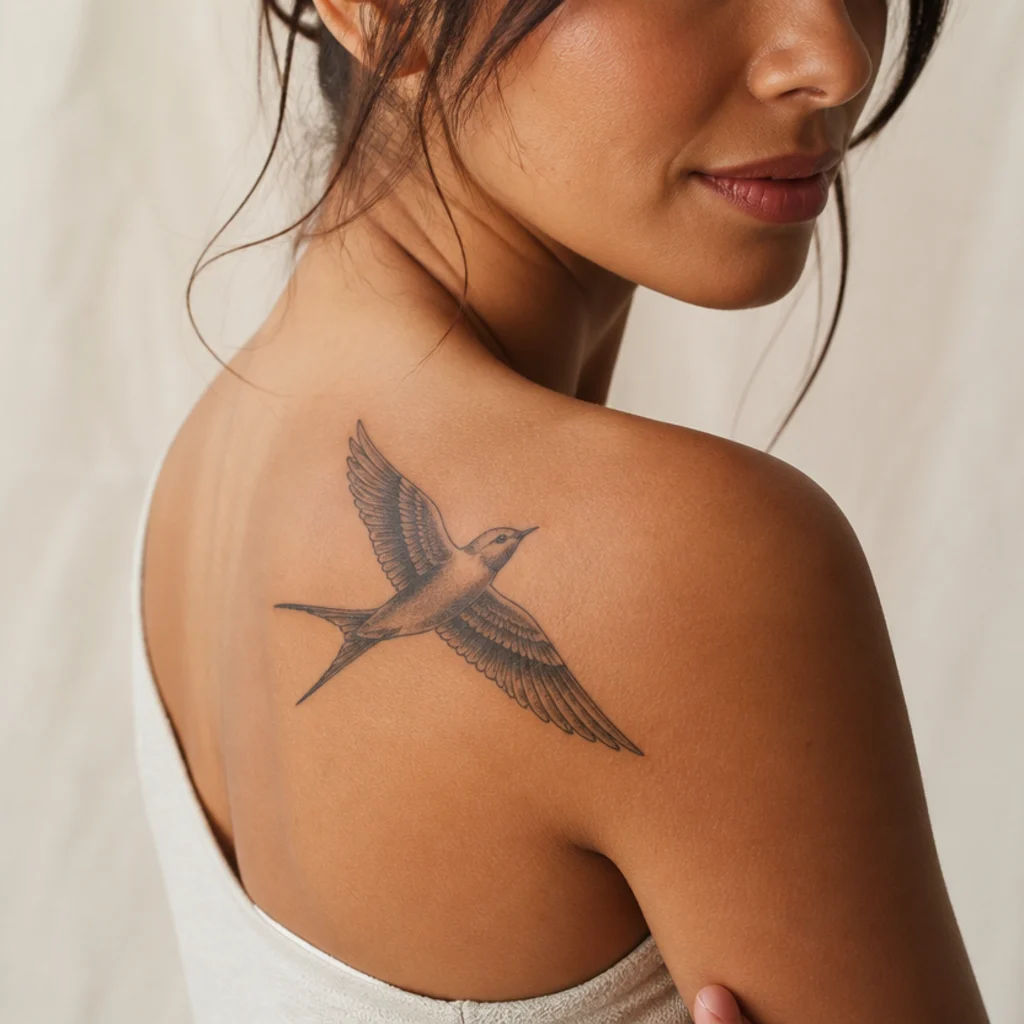
A bird with outstretched wings, a swallow, sparrow or dove, carries motion and meaning while offering solid coverage across its body and wing span. A single bird suits a short name, while a small flock can travel across a longer line of text, with each bird landing over a cluster of letters so the spacing looks deliberate rather than sparse. It works in both delicate fine-line and bold traditional styles and sits naturally on the shoulder, ribcage, forearm or between the shoulder blades. The coverage rule here is simple: solid or heavily shaded wings hide ink, while open outline birds leave gaps, so choose filled wings over airy ones if the original name is dark. On deeper skin tones, a strong silhouette reads more clearly than fine detail. Maintenance is moderate, more if color is added to the wings. For a long name, plan the flock's spacing carefully so the negative space between birds feels intentional. Ask your artist to distribute several solid-winged birds so each one covers a group of letters and the gaps between them read as sky.
12Lavender and Wildflower Stem
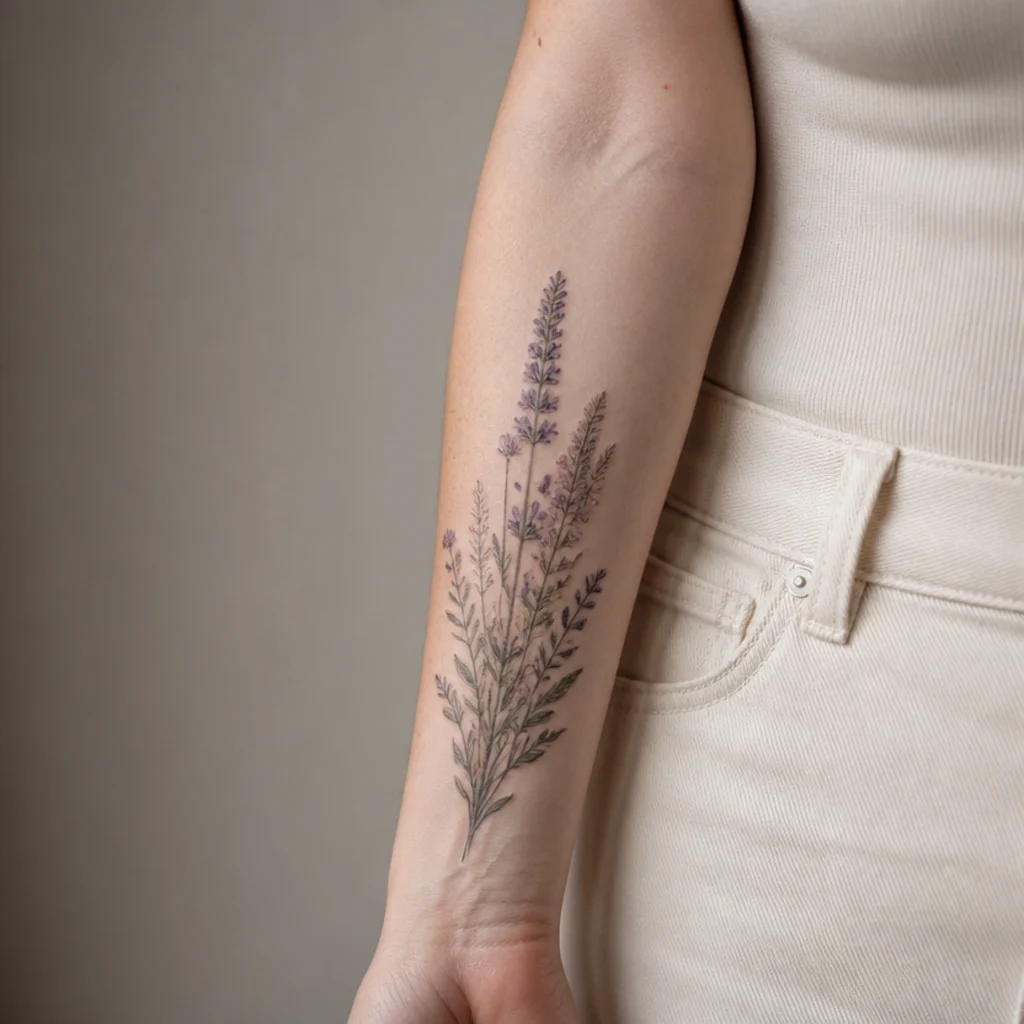
A tall lavender stem or mixed wildflower spray is graceful and unusually practical for vertical lettering, because the blooms and buds stack naturally along the length of a name running down the arm. The darker flower heads become the coverage points, placed over the boldest letters, while lighter buds fill the spaces for a natural, uncrowded stem. Soft, romantic style suits this, and it looks lovely on the inner forearm, spine or calf, all vertical placements that echo the line of text. Muted purples, dusty blues and sage greens flatter cool and neutral undertones especially; on warm skin, deepening the purples keeps them from reading gray. Because it relies on color, plan a refresh over the years as soft tones fade first. The design's strength is variable bloom density, so it can be tuned to hide more or less depending on how saturated the old name is. Ask your artist to concentrate the fullest, darkest flower heads over the heaviest lettering and scatter lighter buds through the gaps so the coverage never looks like a patch.
13Dark Serpent Wrap
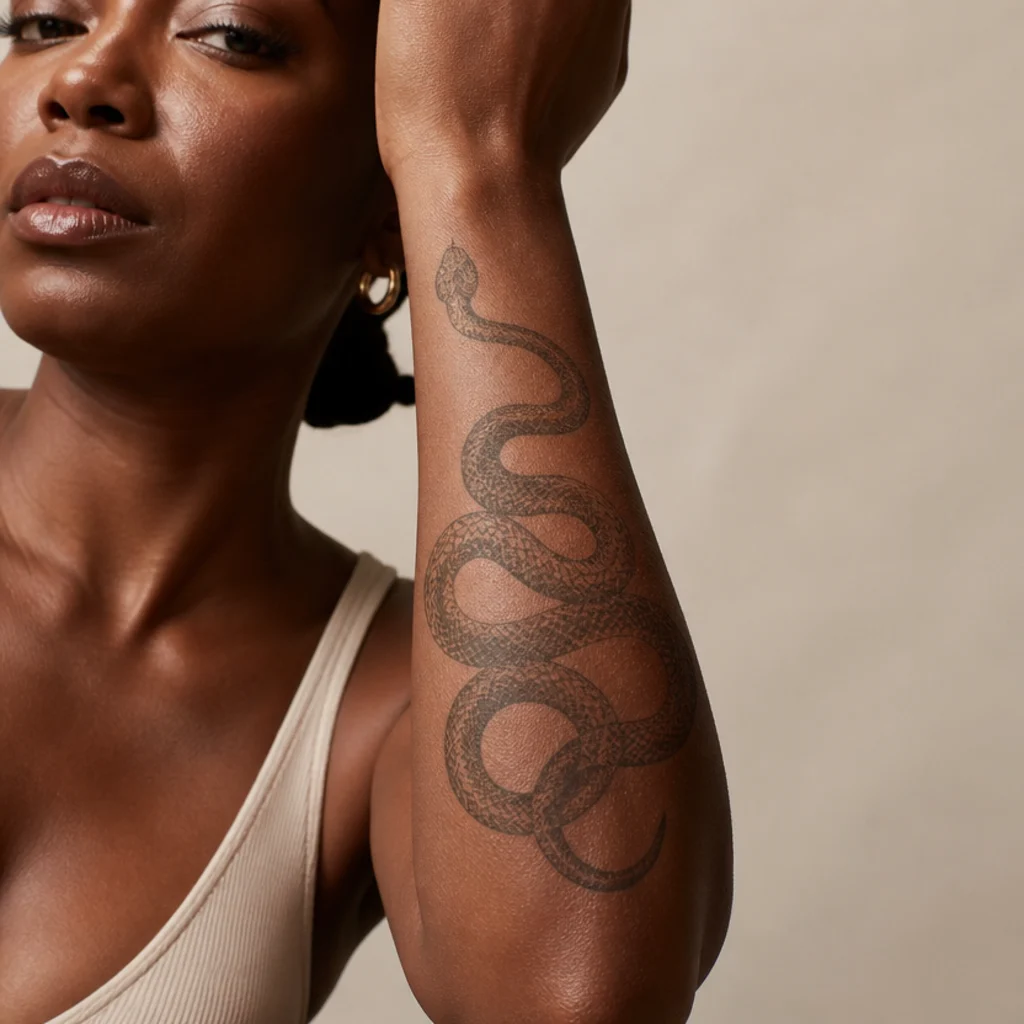
A serpent that coils and curves is a cover-up favorite because its winding body can be routed along the exact path of old lettering, tracing the baseline of a name and covering it stroke for stroke. The scale detailing, banding and shading pile on dense pigment, and the sinuous shape feels intentional rather than apologetic. Bold, edgy taste suits this, and it ranks among the stronger black cover up tattoos when rendered in saturated black-and-gray with heavy scale work. Placement on the forearm, thigh, spine or calf gives the body room to wind and taper. The technical edge here is routing flexibility: unlike a fixed shape, a snake can bend to follow whatever route the letters take, with its darkest coils parked over the heaviest ink and the tail thinning into clean skin. On every skin tone, dense scale shading builds reliable depth. Upkeep is low once healed, with sun protection keeping the grays from flattening. Ask your artist to trace the snake's body directly along the line of the old name so its most detailed coils fall over the boldest lettering.
14Small Moon Phases
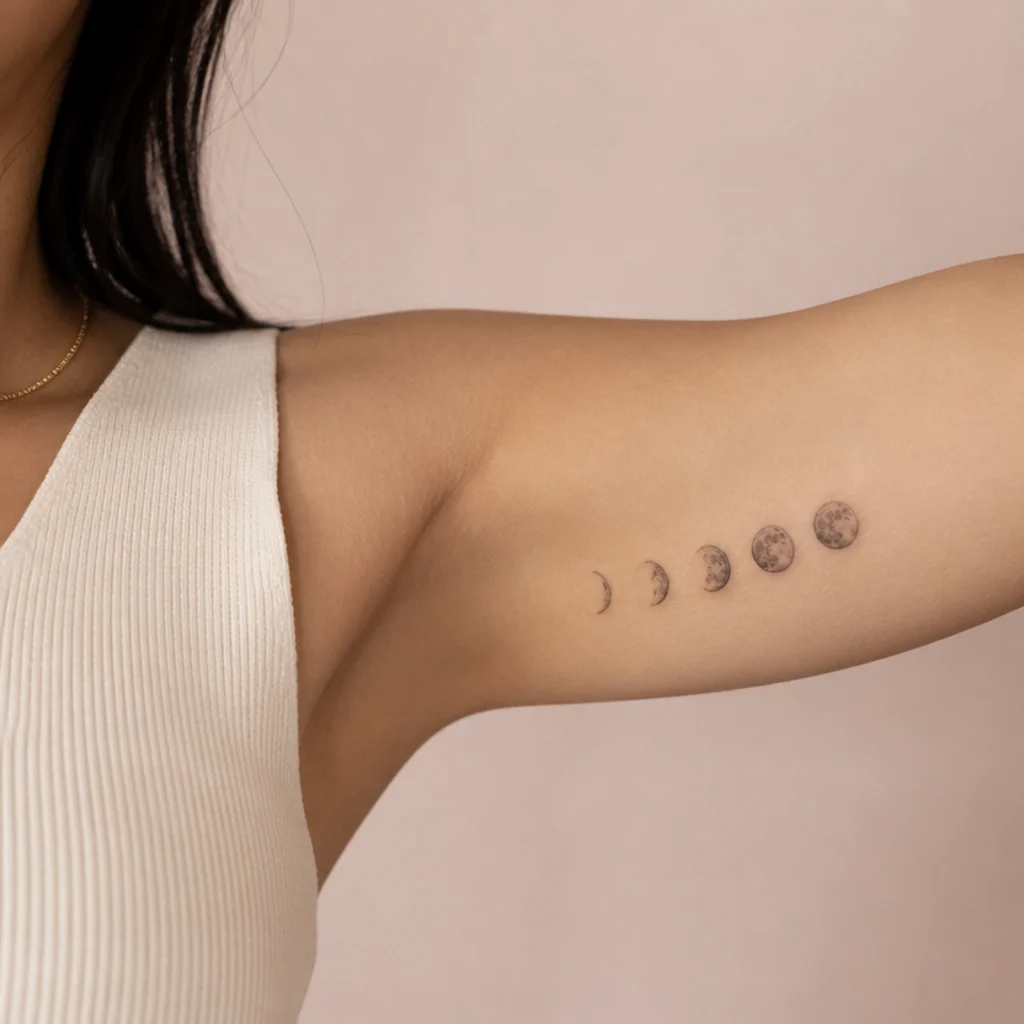
A row of moon phases, waxing crescent through full and back, makes an elegant horizontal line that can sit over short lettering. The solid full moons provide the real coverage, dense filled circles dropped over the boldest letters, while the thin crescents keep the row feeling airy and celestial rather than heavy. This is a lovely option for small cover up tattoos along the inner arm, collarbone, spine or beneath the bust, and minimalist or celestial taste tends to gravitate toward it, reading well across skin tones since the alternating solid and open shapes create their own rhythm. The constraint is that the filled moons cover far better than the thin crescents, so this works best over faint or moderate lettering rather than a bold saturated name; on darker ink, more of the row may need to be filled solid. Maintenance is simple, with occasional attention to thin crescent lines. Ask your artist to position the fullest, most solid moons directly over the boldest letters and let the crescents fall over the gaps between characters.
15Peony Blackout Blend
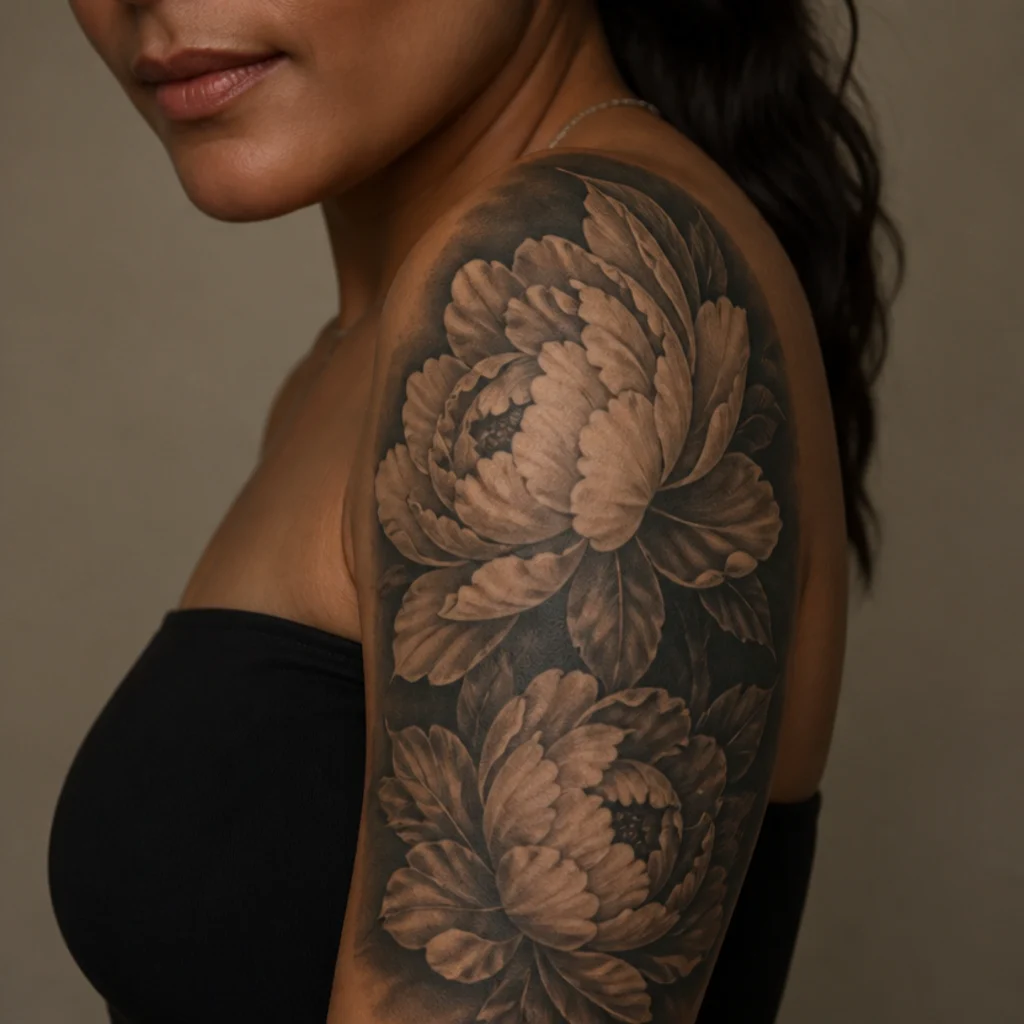
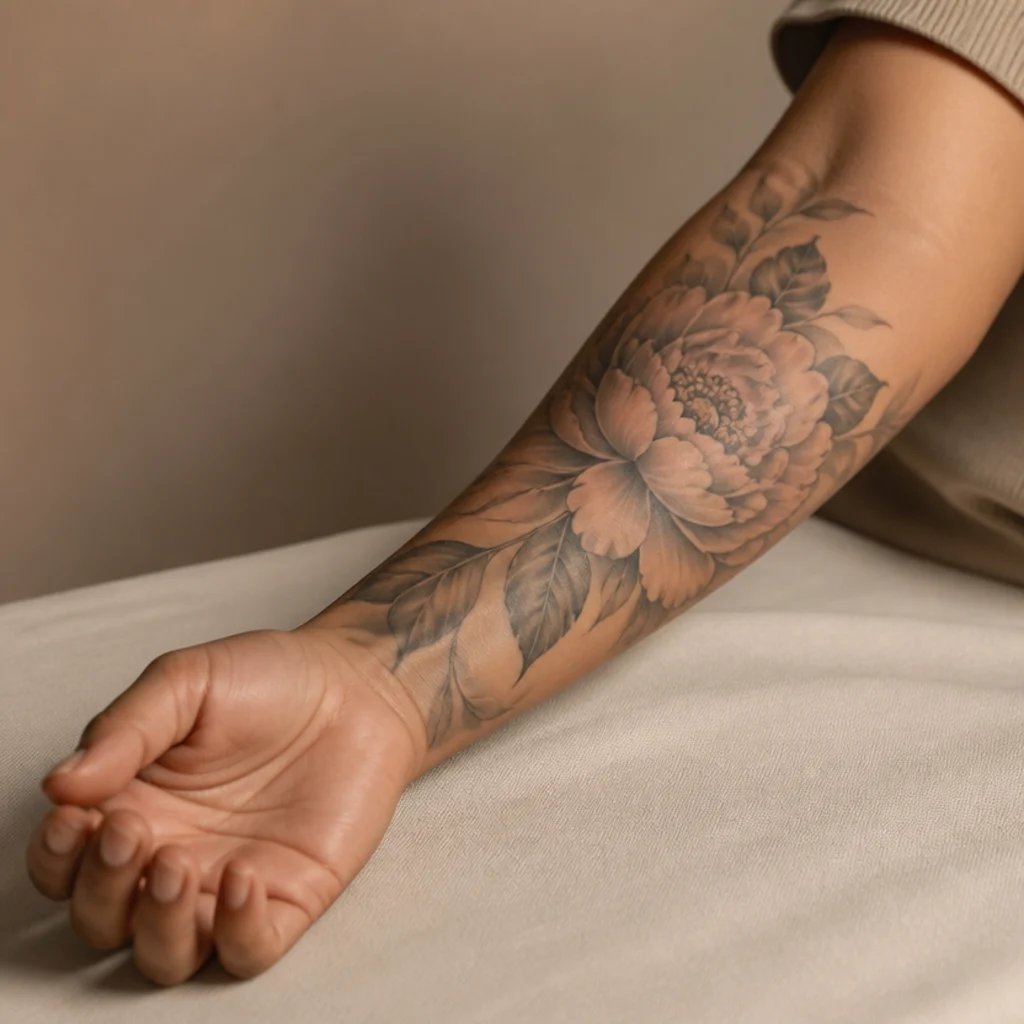
For a name that refuses to hide, a lush peony blended into a soft blackout or smooth heavy-shade background is one of the most powerful solutions available. The full, layered petals draw and hold the eye while a smoothly graded dark field behind them absorbs whatever the flower itself doesn't cover, so nothing gets left exposed. Women ready for a larger, dramatic statement suit this best, and it ranks among the most dependable large cover up tattoos, since the combination of a dense focal bloom and a solid shaded backdrop leaves the old ink nowhere to show. Placement on the upper arm, outer thigh or shoulder gives room for the flower and its blend to breathe. The blackout should be a true smooth gradient, darkest over the old name and softening outward, rather than a hard block, so it reads as intentional shading. Solid shading is durable but wants sun care to stay even. On deeper skin, the gradient edge needs extra planning to transition cleanly. Ask your artist to place the darkest part of the blend directly over the stubborn ink and fade it outward naturally.
Save this to Pinterest to remember the bolder coverage options like this one.
16Ocean Wave Curl
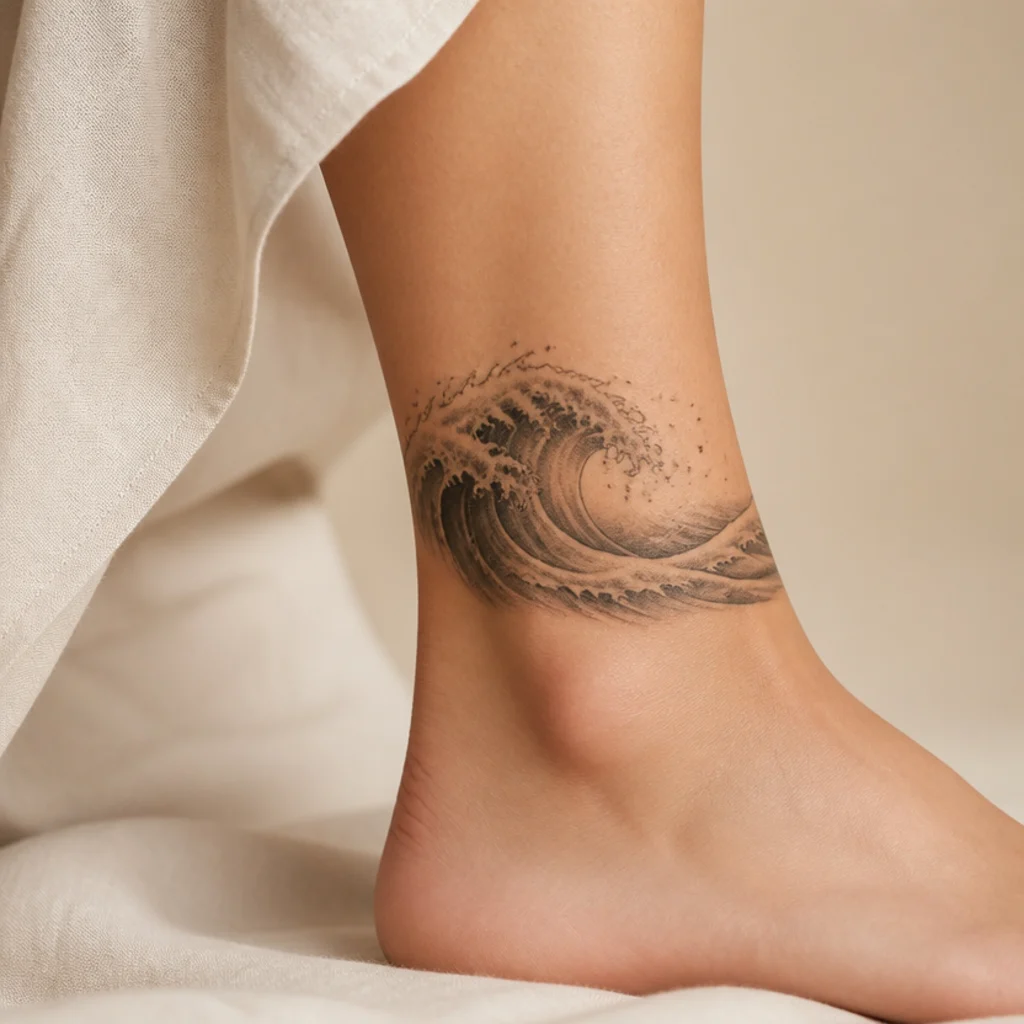
A curling wave inspired by classic Japanese linework uses a dense foam crest and deep troughs to create rhythm and movement over old text. The thick, heavily shaded curl of the crest is the working coverage, while the spray and fine foam lines add motion and carry the eye outward. Women drawn to ocean symbolism suit this, and it looks striking on the ankle, forearm or calf, where the wave's curve follows the limb. Black-and-gray reads well on all skin tones and ages gracefully, holding its detail longer than color. The catch is that a wave is part solid, part open linework, so the spray alone won't cover ink; the crest must be shaded densely and positioned over the boldest lettering while the lighter spray drifts into clean skin. Keep the crest generously sized relative to the name. Maintenance is low for the solid black-and-gray areas. Ask your artist to place the fullest, darkest part of the wave over the heaviest old ink and let the foam spray dissolve outward for a natural edge.
17Constellation Dot Work
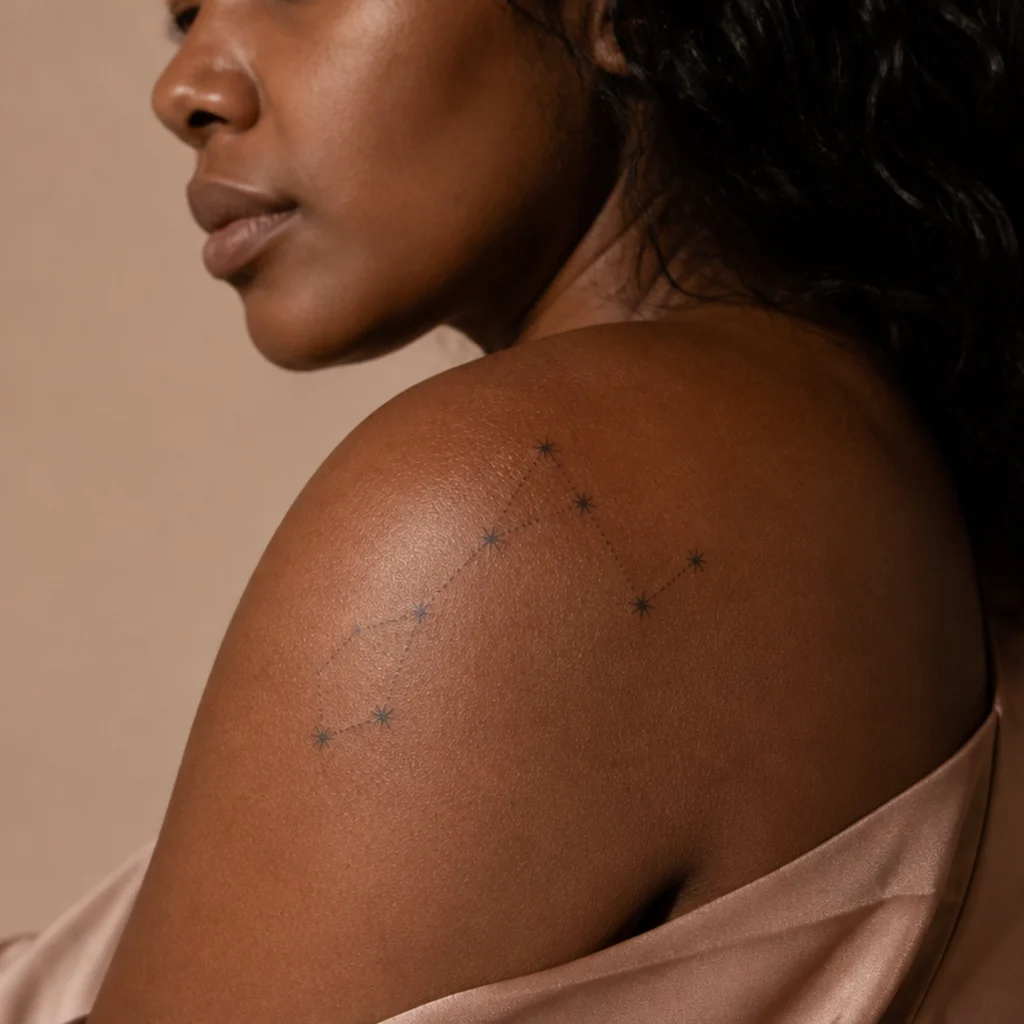
Connected stars joined by fine dotwork lines make a subtle, personal cover-up, especially when you choose a constellation that means something to you, a birth sign or a shared star pattern. The solid star points anchor the coverage while the thin connecting lines keep the whole design delicate and airy. This is a gentle option for small cover up tattoos on the shoulder, forearm or behind the ear, but it shares the limitation of all light work: dotwork carries less pigment than solid fill, so it only covers faded or fine-line names, not bold saturated ones. Celestial and minimalist taste suits this across skin tones, where a few crisp star points read cleanly against the complexion. Maintenance is simple, though very fine dots can soften and merge slightly over the years. If the original is darker than expected, the fix is a few bolder, larger stars placed as anchors. Ask your artist whether the constellation needs a couple of denser stars to fully cover the darkest letters underneath before you settle on the pattern.
18Feather with Soft Gradient
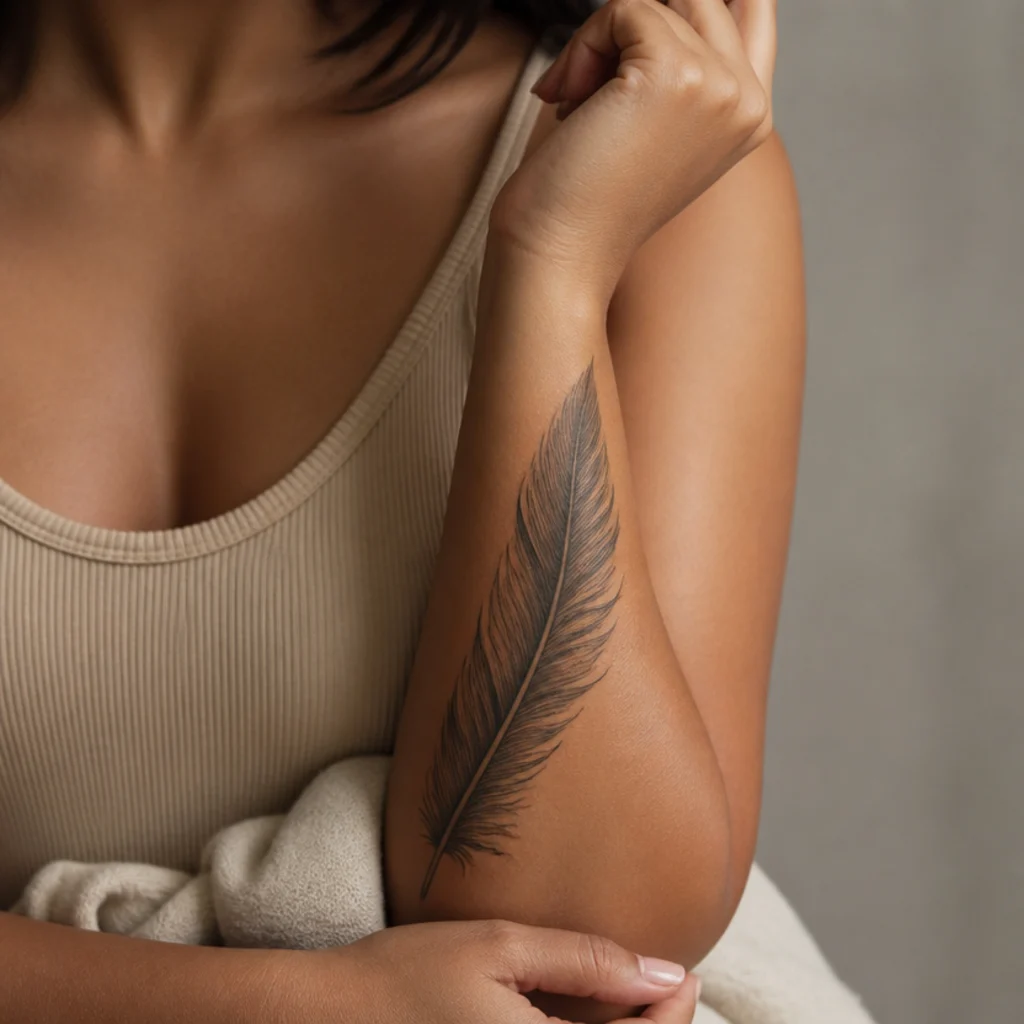
A single detailed feather, with its dense quill and fanning barbs, offers a graceful vertical shape that suits lettering running down the arm or spine. The heavily shaded central shaft covers the core of the old text, while the softer barbs feather out to blur the edges and add movement. Romantic and free-spirited style suits this, and it looks elegant on the forearm, spine or ribcage, all placements that echo a vertical name. Black-and-gray gradients flatter every skin tone and age gracefully, softening evenly rather than patchily. The coverage lives along the solid quill and denser barbs, so this works best over moderate lettering rather than the darkest saturated ink; where a name is very bold, the shaft needs heavier, slightly wider shading. Keep the feather generously scaled so the quill fully spans the letters. Maintenance is low, with a possible touch-up as fine barb tips settle. Ask your artist to run the feather's spine directly over the old name so the densest shading lands where the ink is heaviest and the barbs dissolve into clean skin.
19Vine Wrap for the Wrist
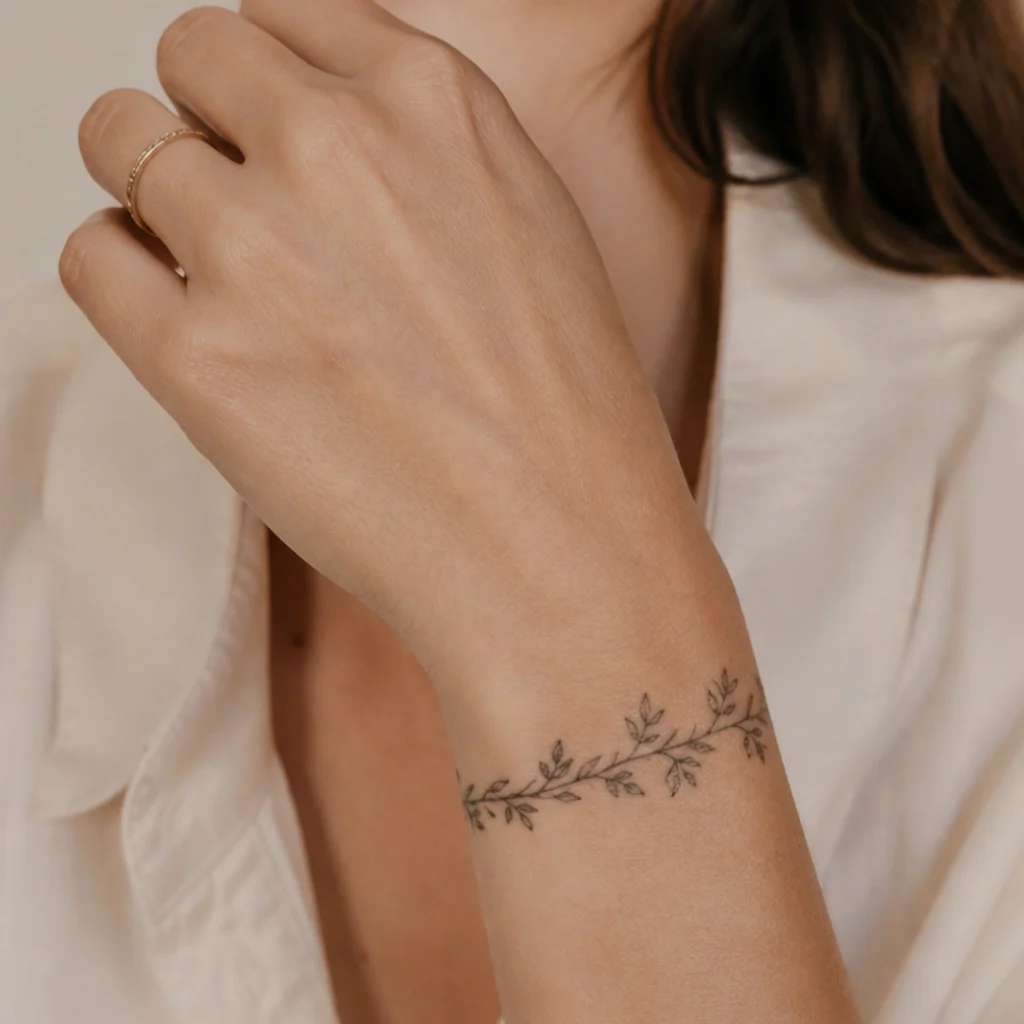
A slender vine circling the wrist turns a small name or set of initials into a graceful bracelet of leaves. The trick is that the thin trailing vine ties the piece together visually, but the small clusters of foliage do the actual covering, bunched strategically over the letters while the connecting stem stays delicate. This is a pretty choice for small cover up tattoos on the wrist or ankle, and botanical, understated taste suits it well. Because the vine itself carries little pigment, it only works over faint or already-faded lettering; a bold wrist name usually needs denser leaf clusters or laser lightening first. It flatters all skin tones, since the light, open design doesn't compete with the complexion. Maintenance is easy overall, with occasional touch-ups where thin lines soften over the years, which happens faster on high-movement areas like the wrist. Ask your artist to bunch extra leaves precisely over the old initials so the clusters guarantee coverage while the trailing vine keeps the bracelet effect light.
20Statement Sleeve Transition
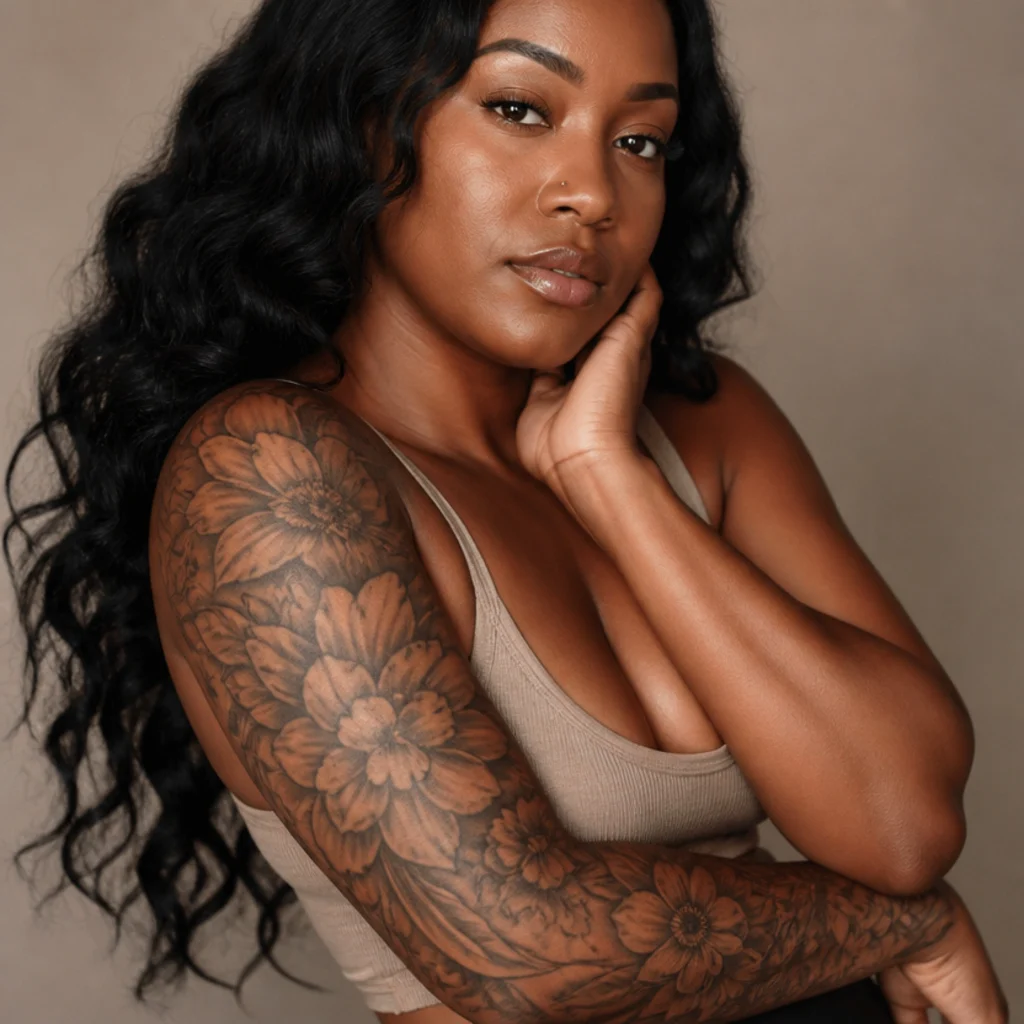
When a name is large, bold or spread across the arm, the most freeing choice is often to stop hiding it in isolation and fold it into a bigger composition, a flowing half-sleeve. Layered florals, background shading and considered negative space give the artist maximum room to disguise stubborn lettering, since the old ink becomes one small district inside a much larger design rather than the thing everyone looks for. This is the go-to among large cover up tattoos, and women ready for a genuine statement piece suit it well. It's a multi-session commitment, typically several appointments spaced weeks apart on the arm or leg, so budget for both time and cost accordingly. Upkeep depends on medium, with black-and-gray sleeves holding longer than color. The advantage is scale: it lets the busiest, darkest passages fall over the original name while the rest of the sleeve breathes around them and unifies the whole limb. Ask your artist to design the flow so the densest, darkest sections cover the old lettering and to plan the session order so that area gets tackled and healed first.
Pro Tips from the Editor
- Bigger and darker wins. The most reliable cover-up is always larger than the original and at least as dark in its key areas. If a design can't be both, it's the wrong design for that name.
- Photograph the old ink in daylight. Bring a clear, well-lit photo of the existing tattoo to your consultation so the artist can assess true saturation, not what a dim studio light suggests.
- Consider laser lightening as a first step, not a failure. Two or three laser sessions can turn an impossible cover-up into an easy one and widen your design options considerably. Ask whether it's worth it for your specific ink.
- Match undertone to the whole design, color included. Cool undertones carry blue-black and muted purples cleanly; warm undertones keep corals, ambers and warm-black looking true. Raise this before the palette is finalized.
- Insist on a stencil mapped over your tattoo. A trustworthy artist will place the actual stencil on your skin, over the old name, so you can both see where coverage lands before the needle starts.
- Plan around movement zones. Wrists, hands, feet and inner elbows flex constantly and blur fine lines faster, so favor slightly bolder work and expect earlier touch-ups in those spots.
- Protect the result from day one. Once healed, daily SPF on the piece is the single biggest factor in keeping shading crisp and stopping a cover-up from ghosting the old letters back into view over the years.
How to Choose / Get the Look
Start by being realistic about your existing tattoo. The size, age, darkness and color of the old name decide what's actually possible before any style question comes into play. The single most useful step is an in-person consultation, where a licensed tattoo artist can assess your skin and confirm the design, sizing, placement, coverage feasibility and healing expectations before anything gets drawn. Use this framework to narrow your direction.
| Your existing name | Realistic coverage strategy | Directions that fit |
|---|---|---|
| Faint, fine-line or already faded | Light to medium designs can work directly | Star cluster, fine-line sprig, constellation, vine wrap, moon phases |
| Medium saturation, moderate size | Denser focal design with shading over the letters | Rose, butterfly, feather, bouquet, serpent, mandala |
| Bold, dark, freshly saturated | Solid black or blackout-backed pieces, or laser first | Blackwork panel, peony blackout blend, dark serpent, statement sleeve |
| Long script down the arm | Vertical designs or a reworked new word | Lavender stem, feather, script reimagined, half-sleeve |
| Over or near a scar | Specialist assessment required, healed skin only | Confirm case by case with an experienced artist |
As a general rule, the new design should be larger and at least as dark as the old one, with the densest shading placed over the boldest lettering and the edges softened into clean skin so the transition looks organic. Bring clear daylight reference images, be upfront about your budget and how many sessions you can commit to, and ask to see a sketch or stencil mapped over your actual tattoo before you agree to anything. No cover-up can be guaranteed to fully hide an existing tattoo or scar, and a good artist will tell you honestly whether laser lightening first would give a cleaner, longer-lasting result. For scar cover up tattoos in particular, only work with an artist experienced in tattooing over scar tissue, and only once the area is fully healed and medically cleared. Patience almost always produces a cleaner, more durable result than rushing a single appointment.
Frequently Asked Questions
Can a small tattoo really cover a name?
Sometimes, but only when the original lettering is faint, fine-line or already faded. Small motifs carry limited pigment, so a bold, saturated name usually needs a larger or denser design, or laser lightening first. A licensed artist can tell you honestly whether a small cover-up will work over your specific ink or whether you need to size up.
Do cover-up tattoos need to be black?
Not always, but darker designs cover more reliably. Black and heavily shaded black cover up tattoos absorb old pigment best, while color and watercolor styles usually need a neutral or gray base laid underneath first so the letters don't show through. Your artist will recommend the right approach and base layer for your particular tattoo.
Will a cover-up completely hide my old name?
No cover-up can be promised to fully hide existing ink. A skilled artist can make an old name very difficult to see, but the result depends on the original's size, darkness, age and how your skin holds pigment. Set clear expectations during the consultation, and treat any promise of a guaranteed total erasure as a red flag.
Should I get laser removal before a cover-up?
Often it helps. Even two or three laser sessions can lighten stubborn or dark ink enough to open up far more design options and a cleaner final result, especially for bold names. It's not always necessary, but it's worth asking your artist whether lightening first would meaningfully improve your specific cover-up.
Can these ideas cover a scar too?
Some can, but scar cover up tattoos require special care and expertise. Only an artist experienced with scar tissue should attempt it, and only once the area is completely healed and medically cleared, since scarred skin takes ink unevenly. Always confirm suitability and timing with a licensed professional first rather than assuming a design will work.
How long do cover-up tattoos take to heal?
Healing varies with size and placement, and larger pieces or sleeves may span multiple sessions with weeks of recovery between them. Most surface healing takes two to four weeks, with deeper settling continuing for a couple of months. Follow your artist's aftercare guidance closely and confirm healing timelines and touch-up scheduling directly with them.
How much do name cover-up tattoos cost?
Cost varies widely with the artist's rate, your region, the design size and the number of sessions. A small cover-up may sit in the low hundreds, while blackwork panels, blackout blends and half-sleeves climb into four figures. Cover-up work also tends to run pricier than fresh tattoos because it demands more planning and skill, so ask for an honest estimate up front.
Which cover-up designs hide bold ink the best?
Solid and densely shaded pieces perform best over dark, saturated names: blackwork panels, blackout-backed peonies, heavy black-and-gray serpents, dense mandalas and full sleeves. The principle is that dense pigment covers dense pigment. Delicate fine-line, dotwork and light color work should be reserved for faded or laser-lightened ink, and an experienced artist will steer you accordingly.
How do I choose the right artist for a cover-up?
Look for a portfolio of healed cover-up results, not fresh photos of standard tattoos, since covering existing ink is a distinct skill. Ask how they'd approach your particular name, whether they recommend laser first, and to see a stencil mapped over your skin. A specialist will set realistic expectations rather than promise a flawless erasure.