20 Cover Up Tattoos Before and After for Women
A cover-up is a design problem in disguise: build a new piece with enough tonal weight to sit convincingly over what came before. These 20 looks run from translucent washes to full blackout, so you can see how coverage strength changes what an artist can bury, and what to ask for at your consult.
 Edited by Lena Rose · Published July 11, 2026 · 32 min read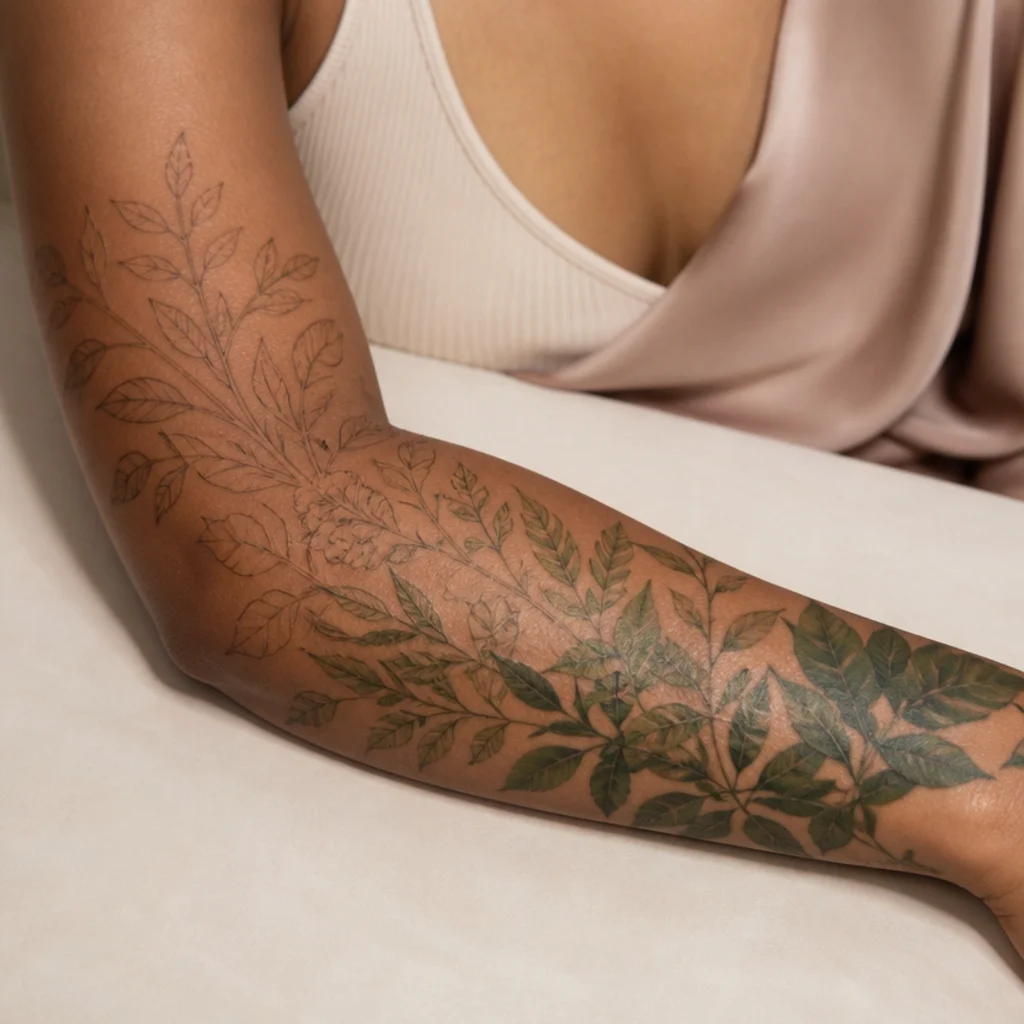
Quick Answer
- Best for: Anyone weighing small cover up tattoos against fuller pieces who wants to see how coverage builds from subtle to bold before booking a consult.
- Who might skip it: People with fresh, raised, or unhealed scars, or anyone hoping a light design can erase dark, saturated ink — those cases need heavier solutions or laser fading first.
- Maintenance: Moderate to high. Saturated and colored cover-ups need disciplined SPF and an occasional touch-up to stay opaque; solid blackwork is lowest-upkeep.
- Difficulty: Advanced. Cover-ups are among the most technical tattoo jobs and belong with an artist who specializes in them, not a generalist.
- Cost: Variable — cover-ups typically run higher than fresh work of the same size because they take more time, ink, and planning; large multi-session pieces reach the upper end of a studio's day-rate range.
- Wear time / longevity: Permanent. Well-shaded darks hold for decades; delicate color and fine linework soften soonest and may want a refresh in a few years.
- Standout variation: The dark botanical forearm, where dense black-and-green foliage leaves almost no negative space for old ink to surface through.
- How to ask your tattoo artist: "I want to cover [describe original honestly]. Can you show me healed cover-ups in your book, and tell me the smallest, lightest design that will actually hide it?"
In This Guide
- Soft Watercolor Wash
- Delicate Fern Frond
- Fine-Line Wildflower Spray
- Small Moth Silhouette
- Dotwork Crescent Moon
- Script-to-Bloom Name Cover
- Muted Rose Cluster
- Geometric Mandala Patch
- Scar-Softening Leaf Trail
- Ornamental Lace Band
- Layered Peony Shoulder
- Blackwork Feather
- Hummingbird and Vine
- Neo-Traditional Snake
- Dark Botanical Forearm
- Saturated Koi Wrap
- Bold Black Panther Cover
- Full Floral Half-Sleeve
- Ornate Blackout Band
- Large Statement Back Piece
Cover-up work is one of the most requested jobs in any studio, and the reason is human: tastes shift, names lose their meaning, and old linework rarely ages the way anyone hoped. The single rule that governs all of it is tonal value — a new design can only hide an old one if it's equal or darker in every spot the original occupies. That's why the looks below are ordered by coverage strength rather than style. Toward the soft end you'll find small cover up tattoos that lean on faint originals, clever placement, and negative space. Toward the bold end, dense black and saturated color do the concealing outright, which is where black cover up tattoos, large cover up tattoos, and scar cover up tattoos usually land. Name cover up tattoos sit in the middle, since script gives an artist a natural line to trail flowers along. None of these are real client photos — they're illustrative progressions built to show how coverage scales, so treat them as a briefing tool, not a promise. Design, sizing, placement, coverage feasibility, and healing must always be confirmed with a licensed tattoo artist, and no cover-up can be guaranteed to fully hide an existing tattoo or scar.
01Soft Watercolor Wash
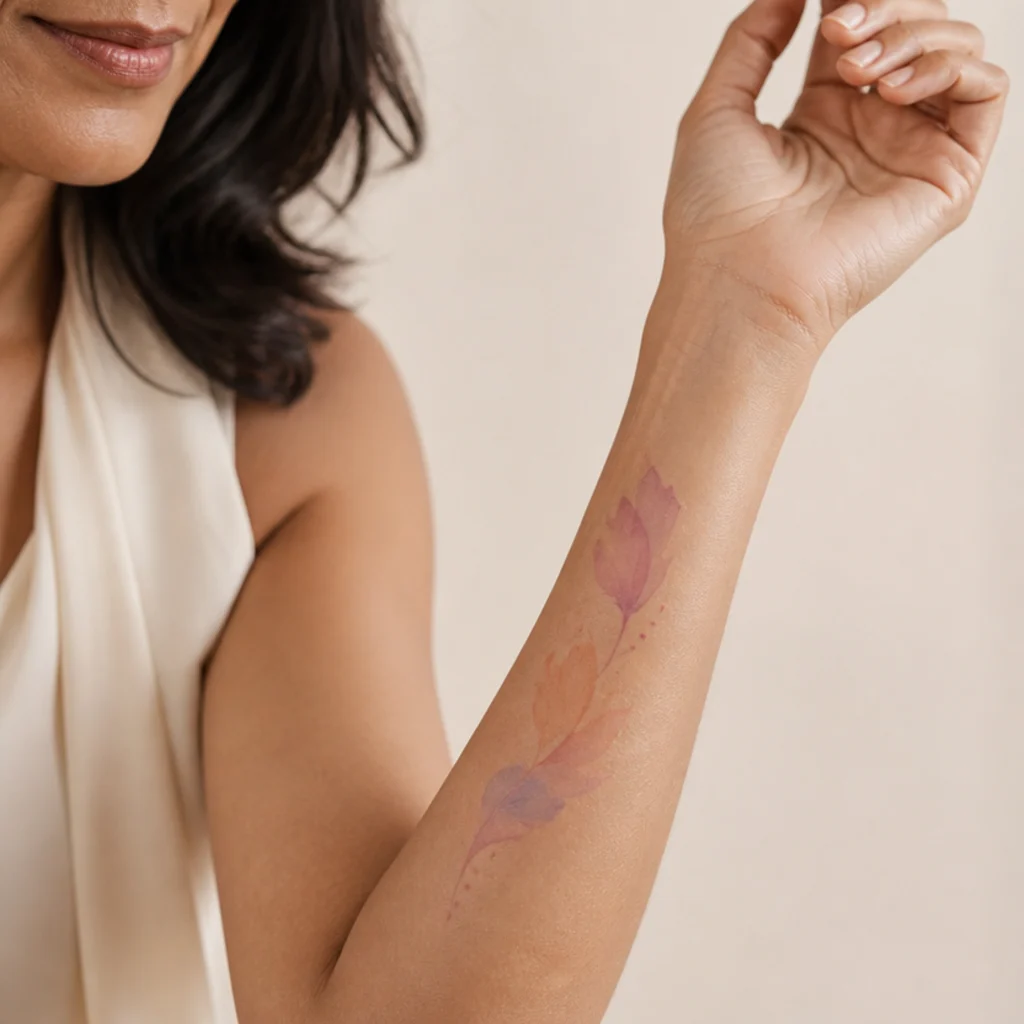
A watercolor wash floats translucent peach, lilac, and rose pigment over the skin with no anchoring black outline, and that's exactly why it's the weakest concealer on this list. Washy ink is semi-transparent, so it only works as a cover when the original is pale, shallow, or heavily faded; anything with a saturated black line will ghost straight through it. Fair-to-medium, cool-to-neutral undertones suit it best, since pastels stay true there instead of muddying, and it works on soft, fleshy placements like the inner forearm. There's no outline to hold the edges, so watercolor diffuses and lightens faster than most styles — budget for a touch-up within three to five years. It's deceptively hard to execute well: controlled, painterly fading is one of the trickier finishes to pull off cleanly. Pro tip: photograph your original in bright, indirect daylight and again under lamplight. If it disappears in one and stays crisp in the other, a wash probably won't hide it. Ask your tattoo artist to do a small pigment test over the faintest edge before committing to a full wash.
02Delicate Fern Frond
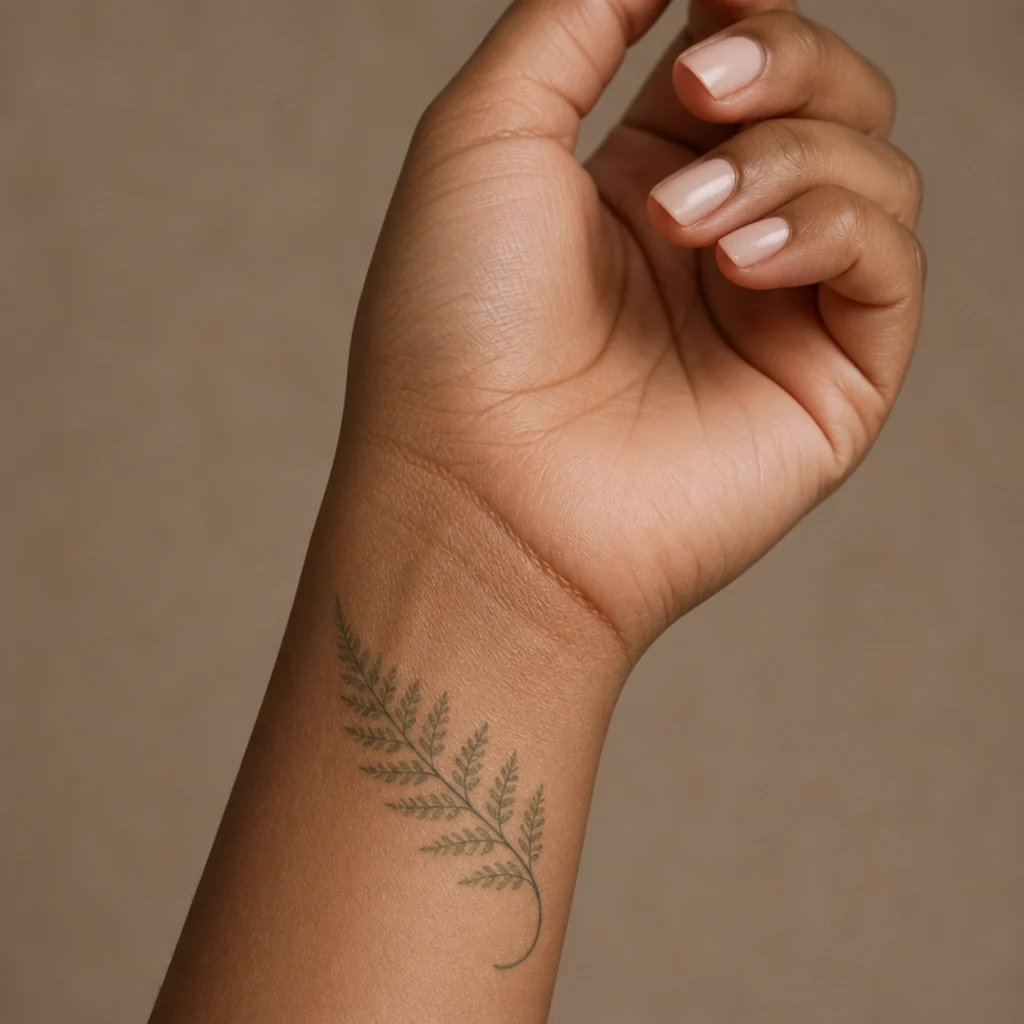
A single fern frond is a quiet, organic shape, its feathered leaflets curving naturally around a wrist, ankle, or the side of a forearm. The spine and pinnae give an artist a rhythm of small dark accents to drop precisely over a thin line or a pinhead blot, breaking up the eye without looking like a patch job. Coverage here is light, so it belongs over small, faint originals — a tiny old symbol or a stray dot, not a bold design. Soft sage green suits warm and olive undertones, while muted black-grey reads cleaner on cool, fair skin. Both work best on slender, low-density placements where a bulkier piece would overwhelm the limb. The linework is low-maintenance, though fine botanicals soften and blur slightly over a decade. Pro tip: a frond that curls back on itself gives the artist a second layer of leaflets to stack over the busiest spot. Ask your tattoo artist to map the frond's spine directly over the densest part of the original so the darkest leaflets do the hiding.
03Fine-Line Wildflower Spray
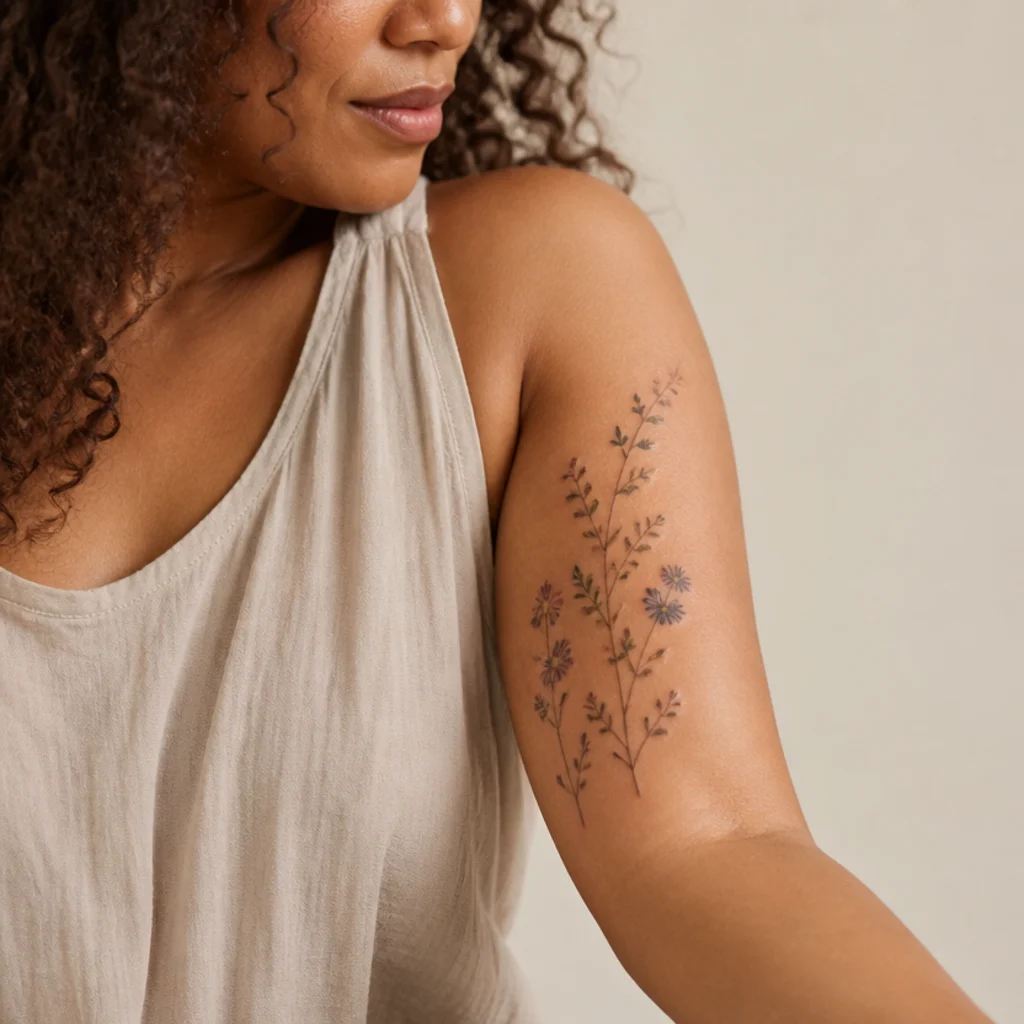
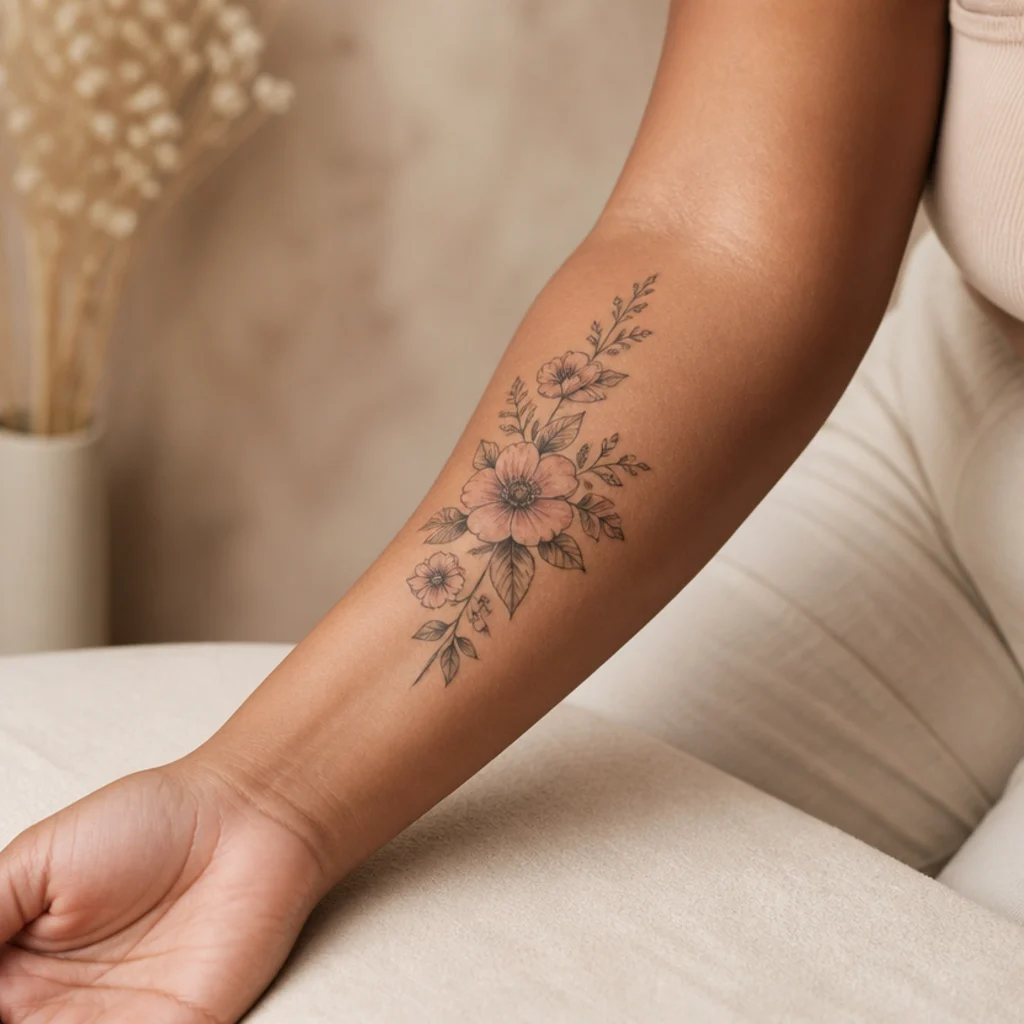
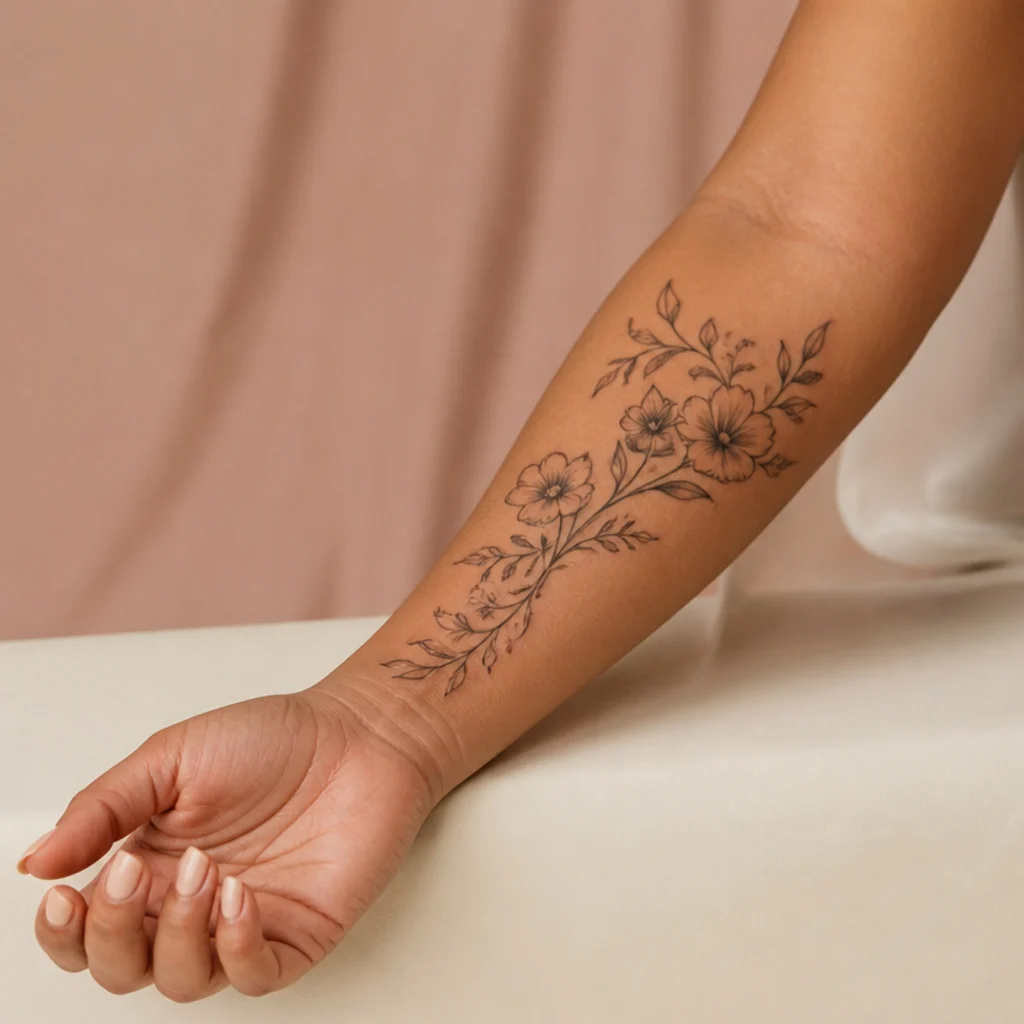
A loose spray of wildflowers scatters small blooms, buds, and stems across an area, and that irregularity is the whole trick: it lets an artist cluster the densest petals right where old ink sits while the airy edges keep the piece from looking defensive. Because nothing is symmetrical, a hidden mark reads as intentional negative space instead of a cover-up. Muted mauve, dusty blue, and sage keep it delicate and flatter neutral-to-cool undertones — the mid-tone (not pastel) pigment is what pushes coverage from faint-marks-only up to small-to-medium originals. It works on inner arms, forearms, and calves, where the spray has room to wander. Upkeep is gentle, though fine stems soften with age, and difficulty runs moderate-to-high: spacing that looks casual but still does a job is harder than it appears. Pro tip: ask for one or two anchor blooms with deeper shading over the target and let the rest stay light. Ask your tattoo artist to draw the layout freehand on your skin first so you can confirm the busiest cluster lands where you need it.
04Small Moth Silhouette
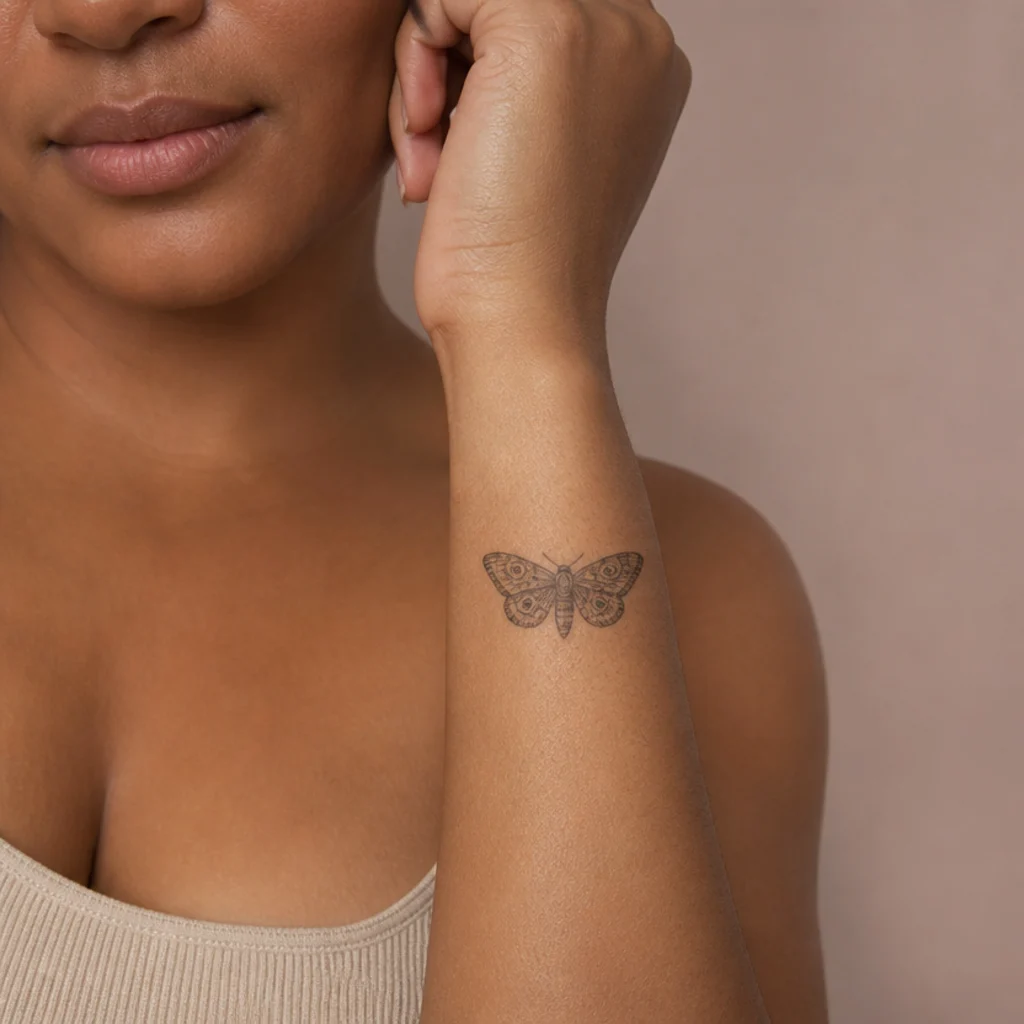
A moth reads as symmetrical and self-contained, so its compact body and patterned wings can absorb a small original neatly. Soft grey wash inside the wings, layered toward the body, builds enough mid-tone density to conceal without tipping into heavy blackwork — a middle gear among small cover up tattoos. The symmetry does design work too: a centered moth sits squarely over a mark on a forearm, calf, or sternum, its vertical body aligned with the limb. Grey is neutral, so it suits most undertones, though a hint of dusky mauve or antique gold in the wing "eyes" warms it up. Maintenance is modest — smooth grey wash lightens and may want a refresh sooner than solid black — and difficulty is moderate. Pro tip: sizing up the moth even 20 percent gives far more wing area to stack shading over a stubborn spot; luna or Atlas species offer the largest wings. Ask your tattoo artist whether the wing pattern can be redesigned so its darkest zones fall directly over the heaviest part of the original.
05Dotwork Crescent Moon
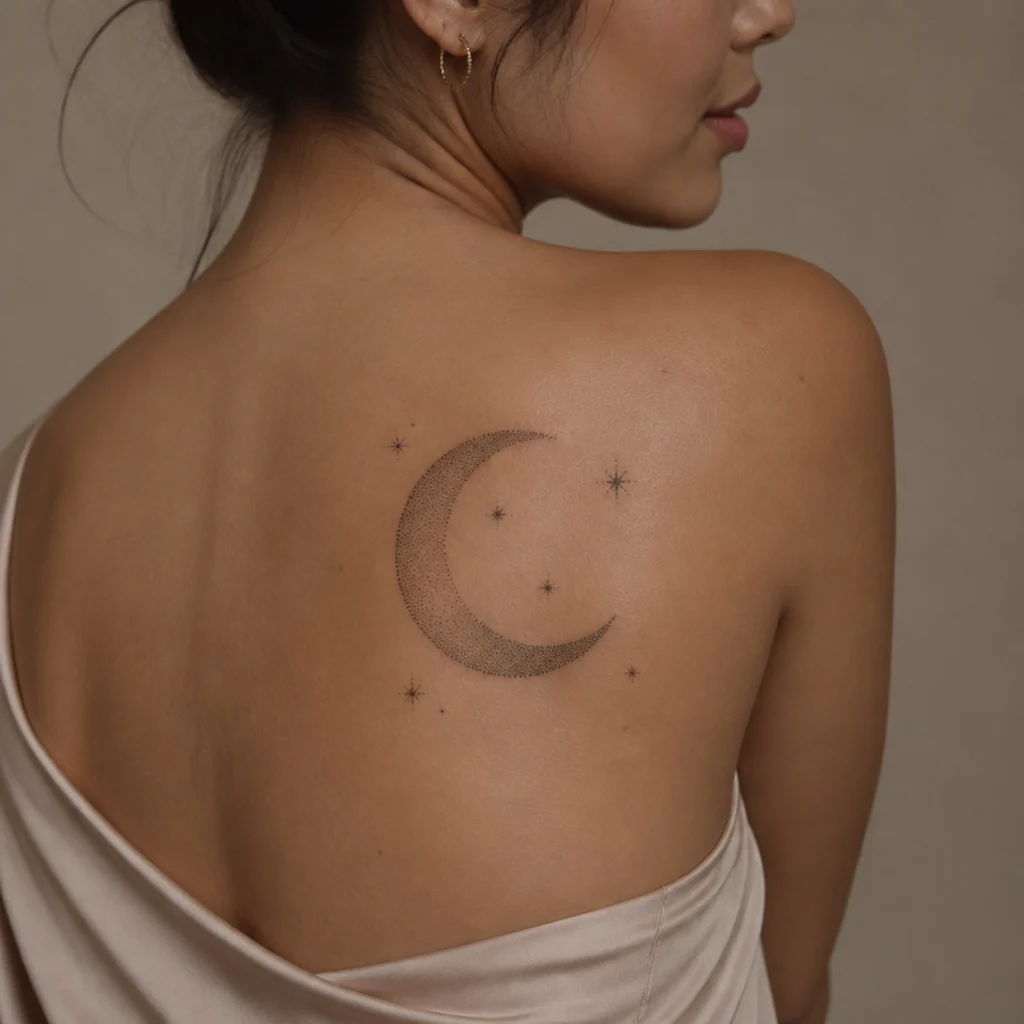
Stippled dotwork builds tone from thousands of individual points, and a crescent moon with a scatter of stars turns that texture into a calm celestial motif. Coverage strength here is fully adjustable — the artist increases dot density over the target and thins it toward the edges, so the same design can hide a faint mark or a medium one depending on how packed the stippling runs. Because it's monochrome black, it ages predictably and layers well with future additions. Shoulder blades, spines, and ankles suit it well, where a compact curved shape feels balanced, and the neutral black works on every skin tone. Upkeep is low, though very fine stippling can merge and soften over decades as points bleed together. Difficulty is high: dotwork is slow, patient, single-needle work that takes real studio time and cost. Pro tip: a solid-filled crescent with dotwork only in the "glow" gives you both maximum coverage and a soft gradient. Ask your tattoo artist how dense they plan to stipple the shaded face of the moon, since that density is doing the concealing.
Save this to Pinterest — the soft end of the range makes a great mood board for your first consult.
06Script-to-Bloom Name Cover
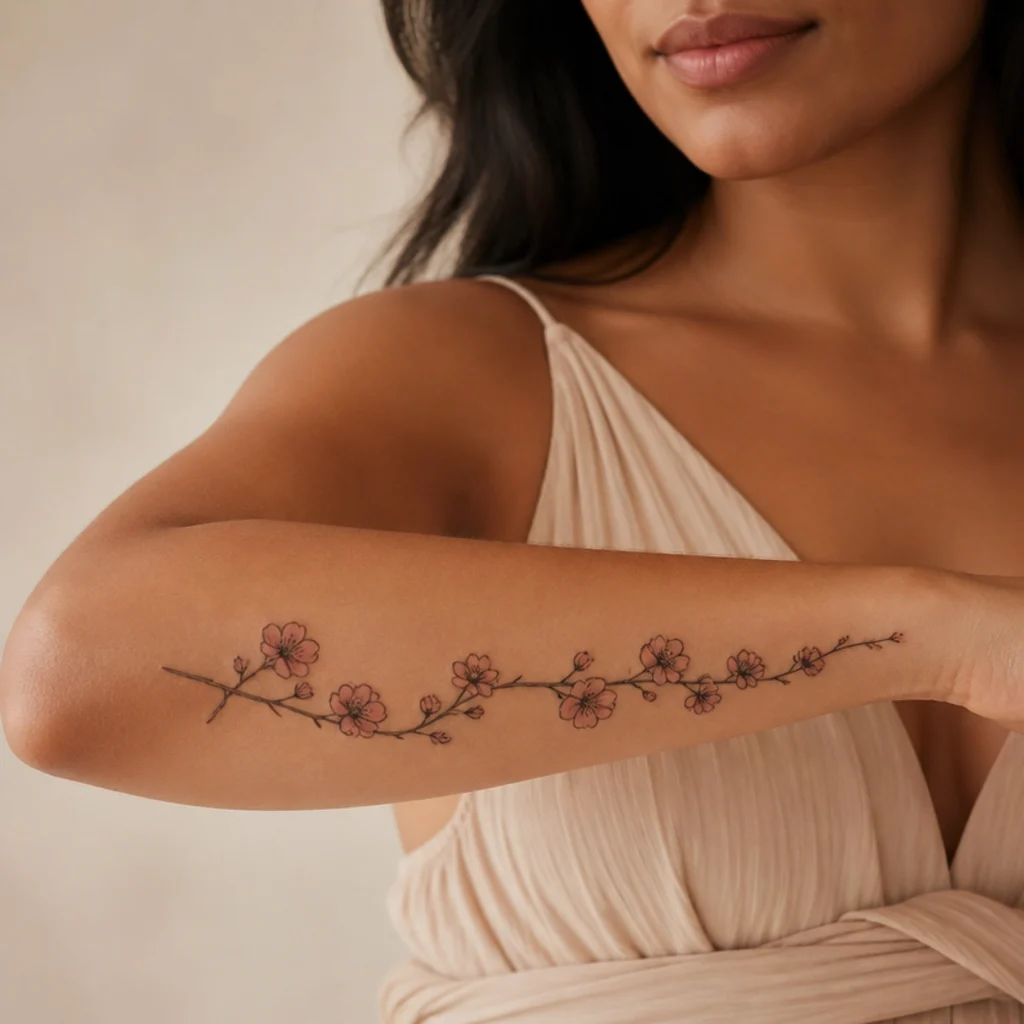
Name cover up tattoos are among the most common requests any studio gets, and turning old script into a flowering branch is the classic fix: the horizontal flow of a name maps almost perfectly onto a trailing stem. The move is setting blossoms over the tallest, boldest, hardest-to-hide letters — capitals, ascenders, loop crossings — and letting leaves fill the gaps between. Blush petals with black linework keep it modern rather than sentimental; the blush warms fair-to-medium undertones, while a deeper burgundy suits richer skin. Coverage sits squarely mid-range. Faded or fine script vanishes easily, but bold, saturated block lettering may need denser elements or a background wash to fully break up the letterforms. Inner forearms, wrists, and collarbones — where names usually live — suit it well, and maintenance is standard. Pro tip: ask for a few dark leaf clusters between blooms so no single letter is left carrying the eye. Ask your tattoo artist honestly whether the old lettering is light enough to trail flowers over, or whether it needs heavier shapes to interrupt the horizontal line the letters create.
07Muted Rose Cluster
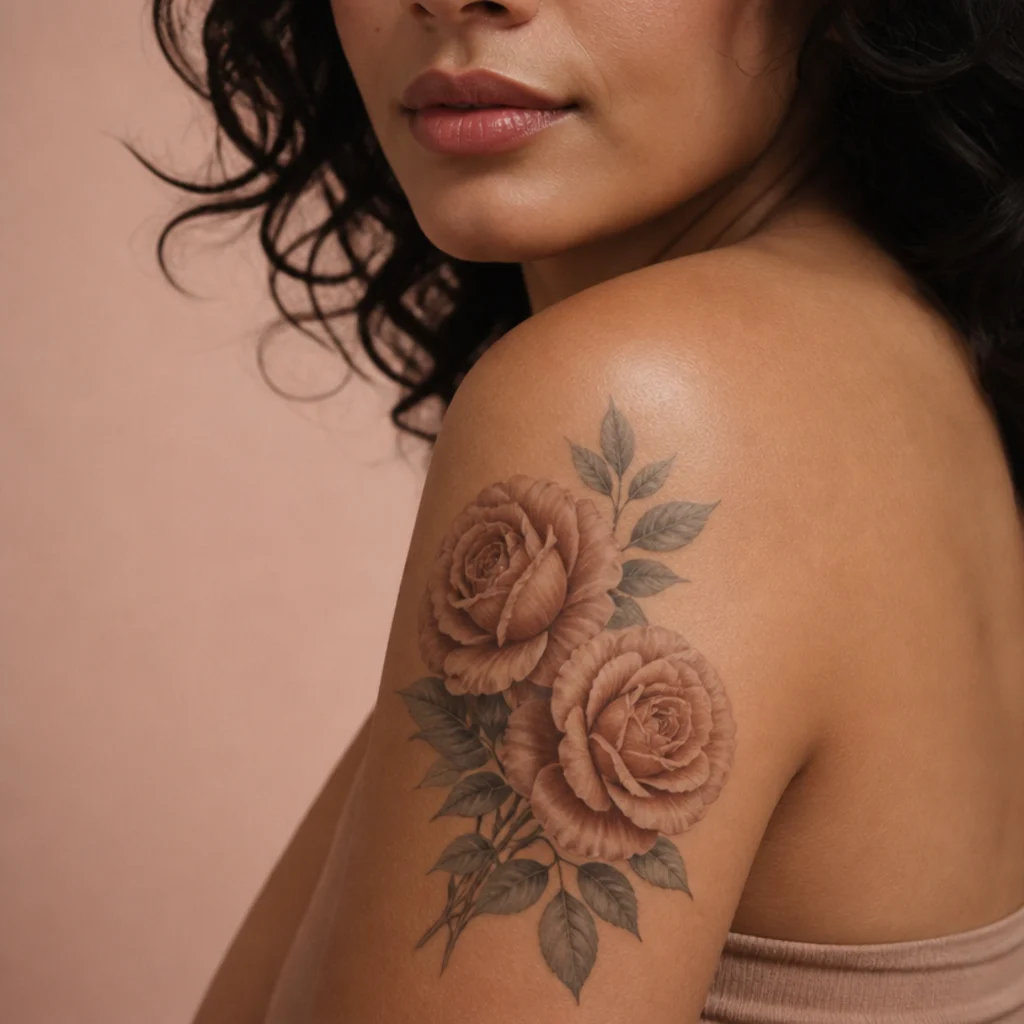
Roses earn their cover-up reputation because layered, overlapping petals create built-in density, and their curved forms arrange over almost any shape. A cluster of two or three dusty-rose blooms with soft grey leaves bridges subtle and bold — more coverage than a wildflower spray, gentler than solid blackwork. Mid-tone color is the key: dusty rose and mauve carry more concealing pigment than pale washes, cool-toned roses flatter neutral and fair skin, and a warmer coral suits olive and deep undertones. Shoulders, upper arms, and thighs suit it, giving the flowers room to breathe at a believable scale. Upkeep is moderate, since well-shaded petals hold their shape for years, but difficulty is high — natural-looking petal overlap is technical work. Pro tip: the deep shadow between petals is the real cover, so ask for those recesses to fall over the busiest ink. Ask your tattoo artist to intentionally stack the tightest petal cluster over the heaviest part of the original so the layering does double duty.
08Geometric Mandala Patch
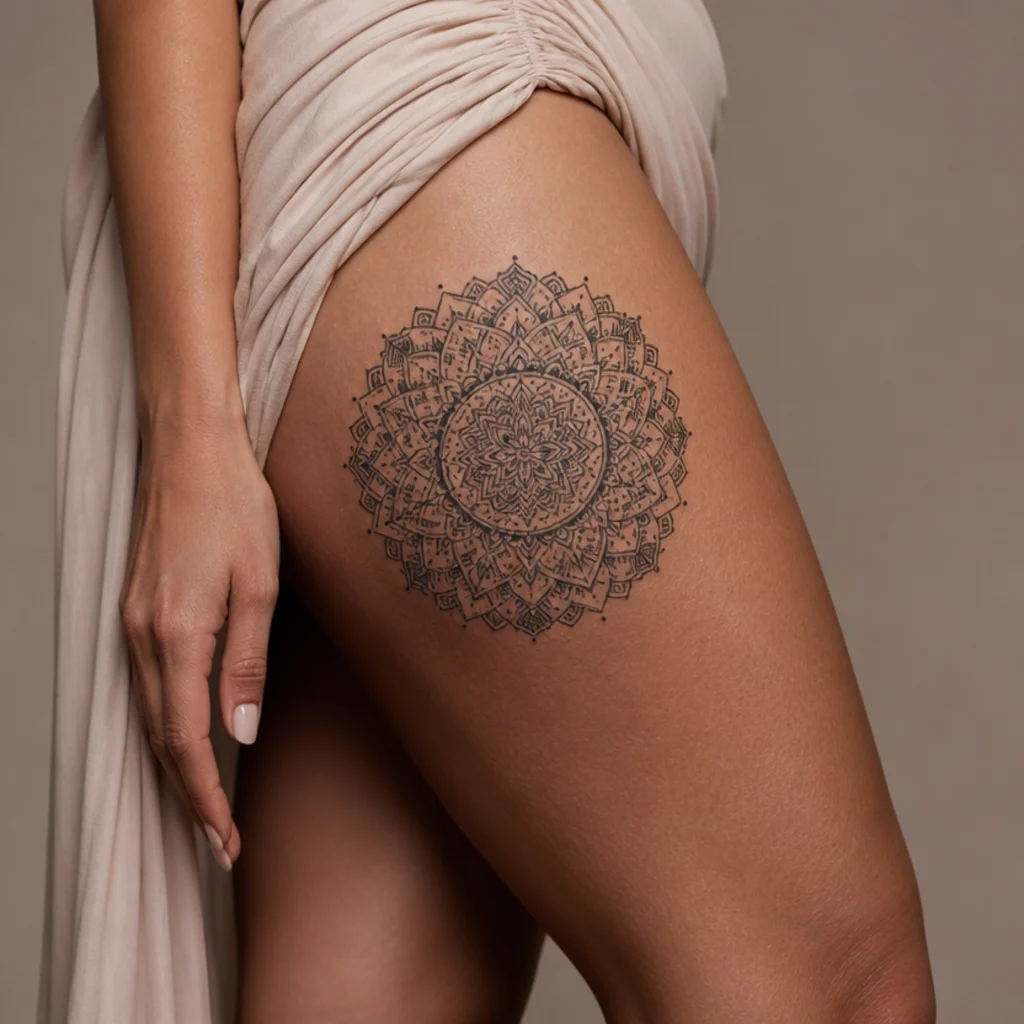
A mandala's repeating symmetry is a coverage gift. Dense, patterned rings centered over an old design train the eye to read structure and order rather than a fix. Fine black linework layered with small solid-filled shapes and dotwork accents builds enough visual noise to fracture whatever sits beneath. Coverage lands mid-range and scales with fill density: an open, airy mandala hides less than one with heavily blacked petals and packed borders. Round, flat-ish planes like the outer thigh, shoulder blade, and back of the forearm suit a circular composition best, and neutral black flatters all undertones. Maintenance is low for clean geometry, though fine parallel lines can blur together over decades, and difficulty runs high because mandala symmetry is unforgiving — one crooked segment reads instantly. Pro tip: an off-center "sacred geometry" layout can weight the densest ring directly over the target rather than the middle. Ask your tattoo artist whether the mandala will fully frame your original or let it peek past the outer ring, since that dictates the diameter you actually need.
09Scar-Softening Leaf Trail
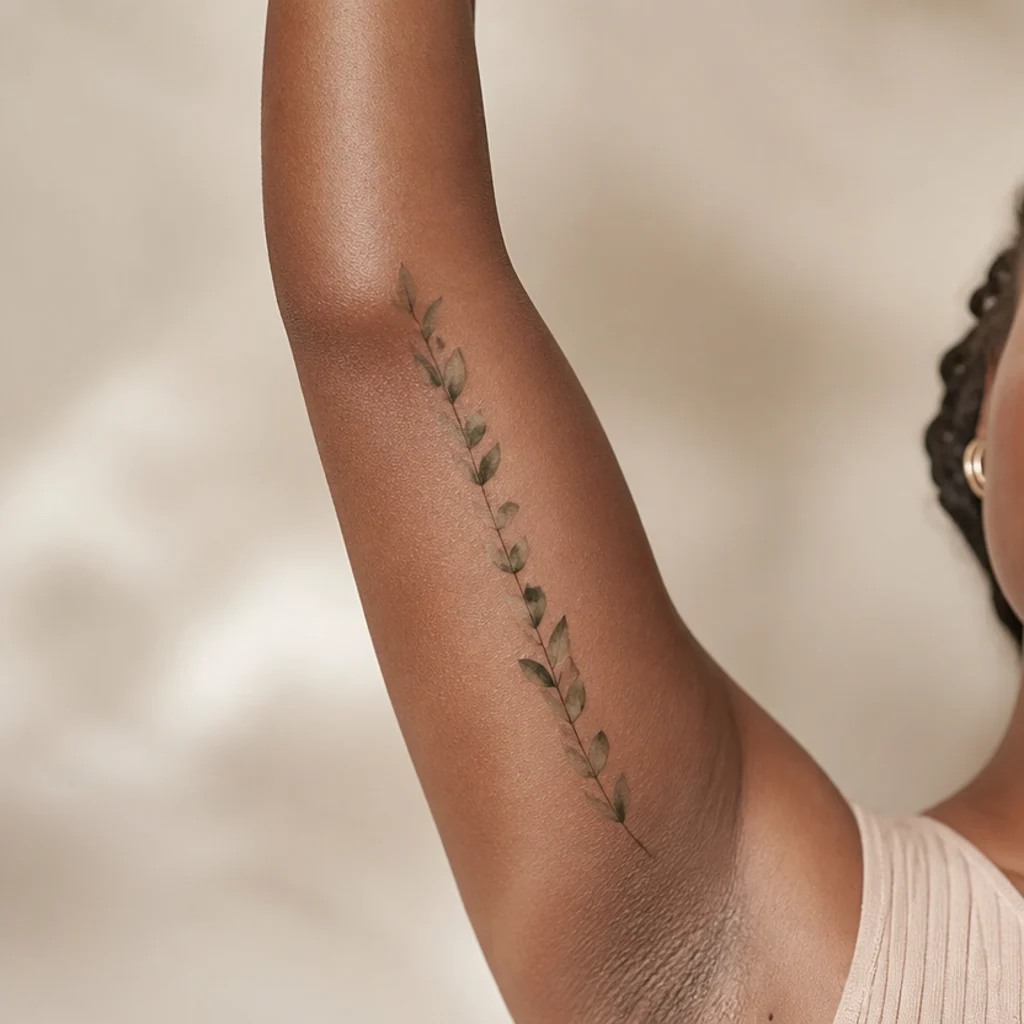
Scar cover up tattoos need extra care, because scar tissue takes ink differently than unmarked skin — denser, patchier, or more prone to spreading. A trailing eucalyptus or olive branch is forgiving here: the organic, uneven line of the leaves follows the direction of a flat scar and redirects how the eye travels across it, softening rather than spotlighting. This works on fully matured, flat, pale scars only — never raised, red, shiny, or recent tissue. Soft sage green and muted black-grey keep it natural and read well on most undertones. Scarred skin can hold pigment unevenly, so plan for at least one touch-up after healing to even out any patchy uptake. Difficulty is high and specialized work — not every artist tattoos over scars. Pro tip: many artists require a scar to be a minimum of 12 to 18 months healed and will test a small leaf first to see how the tissue accepts ink. This matters: only a licensed tattoo artist can assess whether your scar is healed enough to tattoo, and coverage over scar tissue can never be guaranteed. Ask your tattoo artist about a patch test and a realistic touch-up schedule.
10Ornamental Lace Band
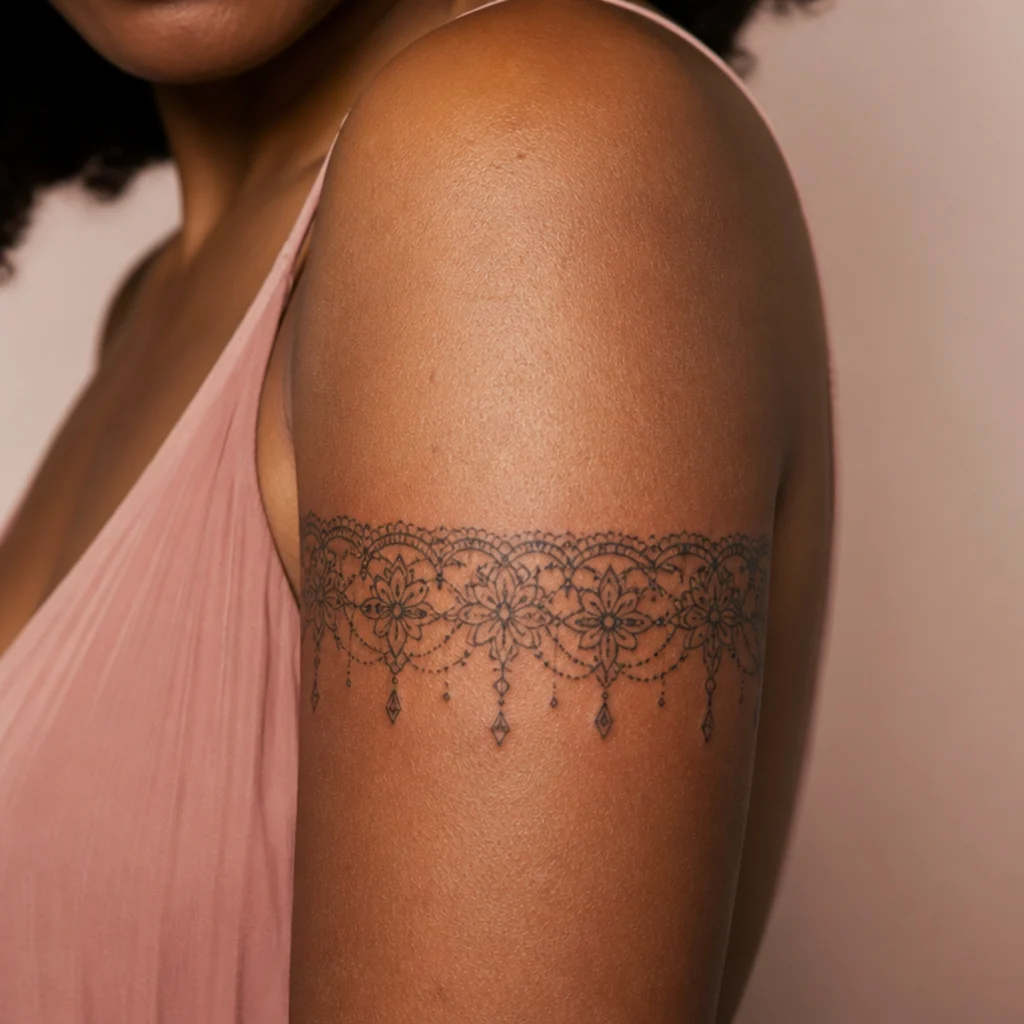
An ornamental lace band wraps the limb in filigree, teardrops, pearls, and fine repeating pattern — the kind of busy detail that dissolves an old mark inside decoration. Its structural advantage is the wrap itself: because the band circles the arm or leg, it can absorb an original sitting anywhere along that ring instead of forcing a shape around one fixed spot. Coverage runs moderate-to-strong and dials up with filigree density, since a lace edge over a partial black fill hides far more than open scrollwork alone. Upper arms, forearms, wrists, and ankles all suit it, and it flatters anyone drawn to jewelry-inspired, decorative work; neutral black reads cleanly on every undertone. Maintenance is low, though the finest lace lines soften over time, and difficulty is high given the exacting repetition and the need for the pattern to align around a curved surface. Pro tip: a garter-style band with a small dark bow or medallion lets the artist park maximum density over the target. Ask your tattoo artist to concentrate the heaviest ornament over the mark and let the pattern thin gracefully around the rest of the band.
Save this to Pinterest to compare the mid-range designs side by side.
11Layered Peony Shoulder
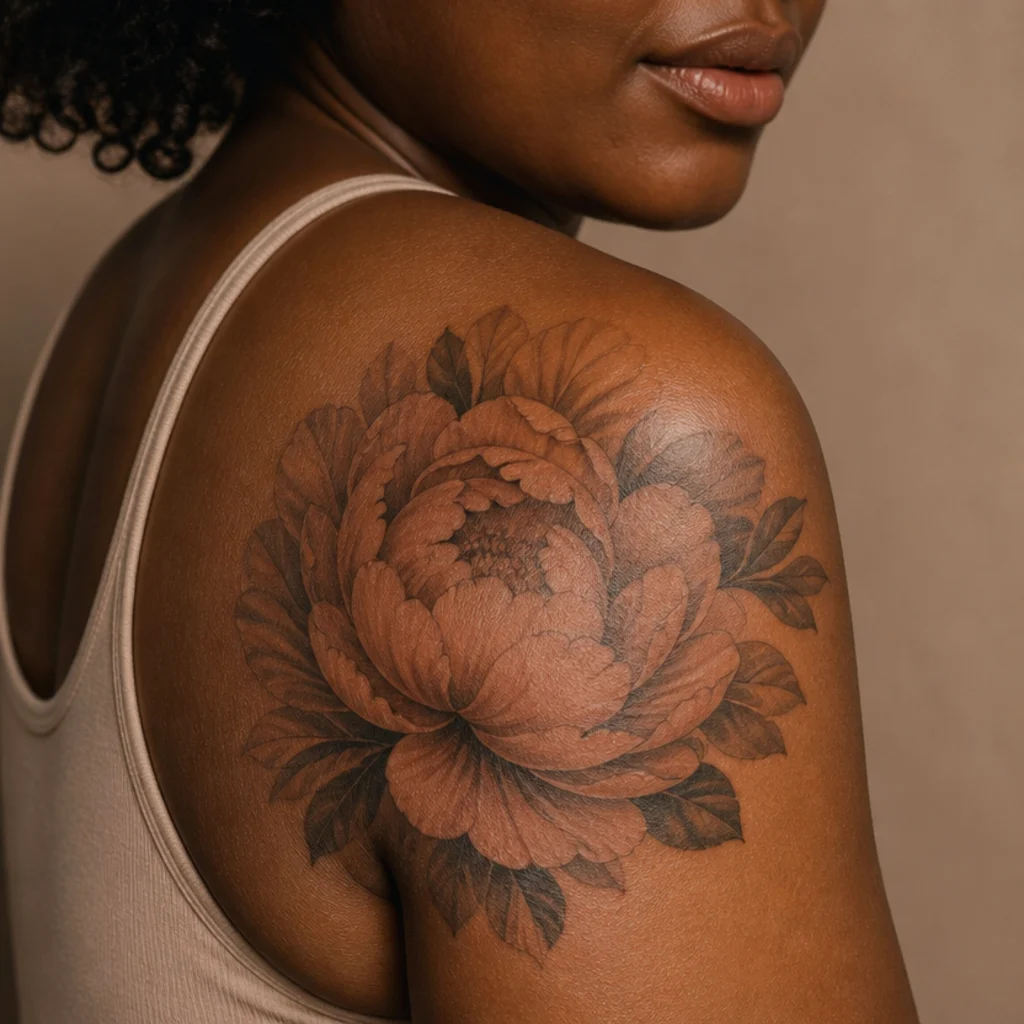
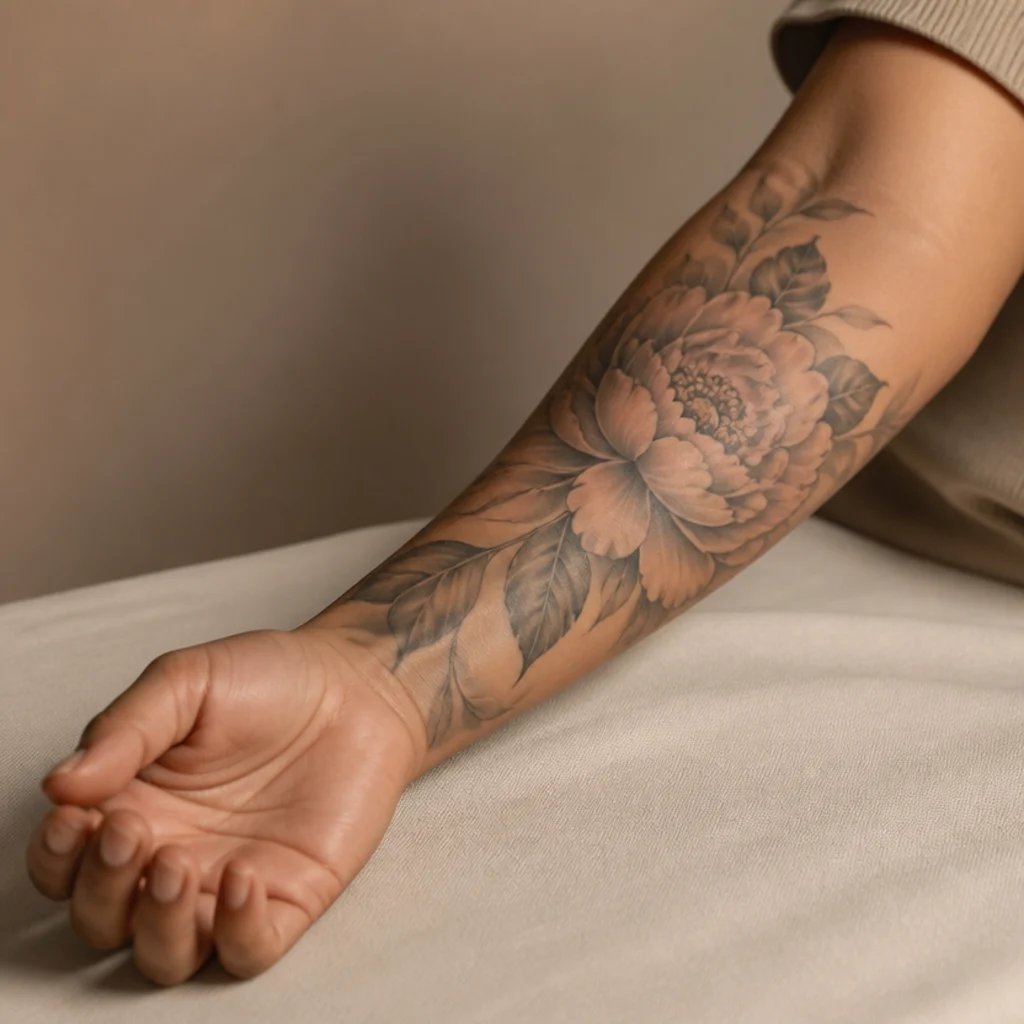
Peonies are the workhorses of bold floral cover-ups. Their many ruffled, overlapping petals create real depth and cast deep internal shadows, and that built-in tonal range lets an artist bury a fair amount of old ink beneath layered darks. A single large peony on the shoulder makes a soft-but-substantial statement that still feels feminine. Coverage is strong when it's shaded with real contrast: a flat, evenly-lit peony hides far less than one with near-black shadow in its center. Soft coral suits warm and olive undertones, dusty pink and grey flatter cool and fair skin, and either palette scales well across shoulders, upper backs, and outer thighs. Upkeep is moderate — well-rendered petals age gracefully, though color benefits from SPF — and difficulty is high, both for petal structure and smooth shadow transitions. Pro tip: the darkest recesses at the flower's core are your best concealer, so position the bloom's center over the worst of the original. Ask your tattoo artist how dark the deepest petal shadows will go, since those near-black pockets are what hide the toughest sections.
12Blackwork Feather
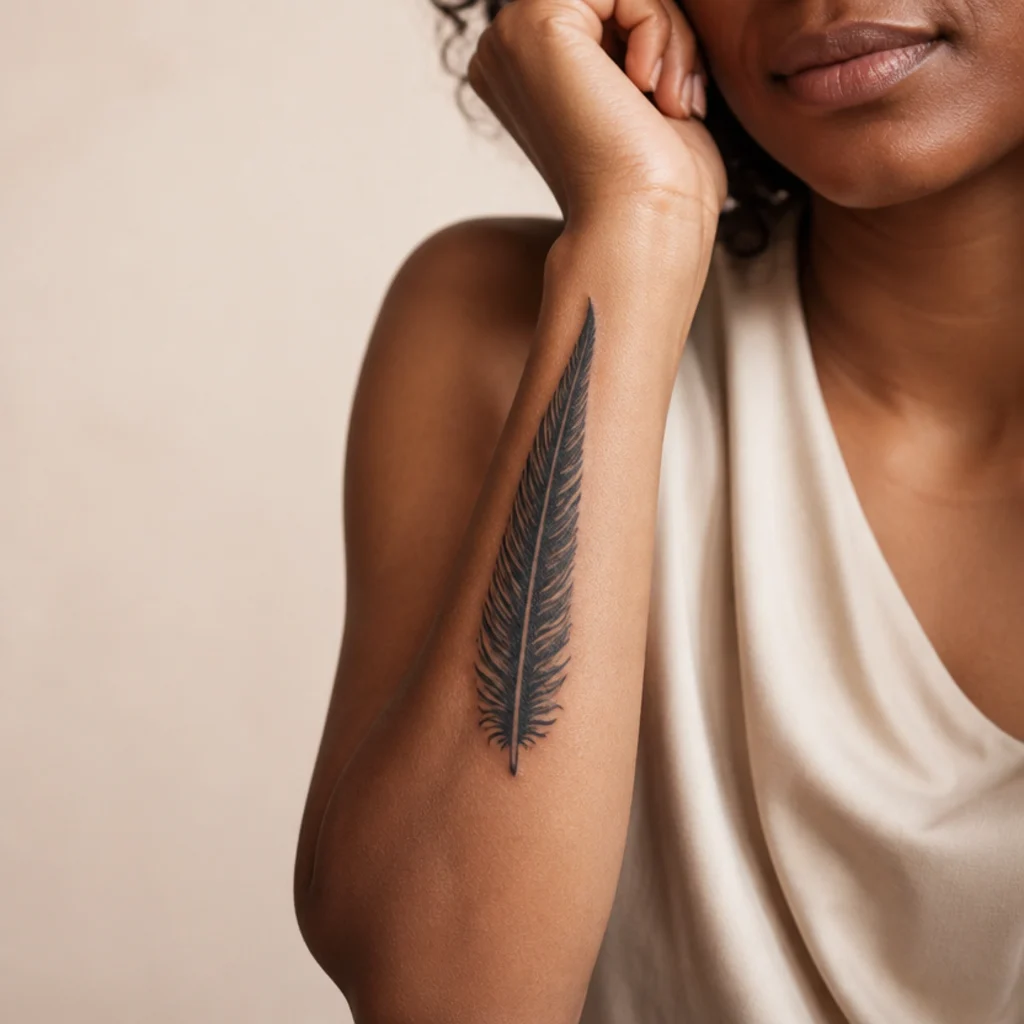
Here the progression tips firmly toward bold. Black cover up tattoos rely on solid, saturated ink to overpower what came before, and a blackwork feather wields that power without going full blackout. Filled black barbs with crisp negative-space detailing turn heavy coverage into a deliberate graphic instead of a dark blob. Coverage is strong wherever the black actually lands, but the catch is that the negative-space gaps offer no concealment — the design has to be laid out with solid areas over the ink and openings over clear skin. A long vertical feather flatters forearms, spines, and calves, following the limb's line, and solid black reads boldly on every undertone. Maintenance is low, since dense black is the most durable finish and rarely needs touch-ups, while difficulty runs moderate-to-high, mostly in keeping the negative space clean. Pro tip: a slight curve or split in the feather gives more solid surface to route over stubborn spots. Ask your tattoo artist whether solid black is actually necessary for your original, since blackwork is committing and hard to lighten or rework later.
13Hummingbird and Vine
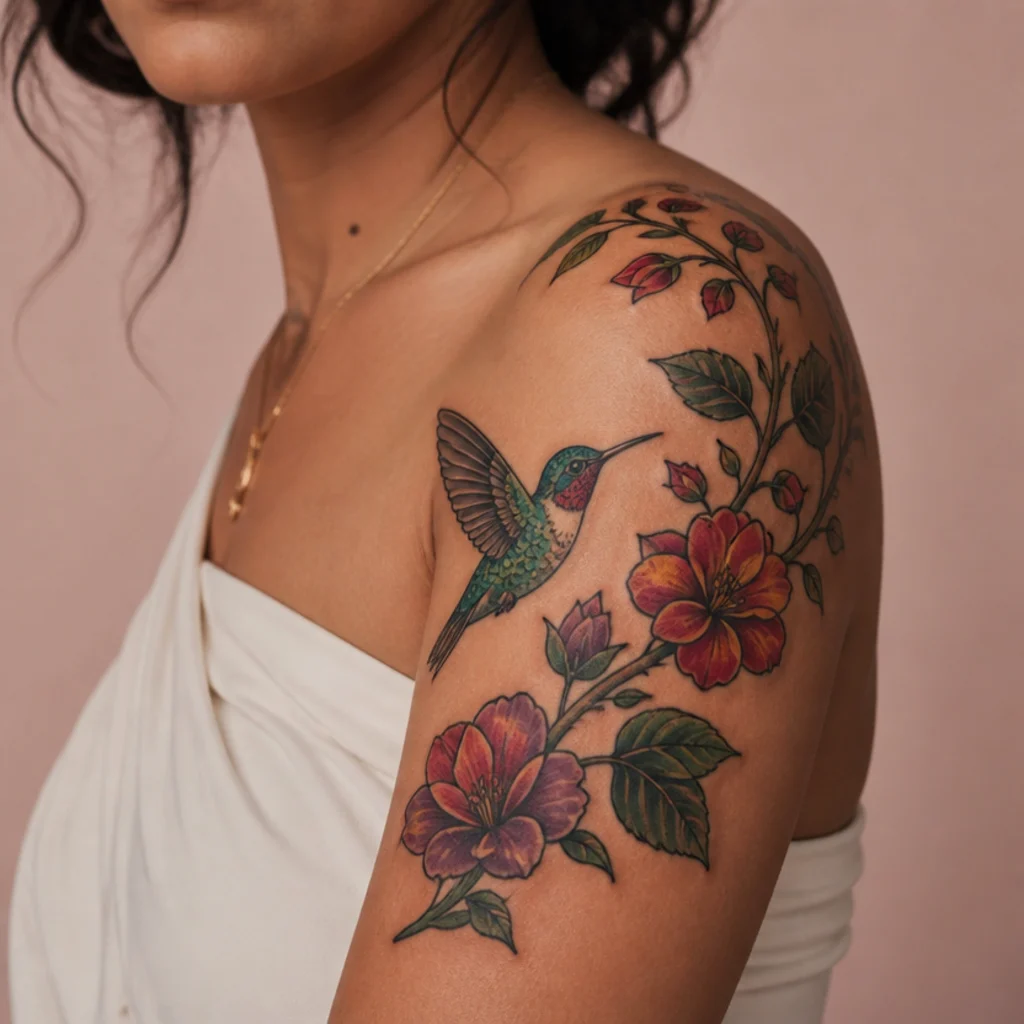
A hummingbird mid-flight paired with a flowering vine brings saturated jewel-tone color and a sense of motion. It works as a cover because it offers several dense anchor points — the bird's body, the wing, the vine's blooms — that an artist can position independently over the most stubborn areas, while emerald, sapphire, and magenta pigment conceal far more assertively than pastels. Coverage is strong, driven by the layered color and bold outlines. Upper arms, shoulders, and calves suit it, giving the vine room to curve and the bird room to sit at a believable scale; rich tones flatter warm, olive, and deep undertones especially well. Maintenance is moderate, since vivid color wants consistent SPF to resist fading, and difficulty is high given the color packing and smooth blends. Pro tip: the bird's darkest wing and the vine's most saturated blossom are your heaviest concealers, so place them by function first. Ask your tattoo artist to route the vine so its densest blooms and the bird's darkest feathers fall directly over the parts of the old tattoo that are hardest to hide.
14Neo-Traditional Snake
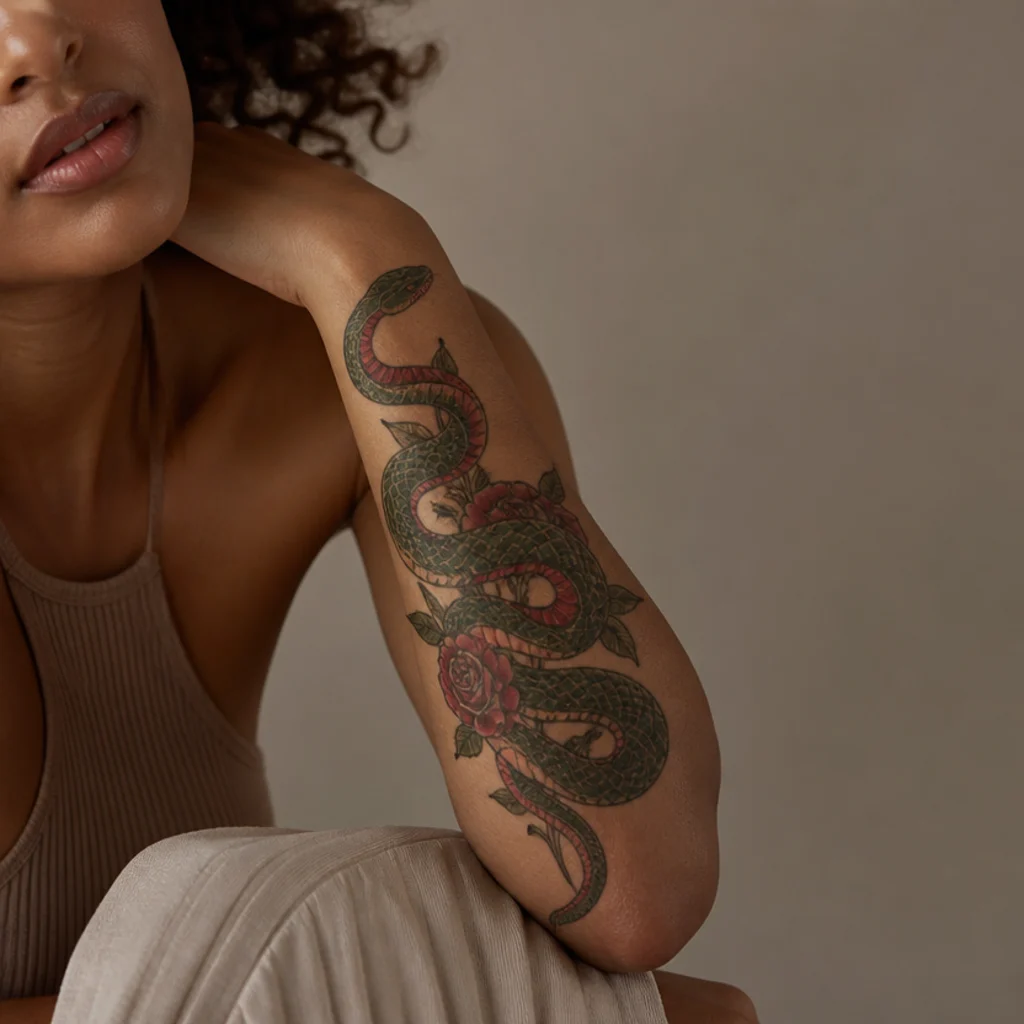
A coiled snake is a cover-up favorite for one practical reason: its long, winding body can be routed across almost any shape or awkward placement, and bold outlines plus rich shading deliver serious coverage along the whole path. Neo-traditional styling — strong black linework with deep green, oxblood, or teal fill — reads as deliberate and modern rather than dated. Coverage is strong and, importantly, steerable: the artist can thicken coils and darken scales exactly where the original is heaviest and let the negative space fall on clean skin. Forearms, thighs, and calves suit it, giving the coil length to travel; saturated fills flatter warm and deep undertones, while bold black anchors it on any skin. Upkeep is low with solid saturation, and difficulty is high given the outline precision and scale detailing. Pro tip: an S-curve or double coil creates overlap points where the body doubles back, giving two layers of cover over the worst spot. Ask your tattoo artist to draw the snake's path so its thickest coils and darkest scales land over the busiest part of the original.
15Dark Botanical Forearm
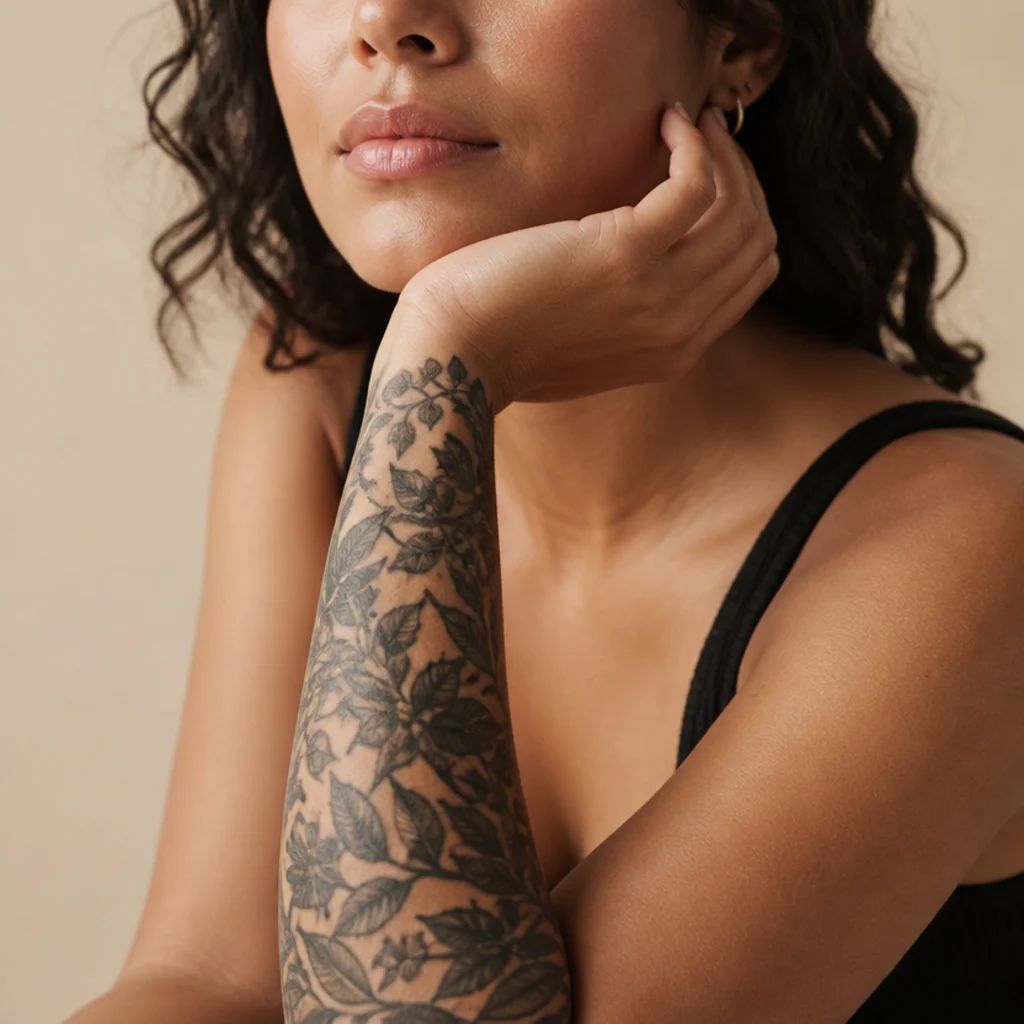
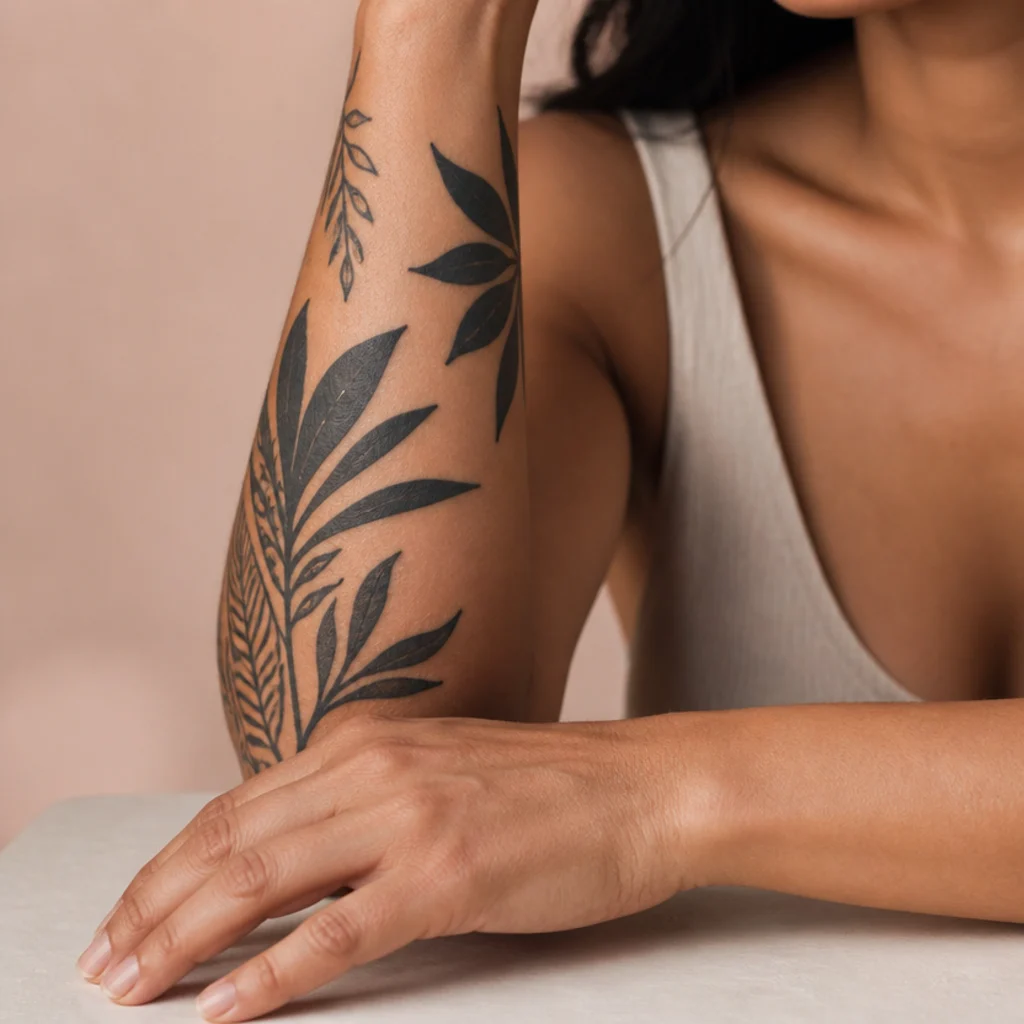
Dense dark botanicals — black leaves, berries, and shadowed foliage packed tight — are among the most reliable cover-ups going, because they leave almost no negative space for old ink to surface through. This is the standout look here: it turns heavy concealment into a lush, intentional, moody design instead of a compromise. Coverage is very strong, approaching blackout levels while keeping organic movement and a few pockets of lighter grey for depth. It wraps forearms, calves, and thighs well and flatters anyone drawn to nature-inspired, gothic, or witchy work; deep black-green reads on every undertone. Maintenance is low, since the solid darks are durable and forgiving, though difficulty is high — layering blacks without turning muddy takes skill. Pro tip: a wrapping composition that continues around the limb hides the edges of an original, which is where covers most often betray themselves. Ask your tattoo artist how the foliage will handle the borders of your old tattoo, since an outer margin of extra leaves usually seals the illusion.
16Saturated Koi Wrap
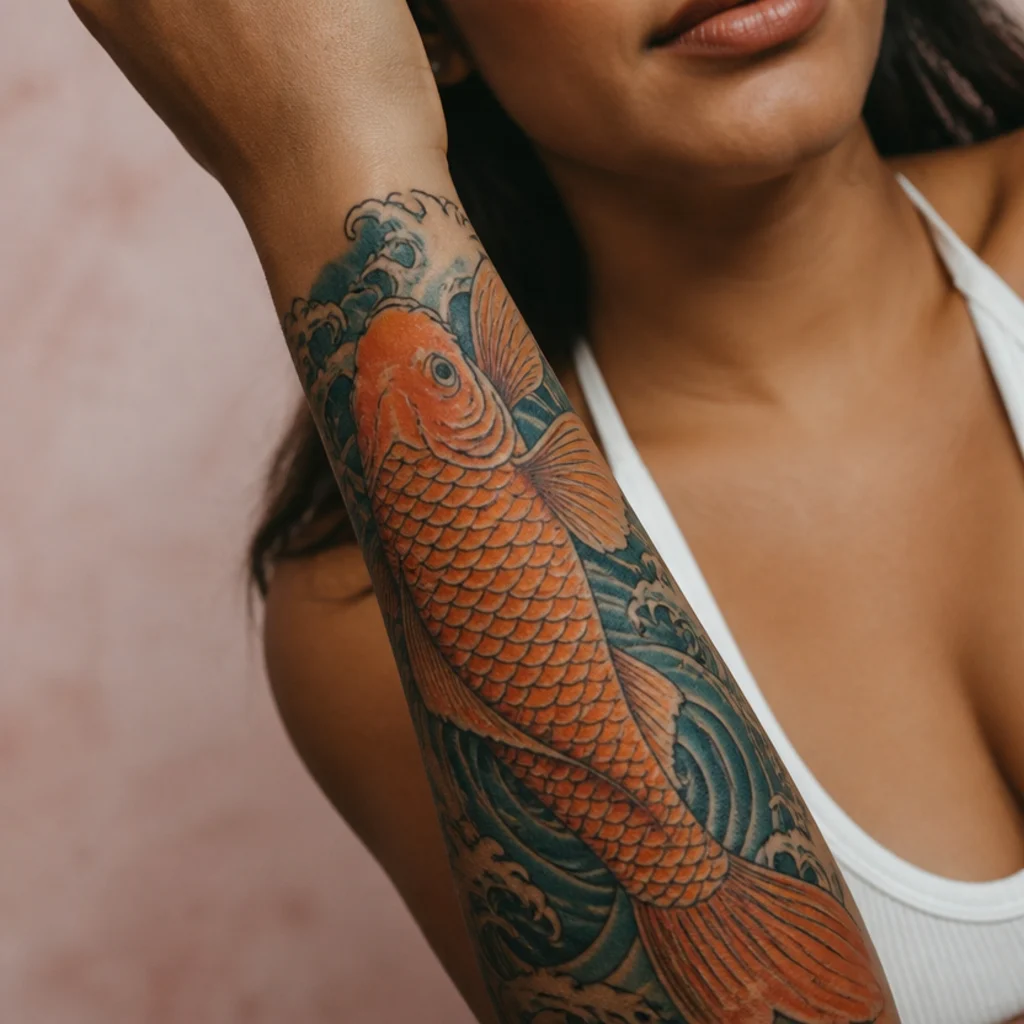
A koi wrapping the forearm brings large scale and saturated color together, both major assets in cover-up work. Between the fish's body, the swirling water, the splash accents, and bold black outlines, the composition leaves very little empty space, and every element can be positioned as a concealer. Vivid orange scales against deep blue water read boldly and cover assertively, the warm-cool contrast flattering medium to deep undertones especially well. Forearms, calves, and the outer thigh suit it, letting the wrap travel a full loop around the limb, and coverage is very strong. Upkeep is moderate, since bright orange and blue want diligent SPF to stay vivid over the years, and difficulty is high given the color work and the traditional Japanese conventions of scale and flow. Pro tip: the darkest water shadows and the koi's densest scales are heavier concealers than the bright highlights, so those should sit over the worst ink. Ask your tattoo artist to orient the koi so its most saturated scales and the deepest water fall over the heaviest portion of the tattoo you want gone.
17Bold Black Panther Cover
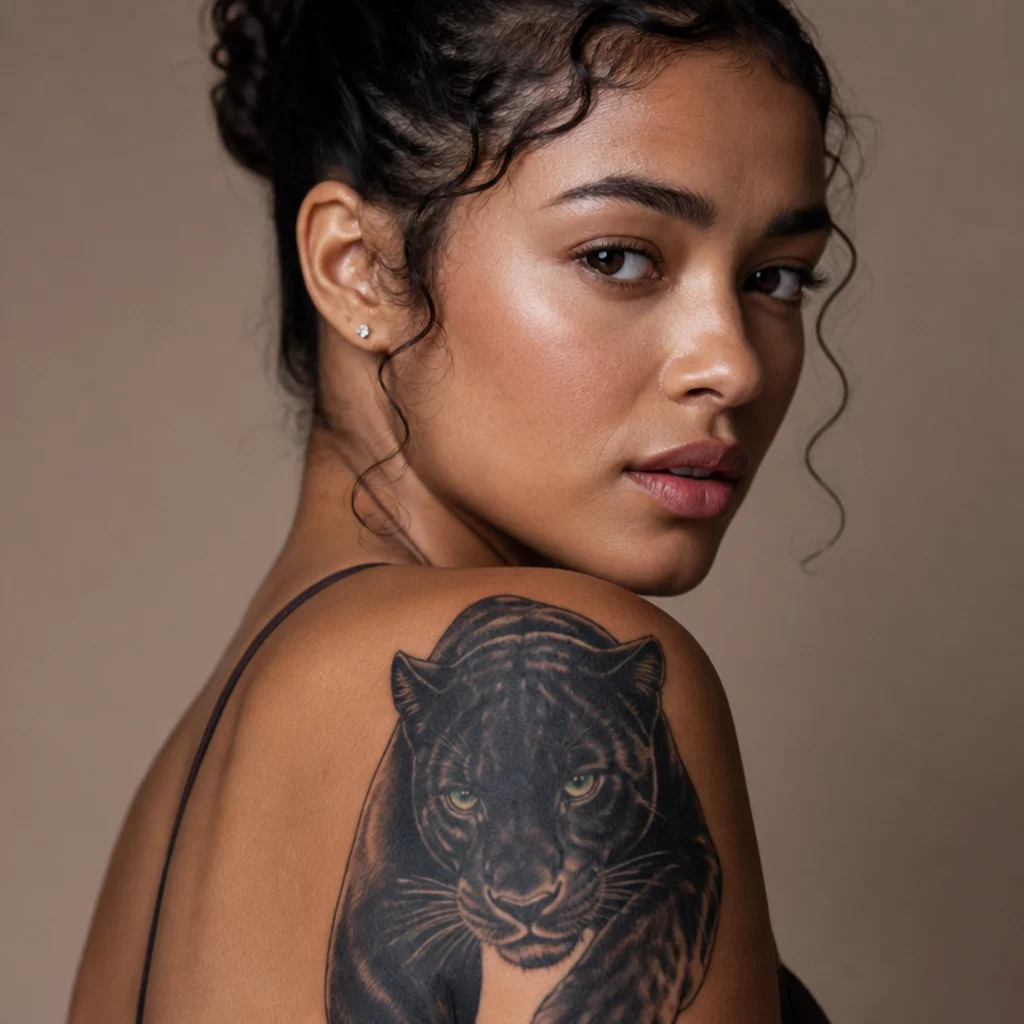
A prowling panther in solid black and grey is old-school cover-up wisdom made modern. The "black panther cover-up" is a tattoo-history classic precisely because the animal's dark form and heavy shading provide dependable, high-density coverage. A contemporary rendering with smoother grey gradients and a single spark of green in the eyes keeps it from feeling dated. Coverage is very strong thanks to all that saturated black and the solid silhouette. Shoulders, upper arms, and calves suit it, giving the head or full body room to sit boldly at scale, and neutral black-grey flatters every undertone. Maintenance is low, since solid black holds well, but difficulty is high, especially the smooth grey-to-black transitions that make the muscle read. Pro tip: a head-only close-up concentrates maximum black in a smaller footprint, while a full crouching body covers a longer, thinner original — let the shape of your old ink decide. Ask your tattoo artist whether a full-body or head-only composition better fits the size and geometry of what you need to hide, and let the silhouette be planned around it.
18Full Floral Half-Sleeve
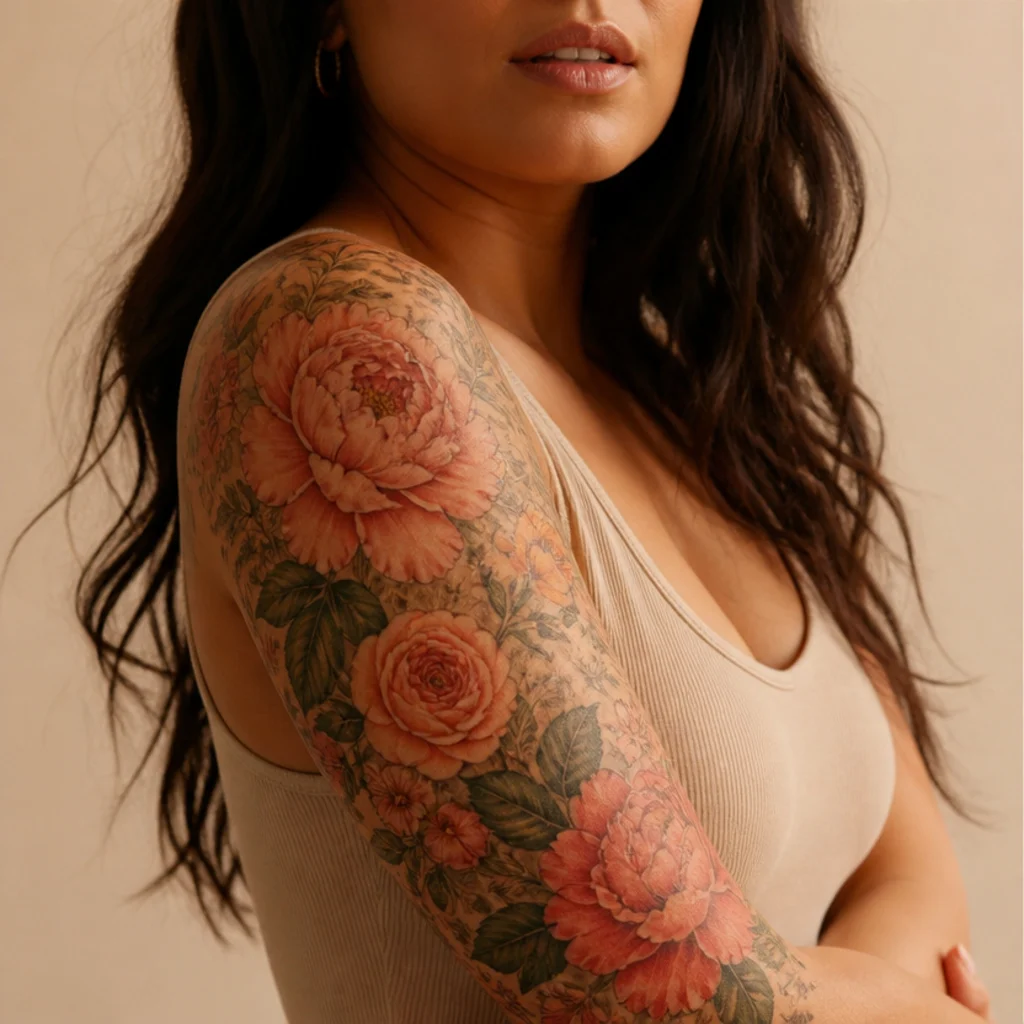
When one flower can't cover enough, a full floral half-sleeve links peonies, roses, leaves, and filler across the whole forearm or upper arm. Large cover up tattoos like this trade a bigger commitment for near-total flexibility: the artist routes dense petals and dark leaf clusters over every problem area and uses connective filler to unify the rest. Coverage is very strong, and because the canvas is large, an original almost anywhere on the arm can be absorbed. Coral and blush blooms with green foliage flatter warm and neutral undertones, while a cooler palette of mauve and slate suits fair skin — a good fit for anyone with a larger or more saturated original to conceal. Upkeep is moderate given the volume of color and the SPF it needs, and difficulty is high; the work usually spans two to four sessions. Pro tip: ask to see the full stencil mapped on your arm before the first needle, so blooms get placed by function first, looks second. Ask your tattoo artist to plan the entire sleeve up front so it flows as one composition rather than reading like separate patches.
19Ornate Blackout Band
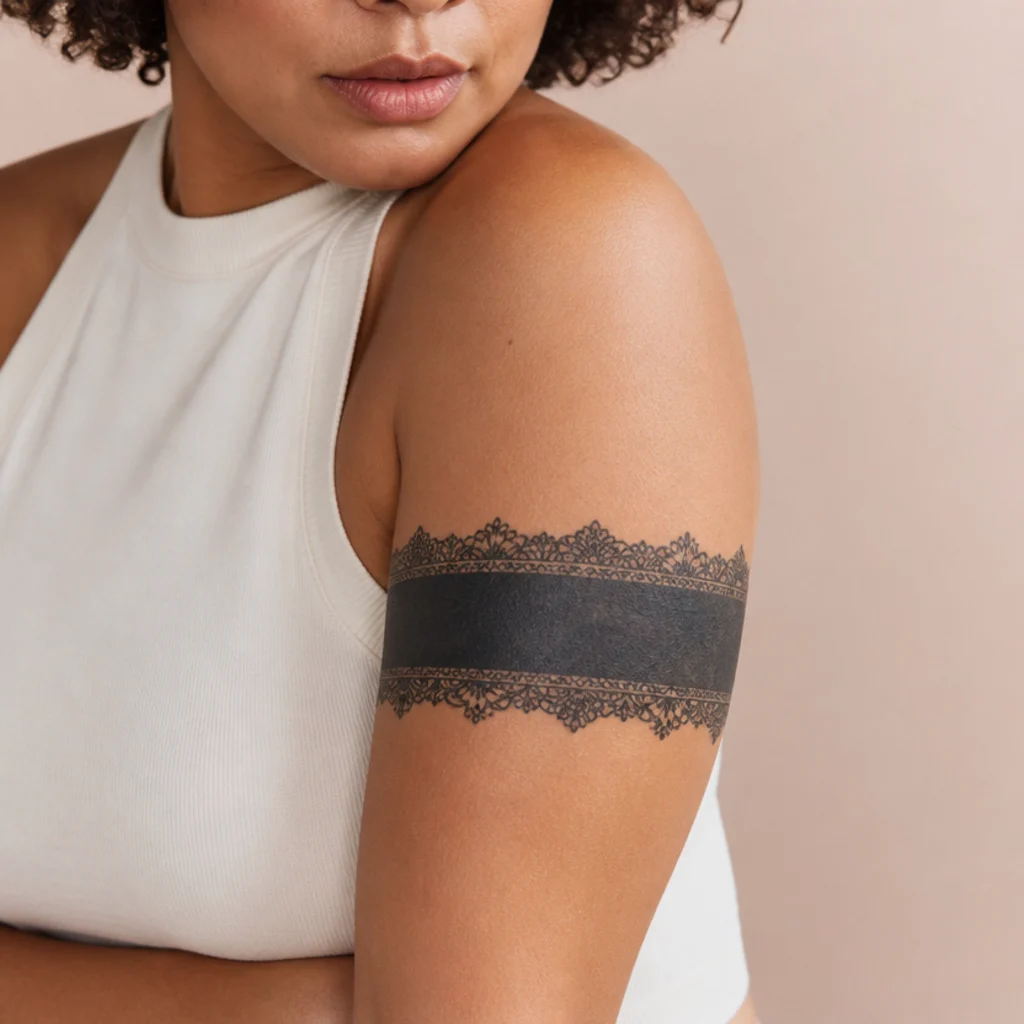
Blackout work — a solid band of pure black around the limb — is about as definitive as coverage gets, and softening it with a lace or ornamental edge keeps it feminine and considered rather than severe. This is the heavy end of black cover up tattoos, reserved for originals too dark, dense, or scarred for anything lighter to hide. Coverage is maximal: solid black over the whole ring leaves nothing to surface through. Upper arms, forearms, and thighs suit it, and it reads striking on every undertone, though it demands even saturation to avoid patchiness. Maintenance is low, but solid black sometimes needs a second pass or a touch-up to fill any spots that healed lighter. Difficulty is high, and the result is largely permanent — blackout is very hard to lighten and limits future options. Pro tip: negative-space designs (leaving skin-toned shapes inside the black) can be added, but they need to be planned before the blackout, not after. Ask your tattoo artist to walk you through how any future work would sit over a blackout, since it narrows your later choices considerably.
20Large Statement Back Piece
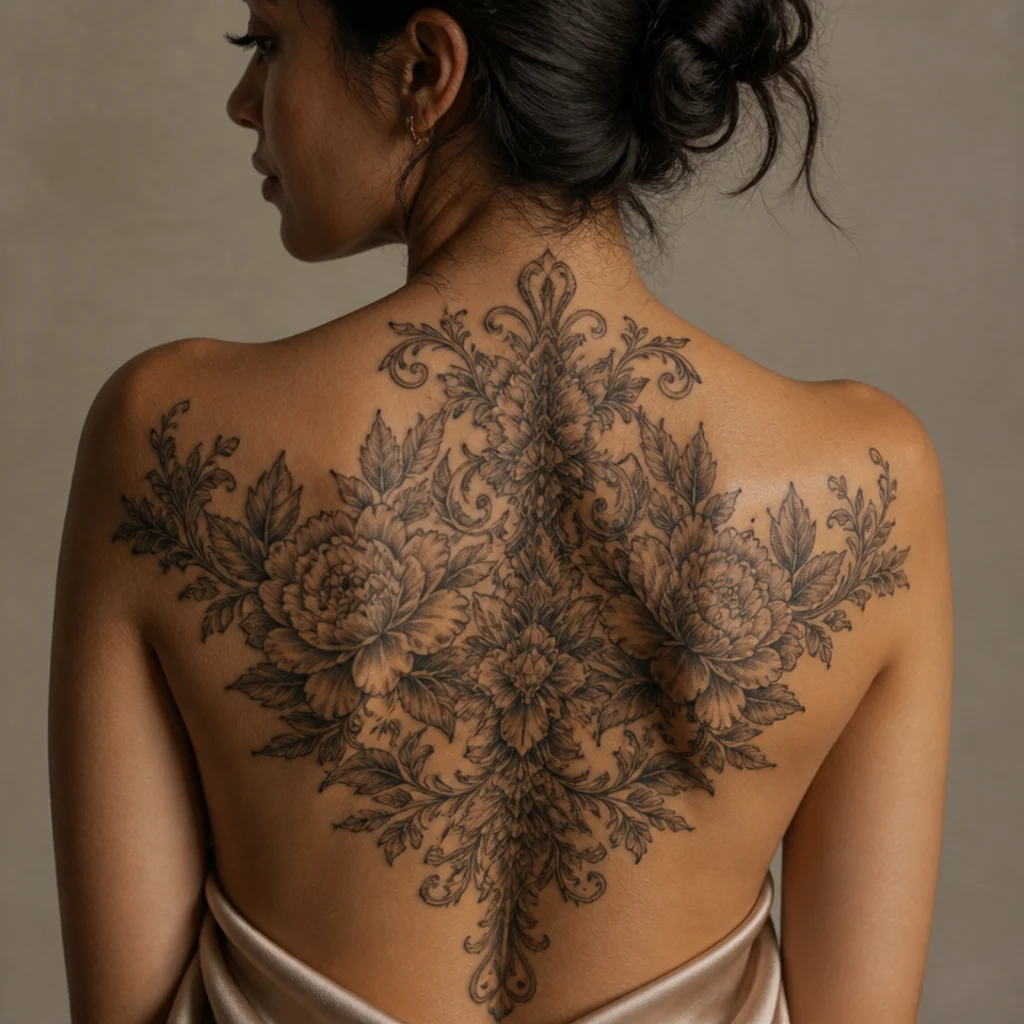
At the boldest end, a large statement back piece uses generous scale to solve almost any coverage challenge — the more real estate an artist has, the easier it is to hide an original inside a much bigger composition. Sprawling florals, ornamental framing, and deep black-and-grey shading spread across the shoulder blades give total freedom to route density exactly where it's needed while the rest of the design breathes. Coverage is maximal, and the back's broad flat plane is ideal for it. Full backs suit it, and anyone ready for a signature centerpiece, with black-and-grey flattering every skin tone. Upkeep is moderate across such a large area, mostly SPF and the occasional touch-up, and difficulty is high — the piece is inherently multi-session, often built over several months. Pro tip: on a large canvas the best cover-ups incorporate the original, weaving it into a leaf or shadow, rather than merely burying it — that reads more naturally. Ask your tattoo artist to plan the full layout before starting and confirm how the design will absorb the original rather than hide it outright.
Pro Tips from the Editor
- Value beats color, always. A cover-up only works where the new design is as dark as, or darker than, the old ink underneath. Judge every proposed piece by its darkest shadows, not its prettiest highlights.
- Bring two photos of your original. One in bright indirect daylight, one under warm lamplight. If the tattoo looks faint in one and crisp in the other, your artist needs to see both to size the cover honestly.
- Consider laser fading first for dark or dense work. Two or three laser sessions can lighten a stubborn original enough to unlock a smaller, lighter, more flexible cover-up later. Ask whether partial fading would expand your options.
- Vet the portfolio for healed cover-ups, not fresh ones. Fresh work always looks opaque; the real test is a photo taken months after healing, when any ghosting of the original would show.
- Expect bigger and darker than you pictured. A believable cover almost always needs more size and saturation than the original. Going too small is the most common regret.
- Plan placement around the mark, not the other way round. The densest element — a flower center, a coil, a moth body — should be positioned by function first and aesthetics second.
- Budget for a touch-up on color and fine work. Watercolor, delicate botanicals, and grey wash are likeliest to want a refresh within a few years; solid blackwork rarely does.
Coverage Strength at a Glance
| Look | Coverage strength | Best over | Upkeep |
|---|---|---|---|
| Watercolor wash, fern frond | Light | Faint, small, aged marks | High (color) / Low (line) |
| Wildflower spray, moth, dotwork moon | Light–moderate | Small originals | Low–moderate |
| Name-to-bloom, rose cluster, mandala, lace band | Moderate–strong | Faded script, medium ink | Low–moderate |
| Peony, hummingbird, snake, koi | Strong | Saturated or larger ink | Moderate (color) |
| Dark botanical, panther, half-sleeve | Very strong | Dark, dense, large ink | Low–moderate |
| Blackout band, back piece | Maximal | The most stubborn originals | Low (may need even-out) |
How to Choose / Get the Look
Start with an honest audit of your original, because everything follows from it. Read three things: how dark it is, how large it is, and how saturated the solid areas are. Faint, small, or aged ink gives you the most freedom — that's where small cover up tattoos, watercolor, and delicate botanicals work well. Dark, dense, or large originals demand bolder solutions: strong florals, blackwork, blackout bands, or a big back piece. Then match the tool to the job. Faded name script trails easily into a bloom branch; a saturated black tribal piece may need blackout or laser fading first. For scar cover up tattoos, the scar's maturity matters more than the design — flat, pale, fully healed tissue only, never raised or recent scarring. Vet the artist specifically for cover-up work: ask to see healed cover-ups in their book, not just fresh photos, since healing is the real test of concealment. Talk numbers before you commit — size, session count, touch-up schedule, and budget, since cover-ups usually run larger, longer, and pricier than fresh work of the same footprint. Bring clear photos to your consult and let the artist assess your skin and ink in person, where lighting and undertone tell more than any guide can. Above all, remember that design, sizing, placement, coverage feasibility, and healing must be confirmed with a licensed tattoo artist, and no one can promise an old tattoo or scar will be fully hidden.
Frequently Asked Questions
Do cover-up tattoos completely hide the old one?
Not always. Coverage depends on the age, darkness, size, and saturation of the original plus your skin and healing. A skilled artist can often make an old design unreadable, especially with a bolder, darker cover, but no cover-up is guaranteed to fully hide it — faint ghosting can appear as the new ink settles. An in-person assessment by a licensed tattoo artist is the only reliable way to set expectations.
Are small cover up tattoos strong enough to work?
Small cover up tattoos work best over faint, small, or aged originals — a thin old line, a tiny symbol, or heavily faded ink. If your existing tattoo is dark, saturated, or large, a small piece almost certainly will not cover it, and forcing one leads to ghosting. Ask your artist whether your starting point actually suits a small design or needs more size and density.
Can you tattoo over a scar?
Sometimes. Scar cover up tattoos require fully matured, flat, healed scar tissue — commonly at least 12 to 18 months old — and even then results vary because scars accept ink unevenly. Raised, red, shiny, or recent scars are usually not suitable. Only a licensed tattoo artist can judge whether your scar can be tattooed, may test a small area first, and coverage over scar tissue can never be promised.
How do you cover up a name tattoo?
Name cover up tattoos most often become florals, flowering branches, or ornamental designs where dense blooms and dark leaves sit over the boldest letters — capitals, ascenders, and loop crossings. Faded script covers far more easily than heavy block or saturated lettering. Your artist may suggest breaking up the letters with layered shapes or a soft background rather than relying on one light motif.
Why do cover-ups usually look bigger and darker than the original?
A new design can only hide an old one where it is equal or darker in value, so it generally needs more saturation and a larger footprint to overpower the existing ink. That is why black cover up tattoos, dense florals, and blackwork are so common in cover-up work. Going bigger gives the artist room to place concealing density without cramming the design.
Should I get laser removal before a cover-up?
Often it helps. Two or three laser fading sessions can lighten a dark or dense original enough to unlock a smaller, lighter, or more colorful cover-up than would otherwise be possible. It adds time and cost but expands your design options considerably. Ask both your tattoo artist and a licensed laser technician whether partial fading is worthwhile for your specific piece.
How much do cover-up tattoos cost compared with regular tattoos?
Cover-ups typically cost more than fresh work of the same size because they take extra consultation, custom design, ink, and time to build the necessary density. Pricing is highly variable by studio, region, artist experience, and how many sessions the piece needs, so treat any figure as a range rather than a quote. Large multi-session pieces reach the upper end of a studio's day-rate pricing.
How long do I wait before covering an old tattoo?
An existing tattoo should be fully healed — generally a few months old and no longer raised, flaking, or tender — before it is covered. There is no upper limit; older, more faded ink is often easier to cover. If you are also fading it with laser first, artists usually want several weeks between your final laser session and the cover-up. Confirm timing with your artist.
Will a colored cover-up fade faster than blackwork?
Generally yes. Saturated color and delicate grey wash lighten sooner than solid black, and bright pigments like orange, teal, and magenta are the most sun-sensitive. Diligent SPF once healed slows fading considerably. Solid blackwork and dense dark botanicals are the most durable cover-ups and least likely to need a refresh. Ask your artist for a realistic touch-up timeline for the palette you choose.