20 Black Cover Up Tattoos for Women
Dense black ink is the most reliable way to rework an old tattoo, a faded name, or uneven scarring. These 20 ideas run from barely-there to full blackout, each with the coverage logic behind it, so you can see what actually suits your skin tone, your placement, and the upkeep you're willing to commit to.
 Edited by Lena Rose · Published July 11, 2026 · 33 min read
Quick Answer
- Best for: Reworking old, dark, or faded tattoos, ex-names, and flat, fully-healed scarring where lighter colors won't fully bury what's underneath.
- Who might skip it: Anyone hoping to preserve visible skin around the area, wanting bright color over dark ink, or covering raised, red, or still-healing scar tissue.
- Maintenance: Solid black is the most durable tattoo pigment; expect edge touch-ups roughly every 5-10 years and daily SPF 30+ on the piece to slow fading.
- Difficulty: Moderate to high. A cover-up needs an artist who plans density, saturation, and negative space around what's already there, not one who just draws on top of it.
- Cost: Variable. Cover-ups typically run higher than a fresh tattoo of the same size because of design time and added passes; small pieces sit at the lower end, blackout sleeves at the top. Get a firm quote at consultation.
- Wear time / longevity: Permanent. Solid blackwork holds its shape for decades; fine-line and airy designs soften sooner.
- Standout variation: Blackwork botanicals, which hide an old outline inside organic leaves and stems without reading as a patch.
- How to ask your tattoo artist: "Can you design a black cover-up over my existing tattoo, mapping the darkest fill over its darkest areas, and tell me honestly how many sessions realistic coverage will take?"
In This Guide
- Small Black Heart Cover-Up
- Blackwork Botanical Sleeve Panel
- Fine-Line Black Snake
- Solid Black Band Over a Name
- Blackout Wrist Cuff
- Black Rose Shoulder Cover-Up
- Dotwork Mandala Over a Scar
- Black Moth on the Sternum
- Small Black Star Cluster
- Neo-Traditional Black Panther
- Black Lace Garter on the Thigh
- Ornamental Black Ankle Chain
- Blackwork Raven on the Back
- Small Black Butterfly Cover-Up
- Bold Black Peony on the Forearm
- Geometric Blackwork Half-Sleeve
- Black Wave and Ocean Motif
- Small Black Crescent Moon
- Black Filigree Over an Old Name
- Full Blackout Forearm Statement
Black cover-up tattoos work on a simple principle: dense pigment absorbs and reshapes what's already in the skin far more predictably than any lighter color can. A blue or green rework has to fight the tone underneath; saturated black just overrides it. That's why almost every serious cover-up plan leans on blackwork, black-and-grey, or a full blackout as its foundation. Whether you're dealing with a wobbly line-work piece from a decade ago, an ex's initials, or a flat, healed scar you'd rather restyle, black ink gives an artist room to build something intentional instead of something merely hidden. This guide walks through 20 directions, scaled from delicate small cover up tattoos to sculptural blackout statements, so you can gauge size, placement, saturation, and long-term commitment before you ever book. For each idea you'll find who it suits, the coverage logic behind it, a realistic maintenance timeline, and a question worth asking at your consultation. One honest note up front: design, sizing, placement, coverage feasibility, and healing all need to be confirmed with a licensed tattoo artist, and no cover-up can guarantee it will fully hide an existing tattoo or scar.
01Small Black Heart Cover-Up
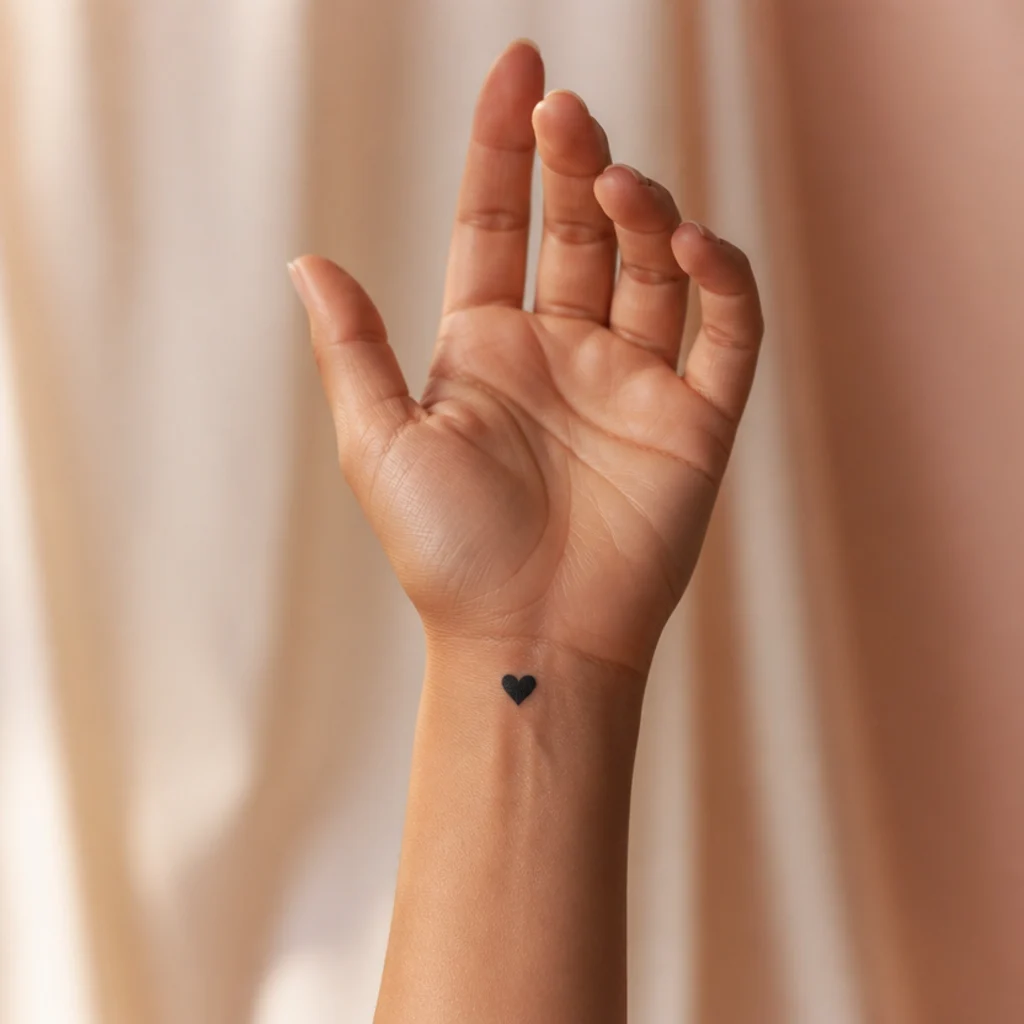
A small solid heart is about the lowest-commitment way to rework a tiny old tattoo or a short word. A compact silhouette packed with even black fill can override a faded symbol or a few small letters, and solid saturation is what does the covering, so a filled heart hides far better than an open outline. Keep the shape geometric and clean rather than sketchy. It sits well on the inner wrist, behind the ear, the finger, or the inner ankle, and reads as minimal rather than reactive. Because the original mark dictates scale, plan for the heart to run slightly larger than the old design, with roughly a quarter-inch of clean coverage on every side. Upkeep is low, though small solid shapes look sharpest with a light edge touch-up every several years. One thing to check at your consult: view the design against your skin in daylight, since faded ink can ghost under thin black in bright light. It's worth asking whether a slightly larger, fully-filled heart covers more cleanly than the smallest possible version.
02Blackwork Botanical Sleeve Panel
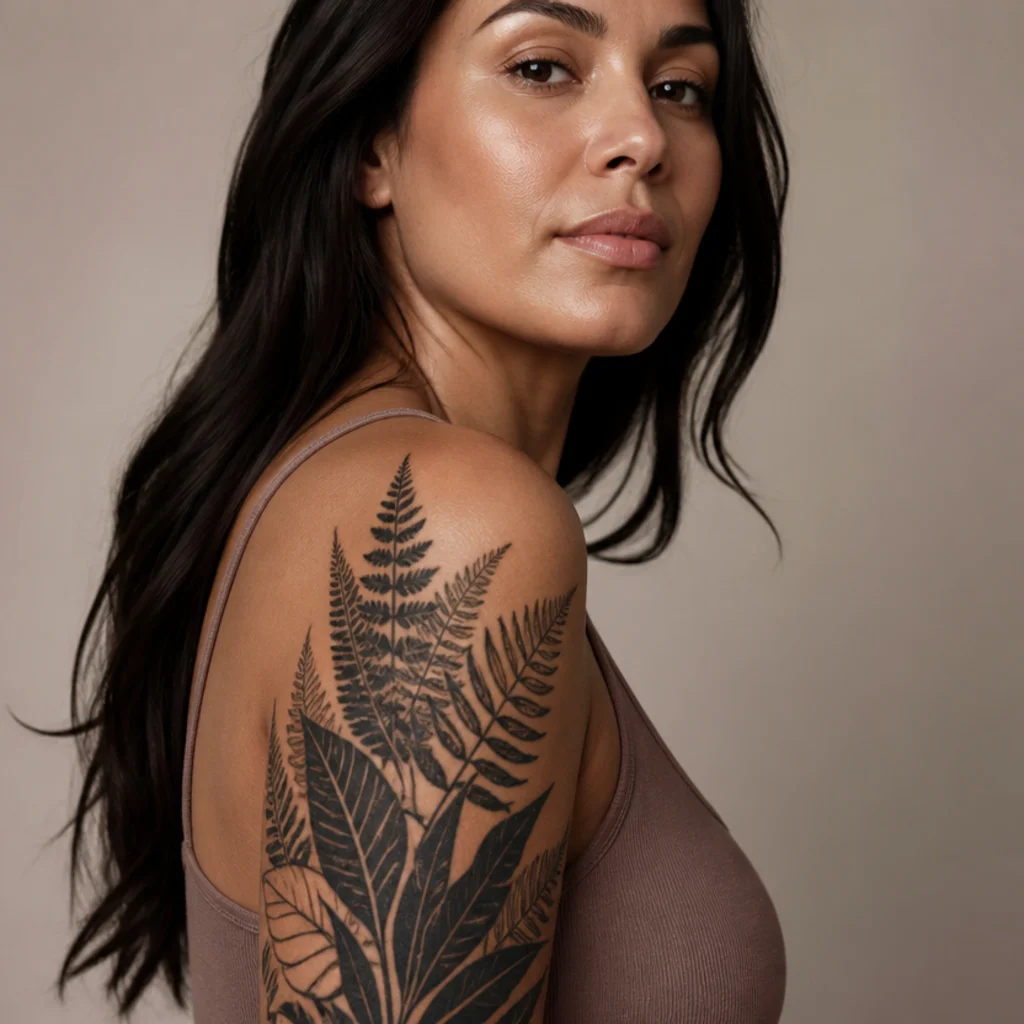
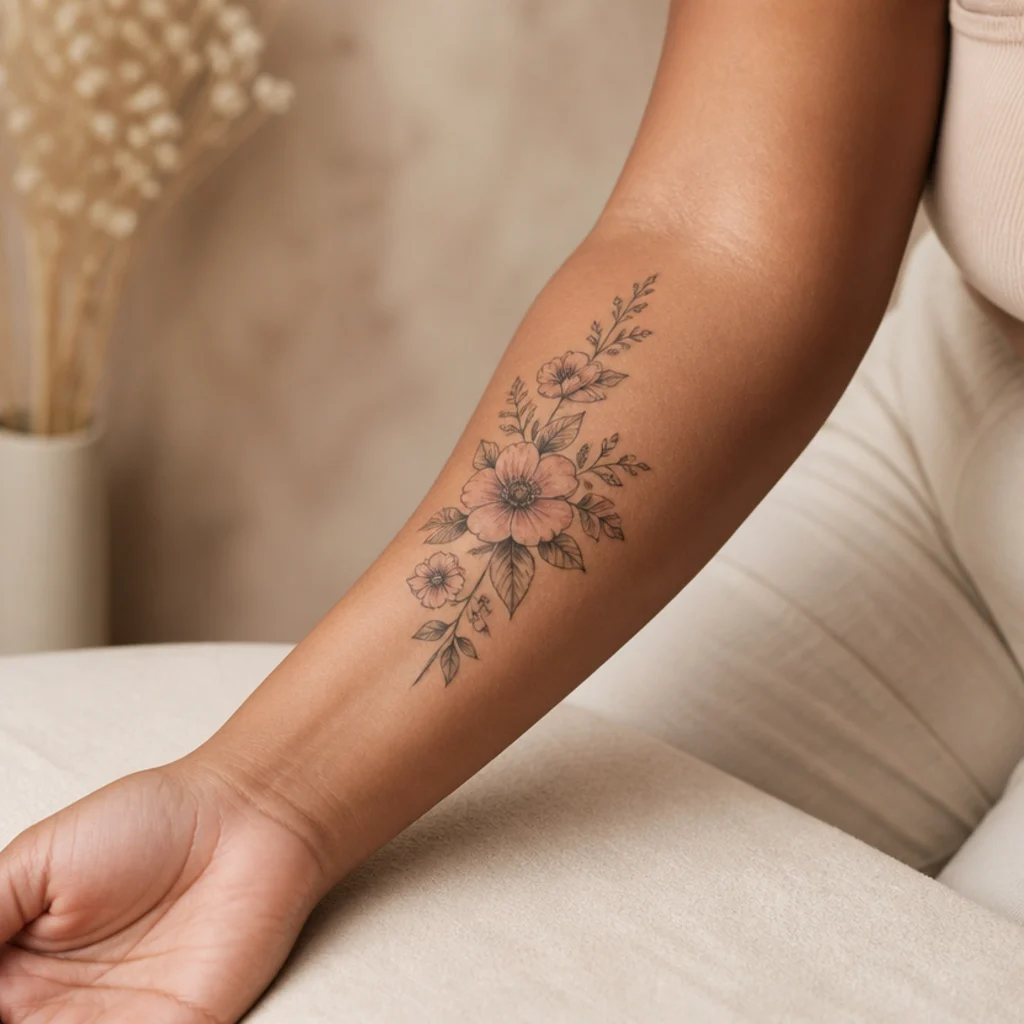
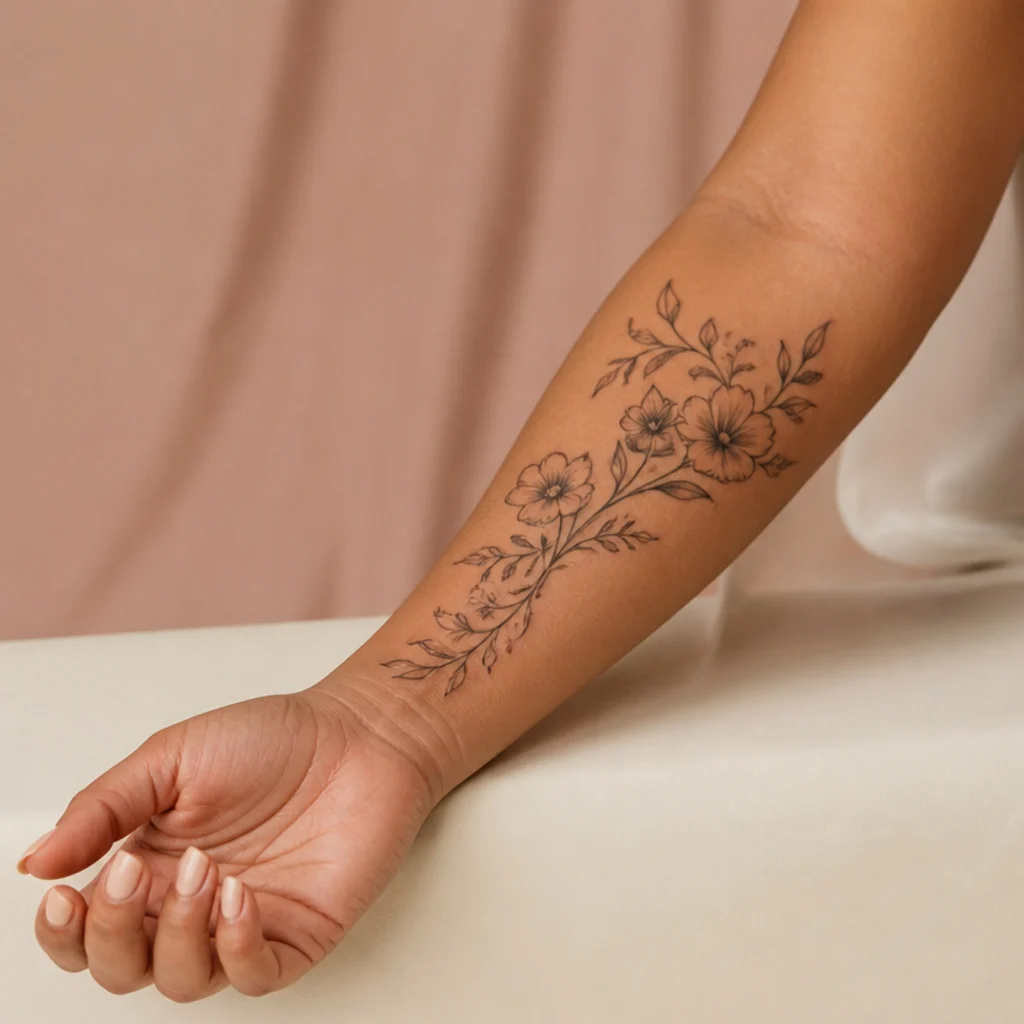
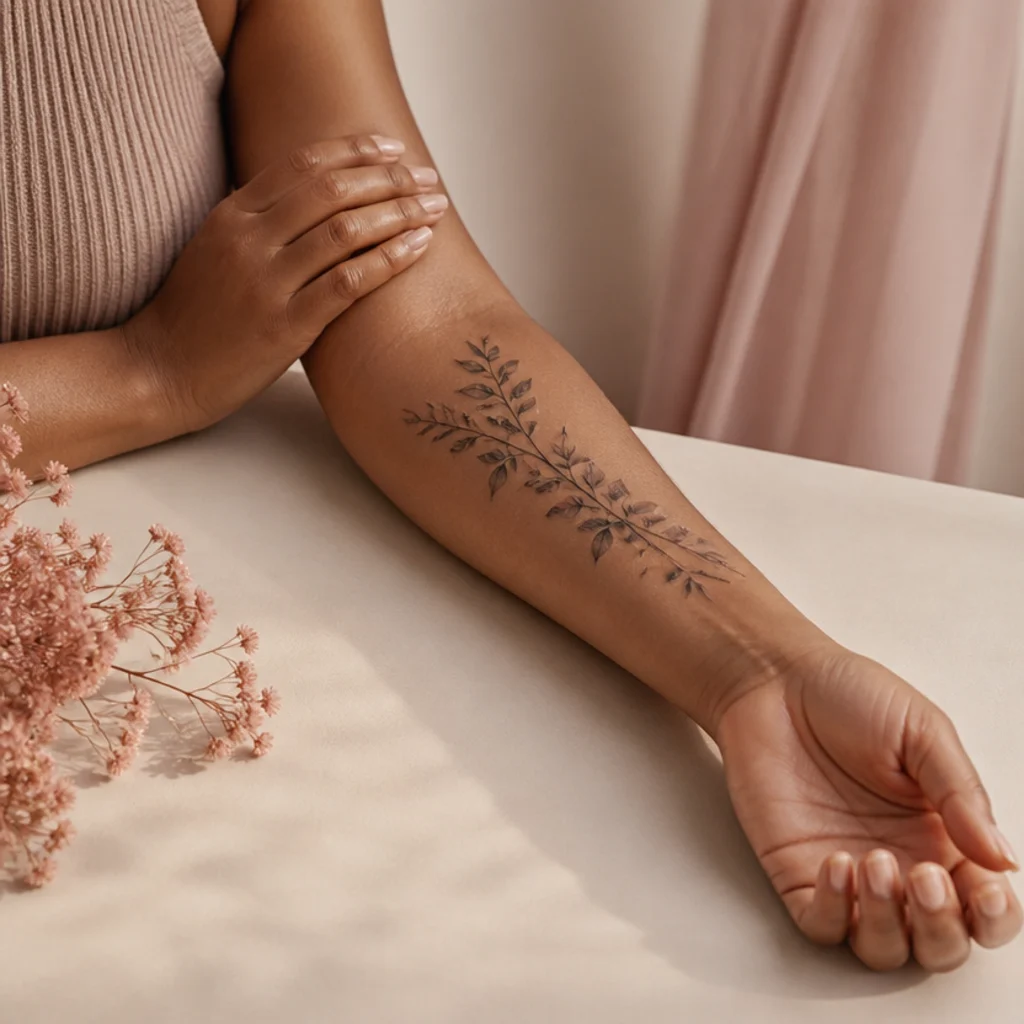
Botanical blackwork is a cover-up workhorse. Leaves, stems, and petals give an artist organic, irregular shapes to route old outlines inside, so the eye reads foliage instead of a hidden design. A flowing panel of ferns, monstera, or eucalyptus can wrap the upper arm and swallow a dated piece without the flat, obvious look of a solid patch. It handles medium and large existing tattoos and suits every skin tone, since the contrast lives in the linework and negative space rather than in delicate mid-tones that can vanish on deeper skin. Maintenance sits in the middle: the solid leaves and stems stay bold for years while the thinnest interior details soften first, usually earning a touch-up around the seven-year mark. This works well for anyone who wants a natural, sculptural half-panel rather than a single centered motif. Ask for denser, darker foliage clustered over the busiest part of the old ink and airier leaves toward the edges, so saturation lands exactly where it's needed, and bring clear photos so your artist can map where dense foliage falls versus where the skin can stay open.
03Fine-Line Black Snake
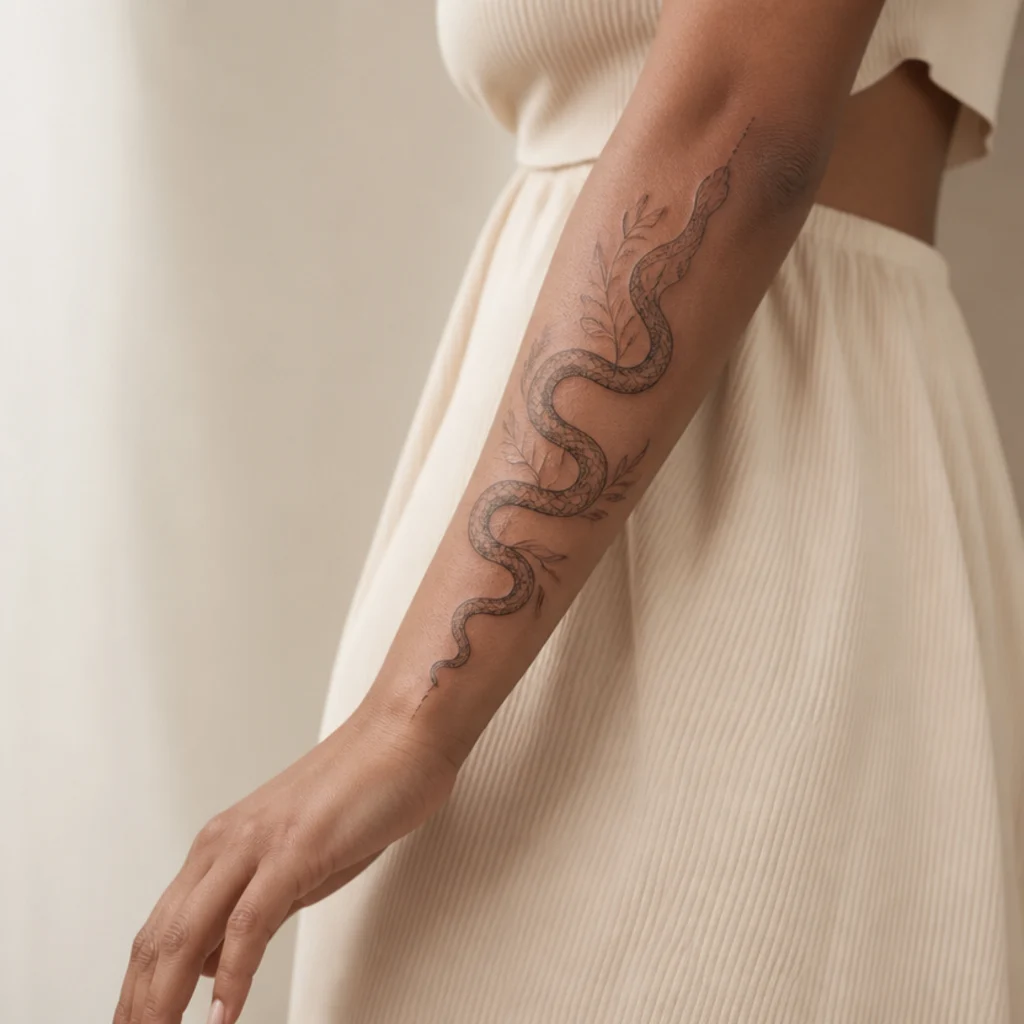
A winding snake makes a clever cover-up because its long, curving body can be routed directly along an old line, absorbing the shape underneath rather than sitting awkwardly beside it. Rendered in fine-line black it stays elegant instead of aggressive, and strategic shading along the coils and belly adds the depth that camouflages what's there. It suits forearms, calves, the outer thigh, and the spine, anywhere there's length for the body to travel. Be realistic about the limits, though: pure fine-line work covers the least of any style here and fades faster than solid pieces, so heavily saturated original ink will still whisper through unless the design carries real black fill. Plan for a refresh sooner than you would with blackwork. This flatters a sleek, contemporary look and slimmer placements. Over darker old ink, have the snake's underside or a few coils rendered in solid black or dense dotwork so part of the design does the heavy lifting; ask your artist to build shading or dotwork wherever the original tattoo runs darkest, since fine line alone rarely obscures heavy pigment.
04Solid Black Band Over a Name
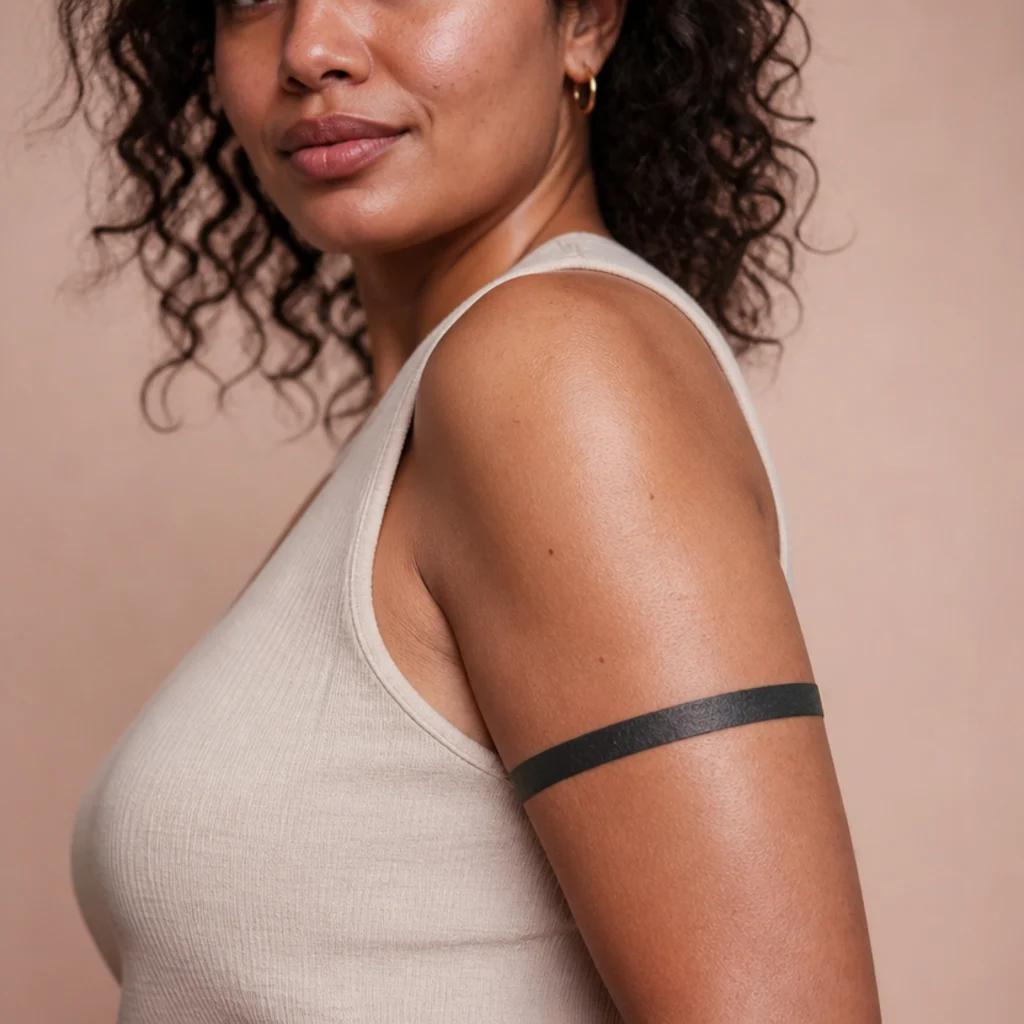
For name cover up tattoos, a solid black band is the most dependable option on this list. A clean wrapped stripe around the bicep or forearm uses fully saturated pigment to bury lettering completely, and the graphic simplicity reads as a deliberate style choice rather than a reaction to an ex. It works on both toned and fuller arms, and the horizontal line can be sized from a slim single band to a wider statement depending on how tall the old letters are. Solid bands are among the most durable cover-ups because there's nothing delicate to fade, though the broad fill means a longer session and disciplined aftercare to heal evenly without patchiness. Since names sit in a line and are often small but dark, the band should extend a clear margin above and below the tallest and lowest letters. A matte finish and a subtly textured or brushstroke-edged finish cover equally well, so pick one for looks rather than function, and check with your artist whether a slightly wider band gives more comfortable clearance over the lettering.
05Blackout Wrist Cuff
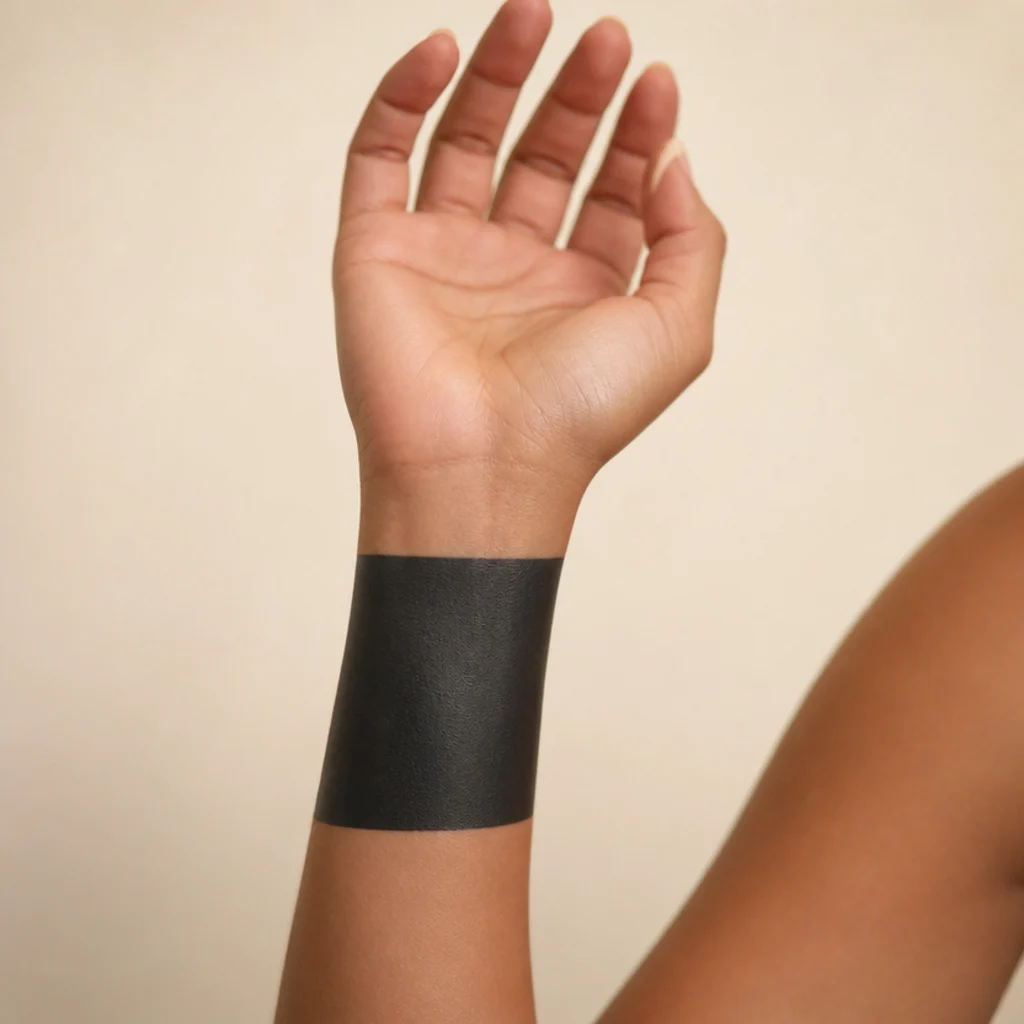
A blackout cuff turns the wrist into a bold solid bracelet of ink, fully saturating the band to bury whatever sits beneath it. It's the answer when an old tattoo is too dark or too dense for a lighter rework to touch. The look works on both slim and broad wrists, creating one clean, jewelry-like line, and it suits anyone comfortable with high-contrast, graphic minimalism. Even saturation is the whole game here, so this isn't a beginner artist's job; uneven blackout heals blotchy and is hard to correct. The wrist runs close to bone and tendon and can be tender, so budget for careful healing and expect the area to feel sensitive during the session. Most cuffs need two passes or two sessions for gap-free coverage. Leaving a thin strip of negative skin at one edge, or a small negative-space shape within the band, keeps a full blackout from reading as heavy. Confirm with your artist how many passes even coverage will take and how the edges will be finished so the cuff looks intentional rather than accidental.
Save this to Pinterest to compare small versus bold black cover-up styles later.
06Black Rose Shoulder Cover-Up
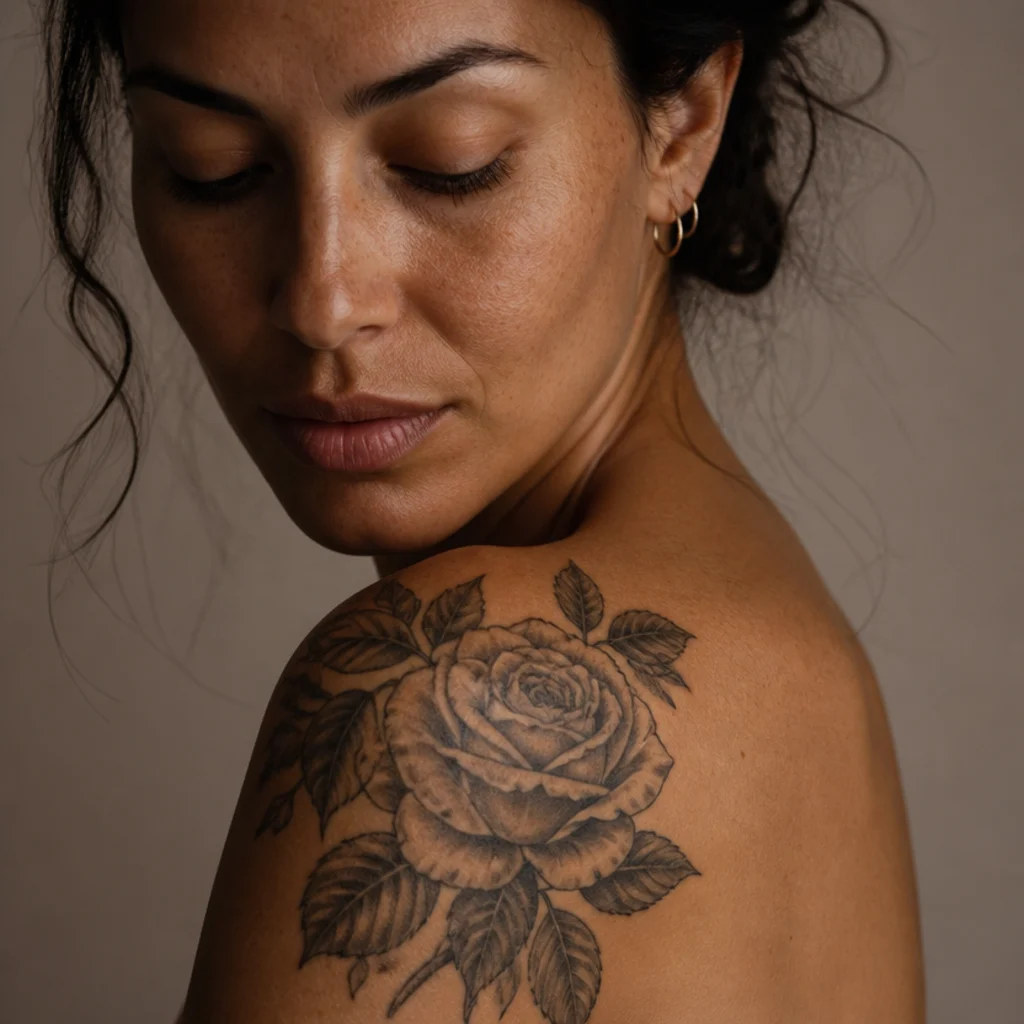
A black-and-grey rose is a durable, classic cover-up because layered petals and deep shadow give an artist plenty of density to hide an old design inside a natural-looking form. Placed on the shoulder or cap of the arm, it curves with the deltoid and scales up easily to cover a larger existing tattoo. Black-and-grey reads cleanly across every skin tone, since it relies on contrast and smooth gradients rather than color that can shift on deeper complexions. Roses age well thanks to their solid shaded cores, needing only occasional petal touch-ups over the years, though the palest grey wash softens first. This suits a classic, feminine look and placements with enough curved space to let the bloom sit whole. The coverage is won in the shadows, so the darkest folds between petals should be positioned deliberately, not wherever the composition looks prettiest. Ask your artist to map the rose's blackest recesses over the darkest parts of your current tattoo, and to add a leaf or bud wherever a stubborn edge needs one more layer of density.
07Dotwork Mandala Over a Scar
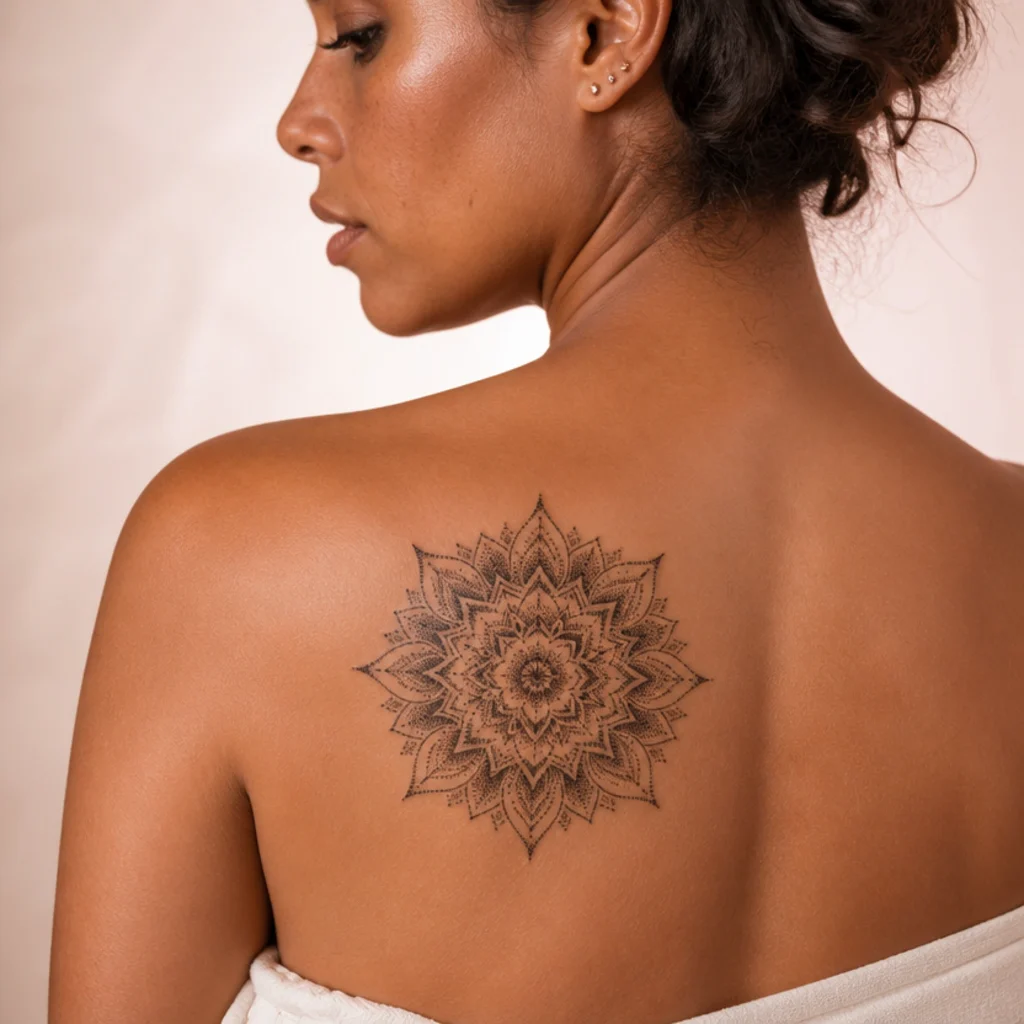
For scar cover up tattoos, a symmetrical dotwork mandala pulls the eye into rhythm, pattern, and texture rather than the mark underneath. Stippled shading blends in gradual gradients, which is unusually forgiving over slightly uneven skin, and the radial symmetry gives a calm, ornamental center point. It suits the shoulder blade, sternum, outer thigh, or upper back, anywhere a round motif sits naturally on the body's lines. Scarred skin is the critical variable here: it holds ink differently, can be raised or textured, and must be fully healed, flat, and cleared by a professional before any needle touches it. Expect dotwork over scar tissue to need extra sessions and gentler passes, since the skin can be more reactive. Set expectations honestly here, because the realistic goal is to soften and distract, not erase. A cover-up won't necessarily hide a scar completely, and no reputable artist will promise it will. Keep the densest dot-packing over the scar's most visible ridge and let the pattern fade outward, and ask your artist to assess the scar in person before you plan the design.
08Black Moth on the Sternum
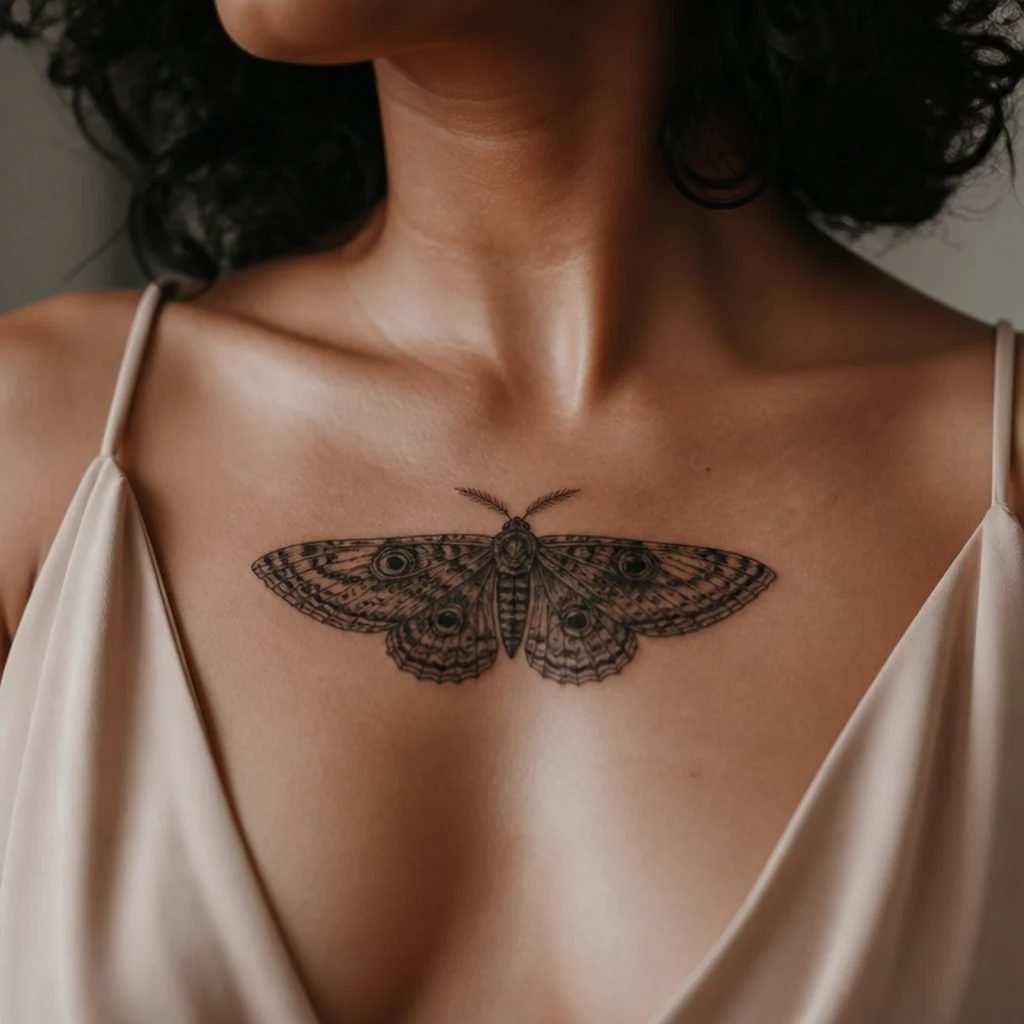
A moth with spread wings offers broad, symmetrical coverage that's ideal for the sternum or center chest, where its vertical body naturally follows the midline. The wide wings hold dense pattern, mothy eye-spots, and deep shading, giving an artist real space to cover an old central tattoo while looking ornamental rather than corrective. It suits those drawn to balanced, gothic-leaning symmetry, and the shape reads well whether it's palm-sized or spans the chest. The sternum is one of the more sensitive placements, and its outer edges, over the ribs, tend to fade first, so plan for eventual edge touch-ups and follow healing guidance closely. Because bone sits close to the surface here, sessions can feel sharp; talk pacing through with your artist. The wings' darkest markings and body should land over the busiest, darkest parts of the old design, since the negative space between wing patterns is where coverage is weakest — ask your artist to overlay the moth's densest sections on the strongest areas of your existing chest piece for the most complete result.
09Small Black Star Cluster
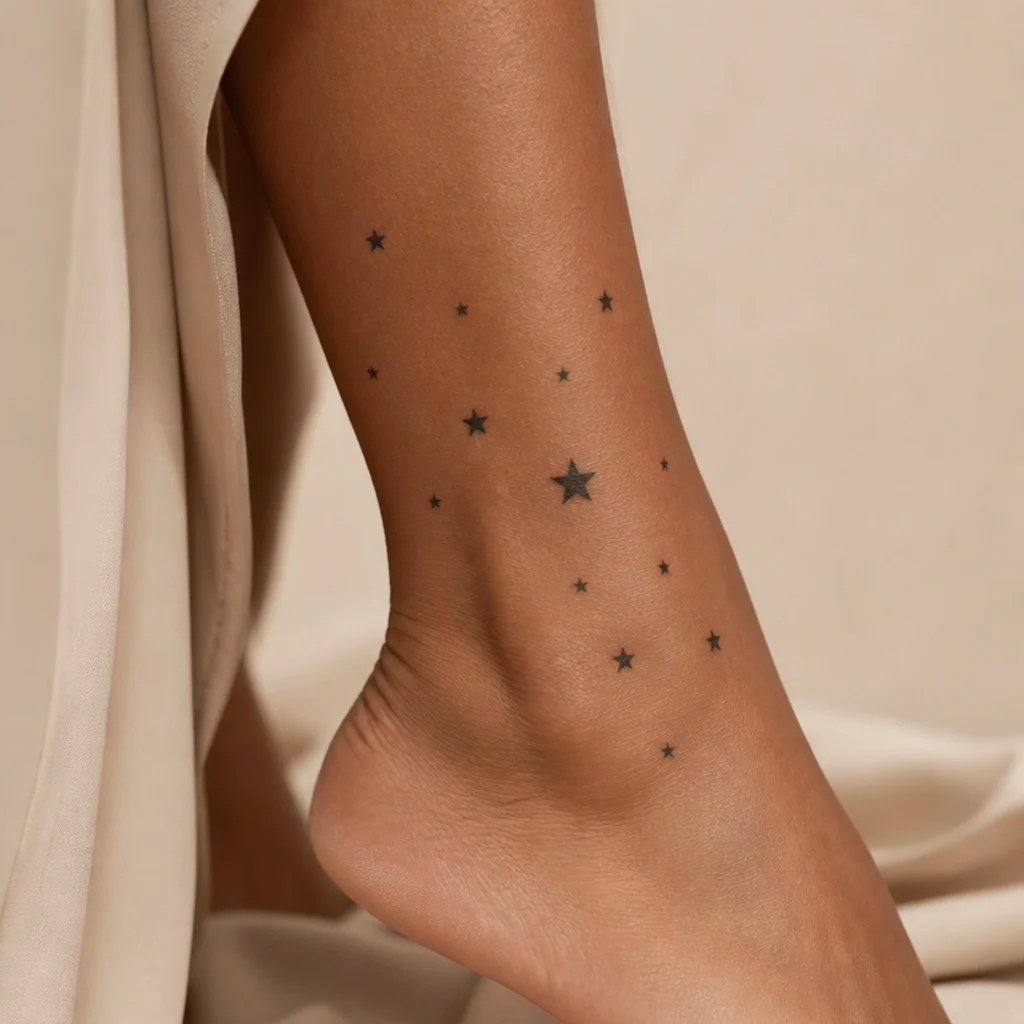
A scattered cluster of small solid stars is a playful, low-key way to handle small cover up tattoos, especially a single faded shape. Grouping several fully-filled stars lets an artist place the densest one directly over the old mark while the others balance the composition and disguise its intent, so nothing reads as an obvious patch. It suits ankles, wrists, the back of the shoulder, and the collarbone, and it flatters a minimalist, celestial look. Keep the stars solid rather than outlined; open shapes won't cover, dense fill will. Upkeep is low, though tiny solid forms benefit from an occasional refresh to keep their points crisp as they naturally soften. The scatter looks casual but actually needs deliberate spacing so the covering star doesn't sit awkwardly. Vary the star sizes and let them trail off in a loose diagonal, which feels intentional rather than stamped, and have your artist sketch the placement over a photo of your skin so the key star lands cleanly over the old design.
10Neo-Traditional Black Panther
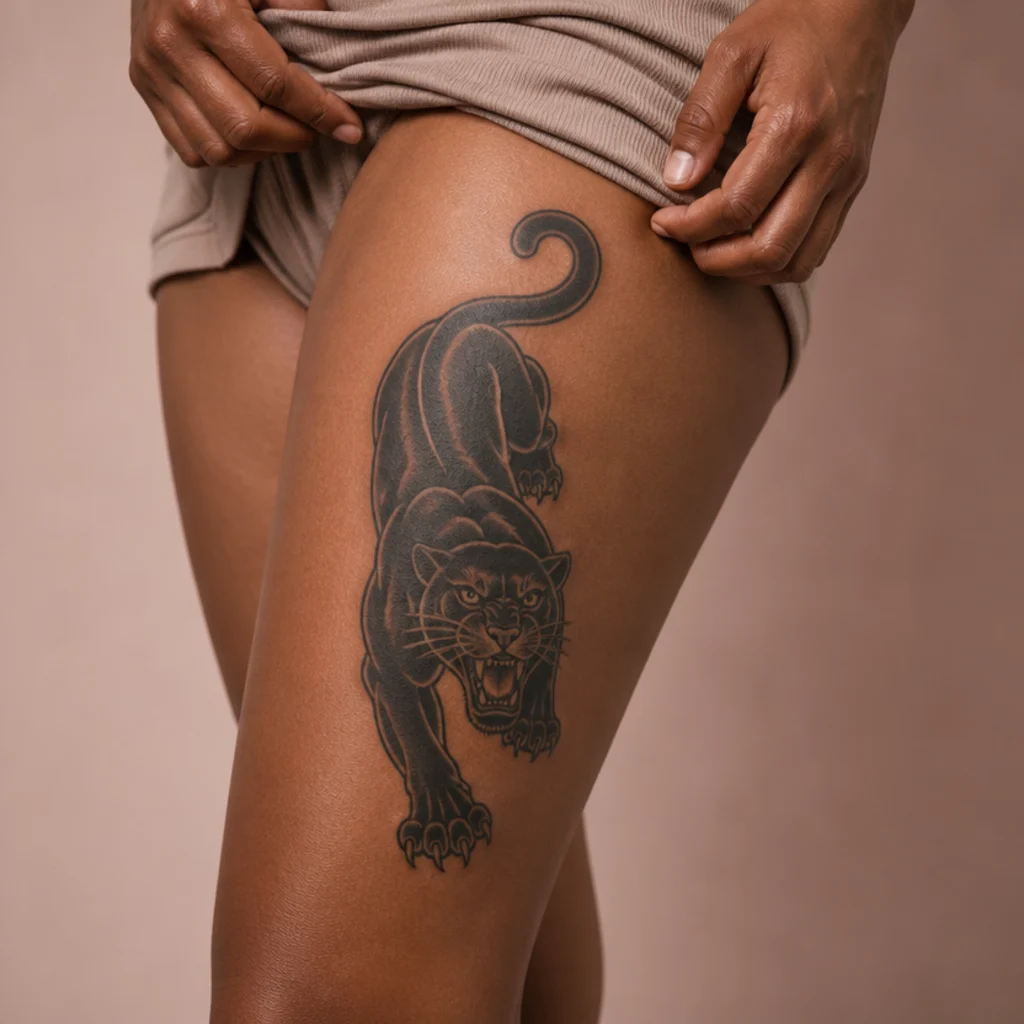
A bold neo-traditional panther brings heavy solid black areas and strong, confident outlines, both good for coverage. The animal's dark body, shaded musculature, and thick outer line can be arranged over an old tattoo, and the graphic style hides transitions between new and existing ink well. It suits the outer thigh, calf, or upper arm, anywhere there's room for a mid-sized statement piece. The style suits those who want personality and can commit to a longer sitting for the solid fill. Neo-traditional black work ages particularly well, because bold outlines and saturated areas stay legible for decades where fine detail would blur. The panther's pose is a coverage tool: ask for it to be angled and cropped so the densest sections, the head, shoulder, and haunch, land over the strongest parts of your existing ink. Talk with your artist about composing the pose and shading around what needs covering first, rather than picking a pretty stock design and hoping it lines up.
11Black Lace Garter on the Thigh
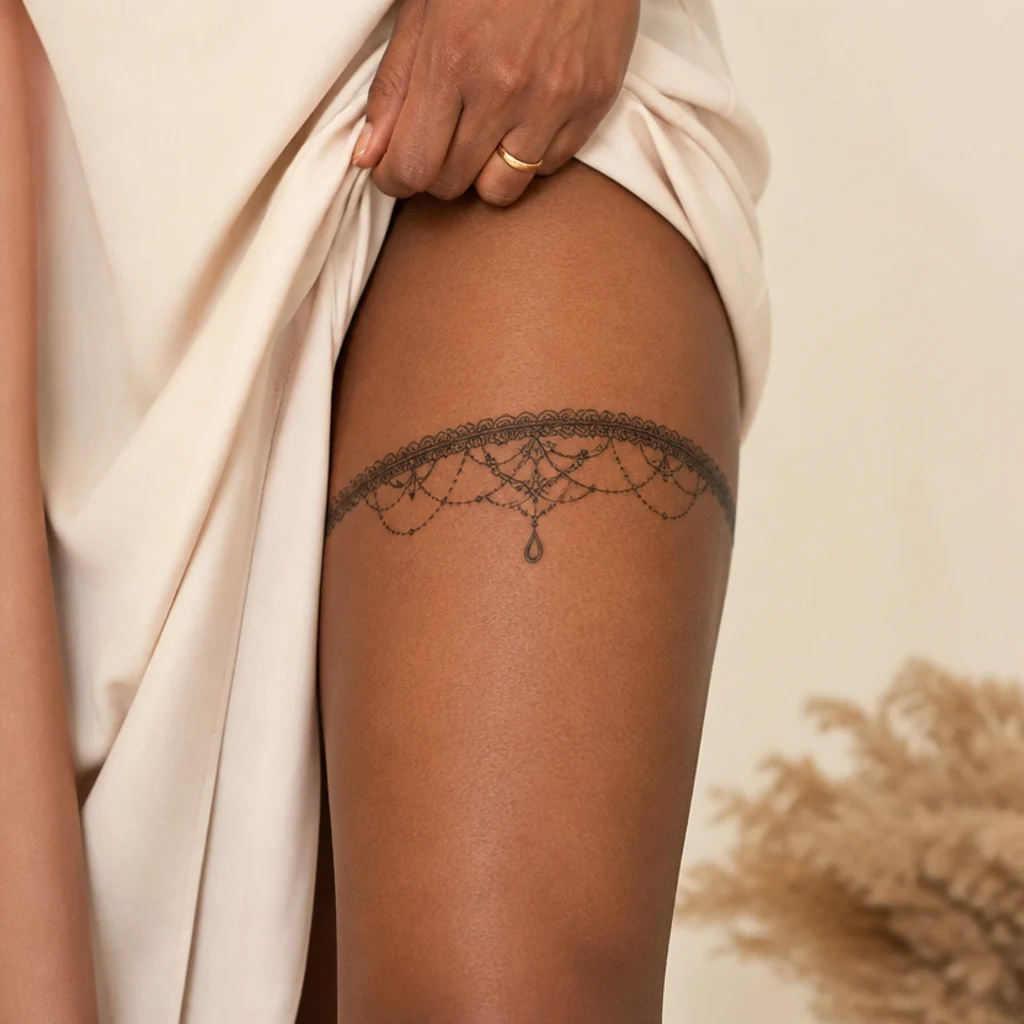
A lace garter wraps the thigh in delicate ornamental patterning that can cover an old tattoo while reading as decorative and intentionally feminine. Repeating loops, scallops, dots, and small hanging pendants give an artist flexible density to concentrate over the existing mark, then thin out gracefully around it. It suits the mid and upper thigh and works well with a romantic, boudoir-leaning style. Here's the honest caveat: very fine, airy lace isn't high-coverage on its own, so if the original tattoo is dark, the lace needs solid-filled bands or a denser central motif to actually bury it rather than just veil it. Intricate detail also softens over time, so plan for a touch-up to keep the pattern crisp. Place a solid-filled bow, cameo, or ribbon at the exact spot over the old design's darkest area, and let the finer lace decorate outward from there — ask your artist how much of the lace needs solid fill versus fine line, especially if the old ink is heavily saturated.
12Ornamental Black Ankle Chain
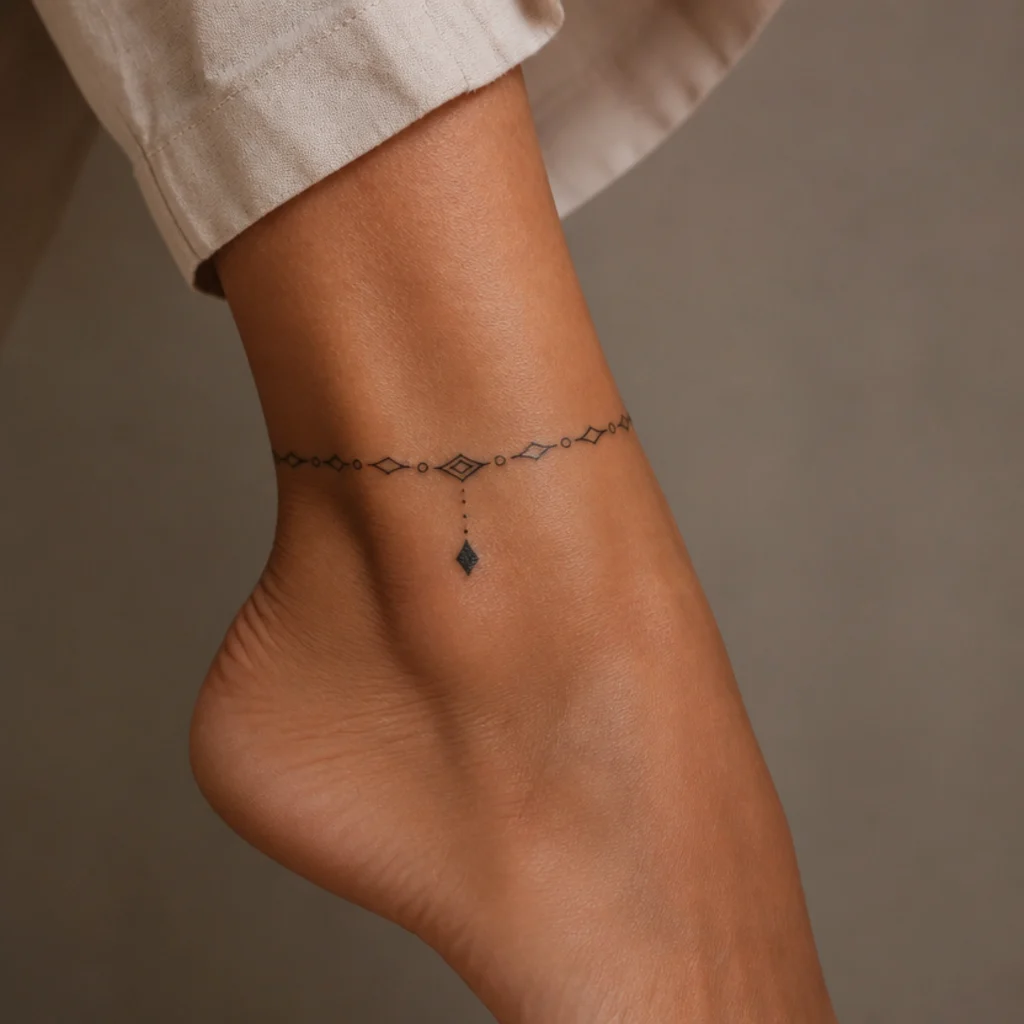
An ornamental chain or beaded anklet is a graceful way to cover a small ankle tattoo, routing linked shapes around the ankle so a denser charm or pendant lands precisely over the old mark. It reads as jewelry, subtle and pretty, and works on both slim and fuller ankles by tracing the narrowest part of the leg. Ankle skin sits close to bone with little cushioning, so it can be tender to tattoo and benefits from attentive healing; keep it clean and avoid rubbing from socks and shoes while it settles. As a small cover-up, the finer links may need a touch-up to stay sharp over the years. The limitation is the same as any delicate design: thin chain alone may not fully hide dark ink. Build in one solid-filled charm, locket, or bead heavy enough to bury the old tattoo, and treat the rest of the chain as decoration around it. Ask your artist whether the chain alone covers your existing mark, or whether a small solid pendant at the key spot gives more reliable coverage.
13Blackwork Raven on the Back
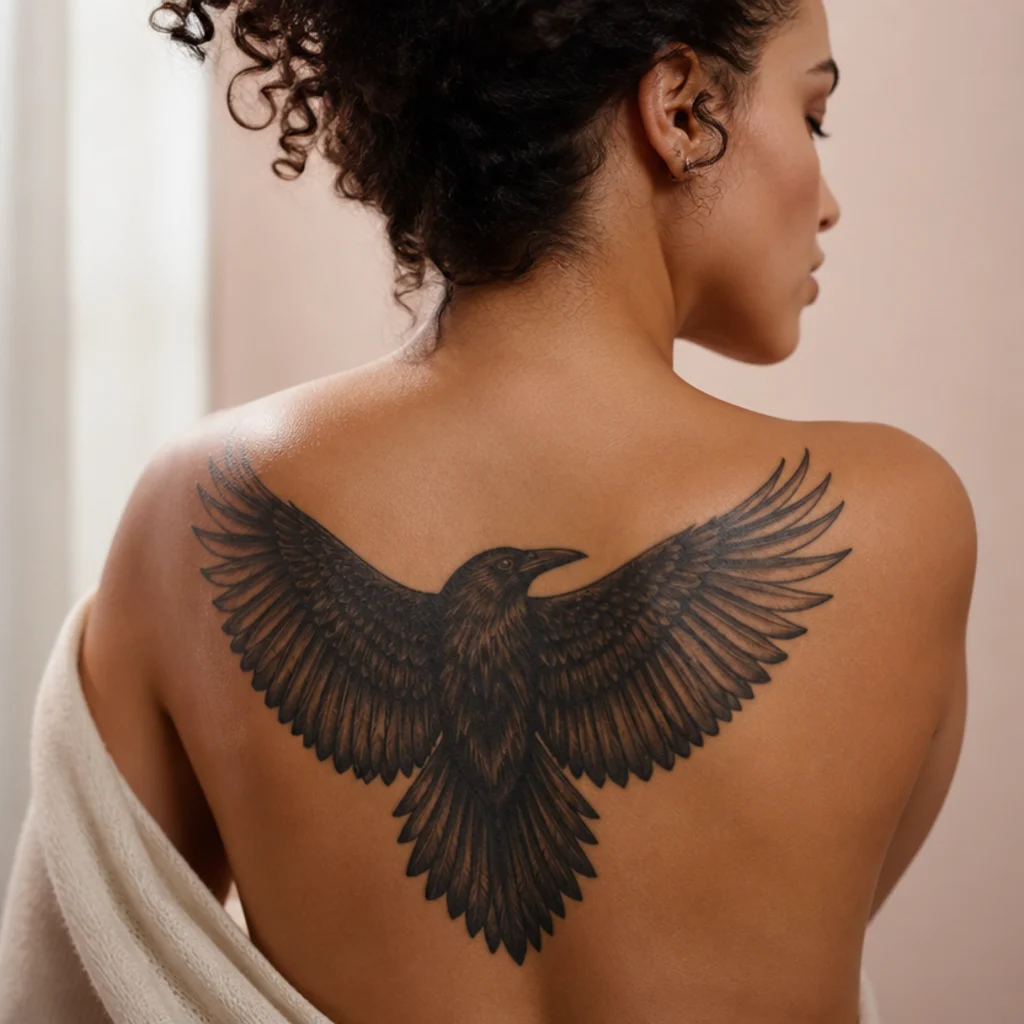
For large cover up tattoos, a blackwork raven with outstretched wings covers significant ground with dense feathers and solid black body work. Spanning the upper back or across the shoulder, it turns an old, sizeable tattoo into a dramatic centerpiece rather than a problem to hide. It suits broad, flat placements and works well for anyone ready for a high-contrast, statement-scale design. Large blackwork holds up precisely because of its saturation, but big solid areas mean multiple sessions, real cost, and committed aftercare to heal evenly across a wide surface. Coverage lives entirely in the planning: the feathered, shaded body must land over the busiest, darkest zones of the old piece, while the wingtips and airy feather edges can drift over clean skin. Ask to see a digital overlay of the raven on a photo of your actual tattoo before the first session, so you can confirm the dark mass covers what matters, and have your artist be candid about how many sessions full, gap-free saturation will realistically take.
14Small Black Butterfly Cover-Up
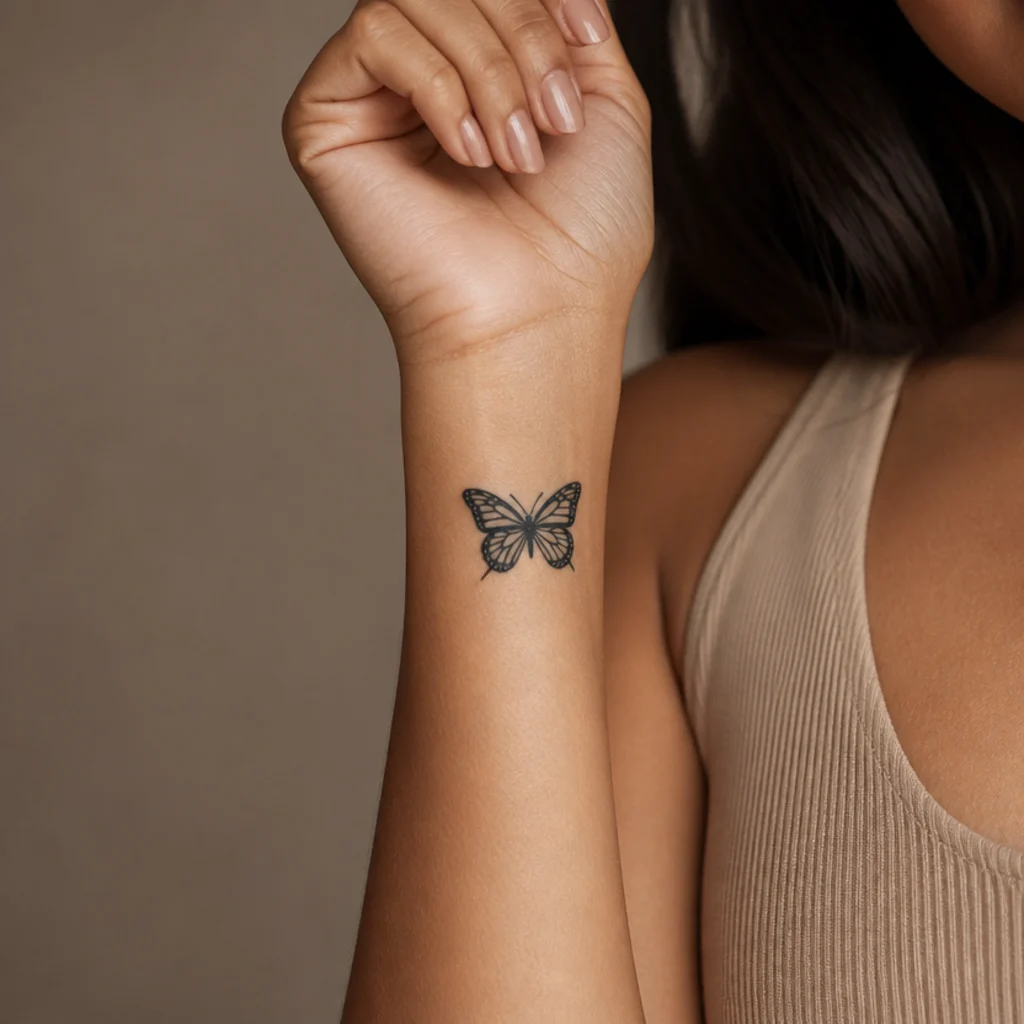
A small black butterfly ranks among the most versatile small cover up tattoos: its symmetrical wings hold enough fill to hide a modest old design while staying light and classic. The four-lobed wing shape lets an artist concentrate dense black exactly where the old mark sits and keep the outer edges airy, so the piece never looks like a solid blot. It suits the inner forearm, shoulder, ankle, or nape and works well with a soft, feminine look. Maintenance is low, with an occasional refresh to keep the wing fill even as it softens. The usual small-tattoo rule applies here too: if the original is larger or darker than expected, a tiny butterfly won't cover it, so sizing up slightly buys real coverage. Adding shaded body detail and a little dark blending between the wings closes the gaps where faded ink most often peeks through — ask your artist whether sizing the butterfly up, or deepening the fill toward the body, covers cleaner over your specific mark.
15Bold Black Peony on the Forearm
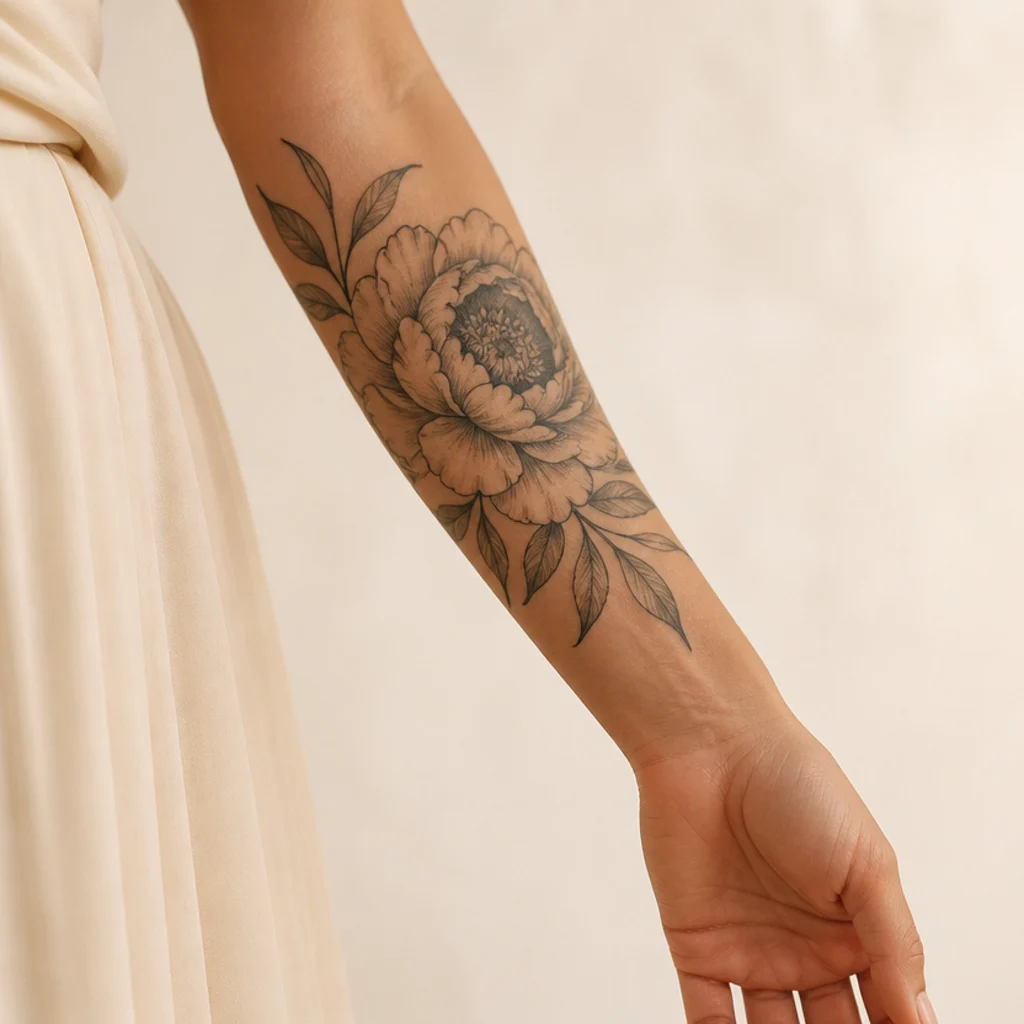
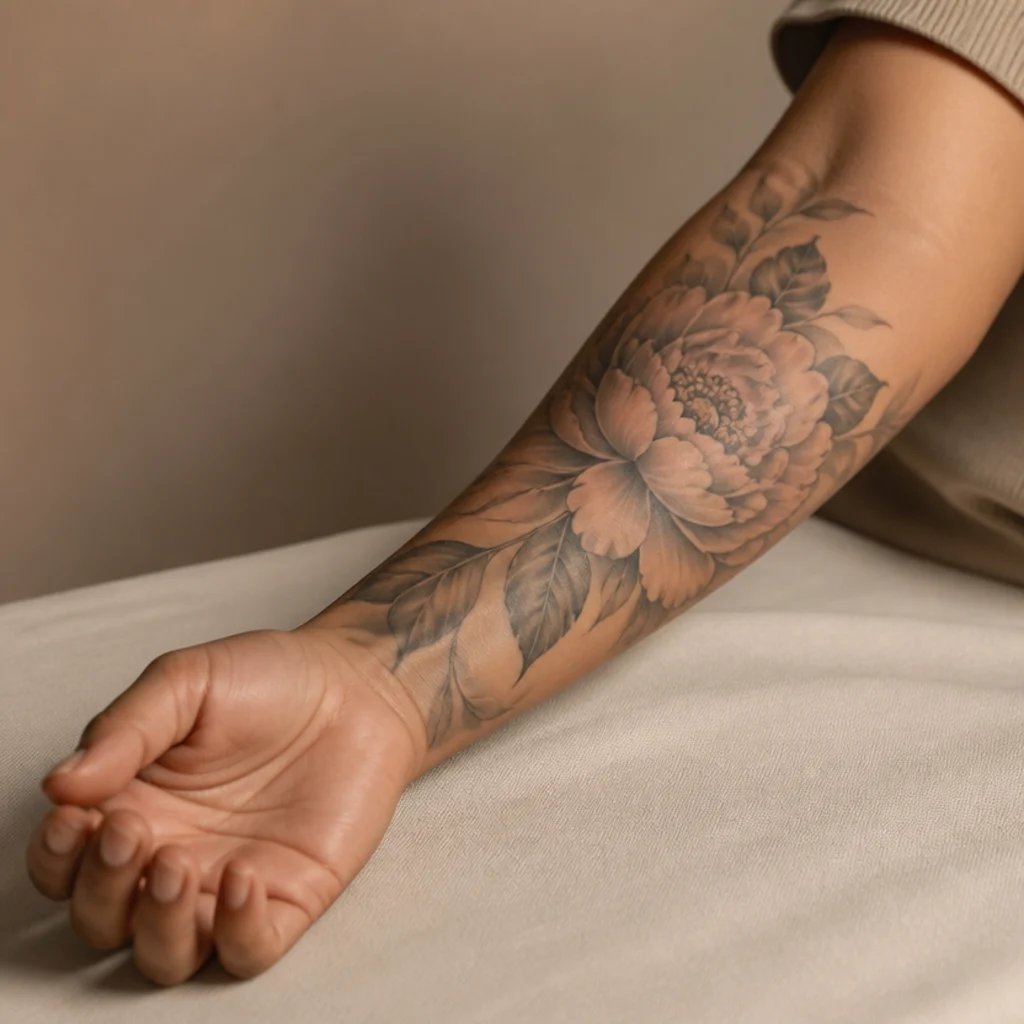
A full peony packs layered, ruffled petals and deep shading into a rounded bloom, making it one of the strongest single-motif forearm cover-ups. The dense, shadowed center and crowded petal edges give an artist plenty of dark territory to work over an old design, while the flower's natural roundness suits the forearm, upper arm, or thigh. It flatters anyone wanting a lush, feminine statement with real visual weight. Peonies age well because their solid shaded cores stay legible, needing only light touch-ups to the softest grey washes over the years. As with the rose, the coverage sits in the shadows, not the outline. Position the flower's darkest central mass directly over the most stubborn, saturated part of your existing tattoo, then cluster leaves, buds, or a second smaller bloom around any edges that need extra density — that surrounding foliage is your insurance against a faded line ghosting through. Ask your artist to design the peony and its leaves around the footprint of your current tattoo, rather than fitting a stock flower over it.
16Geometric Blackwork Half-Sleeve
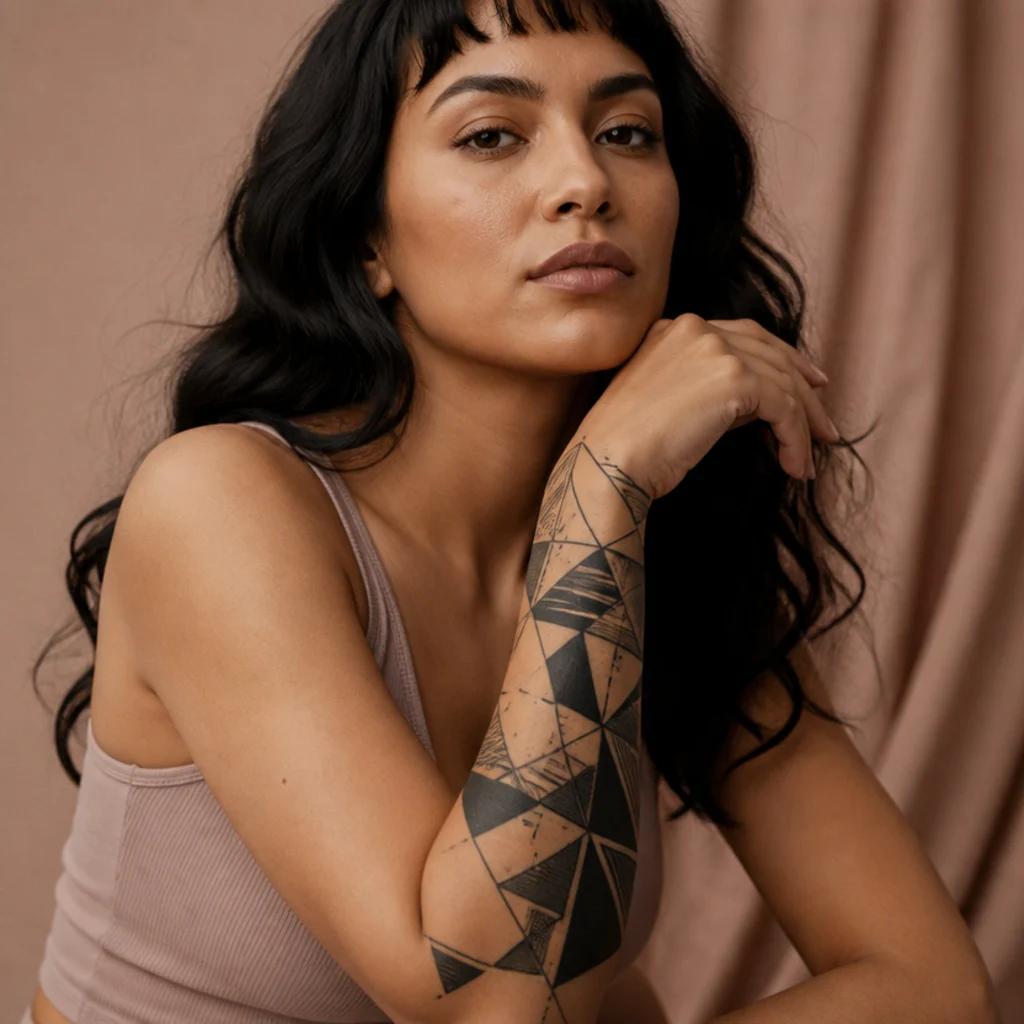
A geometric blackwork half-sleeve combines solid shapes, mandalic patterns, and deliberate negative space to cover multiple old tattoos at once, which few other approaches manage cohesively. Filled triangles, ornamental bands, and dotwork gradients get arranged so dated ink disappears under solid panels while clean skin stays open where nothing needs hiding, giving a modern, architectural look instead of a scramble of unrelated pieces. It suits the forearm or upper arm and works well for anyone who wants structure and a contemporary edge. Because it deliberately mixes dense black with open gaps, planning matters most here; the negative space must fall only over clean skin, never over an old mark. The bold shapes hold up well and read clearly for years. Give your artist a full wraparound view of the whole area in good light so the pattern can be built around every mark, deciding exactly where solid fill is required versus where the skin can stay bare. Ask your artist to design the geometry around what needs covering first, then build the look around that constraint.
17Black Wave and Ocean Motif
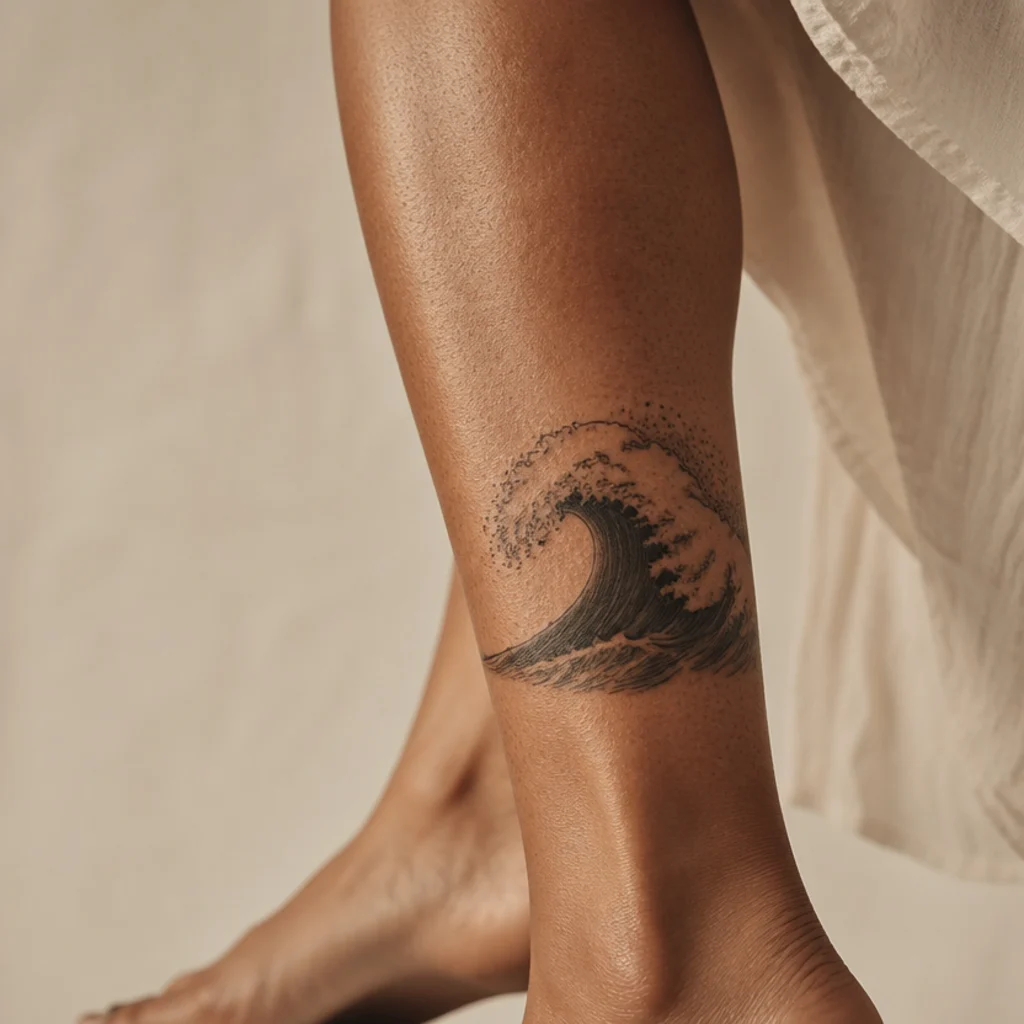
A stylized wave in black linework and shading brings motion that can flow over an old tattoo, using the curl, crest, and foam to break up and disguise an existing shape. The dark trough of the wave offers real solid coverage while the airy spray and foam lines keep the overall piece light and dynamic. It suits the calf, forearm, or shoulder and works with a nature-inspired, Japanese-influenced look. The design's coverage depends heavily on how much solid black lives in the wave's body: a purely delicate, foamy wave won't hide darker old ink, so the trough and undercurl need real saturation to do the work. Plan for occasional touch-ups to the finest spray lines, which soften first. Orient the wave so its heaviest, darkest curl breaks directly over the busiest part of the old tattoo, letting the light foam decorate the clean edges, and ask your artist how much solid black the wave needs to fully cover your current design rather than keeping the whole thing uniformly airy.
18Small Black Crescent Moon
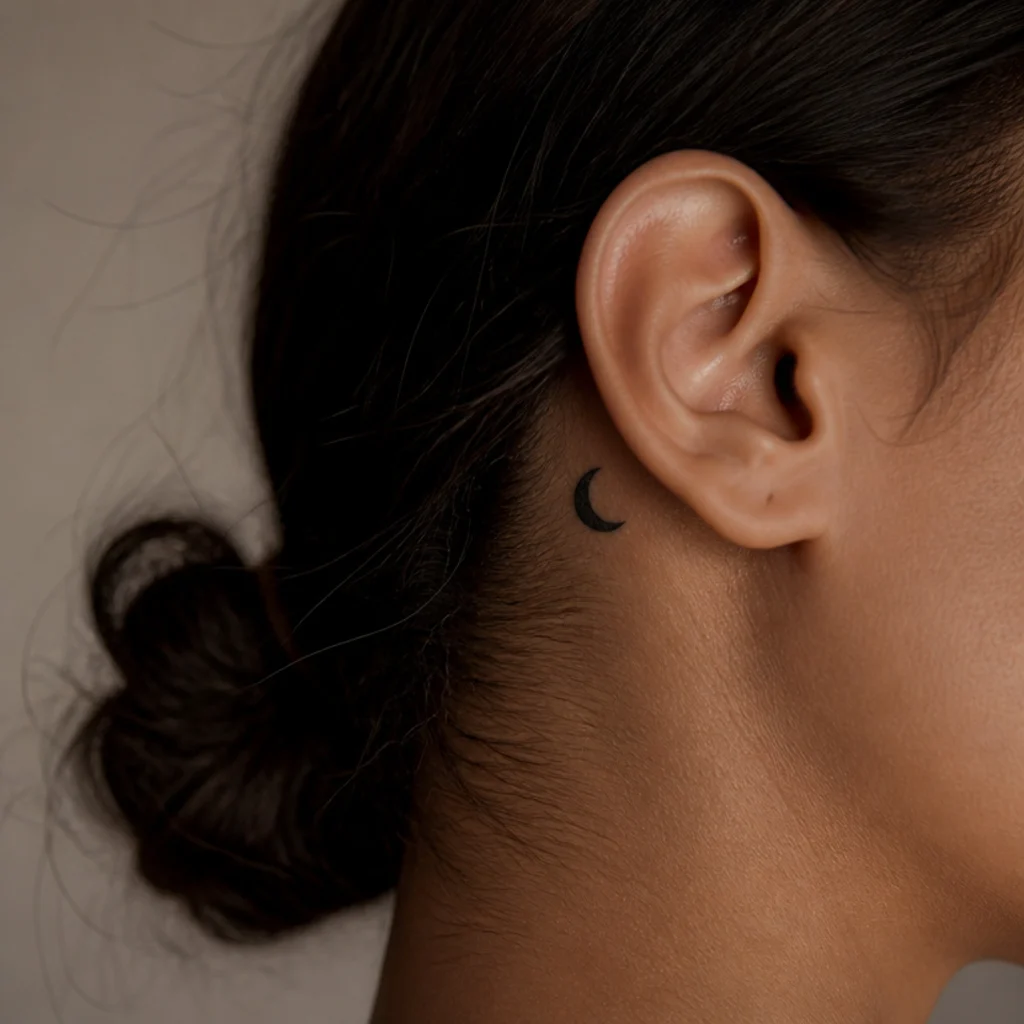
A solid crescent moon is a quiet, elegant option for small cover up tattoos, its compact filled curve covering a tiny old mark cleanly while reading as celestial and understated. The smooth, tapering shape suits behind the ear, the wrist, the nape, or the ankle, and it works well for anyone wanting something minimal and modern rather than ornamental. Solid fill is what makes it cover, so keep it a filled crescent rather than an open outline; upkeep stays low aside from an occasional refresh to keep the fill uniform. Because the shape is small, its coverage is only as good as its size relative to the original, so it works best over very small marks. A few small solid stars or a fine dot trail scattered beside the moon extend the composition and pull the eye off any faint edge of the old tattoo that lingers at the margins. Ask your artist whether the crescent's width fully covers your mark or whether adding small accents around it helps distract from any faint remnants.
19Black Filigree Over an Old Name
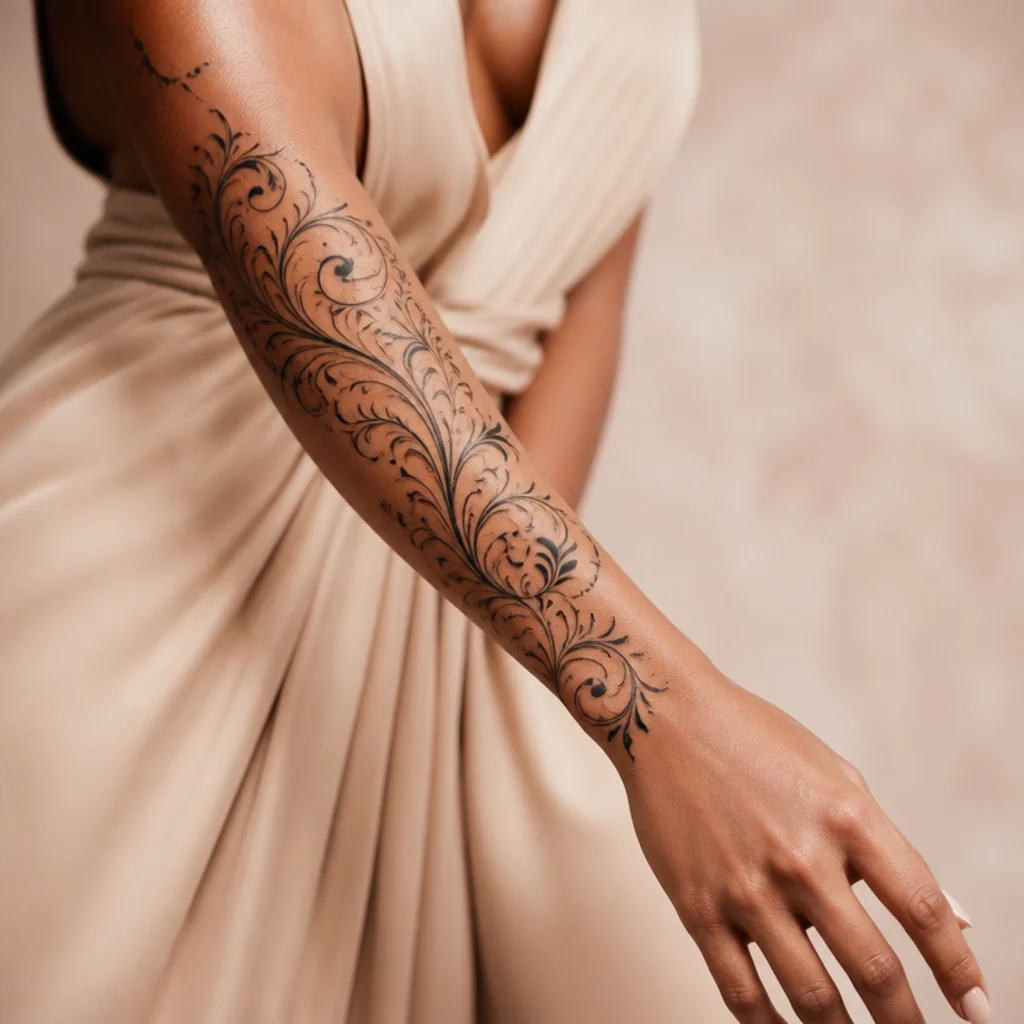
Ornate filigree scrollwork is a graceful solution for name cover up tattoos, using swirling flourishes and small solid accents to weave over old lettering until the letters read as decorative pattern. The curves can be routed directly along the shapes of the letters, absorbing ascenders and loops into the flourish so the original word dissolves into ornament. It suits the forearm, chest, or shoulder blade and works with a romantic, Victorian-leaning style. The honest limitation is coverage: very open, airy scrollwork leaves gaps, and a dark name can peek through between the swirls, so the filigree needs enough solid-filled elements sitting directly over each letter to bury it. Fine scrollwork also softens over time and benefits from touch-ups. Ask for small solid-black teardrops, dots, or leaf accents placed precisely over the darkest strokes of the old letters, so the fill does the covering while the delicate curves handle the beauty — and ask your artist how much density each letter needs, since open scrollwork alone may leave a dark name partly visible.
20Full Blackout Forearm Statement
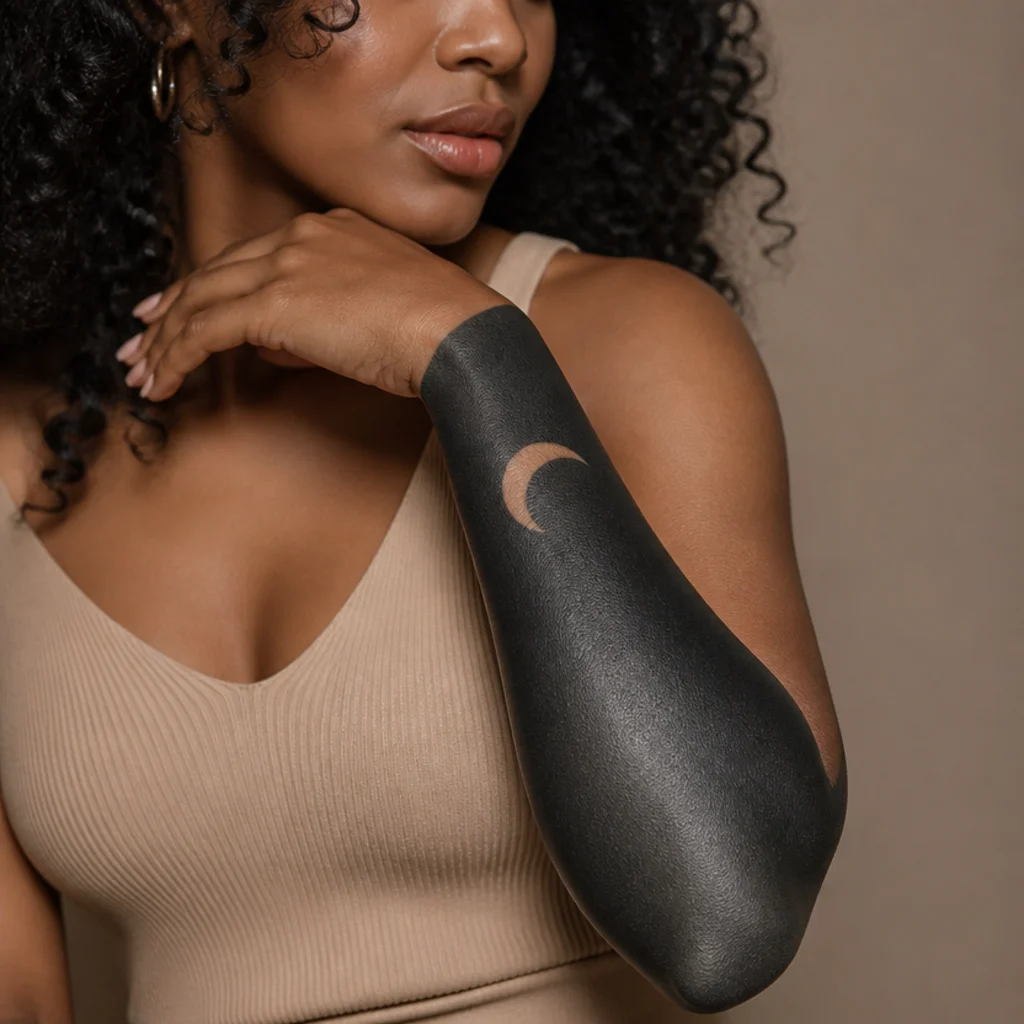
A full blackout forearm is the boldest cover-up on this list, saturating an entire section in smooth solid black to bury even large or very dark old tattoos that no illustrative design could fully hide. It's a striking, sculptural choice that turns a problem area into a clean, deliberate statement, often with a small negative-space shape, a moon, a line, a botanical silhouette, left within the black for interest. It suits those fully committed to a graphic look and reads as high-contrast across every skin tone. Blackout is the most technically demanding style here: it requires an experienced artist for smooth, gap-free saturation, takes multiple sessions, and needs careful healing to avoid patchiness, since blowouts or uneven areas are hard to fix. It's also the hardest cover-up to reverse or lighten later, so treat it as a true commitment. Ask to see healed blackout work from the same artist, not just fresh photos, because how their solid fill settles after healing tells you everything. Talk through realistic expectations, session count, and aftercare, and confirm the full plan with your licensed artist before committing to something this permanent.
Pro Tips from the Editor
- Coverage is won in the shadows, not the outline. Whatever design you choose, insist that its darkest, densest areas are mapped over the darkest parts of your existing tattoo. A pretty design placed without this logic will let old ink ghost through.
- Ask for a digital overlay before you book. Many artists can superimpose a mockup onto a photo of your actual skin. Seeing the dark mass land over the old mark is the single best predictor of real-world coverage.
- Size up, then commit. Cover-ups almost always need to run larger than the original, with a clean margin all around. Fighting for the smallest possible piece is the most common reason a cover-up disappoints.
- Solid beats delicate, every time, for hiding ink. Fine-line, airy lace, and open scrollwork are gorgeous but low-coverage. If the original is dark, make sure the new design carries genuine solid fill where it counts.
- Vet the artist for the specific style. Blackout and large blackwork demand a specialist. Look at healed photos, not fresh ones, since solid black reveals unevenness only after it settles.
- Protect your investment from the sun. UV is the top cause of black fading to grey-blue. Daily SPF 30+ on a healed piece meaningfully extends the years between touch-ups.
- Budget for more than one session. Dark or large originals rarely reach full saturation in a single sitting. Plan and price for a follow-up pass from the start so a partial result doesn't catch you off guard.
Here's a quick way to match the scale of your original tattoo to a realistic black cover-up approach:
| Original tattoo | Best black approach | Coverage strength | Typical sessions |
|---|---|---|---|
| Tiny, faded mark or short word | Solid heart, crescent, star cluster | High (if fully filled) | 1 |
| Small-to-medium, moderately dark | Butterfly, botanical panel, rose | Medium-high | 1-2 |
| Old name or lettering | Solid band, filigree with solid accents | High (band) / Medium (filigree) | 1-2 |
| Large or very dark piece | Blackwork raven, geometric sleeve, blackout | High | 2-4+ |
| Flat, fully-healed scar | Dotwork mandala, soft blackwork | Softening only, not erasure | 2-3+ |
How to Choose / Get the Look
Start by being honest about the four variables that decide everything: how dark the original is, how large it is, how well-healed and even the skin is, and how much visible clean skin you're willing to trade for reliable coverage. A faded, small, or older tattoo gives an artist far more freedom than fresh, heavily saturated ink, and names and scars each bring their own considerations. Work through it in order. First, gather clear, well-lit photos from several angles and see the piece in person at a consultation, since ink reads differently in daylight than in phone photos. Second, choose placement that leaves room to work, because cover-ups almost always need to run larger than the original with a clean margin around it. Third, match style to darkness: solid black, blackout, and dense black-and-grey cover reliably, while fine-line, airy lace, and open scrollwork work best on faint originals or paired with solid fill where the old ink is strong. Fourth, match the design's darkest, densest areas to the darkest parts of what's underneath, since that's where coverage succeeds or fails. Then ask directly about session count, healing, cost, and touch-ups, and request a custom drawing built over a photo of your actual skin rather than a stock design dropped on top. Above all, the design, sizing, placement, coverage feasibility, and healing need to be confirmed with a licensed tattoo artist. A reputable pro will set realistic expectations, flag when a scar or dark piece needs extra sessions, and won't promise that any cover-up will fully hide an existing tattoo or scar.
Frequently Asked Questions
Can a black tattoo fully cover an old one?
Often it can significantly disguise or reshape an old tattoo, especially with solid black, blackout, or dense black-and-grey work, which overrides existing pigment more reliably than any lighter color. But complete coverage isn't guaranteed, particularly with very dark or heavily saturated originals, which may still show faintly through delicate designs. A licensed artist can assess yours in person and give a realistic expectation, including whether a bolder or larger design is needed, before you commit.
Are cover-up tattoos more expensive than regular tattoos?
They usually cost more than a fresh tattoo of the same size, because they require extra design time, a larger footprint, careful custom planning over your specific mark, and often multiple sessions for full saturation. Pricing varies widely by artist, region, and the difficulty of what you're covering, so treat online figures as rough ranges only and ask for a firm estimate at consultation once the plan and session count are set.
Do black cover-up tattoos work on scars?
Sometimes, but scarred skin behaves differently from unmarked skin and must be fully healed, flat, and professionally assessed before any tattooing. A licensed artist decides whether it's suitable, and dotwork or soft blackwork over scar tissue often needs extra, gentler sessions. The realistic goal is to soften and distract from a scar, not erase it; a cover-up may reduce how noticeable it is but won't necessarily hide it completely.
How do I choose between a small design and a blackout?
It comes down to how dark and how large the original is. Small solid designs like a heart, crescent, or star cluster suit faint, tiny marks, while blackout or bold solid blackwork is often the only thing that reliably covers large or very dark tattoos. If a delicate design would need so much added fill that it stops looking delicate, that's usually a sign the piece needs to go bolder. Your artist can advise which route actually delivers coverage.
How long do black cover-up tattoos last?
Solid black and bold blackwork age particularly well because dense pigment stays legible for decades, though every tattoo softens gradually over time. Fine-line and airy elements fade soonest. Daily sun protection is the biggest factor in longevity, since UV fades black toward grey-blue, and occasional touch-ups keep edges crisp. Follow your artist's healing and aftercare guidance closely, especially on large or blackout pieces, for the best long-term result.
How much bigger does a cover-up need to be than the original?
Usually noticeably bigger, though the exact amount depends on the original's darkness and your placement. As a rule of thumb, the new design needs enough room to place solid coverage over every part of the old mark plus a clean margin around it, so the covering elements don't sit right at the edge. Very dark originals need more surrounding design to distract the eye. Your artist will size it during the custom drawing stage.
Can you cover a black tattoo with another black tattoo?
Yes, and it's one of the more workable scenarios, since you're adding density rather than trying to hide dark ink under light color. The new piece needs even more solid black or blackout saturation than the original to fully override it, which is why blackout, heavy blackwork, and dense black-and-grey are the usual answers. A skilled artist will plan where the new solid areas must fall and how many passes even coverage will take.
How many sessions does a black cover-up usually take?
Small, faded originals can often be covered in a single session, while dark, large, or scarred areas commonly need two, three, or more, with time to heal between them. Blackout and large blackwork almost always require multiple sittings to build smooth, gap-free saturation. Ask your artist for a realistic session count up front so you can plan time and budget, and don't rush the healing gaps between passes.
Will a cover-up ruin my chances of laser removal later?
Adding more ink, especially dense black, generally makes future laser removal longer and more involved, since there's more pigment for the laser to break down. If you think you might want removal down the line, raise it at consultation before committing to a heavy cover-up or blackout. A licensed artist can talk through the trade-offs, and some people choose a few sessions of laser lightening first to make an eventual cover-up easier.