20 Stunning 70s Makeup Looks to Recreate
The seventies handed us shimmer, sun-warmth, and a whole vocabulary of eye color that still reads modern. These 20 looks each come with the exact undertone they flatter, a realistic upkeep timeline, and the plain words to hand an artist so you get the look, not a costume.
 Edited by Lena Rose · Published July 11, 2026 · 36 min read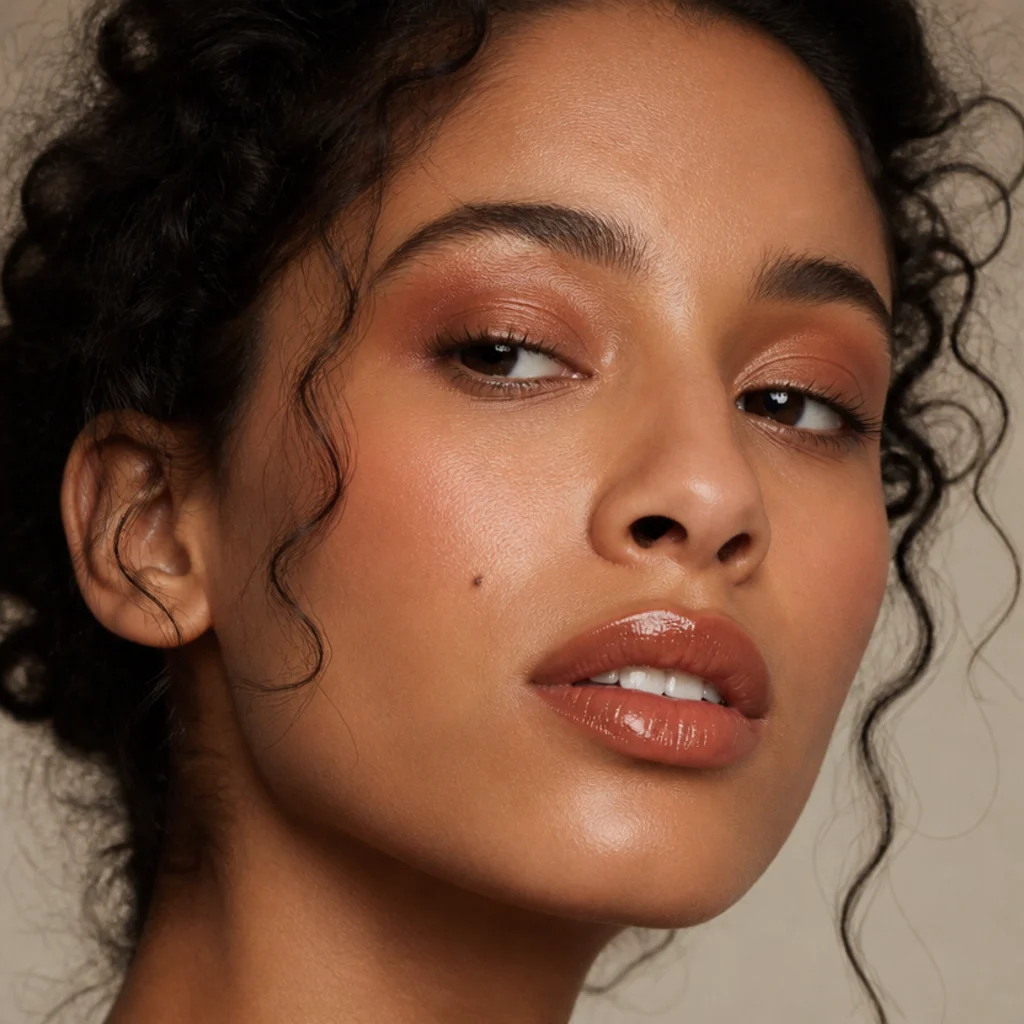
Quick Answer
- Best for: Anyone drawn to warm earth tones, frost, and expressive eye color; the palette flatters every skin tone and every age when the undertone is matched to yours.
- Who might skip it: Purists who want a cool-toned, matte, "clean girl" face, or anyone who dislikes visible shimmer near the eye. Reach for one element (a lip or a draped blush) rather than the full era.
- Maintenance: Low to moderate. Gloss and cream blush want a midday touch-up; stains, matte earth tones, and set frost hold through a workday.
- Difficulty: Beginner to intermediate. One-shade washes and stains are foolproof; cut crease, floating liner, and sculpted glam need a steadier hand.
- Cost: Highly variable. Most looks build from a warm neutral palette and one bronzer you likely own; specialty items (a true frost, a gel liner, a glitter base) run from a few drugstore dollars to prestige pricing.
- Wear time / longevity: Roughly 4-6 hours for cream and gloss finishes, 8-plus for stains and primed frost. A setting spray narrows the gap.
- Standout variation: The disco silver shimmer eye (No. 6) and the Cher-inspired sculpted glam (No. 15).
- How to ask your artist: Bring one saved photo, name the technique and the placement ("draped blush lifted to the temple," "frost kept below the crease"), and state your undertone. That gets you far closer than naming a shade alone.
In This Guide
- Warm Bronze Wash
- Terracotta Monochrome
- Blue Frost Lid
- Earthy Hippie Glow
- Copper Smoked Eye
- Disco Silver Shimmer
- Peach and Plum Blush Draping
- Golden Cut Crease
- Olive and Moss Green Eye
- Soft Kohl Doe Eye
- Frosted Lilac Lid
- Berry Stained Lip and Cheek
- Bronzed Sun Goddess
- Floating Rainbow Liner
- Cher Sculpted Glam
- Nude Gloss and Bare Lash
- Rust and Gold Halo Eye
- Pearlescent White Highlight
- Deep Brown Disco Liner
- Flushed Festival Freckle
The 1970s was really two decades of makeup stacked into one. The early years ran on loose, sun-warmed naturalism, bare skin, brushed-up brows, a wash of earth on the lid, while the disco era that closed the decade turned everything up: high-shine metallics, blush swept to the temple, glossed lips built to catch a mirror ball. That range is exactly why 70s makeup borrows so cleanly into a modern face. Pull a single element, a swipe of copper, a glossy terracotta lip, a drape of blush drifting toward the hairline, and it reads intentional rather than fancy-dress. This guide splits the era into 20 specific looks so you can match one to your coloring, your skill level, and the occasion in front of you. Each entry names the undertone and eye shape it tends to flatter, gives you a real maintenance timeline instead of a vague "lasts a while," suggests a pairing or two, and hands you the plain language to use with a makeup artist. Whether you're after wearable 70s eye makeup for the office, a full 70s disco makeup moment, or the soft end of hippie makeup looks 70s devotees keep returning to, start by saving the ones that speak to you, then build outward one element at a time.
01Warm Bronze Wash
The foundational 70s eye and the base half this list is built on: one warm bronze swept from the lash line into the crease and diffused until there is no visible edge. Bronze behaves like a warmed-up neutral, so it flatters nearly every skin tone, and because there's no precise line to place, it's forgiving on hooded, mature, and monolid eyes where a defined crease can disappear. Undertone is your only real decision, choose a golden or copper-leaning bronze for warm and olive skin, a cooler taupe-bronze for fair or neutral complexions so it doesn't tip orange. Keep everything else quiet: clear or single-coat mascara, a nude gloss, groomed brows. A cream-to-powder formula patted on with a finger lasts a full workday with one blot around the four-hour mark; a loose powder version wants a primer to prevent fade into the crease. Pair it with a terracotta or caramel lip for lunch, glossed nude for the office. Pro tip: build with a fluffy blending brush using windshield-wiper strokes and stop one shade before you think you're done, warmth reads richer when it's sheer. Ask your artist for "a one-shade warm bronze wash, blended up and out, nothing cut or defined."
02Terracotta Monochrome
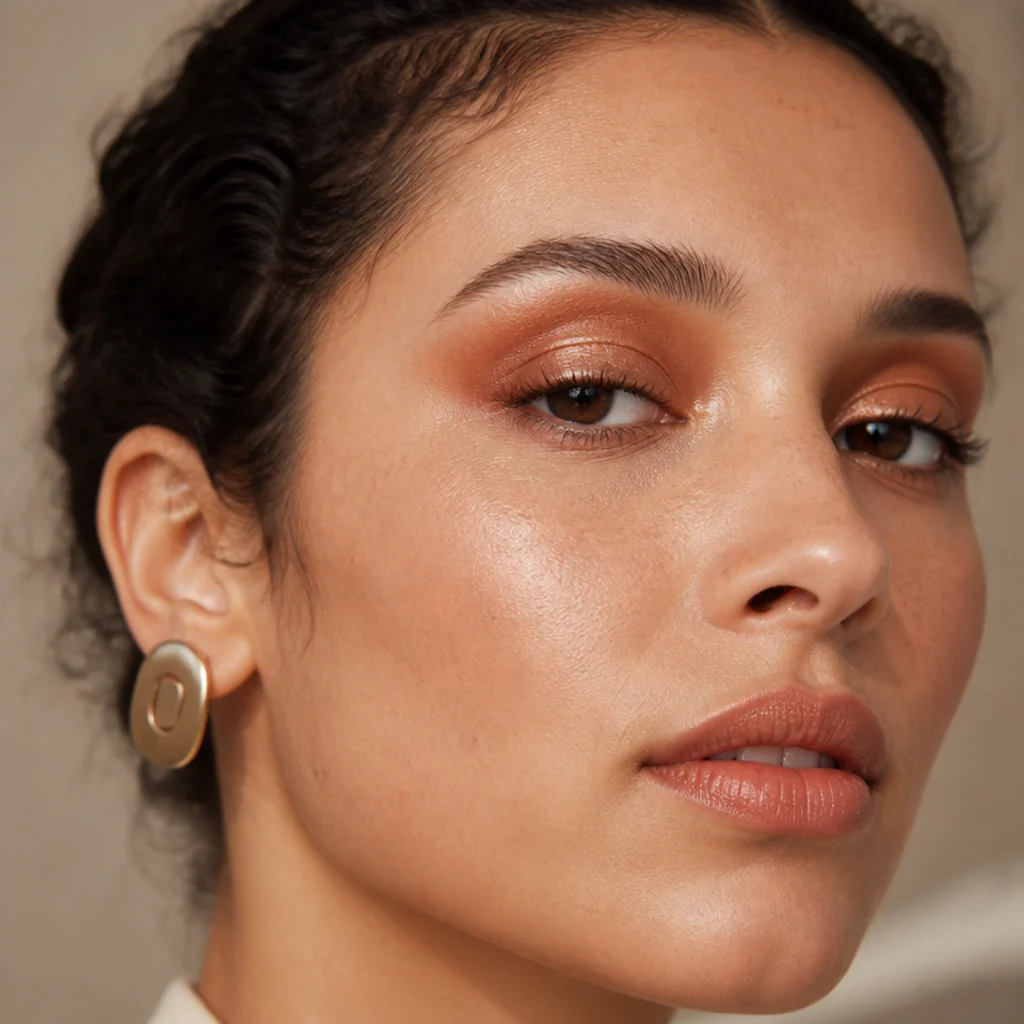
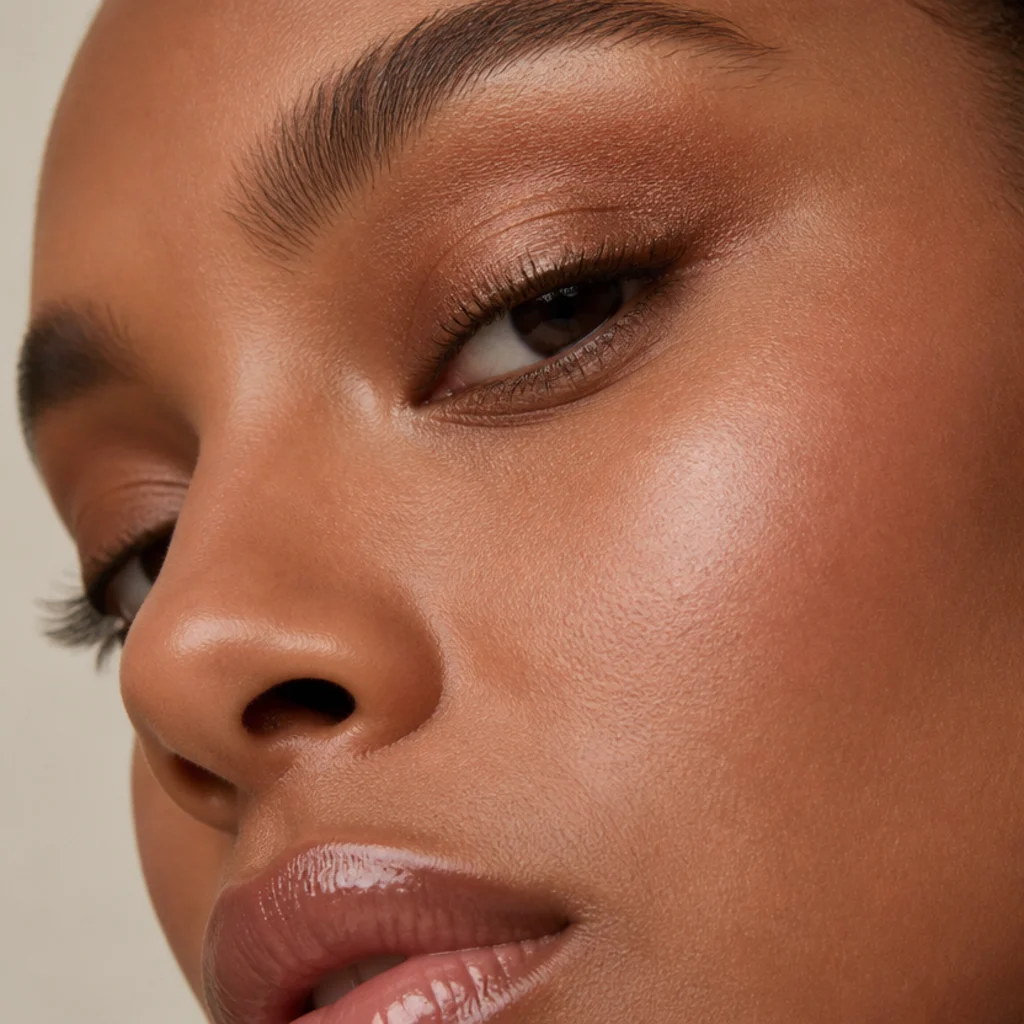
One warm brick-orange carried across eyes, cheeks, and lips for a pulled-together, sun-baked finish, the tonal-dressing idea applied to a face. Terracotta sits most beautifully on medium, olive, tan, and deep skin, where its orange-red base warms without going chalky; fair skin should shift toward a softer clay or peachy-brick so it doesn't read as windburn. A cream formula is the whole trick here, tap the same stick or pot onto lids, the apples of the cheeks, and the lip so the tones match exactly and melt into skin. Sheer the eye, build the lip, and blush somewhere between. Because it's cream on cream, it moves with the face and flatters fine lines rather than settling into them, which makes it a smart pick for mature skin. Wear time is around five hours; the lip is the first to go after meals, so decant a little into your bag. Layer a matching powder blush over the cream cheek if you run oily. Pro tip: press a sheer gloss over only the center of the lip to keep the finish soft-focus rather than flat. Ask your artist for "a terracotta monochrome, cream texture, sheer on the eye and built up on the lip."
03Blue Frost Lid
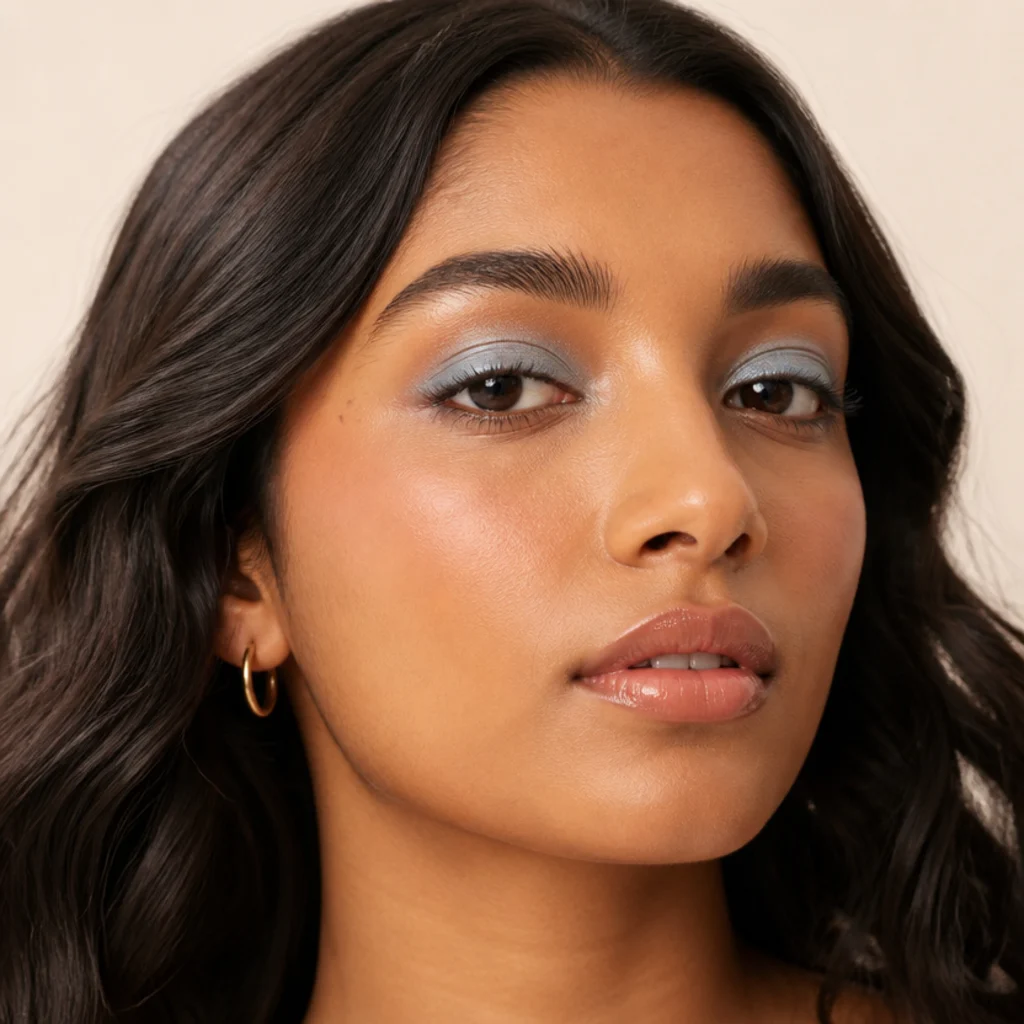
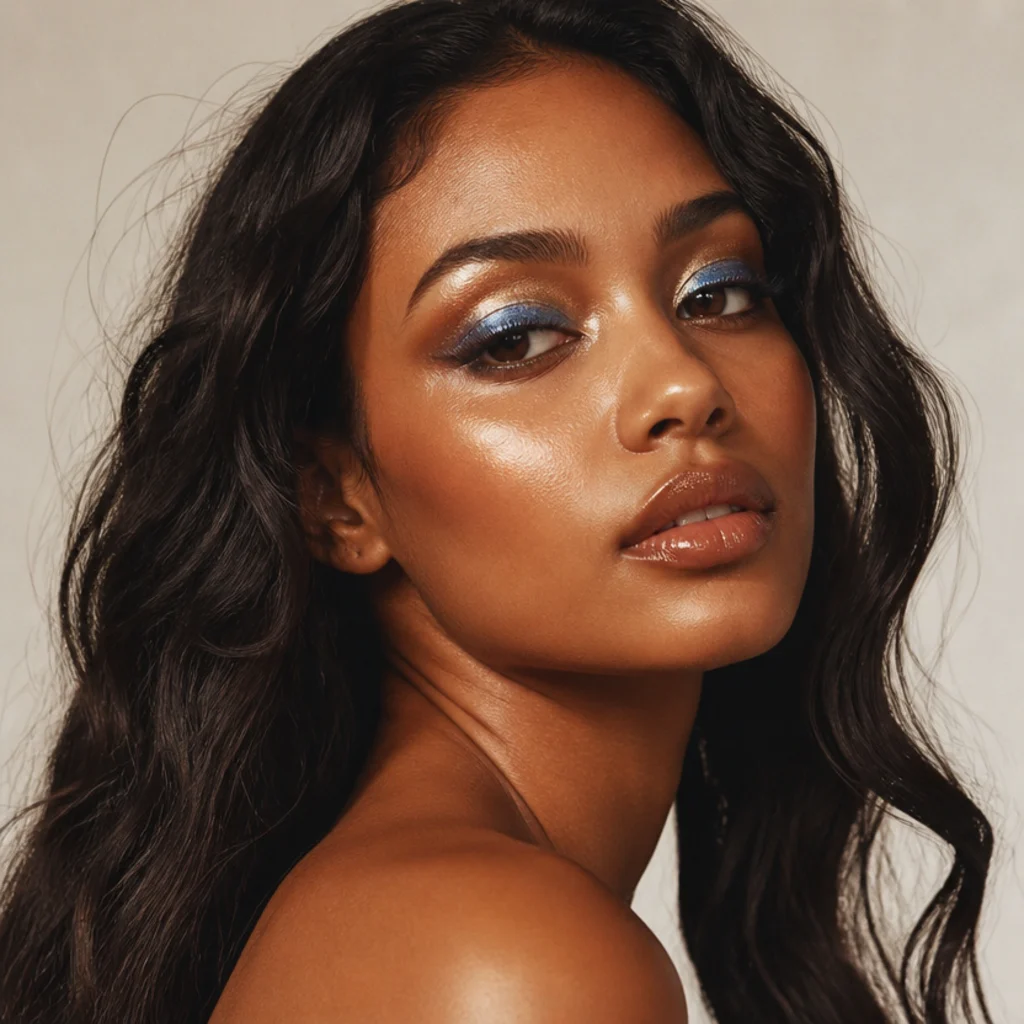
Pure early-seventies nostalgia: a frosted powder-blue lid with a cool, icy sheen, deliberately offset by a pale nude lip so the eye stays the whole story. Cool and neutral undertones wear blue frost most naturally, and it pops by contrast against brown, amber, and hazel eyes, a warm iris beside a cool lid is a reliably flattering pairing. The single move that keeps this modern rather than retro-costume is placement: keep the color low and close to the lash line, no higher than the crease, and never carry it to the brow bone the way the era once did. Press it on with a flat, firm shader brush or a fingertip for full frost payoff and minimal fallout, sweeping thins it to nothing. Frost breaks down faster than matte, so a thin, tacky eye primer is non-negotiable if you want more than a couple of hours; even so, expect a touch-up by hour four. Pair it with clean skin, a defined brow, and mascara only. Pro tip: tap a hair of silver or white frost into the center of the lid to amplify the light and make brown eyes read even brighter. Ask your artist for "a soft blue frost lid, kept low, with a bare glossy lip."
04Earthy Hippie Glow
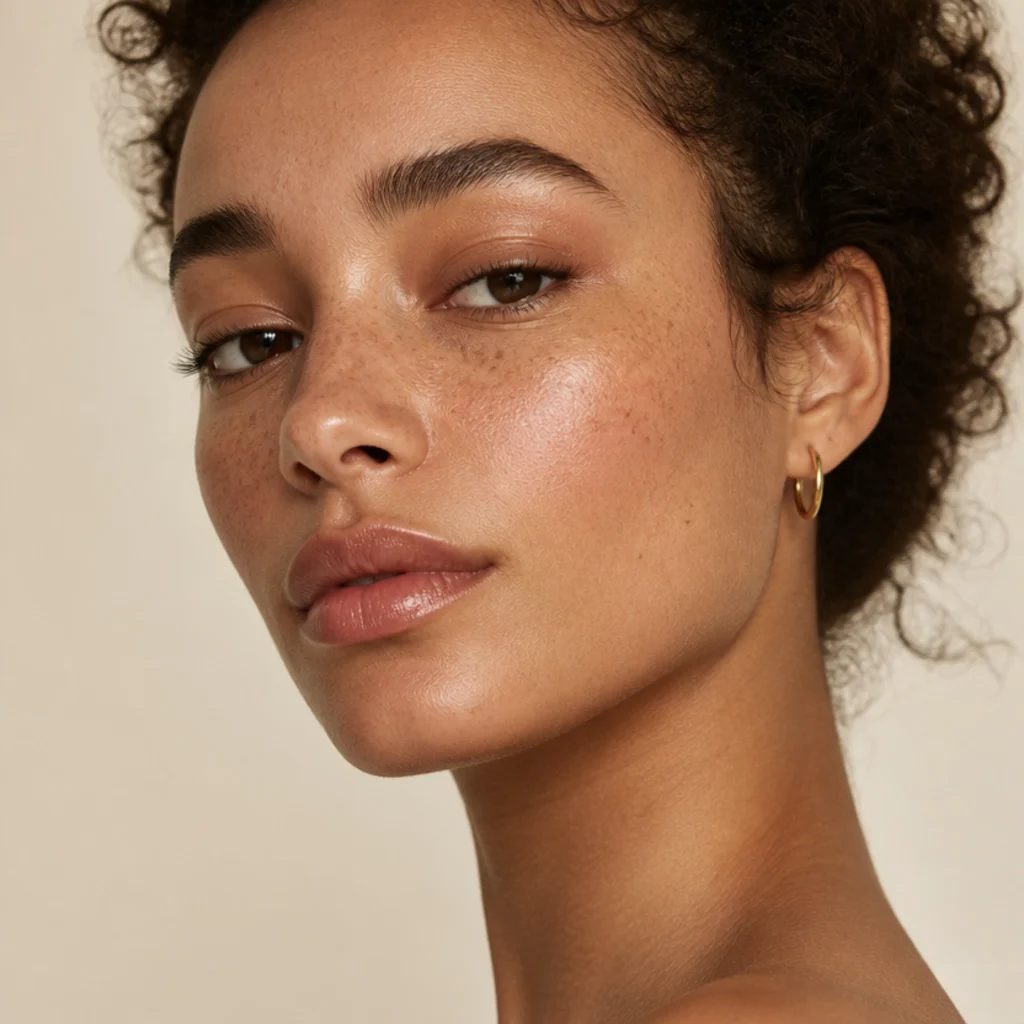
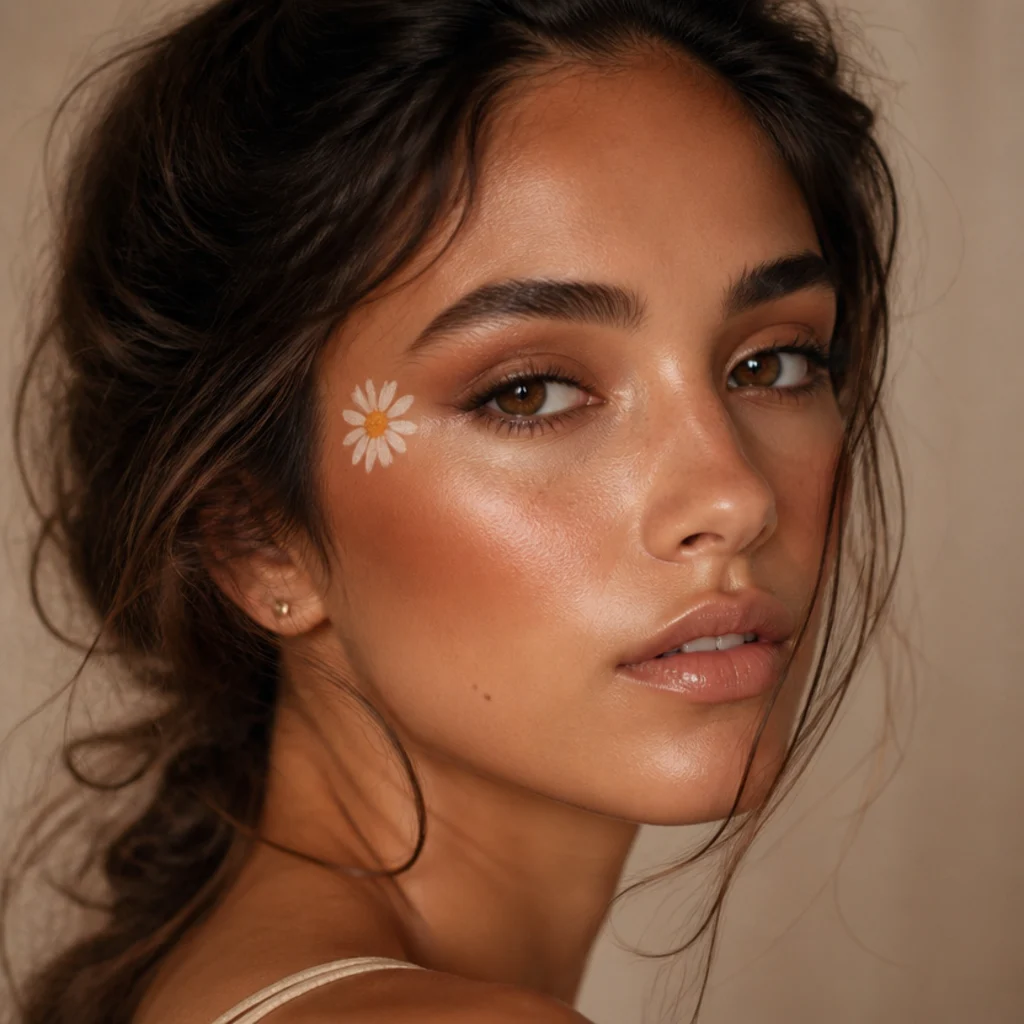
The unbothered festival face and the beating heart of hippie makeup looks 70s fans keep coming back to: skin left dewy and mostly bare, a whisper of soft brown pressed into the socket, brows brushed straight up, and a tinted balm on the lip. Because it leans on skin rather than pigment, prep is the actual work, hydrate, let a facial oil or dewy primer sink in, and use the sheerest wash of skin tint so freckles and natural texture show through rather than getting erased. It suits everyone, and it's especially kind to dry and mature skin that fights a matte, heavy base. The socket brown should be one warm mid-tone applied with a fluffy brush and almost no product on it, you want depth, not definition. Upkeep is close to nothing beyond re-swiping balm; a cream highlighter on the high points refreshes the glow past midday. Style it with undone hair and a straight, feathered brow. Pro tip: dab a clear or peachy cream blush over the cheekbone and the eyelid to tie the whole face together with light. Ask your artist for "a barely-there earthy glow, dewy skin, soft brown socket, no liner."
05Copper Smoked Eye
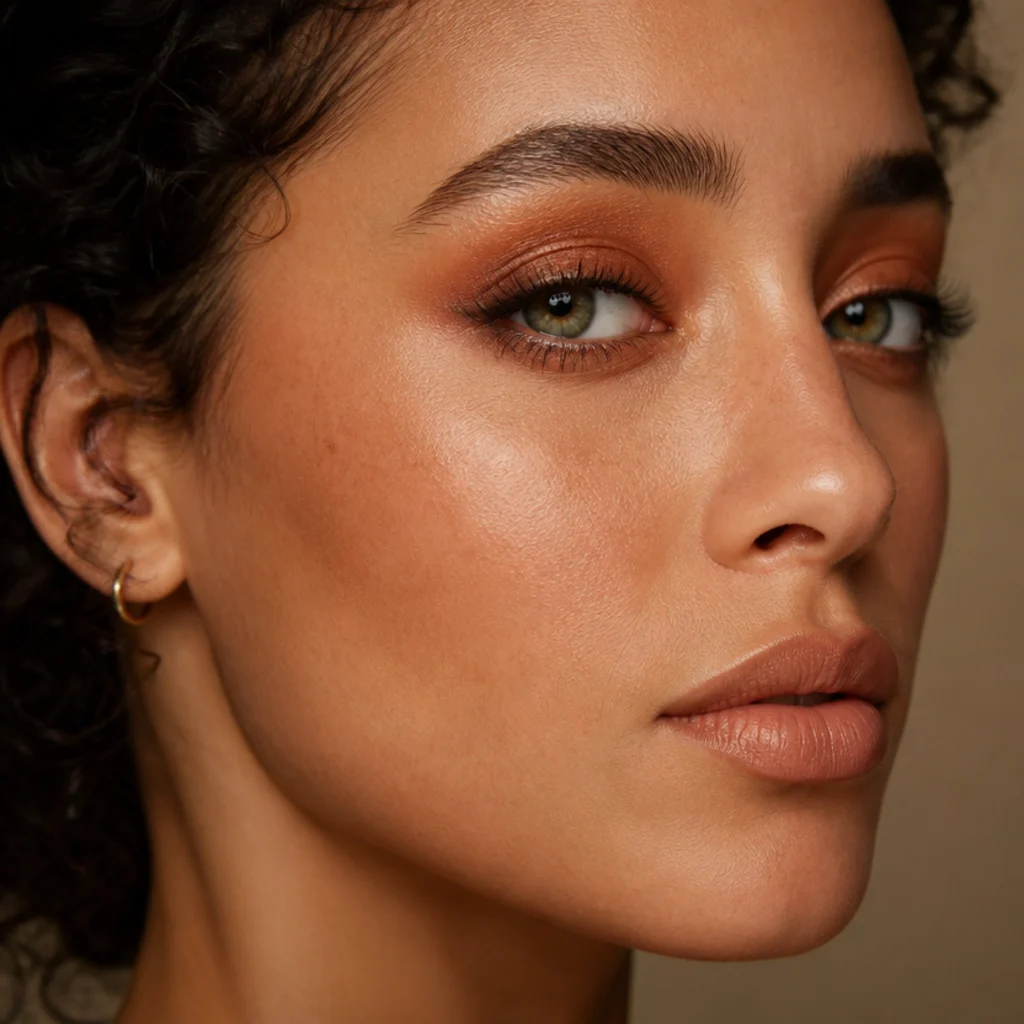
A smoked-out copper eye keeps the classic smoky technique, dark at the lash line, diffused as it climbs, but swaps black for a glowing penny warmth that flatters instead of ages. Copper is a gift to brown, green, hazel, and amber eyes, where it makes the iris look brighter, and its light-reflecting warmth lifts tired or deep-set lids. Build it in thin, patient layers so it stays luminous rather than muddy: a matte russet in the crease for depth, a copper shimmer patted onto the lid, and a little of that copper smoked along the lower lash line to wrap the eye. Warm and deep skin can push the intensity hard; fair skin should keep the copper softer and the lower line light so it doesn't look sore. A shimmer formula migrates without a primer or a cream base beneath it, so anchor it. Wear time runs six-plus hours over primer. Pair it with skin-tone lips and a bronzed cheek for evening. Pro tip: press the shimmer with a flat brush or fingertip and blend only the outer edge, over-blending the center kills the shine. Ask your artist for "a soft copper smoky eye, smudged not sharp, warm all the way around."
Save this to Pinterest to keep your first five looks in one place.
06Disco Silver Shimmer
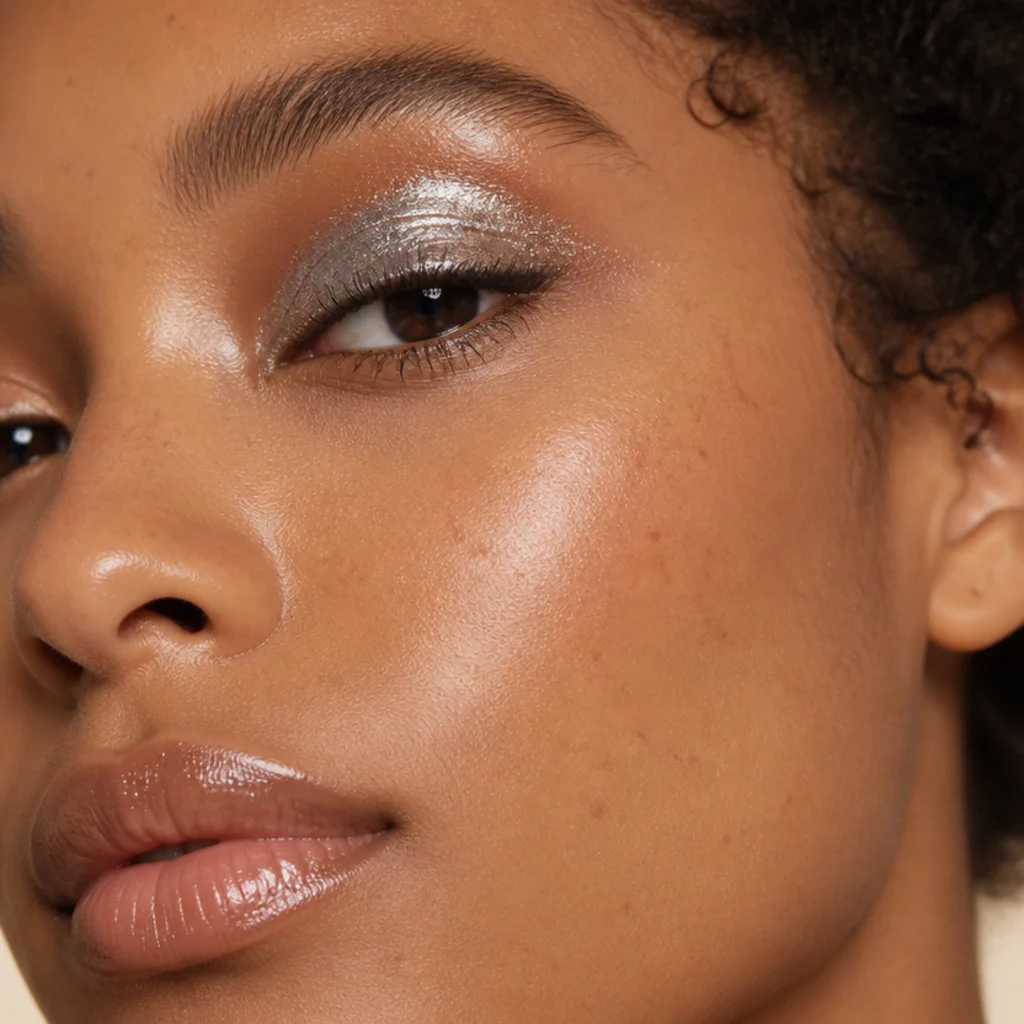
Full Studio 54 energy and the definitive 70s disco makeup look: a high-shine silver lid, luminous skin, and a glossed lip built to throw light on a dark dance floor. It earns its keep in the evening and under low, sparkly lighting, in flat daylight the metal can read costume, so this is a night look by design. Cool undertones wear pure silver most easily, while warmer and deeper skin often looks richer in a champagne-silver or pewter that keeps the shine without the ashiness. The pro method: lay a thin sticky glitter glue or a cream base first, then press the silver on top with a flat brush or fingertip and pack, don't sweep. Do your eyes before your base so you can sweep fallout away and clean up the under-eye last. Upkeep is a quick shimmer re-press before you leave the house; the base makes it cling for hours. Pair it with a slick nude or soft-pink gloss and a highlighted cheekbone, keep the lip quiet so the eye leads. Pro tip: a dot of black or deep-navy smoke in the outer V stops silver from flattening the eye and gives it a modern socket. Ask your artist for "a metallic silver disco lid over a glitter base, glowing skin, glossy lip."
07Peach and Plum Blush Draping
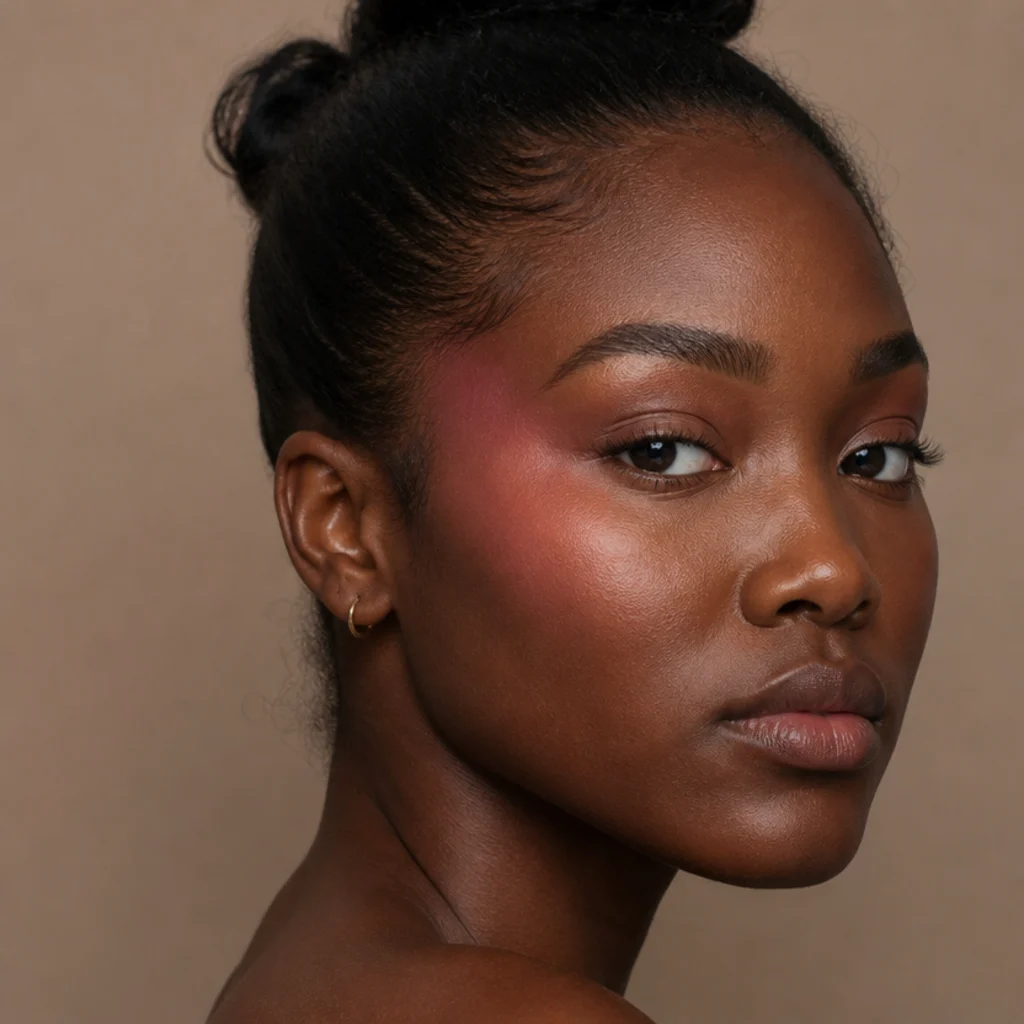
Blush draping was a signature 70s technique and it's having a deserved second life: color swept high across the cheekbone and lifted toward the temple to sculpt, flush, and pull the whole eye area together in one gesture. A peach base with a plum edge builds real dimension and stretches across a wide range of skin, peach warms fair to medium tones, plum flatters deep and olive skin richly, and blended where they meet they read as one lit-from-within wash. Placement is everything: start under the cheekbone's highest point and sweep up and out toward the top of the ear, following the bone rather than dropping toward the nose. Cream blush pressed with fingers or a damp sponge gives the most natural, skin-like drape and is the more flattering choice on mature or textured skin; powder suits oilier skin but wants a light hand. It fades at the four-to-five-hour mark, so carry the cream. Pro tip: let the drape graze the outer socket so it doubles as a soft eye color, that continuity is what makes it look seventies rather than just blushed. Ask your artist for "draped blush, peach into plum, lifted from cheekbone to temple."
08Golden Cut Crease
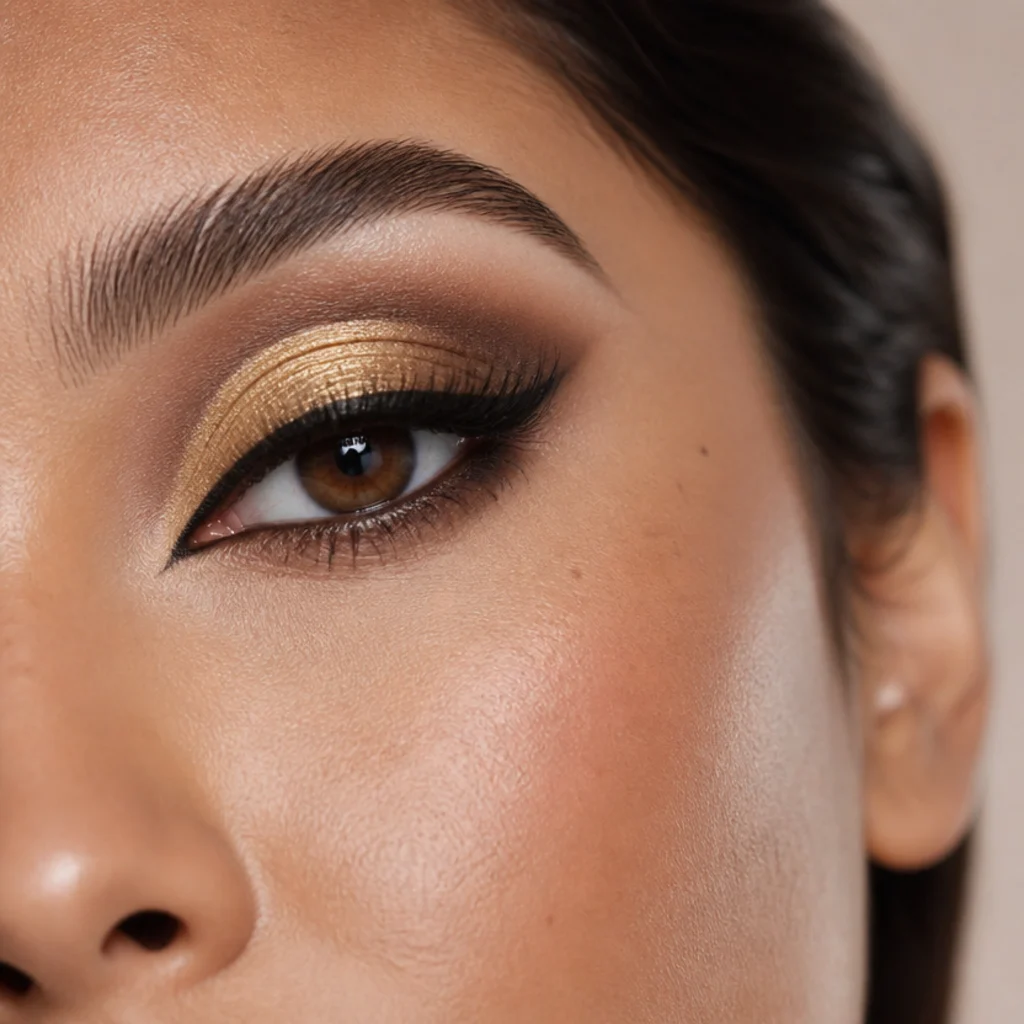
The most technical 70s eye makeup idea here: a crease sharpened with concealer, then a bright gold packed onto the lid inside it, so the lid reads as a clean pool of light with depth stacked above. The contrast creates a wide-awake, lifted eye. It flatters almond and round shapes outright, and it can build the illusion of lid space on hooded eyes if you draw the cut line slightly above the natural fold with the eye open, so the color still shows. This is intermediate work: you carve the line with a small brush and concealer, set it, then press gold on top and smoke a warm brown above the cut to soften it. Metallic over concealer is prone to creasing, so set the concealer with a skin-tone powder before the gold goes on and expect to check it by early afternoon. Use a foiled or pressed-shimmer gold applied damp for payoff; loose gold will fall. Pair it with defined lashes and a nude lip so the eye stays the focus. Pro tip: keep the outer corner of the cut angled up toward the tail of the brow for lift, not out toward the ear. Ask your artist for "a soft gold cut crease, crisp but blended, lifted at the outer corner."
09Olive and Moss Green Eye
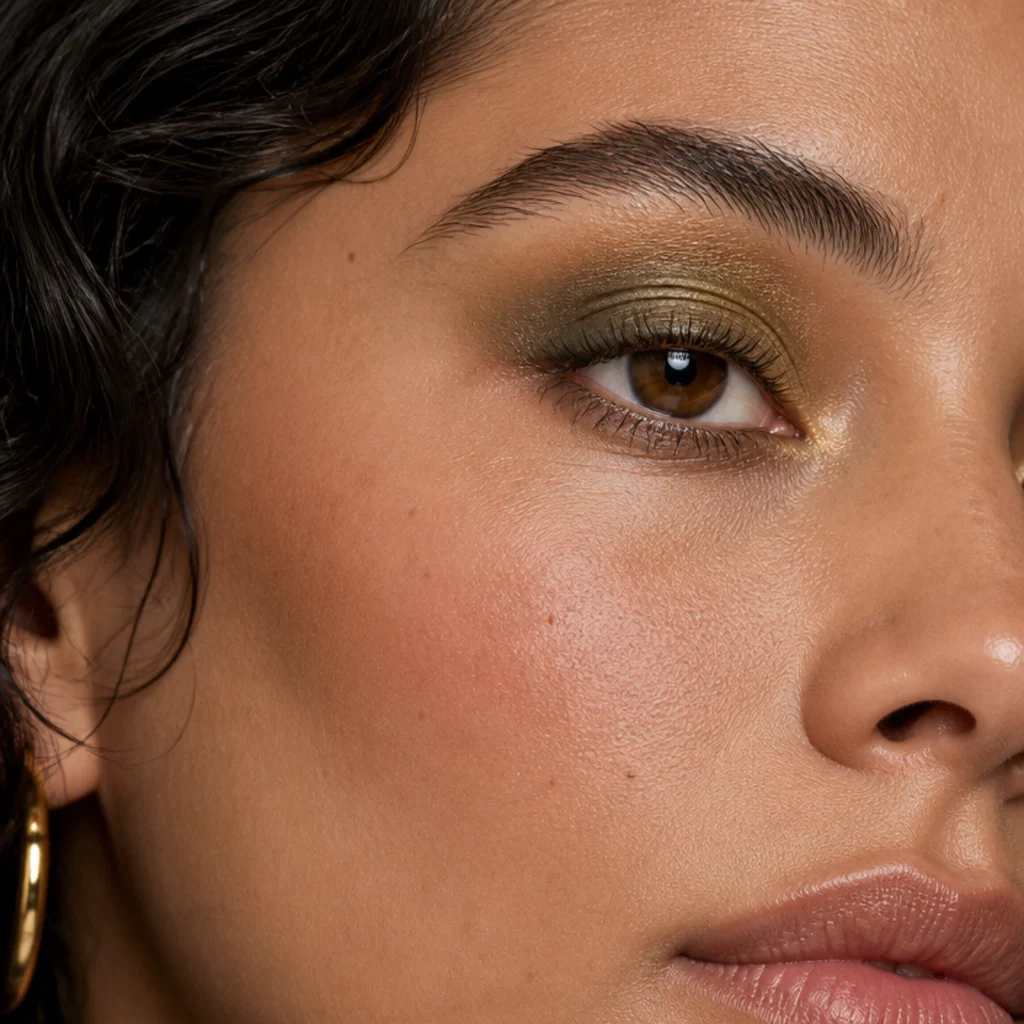
Green was everywhere in the seventies, but the version that still works is earthy, not neon: olive worked into the crease, moss pressed on the lid, the two blended until they read as one dimensional shade. Warm greens are especially flattering on brown, amber, and hazel eyes, where they draw out golden and green flecks, and they sit beautifully on olive and deep skin. Cool or very fair complexions should keep the moss sheer and lean more olive than grass so it stays wearable. Blend a touch of bronze or warm gold into the inner corner and lower lash line, that warmth is what keeps green from looking cold or dated. Matte and satin greens hold their color far longer than shimmer here and are easier to blend cleanly, so save shimmer for a single pop in the center of the lid if you want it. Wear time is solid, six hours over primer. Pair it with a bronzed cheek and a terracotta or brown-nude lip. Pro tip: line the upper lash line in deep bronze or espresso rather than black, it defines without fighting the green. Ask your artist for "an earthy olive-and-moss green eye, blended soft, warmed with bronze."
10Soft Kohl Doe Eye
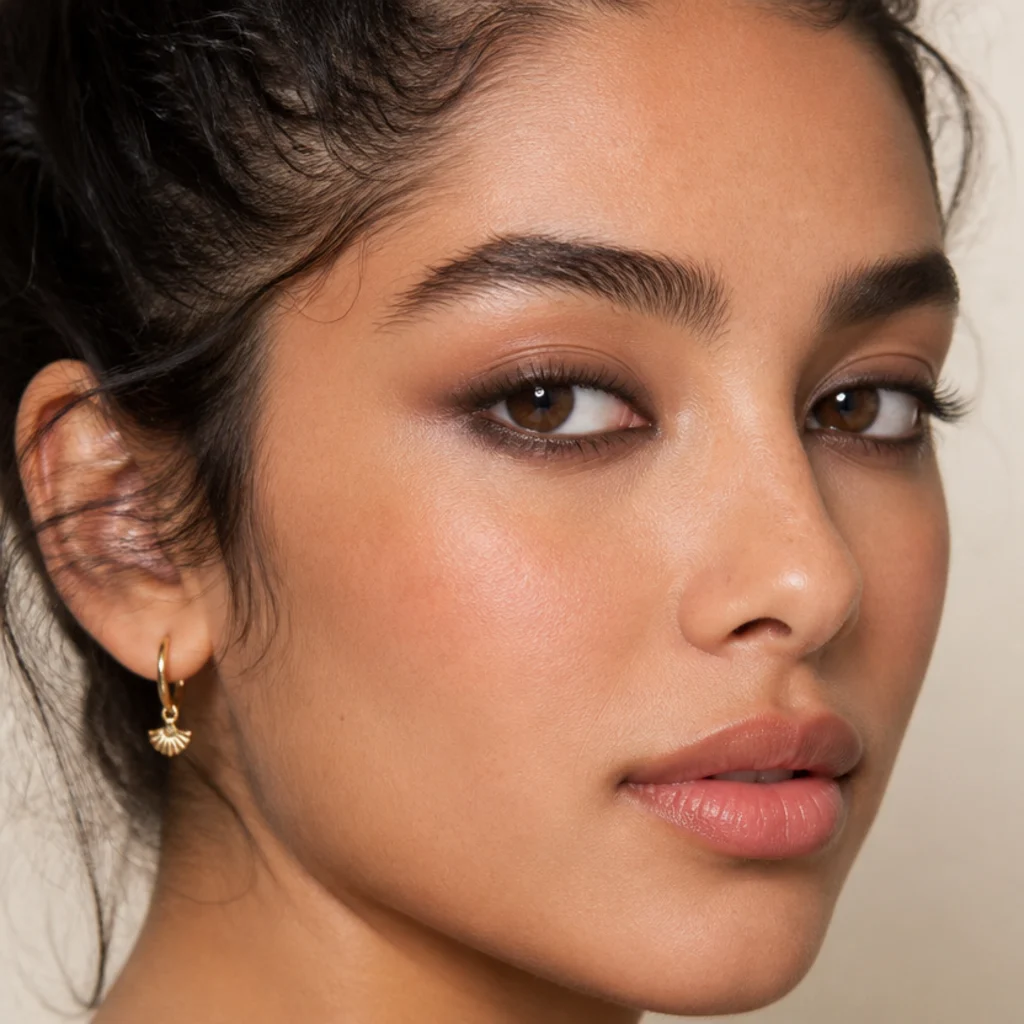
Built on the era's soft, smudgy liner, this rims the eye with kohl top and bottom, then buffs it into a hazy halo instead of a sharp wing. Smudging the lower waterline and outer corner slightly rounds and opens the eye for a gentle doe-eyed effect that flatters almond, downturned, and close-set shapes especially. Shade choice sets the mood: brown or espresso kohl reads soft and suits fair to medium coloring and lighter eyes, while deep and rich skin can carry a true black beautifully without it looking harsh. The whole point is diffusion, line first, then break the line down immediately with a small smudge brush or cotton bud before it sets. Kohl's weakness is downward transfer and under-eye smudging, so press a matching powder over the liner to lock it and blot the waterline dry before you tightline it. Wear time with that setting step is a solid five to six hours. Pair it with bare skin and a glossy nude so the eye leads. Pro tip: extend the smudge just past the outer corner and lift it a few degrees for a subtle rounded-cat effect that still isn't a wing. Ask your artist for "a soft smudged kohl doe eye, hazy edges, no hard wing."
Save this to Pinterest before you scroll into the bolder looks.
11Frosted Lilac Lid
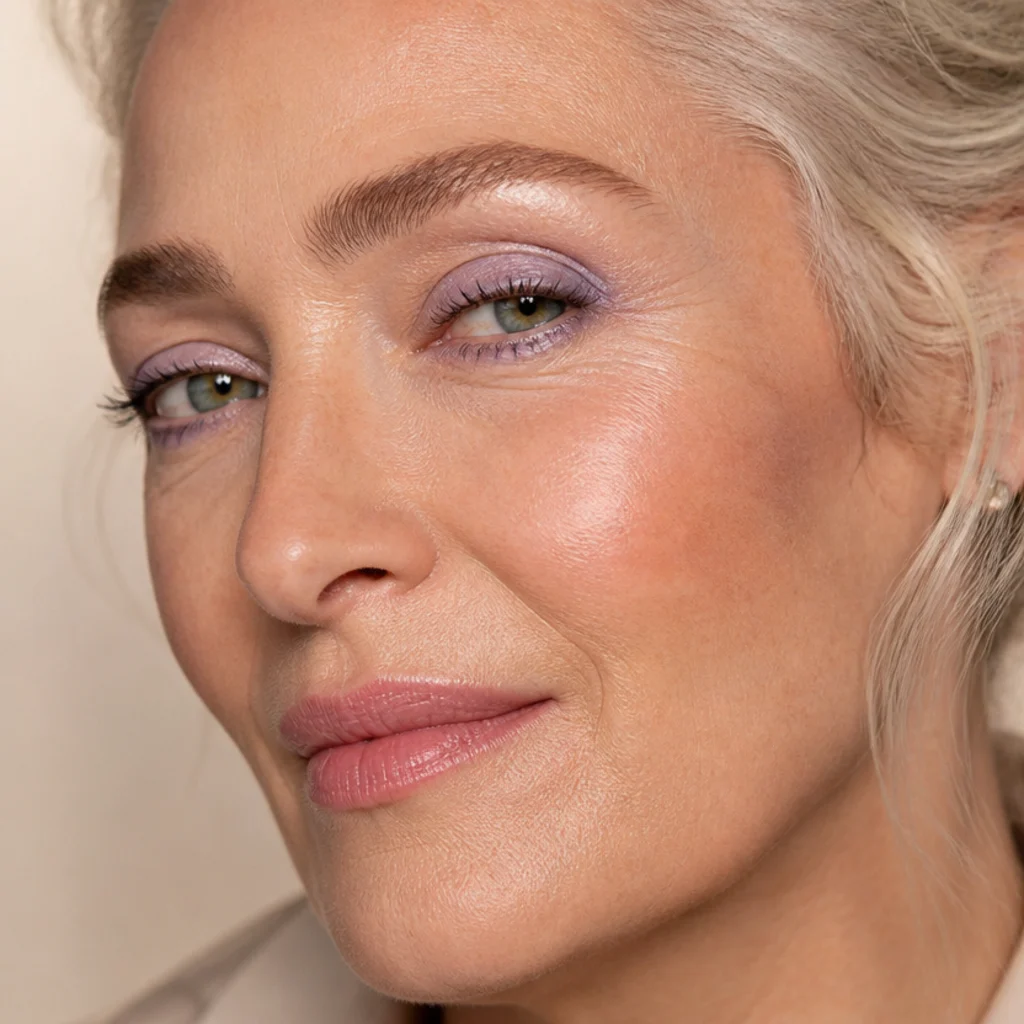
The softer, more flattering cousin of blue frost: a cool frosted lilac swept across the lid, romantic, a little unexpected, and quietly close to universal. Lilac's purple base flatters green and brown eyes by contrast and brightens most skin tones; cool and neutral undertones wear it most effortlessly, while warm skin should pick a pinker, dustier mauve-frost so it doesn't clash. Keep it below the crease like all frosts, and balance it with a rosy nude lip and a soft pink or peach cheek so the cool eye doesn't float alone. On deep skin, a deeper amethyst-frost reads richer than pale lilac and shows up better. Layering over a primer (or a sheer cream base in the same family) both intensifies the frost and buys you a few more hours before it settles. Wear time is around four hours before a touch-up. It's one of the easiest ways to try 70s color without committing to a full statement eye. Pro tip: tuck a little warm bronze into the outer crease, the warm-cool tension makes the lilac look deliberate rather than sweet. Ask your artist for "a frosted lilac lid, soft and cool, kept low with a rosy lip."
12Berry Stained Lip and Cheek
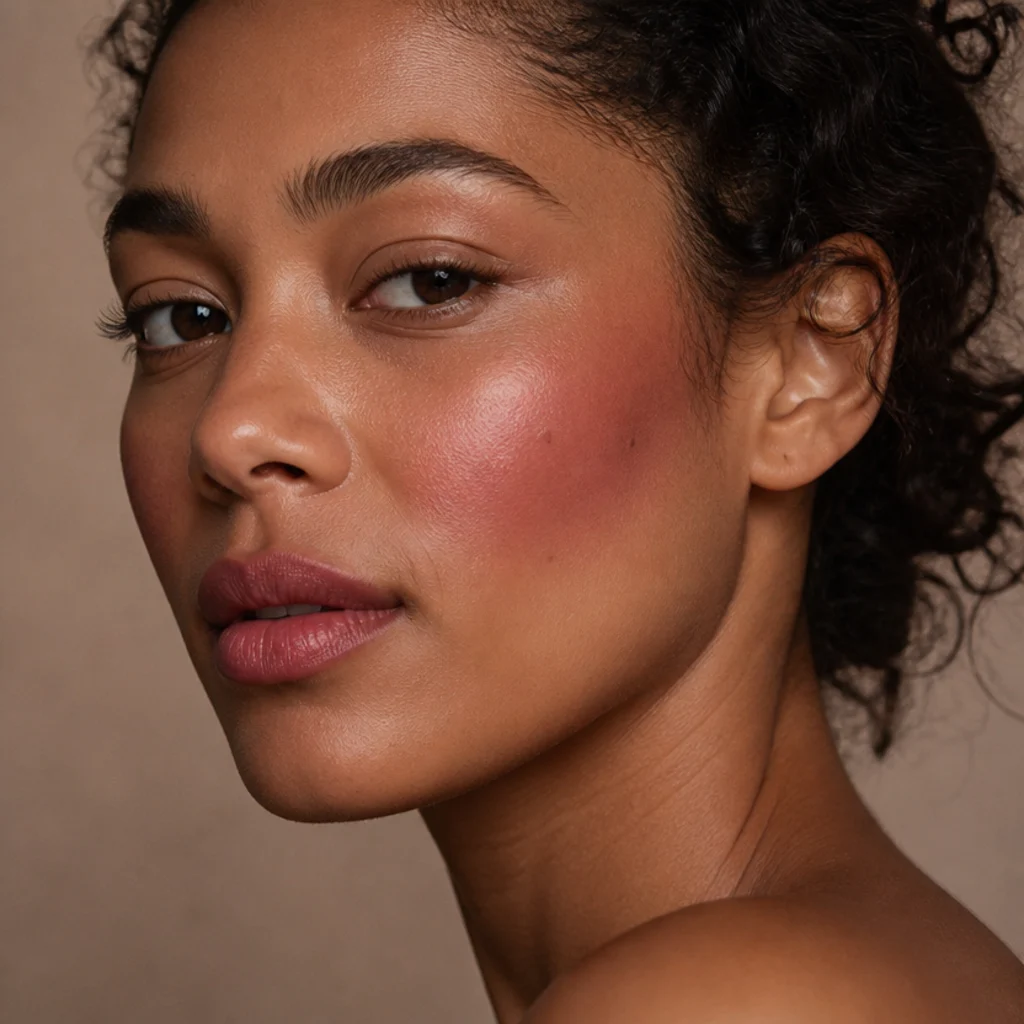
A lived-in berry stain diffused across lips and cheeks for a flushed, just-in-from-the-cold warmth, minimal eye, maximum payoff below. Berry flatters deep and medium skin richly and gives fair skin a pretty bitten-lip effect once it's sheered out; olive skin looks especially good in a berry with a plum rather than pink lean. The magic material here is a liquid or cream tint or stain, which grabs the skin and survives meals, coffee, and hours in a way gloss never will, that's what keeps this low-upkeep despite the strong color. Apply to the lip, blot, and layer for the softest edge; for the cheek, tap a tiny amount high on the apple and blend fast before it sets, because a stain grips instantly. Keep the eye bare, a groomed brow and one coat of mascara, so the color below stays the point. Wear time is the best on this list, eight hours-plus on the lip. Pro tip: apply the stain to lips that are exfoliated and balm-free, and press with a fingertip, patchiness comes from dry skin or a slick surface. Ask your artist for "a diffused berry stain on lip and cheek, sheer and blotted, over bare glowing skin."
13Bronzed Sun Goddess
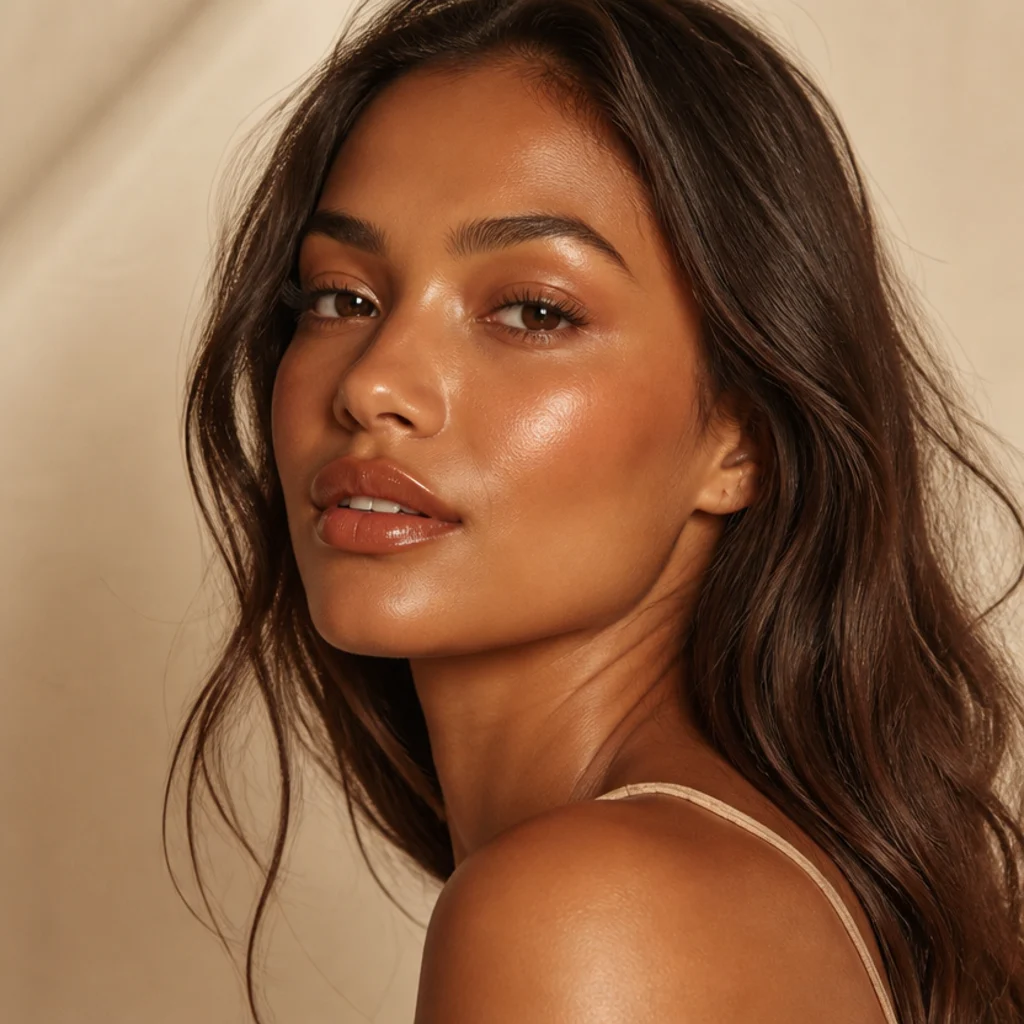
This one is all complexion: a warm bronzed glow laid across the cheekbones, temples, and the bridge of the nose, wherever the sun would naturally hit, finished with a caramel gloss to match. It suits anyone who wants radiance over drama, and it flatters every tone provided you get the undertone right. That's the whole game: choose a bronzer one to two shades deeper than skin in a warm-neutral tone, and steer clear of anything orange (which looks fake on fair skin) or gray-muddy (which flattens deep skin). Cream and liquid bronzers melt into the skin for the soft, sunlit finish this look wants, powder can sit on top and look dusty; if you use powder, buff it over a cream base. Layer a touch of liquid highlighter above the bronze on the very high points for that lit-from-within seventies sheen. The bronze itself lasts most of the day; only the gloss needs refreshing. Pair it with fluffy brows and skin-toned or peachy eyes. Pro tip: bronze the temples and jaw lightly too, not just the cheeks, so the warmth looks like real sun rather than a stripe. Ask your artist for "a sun-goddess bronze, glowy not muddy, warm through the high points, caramel lip."
14Floating Rainbow Liner
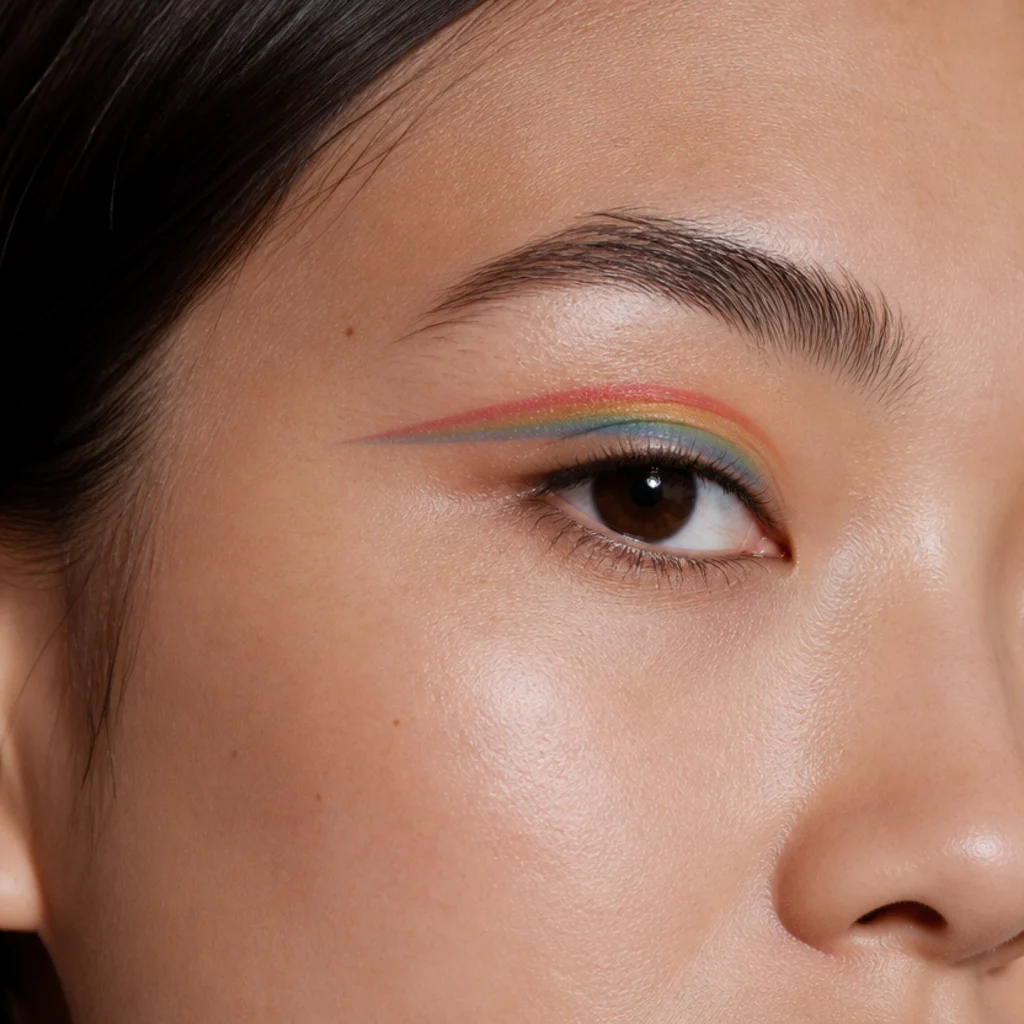
For the color-lovers: a graphic band of blended rainbow liner floating above the crease, drawn so it's fully visible with the eyes open, the most creative, expressive corner of the era. Floating liner is a gift to hooded and monolid eyes, because it lives above the fold where it stays on show rather than vanishing when the eye opens. This is the hardest look here, no way around that: you're mapping a smooth arc that mirrors the eye, laying two to four colors edge to edge, and blending only where they meet so the transitions are clean but the band stays graphic. Use gel or high-pigment liquid liners that layer without lifting the color beneath, and work in thin passes. Set nothing on top, powder muddies the colors, and keep skin, cheeks, and lips deliberately clean so the eye is the only event. Wear time depends entirely on the formula gripping; primer under the arc helps. Pro tip: sketch the arc's outline first in a light nude or white pencil, then fill, correcting a wobble in pencil is far easier than in liner. Ask your artist for "a floating multicolor liner above the crease, blended where the colors meet, clean face otherwise."
15Cher Sculpted Glam
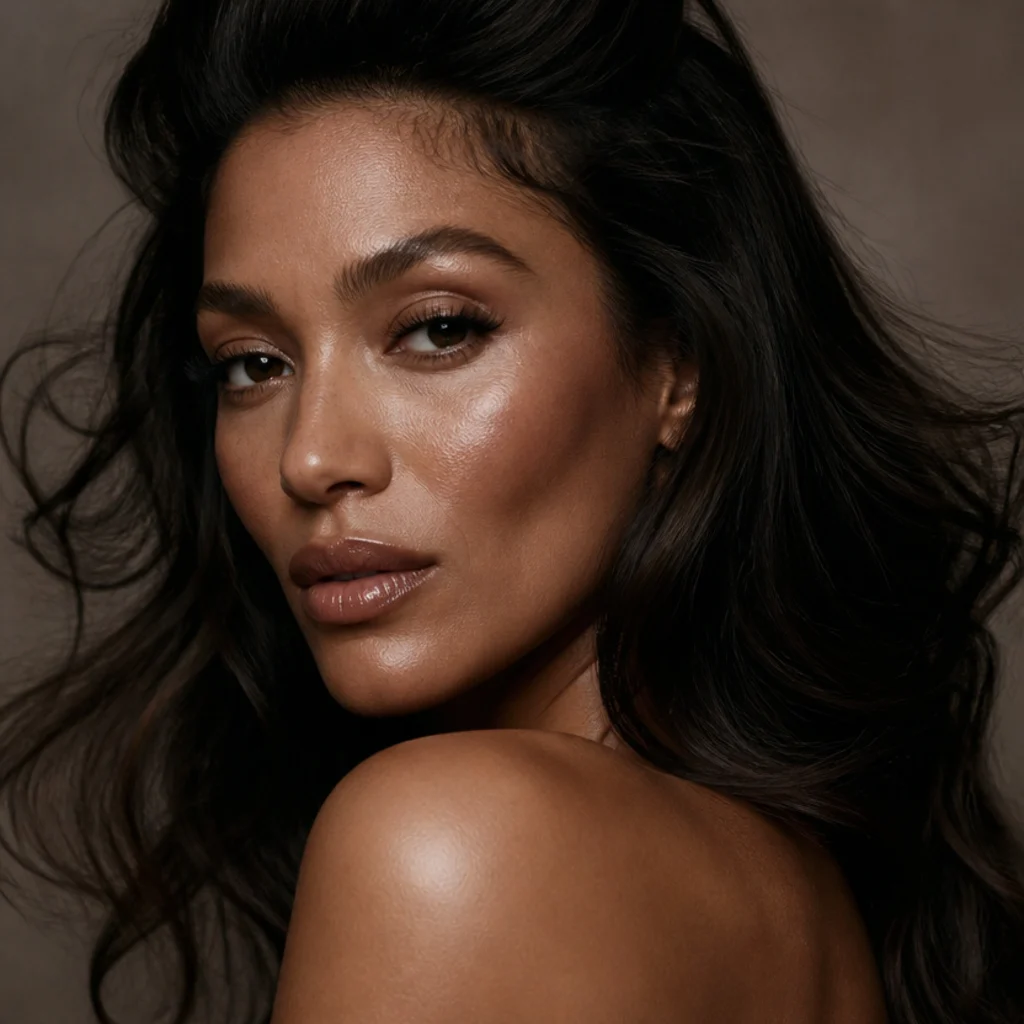
The polished, high-glamour close of the decade and the reference behind most cher makeup 70s searches: sculpted cheekbones, a long feathered lash, straight defined brows, and a glossy neutral lip. It flatters angular and oval faces and anyone who loves a defined, camera-ready finish; softer, rounder faces can borrow it by keeping the contour whisper-light so it doesn't harden the face. This is the most product-heavy look on the list, contour, lash, precise brow, base built to last, so budget real time and set every layer. The contour rule that keeps it elegant: pick a shade only one to two tones deeper than skin in a cool, shadowy (not orange) tone, and place it in the hollow under the cheekbone, blended upward so there's no visible stripe. Straighten and feather the brow with a spoolie and fine pencil rather than arching it, the flat brow is half the seventies signal. Lashes should be long and wispy, not spidery; a natural-flare strip or individual clusters at the outer corner reads more period than a full dramatic band. Wear time is all night with setting spray. Pro tip: gloss only the center of the lip over a nude liner so the shape stays sculpted rather than melting. Ask your artist for "a sculpted seventies glam, soft contour, long feathered lashes, straight defined brow, glossy nude lip."
Save this to Pinterest so the glam looks are ready for your next night out.
16Nude Gloss and Bare Lash
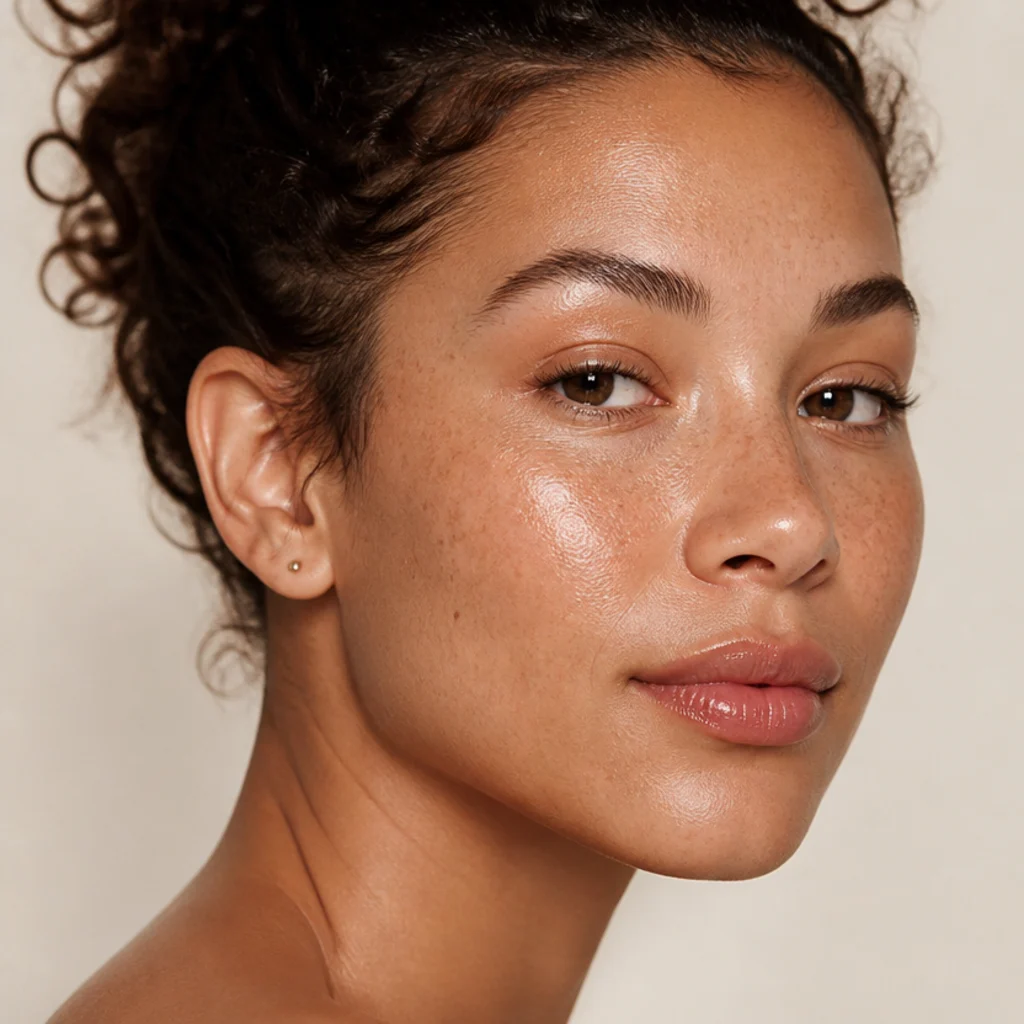
The quietest look in the set and a true 70s staple: skin left fresh, brows combed up, lashes darkened just enough to define, and a slick of nude gloss. It suits everyone and every skill level, which is why it has outlived every trend since. The only real craft is skin prep, hydration, the lightest possible base or none, a cream highlight on the high points, and choosing a gloss that flatters your specific lip: warm caramel and rosewood nudes for deep tones, pinky and peachy nudes for fair, and a "your lips but better" mid-nude for medium and olive skin. Avoid a nude that's paler than your natural lip, that's the one mistake that reads dated and washed out. Curl and coat the lashes once so they're defined but still look like lashes. Upkeep is a single thing: re-gloss. Wear time on the gloss is a couple of hours, everything else holds. Pair it with undone hair and a bronzed cheek for the full soft-seventies effect. Pro tip: dab a little of the same gloss on the tops of the cheekbones for the era's signature all-over sheen. Ask your artist for "a fresh bare face, groomed brow, single coat of mascara, nude gloss."
17Rust and Gold Halo Eye
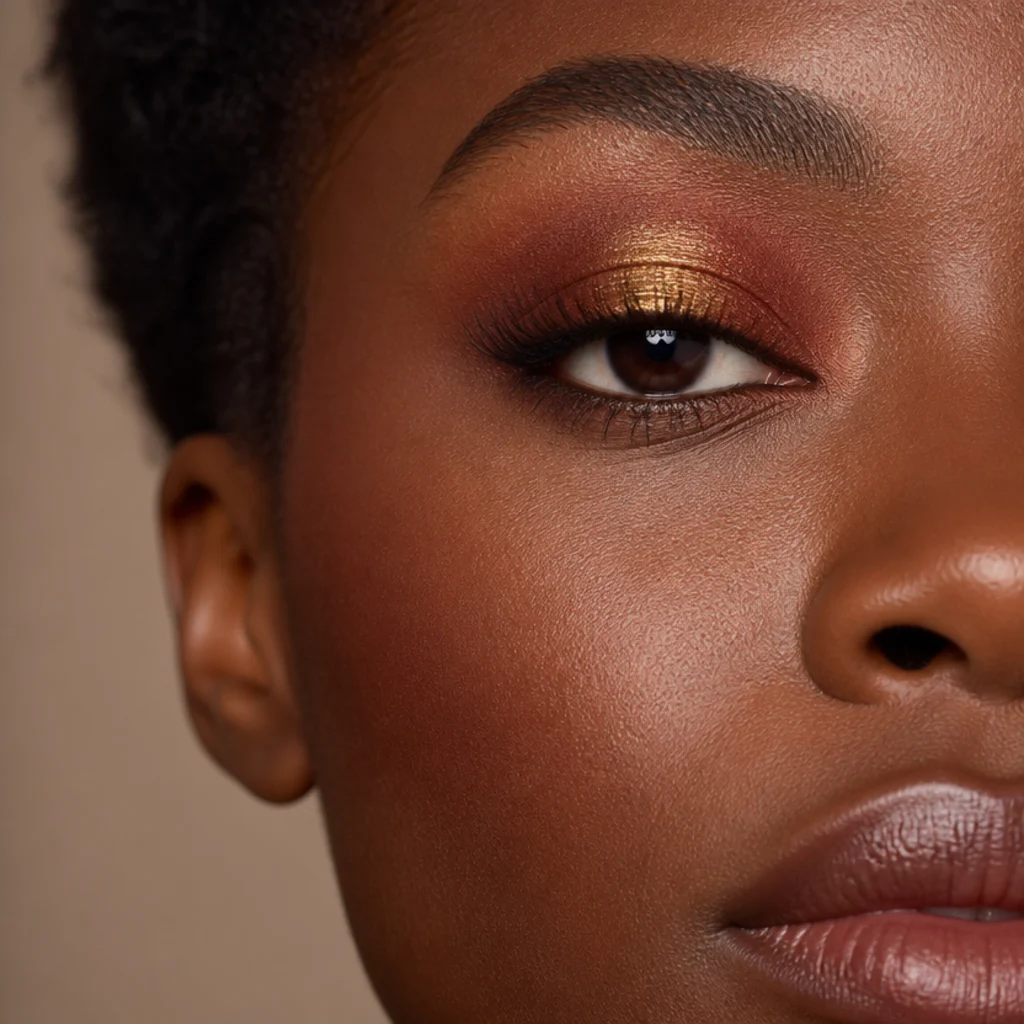
A halo eye stacks light in the middle and depth at the edges: rust worked into the inner and outer corners, then a pop of gold pressed dead-center on the lid to catch the light. That center-light placement makes the eye look rounder, larger, and more open, which flatters close-set, deep-set, and downturned shapes especially. It's intermediate but forgiving, you're blending two warm tones and setting a shimmer precisely, but the rust-and-gold palette hides imperfect blending in a way cool or bright shades never would. Deepen the outer corner rust for more drama or keep it soft for daytime; both work. The move that sells it is pressing the gold on damp, dip a flat brush in a drop of water or setting spray, then pat, and the foiled shine multiplies. Warm and deep skin can go bold with the rust; fair skin should keep the outer depth sheer so it doesn't look bruised. Wear time is six-plus hours over primer. Pair it with defined lower lashes and a nude-brown lip. Pro tip: leave a clean gap of bare gold between the two rust corners, if the depth creeps into the center, you lose the halo entirely. Ask your artist for "a rust halo eye with gold pressed in the center, warm and diffused at the corners."
18Pearlescent White Highlight
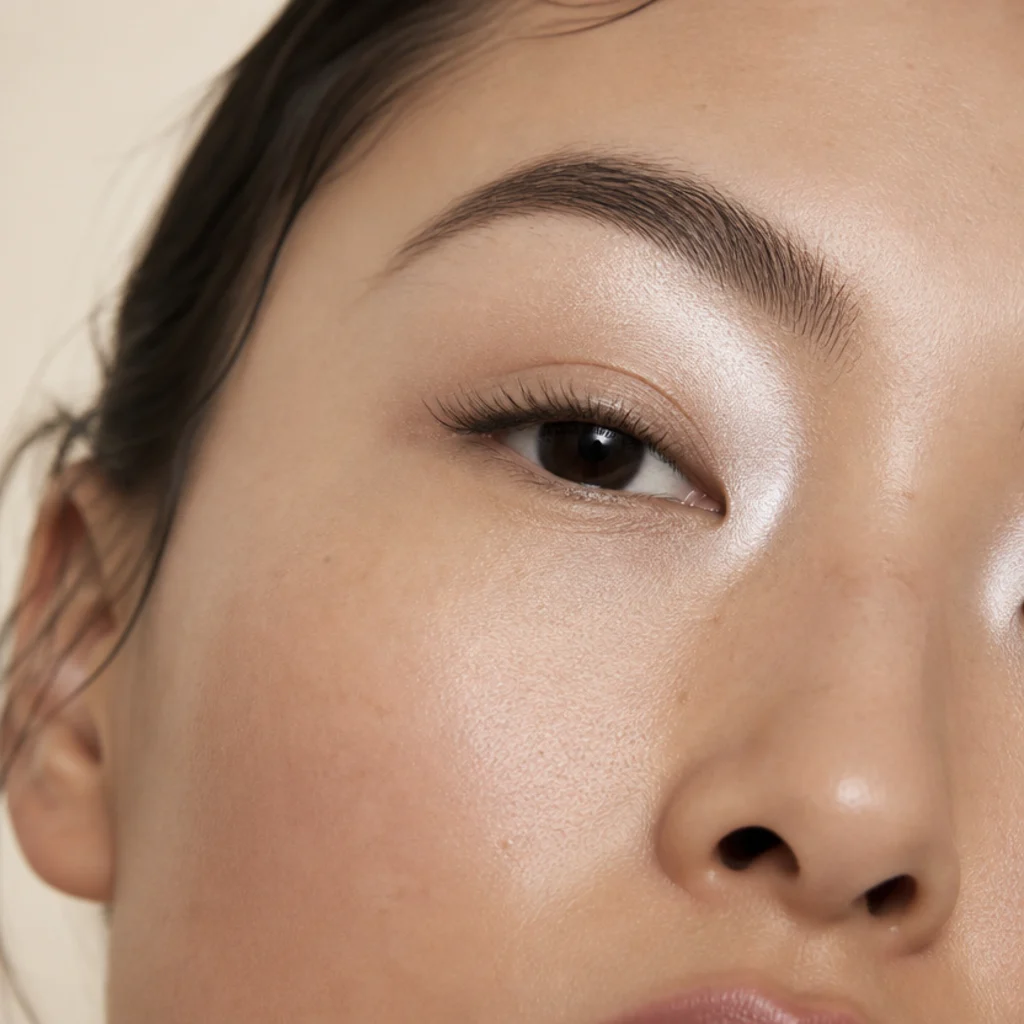
A subtle disco-era trick that does an enormous amount of work: pearlescent white pressed onto the brow bone and inner corners over a soft neutral eye, lifting and brightening the whole face in seconds. Because it's about where light lands rather than color, it suits every skin tone and age and is one of the fastest ways to look more awake. The single rule is texture, keep it pearly and finely milled so it reads as lit skin, not craft glitter; a chunky sparkle instantly cheapens it. Place it on the brow bone just under the arch, in the inner corner, and, if you like, a touch on the center of the lid, then blend the hard edge into your neutral base with a clean finger. Cream and liquid pearl formulas last longer and look wetter and more seventies than loose powder, which can fade or fall. It layers over any of the earth-toned eyes on this list. Wear time is all day for cream. Pro tip: on deep skin, a pearl with a warm champagne or rose-gold flip lights the face more flatteringly than a stark cool white. Ask your artist for "a soft neutral eye lifted with pearl-white highlight on the brow bone and inner corners."
19Deep Brown Disco Liner
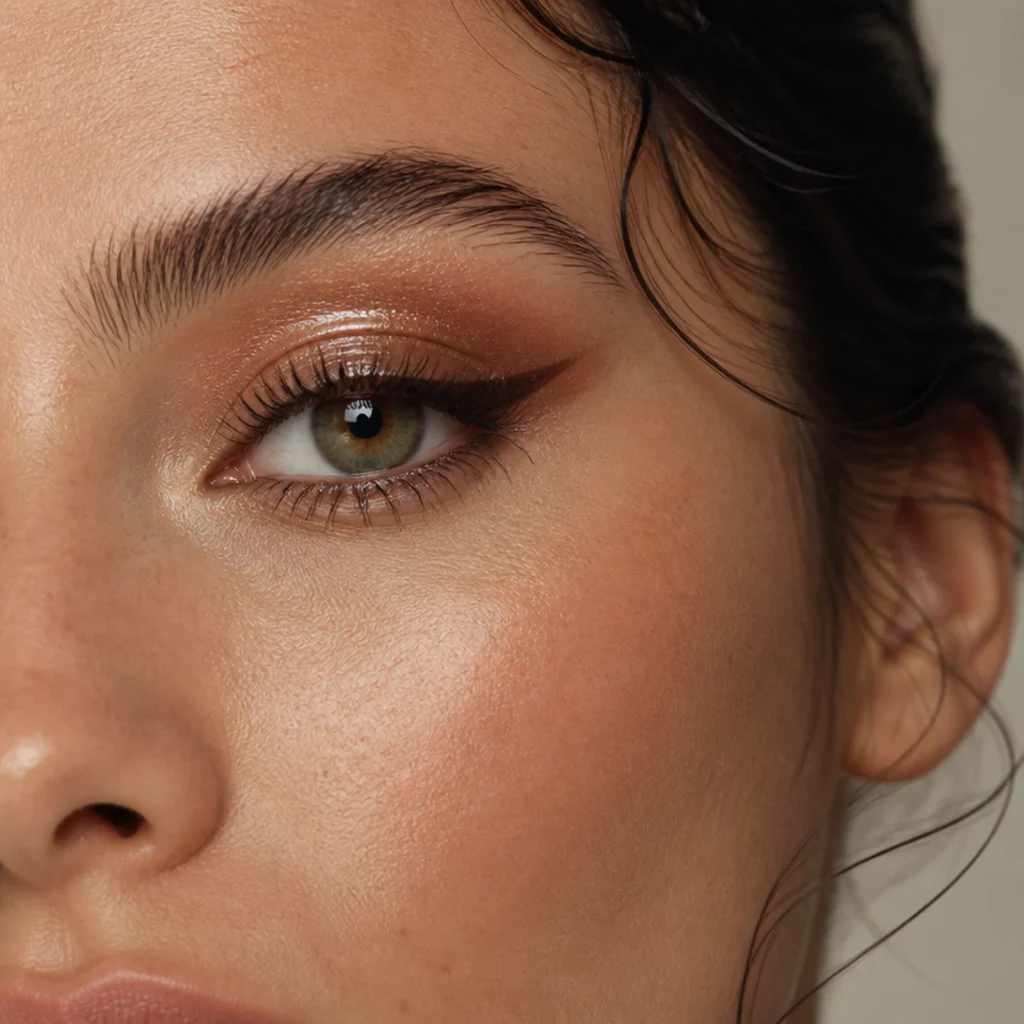
A richer, more flattering alternative to black for evening: a glossy deep-brown liner drawn into a soft, low wing and paired with a shimmering lid for disco-ready depth without the harshness. Espresso and chocolate browns soften and warm the eye, flattering warm coloring, lighter eyes, and mature lids far better than a stark black line that can look severe, while still giving real definition. Keep the wing low and short, following the natural angle of the lower lash line up and out, rather than a long dramatic flick, the softer geometry is what reads seventies. Underneath, a sheer champagne, bronze, or soft-gold shimmer on the lid ties it to the era; keep that shimmer diffused so the liner stays the anchor. A cream or gel liner gives the wet, glossy finish this look wants; set the very outer tip of the wing with a matching brown powder so it grips and doesn't transfer onto a hooded lid. Wear time is a solid evening over primer. Pair it with a bronzed cheek and a brown-nude gloss. Pro tip: tightline the upper waterline in the same brown so the lash line looks dense without adding a heavy black line. Ask your artist for "a glossy deep-brown soft wing over a shimmer lid, evening-ready but not harsh."
20Flushed Festival Freckle
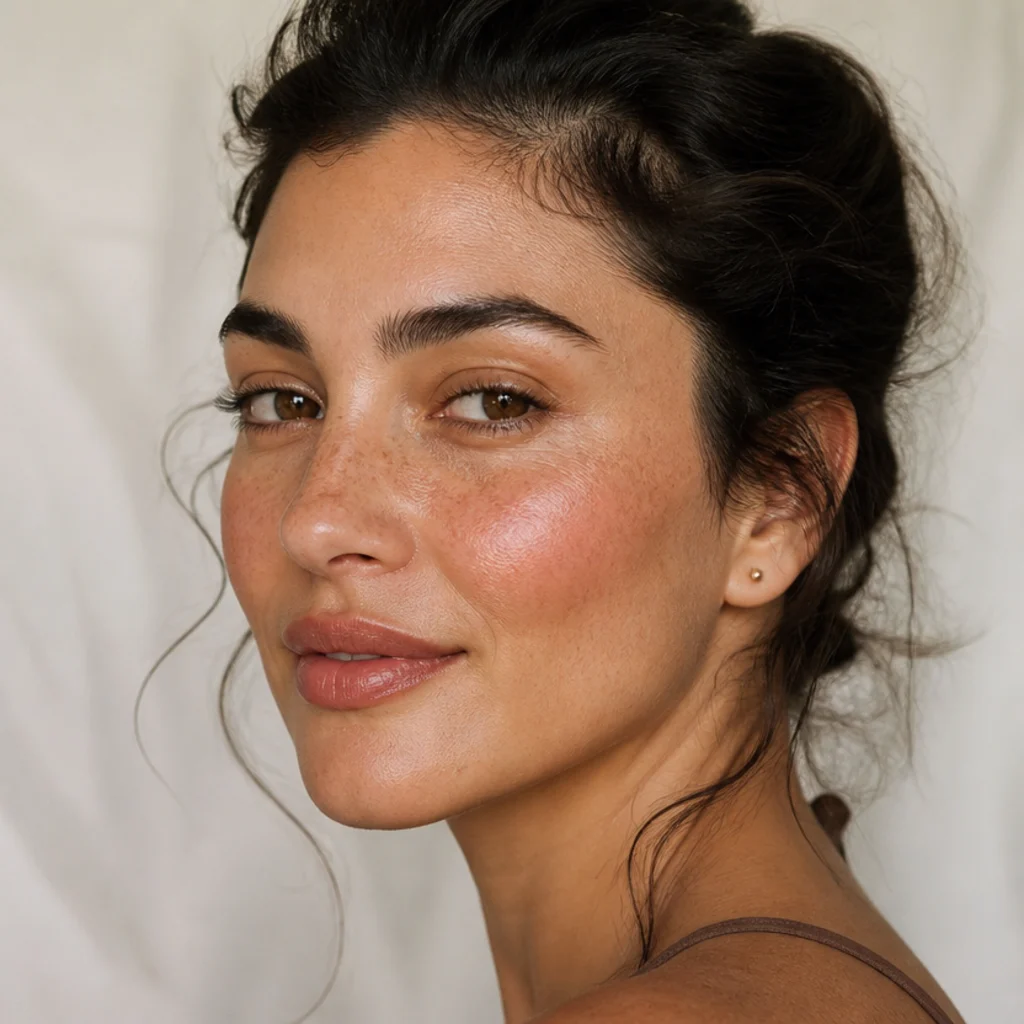
The playful, sun-drenched close to the list: warm blush placed high on the cheeks, a tinted balm on the lip, and lightly drawn faux freckles scattered across the nose and upper cheeks for a carefree, just-came-in-from-outside glow. It's a summer favorite among the hippie makeup looks 70s crowd and suits anyone who wants charm over polish, at any age. The freckle work is where it lives or dies: use a fine brow pencil or a freckle pen in a shade close to (or one step warmer than) your natural freckle or a soft taupe-brown, and dot in varied sizes with an irregular pattern, real freckles are never uniform. Then press a sheer skin tint or tinted moisturizer over the top so they sink into the skin and lose the drawn-on look. Keep the base sheer and dewy throughout so freckles read as skin, not makeup. Blush high on the cheekbone in a warm peach or coral completes the sunburnt effect. Everything here is sheer, so upkeep is minimal, though the freckles may need a light re-dot after a long day. Pro tip: set the freckles with the lightest dusting of translucent powder only where you drew them, so they survive without going flat. Ask your artist for "a sun-flushed face with faux freckles, high warm blush, and a tinted lip."
Pro Tips from the Editor
- Match the undertone, not the shade name. "Terracotta" or "bronze" means nothing until you know if it leans orange, red, or gold. Swatch on the back of your hand near your jaw in daylight; warm skin wants gold/copper leans, cool skin wants taupe/rose leans, olive skin can carry both if the shade has depth.
- Frost and shimmer need a base, always. A thin tacky eye primer or a cream shadow underneath is the difference between metallics that glow for six hours and ones that vanish into the crease by noon. Press shimmer on with a flat brush or fingertip, never sweep, sweeping loses most of the shine.
- Do the eyes before the base for any shimmer or floating look. Fallout is inevitable with metallics and rainbow liner. Finishing the eye first lets you wipe the mess and lay a clean under-eye afterward instead of chasing dark specks over foundation.
- Choose formula by finish and by skin. Cream and liquid textures look more like real, lit skin and flatter mature or dry complexions; powders suit oily skin and give longer color hold. Cream blush and cream bronzer are the more forgiving, more seventies choice for most faces.
- Contour and liner both read more period when they're soft and low. A stripe of dark contour or a long sharp wing tips modern. Keep contour one to two shades deep in a cool shadow tone, and keep wings following the natural lower-lash angle.
- Set the weak points, not the whole face. Waterline (for kohl), the outer wing tip (for gel liner), concealer under a cut crease, and drawn-on freckles are the specific spots that fail first, spot-set those and leave the dewy skin alone.
- Borrow one element at a time. A copper lid with bare lips, a draped blush on clean eyes, a glossy terracotta lip on fresh skin, worn singly, every look here reads firmly modern. Stack three seventies signals at once and you edge toward costume.
How to Choose / Get the Look
Choose by feature. Warm eye colors, bronze, copper, rust, olive, gold, flatter brown, hazel, and amber eyes by echoing their warmth; cool frosts in blue and lilac flatter those same eyes by contrast, and both suit green eyes. For eye shape: single-shade washes and halo placement open hooded, deep-set, and monolid eyes; cut crease and floating liner reward almond and round shapes (and can build lid space on hooded eyes when drawn above the fold). For skin tone, terracotta, berry, deep amethyst-frost, and rust sing on deep and olive complexions, softer clays, peaches, and pinky nudes suit fair skin, and a warm-neutral bronze glow works across the board once the undertone is right.
| Look | Difficulty | Upkeep timeline | Best for |
|---|---|---|---|
| Warm Bronze Wash (1) | Beginner | Blot at ~4 hrs | Every tone; hooded & mature eyes |
| Terracotta Monochrome (2) | Beginner | Re-do lip after meals | Medium, olive, deep skin |
| Blue / Lilac Frost (3, 11) | Beginner-Intermediate | Touch-up at ~4 hrs | Cool & neutral undertones |
| Berry Stain (12) | Beginner | Holds 8+ hrs | Deep & medium skin |
| Copper / Halo (5, 17) | Intermediate | Set once, 6+ hrs | Warm eyes; deep-set shapes |
| Cut Crease (8) | Intermediate | Check at midday | Almond & round eyes |
| Floating Liner (14) | Advanced | Formula-dependent | Hooded & monolid eyes |
| Sculpted Glam (15) | Advanced | All night, set well | Angular & oval faces |
Prep for longevity. Hydrated, gripping skin holds everything longer, so moisturize and let it absorb before base. Prime the lids for any frost, shimmer, or cut crease. Blot excess oil before powder, and finish with a setting spray to fuse cream and powder layers, that single step closes most of the gap between a four-hour and an eight-hour face.
When to see a pro. Book an artist for a genuine cut crease, a floating rainbow arc, or full sculpted glam if you're not confident placing precise lines, and for any event you can't risk. Bring one saved photo, name the technique and placement out loud, and state your undertone. If you're newer to makeup, start with a single-shade wash (No. 1), a stain (No. 12), or the nude gloss (No. 16), then graduate to the technical looks once blending feels automatic.
Frequently Asked Questions
What makes makeup look distinctly 70s rather than just retro?
Three signals do the heavy lifting: warmth (earthy bronze, terracotta, olive, rust rather than cool or pink tones), shine (frost and metallic finishes, glossy lips, an all-over skin sheen), and blush placement (draped high toward the temple, not just on the apple). Any one element reads seventies; stacking two or three makes it unmistakable without tipping into costume.
Is 70s makeup hard for beginners?
Not the daytime half of it. A single warm bronze wash, a berry lip-and-cheek stain, or a nude gloss face takes minutes and forgives imperfect blending because there are no sharp lines to place. Build confidence there first, then attempt cut crease, floating liner, and sculpted glam, which need steadier, more precise hands.
How do I keep frosted or shimmer looks from creasing and fading?
Prime the lid, or lay a thin cream base in the same tone, then press the shimmer on with a flat brush or fingertip instead of sweeping. Keep frost below the crease, set any concealer underneath with powder, and finish with a setting spray. For loose glitter, a tacky glitter glue makes it grip for hours instead of migrating.
Which 70s looks suit deeper skin tones best?
Terracotta monochrome, berry lip and cheek, earthy olive-and-moss green, rust-and-gold halo, and a warm bronze glow all read beautifully rich on deep and olive skin. For frost, choose a deep amethyst or champagne-silver rather than a pale pastel so it shows up. The rule throughout is warm, pigment-dense undertones over anything gray or ashy.
What 70s eye makeup works for hooded or monolid eyes?
Looks that live above the fold or skip a precise crease. A diffused single-shade wash, a halo eye (the center light opens the shape), floating liner (drawn where it stays visible with the eye open), and a soft smudged kohl all flatter hooded and monolid eyes. If you want a cut crease, draw the cut slightly above your natural fold so the color still shows when your eye is open.
Can I wear 70s makeup every day and not just for a party?
Yes, the whole trick is restraint. Pick one element and keep the rest quiet: a copper lid with bare lips, a draped peach blush with clean eyes, a glossy terracotta lip on fresh dewy skin. Worn singly and in daytime-friendly tones, every soft look on this list is firmly modern.
How do I do 70s disco makeup that photographs well?
Metallics and gloss are built for low, sparkly light and camera flash, so this is an evening look by design. Anchor the shimmer over a base so it doesn't fade under lights, add a small amount of deep smoke in the outer corner so flash doesn't flatten the eye, and gloss the lip. Blot any excess highlighter before photos, wet skin plus flash can read shiny rather than glowy.
What products do I actually need to start, and roughly what will they cost?
Most of these build from a warm neutral eyeshadow palette, one cream bronzer, a cream blush, a nude or terracotta gloss, and a brown liner, items many people already own or can find at drugstore prices. Specialty pieces (a true frost, a gel liner, a glitter base, a freckle pen) add up only if you chase the bolder looks, and even those range from a few dollars to prestige depending on brand. Cost here varies a lot; you don't need a full kit to start.
How long does a typical 70s look last, and how do I extend it?
Cream and gloss finishes hold roughly four to six hours; stains and primed frost run eight or more. Extend any of them by starting on hydrated, primed skin, setting the specific failure points (waterline, wing tip, glossed cream), and misting a setting spray at the end to fuse the layers. Carry the one product that fades first, usually a gloss or cream blush, for a thirty-second refresh.