3 Things to Know About Eye Shapes
An eye shapes chart is a shortcut, not a rulebook. Once you can read what your lid space, crease depth, and outer-corner angle are actually doing, liner and lashes stop being guesswork and turn into decisions you can repeat. These are the three things worth knowing before you commit to a single technique, the ones that let you borrow any look and bend it to your own anatomy.
 Edited by Lena Rose · Published July 11, 2026 · 17 min read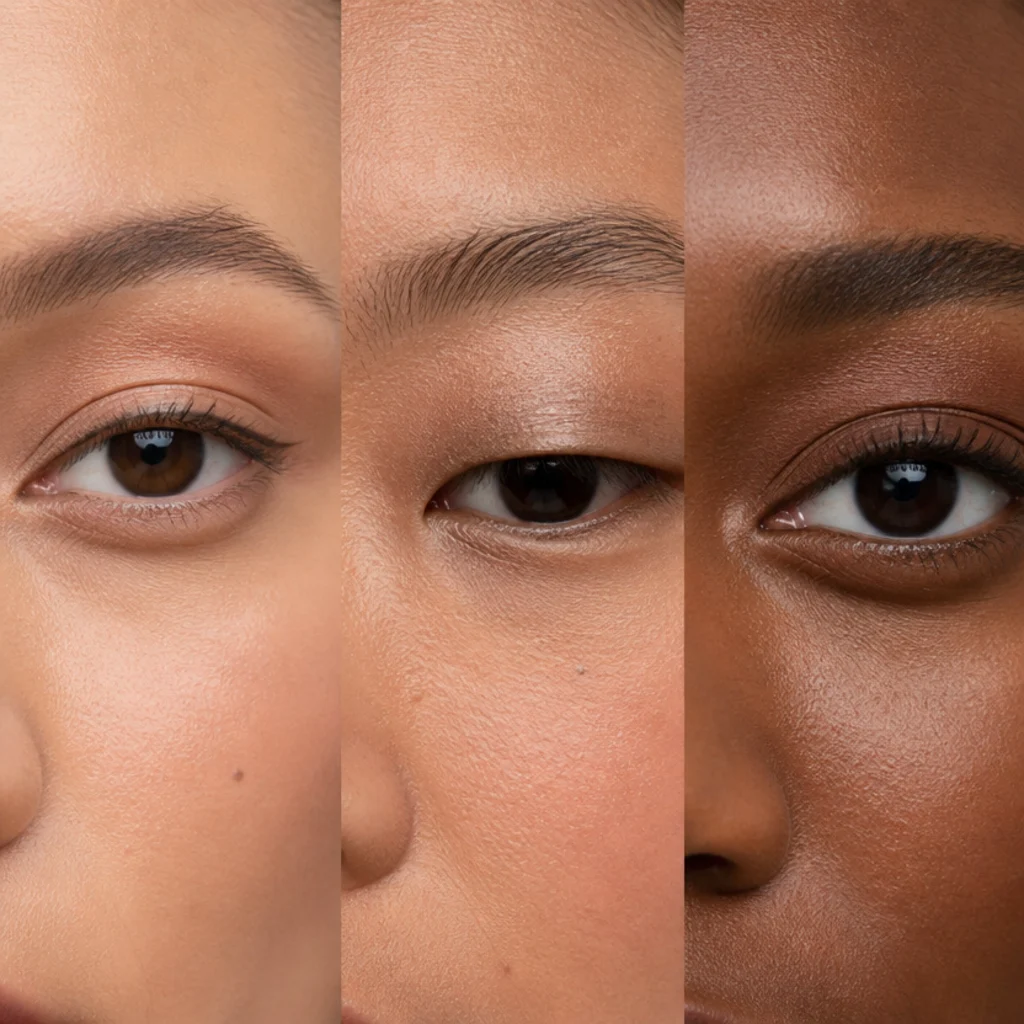
Quick Answer
- Best for: Anyone who wants makeup that flatters their real eye anatomy instead of a one-size tutorial — especially people frustrated by liner that vanishes when they open their eyes, or lashes that press flat into the lid
- Who might skip it: Bare-face minimalists, or anyone who already has a liner-and-lash routine that reads well straight-on in photos and holds through a full day
- Maintenance: Low — this is knowledge, not upkeep. Re-read your own eyes every two to three years, because lid tissue relaxes and the outer corner drifts with age
- Difficulty: Beginner-friendly to read a chart; intermediate to translate it into liner angle, shadow placement, and lash curl
- Cost: Free to learn. An angled synthetic brush and a gel liner run roughly the price of two coffees; quality strip lashes a little more; a professional lash-extension map is a salon-service investment that varies widely by region and lash artist
- Wear time / longevity: The knowledge is permanent. A liner-and-shadow application lasts a workday (longer over primer), strip lashes a single wear, and a lash-extension map three to four weeks with fills
- Standout variation: A lash map tuned to your specific corner angle and lid space rather than one uniform curl and length dragged edge to edge
- How to ask your makeup artist or lash tech: Describe the effect in plain words — "lift the outer corner," "make them read more open," "keep it soft and rounded" — and bring a straight-on reference photo of the finished look, not a celebrity's name
In This Guide
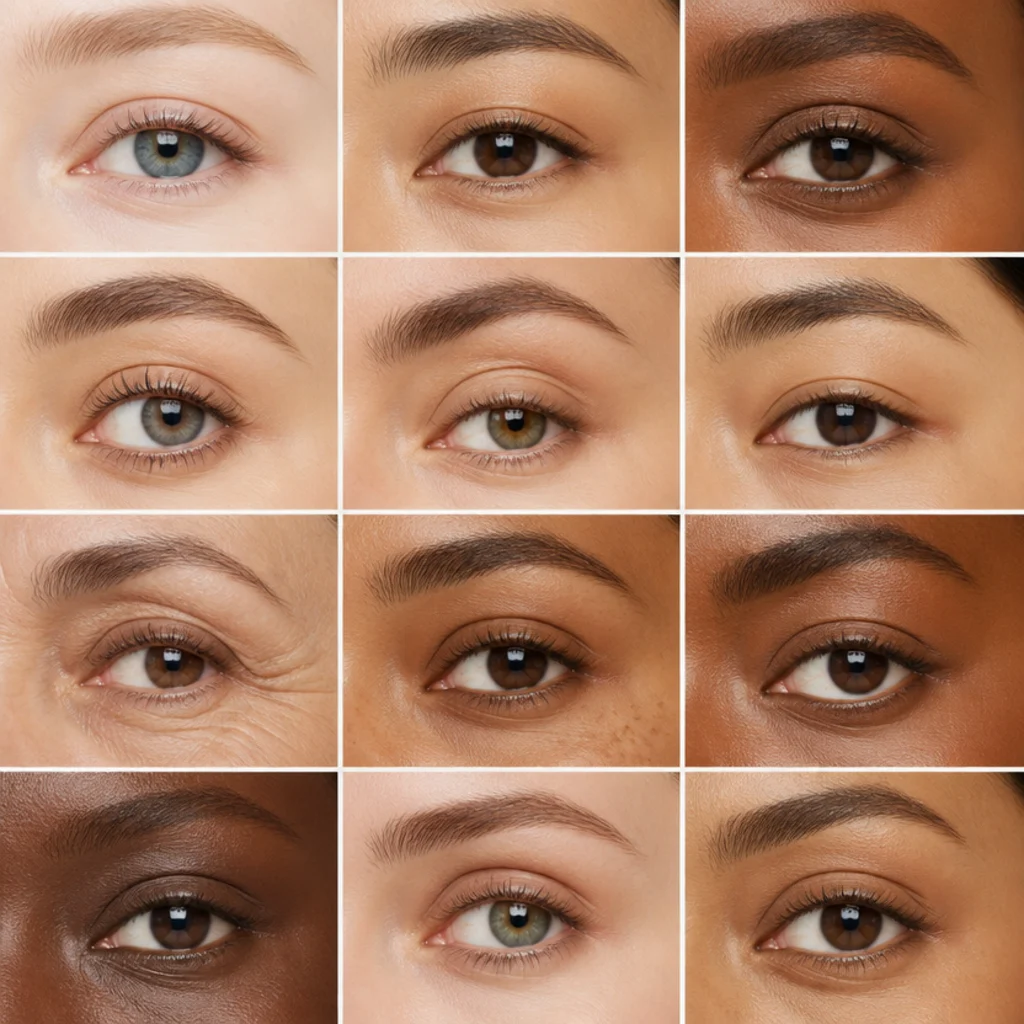
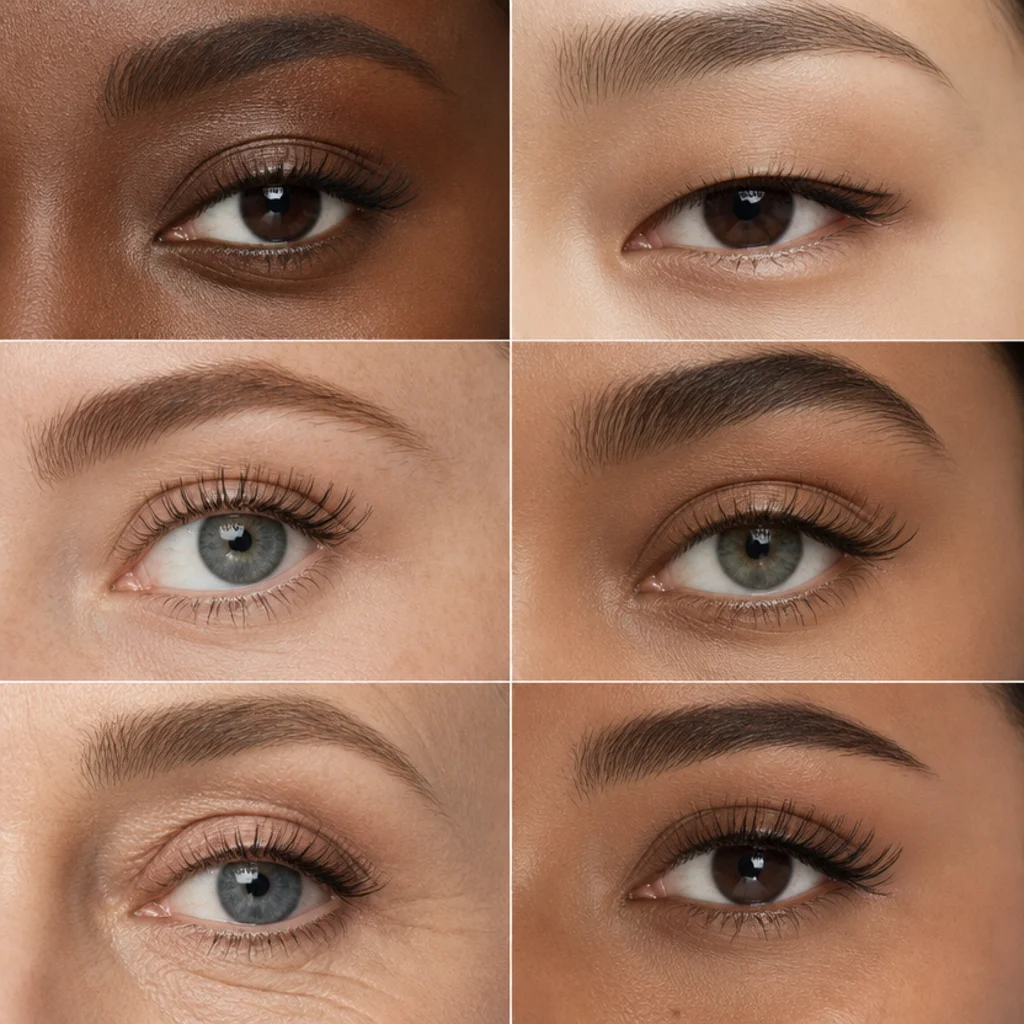
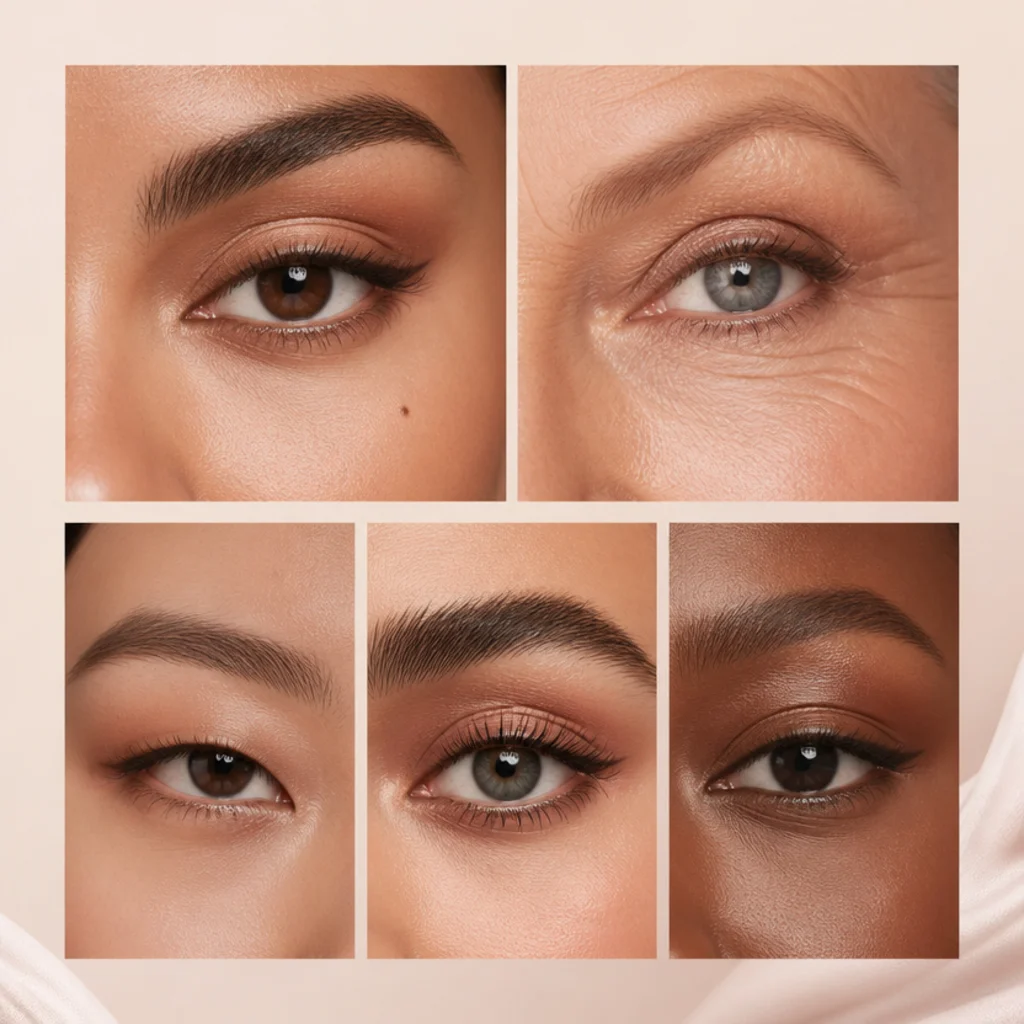
An eye shapes chart is one of the most useful tools in a beauty kit, but only if you know how to read it. Most charts line up almond, round, hooded, monolid, upturned, and downturned eyes side by side and stop there. What they rarely explain is that these labels overlap, shift with expression, and describe tendencies rather than fixed identities. You can read almond at rest and hooded when you smile, or carry a different corner angle on each eye. That's where most of the frustration lives: you follow a tutorial built for a different structure, then wonder why the wing sits wrong or the lashes swallow your lid. The fix is to stop matching yourself to a picture and start reading three variables: how much mobile lid space shows with your eyes open, whether your outer corner travels up or down, and where your crease falls relative to your lash line. Get those three straight and almost any technique becomes borrowable and adjustable. This guide stays practical and inclusive across every eye shape and skin tone: why a chart is a starting point, how liner and lash placement do the heavy lifting, and how lash mapping should track your natural shape. Think of it as eye shapes explained in working terms, so makeup by eye shape becomes something you adapt rather than obey.
01Your Eye Shape Is a Guideline, Not a Category
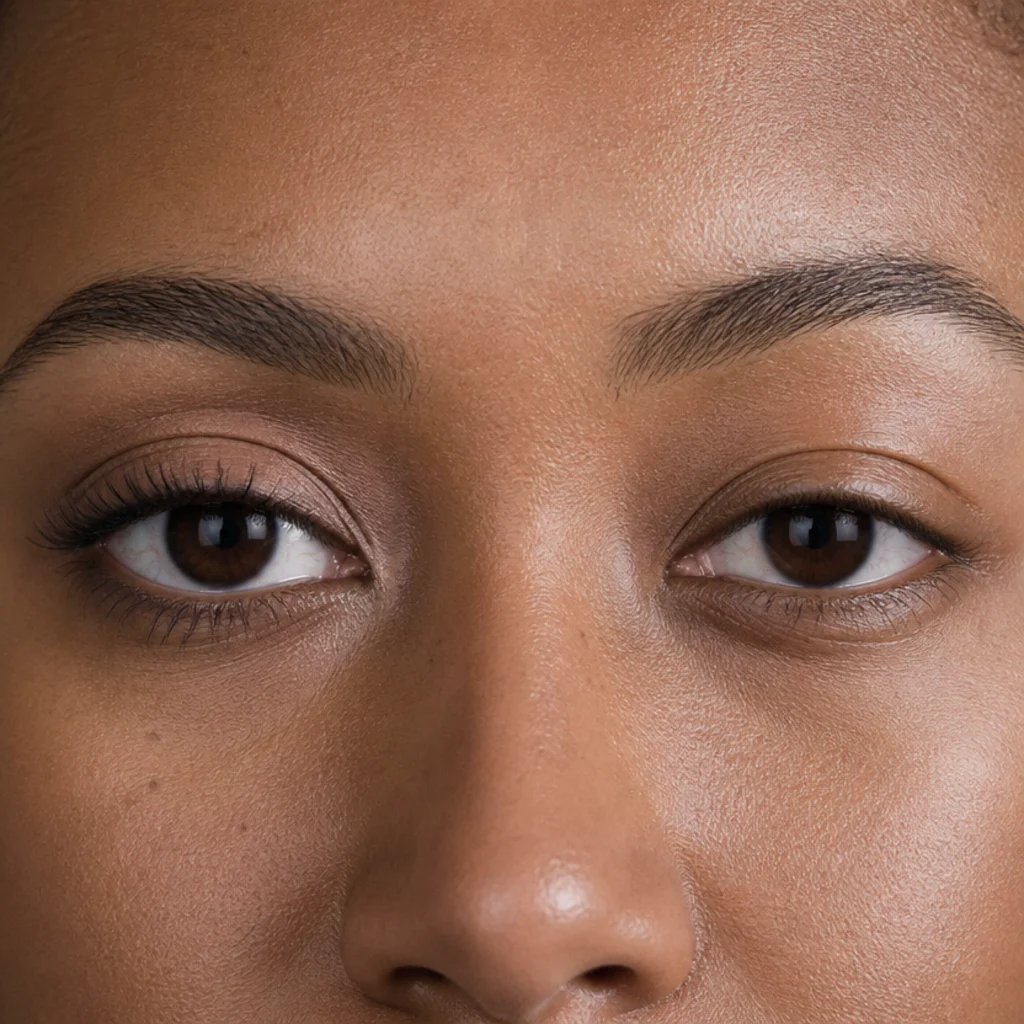
Eye shapes rarely sit in one clean box, and the labels on any chart describe tendencies, not verdicts. Plenty of people read almond with a slightly hooded outer lid, round with a downturned corner, or monolid on one eye and low-crease on the other. Asymmetry between your two eyes is the norm, not a flaw. Instead of hunting for your one true category, read three variables in a relaxed mirror with a neutral expression: visible mobile-lid space with your eyes open, the travel of your outer corner (up, level, or down measured against your inner corner), and where your crease sits relative to your lash line. The almond vs hooded eyes question, the one that trips people up most, comes down almost entirely to lid space. A hooded fold tucks part of the mobile lid under the brow bone, while an almond lid stays exposed with a naturally lifted tail. Skin tone, undertone, and iris color have zero bearing on structure, so every technique here works across all complexions. A practical timeline: recheck your read every two to three years, since the same lid can become measurably more hooded as tissue relaxes. Pro tip: photograph your open eyes straight-on in daylight, then zoom in on a still frame. It shows your true lid space far more honestly than a live mirror, where you unconsciously widen and lift. Ask your makeup artist to tell you which two categories your eyes borrow from rather than forcing a single name onto them.
02Liner and Lash Placement Change Everything
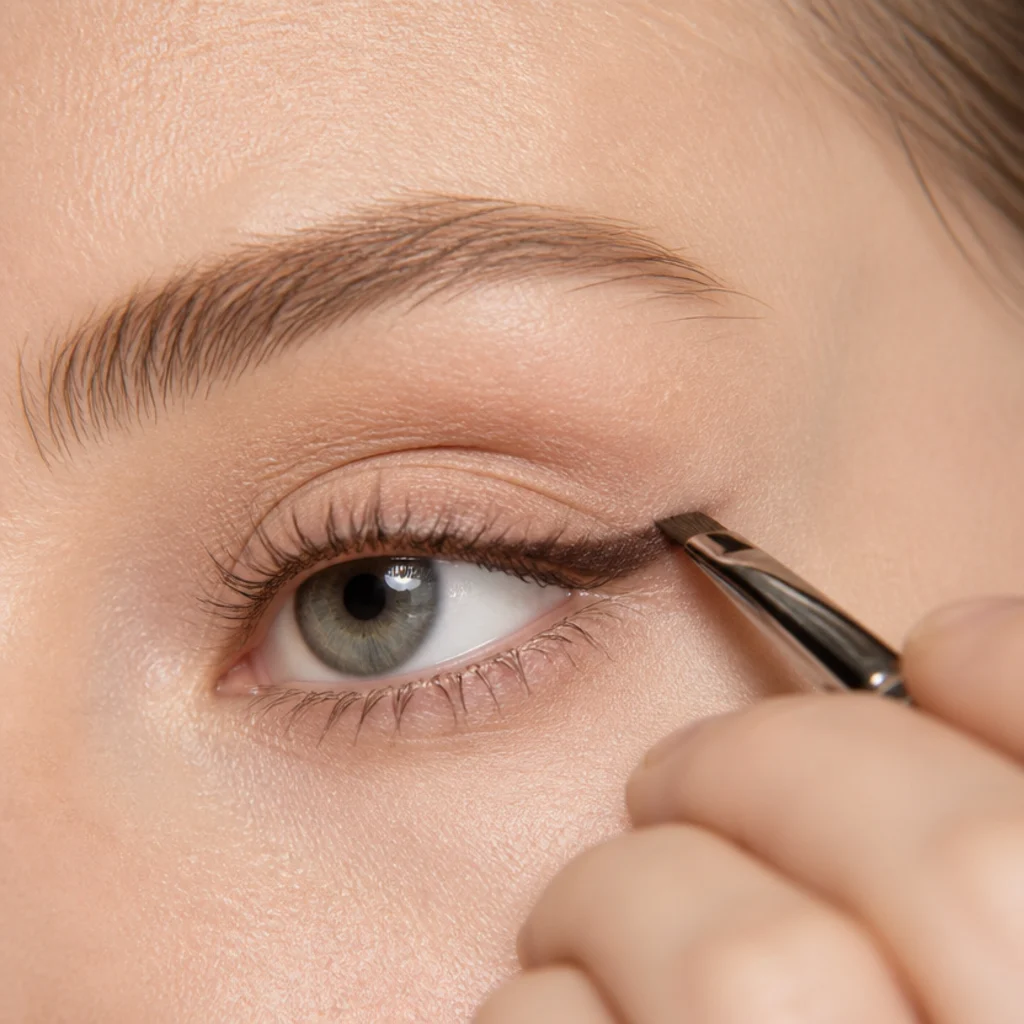
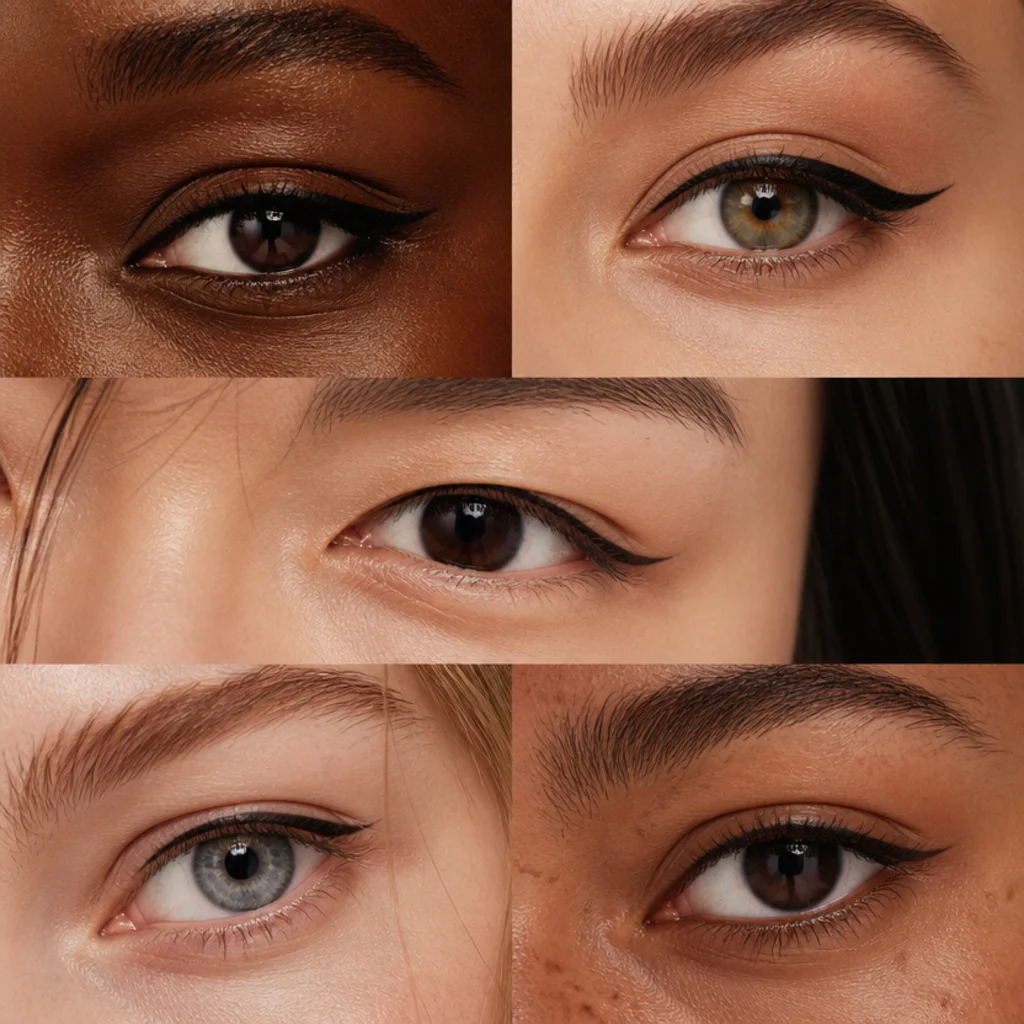
Where you set liner and lashes matters far more than which product you buy. The same matte-black gel liner can open a round eye, elongate an almond one, or rescue a downturned corner purely through angle, thickness, and where the line gains weight. On hooded eyes, keep the line whisper-thin at the inner third and build it slightly above the natural lash line in the outer third, into the space the fold reveals when you look down. That's what solves the disappearing-liner problem, where a wing vanishes the moment you open up. On downturned eyes, aim the outer flick toward the tail of the brow so it lifts rather than tracing the corner's natural drop. Round eyes lengthen when weight lives in the outer third and the inner corner stays bare; don't rim fully round, since that only exaggerates the circle. Monolid eyes hold a gradient well: a slightly thicker line reads once the eye opens, so build more than feels right closed. Finish matters too. A soft matte or satin liner reads more elongating than a high-shimmer one, which catches light and rounds the eye. This is the heart of makeup by eye shape: small placement shifts, not new products. Pro tip: map the angle first with a bare spoolie or the edge of a piece of tape held from the lower lash line toward the brow tail, then commit to liner only once that ghost line reads correctly head-on. Ask your makeup artist for a "lifted outer third" if you want elongation without a dramatic graphic wing.
03Lash Mapping Should Follow Your Shape
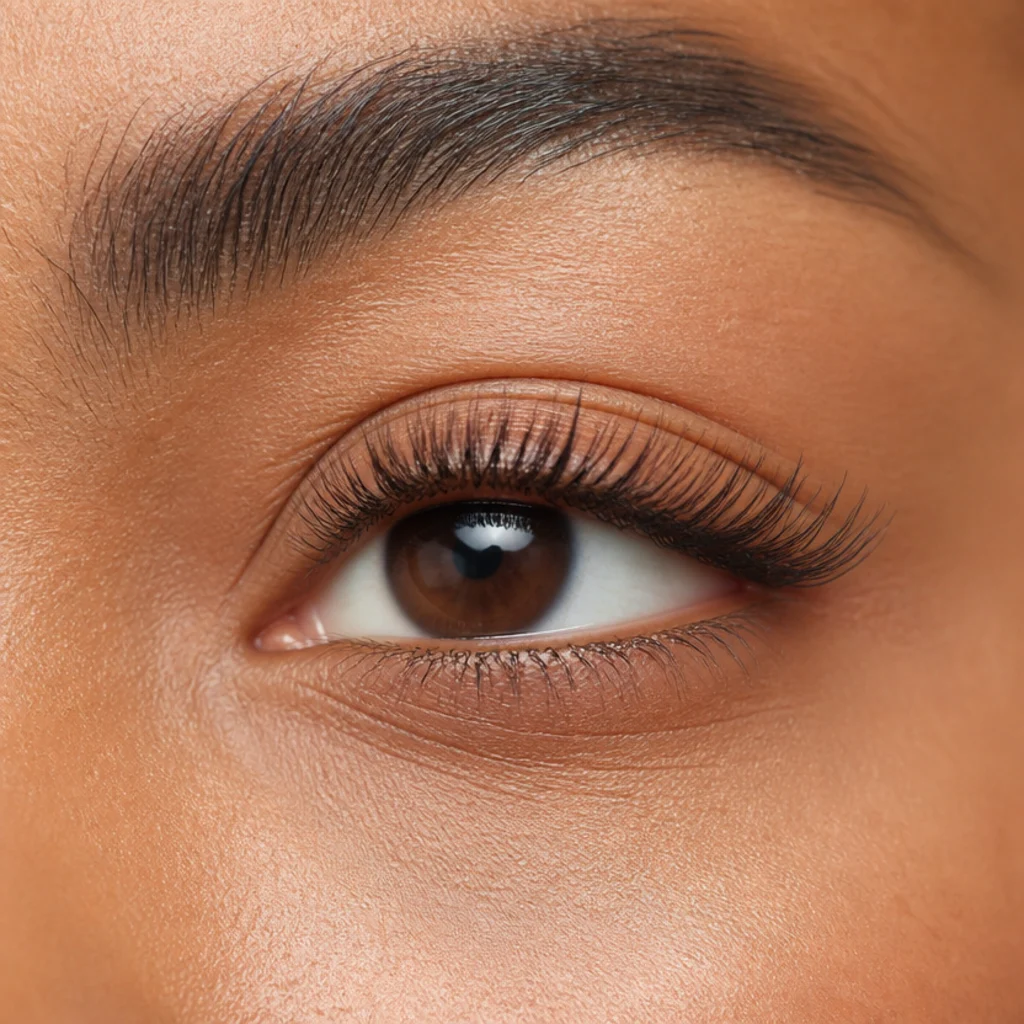
Lash mapping means planning length and curl across the lash line in zones rather than laying one uniform lash edge to edge. The goal is to land your longest, most-curled lashes exactly where they balance your structure. Almond eyes are already balanced, so a soft center-to-outer emphasis (think a C or CC curl in the middle, a touch longer at the tail) preserves their natural symmetry. Round eyes elongate when length pushes decisively into the outer corners and stays short at the inner third. Hooded eyes need a stronger lift, a CC or L curl, so the lash clears the fold instead of pressing into it and disappearing; length without curl just gets swallowed. Downturned eyes lift convincingly when the outermost cluster is both the longest and the most curled, dragging the visual corner upward. Upturned eyes are already lifted, so an even or slightly bottom-weighted map keeps them from tipping into a harsh cat-eye. Monolid eyes reward extra curl at the base to create visible lift off a flat lid, plus a lighter overall weight so the fringe doesn't shadow the eye. Match volume to your natural lash density too: a fine, sparse lash line looks most natural in a lightweight classic or light-volume set, while denser lashes carry more drama. A realistic timeline: professional extensions hold three to four weeks with a fill every two to three; strip and cluster maps are per-wear. Pro tip: for strips, trim from the outer end and cut the band into two or three segments so it flexes to your curvature instead of lifting at the corner. Ask your lash tech to map to your eye, bring a straight-on photo, and name the effect ("open," "lifted," or "soft") rather than a celebrity's name.
Pro Tips from the Editor
- Read yourself in a still photo, not a mirror. You widen and lift unconsciously at your own reflection; a straight-on daylight photo shows your true lid space and corner angle, and it is the single most accurate diagnostic you have.
- Thickness has to survive the open eye. On hooded and monolid shapes, build liner and curl noticeably heavier than looks right closed, because the lid eats a third of it the moment you open up. What looks "too much" in a compact mirror often reads as just-right straight on.
- Never rim a round eye all the way around. A full waterline-to-waterline ring shrinks and rounds it; concentrate all your dark weight in the outer third and keep the inner corner and lower waterline clean or nude.
- Curl before you coat. An eyelash curler clamped at the base for ten seconds does more for lift than a second mascara layer, especially on hooded and downturned eyes. A heated curler holds longest on stubbornly straight lashes.
- Match your wing to your lower lash line, not your brow bone. Extend the flick along the imaginary line running from the outer corner toward the brow tail to lift; angle it down toward the cheek and you drop the whole eye instead.
- Undereye brightening reads as "more open" faster than anything on the lid. A soft peach or warm-neutral corrector under a downturned or hooded eye lifts the entire socket without adding a single stroke of shadow.
- Prime before shadow on hooded and mature lids. An eye primer or a thin base of concealer set with powder stops product from creasing into the fold within an hour, the difference between a look that holds and one that migrates.
- When two shapes conflict, treat the corner first. Outer-corner direction drives more of the finished impression than crease depth, so solve the lift or drop before you fuss with lid color.
How to Choose / Get the Look
Work through this as a decision framework rather than a lookup. Read your variables first, then let each one point you to a technique — and expect to combine two or three, because most eyes ask for more than one adjustment.
| Read this variable | What to check | Technique it points to |
|---|---|---|
| Lid space | How much mobile lid shows, eyes open and relaxed | Little space (hooded/monolid) → liner above the natural lash line, stronger curl, primer under shadow |
| Outer corner | Travels up, level, or down vs the inner corner | Down → lifted outer flick + longest, most-curled lash at the tail; up → keep the map even |
| Crease depth | High, low, or absent | Low/absent → build a soft matte transition shade to fake dimension; skip heavy shimmer in the socket |
| Roundness | How open and circular the eye reads | Very round → weight the outer third only, elongate with liner, never rim fully |
| Lash density | Fine and sparse, or thick and dense | Sparse → lightweight classic/light-volume map; dense → carry more length and volume |
Pair that read with a quick curl-and-map cheat sheet when you are choosing lashes:
| Eye shape | Curl to ask for | Length emphasis |
|---|---|---|
| Almond | C / CC | Center-to-outer, soft |
| Round | C / CC | Outer third, short inner |
| Hooded | CC / L | Even, prioritize lift over length |
| Downturned | CC / L | Longest at the very tail |
| Upturned | C / B | Even or slightly inner-weighted |
| Monolid | CC / L | Even, extra curl at the base |
Start by studying your eyes in good light with a relaxed face, since squinting or smiling temporarily changes the shape. Note lid space, crease depth, and corner angle, then find the one or two chart categories that come closest. Matching two is normal, not a mistake. From there, pick the technique that solves what you actually want to change: liner angle to lift or lengthen, shadow placement to add or reduce roundness, lash mapping to rebalance the whole eye. Test before you commit: draw the liner angle lightly, step back, and judge it head-on, never in a tilted mirror. If you wear glasses, adjust for your lenses. Nearsighted (minus) lenses shrink the eye, so lean slightly bolder; farsighted (plus) lenses magnify, so keep definition softer and cleaner. For a salon or lash appointment, describe the effect in plain words and show a straight-on reference. These are inclusive guidelines across every eye shape and skin tone, meant to hand you options, not box you in.
Frequently Asked Questions
How do I figure out my eye shape?
Look straight into a mirror with a fully relaxed face, then confirm with a straight-on daylight photo. Check three things: how much mobile lid space shows with your eyes open, whether your outer corner lifts or drops relative to the inner corner, and where your crease sits relative to your lash line. Compare those traits to an eye shapes chart. Many people match two categories at once, for example almond with a hooded outer third, and that's normal. Your two eyes may also read slightly differently, and that asymmetry is common too.
What is the difference between almond and hooded eyes?
The almond vs hooded eyes distinction comes down to visible lid space. Almond eyes show a defined, exposed mobile lid and a naturally lifted outer corner, so liner sits comfortably along the lash line. Hooded eyes have a fold of skin that drapes over part of the mobile lid when the eyes are open, so less lid shows — which is why liner needs to sit slightly higher, into the outer-third space the fold reveals when you look down, to stay visible once the eye is open.
Does eye shape change over time?
Yes, gradually. Skin and connective tissue relax with age, so a lid that read as almond can become more hooded, and the outer corner can drift downward. Expression shifts it temporarily too; you look more hooded mid-smile. That's why it's worth re-reading your shape every two to three years and updating your liner and lash approach rather than treating it as fixed for life. A technique that flattered you at twenty-five may need a higher liner placement or stronger curl a decade later.
Can I use makeup meant for a different eye shape?
Yes. Eye shapes explained through any chart are guidelines, not rules. Borrow any technique that appeals to you, then adjust placement to suit your own anatomy: shift the liner angle, change where the color deepens, move the longest lash to a different zone. The technique is portable; the placement is what you personalize. A cut-crease built for a deep-set almond eye, for instance, still works on a hooded lid if you raise the crease line above the fold so it reads with the eye open.
What is lash mapping, and do I need it?
Lash mapping is planning lash length and curl in zones across the lash line instead of using one uniform lash. It's optional, but it makes both strip lashes and extensions far more flattering, because length and lift land exactly where they balance your specific shape. Even with drugstore strips, trimming from the outer end and segmenting the band into two or three pieces is a form of mapping. It lets the strip flex to your curvature so it doesn't lift at the corner. Ask your lash tech to map to your eye rather than applying a fixed style.
Which eye shape suits a winged liner best?
Almond and upturned eyes take a classic wing most easily because their outer corner already lifts, so the flick simply follows the eye's own direction. Hooded, downturned, and monolid eyes can wear a wing too. The trick is to draw it with the eye open or half-open so the flick clears the fold, keep the base of the wing thin, and angle it toward the brow tail so it reinforces lift instead of following a drop. A tape or card guide held along that lift line keeps the angle honest.
How should monolid eyes approach liner and lashes?
Monolid eyes have little to no visible crease, so build a gentle gradient with a smoky liner or a matte transition shade to create the illusion of dimension, and lay liner thicker than feels right. It compresses to a fraction of its width once the eye opens. For lashes, prioritize curl at the base over sheer length, since curl is what lifts the lash off a flat lid and makes the eye read open. Keep overall lash weight moderate so the fringe doesn't cast a shadow that closes the eye down.
What is the fastest way to make eyes look bigger?
Curl the lashes at the base, leave the inner corner and lower waterline light (a nude or soft warm liner on the waterline, never black all the way around), and concentrate any dark weight in the outer third. Brightening the inner corner with a soft champagne or peach shade and correcting the undereye does more for an open look than adding shadow to the lid. If you have five minutes, that sequence (curl, brighten, outer-corner weight) reads more awake than a full smoky eye.
Are eye-shape categories actually accurate for everyone?
They're useful shorthand, not a taxonomy. Real eyes overlap, sit asymmetrically between two categories, and shift with age and expression. The labels say nothing about beauty or worth, only about where light and liner will fall. Read the underlying variables (lid space, corner angle, crease depth) and the categories become tools rather than boxes, working across every eye shape and skin tone. If a chart makes you feel boxed in, that's the chart's limitation, not yours.