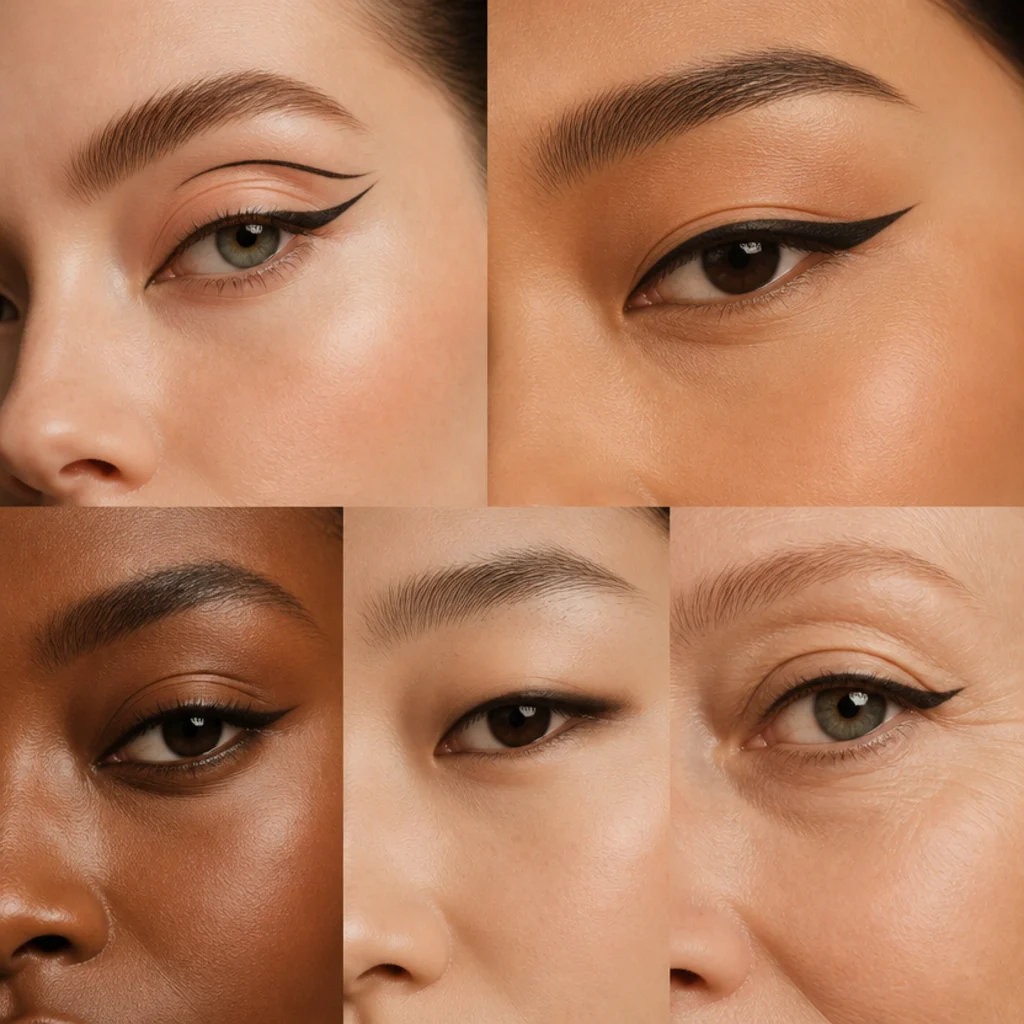
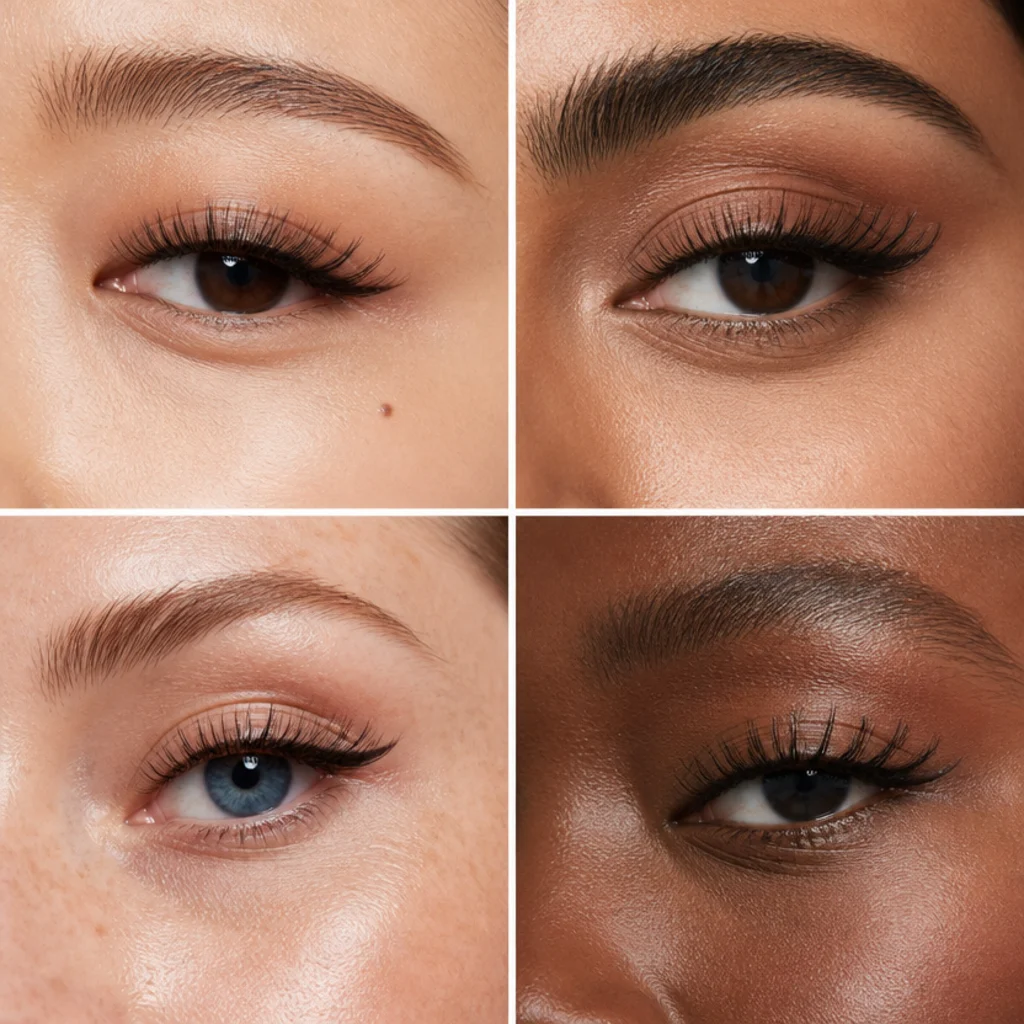
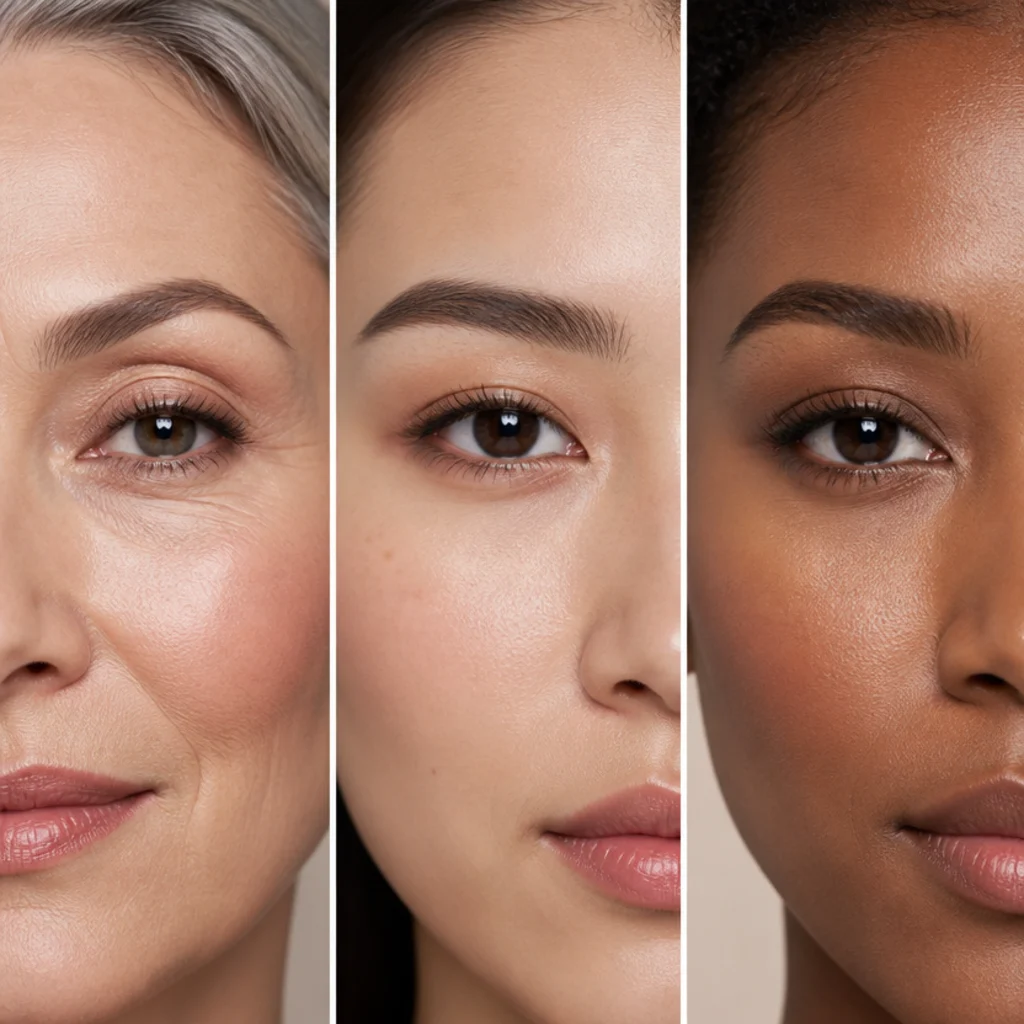
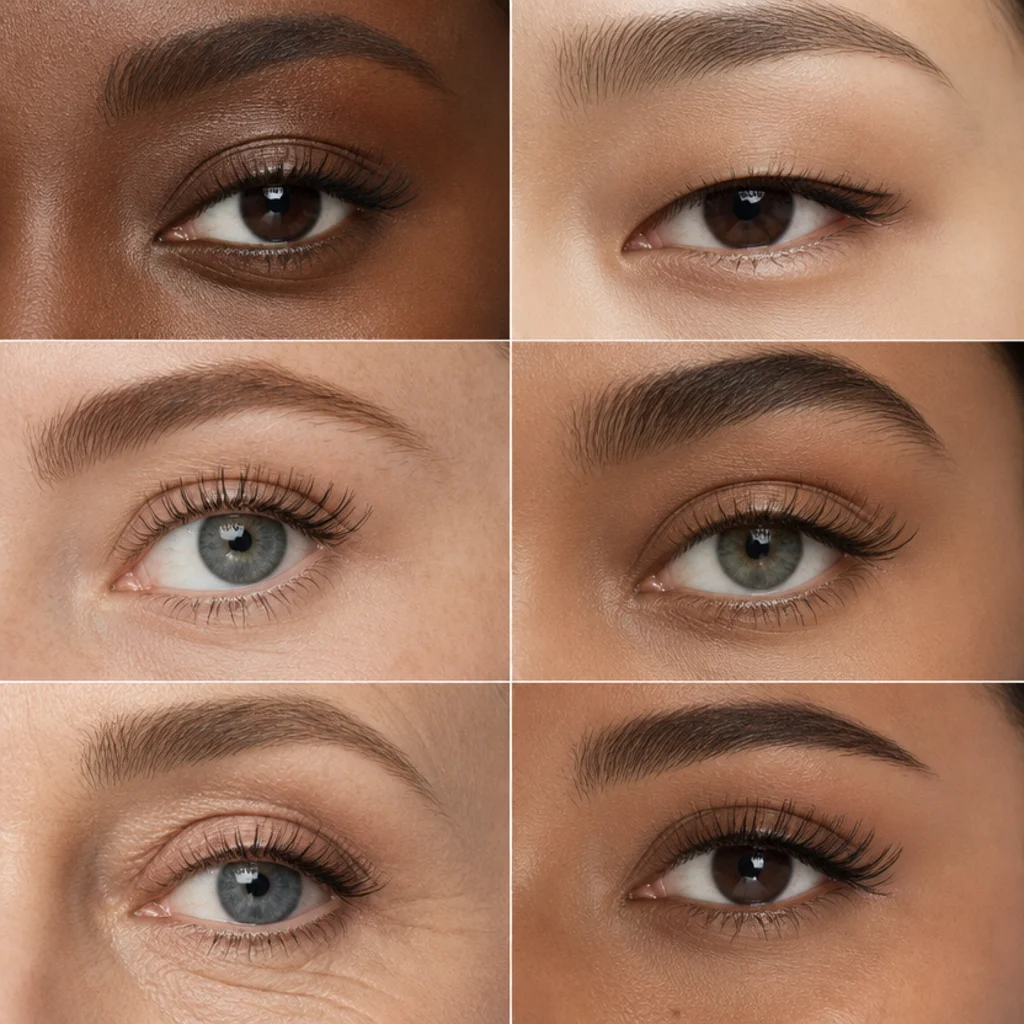
20 Eye Shapes and the Makeup Looks That Suit Them
Your eye shape decides which liner flick, lash length, and shadow placement actually work on you. This guide walks through 20 common eye shapes and the technique built for each one, so you can stop borrowing tutorials that fight your anatomy and start picking looks made for your lids, your tilt, and your spacing.
 Edited by Lena Rose · Published July 11, 2026 · 33 min read
Quick Answer
- Best for: anyone who wants eye makeup mapped to their real eye shape, tilt, and spacing instead of a one-size-fits-all tutorial
- Who might skip it: if you already know your shape cold and love your routine, treat this as a refresher rather than a rewrite
- Maintenance: low to medium day to day; the cut crease, full smoky eye, and extension-based lash maps sit at the higher end
- Difficulty: beginner to intermediate, with clear flags on the two or three techniques (crisp wings, cut crease) that reward a steady hand
- Cost: low if you own a neutral palette, a black and brown pencil, and a nude liner; higher only if you add strip lashes, extensions, or a pro appointment
- Wear time / longevity: 8-12 hours with primer and setting; tightlined and waterline work fades faster and benefits from a mid-day touch-up
- Standout variation: the corner-lifting wing for downturned eyes — it does more visual work than any other single liner move in the guide
- How to ask your makeup artist: name your traits, not a trend, e.g. "hooded and slightly downturned, I want the crease drawn higher and the outer corner lifted"
In This Guide
- Almond Eyes — The Versatile Baseline
- Round Eyes — Elongating Cat-Eye Liner
- Hooded Eyes — Lifting Above the Crease
- Monolid Eyes — Gradient Wash and Floating Wing
- Downturned Eyes — The Corner-Lifting Wing
- Upturned Eyes — Grounded Lower-Lash Smoke
- Close-Set Eyes — Outer-Corner Widening
- Wide-Set Eyes — Inner-Corner Anchoring
- Deep-Set Eyes — Bright, Forward-Bringing Lid
- Protruding Eyes — Matte Depth That Recedes
- Small Eyes — Nude Waterline Opener
- Large Eyes — Full Smoky Statement
- Almond Meets Hooded — Tightlined Definition
- Round Meets Downturned — Corrective Halo
- Cat-Eye Lash Mapping for Downturned and Wide-Set
- Doll-Eye Lash Mapping for Round and Close-Set
- Cut-Crease Shadow for Monolid and Hooded
- Halo Placement for Deep-Set and Small Eyes
- Smoked Lower Liner for Upturned and Round Eyes
- Your Personal Eye-Shape Chart
Most makeup advice treats every eye the same way, which is why a wing that lifts one person's eyes can drag another's down. Learning to read your own eye shape changes that math. Once you know whether your lids are hooded, whether your outer corners tilt up or down, whether white shows all the way around your iris, and how far apart your eyes sit at the bridge, you can put color and liner where they actually open, lift, and define instead of closing things in.
This guide works as a visual reference you can scroll and save. Each entry pairs a common eye shape with a technique that flatters it, then covers who it suits, the finish and shade family that works, a realistic upkeep timeline, and the words to hand a makeup artist. It covers eyeliner for different eye shapes, lash mapping for different eye shapes, and shadow placement, since those three levers do almost all the work. One caveat before you start: eye-shape categories overlap constantly, and nearly everyone is a blend of two or three. These are guidelines, not rules, and they're meant to flatter every eye shape, skin tone, and age. Find the entries that match your mirror, save them, and mix freely.
01Almond Eyes — The Versatile Baseline
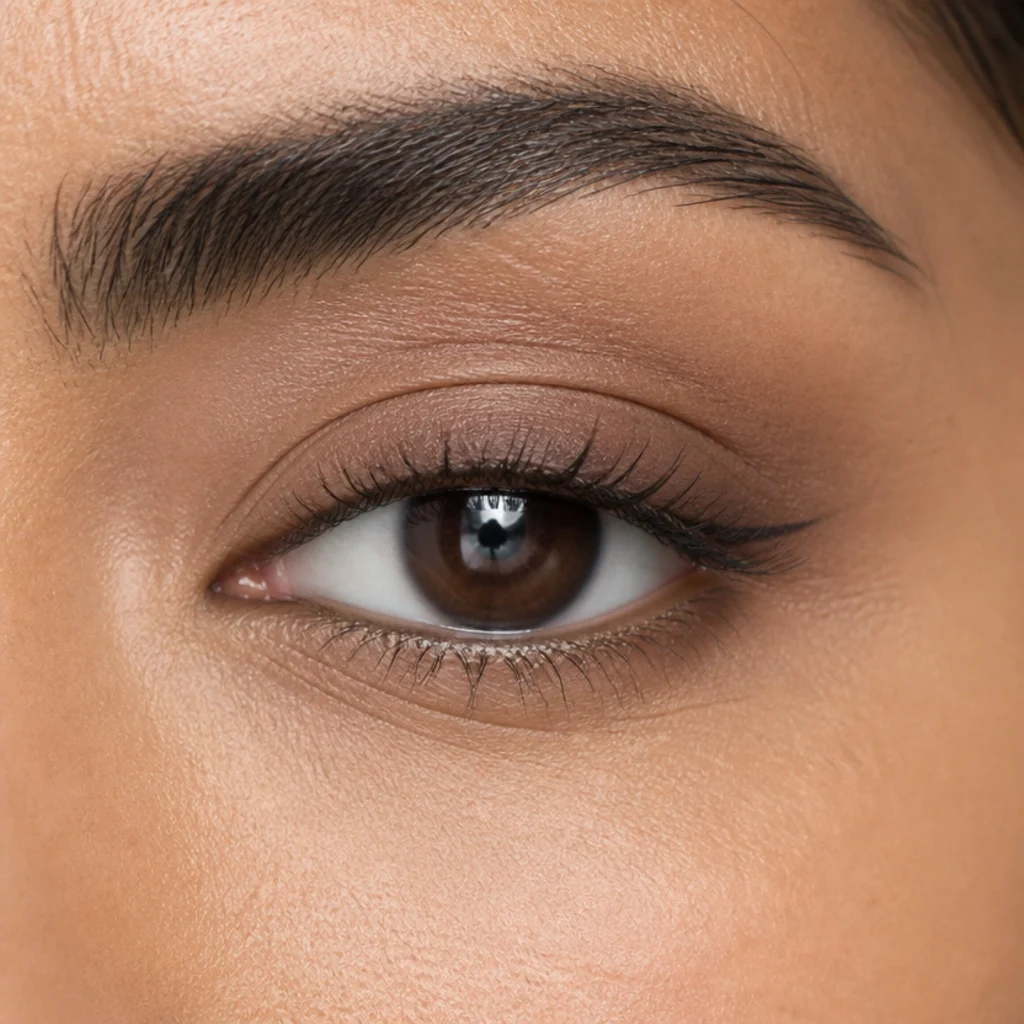
Almond eyes have a visible crease, a gently tapered outer corner, and balanced height-to-width proportions, which is why most tutorials are built around them. If your iris shows a sliver of white above and below and the outer corner points slightly up, that's probably you. The upside of this shape is range: cat-eyes, halos, smoky blends, and soft washes all work, so treat it as your testing ground. For everyday wear, sweep a matte taupe or soft bronze through the crease, blend the top edge until it's diffuse, and hug the upper lashes with a thin liner in dark brown for daytime or black for contrast. A warm satin at the lid center adds dimension without tipping into shimmer overload. Maintenance is low: primer plus a setting mist carries it 10-plus hours. Pro tip: define the crease a touch deeper at the outer third so the natural taper doesn't flatten under bright light. Ask your makeup artist for "soft everyday definition that follows my natural almond shape."
02Round Eyes — Elongating Cat-Eye Liner
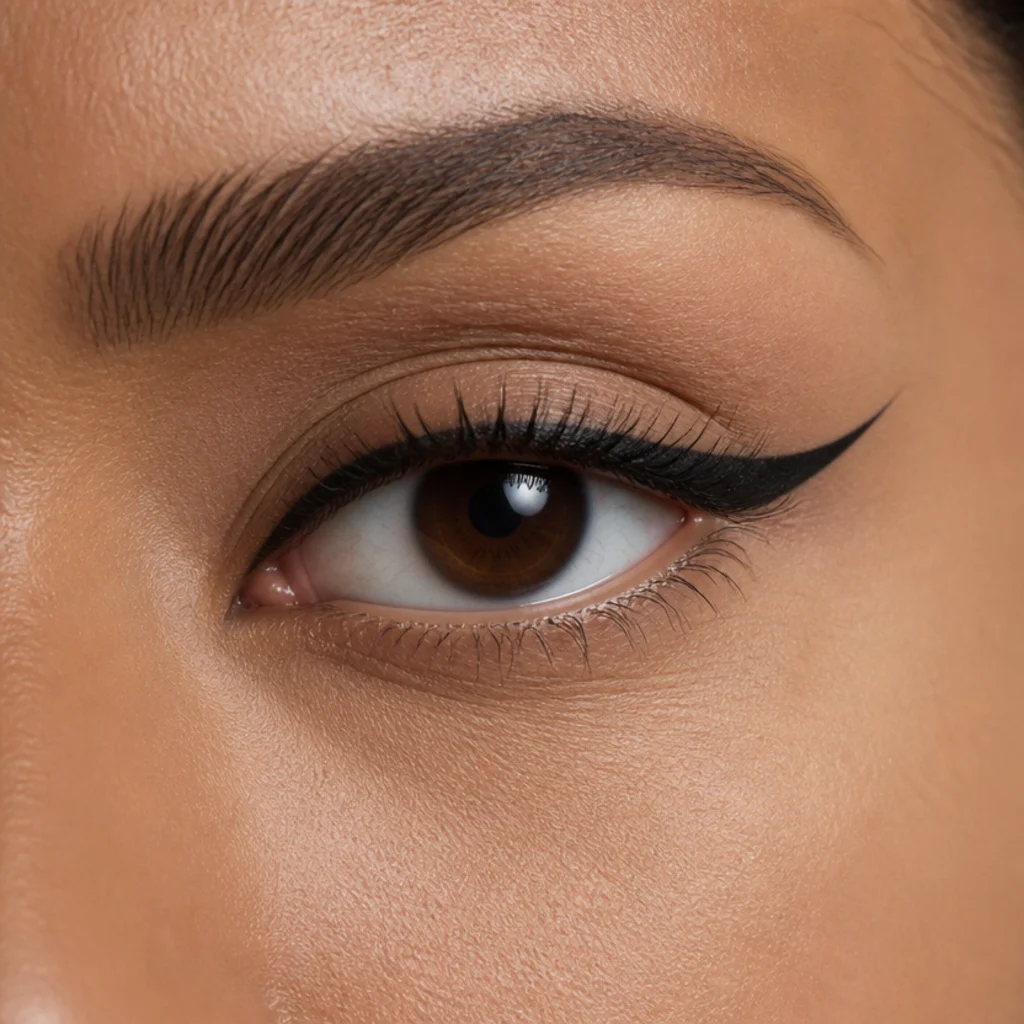
Round eyes curve noticeably and often show white all around the iris, which gives that open, awake look you can either play up or gently stretch out. A cat-eye is the sharpest tool for reading more oval. Concentrate liner along the outer third and drive the wing outward, roughly parallel to the ground, instead of flicking it steeply up, which just re-rounds the eye. Keep the inner corner clean, skip a full lap around the lower waterline, and pull crease shadow slightly past the outer corner to extend the frame. A matte transition shade a half-tone deeper than your skin at the outer V reinforces the lengthening. Upkeep is moderate: a crisp wing wants a steady hand, a fine felt tip or a small angled brush with gel, and a cotton bud dipped in concealer to clean up the edge. Pro tip: map the wing's angle by extending an imaginary line from your lower lash line outward, then keep the flick's underside straight. Ask your makeup artist for "an elongating wing, extended out, not up."
03Hooded Eyes — Lifting Above the Crease
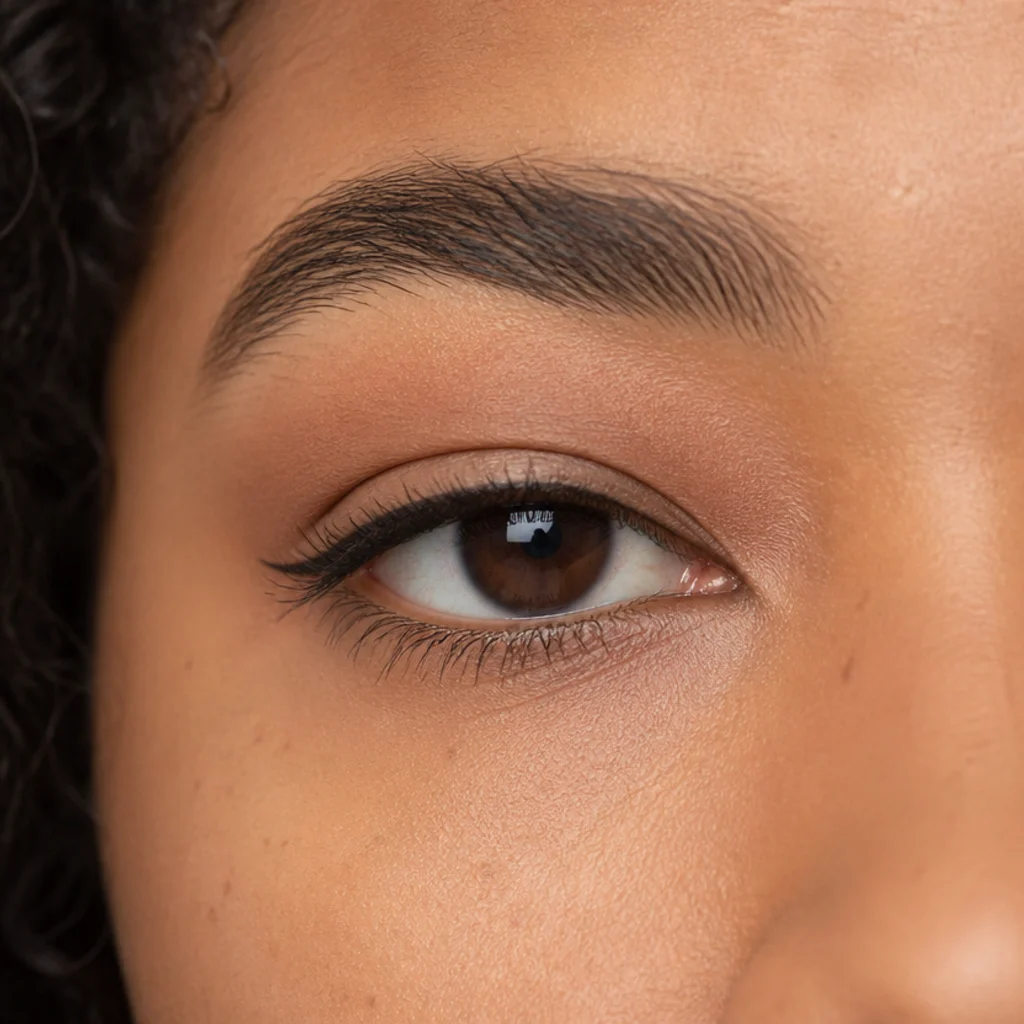
Hooded eyes carry a fold of skin that partly covers the mobile lid, so shadow placed in your anatomical crease disappears the moment your eyes open. The fix: redraw the crease higher. Work with your eyes open, mark where the hood casts its shadow, and build a soft transition shade just above that line so a slice of color shows at all times. Reach for matte formulas here — shimmer and metallics tend to grab the fold and transfer onto the upper lid. Keep liner thin and pressed tight to the roots, since a thick line gets eaten by the hood, and consider skipping a visible lid line in favor of tightlining. This trait shows up across the hooded, almond, and round family, and plenty of almond eyes turn hooded with age, so it's worth learning early. Maintenance is medium and transfer-prone, so a gripping primer earns its place. Pro tip: tap a matte the exact tone of the fold along the hood itself to soften its shadow before you place color. Ask your makeup artist to "draw the crease higher than my natural one for hooded lids."
04Monolid Eyes — Gradient Wash and Floating Wing
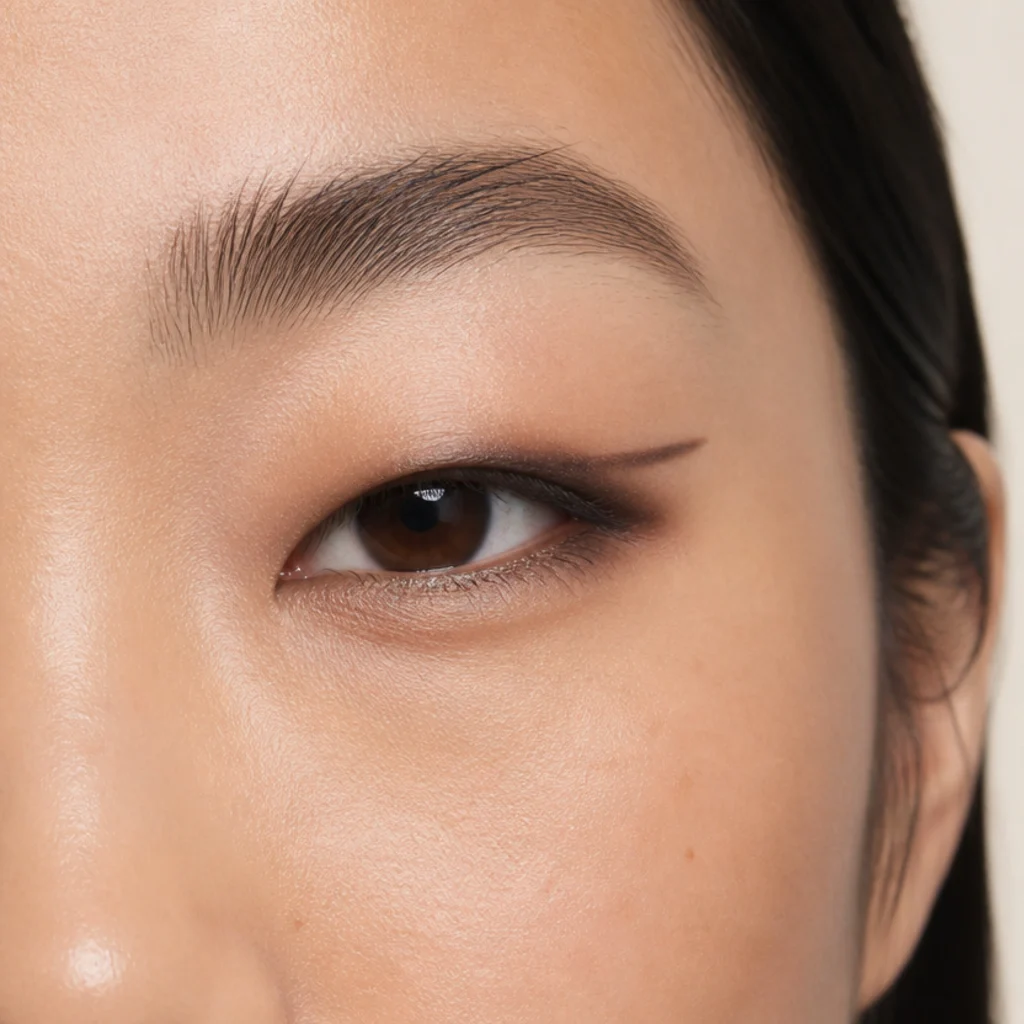
Monolids have little to no visible crease, which gives you a smooth, uninterrupted lid, a good canvas for gradient work. Since there's no fold to imply depth, you build it yourself: pack color densest at the lash line and fade it upward into a soft gradient, taking it higher than you think so it stays visible with the eyes open. For liner, a floating wing traced slightly above the lash line, following the eye's outer angle, makes sure the flick reads instead of disappearing against the lid. Diffuse, smoked shapes tend to flatter more than a single hard line. Satin and buildable metallics look striking here since the flat surface catches light evenly. Upkeep runs low to medium depending on how blended you go, and a long-wear formula stops the packed lash-line color from smudging into the socket. Pro tip: check your gradient height with your eyes open in a handheld mirror, then add one more pass above where the color currently stops. Ask your makeup artist for "a gradient smoke that builds height, plus a wing placed to show with my eyes open."
05Downturned Eyes — The Corner-Lifting Wing
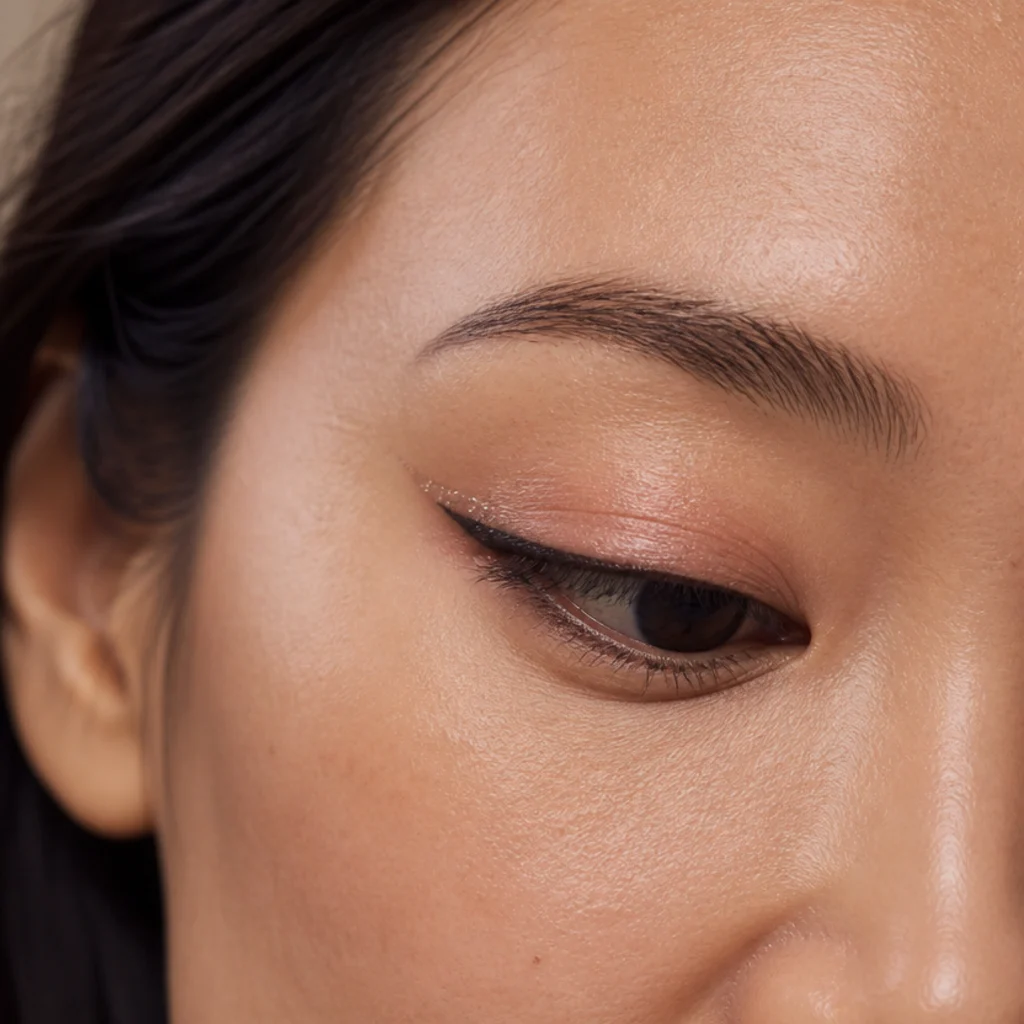
Downturned eyes angle gently down at the outer corners, which can read as soft, romantic, or a little sleepy depending on the day. A lifting wing changes that fast. Trace the line of your lower lash from the outer corner and flick it upward, then connect that flick back into the upper lash line, effectively drawing a new corner that points up instead of down. The key is starting the lift from the lower lash line, not the upper, so you actually redirect the eye's angle. Keep dark liner and deep shadow off the outer lower corner, where they only reinforce the droop, and add a hit of lifted satin or highlight at the outer top corner to finish the illusion. Upkeep is medium since the wing needs a clean, confident edge. Pro tip: place a small piece of tape angled from your lower lash toward the tail of your brow, then wing along it for a foolproof lift line. Ask your makeup artist for "an upward-lifting wing at the outer corner to counter the downturn."
Save this to Pinterest if the lifting wing is the trick your downturned corners have been waiting for.
06Upturned Eyes — Grounded Lower-Lash Smoke
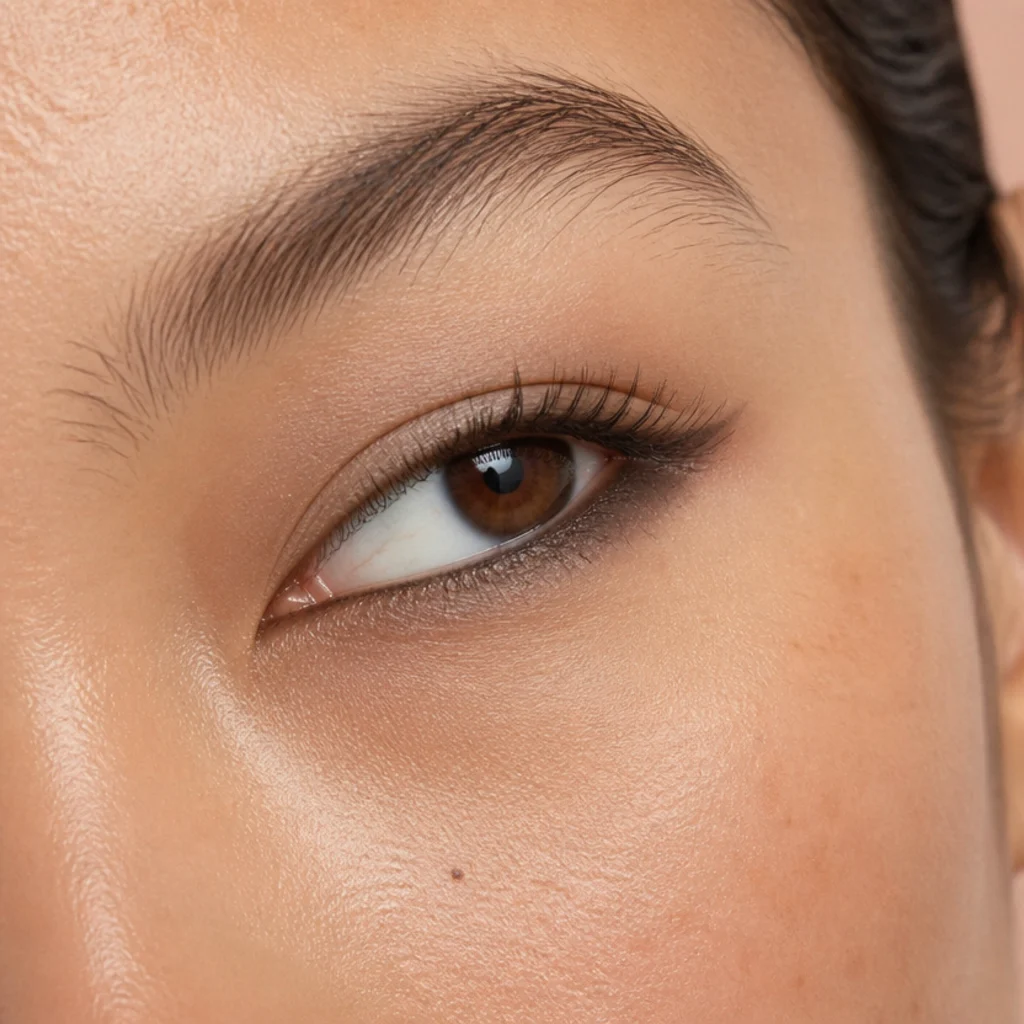
Upturned eyes lift at the outer corners, the so-called natural cat eye, so the tilt other shapes have to build for is already there. That means your job is usually to balance rather than amplify. Softly smoking the lower lash line, weighted toward the outer third, adds weight beneath the eye and settles the shape into a more even almond. Use a smudgy pencil or a deep matte pressed on with a pencil brush in a shade like espresso or charcoal, then diffuse until there's no hard edge. Keep the lid simple, a neutral wash or a single satin, so the lower line stays the anchor. If you love your lift, lean the other way and reach for a wing instead, but the lower smoke is the corrective move. Upkeep is low and forgiving, since a slightly imperfect smoke still looks intentional. Pro tip: connect the lower smoke to a touch of the same shade at the outer upper corner so the two frames meet and the eye reads balanced. Ask your makeup artist for "lower-lash definition to balance my natural upward lift."
07Close-Set Eyes — Outer-Corner Widening
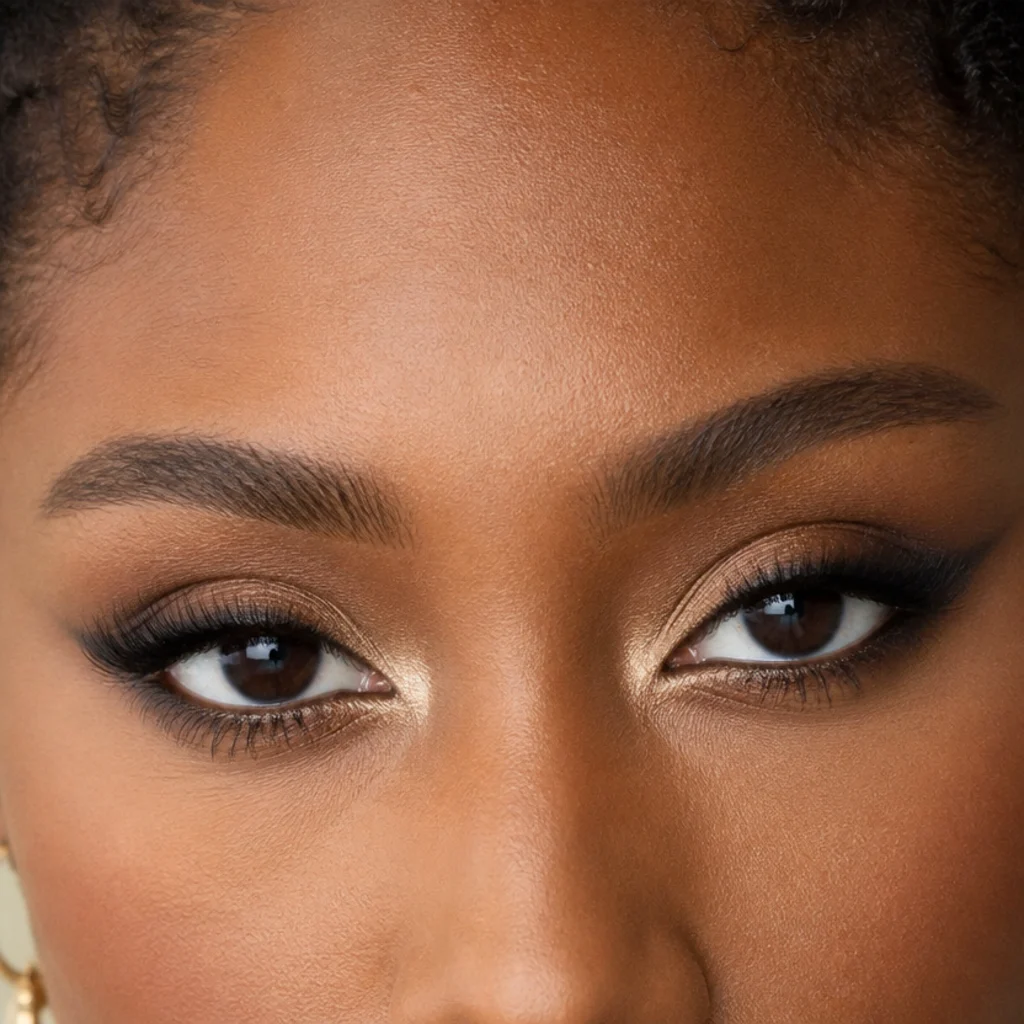
Close-set eyes sit less than one eye-width apart at the bridge, so the goal is inventing space by pulling every point of interest outward. Keep the inner corners light and bright, park your deepest shadow and any liner emphasis on the outer third, and carry shadow a touch past the outer corner to lengthen. Skip dark inner-corner liner and heavy inner-half shadow, both of which crowd the eyes together, and set a dab of light reflective shadow or a pale champagne at the inner corners to open the center of the face. It's a placement principle more than a single product, so it layers over almost any color story. Upkeep sits low to medium. Pro tip: on close-set eyes, start your mascara and any lash density at the outer corners and go lighter at the inner, so lash weight reinforces the outward pull too. Ask your makeup artist to "shift all the depth to the outer corners to widen my spacing."
08Wide-Set Eyes — Inner-Corner Anchoring
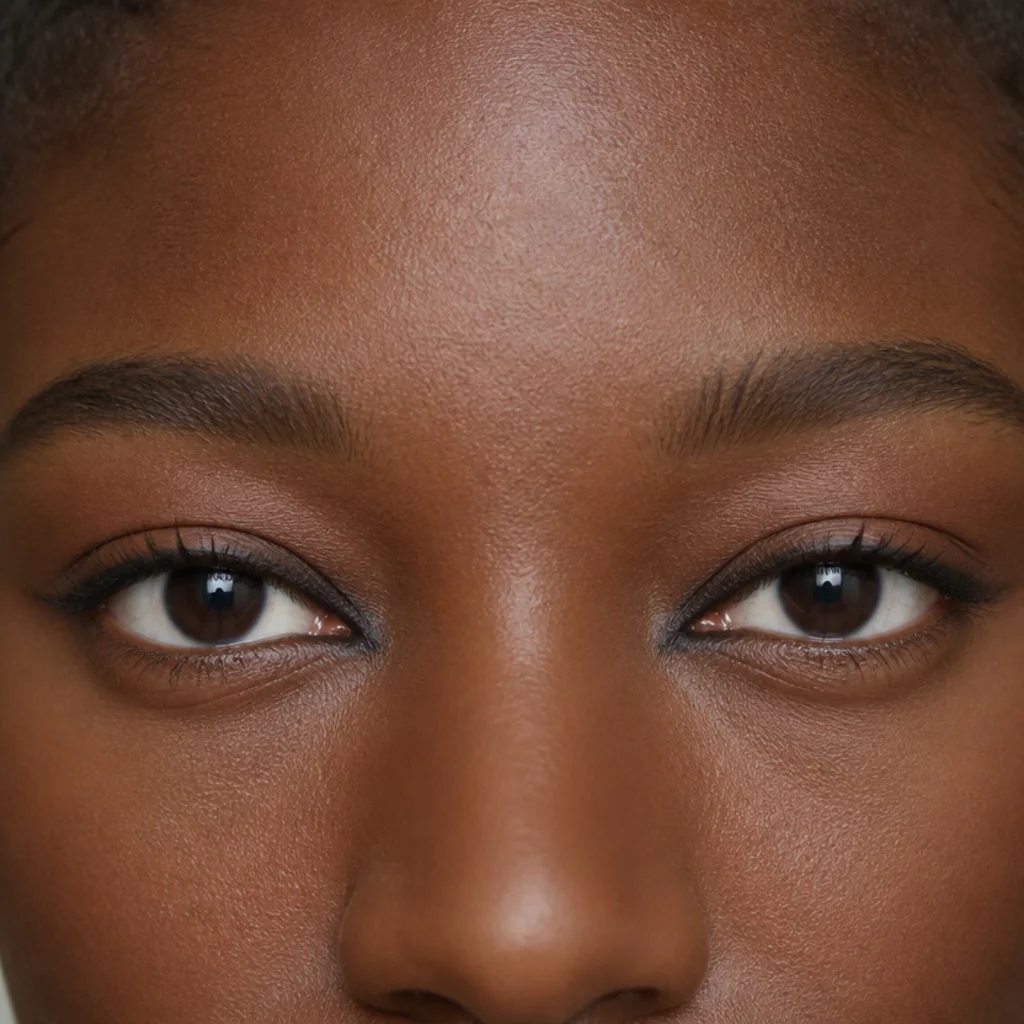
Wide-set eyes sit more than one eye-width apart, which reads open and doll-like but can feel a touch unanchored if you want more central focus. Run the close-set playbook in reverse: bring depth inward. Extend liner slightly toward the inner corner, lay soft shadow across the inner half, and keep the outer corners deliberately soft and unextended. Lining the inner section of the lower waterline in a deep tone tugs the eyes toward each other visually. Avoid a long wing that shoots far past the outer corner, since that only stretches the gap wider. A deeper, more saturated inner corner instead of a bright highlight also helps close the distance. Upkeep is low. Pro tip: darker, fuller brows set slightly closer to the nose reinforce the centering effect, so fill the inner heads a hair more than usual. Ask your makeup artist to "pull the emphasis toward the center for wide-set eyes."
09Deep-Set Eyes — Bright, Forward-Bringing Lid
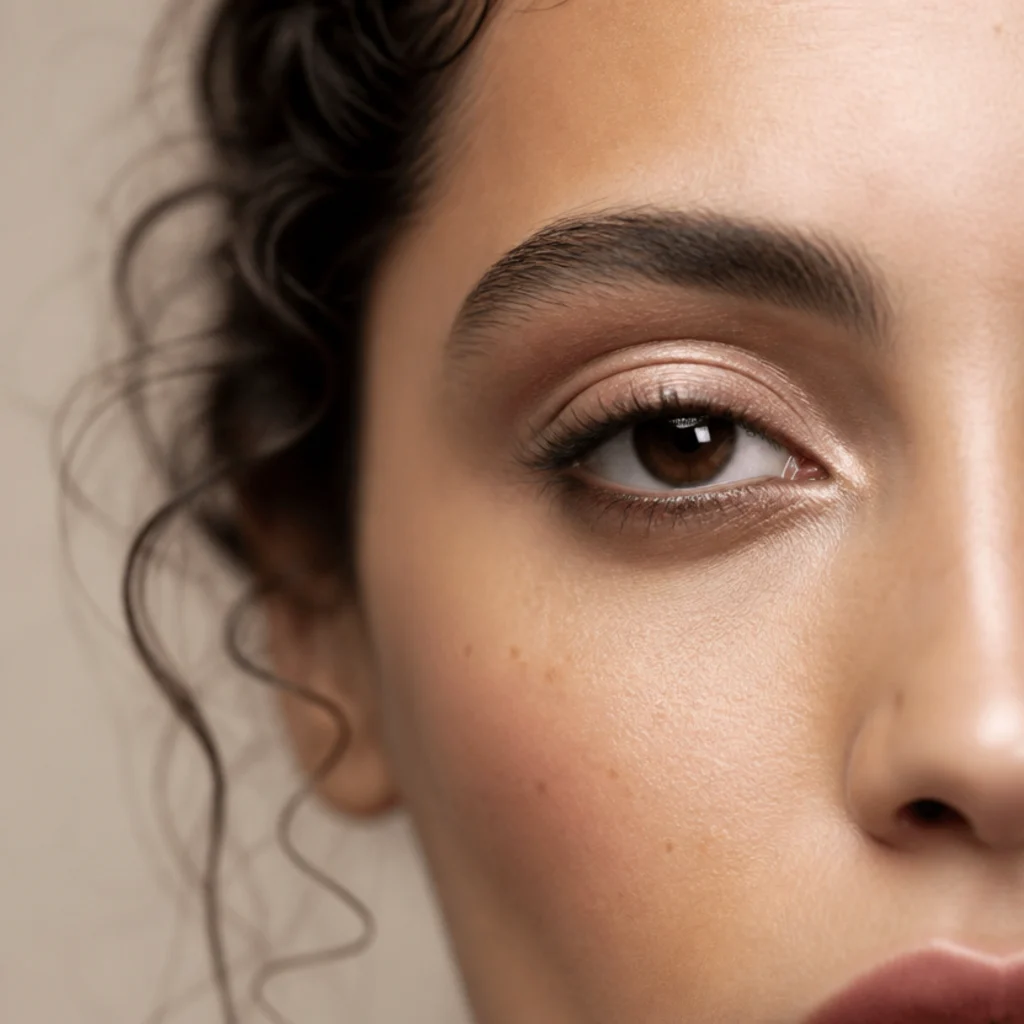
Deep-set eyes sit further back beneath a prominent brow bone, which casts a natural shadow across the lid. The strategy is putting light exactly where that shadow falls: a luminous satin or soft metallic mid-tone across the lid catches light and pulls the eye forward, working against the recess. Keep crease color soft, warm, and well diffused rather than dark and heavy, since a deep crease only deepens an already-shadowed socket. Steer clear of dark all-over lids in daylight, and let an inner-corner highlight add extra forward lift. Because the brow bone reads strong, a lighter hand on brow-bone highlight keeps the bone from projecting further. Upkeep is medium, driven almost entirely by blending quality. Pro tip: choose a lid shade one to two steps lighter and more reflective than your skin, and press it on with a flat finger for maximum light-catch instead of sweeping it with a brush. Ask your makeup artist for "a light, luminous lid to bring my deep-set eyes forward with only gentle crease work."
10Protruding Eyes — Matte Depth That Recedes
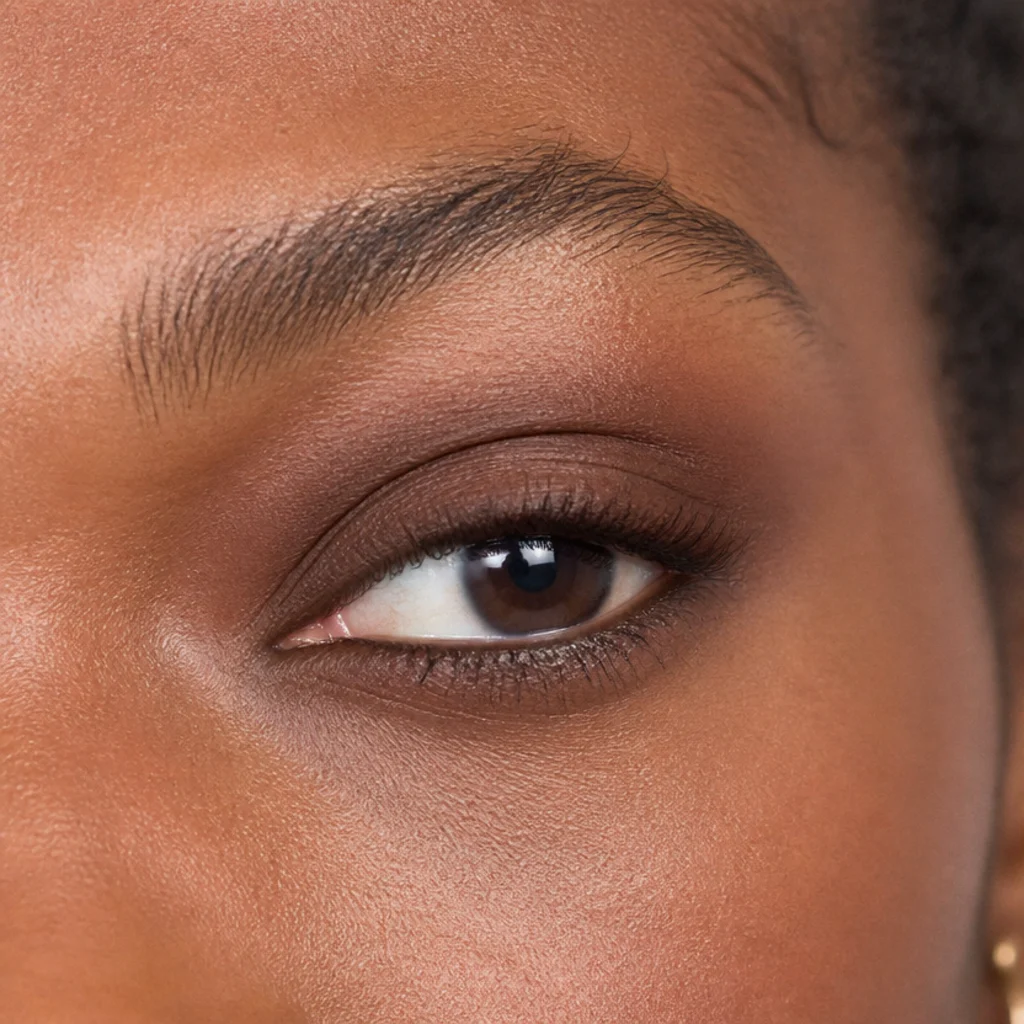
Protruding or prominent eyes have full lids that sit forward, an expressive, camera-ready look with plenty of surface to work with. To balance the fullness, pack a matte medium-to-deep shadow across the entire lid — matte absorbs light and pushes the lid back visually, the opposite of the deep-set strategy. Skip high shimmer across the whole lid, which only projects it further forward, though a small satin tap at the very center works fine day to day. A blended, smoky treatment with the depth carried up and slightly out suits this shape well and doubles as a natural evening look. Choose your matte in a shade with real depth, a cool taupe, soft plum, or true brown, so it does the receding work. Upkeep is medium because seamless blending sells the effect. Pro tip: extend the matte a little higher toward the brow bone than you would on other shapes so the fullness has somewhere to settle. Ask your makeup artist for "matte depth across prominent lids to balance the fullness," and know that plenty of people love playing prominent eyes up instead.
Save this to Pinterest and pin the shape that matches your lids so you can find it fast.
11Small Eyes — Nude Waterline Opener
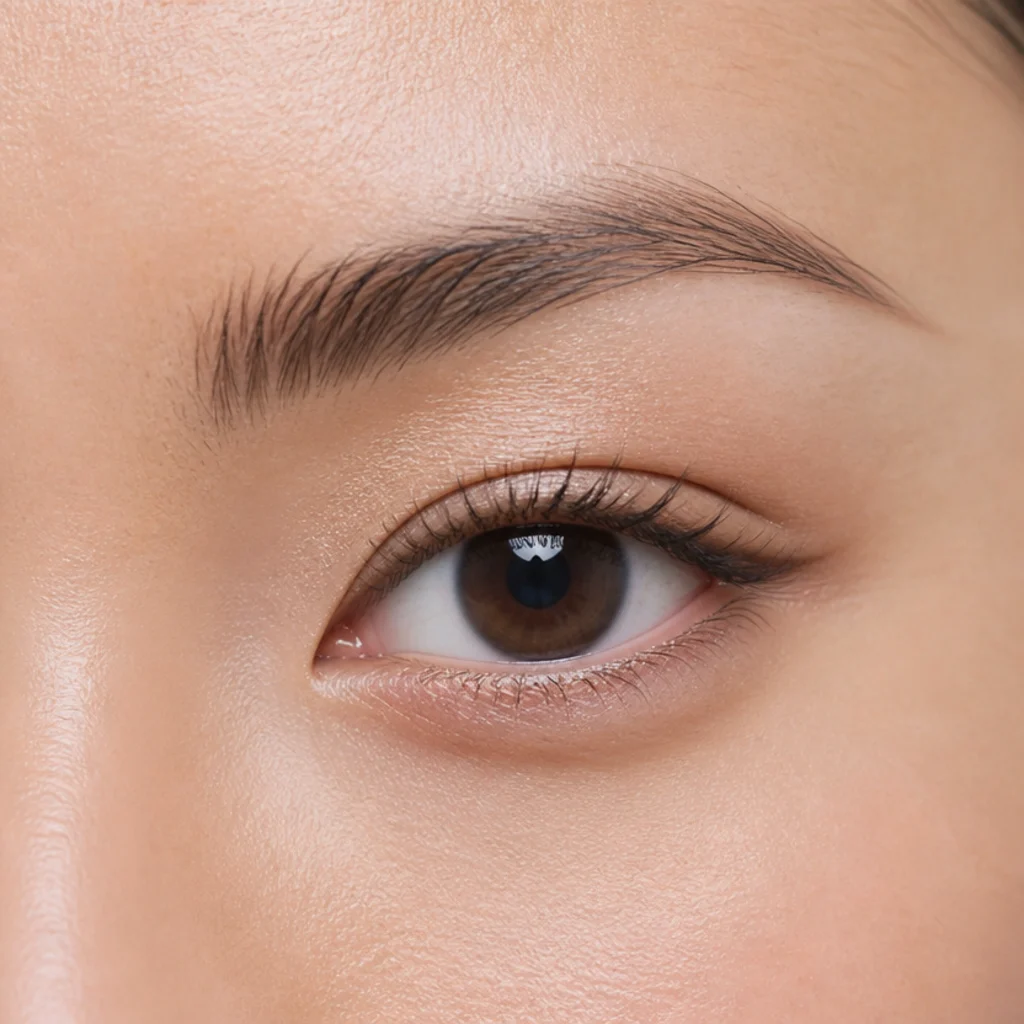
Smaller eyes respond best to techniques that maximize apparent size, and the highest-impact move is lining your lower waterline with a nude, soft rosy, or warm peach pencil instead of black. That extends the white of the eye visually and opens it instantly. Layer in light, reflective lid shades, swap harsh black liner for brown, and keep lashes well separated rather than clumped into a heavy fringe that shrinks the frame. Avoid ringing the eye in dark liner all the way around, which only closes it. A halo or a bright center lid pop (see the halo entries) stacks neatly on top of this base. Upkeep is low, though waterline products fade fastest, so a mid-day re-line keeps the opening effect fresh. Pro tip: curl your lashes hard at the base before mascara and set a spot of highlight at the inner corner — the two together add noticeable roundness and openness. Ask your makeup artist for "everything that makes small eyes look larger, starting with a nude waterline."
12Large Eyes — Full Smoky Statement
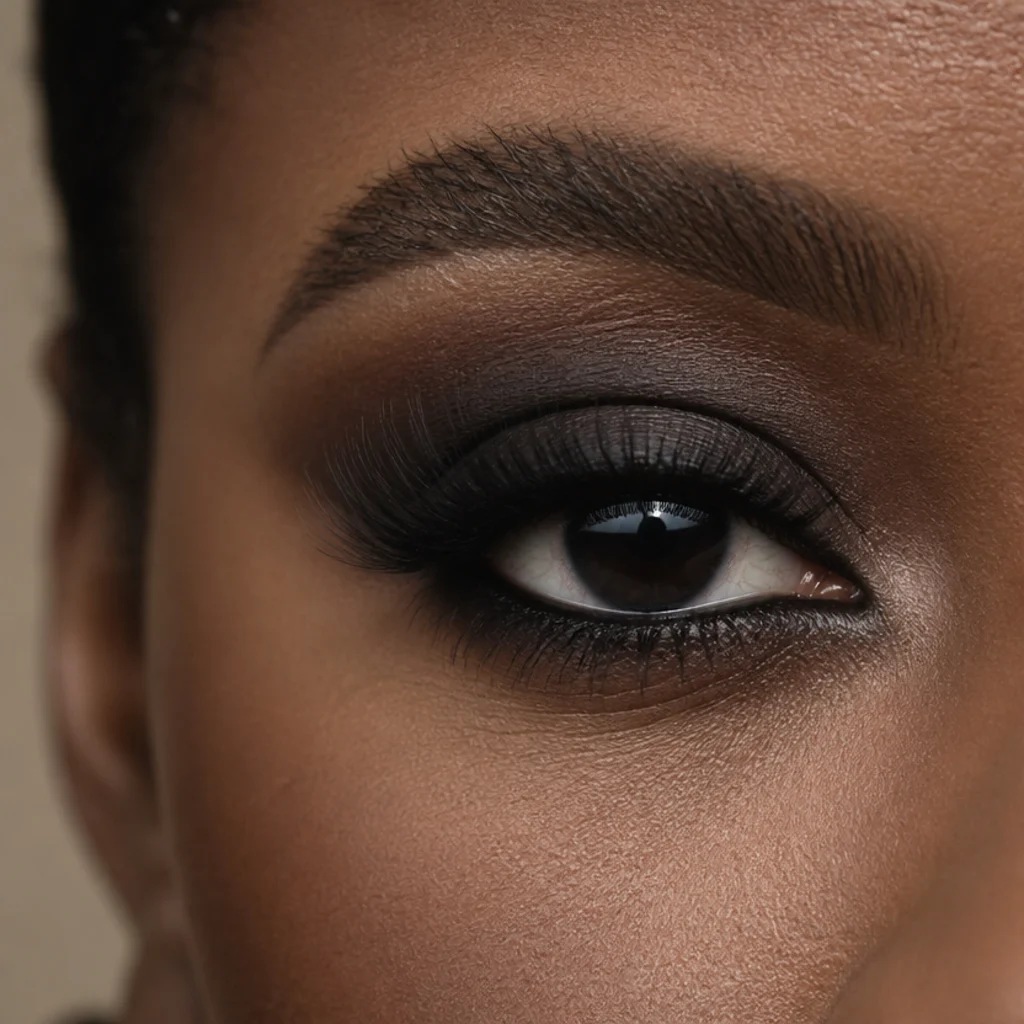
Large eyes can carry looks that would swallow smaller ones, which makes them the natural home for a full smoky eye. Dark liner all the way around, richly blended shadow, and bold lashes suit the scale without closing the eye in. If a full smoke feels heavy for daytime, you have the room to wear a graphic liner, a deep jewel-tone lid, or a saturated wash and still look balanced. Because the canvas is generous, you can also play with placement, dropping deeper color slightly lower onto the lower lid for a sultry, elongated finish. Upkeep runs medium to high for a true smoky eye, which needs patient blending, a gripping primer to stop creasing, and setting to hold through wear. Pro tip: lay a soft transition shade in the crease first as a buffer, then build your dark shades into it so the smoke blends cleanly instead of going patchy. Ask your makeup artist for "a full smoky eye, lined all around," knowing your eye size can take the drama.
13Almond Meets Hooded — Tightlined Definition
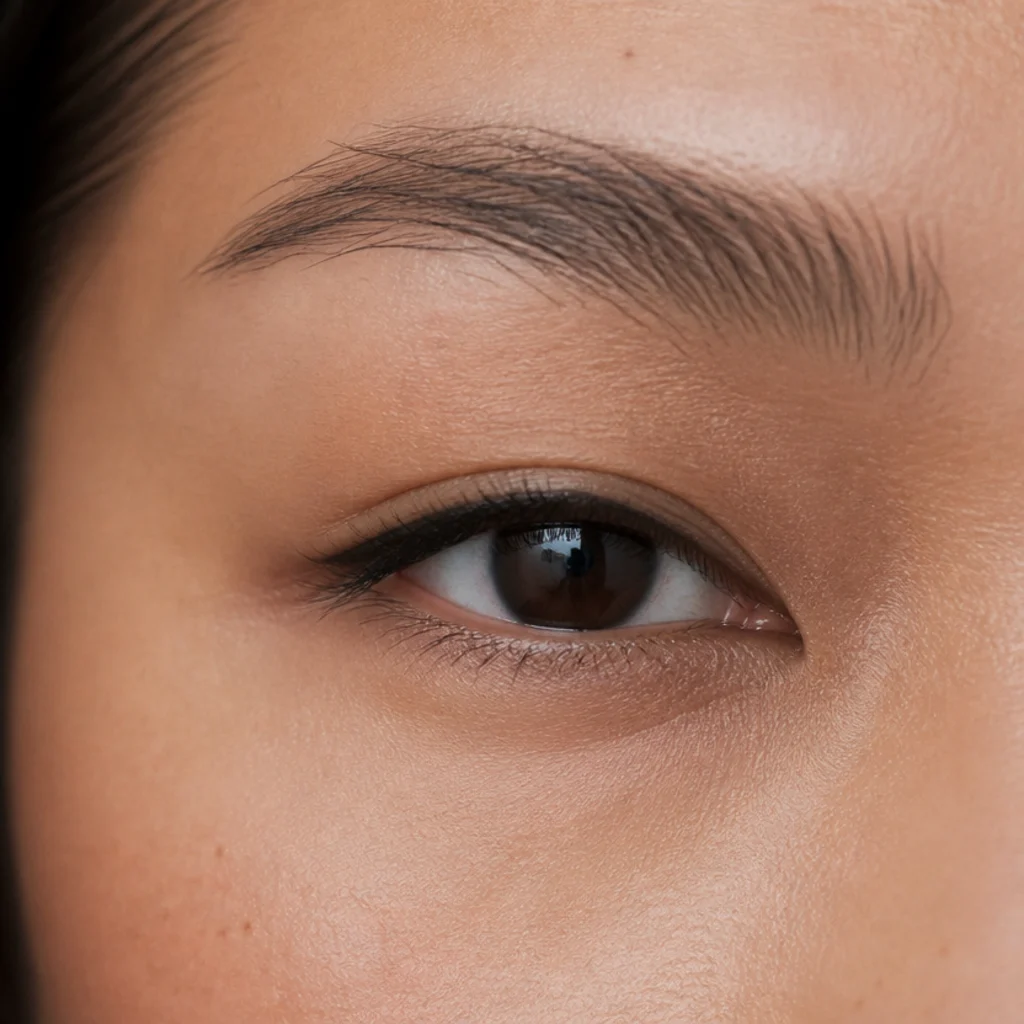
Plenty of people have almond eyes that are also hooded, one of the most common overlaps in the hooded, almond, and round spectrum, and it calls for definition that doesn't cost lid space. Tightlining is the answer: press a dark, waterproof pencil or gel into the roots of the upper lashes along the upper waterline instead of drawing a visible line on the lid. The effect reads as denser, fuller lashes and a defined eye, all without the thick band a hood would eat up. Add a whisper-thin lash-hugging line on top only if you want more, keeping it under the fold. A waterproof formula matters here because the upper waterline is warm and prone to fading. Upkeep is low and it wears well beneath a hood. Pro tip: look down into a mirror to expose the waterline, then wiggle the pencil up into the lash roots so there are no gaps of bare skin showing through. Ask your makeup artist to "tightline the upper waterline for definition that doesn't shrink my hooded lids."
14Round Meets Downturned — Corrective Halo
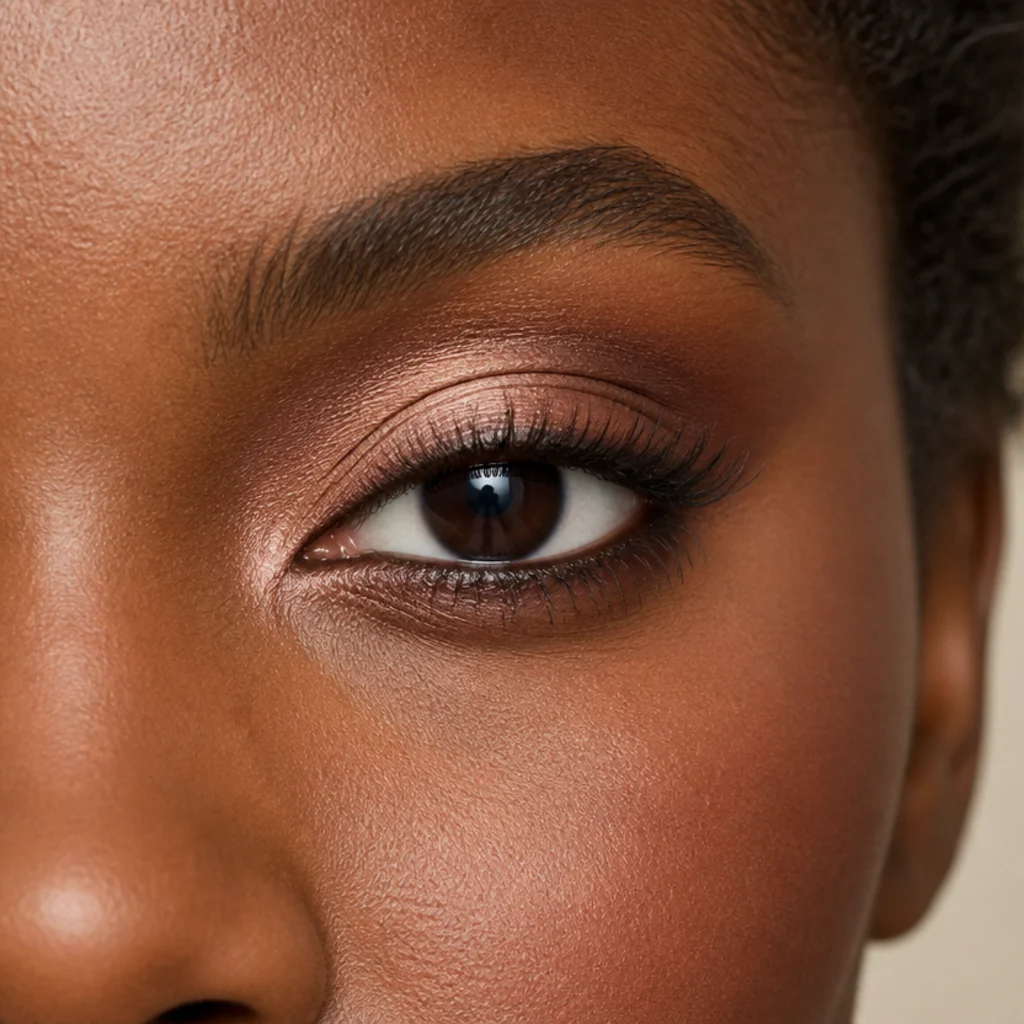
Round eyes that also turn down at the corners have two jobs at once: lengthen and lift. A corrective halo handles both. Set a light, reflective shade in the center of the lid to open and brighten, keep the inner corner soft, and build deeper shadow at the outer corner, sweeping it up and out to counter both the roundness and the downturn. Reinforce it with a lifted lower-lash line at the outer third and, if you like liner, an outward wing rather than an upward one. The center highlight is what keeps the eye from reading heavy despite the outer depth. Upkeep is medium because that central pop needs to stay crisp and unmuddied. Pro tip: apply the outer-corner depth and the lower-lash lift first, then place the center highlight last with a clean flat brush so it stays bright and defined. Ask your makeup artist for "a halo with the outer corner lifted up and out to lengthen and lift." It's a clean example of stacking two shape strategies into one look.
15Cat-Eye Lash Mapping for Downturned and Wide-Set
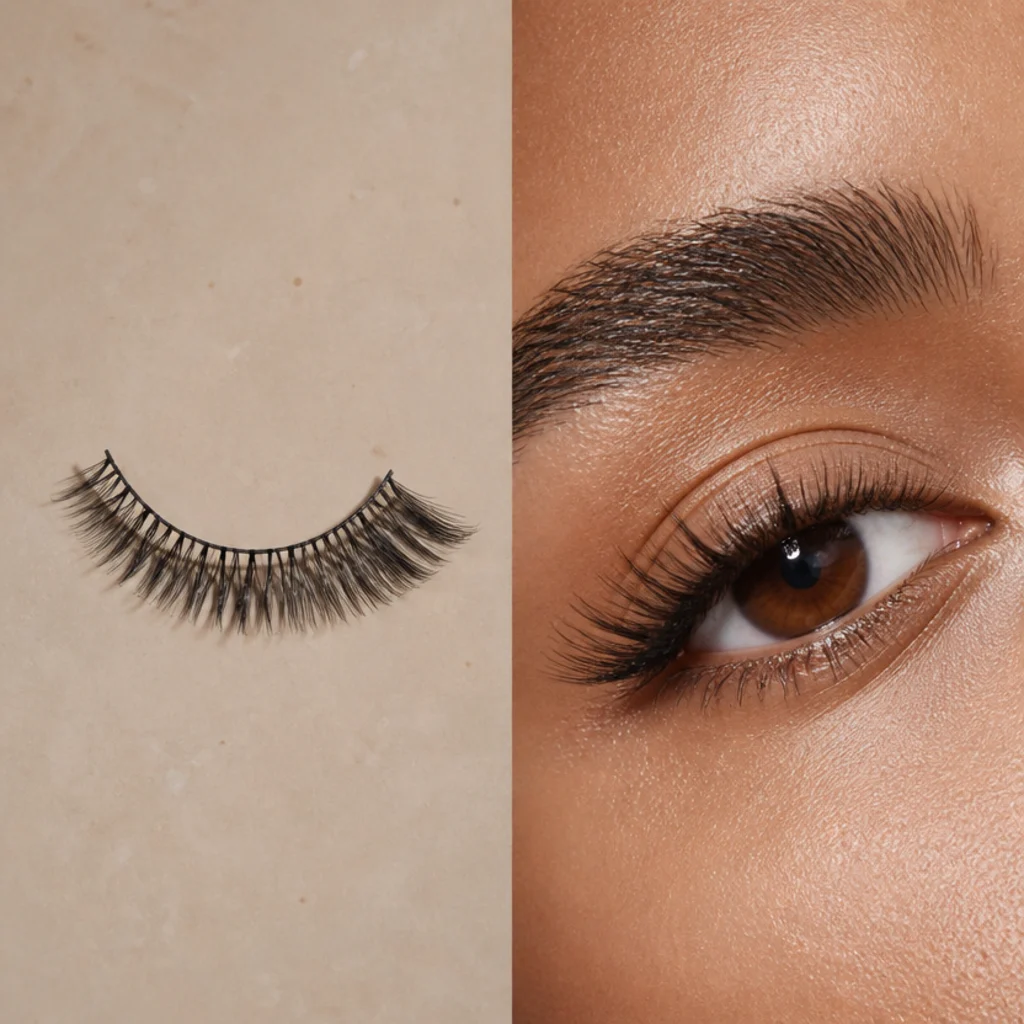
Lash mapping means placing lash lengths strategically instead of running one uniform length across the eye. A cat-eye map concentrates the longest lashes at the outer corner and tapers to shorter lengths toward the inner, pulling the eye outward and up. It especially flatters downturned and wide-set eyes since it echoes the lifting-wing logic in lash form. For strip lashes, look for styles labeled cat-eye or winged; for individuals or extensions, ask for graduated lengths that build to a peak at the outer corner. It's one of the most effective lash styles for reshaping the frame without a drop of shadow. Upkeep depends entirely on format, from reusable strips you re-glue nightly to professional extension fills roughly every two to three weeks. Pro tip: pair a cat-eye map with a curl type suited to your lid, an L or L+ curl for hooded eyes so the lift clears the fold, a C curl for more open lids. Ask your lash tech for "a cat-eye map, longest at the outer corner."
Save this to Pinterest so your lash map is ready before your next lash appointment or strip purchase.
16Doll-Eye Lash Mapping for Round and Close-Set
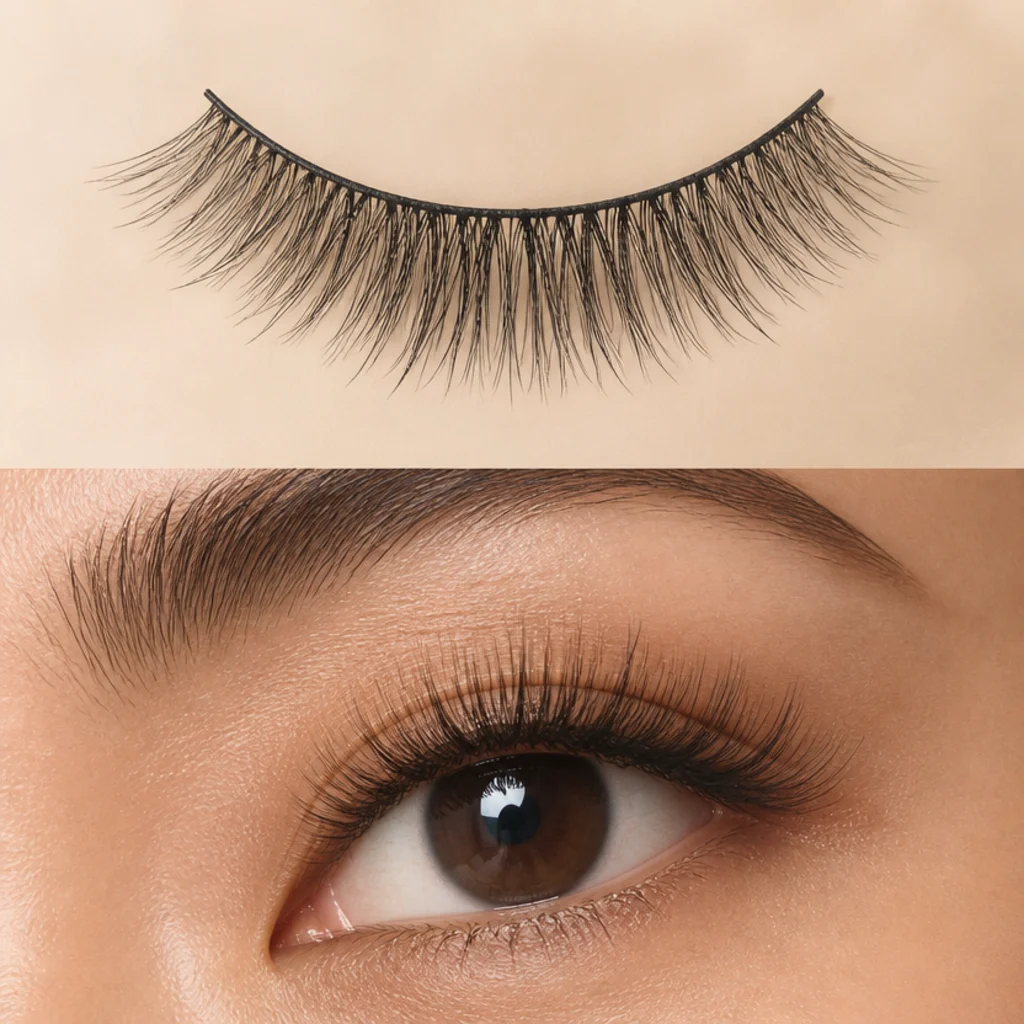
A doll-eye map inverts the cat-eye: the longest lashes sit at the center of the eye and taper shorter toward both corners. That central length opens and rounds the eye at the middle for a wide, awake finish, and it can nudge close-set eyes toward a more balanced center by drawing focus off the inner corners. It suits round eyes that want to lean into their openness and almond eyes chasing a softer, doe-like effect. For strips, look for doll-eye or open-eye styles; for extensions, ask for the peak length placed dead center. Upkeep varies by format, with strips the most economical and extensions the most low-maintenance day to day. A doll-eye map amplifies roundness, so if your goal is elongation rather than openness, the cat-eye map above is the better call. Pro tip: on close-set eyes, blend a doll-eye map with slightly extra length just outside center so you get openness without pulling the eyes closer together. Ask your lash tech for "a doll-eye map with the peak length in the center."
17Cut-Crease Shadow for Monolid and Hooded
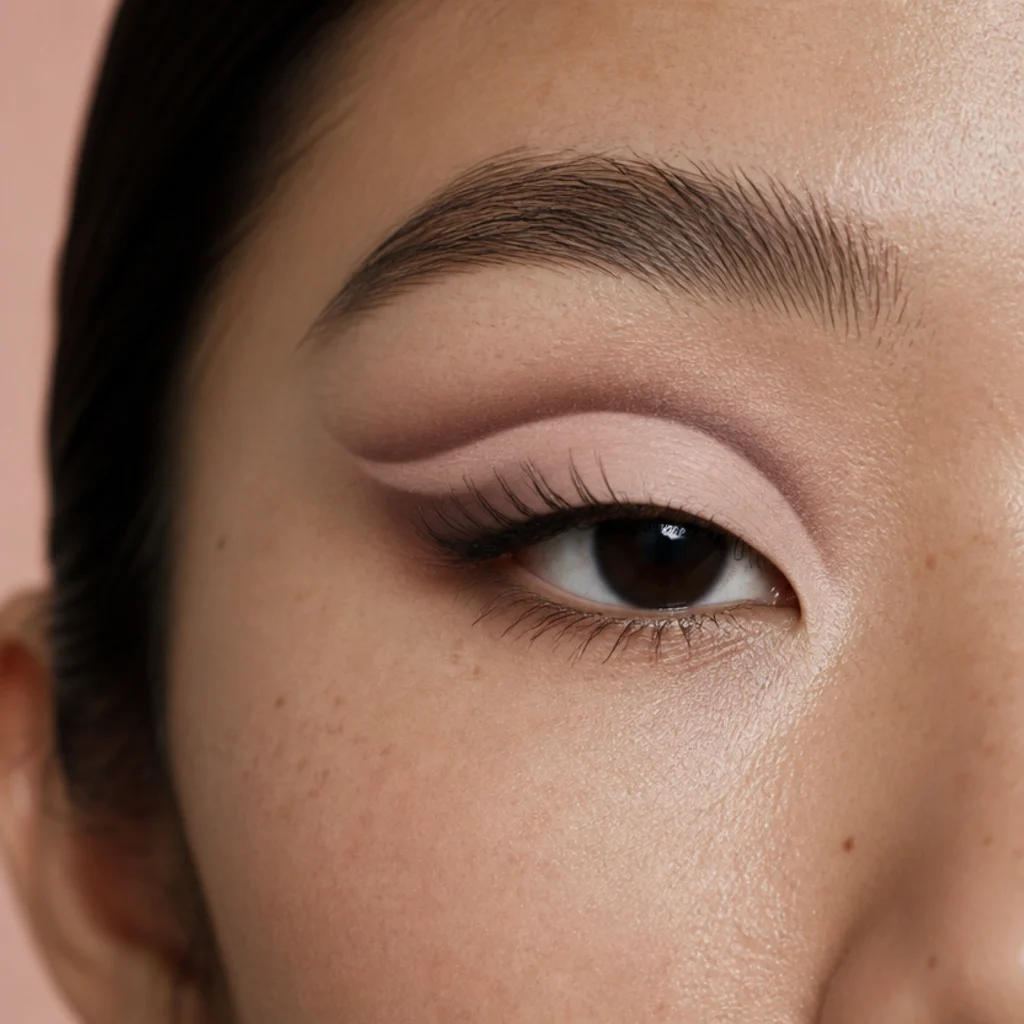
A cut crease carves a crisp line of shadow above a clean, contrasting lid color, building the depth and lid space that monolid and hooded eyes may not have naturally. Because you're drawing the crease rather than relying on your own, you control exactly where the dimension sits, placing it high enough to stay fully visible with the eyes open. Concealer or a light base sharpens the lid pop, and the technique photographs well, which is why it's an events and bridal staple. It's an advanced move with higher upkeep and a real learning curve, so budget practice time or book a pro for a special occasion. Longevity is strong once set, but the crisp line needs a gripping base to avoid transfer. Pro tip: start with a soft, blended cut crease using a matte a few shades deeper than your skin before you attempt a razor-sharp graphic version, and clean the line with a flat concealer brush. Ask your makeup artist for "a cut crease placed high enough to show with my eyes open."
18Halo Placement for Deep-Set and Small Eyes
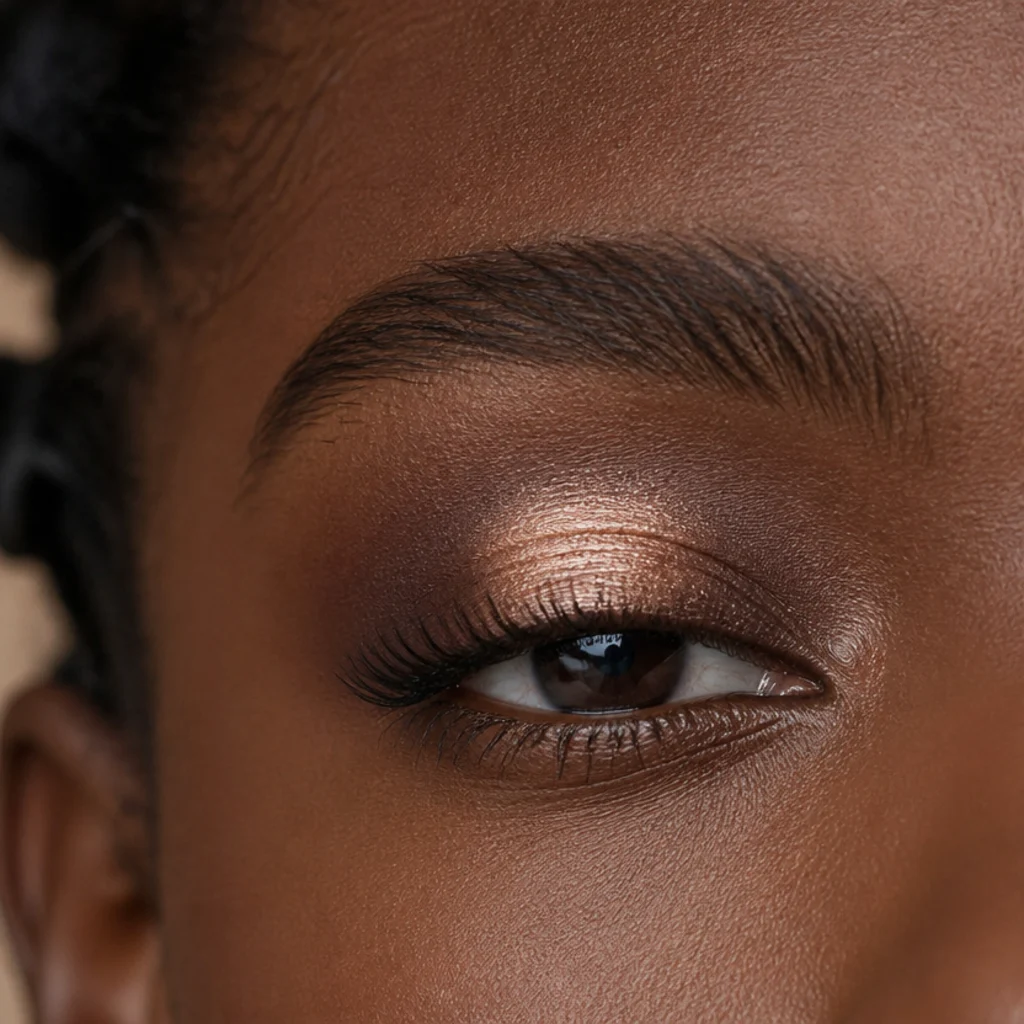
A halo eye centers a bright, often shimmery shade on the lid and rings it with deeper color at the inner and outer corners. That central burst of light pushes the eye forward and larger visually, which helps deep-set eyes come forward and small eyes read bigger. It's one of the more versatile evening looks across shapes. Keep the highlight reflective, a foiled metallic or a glittering satin, and blend the surrounding depth so the transition looks deliberate rather than like two separate colors. On small eyes, keep the deeper corners compact so they don't eat the opening; on deep-set eyes, let the center shade carry most of the light. Upkeep is medium. Pro tip: apply the center shimmer with a damp flat brush or a fingertip to intensify the foil and stop fallout. Prefer a softer finish? Swap the sparkle for a light satin and you keep the forward, opening effect without heavy glitter. Ask your makeup artist for "a halo eye with a bright center to open and bring my eyes forward."
19Smoked Lower Liner for Upturned and Round Eyes
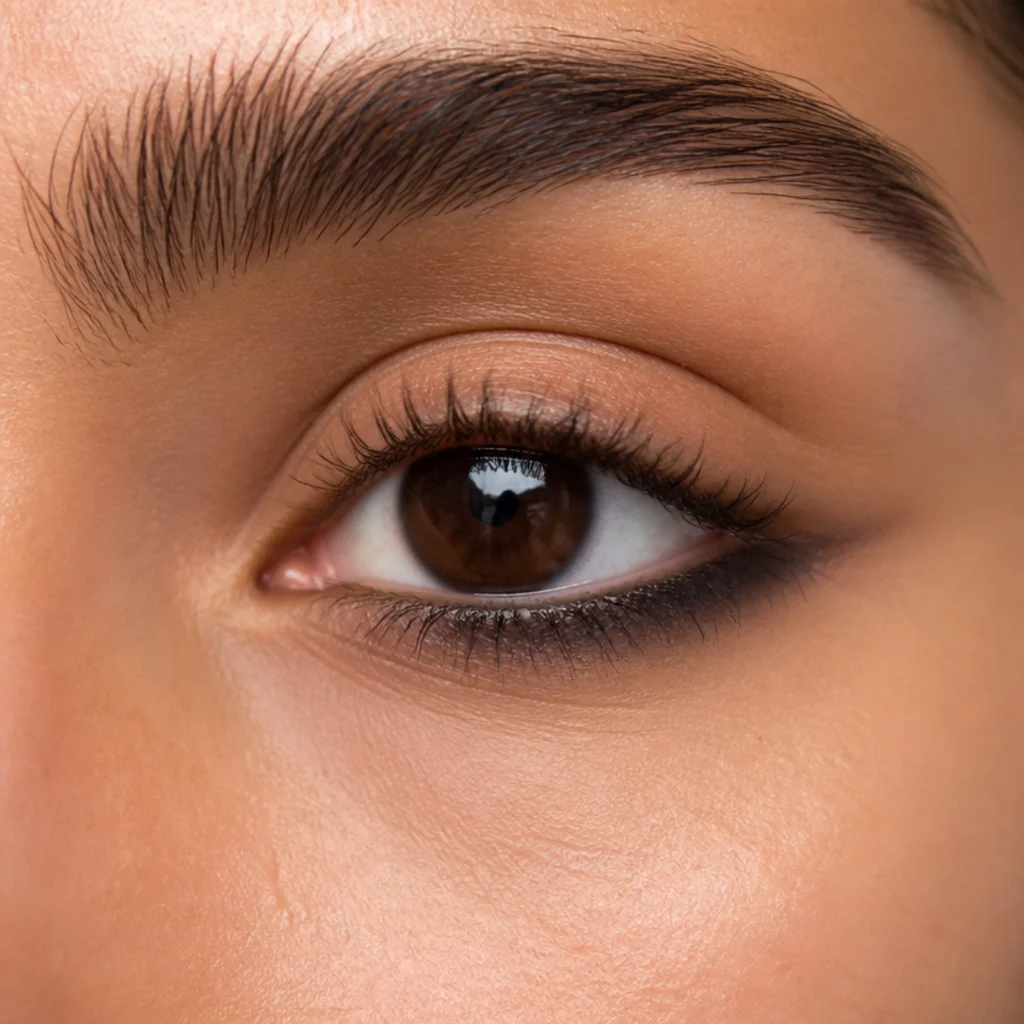
Smoking out the lower lash line adds weight beneath the eye, which grounds upturned eyes and softens the openness of round eyes into a more elongated shape. Lay a soft pencil or a deep matte shadow along the lower lashes with a small pencil brush, then blend until there's no hard edge. Concentrate the smoke on the outer two-thirds for a lengthening effect, or carry it evenly all the way across for a rounder, sultrier finish. Keep the upper lid pared back, a neutral wash or thin lash line, so the lower line stays the focal point and the eye doesn't close in. Setting a matching powder over a pencil base locks it against smudging into under-eye creases. Upkeep is low and the technique is forgiving to apply and fix. Pro tip: line the lower waterline in a coordinating deep tone under the smoke for upturned eyes when you want extra grounding, but leave the waterline nude if you want to keep the eye open. Ask your makeup artist for "a smoked lower lash line to add balance and definition underneath."
20Your Personal Eye-Shape Chart
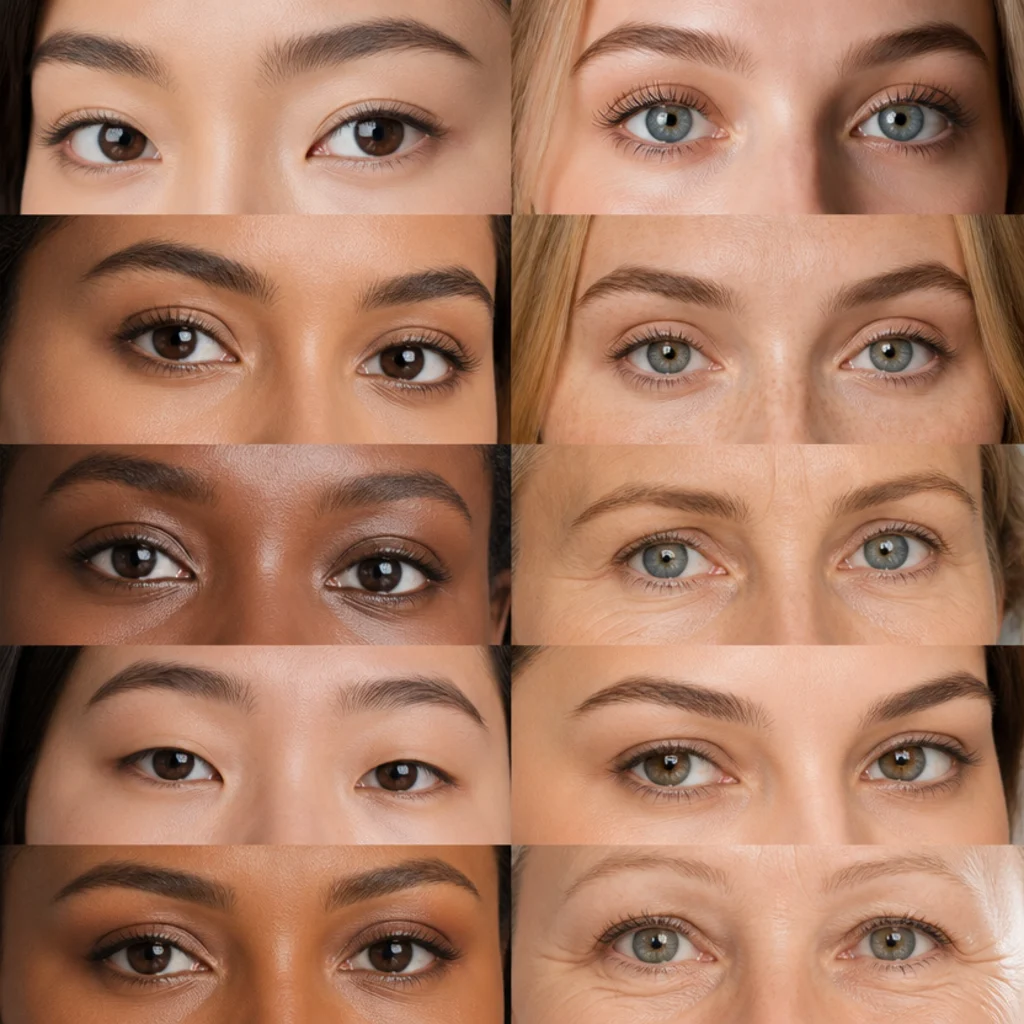
The most useful thing you can build is your own eye-shape chart, because it turns every future makeup decision into a two-second lookup. Sit in front of a mirror in soft, even light with your eyes open and relaxed, and answer four questions. Is there visible crease space, or does a hood cover it when your eyes open? Do the outer corners tilt up or down? Is there white showing all the way around your iris, or only at the sides? And how far apart do your eyes sit — less than, about, or more than one eye-width at the bridge? Those four answers point you straight to your entries, and most people land on a combination like hooded-almond, round-downturned, or close-set upturned. Jot the notes into your phone or pin this article so it travels with you. Upkeep is zero once you know your shape. Pro tip: take a straight-on photo with your eyes open and relaxed and mark it up. A still image reveals your tilt and spacing more honestly than the mirror does. From there every liner, lash, and shadow choice gets easier, because you're finally working with your eyes instead of against them.
Save this to Pinterest and build your personal eye-shape chart so every future makeup decision starts from what actually suits you.
Pro Tips from the Editor
- Always test with your eyes open. Crease placement, wing angle, and gradient height all shift the second your eyes open, so check every step in a mirror mid-application, not just when your eye is closed.
- Direction beats intensity. For downturned and upturned eyes, the angle you drag liner and lower smoke changes the eye's apparent tilt more than how dark you go, so control the line's direction first.
- Primer is non-negotiable on hooded and monolid lids. A gripping eye primer or a thin layer of long-wear cream shadow stops the transfer that erases your carefully placed color by lunchtime.
- Match your lash curl to your lid. Hooded eyes usually need an L or L+ extension curl, or a hard clamp at the base with a lash curler, so lashes clear the fold instead of hiding beneath it.
- Nude on the waterline opens, dark on the waterline closes. Keep this one lever in mind: nude or peach to make small or close-set eyes look bigger, deep tones only when you deliberately want a smokier, more grounded frame.
- Build combinations, not single looks. Most eyes blend two or three traits, so layer strategies — a halo center with a lifted outer corner, or inner-corner anchoring under a doll-eye lash map.
- When in doubt, hand your makeup artist your traits, not a Pinterest photo. Saying "hooded, slightly downturned, close-set" gives a pro far more to work with than a reference image shot on a different face.
How to Choose / Get the Look
Choose by feature. Start by naming your traits honestly rather than chasing a trend, then pick the lever that matches your goal. Want bigger eyes? Prioritize nude waterlines, light reflective central lid shades, halo placement, and curled, well-separated lashes. Want to change the apparent tilt? Liner direction does the heavy lifting: lift downturned corners with an upward wing that starts from the lower lash, ground upturned eyes with outer lower smoke. Want to adjust apparent spacing? Move all your depth outward for close-set eyes and inward for wide-set. Worried about lid space? Tightlining and a higher-drawn crease keep hooded and monolid eyes defined without shrinking them.
Use this quick reference to match a signature technique to upkeep and difficulty before you commit:
| Eye trait | Signature move | Difficulty | Upkeep | Best paired with |
|---|---|---|---|---|
| Hooded | Higher-drawn crease + tightline | Intermediate | Medium | Matte shadows, gripping primer |
| Monolid | Gradient wash + floating wing | Intermediate | Low-Medium | Cut crease, halo placement |
| Downturned | Corner-lifting wing | Intermediate | Medium | Cat-eye lash map |
| Upturned | Grounded lower smoke | Beginner | Low | Neutral lid, nude waterline |
| Close-set | Outer-corner depth | Beginner | Low-Medium | Doll-eye lash map, inner highlight |
| Small | Nude waterline opener | Beginner | Low | Halo placement, curled lashes |
Prep. Build a versatile kit and you can pull off almost everything here: one soft neutral matte, one deeper matte for depth, a light reflective shade, a nude or peach waterline pencil, a black and a brown liner, and a gripping eye primer. Longevity. Prime, set powder shadow over any pencil base, and finish with a setting mist for 8-12 hours of wear. Expect waterline and tightlined work to fade first and touch up at midday. When to see a pro. Cut creases, precise extension lash maps, and event or bridal looks are worth booking out, and it helps to describe your combination of traits so the artist works with your real anatomy. Above all, these are starting points, not verdicts. If a technique the guide assigns to another shape makes you feel great, wear it.
Frequently Asked Questions
How do I figure out my eye shape?
Sit in soft, even light and look straight into a mirror with your eyes relaxed. Check four things: whether you can see crease space or a hood covers it when open, whether the outer corners tilt up or down, whether white shows all the way around your iris, and how far apart your eyes sit at the bridge. Most people are a blend of two or three shapes, so record the combination instead of forcing one label. A straight-on photo often reveals your tilt and spacing more honestly than the mirror does.
Can I have more than one eye shape at once?
Yes, and most people do. Hooded, almond, and round descriptors overlap constantly, and traits like close-set, wide-set, downturned, or upturned stack on top of a base shape. That's exactly why this guide includes combination entries like almond-meets-hooded and round-meets-downturned. Treat the categories as overlapping guidelines and layer the techniques that address each trait you actually have.
Does eyeliner really change how my eye shape looks?
Liner direction and placement do shift how the eye reads. An upward wing lifts downturned corners, lower smoke grounds upturned eyes, and moving your emphasis inward or outward changes apparent spacing. It doesn't physically alter your eyes, but the visual effect is real, and it's one of the easiest, most reversible tools you can control. The trick is direction over darkness: where you drag the line matters more than how heavy it is.
What lash style suits my eye shape?
Lash mapping matters more than any single named style. A cat-eye map with length at the outer corner flatters downturned and wide-set eyes, while a doll-eye map with length in the center opens round and close-set eyes. Match the lash peak to the direction you want to emphasize so it echoes your liner strategy, and match the curl to your lid — stronger L-type curls for hooded eyes so lashes clear the fold.
Do hooded eyes need special techniques?
They benefit from a few targeted adjustments. Because the fold hides crease color, place your transition shade higher than your natural crease and always work with your eyes open. Keep liner thin, consider tightlining instead of a visible lid line, and lean toward matte formulas over shimmers that catch and transfer onto the fold. None of it is mandatory, but these tweaks are what make definition show once your eyes are open.
How can I make small or deep-set eyes look bigger?
For small eyes, line the lower waterline in nude or peach to extend the white, add a light reflective lid shade, curl your lashes hard, and set a highlight at the inner corner. For deep-set eyes, place a luminous mid-tone lid shade where the brow bone casts shadow to pull the eye forward, and keep the crease soft rather than dark. A halo eye, with a bright center ringed by soft depth, works well for both because that central light reads as size and forward projection.
What eye makeup is best for downturned eyes?
The corner-lifting wing is the standout move: follow your lower lash line out from the outer corner, flick upward, and connect it back into the upper lash line to redraw a corner that points up. Keep dark shadow and liner off the outer lower corner, add a lifted highlight at the outer top corner, and pair it with a cat-eye lash map for reinforcement. Starting the lift from the lower lash line, not the upper, is what actually redirects the tilt.
Are eye-shape rules the same across different skin tones and ages?
The placement principles — where you lift, ground, widen, or open — hold across every skin tone and age, because they're about anatomy, not color. What shifts is shade selection: deeper skin tones often shine in richer, more pigmented mattes and metallics, and mature or increasingly hooded lids benefit from matte finishes and higher crease placement. Eye shape also evolves over time, with many almond eyes turning hooded, so it's worth re-checking your traits every few years and adjusting.
Is it bad to wear makeup meant for a different eye shape?
Not at all. These are guidelines built to flatter, not rules you're obligated to follow. If a look assigned to another shape makes you feel great, wear it — plenty of people deliberately play up rather than soften a prominent, round, or upturned eye. The value of knowing your shape is understanding what each technique does, so you can choose consciously instead of copying a tutorial designed for a different face.