15 Eyebrow Shapes to Flatter Your Eye Shape
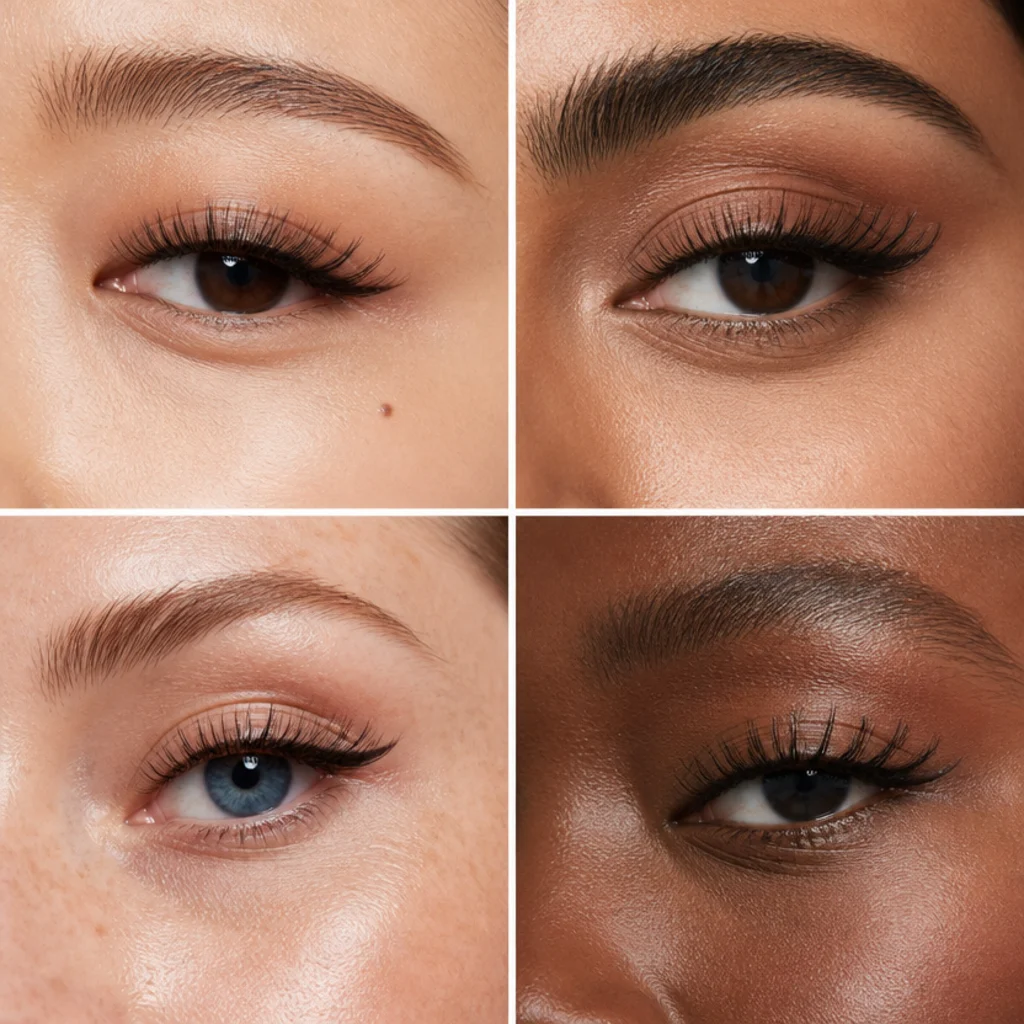
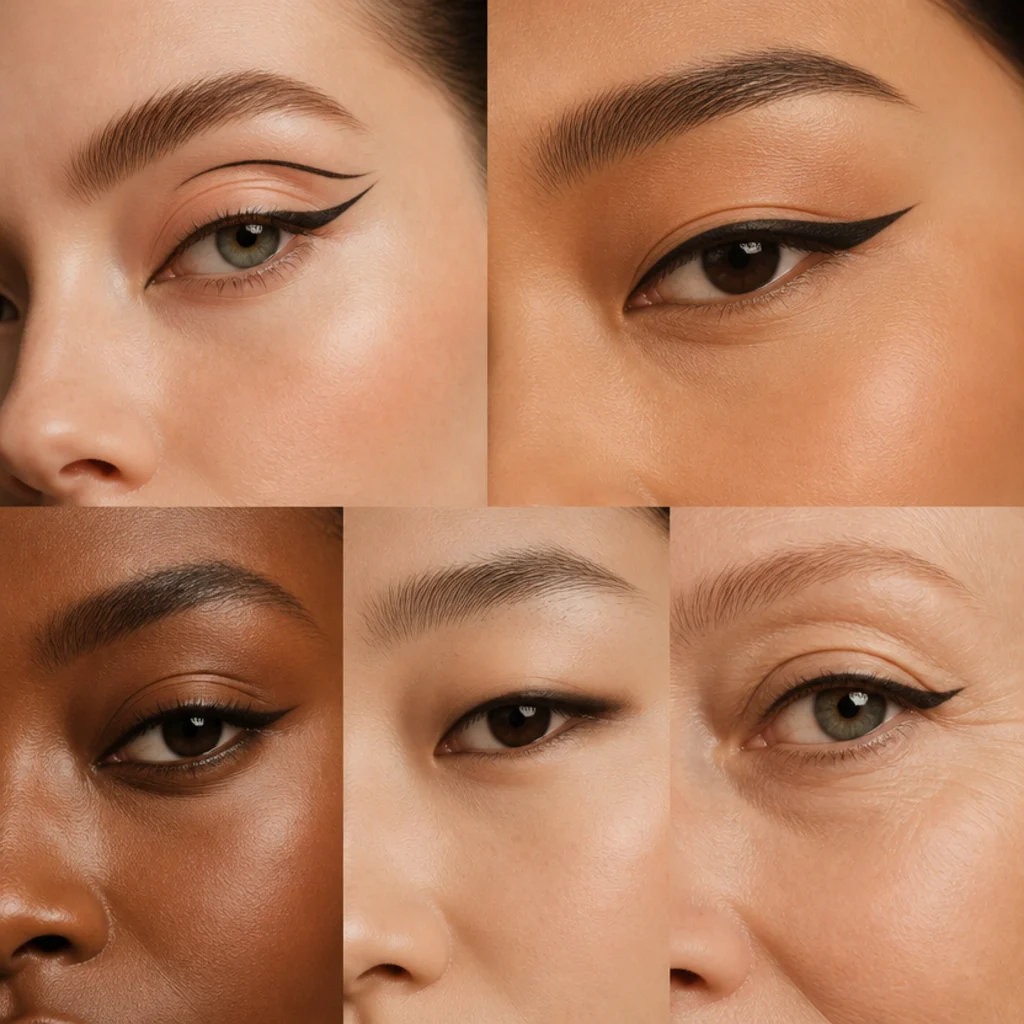
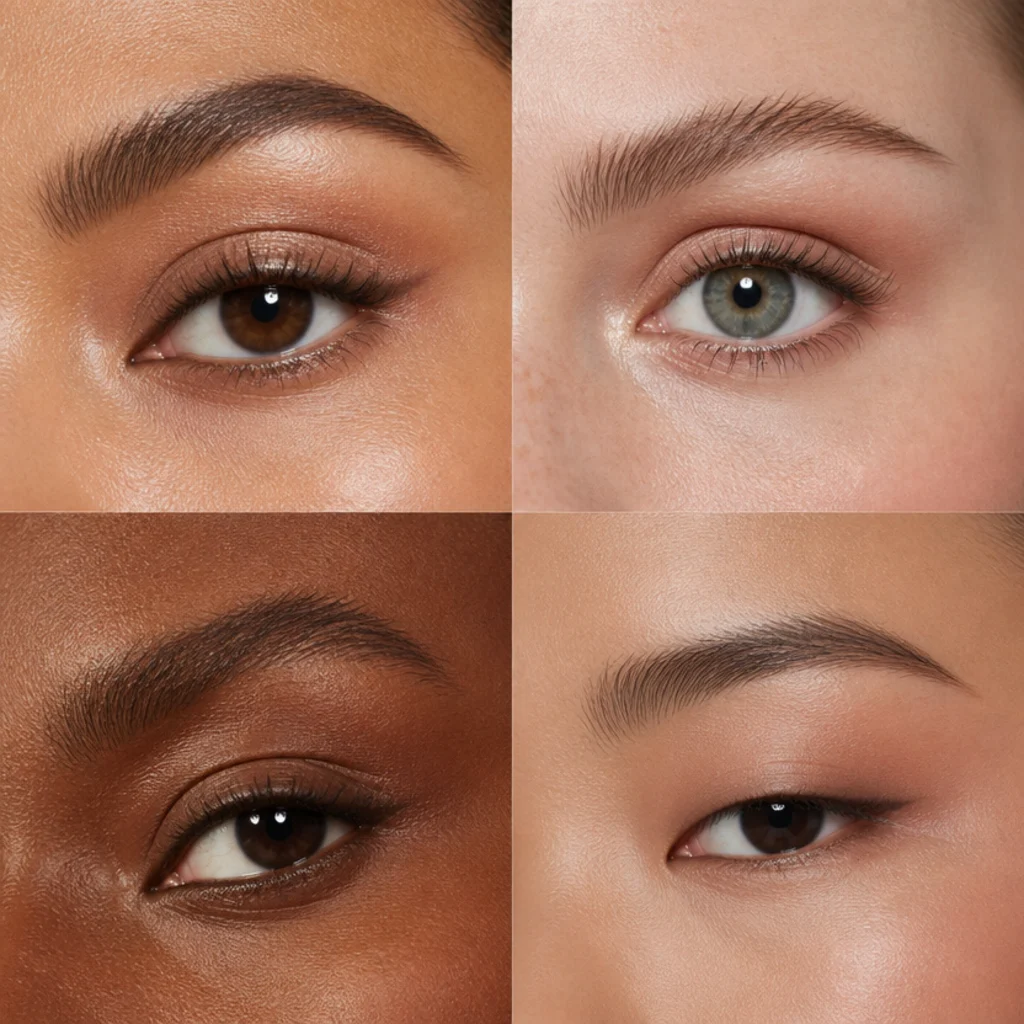
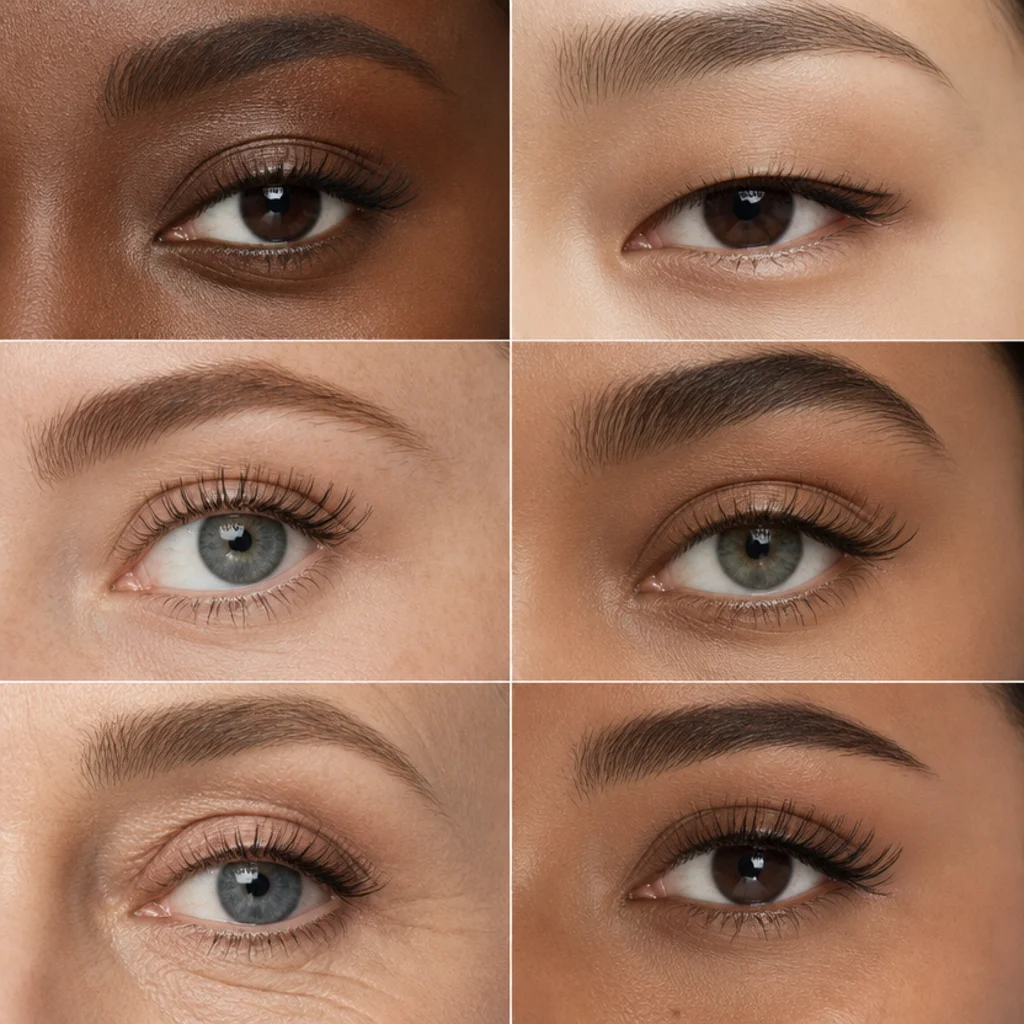
Your brows frame everything the eye does. The right shape lifts a hooded lid, opens a round eye, or balances a long almond; the wrong one flattens all of it. Here are 15 brow shapes mapped precisely to the eyes they suit best, with placement, product, and upkeep for each.
 Edited by Lena Rose · Published July 11, 2026 · 27 min read
Quick Answer
- Best for: anyone matching brow shape to eye shape (hooded, almond, round, monolid, deep-set, downturned, upturned, close-set, wide-set, protruding, and more)
- Who might skip it: anyone mid-regrowth after over-plucking, where the priority is letting hair fill in before committing to a defined shape
- Maintenance: every 3-4 weeks for soft, feathered shapes; every 2 weeks for sharp or high arches that show regrowth faster
- Difficulty: beginner-friendly with a pencil and spoolie; threading, waxing, or a brow-lamination appointment refines the finished line
- Cost: a pencil and gel run roughly the price of two coffees; a shaping appointment is typically low-to-mid double digits, and lamination sits higher
- Wear time / longevity: penciled shape lasts a day; laminated brows hold their brushed-up direction for four to six weeks
- Standout variation: the soft high arch, which lifts hooded and deep-set eyes without a harsh, drawn-on line
- How to ask your brow artist: name your eye shape, say whether you want more lift, softness, or tail length, and ask them to map the shape in pencil before removing any hair
In This Guide
- Soft Rounded Arch for Hooded Eyes
- Straight Bar Brow for Round Eyes
- Lifted-Tail Arch for Almond Eyes
- Low Gentle Arch for Deep-Set Eyes
- Feathered Brush-Up Brow for Monolid Eyes
- High Defined Arch for Downturned Eyes
- Soft Angled Brow for Upturned Eyes
- Rounded Full Brow for Close-Set Eyes
- Extended Tail Brow for Wide-Set Eyes
- Tapered Natural Brow for Protruding Eyes
- Structured S-Curve for Mature or Hooded Lids
- Feathered Fluffy Brow for Small Eyes
- Balanced Medium Arch for Large Eyes
- Soft Diffused Powder Brow for Sensitive or Sparse Brows
- Sharp Editorial Arch for Balanced Oval Faces
Intro
Eyebrow shapes do more than tidy stray hairs. Three variables decide how a brow reads: where the arch peaks, how much weight sits at the front, and where the tail lands relative to the head. Shift any one of those and you change how open, lifted, or balanced the eye underneath looks. That's why the most flattering brow is rarely a trend shape lifted from a photo — it's one mapped to your own eye shape and orbital bone. A microbladed peak that flatters a downturned eye can drag a monolid down, and a straight Korean-style bar that calms round eyes can flatten an almond. You'll also see quick notes throughout on eyeliner and lash styles for each eye shape, since brows, liner, and lashes work as one frame rather than three separate steps. The fluffy, brushed-up, lightly laminated brow has mostly replaced the pencil-thin arches of past decades, so most of the shapes below lean natural and dimensional instead of sharp. One caveat before we start: eye-shape categories overlap constantly. You might read as hooded, almond, and round all at once, and that's normal. Treat these 15 pairings as flexible guidelines, not rules, and lean on whichever ones match what you see in the mirror.
01Soft Rounded Arch for Hooded Eyes
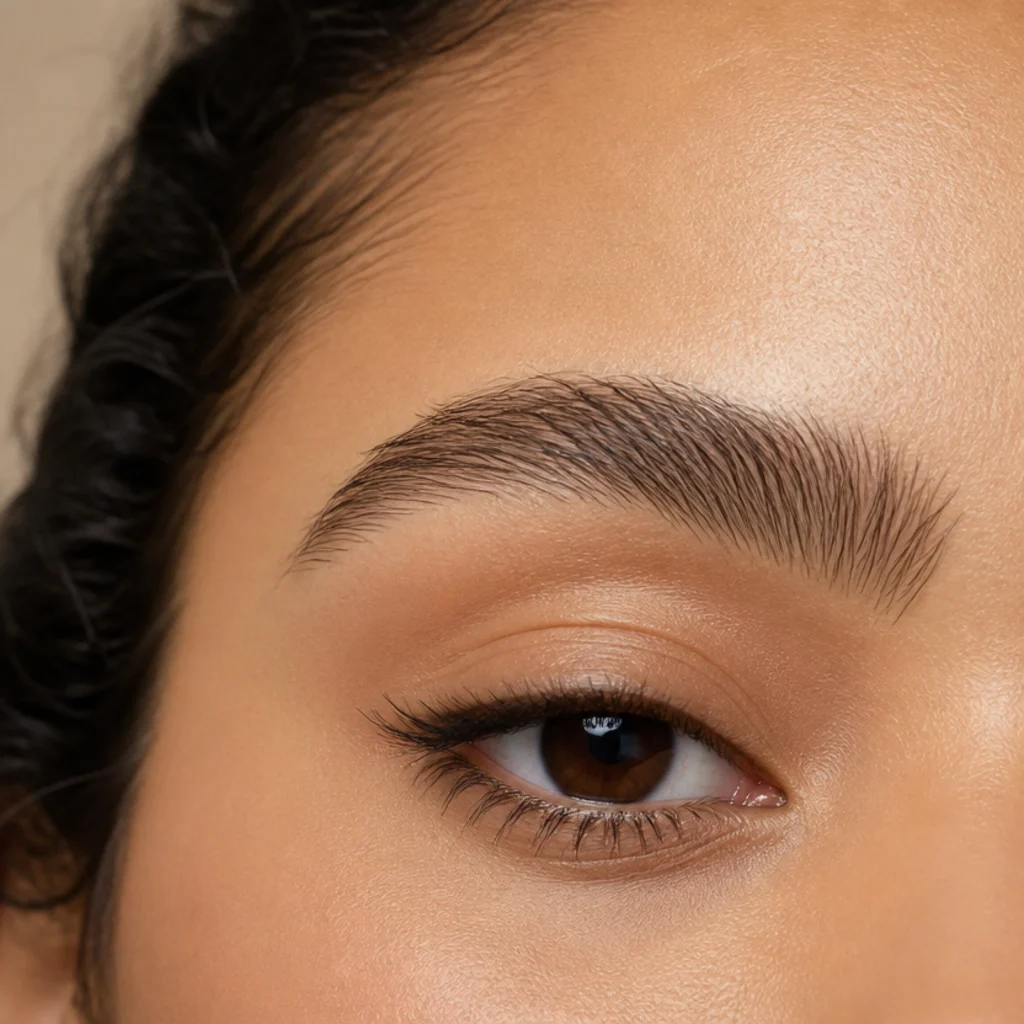
Hooded eyes carry extra skin resting over the crease, so a high, spiky arch reads severe and steals what little lid space shows when the eye's open. A soft rounded arch fixes that. Keep the peak gentle and set it just slightly higher than your natural bone, above the outer edge of the iris, to draw the gaze upward and suggest more lid. Brush hairs up and slightly out, then fill only the sparse gaps with light, hair-like strokes in a shade one tone lighter than your hair — never a solid block, which flattens the shape. A tinted brow gel or a light lamination holds that lifted direction, and that's the single biggest payoff for hooded lids. Upkeep stays low: tidy strays every three to four weeks and skip thinning the underside, since that shortens the arch you're trying to protect. For eyeliner on hooded eyes, keep the line thin at the inner corner and tightlined so it doesn't vanish under the fold. A curled, wispy lash lifts the whole frame. Ask your brow artist for a soft rounded peak with a laminated brush-up rather than a defined angular arch.
Save this to Pinterest.
02Straight Bar Brow for Round Eyes
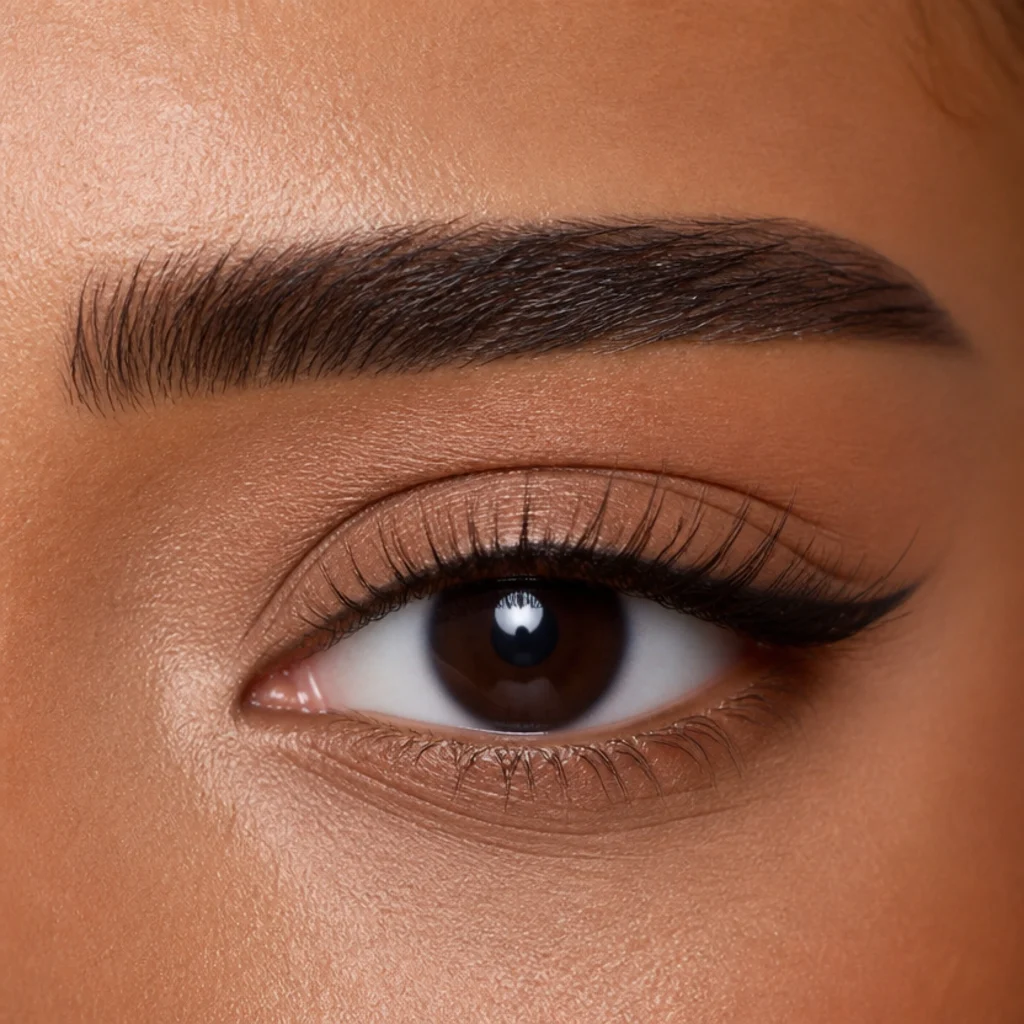
Round eyes are open and circular, and a strongly curved brow echoes that roundness until the expression looks perpetually surprised. A straighter, flatter bar brow does the opposite: it elongates the face and gives round eyes a calmer, more horizontal balance. Keep the arch minimal so the brow travels sideways more than up, and fill the body evenly with short vertical strokes so the shape reads level and deliberate. This one flatters rounder and heart-shaped faces especially, where the added length counters width. To lengthen round eyes further, a soft winged liner pulled straight out from the outer corner works well, and cat-eye lash styles add width where you want it. Skip the rounded, doll-like lash carried all the way across — it only reinforces the circle. Upkeep sits at medium: a flat brow shows a growing arch quickly, so tidy the top edge every couple of weeks. Pro tip: resist the urge to over-lengthen the tail. Run it too far past the outer corner and it pulls the whole eye down. Ask your brow artist for a low, level bar with minimal arch and a defined but not exaggerated tail.
03Lifted-Tail Arch for Almond Eyes
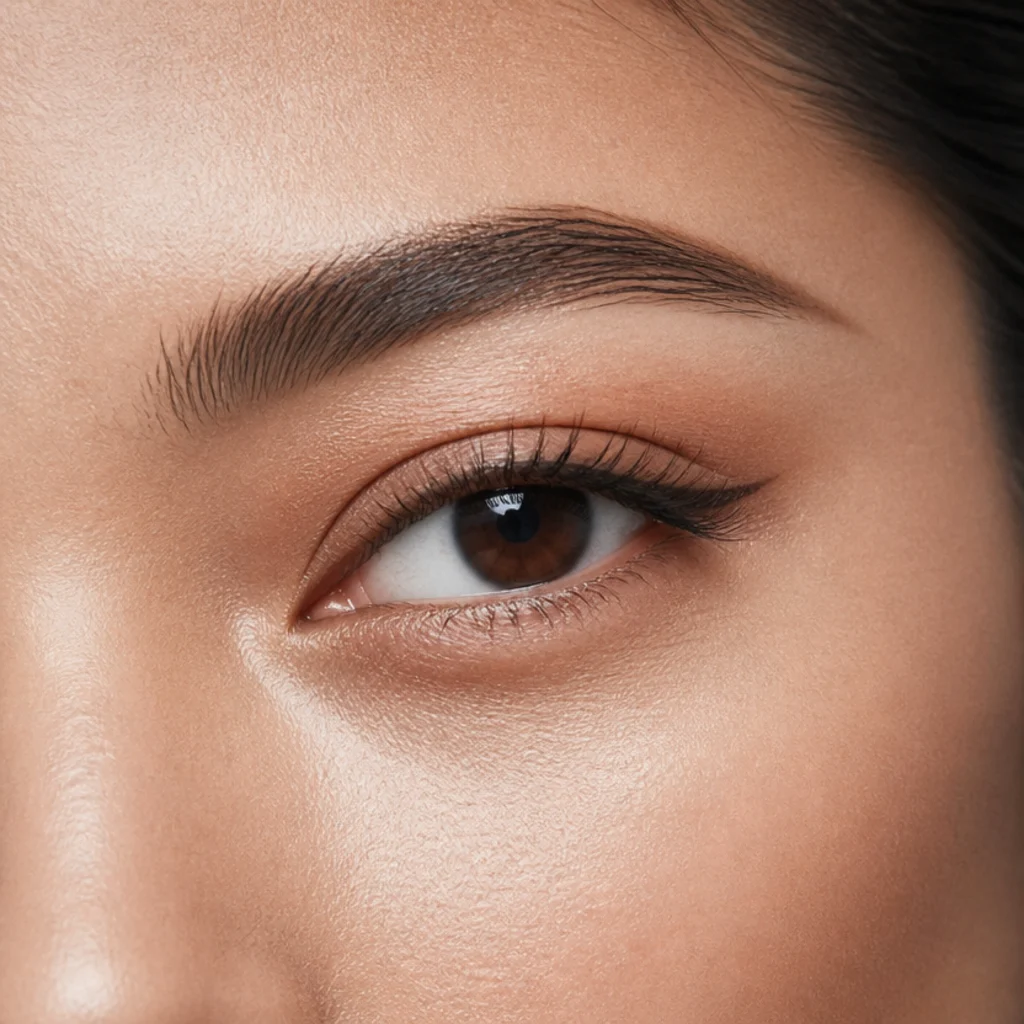
Almond eyes are the flexible middle ground that suits nearly every eyebrow shape, which is why a lifted-tail arch is such a rewarding match. The balanced proportions carry a defined peak comfortably, so place the arch about two-thirds of the way out and let the tail angle up and out to echo the eye's natural upsweep. Keep the front soft and diffused and the tail crisp for editorial contrast — the gradient from feathery head to clean tail is what makes the shape look intentional rather than blocky. Almond eyes handle almost any eyeliner, from a barely-there tightline to a bold graphic wing, so this is the shape to experiment with. A medium, evenly distributed lash keeps everything looking balanced instead of heavy. Upkeep runs low-to-medium, since the soft front hides regrowth while the tail needs occasional cleaning. Pro tip: mark the arch peak with a pencil dot before you fill, so the lifted tail stays symmetrical between both brows. Ask your brow artist for a defined two-thirds arch with a soft head and a clean, upswept tail.
04Low Gentle Arch for Deep-Set Eyes
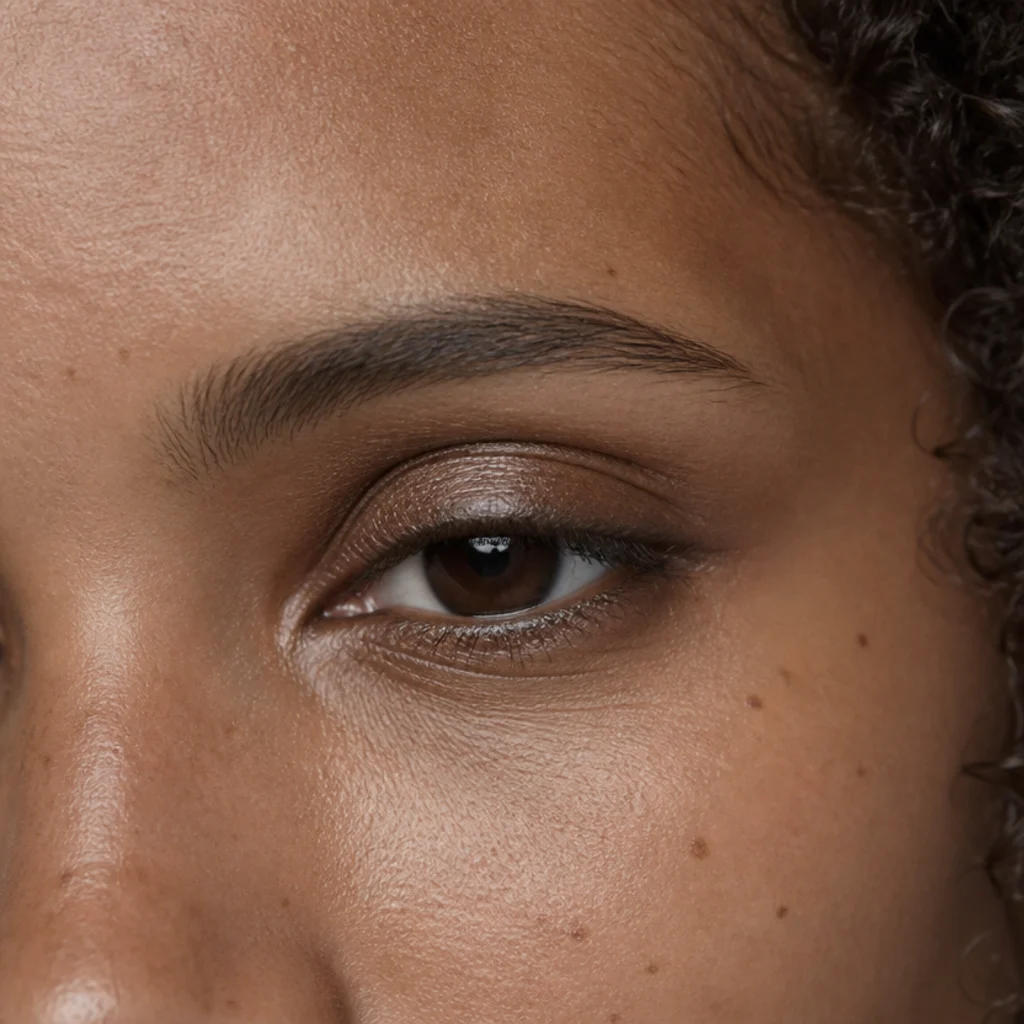
Deep-set eyes sit further back beneath a prominent brow bone, so a very high arch only deepens the shadow and pushes the eye further away. A low, gentle arch brings the brow closer to the lash line and softens that recessed depth. Resist over-plucking the underside — a slightly fuller brow near the lash line makes deep-set eyes feel more connected to the rest of the face instead of lost under the bone. Keep the arch subtle and the overall shape relaxed and horizontal. For liner, a soft smudged line along the upper lash line brings the eye forward, and a light-reflecting or satin shadow on the lid counters the natural shadow with a little glow. A natural, fluttery lash keeps things open without weighing the eye down. This shape forgives regrowth, so maintenance stays low. Pro tip: reach for a matte brow product instead of a shiny gel here — shine on a brow that already sits under a strong bone can look greasy in the shadow. Ask your brow artist to keep the arch low and preserve fullness under the brow rather than lifting it high.
05Feathered Brush-Up Brow for Monolid Eyes
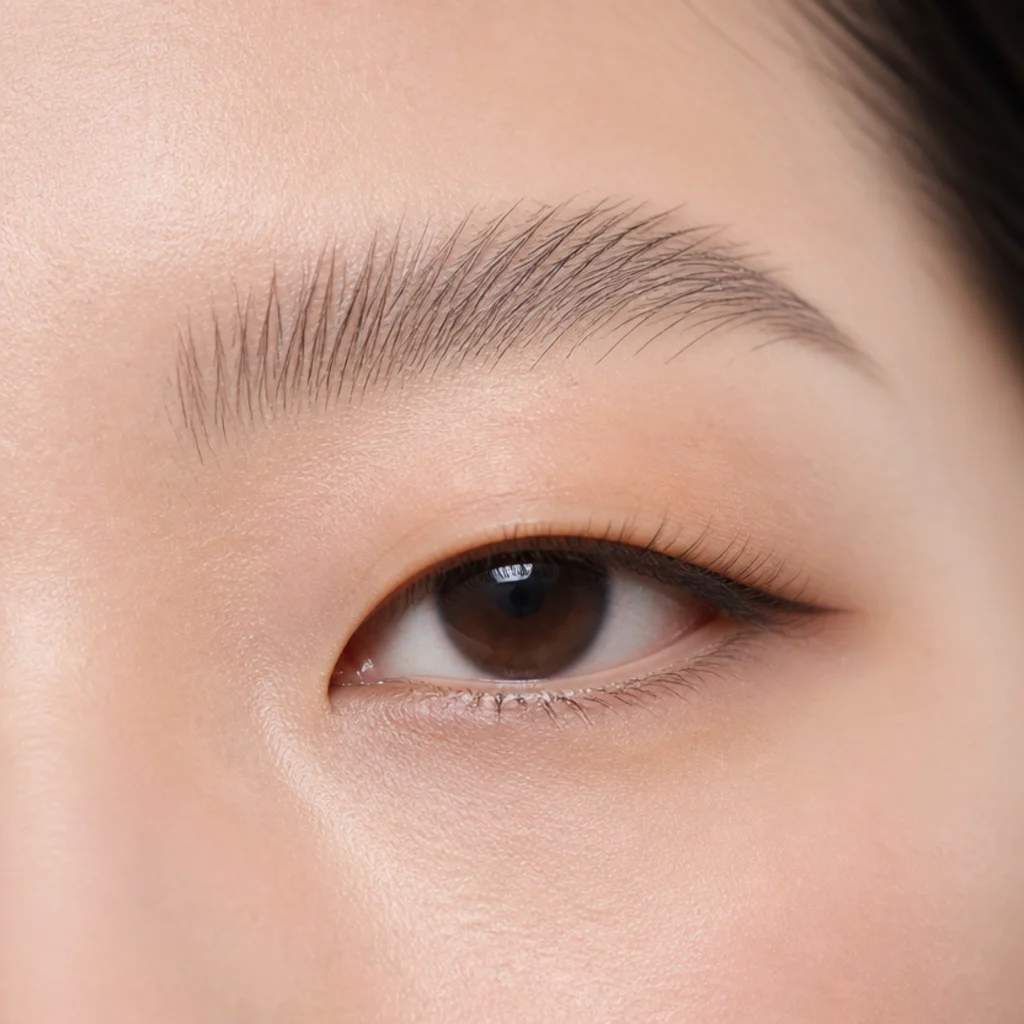
Monolid eyes have little to no visible crease when open, so the brow carries much of the framing work. A feathered brush-up brow adds vertical lift and a modern, textured look that flatters the smooth, uninterrupted lid. Brush hairs straight up and set them with a strong-hold clear or tinted gel, keeping the arch soft rather than sharply angled so the lift reads natural. A defined but not overly thick brow gives structure without competing with the open lid. Monolids do well with a gradient liner that stays thin at the inner corner and thickens toward the outer, drawn slightly above the lash line so it stays visible when the eye is open instead of disappearing. For lashes, longer lengths concentrated at the outer edge add instant dimension and a subtle lift. Upkeep is low-to-medium. The brushed-up direction holds best with lamination, which suits monolids especially since it keeps hairs from lying flat. Pro tip: extend the tail a touch longer than feels natural — length here elongates the whole eye. Ask your brow artist for a laminated brush-up with a soft arch and a slightly extended tail.
Save this to Pinterest.
06High Defined Arch for Downturned Eyes
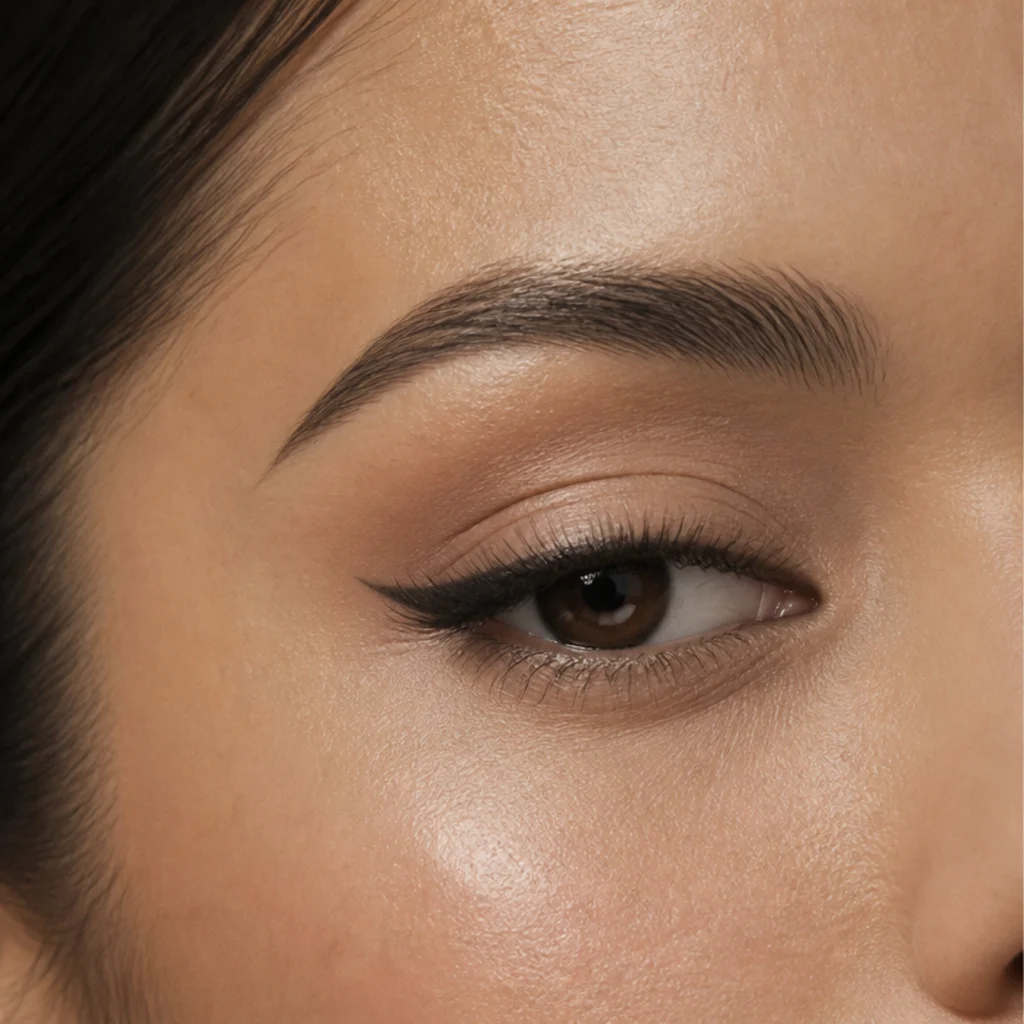
Downturned eyes slope gently down at the outer corner, so a well-placed high arch counteracts that droop and lifts the whole expression. Set the peak a little further out than usual, and follow the golden rule for downturned eyes: never let the tail finish lower than the head of the brow. If the tail drops below the front, it mirrors and deepens the downward slope you're trying to correct. Fill for a crisp, defined shape and keep the tail firm and slightly upswept. An upward-flicked wing at the outer corner echoes the lifted brow and pulls the eye up visually, while longer lashes concentrated in the outer third reinforce that lift and keep the eye looking bright and awake. This is medium-to-high maintenance, since a defined arch shows regrowth on the top edge within a couple of weeks. Pro tip: hold a small mirror below eye level and look down into it to check that your tail actually lifts above the head — that's the angle where downturned eyes most often go wrong. Ask your brow artist for a high, defined arch set outward with a tail that finishes above the starting point.
07Soft Angled Brow for Upturned Eyes
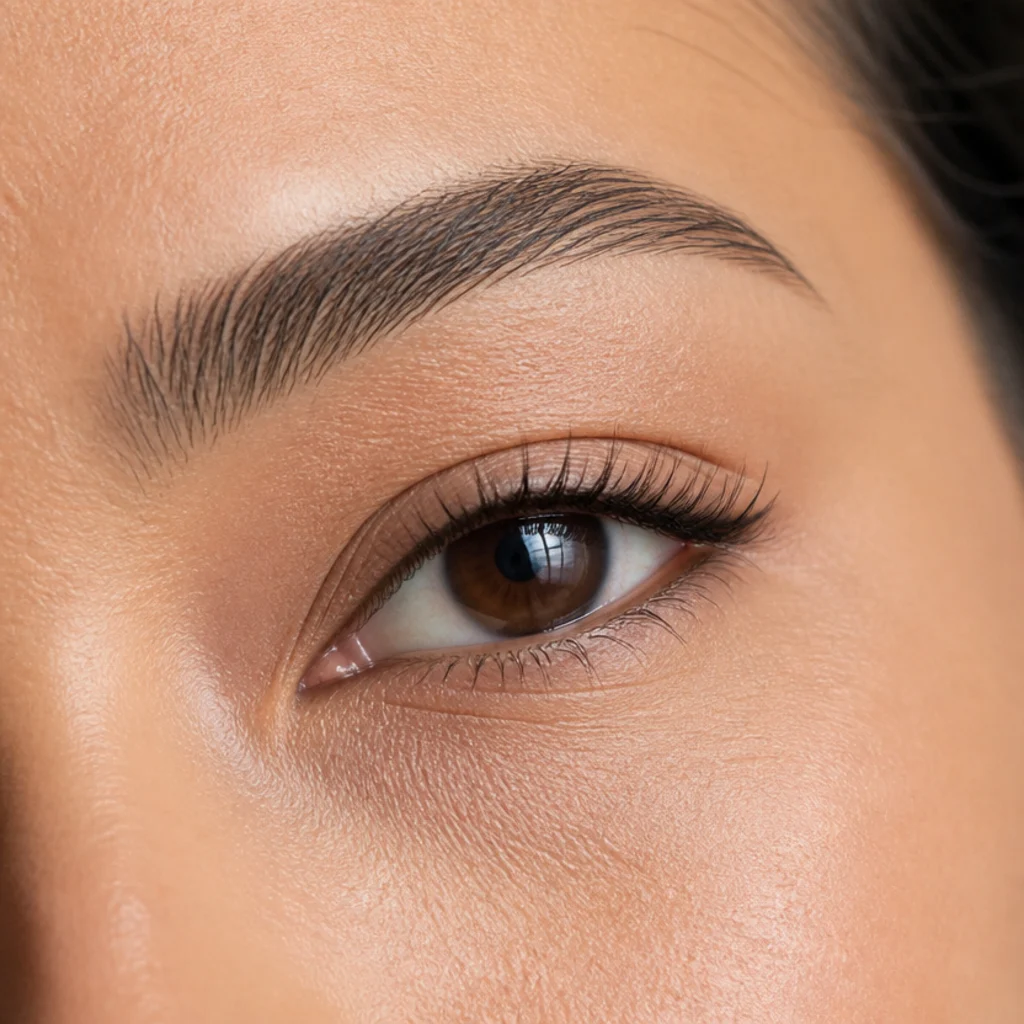
Upturned eyes already lift at the outer corner, so piling on a dramatic arch tips the face into a harsh, overly severe look. A soft angled brow keeps a defined peak but rounds it slightly to balance the upsweep the eye already has. Aim for an arch that's present but relaxed, with a tail that follows the eye's line rather than exaggerating it further. Because the eye is already lifted, you can play down the wing and keep liner more even along the lash line, which stops the outer corner from reading too cat-eyed. A balanced lash from inner to outer corner keeps the shape harmonious. This pairing flatters oval and heart-shaped faces particularly well, where the softened angle keeps features from looking sharp. Upkeep stays low-to-medium. Pro tip: if your brows naturally grow at a steep angle, a gentle lamination brushed up and slightly out softens the peak without needing to over-tweeze the underside. Ask your brow artist for a soft angled arch that follows your eye line rather than lifting hard at the tail.
08Rounded Full Brow for Close-Set Eyes
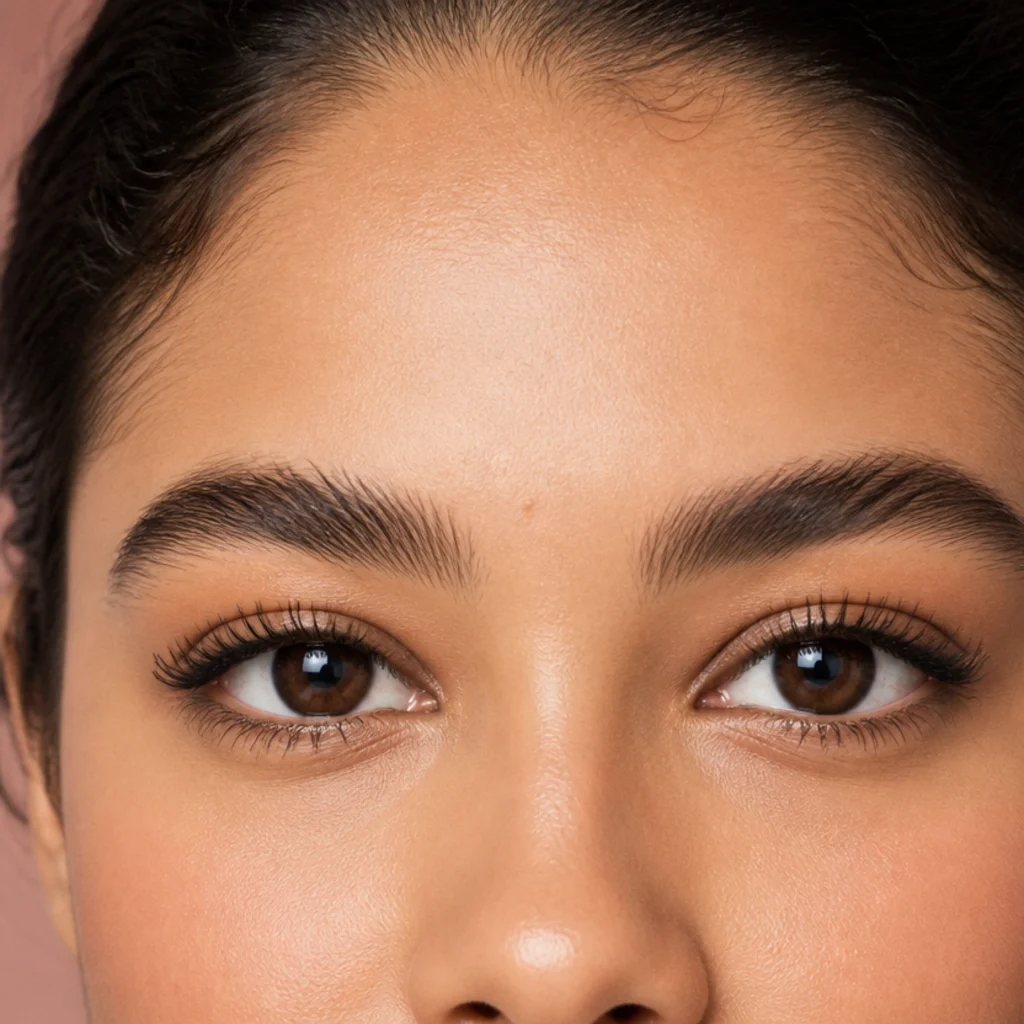
Close-set eyes sit less than one eye-width apart, so the goal is to create more visual space between them. Start the brow heads a touch further apart at the inner corner and extend the tails outward, keeping a soft rounded body throughout. Go light on product at the very front — dark, heavy inner brows crowd the center of the face and pull the eyes closer together. A rounded, full shape that lengthens outward opens the center and rebalances the proportions. For liner, keep the inner corner light and build intensity toward the outer edge, and save any wing for the outer third. Outer-corner lash accents pull the eyes apart visually and add welcome width. This flatters narrower faces where features cluster centrally. It's low maintenance, since the fuller shape hides regrowth well. Pro tip: use a spoolie to blend the inner edge outward so the head fades in softly instead of starting with a hard, dark line that draws the eyes inward. Ask your brow artist to start the heads slightly wider and extend the tails without darkening the front.
09Extended Tail Brow for Wide-Set Eyes
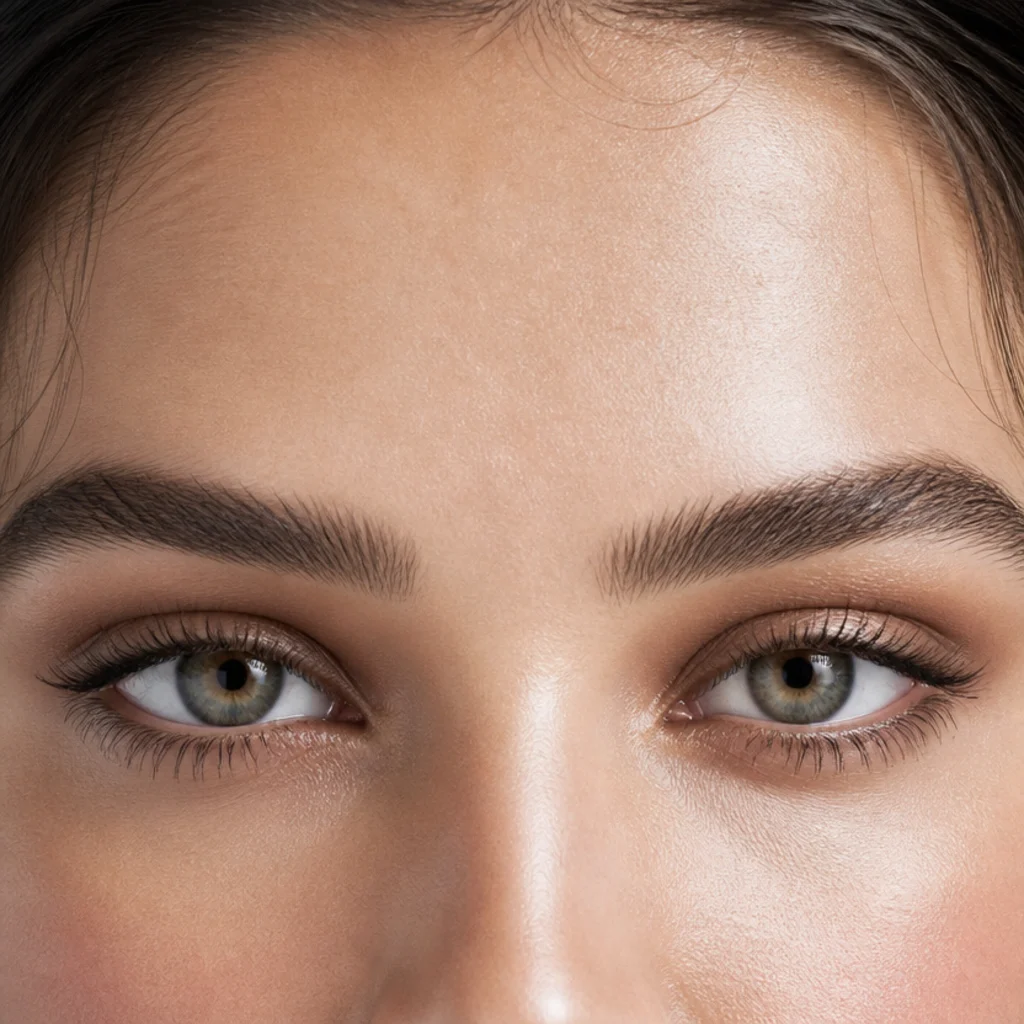
Wide-set eyes sit more than one eye-width apart, so the strategy flips entirely: you want to draw attention inward toward the center. Keep the brow heads slightly closer together and give the inner third a touch more definition to pull the eyes toward each other visually. Don't over-extend the tails far past the outer corner — length there only widens the face further and exaggerates the gap. A balanced brow with a strong, defined front and a moderate, restrained tail works best. Inner-corner liner and a darker shadow tucked near the nose bring focus in, while an even lash from corner to corner keeps the eyes looking centered and connected rather than drifting apart. Upkeep runs low-to-medium; the defined inner section benefits from tidy grooming every few weeks. Pro tip: build the head of the brow with slightly more product than you think you need, then feather it inward with a spoolie. A stronger inner brow is the fastest way to narrow the visual gap. Ask your brow artist to bring the heads closer and emphasize the front while keeping the tail short.
10Tapered Natural Brow for Protruding Eyes
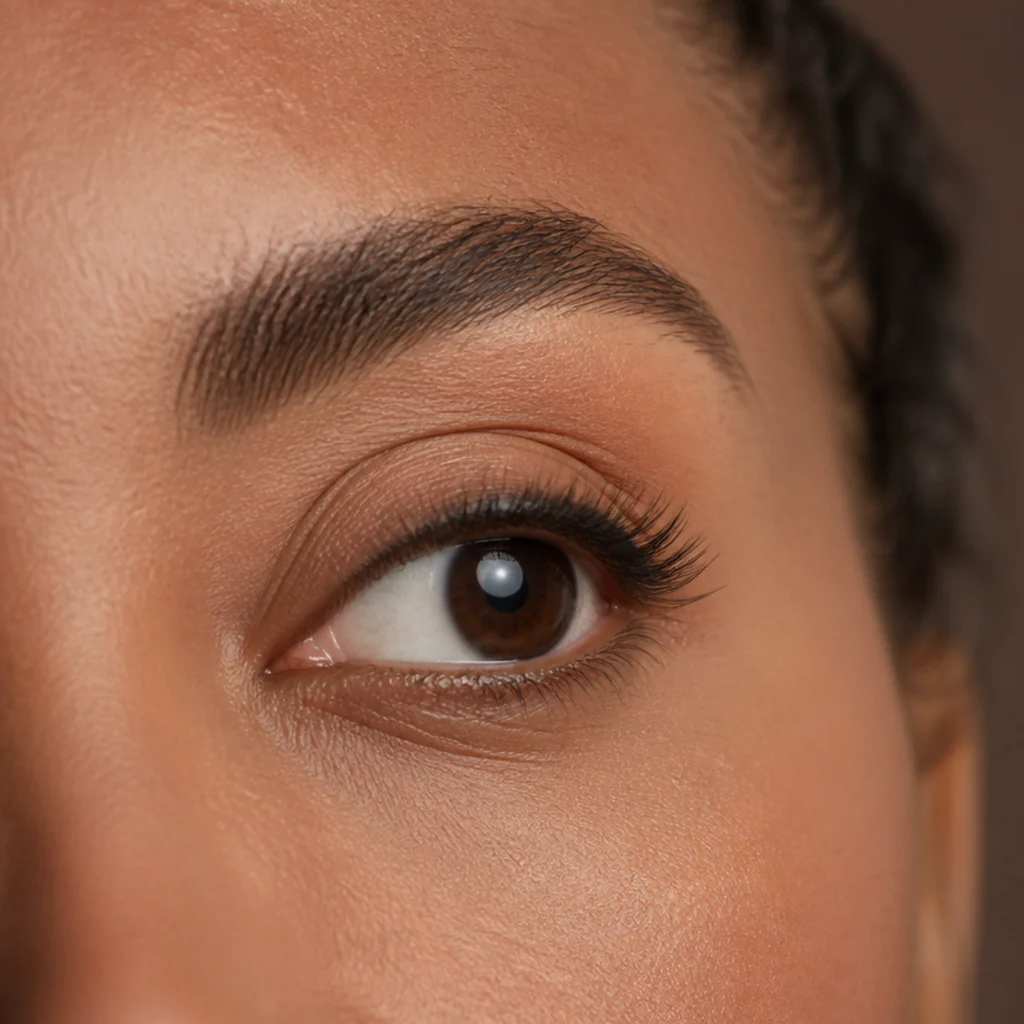
Protruding or prominent eyes project forward from the socket, so a fuller, well-groomed brow helps anchor that volume without competing with it. A tapered natural brow, thicker at the front and gradually thinning toward the tail, adds enough weight to balance the eye while staying soft and believable. Skip a thin, over-arched shape, which leaves prominent eyes looking even larger and more exposed by contrast. Keep the arch gentle and the overall look grounded and horizontal. A slightly deeper smudged liner along the upper lash line and a matte lid shade help the eye recede a little instead of pushing further forward. A medium lash keeps proportions balanced instead of adding more projection. A fuller natural brow forgives regrowth, so maintenance stays low. Pro tip: choose a matte finish across the whole eye area — shimmer on a lid that already projects catches light and amplifies the forward volume you're trying to soften. Ask your brow artist for a fuller front that tapers gradually, with a gentle arch rather than a high, thin one.
Save this to Pinterest.
11Structured S-Curve for Mature or Hooded Lids
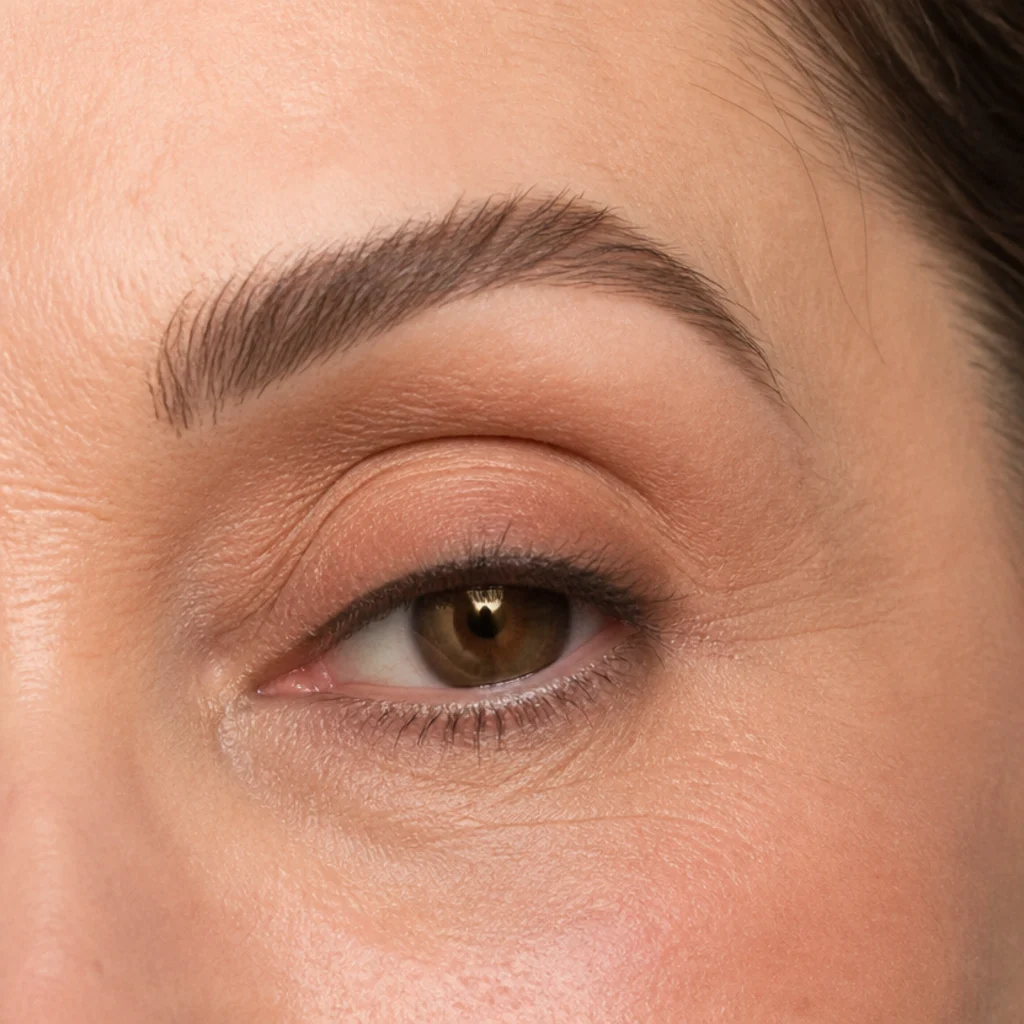
As lids soften, thin, or hood with time, a gently structured S-curve brow restores lift and definition without looking hard or drawn-on. The subtle S shape curves up from the front, peaks over the outer iris, then tapers cleanly down through the tail, adding architecture that a flat brow can't give you. Keep the arch clean and the tail firm so it lifts the outer eye where hooding tends to settle. Use short, feathery strokes to fill sparse patches, since mature brows often thin at the tail first, and set the hairs with a flexible gel so the shape holds all day without stiffness. A tightlined upper lash and a soft matte transition shade brighten hooded, mature lids far more than a heavy smoky eye, which can settle into the fold. Individual lash accents at the outer corner add a discreet, believable lift. It's medium maintenance, with attention to filling as density changes. Pro tip: swap a waxy pencil for a fine-tip pen or powder on thinning brows — waxy formulas can drag and clump on sparse hair. Ask your brow artist for a structured S-curve that lifts the tail and rebuilds the front with soft strokes.
12Feathered Fluffy Brow for Small Eyes
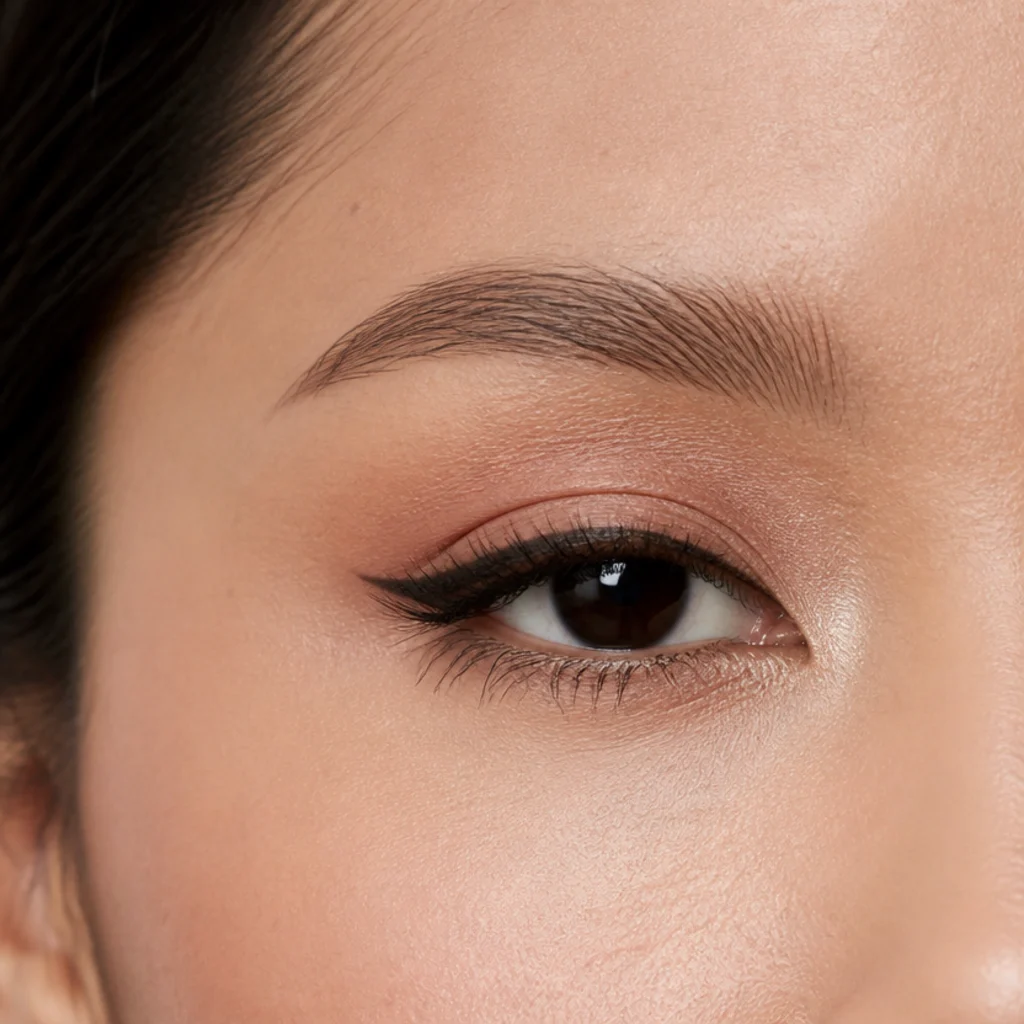
Small eyes are easily overwhelmed by a heavy, blocky brow, so a lighter, feathered fluffy shape keeps the proportions in balance. Aim for a soft, hair-like brow with a gentle arch that doesn't press down on the eye or crowd the limited lid space. Keeping the underside clean and slightly lifted gives a small eye a little more breathing room above the lash line. Skip very dark, solid fill, which shrinks the eye further by drawing a heavy line above it — use light, upward flicks instead, in a shade close to your natural hair. To enlarge small eyes, combine a light inner-corner highlight, a thin upper line that thickens toward the outer edge, and a curled, lengthening lash. The overall effect should feel airy, so the eye, not the brow, stays the focus. Upkeep is low-to-medium. Pro tip: brush the brow up and hold it there with clear gel before filling, then place strokes only in the gaps. That keeps the shape from ever looking dense. Ask your brow artist for a soft feathered brow with a lifted underside and no heavy blocking.
13Balanced Medium Arch for Large Eyes
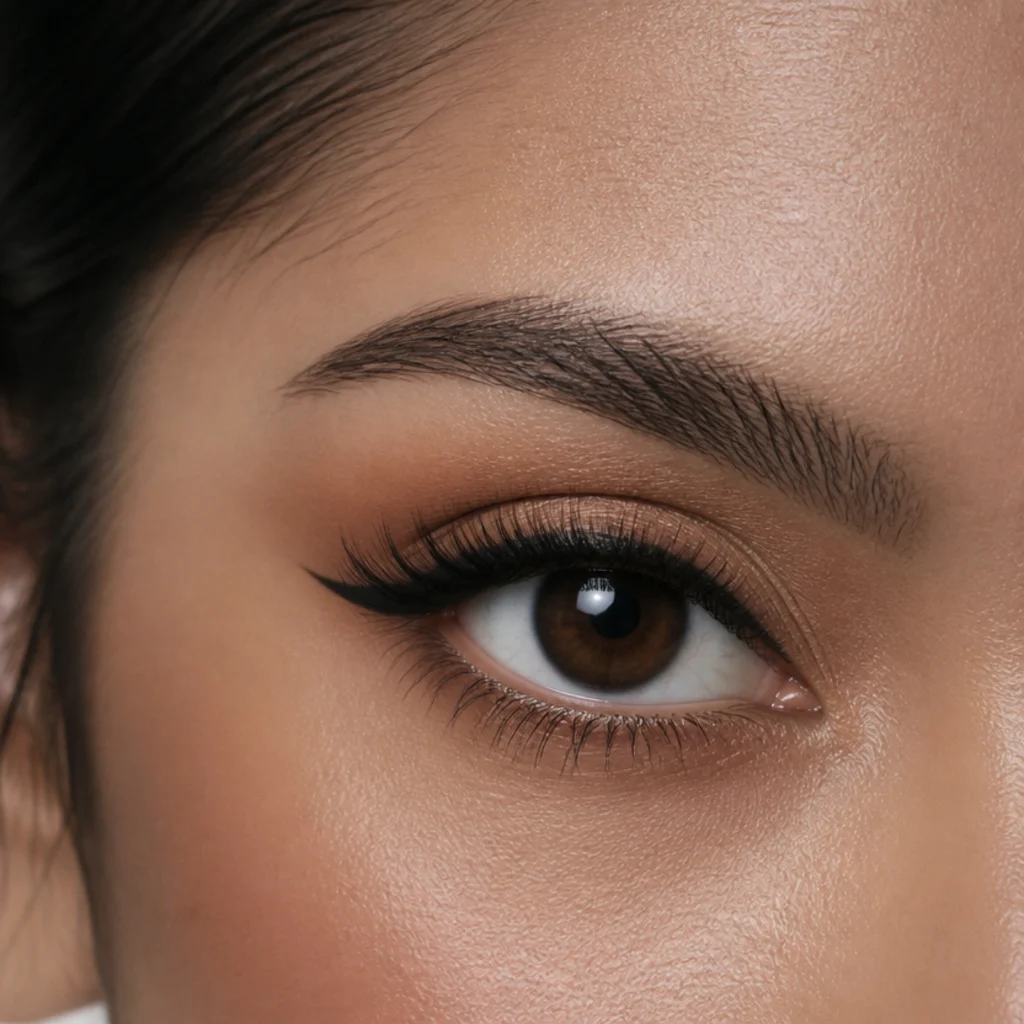
Large, expressive eyes can carry a stronger brow, but a balanced medium arch keeps them from tipping into overdone. Aim for a defined but not overly thick shape with a moderate peak that complements the eye rather than framing it too heavily or boxing it in. Because a large eye already commands attention, you have freedom to keep the brow relatively clean and let liner and lashes carry more of the drama. A defined wing suits large eyes well, and a fuller lash reads beautifully across the generous lid space. The rule here is proportion: match the brow's weight to the eye so neither element overpowers the other. It's medium maintenance, since a defined arch needs a tidy top edge. Pro tip: photograph both brows straight-on before you finish — on large eyes, any asymmetry in arch height is more visible and easier to fix at the pencil stage than after. Ask your brow artist for a medium, balanced arch with clean definition that leaves room for statement liner and lashes.
14Soft Diffused Powder Brow for Sensitive or Sparse Brows
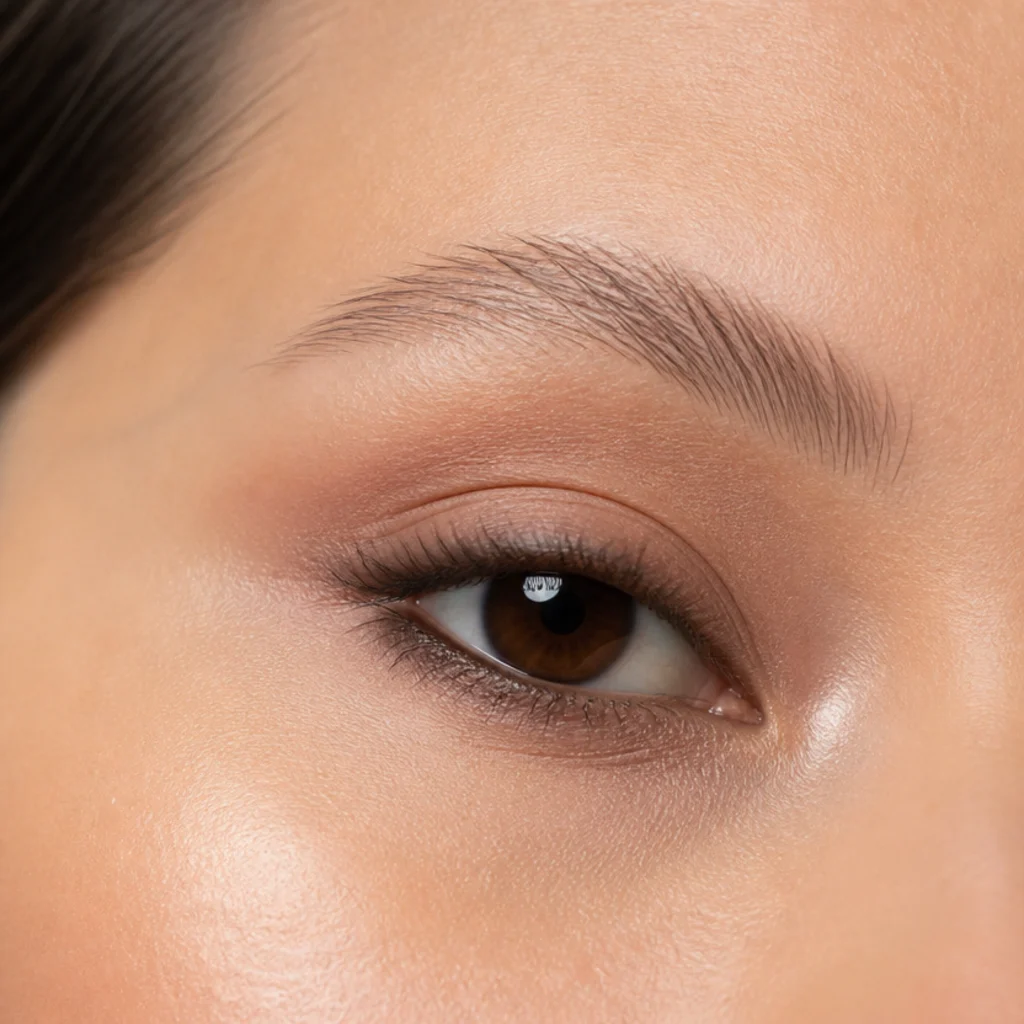
If your brows are naturally sparse, or you just prefer a gentle finish, a soft diffused powder brow is forgiving and flattering across most eye shapes. Rather than sharp individual strokes, you build a hazy, gradient shape that stays lighter at the front and deepens gradually through the arch and tail. This shadow-like finish mimics natural density without hard edges, so it suits softer features and works with hooded, almond, or round eyes alike. Keep the arch matched to your own bone structure rather than forcing a trend shape onto sparse hair. Use a spoolie to blend after applying powder so no patch looks solid. Pair it with a soft smudged liner and a natural lash so the whole look stays cohesive and low-contrast instead of sharply defined. Maintenance stays low, and this is also the gentlest option for anyone with sensitive skin who reacts to frequent tweezing or waxing, since powder relies on product rather than aggressive hair removal. Pro tip: apply with a light hand and build in thin layers — powder is far easier to add than to remove once it looks too dense. Ask your brow artist or a powder-brow technician for a soft ombre finish that fades in at the front.
15Sharp Editorial Arch for Balanced Oval Faces
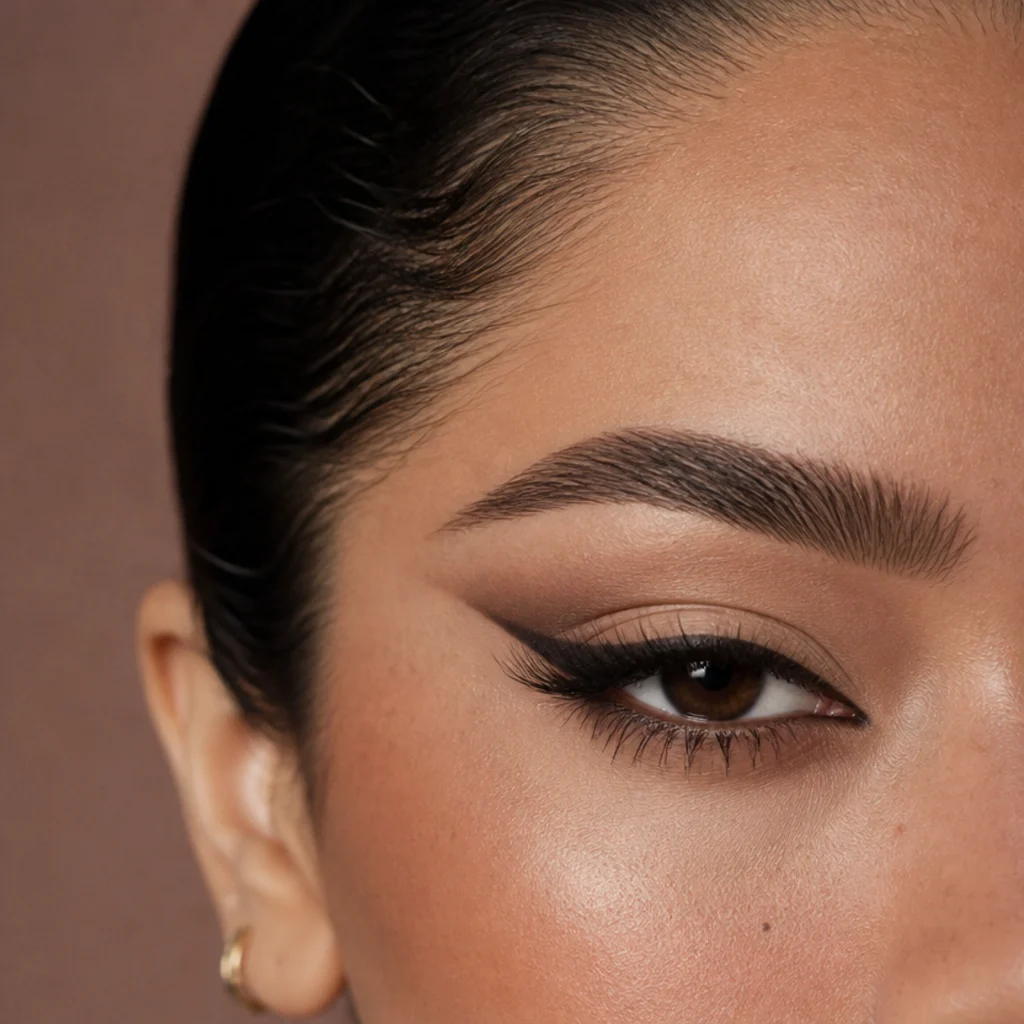
For balanced oval faces and almond eyes that can handle drama, a sharp editorial arch gives a striking, runway-inspired frame. Place a defined peak two-thirds of the way out, keep the tail crisp and angular, and clean the underside for a bold, graphic line. This is the most high-maintenance shape in the guide: sharp edges show regrowth quickly and need precise fill to stay clean, so plan on touch-ups every couple of weeks. It's a deliberate statement look, so save it for when you want the brows to lead the whole face rather than support it. A precise winged liner and a dramatic outer-corner lash complete the editorial effect without tipping into costume territory. Oval faces carry this best because their even proportions absorb the added angle; on very round or very long faces, a sharp arch can exaggerate what's already there. Pro tip: use a concealer and a small angled brush to carve and sharpen the underside and tail after filling — that's what gives this shape its clean graphic edge. Ask your brow artist for a defined angular arch with a crisp, sharpened tail and cleaned underside.
Save this to Pinterest.
Pro Tips from the Editor
- Map before you remove. Whether at home or in the chair, mark the head, peak, and tail with a light pencil and live with the outline for a moment before any hair comes off. Removed hair takes weeks to return; a pencil line wipes off.
- Follow the three-point rule. The head begins on a vertical line up from the side of the nose, the tail ends on a diagonal from the nostril past the outer eye corner, and head and tail should sit at roughly the same height. Break the last point only on purpose.
- Fill a shade lighter than your hair. Most people go too dark, which reads harsh and ages the face. Softer color looks like more hair, not more makeup.
- Set the direction, not just the color. A clear or tinted gel that locks hairs in your chosen direction does more for the shape than extra pencil, especially on hooded and monolid eyes.
- Treat regrowth honestly. If you're recovering from years of thin trends, use a peptide or castor-oil routine and give it two to three months before deciding a shape is impossible.
- Match finish to the eye area, not just the brow. Matte products calm protruding and deep-set eyes; a light lamination lifts hooded and mature lids. The formula is part of the shape.
- Photograph both brows straight-on. Asymmetry hides from the mirror but not from a front-facing photo, and it's easiest to fix at the pencil stage.
Quick Reference: Eye Shape to Brow Match
| Eye shape | Best brow shape | Arch height | Key move |
|---|---|---|---|
| Hooded | Soft rounded arch | Slightly high, gentle | Lift and laminate; avoid spiky peaks |
| Round | Straight bar | Minimal | Flatten and lengthen sideways |
| Almond | Lifted-tail arch | Medium-high, defined | Soft head, crisp upswept tail |
| Deep-set | Low gentle arch | Low | Keep fullness near the lash line |
| Monolid | Feathered brush-up | Soft | Brush up, extend the tail |
| Downturned | High defined arch | High, set outward | Tail must finish above the head |
| Upturned | Soft angled brow | Medium, rounded | Relax the peak, ease the wing |
| Close-set | Rounded full brow | Soft | Start heads wider, extend tails |
| Wide-set | Extended tail brow | Moderate | Strengthen the front, shorten the tail |
| Protruding | Tapered natural brow | Gentle | Fuller front, matte finish |
How to Choose / Get the Look
Start by identifying your dominant eye shape, then look at your own brow's starting point, arch peak, and tail before deciding what to change. Use the classic three-point map: hold a pencil vertically along the side of your nose to mark where the head should begin, angle it from the nostril past the outer corner of the eye to find where the tail should end, and look straight ahead to spot where the arch should peak, roughly above the outer edge of the iris.
From there, choose the shape that counteracts what you want to soften, not the one that mirrors it: lift for hooded and downturned eyes, flatten for round, balance and ground for protruding or large eyes, open the center for close-set eyes, and pull it inward for wide-set. Layer a second decision on top — your face shape. Longer and heart-shaped faces suit flatter, more horizontal brows; rounder faces gain from a little more arch; oval faces carry almost anything, including the sharpest editorial line.
Then match the formula to the finish you need. Powder and matte pencils calm and recede; gels and light lamination lift and hold direction; a fine-tip pen mimics real hair on sparse fronts. When you visit a professional, bring a photo, name your eye shape directly, and use plain language about whether you want more lift, a softer arch, or more length in the tail. Ask them to map the shape in pencil before removing any hair, and to go conservative on a first visit — it's always easier to take more later than to wait weeks for regrowth. Above all, remember eye-shape categories overlap, so trust your mirror over any single label.
Frequently Asked Questions
How do I know my eye shape?
Check three things in a mirror. First, whether your crease is visible: hooded lids hide it under a fold, monolids have none, and almond and round eyes show it clearly. Second, whether the outer corner tilts up (upturned) or down (downturned). Third, how far apart your eyes sit relative to one eye-width, which separates close-set from wide-set. Many people are a blend, like hooded almond or round eyes, so use the closest match as a starting point rather than a strict rule.
Should my eyebrows match my eye shape exactly?
No — the aim is to balance, not to mirror. Round eyes look calmer under a straighter brow, and downturned eyes lift under a higher arch, so you're usually choosing a shape that gently counteracts the eye rather than copying it. Copying the eye's own curve tends to exaggerate whatever you already have.
Does eyeliner change based on eye shape too?
Yes. Eyeliner for different eye shapes follows the same logic as brows. Lift downturned eyes with an upward wing, elongate round eyes with liner pulled straight out, keep hooded eyes thin and tightlined so the line doesn't disappear under the fold, and use a gradient that thickens outward on monolids so the liner stays visible when the eye is open.
What lash style suits my eye shape?
Lash styles work alongside brows and liner as one frame. Cat-eye lashes widen round and close-set eyes, outer-corner accents lift downturned and monolid eyes, curled wispy lashes open hooded and small eyes, and balanced lengths keep almond and upturned eyes harmonious rather than over-lifted.
How often should I reshape my brows?
Most people refresh every three to four weeks, but the shape decides the pace. Soft, feathered, and powder brows hide regrowth and stretch to four weeks or more, while high, angular, and editorial arches show a growing top edge within two weeks and need more frequent upkeep. Fill daily as needed and let a professional reset the underlying shape every so often.
Can I change my brow shape if I over-plucked for years?
Often yes, but slowly. Follicles that have been tweezed for years may take two to three months of consistent regrowth to fill in, and some won't return. Support regrowth with a peptide serum or castor oil, stop tweezing the areas you want back, and use a fine-tip pen or powder to fake density in the meantime. Give it a full growth cycle before deciding a shape is off the table.
Is brow lamination worth it for my eye shape?
Lamination shines on hooded, monolid, and mature or downward-growing brows, where its main job is holding hairs in a lifted, brushed-up direction they won't keep on their own. It's less necessary on already-full, well-behaved brows. Results typically last four to six weeks, and over-processing can leave hairs brittle, so space treatments out and keep the brow conditioned between sessions.
What is the difference between microblading and a powder brow?
Microblading tattoos fine hair-like strokes for a defined, textured look, which suits sparse fronts and tails but can blur over time on oily skin. A powder or ombre brow deposits soft, shaded pigment for a filled-in, makeup-like finish that tends to wear more evenly on oily and mature skin. Both are semi-permanent and fade over one to three years, so choose based on your skin type and how defined you want the result.
My eyes are a blend of shapes. Which brow do I follow?
Blends are the norm, not the exception, so borrow the moves rather than commit to one label. If you read as hooded almond, take the lift and lamination advice for hooded eyes but keep the defined tail almond eyes carry well. Prioritize the feature you most want to address, test the shape in pencil first, and trust what your mirror shows over any single category name.