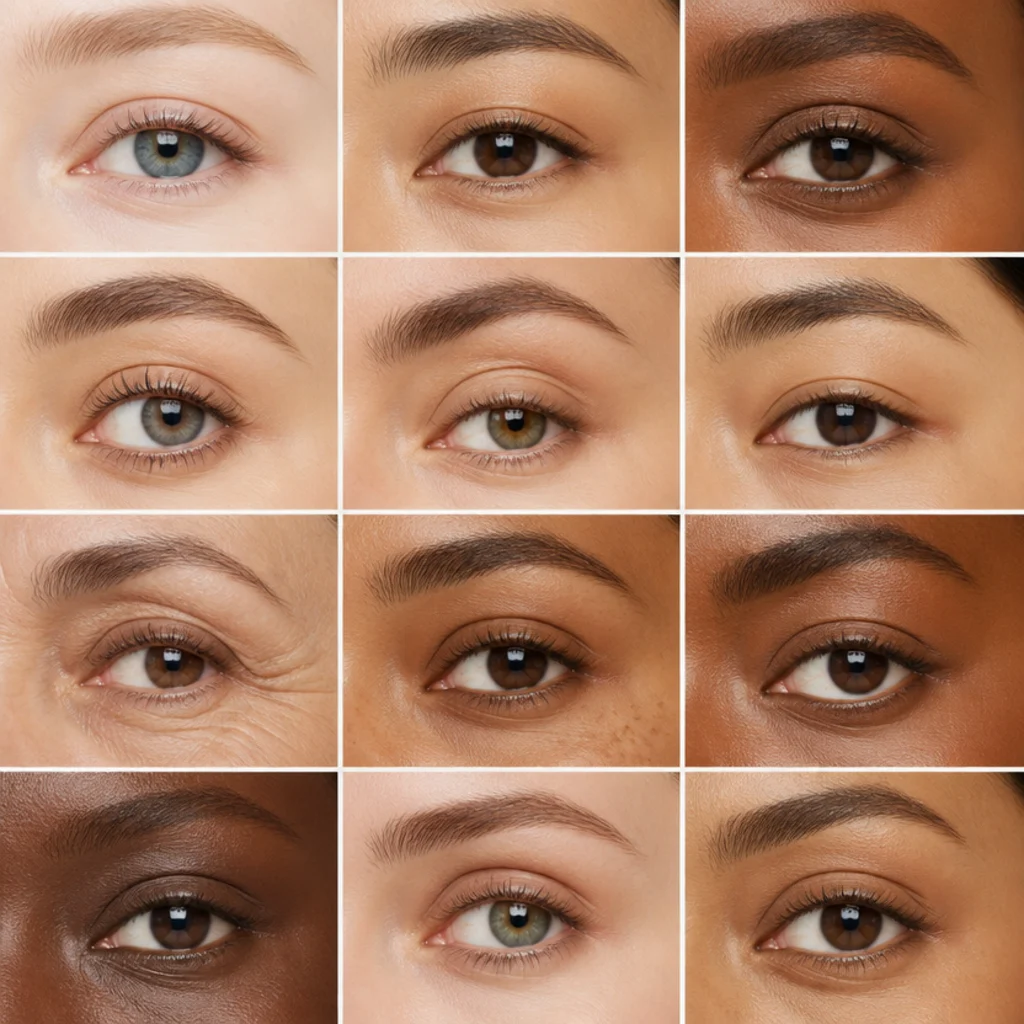
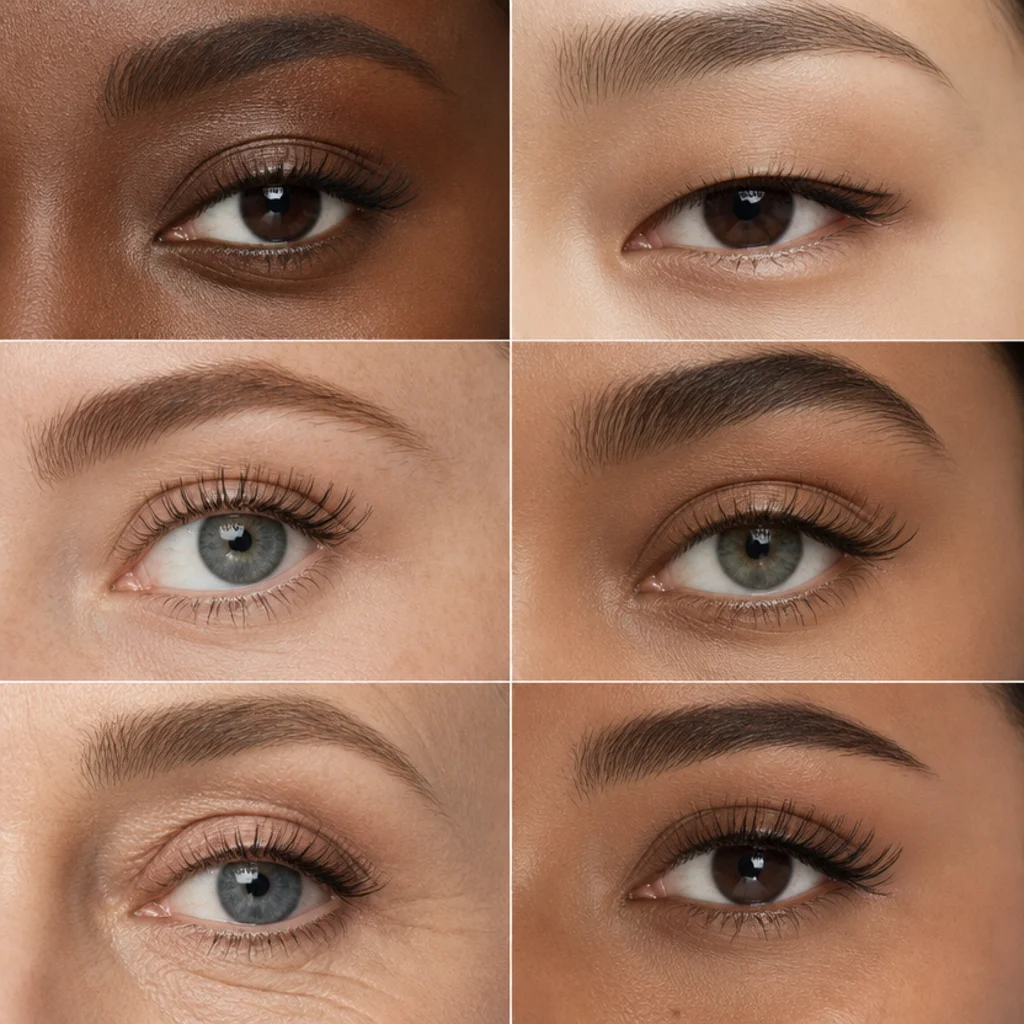
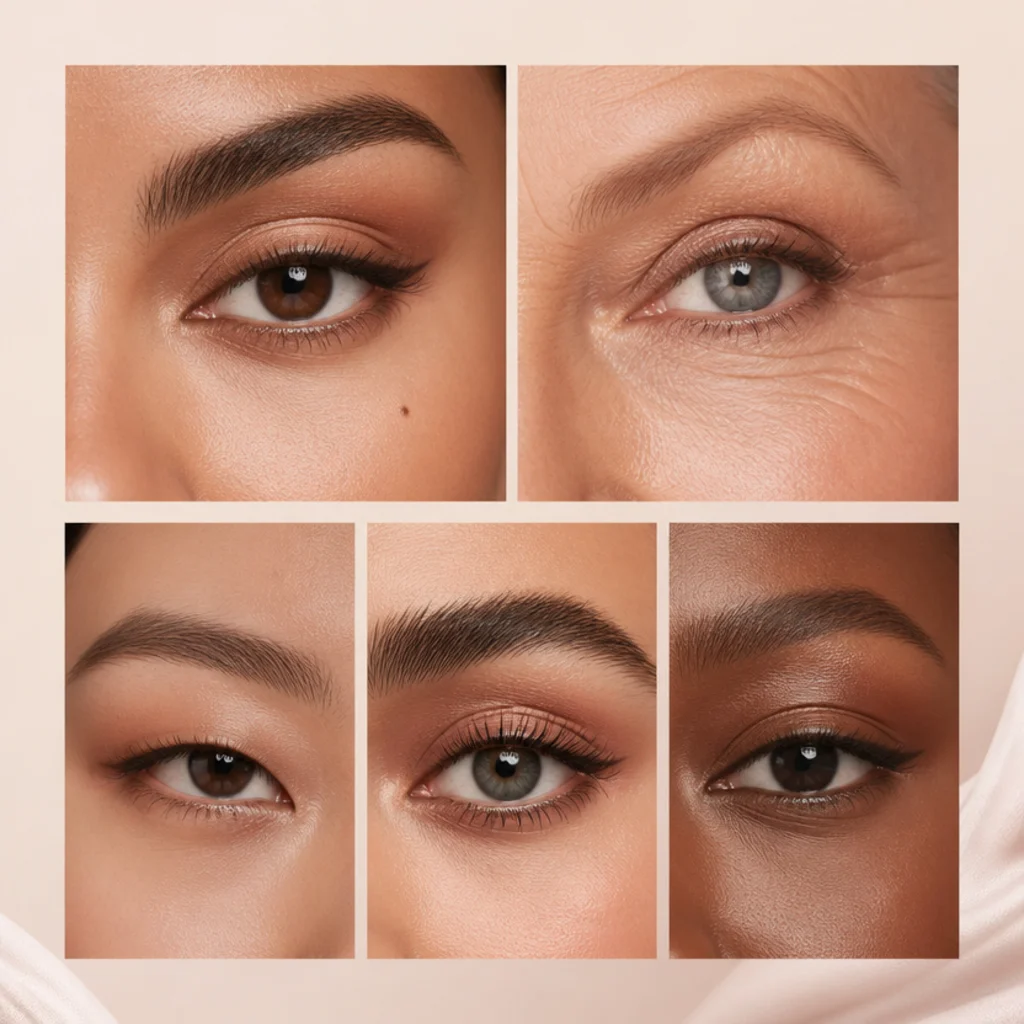
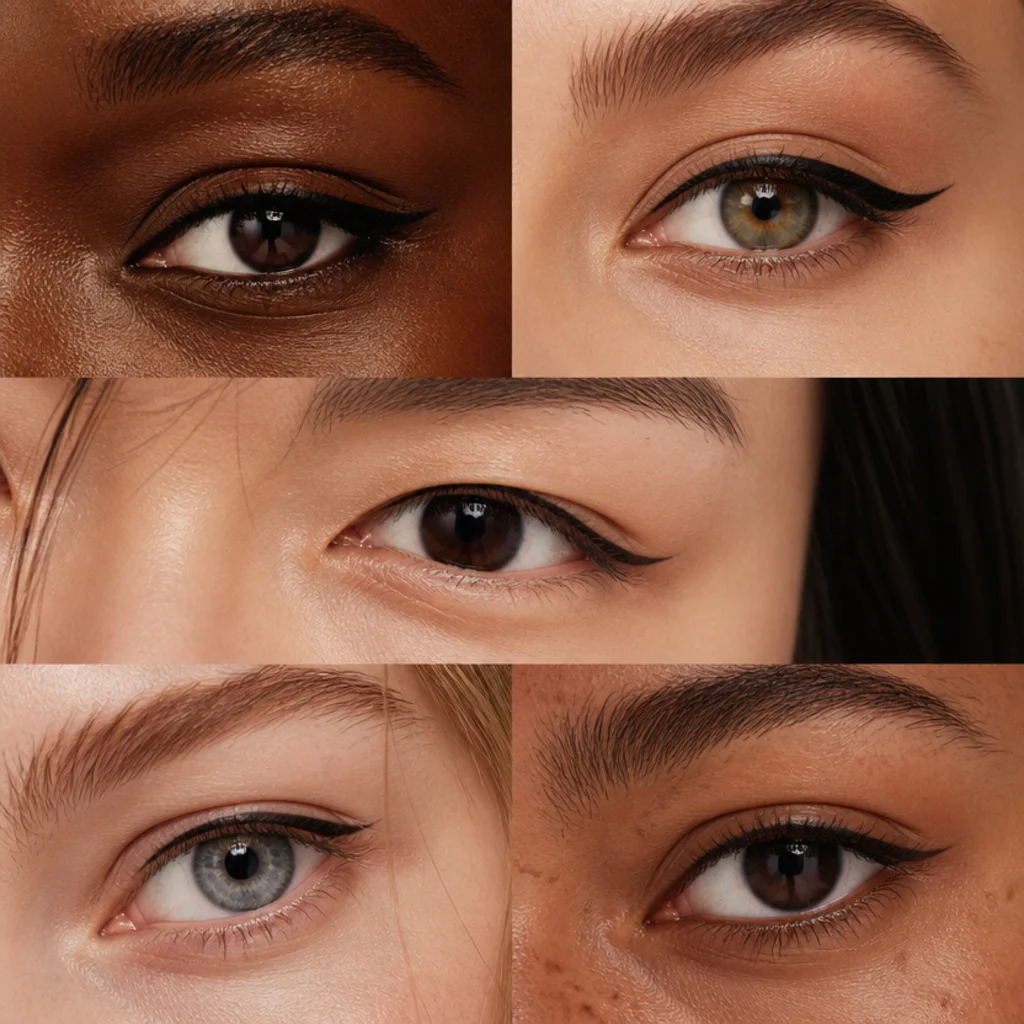
15 Almond vs Hooded Eye Shapes Compared
Almond and hooded eyes get sold as opposites, but they overlap more than most charts admit. This guide lines them up 15 ways, from liner angle to lash mapping to the exact height you drop your transition shade, so you can flatter your own lids no matter which camp they land in. Everything here comes back to one measurement you can take in the mirror in 60 seconds, then tells you exactly what to move and by how much. Read it as a map you adapt, not a rule you follow.
 Edited by Lena Rose · Published July 11, 2026 · 35 min read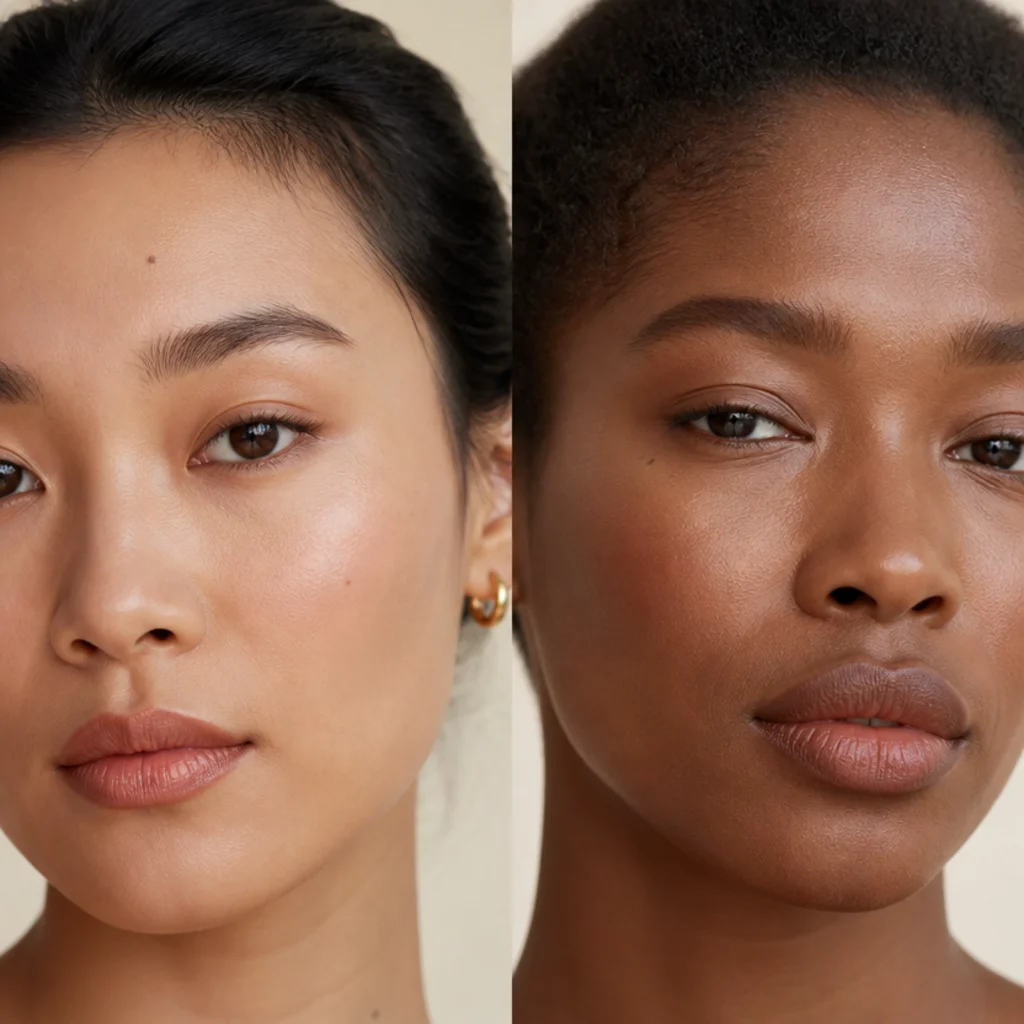
Quick Answer
- Best for: Anyone deciding whether their lids read almond or hooded, and wanting makeup by eye shape that actually suits them, across every skin tone and lid depth.
- Who might skip it: Anyone happy with a fixed five-minute routine who doesn't want to re-map placement; the techniques here reward a little mirror time and one open-eye check.
- Maintenance: Low once you know your crease height and lid space. Most looks take 5 to 15 minutes, plus a 30-second eyes-open check. Hooded lids ask for a primer and a re-check at midday.
- Difficulty: Beginner to intermediate. Almond lids take most techniques as drawn; hooded lids ask for placement planning, a lifted wing base and one extra open-eye check.
- Cost: Variable. A single matte transition shade plus a brown pencil covers the basics (roughly the price of one drugstore duo); a fuller kit with a lash curler, a satin lid shade, a gel liner, primer and strip or individual lashes sits at the mid range. No look here needs a high-end palette to work.
- Wear time / longevity: A primed matte look holds most of a day on almond lids; hooded lids do best with a tubing mascara and a gel or long-wear liner to survive fold contact, and roughly double their wear over a bare lid once primed.
- Standout variation: The almond-hooded combination, where a tilted almond outline sits over a low or partial crease and borrows technique from both maps. It's the most common real-world shape, not an edge case.
- How to ask your makeup artist: Say "my crease sits low and disappears when I open my eyes, map my liner and shadow higher," or "I have visible lid space and want a crisp classic wing." Ask them to map each eye separately if your two lids differ.
In This Guide
- The Core Difference at a Glance
- How to Spot Your Shape in the Mirror
- Lid Space and the Crease Compared
- Everyday Eyeliner Direction
- Winged Liner on Each Shape
- Eyeshadow Placement Compared
- The Cut Crease Question
- Smoky Eye, Two Ways
- Lash Mapping for Almond vs Hooded
- Mascara and Lash Curl Strategy
- The Natural, No-Makeup Look
- When the Shapes Overlap
- Brightening and Opening Tricks
- Common Mistakes for Each Shape
- Reading an Eye Shapes Chart
Naming your eye shape turns makeup from guesswork into a short, repeatable routine, and almond and hooded are two of the most-searched shapes on any eye shapes chart. They also sit closer together than the labels suggest. Plenty of almond eyes develop a soft hood with age or bone structure, and many hooded eyes have a clean almond outline hiding under the fold. What actually separates them is one measurement: how much mobile lid shows with your eyes open. Nearly every technique below flows from that single answer. Get the reading right and the rest is arithmetic — move color a few millimeters up, thin the wing base, weight lash length outward. This guide walks the two shapes side by side, one distinction at a time, so you can see exactly where the method changes and where it stays the same. You'll find liner angles, shadow-placement heights, lash-mapping logic, cut-crease workarounds and the small mirror tests that tell you which map to follow, plus the maintenance realities, transfer, fold-print, midday creasing, that decide which products earn a spot in your kit. Work with the lid, crease and outer-corner tilt you actually have instead of forcing a look that fights them. Keep this chart handy and treat each tip as a starting point you refine, eyes open, in your own mirror.
01The Core Difference at a Glance
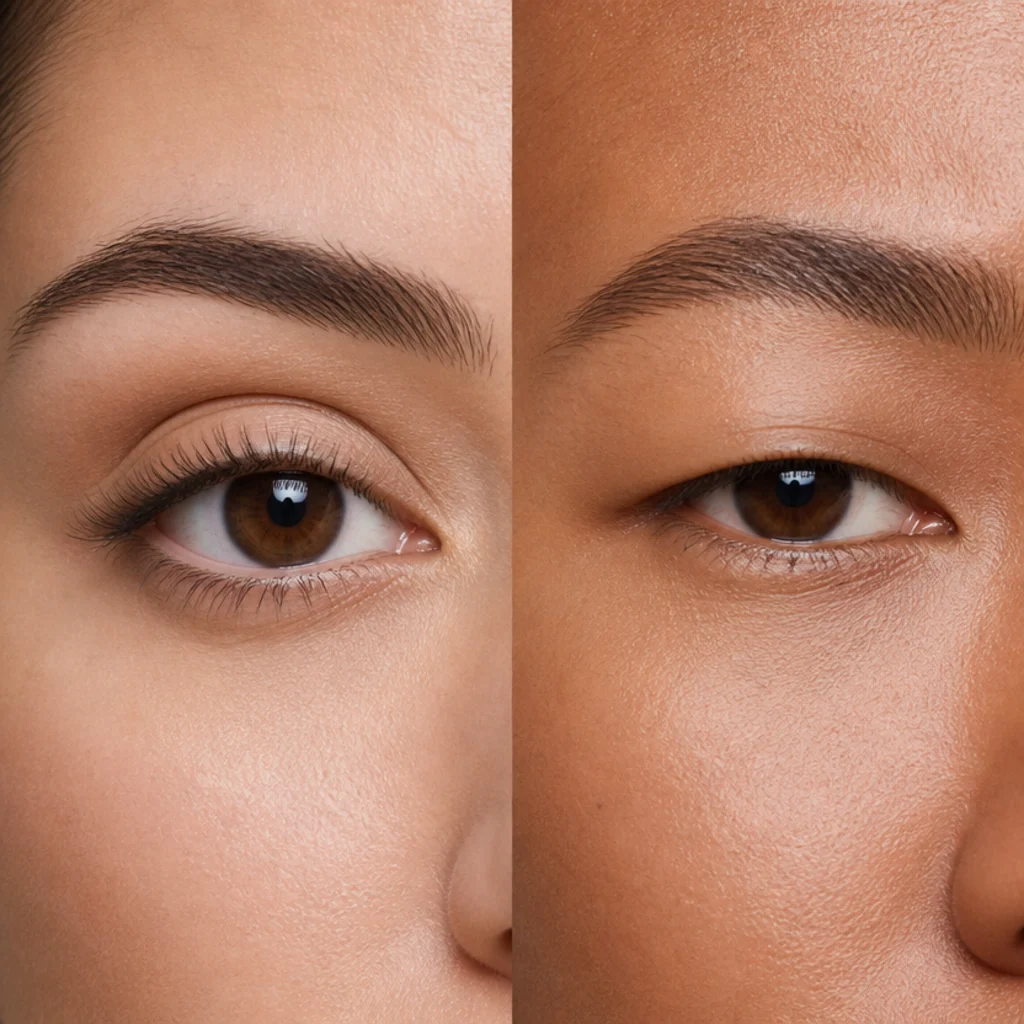
The one distinction that drives everything else is visible lid space. Almond eyes show a clean band of mobile lid between the lash line and the crease when open, with a gentle taper that lifts slightly at the outer corner — an oval shape, wider in the middle than at the ends, roughly one and a half to two times as long as it is tall. Hooded eyes carry an extra fold of upper-lid skin. Sometimes it's structural from birth, sometimes it develops as the brow settles with age, and it drapes over part or all of that band when you're looking straight ahead. That gives a hooded eye two creases: the anatomical one, hidden, and the visual fold line below it, where the drape ends. Tutorials tend to assume the crease is one reliable landmark, so almond lids follow standard instructions cleanly while hooded lids need color and liner lifted so they clear the fold. Neither is better, just a different starting point. Keep this comparison in view as you read on, and re-check your reading if your face changes.
| Feature | Almond eyes | Hooded eyes |
|---|---|---|
| Lid space (eyes open) | Clearly visible band | Reduced or hidden by a fold |
| Crease | Defined, reliable landmark | Low or covered; visual fold sits below the anatomical crease |
| Best color placement | Where you draw it | Higher, on and above the fold, checked eyes open |
| Winged liner | Reads as drawn | Needs a lifted, thin-based tail |
| Finish that flatters | Matte to metallic, flexible | Matte to satin; heavy shimmer on the fold reads puffy |
| Priority upkeep | Primer optional | Primer, gel liner, tubing mascara |
It suits every skin tone and depth, and upkeep stays low once you know your category. Ask your makeup artist to confirm crease height on both eyes separately before mapping anything.
02How to Spot Your Shape in the Mirror
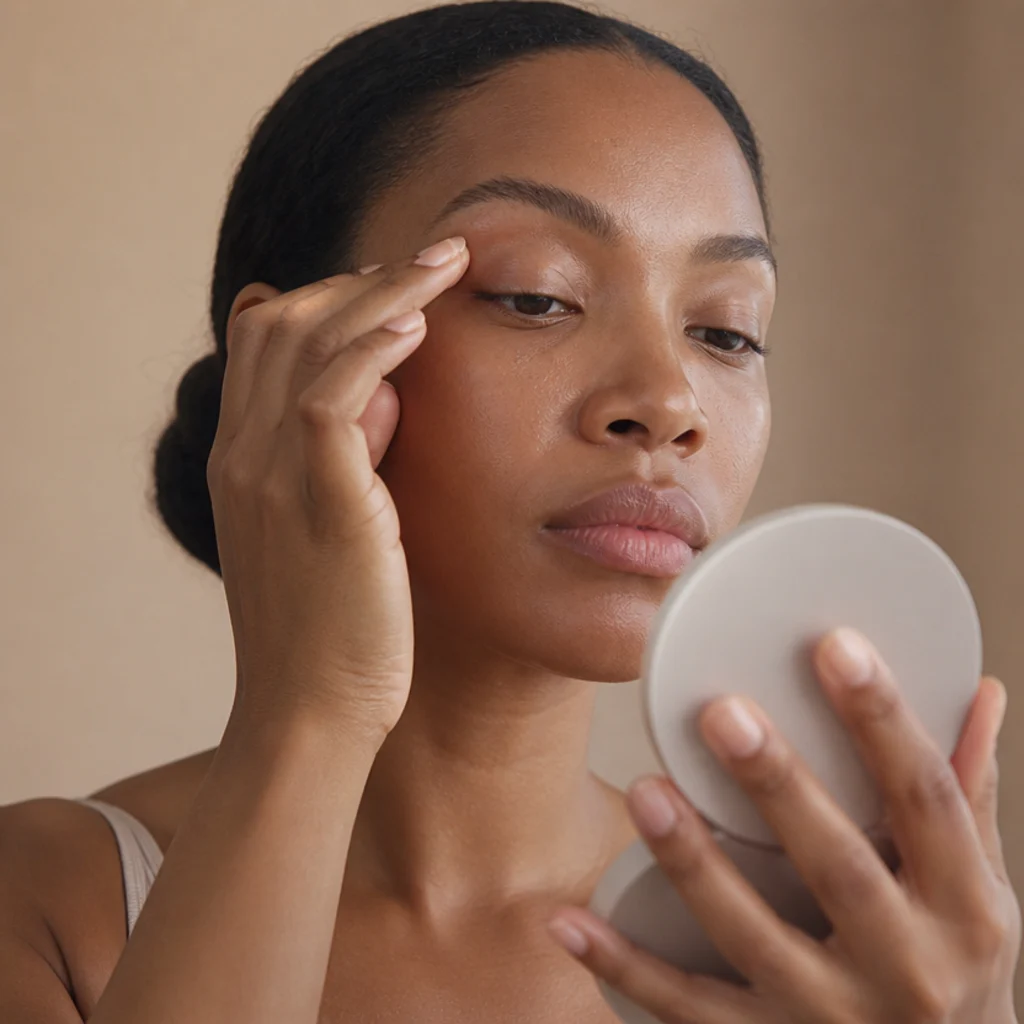
Face a mirror in even, front-on daylight. Relax your forehead so you're not lifting your brows, and look straight ahead — a window at eye level beats overhead bathroom lighting, which casts a false shadow that can mimic a fold. If a smooth band of lid sits above your lashes and the outer corner tilts up, you lean almond. If skin from the brow bone rests over the crease and shortens or hides that band, you lean hooded. Then run the pencil test: trace a faint line along your natural crease with a light taupe pencil, relax, and open your eyes. Almond eyes still show the mark; hooded eyes swallow it under the fold, which tells you exactly how much higher your color needs to go. Do this on both eyes — it's common to read a touch more hooded on one side — and remember that brow position, under-eye fullness and even morning puffiness can shift the result, so the category is a spectrum, not a verdict. A hooded lid isn't the same as a deep-set or mature one, so it pays to tell them apart: deep-set eyes have lid space that recedes under a prominent brow bone, a different fix entirely. Pro tip: photograph both open eyes straight-on in flat light. A still image reveals a low fold that a live mirror tends to hide, since you unconsciously raise your brows when you look at yourself. This 60-second check is the fastest way to read your own eye shape before you commit to a look. Ask your makeup artist to check the same two points, lid space and crease height, at the mirror.
03Lid Space and the Crease Compared
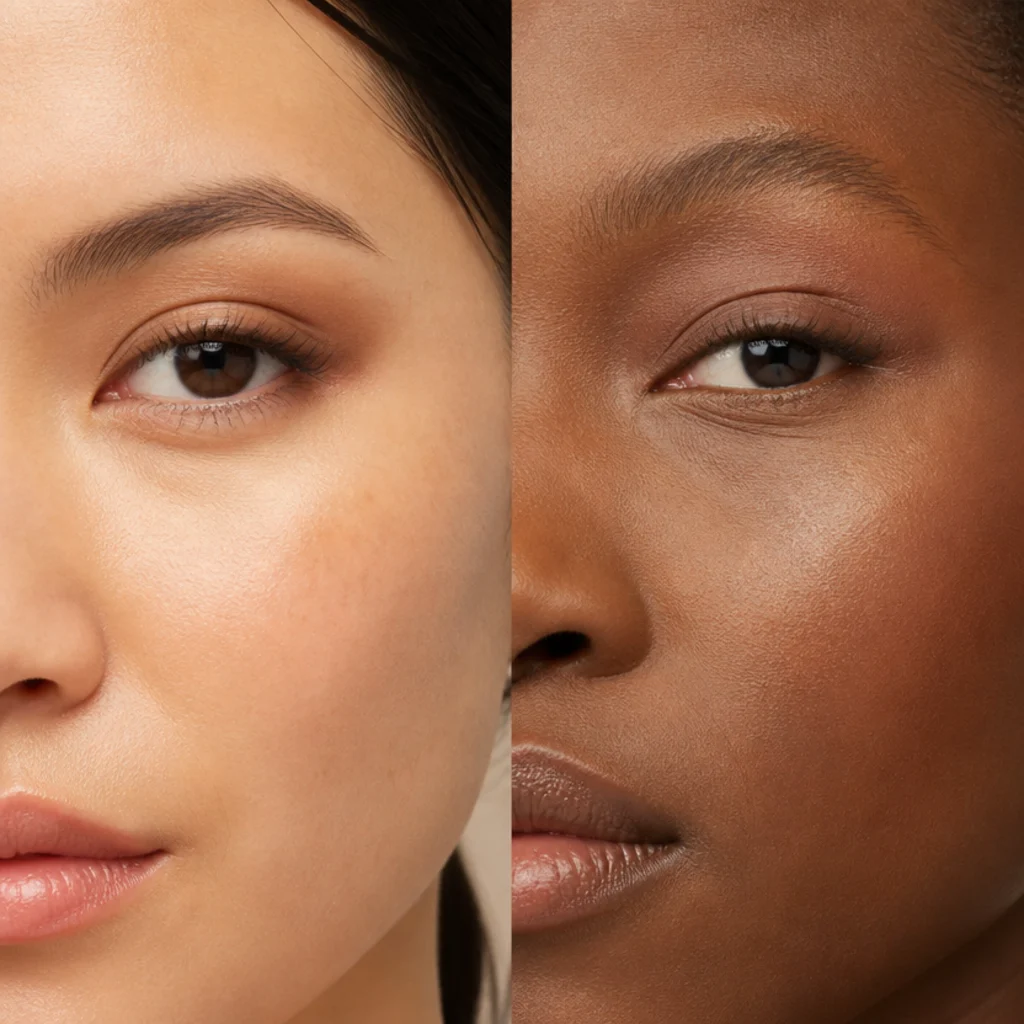
On almond eyes the crease is a dependable landmark. Blend a mid-tone transition shade straight into it and trust it to read with your eyes open — exactly why most tutorials assume this shape. Hooded eyes change the geometry: the visible crease sits lower than the anatomical one, or vanishes entirely beneath the hood, so color placed "in the crease" prints onto skin you can't see and does nothing but transfer upward. The fix is to blend your transition shade roughly two to five millimeters above where the crease looks like it should be, feathering it onto the fold itself so a sliver of definition peeks out when your eyes are open. Think of it as drawing a new crease at the height the eye actually shows, then diffusing the top edge so it never reads as a hard bar. For hooded lids the rule is place higher, check eyes open, adjust; for almond lids you just place it where you see it. Favor soft matte browns one to two shades deeper than your skin for that lifted definition — matte grabs and diffuses where shimmer slides and settles into the fold. Pro tip: set a fluffy blending brush as your "crease-height marker" by resting it flat where the fold ends with your eyes open, then work color only above that line. Ask your makeup artist to map your transition height with your eyes open, not closed, so it survives all day.
04Everyday Eyeliner Direction
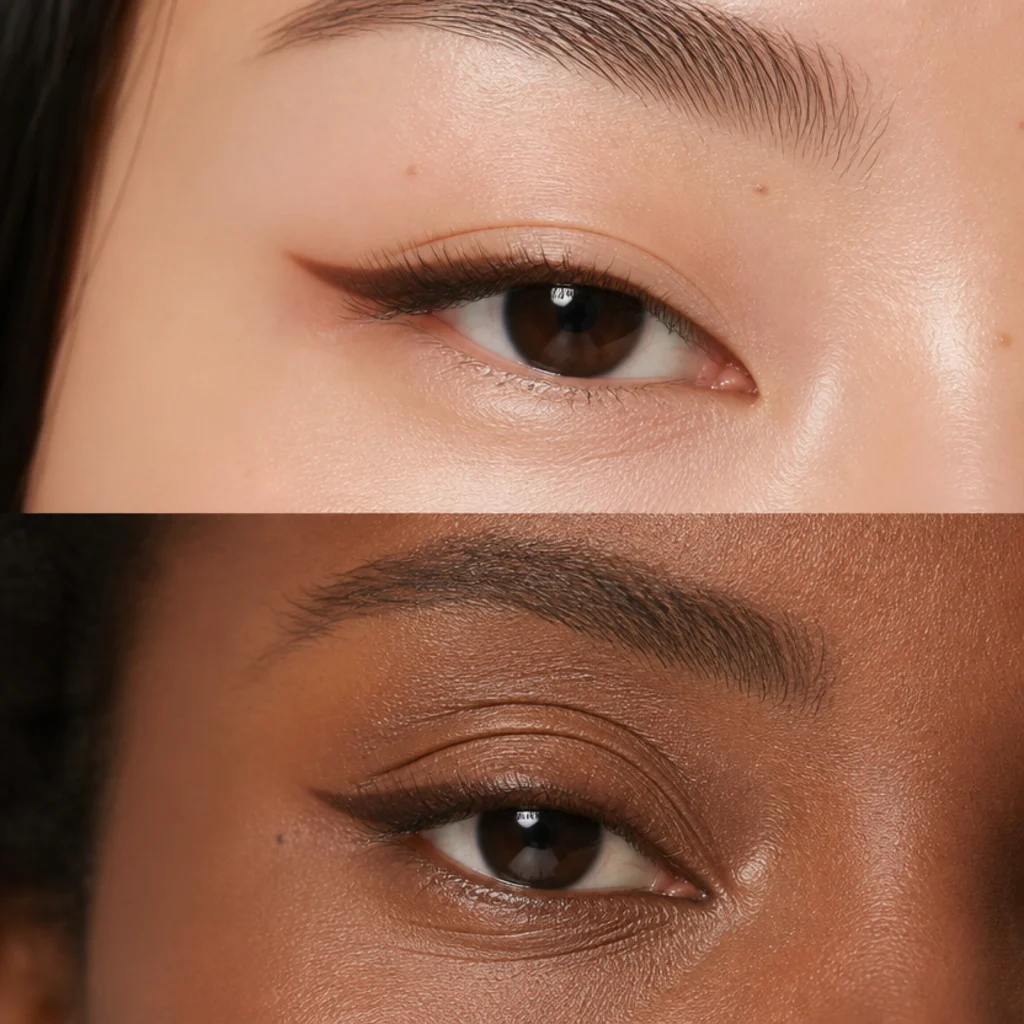
Almond eyes take a classic line cleanly. Hug the upper lashes, let the line thicken gently through the outer third, and it reads tidy whether the eye is open or cast down. Hooded eyes need a lighter hand on the lid itself, because a thick band disappears under the fold and stamps a mirror-image line onto the skin above every time you blink. Keep the base line thin and skin-tight, concentrate definition at the outer corner, and tightline the upper waterline with a smudge-proof pencil so lashes look denser without eating into lid space. Tightlining is the single highest-return move on a hooded lid — it defines the eye entirely below the fold, where nothing can smear it. For both shapes, a soft warm brown or grey-taupe reads friendlier than stark black in daylight and flatters lighter and deeper skin tones alike, though a rich espresso often serves deep skin better than a muddy mid-brown. Smudge a little along the lower outer third to balance the eye rather than ringing it fully, which shrinks any eye. Maintenance decides the formula here: a waxy pencil can transfer within an hour on a hooded lid, so a gel or long-wear liquid earns its place. Pro tip: on hooded eyes, draw the base line with your eyes open in short, connected strokes so you only place liner where it'll actually show. Ask your makeup artist for a smudge-proof or gel liner mapped for fold contact.
05Winged Liner on Each Shape
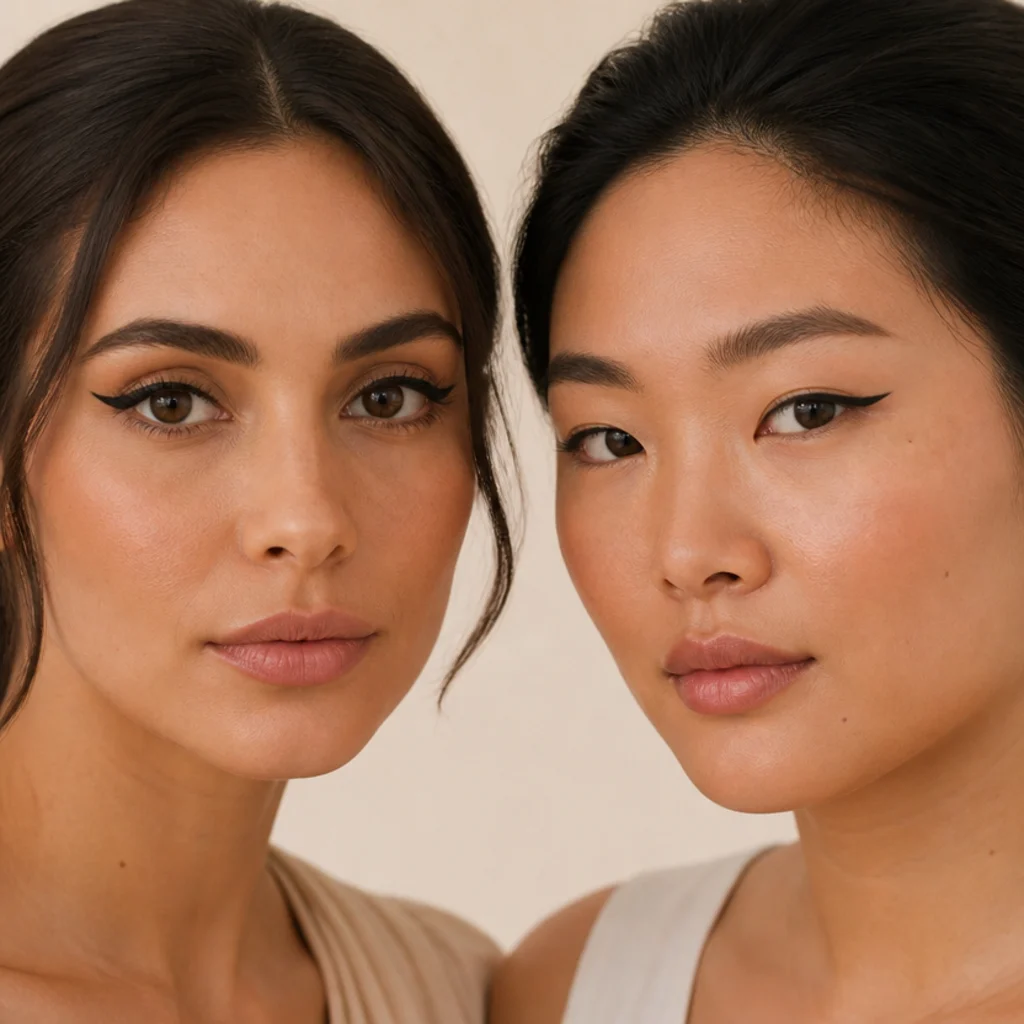
A wing is really two different techniques depending on lid space. On almond eyes you can draw the flick with the eye relaxed, admire it, and move on, since the visible lid carries it all day; a classic wing that starts thin at the inner corner and thickens to a clean point suits the shape without adjustment. On hooded eyes, a wing mapped with the eye closed usually folds out of sight the moment you open up, or bends into a broken line. The reliable method: build the tail with your eyes open, aim it toward the end of your brow, then keep the base of the wing whisper-thin so the fold can't smudge it. The floating or invisible-base wing — tail lifted just above the hood, base tight to the lashes — is the hooded-eye workhorse, though almond eyes can wear either the classic flat wing or the lifted version. Match the angle to your outer-corner tilt rather than a stranger's tutorial: an up-tilted corner takes a steeper flick; a level or downturned one wants a gentler, more horizontal lift so it doesn't drag the eye down. Pro tip: stamp the wing angle first with a small strip of tape or a card held from lower lash line to brow end, so both eyes match even when one is more hooded, then remove the tape and refine freehand so the edge isn't razor-cut. Ask your makeup artist for a lifted, thin-based wing you can recreate with your eyes open.
Save this to Pinterest so your wing map is ready next time you reach for liner.
06Eyeshadow Placement Compared
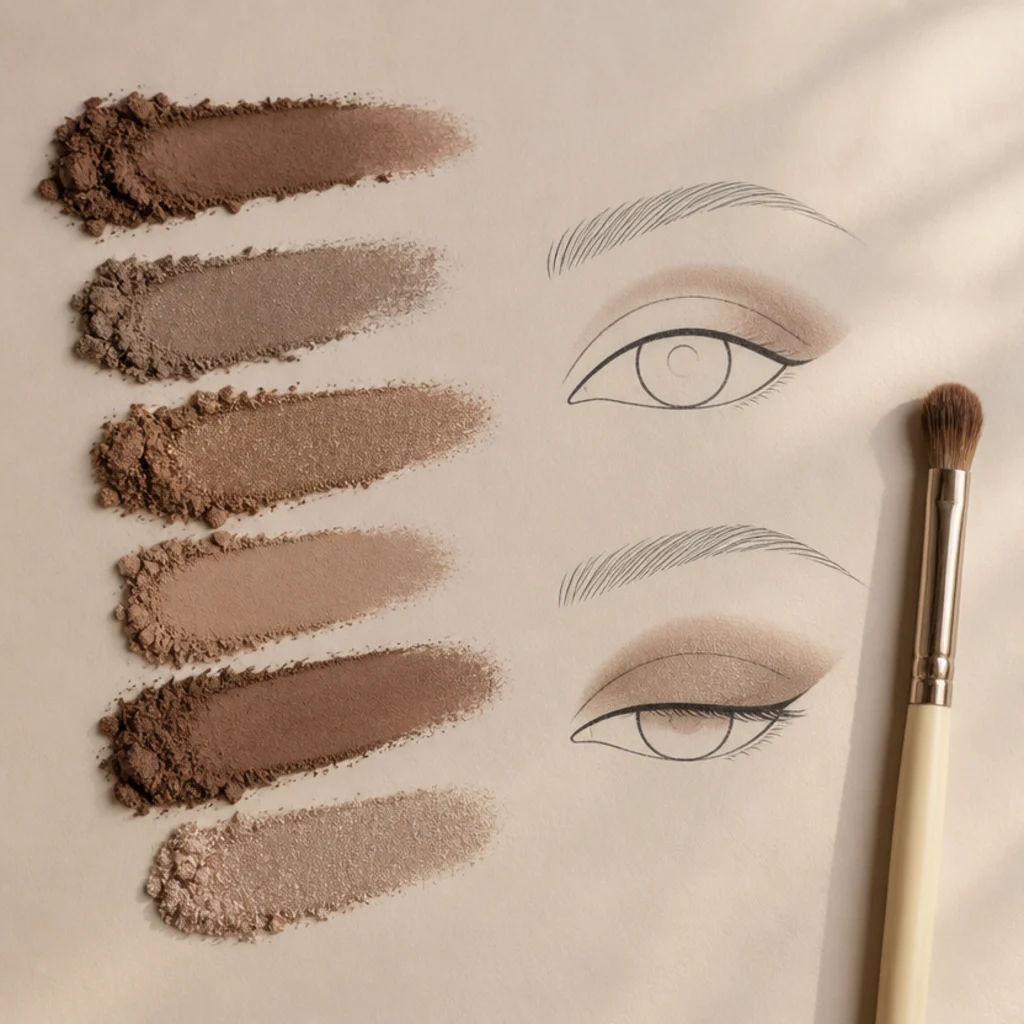
Placement is where almond and hooded eyes separate most clearly. On almond eyes the textbook formula works: light satin or metallic on the lid, mid-tone matte in the crease, a deeper shade at the outer corner, all blended out and up. Hooded eyes need a shifted map. Carry the deeper outer shade higher and slightly onto the hood so it stays visible with the eye open, keep the lid off the brightest, most reflective metallics that can read puffy on a fold, and use matte transition shades to carve dimension where the drape flattens it. A soft cut of matte color above the fold gives hooded eyes the depth a crease hands almond eyes for free. Both shapes favor a diffused edge over a hard line, and both look modern in warm neutrals, soft bronzes, terracotta and cool grey-browns tuned to your undertone. A primer or a matte base under shadow stops fold-transfer and roughly doubles wear time on hooded lids. Pro tip: apply your deepest shade as a small triangle at the outer corner first, before the lid color, so the darkest point never migrates inward and shrinks the eye. Ask your makeup artist to place your outer-corner depth with your eyes open.
| Placement zone | Almond eyes | Hooded eyes |
|---|---|---|
| Lid (center) | Any finish, incl. metallic | Satin, kept off heavy glitter |
| Transition / crease | In the visible crease | 2–5 mm above the fold, diffused |
| Outer corner | Deepest matte, blended up | Deepest matte carried higher onto the hood |
| Inner corner | Light satin accent | Light satin as a genuine lift |
| Lower lash line | Optional smoke for balance | Light smoke, outer third only |
07The Cut Crease Question
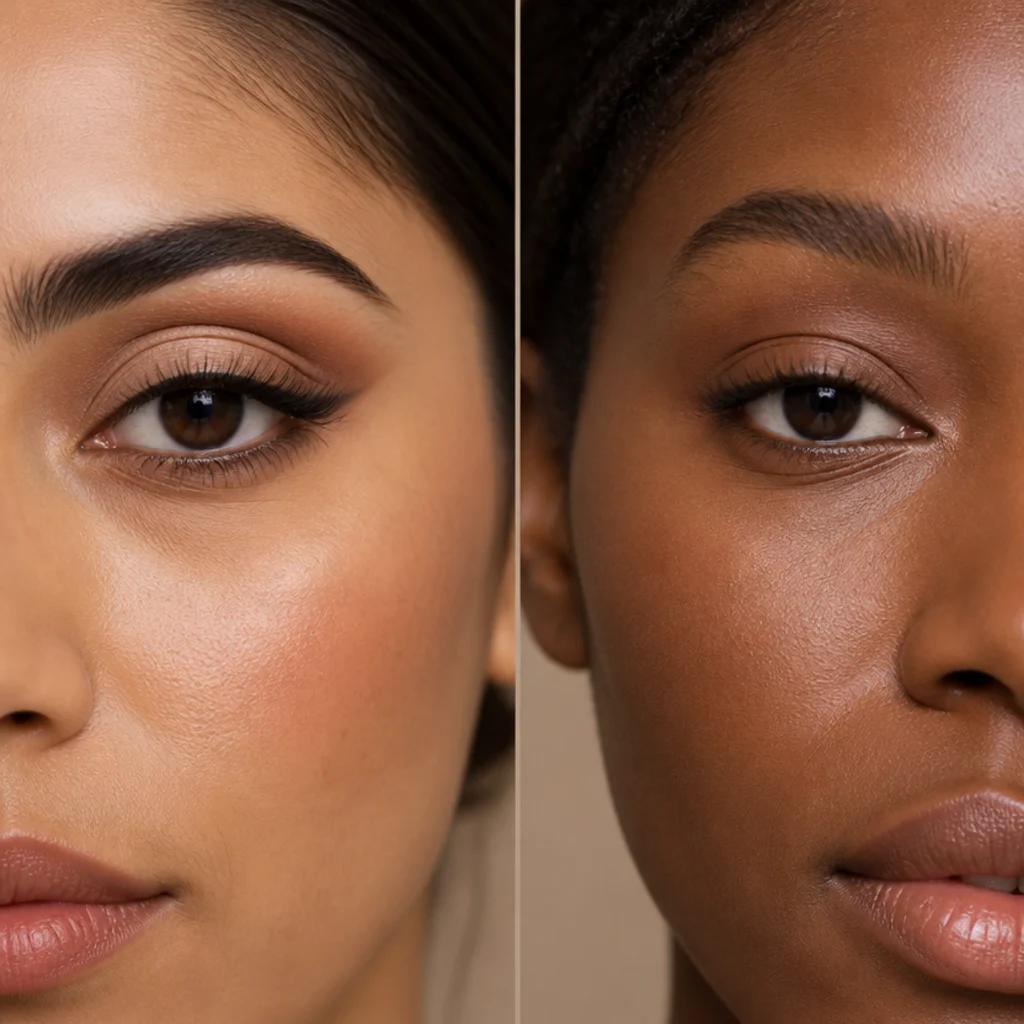
A classic cut crease — the sharp line of light lid set against a deeper socket — works best on eyes with room to show off lid space. On almond eyes it can be crisp and graphic: cut with a concealer or a light metallic, defined with a clean matte above, and it holds its geometry all day because the lid stays visible. Hooded eyes aren't excluded, but the method changes. You build a faux crease higher than the natural one, keep the cut soft rather than razor-sharp, and blend the top edge so the effect reads when the eye opens instead of folding into a dark bar. Set the cut lid with a touch of powder so the concealer base doesn't migrate into the fold within an hour. Expect a learning curve of several attempts, and check constantly with your eyes open, not closed. If a full cut crease feels like too much work, a halo eye (light center, deeper corners) or a simple lifted outer-corner shade delivers similar dimension with far less effort and less risk on a fold. This is intermediate-level work, so give yourself time and a long-wear base. Pro tip: on hooded lids, draw the faux-crease line, open your eyes, and adjust the height before you deepen the color, so you commit to the sharp edge only once it clears the fold. Ask your makeup artist for a soft-edged faux crease mapped to your open eye.
08Smoky Eye, Two Ways
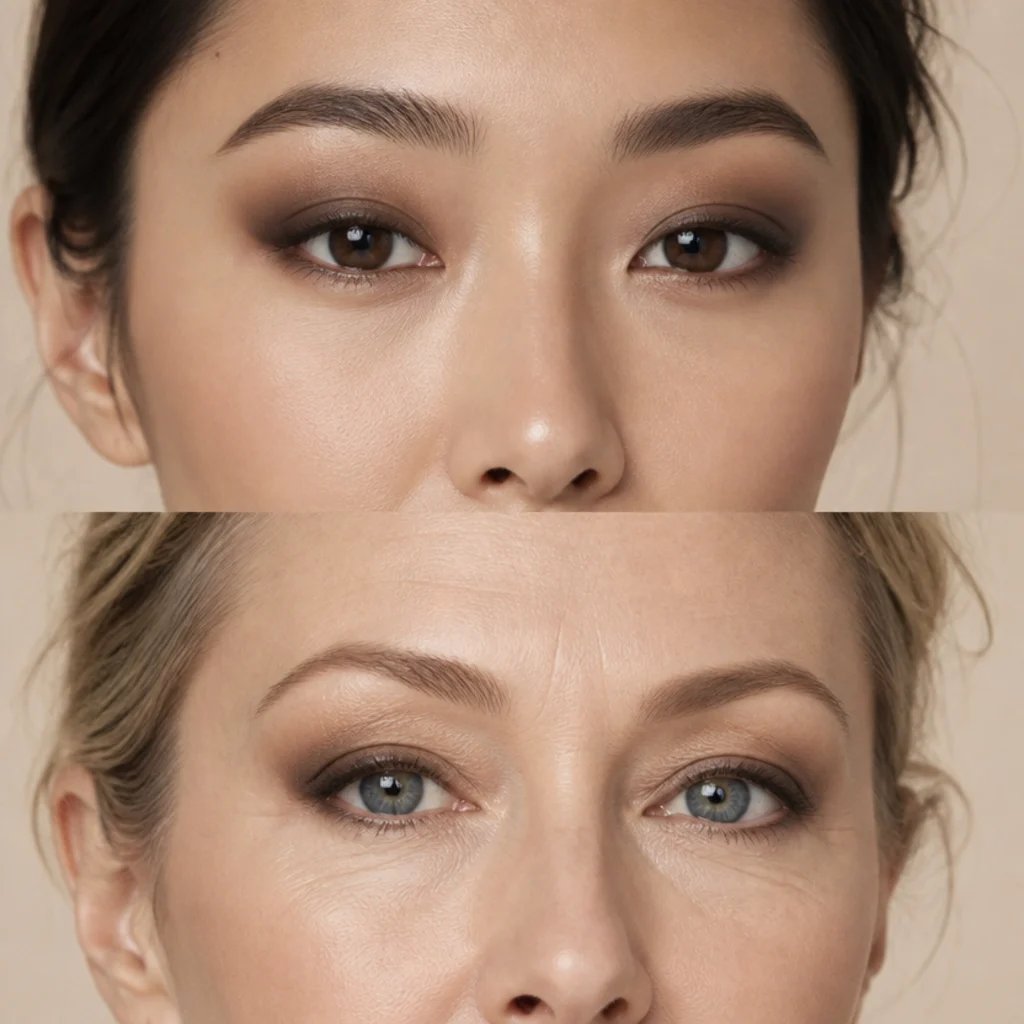
A smoky eye flatters both shapes, but the geometry of the smoke differs. On almond eyes you can smoke the whole lid evenly and blend up into the crease for a balanced, rounded haze, whether in classic charcoal, warm bronze or a soft plum. On hooded eyes, an all-over lid smoke closes the eye down and reads heavy, so anchor the darkest color at the outer corner and drag it up and out in a soft diagonal triangle, keeping the inner two-thirds of the lid lighter and reflective. That placement lifts rather than covers. For both shapes, smoke a little of the lower lash line to tie the look together, and build intensity slowly with a fluffy brush and a light hand — a smoky eye is nearly impossible to un-blend once it goes muddy. Tap excess off the brush and layer in three or four passes rather than one heavy load. Long-wear cream shadow or a shadow primer keeps a hooded smoky eye from creasing into the fold by midday, and a pencil laid down first as a base grips the powder for deeper payoff. Pro tip: on hooded lids, let the up-and-out drag follow the same angle as your wing so liner, smoke and lashes all point toward the brow end and reinforce the lift. Ask your makeup artist for an outer-weighted, upward smoky eye rather than a full-lid one.
09Lash Mapping for Almond vs Hooded
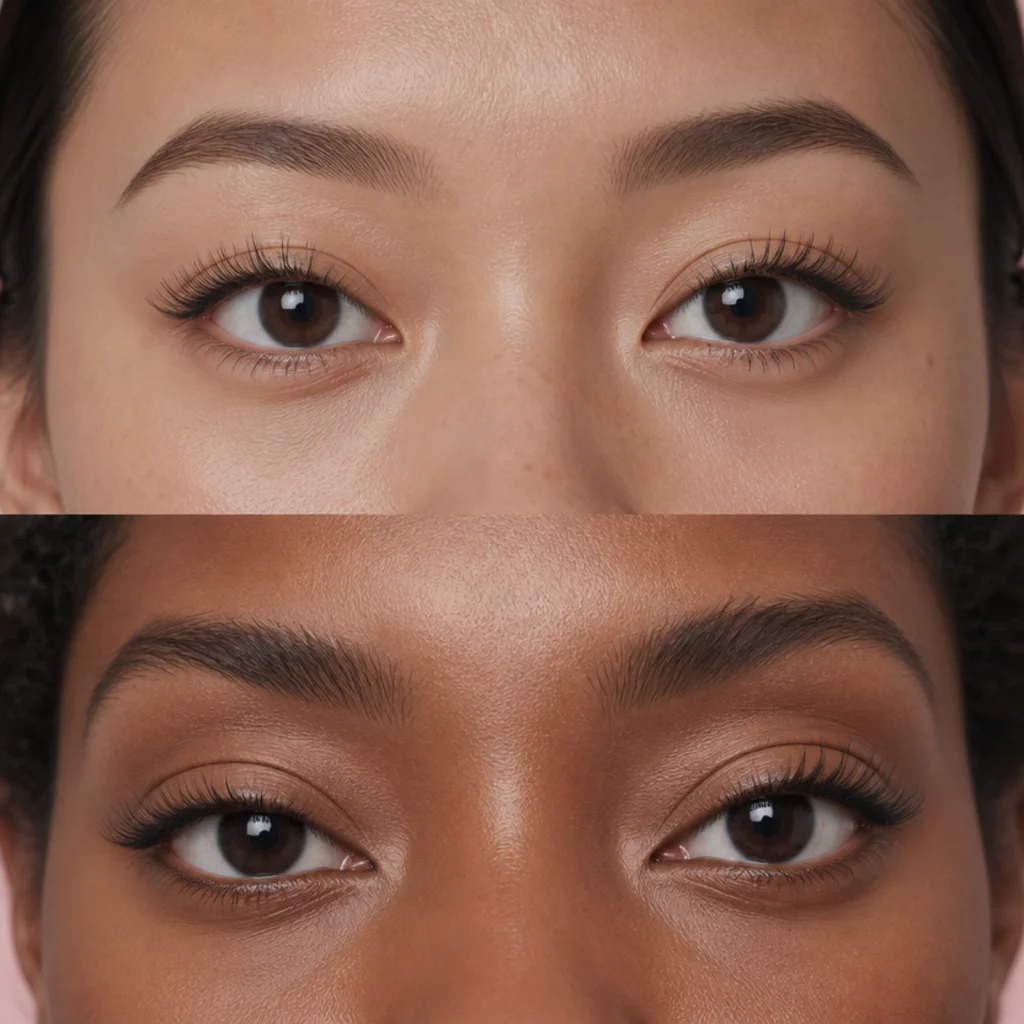
Lash mapping — the plan for where longer and shorter lengths sit across the lash line — is a fast, high-impact win on both shapes. For almond eyes, a natural open-eye map (longest just past center, tapering to the corners) honors the symmetry and widens the eye. For hooded eyes, weight the length toward the outer third to draw the eye up and out, lifting the corner the hood pulls down, and keep the inner and central lashes shorter and well curled so nothing brushes or drags on the fold. Avoid uniformly long lashes across a hooded lid: length that clears an almond eye can sweep the drape and smudge shadow upward all day. Curl matters as much as length here, since a straight lash of any length will contact the fold. Whether you use strips, individual clusters or mascara alone, thinking in lash-mapping terms gives you a repeatable plan you can recreate without a mirror once it's set. Save wispy, staggered styles and a cat-eye shape for hooded lids, and let denser, even or doll-shaped styles suit almond ones. Pro tip: for hooded eyes, trim a strip lash so the longest fibers land at the outer third, not the center, and notch the band every few millimeters so it bends to follow the lid curve. Ask your lash tech or makeup artist for an outer-weighted, cat-eye lash map on hooded eyes and an even open-eye map on almond ones.
10Mascara and Lash Curl Strategy
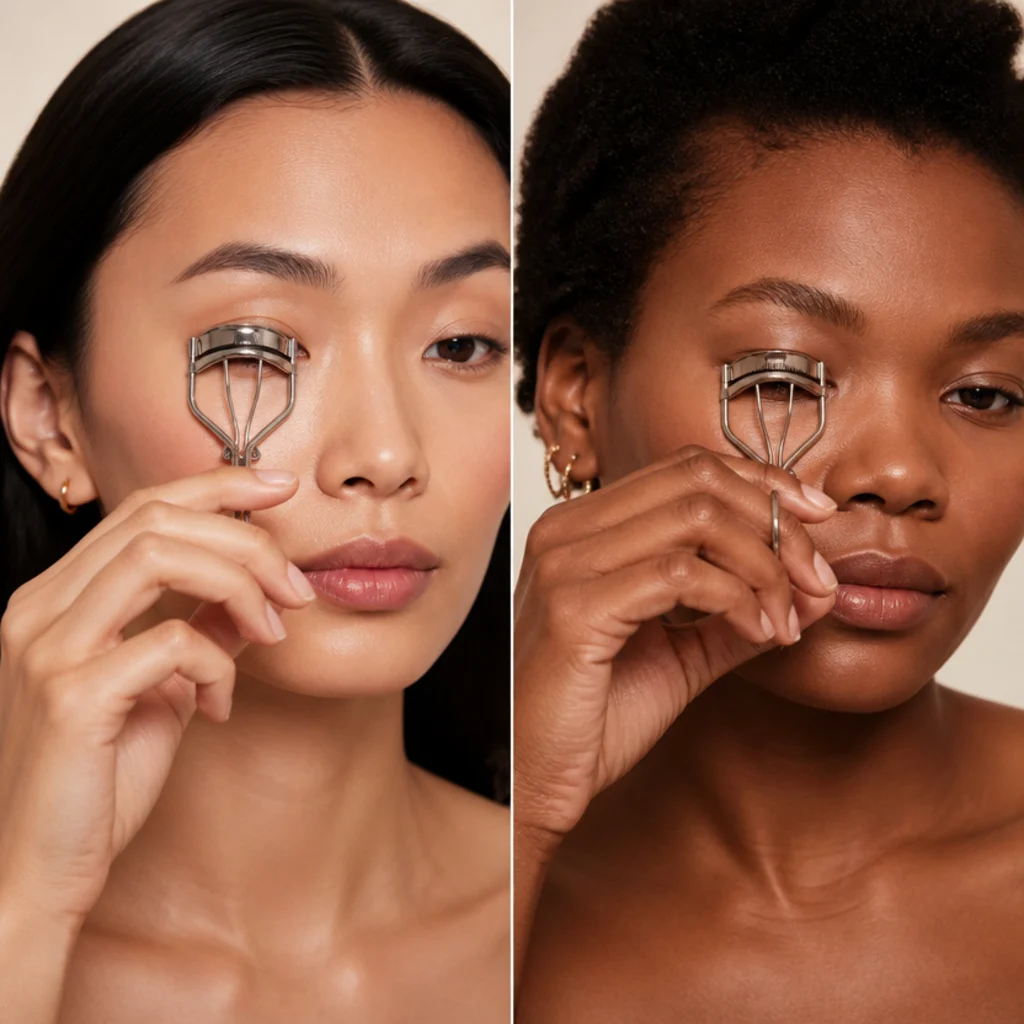
A lash curler earns its place on both shapes and is close to essential on hooded eyes, where a firm curl lifts lashes off the fold so they stop smearing product upward through the day. Clamp gently at the base, hold a few seconds, then walk the curler out toward the tips in two or three small steps for a rounded, natural lift rather than a hard right angle. A quick warm-up of the curler with a hairdryer for a second or two, then a heat check on your hand, makes the curl last longer. Almond eyes benefit too, mostly for extra openness. On mascara, both shapes wear a coat on the top lashes well; hooded eyes should go lighter on the lower lashes so the eye isn't dragged down, while almond eyes can carry defined lower lashes more easily. A tubing or smudge-resistant formula pays off on hooded lids, since the fold contacts the lash line every blink and a standard mascara can print a grey shadow onto the crease by lunchtime. Tubing formulas slide off with warm water rather than smudging, which also spares the lashes at removal. Pro tip: on hooded eyes, curl, then apply mascara from the roots with the wand angled up and outward, wiggling only at the base so you set the lift without weighing the tips back down onto the fold. Ask your makeup artist for a tubing mascara and a curl-first routine if your lashes point straight out.
Save this to Pinterest so your lash-lift routine is ready for busy mornings.
11The Natural, No-Makeup Look
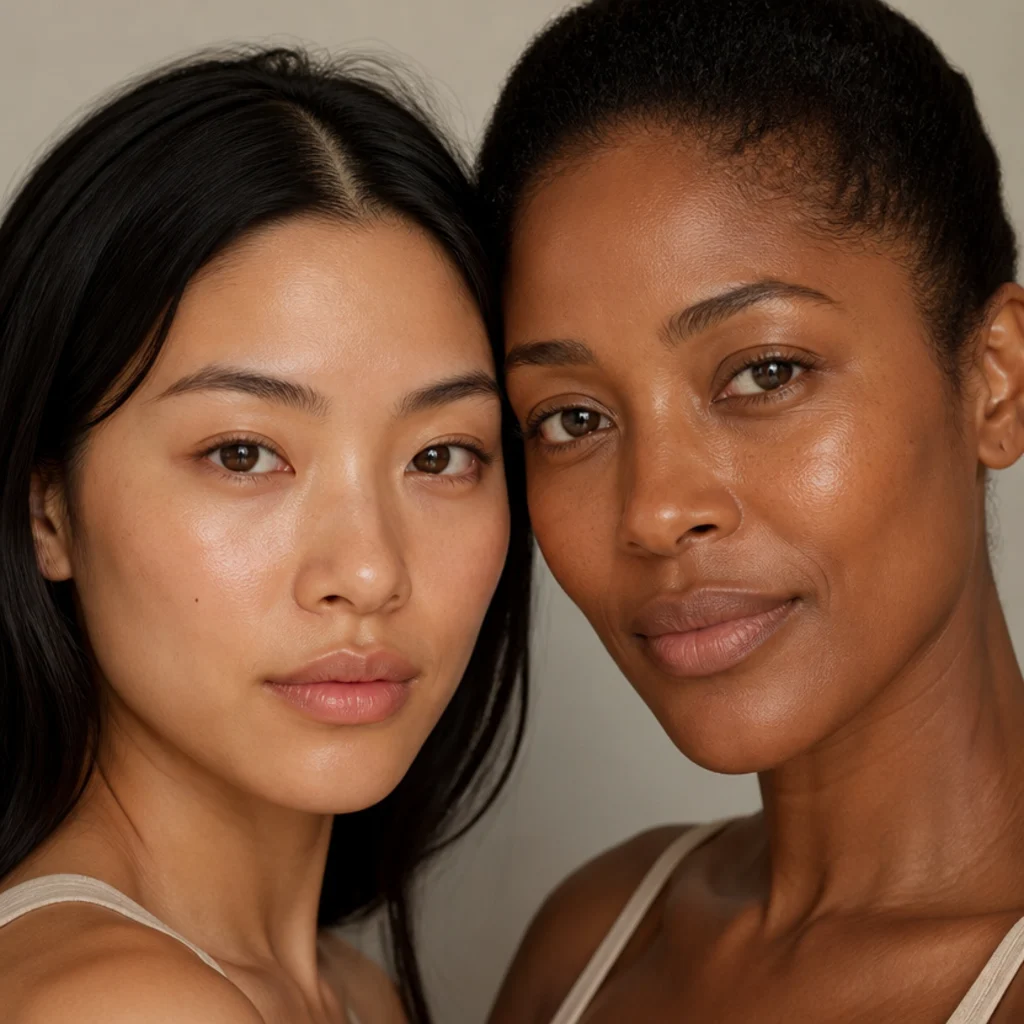
For a barely-there day, both shapes lean on grooming more than color. Brush the brows up and set them with a clear or tinted gel, tightline lightly, add a coat of brown mascara, and you're essentially done. The difference is subtle. Almond eyes can skip almost everything and still look defined, because the lid shows on its own. Hooded eyes get more out of a curled lash and a whisper of matte transition shade blended just above the fold, which fakes the definition the crease would otherwise give you, plus a touch of soft warm shadow at the outer corner that reads as awake without looking done up. A groomed, slightly fuller brow also does quiet lifting work on a hooded lid by opening the space above the fold. Keep finishes matte to satin for daytime on both, since heavy shimmer draws attention to a fold or a full lid and shortens wear. This is the lowest-maintenance look here — five minutes, no touch-ups — and it's the one to master first if makeup is new to you. Pro tip: on hooded eyes, choose a brown mascara over black for no-makeup days; the softer pigment defines the lash line without stamping an obvious dark line onto the fold. Ask your makeup artist for a grooming-led routine that skips heavy shadow if you want easy, all-day wear.
12When the Shapes Overlap
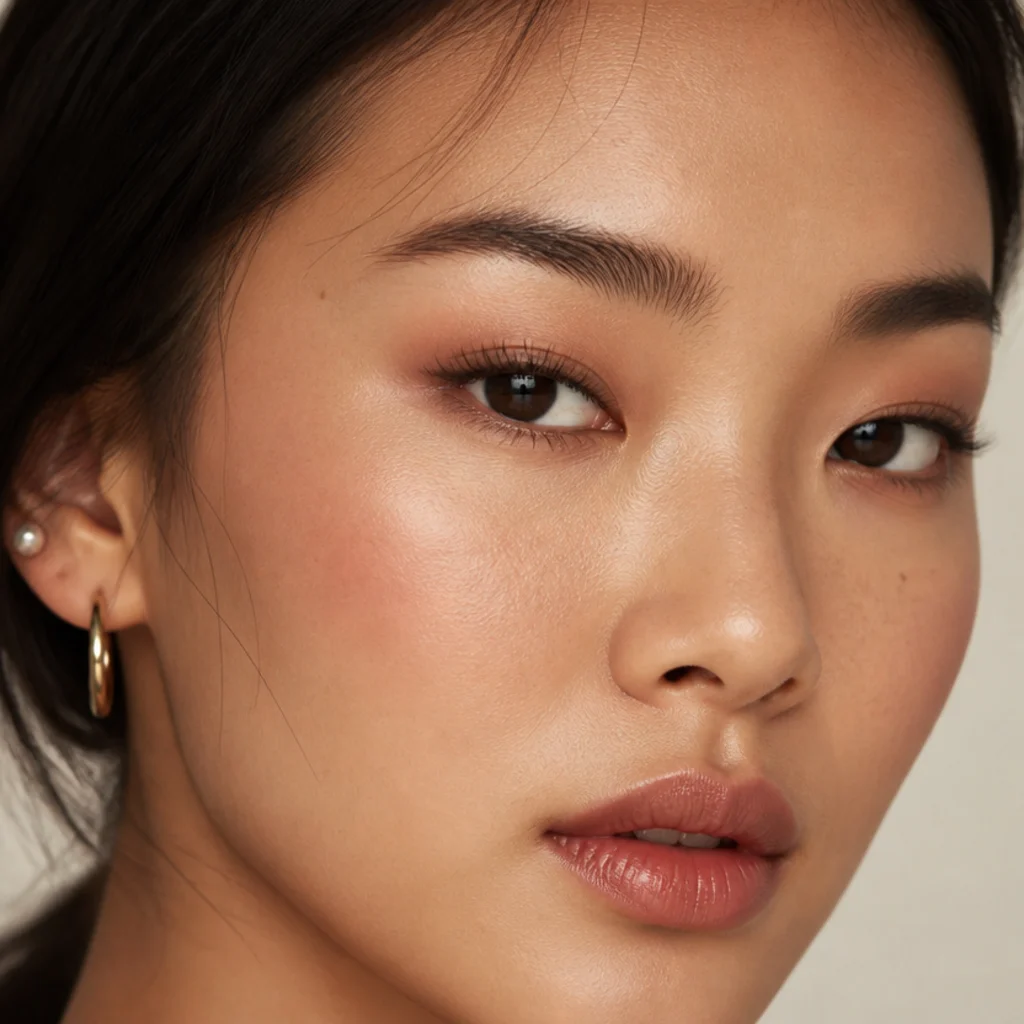
Here's the honest part: many people are both, and the overlap is the rule rather than the exception. An almond-hooded combination pairs the tilted, tapered outline of an almond eye with a low or partial hood covering the crease, and it's one of the most common shapes on any eye shapes chart. If that describes you, borrow the outline logic from almond and the placement logic from hooded: follow your natural almond tilt for liner and lash direction, but map shadow and the wing higher and check everything with your eyes open. Bone structure, genetics, brow position and even the time of day shift how hooded you look, so your category is a moving target, not a fixed label. It's also normal to read almond on one eye and hooded on the other — that just means you mirror the placement rather than copying it exactly, and it's why symmetry comes from matching visible height, not from tracing identical lines. Treat overlap as ordinary, not a flaw to fix. These categories describe lid space and crease height; they're guidelines, not a hierarchy. Pro tip: map the more hooded eye first and match the almond one to it, rather than the reverse, so both eyes land at the same visible height when open. Ask your makeup artist to map each eye individually if your two lids differ.
13Brightening and Opening Tricks
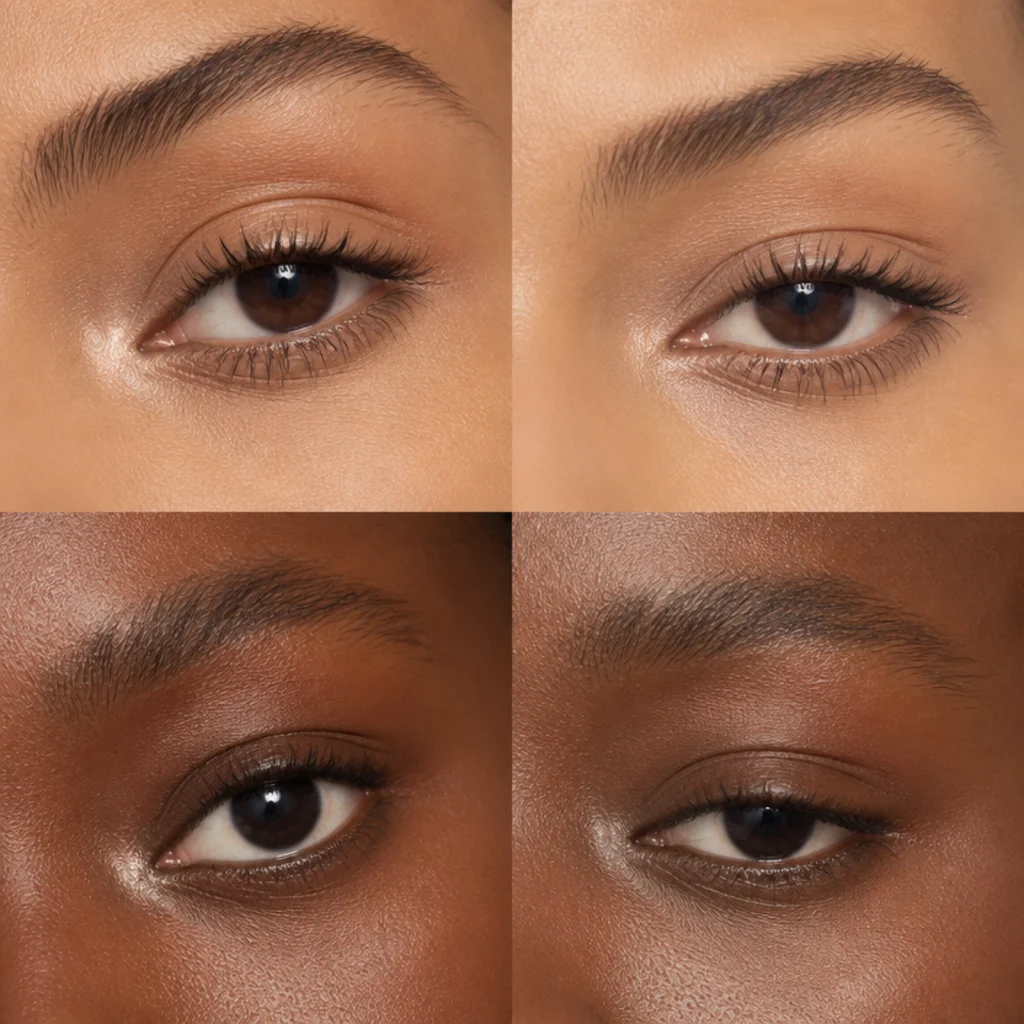
A handful of tricks make both shapes look more open, with slightly different emphasis. A dot of light satin shadow or a soft champagne in the inner corner reflects light and widens the eye; almond eyes wear it as a finishing touch, hooded eyes as a real lift. A nude or soft rosy pencil on the lower waterline counters redness and adds apparent height, which especially helps hooded eyes that can read smaller — a white waterline can look stark, so a warm nude or peach usually flatters more broadly. Keep the brow bone groomed, and if you highlight it, choose a matte or soft satin rather than a frosty shimmer that draws attention to a hood. Lifting the tail of everything — liner, shadow and lashes — up toward the brow end gives both shapes a subtle awake tilt, no gimmicks required. Match the inner-corner shade to your undertone: warm gold on deeper or warm skin, cool pearl on fair or cool skin, so the highlight reads luminous, not chalky. A groomed, slightly lifted brow, whether shaped by a pro or brushed up at home, adds vertical space above a hooded fold and quietly does half the work. Pro tip: place inner-corner light in a small sideways V that hugs both the upper and lower inner lashes, not a single dot, to widen the eye and brighten the tear duct at once. Ask your makeup artist for undertone-matched inner-corner light and a nude waterline.
14Common Mistakes for Each Shape
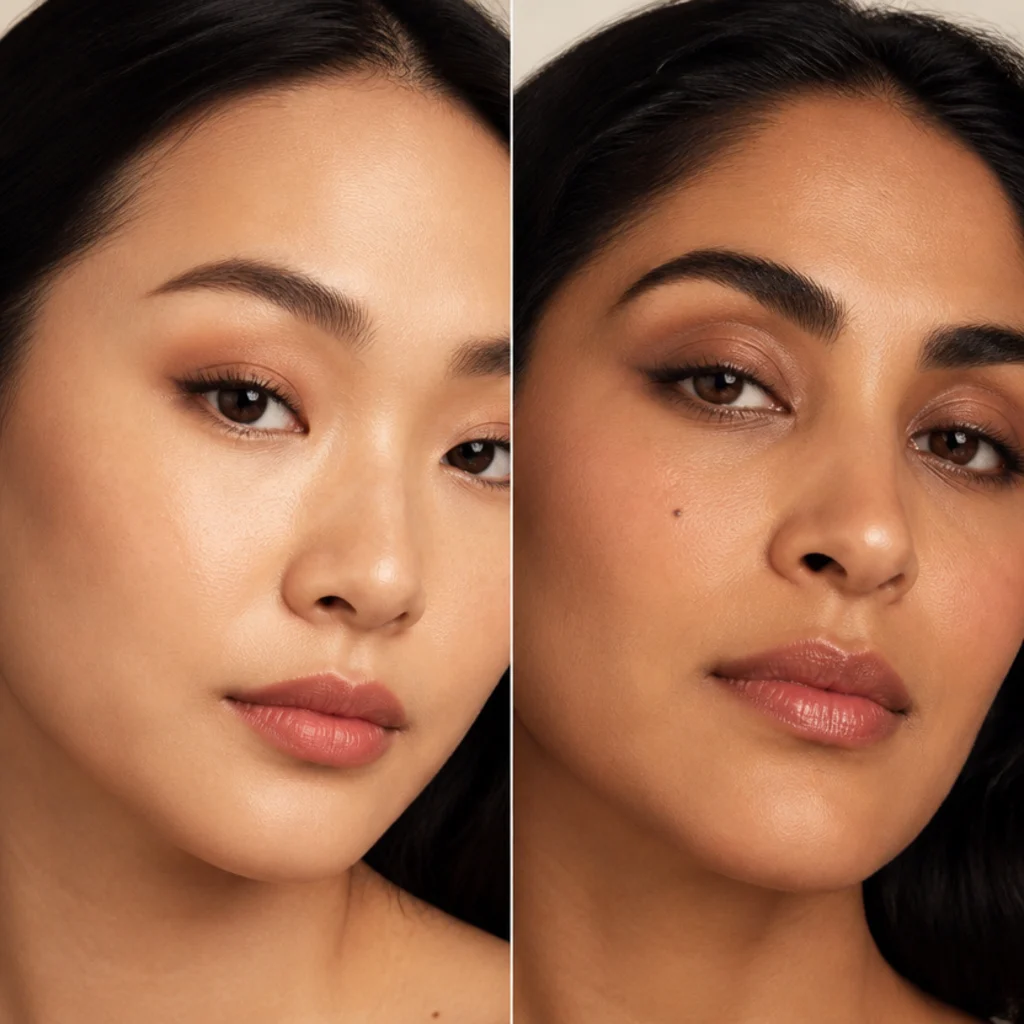
The classic almond-eye mistake is overconfidence. Because most techniques work, it's easy to overload the lid, over-line the eye and lose its natural elegance — edit down and let the shape breathe. The classic hooded-eye mistakes are mapping color and liner with the eyes closed, then finding the work has vanished into the fold, and reaching for heavy shimmer that draws out the drape and reads puffy. For hooded lids: place higher, blend softer, favor matte definition, check open. Both shapes suffer from a too-thick lower liner that closes the eye and from a hard, unblended crease line that ages a look. Skipping primer is another shared error, since transfer and creasing undo careful placement by midday, especially on a hooded lid. Two more that catch people out: ringing the eye fully with liner, which shrinks any shape, and forgetting to warm up or clean the lash curler, which leaves a weak curl that quickly drops back onto a fold. When in doubt, build in thin layers, check with your eyes open, and stop one step earlier than you think you should. Pro tip: photograph the finished eye open and straight-on before you leave. The camera catches a folded wing or a dark bar hiding in the crease that a quick mirror glance misses. Ask your makeup artist to show you the eyes-open result at each stage, not just the final look.
15Reading an Eye Shapes Chart
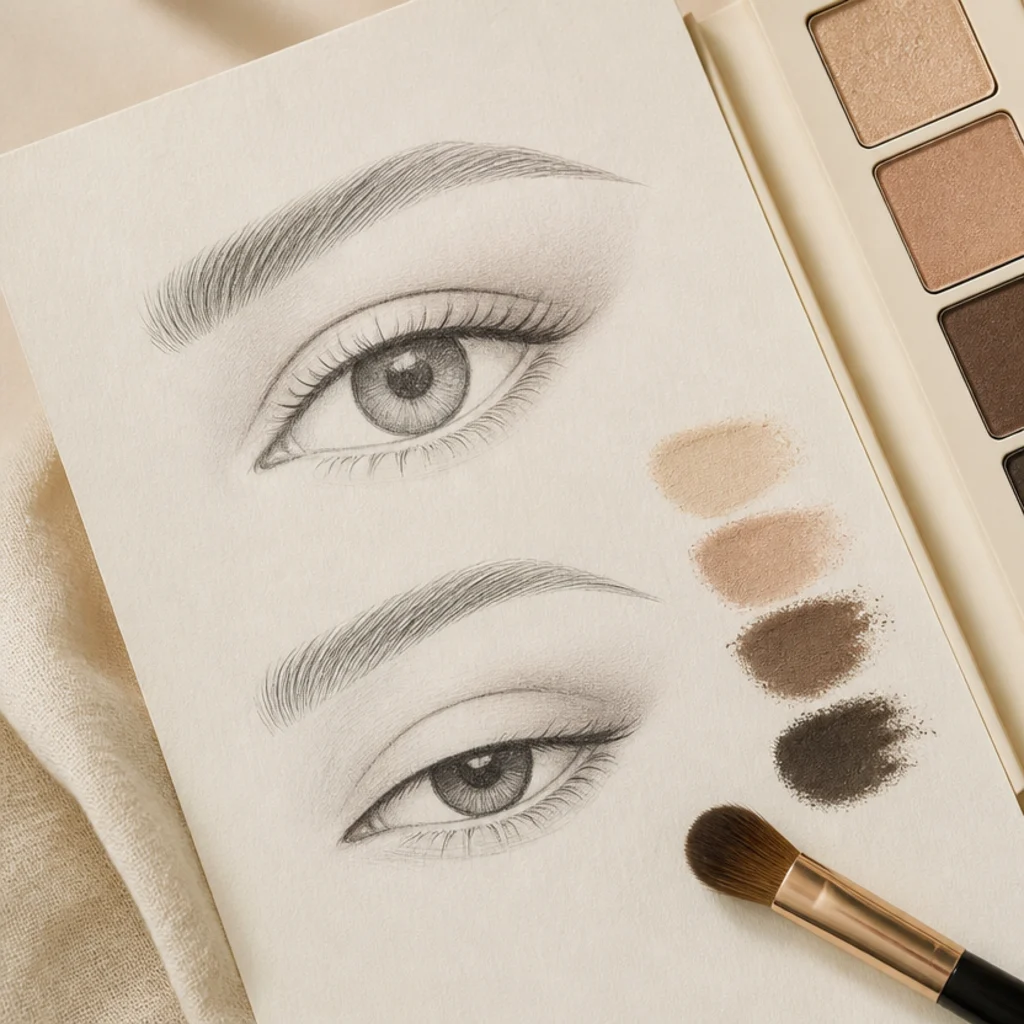
A good eye shapes chart is a map, not a verdict. When you read one, answer two questions first: is there visible lid space with the eye open, and where does the crease sit? Those two answers place you between almond and hooded faster than any single label, and they're the same two points a makeup artist checks at the mirror. From there, note the tilt of your outer corner (lifted, level or dropped) and the spacing between your eyes, since those refine the choices in every section above: close-set eyes want brightening pulled outward, wide-set eyes want depth pulled inward, regardless of almond or hooded. Remember that categories overlap, that you can read more hooded on one eye, and that your shape shifts across the years with bone structure and brow position, so treat the labels as descriptions, not fixed types. Use the chart to pick a starting technique, then adjust in the mirror with your eyes open. That approach beats forcing your lids into someone else's diagram, and it keeps working as your face changes. Pro tip: ignore any chart that ranks shapes as better or worse; a useful one only describes lid space, crease and tilt, and leaves the styling choices to you.
Pro Tips from the Editor
- Map every hooded-eye technique with your eyes open, not closed. The fold hides work drawn on a relaxed lid, so what looks perfect shut can vanish or fold the moment you look ahead.
- Prime the lid on hooded eyes before shadow or liner. A matte base or primer roughly doubles wear time and stops the fold from printing color onto the crease by midday.
- Tightline the upper waterline before anything else on a hooded lid. It adds density entirely below the fold, where nothing can smear it, and often replaces the need for a visible liner band.
- Keep the darkest shade at the outer corner on both shapes and never let it drift toward the inner lid — that shrinks and closes the eye no matter the shape.
- Choose matte transition shades to build definition and save metallics and glitter for the center of the lid. Shimmer on a fold or a full lid reads puffy and settles into lines.
- Match liner and inner-corner shades to your undertone and skin depth: warm brown and gold on deeper or warm skin, grey-taupe and cool pearl on fair or cool skin, so nothing reads chalky or harsh.
- On combination almond-hooded eyes, map the more hooded eye first and match the other to it, so both lids land at the same visible height when open.
- Photograph the finished eye open and straight-on in flat light before you leave. The still image catches a folded wing or a dark bar the live mirror hides.
How to Choose / Get the Look
Start with the mirror test in section two — the whole decision rests on two answers: visible lid space and crease height. If you see a clear band of mobile lid with a defined crease, follow the almond notes: place shadow where you see it, wear a classic wing, edit down so the shape stays elegant, and reach for whatever finish you like. If a fold covers your crease, follow the hooded notes: map shadow and liner higher and onto the fold, check everything with your eyes open, keep the base of the wing thin, prime the lid, and lean on a lash curler and a tubing mascara. If you land in between, which is extremely common, combine the two — use your almond outline for direction and hooded placement for height, and map the more hooded eye first. Layer in a second read too: your outer-corner tilt and eye spacing decide whether you pull brightening outward or depth inward, regardless of which camp your lid falls in.
Let product choice follow your wear needs, not just the look. Matte and satin transition shades give the most control on both shapes; a brown or grey-taupe pencil is more forgiving than black for everyday; a gel or long-wear liner plus a shadow primer is worth the extra step on any hooded or combination lid. A single quality blending brush and one flat-packing lash curler will improve your results more than a new palette will. Build the kit in that order: primer and a matte transition shade first, then a smudge-proof liner and a curler, then color and lashes.
| Your read | Follow this map | Priority tools |
|---|---|---|
| Visible lid, defined crease (almond) | Place where you see it; classic or lifted wing | Matte + metallic shades, brown or black liner |
| Fold covers crease (hooded) | Place higher, on and above the fold; thin lifted wing; check eyes open | Lash curler, tubing mascara, primer, gel liner |
| Almond outline, low or partial hood (combination) | Almond direction, hooded height; map each eye | Matte transition shade, long-wear liner, primer |
When you visit a makeup artist, one sentence tells them which map to follow: "my crease is low and gets covered when I open my eyes, please map liner and shadow for that," or "I have visible lid space and want a clean classic wing." Add "map each eye separately, one is more hooded" if your lids differ. That works whatever your skin tone or the occasion.
Frequently Asked Questions
Can eyes be both almond and hooded?
Yes, and it's very common — arguably the default rather than the exception. An almond-hooded combination has the tilted, tapered outline of an almond eye with a low or partial hood over the crease. Follow your almond tilt for liner and lash direction, use hooded placement rules for height, map the more hooded eye first, and check everything with your eyes open. If one eye is noticeably more hooded, mirror the visible height instead of tracing identical lines, and treat the labels as flexible descriptions, not fixed boxes.
How do I know if my eyes are hooded?
Look straight into a mirror in even, front-on light with your forehead relaxed so you're not lifting your brows. If skin from the brow bone rests over your crease and hides the mobile lid, you lean hooded. Trace a faint line on your crease, open your eyes, and if the fold swallows it, that confirms a hooded lid. A straight-on photo in flat light confirms it even more reliably, since a live mirror tempts you to raise your brows. Check that it's a true fold and not a deep-set lid receding under a prominent brow bone, which is a different shape with a different fix.
Does winged liner work on hooded eyes?
It does, with a tweak. Map the tail with your eyes open, aim it toward the end of your brow, and keep the base whisper-thin so the fold can't smudge it. A floating or invisible-base wing sits just above the hood and stays visible all day. Match the flick angle to your outer-corner tilt rather than copying a tutorial, and use a gel or long-wear liquid formula, which holds up far better than a soft pencil against fold contact. Stamp the angle with a card or tape first, then refine freehand so the edge isn't hard-cut.
What lash mapping suits almond versus hooded eyes?
Almond eyes suit a natural open-eye map with the longest lengths just past center, tapering to the corners. Hooded eyes suit length weighted toward the outer third to lift the corner, with curled medium lengths inside and nothing so long it brushes the fold. Trim strip lashes so the longest fibers land at the outer third before applying, and notch the band so it bends to the lid curve. Curl matters as much as length on a hooded lid — a straight lash of any length will still contact the drape.
Is one eye shape better for makeup than the other?
No. Almond eyes take most techniques as drawn, which is why tutorials favor them, but hooded eyes have their own flattering moves once you map color higher and check with the eyes open. Neither is better — they just want different starting points on the same eye shapes chart, and a good chart never ranks shapes. The categories describe lid space, crease height and tilt, nothing more, and they overlap and shift with age, so no shape is a limitation to correct.
How do I stop eyeshadow transferring onto the fold of hooded eyes?
Prime the lid first with an eyeshadow primer or a matte concealer base, set it with a little translucent powder, use long-wear cream shadows or a matte base under powder shadow, and finish with a tubing mascara so the lashes don't deposit product onto the crease. Keep the brightest metallics off the fold, since slippery shimmer transfers first, and curl the lashes so they lift off the lid rather than resting on it. Together, these roughly double wear time and keep the crease clean through the day.
Can hooded eyes wear a cut crease?
Yes, with an adapted method. Build a faux crease higher than the natural one, keep the cut soft rather than razor-sharp, and blend the top edge so it reads when the eye opens instead of folding into a dark bar. Draw the line, open your eyes, adjust the height, then deepen, and set the cut lid with powder so the base doesn't migrate into the fold. If it feels like too much, a halo eye or a lifted outer shade gives similar dimension with less effort and far less risk on a fold.
Do almond and hooded eyes change with age?
They can. Brow position, bone structure and skin over the lid all shift over the years, so an almond eye may develop a soft hood and a hooded eye may read differently as the brow settles. Your category is a moving target, not a fixed trait — which is exactly why the mirror test matters more than any label, and why you re-check placement as your face changes. If your usual placement stops reading with your eyes open, run the pencil test again rather than assuming you did it wrong.
What eyeliner color is most flattering for everyday?
For both shapes, a soft warm brown or grey-taupe reads friendlier than stark black in daylight and flatters lighter and deeper skin tones alike. Match it to your undertone: warmer browns on warm or deep skin, cooler taupes on cool or fair skin, with a rich espresso often serving deep skin better than a muddy mid-brown. Save black for evening or a defined wing, and choose a smudge-proof gel formula on any hooded or combination lid so fold contact doesn't transfer it by midmorning.