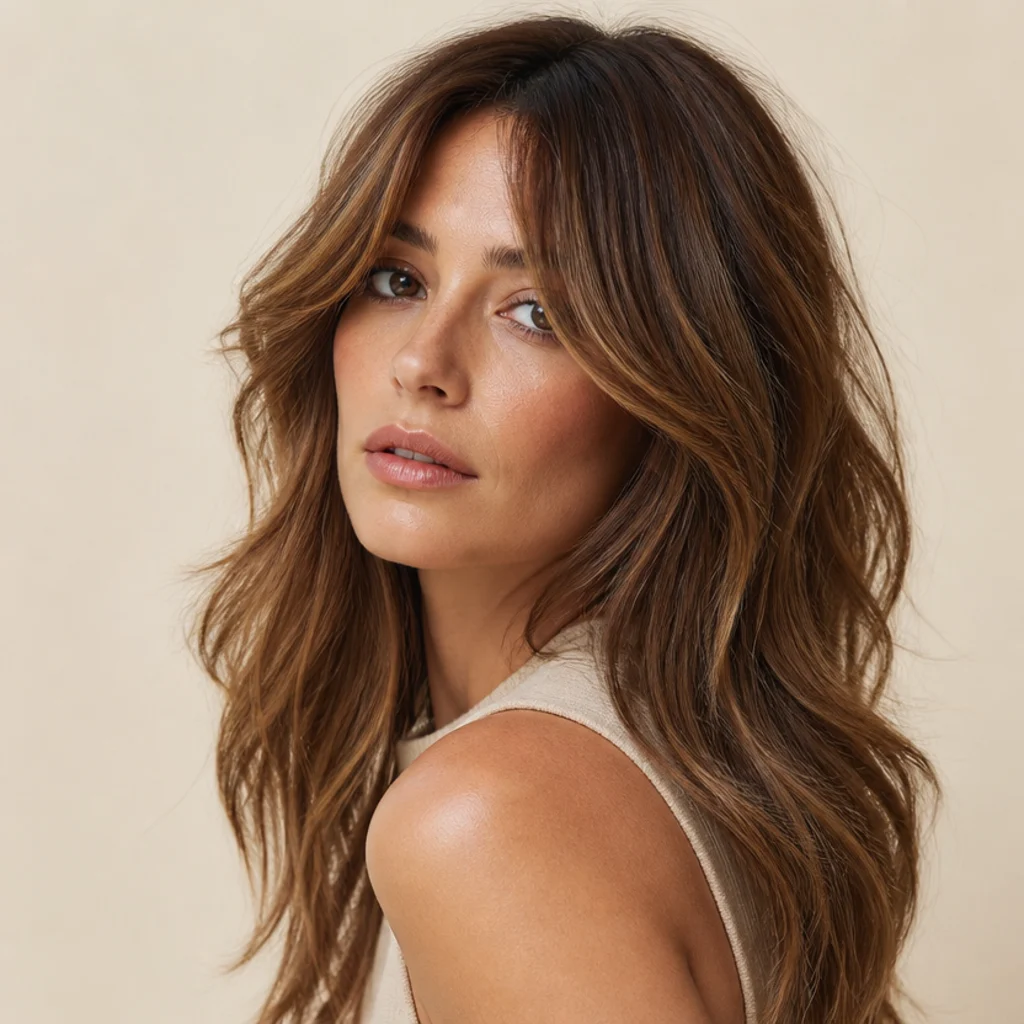
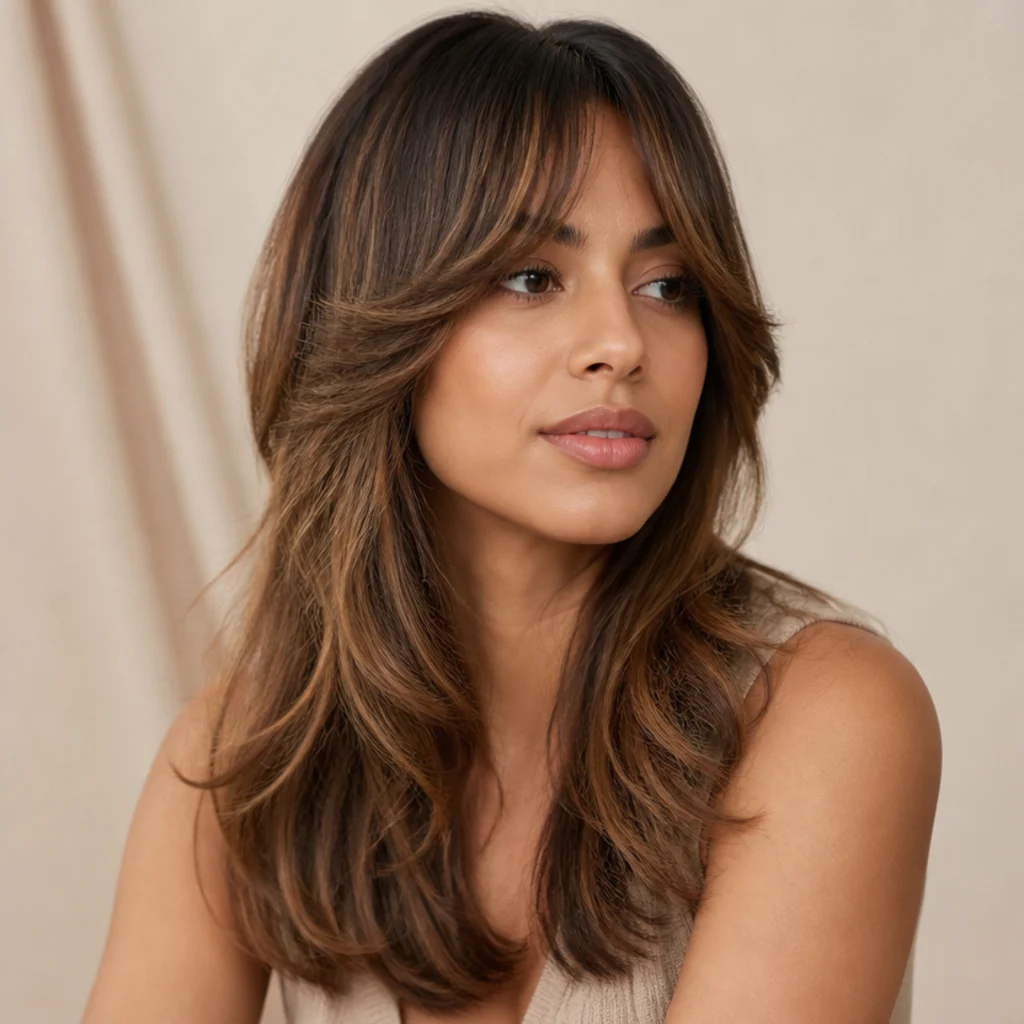
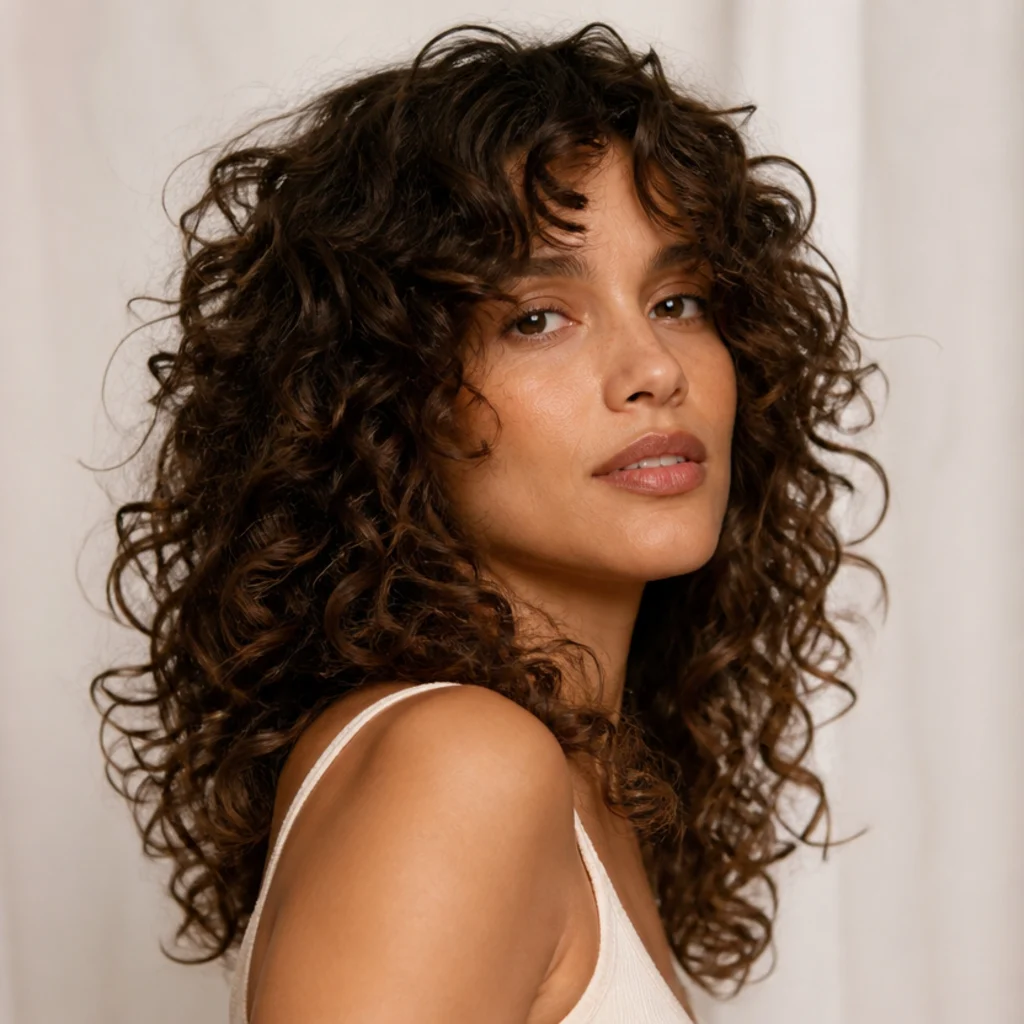
30 Long Shag Haircut Ideas for Every Hair Type
The long shag is the rare cut that looks lived-in and intentional at the same time, because the layering does the styling for you. The 30 versions below are sorted by texture, density and face shape, so you can match the layers to your actual hair instead of forcing your hair into a trend. Each idea covers who it flatters, the trim cadence it really asks for, and the exact words to say in the chair.
 Edited by Lena Rose · Published July 11, 2026 · 45 min read
Quick Answer
- Best for: Length lovers who want built-in movement, especially medium-to-thick hair, waves, curls and coils, plus faces that suit softness around the jaw.
- Who might skip it: Very fine hair that needs every strand for density, and anyone who wants a strictly one-length, blunt, minimal-layer look.
- Maintenance: Moderate. Soft, blended versions hold for 10 to 12 weeks; choppy layers, short bangs and platinum color want reshaping every 3 to 6 weeks.
- Difficulty: Beginner-friendly to style day to day; the layering itself is a precision, texture-specific job for your stylist.
- Cost: Cut typically runs from a mid-range salon price to a premium texture-specialist rate; add color if you want money-piece, copper, balayage or platinum, which carry their own upkeep.
- Wear time / longevity: The cut lasts a full grow-out cycle; a good shag looks intentional even at week 12 to 14.
- Standout variation: A soft long shag with curtain bangs and blended internal layers flatters the widest range of hair types and face shapes.
- How to ask your stylist: "A long shag with layers that start around my cheekbone, a soft blended perimeter, and internal texture cut for my hair type," then name straight, wavy, curly or coily.
In This Guide
- Soft Long Shag With Curtain Bangs
- Long Shag Choppy Layers on Straight Hair
- Long Curly Shag Haircut With Volume
- Long Shag Straight Hair With Blunt Ends
- Long Layered Shag With Face-Framing Pieces
- Wavy Long Shag With Beachy Bend
- Long Shag With Micro Bangs
- Coily Long Shag for Type 4 Texture
- Rock-and-Roll Long Shag With Heavy Layers
- Soft Long Shag for Fine Hair
- Long Shag With Money-Piece Highlights
- Long Shag Choppy Layers for Thick Hair
- Modern 70s Long Shag
- Long Shag With Wispy Bottleneck Bangs
- Long Shag on Type 3 Curls
- Sleek Long Layered Shag for Straight Hair
- Long Shag With Copper Color and Choppy Ends
- Long Shag for Round Faces
- Long Shag for Long or Oval Faces
- Textured Long Shag With Razor Ends
- Soft Long Shag With Balayage
- Long Shag Mullet Hybrid
- Long Shag for Coarse, Wavy Hair
- Low-Maintenance Long Shag
- Long Shag With Side-Swept Bangs
- Platinum Long Shag With Dark Roots
- Long Shag for Naturally Straight, Flat Hair
- Long Curly Shag Haircut With Defined Ends
- Long Shag With Deep Side Part
- Effortless Air-Dried Long Shag
The long shag has become the go-to answer for anyone who wants to keep their length but is tired of one heavy, immovable block of hair. The idea is simple once you see it: shorter pieces stacked through the crown and around the face build height and frame, while the perimeter stays long and intact for that length you still recognize in the mirror. A soft long shag leans on diffusion and gentle graduation so the layers melt into each other instead of stacking in visible steps — that's what separates a modern shag from its choppy 70s ancestor. In the 30 ideas below, you'll find versions built for pin-straight strands, loose type 2 waves, springy type 3 curls and tight type 4 coils, across every face shape from round to elongated. Some are cut with scissors and point-cutting for cleaner separation, others are razored or slide-cut for a broken-up, undone feel, and a few are cut entirely dry so the layers fall exactly where the hair naturally sits. Whether you came looking for a long curly shag haircut, long shag choppy layers or a polished long layered shag haircut, use the upkeep and difficulty notes to be honest about the effort you actually want to put in, then bring the matching photo to your stylist.
01Soft Long Shag With Curtain Bangs

This is the most universally flattering entry point, and the one to pick if you're shag-curious but not ready to commit. Feathered curtain bangs sweep away from a center part and blend straight into long, gently graduated layers that start around the cheekbone, so there's no hard fringe line to grow out awkwardly. That connected shape is what makes it forgiving — even at week 12 it still reads deliberate, not shaggy. Nearly every face shape can wear this one, and it's happiest on straight to loosely wavy hair with medium density, where the bangs actually hold their bend. The technique that matters here is soft internal graduation rather than heavy weight lines, so ask your stylist for "curtain bangs that connect into long face-framing layers, blended with a soft edge, nothing choppy." Style with a round brush on the fringe, drying it away from the face, then mist texture spray through the mid-lengths. One trick that helps: split-dry the bangs first, before the rest of your hair sets, so they never dry with a stubborn cowlick. Trim roughly every 10 weeks to keep it fresh.
02Long Shag Choppy Layers on Straight Hair
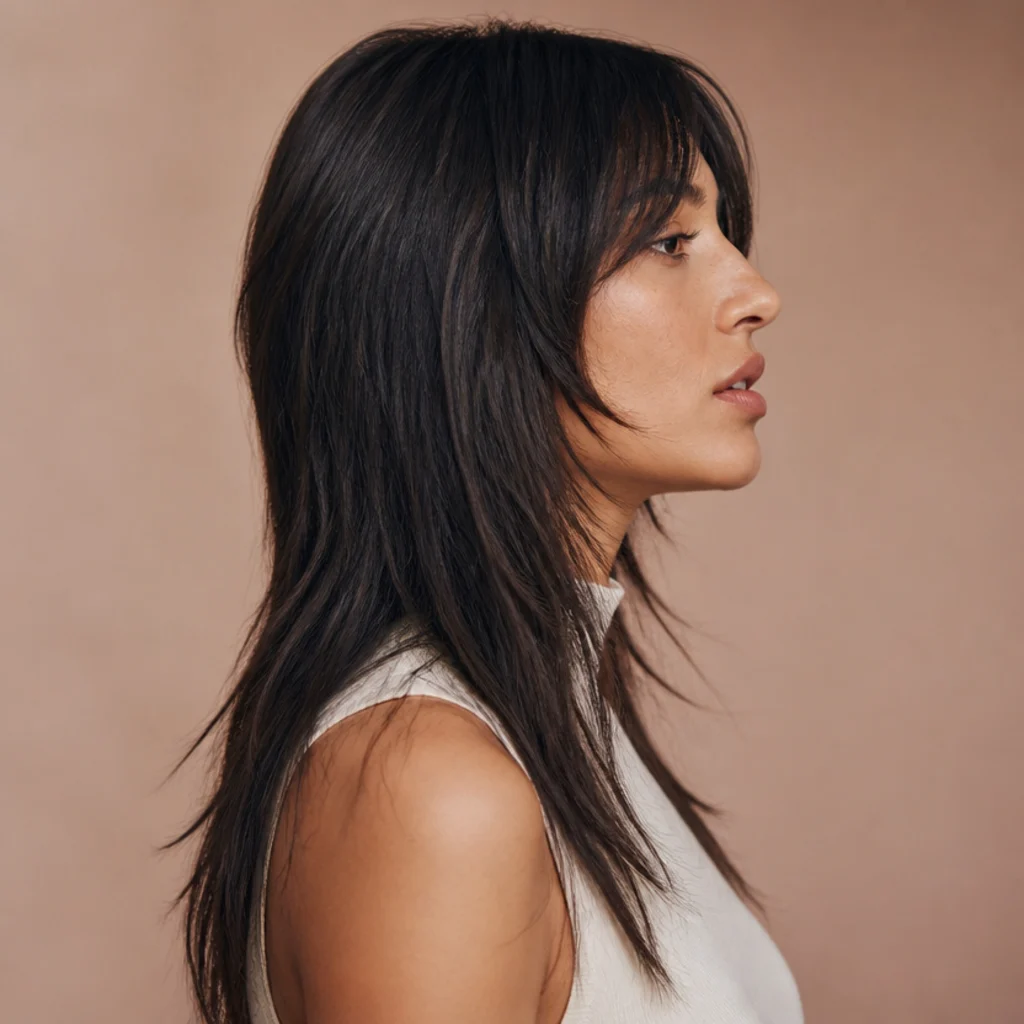
Straight hair has no curl to create movement on its own, so it tends to flatten inside a soft shag. This version leans hard into deliberate long shag choppy layers to manufacture that texture instead. The stylist point-cuts the ends and internal layers vertically so light catches the separation rather than hitting one solid wall of hair. Fine-to-medium straight strands that want edge without a curling iron do well here, and it's a smart pick for glassy, slippery hair that refuses to hold a bend. Upkeep sits on the higher side of moderate, since the choppiness only reads well when the ends stay crisp — plan trims every 8 weeks before the tips blunt themselves back into a solid line. To style, warm a pea of matte texture paste between your palms and pull dry pieces apart with your fingers rather than raking, which keeps the separation looking intentional. Tell your stylist you want "choppy, disconnected layers with visible separation and point-cut ends, not soft blending." On straight hair specifically, a hint of dry texture spray at the mid-shaft, not just the ends, stops the choppiness from collapsing by afternoon.
03Long Curly Shag Haircut With Volume
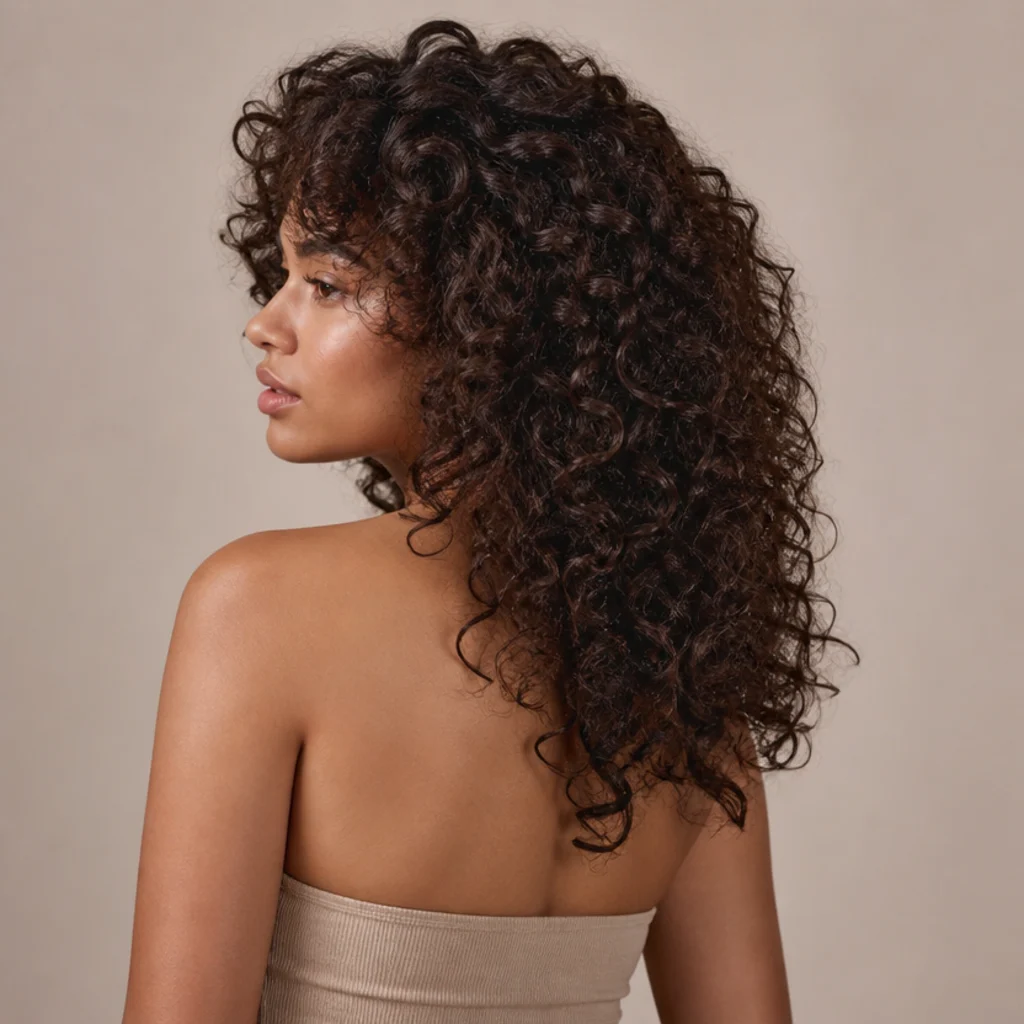
Curls were practically made for the shag, since the layers give each spring room to expand outward instead of piling into a triangle at the ends. This long curly shag haircut is cut with the curl pattern respected — most often dry, curl by curl, so the stylist can see exactly where each coil lands before removing any length. Type 3 curls with medium-to-high density that want lift through the crown and a lighter, airier perimeter are the target here. Maintenance leans more on product and diffusing technique than on scissor frequency; every 12 weeks is plenty, since curls hide grow-out well. Ask for "a curly shag cut dry, with layers that build shape at the crown and remove weight at the ends so they don't stack." Style with a leave-in for slip, a curl cream for definition, then a diffuser on low heat and low speed, cupping curls up toward the scalp. Editor's trick: apply product to soaking-wet hair, not damp, so the curl clumps form cleanly and frizz stays down.
04Long Shag Straight Hair With Blunt Ends

Not everyone wants wispy, tapered ends, and fine hair especially can look thin when the perimeter gets over-textured. This take on long shag straight hair keeps the hem blunt and dense for a healthy, expensive-looking baseline, then adds shag layers only through the top and sides for movement. The contrast between a solid, weighty perimeter and feathered internal layers is slimming for fine hair that needs to look thicker at the bottom, and it photographs as polished rather than undone. It's lower effort day to day, too — a quick paddle-brush blow-dry keeps the blunt line crisp and swingy. Trims every 8 to 10 weeks preserve that clean edge before it frays. Ask your stylist for "internal shag layers up top for movement, but a blunt, weighty perimeter left long and dense." Have the perimeter cut in soft sections rather than one hard chop so it still moves; a hem that's too blunt can read stiff. This is the smartest bridge for anyone nervous about going fully choppy.
05Long Layered Shag With Face-Framing Pieces
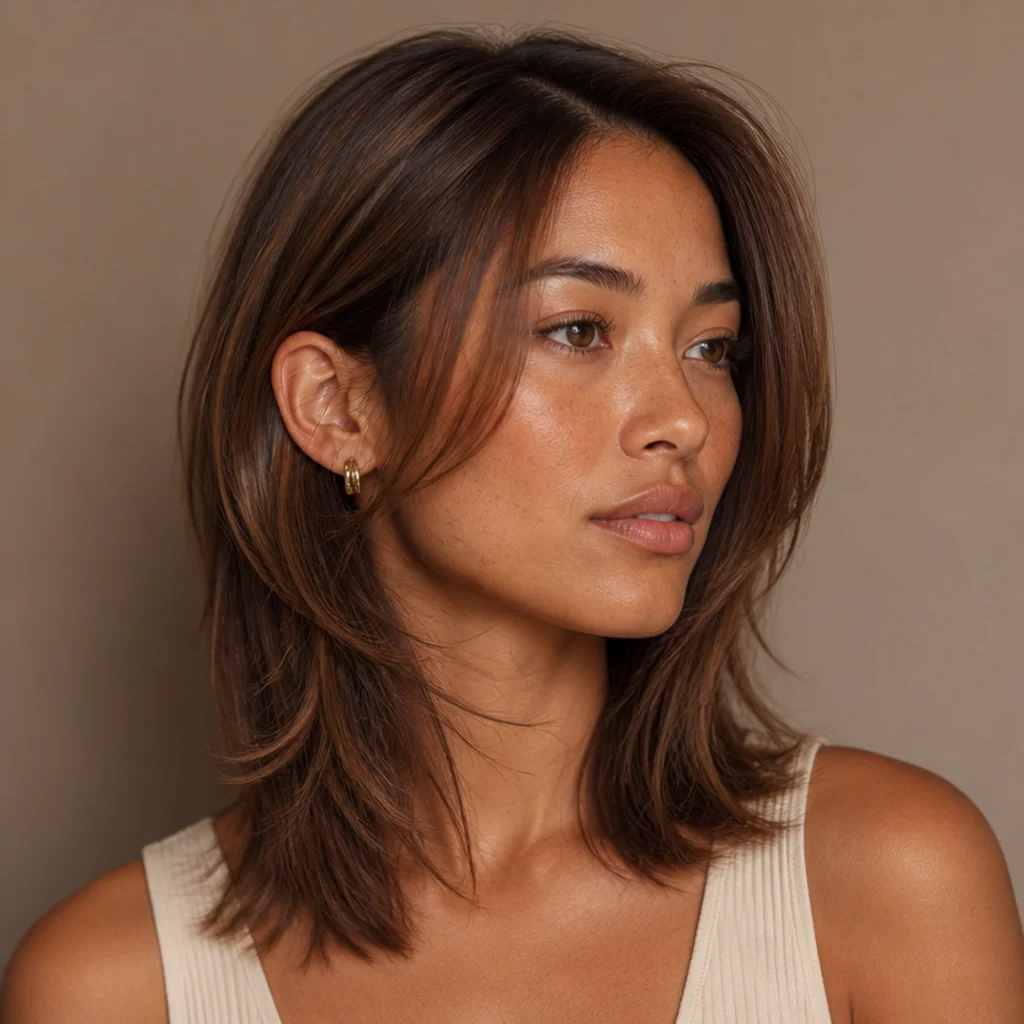
The face-framing pieces are the signature move of a long layered shag haircut, and where they start decides pretty much everything about the finished shape. The shortest frame lands at the cheekbone or jaw, then cascades in soft increments down to the longest length, drawing a slimming vertical line beside the face. Those front pieces do the real optical work, which is why round and square faces suit this one especially well — they soften a strong jaw and narrow fuller cheeks. It works on straight and wavy hair of nearly any density. Upkeep stays moderate, since the frame grows out gracefully, but a reshape every 10 weeks keeps the graduation reading as intentional steps rather than one blur. Ask for "long layers with strong face-framing that starts at the cheekbone and gets progressively longer toward the back." Style by tucking one side behind an ear to show the graduation, and let the front pieces fall forward. Have the frame cut while you're sitting upright and looking straight ahead, not head-tilted, so both sides land level in real life.
Save this to Pinterest to build a look-book of layer lengths before you commit.
06Wavy Long Shag With Beachy Bend
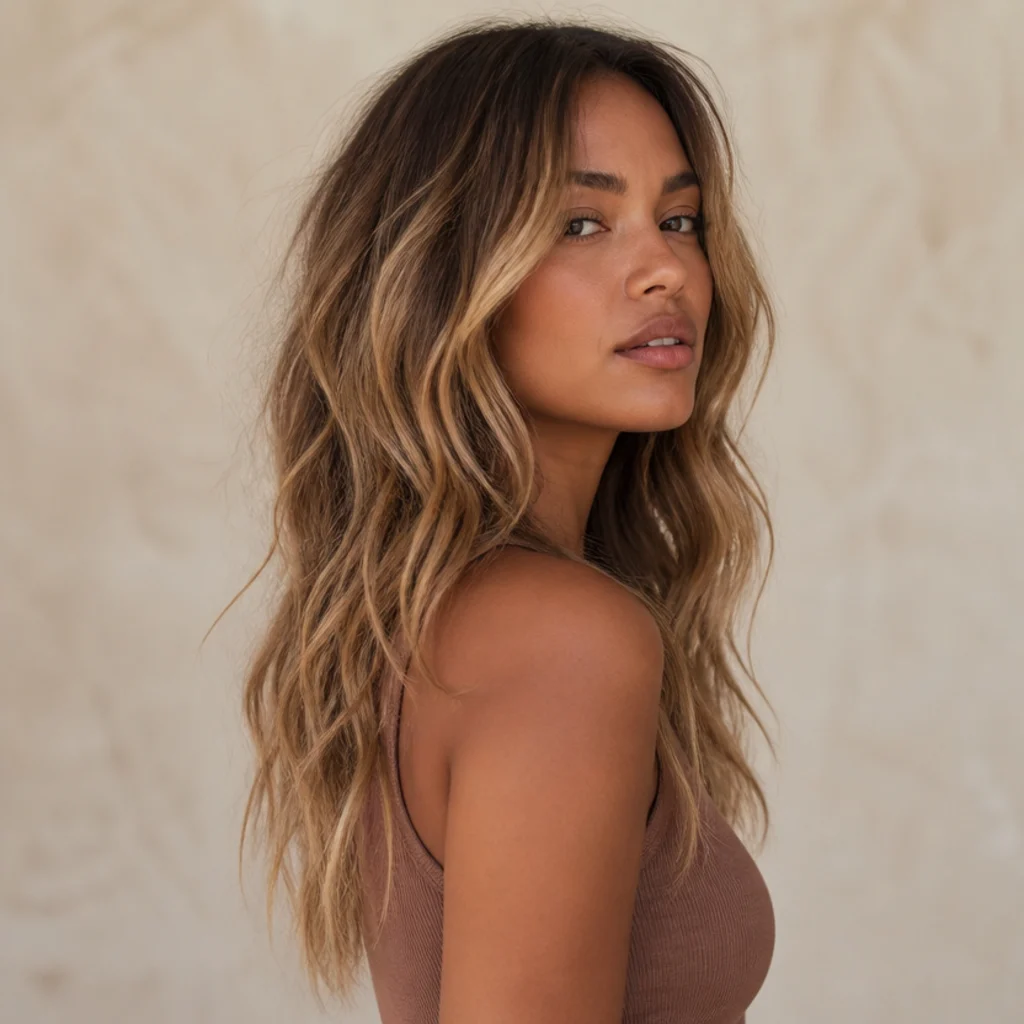
If your hair carries a natural loose wave, this shag is built to work with the bend instead of smoothing it away. The layers are cut to encourage a soft S-curve, and the ends are left slightly broken up so the wave looks like it happened on its own at the beach. It's suited to type 2 hair with medium density, and to anyone who basically lives in dry shampoo and salt spray. Maintenance is genuinely low here; the more undone it looks, the better it works, so you can stretch trims to 12 weeks without the shape falling apart. Style by scrunching a texture or salt spray into damp hair and air-drying, or wrap sections around a large-barrel wand, leaving the ends out, then rake the curls apart with your fingers. Tell your stylist you want "a shag that works with my natural wave, cut so it looks best air-dried, not a smooth blow-dry shape." Scrunch a lightweight mousse in before the salt spray so the wave has hold underneath and doesn't go crunchy or limp by midday.
07Long Shag With Micro Bangs

For the bold, micro bangs turn a long shag into an editorial statement in one scissor decision. The fringe sits high on the forehead, cut short and slightly uneven, so it contrasts hard against the long layered length pouring down below. This one's for confident wearers with oval or heart-shaped faces and a taller forehead to play with, and it's happiest on straight-to-wavy hair where the blunt micro line actually stays put. Be clear-eyed about upkeep: micro bangs grow visibly within two weeks and need a trim every 3 to 4 weeks to stay micro, and a short fringe is a slow, months-long grow-out if you change your mind. Style the fringe flat and clean with a whisper of pomade on fingertips, and leave the length deliberately undone for contrast. Ask for "very short, slightly choppy micro bangs, with a long shag underneath for balance." Ask your stylist to leave a couple of longer corner pieces at the temples so the micro fringe blends into the frame instead of floating on its own.
08Coily Long Shag for Type 4 Texture
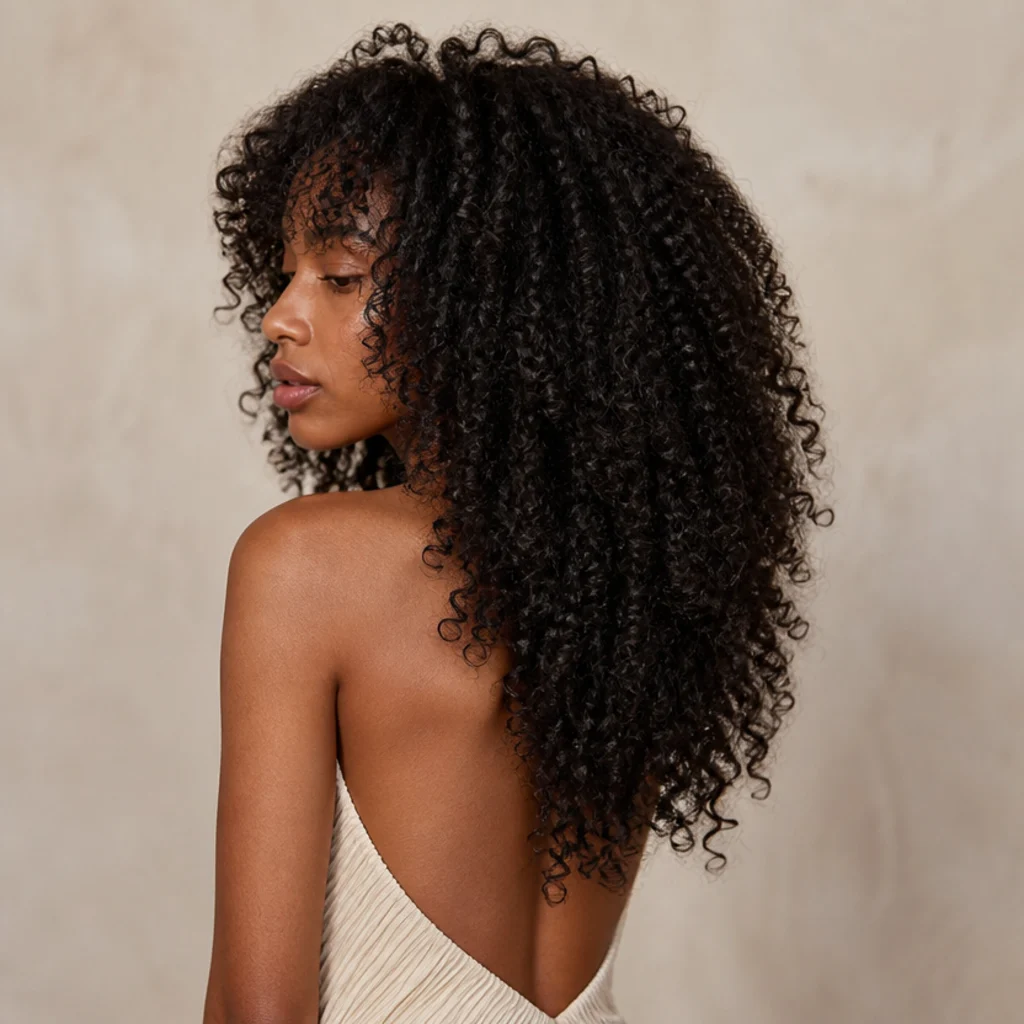
A shag on tightly coiled hair is really an exercise in carving shape out of density. Cut dry, coil by coil, on stretched hair, this long shag removes bulk in strategic zones so the silhouette stays full but never boxy, with layers that let the crown breathe and rise. Type 4 textures that want length with a defined, sculpted outline instead of a uniformly rounded shape are the best fit. Upkeep leans toward moisture and protective care more than scissors; every 10 to 12 weeks maintains the shape, and shrinkage means grow-out is nearly invisible anyway. Ask for "a shag cut on dry, stretched coils, layered to keep fullness through the body but define the perimeter and open the crown." Style with a rich, humectant leave-in, a defining custard or gel raked through in sections, and gentle finger-coiling on the frame pieces. Book it for wash-day-two, when coils are stretched and clumped naturally, so the stylist shapes the hair you actually wear day to day, not freshly shrunken wash-day coils.
09Rock-and-Roll Long Shag With Heavy Layers

This is the shag at its most attitude-forward: heavy, closely spaced layers packed through the crown for maximum lift, feathered out into a deliberately shaggy perimeter. It nods straight to the 70s and 90s rock silhouette and needs medium-to-thick hair that can actually support the volume without going stringy. Strong bone structure carries it best, since the piled crown draws the eye up and out. Maintenance runs moderate to high, since those short crown layers lose their lift as they grow — plan a reshape every 8 weeks. Style with a root-lifting mousse worked into wet roots, a diffuser or a rough blow-dry with your head flipped over, then a generous mist of texture spray and a light backcomb at the crown for grit. Ask for "lots of short, stacked layers at the crown for height, feathered and messy through the ends." Keep volume product at the root and mid-shaft only; heavy product on the ends drags the whole shape flat and kills the lift.
10Soft Long Shag for Fine Hair
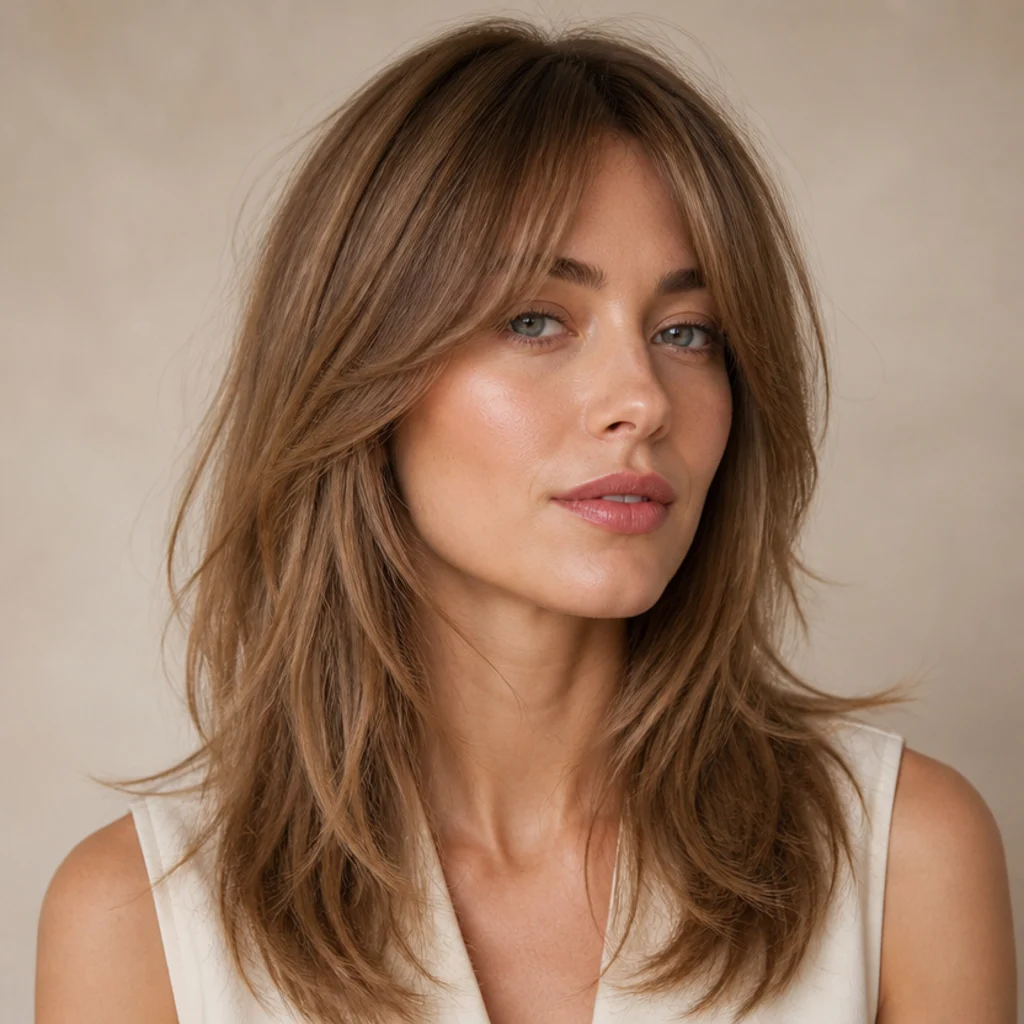
Fine hair needs a restrained hand, because too many layers scatter the density and leave the ends looking sparse and see-through. This soft long shag uses fewer, strategically placed layers to fake fullness, putting a little movement up top while protecting weight at the perimeter. The face-frame stays soft and the ends are left mostly intact so nothing thins out. Fine, straight-to-slightly-wavy hair that goes flat by early afternoon is exactly who this is for. Maintenance sits at moderate; trims every 8 weeks keep the ends from wisping into nothing. Style with a volumizing mousse at the root only, a round-brush blow-dry lifting up and away at the crown, and a cool-shot blast to set the lift. Ask your stylist to "add soft layers for movement up top but keep my ends full and my perimeter weighty, because my hair is fine." Skip heavy oils and rich conditioners on the roots entirely; a lightweight mousse or root spray is the only thing that won't drag fine hair down flat.
11Long Shag With Money-Piece Highlights
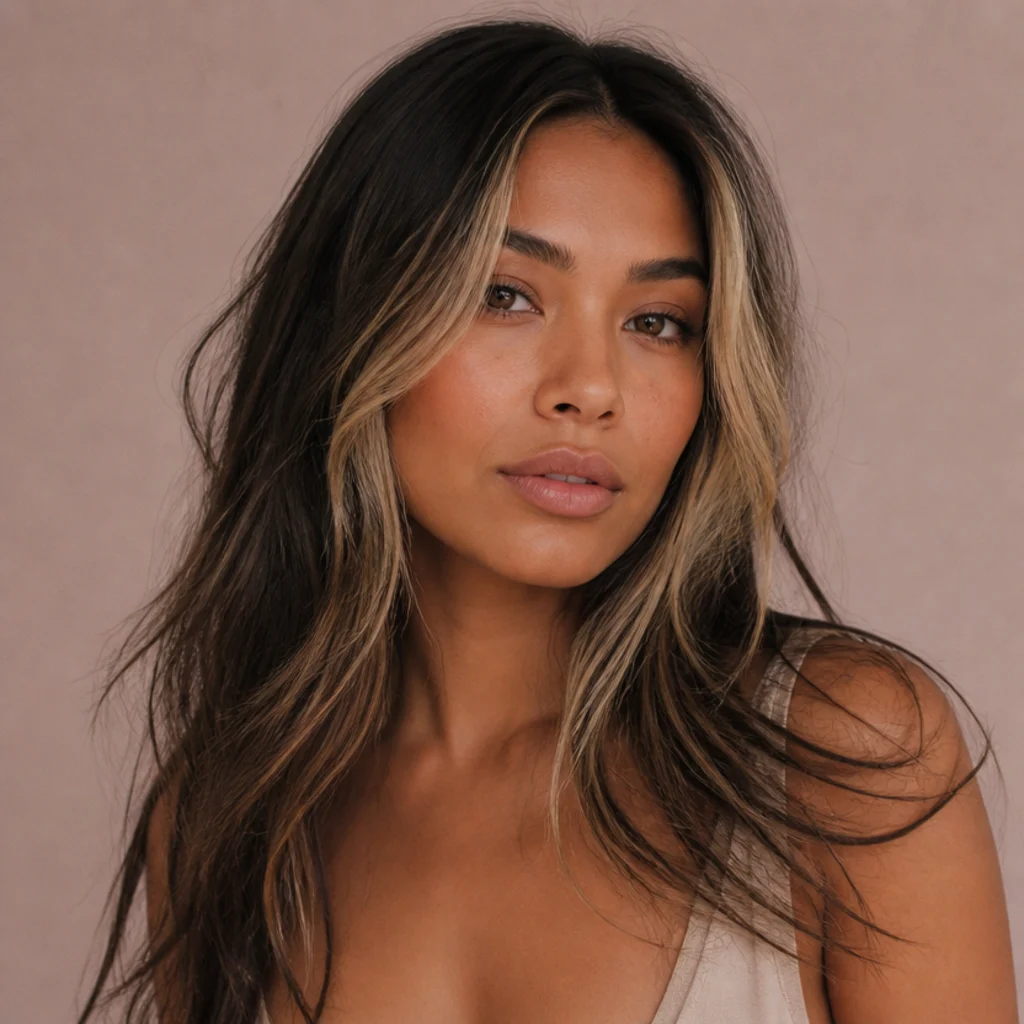
Here the color and the cut work together. The money-piece — two brighter panels at the very front — sits directly on the shag's face-framing layers, so the highlights trace and exaggerate the shape the scissors already created. It's a good option for anyone who wants to brighten and warm up the face without committing to all-over lightening, and it works on every texture from straight to coily. Cut upkeep stays standard at roughly 10 weeks; color upkeep depends on how much contrast you chose, with a toning gloss every 6 to 8 weeks keeping the panels from going brassy. Ask for "a long shag with a money-piece placed right on the face-framing layers so the brightness follows the cut." Style so the bright pieces fall forward around the face rather than getting swept back. Ask your colorist to keep the money-piece a shade softer at the root and brightest at the ends, so it grows out as a blend instead of a hard regrowth line you have to chase every month.
12Long Shag Choppy Layers for Thick Hair
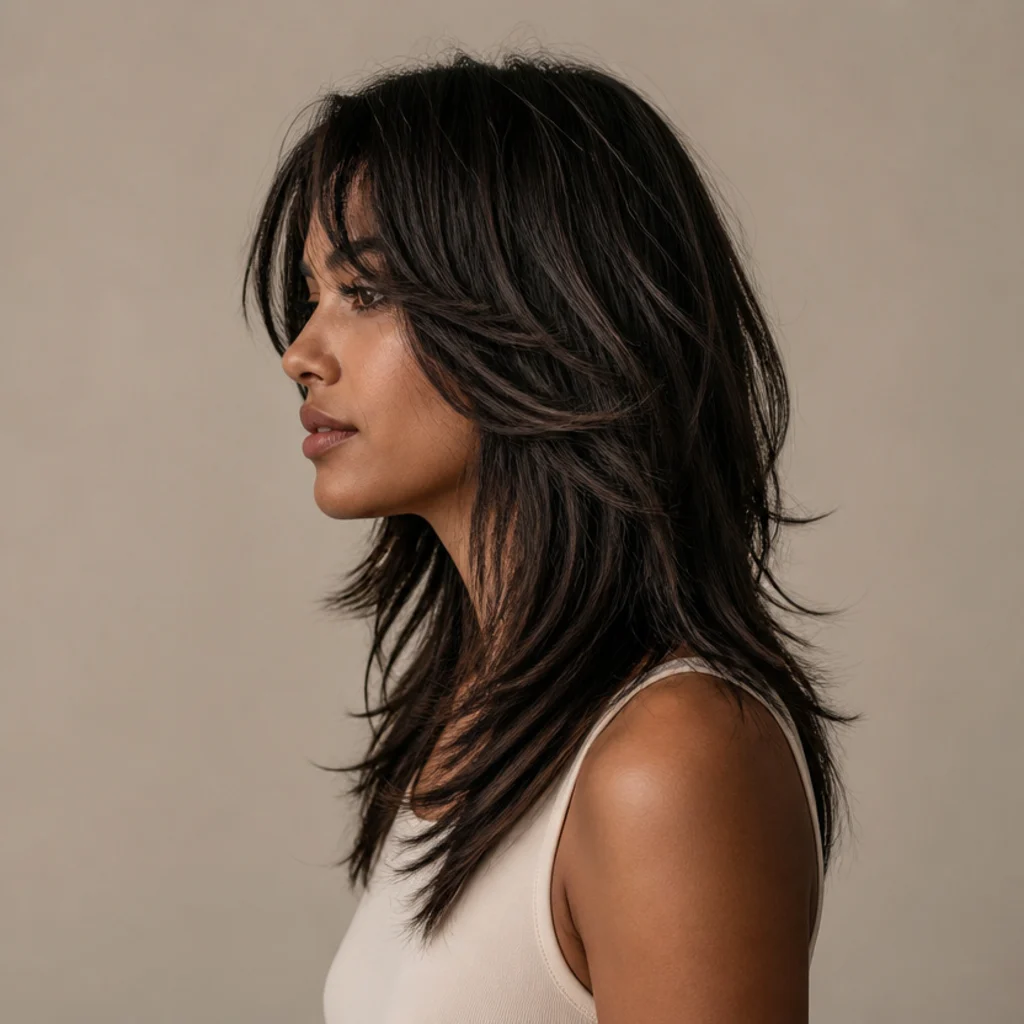
Thick hair can feel heavy and helmet-like in a blunt shape, so this version uses long shag choppy layers to strip out real weight while keeping every inch of length. The stylist point-cuts and internally slices to thin the density from the inside, so the hair moves and swings instead of sitting in a solid, immovable mass. Thick, coarse or high-density hair across any wave pattern suits this best. Maintenance is moderate, since the weight does creep back as it grows — trims every 8 weeks keep it from reverting to a block. Style with a smoothing cream on damp hair to keep the newly exposed ends from frizzing, then a texture spray on dry hair to define the choppiness. Ask for "choppy layers with internal weight removal and slide-cutting, because my hair is very thick and heavy." Insist the weight comes out internally, not at the very ends. Over-thinning the last inch of thick hair creates a frizzy, wispy halo that no amount of product fixes.
13Modern 70s Long Shag
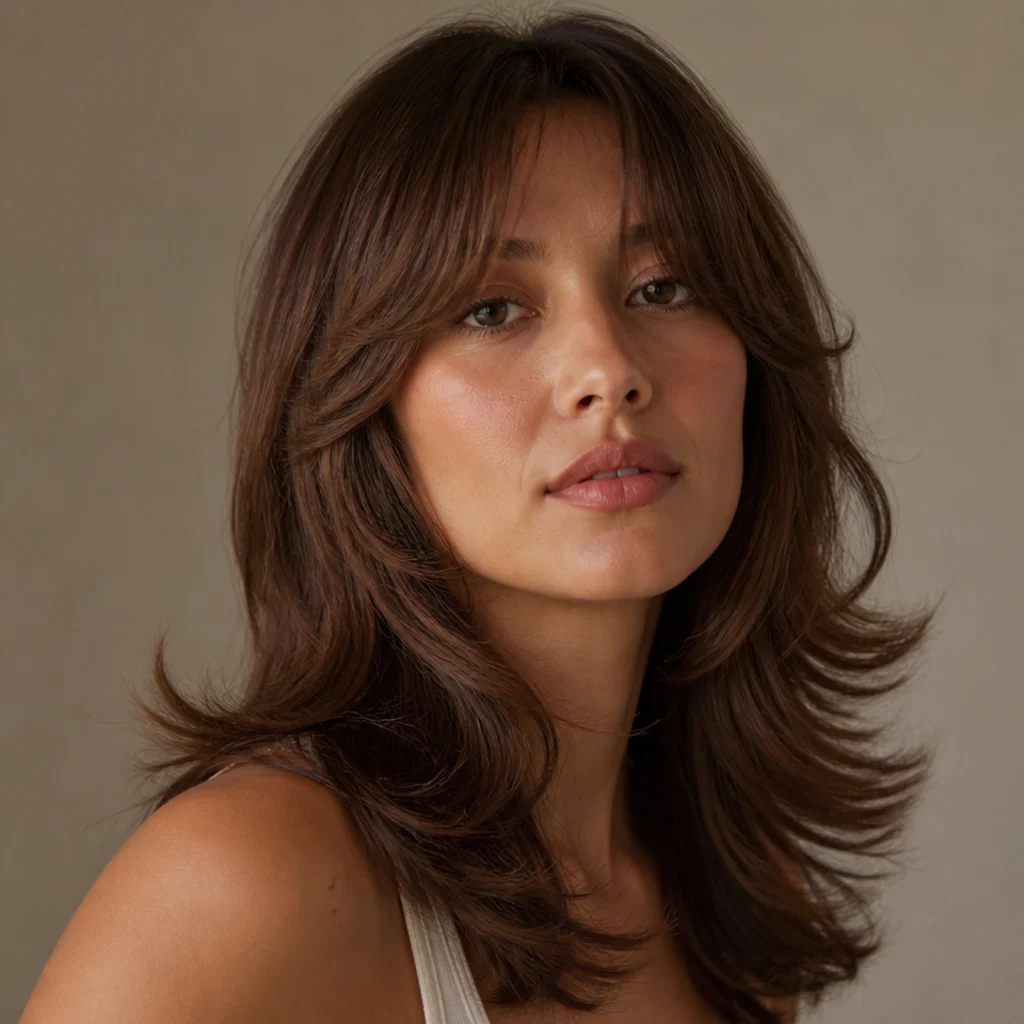
This revives the original 70s silhouette but wears it like it's 2026, not a costume. Think feathered layers, soft curtain bangs and a rounded, flippy shape, all cut with more blend and less blunt stacking than the vintage version so it reads current. Medium hair with a bit of natural body suits it well, and it flatters most face shapes thanks to the framing fringe. Maintenance stays moderate; the feathering softens as it grows and wants refreshing every 9 to 10 weeks. Style with a round brush, flicking the ends out and away from the face, add root lift at the crown, then set with a flexible-hold spray. Ask for "a modern 70s shag, feathered and flippy, but soft and blended, not sharp or stacked." The flip lives or dies on the last two inches, so over-direct the ends outward with the brush and hit them with a cool shot to lock the bend before it drops.
14Long Shag With Wispy Bottleneck Bangs

Bottleneck bangs sit in the sweet spot between curtain and full bangs: shorter and slightly denser through the center, then sweeping wider and longer at the sides like the neck of a bottle. On a long shag they create a soft, wispy frame that opens up the eyes and cheekbones without the full commitment of a blunt fringe. This one's for people who want the flattering effect of bangs but dread the maintenance and grow-out, and it works on straight-to-wavy hair. Upkeep is moderate; the bang needs a light trim every 5 to 6 weeks to keep its shape and stay out of your lashes. Style with a small round brush, curving the center down toward the face and the sides out and away. Ask for "wispy bottleneck bangs blended into a long shag, denser in the middle and longer at the sides." It flatters round and heart faces especially, and you can ask for it a touch longer than shown so it doubles as face-framing on days you want it swept back.
15Long Shag on Type 3 Curls
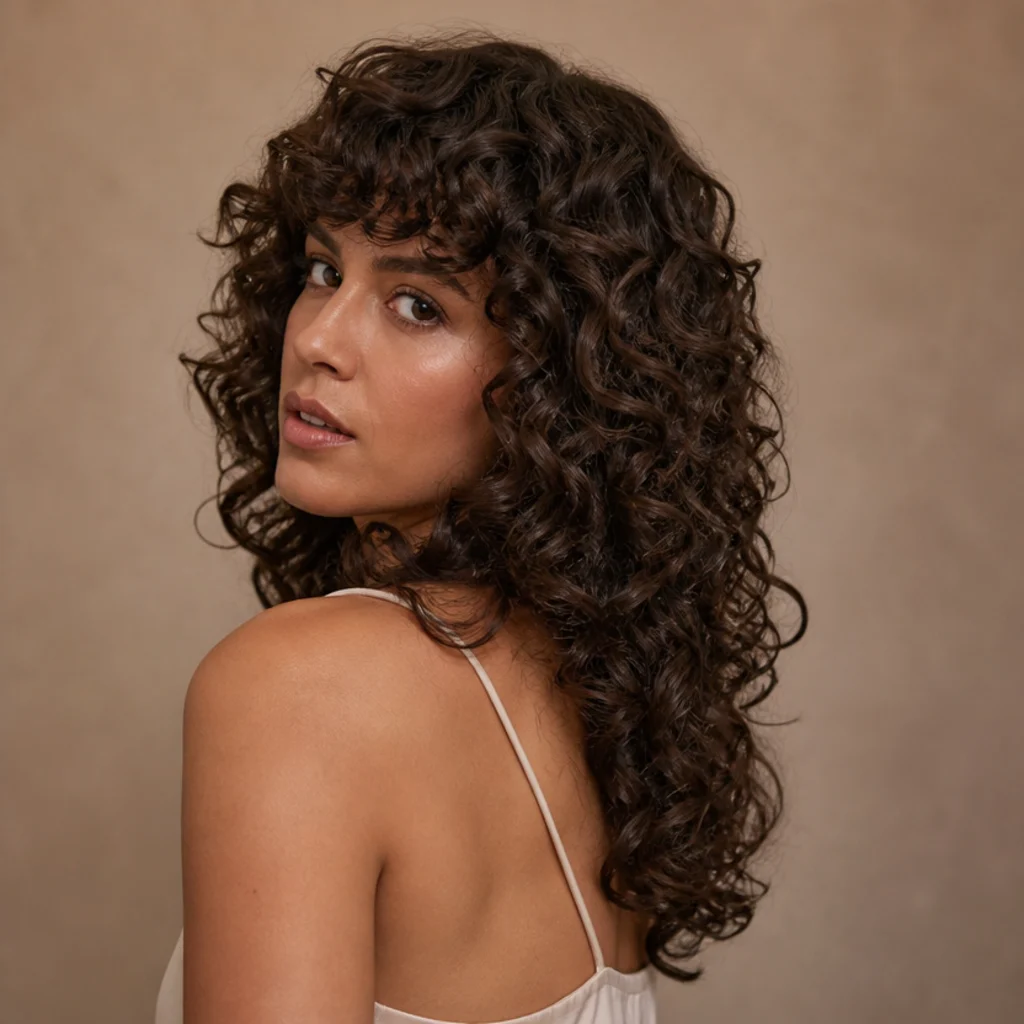
Bouncy type 3 curls thrive in a shag because the layers stop them from stacking into a heavy pyramid that widens at the bottom. Cut dry, curl by curl, this shape builds a defined, full crown and a lighter, airier perimeter so the curls read as individual springs instead of one dense wall. Medium-to-high density curls that want movement and a clear shape are the target. Maintenance here is product-led rather than scissor-led; a trim every 12 weeks keeps stray ends tidy while the pattern hides regrowth. Ask for "a dry curly cut with shag layering, remove weight at the ends but keep my crown full so it doesn't go triangular." Style with a soak-and-scrunch method: apply gel to dripping-wet hair, scrunch upward, air-dry or diffuse fully, then scrunch again to break the gel cast for soft, defined curls. Don't touch the curls at all while they dry — every touch mid-dry invites frizz. Wait for a completely hard cast, then break it.
Save this to Pinterest as your reference for a curl-specific consultation.
16Sleek Long Layered Shag for Straight Hair
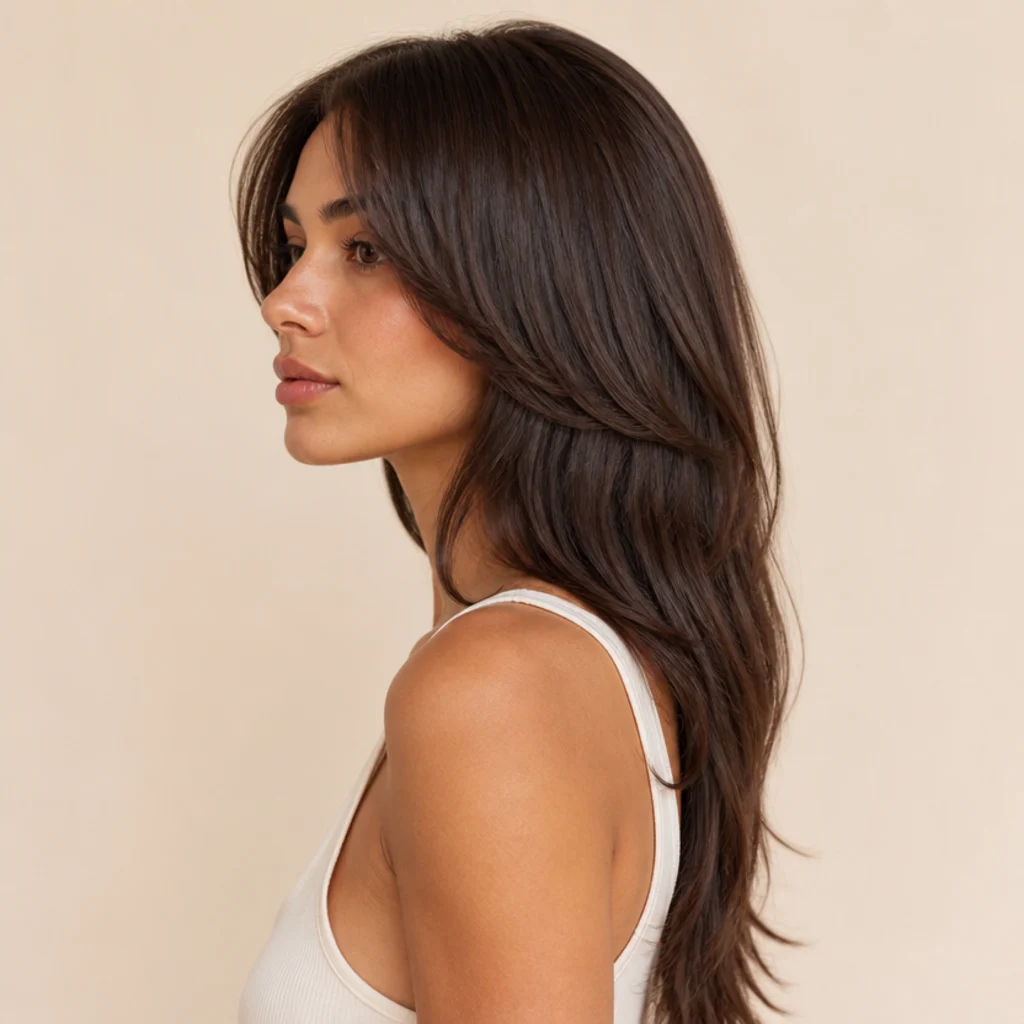
A shag doesn't have to look undone or gritty. This polished long layered shag haircut keeps all the layering but styles it smooth and glossy, so the shape shows up through shine and movement rather than texture and separation. It's for people who want the swing and dimension of a shag with an office-appropriate, put-together finish, and it looks best on straight, healthy hair that takes a smooth blow-dry. Maintenance runs moderate, since smoothness exposes every split end; trims every 9 weeks plus a glossing treatment keep it looking expensive. Style with a heat protectant, a paddle-brush or large round-brush blow-dry with tension, and a single drop of shine serum smoothed over the ends only. Ask for "a long layered shag, but blended and smooth so it can be worn sleek, not choppy." This look demands a clean cuticle, so finish your blow-dry with a cool shot passing down the hair shaft — that's what lays the cuticle flat and actually creates salon-level shine.
17Long Shag With Copper Color and Choppy Ends

Color amplifies texture, and a saturated copper makes every choppy end and feathered layer catch the light. This shag pairs a warm coppery tone with deliberately textured, point-cut ends and a soft fringe, so the shape and the shade work as one. Warm and neutral skin tones suit it especially well, and it works across straight and wavy hair. Cut upkeep is standard, around 10 weeks, but be realistic about the color: copper is one of the fastest-fading shades, since the large red dye molecules wash out quickly, so a toning gloss every 4 to 6 weeks is what keeps it vivid instead of muddy. Style with a texture spray to emphasize the choppiness and let the copper do the rest. Ask for "a choppy long shag with point-cut ends" at your cut appointment and "a copper that holds its warmth" at your color one. Wash with cool water and a color-depositing copper conditioner at home, and skip clarifying shampoos entirely — they strip red tones faster than anything else.
18Long Shag for Round Faces
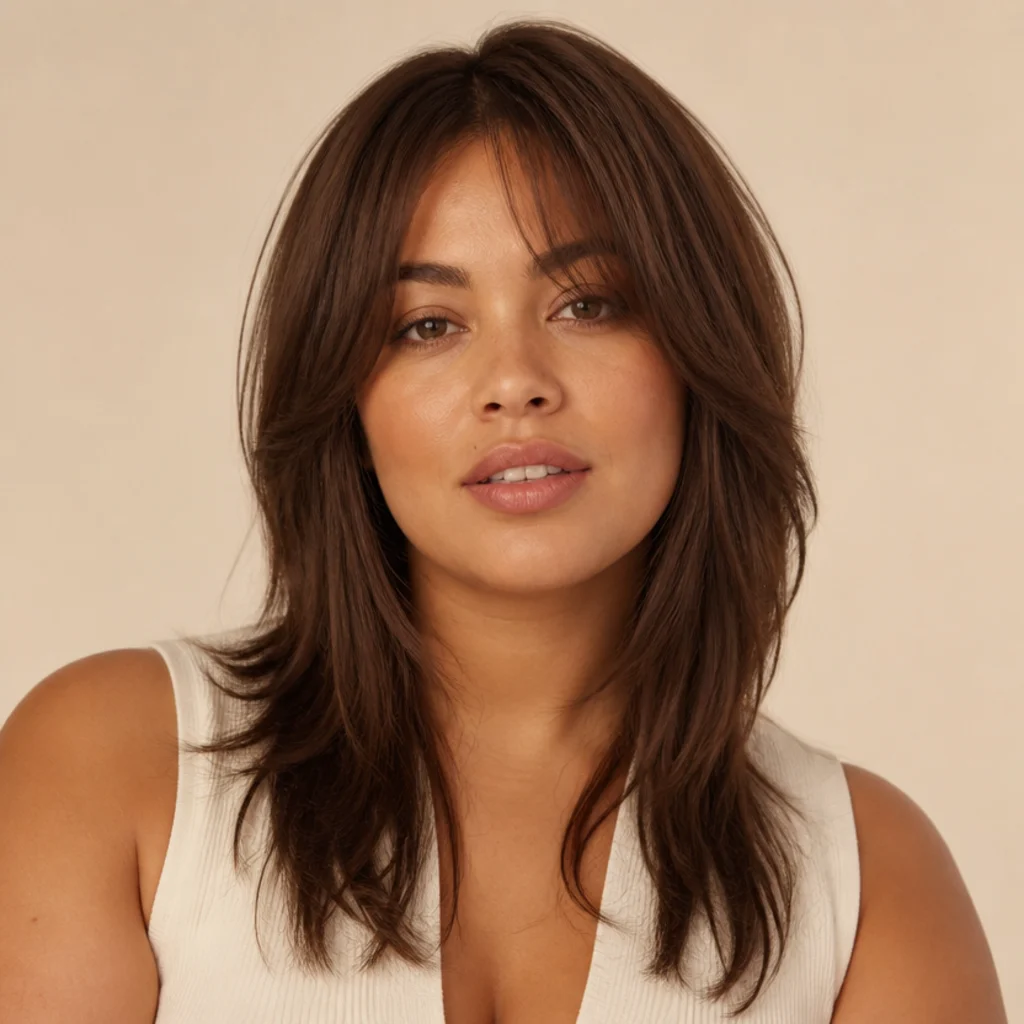
For round faces the whole strategy is length and vertical lines that counter the width. This shag keeps the shortest layers below the chin so nothing widens the cheeks, stacks a little height at the crown to visually elongate, and runs long, straight-falling face-framing pieces down past the jaw to draw the eye downward. Round and fuller face shapes across most textures, straight through wavy, suit this one. Maintenance stays moderate, at roughly 10 weeks. Style with root lift at the crown and the frame pieces pulled slightly forward and down so they hug and slim the face rather than flick out. Ask your stylist to "keep the layers long around my face and add height at the crown, because I want to lengthen a rounder face." Steer away from short, cheek-level layers and from a center part that's too wide — both reintroduce width exactly where you're trying to remove it. A soft off-center part adds a flattering diagonal instead.
19Long Shag for Long or Oval Faces

Longer and oval faces can carry width well, so this shag adds it on purpose instead of avoiding it. The layers start higher, around the cheekbone, and a soft fringe or curtain bang shortens the visual length of the face by filling in the forehead. Together they widen the middle third of the face and keep the shape from reading elongated. Oval, long and rectangular faces on straight-to-wavy hair suit this best. Maintenance stays moderate, and the fringe in particular needs attention every 6 weeks to keep doing its job. Style with soft bends and volume built at the sides rather than piled at the crown, since crown height only lengthens the face further. Ask for "cheekbone-level layers and a curtain bang to add width and balance a longer face." A center part with soft frame pieces is your friend here, and adding a wave or bend through the mid-lengths creates lateral width that a poker-straight blow-dry can't.
20Textured Long Shag With Razor Ends

A razor gives the softest, most feathered version of the shag. Instead of blunt point-cutting, the stylist glides a razor down through the ends and layers to create wispy, tapered, piecey texture that seems to dissolve into the air. Medium-to-thick straight and wavy hair with enough density to spare works best here; very fine hair can look stringy and curly hair can frizz badly from razoring, so tread carefully with both. Maintenance is moderate, but razored ends fray and look ragged sooner than scissor-cut ones, so trims every 8 weeks keep the taper clean. Style with a lightweight texture spray, letting the pieces separate naturally with minimal handling. Ask for "razored, feathered ends for a soft, airy, tapered texture." Confirm your stylist is actually confident and practiced with a razor and uses a fresh blade — a dull razor or a heavy hand shreds the cuticle, and that's the real cause of the dry, frizzy razored-hair reputation.
Save this to Pinterest to compare razored versus scissor-cut ends.
21Soft Long Shag With Balayage
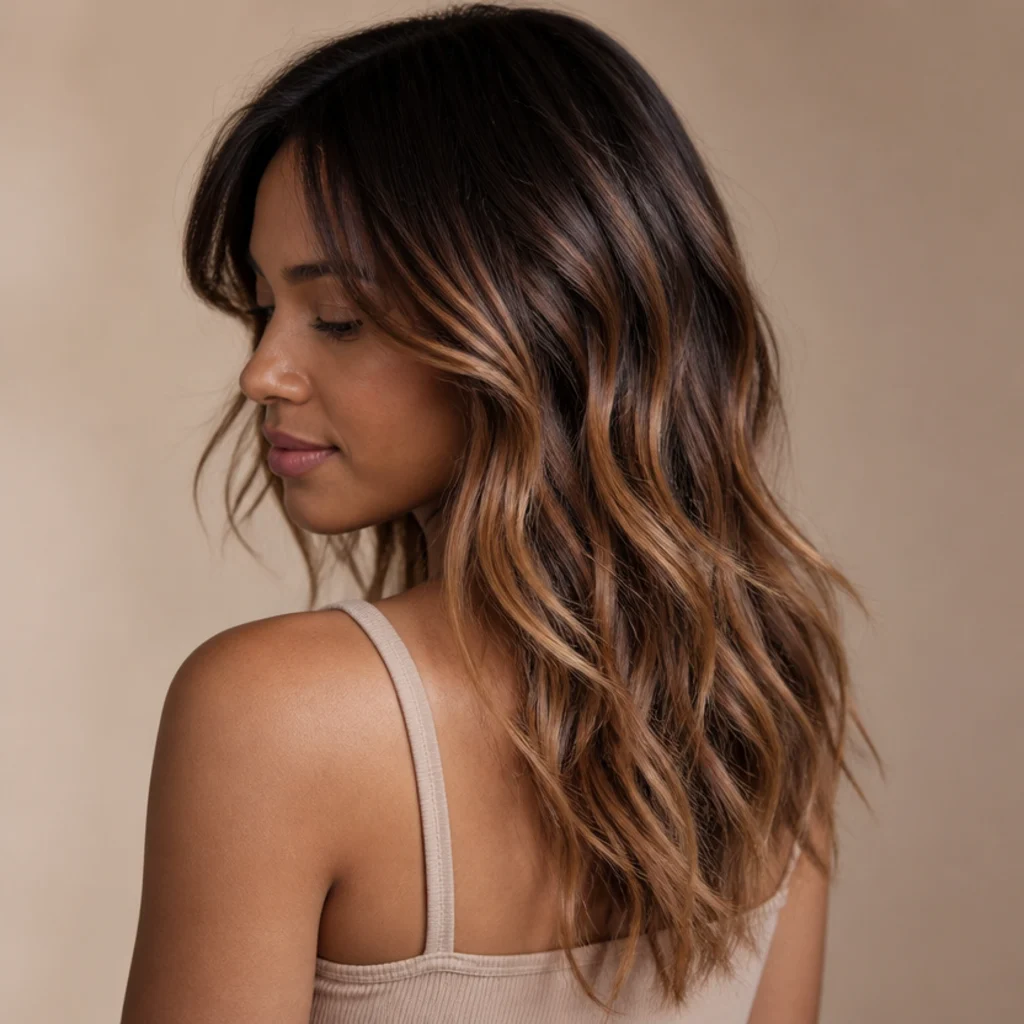
Balayage and the shag are a natural pairing, since hand-painted color can be placed to follow the layers, letting the lighter ends catch and echo the movement the cut already built in. This soft long shag uses gentle, blended layers with a smooth root-to-tip graduation of color. It's a good fit for anyone wanting dimension with low-commitment, grow-out-friendly color, and it works on all textures. Cut upkeep is standard, around 10 weeks; balayage's soft, shadowy roots are its whole advantage, letting you stretch color to 12 to 16 weeks between full sessions. Style to let the ends do the talking, where the brightness lives, waved or straight. Ask for "a soft long shag" at the cut and "a balayage that follows the layers with bright, blended ends and soft roots." Book a standalone glossing or toner appointment at the midpoint between full balayage sessions. It's far cheaper than a full color, refreshes the tone, and keeps painted ends from drifting brassy.
22Long Shag Mullet Hybrid

For the fashion-forward, the shullet marries a shag's all-over layering with a mullet's shorter top and longer back. The crown and sides stay shaggy and lifted while the nape keeps real, dramatic length, giving a bold, intentionally disconnected silhouette. Confident wearers with straight-to-wavy hair and strong personal style who want a haircut that reads as a statement suit this best. Maintenance runs on the higher side, since the disconnection blurs as it grows and needs sharpening every 6 to 8 weeks to stay deliberate rather than accidental. Style with a texture paste worked through the top for messy, undone volume, leaving the length smoother for contrast. Ask for "a shag-mullet hybrid, shorter and shaggy on top, long in the back, with a clear but soft disconnection, not a hard step." Bring at least two reference photos showing the exact ratio you want between top and back. The balance point is intensely personal, and going too short on top too fast is the single most common regret.
23Long Shag for Coarse, Wavy Hair

Coarse, wavy hair carries serious weight and can balloon into bulk, so this shag focuses on controlled weight removal through the mid-lengths and ends. Thinning the density from the inside lets the wave finally define itself instead of collapsing flat under its own heaviness. Coarse type 2 to 3a hair that tends toward frizz and unpredictable volume is the target. Maintenance is moderate; a good trim every 9 weeks keeps the bulk from rebuilding. Style with an anti-frizz or curl cream smoothed onto soaking-wet hair, then a diffuser on low or a patient air-dry, scrunching upward to encourage the bend. Ask for "internal weight removed through the mid-lengths so my wave can define, but keep my length and please don't over-thin the ends." For this hair type, internal texturizing and slide-cutting beat aggressive point-thinning at the ends every time — thinning the tips of coarse hair is exactly what triggers the frizz halo you're trying to eliminate.
24Low-Maintenance Long Shag
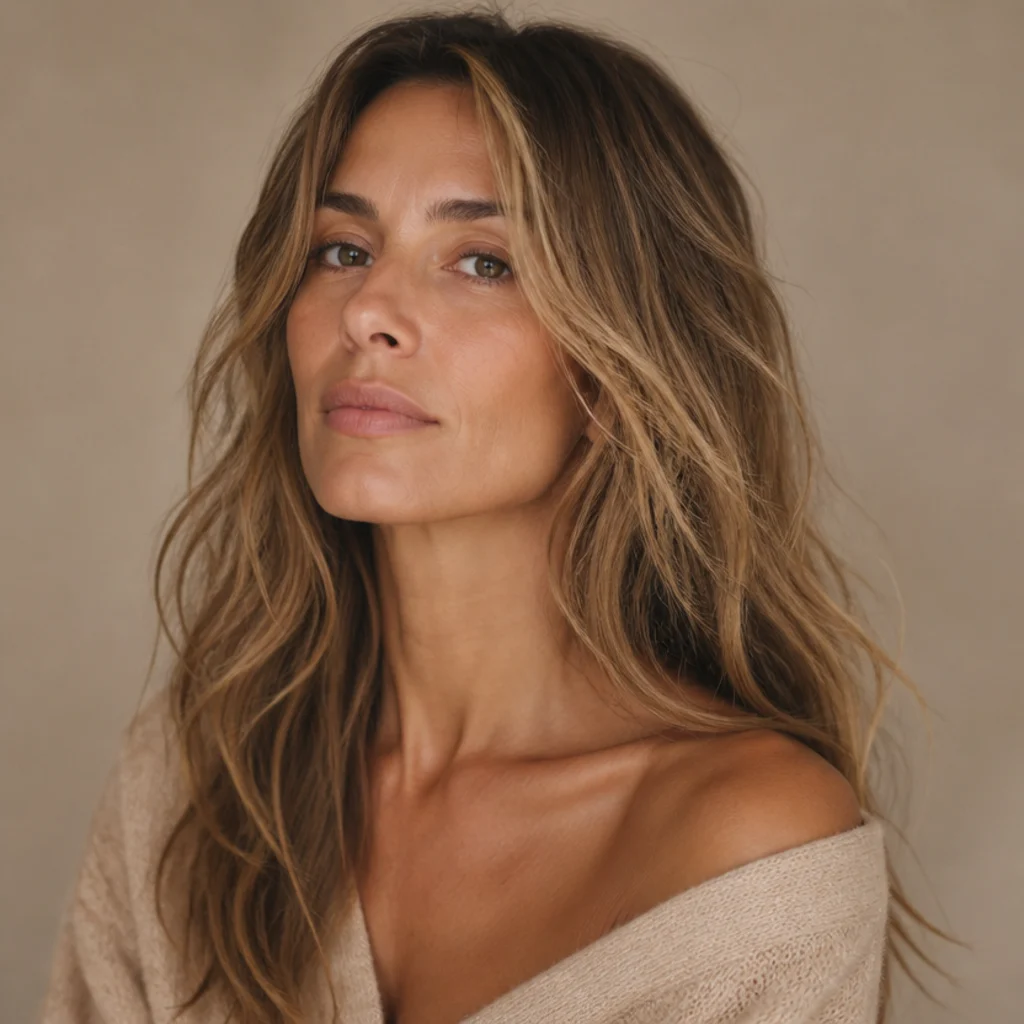
If your ideal haircut is one you can actually forget about between appointments, this shag is cut to grow out gracefully rather than fall apart. The layers are kept longer and softly blended, so there's no sharp, high-maintenance shape to defend, and the whole cut still looks intentional at 14 weeks. Busy people with straight-to-wavy medium hair who want the look of a shag without the salon schedule are exactly who this suits. Maintenance is low, which is the entire point. Style with a scrunch of texture spray and an air-dry, or nothing at all on a good hair day. Ask for "a soft, grow-out-friendly long shag with longer, blended layers and no sharp lines to keep up." Tell your stylist upfront exactly how long you actually go between cuts, whether that's 10 weeks or 20. An honest number lets them place the layers so the shape peaks in the middle of your real grow-out window, instead of only looking right for two weeks.
25Long Shag With Side-Swept Bangs

Side-swept bangs are about the most forgiving fringe you can ask for, since they blend into the length and grow out without a hard, awkward line. On a long shag they sweep diagonally across the forehead and dissolve into the face-framing layers, softening the forehead and adding a flattering asymmetry. Most face shapes suit this, and it's especially good for disguising a higher forehead or softening a strong hairline, on straight-to-wavy hair. Maintenance is low for a fringe; a trim every 8 weeks keeps it blended into the frame. Style by blow-drying the bang across to one side with a round brush, using a little tension to set the sweep. Ask for "long side-swept bangs that connect into the shag layers, nothing blunt." This is the ideal first fringe if you've never had bangs, because on any day you regret it, you can just tuck the sweep behind an ear and it disappears into your face-framing pieces.
Save this to Pinterest to see how bangs blend into shag layers.
26Platinum Long Shag With Dark Roots

For maximum drama, a platinum shag with a deliberately dark shadow root reads high-fashion and edgy while buying you time between color appointments. The choppy layers show off the contrast between shadowy roots and icy, cool-toned ends, and because the dark root is intentional, grow-out becomes part of the design instead of a flaw to chase. It suits cool skin tones, and, importantly, hair healthy enough to survive lightening, which makes a bond-building routine non-negotiable. Cut upkeep is standard, around 10 weeks; the platinum itself needs a toning gloss roughly every 4 weeks to fight brass and stay icy. Style with texture spray to play up the choppiness against the cool color. Ask your colorist to be honest about the lightening journey, since reaching true platinum can take multiple sessions depending on your starting level and hair condition. Budget for at-home care as seriously as the salon visits — a purple shampoo used weekly (not daily) plus a bond-repair mask is what keeps platinum from turning yellow and straw-like between glosses.
27Long Shag for Naturally Straight, Flat Hair
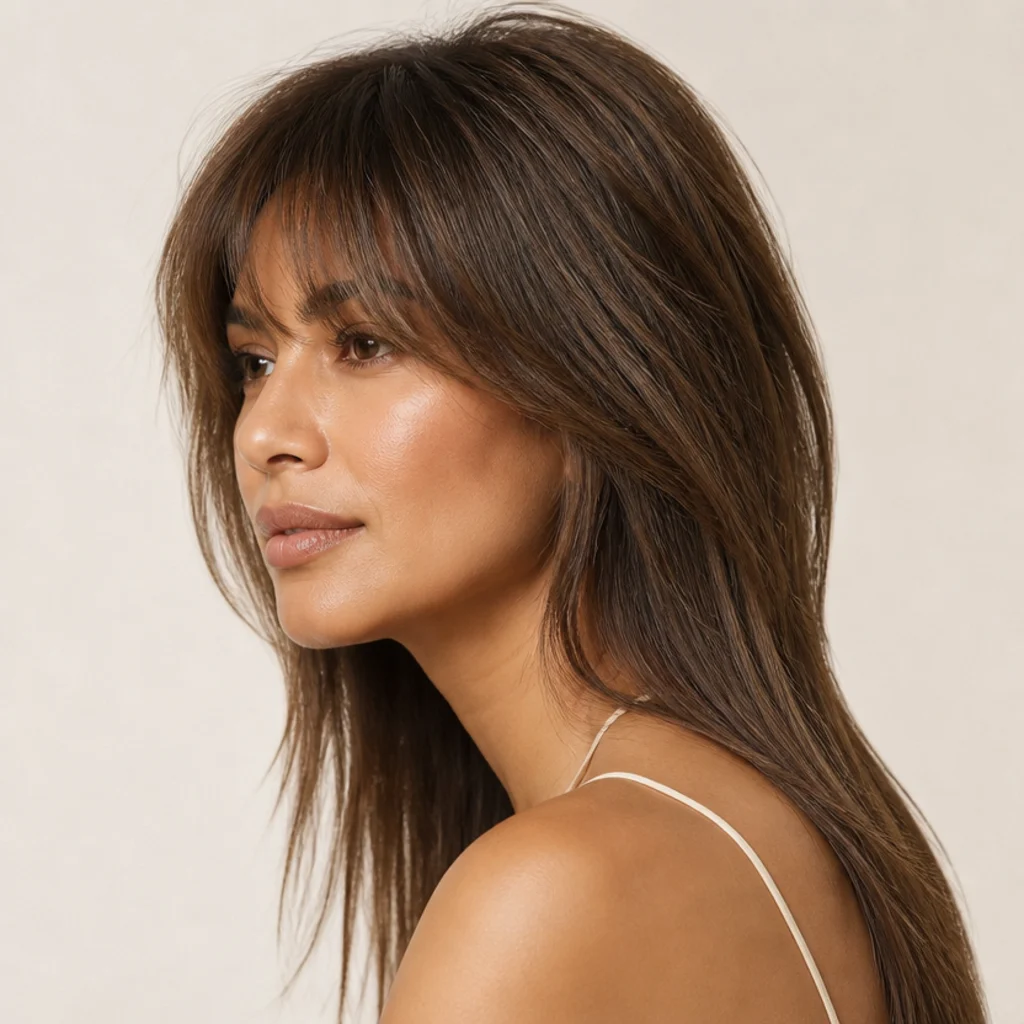
Flat, straight hair that never holds volume responds well to a shag built specifically for lift. The layers are concentrated at the crown to create height exactly where this hair type falls flattest, and a soft fringe adds interest at the front so the whole shape feels intentional rather than limp. Fine-to-medium straight hair that goes flat and lifeless by midday is who this is for. Maintenance is moderate; those crown layers need reshaping every 8 weeks to keep delivering lift as they grow out. Style with a root-lifting spray at the crown before drying, a round-brush blow-dry using real tension and heat directed up at the roots, and a light finishing texture spray. Ask for "layers concentrated at the crown for lift, because my straight hair falls completely flat." Keep conditioner and any oils strictly on the mid-lengths and ends, never the roots, and consider a lightweight clarifying wash weekly — product buildup at the scalp is the hidden reason fine straight hair goes flat by lunchtime.
28Long Curly Shag Haircut With Defined Ends
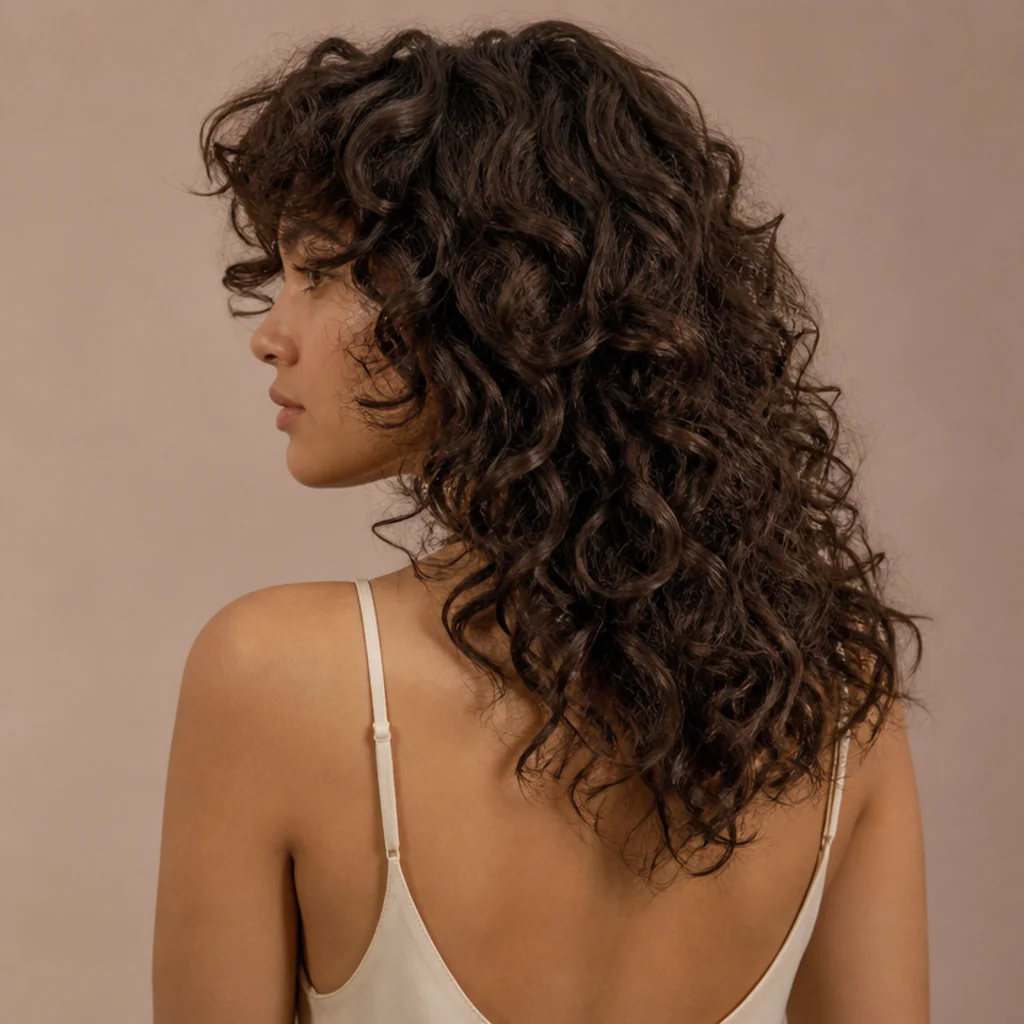
This long curly shag haircut prioritizes ends that stay defined and springy rather than fraying into a halo of frizz at the tips. Cut dry so the stylist can see each curl, every spring is shaped to finish in a clean, coiled end, while the internal layers keep the crown full and stop the dreaded triangle from forming. Type 3 curls that hold well through the body but tend to lose definition and split at the very tips suit this best. Maintenance is product-heavy but scissor-light, around every 12 weeks. Style with a curl-defining gel applied with praying hands and raked or finger-coiled through, a microfiber-towel plop to absorb excess water, then a diffuse and a final scrunch to break the cast. Ask for "a curly shag with defined, shaped ends, cut dry so you can see exactly where each curl lands." A weekly deep-conditioning or bond treatment is what actually keeps curly ends defined; dehydrated tips are the real reason curls stop clumping and start frizzing.
29Long Shag With Deep Side Part

A deep side part instantly reshapes a shag, throwing all the volume to one side for an asymmetric, glamorous, slightly retro effect. The layers cascade more heavily on the fuller side, and the deep part itself lifts the root where it changes direction, adding height without a single hot tool. Most face shapes suit this, and it adds instant drama to straight and wavy hair. Maintenance matches whichever base shag you choose, around 10 weeks, since the deep part is a styling decision rather than a cut line. Style by flipping wet hair over to the deep side and drying it in that direction to train the roots, ideally clipping the part in place while it cools. Ask for "a long shag I can wear with a deep side part," so your stylist balances the layers to fall correctly when the weight shifts to one side. This is one of the best tricks for adding one-sided volume and drama to fine hair, and switching your part deeper also lifts roots that have gone flat from lying the same way every day.
30Effortless Air-Dried Long Shag

The last idea is the lowest-effort of the bunch: a shag cut precisely to look its best air-dried, so you can wash, product and walk out the door. The layers are shaped to fall into your natural texture without any brushing or heat, which is exactly why the cut itself has to be more precise, not less. People with some natural wave or bend, and anyone deliberately avoiding heat damage, suit this well. Maintenance is low day to day, though the precision demand means you should choose an experienced stylist and trim every 10 weeks so the air-dry shape holds. Style with a leave-in for slip and a scrunch of texture or curl spray on damp hair, then let it dry fully undisturbed. Ask for "a shag cut to air-dry beautifully with my natural texture, not a cut that needs a blow-dry to look right." Apply all your product in the first few minutes after your shower while hair is soaking wet, then don't touch it again until it's bone-dry. Mid-dry fiddling is the single biggest cause of air-dry frizz.
Pro Tips from the Editor
- Match the cutting method to your texture, not the trend photo. Curly and coily hair should be cut dry, curl by curl; straight and wavy hair can go wet or dry depending on whether you want blunt separation or soft blending. A wet cut on curls is the number-one cause of a shag that "looked great in the salon" and never again.
- Ask exactly where the shortest layer lands. "Cheekbone," "jaw" and "chin" produce completely different cuts. Have your stylist comb that shortest piece to your face and show you before a single snip; it's the layer that dictates the whole shape.
- Name your grow-out honestly. Tell your stylist whether you return every 8 weeks or every 20, so they can place the layers to peak inside your real window instead of only looking right for a fortnight.
- Protect the perimeter on fine hair, thin the inside on thick hair. Fine hair needs weight kept at the ends; thick hair needs weight removed internally. Over-thinning the tips of either creates the frizzy halo everyone dreads.
- Bring two or three photos and precise language. Pair each image with words: "choppy versus soft," "blunt versus feathered ends," "razored versus point-cut." Photos show the vibe; the vocabulary prevents the miscommunication.
- Budget for color upkeep separately from the cut. Copper and platinum want a gloss every 4 to 6 weeks; balayage stretches to 12 to 16. Factor the toning appointments in before you commit to a high-maintenance shade.
- Style at the root, finish at the ends. Volume and lift products belong at the roots and mid-shaft; smoothing and shine products belong only on the last few inches. Reversing them is why a good cut can still fall flat or frizz.
Long Shag at a Glance by Hair Type
| Hair type | Best layering approach | Cutting method | Trim cadence | Styling shortcut |
|---|---|---|---|---|
| Fine, straight | Few soft layers, weighty perimeter | Wet, point-cut | 8 weeks | Root mousse + round-brush lift |
| Medium, wavy | Blended layers, broken-up ends | Wet or dry | 10 to 12 weeks | Salt spray, scrunch, air-dry |
| Thick, coarse | Internal weight removal, slide-cut | Wet or dry | 8 to 9 weeks | Smoothing cream + texture spray |
| Type 3 curls | Crown volume, lighter perimeter | Dry, curl by curl | 12 weeks | Gel on soaking hair, diffuse |
| Type 4 coils | Sculpted shape on stretched hair | Dry, stretched | 10 to 12 weeks | Leave-in + custard, finger-coil |
How to Choose / Get the Look
Start with texture, because it dictates how the cut gets done. Curly and coily hair should be cut dry, curl by curl, ideally by a stylist who specializes in texture; straight and wavy hair can be cut wet or dry depending on whether you want crisp separation or soft blending. Getting this wrong is the single most common reason a shag disappoints.
Then be honest about maintenance before you fall for a photo. A soft long shag with blended layers grows out gracefully and forgives a longer gap between trims, while choppy layers, micro bangs, copper and platinum want frequent, sometimes monthly, visits. If your calendar or budget is tight, pick from the low-maintenance end of this list on purpose.
Match the layering to your face and your goal. Crown-heavy layers add lift for flat or fine hair; long, straight-falling face-framing pieces slim and lengthen rounder faces; cheekbone-level layers plus a curtain bang add width to balance longer or oval faces. Decide what you want the cut to do optically, then reverse-engineer the layers.
In the chair, use specifics, not adjectives. Bring two or three photos and pair them with exact language: "choppy versus soft," "blunt versus feathered ends," "layers starting at the cheekbone versus the chin." Ask where the shortest layer will land and how the shape will look at week ten. If your hair is fine, ask them to protect your perimeter and keep weight at the ends; if it's thick, ask for internal weight removal rather than heavy end-thinning. Finally, factor in color: decide whether you want the cut alone or a shade like money-piece, balayage, copper or platinum layered on top, and price the ongoing gloss appointments into your decision.
Frequently Asked Questions
What is the difference between a shag and regular long layers?
A shag concentrates more, shorter layers at the crown and around the face, plus a shaggier, more textured perimeter, which creates real volume and movement up top. Standard long layers are softer, more evenly distributed down the length, and far less dramatic through the crown. Put simply, a shag is built to add lift and texture, while long layers mostly remove weight and keep a smoother line.
Does a long shag work on straight hair?
Yes, and it's one of the best cuts for adding fake movement to hair that has none. Long shag straight hair looks best with choppy or point-cut layers that build the illusion of texture curls create naturally. If you prefer polish, a blunt, weighty perimeter with soft internal layers gives you shag movement up top and a healthy, glossy hem below, no grit required.
How often do I actually need to trim a long shag?
It depends entirely on the version. Soft, blended long shags hold their shape for 10 to 12 weeks or longer; choppy layers, sleek finishes and precise crown-heavy versions look best refreshed every 8 weeks. Any short fringe, whether micro bangs or bottleneck, needs its own trim every 3 to 6 weeks, faster than the rest of the cut.
Is a long shag high maintenance to style day to day?
Usually not. Many versions are designed specifically for a quick scrunch of texture spray and an air-dry. The styling effort climbs only with bangs, sleek smooth finishes or built-in crown volume, which want a round brush and a few extra minutes. If low-effort styling is your priority, choose an air-dry or wavy version and tell your stylist upfront so the cut supports it.
Will a long shag suit thick hair?
Very well, and it's one of the smartest cuts for taming bulk. Thick hair benefits from a shag's internal weight removal, which strips density from the inside while keeping full length, so the hair swings instead of sitting like a helmet. Ask for choppy layers and internal texturizing or slide-cutting rather than aggressive end-thinning, which is what causes a frizzy halo at the tips.
Can I get a long shag on curly or coily hair without it going triangular?
Yes, and avoiding the triangle is exactly what the layering is for. On curls and coils the cut should be done dry, curl by curl or on stretched sections, so the stylist removes weight at the ends and keeps fullness at the crown. That balance stops the springs from stacking into a pyramid. Follow up with a proper wash-and-go routine, defining product on soaking-wet hair and a diffuser, to keep the shape.
What face shape suits a long shag best?
The long shag is unusually adaptable, which is its whole appeal. Round and square faces do best with longer face-framing layers, crown height and the shortest pieces kept below the chin to add length. Longer, oval and rectangular faces do best with cheekbone-level layers and a curtain or bottleneck bang to add width. There's a version for nearly every face; the framing placement is what you tailor to yours.
How do I grow out a long shag without it looking awkward?
Choose a soft, blended version from the start and tell your stylist you want a grow-out-friendly cut. Because the layers are connected rather than sharply disconnected, they lengthen into face-framing pieces instead of a visible shelf. Regular gloss or trim-the-fringe-only appointments keep the front tidy while the length catches up, so the cut reads intentional the whole way out.
Which long shag color is the lowest maintenance?
Balayage is the clear winner for low upkeep, because its soft, painted, shadowy roots mean you can stretch full color appointments to 12 to 16 weeks with no harsh regrowth line. A natural money-piece is also forgiving. Copper and platinum sit at the opposite end, needing a toning gloss every 4 to 6 weeks to stay true, so weigh the drama against the standing appointment before you commit.