15 Long Curly Shag Haircuts to Love
The shag was engineered for curls. Its stacked, internally graduated layers give texture somewhere to travel, so ringlets fall in tiered, weightless ribbons instead of collapsing into a triangle. Here are 15 long curly shag haircuts, each with the undertones, cutting technique, upkeep cadence, and salon script you actually need.
 Edited by Lena Rose · Published July 11, 2026 · 26 min read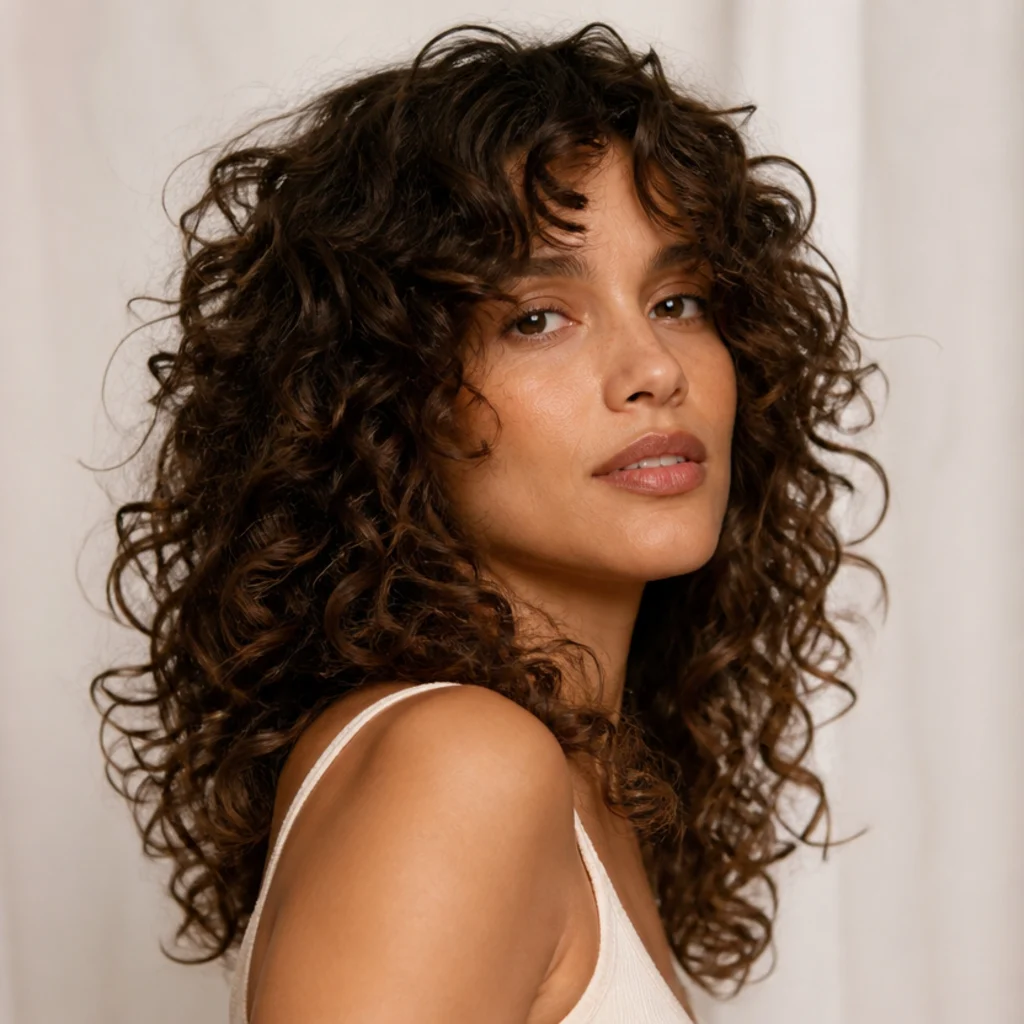
Quick Answer
- Best for: Wavy (2B) to tightly coiled (4A–4C) hair that reads heavy, triangular, or bottom-weighted and needs internal volume redistributed toward the crown.
- Who might skip it: Anyone growing out a blunt one-length shape they love, or very fine, sparse hair that can look see-through if the layering is cut too deep or too high.
- Maintenance: Moderate. A shape-up trim every 10–14 weeks; bang dustings every 3–6 weeks; daily upkeep is mostly moisture and a light refresh, not restyling.
- Difficulty: Low to moderate at home once the cut is dialed in. The internal layering and dry detailing are a job for a curl-trained stylist, not a wet-cut generalist.
- Cost: Varies widely by market and stylist tier; a dedicated curl cut typically runs more than a standard layered cut, and color services (shadow root, copper, bronde) add to that.
- Wear time / longevity: The shape holds 10–14 weeks; color-melt versions stretch salon visits to 12–16 weeks because grow-out is disguised.
- Standout variation: The soft long shag with curtain bangs, which frames the face and grows out without a hard reset.
- How to ask your stylist: Request a curly shag cut dry (or dry-checked), layers that shorten as they climb toward the crown, and your chosen fringe — specifying "soft and feathered" or "choppy and disconnected."
In This Guide
- Soft Long Shag With Curtain Bangs
- Choppy Layered Shag for Loose Waves
- Long Shag With Straight-Blown Ends
- Tight-Coil Shag With Piecey Fringe
- Auburn Shag With Face-Framing Tendrils
- Beachy Long Shag With Air-Dried Waves
- Wolf-Cut Shag for Thick Curls
- Shadow-Root Bronde Curly Shag
- Long Shag With Micro Bangs
- Silver Shag for Gray Curls
- Copper Shag With Choppy Crown Layers
- Long Layered Shag for Fine Curls
- Deep-Side-Part Shag for Oval Faces
- Half-Up Shag With Curtain Bangs
- Jet-Black Shag With Blunt-Edge Layers
The appeal of a soft long shag on curly hair is structural: the internal layers do the shaping, so your texture stops fighting its own weight. Instead of one heavy perimeter that drags every coil into a pyramid, a shag graduates the interior into tiers that get progressively shorter toward the crown. That releases volume up top, shortens the visual "waist" of the silhouette, and lets the ends taper to an airier finish. A long curly shag haircut also keeps length you can still pull back, so you're not trading movement for versatility. The shag and its bolder cousin, the wolf cut, are both having a moment right now, and curl-specialist salons have made dry-cutting the standard rather than the exception. Across these 15 looks, the same architecture adapts to loose 2B waves, springy 3C spirals, fine strands, and dense 4-type coils, plus a few straight-styled versions that show how the cut behaves smoothed out. For each, I note who it flatters by face and texture, how often to trim, one pro move, and exactly what to ask your stylist for.
01Soft Long Shag With Curtain Bangs
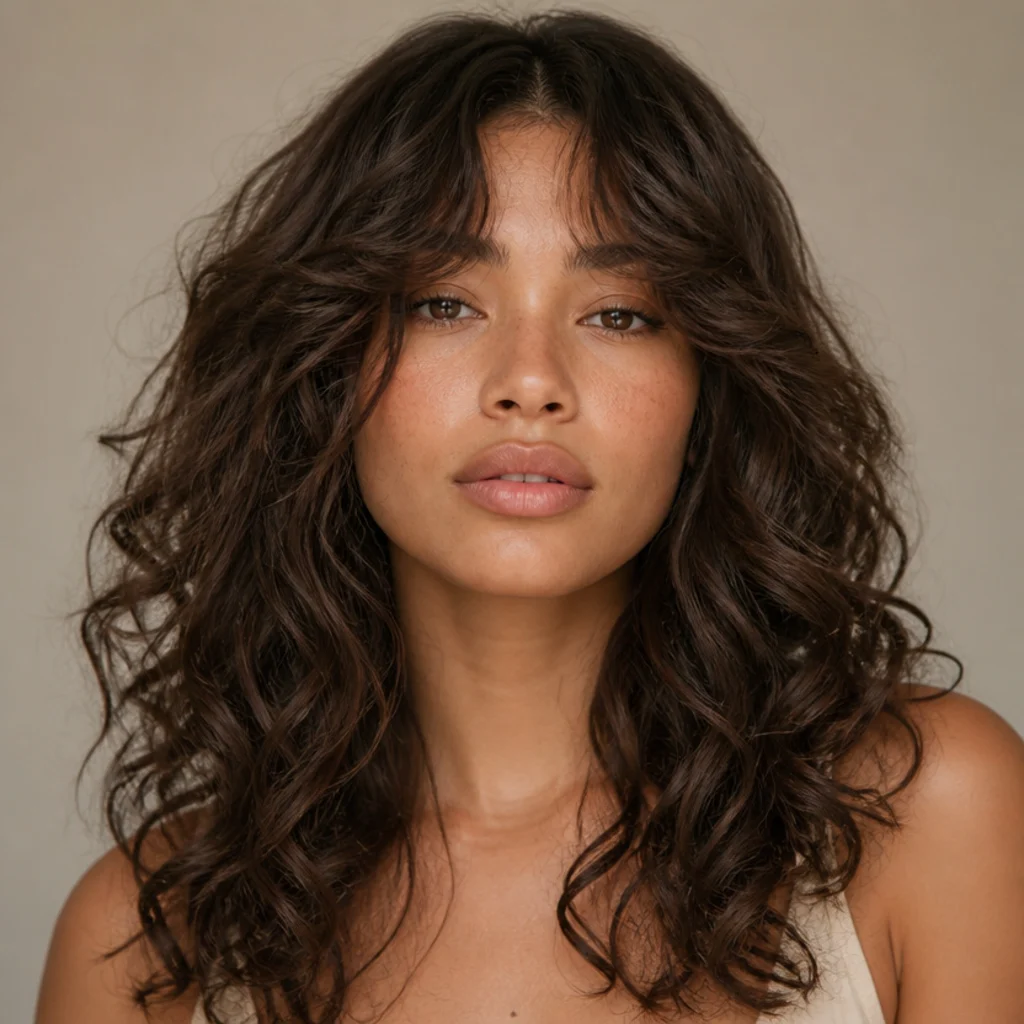
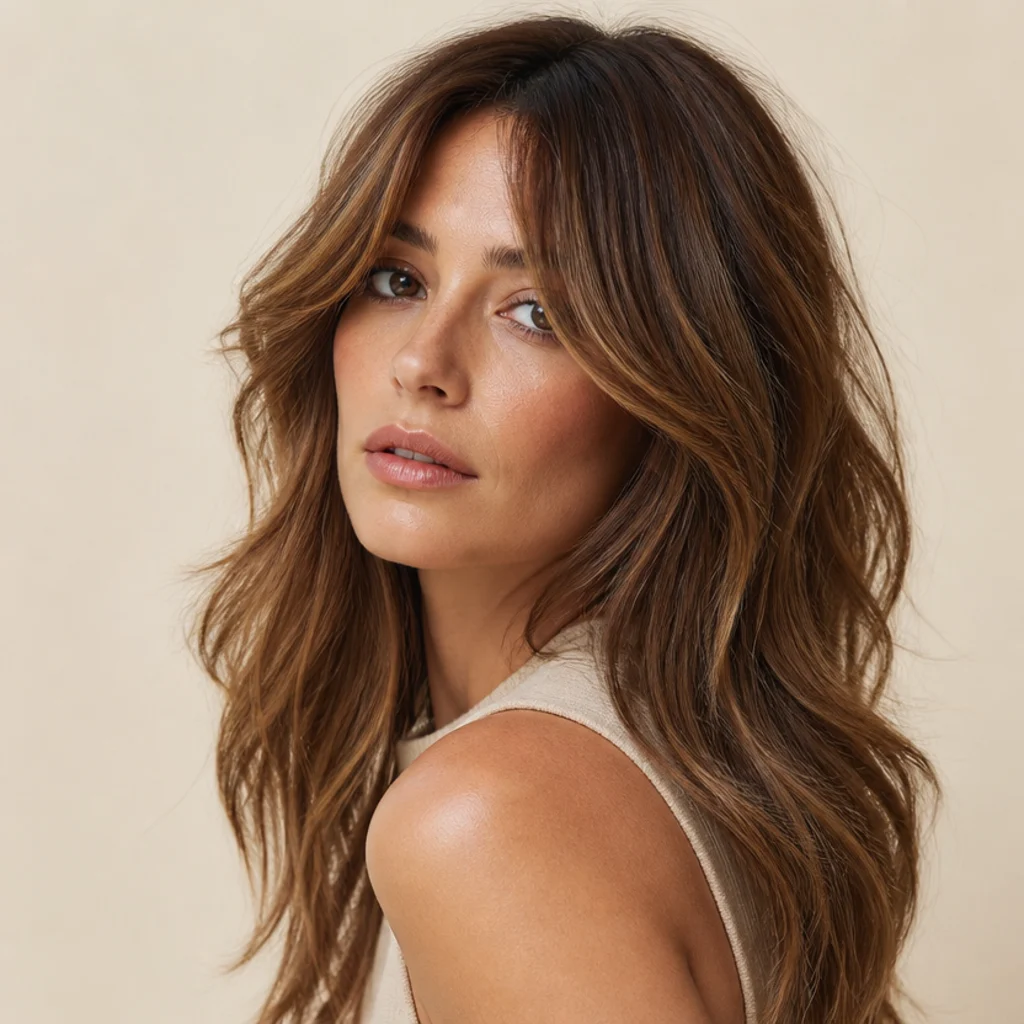
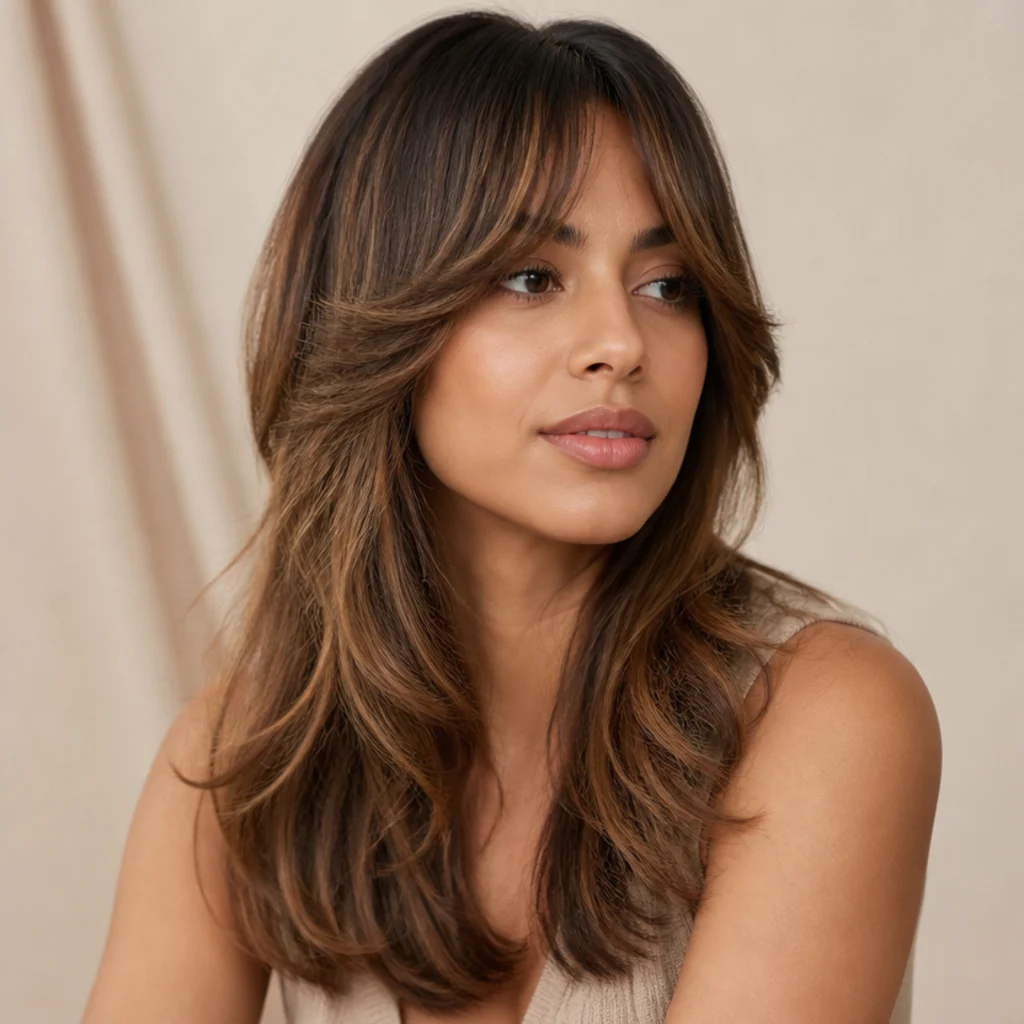
The soft long shag with curtain bangs is the gateway cut for anyone nervous about a full fringe, because the bangs split from a center part and sweep back to melt into the first face-framing layer — so an awkward grow-out phase never really happens. On curls, the single most important instruction is to cut the fringe bone-dry and a good half-inch to inch longer than looks right, since coils can shrink 30 percent or more as they dry. It suits oval, heart, and square faces especially; the parted sweep softens a strong jaw or a wide forehead by breaking the vertical line. Warm chestnut or a soft cool brown both read beautifully because the layer edges catch light. Upkeep is gentle: dust the bang every six weeks to keep the frame crisp while the length rides to a full trim at 12 weeks. Pro tip: diffuse the fringe forward on low airflow with your head tipped toward the mirror, so the curtain sets in the direction it will actually fall. Ask your stylist for curtain bangs that connect into the front layer rather than sitting as a separate shelf.
02Choppy Layered Shag for Loose Waves

If your texture reads as a loose 2B–2C S-wave rather than a defined curl, long shag choppy layers supply the separation that beachy hair often lacks on its own. The choppiness comes from point-cutting and slide-cutting into the ends so no line lands blunt or heavy; that broken edge is what encourages waves to clump into pieces instead of blurring into halo fluff. This look wants medium-to-thick density — very fine waves can read sparse under aggressive notching, so ask for shallower, softer point-cuts if that is you. Maintenance runs roughly every 12 weeks, and because waves live in the mid-lengths, the layer placement there matters more than the perimeter. Pro tip: rough-dry to about 80 percent with your fingers, then twist two-inch sections around your finger and pin them briefly to lock the wave map before releasing and shaking out. Ask your stylist for choppy layers concentrated through the mid-shaft, not just the ends, so the movement starts higher.
03Long Shag With Straight-Blown Ends
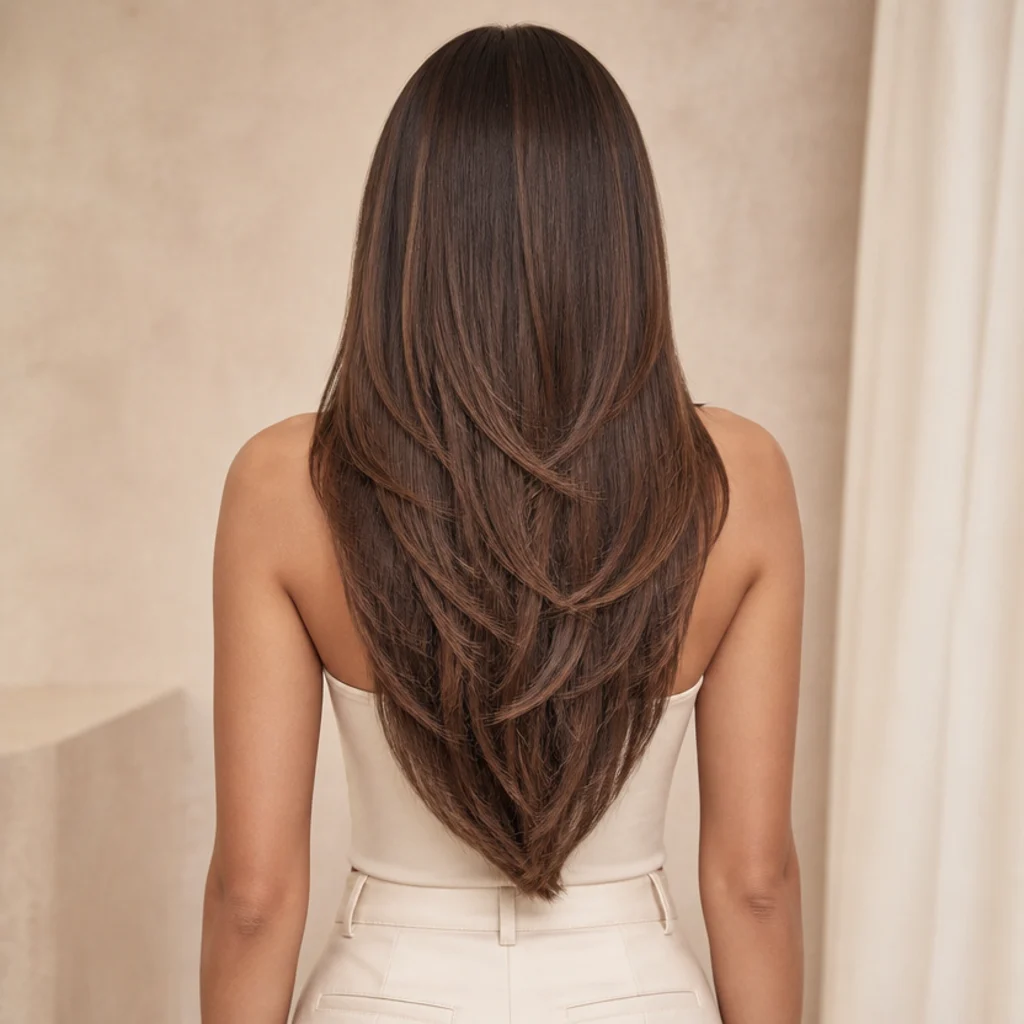
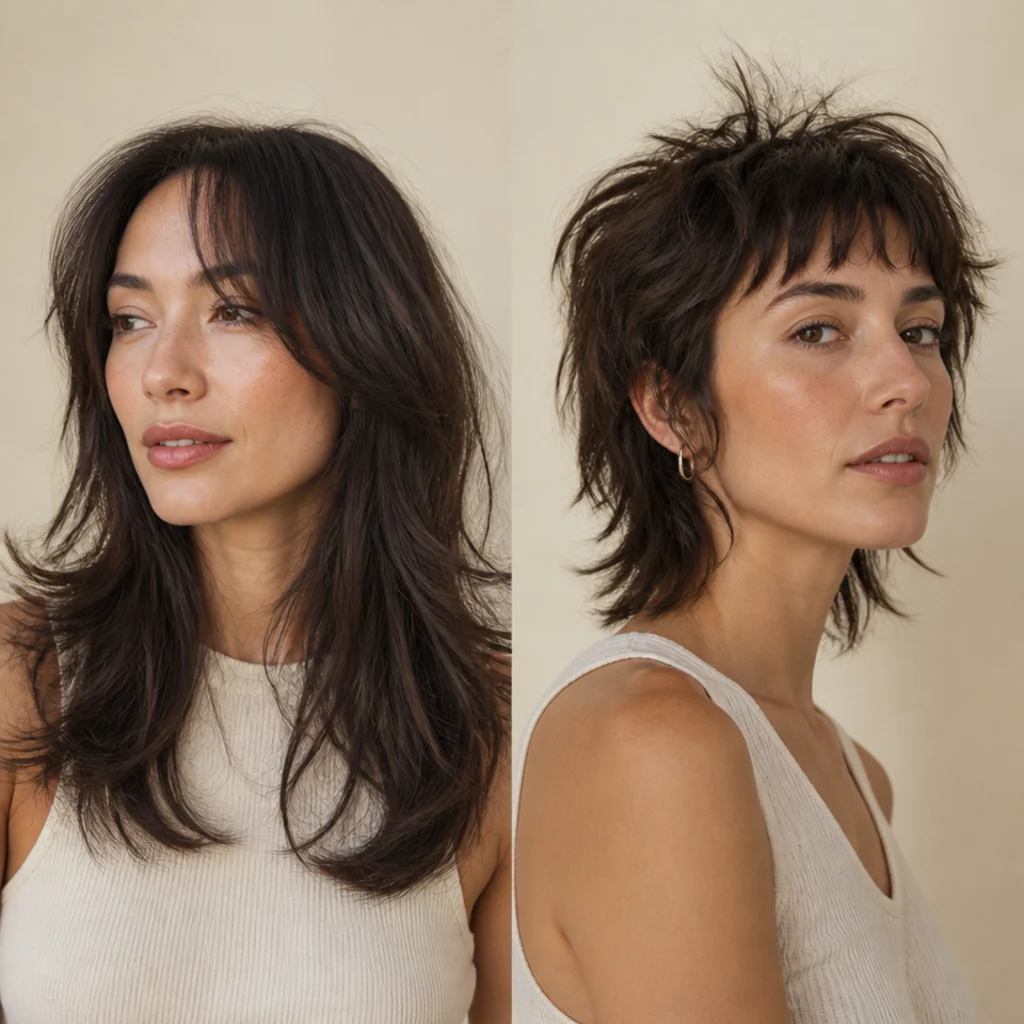
The reason many curly folks hesitate on a shag is not knowing how it behaves straight — and this is the reassurance. On long shag straight hair, the tiered interior reads as deliberate, feathered steps rather than uneven, grown-out ends. Blow it smooth with a round brush, chase with a flat iron only where you want polish, and you get a lived-in, rock-and-roll finish that still swings. That is the real argument for the shape: curly on wash days, sleek '70s when you want a reset, one haircut. It flatters long and oval faces because the vertical feathering elongates gracefully; rounder faces should keep the shortest layers below the cheekbone. Because heat is involved, protect the coil pattern you're borrowing against. Pro tip: work in horizontal sections from the nape up, keep the iron at a moderate setting, and pass once — repeated hot passes are what train curls to go limp on the next wash. Ask your stylist to check the layers dry-straight as well as curly so both finishes read intentional.
04Tight-Coil Shag With Piecey Fringe
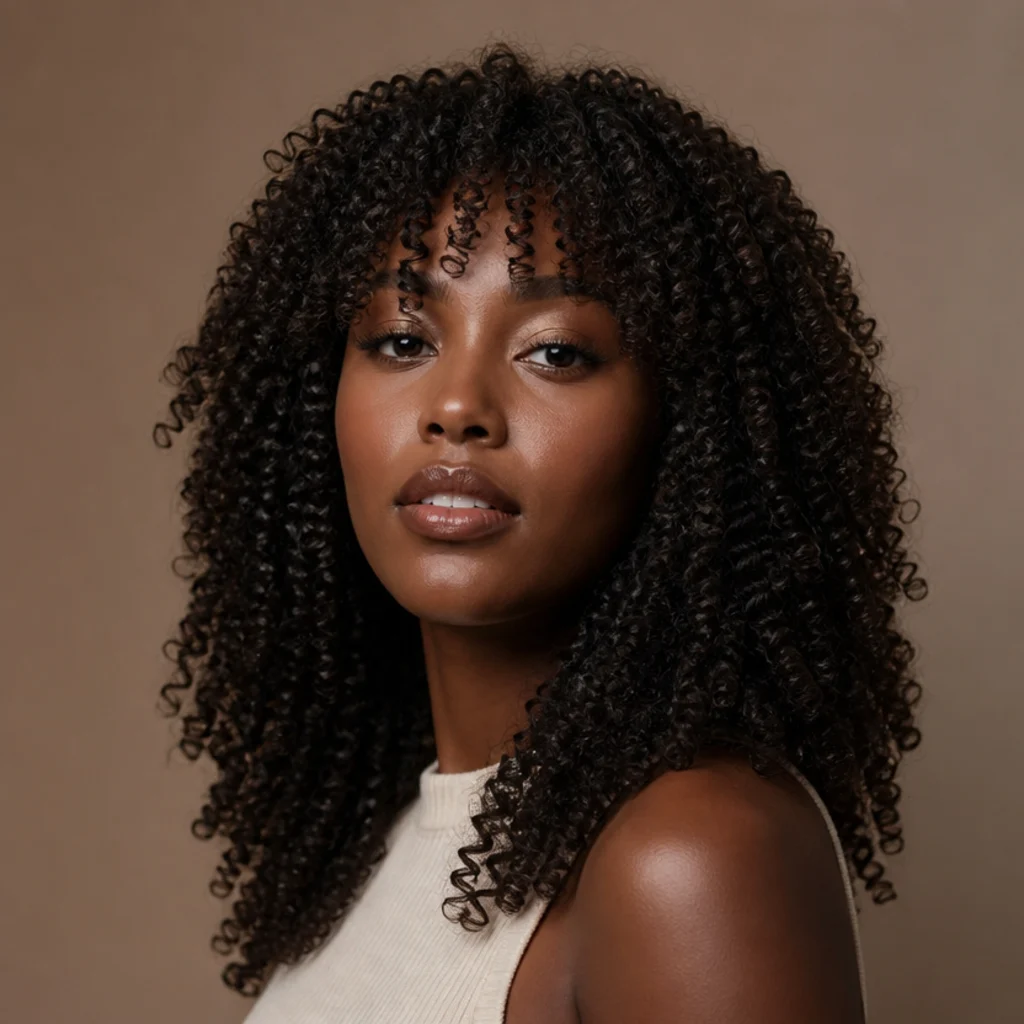
Dense type-4 coils were practically drawn for the shag, because that much natural volume needs weight removed or it stacks into a solid dome. A piecey fringe — cut into separated, tapered wisps rather than a solid bang — sits like a soft halo along the hairline and reads playful instead of severe. This is non-negotiably a dry cut: ask a curl specialist to shape it coil by coil in its natural state so each spring lands where it will actually live, because sponging a wet 4C curl gives zero information about final placement. It flatters round and heart faces by drawing the eye up and out from the crown. Upkeep here is overwhelmingly moisture, not scissors — deep-condition weekly, refresh daily with a spray bottle and a pea of leave-in, and reserve a true shape-up for every three to four months. Pro tip: define the fringe with a denman brush or finger-coiling on soaking-wet, product-loaded hair, never dry, to avoid frizz. Ask your stylist for a piecey, tapered fringe with removed bulk, not a blunt curtain.
05Auburn Shag With Face-Framing Tendrils

Warm auburn gives a long layered shag haircut dimension that flat single-process brunette can miss, because the red-copper undertone flares along every layer edge and reads richest on warm and neutral skin tones. The signature detail is a pair of fine, spiraled tendrils left loose at the temples to trace the cheekbones — a deliberate softening that flatters square and diamond faces by rounding the widest points. Color-treated curls are structurally thirstier and more porous, so the whole routine leans protective: sulfate-free, color-safe cleansers, cool rinse water, and a weekly bond or protein-moisture balance to keep the auburn from oxidizing brassy. Trim every 12 weeks and explicitly flag the front tendrils as protected pieces so they don't get swept into a routine layer. Pro tip: scrunch a curl-defining gel upward into soaking-wet hair, air-dry or diffuse to a hard cast, then break the cast by scrunching with a drop of oil in your palms for glossy, crunch-free definition. Ask your colorist for a warm auburn with a slightly deeper root so grow-out stays soft.
Save this to Pinterest to compare bang and tendril options side by side.
06Beachy Long Shag With Air-Dried Waves
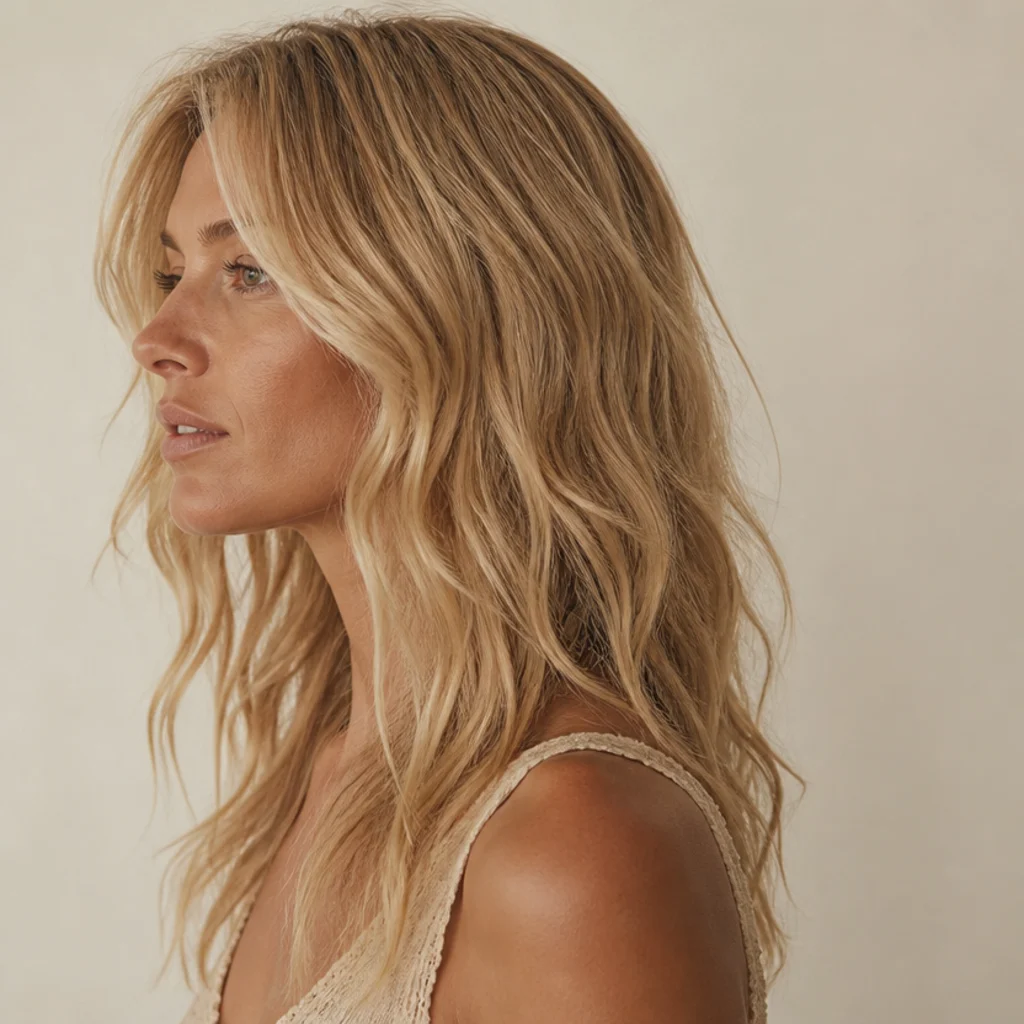
For the lowest-effort entry, this soft long shag is cut expressly to air-dry into undone, sandy waves. The layers sit a touch longer and softer than a choppy version so gravity carries most of the styling, which is the whole point for anyone who never wants to touch a diffuser. It flatters most face shapes and looks most natural on wavy-to-curly blends where the wave is present but casual. The build is simple: sea-salt spray or a light mousse worked into soaking-wet hair, a few upward scrunches, and walk away. The honest trade-off is humidity — air-dried texture without a sealing step can swell and frizz, so a lightweight anti-humidity cream or a curl gel under the salt spray adds a protective film on damp days. A trim every 14 weeks is plenty because the cut is designed to look a little grown-in. Pro tip: "plop" the wet hair in a microfiber towel for 15–20 minutes before letting it hang, which sets the root wave and cuts drying time. Ask your stylist for softer, longer layers with minimal internal graduation.
07Wolf-Cut Shag for Thick Curls
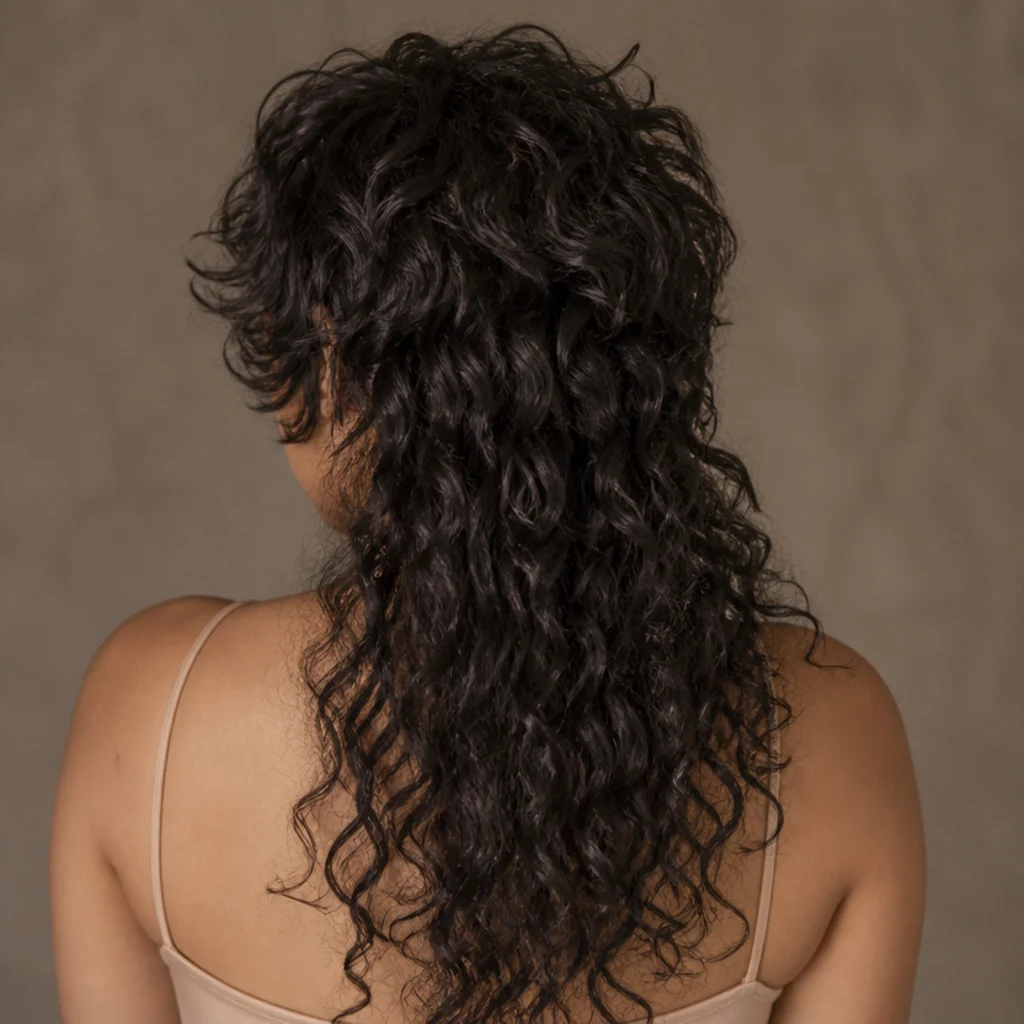
The wolf cut is the shag's bolder cousin, and on thick 3B–3C curls it's a real workhorse. The crown layers are cut short and intentionally semi-disconnected for maximum lift while the perimeter stays long, producing that shaggy, mane-like silhouette with a clear waist. It's the answer for dense hair that feels heavy and hot, because it evacuates serious interior bulk without sacrificing overall length. The strong vertical shape suits longer and oval faces that can carry the volume; rounder faces should soften the disconnection so the crown doesn't read boxy. This is dry-cut territory — be explicit that you want a curly wolf cut shaped dry, or the disconnection can look shockingly severe once coils spring up an inch or two. Upkeep is moderate, with a reshape roughly every 10 weeks to stop the crown flattening into the lengths. Pro tip: clip the crown layers up and away from the roots while the rest air-dries, then release them last, so the top keeps its height instead of drying flat under its own weight. Ask your stylist for a curly wolf cut with a soft, not hard, disconnection.
08Shadow-Root Bronde Curly Shag
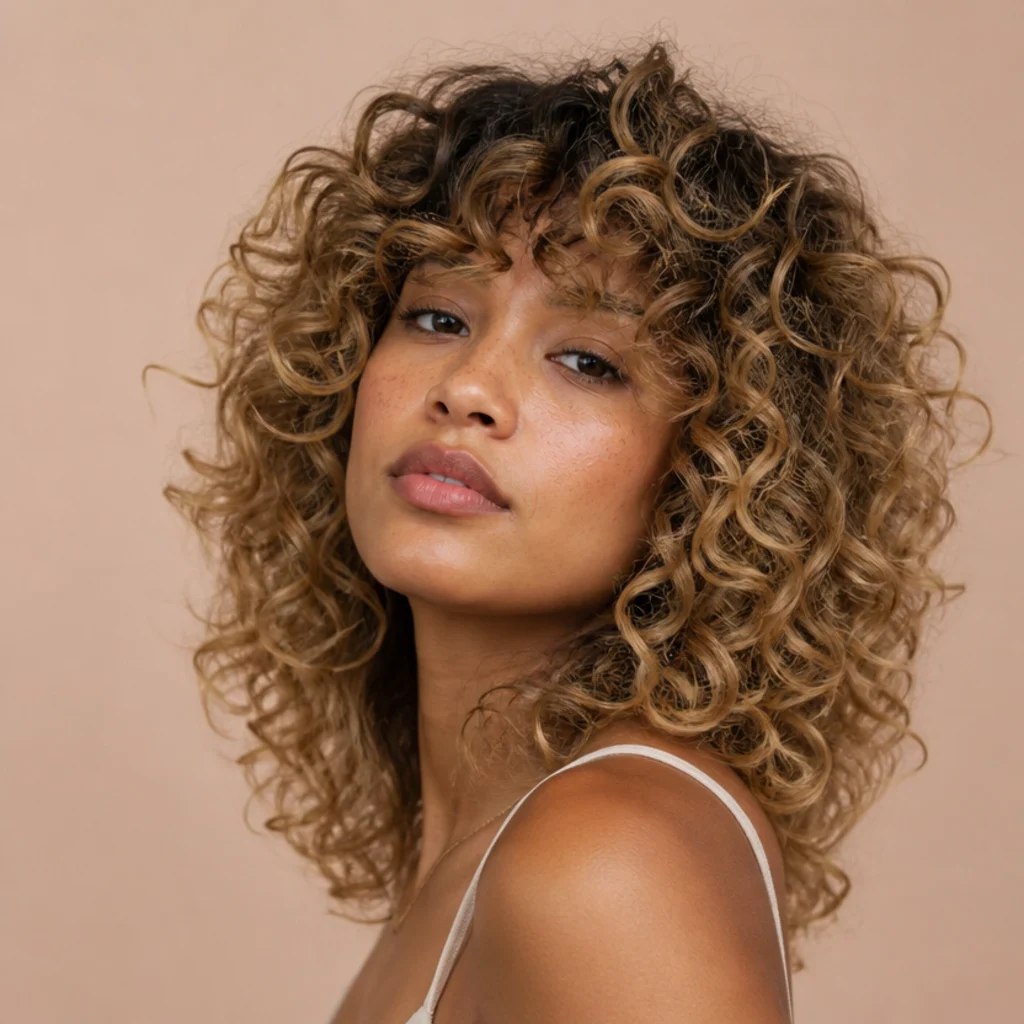
A shadow root is the low-maintenance secret of a lightened long curly shag haircut: by deliberately keeping the root a few levels darker than the mid-lengths, grow-out arrives as a soft gradient instead of a hard demarcation line. The bronde blend — that in-between of warm brown and honey blonde — reads flattering across a wide span of skin tones and is forgiving as it fades. The shag's tiered layers show the melt off beautifully, because each falling tier reveals a slightly different depth. This is the pick for anyone who wants dimension without a six-week root standing appointment; you can realistically stretch color visits to every 12–16 weeks. Lightened curls run drier and more porous, so a bond-builder in rotation keeps the coil pattern springy rather than mushy. Pro tip: style with a leave-in, then a curl cream, then a gel on top — layering "liquid to cream to gel" on soaking-wet hair gives the definition and hold color-lightened curls tend to lose. Ask your colorist for a diffused shadow root and a bronde melt kept in the warm family for easy upkeep.
09Long Shag With Micro Bangs
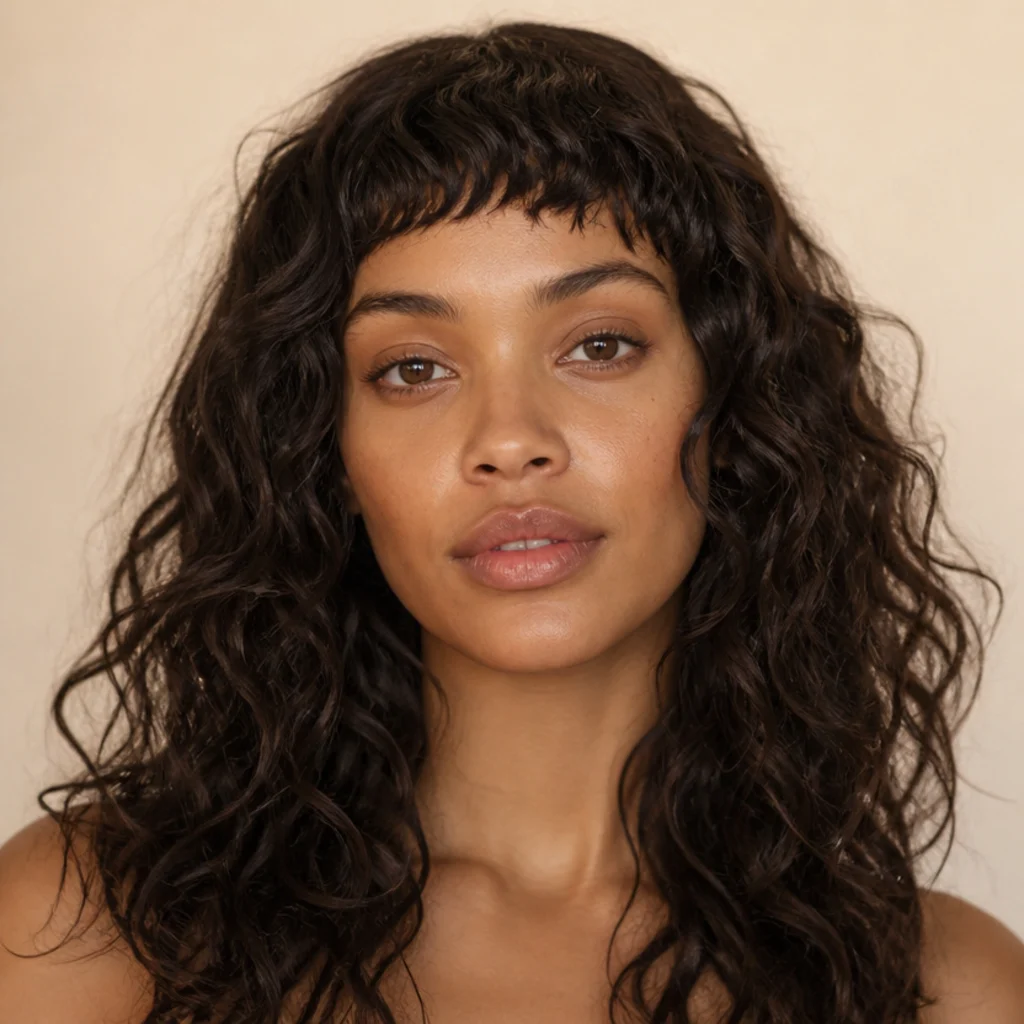
For a fashion-forward statement, micro bangs sit high and short above the brow and turn a long curly shag into an editorial, French-girl-gone-curly look. On coily and curly textures the micro fringe reads soft and rounded rather than architectural, because the spring gives it a playful arc no straight micro-bang can achieve. This is a confident choice, best balanced by oval and heart faces with enough forehead height to carry a fringe that ends well above the brow. It is the highest-commitment cut on this list: the short fringe needs trimming every three to four weeks to hold its length, and it must be cut conservatively — leave it long on the first pass, because a curly micro-bang can shrink an inch as it dries. Pro tip: diffuse only the fringe first, on low airflow with a hovering hand, before touching the rest, so it keeps its coil instead of being flattened by the diffuser bowl. Ask your stylist for a curly micro-fringe cut dry, and to stop shorter than they think.
10Silver Shag for Gray Curls
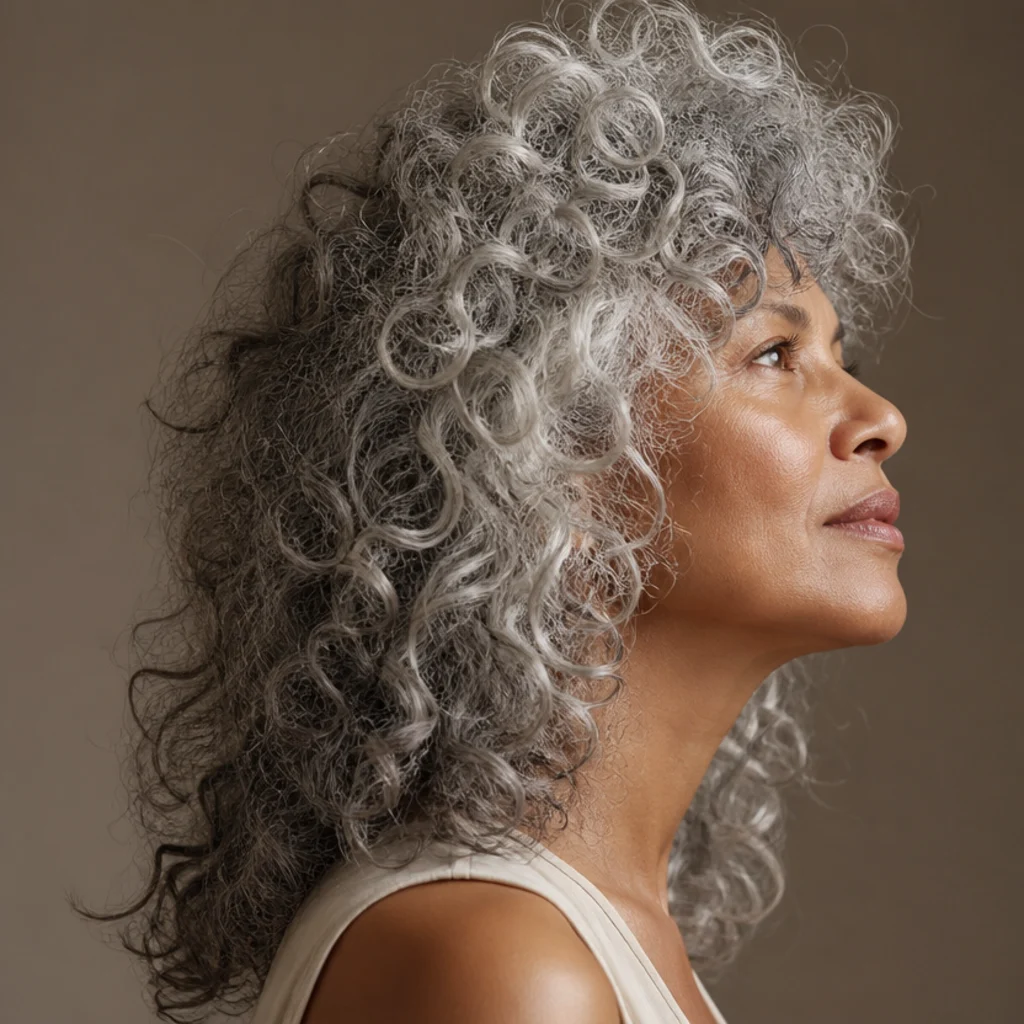
Natural gray and silver curls look striking in a shag, because the layered movement keeps the shape current instead of letting it settle into a dated set-and-hold silhouette. Silver hair frequently comes in coarser and wirier as pigment leaves, and long shag choppy layers earn their keep here by removing the weight that keeps that texture from bending, so the curls can coil freely. This flatters every face shape — the youthfulness is in the cut and the movement, not the color. Because gray can skew dull or yellow, an occasional purple- or blue-toning cleanser keeps the silver cool and bright; overuse, though, can leave a lilac cast, so treat it as a spot corrector rather than a daily. Hydration matters even more with coarse gray texture, so a rich leave-in is essential. Plan a shaping trim every 12 weeks. Pro tip: use the toning cleanser only every third or fourth wash and follow immediately with a deep conditioner, since toners can be slightly drying on already-thirsty gray. Ask your stylist for soft, blended layers rather than heavy graduation that can look severe against silver.
Save this to Pinterest if you are embracing your natural silver.
11Copper Shag With Choppy Crown Layers
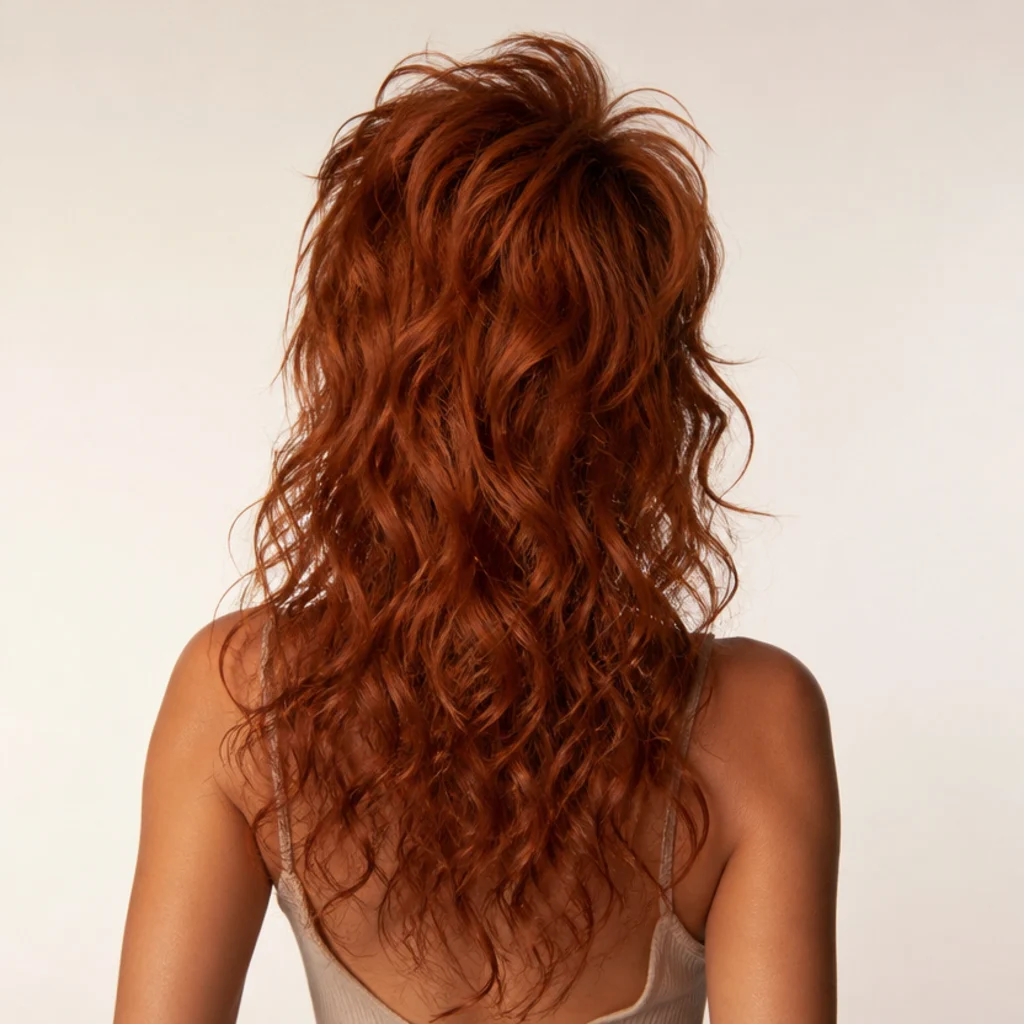
Vivid copper turns a shag into a showpiece, and choppy crown layers give that molten color somewhere dramatic to sit and catch light. The short, textured pieces at the top add real height and separation, so the whole silhouette lifts rather than sinks under the weight of the length. Copper flatters both cool and warm complexions but reads especially rich against olive, tan, and deeper skin tones where the warmth resonates. The catch is longevity: bright copper and red sit on the largest dye molecules and fade fastest, so cool showers, sulfate-free washing, and a copper-depositing conditioner between salon visits are what keep it from going peachy in a month. The crown layers want a touch-up roughly every 10 weeks to preserve their bounce. Pro tip: wash less often and rinse in the coolest water you can tolerate — heat and frequency are the two biggest accelerants of copper fade. Style with mousse at the roots for lift, then a curl cream on the ends so the color stays glossy. Ask your colorist for a copper you can maintain with a color-depositing conditioner at home.
12Long Layered Shag for Fine Curls
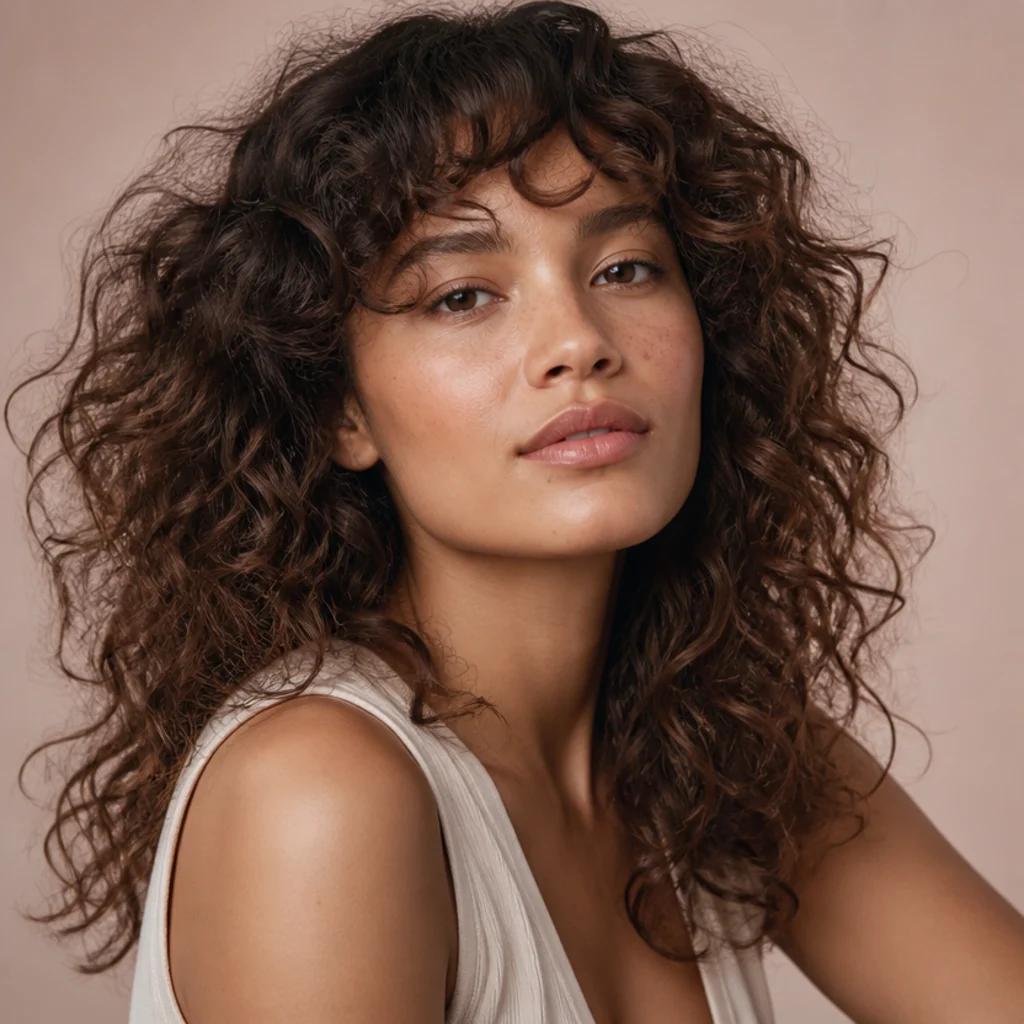
Fine curls need a restrained hand, and a long layered shag haircut can conjure the illusion of fullness precisely when the layering is kept minimal and blended. The goal is soft, feathered layers — not deep choppy notches, which strip fine hair to something stringy and see-through. Light point-cutting on the ends creates the appearance of density by breaking up a thin, translucent perimeter into pieces that overlap. This flatters delicate hair on any face shape and preserves enough length to feel full rather than wispy. Product choice is half the battle: skip heavy butters and rich creams that drag fine curls flat, and reach instead for a lightweight mousse or foam that adds volume without collapse. Trim every 10–12 weeks. Pro tip: clip the roots at the crown with sectioning clips while drying to bake in lift at the base, where fine curls lose volume first, and diffuse with your head flipped over. Ask your stylist to keep the internal layers minimal and blended, and tell them upfront that your hair is fine so they resist over-thinning.
13Deep-Side-Part Shag for Oval Faces
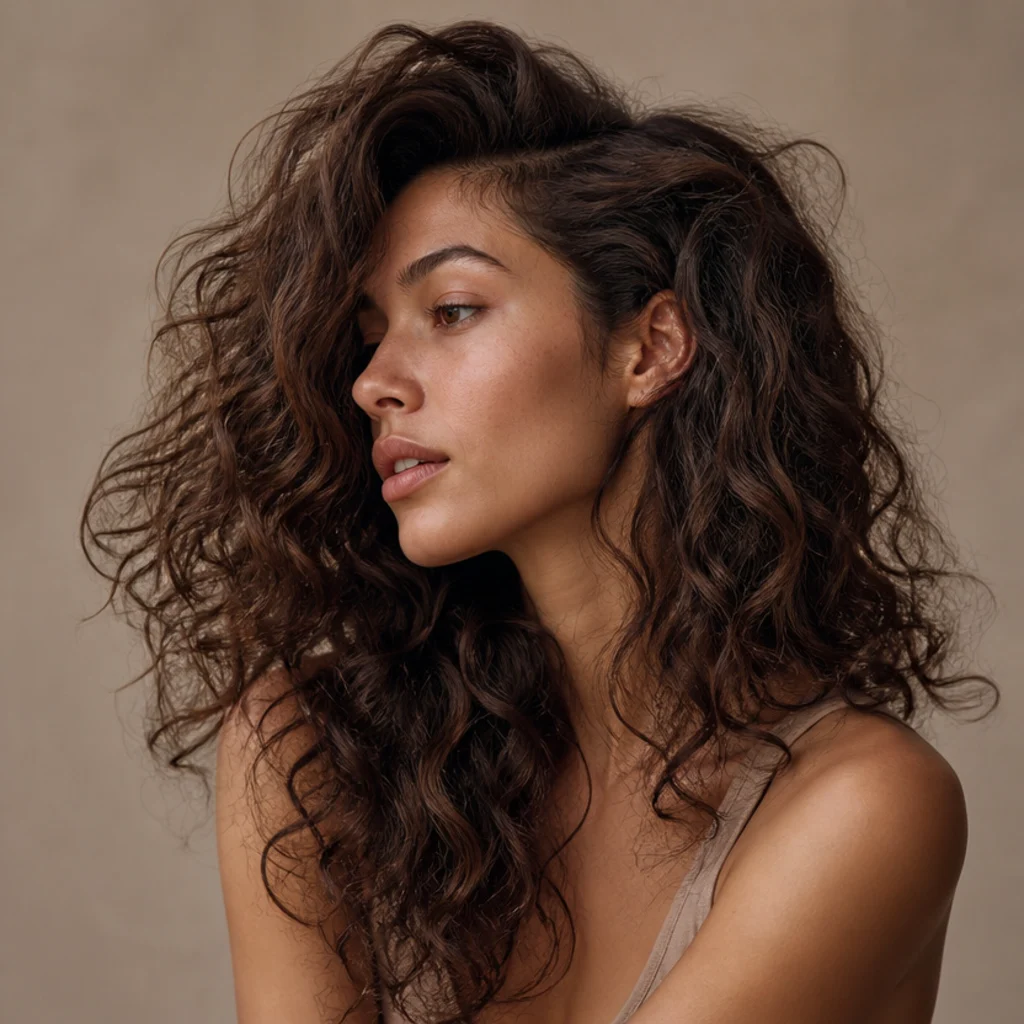
A deep side part completely reshapes how a shag reads, sweeping volume to one side for an asymmetric, old-Hollywood-glamour line, and the beauty is that it's a styling choice, not a different cut. On curls it creates a full, cascading wave over the part that feels effortless but looks deliberate. It flatters oval and square faces and, on very round shapes, the diagonal line manufactures the illusion of length and asymmetry the face lacks. The cut underneath is a standard soft long shag; all the drama comes from where you set the part and how you train the root. Pro tip: create the deep part on soaking-wet hair, clip the crown up and slightly over-directed toward the light side, and leave it until fully dry so the roots memorize the new direction — parting dry hair that grew in a center split will just flop back. Refresh the shape at your usual 12-week trim; no special maintenance beyond that. Ask your stylist to point-cut the layers so they still fall cleanly when the weight shifts to one side.
14Half-Up Shag With Curtain Bangs
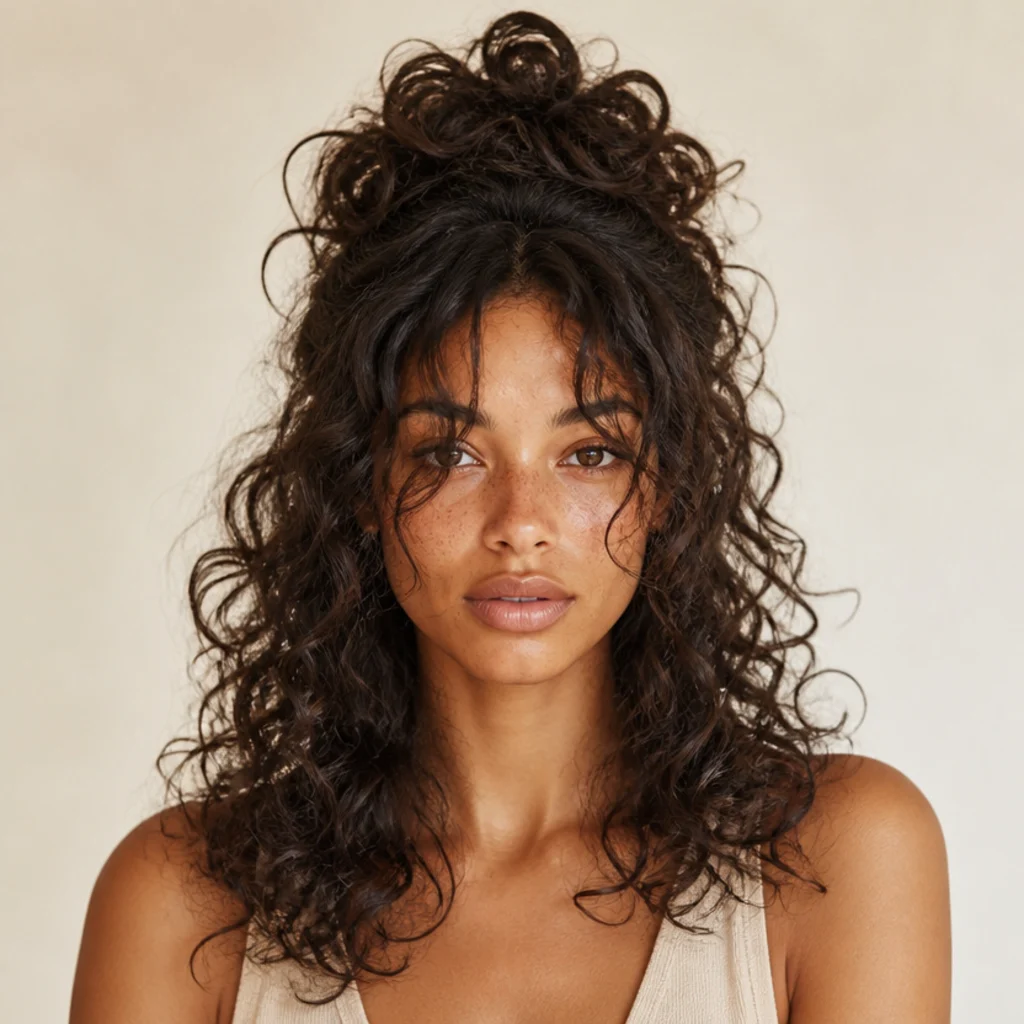
The half-up look is a live demonstration of why a shag and curls belong together. Pull the crown layers up and away, and the shorter internal pieces instantly stack into volume at the top while the curtain bangs keep the face framed — polish and movement at once, in under a minute. It is the go-to for second-day hair, a grown-out root, or a fast refresh, and it flatters every face shape because you control exactly how much height and frame you leave out. Because the crown layers are shorter, hardware matters: use a claw clip or a soft, smooth tie that grips without denting the curl, and avoid tight elastics that leave a crease you can't brush out of coily hair. Pro tip: before clipping, mist the loose lengths with a water-and-leave-in blend and scrunch to revive any flattened coils, then gather the top so a few face-framing pieces stay out to soften the part line. Ask your stylist to keep the crown layers long enough to secure — very short internal layers can slip out of a half-up.
15Jet-Black Shag With Blunt-Edge Layers
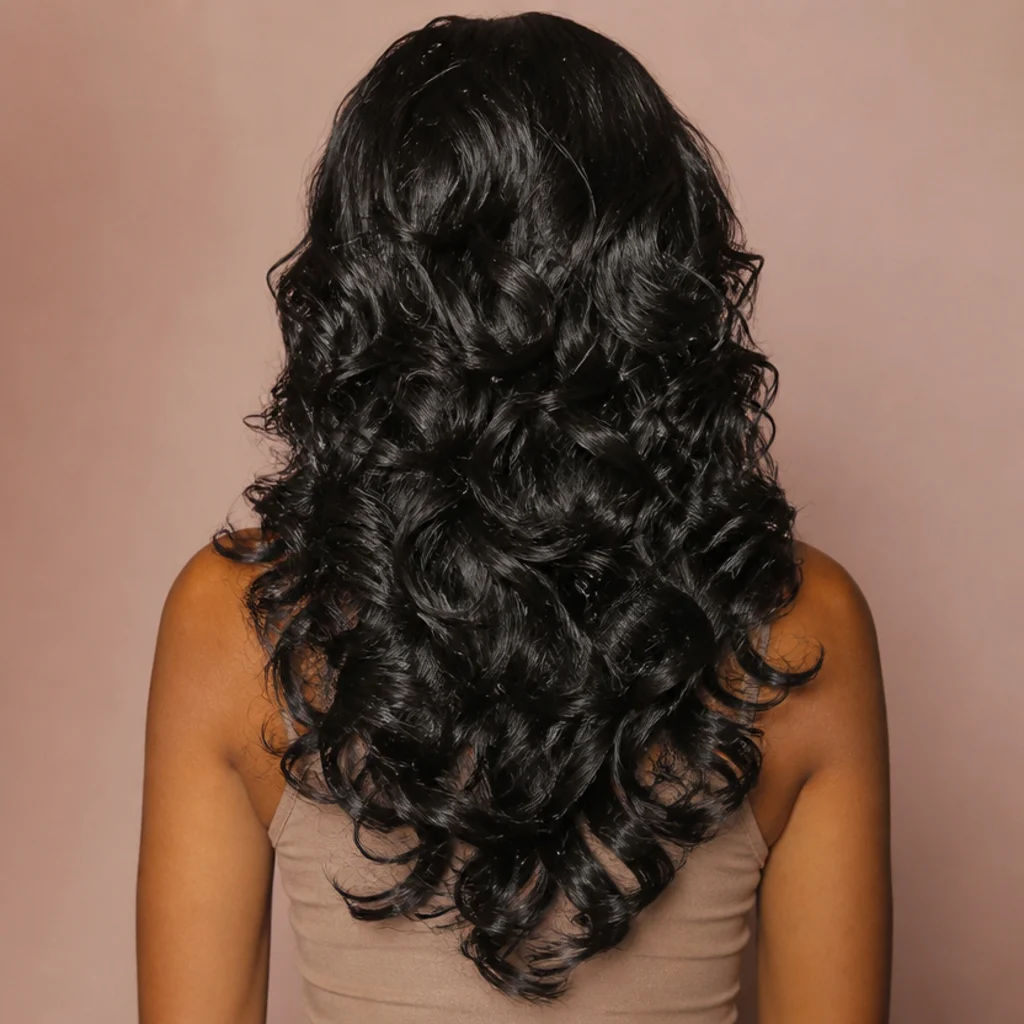
Jet-black curls in a shag lean sleek, graphic, and high-shine, and blunt-edge layers give the cut a sharper finish than the feathered versions elsewhere on this list. Instead of heavily point-cut ends, the layers keep a slightly cleaner edge so each tier reads crisp and defined against the light-absorbing depth of the color. Deep hues are unforgiving. They broadcast every bit of definition and gloss, but also every frizzy halo and dry, dull patch, so this look rewards a healthy, well-conditioned, low-porosity-mimicking curl. It suits bold personalities and most face shapes, with the strong lines especially flattering angular, well-defined features. Pro tip: finish with a glossing rinse or a drop of lightweight oil smoothed over the mid-lengths and ends between salon visits, because shine is what sells black hair; matte black curls just read flat. Trim every 12 weeks. Ask your stylist for defined, blended, blunter-edge layers rather than a wispy feathered perimeter, so the tiers stay crisp against the dark.
Pro Tips from the Editor
- Cut it dry, every time. Curly hair can shrink 20–40 percent as it dries depending on pattern, so a wet cut gambles with your final length. A dry cut (or a dry-check after a wet cut) lets the stylist see each coil where it will actually live.
- Bring shrinkage, not just a photo. A saved image shows the goal; telling your stylist "my hair shrinks about a third when dry" tells them how much longer to leave everything. The number is more useful than the picture.
- Name the finish in plain words. "Soft and feathered" versus "choppy and disconnected" are two different haircuts. Say which one, and where you want the shortest layer to fall relative to your cheekbone or chin.
- Layer product liquid-to-cream-to-gel on soaking-wet hair. Leave-in first, curl cream second, gel last, all before the hair starts drying. Applying to damp-not-wet hair is the most common cause of frizz and weak definition.
- Protect the front pieces by name. Curtain bangs, tendrils, and face-framing layers get swept into routine trims if you don't flag them. Say "please don't touch the front framing" out loud.
- Refresh, don't rewash. Between washes, a spray bottle of water plus a pea of leave-in revives second- and third-day curls far better than dry shampoo, which can leave curls crunchy and gray-cast.
- Match trim cadence to bangs, not length. Curly length can ride 12–14 weeks, but any short fringe (micro, piecey, curtain) needs a dusting every 3–6 weeks to keep its shape.
Choosing Your Curly Shag: A Decision Framework
Work through four filters in order — texture, density, face shape, and upkeep appetite — and the right version narrows quickly.
Start with texture and density. Loose 2-type waves want softer, feathered layers and are the easiest to over-thin. Defined 3-type curls take medium choppy layers well. Tight 4-type coils can handle the deepest weight removal and benefit most from a dry, coil-by-coil cut. If your hair is fine, err toward restraint regardless of pattern; if it's thick and heavy, lean into the wolf-cut end of the spectrum.
Then let face shape guide the front. Parted curtain bangs flatter almost everyone and grow out gracefully. Micro and piecey fringes make a stronger statement and want a higher forehead or an oval-to-heart shape to balance. A deep side part manufactures asymmetry for rounder faces without any change to the cut itself.
Finally, weigh upkeep honestly. Below is how the main variables trade off.
| Variable | Lower maintenance | Higher maintenance |
|---|---|---|
| Layering depth | Soft, feathered, long | Choppy, disconnected, wolf-cut |
| Fringe | Curtain / none | Micro / piecey / blunt |
| Color | Shadow root, bronde, natural gray/black | Vivid copper, high-lift blonde |
| Trim cadence | Every 12–14 weeks | Bang dust every 3–6 weeks |
| Home routine | Air-dry, light product | Diffuse, multi-step layering, toning |
The single most important request, across every version, is to have your curls cut dry or dry-checked. After that, bring a saved photo, name your finish in plain terms, and be candid about how much daily effort you will actually give it — that last honesty is what keeps the cut looking as good in week eight as it did in the chair.
Frequently Asked Questions
Is a long shag good for curly hair?
Yes, it's arguably the most curl-friendly long shape. The shag's tiered, internally graduated layers remove weight and give coils room to spring and fall in defined pieces instead of stacking into a heavy triangle. The key is having it cut by someone who works with curls dry.
How often should I trim a long curly shag?
Plan a shaping trim every 10–14 weeks. If you have a short fringe — micro, piecey, or blunt — dust it every three to six weeks to hold the shape. Curly length itself often needs less frequent trimming than straight hair because the coil hides split ends less obviously, but don't skip the shape-up or the layers blur.
Will a shag make my curls look shorter?
The layers can make length read slightly shorter because they add lift and volume up top, but the perimeter stays long. Cutting dry is what protects visible length — it lets your stylist account for shrinkage and keep exactly as much as you want rather than guessing on wet, stretched hair.
Can I straighten a long curly shag?
Absolutely, and it's one of the cut's best features. Blown out, the tiered layers read as intentional feathered steps for a lived-in '70s straight look. Use a heat protectant, keep the tool at a moderate temperature, and pass once per section to protect your natural curl pattern for the next wash.
Should a curly shag be cut wet or dry?
Dry, or wet-cut then dry-checked and refined. Curly hair shrinks 20–40 percent as it dries, so a purely wet cut can land layers dramatically shorter than intended. A dry cut lets the stylist place each layer where the coil actually falls — this is the difference between a shag that works and one that fights you.
What is the difference between a curly shag and a curly wolf cut?
They share DNA. A shag has graduated layers throughout and a relatively cohesive shape. A wolf cut pushes the same idea further — shorter, semi-disconnected crown layers for maximum lift and a more pronounced waist between the fluffy top and the long ends. The wolf cut suits thick, heavy curls that want serious bulk removed; the shag is the softer, more universal option.
How do I stop my curly shag from getting triangular?
Triangle shape usually means too much weight sitting at the perimeter and not enough removed internally. Ask for layers that shorten as they climb toward the crown to redistribute volume upward, keep the ends from being cut blunt, and use a curl gel to define and slightly weigh the ends. Diffusing with the roots clipped up also lifts the crown to balance the base.
What should I ask my stylist for?
Ask for a curly shag cut dry, with layers that shorten toward the crown to move volume up, plus your chosen fringe. Specify "soft and feathered" or "choppy and disconnected," name where you want the shortest layer to fall, flag any face-framing pieces to protect, and mention roughly how much your hair shrinks when dry.