20 Choppy Long Shag Haircut Ideas
The shag is back and longer than ever, trading blunt weight for airy, feathered layers that actually move when you do. Here are 20 choppy long shag haircut ideas across straight, wavy, curly, and coily textures, each one broken down by the face and hair type it flatters, a realistic upkeep timeline, and the exact wording to hand your stylist.
 Edited by Lena Rose · Published July 11, 2026 · 32 min read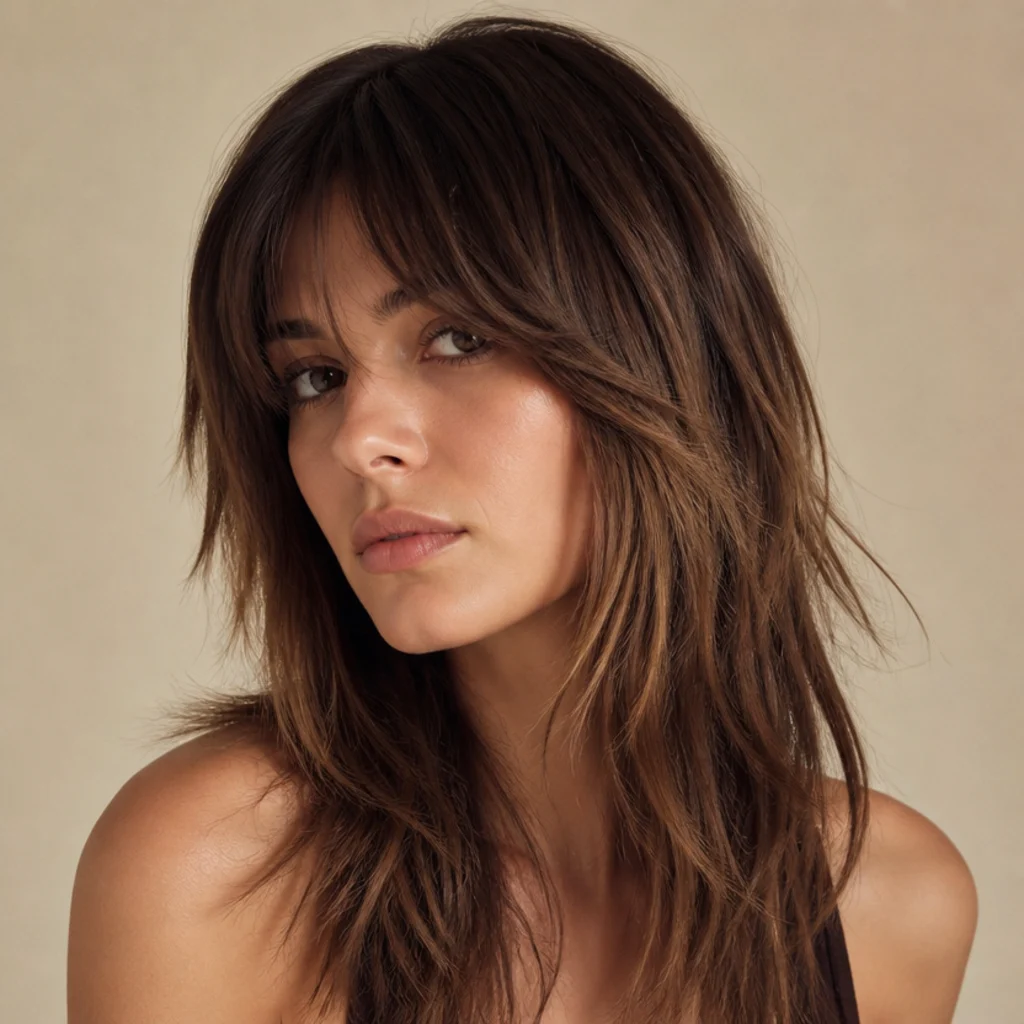
Quick Answer
- Best for: Anyone who wants to keep collarbone-length-or-longer hair but add interior movement; reads well on straight, wavy, curly, and coily textures and every face shape once the fringe is tailored to you.
- Who might skip it: Anyone who wants a single blunt line, a truly zero-layer look, or hair so fine and sparse that removing weight would leave ends see-through.
- Maintenance: Moderate. Interior layers want a shaping trim every 8-12 weeks; a heavy or full fringe needs a dust every 3-4 weeks, curtain pieces every 5-6.
- Difficulty: Low to medium to style at home once it grows in; the cut itself is stylist-dependent and hinges on confident point-cutting and razor or slide-cutting.
- Cost: Typically a mid-tier cut price in your market, more if you add a fringe reshape; color add-ons (gloss, balayage, money pieces) run higher and refresh on their own timeline.
- Wear time / longevity: Holds its intended shape for roughly 8-12 weeks before layers grow heavy; grows out gracefully with no hard demarcation line.
- Standout variation: A soft long shag with a curtain fringe, the most universally flattering entry point.
- How to ask your stylist: "A long shag with feathered, point-cut interior layers, face-framing pieces at the front, and a [curtain / bottleneck / heavy] fringe, kept below the collarbone."
In This Guide
- Soft Long Shag With Curtain Fringe
- Long Curly Shag Haircut
- Long Shag With Choppy Layers and Bottleneck Bangs
- Long Shag on Straight Hair
- Long Layered Shag Haircut in Copper
- Wispy Wolf-Cut Shag
- Coily Long Shag With Defined Layers
- Beachy Wavy Long Shag
- Rocker Shag With Heavy Fringe
- Long Shag With Face-Framing Money Pieces
- Sleek Straight Shag With Razor Ends
- Voluminous Shag for Fine Hair
- Long Shag With Balayage Dimension
- Low-Maintenance Air-Dry Shag
- Long Shag With Shadow Root and Ash Tones
- Curly Shag With Tapered Fringe
- Long Shag With Curtain Bangs and Waves
- Edgy Choppy Shag With Undercut Nape
- Silver Long Shag for Gray Hair
- Long Shag With Soft Blended Layers
Intro
The choppy long shag is a rare haircut that manages to read relaxed and deliberate at once. Length stays at or below the collarbone, but the interior gets broken open with point-cut, feathered layers that add air and swing without giving up the security of long hair. Because the silhouette comes from graduated layering rather than a blunt perimeter, it works with your hair instead of against it: straight strands show the layers crisply, waves bend and separate, curls stack and spring, and coils expand into a rounded, sculptural shape. A soft long shag leans romantic, with gently graduated pieces and a curtain fringe; a choppier build turns up the contrast with shorter crown layers and razored, disconnected ends. The current version is longer and softer than the spiky nineties shag, closer to the seventies rock silhouette but easier to wear day to day, and it grows out well with no harsh line to chase. The 20 ideas below break down who each shape flatters by face and texture, how much upkeep it realistically takes, how to style it, and the exact language to bring to your stylist so the finished cut matches what's in your head.
01Soft Long Shag With Curtain Fringe

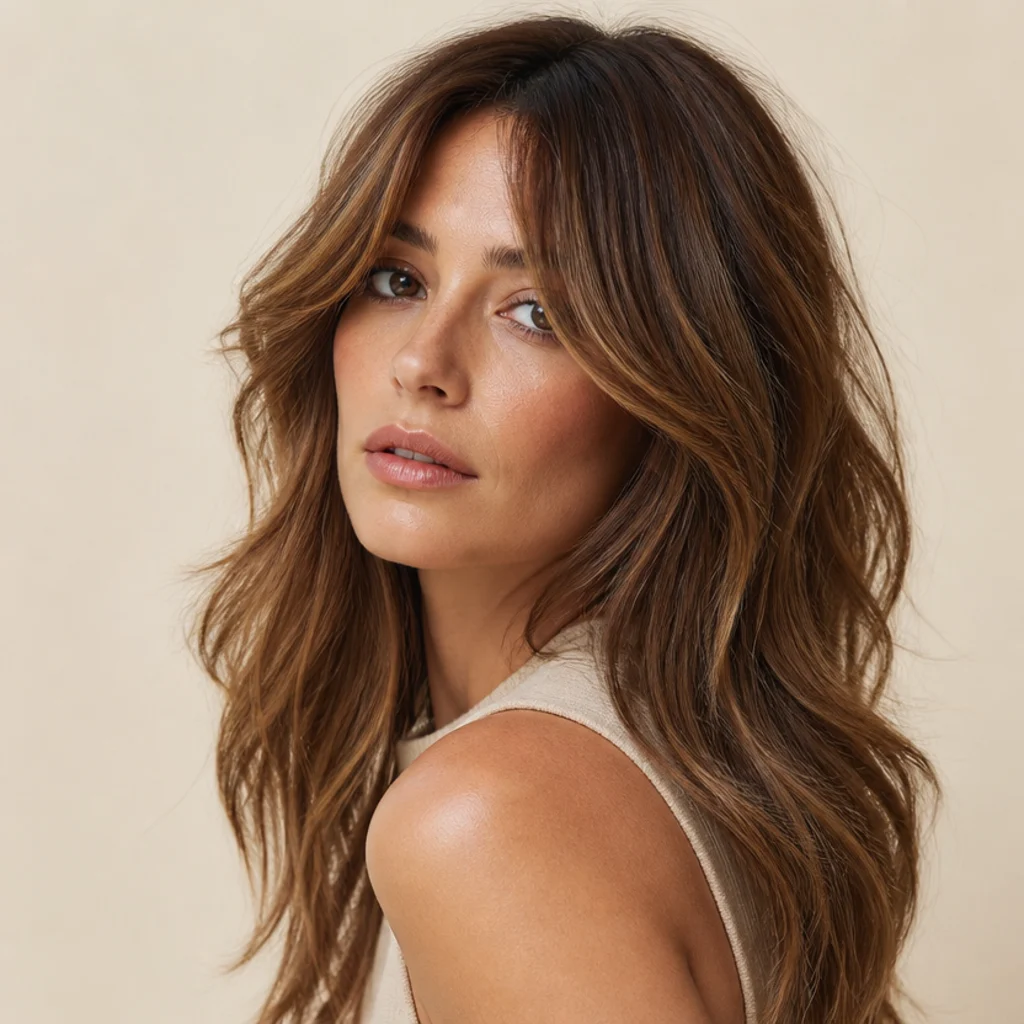
This is the gateway shag, the one most people picture first. Soft, graduated layers start around the cheekbone and lengthen toward the ends, while a curtain fringe splits at center and sweeps back to open up the eyes. The effect reads airy rather than spiky, and that's why it flatters round, oval, and heart shapes: the fringe adds vertical length and the face-framing pieces skim a fuller cheek. Fine to medium density works best here, since the layers create an illusion of movement, and it looks especially good in soft, warm brunette tones that catch the light. Blow-dry the fringe forward off a round brush, then split and sweep it back so it holds a natural bend. Plan a shaping trim every 10-12 weeks and a fringe dust every 4-6 to keep the framing honest. Pro tip: keep the shortest face-framing piece no higher than the outer corner of your eye so it grazes rather than sticks out. What to tell your stylist: long, blended layers with a curtain fringe and gentle point-cutting, so nothing looks blunt or disconnected.
02Long Curly Shag Haircut
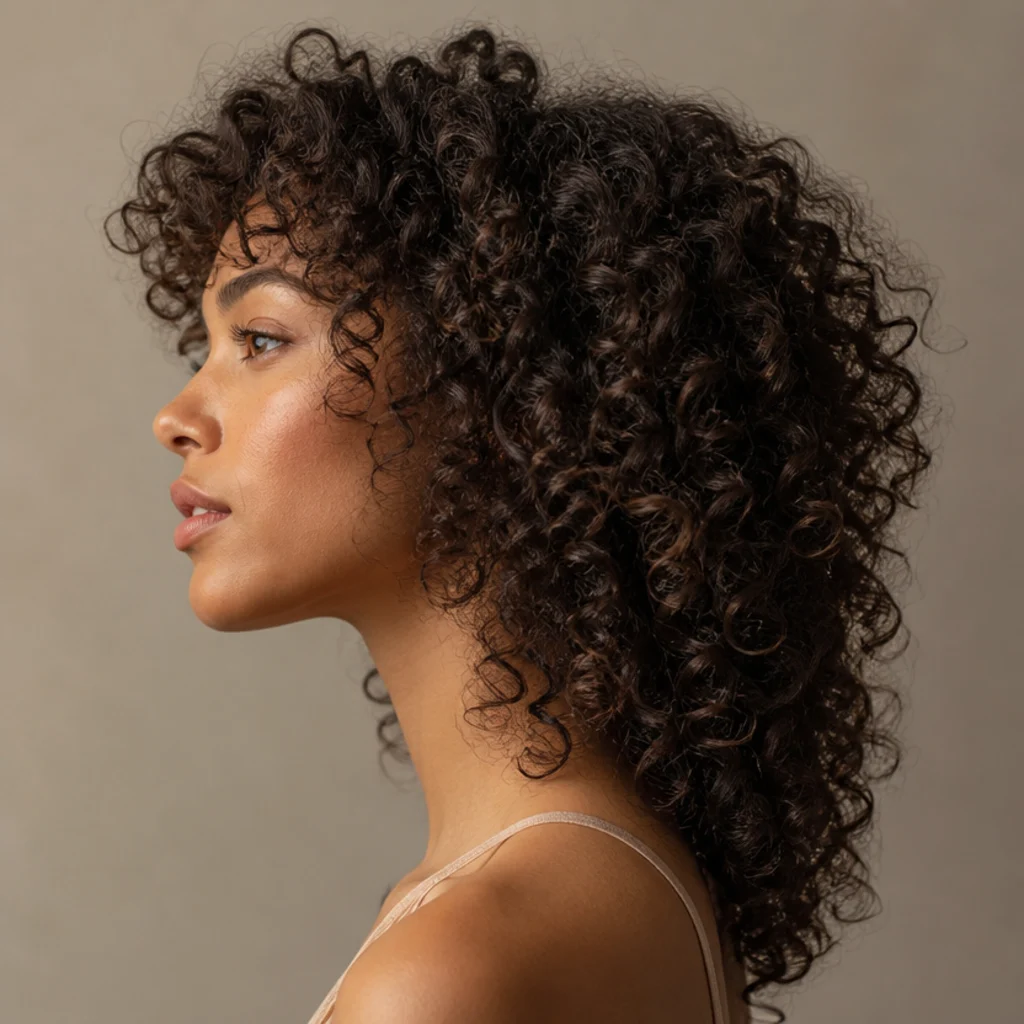
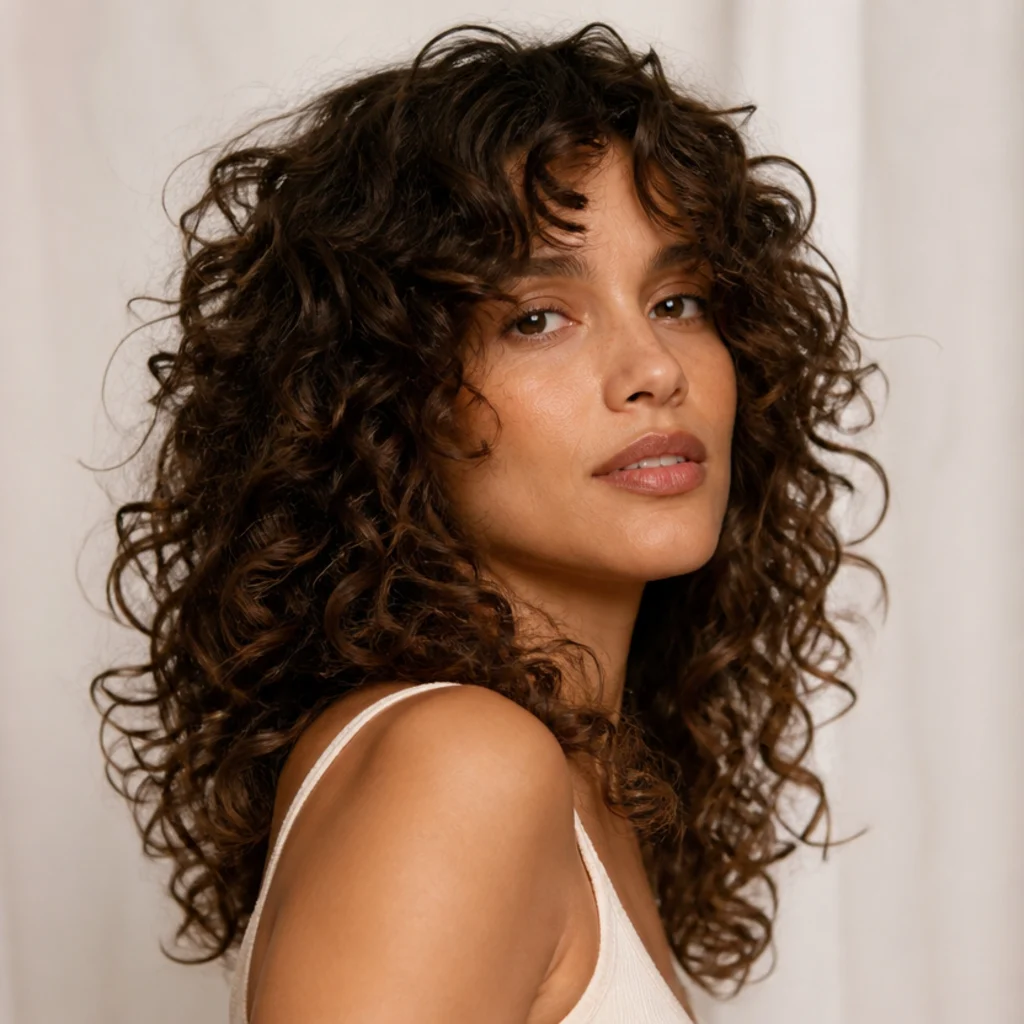
Curls and shags were made for each other. A long curly shag haircut uses interior layers to release built-up weight so ringlets can spring and stack instead of sinking into the classic triangular silhouette. The shape builds height at the crown and tapers through the lengths, so curls stay defined from root to tip. Good for 3A to 3C patterns and anyone fighting the curly-hair pyramid; medium to thick density supports the volume best. Non-negotiable: it has to be cut dry, curl by curl, so your stylist can read each spiral's true fall and shrinkage before removing length. Style with the squish-to-condish method, a leave-in, and a curl gel, then diffuse or air-dry and scrunch out the cast. Maintenance is easy day to day, just a shaping trim every 10-12 weeks. Pro tip: refresh flattened curls with a spray bottle of water and a dime of gel instead of rewetting the whole head. Tell your stylist you want a curly shag cut dry, with layers that follow your curl pattern rather than cutting against it.
03Long Shag With Choppy Layers and Bottleneck Bangs

Want the shag turned up a notch? Long shag choppy layers bring the drama. Layers here carry more contrast, shorter at the crown and dramatically longer at the ends, then finished with a razor or aggressive point-cut for a lived-in, undone edge. Bottleneck bangs sit between a curtain fringe and a full fringe: narrow and closed at the center, flaring wider toward the cheekbones like the neck of a bottle. The combination flatters longer, oval, and square faces that can carry visible texture, since the widening fringe softens a strong jaw. Because it reads bold, it wants medium to thick hair that can hold the shape. Deep chestnut or espresso tones keep the contrast rich without tipping into harsh. Pro tip: keep the crown layers starting no shorter than two inches below the shortest bang, so the top doesn't drift into mullet territory unless that's the point. Tell your stylist you want choppy, disconnected layers with bottleneck bangs and plenty of texturizing through the mid-lengths.
04Long Shag on Straight Hair
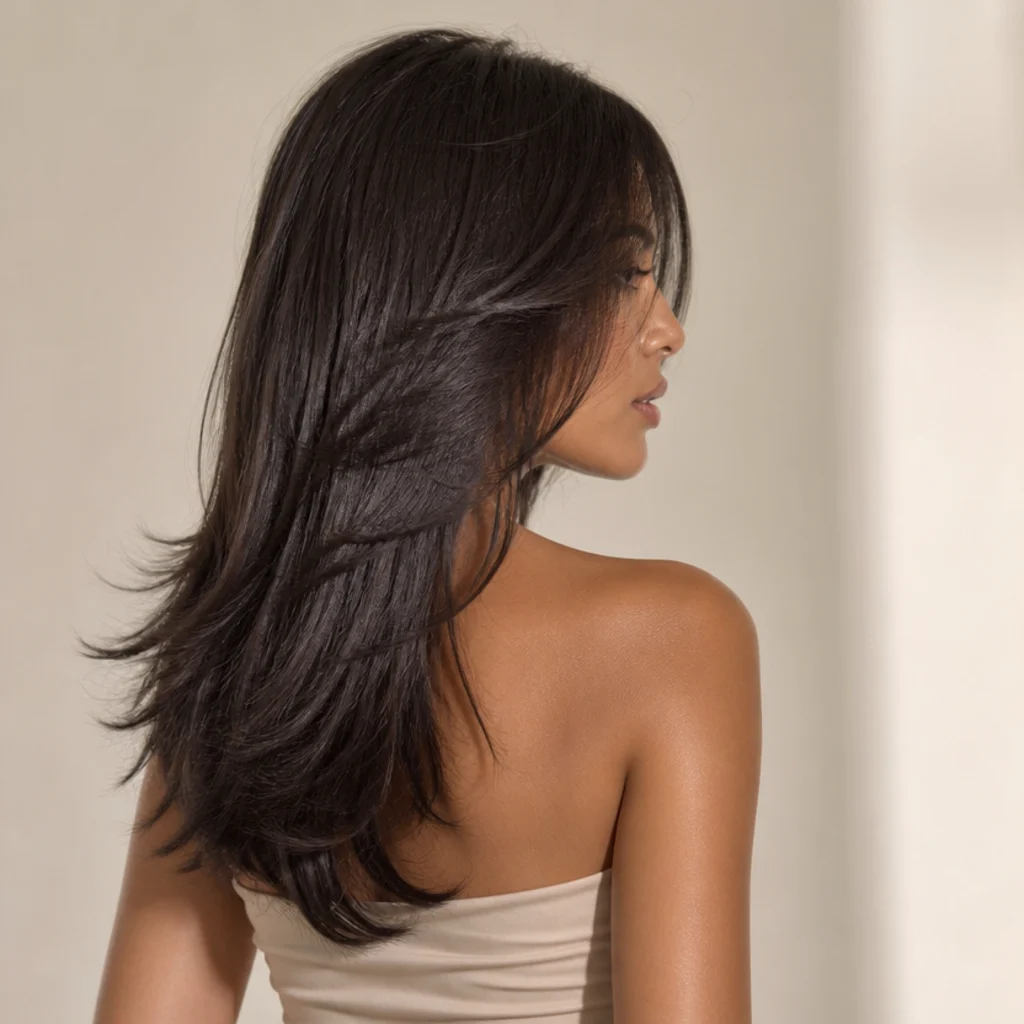
A long shag on straight hair proves you don't need waves for the shape to land. On straight strands the layers read crisply, every feathered end looks clean, and the movement comes from the cut itself rather than product. It's ideal for pin-straight hair that falls flat, since the graduated layers add built-in dimension and stop the length from reading like a solid curtain. Most face shapes and any density can wear this, though fine straight hair gets the biggest visual boost. Cool-to-neutral brunettes and glossy darker tones show the feathering best. Blow-dry with a medium round brush, over-directing the crown for lift, then flick the ends up and under for that piecey swing. Book a trim every 8-10 weeks; straight hair shows a heavy, grown-out layer fastest. Pro tip: a drop of shine serum on the mid-lengths keeps point-cut ends from looking dry or scissored-off. Ask your stylist for softly graduated layers and a light point-cut, so the ends don't look blunt.
05Long Layered Shag Haircut in Copper
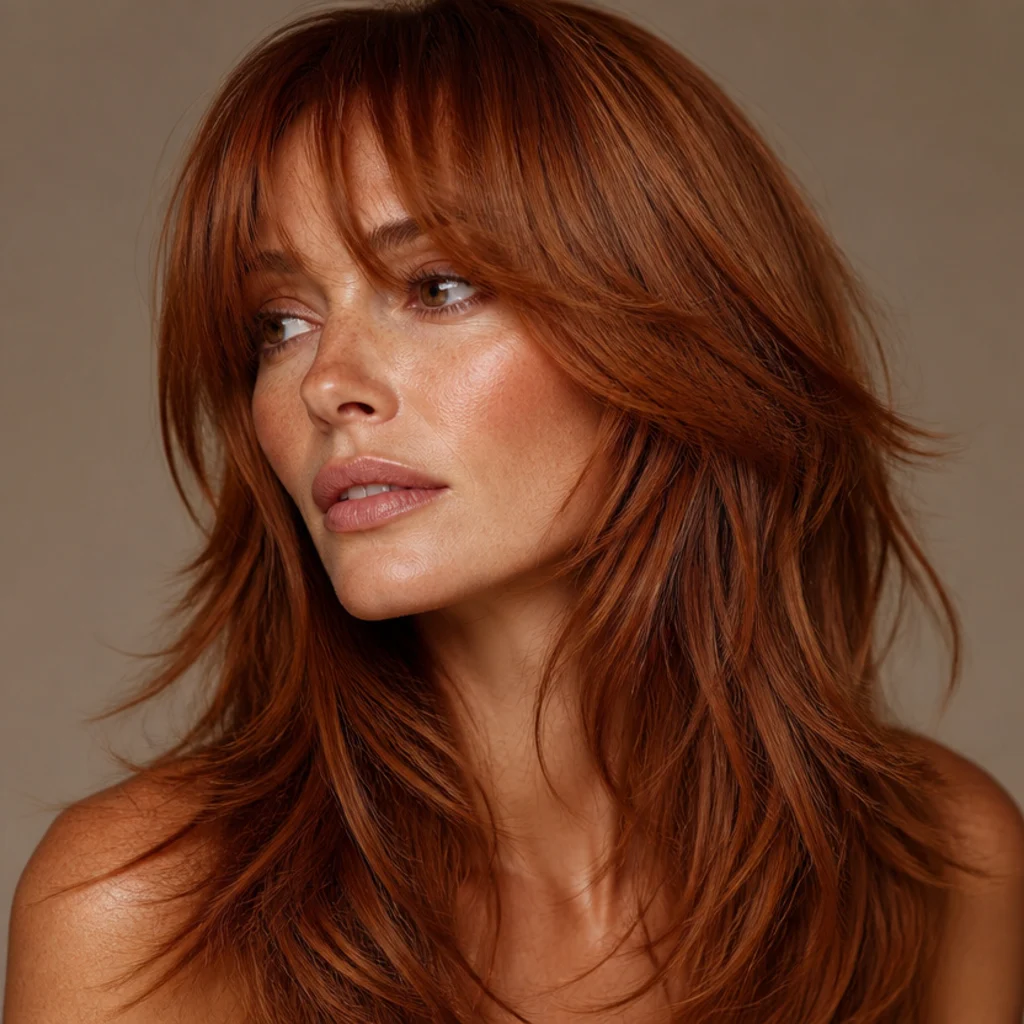
Color and cut work as one here. A long layered shag haircut in warm copper catches light along every layer, so the shape looks even more dimensional than the cut alone would give you. Copper flatters warm and neutral undertones and pairs well with green and hazel eyes; a muted terracotta version reads softer on fair skin, while a saturated penny copper suits deeper complexions. The layering follows a classic shag blueprint (shorter crown, longer ends, face-framing at the front) so the color has movement to travel along. Vivid copper fades fast, so factor in a gloss refresh every 4-6 weeks alongside your 10-12 week trims, and wash in cooler water with a color-safe, sulfate-free cleanser. Pro tip: a copper-depositing conditioner used once a week stretches the time between salon glosses. Ask for a long layered shag plus a copper gloss, and request the layers be feathered so the tone reflects across as many edges as possible.
Save this to Pinterest to compare your top shag picks side by side.
06Wispy Wolf-Cut Shag

The wolf cut is the shag's edgier cousin, blending shag layering with mullet-inspired volume up top. In its long form the crown carries dense, choppy texture that melts into wispy, tapered ends for a grungy, undone silhouette you can still tie back. It works for people who want a statement cut without giving up length, and straight to gently wavy textures show the crown-to-end contrast most clearly. This shape leans on heavy internal layering, so it's stylist-dependent rather than a beginner request, and interpretations vary a lot from salon to salon. Upkeep stays moderate because the crown grows out softly instead of into an awkward shelf. Style with a texturizing spray or a matte paste worked into the crown, roughing it up with your fingers rather than a brush. Pro tip: photograph the back and crown, not only the front, so your stylist matches the density up top you actually want. Ask for a long wolf cut with a heavy layered crown and wispy, razored ends, and bring reference images from more than one angle.
07Coily Long Shag With Defined Layers
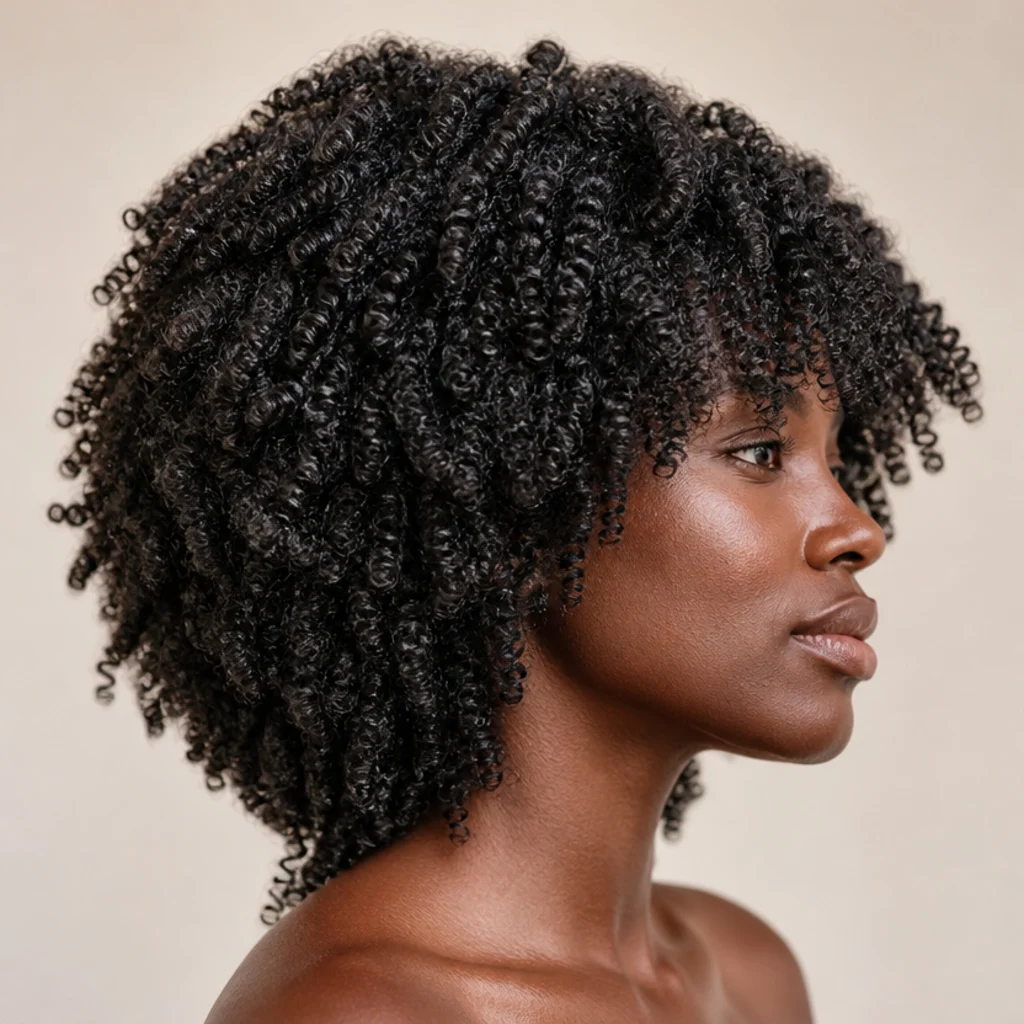
Coily and 4-type textures wear the long shag with real sculptural impact. Layers are carved to let coils stack and expand outward, building a rounded, voluminous shape instead of flattening the pattern into a wedge. Because coily hair can shrink 50 percent or more, your stylist should map the shrinkage out ahead of time, so the finished, dried length matches your goal instead of surprising you. Good for 4A to 4C hair that wants shape and movement without heat, and it reads especially bold on thick density. Keep coils hydrated with a rich leave-in, a curl cream, and a sealing oil using the LOC method to hold definition between wash days, then protect it at night with a satin bonnet. Book a shaping trim every 8-12 weeks. Pro tip: ask for the cut on stretched or lightly elongated hair for length accuracy, then a dry detail pass in natural coil form for the final shape. Ask for a shag shaped on coily hair with layers cut for volume and shrinkage, ideally by a stylist experienced with textured hair.
08Beachy Wavy Long Shag
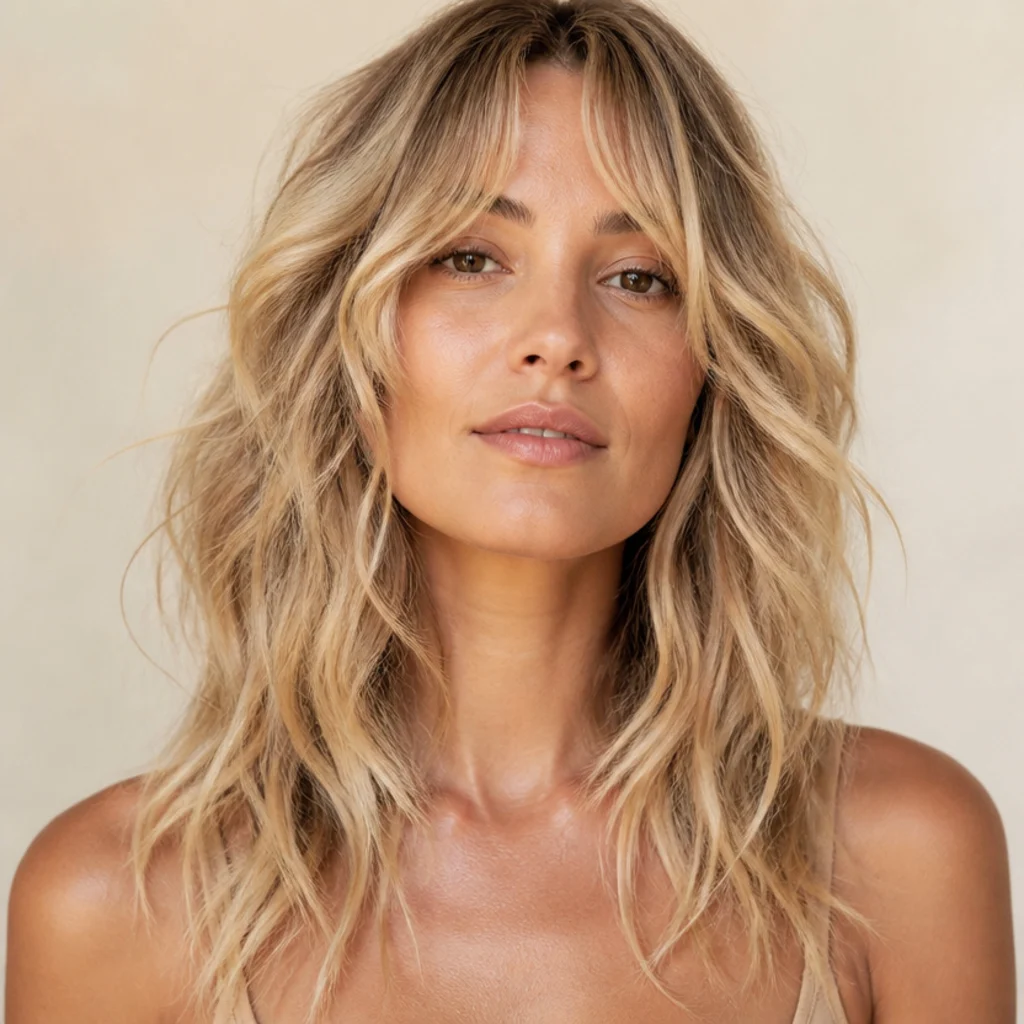
For the just-left-the-coast look, the beachy wavy shag is hard to beat. Feathered layers encourage natural waves to bend and separate, and a salt or texturizing spray brings out that piecey, tousled finish. Best on 2A to 2C hair that already has some bend to work with, on medium density that can hold shape without going frizzy. Sandy blonde, bronde, and lived-in brunette tones lean into the relaxed vibe. This is one of the lower-effort shags to style: apply a wave cream and a little mousse to damp hair, rough-dry or air-dry, then scrunch a salt spray through the mid-lengths and ends. Trim every 10 weeks so the ends don't feel stringy once the wave loses its spring. Pro tip: plait damp hair into two loose braids for an hour, then unravel and scrunch for a fuller, more uniform wave without heat. Ask for a long shag with layers built to bring out your wave, plus a light razor finish, and say you want an air-dry-friendly shape.
09Rocker Shag With Heavy Fringe
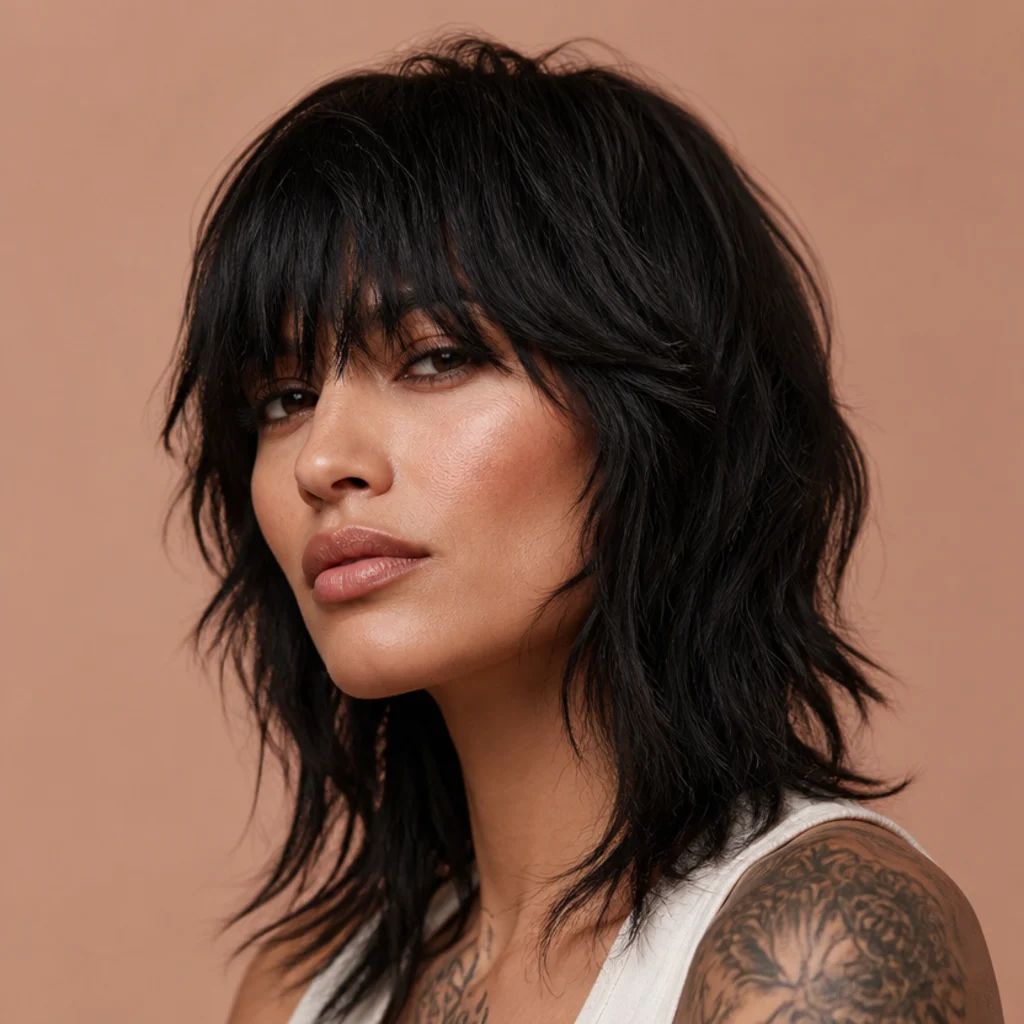
Channeling seventies rock and roll, this shag pairs a dense, brow-grazing fringe with heavily textured lengths. The fringe sits fuller than a curtain bang, and the layers throughout stay choppy and rebellious. It flatters oval and long faces that can balance a heavy fringe, since the horizontal weight shortens a longer face and draws attention to the eyes. Thick, straight-to-wavy hair carries the density best; fine hair can look sparse where the blunt fringe demands fullness. Jet black and other saturated darks amplify the graphic, editorial edge. The commitment is real: a full fringe needs trimming every 3-4 weeks to stay out of your eyes, and it has to be blow-dried forward daily to sit flat. Pro tip: dry the fringe first, right after washing while it's still soaking wet, brushing side to side so it doesn't dry with a stubborn cowlick. Ask for a seventies rocker shag with a heavy fringe and choppy, texturized layers, and specify exactly how far above the brow you want it to sit.
10Long Shag With Face-Framing Money Pieces
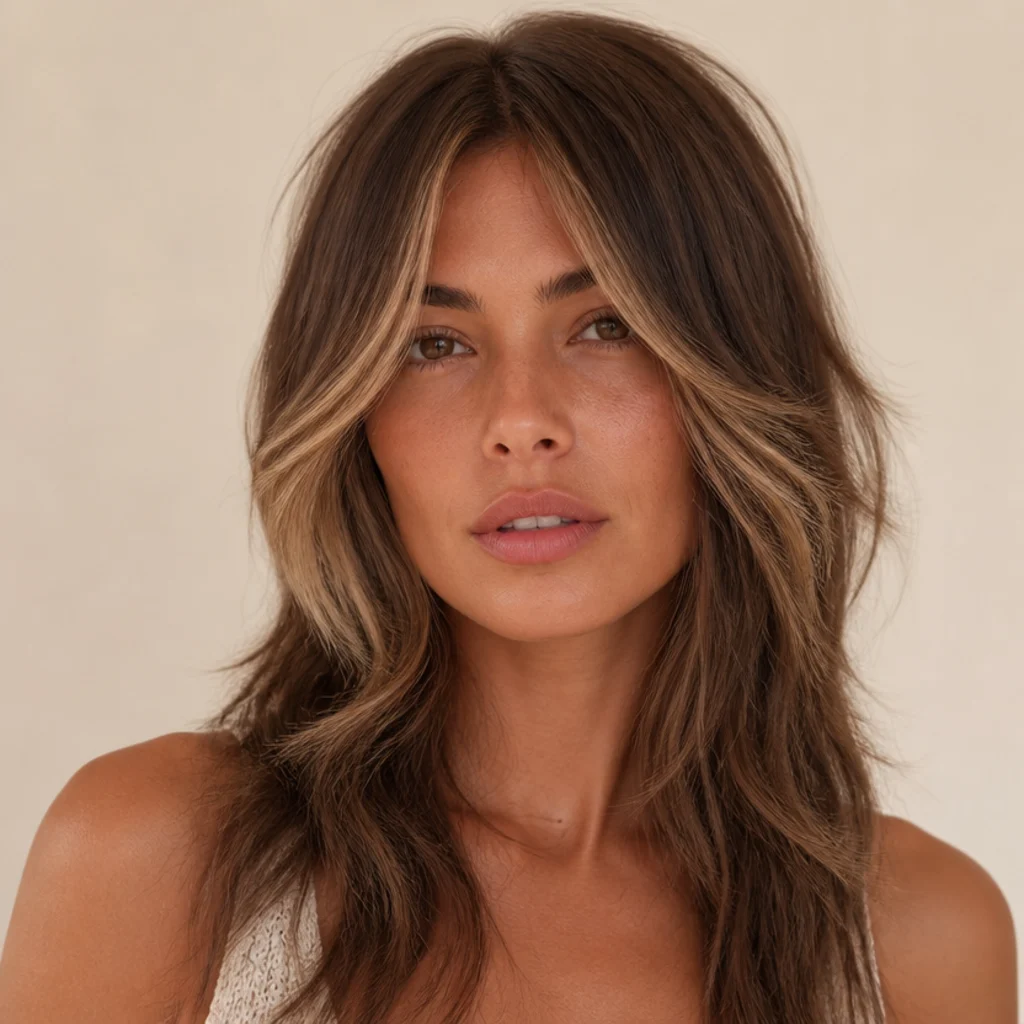
Money pieces, those brighter face-framing panels, amplify a shag's built-in framing. The lighter sections sit on the shortest layers around the face, doubling the brightening effect and adding contrast against a deeper base. This works for anyone wanting a low-commitment color pop that grows out softly with no stark root, and it suits most textures and face shapes, warming up the complexion where it matters most. Choose a warm honey or caramel money piece for warm undertones, a cooler beige or icy tone for cool skin. Upkeep is a toner refresh every 6-8 weeks to stop the panels from creeping brassy, plus your regular trims. Pro tip: ask for the brightest part of the money piece to start at your cheekbone, not the root, so grow-out stays soft with no harsh line at the part. Ask for a long shag with face-framing layers and money-piece highlights, and specify whether you want them cool or warm to suit your undertone.
Save this to Pinterest and tag the color you would try first.
11Sleek Straight Shag With Razor Ends
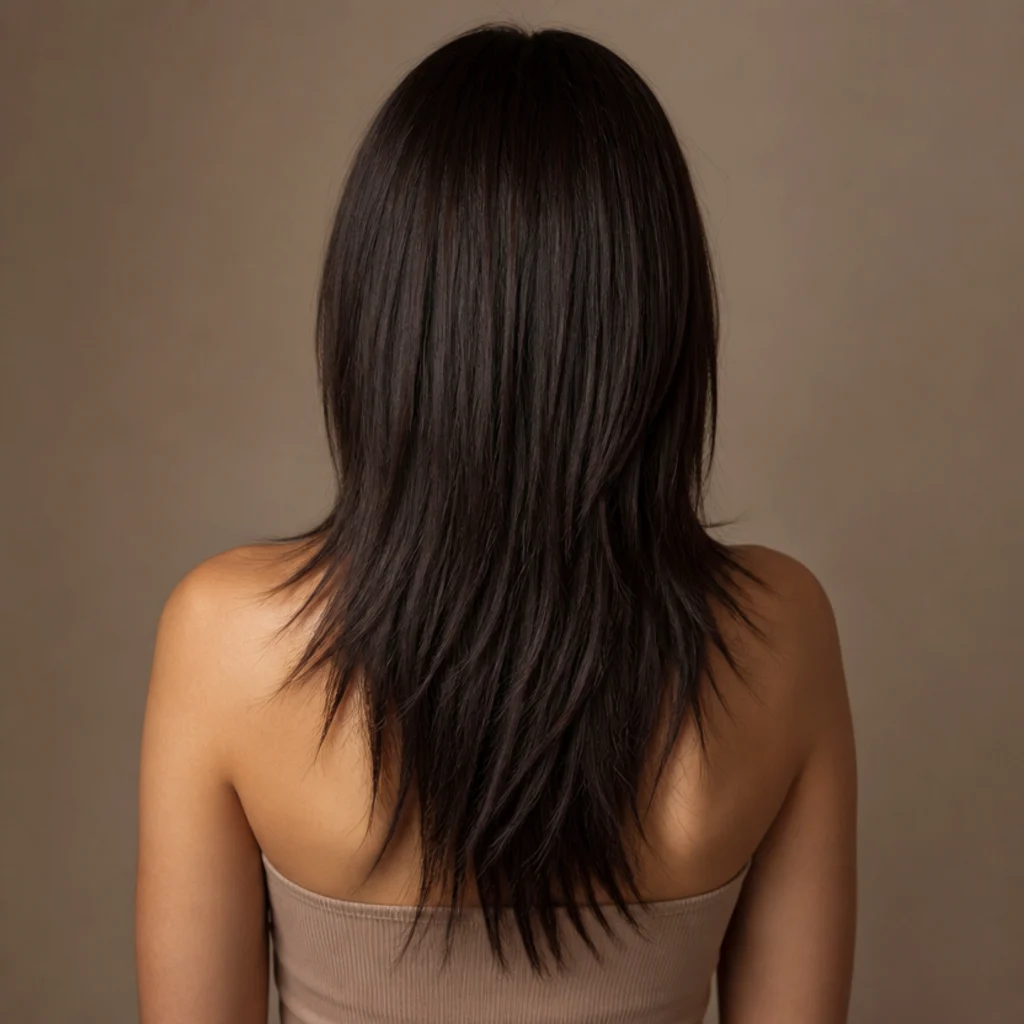
Not every shag has to look undone. A sleek version keeps the length glassy and smooth while razored ends preserve that signature feathered movement, so the contrast between polished mid-lengths and wispy tips feels modern and editorial. It works on straight, healthy hair that can hold a smooth finish and flatters square and oval faces, where the soft ends offset a strong jaw. Razored ends can look thin on fragile or damaged hair, so this is best on medium to thick density with intact ends; over-processed hair frays at the razor line. Cool dark browns and espresso keep it looking expensive and glassy. Style with a smoothing serum, blow-dry flat, then run a flat iron through with a slight flick at the ends. Pro tip: razor cutting needs sharp blades and a skilled hand, so ask your stylist directly whether they razor-cut regularly before booking. Ask for a straight shag with razor-cut ends and long, blended layers, and say you want a sleek rather than piecey finish.
12Voluminous Shag for Fine Hair

Fine hair and the shag are natural allies. Strategic layering removes just enough weight for the crown to lift, so the whole shape looks fuller than the actual density while the length keeps it from reading thin. The key is restraint: keep layers softer and less choppy on fine strands, since over-texturizing leaves ends stringy and see-through. Good for fine or thin hair craving body and movement, on any face shape, and warm honey or buttery blonde adds a perception of density that darker flat tones can lose. Style with a root-lifting mousse and a round-brush blow-dry, over-directing the crown and hitting the roots with a cool shot to set the lift. A volumizing dry shampoo at the roots on day two revives it fast. Book trims every 6-8 weeks so ends stay full rather than wispy. Pro tip: ask for point-cut, not razored, ends, since a razor thins fine hair further. Ask for a volumizing long shag with soft layers for fine hair and specifically request light texturizing.
13Long Shag With Balayage Dimension
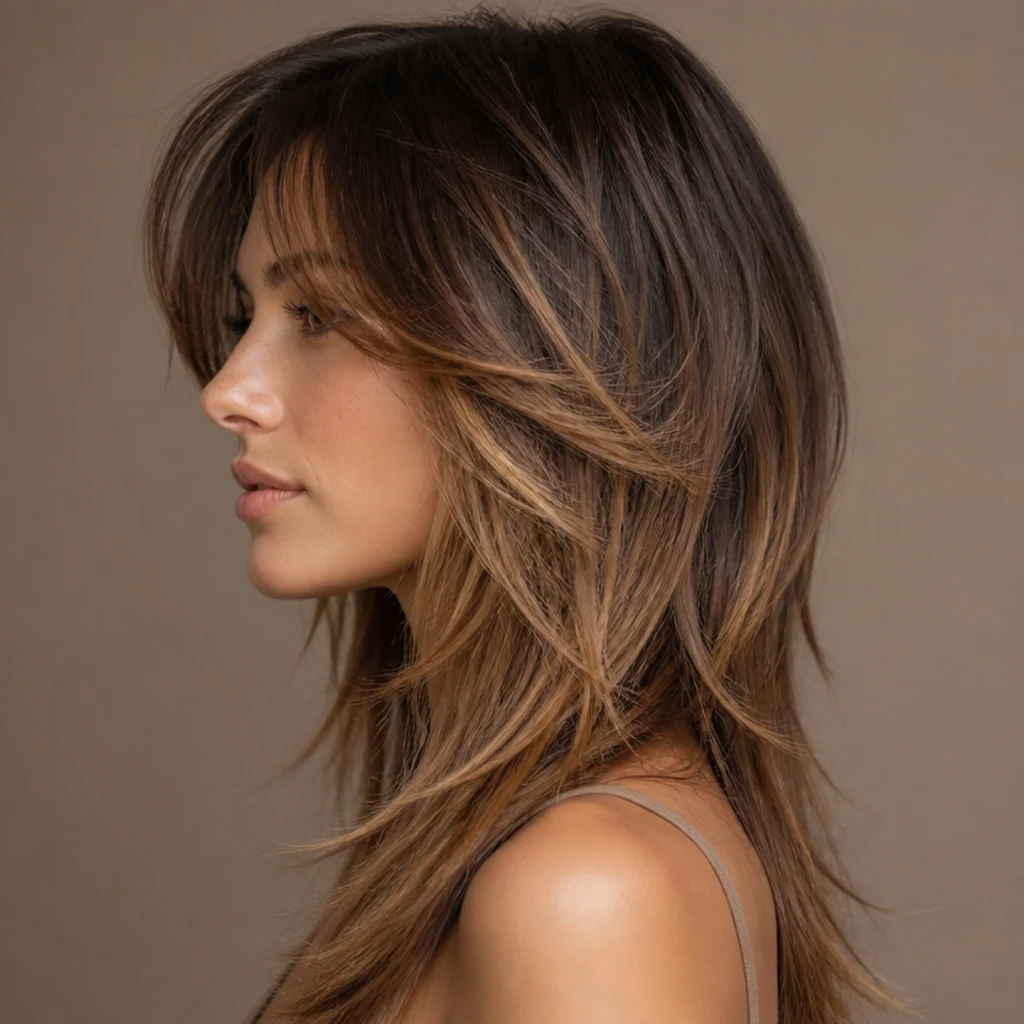
Balayage and shags are a natural pairing because hand-painted color follows the movement of the layers, so the dimension looks even richer. Soft, blended highlights and lowlights trace the feathered ends, and every layer catches a slightly different tone as it moves. It suits anyone wanting a natural, sun-grown color that flatters the cut rather than competing with it, and it works on all textures, growing out with almost no visible regrowth line. A brunette-to-caramel melt reads warm and lived-in; a cooler mushroom or beige balayage suits neutral undertones. Upkeep is gentle, roughly every 10-12 weeks, which pairs neatly with your trim schedule, plus a gloss between appointments to keep the ends from dulling. Pro tip: ask your colorist to concentrate the lightest painted pieces on the surface layers and face-framing sections, where the shag's movement shows them off most. Ask for a long shag paired with a soft, face-framing balayage, and request the painting be concentrated on the layered ends to accentuate the shape.
14Low-Maintenance Air-Dry Shag
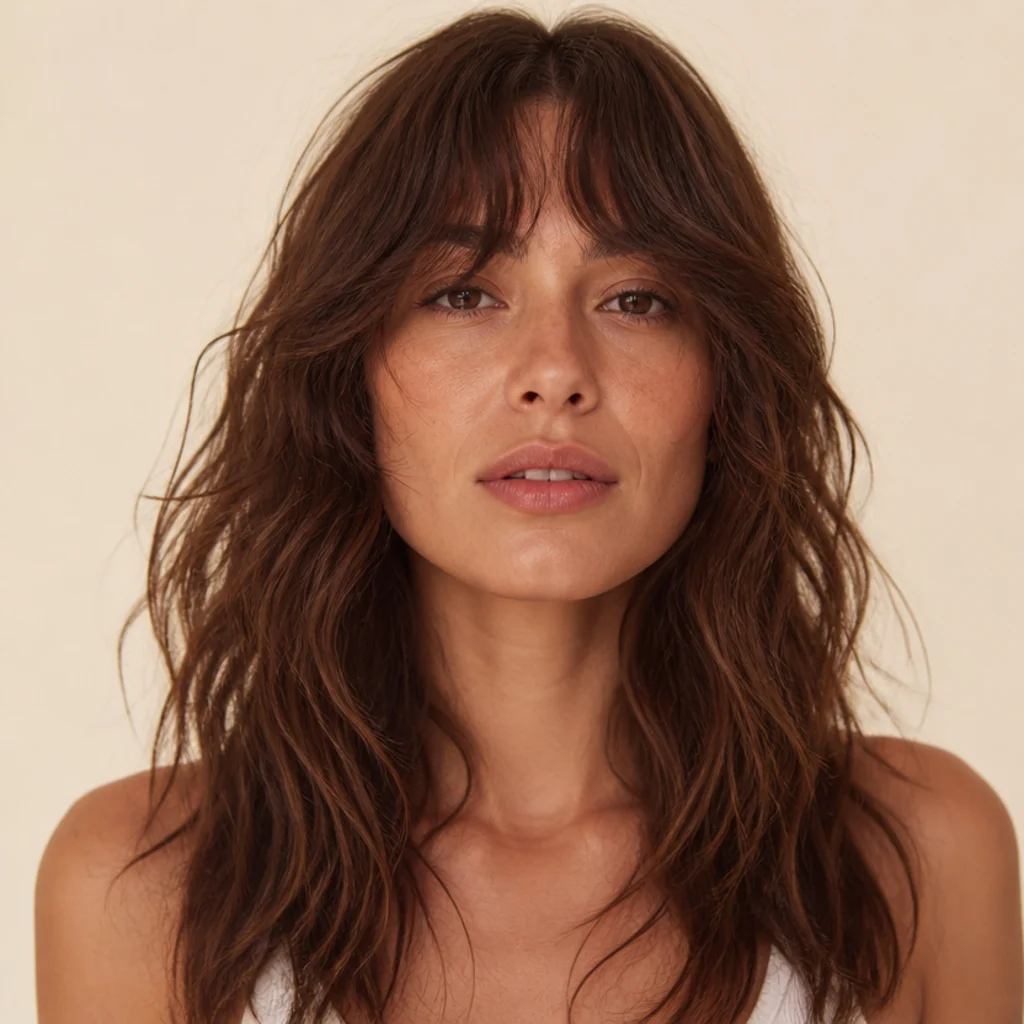
If your styling routine is a spritz and a scrunch, this is your shag. Cut to work with your natural texture, the layers are shaped so hair falls into place as it air-dries, no heat required. Good for busy people and anyone protecting their hair from daily thermal styling; wavy to gently curly textures air-dry most gracefully, though a light-layered version behaves on straight hair too. Apply a leave-in and a curl or wave cream to soaking-wet hair, scrunch upward, then actually leave it alone, since touching it mid-dry is what causes frizz. Maintenance is minimal beyond a trim every 10-12 weeks. Medium brown and other natural tones keep the whole look low-effort. Pro tip: rough-dry only the roots on cool for 30 seconds if you want more lift, then let the lengths finish on their own. Ask for a wash-and-go long shag cut to your natural texture, and tell your stylist you never plan to heat-style it, so they can leave more length and structure in the ends.
15Long Shag With Shadow Root and Ash Tones

A shadow root keeps a lightened shag low-maintenance by blending your natural base into the lighter lengths, so regrowth reads as a soft gradient instead of a stark line. Cool ash tones through the layers give the whole look a modern, muted finish that flatters cool and neutral undertones and calms any unwanted warmth. Good for blondes who want the brightness of a lighter shag without chasing root touch-ups every month; the standard shag layering lets the color do the heavy lifting. Expect a gloss or toner every 6-8 weeks to keep the ash from fading warm, though true root touch-ups can stretch far longer thanks to the shadow. Pro tip: use a purple or blue-based toning shampoo once a week to hold the cool cast between salon visits, but no more often, since overuse dulls and grays out blonde. Ask for a long shag with a shadow-root melt and cool ash-blonde tones, and say clearly that you want a grown-out, low-upkeep root.
Save this to Pinterest so your stylist sees the exact tone you mean.
16Curly Shag With Tapered Fringe
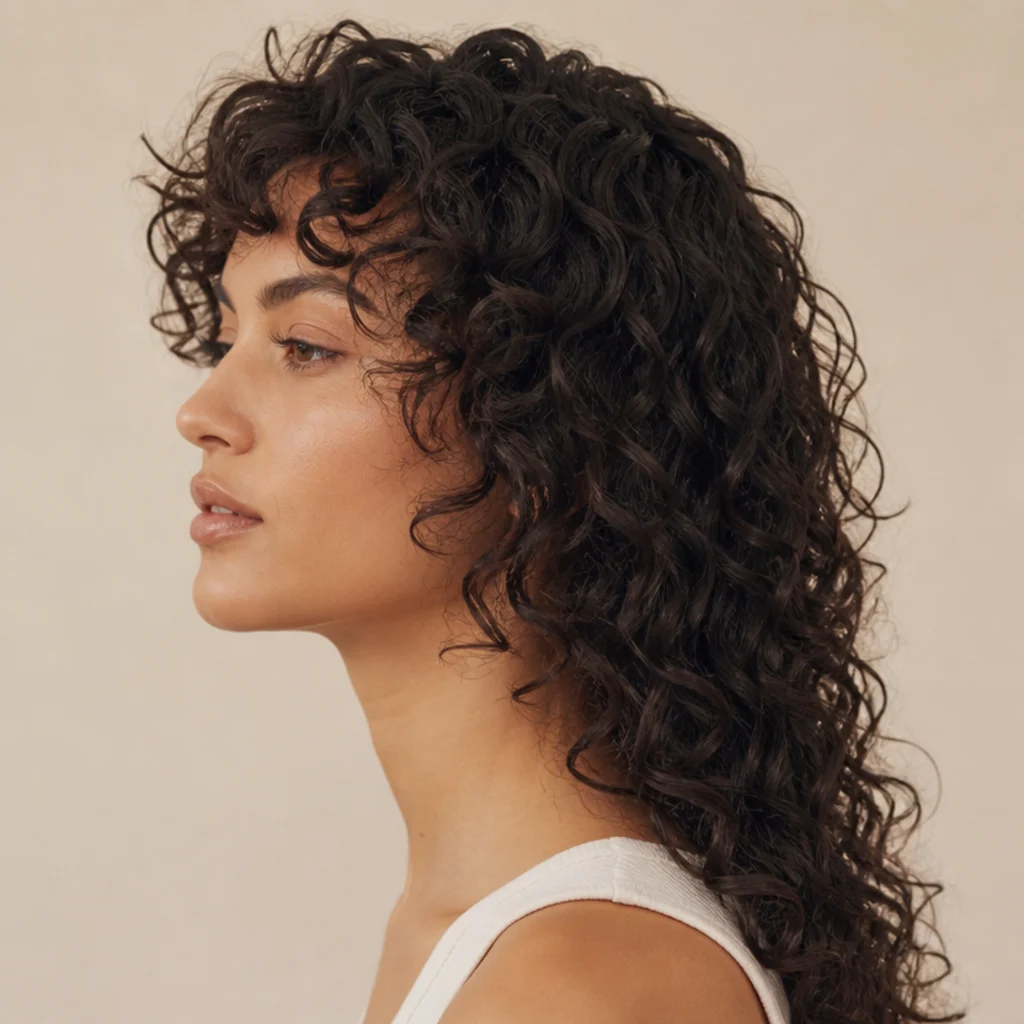
Curly fringe intimidates a lot of people, but a tapered version is easier to wear than it sounds. Shorter curls at the front are cut to taper and blend into the face-framing layers, softening the forehead without the shrink-up surprise a blunt curly bang can bring. This long curly shag haircut suits 2C to 3B textures wanting to break up length around the face, on medium density that supports the fringe. Rich espresso and other deep tones make the curl definition pop. Cut it dry so the curls land where they naturally spring, and refresh the fringe on non-wash days with a spray of water and a pea of gel, then coil it around a finger to reset the shape. Maintenance is moderate, with a shaping visit every 10-12 weeks. Pro tip: ask for the fringe to be cut curl by curl and left a touch longer than you think, since dry curly hair keeps lifting for a day or two after the cut. Ask for a curly shag with a tapered, blended fringe cut dry, and say you want it forgiving rather than short and blunt.
17Long Shag With Curtain Bangs and Waves
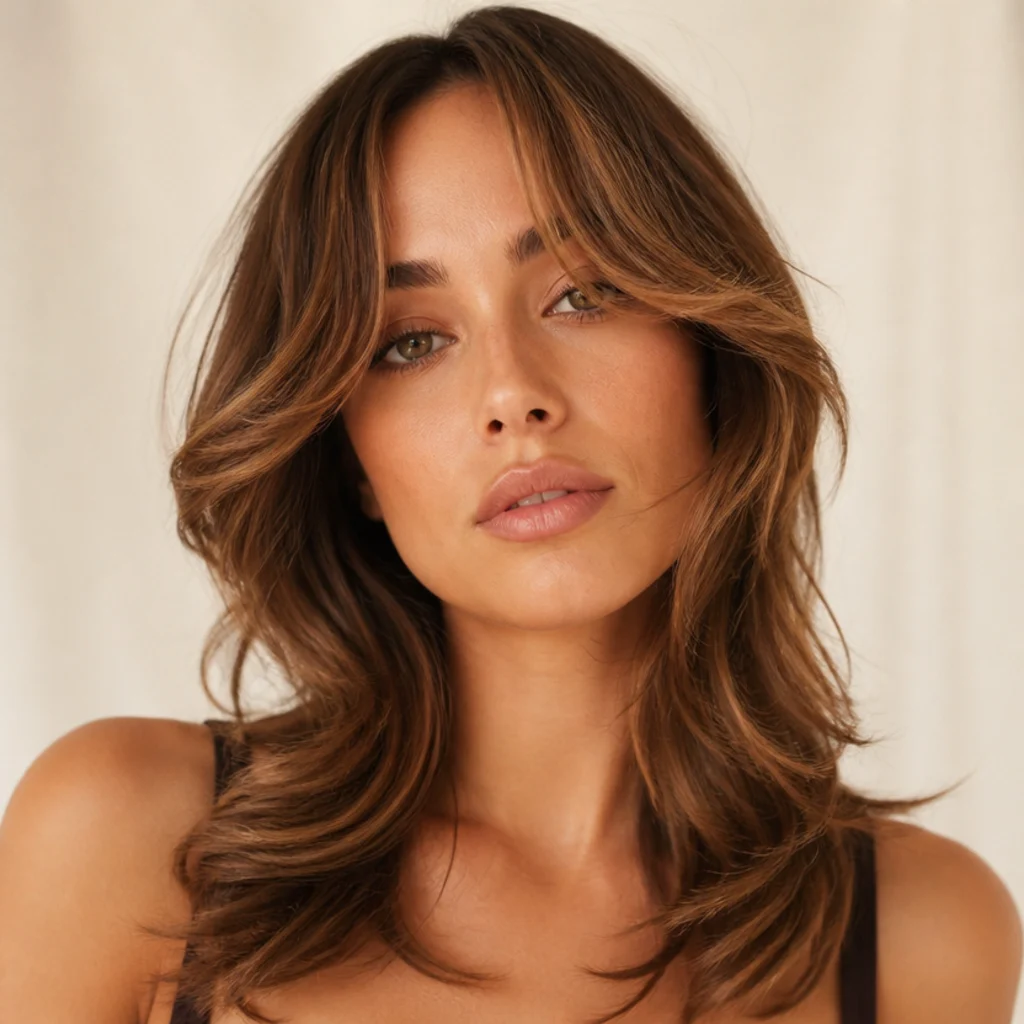
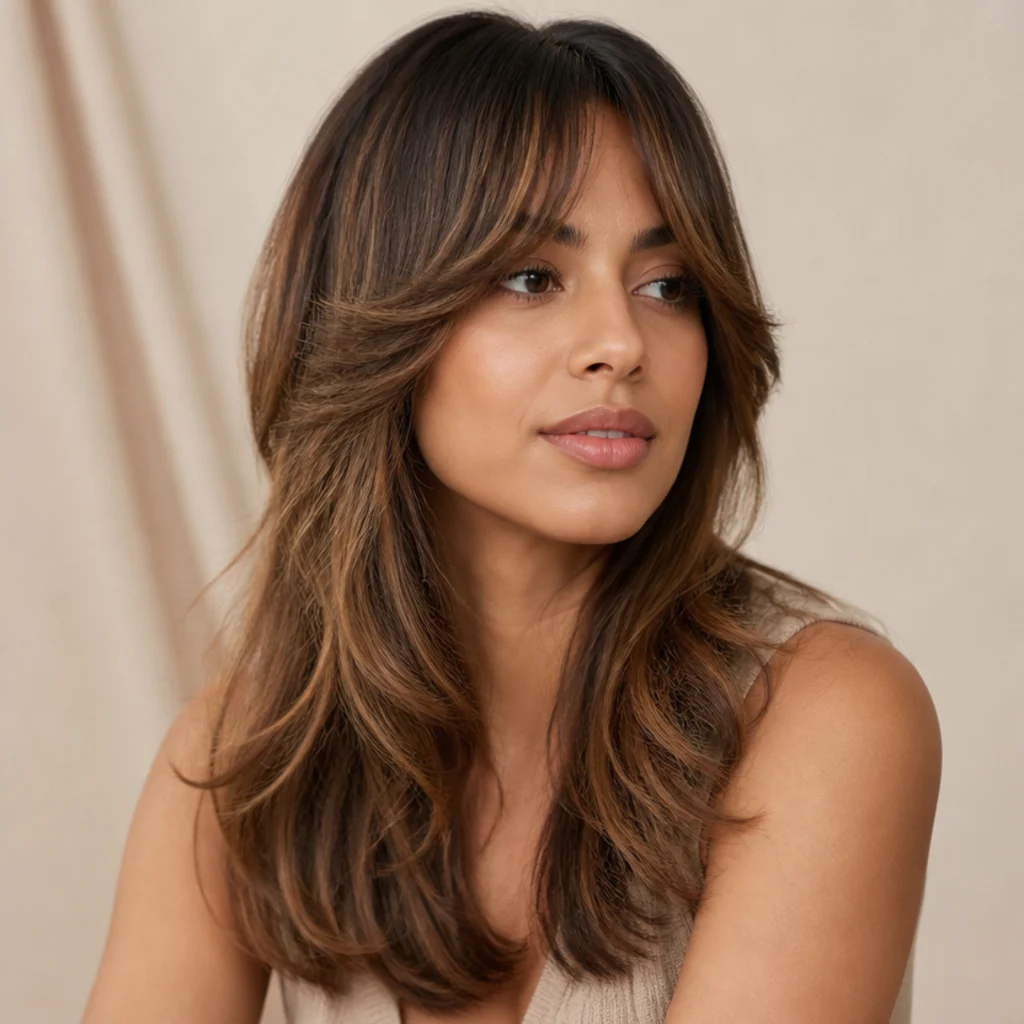
Curtain bangs are the shag's most requested pairing, and for good reason. Combined with soft, bent waves through the lengths, they create an easy, face-framing shape that suits nearly everyone. The bangs part in the middle and sweep outward to graze the cheekbones, echoing the feathered layers below. This works on straight and wavy textures and flatters round, heart, and oval faces, since the outward sweep widens a narrow forehead and lengthens a round face. Caramel and dimensional brunette tones show off the wave and the layering together. Style the fringe forward off a round brush, split and sweep it back, then bend the lengths with a wide-barrel wand, alternating directions for a lived-in finish. Upkeep is a fringe trim every 5-6 weeks and a shaping trim every 10-12. Pro tip: point the round brush down and away as you dry the bangs so they set with a soft outward flick rather than curling under. Ask for a long shag with curtain bangs and long, blended layers, and request the bangs blend smoothly into the face-framing pieces.
18Edgy Choppy Shag With Undercut Nape
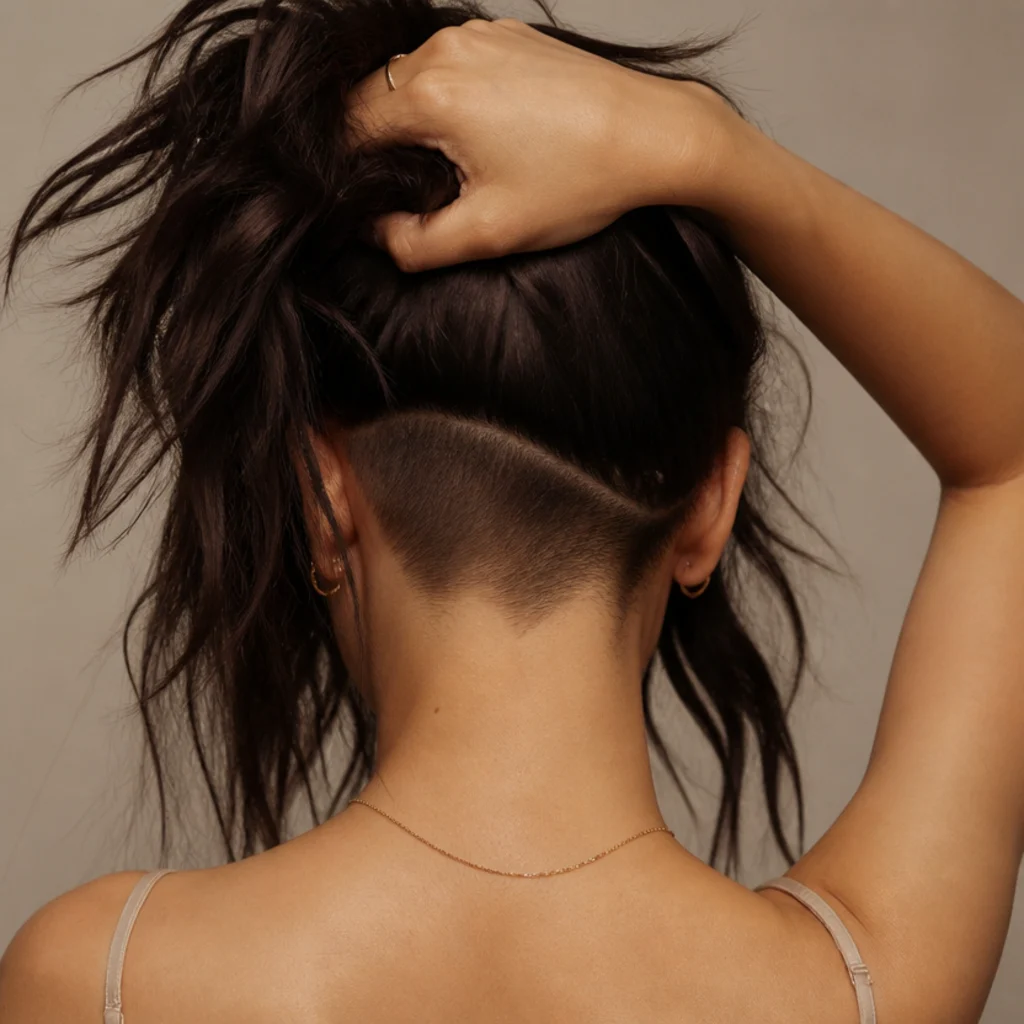
For a hidden edge, a subtle undercut at the nape removes bulk under the length and adds a secret detail you reveal in an updo or ponytail. Up top the shag stays long and choppy, so you keep the versatility of length with a lighter, cooler feel underneath, a real perk in summer or under heavy hair. Good for thick or dense hair carrying too much weight at the nape, and anyone wanting an understated edgy touch without visibly changing the front. It works best on straight-to-wavy hair, where the top layers lie flat enough to conceal the undercut. The trade-off is upkeep: the shaved section needs a re-clip every 3-4 weeks to stay crisp, or it grows into a fuzzy pad. Pro tip: keep the undercut confined to the lower nape only, not up behind the ears, so your hair still fully covers it when worn down. Ask for a long choppy shag with a concealed nape undercut, and clarify how much of the underneath you want removed and at what clipper guard length.
19Silver Long Shag for Gray Hair

Gray and silver hair looks striking in a shag, where the layers add the movement that makes natural silver feel intentional and current rather than flat. Feathered layers and a soft fringe keep the shape youthful and open up the face, and the cut works with silver's often wiry, coarser texture instead of against it. Good for anyone embracing their natural gray who wants a modern, low-color-maintenance style, on any face shape once the fringe is tailored. Because gray hair can skew dry and coarse, lean on a weekly hydrating mask and a lightweight oil to keep the layers supple and the ends from frizzing. A purple toning treatment every week or two keeps the silver bright and free of yellow or nicotine cast, but space it out so it doesn't deposit too heavily. Book trims every 8-10 weeks. Pro tip: a smoothing serum on damp ends tames the wiry halo silver hair is prone to. Ask for a long shag with soft face-framing layers designed to flatter natural gray or silver hair.
20Long Shag With Soft Blended Layers
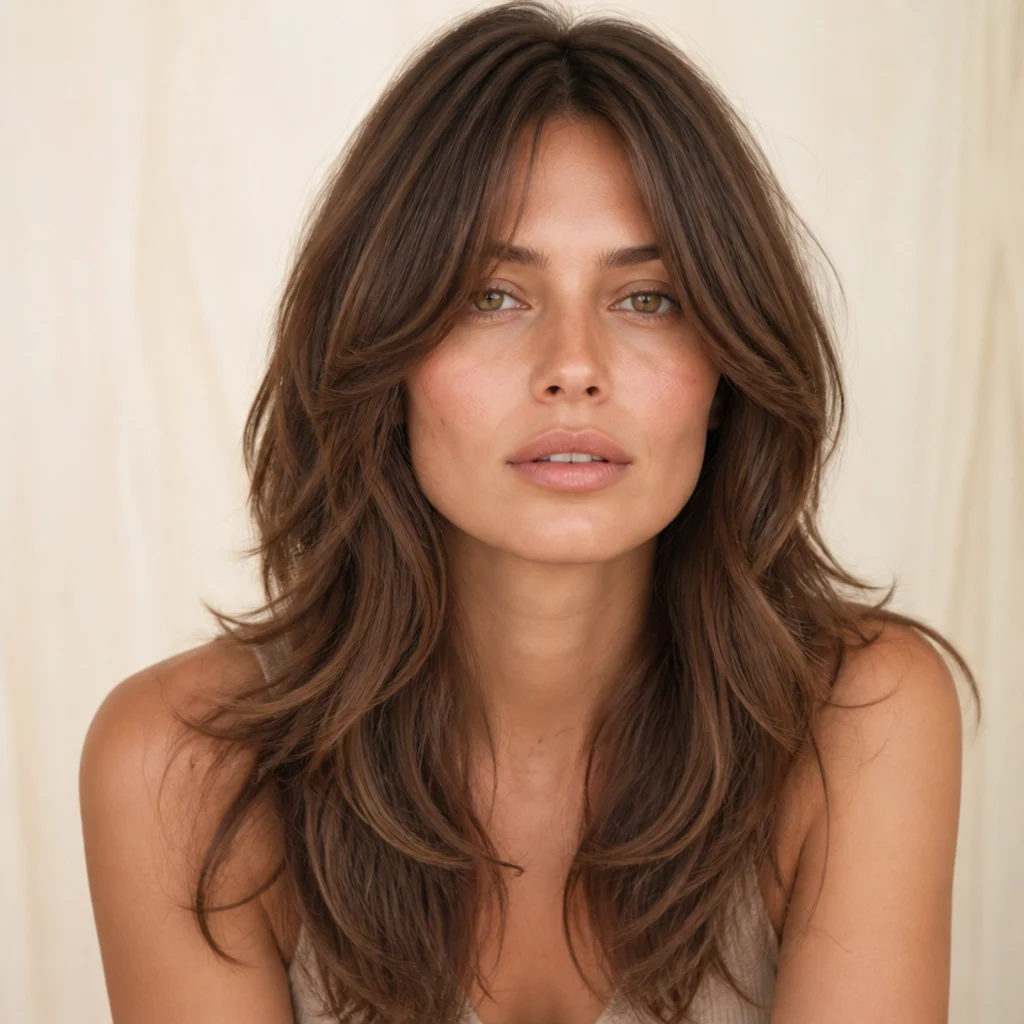
If choppy feels like too much, this is the gentlest way in. A soft long shag with blended, smooth-transitioning layers keeps all the movement of the cut while dialing the visible contrast right down, so nothing looks disconnected or spiky. Layers move smoothly from crown to ends for a natural, grown-in effect that reads polished rather than deliberate. Good for anyone new to shags, those with more classic style preferences, or professional settings where a bold cut feels like too much; it flatters every face shape and texture. Warm neutral brown keeps it soft and versatile. It's one of the most forgiving cuts to grow out, since there's no dramatic layer to chase, and it styles easily with a round brush or a straightforward air-dry. Maintenance is easy, a trim every 10-12 weeks. Pro tip: ask for long, connected layers with light internal texturizing rather than surface point-cutting, so the movement lives inside the shape instead of on top. Ask for a long shag with soft, blended layers and minimal choppiness for an understated, everyday finish.
Pro Tips from the Editor
- Bring two or three photos from different angles, and one photo of a cut you actively dislike; showing your stylist what to avoid prevents more mistakes than a wishlist alone.
- Name the fringe first. "Curtain," "bottleneck," "heavy," and "face-framing" are not interchangeable, and the fringe decides how the whole shag frames your face.
- Match the cut to your real routine, not your aspirational one. If you never blow-dry, ask for an air-dry or wash-and-go shape so the layers are cut to fall, not to be styled into place.
- Curly, coily, and very wavy hair should be cut dry, curl by curl; straight and wavy hair can be cut wet and refined dry. If a stylist wants to cut your curls soaking wet, that's a red flag.
- Ask for point-cutting on fine hair and reserve the razor for medium-to-thick, healthy hair. A razor on fragile or over-processed ends frays and thins them.
- Budget the fringe and color on their own clocks. A heavy fringe needs a dust every 3-4 weeks and vivid or ashy color needs a gloss every 6-8, both far more often than the 8-12 week interior trim.
- Invest in a texturizing or salt spray and a lightweight shine serum. Together they give you the two opposite finishes, piecey and undone or smooth and glassy, the shag was built to swing between.
How to Choose / Get the Look
Start with your natural texture, because it decides how any shag will fall and how it should be cut. Curly and coily hair almost always looks best cut dry, curl by curl, so shrinkage and spring are accounted for; straight and wavy hair can be cut wet and refined dry. Next, weigh your maintenance appetite honestly, since the fringe and color, not the layers, drive most of the upkeep.
Face shape guides the framing more than the length. Round and heart faces tend to love a curtain fringe and softer face-framing; long and oval faces can carry a heavier, choppier fringe and more dramatic layers; square faces are softened by razored or bottleneck shapes that break the jawline. Fine hair benefits from softer, point-cut texturizing so ends stay full, while thick hair can handle aggressive point-cutting or even a concealed undercut to shed weight. Use the quick reference below, then bring two or three photos, name your fringe, and state whether you want a soft, blended finish or bold, choppy layers, the one distinction that shapes the whole result.
| Priority | Best-fit ideas | Fringe to ask for | Trim cadence |
|---|---|---|---|
| Most universally flattering | Soft curtain shag (1), curtain bangs + waves (17) | Curtain | 10-12 wks + fringe 5-6 |
| Lowest styling effort | Air-dry shag (14), beachy wavy (8) | Soft or none | 10 wks |
| Maximum drama | Bottleneck choppy (3), rocker heavy fringe (9), wolf cut (6) | Bottleneck or heavy | 8-10 wks + fringe 3-4 |
| Fine or thin hair | Voluminous fine-hair shag (12), soft blended (20) | Soft face-framing | 6-8 wks |
| Curly or coily texture | Curly shag (2), coily defined (7), tapered curly fringe (16) | Tapered curly | 8-12 wks |
| Color-forward | Copper (5), balayage (13), money pieces (10), ash shadow root (15) | Curtain or face-framing | Trim 10-12 + gloss 6-8 |
Frequently Asked Questions
What is the difference between a shag and a wolf cut?
A shag uses feathered, graduated layers throughout for soft, even movement. A wolf cut pushes that further, piling heavy, choppy texture at the crown that melts into wispy ends, borrowing volume from the mullet. Every wolf cut is a shag, but not every shag is a wolf cut; the wolf is the bolder, more top-heavy version.
Does a long shag work on straight hair?
Yes, and it often shows the layering most crisply, because there are no waves to hide the cut. The graduated layers add built-in dimension and movement, which makes flat, pin-straight hair look fuller and more textured. Ask for a light point-cut on the ends so they don't look blunt or scissored-off.
How often should I trim a choppy long shag?
Plan a shaping trim every 8-12 weeks to keep the interior layers from growing heavy and losing their swing. Run the fringe and color on separate clocks: a full or heavy fringe needs a dust every 3-4 weeks, curtain and face-framing pieces every 5-6, and vivid or ashy color wants a gloss every 6-8.
Is a long shag high maintenance to style?
Not really, it depends on which version you choose. Air-dry, beachy, and wash-and-go shags are cut to fall into place with just a leave-in and a scrunch. Sleek, voluminous, and rocker versions need a round-brush blow-dry or a flat iron, but the cut still does most of the work.
Can curly hair pull off a long shag?
Yes, easily. A long curly shag haircut uses layers to release weight so curls stack and spring instead of forming a heavy triangle. The essentials are having it cut dry, curl by curl, by a stylist experienced with textured hair, and cutting with shrinkage in mind so the finished length matches your goal.
What face shape suits a long shag best?
Every face shape can wear one; the fringe does the tailoring. Round and heart faces are flattered by a curtain fringe and soft face-framing that add length; long and oval faces can carry a heavier or bottleneck fringe that adds width; square faces are softened by razored, wispy ends that break up a strong jawline.
Will a long shag make thin or fine hair look thinner?
Only if it's over-texturized. Done well, a shag makes fine hair look fuller, because strategic layering lifts the crown and creates the illusion of density. Ask for softer, point-cut layers rather than a razor, keep the choppiness light, and add a root-lifting mousse to maximize volume.
How much length do I lose with a long shag?
Very little at the perimeter if you're keeping it long; the shape is built from interior and face-framing layers, not by shortening the overall length. Tell your stylist to preserve your longest lengths and build the movement inside, and be clear that the shortest crown and face-framing pieces are where the layering lives.
Should I get a shag if I want to grow my hair out?
A shag is one of the friendliest cuts to grow out, because the blended layers have no hard line to chase and just soften as they lengthen. Choose the soft blended (20) or curtain versions rather than a heavily disconnected wolf cut, and skip or grow out the fringe first if you want the least visible transition.