20 Soft Long Shag Haircut Ideas to Try
Keep the length you love while gaining feathered layers that move on their own. These 20 soft long shag variations are sorted by texture, bang style, and finish, each with the exact wording to bring to your stylist.
 Edited by Lena Rose · Published July 11, 2026 · 34 min read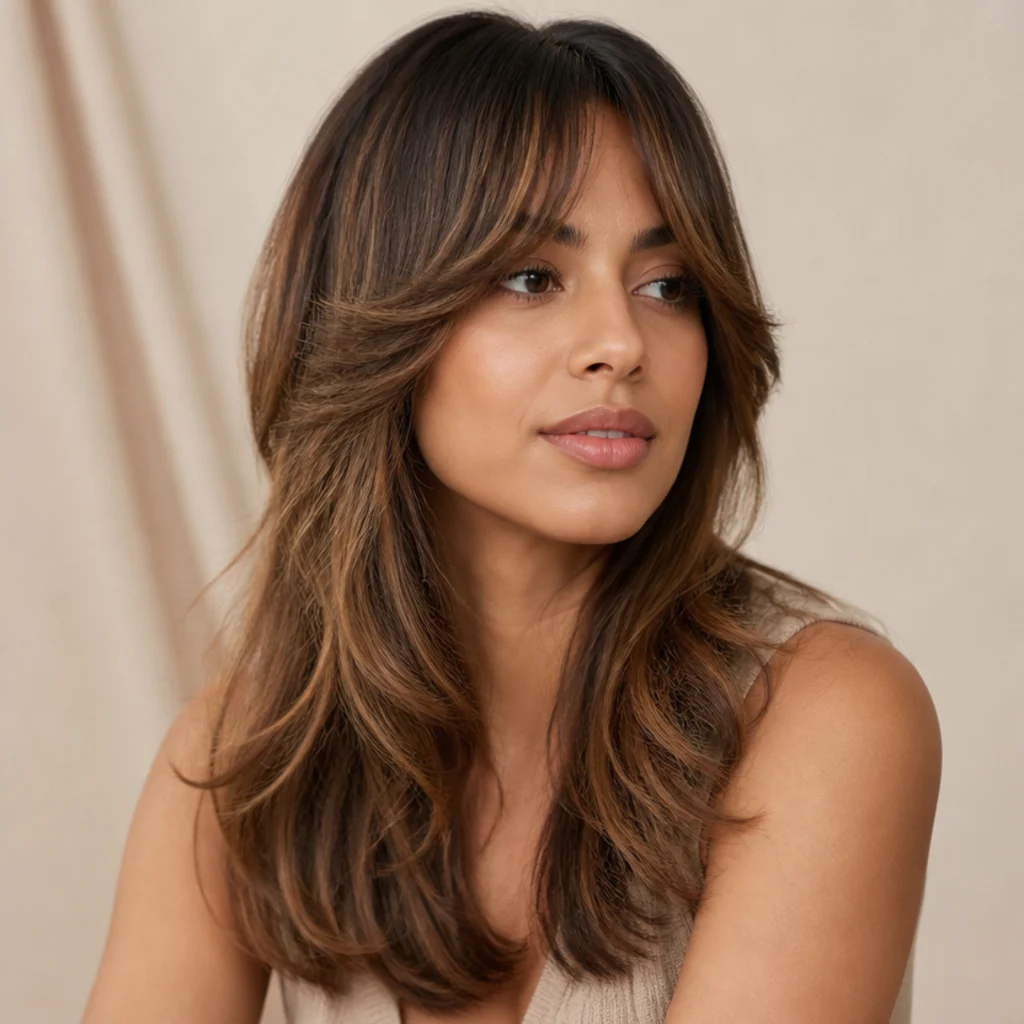
Quick Answer
- Best for: Anyone who wants to keep long length but add built-in movement, from fine straight strands to dense 4C coils.
- Who might skip it: Anyone growing out a blunt one-length cut for a specific goal, or hair shorter than collarbone length where "long" layers have nowhere to travel.
- Maintenance: Moderate. A dry dusting or shape-up every 8 to 12 weeks keeps interior layers from growing heavy and the perimeter from turning into a triangle.
- Difficulty: Easy to medium at home. The internal layering does most of the styling, so a wash-and-go still reads intentional.
- Cost: Roughly a mid-range layered-cut price at most salons; curly dry cuts and any color add-on (money piece, shadow root, copper gloss) sit at the higher end. Ask for a written estimate at consultation.
- Wear time / longevity: The shape holds its flattering line for 8 to 12 weeks; color-forward versions need a gloss refresh sooner.
- Standout variation: The classic soft long shag with curtain bangs and cheekbone-length face framing suits the widest range of face shapes.
- How to ask your stylist: "Long length kept, soft connected feathered layers starting around the cheekbone, textured tapered perimeter, no hard disconnected steps."
In This Guide
- Classic Soft Long Shag with Curtain Bangs
- Long Curly Shag Haircut with Halo Volume
- Long Shag Choppy Layers on Straight Hair
- Beachy Wave Long Shag
- Sleek Long Shag Straight Hair
- Wispy Micro-Fringe Long Shag
- Coily Long Curly Shag Haircut
- Long Layered Shag Haircut with Money Piece
- Feathered '70s Soft Long Shag
- Textured Wolf-Adjacent Long Shag
- Fine-Hair Soft Long Shag
- Thick-Hair Long Shag Choppy Layers
- Long Shag with Bottleneck Bangs
- Soft Long Shag with Shadow Root
- Loose S-Wave Long Layered Shag Haircut
- Long Curly Shag Haircut with Tapered Ends
- Center-Part Long Shag Straight Hair
- Copper Soft Long Shag
- Deep Side-Part Long Shag Choppy Layers
- Low-Maintenance Air-Dry Soft Long Shag
A soft long shag is what you get when a classic shag grows out and mellows: gradual, feathered layers replace the hard disconnection, so you keep most of your length while picking up lift through the crown and softer framing around the face. That's why it reads modern instead of costume-y, and why it works across textures that a blunt cut leaves flat or a full wolf cut overwhelms. The internal layering hollows out weight so waves spring up and curls breathe, without chopping the shape so high that a ponytail is off the table. The details matter more than the reference photo: where the shortest layer sits, how the ends are point-cut, and whether the cut happens wet or dry all decide whether you end up with airy movement or a stringy, over-thinned perimeter. Below you'll find versions built for straight, wavy, coily, fine, and thick hair, plus fringe and color pairings, each with notes on who it flatters, a realistic maintenance timeline, and the exact wording to use at the chair. Start with your natural texture and density, then find the cut built to work with both.
01Classic Soft Long Shag with Curtain Bangs
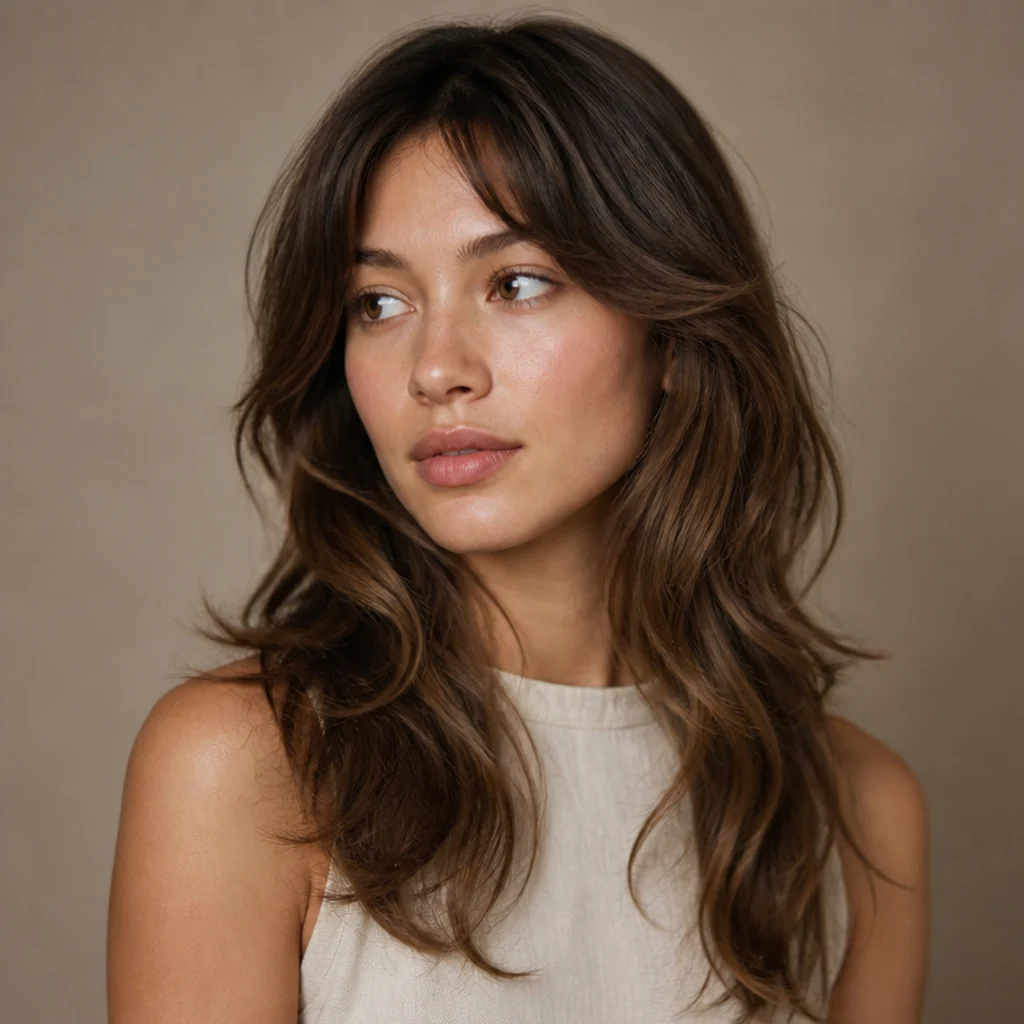
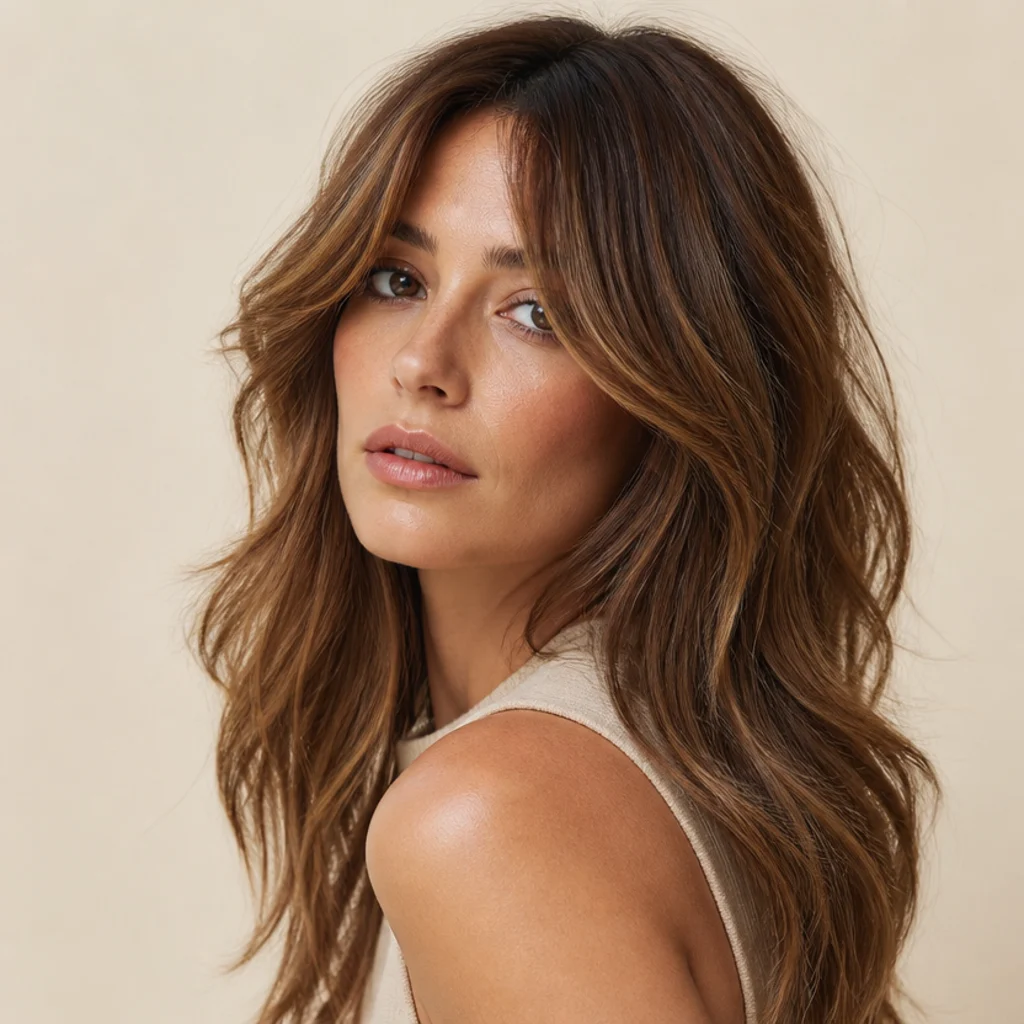
The reference point for the whole family. Long, feathered layers open around the cheekbone and cascade to a soft, tapered perimeter, while curtain bangs split at center and sweep back toward the temples, echoing the face-framing layer beneath them. Oval, round, and heart faces all do well here: the parted fringe adds vertical length and softens a wide or high forehead. Just make sure the shortest face-framing piece lands at the lip or chin so it doesn't widen a round face. Wavy to loosely curly hair shows the layering best, though pin-straight hair only needs a quick round-brush bend at the ends to activate it. Upkeep is moderate: a dry trim around every 10 weeks keeps the bangs blending into the layers instead of reading as a separate shelf. To style, split the fringe with a round brush and dry it away from center, working the roots against their fall for lift. Pro tip: cut curtain bangs a touch longer than you think — they spring up as they dry. Ask your stylist for "long connected layers with soft curtain bangs blended into the face frame, no hard steps."
02Long Curly Shag Haircut with Halo Volume
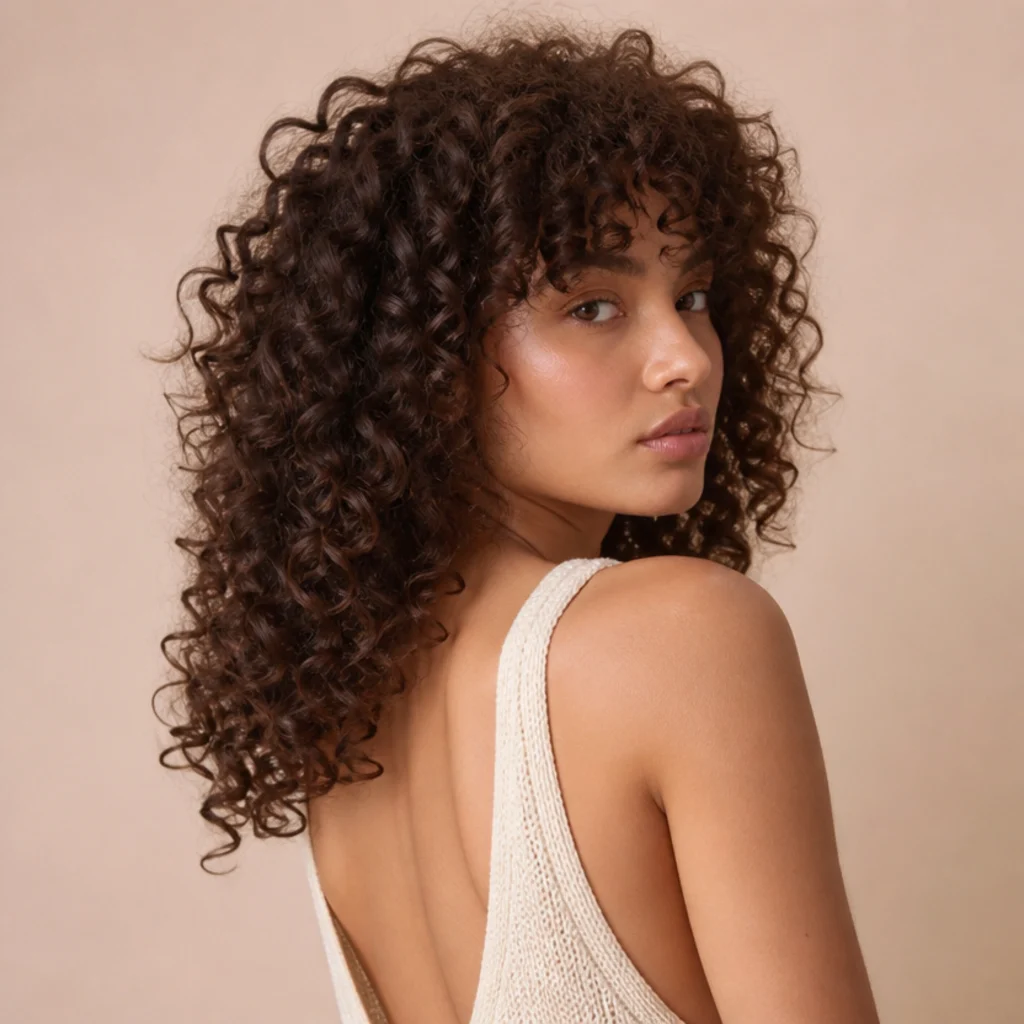
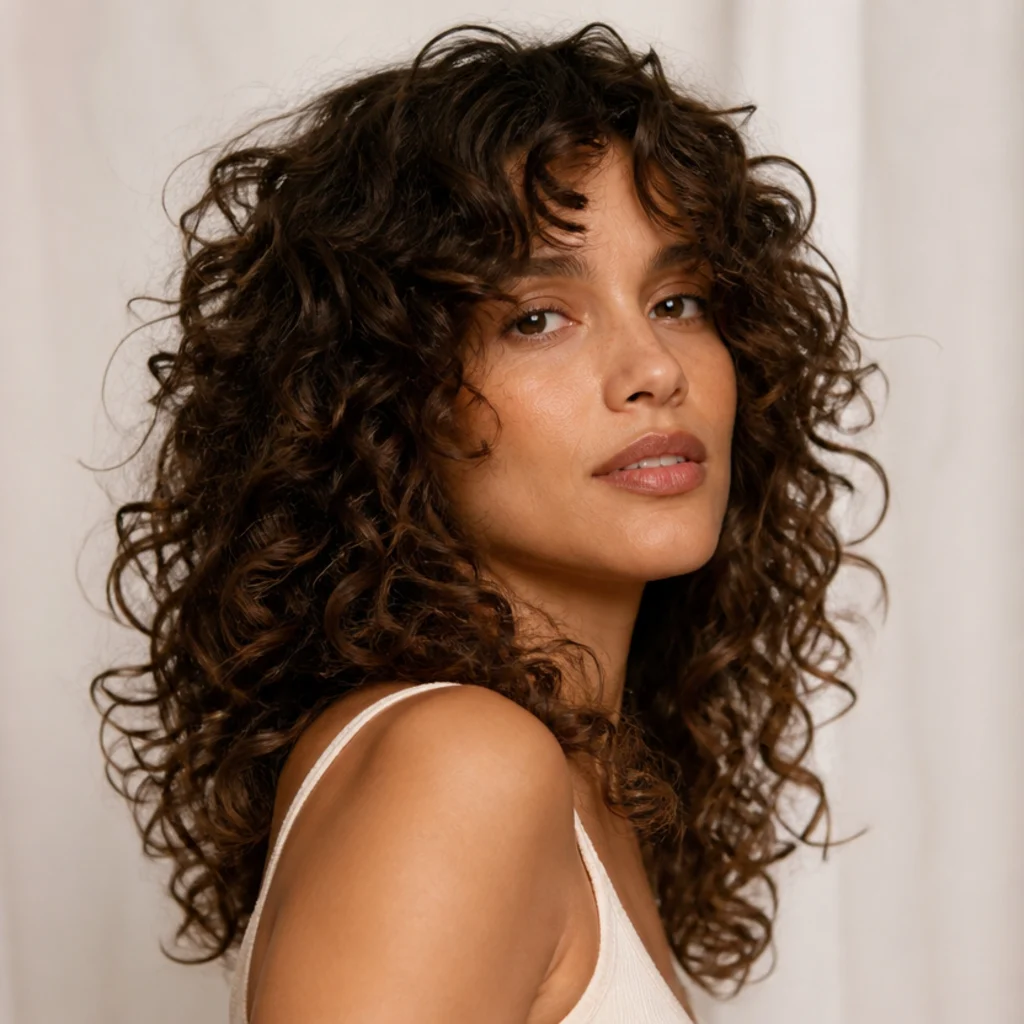
This cut was made for curls. A long curly shag haircut removes interior bulk so the ends coil freely, building a rounded halo of volume through the top and mid-lengths while the length still reads past the shoulders. Longer and square face shapes benefit most, since the halo adds width at the temples and softness at the jaw. The real trick is layer placement relative to your curl family: 3A to 3B patterns take a shallower internal layer, while springier 3C hair does better with a shorter interior to lift the crown. A wet curl can dry up to a third shorter, so a dry cut on stretched, defined coils isn't optional — skip it and things shrink above where you planned. Style with a curl-by-curl routine: a water-based leave-in, a curl cream raked and prayer-hand smoothed, then diffuse on low airflow with a hover-and-cup motion to protect the pattern. Pro tip: clip the roots at the crown while diffusing to bank extra halo height. Plan on maintenance every 12 weeks, since coils hide regrowth well. Ask your stylist for "interior weight removed on dry curls, length kept, rounded shape, not a triangle."
03Long Shag Choppy Layers on Straight Hair
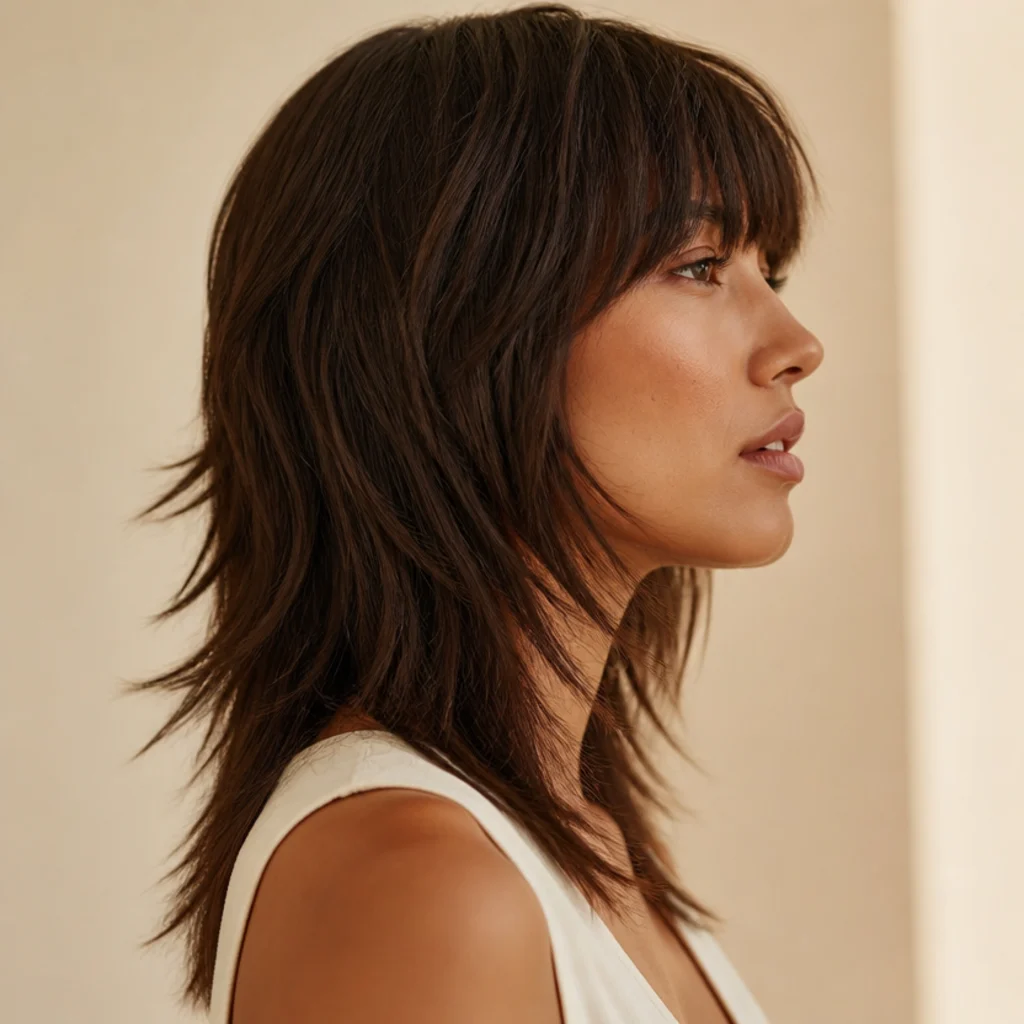
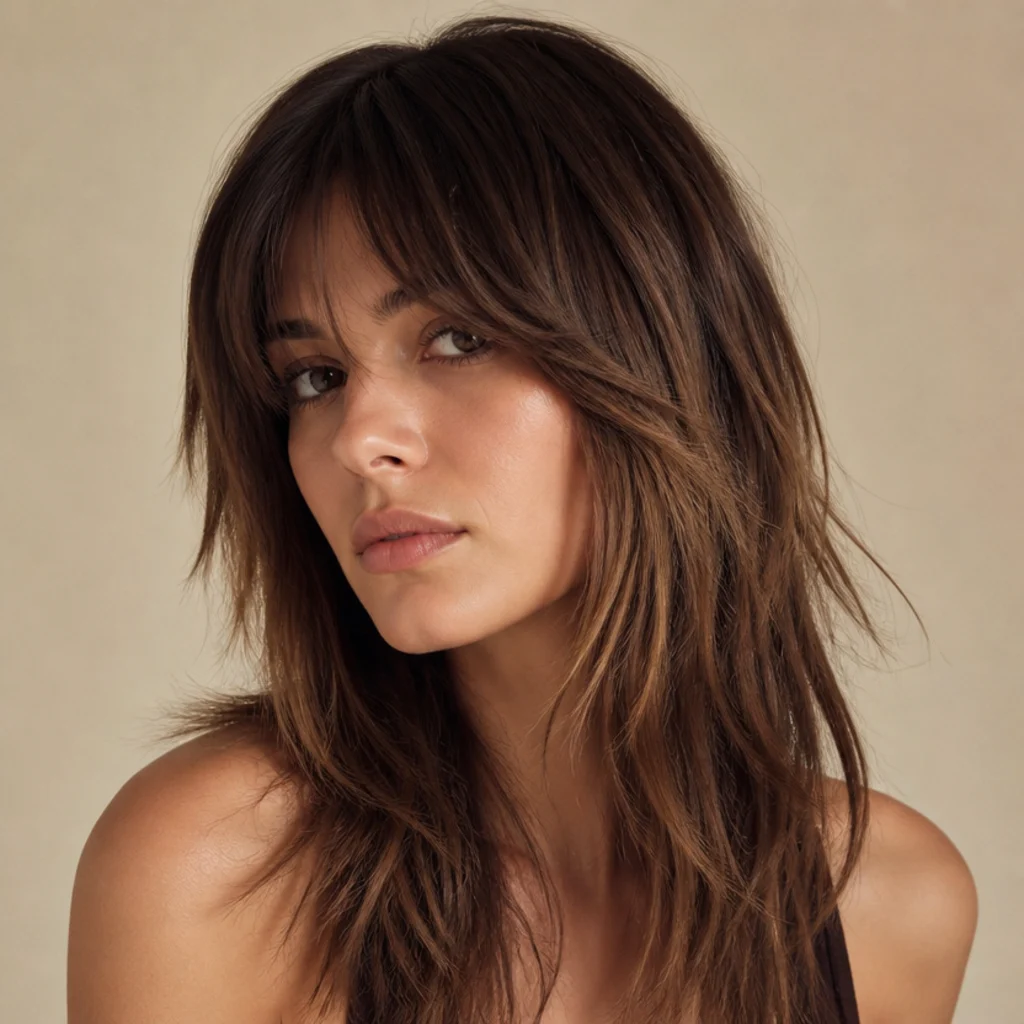
If your hair is stick-straight and falls flat by lunchtime, long shag choppy layers give it the movement your texture won't supply on its own. Point-cutting and uneven internal layers break up a blunt line so the ends look piecey and lived-in instead of heavy and solid. Fine to medium straight hair takes to this on most face shapes, though very round faces should keep the shortest layer below the chin so it lengthens rather than widens. The choppiness has to be cut into the ends, not just the surface, or it collapses within a week — the perimeter should be notched, never blunt. Style with a texturizing spray worked through the mid-lengths on dry hair, then separate the ends with a pea-size dab of matte pomade warmed between the palms. Because the broken edge is built into the cut, even a wash-and-go looks deliberate. Pro tip: skip conditioner on the ends every other wash so grip and separation last. Refresh every 8 to 10 weeks to keep that broken edge looking intentional. Ask your stylist for "deep point-cut choppy layers and a notched perimeter, piecey not blunt."
04Beachy Wave Long Shag

This is the salt-air version, built to look like you did nothing. Long shag layers give a bendy, undone wave somewhere to sit, so the finish stays tousled instead of set. Nearly every face shape can wear it, and it's especially forgiving on medium-density hair that holds a soft S. The layering is what keeps beachy from tipping into frizzy: enough internal texture that random bends read as movement, not damage. Rough-dry with your fingers to 90 percent, then bend random sections away from the face with a wide-barrel iron or a two-inch wand, alternating direction and leaving the ends out for that lived-in tail. Break the waves apart by hand and mist a matte, sugar- or salt-based texture spray at the mid-lengths. Pro tip: leave the last inch of each end uncurled so the finish stays undone rather than ringletty. Day-to-day upkeep is low; trims every 10 to 12 weeks keep the waves from stacking into a triangle at the bottom. Ask your stylist for "long airy layers cut for waves, tapered ends, nothing that stacks wide at the bottom."
05Sleek Long Shag Straight Hair
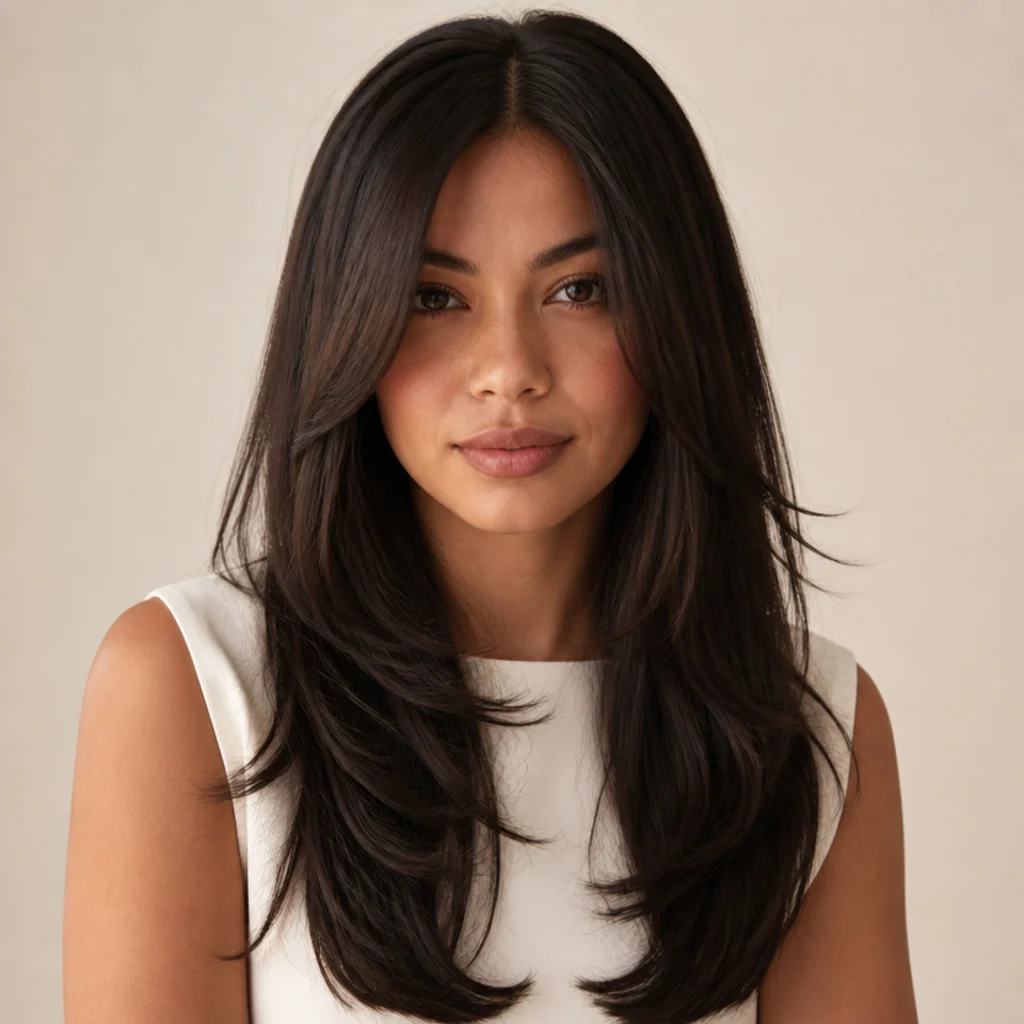
Proof that a shag doesn't have to look messy. Long shag straight hair can be blown out smooth so the layers form a glossy, tapered cascade with just a slight inward bend at the face. This polished take works for professional settings and suits long, oval, and square faces. Fine hair benefits most, since the interior layering fakes density up top where straight hair often looks sparse. Blow-dry section by section with a large round brush, rolling the ends under and directing the crown up and back for root lift, then finish with a lightweight shine serum on the mid-lengths and ends only. The whole effect lives or dies on a light hand: too much product or an over-thinned perimeter turns sleek into stringy. A flat iron passed lightly through the mids adds mirror gloss without flattening the shape. Pro tip: mist a heat protectant with a touch of hairspray before the round brush so the bend holds through the day. A trim every 8 to 10 weeks keeps the feathered edge clean. Ask your stylist for "smooth blended layers, tapered not thinned, a soft inward bend at the face."
Save this to Pinterest to compare straight and curly versions side by side.
06Wispy Micro-Fringe Long Shag

Want a little edge without giving up length? A short, gauzy micro-fringe sits high on the forehead while the rest stays long and layered. The airy bangs draw the eye to the brow and lashes and work well on oval and heart faces. Skip a super-short fringe if your hairline sits low, your forehead is short, or your hair grows with a strong cowlick that will lift the bangs off the face. This pairs best with fine, straight-to-wavy hair, where wispy bangs stay delicate instead of turning into a heavy curtain. Style the fringe with a small round brush and a whisper of dry texture spray so the pieces stay separated and skin shows through. A micro-fringe grows into the eyeline fast, so plan a bang trim every 3 to 4 weeks between full cuts, and learn to dust it yourself between visits. Pro tip: cut it dry and point up into the fringe so it never reads as a blunt line. Ask your stylist for "a wispy micro-fringe cut dry with visible gaps, kept above the brow."
07Coily Long Curly Shag Haircut
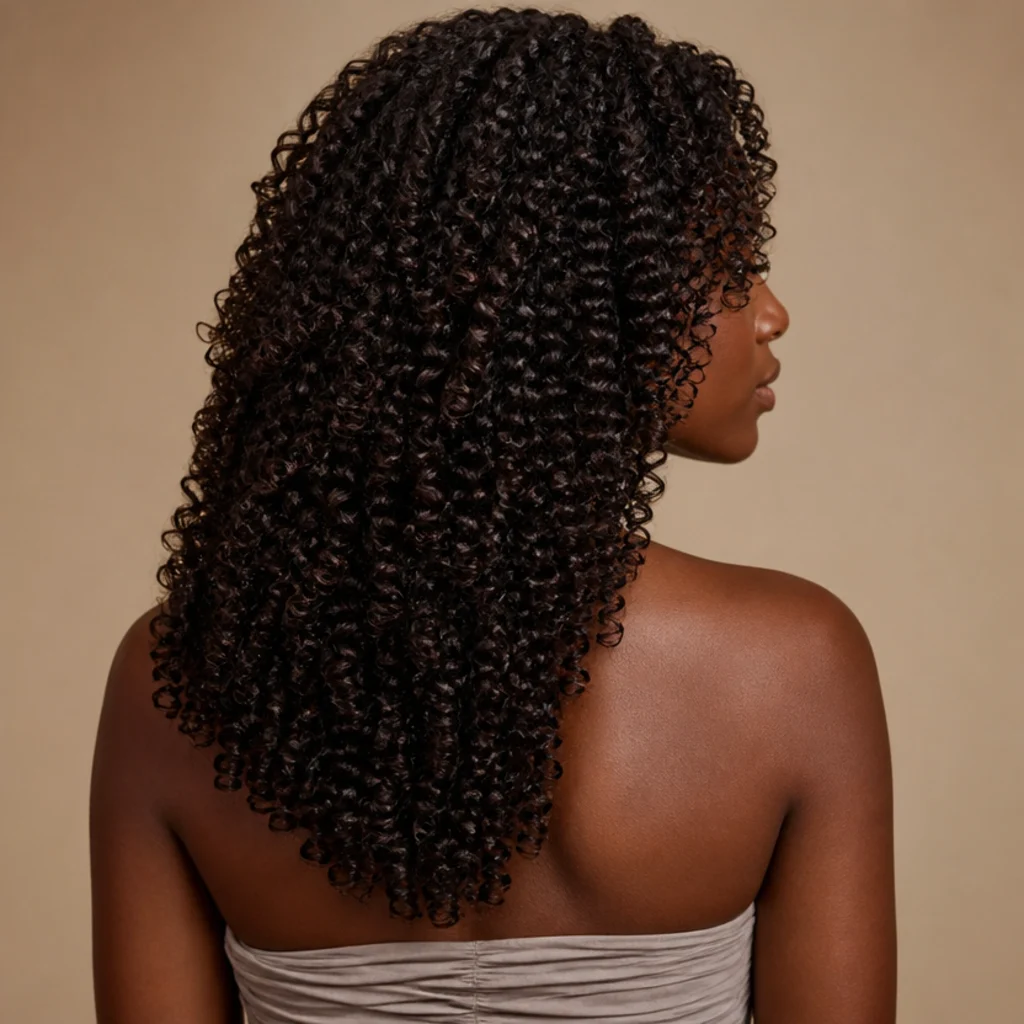
Tight coils and kinky textures get their own version of the long curly shag haircut, cut to work with shrinkage instead of fighting it. Layers are placed to build a full, rounded silhouette while keeping stretched length well past the shoulders, and they're always cut on dry, defined coils so the shape you leave with is the shape you wear. Round and square faces do well here, since the shape builds height at the crown. For 4A to 4C hair, care matters more than styling: deep condition weekly, seal ends with an oil then a butter using the LOC or LCO method, and refresh between wash days with a water-and-leave-in mist scrunched in. Coils hide length and regrowth, so this shape can comfortably stretch to 12 weeks or more between trims. Pro tip: ask for the ends to be dusted, not blunt-cut, so single-strand knots come off without sacrificing volume. Style choices are yours — a wash-and-go or a chunky twist-out both fall nicely into the layered shape. Ask your stylist for "a shape cut on dry, stretched coils, rounded silhouette, ends dusted not blunted."
08Long Layered Shag Haircut with Money Piece
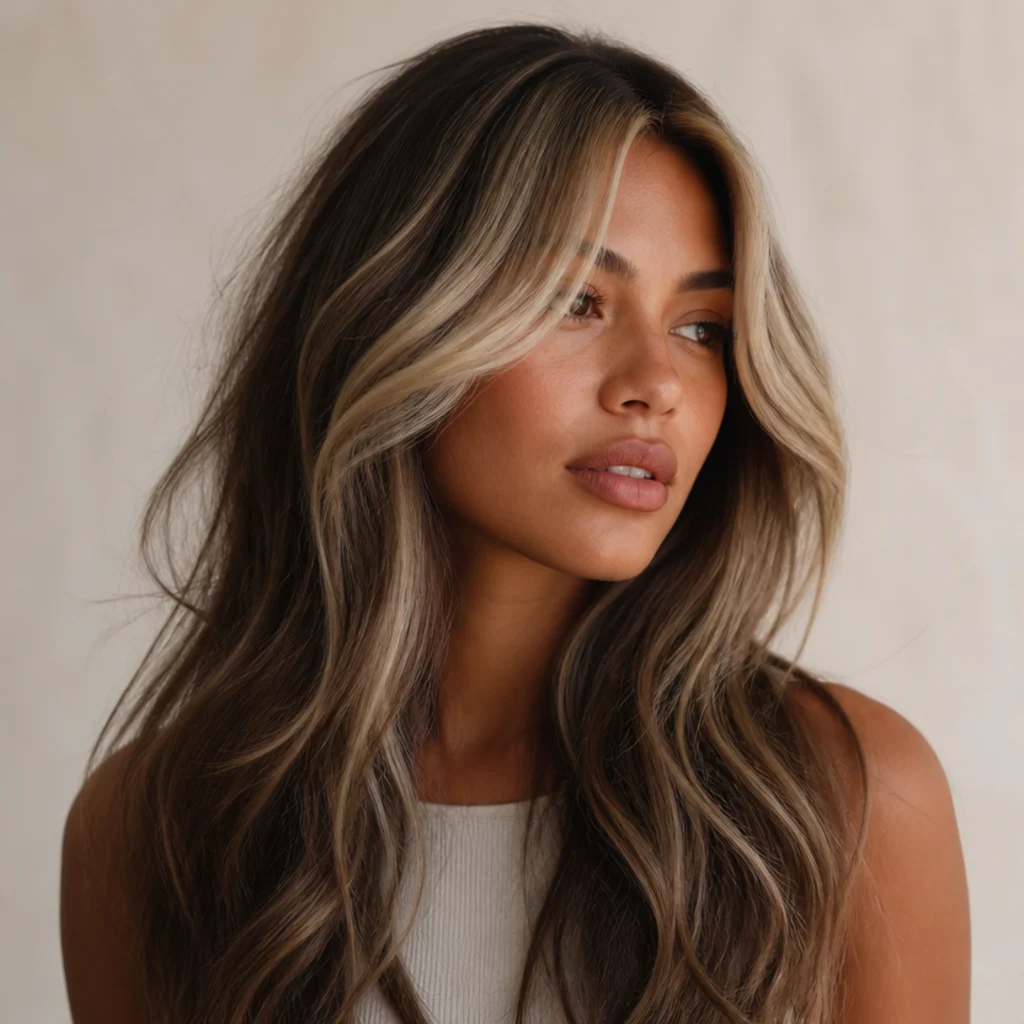
Color and cut work as a team here. A brightened "money piece" frames the face while the rest stays a deeper base, and the shag layering makes those lighter strands catch the light as they swing. Every face shape can wear it, and it's a low-stakes way to test a brighter shade without committing to a full head of highlights, since the contrast stays at the front where you can tuck it away or feature it. Wavy and straight hair both show the split-tone clearly. The face-framing layer should be cut to fall just past the cheekbone so the brightness lands where it lifts the complexion. Style so the money piece sweeps back off the face for a lit-from-within frame, or tuck it behind the ear to dial the contrast down. Maintenance splits in two: a cut every 10 weeks and a toning or gloss refresh on the lightened front every 6 to 8 weeks to keep brass away. Pro tip: choose a money-piece shade one to two levels lighter for a soft blend, or three-plus for a bold '90s stripe. Ask your colorist for "a face-framing money piece one to two levels lighter, soft root melt."
09Feathered '70s Soft Long Shag
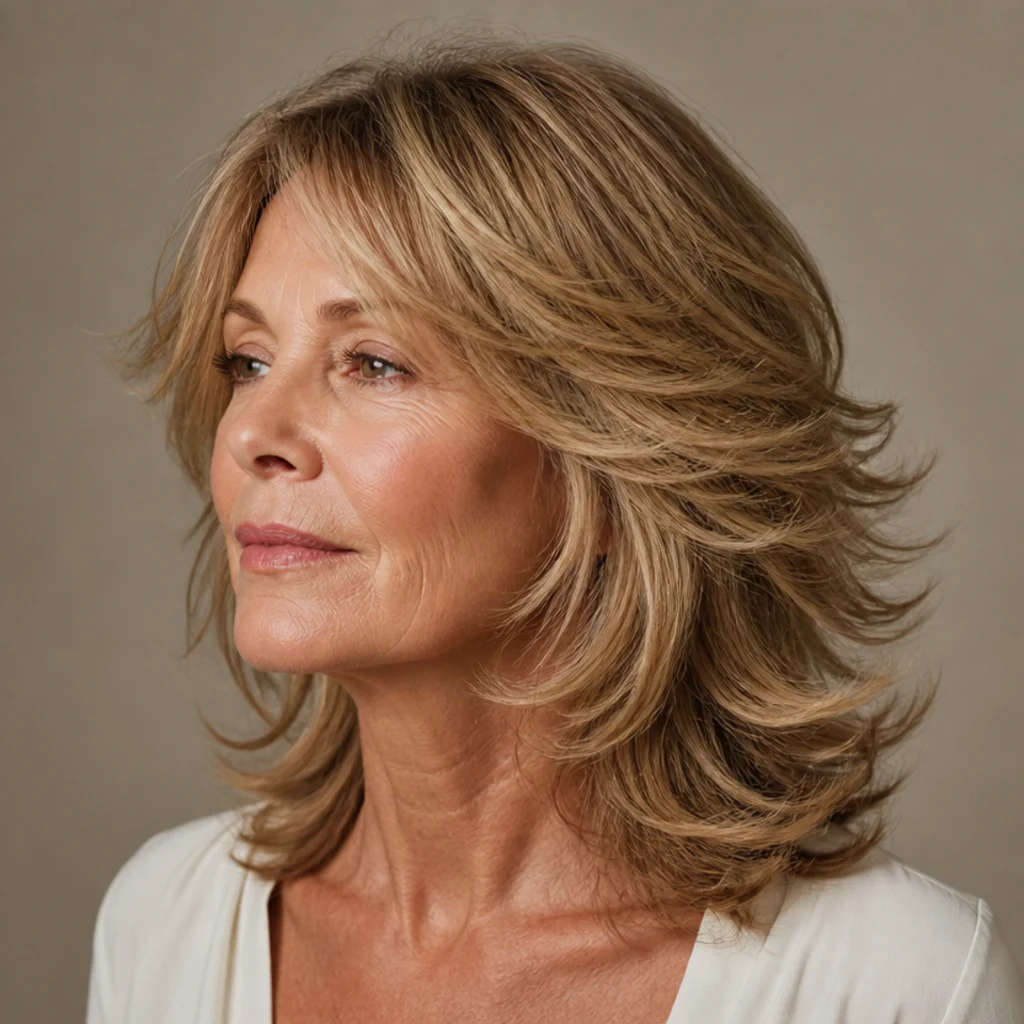
A nostalgic nod to the original shag, softened so it never tips into costume territory. Layers are feathered and flicked back away from the face, echoing the flippy, disco-era silhouette without the heavy disconnection of the seventies version. Oval and heart faces suit it well, and it brings welcome width to narrow features by pushing volume toward the temples. Medium-density wavy hair holds the flick longest; very fine hair may need a setting spray to keep the bend from falling. The face-framing layers should be cut in graduated lengths so each piece flicks a little higher than the one below, creating that stacked, feathery frame. To style, round-brush the front pieces up and back, over-directing them, then set with a flexible hairspray while they cool. Pro tip: use Velcro rollers on the face-framing sections during your makeup routine for a flick that holds all day with little effort. Trim every 10 weeks so the feathered ends keep their upward lift instead of splitting. Ask your stylist for "graduated feathered face-framing layers that flick back, soft not spiky."
10Textured Wolf-Adjacent Long Shag
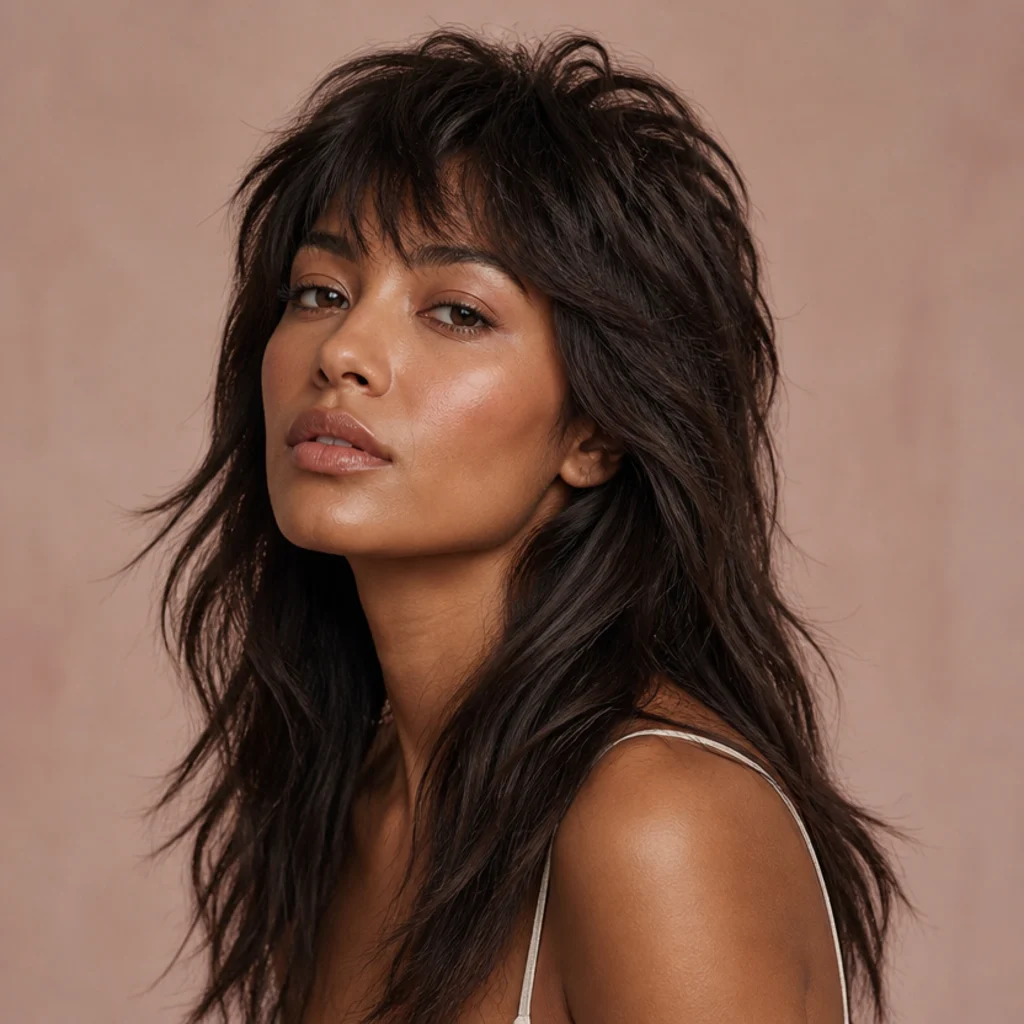
The bridge between a shag and a wolf cut, dialed back to stay wearable. Crown layers sit a touch heavier and shorter, creating an undone, slightly wild top that melts into long, textured ends instead of dropping in an abrupt step. Anyone chasing an edgier vibe should look here; it flatters longer faces by concentrating fullness up high. Thick, wavy hair carries the crown volume without looking overworked; very fine hair can struggle to sustain the shorter top, which may fall flat by afternoon. The key is a diffused transition from the shorter crown into the long lengths, so it reads shaggy, not mullet-like. Style with a mousse at the roots for grit, diffuse or rough-dry for lift, then scrunch a texture paste through the ends and pinch the crown pieces to define them. Pro tip: tip your head upside down to rough-dry the crown, then set it with a blast of cool air to lock the height. The crown is shorter, so it grows out visibly — book a shape-up every 8 weeks. Ask your stylist for "a soft wolf-shag, heavier textured crown melting into long ends, no hard mullet step."
Save this to Pinterest and note which layer length you prefer.
11Fine-Hair Soft Long Shag

Fine hair worn long can thin out and look wispy at the ends, but a soft long shag redistributes that weight where it counts. Shallow, strategic layers build the appearance of density through the crown while the perimeter stays airy rather than stringy. The trick is restraint — over-layer fine hair and you strip the ends to nothing. Fine straight and fine wavy hair both suit this, on any face shape. Keep the layers conservative and the perimeter a hair blunter than you would on thick hair, so the ends still look substantial. Lean on a volumizing mousse worked root to tip on damp hair and a root-lifting blow-dry, drying the crown against its natural fall, then set lift with a light dusting of texture powder at the roots. Pro tip: a root-shadow or subtle lowlight adds visual density that a cut alone can't, tricking the eye into seeing more hair. Trim every 8 weeks, since fine hair shows a heavy, grown-out shape faster than dense hair does. Ask your stylist for "shallow crown layers for volume, a slightly stronger perimeter, don't over-thin the ends."
12Thick-Hair Long Shag Choppy Layers

Dense, heavy hair is exactly what long shag choppy layers were built to tame. Interior layers and point-cut ends hollow out bulk so thick hair moves instead of sitting in a solid, pyramid-shaped block, and the payoff is a much shorter blow-dry. Square and round faces benefit most, since softening a heavy perimeter gives it some swing. The request that matters here is internal weight removal, not just surface layers or thinning shears near the ends, which only create frizzy flyaways as they grow out. Ask for the bulk taken from the mid-shaft inward so the ends taper cleanly. Style with a smoothing cream or a few drops of oil on damp hair to control the frizz thick hair can throw, then rough-dry and let the layers fall. Pro tip: request a slide-cut or razor finish on the perimeter for the softest taper, but only if your hair isn't prone to frizz, since razors can rough up the cuticle. This cut stretches to 12 weeks between trims thanks to all that density hiding regrowth, though the ends like a light dusting sooner. Ask your stylist for "deep internal weight removal, tapered ends, keep the length, lose the bulk."
13Long Shag with Bottleneck Bangs
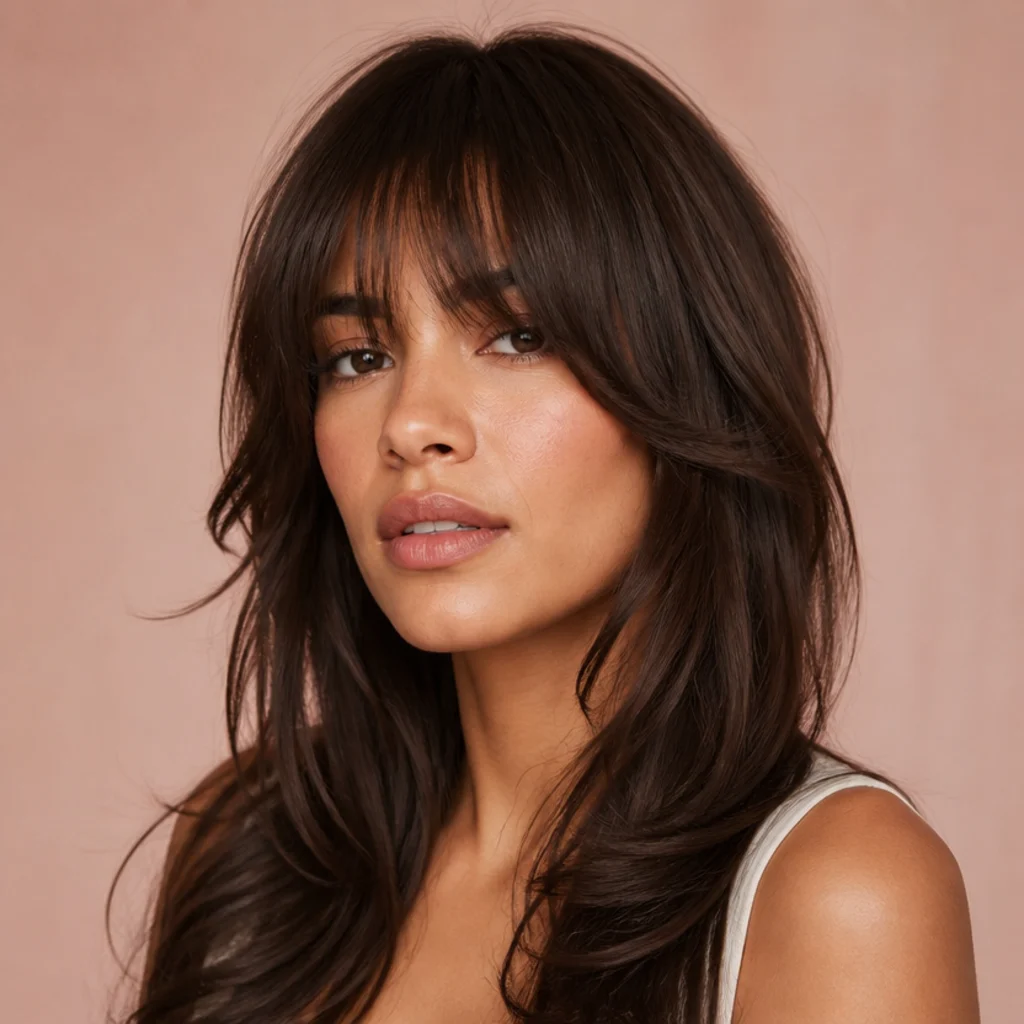
Bottleneck bangs are the low-commitment fringe: shorter through the center, longer at the sides, curving out like the neck of a bottle so they never fully commit to a blunt front. Paired with a long shag, they frame the face gently and grow out with almost no awkward phase, blending straight into the face-framing layers. Round and heart faces suit these well, since they draw the eye toward the cheekbones, and they work best on straight to wavy hair that keeps the curve clean. Style by round-brushing the fringe down and out, letting the longer sides feather into your layers instead of sitting apart from them. Because the sides stay long, you can push 6 to 8 weeks between bang trims and a full cut every 10 to 12 weeks. Pro tip: part the fringe slightly off-center and dry it in two directions for a modern, less symmetrical bottleneck. Ask your stylist for "bottleneck bangs, shorter at center curving longer into the face frame, soft and blended."
14Soft Long Shag with Shadow Root
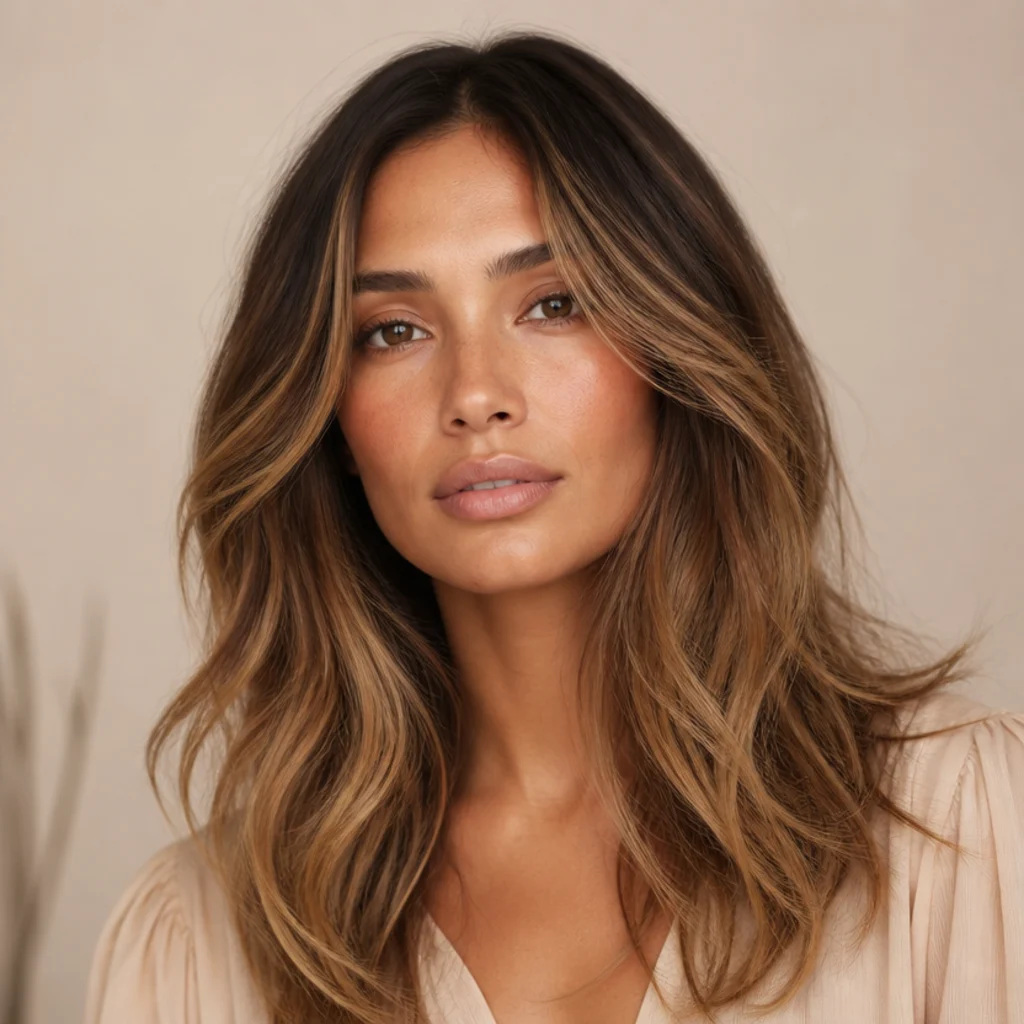
Here the interest comes from a lived-in color built to flatter the layers. A shadow root keeps the base deliberately dim and melts gradually into warmer, lighter ends, so the shag's movement gets a boost as the tone shifts down each layer. It's a good pick for anyone who wants lower-maintenance color, since regrowth blends into the intentionally darker root instead of announcing a harsh line. Wavy hair shows the melt best, as overlapping layers reveal light and shadow in motion. Plan the color and cut together so the brightest ends land on the layers that swing most. Style simply: a soft wave is all it takes to let the gradient catch the light. Pro tip: ask for a "root smudge" the same visit as your gloss to keep the melt smooth and stretch time between full color sessions. This pairing is kind to your calendar, pushing color to every 10 to 14 weeks while the cut refreshes around every 10. Ask your colorist for "a shadow-rooted balayage melt, dim base into warm caramel ends, seamless regrowth."
15Loose S-Wave Long Layered Shag Haircut
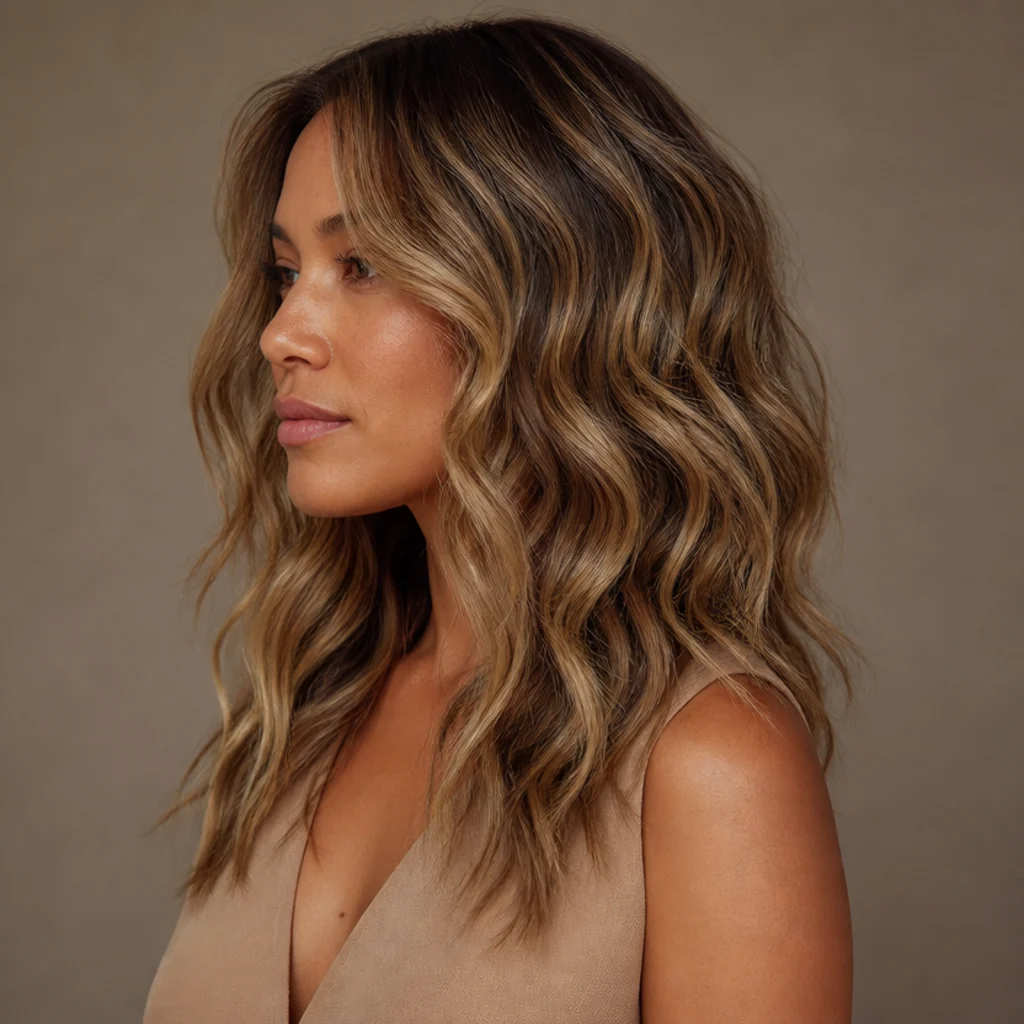
A polished, editorial way to wear a long layered shag haircut: uniform, loose S-waves that ripple through every layer for a cohesive, glossy finish. Unlike beachy texture, this look is intentional and even. Oval and square faces suit it, and it works for occasions that call for something more done. Medium-density hair holds the S-bend longest; very fine hair may need a curl-setting spray to keep the ribbon from dropping. Create it by wrapping 1.25-inch sections around a curling iron in alternating directions, leaving the ends out, then brush through gently with a boar-bristle brush to soften the curls into a continuous ribbon. A light shine spray seals it without weight. The layering is what keeps an all-over wave from looking helmet-like, since the varied lengths let the waves interlace instead of sitting as a solid sheet. Pro tip: clip each curl to the scalp while it cools, then release and brush, so the wave lasts twice as long. Expect trims every 10 weeks to keep the even, tapered ends that let the S-waves flow. Ask your stylist for "evenly tapered layers cut for a uniform loose wave, no stacking at the ends."
16Long Curly Shag Haircut with Tapered Ends
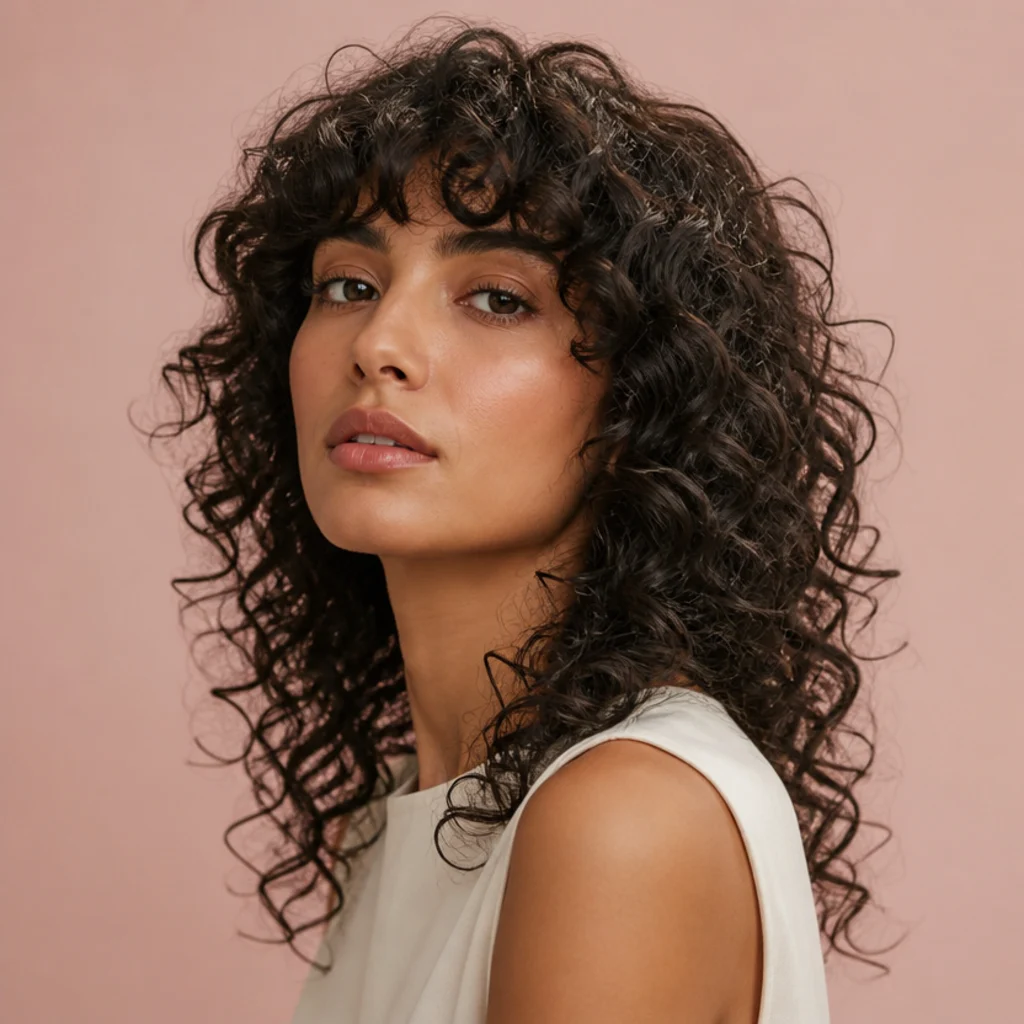
A long curly shag haircut can feel bottom-heavy if the curls stack up into a triangle. Tapering the ends thins that perimeter so the silhouette narrows gently and the shape follows the head instead of ballooning at the sides. Round faces benefit, since it draws the eye downward, and it works for loose 2C waves through medium 3B curls. The exact request is tapered, not blunt, ends cut on dry curls, so your stylist removes weight only where the shape widens and leaves the rest full. Over-taper and the ends turn wispy and see-through, so this is a conservative, curl-by-curl adjustment rather than heavy thinning. Style with a lightweight curl gel scrunched in for definition, then scrunch out the crunch once dry so the tapered tips stay soft, not frizzy. Pro tip: a drop of end oil emulsified in your palms and pressed onto the tips keeps the wispy ends from looking parched. Maintenance runs every 10 to 12 weeks. Ask your stylist for "tapered, not blunt, ends on dry curls, narrow the triangle, keep the top full."
17Center-Part Long Shag Straight Hair
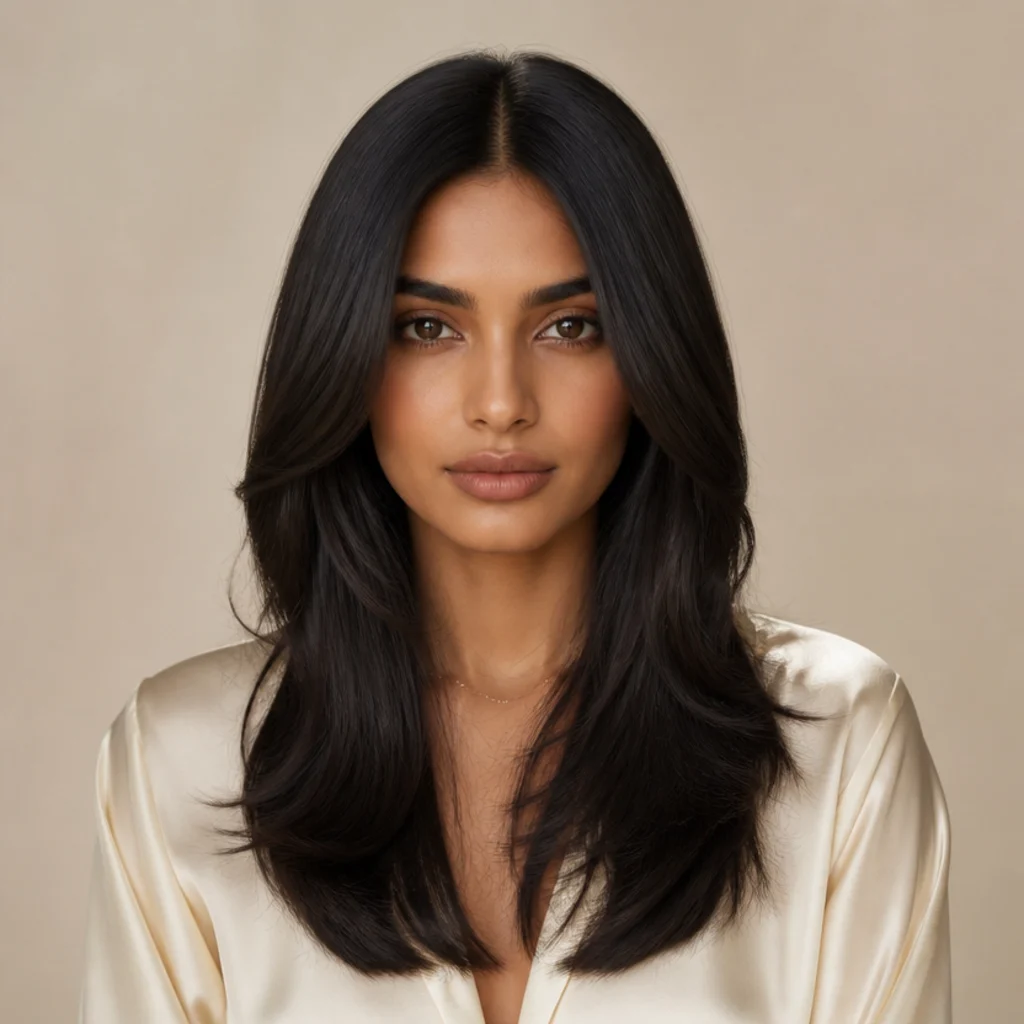
Clean and symmetrical, this long shag straight hair look leans on a precise center part to balance the face-framing layers on either side. The straight finish reads the layering as sleek and deliberate rather than tousled, giving it a modern, minimalist edge. Oval and heart faces suit it best; if your face is very long, a stark center part can lengthen it further, so add a soft inward bend at the ends to add width and break the vertical line. Fine to medium straight hair works best here, since coarse hair can resist a flat, glossy center part. Blow-dry flat with a paddle brush, directing the roots straight down, then run a flat iron lightly through the mids for gloss and finish with a single shine drop. The face-framing layers have to match on both sides or the symmetry falls apart. Pro tip: deep-condition and gloss regularly — a center part puts maximum light on the crown, where dullness shows most. Trim every 8 to 10 weeks to keep both sides even. Ask your stylist for "symmetrical face-framing layers cut for a center part, sleek with a soft end bend."
18Copper Soft Long Shag
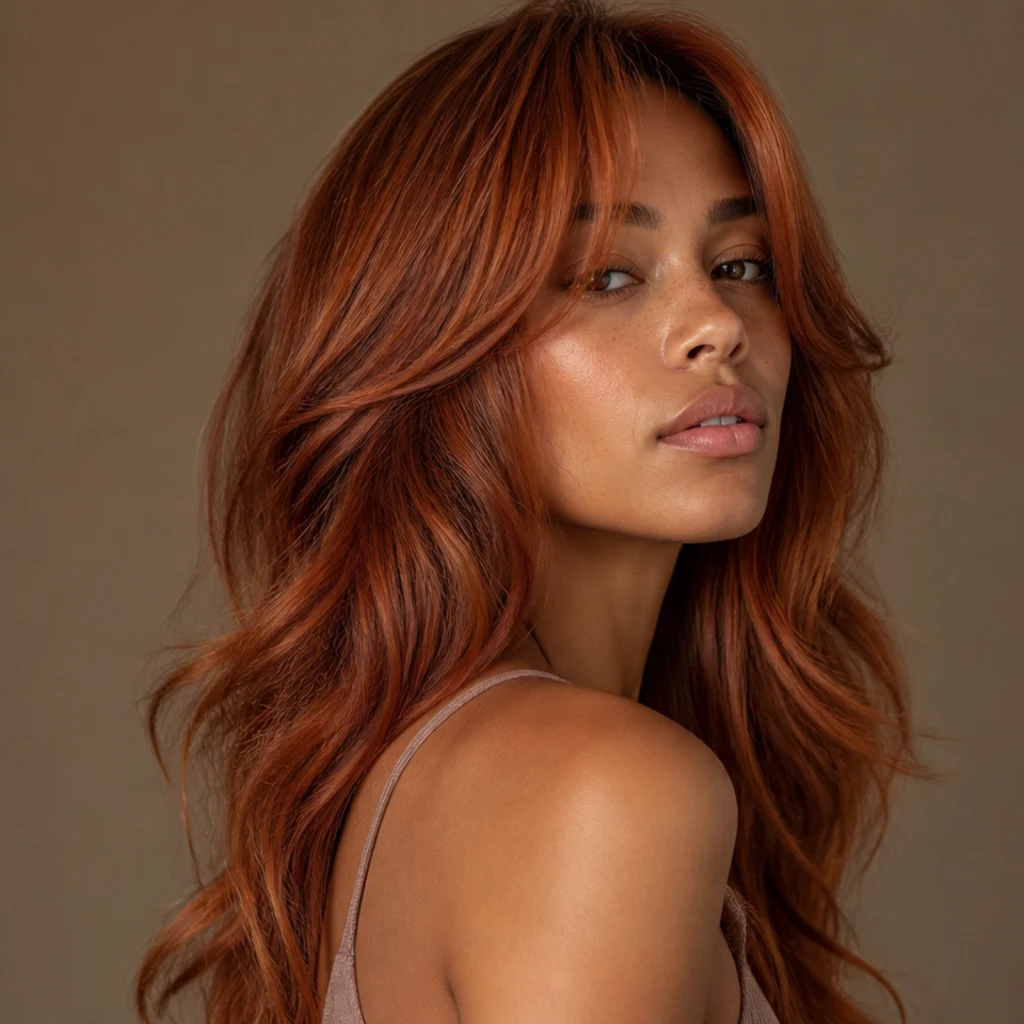
Color changes how a soft long shag reads, and a warm copper makes every feathered layer glow. The shag's movement multiplies the dimension a red tone offers, so even a single-process copper looks layered with light as the pieces overlap and shift. Warm and neutral undertones suit it especially well; deeper coppers and cooler auburns extend the reach toward olive and cool complexions. Wavy hair maximizes the shine-and-shadow play. The trade-off is upkeep, since red molecules are the largest and fade fastest of any dye family. Protect it with a color-depositing conditioner used weekly, cool-water rinses, sulfate-free shampoo, and UV or heat protection — sun and hot tools speed up the fade to a dull orange. Style with a soft wave and a glossing serum to bring out the sheen. Pro tip: rinse with the coolest water you can stand and shampoo less often, since every wash pulls copper down the drain. Between full trims every 10 weeks, a gloss refresh every 6 weeks keeps the copper from going dull or brassy. Ask your colorist for "a dimensional copper with a gloss top-up plan, warm not brassy."
19Deep Side-Part Long Shag Choppy Layers

Switching to a deep side part changes everything about how long shag choppy layers wear. Sweeping the hair firmly to one side builds volume across the crown and drops a soft, diagonal frame that skims the brow, adding drama a center part can't. Round and square faces benefit, since the asymmetry and height offset a wide jaw or forehead. Medium to thick hair holds the deep part without collapsing back to center; fine hair may need texture powder at the root to keep the lift. Style by drying the hair against its natural part first to break the memory and build root volume, then sweeping it over to the deep side. A little dry texture spray at the roots locks it in, and the choppy layers keep the swept side from lying flat against the head. Pro tip: set the newly swept part with a few duckbill clips at the root while you finish getting ready so it holds all day. Trim every 8 to 10 weeks. Ask your stylist for "choppy layers cut to support a deep side part, volume and a soft diagonal frame."
20Low-Maintenance Air-Dry Soft Long Shag

The most forgiving version, cut specifically to look good with zero heat. A soft long shag air-dries well because the layers give natural texture a shape to fall into, so undone waves look purposeful rather than shapeless, and the internal layering stops the flat-top, puffy-bottom pyramid that plagues air-dried long hair. Naturally wavy 2A to 2C hair suits it, as does anyone avoiding hot tools for health or time reasons. The cut has to be dialed to your fall pattern, since air-drying reveals every cowlick and growth direction the way a blow-dry can hide. Apply a leave-in and a curl-or-wave cream to soaking-wet hair, scrunch upward toward the scalp, then either plop in a microfiber towel for 20 minutes or let it dry fully undisturbed. Touching it mid-dry is what breaks the wave and invites frizz. Pro tip: apply product to hair that's dripping wet, not just damp, so the wave clumps instead of separating into frizz. This is the lowest-effort pick day to day, with trims every 10 to 12 weeks to keep the air-dried ends from looking wispy and thin. Ask your stylist for "a cut dialed to my natural air-dry pattern, layers that stop the puffy triangle."
Pro Tips from the Editor
- Bring two photos, not one: a front view of the length and layers you want and a back or side view of the perimeter shape. Stylists cut what they can see, and the silhouette from behind is what strangers actually notice.
- Say "point-cut" and "internal weight removal" out loud. These are the two techniques that separate a soft long shag from a heavy layered cut, and naming them tells your stylist you understand the difference.
- Match your cut method to your texture: curly and coily hair should insist on a dry cut on defined, stretched hair; straight and wavy hair can be cut wet, but ask for the ends checked and refined dry so the choppiness survives the first wash.
- Guard the perimeter. The single most common regret is an over-thinned, stringy hem. Ask the stylist to keep the outline a touch stronger than the interior so the ends still look intentional as they grow.
- Book maintenance by your weakest link. Shorter crown layers and fine hair set your trim clock to 8 weeks; dense or curly length can stretch to 12. Color-forward versions need a separate gloss appointment roughly every 6 to 8 weeks.
- Learn to dust your own fringe. Micro and wispy bangs grow into the eyeline within weeks; a small pair of shears and point-cutting upward into the fringe buys you time between salon visits.
- Invest in a texture spray and one iron. A matte texturizing or salt spray plus a single 1.25-inch tool covers beachy waves, S-waves, and a quick face-frame bend, which is nearly every styled look in this guide.
How to Choose / Get the Look
Start with your natural texture — the soft long shag works with what you have rather than against it. Straight hair leans toward the choppy, sleek, or center-part versions that build in movement a blunt line can't; wavy hair is the most versatile and suits nearly every idea here; curly and coily hair should stick to the dedicated curly versions cut on dry, stretched hair. Next, weigh your density, since it changes the technique more than the picture does.
| If your hair is... | Prioritize | Ask specifically for | Trim cadence |
|---|---|---|---|
| Fine, straight or wavy | Shallow crown layers, stronger perimeter | "Volume up top, don't over-thin the ends" | Every 8 weeks |
| Thick, dense | Deep internal weight removal | "Bulk from the mid-shaft in, tapered ends" | 10 to 12 weeks |
| Wavy, medium | Airy layers cut for movement | "Tapered layers for waves, no triangle" | 10 to 12 weeks |
| Curly or coily | Dry cut on defined curls | "Rounded shape on stretched curls, ends dusted" | 12 weeks |
Then pick a fringe. Curtain and bottleneck bangs are low-commitment and grow out gracefully into the face frame; micro and wispy fringes make a bigger statement but demand trims every three to four weeks. Bring a photo and plain language: "long length, soft feathered layers starting around the cheekbone, textured tapered perimeter, no hard steps." Ask whether your stylist recommends a wet or dry cut for your texture, and have them place the shortest layer where it flatters your face shape — higher to add crown volume for a long face, lower and below the chin to lengthen a round one. Finally, be honest about upkeep: most versions here refresh every 8 to 12 weeks, and color-forward picks add a separate gloss appointment to the calendar and the budget.
Frequently Asked Questions
Is a soft long shag good for straight hair?
Yes. On long shag straight hair, point-cut and choppy layers add the movement straight strands don't have naturally, and you can wear the result sleek with a smooth blow-dry or piecey with texture spray. Fine straight hair benefits most, since the interior layering builds the illusion of fullness through the crown where straight hair tends to look flat. The key is asking for choppiness cut into the ends, not just the surface, so it survives the first wash.
How is a soft long shag different from a regular long shag?
It comes down to the layering technique. A soft long shag uses gradual, feathered, connected layers rather than the sharp, disconnected steps of a bolder classic shag. You keep more length, and crown volume stays subtle rather than dramatic, so the result reads modern and wearable instead of costume-like. In practical terms, a soft shag has no visible "shelf" where one layer stops and the next begins.
Will a long shag work on curly and coily hair?
Yes. A long curly shag haircut is cut to your curl pattern, almost always on dry, defined curls, to remove interior bulk and let the ends coil freely into a rounded, voluminous silhouette. Loose 2C waves through tight 4C coils all have flattering versions, from tapered ends that narrow a triangle to full halo volume. The one thing you can't skip is a dry cut, because a wet curl can dry up to a third shorter than it looked at the chair.
How often does a soft long shag need trimming?
Most versions need a trim every 8 to 12 weeks. Fine hair and shorter crown layers show a grown-out, heavy shape sooner, so aim for 8 weeks; dense or curly hair disguises regrowth and can stretch to 12 or more. Fringe styles like micro-bangs need separate bang trims every three to four weeks, which you can learn to dust yourself between full cuts.
What face shape suits a soft long shag?
Nearly all of them, because the layers and fringe are adjustable. Curtain bangs and cheekbone-length face framing add vertical length for round faces; width-building feathered or curly versions balance long faces; a softened, tapered perimeter flatters square jaws; and a deep side part introduces flattering asymmetry. The lever that matters most is where the shortest layer sits, so bring your face shape to the consultation and ask your stylist to place it deliberately.
Can I get a soft long shag without cutting off much length?
Yes, and that's the whole point of the "soft" version. The layering is internal and the perimeter is only tapered rather than raised, so you can keep the overall length and still gain movement. Tell your stylist you want to preserve length and add texture through the interior, and confirm the shortest face-framing piece before any cutting begins so nothing comes off higher than you expected.
How do I keep a soft long shag from looking like a mullet or a triangle?
Two things prevent it: a diffused transition between the shorter crown and the long ends, so there's no abrupt step (the mullet risk), and a tapered rather than blunt perimeter, so the bottom narrows instead of stacking wide (the triangle risk). If your hair is thick or curly, insist on internal weight removal so the ends don't balloon, and ask the stylist to check the silhouette from behind before you leave.
Which soft long shag is the lowest maintenance?
The air-dry version, cut specifically to fall into shape without heat, is the least work day to day. Pair it with a low-maintenance color like a shadow root or balayage melt, and your salon calendar stretches even further, since regrowth blends into the deliberately dim base. Skip micro-fringe and any bright copper if easy upkeep is the goal, because both demand frequent touch-ups.
Does a soft long shag suit thick or coarse hair?
It's one of the best cuts for it. Long shag choppy layers with deep internal weight removal hollow out dense hair so it moves and dries faster instead of sitting in a heavy block. Ask for the bulk removed from the mid-shaft inward and the ends tapered, and skip aggressive surface thinning near the ends, which only creates frizzy flyaways as it grows out.