3 Things to Know Before Getting a Long Shag
The long shag reads effortless in photos, but the cut lives and dies by layer placement, your natural texture, and a few minutes of daily know-how. Sort out these three things before you sit in the chair and you'll walk out with a shape that still looks intentional two months later.
 Edited by Lena Rose · Published July 11, 2026 · 13 min read
Quick Answer
- Best for: Anyone who wants visible movement without a dramatic length change; flatters wavy, curly, and straight hair when the layering is matched to texture.
- Who might skip it: Very fine, sparse hair that thins fast when layered, or anyone unwilling to touch styling product or book regular trims.
- Maintenance: Moderate. A shaping trim every 8–12 weeks holds the layers; daily effort stays low once the cut works with your texture.
- Difficulty: Easy to wear, technical to cut. The skill sits with your stylist's layering, not your styling.
- Cost: Roughly a standard cut-and-style at your salon's mid-to-higher tier; a dry curly-hair cut or dedicated curl specialist usually runs higher. Trims add up over the year, so factor the 8–12 week cadence in.
- Wear time / longevity: Looks sharp for about 6–8 weeks, softens gracefully to 12 before it starts to read shapeless.
- Standout variation: A soft long shag with curtain bangs and separate face-framing pieces.
- How to ask your stylist: Request a "long shag with internal layers starting at [cheekbone / chin / collarbone], face-framing cut separately, and [choppy / blended] ends" — name the texture you're working with.
In This Guide
A long shag is one of the most adaptable cuts you can ask for, which is exactly why it trips people up. The name stretches from barely-there, blended layers to a fully choppy, rock-and-roll shape, so two people can book "a long shag" and leave looking nothing alike. A soft long shag keeps most of your length while carving graduated internal layers that lift the crown and set the ends swinging. It's popular right now because it gives you texture and movement without cutting off your length, a cut that photographs well and still air-dries into shape. But the difference between a shag that looks styled and one that looks grown-out comes down to three decisions you make before any scissors move: how your natural texture will read the layers, where those layers start relative to your face, and how much daily styling you'll actually do. This cut flatters most face shapes and every texture from pin-straight to tight coils — the catch is that each of those needs a different version. Get clear on these variables and you'll have a far sharper conversation with your stylist, plus a shape that still earns compliments six weeks out.
01Your Texture Decides How the Layers Read
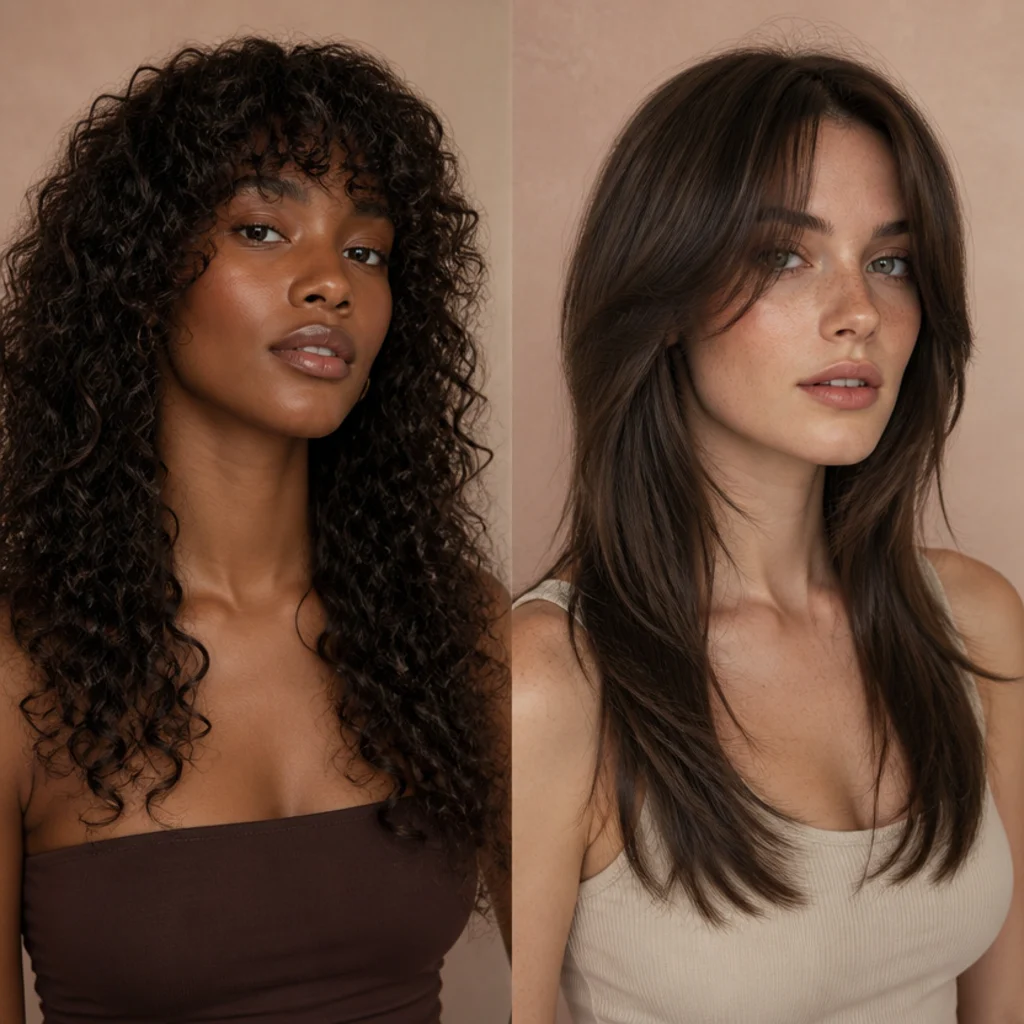
The identical layer pattern behaves like a different haircut depending on your natural texture, so texture is the first thing to name out loud. A long curly shag haircut uses layers to release weight, letting coils spring, stack, and build that rounded, tiered silhouette. That's why curly and coily hair should be cut dry, or curl-by-curl with minimal tension, so your stylist places each layer where the curl actually falls rather than where it sits stretched. On straight hair, a long shag straight hair version leans on more visible, deliberate choppy layers plus point-cutting or a light texturizing pass, because straight strands generate zero movement on their own and will hang flat without that intentional dishevelment. Wavy hair lands in the sweet spot: it reads piecey and undone with almost no effort. Fine, dense, and coarse hair each respond differently too — coarse hair can take aggressive texturizing, while fine hair needs a lighter hand to avoid see-through ends. Maintenance-wise, curly versions hold their shape longest between trims; straight versions show grow-out fastest. Pro tip: bring reference photos of your own texture, not the look on someone with an opposite pattern, or the layers translate into something you didn't ask for. Ask your stylist for a dry cut if your curl pattern is anything tighter than a loose wave.
02Length and Layer Placement Are a Trade-Off
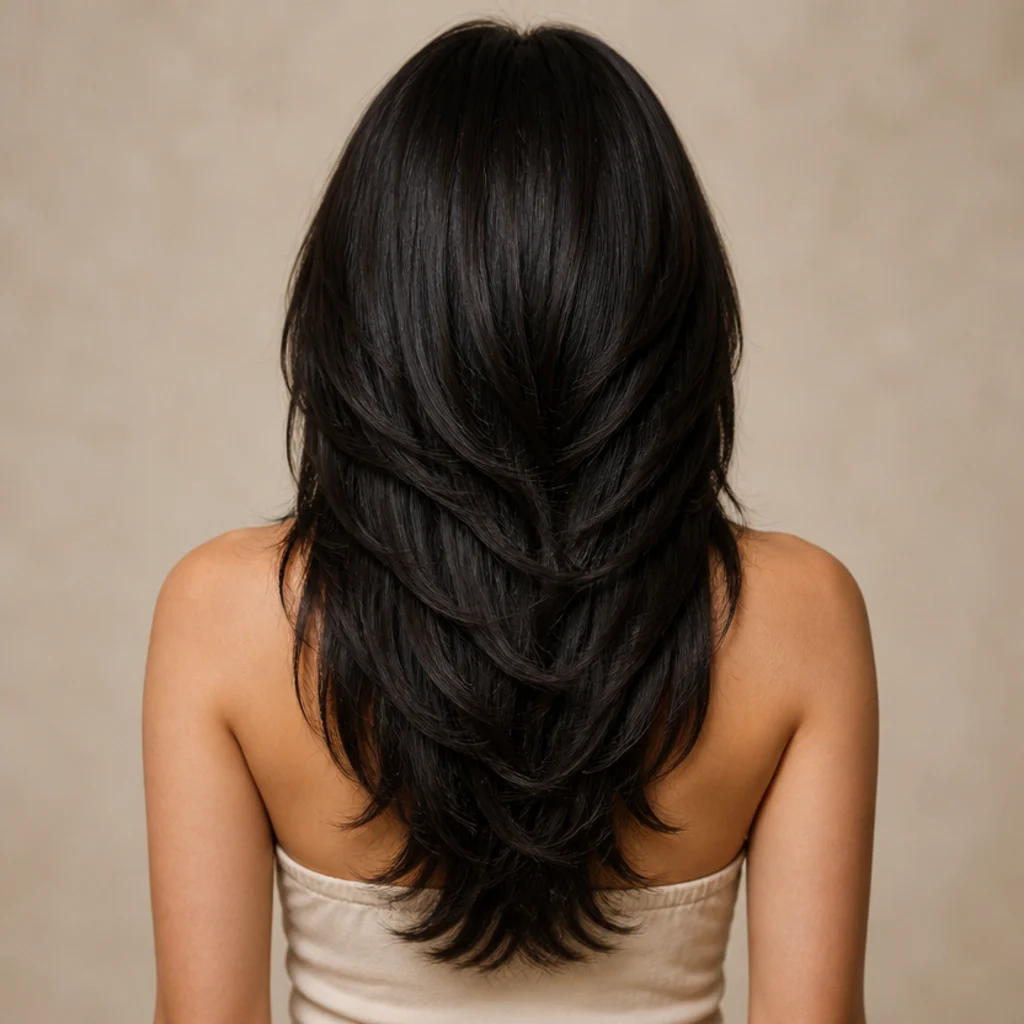
A long layered shag haircut keeps your overall length while stacking shorter layers inside it, and the exact height where those layers begin rewrites the whole shape. Layers that start high — around the cheekbone — pump crown volume and deliver a bolder, choppier, shag-forward feel that suits thick or medium density and longer or oval face shapes. Layers that start lower — near the chin or collarbone — keep the silhouette softer and preserve density through the mid-lengths, which rescues finer hair that goes stringy and thin when it's over-layered up top. Round and heart-shaped faces usually flatter from lower-starting layers that add length and taper below the jaw. Have your face-framing pieces cut as a separate step so they land exactly at the feature you want to draw the eye toward, rather than getting swept into the internal layering. This shape needs enough length beneath the layers to fall and swing, so long shag choppy layers read best on hair grazing the collarbone or longer. Decide in advance how much length you're ready to lose to reach the shape, because you can't add it back mid-appointment. Pro tip: photograph the back of your head after your stylist finishes so you can show the next salon exactly where the layers were placed. Ask your stylist to dry-check the layer lengths before the final cut, while there's still room to adjust.
03Upkeep and Styling Are Part of the Deal

A shag is famously low-fuss, but "low-fuss" quietly assumes you're styling with your texture rather than fighting it. Curly and wavy hair does best applying a light cream or gel to soaking-wet strands, then air-drying or diffusing on low heat with the head tipped forward to encourage lift at the roots. Straight hair usually needs a round brush on the face-framing pieces, or a few random bends with a curling iron or flat iron, to stop the layers collapsing into a flat curtain. Finish with a texturizing spray misted at the mid-lengths, not the roots, so it doesn't go greasy. The real commitment is the trim cadence: because the entire silhouette rides on those graduated layers, it drifts toward shapeless as they grow, so budget a shaping trim every 8–12 weeks. A texturizing or sea-salt spray and a matte paste or clay are the only genuine must-haves; skip heavy serums that weigh the layers down and kill the movement you paid for. If your routine is honestly wash-and-go, say so plainly and ask your stylist to cut a shape that dries into place on its own. Pro tip: sleep on a silk pillowcase and refresh with a water-and-leave-in spritz on day two rather than re-wetting the whole head. Ask your stylist to show you the exact scrunch-or-brush motion on your own hair before you leave the chair.
Pro Tips from the Editor
- Cut dry if you're curly, wavy-and-frizzy, or unsure. A dry cut lets the stylist see where each layer actually falls, which is the single biggest predictor of whether a curly shag reads right.
- Isolate the money pieces. Face-framing layers cut separately from the internal layering land where they flatter your features instead of blending into the crowd.
- Match layer height to density, then face shape. Fine hair wants lower-starting layers to protect the ends; thick hair can carry high, choppy layers without looking sparse.
- Buy the two products before your appointment. A texturizing spray plus a matte paste covers 90% of shag styling — heavier serums and creams flatten the movement.
- Book the next trim as you leave. The 8–12 week window is what keeps the shape crisp; the cut looks best when you never let it fully grow out.
- Screenshot the back. Layer placement is invisible from the front — a back photo is the only reliable way to reproduce a cut you loved at a new salon.
- Style with your head upside down. Rough-drying or diffusing while tipped forward builds the root lift that makes a shag look voluminous rather than deflated.
How to Choose / Get the Look
Work through this as a short decision framework rather than a screenshot hunt. Start with texture: curly and coily hair points you toward a dry, curl-by-curl cut and softer product; straight hair points you toward more visible choppy layers and a little heat styling. Then read your face and density: rounder faces and finer hair generally flatter from layers that start lower (chin to collarbone) to keep length and protect the ends, while longer or oval faces and thicker hair can carry higher, choppier layers and heavier bangs. Set your length floor next: decide the shortest you'll accept before you sit down, because the shape needs enough length beneath the layers to move. Pick your commitment level: for a low-stakes entry, ask for a soft long shag with subtle internal layers and curtain bangs — it grows out gracefully and skips the awkward stage. Finally, communicate in specifics: name where layers should start, whether you want choppy or blended ends, and how much crown volume you're after. Bring two or three reference photos on your own texture, be honest about your daily styling minutes, and ask directly, "How will this look in six weeks?" and "How often will I need a trim?" A good stylist adjusts placement to your density and face shape instead of copying an image pixel for pixel. That's what keeps a shag looking deliberate as it grows.
| Texture | How to cut it | Best layer start | Everyday styling | Trim cadence |
|---|---|---|---|---|
| Curly / coily | Dry or curl-by-curl, low tension | Higher, to release weight | Cream or gel on wet hair, diffuse or air-dry | 10–12 weeks |
| Wavy | Damp, light texturizing | Mid (chin to cheekbone) | Salt spray, scrunch, air-dry | 8–12 weeks |
| Straight (fine) | Damp, conservative point-cutting | Lower (collarbone) | Round-brush face frame, texture spray | 6–8 weeks |
| Straight (thick) | Damp, heavier texturizing | Higher for volume | Iron bends, matte paste | 8–10 weeks |
Frequently Asked Questions
Is a long shag good for fine hair?
Yes, with thoughtful placement. Layers that start lower — around the collarbone — and are only lightly texturized add movement without hollowing out the ends. Over-layering fine hair high on the crown makes it look see-through, so ask your stylist to preserve density through the mid-lengths and keep the internal layering subtle.
How long does a long shag take to grow out?
More gracefully than most layered cuts, because your length stays intact the whole time. Expect the shape to soften noticeably around 10–12 weeks as the shortest layers catch up, but it rarely hits an awkward stage. A quick shaping trim refreshes the movement without touching your overall length.
Can I get a long shag on curly hair?
Absolutely — a long curly shag haircut is one of the most flattering options for curls, since the layers give coils room to stack and spring into that rounded, tiered shape. Ask for it to be cut dry or curl-by-curl with minimal tension so the layers land where your curl actually falls, not where it sits stretched out.
Will a long shag work on straight hair?
Yes, but it asks for more visible choppy layers and a few minutes of styling. Straight strands won't create movement on their own, so point-cutting or light texturizing plus a round-brush or curling-iron finish is what makes the layers read. Skip these steps and the layers can hang flat.
How often should I trim a long shag?
Plan on a shaping trim every 8–12 weeks; fine straight hair may want the shorter end of that range, curly hair the longer. The silhouette depends entirely on its graduated layers, so regular light trims keep the shape crisp without sacrificing your length.
What's the difference between a long shag and long layers?
Traditional long layers blend softly for a smooth, gradual taper, while a shag stacks shorter, more distinct internal layers plus texturized ends for a choppier, more visible sense of movement and crown lift. A shag is deliberately more undone; long layers are more polished and uniform.
Should I get curtain bangs with my long shag?
They pair naturally, since curtain bangs echo the face-framing energy of the cut and grow out without a hard reset. If you're bang-shy, ask for longer, cheekbone-grazing face-framing pieces instead — they read similarly but blend into your length faster and demand less daily styling.
How do I keep my long shag from looking flat or greasy?
Apply product to the mid-lengths and ends rather than the roots, use a matte paste or clay instead of a shine serum, and build root lift by rough-drying with your head tipped forward. On non-wash days, refresh with a water-and-leave-in spritz and a dry-texture spray rather than re-wetting the whole head.
Can I style a long shag straight sometimes?
Yes. Blow it out smooth or run a flat iron through it and the layers give a swingy, feathered finish rather than disappearing. Use a heat protectant, and expect the choppy character to soften. A light texturizing spray at the ends keeps some of the piecey movement even on a straight day.