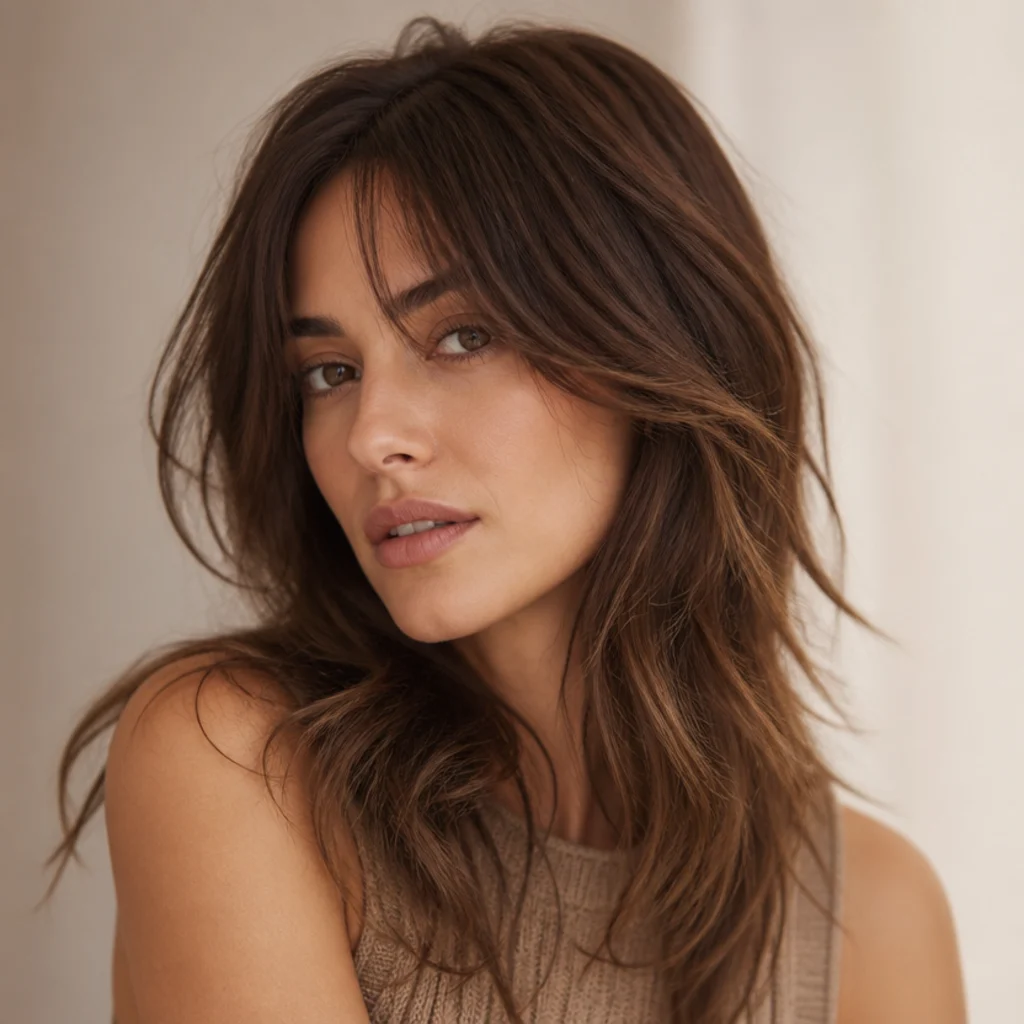
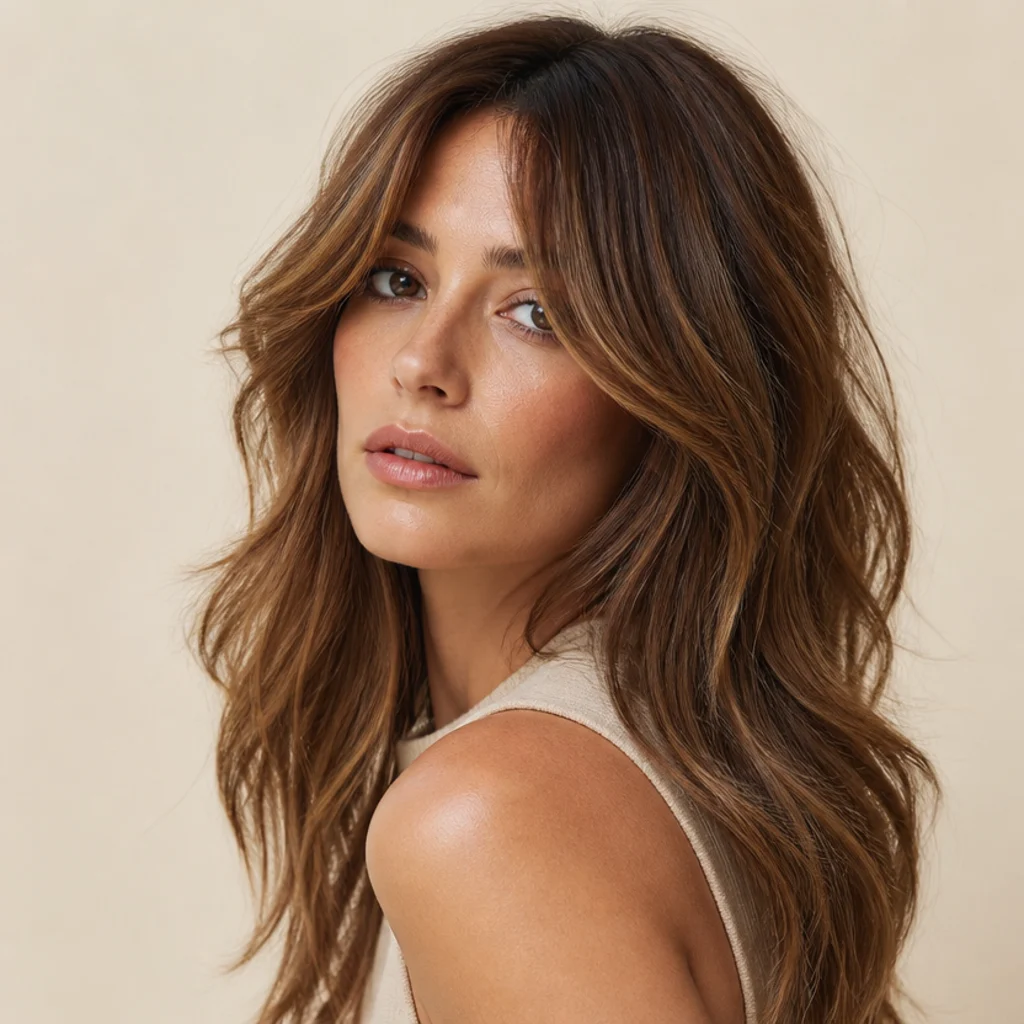
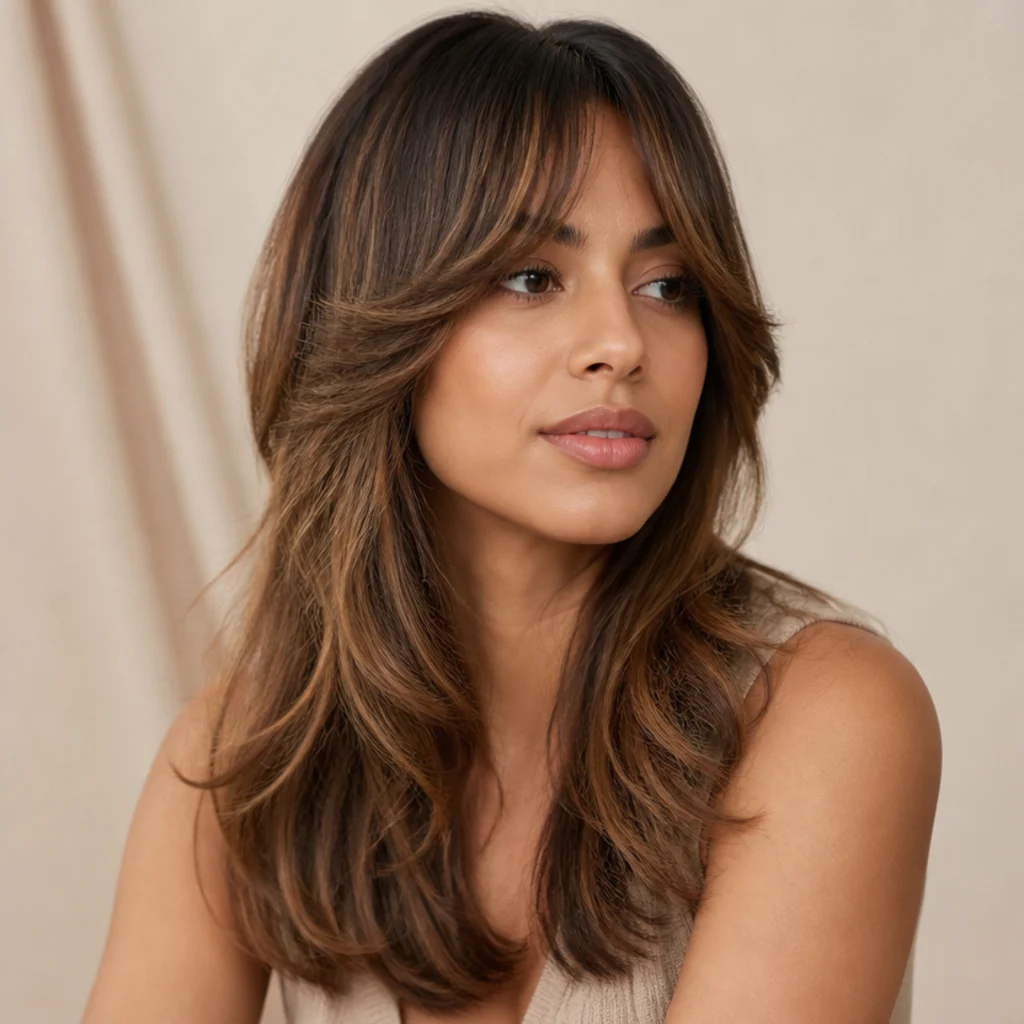
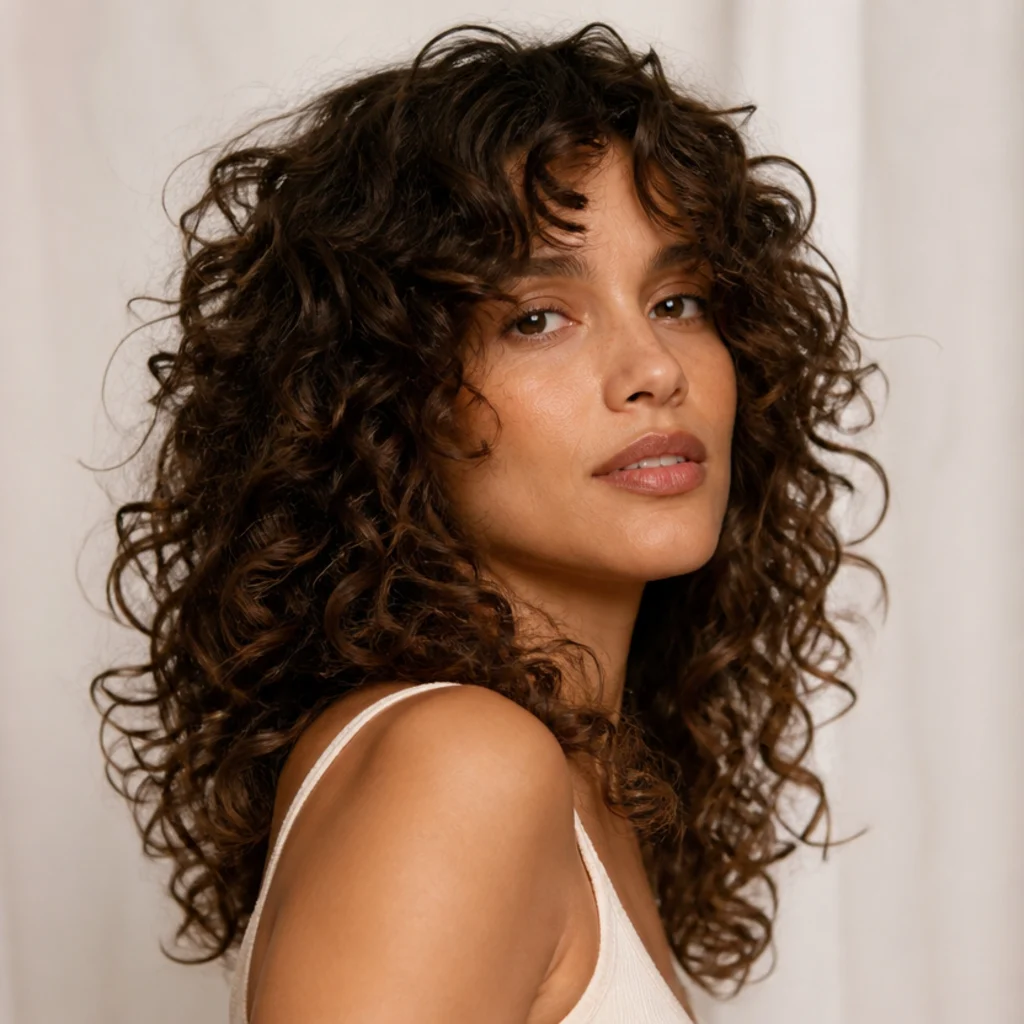
20 Long Shag Haircut Before and After Looks
A shag isn't one haircut, it's a dial. These 20 looks map a single length from barely-there layers to full choppy texture, so you can see exactly where your comfort level lands before you sit in the chair. Every look here is an original illustrative example, not a real client photo.
 Edited by Lena Rose · Published July 11, 2026 · 34 min read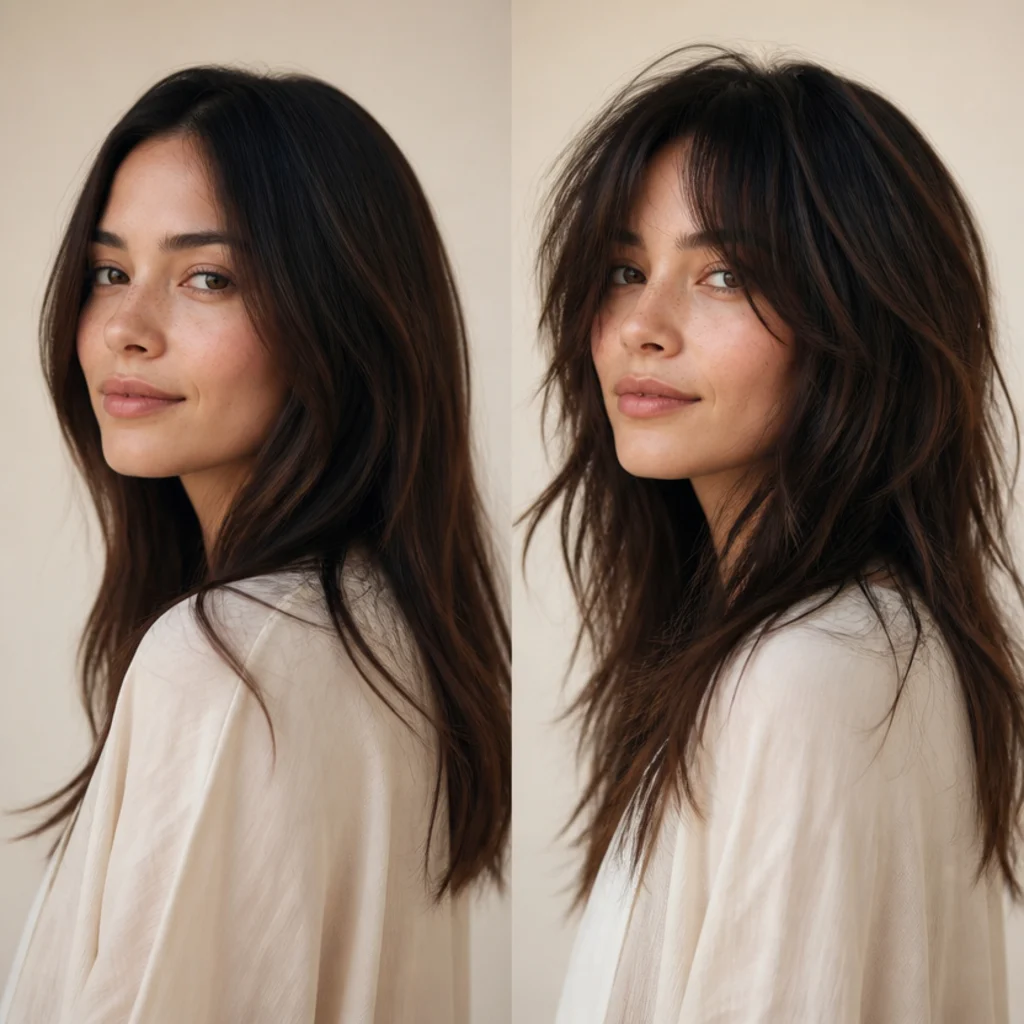
Quick Answer
- Best for: Anyone who wants movement, face framing, and a swingy shape without sacrificing length, across textures from pin-straight to 4A coily.
- Who might skip it: Those growing out a blunt one-length cut who don't want any visible steps, or very fine hair that reads sparse when the ends are over-textured.
- Maintenance: Soft versions are low-effort and grow out cleanly; choppy, wolf-cut, and micro-fringe versions are moderate-to-high and need regular reshaping.
- Difficulty: Home styling is beginner-friendly (rough-dry plus one product); the cut itself is firmly stylist territory, especially dry-cutting curls.
- Cost: Roughly a mid-range to premium cut in most markets; expect more for a specialist dry curl cut or when you add money-piece or balayage color.
- Wear time / longevity: Six to twelve weeks of good shape depending on boldness; the layered architecture reads intentional long after a blunt cut would look shapeless.
- Standout variation: A soft long shag with curtain bangs and face-framing layers, the most universally flattering point on the dial.
- How to ask your stylist: Bring two photos (one for the cut, one for the finish), and name where the shortest face-framing piece should hit, cheekbone, jaw, or collarbone.
In This Guide
- The Barely-There Long Shag
- Soft Long Shag With Invisible Layers
- Face-Framing Long Shag
- Long Shag With Curtain Bangs
- Long Layered Shag Haircut
- Wavy Beach Long Shag
- Long Shag Straight Hair
- Long Curly Shag Haircut
- Long Shag With Money-Piece Highlights
- Textured Mid-Length-to-Long Shag
- Long Shag Choppy Layers
- Wolf-Cut Long Shag
- Voluminous Crown Long Shag
- Coily Long Shag
- Razor-Cut Feathered Long Shag
- Long Shag With Micro Fringe
- Shaggy Long Layers With Balayage
- Rock-and-Roll Long Shag
- High-Contrast Choppy Long Shag
- Bold Editorial Long Shag
The shag has become the most flexible long cut you can ask for in a salon chair, and that flexibility is the whole point of this guide. At its softest, a soft long shag is nothing more than a few internal layers and a little face framing, the kind of change your coworkers clock as "your hair looks good" without knowing why. Push the same blueprint further and you land on point-cut ends, stacked crown pieces, and a fringe that reframes the entire face. The difference between timid and bold here is purely a matter of degree, which makes the shag one of the few cuts where you can dial the drama up or down and keep every inch of your length.
That range is also why the shag works on nearly everyone. Fine hair borrows density from crown layering, thick hair sheds weight through textured ends, and curls and coils finally escape the triangular "pyramid" silhouette because layers give each spiral room to stack. This guide walks the dial left to right, opening with the most natural, grow-out-friendly interpretations and building toward editorial, seventies-rooted texture. Along the way you'll find who each version flatters by face and hair type, a realistic upkeep timeline, one concrete styling move, and the exact language to hand your stylist. Use the progression to find your comfort zone, then screenshot the two or three looks closest to the version of you that you actually want to wear.
01The Barely-There Long Shag
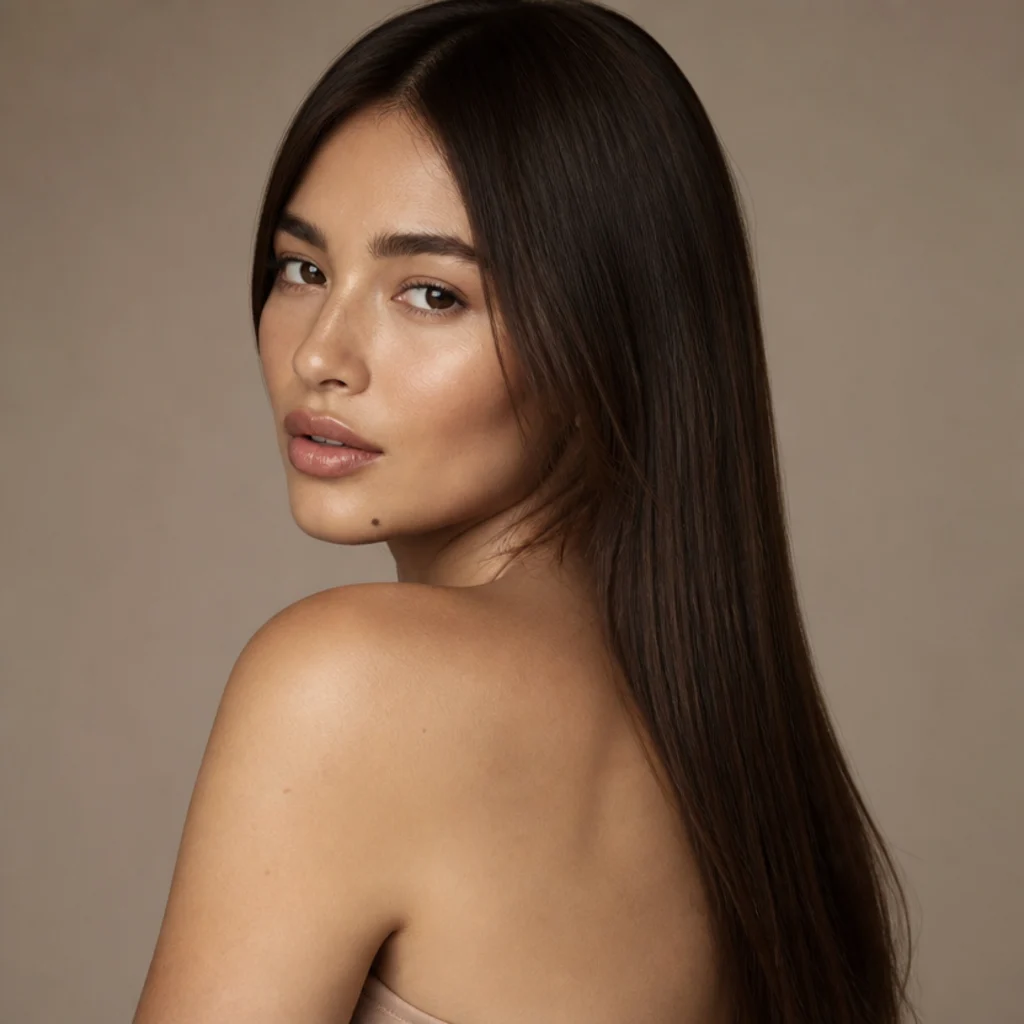
This is the gentlest possible entry point: length kept almost all one, with a handful of long internal layers that release weight rather than create visible steps. From the front it barely reads as a shag, which is exactly why it works if you're protective of density or you've spent two years growing out a bad decision. Fine-to-medium hair that goes limp under heavy layering does well here, and the grow-out is essentially painless since there's no short piece to catch up. Undertone and shade don't matter for this one, it's architecture, not color. Maintenance stays low; a dusting every twelve weeks keeps the ends honest. Pro tip: ask for the layers to be cut on a vertical elevation so weight lifts from the interior while your perimeter stays blunt and strong. Ask your stylist for "long invisible layers, weight kept low, no visible steps, perimeter left one length." Style with a rough blow-dry and a twist of the ends, and treat it as the "before" every bolder look here is built on.
02Soft Long Shag With Invisible Layers
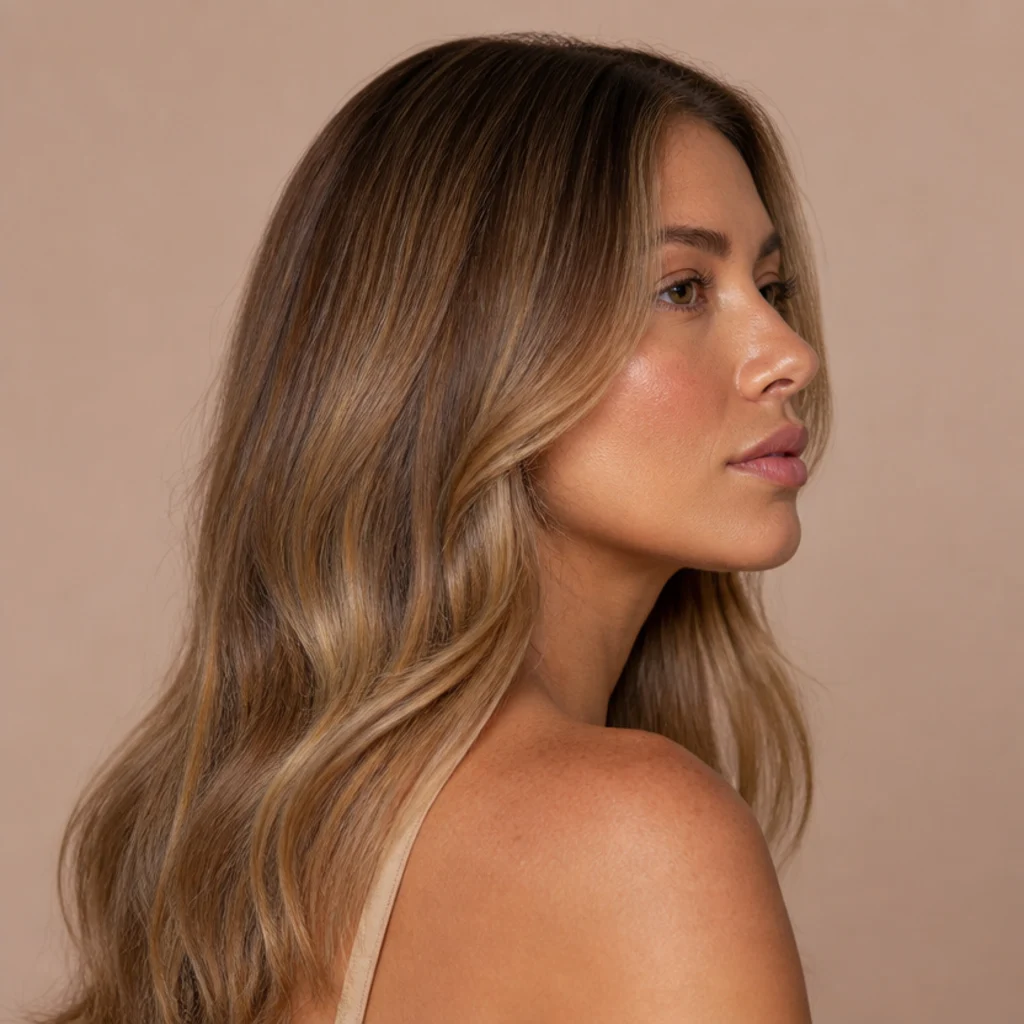
Here the layers multiply but stay whisper-blended, so you feel the movement more than you see the steps, the definition of a soft long shag. This is the sweet spot for flattering almost any face shape without committing to obvious texture: it reads polished on straight hair, bouncy on a loose wave, and never announces itself as a "statement" cut. Fine-to-medium densities suit it especially well, since invisible layering adds motion without carving out fullness. Caramel, bronde, and soft brunette tones show the movement best, because mid-depth shades catch light along each blended edge. Maintenance is low; a trim every ten to twelve weeks keeps the ends from stringing out. Pro tip: request the layers be connected through the mid-lengths so nothing sits as a hard shelf, that smoothness is what separates "soft shag" from "grown-out layers." Ask for "seamless invisible long layers with a little ends movement, nothing choppy." A wave spray scrunched into damp hair brings the shape to life with zero heat.
Save this to Pinterest for your inspiration board.
03Face-Framing Long Shag
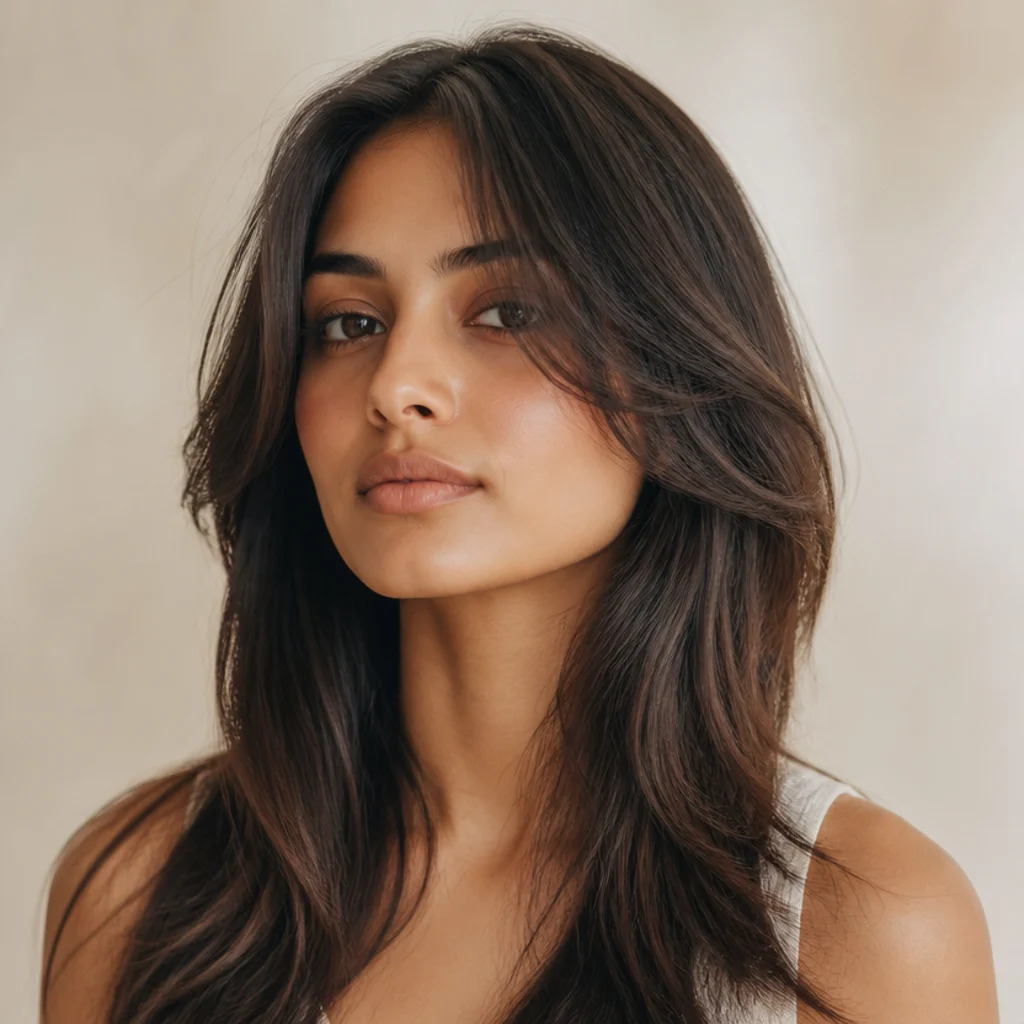
Now the layers start doing visible, deliberate work around the face. Shorter pieces begin at the cheekbone or jaw and cascade down, guiding the eye toward your features and softening a strong forehead, a square jaw, or a wider midface. Because the back stays long and full, it feels like a small edit with an outsized payoff. Nearly everyone can wear it, though it's especially kind to round and heart-shaped faces, where a cheekbone-length front piece adds vertical length and slims the widest point. Deeper, cool-toned bases make the framing read crisp; warmer tones keep it soft. Upkeep is moderate, since those front pieces telegraph growth first, plan a framing tidy-up around eight weeks even if the length can wait. Pro tip: the single most consequential decision is where the shortest framing piece lands, so name it out loud, jaw versus collarbone changes the whole face. Tell your stylist "face-framing layers starting at my cheekbone, blended into long length," and bring a reference photo.
04Long Shag With Curtain Bangs
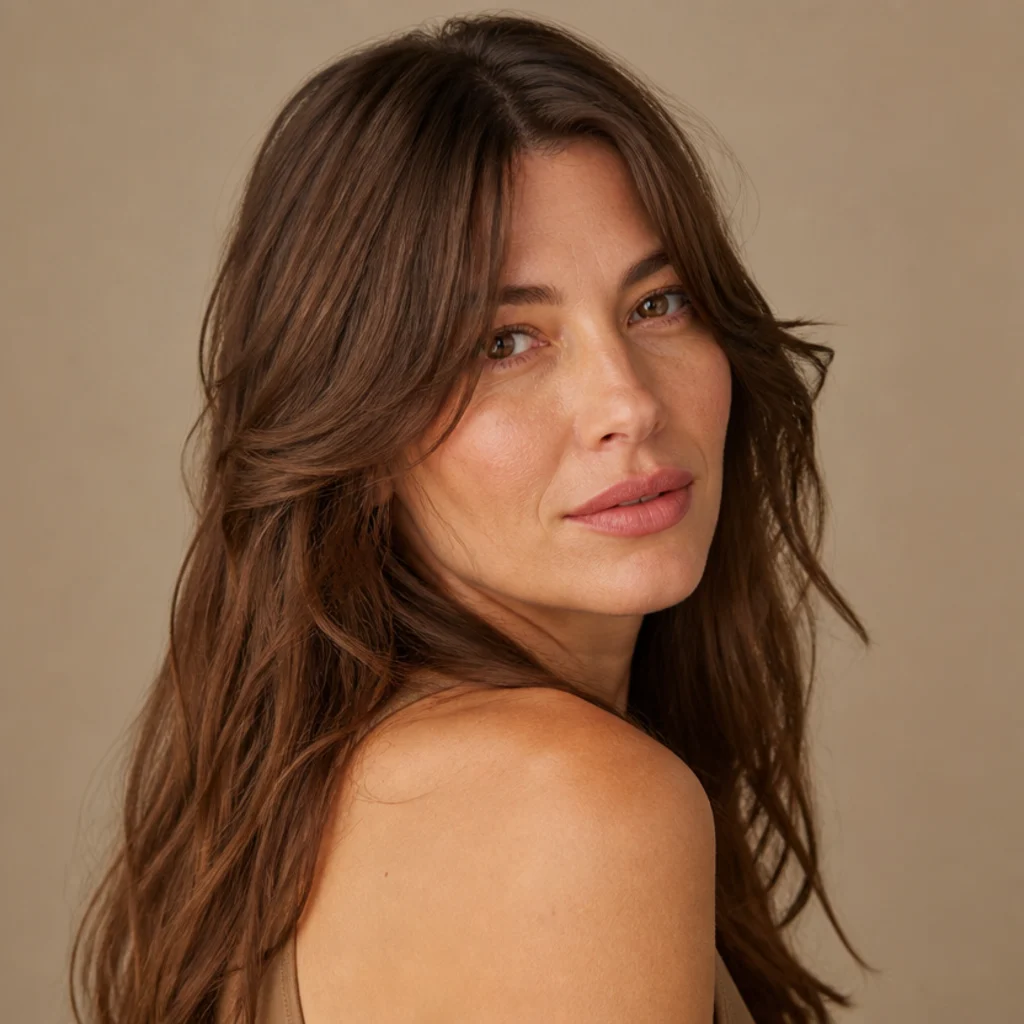
Add a curtain bang and the whole cut tips into expressive, lived-in territory. The fringe parts center and sweeps outward to meet the face-framing layers, creating the slightly undone, "cool without trying" quality the shag is famous for. Curtain bangs are the forgiving choice because they blend into your length as they grow, sparing you the strict three-week upkeep of a blunt fringe, though a bang dusting every five to six weeks keeps them from drifting into your eyeline. This works across most textures; very curly hair needs the fringe cut with shrinkage factored in, often an inch or more longer than the target. Chestnut and warm-brunette tones flatter the style by keeping the blend soft where the bang feeds into the frame. Pro tip: ask for the bang to be cut to hit just at or below the cheekbones when dry, so it always has somewhere flattering to fall. Ask for "curtain bangs blended into face-framing layers." Round-brush the fringe outward from center to set the sweep.
05Long Layered Shag Haircut
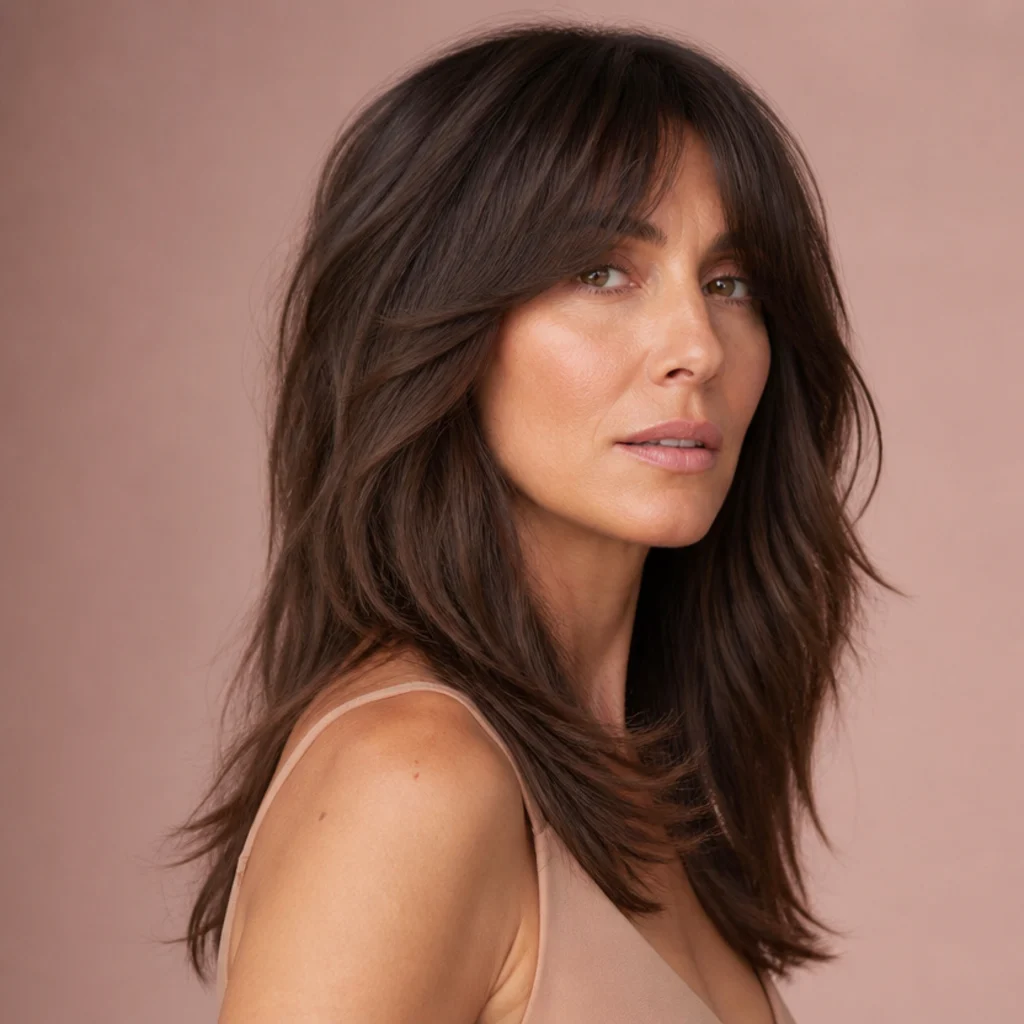
This is the classic long layered shag haircut most people picture: consistent layering from crown to ends, generous movement, and a shape that swings when you walk. It's the true midpoint of our progression, unmistakably a shag, yet polished enough for a boardroom or a wedding. Medium-to-thick hair that can carry layering without thinning out suits it best, and it gives that density somewhere to go instead of sitting as a heavy block. Rich, mid-depth browns show the layered motion best because the movement creates its own subtle light-and-shadow. Maintenance sits squarely in the middle, expect a shape-up every eight to ten weeks before the layers blur together. Pro tip: ask your stylist to point-cut the ends rather than blunt them, so the layers taper and move instead of sitting as visible tiers. Request "a true layered shag, movement crown to ends, ends point-cut for softness." A dime of light mousse at the roots keeps the layers from collapsing by midday, and a cool-shot finish on the blow-dry locks the swing in.
Save this to Pinterest so it's ready at your appointment.
06Wavy Beach Long Shag
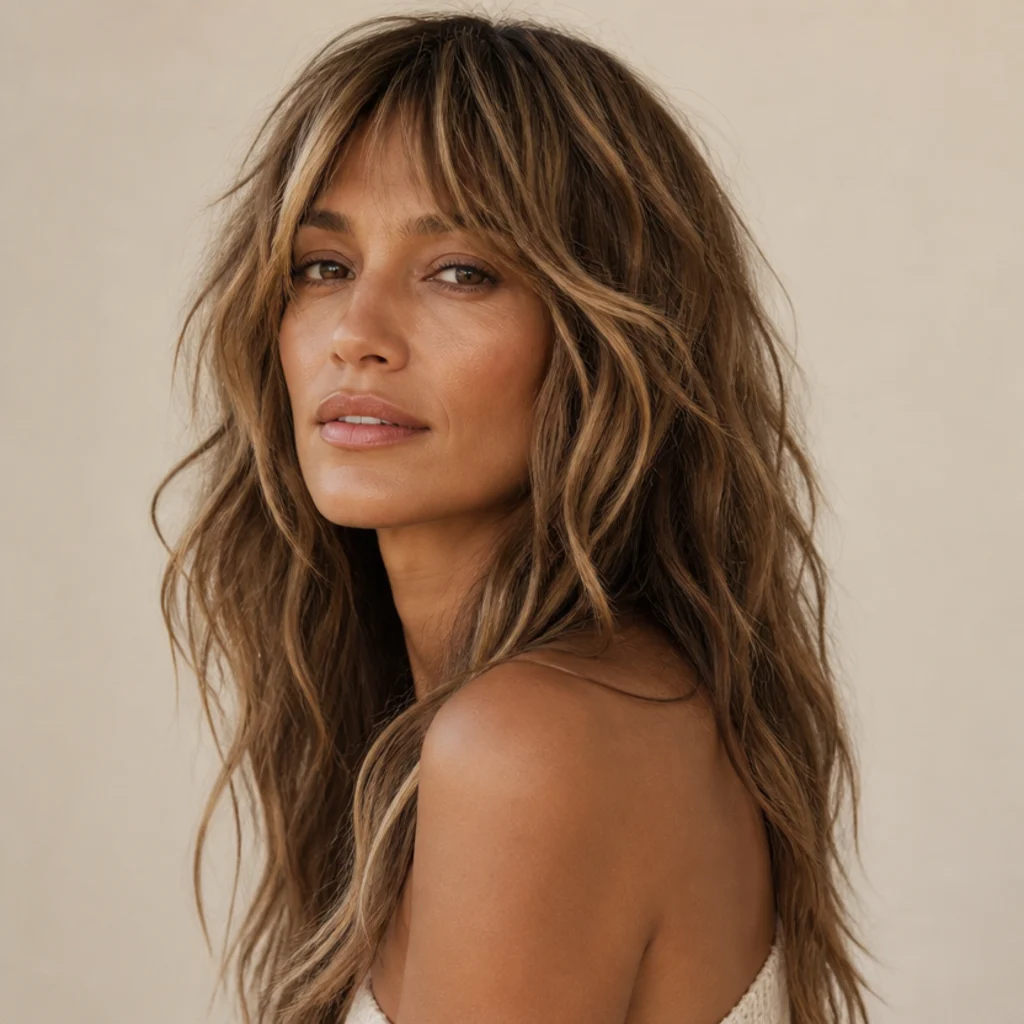
Layer a natural wave over a shag and the texture practically styles itself. The cut's built-in movement exaggerates every bend, delivering that off-the-sand, air-dried finish with almost no effort, which is the entire appeal for low-maintenance wearers. It's a wash-and-go favorite for anyone with a loose 2A to medium 2C wave who wants their hair to look intentional on a day they did nothing to it. Because waves camouflage unevenness, grow-out is forgiving, you can stretch to twelve weeks between trims easily. Sun-kissed bronde and lived-in brunette tones amplify the effect by mimicking the way real sun lightens the surface of textured hair. Pro tip: the messier you dry it, the better it looks, so scrunch it and then leave it alone; fussing is what flattens a beach wave. Ask for "a layered shag cut to work with my natural wave, not against it, ends left textured." Scrunch a salt spray or lightweight curl cream into damp hair, encourage the bend with your hands, and stop touching it.
07Long Shag Straight Hair
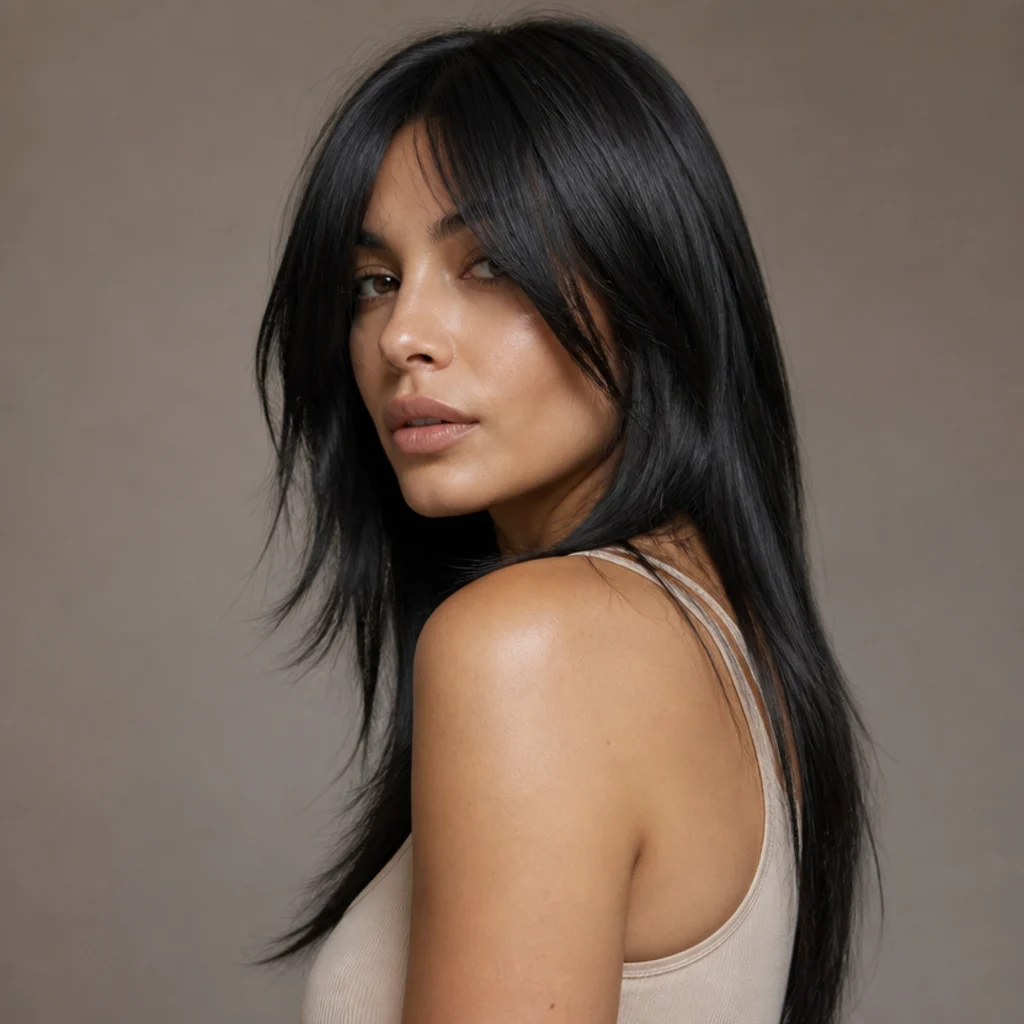
Straight hair shows a shag's architecture most nakedly, which makes this long shag straight hair version all about clean, deliberate layers. With no wave to soften the steps, precision is everything: intentional layers create sleek, swinging movement, while sloppy ones read as thin. Pin-straight to slightly bent hair that wants shape and swing without the daily commitment of curling is the target here. Maintenance is moderate because straight strands broadcast split ends and blunt regrowth faster than any other texture, budget a trim every eight to ten weeks. Deep, cool-toned brunette and espresso shades look especially glassy here because straight hair reflects light in an unbroken sheet. Pro tip: ask for the very ends to be lightly point-cut so they don't sit as a hard blunt line, a fully blunt end on a layered straight shag can look sparse where the layers taper in. Tell your stylist "intentional layers that read deliberate on straight hair, ends slightly textured, not blunt." A smoothing serum plus a flat paddle-brush blow-dry gives the editorial, glass-like finish.
08Long Curly Shag Haircut
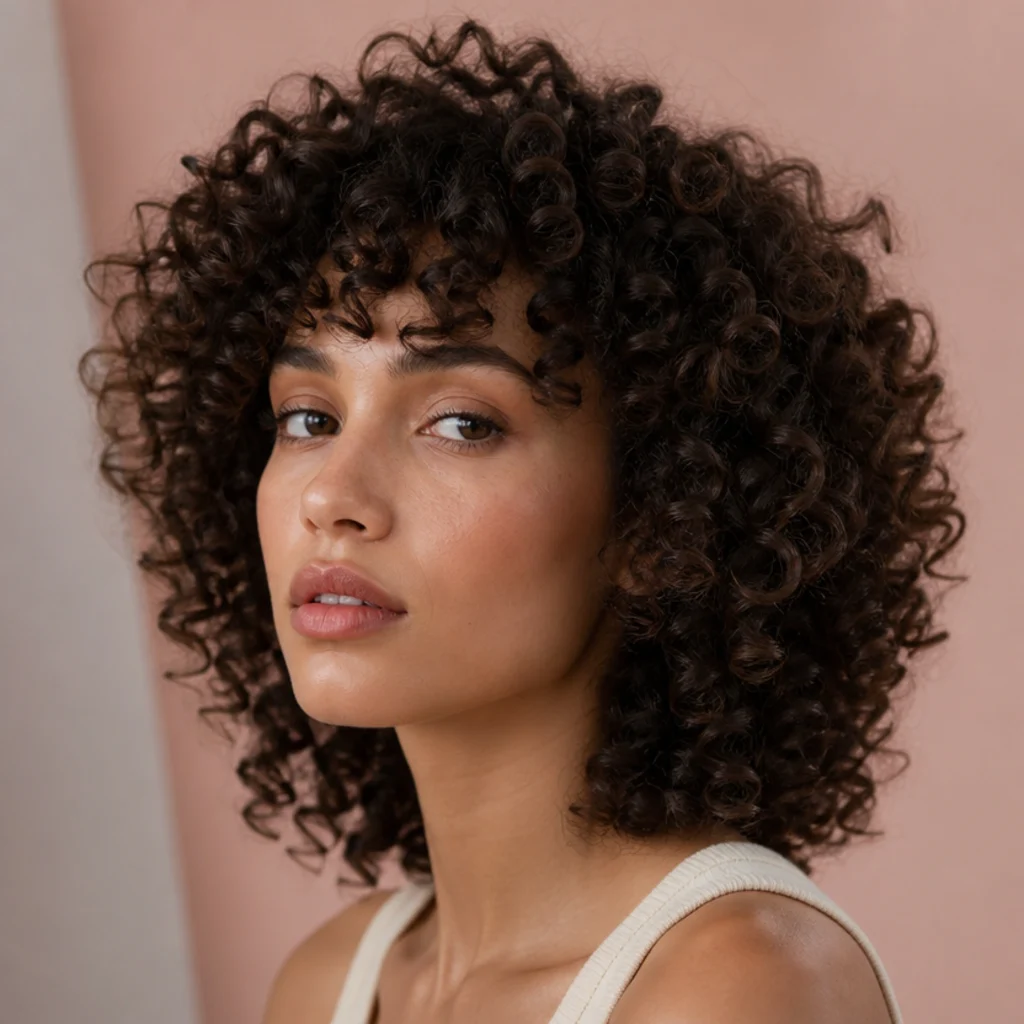
A long curly shag haircut may be the single best pairing on this entire list. Curls love a shag because the layers give each coil room to spring and stack, dismantling the triangular "pyramid" that long, one-length curls almost always collapse into. This one works from a loose 2C wave to a defined 3B curl, though the layer placement shifts with pattern, tighter curls need more internal removal to avoid width at the sides. The non-negotiable is a dry or curl-by-curl cut, because wet curls hang longer and straighter and hide their true shape from the stylist. Upkeep on styling is low once the cut is right; the shape does the work. Pro tip: ask for weight removed at the widest point (usually the sides, around the ears) and height encouraged at the crown, that redistribution is what turns a triangle into an oval. Ask for "a curly shag cut dry, layered to remove bulk at the sides and build height at the crown." Refresh between washes with a water-and-leave-in spritz and a scrunch.
09Long Shag With Money-Piece Highlights
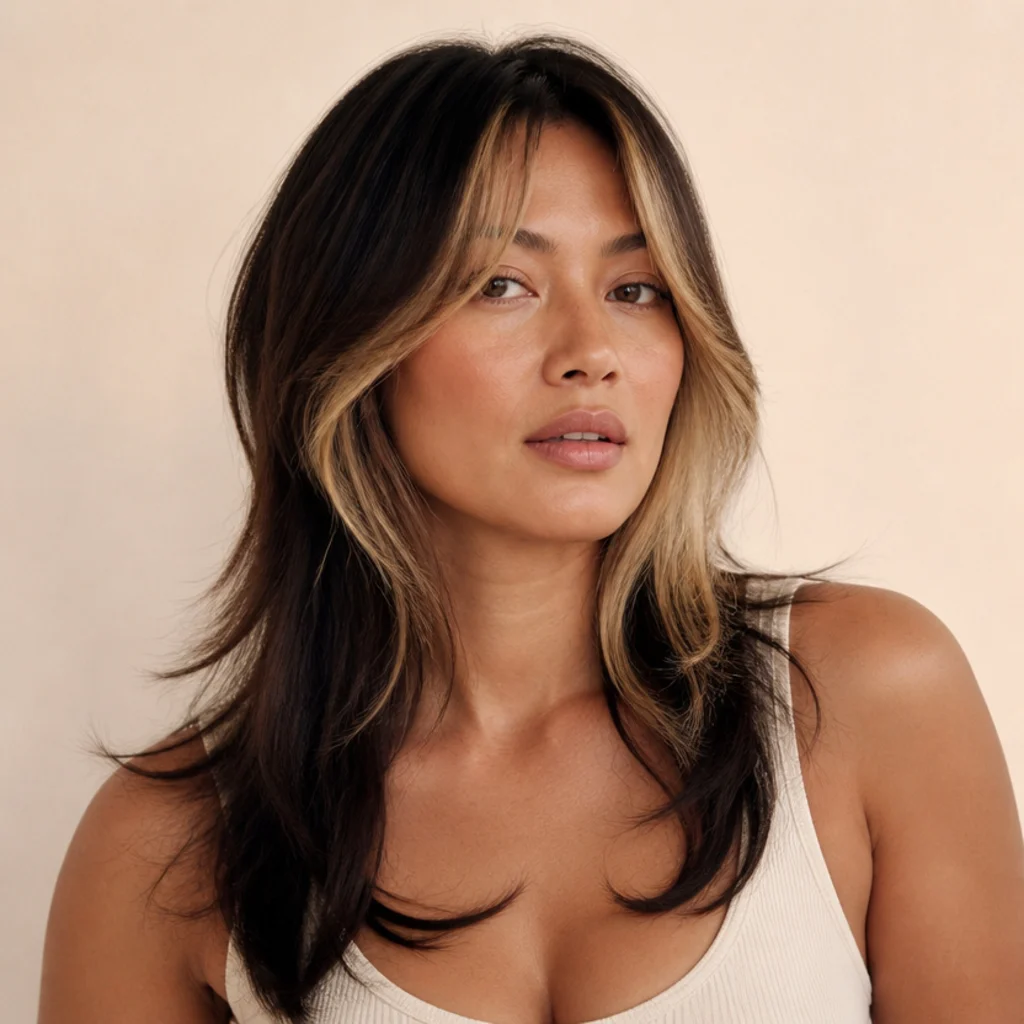
Color enters the progression here, and it enters strategically. A money piece, two brighter panels bracketing the face, amplifies the shag's face-framing layers and adds dimension without committing to a full head of foils. It's the smartest low-lift way to make a soft cut feel current and to flatter your complexion by placing light exactly where it lifts and warms the face. It works on any texture and any base, warm or cool, provided the money piece is toned to sit a few shades brighter rather than jumping to a clashing tone. Maintenance scales with contrast: a soft, root-melted money piece a couple of levels lighter stretches to twelve weeks, while a high-contrast platinum panel against dark hair needs a root touch-up closer to six. Pro tip: match the money piece's warmth to your undertone, golden for warm complexions, beige or cool for neutral-to-cool, so it reads like light, not a stripe. Ask your colorist for "a face-framing money piece a few shades lighter than my base, melted at the root."
10Textured Mid-Length-to-Long Shag
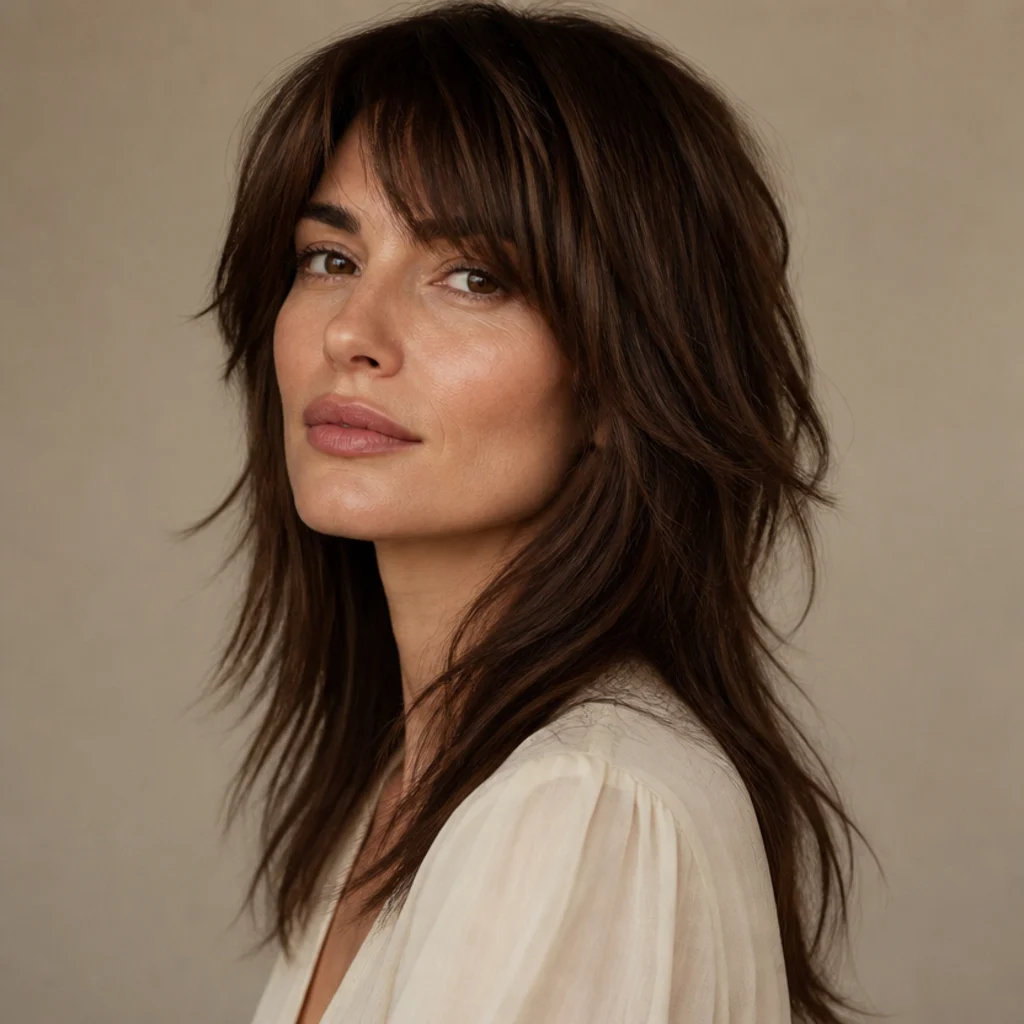
At the midpoint of boldness, the crown layers shorten just enough to create subtle stacking, adding real height and body up top while the length below stays long. It's the first look on the dial where the shag starts to feel a little rock-and-roll rather than purely soft and pretty. It's a genuine problem-solver two ways: fine hair borrows the volume it can never hold, and thick hair uses the shorter interior to control bulk instead of expanding sideways. Warmer chestnut tones flatter the stacked crown by keeping the shorter pieces from looking harsh against the light. Because those crown pieces are visible, plan trims every eight weeks so the stacking stays intentional rather than shaggy in a bad way. Pro tip: ask the stripping to stay in the interior of the crown so your surface layer covers it, that keeps the volume looking dense, not thin. Request "shorter textured crown layers blended into long ends for lift, weight kept underneath." Work a texture spray through the mid-lengths so the layers read piecey, not puffy.
Save this to Pinterest for later.
11Long Shag Choppy Layers
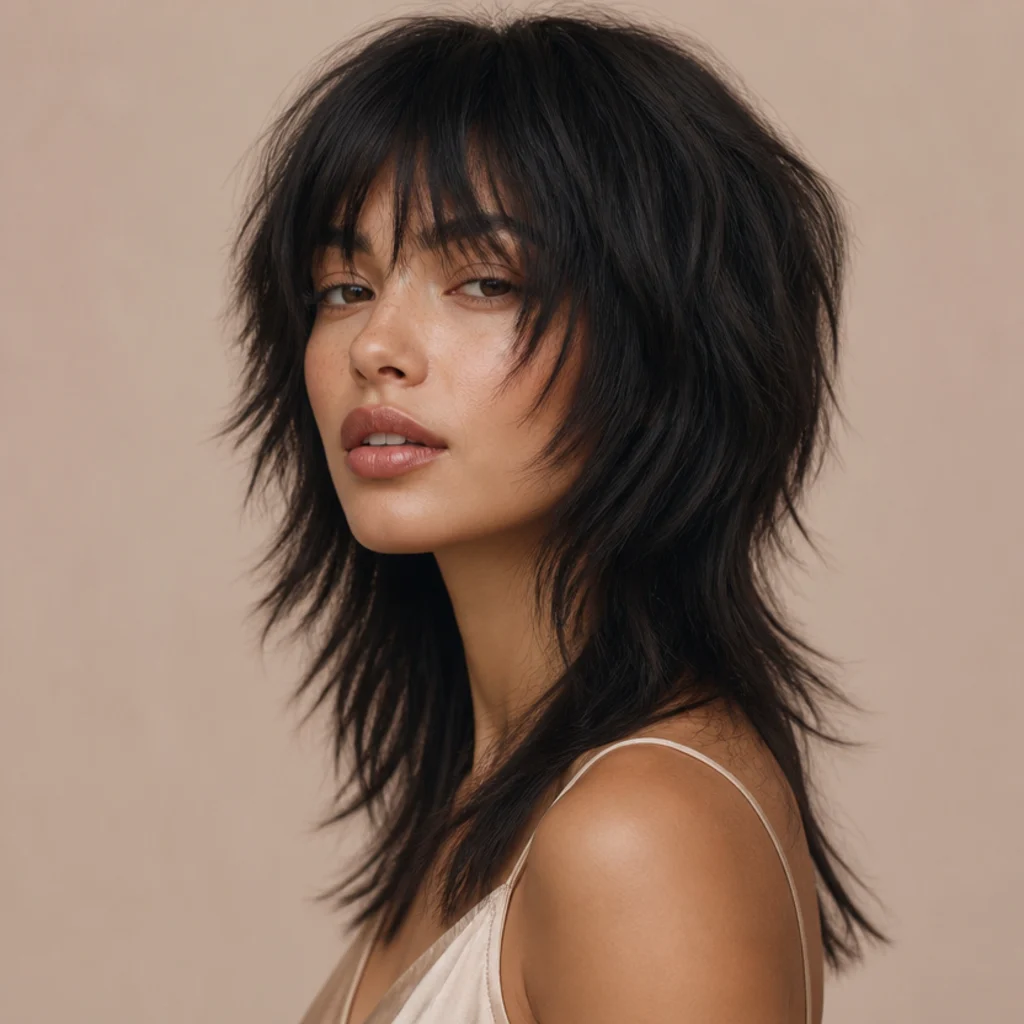
Now we commit to texture. Long shag choppy layers means the ends and internal sections are cut with visible, deliberate irregularity, no soft blending, just crisp, piecey separation with real attitude. It's edgy and full of personality, and it pulls double duty: it hides thick hair's bulk while making fine hair look denser by breaking the perimeter into distinct pieces. Confident wearers who like a bit of undone edge rather than tolerating it suit this best. Deep, matte-finished dark tones show the choppiness most sharply because separation reads best without a lot of shine competing with it. Upkeep is only moderate, the irregularity actually disguises grow-out far better than a precise cut. Pro tip: ask specifically for point-cutting and slide-cutting rather than a razor here; scissors keep the ends dense and crisp, where a razor would soften the very separation you're after. Ask for "choppy, disconnected layers, ends point-cut for separation, nothing blended." Pinch a matte paste onto the ends to define each piece and stop the look from softening as the day goes on.
12Wolf-Cut Long Shag
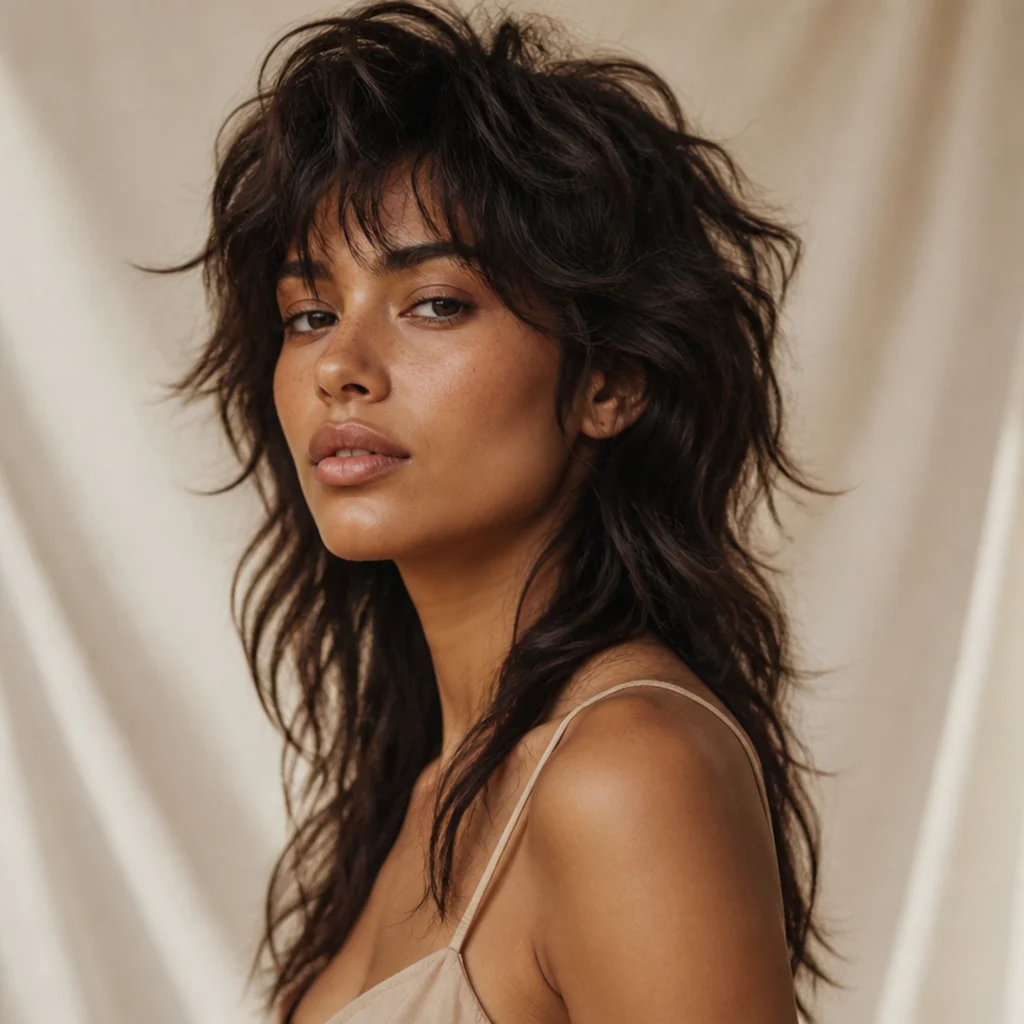
The wolf cut is where shag meets mullet: shorter, heavily textured layers up top that graduate down into long, wispy ends. On a long base it stays wearable, delivering dramatic crown volume while preserving length you can still gather into a ponytail. Wearers who want a real statement without crossing into short-hair territory suit it best, and it's a proven favorite on straight and wavy hair, where the graduation reads clearly. Maintenance is higher, the whole appeal is the graduated silhouette, and that shape blurs fast, so plan reshaping every six to eight weeks. Because wolf cuts vary wildly between stylists, this is the look where a reference photo matters most. Pro tip: ask the shortest crown pieces to fall no shorter than your chin so the graduation stays flattering and grows out into a normal shag rather than a hard stage. Ask for "a long wolf cut, textured shag layers up top, wispy long ends, shortest layer no higher than the chin." Rough-dry for lift at the crown, then separate the ends with a little texture spray.
13Voluminous Crown Long Shag

This version pushes height as far as it will go while staying long everywhere else. Aggressive internal layering at the crown builds lift you'd normally have to fake with a round brush and an hour, which makes it a lifeline for flat, fine hair that has never held body. The deliberate contrast between the full, elevated crown and the long, textured lengths beneath is what gives it its drama. Fine-to-medium densities suit it best; very thick hair can balloon too large up top and lose the shape. Cool and neutral blonde tones flatter the volume by keeping the crown from looking heavy, light shades read airy where the height is concentrated. Expect frequent trims, roughly every six to eight weeks, since the crown shape softens first. Pro tip: the layering should be built into the interior, not the surface, so you get lift from underneath while the top layer stays smooth and full. Request "maximum layered volume built into the crown interior, length preserved below the shoulders." A root-lifting spray plus an upside-down blow-dry locks the height in.
14Coily Long Shag
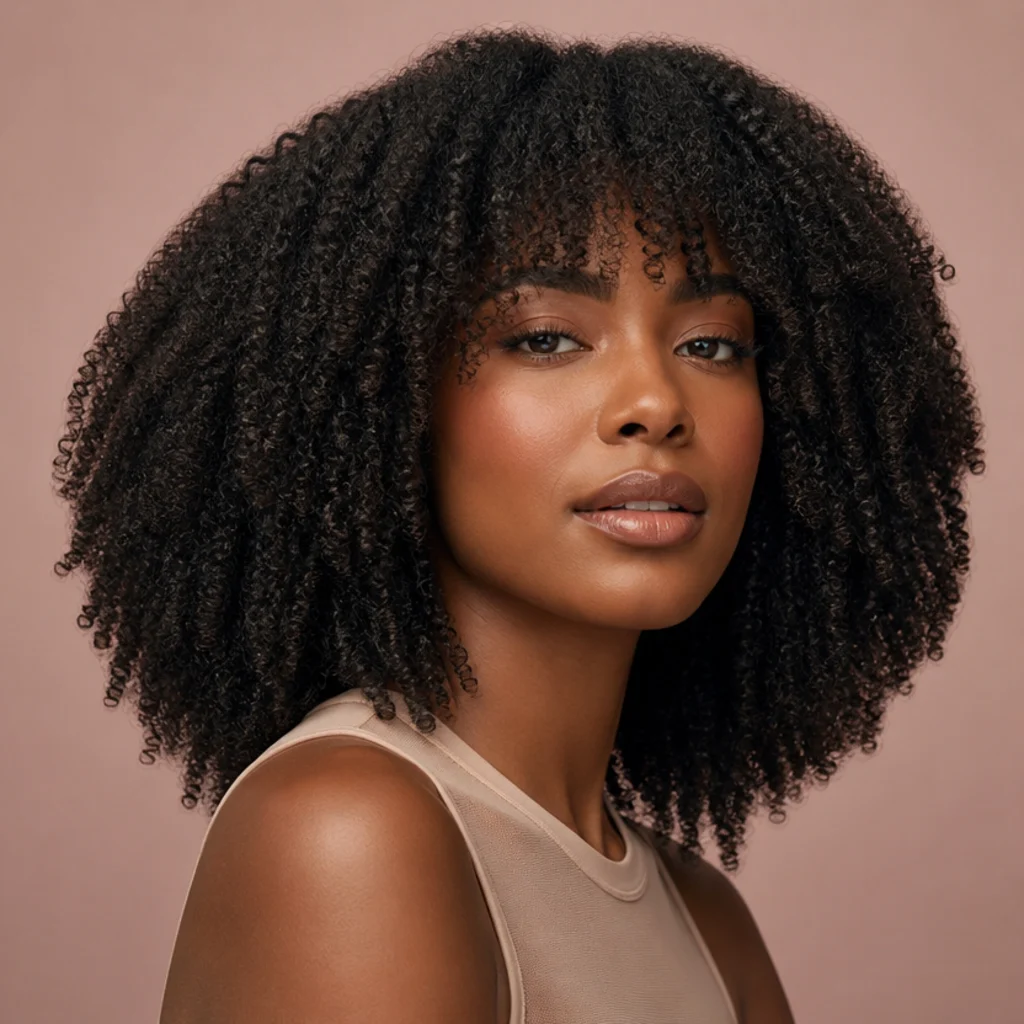
For tighter coil patterns, a shag cut correctly can be transformative. Layered specifically for 3C to 4A textures, it removes the density that drags coils down and lets the length finally stretch, define, and show its true reach. Cut dry and coil-by-coil, it builds a rounded, balanced silhouette instead of a flat, wide wall of hair. Anyone craving shape and vertical movement in longer natural hair without heat or a relaxer is the ideal candidate. Rich natural depths and subtle warm tones flatter the rounded shape by reading full and dimensional. Styling upkeep is low, the cut carries the shape, but the hair itself rewards consistent hydration to keep the pattern springy. Pro tip: insist on a dry cut on your natural, product-defined pattern; cutting coils wet is the most common reason a coily shag comes out uneven and shorter than expected. Ask for "a shag layered for my coil pattern, cut dry, bulk removed at the sides and volume balanced crown to ends." Refresh definition with a water-and-leave-in mix and a diffuser on low heat, low speed.
15Razor-Cut Feathered Long Shag
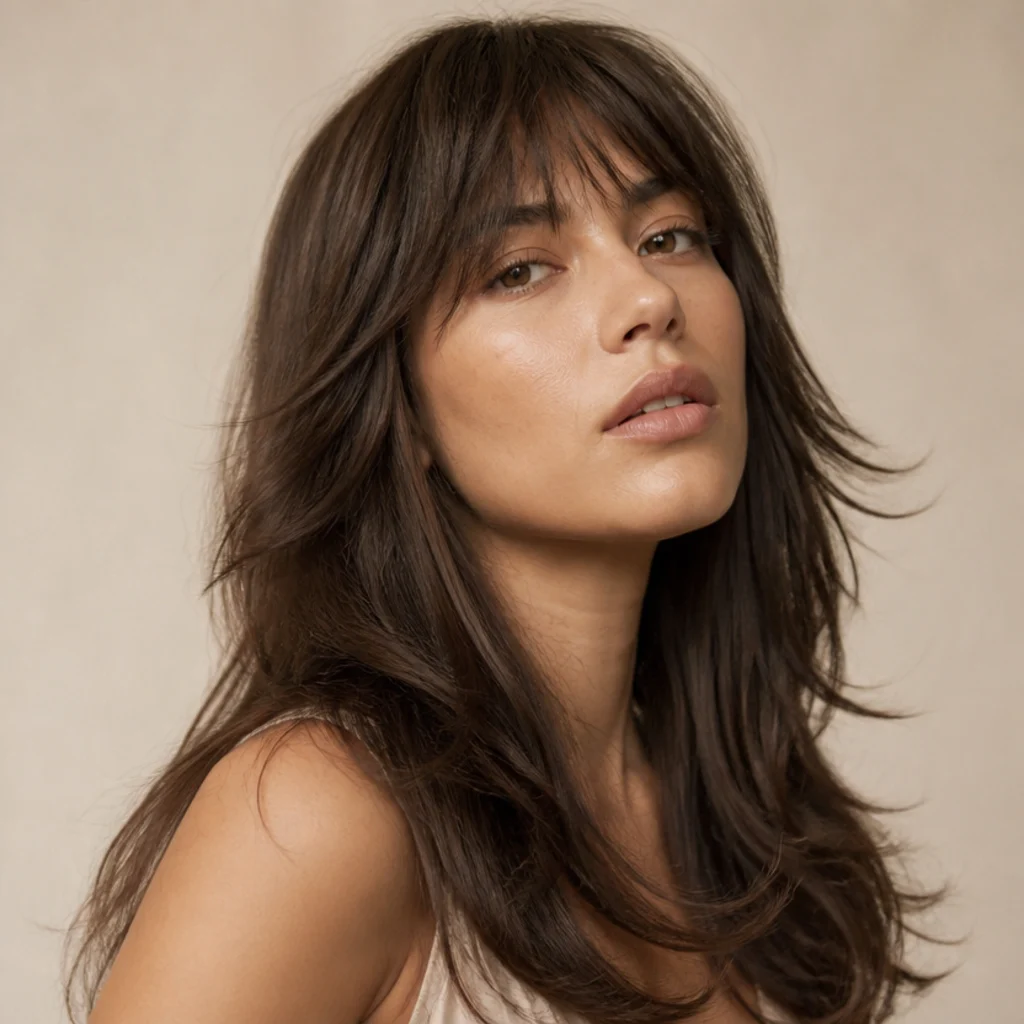
A razor gives the shag a softer, feathered edge than scissors ever will, whittling the ends into fine, airy points. The result is weightless movement and a wispy, distinctly seventies-leaning finish, bolder than a blended shag but softer than a scissor-choppy one. Medium-density hair that isn't prone to frizz suits it best, since razoring roughs up the cuticle and can frazzle fragile, very fine, or tightly curly strands. Warm brown and soft copper tones flatter the feathering by keeping the wispy ends looking intentional rather than frayed. Maintenance is moderate, and there's a real caveat: skip the razor entirely if your ends dry out or split easily, since the technique thins the strand and speeds up wear. Pro tip: ask the stylist to razor only on damp (not soaking) hair and only through the ends and face frame, keeping the interior scissor-cut, that limits cuticle damage to where the softness actually helps. Ask for "razor-feathered ends and face framing for a soft, wispy shag." A single drop of oil on the ends keeps the fine points from looking frayed.
Save this to Pinterest so you don't lose it.
16Long Shag With Micro Fringe
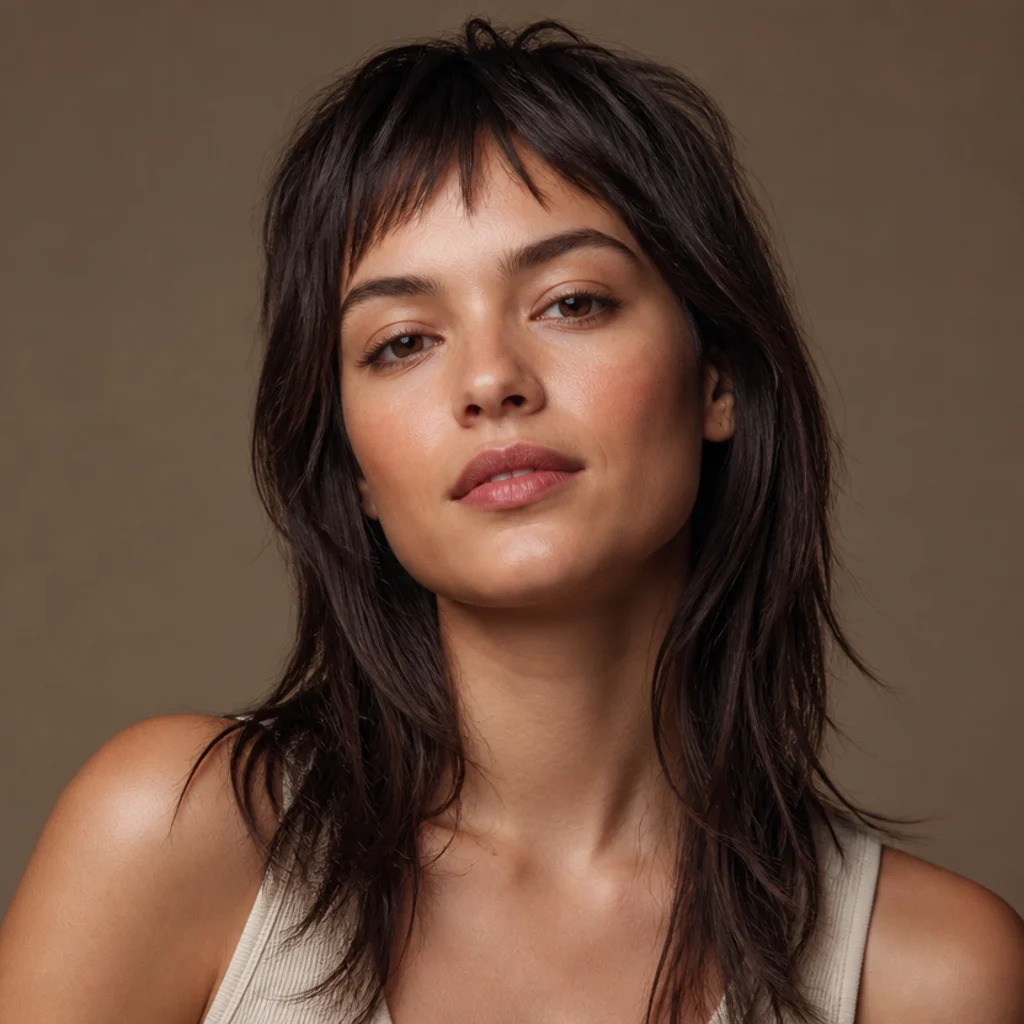
Swap the curtain bang for a short, textured micro fringe and the entire look sharpens. The tiny fringe sits high on the forehead, piecey and deliberately imperfect, lending a French-girl, faintly rebellious edge to an otherwise long, soft cut. Smaller foreheads do well with it, and so does anyone who wants a bold statement concentrated entirely at the front while keeping length everywhere else. Be honest about upkeep: this is the highest-maintenance fringe here, micro bangs need shaping every three to four weeks or they lose the whole point. It also asks for cooperative hair; a cowlick or a strong wave at the hairline will fight a micro fringe daily. Pro tip: if your hairline has a swirl or double crown, tell your stylist before they cut, they can point-cut the fringe more aggressively to work with the growth pattern instead of against it. Ask for "a short, textured micro fringe, piecey not blunt, over a layered long shag." Smudge a dab of paste through the fringe so it stays separated rather than falling flat and curtain-like.
17Shaggy Long Layers With Balayage
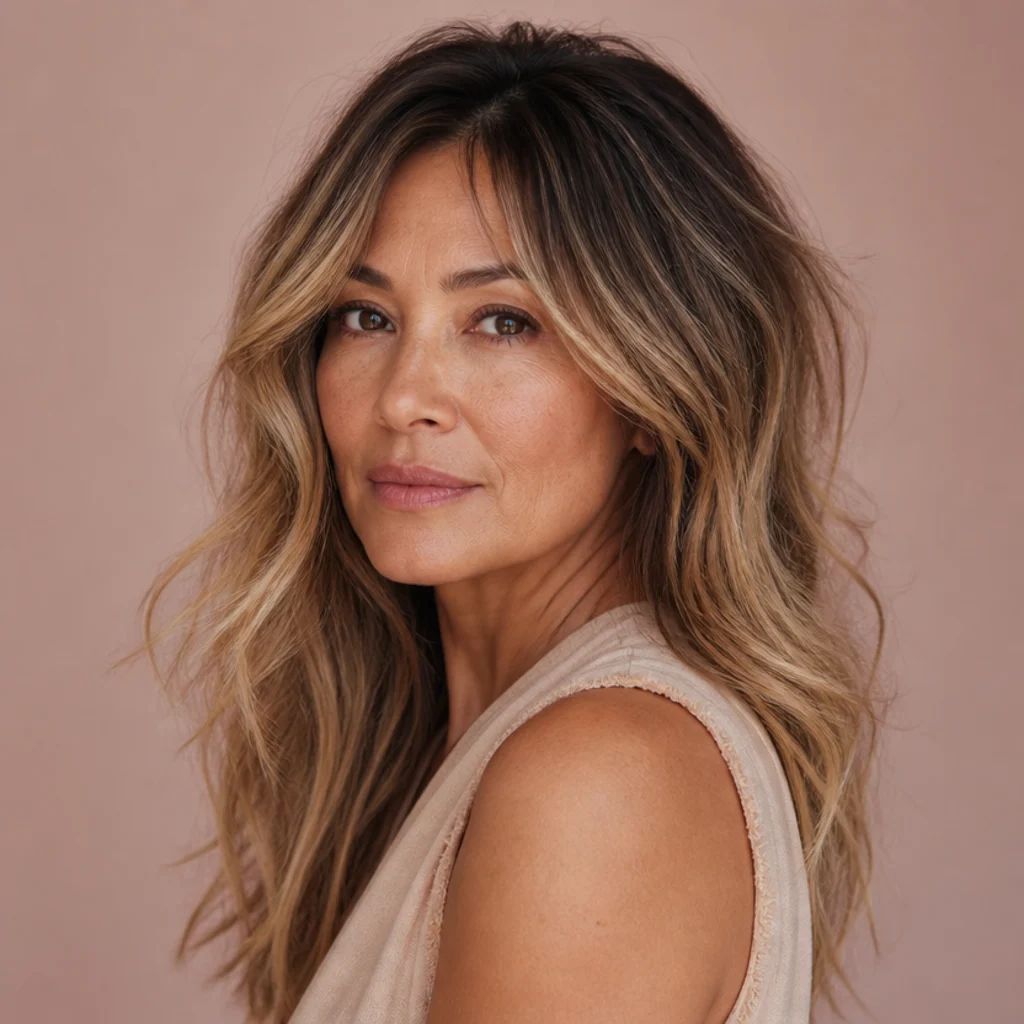
Here bold texture meets bold color, and the two amplify each other. A hand-painted balayage follows the shag's layers, placing brightness exactly where the movement naturally catches light, so the cut looks more dimensional and the color looks more organic. The lived-in root and sun-lit ends make every layer read deeper and more sculpted. Anyone wanting a full transformation without the harsh regrowth line of traditional foils will like this, since the freehand root keeps grow-out soft. Maintenance here is color-forward rather than cut-forward: the balayage placement can stretch four-plus months, but a gloss every eight to ten weeks keeps the tone from going brassy or dull. Warm caramel and honey balayage flatters warm undertones; cool beige and mushroom tones suit neutral-to-cool complexions. Pro tip: ask the colorist to map the brightest pieces to your face-framing layers, so the color does double duty and lifts the face the way the money piece does. Ask your colorist for "a balayage mapped to my shag layers, brighter through the mid-lengths and ends, soft and diffused at the root."
18Rock-and-Roll Long Shag

This is the shag at its most attitude-driven: undone volume, tousled choppy ends, and a deliberate messiness engineered to look like you slept on it and somehow won. It leans hard into the cut's seventies rock roots. Medium-to-thick hair that holds a rough texture all day suits it, and so does anyone who wants their hair to read effortless rather than styled, no small distinction, because it takes a good cut to look this uncombed on purpose. Deep, matte dark tones suit the mood; too much shine reads polished, which is the opposite of the goal. Upkeep is low on polish but moderate on shape, the disconnection needs re-cutting every eight weeks to keep its edge. Pro tip: ask for real disconnection between the top and the lengths, not a smooth blend; that intentional gap is what lets the volume sit up and the ends flick out. Ask for "a tousled, disconnected shag with plenty of texture, nothing neat or blended." Rough-dry with your fingers, break it up with dry texture spray, and remember precision is the enemy of this one.
19High-Contrast Choppy Long Shag

Near the bold end of the dial, this look stacks every dramatic element, short, heavy crown layers, sharply choppy ends, and a defined fringe, into one cohesive statement. The contrast between the textured, elevated top and the long, piecey lengths is deliberately extreme, and getting the elements to read as intentional rather than chaotic is the whole craft here. Confident wearers with the styling patience to maintain separation daily, and enough hair density to support the aggressive layering without going sparse, suit it best. Deep, saturated tones with a matte finish hold the contrast best. Maintenance is high, plan reshaping every six weeks, because both the crown stack and the fringe soften quickly. Pro tip: discuss the fringe and crown as one system with your stylist, not two separate decisions, so the shortest fringe piece and the shortest crown layer relate to each other instead of competing. Ask for "high-contrast choppy layers, short textured crown, long piecey ends, and a defined fringe, cut as one shape." Matte texture paste and a light hand with heat keep the choppiness crisp all day.
20Bold Editorial Long Shag
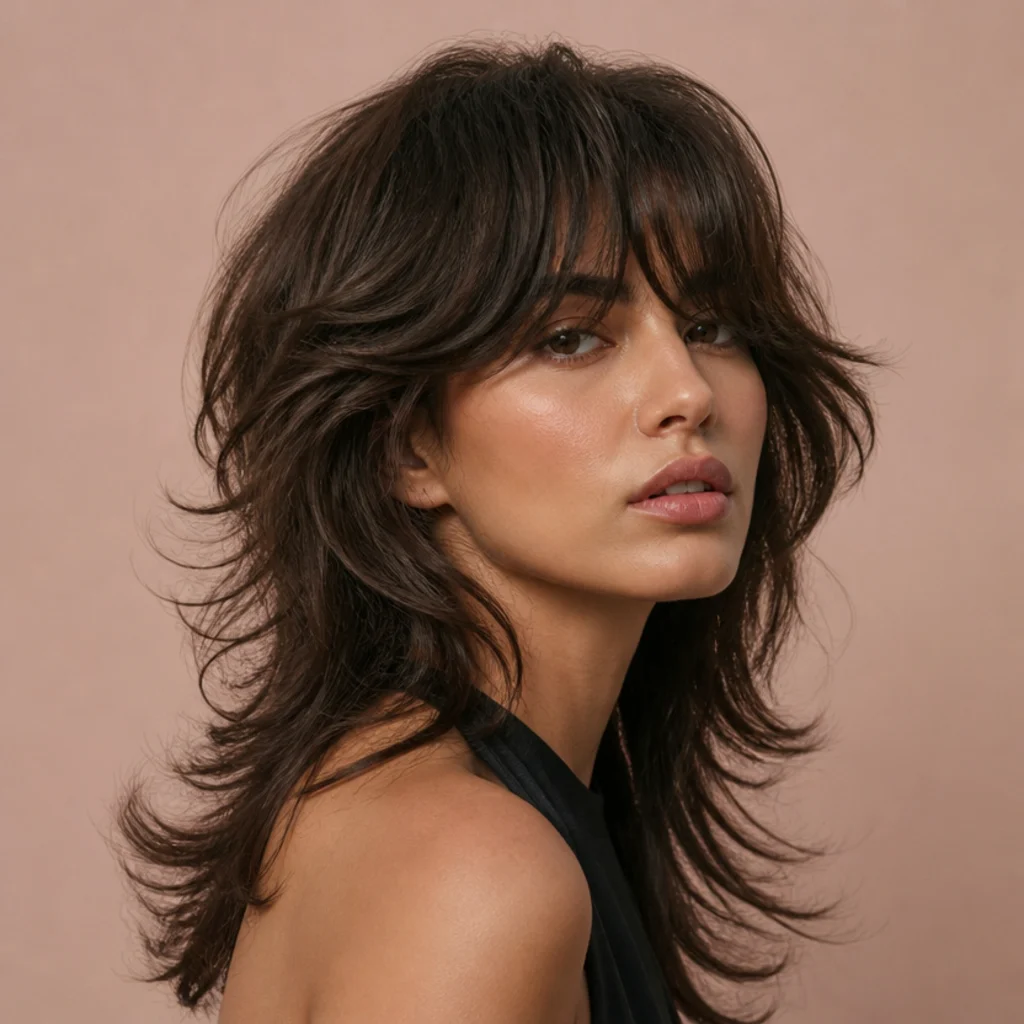
The boldest point on the dial: a fully realized, runway-leaning shag with maximum texture, dramatic layering, and an intentional, sculpted-yet-undone silhouette. This is the "after" that the barely-there look at number one could never have guessed it would become. Anyone ready to make their hair a defining feature, and willing to style it with intent, is the right candidate, this is not a wash-and-go. It rewards medium-to-thick density that can carry heavy texture without going wispy, and it flatters strong, angular features that can meet the drama. Maintenance is the highest on this list; both the cut and the daily finish demand attention, and the shape needs professional reshaping roughly every six weeks. Pro tip: build the finish in layers of product with different weights, mousse for structure, texture spray for grit, paste for definition, rather than reaching for one miracle product; dimensional volume comes from stacking finishes. Ask for "an editorial shag, heavy texture and layering, a shape styled for impact." Layer mousse at the root, texture spray through the mids, and a finishing paste on the ends to build the lived-in volume that makes this version sing.
Pro Tips from the Editor
- Name the shortest piece, not just the style. "A shag" is a mood; "the shortest face-framing piece hits my cheekbone, the shortest crown layer no higher than my chin" is a haircut. That one sentence determines more of your result than any photo.
- Bring two references, and label them. One photo for the cut (shape and length) and one for the finish (how it's styled). Stylists cut to the first and can't read your mind about the second, tell them which is which.
- Match the cutting method to your texture. Curly and coily hair almost always wants a dry, curl-by-curl cut; straight hair wants precise scissor work; only frizz-resistant medium hair should get the razor. The wrong method is the usual reason a shag "doesn't look like the picture."
- Layer weight, not just hair. For finish, stack products by weight, mousse or foam first for structure, then a mid-weight texture spray, then a small amount of paste on the ends. One heavy product flattens; three light ones build dimension.
- Book the trim to your boldness, not the calendar. Soft blended shags hold ten to twelve weeks; wolf cuts, micro fringes, and high-contrast versions need reshaping every four to six. Budget the upkeep before you commit to the drama.
- Ask for point-cut ends by default. Blunt ends on a layered shag can look thin where the layers taper in. Point-cutting keeps the perimeter looking dense and lets the ends move.
- Protect fine hair from over-texturing. If your hair is fine, keep the volume in the crown interior and preserve weight through the lengths, over-thinned ends read stringy, not lived-in.
How to Choose / Get the Look
Start by deciding where on this progression you actually want to live, because the language you use in the chair should match. If you love your length and want only a little movement, stay in the first five looks and lean on words like "soft," "blended," "smooth," and "invisible." If you're chasing personality and don't mind styling time, the choppy, wolf-cut, and editorial territory rewards you, reach for "piecey," "disconnected," "textured," and "point-cut." The single biggest mistake is showing a bold reference while using soft language (or the reverse); your words and your photo have to agree.
Texture is your second compass, and it often overrides preference. Curly and coily hair almost always wants a dry cut so the stylist can shape your real, sprung pattern rather than a wet, elongated version of it. Straight hair needs precise, intentional layers so the shape reads as deliberate rather than thin, and benefits from lightly textured ends instead of a blunt line. Fine hair borrows density from crown layering and should keep weight through the ends; very thick hair uses choppy, point-cut ends and interior removal to shed bulk without expanding sideways. Frizz-prone or fragile hair should skip the razor entirely.
Face shape fine-tunes the framing. Round and heart-shaped faces gain length and balance from a cheekbone-starting front piece; square and strong-jawed faces soften with layers that begin at the jaw; longer faces are flattered by a curtain or micro fringe that shortens the vertical. Use the quick reference below to line up your priority with the right point on the dial, then commit to the specifics.
| Your priority | Best looks on the dial | Ask your stylist for | Trim cadence |
|---|---|---|---|
| Keep length, add subtle movement | 1, 2 | "Invisible long layers, weight kept low, nothing choppy" | 10–12 weeks |
| Flatter the face without a fringe | 3, 5, 9 | "Face-framing layers starting at my cheekbone" | 8–10 weeks |
| Soft, lived-in with a bang | 4 | "Curtain bangs blended into face-framing layers" | 5–6 week bang tidy |
| Work with natural wave or curl | 6, 8, 14 | "A shag cut dry to work with my pattern" | 10–12 weeks |
| Volume on fine or flat hair | 10, 13 | "Layered volume built into the crown interior" | 6–8 weeks |
| Bold texture and edge | 11, 12, 18, 19, 20 | "Choppy, disconnected, point-cut layers" | 4–6 weeks |
| Add dimension with color | 9, 17 | "Money piece or balayage mapped to my layers" | 8–10 week gloss |
Whatever you pick, arrive with your two labeled photos and be specific about where the shortest face-framing piece should fall. That one detail changes the entire look more than almost anything else you could say.
Frequently Asked Questions
Is a long shag good for fine hair?
Yes, if it's layered strategically. Ask for volume built into the crown interior and weight preserved through the lengths, that combination adds height and the illusion of density up top without thinning the ends. The mistake to avoid is over-layering or over-texturing the perimeter, which reads stringy on fine hair. Point-cut (not blunt, not razored) ends keep the shape looking full rather than sparse.
How often does a long shag need trimming?
It scales directly with how bold you go. Soft, blended shags hold their shape for ten to twelve weeks. A true layered shag wants a shape-up every eight to ten. Wolf cuts, high-contrast choppy versions, and voluminous crown shapes need reshaping every six to eight weeks, and micro fringes need tidying every three to four. Curtain bangs are the exception, they blend as they grow, so a light bang trim every five to six weeks is enough.
Will a shag work on curly or coily hair?
It's one of the best cuts for curls and coils. The layers remove the bulk that drags length down and dismantle the triangular "pyramid" that long, one-length curls fall into. The non-negotiable is a dry, curl-by-curl cut on your natural, product-defined pattern, so the stylist shapes the curl as it actually falls. For 3C–4A textures, ask for bulk removed at the sides and volume balanced from crown to ends.
What's the difference between a shag and a wolf cut?
A shag layers relatively evenly for movement throughout, keeping a connected, wearable shape. A wolf cut is more extreme: much shorter, heavily textured crown layers that graduate down into long, wispy ends, essentially a shag-mullet hybrid with far more drama and disconnection up top. The wolf cut also asks for more upkeep, because its whole appeal is a graduated silhouette that blurs faster than a blended shag.
Can I get a shag without bangs?
Absolutely. Face-framing layers give you the shag's signature softness around the face without committing to a fringe, and they grow out with no awkward stage. It's the ideal option if you want the shape and movement but prefer to keep your forehead free. Just tell your stylist where you want the shortest framing piece to hit, cheekbone, jaw, or collarbone.
Should a shag be cut wet or dry?
It depends on your texture. Curly and coily hair should be cut dry, because wet curls hang longer and straighter and hide their true shape, dry-cutting is the most reliable way to avoid an uneven, shorter-than-expected result. Straight and wavy hair is usually cut wet for precision, then refined dry so the layers and ends are checked in their real, finished position.
Will a shag make thick hair look bigger?
Not if it's cut correctly, in fact it does the opposite. For thick hair, the layering removes interior bulk and the point-cut or choppy ends break up the perimeter, so the hair moves and tapers instead of expanding into a heavy block. The key is asking for weight removed from the interior and sides rather than surface layers, which can create width. Choppy and razor-feathered ends are especially good at controlling density.
How do I keep a shag from looking flat by midday?
Build volume at the cut and the finish stage, not just with your hands. Ask for some interior crown layering so the lift is structural, then style with a root-lifting spray or a light mousse at the roots before you dry. Finish with a cool shot on the blow-dryer to set the shape, and refresh mid-day with a dusting of dry texture spray at the roots rather than re-brushing, which pulls the volume back out.
Is the shag still on trend, or is it fading?
The shag has moved from a trend into a modern staple, largely because it's so adjustable, you can wear it soft and timeless or bold and directional from the same cut. Current interpretations lean lived-in: curtain bangs, invisible layering, and money-piece or soft balayage color that follows the movement. Because the shape is defined by degree rather than a single silhouette, it adapts to shifting tastes instead of dating the way a fixed, of-the-moment cut would.