25 Stylish Edgar Cut Looks Guys Are Loving
The edgar cut rebuilt the blunt fringe into a sharp, graphic silhouette that flatters real hairlines and real routines. Here are 25 distinct takes, mapped to hair texture, face shape, fade height, and upkeep tolerance, so you leave with the version that grows out on your terms.
 Edited by Lena Rose · Published July 11, 2026 · 37 min read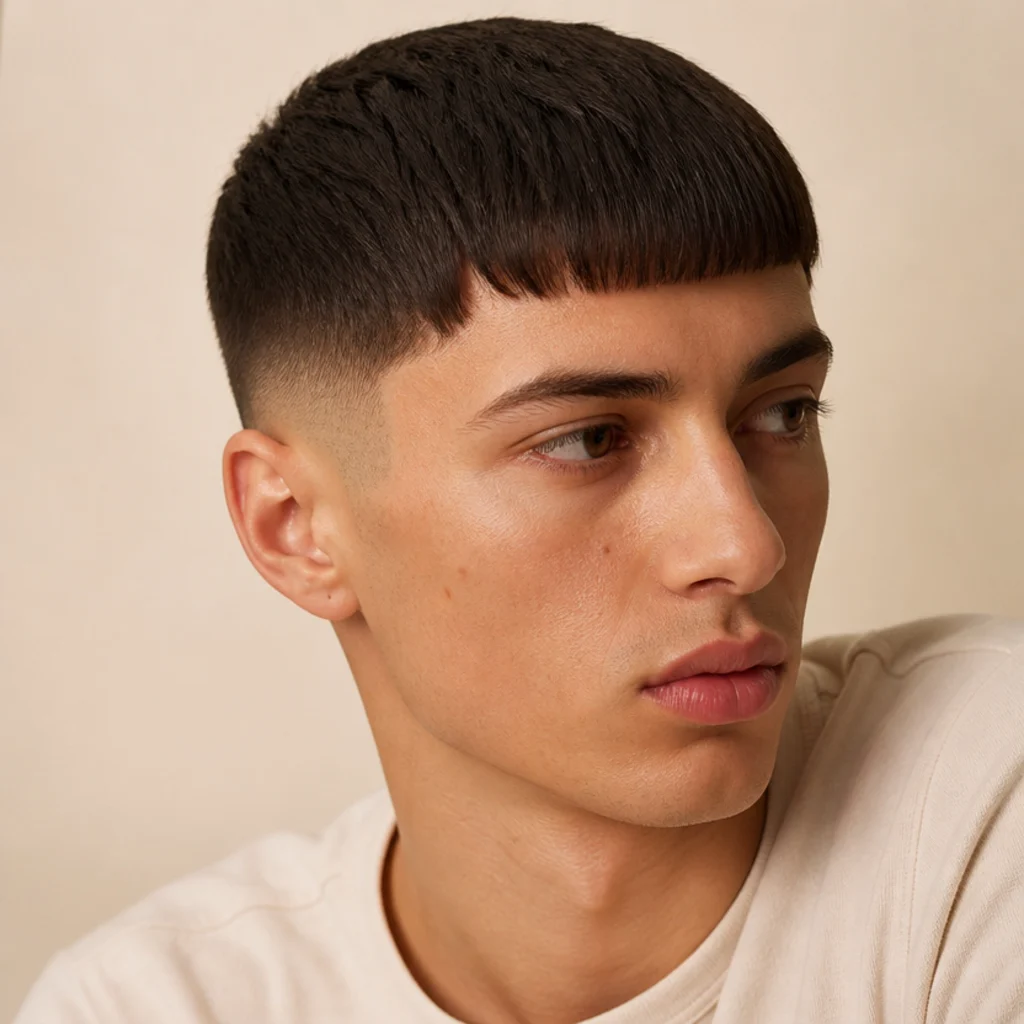
Quick Answer
- Best for: Guys who want a low-effort, high-impact shape with a strong, low, or straight hairline that anchors the blunt front.
- Who might skip it: Deeply receded or M-shaped hairlines, since the flat fringe exposes rather than disguises the recession; also anyone unwilling to book trims every two to three weeks.
- Maintenance: Moderate. Fringe line and fade both need refreshing on a two-to-three-week cadence; skin fades tighten that to weekly.
- Difficulty: Easy at home once your barber sets the shape. Daily styling is usually a brush-forward plus a fingertip of matte product.
- Cost: Roughly the price of a standard fade at your shop, plus a small design or beard-blend upcharge at higher-end barbers; line-up-only visits run cheaper.
- Wear time / longevity: Looks its best for about two weeks; the blunt front reads noticeably softer by week three.
- Standout variation: The edgar cut taper fade, which keeps the bold front while grading out cleanly for offices and slow-growth budgets.
- How to ask your barber: Name the fade type and height, point to exactly where you want the fringe to land relative to your brows, and bring one clear front-and-side reference photo.
In This Guide
- Classic Blunt Edgar Cut
- Edgar Cut Straight Hair Slick
- Edgar Cut Taper Fade
- Curly Edgar Cut
- Edgar Buzz Cut
- Textured Crop Edgar
- Mid Fade Edgar
- Low Fade Edgar
- High Skin Fade Edgar
- Edgar with Hard Part
- Wavy Edgar Cut
- Edgar with Burst Fade
- Messy Textured Edgar
- Edgar with Line Design
- Short Blunt Edgar
- Long Fringe Edgar
- Edgar with Two-Strand Curls
- Edgar Cut for Boys
- Edgar with Drop Fade
- Spiky Edgar Cut
- Edgar with Comb-Over Top
- Edgar with Blonde Highlights
- Coarse-Hair Edgar
- Edgar with Faded Beard
- Modern Minimal Edgar
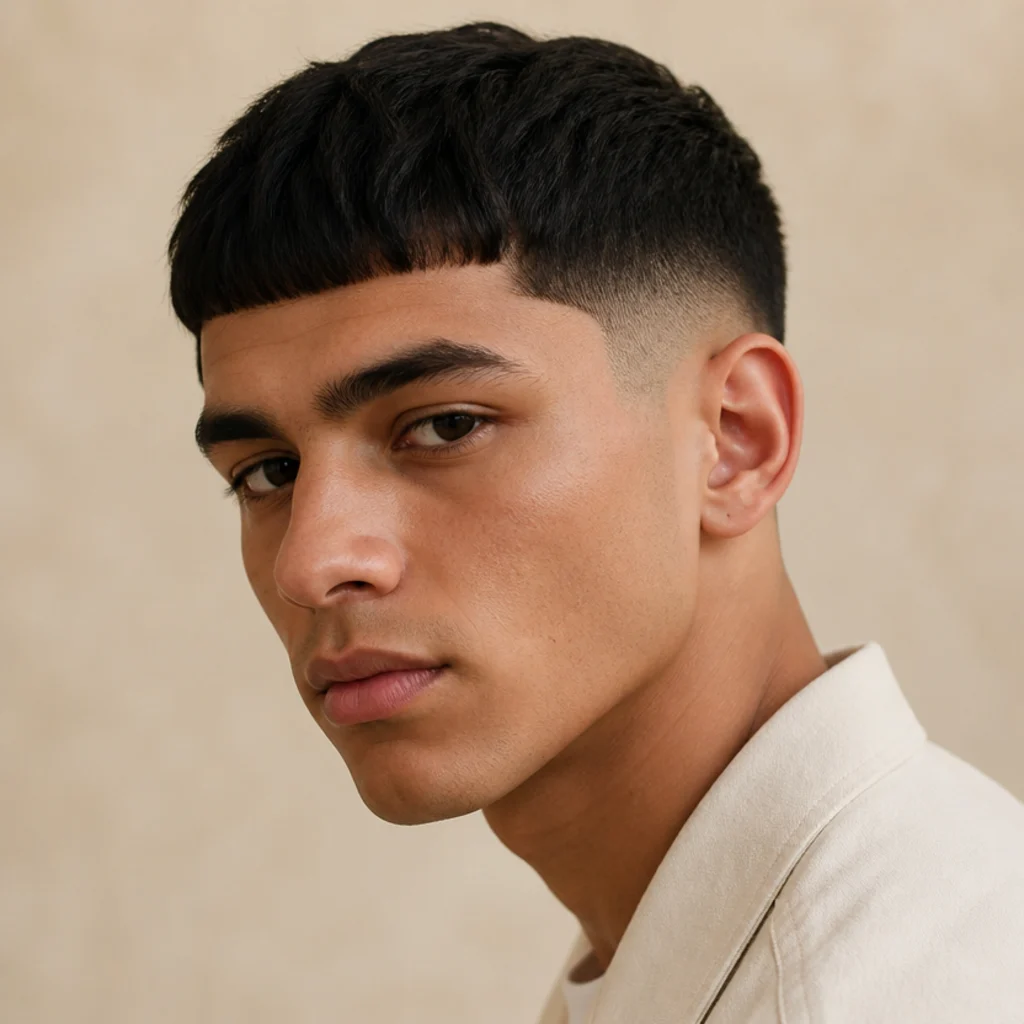
The edgar cut takes a short, blunt fringe cut straight across the forehead and sets it against faded or tapered sides for a deliberately graphic silhouette. It descends from the Mexican-American "takuache" fringe and has since become one of the most-requested men's shapes in barbershops well beyond that scene. It reads sharpest on edgar cut straight hair, where the flat front line holds a near-drawn edge, but the template flexes into waves, curls, and coarse textures once the barber adjusts how bluntly the front gets cut. The real draw is the payoff-to-effort ratio: your barber does the engineering, and daily upkeep can be as simple as brushing forward and pressing flat. What separates a good edgar from an awkward one is fit, though, and that comes down to hairline strength, forehead height, and how much maintenance you're honestly willing to do. Across these 25 looks you'll find fade heights, fringe drops, and finishes calibrated to different face shapes and hair types, from a wash-and-go edgar buzz cut to a soft, defined curly edgar cut. Use the upkeep, difficulty, and barber-script notes under each one to pick a version that fits your routine and grows out gracefully.
01Classic Blunt Edgar Cut
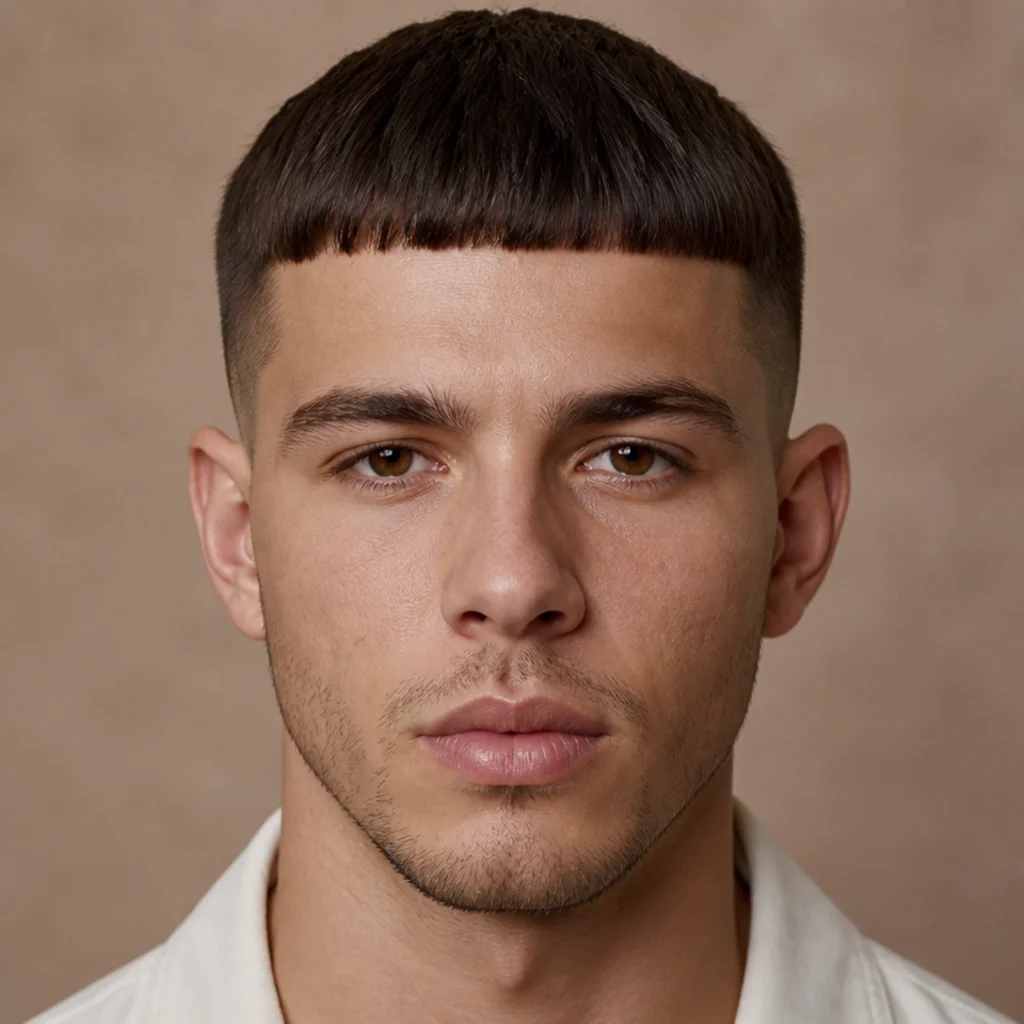
This is the original template, the version every other one on this list answers to: a straight, blunt line ruled across the forehead, top left short, dense, and combed forward. It looks sharpest on edgar cut straight hair, where the fringe lies flat with no wave breaking the edge and the line reads almost machine-cut. Oval and square faces wear it well, and it rewards a strong, low, straight hairline that gives the front something solid to sit against. If your forehead runs high, ask for the fringe dropped slightly lower to shorten the face. The blunt front is the whole point of the cut, and it's also the first thing to soften, so plan a fringe-and-fade refresh every two to three weeks. Difficulty at home is low once the shape is set. Pro tip: blow-dry the fringe forward on cool air with a flat paddle brush before touching any product, so the hair learns the direction and the line holds flat all day. Ask your barber for "a blunt edgar with a clean, level front line," and specify in finger-widths how far above the brows you want it to land.
02Edgar Cut Straight Hair Slick
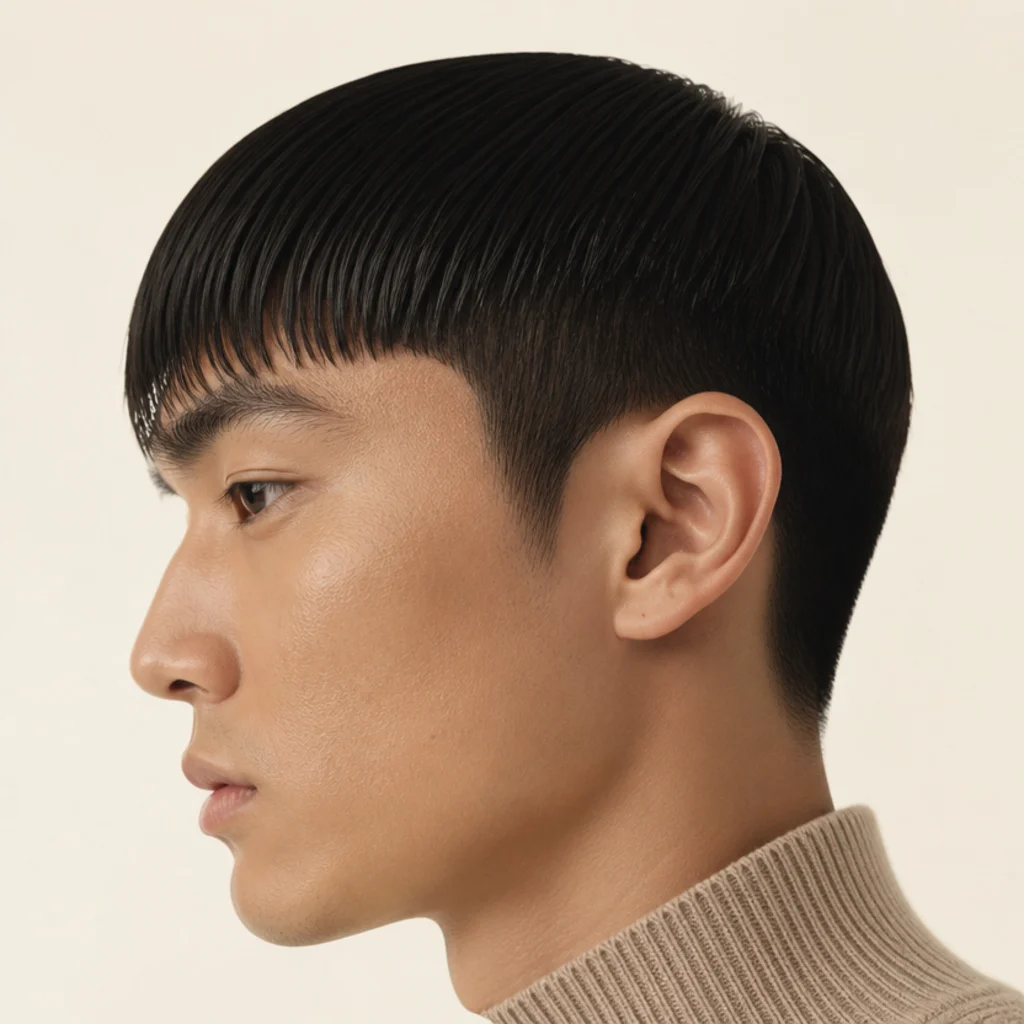
This one leans all the way into edgar cut straight hair: the top stays a touch longer, then gets combed forward and pressed into a smooth, controlled front with a matte, no-shine finish. Straight hair's flat cuticle is what makes the blunt edge look drawn-on here, so fine-to-medium straight textures suit it best; very coarse hair fights the sleekness and looks better textured instead. It's a good pick for guys who want something polished and boardroom-ready rather than streetwear, and it sits well on oval and rectangular faces. Reach for a matte pomade or a low-shine cream rather than a wet-look gel, which cheapens the effect and dates fast in photos. Maintenance runs moderate: the length that makes it sleek is also what loses its crispness by week three. One trick: emulsify a pea-size amount of product fully between your palms before it touches your hair, so you set the shape without weighing the front into a helmet. Ask your barber to "leave a little more length on top for a slick forward edgar," so the fringe reads smooth rather than choppy.
03Edgar Cut Taper Fade
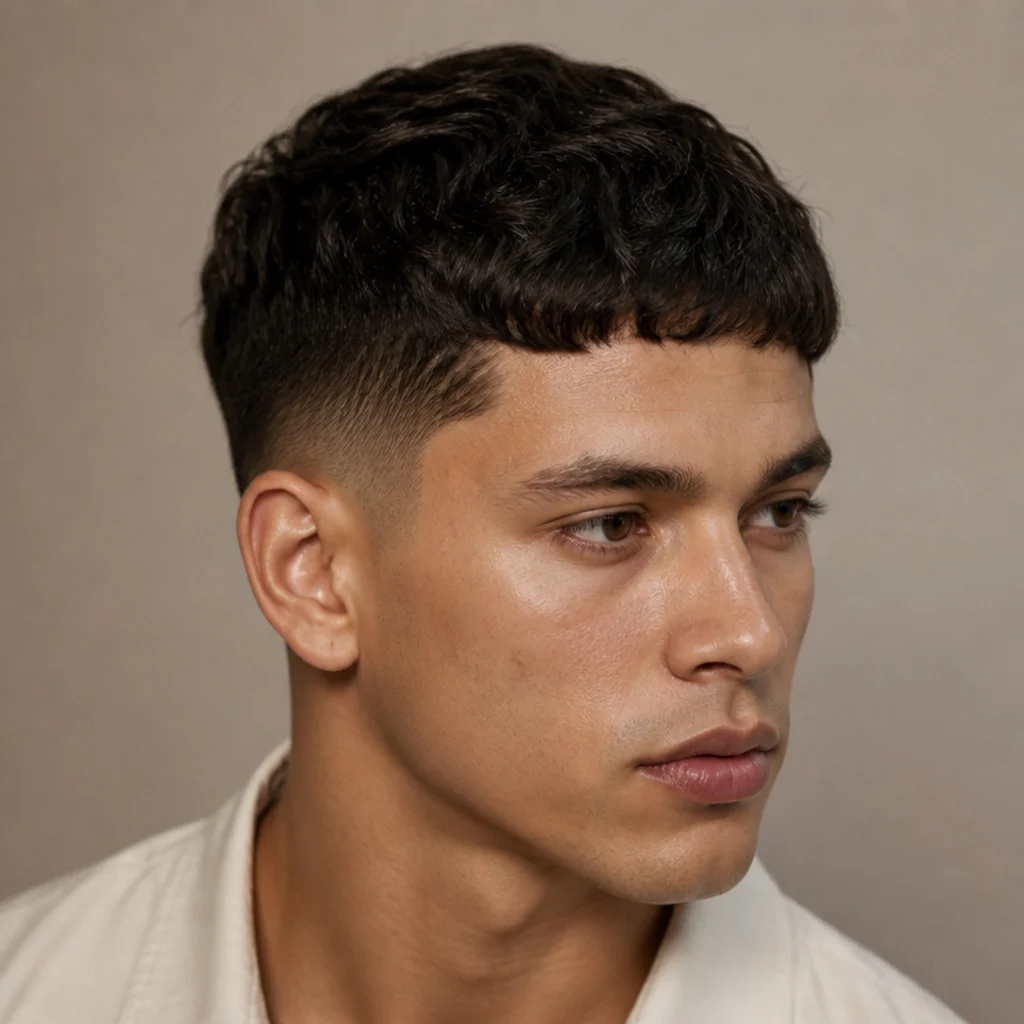
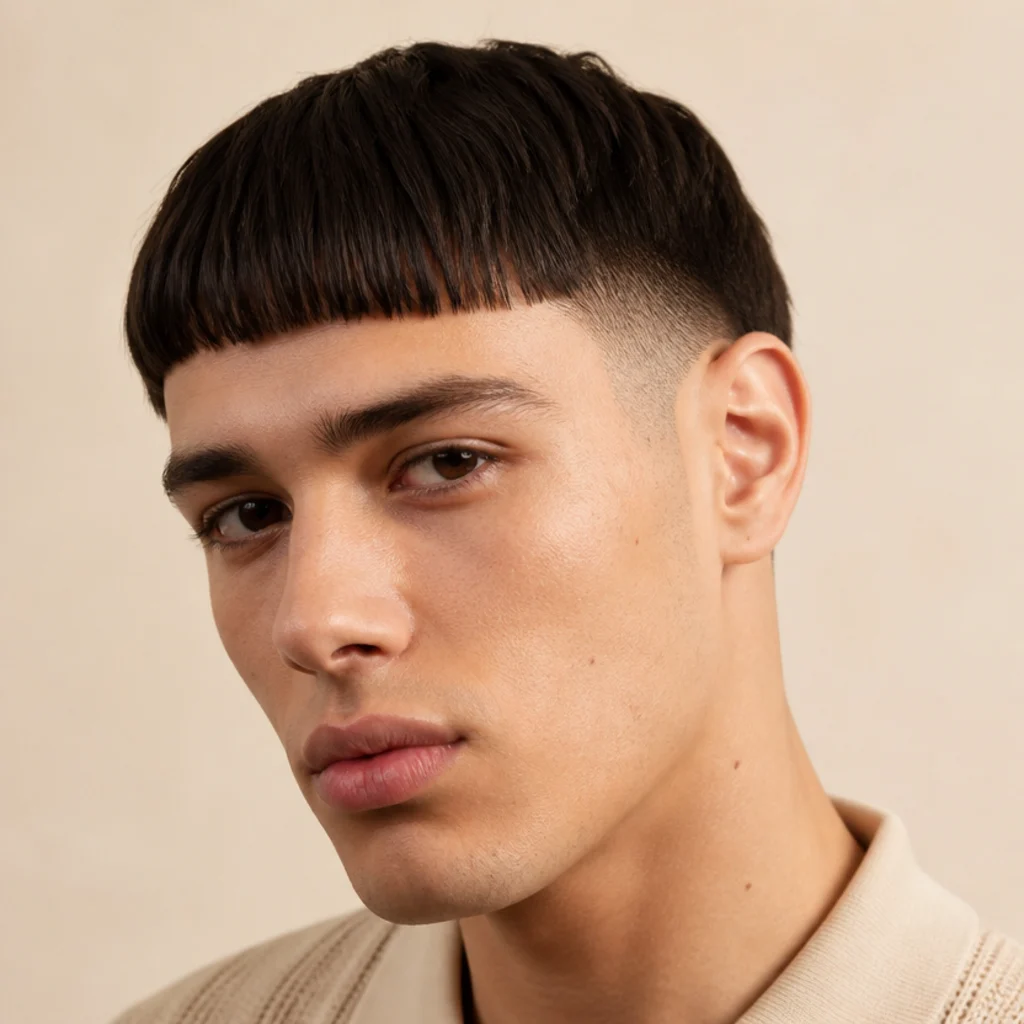
The edgar cut taper fade is the crowd favorite, and it's the entry point most barbers point first-timers toward. Instead of dropping the sides to skin, the taper grades the hair short around the ears and neckline while keeping length above it, so the bold front still lands but the sides stay office-appropriate and grow out soft instead of blotchy. It suits nearly every face shape and hair texture, which is exactly why it's so forgiving — the neat perimeter still reads intentional at week four. Maintenance is moderate: the taper wants a refresh every couple of weeks, with a quick line-up at the neckline in between. Styling difficulty is low. Pro tip: on a taper you can stretch the interval by asking for a "blurry" or diffused taper rather than a hard-lined one, since a soft gradient hides regrowth far better than a crisp edge does. Ask for "an edgar with a taper fade to the skin at the neckline, kept natural around the ears," and mention whether you want the sideburn corner squared or rounded.
04Curly Edgar Cut
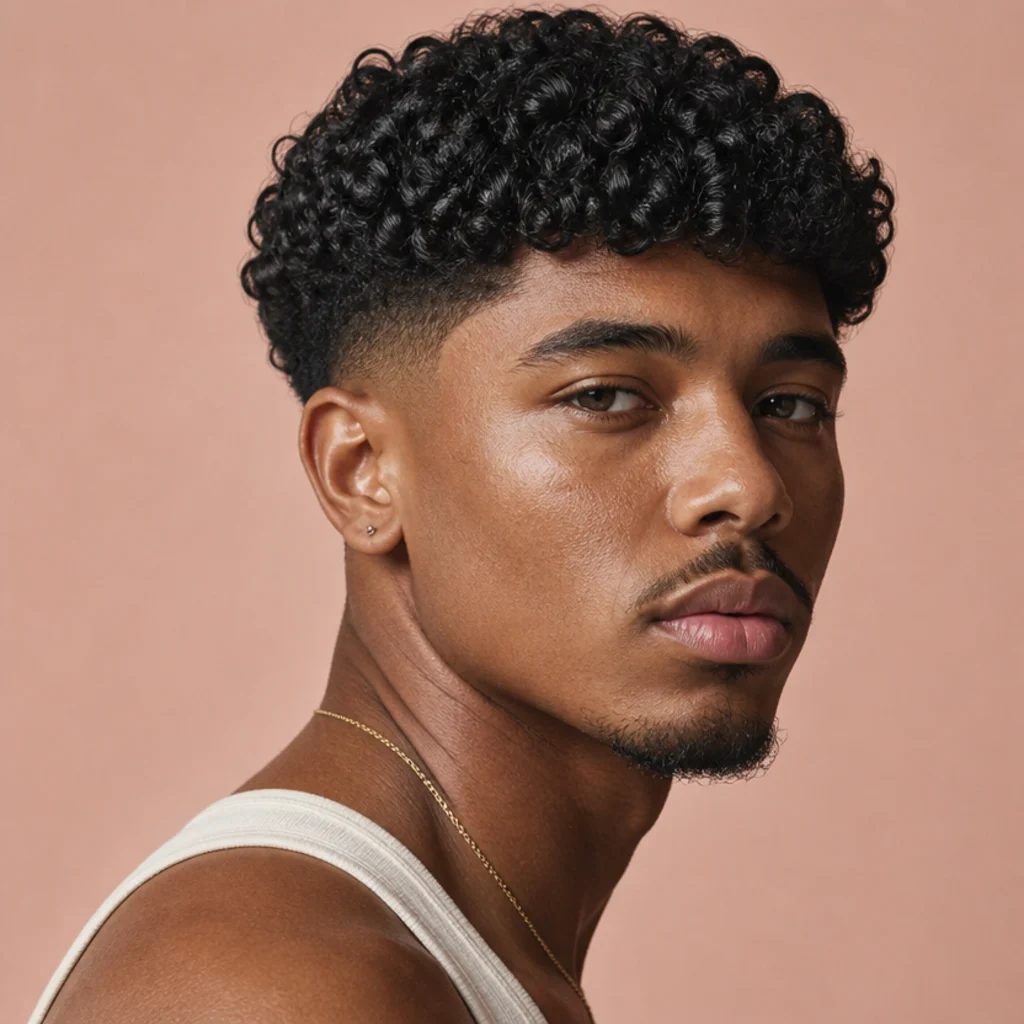
A curly edgar cut swaps the razor-flat fringe for defined coils across the front, so the blunt line gets implied by where the curls stop rather than cut dead straight. That softness adds height and rounds out the shape, flattering round and heart-shaped faces and giving shorter guys a lift. It works with natural curl and wave patterns from loose 2C spirals to tighter 3B coils, and it looks best when the barber cuts to your dry curl length rather than stretched-wet, since curls spring up and can shorten the front more than you'd expect. Maintenance is moderate: a curl cream or foam keeps the front defined and frizz-free, and a satin durag or bonnet at night protects the pattern. Difficulty runs low to moderate, since curls need coaxing rather than force. Pro tip: apply product to soaking-wet hair using the praying-hands method, then diffuse on low — that locks definition into the fringe instead of frizzing it out. Ask your barber to "cut an edgar shape but leave my curls intact on top," and tell them your curl pattern and whether you wear it stretched or shrunken.
05Edgar Buzz Cut
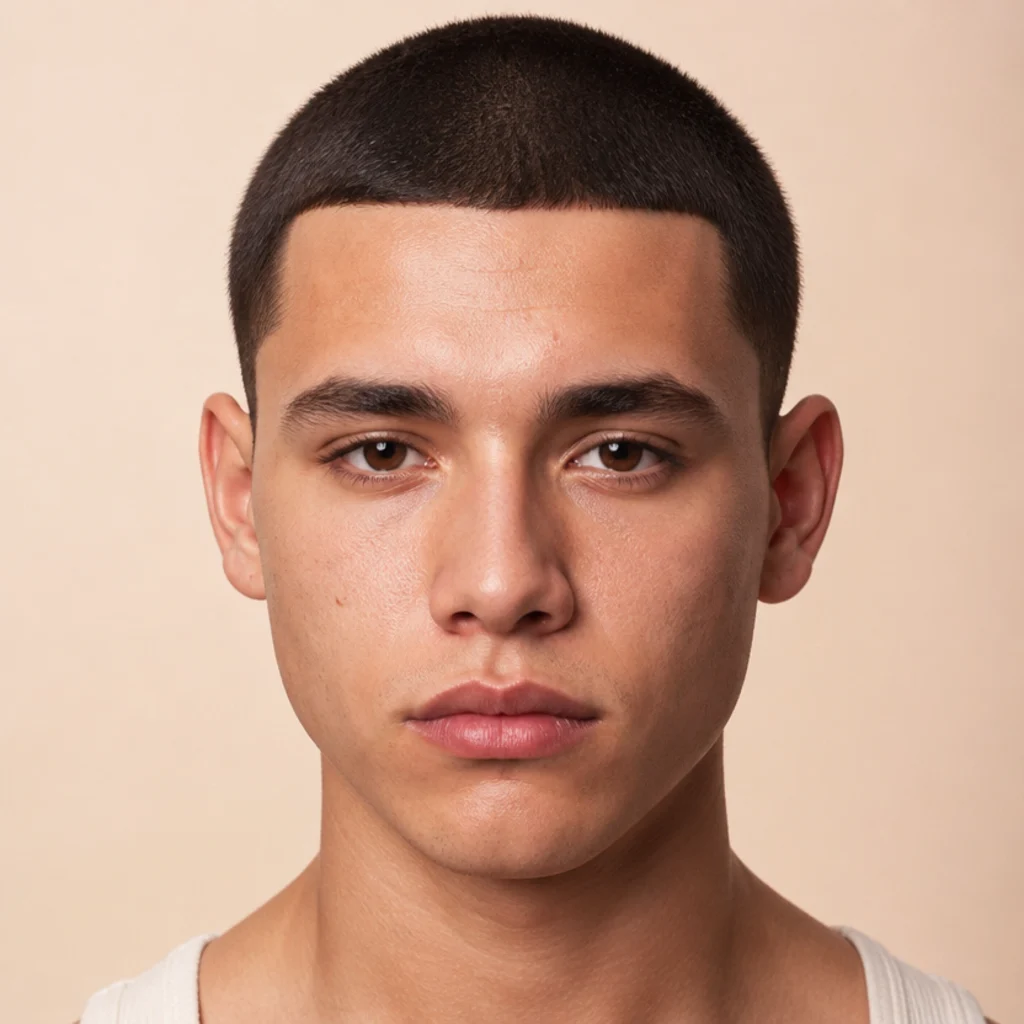
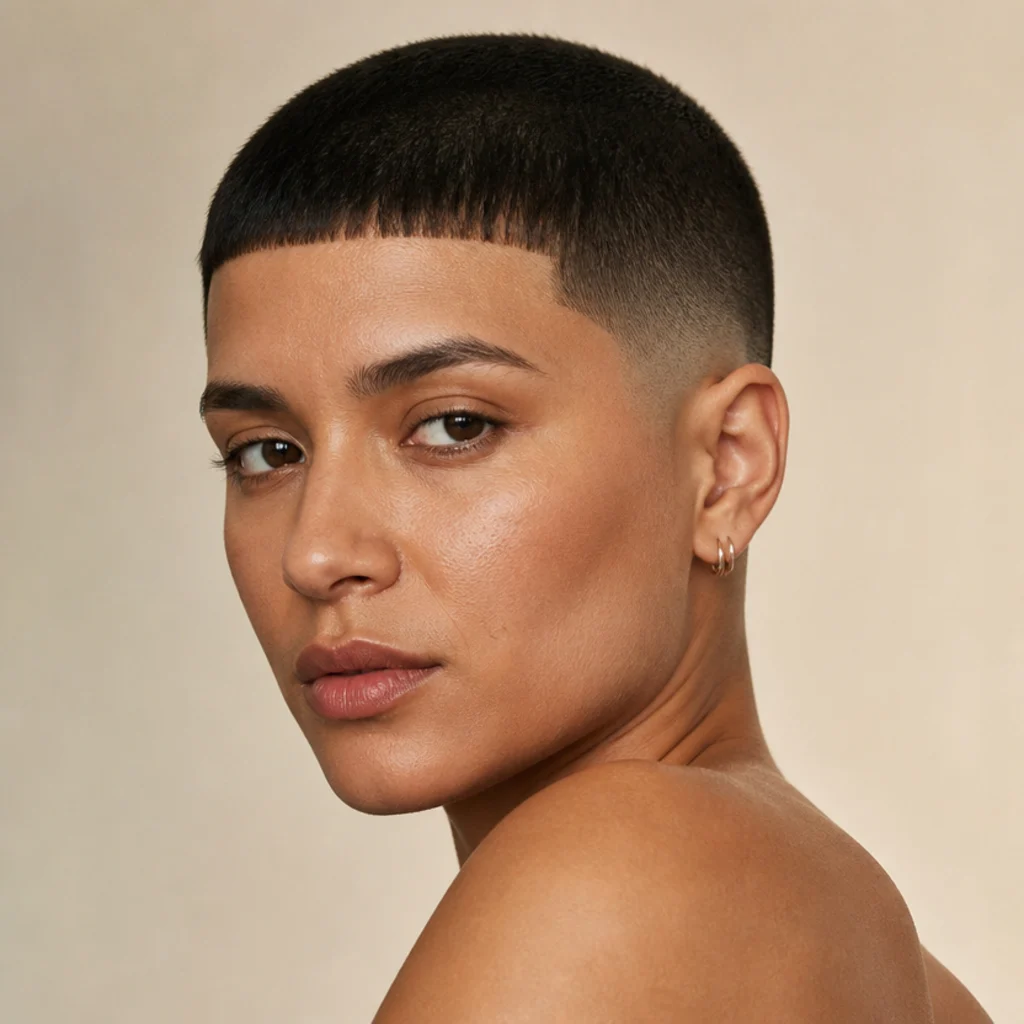
The edgar buzz cut is the lowest-maintenance member of the family: the top gets buzzed to an even guard, usually a two or three, with the signature blunt line kept at the front so the shape still registers. It's built for hot climates, athletes, and anyone chasing a true wash-and-go routine, and it rewards strong bone structure and a clean, unbroken hairline, since there's nowhere to hide a weak edge. Straight and coarse textures suit it particularly well, since both buzz down evenly. Styling difficulty is close to zero, but trim frequency is the trade-off: short lengths show regrowth fast, so a two-week cadence keeps the front looking sharp. Quick tip: run a beard trimmer with no guard along just the front hairline every few days between cuts to re-crisp the blunt edge — it buys you time without a full appointment. Ask for "a buzzed edgar, guard two on top with a defined blunt front and a matching taper," and confirm the guard length so you can maintain it yourself.
Save this to Pinterest to compare fade heights before your appointment.
06Textured Crop Edgar
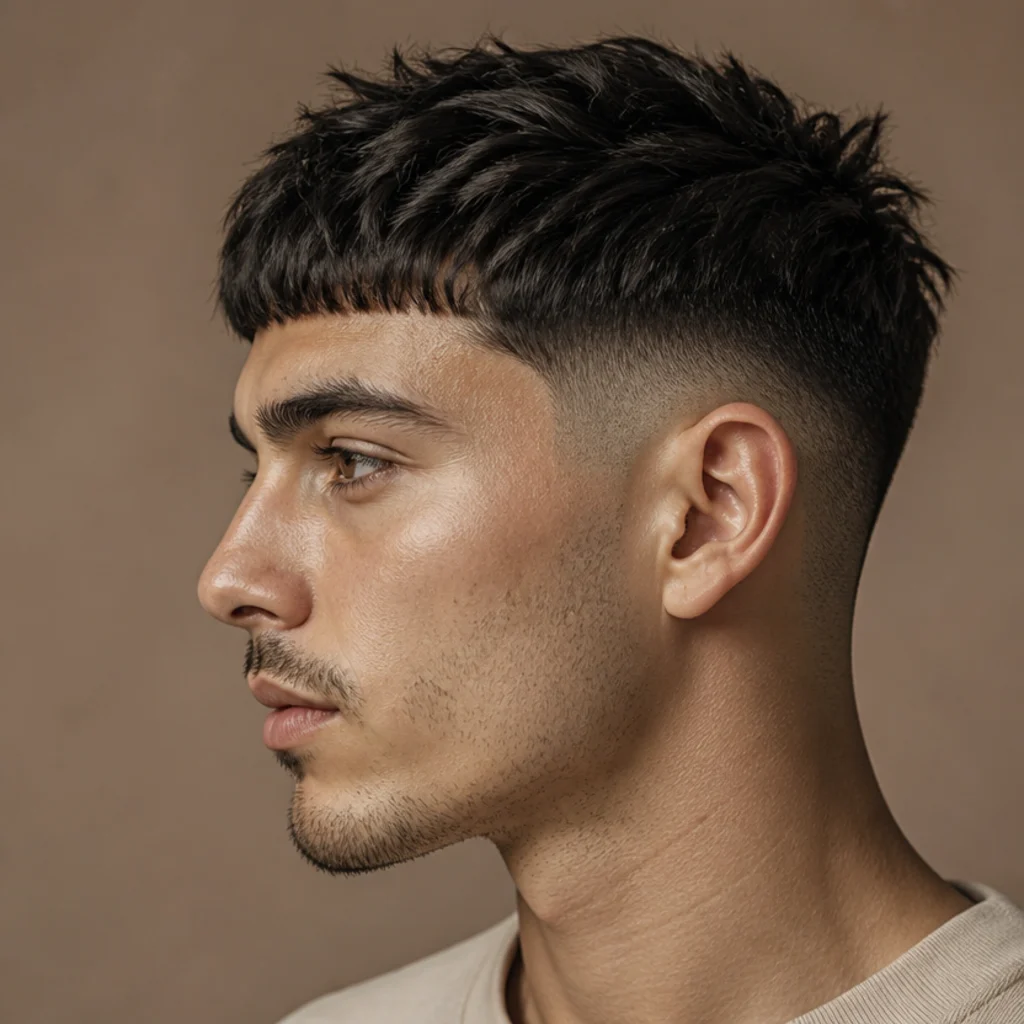
This version marries the edgar front to a French crop, breaking the top into piecey, matte segments instead of one solid mass. The texture adds movement and disguises early thinning and fine hair far better than any slick finish, since separated pieces read as density. It suits fine-to-medium straight or lightly wavy hair and flatters most face shapes, especially rounder ones that benefit from the slight forward fringe. Maintenance is moderate: a matte clay or texturizing paste keeps the pieces defined without grease. Difficulty is low — rough-dry with your fingers, then work a pea-size amount through the mid-lengths and front. Pro tip: ask for the interior to be point-cut and lightly notched rather than scissor-thinned flat, since notching removes weight while keeping the ends blunt enough to hold the crop's chunky separation. Ask your barber for "an edgar front with a textured French crop on top, point-cut for separation," which gives you the lived-in look without adding time to your morning.
07Mid Fade Edgar
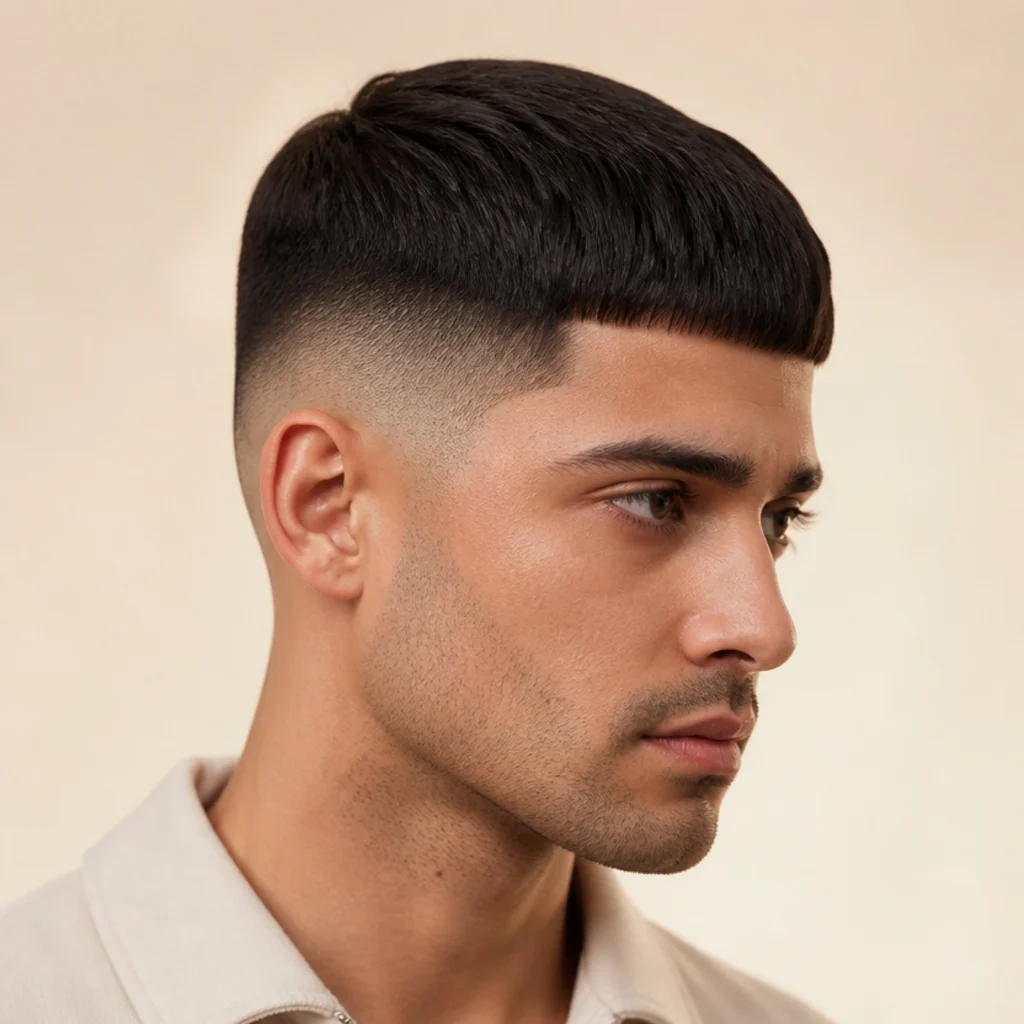
A mid fade starts its gradient around the temples, splitting the difference between a subtle low fade and a dramatic high one, and it's the most photogenic default for the edgar. It frames the dense front cleanly while leaving enough hair on the upper sides to avoid the stark, shaved-block look of a skin fade. This suits guys who want visible contrast between sides and top without full commitment, and it flatters oval, square, and mildly round faces by keeping visual weight balanced at the temples. Maintenance is moderate: the fade line wants attention every two to three weeks, though a mid fade blurs more gracefully than a high one. Styling difficulty is low. Pro tip: at the chair, physically touch the spot on your head where you want the fade to peak, because "mid" means different heights to different barbers, and a finger on the temple removes all the guesswork. Ask for "a mid fade with an edgar front, starting right here," and say whether you want it a skin fade or left with a shadow of guard length.
08Low Fade Edgar
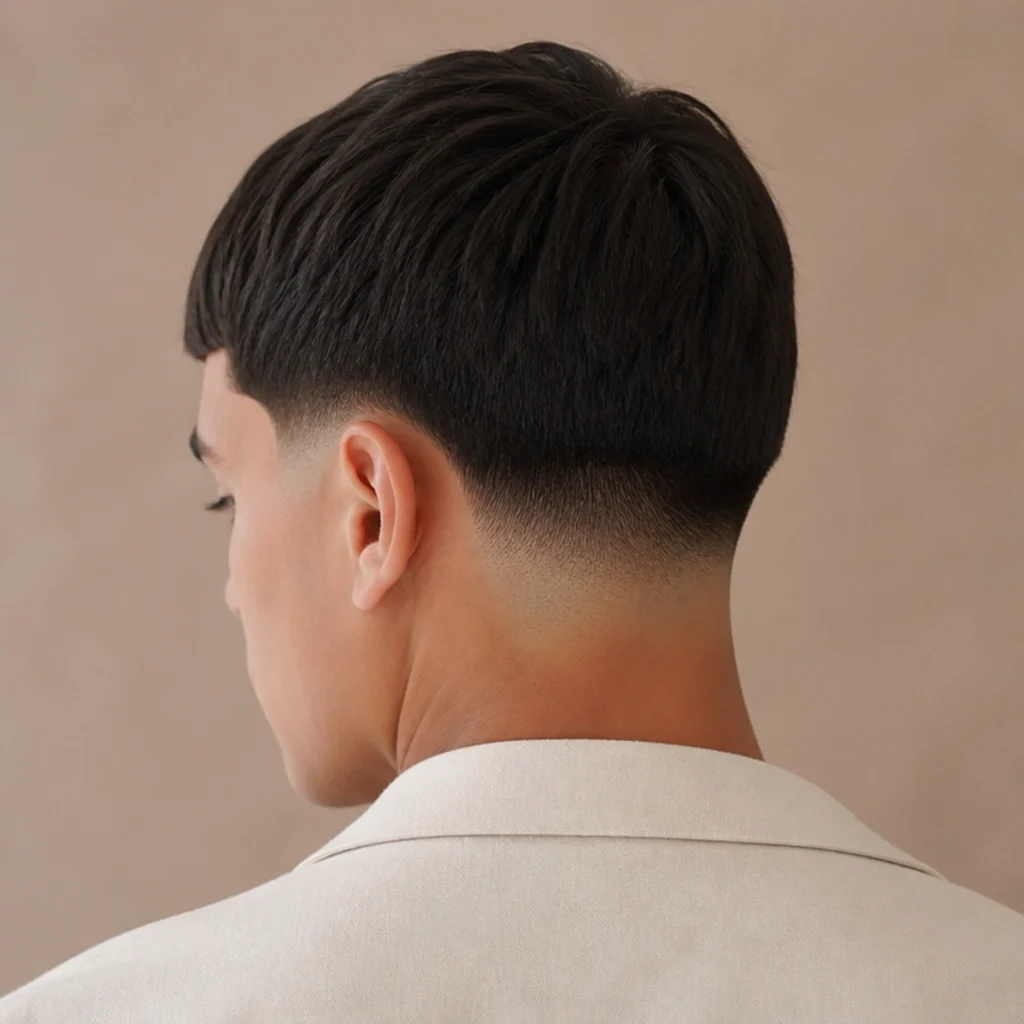
The low fade keeps most of the side length and only grades down near the ears and neckline, making it the most understated fade on this list and the easiest to grow out. It suits conservative workplaces, first-time edgar wearers, and guys who'd rather have a gradual, grown-in look than hard contrast. Because the sides stay full, all the visual attention lands on the blunt front, so it's a smart pick if your hairline is your best feature. It flatters longer and narrower faces especially, since the retained side volume adds width. Maintenance is moderate but forgiving: a low fade softens slowly and can stretch to three or even four weeks between shape-ups. Styling difficulty is low. Small trick: pair a low fade with a slightly longer fringe for balance, since a short front over full sides can look top-heavy. Ask your barber for "a low fade with an edgar top, kept soft around the ears," and specify tight or shadowed at the neckline depending on how clean you want the finish.
09High Skin Fade Edgar
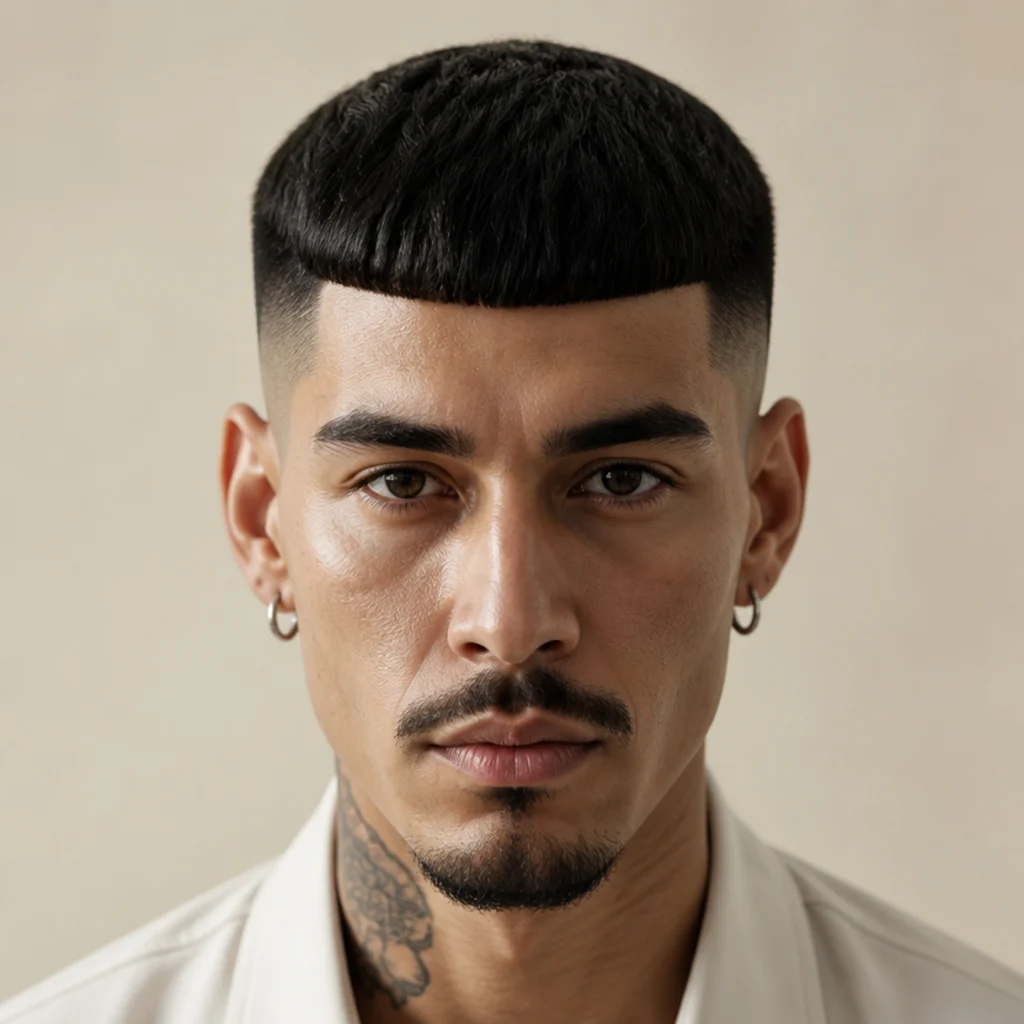
For maximum drama, the high skin fade drops the sides to bare skin high on the head, isolating the dense edgar top like a graphic block floating above clean scalp. It suits bold dressers, thick hair that can carry the contrast, and defined, angular face shapes; rounder faces should think twice, since the high blend can exaggerate width at the crown. It's the most demanding look here on upkeep, because exposed skin shows regrowth within days and a crisp high fade blurs into a shadow in about a week. Realistically, budget a weekly or biweekly line-up to keep it looking as sharp as day one. Styling the top itself stays low-effort. Pro tip: on shaved-skin sides, a quick pass with a moisturizer and daily sunscreen keeps the scalp even-toned and prevents the razor-burn dots that ruin the clean look in close-up photos. Ask for "a high skin fade with an edgar front," and be explicit about how high on the head the bald blend should reach before it meets the top length.
10Edgar with Hard Part
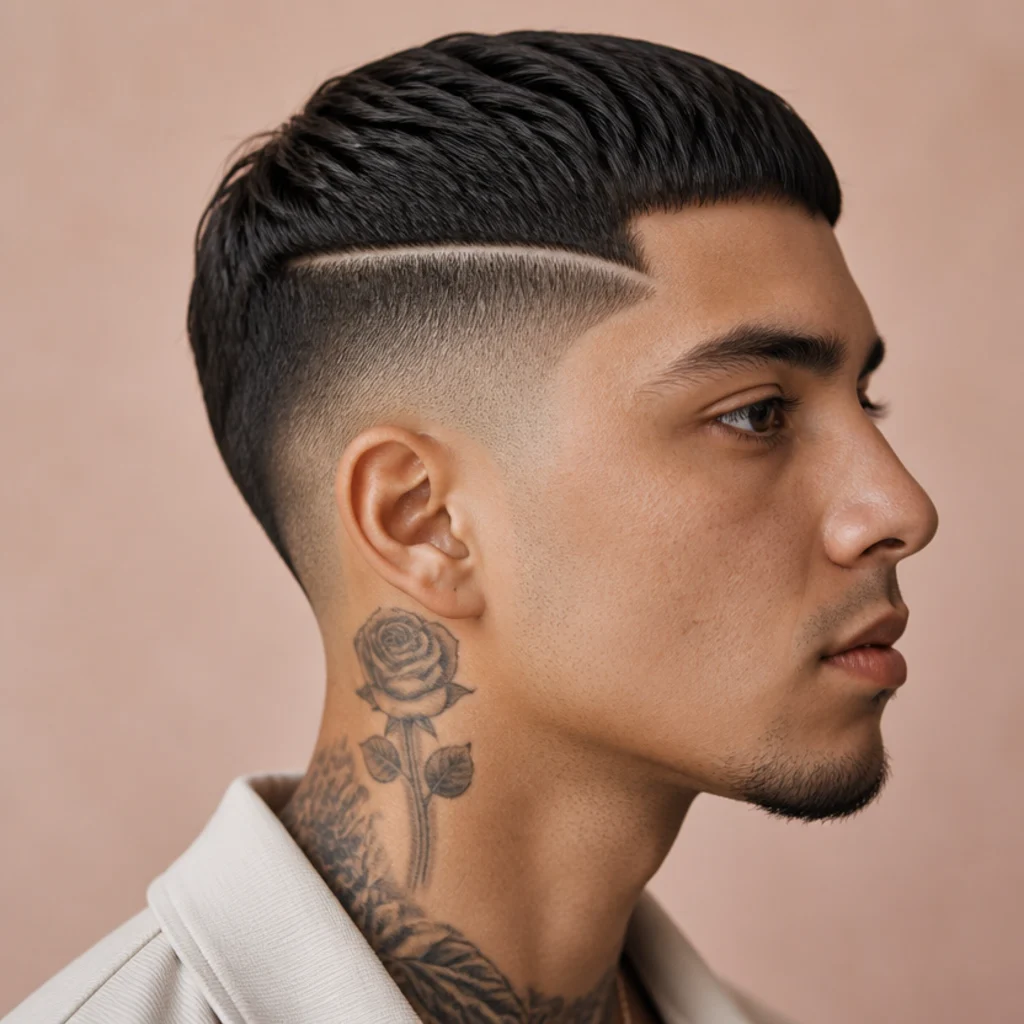
A hard part adds a single razor-etched line along the side, giving the edgar an architectural, graphic edge that photographs sharply. It suits straight-to-wavy hair, where the shaved channel reads clean and defined; very curly textures tend to swallow the line. The part pairs best with a mid or high fade, which frames the etched line and keeps the sides from competing with it. It flatters guys who want detail without a full line design, and placed thoughtfully, it can visually narrow a wide forehead. Maintenance runs higher: the etched line needs re-shaving roughly weekly to stay a clean channel rather than a fuzzy shadow. Styling the top is low-effort. Pro tip: have the barber place the part along your natural cowlick or split, not an arbitrary line — working with the hair's growth direction keeps the channel from filling in crooked as it regrows. Ask your barber for "an edgar with a hard part on my natural part side," and let them set the line where your hair already wants to break.
Save this to Pinterest and screenshot the fade you want to try.
11Wavy Edgar Cut
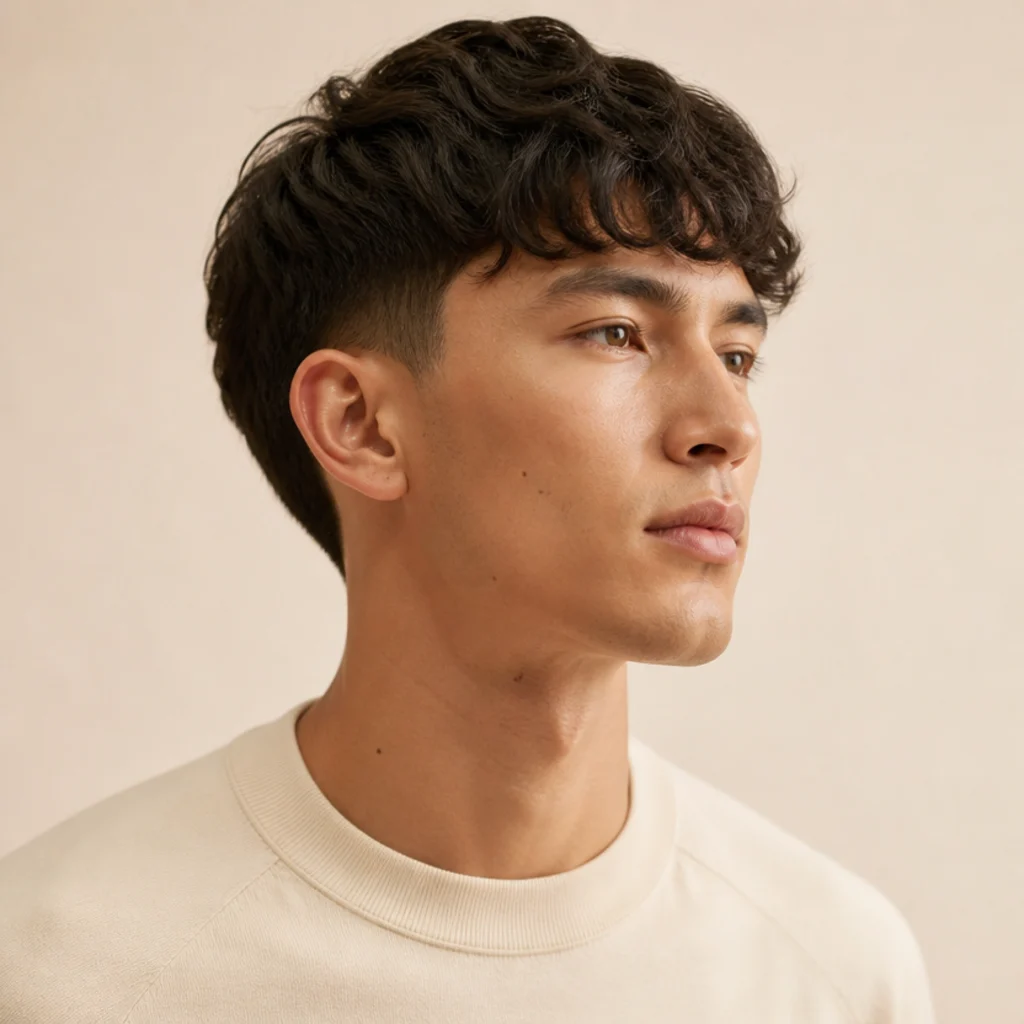
Natural waves relax the edgar into a softer, more textured version, trading the razor-flat line for a fringe that carries gentle bends and dimension. It suits loose 2A-to-2C waves and guys who'd rather work with their pattern than blow it straight every morning. The looser edge flatters angular and square faces by adding a bit of softness, and it disguises minor forehead unevenness that a dead-straight line would only expose. Maintenance is moderate: a light sea-salt spray brings out the bend without the crunch of gel, and air-drying preserves the natural movement. Difficulty is low: scrunch damp hair, let it dry, then brush the front forward to reset the shape. One trick: tell your barber to point-cut, not thin, the fringe — aggressive thinning shears remove the very weight that lets waves fall into a clean edge, leaving you with frizz instead of shape. Ask your barber to "cut an edgar but keep my natural wave in the fringe," and have them cut it to your air-dried length so it doesn't spring up too short.
12Edgar with Burst Fade
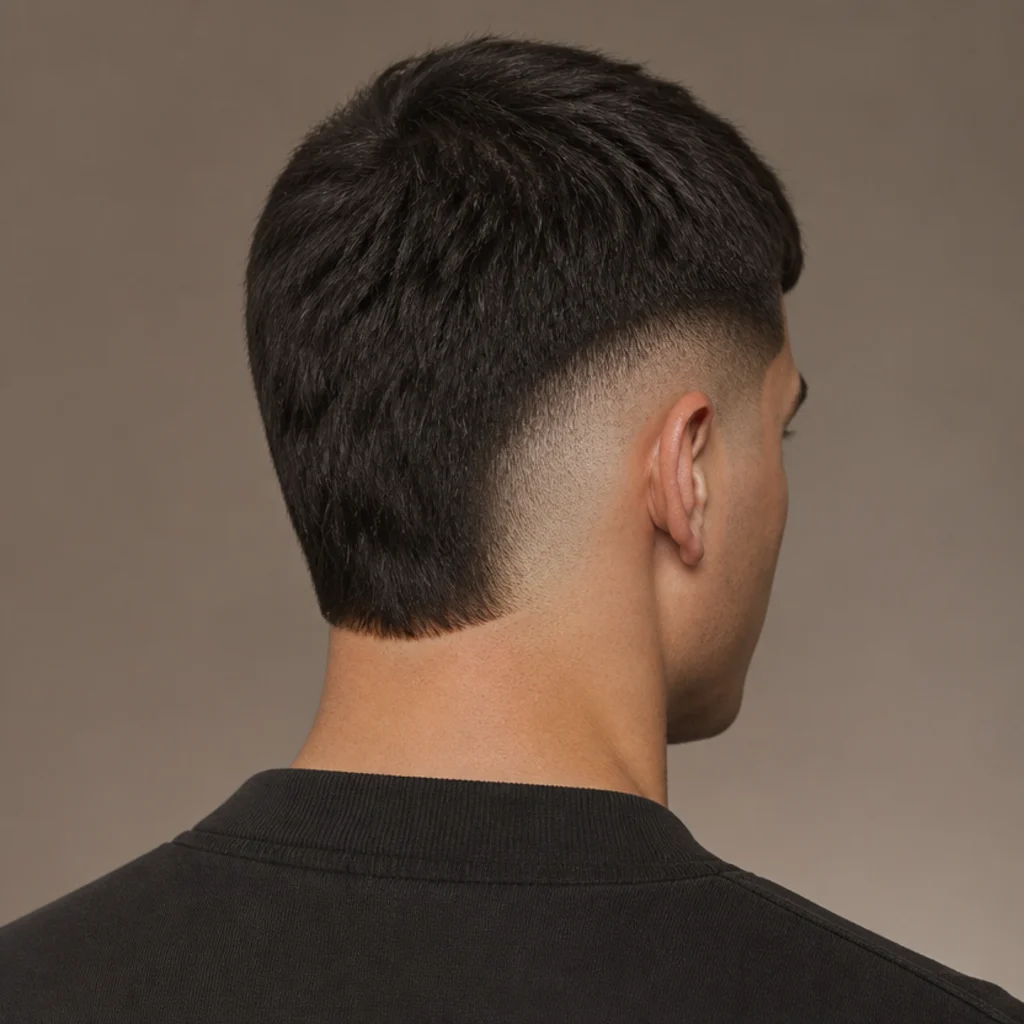
A burst fade radiates outward in a semicircle around the ear, leaving more length at the back and often a subtle tail or point at the nape, for a distinctive arced shape with roots in streetwear and Latin barbering. Paired with the edgar front, it lands as both sporty and refined, a natural step up for guys who feel the standard taper is too plain. It suits most textures and flatters oval and diamond faces; the curved blend also draws the eye away from a heavier jaw. Maintenance runs moderate to high, because the semicircle needs a skilled hand to keep symmetrical and refreshed every two weeks. Styling the top stays low-effort. Pro tip: a burst fade lives or dies on symmetry, so bring a reference showing both sides and ask the barber to check the arc height at each ear in the mirror before finishing. Ask for "an edgar with a burst fade around the ears," and confirm whether you want the back kept longer for a subtle tail or blended shorter for a cleaner finish.
13Messy Textured Edgar
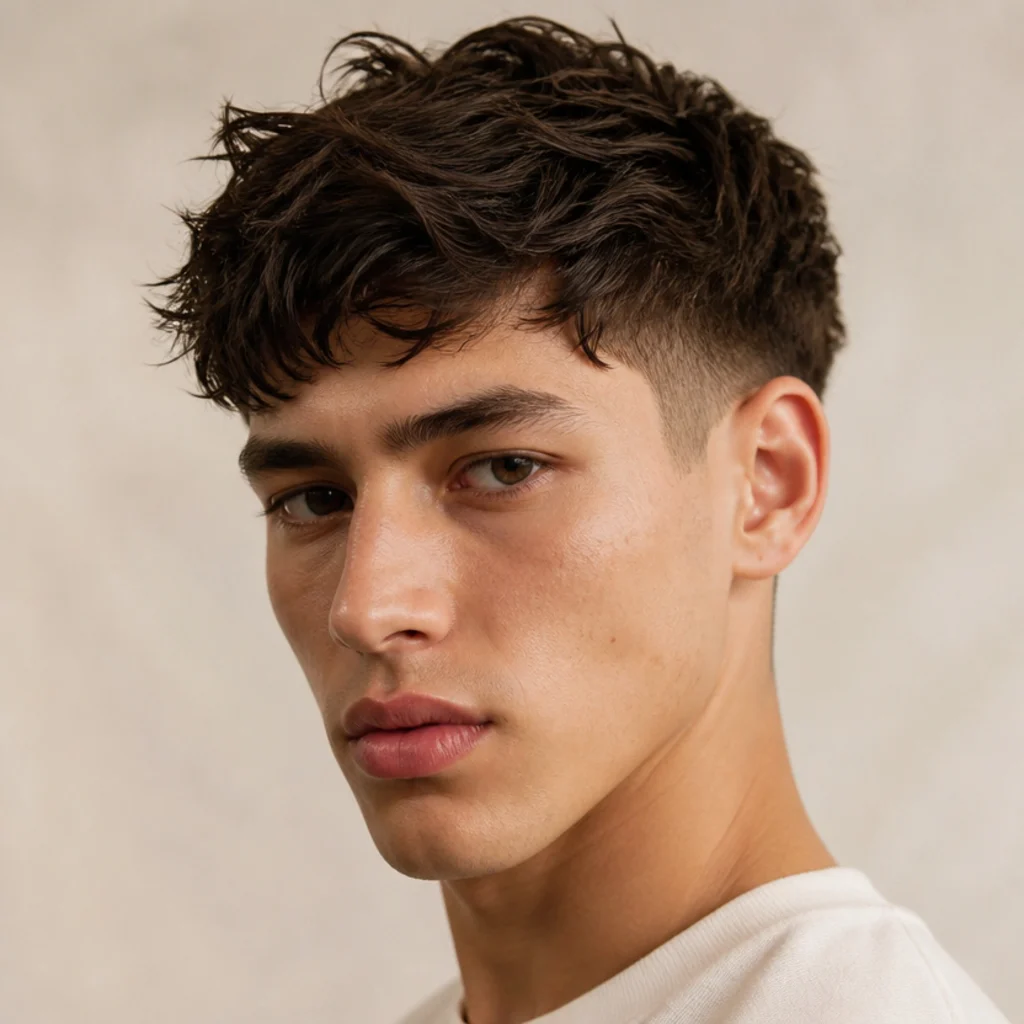
This relaxed take embraces controlled imperfection: the top stays tousled and piecey, and the blunt front gets deliberately broken up so it reads casual rather than ruled. It suits guys who want the edgar's shape without the polished, styled formality, and it's a genuine ally for fine hair, since the deconstructed texture fakes density and volume. It flatters most face shapes and works across straight and lightly wavy hair. Maintenance is moderate: a matte paste worked through with fingers keeps the mess looking intentional rather than neglected. Difficulty is low and forgiving of imperfect technique. Pro tip: build texture on dry, not wet, hair, and apply product to the mid-lengths first with your palms, saving the fingertips for the front, so the roots keep lift and the whole thing doesn't collapse flat by noon. Ask your barber to "point-cut the front so it's not too blunt, and add some texture through the top," which gives you a lived-in edge you can rough-style in under a minute.
14Edgar with Line Design
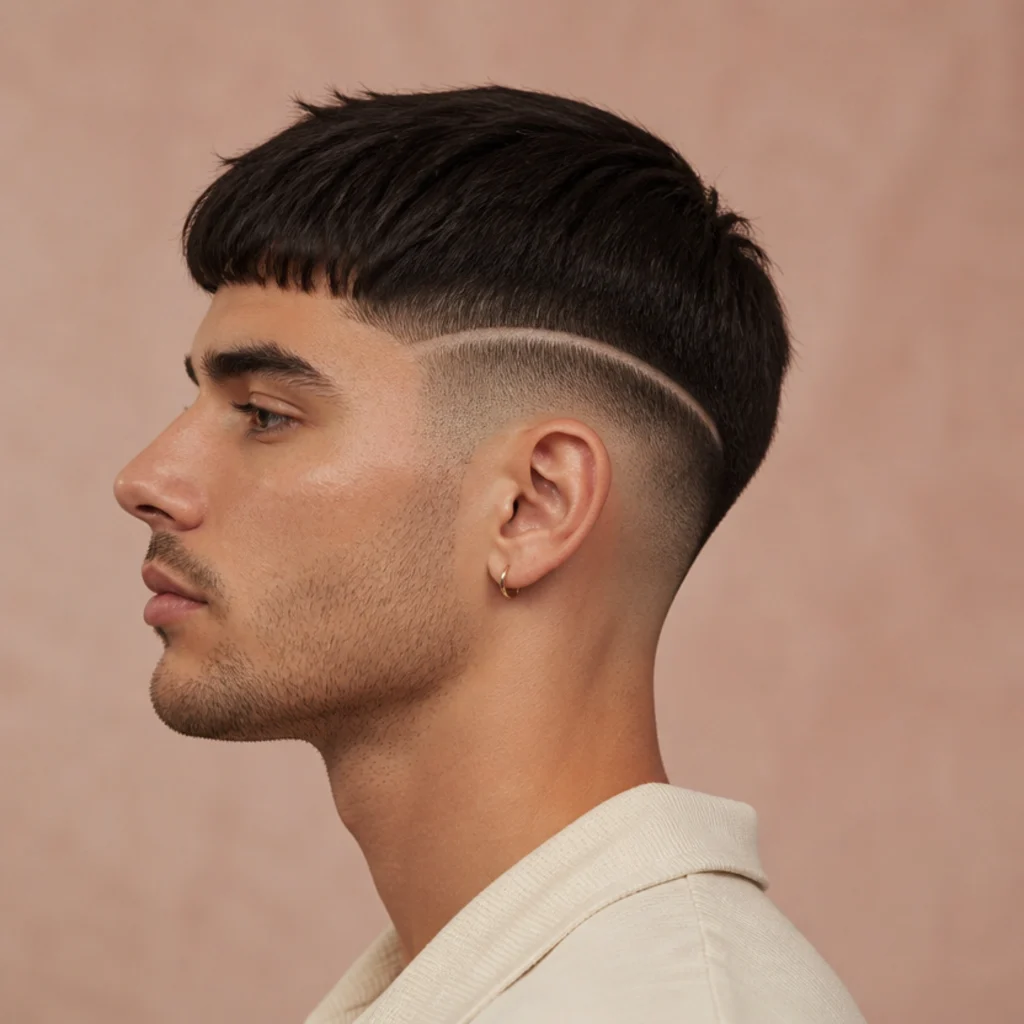
Shaved line designs etched into the faded sides turn the edgar into a personalized statement, from a single clean channel to a small geometric or angular motif. Restraint is what keeps it looking sharp rather than busy: one or two lines complement the cut, while an elaborate pattern competes with the blunt front for attention. It suits straight-to-wavy hair with enough length in the fade to hold the negative space, and it takes a barber who's skilled with the trimmer and straight razor. It flatters guys who want a creative flourish and are willing to maintain it. Maintenance is high, since etched lines blur within days as hair regrows and need weekly touch-ups. Styling the top is low-effort. Editor's tip: keep the design on one side only and toward the back, so it stays subtle from the front and reads as an accent, not the whole haircut. Ask for "an edgar with a simple line design on the left side," and bring a clear reference photo so placement, angle, and thickness match your intent exactly.
15Short Blunt Edgar
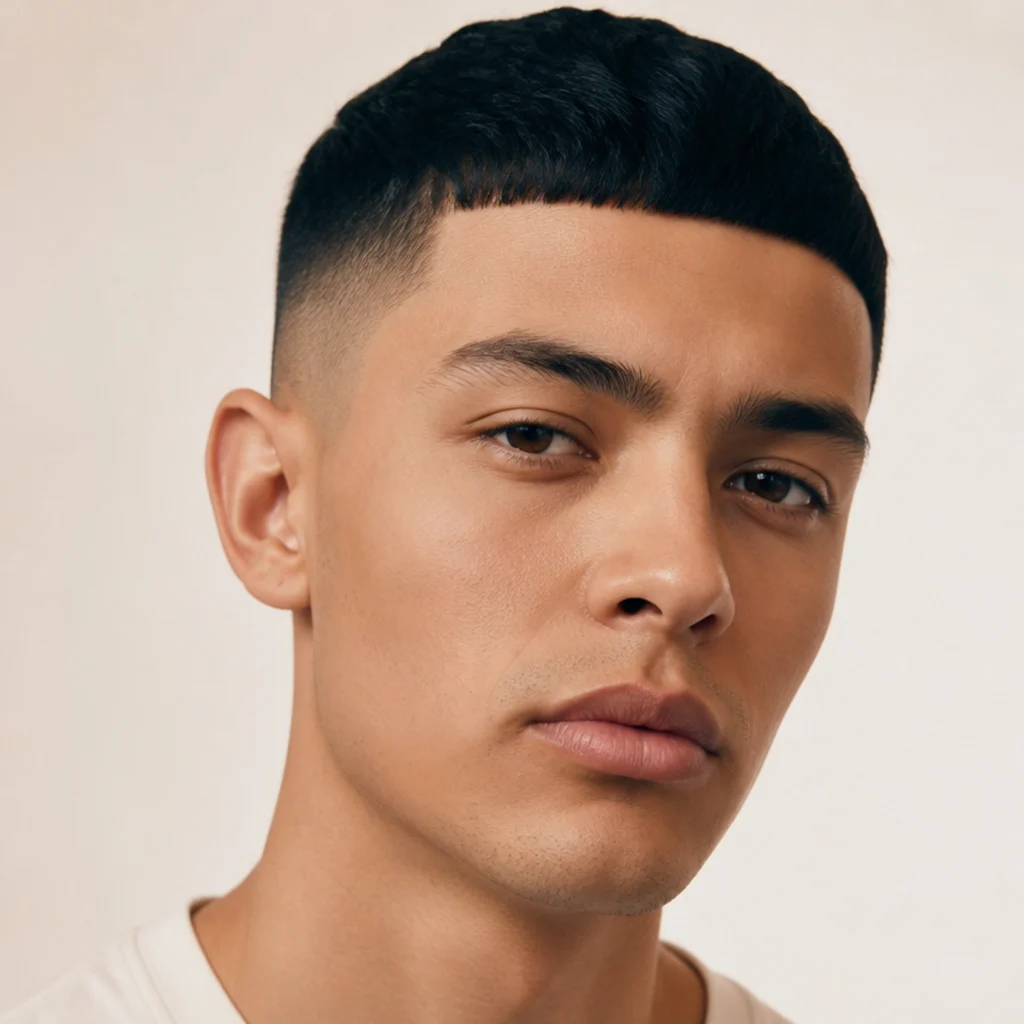
A tighter, shorter reading of the classic keeps the top cropped close while keeping the defining blunt front, landing somewhere between the full classic and the buzz. It's an excellent fix for thick or coarse hair that puffs and turns unruly at length, since the short crop keeps everything disciplined and flat. It suits square and oval faces with a solid hairline and reads sharp, clean, and low-key professional. Maintenance is easy on styling but frequent on trims, since short lengths reveal growth quickly and the tight front needs re-defining every two weeks. Difficulty is minimal. Pro tip: for coarse hair, ask the barber to slightly under-cut the interior length beneath a blunt top surface, so the cut lies flat instead of standing up as the coarse texture pushes back. Ask your barber for "a short edgar, tight on top with a clean blunt front," and specify a guard length for the top so you know how to describe it at future visits and gauge regrowth.
Save this to Pinterest to build your barber mood board.
16Long Fringe Edgar
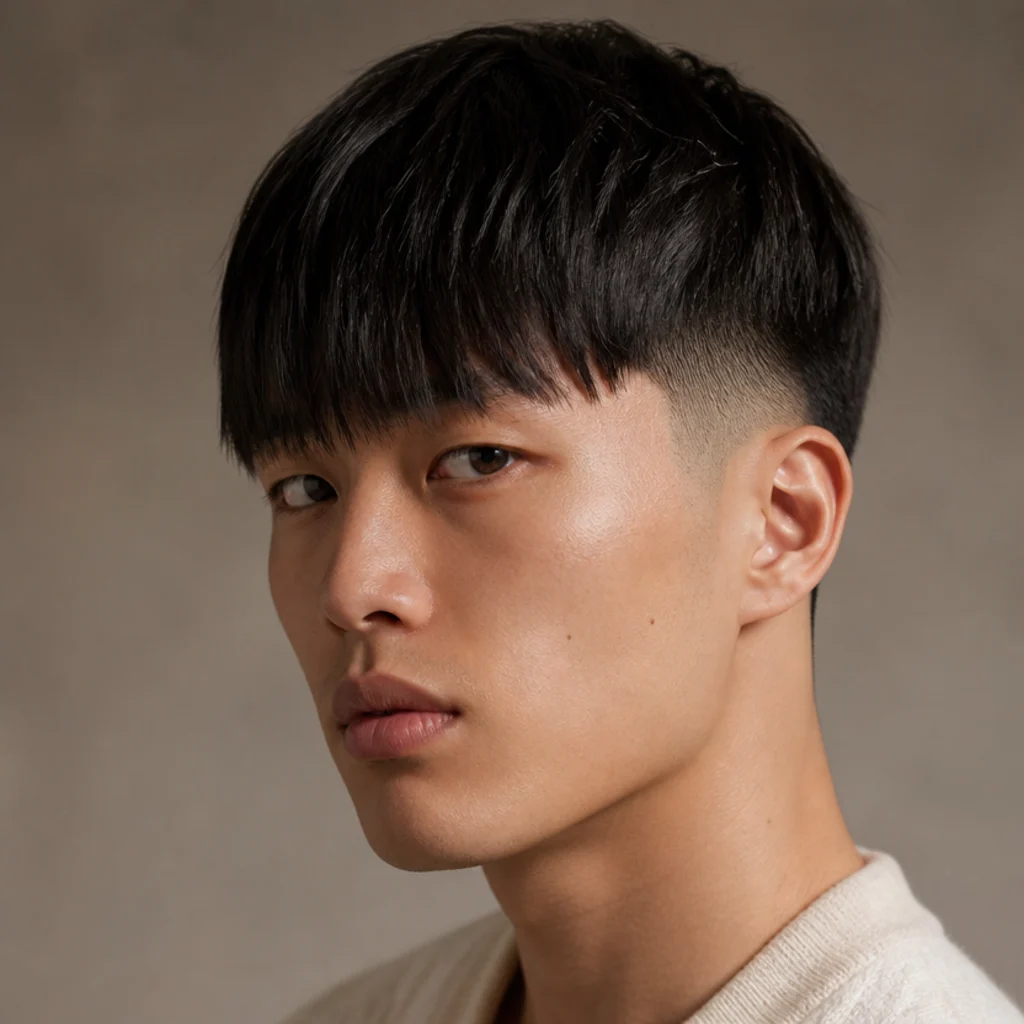
Dropping the fringe lower, so it grazes or sits just above the eyebrows, gives the edgar a bolder, more dramatic presence and makes the blunt line the clear focus of the cut. The extra length exaggerates the horizontal edge, which is why it flatters longer, narrower face shapes: the lowered line visually shortens the face and adds width across the brow. Guys with a short forehead should go easier, since a very low fringe can crowd the features. It suits straight and lightly wavy hair that falls forward willingly. Maintenance is moderate: the longer front needs regular trims to keep the line even, and it can droop into the eyes between cuts. Difficulty is low: brush forward and press flat. Pro tip: on humid days, a light mist of hairspray brushed through the underside of the fringe stops the length from separating and losing its solid edge. Ask for "a longer edgar fringe that sits right at the brow line," so your barber cuts to your exact preferred drop rather than guessing.
17Edgar with Two-Strand Curls
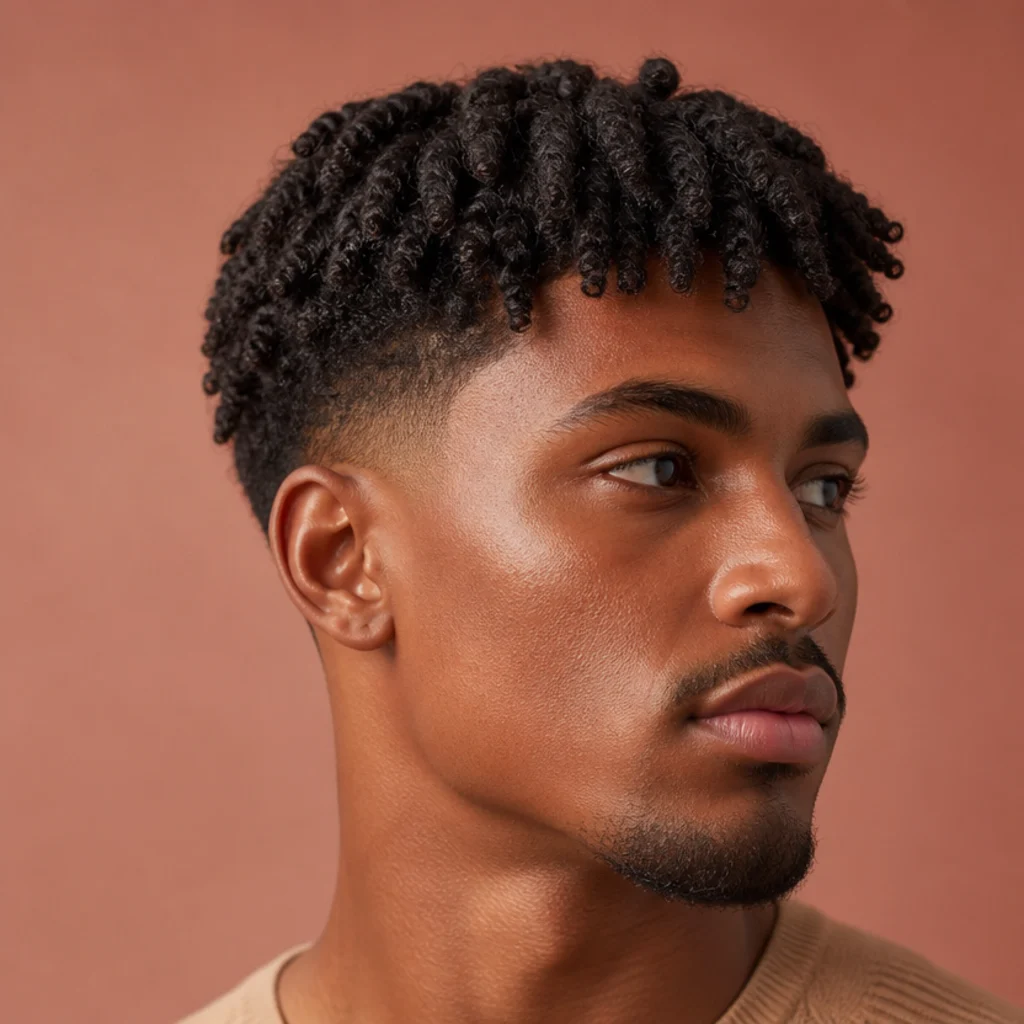
For textured and coily hair, two-strand twists on top bring rope-like, sculptural definition to the edgar shape, with the twists lending height and a distinct pattern while the faded sides keep everything clean. It suits 3C-to-4C coily and kinky textures that hold a twist, and it flatters round and oval faces by building vertical lift. The blunt front here comes through in where the twisted length is shaped, not a straight cut edge. Maintenance runs moderate to high: twists need re-setting every week or two, a twisting cream or gel to hold, and a durag or bonnet overnight to protect them. Difficulty is moderate, since hand-twisting takes practice or a stylist's chair. One trick: twist on damp, product-coated hair and let it dry fully before separating or touching it — disturbing wet twists is what causes them to unravel and frizz. Ask your barber or stylist for "an edgar shape with two-strand twists on top," and discuss how tight you want the twists and whether you plan to eventually pick them out into a twist-out.
18Edgar Cut for Boys

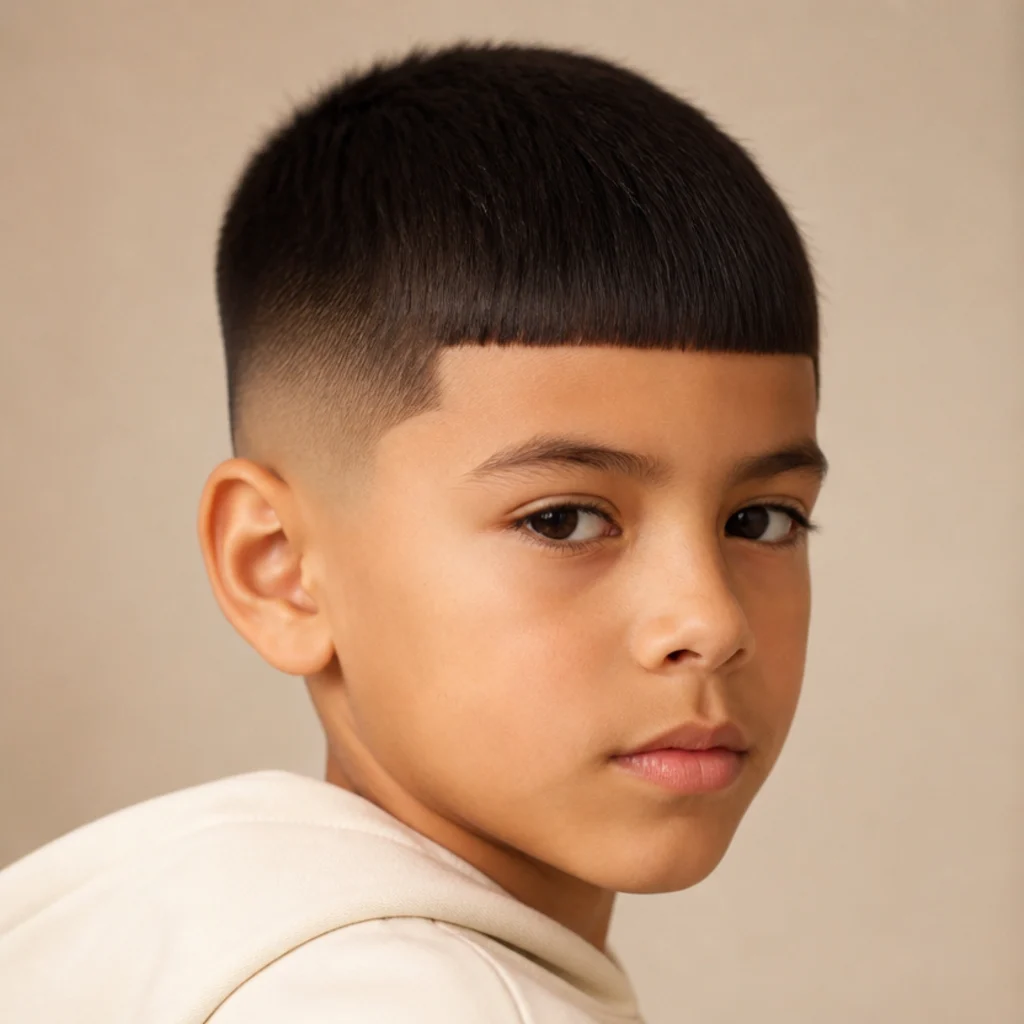
The edgar cut for boys keeps the fun, bold shape but swaps the skin fade for a soft taper, so it's easy to maintain, grows out gracefully, and stays appropriate for most schools. A gentle taper means longer stretches between trims, which matters for busy families and squirmy kids who dread the chair. It suits most children with straight-to-wavy hair and a clear hairline, and the forgiving sides mean an uneven grow-out never looks patchy. Maintenance is low to moderate: the softer sides need shaping only every three to four weeks, and the top just needs a brush-forward each morning. Difficulty for parents is minimal. Pro tip: keep the fringe a touch longer than an adult's, since kids' hair is finer and a very short blunt line can look sparse rather than sharp. Ask the barber for "a kid-friendly edgar with a soft taper and a slightly longer fringe," so the look stays low-fuss, photographs well, and grows out cleanly between appointments.
19Edgar with Drop Fade
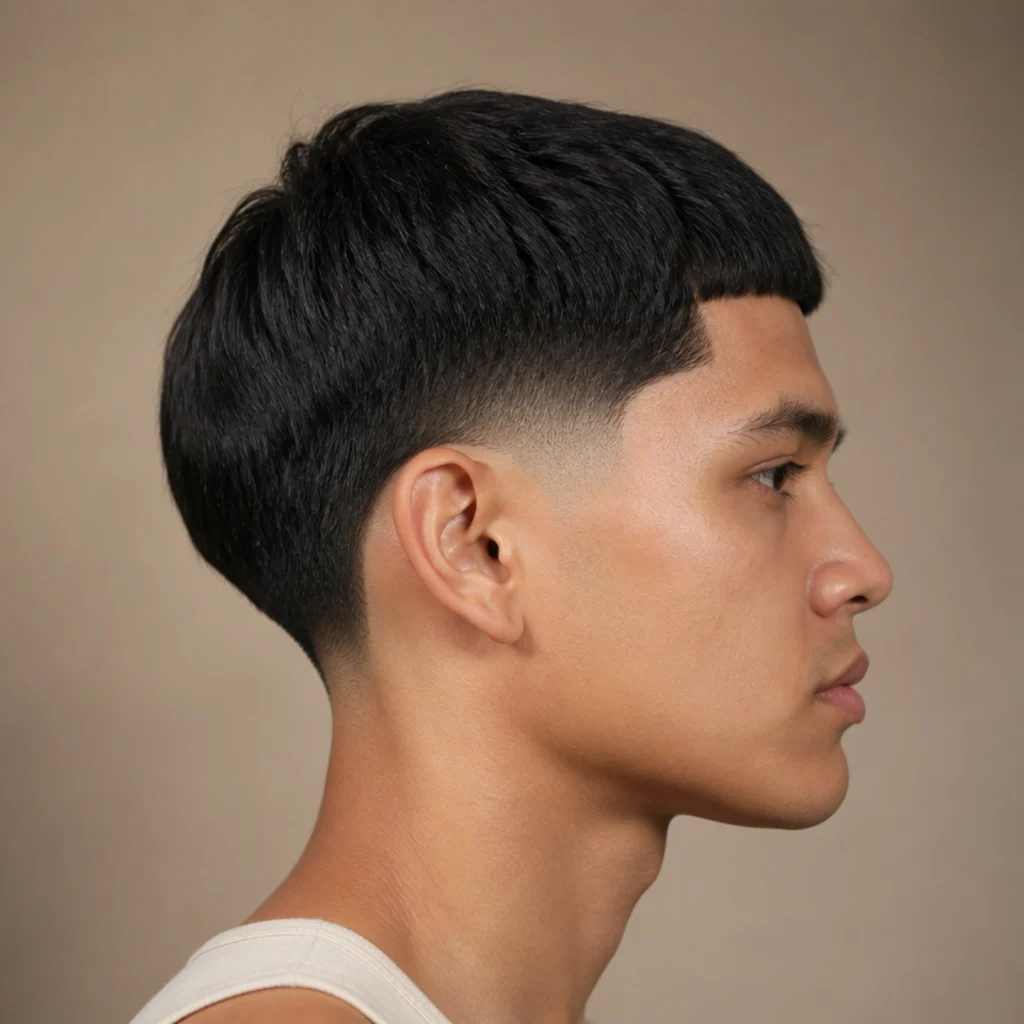
A drop fade dips lower behind the ear, following the natural curve of the skull rather than holding a straight horizontal line, which gives the edgar a rounded, head-hugging frame. Paired with the blunt front, it softens the overall silhouette and flatters angular, square, and diamond faces especially, which benefit from a curved counterpoint. It suits guys who want a fade with movement and a slightly more modern read than a standard taper. Maintenance runs moderate to high, because the curved blend behind the ear needs a careful hand and regular refreshing to keep its arc clean. Styling the top is low-effort. Pro tip: a drop fade can visually elongate the head from the side, so if yours runs on the longer side, ask the barber to start the drop higher and keep the curve shallow. Ask your barber for "an edgar with a drop fade that curves down behind the ears," and confirm how low you want the drop to sit at the nape for the exact shape.
20Spiky Edgar Cut
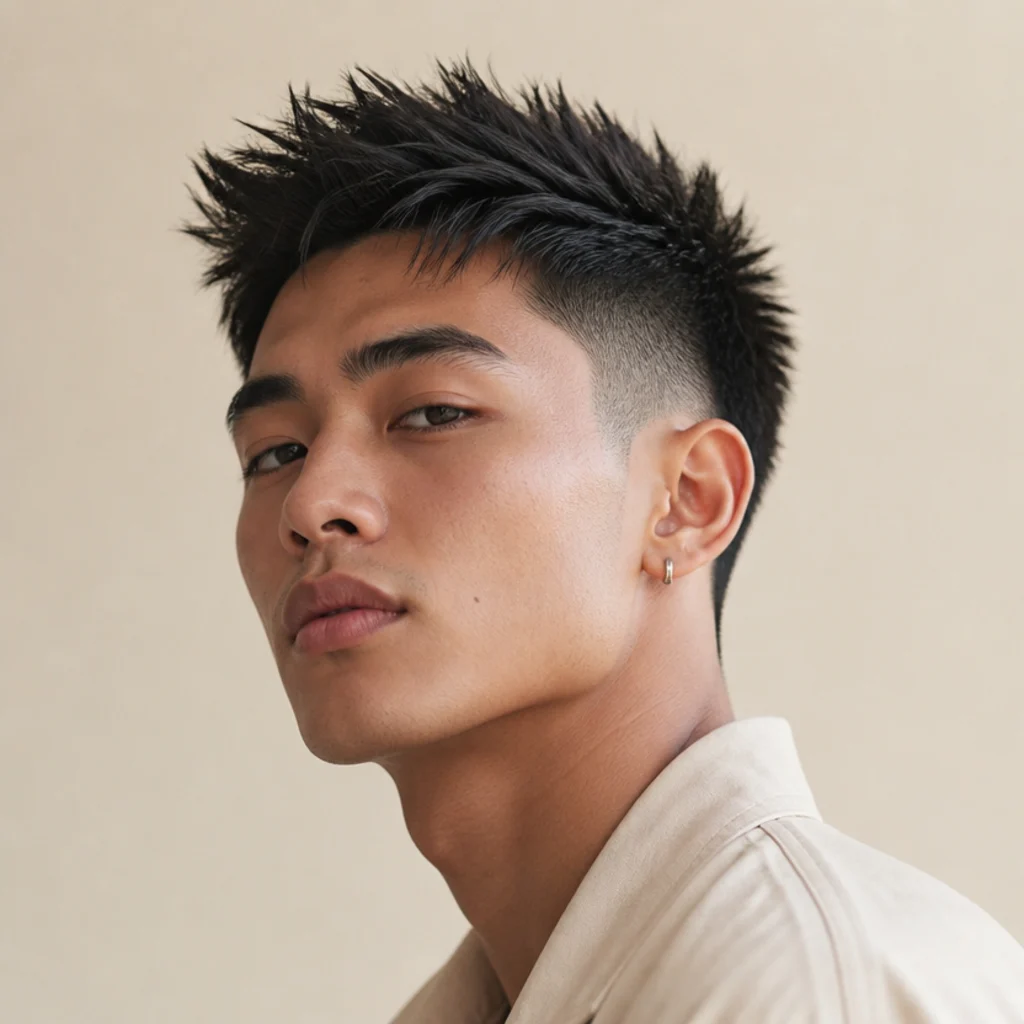
Adding short spikes to the top injects energy and a knowing throwback edge into the edgar, lifting and separating the front instead of pressing it flat. That vertical lift adds height, which flatters round and square faces and gives shorter guys presence. It suits medium-length straight or slightly wavy hair with enough body to stand; very fine hair struggles to hold spikes without heavy product. Maintenance is moderate: a strong-hold matte clay or a firm gel keeps the spikes up through the day. Difficulty is low to moderate and mostly about product control. Quick tip: build spikes on fully dry hair and use only a small amount of product at the roots first, lifting with fingertips, then add more to the tips — loading product onto wet hair or the ends first flattens the lift you're trying to create. Ask for "an edgar with enough length on top to spike," so your barber leaves the front pieces long enough to stand up rather than cutting them too short to style.
Save this to Pinterest so the whole list is a tap away.
21Edgar with Comb-Over Top
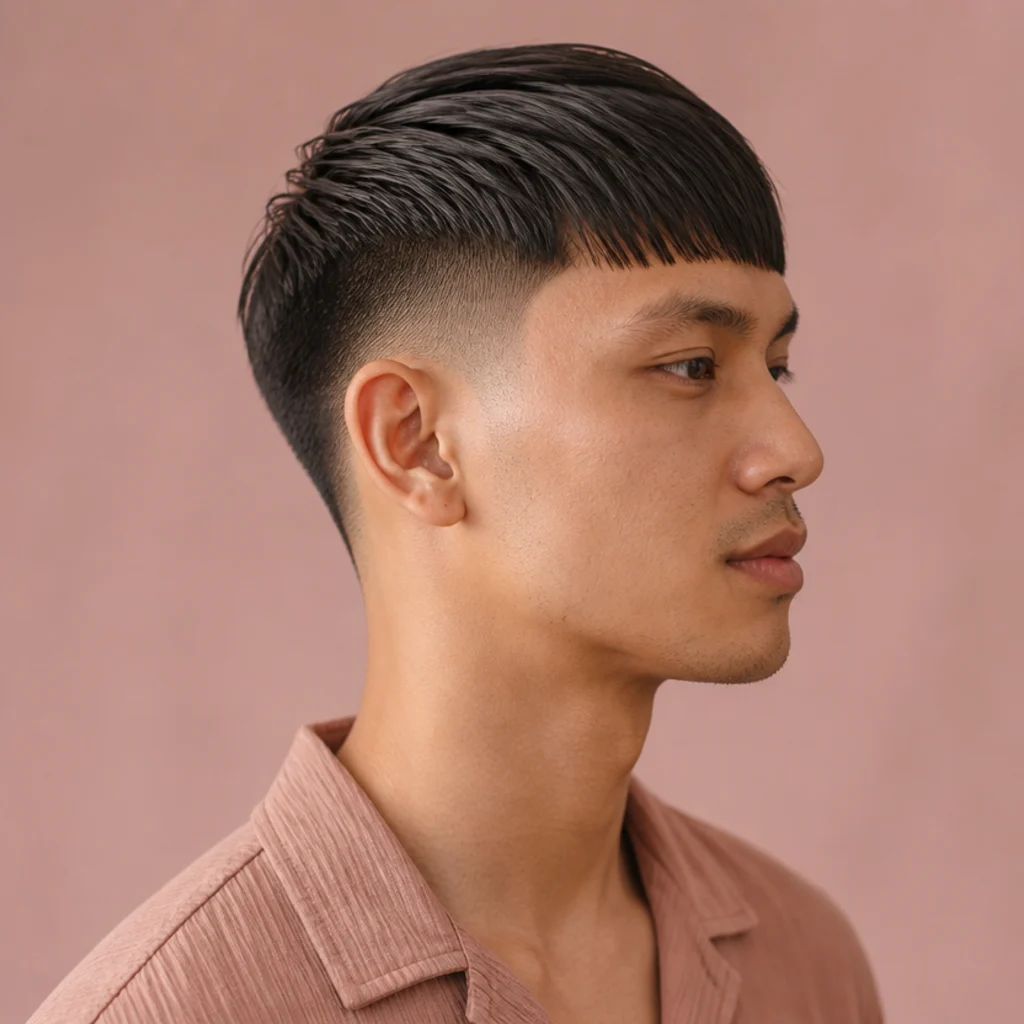
Blending the edgar with a comb-over gives the top directional flow, sweeping the hair to one side while keeping the blunt front intact, for a polished, slightly formal read. It suits straight-to-wavy hair with enough length to hold a side sweep and works for weddings, offices, and dressed-up occasions where a flat forward fringe feels too casual. It flatters oval and rectangular faces, and the diagonal sweep can visually slim a rounder one. Maintenance is moderate: a light, pliable pomade sets the comb-over without locking it stiff, and a hard part underneath sharpens the divide if you want more structure. Difficulty is low: comb to your part side while blow-drying to train the flow. Pro tip: direct the airflow from the roots toward your part while combing, so the hair banks over with volume at the crown instead of lying flat and thin. Ask your barber for "an edgar front with a longer comb-over top," and mention which side you naturally part so the sweep falls with your growth, not against it.
22Edgar with Blonde Highlights
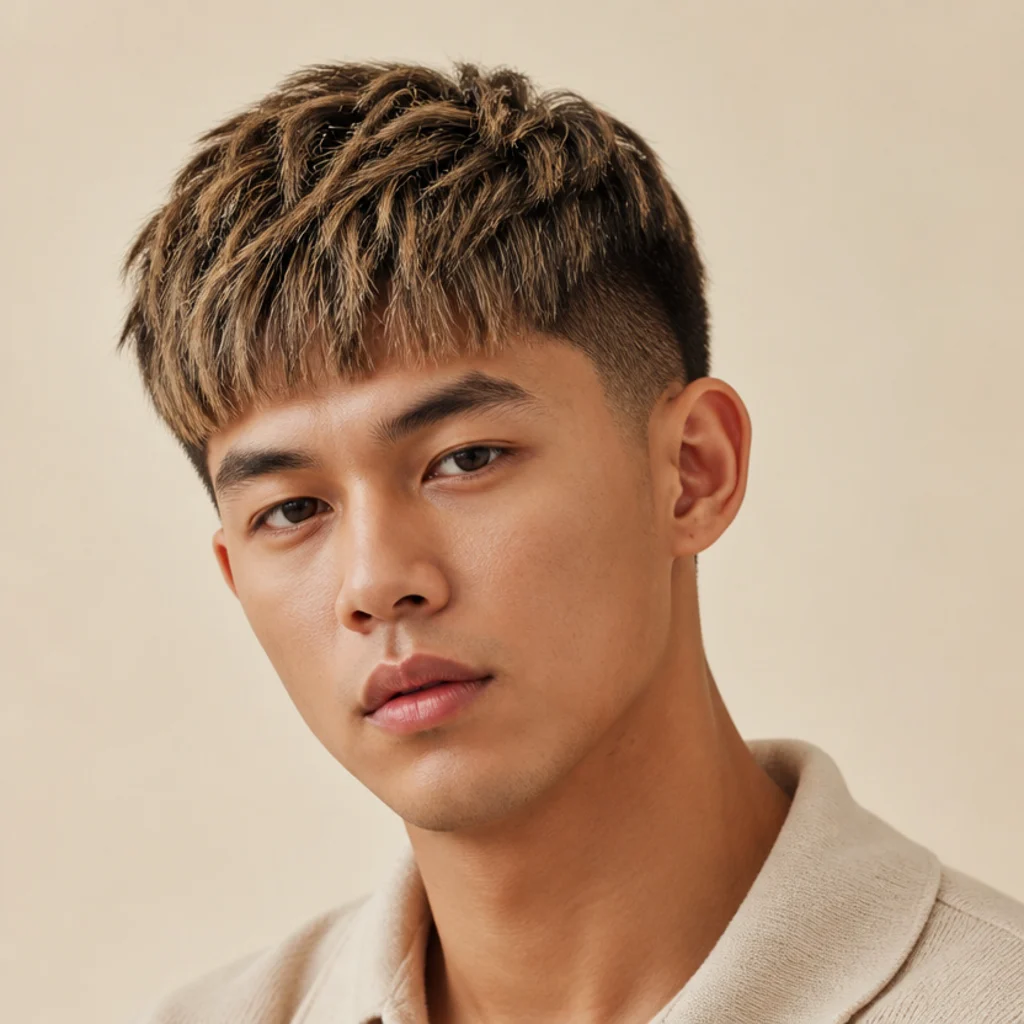
Threading blonde or caramel highlights through the top adds dimension and a fashion-forward edge, letting the lighter pieces catch the light and bring out the fringe's texture and movement. Foil highlights give crisp, placed streaks, while a freehand or "frosted tips" approach reads more scattered and casual; a subtle few-shades-lighter lift is the most versatile and least high-maintenance. It suits guys open to a color commitment across straight and wavy hair, and the technique works on most base colors with the right lift. Maintenance runs higher: expect root touch-ups every four to six weeks, periodic toning to keep the blonde from going brassy, and a purple shampoo used sparingly at home. Styling stays low-effort. Pro tip: keep color on the top only and leave the faded sides your natural shade, so the fade still frames a clean, dimensional finish and the grow-out looks intentional. Ask your colorist for "subtle highlights on top only, a few shades lighter, sides kept natural," and ask specifically how often you'll need to return for upkeep.
23Coarse-Hair Edgar
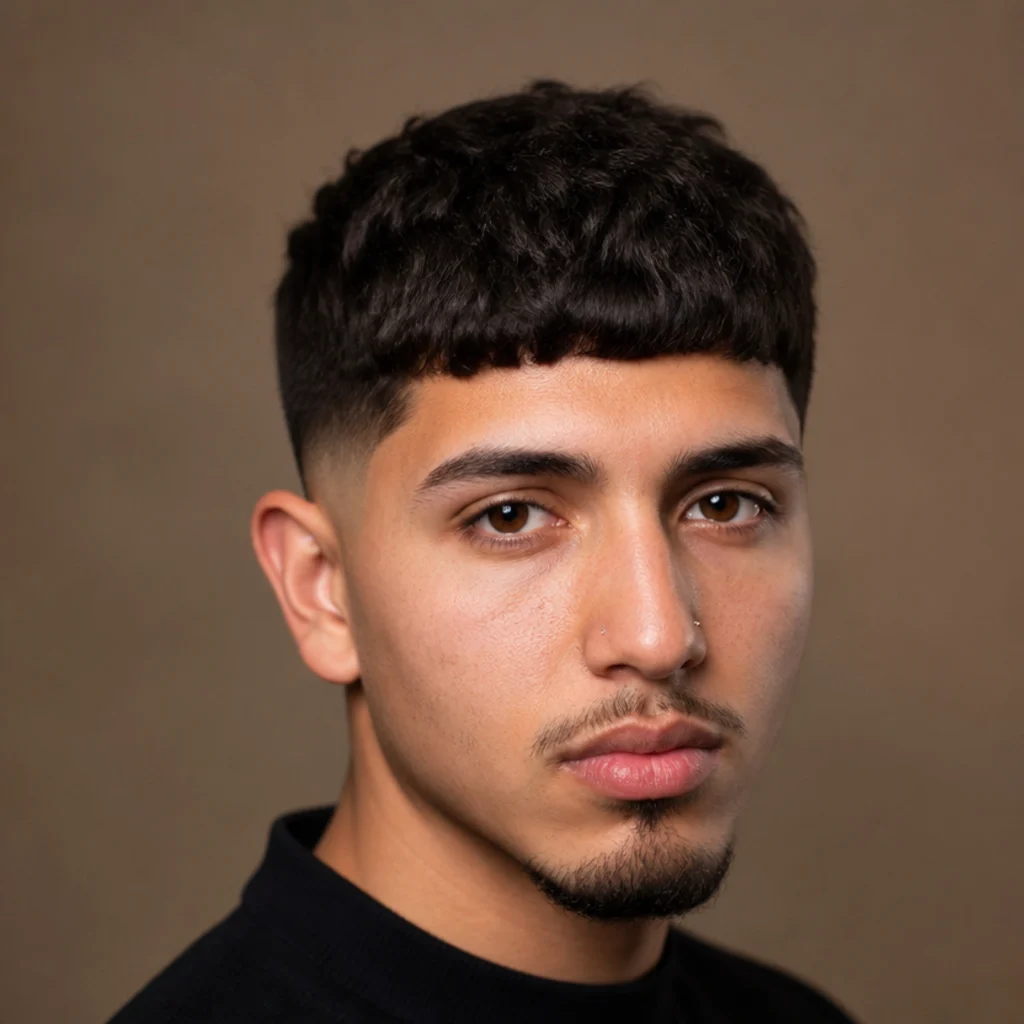
Thick, coarse hair is arguably the ideal canvas for the edgar, since the natural density makes the blunt front look full and holds the shape with authority fine hair can't match. The job becomes managing bulk, not building it, so a skilled barber will point-cut or notch the interior to keep the top from puffing and standing away from the head. It suits guys with naturally heavy, straight-to-wavy coarse hair who want structure rather than volume, and it flatters strong, square face shapes. Maintenance is moderate: a light styling cream or a leave-in tames flyaways and adds enough slip to keep the front lying flat. Difficulty is low once the weight is managed correctly. Small trick: ask for the interior to be thinned from underneath while the top surface stays blunt, so the fringe reads as a solid clean line but the hair beneath is light enough to fall flat instead of tenting. Ask for "an edgar with the interior thinned so it lies flat," which keeps coarse hair sleek and controlled rather than bulky.
24Edgar with Faded Beard
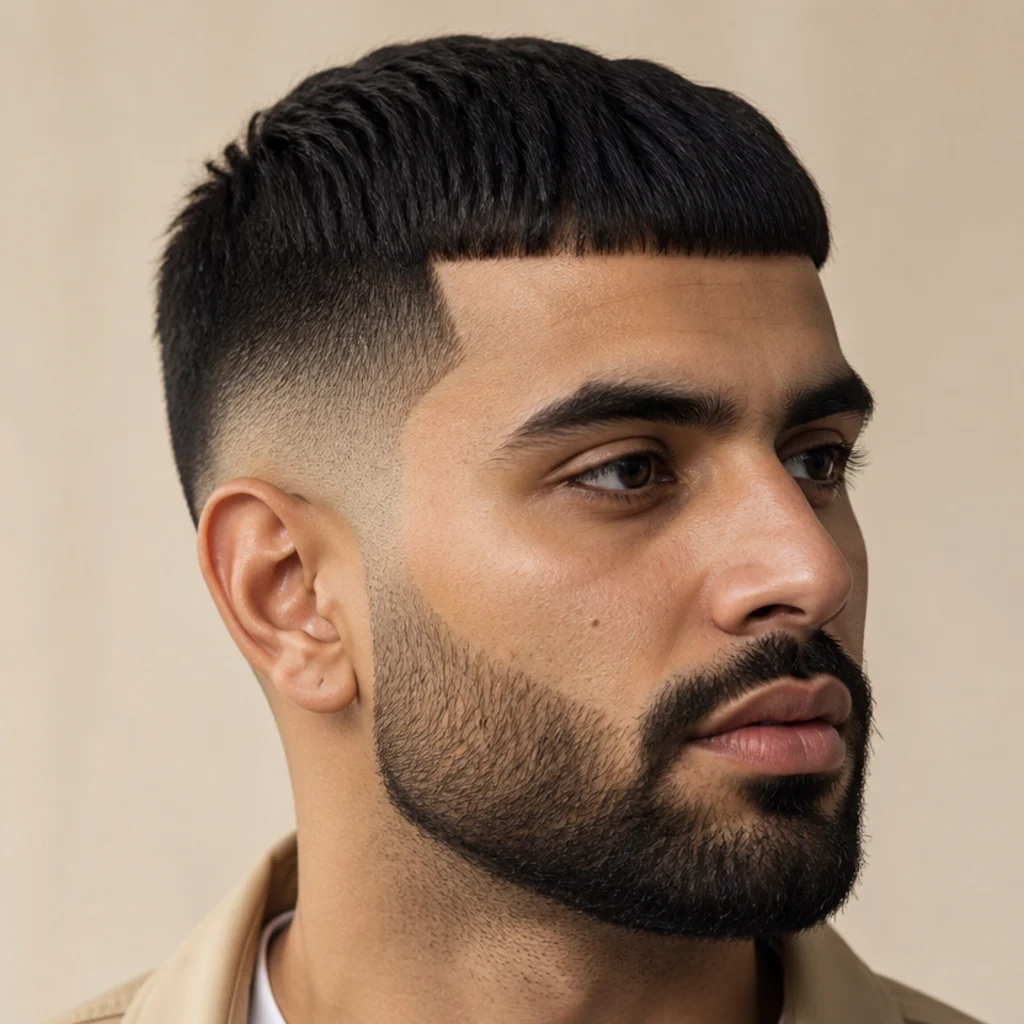
Connecting the side fade into a groomed beard creates one continuous frame running from scalp to jaw, tying the whole look into a single deliberate silhouette. The trick is the transition zone in front of the ear, where the hair fade and beard fade have to blend so there's no bald gap or hard shelf between them. It suits guys who can grow even, dense facial hair and want a more mature, cohesive finish, and it flatters a rounder face by adding structure at the jaw. Maintenance runs moderate to high, since both the hairline and the beard need regular shaping to keep the connection clean. Styling the hair itself is low-effort. Pro tip: keep the beard's cheek line sharp and slightly higher than feels natural at first — a defined upper edge is what makes the fade-to-beard transition look intentional rather than like overgrowth. Ask your barber to "blend the beard fade into the edgar sides with no gap by the ear," and specify your preferred beard length so the transition reads smooth, not patchy.
25Modern Minimal Edgar
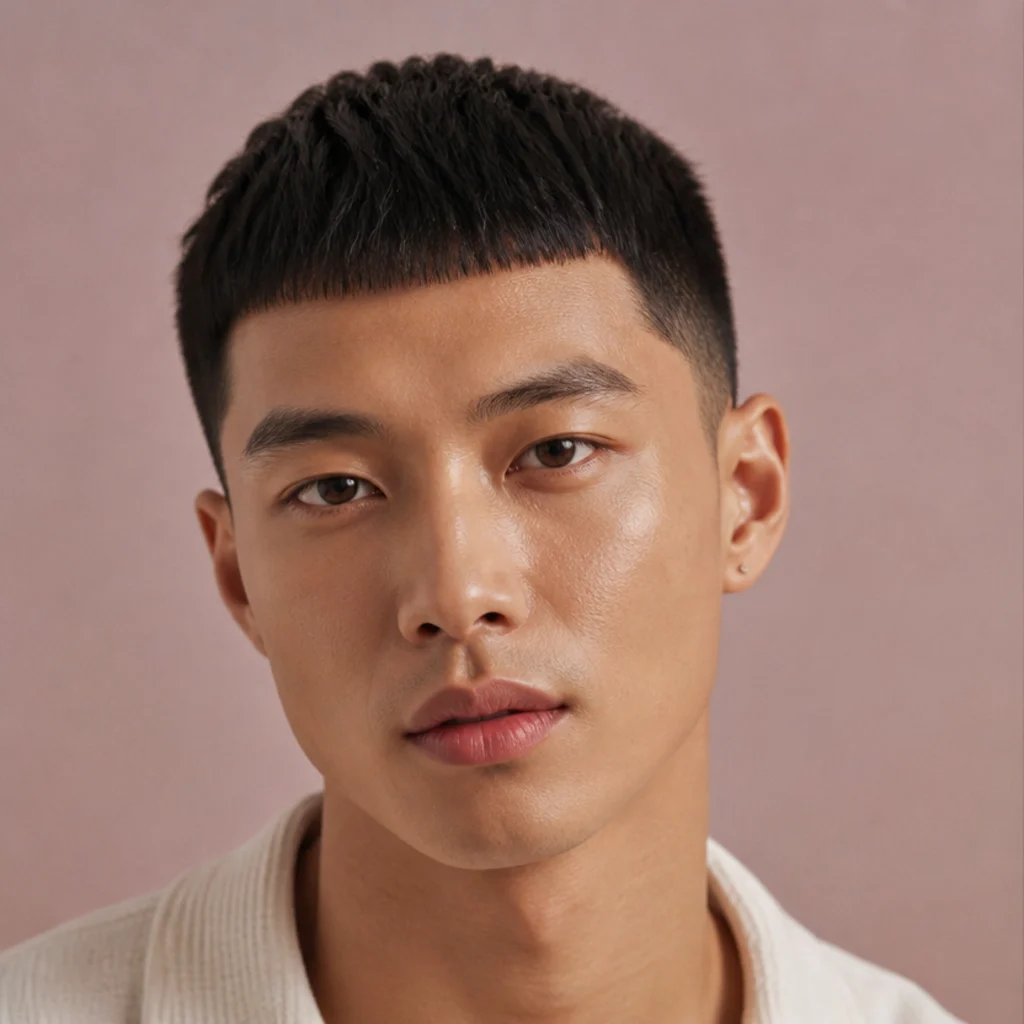
The minimal version strips the look to its essentials: a clean blunt front, a subtle taper, and no design work, color, or heavy texture. It's the most versatile and quietly grown-up take here, reading correctly everywhere from a casual weekend to a client meeting, and it ages up the edgar for guys who like the shape but not the streetwear associations. It suits all textures and nearly every face shape, precisely because there's nothing extra to flatter or fight. Maintenance is moderate and unusually forgiving: with no skin fade or etched line to blur, it still looks presentable well into week three. Difficulty is low: a quick brush forward is all it asks. Pro tip: because the whole effect rests on the front line, keep a small pair of grooming scissors at home to trim the odd stray hair breaking the edge — you'll stretch the time between barber visits noticeably. Ask your barber for "a clean, simple edgar with a soft taper," and request the front line neat but not severe, so it reads refined rather than blunt-for-blunt's-sake.
Pro Tips from the Editor
- Match the fringe to your forehead, not the trend. A high forehead can carry a lower, brow-grazing fringe; a short forehead reads better with the line kept a finger or two above the brows so features do not crowd.
- Blunt hairlines expose, textured ones forgive. If your hairline is receding or M-shaped, choose a curly, wavy, or textured-crop edgar over the razor-flat classic, since scattered texture hides an uneven front that a straight line only advertises.
- Diffused fades buy you time. A soft, blurry taper hides regrowth far better than a hard-lined skin fade, so if you dislike frequent visits, trade contrast for a gradient you can stretch to three weeks.
- Product goes on the front last. Emulsify product in your palms, work it through the mid-lengths and roots first, then use only your fingertips on the fringe, so the front stays defined instead of flattened into a slab.
- Train the direction while damp. Blow-dry the fringe forward on cool air with a flat brush before styling; the hair memorizes the direction and holds the blunt shape all day with less product.
- Photograph front and side for your barber. A single angle leaves fade height and fringe drop to interpretation; two references and a finger pointed at your own head eliminate the most common miscommunications.
- Guard the edge between cuts. A no-guard trimmer pass along just the front hairline, or small scissors on stray hairs, re-crisps the defining line and adds a week to the look without a full appointment.
How to Choose / Get the Look
Start with hair texture, because it dictates how the fringe behaves before anything else. Straight hair gives the crispest blunt line, waves soften it into gentle movement, and curly or coily textures convert the front into defined shape rather than a flat edge. Next, be honest about your hairline: the edgar rewards strong, low, or straight hairlines and quietly punishes receding or M-shaped ones with a flat line, so route around a weak front by choosing a textured or curly variation. Then match the fade to your calendar as much as your taste, using the guide below.
| Fade / variation | Upkeep cadence | Best hair texture | Face shapes it flatters | Relative effort |
|---|---|---|---|---|
| Taper fade | 2–3 weeks | All | Nearly all | Low |
| Low fade | 3–4 weeks | Straight, wavy | Long, narrow | Low |
| Mid fade | 2–3 weeks | All | Oval, square, round | Low–moderate |
| High skin fade | ~1 week | Thick, coarse | Angular, defined | High |
| Burst / drop fade | 2 weeks | All | Oval, diamond, square | Moderate |
| Buzz / short blunt | 2 weeks | Straight, coarse | Square, oval | Low styling, frequent trims |
| Curly / two-strand | 2 weeks + nightly | Curly, coily | Round, heart | Moderate |
Weigh face shape last, as a tiebreaker: longer fringes and comb-overs balance longer faces, while curls, spikes, and added height flatter rounder ones. Above all, respect the maintenance reality, since the blunt front is what defines the cut and it softens fastest. When you reach the chair, bring a front-and-side reference photo, name the fade type and height, and point to exactly where you want the fringe to land relative to your brows. Ask how the shape will grow out over three to four weeks so you can plan trims around your life. If you're unsure, start with a taper fade edgar; it's the most versatile, forgiving, and photogenic entry point.
Frequently Asked Questions
What hair type works best for an edgar cut?
Straight and coarse hair hold the blunt front line most crisply, so they're the easiest canvas for a razor-flat classic edgar. The cut adapts well to waves, curls, and coily textures, but those versions trade the drawn-on edge for definition and movement, with the barber shaping where the texture stops rather than cutting a dead-straight line.
How often do I need to maintain an edgar cut?
Plan a fringe-and-fade refresh every two to three weeks to keep the look sharp. Skin and high fades blur within about a week and often need a weekly line-up, while tapers and low fades grow out gently and can stretch to three or four weeks. The blunt front itself softens fastest, so it usually drives the timing.
What should I ask my barber for?
Name the fade type and height, say in finger-widths where you want the fringe to land relative to your eyebrows, and bring a clear front-and-side reference photo. For example, "an edgar with a taper fade and a blunt front sitting one finger above my brows" gives a precise, unambiguous starting point that leaves little to interpretation.
Does the edgar cut suit a receding or high hairline?
A razor-flat classic edgar tends to expose a receding or M-shaped hairline rather than disguise it, so it's not the most forgiving choice. If your hairline is uneven or receding, a textured crop, wavy, or curly edgar works far better, because scattered front texture breaks up the line and draws the eye to movement instead of the hairline itself.
Is the edgar cut good for boys?
Yes. A kid-friendly edgar uses a soft taper instead of a skin fade, so it grows out gracefully, needs shaping only every three to four weeks, and stays appropriate for most schools. Keeping the fringe slightly longer suits finer children's hair, and the whole look reduces to a quick brush-forward each morning, which busy families appreciate.
How do I style an edgar cut at home?
Most versions need only a brush-forward and a small amount of matte product pressed into the front. Textured and spiky takes use a clay or paste worked through dry hair with fingers, while curly versions use a curl cream on damp hair and a diffuser. Emulsify product in your palms first and touch the fringe last to avoid flattening it.
How long does it take to grow out an edgar cut?
The defining blunt front reads noticeably softer by week three and blends into an ordinary fringe over four to six weeks. Because the shape relies on that crisp front, it doesn't so much grow out awkwardly as gradually become a longer forward fringe, which you can then trim back into an edgar or grow into a French crop or textured fringe.
What is the difference between an edgar cut and a Caesar cut?
Both feature a short, straight fringe across the forehead, but the edgar leans on a stronger fade or taper and a deliberately blunt, graphic front line, while the classic Caesar keeps the sides and front more uniform in length with a softer, less pronounced edge. In short, the edgar is the bolder, more contrast-driven descendant of the Caesar shape.
Can I get an edgar cut with thin or fine hair?
Yes, but skip the slick, flat classic, which can look sparse on fine hair. Choose a textured crop or messy edgar instead, since the piecey, separated finish fakes density and disguises thinning far better. Ask the barber to point-cut the top and use a matte clay at home; the goal is scattered texture that reads as fullness rather than a smooth surface that shows scalp.