20 Edgar Buzz Cut Styles That Are Simple and Sharp
The Edgar lives or dies on one move: a straight, blunt fringe pushed forward over a tight fade. Buzz the top down and you get the sharpest structure in barbering for the least daily effort. Here are 20 ways to wear it, with fade heights, upkeep timelines, and the exact words to bring to the chair.
 Edited by Lena Rose · Published July 11, 2026 · 31 min read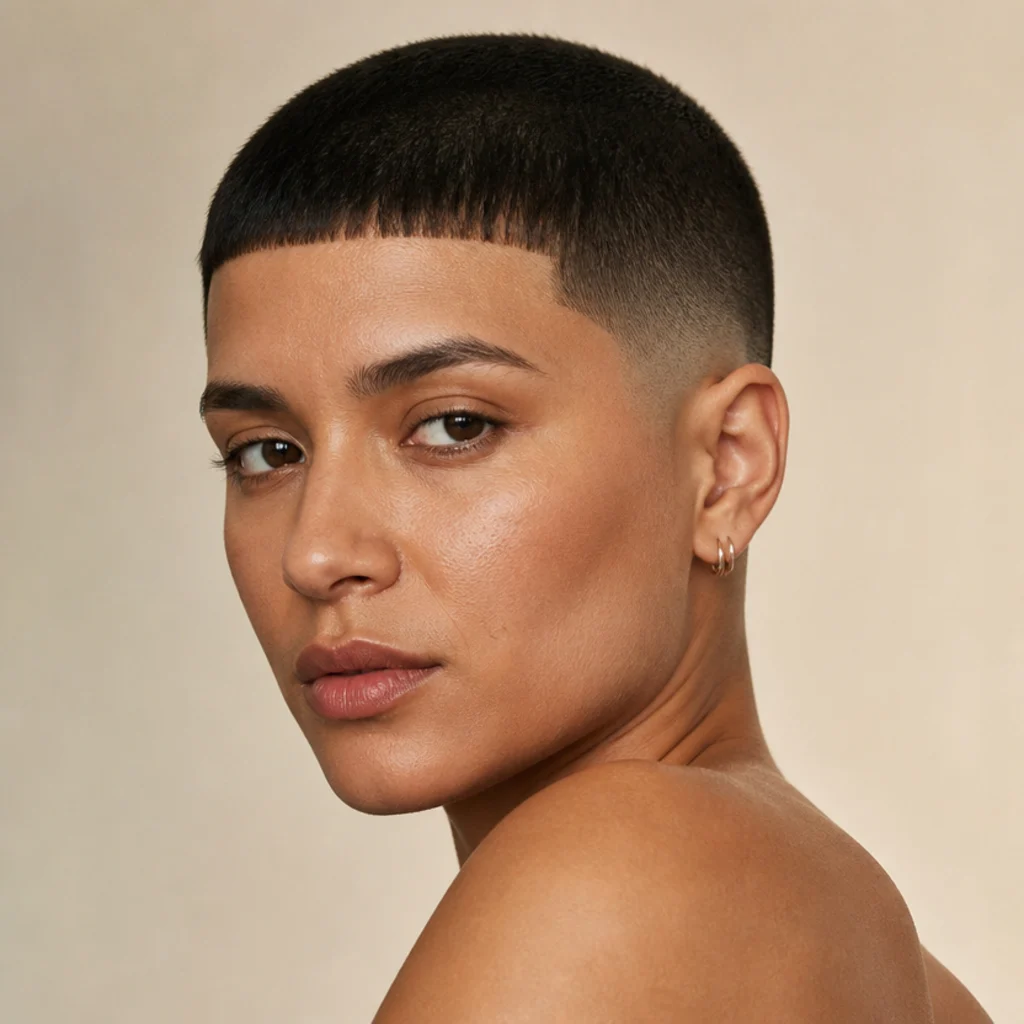
Quick Answer
- Best for: Straight to wavy hair, strong or high foreheads, and anyone who wants defined structure with near-zero styling time.
- Who might skip it: Very fine or receding front hairlines (the blunt line reads sparse), and tight-curl textures who dislike a short, dense fringe.
- Maintenance: Fade every 2-4 weeks; the blunt fringe blurs first and often needs a mid-cycle line clean-up.
- Difficulty: Low to wear (towel-dry and go); moderate for the barber, since a level fringe shows every uneven millimeter.
- Cost: Roughly a standard barber cut for the buzz plus fade; skin fades, line-ups, and design work sit at the higher end, and colored tops add a separate salon fee.
- Wear time / longevity: Looks intentional 1-4 weeks depending on fade height; grown-out shaggy versions stretch to 6-8.
- Standout variation: The Edgar buzz with a taper fade reads sharp without looking severe and grows out gracefully.
- How to ask your barber: Name three things separately: top length (guard number), fringe shape (blunt or textured), and fade height (low, mid, high, or skin).
In This Guide
- Classic Edgar Buzz Cut
- Edgar Cut on Straight Hair
- Edgar Taper Fade Buzz
- Curly Edgar Buzz Cut
- Low Fade Edgar
- Mid Fade Edgar Buzz
- High Fade Edgar
- Edgar Buzz with a Line-Up
- Textured Crop Edgar
- Edgar Buzz for Boys
- Burst Fade Edgar
- Edgar with Hard Part
- Wavy Edgar Buzz
- Skin Fade Edgar
- Blunt Fringe Edgar
- Edgar with Design Line
- Grown-Out Shaggy Edgar
- Edgar Buzz with Beard Blend
- Ultra-Short Bald Edgar
- Colored Edgar Buzz
Intro
The Edgar, sometimes called the takuache or edgar cut, is one of the most recognizable short shapes in modern barbering: a flat, blunt fringe sitting level across the forehead over short sides and a tight fade. It grew out of Latino barbershop culture in the American Southwest and Mexico and now sits firmly in the mainstream. Buzz the top down and you keep every bit of that structure while dropping styling time to almost nothing, which is why it has become the default ask for anyone who wants a defined front line without a shelf of product.
The buzzed version rewards specific hair types. It looks sharpest on edgar cut straight hair, where the fringe falls into a clean horizontal edge on its own, and it flatters strong, high, or long foreheads by breaking them with that hard line. Wavy and curly textures reinterpret the shape with softer, more organic movement rather than a ruler edge. This guide walks through 20 variations, from taper and burst fades to hard parts, design lines, beard blends, and grown-out shaggy takes. For each, you'll find who it suits by face shape and texture, how often to book a touch-up, how tricky it is to keep sharp, one concrete pro tip, and the exact language to hand your barber.
01Classic Edgar Buzz Cut
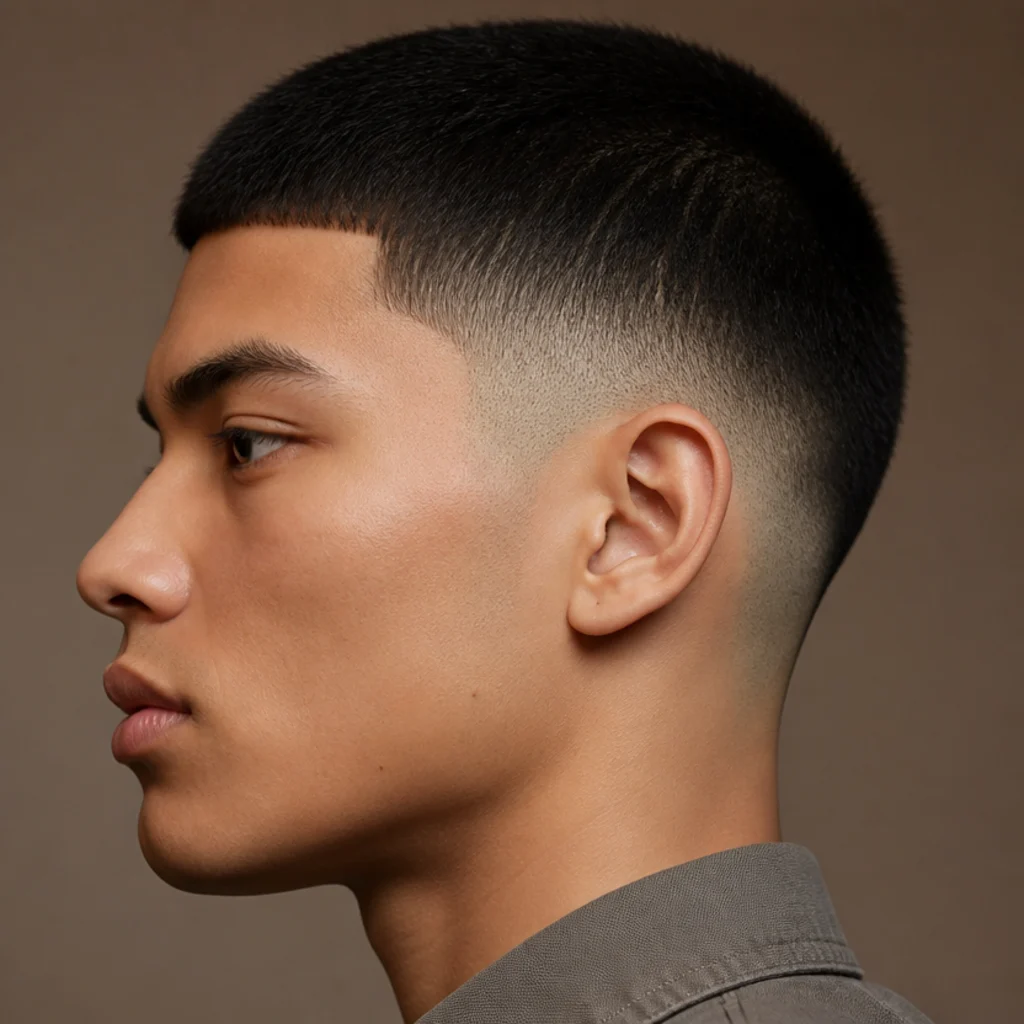
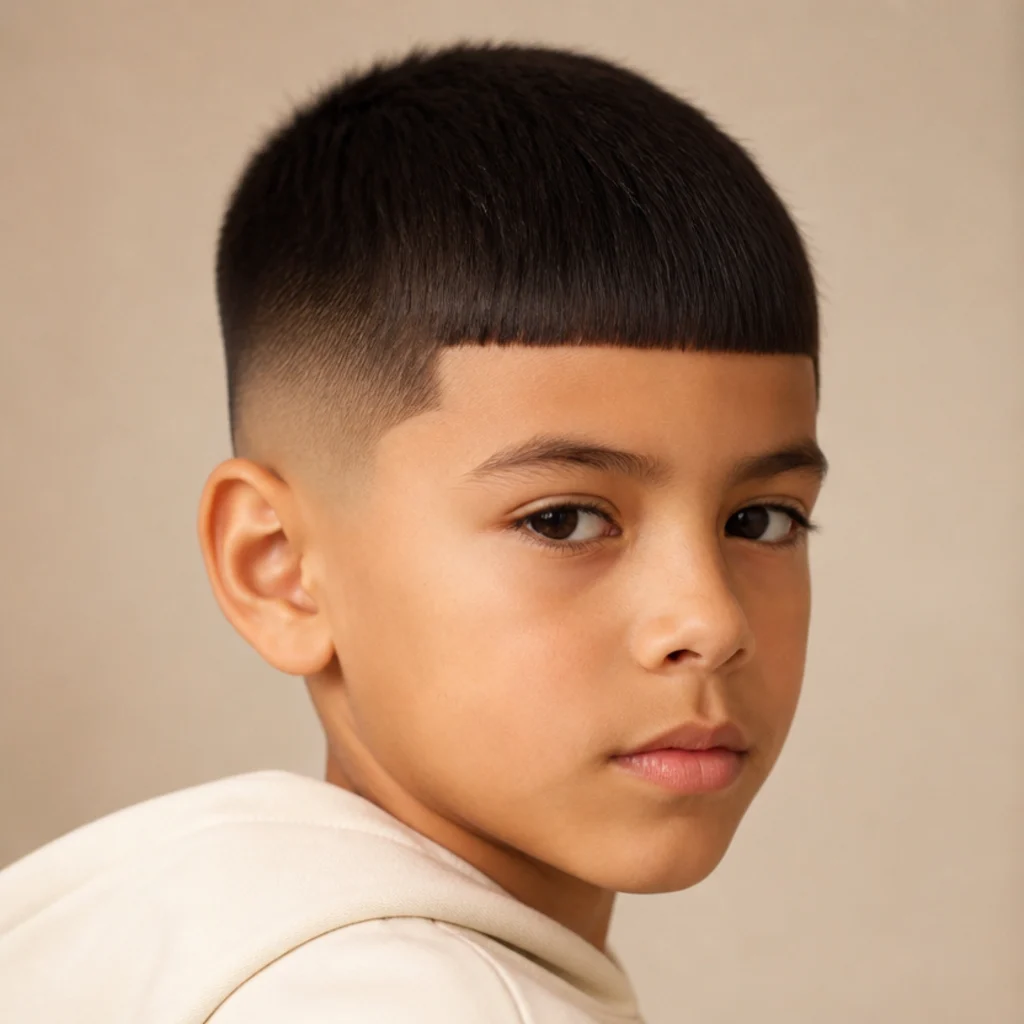
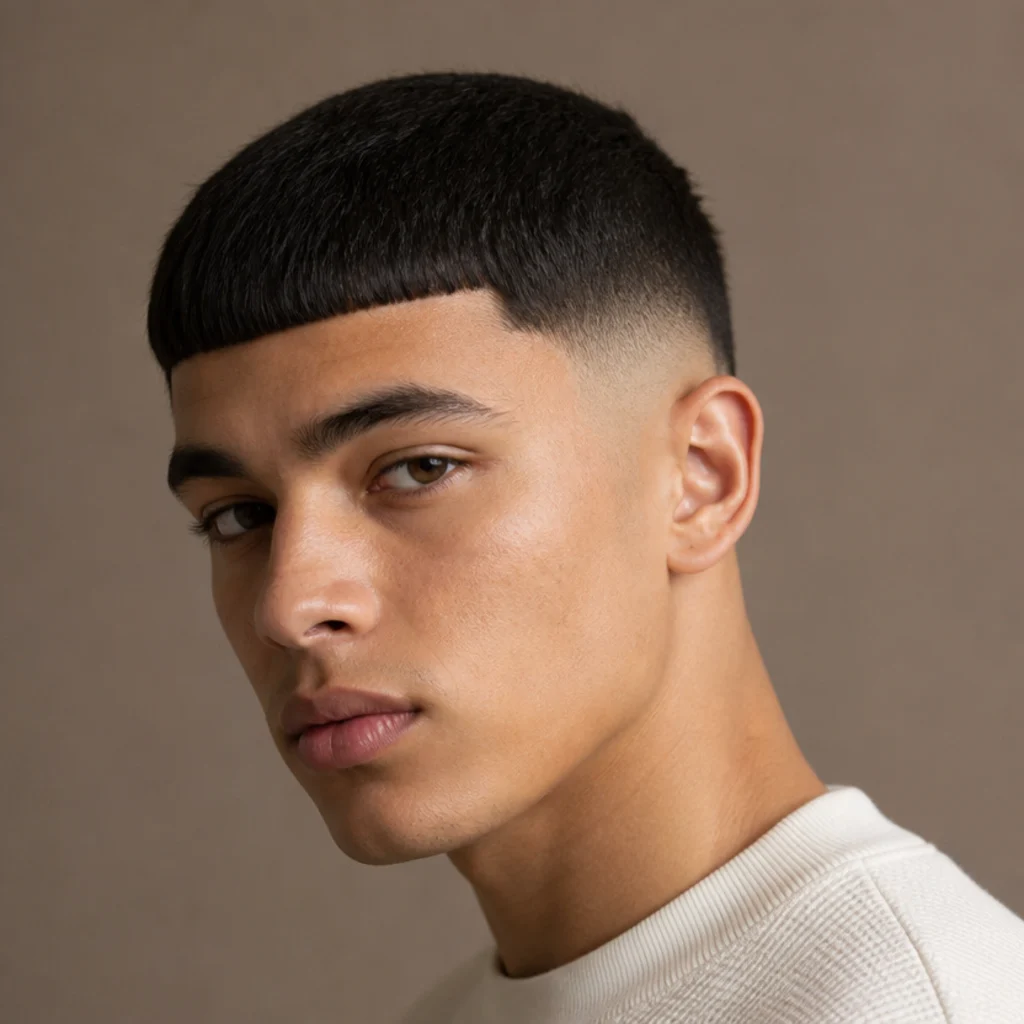
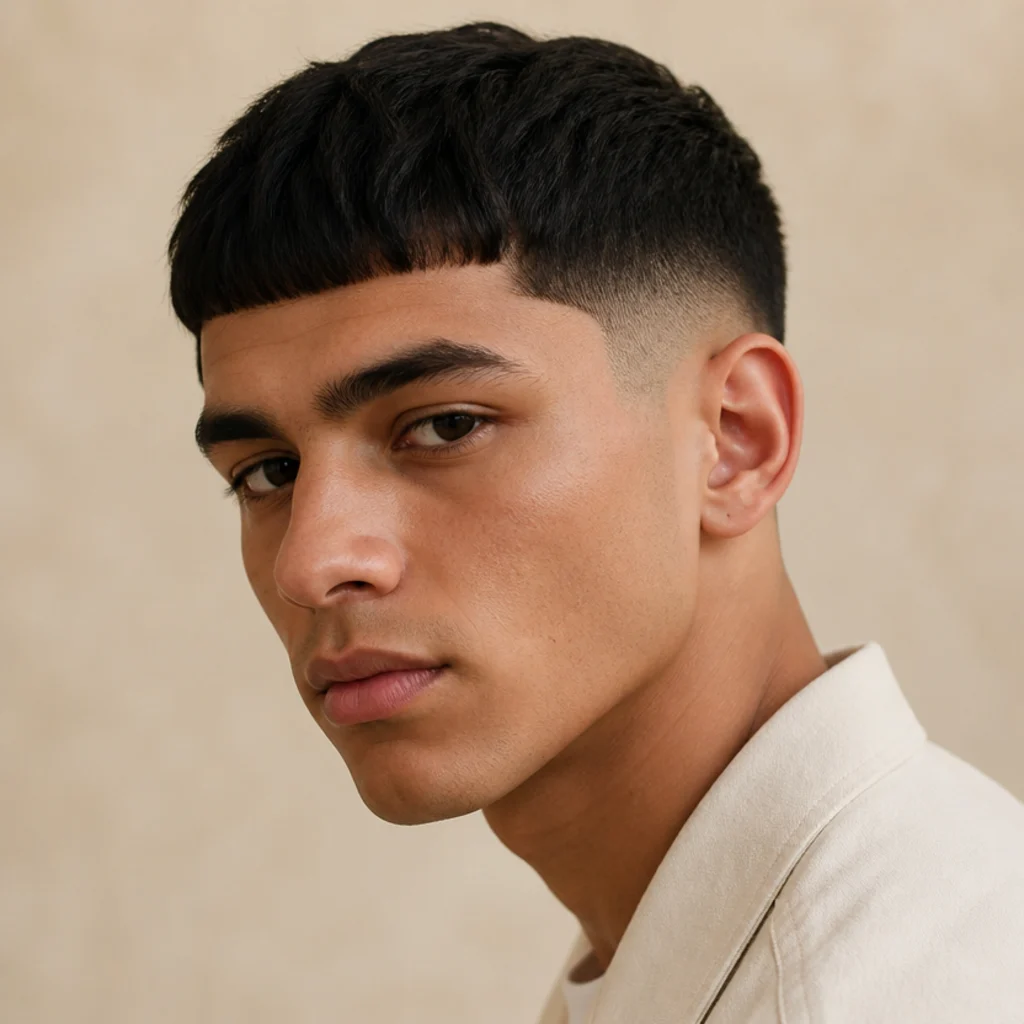
The classic sets the template. The top runs a uniform short guard, usually a 2 or 3, while the front is left just long enough to form a straight, blunt fringe pushed forward across the forehead. The sides drop into a short fade. Most face shapes wear it well, but rounder and softer faces get the most payoff from that hard horizontal line, which adds structure and apparent angularity. Because the length is so short, styling is close to zero: towel-dry and walk out. The trade-off is precision, since a uniform buzz hides nothing and an uneven fringe shows immediately. Book a touch-up every two to three weeks to keep both the fringe edge and the fade crisp; the front line blurs first. Pro tip: brush the fringe forward and flat while it's still damp so it dries in the right direction instead of splaying. Ask your barber for "a short Edgar buzz, guard two on top, blunt straight fringe, and a clean fade on the sides."
02Edgar Cut on Straight Hair
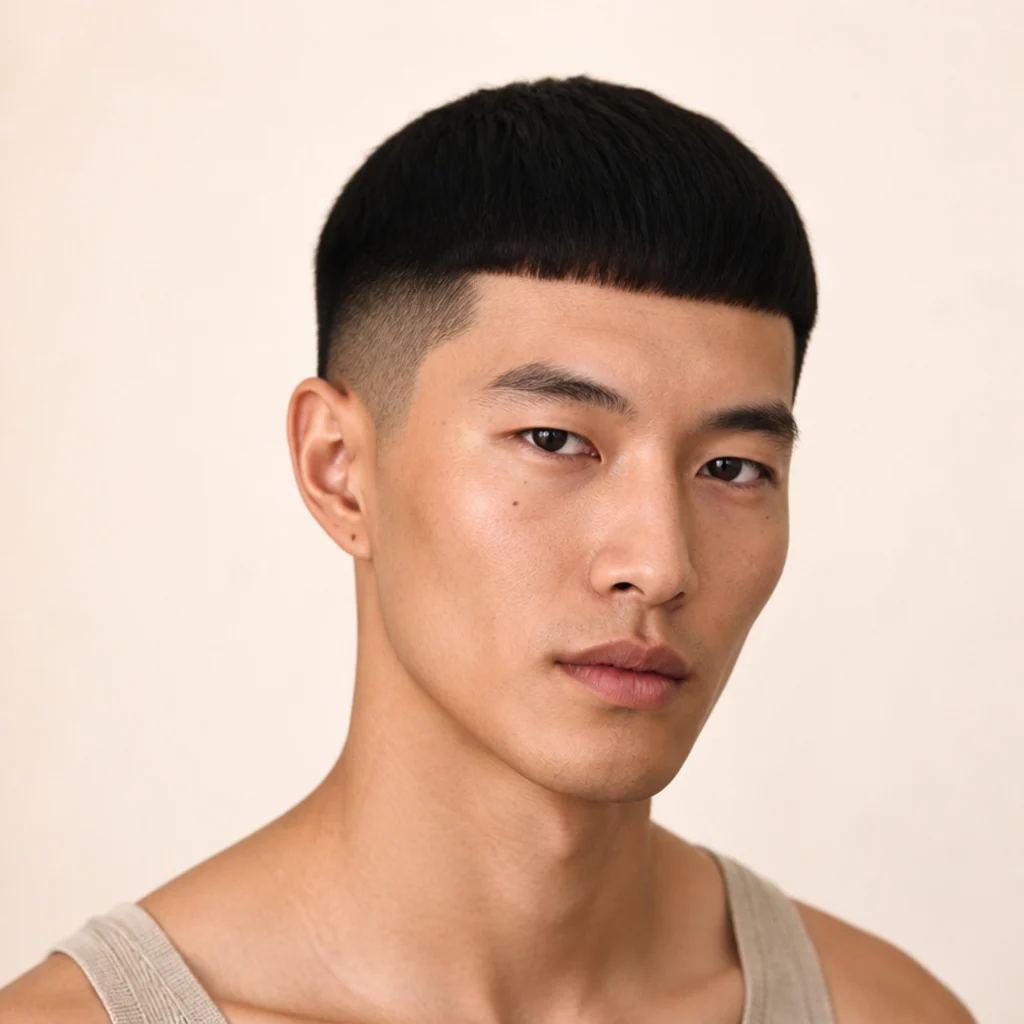
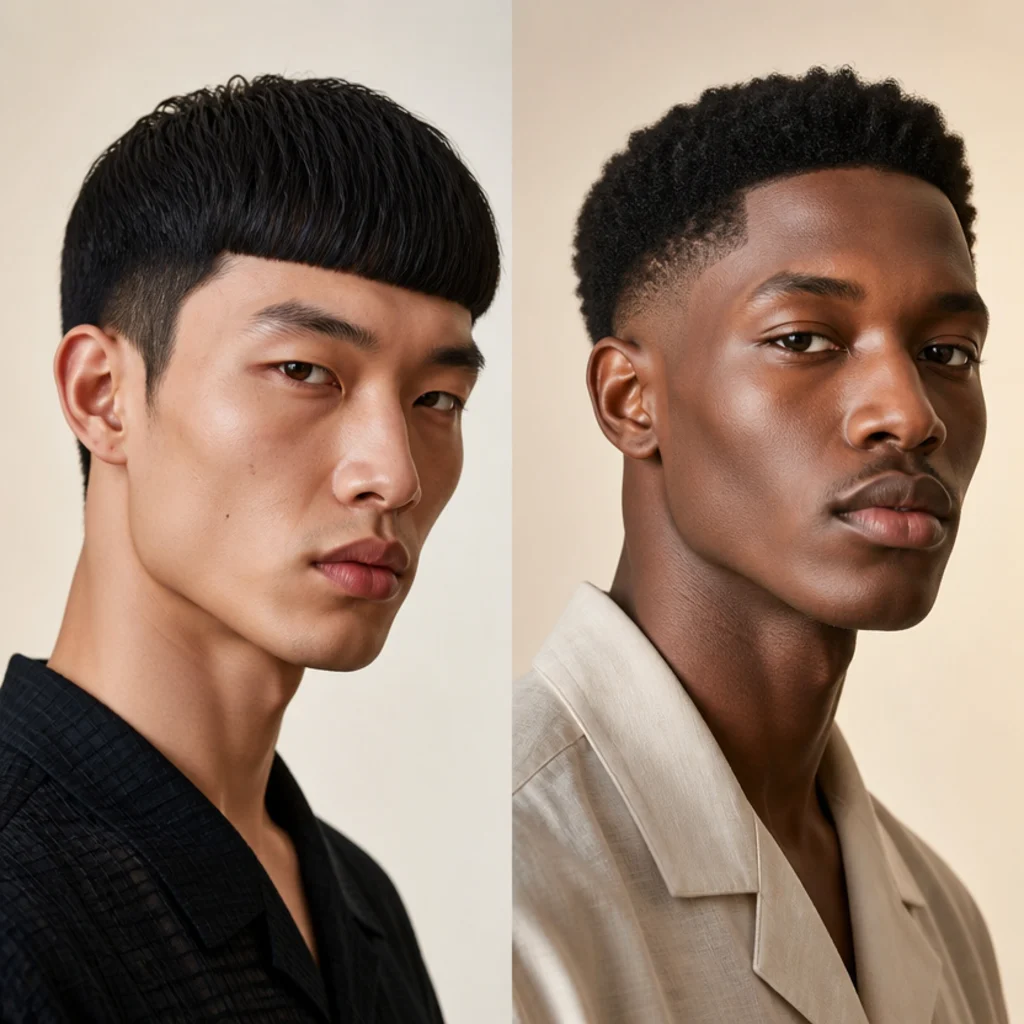
Straight hair is the Edgar's home texture. The strands fall into that blunt front line with no coaxing, so the horizontal edge stays crisp and level from morning to night. An edgar cut straight hair look reads almost architectural: a clean divide between the flat fringe and the faded sides, with no stray movement to break it. Square and oval faces suit it especially well, since the straight fringe echoes and balances a strong brow line, and it's a smart forehead-shortener for anyone with a taller frame up top. Upkeep centers on the front, because straight hair broadcasts every uneven millimeter, so a steady line-up hand matters more here than anywhere else. Pro tip: on cowlick-prone straight hair, ask the barber to point-cut the very bottom edge of the fringe a hair softer so a stubborn swirl doesn't lift the line. Ask for "an Edgar on straight hair with a blunt, level fringe kept sharp rather than softened."
03Edgar Taper Fade Buzz
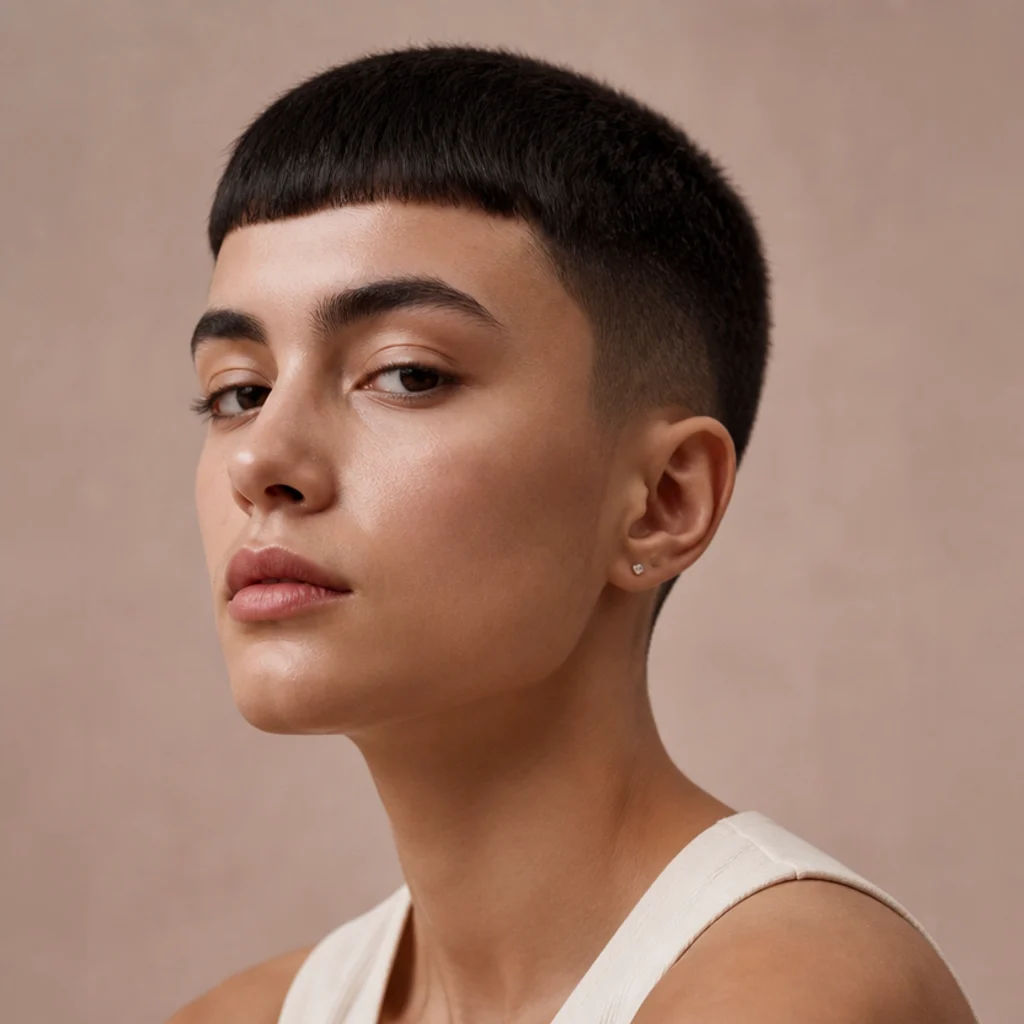
Swapping a blunt drop for an edgar cut taper fade softens the perimeter while keeping the front line bold. Instead of cutting straight to skin high on the head, the taper gradually shortens the hair around the ears and down the neckline, so the shape feels more grown-up and less graphic. That makes it the workhorse choice for offices, interviews, and anyone who wants sharp without stark. It flatters nearly every face shape and is especially kind to those who find a high skin fade too severe against their features. The practical win is longevity: a taper grows out in proportion, buying an extra week between visits versus a high skin fade, so three to four weeks is realistic. Pro tip: ask for the taper to follow your natural hairline curve at the nape instead of a blocked square, and it'll stay tidy longer as it grows. Ask your barber for "an Edgar buzz on top with a taper fade around the ears and neck, blunt fringe kept straight."
04Curly Edgar Buzz Cut
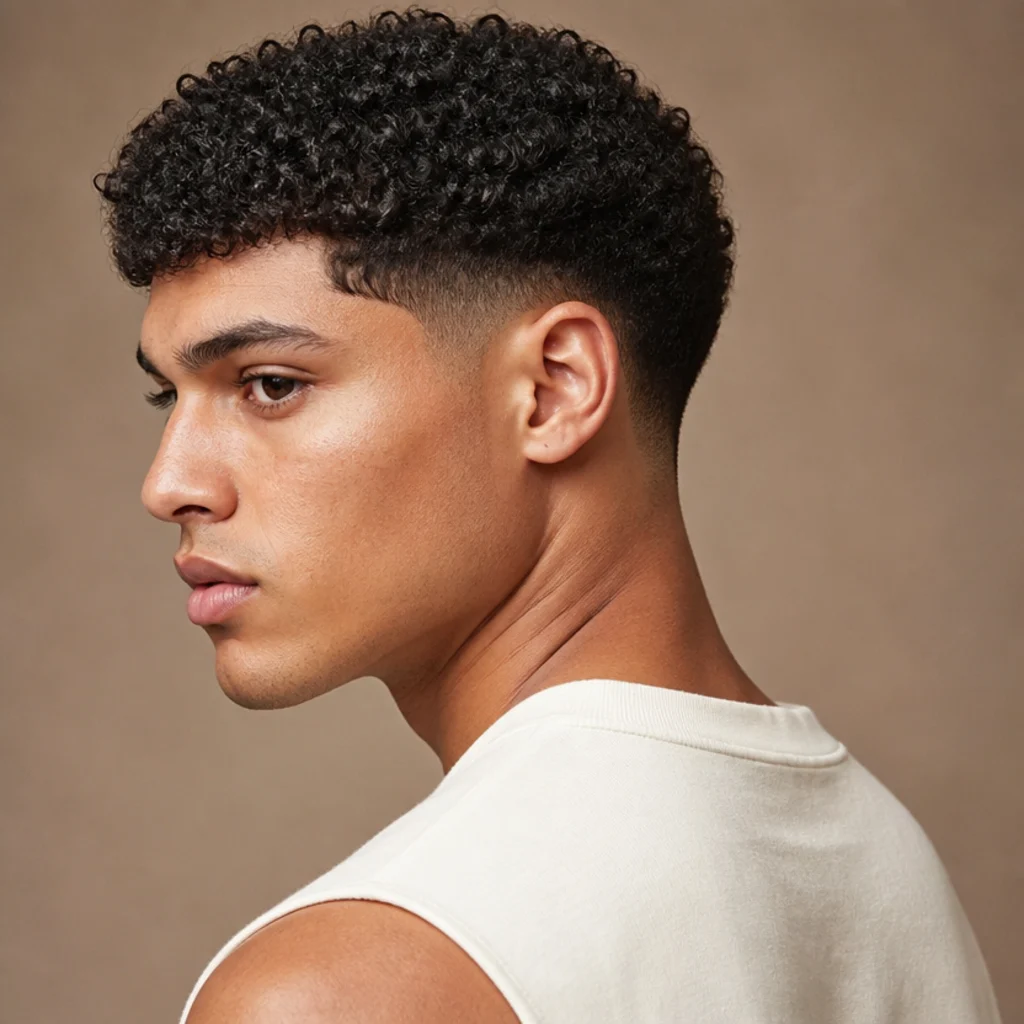
A curly edgar cut trades the ruler edge for texture, letting the front coils form a softer, rounded line. The buzz keeps the curls short and dense so they read as a defined shape rather than loose volume, which is the difference between deliberate and overgrown. Coily and tightly curled textures hold this best, since a springy front naturally sits forward and forms its own fringe without being cut blunt. Anyone who loves the Edgar outline but wants movement instead of a hard block will like this, and it flatters longer and heart-shaped faces by adding a little softness at the temples. Maintenance runs every two to three weeks; the fade defines the shape more than the top does, so keeping it tight is what keeps the look intentional. Pro tip: a dime of curl cream on damp hair, scrunched forward, sets definition without weight, but it works dry too. Ask for "a short Edgar buzz that keeps my curl texture up front, not blunt-cut flat."
05Low Fade Edgar
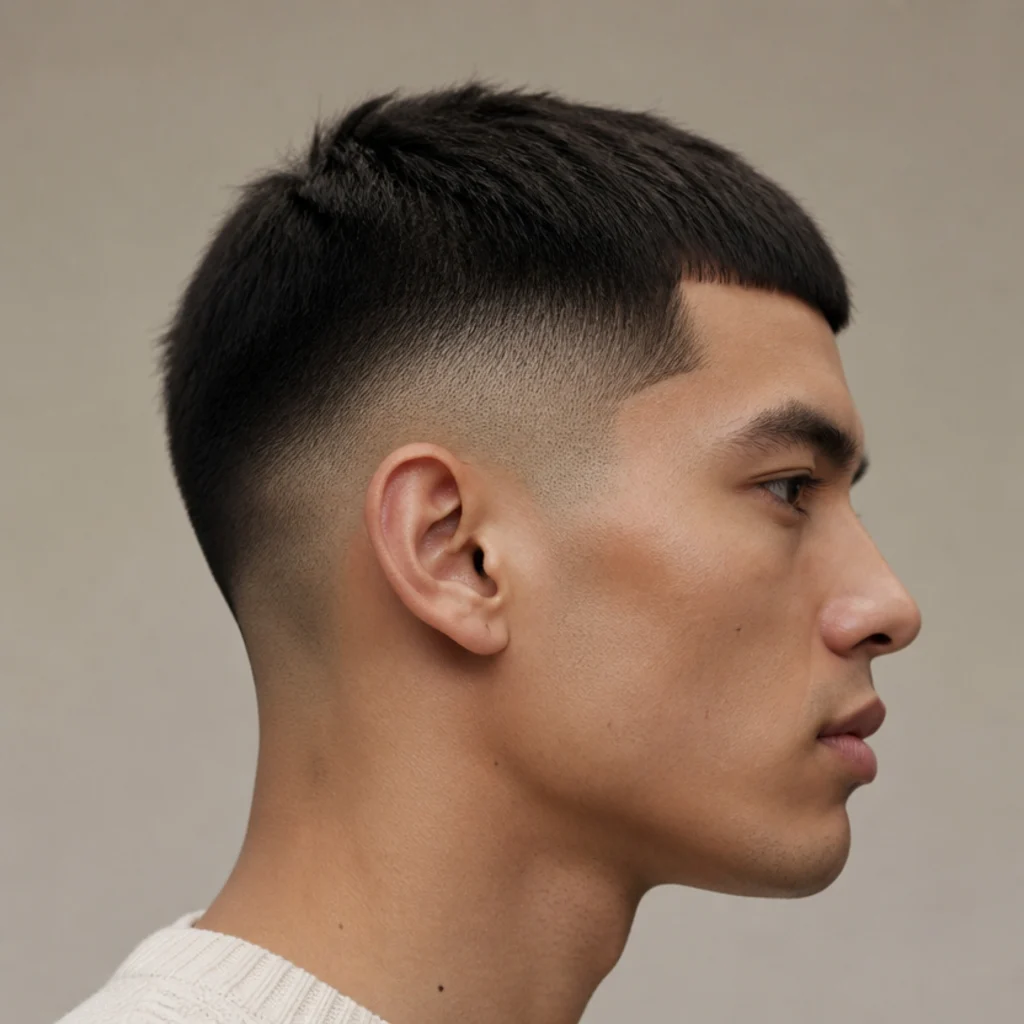
The low fade keeps most of the side length and only blends to short just above the ears and along the hairline. Paired with an Edgar buzz, it gives a subtle, conservative frame that hands all the attention to the blunt fringe. This is the natural entry point if you are new to fades or work somewhere that prefers understated, and it reads clean in any setting from boardroom to backyard. Longer and oval faces suit it particularly well, since the taller band of hair on the sides adds a touch of visual width to balance the length. The upkeep is forgiving: low fades blur slowly and hold their shape for three to four weeks. Pro tip: ask for the fade to start a finger-width above the ear so it frames without shrinking the sides, which flatters narrow faces. Ask your barber for "a low fade with an Edgar buzz and a straight blunt fringe."
Save this to Pinterest to compare the fade heights side by side.
06Mid Fade Edgar Buzz
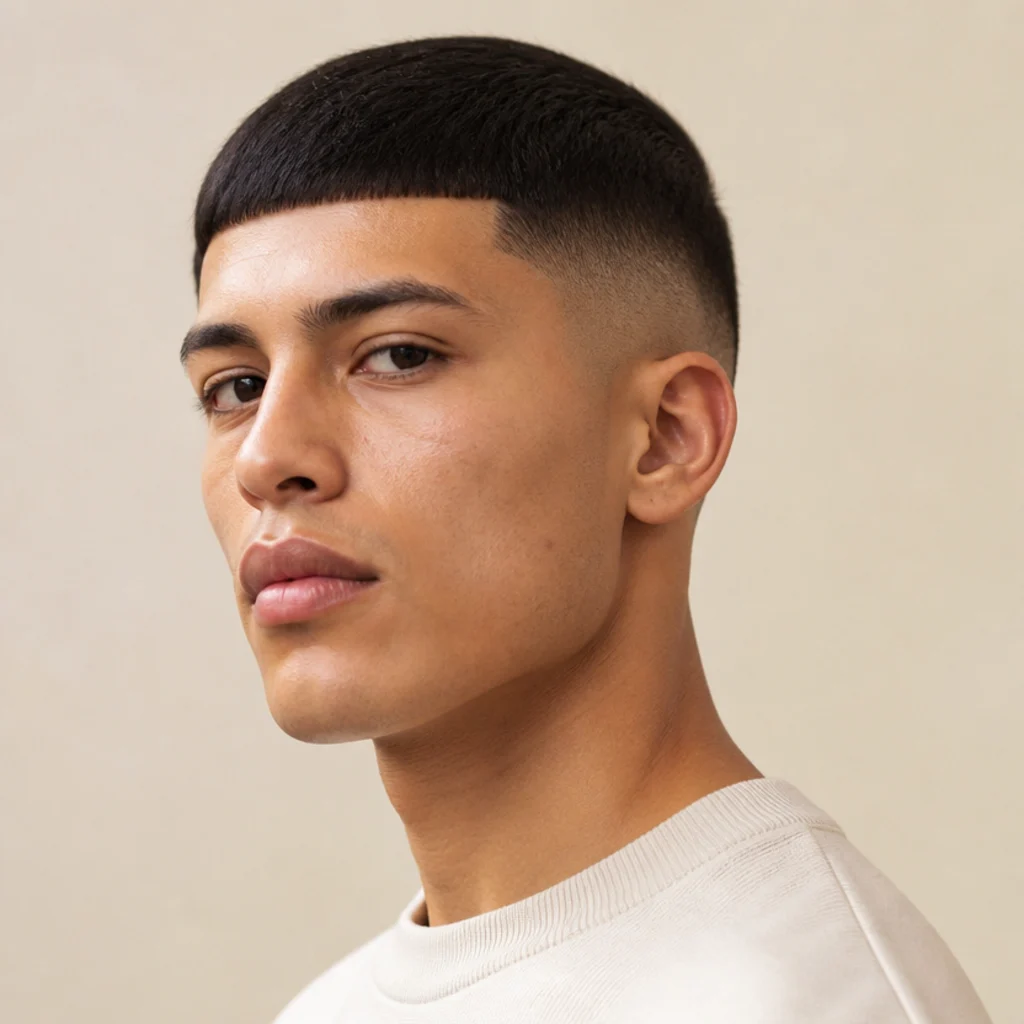
The mid fade lands between low and high, starting the blend around the temples and midpoint of the side. It is the most balanced option and the single most popular pairing for an edgar buzz cut, because it frames the fringe with real contrast without tipping into dramatic. The mid fade suits nearly every face shape, which is exactly why barbers default to it when a client is unsure. Expect a touch-up every two to three weeks to stop the blend creeping upward and going patchy at the transition line. It styles itself thanks to the short top, so there is no daily work beyond a quick brush-forward. Pro tip: if your face is on the rounder side, ask for the mid fade to sit a touch higher on one visit and compare photos, since a hair more height reads slimming. Ask your barber for "a mid fade with an Edgar buzz, blunt fringe straight across, blended clean at the temples."
07High Fade Edgar
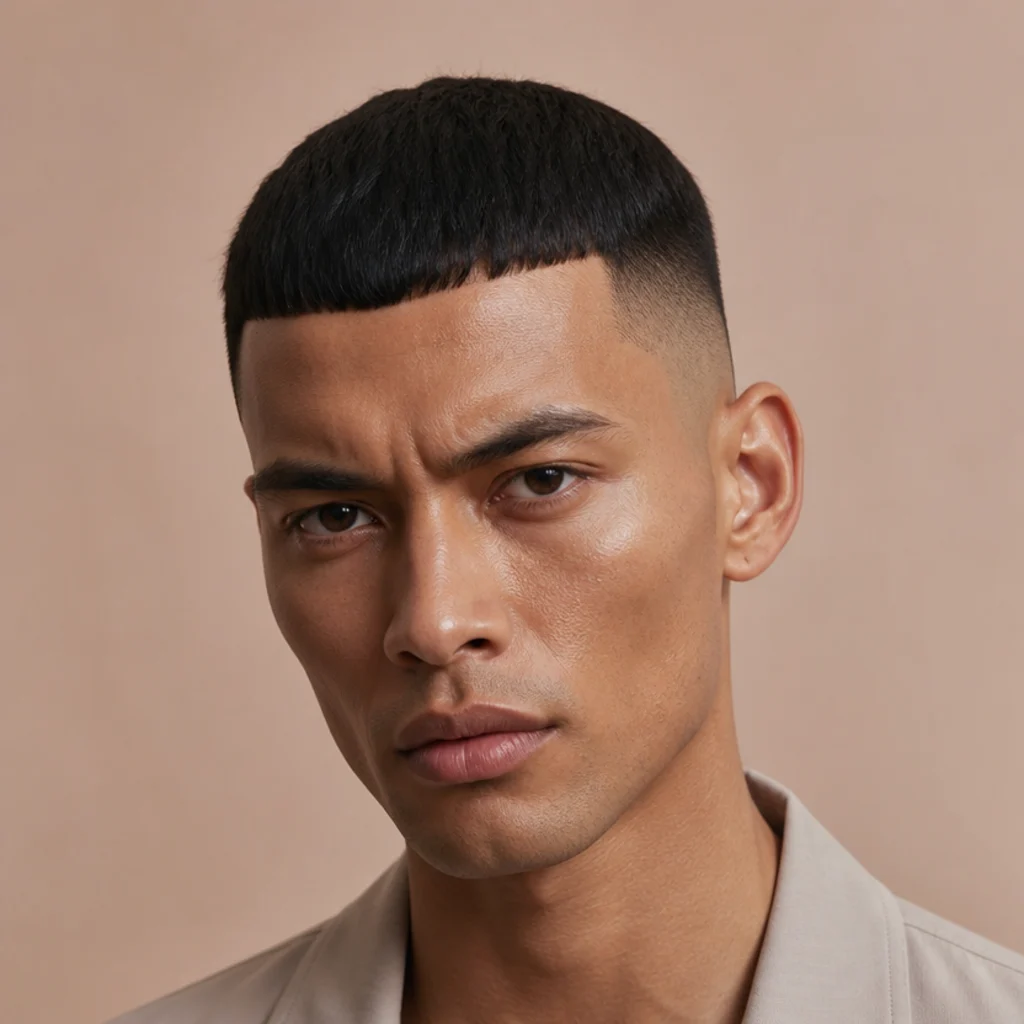
The high fade carries the short sides well up the head, leaving a compact cap on top and maximum contrast with the fringe. This is the most graphic take on the list, built for people who want a striking, high-contrast look that photographs bold. It flatters angular, square, and diamond faces, and it adds useful apparent height for shorter or rounder faces by stacking visual weight up top. The cost is upkeep: a high fade shows regrowth fast, so a visit every one to two weeks is the honest expectation to keep the band clean. Because so little hair remains on the sides, the top length and fringe weight do all the work, so get those proportions right. Pro tip: keep the top slightly longer here than on a low-fade version so the cap does not read too spare against the exposed sides. Ask your barber for "a high fade with an Edgar buzz on top and a strong blunt fringe."
08Edgar Buzz with a Line-Up
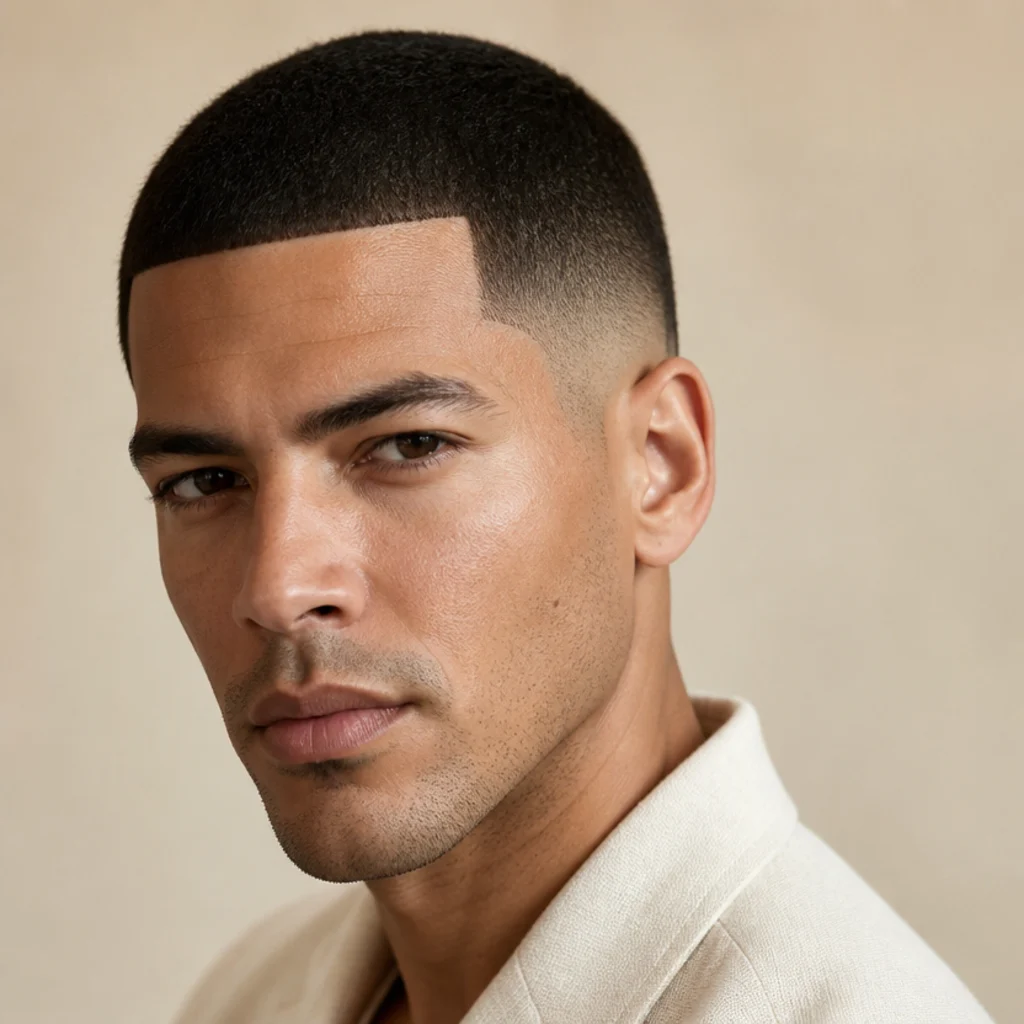
A line-up, also called an edge-up, squares off the hairline and the front fringe with razor-defined edges. On an Edgar buzz it makes an already-blunt fringe look deliberately engineered, with clean right angles at the temples and a knife-straight front. This works best for those who want maximum definition and, importantly, have a hairline that supports a straight front edge rather than an irregular or receding one, since the razor exposes whatever is there. The catch is longevity: sharp lines soften within days as hair grows in around them, so this look peaks the day of the cut and needs frequent touch-ups to stay convincing. Pro tip: skip having the barber push the hairline back further than your natural line to "fix" small gaps, because that only accelerates a receding look over time. Ask your barber for "an Edgar buzz with a full line-up, straight front edge, and defined corners at the temples, kept on my natural hairline."
09Textured Crop Edgar
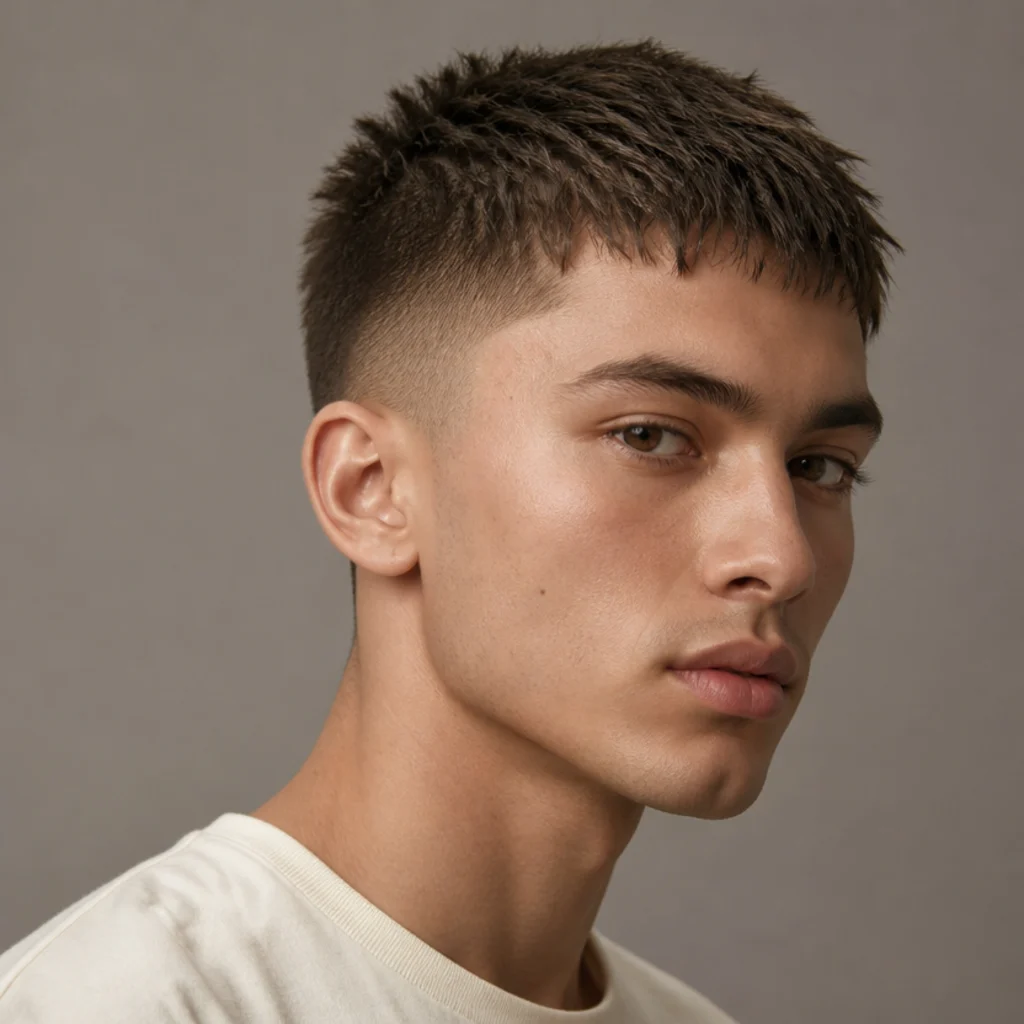
This version keeps the top slightly longer than a true buzz and adds point-cut texture, so the fringe carries a broken, matte finish instead of a solid block. It bridges the Edgar and the modern textured crop, giving you the recognizable blunt front line with more visual interest and a little forgiveness up top. Fine to medium straight and slightly wavy hair that can hold a choppy finish suits it best, and it's a smart pick for anyone who finds a fully buzzed top too stark or too revealing of the scalp. Maintenance is a touch more relaxed than a bare buzz, roughly three weeks, because the texture disguises early regrowth. Pro tip: warm a pea-sized amount of matte clay between your palms and press it through with fingers spread, not raked, to keep separation without clumping the fringe. Ask your barber for "an Edgar with a textured crop on top, point-cut fringe, kept short but not buzzed flat, with a fade on the sides."
10Edgar Buzz for Boys
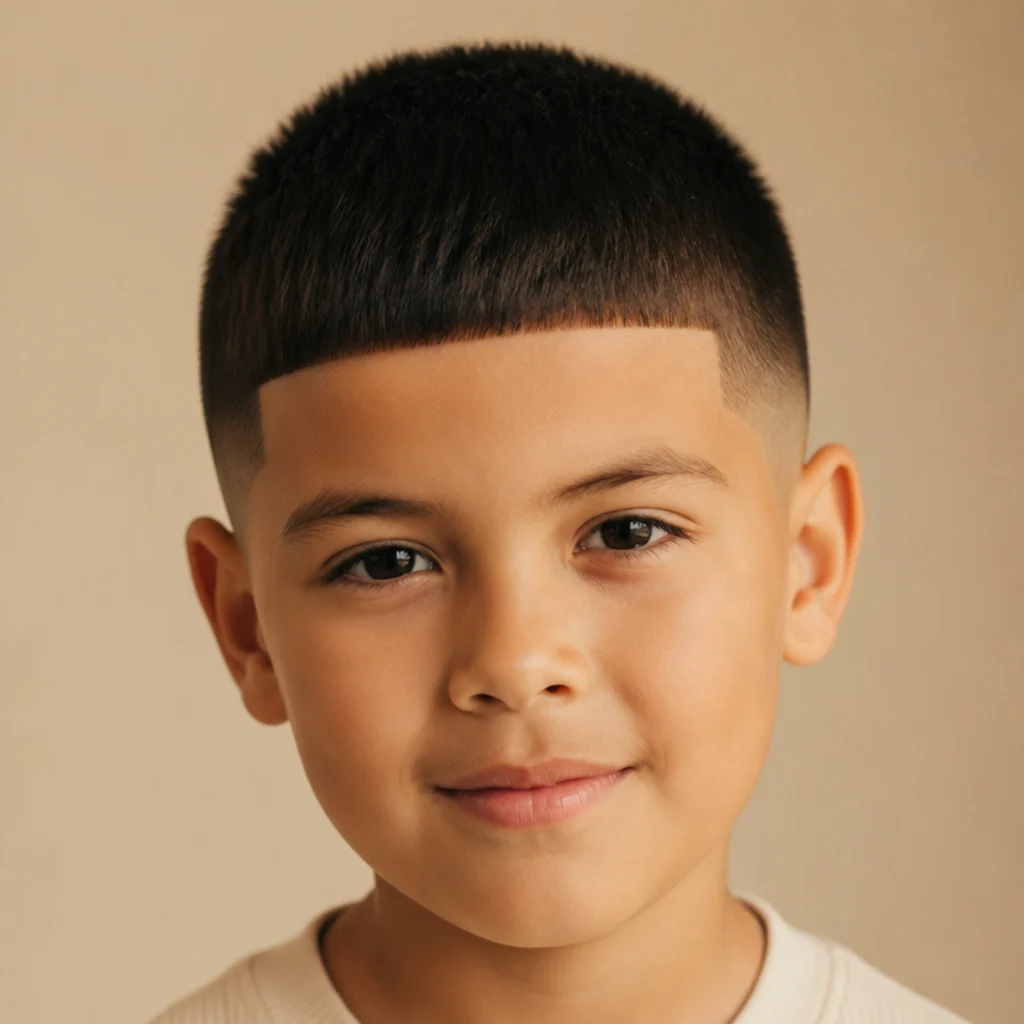
For kids, the edgar cut boys version keeps everything simple: a short buzz on top, a straight fringe, and a gentle fade that survives school, sport, and general chaos. It's a practical choice for active children because it needs no product, dries in minutes after a shower or a pool, and never gets in the eyes the way a longer fringe would. A lower, softer fade grows out more forgivingly, which stretches appointments to three or four weeks and keeps restless chair time short. Most young face shapes wear it well, and it stays neat with almost no parental effort. Pro tip: for a wriggly first-timer, ask the barber to lead with clippers over comb on the top before attempting the fine fringe line, so the hardest bit happens while the child is still sitting still. Parents can ask for "a kid-friendly Edgar buzz with a short blunt fringe and an easy low fade that grows out cleanly."
Save this to Pinterest if you are planning a back-to-school cut.
11Burst Fade Edgar
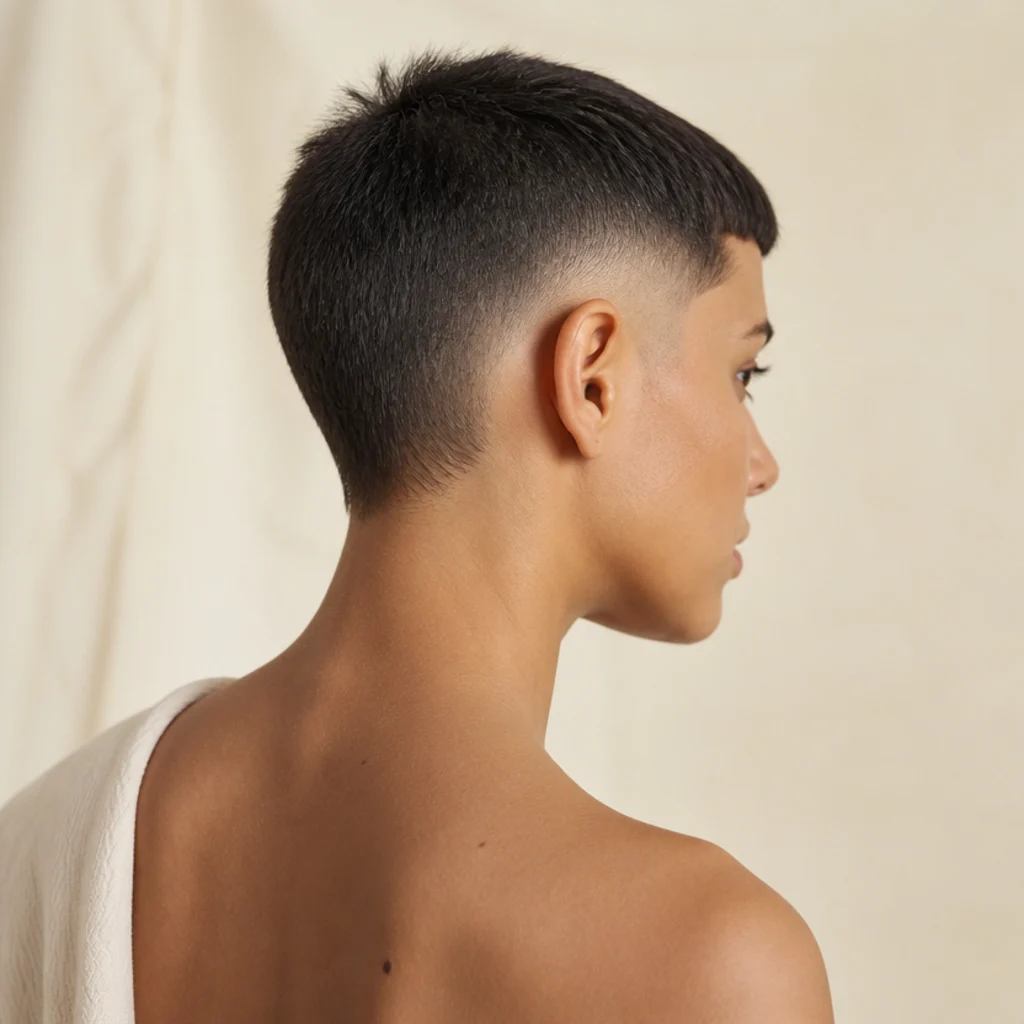
The burst fade arcs the blend around the ear in a semicircle rather than running straight across the head, leaving a little more length and a soft taper toward the nape. On an Edgar buzz it adds a rounded, dynamic frame that plays nicely against the flat fringe up front, and it pairs naturally with a short mullet-ish drop at the back if you want one. Anyone after a less common fade will like this one, and it works especially well on medium-density hair that can hold the curved gradient cleanly. Upkeep sits in the moderate range, around two weeks, since the arc has to stay symmetrical on both ears to look right, which is where less experienced hands struggle. Pro tip: bring a straight-on back photo, not just a side shot, so your barber can match the two arcs to each other. Ask your barber for "an Edgar buzz with a burst fade around the ears and a blunt straight fringe."
12Edgar with Hard Part
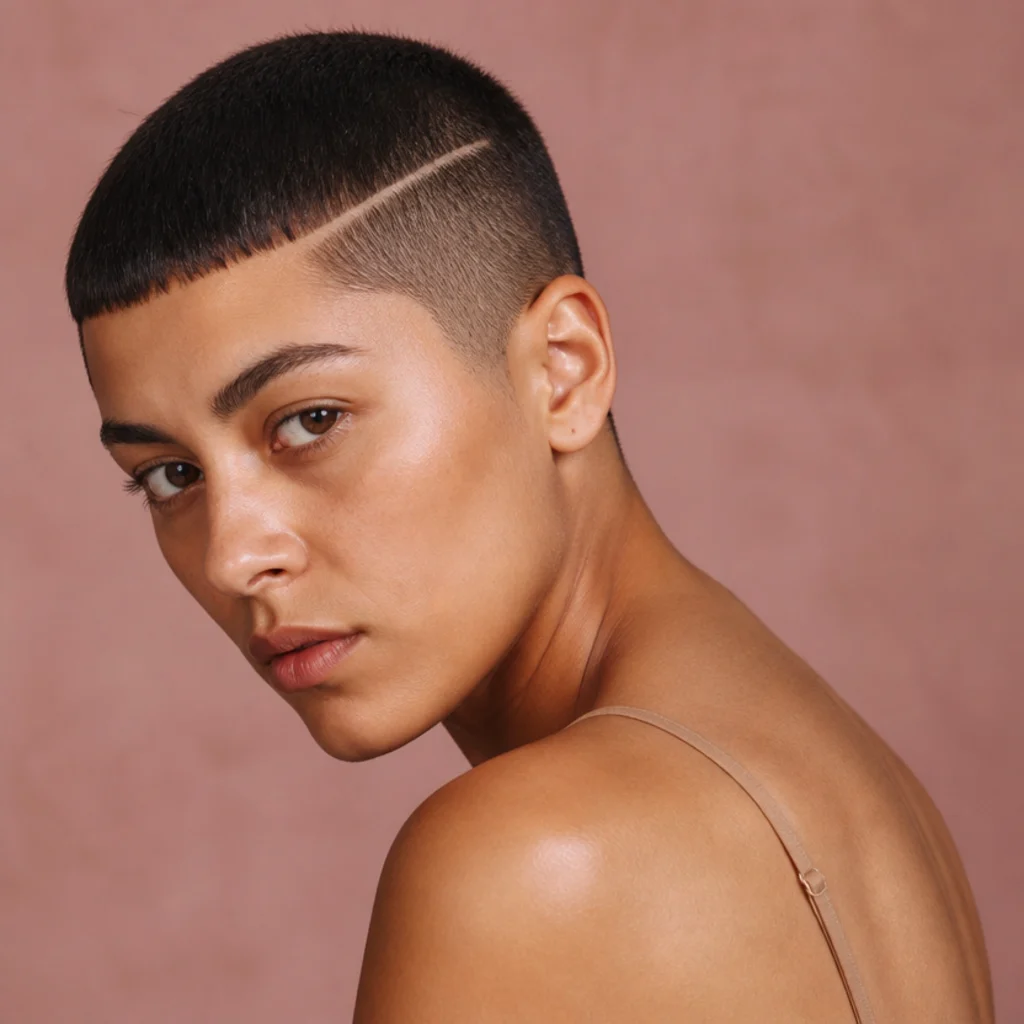
A hard part adds a single razored line where a natural part would fall, giving the Edgar buzz extra structure without changing the silhouette. The crisp shaved channel draws a clean divide and reads sharp against the short top, adding a tailored, intentional note for very little commitment. This is a good fit for anyone who wants one small detail to lift an otherwise minimal cut, and it works on any texture since the line is shaved into the scalp rather than styled into the hair. Like all razored lines it fades as the surrounding hair grows, so plan on re-cutting every couple of weeks to keep it defined. Pro tip: place the part along your existing part line, not an arbitrary spot, so the top hair falls away from it naturally and the channel stays visible longer. Ask your barber for "an Edgar buzz with a hard part on the left or right side and a blunt fringe."
13Wavy Edgar Buzz
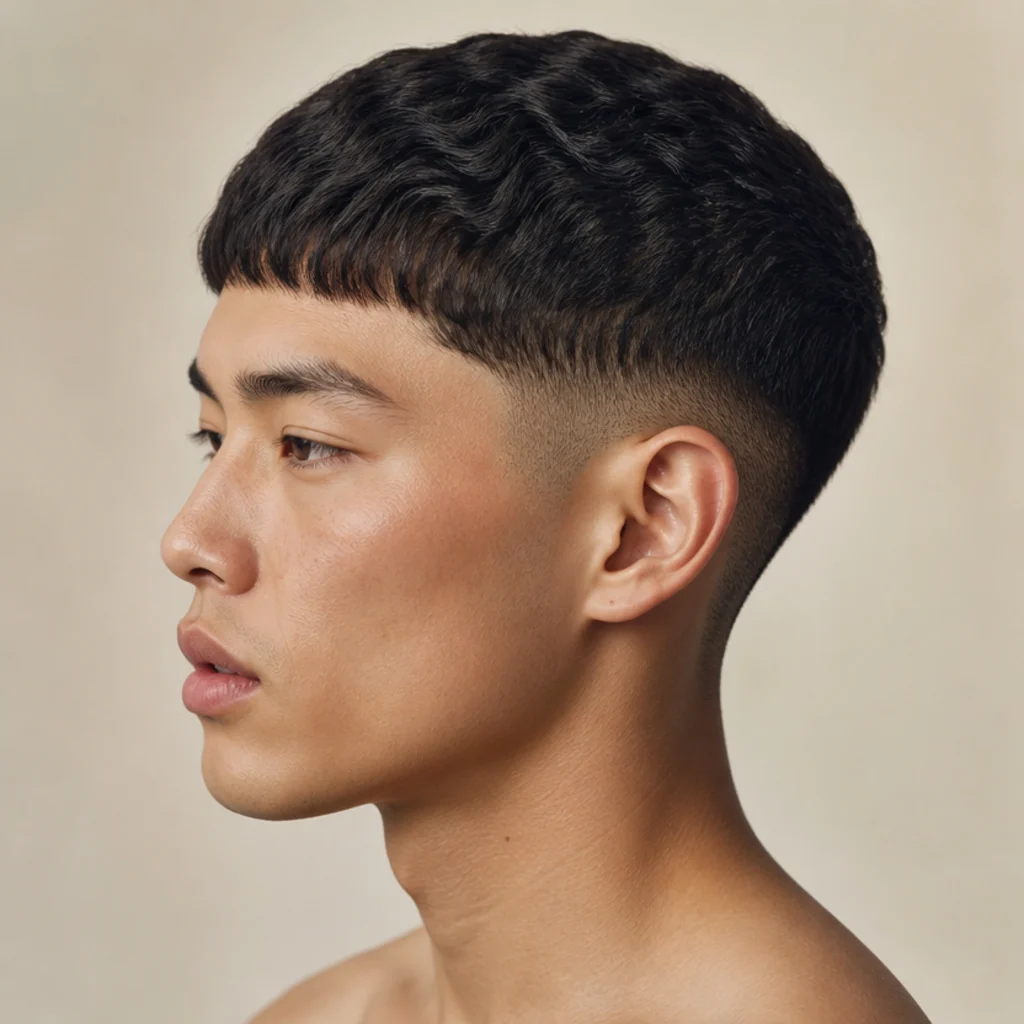
Wavy hair sits between the ruler-straight and fully curly versions and gives one of the most wearable results. Buzzed short, the waves lend the fringe a subtle ripple while still holding a mostly straight front line, so you get texture and structure at once. This is the sweet spot for anyone whose hair isn't poker-straight but doesn't coil tightly either, and it flatters oval and heart-shaped faces by softening the front just enough. Upkeep is a touch more forgiving than the straight version, roughly three weeks, because the wave pattern breaks up and disguises early regrowth in the fringe. Pro tip: on humid days, a swipe of light cream smoothed only across the top of the fringe tames frizz without flattening the wave underneath. Ask your barber for "an Edgar buzz that works with my wave, fringe kept mostly straight but not forced flat."
14Skin Fade Edgar
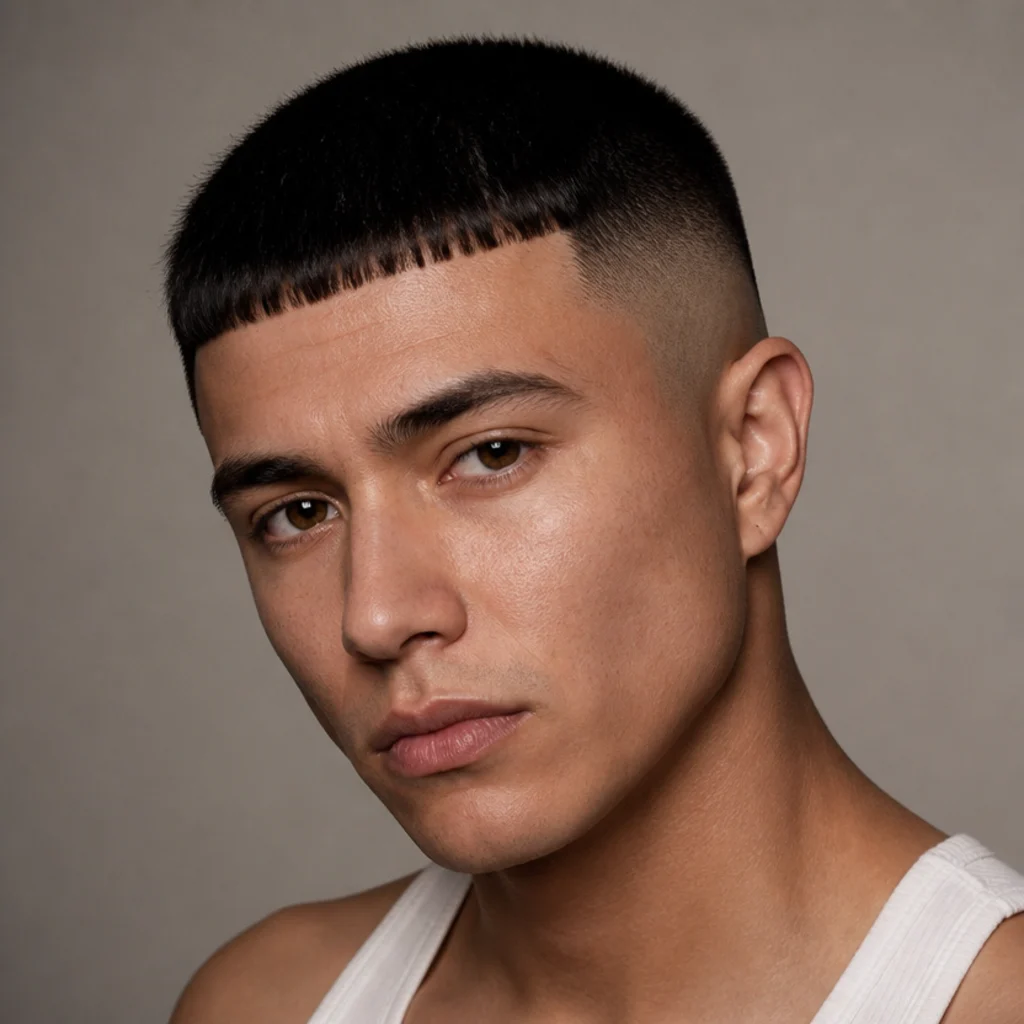
The skin fade blends the sides all the way to bare skin for the highest possible contrast with the fringe. It's the most striking finish here, making the blunt front line snap against clean, exposed sides, and it's the version that most reads as a statement rather than a haircut. Confident, low-fuss wearers who like a bold, graphic look suit it best, as long as they don't mind the visit schedule, because that's the real price. Skin fades show even a day or two of stubble growth, so weekly or near-weekly touch-ups are what keep them looking intentional rather than grown-in. Face-shape-wise it favors angular and square faces, though a higher placement lends height to rounder ones. Pro tip: between cuts, a careful pass with a foil shaver along the very bottom of the fade buys a few extra sharp days without touching the blend itself. Ask your barber for "an Edgar buzz with a skin fade taken down to the skin on the sides and a strong blunt fringe."
15Blunt Fringe Edgar
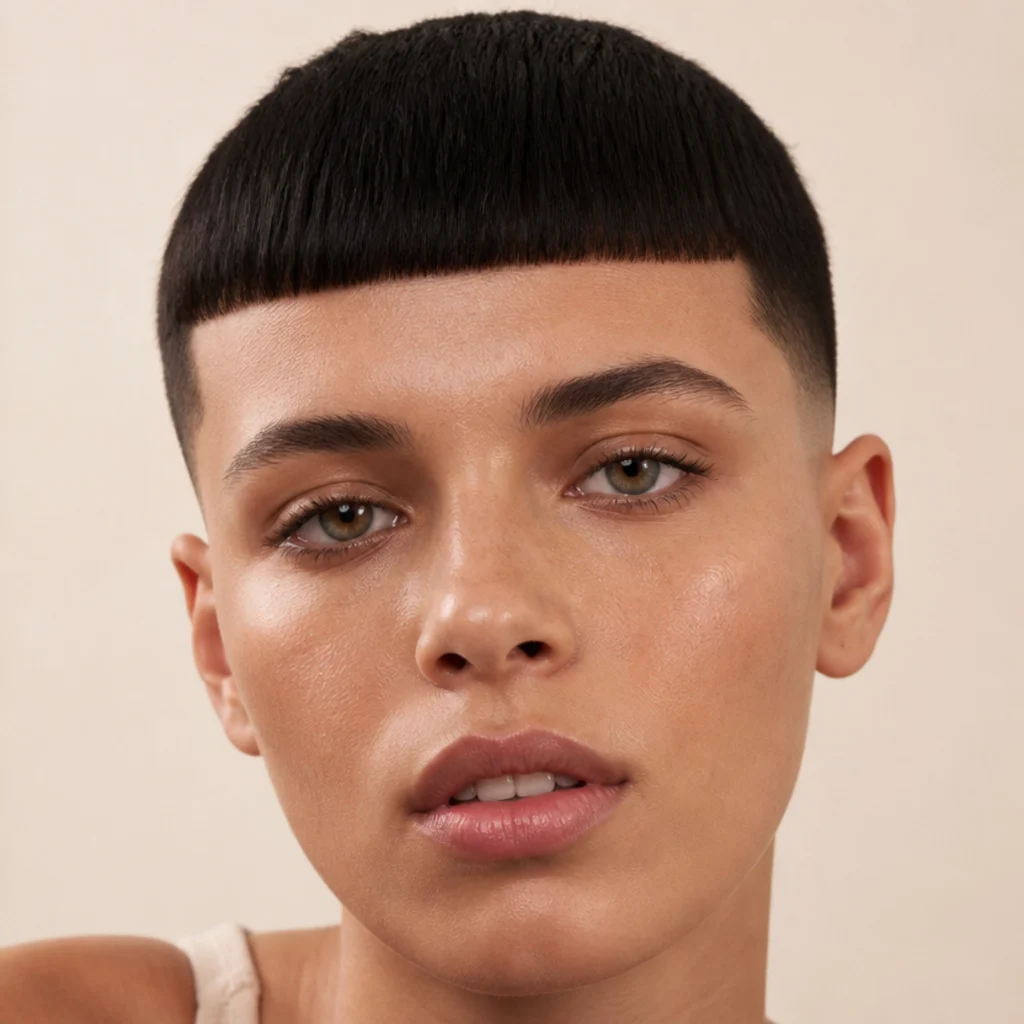
This version leans all the way into the signature feature: a heavy, dead-level fringe cut in a hard horizontal line, with everything else kept minimal so the front edge is the entire story. It reads at its sharpest on edgar cut straight hair, where the line stays crisp and unbroken, and it's the pick for anyone who wants the most recognizable, unmistakable Edgar with no ambiguity. Because the fringe is the focal point, a barber's precise, level cut is non-negotiable, and the front line needs a quick clean-up before the fade does, often at the one to two week mark. It flatters high or long foreheads best, since the weight of the fringe shortens the face. Pro tip: ask for the fringe cut with the hair combed down flat and the head held level, not tilted, because a tilted cut looks straight in the chair and crooked once you stand. Ask your barber for "a bold Edgar with a heavy blunt fringe cut in a straight horizontal line."
Save this to Pinterest to show your barber the exact fringe weight you want.
16Edgar with Design Line
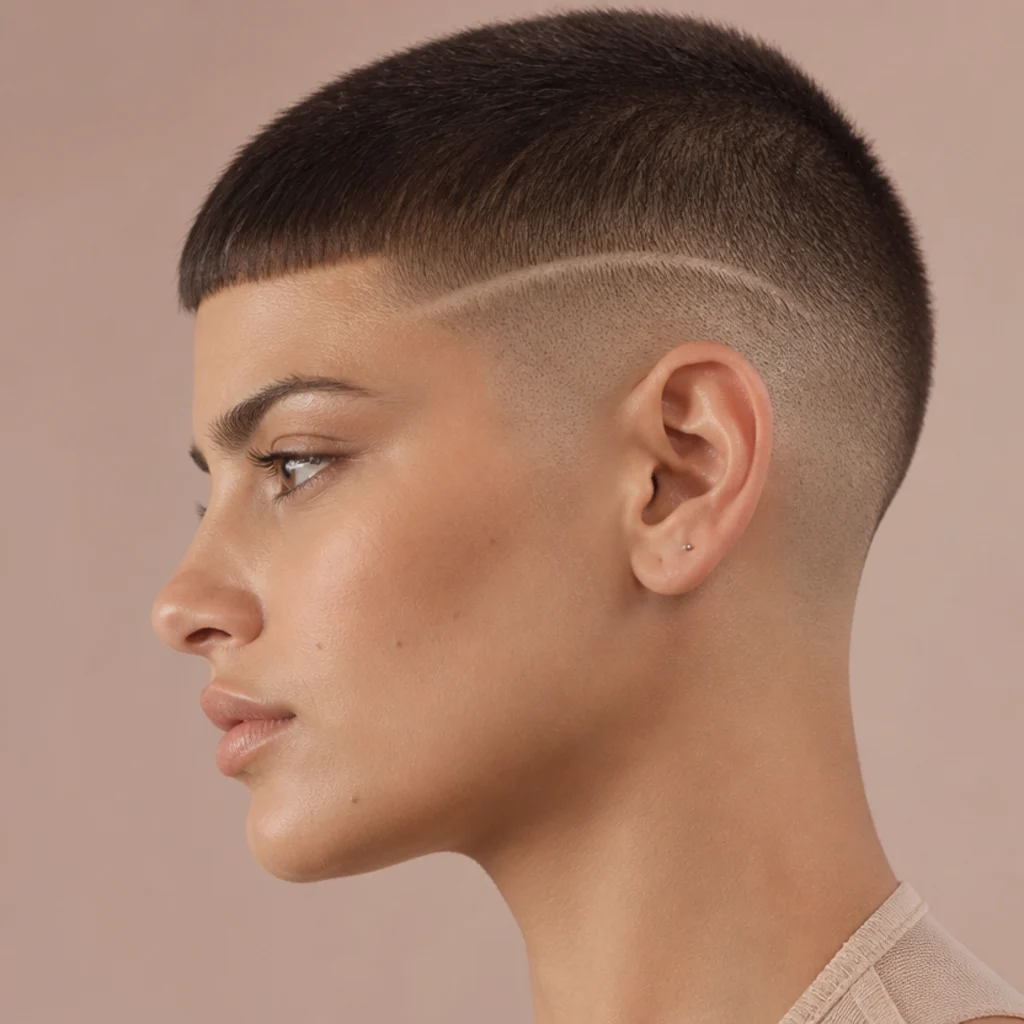
Adding a single shaved design line, a clean stripe or simple geometric mark above the fade, personalizes the Edgar buzz without tipping it into busy. One restrained line keeps the cut sharp and modern; two or three start to compete with the fringe for attention, so discipline is the whole game here. This works for anyone who wants a signature detail and has enough contrast between hair and scalp for the shaved line to actually show, so it lands best on darker or denser hair. This is a higher-maintenance choice, since the design blurs as hair fills in and needs re-etching every one to two weeks to stay legible. Pro tip: place the line in the low or mid section of the fade rather than near the fringe, so it frames the cut without fighting the front line. Ask your barber for "an Edgar buzz with one simple design line above the left or right fade, kept clean and minimal."
17Grown-Out Shaggy Edgar
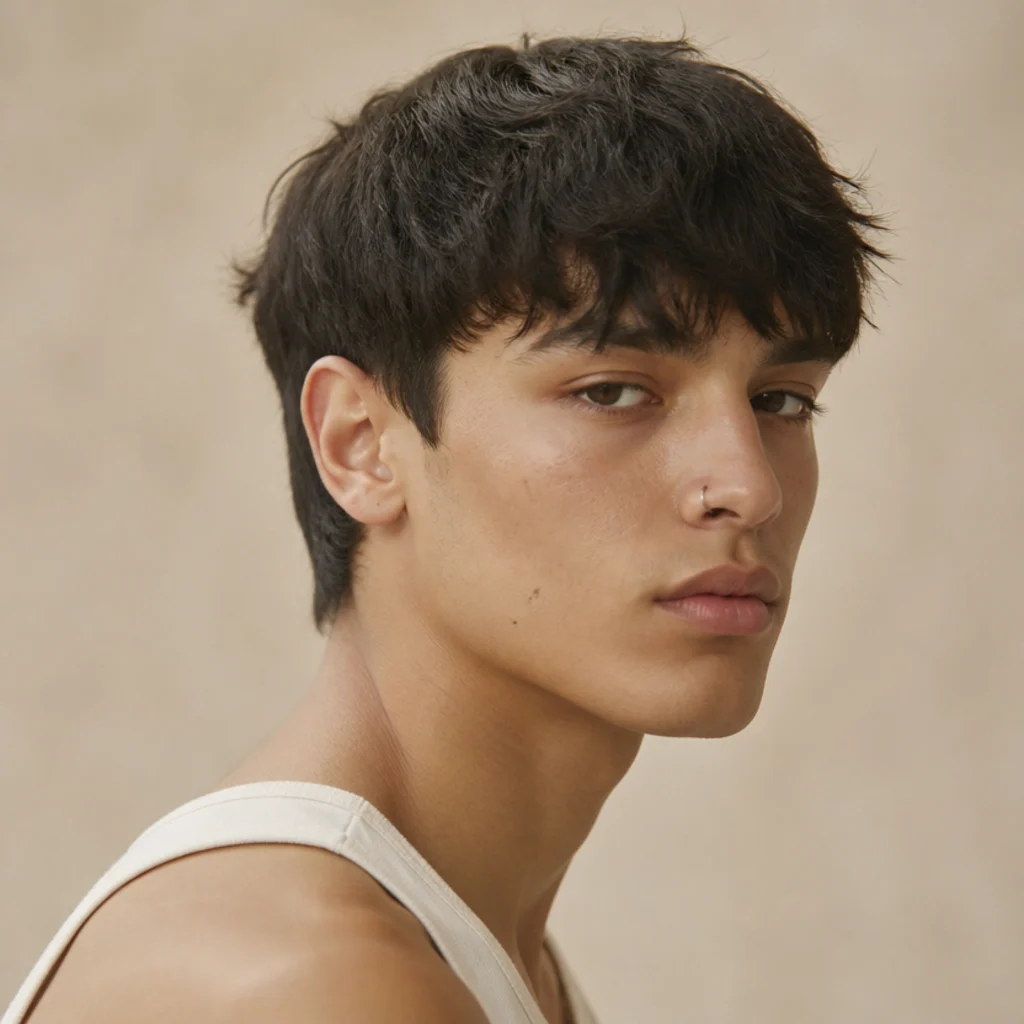
Let an Edgar grow a few weeks past its prime and it settles into a softer, shaggier shape: the fringe lengthens and loses its hard edge, the sides fill in, and the whole thing reads relaxed and lived-in. Some wearers now ask for this deliberately as a low-maintenance take, cut a little longer from the start so it grows down rather than out. Anyone who loves the Edgar outline but not the frequent barber schedule will like this, and it flatters faces that soften with a bit more hair framing them, including sharper and thinner faces. Because it's meant to look grown-in, you can stretch six to eight weeks between cuts, the longest interval on this list. Pro tip: ask the barber to leave the fade lower and softer than usual so there is no stark line to expose as everything else grows past it. Ask your barber for "an Edgar cut a little longer and softer so it grows out well without looking messy."
18Edgar Buzz with Beard Blend
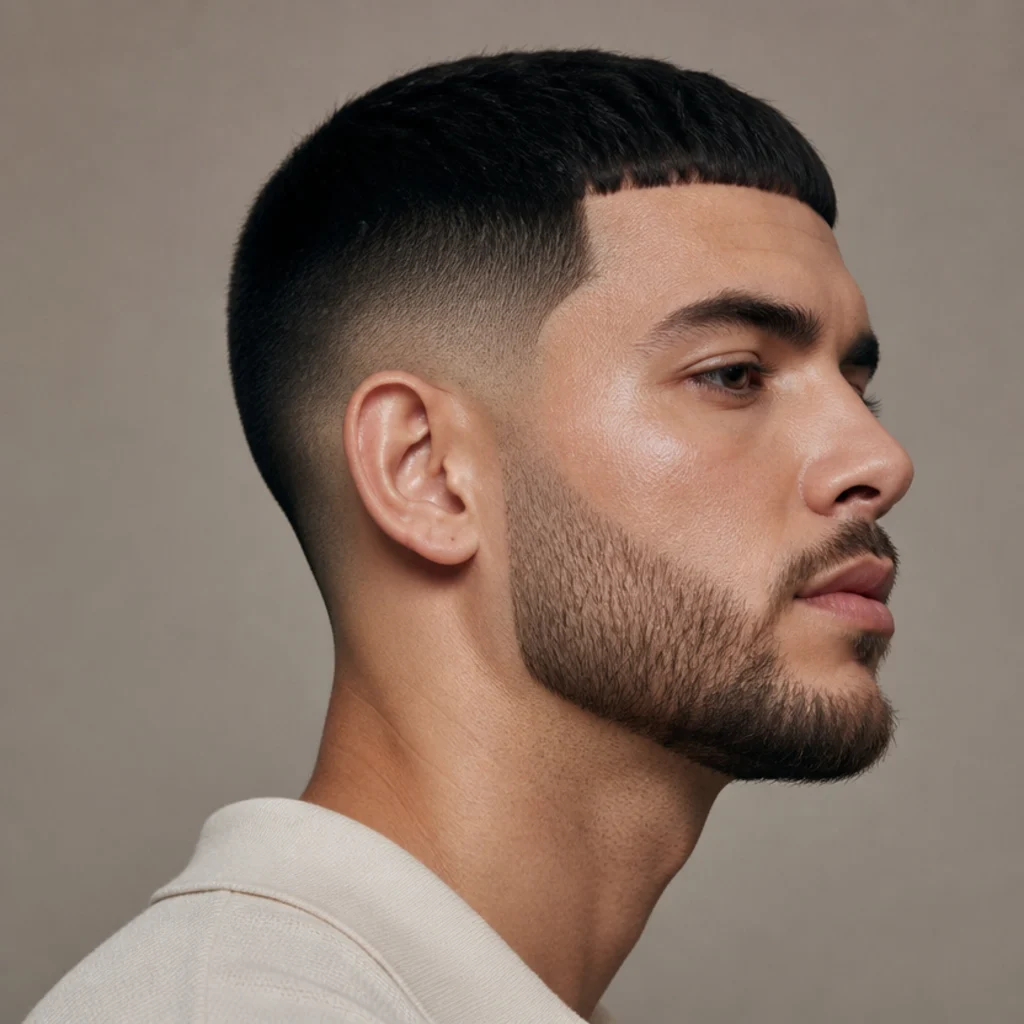
Connecting the fade into a short, tidy beard frames the whole face and balances the strong horizontal fringe up top with weight along the jaw. The beard is faded at the sideburns so the hairline and jawline flow together without a hard break, turning two separate grooming zones into one continuous line. Anyone who already wears facial hair and wants a cohesive, deliberate look will like this, and it's especially flattering on longer and oval faces because the jaw weight adds structure. Upkeep effectively doubles, since you are now lining the fringe, the fade, and the beard edges, so plan on regular visits or disciplined at-home trimming between them. Pro tip: keep the beard length one or two guard settings longer than the shortest point of the fade so the blend flows down instead of hitting a visible seam at the sideburn. Ask your barber for "an Edgar buzz with the fade blended into a short beard and a clean cheek line."
19Ultra-Short Bald Edgar
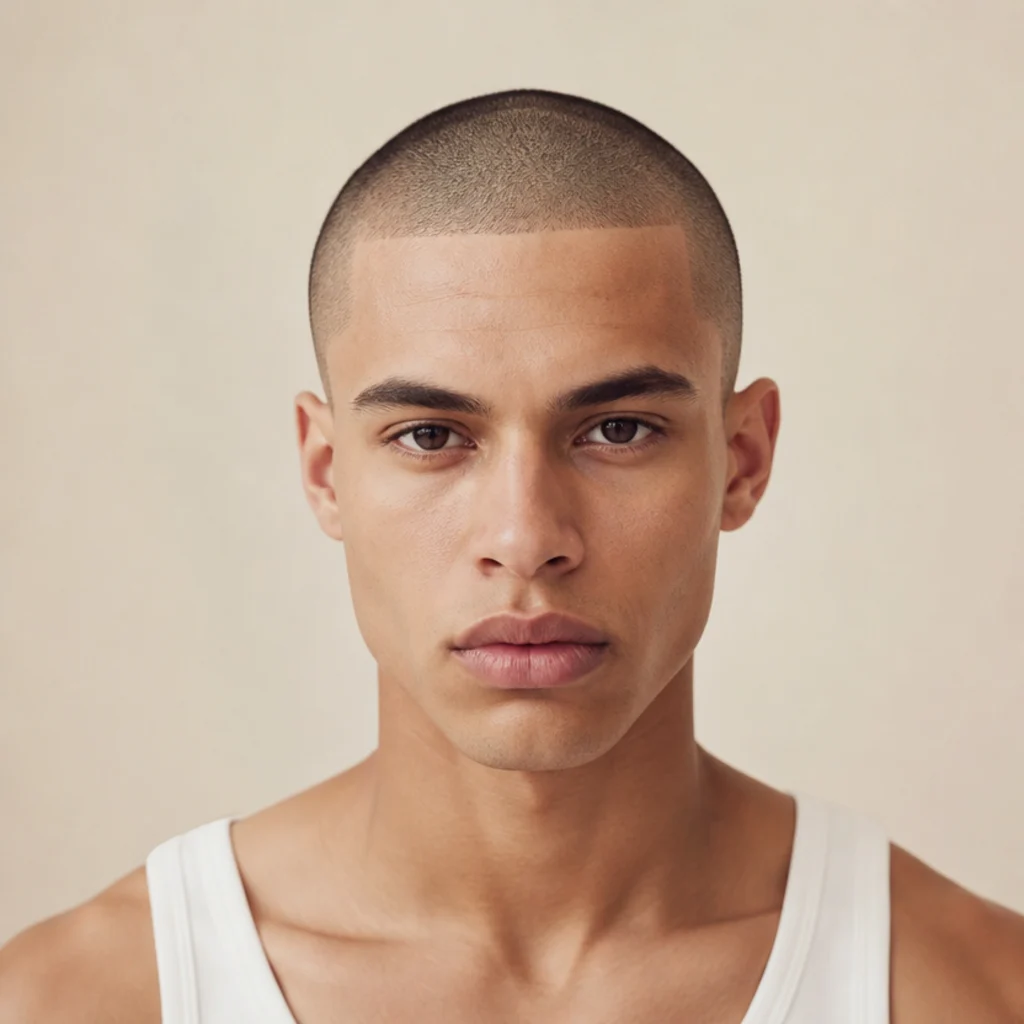
Taking the top down to the shortest guard, or a near-bald zero, gives a minimalist Edgar where the fringe is a suggested outline rather than a heavy block. It's the lowest-maintenance styling of all, since there is essentially no hair to manage, and it shifts the emphasis onto head shape and the front hairline itself. This is for anyone who wants an extremely clean, pared-back look and is comfortable with very short hair that leaves little to hide behind, so an even head shape and a defined hairline help. Despite the minimal top, the fade still needs regular attention every one to two weeks to stay crisp against the buzzed crown, and the faint fringe line needs a careful edge to register at all. Pro tip: this is the most heat-exposed version, so apply sunscreen or wear a cap on bright days, since a near-bald crown burns fast. Ask your barber for "an ultra-short Edgar buzzed close on top with just a hint of a blunt front line."
20Colored Edgar Buzz
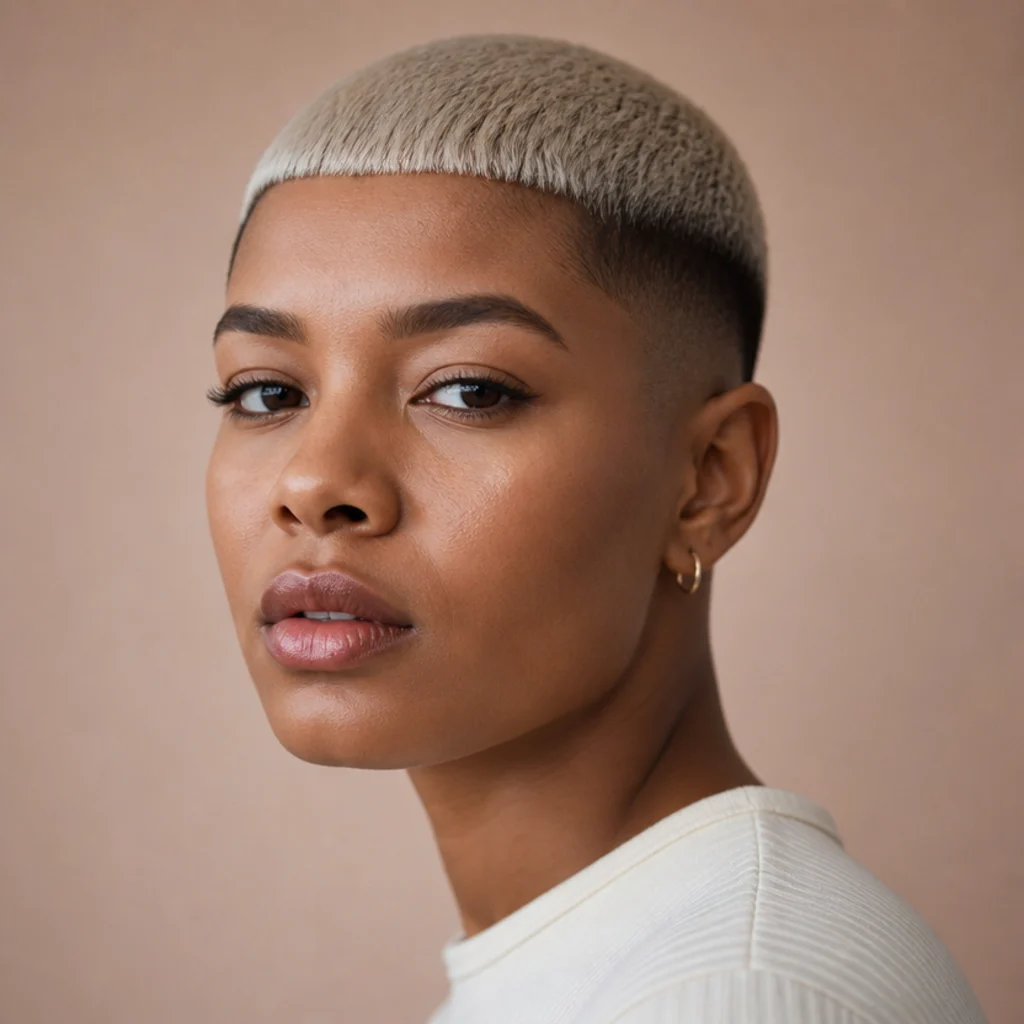
Adding color, most often a lightened platinum or icy top over darker faded sides, turns the simple Edgar buzz into a statement while keeping the shape intact. The short length is quietly the biggest advantage here: because you're cutting the top off every few weeks anyway, regrowth is far less of a headache than on long hair, which makes this a low-commitment way to try color. This works for those who want a bold, expressive finish and are open to a salon color appointment stacked on top of their barber schedule. Your natural base sets the difficulty, since dark hair needs more lift and more care to reach a clean platinum without brassiness. Pro tip: on very short lightened hair, a purple-toning wash used sparingly keeps the top from turning yellow between salon visits. Ask a colorist for "a lightened top on a short Edgar buzz with the darker sides faded, fringe kept blunt," and ask your barber to time cuts around your color appointments.
Pro Tips from the Editor
- Name the cut in three parts every time: top length by guard number, fringe as blunt or textured, and fade height. A photo plus those three words prevents almost every miscommunication.
- The fringe line always blurs before the fade. Booking a quick mid-cycle front clean-up costs little and keeps the whole cut looking freshly done.
- Match fade height to your visit budget honestly. Skin fades, line-ups, hard parts, and design lines demand every one to two weeks; tapers and low fades hold three to four.
- Straight hair shows every uneven millimeter in the fringe, so prioritize a barber known for precise line work over one known only for fades.
- Have the fringe cut with your head held level and hair combed flat, never tilted, so the line reads straight once you stand and move.
- On curly and coily textures, let the fade do the shaping and skip the blunt cut up front, since a springy fringe forms its own line and looks forced when squared off.
- Choose fade placement for your face: a hair higher slims round faces, a hair lower softens angular ones. Take a straight-on photo each visit and compare over a few cuts.
Fade Heights at a Glance
| Fade / detail | Contrast | Touch-up cadence | Best-suited faces |
|---|---|---|---|
| Low fade | Subtle | 3-4 weeks | Long, oval, narrow |
| Mid fade | Balanced | 2-3 weeks | Nearly all |
| High fade | Bold | 1-2 weeks | Angular, square, round (adds height) |
| Skin fade | Maximum | Weekly | Angular, square, confident wearers |
| Taper | Soft | 3-4 weeks | Nearly all, office-friendly |
| Line-up / hard part / design | Sharp accent | 1-2 weeks | Defined hairlines |
| Grown-out shaggy | Minimal | 6-8 weeks | Sharp or thin faces wanting softness |
How to Choose / Get the Look
Start with hair texture, because it sets the ceiling on how sharp the fringe can be. Straight hair holds the blunt front line best and is the only texture that reliably reads architectural; wavy hair gives a softer ripple with most of the structure intact; curly and coily textures give an organic, rounded front, so choose a version that works with your pattern instead of fighting it. Forcing a blunt cut onto tight curls is the single most common way the look goes wrong.
Next, weigh face shape and forehead. The blunt fringe shortens a high or long forehead and adds angularity to round and soft faces, while angular and square faces can carry the boldest high and skin fades. If your front hairline is fine, irregular, or receding, favor a textured crop or grown-out version over a hard line-up, which only exposes what's there.
Then choose fade height against your real calendar. Use the table above as a shortcut: subtle and forgiving at the low end, maximum contrast and near-weekly visits at the skin-fade end. Be honest here, because the fastest route to a look that reads sloppy is picking a high-maintenance fade you can't keep up.
When you sit in the chair, bring a saved photo, name the three parts separately, and say clearly whether you want the front line hard-blunt or softened. Ask the barber what suits your face shape and hairline, and how often they would recommend coming back so you can budget time and money before committing.
Frequently Asked Questions
Does the Edgar buzz cut work on straight hair?
Yes, and it's arguably the best texture for it. Edgar cut straight hair holds the blunt fringe in a crisp, level line with little effort, so the shape stays sharp all day without product. The one requirement is a precise cut, since straight hair shows any unevenness in the front edge immediately, so prioritize a barber with strong line work.
How often do I need to get an Edgar buzz touched up?
It depends entirely on the fade. High and skin fades, line-ups, hard parts, and design lines look best with visits every one to two weeks. A mid fade holds for two to three weeks, and low fades or tapers stretch to three or four. Across all of them, the blunt fringe blurs before the fade, so a quick mid-cycle front clean-up keeps the cut looking fresh.
Can you get an Edgar buzz with curly hair?
Absolutely. A curly edgar cut keeps texture in the front instead of a flat block, so the front line looks softer and more natural, and the coils form their own shape. Buzzing the top keeps those curls short and defined, not loose. Tell your barber to keep the curl up front rather than cutting it blunt, and let the fade do the shaping.
What is the difference between a taper fade and a regular fade Edgar?
An edgar cut taper fade gradually shortens the hair around the ears and neckline without going all the way to skin high on the head, so it looks softer, more office-appropriate, and grows out gracefully over three to four weeks. A regular or skin fade blends higher and shorter for a bolder, higher-contrast look that needs weekly to biweekly upkeep to stay clean.
Is the Edgar buzz a good cut for boys?
It is one of the most practical kids' cuts around. The edgar cut boys version is short, needs no product, and dries fast, which suits active children and busy mornings. A lower, softer fade grows out more forgivingly, so it looks neat longer between appointments, and there is no fringe long enough to fall into the eyes.
What face shape suits an Edgar buzz cut best?
The blunt fringe adds structure to round and soft faces and shortens high or long foreheads, so those benefit most from the classic hard line. Angular and square faces can carry the boldest high and skin fades. If your face is very angular already, a taper or textured version softens the effect so the look does not read too severe.
Will an Edgar buzz cut suit a receding or thin front hairline?
A hard blunt line-up tends to expose a fine or uneven front hairline rather than hide it, so it's usually not the best pick. A textured crop Edgar or a slightly grown-out version is far more flattering, since the broken, matte fringe disguises gaps and adds the illusion of density. Ask your barber to keep the front softer and avoid pushing the hairline back to "even it out."
How do I style an Edgar buzz cut at home?
For most versions the answer is almost nothing: brush the fringe forward and flat while damp so it dries in the right direction, and you are done. On textured crop or wavy versions, a pea-sized amount of matte clay or a swipe of light cream adds separation or tames frizz. The whole point of the buzzed Edgar is that structure comes from the cut, not from daily product.
Is the Edgar the same as the takuache cut?
They are closely related and the names are often used interchangeably. The takuache cut refers to the same forward-pushed blunt fringe over faded sides, tied to a specific style culture, while "Edgar" has become the broader, mainstream label for the shape. The buzzed version in this guide simply takes that shared silhouette and shortens the top for near-zero styling.