15 Fresh Edgar Cut Styles for Boys
The edgar cut sticks around because it's graphic, wash-and-go, and adapts across the whole fade spectrum. Here are 15 versions built for different hair textures, densities, and face shapes, each with a real upkeep timeline and the exact words to say in the chair.
 Edited by Lena Rose · Published July 11, 2026 · 27 min read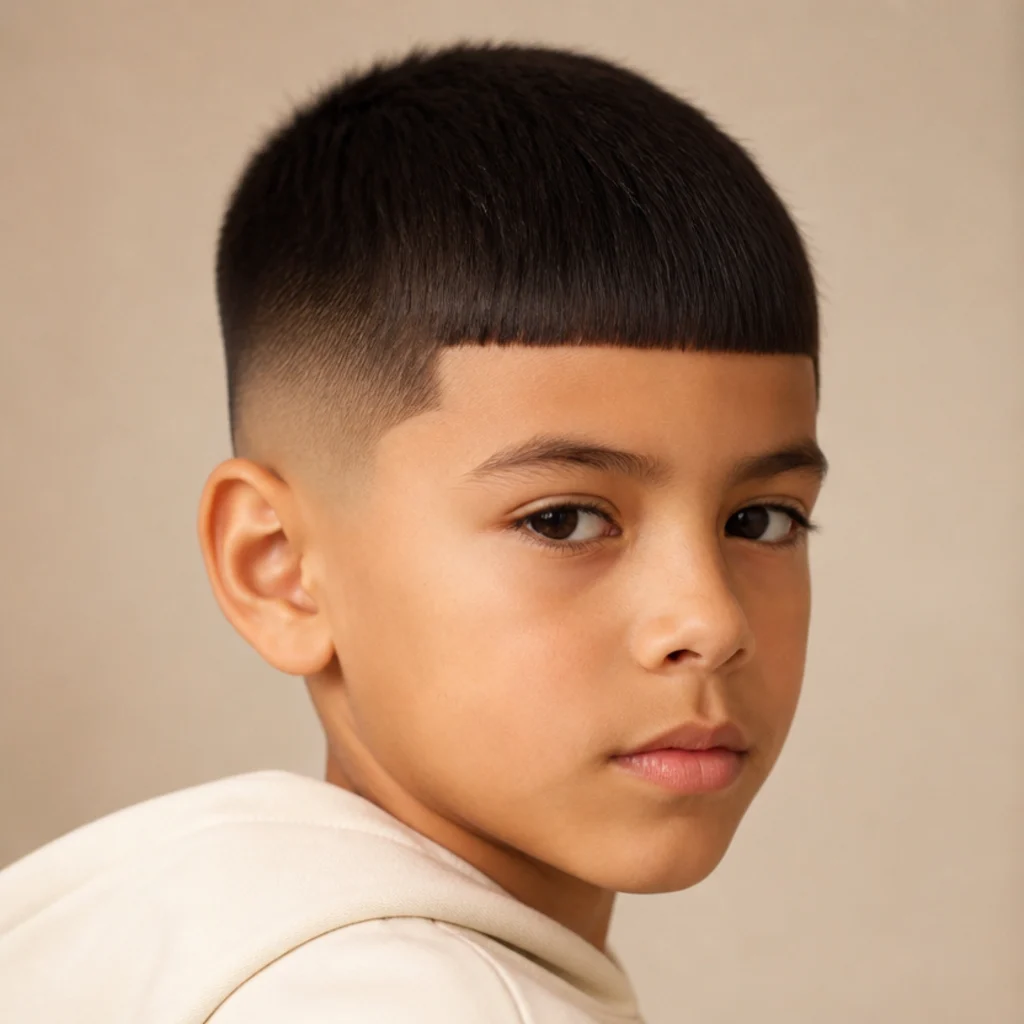
Quick Answer
- Best for: Boys who want a sharp, straight-across fringe with faded sides and near-zero styling time; adapts to most face shapes with small tweaks to fringe height and fade type.
- Who might skip it: Boys with very high or receding hairlines, or those who dislike returning to the barber often, since the blunt line and fade both soften visibly as they grow.
- Maintenance: Moderate to high. A soft taper stretches three to four weeks; a skin fade, line-up, or design lines need re-lining every one to two weeks.
- Difficulty: Easy at home once cut. A pea of matte paste combed forward is the entire routine.
- Cost: Variable. Kids' cuts run lower than adult fades in most regions; detail work like hard parts or design lines usually adds a small surcharge per visit.
- Wear time / longevity: The overall shape lasts four to six weeks; the crisp front line and fade edges read best in the first two.
- Standout variation: The edgar cut taper fade, which keeps the signature blunt front while softening the sides so grow-out stays tidy.
- How to ask your barber: Bring a photo, name the fade type and height, state how low the blunt front should sit on the forehead, and ask them to check fringe length on dry hair.
In This Guide
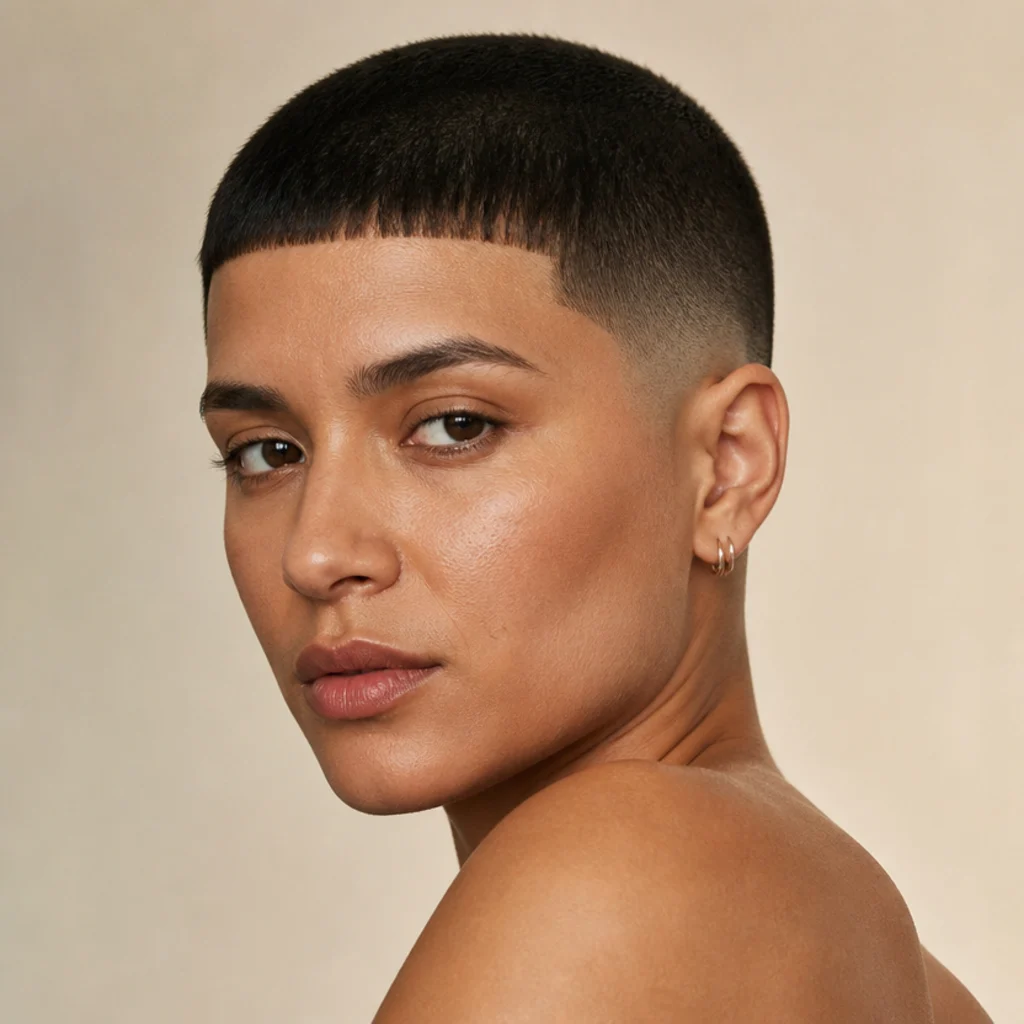
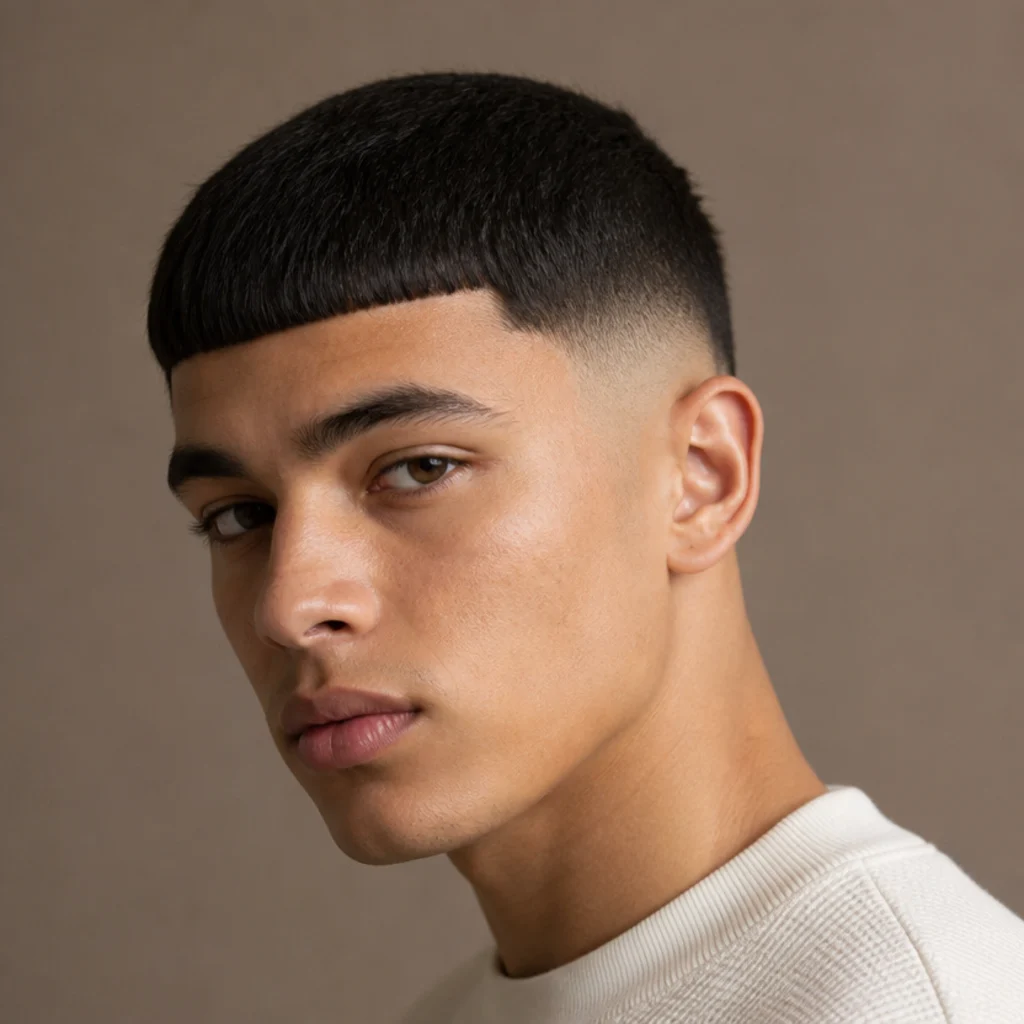
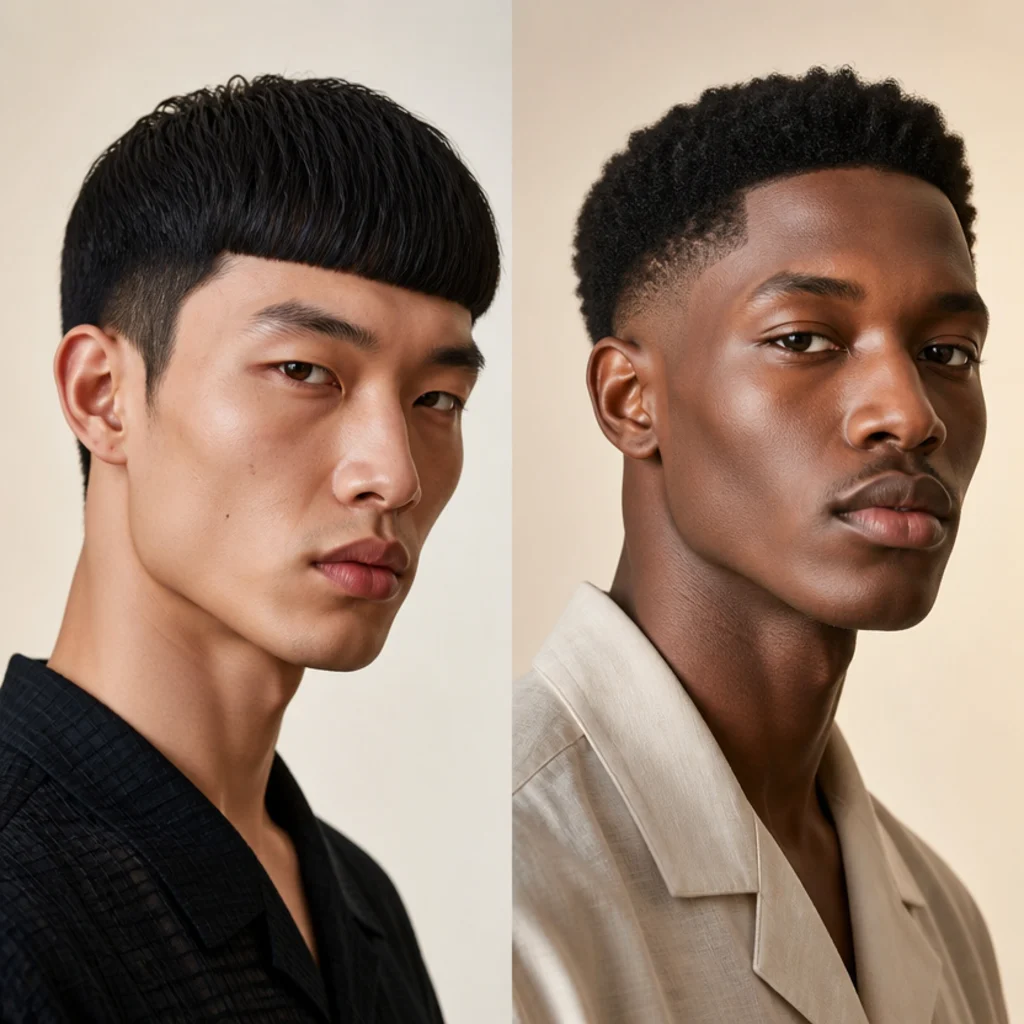
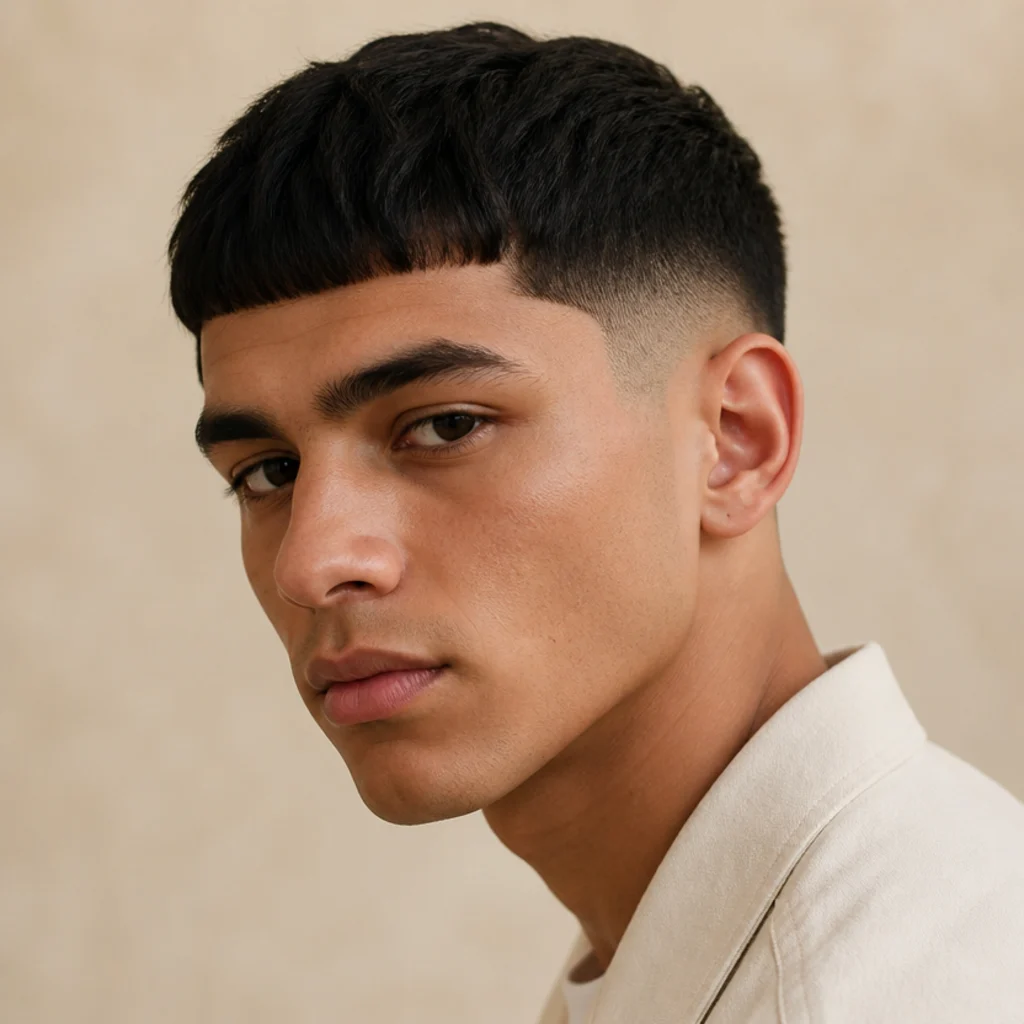
The edgar cut is a short style built around a straight, blunt fringe cut horizontally across the forehead, with faded or tapered sides. It reads clean and a little graphic, which is how it moved from a barbershop request to a mainstream staple for boys of every age. On edgar cut straight hair, the line sits especially flat and even because the strands fall without flicking, so the horizontal edge stays crisp between cuts. That flat behavior is exactly why the look started on straight textures before it spread. The shape comes down to two decisions: how low the front line sits, and how much contrast the sides carry. Move the fringe down and the look turns bolder and more geometric; lift the fade higher and the top looks denser. This guide covers 15 fresh directions, from a soft edgar cut taper fade to a rounded curly edgar cut and a cropped edgar buzz cut. Each entry notes who it flatters, the density and texture it favors, a realistic maintenance window, and the exact phrasing that gets edgar cut boys the reference look instead of a rough guess.
01Classic Straight-Hair Edgar
The classic is the reference point every other version bends. The top is left short to medium, combed forward, and cut in one uninterrupted blunt line across the brow, with the sides taken down to a low or mid fade. Edgar cut straight hair is the ideal canvas because it lies flat and holds a true horizontal without the ends kicking up. Structurally it flatters oval and square faces, where the strong front edge echoes and balances a defined jaw; a fuller fringe reads intentional rather than heavy. Medium-density hair suits it best, since very fine hair can leave gaps in the line and very thick hair fights the flatness. Expect a trim every two to three weeks to keep the fringe from creeping past the brows and losing its edge. Style in seconds by smoothing a pea of matte paste straight forward on dry hair, never up. Pro tip: have the line cut a few millimeters above the eyebrows so it still frames the eyes once it settles. Ask your barber for a short blunt fringe, no layering on top, and a clean low-to-mid fade on the sides.
02Edgar Cut Taper Fade
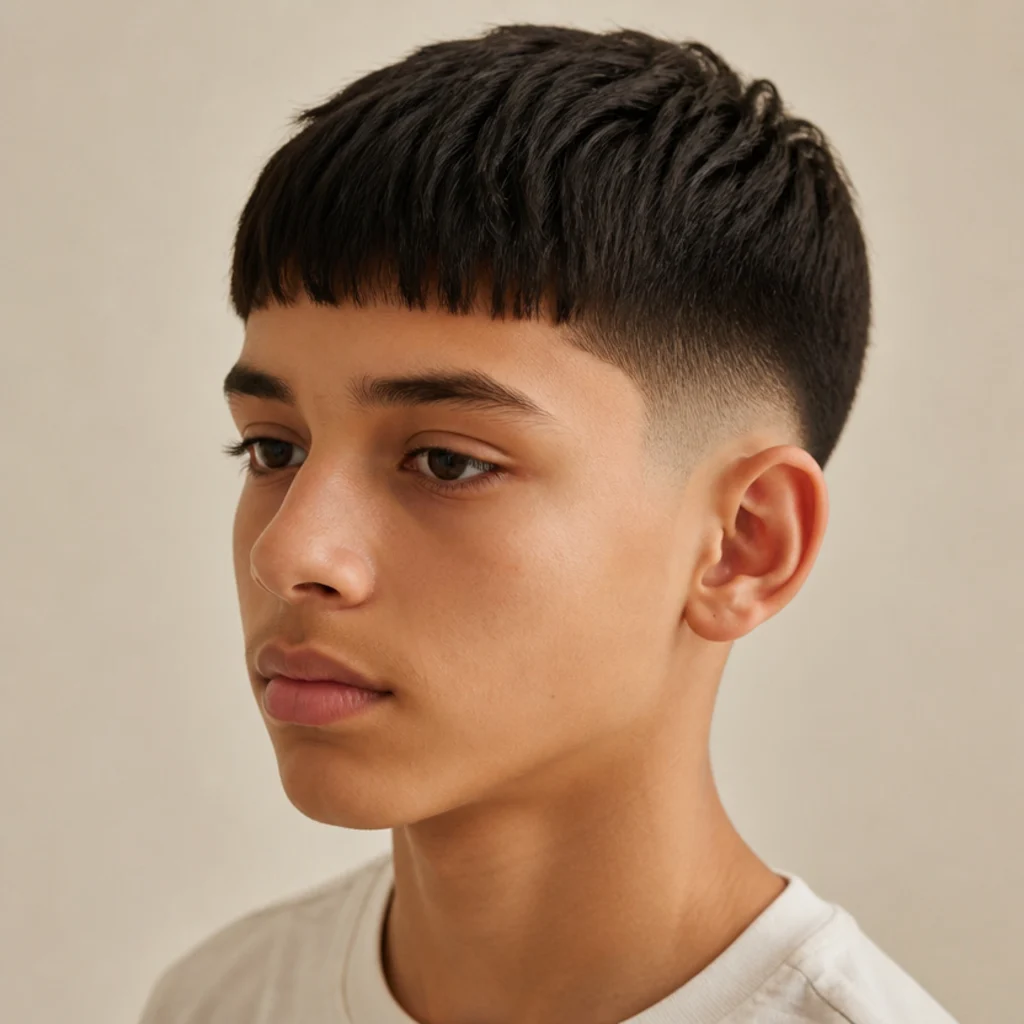
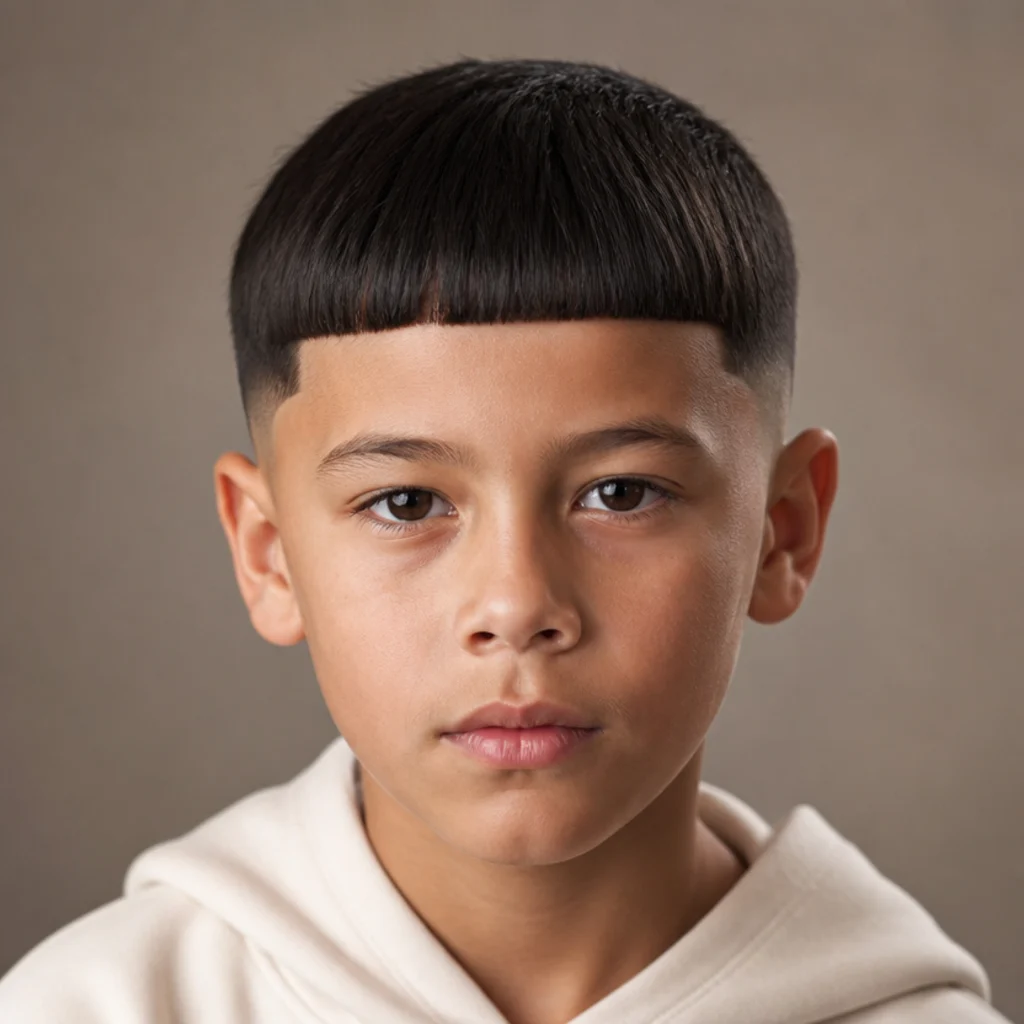
The edgar cut taper fade is the most versatile pick here and the safest first edgar for younger boys. Rather than a hard skin fade, the sides graduate gradually from the top down through the ears to the neckline, keeping a whisper of length the whole way so nothing reads stark. That gentle transition is forgiving: it stays neat as it grows and rarely trips a school dress code. It flatters nearly every face shape and behaves on straight, wavy, and coarse textures alike, because the softness of the sides lets the blunt front carry the look. Because the grow-out is subtle, you can comfortably stretch to three or four weeks between visits, one of the longest windows on this list. Density-wise it's generous, working on both fine and thick hair since the taper hides bulk. Pro tip: ask for the taper to start just above the ear so the sides never look shaved, only tidy. Ask your barber for a taper fade around the ears and nape with a blunt edgar fringe left full on top.
03Curly Edgar Cut
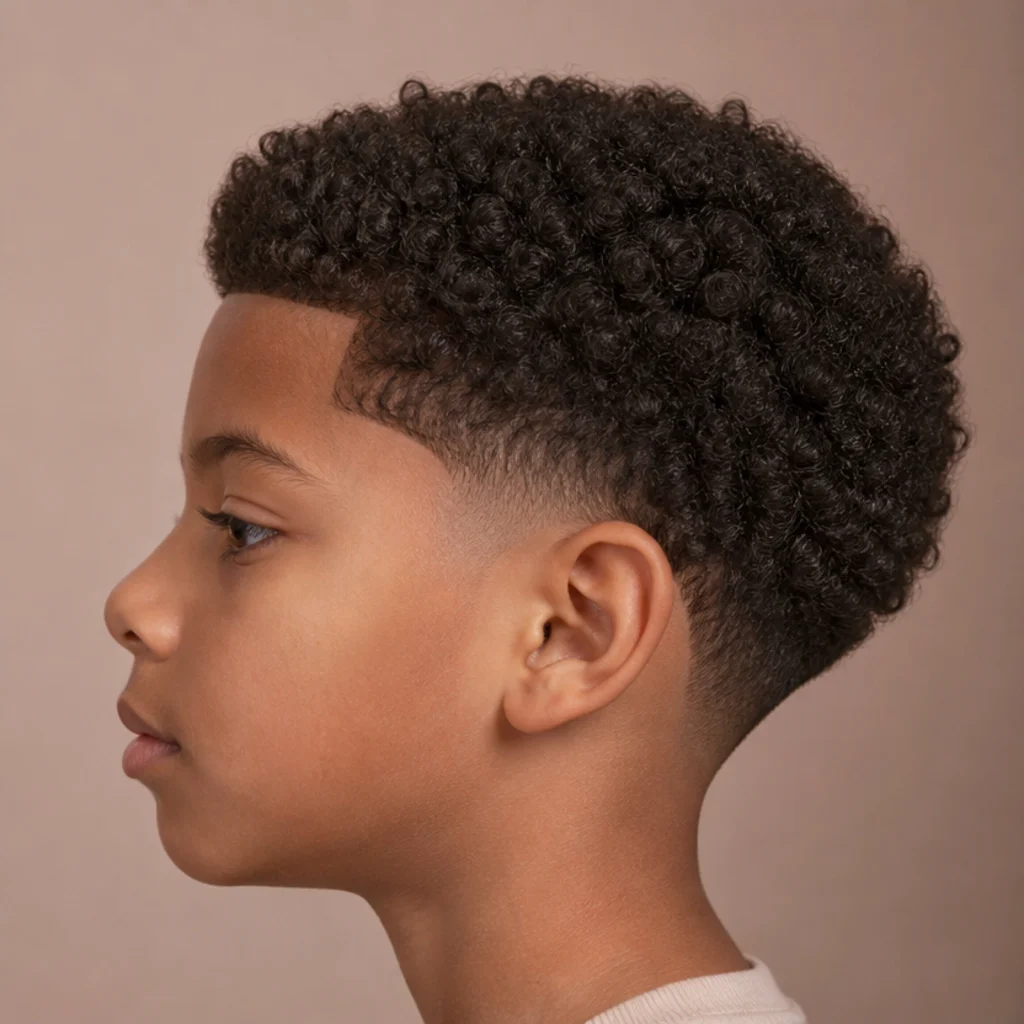
A curly edgar cut translates the shape for boys with natural coils, kinks, or tight waves. Instead of forcing a flat line the strands resist, the barber cuts the front so the curls fall into a rounded, softly blunt silhouette that still reads as an edgar from the front. The contrast between defined texture on top and a crisp fade below is the whole payoff — depth a flat version can't match. It flatters round and heart-shaped faces, since the height and volume on top lengthen the face and offset a soft or pointed chin. Denser curl patterns hold the shape longest; looser waves may need the front cut a touch shorter to keep the line legible. Upkeep is two parts: hydrate the curls daily with a water-based leave-in to keep the pattern springy, and refresh the fade every two to three weeks. Pro tip: cut curly hair dry so the barber can see where each coil actually lands, since wet curls shrink and mislead the line. Ask your barber for a rounded edgar shaped to your natural curl, with the front cut dry.
04Edgar Buzz Cut
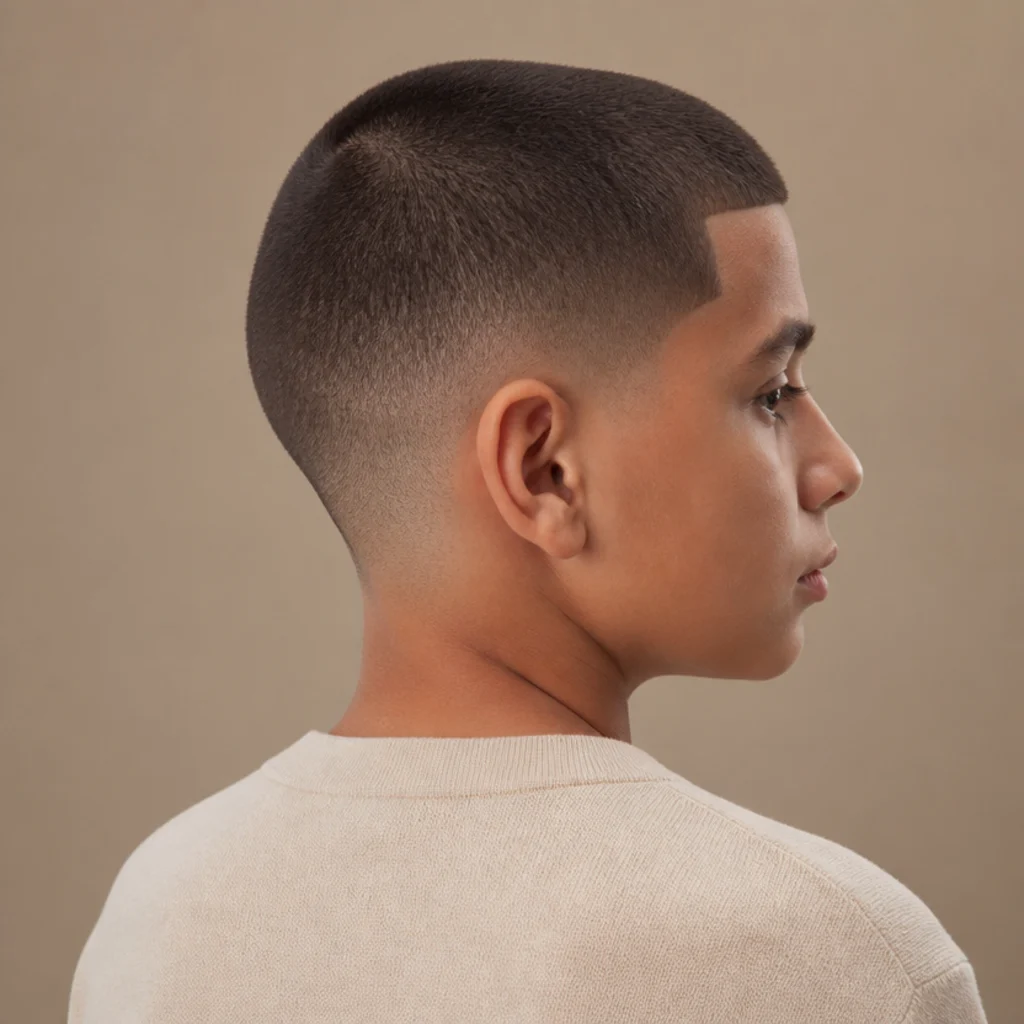
The edgar buzz cut strips the look to its cleanest, most utilitarian form. The top is buzzed to a short, even length, often a number two or three guard, then the front is squared into a razor-crisp blunt line and the sides taken to a low or mid fade. It's the lowest-maintenance option here, a smart pick for summer, contact sports, or any boy who refuses a styling routine, since there's nothing to product or comb. It favors defined bone structure and rewards straight, thick hair that buzzes to an even, dense field of color without patchiness. Everything's short, so there's nothing to style, but the front line-up softens quickly; a two-week touch-up keeps it looking deliberate rather than grown-in. Pro tip: ask for the front corners to be rounded a hair rather than left perfectly square if the hairline is uneven, so any asymmetry disappears. Ask your barber for a buzzed top around a two or three guard, a straight blunt front, and a clean fade on the sides.
Save this to Pinterest to compare the fade heights side by side.
05Mid Fade Edgar
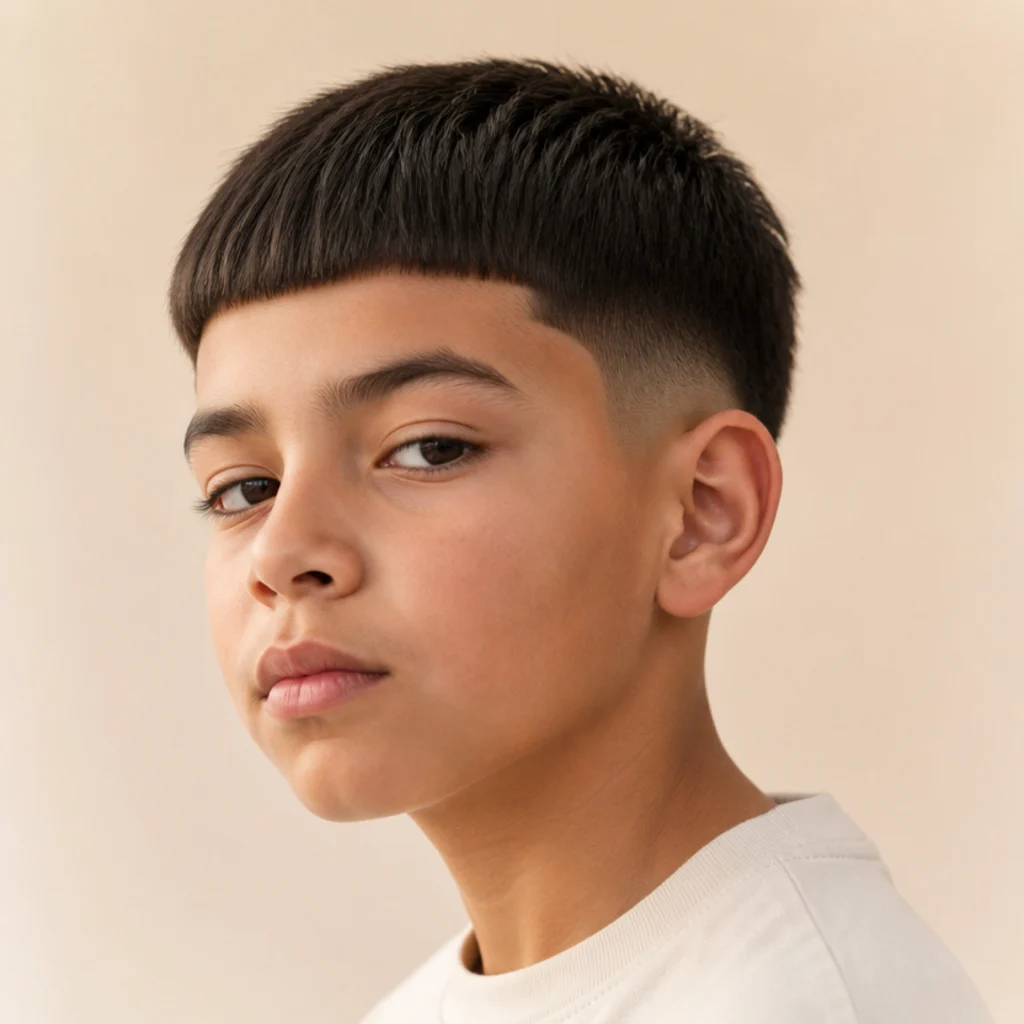
The mid fade edgar sits in the sweet spot between subtle and statement. The fade begins around the temple, roughly halfway up the side, delivering clear contrast without the drama or upkeep of a high skin fade. It's the most photogenic all-rounder here, neat enough for school portraits yet current enough to feel styled. Straight and wavy hair both anchor the blunt top cleanly, and medium-to-thick density gives the fringe the weight it needs to look full. Face-shape wise it's broadly flattering; the fade narrows the sides just enough to lengthen rounder faces without exaggerating longer ones. Maintenance lands in the middle at two to three weeks, and because the fade breaks at a natural midpoint, the grow-out blurs more gracefully than a high fade's hard edge. Pair it with a hard part or a light line-up if you want more polish for an event. Pro tip: ask for the fade to bend down slightly around the ear so it frames rather than exposes it. Ask your barber for a mid fade with a blunt edgar fringe and a clean, defined temple line.
06Textured Crop Edgar
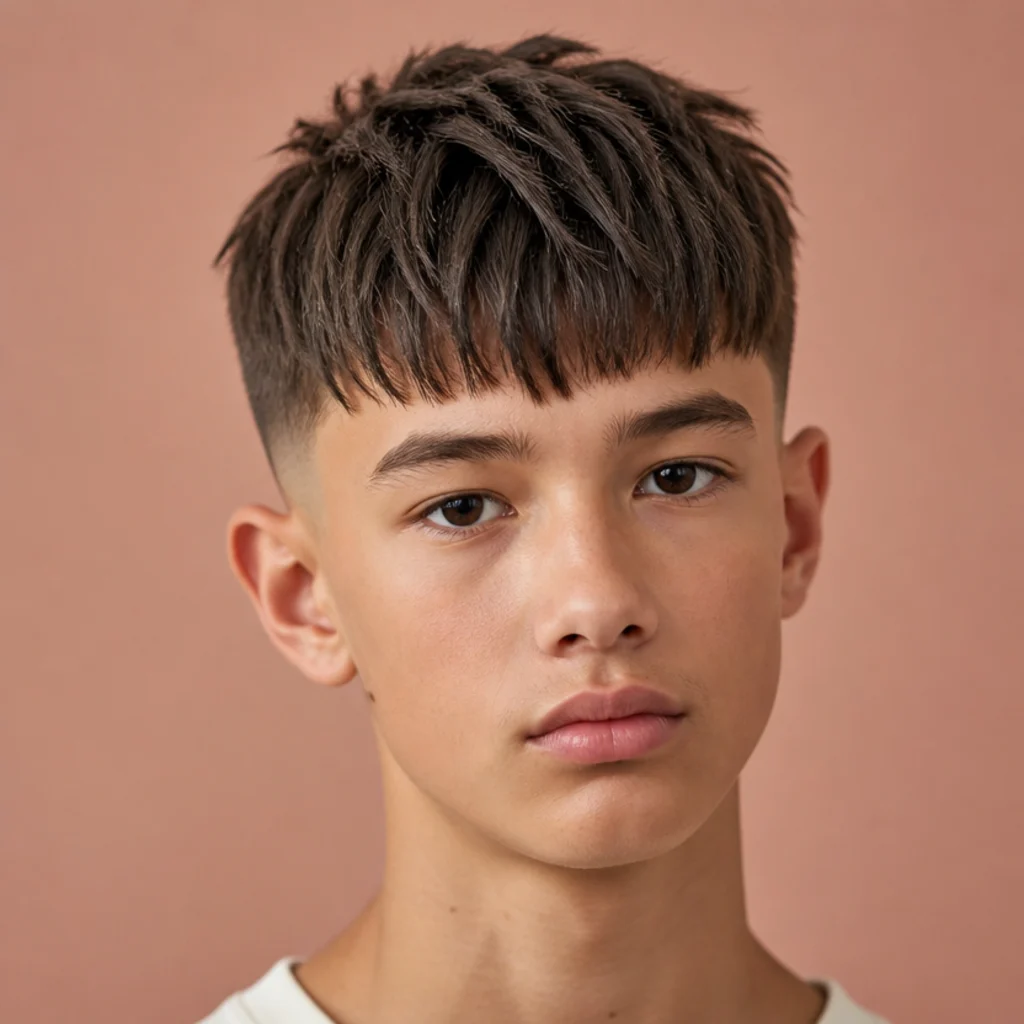
The textured crop edgar trades a flat top for a choppy, piecey finish while preserving the blunt front, and it's the single best edgar for fine or thin hair. The barber point-cuts into the top, snipping vertically to remove weight and create separation, so individual pieces fall forward and the fringe looks fuller and more relaxed than its actual density. That illusion of thickness is the reason to choose it; a flat crop on fine hair can look sparse, but a textured one reads full. It flatters longer and rectangular faces by adding a touch of width and forward movement that softens the vertical. Style with a pea-sized amount of matte clay emulsified between the palms and pushed through dry hair, then broken up with the fingertips. Upkeep is moderate at two to three weeks, and the built-in texture disguises grow-out well. Pro tip: emphasize you want point-cutting, not thinning shears, which can leave fine hair looking wispy. Ask your barber for a textured crop with a blunt edgar front and light point-cutting on top.
07Edgar with Hard Part
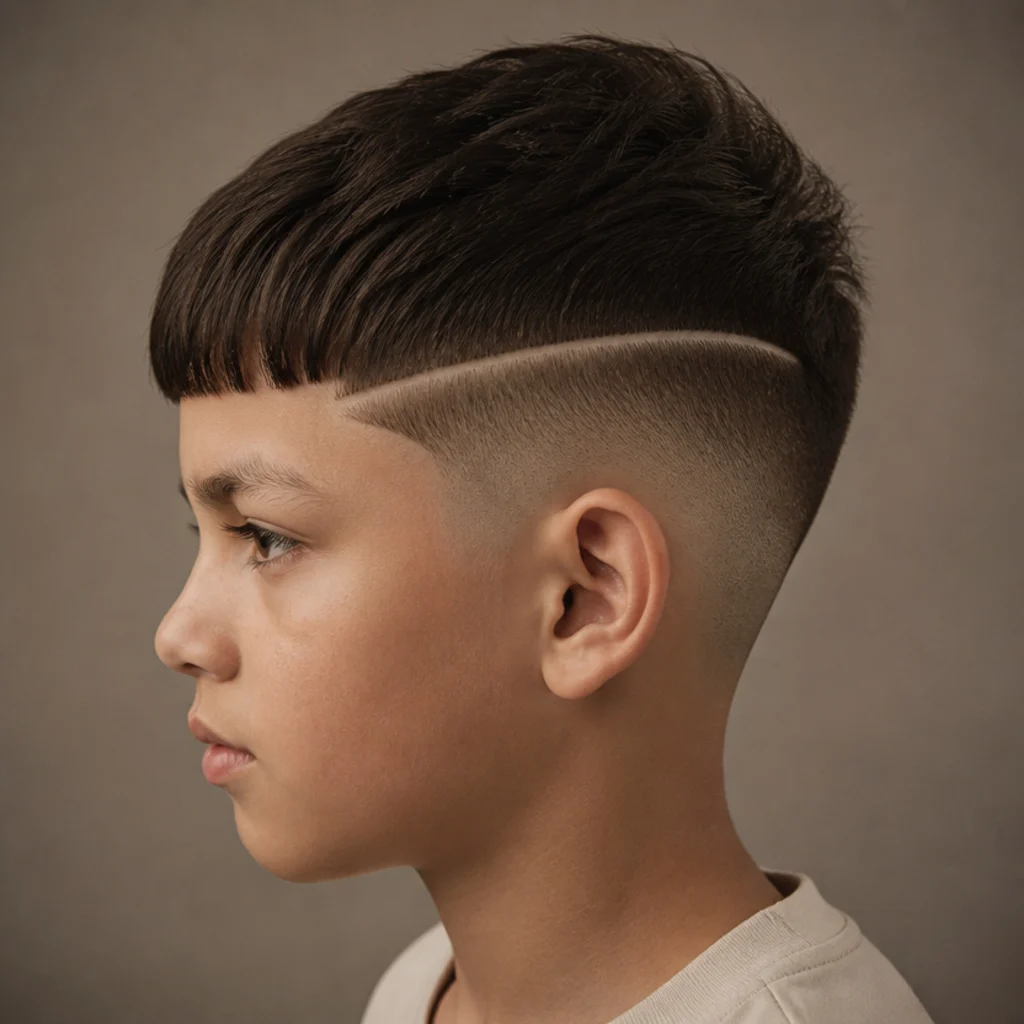
Adding a hard part introduces a single razored line that gives the classic shape architecture and a deliberately styled feel. The barber shaves a clean channel into one side, usually along the natural part, which visually separates the top from the fade and makes the whole cut look intentional and photo-ready. It partners best with a taper or mid fade, where the part has room to breathe without competing with a stark skin fade. It suits boys who want one sharp detail short of a full design, and it reads especially well on straight hair, which frames the shaved channel with a clean, unbroken edge. The trade-off is upkeep: the part fills in within a week or two and needs re-lining to stay crisp, nudging visits toward the two-week mark. Pro tip: place the part on the side where the hair naturally falls away, so it reinforces the grain instead of fighting it. Ask your barber for an edgar with a hard part on your preferred side, a blunt front, and a taper or mid fade.
08Low Fade Edgar
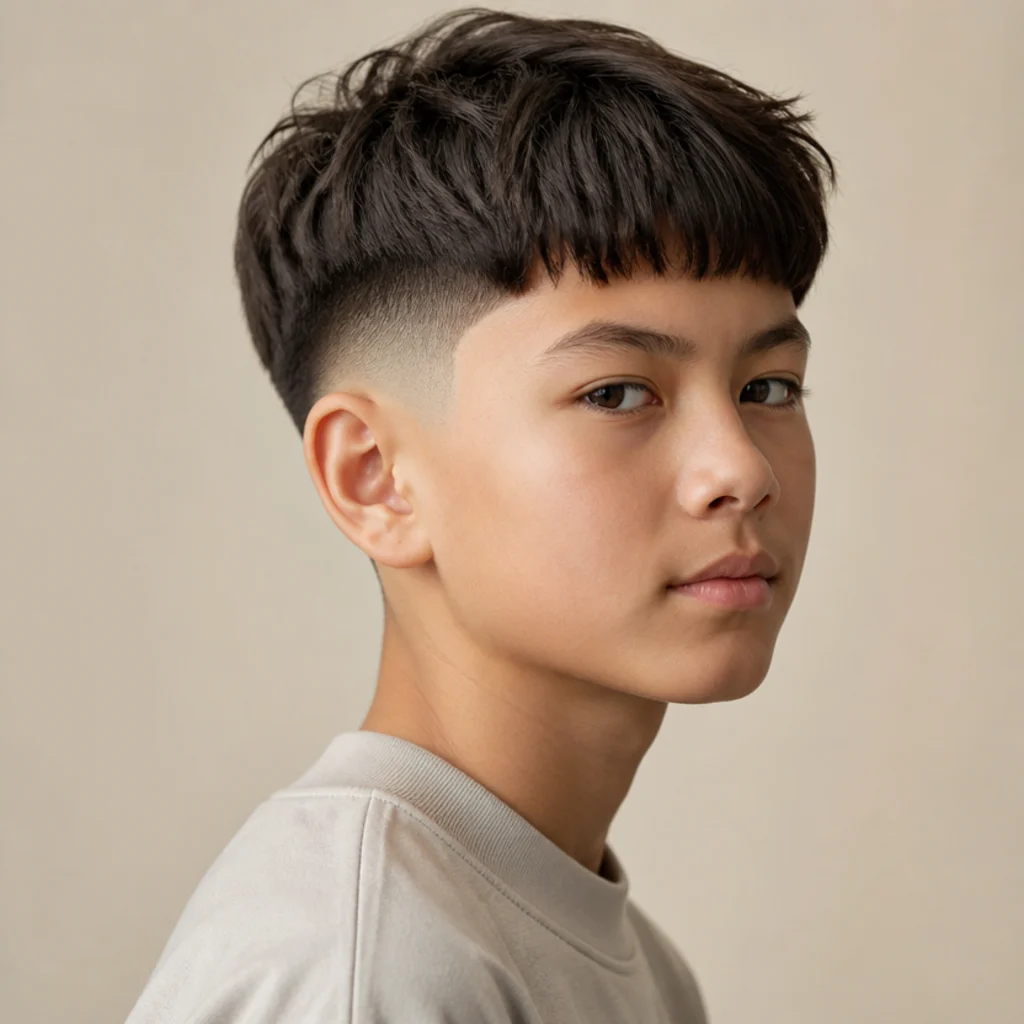
The low fade edgar keeps the bulk of the side length and drops the fade close to the ears and neckline, making it the most conservative fade on this list. That restraint is the point: it clears stricter school dress codes, suits younger boys, and keeps all the attention on the blunt fringe up top. Because it adds no visual width at the temples, it flatters wider and rounder faces particularly well, keeping the silhouette compact. It works across textures, though straight and wavy hair keep the top looking neatest against the subtle sides. Grow-out is gentle and forgiving, so three to four weeks between visits is realistic, another long-window option for busy families. Density is a non-issue here; thick hair stays full on the sides while thin hair avoids looking exposed. Pro tip: pair it with a natural, soft neckline rather than a squared block so it grows out without a visible shelf. Ask your barber for a low fade with a blunt edgar front and a soft, natural taper at the neck.
09Burst Fade Edgar
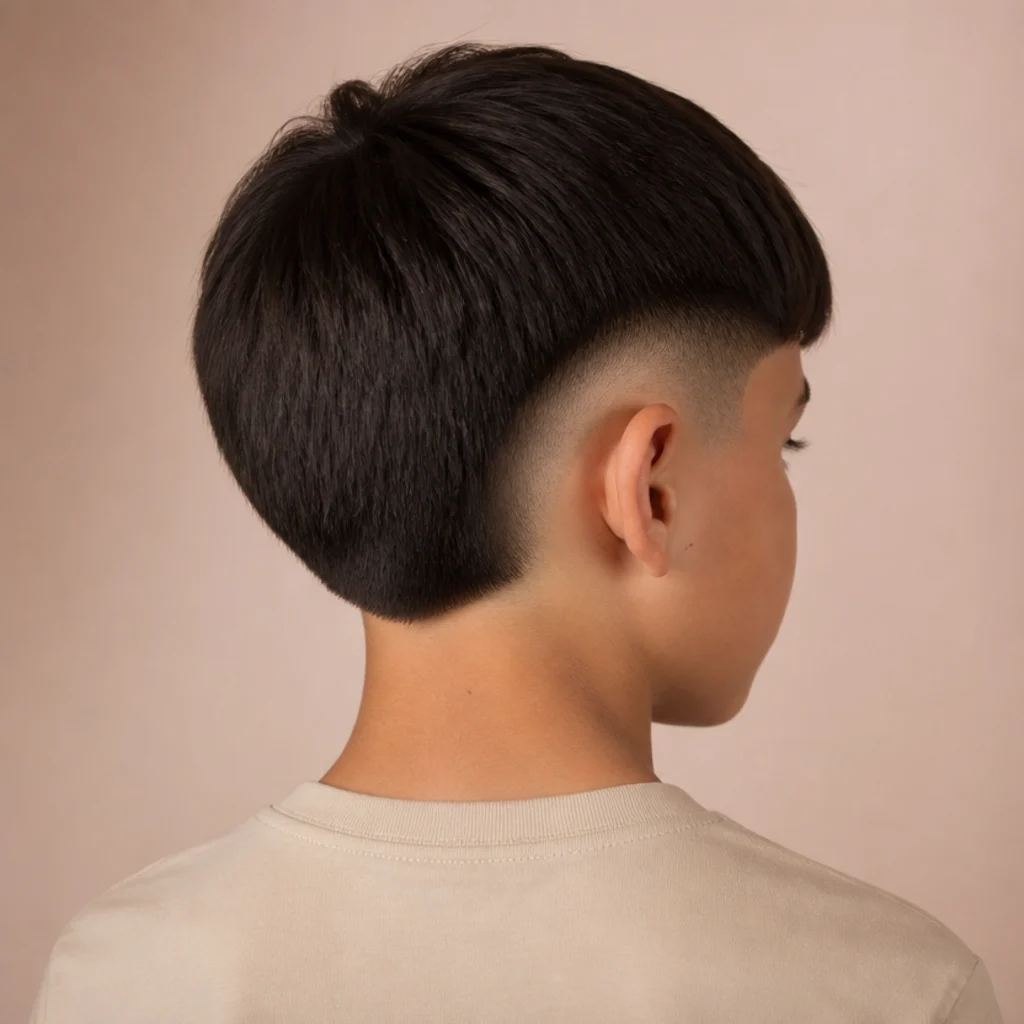
The burst fade edgar curves the fade in a semicircle around the ear while leaving length at the back and nape, producing one of the boldest, most current silhouettes here. Instead of a straight vertical fade, the graduation radiates out from behind the ear like a sunburst, which pairs strikingly with the flat blunt front and a little weight kept at the back. It suits confident boys who want something modern and are happy to maintain it. The look sits well on straight and wavy hair, and it benefits from a bit of length left at the nape, sometimes a small tail or taper, to complete the shape. Upkeep runs higher, roughly every two weeks, because the curved edge blurs faster than a straight fade. Density-wise it flatters medium-to-thick hair that holds the burst's clean arc. Pro tip: ask the barber to keep the burst tight and rounded, not stretched high, so it frames the ear cleanly. Ask your barber for a burst fade around the ears with a blunt edgar fringe and length kept at the nape.
10Edgar with Design Lines
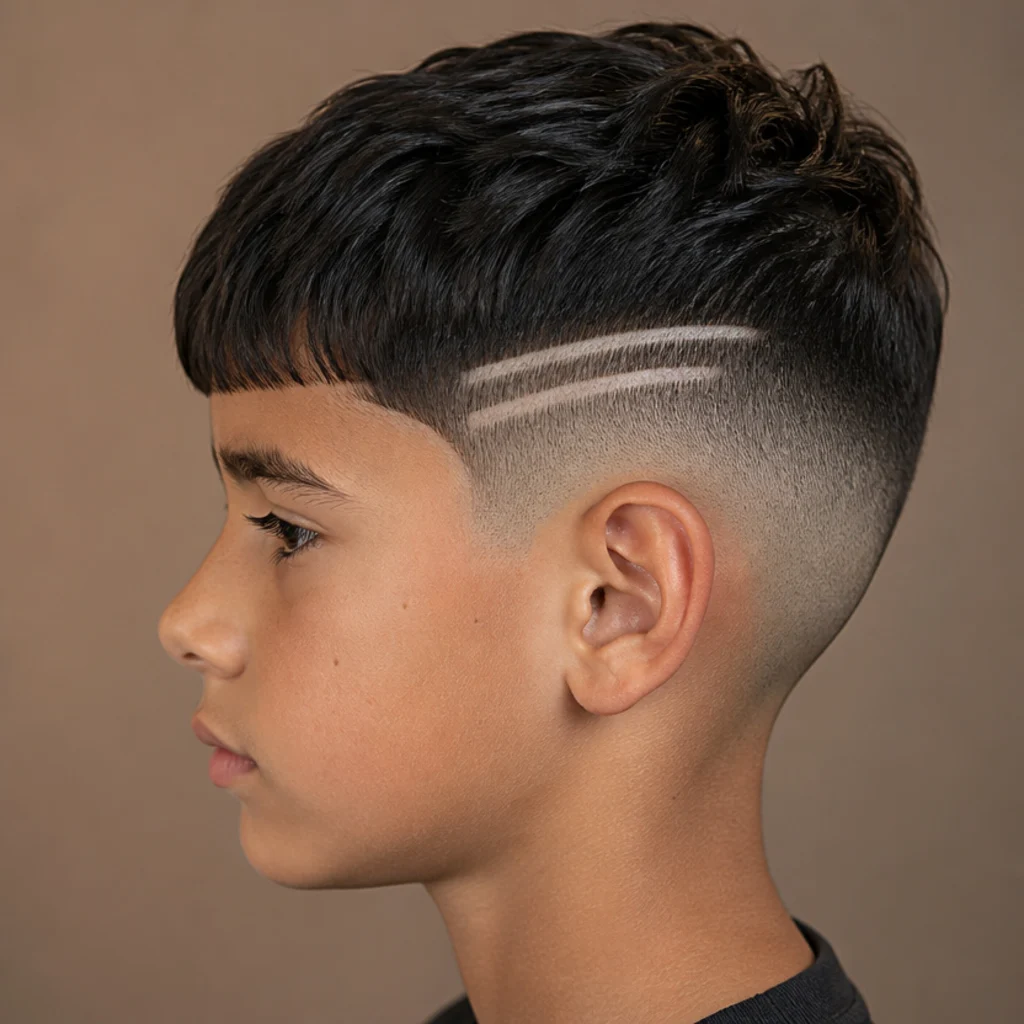
Design lines add one or more razored lines etched into the faded sides for a personalized, expressive edge. Kept restrained, one or two clean lines above the ear, the detail looks sharp and intentional rather than busy, and it gives a boy a way to add personality without a full pattern. The technique layers onto any fade height, though it pops most against a mid or high fade where the etched channels have contrast to read against. It pairs naturally with the blunt edgar front, which keeps the top graphic while the sides carry the flourish. This is a commitment: etched lines blur within a week or two, so it best suits families comfortable with visits every one to two weeks. Straight hair and a defined fade keep the lines crispest, since texture can soften a razored edge. Pro tip: start with a single line for a first attempt; it's easier to maintain and harder to overdo than an elaborate motif. Ask your barber for an edgar with one or two clean design lines placed where you like, and bring a reference photo.
Save this to Pinterest for detail shots of the design lines.
11High Contrast Edgar
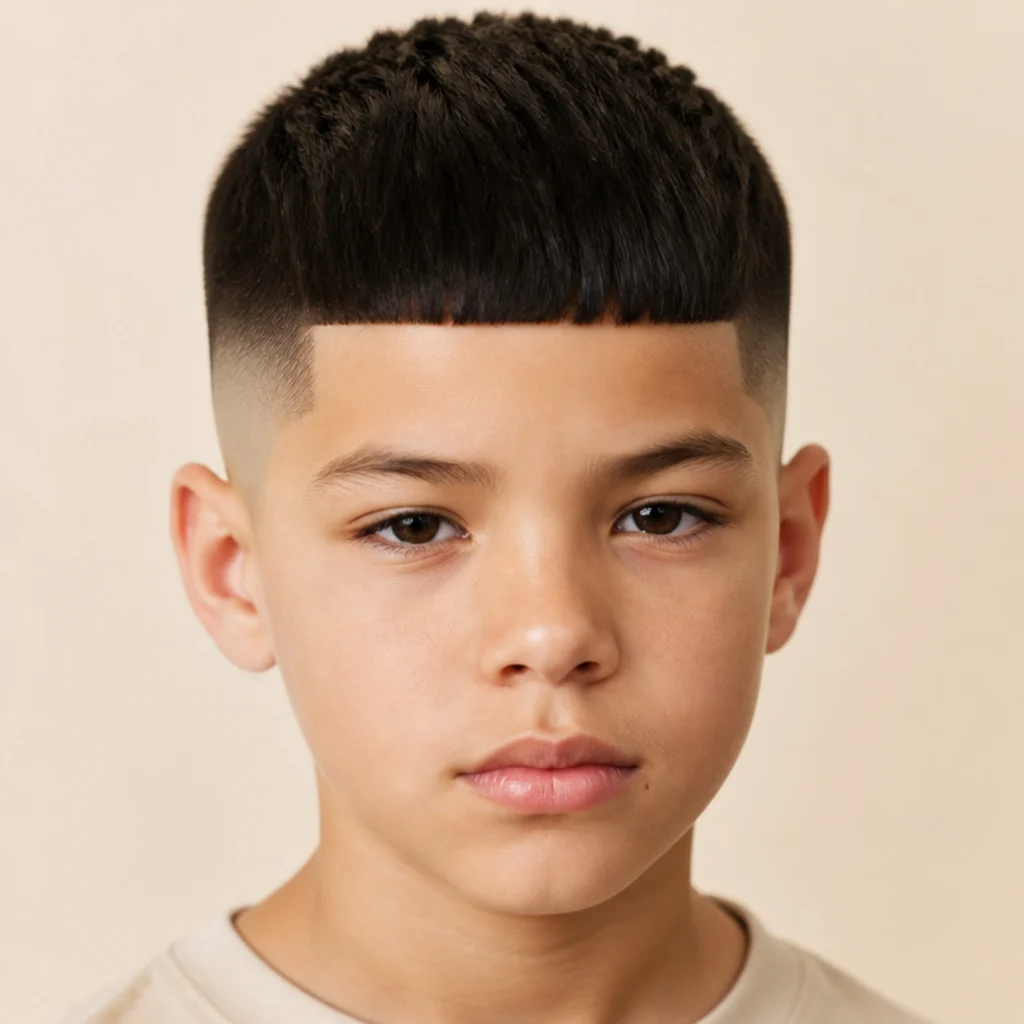
The high contrast edgar pairs a skin fade with a solid block of length on top for maximum drama and the boldest read on this list. The near-bald sides make the blunt fringe and top look dense and heavy by comparison, an optical trick that flatters boys with thick, straight hair that can carry a weighty top without looking mushroom-shaped. It suits defined features and stronger bone structure, since the stark sides expose the face fully. This is also the highest-maintenance version: the skin fade greys in and loses its clean gradient within one to two weeks, so it's best for families who see the barber often. Style the top with a matte paste or clay to keep it looking thick and matte rather than flat and shiny. Pro tip: on finer hair, drop to a high taper instead of a true skin fade so the top doesn't look isolated or top-heavy. Ask your barber for a skin fade with a blunt edgar front and maximum contrast between the sides and top.
12Wavy Edgar Cut
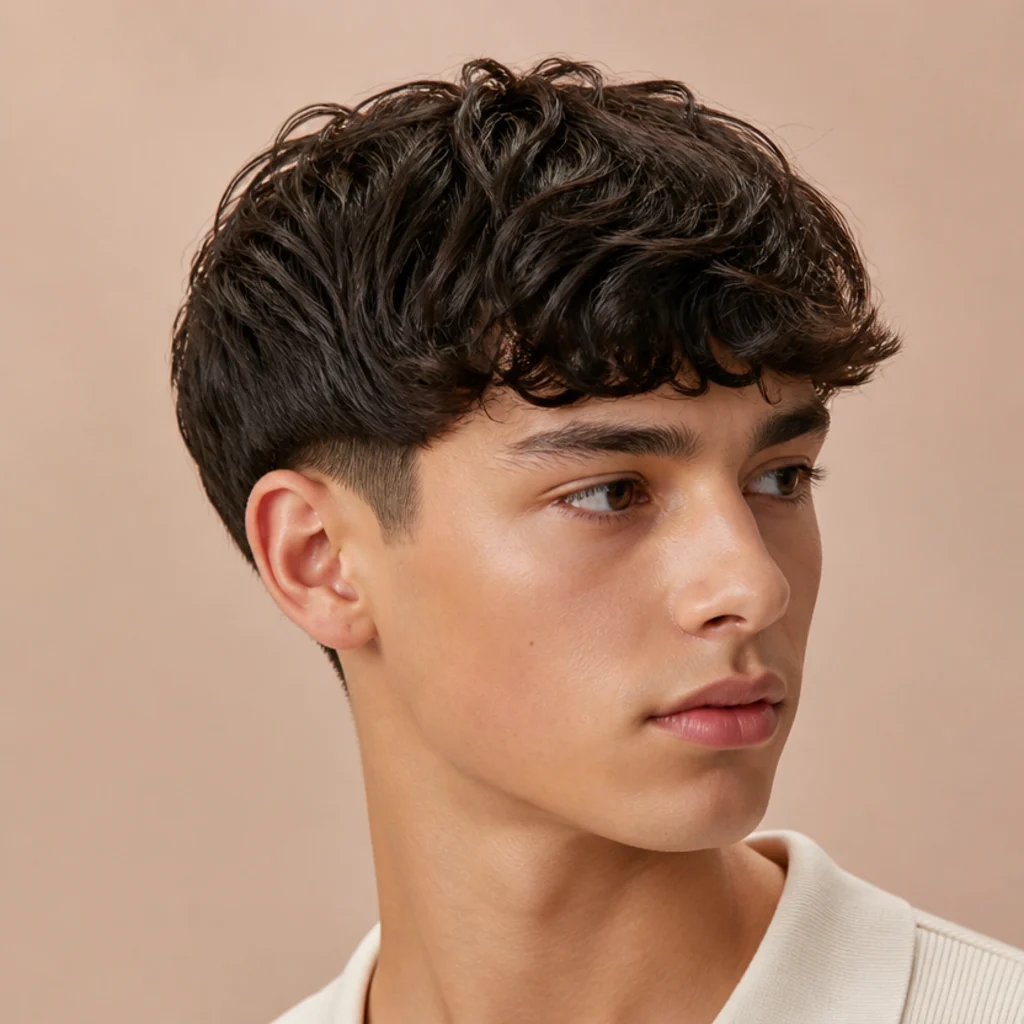
The wavy edgar works with natural wave rather than flattening it, and it's a forgiving, low-fuss choice for boys whose hair never lies perfectly straight. The top keeps a little more length so the waves have room to show, while the front is cut into a softly blunt line that still reads as an edgar without demanding a ruler-straight edge. The result feels relaxed and lived-in while staying tidy, and the movement hides grow-out better than any flat version. It flatters most face shapes and lends fine, wavy hair welcome body and dimension. Bring out the pattern with a light sea-salt or texture spray scrunched into damp hair, then let it air-dry to avoid frizz. Upkeep is comfortable at around three weeks, since the wave hides a softening line. Density from medium up carries it best; very fine wavy hair may need the sides kept slightly longer for balance. Pro tip: skip the blow-dryer, which fights the wave; scrunch and air-dry for the cleanest pattern. Ask your barber for an edgar that keeps a bit of length on top to let your natural wave move.
13Short Blunt Edgar
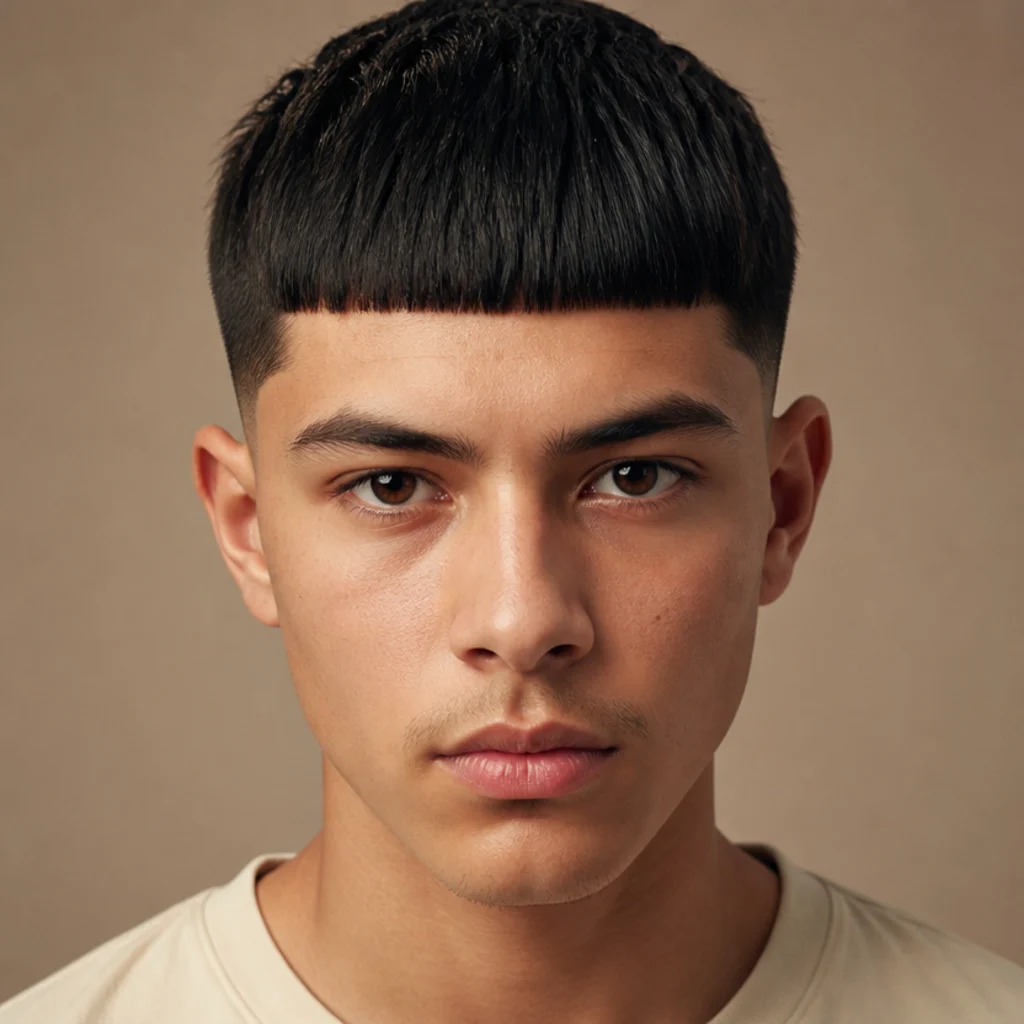
The short blunt edgar pushes the fringe to its most graphic extreme. The top is kept short and the front line is cut razor-straight and low across the brow for a strong, near-geometric statement that needs almost no product to hold. It's the cleanest, most no-fuss version for boys who want maximum sharpness with minimum routine. This demands straight, thick hair that lies flat on its own, since even a slight wave softens and distorts the crisp horizontal line the whole look depends on. It flatters angular and oval faces that can carry a bold horizontal edge without it dominating; very round faces may find the low line widening. Because the line sits low and short, it grows uneven fast, so a two-week trim keeps it from looking shaggy. Pro tip: request the barber hold the line a couple of millimeters higher than feels right, since a short blunt front drops as it grows and can quickly reach the eyes. Ask your barber for a short edgar with a low, very straight blunt front and tidy faded sides.
14Edgar with Line-Up
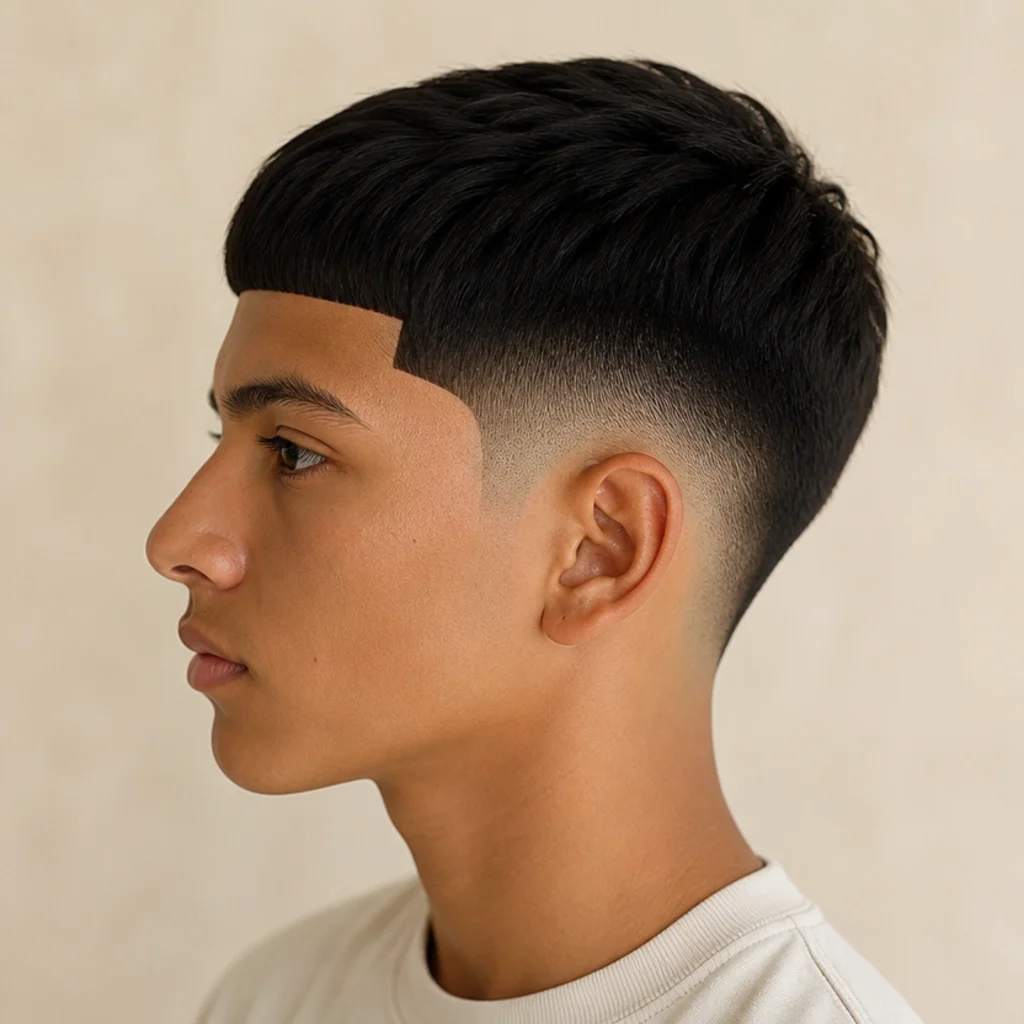
A line-up, also called an edge-up, adds crisp razored edges along the hairline, temples, and sideburns to frame the entire cut. Combined with the edgar's blunt front, it makes the shape look polished and deliberate from every angle, sharpening the corners so the whole silhouette reads intentional in photos. It suits boys who want a put-together, event-ready finish and don't mind the frequency it demands. The line-up defines the temple points and squares the sideburn area, giving the face a clean frame. This raises upkeep to roughly every one to two weeks, since razored edges soften and blur quickly and a grown-out line-up looks messier than none at all. It works on all textures but looks crispest on straight hair, where the edge stays legible. Pro tip: on a naturally uneven or receding hairline, ask for a soft, natural line-up rather than an aggressive squared one, which can push the hairline back over time. Ask your barber for an edgar with a line-up around the hairline, temples, and sideburns.
15Grown-Out Textured Edgar
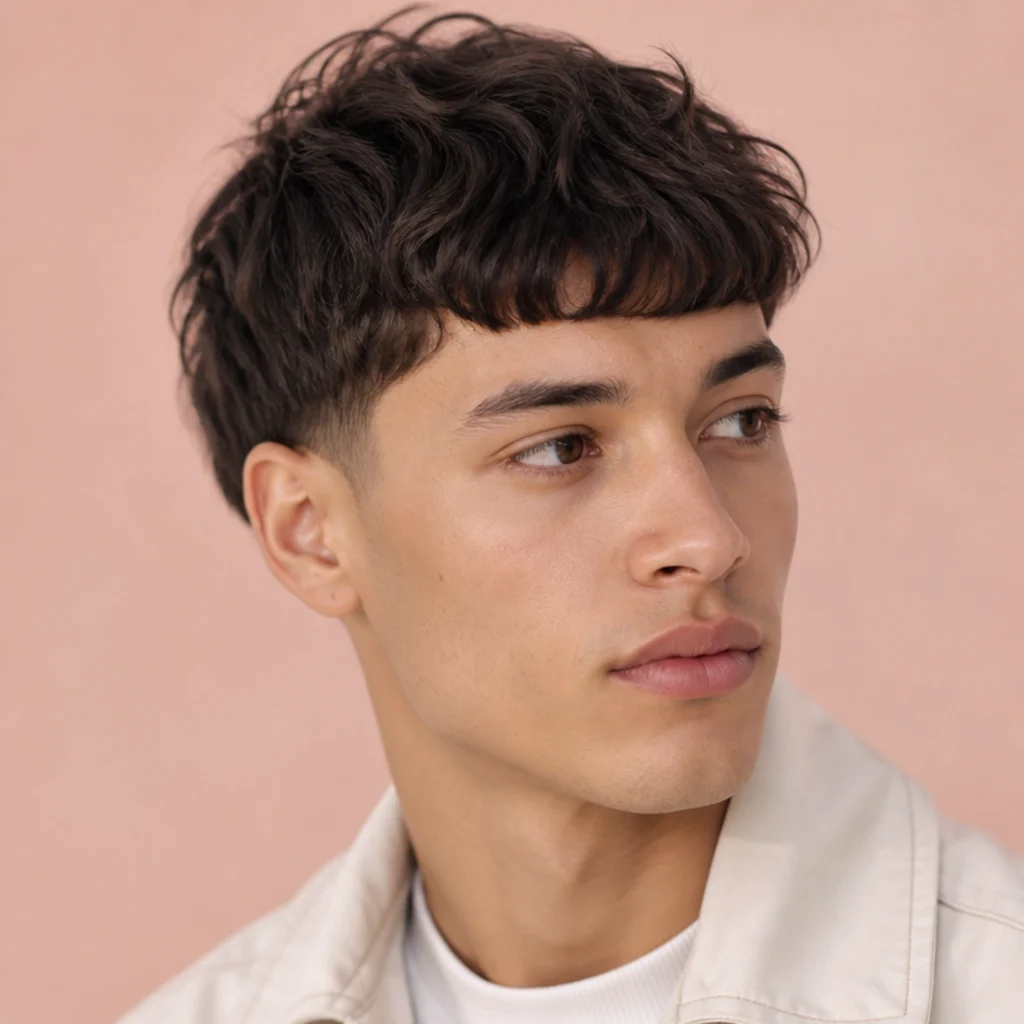
The grown-out textured edgar is built for boys, and parents, who want the shape with the fewest barber visits. The top is left longer and lightly tousled, and the front line is softened at the ends so it blurs gracefully rather than growing into a hard shelf. The sides are tapered instead of sharply faded, so the whole cut ages evenly over four to six weeks, the longest maintenance window on this list. It flatters most faces and delivers a relaxed, effortless vibe that never looks unkempt as it lengthens. Texture is your friend here: waves and loose curls hold the tousled shape best, while very straight hair may need a light point-cut through the top to keep it from falling flat. Style with a light cream or a low-hold matte paste worked through with the fingers to keep the length loose and natural, never stiff. Pro tip: book a mid-cycle nape-and-neckline tidy if you can, a five-minute clean-up that buys another couple of weeks between full cuts. Ask your barber for a longer, tapered edgar with a soft blunt front made to grow out cleanly.
Pro Tips from the Editor
- Cut the fringe on dry, styled hair. Wet hair sits lower and longer than it will once dry, so a line that looks right when wet often ends up too low. Ask the barber to check and finish the front dry.
- Match fade upkeep to your real schedule, not your ideal one. A skin fade looks incredible for ten days and rough by day fifteen; if you can't get in fortnightly, a taper or low fade will look better for longer.
- Point-cutting beats thinning shears on fine hair. Thinning shears can leave fine hair wispy and see-through at the ends. For separation without sparseness, ask specifically for point-cutting.
- Set the front line a few millimeters above the brows. It frames the eyes once it settles and buys a week before it reaches the eyebrows and needs a trim.
- Book a mid-cycle neckline tidy. A quick nape-and-sideburn clean-up between full cuts keeps the whole look sharp and can extend the gap between full appointments.
- Bring two reference photos, front and side. The front shows the fringe height and shape; the side shows the fade type and where it breaks. One angle alone leaves too much to interpretation.
- Name the fade height in plain terms. Say low, mid, high, or skin, and point to where on the head it should start. "A fade" without a height is the most common reason the result misses the reference.
Edgar Cut Variations at a Glance
| Variation | Best hair type | Face shapes it flatters | Upkeep window | Contrast level |
|---|---|---|---|---|
| Classic Straight-Hair Edgar | Straight, medium density | Oval, square | 2–3 weeks | Low–medium |
| Edgar Cut Taper Fade | Any texture | Most shapes | 3–4 weeks | Low |
| Curly Edgar Cut | Coily, tight-wave | Round, heart | 2–3 weeks | Medium |
| Edgar Buzz Cut | Straight, thick | Defined structure | 2 weeks | Low–medium |
| Mid Fade Edgar | Straight, wavy | Most shapes | 2–3 weeks | Medium |
| High Contrast Edgar | Thick, straight | Angular, defined | 1–2 weeks | High |
| Grown-Out Textured Edgar | Wavy, loose curl | Most shapes | 4–6 weeks | Low |
How to Choose / Get the Look
Work through four decisions in order and the right version falls out of them.
1. Start with maintenance honesty. This is the single biggest filter. If the barber is a four-to-six-week event, lean to a low fade, taper fade, or grown-out edgar, all of which age gracefully. If you can commit to visits every one to two weeks and want impact, the skin fade, burst fade, line-up, and design-line versions reward the effort.
2. Match the cut to hair type and density. Straight hair holds the sharpest blunt line and suits the classic, short blunt, and high contrast versions. Wavy and curly hair look best with a softly rounded front that follows the natural pattern rather than fighting it. Fine or thin hair gains the most from the textured crop, where point-cutting fakes fullness; thick hair can carry the heaviest tops and highest contrast.
3. Factor in face shape. A strong horizontal fringe adds visual width. That balances and shortens longer or rectangular faces, but can overwhelm a very round face unless you add height or texture on top and keep the front line from sitting too low.
4. Brief the barber precisely. Bring a front and a side photo. Name the fade type and height and point to where it should start. State how low the blunt front should sit. Call out any hard part, line-up, or design lines up front. Then ask the barber to check the fringe length while your hair is dry, since wet hair sits lower than it will once styled.
Frequently Asked Questions
Is the edgar cut easy to maintain?
It depends entirely on the version. A taper or low fade with a soft front can stretch three to four weeks and still look tidy. A skin fade, full line-up, or design lines need a touch-up every one to two weeks, because razored edges and skin fades blur fastest. Choose the fade type around how often you can realistically get to the barber, not the look you like most in photos.
Does the edgar cut work on curly hair?
Yes. A curly edgar cut shapes the front into a rounded, softly blunt line that follows your natural curl instead of forcing it flat, then pairs it with a clean fade on the sides for contrast. Ask the barber to cut curly hair dry, since wet curls shrink and can trick the line, and keep the pattern hydrated with a daily leave-in.
What face shape suits an edgar cut best?
Oval and square shapes carry the bold blunt fringe most easily. Longer and rectangular faces benefit from the width the horizontal line adds. Round faces usually look best with extra height or texture on top and a fringe that doesn't sit too low, so the cut lengthens rather than widens the face.
How do I ask a barber for an edgar cut?
Bring a front and a side photo. Name the fade type and height, say how low you want the blunt front to sit, and mention any extras like a hard part, line-up, or design lines. Ask them to check the fringe length on dry hair, and to set the front line a few millimeters above the brows so it frames the eyes as it settles.
What is the difference between an edgar and a caesar cut?
Both feature a straight fringe, but a caesar is usually one even length all around with a fuller, softer front and little or no fade. The edgar pairs a sharper, more graphic blunt line with faded or tapered sides, creating far more contrast between the top and the sides.
How low should the edgar fringe sit on the forehead?
Aim for a few millimeters above the eyebrows. Set that way, it frames the eyes once styled and buys roughly a week before it grows into the brows and needs a trim. A line cut level with or below the brows looks bold on day one but reaches the eyes quickly and needs more frequent upkeep.
Is the edgar cut a good style for younger boys and school?
Yes, if you pick a softer version. A taper fade or low fade edgar with a natural neckline reads neat, clears most dress codes, and grows out gracefully between the longer three-to-four-week visits that suit busy families. Save the skin fades, line-ups, and design lines for boys who actually enjoy frequent barber trips.
Can the edgar cut grow out without looking messy?
Some versions age far better than others. The grown-out textured edgar, taper fade, and low fade are designed to blur softly over four to six weeks. Skin fades, hard parts, line-ups, and design lines look sharp for a week or two and then noticeably rough, so plan tighter appointments if you choose them.
What products style an edgar cut best?
Keep it minimal. A pea-sized amount of matte paste or clay combed straight forward on dry hair is all a classic edgar needs. For textured and wavy versions, use a low-hold matte product or a light sea-salt spray for separation and movement. Avoid shiny pomades and gels, which flatten the blunt top and make it look wet rather than dense.