15 Edgar Cut and Taper Fade Combos to Try
The edgar lives and dies by two lines: the blunt horizontal fringe up top and the fade that empties the sides. Get the geometry right and the cut reads sharp from every angle. Here are 15 fringe-and-fade combinations, each with the fade height, face-shape fit, and exact wording to bring to the chair.
 Edited by Lena Rose · Published July 11, 2026 · 29 min read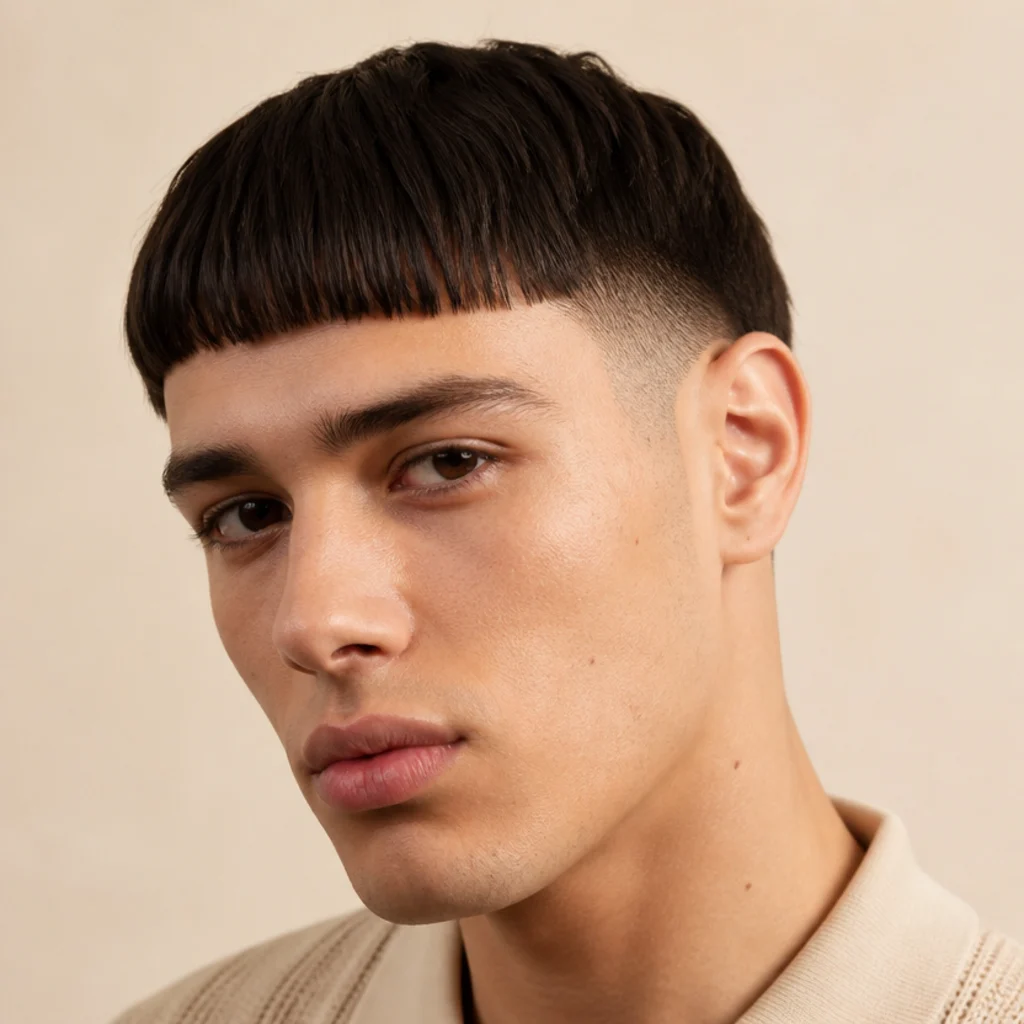
Quick Answer
- Best for: Straight to loosely curly hair; oval, round, and square faces that can carry a bold horizontal brow line.
- Who might skip it: Long or narrow faces (a heavy blunt fringe can lengthen them further), receding or uneven hairlines, and very fine hair that can't hold a dense fringe without looking sparse.
- Maintenance: Medium to high. The fringe line softens in 2 to 3 weeks; skin tapers and design lines blur within 1 to 2.
- Difficulty: Barber-dependent. The blunt line is quick to cut but unforgiving to correct at home.
- Cost: Roughly the price of a standard fade plus a fringe detail at your shop; hard parts, line-ups, and carved designs usually add a small surcharge for the extra razor work.
- Wear time / longevity: Looks its sharpest for about 2 weeks, still wearable to 4 with light trims to the perimeter.
- Standout variation: The mid taper with a point-cut textured crop, which keeps the signature edge while softening the geometry for real-world features.
- How to ask your barber: Name the fade type and height, say where the fringe should sit (at or above the brow), and specify blunt versus point-cut. Bring a photo; describe, don't assume.
In This Guide
- Classic Edgar with a Low Taper Fade
- Edgar Cut on Straight Hair with a Mid Taper
- Curly Edgar Cut with a Blurry Fade
- Edgar Buzz Cut with a Skin Taper
- High Taper Fade Edgar with Volume
- Textured Crop Edgar with a Mid Fade
- Edgar Cut for Boys with a Low Taper
- Edgar with Hard Part and Taper Fade
- Wavy Edgar Cut with a Drop Fade
- Short Edgar Buzz with a Burst Fade
- Edgar Cut with a Line-Up and Taper
- Long Fringe Edgar with a Low Fade
- Edgar with Design Lines and a Taper Fade
- Curly Edgar Cut with a High Taper
- Blended Edgar with a Temple Taper
Intro
The edgar comes down to one contrast: a dense, one-length fringe cut straight across the forehead up top, and a fade or taper underneath that pulls the visual weight up toward the crown. That single blunt edge is what makes the cut easy to spot from across a room, and it's why edgar cut straight hair is the natural entry point — pin-straight strands fall into a crisp horizontal line with almost no product or coaxing. The style traces back to the Caesar and grew popular through Latino barbering culture, and it's stuck around in barbershops because it photographs well and grows out in a predictable way.
What most galleries miss is how many levers you can pull without losing the signature. Fringe length changes the drama. Fade height changes the balance against your face. Texture, a hard part, a curl pattern, or a carved line changes the personality entirely. The trick is matching those choices to your hair type and bone structure rather than copying a photo wholesale. Below, each of the 15 combos names who it flatters, how often you'll be back in the chair, and the exact phrasing that lands the line where you want it, from an edgar cut taper fade to a full curly edgar cut or edgar buzz cut.
01Classic Edgar with a Low Taper Fade
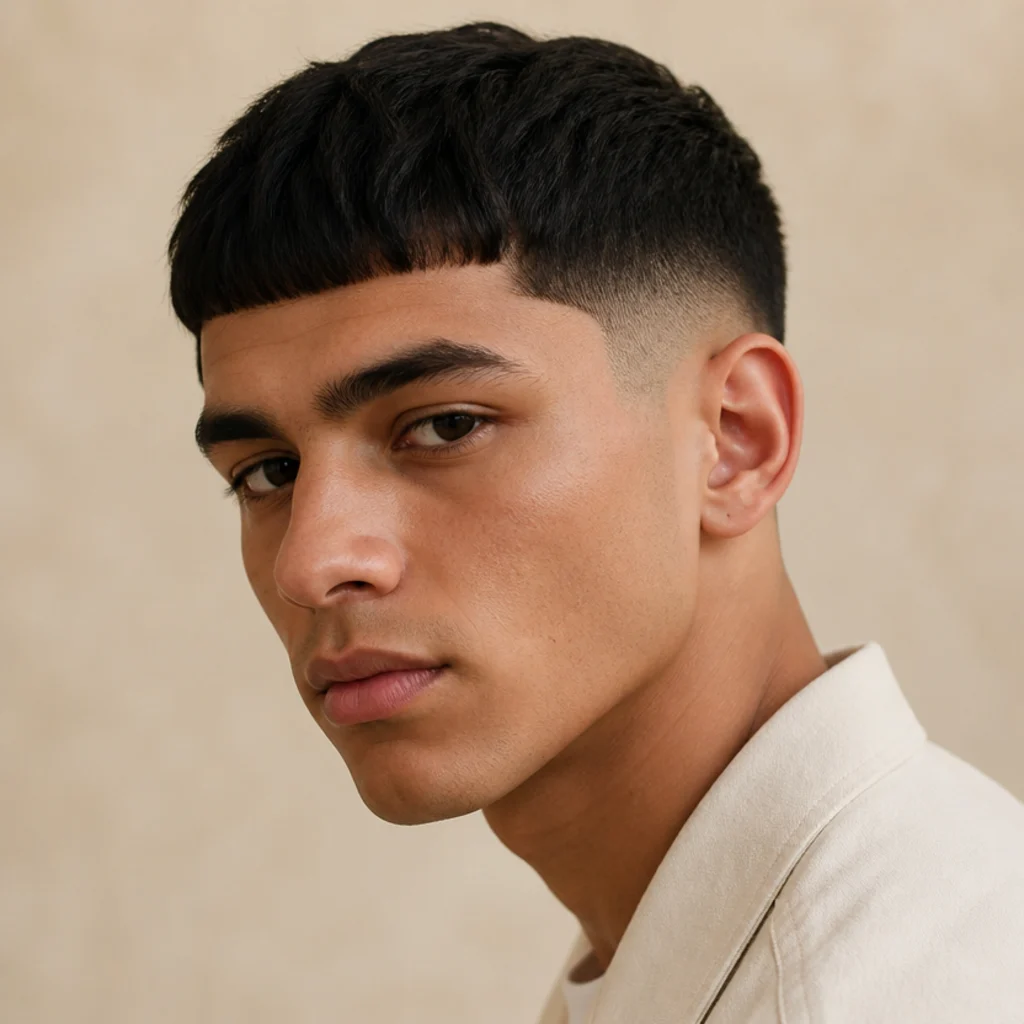
This is the reference build every other combo borrows from. The fringe sits blunt and dead-level across the brow, roughly a finger's width above the eyebrows, while a low taper keeps the sides short without going skin-bare, starting its blend just above the ear and along the nape. Because it hugs the natural hairline, it reads conservative enough for offices, interviews, and school dress codes. Straight, medium-to-thick hair holds the shape best; the density lets the fringe stand as one solid block without gapping. Wavy hair works too with a quick blow-dry forward on cool air. It flatters oval and square faces especially, where the horizontal line balances the jaw. Expect the perimeter to soften around week two and a clean-up every three weeks. Pro tip: have your barber check the line with you sitting fully upright, since a fringe cut while you're slumped will ride high once you stand. Ask your barber for "a low taper with a blunt, level fringe, no rounding at the corners."
02Edgar Cut on Straight Hair with a Mid Taper
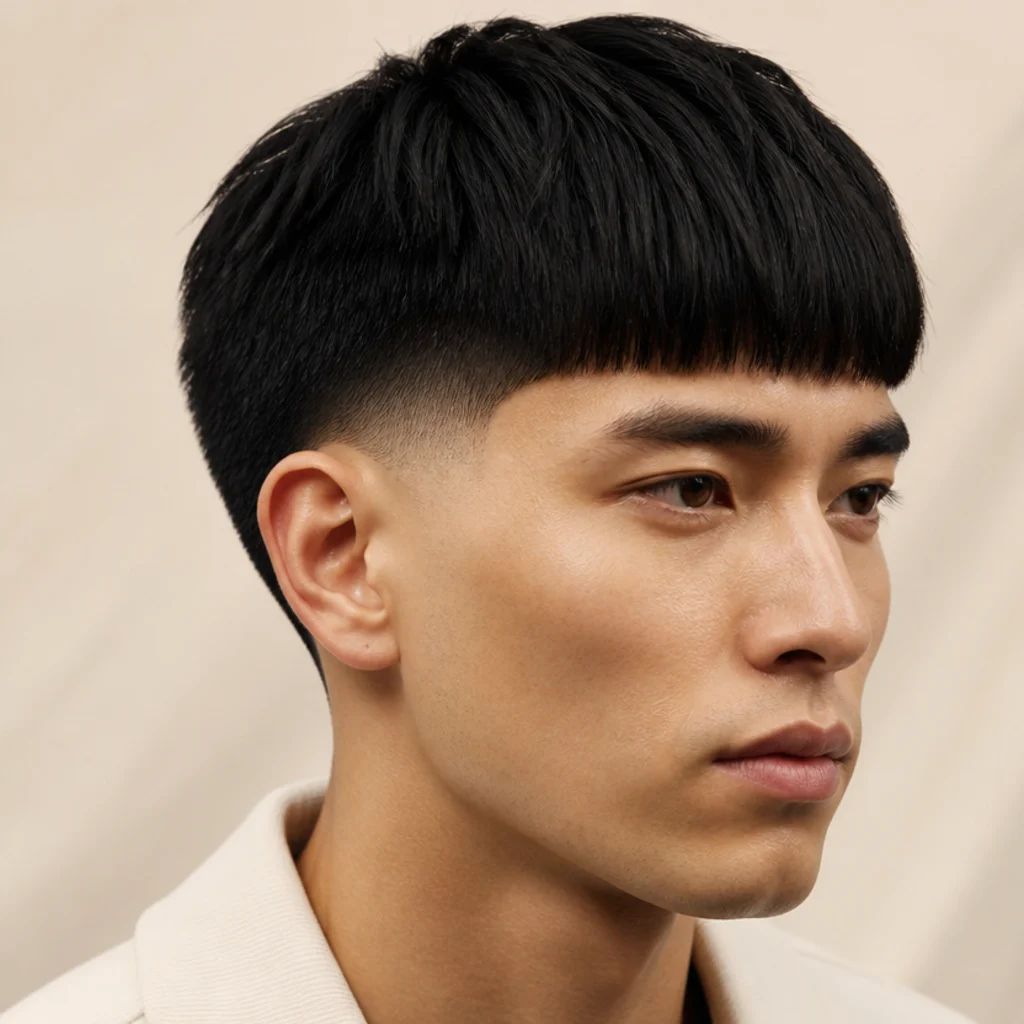
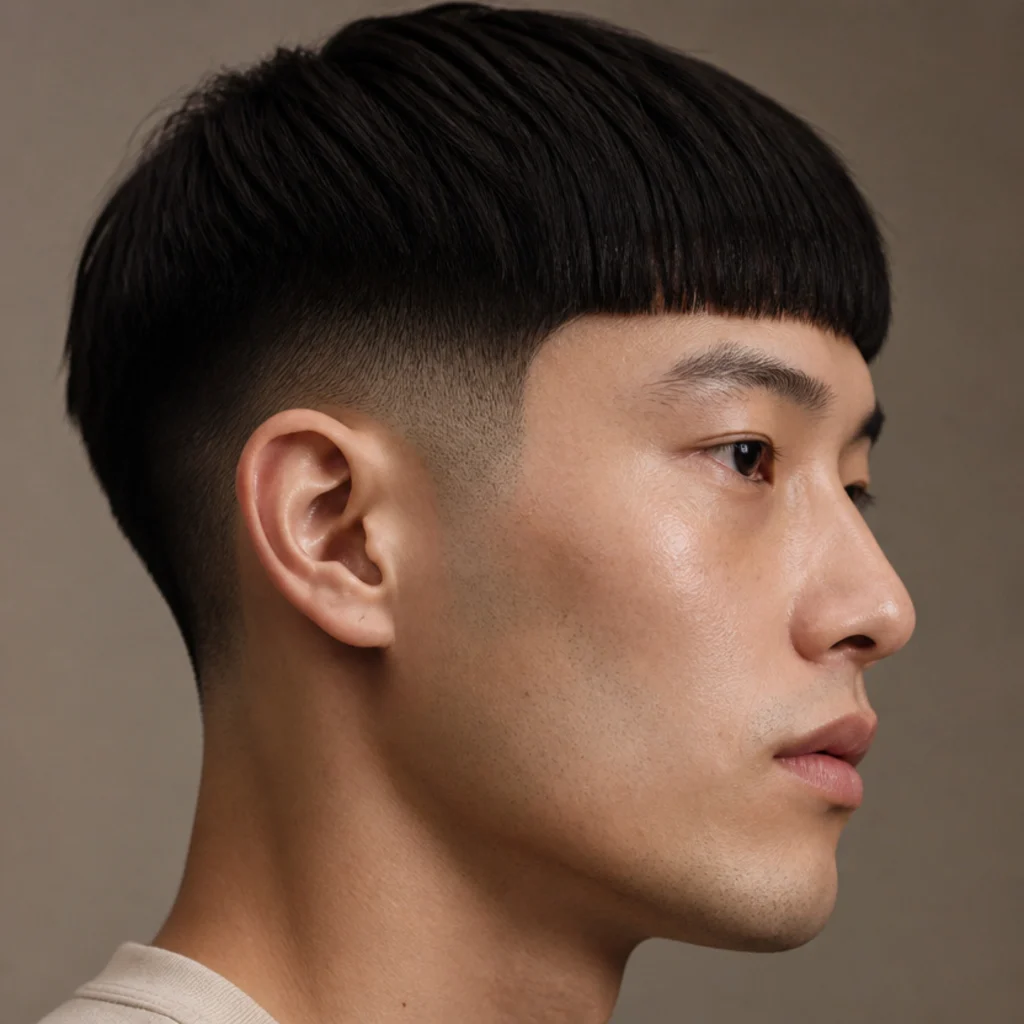
When your hair is naturally straight and dense, a mid taper gives the edgar more architecture. The fade breaks around the temple, so the side gradient runs longer and the fringe reads even bolder set against the shorter walls. This is the sweet spot for showing off straight, glassy hair, the kind that drops into a blunt edge with zero fight and needs only a pea of matte paste to tame flyaways. It suits oval and square faces that can carry a stronger horizontal statement; if your face is on the longer side, keep the fringe fuller to widen the frame. Because a mid taper exposes more skin than a low one, regrowth shows faster, so plan on a reshape every two to three weeks. Pro tip: ask for the fringe to be cut with the hair dry and combed into its natural fall, since wet straight hair stretches and you'll lose length as it dries. Bring a photo and request "a mid taper with the fringe sitting right at the eyebrows, cut straight, not textured."
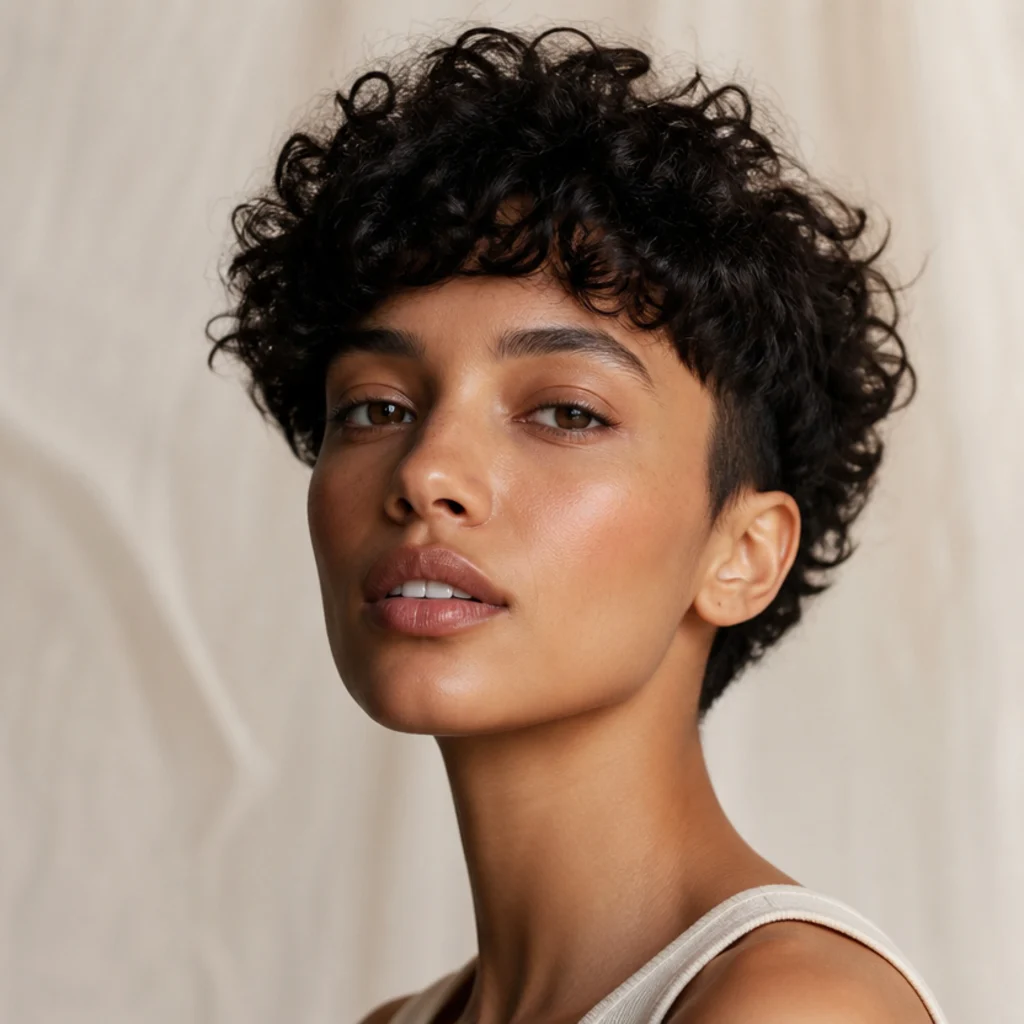
03Curly Edgar Cut with a Blurry Fade
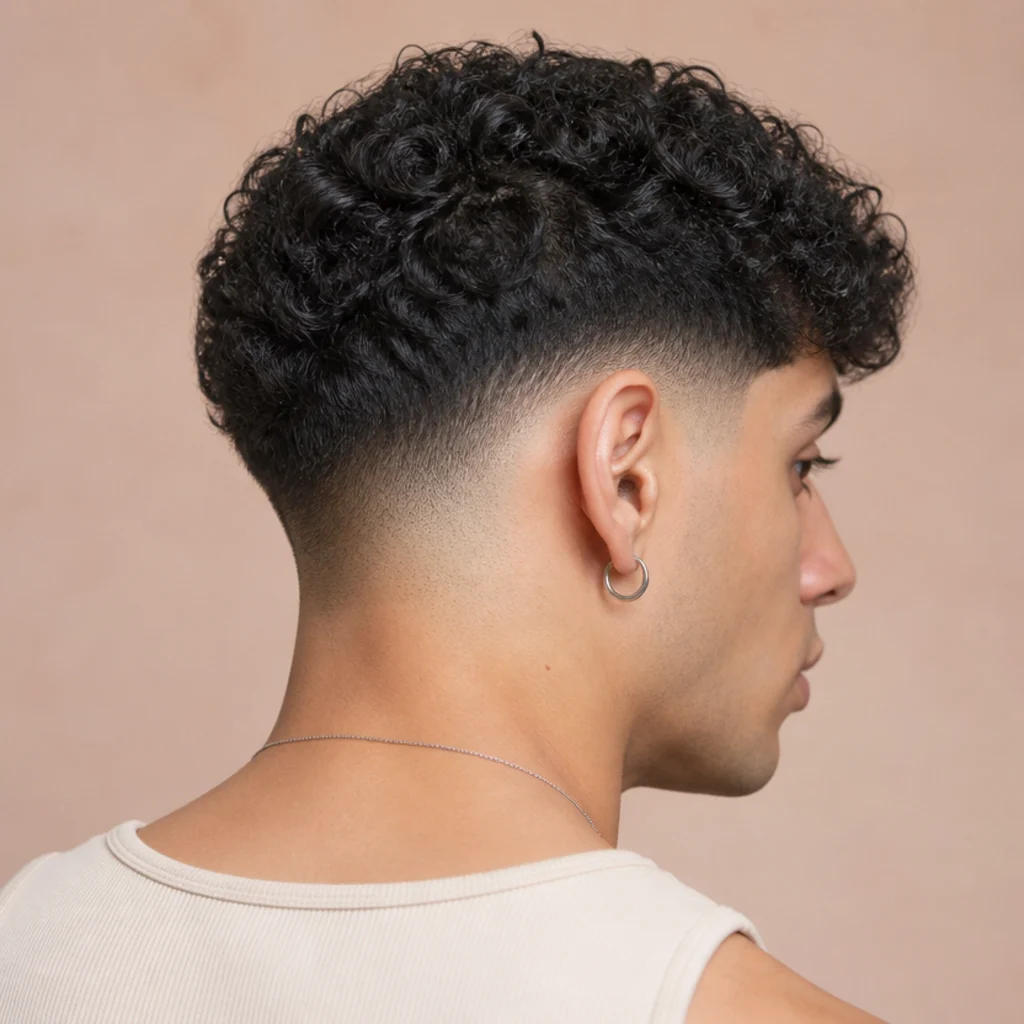
A curly edgar cut trades the razor line for a softer, rounded fringe that follows the curl instead of fighting it. Underneath, a blurry fade melts from short to skin with no visible guard line, so nothing competes with the texture up top. This flatters type 3 curls through looser type 4 coils that want shape without bulk, and it's forgiving of uneven hairlines because the curl pattern hides hard edges. The single most important instruction: account for shrinkage. Curls can spring up 30 to 50 percent as they dry, so length that looks right when wet will read too short by morning. Have the top cut a touch longer than seems correct. Maintenance runs every three to four weeks; a curl cream worked into damp hair plus diffuse-drying on low heat keeps the fringe defined rather than frizzy. Pro tip: refresh between washes with a water-and-leave-in spritz rather than recutting. Tell your barber "keep my curls full up top, fade the sides blurry with no line, and round the fringe to follow the curl."
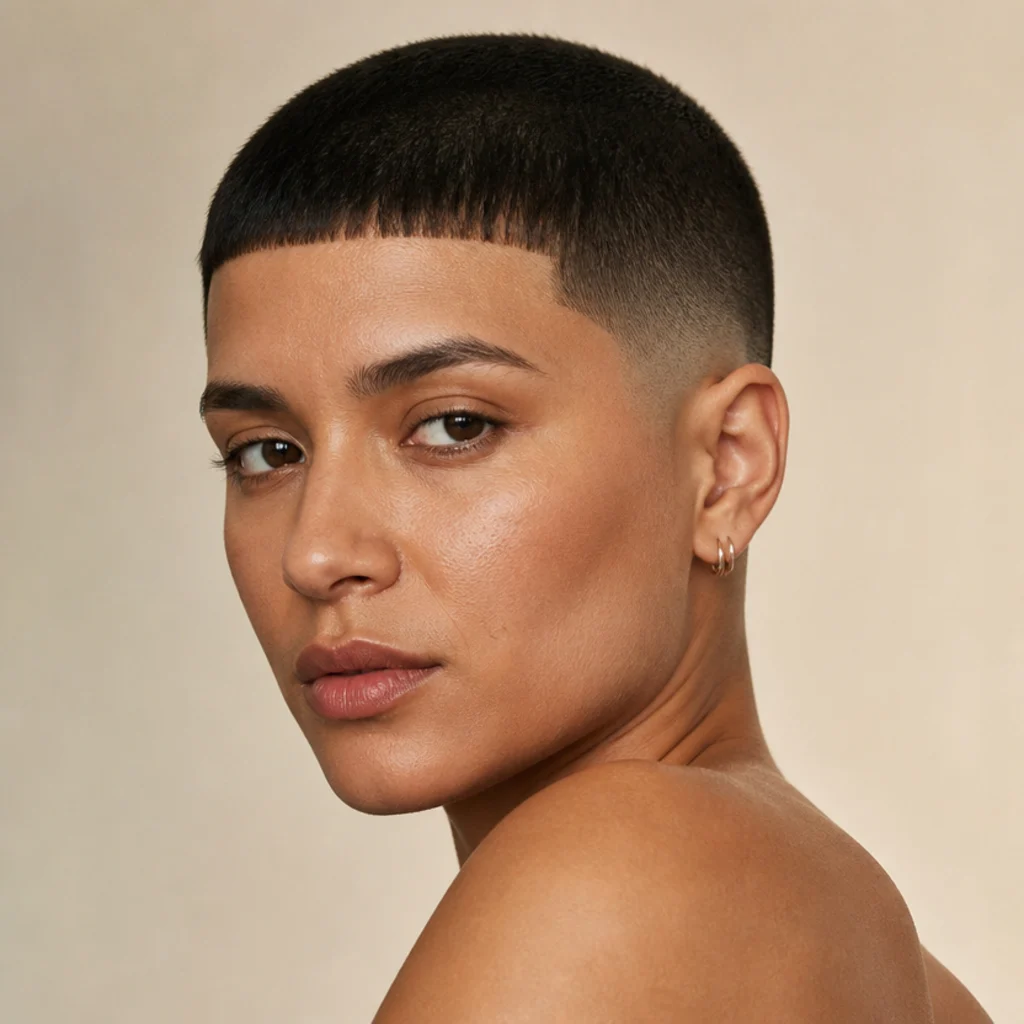
04Edgar Buzz Cut with a Skin Taper
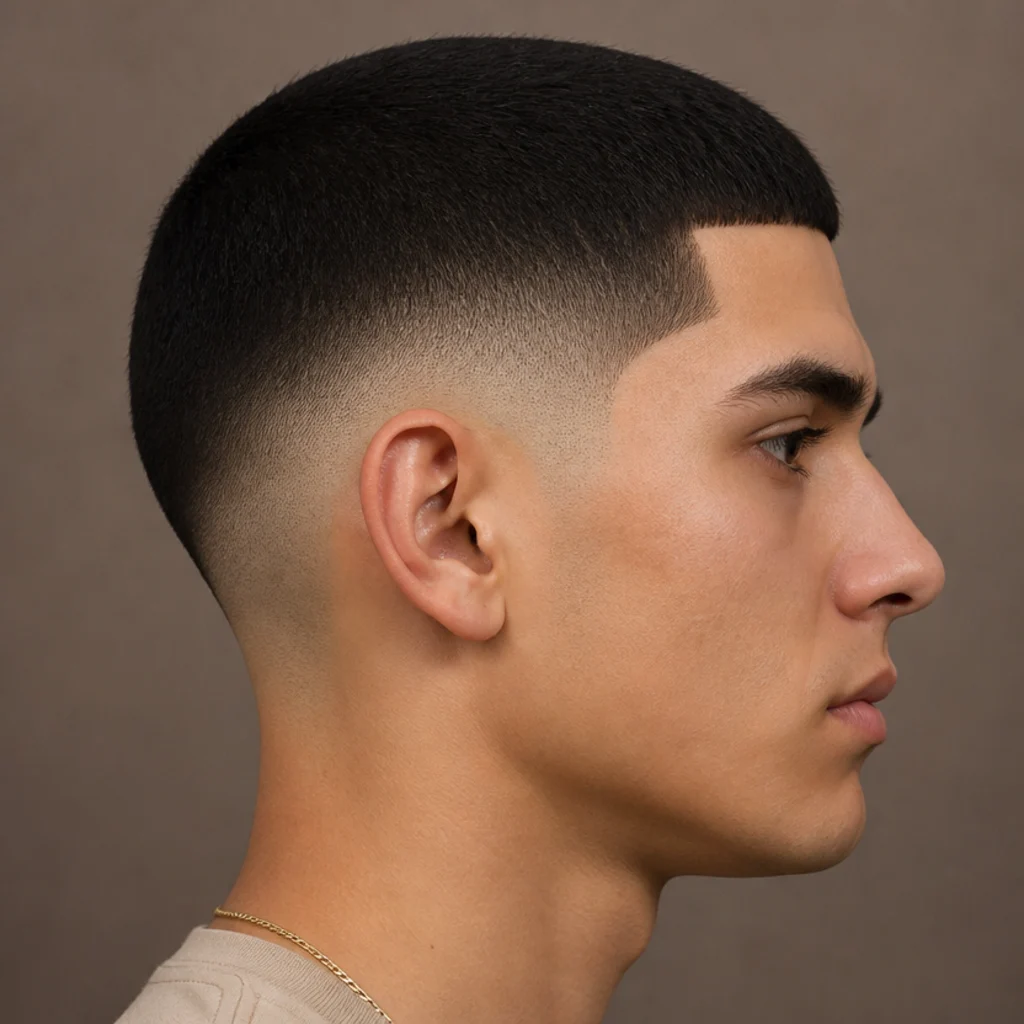
The edgar buzz cut strips the style to its skeleton: a short, uniform buzz on top, usually a #1 to #3 guard, that keeps the blunt front edge, paired with a skin taper that fades to bare at the neckline and sideburns. It's the lowest-effort look here, ideal for anyone who wants the geometry without a morning routine, and because the top is short it flatters nearly every face shape on straight and wavy hair alike. The catch is precision at the front: with so little length, the barber has less room to correct a crooked line, so the fringe has to be measured carefully against your brow. Skin regrowth is visible fast, which means a two-week cadence to stay crisp; stretch it and the taper turns into a soft shadow. Pro tip: a matte pomade or even a light layer of sunscreen-free balm keeps a buzzed top from looking dull under bright light. Ask for "a number two on top, a blunt front line measured to the brow, and a skin taper at the edges."
05High Taper Fade Edgar with Volume
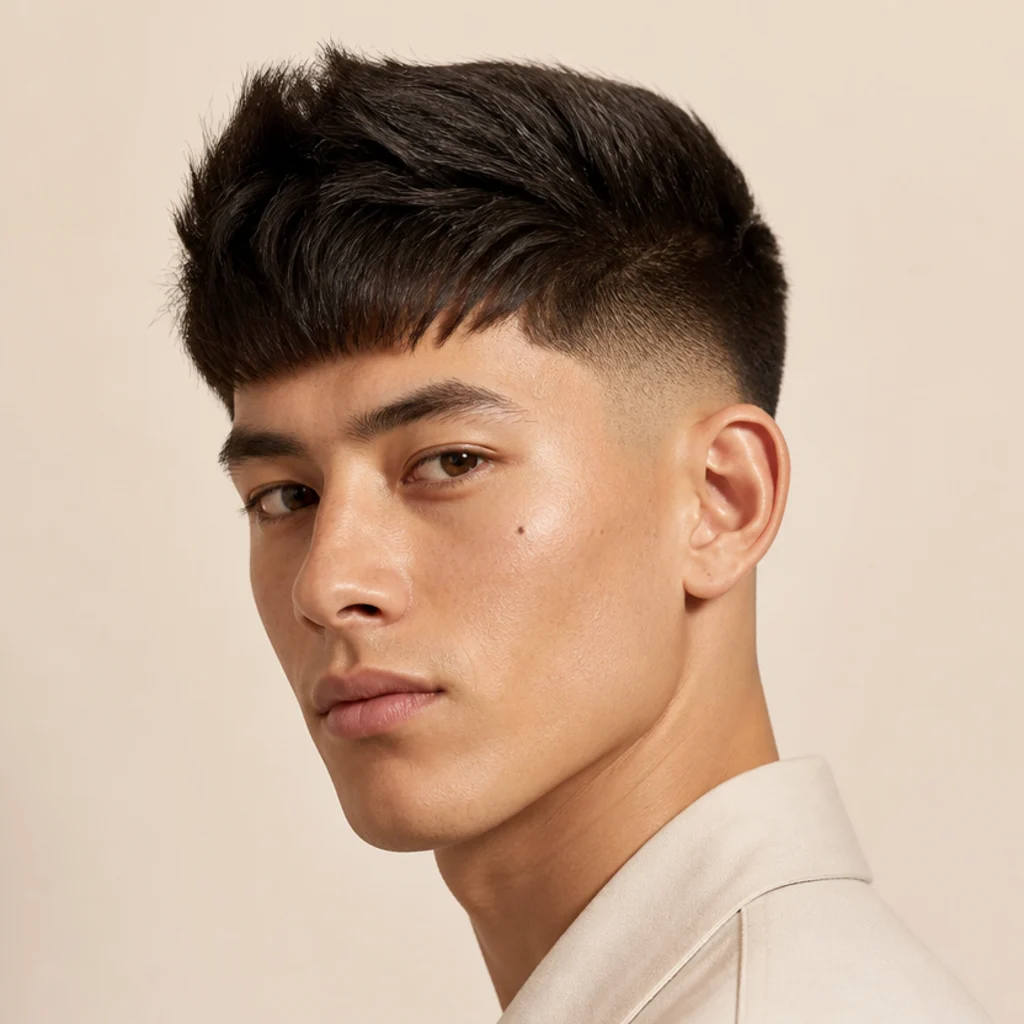
For the boldest silhouette, a high taper pushes the short sides well up the head, leaving a tall block of hair on top you can style with genuine lift. The fringe stays blunt, but the added height reads modern and statement-making rather than tidy. Balance matters here: the vertical volume elongates the head, so round, square, and oval faces gain the most, while longer or narrow faces can look stretched. Thick, straight hair holds the height on its own; finer hair needs a matte clay worked from the roots and a blow-dry lifting up and back for staying power. Because a high fade travels far up the head, regrowth is obvious quickly, so budget a visit roughly every two weeks to hold the shape. Pro tip: point your dryer up the back of the fringe, not straight down, to build root lift before you ever touch product. Ask your barber for "a high taper fade with plenty of length left on top to style up, and a straight blunt fringe in front."
Save this to Pinterest to compare fade heights side by side.
06Textured Crop Edgar with a Mid Fade
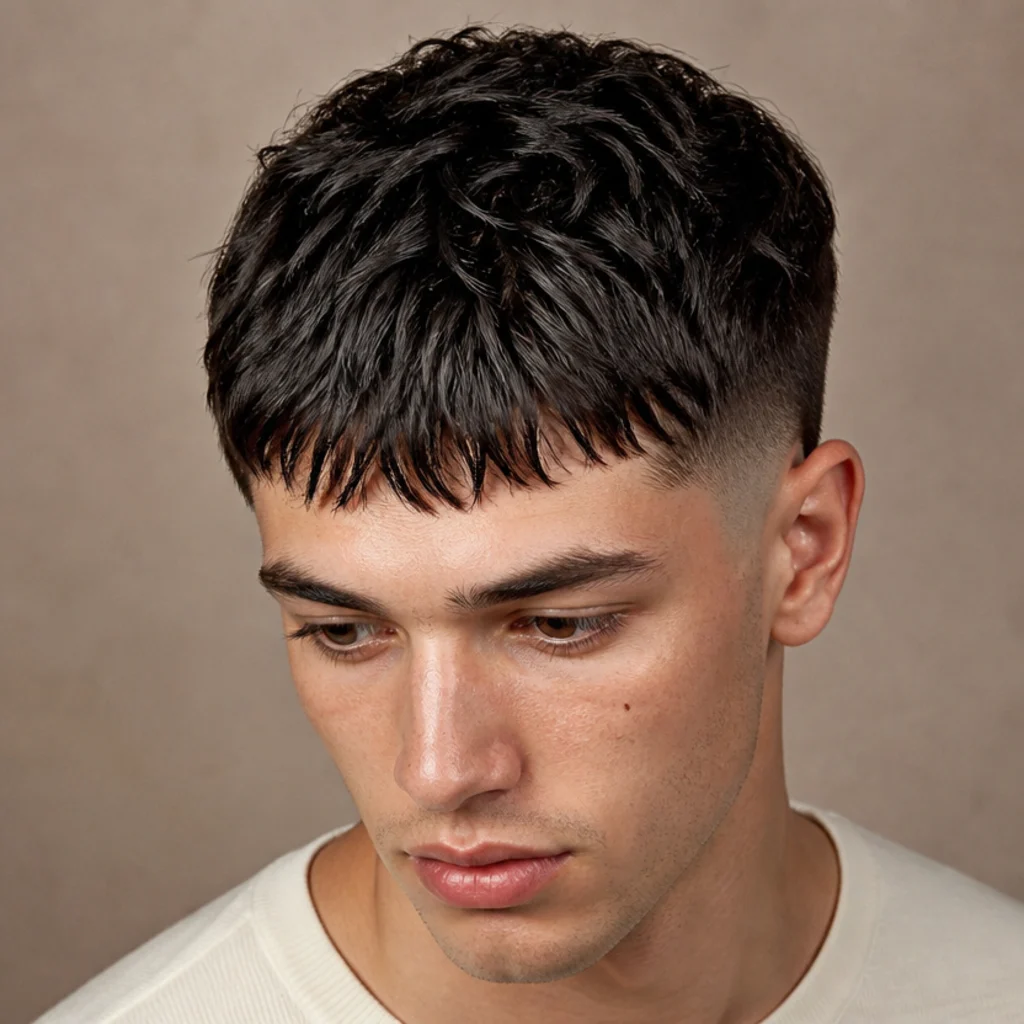
This combo softens the edgar's hard geometry with point-cutting through the fringe. Instead of one solid blunt wall, the front is broken into piecey ends that still hang straight across but catch the light with movement and separation. A mid fade underneath keeps the sides clean and lets the texture read. It's the most flattering version for anyone whose features feel overwhelmed by a fully blunt line, and it's kinder to slightly uneven hairlines since the broken ends disguise small gaps. Straight to wavy hair takes point-cutting beautifully; very fine hair benefits most, because the texture creates the illusion of density. A pea-size dab of matte paste emulsified between the palms and pressed through the ends separates them without stiffness. Upkeep is around three weeks, a touch more forgiving than a blunt fringe because there's no single hard line to police. Pro tip: apply product to dry hair, not damp, so the pieces stay distinct rather than clumping. Ask for "a textured crop with a straight-across fringe, point-cut for movement, and a mid fade."
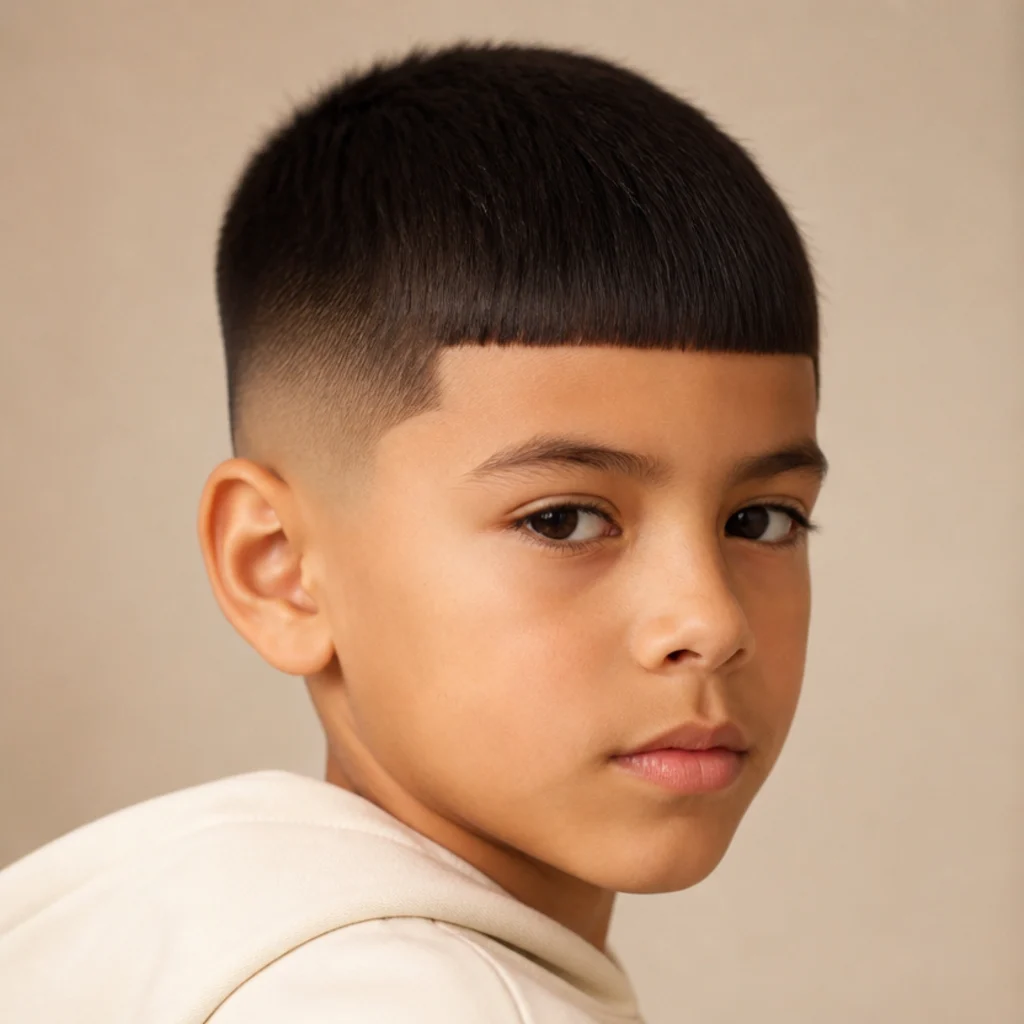
07Edgar Cut for Boys with a Low Taper
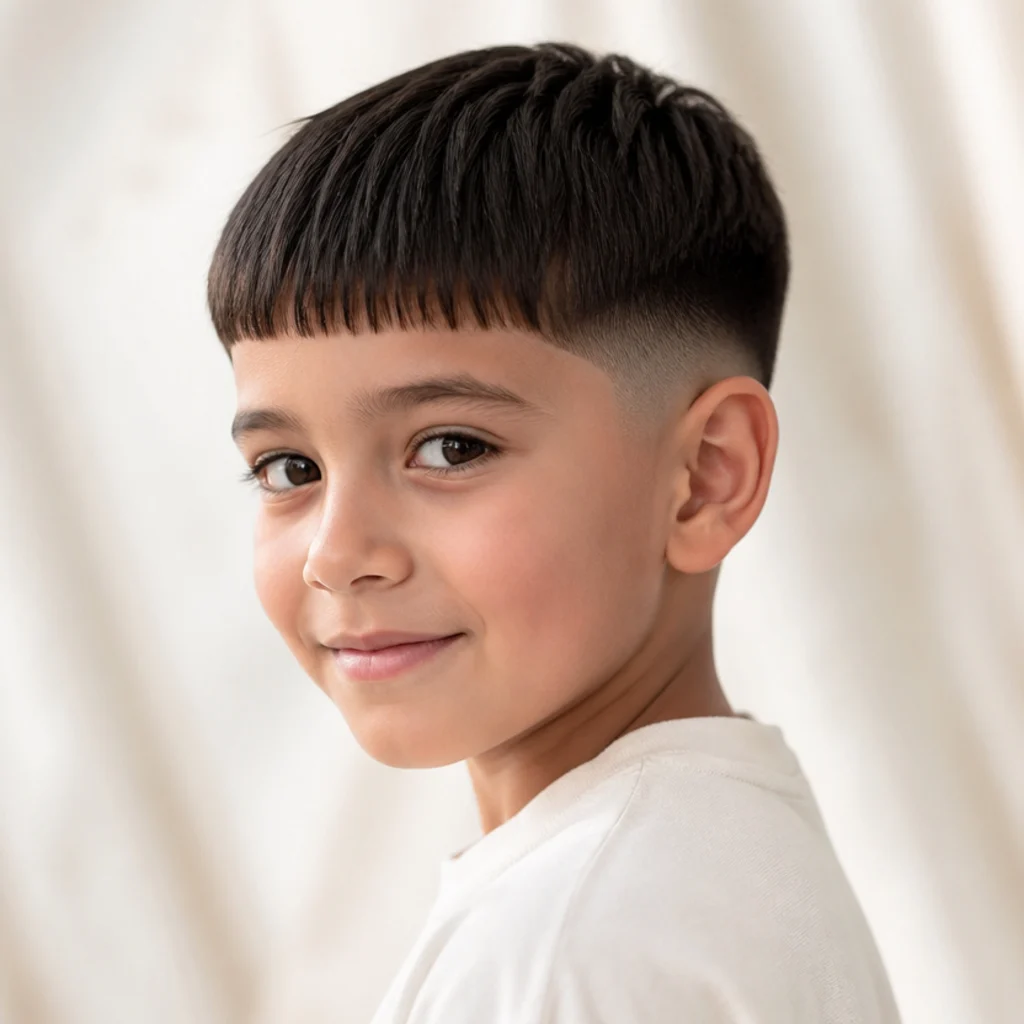
For the edgar cut boys wear to school, the priorities flip toward ease: a manageable fringe length and a low taper that stays firmly inside dress-code territory. A shorter, lighter top means less morning styling, fewer tangles, and a shape that grows out gracefully instead of getting shaggy, all of which parents appreciate. It flatters most young faces because the proportions stay soft rather than severe, and straight to slightly wavy hair needs no product at all, just a quick comb forward. Keep the fringe a little above the brow so it doesn't drift into the eyes between cuts, and skip skin tapers at this age since they demand frequent visits. Because the top isn't long, you can comfortably stretch appointments to every three to four weeks. Pro tip: for a cowlick at the front hairline, ask the barber to leave the fringe slightly longer there so the weight helps it lie flat. When booking, ask for "an edgar with a low taper, a straight fringe cut just above the brow, kid-friendly and low-styling."
08Edgar with Hard Part and Taper Fade
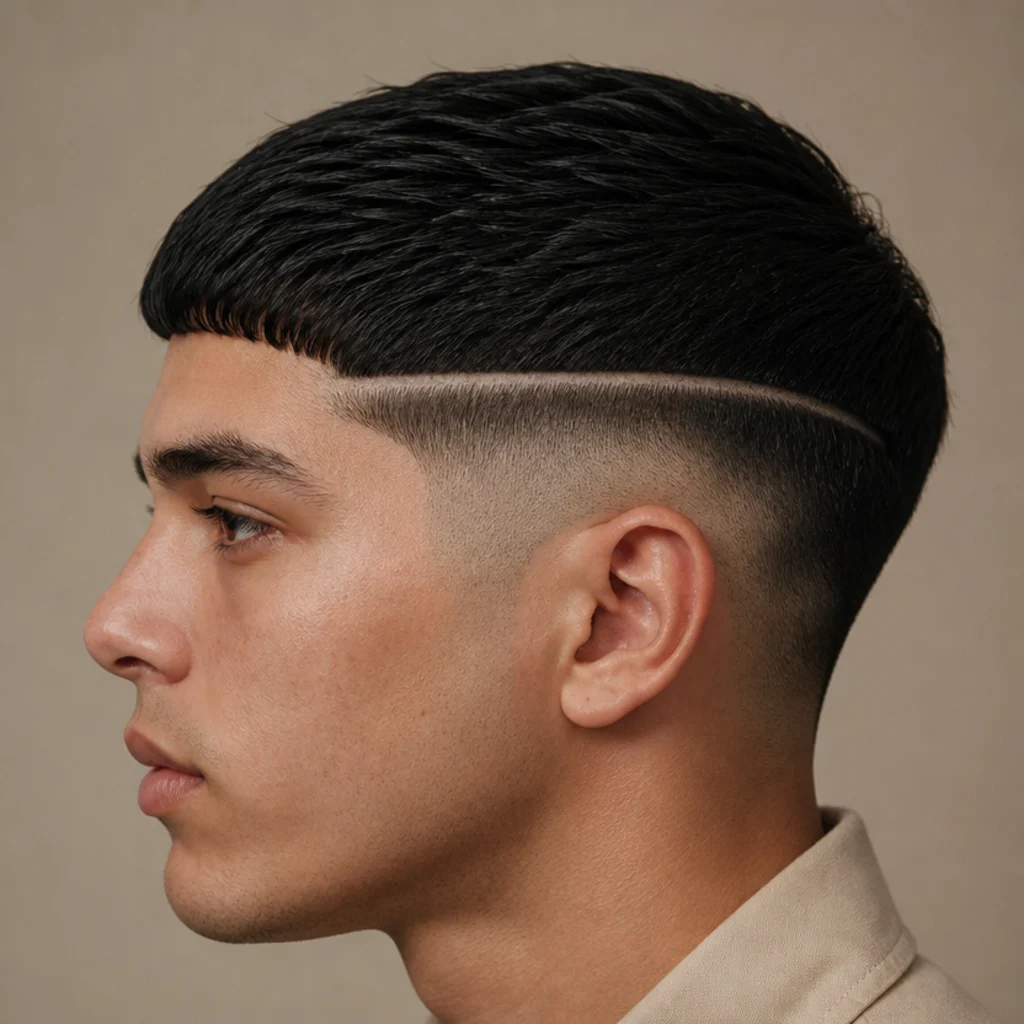
A razor-carved hard part adds an architectural line to the classic edgar without tipping into full design work. The part sits on one side, drawing a clean, deliberate break between the fringe and the taper fade below, and it doubles as a styling guide that makes the top easier to direct each morning. It suits anyone wanting a bit more detail and reads best on straight, dense hair, where the carved line has a solid background to sit against. The line does need re-shaving as it grows, so figure a visit roughly every two weeks to keep it defined, or let it grow into a natural part between full cuts. Pro tip: brush the top away from the part with a boar-bristle brush while blow-drying to set the direction, then the part stays open on its own. Ask your barber for "an edgar with a taper fade and a single hard part carved clean on my left [or right] side," and tell them which side your hair naturally falls toward so the part works with your growth pattern.
09Wavy Edgar Cut with a Drop Fade
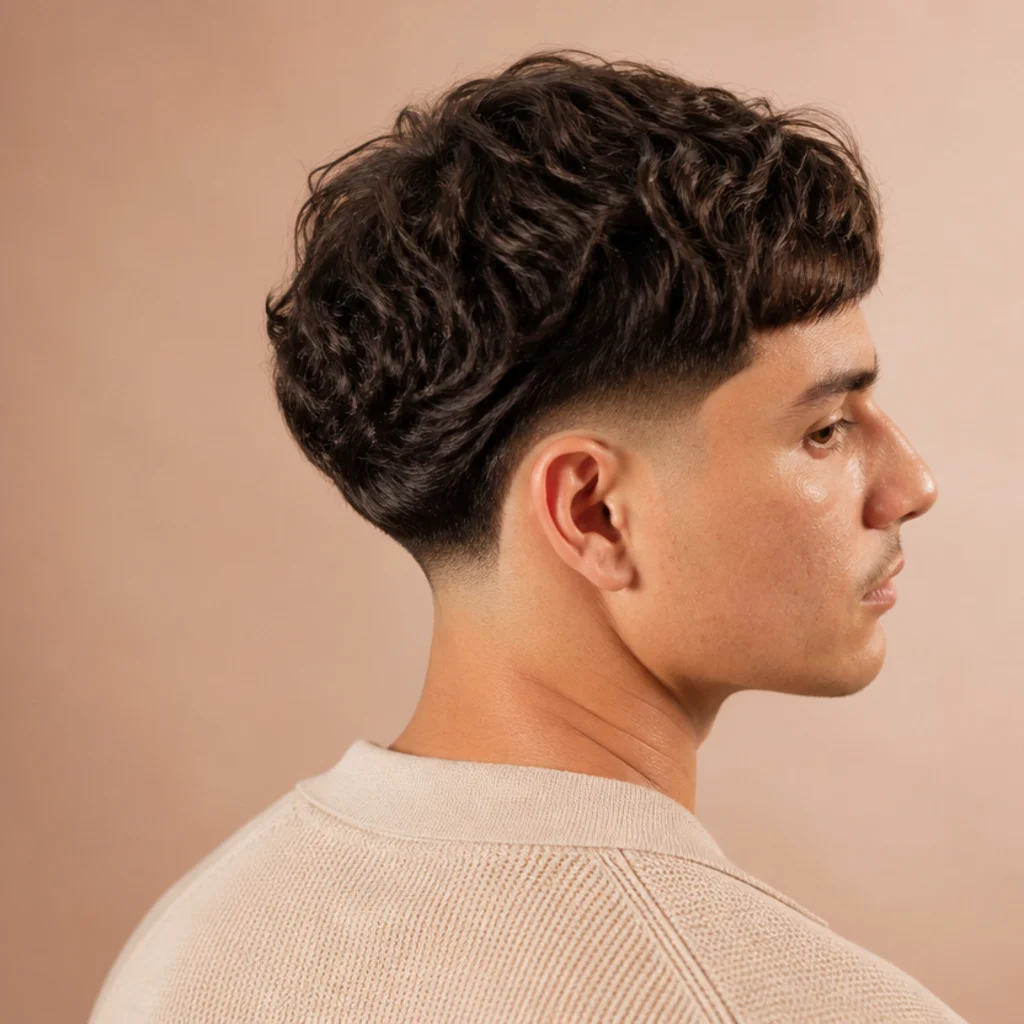
A drop fade curves down behind the ear, following the round of the skull, and it pairs especially well with wave. The waves up top add organic movement to the fringe so it never looks stamped-on, while the dropped line gives the back a finished, sculpted silhouette. This is built for medium-length wavy textures, roughly type 2, that want the edgar shape without flattening their natural pattern. Keep the fringe long enough for the wave to show, but have the barber texturize lightly so it doesn't puff. A light sea-salt spray scrunched into damp hair brings out the S-bend and keeps the fringe from going limp by midday. Upkeep runs about every three weeks, since the drop line loses its curve as it grows. Pro tip: air-dry or diffuse rather than blow-drying straight down, which pulls waves loose; let them clump for definition. Tell your barber "an edgar with a drop fade curving behind the ear, my natural waves kept up top, and the fringe shaped straight across the front."
10Short Edgar Buzz with a Burst Fade
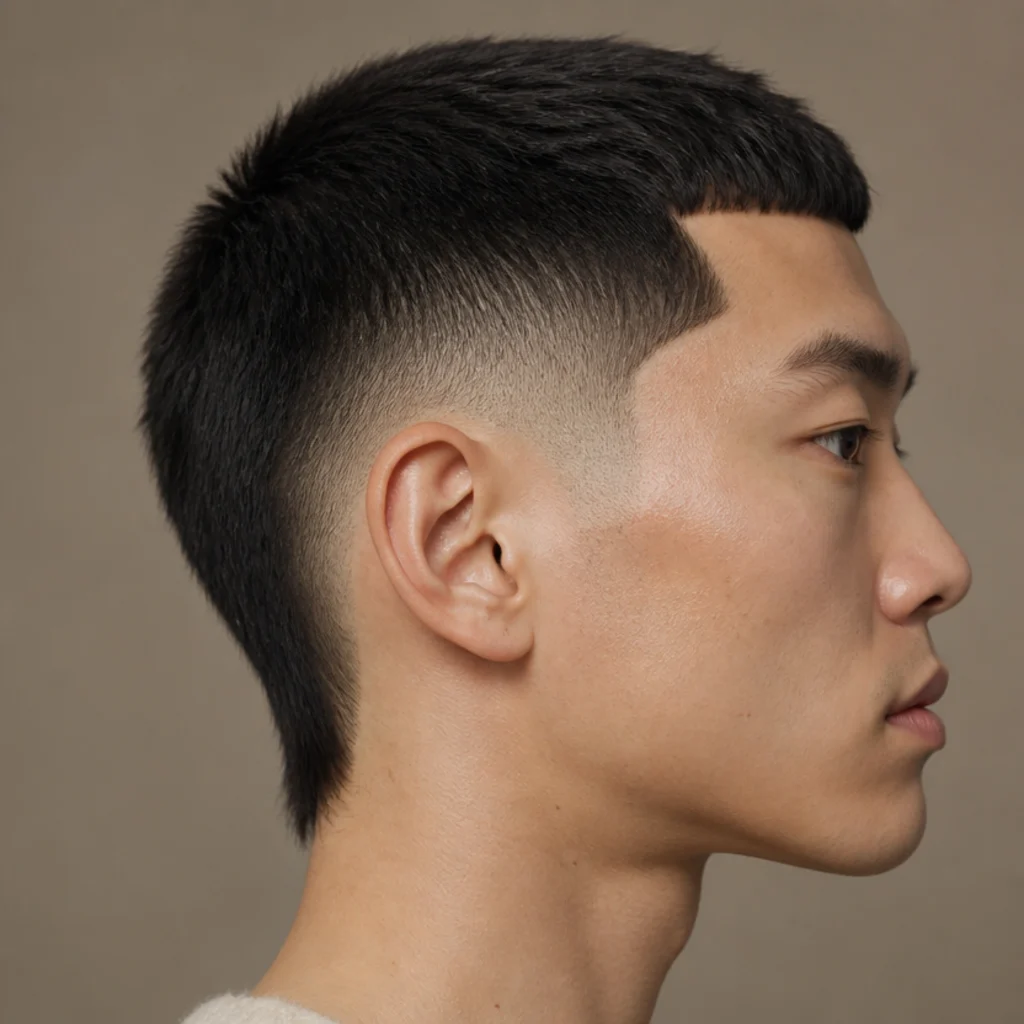
Here the edgar buzz cut meets a burst fade, which arcs around the ear like a fan and leaves a little length trailing at the nape. The contrast between the buzzed top and the curved, semicircular fade gives an athletic, ready-for-anything edge with essentially zero daily styling. It suits active routines, helmets, and hats, and works on straight and wavy hair alike since the top stays short. The burst pattern shows growth around the ear quickly because the shape depends on a tight arc, so a two-week cadence keeps it reading as intentional rather than grown-in. Decide up front how you want the nape: tapered tight for the cleanest look, or left slightly longer for a subtle ducktail that softens the back. Pro tip: a burst fade lives or dies on symmetry, so ask the barber to check both ears against each other before finishing. Ask for "a short edgar buzz on top with a burst fade fanning around the ears," and specify whether you want the nape tapered out or left a touch longer.
Save this to Pinterest for your low-maintenance shortlist.
11Edgar Cut with a Line-Up and Taper
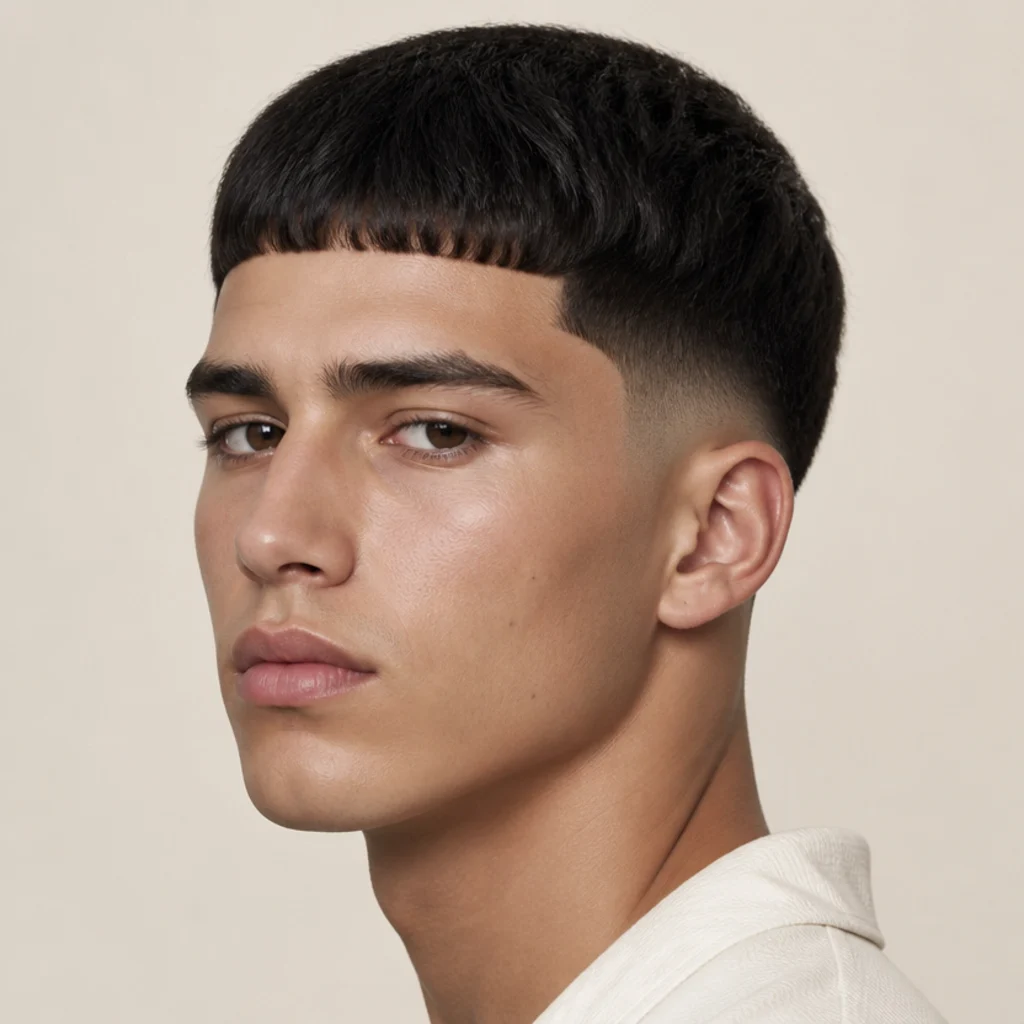
A line-up, or edge-up, squares off the entire hairline so the fringe corners and temples read like drawn edges. Combined with a taper fade, it produces the crispest, most defined version of the edgar, all right angles and clean intersections. It suits anyone whose hairline sits fairly even and who actually enjoys keeping up hard lines, and it reads best on straight, dense hair that holds the squared corners without gapping. The honest caveat: a line-up removes hair at the perimeter, and cutting into the hairline repeatedly, week after week, can make it look higher over time. Keep it modest, follow your natural line rather than pushing it back, and revisit every two weeks. Pro tip: between shop visits, don't chase the line yourself with a razor at home, which is how most people accidentally raise their own hairline; let a professional keep it honest. Ask for "an edgar with a natural line-up that follows my existing hairline, not squared too far back, and a taper fade to match."
12Long Fringe Edgar with a Low Fade
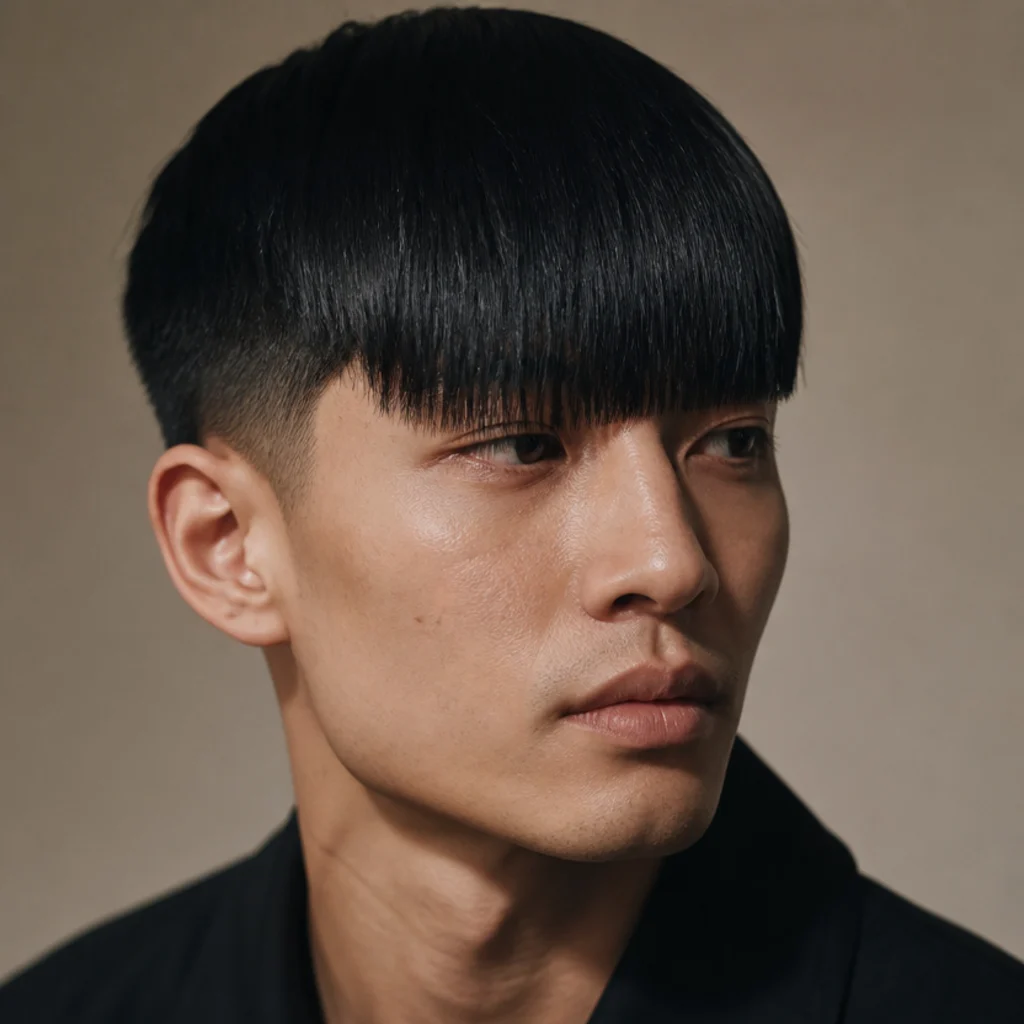
Dropping the fringe longer, right down to touch the eyebrows, gives the edgar a heavier, more dramatic front. A low fade underneath stays deliberately restrained so nothing pulls focus from that curtain of hair. This is the version for taller or higher foreheads that benefit from coverage, and it reads best on straight hair that hangs in a smooth, uninterrupted sheet; wavy hair can work if it's blow-dried down. The trade-off is discipline: a long fringe drifts into the eyes and needs regular shaping to keep the bottom edge clean, so plan a trim every two to three weeks even though the sides can wait longer. Pro tip: ask for a slight interior weight-removal behind the fringe so the length lies flat instead of standing away from the forehead, a common problem with thick, blunt-cut fringes. Ask your barber for "a longer edgar fringe sitting right at the brows, cut straight across, weight thinned behind it, with a low fade on the sides."
13Edgar with Design Lines and a Taper Fade
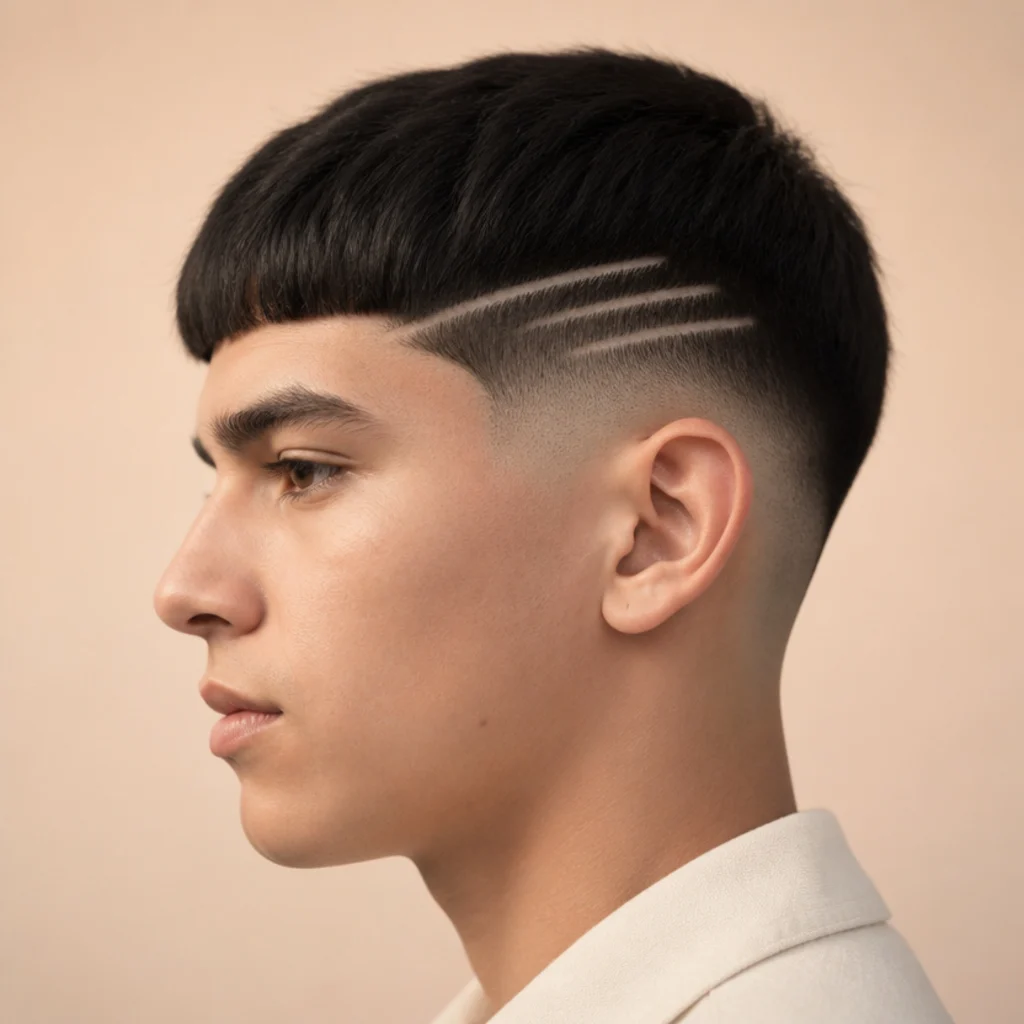
For a personalized, expressive take, carved design lines turn the faded section into a canvas. A few parallel razor lines or a small angular motif sit between the fringe and the taper, adding graphic detail that's yours alone. It suits anyone who wants a standout version and reads cleanest on straight, dense hair, which gives the razor a smooth, high-contrast background. Be realistic about upkeep: fine razor lines start filling in within a week and are essentially gone by two, making this the highest-maintenance option here. Keep the design simple if you can't commit to frequent visits, since intricate patterns look worse half-grown than clean lines do. Pro tip: photograph the design the day you get it, straight on and in good light, so you or a new barber can replicate it exactly next time. Bring a clear reference and ask your barber for "an edgar with a taper fade and [describe the pattern] carved into the side," and confirm the line depth so it lasts as long as possible.
14Curly Edgar Cut with a High Taper
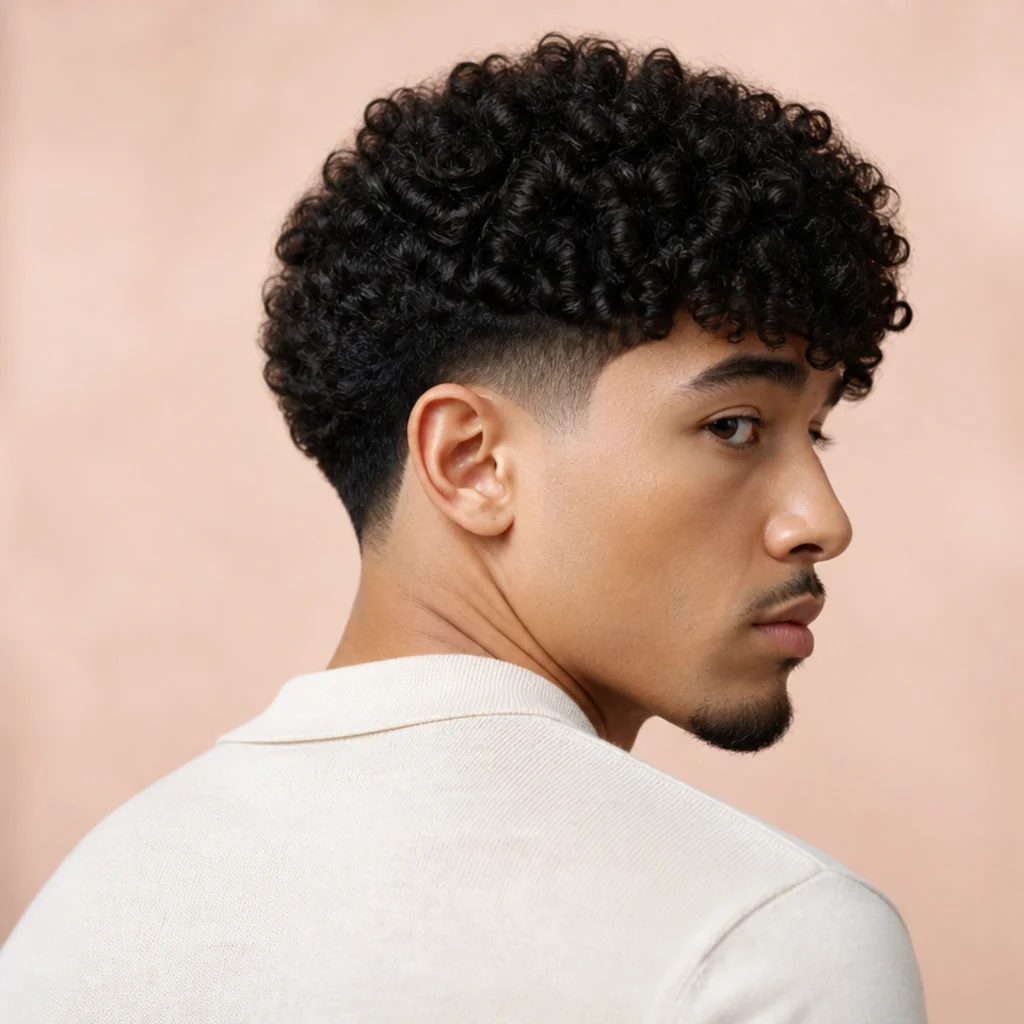
A high taper under a curly edgar lifts the short sides and lets the curls stand tall for a full, rounded crown. The high line keeps the walls tight while the fringe follows the curl forward in a soft, natural shape, so the whole cut reads sculptural rather than boxy. It's made for type 3 through looser type 4 curls that want height and definition, and the tall crown adds flattering vertical balance to round and square faces. As always with curls, shrinkage rules: have the barber cut the top noticeably longer than looks right while wet, because it will spring up as it dries. A curl custard or gel worked into soaking-wet hair, then scrunched and diffused, locks in clumps and hold. Maintenance is every three to four weeks, mostly to tighten the taper, since the curls themselves grow out attractively. Pro tip: sleep on a satin pillowcase or in a satin bonnet to protect the crown's shape overnight and cut down on frizz. Tell your barber "keep the curls full and tall up top with a high taper on the sides."
15Blended Edgar with a Temple Taper
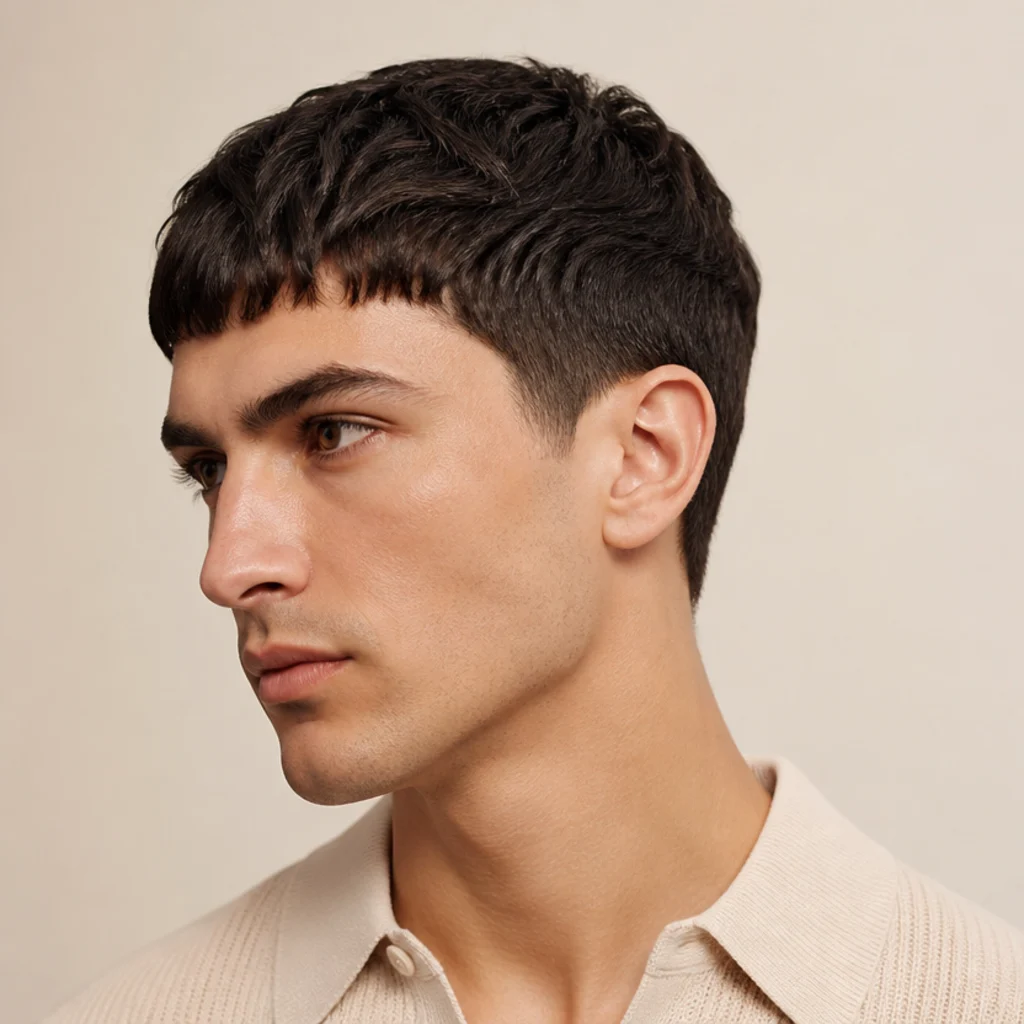
The most understated combo here, a temple taper tightens only the corners around the temples and neckline while the rest of the sides stay longer and blended into the top. The fringe still sits blunt, but the overall effect is soft, grown-in, and quiet rather than sharply carved. It's the ideal on-ramp for anyone trying the edgar for the first time, working within a strict dress code, or wanting a look that doesn't punish a missed appointment. Straight and wavy hair both blend cleanly, and because there's no exposed skin to betray regrowth, you can comfortably stretch to four weeks or beyond between cuts. It also flatters those with slightly uneven hairlines, since the softness forgives what a hard line would expose. Pro tip: this is the easiest edgar to maintain with a home trimmer between visits, just clean the temple corners with a guard on and leave the blend alone. Ask for "an edgar with just a temple taper, everything else blended and left a bit longer on the sides."
Pro Tips from the Editor
- Cut it dry if it's straight, plan for shrinkage if it's curly. Straight hair stretches when wet and springs back short; curls shrink dramatically as they dry. Tell your barber your hair type and ask them to account for it before the fringe is committed.
- The fringe is measured to your brow, not to a photo. The most flattering fringe height is a finger's width above the eyebrows for most faces. Higher opens up the face; lower dramatizes it. Reference photos show a stranger's proportions, not yours.
- Match fade height to face length, not to trends. Round and square faces gain balance from a higher fade and more top height; long or narrow faces almost always look better with a low or temple taper and a fuller fringe.
- Ask for the line to be checked while you sit upright. Hair cut while you're slouched rides high once you stand. A ten-second upright check is the single best guard against a crooked or too-high fringe.
- Skin work is a two-week commitment; blends are a four-week one. Skin tapers, line-ups, and carved designs look sharp for days and soft for the rest. If you can't get to the shop often, choose a low or temple taper that grows out gracefully.
- Product goes on for control, not shine. A matte paste, clay, or curl cream holds the shape without the wet, greasy look that fights the edgar's clean geometry. Emulsify it in your palms first so it distributes evenly.
- Photograph a cut you love, straight on and lit. A clear front and side photo lets any barber replicate the fringe height, fade type, and any design far more reliably than a verbal description.
How to Choose / Get the Look
Start with two decisions, in this order: how bold you want the fringe, and how high you want the fade. The fringe sets the personality, while the fade sets the balance against your face. A blunt, level fringe reads sharpest on straight or loosely wavy hair; curls call for a rounded, forward fringe that follows the pattern; point-cut texture is the middle path for anyone who finds a full blunt line too severe or has finer hair that needs the illusion of density.
For the sides, think in tiers. A low or temple taper is the most conservative, dress-code-safe, and forgiving of missed appointments. A mid taper adds contrast and shows off straight, dense hair. A high taper, drop, or burst fade makes the biggest statement but demands a two-week upkeep rhythm. Use the table below to match a combo to your hair type, face shape, and how often you're realistically willing to visit the chair.
| Combo style | Best hair type | Face shapes it flatters | Upkeep cadence | Commitment level |
|---|---|---|---|---|
| Low / temple taper | Straight, wavy | Most, incl. long | 3 to 4 weeks | Low |
| Mid taper | Straight, dense | Oval, square | 2 to 3 weeks | Medium |
| High taper + volume | Thick straight | Round, square, oval | ~2 weeks | High |
| Curly edgar (blurry or high) | Type 3 to 4 curls | Round, square | 3 to 4 weeks | Medium |
| Edgar buzz + skin/burst | Straight, wavy | Most | ~2 weeks | High (skin) |
| Hard part / line-up / designs | Straight, dense | Even hairlines | ~2 weeks | High |
Then be specific at the chair. Bring a reference photo, name the fade type and its height, and say exactly where the fringe should sit, at the brows or above them, and whether you want it blunt or point-cut. Flag your hair's behavior up front, straight strands that stretch or curls that shrink, so the barber cuts to the dried result. Ask them to check the fringe line while you sit fully upright. Between visits, a matte paste or curl cream holds the shape, and most versions need a touch-up every two to four weeks depending on how much skin the fade exposes.
Frequently Asked Questions
Does the edgar cut work on straight hair?
Yes, edgar cut straight hair is the most classic pairing and the easiest to maintain. Straight strands fall naturally into the blunt horizontal fringe with minimal product, so the signature edge stays crisp between trims. One thing to know: straight hair stretches when wet and springs back shorter as it dries, so ask your barber to cut the fringe dry, or to leave a little extra length, so you don't end up with a fringe that's higher than you wanted.
Can I get an edgar cut with curly hair?
Absolutely. A curly edgar cut uses a softer, rounded fringe that follows the curl pattern rather than a razor-straight line, usually paired with a blurry or high taper so nothing competes with the texture. The key is shrinkage: curls can spring up 30 to 50 percent as they dry, so ask your barber to leave the top noticeably longer than looks right while wet. Finish with a curl cream or custard on damp hair and diffuse on low heat to keep the fringe defined.
What taper fade goes best with an edgar?
It depends on your face and your upkeep tolerance. A low or temple taper is subtle, office-friendly, and grows out gracefully; a mid taper adds contrast and suits straight, dense hair; a high, drop, or burst fade makes the boldest statement but needs a visit about every two weeks. As a rule, rounder faces gain balance from a higher fade with height on top, while longer or narrow faces look best with a lower taper and a fuller fringe. Any edgar cut taper fade keeps the sides clean so the fringe stays the main event.
Is the edgar buzz cut low maintenance?
Day to day, yes, the edgar buzz cut is the easiest version to live with because the short top needs no styling at all. The trade-off is at the shop, not the mirror: skin tapers and buzzed lengths show regrowth quickly, so you'll visit roughly every two weeks to keep the fade and front line sharp. If you want the low-effort feel with fewer appointments, ask for a low taper instead of a skin taper so regrowth blends in rather than showing a hard shadow.
Is the edgar a good cut for boys?
The edgar cut boys wear works well with a manageable fringe length and a low taper. A shorter, lighter top cuts down on morning styling and tangles, and a low taper stays inside most school dress codes while still looking sharp. Skip skin tapers, line-ups, and carved designs for younger kids, since those demand frequent shop visits, and keep the fringe just above the brow so it doesn't drift into the eyes between cuts.
How often do I need to get an edgar cut touched up?
It comes down to how much skin the fade exposes. Low and temple tapers and blended versions hold their shape for three to four weeks. Mid tapers and longer fringes want attention every two to three weeks. Skin tapers, high fades, burst fades, line-ups, hard parts, and carved designs are the high-maintenance end, looking their sharpest for about two weeks before regrowth softens them. Match the combo to how often you're realistically willing to sit in the chair.
What should I ask my barber for to get an edgar cut?
Name three things clearly: the fringe, the fade, and any detail. Say where the fringe should sit, at the brows or above, and whether you want it blunt or point-cut for texture. Name the fade type and height, for example a low taper, mid taper, drop fade, or burst fade. Then add any extras like a hard part, line-up, or design. Bring a front-and-side reference photo, and mention your hair's behavior, straight and stretchy or curly and shrinking, so the cut suits the dried result.
Will an edgar cut suit my face shape?
The edgar's bold horizontal fringe adds width and shortens the visual length of the face, so it flatters oval, round, and square shapes especially well. Long or narrow faces can wear it too, but they should keep the fringe fuller and the fade lower to avoid elongating the face further, and skip very high, voluminous tops. If your hairline is receding or uneven, a softer, point-cut or blended version disguises it better than a razor-sharp blunt line and line-up.
Can I style and maintain an edgar cut at home between barber visits?
Up to a point. Day-to-day styling is easy: comb or blow-dry the fringe forward, then set the shape with a small amount of matte paste, clay, or curl cream applied to dry hair. For upkeep, you can clean temple corners and the neckline with a guarded trimmer, but leave the fringe line and the fade blend to your barber, since the blunt front edge is the hardest part to correct once it's wrong. Chasing a line-up yourself with a razor is the most common way people accidentally raise their own hairline.