20 Edgar Cut Ideas That Look Effortlessly Stylish
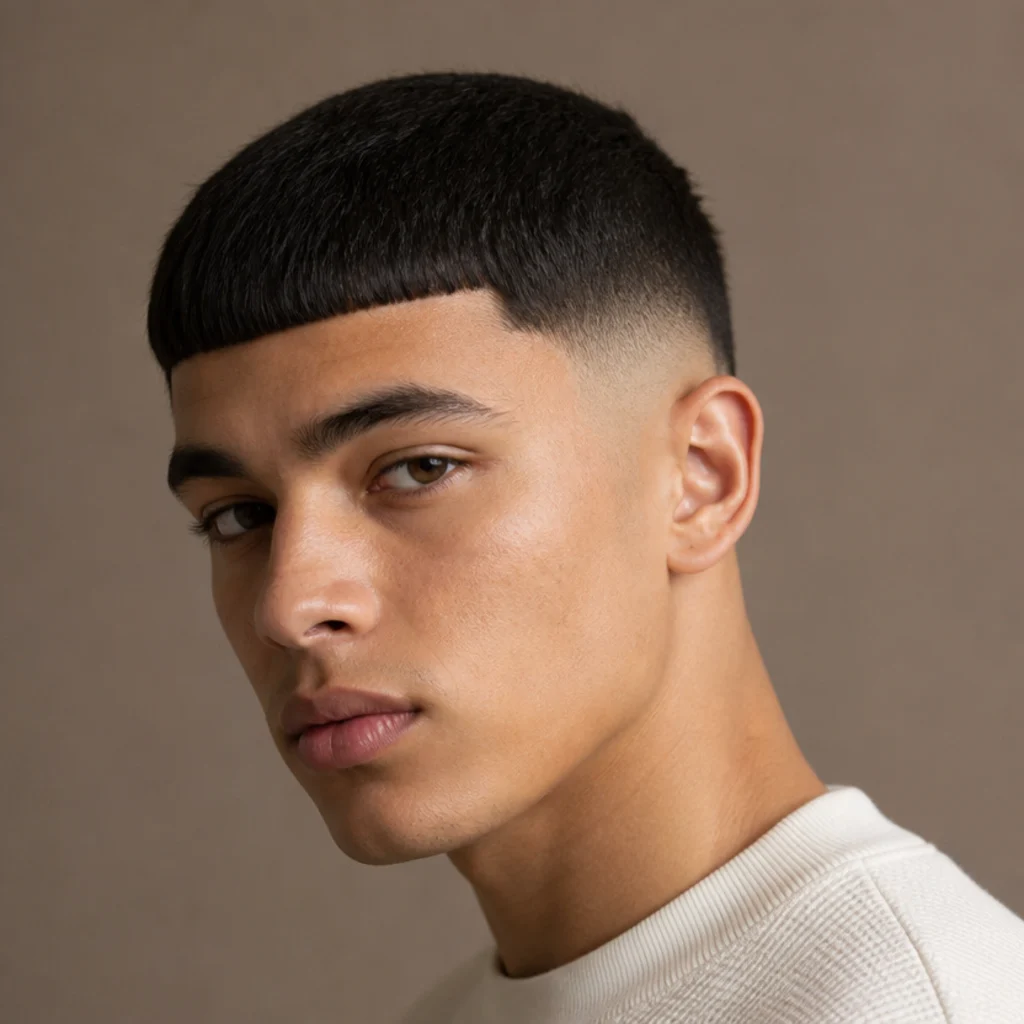
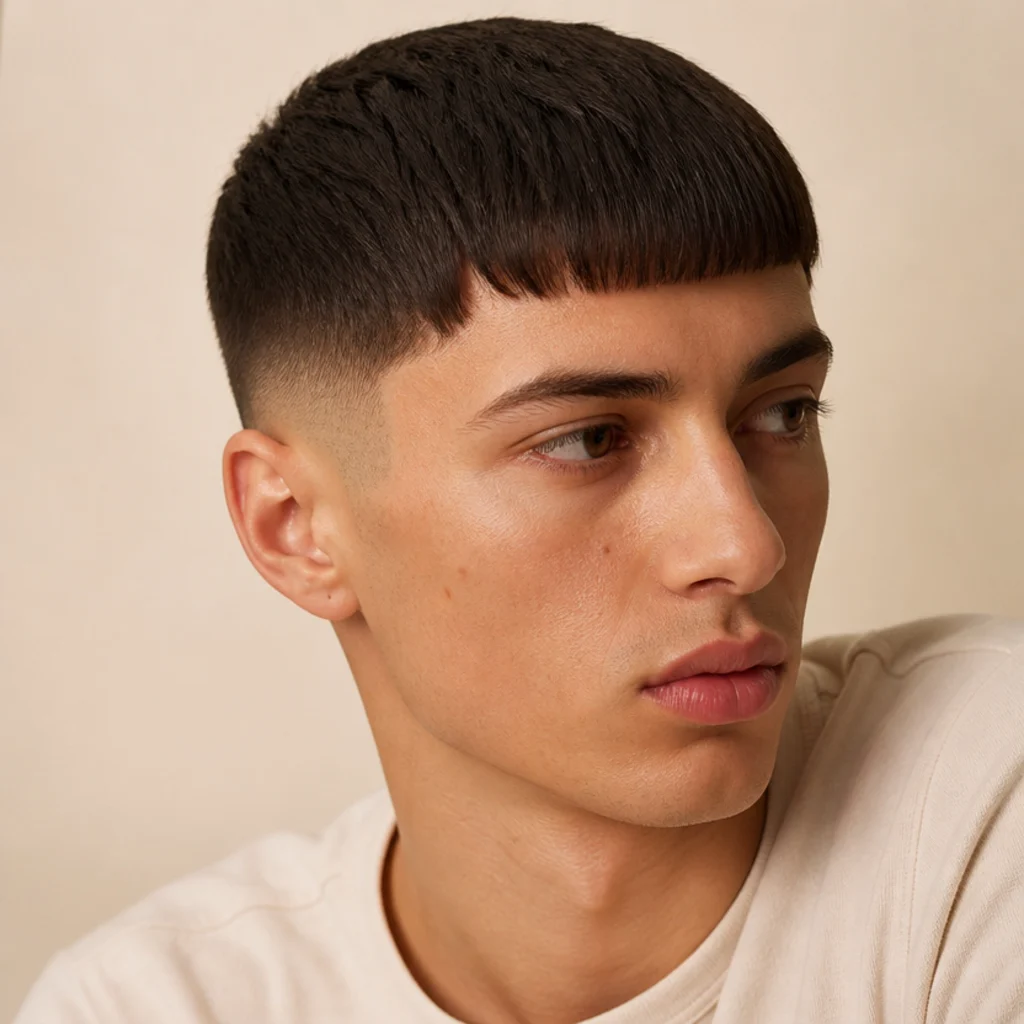
The edgar cut lives or dies on one clean move: a blunt, straight-across fringe sitting over faded or cropped sides. Below are 20 variations broken down by hair texture, fade height, and face shape, so you can match the exact length and finish to your head, then hand your barber a brief they can actually cut from.
 Edited by Lena Rose · Published July 11, 2026 · 32 min read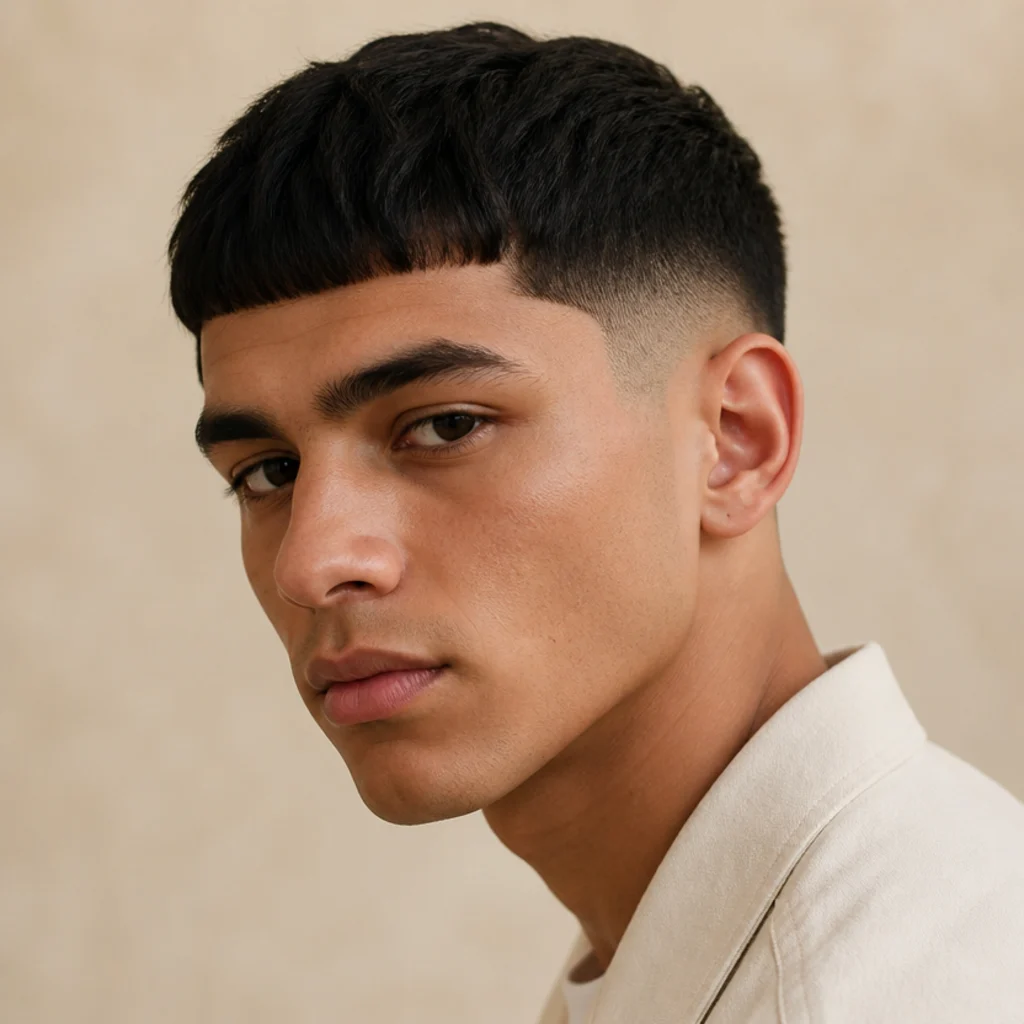
Quick Answer
- Best for: Straight to wavy hair, oval, square, and heart face shapes, and anyone who wants a low-styling, high-recognition crop that photographs cleanly.
- Who might skip it: Very fine or thinning hairlines (a blunt fringe emphasizes a receding front), and anyone whose growth pattern pushes a cowlick straight up at the fringe line.
- Maintenance: A fringe-and-taper refresh every 2-3 weeks; skin fades, hard parts, and design lines want 1-2 weeks.
- Difficulty: Easy to style at home once cut; the fade and the blunt line are barber work.
- Cost: Roughly the price of a standard fade-plus-fringe cut locally; add-ons like design lines, a hard part, bleach, or tips raise it, and color carries an ongoing upkeep cost.
- Wear time / longevity: Looks sharp for about 2 weeks before the fringe reads shaggy and the fade starts to bridge.
- Standout variation: The edgar cut x taper fade, for a clean neckline that grows out gracefully.
- How to ask your barber: "Edgar on top with a blunt [or textured] fringe, [low taper / mid drop / high skin] fade on the sides, keep the top boxy, not rounded."
In This Guide
- Classic Blunt Edgar Cut
- Edgar Cut x Low Taper Fade
- Textured Edgar for Straight Hair
- Curly Edgar Cut
- Edgar Buzz Cut
- Mid Drop Fade Edgar
- Edgar Short Cut
- Line-Up Edgar with Hard Part
- Wavy Messy Edgar
- Edgar Cut for Boys
- High Skin Fade Edgar
- Burst Fade Edgar
- Frosted Tips Edgar
- Edgar with Design Lines
- Long Fringe Edgar
- Comb-Over Edgar
- Edgar with Waves (360)
- Blonde Bleached Edgar
- Edgar Mullet Hybrid
- Spiky Textured Edgar
The edgar cut earns its popularity by doing a lot with very little effort. Its lineage traces back through the Mexican-American "takuache" style and the older Caesar cut, but the modern version has settled into a distinct formula: a hard horizontal fringe, weight concentrated up front, and a fade that clears the sides so the shape reads instantly. Once your barber sets that fringe line and the fade underneath, the daily routine is short and the silhouette holds all day. That's why it's everywhere among students, athletes, and anyone who wants a recognizable cut without a long mirror session.
What most guides get wrong is treating these as 20 different names for one haircut. They aren't. The real variables are fringe finish (blunt versus point-cut versus rounded), fade height and geometry (taper, drop, burst, skin), top length, and optional detail like a hard part, design lines, waves, or color. Change any one and you change who the cut flatters and how often you sit in the chair. This guide is organized around those levers, covering edgar cut straight hair, the curly edgar cut, the edgar buzz cut, the edgar short cut, and edgar cut boys versions. For each, you get who it suits down to face and texture, a realistic maintenance timeline, and a plain-language line to ask your barber for.
01Classic Blunt Edgar Cut
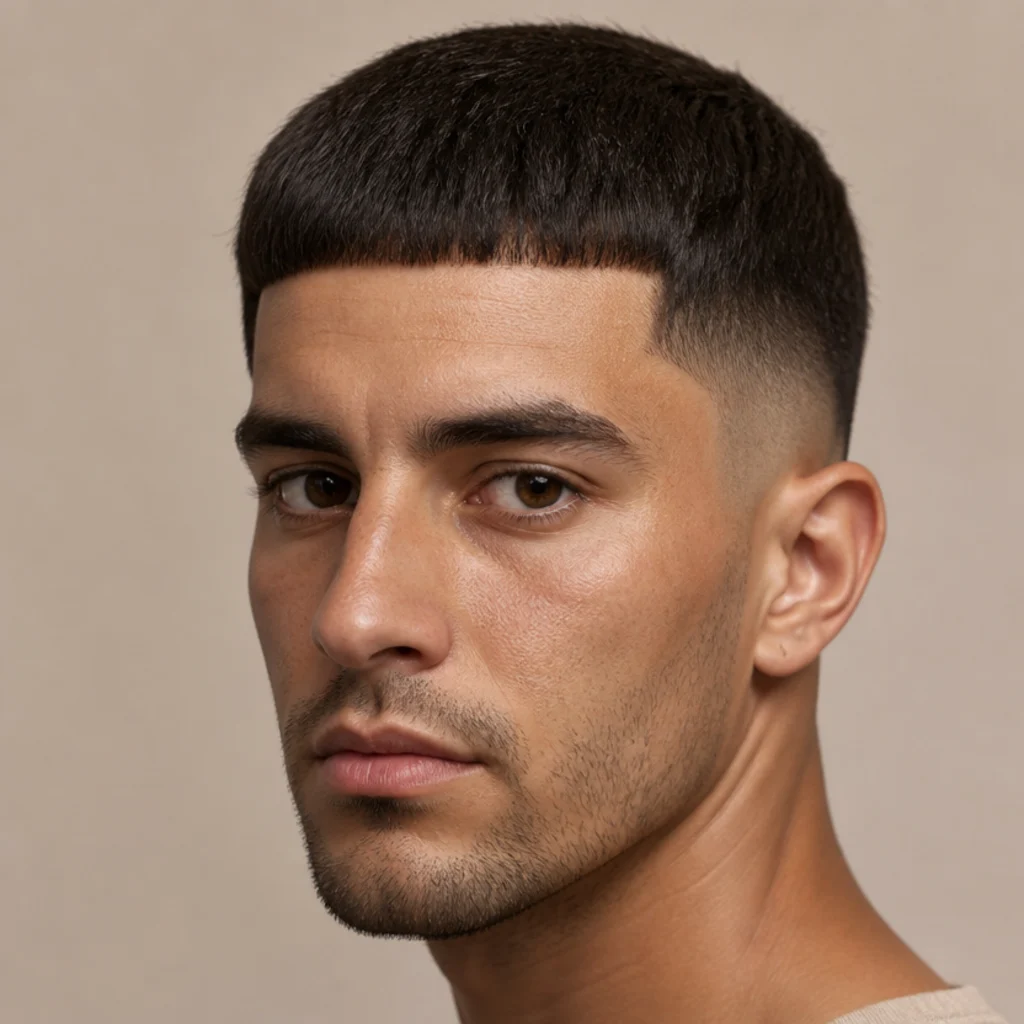
This is the reference build everything else riffs on: a fringe cut in a hard horizontal line straight across the forehead, sides taken short and faded to keep the top reading like a solid block. It looks sharpest on straight to loosely wavy hair with medium density, because the line needs weight to sit flat and even. It squares off the top third of the face, so it flatters oval and heart shapes and gives longer faces a visual ceiling; very round faces may want a hair more height to avoid a helmet effect. The whole look hinges on that blunt edge, so plan a re-cut every 2-3 weeks before the line softens and starts to separate. Style it with a pea-size amount of matte paste worked back to front, keeping stray pieces flat without shine. Pro tip: have your barber cut the fringe with your head upright and eyes level, not tilted down, or the line lands crooked once you stand. Ask your barber for "an edgar with a straight blunt fringe and short faded sides, kept boxy, not rounded."
02Edgar Cut x Low Taper Fade
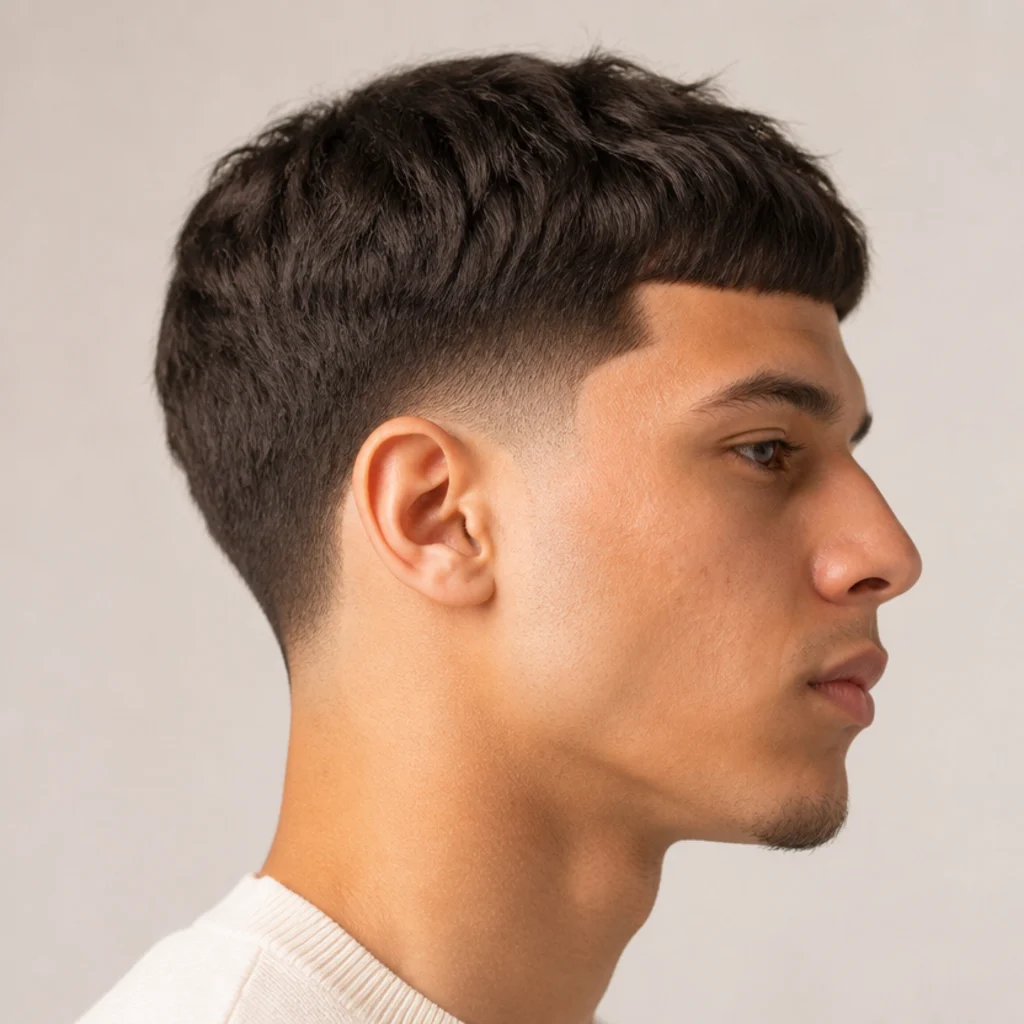
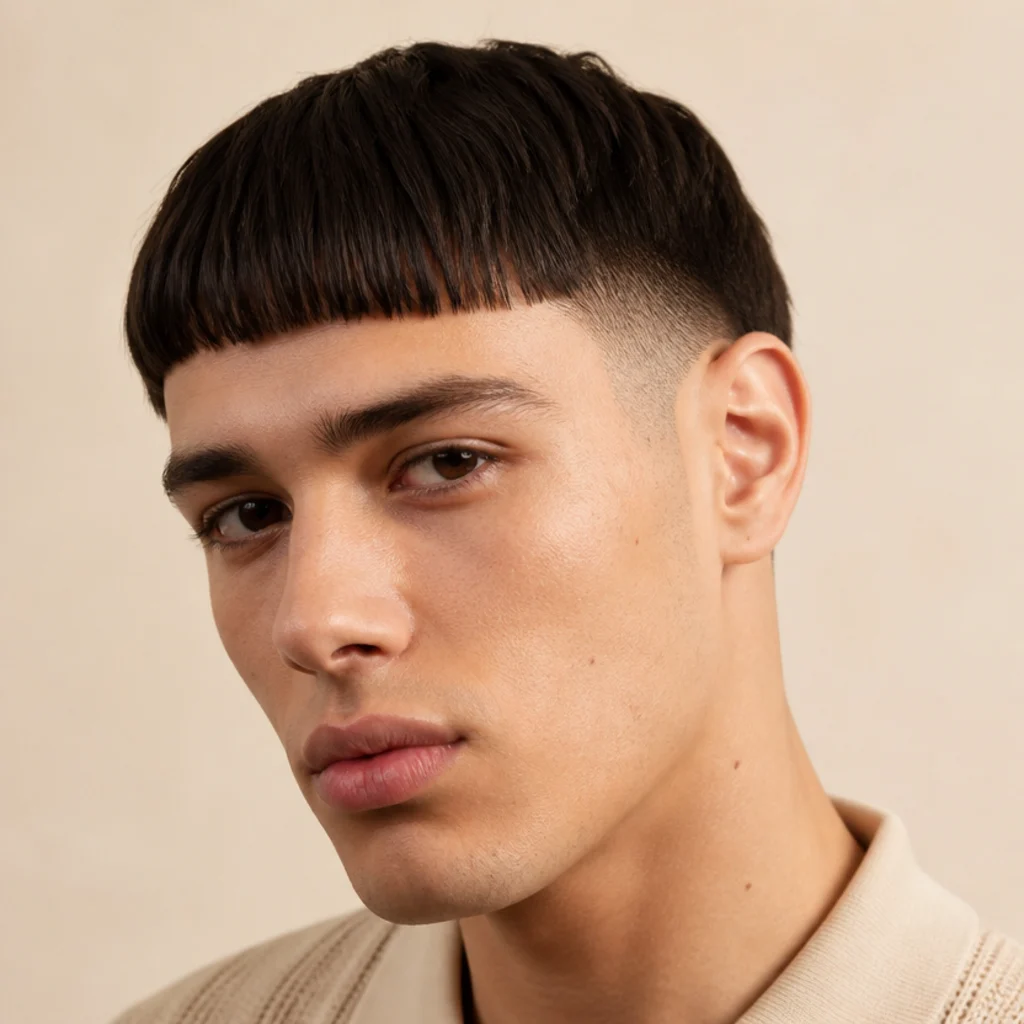
The edgar cut x taper fade is the most wearable combination here because the fade stays low and restrained. Rather than climbing high up the parietal ridge, it hugs the hairline just around the ears and nape, so the top keeps its weight and the overall shape reads polished instead of aggressive. That makes it the safe first move into the style and the version most at home in offices and dress-code jobs where a skin fade would feel loud. It suits nearly every texture and face shape, since the conservative sides don't exaggerate width or height. Because a low taper barely migrates as it grows, you can stretch to 3 weeks on the sides and let the fringe drive your timing. Finish with a light cream for a soft, natural top. Pro tip: ask for the taper to start at or just below the temple so it frames the eyes rather than cutting across them. Tell your barber "edgar on top, low taper fade around the ears and nape, keep the sides conservative."
03Textured Edgar for Straight Hair
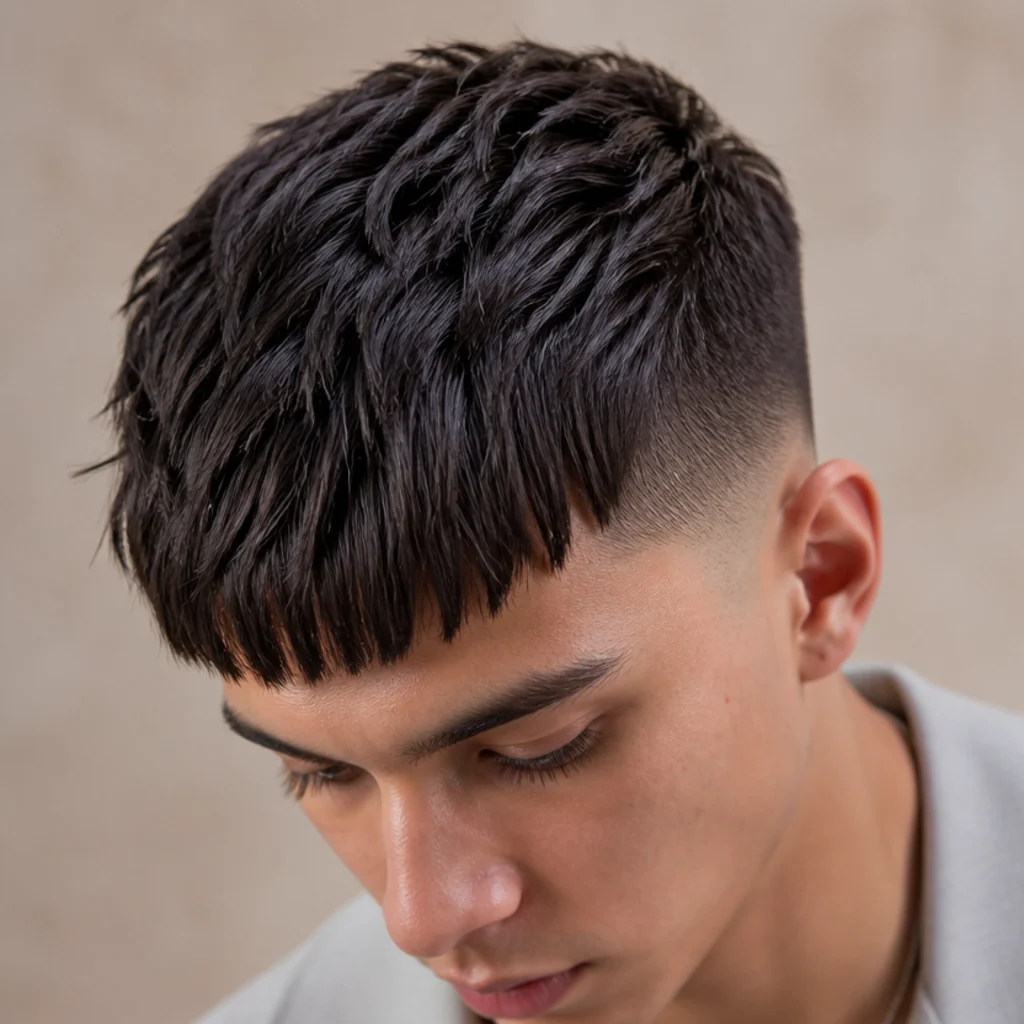
Poker-straight hair can make a fully blunt fringe look heavy and wig-like, so this version has the barber point-cut into the edge, slicing vertically to thin and separate without losing the straight-across read. The line still tracks horizontally, but it breaks into piecey sections that catch light and shift slightly with movement. It's the go-to for edgar cut straight hair that sits flat, and it flatters fine density because the separations fake more volume than a solid block would. Upkeep runs about 2-3 weeks, and it benefits from a light texturizing or sea-salt spray on dry hair to keep the pieces defined. Pair it with a low taper so the softness stays the focus. Pro tip: skip heavy pomades here, since shine collapses the texture and turns the pieces back into a slab. Ask for "an edgar with a textured, point-cut fringe, not a solid blunt line," so the barber leaves the edge broken rather than flat.
04Curly Edgar Cut
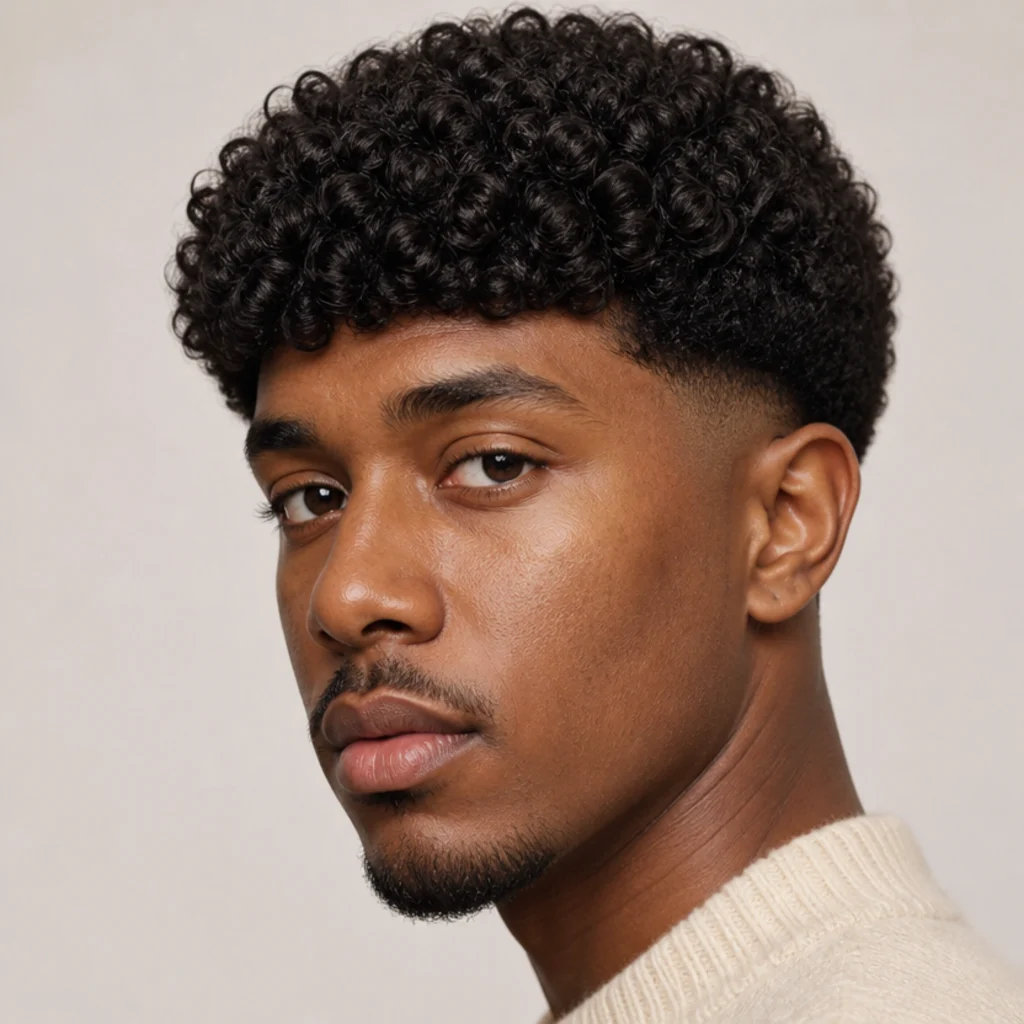
A curly edgar cut swaps the razor-straight line for a shaped, rounded fringe that follows the natural curl pattern, because a wet-cut horizontal line on curls springs up uneven the moment it dries. The barber shapes the perimeter dry or damp-and-stretched so the coils fall into an even front edge, then fades the sides to control bulk and define the silhouette. It looks its best on type 3 to 4 curls and coils, and the added front height flatters rounder and fuller faces. Since curls retract as much as a third when they dry, insist on extra length up front. Refresh every 3-4 weeks, and style with a curl cream or foam raked through soaking-wet hair, then air-dry or diffuse on low. Pro tip: book a curl-literate barber and ask them to cut curl by curl, not in a straight comb-and-scissor pass. Ask for "an edgar shaped for my curls, rounded fringe, cut dry so it isn't too short when it shrinks."
05Edgar Buzz Cut
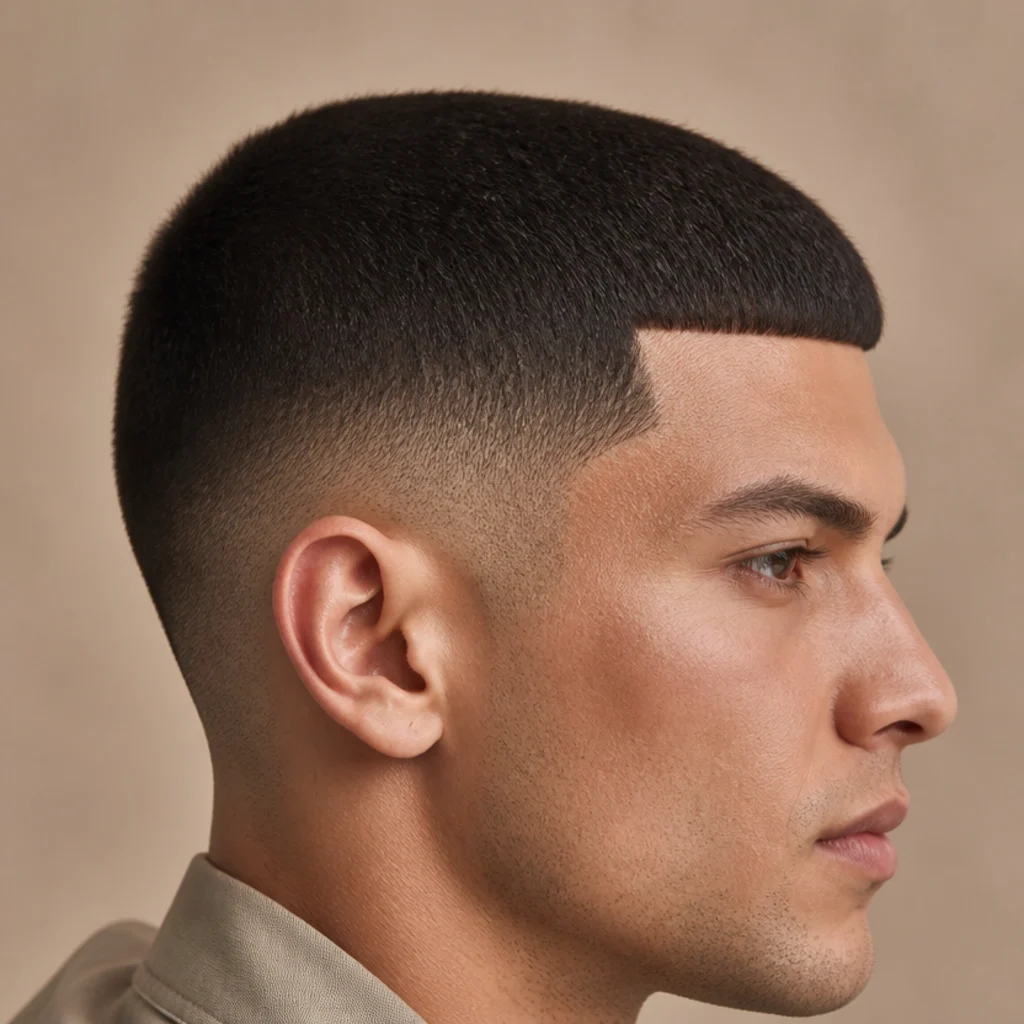
The edgar buzz cut takes the whole top down to a short, uniform guard length while keeping the signature straight front line intact, so you read as an edgar even at a fraction of the length. It's the lowest-effort option in this guide and a smart pick for thick or coarse hair that fights styling, or for anyone in heat, helmets, or heavy training. It looks clean and athletic and suits square and oval faces that can carry a close crop; very angular or bony faces may prefer a touch more length on top for softness. Because short lengths show growth fast, re-buzz every 2 weeks to keep the front edge and fade crisp. It needs almost no product, though a drop of matte paste can flatten a stubborn front cowlick. Pro tip: run a shorter guard on the top than you think, because a buzzed edgar reads best when the fringe is barely longer than the crown. Ask for "a short edgar buzz, [number] guard on top, blunt line at the front, clean fade."
Save this to Pinterest to compare the buzz and taper versions side by side.
06Mid Drop Fade Edgar
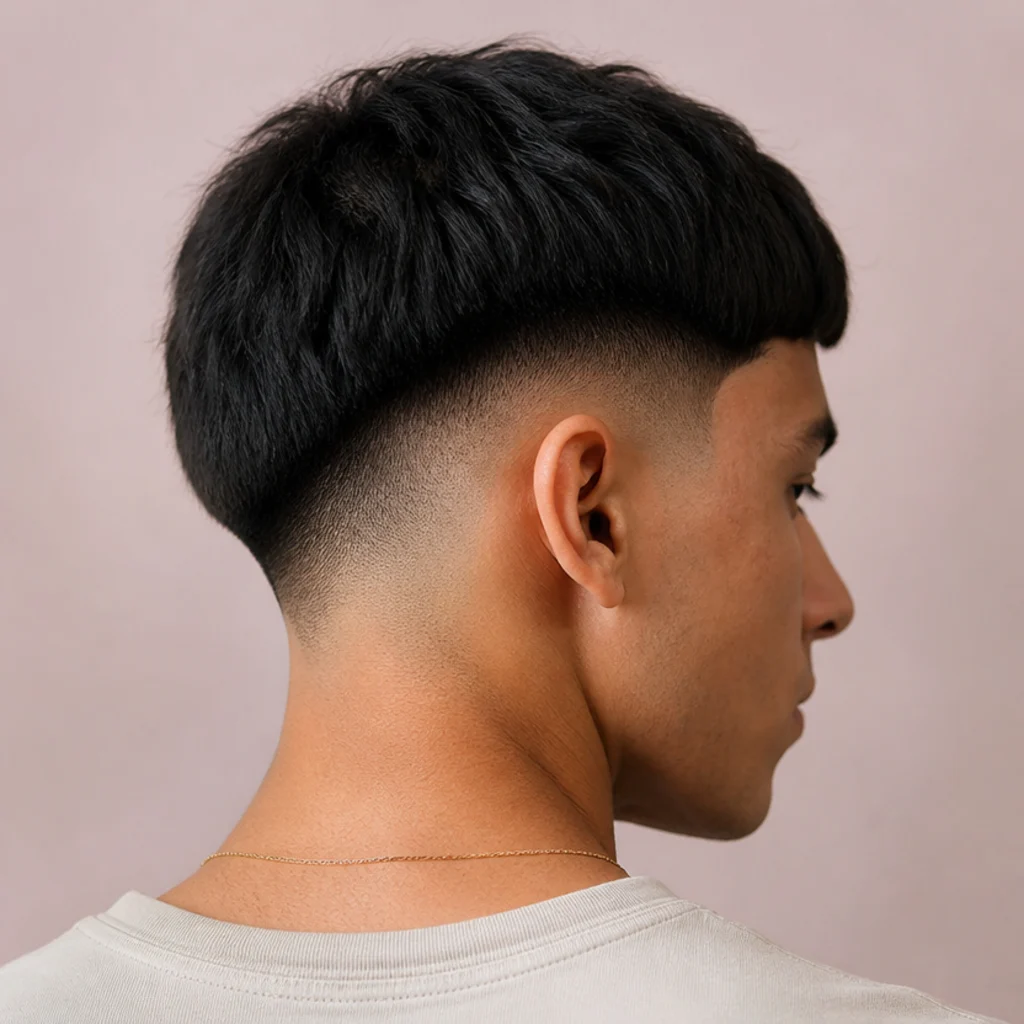
A drop fade arcs downward behind the ear, following the skull's natural curve instead of cutting a straight vertical band, so the back reads rounded and continuous. Set at mid height under an edgar top, it pushes visual weight forward and makes the fringe the clear anchor of the cut. The curved shape is broadly flattering and looks especially rich on medium to thick hair that can hold a dense top. It does grow out visibly, since the drop line is easy to spot once it fuzzes, so book every 2-3 weeks. Style the top with a matte cream for a soft, lived-in finish that keeps the fade the sharpest thing on your head. Pro tip: a mid drop is the most photogenic fade for a three-quarter angle, so it's worth requesting if you shoot a lot of content. Ask your barber for "an edgar with a mid drop fade that curves behind the ear, not a straight-back fade."
07Edgar Short Cut
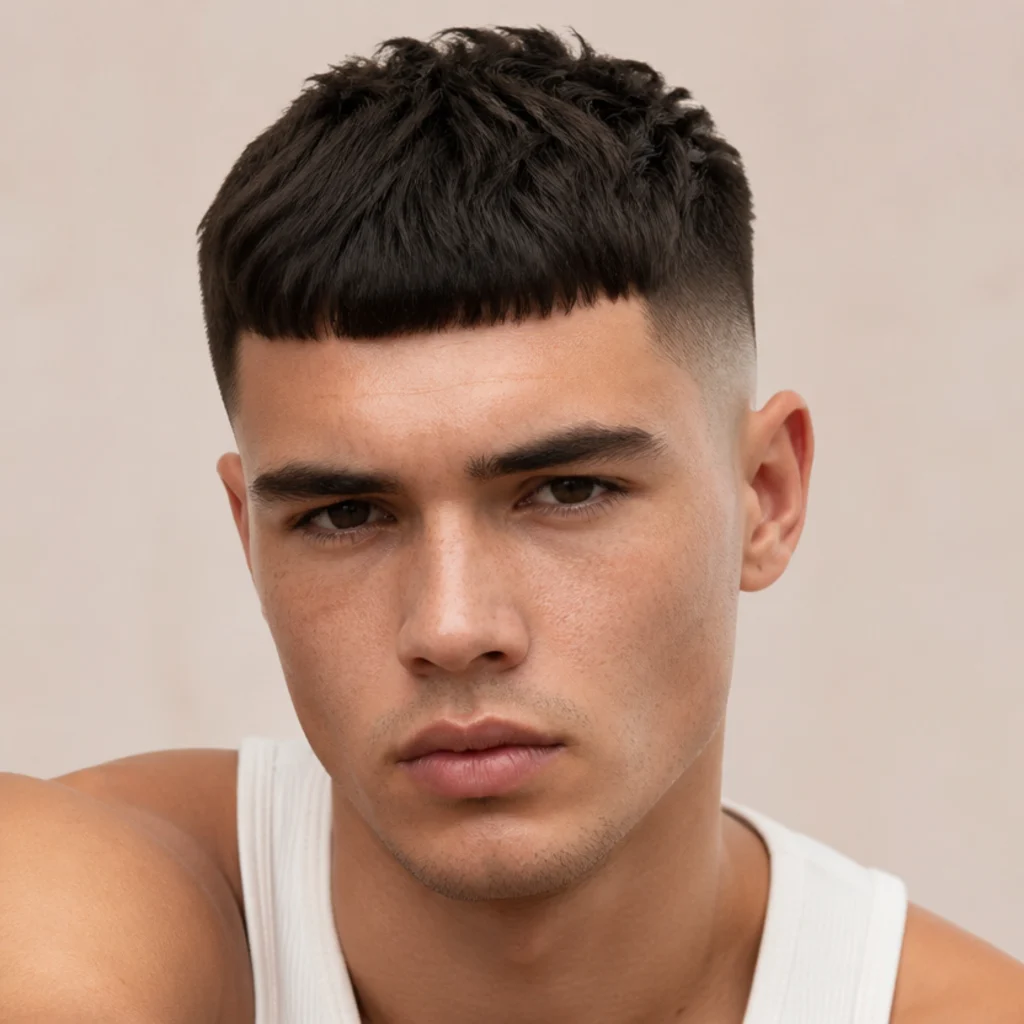
The edgar short cut keeps the top cropped close while preserving a defined fringe, landing squarely between the classic and the full buzz. It's the practical middle ground for anyone who wants deliberate shape without daily styling, and it earns its keep in hot climates, sports, and hard-hat jobs. It works across most textures and looks especially crisp on angular and square faces; the short top keeps proportions tidy without adding bulk. There's little length to hide regrowth, so small amounts of growth show quickly. Plan on every 2 weeks. A dab of paste tidies the front on humid days, and that's about all it asks. Pro tip: request a slightly heavier fringe than the crown so the front still reads blunt even at short length, otherwise it drifts toward a plain crop. Ask for "a short edgar, cropped top, keep a clean blunt fringe over a mid or high fade."
08Line-Up Edgar with Hard Part
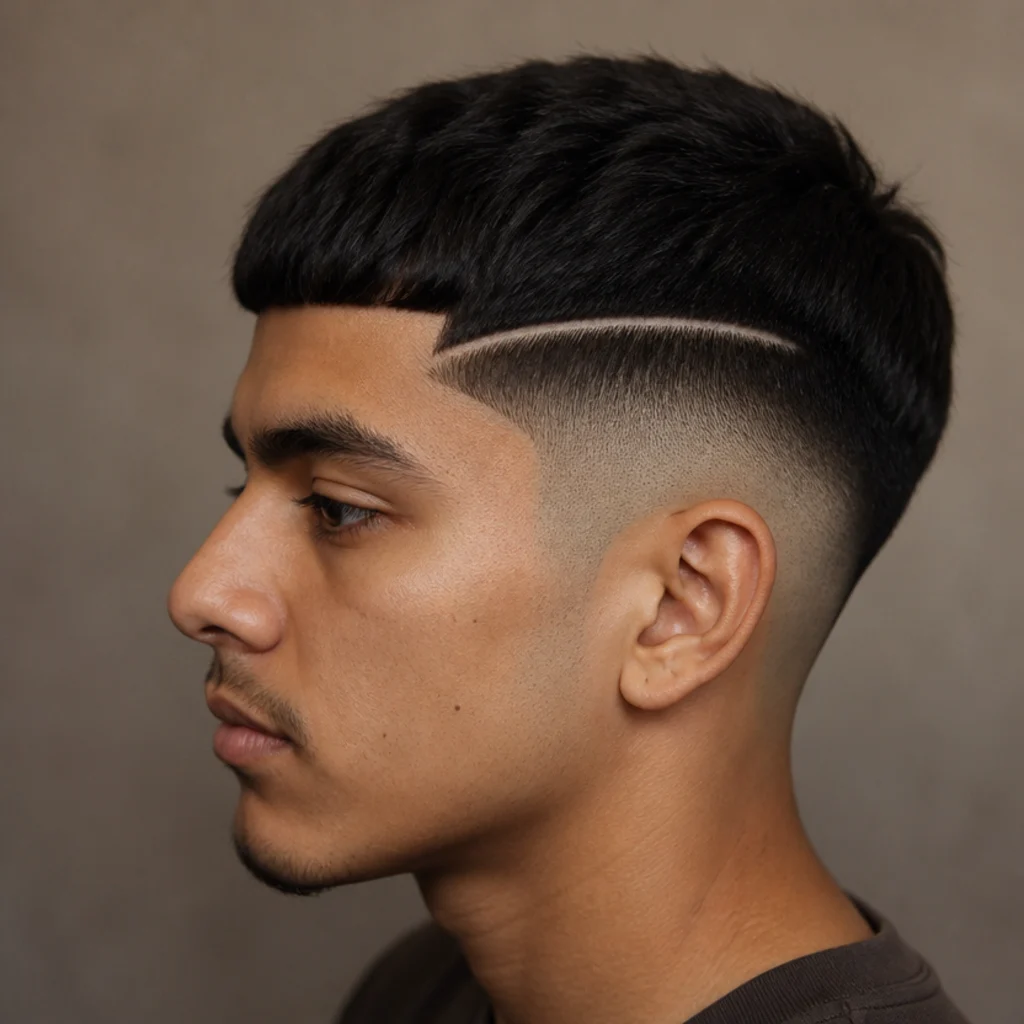
Adding a hard part, a single razor-etched line along the side, gives the edgar a graphic, architectural edge and a crisp boundary between the top block and the fade. It photographs sharply and reads intentional, which is why it's a favorite for events and shoots. It shows best on straight and wavy hair, where the etched channel stays visibly open, and it suits anyone who wants extra structure and a defined front line-up around the hairline. The etched line closes as hair grows, so it wants a touch-up every 1-2 weeks to stay crisp, the fastest-fading detail in this list. Keep the top matte so nothing competes with the line. Pro tip: place the part along your natural side-parting seam, not an arbitrary spot, so it lies flat and grows out without a stubborn ridge. Tell your barber "edgar with a single hard part on the [left/right] and a full line-up around the front hairline."
09Wavy Messy Edgar
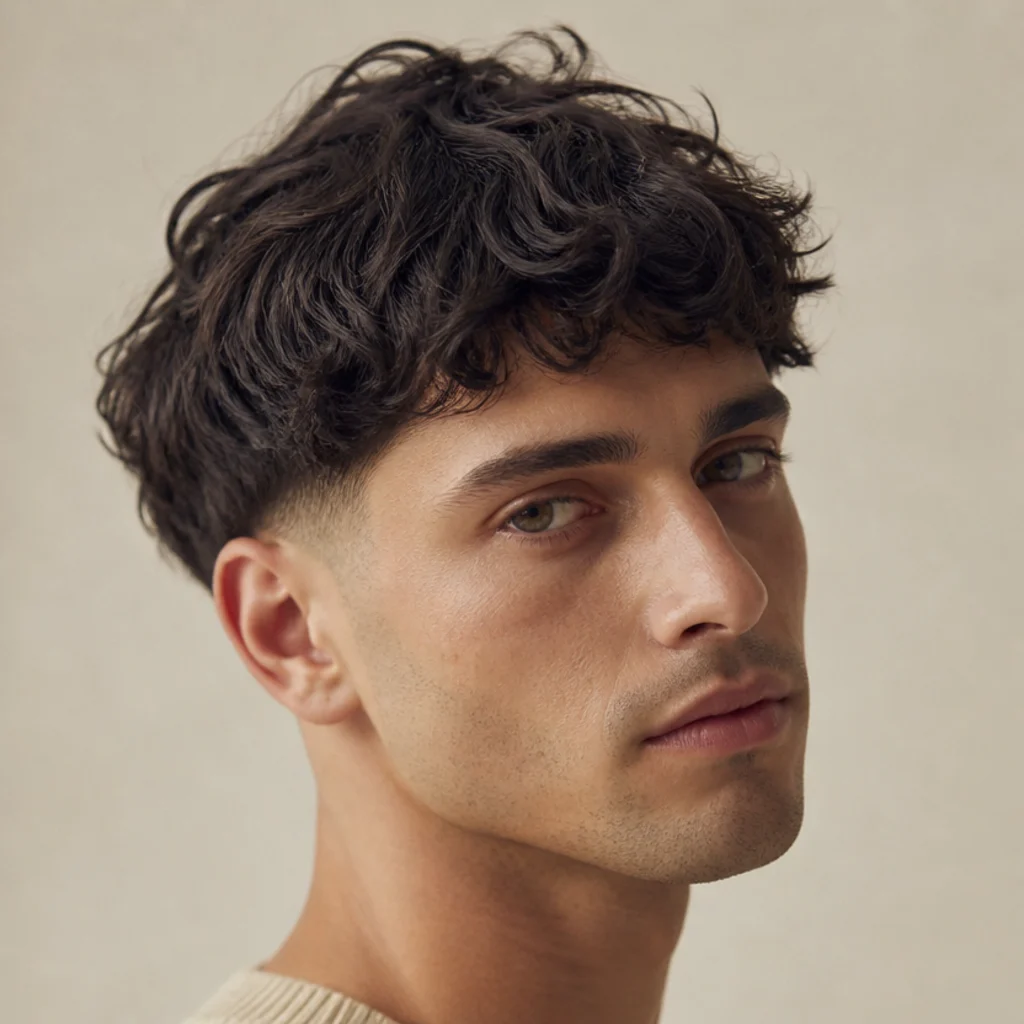
Not every edgar has to look razor-precise. This version leaves a wavy top slightly longer and wears it tousled, softening the blunt line into a lived-in front edge that still reads as an edgar from the front. It's made for naturally wavy hair (type 2) and relaxed, off-duty styling, and the added width flatters longer and narrower faces that a tight crop would elongate further. It forgives early growth, so you can comfortably stretch to 3-4 weeks between visits, one of the lower-maintenance picks in this guide. Scrunch a sea-salt spray into damp hair and air-dry, then break it up with your fingers for that undone finish; skip the comb entirely. Pro tip: ask for the fringe to be point-cut rather than blunt so the messiness looks designed instead of overgrown. Ask for "a looser edgar, keep length and movement on top, soft low fade, textured fringe."
10Edgar Cut for Boys
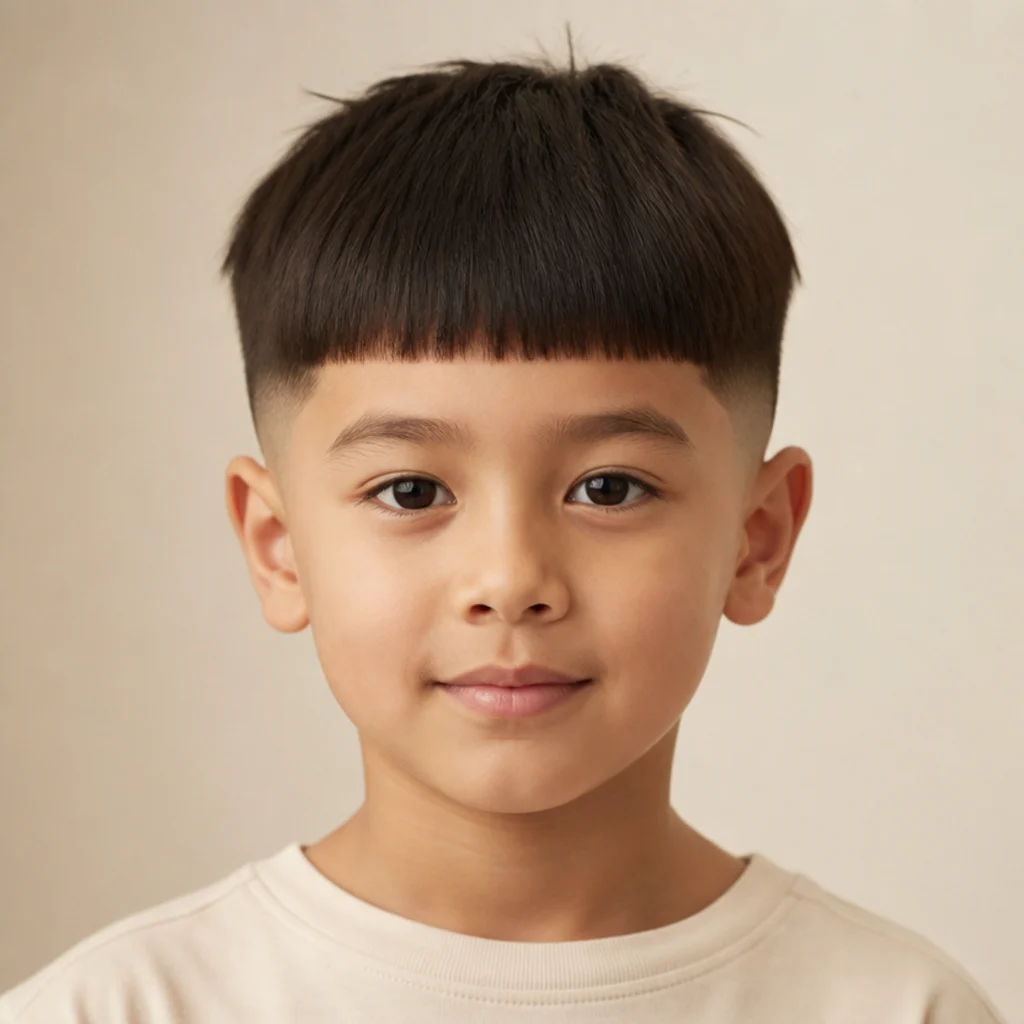
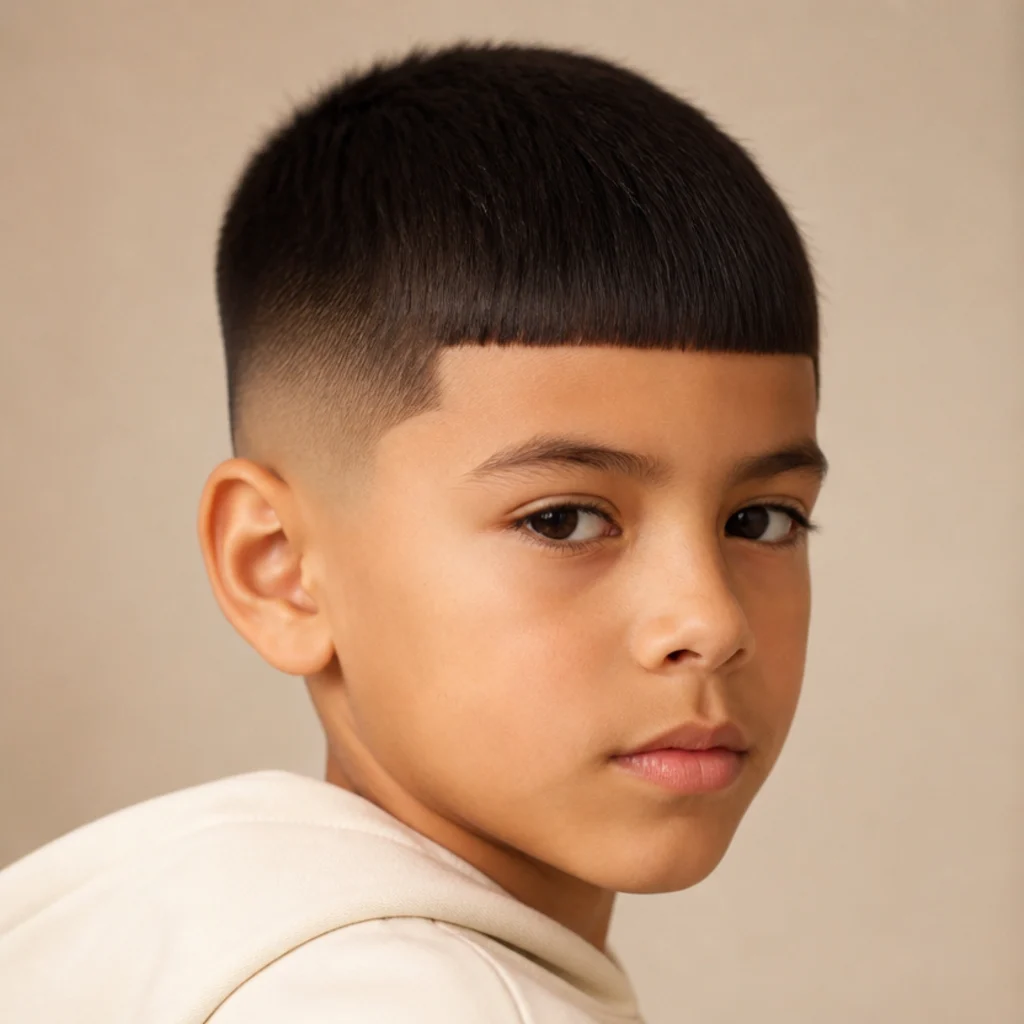
For an edgar cut boys will actually keep tidy, the winning formula is a shorter top, a soft low fade, and a fringe that's blunt but not severe. It looks neat for school, survives playground wear, and grows out without turning scruffy, which spares everyone a mid-month emergency trim. It works on most kids' textures and styles in seconds with water or a pea of light cream, no strong product required. Because children's hair grows fast, plan a trim about every 3 weeks to hold the shape. Keep the fade low and gentle rather than a high skin fade, which needs upkeep most kids won't sit still for. Pro tip: bring a photo and ask the barber to leave the fringe a touch long, since kids dislike frequent fringe trims and the extra length buys time. Tell the barber "a kid-friendly edgar, blunt fringe, short low fade, nothing too tight or too short up front."
Save this to Pinterest if you're pinning ideas for the whole family.
11High Skin Fade Edgar
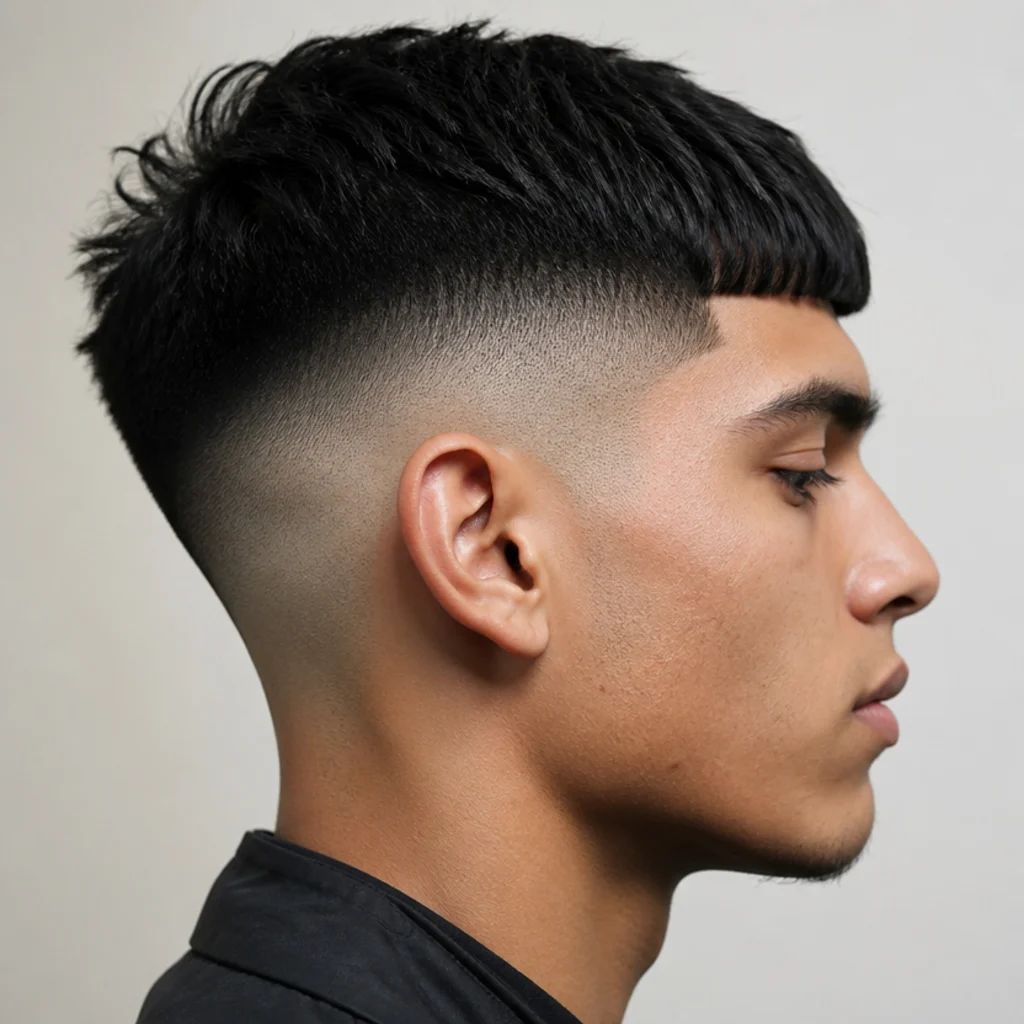
For maximum contrast, the high skin fade takes the sides to bare skin high on the head, leaving a dense, self-contained block of hair and fringe up top. It's the boldest, most editorial version of the cut and the one that makes the top pop hardest. It needs thick or dense hair to carry the weight against so much cleared skin, and the added height flatters fuller and rounder faces by drawing the eye up. The trade-off is speed: exposed skin shows stubble within days, so this books every 1-2 weeks or it loses the whole point. Keep the top styled with a matte clay so the fringe stays the center of attention. Pro tip: if your hairline is high or thinning, drop this to a mid fade instead, since a high skin fade widens the gap between fade line and fringe and can emphasize sparseness. Ask for "an edgar with a high skin fade, keep the top full and dense, blunt fringe."
12Burst Fade Edgar
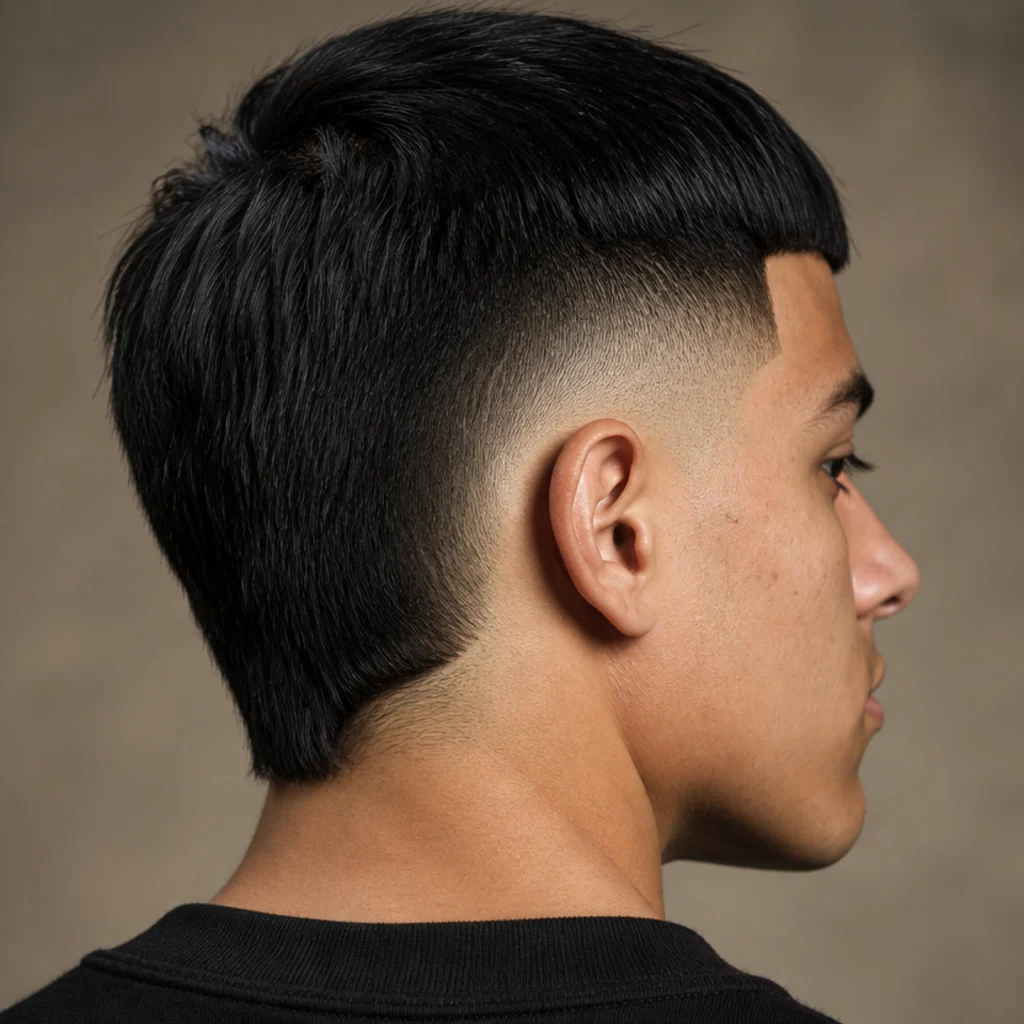
A burst fade radiates outward around the ear in a semicircle and leaves a little length running down the nape, rather than clearing the whole back. Under an edgar top it produces a rounded, streetwear-leaning silhouette with a soft tail at the neck. It works across most textures and looks especially clean on straight and wavy hair where the burst blends smoothly. The shape is forgiving as it grows because there's no hard fade line at the neck to blur, but plan every 2-3 weeks to keep the burst defined around the ear. Finish the top with a low-shine cream so the emphasis stays on the clean arc. Pro tip: a burst fade pairs naturally with a small nape tail or a subtle mullet lean, so mention if you want that length kept or cleaned off. Ask your barber for "an edgar with a burst fade around the ears and a slight taper at the nape."
13Frosted Tips Edgar
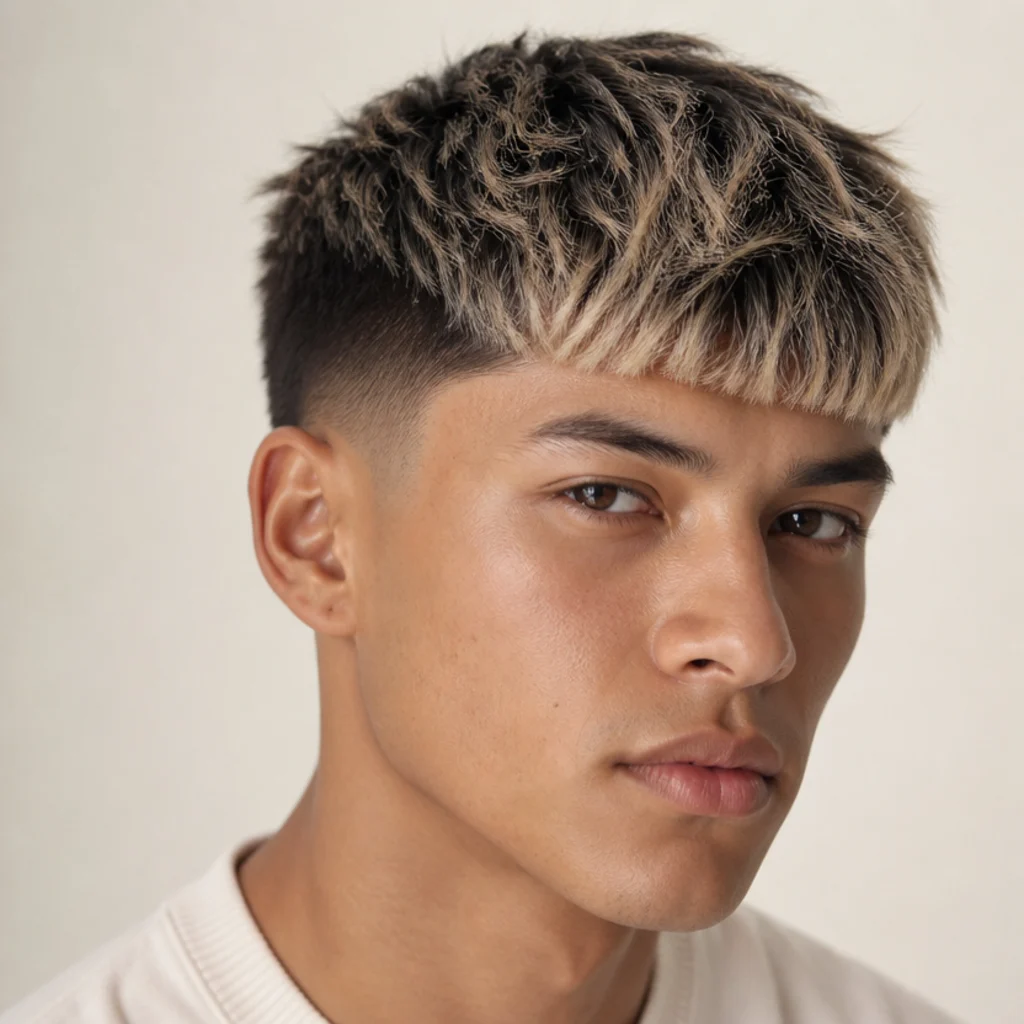
This version holds a dark base and lifts only the very tips of the fringe and top, a modern, blended nod to the frosted look rather than the chunky version of decades past. The lightened ends add dimension and pull the eye straight to the fringe, which suits the edgar's front-loaded shape. It reads best on medium to thick hair where the tips have enough surface to show, and it asks for someone willing to keep up with color. Root regrowth is forgiving since the base stays dark, but the bleached tips need bond-building conditioner and a toner refresh roughly every 4-6 weeks to fight brassiness. Style with a matte clay so the tips separate and the frosted effect stays visible. Pro tip: have the tips hand-painted onto styled, piecey hair rather than foiled flat, so the lift lands only where the light naturally hits. Ask for "an edgar with frosted or hand-painted tips on top, natural dark roots," and book a consultation on lift first.
14Edgar with Design Lines
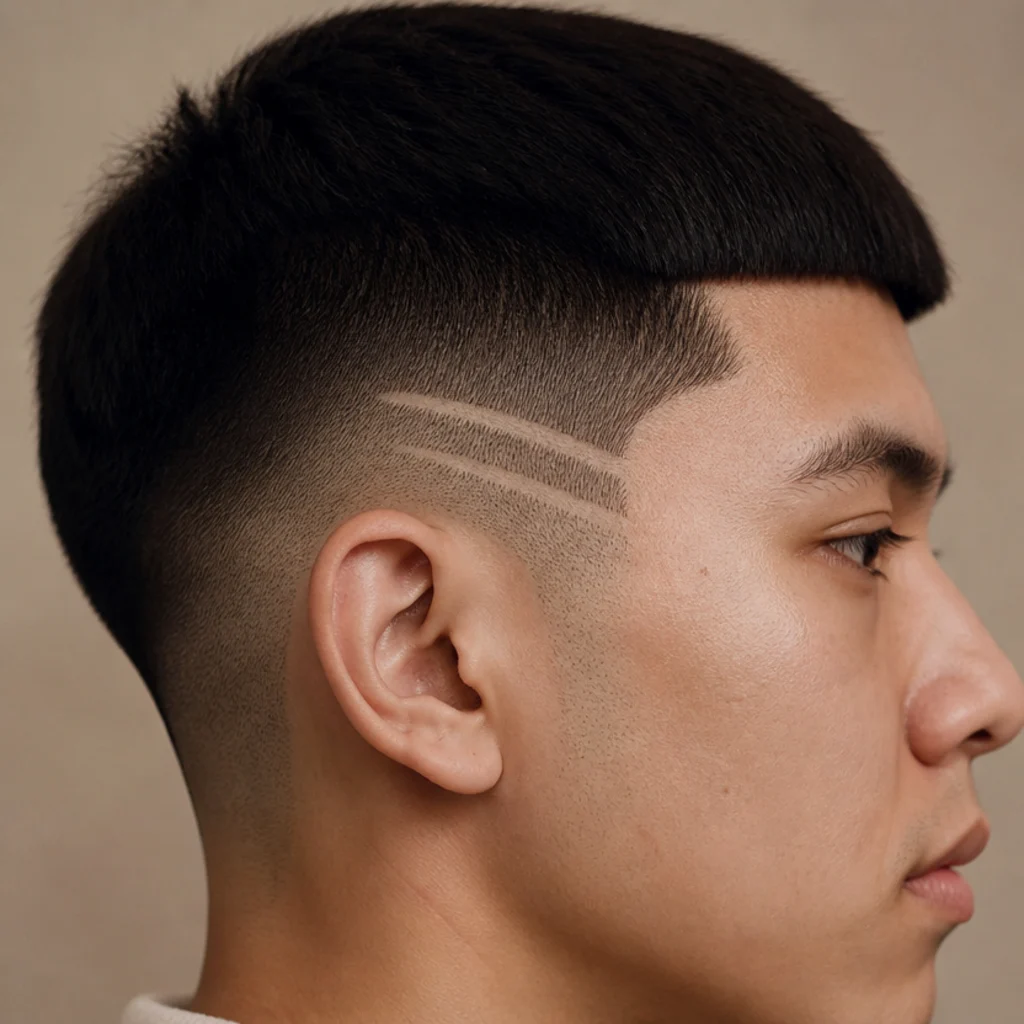
Etched design lines, one or two shaved lines set into the faded area, add personality without touching the core cut. They can be a single clean stripe, a pair of parallels near the temple, or a small geometric detail, and they layer easily onto any fade height. They read most striking on tighter and skin fades where the contrast between line and skin is high, and they suit anyone chasing a signature, individual look. The etched lines blur as stubble fills in, so touch-ups every 1-2 weeks keep them crisp. Keep the rest of the cut simple and matte so the detail is the only thing shouting. Pro tip: start with one or two lines rather than a busy pattern, since simple geometry ages better over the grow-out and photographs cleaner. Ask for "an edgar with a couple of clean design lines in the fade near the temple, nothing too busy."
15Long Fringe Edgar
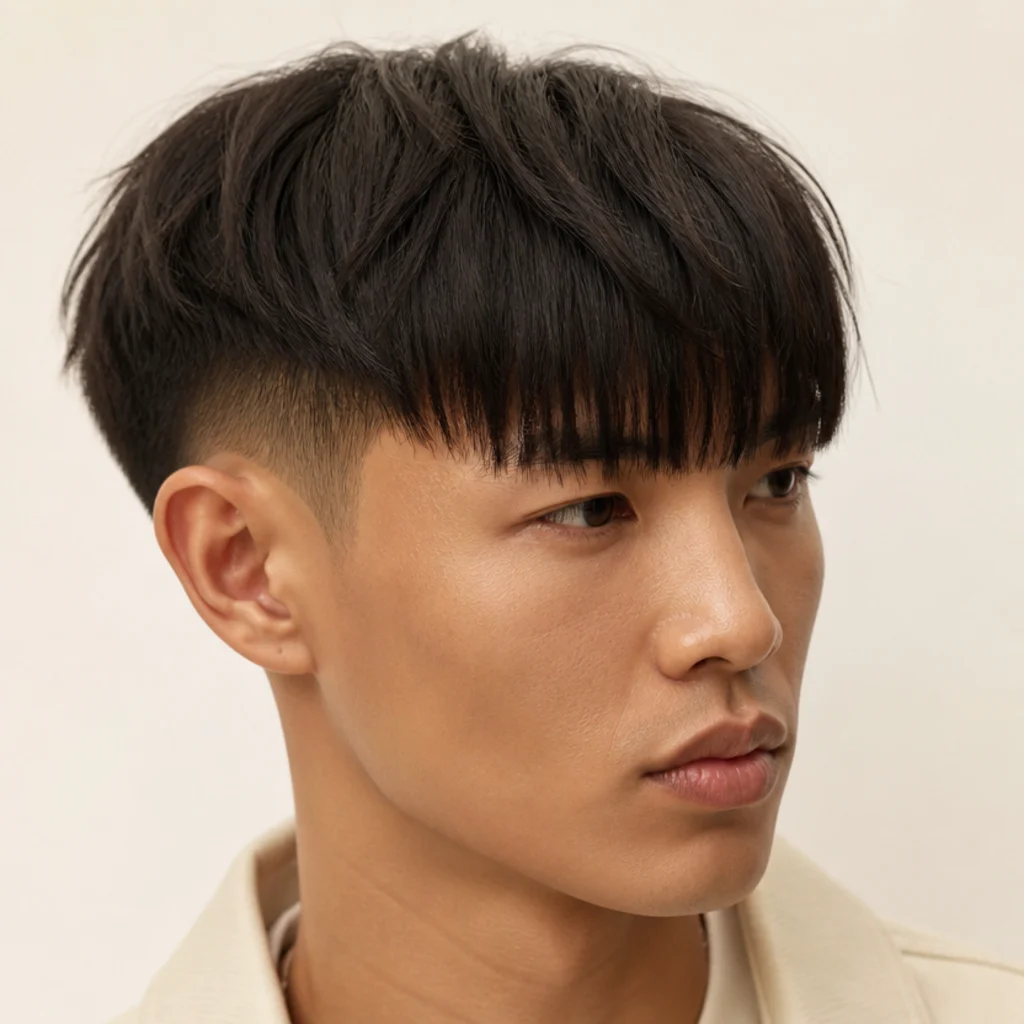
Here the fringe is left long, reaching down toward the brows, for a heavier, more dramatic front that makes the blunt line the unmistakable centerpiece. The extra length gives the cut a moodier, editorial weight while keeping the sides clean. It needs straight to wavy hair with enough density to hold the fringe flat, since fine hair lets a long fringe split and gap. It's especially useful for longer faces, where the low, heavy front visually shortens the face; broader faces may find it closes things in. Because the fringe is the whole story, trim it every 2-3 weeks to keep the line even and off the lashes. A wide-tooth comb and a light paste keep it sitting flat. Pro tip: ask for a slight inward bevel on the underside of the fringe so it curves toward the brows instead of jutting straight out. Ask for "an edgar with a longer blunt fringe down to the brows, low fade on the sides."
16Comb-Over Edgar
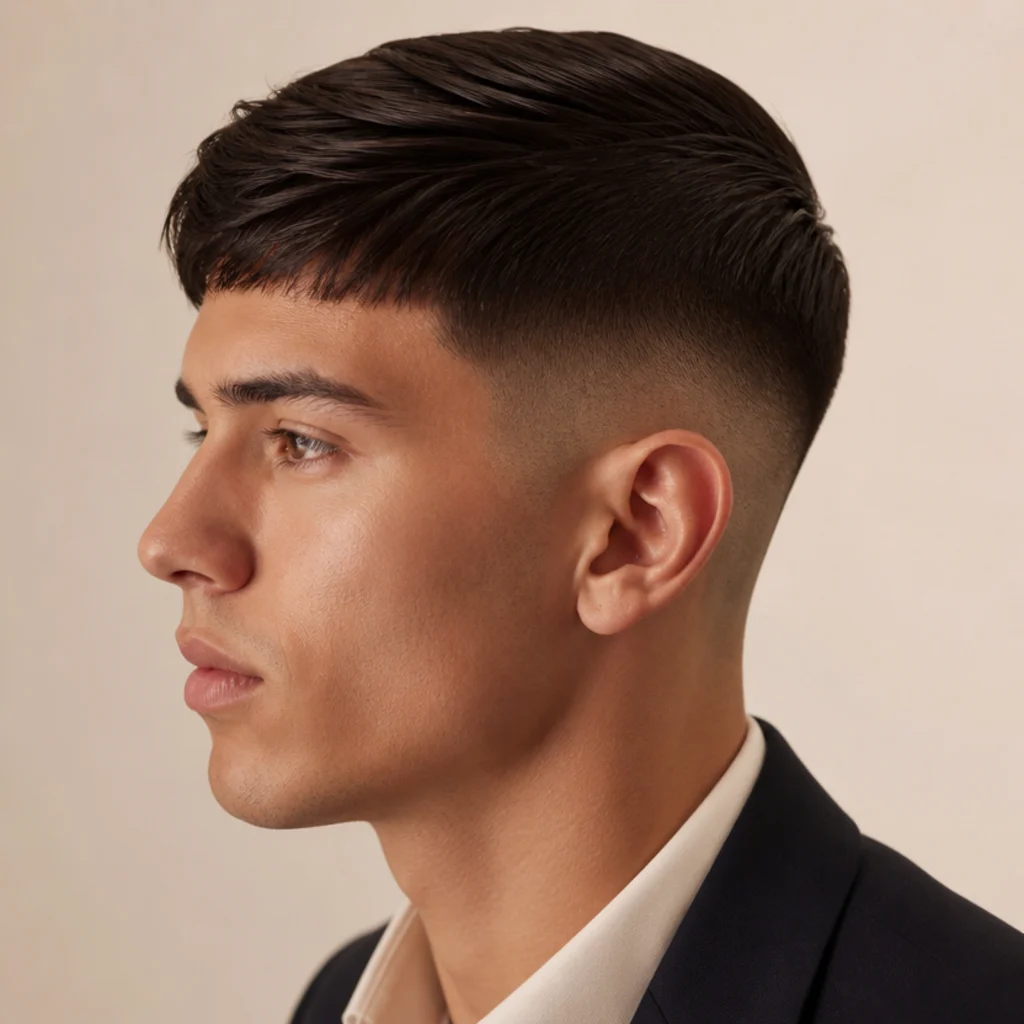
This hybrid keeps the faded sides and blunt front but sweeps the top to one side, blending edgar structure with a classic comb-over for a dressier, more grown-up read. It's the version to reach for at weddings, interviews, and occasions where you want neat rather than street. It suits straight and wavy hair with a bit of length to sweep, and it flatters oval and square faces; the diagonal line across the top also helps balance a rounder face. Since the sweep is a styling choice, the cut itself grows out like a standard mid-fade edgar, roughly every 2-3 weeks. Use a light pomade or a low-hold styling cream for movement that still parts cleanly. Pro tip: blow-dry the top in the direction of the sweep while it is damp, so the comb-over holds all day without caking on product. Ask for "an edgar I can wear straight down or combed to the side, mid fade, enough length on top to part."
17Edgar with Waves (360)
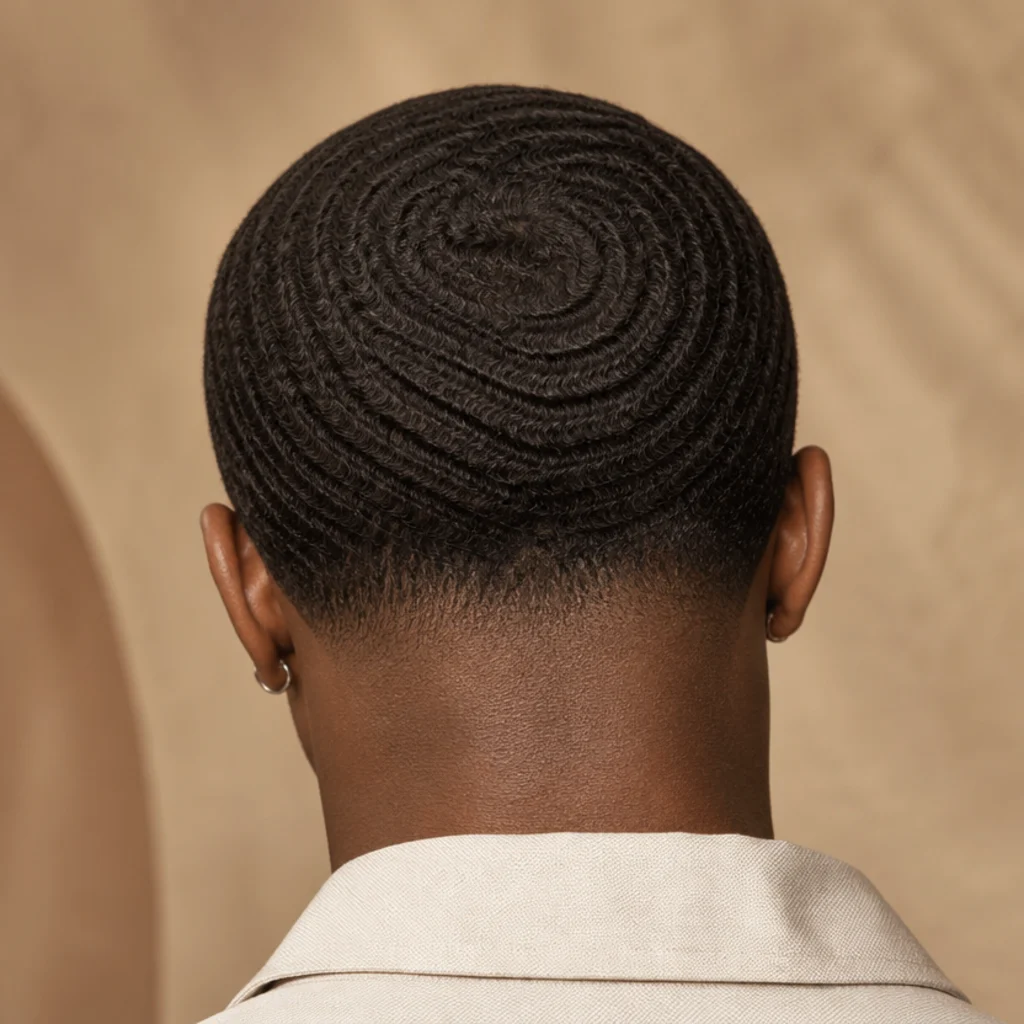
For anyone building 360 waves, the edgar frames the wave pattern up front while holding a defined fringe, so you get the wave payoff without losing the shape. The top is kept short enough to display the wave definition, with a clean taper below to keep the sides tidy. It rewards coarser, curl-prone textures that ripple into waves with consistent brushing, and it asks for a real routine: brushing sessions, a wave pomade, and a durag to lay the pattern. Trim every 2-3 weeks so the length stays even and the waves stay visible rather than growing into loose curls. Keep the hair moisturized with a light leave-in so the pattern reads deep. Pro tip: tell your barber not to fade too high, because a fade that climbs into the wave zone chops the pattern and breaks the 360 wrap around the crown. Ask for "a short edgar that keeps my wave pattern intact, low-to-mid taper on the sides."
18Blonde Bleached Edgar
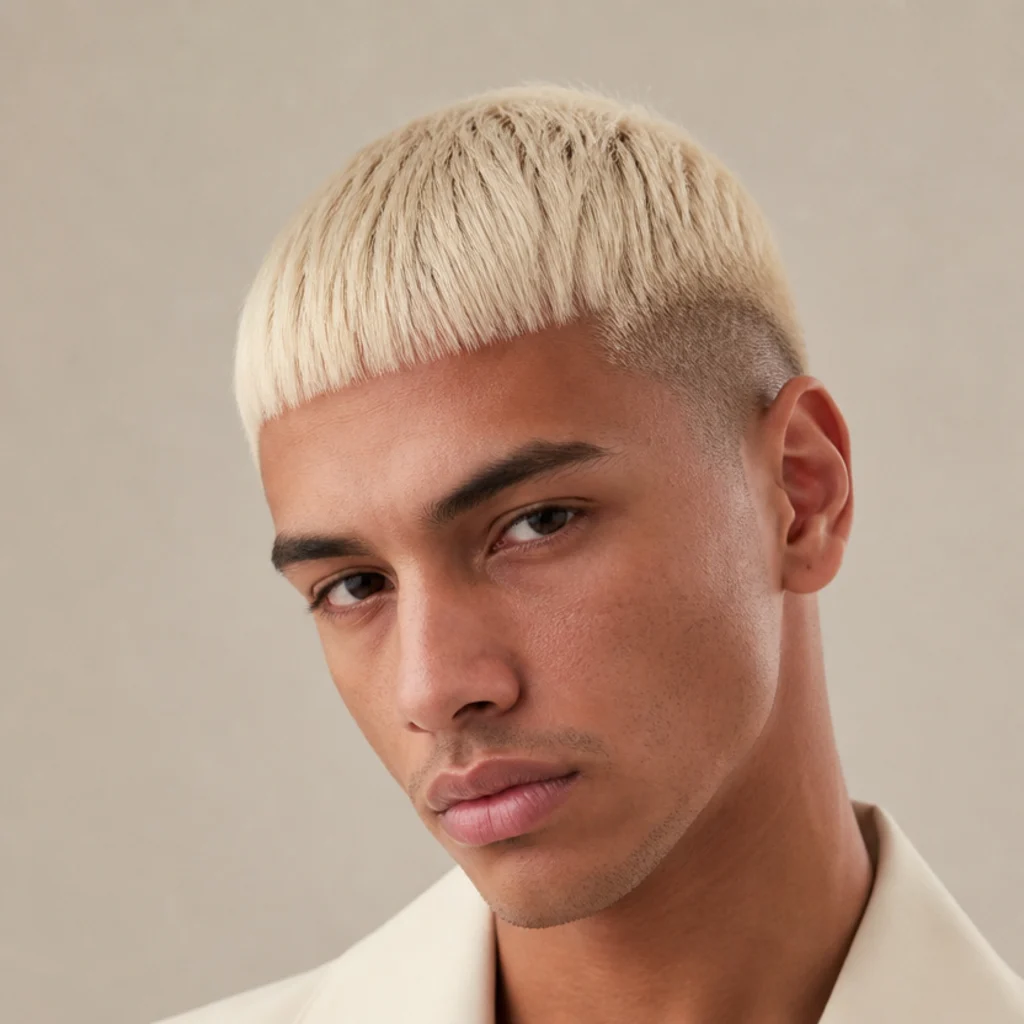
Taking the whole top to blonde turns the edgar into a full statement, since a light shade throws the blunt fringe into even higher relief. It's for anyone ready to commit to real color, and it shows best on healthy hair with enough integrity to survive the lift. Bleaching to a clean blonde exposes both regrowth and brassiness, so budget for a root touch-up and toner every 4-6 weeks, plus a bond-repair and conditioning routine between visits. Style with a matte product, since shine on blonde can look brassy under warm light. It suits most face shapes; the drama is in the color, not the silhouette. Pro tip: keep the faded sides at your natural depth rather than bleaching them too, so the dark-to-light contrast frames the top and the grow-out stays graphic instead of muddy. Ask for "an edgar, then a full bleach on top to a clean blonde," and request a consultation and strand test first, because achievable lift depends on your starting level.
19Edgar Mullet Hybrid
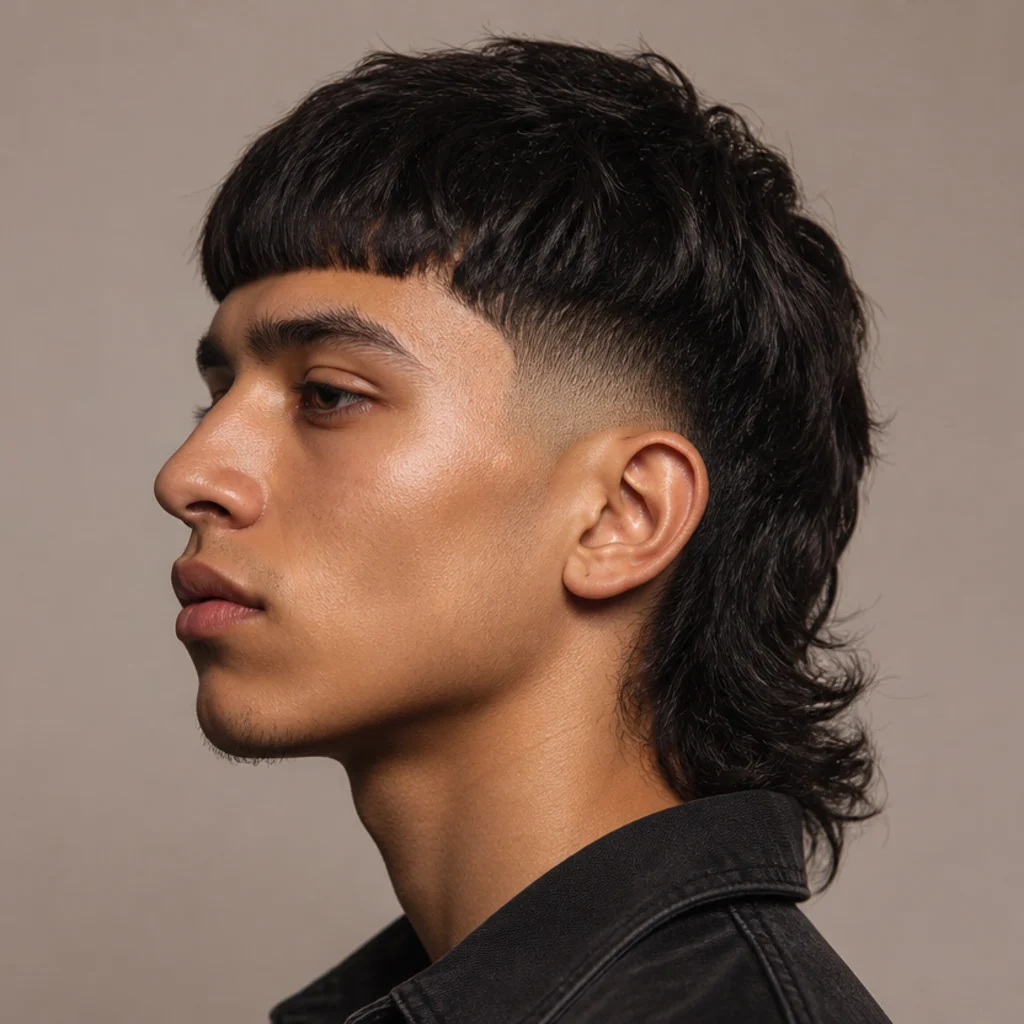
This trend-forward mash-up keeps the blunt edgar front but leaves deliberate length at the nape for a mullet-inspired back, splitting the difference between clean and rebellious. It's playful and loud, at home in streetwear, music, and skate-leaning looks. It suits straight and wavy hair and anyone who wants something off the beaten path; the contrast between the sharp front and loose back is the entire appeal. The back length grows quickly and can tip from intentional into shaggy, so shape it every 3-4 weeks to hold the balance between fringe and tail. Style the back with a light cream so it stays loose and lived-in rather than stiff. Pro tip: ask for a soft, disconnected transition from the faded sides into the back length, since a hard step looks dated where a blended drift reads current. Ask for "an edgar in the front, mullet length at the back, faded sides, soft transition into the tail."
20Spiky Textured Edgar
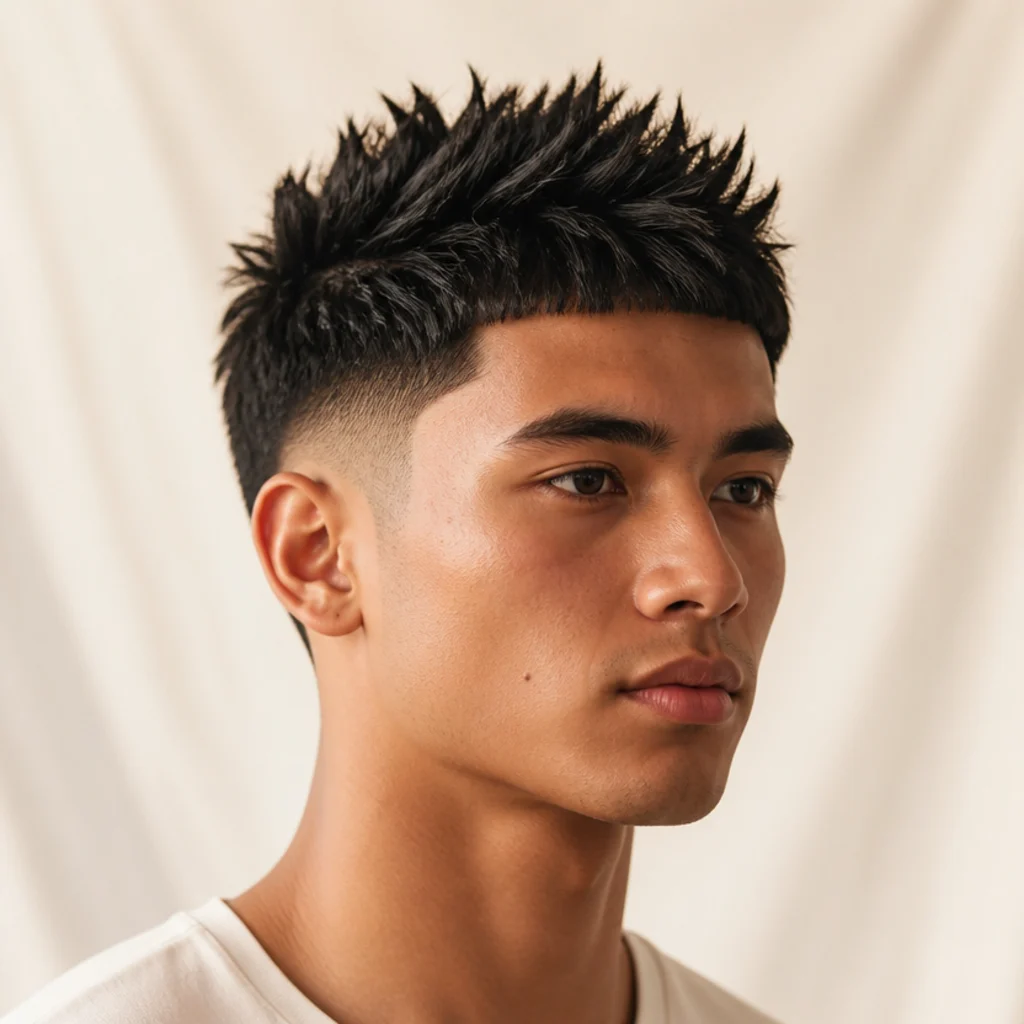
For a sportier, high-energy finish, the top is styled into short spikes while the front holds its blunt edge, so the cut gains height and movement without losing its identity. It reads youthful and athletic and pairs well with a mid or high fade for contrast. It needs thick or coarse hair that can stand a spike; fine hair collapses by midday no matter the product. The added vertical lift flatters rounder and shorter faces by drawing the eye up. The cut follows standard upkeep at every 2-3 weeks, but the styling leans on product: a strong matte clay is doing the real work. Emulsify the clay fully in your palms first, then work it through dry hair and pinch the pieces upward. Pro tip: spike with clay, not gel, so the finish stays matte and touchable instead of crunchy and wet-looking. Ask for "an edgar cut short enough to spike on top, mid fade, textured through the top."
Pro Tips from the Editor
- Cut the fringe with your head level, not tilted down. Barbers who cut with your chin dropped will leave a line that looks crooked the second you stand up straight and face the mirror.
- Bring two reference images, not descriptions. One front shot for the fringe length and finish, one side shot for the fade height and geometry. "Edgar" alone means five different things to five different barbers.
- Match fade speed to your calendar honestly. A skin fade, hard part, or design line is sharp on day one and shaggy by day ten. If you can't sit in the chair every 1-2 weeks, choose a low taper or drop fade instead.
- Respect your hairline. A blunt, heavy fringe pulls the eye straight to the front hairline. If yours is high, receding, or has a stubborn cowlick, go point-cut and textured rather than solid and blunt.
- Product is texture-specific. Matte paste or clay for straight and spiky looks, curl cream or foam for coils, light pomade for comb-overs. Shine kills a textured fringe; hold makes or breaks spikes.
- Curls should be cut dry or stretched, never soaking and combed straight. Wet-cutting a curly edgar is the single most common reason the fringe ends up short and uneven once it springs back.
- Book your next appointment before you leave. The edgar looks its best inside a roughly two-week window, so a standing slot keeps you in the sharp zone instead of chasing cancellations.
Edgar Cut Variations at a Glance
| Variation | Best hair type | Fade / detail | Upkeep | Best for |
|---|---|---|---|---|
| Classic Blunt | Straight to wavy | Short faded sides | 2-3 weeks | A clean, no-fuss reference cut |
| Edgar x Low Taper | Any | Low taper | 2-3 weeks | Offices, first-timers, easy grow-out |
| Curly Edgar | Curly / coily | Fade + rounded fringe | 3-4 weeks | Type 3-4 texture, front height |
| Edgar Buzz | Thick / coarse | Uniform short top | 2 weeks | Lowest maintenance, sports |
| High Skin Fade | Thick / dense | High skin fade | 1-2 weeks | Maximum contrast, bold look |
| Long Fringe | Straight to wavy | Low fade | 2-3 weeks | Longer faces, dramatic front |
| Waves (360) | Coarse / curl-prone | Low-mid taper | 2-3 weeks | Wave-builders with a routine |
| Bleached Blonde | Healthy, any texture | Color + fade | 4-6 weeks (color) | A full statement, color commitment |
How to Choose / Get the Look
Choose by texture first, because it decides how the fringe behaves. Straight and wavy hair holds a hard, blunt horizontal line, so the classic, textured, long-fringe, and comb-over versions all read cleanly. Fine straight hair should lean textured and point-cut to fake volume. Curly and coily hair belongs in the rounded-fringe camp, the curly edgar or the 360-wave version, because coils shrink and won't sit in a hard straight line. Thick and coarse hair is the widest field: it carries buzzes, skin fades, and spikes that finer hair can't.
Choose by face shape second. Rounder and shorter faces want height on top, so spiky, high-fade, and comb-over versions add flattering length. Longer or narrower faces balance out with a heavier or longer fringe and a lower fade that adds width, like the long-fringe or wavy messy edgar. Oval and square faces are the lucky default and carry almost any version. If your hairline is high or thinning, drop to a mid fade and go textured rather than blunt so the front reads full.
Choose by upkeep third, and be realistic. Low tapers and drop fades migrate slowly and forgive a 3-week gap, which suits busy schedules and conservative settings. Skin fades, hard parts, and design lines look the sharpest but demand 1-2 week touch-ups; color adds a separate 4-6 week toner-and-root cycle on top of the cut.
Prep and booking. Come with clean, dry, product-free hair so the barber can see your real growth pattern and cowlicks. Bring two saved images, name the fringe length and finish (blunt or textured), the fade height and type, and whether you want any detail. When color or a big shape change is on the table, see a pro for a consultation and, for bleach, a strand test before you commit the whole top.
Frequently Asked Questions
What is an edgar cut?
An edgar cut is a men's style defined by a blunt, straight-across fringe on top over short, faded, or cropped sides. The signature is that hard horizontal front line, which can be cut solid and sharp or broken up with point-cutting depending on your hair type. It grew out of the takuache and Caesar lineage and is built to hold its shape with minimal daily styling.
Does the edgar cut work on curly hair?
Yes, with one adjustment: a curly edgar cut uses a shaped, rounded fringe that follows the curl pattern instead of a wet-cut straight line. Because coils retract as much as a third when they dry, ask your barber to cut it dry or damp-and-stretched and to leave extra length up front, then shape the perimeter so the curls fall into an even edge rather than a comb-straight slab.
How often do I need to maintain an edgar cut?
Most versions want a refresh every 2-3 weeks to keep the fringe and fade sharp. Buzzes, high skin fades, hard parts, and design-line versions grow out fastest and often need 1-2 week touch-ups. Looser wavy and mullet-hybrid styles forgive growth and can stretch to 3-4 weeks. Colored versions add a separate 4-6 week toner and root cycle.
What is the difference between an edgar and a taper fade?
They aren't competing styles; they combine. "Edgar" refers to the blunt fringe and cropped top, while a taper fade is one way to finish the sides. The popular edgar cut x taper fade keeps a low, gradual fade around the ears and nape while the top stays in the edgar shape. You can pair an edgar with a taper, drop, burst, or skin fade instead.
Is the edgar cut good for boys?
It's a practical choice for boys, because a shorter top with a soft low fade stays neat, survives daily wear, and styles in seconds with water or a small amount of cream. Keep the fade low rather than a high skin fade so it grows out gracefully between cuts, and because kids' hair grows fast, plan a trim about every 3 weeks.
Will an edgar cut suit my face shape?
Most shapes can wear some version. Oval and square faces carry nearly any edgar. Rounder and shorter faces do best with added height on top, like a spiky or high-fade version. Longer or narrower faces balance out with a heavier, longer fringe and a lower fade for width. The lever you adjust is fringe weight and fade height, not whether you can wear it at all.
Does an edgar cut work on thin or fine hair?
It can, but skip the fully blunt, solid fringe, which draws attention to sparseness and a high hairline. Ask for a point-cut, textured fringe that separates into pieces to fake volume, and keep the fade low or mid rather than high skin so there's less bare contrast beside the thinner top. Matte paste adds grip and the illusion of density; shine flattens it.
How do I ask my barber for an edgar cut?
Lead with the whole shape, then the details: "Edgar on top with a [blunt or textured] fringe, [low taper / mid drop / burst / high skin] fade on the sides, keep the top boxy, not rounded." Add fringe length (short, to the brows), any detail like a hard part or design lines, and hand over two photos. A short, specific brief is what gets you the cut you pictured.
How long does an edgar cut last before it grows out?
It looks its sharpest for about two weeks. After that the fringe starts to read shaggy and drop into your eyeline, and the fade begins to bridge and lose its clean line. Skin fades and etched details fall out of the sharp window faster, closer to seven to ten days, while low tapers and looser textured versions can still look intentional at three weeks.