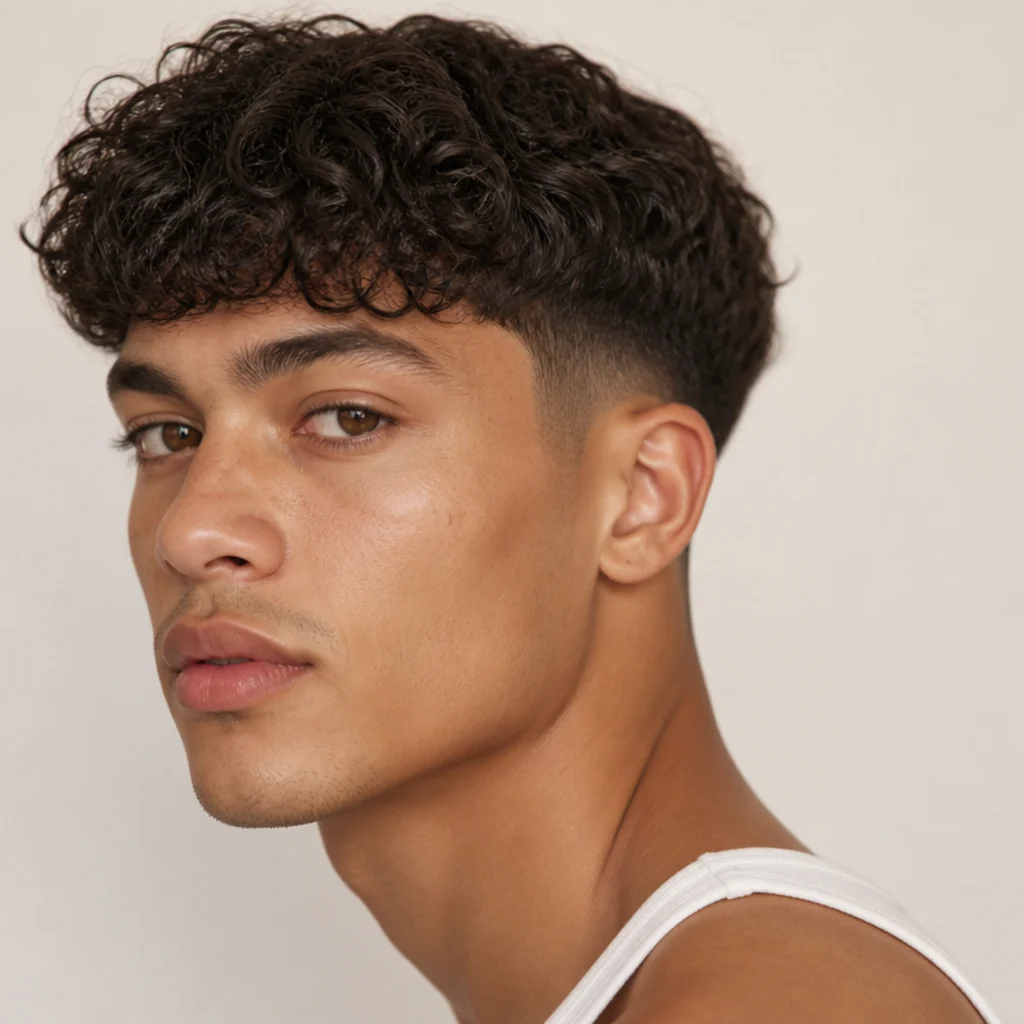
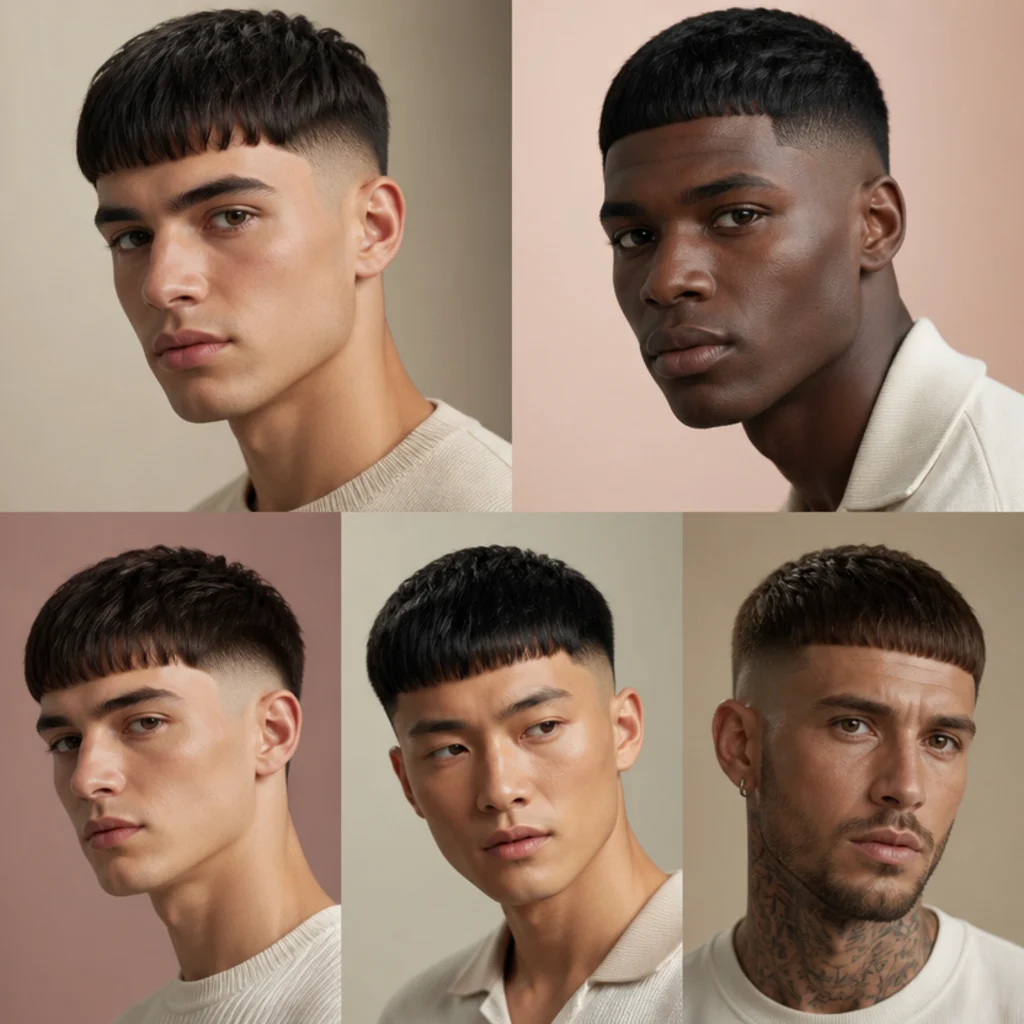
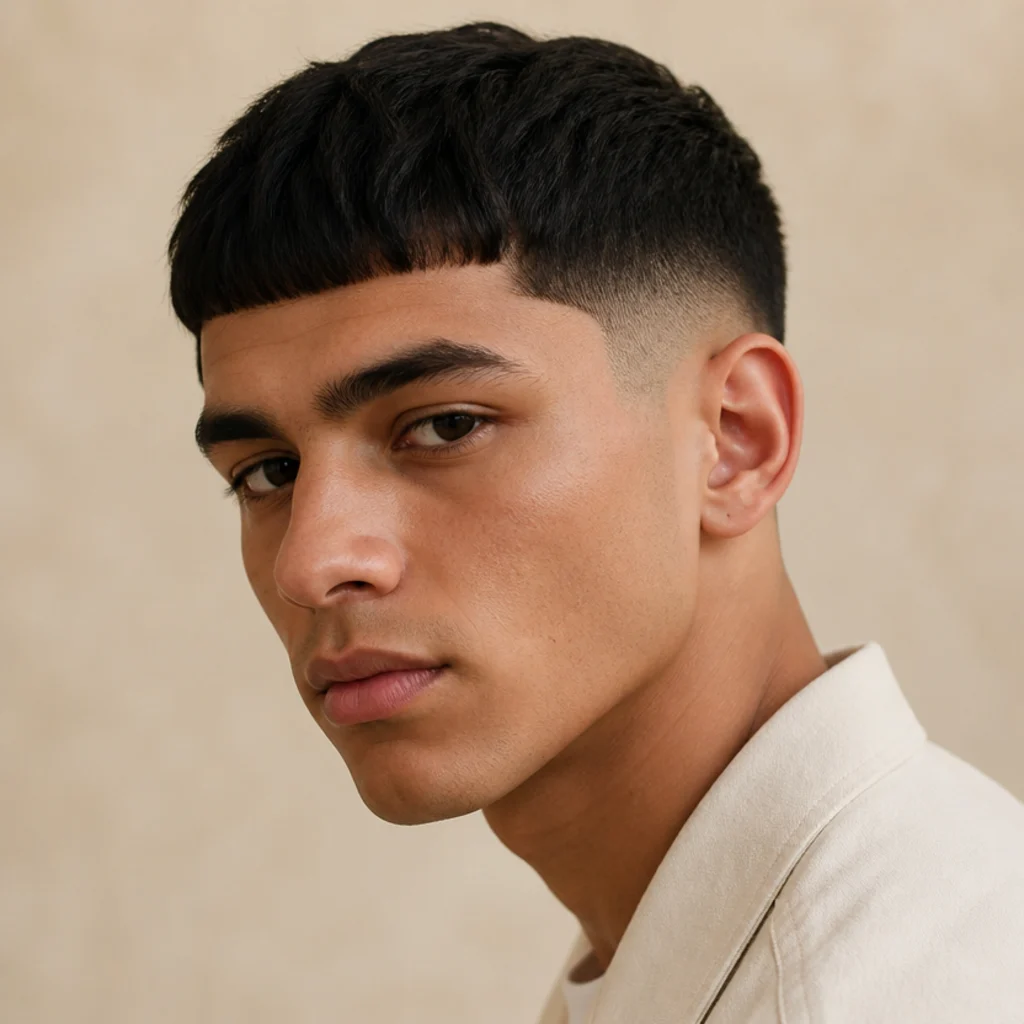
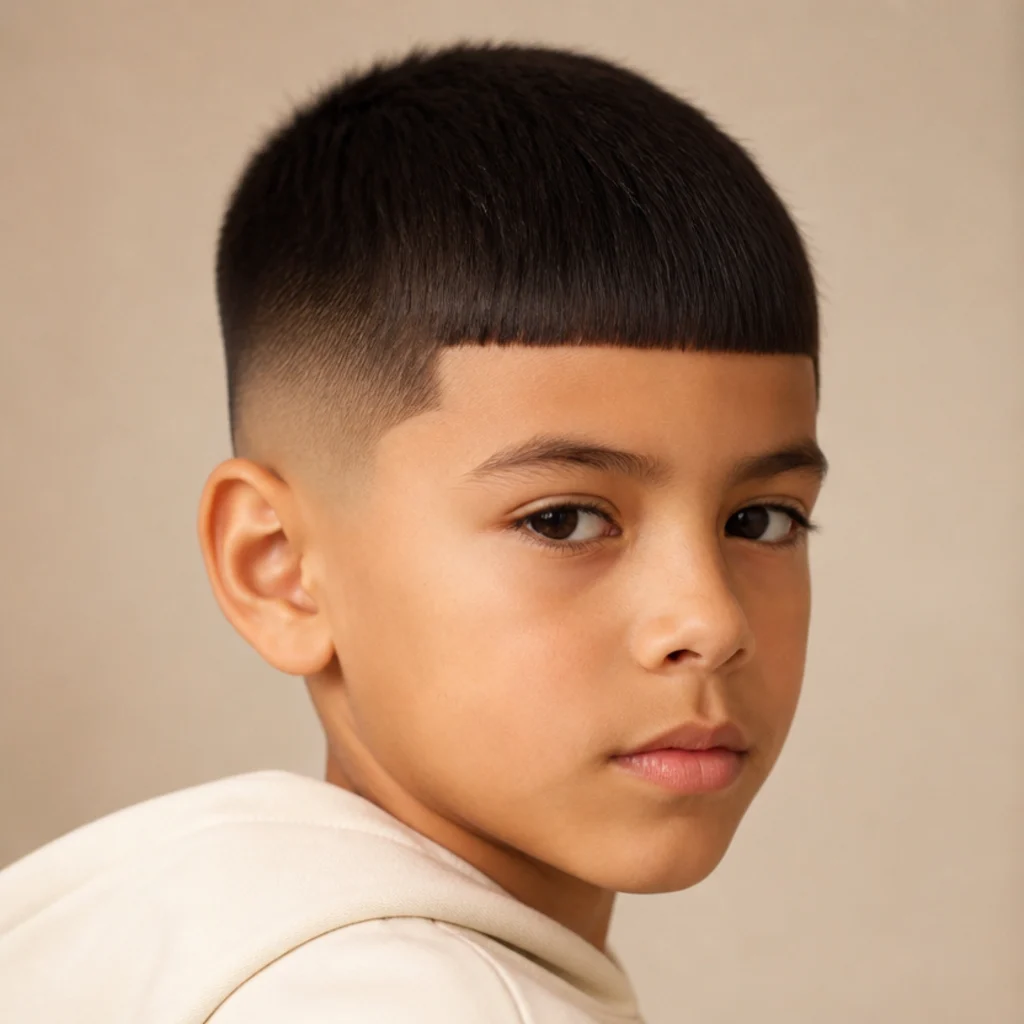
25 Edgar Cut Ideas for Straight Hair
The edgar sits at the top of the barber request list because it solves two hard problems at once: it builds deliberate architecture around the face with a blunt forehead fringe, and it keeps the sides quiet with a controlled fade. On straight hair the geometry sharpens even more: the blunt line reads like a drawn edge, and the gradient runs clean with no wave to interrupt it. Below are 25 precise directions, each with the shape logic, the guard numbers, the upkeep math, and the exact chair-side phrasing.
 Edited by Lena Rose · Published July 11, 2026 · 45 min read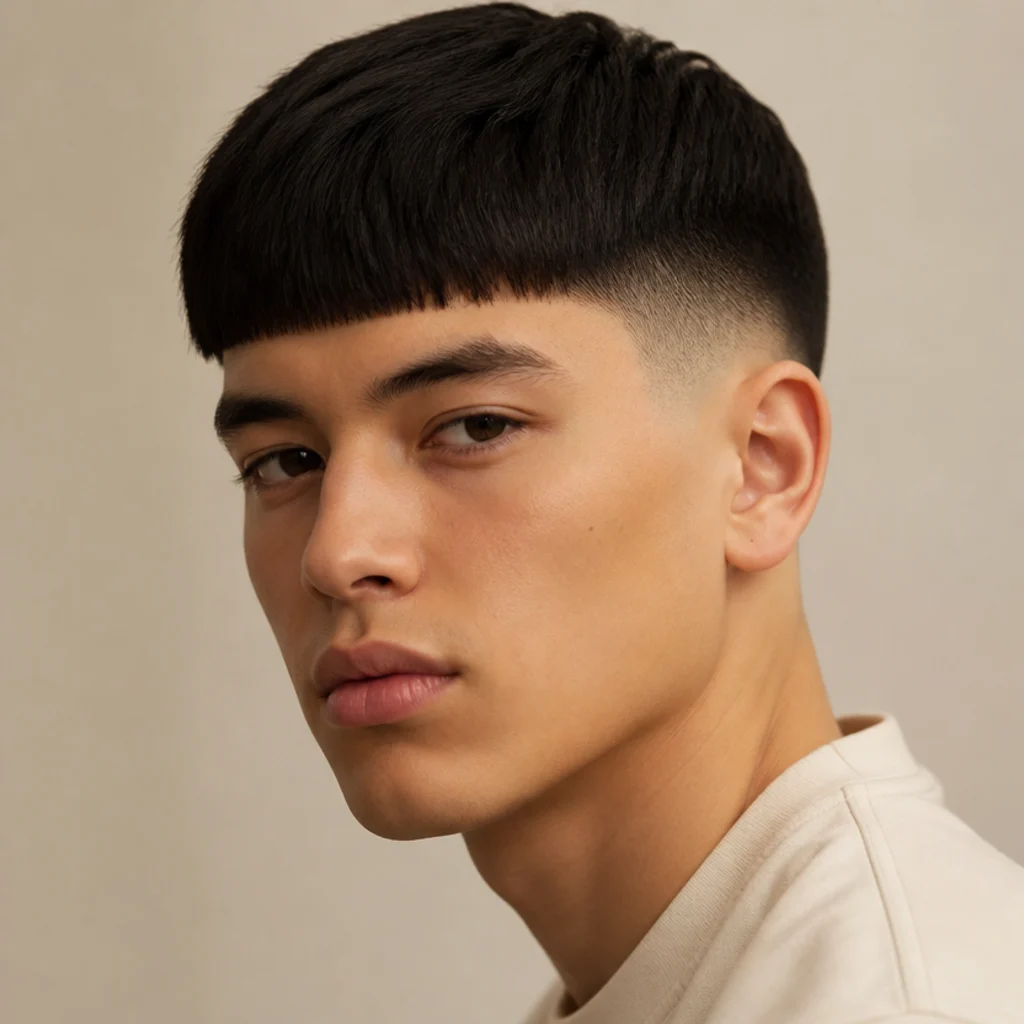
Quick Answer
- Best for: Straight to slightly wavy hair with medium-to-thick density; round, oval, square, heart, and diamond faces that want more forehead structure and a defined perimeter.
- Who might skip it: Very high, receding, or M-shaped hairlines (the blunt line sits awkwardly and draws the eye to temple recession); extremely fine hair with no texturizing plan; anyone who can't commit to a two-week fade cycle or dislikes weight on the forehead.
- Maintenance: Moderate to high, driven almost entirely by the fade and any shaved detail, not the top.
- Difficulty: Easy to style at home once cut; the precision lives in the barber's fringe line and blend, not your morning routine.
- Cost: Roughly a standard men's cut plus a fade upcharge; skin fades, line-ups, and design lines add to that. Color versions carry a separate colorist fee plus ongoing toner every four to six weeks.
- Wear time / longevity: The overall shape holds three to five weeks; crisp lines and skin fades look their best only seven to ten days.
- Standout variation: The textured edgar with a burst fade (#12) pairs a strong fringe with a soft, rounded, near-universally flattering side profile.
- How to ask your barber: Lead with three levers, fringe style ("blunt" or "textured"), fade type and height, and fringe length judged dry. Bring a front and a side photo; the vocabulary below does the rest.
In This Guide
- Classic Blunt Edgar
- Edgar with a Mid Fade
- Textured Straight Fringe
- Edgar with a Low Taper
- High and Tight Edgar
- Edgar with Line-Up
- Short Crop Edgar
- Edgar with Skin Fade
- Messy Textured Edgar
- Edgar with Two Design Lines
- Longer Fringe Edgar
- Textured Edgar with Burst Fade
- Edgar with Comb-Over Top
- Platinum Blond Edgar
- Edgar with Spiky Front
- Subtle V-Shaped Fringe
- Edgar with a Drop Fade
- Two-Tone Color Edgar
- Edgar with Volume on Top
- Sleek Straight Edgar
- Edgar with Hard Part
- Micro Edgar
- Edgar with Faded Beard Blend
- Curtained Edgar Hybrid
- Grown-Out Edgar
The edgar cut, sometimes called the "takuache" style, is a straight, blunt fringe cut hard across the forehead over short, faded sides. It grew out of Mexican-American barbershop culture in the U.S. Southwest and spread through Pinterest, TikTok, and school hallways worldwide, but the core stayed fixed: a graphic front line paired with a disciplined blend. What makes the edgar so wearable is how far it shifts on small levers, fade height, fringe density, a splash of color, a hint of point-cut texture, so one name covers a dozen different silhouettes. Straight hair is the easiest canvas, since the strands fall into that signature blunt line with almost no coaxing, and the fade reads cleaner without wave to muddy the gradient. Still, the edgar isn't one haircut. It's a family. Density matters more than length here: thick hair carries a heavy blunt fringe, while fine straight hair usually wants texture to fake fullness. The right edgar cut face shape pairing steers the fringe more than any trend, adding height for round faces or weight for long ones. Below are 25 distinct directions, each with who it suits, a realistic upkeep timeline, and the exact words to tell your barber so you leave with the version you pictured, not an approximation of it.
01Classic Blunt Edgar
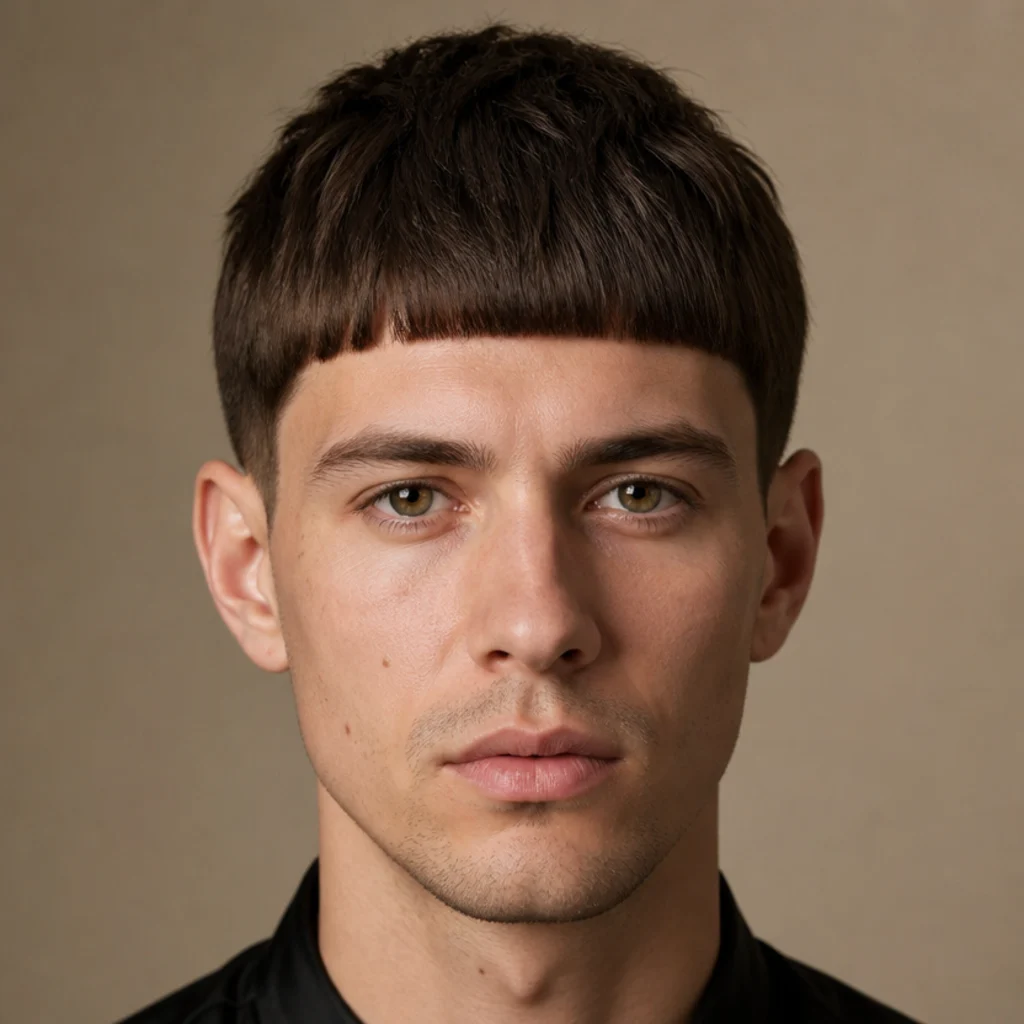
The original template, and still the most requested. The fringe is cut in one clean horizontal line just above the eyebrows, and the sides are kept short with scissors or a longer guard (#3 to #4) rather than faded to skin, so the cut reads uniform rather than high-contrast. On straight hair the blunt edge holds crisp all day with almost no product, since there's no wave to break the line. It flatters round and oval faces best, the flat perimeter squares off a soft forehead and lends structure to gentle features. Density is the deciding factor: medium-to-thick hair fills the line solidly, while very fine hair can look sparse across the front and usually prefers #3. Upkeep is straightforward, a trim every three weeks keeps the front from creeping into your eyes and the sides from losing their line. Ask your barber for a "classic edgar, blunt straight fringe cut just above the brow, short tapered sides on a three or four guard, no skin fade." Pro tip: warm a pea-sized amount of matte paste fully between your palms, then press it along the top of the fringe only, this smooths flyaways without darkening the hair or dragging the blunt line down.
02Edgar with a Mid Fade
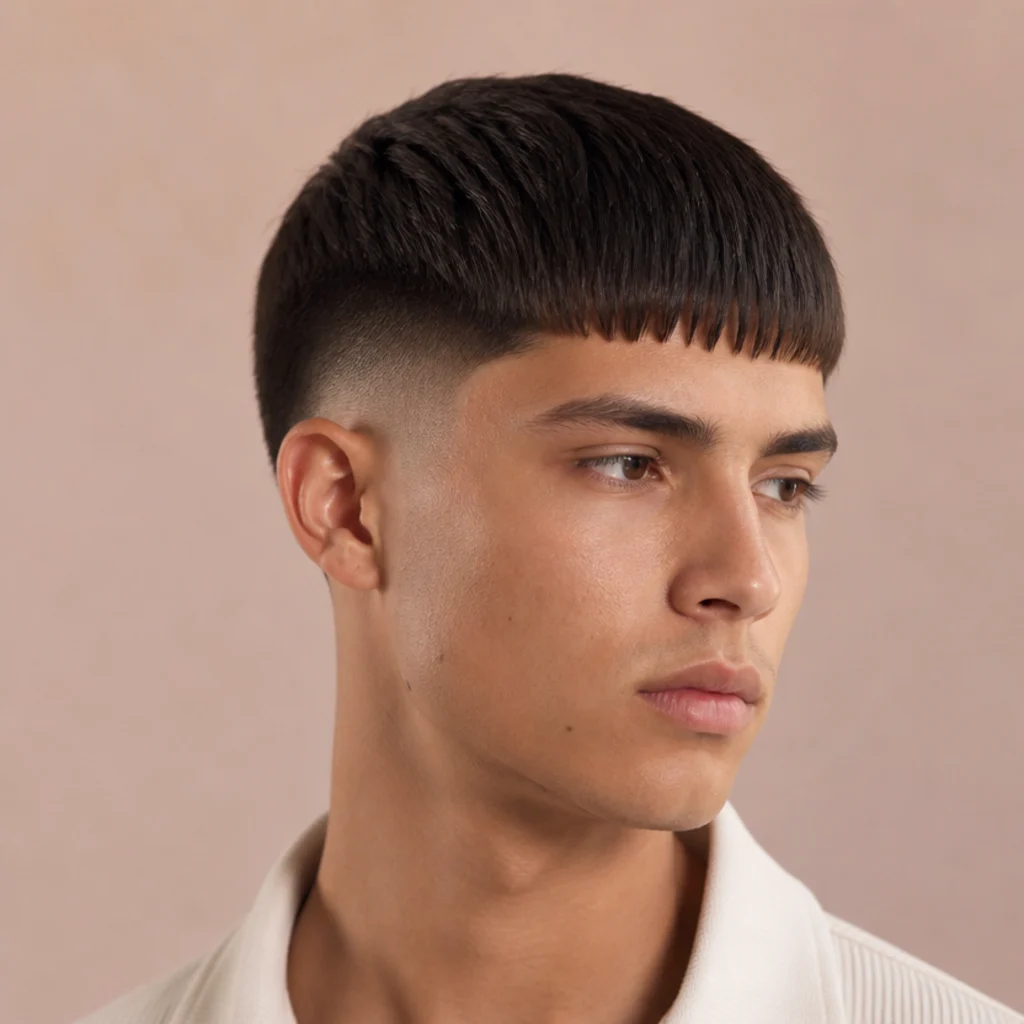
Adding a mid fade lifts the classic into sharper, more modern territory. The blend starts around the temple line, roughly level with the top of the ear, and graduates down to skin at the bottom, so you get decisive contrast between a dense top and tight sides without the drama of a full skin fade running to the crown. This edgar cut fade works especially well on square and oval faces, where the graduated sides visually slim the jaw and lengthen the head, and it's the safest all-rounder in the family. It reads a touch more polished than the classic, a sensible pick for offices or schools that still allow a defined style. Plan on a fade refresh every two weeks, since faded lines soften faster than scissor work and the mid-point is where grow-out shows first. Ask your barber for a "mid fade with a blunt edgar fringe on top, blended to skin at the bottom, guards stepped from a two down to bare." Pro tip: request the fade line drop just slightly behind the temple rather than in front of it, this flatters and lengthens your face on camera instead of shortening it, a small placement choice that changes every photo you take.
03Textured Straight Fringe
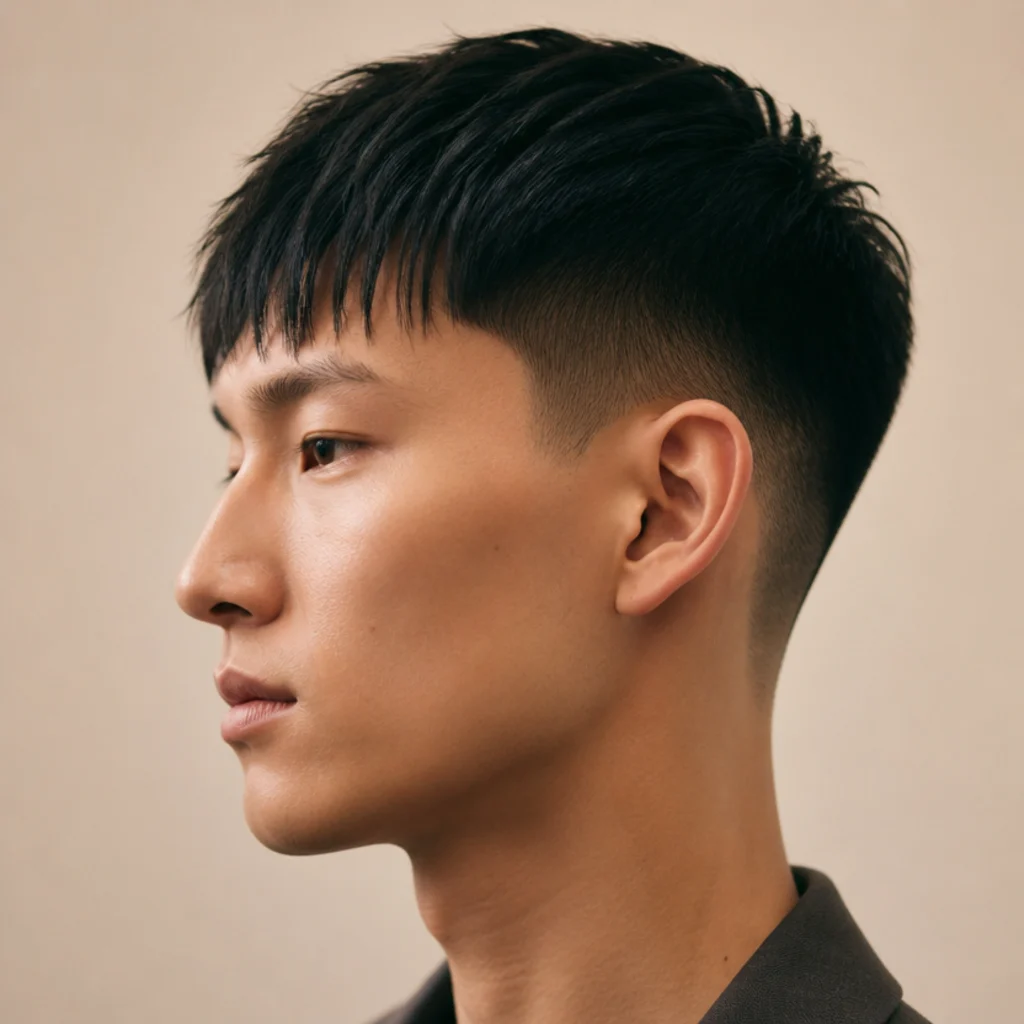
Not everyone wants a razor-flat front. Here the fringe is point-cut, the barber holds the scissors vertically and notches into the ends, so the edge breaks into soft, separated pieces while the overall edgar shape stays intact. It is the smartest move for fine or thinning straight hair, since the broken line scatters light and fakes density along the hairline exactly where a solid blunt edge would expose gaps and scalp. The result feels younger and more relaxed than a hard line, and it suits nearly every face shape because the softness offsets angularity and reduces the horizontal weight a blunt fringe adds. Maintenance is gentle, the texture disguises grow-out gracefully, so you can honestly stretch to four weeks between trims without the shape falling apart. Tell your barber you want an "edgar with a textured, point-cut fringe, not fully blunt, keep some separation and don't over-thin the core." Pro tip: work a rice-grain amount of texturizing cream through the tips only, never the roots, so the pieces stay defined without a greasy panel forming across the forehead. Ask your barber to point-cut the fringe while it's dry, so the pieces you see in the chair are the pieces you keep.
04Edgar with a Low Taper
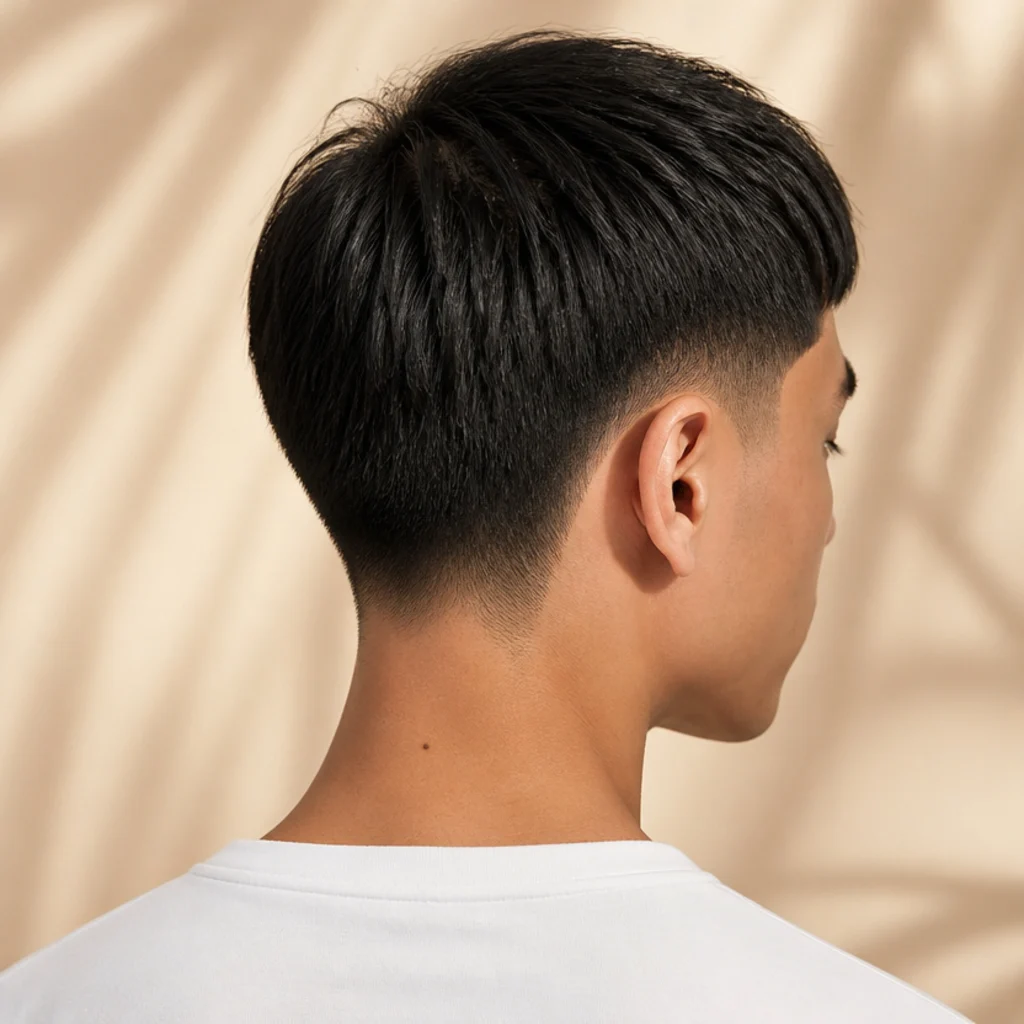
The low taper is the most conservative way to fade an edgar. Rather than climbing the sides, the blend hugs the hairline around the ears and nape, so most of the length and weight stays on the head and the silhouette reads full rather than shaved. This is the version to request when your workplace leans traditional or you just want a quieter profile that still looks intentional. It flatters heart and diamond faces by preserving width through the mid-head, balancing a narrower jaw or chin against the top. Because the taper sits low and the change from length to skin is gradual, grow-out is forgiving: three to four weeks between visits is realistic, and it rarely looks scruffy in between. Straight hair keeps this looking deliberate with minimal effort, and no product is strictly required for daily wear. Ask your barber for a "low taper edgar, blunt fringe, weight kept on the sides, nothing taken above the ear." Pro tip: ask them to leave the taper matte and soft rather than sharply defined. A hard low-taper line can look unfinished as it grows, while a soft, gradual one ages well for a full month and buys an extra week between appointments.
05High and Tight Edgar
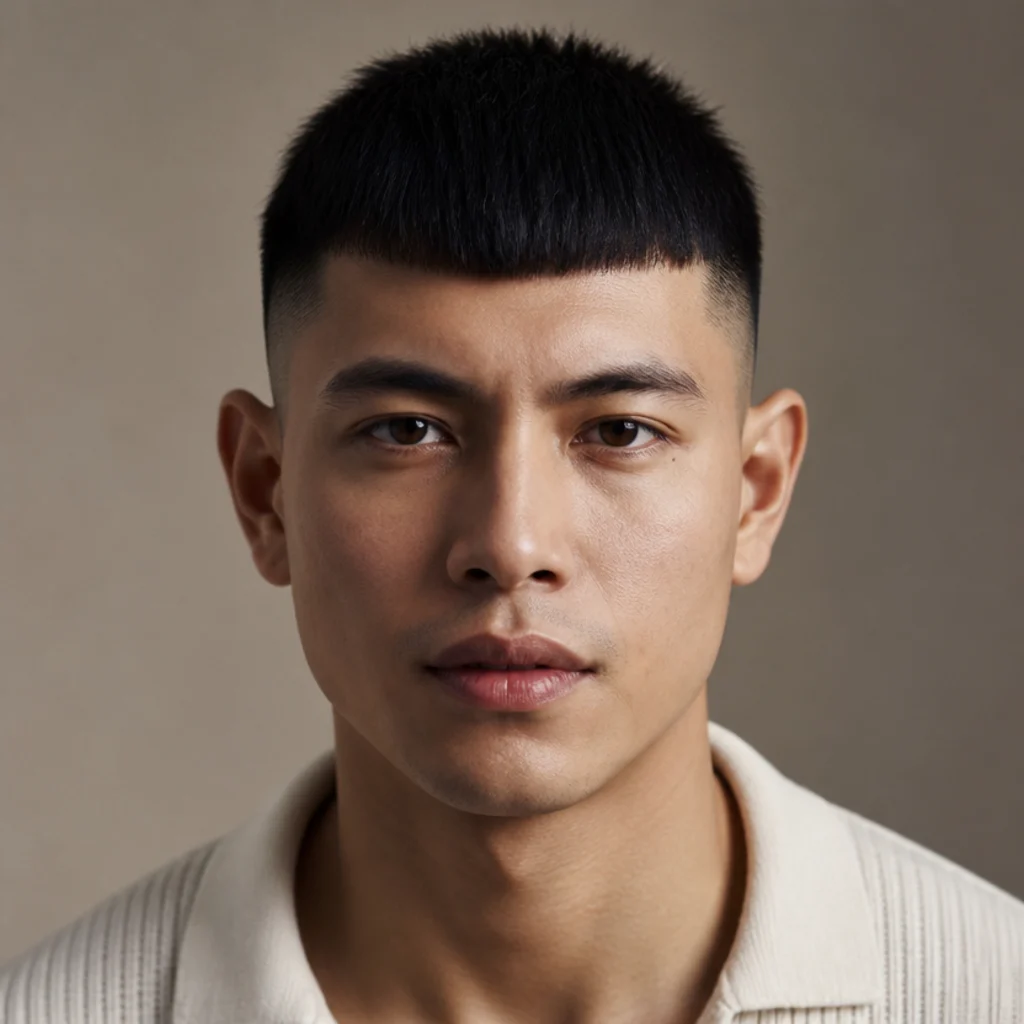
For maximum contrast, the high and tight takes the sides down to a very short guard (#0.5 to #1) high on the head while the fringe stays full and blunt. The fringe practically pops off the scalp, this is the most graphic member of the family and the least ambiguous about being a deliberate style. It suits strong, angular bone structure and rewards a low-effort morning, the short sides need zero attention once cut and never fall out of place. The trade-off is barber frequency: sides taken this high and tight show grow-out within about ten days, so budget honestly for a two-week cycle if you want it to stay crisp rather than fuzzy. Thick hair carries the heavy fringe here better than fine hair, which can look front-loaded and top-heavy against so much bare side. Ask your barber for a "high and tight edgar, sides taken up high on a one guard, heavy blunt fringe left long on top." Pro tip: keep a matte pomade within reach for humid days, a light film pressed along the fringe stops straight hair from lifting at the roots and breaking that flat line, which is the first thing to go when the weather turns.
Save this to Pinterest to build your barber inspiration board.
06Edgar with Line-Up
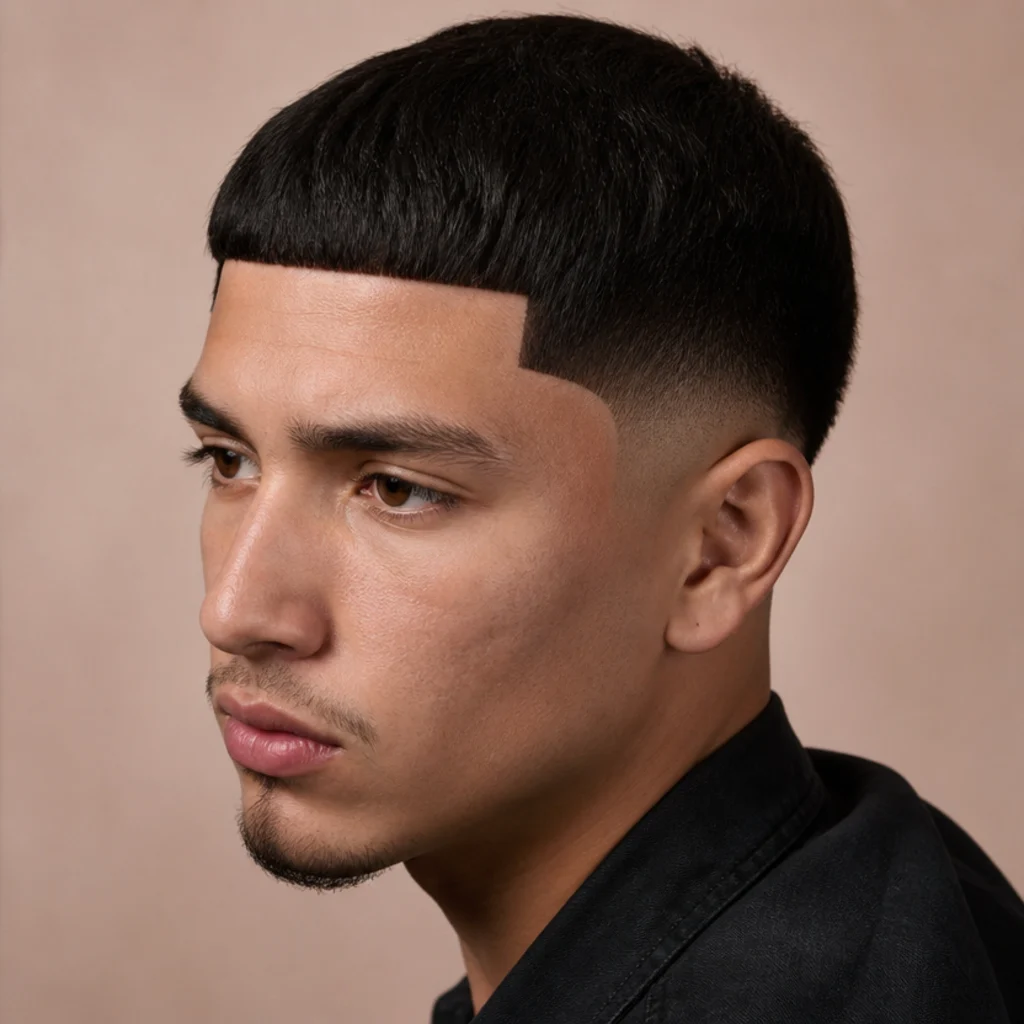
A line-up, or edge-up, uses a trimmer or straight razor to carve a razor-sharp border along the fringe and temples, squaring off the natural hairline into a defined perimeter. On a straight-haired edgar that clean border makes the whole cut look intentional, every angle reads as a decision rather than an accident of growth. It photographs beautifully, which is why it dominates event, graduation, and headshot looks. The line-up flatters square and rectangular faces by echoing their existing angles, though a skilled barber can soften the corners slightly for rounder faces so the effect frames rather than boxes. Be honest with yourself about upkeep before committing: crisp trimmer lines blur within seven to ten days as hair regrows, so this look rewards frequent visits or a confident hand with a home edger. It also nudges the hairline back marginally over repeated sessions, so it's best used sparingly if yours is already high. Request a "sharp line-up on the edgar fringe and temples, keep my corners square but not boxy." Pro tip: skip product at the freshly lined corners for the first day or two, oils and pastes settle into the shaved skin and cause the clean edge to break out, undoing the crispness you paid for.
07Short Crop Edgar
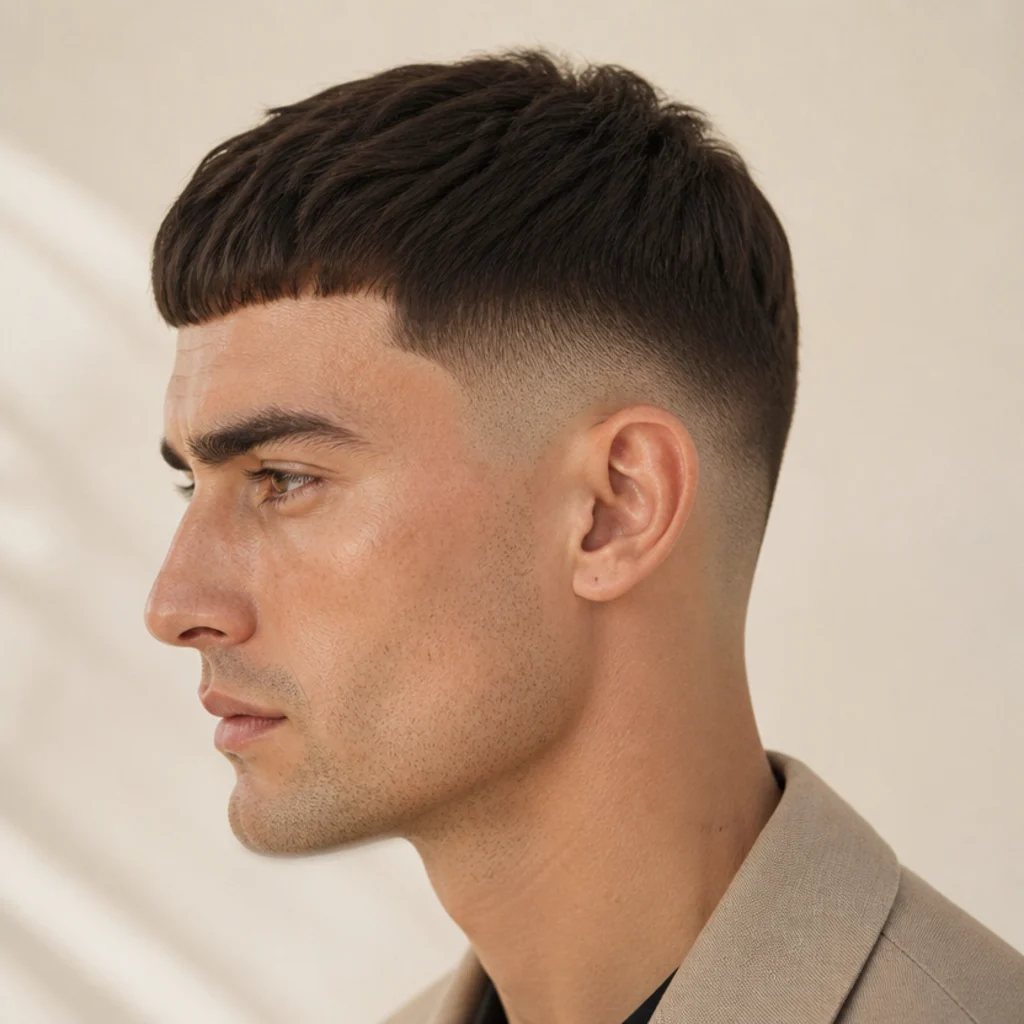
Scale the whole cut down and you get the short crop edgar, a shorter fringe sitting higher on the forehead over cropped, faded sides. It's the practical, grab-and-go member of the family, and it's the answer for thick straight hair that turns heavy and mushroom-shaped at longer lengths, since cropping the top removes the bulk that causes the flare. The higher fringe keeps the signature blunt line while staying entirely out of your eyes, ideal for hands-on jobs, helmets, and sport. It suits oval and round faces and reads clean under nearly any dress code, from a warehouse floor to a client meeting. Upkeep is moderate, roughly every three weeks to reset the fringe height and side crop, and styling time is close to zero. Tell your barber you want a "short cropped edgar, higher blunt fringe sitting above the brow, faded sides kept tight." Pro tip: press a fingertip of matte clay into the front for just enough separation to keep the short crop from reading like a helmet, then leave it. This is the one edgar that doesn't need a mirror check through the day.
08Edgar with Skin Fade
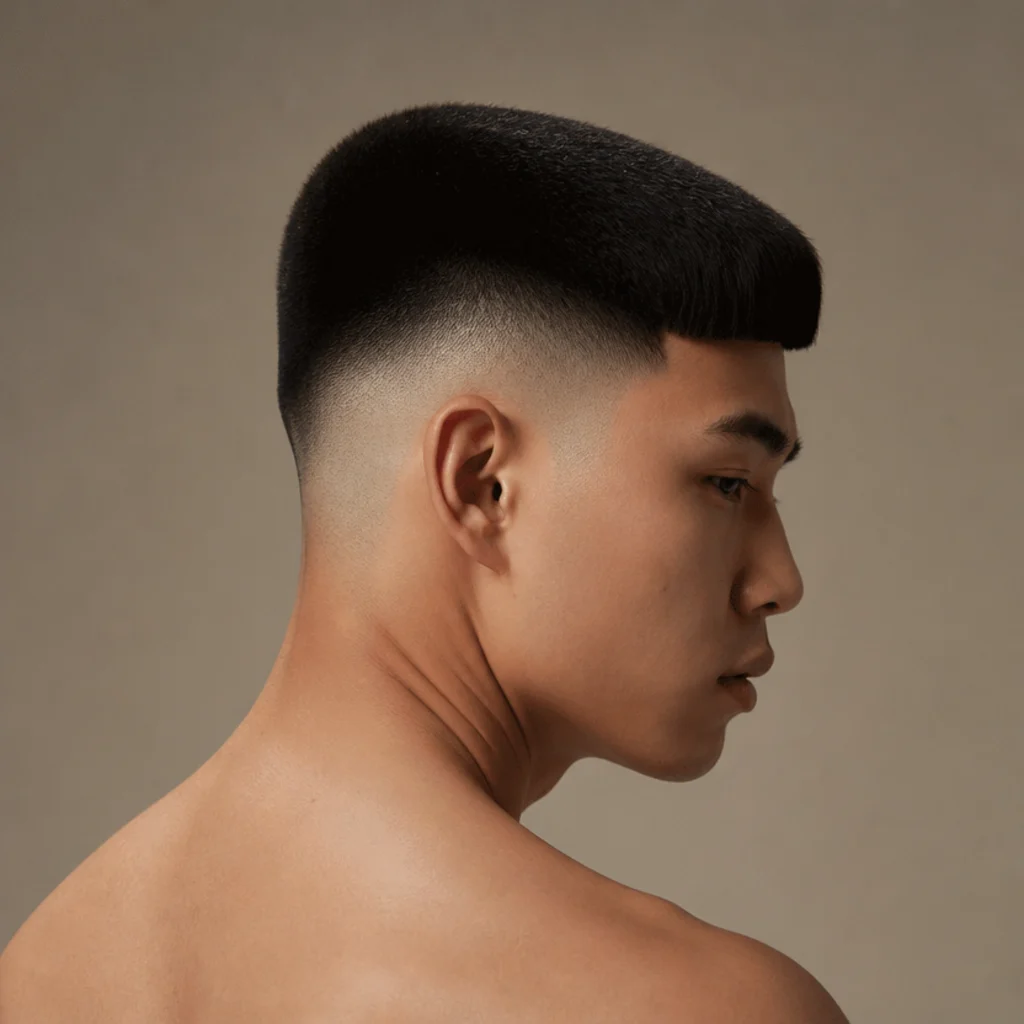
The skin fade is the boldest blend, taking the sides all the way to bare scalp before graduating up into the length. Against that clean skin the blunt fringe looks even more dramatic, the contrast is the entire point of the look. This edgar cut fade is a statement best suited to confident wearers with strong bone structure, and it's arguably the most photogenic version, part of why it rules Pinterest boards and reel thumbnails. The catch is maintenance: to stay bald at the base a skin fade needs refreshing every seven to fourteen days, and once stubble fills in, the effect collapses into an ordinary short fade. It pairs best with a heavy, high-density fringe so the top doesn't look thin or floating against so much exposed skin. Ask your barber for a "skin fade edgar, heavy blunt fringe up top, taken clean to the skin at the bottom with a bald guard." Pro tip: run a mineral SPF over the exposed sides before summer sun. Freshly bladed scalp burns fast, and a peeling, pink fade ruins the clean line you're paying weekly to maintain. If you can't commit to the ten-day cycle, drop to a high fade instead.
09Messy Textured Edgar
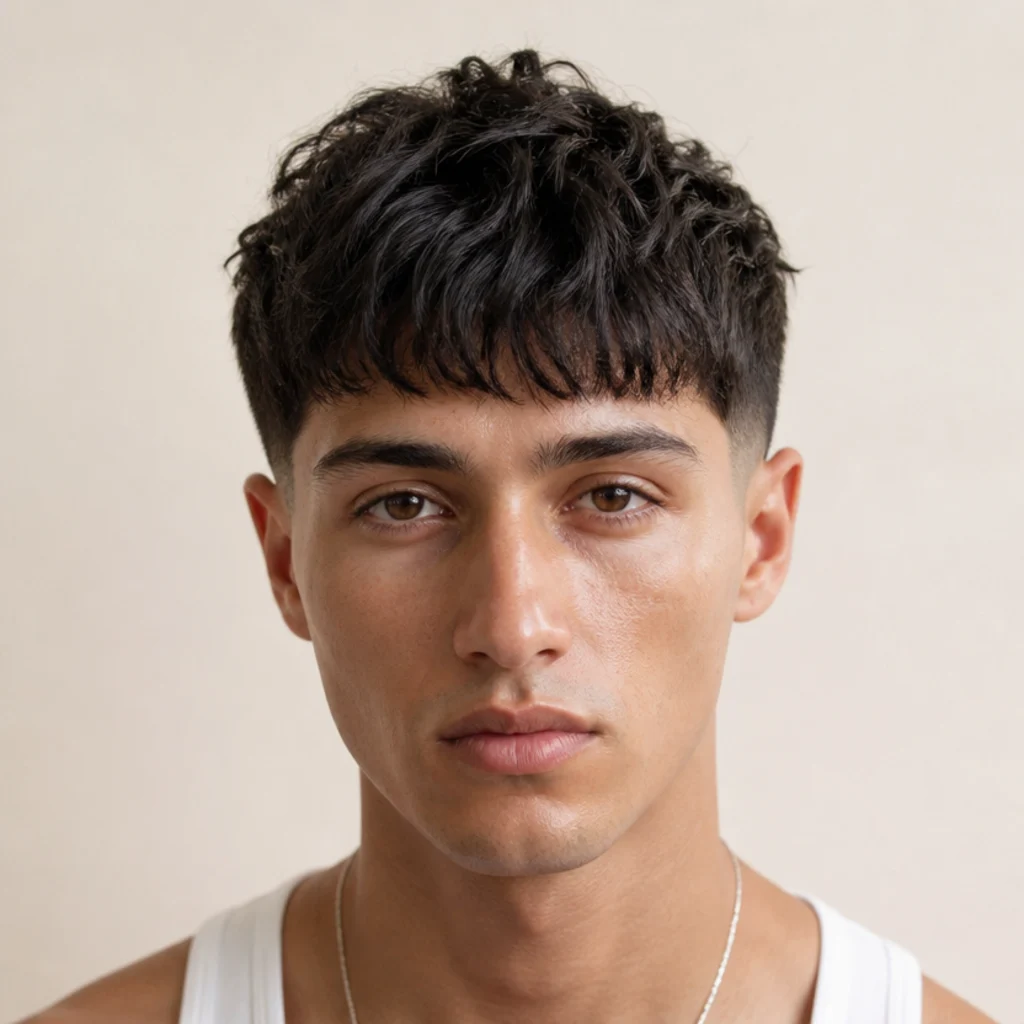
This version trades polish for lived-in ease. The fringe keeps its edgar shape but is styled with a tousled, piecey finish rather than laid flat, so the cut reads casual and undone instead of engineered. It's the most forgiving option for grow-out: movement disguises the awkward in-between weeks far better than a solid blunt front ever could, so it's a smart pick if your schedule is unpredictable. Straight hair holds the texture best with a little grip from a salt or texturizing spray, otherwise the pieces fall flat again by midday and the whole effect deflates. It flatters most face shapes because the broken movement softens hard lines and adds apparent volume for finer hair. Upkeep is relaxed, around four weeks, since a little imperfection is built into the look by design. Ask your barber for an "edgar with a textured fringe I can wear messy, point-cut so it separates and moves." Pro tip: mist sea salt spray on damp hair, then rough-dry with your fingers against the grain, chasing lift at the roots, before letting the front fall forward. Drying with direction first is what keeps the mess intentional rather than actually messy.
10Edgar with Two Design Lines
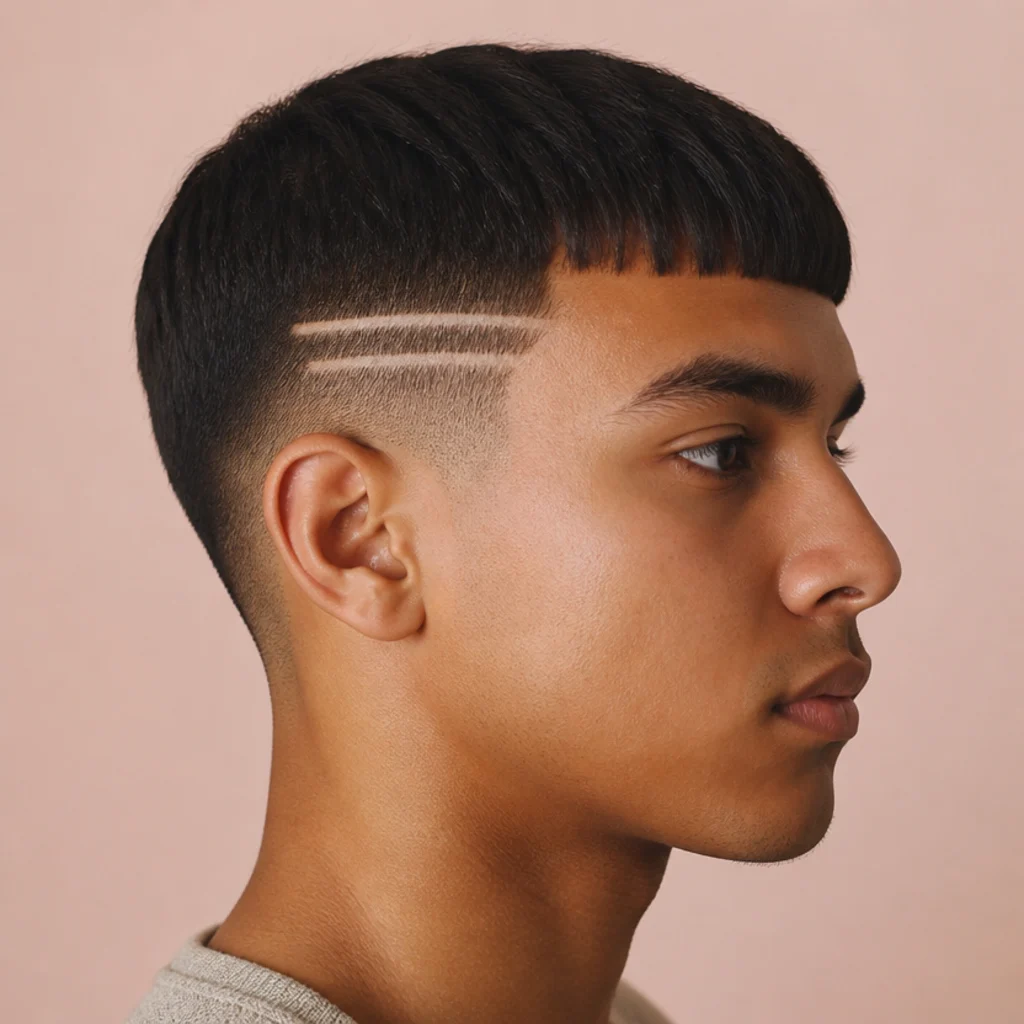
For a personal, graphic touch, two parallel lines are shaved into the faded side, sitting just above the temple where the eye lands first. It's a small detail that turns a standard edgar into something distinctly yours, and it reads best on a skin or high fade where the etched lines get maximum contrast against clean skin. Design lines suit anyone who wants edge without altering the core shape, and they grow out easily, softening and disappearing rather than leaving an awkward transitional stage. Etched lines do blur within about two weeks and need re-shaving to stay sharp, though, so they tie you to the same cycle as a skin fade. Bring a photo and point to exactly where and how far apart you want the "two design lines above the fade": placement is a matter of millimeters and almost impossible to describe in words. Pro tip: keep the lines thin and parallel to your natural hairline rather than angled steeply across the head. Subtle parallel lines age better, photograph cleaner, and read intentional at every stage, while a busy or steep pattern looks dated within a week of growth.
11Longer Fringe Edgar
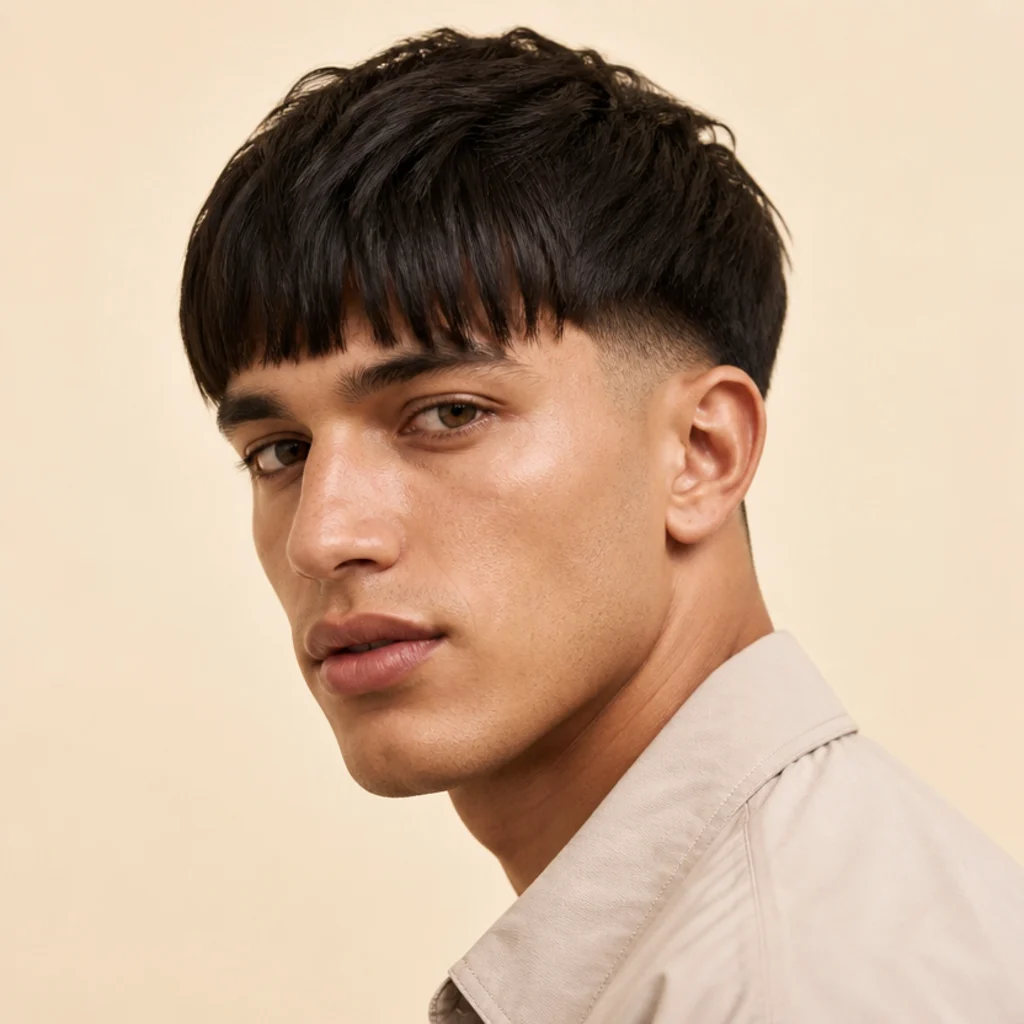
Lengthening the fringe until it grazes or covers the brows gives the edgar a heavier, more dramatic front. The extra weight reads bold and needs real straight density behind it, thin hair at this length looks stringy and separated rather than solid and intentional. Crucially, a longer fringe visually shortens a long face, which makes it a strong edgar cut face shape choice for oblong and rectangular profiles that want to trade forehead height for apparent width. Because the front is longer, it wants occasional smoothing through the day and trims every three to four weeks to stop the blunt edge from splitting into separate strands and losing its line. Pair it with a soft low fade rather than a skin fade so the proportions stay balanced top to bottom, a bold fade under a heavy fringe makes the head look front-loaded. Ask your barber for a "longer edgar fringe cut to the eyebrow line, soft low fade, kept blunt and heavy across the front." Pro tip: run a grooming comb plus a rice-grain of low-shine cream through the front, then blow-dry it downward on cool air first to set the line, straight hair takes its shape at the drying stage and a fringe this long collapses without it.
12Textured Edgar with Burst Fade
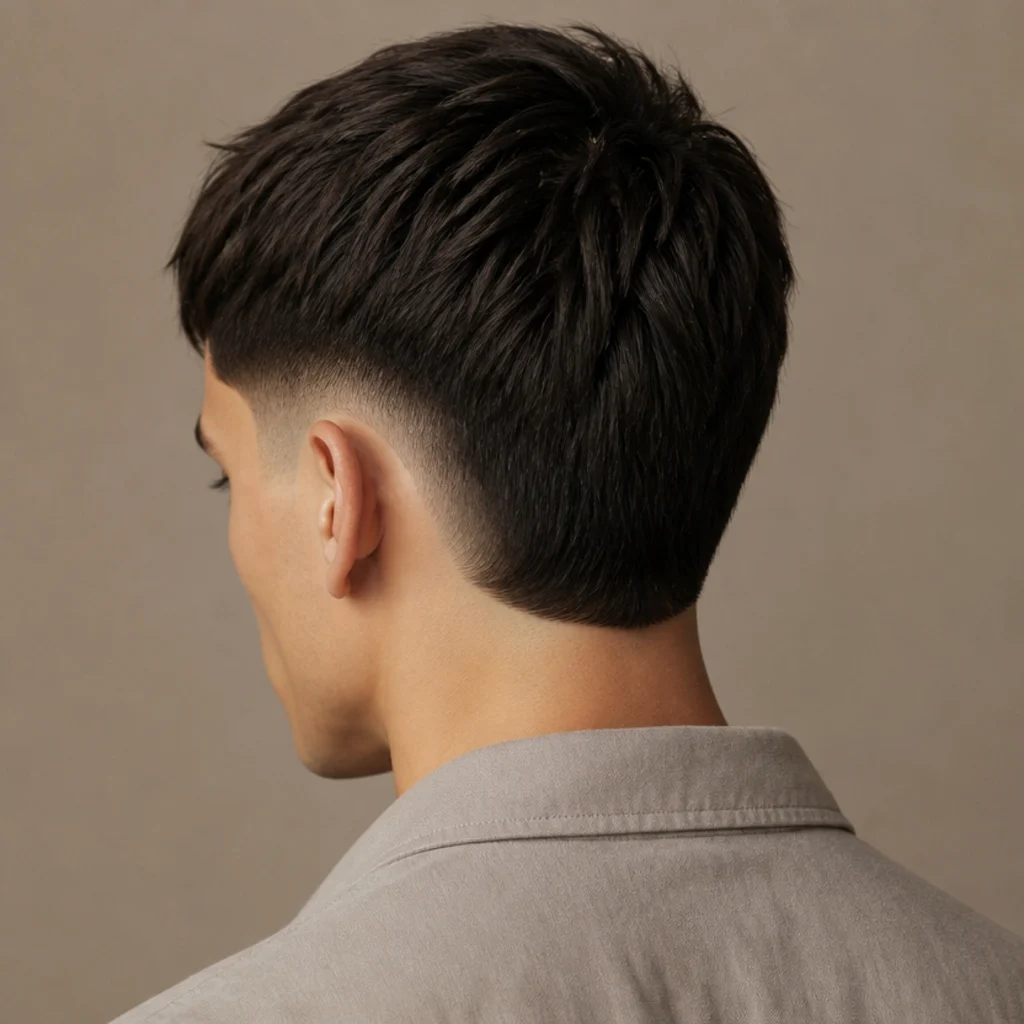
The burst fade curves in a semicircle around the ear rather than running straight down the sides, leaving more length through the back and nape and giving the cut a soft, rounded edge. Paired with a lightly textured fringe it strikes a rare balance, bold enough to feel current, soft enough for almost any setting or dress code. This is our standout variation because it flatters nearly every face shape and grows out evenly, with no hard horizontal line to blur awkwardly the way a straight fade does. The rounded, faintly retro silhouette photographs beautifully from behind and the side, which is exactly where most fades look their weakest and where blends most often go wrong. Plan on a refresh every two to three weeks to keep the curve clean around the ear. Tell your barber you want a "burst fade curving around the ears, leave length at the back and nape, textured edgar fringe on top." Pro tip: work a small amount of matte paste through the fringe for hold without shine, the burst fade already supplies the visual interest, so a glossy top would compete with the curve rather than complement it and split the viewer's attention.
13Edgar with Comb-Over Top
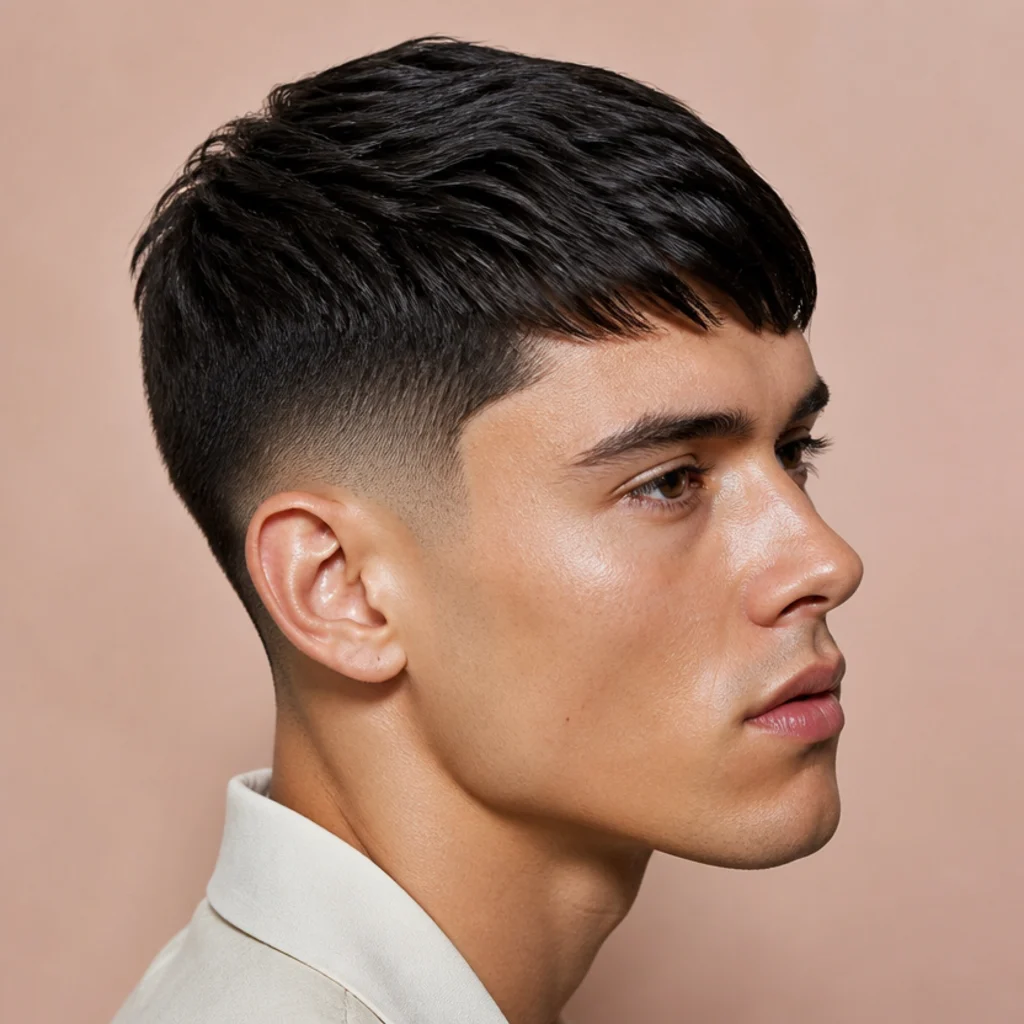
Here the top length is styled with a slight comb-over, sweeping the fringe diagonally across the forehead rather than straight down. It is a more grown-up interpretation that reads well in professional rooms while keeping the edgar's short faded sides, so it bridges a defined style and a boardroom cut. The diagonal sweep flatters round faces by adding asymmetry and a hint of height, breaking up a wide forehead more gently and more forgivingly than a hard V. Straight hair takes this direction easily with a comb and a low-shine cream, since the strands hold a set line once dried into place. Maintenance is moderate: the fade wants upkeep every two to three weeks, but the top length carries real grow-out flexibility, making this a good pick if you can't always book on time. Ask your barber for an "edgar with a bit more length on top so I can comb it over, clean mid fade underneath." Pro tip: blow-dry damp hair in the direction of the sweep with a comb before applying any product, setting the shape while the hair is wet is what makes the comb-over hold all day instead of collapsing back into a flat fringe by lunch.
14Platinum Blond Edgar
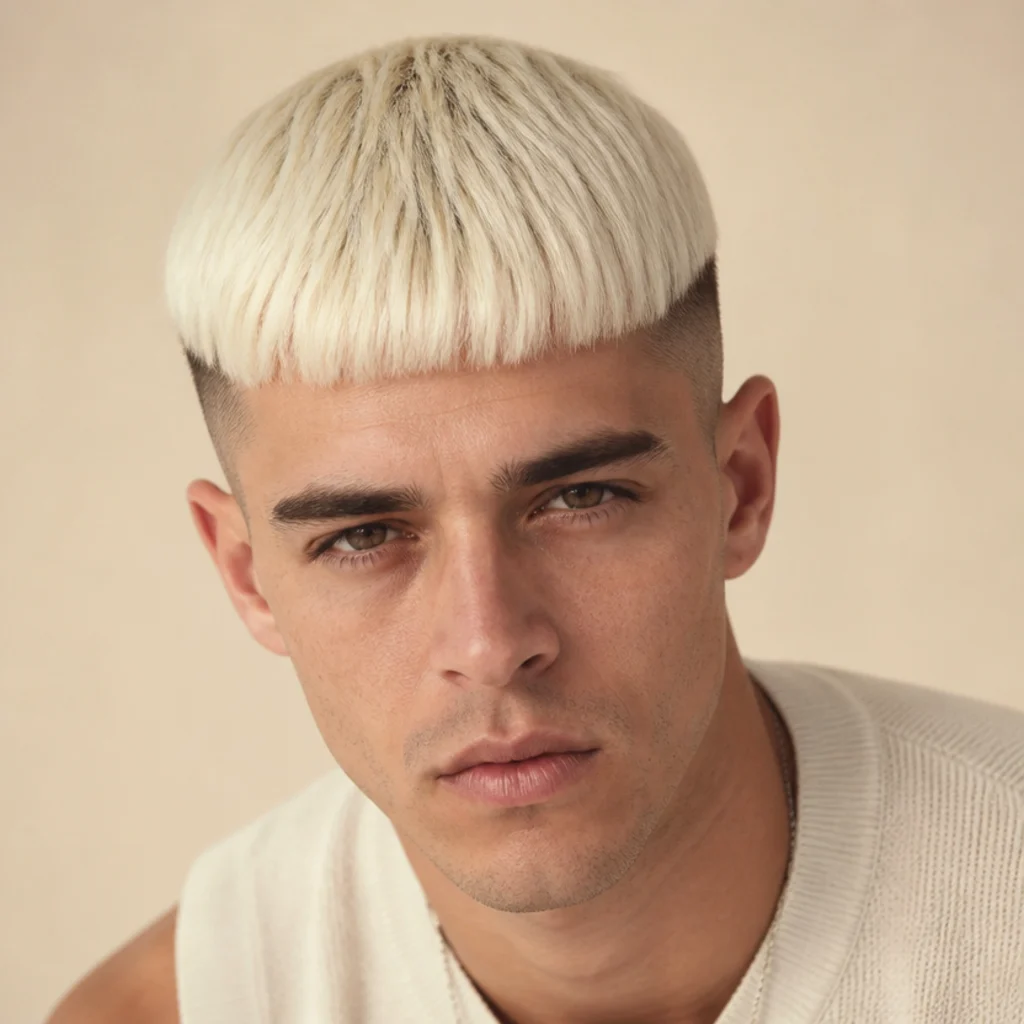
Color turns the edgar into a full statement. A platinum wash over the top length, with the faded sides bleached to match or left darker for contrast, gives an editorial, high-fashion edge, and the blunt fringe becomes the obvious focus of the whole look. This one is for wearers ready to commit to bleach upkeep: roots on dark straight hair show clearly within three to four weeks, and the sharp line where new growth meets platinum is unforgiving on such a graphic cut. It pairs best with a skin or high fade so the color reads against a clean canvas rather than muddying into faded, half-bleached stubble. Budget beyond the cut for a toner refresh every four to six weeks to hold the blond and stop it drifting brassy or yellow between sessions. Ask your colorist for a "platinum edgar with matched or darker faded sides, toned cool, not warm." Pro tip: purple shampoo once or twice a week is non-negotiable, and so is deep-conditioning between washes. Bleached straight hair loses elasticity and snaps easily, and a single broken section in the fringe ruins the blunt line the whole look depends on. Never bleach at home for a cut this exposed.
15Edgar with Spiky Front
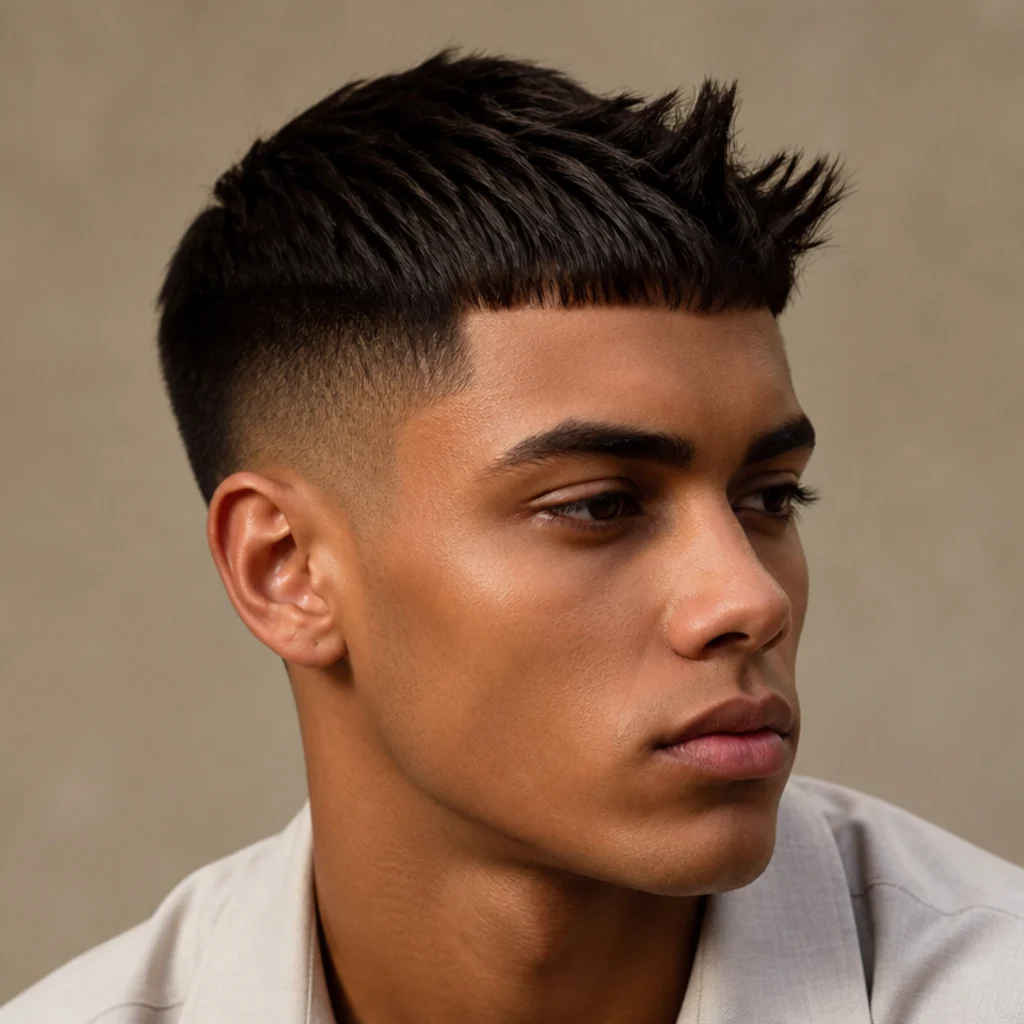
Instead of laying flat, the front edge is styled into short upward spikes for a playful, energetic finish. It keeps the blunt cut line but adds lift and attitude, a welcome option for younger wearers or anyone who finds a fully flat fringe too severe or too static. The vertical height balances rounder and heart-shaped faces by drawing the eye upward and lengthening the head, the opposite job to a flat blunt line. Straight hair spikes cleanly with a strong matte clay and a little root lift from a blow-dryer, though very fine hair may need a pre-styling powder at the roots to hold the points through the day. Upkeep follows whatever fade you pair it with, typically every two to three weeks. Ask your barber for an "edgar I can spike at the front, cut blunt but not too heavy so the pieces stand up rather than flop." Pro tip: emulsify a firm-hold clay fully between your palms until it turns clear and tacky, then build the spikes from the roots upward, working wet product into a clumped fringe gives you crunchy, greasy points, while clay on dry hair gives clean, matte lift that holds its shape.
Save this to Pinterest so you can show your barber the exact finish you want.
16Subtle V-Shaped Fringe
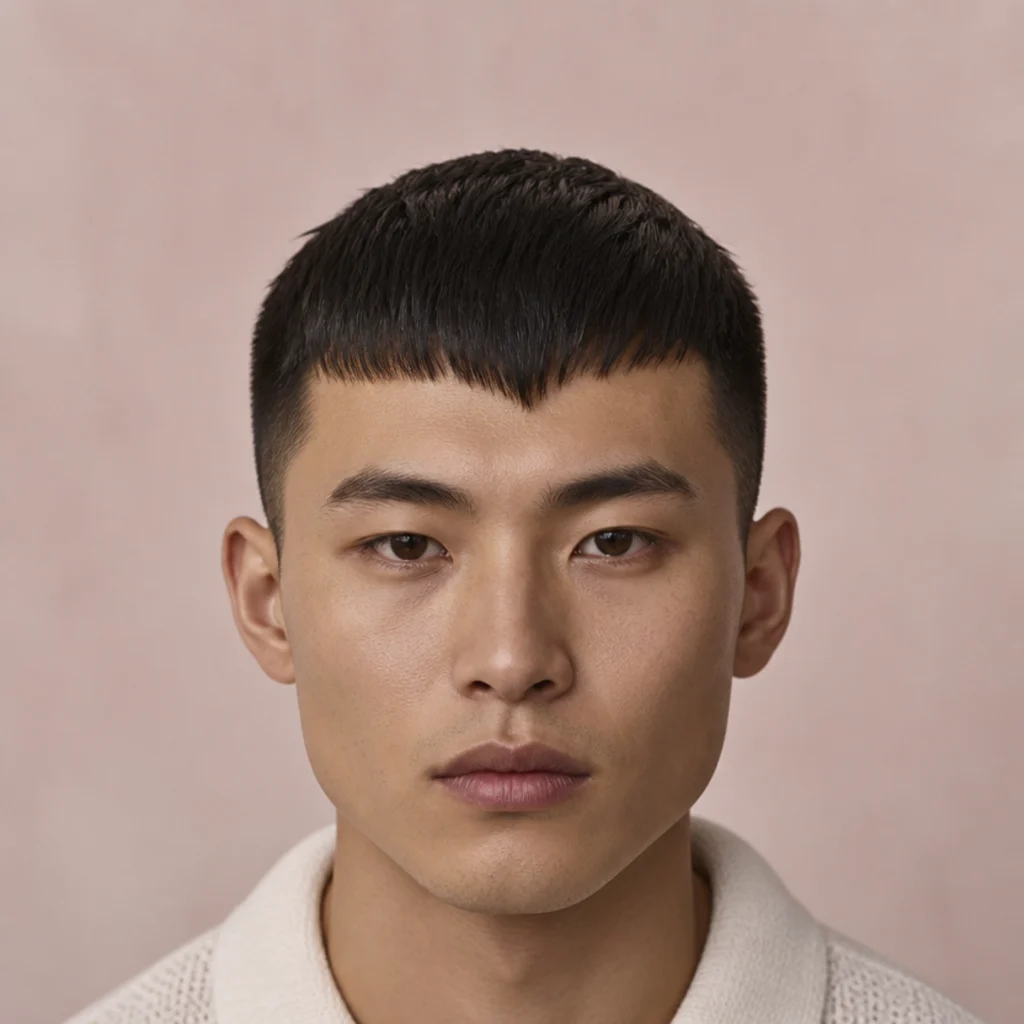
A small tweak to the fringe line changes the whole read of the cut. Instead of a perfectly straight edge, the fringe dips subtly at the center into a soft V, drawing the eye toward the middle of the face and adding a whisper of length down the center line. It is a flattering, gently softening alternative to the hard blunt line, and it's the quiet fix for wider or square faces that find a straight fringe adds too much horizontal weight across the brow. The effect is understated enough to work in any setting, from an office to a weekend, and it rarely reads as a trend the way a deeper V can. Upkeep matches the classic edgar at around three weeks, since the shape is scissor-driven rather than shaved and grows out softly. It needs enough density to hold the point cleanly, fine hair can lose the V into a vague blur. Tell your barber you want a "slight V-shape in the fringe, a soft dip at the center, not a straight blunt line and not a deep point." Pro tip: style it dead flat with a smoothing cream, any texture or root lift fights the V and blurs the very shape you asked for, so this is one edgar where less product and a fine comb win.
17Edgar with a Drop Fade
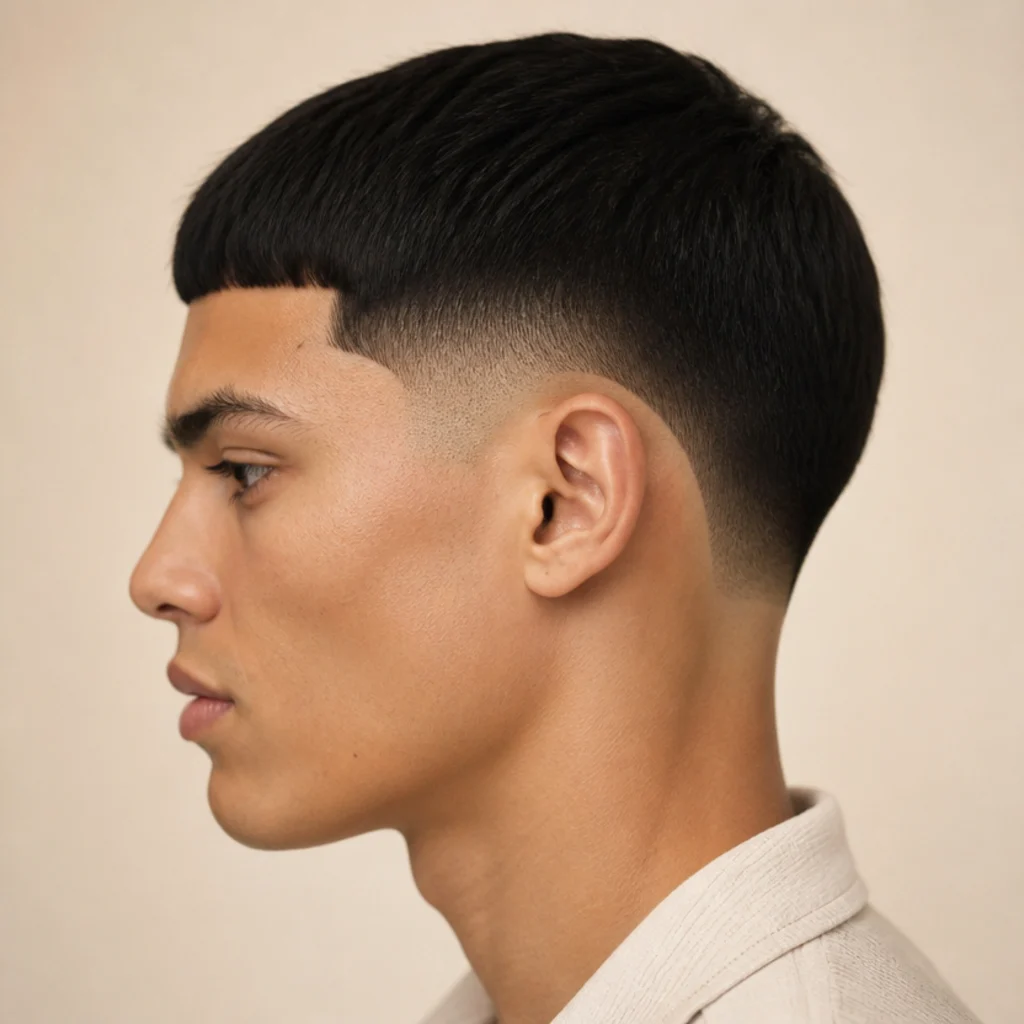
The drop fade dips lower behind the ear, following a curved line down toward the nape instead of staying level across the sides. That downward arc gives the edgar a dynamic, wraparound shape that looks especially strong from the side and back, where a straight fade can fall flat and lifeless. It complements oval and diamond faces and pairs naturally with a blunt or lightly textured fringe, the curve at the back softens and offsets the hard front. This edgar cut fade needs a refresh every two to three weeks to keep the arc clean and prevent the drop from filling in unevenly, since the curve is harder to maintain than a level line. It works on most densities, though the arc shows most clearly and holds longest on medium-to-thick hair. When booking, ask for a "drop fade that curves low behind the ear and down to the nape, blunt edgar fringe up top." Pro tip: keep product minimal here, the shape is doing all the work, so a matte finish on top keeps the eye on the fade's curve rather than pulling it up to a shiny front that competes with the silhouette you paid for.
18Two-Tone Color Edgar
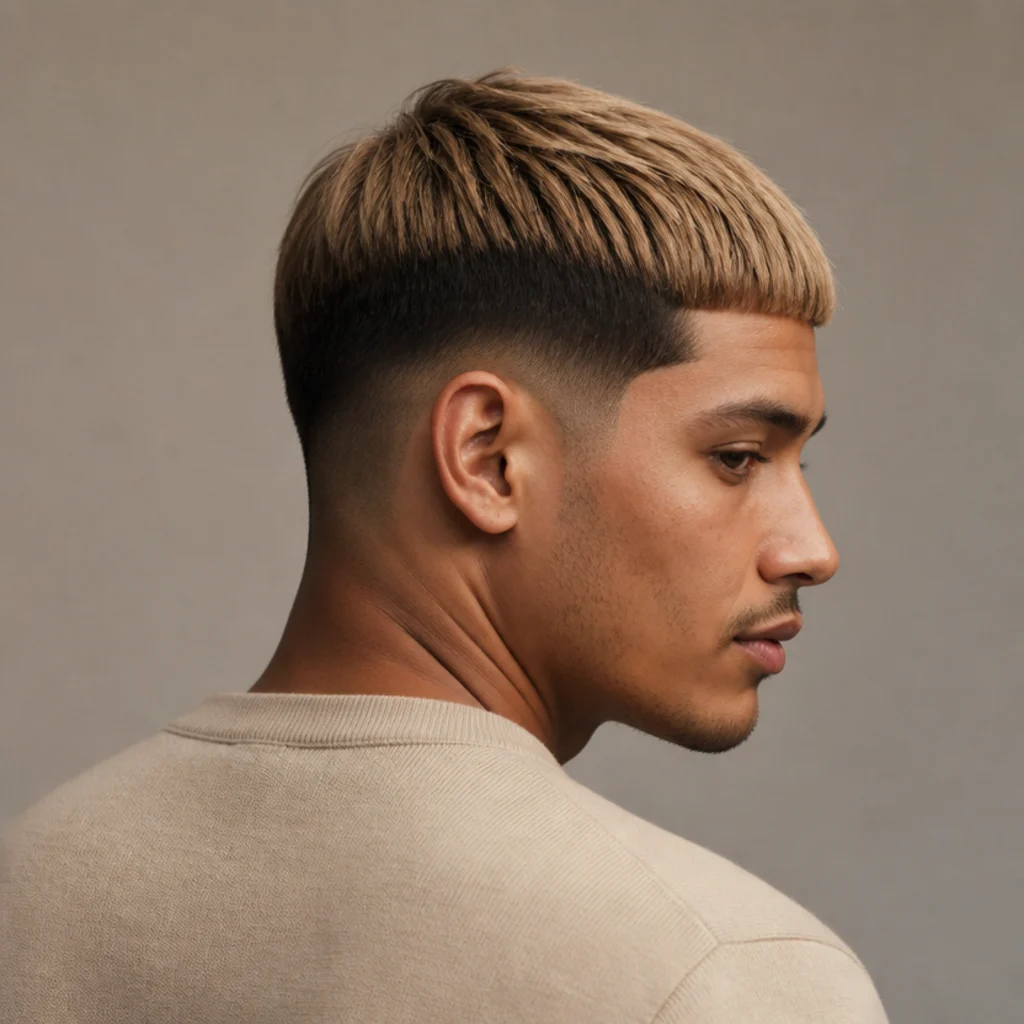
For color without full commitment, the two-tone approach keeps the faded sides in your natural dark shade and lightens only the top length to caramel, honey, or bronze. The contrast plays up the edgar's structure: the blunt fringe stands out against the darker base like an underline drawn beneath the face. It's a far gentler introduction to color than all-over platinum. Roots are much less obvious because the regrowth blends into the dark sides rather than fighting a bright top, so the demarcation line forgives an extra week or two. This works on any face shape, since the interest comes from color rather than silhouette, and it flatters warm and olive skin tones especially well. Plan on a top-up every five to six weeks, less demanding than platinum but still ongoing and worth budgeting for. Ask your colorist for a "two-tone edgar, keep my natural dark sides, lift only the top to a warm caramel." Pro tip: use a color-safe, sulfate-free conditioner on the lightened top. The lifted section is more porous and dries out faster than the untouched sides, and dull, dry color reads cheaper than the cut deserves. A weekly bond-building mask keeps the caramel glossy.
19Edgar with Volume on Top
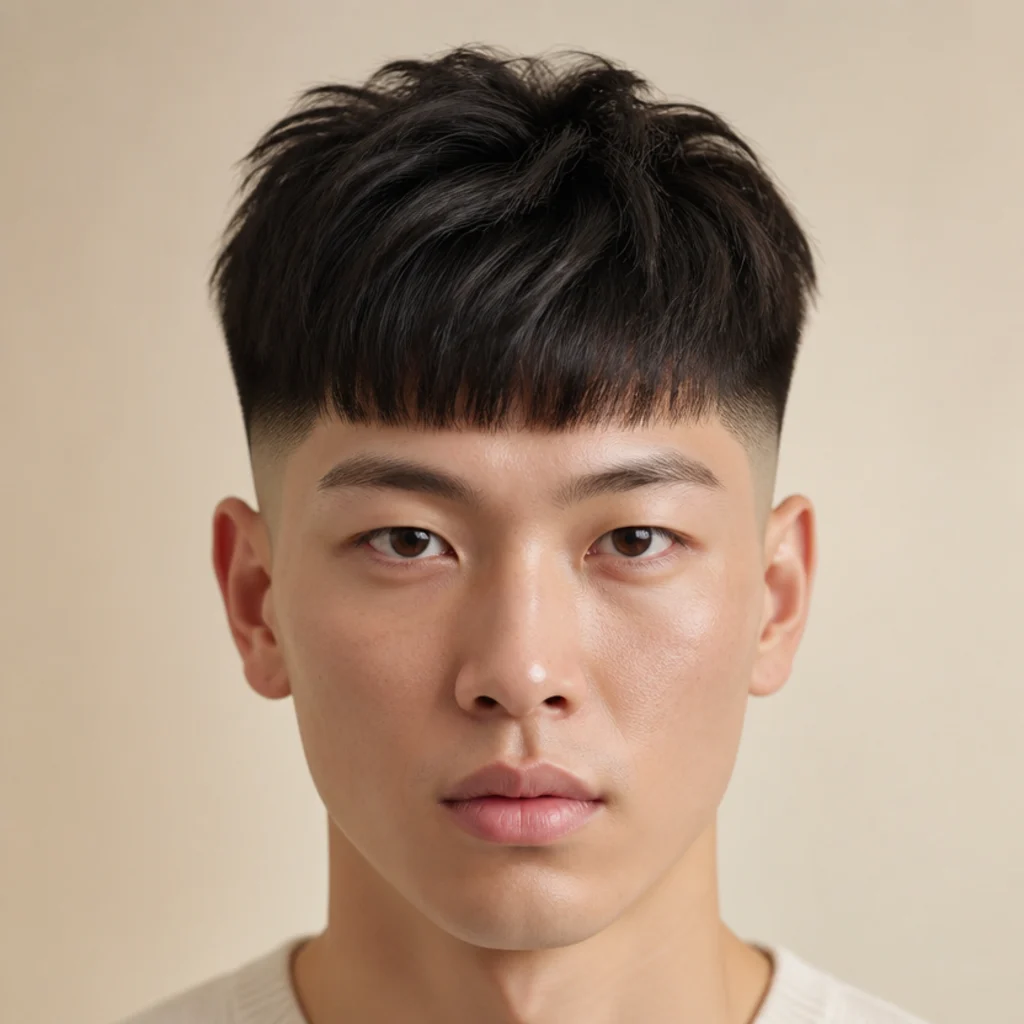
Not every edgar has to sit flat. Leaving extra length on top and styling it with root lift gives the cut height and a fuller crown while keeping the blunt fringe intact, the front stays sharp while the back of the top rises into real volume. This is the fix for finer straight hair that wants the style to look more substantial than its density allows, the added height reads unmistakably as fullness. The lift flatters round and square faces by elongating the head shape and drawing the eye up and away from the width. It asks for a little more effort each morning, a blow-dry with a round brush lifting at the roots, plus a volumizing product, and fade upkeep every two to three weeks. Tell your barber you want "length left on top for volume, blunt edgar fringe kept flat, clean mid fade underneath." Pro tip: apply a lightweight mousse or root-lift spray to damp hair before drying, then aim the dryer up from underneath the roots, heat plus lift at the wet stage is what actually holds volume in straight hair through a full day, while product added to dry hair just weighs the crown back down.
20Sleek Straight Edgar
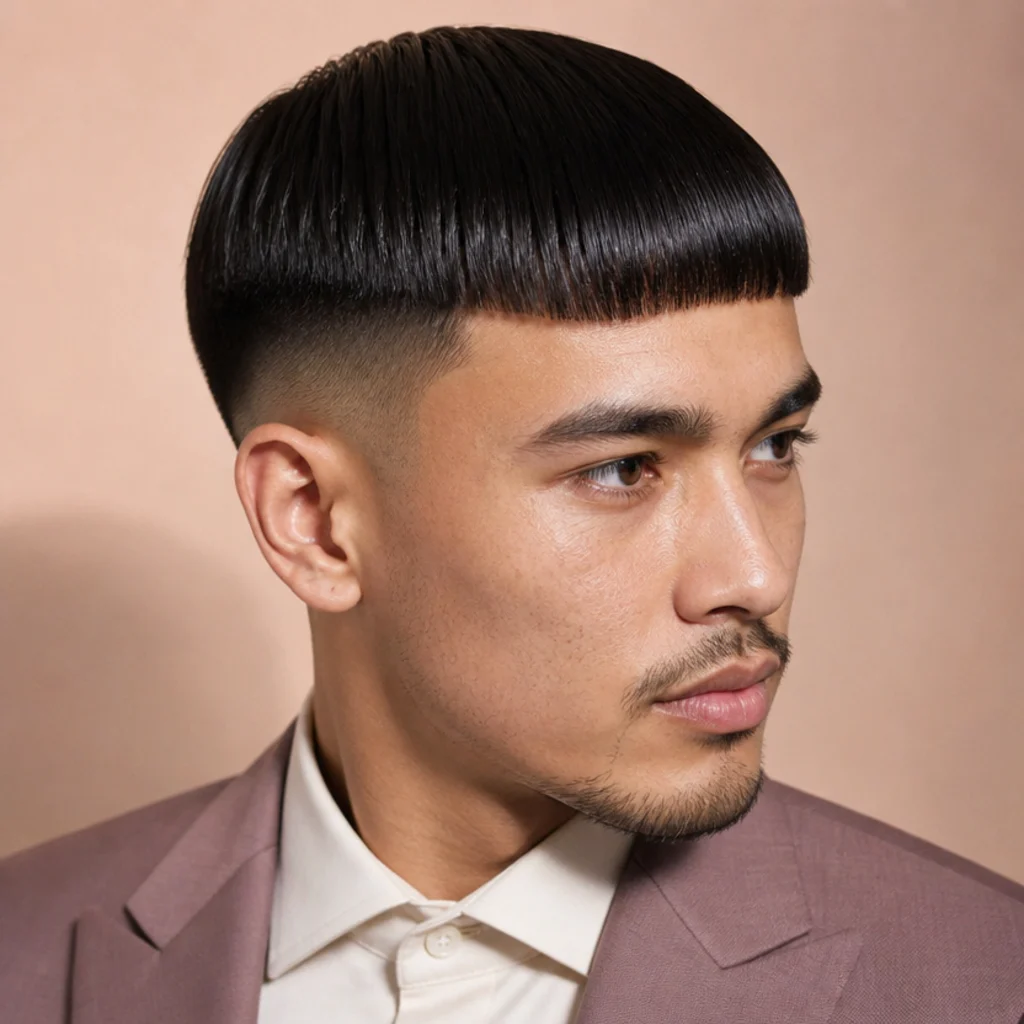
This is the most refined take: the top and fringe are laid perfectly flat and smooth for a sleek, low-gloss finish that leans fully into straight hair's natural strength, no texture, no lift, just clean uninterrupted lines. It suits formal occasions and anyone who prefers a minimal, put-together aesthetic, and it reads more mature and considered than the spiky or messy variations. It flatters oval and heart faces and pairs best with a low or mid fade, a bold skin fade competes with the polish and tips the whole look severe rather than sleek. The sleekness demands healthy hair, dull, dry, or frizzy strands undercut the entire effect and there's nowhere to hide, so condition well and consider a weekly mask. Upkeep centers on keeping the fringe line precise, trims every two to three weeks matter more here because any stray length reads as untidy against so smooth a surface. Ask your barber for a "sleek edgar, smooth blunt fringe, low or mid fade, nothing textured." Pro tip: lay a shine-control cream or light pomade through damp hair with a fine-tooth comb, combing while the hair is wet is what gives you that flawless flat finish without tipping into a greasy, dated wet-look sheen.
Save this to Pinterest to keep your favorite finishes in one place.
21Edgar with Hard Part
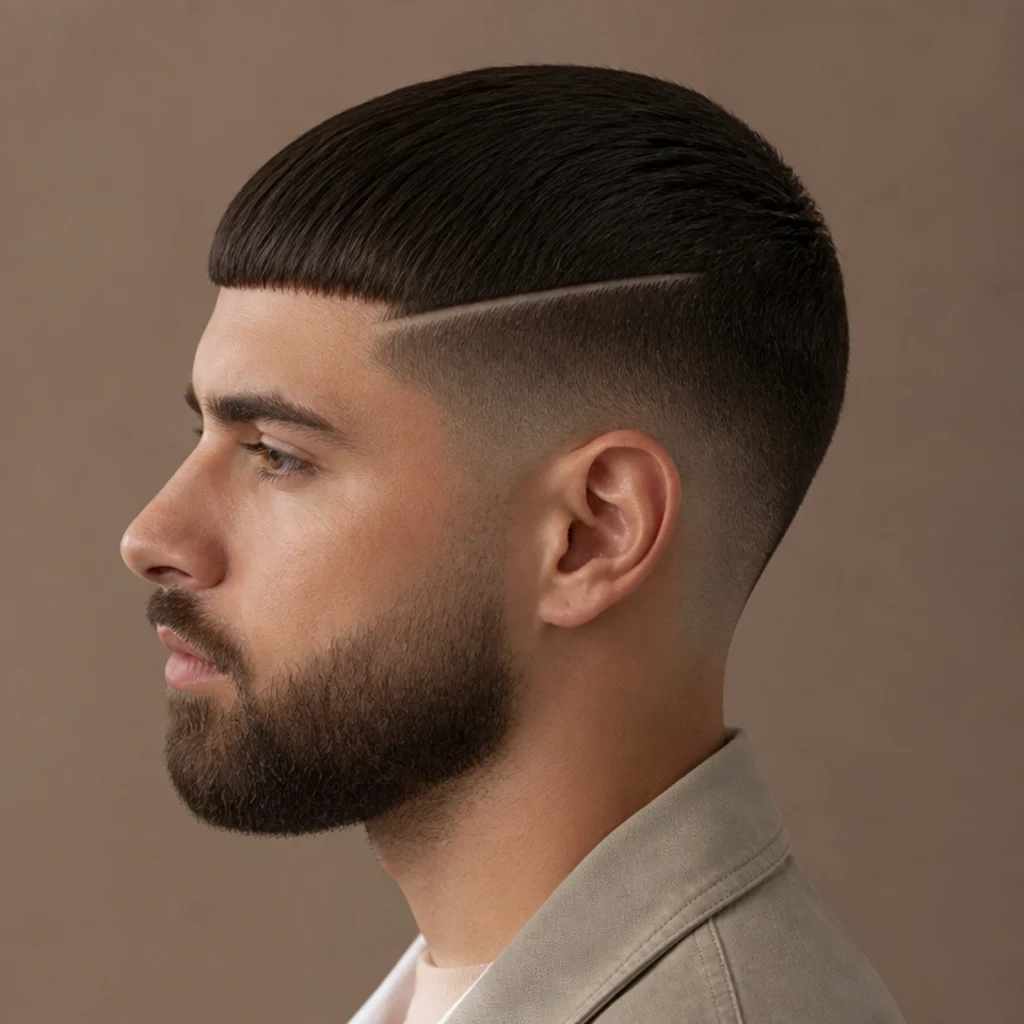
A hard part is a single line shaved into the side to create a crisp division between the fringe and the fade. On an edgar it adds a tailored, barbershop-classic detail that reads sharp and deliberate, a small piece of engineering that lifts an otherwise standard cut into something considered. The hard part suits anyone who likes clean structure and works best against a defined mid or skin fade, so the line has real contrast. On soft or low fades it barely registers and isn't worth the upkeep. It flatters square and oval faces by adding a strong vertical accent that breaks up the horizontal weight of the fringe. As with all shaved detailing, the line softens within a week or two as stubble fills the channel and needs re-cutting to stay sharp, tying you to a two-week rhythm. Ask your barber for a "hard part carved between the fringe and the fade, on my natural part side." Pro tip: place the part where your hair already wants to split. Forcing it against the natural growth pattern means it fights you every morning, fills in crooked as it grows, and never sits as cleanly as one cut along the grain.
22Micro Edgar
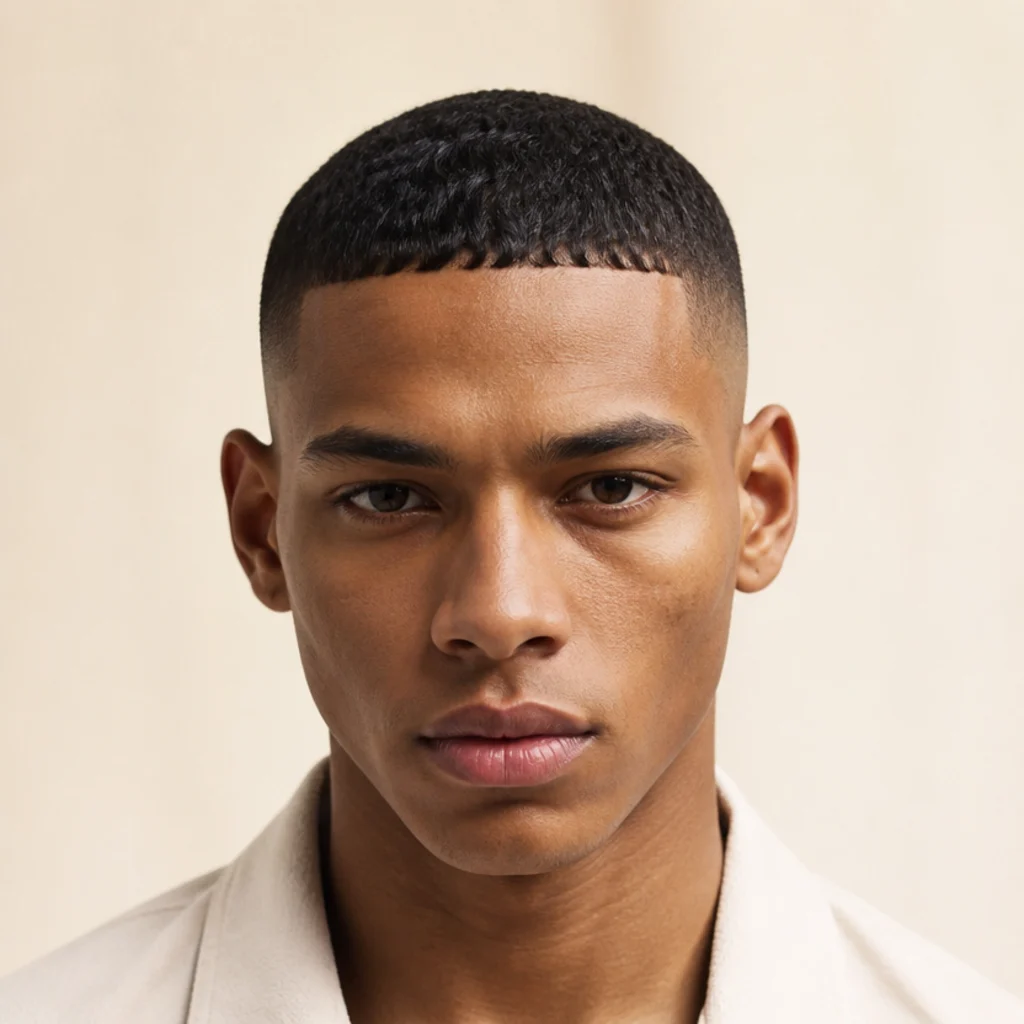
The micro edgar shrinks everything down, a very short, compact fringe sits high on the forehead above a tight skin fade. It is the most minimal, heat-friendly version, purpose-built for summer, athletes, cadets, or anyone who wants the edgar shape at its absolute lowest styling maintenance. The compact fringe still delivers that signature blunt line with almost no length to manage, and it works under helmets and hats without flattening or leaving a dent. It suits oval and round faces and strong features, the shortness puts all the focus on bone structure, so it rewards good angles and defined brows. The trade-off is barber frequency, not styling time: the tight fringe and short sides show grow-out fast, so every two weeks is realistic to keep it looking intentional rather than merely short and neglected. Ask your barber for a "micro edgar, short compact blunt fringe high on the forehead, tight skin fade underneath." Pro tip: skip product entirely, there's nothing to hold, but do book on a fixed two-week rhythm. The micro edgar lives or dies on being freshly cut, since there's no length to disguise even a few days of grow-out.
23Edgar with Faded Beard Blend
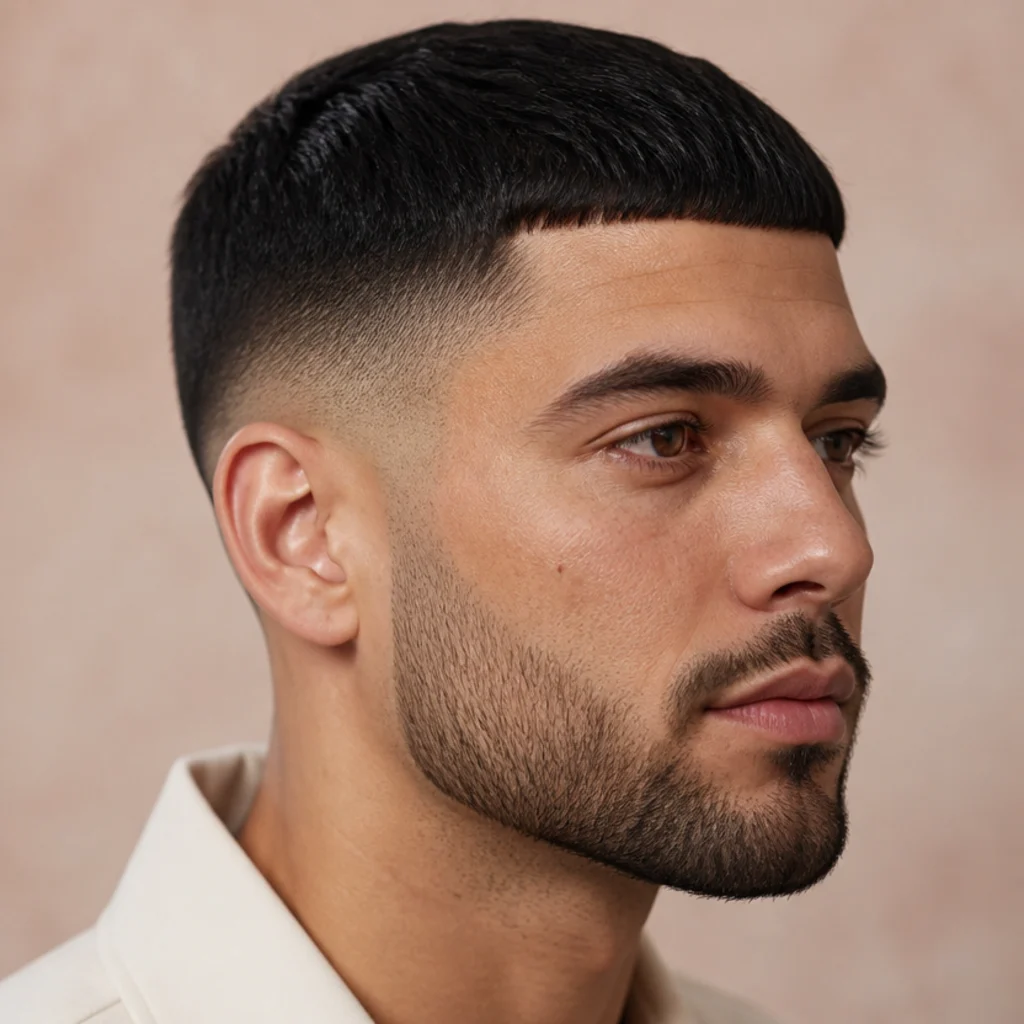
Connecting the cut to facial hair creates a fully integrated look. The side fade blends into a short, faded beard so the line from fringe to jaw reads as one shape rather than two elements stacked at the ear. It suits anyone who already wears a beard and wants their edgar to feel cohesive instead of top-heavy: the beard grounds the strong fringe and balances the visual weight vertically. Structurally, the beard blend adds definition to the lower face, broadening a heart or oval shape at the jaw and giving it more presence. Upkeep effectively doubles. Both the hair fade and the beard line need regular attention, roughly every two weeks, and the connection point just behind the ear is always the first place to blur and betray grow-out. Tell your barber you want the "edgar fade blended into the beard for one connected line, no gap or hard step at the ear." Pro tip: work a drop of beard oil through the blended section daily. It keeps the short beard hair soft and lying flat so the transition from fade to beard stays smooth and matte, instead of turning bristly and catching the light at the exact seam you want invisible.
24Curtained Edgar Hybrid
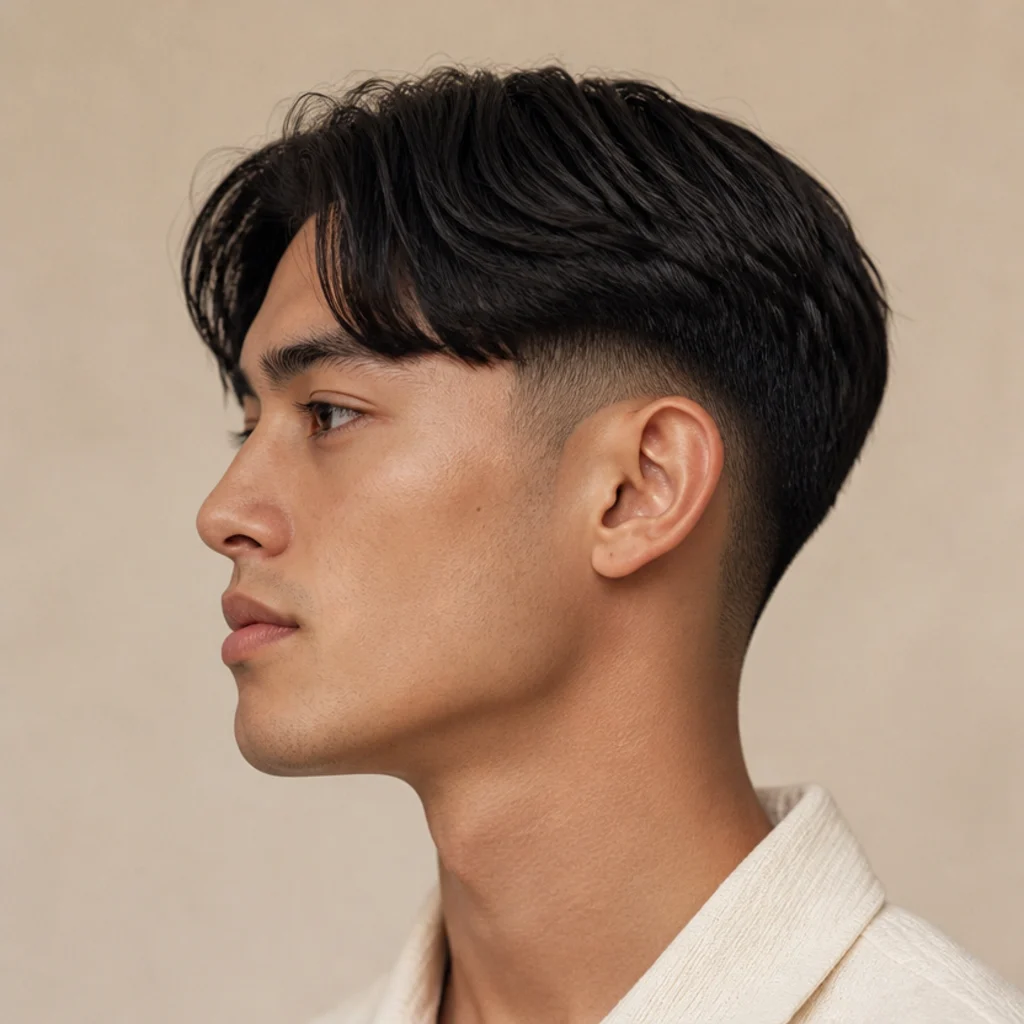
This hybrid blends the edgar with the curtain trend, softening the fringe so it parts slightly at the center while keeping the faded edgar sides intact. It is a modern, on-trend compromise for anyone who likes the edgar structure but finds a full blunt front too heavy, too severe, or too committed to one era. The soft center part flatters round and square faces by breaking up the forehead vertically, the exact opposite strategy to a straight blunt line, and it reads more relaxed, romantic, and contemporary. Straight hair falls into curtains readily with a mid-length front and a light outward blow-dry, though it wants a touch more length than a standard edgar to part cleanly rather than flop shut. Upkeep is moderate at around three weeks, with real flexibility on the top length since a growing curtain still parts and even improves slightly as it lengthens. Ask your barber for an "edgar-curtain hybrid, fringe long enough to part a little in the middle, faded sides kept short." Pro tip: dry the front by splitting it down the center with your fingers and directing each side outward on cool air, setting the part while the hair is wet is what keeps it from collapsing back into a flat, closed fringe by midday.
25Grown-Out Edgar
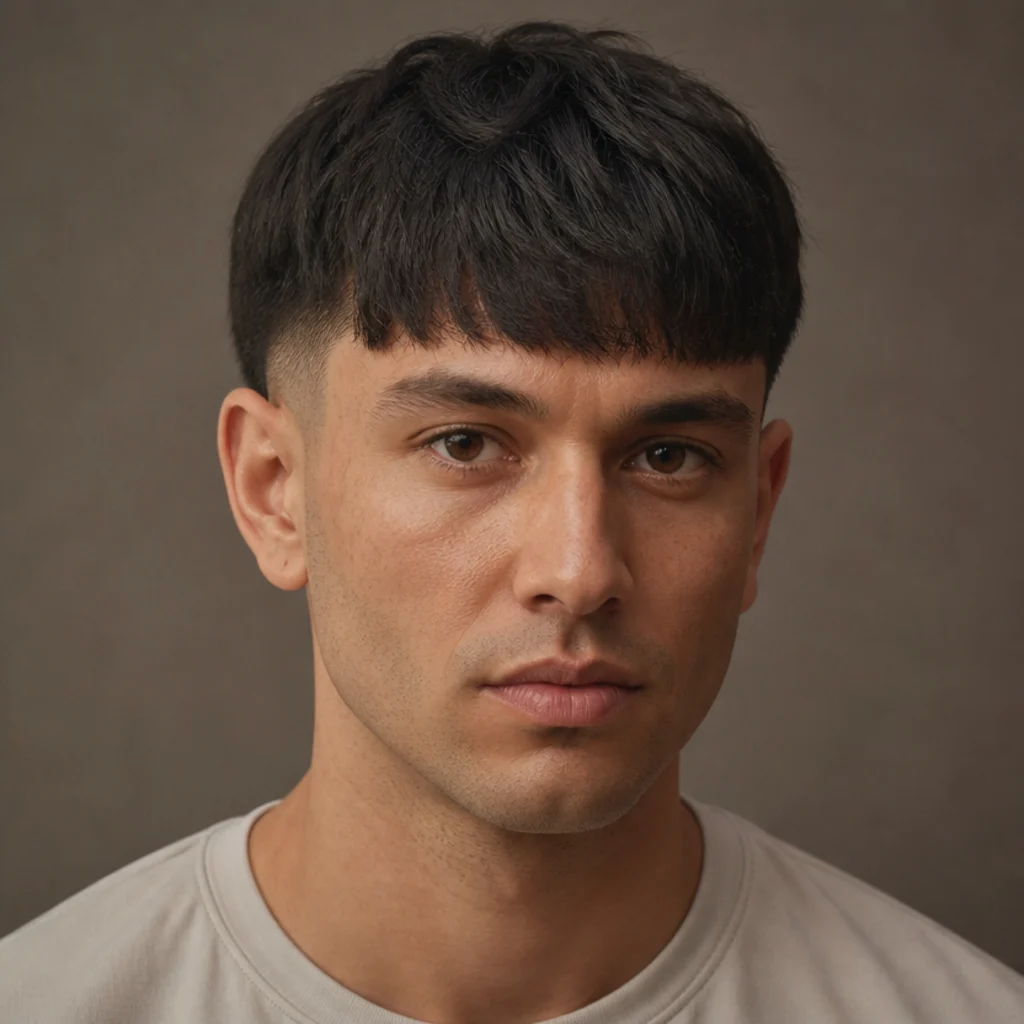
Not every stage needs a fresh cut. The grown-out edgar embraces a few extra weeks of length, a fuller, softer fringe over a low fade that has relaxed into a gentler, hazier gradient. It's a wearable transitional look, and knowing how to carry it means you can comfortably stretch time between barber visits, useful and budget-friendly across a year. The added length suits anyone who likes a shaggier, low-key vibe, and the extra weight at the front flatters longer faces by trading height for fullness. The risk is the fringe going flat and shapeless as it lengthens, so this needs the most styling attention of any version here. It's the one edgar that fights you a little. Style it with a little texturizing spray to keep the looser fringe moving and separated rather than lying dead against the forehead. When you do return to the chair, ask your barber to "clean up the edgar but keep some of the grown-out length, just tidy the fade and the fringe line, don't take it back to short." Pro tip: mid-grow-out, book a "fade-only" touch-up and leave the top alone. Refreshing just the sides resets the whole silhouette and buys the shape another two weeks of life for a fraction of a full cut.
Pro Tips from the Editor
- Density decides the fringe, not length. Thick straight hair carries a heavy blunt line cleanly; fine hair almost always looks better point-cut (#3) or textured (#9), which scatters light and fakes fullness exactly where a solid edge exposes scalp. Judge your density in the mirror before you fixate on a photo of thicker hair than yours.
- Watch your hairline before you commit. The blunt fringe sits best on a low-to-average, straight hairline. Repeated line-ups (#6) and hard parts (#21) nudge it back over time, and an M-shaped or receding hairline fights the flat line, so favor a textured or shorter fringe if yours is already high.
- Budget by the fade, not the cut. The top holds its shape for weeks; the fade dictates your calendar and most of your annual spend. Skin fades and shaved detail want seven to ten days, mid and drop fades hold two weeks, and low tapers and textured versions stretch to three or four.
- Set the fringe while it is wet. Straight hair takes its shape at the drying stage, not from product piled on dry. Comb or direct the front damp, dry on cool air to lock the line, then finish with the smallest amount of product, this holds longer than anything applied to a dry fringe.
- Match the finish to the fade. Bold fades (skin, burst, drop) pair best with a matte top so the two don't compete for the eye; refined low and mid fades can carry a low-gloss, sleek finish without tipping severe.
- Bring two photos, front and side. Barbers read fade height and fringe line far more reliably from a side angle than from your words alone, and the back is where blends most often go wrong. A back-of-head shot for burst and drop fades is worth taking too.
- Ask for the fringe to be checked dry. Wet hair sits lower and longer; a fringe cut and judged only wet often ends up shorter than you wanted once it dries and lifts a few millimeters. Have your barber dry-check and dry-finish the line before the final pass, this single request prevents most "too short" regrets.
How to Choose / Get the Look
Start with your face shape, since it steers the fringe more than any other single factor. Round and square faces benefit from added height and vertical breaks, a soft V (#16), a comb-over (#13), spikes (#15), or a curtain (#24) to counter width; long, oblong, and rectangular faces suit a longer, heavier fringe (#11) that shortens the forehead and trades height for balance; heart and diamond faces do well with side weight from a low taper (#4) or a beard blend (#23) to broaden and ground a narrower jaw; oval faces can wear nearly any version, so choose on lifestyle instead. Density is the second filter, thick hair carries blunt and heavy, fine hair wants texture, volume (#19), or a point-cut front.
Then pick the fade by lifestyle and upkeep tolerance, using the table below.
| Fade / detail | Best face shapes | Refresh cycle | Commitment |
|---|---|---|---|
| Low taper (#4) | Heart, diamond | 3-4 weeks | Low, office-safe |
| Mid fade (#2) | Square, oval | 2 weeks | Moderate, versatile |
| Drop / burst (#12, #17) | Most shapes | 2-3 weeks | Moderate |
| Skin / high fade (#5, #8) | Strong bone structure | 1-2 weeks | High |
| Line-up / hard part (#6, #21) | Square, rectangular | 1-2 weeks | High, sharp look |
| Color (#14, #18) | Any | 4-6 weeks (toner) | High, added cost |
Be realistic about maintenance before you book: blunt fringes, line-ups, hard parts, and design lines blur within one to two weeks, while textured and grown-out versions forgive time between visits and reward a hands-off owner. Sequence your appointment out loud, name the fringe style first, then the fade type and height, then the fringe length judged dry, so the barber builds the cut in the order the shape depends on. Bring a clear front-and-side photo and use the exact phrasing from each idea above, the words "blunt," "textured," "fade height," and "fringe length" do most of the communicating for you. On straight hair, a matte paste or cream and a fine comb will style almost every version here, so set the shape while damp for hold that outlasts the day.
Frequently Asked Questions
Is the edgar cut good for straight hair?
Yes, straight hair is arguably the ideal texture for it. The strands naturally fall into the blunt, flat fringe that defines the edgar, so it holds the signature line with minimal product and no fighting against wave or curl through the day. The fade also reads cleaner on straight hair, since there's no texture to interrupt or blur the gradient as it climbs. The one caveat is density: medium-to-thick straight hair carries a solid blunt fringe, while very fine straight hair usually looks better with a point-cut or textured front (#3, #9) that scatters light and fakes fullness where a hard edge would expose the scalp.
How do I choose an edgar cut for my face shape?
Match the fringe to your proportions. Round and square faces suit added height and vertical breaks, a soft V, spikes, a comb-over, or a curtain parting to counter width; long, oblong, and rectangular faces suit a heavier, longer fringe that shortens the forehead and trades height for balance; heart and diamond faces benefit from side weight or a beard blend to broaden a narrower jaw. Oval faces can wear almost any edgar cut face shape variation, so pick on lifestyle and upkeep instead. If your hairline is high, M-shaped, or receding, keep the fringe shorter and textured and skip frequent line-ups, which can push it back further over time.
What is the difference between an edgar cut and a caesar cut?
They are close relatives, both built on a horizontal fringe brought forward over short sides. The caesar is generally softer, shorter, and more evenly textured all around, with a fringe that blends into the top and sides more gradually. The edgar pushes further: a bolder, more sharply defined blunt fringe, a harder front line, and stronger faded or tapered sides for higher contrast between top and side. In short, every edgar is a sharpened, higher-contrast descendant of the caesar's basic idea, more graphic where the caesar is understated. If you want a subtler version, ask for a caesar; if you want the drawn edge, ask for the edgar.
Can you get a curly edgar cut?
Absolutely. A curly edgar cut keeps the same blunt-fringe-and-faded-sides structure, but the barber cuts the fringe to work with the curl pattern rather than laying it flat, often shaping it slightly shorter to account for shrinkage once the hair dries and springs up. The result looks fuller and more textured than the straight version, with the curls softening the front line into something less severe. Coily and wavy textures work well too; the key is a barber who cuts the fringe dry, or at least accounts for how much the curl lifts and shrinks, so you don't walk out with a fringe that looked right wet and rose an inch by the time you got home.
How often does an edgar cut need a trim?
It depends entirely on the fade and detailing, not the top. Skin fades, line-ups, hard parts, and shaved designs need refreshing every one to two weeks to stay crisp; mid, drop, and burst fades hold two to three weeks; low tapers and textured versions can stretch to three or four weeks; and a deliberately grown-out edgar can go longer still. A useful money-saver is booking a fade-only touch-up between full cuts to buy the shape extra life, refreshing just the sides resets the whole silhouette for a fraction of the price and effectively doubles the mileage of each full appointment.
Does the edgar cut work for thin or fine hair?
It can, with the right adjustments. Skip the solid blunt fringe, which exposes sparse spots and scalp, and ask for a point-cut or textured front (#3 or #9) that scatters light and reads noticeably fuller. Leaving a little more length on top with root volume (#19) also helps thin hair look more substantial, since the height reads as density. Avoid very high skin fades that shrink the visible hair area and emphasize how little there is. A low or mid fade keeps more apparent density around the head. Style with a matte, lightweight product only, heavy waxes and creams drag fine hair flat and make thinning more obvious.
How much does an edgar cut cost to maintain?
Expect a standard men's cut price plus a fade upcharge at each visit, then multiply by frequency, which is where the real running cost lives. A low-taper edgar refreshed monthly is inexpensive; a skin fade with a line-up refreshed every ten days adds up quickly over a year. Color versions carry a separate colorist fee up front plus ongoing toner every four to six weeks, and platinum in particular demands salon-quality upkeep. Learning to style and stretch the grown-out phase (#25), and booking fade-only touch-ups between full cuts, are the two biggest levers for cutting the annual bill without letting the shape go scruffy.
What products style a straight edgar best?
Keep it simple and matched to the finish. Use a matte paste or clay for hold without shine on textured and spiky versions (#9, #15); a low-shine cream or light pomade for sleek and comb-over finishes (#13, #20); and a texturizing or sea-salt spray for messy and grown-out looks (#9, #25). The universal rule for straight hair is to apply product to damp hair and set the shape while drying, then use only a fingertip more to finish and control flyaways. Skip heavy waxes and wet-look gels, which flatten the fringe, read greasy against the clean fade, and undo the matte contrast the edgar depends on.
Will an edgar cut suit an older wearer or a professional setting?
Yes, if you steer toward the restrained end of the family. A low taper (#4) or mid fade (#2) with a sleek (#20) or comb-over (#13) top reads mature and boardroom-appropriate, while skin fades, spikes, design lines, and platinum color skew younger and more expressive. Softening the fringe with a point cut (#3) rather than a hard blunt line also ages the look up gracefully and flatters a hairline that has shifted over time. The edgar is a framework, not a single age-coded style, choosing a quieter fade and a matte, low-gloss finish keeps it professional at any age.