20 Curly Edgar Cut Styles That Look Genius
The edgar gets far more interesting once curls enter the picture. A blunt fringe, defined coils, and a precise fade add up to a low-effort shape with real presence, and the details, fade height, fringe weight, and curl definition, are what separate a genius cut from a generic one. Below are 20 curly versions, each mapped to a curl type, a face shape, and a realistic refresh schedule, so you can save the exact one that fits your hair and your calendar before your next barber visit.
 Edited by Lena Rose · Published July 11, 2026 · 39 min read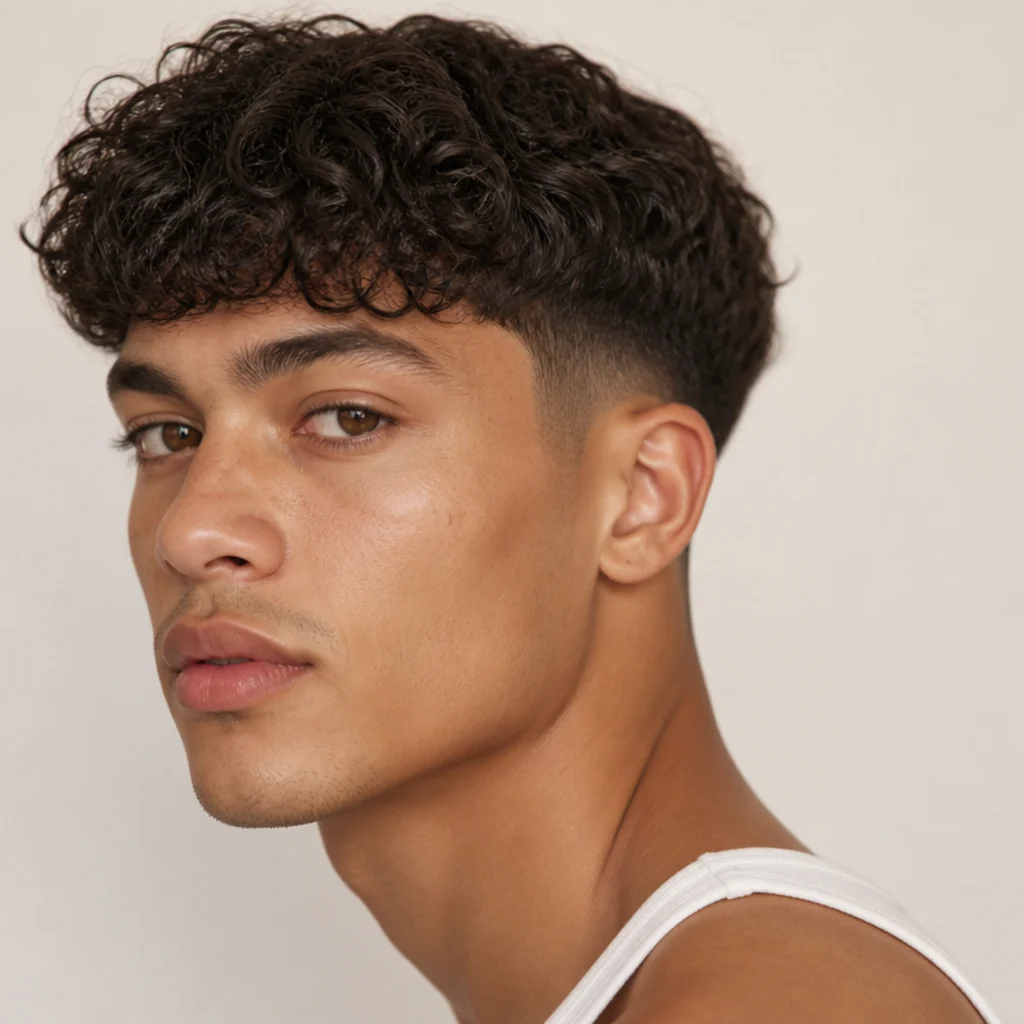
Quick Answer
- Best for: Wavy (2A) through tightly coiled (4C) hair with enough density to hold a blunt fringe; flatters oval, round, square, and heart faces once fade height and fringe weight are tuned to the face.
- Who might skip it: Very fine or thinning hair that can't build a convincing front, sharply receding or M-shaped hairlines the blunt edge can spotlight, and anyone who dislikes forehead coverage or a fixed maintenance rhythm.
- Maintenance: Moderate to high. Fades and line-ups blur in 2-4 weeks; curls need near-daily moisture plus a leave-in and one styler to stay defined and frizz-free.
- Difficulty: Barber-dependent to cut well; low to moderate to maintain once you learn your two-product routine and diffusing motion.
- Cost: Roughly a standard fade-and-fringe barber rate for the cut; add a color surcharge for tips, melts, or two-tone work, plus a water-based leave-in and one styler for upkeep. Ranges vary widely by region and salon tier.
- Wear time / longevity: Sharpest for about 2 weeks, wearable for 4-6 as it softens into a taper; line-driven versions (line-up, hard part, temple design) peak nearer 7-10 days.
- Standout variation: The blurry taper with a piecey curly fringe (Idea 6) reads clean, current, and forgiving on almost every hairline and curl day.
- How to ask your barber: Name three things in order, fade type and height, fringe length and how blunt, and how much curl volume to leave on top, and bring a front and a side-profile photo.
In This Guide
- Classic Curly Edgar With a Low Taper
- Tight Coils With a Blunt Line-Up
- Loose Wavy Edgar for Fine Hair
- High Skin Fade, Full Curly Top
- Curly Edgar With a Hard Part
- Blurry Taper With a Piecey Fringe
- Burst Fade Curly Edgar
- Textured Bowl-Leaning Edgar
- Curly Edgar With Frosted Tips
- Drop Fade and Defined Ringlets
- Short Cropped Curly Edgar
- Long Curly Fringe Edgar
- Curly Edgar With Temple Design
- Caesar-Blend Curly Edgar
- Mid Fade With a Curly Sponge Twist
- Edgar for Square Faces
- Edgar for Round Faces
- Two-Tone Color Curly Edgar
- Wet-Look Curly Edgar
- Grown-Out Natural Curly Edgar
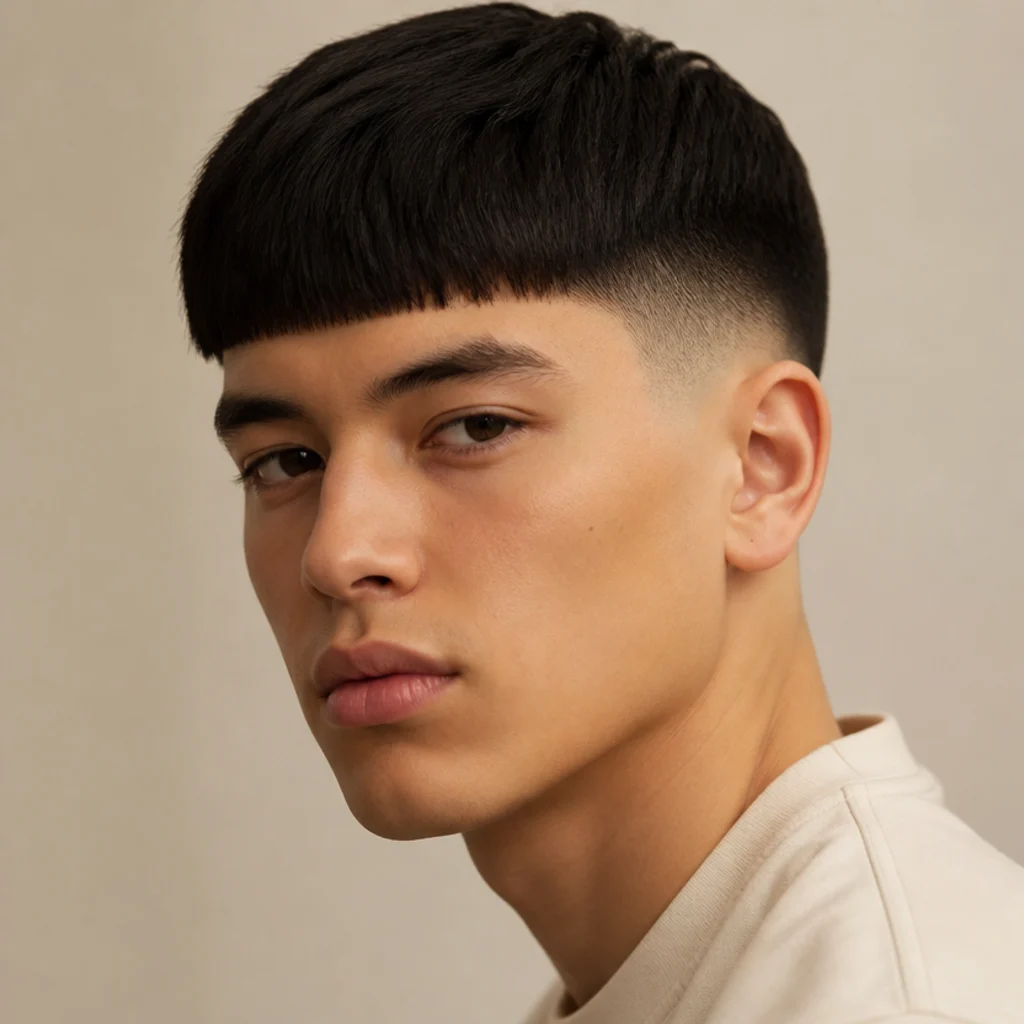
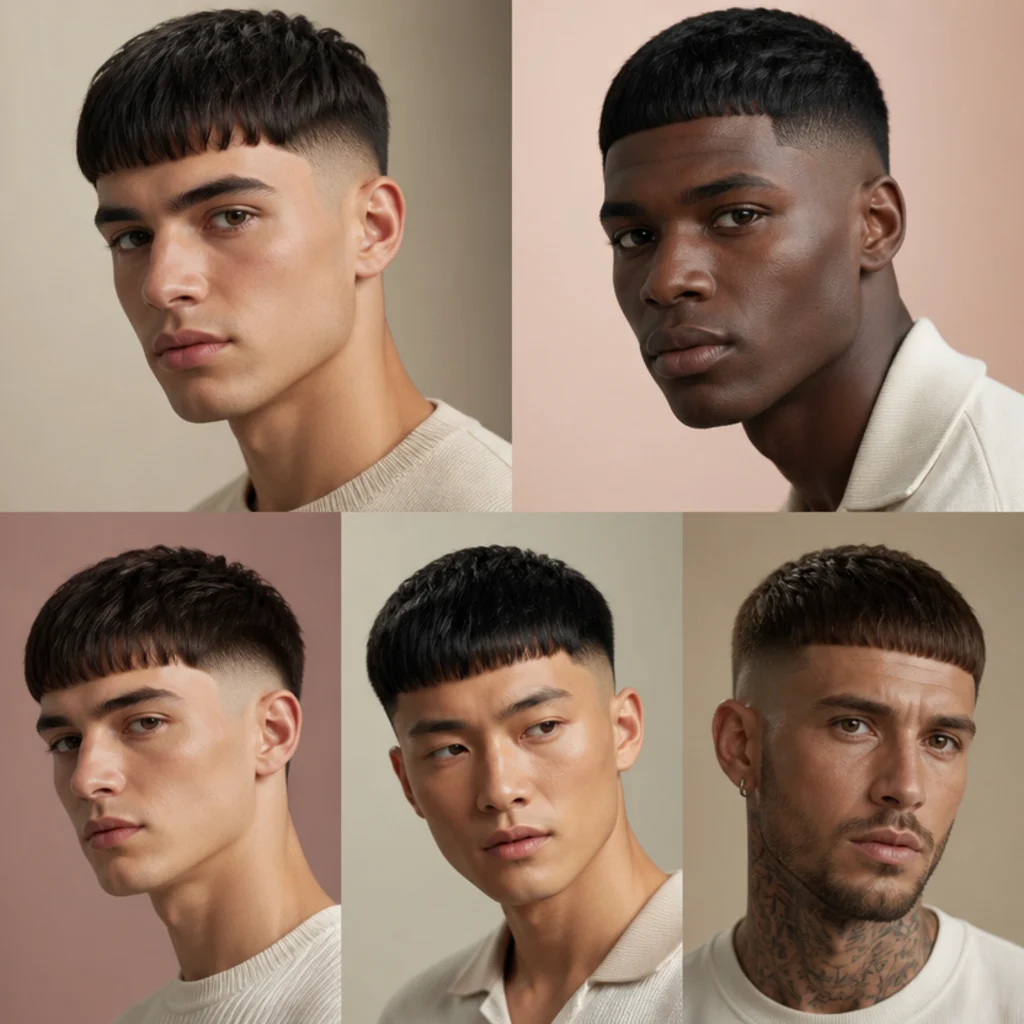
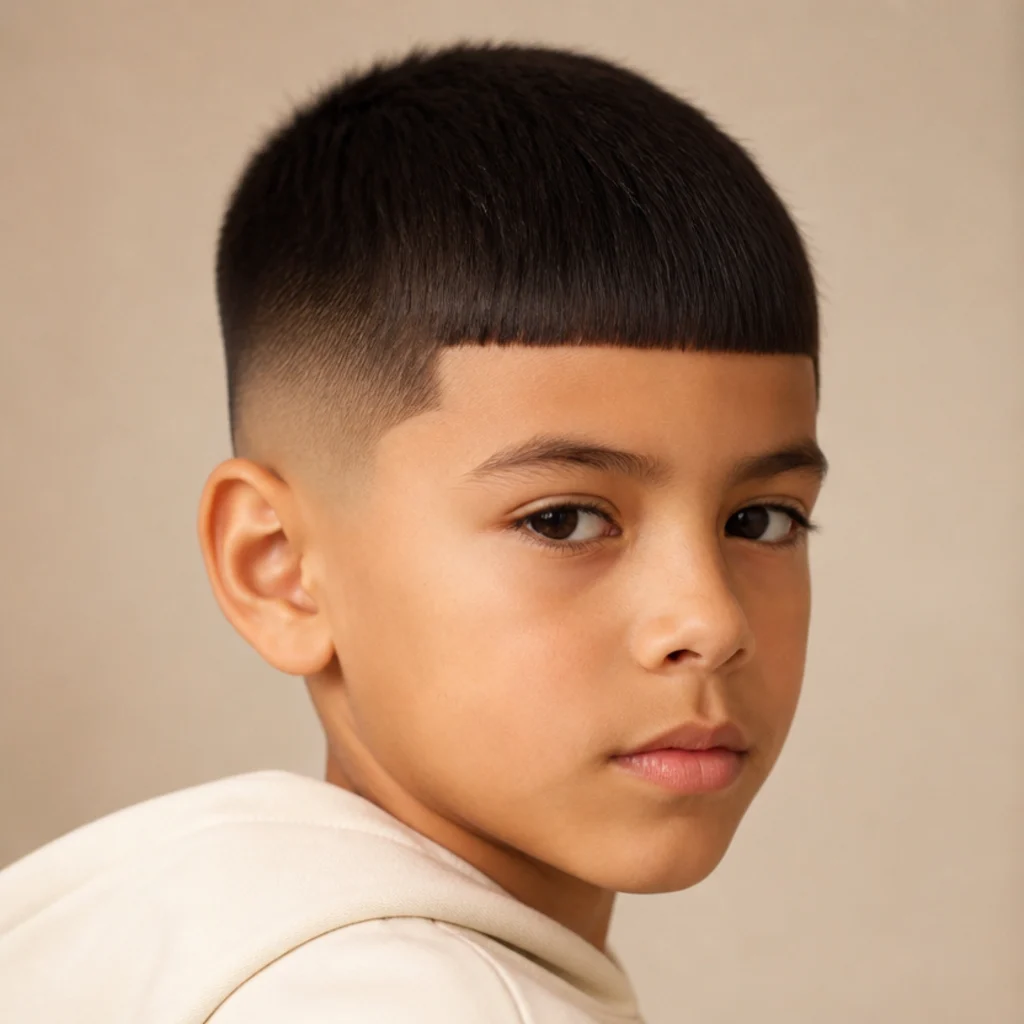
The edgar is built on one signature move: a heavy, blunt-cut fringe that sits straight across the forehead, set against short, faded sides. On curly hair that structure stops being about razor lines and becomes about controlled contrast, the softness of coil against the precision of a fade. Where an edgar cut on straight hair reads sleek and graphic, the curly edgar trades a little crispness for volume, movement, and a rounded silhouette that still looks intentional because the fade underneath does the sharpening for you. Think of it as two jobs handled by two different tools: the clippers deliver the discipline, the curls deliver the character.
The reason it flatters so many people is adjustability. Every variable can be tuned to your hair and your face: fade height controls how bold it reads, fringe weight controls how much it frames or shortens the face, and the length left on top decides whether you get a tidy crop or a full curly cloud. Curl pattern matters just as much, looser 2s want a softer edge and more length to fall forward, while denser 4s can carry an architectural line-up and a high fade without looking sparse. Density and hairline sit underneath both of those decisions, and they are why the same reference photo lands differently on two people. Below are 20 distinct takes, each with notes on the curl type and face shape it flatters, the realistic upkeep window, the styling that finishes it, and the exact phrasing to describe it so you leave with the version you pictured, not an approximation.
<a id="1"></a>
01Classic Curly Edgar With a Low Taper
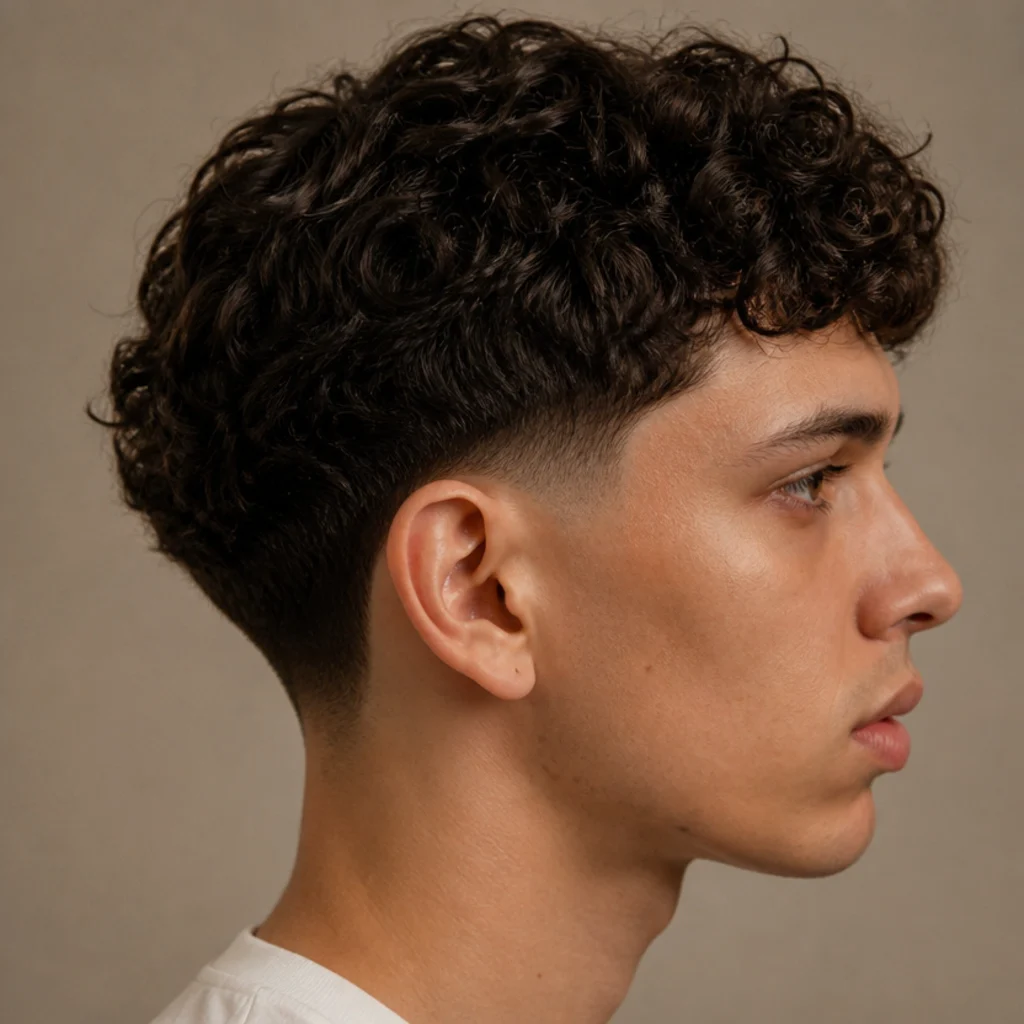
This is the foundational build and the smartest first attempt at the shape. The sides stay short with a gentle low taper that graduates only around the ears and nape, so nothing feels drastic and the grow-out is forgiving, you can push a missed appointment by a week or two without looking untidy. The top keeps its natural curl at roughly two to three finger-widths, and the fringe is cut in a clean blunt line just above the brow. It suits most textures from 2B waves to 3C curls, and flatters oval and heart faces especially, where the straight front balances a narrower chin. Because the taper hugs the head and exposes no scalp, it also reads neat in professional settings and stretches comfortably to a three-to-five-week rotation. Refresh curls each morning with a water-and-leave-in mist, scrunching upward to wake the pattern, then air-dry or diffuse on low. Pro tip: have the fringe cut with your curls fully dry, since wet curls shrink and a fringe measured wet often ends up a centimeter or two shorter than expected. Ask your barber for "a low taper with a blunt curly fringe, keep the length on top and blend the nape soft."
<a id="2"></a>
02Tight Coils With a Blunt Line-Up
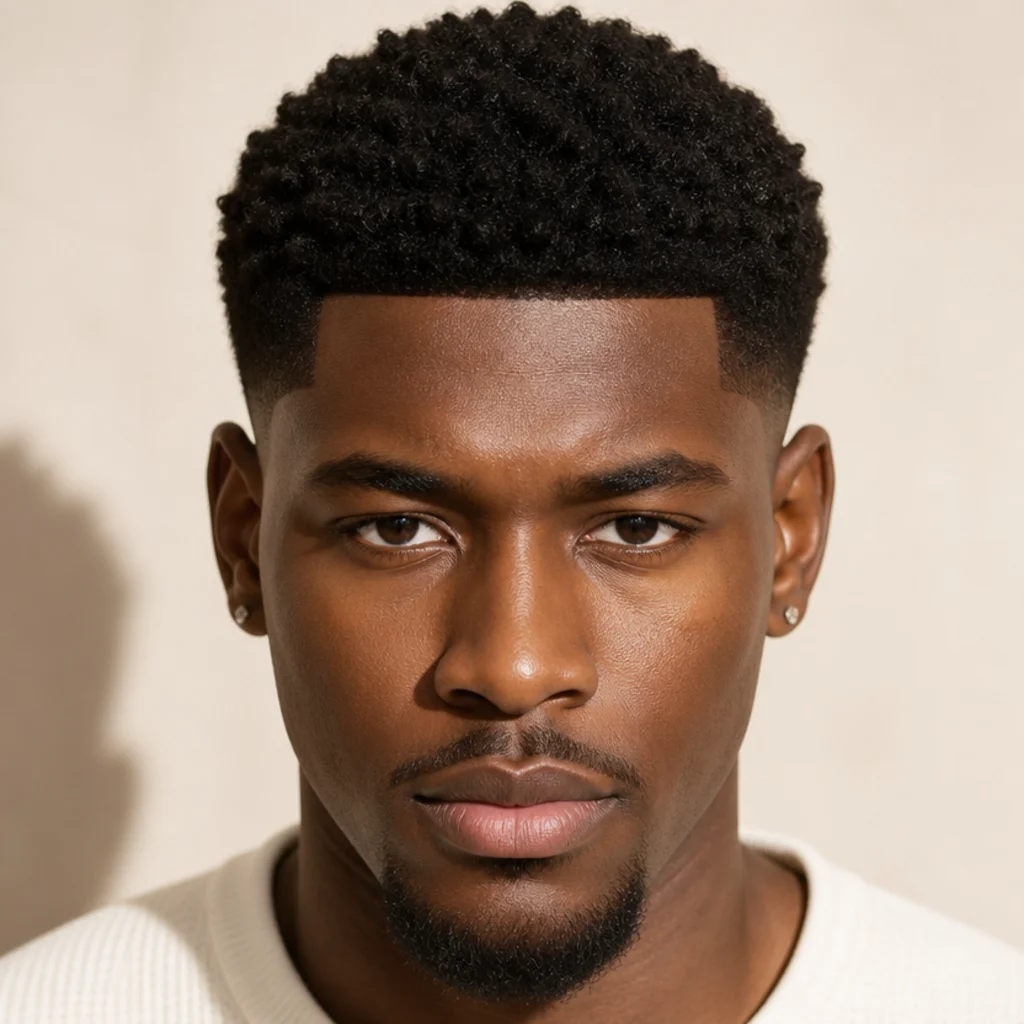
For tightly coiled 4B and 4C textures, the edgar shows up as a dense, sculpted crown finished with a razor-clean line-up. Instead of scissor-cutting a blunt front, the line-up itself defines the straight edge, so you get that signature architecture even as the coils spring upward and out. The whole look lives on contrast, the machine-precise front and temple lines against the soft, matte density of natural coil. It flatters square and oval faces, where the framed forehead balances a strong jaw, and rewards high density, sparse coils leave the sharp line looking exposed. Be realistic about upkeep: a crisp line-up softens noticeably within seven to ten days, so this is a two-to-three-week rotation if you want it looking fresh. Hydration is non-negotiable on this texture, a daily water-based cream keeps coils from reading dry or dusty under the sharp lines. Pro tip: ask for the line-up kept slightly inside your natural hairline rather than pushed forward, which protects the edges over months of regular edging. Ask your barber for "a squared line-up with the edgar front, natural coils left full on top, and edge just inside my hairline."
<a id="3"></a>
03Loose Wavy Edgar for Fine Hair
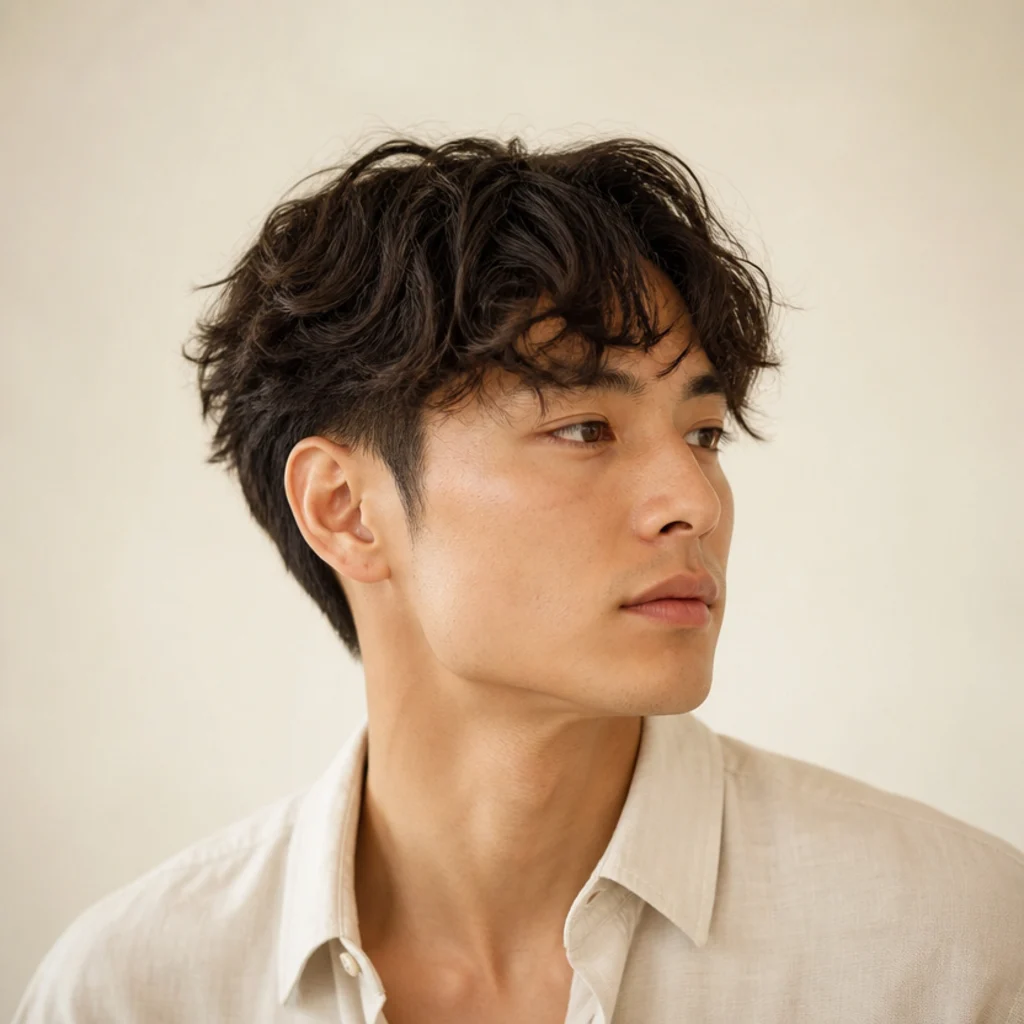
If your texture is more wave than curl, or your strands run fine, the edgar still works with a lighter, smarter hand. The barber leaves extra length on top so 2A to 2C waves have the weight to fall forward and stack, and the fringe edge is point-cut or lightly textured rather than blunted straight across, which stops fine hair from looking thin or gappy at the front. A low or mid taper keeps the sides tidy without exposing so much scalp that the top looks sparse by comparison, high fades tend to over-expose fine hair and shrink the apparent density on top. This is one of the most flattering picks for anyone worried about volume, because the forward-falling fringe reads as fullness and the wave adds bend the eye mistakes for thickness. Style with a dime of lightweight mousse or a sea-salt spray on damp hair for grip without the greasy weight that flattens fine waves. Pro tip: dry the fringe forward with your fingers or a diffuser rather than letting it dry pushed back, so it banks over the forehead instead of separating into strings. Ask your barber for "an edgar with a soft, point-cut fringe and a low taper, keep the top long for weight."
<a id="4"></a>
04High Skin Fade, Full Curly Top
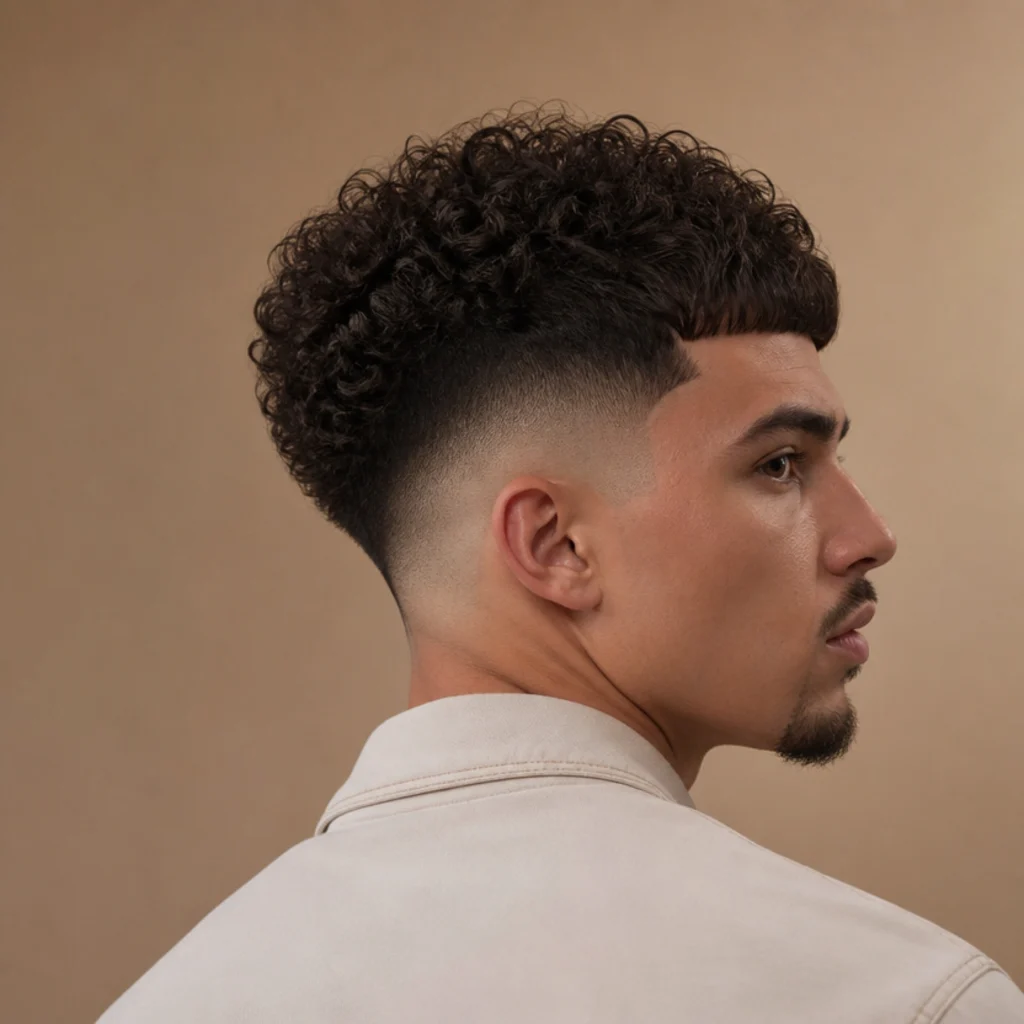
Here the contrast goes to its loudest. A high skin fade drops the sides to bare skin well above the temple, leaving a tall, rounded cloud of curls up top with the blunt edgar fringe out front. It makes curly volume the entire story and reads distinctly modern, best on medium-to-dense 3A through 4B curls that can build genuine height. The trade-off is upkeep: with that much exposed skin, this edgar cut fade looks its best for only about ten to fourteen days before stubble blurs the crisp line, so budget a roughly two-week refresh. It flatters oval and oblong faces that can carry the added vertical height without looking elongated; very round faces should keep the top height in check so the silhouette doesn't read balloon-like, and longer faces should avoid stacking maximum height on top of a high fade. Diffuse-dry with your head tilted to build lift at the root, and finish with a curl cream rather than a heavy gel so the top stays airy rather than crunchy. Pro tip: agree on where the fade starts relative to your temple before the clippers move, half an inch changes how bold it reads and how much it exposes a high hairline. Ask your barber for "a high skin fade starting above the temple, curls left long, edgar front."
<a id="5"></a>
05Curly Edgar With a Hard Part
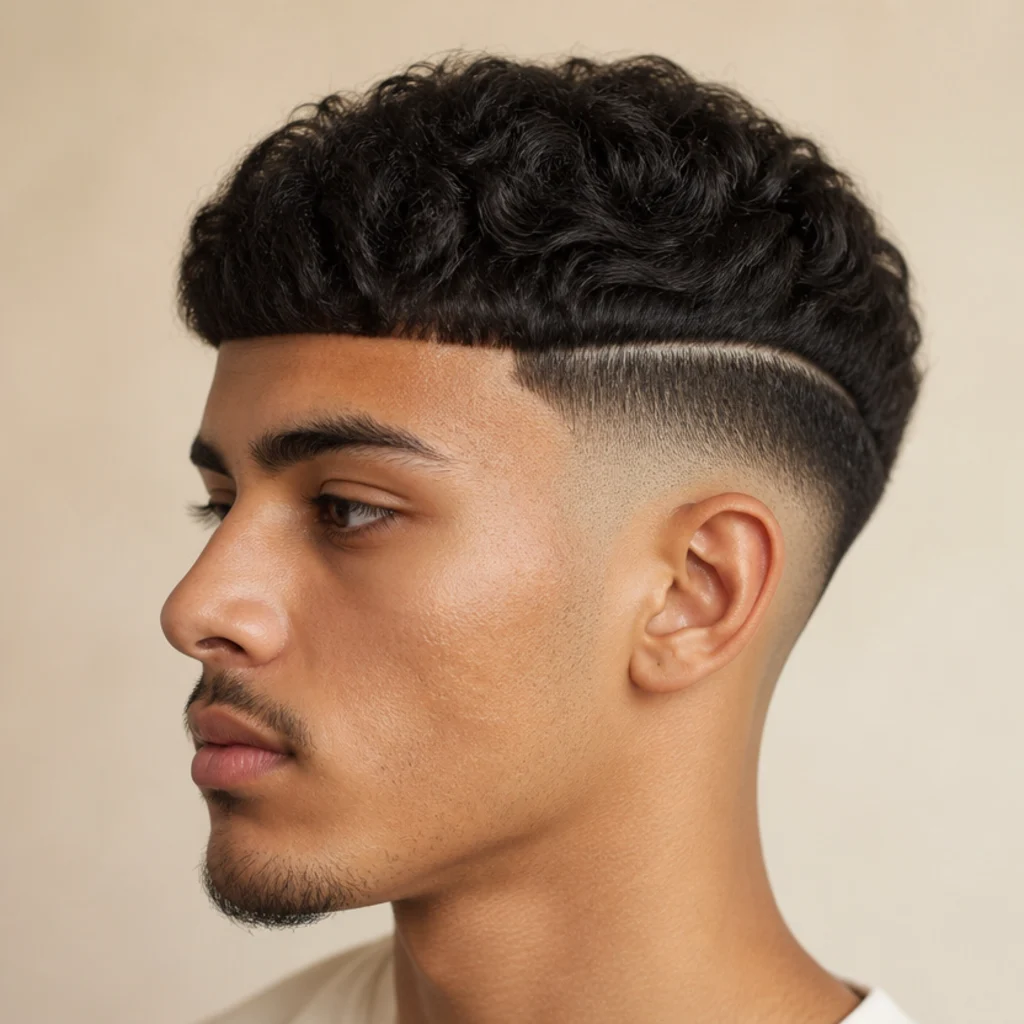
A hard part, the single razored line shaved into the side, adds a graphic detail that plays surprisingly well against soft curls. The line gives the eye something crisp to land on and reinforces the tailored feel of the fade below, a small piece of geometry that makes an otherwise simple curly edgar look deliberate. Placement usually follows where a natural side part would fall, running back from the front hairline; a straight part is classic, while a subtle curved part softens a very angular face. It works on nearly every face shape and is an easy upgrade to the basic shape. Be honest with yourself about the timeline, the shaved line goes fuzzy within about a week, so this detail rewards people who already keep a tight two-week rotation. Pair with a mid fade so the part has clean, uninterrupted space on either side to register, a part crowded by a low fade loses its impact. Pro tip: keep the part on your natural cowlick side so it lies flat instead of fighting the growth pattern and re-opening crooked as it grows. Ask your barber for "a hard part on the left following my part, mid fade, edgar fringe on top."
Save this to Pinterest and keep scrolling for fifteen more curly edgar variations.
<a id="6"></a>
06Blurry Taper With a Piecey Fringe
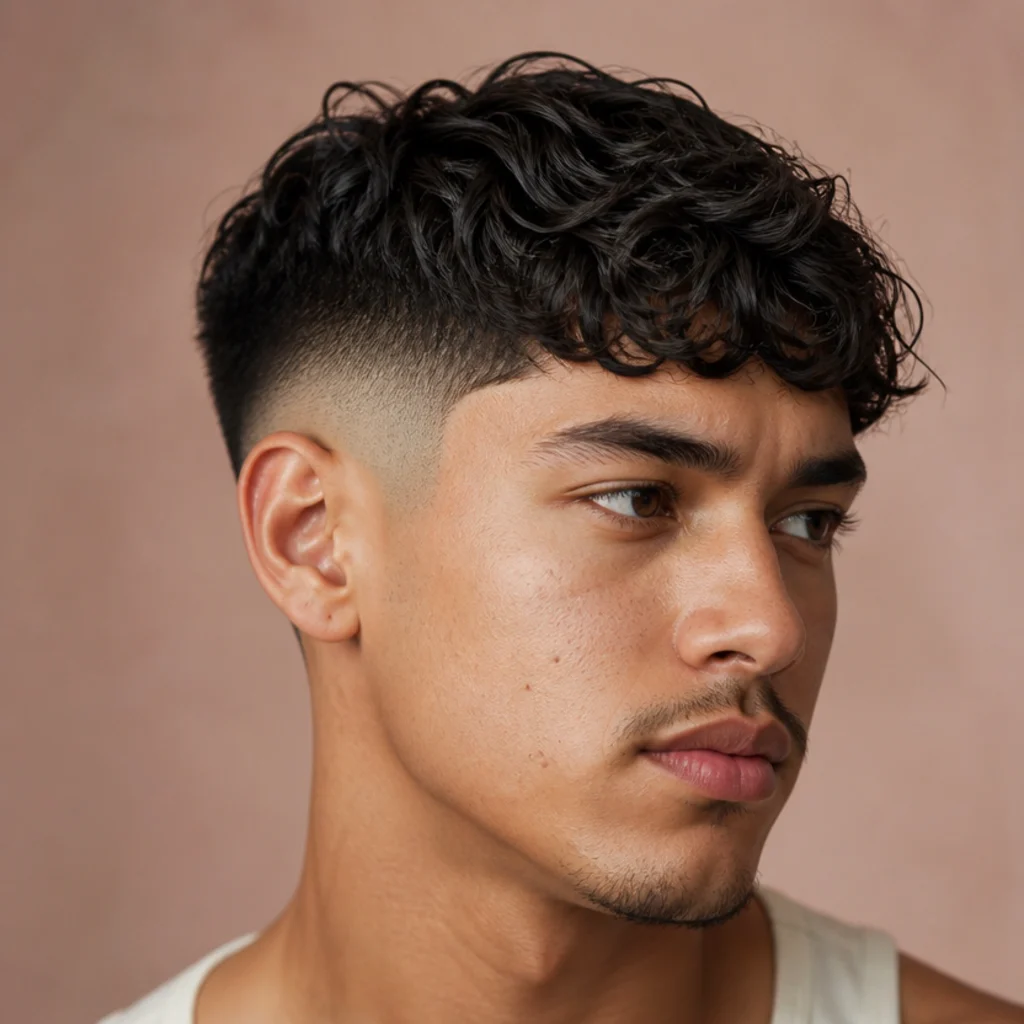
This is the version most people should try first if they want current without committing to a hard skin fade. "Blurry" means the transition from skin to hair is so gradual it looks airbrushed, clean at the edges but soft where it meets the top, which flatters more hairlines than a stark high fade. Up top the fringe is left piecey, separated into soft curly sections rather than one solid block, so it feels relaxed and undone in the intentional way. The combination suits nearly every face shape and curl type and grows out kindly, the blur just gets softer instead of developing a hard demarcation line. It's also the most forgiving of imperfect curl days, since the piecey texture is meant to look a little lived-in, which makes it a genuine low-stress choice for anyone learning their routine. Work a fingertip of matte paste or clay through dry curls and pull sections apart to define the separation. Pro tip: ask for the fringe kept "not too blunt," a slightly notched or point-cut edge is what makes it read piecey rather than heavy. Ask your barber for "a blurry low taper and a piecey curly fringe, not too blunt, keep the blend soft on top."
<a id="7"></a>
07Burst Fade Curly Edgar
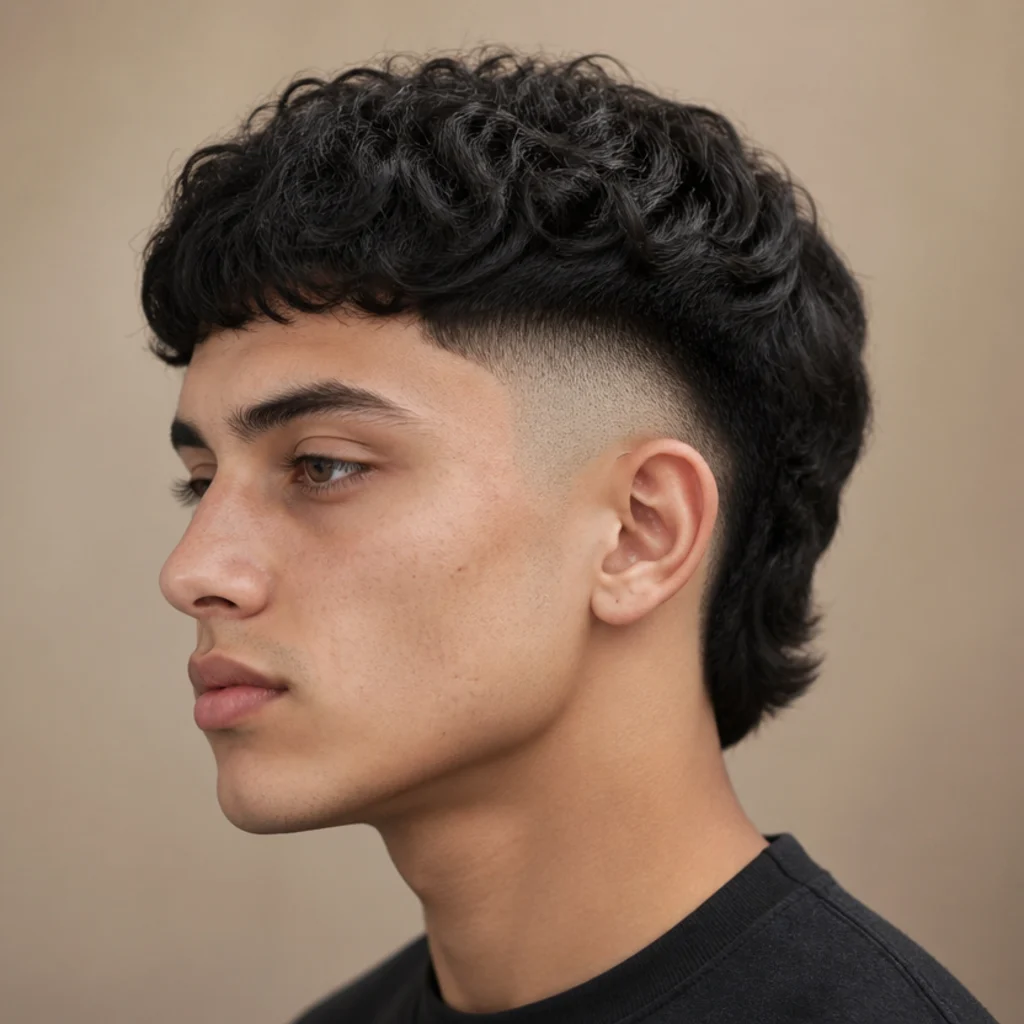
A burst fade curves the short hair in a semicircle around the ear, leaving more length at the back and along the nape rather than fading the entire side flat. Paired with a curly edgar top it creates a rounded, dynamic silhouette with a sporty, slightly retro read that suits round and oval faces and pairs best with defined medium 3A to 3C curls. Because the fade concentrates around the ear instead of climbing the whole side, it can be a touch lower maintenance than a full high fade and grows out without an obvious horizontal line, expect a comfortable two-to-four-week window. Decide early how you feel about length on the neck: the classic burst leaves a small tail or fuller nape, so if you dislike hair on your collar, flag it and have the back tapered down instead. Style the top with a curl cream and diffuse for round, buoyant shape that echoes the curve of the fade. Pro tip: a burst fade lives or dies on the roundness of the arc, bring a clear side-profile reference so the barber matches the curve rather than guessing. Ask your barber for "a burst fade curving around the ears with an edgar curly top, taper the nape down."
<a id="8"></a>
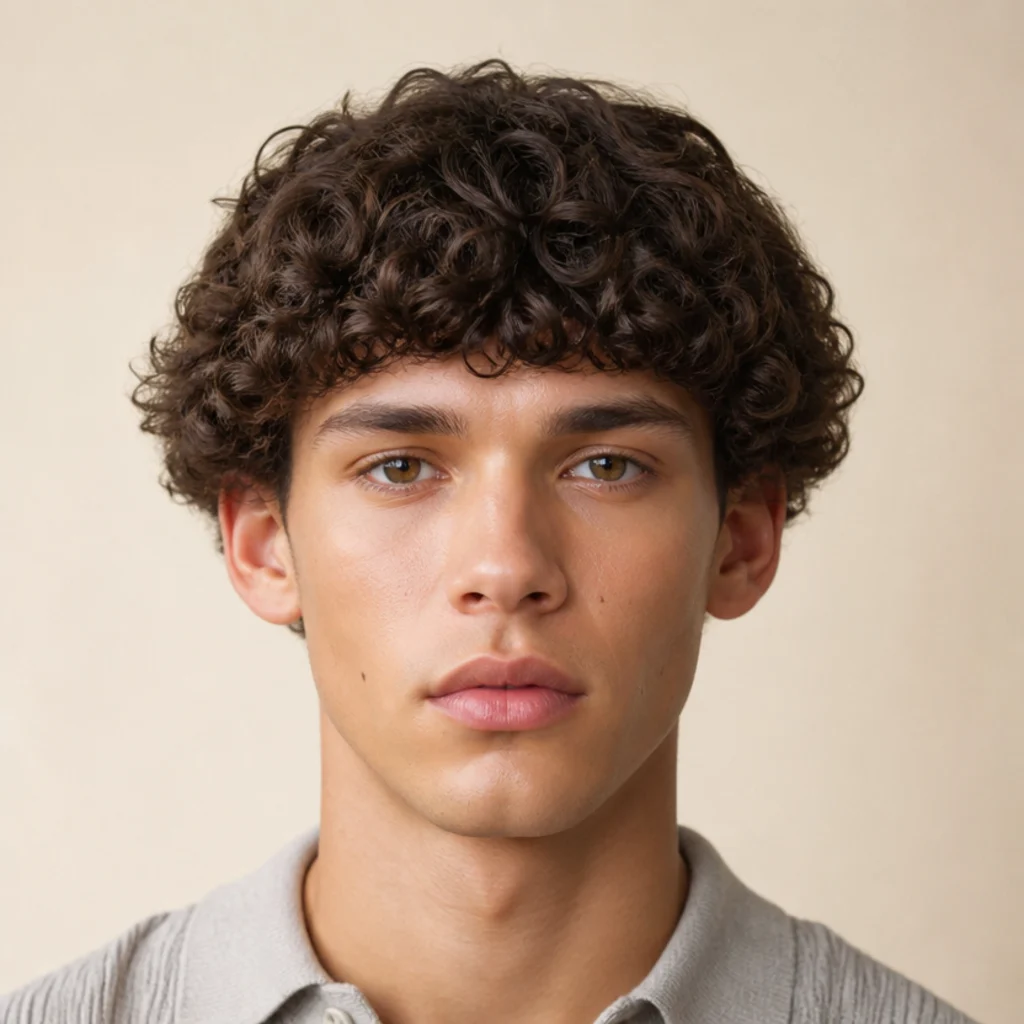
08Textured Bowl-Leaning Edgar
The edgar shares DNA with the modern bowl cut, and leaning into that relationship gives you a fuller, more uniform top. Length stays consistent all the way around the crown and the blunt fringe wraps slightly at the temples for a rounded frame rather than a flat front. On curls the bowl influence looks soft instead of severe, because the texture breaks up what would otherwise be a hard outline, and it's a strong pick for thick, dense 3B to 4A hair that wants a shape to hold it in. It flatters longer and oval faces best; round faces should pair it with a higher fade to reintroduce some vertical angle, and fine hair should skip it entirely, since the uniform shape needs density to hold its edge. Keep product light, a pea of curl cream worked evenly, then blot any excess so the uniform top doesn't clump or look wet. Pro tip: ask for the perimeter kept a hair longer than you think, a bowl-leaning shape looks intentional when it's full and gets patchy the moment it's over-thinned. Ask your barber for "a rounded edgar with an even top, a heavy fringe that wraps at the temples, and a mid-to-high fade."
<a id="9"></a>
09Curly Edgar With Frosted Tips
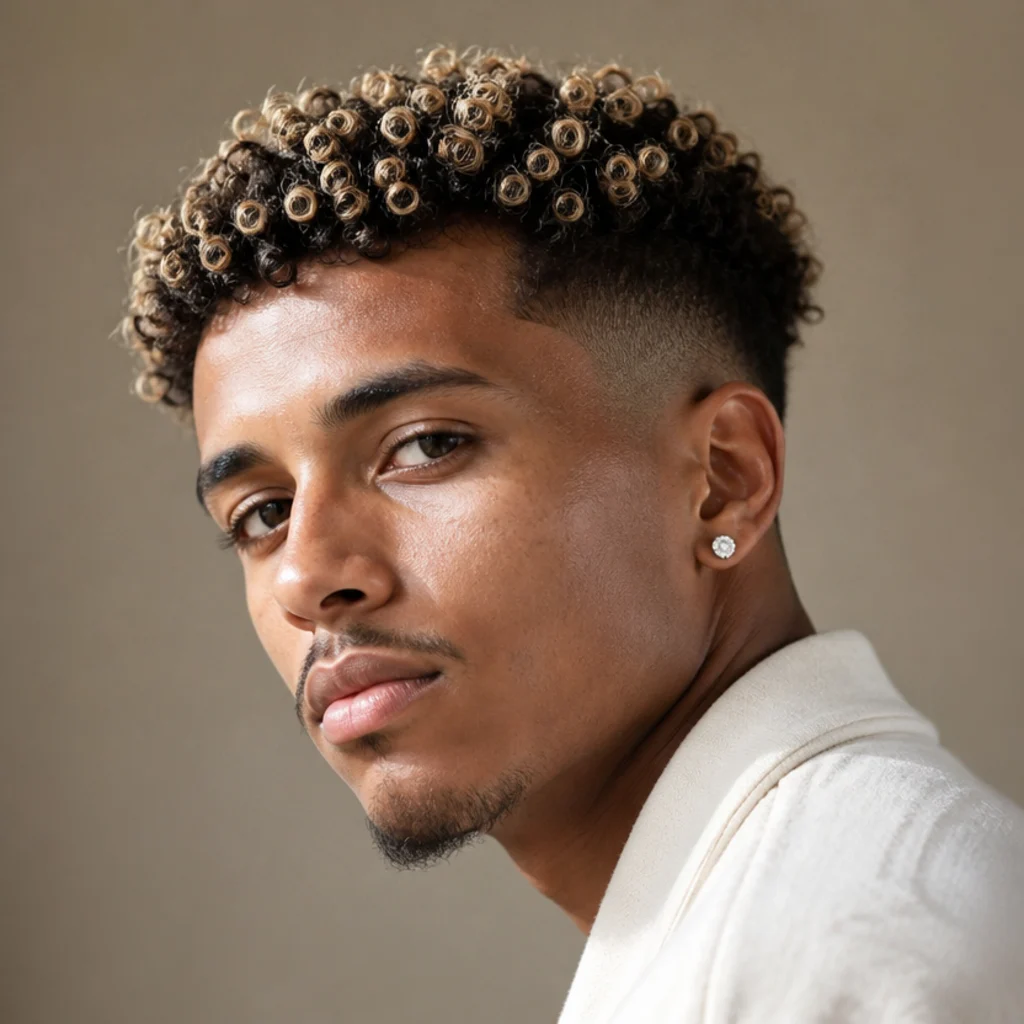
Color changes the entire read of the cut. Frosted or lightened tips, kept a few shades warmer than your natural base, catch light on the outer curve of each coil and make the texture pop. Because only the ends are treated, the roots stay dark and the fade below stays natural, which keeps both the maintenance and the contrast flattering, you avoid a heavy regrowth line and only refresh every couple of months. Warm and golden skin tones tend to glow against honey, caramel, and bronze tips; cooler and olive tones can push toward a softer beige or icier blond, but plan for tone maintenance and a purple wash to hold it. This is an accessible way to add edge without full-head bleach, though any lightener on curls raises porosity and dryness, so a bond-building treatment and a rich weekly conditioner become non-negotiable, not optional. Pro tip: split the job across two chairs, have your colorist paint the ends and your barber preserve the edgar shape in the same week so the fresh cut and fresh color land together. Ask your colorist for "tipped or painted ends on the curls, natural roots, kept warm," and book a bond treatment the same day.
<a id="10"></a>
10Drop Fade and Defined Ringlets
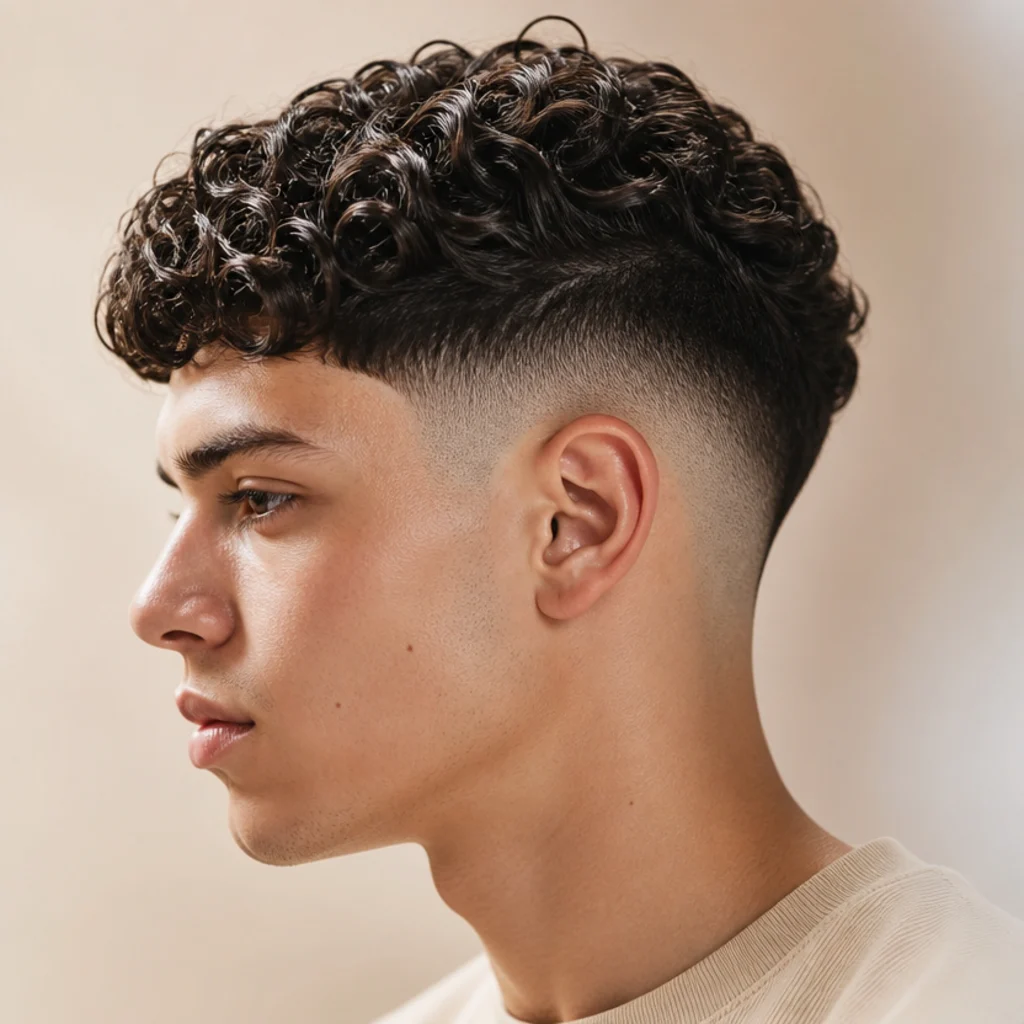
A drop fade dips lower behind the ear, following the curve of the skull down toward the neck, which frames the curls in a flattering downward arc rather than a straight horizontal line. Above it the curls are coaxed into distinct, glossy ringlets with a curl cream or a curl-defining gel, so each spiral stands separate and catches light, and the blunt edgar front ties the polish together. This version depends on a curl-care routine as much as the cut itself, defined ringlets come from product and technique more than scissors, so it rewards people willing to put in five minutes on wash day and works best on 3A to 3C hair that already clumps into a spiral. It flatters heart and oval faces particularly well, where the arc of the fade softens the lower face. Apply cream to soaking-wet curls, rake then scrunch to encourage clumping, diffuse on low with a hover motion, and leave the cast to break with your fingers once fully dry. Pro tip: don't touch the curls while they dry, handling mid-set is what turns ringlets into frizz. Ask your barber for "a drop fade behind the ear with the edgar front, curls left long enough to spiral."
Save this to Pinterest before you forget which fade name to ask for.
<a id="11"></a>
11Short Cropped Curly Edgar
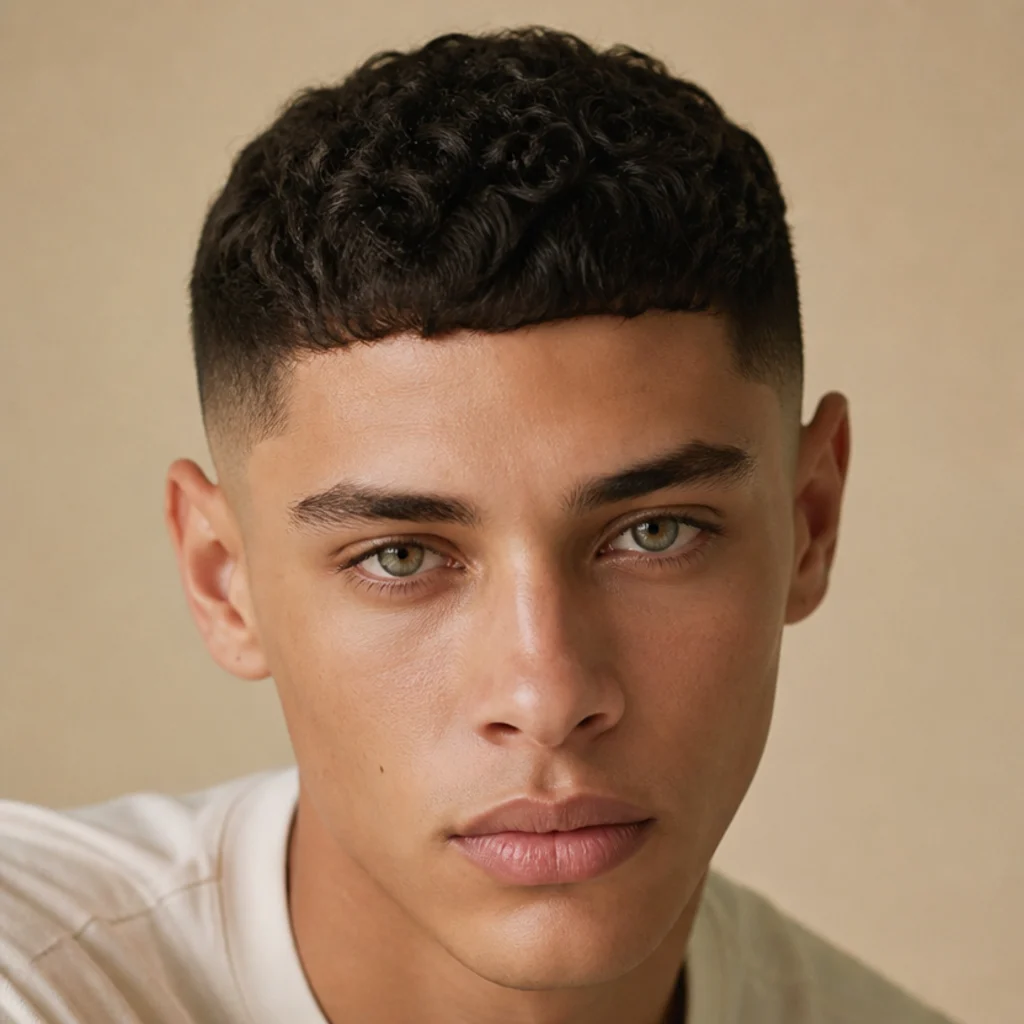
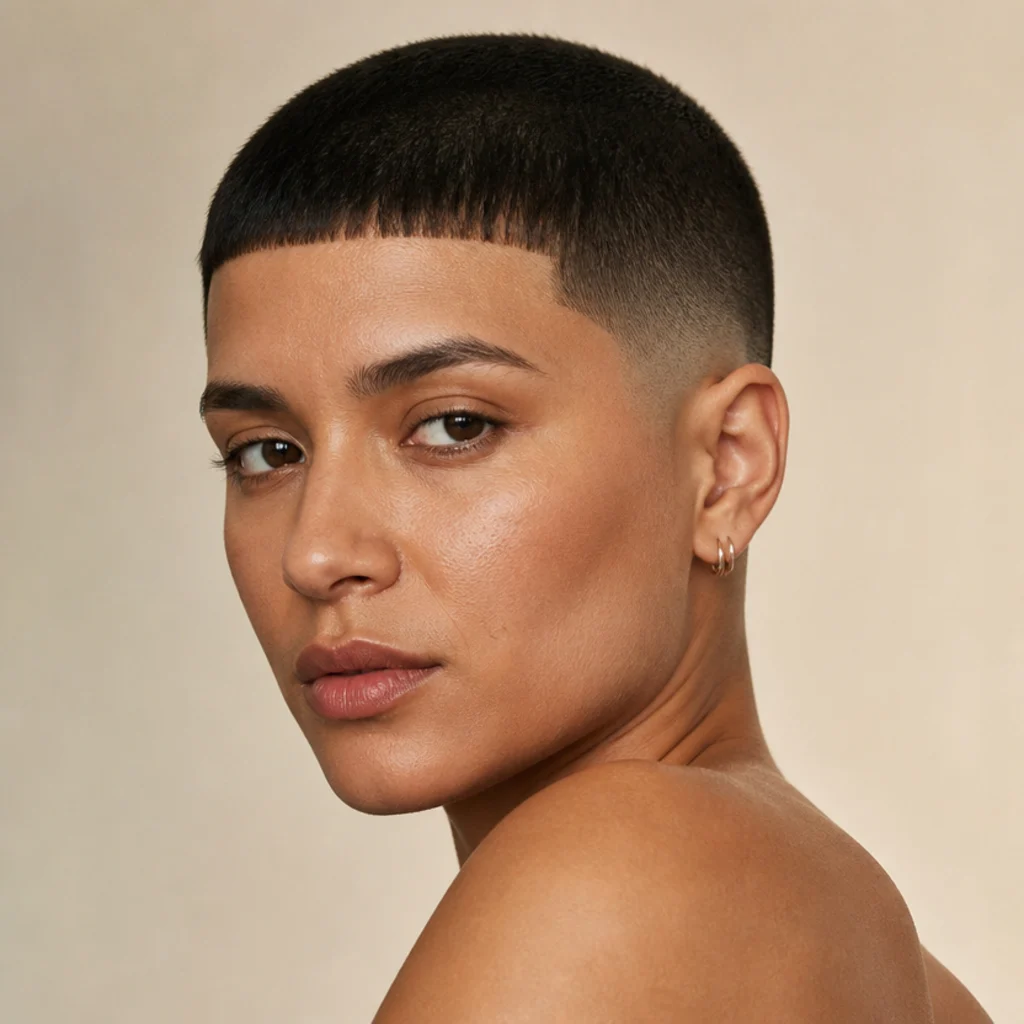
Not everyone wants length, and the edgar works cropped short and still keeps its signature. Here the curls on top are kept tight and close, just long enough to show a defined pattern, with the blunt fringe cut short and level across the forehead. The result is a genuine wash-and-go shape, minimal styling time, no daily reset, and the lowest frizz risk of any version here, which makes it ideal for busy routines, thinning crowns that benefit from short even coverage, and hot or humid climates where longer curls swell. A low or mid fade keeps the sides clean, and it flatters most face shapes because the compact top adds neither width nor height to unbalance them. A dab of leave-in worked through damp hair keeps the short curls soft rather than dry and prickly. Pro tip: even at this length, insist the fringe stays blunt and level, that straight front line is the whole difference between a short curly crop and an actual edgar. Ask your barber for "a short crop with a level edgar fringe and a mid fade, leave enough to show the curl."
<a id="12"></a>
12Long Curly Fringe Edgar
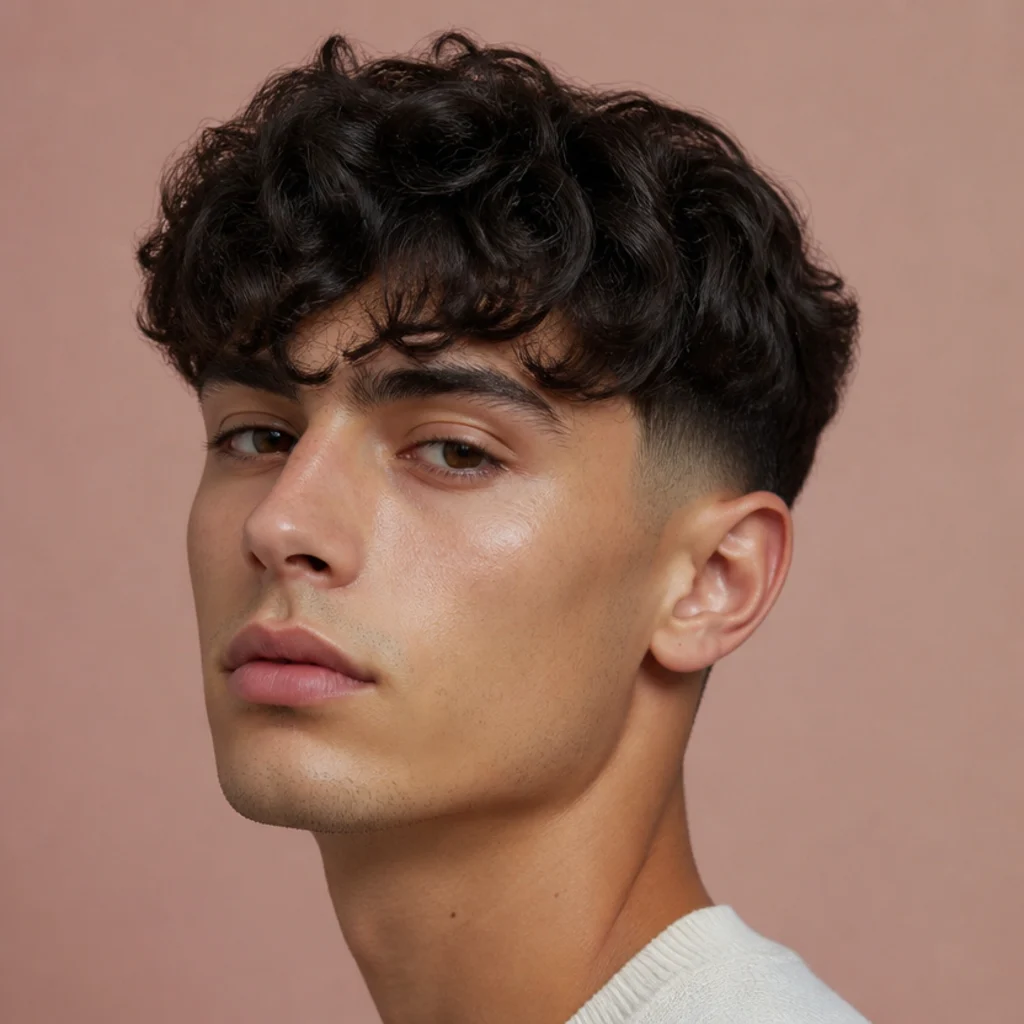
Pushing the fringe longer gives a moodier, more expressive edgar. The front curls fall to or just past the brows, so the blunt line is softened by length and movement and you gain the option to wear it forward, swept to one side, or pushed back off the face. The sides stay faded to keep the balance from tipping shaggy, that fade-to-length ratio is what keeps a long fringe looking styled rather than overgrown. It suits longer and oval faces, and it can flatter round faces too, since the vertical drop of the front adds length the shape wants; strong 3A to 3C curls carry the weight best. Plan your calendar around the front: the fringe needs trimming more often than the sides to hold its intended line, roughly every three to four weeks even if the fade can stretch to five or six. Style with a curl cream for soft hold and diffuse the front forward so it banks over the brow. Pro tip: get the fringe cut dry to your exact eyebrow target, curl shrinkage makes a wet-cut long fringe land shorter than you asked. Ask your barber for "an edgar with a long curly fringe to the brow, keep the sides tight and faded."
<a id="13"></a>
13Curly Edgar With Temple Design
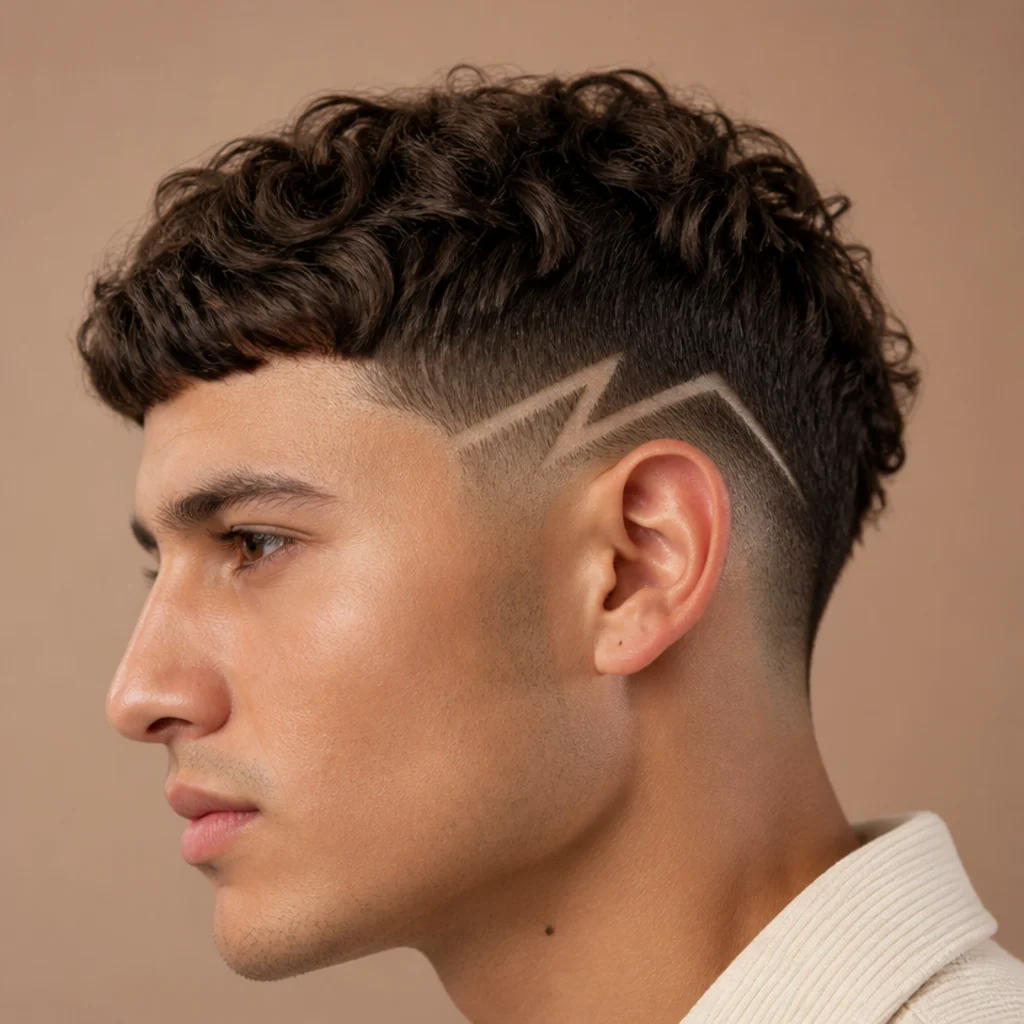
For a personal touch, a small shaved design at the temple adds artistry without committing the whole head to a pattern. A single clean line, a subtle chevron, or a pair of parallel lines sits inside the faded area, catching attention while the curly edgar top stays classic and wearable. Designs like this photograph well, which is exactly why they trend for events and content, but the more intricate the pattern, the faster it reads messy as it grows. Keep it to one or two simple lines for a look that ages better between cuts and still registers at two weeks. It suits most faces; those who prefer understated should skip busy grids and stick to a single accent line, and a mid fade gives the design the cleanest field to sit in. Expect the design to blur within a week or so, so it pairs best with an already-tight touch-up habit. Pro tip: photograph the design the day you get it, straight on and close, so your barber can recreate the exact placement and depth next time rather than freehanding a slightly different version. Ask your barber for "an edgar with the curls on top and a single clean line design at the temple."
<a id="14"></a>
14Caesar-Blend Curly Edgar
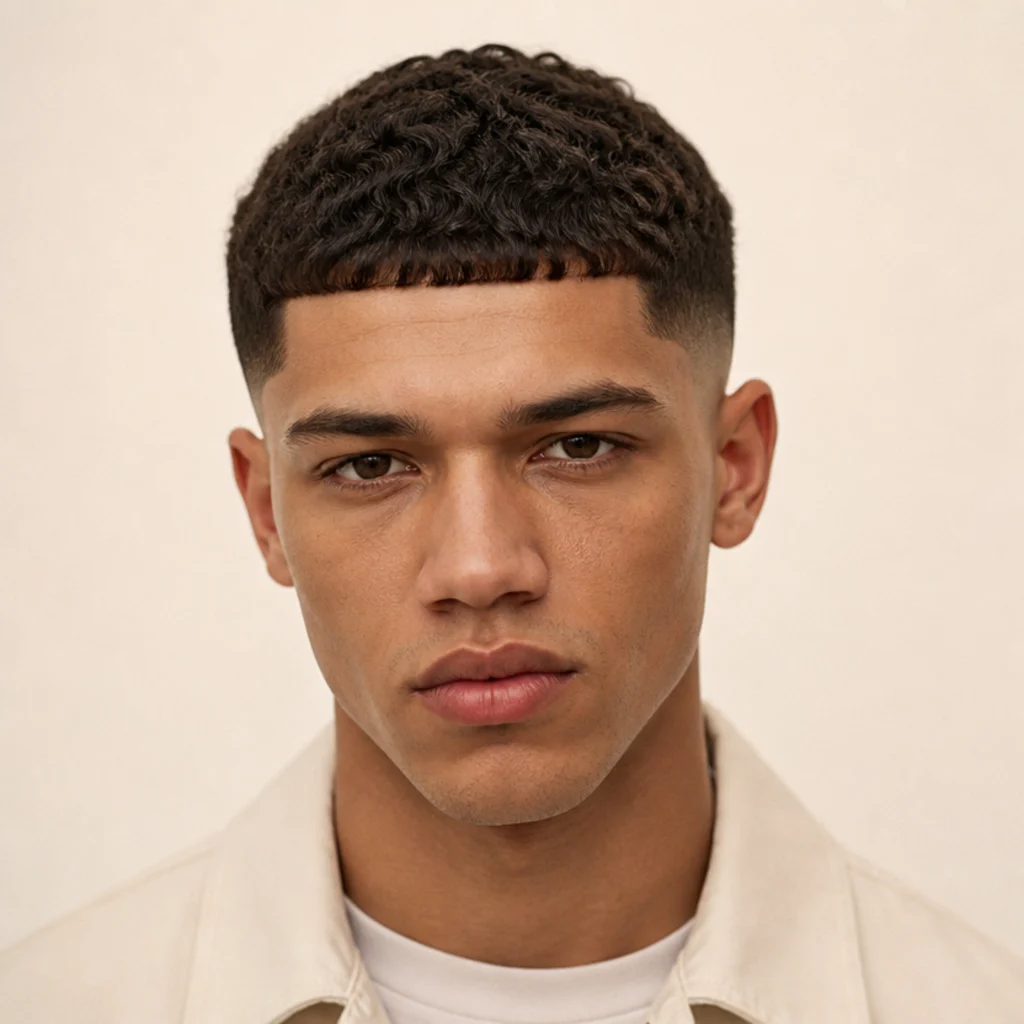
The Caesar and the edgar are cousins, both organized around a straight fringe, and blending them yields a short, even, structured crop. The top is kept uniformly short with the curls textured just enough to read, and the fringe is cut straight and low on the forehead, closer to the brow than a taller edgar. It's clean and quietly office-appropriate, which makes it a favorite for anyone who wants the edgar signature without volume or fuss, and it flatters square and oval faces where the horizontal front echoes the jaw. Because everything up top is short, the only real upkeep is keeping the fade and front line fresh, so it's one of the lower-effort versions to live with day to day, comfortable on a two-to-three-week fade cycle. Finish with a matte cream or clay so the short curls look textured rather than shiny or wet, which can make a short cut read greasy. Pro tip: ask for the fringe kept level and low, the low straight front is what tips a short curly cut from Caesar into edgar territory. Ask your barber for "a Caesar-edgar blend, short even top with a straight low fringe and a low-to-mid fade."
<a id="15"></a>
15Mid Fade With a Curly Sponge Twist
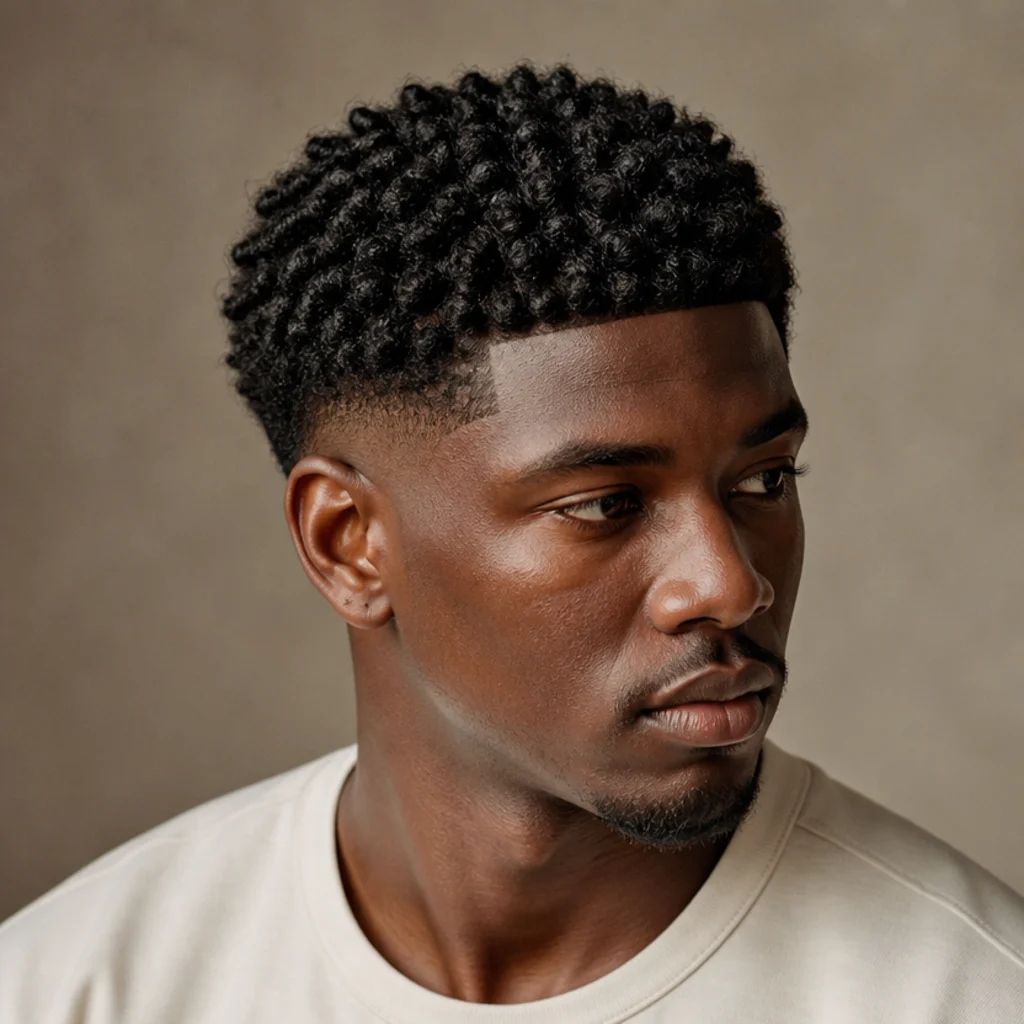
Running a twist sponge over coily hair creates uniform, springy twists that give the edgar a textured, sculptural top with real dimension. Above a clean mid fade those defined twists read fresh and full, and the blunt front line keeps the edgar identity intact even as the crown turns into a field of little spirals. This is a technique-forward look suited to 4A through 4C textures, and it rewards a few minutes of at-home effort, the twists are something you maintain yourself between barber visits, refreshing every few days. It flatters round and oval faces and dresses up or down easily. The key is prep: moisturize and lightly dampen the hair first so the sponge glides and the twists form soft rather than dragging and frizzing on dry coils, and use gentle circular passes rather than pressing hard. Pro tip: work the sponge in one consistent direction across the whole head so the twists all lean the same way and the top looks deliberate rather than scattered. Ask your barber for "a mid fade with an edgar front, twists left on top," then maintain the sponge twists yourself with a leave-in and light circular passes.
Save this to Pinterest and pin the last five for face-shape guidance.
<a id="16"></a>
16Edgar for Square Faces
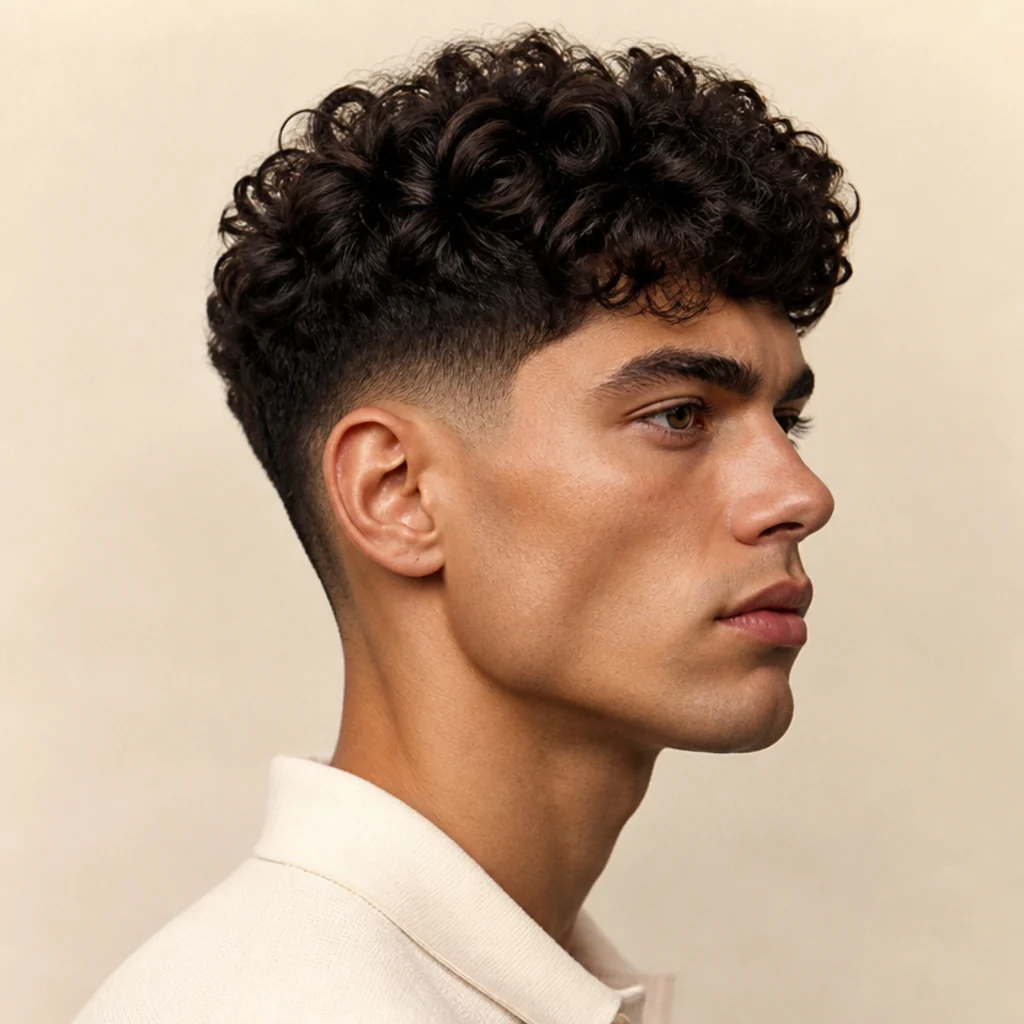
Face shape changes how you should wear this cut, and a square face is one of its most natural matches. A strong, angular jaw pairs well with the edgar's straight fringe because the parallel lines echo each other and read intentional rather than accidental. The tweak that keeps it from tipping too boxy is adding a little height and roundness in the curls up top, which introduces a soft curve to balance all the angles below. A mid fade sits at the sweet spot here, high enough to add some length, low enough not to over-narrow a broad face. This is one of the easiest wins when people search edgar cut face shape, and it holds across curl types as long as there is enough density for rounded volume. Style the top slightly forward and up rather than pressed flat, so the crown carries a rounded volume that offsets the jaw. Pro tip: keep the fringe blunt but not bottom-heavy, a fringe that is both very low and very wide can exaggerate a square forehead instead of framing it. Ask your barber for "an edgar with rounded height in the curls and a mid fade to soften the jaw."
<a id="17"></a>
17Edgar for Round Faces
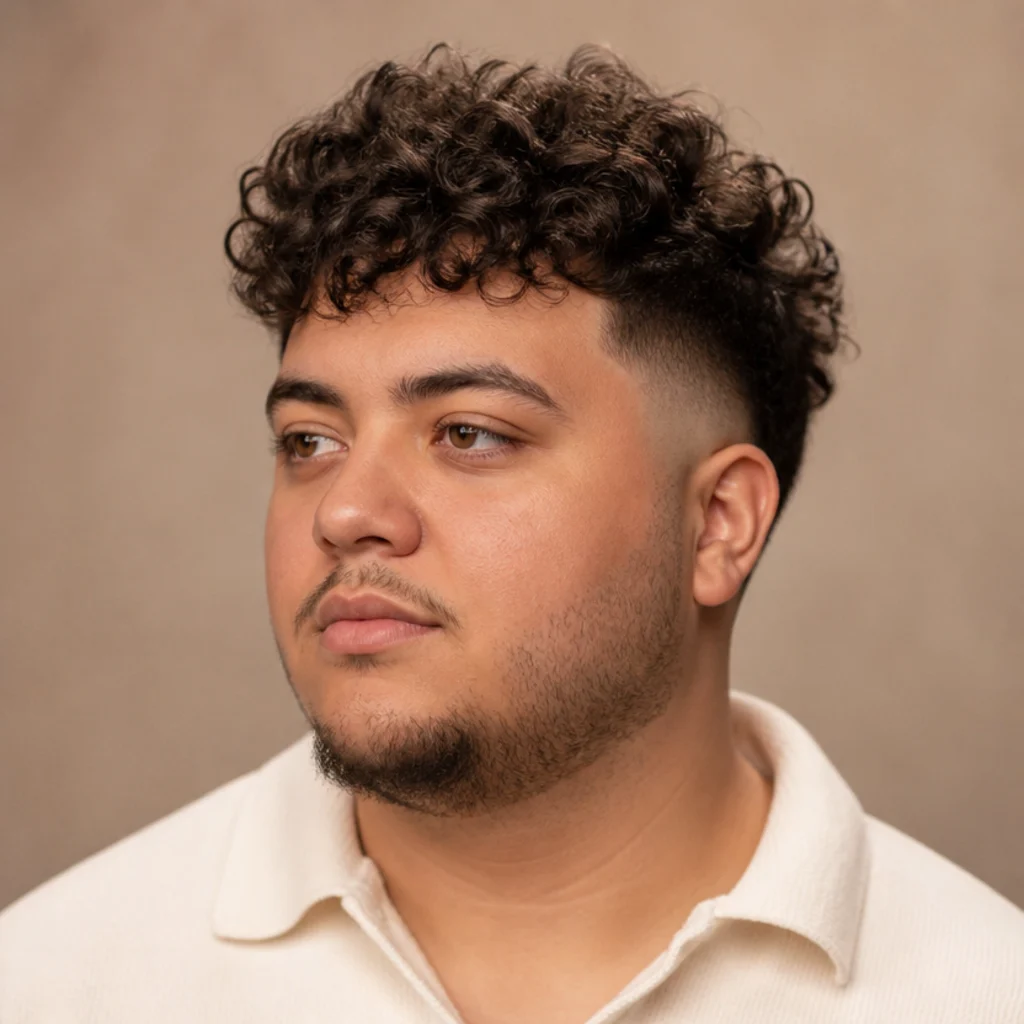
Round faces benefit from anything that adds vertical line, and a well-adjusted edgar delivers it. The move is to build more height in the curls on top and take the fade higher on the sides, which draws the eye upward and visually slims and lengthens the face. Just as important is keeping the fringe in check, a very blunt, low, heavy front can add width exactly where a round face doesn't want it, so ask for a fringe that's present but not bottom-heavy, sitting a touch higher on the forehead. This pair of adjustments, taller top and higher fade, is often the difference between a cut that flatters and one that fights the features, and it works best on curls with enough length and density to actually stack height. Diffuse the curls upward, tilting your head and hovering the dryer at the root, to bank maximum lift into the crown. Pro tip: a slightly asymmetric or side-swept top adds even more of the diagonal line a round face wants. Ask your barber for "an edgar with extra height on top and a high fade, fringe present but not too heavy or low."
<a id="18"></a>
18Two-Tone Color Curly Edgar
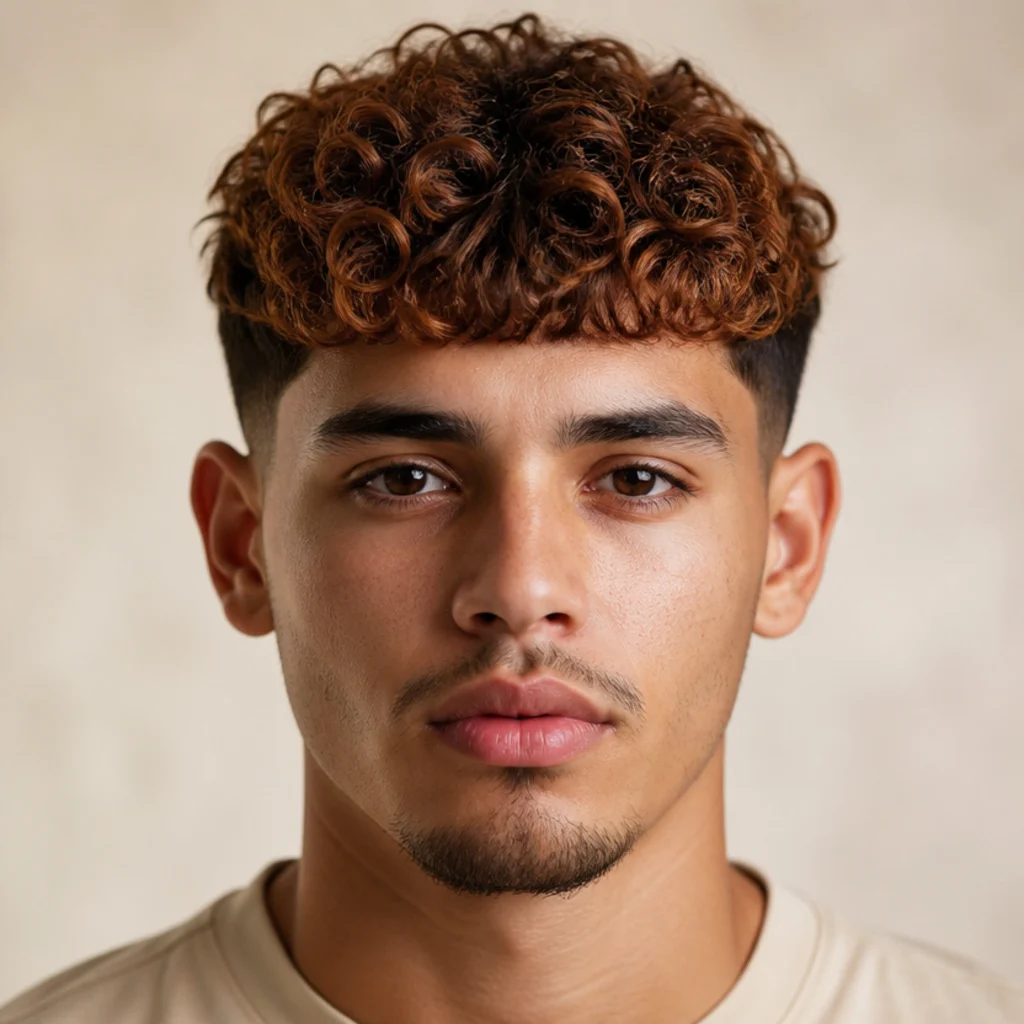
For a statement version, two-tone color sets the dark faded sides against a lighter, warmer curly top. A blended melt from deep brown roots up into auburn or copper curls looks designed rather than grown-out, and warm tones read especially rich on textured hair because every coil throws a slightly different highlight. Keeping the fade natural and dark is what makes the contrast feel intentional instead of accidental, the eye reads the color as a deliberate top-versus-sides choice. It suits people ready for a bolder look and willing to maintain toned color, since warm reds and coppers fade faster than most shades and any lift on curls calls for extra conditioning and a bond treatment. Warm auburn is forgiving across a wide range of skin tones, while brighter copper leans best on warm and neutral undertones; cooler complexions may prefer a mahogany or chestnut melt. Wash with color-safe, sulfate-free products and cool water, and stretch time between washes to hold the tone. Pro tip: book a gloss or toner refresh between full-color sessions to keep the melt from going brassy at the mid-lengths. Ask your colorist for "a root melt into a warmer curly top, keeping the sides natural and dark for the fade."
<a id="19"></a>
19Wet-Look Curly Edgar
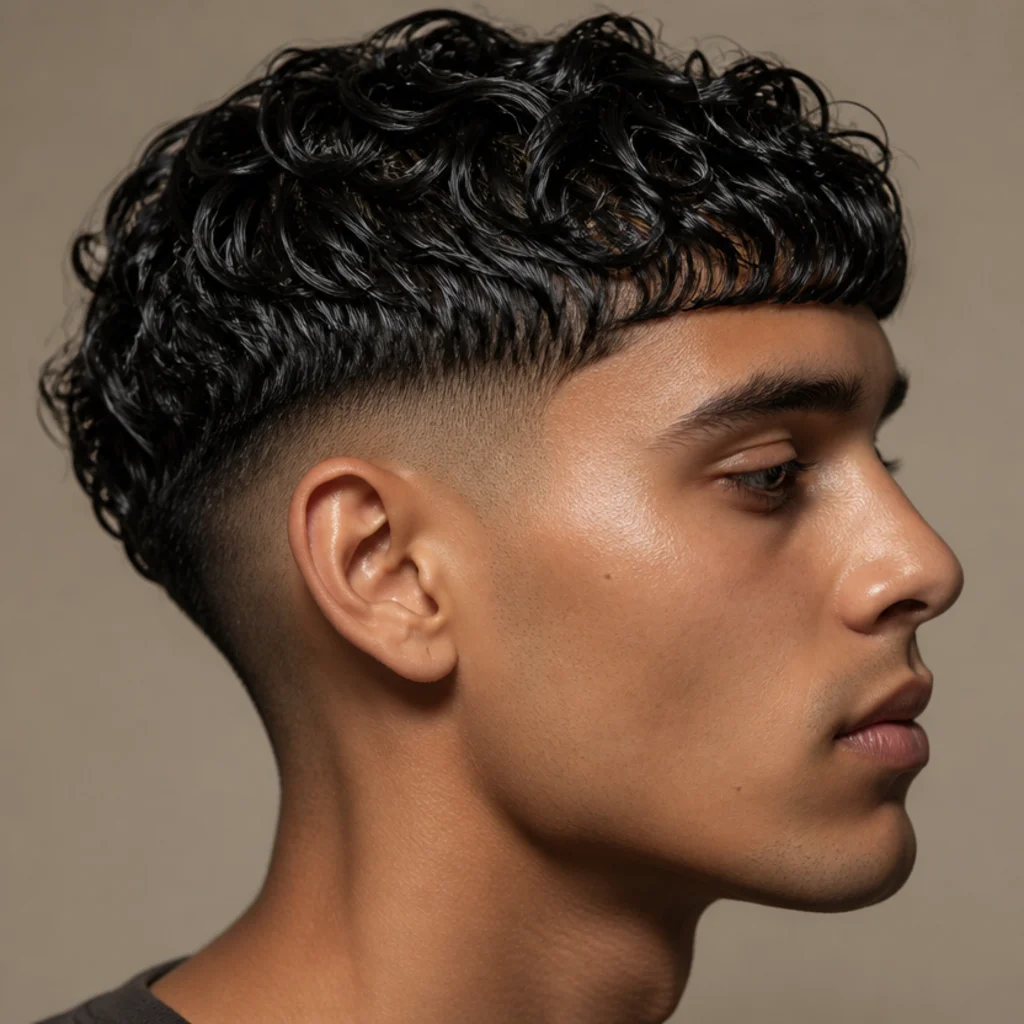
A wet-look finish gives the same cut a sleek, high-shine attitude for nights out, events, or photos. Using a strong gel or a defining serum, the curls are slicked into glossy, tightly defined spirals while the blunt edgar fringe stays sharp, and the shine exaggerates definition so the shape looks polished and deliberate. This is a styling choice rather than a cut change, which means any curly edgar in this list can go wet-look when the occasion calls for it and wash back to matte the next day. It flatters every face shape and curl type, since the effect is about finish, not silhouette, though tighter coils hold the defined cast longest. Apply gel to soaking-wet curls, smooth then scrunch to build the cast, and let it air-dry undisturbed for the glassiest result. Pro tip: for a still-glossy but less crunchy version, scrunch out the hardened cast with a single drop of lightweight oil once it's fully dry. Because gel builds up, rinse and restyle daily and clarify weekly so product doesn't dull the curls or flake at the hairline. Ask your barber to keep the base as "a clean edgar with a low fade" so it reads sharp both wet and dry.
<a id="20"></a>
20Grown-Out Natural Curly Edgar
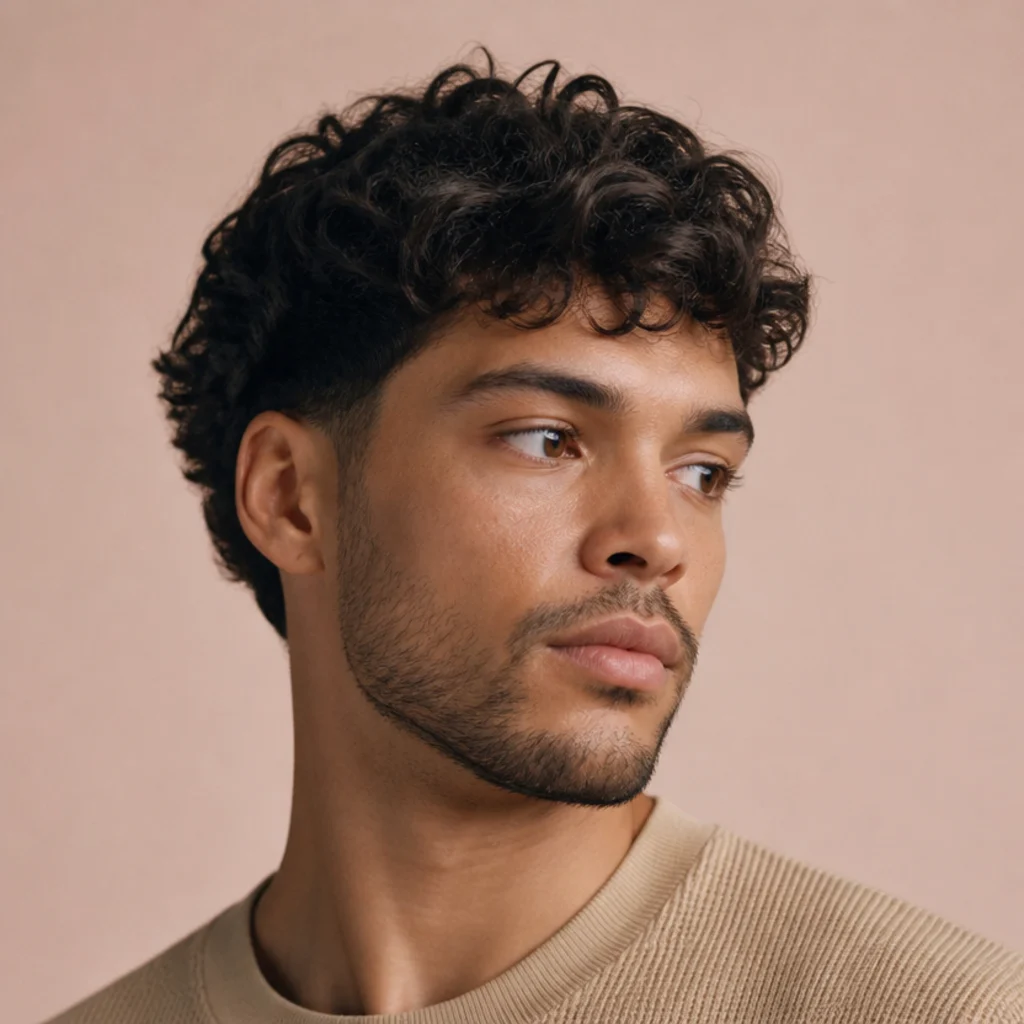
The final version celebrates the in-between phase. As a curly edgar grows, the fringe softens past the brow, the fade blurs into a natural taper, and the whole shape relaxes into something looser and lived-in. Rather than fighting that stage, plenty of people love it for the low upkeep and the undone feel, and it's by far the most forgiving option if you can't get to the barber often, comfortably stretching six weeks or more. It suits nearly every face shape and curl type and photographs with a relaxed, natural quality that a fresh skin fade can't. The trick is to grow out on purpose rather than by neglect, ask for a shape that blurs gracefully rather than developing a hard line, and keep the curls hydrated so the extra length stays defined instead of turning to frizz. Trim only the fringe occasionally to keep it out of your eyes while the sides fill in. Pro tip: a light leave-in and a weekly deep conditioner do more for a grown-out edgar than any styling product, since length exposes dryness first. Ask your barber for "a soft edgar I can grow out cleanly, a taper instead of a skin fade."
Pro Tips from the Editor
- Cut curly fringes dry, not wet. Curls can shrink by a fifth or more as they dry, so a fringe measured on wet hair often lands well above where you wanted it, always have the front shaped and checked while the curls are in their natural dry state.
- Name your fade by height and type, not just "faded." A low taper, a mid drop fade, and a high skin fade are entirely different looks; specifying both height (low, mid, high) and style (taper, drop, burst, skin) prevents the single most common miscommunication in the chair.
- Match the fade rotation to the detail. Line-ups, hard parts, temple designs, and skin fades blur in about seven to ten days; tapers and grown-out shapes hold for four to six weeks. Choose the detail based on how often you'll actually book, not on how it looks day one.
- Hydrate before you define. Curl cream and gel perform on moisturized hair; apply a water-based leave-in first, then your styler onto still-damp hair, so products glide and the curls clump instead of frizzing.
- Protect your edges over time. If you get frequent line-ups, ask your barber to work just inside your natural hairline rather than pushing it forward, which spares your temples and front from looking over-edged or receding after months of touch-ups.
- Diffuse on low with a hover motion and then stop touching. Handling curls while they dry is the number one cause of frizz; set the shape, then leave it fully alone until dry before scrunching out any gel cast.
- Bring a side-profile photo, not just a front shot. Fades, burst curves, drop lines, and hard parts all live on the profile, and a single front-on reference leaves the most important decisions to guesswork.
- Book the cut and any color in the same week. A fresh edgar shape and freshly painted tips or a melt land best together; a sharp new fade under weeks-old, faded color undersells both.
How to Choose / Get the Look
Start with two honest inputs: your curl pattern and your calendar. Tighter coils (4A-4C) hold a blunt line-up and bold fades beautifully but demand shorter intervals; looser waves and curls (2A-3B) suit a softer, textured fringe and a longer top. If you can't reliably visit every two to three weeks, steer toward a taper over a skin fade and lean into the grown-out, short cropped, or classic low-taper versions, all of which forgive time between cuts. Density is the quiet third input: fine or thinning hair wants a point-cut fringe and a lower fade, while dense hair can carry an architectural line-up or a bowl-leaning top.
Next, factor in face shape. Square and oval faces carry almost any edgar; round faces want more top height and a higher fade for vertical length; heart shapes are balanced nicely by the straight fringe against a narrower chin; longer or oblong faces should avoid stacking too much height and keep the fringe fuller and lower. Then decide fringe weight, a blunt heavy front frames and shortens the face, while a piecey or textured front reads softer and hides imperfect curl days. Hairline sits over all of it: a high or receding hairline is happier with a softer, slightly longer fringe than a razor-blunt block.
Use the fade guide below to match upkeep to the look you want, then name the three key decisions out loud in the chair, in this order: fade type and height, fringe length and how blunt, and how much curl volume to leave on top. Bring a photo, ideally including a side profile, since edgar and fade terminology varies from barber to barber.
| Fade / finish | Look | Best face shapes | Best curl types | Refresh interval | Upkeep level |
|---|---|---|---|---|---|
| Low taper | Subtle, grows out kindly | Oval, heart, round | 2A-4C | 3-5 weeks | Low |
| Mid fade | Balanced, versatile | Square, oval | 2B-4C | 2-4 weeks | Moderate |
| High skin fade | Bold, maximum contrast | Oval, oblong | 3A-4B | ~2 weeks | High |
| Burst fade | Rounded, sporty | Round, oval | 3A-3C | 2-4 weeks | Moderate |
| Drop fade | Arced, frames curls | Heart, oval | 3A-3C | 2-4 weeks | Moderate |
| Line-up / hard part | Crisp, graphic | Square, oval | 4A-4C | 1-2 weeks | High |
For upkeep, hydration is everything on curly hair: a leave-in plus a light styling product keeps coils defined and frizz down between washes, and a weekly deep conditioner matters even more if you add color or heat. If you color, wash with sulfate-free, color-safe products in cool water and stretch out wash days to protect the tone, and add a bond treatment on any bleached tips. Book a fade refresh every two to four weeks depending on how sharp you like the sides, and trim the fringe on its own faster schedule, since the front grows into your eyeline before the sides look untidy. Match your styler to your finish, curl cream for soft defined curls, matte paste or clay for a piecey undone fringe, strong gel for wet-look, and you have covered nearly every version in this guide with two or three products.
Frequently Asked Questions
Does the edgar cut work better on curly or straight hair?
Neither is objectively better; they read differently. An edgar cut on straight hair shows sleek, sharp lines and a very defined blunt fringe, while a curly edgar cut trades some of that crispness for volume, roundness, and movement, with the fade doing the sharpening the curls soften. Choose based on your natural texture and the vibe you want, precise and graphic, or textured and relaxed. Curls also hide a slightly imperfect cut better, since the texture blurs hard edges, which is one reason the curly version is so forgiving between visits.
How do I keep my curly edgar fringe from looking messy?
Hydrate first with a water-based leave-in, then define the front with a small amount of curl cream or matte paste, and trim the fringe more often than the sides since it grows into your eyeline first. A piecey, slightly separated fringe hides imperfect curl days far better than a solid blunt block, so if you struggle with a neat front, ask for a textured rather than razor-blunt edge. Diffuse the fringe forward on low so it banks over the brow instead of drying into separated strings.
Which face shape suits the edgar cut best?
Square and oval faces are the easiest matches because the straight fringe complements their angles. Round faces should add top height and choose a higher fade for length; heart shapes benefit from the fringe balancing a narrower chin; longer and oblong faces should keep the top lower and the fringe fuller so the shape doesn't elongate the face further. Small tweaks to fade height and fringe weight make the cut work for most face shapes, which is exactly why it's such a common edgar cut face shape search.
How often do I need to visit the barber?
Plan on every two to four weeks. Skin fades, line-ups, hard parts, and temple designs blur fastest and want the shorter end, roughly every one to two weeks to stay crisp. Tapers and grown-out versions stretch to four to six weeks without looking untidy. Whatever the sides need, expect to trim the fringe on a faster cycle of its own, since the front reaches your eyeline before the fade looks grown out.
Can I get an edgar fade without going all the way to skin?
Yes. A low taper or a blurry low fade gives you the clean edgar shape without exposing scalp, and it grows out far more gracefully with no hard demarcation line. It's the lower-maintenance route and still looks sharp against curly texture, which is exactly why the blurry-taper version is the one most people are happiest with. It's also the safer choice for a high or receding hairline, since it doesn't spotlight the temples the way a stark high skin fade can.
What curl types does the edgar work on?
It works across the range, from loose 2A-2C waves to 3A-3C curls and dense 4A-4C coils, with the styling adjusted to suit. Looser textures want more length on top and a softer, point-cut fringe so the hair falls forward; tighter coils carry a razor line-up, a defined bowl-leaning top, or sponge twists. The one texture that struggles is very fine or thinning hair that can't build a convincing blunt front, and even that can work with a longer, point-cut fringe and a low fade.
What products do I actually need for a curly edgar?
At minimum, a water-based leave-in for hydration and one styler chosen for your finish: a curl cream for soft defined curls, a matte paste or clay for a piecey undone fringe, or a strong gel for a wet-look, high-definition finish. Add a weekly deep conditioner, and if you color, a sulfate-free color-safe wash plus a bond treatment for bleached tips. You don't need a shelf of products. You need the right two or three used in the right order, leave-in first onto damp hair, styler second.
How long does it take to grow out an edgar cut?
The fringe softens and the fade blurs within about three to five weeks, and the whole shape relaxes into a looser, lived-in cut over a couple of months, many people love that in-between stage on purpose. To grow it out cleanly rather than awkwardly, ask your barber for a taper instead of a skin fade at your last cut, keep the curls hydrated so the new length stays defined, and trim only the fringe as needed while the sides catch up. Growing out from a high skin fade is the slowest and most awkward path, so plan the last cut with grow-out in mind.
Will an edgar cut suit a receding or high hairline?
It can, but the very blunt front is the thing to watch, a heavy straight fringe drawn low can draw attention to where the hairline sits. If your hairline is high or receding, ask for a softer, textured or point-cut fringe rather than a razor-blunt block, keep the front a touch longer for coverage, and avoid pushing the line-up forward or choosing the highest skin fade. A skilled barber can shape the front to work with your hairline rather than spotlight it, so bring a photo and say the hairline is your priority.