25 Dreamy Long Layered Shag Haircut Ideas
The long shag has grown up. Below are 25 ways to wear soft, lived-in layers that keep your length while adding real movement, from feathered curtain bangs to piecey curl-mapped texture. Each idea spells out who it flatters, the cutting technique behind it, how often you'll actually sit in the chair, and the exact phrasing to use so you leave with the cut you pictured.
 Edited by Lena Rose · Published July 11, 2026 · 37 min read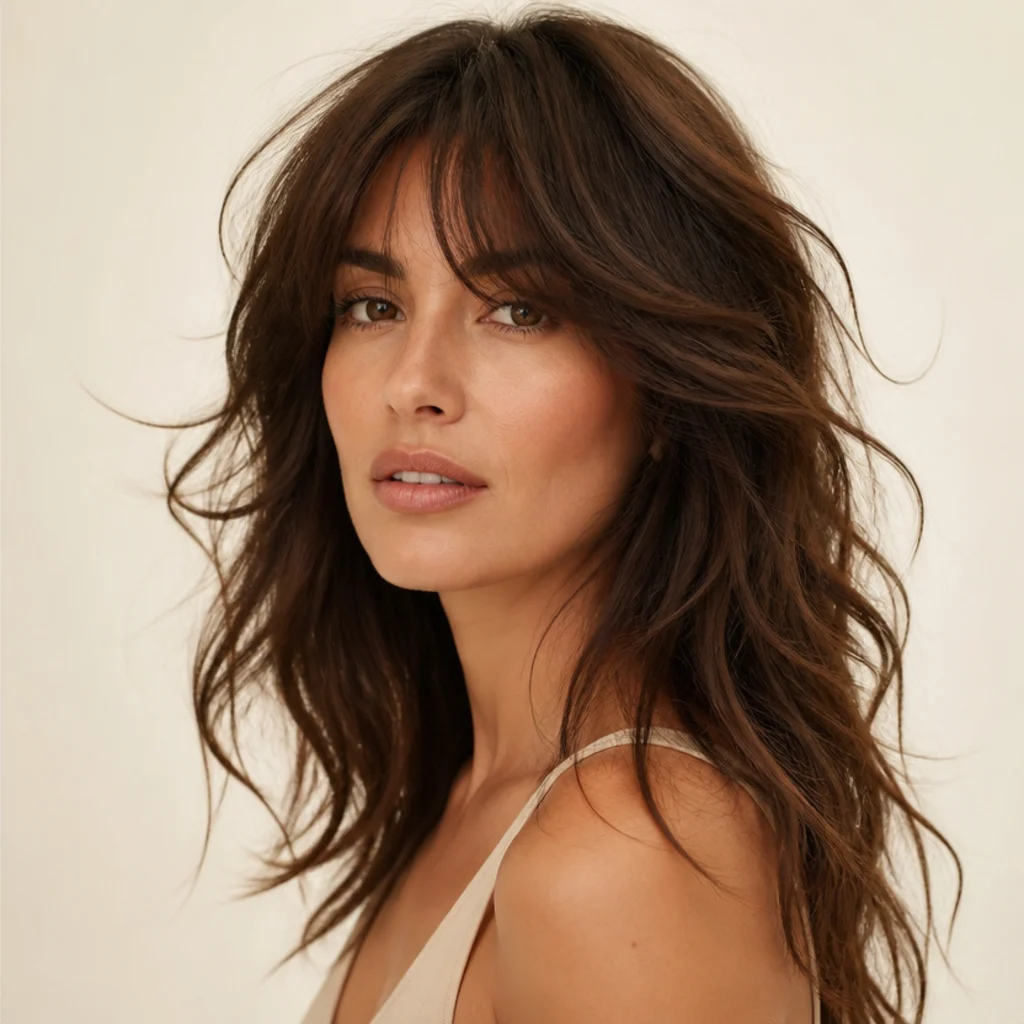
Quick Answer
- Best for: Anyone who wants to keep length while adding movement, crown volume, and face-framing shape; adapts across straight, wavy, curly, and coily textures and reads well from fine to coarse density.
- Who might skip it: Those set on a single-length, zero-layer look, anyone mid-way through growing out a fringe who doesn't want new face-framing pieces, and very fine hair that struggles to hold body if over-textured.
- Maintenance: Low to moderate. Soft, connected versions stretch 10–14 weeks between trims; micro fringes, blunt perimeters, and styled 70s looks want shaping every 4–8 weeks.
- Difficulty: Beginner-friendly to style. Air-dry with a scrunch of cream, or rough-dry and add a few bends with a wide iron.
- Cost: Typically sits at the higher end of your salon's cut menu because dry-cutting and detailed texturizing take time; layering in color (money piece, balayage, copper, toner) turns it into a multi-service appointment, so budget accordingly.
- Wear time / longevity: Reads intentional for roughly 3–4 months as the layers loosen into a softer, longer sweep rather than a blunt shelf.
- Standout variation: The soft long shag with curtain bangs, which frames the face without committing to a full fringe.
- How to ask your stylist: "Keep my length, add graduated layers through the crown and around my face, and point-cut the ends so they stay piecey and airy."
In This Guide
- Soft Long Shag With Curtain Bangs
- Long Shag Choppy Layers on Straight Hair
- Long Curly Shag Haircut With Piecey Ends
- Feathered Wolf Cut Shag
- Long Shag With Face-Framing Layers
- 70s-Inspired Bardot Shag
- Soft Long Shag for Fine Hair
- Long Shag Straight Hair With Blunt Undertone
- Beachy Wavy Long Shag
- Long Shag Choppy Layers With Money Piece
- Coily Long Shag With Defined Curls
- Long Shag With Wispy Bottleneck Bangs
- Rocker Shag With Heavy Texture
- Long Shag for Thick Hair
- Sleek Modern Long Shag
- Long Curly Shag Haircut With Curtain Fringe
- Copper Long Shag With Sliced Layers
- Long Shag With Shadow Root and Balayage
- Textured Long Shag for Round Faces
- Long Shag Straight Hair With Invisible Layers
- Voluminous Long Shag for Coarse Hair
- Long Shag With Micro Fringe
- Undone Cool-Girl Long Shag
- Long Shag With Deep Side Part
- Silver Long Shag With Soft Layers
The long layered shag has become one of the most requested cuts on the salon books, and it's easy to see why: it delivers the movement and face-framing shape of heavy layers without asking you to give up your length. A well-built soft long shag stacks graduated pieces through the crown and cheekbones while leaving the perimeter long and airy, so the hair swings and separates instead of sitting in a flat curtain. It flatters almost everyone because the layering adapts to whatever you bring it: diffused and connected for fine strands, choppy and razored for dense hair, curl-mapped for coils and ringlets. It also photographs well, which is part of why it's everywhere right now, from the 70s Bardot revival to the softer bottleneck-fringe wolf cut. Best of all, a shag grows out in your favor: the layers loosen into a longer, lived-in sweep rather than a blunt shelf, buying you weeks between appointments. The 25 ideas below break down texture, fringe style, color pairings, and the face shapes each version flatters, plus the exact wording to use in the chair so you leave with the cut you pictured, not a compromise.
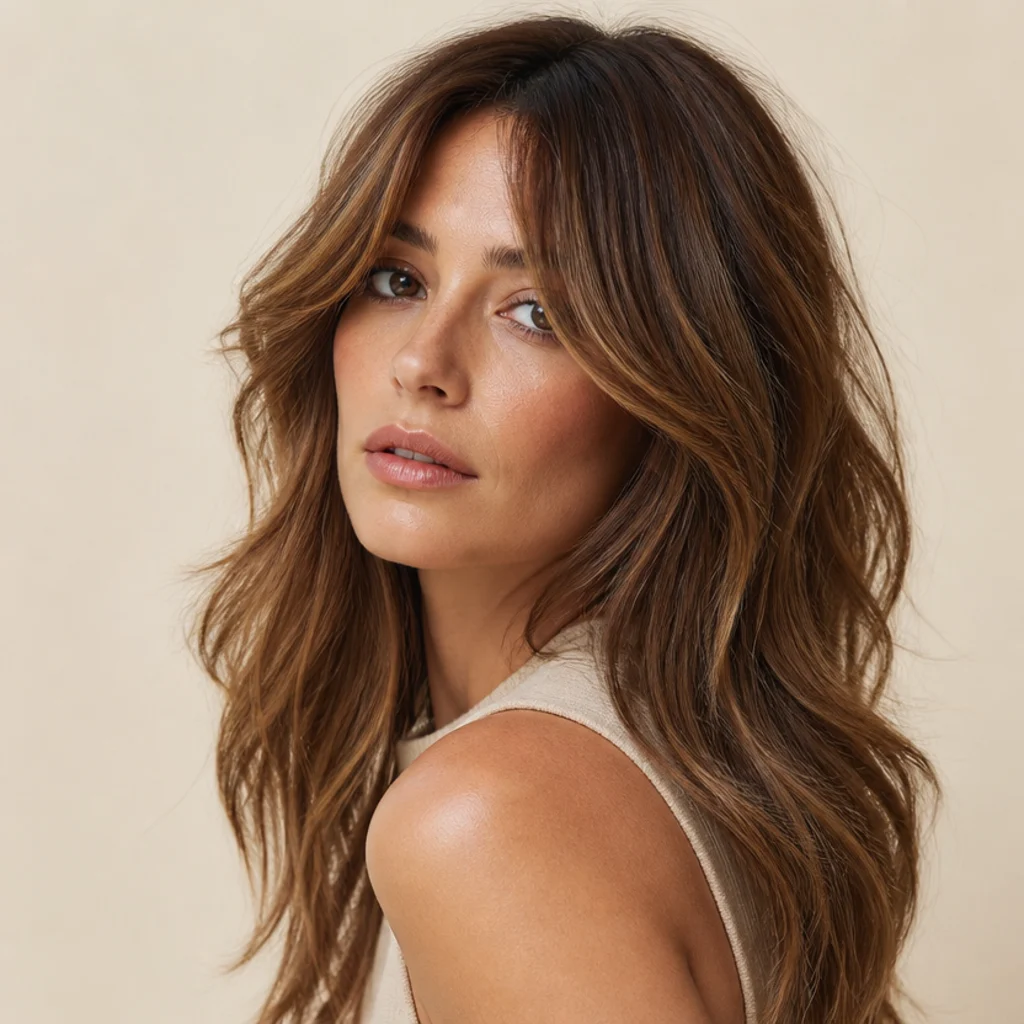
01Soft Long Shag With Curtain Bangs
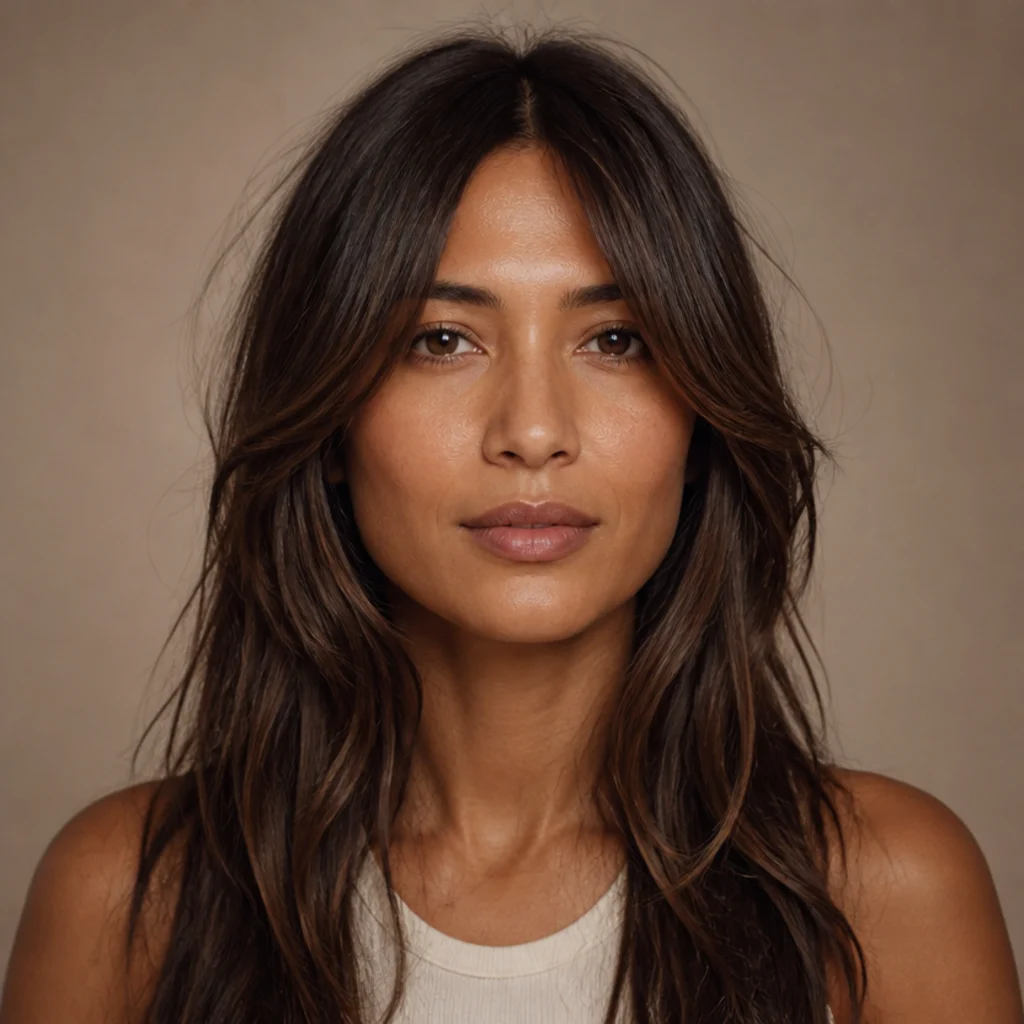
This is the gateway shag, the version that converts people who were nervous about layers. The curtain bang splits at the center and is cut on a diagonal so the shortest point grazes the inner brow and the longest sweeps back into the cheekbone, softening a strong forehead or elongating a longer face. Underneath, the internal layers begin around the jaw and cascade down, so length stays intact while the top gains lift and swing. It flatters oval, heart, and oblong shapes especially well, and warm brunette or chestnut tones make the face-framing pieces read glossy. The upkeep is forgiving: the fringe blends as it grows, so you can stretch trims to 12 weeks and dust the ends yourself in between. Pro tip: dry the fringe first, directing it down and out with a round brush before it sets, so it never dries with a stubborn cowlick. Ask your stylist for "curtain bangs that connect into soft face-framing layers, cut to graze the cheekbone, with the ends left long and airy."
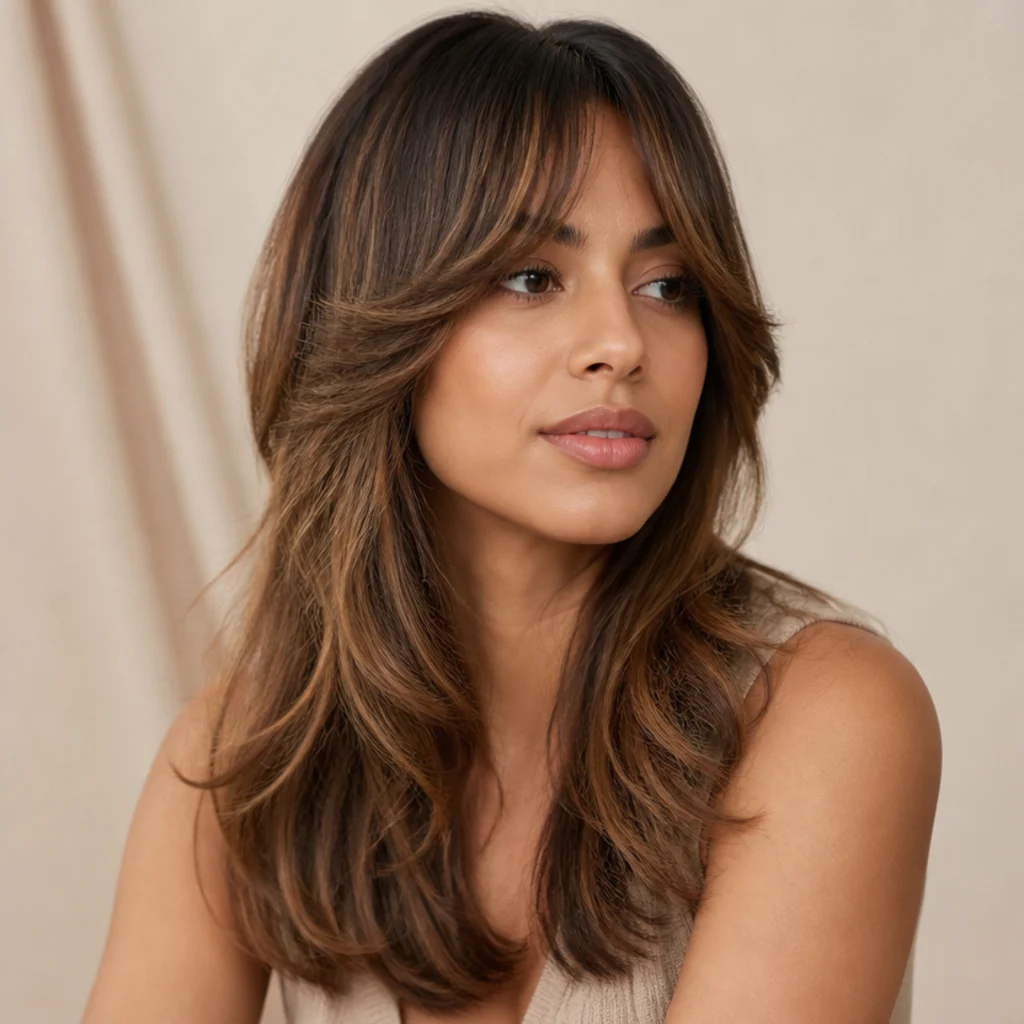
02Long Shag Choppy Layers on Straight Hair
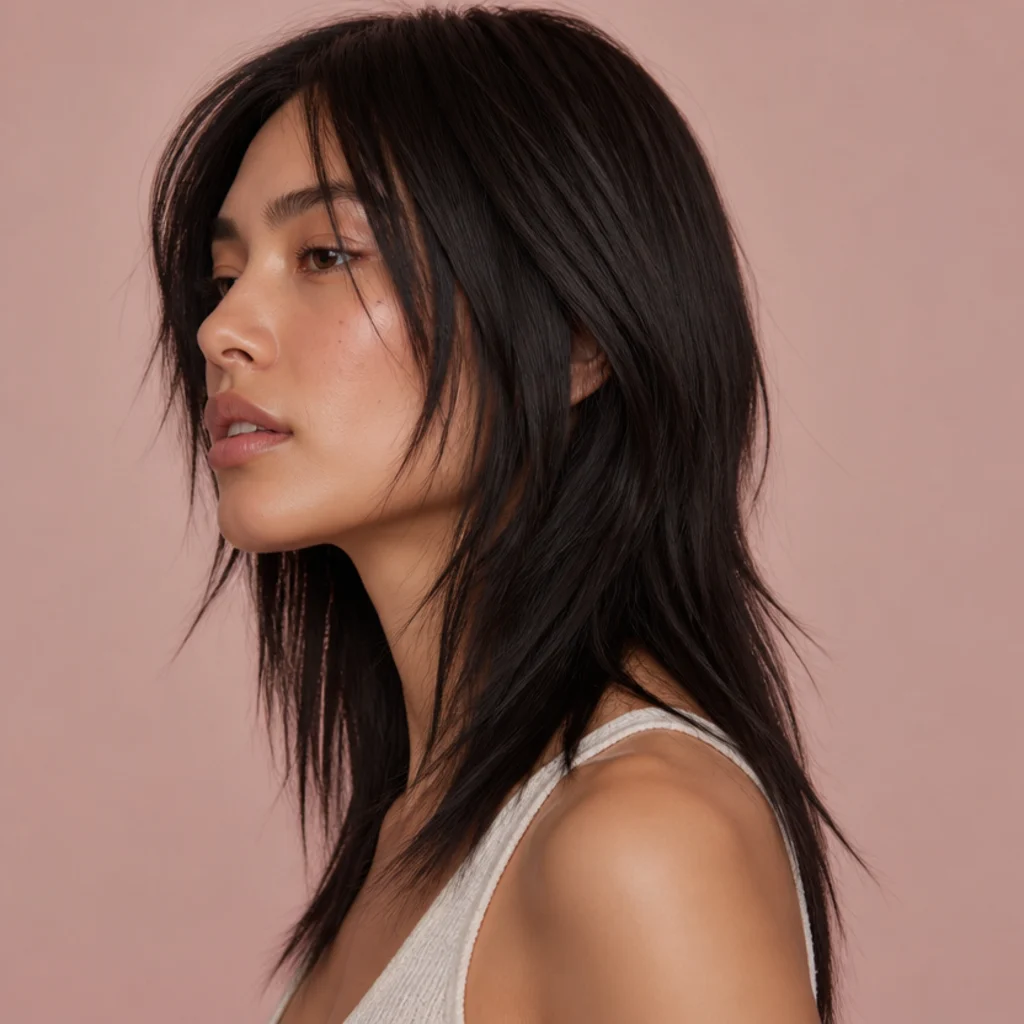
Straight hair shows off long shag choppy layers with unforgiving clarity, so the cut has to be deliberate. Point-cutting into the ends and vertical slide-cutting through the mid-lengths create separated, piecey tips that break up density and stop straight hair from reading like a heavy block. The contrast between smooth lengths and choppy, feathered ends is what makes this version feel current rather than dated. Medium to thick straight hair takes to this best; very fine strands can look sparse if over-textured. It works in deep espresso or cool near-black, where the separation catches the light. Maintenance is moderate; the tips soften after about 8 weeks and benefit from re-texturizing. Pro tip: work a pea of texture paste through dry ends and scrunch upward, never smoothing down, to keep the piecey definition alive all day. Ask your stylist for "choppy, disconnected-looking layers with heavy point-cut ends, kept piecey but not thinned out at the roots or scalp."
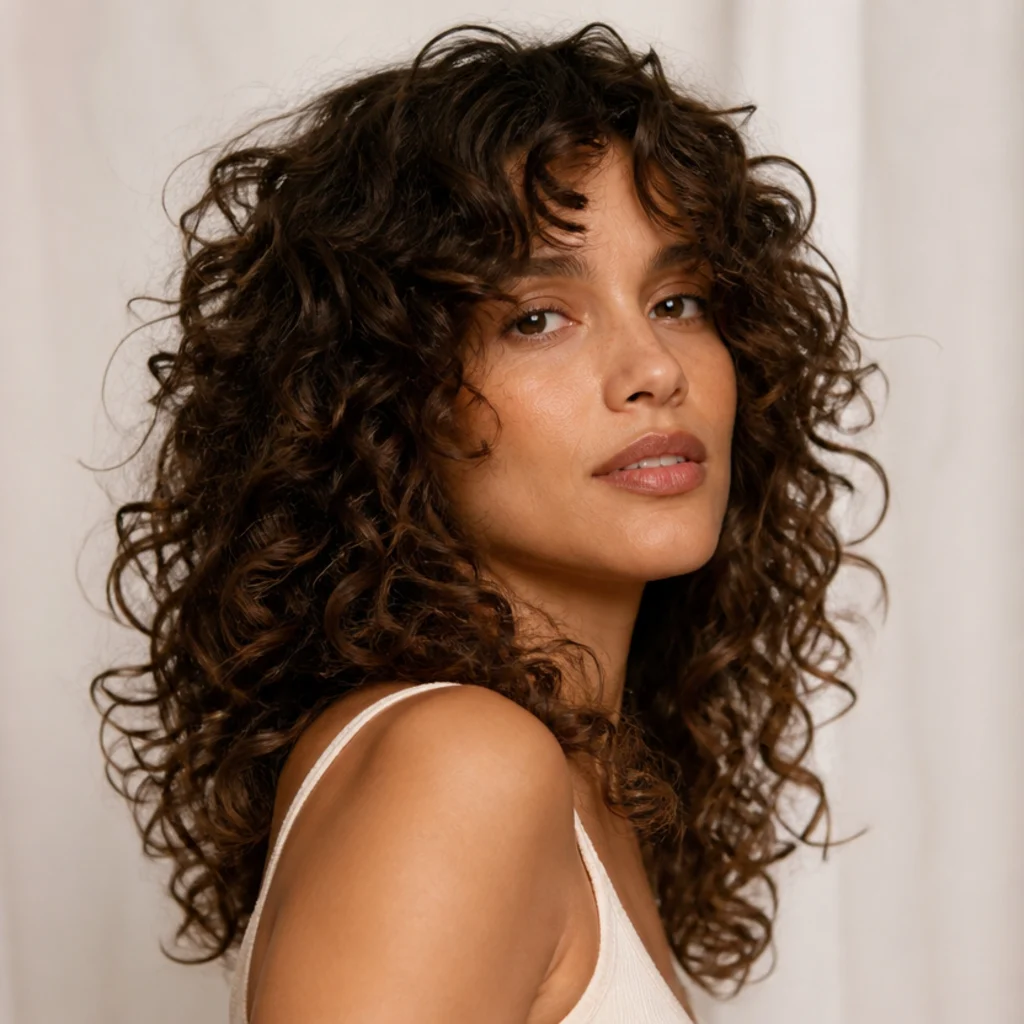
03Long Curly Shag Haircut With Piecey Ends
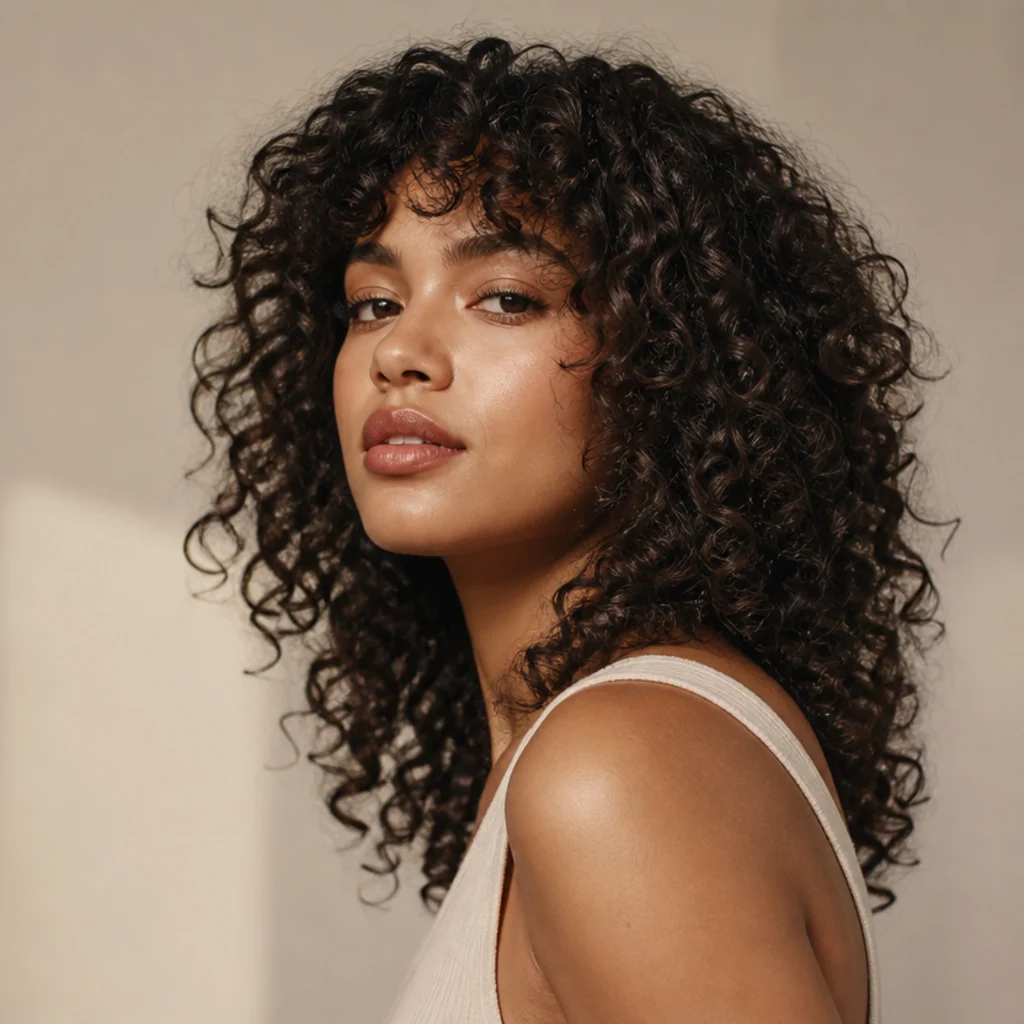
A long curly shag haircut is arguably where the shape shines brightest. Curls naturally stack and expand, so layered shag cutting gives your ringlets room to bounce instead of piling into a triangle at the ends. The technique that matters is dry-cutting or curl-by-curl carving, so each layer is placed exactly where the curl actually sits once it springs. This version suits 2C through 3C textures, delivering height at the crown and clean definition through the mid-lengths without sacrificing length. Upkeep leans low if you embrace wash-and-go styling; a curl cream raked through soaking-wet hair and a diffuser on low do the work. Pro tip: apply product to drenched, not damp, hair and "praying-hands" it in, then don't touch the curls again until they're fully dry to avoid frizz. Ask your stylist for "a curly shag cut on dry hair with layers mapped to my curl pattern, keeping length and adding piecey separation around the face."
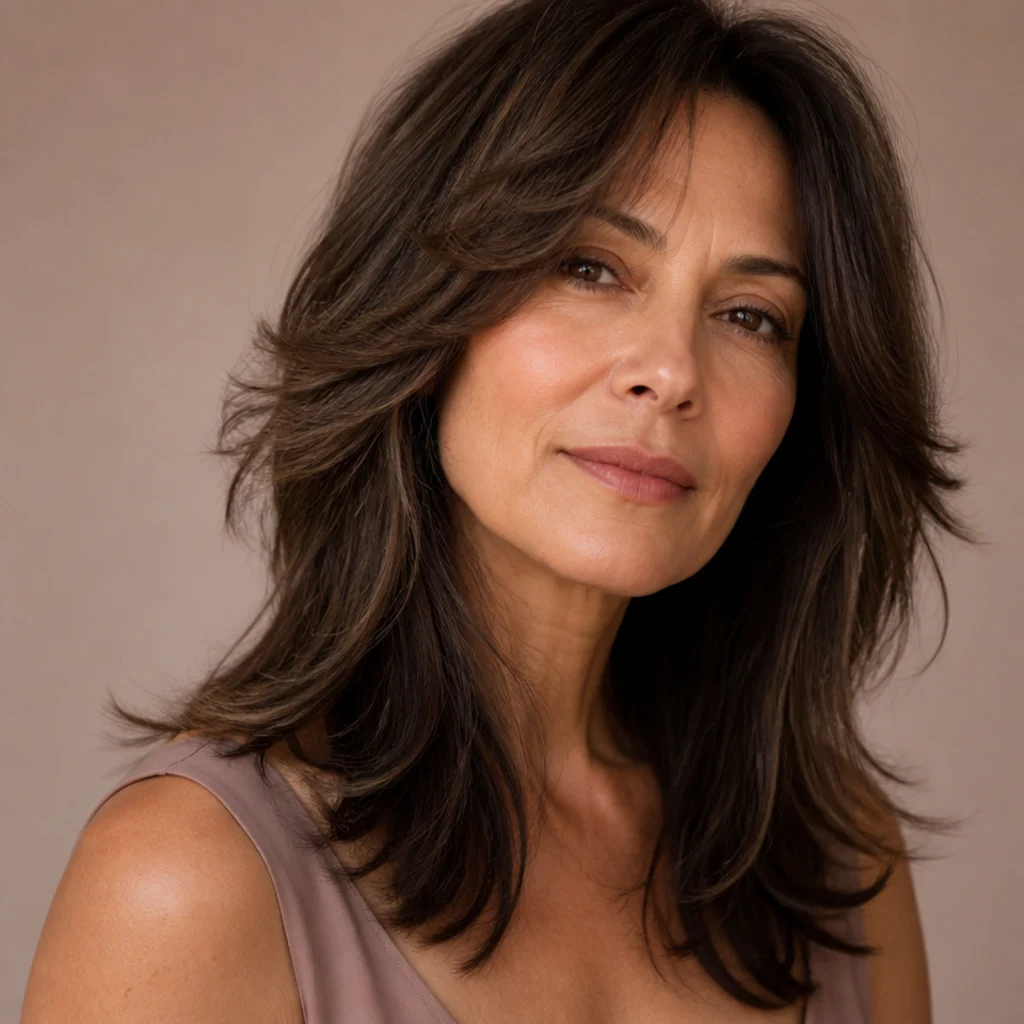
04Feathered Wolf Cut Shag
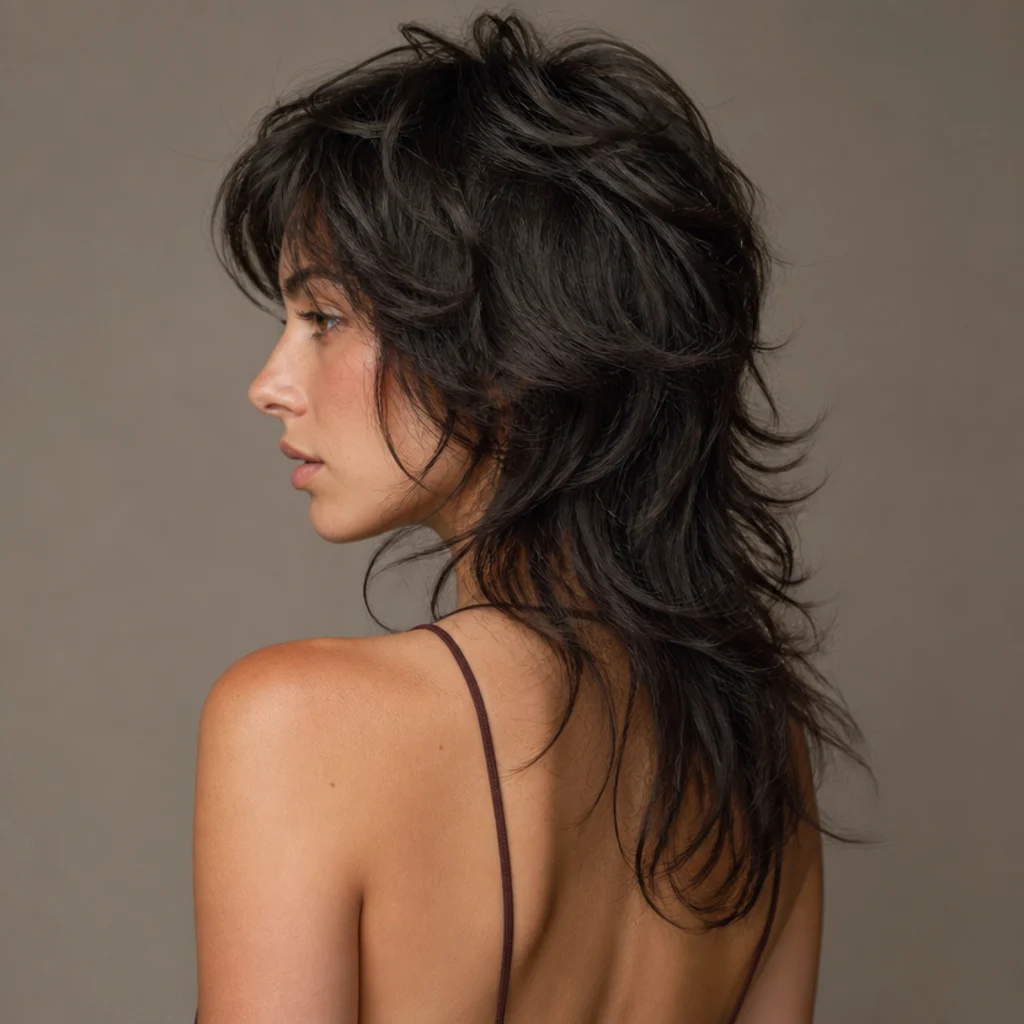
The wolf cut is the shag's edgier cousin, and the long version keeps enough length to stay wearable at the office and the show. It combines a heavily layered, almost mullet-adjacent top with feathered, tapered lengths, so you get serious volume up high that thins into wispy ends past the collarbone. This suits anyone craving drama or wanting to build body into flat, straight-to-wavy hair, and it reads best on those comfortable with an undone, rock-leaning finish. Expect moderate upkeep, roughly every 8–10 weeks, to keep the crown layers from swallowing the shape as they grow. Pro tip: rough-dry the crown upside down with your fingers, then hit only the roots with a blast of dry texture spray so the volume holds without stiffness. Ask your stylist for "a long wolf cut with a shaggy, voluminous crown feathering into long, textured ends, keeping the overall length past the collarbone."
05Long Shag With Face-Framing Layers
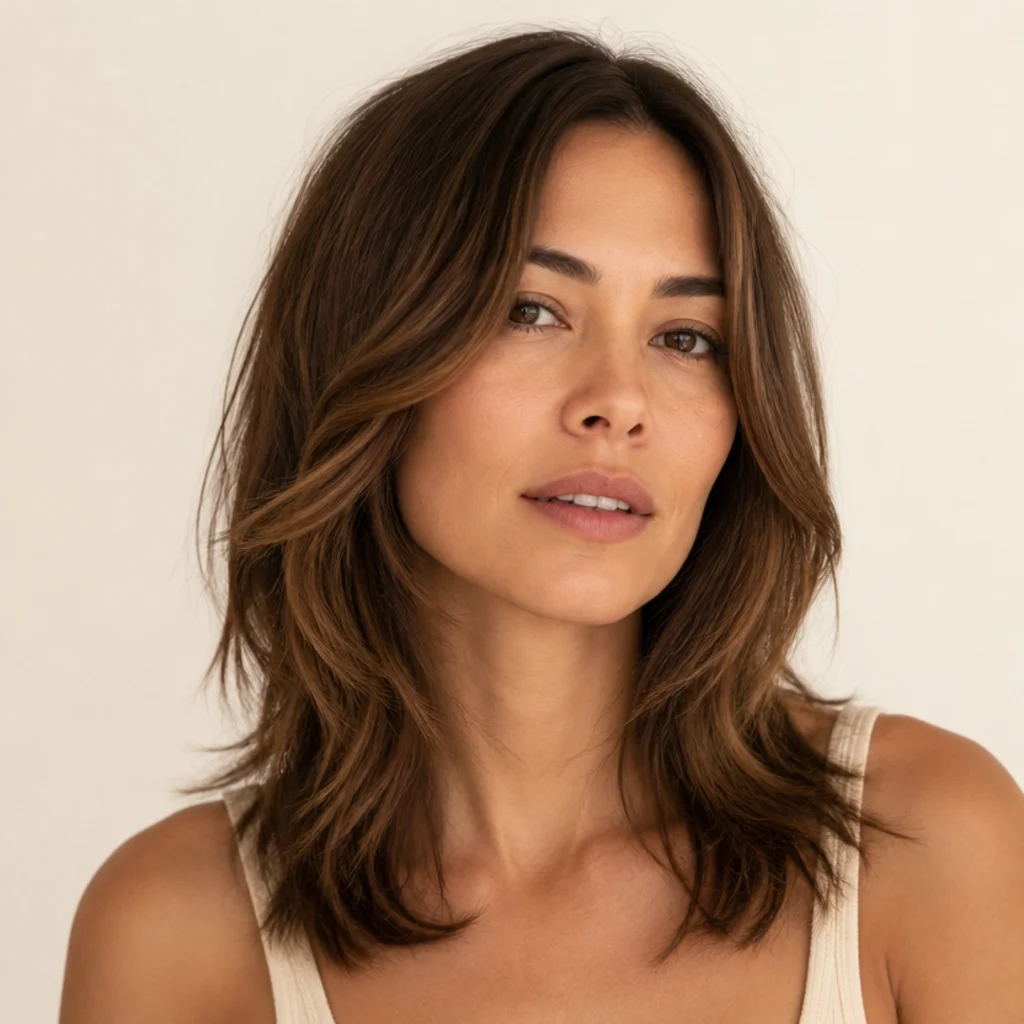
If bangs feel like too much commitment, face-framing layers deliver similar softening without the regrowth phase. The shortest pieces start at the cheekbone or jaw and lengthen as they travel back, drawing a gentle diagonal that flatters round and square faces by adding vertical movement and slimming the widest points. Paired with a long layered shag through the back, the cut frames and lifts at once, and caramel or bronde ribboning through those front pieces makes the shape pop. It works on nearly every texture and is low-maintenance, since face-framing grows out into a longer sweep rather than an awkward shelf. Pro tip: when you part your hair, tuck one framing piece behind the ear and leave the other loose for an effortless, slightly asymmetric finish. Ask your stylist for "face-framing layers starting at the cheekbone that blend into a long shag through the back, kept soft rather than blunt."
Save this to Pinterest to compare the bang-free framing options side by side.
0670s-Inspired Bardot Shag
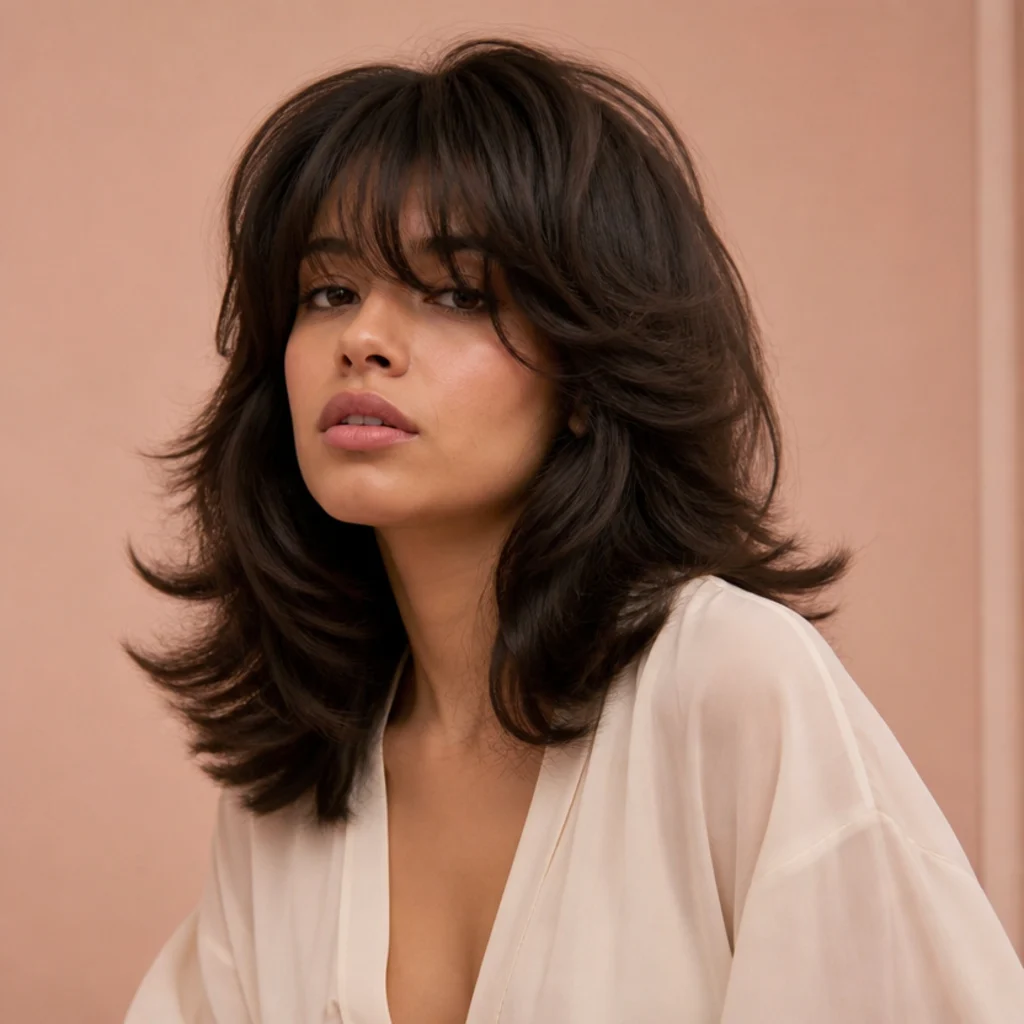
This is the shag in its most nostalgic, glamorous form. Inspired by 70s icons, the Bardot shag pairs a full, rounded crown with flipped-out feathered layers and a soft, heavy brushed-out fringe. It leans into volume and old-school bounce, making it a showstopper for anyone who loves a styled, blown-out finish and a warm honey or golden-brunette tone that plays up the movement. Medium to thick hair holds the body this look needs, and it flatters oval and heart shapes. Upkeep is higher because the look is styled rather than air-dried; plan on a large round brush and a few minutes with a 1.5-inch barrel iron flicking the ends out. Pro tip: set the freshly curled crown sections in pin curls or a claw clip while you finish your makeup, then release for volume that actually lasts the night. Ask your stylist for "a 70s-style shag with a rounded, voluminous crown, feathered flippy layers, and a soft brushed-out fringe."
07Soft Long Shag for Fine Hair
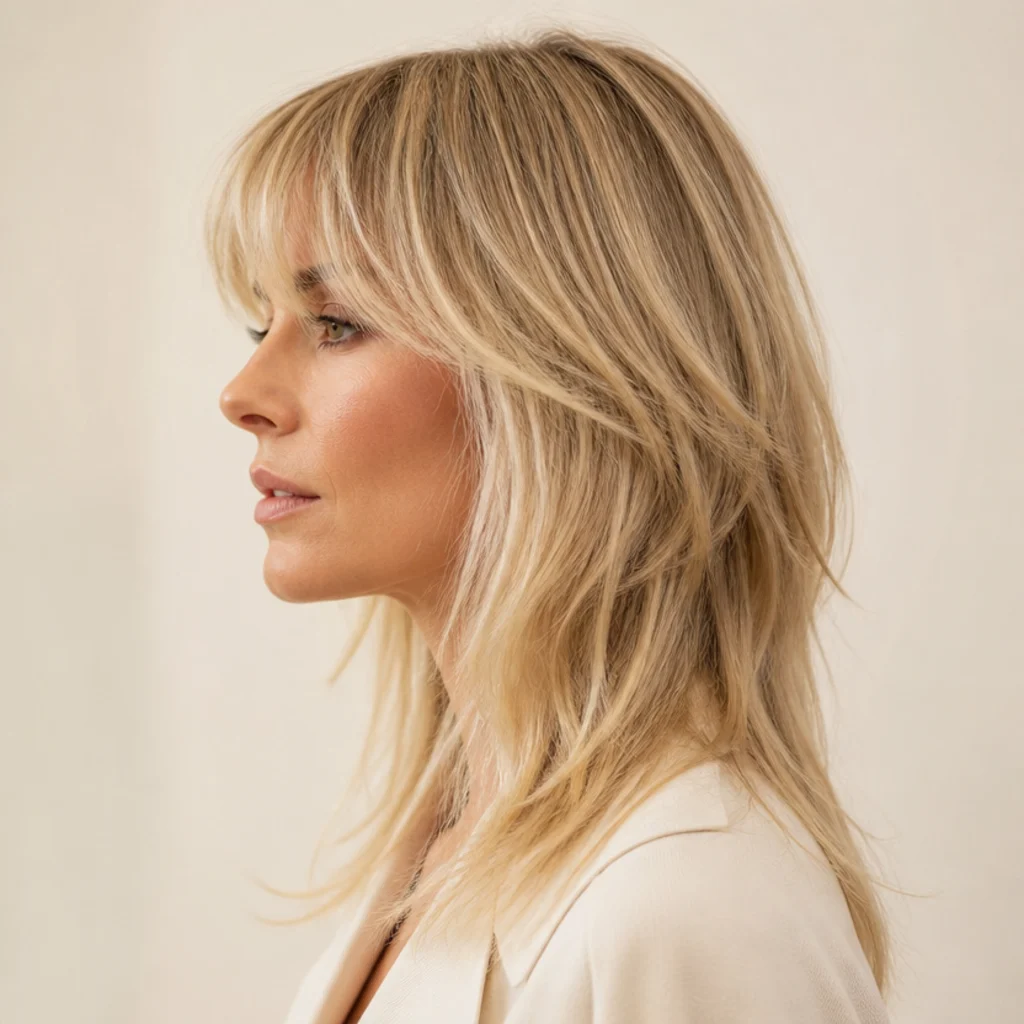
Fine hair and shags can coexist; the whole trick is restraint. Instead of aggressive thinning, a soft long shag for fine hair uses gently graduated, connected layers that build the illusion of fullness without removing precious density. Keeping the perimeter fairly strong while adding subtle movement up top means your hair reads thicker, not wispier, and a cool beige or buttery blonde with slight root shadow adds visual depth. This suits fine, straight-to-wavy hair that tends to fall flat by midday. Maintenance is low, though a clean trim every 8–10 weeks keeps the ends from looking stringy. Pro tip: apply a lightweight root-lift mousse to damp roots only, then rough-dry with your head flipped forward for lift that doesn't weigh strands down. Ask your stylist for "soft, connected layers that add volume without over-texturizing or thinning my fine hair, keeping the ends looking full and blunt-ish."
08Long Shag Straight Hair With Blunt Undertone
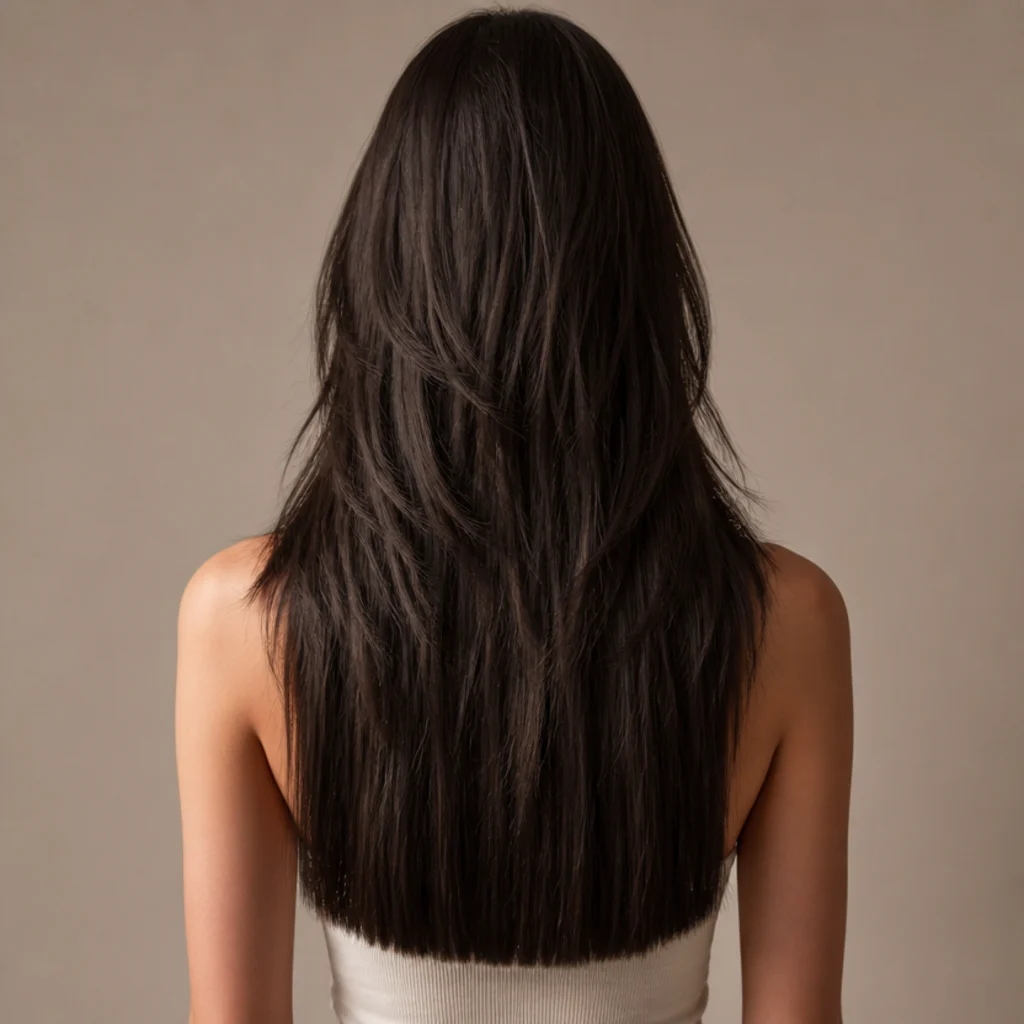
Not everyone wants wispy, feathered ends, and this version proves long shag straight hair can look polished. The upper layers are shaggy and textured for movement, but the perimeter is kept strong and nearly blunt, giving the cut a clean, expensive-looking baseline in a glossy espresso or rich chocolate. That contrast reads sleek and intentional, ideal for anyone in a corporate setting who still wants shape and swing. Straight, medium-density hair wears this well; too fine and the blunt hem can look thin. Upkeep is moderate since that strong perimeter needs a precise trim every 8 weeks to stay sharp. Pro tip: finish with a shine serum on the mid-to-ends only, keeping roots product-free, so the blunt line looks liquid-glossy rather than greasy. Ask your stylist for "textured shag layers on top with a strong, almost blunt perimeter left long and heavy at the bottom."
09Beachy Wavy Long Shag
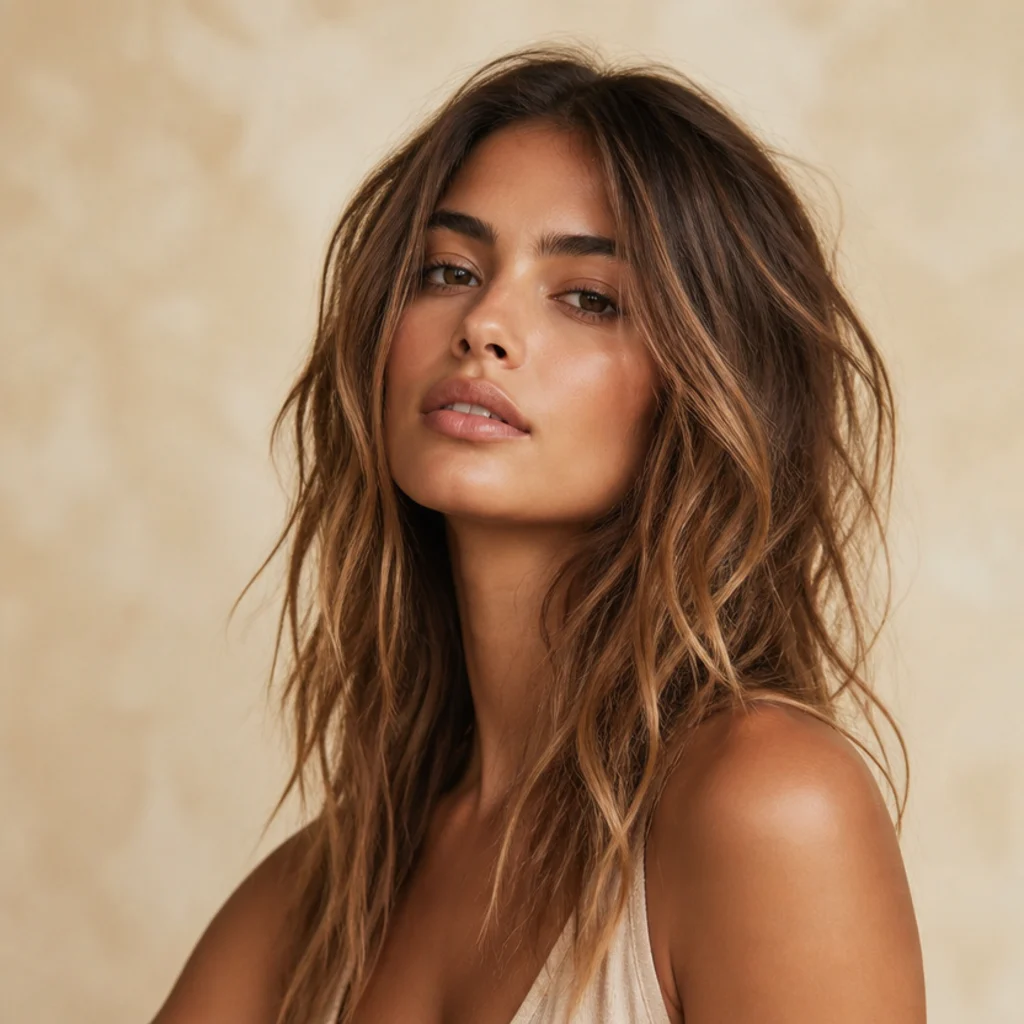
Wavy hair was practically made for the shag. The layers follow the natural bend of the wave, encouraging that undone, just-left-the-coast texture without much effort or heat. A beachy wavy long shag keeps length through the back while letting the crown and face-framing pieces spring up, so the waves look intentional rather than shapeless. Best for 2A to 2C textures and anyone who air-dries most days; sun-kissed bronde or lived-in caramel ends play up the tousled effect. Maintenance is low; a salt spray or a lightweight wave cream scrunched into damp hair does the styling. Pro tip: scrunch product upward toward the scalp with a microfiber towel, then plop into a loose twist for ten minutes to encourage the S-bend before air-drying. Ask your stylist for "a shag that enhances my natural waves with soft layers and piecey ends, keeping plenty of length so the waves don't shrink up too high."
10Long Shag Choppy Layers With Money Piece
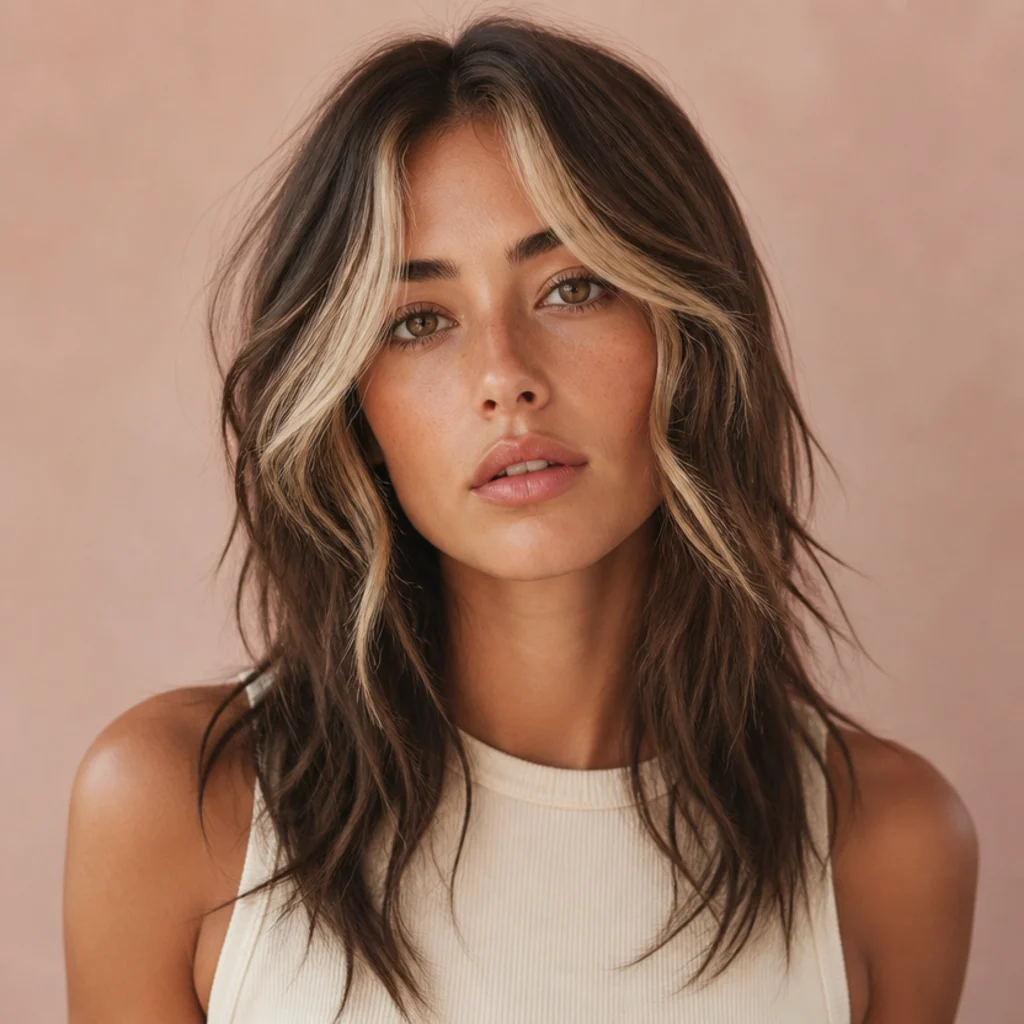
Combine long shag choppy layers with a lightened money piece and you get instant dimension. The money piece, two brighter face-framing sections lifted a few levels above your base, catches the light and accentuates the shortest layers around your face, making the whole cut look more dynamic. This is for anyone who wants a color-forward statement without committing to full highlights; it flatters most face shapes by bouncing brightness up toward the complexion. Upkeep is moderate: the cut grows out easily, but the lightened pieces need a gloss or toner refresh every 8–12 weeks to fight brassiness. Pro tip: ask for the money piece to start slightly below the root rather than right at the part, so regrowth stays soft and you avoid a harsh line. Ask your stylist for "choppy shag layers with a soft, seamless money piece framing my face," and bring a photo showing the exact brightness and tone you want.
Save this to Pinterest for your next color-and-cut inspiration board.
11Coily Long Shag With Defined Curls
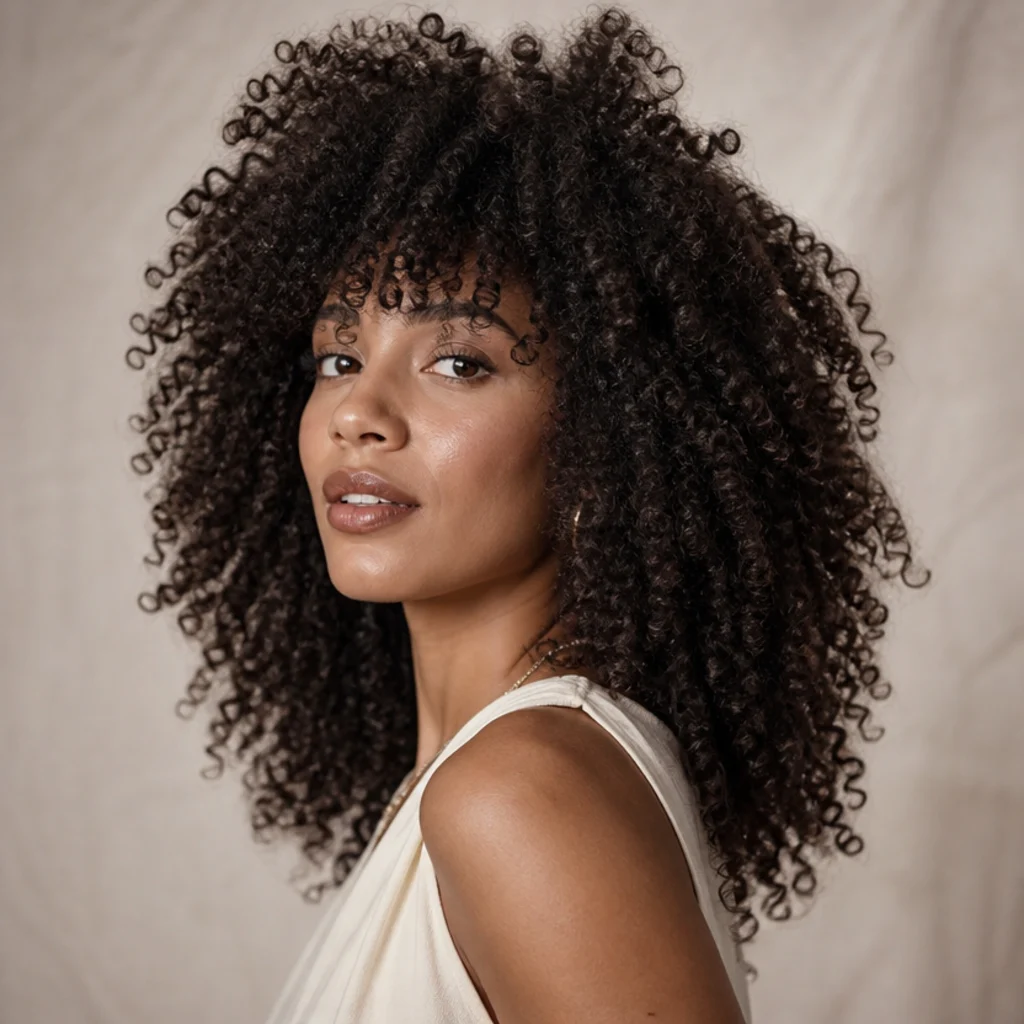
Coily textures deserve shag love too, and a well-cut version celebrates volume rather than fighting it. On 3C to 4A coils, layered shaping removes the weight that flattens curls at the top, letting the crown stand tall while the length stays full and rounded. Precision is everything here: the cut should be done on dry, stretched, or curl-formed hair so shrinkage and coil placement are fully accounted for before a single layer is set. Anyone wanting shape and lift in their coils without losing length is a good candidate, and a rich espresso or warm mocha keeps the definition looking healthy. Upkeep is low with a consistent wash-day routine and refreshing between washes. Pro tip: seal in moisture with the LOC method (leave-in, oil, cream) on wash day so coils stay springy and the layered shape holds for days. Ask your stylist for "a shag cut on my dry coils that adds crown volume and shape while keeping length, cut to account for shrinkage."
12Long Shag With Wispy Bottleneck Bangs
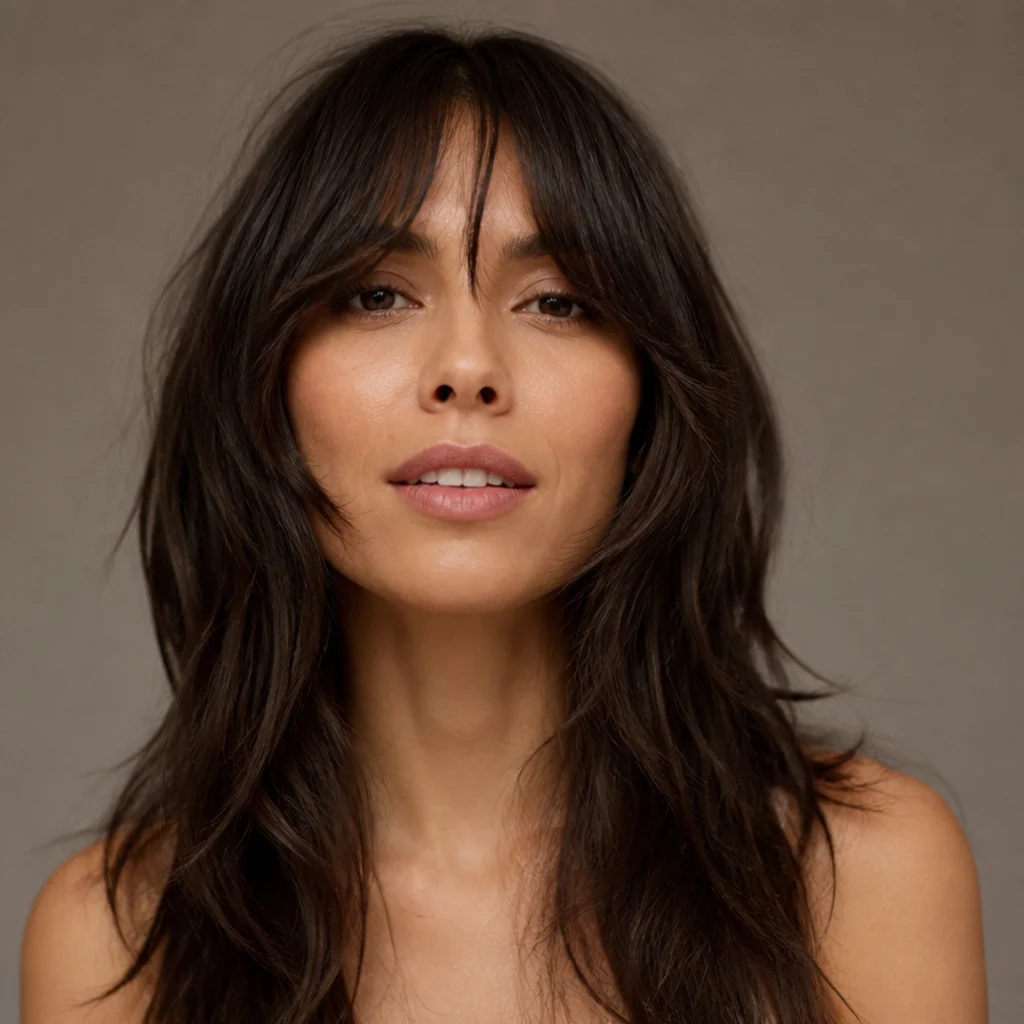
Bottleneck bangs are the softer, more forgiving evolution of the curtain fringe. They stay narrow and slightly shorter at the center, then flare wider like the neck of a bottle to connect smoothly with the face-framing layers. On a long shag, this creates an uninterrupted frame that flatters round and square faces by drawing length into the center of the face. It's a good pick if you want fringe that reads airy and grown-in rather than blunt, and it works across straight to loosely wavy textures. Maintenance is moderate, with a quick bang dusting every 4–6 weeks to keep the wispy tips from creeping past the brow. Pro tip: style the fringe with a small round brush and cool air, rolling the center under and the sides out, so the bottleneck silhouette reads clearly. Ask your stylist for "wispy bottleneck bangs that are shorter and narrow in the middle, blending out into my long shag layers."
13Rocker Shag With Heavy Texture
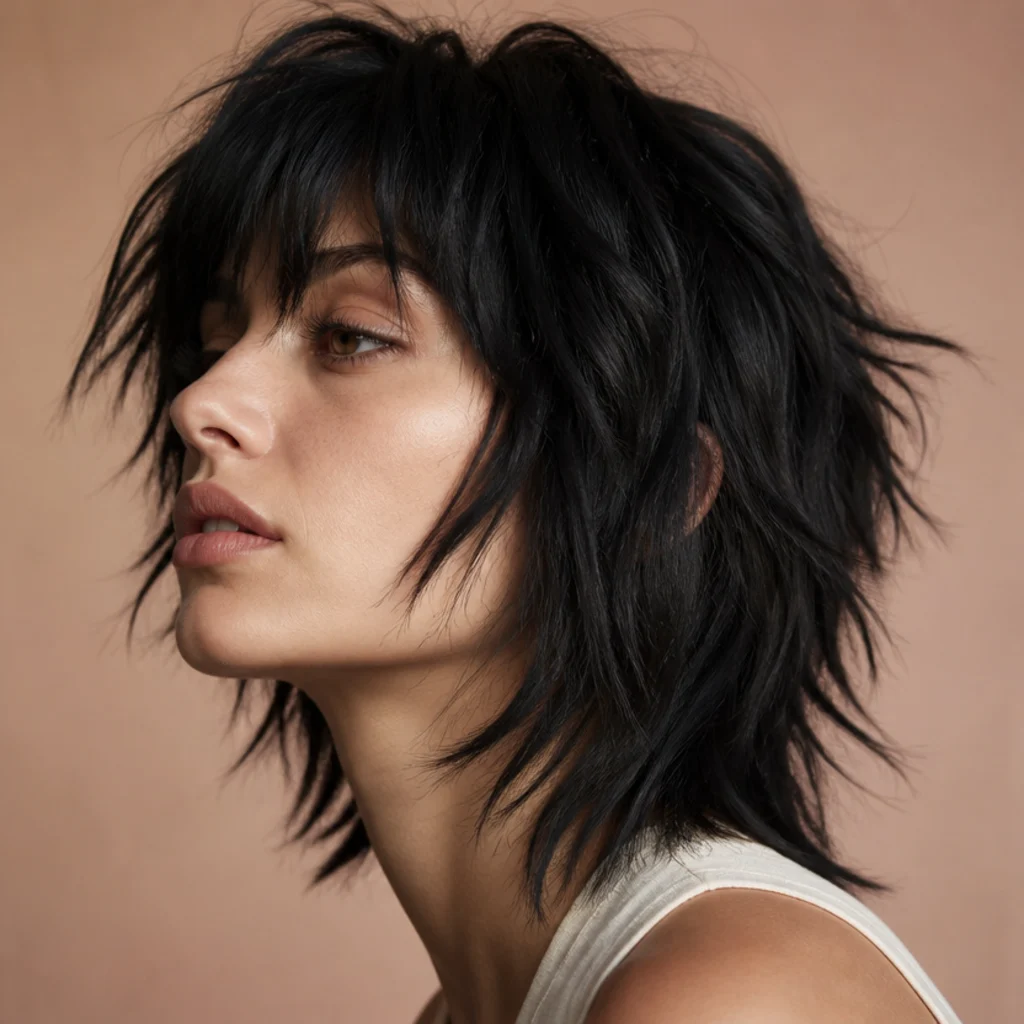
For the edgier crowd, the rocker shag turns the texture all the way up. Razored, heavily separated layers create a gritty, undone shape that looks best a little messy, all backstage energy and lived-in cool. Thick to medium hair can withstand the aggressive razor texturizing without going limp, and the look pairs well with a matte jet black or a deep, dimensionless espresso. This is a personality-forward cut for anyone who wants their hair to look effortless and a bit rebellious. Upkeep is low on styling but moderate on shape, since razored ends can start to fray and split around the 8-week mark. Pro tip: skip shine products entirely and mist a dry texture or matte clay spray through the mid-lengths, then rake fingers through to separate the pieces. Ask your stylist for "a razored, heavily textured rocker shag with piecey separation and a lived-in, undone matte finish."
14Long Shag for Thick Hair
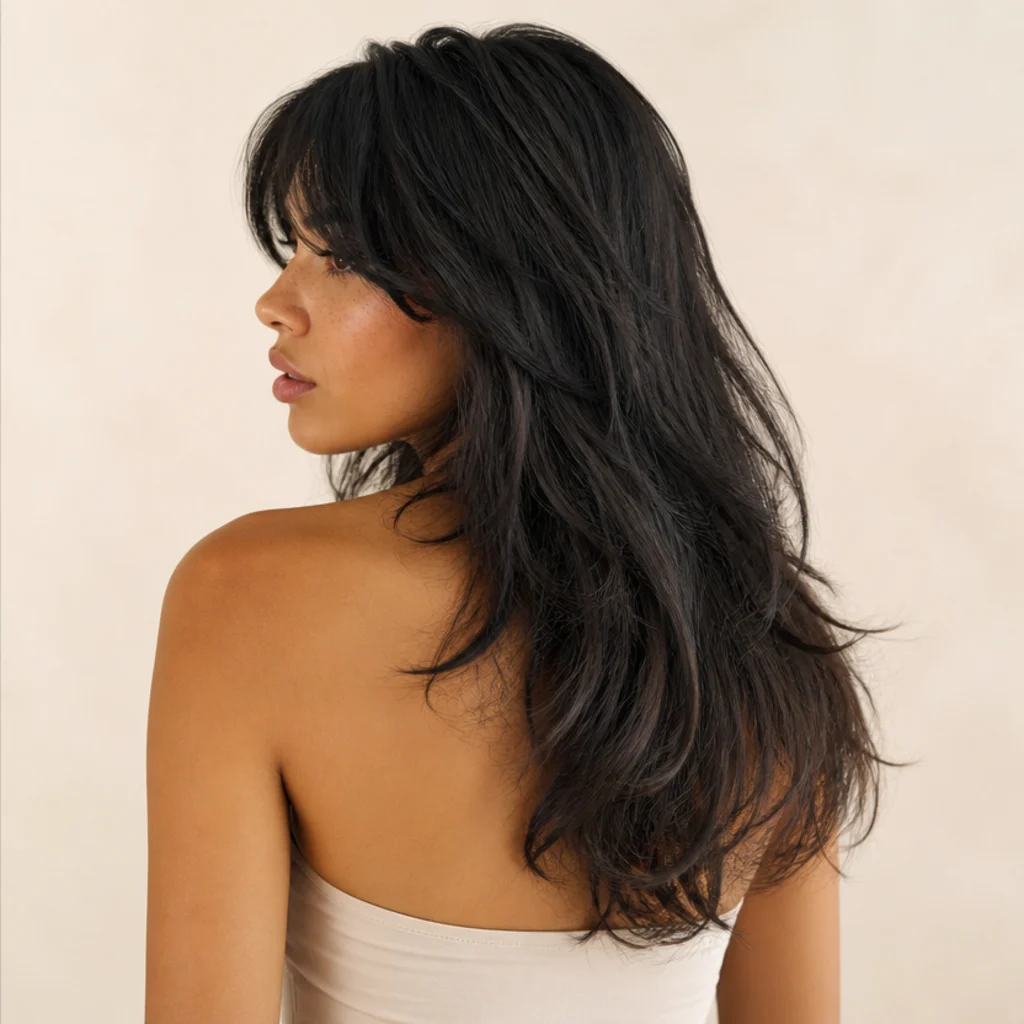
Thick hair and the shag are a natural match, because layering finally puts all that density to work. Strategic internal layering removes weight and the pyramid-like bulk that builds at the bottom, so thick hair moves and swings instead of sitting like a helmet. The length stays, but the silhouette gets lighter, airier, and far more wearable in humidity. Coarse, dense, straight-to-wavy hair suits this especially well, and it holds up in most tones from cool brunette to warm chestnut. Maintenance is moderate, since thick hair regains bulk quickly and benefits from a reshape every 9–10 weeks. Pro tip: ask for the weight to be removed internally with a slide-cut, not by thinning the very ends, which is what causes halo flyaways and a stringy hem. Ask your stylist for "internal layers to remove weight from my thick hair while keeping the length, so it moves and doesn't sit like a triangle."
15Sleek Modern Long Shag
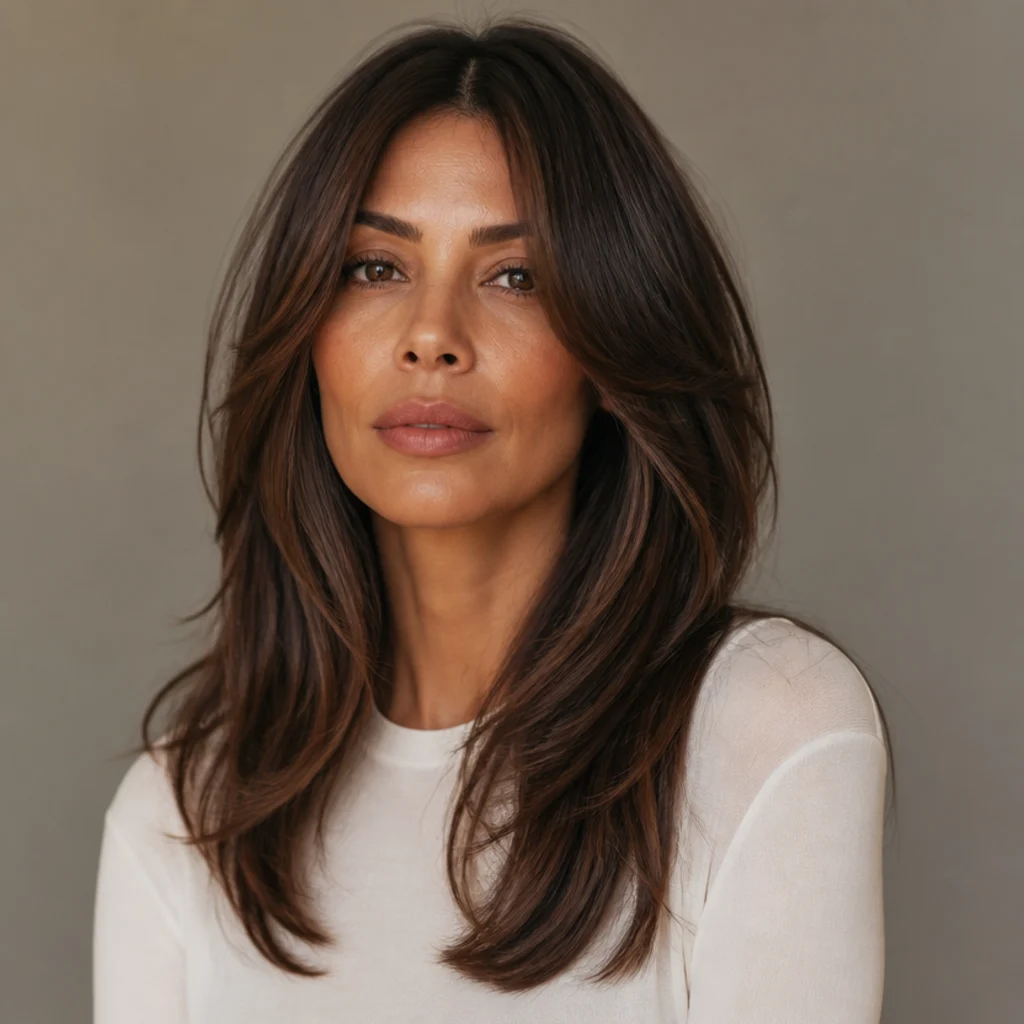
Shags do not have to look undone. A sleek modern long shag keeps the layered structure but is styled smooth and glossy, proving the cut can feel refined and grown-up. Blow-dried straight with a shine serum and a clean center part, the layers create subtle interior dimension and a soft face frame rather than shaggy volume, and a rich chocolate or cool mocha reads especially expensive smoothed out. Straight to lightly wavy hair works best here, especially if you prefer a polished daily look over air-dried texture. Upkeep is moderate because the smooth finish takes a few minutes of blow-drying with a paddle or round brush. Pro tip: finish each section with a two-second cold-air blast on the round brush to seal the cuticle, then run one drop of serum over the surface for mirror shine. Ask your stylist for "a long shag with soft, blended layers that I can wear sleek and smooth, keeping a clean face-framing shape."
16Long Curly Shag Haircut With Curtain Fringe
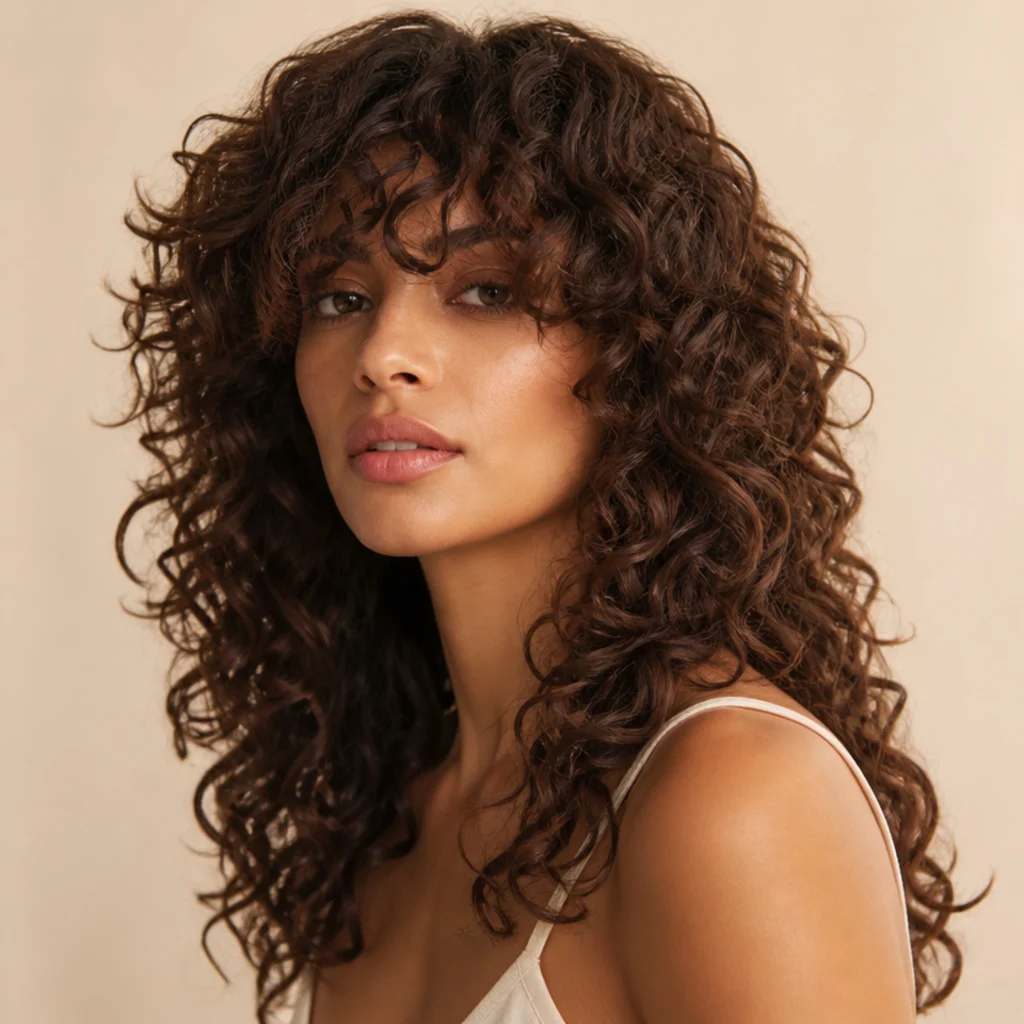
Pairing a long curly shag haircut with a curly curtain fringe gives curls a built-in frame that flatters instantly. The fringe is cut longer than you might expect, often to the cheekbone when stretched, because curls spring up dramatically once dry, and it parts softly to graze the brows. Combined with layered shag shaping, it keeps curls full at the crown while defining the face and opening up the eyes. This works on 2C to 3B textures, where curls hold a fringe shape without frizzing into a puff. Maintenance is low once you learn to refresh the fringe with a spritz of water and a little cream between washes. Pro tip: never cut or trim your curly fringe when wet at home, wait until it's fully dry and shrunk so you don't end up with an accidental micro bang. Ask your stylist for "a curly shag with a curtain-style curly fringe, cut longer to allow for curl shrinkage."
17Copper Long Shag With Sliced Layers
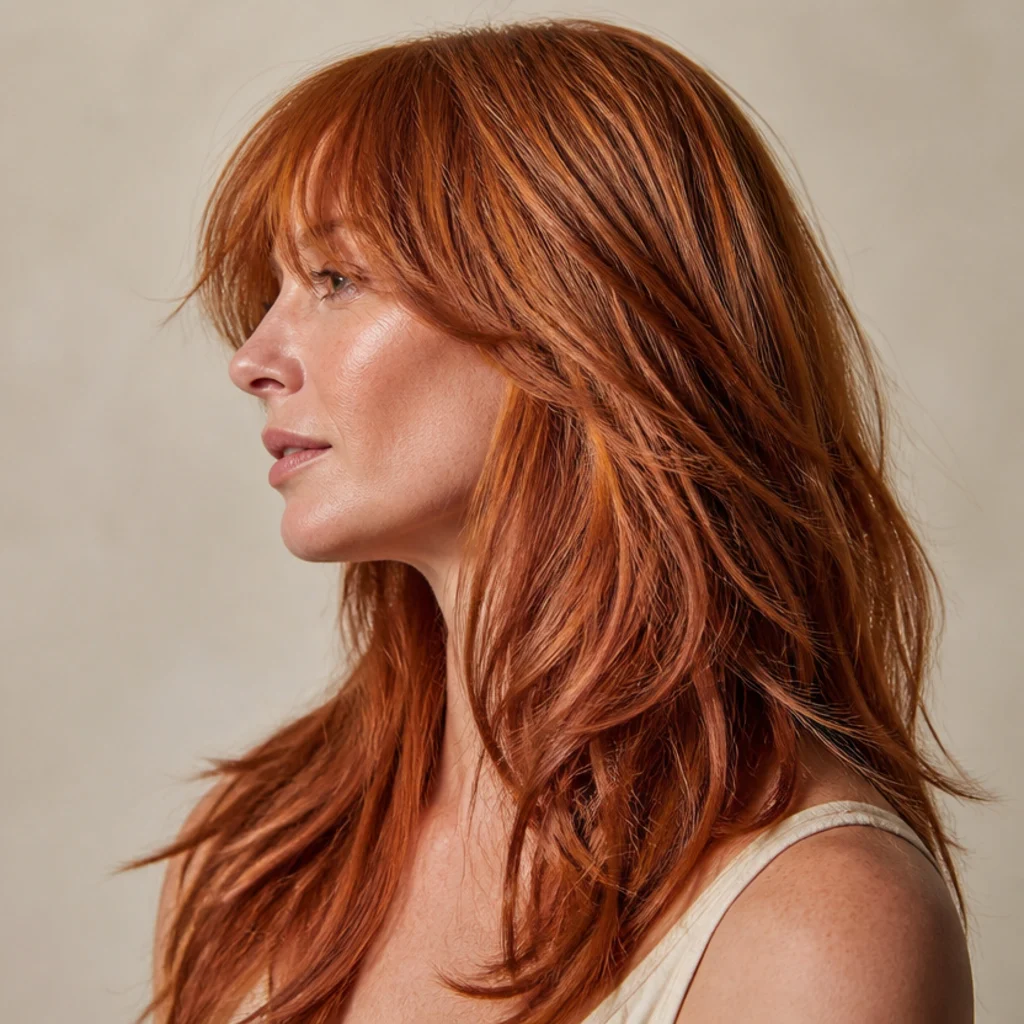
Color and cut work together here to create depth and shine. Sliced layers, carved with a smooth downward slicing motion for feathery, blended ends, catch light beautifully against a warm copper or ginger tone. The result is dimensional and glossy, with movement that makes the color look molten and expensive rather than flat. Go for this if you want a bold, warm shade. It flatters warm and neutral undertones especially, and works on straight to wavy hair. Upkeep is higher because vivid copper is notoriously fade-prone; it needs sulfate-free color-safe products and a glossing or color-refresh service every 4–6 weeks, though the cut itself grows out softly. Pro tip: rinse with cool water and add a copper-depositing conditioner weekly to keep the tone vibrant between salon visits. Ask your stylist for "sliced, feathery layers in a long shag," and discuss the exact copper depth and gloss maintenance schedule with your colorist.
18Long Shag With Shadow Root and Balayage
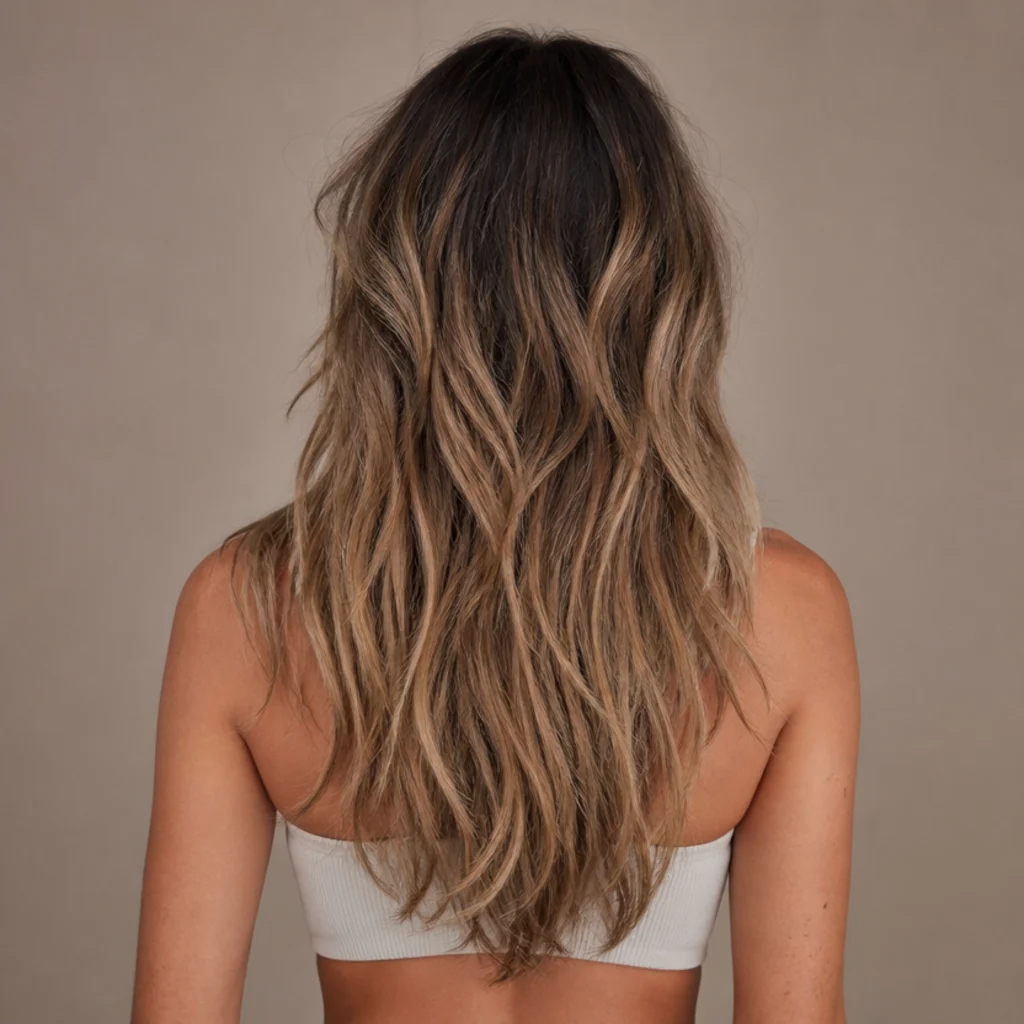
A shadow root plus balayage is the low-maintenance color pairing that makes a shag look even more dimensional. The deliberately darker root melts into hand-painted lightness through the mid-lengths and ends, and the shag's layers scatter that gradient for a lived-in, sun-grown effect. This is for anyone wanting grow-out-friendly color. It flatters all face shapes, with cool ash balayage for cool undertones and honey or caramel for warm. Because the root is intentionally soft and diffused, you can stretch color appointments to every 12–16 weeks, and the cut needs only occasional shaping. Pro tip: use a purple or blue toning mask every couple of weeks depending on whether you want your balayage cool or warm, so the painted pieces never go brassy between services. Ask your stylist for "a long layered shag with a soft shadow root melting into balayage," and bring reference photos so the placement flatters your layers and face.
19Textured Long Shag for Round Faces
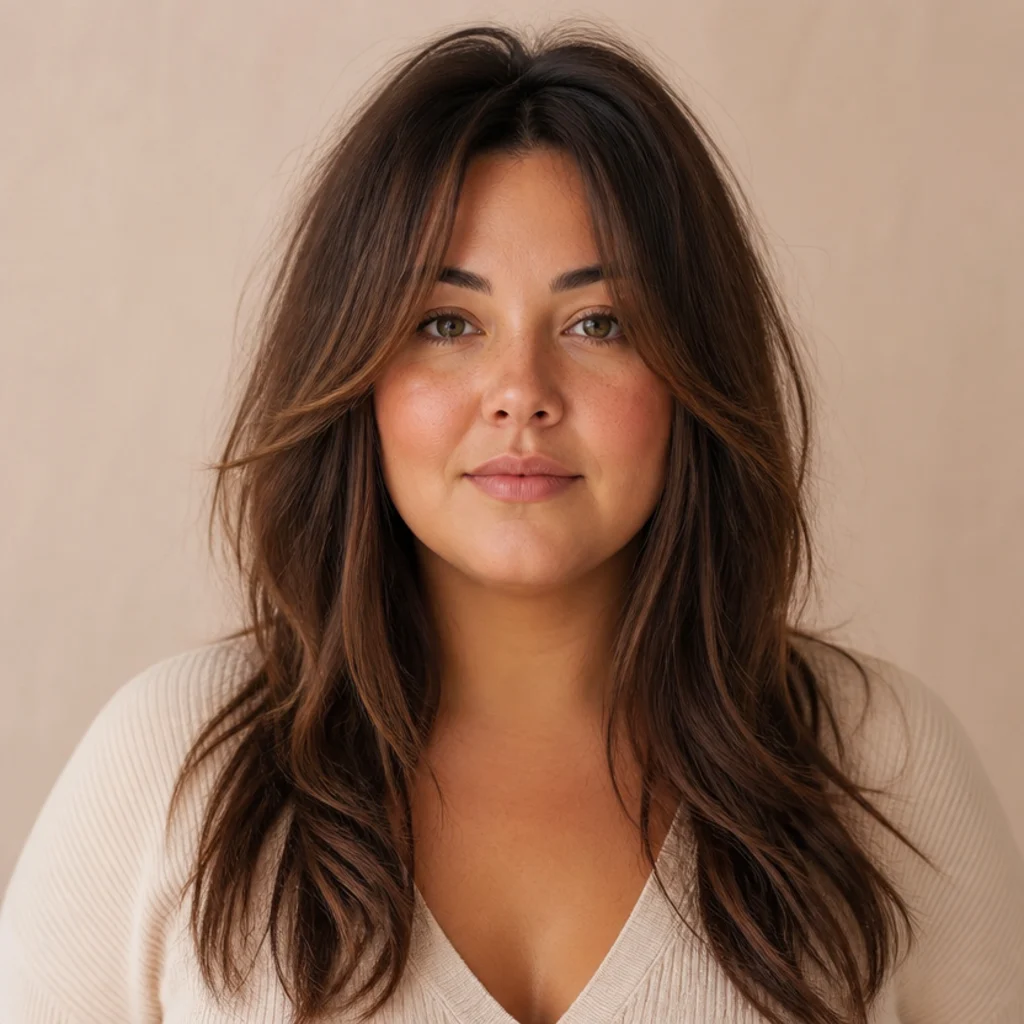
The right shag can visually lengthen a round face, and this version is engineered to do exactly that. Volume is concentrated at the crown to add height, while long, straight-hanging face-framing pieces create vertical lines that slim and elongate the cheeks and jaw. The key is keeping the layers longer around the jaw rather than short and rounded, because short cheek-level layers widen a round face rather than narrow it. Round and fuller face shapes benefit most across nearly any texture, and a slightly deeper side part reinforces the lengthening effect. Upkeep is moderate to preserve the crown lift. Pro tip: build root volume by rough-drying the crown against its natural fall, then set with a boar-bristle round brush so the height stays through the day. Ask your stylist for "a shag with volume and height at the crown and long, vertical face-framing layers to elongate my round face," and avoid heavy layers that stop at the cheeks.
20Long Shag Straight Hair With Invisible Layers
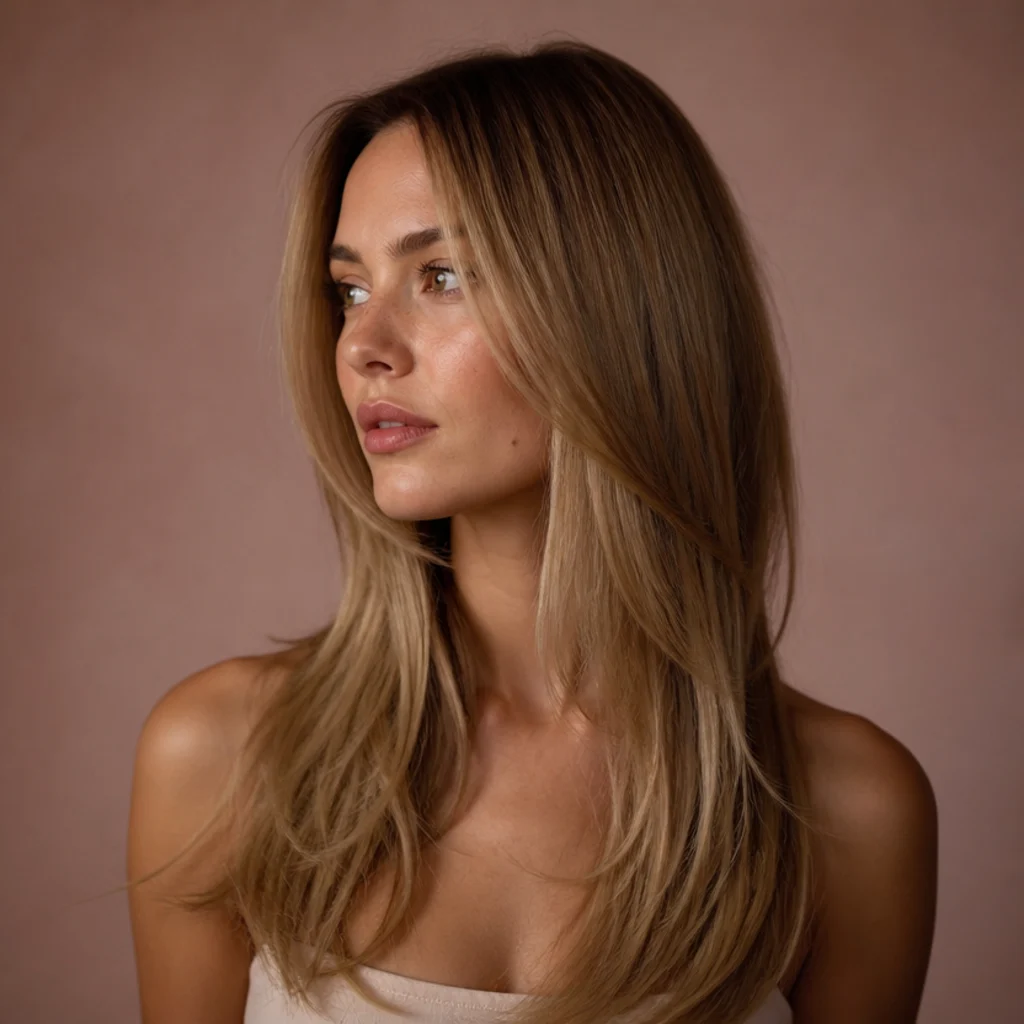
If you love movement but hate an obvious layered look, invisible layers are the answer. On long shag straight hair, the layers are cut internally and blended so smoothly that the hair appears all one length until it moves, at which point subtle shape and swing appear. It gives the low-effort payoff of a shag while keeping a clean, uniform silhouette, ideal in a glossy dark blonde or a polished brunette. This suits fine to medium straight hair and anyone in a more conservative or corporate setting who still wants their hair to feel alive. Maintenance is low, with a shaping trim every 10–12 weeks to keep the interior layers blended. Pro tip: because the layers are hidden, direct your blow-dry down the hair shaft with tension so the surface stays sleek and the movement only reveals itself when you turn your head. Ask your stylist for "invisible, seamless internal layers in a long shag, so my hair looks one length but still has movement and doesn't sit flat."
21Voluminous Long Shag for Coarse Hair
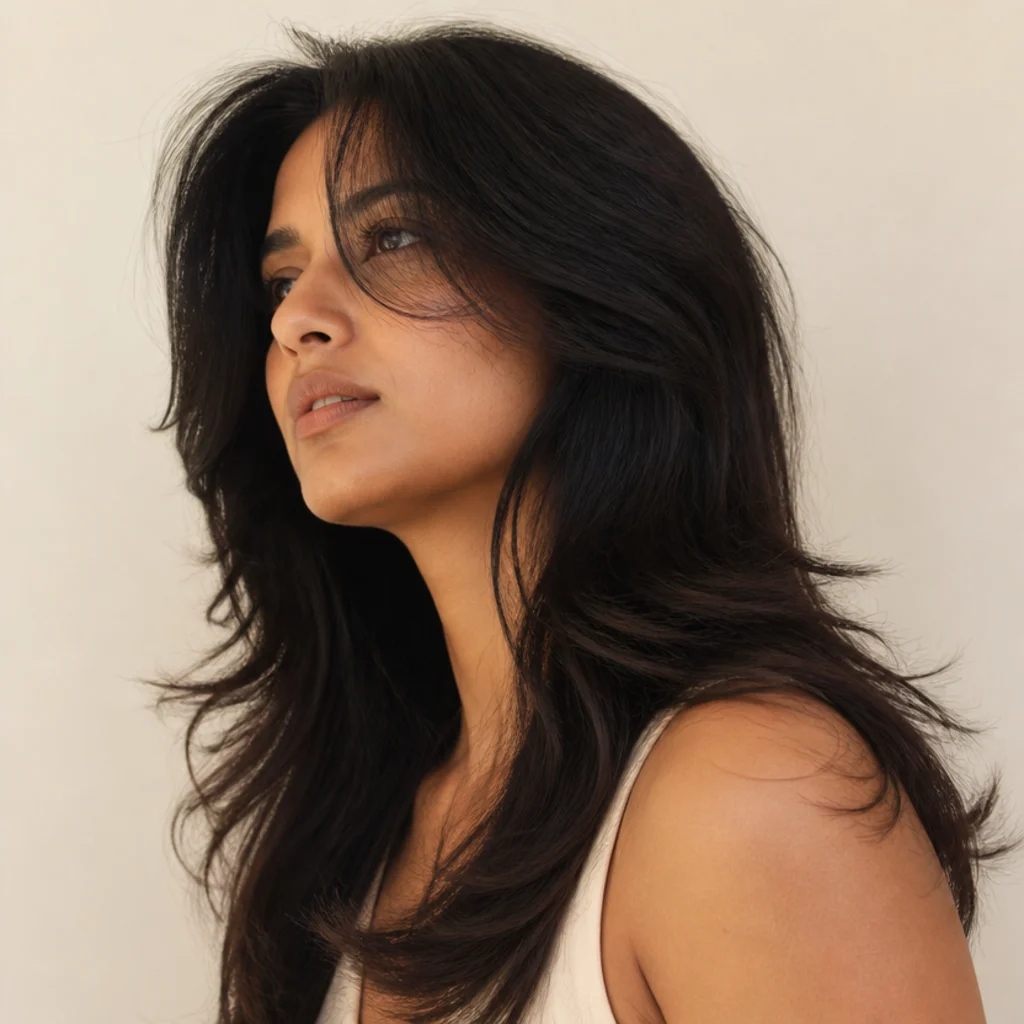
Coarse hair carries volume naturally, and a shag channels it into a flattering, controlled shape instead of a bushy one. Generous layering distributes the density evenly so the fullness reads intentional and airy, and the weight of the length settles the perimeter while the layers give body up top. Coarse, thick, straight-to-wavy textures are the sweet spot, and a smooth rich brunette or espresso keeps coarse strands from looking dry. Upkeep is moderate, and a leave-in smoothing cream tames the coarser ends without collapsing the shape. Pro tip: a periodic in-salon gloss or a weekly bond-building mask keeps coarse strands looking healthy and reflective, which is what separates controlled volume from frizz. Ask your stylist for "a voluminous long shag with layers that distribute my coarse hair's density for controlled fullness, keeping the ends smooth and the length long," and avoid over-thinning, which triggers flyaways.
22Long Shag With Micro Fringe
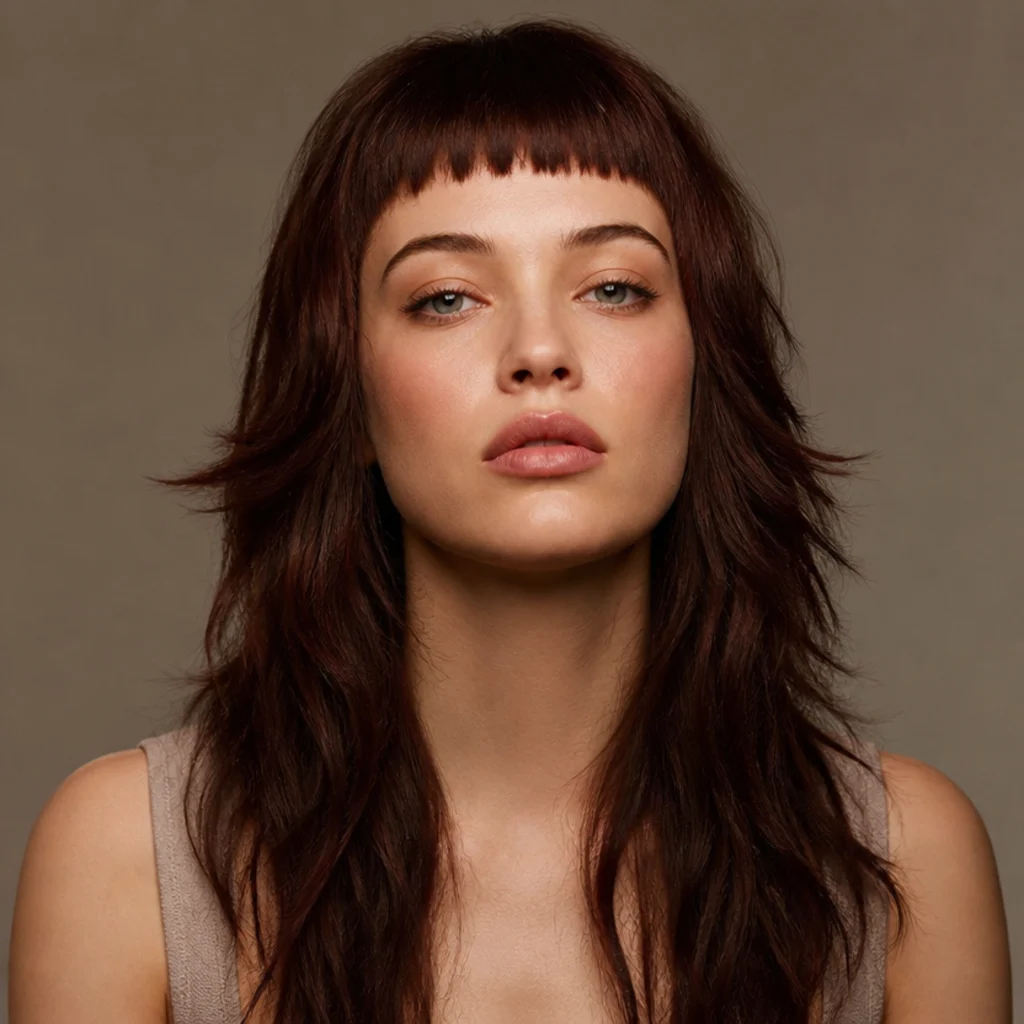
For the fashion-forward, a micro fringe adds instant edge to a long shag. The baby bangs sit high above the brows, creating a bold, graphic contrast against the soft, long layers below, and a saturated dark auburn or cool black makes the shape even more striking. It's a statement choice that flatters oval and heart shapes with higher foreheads, and suits anyone confident in a distinctive, editorial look. Maintenance is the highest on this list, since a short fringe grows visibly within 2–3 weeks and needs frequent trimming to stay put. Pro tip: micro fringe almost always needs a touch of pomade or a mini flat iron to lie flat and straight, so factor a minute of styling into every morning. Ask your stylist for "a long layered shag with a short micro fringe sitting above the brows," and be honest about your forehead, cowlicks, and how much upkeep you're willing to take on before committing.
23Undone Cool-Girl Long Shag
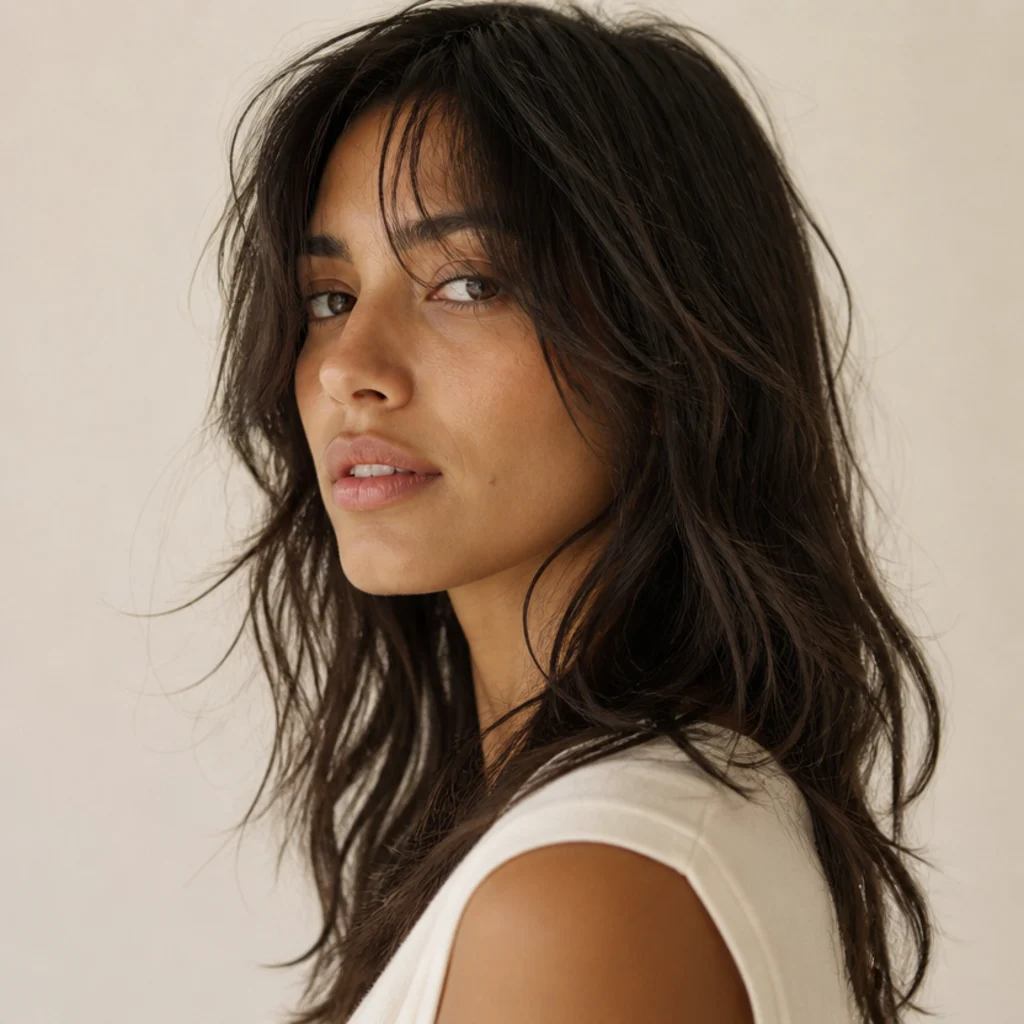
This is the shag at its most effortless, the version that looks like you slept on it and woke up chic. Piecey, tousled layers and a slightly matte, lived-in finish create that coveted French-girl nonchalance, and it leans on the cut doing the heavy lifting so daily styling stays minimal. Wavy and straight hair with a bit of natural texture to grab onto works best, and it reads well in a soft lived-in brunette with grown-out, undone color. Upkeep is low on both styling and trims, stretching comfortably to 12 weeks. Pro tip: mist a dry texture or matte finishing spray at the roots and mid-lengths on second-day hair, then tousle with your fingers, this is a cut that actually looks better a day after washing. Ask your stylist for "an undone, lived-in long shag with piecey layers I can air-dry and finger-style," and finish with a matte texture spray rather than shine serum for that cool-girl grit.
24Long Shag With Deep Side Part
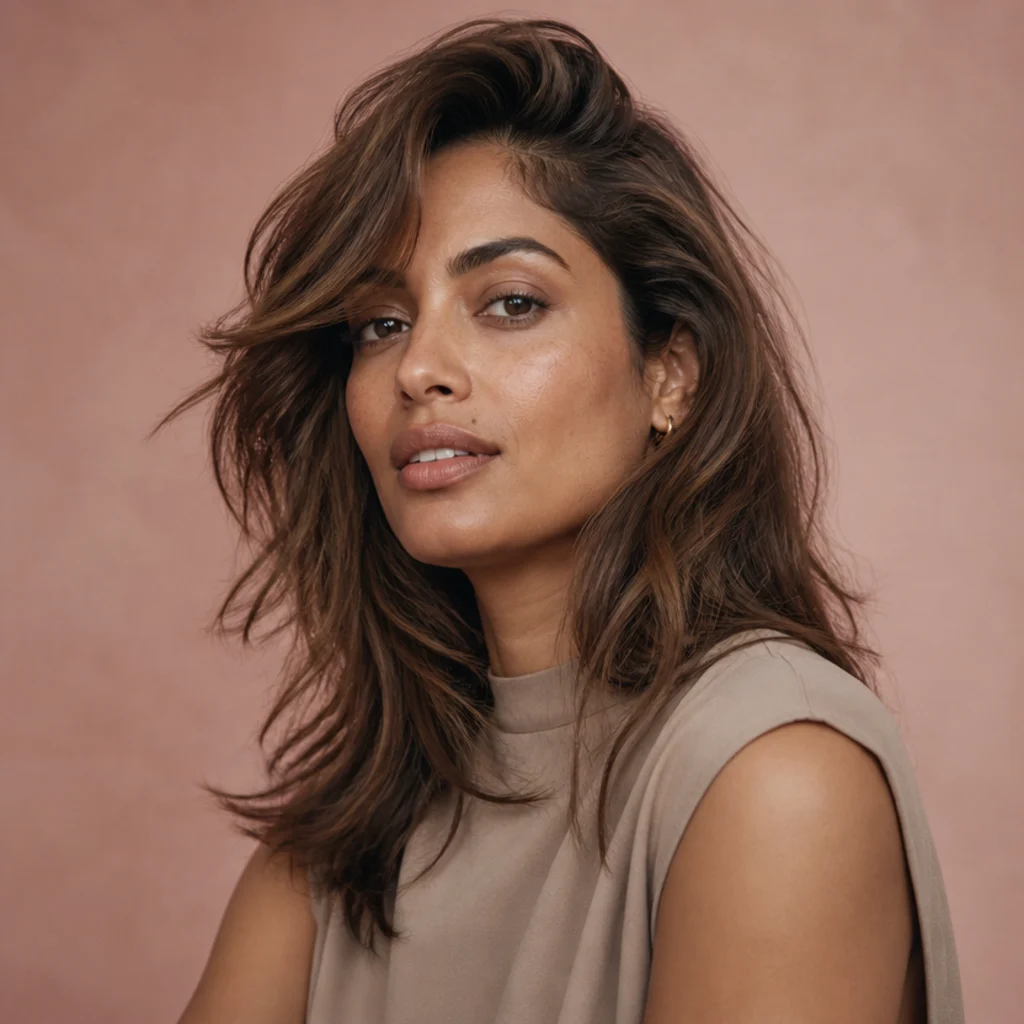
Switching a shag to a deep side part changes its whole attitude. The dramatic parting adds asymmetry and instant root volume on the heavier side, sweeping the face-framing layers across the forehead for a glamorous, slightly retro effect. It flatters most face shapes and is the quickest way to reinvent a shag you already have without cutting anything new. Straight to wavy hair that holds a part works in any tone, though a warm brown adds softness to the sweep. Maintenance is low; you retrain the part with a little product and a few clips. Pro tip: to set a stubborn deep part, create it on damp hair, clip the sweep across, and let it dry fully before releasing, so it holds its direction all day. Ask your stylist for "face-framing layers that work with a deep side part," and mention you want extra volume and sweep on the heavier side.
25Silver Long Shag With Soft Layers
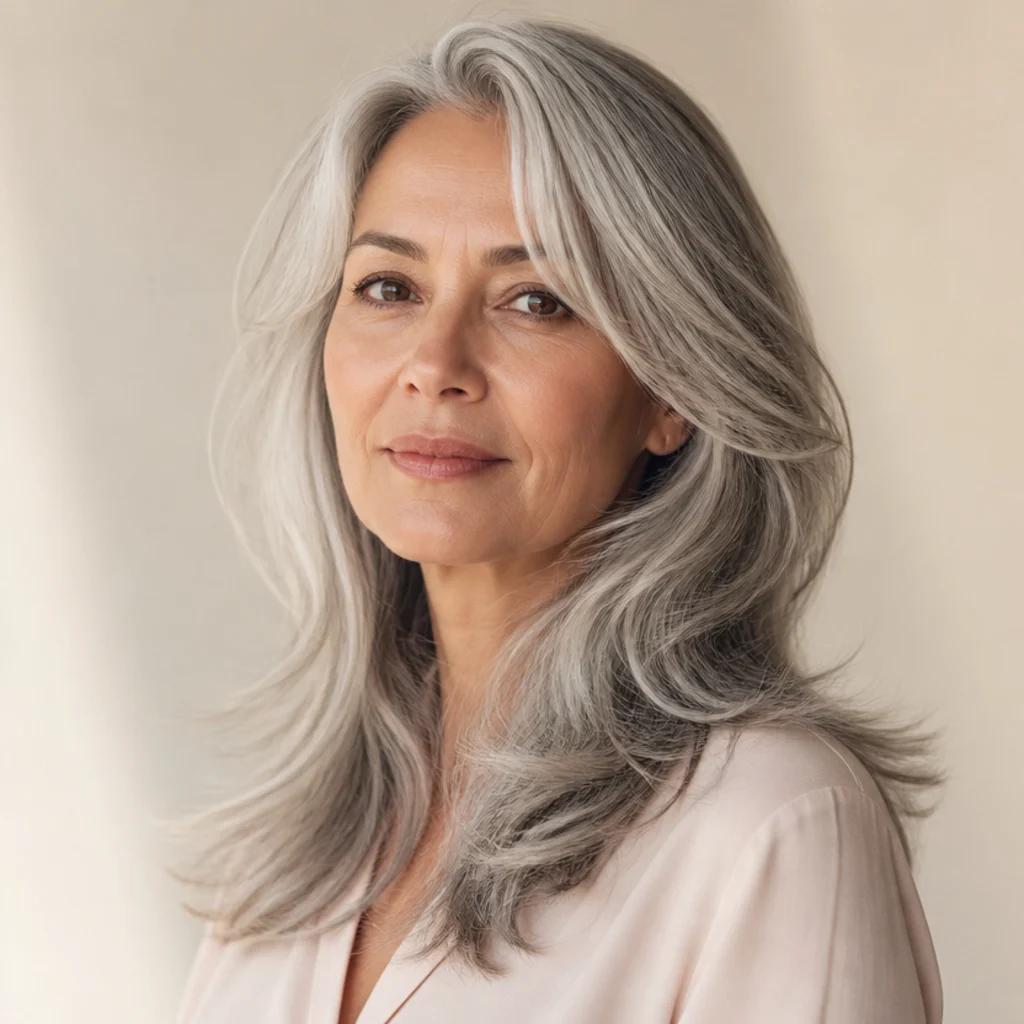
Embracing silver or gray with a soft long shag is one of the most modern, elegant pairings out there. Gentle, feathered layers add movement that keeps natural silver from reading flat, while the length feels current and intentional rather than severe. The shag's texture also gives gray hair, which often runs coarser and wirier, a softer and more polished surface. Anyone growing out or celebrating their silver, across most textures, is a good fit, and it looks especially crisp with a cool, bright tone rather than a yellowed one. Upkeep is low on color and moderate on shape, with a trim every 8–10 weeks to keep the feathering fresh. Pro tip: alternate a purple-toning shampoo with a hydrating mask, since toning products can be drying and silver hair needs the moisture to stay reflective. Ask your stylist for "a soft long shag with feathered layers to add movement to my silver hair," and ask your colorist about a clear gloss to boost shine.
Pro Tips from the Editor
- Lead with length, not layers. The single most useful sentence in the chair is "keep my length, add movement." Stylists cut to the words they hear, so protect your inches out loud before any layering is discussed.
- Match the cutting method to your texture. Straight hair takes point-cutting and slicing; wavy, curly, and coily hair should be cut dry or curl-by-curl so layers land where the curl actually sits after it springs and shrinks.
- Bring two photos, not five. One image of the fringe you want and one of the overall length and layering reads far more clearly than a collage of ten different looks that quietly contradict each other.
- Buy the styling product before you leave. A shag lives and dies by finish: texture spray or matte clay for undone piecey looks, a lightweight cream or serum for smooth ones. Ask your stylist which finish your specific cut was built for.
- Book by fringe, not by cut. Curtain and bottleneck bangs stretch 8–12 weeks; micro and blunt fringes need shaping every 2–4. Choose your fringe around the maintenance you'll realistically keep up with.
- Ask where the shortest layer sits. Cheekbone-length top layers can widen a round face and flatten fine hair. Have your stylist show you the shortest piece against your face before committing.
- Refresh, don't rewash. Most shags look best on day-two hair. Revive piecey texture with a mist of dry texture spray and your fingers instead of a full wash that flattens the lived-in shape.
How to Choose / Get the Look
Start with your hair's natural texture, because it dictates how any shag will fall. Straight hair shows layers sharply, so choppy, blunt-perimeter, or invisible layering all work depending on how much movement you want visible. Wavy, curly, and coily textures need the layers mapped to their pattern, ideally cut dry or curl-by-curl, so shrinkage and spring are accounted for before anything is set. Next, factor in your face shape: round and square faces benefit from longer, vertical face-framing pieces and concentrated crown height, while oval and heart shapes can carry almost any fringe, from micro to curtain. Density matters too, fine hair wants soft, connected layers and a strong perimeter, while thick and coarse hair wants internal weight removed by slide-cutting rather than end-thinning.
Then be honest about upkeep, because it's the deciding factor most people underestimate. Use the quick reference below to match a fringe to the maintenance you'll actually keep.
| Fringe / detail | Best face shapes | Trim frequency | Styling effort |
|---|---|---|---|
| Curtain bangs | Oval, heart, oblong | 10–12 weeks | Low |
| Bottleneck bangs | Round, square | 4–6 weeks | Moderate |
| Micro fringe | Oval, heart (high forehead) | 2–4 weeks | High |
| Face-framing only | All shapes | 10–14 weeks | Very low |
| Blunt perimeter | Straight, medium density | 8 weeks | Moderate |
When you sit down, bring two photos and name the elements you want in order: the fringe style, how choppy or soft the layers should be, and how much length to keep. Say "keep the length, add movement" if you're protective of your inches. Ask your stylist to point-cut or slice rather than heavily thin if you have fine hair, and to remove internal weight if you have thick or coarse hair. Discuss product before you leave, since the same cut can read polished or piecey depending entirely on how you finish it.
Frequently Asked Questions
Is a long shag high maintenance?
Generally, no. Most soft long shags are designed to grow out gracefully, so you can stretch trims to 10–14 weeks and the layers loosen into a longer sweep. Styling is minimal for undone, air-dried versions. The higher-upkeep exceptions are micro fringes, blunt perimeters, and heavily styled 70s or Bardot looks, which need trims every 2–8 weeks and a few minutes of daily styling.
Will a long shag make thin hair look thinner?
Not if it's cut correctly. The risk comes from aggressive thinning shears and end-texturizing, which shred fine strands. Ask instead for soft, connected layers, minimal texturizing, and a strong perimeter left blunt-ish. Cut this way, a shag actually adds the illusion of fullness by creating lift at the crown and movement that catches light, which is exactly what fine hair usually lacks.
Can I get a long shag on curly or coily hair?
Yes, and it's often where the cut looks best. Curly and coily textures suit a shag because the layers give curls room to expand upward and outward instead of piling into a triangle. The non-negotiable is having it cut on dry or curl-formed hair, so the stylist can place each layer accounting for shrinkage and the way your specific curl pattern springs once released.
How do I ask for a long shag without losing too much length?
Be explicit and repeat it: "keep my length, just add layers and movement." Bring a photo that clearly shows the length you want preserved, and ask the stylist to build the layers internally and around the face rather than cutting into the perimeter. It also helps to have them show you, with their fingers, exactly where the shortest layer will fall before any cutting begins.
What is the difference between a shag and a wolf cut?
A shag has soft, blended, graduated layers throughout, keeping a cohesive, wearable shape. A wolf cut is more extreme, combining a heavily layered, almost mullet-like top with sharply tapered lengths for bigger contrast between the voluminous crown and the wispy ends. The wolf cut reads edgier and more dramatic; the shag reads softer, more polished, and more versatile across settings.
How often will I need to trim a long shag?
It depends almost entirely on your details. A face-framing-only or curtain-bang shag stretches to 10–14 weeks because those pieces grow out softly. A blunt perimeter needs a clean trim around every 8 weeks to stay sharp, and micro or short fringes need shaping every 2–4 weeks. Razored, heavily textured versions want a reshape near 8 weeks before the ends begin to fray.
Which face shape suits a long shag best?
Nearly all of them, because the layering is adjustable. Oval and heart shapes can carry almost any fringe or layer length. Round and square faces do best with longer, vertical face-framing pieces and crown height that add length and offset width, while avoiding short, rounded cheek-level layers. Oblong or longer faces are flattered by curtain bangs or a softer fringe that shortens the visual length of the face.
How do I style a long shag at home?
For an undone finish, scrunch a texture spray or salt spray into damp hair and air-dry or diffuse, then separate the pieces with your fingers and set with a matte spray. For a smooth finish, blow-dry with a round or paddle brush directing the layers down, seal with a cold-air blast, and add a drop of serum to the ends. Most shags look best on second-day hair, so refresh with dry texture spray rather than rewashing.
Does a long shag work for older women or gray hair?
Yes, and it's one of the most modern choices for both. The layered movement keeps longer hair from looking heavy or dated, and the feathered texture softens gray or silver strands that can otherwise run coarse and wiry. Pair it with a clear gloss for shine and a purple-toning product to keep silver bright, and the overall effect reads current and elegant rather than severe.