20 Short Edgar Cut Styles for a Clean Look
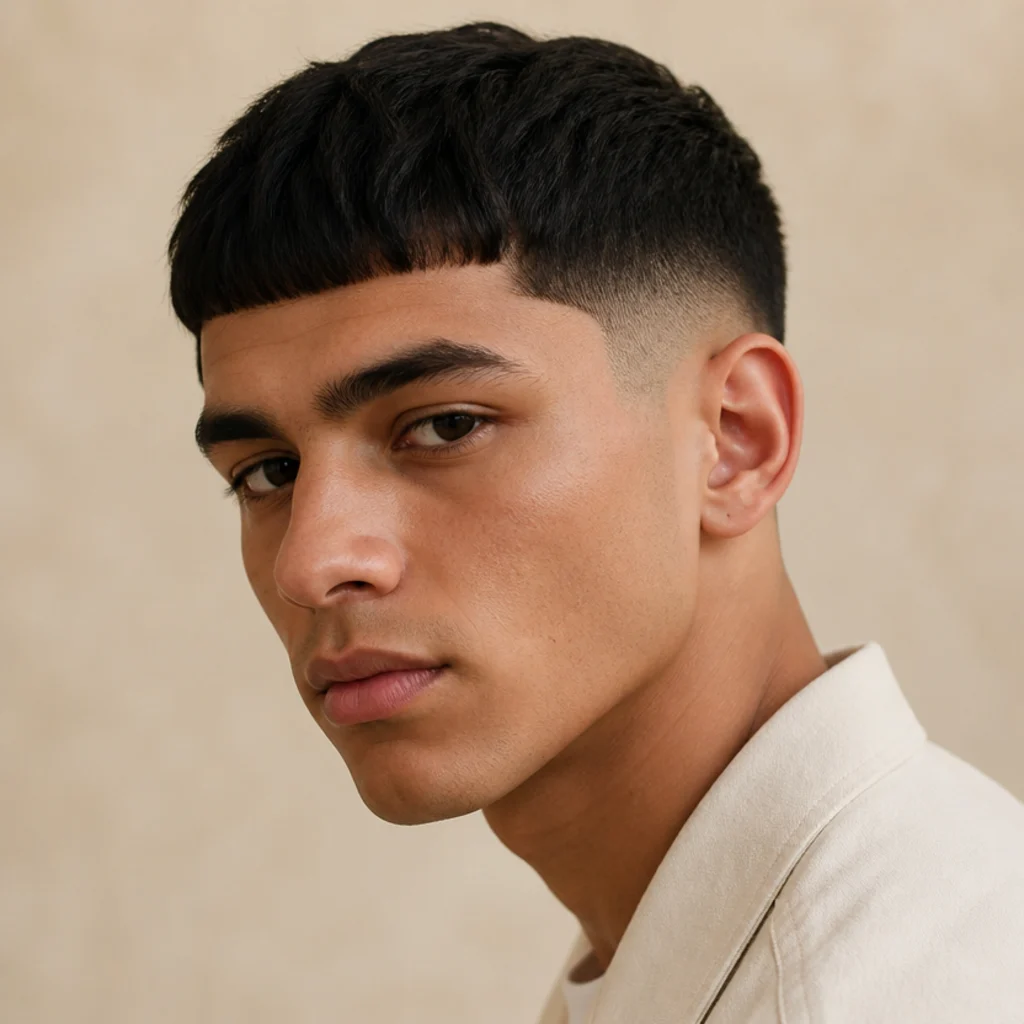
The edgar lives or dies on one contrast: a blunt, level fringe up top against tight, faded sides that keep the whole shape reading sharp. These 20 short versions show exactly how the cut shifts across straight, wavy, and curly hair, and how the fade height you choose rewrites the finish.
 Edited by Lena Rose · Published July 11, 2026 · 32 min read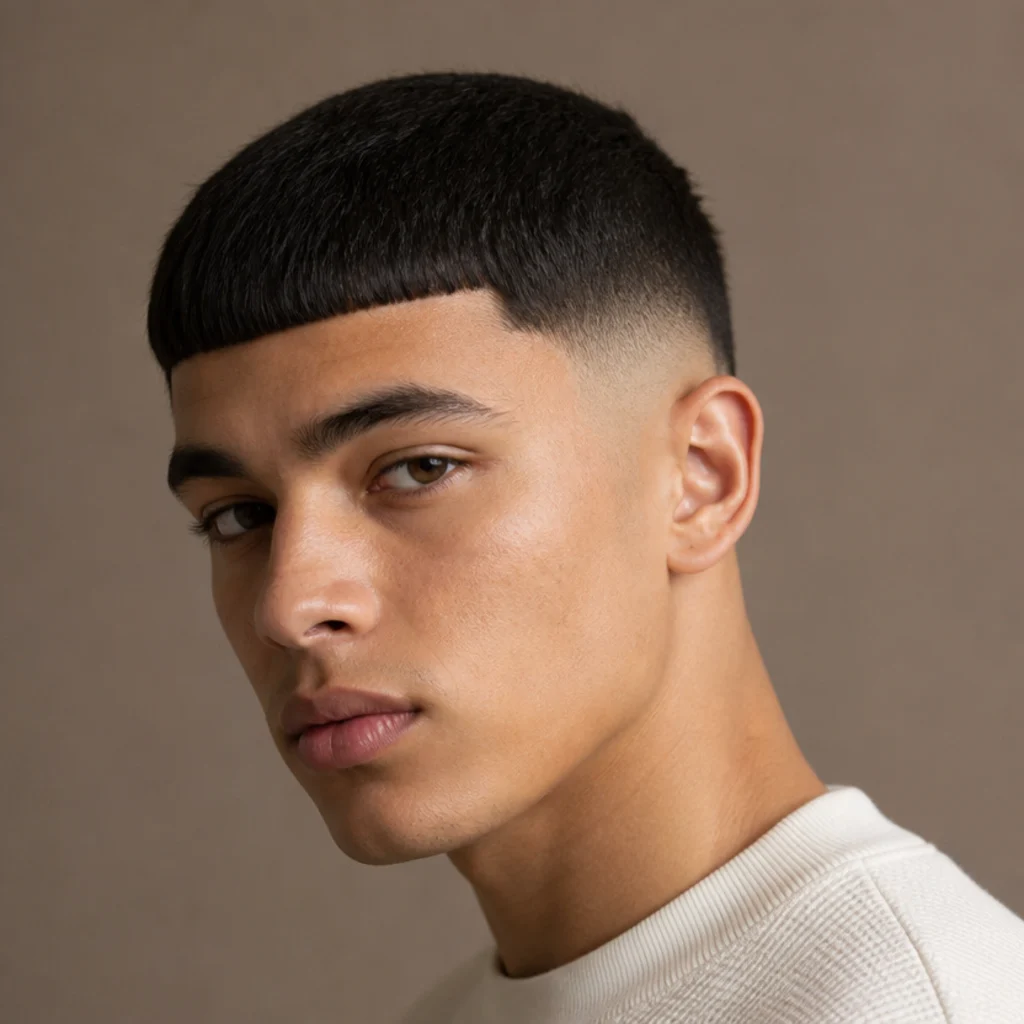
Quick Answer
- Best for: Straight to loosely curly hair, and anyone who wants a low-fuss, high-structure cut with a defined front line.
- Who might skip it: Very fine or thinning hair that can't hold a heavy horizontal line, high hairlines where a low blunt fringe reads unbalanced, and tight coils that shrink past the point of a flat front.
- Maintenance: Moderate to high. A fade touch-up runs every 2-3 weeks (weekly-ish for skin fades and hard parts); the top can stretch to 4-6 weeks.
- Difficulty: Barber-dependent. The blunt fringe and clean fade are hard to freehand at home; the styling afterward is minimal.
- Cost: Variable by market, roughly a standard men's fade rate plus a small premium for detailed work like line ups, hard parts, or frosted tips; color work is billed separately.
- Wear time / longevity: Looks its sharpest for about 1.5-2 weeks, still presentable to 3-4 weeks depending on fade height.
- Standout variation: The edgar cut taper fade, which keeps the shape neat without going fully bald on the sides.
- How to ask your barber: Name the version and the fade height together ("blunt edgar, mid fade"), point to where the fringe should land and where the fade should start, and bring a saved photo.
In This Guide
- Classic Blunt Edgar
- Edgar Cut on Straight Hair
- Edgar with a High Skin Fade
- Edgar Cut Taper Fade
- Edgar Buzz Cut
- Curly Edgar Cut
- Textured Crop Edgar
- Edgar with a Sharp Line Up
- Low Fade Edgar
- Mid Fade Edgar
- Burst Fade Edgar
- Drop Fade Edgar
- Messy Piecey Edgar
- Edgar with a Hard Part
- Spiky Short Edgar
- Heavy Blunt Fringe Edgar
- Wavy Edgar Cut
- Edgar Cut for Boys
- Frosted Tip Edgar
- Edgar and Beard Combo
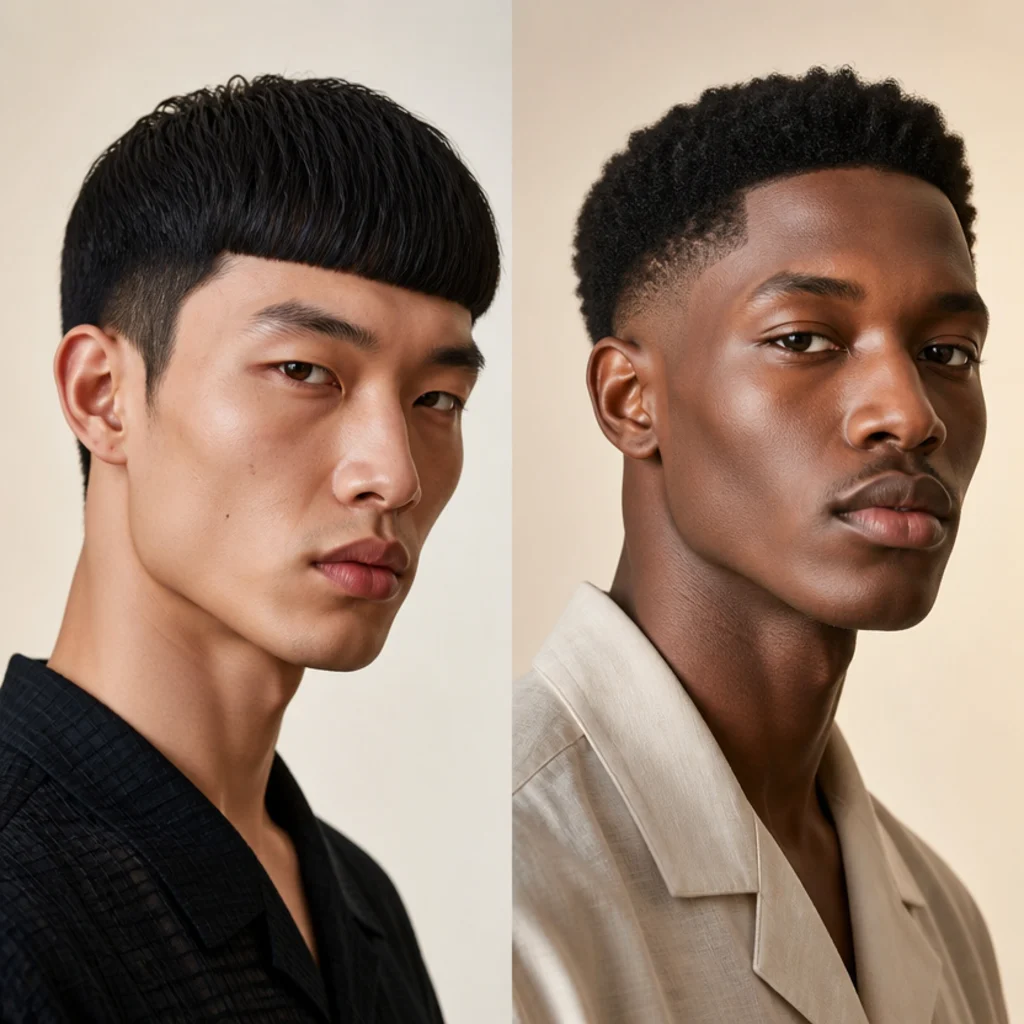
The edgar has become one of the most requested short cuts in the chair, and the reason is structural rather than trend-driven. It reads clean and modern, it adapts across hair types, and once the shape is dialed in it needs almost no product to hold. The defining move is a straight, blunt fringe cut level across the forehead, set against faded or tapered sides that push every bit of attention forward. On edgar cut straight hair that front line looks its most exact, but the shape translates to waves and coils when a barber cuts for how the hair actually falls. Think of the cut as two decisions stacked: how heavy and how low you want the fringe, and how aggressive you want the fade beneath it. Change either and the whole balance shifts, from boardroom-quiet to full street-style statement. Below are 20 short variations spanning taper, low, mid, high, burst, and drop fades, plus buzz, curly, and beard-paired takes. Each entry lays out who it flatters by face and hair type, a realistic upkeep timeline, one concrete styling or product cue, and the exact phrasing to use so you walk out with the look you pictured rather than an approximation of it.
01Classic Blunt Edgar
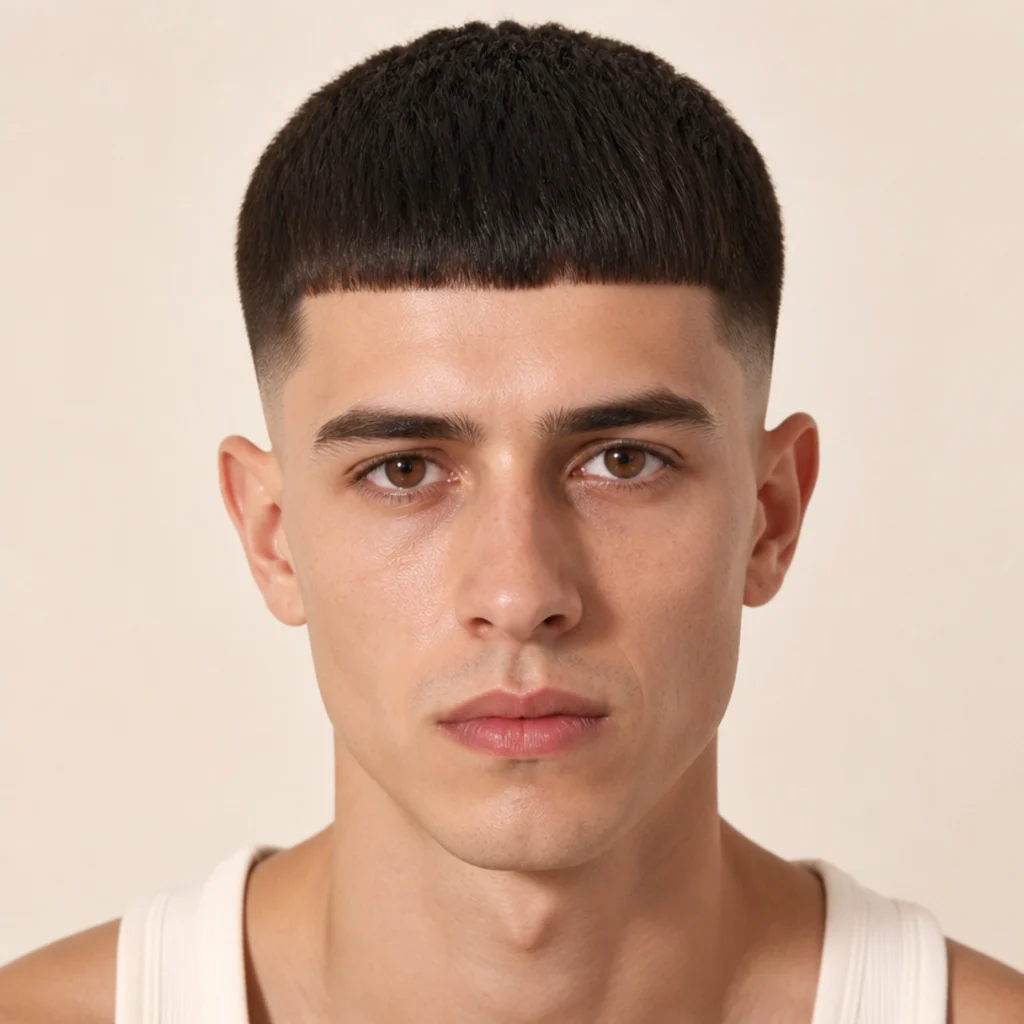
The original edgar is the reference point every other version bends away from: a solid, blunt fringe sitting a finger's width above the eyebrows, with short, faded sides that stop the crown from reading bulky. It wants medium-density straight or wavy hair, because the fringe needs enough weight to hold a level horizontal line without gapping. Face-wise it flatters oval and square shapes best, and it visually shortens a tall forehead by dropping the front line lower. Growth is graceful up to a point, but the fringe softens and starts creeping into your sightline around week three, which is your cue to book. Styling is hands-off; a matte paste only if you want to tame flyaways. One pro tip: have the fringe cut slightly longer at the first appointment than you think you want, then decide the final height once you see it dry, since blunt lines look shorter off the scissor. Ask your barber for a "blunt edgar with a low-to-mid fade" and specify exactly how far above the brow the line should land. It's the most forgiving entry point if you've never worn the cut.
02Edgar Cut on Straight Hair
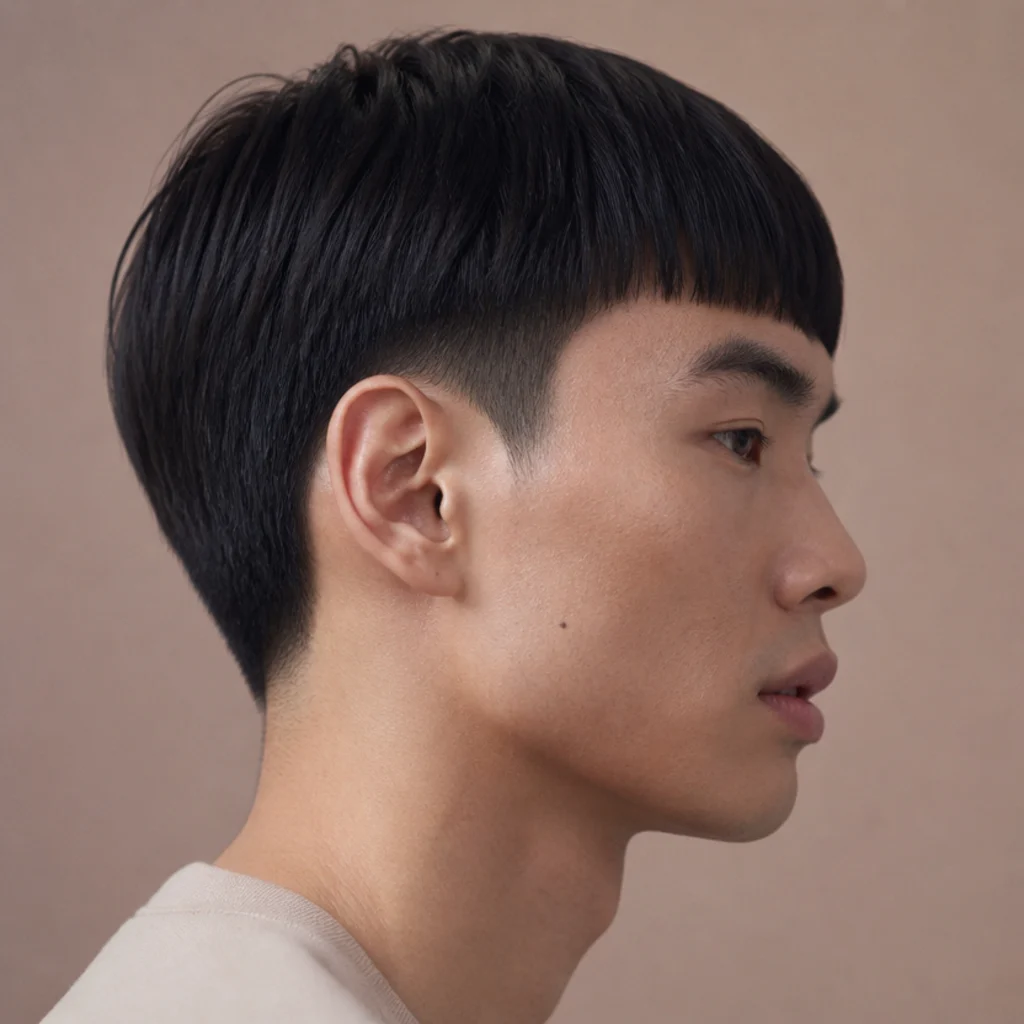
Edgar cut straight hair is the purest expression of the style, because straight strands drop into that flat, even fringe with almost no coaxing and hold the line through the day. The contrast against faded sides stays crisp even under camera flash, which is part of why the look travels so well on Pinterest and short-form video. It flatters oval and square faces, and a lower fringe placement can balance a longer forehead by shortening the visible space between hairline and brow. The trade-off is honesty: straight hair shows every uneven snip, so a steady hand and a barber who cuts the fringe with a straight-across, tension-checked technique matters more here than on textured hair. Day-to-day upkeep is low, but the front grows into your eyes fast, so a two to three week fringe trim keeps it tidy. A light matte paste, warmed between the palms first, tames flyaways without dragging the fringe down or adding shine. Ask your barber to point-check the fringe against your brow line on both sides so it sits level, not tilted.
03Edgar with a High Skin Fade
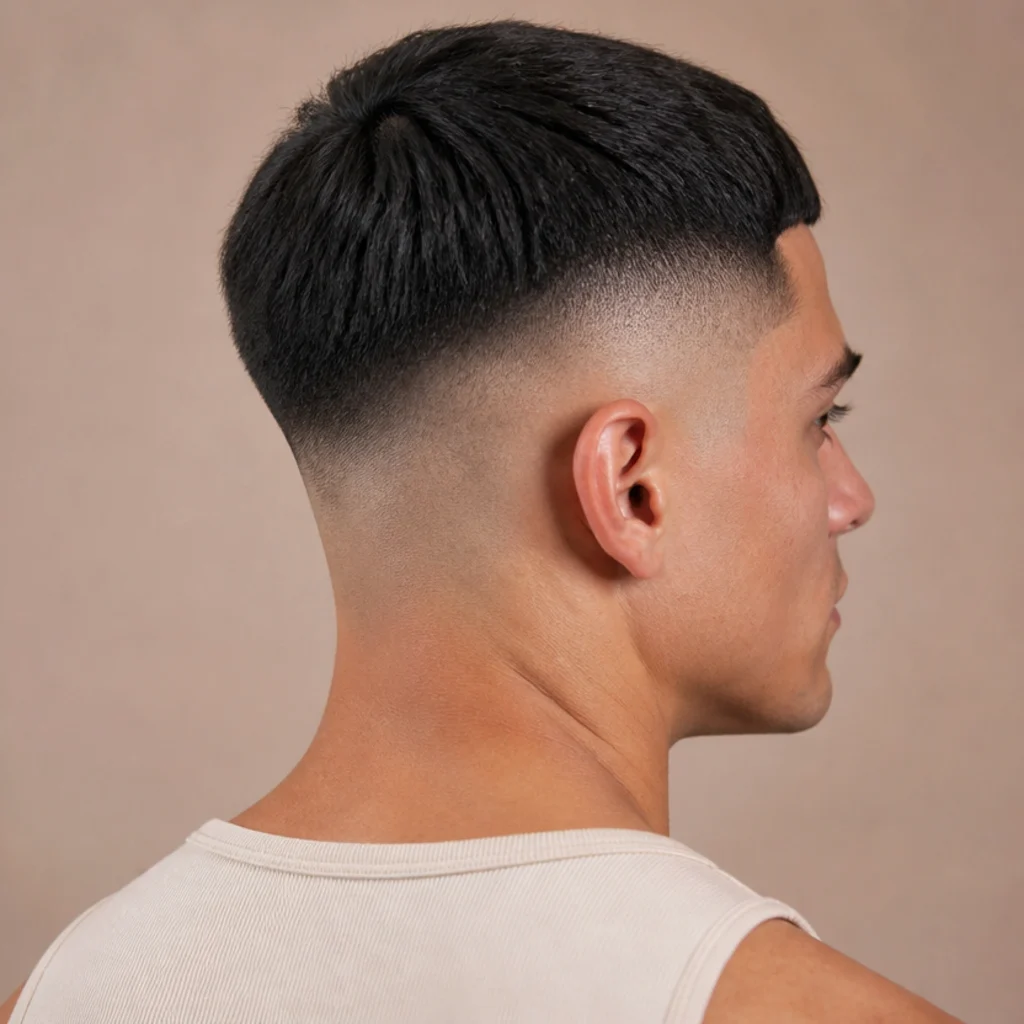
Taking the fade high and down to bare skin is the boldest reading of the edgar. The sides and back go clean well above the ear, isolating a concentrated block of hair up top that makes the blunt fringe look even more deliberate. It rewards thick, straight to wavy hair and anyone chasing maximum contrast between top and sides. Be honest about the commitment, though: this is the highest-upkeep option here. A skin fade grows a visible shadow within five to seven days and reads noticeably grown-out by two weeks, so a fortnightly touch-up is the realistic cadence to keep it looking intentional. The high starting line also sits close to the crown, so an experienced barber matters, as a fade set too high can crowd the top and shrink the whole silhouette. Mention "high skin fade, edgar on top" and physically point to where you want the fade to begin, since a centimeter changes the entire balance. Worth asking for: softly rounded top corners instead of boxy ones, so the dense block doesn't read helmet-like from the front.
04Edgar Cut Taper Fade
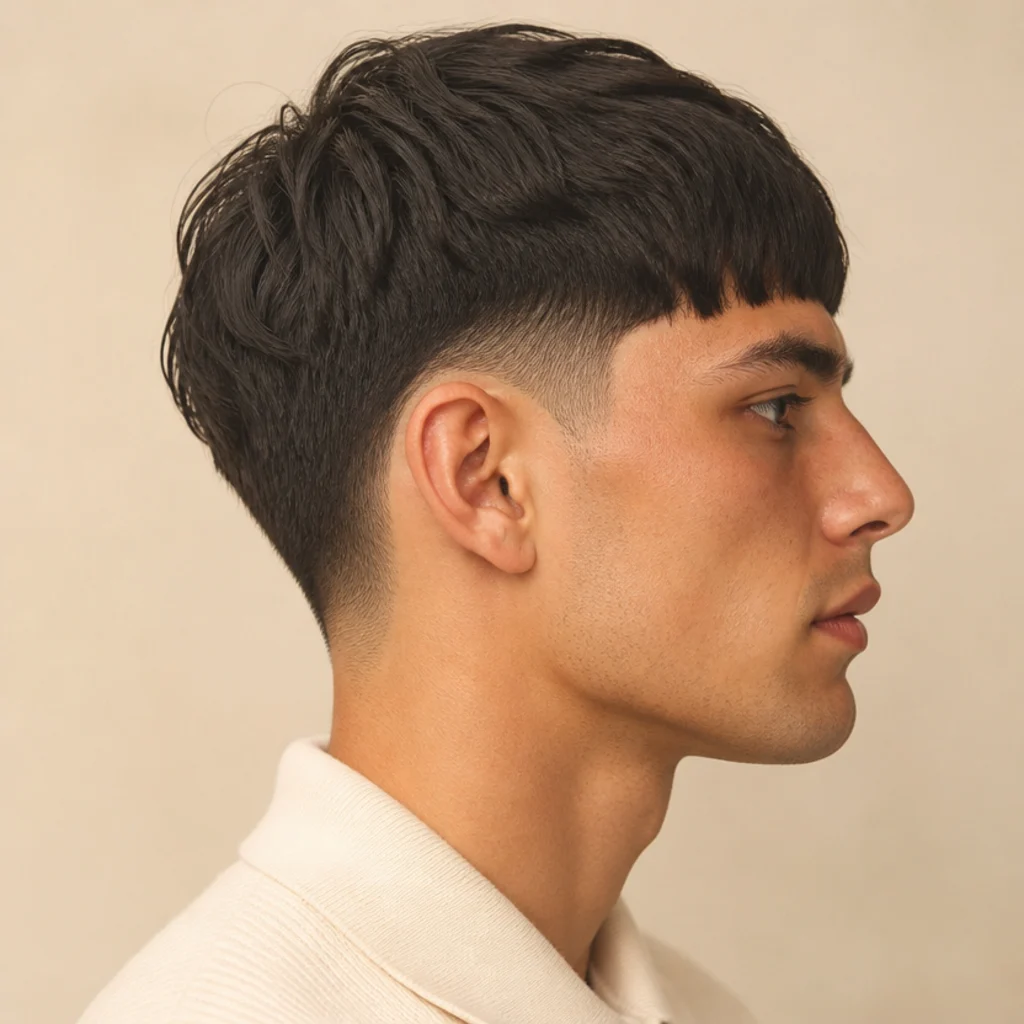
The edgar cut taper fade keeps real length through the sides and only tightens gradually around the ears and neckline, so it never goes fully bald. That single choice makes it the most grow-out-friendly version on the list and the one most likely to pass a conservative dress code. It suits nearly every hair type and face shape, and it pairs beautifully with the blunt fringe because the gentler sides let the front line lead the composition. Upkeep is friendlier than a skin fade; you can comfortably stretch to three or four weeks between visits without the shape collapsing. Because the taper follows your hairline rather than erasing it, it also flatters those with a softer or slightly uneven edge that a hard skin fade would expose. One tip: request a taper that stays "scissor-soft" at the very top of the sideburn so it blends into the top length smoothly instead of leaving a visible weight line. Ask for a "taper fade edgar" and clarify you want the taper, not a bald fade, so the sides keep their length and the transition stays gradual.
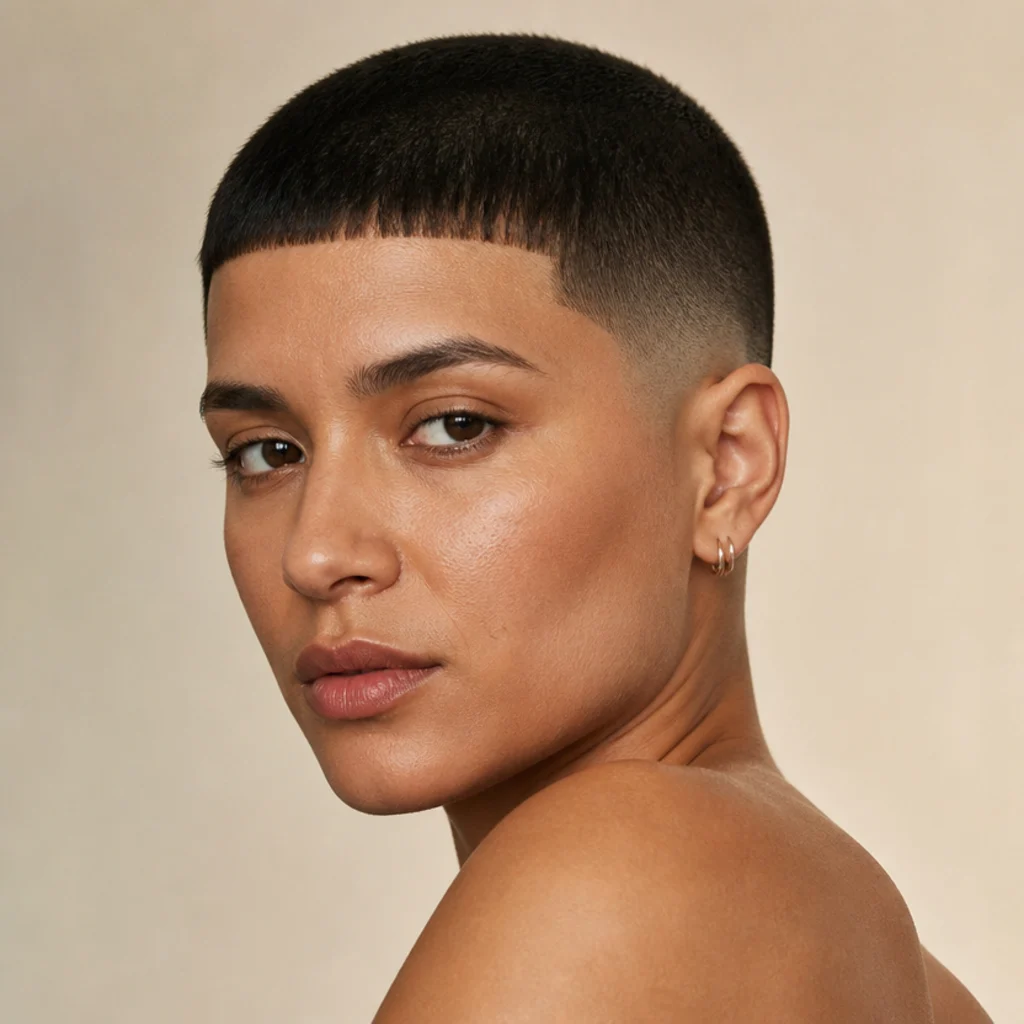
05Edgar Buzz Cut
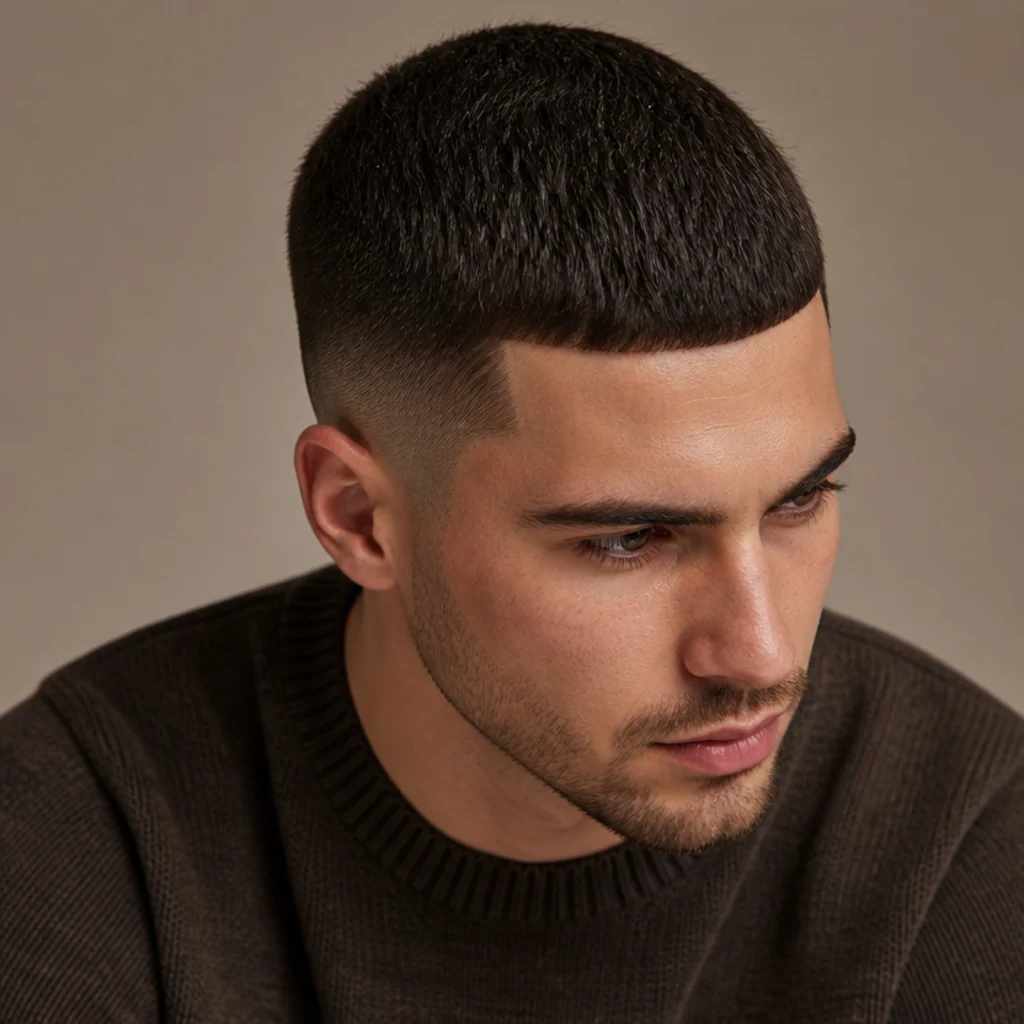
The edgar buzz cut swaps the longer fringe for a short, clipper-length top while keeping the signature straight front line intact. It's the lowest-effort take here by a wide margin: no product, no morning styling, just a quick clean-up every couple of weeks to hold the front edge. Almost any hair type can wear it, and it's especially useful for thick or coarse hair that fights to stay flat when longer, plus it's a real relief in hot, humid weather. With so little length to hide behind, the front line and the fade do all the styling, which means precision at the shop is everything and there's nowhere for a rushed cut to hide. A two guard on top over a three guard reads sharper if your hair is dense, and asking for the front edge to be scissor-defined rather than clippered gives a cleaner blunt line. Ask for a short buzzed top, a specific guard number, a blunt edgar front line, and the fade of your choice named explicitly.
Save this to Pinterest to compare the buzz and taper versions side by side.
06Curly Edgar Cut
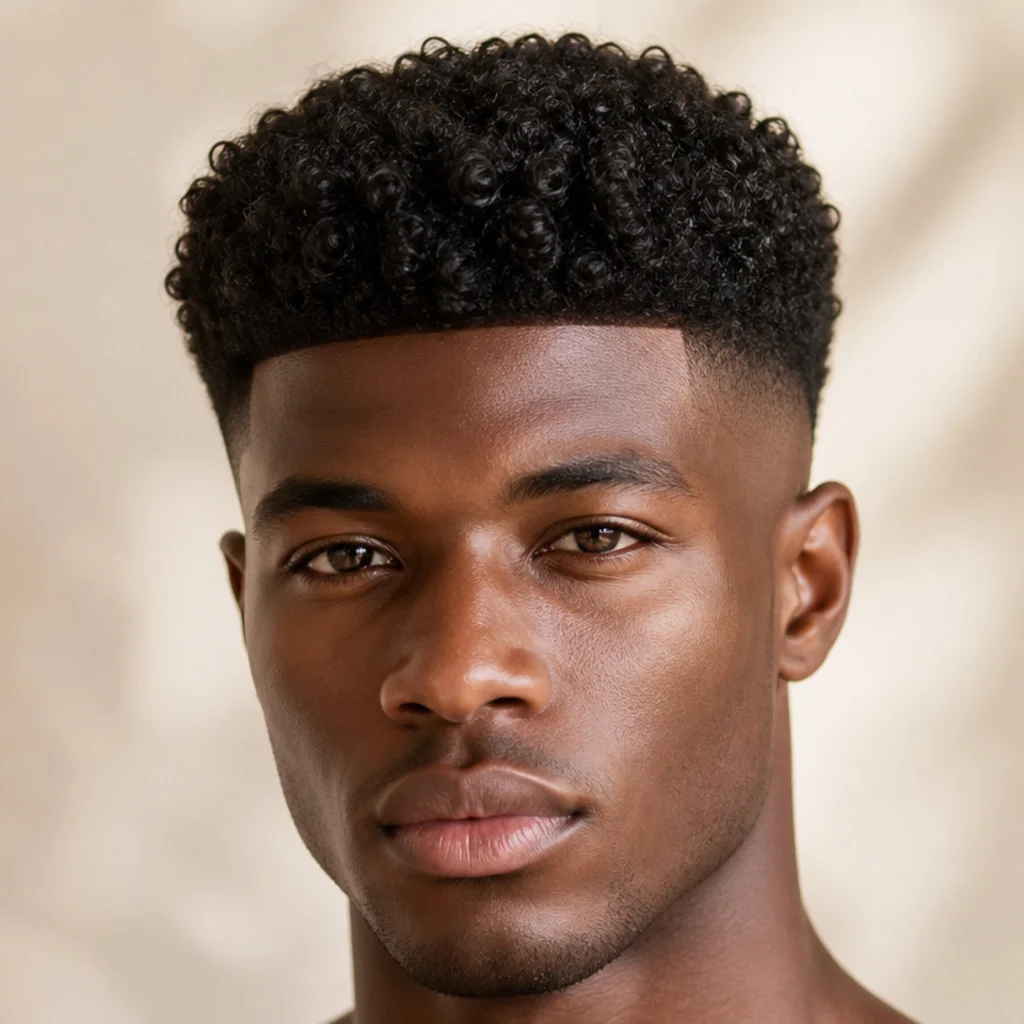
A curly edgar cut adapts the shape for natural texture, keeping curls full on top while the sides fade back to reset the contrast. The fringe is cut so the curls fall into a blunt-looking front, so the line reads a touch softer than on straight hair but still unmistakably edgar. It suits looser curls and defined coils that hold their pattern; the key variable is shrinkage, which can pull a fringe up half an inch or more once the hair dries and springs. That makes wet-versus-dry cutting a real decision, so a barber who cuts curls dry, or accounts precisely for shrinkage, is worth seeking out. Curls also demand moisture: a lightweight, water-based curl cream scrunched into damp hair keeps the front shaped rather than frizzy or crunchy. Trim the fade every two to three weeks, while the curly top can happily stretch longer between visits. Ask for the fringe to be cut curl-by-curl, not straight across, so it doesn't sit as a stiff block, and tell your barber to cut it accounting for shrinkage so it doesn't finish too short.
07Textured Crop Edgar
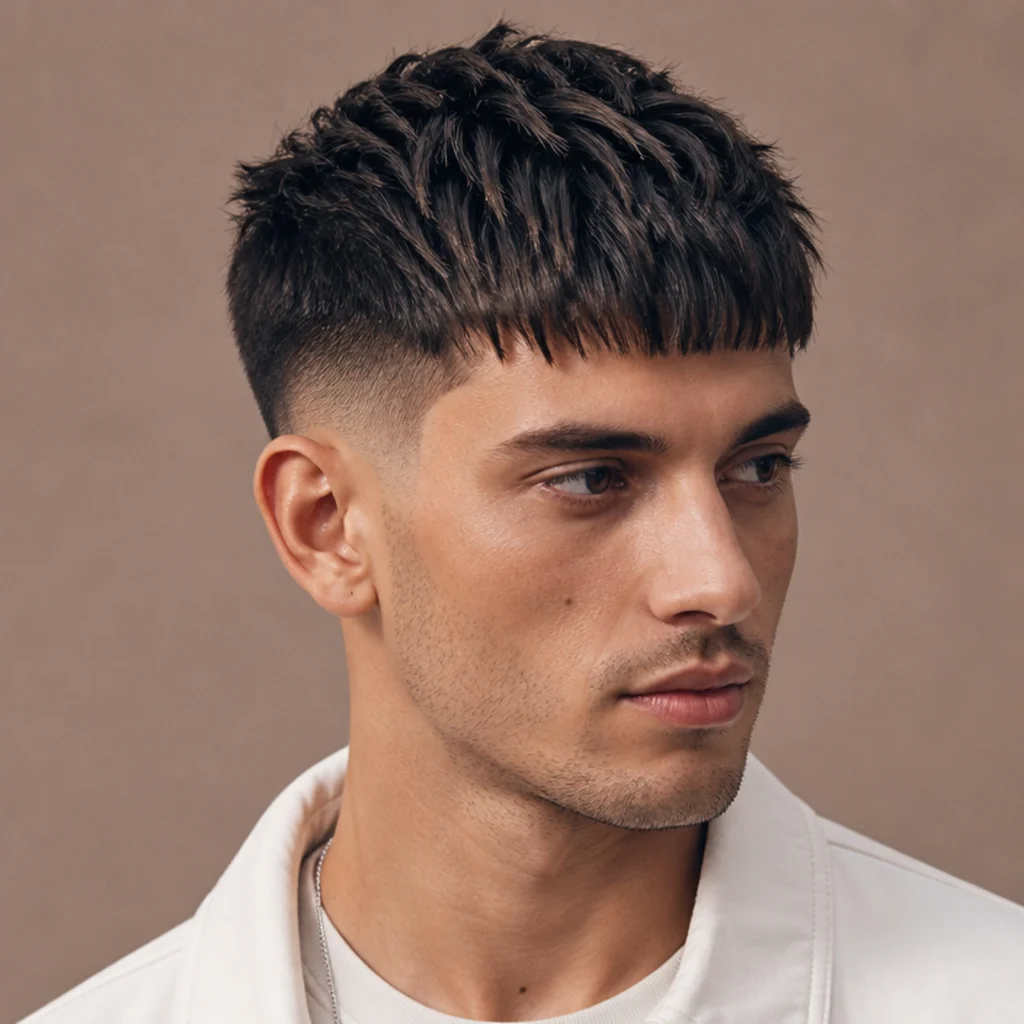
The textured crop edgar borrows from the French crop, adding point-cut choppiness through the top so the fringe breaks into pieces rather than sitting as one solid slab. It's the smart middle ground when a fully blunt line feels too severe, and the built-in texture disguises daily growth far better than a hard edge. This version is a gift to fine or medium straight hair that needs the illusion of density, since the separation reads as fullness. Face-wise it flatters rounder shapes by adding a little vertical height through the fronted texture. A pea-sized amount of matte clay, pressed in from the roots, defines the pieces without shine or stiffness. Upkeep sits in the middle: the textured front forgives an extra week, but the fade still wants attention around every three weeks. Ask specifically for point-cutting or a texturizing "chip" through the fringe rather than a razor, which can over-thin fine hair and leave it wispy. Request a "textured edgar crop" and say clearly that you want visible separation in the fringe, not a blunt block.
08Edgar with a Sharp Line Up
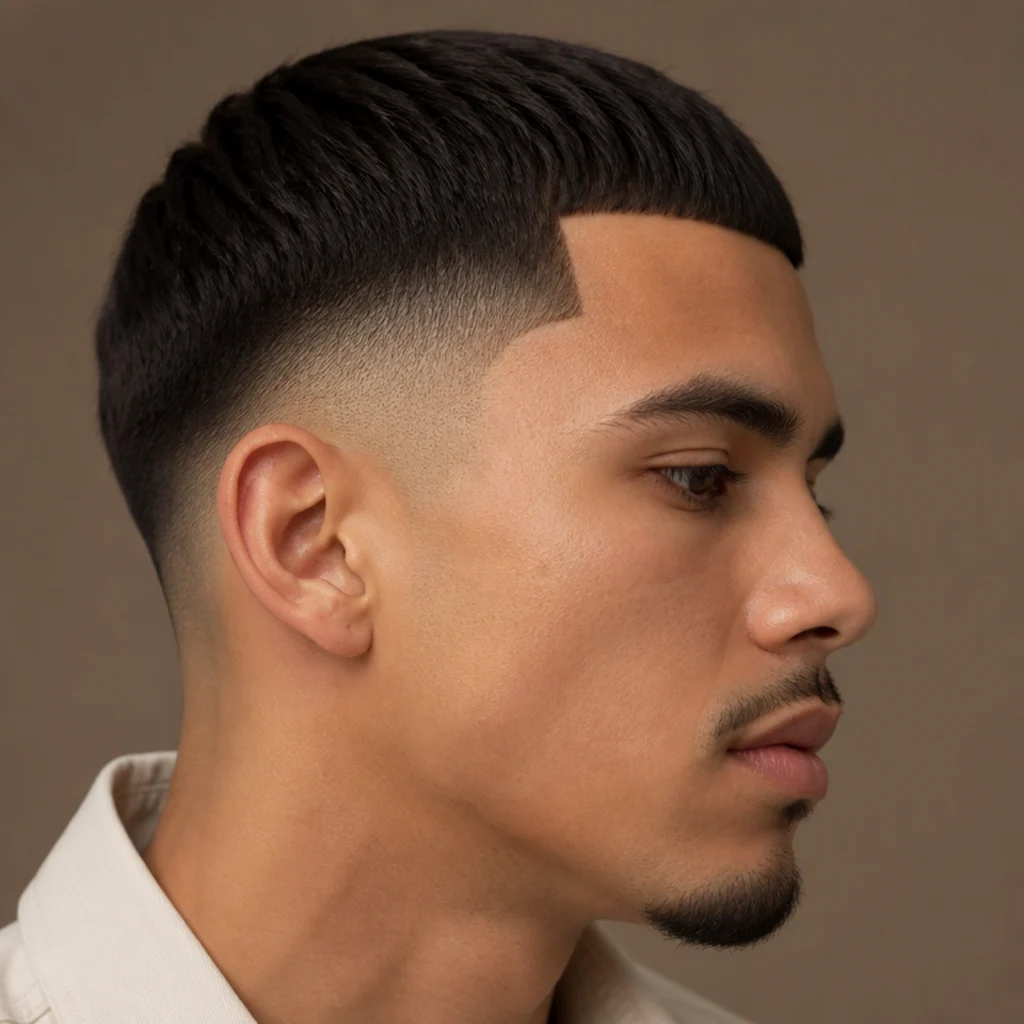
A line up squares off the hairline at the temples and front so every border of the edgar looks drawn on purpose. It amplifies the structured, architectural feel the cut is known for and it photographs beautifully, which is a large part of the appeal. It works on any hair type but shows best against a naturally defined hairline; if yours is uneven, a skilled barber can still shape a convincing edge by following, not fighting, your growth. The trade-off is speed of blur, because crisp edges soften as hair grows, so a two-week touch-up is realistic if you want them consistently sharp. The real caution here is restraint: over-lining a receding or delicate hairline pushes it back visually and can accelerate the appearance of thinning, so a good barber edges conservatively rather than carving into the temples. If your hairline is at all soft, ask for a "natural" or "shadowed" line up rather than a deep, hard edge, since it grows out far more gracefully. Ask for a "line up with the edgar" and tell your barber to follow your natural growth pattern.
09Low Fade Edgar
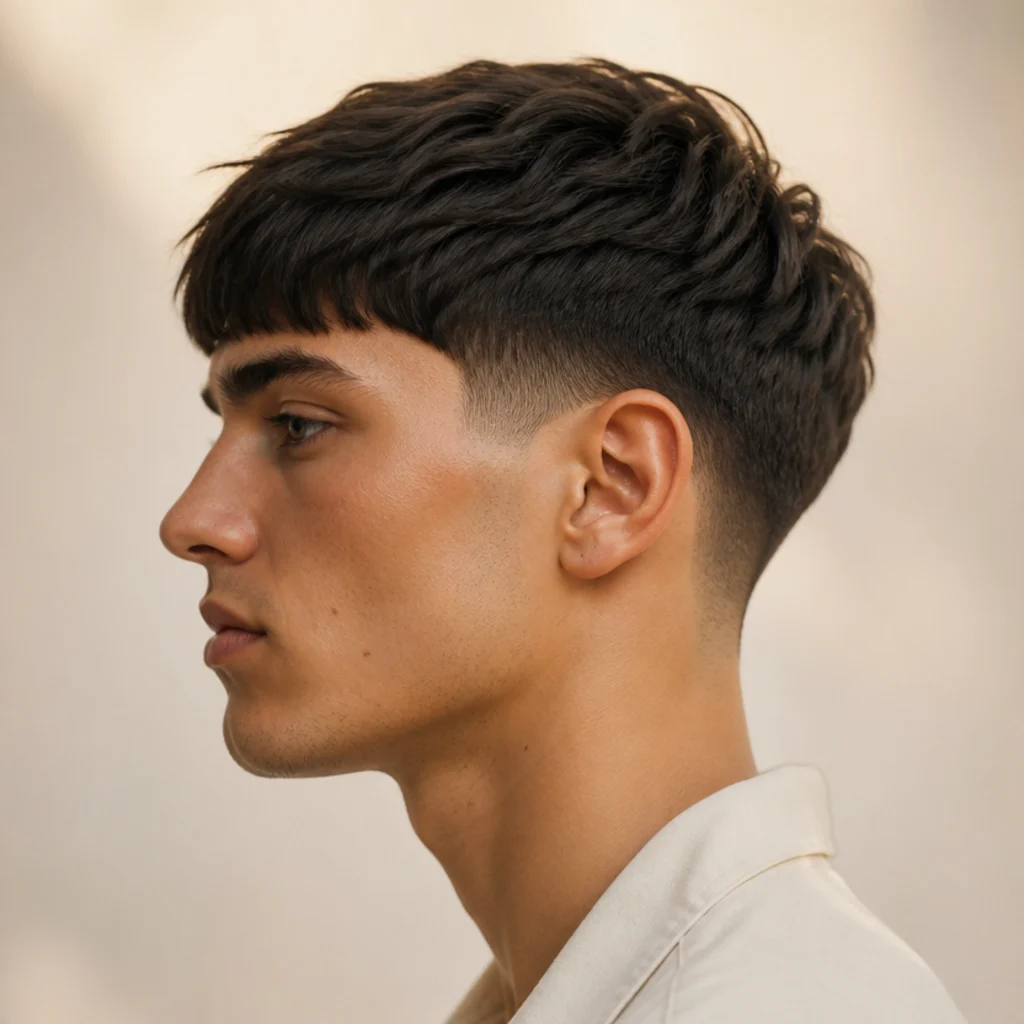
A low fade keeps most of the side length and only tapers down near the ears and neckline, giving the edgar a subtle, understated frame. It's the most conservative fade on this list and a strong pick for anyone who wants the cut to read neat without dramatic contrast, or who works somewhere buttoned-up. It suits every hair type and grows out gently, so three to four weeks between trims is comfortable. Because the sides stay fuller, the blunt fringe still stands out while the overall silhouette feels rounder and softer, which flatters angular or very lean faces that a high fade can make look narrower. Decide up front whether you want the very bottom of the fade "shadowed" (left with a faint stubble of length) or taken closer to skin; that single detail sets how bold the low fade actually reads. Ask for a "low fade edgar" and specify shadowed versus near-skin at the base, so the barber calibrates the last quarter-inch to the finish you're after.
10Mid Fade Edgar
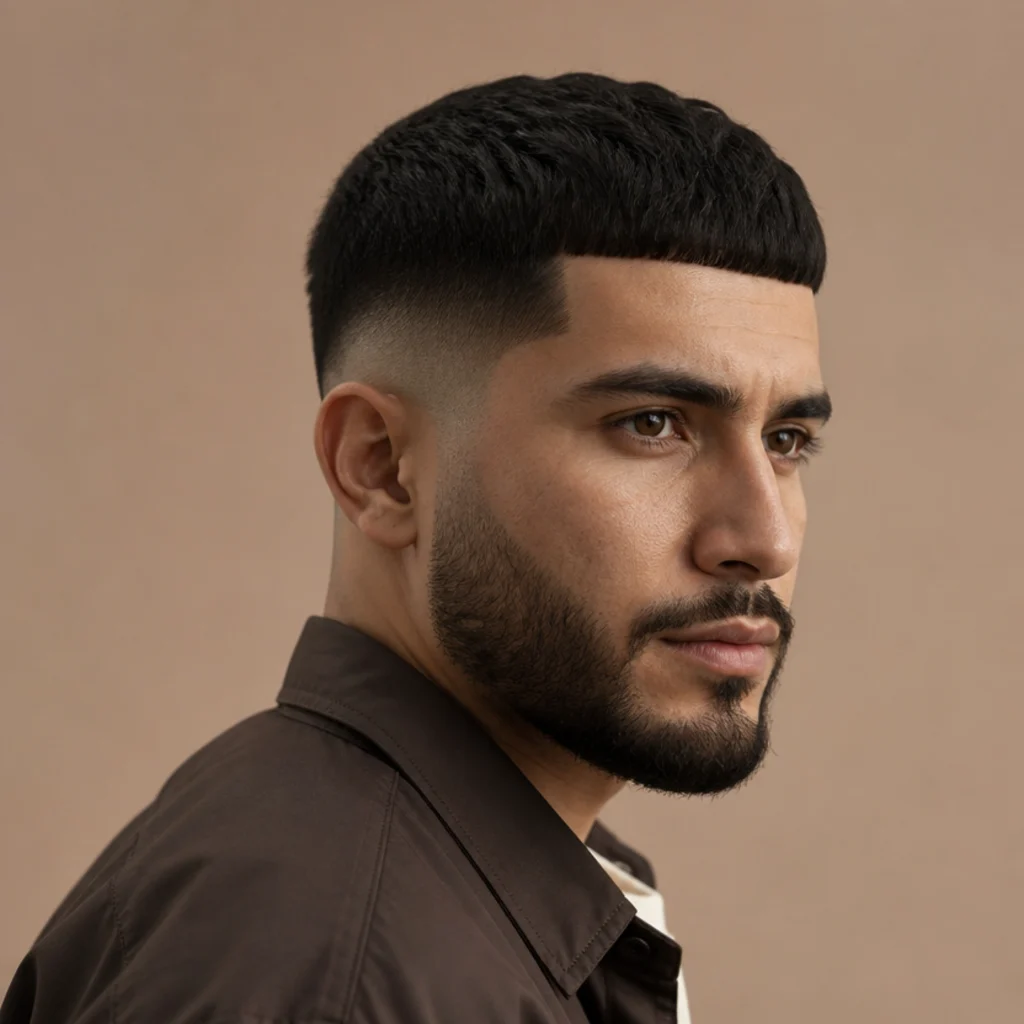
The mid fade begins its graduation around the temples, splitting the difference between the quiet low fade and the assertive high fade. It's arguably the most requested pairing for the edgar, because that mid start point flatters the widest range of face shapes and delivers clear contrast without stripping too much hair. Straight and wavy hair both wear it well, and the mid line keeps the sides from reading heavy or block-like. Maintenance is moderate: a trim every two to three weeks keeps the fade honest, while the top can wait longer. If you're not sure which fade height to book, this is the safe default that rarely disappoints and photographs cleanly from every angle. Bring a photo taken from the side, not just the front, since fade height is a profile decision and front-on references leave too much to interpretation. Ask for a "mid fade edgar" by name and point to your temple as the reference for where the fade should start, then confirm whether you want it to finish at skin or a low guard at the base.
Save this to Pinterest as your fade-height cheat sheet.
11Burst Fade Edgar
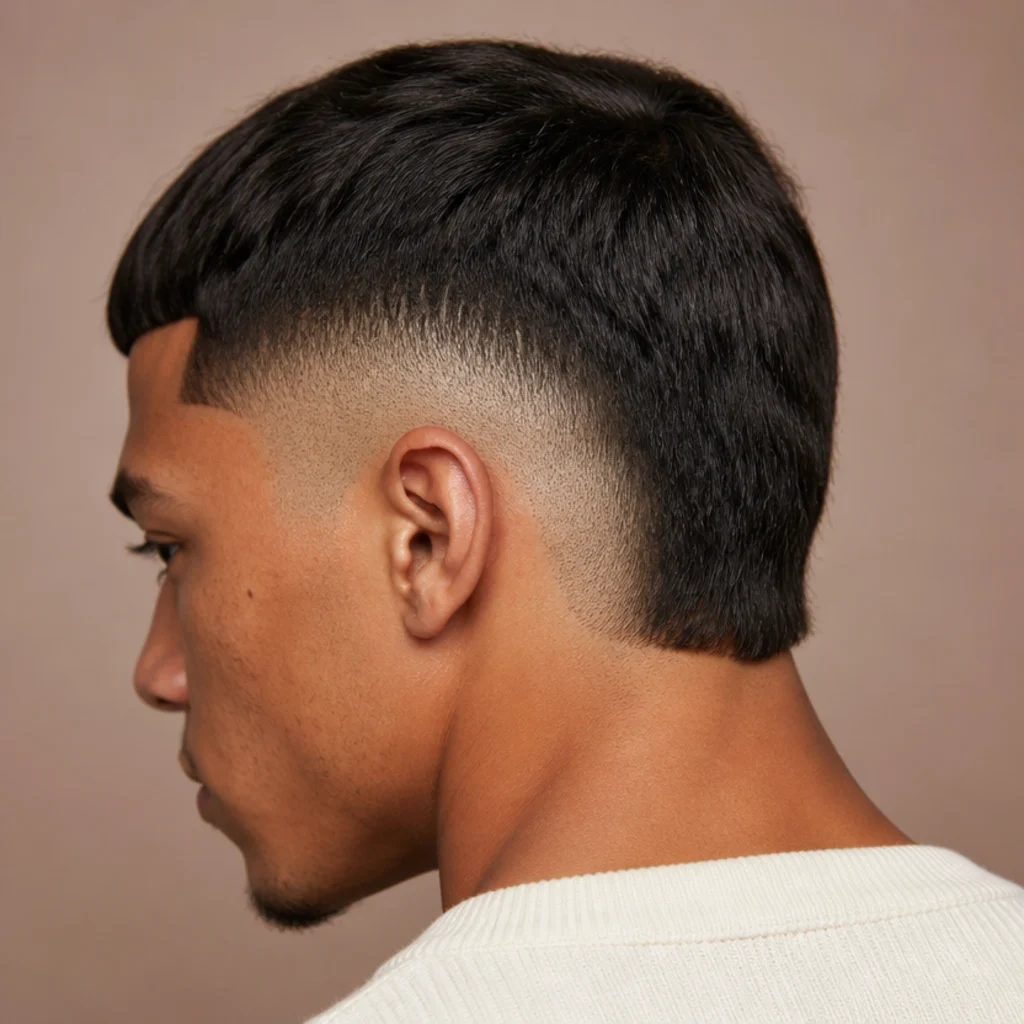
The burst fade arcs around the ear in a semicircle while leaving more length at the back and nape, creating a rounded, kinetic edge that plays unexpectedly well against the edgar's rigid front line. It carries a more expressive, street-style energy than a standard straight fade and reads as a considered choice rather than a default. It suits straight to wavy hair and anyone who wants a distinctive shape without going bald all over. Because the fade concentrates around the ear and leaves the nape longer, it can look tidy a little longer than a full skin fade, though two to three weeks is still the sweet spot. The burst lives or dies on the roundness of the arc, so ask your barber to keep the semicircle even on both sides and to leave a soft "tail" of length at the nape rather than squaring it off. Ask specifically for a "burst fade with an edgar top," and name it clearly, since many barbers default to a straight fade unless you request the burst by name.
12Drop Fade Edgar
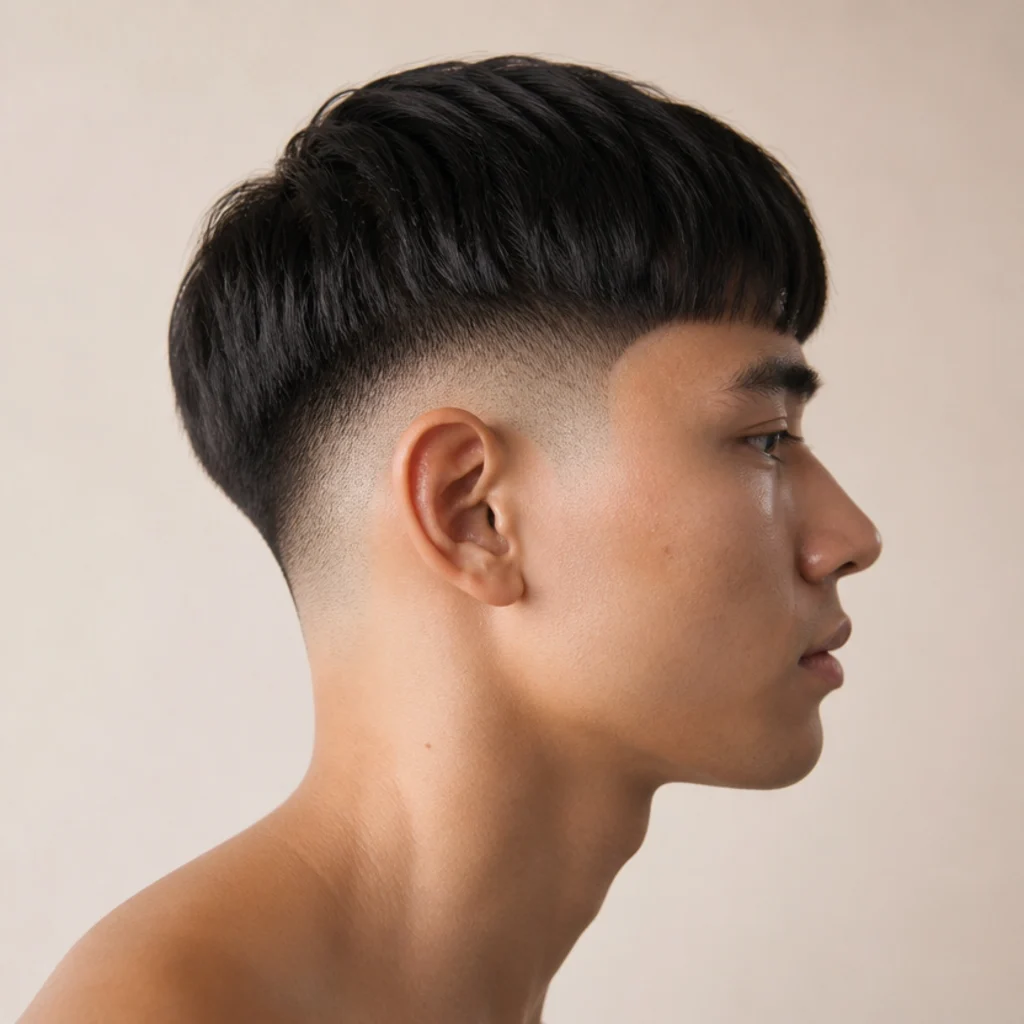
A drop fade curves downward behind the ear, dipping toward the neckline instead of running in a straight horizontal band. That downward arc traces the head's natural shape and gives the edgar a rounded, contoured profile that reads as intentional and detail-forward. It works on most hair types and is especially flattering if you want to soften a very angular or flat-backed head shape. Upkeep matches the other fades at roughly two to three weeks, with the top on its own longer schedule. The drop pairs particularly well with a heavier fringe, because the low-dipping side line balances the visual weight sitting up front. Tell your barber how low you want the fade to drop behind the ear: a subtle drop looks polished and professional, while a deep drop reads bolder and more editorial. Ask for a "drop fade edgar" and specify the depth of the dip, and mention whether you want it paired with a skin finish or a low guard at the lowest point.
13Messy Piecey Edgar
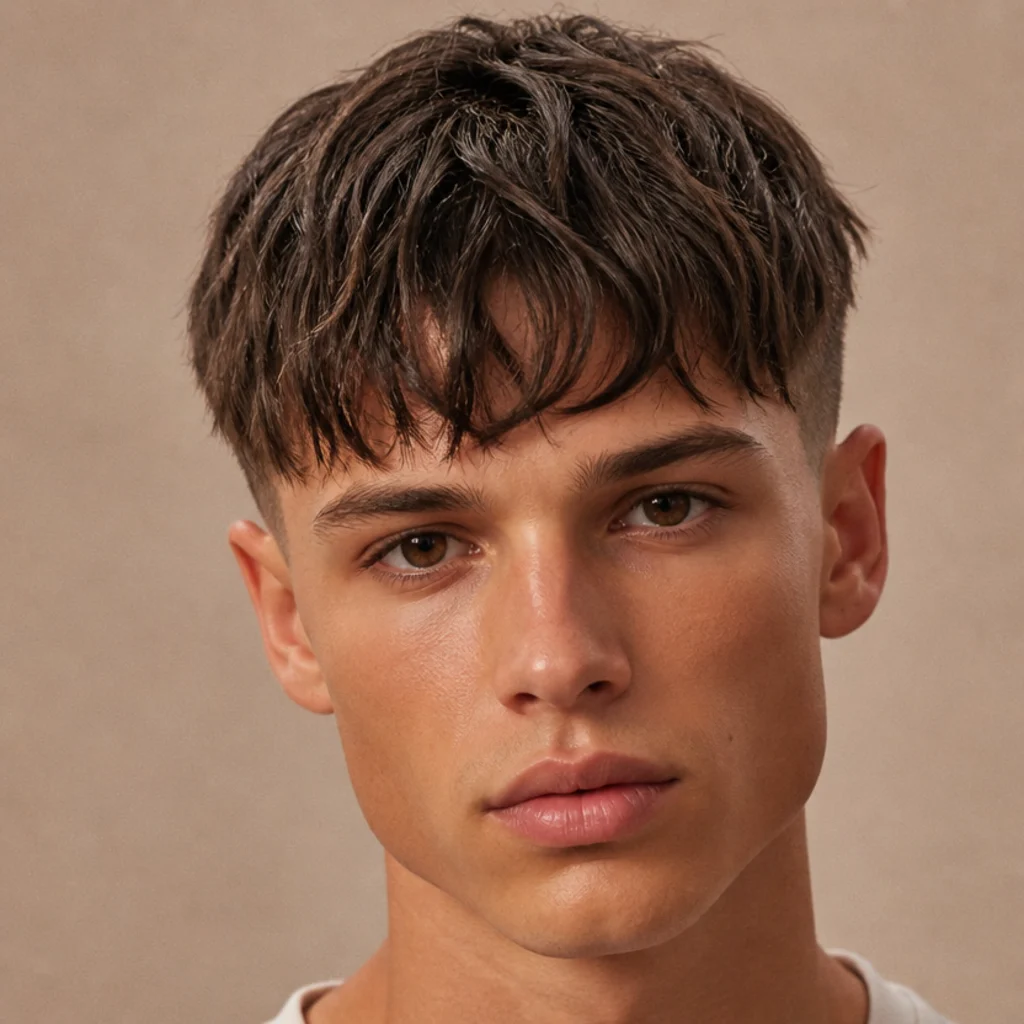
For a looser read, the messy edgar keeps the blunt shape but breaks the fringe into separated, tousled pieces instead of a flat block. It softens the severity of the classic version and looks deliberately undone, which suits casual settings and younger wearers who want structure without stiffness. Fine to medium straight hair takes to this best, since the piecey separation reads as fullness on hair that would otherwise look flat. A touch of matte paste, worked through with fingertips rather than a comb, creates the effect without crunch or shine. Day-to-day styling is a one-minute job, and the fade still wants the usual three-week refresh. Ask for the fringe to be point-cut with a little extra length left in, because you need something to separate; cut too short and it flattens into a blunt line no matter how you style it. Tell your barber to leave more length in the fringe and point-cut it so the ends break apart naturally instead of sitting as one solid edge.
14Edgar with a Hard Part
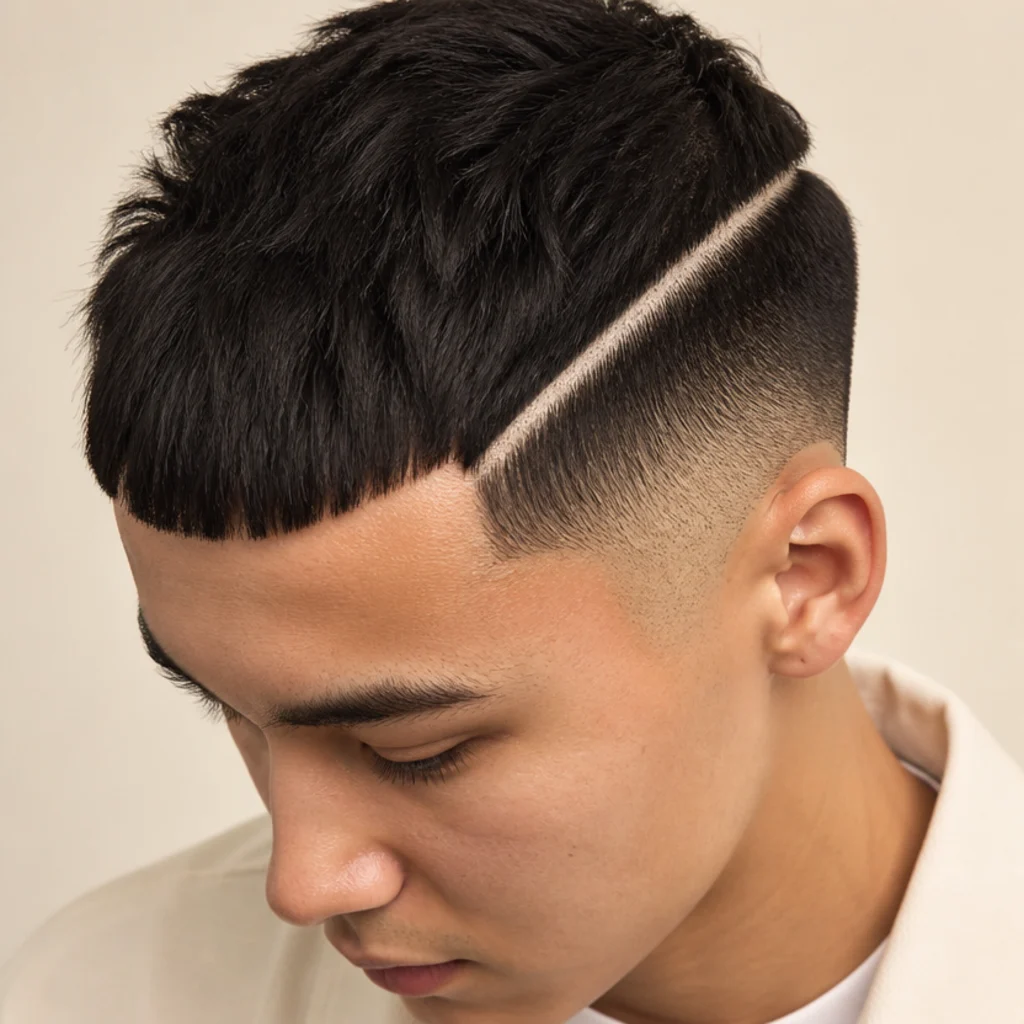
A hard part carves a single razored line between the top and the faded side, adding a graphic detail without committing to full hair designs. It sharpens the whole cut and gives the eye a clean divide to travel along, which reinforces the edgar's architectural feel. It suits straight and wavy hair where the razored line stays visible against the top length, and it flatters anyone who likes a defined, deliberate finish. The catch is cadence: the razored line grows back in within a week or so, so this is the detail that demands the most frequent upkeep if you want it consistently crisp. Place the part along your natural side-weight rather than forcing it to one arbitrary side, and decide up front between a thin, subtle line and a wider, bolder channel, because they read very differently. Ask for a "hard part with the edgar," state subtle or bold, and note which side, so the razor line falls where your hair naturally wants to break.
15Spiky Short Edgar
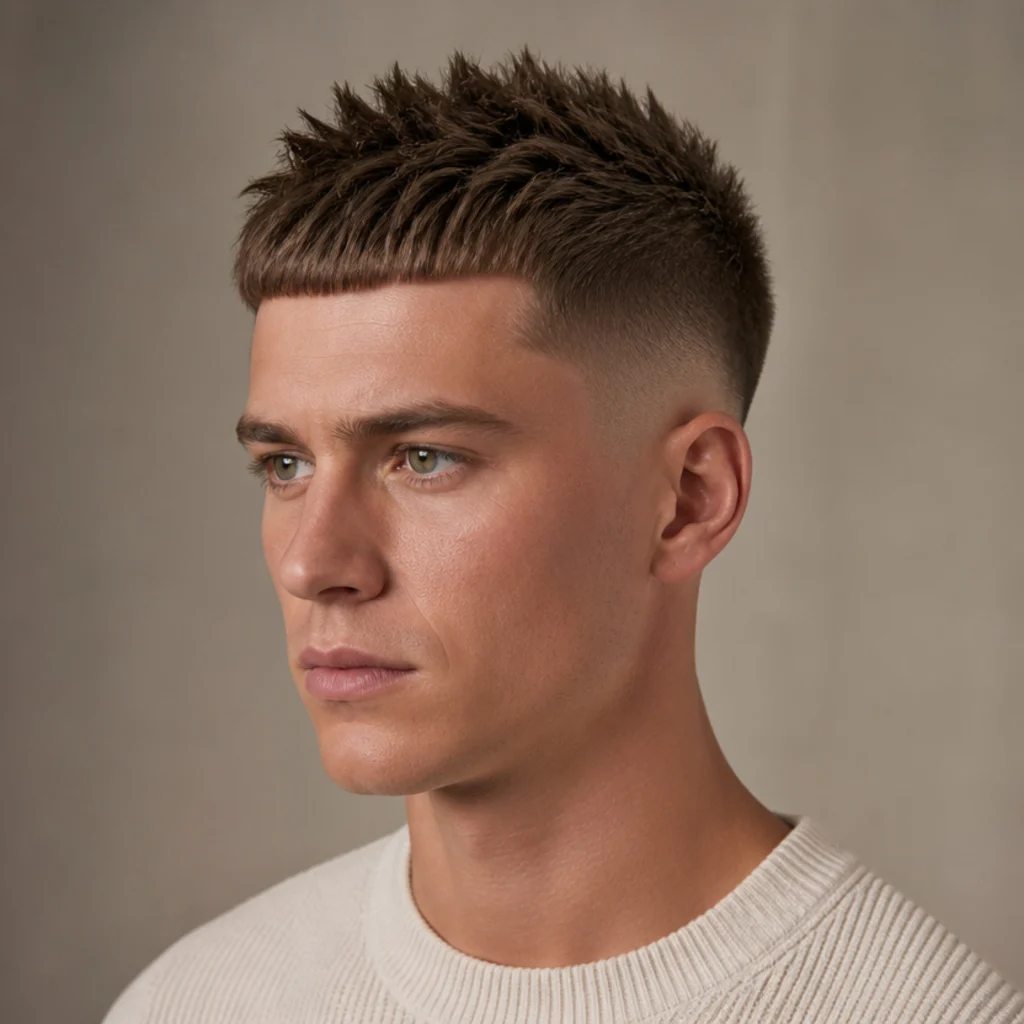
The spiky edgar styles the top upward into short, defined spikes while keeping the blunt front and faded sides intact. It injects height and energy, a smart option for rounder or shorter faces that want vertical lift and a longer-looking silhouette. Medium-density straight hair holds spikes most reliably, and coarse hair cooperates with the right product, while very fine hair may struggle to stand without help. A firm-hold matte clay, or a small amount of gel for a wetter finish, sets the shape; blow-drying the top upward with your fingers first gives the spikes something to hold. Styling runs a few minutes each morning, and the fade needs its usual two to three week trim. Ask for enough length on top to actually spike, roughly two to three inches, and have the fringe kept blunt so the spikes rise from a clean front edge rather than a ragged one. Ask for a fade that keeps the sides tight so the height up top stays what people notice first.
16Heavy Blunt Fringe Edgar
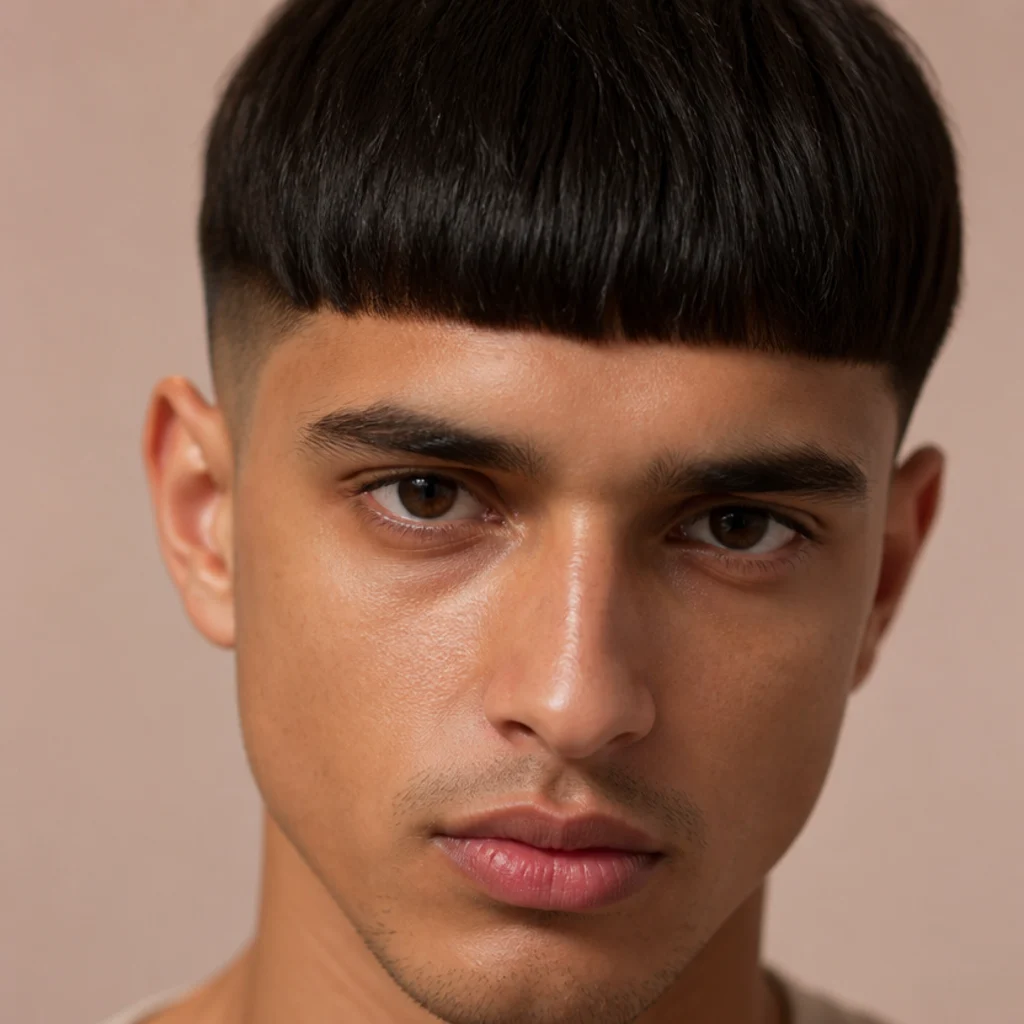
This version commits fully to the fringe, keeping it thick, dense, and cut in a strong horizontal line low across the forehead. It's the most recognizable, statement-making take on the edgar, and it depends on plenty of hair up top to build that weight, so thin or fine hair can't carry it. It flatters thick, straight hair and longer or oval faces that have the vertical space to absorb a heavy front without looking crowded or short. Because the fringe is the entire point, keep it precisely level with a trim every two to three weeks, and run a flat iron through it on a low setting if your hair waves and lifts the line. If your natural hairline sits high, resist dropping the fringe too low: an overly heavy front on a tall forehead can read costume-like rather than clean, and a barber can taper the fringe's underside to reduce bulk while keeping the surface line sharp. Ask for a "heavy blunt fringe edgar" and be specific about exactly how low you want the line to sit against your brow.
17Wavy Edgar Cut
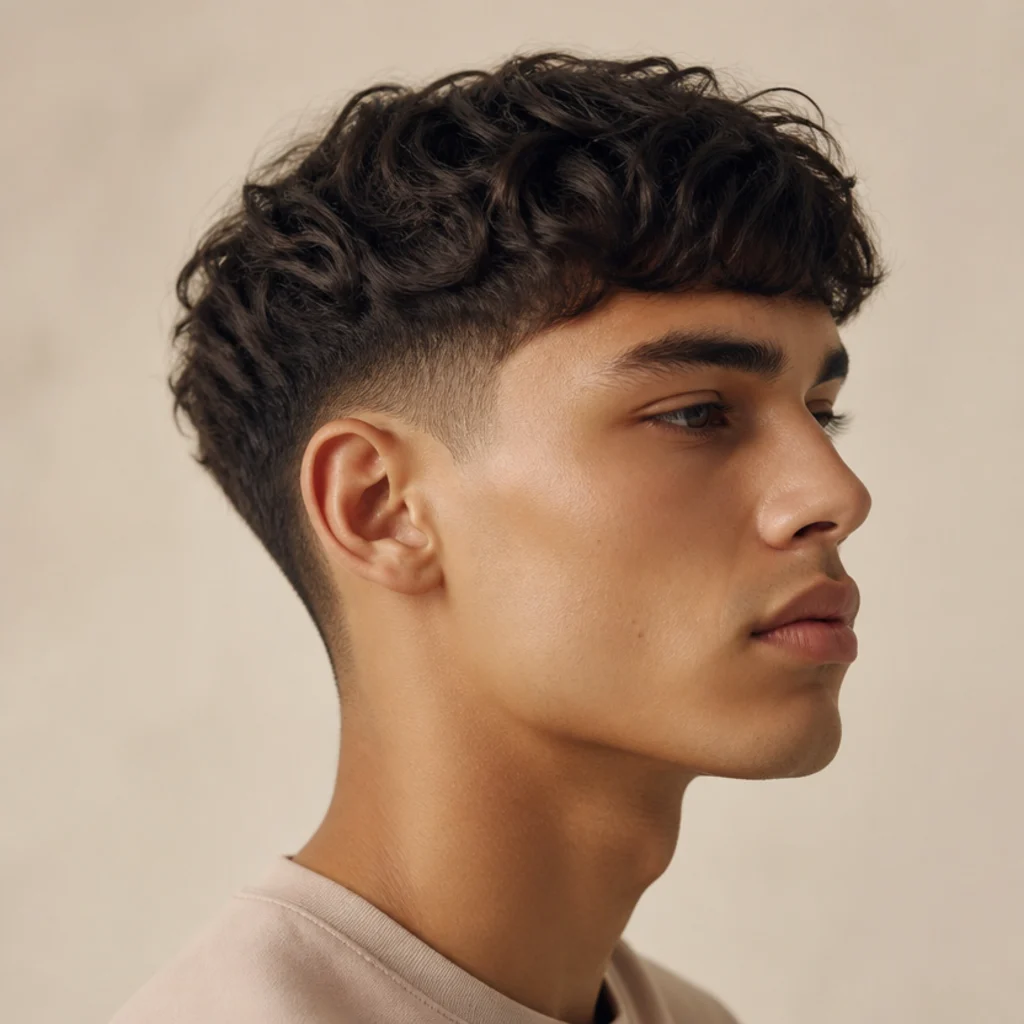
If your hair waves naturally, there's no need to iron it flat. The wavy edgar shapes the fringe into a blunt front while letting the waves add movement through the top, giving a softer, more organic version of the cut that still holds its structure. It suits loose to medium waves and works well for anyone who wants texture without the commitment of full curls. A light sea-salt spray on damp hair brings out the wave and defines the front, while air-drying or a diffuser preserves the pattern better than a rough towel. Because waves camouflage growth, the top is forgiving and can stretch, though the fade still wants attention around every three weeks. Ask your barber to cut the fringe slightly longer than a straight-hair edgar: waves lift the line, and a fringe cut too short will bounce up and lose the blunt effect entirely. Tell your barber you want to keep your natural wave and cut the fringe to fall into a blunt line rather than straightening it out.
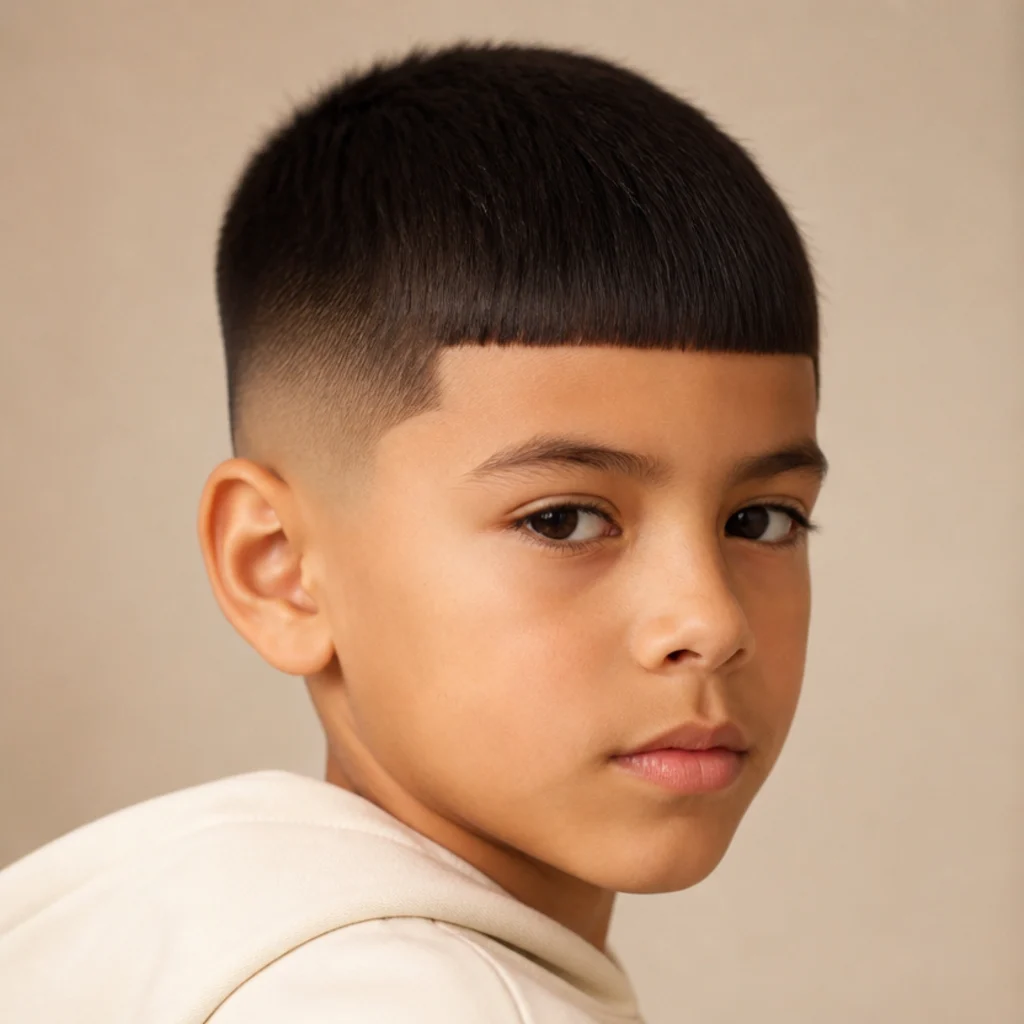
18Edgar Cut for Boys
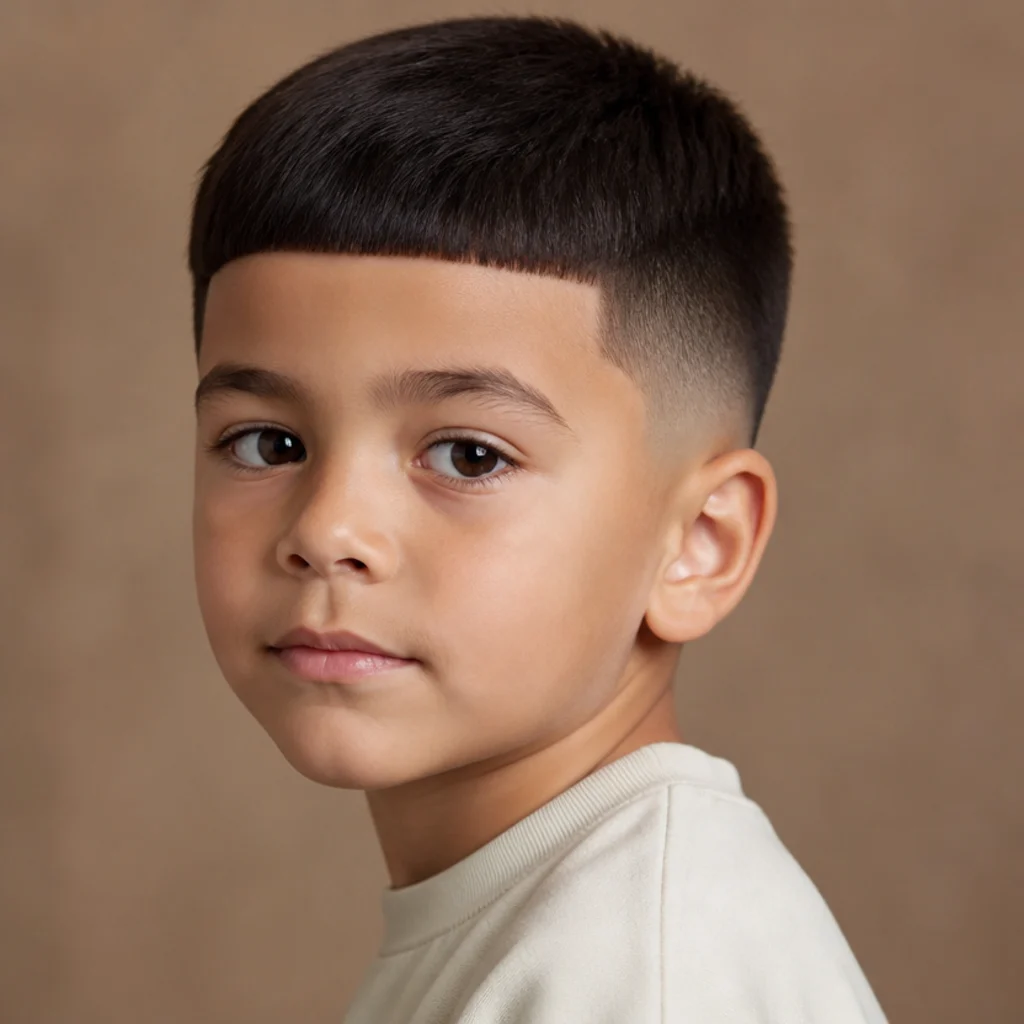
The edgar cut for boys keeps the same blunt fringe and faded sides in a kid-friendly, low-fuss form. It's practical for school mornings because it needs little or no product and looks tidy on its own straight out of bed with a quick finger-comb. A softer low or taper fade tends to suit younger children better than a bold skin fade, keeping the look age-appropriate and letting it grow out without a harsh line. Straight and wavy hair both work, and the fringe can be kept a touch shorter than an adult version so it stays out of the eyes and off the lashes. Trims every three to four weeks hold the shape, and a shorter fringe buys a little extra time between visits. For a squirmy first-timer, ask for a scissor-heavy top and a gentle taper rather than a tight clipper fade; it's quicker in the chair and far more forgiving of movement. When booking, ask for a "kids' edgar with a low fade" and mention keeping the fringe short enough to stay comfortable and clear of the eyes.
19Frosted Tip Edgar
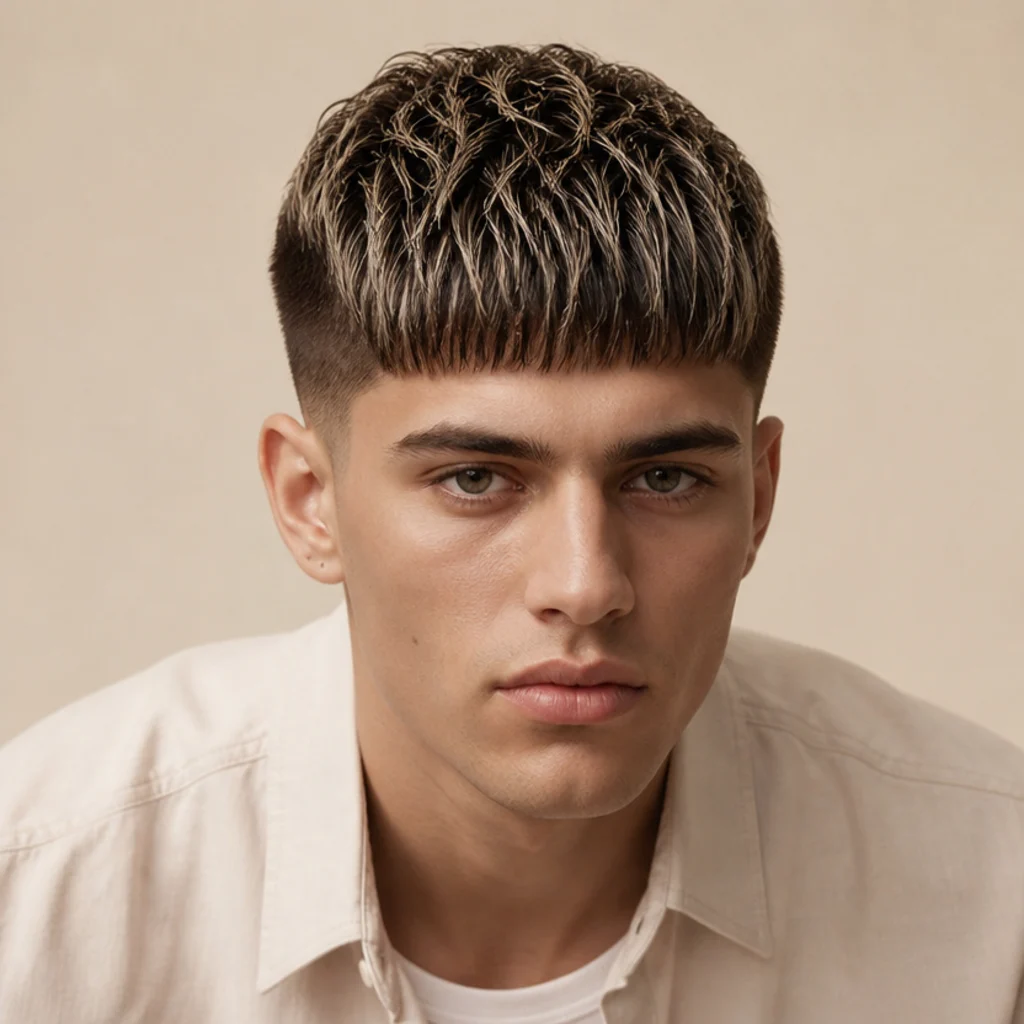
Adding lightened or frosted tips to the top brings a retro-tinged, playful edge to the edgar while the faded sides keep it grounded and modern. The color pulls the eye up to the fringe and top, so the blunt shape reads even more clearly against the darker, faded sides. This suits anyone open to a little upkeep and a bolder statement, and darker base hair gives the sharpest contrast with the lightened tips. Color is the real commitment here: use a purple-toned shampoo once or twice a week to keep the blonde from turning brassy, condition more than usual since lightening dries the hair, and book tip touch-ups every four to six weeks as your natural color grows through. Keep the frosting concentrated on the top and fringe only and leave the sides your natural shade, so the fade stays crisp and the grow-out looks intentional rather than patchy. Ask your stylist for subtle frosted tips placed on the top and fringe, and confirm they'll tone the blonde so it lands cool rather than yellow.
20Edgar and Beard Combo
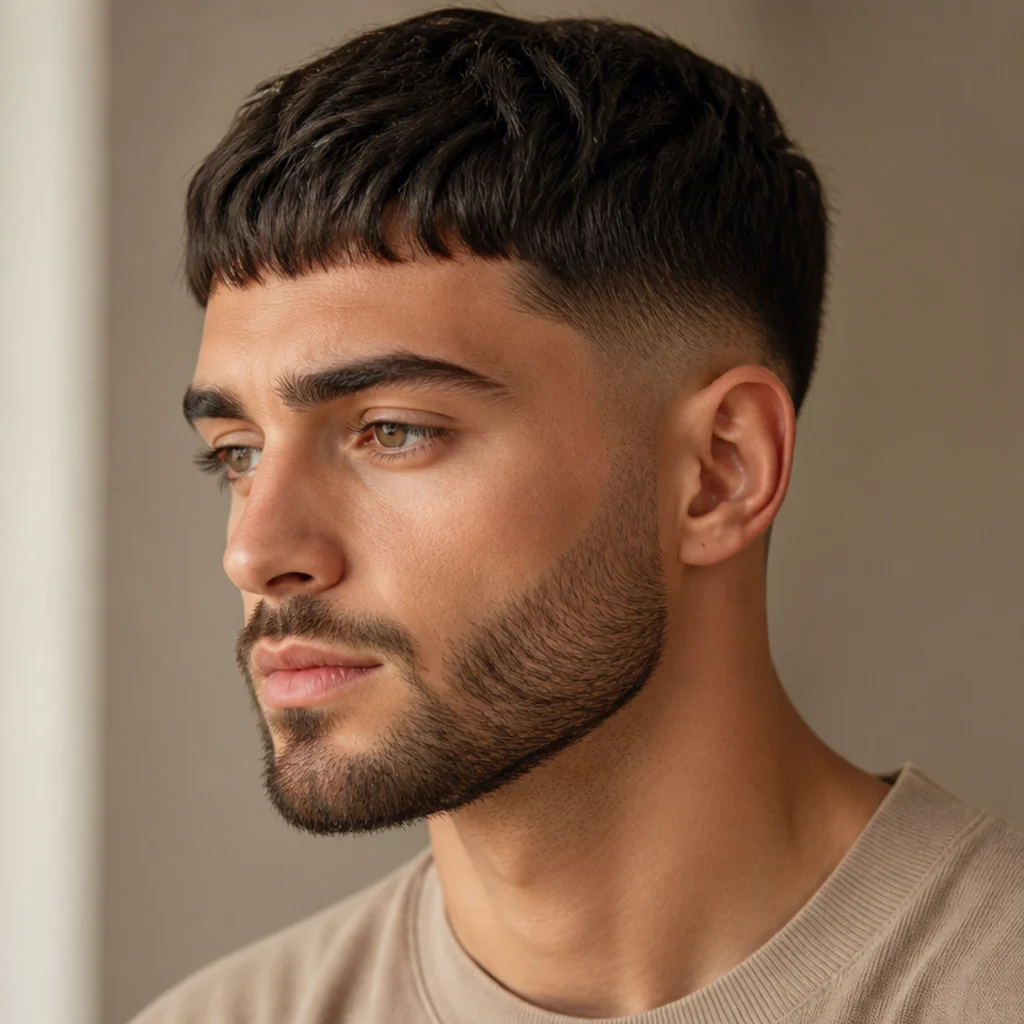
Pairing the edgar with a groomed beard balances the strong horizontal fringe with structure along the jaw, framing the face from both ends for a cohesive, finished look. A short, shaped beard that connects into the fade creates one continuous clean line from sideburn to chin, which is the detail that makes the combo read intentional rather than incidental. It flatters longer and oval faces especially, since the beard adds welcome width at the jaw and shortens the visual length of the face. It does double the maintenance: line up the beard when you trim the fade, roughly every two to three weeks, and keep the cheek and neck lines defined in between with a trimmer at home. Ask for the beard to be faded into the sideburn so there's no hard step between hair and beard, and keep the cheek line natural rather than carved too high, which ages the look. Ask your barber to shape the beard length to your face rather than leaving it blocky, and to mirror the neckline height on both sides.
Pro Tips from the Editor
- Decide the two variables before you sit down. The edgar is fringe weight plus fade height. Lock both in words ("heavy fringe, low fade") before the cape goes on, so you're not negotiating mid-cut.
- Reference photos should be side-profile, not just front. Fade height is a profile decision. A front-on photo tells your barber almost nothing about where the fade starts.
- Cut the fringe long first, shorten second. Blunt lines always look shorter dry than they did wet. Ask to check the length dry before the final pass; you can take more off, but you can't add it back.
- Match your product to your hair, not the photo. Fine hair wants matte clay for grip; thick hair wants a lighter paste so the fringe doesn't clump; curls want a water-based cream, never a wax.
- Guard the hairline. If yours is soft or receding, choose a taper or shadowed line up over a hard skin fade and a deep line up, which expose and visually exaggerate thinning.
- Book to the fade, not the top. The sides age faster than the fringe. Set your appointment cadence by how sharp you need the fade, and the top will almost always still be fine.
- Flat-iron a waving fringe on low. If your hair lifts the front line, one low-heat pass before you leave keeps the blunt effect through the day without frying the ends.
How to Choose / Get the Look
Work through it in order and the decision makes itself.
Step 1 - Start with your hair type. Edgar cut straight hair gives the crispest blunt fringe with the least effort; wavy hair softens the line naturally and needs the fringe left a little longer; a curly edgar cut keeps texture on top while the sides stay clean, but demands a barber who cuts for shrinkage. Be realistic about how flat a line your hair will actually hold.
Step 2 - Choose your fade height. This sets the whole tone. Use the table below as a quick reference.
| Fade / version | Contrast | Upkeep cadence | Best suited to |
|---|---|---|---|
| Taper fade | Soft | 3-4 weeks | Offices, softer hairlines, first-timers |
| Low fade | Subtle | 3-4 weeks | Conservative settings, angular faces |
| Mid fade | Balanced | 2-3 weeks | Most face shapes, the safe all-rounder |
| High skin fade | Bold | ~2 weeks (weekly upkeep) | Thick hair, maximum statement |
| Burst / drop fade | Distinctive | 2-3 weeks | Those wanting a detail-forward, styled edge |
| Buzz top | Minimal | 2 weeks | Lowest effort, hot climates, coarse hair |
Step 3 - Factor in your face shape. Heavier, lower fringes flatter longer and oval faces; added height from spikes or textured crop balances rounder or shorter faces; a beard combo adds jaw width for longer faces.
Step 4 - Match upkeep to your life. Budget a fade touch-up every two to three weeks and a fringe trim on a similar cycle. If that's more chair time than you want, choose a taper or low fade and a textured (not blunt) front, both of which grow out gracefully.
Step 5 - Communicate precisely in the chair. Name the version ("blunt edgar, mid fade"), point to where the fringe should land and where the fade should start, bring a saved side-profile photo, and ask to check the fringe dry before the final cut. Clear references and specific asks get you far closer than adjectives ever will.
Frequently Asked Questions
What is an edgar cut?
An edgar cut is a short men's style defined by a blunt, level fringe across the forehead paired with faded or tapered sides and back. The contrast between the straight front line and the short sides is what gives it its clean, structured look. It grew out of the Caesar and takuache aesthetic and works across straight, wavy, and loosely curly hair.
Does the edgar cut work on curly hair?
Yes. A curly edgar cut keeps curls full on top while fading the sides, with the fringe shaped to fall into a blunt-looking front. The critical detail is shrinkage: ask your barber to cut the fringe accounting for how much your curls spring up when dry, ideally cutting curl-by-curl and even dry-cutting, so the front doesn't finish too short.
How often do I need to maintain an edgar cut?
Plan a fade touch-up every two to three weeks, since faded sides blur as they grow, with skin fades and hard parts closer to weekly if you want them razor-sharp. The fringe usually needs a trim on a similar cycle to stay level, while a buzzed or textured top can stretch a little longer between visits.
Is the edgar cut good for boys?
Yes, it's a practical choice for boys because it needs little product and looks tidy on its own for school mornings. A softer low or taper fade suits younger kids better than a bold skin fade, grows out more gracefully, and a slightly shorter fringe keeps hair out of the eyes and buys extra time between cuts.
What is the difference between a taper fade and a skin fade edgar?
An edgar cut taper fade keeps some length through the sides and only tightens gradually, so it grows out softly, reads more subtle, and suits conservative settings. A skin fade takes the sides down to bare skin for maximum contrast but blurs within a week and needs a touch-up roughly every two weeks to stay clean.
Which face shape suits the edgar cut best?
Oval and square faces carry it most easily. Longer and oval faces can handle a heavier, lower fringe, while rounder or shorter faces are better served by added height, a textured crop, spikes, or a beard combo that reshapes the proportions. If your forehead is tall, a lower fringe placement helps balance it; if your hairline is high or receding, keep the front lighter and skip a deep line up.
Can I get an edgar cut if my hair is thin or fine?
Yes, but choose the version carefully. Skip the heavy blunt fringe, which needs density to hold weight, and go for a textured crop edgar instead, where point-cutting creates the impression of fullness. Pair it with a low or mid fade rather than a high skin fade, and use a matte clay for grip; a razor finish tends to over-thin fine hair, so ask for scissor or point-cut texture.
How do I ask a barber for an edgar cut?
Name the version and fade height together, such as "blunt edgar with a mid fade." Point to where you want the fringe to land against your brow and where the fade should start on your temple, bring a saved side-profile photo, and ask to check the fringe length while it's dry before the final cut. Specific, referenced instructions beat vague adjectives every time.
Is the edgar cut still in style?
The core shape, a blunt fringe over a clean fade, is a durable, structural look rather than a passing gimmick, and it keeps evolving through softer, more textured and taper-based takes. If you want something that reads current without frequent reinvention, a textured or taper version ages better than a hard, ultra-blunt line.