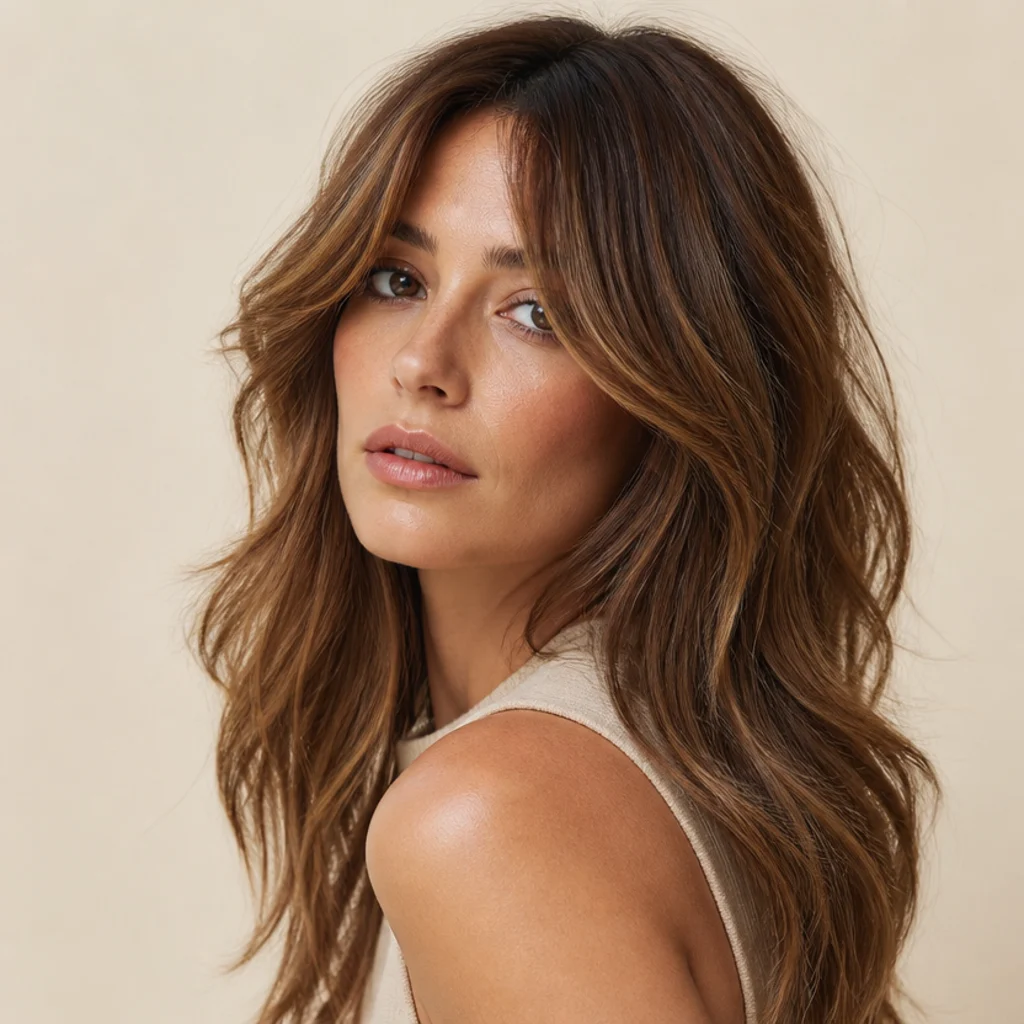
20 Long Shag Haircut Ideas That Are Stunning
The long shag keeps every inch of your length while loading the crown and face with movement, texture, and tapered layers that actually flatter. Below are 20 distinct versions, each with the shape, color, and finish spelled out, plus the exact wording to hand your stylist so you leave with the cut you pictured, not a compromise.
 Edited by Lena Rose · Published July 11, 2026 · 30 min read
Quick Answer
- Best for: Anyone who wants to keep long length but add volume, face-framing, and effortless movement; reads well on straight, wavy, curly, and coily textures.
- Who might skip it: Anyone who wants a blunt, uniform, one-length look, or who dislikes visible layering and shorter pieces around the crown that need a few weeks to settle.
- Maintenance: Low to moderate for the cut itself; the layers grow out softly. Bang style and color choice drive most of the upkeep.
- Difficulty: Beginner-friendly to style once cut. The internal layering does the heavy lifting, so most people manage with a diffuser or one round brush.
- Cost: Varies widely by market and stylist level; expect a dry-cut or texture specialist to sit at the higher end of a salon's cut menu, and add a color service (gloss, balayage, or full lightening) on top.
- Wear time / longevity: A well-cut long shag holds its shape for roughly 8 to 12 weeks; bold color and blunt fringes shorten that window.
- Standout variation: A long shag with curtain bangs, which frames the face on a diagonal and flatters nearly every face shape.
- How to ask your stylist: Bring two or three photos and say you want a long shag that keeps length at the back with internal layers for lift, cut to suit your natural texture and how you actually dry your hair.
In This Guide
- Classic 70s Feathered Long Shag
- Soft Shag with Curtain Bangs
- Long Wavy Shag with Balayage
- Long Curly Shag with Defined Coils
- Choppy Layered Shag for Fine Hair
- Shag with Wispy Bottleneck Bangs
- Rich Chocolate Brunette Shag
- Copper Red Long Shag
- Icy Platinum Textured Shag
- Long Shag with a Money-Piece Frame
- Sleek Straight Shag with Razored Ends
- Voluminous Shag for Thick Hair
- Shadow-Root Caramel Shag
- Beachy Sea-Salt Wave Shag
- Long Shag with Blunt Bardot Bangs
- Silver-Grey Shag for Mature Hair
- Long Shag on Type 4 Coily Hair
- Rocker Shag with Heavy Layers
- Wolf-Cut Shag Hybrid
- Low-Maintenance Air-Dried Shag
The long shag keeps coming back because it solves a real problem. What separates it from a blunt lob or straightforward long layers is the internal architecture: most of your length stays intact at the back, while progressively shorter, textured layers stack through the crown and cascade around the face. That build gives you lift at the roots and soft, tapered ends in one shape, without the vulnerability of chopping off length you don't want to lose. It's also unusually texture-friendly — a skilled stylist maps the layers to whatever wave or curl pattern you already have instead of fighting it.
The versatility is why the long shag keeps resurfacing under new names: the 70s shag haircut long enough to graze the collarbone, the soft shag haircut long and romantic, the long wavy shag haircut, and the choppier wolf-cut hybrid all live on the same family tree. Use this guide like a working lookbook. Each of the 20 ideas below names who it flatters by texture and face shape, gives a realistic maintenance timeline, and hands you the phrasing to describe it at the chair. Whether you want a whisper-soft version or something editorial and disconnected, there's a shape here worth saving.
01Classic 70s Feathered Long Shag
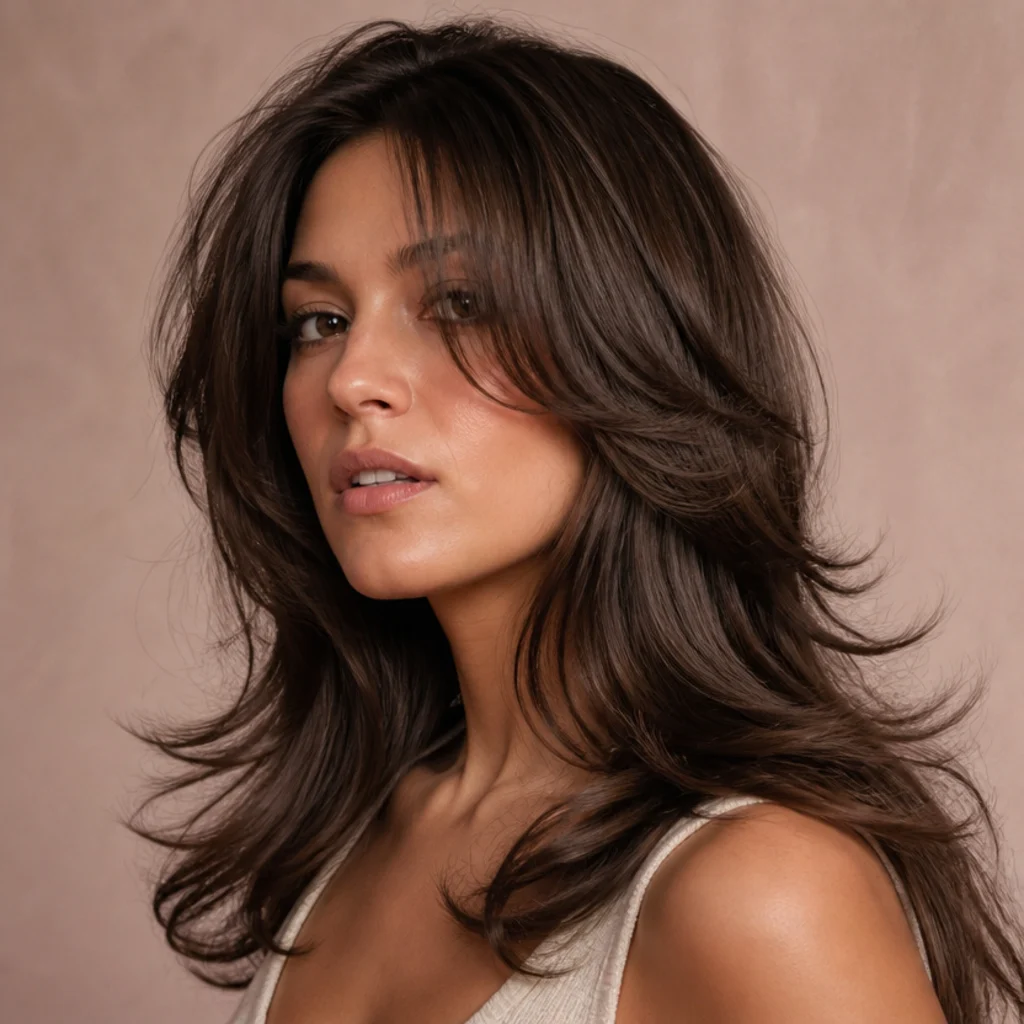
This is the original blueprint, and it still feels current when the color stays warm rather than brassy. A 70s shag haircut long enough to hit the collarbone leans into feathered layers that flick outward and away from the face, echoing the Jane Birkin and Farrah silhouettes without tipping into costume. The feathering needs a little body to hold, so it favors medium-to-thick hair with a natural bend; pin-straight hair may need a light round-brush flick to keep the ends lifting. Warm chestnut and cool-neutral espresso both read expensive here because the layers catch light along their edges. Plan a trim roughly every 10 weeks, since the flicked ends soften first as they grow. Pro tip: dry the top layers with a round brush rolling away from your face, then hit the roots with a shot of cool air to set the lift. Ask your stylist for a 70s-style long shag with feathered, outward-facing layers and heavy movement through the mid-lengths.
02Soft Shag with Curtain Bangs
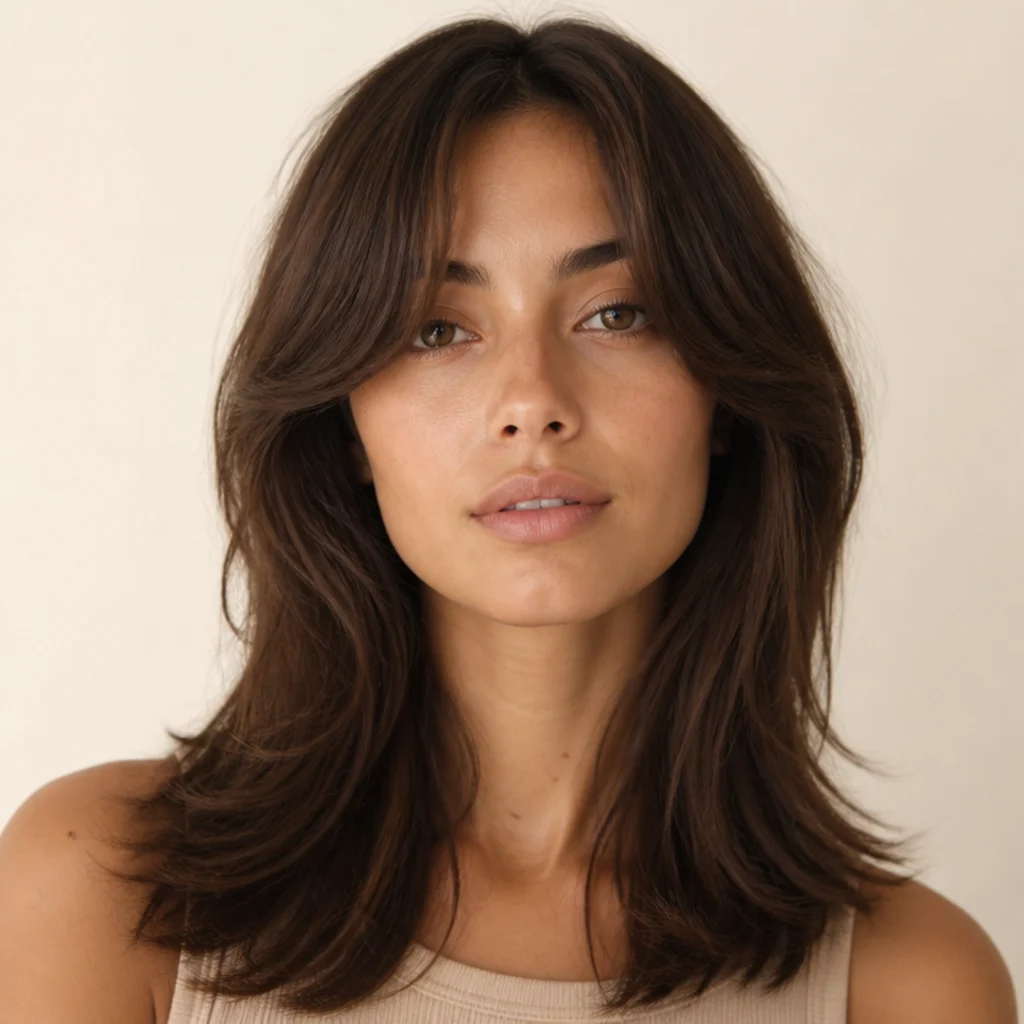
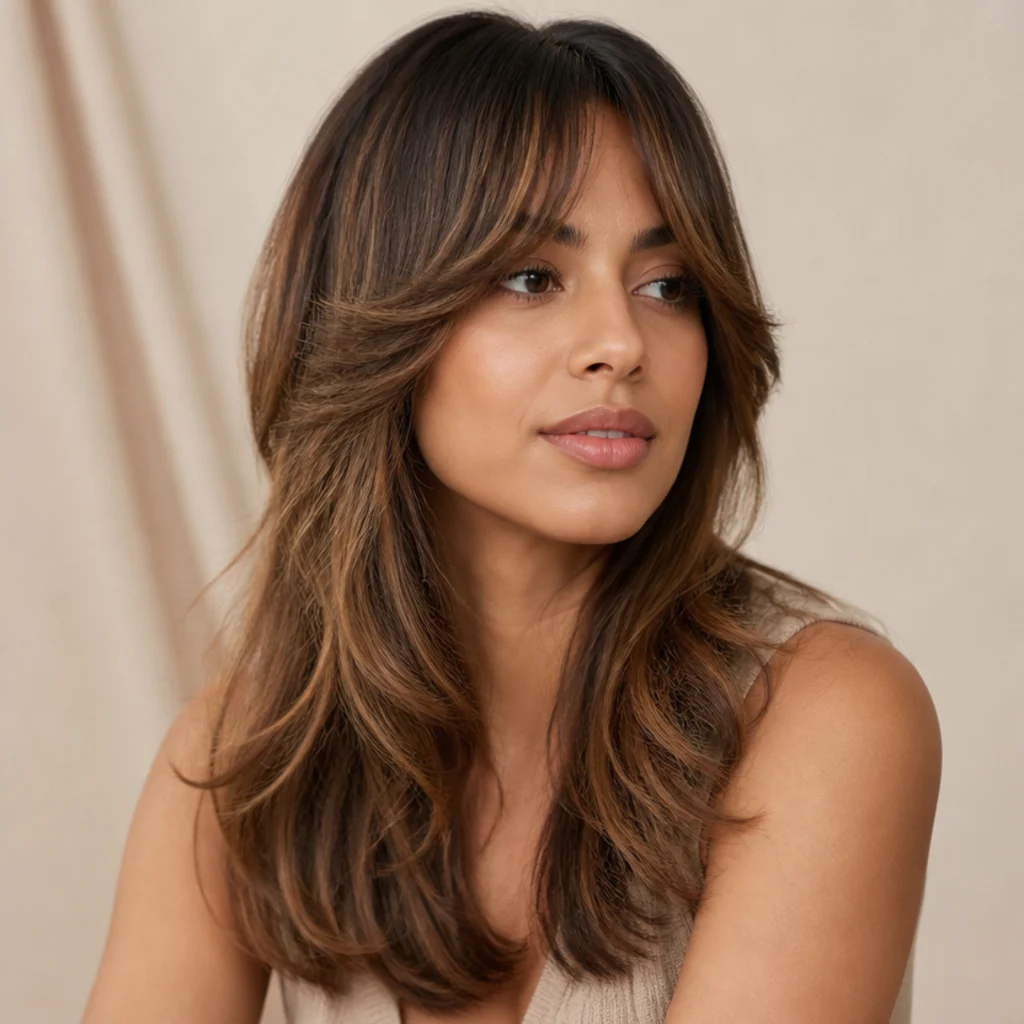
If you want the single most flattering entry point into the trend, start here. A soft shag haircut long through the back, paired with a long shag with curtain bangs at the front, marries gently graduated layers to a center-parted fringe that sweeps toward the cheekbones. That diagonal line is the reason it suits round, square, and heart face shapes so reliably: it lengthens and softens at once. It behaves on both straight and wavy hair, and it ages out gracefully because the bangs blend into the front layers instead of announcing that you're overdue. If you like the fringe crisp, book or DIY a bang dust every 4 to 6 weeks. Pro tip: part the bang slightly off your natural part while it dries, then drop it back into place so it swoops rather than splits flat. Ask for a soft long shag with cheekbone-length curtain bangs that connect smoothly into the surrounding layers.
03Long Wavy Shag with Balayage
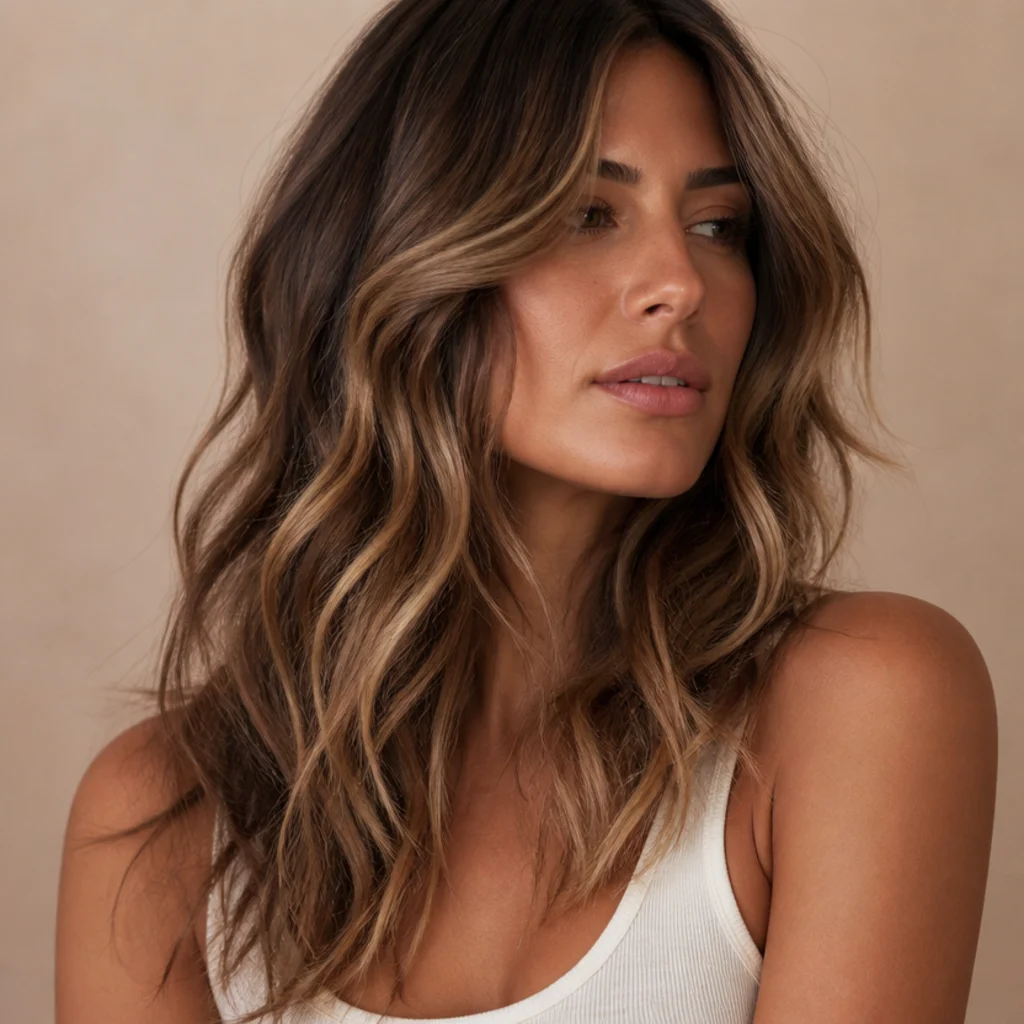
A long wavy shag haircut is where cut and color do their best teamwork. Hand-painted balayage placed from the mid-lengths down settles into every bend of the wave, so the layers look dimensional in motion instead of striped. Anyone with natural body or a loose S-wave who wants a lived-in, low-line result will get the most from this one, and it flatters warm and neutral undertones especially well in honey and toffee ranges; cooler complexions can request a beige or mushroom balayage instead. Because the regrowth is soft by design, you can stretch salon visits to every 12 to 16 weeks and keep tone bright with a gloss between. Pro tip: apply curl cream to soaking-wet, not damp, hair and scrunch upward toward the scalp to encourage the wave to fold rather than fall. Ask your colorist for a long wavy shag with soft, face-framing balayage and no harsh regrowth line.
04Long Curly Shag with Defined Coils
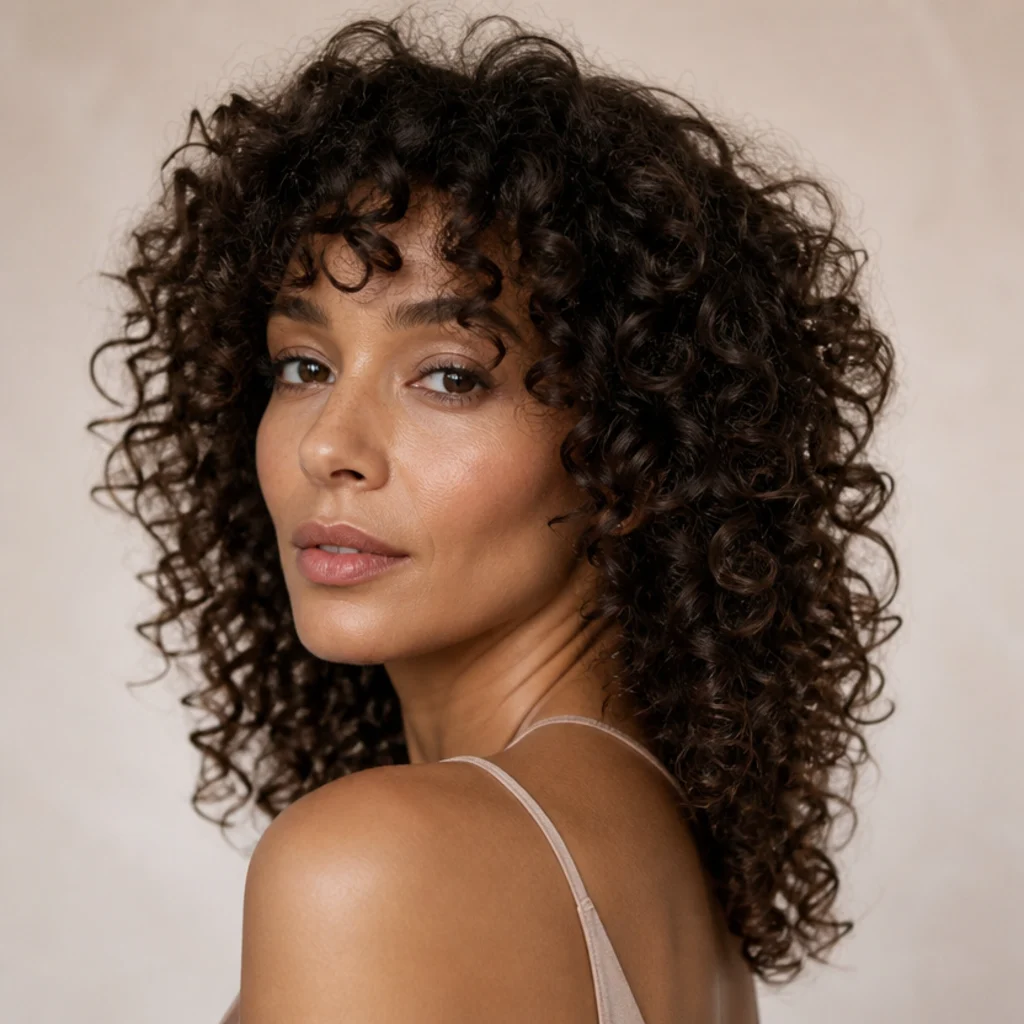
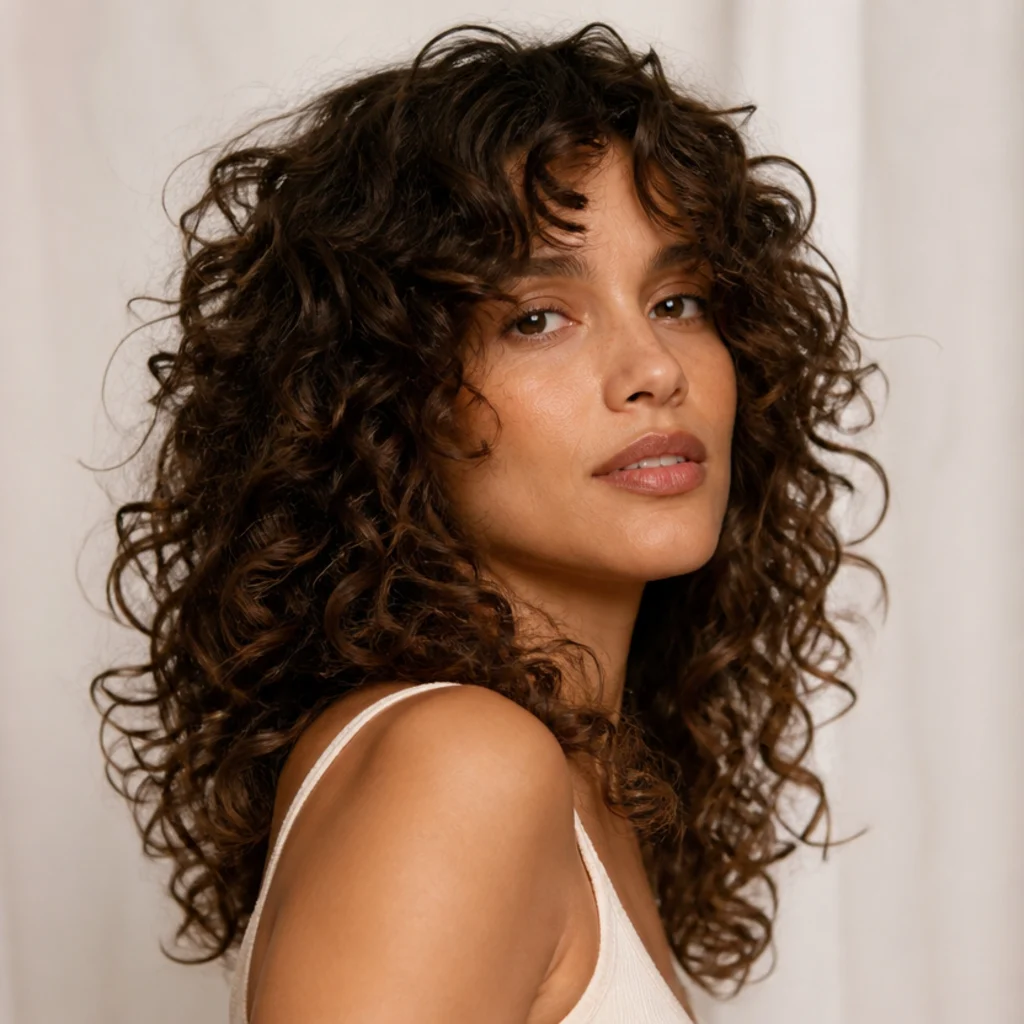
Curls and shags were built for each other. A long curly shag haircut uses internal layers to remove the weight that drags curls flat, so type 3 spirals spring up into a rounded, buoyant silhouette instead of stacking into a heavy triangle at the ends. It's ideal for curls that lose their shape at the roots once the length passes the shoulders. Insist on a dry cut or a curl-by-curl technique so your stylist reads the true pattern and shrinkage before removing anything; wet-cutting curly hair is where too-short surprises happen. Refresh the shape every 10 to 12 weeks and treat moisture as your real maintenance. Pro tip: layer a leave-in, then a curl gel using the praying-hands method, diffuse on low, and only scrunch out the cast once the hair is fully dry. Ask for a long shag cut on dry curls with internal layers for lift that keep length at the back.
05Choppy Layered Shag for Fine Hair
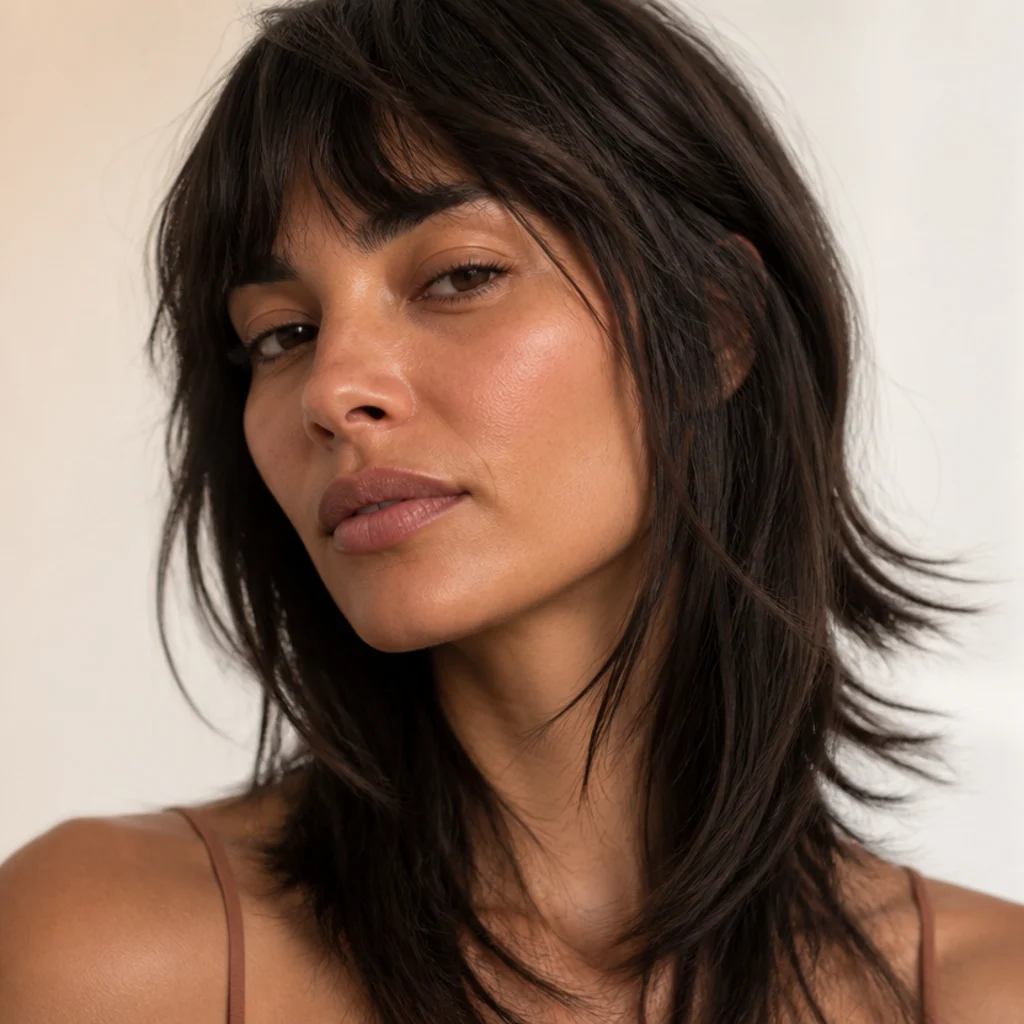
Fine hair can absolutely carry a shag; the trick is choppy, piecey layers rather than heavy graduation that thins the ends into wisps. Long shag choppy layers create visual separation that mimics density, so fine, straight-to-slightly-wavy hair reads fuller and more textured instead of stringy. The danger zone is over-thinning: ask specifically to keep weight through the perimeter so the ends don't disappear. Point-cutting rather than aggressive slide-cutting protects that density. Because fine ends show wear quickly, a tidy-up every 8 weeks keeps the shape honest. Pro tip: work a lightweight mousse into the roots of damp hair and rough-dry with your fingers before any brush touches it, then finish only the ends with a whisper of texture spray so the roots stay lifted. Ask your stylist for choppy, point-cut layers for a fine-hair shag with texture but no over-thinning at the ends.
Save this to Pinterest to build your appointment inspiration board.
06Shag with Wispy Bottleneck Bangs
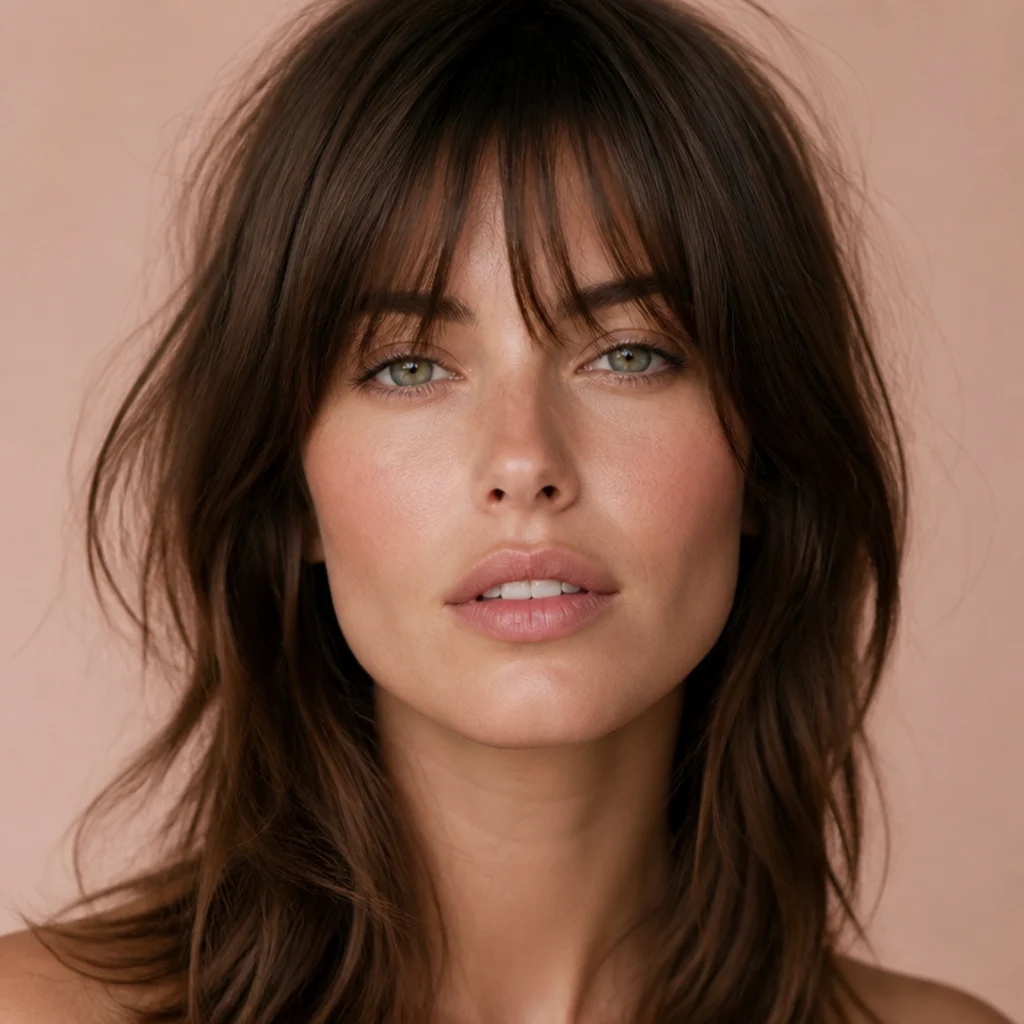
Bottleneck bangs sit between a curtain fringe and a full bang: shorter and slightly rounded through the center, then lengthening quickly into face-framing pieces that graze the cheekbone, so the shape nips in like a bottle's neck. On a long shag with bangs, they add softness and a little vintage polish without the weight or commitment of a solid fringe. They're the gateway bang for anyone nervous about the look, because the airy density feels forgiving and grows out into curtain pieces rather than an awkward wall. The tradeoff is frequency: a light dust every 3 to 4 weeks keeps the neck defined. Pro tip: rough-dry the fringe forward first to break any cowlick, then split the center and direct each side back with a round brush. Ask for wispy bottleneck bangs blended into a long shag, kept airy and separated.
07Rich Chocolate Brunette Shag

Sometimes one deep, liquid color does more than any highlight package. A rich chocolate brunette makes the layers of a long shag look costly and dimensional, with light sliding off the tapered ends and pooling in the crown. Warm and neutral undertones get the most out of it, and a colorist can steer it cooler with a hint of ash if your skin leans pink. The real advantage is upkeep: a single-process brunette only needs a root refresh every 6 to 8 weeks, plus a gloss to fight the dullness that hard water and heat cause over time. Pro tip: finish with a bit of bend at the ends and a shine serum smoothed over the mid-lengths only, so the top stays voluminous while the ends catch the light. Ask your colorist for a rich, glossy chocolate brunette with subtle warmth tuned to bring out the shag layers rather than flatten them.
08Copper Red Long Shag
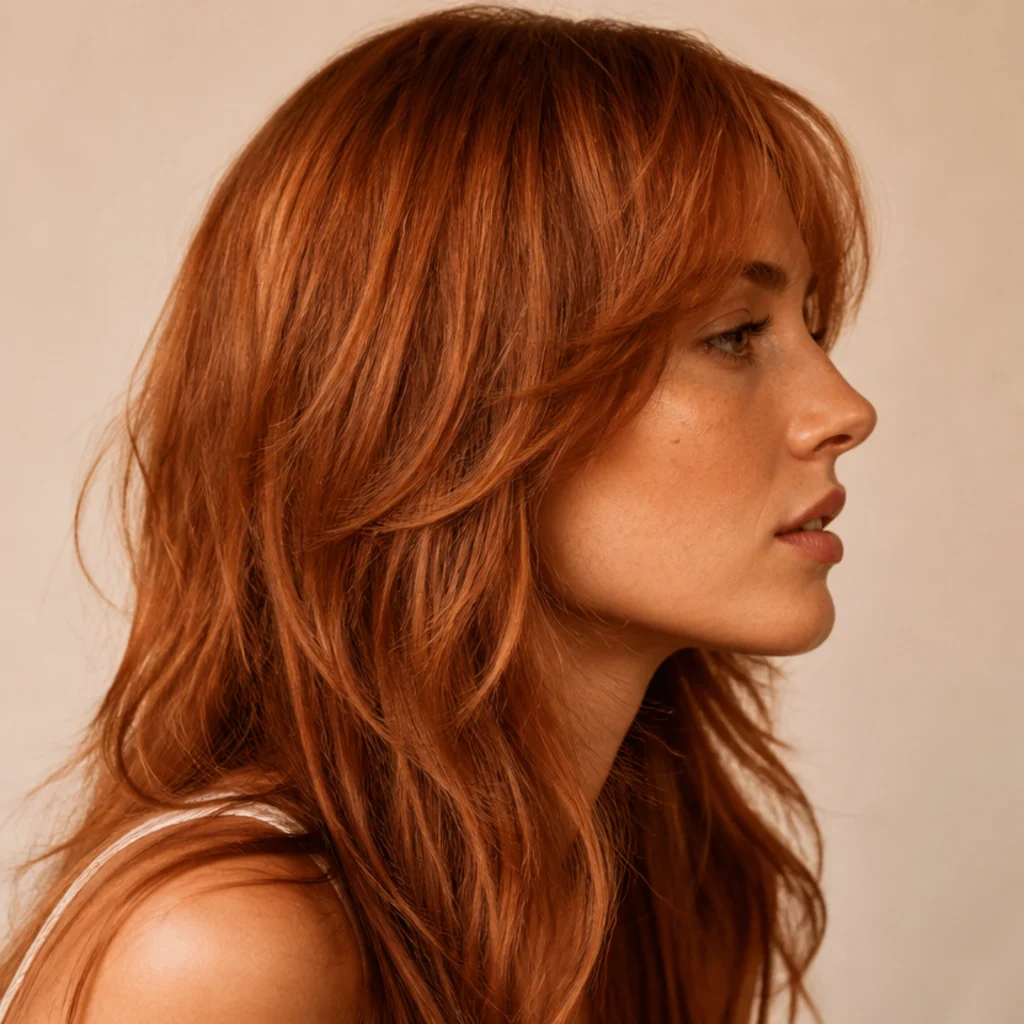
Copper is loud, and a shag gives all that saturation somewhere to move. The layers fracture a rich copper red so it looks like living, shifting color rather than a flat sheet, which is exactly why editorial reds photograph best on textured cuts. It sings on fair-to-medium skin with warm or neutral undertones, though a good colorist can push a custom copper cooler toward penny, or deeper toward auburn, to suit you. The honest catch is fade: red molecules are the largest and leach first, so this is the highest-maintenance color on the list for tone. Use a color-depositing conditioner at home, wash in cool water, and rebook a refresh every 5 to 7 weeks. Pro tip: skip clarifying shampoos entirely, since they strip fashion tones fastest. Ask your colorist for a warm copper red on a long shag with a gloss to keep the tone vibrant between visits.
09Icy Platinum Textured Shag

An icy platinum shag is a statement, and the texture is what keeps it from reading severe or helmet-like. Choppy, disconnected layers give pale blonde dimension and a slightly undone, rock-inspired edge, so the color looks worn-in rather than lacquered. Be clear-eyed that this is the highest-commitment option here for hair health: lightening to a true icy level and then layering asks a lot of the strand, so it favors those willing to invest in bond-building treatments and gentler heat. Expect toning every 4 to 6 weeks to fight yellow, plus root lightening on a similar clock. Pro tip: use a purple mask, not a daily purple shampoo, roughly once a week so you neutralize brass without over-depositing and going dull grey. Ask your colorist for a cool icy platinum on a textured long shag that prioritizes hair integrity and finishes matte rather than glassy.
10Long Shag with a Money-Piece Frame
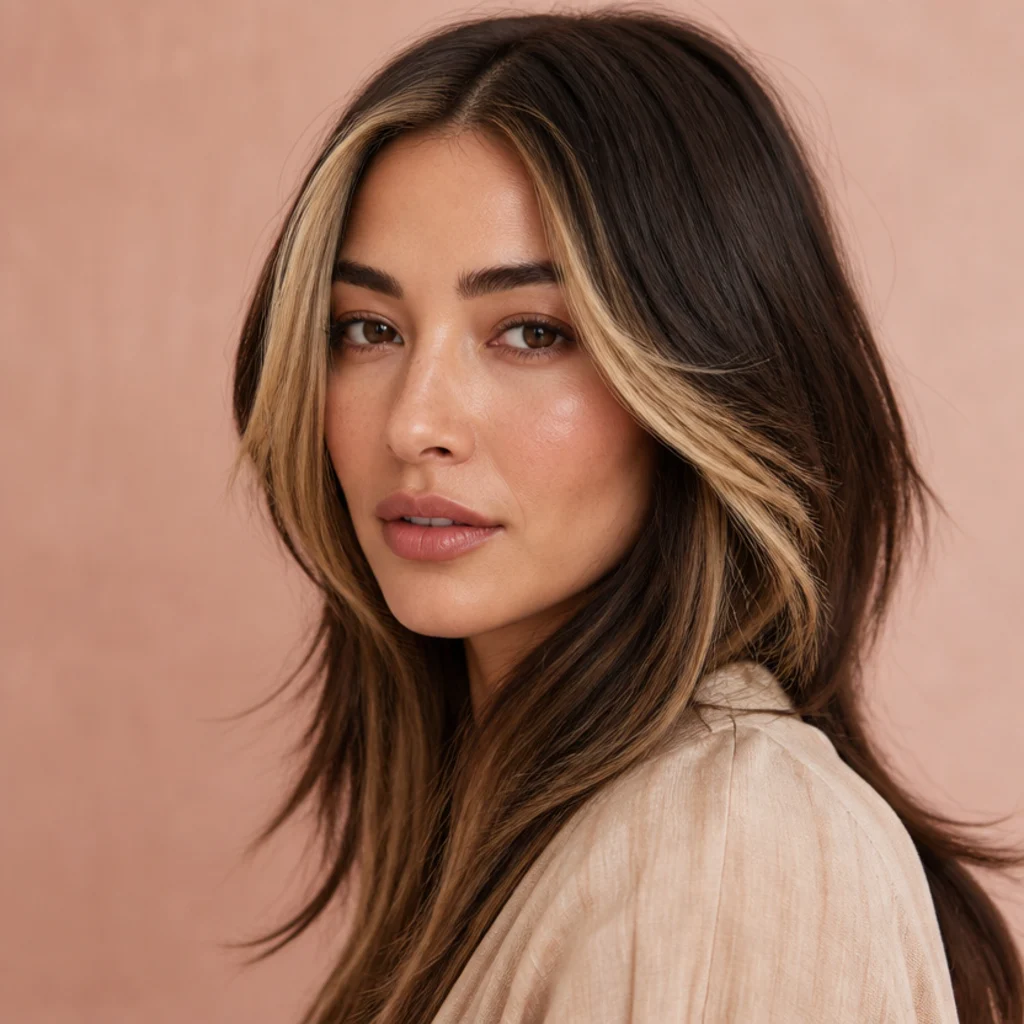
The money piece brightens only the front sections that frame your face, and on a shag those framing layers are already doing most of the visual work, so the two techniques play off each other. The lift sits right against the shortest pieces around the cheeks, bouncing light up toward your complexion. Every face shape can wear it, and it works over any base, from espresso to jet black, because the contrast is the point. Since the brightness stays localized to the front, upkeep is refreshingly contained: touch up just the money piece every 8 to 10 weeks and leave the rest. Pro tip: ask for the brightest ribbon to start a touch below the cheekbone rather than at the temple, so it flatters instead of washing you out. Ask your colorist for face-framing money-piece highlights on the front shag layers, blended softly into the base, and style with a slight outward flick to show the brightness.
Save this to Pinterest before you scroll on.
11Sleek Straight Shag with Razored Ends
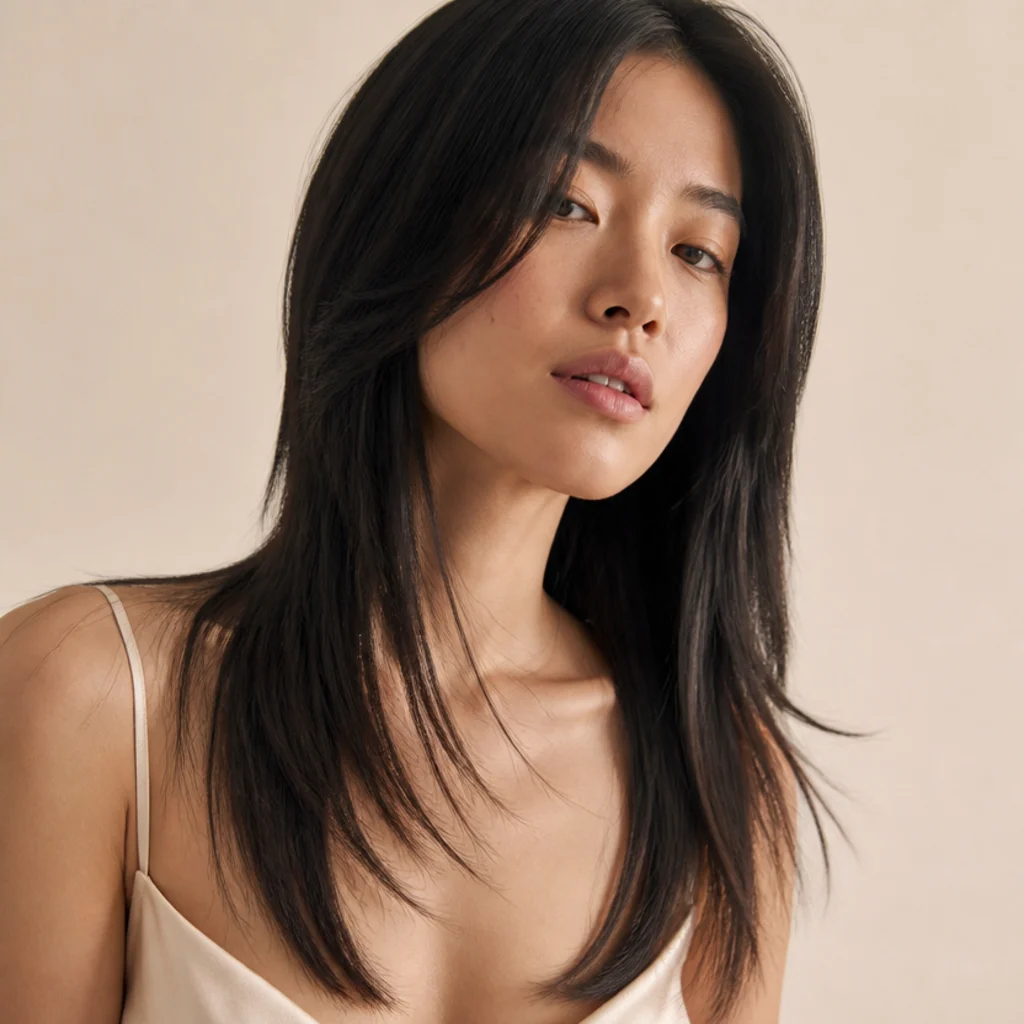
Not every shag has to look tousled. Worn straight and smooth, a long shag reveals its underlying architecture: razored ends that taper to a fine, feathered point and layers that fall in clean, deliberate sections. This finish rewards naturally straight, healthy hair that holds a sleek line without frizzing, and it's the most polished, minimalist way to wear the cut. Razored ends are more fragile than blunt ones, so a heat protectant is non-negotiable and over-thinning will leave them see-through. Keep the points sharp with a trim every 8 to 10 weeks. Pro tip: flat-iron in the direction the layers were cut, following each section down and slightly under so the ends kiss inward rather than flare. Finish with a pea-sized drop of shine serum through the lengths. Ask your stylist for a long shag cut with a razor for feathery, tapered ends, styled sleek rather than textured.
12Voluminous Shag for Thick Hair

Thick, dense hair is prime shag territory, because generous internal layers remove weight and finally give the shape somewhere to breathe. A voluminous long shag prevents the boxy triangle silhouette that heavy hair falls into when left one length, trading it for big, mobile movement that still keeps your length. Coarse or simply abundant hair that feels leaden by afternoon is exactly what this is built for. Reassuringly, layered thick hair holds its shape well, so you can often stretch to a trim every 10 to 12 weeks. The layering must be built from the inside; surface thinning alone creates flyaways rather than real movement. Pro tip: rough-dry to about 80 percent first to knock out bulk, then diffuse or round-brush only the top layers so you control volume without frizz. Ask your stylist for heavy internal layering on a long shag to remove weight and control bulk while keeping length.
13Shadow-Root Caramel Shag
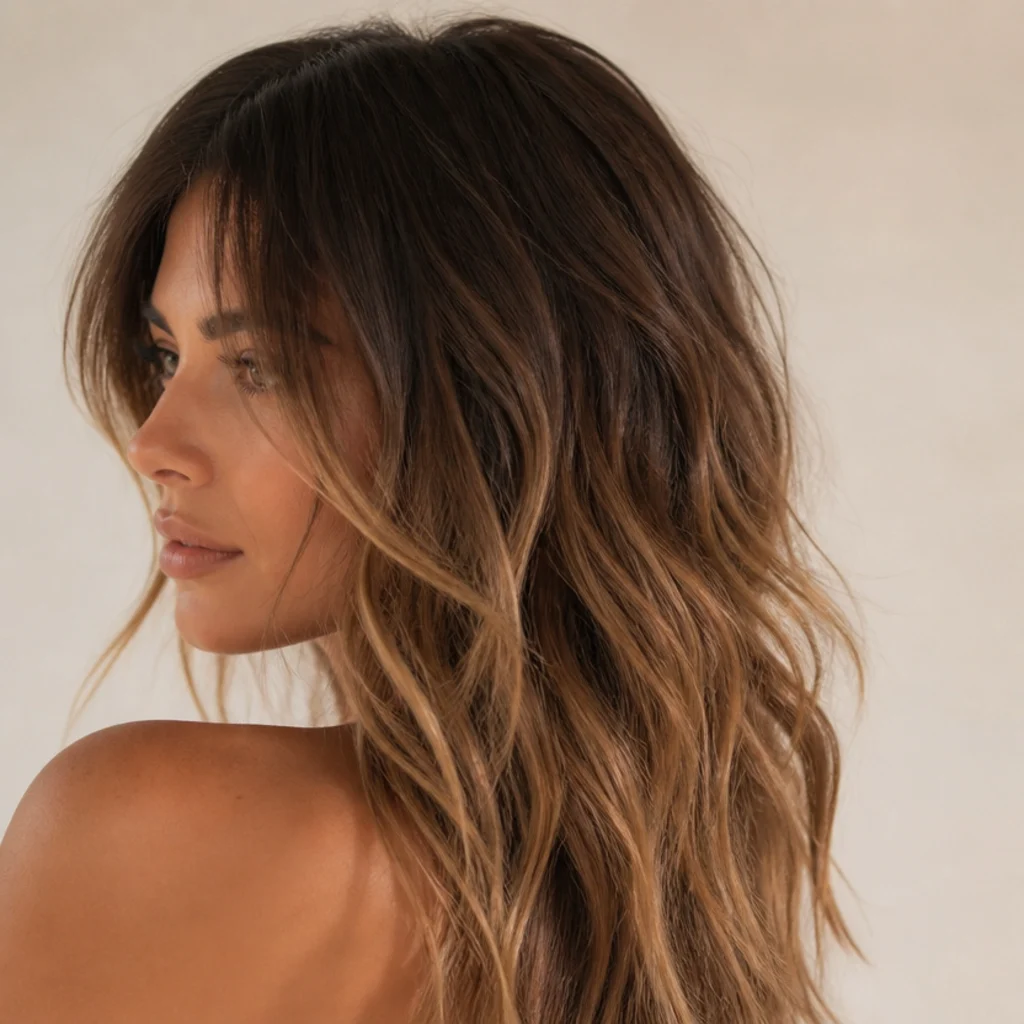
A shadow root keeps your natural depth at the scalp and melts it smoothly into warmer caramel through the mid-lengths and ends, so regrowth stays nearly invisible for months. On a long shag, that vertical gradient rides the layered shape and stacks real dimension exactly where the movement is. Medium-to-deep brunettes who want warmth and glow without committing to fully blonde get the most mileage here, and it can be tuned toward toffee for warm skin or a softer mushroom-caramel for neutral tones. This is one of the lowest-maintenance color routes here, with refreshes every 12 to 16 weeks. Pro tip: style in loose, open waves with the ends left out so the eye travels down the melt and reads the full gradient. Ask your colorist for a soft shadow root melting into caramel balayage, mapped to the shag layers.
14Beachy Sea-Salt Wave Shag

This is the just-left-the-coast finish that people screenshot most. Sea-salt spray gives a long shag a matte, gritty texture that makes the layers separate into piecey, undone sections, and it's forgiving on second-day hair. Anyone with a natural wave who wants a low-effort, casual look will like this one, though drier or coarser textures should use salt sparingly so it doesn't tip into straw. The cut itself is standard shag upkeep, around every 10 weeks; the whole vibe lives in the product. Pro tip: scrunch salt spray into damp, not soaking, hair, then follow with a single drop of lightweight oil raked through the ends so the matte texture reads intentional rather than parched. Air-dry, or diffuse on low if you want more lift. Ask your stylist for a long shag cut to bring out your natural texture, styled matte and beachy.
15Long Shag with Blunt Bardot Bangs

For the boldest statement on the list, a full Bardot bang brings 60s glamour to the shag. The fringe is heavier and swept with real root volume, and it deliberately contrasts the airy, feathered layers behind it, so the front reads soft-glam while the length underneath stays easy. Because a full fringe visually shortens the face, oval and longer face shapes get the most from it; rounder faces may prefer the curtain or bottleneck versions above. Be honest with yourself about upkeep, since this is one of the higher-maintenance choices: a bang trim every 3 to 4 weeks plus daily styling to hold the sweep. Pro tip: blow-dry the fringe over a large round brush with the airflow lifting from underneath, then set with a whisper of flexible hairspray brushed through, never sprayed on wet. Ask your stylist for a full, voluminous Bardot-style bang paired with long shag layers and styled with root volume.
Save this to Pinterest so it's ready when you book.
16Silver-Grey Shag for Mature Hair

Embracing silver or grey pairs beautifully with a shag, because the layers reintroduce movement to strands that can otherwise sit flat, wiry, or coarse. A long shag keeps grey looking deliberate and modern rather than heavy or matronly, and the face-framing pieces add softness right where mature skin appreciates it. Anyone transitioning to or already wearing natural grey and wanting lift around the face without cropping length will like this one. Grey texture often runs coarser and more resistant, so a violet-toning product keeps it bright and clear of yellow, and a trim every 8 to 10 weeks manages the wiriness. Pro tip: smooth a lightweight leave-in cream through the mid-lengths while damp to tame the coarse feel, and avoid heavy oils that dull the silver. Ask your stylist for a soft long shag on grey hair with face-framing layers that add movement and lift.
17Long Shag on Type 4 Coily Hair
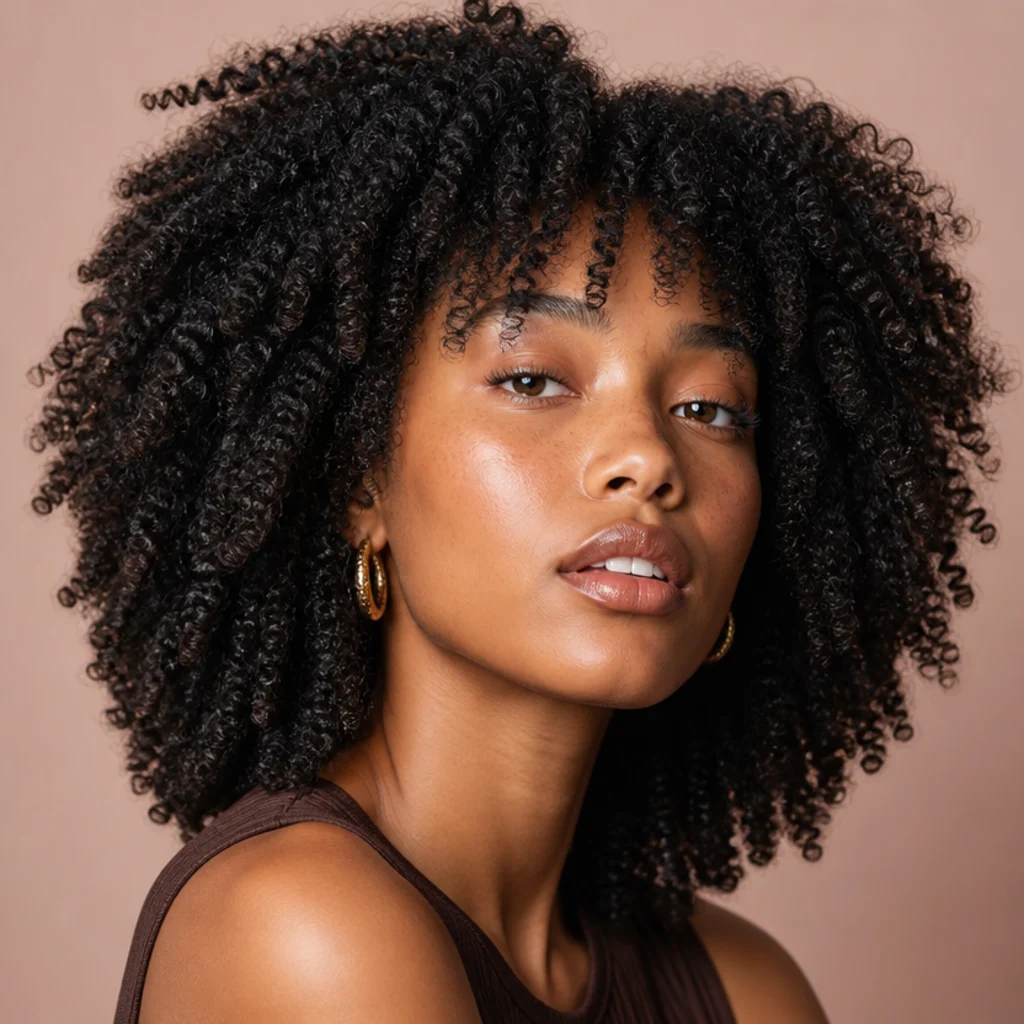
Coily, type 4 hair carries a shag with sculptural, architectural volume when it's cut with the pattern in mind rather than against it. Here the layers are placed to shape the outline and encourage a rounded, full silhouette, not to thin or tame the density. The single most important factor is shrinkage: this must be cut by a stylist fluent in coily textures, on hair cut either fully stretched or in its true shrunken state, because a coil that reads shoulder-length can spring to chin-length once it dries. Upkeep leans on moisture far more than scissors, with a shape-up every 10 to 12 weeks. Pro tip: section and cut on stretched, banded hair so every layer lands where you intend, then reveal the true rounded shape once it's styled. Style with a rich leave-in and a defining cream. Ask your stylist for a long shag shaped for type 4 coils that accounts for shrinkage and builds rounded volume.
18Rocker Shag with Heavy Layers

For real attitude, the rocker shag pushes the layering harder: shorter, deliberately disconnected pieces at the crown drop into longer, choppy lengths, so the shape has grit rather than polish. It looks strongest in a deep, matte color that lets the texture, not shine, tell the story. Anyone who wants an undone, lived-in edge and isn't bothered by very visible layering will click with this one — it's the least precious version here. That said, disconnection still needs deliberate shaping every 8 to 10 weeks, or it crosses from intentional into simply overgrown. Pro tip: mist dry texture spray at the roots and knead a pinch of matte paste through the ends with your fingertips, working against the fall of the hair so the pieces stand apart. Ask your stylist for a heavily layered, slightly disconnected rocker shag with choppy crown pieces and plenty of visible texture.
19Wolf-Cut Shag Hybrid
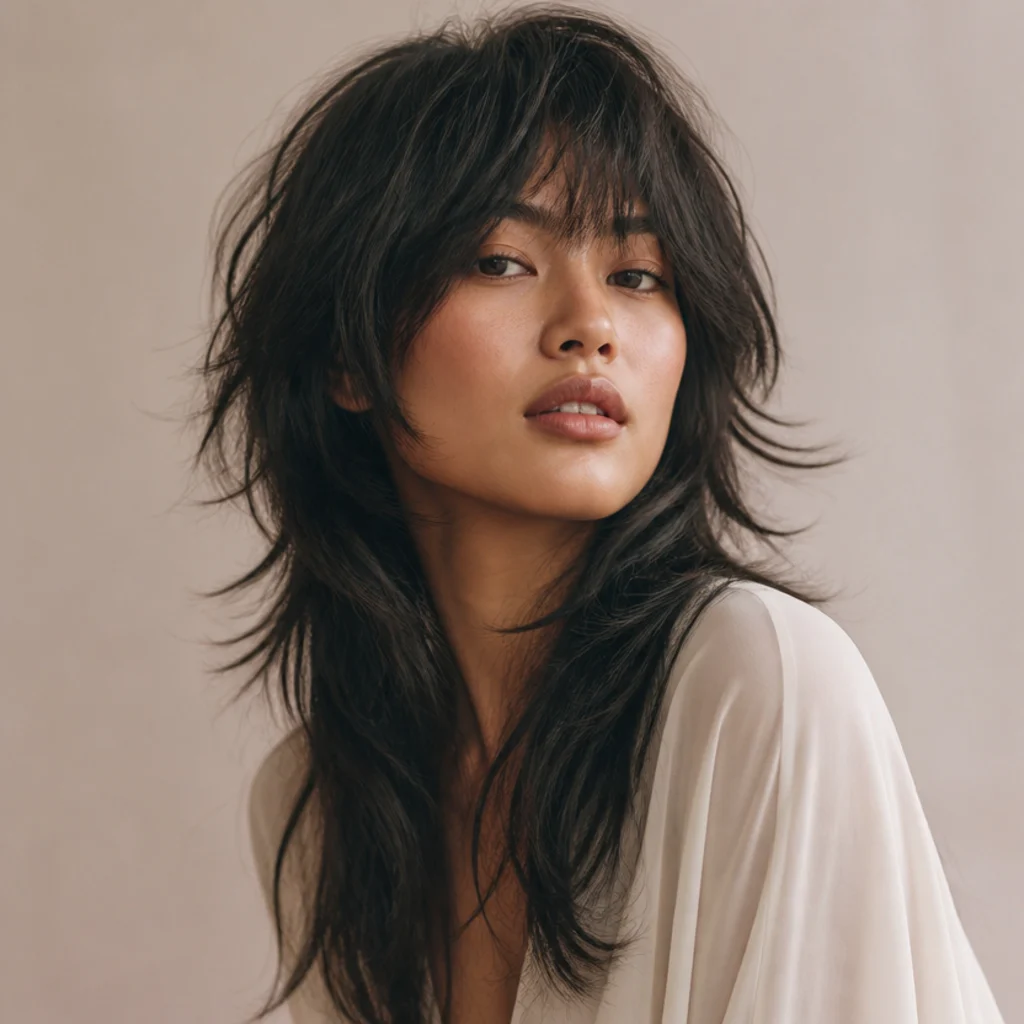
The wolf cut is the shag's bolder cousin, and this hybrid hands you the drama while keeping length to fall back on. It fuses the heavy, mullet-adjacent crown layers of a wolf cut with the softer, tapered long ends of a shag, so the top is voluminous and shaggy while your length stays intact and wearable. Anyone chasing a fashion-forward silhouette who isn't quite ready to commit to a true short wolf cut will find a middle ground here, and it photographs with far more dimension than a standard long-layer cut. Upkeep runs moderate, roughly every 8 to 10 weeks, because those crown layers grow out fastest and visibly. Pro tip: concentrate all your volume effort at the crown, rough-drying it up and back, and leave the ends nearly untouched so the contrast between shaggy top and long tail stays sharp. Ask your stylist for a wolf-cut and long shag hybrid with a dramatic layered crown melting into long tousled ends.
20Low-Maintenance Air-Dried Shag
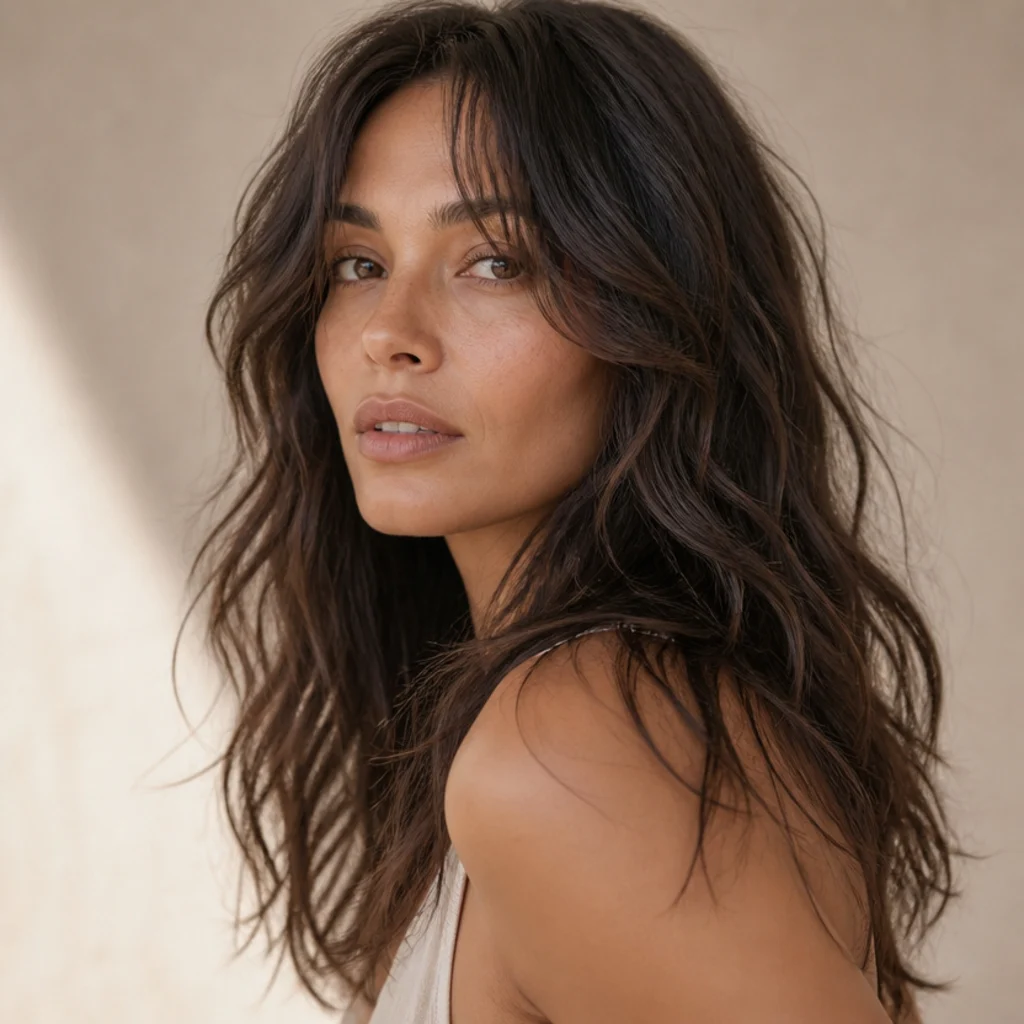
If your real goal is wash-and-go, the shag is one of the most forgiving long cuts available. Cut to cooperate with your natural texture, an air-dried long shag needs almost no heat; the layers fall into their intended shape as they dry, which is exactly why it has become the busy-person's default. Anyone with any natural wave or bend who wants a low-effort routine and healthier ends from skipping daily hot tools will get the most from this. Trim every 10 to 12 weeks so the perimeter stays tidy as it grows. The catch is that the cut must be dialed to your texture, so this is worth spending your consultation time on. Pro tip: apply a leave-in to soaking-wet hair, scrunch upward once, then don't touch it again until it's fully dry, since fiddling mid-dry is what creates frizz. Ask your stylist for a long shag cut specifically to air-dry well with your natural texture and minimal styling.
Pro Tips from the Editor
- Book a consultation before a big change. A five-minute chat about your texture, shrinkage, and how you actually dry your hair prevents the two most common regrets: layers too short and a fringe that fights your cowlick.
- Match the layering to your density, not the photo. The same reference picture calls for razored, point-cut layers on fine hair and heavy internal layers on thick hair. Ask which your stylist is using and why.
- Curly and coily textures should be cut dry or stretched. Wet-cutting hides shrinkage, and shrinkage is precisely what decides where each layer lands.
- Let color choice, not the cut, set your salon calendar. Balayage, shadow roots, and caramel melts stretch for months; copper, platinum, and blunt fringes pull you back every few weeks.
- Protect razored and lightened ends. Feathered, razor-cut points and any bleached lengths need a heat protectant and periodic bond-building care, or they frizz and split faster than the rest.
- Style the crown, leave the ends alone. Nearly every version here lives and dies on root lift. Concentrate your drying and product there, and let the tapered ends do their own soft thing.
- Save two or three angles, not one. A front-and-back or three-quarter view tells your stylist far more about layer placement and length than a single flattering selfie.
How to Choose / Get the Look
Choose by feature. Start with texture, because it dictates how a shag falls. Straight hair shows the layers and razored ends most clearly and rewards choppier, piecey cuts; wavy and curly hair leans into softer, weight-removing layers that spring up rather than hang; fine hair does best with point-cut or razored separation that mimics density; thick and coily hair needs heavier internal layering to shed bulk and build a rounded shape. Then factor in face shape and fringe. Curtain and bottleneck bangs are the most universally flattering and grow out gently, drawing a slimming diagonal that suits round and square faces; full blunt or Bardot bangs make a statement and shorten the face, so they favor oval and longer shapes.
| Variation | Upkeep timeline | Styling effort | Best for |
|---|---|---|---|
| Curtain-bang soft shag | Bang dust every 4-6 wks | Low | Round, square, heart faces; most textures |
| Balayage / caramel melt | Salon every 12-16 wks | Low-moderate | Wavy hair wanting grown-out color |
| Copper or platinum | Refresh every 4-7 wks | High | Bold color lovers who commit to care |
| Blunt Bardot bang | Trim every 3-4 wks | High | Oval and longer faces |
| Air-dried natural shag | Trim every 10-12 wks | Very low | Busy schedules, any natural wave |
Prep, longevity, and when to see a pro. Come to the appointment with your hair dry or air-dried in its usual state so your stylist reads the real texture, and bring saved photos with the parts that matter flagged: layer placement, where the shortest pieces hit, bang style, and finish. Tell them whether you air-dry or heat-style so the layers are tailored to your routine. A well-built long shag holds its shape for 8 to 12 weeks; bold fashion color and blunt fringes shorten that. See a professional for the foundational cut, any lightening past a couple of levels, and curly or coily shaping, all places where shrinkage and hair integrity leave little margin for a DIY fix.
Frequently Asked Questions
What face shape suits a long shag haircut best?
Nearly all of them, which is a big part of the appeal. The face-framing layers and soft bangs draw flattering diagonal lines that flatter almost universally. Round and square faces do best with longer, cheekbone-grazing pieces and curtain or bottleneck bangs, which lengthen the face; oval and longer faces can carry fuller, blunter fringes like the Bardot without looking shortened. If you're unsure, curtain bangs are the safest starting point across every shape.
Is a long shag high maintenance?
The cut itself is fairly low maintenance, because the layers grow out softly and blend rather than turning shaggy overnight, so most people trim every 8 to 12 weeks. Maintenance rises with your add-ons: full blunt or Bardot bangs need a dust every 3 to 4 weeks, and bold colors like copper or platinum require regular toning and root work. Choose a curtain-bang, balayage, or air-dried version if you want the whole thing to stay low-effort.
Can fine or thin hair pull off a long shag?
Yes, and it's one of the better long cuts for fine hair. The key is choppy, point-cut or razored layers that add visual separation and the illusion of fullness, rather than heavy graduation or aggressive thinning that leaves the ends sparse. Ask your stylist to keep weight through the perimeter and avoid over-thinning, then finish with a lightweight root mousse and a little texture spray at the ends for lift that lasts.
How do I style a long shag without heat?
Apply a leave-in or curl cream to soaking-wet hair, scrunch upward to encourage texture, then air-dry or diffuse on low without touching it mid-dry, since handling is what creates frizz. A shag cut to work with your natural wave or curl falls into shape on its own, which is exactly why the air-dried version is so popular. A pinch of sea-salt spray adds grit if you want more separation.
What is the difference between a long shag and a wolf cut?
They share choppy, layered DNA, but the wolf cut is more extreme, with heavier, shorter crown layers and a more disconnected, mullet-adjacent silhouette. A long shag keeps more of your length and uses softer, more blended graduation, so it reads romantic where the wolf reads edgy. The hybrid in idea 19 splits the difference, giving you a dramatic layered crown while keeping long, tousled ends to fall back on.
How long does it take to grow out a long shag?
Because the layers are designed to blend rather than sit blunt, a long shag grows out more gracefully than most layered cuts. The shortest crown and face-framing pieces catch up over roughly three to five months, softening into longer face-framing layers along the way rather than creating a hard line. If you want to grow it out fully, ask your stylist to trim only the ends and leave the internal layers alone so the length can close the gap.
How much does a long shag haircut cost?
It varies widely by region, salon tier, and stylist experience, and dry-cutting or texture specialists often price at the higher end of a salon's cut menu because the shape is technique-heavy. Any color service, whether a gloss, balayage, or full lightening, is billed on top of the cut. Rather than chasing an exact figure, ask the salon for a quote during booking and confirm whether a consultation, wash, and style are included.
Will a long shag work on straight hair?
Absolutely, and straight hair actually shows the cut's architecture most clearly. On straight textures the razored ends and layer placement read crisp and defined, so lean into choppier, piecey layering and a curtain or bottleneck fringe for movement. Because straight hair can fall flat at the roots, a lightweight mousse and a quick round-brush flick at the crown give the shag the lift it needs to avoid looking like plain long layers.
How is a long shag different from long layers?
Standard long layers remove weight fairly evenly and keep a rounder, more uniform outline. A long shag is more aggressive and intentional at the top: it stacks shorter, textured layers through the crown and around the face while preserving length at the back, so you get real root volume and face-framing movement rather than a smooth cascade. In short, layers soften the shape; a shag actively rebuilds it for texture and lift.