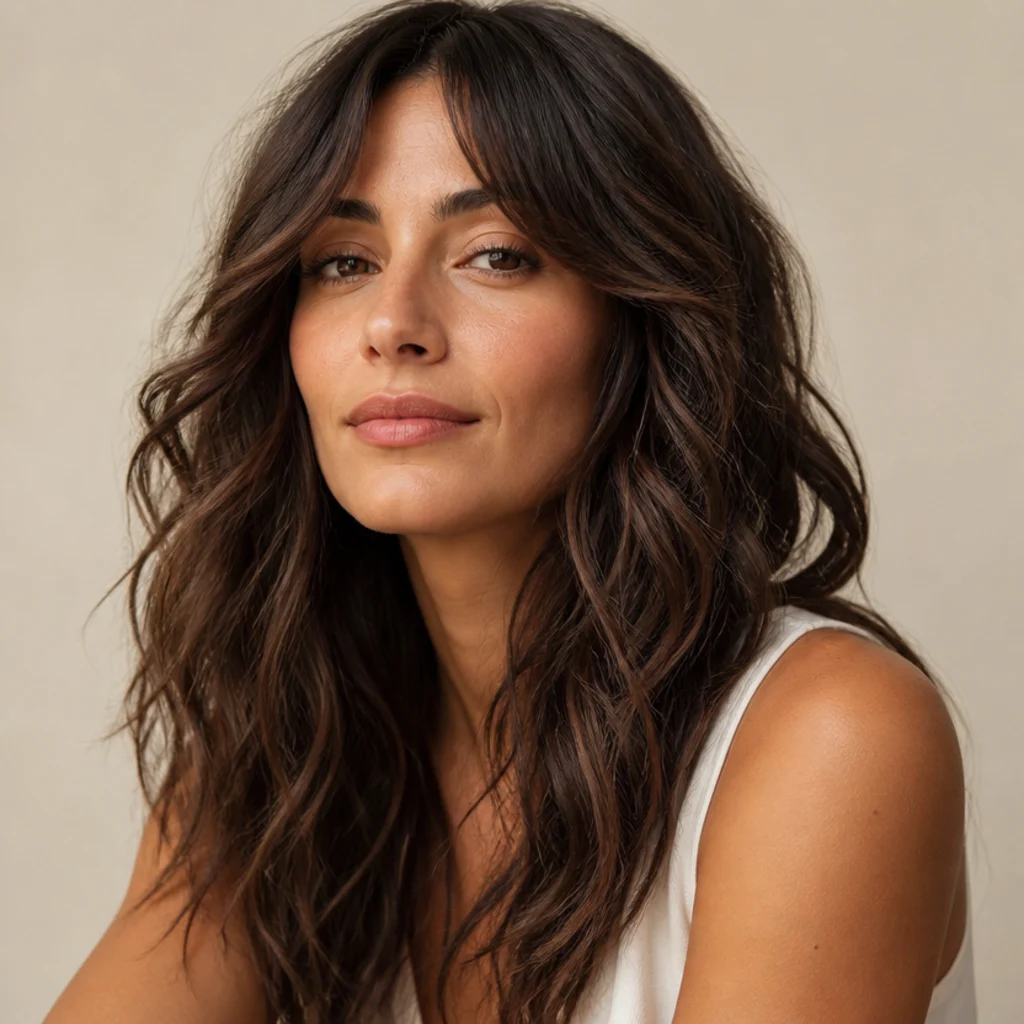
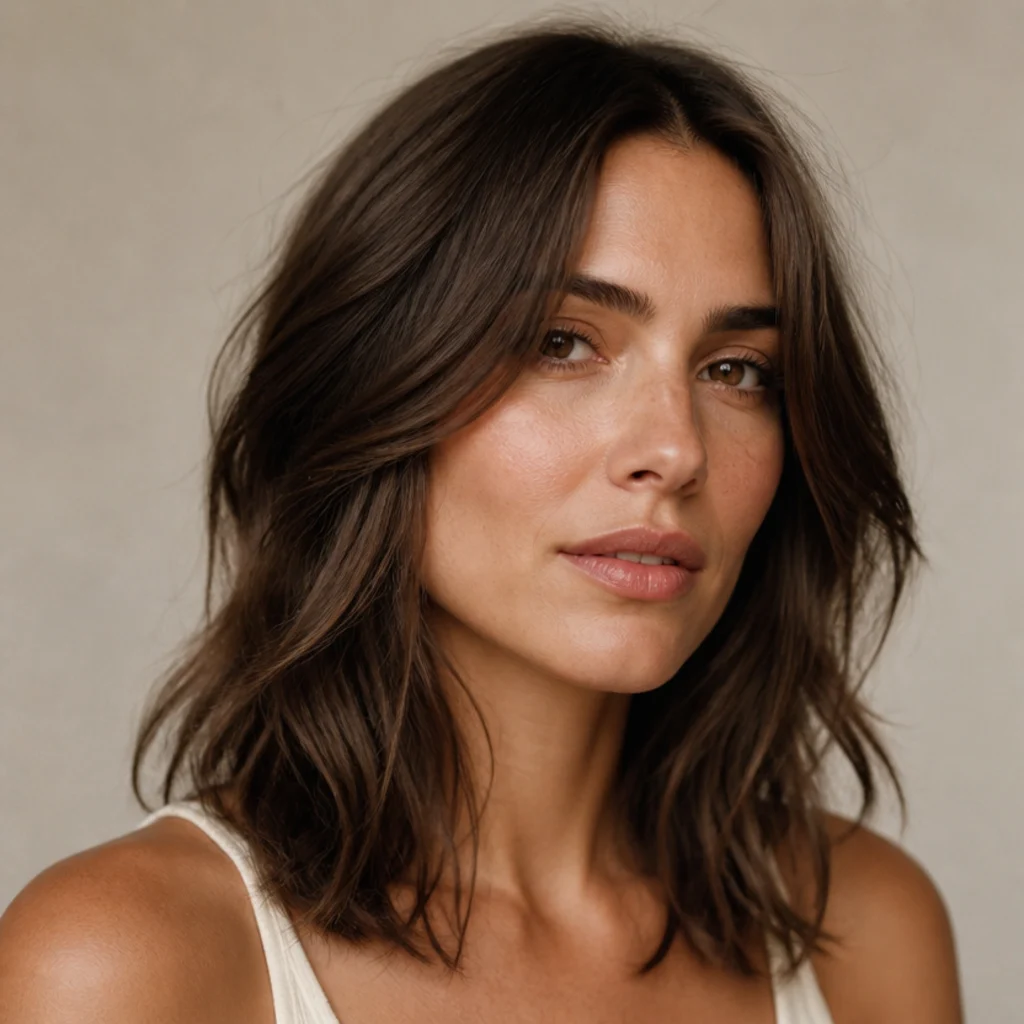
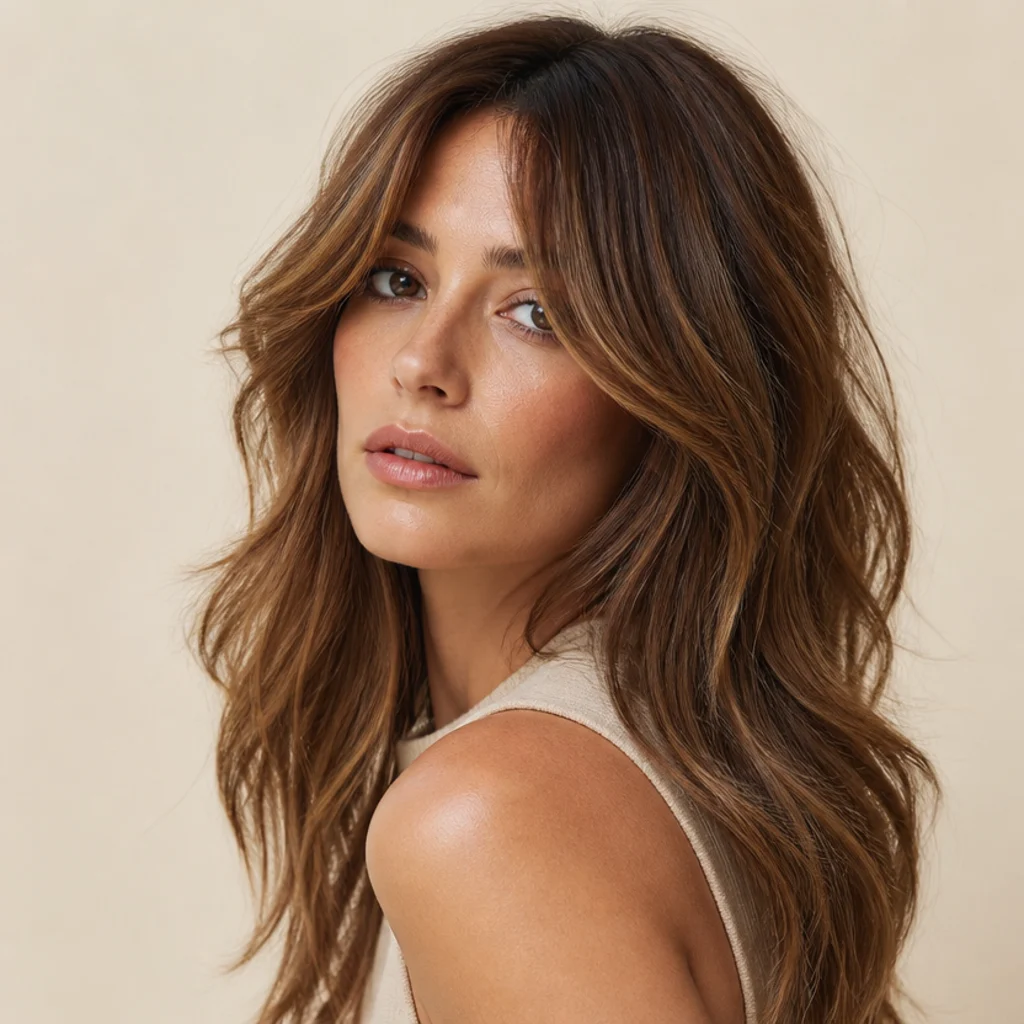
20 Long Shag Haircut Ideas for Fine Hair
The long shag is one of the few layered cuts engineered to make fine hair read denser: it trades dead blunt weight for stacked, light-catching layers that hold a bend and float instead of falling flat. Below are 20 versions, sorted by texture, color, and bang shape, each with the layer placement, upkeep timeline, and the exact words to hand your stylist.
 Edited by Lena Rose · Published July 11, 2026 · 32 min read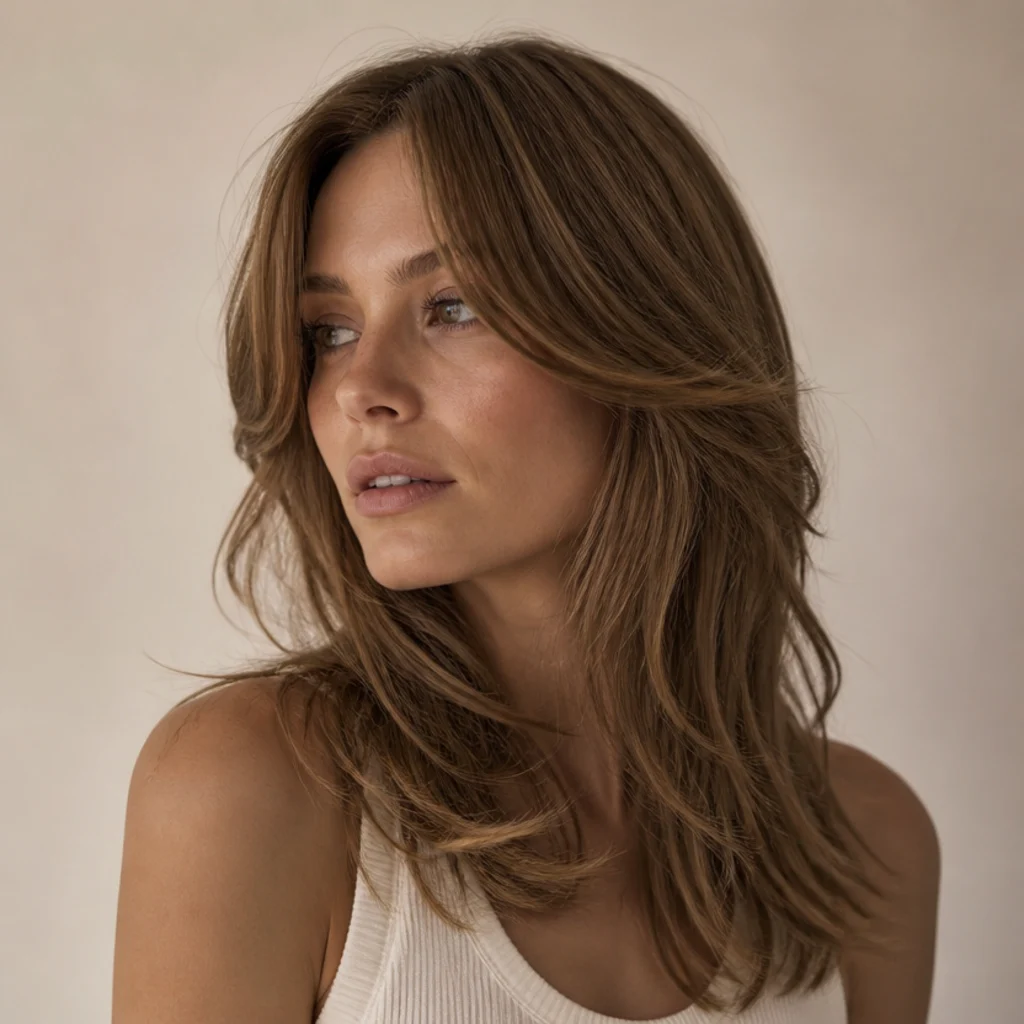
Quick Answer
- Best for: Fine, straight-to-wavy hair that goes flat by midday and needs the illusion of density plus real root lift, without sacrificing length below the collarbone.
- Who might skip it: Anyone who wants a wash-and-wear blunt one-length, has very sparse density where light razoring would read see-through, or refuses any styling step at all (even air-dry shags want a leave-in and a scrunch).
- Maintenance: Moderate. Shape trim every 8-10 weeks; any fringe needs a dusting every 3-6 weeks depending on how short it sits.
- Difficulty: Beginner to intermediate. The cut carries most of the shape; your only real jobs are root lift and one wave or smoothing technique.
- Cost: Cut typically runs mid-range to premium at a texture-literate salon; add color (gloss, balayage, or platinum) and cost climbs with the technique and grow-out demands. Ask for a quote before the bowl comes out.
- Wear time / longevity: The shape looks intentional for roughly 6-10 weeks before the crown layers soften; a good shag grows out gracefully rather than in an awkward shelf.
- Standout variation: A long shag with curtain bangs, which builds density right at the front where fine hair falls flattest and frames the face at the cheekbone.
- How to ask your stylist: Request "airy, connected internal layers on fine hair, starting at the cheekbone, kept length below the collarbone, no heavy thinning at the ends." The phrase connected, not disconnected is the one that saves you from wispy ends.
In This Guide
- Classic Long Shag With Curtain Bangs
- Soft Wavy Long Shag
- Wispy Wolf-Cut Shag
- Long Shag With Micro Bangs
- Face-Framing Money-Piece Shag
- Bottleneck Bang Shag
- Cool-Toned Ash Brown Shag
- Honey Balayage Long Shag
- Straight Sleek Long Shag
- 70s-Inspired Feathered Shag
- Copper Long Shag With Bangs
- Textured Beachy Shag
- Long Shag With Side Bangs
- Platinum Long Shag
- Coily Long Shag
- Choppy Rock-Edge Shag
- Center-Part Long Shag
- Long Shag With Shadow Root
- Air-Dried Low-Effort Shag
- Long Shag With Blended Fringe
Intro
Fine hair and heavy blunt cuts are a bad marriage. Without internal layering, length just hangs from the occipital bone down, the ends taper to nothing, and the whole shape looks sparse by lunch. A long shag reverses that logic. It builds short, stacked layers through the crown and around the face while protecting real length below the collarbone, so you get the lift and movement of a layered cut without amputating the length most fine-haired people guard closely. The reason it reads fuller is optical: those airy layers sit at staggered lengths, catch light at different points, and hold a slight bend rather than collapsing into one flat sheet, so your eye registers more surface and more strands than are actually there.
It's also having a moment, caught between the 70s revival, the wolf-cut wave, and a curtain-bang trend that won't quit. That's good news, because texture-literate stylists are cutting shags every week right now. The trick with fine hair is restraint: the right long shag uses connected layering and precise face-framing, not aggressive thinning shears. The 20 ideas below run from an air-dry-and-go wavy shag to sharp choppy and bold-color versions, each with who it flatters, an honest upkeep timeline, and the specific language to make sure you leave with the shape you actually pictured.
01Classic Long Shag With Curtain Bangs
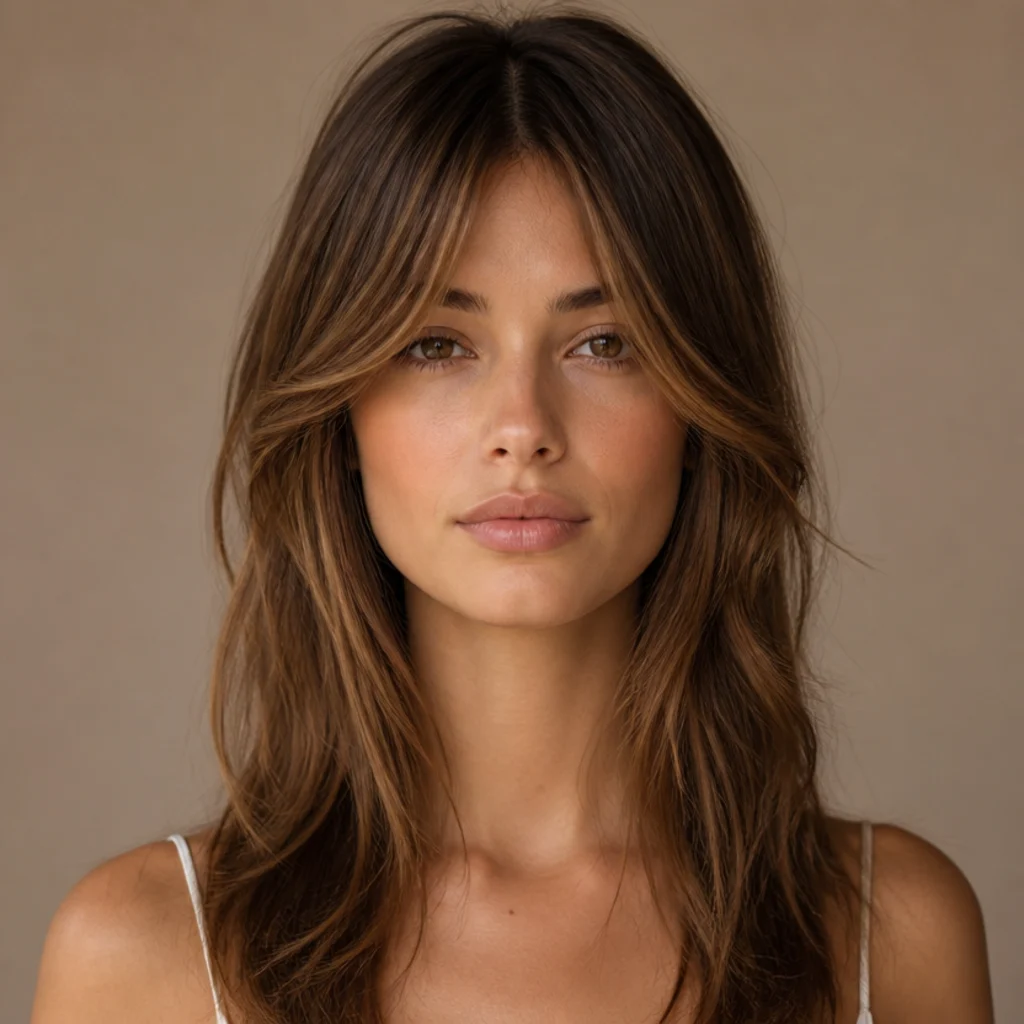
This is the reference build, the one most people mean when they say long shag with curtain bangs. Layers start around the cheekbone and cascade down in connected tiers, while the curtain fringe splits at the center and sweeps back toward the temples so it reads like an extension of the face-framing rather than a separate bang. On fine hair the curtain is structural, not decorative: it stacks soft density exactly where the front looks flattest and shortens the visual forehead. Oval, heart, and longer faces get the most out of it, since the cheekbone-level split widens the mid-face. Ask your stylist for face-framing layers that connect into a curtain fringe, kept long enough to tuck behind the ears on a grow-out. Upkeep is moderate with a fringe dusting every four to five weeks and a full shape trim at eight to ten. Pro tip: dry the fringe with a round brush and finish each panel with a two-second cold-shot blast to set the sweep, so it never separates into stringy curtains by afternoon.
02Soft Wavy Long Shag
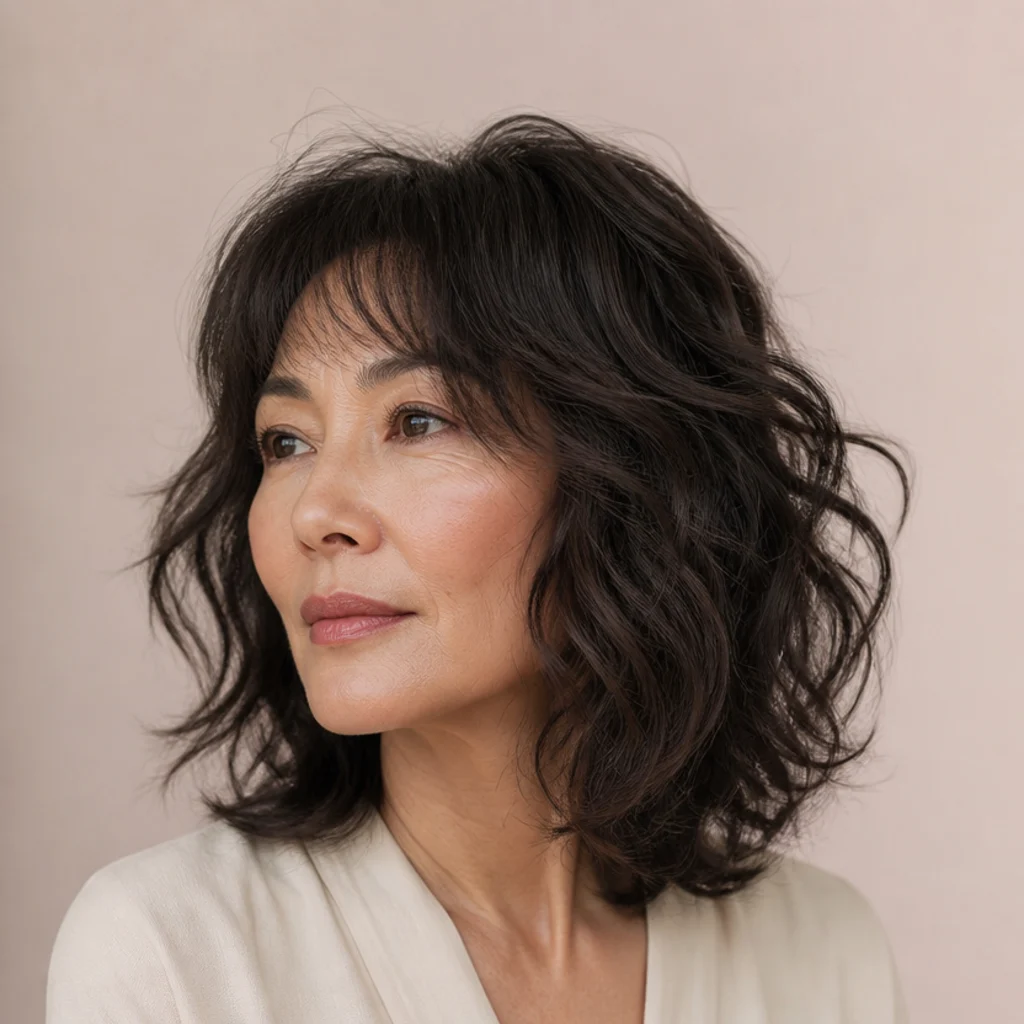
A long wavy shag haircut is arguably the single most flattering option here because the waves fill the negative space the layers open up. You do not need a tight curl, just a loose S-bend from a 1.25 to 1.5-inch barrel or an overnight braid on damp-not-wet hair. The magic is that each layer sits at a different length, so the waves break at staggered points and never fall into a uniform, flat corrugated pattern. Oval and heart shapes wear it beautifully, and it works on fine straight hair that just needs coaxing to hold a bend. Difficulty is low once you've drilled one wave technique. Ask your stylist for a shag with airy layers cut to support a loose wave, not a tight curl, so the shape reads soft. Pro tip: mist a light sea-salt or texture spray while the wave is still warm from the iron, scrunch once, then leave it completely alone; heavy curl creams drag fine strands straight and undo the lift within an hour.
03Wispy Wolf-Cut Shag
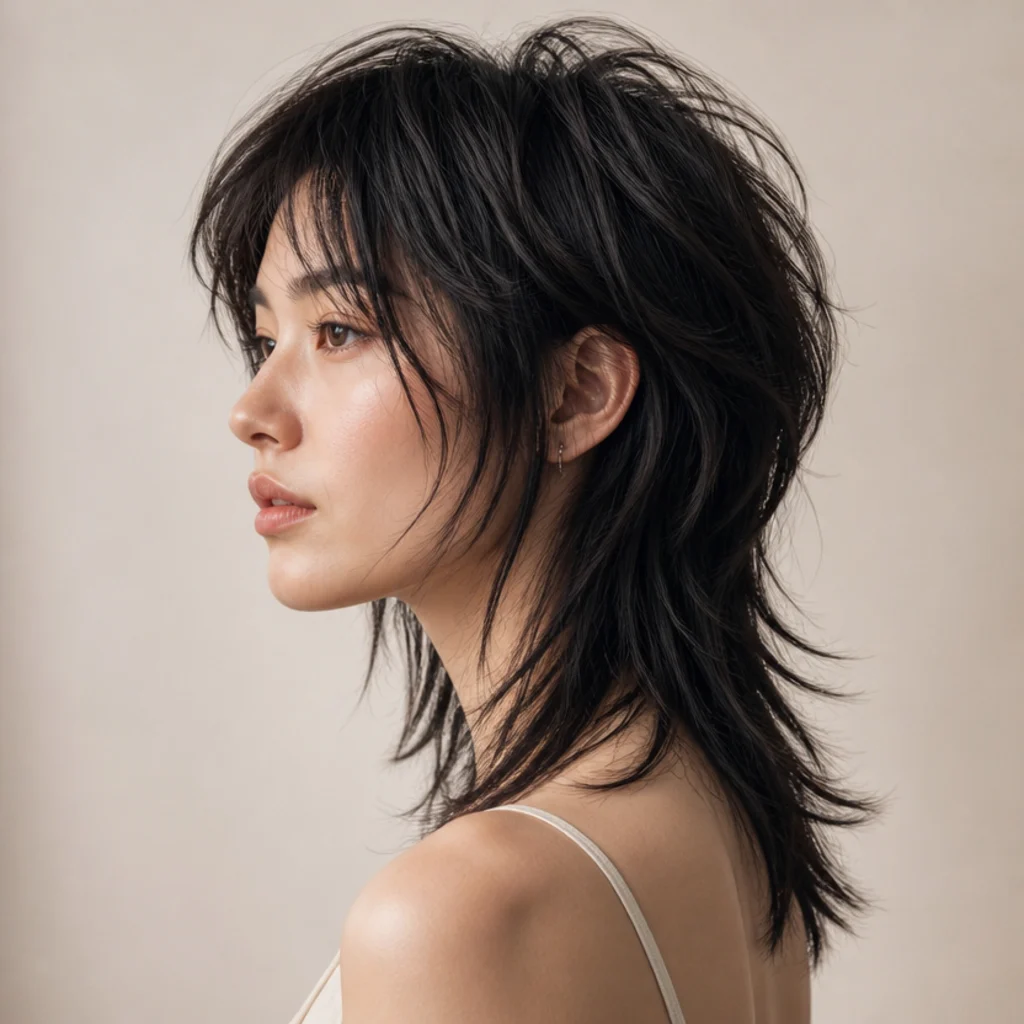
The wolf cut is the shag's edgier cousin: heavier, shorter layering concentrated at the crown that transitions into long, wispy, feathered ends. For fine hair the logic is smart, because it front-loads volume high on the head where you want it, then tapers so the length still feels intentional instead of scraggly. It reads younger and deliberately undone, which suits anyone who prefers texture over polish and doesn't mind a little wildness. Oval and square faces suit it best; if yours is very round, keep the crown volume moderate so it doesn't add width. Ask for a wolf-cut shape with soft, connected disconnection, not aggressive chunks, so it grows out kindly rather than in tufts. Upkeep runs higher, roughly six to eight weeks, because the crown layers lose their stacked shape fastest. Pro tip: rough-dry with your fingers head-flipped for root lift, then break up the crown with a matte texture spray held six inches back so it never turns greasy-looking.
04Long Shag With Micro Bangs

A micro or baby bang against long shaggy layers is high-contrast and fashion-forward: the fringe sits well above the brow, drives the eye up, and makes a graphic statement while the length stays soft and airy below. It works best on straight to barely-wavy fine hair, since texture fights the flat, clean line a micro bang needs, and it flatters longer, oval, and rectangular faces by optically shortening the forehead. Be honest about commitment before you commit: micro bangs need shaping every two to three weeks to stay sharp, the highest-maintenance fringe on this list. Ask for a micro fringe with a hair of texture at the very edge so it doesn't read as a hard ruler line on fine hair. Pro tip: press the fringe flat with a mini flat-iron, then work a rice-grain amount of pomade across only the fringe tips with your fingertips, keeping every trace of product off the roots so the front doesn't collapse.
05Face-Framing Money-Piece Shag

Here the shag's face-framing layers get a lightened money-piece: two brighter panels that trace the front sections from the part down. On fine hair it is a clever optical trick, because the lighter tone at the very front catches light and makes those framing layers look thicker and more dimensional than a solid color would. Pair it with a soft center or slightly off-center part so both panels read. Most skin tones suit it, once you match the brightness to your natural depth, lifting two to four shades rather than making a jarring leap that looks striped. Upkeep is tied to the color, usually a gloss and toner refresh every eight weeks. Ask your colorist to keep the money-piece long and connected into the shag so it blends instead of sitting as a blocky rectangle. Pro tip: request the brightness to start at the cheekbone rather than the root, so the grow-out stays soft and you buy yourself extra weeks between salon visits.
Save this to Pinterest to compare bang and framing options side by side.
06Bottleneck Bang Shag
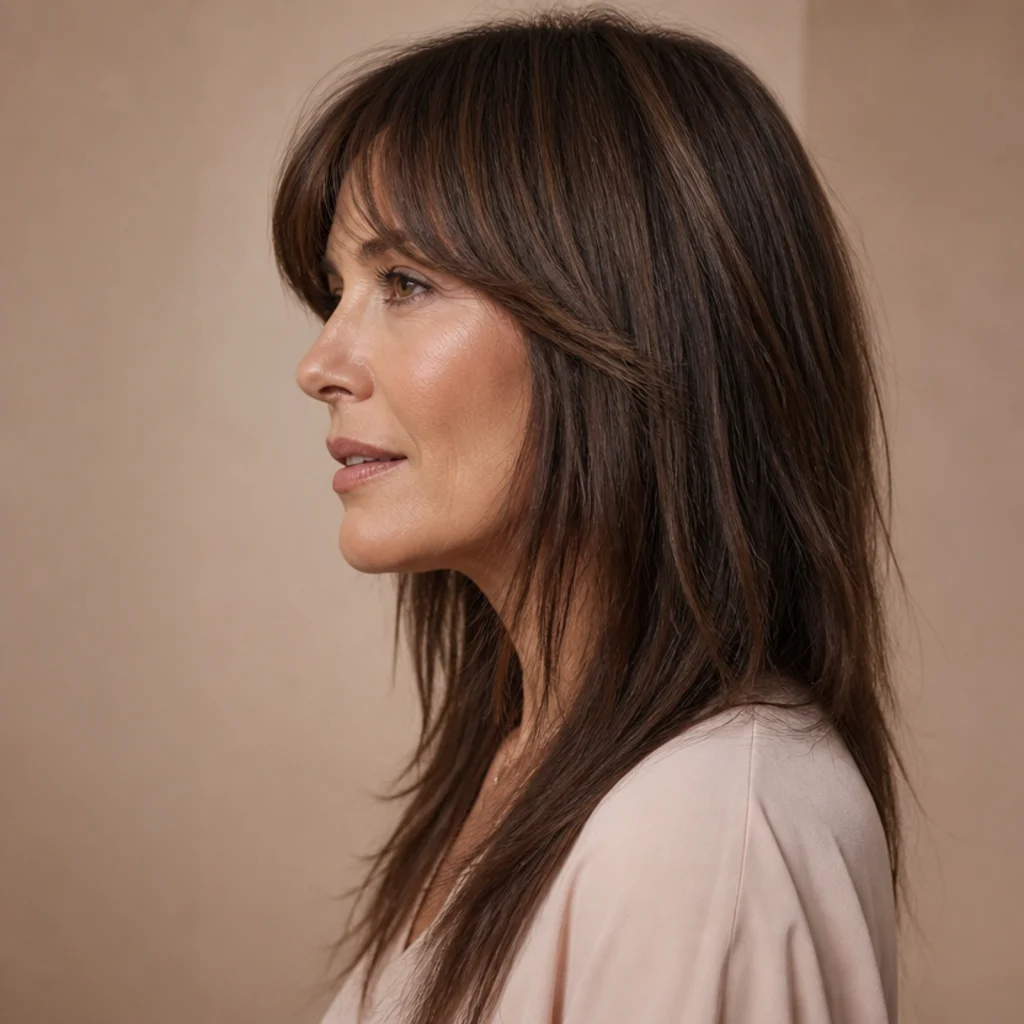
The bottleneck bang is the low-commitment middle ground: short and gently rounded in the very center, then lengthening fast into face-framing pieces, shaped like the neck of a bottle. It gives a long shag with bangs the softness of a fringe without the upkeep or the density demand of a heavy blunt one, which is exactly why it suits fine hair; it adds shape at the front where you need it while asking for very little thickness to look right. Round and square faces benefit most, since the vertical center line lengthens the mid-face. Trim every five to six weeks to keep the curve reading clean. Ask for a bottleneck fringe that connects into the framing layers, kept airy rather than blunt. Pro tip: round-brush the center section under and the sides back in one motion, then hit it with cool air, so the bottleneck curve sets crisp instead of flopping into a middle part.
07Cool-Toned Ash Brown Shag

Color quietly changes how thick a cut looks, and cool ash brown is a sleeper hit for fine hair. The muted, slightly smoky tone lowers the contrast between individual strands and the scalp beneath, so hair looks denser at the root than a warm or high-contrast shade would, where scalp peeks through. Keep it mostly solid with just a whisper of low-lighting to hold depth and stop it going flat. Cool and neutral undertones suit it best, along with anyone chasing a grown-up, expensive finish. Maintenance is a toner refresh every six to eight weeks, because ash oxidizes and drifts warm as it fades. Ask your colorist for a cool ash brown with subtle dimension, no bright highlights that would only expose the scalp. Pro tip: wash with cool water and a color-safe, sulfate-free shampoo; heat and harsh surfactants strip ash toners fastest, and warmth creeping back in is what makes fine ash-brown hair look thinner over time.
08Honey Balayage Long Shag
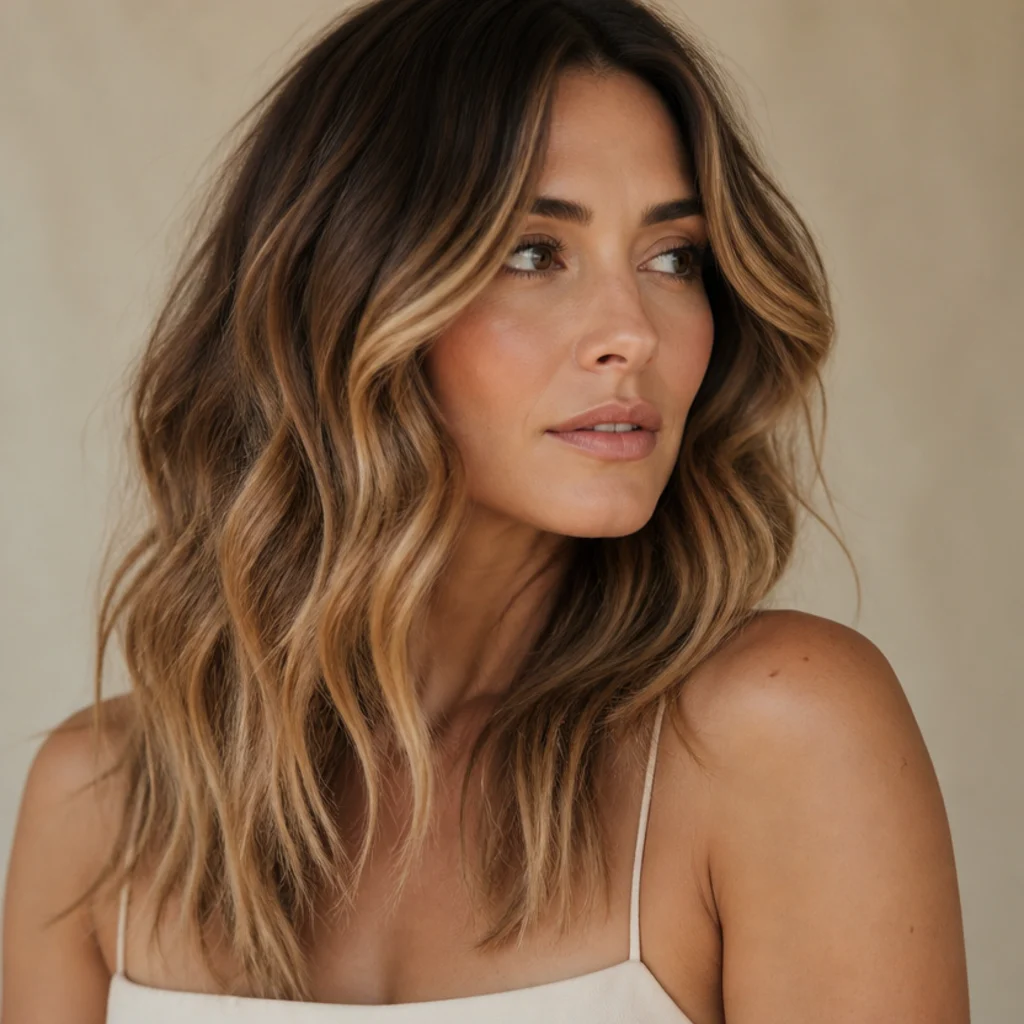
Balayage and shags are a natural pairing because hand-painted color follows the layers, lighting up the ends and face-framing pieces exactly where the movement already lives. Warm honey keeps it soft and sunlit rather than stripey or brassy. On fine hair the placement is everything: concentrate brightness from the mid-length down and keep the roots deep, so the hair looks rooted and full up top while the ends glow. Warm and golden undertones suit it especially well. This is one of the lowest-upkeep color options here, since the hand-painted grow-out is smooth and needs only a gloss every eight to ten weeks. Ask for a soft, root-shadowed balayage with brightness starting below the cheekbone, painted to follow the layers. Pro tip: style with a loose wave rather than poker-straight; the bend folds the painted and unpainted sections over each other, which is what makes fine hair look dimensional instead of two-toned.
09Straight Sleek Long Shag
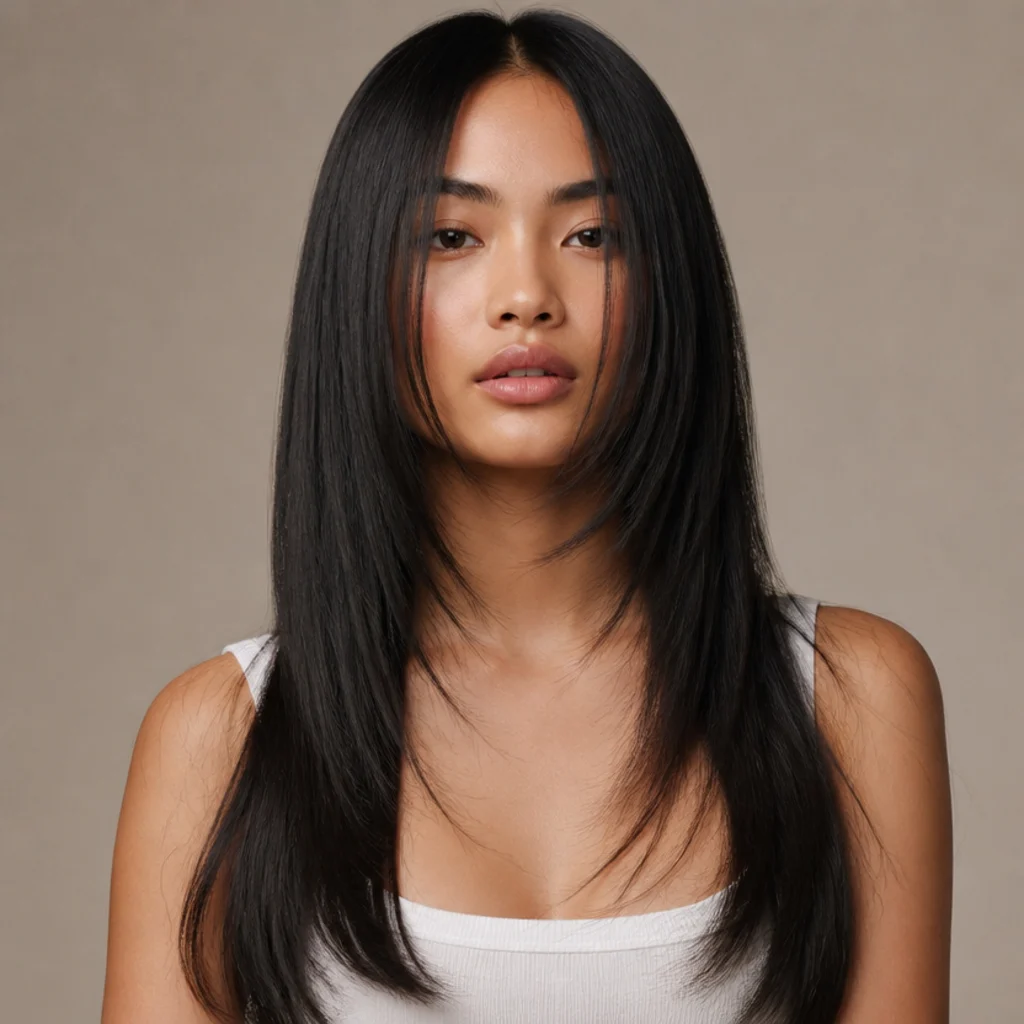
Not every shag has to look tousled. Worn poker-straight, a long shag reads sharp and modern, the layers showing as clean, feathered edges rather than waves. It is a strong choice for fine straight hair that flatly refuses to hold a curl, because it works with your natural texture instead of fighting it all day. The key move is a single flat-iron pass at moderate heat with a lightweight smoothing serum on the lengths only, never the roots. Nearly every face shape can wear it, and it fits a minimal, polished personal style since the feathered framing softens the edges. Book a trim every eight weeks; on straight hair, grown-out layers announce themselves fast as uneven, thinning ends. Ask for crisp, connected feathered layers that read clean when straight, not choppy. Pro tip: flat-iron in the direction the layer naturally falls and finish with a fine-mist shine spray held at arm's length, so you get gloss without the weight that flattens fine hair to the scalp.
1070s-Inspired Feathered Shag
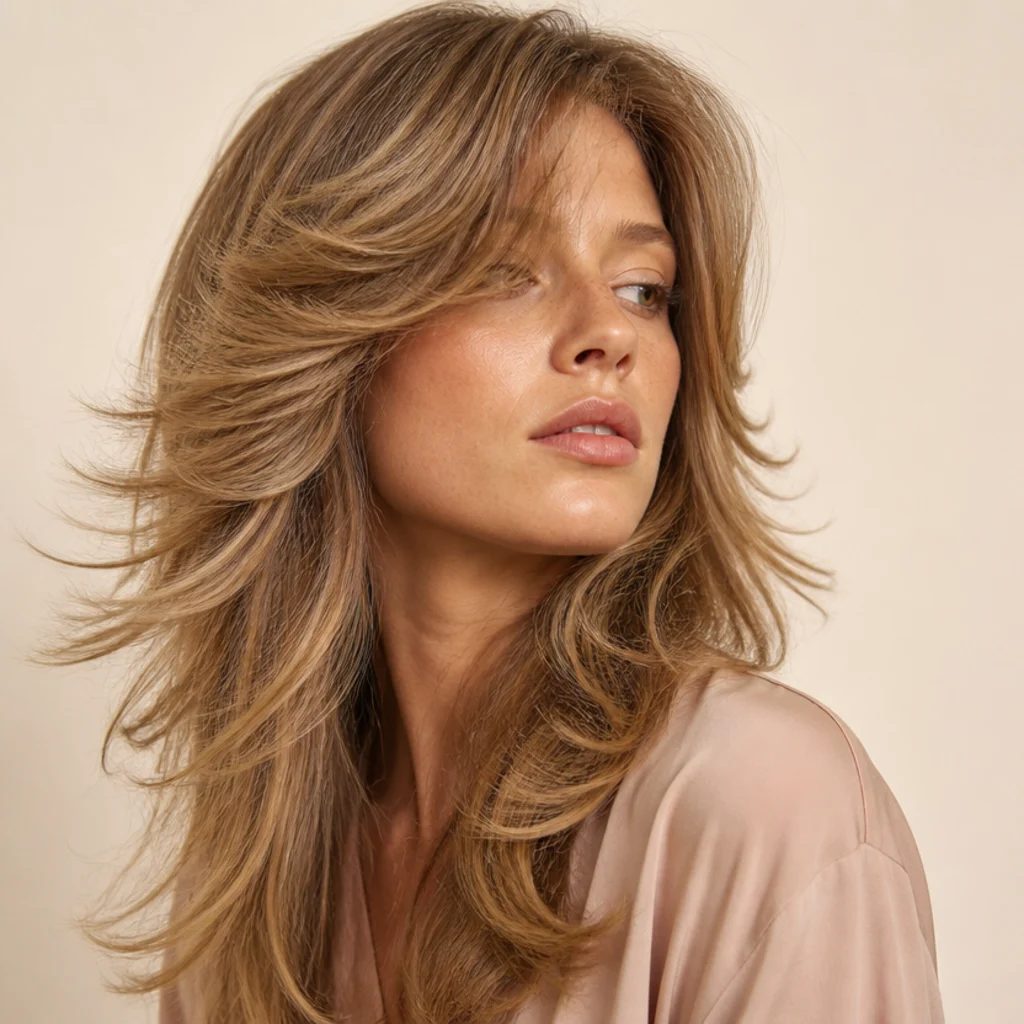
The original shag came out of the 1970s, and this version leans fully into that heritage with feathered layers that flick away from the face, Farrah-adjacent and full of movement. For fine hair the feathering flatters because it breaks the length into light, airy, wing-like sections that never sit heavy or limp. It reads warm, retro, and a little glamorous, best on oval and heart faces where the flicks widen the cheekbone zone. Ask your stylist for heavily feathered, connected layers with a curtain or side-swept fringe, cut to flick back. Upkeep is moderate at around eight weeks. Style with a round brush, rolling the top layers and face-framing pieces up and away from the face. Pro tip: set the flicks with a flexible-hold hairspray misted onto the brush before the final pass, not sprayed on afterward; it holds the wing without the crunch that instantly ages the look and stiffens fine hair.
11Copper Long Shag With Bangs
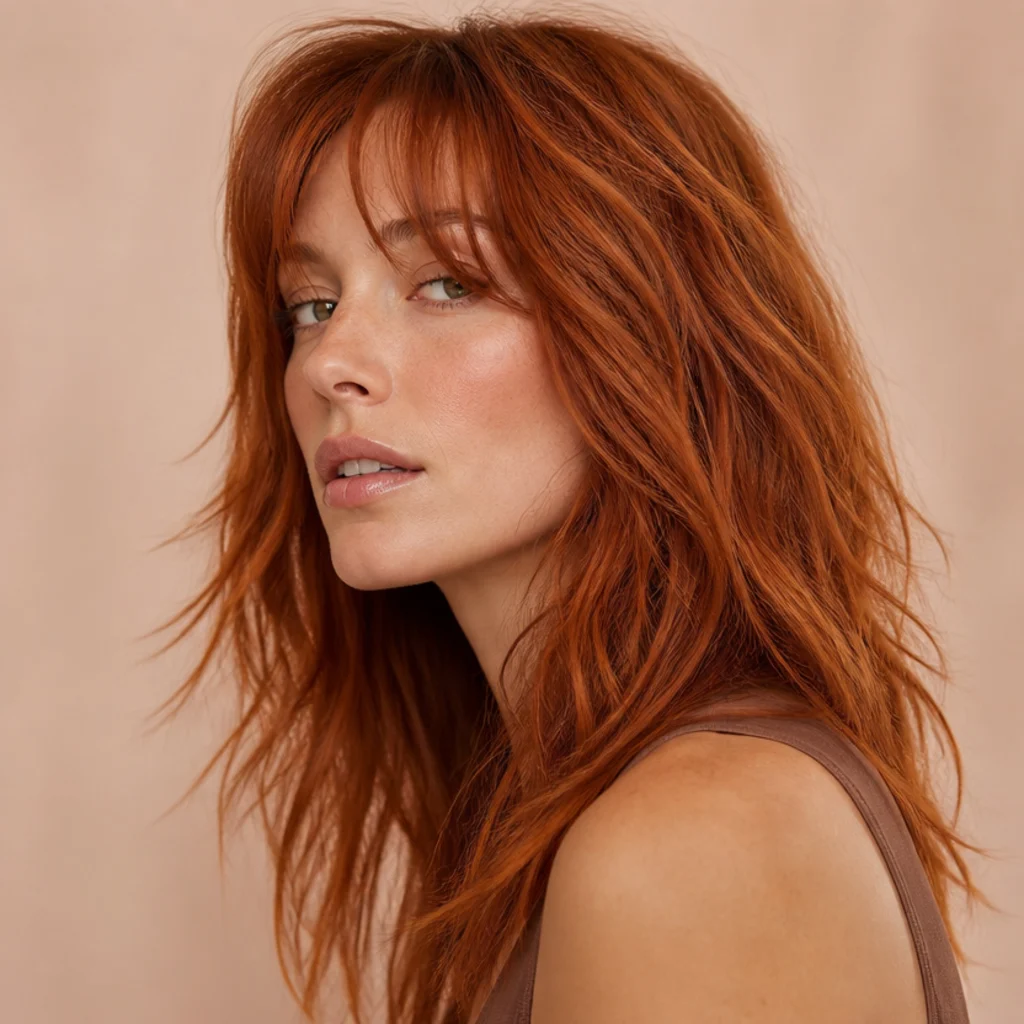
Copper is having a long moment, and it flatters a shag beautifully. A rich, saturated copper makes the choppy layers pop, and the reflective warmth of the tone hands fine hair the illusion of extra body, since copper bounces more light than a flat brown. Combine it with a soft, blended fringe for a full long shag with bangs that frames without weight. Warm and neutral undertones suit it, and even some fair cool tones can wear it once you dial the brightness down toward a muted terracotta. Go in clear-eyed about upkeep: copper is one of the fastest-fading pigments, its large molecules washing out quickly, so a color-depositing conditioner between visits is effectively mandatory, plus a gloss every six weeks. Ask for a saturated copper with a soft, connected fringe. Pro tip: rinse in the coolest water you can stand and stretch washes to every third day; heat and frequent shampooing are what turn a vivid copper into a sad, patchy peach within a month.
12Textured Beachy Shag
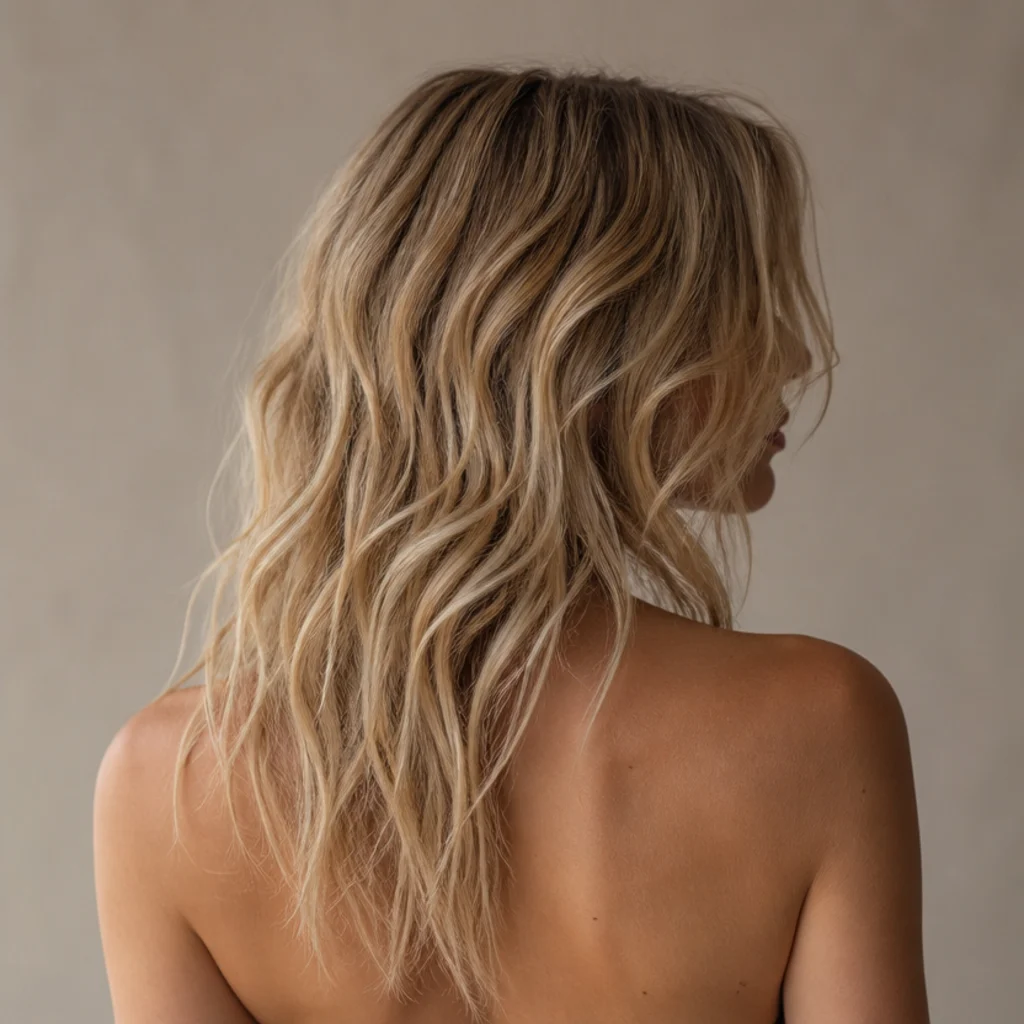
This is the off-duty version: undone, piecey waves with plenty of deliberate separation. The texture comes from a salt spray scrunched into damp hair, then air-drying or diffusing on low. For fine hair the piecey finish is a real ally, because visible separation reads as more individual strands, not fewer, and the shag layers give that texture somewhere to travel so it doesn't just sit flat against the head. This fits a relaxed, low-fuss personal style and works year-round, not just in summer. Maintenance is easy day to day; refresh day-two hair with a little dry texture spray at the roots and mid-lengths. Ask for a shag with piecey, separated layers built for a lived-in wave. Pro tip: keep any conditioning mask strictly on the bottom third of the hair, never the roots or crown, so the top stays light and lifted while the ends stay soft enough to separate cleanly.
13Long Shag With Side Bangs
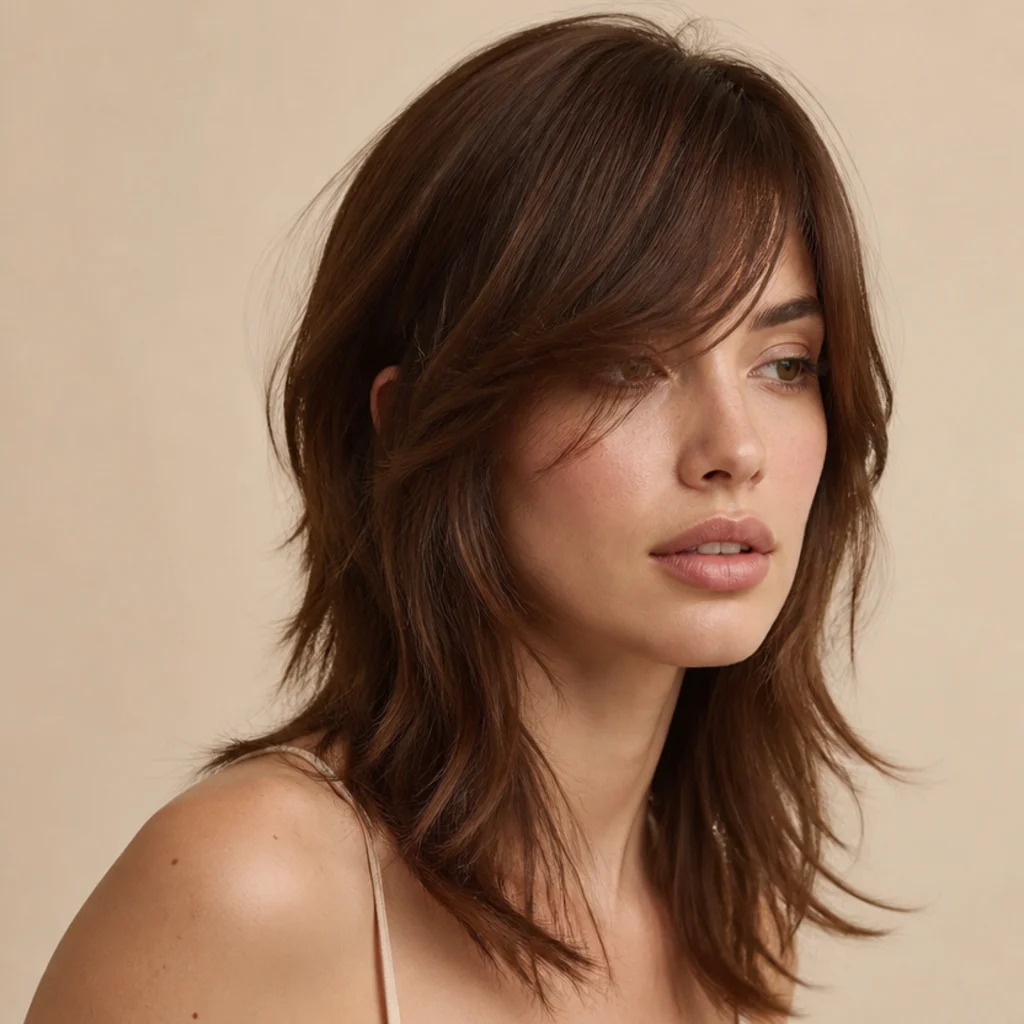
Long side-swept bangs are the most forgiving fringe for anyone nervous about commitment. They blend straight into the face-framing layers, so on a grow-out they just become longer framing pieces rather than passing through an awkward eye-poking stage. That makes a long shag with bangs approachable for first-timers. Side bangs flatter round and heart faces by drawing a diagonal line that slims and lengthens the face. On fine hair, keep them airy and lightly feathered, never thick and blunt, so they don't strip density from the rest of the front. Trim every six weeks or so. Ask for long, feathered side-swept bangs connected into the framing layers. Pro tip: dry them across the forehead with a round brush, directing them against your natural part first and then letting them fall back toward it; that little bit of counter-direction builds root lift so the bang sweeps rather than lying flat and greasy-looking.
14Platinum Long Shag

A full platinum shag is a high-glamour statement, and the pale, even tone shows off every layer and razor edge of the cut, making the shape itself the star. Fine hair can go platinum without issue, and there is a real upside: bleaching swells and slightly roughens the cuticle, which adds grip and a little body fine strands don't naturally have. Weigh that against reality, though, because this is the highest-maintenance look here, with root touch-ups every four to six weeks and a non-negotiable bonding and protein routine to keep already-delicate strands from snapping. Cool and neutral undertones suit it best. Ask for a full platinum with a bond-builder worked through the lightening process and a soft fringe to break the paleness. Pro tip: use a purple toning shampoo once or twice a week, not daily; overdoing it dulls the platinum to a muddy grey, while skipping it lets fine bleached hair go brassy-yellow fast.
15Coily Long Shag
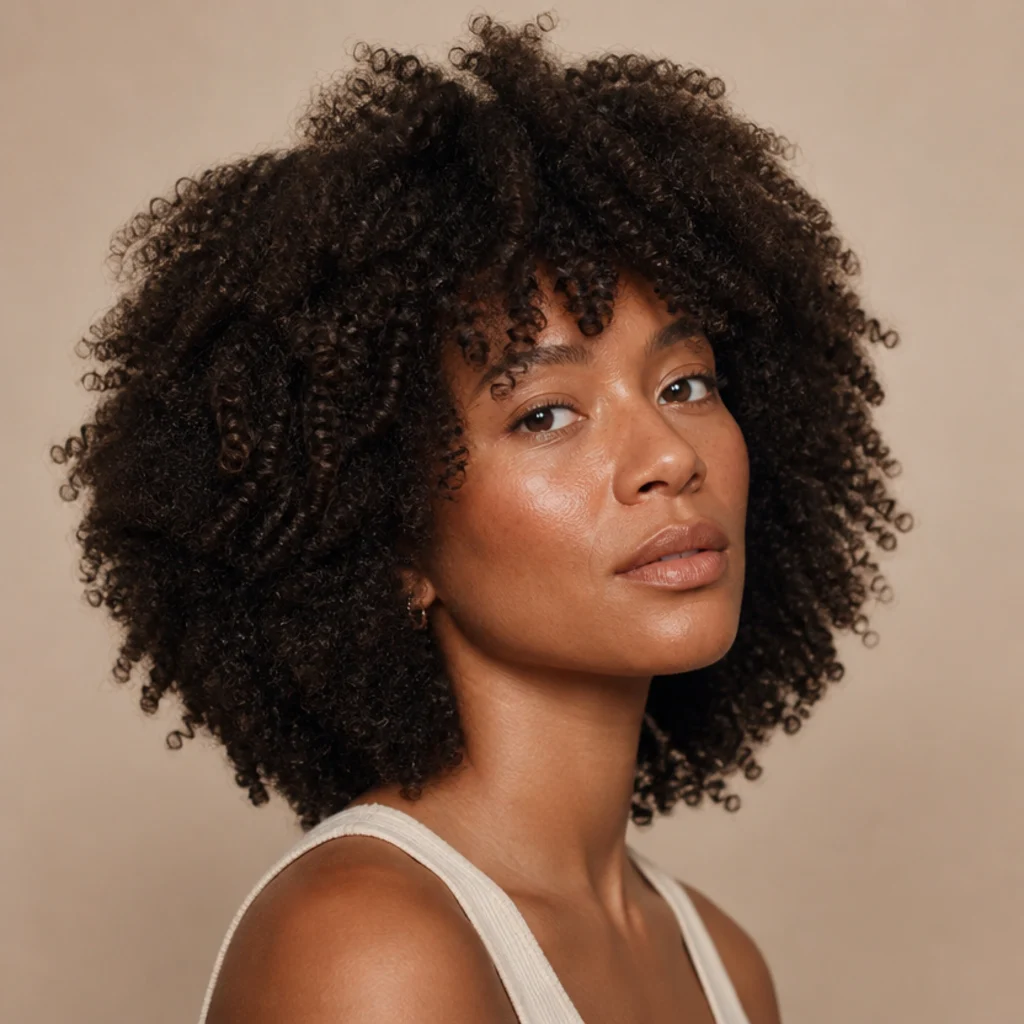
Shags are not the exclusive territory of straight and wavy hair. On fine coily and curly textures, a long shag builds a rounded, voluminous silhouette by removing weight in strategic layers so the coils can finally spring up and out instead of stacking into density they don't have. The layering directly fights the triangle or pyramid shape that fine curly hair collapses into when it's all one length. It should be cut dry, curl by curl, so your stylist can see exactly how each curl falls and lands. Ask specifically for a curly or coily shag cut done on dry hair, not a wet layered cut — that's the single most important instruction on this whole list for your texture. Round and heart faces get extra balance from the added height. Upkeep runs every ten to twelve weeks. Pro tip: style with a lightweight curl cream raked through soaking-wet hair, then diffuse on low heat with the coils cupped into the bowl, so fine curls set with volume instead of being blown loose and flat.
Save this to Pinterest so your stylist can see the exact texture and shape.
16Choppy Rock-Edge Shag

For anyone who wants attitude, the choppy shag leans on razored, more disconnected layers and piecey, almost spiky ends. It is deliberately imperfect and a little rock-and-roll. On fine hair the razoring has to be handled with real care, because over-thinned ends read see-through and wispy rather than edgy, so seek out a stylist who's confident with a razor on fine textures and say so out loud. Done right, the payoff is serious texture and a shape that never looks fussy or overworked. This suits a bold, expressive personal style, and oval or square faces carry the edge best. Ask for razored, piecey layers with the choppiness kept to the ends, not the interior density. Maintenance is every six to eight weeks to keep the chop intentional rather than grown-out and shapeless. Pro tip: work a matte texture paste through only the last two inches with your fingertips, emulsifying it in your palms first, so the ends separate into intentional spikes instead of clumping into gaps.
17Center-Part Long Shag
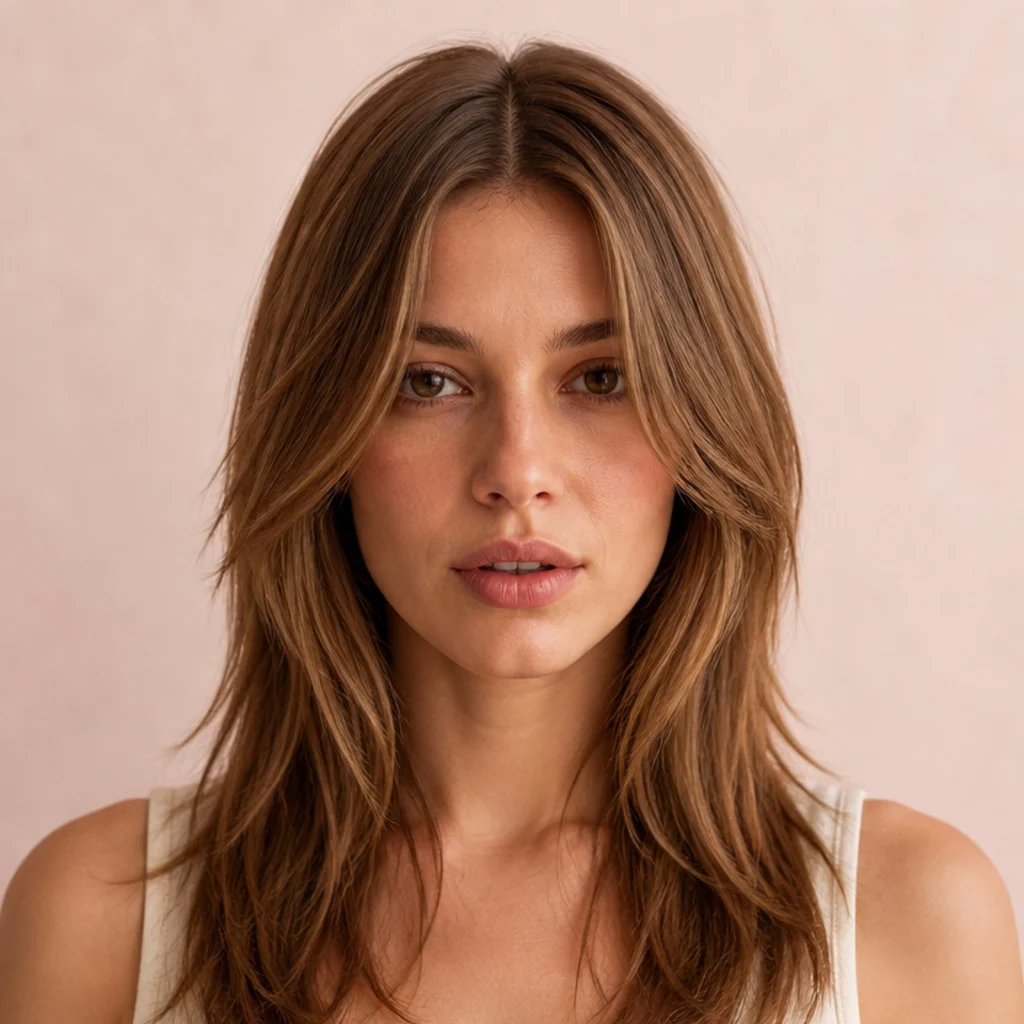
A clean center part gives the long shag a modern, symmetrical polish. The two sides of face-framing layers mirror each other and draw a straight vertical line down the middle, which lengthens and balances rounder and square faces. The catch on fine hair is that a center part can split flat and expose the scalp right at the crown, so you have to build lift in deliberately. This works best on balanced, oval-leaning faces, and pairs naturally with curtain bangs or a longer money-piece. Upkeep is standard at eight weeks. Ask for a shag with symmetrical framing designed to sit around a center part. Pro tip: rough-dry the root zone in the opposite direction, then flip the hair back to the center once it's dry; that reversal breaks the part's memory and lifts it off the scalp. A pea of root-lifting mousse worked into the damp part before drying keeps fine hair from splitting flat again by afternoon.
18Long Shag With Shadow Root
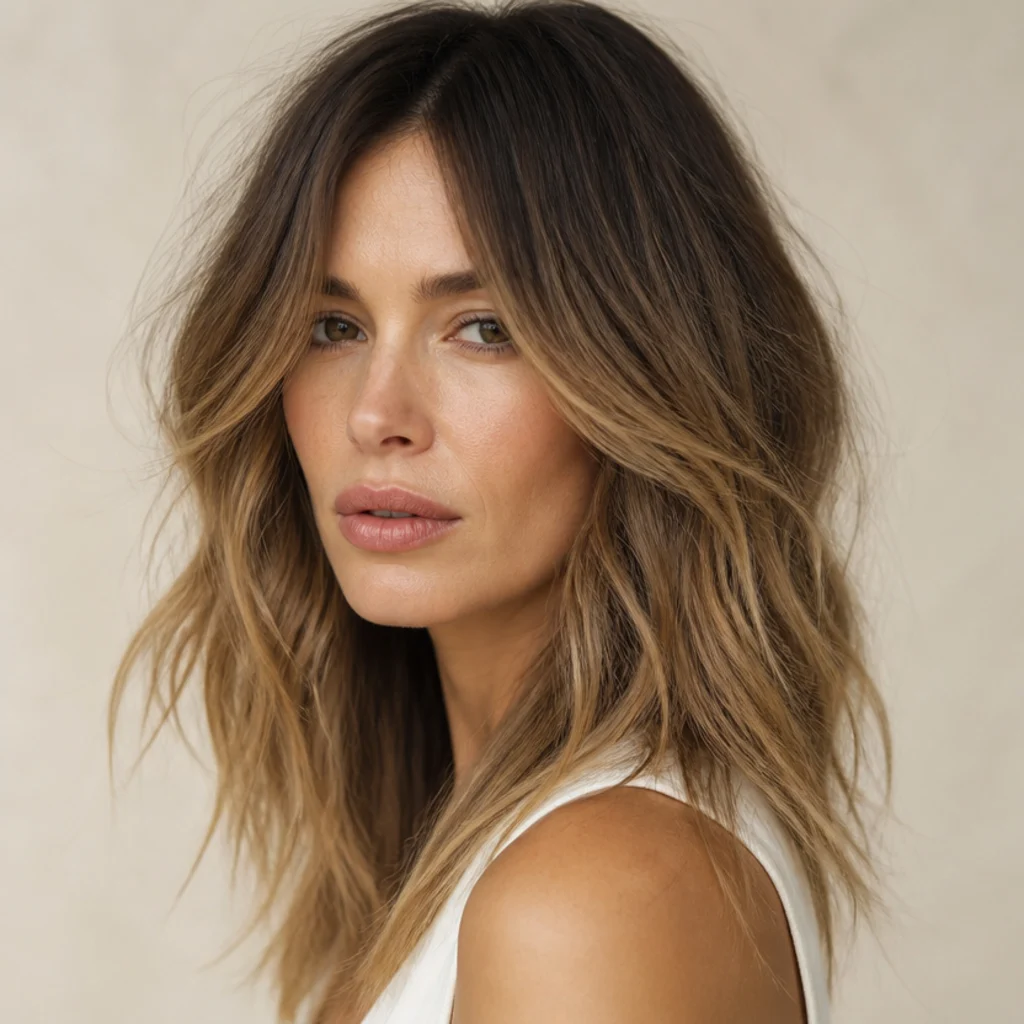
A shadow root keeps the roots deliberately darker and melts them down into lighter lengths, and it is one of the most fine-hair-friendly color techniques there is. The depth at the scalp creates contrast and shadow that makes the root zone read denser and fuller, while the brighter ends stay light and dimensional, an optical two-for-one. It also drastically cuts visible regrowth, since there's no hard line for grow-out to expose, so upkeep drops to a gloss every eight to ten weeks. Anyone who wants dimension without a demanding salon schedule will like this one. Ask your colorist for a soft, diffused shadow root melted smoothly into your existing or new lightness, with no visible band. The shag layers show off the root-to-tip melt every time the hair moves. Pro tip: wear it with a loose wave rather than straight; the bend layers the dark root over the lighter mid-lengths so the shadow reads as intentional, expensive depth instead of looking like overdue regrowth.
19Air-Dried Low-Effort Shag

If the whole goal is a cut that looks good without touching a hot tool, this is the one. A long shag cut specifically to work with your natural texture can be scrunched with a leave-in and air-dried into a soft, undone shape. Fine hair especially benefits from skipping daily heat, which weakens strands that are already delicate and prone to breakage. The entire result rides on the cut, not the styling, so tell your stylist you want a wash-and-go shag suited to your natural bend, and ask them to check how it dries before you leave the chair, ideally by letting a few sections air-dry mid-appointment. This one is built for low-effort routines and busy mornings. Upkeep is purely trim-based, roughly every eight to ten weeks. Pro tip: apply a lightweight mousse or a curl-activating leave-in to soaking-wet hair, scrunch upward toward the scalp in fistfuls, then do not touch it again until it's bone dry; every touch mid-dry breaks the forming bend and triggers frizz on fine hair.
20Long Shag With Blended Fringe
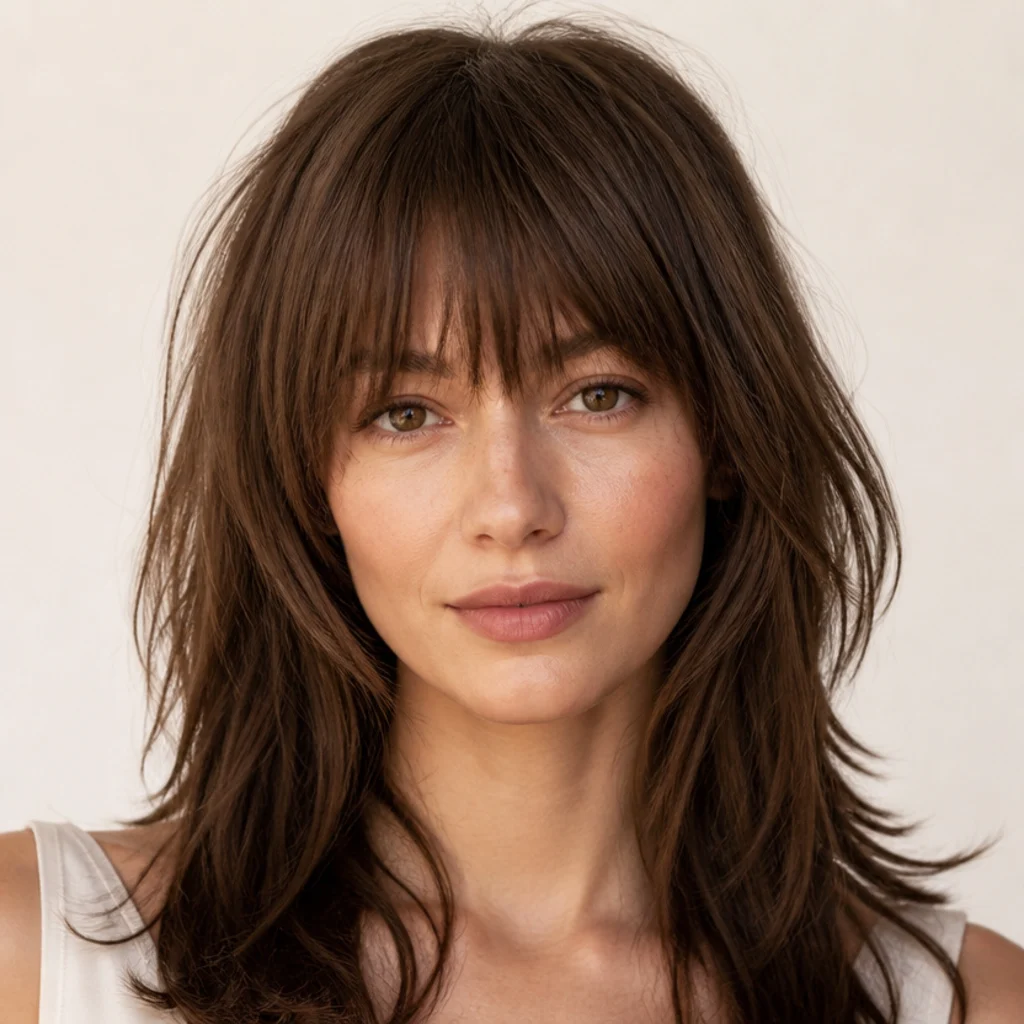
Ending on the softest full-fringe option: a blended fringe that connects smoothly into the face-framing layers, so there's no hard line where the bang stops and the length begins. It delivers the fullness of a fringe without the stark, blunt weight that overwhelms fine hair and demands density it doesn't have. Most face shapes can wear it, because the blending lets you part it lightly, sweep it to one side, or push it back on the days you want your forehead. Ask for a soft, textured, connected fringe rather than a solid blunt one, and have your stylist point-cut into the fringe edge so it merges rather than sitting as a separate block. Trim the fringe every four to five weeks to keep it in proportion with the framing. Pro tip: round-brush the fringe under at the center and out at the sides in one continuous motion, then hit it with cool air to set; that curved-then-splayed shape is what dissolves the line between bang and layers so it reads as one soft piece.
Pro Tips from the Editor
- Say "connected, not disconnected." On fine hair, the difference between a shag that looks full and one that looks stringy is almost entirely whether the layers connect. Aggressive disconnection and heavy thinning shears create see-through gaps; connected internal layering builds fullness.
- Volume lives at the root, texture lives at the ends. Keep every lift product (mousse, volumizing spray, dry shampoo) at the scalp and every smoothing or defining product (serum, oil, cream) on the mid-lengths and ends. Cross them over and fine hair goes flat instantly.
- Cool air is your setting spray. Fine hair holds shape when it cools in position. End every round-brush or iron section with a two-second cold-shot blast before you release the strand; it sets the bend far better than more product.
- Bring the money shot, not just the front. Save a back or three-quarter photo alongside the front-on one. The layering and interior shape are what a stylist actually cuts, and those only show from behind and the side.
- Match your fringe to your calendar, honestly. Micro and blunt bangs want a trim every 2-3 weeks; curtain, bottleneck, and side-swept want 4-6; a fully blended fringe grows out invisibly. Pick the fringe your real schedule can sustain.
- Choose color that hides scalp, not highlights it. Ash tones, shadow roots, and root-shadowed balayage lower strand-to-scalp contrast and read denser. Bright, high-contrast highlights and thin ribbons of lift can expose the scalp and make fine hair look sparser.
- Wash less, dry-texture more. Day-two and day-three hair holds a shag's shape better than freshly washed hair, which slips flat. A dry texture spray at the roots resets lift without stripping the natural grip that makes fine hair sit up.
How to Choose / Get the Look
Work through four decisions in order and you'll land on your version fast.
1. Start with your natural texture, because the best long shag is cut to work with the hair you already have, not against it. Straight hair suits the sleek (#9) or feathered (#10) versions; wavy hair is the sweet spot for the soft wavy (#2) and beachy (#12) shags; coily and curly hair needs a dry curl-by-curl cut (#15). Forcing a wave-dependent shape onto stubbornly straight fine hair, or a sleek finish onto curls, is the most common way people end up disappointed.
2. Choose a fringe by commitment level, not just looks. Side-swept, curtain, bottleneck, and blended fringes grow out gracefully and forgive missed trims; micro and blunt fringes demand frequent shaping and reward only the diligent.
3. Use framing and bangs to balance your face shape. Add length through the center (center part, bottleneck, curtain split) for rounder and square faces; add softness and width at the cheekbone (side-swept, feathered flicks, curtain) for longer and rectangular faces. Oval faces can wear nearly all of them.
4. Factor color upkeep in honestly, since it determines both cost and how full the hair stays. Use the guide below.
| If you want… | Best pick(s) | Face shapes it loves | Trim / color cadence | Effort |
|---|---|---|---|---|
| Lowest daily effort | Air-dried (#19), Beachy (#12) | Most, texture-dependent | Trim 8-10 wks | Low |
| Most flattering on fine hair | Wavy (#2), Curtain-bang classic (#1) | Oval, heart, long | Trim 8-10, fringe 4-6 wks | Low-medium |
| Fullest-looking color | Shadow root (#18), Ash brown (#7) | All | Gloss every 8-10 wks | Low |
| A bold statement | Platinum (#14), Copper (#11), Micro bang (#4) | Cool tones / oval, long | Root or fringe 2-6 wks | High |
| Edge and attitude | Wolf cut (#3), Choppy (#16) | Oval, square | Trim 6-8 wks | Medium |
When you book, bring two or three saved photos and use specific language: name the layer starting point ("layers beginning at the cheekbone"), the fringe type, and that you want airy, connected, movement-rich layers rather than heavy thinning. Say the word "fine" out loud so your stylist preserves density through the ends and reaches for a razor or thinning shears only with intention. Ask your stylist to leave a little extra length the first time, since a shag can always come shorter but can't grow back in the chair.
Frequently Asked Questions
Is a long shag haircut good for fine hair?
Yes, and it's one of the few layered cuts actually engineered for it. The stacked, connected layers sit at staggered lengths, catch light at different points, and hold a slight bend, so hair reads noticeably fuller than a blunt one-length that just hangs flat. The key is connected layering rather than aggressive thinning, which is what separates a shag that adds fullness from one that thins the ends out.
Will a shag make my fine hair look thinner at the ends?
Only if it's over-thinned. Ask for soft, connected layering and point-cutting done with restraint, not heavy razoring or thinning shears dragged through the ends. Done well, the layers manufacture fullness and movement; done heavily, they wispy the ends out to nothing. Saying "connected, not disconnected, and go easy on the thinning" protects you here.
What bangs suit a long shag on fine hair?
Curtain bangs and soft side-swept bangs are the most flattering and forgiving, adding shape and density at the front where fine hair falls flattest while blending into the framing on a grow-out. Bottleneck and blended fringes also work well. Blunt micro bangs make a bold statement but are the highest-maintenance choice, needing a trim every two to three weeks.
How often does a long shag need trimming?
Every 8 to 10 weeks for the overall shape. Any fringe needs more frequent attention: curtain and side-swept every 4 to 6 weeks, micro and blunt bangs every 2 to 3. Regular trims stop the layers from growing into a shapeless single length and keep the crown lift that makes fine hair look full.
How do I style a long shag without weighing down fine hair?
Keep heavy creams and oils on the mid-lengths and ends only, never the roots. Use a lightweight mousse or salt spray for lift and texture, set every section with a cool-air blast, and finish with a flexible hairspray or dry texture spray instead of a heavy pomade. The rule is lift at the root, definition at the ends, and never the reverse.
What's the difference between a long shag and a wolf cut on fine hair?
A long shag distributes soft, connected layers evenly from the crown down and keeps more length and blend, so it reads polished and grows out gently. A wolf cut concentrates heavier, shorter layering at the crown with a sharper transition into wispy ends, so it's more dramatic and undone. For fine hair the wolf cut front-loads more volume up top but demands more frequent trims, roughly every six to eight weeks.
Can fine, thin hair actually pull off a long shag, or is it only for thick hair?
Fine hair can wear one without a doubt; it's arguably better suited than thick hair, which can get bulky and pyramid-shaped in a shag. The caution for fine hair is purely about execution: connected layers and precise face-framing build fullness, while over-thinning creates gaps. Choose a stylist who understands fine texture and asks to keep the interior density intact.
What color makes a long shag look thickest on fine hair?
Low-contrast, scalp-hiding colors win. Cool ash tones, shadow roots, and root-shadowed balayage lower the contrast between your strands and the scalp beneath, so hair reads denser at the root. Reflective tones like copper add the illusion of body through shine. Avoid thin, high-contrast highlights that can expose the scalp and make fine hair look sparser.
How long does hair need to be for a long shag?
Aim for at least collarbone length, ideally a few inches past it, so there's enough length below the layers to keep the shape reading as a long shag rather than a mid or classic one. If your hair is shorter than the collarbone, you can grow into it by cutting the layers now and letting the length catch up, since the shag grows out gracefully.