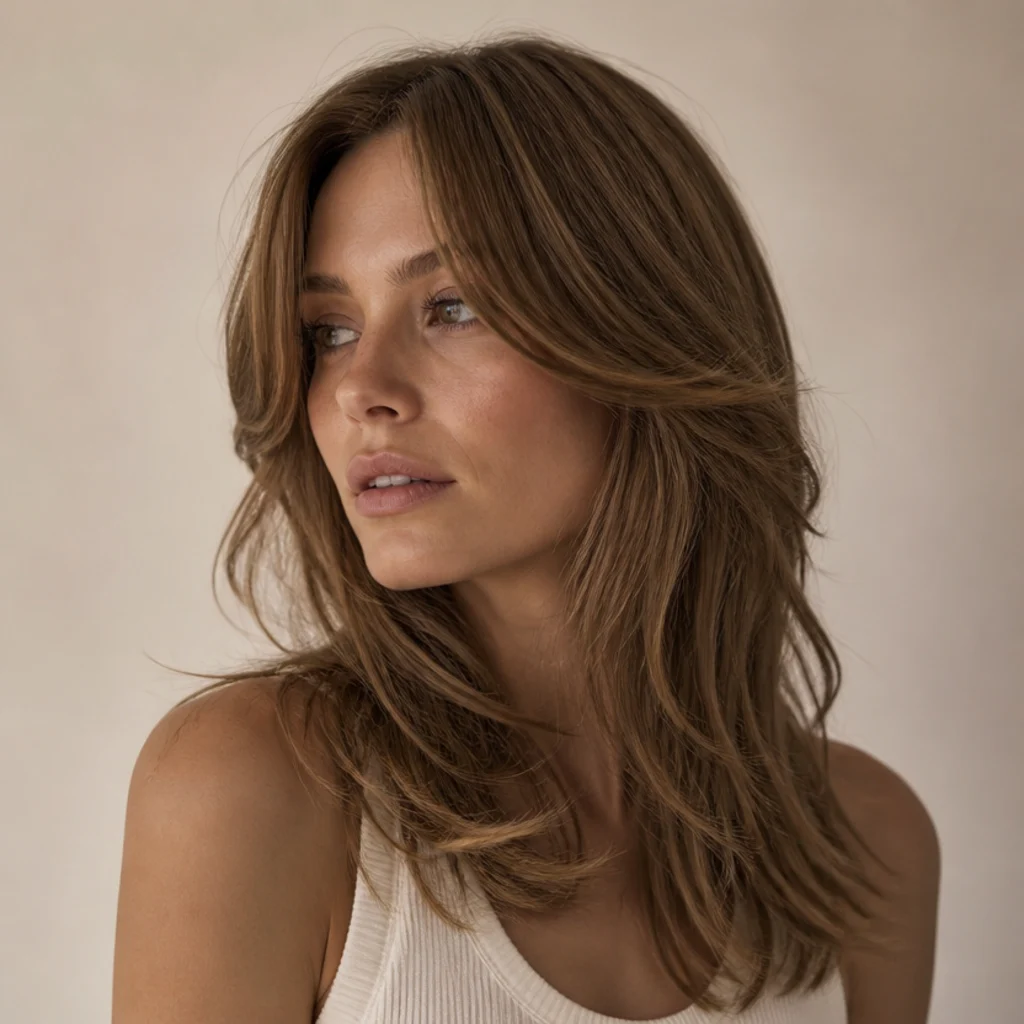
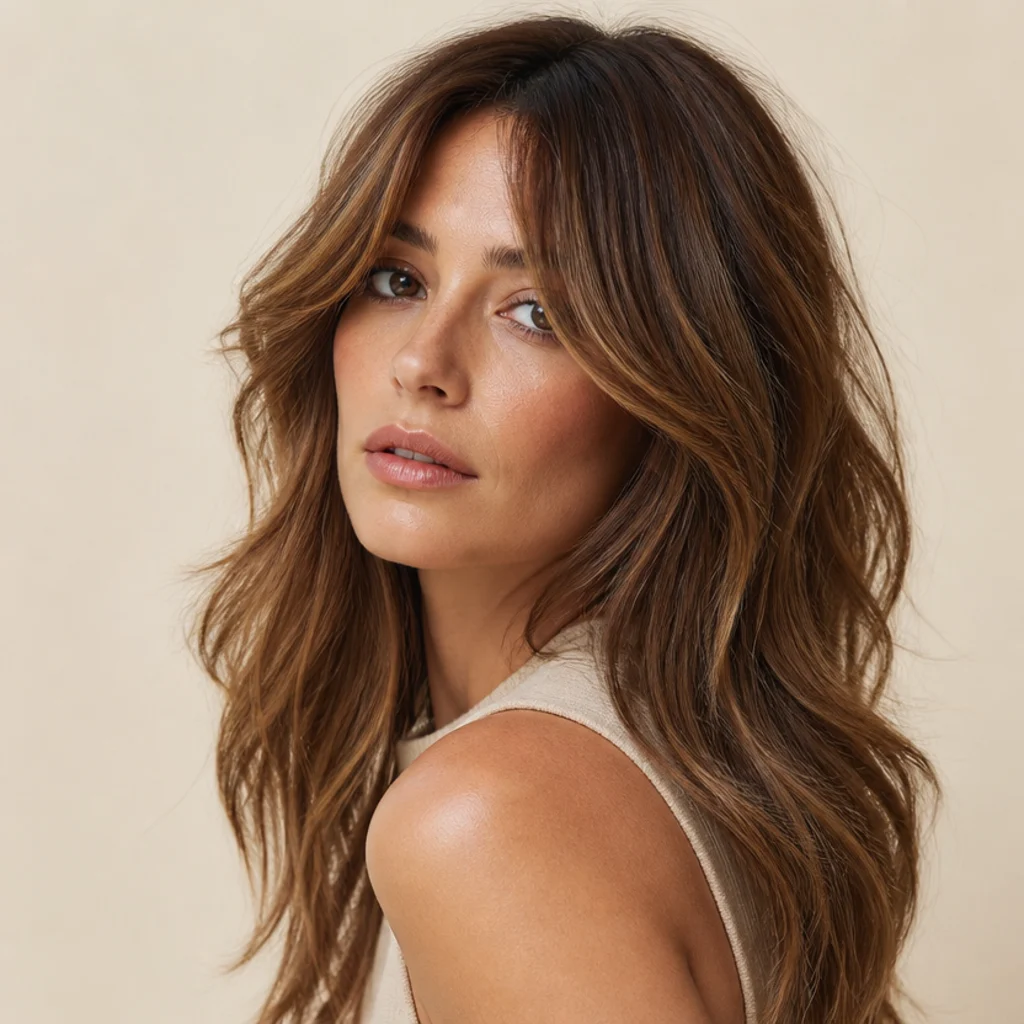
15 Long Shag Haircuts With Curtain Bangs
A long shag keeps every inch of length while stacking weightless movement through the mid-lengths and ends, and curtain bangs add a soft, cheek-framing sweep that flatters nearly every face shape. Here are 15 editor-vetted versions with upkeep timelines and exact salon phrasing.
 Edited by Lena Rose · Published July 11, 2026 · 26 min read
Quick Answer
- Best for: Anyone keeping length past the collarbone who wants built-in movement and a face-framing fringe; performs across straight, wavy, curly, coily, fine, and thick hair.
- Who might skip it: Anyone growing out a blunt one-length cut who wants zero visible layering, or those unwilling to blow-dry or diffuse the bang area a few times a week.
- Maintenance: Moderate. A dry trim every 8-12 weeks holds the layered shape; the curtain fringe needs a bang-only trim roughly every 4-6 weeks to stay off the lash line.
- Difficulty: Beginner to intermediate styling — most looks need only a round brush or diffuser plus a texture or salt spray.
- Cost: Cut typically mid-range at most salons; add color (gloss, money piece, or balayage) for a higher one-time investment, with balayage the priciest tier.
- Wear time / longevity: The cut looks intentional for 10-12 weeks; a smooth blow-out holds 2-3 days, textured air-dried styles refresh with dry shampoo and salt spray.
- Standout variation: The long wavy shag with wispy curtain bangs (Idea 2) delivers the most payoff for the least daily effort.
- How to ask your stylist: "A long shag with connected curtain bangs, internal layers starting around the cheekbone, texturized piecey ends, and a fringe cut long enough to sweep back."
In This Guide
- Classic Long Shag With Soft Curtain Bangs
- Long Wavy Shag With Wispy Curtain Bangs
- Effortless Beachy Long Shag
- Long Shag for Fine Hair With Airy Bangs
- Curly Long Shag With Curtain Fringe
- Straight Sleek Long Shag
- Copper Long Shag With Split Bangs
- Ash Brown Long Shag With Money-Piece Bangs
- Long Shag With Curtain Bangs for Round Faces
- Long Shag With Curtain Bangs for Thick Hair
- Rooted Blonde Long Shag
- Long Shag With Deep Curtain Bangs
- Textured Coily Long Shag
- Long Shag With Curtain Bangs and Face-Framing Highlights
- Low-Maintenance Grown-Out Long Shag
Intro
The long shag keeps coming back because it solves a real problem: how to keep your length without the flat, heavy, curtain-of-hair feeling that grown-out one-length cuts develop. Short internal layers and choppy, point-cut ends lift the interior of the shape and let your natural texture spring forward, while curtain bangs open the face with a soft center part that reads modern rather than costumey. The result is a lived-in, editorial silhouette that grows out in your favor instead of collapsing into an awkward stage.
What makes the cut so wearable is its range. The same long shag with curtain bangs can read seventies rock-and-roll or quiet romantic, depending on your color, your part depth, and how heavily you texturize the ends. It flatters round, oval, heart, square, and long faces, because you can move the fringe length and layer placement to balance whatever proportion you want to soften. Below are 15 versions: a low-maintenance grown-out shag, a curly cut with a shaped fringe, a copper with split bangs, and more, each with notes on who it suits, a realistic upkeep timeline, how to style it, and the exact language to use at the salon.
01Classic Long Shag With Soft Curtain Bangs {#1}

This is the reference point for every look that follows: length past the collarbone, the shortest internal layers beginning around the cheekbone, and curtain bangs that sweep away from a soft center part. The fringe is connected, feathered into the front layers so nothing lands blunt or heavy. It suits nearly every face shape because the bangs soften the forehead while the layering keeps width low near the jaw, which is why oval and heart shapes read especially balanced here. Choose a natural, low-contrast brunette so the layer architecture, not color, does the work. To style, round-brush the fringe back at the root for lift, then mist a lightweight texture spray through the mid-lengths. Expect a dry trim every 8-10 weeks, with a bang-only trim every 4-6 weeks so the fringe clears your eyes. Pro tip: blast the just-washed bangs side to side with a nozzled dryer for ten seconds before they set. It kills the cowlick and builds the natural sweep. Ask your stylist for "a long shag with connected curtain bangs and layers starting at the cheekbone."
02Long Wavy Shag With Wispy Curtain Bangs {#2}
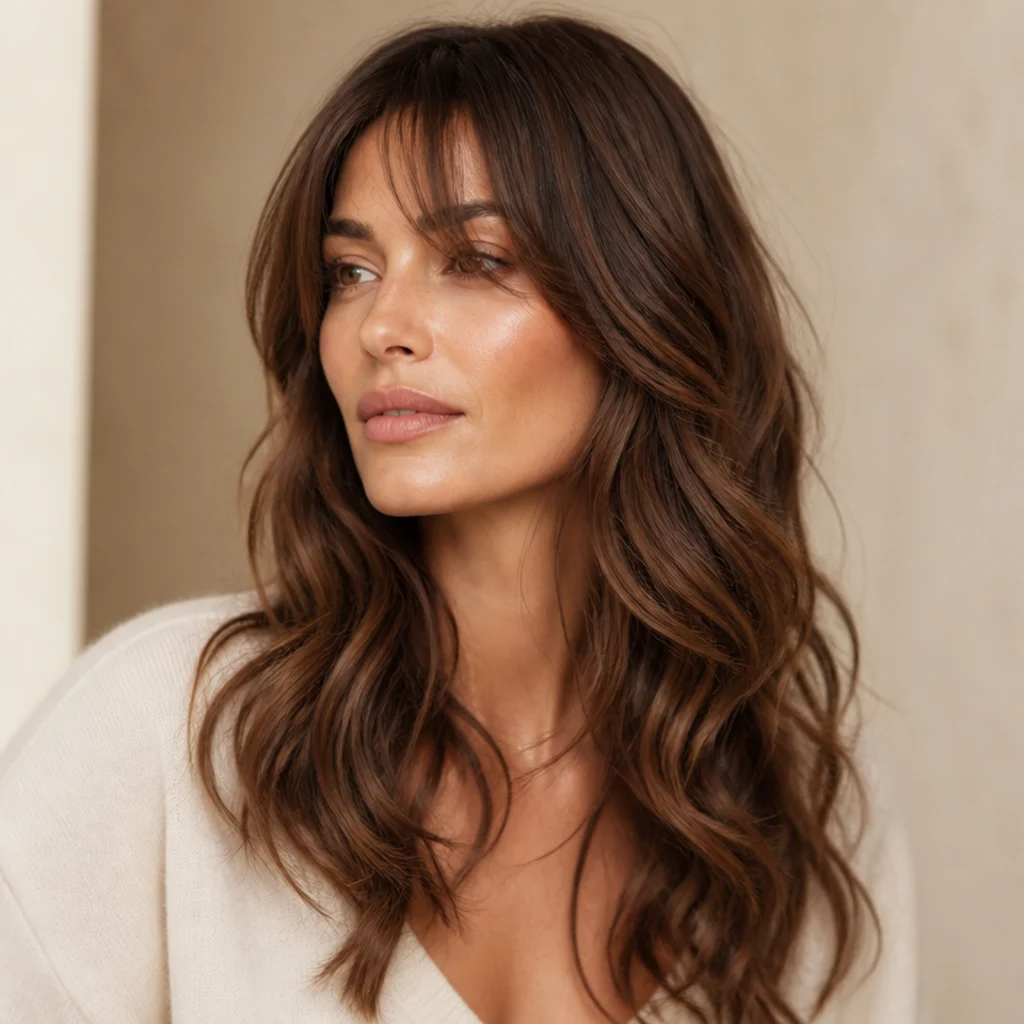
A long wavy shag haircut plays directly to the shape's strengths, letting every bend and kink catch light through the stacked layers. The curtain bangs here are far wispier than the classic version, broken into thin, tapered pieces that dissolve into the waves rather than sitting as a distinct fringe. This works beautifully on naturally wavy 2A-2C hair because short internal layers remove the weight that normally drags waves into a flat, stretched droop, encouraging each wave to spring and coil back on itself. Warm chestnut adds dimension without the upkeep of high-lift color. Style by raking a curl cream through damp hair, scrunching upward toward the scalp, then air-drying or diffusing on low with the hair cupped. Once your waves learn the shape, daily effort is minimal. Pro tip: twist the damp bang section into two loose ribbons and pin flat while the rest dries, then release for loose, matching bends. Tell your stylist you want "heavy internal layering for movement and wispy, point-cut curtain bangs."
03Effortless Beachy Long Shag {#3}

If you want maximum payoff for minimum effort, save this one. The ends are aggressively texturized, razored or deep point-cut, so they never look overly polished, and a matte sea-salt spray delivers that undone, just-left-the-tide finish. Curtain bangs keep the face soft and intentional even when the rest is purposely disheveled. Fine to medium hair that struggles to hold volume does especially well here, because the choppy layers build lift that a blunt cut can't fake. Rough-dry with your fingers to 90 percent, scrunch in salt spray, and put the round brush away entirely. Because the texture hides grow-out, you can stretch trims to 10-12 weeks. Pro tip: salt spray on bone-dry second-day hair grips better than on wet. Spritz, scrunch, and let the roughness do the styling. Ask for "razored or point-cut piecey ends for a beachy texture" and a "grown-out, blended curtain fringe I can sweep off my face."
Save this to Pinterest: the beachy shag is the easiest to recreate on a busy morning.
04Long Shag for Fine Hair With Airy Bangs {#4}

A long shag for fine hair is one of the smartest cuts you can choose, because strategic layering builds the illusion of density that blunt length cannot. The critical distinction: layers must be soft and connected, not over-thinned or heavily razored, which leaves already-fine ends looking wispy and see-through. Airy curtain bangs concentrate fullness right at the face, where the eye registers density first. A cool beige-brown reads richer than pale tones on fine strands and helps hair look thicker. Blow-dry with a root-lifting mousse and a medium round brush, over-directing the crown up and flipping the ends out. This is beginner-friendly. Pro tip: clip the top section up and dry the under-layers first, aiming heat at the roots. The hidden lift props everything above it. Ask your stylist to "keep weight in the perimeter and add gentle, connected layers for volume, with soft curtain bangs, and avoid heavy thinning."
| Texture | Layering approach | Best finishing product |
|---|---|---|
| Fine / straight | Soft, connected, minimal thinning | Root-lift mousse |
| Medium / wavy | Moderate internal layers | Curl cream + salt spray |
| Thick / coarse | Heavy internal texturizing | Lightweight smoothing oil |
| Curly / coily | Dry-cut, shrinkage-adjusted | Curl gel or custard |
05Curly Long Shag With Curtain Fringe {#5}
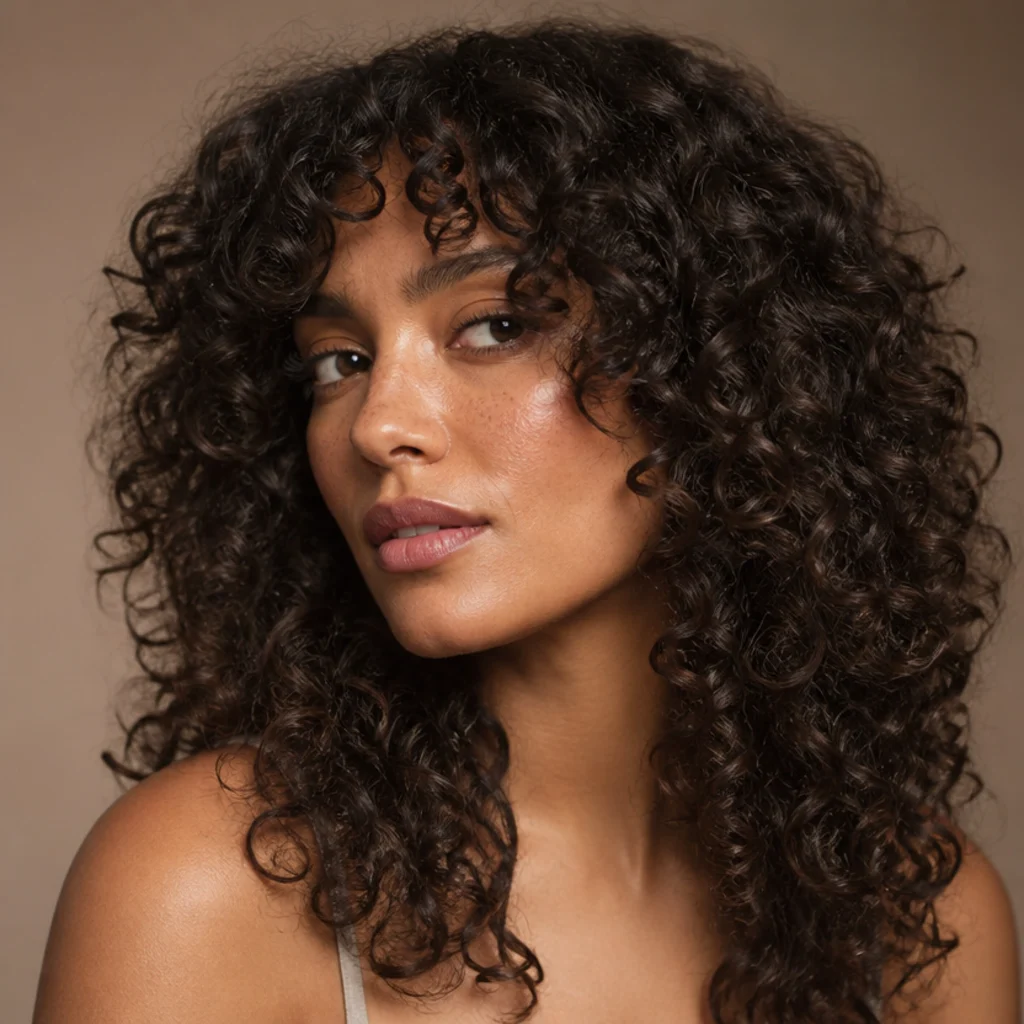
Curls and shags are a natural match, because layering removes the interior bulk that otherwise stacks ringlets into a heavy triangle. On curly hair, the curtain bangs become a rounded, springy fringe that frames the face once dry, so they are always cut noticeably longer to bank against shrinkage: a curl can rebound two to four inches shorter than it hangs wet. 2C through 3C patterns do especially well here, where the layers give each curl room to clump and define. Rich espresso deepens curl definition by adding shadow between coils. Style with a curl gel raked through soaking-wet hair, scrunch to encourage clumps, then diffuse on low heat with the cup pressed to the scalp. Pro tip: book a curl specialist who cuts dry, curl by curl, so the shape matches how your hair actually lands. Wet-cutting curly texture is guesswork. Ask for "a curly shag with internal layers and a curtain fringe cut for shrinkage."
Save this to Pinterest if you're growing out a curly cut and want a shape with real movement.
06Straight Sleek Long Shag {#6}
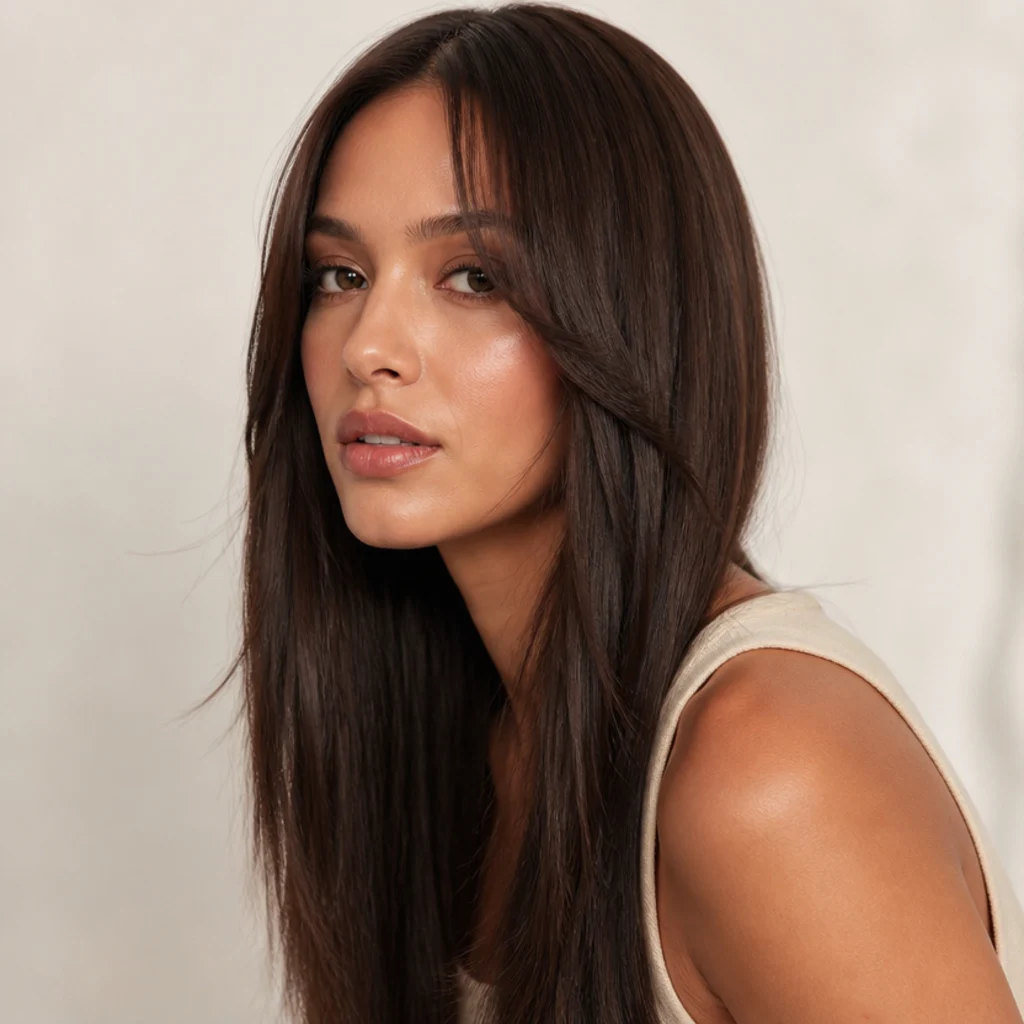
Straight hair shows off the architecture of a shag more clearly than any other texture, so precision is everything: every layer line is visible, and a rushed cut reads as uneven rather than intentional. Here the layers are graphic and deliberate, and the curtain bangs are smoothed into a glossy sweep that traces the cheekbones. It is the polished, editorial take, ideal for anyone who prefers a clean finish over a tousled one, and it especially flatters square and heart faces by softening a strong forehead or jaw. Deep brunette maximizes the mirror-like shine straight hair can hold. Blow-dry flat with a paddle brush, then use a flat iron to bend the bang ends away from the face in a soft C. A pea-size drop of shine serum on the ends only keeps it sleek without greasing the roots. Pro tip: always flat-iron the bangs last, on cooled hair, so the bend sets instead of dropping. Ask for "clean, connected layers and smooth curtain bangs with a rounded C-shape," and expect a trim every eight weeks to keep the perimeter crisp.
07Copper Long Shag With Split Bangs {#7}

Color can change a shag, and warm copper is one of the most flattering choices for a textured cut because it glows differently through every layer, turning movement into a play of light and shadow. The curtain bangs are cut with a clear split at the center so they fall open like true curtains, framing each side of the face independently. Copper flatters warm and neutral undertones most, and reads especially luminous on fair-to-medium complexions with peach or golden warmth in the skin. Be realistic about upkeep: copper is a fast-fading fashion tone, so commit to color-safe, sulfate-free washing, a cool final rinse, and a color-depositing conditioner or gloss refresh every four to six weeks to fight the wash-out. Style with a diffuser or round brush to keep the layers piecey. Pro tip: wash copper in the coolest water you can tolerate and skip a wash day whenever possible. Heat and frequency are what strip the pigment. Bring a photo and ask your colorist for "a bright copper with a defined center-split curtain fringe."
08Ash Brown Long Shag With Money-Piece Bangs {#8}
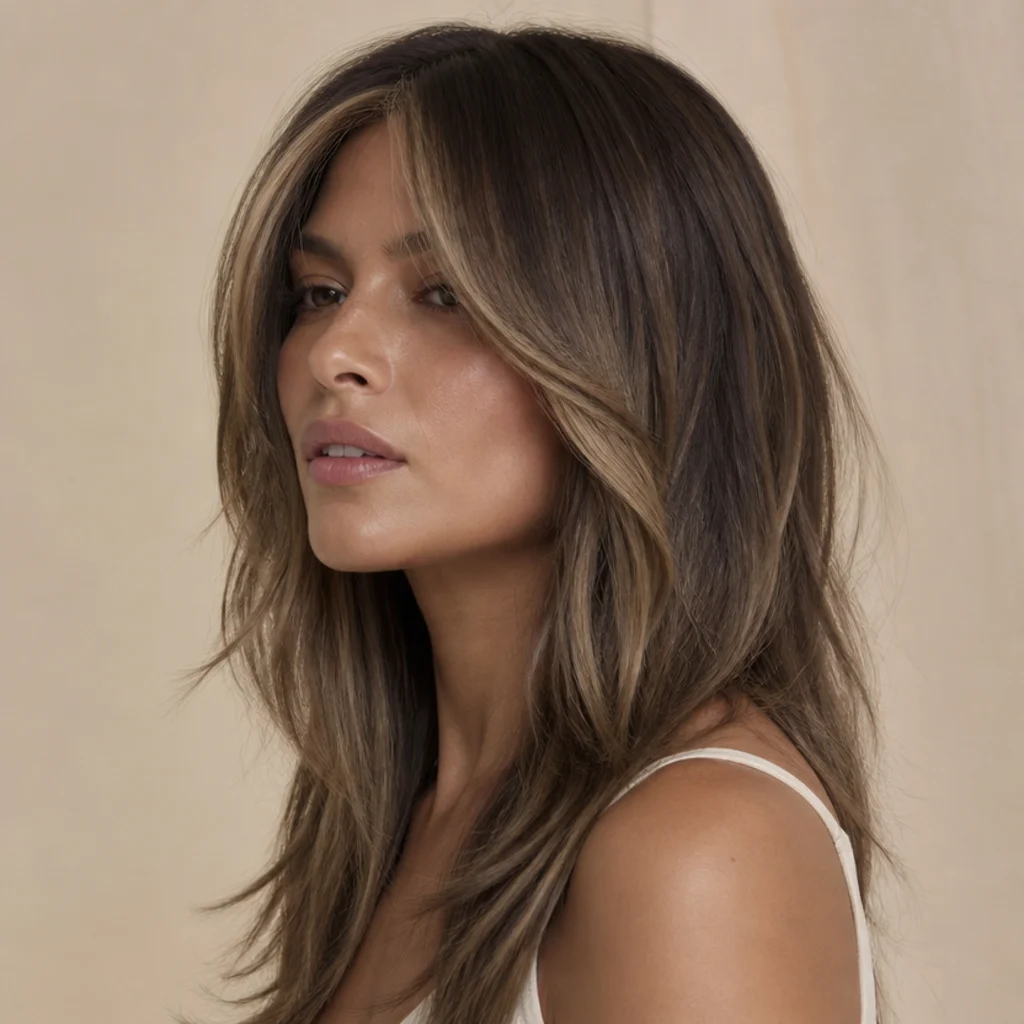
A cool ash-brown base with a lightened money piece is the lowest-commitment way to brighten a long shag with bangs. The money piece sits directly on the curtain bangs, so the lightest color lands exactly where it frames your eyes and cheekbones, for an instant brightening effect with a fraction of the color. This flatters cool and neutral undertones best, since ash counters warmth, and it's remarkably forgiving to grow out because the contrast is placed intentionally rather than pulled all over. Maintenance runs lower than full highlights: only the front pieces need refreshing, roughly every 8-10 weeks, plus a purple-toning shampoo weekly to keep the money piece from going brassy. Style with a texture spray so it stays undone and modern. Pro tip: ask for the money piece to start slightly below the root, not right at the scalp, so grow-out reads as intentional shadow rather than a line. Ask your colorist for "an ash-brown base with a soft money piece on the curtain bangs, blended not blocky."
09Long Shag With Curtain Bangs for Round Faces {#9}

If you have a rounder face, the goal is vertical length and lift, and this shag is engineered for both. The layers are kept longer to avoid adding width, and the curtain bangs are cut to graze the cheekbones rather than sit high on the cheek, which draws the eye downward and visually slims the face. The single most important rule: keep volume in the mid-lengths and crown, never at the sides near the widest point of the face, where extra fullness rounds you out further. A warm brunette with subtle depth adds the illusion of a slimming shadow. Style by bending the bang ends outward and away, and lifting the crown with a round brush or a few large hot rollers. Pro tip: a deep center part plus crown lift is the fastest way to add the vertical line that lengthens a round face. Resist tucking the bangs flat behind the ears. Ask your stylist for "long, cheekbone-length curtain bangs and layers that start below the chin to keep the face elongated."
10Long Shag With Curtain Bangs for Thick Hair {#10}
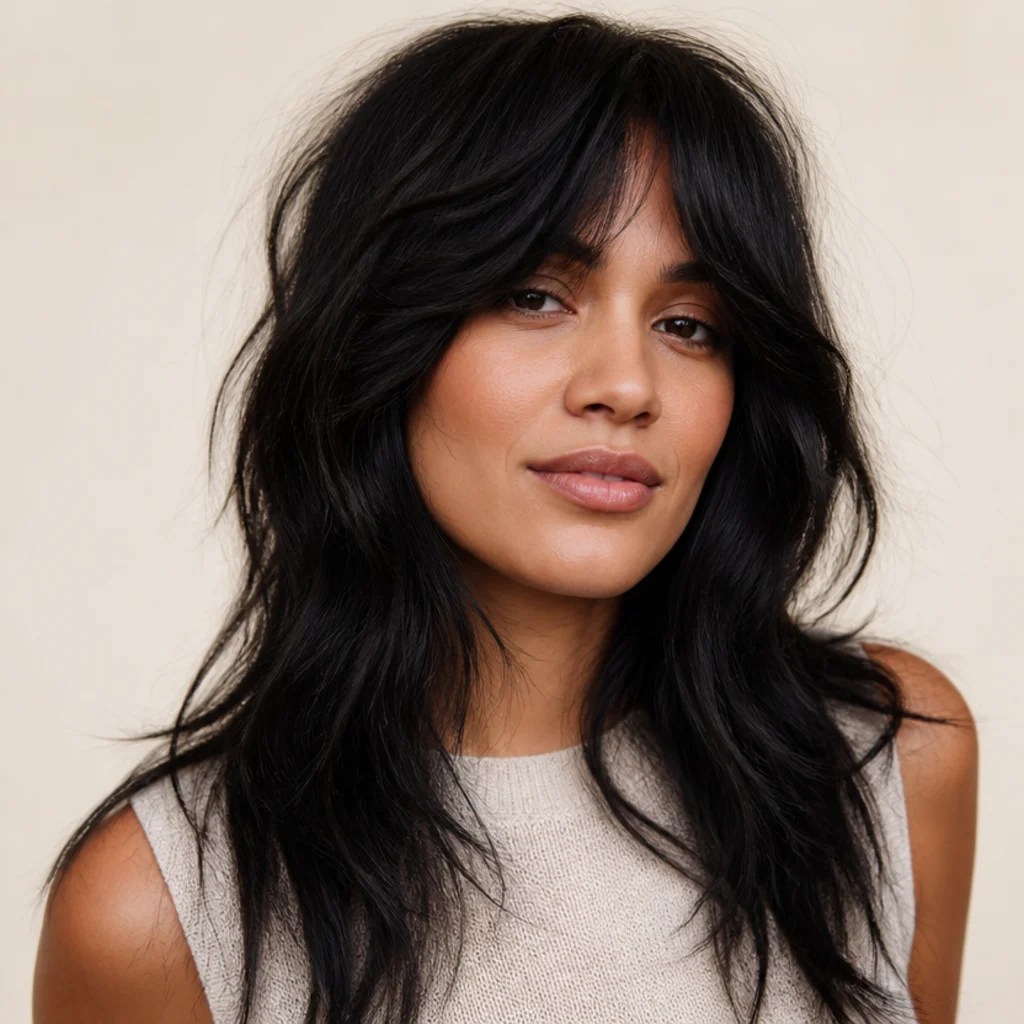
Thick hair carries a shag beautifully, but it demands generous internal texturizing or the shape turns boxy, pyramid-heavy, and helmet-like. Here the layers are cut deep into the interior and the ends are point-cut to remove weight while preserving the length you want to keep. The bulk comes out from the inside, not off the perimeter. The curtain bangs are cut fuller to match the density of the rest, since a wispy fringe would look disconnected against thick hair. Medium to coarse textures that feel dragged down by one-length cuts respond well to this approach. Style with a few drops of lightweight smoothing oil to control frizz and a diffuser for controlled, directed volume rather than a wall of fullness. Trims matter here: every 8-10 weeks keeps the weight in check. Pro tip: ask specifically for interior thinning shears or a razor through the mid-section only, never near the ends, so the fringe and perimeter stay dense while the middle moves. Ask for "aggressive internal layering and thinned, piecey ends with full curtain bangs."
Save this to Pinterest if thick hair leaves you feeling weighed down: this shape lightens the load.
11Rooted Blonde Long Shag {#11}
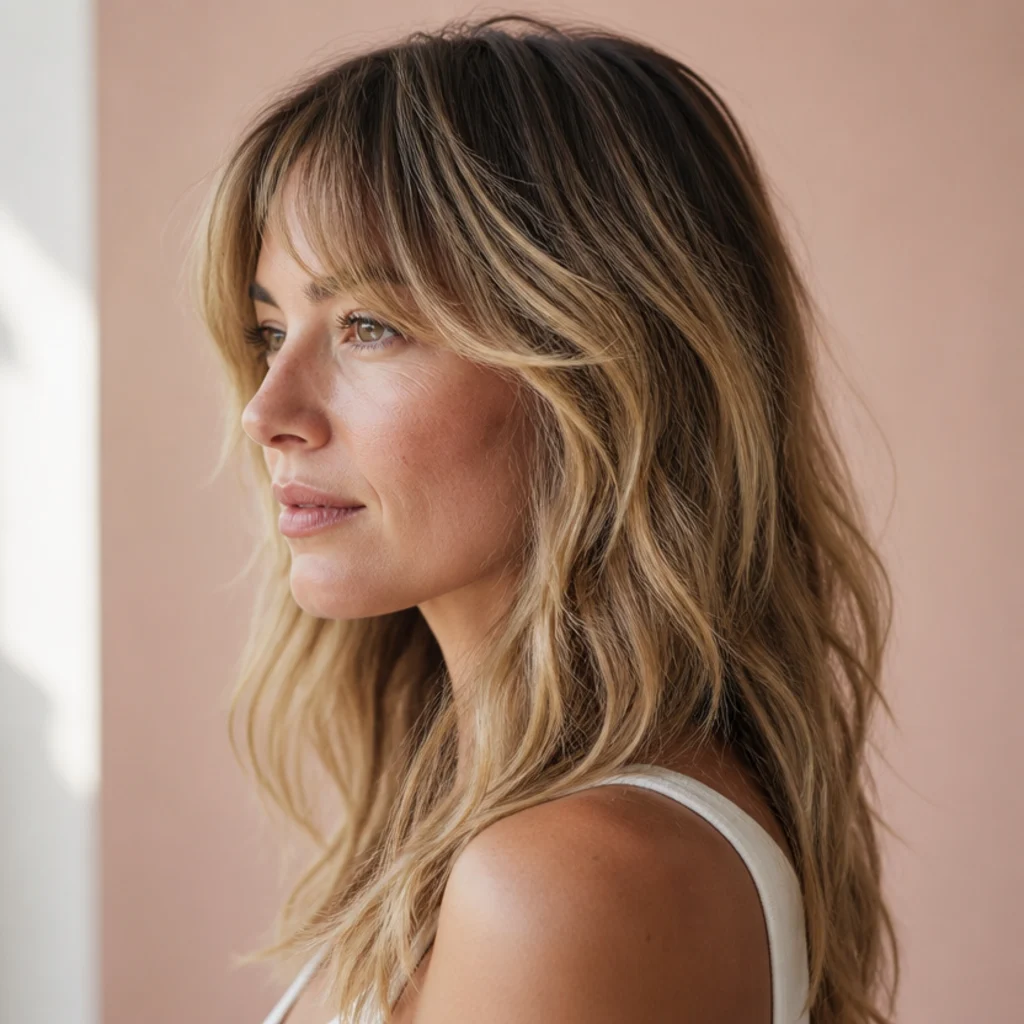
A rooted or shadow-root blonde is the most practical way to wear light color on a long shag, because the deliberately darker root grows out as a soft gradient instead of a harsh demarcation line. The blonde brightens through the layers and curtain bangs, catching the most light at the ends where the texture is choppiest and the color is lightest. Anyone who wants a blonde payoff without chasing regrowth will like this, since a well-placed shadow root comfortably stretches to eight or ten weeks between visits. Protect your investment: a bond-building treatment every few washes to guard lightened ends, and a purple shampoo weekly to keep the tone clean and cool rather than yellow. Style with a diffuser or air-dry to show off the dimension. Pro tip: alternate purple shampoo with a hydrating one. Over-toning can leave lightened ends dull and slightly gray. Ask your colorist for "a lived-in rooted blonde with brightness concentrated through the mid-lengths and bangs."
12Long Shag With Deep Curtain Bangs {#12}
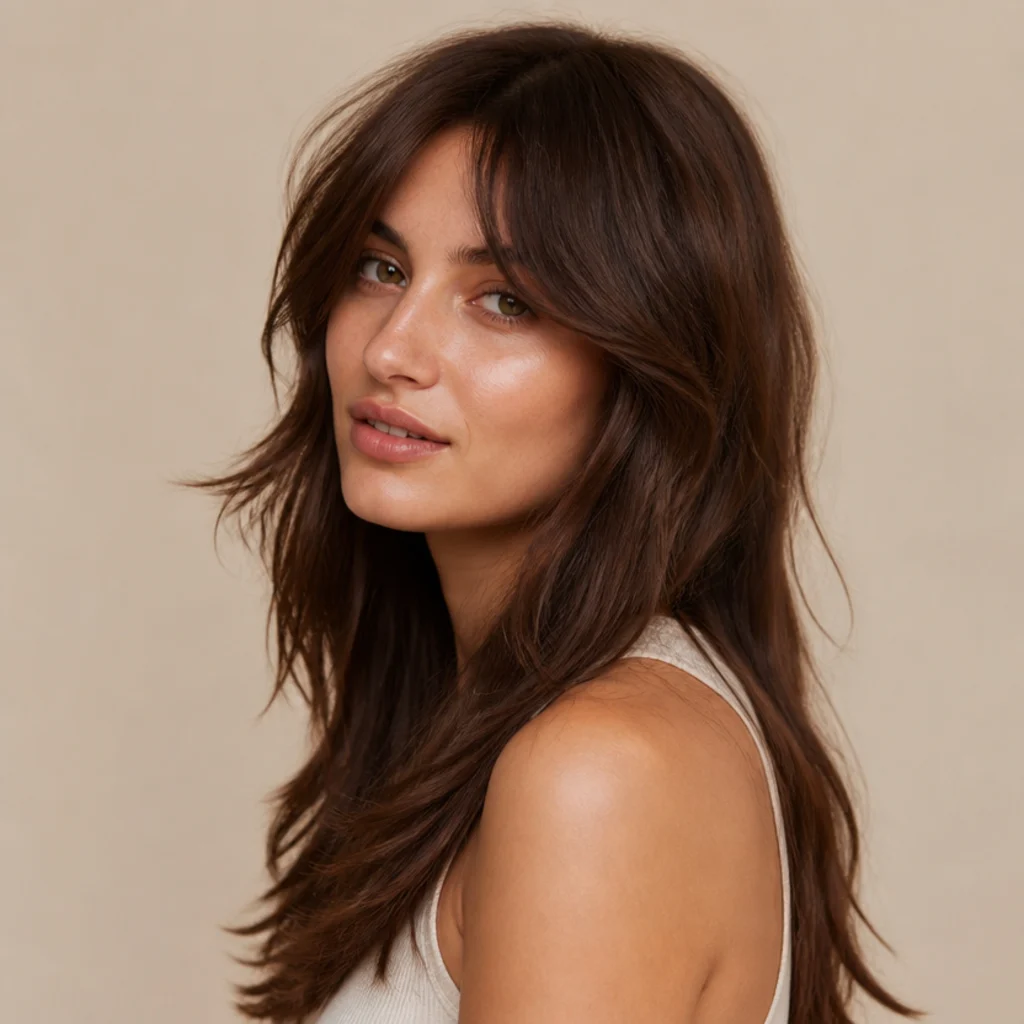
Not every curtain bang has to sit at the cheekbone. These deep curtain bangs are cut longer, falling to the nose or just below, so they blend almost smoothly into the face-framing layers with no hard break between fringe and length. The effect is soft, grown-out, and low-maintenance: there's barely any separation to trim, and the length tucks behind the ears on days you want it off your face. It's a good option if you're nervous about committing to a shorter fringe, or you're growing out a previous bang and want a graceful transition. Chestnut keeps the blend soft and dimensional. Style by parting in the center and bending the ends back with a round brush or your fingers and a dryer. Because there's no short fringe to maintain, you can stretch bang trims to every 8-10 weeks. Pro tip: if the deep bangs feel too long some days, a small claw clip at the crown lifts them into a face-framing sweep instantly. Ask your stylist for "long, deep curtain bangs that connect into the front layers with no hard break."
13Textured Coily Long Shag {#13}
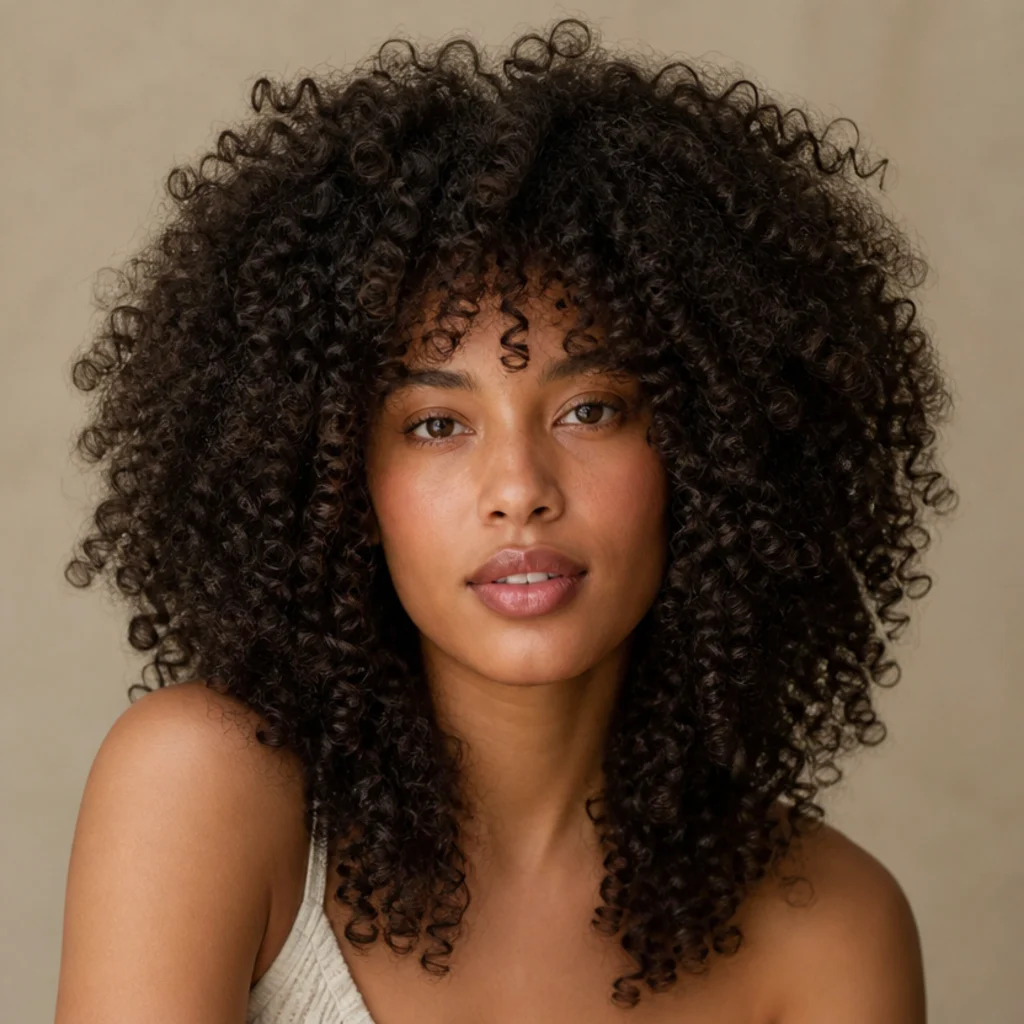
Coily hair wears a long shag as a big, rounded silhouette full of natural volume, and thoughtful layering is what keeps that volume from stacking too wide at the sides into a boxy shape. The curtain fringe is sculpted to open around the face and, like every curly version, is cut with generous shrinkage built in so it lands exactly where you expect once fully dry. 4A to 4C textures that want a deliberate, shaped silhouette rather than a uniform round puff do particularly well with this cut. Style with a leave-in conditioner for slip, a curl custard for hold and definition, and low-heat diffusing or air-drying. Always work product through soaking-wet hair to lock in moisture. Pro tip: shingle the custard through the fringe section in small pieces so the front coils clump and frame cleanly instead of blurring into the rest. Seek out a stylist experienced with coily texture and ask for "a layered shag shape with a curtain fringe cut dry for my curl pattern."
14Long Shag With Curtain Bangs and Face-Framing Highlights {#14}
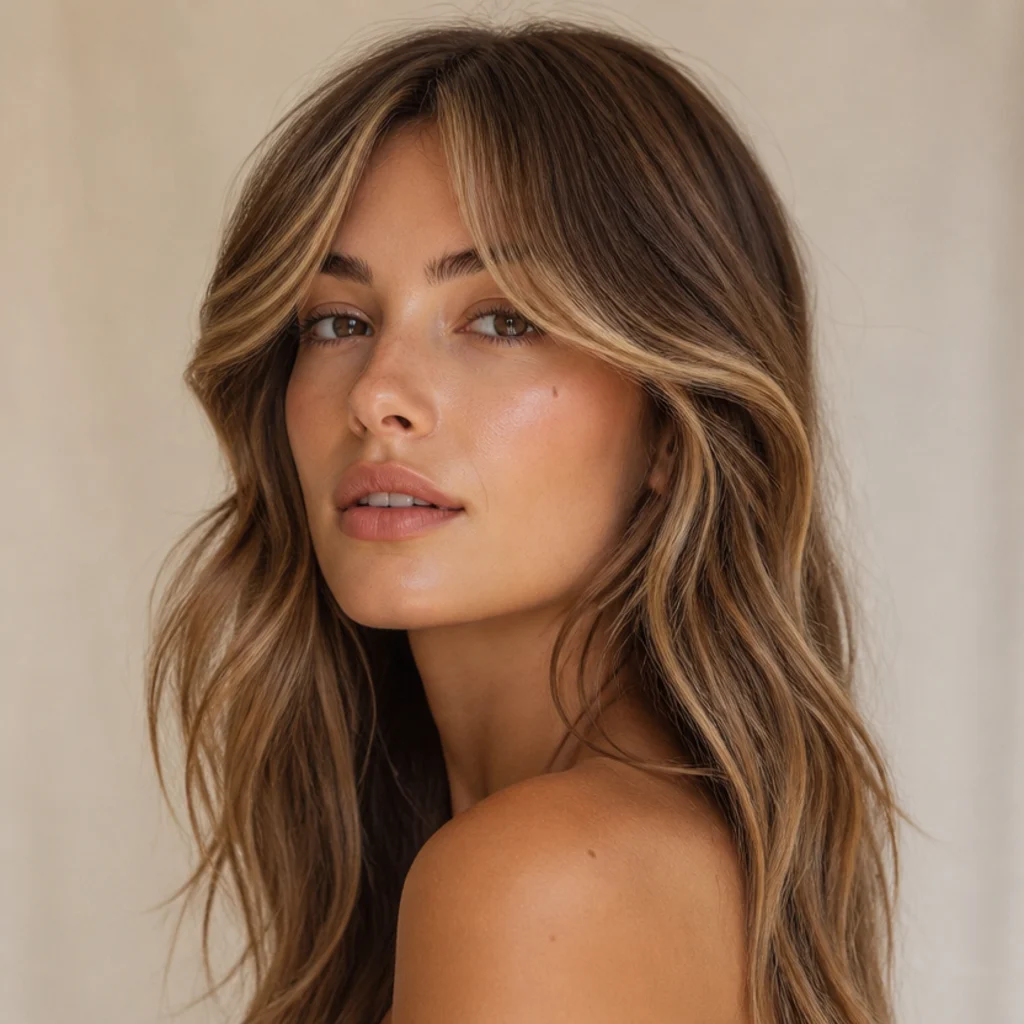
Fine, hand-painted highlights placed right along the curtain bangs and front layers add dimension exactly where movement already lives, so the color and the cut reinforce each other. The lightness traces the shape of the shag: every layer looks intentional, and the bangs catch light as they sweep back off the face. This bronde blend (a brown-blonde midpoint) suits neutral to warm tones and grows out remarkably softly because the highlights are surface-painted, not pulled from the root all over. Maintenance is refreshingly low: a gloss or toner refresh every couple of months keeps it luminous, with no hard regrowth line to chase. Style with a texture spray to fracture the light and show off the dimension. Pro tip: ask for the brightest pieces to fall right at the front of the fringe. That's the zone that frames your eyes and photographs best. Ask your colorist for "delicate face-framing balayage along the curtain bangs and top layers, kept natural and blended."
15Low-Maintenance Grown-Out Long Shag {#15}

Sometimes the best look is the one you barely have to think about. This grown-out shag has softened, longer layers and curtain bangs that have relaxed into the length, so the whole cut reads effortless and lived-in rather than styled. It's ideal if you routinely stretch appointments and want a shape that still looks intentional at week ten or twelve. The layers are cut soft and the fringe long, precisely so there's no awkward growing-out phase to suffer through. This forgiving shape suits busy schedules and anyone easing back from a higher-maintenance cut. Air-dry with a pea-size drop of leave-in cream and go; a quick tousle is all it needs. Pro tip: book a dry trim, not a wet one, and only when the ends start to feel stringy or split. Over-trimming defeats the grown-out intent. Ask your stylist for "a soft, lived-in shag with long curtain bangs that grow out smoothly, dusting the ends only."
Pro Tips from the Editor
- Cut the fringe dry, or at least dry-check it. Curtain bangs shrink as they dry, and even straight hair springs up a fraction, so a wet-cut fringe almost always lands shorter than intended. Ask your stylist to refine the bangs on dry hair before you leave.
- Over-direct the bangs the opposite way first. When blow-drying, brush the fringe firmly across to the wrong side for a few seconds before sweeping it into place. This breaks cowlicks and builds a fuller, longer-lasting sweep.
- Match your product weight to your texture, not the trend. Fine hair wants mousse and salt spray; thick and coily hair wants oils, creams, and custards. The wrong-weight product is why a good cut can still fall flat at home.
- Texture spray is the shag's best friend, but only on dry hair. It grips second-day hair far better than freshly washed strands and revives the piecey separation the cut is built around.
- Protect color-treated shags at the ends. Copper, blonde, and balayage all fade fastest where the texture is choppiest. Use a bond-builder, wash in cool water, and stretch wash days to hold tone.
- Book bang trims separately from full cuts. Most salons offer complimentary or low-cost fringe trims between appointments. Use them every 4-6 weeks so the shape lasts the full 8-12 weeks between real cuts.
- Bring proportion photos, and skip the ones that are just pretty. Save images that show the layer start point and bang length on someone with your face shape and density, so your stylist reads placement instead of vibe.
How to Choose / Get the Look
Start with your natural texture, because the shag works with what you have rather than against it. Straight and fine hair benefit from softer, connected layers and airy bangs that build the illusion of fullness; over-thinning here is the number one mistake, leaving ends sparse. Thick, curly, and coily textures need heavier internal texturizing so the shape stays light and moves, with the bulk removed from the interior rather than the perimeter. Curly and coily wearers should always choose a stylist who cuts dry and accounts for shrinkage, especially on the fringe, where a wet cut can rebound inches shorter than planned.
Next, use your face shape to set fringe and layer placement. Round faces want longer, cheekbone-grazing bangs, crown lift, and layers starting below the chin to add a lengthening vertical line. Long or angular faces want deeper, wispier fringe and softer, higher layers to add width and soften the jaw. Square and heart shapes benefit from a rounded, feathered fringe that breaks up a strong forehead or jaw. If you're unsure, default to a longer curtain bang: it grows out gracefully and can be trimmed shorter later, whereas a too-short fringe can only wait.
Then plan color around how much upkeep you'll actually do, not the photo alone. A placed money piece or face-framing balayage brightens the front with minimal upkeep and soft grow-out; all-over fashion tones like copper demand frequent glossing. Finally, bring two or three saved photos and be specific at the chair: name the length, where the layers should start, the fringe length, and how much texture you want. Request a dry trim so your stylist can see how the layers actually fall, and ask for a two-minute styling demo so you can recreate the shape at home with a round brush or diffuser.
Frequently Asked Questions
Are curtain bangs high maintenance?
They're lower maintenance than a blunt fringe because they're longer and blend into your layers, so grow-out reads as intentional rather than overgrown. Plan on a bang-only trim every four to six weeks to keep them off your lash line, but the full cut only needs attention every 8-12 weeks. Many salons offer free or low-cost fringe trims between appointments, which is the easiest way to keep them tidy.
Will a long shag work on fine hair?
Yes, and it's one of the best cuts for fine hair. A long shag uses soft, connected layering to create the appearance of more volume and movement than a blunt cut can. The key is keeping weight in the perimeter and avoiding heavy thinning or razoring, which leaves already-fine ends looking wispy. Add a root-lifting mousse and dry the under-layers first for built-in lift.
How often should I trim a long shag?
A dry trim every 8 to 12 weeks keeps the layers and ends defined. Aim closer to eight weeks if you want the shape crisp and graphic, or stretch toward twelve if you prefer a grown-out, lived-in finish. Between full trims, a quick fringe trim every four to six weeks maintains the curtain bangs without touching the length.
Can curly and coily hair pull off this cut?
Absolutely. Layering removes interior bulk so curls and coils form their natural shape instead of stacking into a wide triangle. The essentials are booking a stylist who cuts dry, curl by curl, and factoring shrinkage into both the layers and the fringe. Coily hair can rebound several inches shorter dry than wet, so the fringe is always cut long to compensate.
What is the difference between a shag and other layered cuts?
A shag stacks shorter internal layers throughout for maximum movement and a piecey, textured, slightly undone finish. A standard layered cut uses smoother, longer, graduated layers for a more blended, polished result with less visible separation. The shag also leans on choppy, point-cut or razored ends and, with curtain bangs, a soft face-framing sweep that completes the lived-in effect.
What face shape do curtain bangs suit best?
Curtain bangs are among the most universally flattering fringe styles because you can tailor the length to your face. Cheekbone-grazing bangs elongate round faces, deeper nose-length fringe softens long or angular faces, and a rounded feathered version breaks up strong foreheads on square and heart shapes. The soft center split flatters nearly everyone by drawing attention to the eyes and cheekbones.
How do I keep curtain bangs from separating or parting in the middle?
Blow-dry them first, while damp, before they set into a cowlick. Brush the fringe across to the opposite side for a few seconds, then sweep it back into place. This over-direction breaks the natural part and builds fullness. A round brush at the root and a whisper of texture or dry shampoo help the sweep hold through the day. Avoid touching them once styled, since oils from your hands encourage separation.
Is a long shag with curtain bangs a good choice for thick hair?
Yes, provided your stylist texturizes the interior generously. Thick hair without internal thinning turns boxy and heavy in a shag. Ask for deep internal layering and point-cut ends to release weight from the middle while keeping the perimeter and fringe full. Finish with a lightweight smoothing oil and a diffuser for controlled volume rather than a wall of density.
How long does it take to grow out a shag if I change my mind?
Because the layers are soft and the curtain bangs are long, a shag grows out more gracefully than most cuts, since there's no blunt line to disguise. The fringe blends into face-framing layers within a couple of months, and the internal layers soften as everything lengthens. Regular dusting of the ends every 10-12 weeks keeps it looking intentional throughout the transition.