15 Long Shag Haircut Ideas for Straight Hair
Straight hair is the shag's best canvas: with no bend to hide the work, every layer, notch, and razored end reads clean and deliberate. These 15 ideas move from barely-there movement to full rock-and-roll shape, each mapped to face shape, hair density, a real upkeep timeline, and the exact words to hand your stylist.
 Edited by Lena Rose · Published July 11, 2026 · 28 min read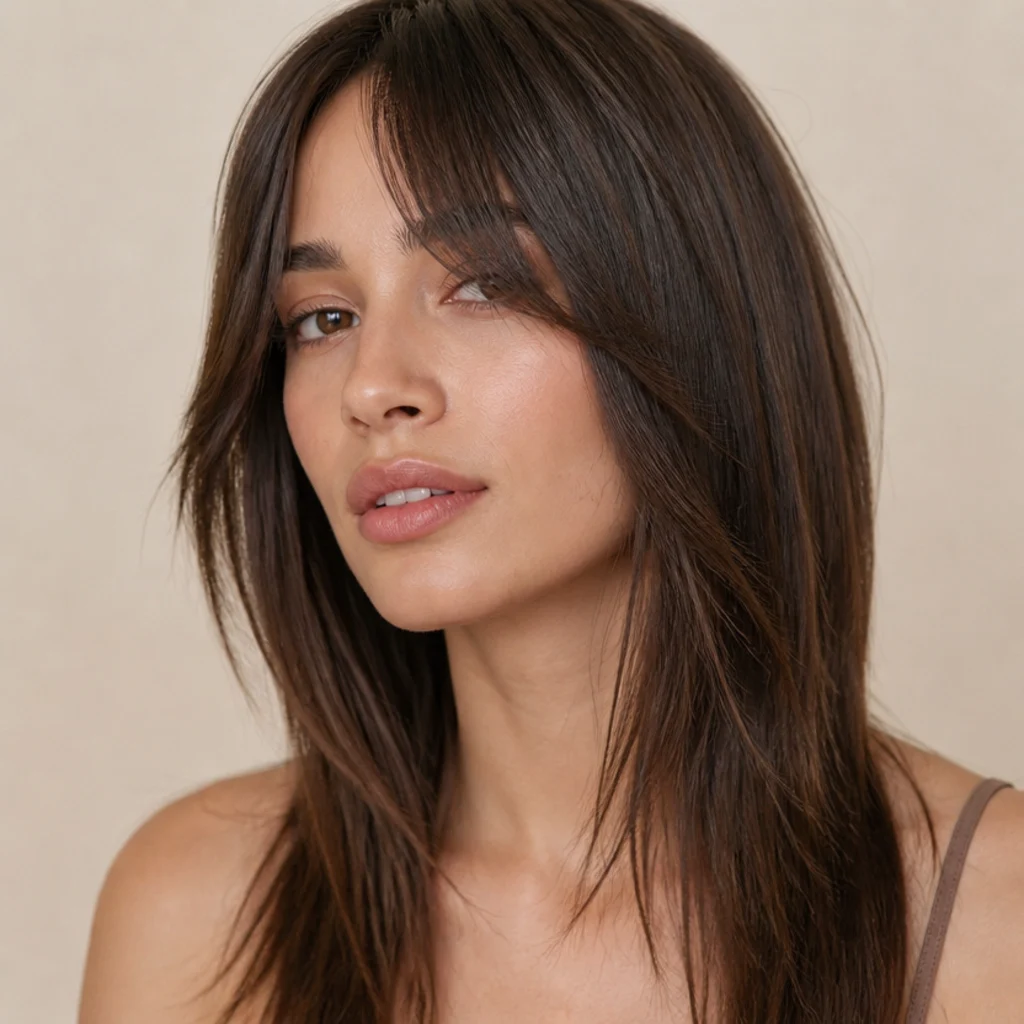
Quick Answer
- Best for: Straight hair that wants movement, crown volume, and face-framing shape without sacrificing real length.
- Who might skip it: Anyone growing out one solid blunt length, or fine hair already prone to a stringy perimeter that can't spare interior weight.
- Maintenance: Low to moderate. Bang-heavy versions want a fringe trim every 3-6 weeks; blended, grown-out shags stretch to 12-14 weeks.
- Difficulty: Easy to style at home once cut; the cut itself needs a layering-confident stylist who point-cuts or razors with intent.
- Cost: Roughly a mid-to-premium haircut in your area; add a gloss or money-piece service if you want color placement, which raises the total noticeably.
- Wear time / longevity: The shape holds 8-12 weeks before layers blur; color-added versions are gated by the gloss, closer to 8.
- Standout variation: A soft long shag with connected curtain bangs and lightly choppy ends flatters nearly every face shape.
- How to ask your stylist: Bring two or three photos and name the parts you love (fringe style, layer placement, perimeter weight) rather than just saying "a shag."
In This Guide
- Soft Long Shag With Curtain Bangs
- Long Shag With Choppy Layers
- Wispy Face-Framing Shag
- Sleek Straight Shag With Blunt Ends
- Long Layered Shag With Volume
- 70s-Inspired Rock Shag
- Shag With Micro Fringe
- Money-Piece Shag
- Low-Maintenance Grown-Out Shag
- Shag With Long Side Bangs
- Textured Shag for Fine Straight Hair
- Heavy Shag for Thick Straight Hair
- Shag With Faux-Wave Bend
- Center-Part Waterfall Shag
- Modern Wolf-Cut Shag
Intro
Most people file the shag under "textured hair" and assume waves or curls own it. It's actually the opposite: straight hair shows a shag off more honestly than any other type. With no natural bend to hide the cut, every internal layer, point-cut end, and face-framing piece reads exactly where your stylist placed it, so the movement looks engineered rather than accidental. A soft long shag keeps the bulk of your length while carving shape around the crown and cheekbones — the silhouette stays airy on top and grounded at the perimeter instead of heavy all over.
That balance is why the long shag has stayed in constant rotation and helped drive the wolf-cut revival alongside it. It also solves two straight-hair complaints at once: adding body where hair falls flat, and breaking up density where it sits like a block. Below are 15 distinct takes on the long shag for straight hair, from wispy curtain bangs to a full modern wolf cut. Each entry covers who it flatters by face shape and hair density, a realistic upkeep window, a styling and pairing note, one pro tip worth stealing, and the exact phrase to use in the chair so you leave with the shape you actually pictured.
01Soft Long Shag With Curtain Bangs
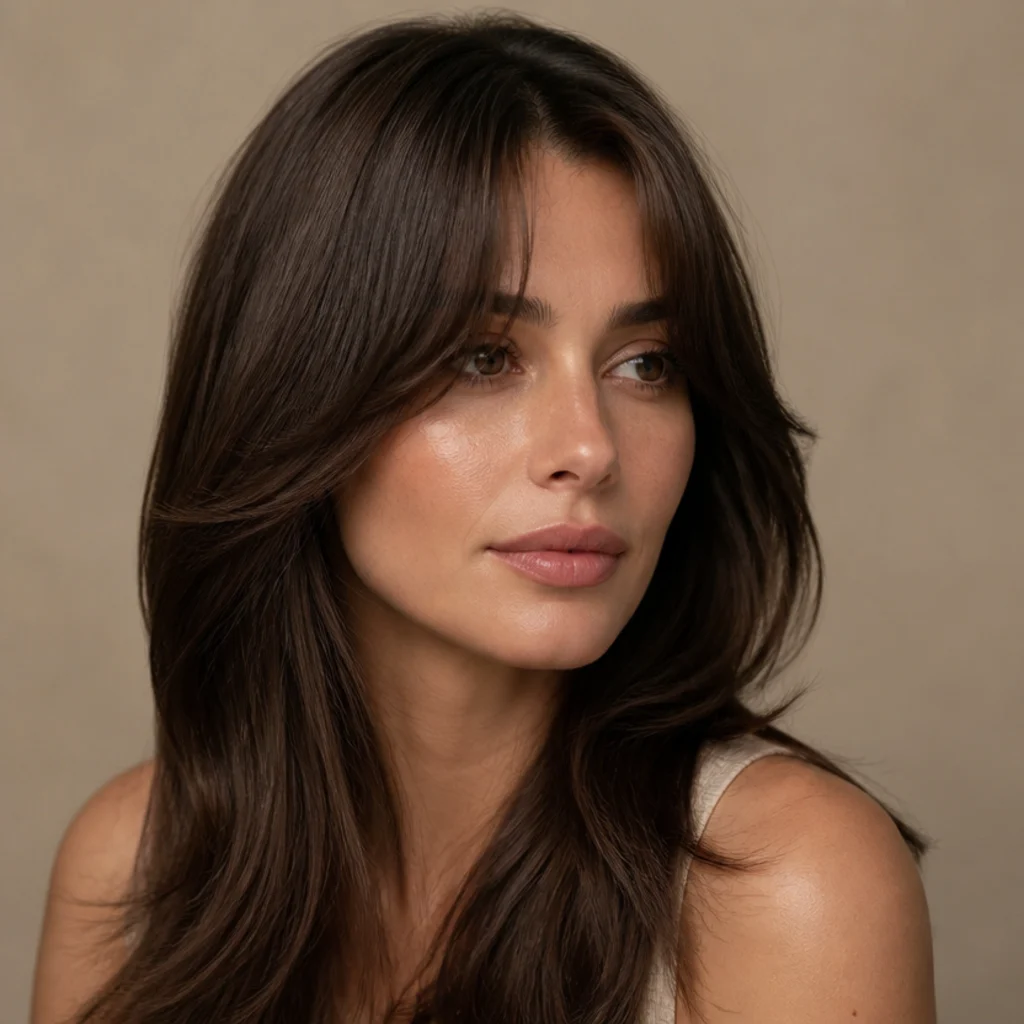
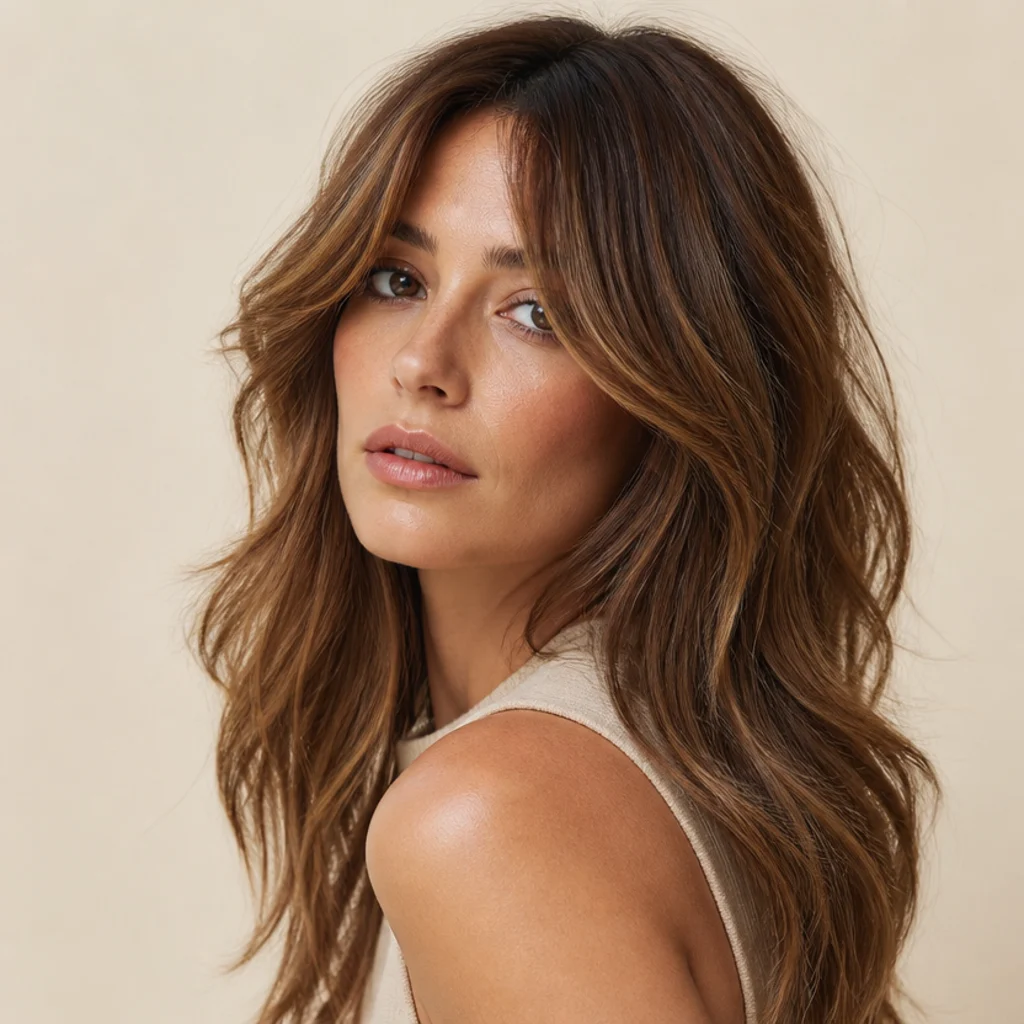
This is the entry everyone screenshots: soft, connected layers through the length, paired with a curtain fringe that splits at the center and feathers back toward the cheekbones. Keep the bangs blended into the longest face-framing pieces rather than cut as a separate shelf — that connection is what keeps the look from reading dated. Oval, round, and heart shapes wear it especially well, since the parted fringe adds width up top while the length pulls the eye down and balances things out. Fine to medium straight hair carries it best; heavier density can swallow the softness of the split. Upkeep runs on two speeds: the fringe wants a trim every four to six weeks, even though the length itself can comfortably wait 10 to 12. Try it with soft, dimensional color or a subtle root smudge, since a flat straight surface benefits from the extra depth. Pro tip: round-brush the fringe up and away from the face while it's still warm, then let it cool before releasing so the sweep sets. Ask your stylist for "a soft long shag with connected curtain bangs, blended not blunt, breaking around the cheekbone."
02Long Shag With Choppy Layers
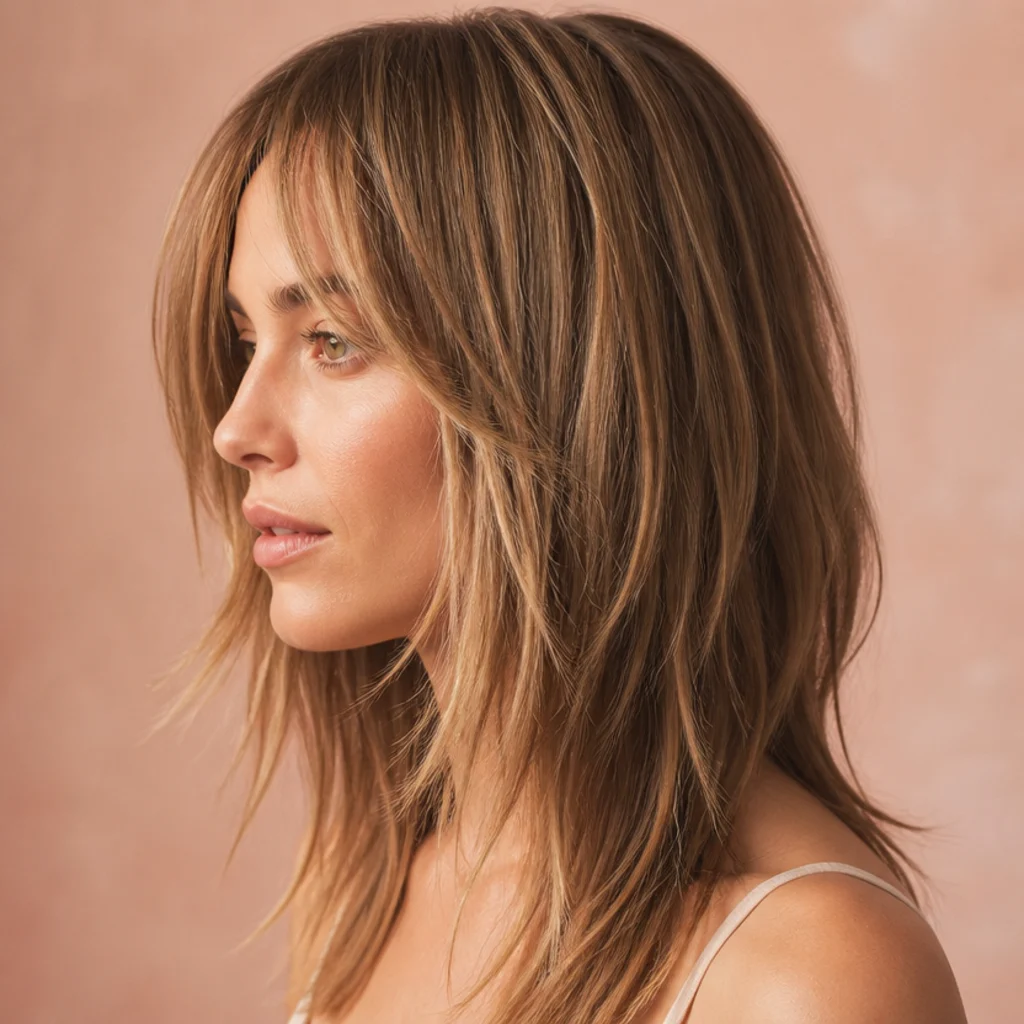
When you want the shag to read loud, this is the version: long shag choppy layers cut with a razor or aggressive point-cutting, so the ends finish piecey and separated instead of smooth and blunt. That deliberate disconnection builds instant movement on straight strands, which otherwise reflect light in one uninterrupted sheet. Medium to thick hair carries it best, holding visible texture without looking sparse; fine hair should ask for a lighter, more selective hand so the ends don't thin to wisps. Oval, square, and heart shapes handle the strong dose of edge around the jaw particularly well. Maintenance is forgiving, since grown-out chop still looks purposeful rather than shaggy in a bad way — a reshape every 10 weeks holds it. Style it undone with air-dry texture, or rough-dry and finish rather than polish. Pro tip: warm a pea-size drop of texture cream between your palms and press it only into the last two inches so separation stays visible without greasing the roots. Ask your stylist for "choppy, disconnected layers with a lived-in razored edge, weight left at the perimeter."
03Wispy Face-Framing Shag
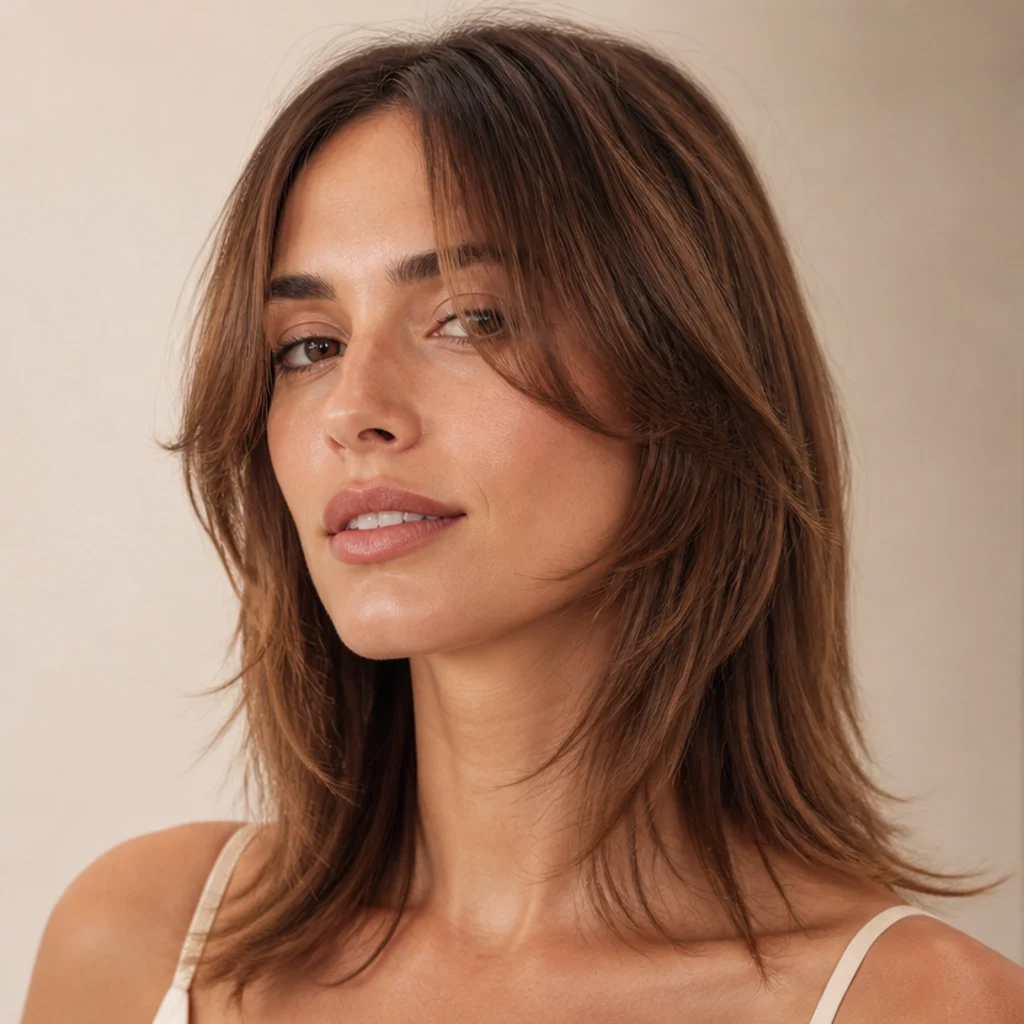
The wispy shag leaves your interior length almost untouched and puts all the shaping around the face. Fine, feathered pieces begin near the cheekbone and lengthen toward the collarbone, softening a strong jaw, a square hairline, or a heavy corner at the temple. Because the internal weight stays intact, it reads far more subtle than a full shag — a good first step if layers make you nervous or a previous cut left you stringy. Square, oblong, and diamond faces benefit most from the softened edges, and it works across densities since the interior is left alone. Upkeep is low: the wispy pieces grow down gracefully over 12 weeks with no awkward shelf. Try your natural color, or the faintest face-framing brightness to bring out the feathering. Pro tip: air-dry with a dime of lightweight serum raked only through the framing pieces, then twist those front sections around your finger for a second to encourage the taper. Ask your colorist or stylist for "long face-framing layers, soft and wispy, kept off the interior length."
04Sleek Straight Shag With Blunt Ends
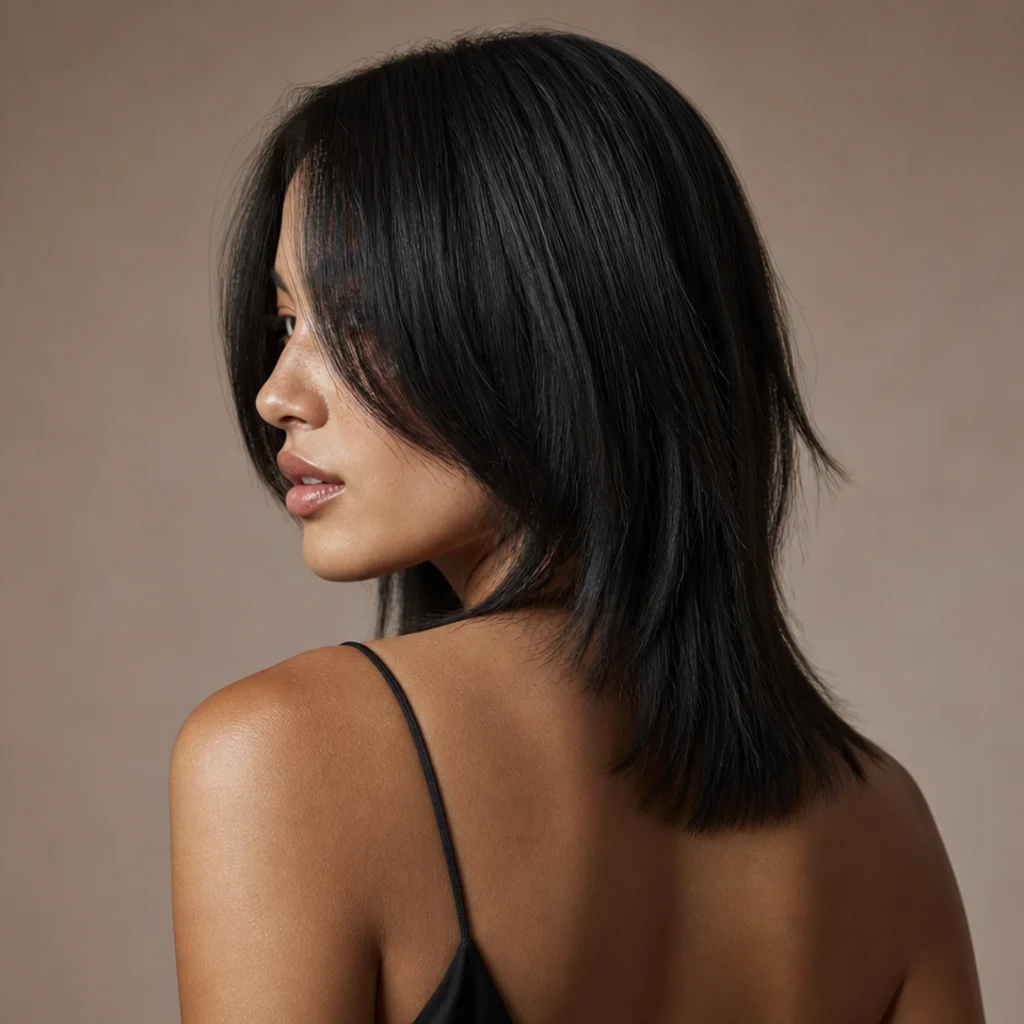
Not every shag has to look undone, and this is the proof: a blunt, weighty perimeter for a strong bottom line, married to just enough internal layering to lift the crown. The contrast of a clean hemline against soft interior movement reads modern and editorial rather than shaggy. It's the smartest pick for straight hair that runs thin or wispy at the ends, since the blunt line rebuilds visible density where you need it most. Oval and long faces can carry the strong horizontal hemline; very round faces may find the hard bottom line widens rather than lengthens. Fine to medium hair benefits most, since the retained perimeter weight does structural work. Maintenance runs moderate, since a blunt line telegraphs split ends fast — a dusting every eight weeks keeps it crisp. Try a single-tone glossy color to lean into the polish. Pro tip: flat-iron in wide, flat passes and finish with a shine mist held a foot away so the surface stays reflective, not oily. Ask your stylist for "a shag with a blunt, weighted perimeter and light interior layers for crown lift only."
05Long Layered Shag With Volume
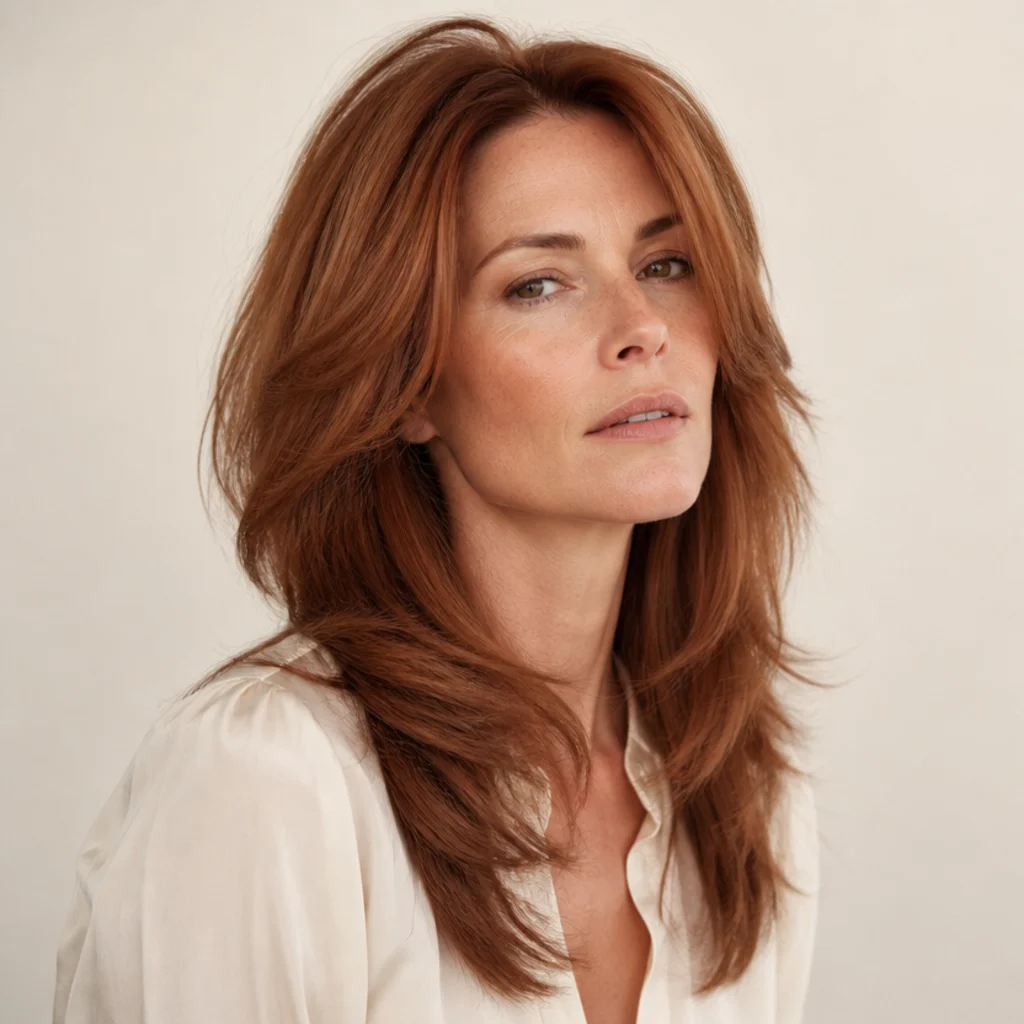
A long layered shag haircut built for volume stacks graduated layers from the crown down, so straight hair that usually falls flat gains real body without a perm or a heavy product routine. The shorter crown pieces prop up the layers beneath them, building a rounded, full silhouette that holds its shape as you move. Fine to medium straight hair that struggles to keep lift responds best, and round or heart faces benefit as the volume draws the eye upward and narrows the overall frame. Density is the deciding factor: very thick hair can look pyramidal if the layers stack too high, so those clients want the graduation softened. Upkeep is moderate; the stacking needs refreshing every 8 to 10 weeks, before the crown layers grow into the mid-lengths and lose their prop. Try warm, dimensional color to make the layers catch light and read even fuller. Pro tip: rough-dry the roots upside down first, then round-brush the mid-lengths, and set the crown with a shot of cool air before you flip back up. Ask your stylist for "graduated long layers built specifically for crown volume, not just face-framing."
Save this to Pinterest and build a board of your favorite layer shapes.
0670s-Inspired Rock Shag
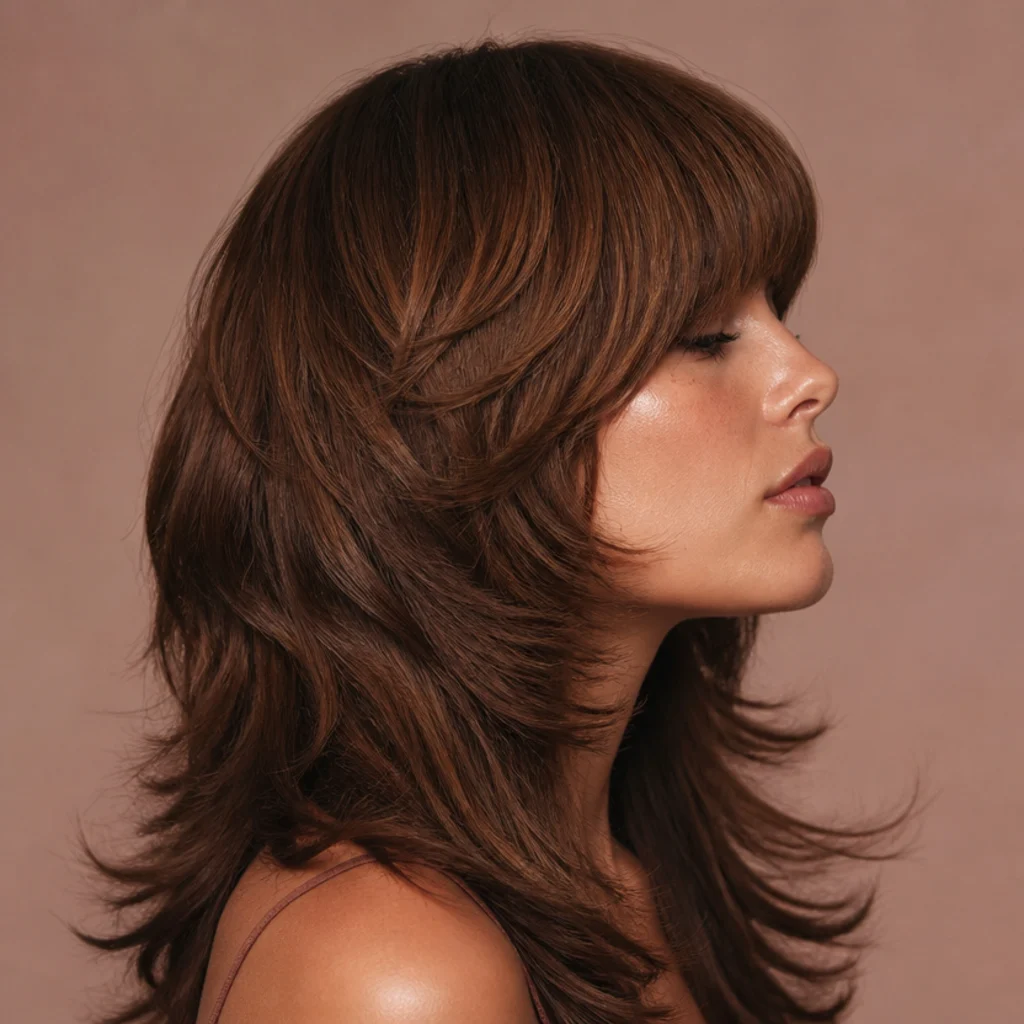
This is the original shag energy, updated: a heavy, feathered fringe, decisive crown layering, and rock-and-roll movement running the full length. It leans into visible texture and unapologetic shape, rewarding confident wearers who want a statement rather than a whisper. Straight hair carries the feathering with total clarity, showing every layer the way 70s icons wore it, and it holds a feathered flick better than wavy hair, which tends to blur the edges. Oval and long faces wear it best, and it pairs beautifully with warm, dimensional color that plays up the movement. Density-wise, medium to thick hair fills the silhouette best; fine hair can wear a lighter interpretation with the fringe feathered rather than blunt. Upkeep runs moderate to high, since the fringe and crown layers need shaping roughly every six weeks to keep the feather crisp. Pro tip: diffuse or round-brush for volume, then break the fringe apart with your fingertips and a whisper of flexible spray so it looks worn-in, not set. Ask your stylist for "a 70s shag with a full feathered fringe and heavy crown layering that flicks back."
07Shag With Micro Fringe

For a fashion-forward edge, pair a long shag with a micro or baby fringe that sits well above the brows. The high, short bang drops attention straight onto the eyes and sets a striking contrast against the longer layered length below, which is why it photographs so well and reads editorial in person. It's best for people who love a bold look and either have a smaller forehead to feature or a longer one they want to visually shorten. Oval and heart faces suit it most reliably; a very round face can find a straight micro fringe widens the top third, so a slightly softened or piecey micro version helps there. Be honest with yourself about commitment — straight hair shows regrowth immediately, and a micro fringe needs a trim every three to four weeks to stay crisp. Keep the rest of the cut soft and blended so the fringe stays the only sharp element. Pro tip: smooth the fringe with a mini flat iron, then press a rice-grain of balm across it with a fingertip to kill static and separate. Ask your stylist for "a long shag with a short, blunt micro fringe sitting above the brow."
08Money-Piece Shag
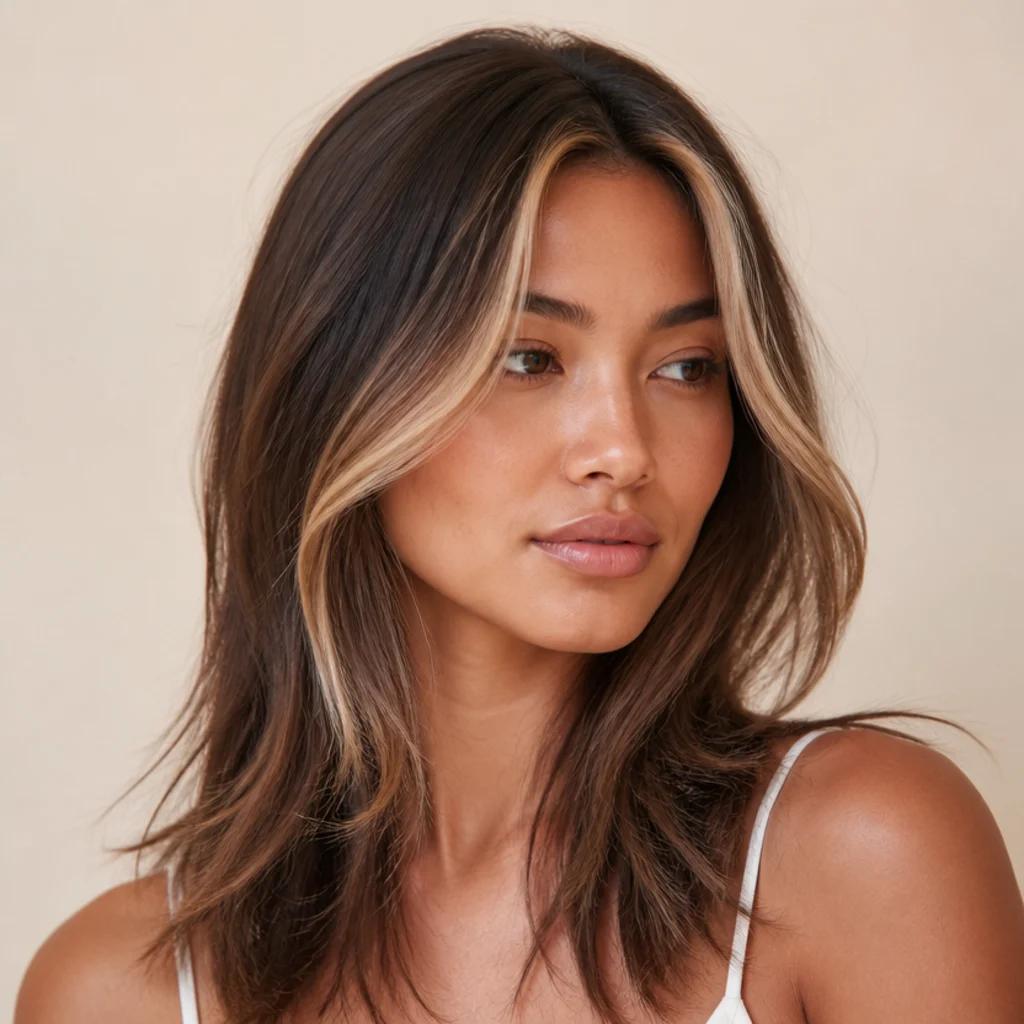
Combine the shape of a soft long shag with a color placement that lifts the whole thing: a money piece, where the front face-framing sections go several shades brighter than the base. On straight hair the contrast lands crisp and clean, since the surface reflects the brightness in an unbroken line — the framing layers pop and the face looks instantly lit from the front. This one works on any face shape because you control exactly where the brightness falls: place it higher at the cheekbone to lift, or lower toward the jaw to lengthen. It's most flattering with a cool-to-neutral base and a soft, blended melt into the money piece rather than a hard block. Upkeep splits between cut and color: the layers hold 10 to 12 weeks, but the money piece wants a gloss or toner refresh around every 8 as it brightens and warms. Try a defined center or deep side part so the color reads on both sides. Pro tip: apply a purple-toned mask to the money piece once a week if it lifts to blonde, to keep the contrast clean rather than brassy. Ask your colorist for "a long shag with face-framing layers plus a blended money-piece placed at the cheekbone."
09Low-Maintenance Grown-Out Shag

If frequent salon visits aren't your thing, ask for a shag engineered to grow out gracefully from the start. The layers go in softer, longer, and more blended, with no short crown pieces or hard fringe, so as everything lengthens it loses shape slowly and evenly rather than sprouting an awkward shelf. It's ideal for busy schedules or anyone stretching appointments to 12 or even 14 weeks, and nearly every face shape can wear it, since the softness is inherently forgiving. Density is flexible too, though thick hair should still get enough interior removed to stay mobile. The honest trade-off is less dramatic texture up front — you give up some of the piecey punch for a cut that always looks intentional between visits. Try it with a low-upkeep color like a root-shadowed natural tone so grow-out stays invisible there too. Pro tip: air-dry with a leave-in and skip heat on most days, which protects both the ends and the soft grow-out this cut is built around. Ask your stylist for "soft, blended, longer shag layers designed to grow out well without a hard fringe."
10Shag With Long Side Bangs
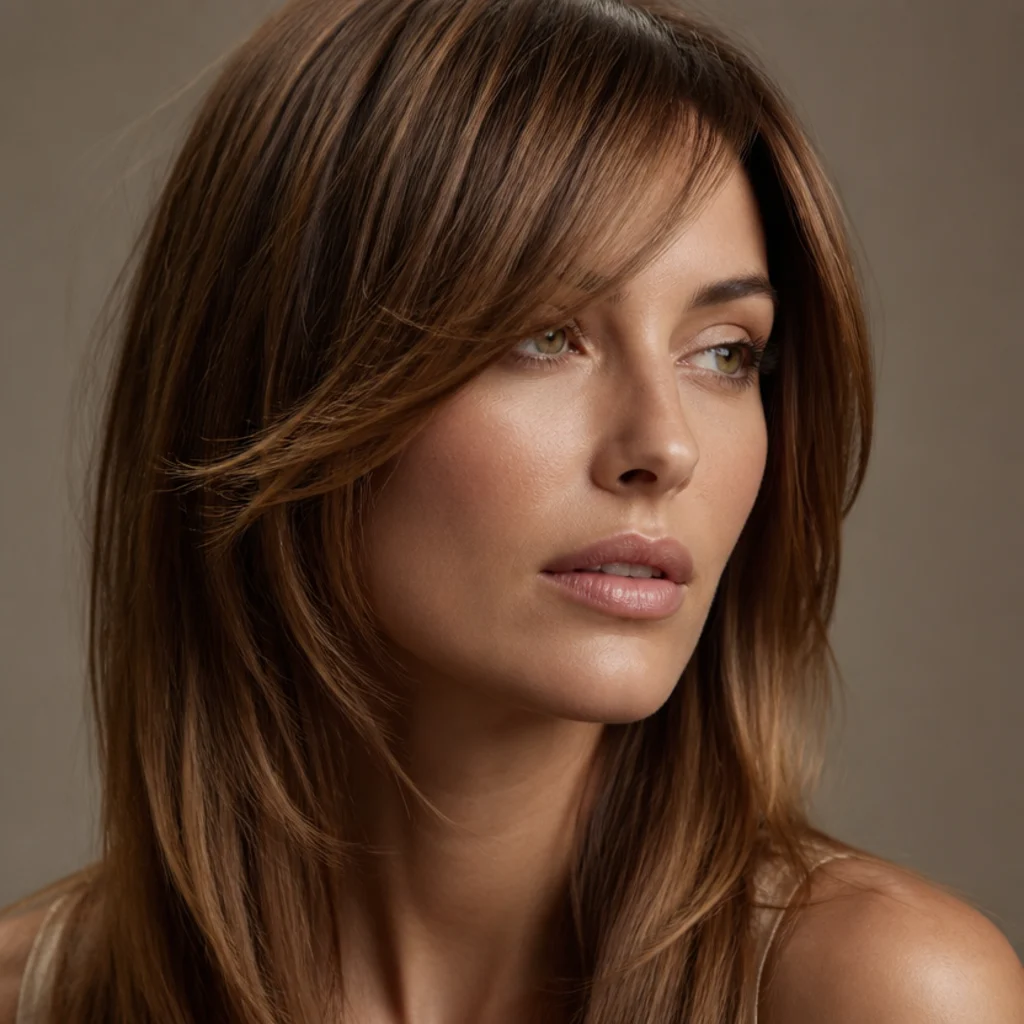
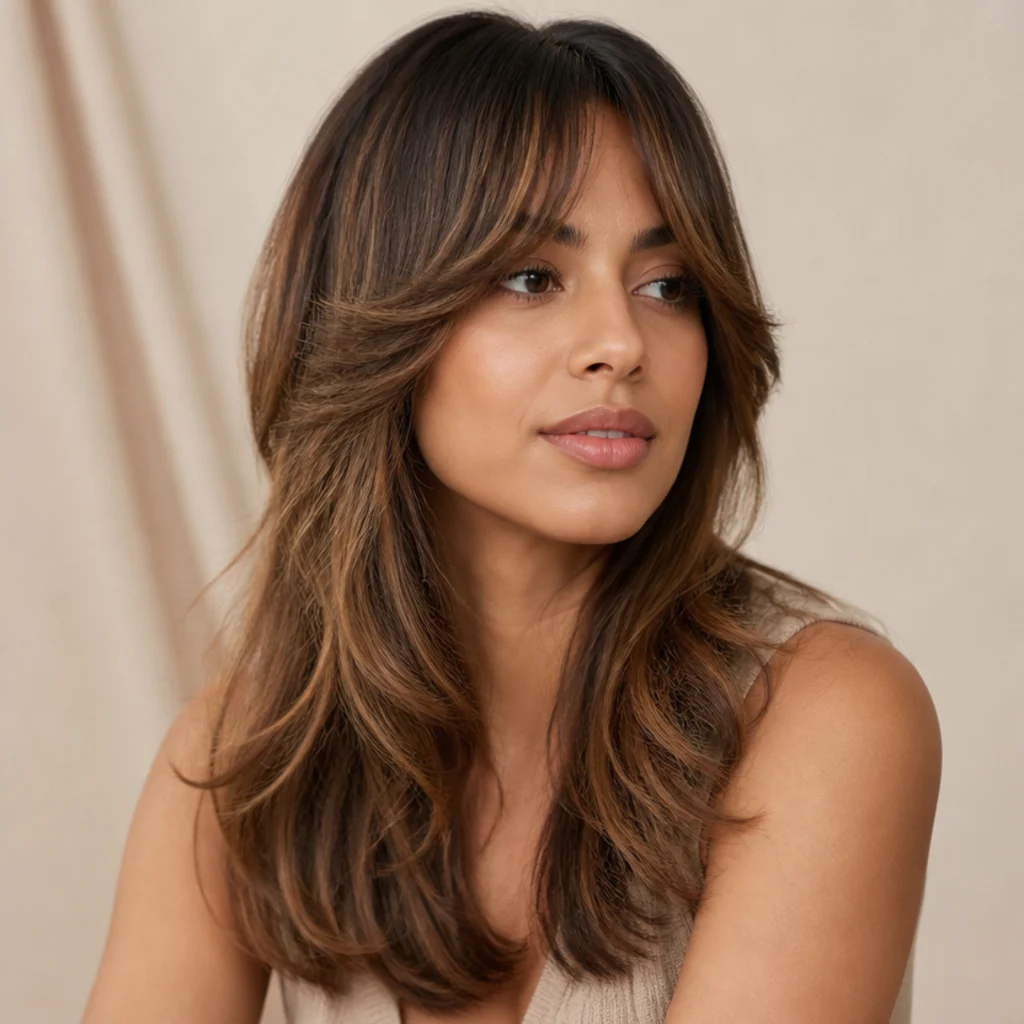
Want the framing of bangs without the tyranny of a straight-across fringe? Long side-swept bangs give the shag a diagonal frame you can grow out at any time. The longest front pieces sweep across the forehead and dissolve into the face-framing layers, softening the whole look while adding a natural-looking asymmetry. Square and round faces wear it particularly well, since the diagonal line adds length and breaks up a strong horizontal forehead. It works nicely across densities, and fine hair especially benefits, since side bangs add the impression of a fuller front without committing to blunt weight. Upkeep is refreshingly low: side bangs blend as they grow rather than turning into an eye-poking curtain, so a trim every 10 weeks is plenty. Try a deep side part to exaggerate the sweep. Pro tip: dry the bang across your forehead with a round brush, directing it past your target so it falls back into place, then set with a light mist so humidity doesn't lift it. Ask your stylist for "a long shag with long, blended side-swept bangs that melt into the face-framing layers."
Save this to Pinterest to compare bang lengths before your appointment.
11Textured Shag for Fine Straight Hair
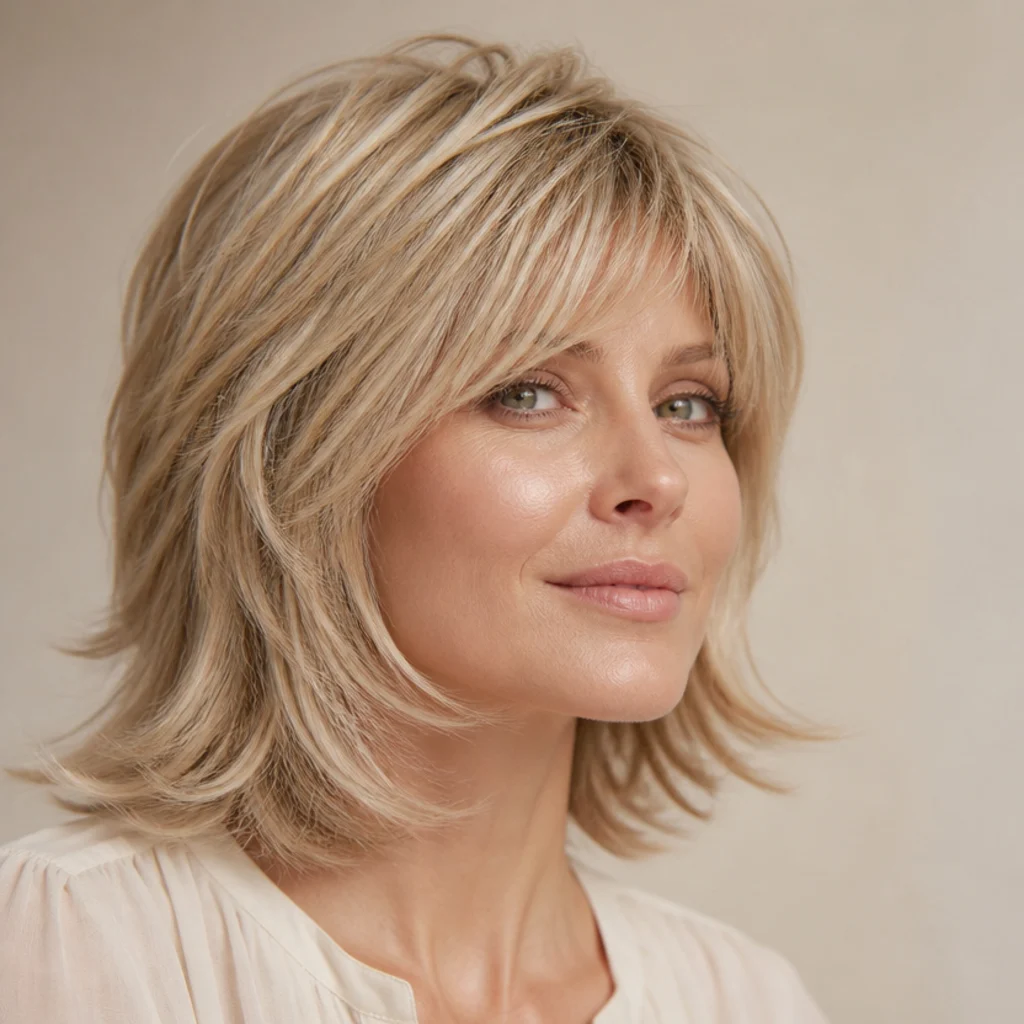
Fine straight hair benefits from a shag more than almost any other type, since well-placed layers create the illusion of density that a single blunt length can't. The whole game here is restraint: subtle, strategic layers that add movement and lift without slicing the ends into thin wisps. Your stylist should keep genuine weight at the perimeter so the hair never looks stringy, while shaping only the crown and a few framing pieces for volume. This one flatters fine hair on any face shape, and it works far better with a soft matte texture spray or a light mousse than with any oil or heavy cream, which collapses the lift you paid for. Avoid over-layering above all — on fine hair, one aggressive interior pass can undo the whole effect. Upkeep is moderate, roughly every 8 weeks, to keep the perimeter honest and stop the ends from thinning as they grow. Pro tip: dust root-lift powder at the crown and massage it in with fingertips before styling, so the base has grip all day. Ask your stylist for "a soft shag with light interior layers that protect my ends and build volume, keeping perimeter weight."
12Heavy Shag for Thick Straight Hair

Thick straight hair can behave like a solid, immovable block, and a heavy shag is the release valve. Deep, generous interior layering removes weight from inside the shape so the hair finally moves and breathes, while the length keeps its full impact and drama. This is the version that turns dense, heavy hair into cascading movement instead of a wall of hair that just sits there. Oval, long, and square faces carry thick hair in this cut best, and it takes bold or dimensional color beautifully, since there's so much surface to catch it. The caution is placement: remove bulk too high and you get a puffy top with thin ends, so the weight removal should sit through the interior mid-lengths. Upkeep is moderate; the interior can be reshaped every 10 to 12 weeks before the bulk rebuilds. Add a smoothing routine so the movement reads sleek rather than frizzy. Pro tip: blow-dry with a paddle brush and a smoothing cream, following each brush pass with the nozzle to seal the cuticle flat. Ask your stylist for "a heavy shag with deep internal layers to remove bulk through the mid-lengths while keeping my length and perimeter."
13Shag With Faux-Wave Bend
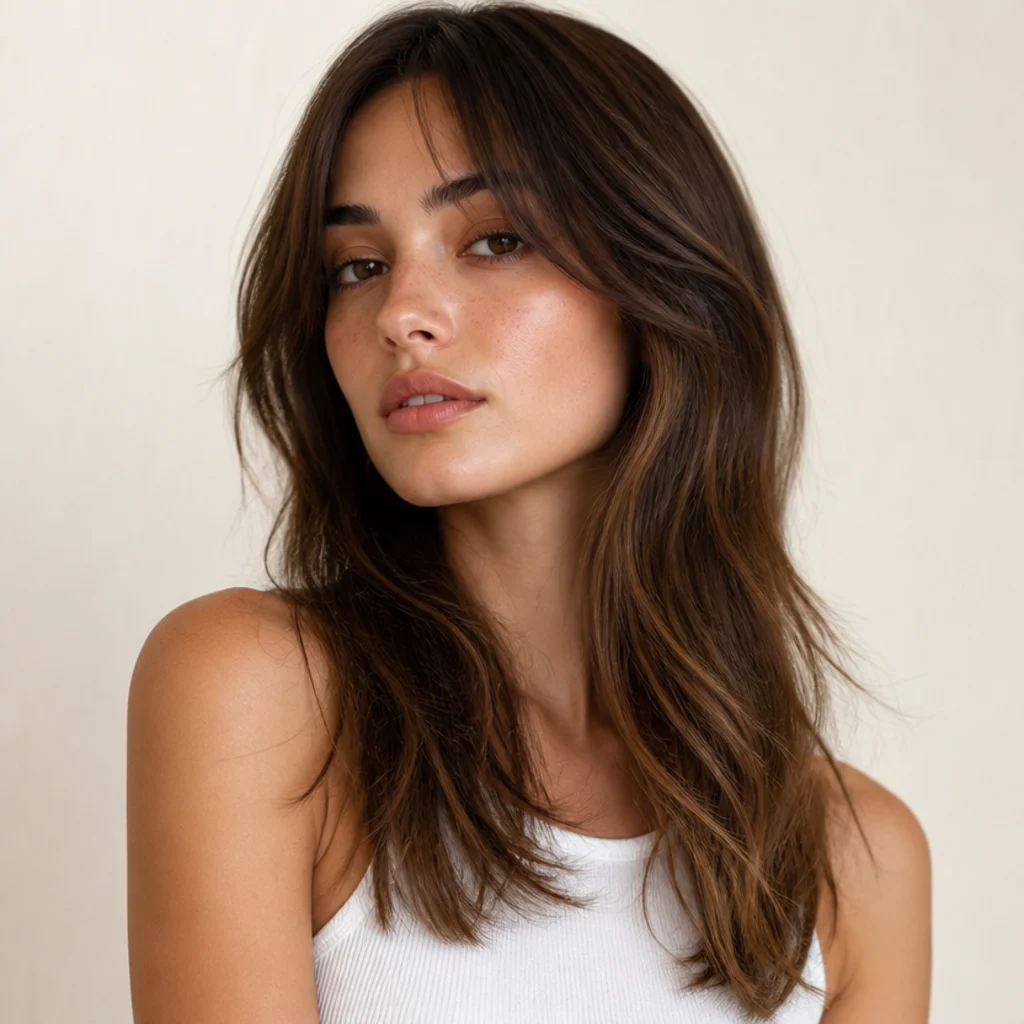
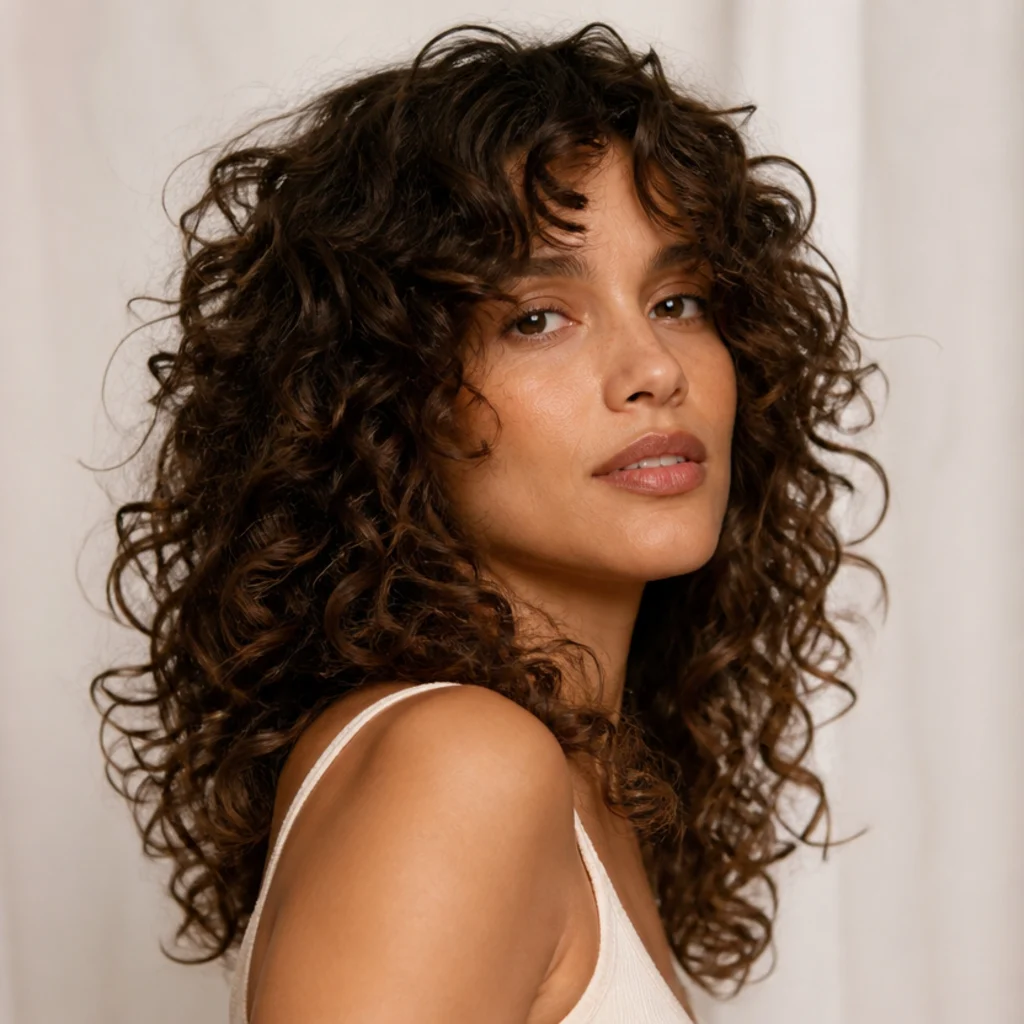
Straight hair can borrow the softness of a long curly shag haircut with zero commitment, by adding a bend only at styling. The cut underneath is a standard long shag; you set gentle S-waves through the mid-lengths and ends to exaggerate the layers and give them dimension. The payoff is total versatility — a shag you can wear poker-straight and polished one day, then soft and undone the next, without ever touching the cut. Anyone who likes options can wear this one, and it flatters most face shapes, since you can direct the wave to add width or length as needed. Density matters for hold: fine straight hair may need a texture prep spray to keep the bend from dropping by lunch, while thick hair holds it easily. Upkeep on the actual cut is standard, 8 to 10 weeks; the wave itself is a styling choice, not a maintenance obligation. Pro tip: alternate the curl direction section to section on a large-barrel wand, leave the last inch straight, then brush through with your fingers so the result reads bend, not ringlet. Ask your stylist for "a long shag cut that will hold a soft S-bend when I wave it, with ends left slightly heavier."
14Center-Part Waterfall Shag
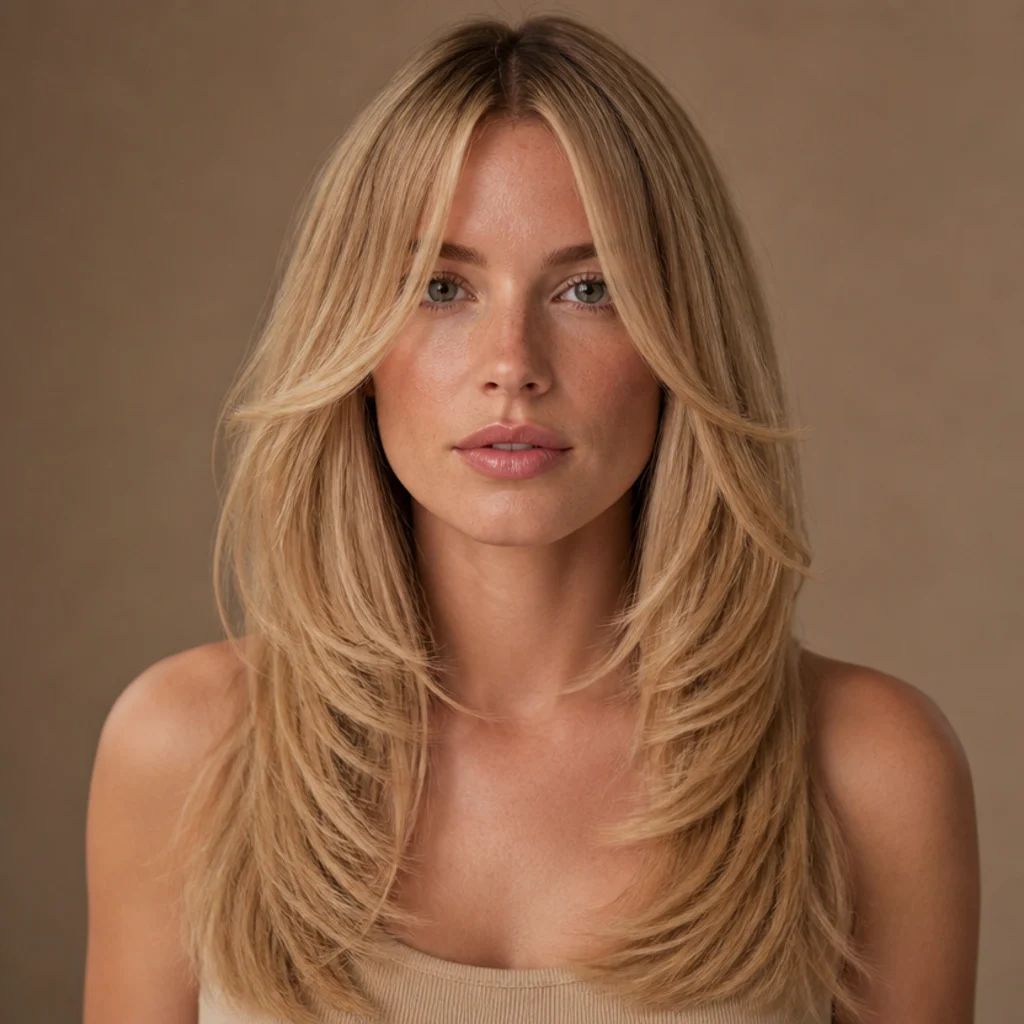
A clean center part paired with cascading, evenly balanced layers creates a waterfall effect, the shag falling in graceful, mirrored tiers on either side of the face. On straight hair that symmetry looks especially polished and modern, since there's no wave to disrupt the even fall, and the center part elongates the face while the layers keep the frame soft. Oval, heart, and diamond faces wear it cleanly; very round or very short faces often prefer a slightly off-center part, which brings back the vertical line a dead-center part can flatten. Balance is everything here, so it needs a stylist who cuts the two sides to actually match. Upkeep is moderate, every 8 to 10 weeks, to keep the tiers even as they grow. Try a glossy, single-tone or softly dimensional color so the symmetry reads intentional rather than flat. Pro tip: after a smoothing serum, curve just the ends slightly inward with a round brush so the waterfall closes toward the body instead of flaring out. Ask your stylist for "a center-part shag with balanced, mirrored cascading waterfall layers on both sides."
15Modern Wolf-Cut Shag
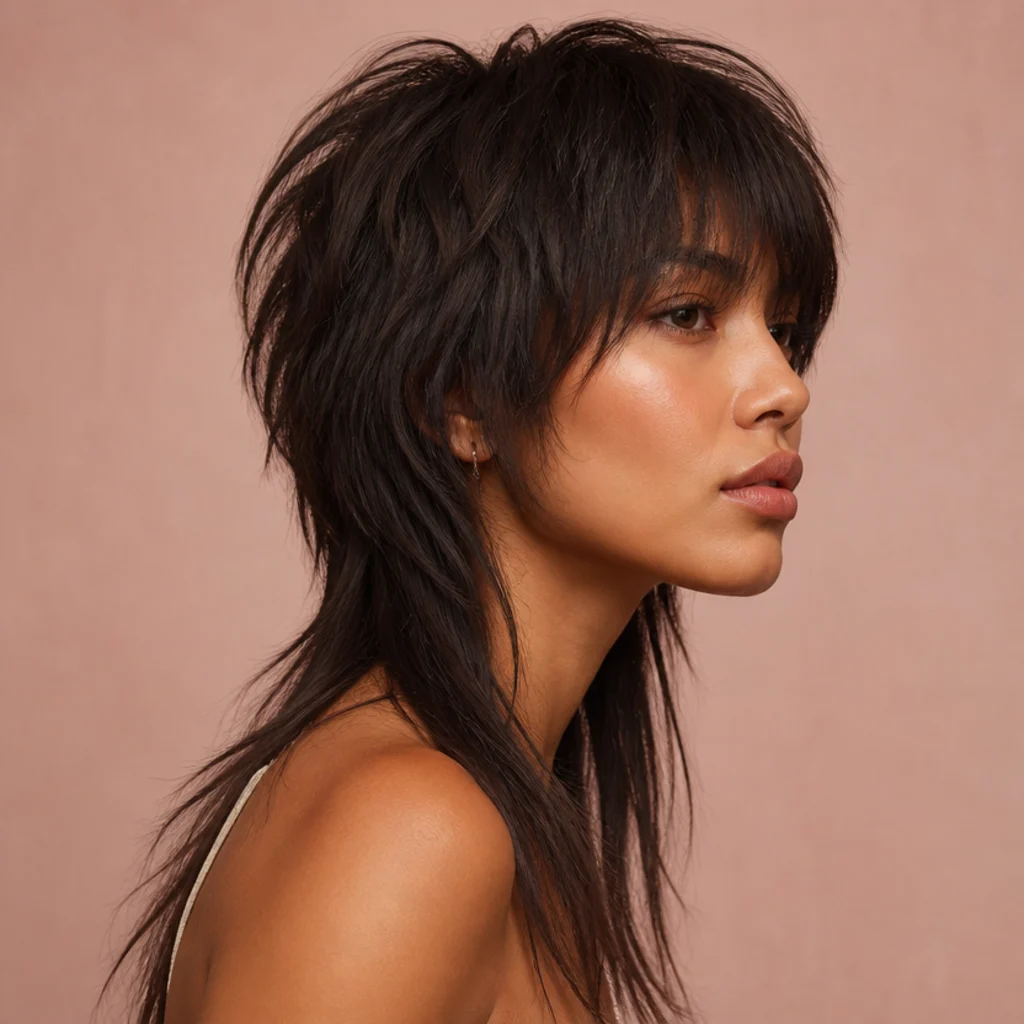
The wolf cut is the shag's edgier cousin: a shorter, deliberately shaggier crown that blends down into long, piecey lengths for a bold contrast between top volume and bottom length. On straight hair the layers read sharp and defined, which is exactly the point — it gives the cut a cool, undone attitude that softer textures blur. This one is for people who want maximum texture and are comfortable committing to a statement cut; oval and long faces wear it best, while rounder faces can keep the crown a touch longer so the volume doesn't widen the top. Density-wise, medium hair hits the sweet spot, though thick hair can wear it with more weight removed and fine hair with a lighter, more connected crown. Upkeep runs moderate to high, since the short crown shape grows out fastest and needs refreshing every six to eight weeks. Try it with soft lived-in color or a subtle money piece to accent the layers. Pro tip: rough-dry with your fingers only, no brush, then twist small sections of the lengths and press in texture paste for the signature separated, messy finish. Ask your stylist for "a wolf cut with a shaggy layered crown that stays long and piecey through the lengths."
Pro Tips from the Editor
- Straight hair reveals a razor's over-thinning within a week, so if your ends have ever gone stringy, ask specifically for point-cutting and named perimeter weight rather than a razored finish.
- The single most flattering variable isn't the cut — it's where the shortest face-framing piece hits. Ask your stylist to break it at the cheekbone for lift or the jaw for length, and check it in the mirror before more comes off.
- Book the fringe on its own schedule. Bangs and micro fringes read overgrown at three to four weeks while the layers are still fresh, and many salons offer complimentary fringe trims between cuts.
- Prep dictates hold on straight hair more than product volume; a light texture or grip spray on damp roots makes a shag hold shape all day, whereas piling on cream just weighs it flat.
- Match your part to your goal: a center part elongates and reads polished, an off-center or deep side part adds volume and asymmetry, and you can restyle a shag entirely just by moving it.
- Bring photos of the back and side, too — a front-only reference leaves your stylist guessing on the angles that actually define a shag. Layer placement and perimeter shape live in those side and back shots.
- Cool air is your setting spray: finish any round-brushed crown or fringe with a shot of cold air and let it fully cool before releasing the section, so the lift locks in on hair that has no natural bend to hold it.
How to Choose / Get the Look
Start by ranking three priorities in order: length retained, amount of movement, and upkeep tolerance. If keeping length matters most, choose a soft long shag or a wispy face-framing version with light interior work. If movement is the goal, lean into choppy layers, a 70s rock shag, or a wolf cut. If upkeep is the real constraint, the grown-out or long side-bang versions buy you the most time between chairs. Be honest here, because bangs and short crown work demand trims every three to six weeks, while blended, grown-out shapes stretch past 12.
Face shape guides the framing far more than the overall cut. Round and square faces are flattered by long, diagonal, or curtain bangs that introduce vertical length; oval and long faces can carry blunt perimeters, heavier fringe, and a wolf cut's short crown. Hair density is the other lever: fine hair wants a light layering hand and a protected perimeter to avoid a stringy end, while thick hair needs deep interior removal to move at all.
| If you want... | Choose | Trim cadence | Best density |
|---|---|---|---|
| Maximum length kept | Wispy face-framing shag | 12 weeks | Any |
| Softest everyday shape | Soft long shag + curtain bangs | 4-6 wk fringe / 10-12 length | Fine to medium |
| Loud, piecey texture | Choppy layers or wolf cut | 6-10 weeks | Medium to thick |
| Volume on flat hair | Long layered shag with volume | 8-10 weeks | Fine to medium |
| Least maintenance | Grown-out or side-bang shag | 10-14 weeks | Any |
| Polished, editorial | Sleek shag with blunt ends | 8 weeks | Fine to medium |
When you sit in the chair, hand over two or three saved photos and name the exact parts you love: the fringe style, where the layers start, the perimeter shape. Ask your stylist which version grows out best for your routine, and whether a razor or point-cut finish suits your straight texture, since that one choice governs how the ends behave for the next three months.
Frequently Asked Questions
Does a shag work on straight hair?
Yes, and arguably better than on any other type. Straight hair shows layers, chops, and pieces with total clarity, so the shape reads sharp and intentional rather than getting lost in wave. The only caution is technique: straight hair also shows over-thinning, so weight and cutting method matter more than they would on textured hair.
How often will I need a trim?
It depends entirely on the version. Bangs and shorter crown layers want a shape-up every three to six weeks, blunt-perimeter shags every eight, and blended, grown-out shapes can comfortably go 10 to 14 weeks. Many salons throw in complimentary fringe trims, which is worth asking about if you go bang-heavy.
Will a long shag make fine hair look thinner?
Not if it's cut with restraint. A skilled stylist keeps real weight at the perimeter and adds only light interior layers, creating the illusion of more density rather than thinning your ends. The mistake to avoid is a heavy razor or over-thinning — that's exactly what leaves fine hair stringy, so say "keep perimeter weight" out loud.
Can I get shag texture without curling my hair?
Yes. The cut itself generates the movement, and straight hair wears a shag beautifully sleek. A faux-wave bend is purely optional for days you want to exaggerate the layers, but the shape reads as a shag whether you wear it poker-straight or add an S-bend.
What is the difference between a shag and a wolf cut?
A wolf cut is a shorter, shaggier take with a heavily layered, cropped crown that blends into long lengths for a strong top-to-bottom contrast. A classic long shag keeps softer, more even layering and more of your original length. The wolf cut is higher upkeep because the short crown grows out fastest.
Which face shapes suit a long shag best?
Nearly all of them, once the framing is tailored. Round and square faces benefit from long, diagonal, or curtain bangs that add vertical length; oval and long faces can carry blunt perimeters, heavy fringe, and a wolf-cut crown; heart and diamond shapes do well with cheekbone-level face-framing. The overall shag flatters everyone, the fringe and framing choice is what you customize.
Is a shag or long layers better for straight hair?
They overlap, but a shag has more disconnection and a lighter, more textured interior, while long layers are smoother and more graduated. Choose a shag if you want visible piecey movement and a shorter, shaped crown; choose long layers if you want subtle blended volume with a cleaner surface. On straight hair both read clearly, so it comes down to how much texture you want on show.
How do I style a long shag on straight hair day to day?
Prep damp roots with a light texture or volume spray, rough-dry the crown for lift, then either round-brush the fringe and mid-lengths for polish or air-dry with a touch of cream on the ends for undone texture. Finish the crown or fringe with cool air to set, and keep product light, since straight hair collapses fast under heavy oils.
Can I add color to a long shag?
Yes, and the shape often looks better for it. A money piece brightens the face-framing layers, dimensional or lived-in color makes the interior layers catch light, and a root shadow keeps grow-out low-maintenance. Just remember color adds its own schedule; a gloss or toner refresh around every eight weeks usually gates the look before the cut does.