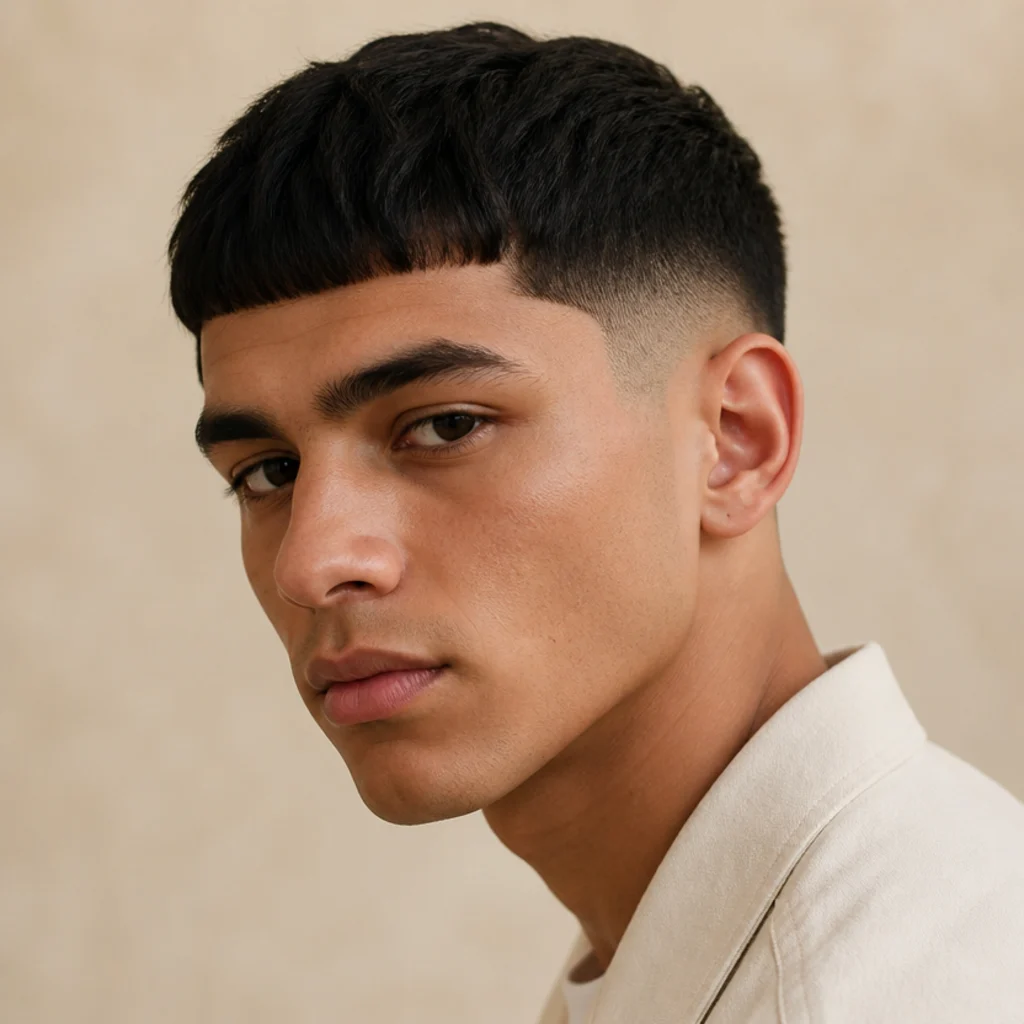
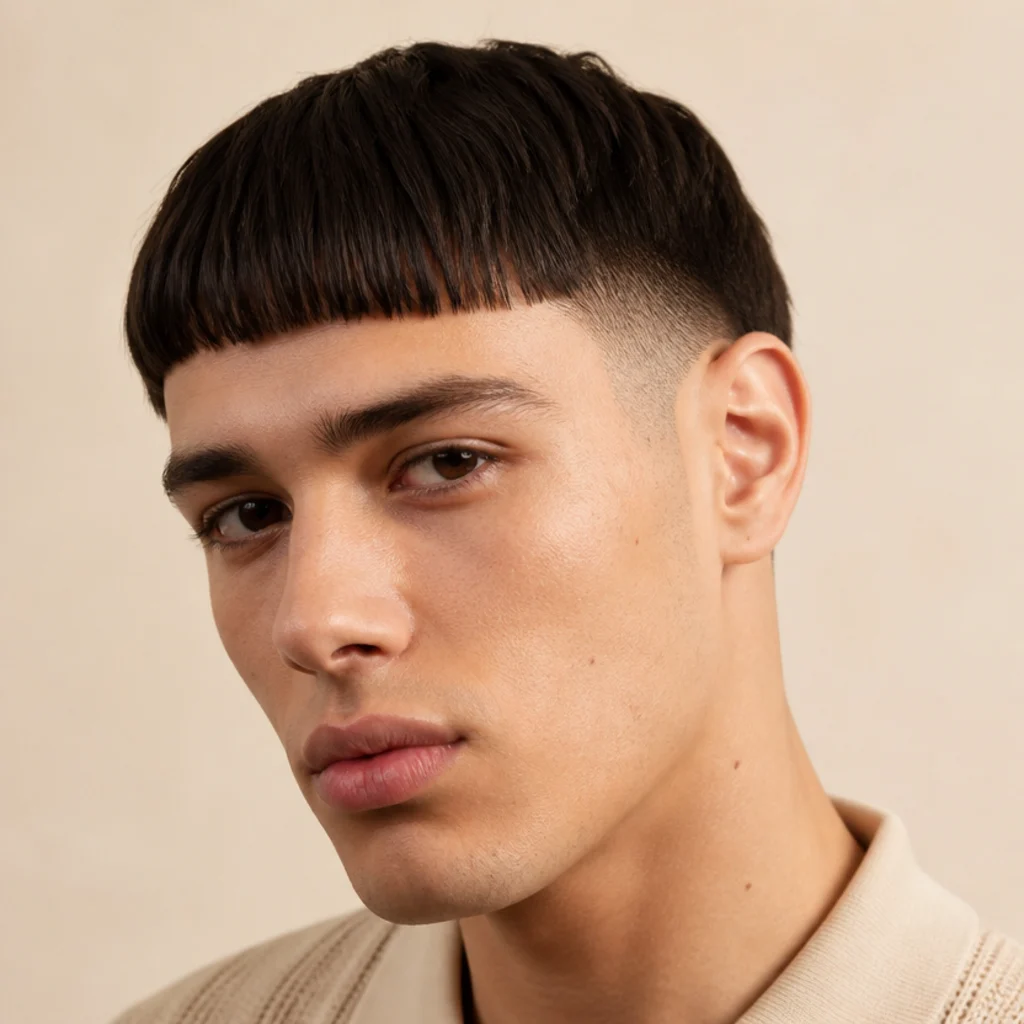
15 Edgar Cut Ideas for Curly Hair
The edgar cut is built around a bold, blunt fringe and sharp sides, and curls rewrite the whole formula. Below are 15 curl-tuned variations, each with exact fringe placement, the curl pattern it flatters, a real upkeep timeline, and the precise words to give your barber.
 Edited by Lena Rose · Published July 11, 2026 · 25 min read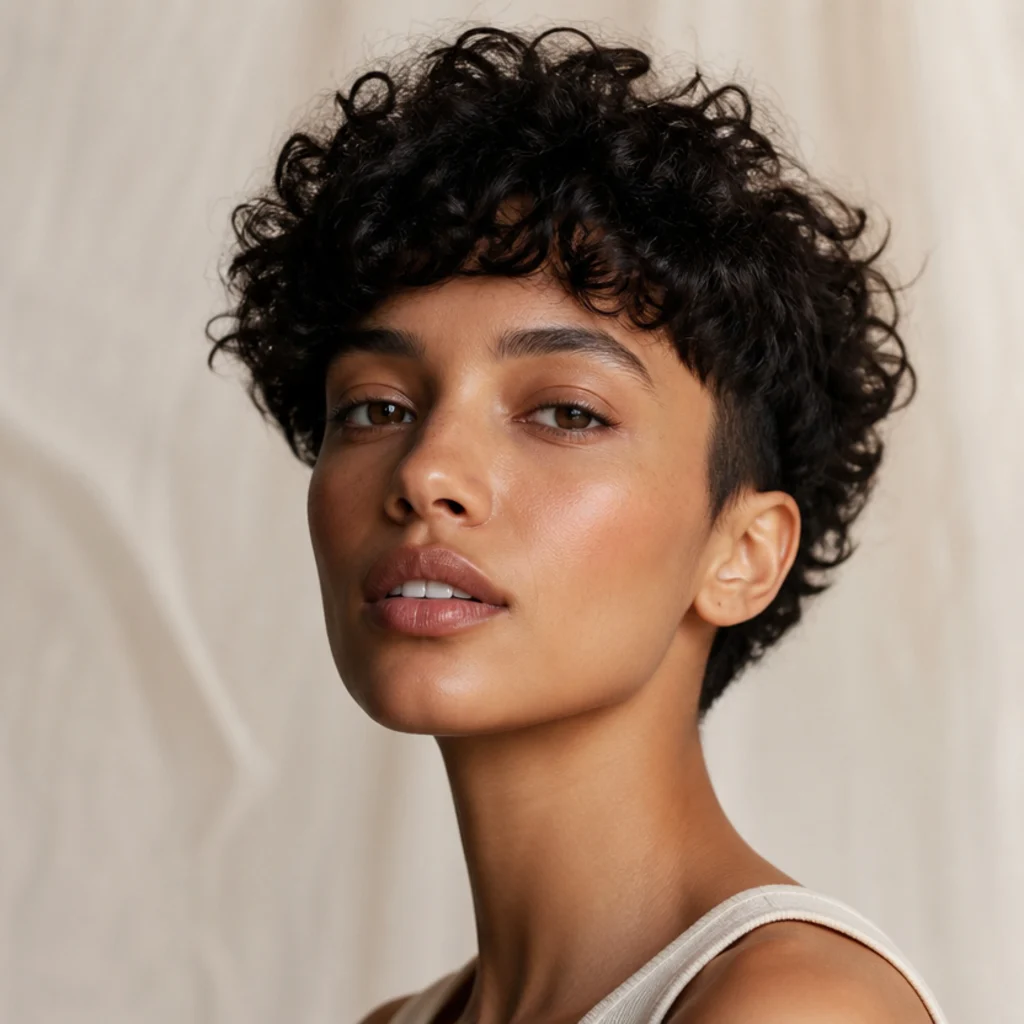
Quick Answer
- Best for: Wavy to tightly coiled hair (2B through 4C) that holds a shape; oval, square, and round faces where a horizontal fringe balances the forehead.
- Who might skip it: Very fine, low-density hair that can't fill a blunt front line, receding or uneven hairlines that a straight-across fringe exposes, and anyone who dislikes a defined edge.
- Maintenance: Line-up and sides refresh every 2-3 weeks for most versions; carved details need 7-10 days, grown-out shapes stretch to 4-5 weeks.
- Difficulty: Barber-dependent and moderately high; balancing a blunt fringe against shrinkage is a skill-heavy detail, not a guard-and-go cut.
- Cost: Roughly a standard fade-plus-design price at your shop; expect to add a line-up or carved-part surcharge where it applies, and budget for twice-monthly visits.
- Wear time / longevity: Looks sharp for about 10-14 days before the fringe and fade soften; still wearable, just less crisp, out to the next appointment.
- Standout variation: The curly edgar taper fade, which keeps full volume up top while melting the sides clean.
- How to ask your barber: Name three things in order, fringe length relative to your brows (adjusted for shrinkage), fade height or disconnect, and the top length you want kept.
In This Guide
- Classic Curly Edgar
- Edgar Taper Fade for Curls
- Curly Edgar Buzz Blend
- High-Volume Curly Top
- Low Fade Curly Edgar
- Textured Crop Edgar
- Curly Edgar with Line-Up
- Wavy Edgar for Looser Curls
- Short Coily Edgar
- Mid Fade Curly Edgar
- Curly Edgar for Boys
- Disconnected Curly Edgar
- Burst Fade Curly Edgar
- Curly Edgar with Design Part
- Grown-Out Curly Edgar
The edgar started as a blunt, straight-across fringe over sharp sides, a shape with roots in Mexican-American barbershop culture, and it translates to texture better than most people expect. On curls, that signature straight line breaks into ridges and coils, so the front reads bolder and less rigid than the classic edgar cut straight hair version most people picture. The key variable is shrinkage: a curl can lose 30 to 50 percent of its stretched length once it dries, which means a fringe cut to the brow wet can jump above it dry. That single fact drives every decision here, from fringe placement to fade height. Across these 15 ideas you'll see how curl pattern, density, and fade choice reshape the whole result, from a close short crop to a stacked high-volume top. Each entry names the face shapes and curl types it flatters, a realistic maintenance window, the styling product that actually holds, and the exact phrasing to hand your barber. Whether you want a crisp curly edgar taper fade or a softer grown-out shape, there's a version here that works with your texture instead of flattening it.
01Classic Curly Edgar
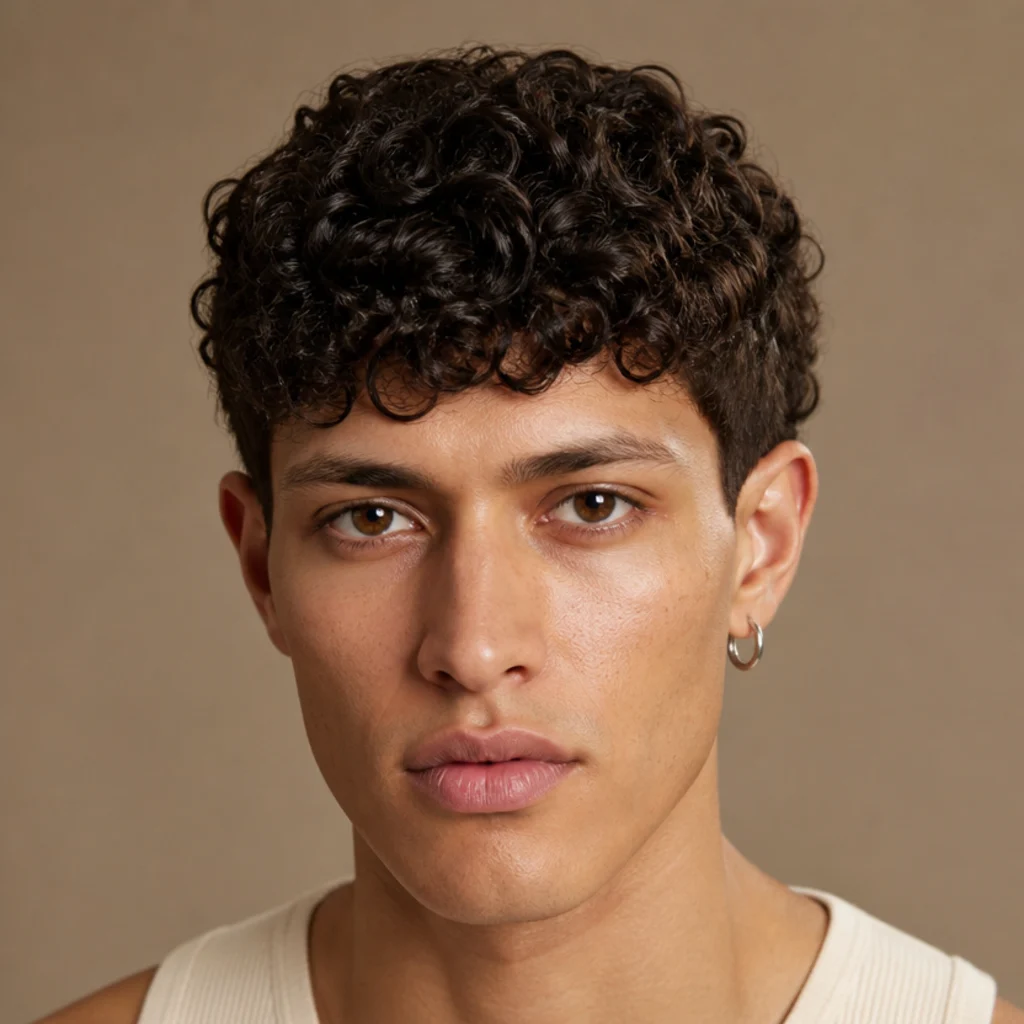
The classic curly edgar keeps the defining blunt fringe but lets the coils fracture that hard line, so the front reads deliberate rather than severe. Sides are cut short and tapered, with roughly two to three inches left on top to show natural pattern. It flatters oval and square faces best, since the horizontal fringe visually shortens a longer forehead and squares off a rounder one. This is a strong entry point for 3A to 3C curls that have spring but not extreme density. Set expectations on shrinkage: your barber should cut the fringe a touch long, because a curl that sits at the brow wet will lift above it dry. Upkeep is moderate, a sides-and-fringe trim every two to three weeks, and difficulty is mid-range because balancing that front line takes a practiced eye. A dime of curl cream raked through damp hair keeps the top defined without crunch. Ask your barber for a blunt edgar fringe cut long for shrinkage, tight tapered sides, and length kept on top for curl.
02Edgar Taper Fade for Curls
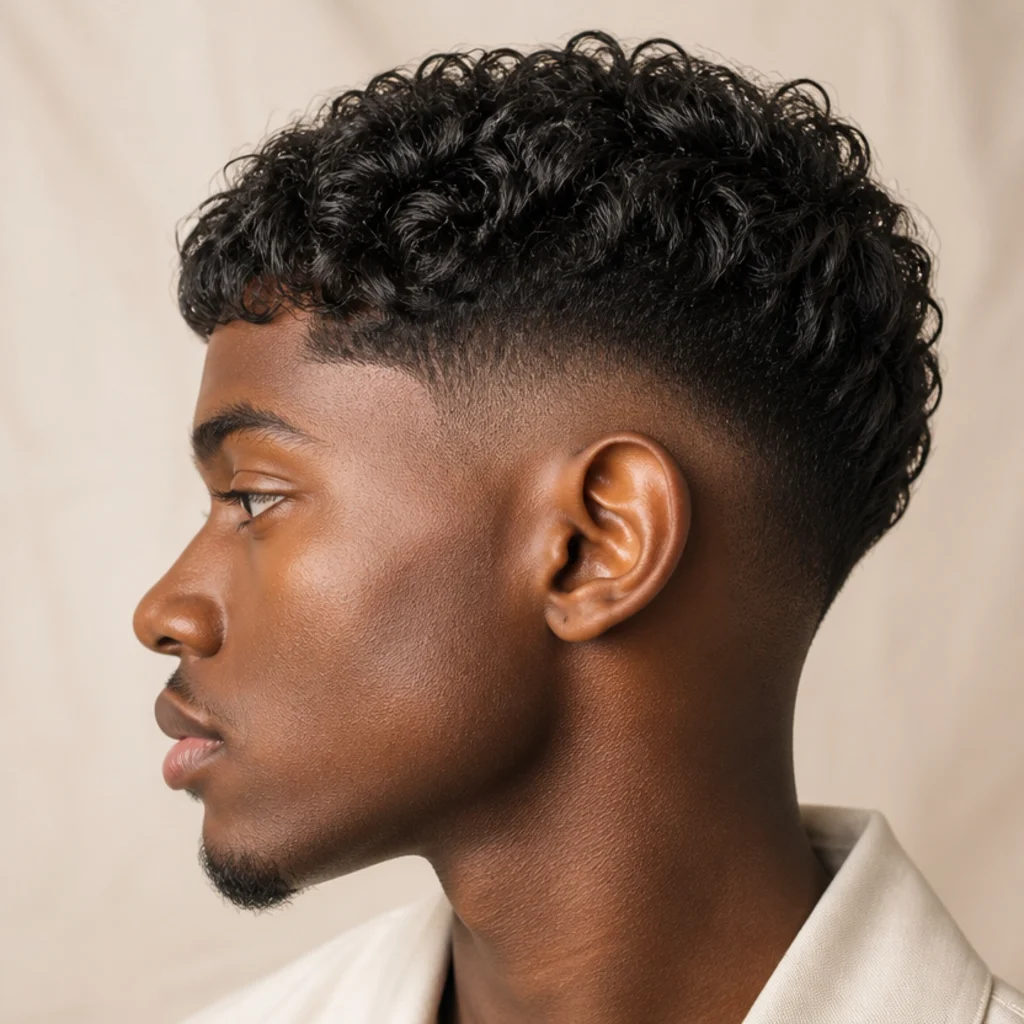
An edgar cut taper fade is the most requested curly version, and for good reason: it holds full volume up top while the sides melt down clean around the ears and neckline. The gradient makes coils look denser by contrast, and the added height flatters round and heart-shaped faces that benefit from length up top. A taper differs from a full skin fade in that it never quite hits bare scalp, so it reads polished rather than stark, and it grows out more gracefully. This version leans higher maintenance because a taper's crisp edge softens fast on textured hair; plan a refresh every two weeks to keep the line sharp. Day-to-day styling is easy: a coin of curl cream and a light scrunch does the job. It suits medium-to-dense 3B and 3C patterns that pile up above the fade. Tell your barber you want a taper fade rather than a skin fade, the edgar fringe kept blunt, and the curls left long through the crown.
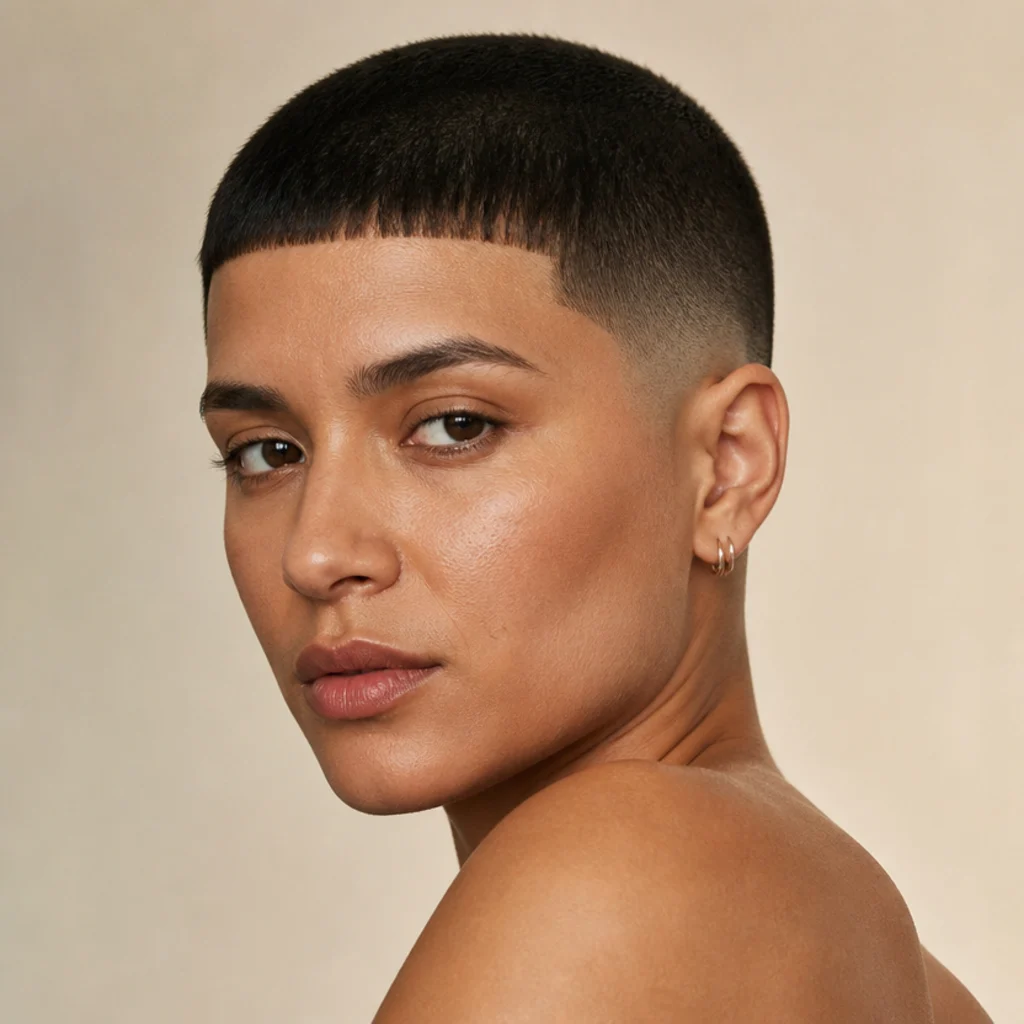
03Curly Edgar Buzz Blend
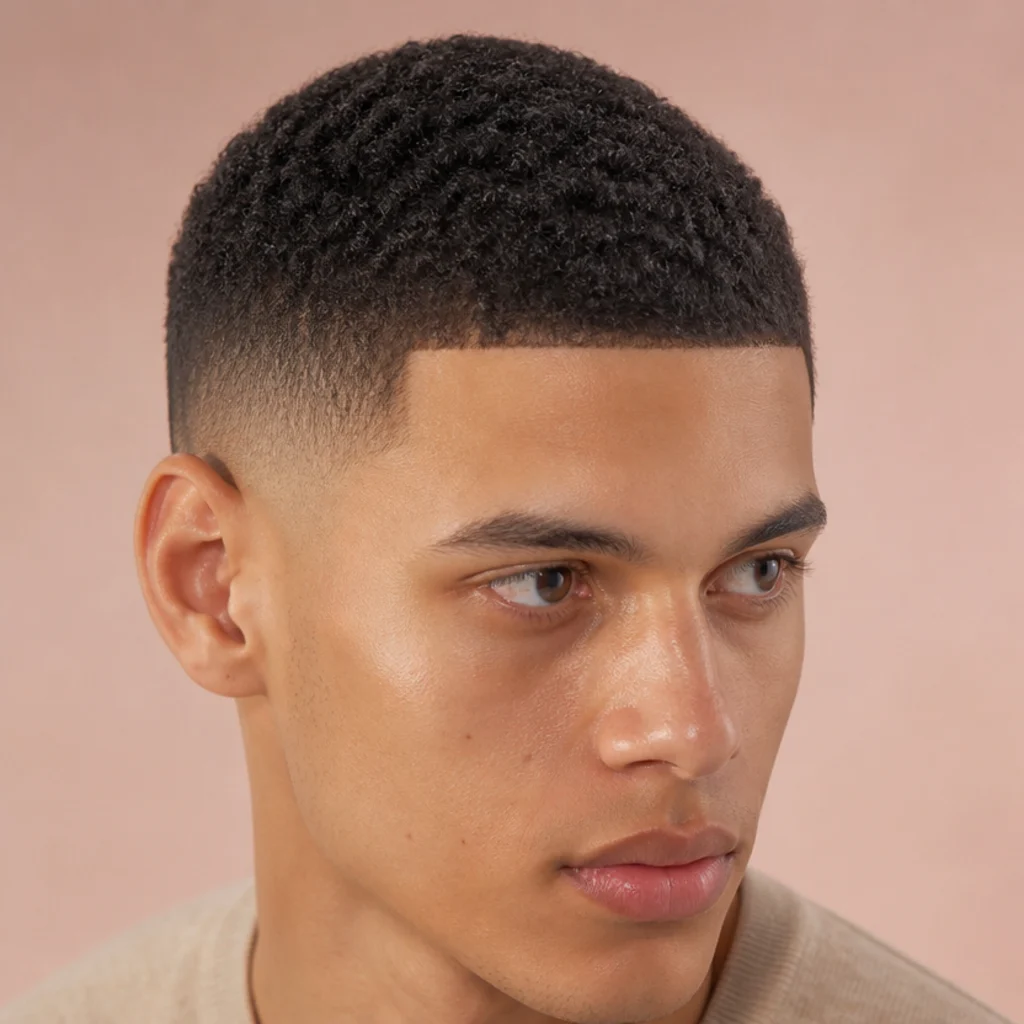
For anyone who wants the lowest possible effort, the edgar buzz cut blend shortens the top into a compact coil carpet while keeping the recognizable blunt front. It's the true wash-and-go option here, ideal for thick, dense 3C to 4B curls that would otherwise feel heavy or hard to define. At buzzed length shrinkage works in your favor, sitting the curls close and even, and the fringe still registers as an edgar because the front edge stays squared. It suits square and diamond faces that can carry a close crop and strong jawline. Maintenance is frequent but fast, a quick buzz and line-up every two weeks, and it is the most forgiving cut to maintain between visits. Skip heavy product; a light leave-in on damp hair is plenty. One caution: at very short lengths any scalp or hairline irregularity shows, so a slightly softer front edge reads better than a razor-hard one. Ask your barber for a longer guard on top than the sides, keeping a defined blunt edge across the fringe.
04High-Volume Curly Top
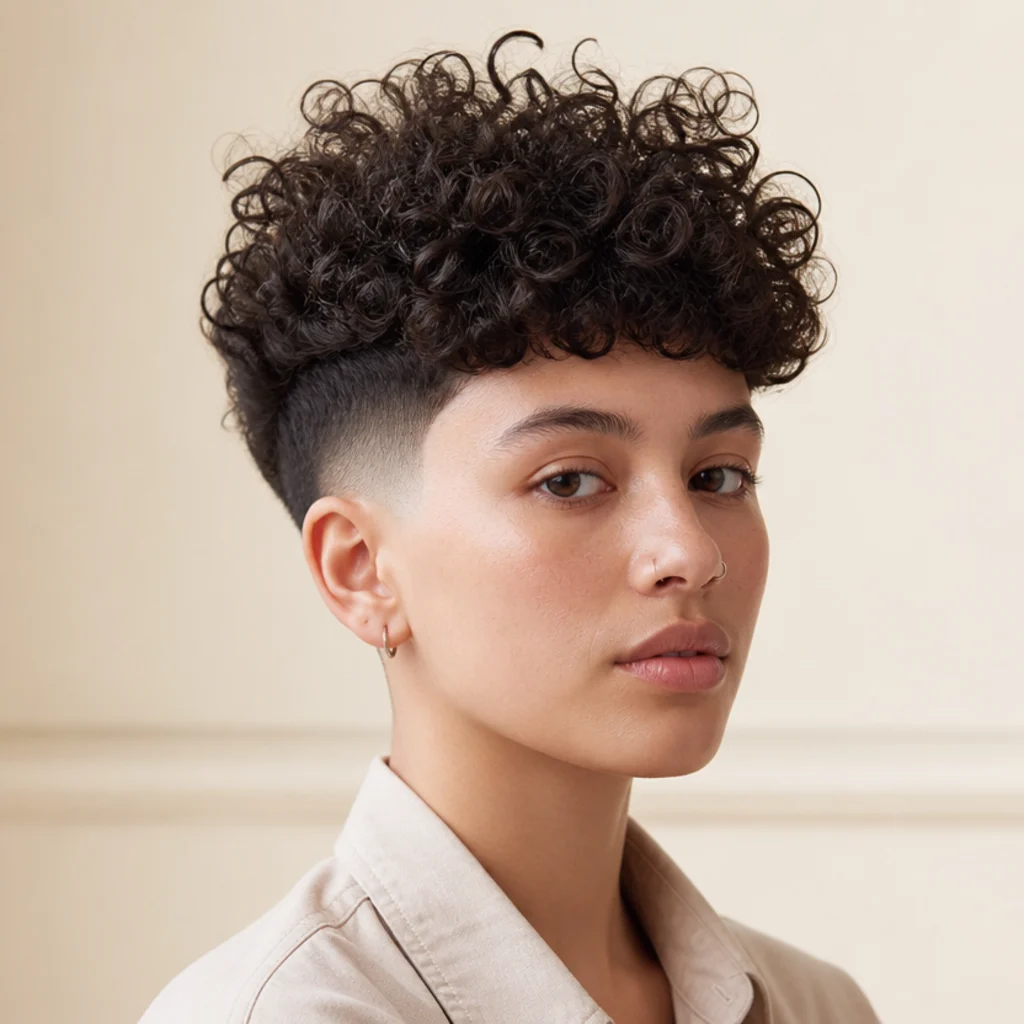
If your curls have real spring, the high-volume top leans all the way in, leaving four inches or more so the coils stack upward instead of falling forward. Short sides keep the silhouette from reading top-heavy, and the blunt fringe anchors all that movement at the front. This dramatic shape suits oval and long faces that can carry added height, and it is a standout on looser 3A to 3B patterns that pile up with volume rather than collapsing. Because the length is the whole point, upkeep is more about product than scissors; a strong curl gel or foam applied to soaking-wet hair, then scrunched and left to dry, holds definition between three-week shape trims. Cut too short and the effect disappears, so protect length aggressively at each visit. A diffuser on low heat lifts the roots for even more height. Bring a photo and ask your barber for maximum length on top, short blended sides, and an edgar fringe that frames the eyebrows.
05Low Fade Curly Edgar
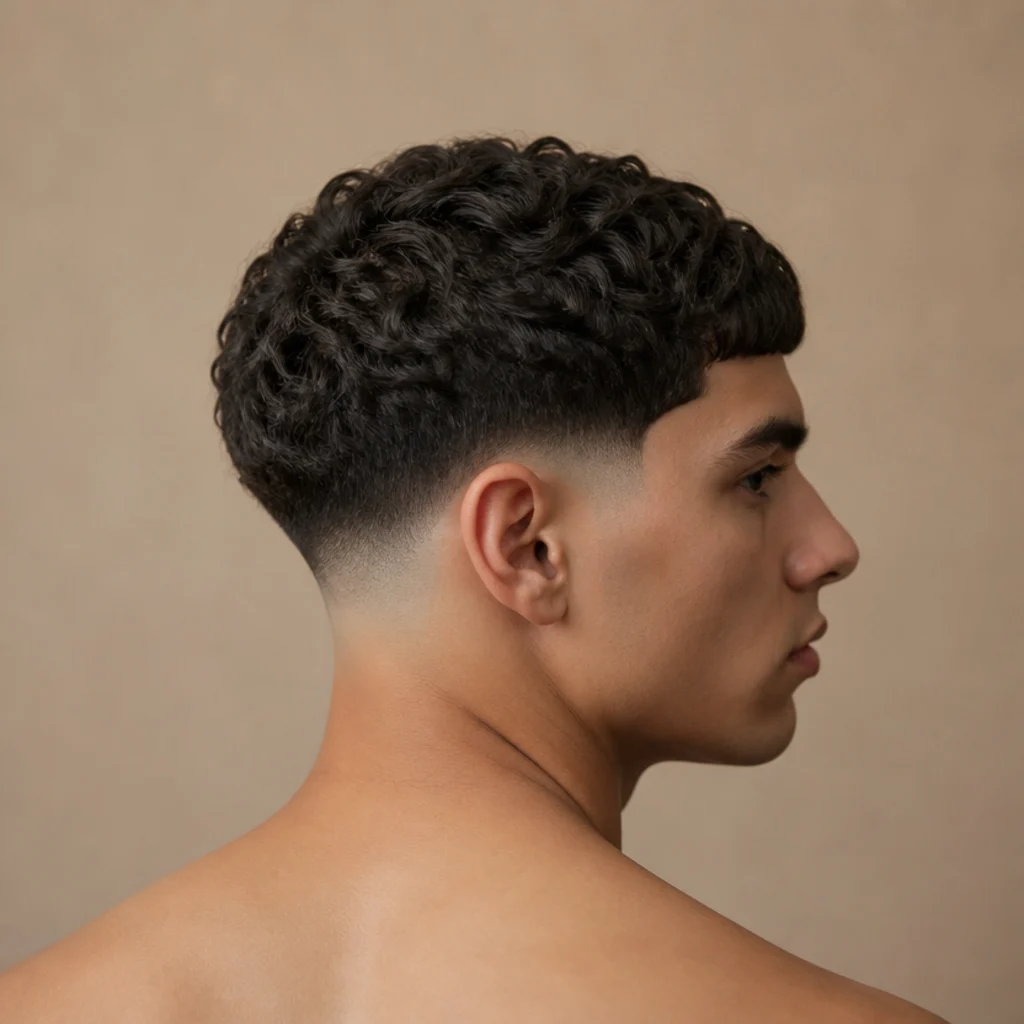
A low fade keeps most of your natural density and drops the taper only near the hairline, just above the ears and around the nape, for a subtle, grown-up finish. It's the most conservative fade option, which makes it a smart pick for a cleaner dress code or anyone easing into the edgar without a dramatic change. The low placement flatters nearly every face shape because it preserves the sides rather than shortening them, so it neither widens a round face nor narrows a long one. It works across curl types, from 2C waves to 4A coils, since the top length carries the character. Maintenance is a touch gentler than higher fades, stretching comfortably to three weeks before the line blurs. A leave-in conditioner scrunched through damp hair keeps definition without stiffness. Request a low fade with the edgar fringe kept blunt across the front and your curl length preserved through the crown.
Save this to Pinterest to compare fade heights side by side.
06Textured Crop Edgar
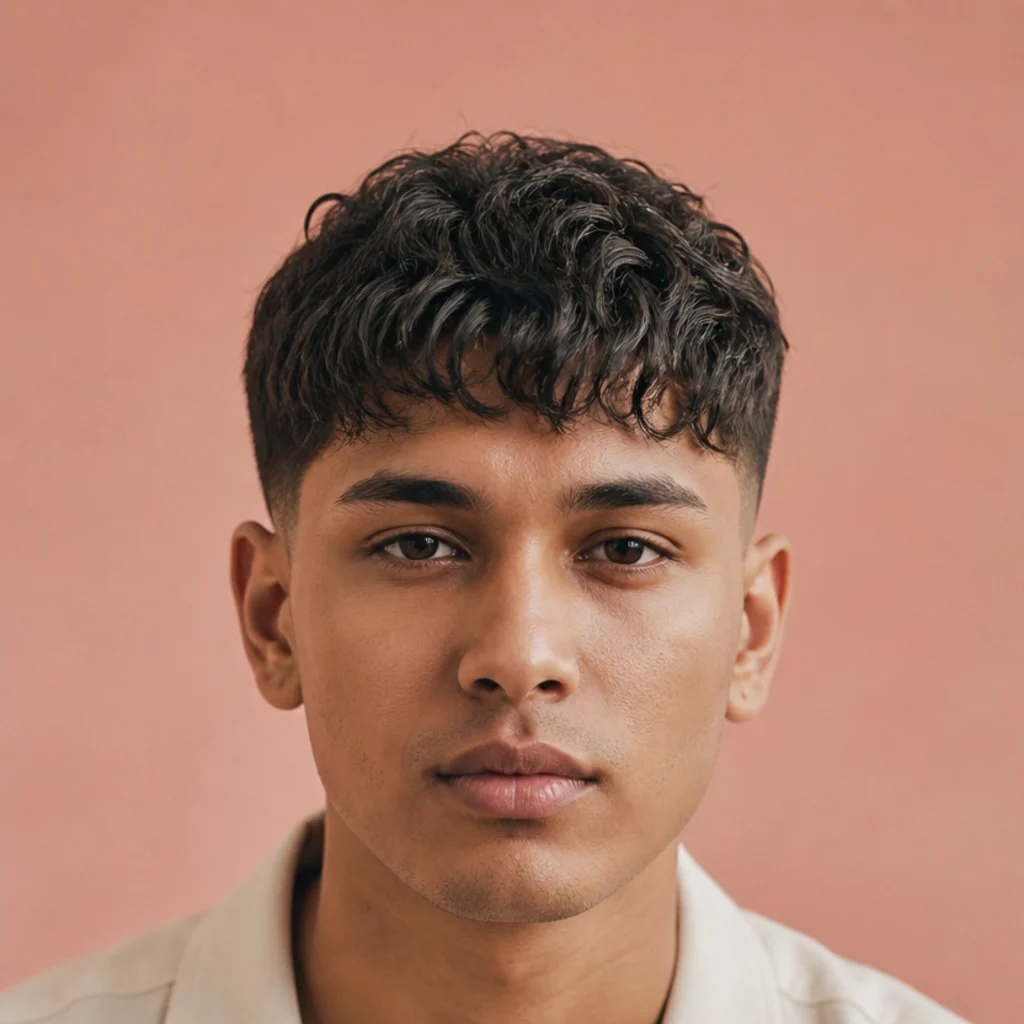
The textured crop borrows from the French crop but keeps the edgar's blunt front, giving a piecey, broken-up top that looks intentional but low-effort. It is cut shorter than the high-volume version, usually one and a half to two and a half inches, so individual curl clumps read as separate pieces instead of one solid mass. Point-cutting, where the barber cuts into the ends at an angle rather than straight across, is what creates that separation, so it's worth naming specifically. This works best on medium-density 2C to 3B waves and looser curls that might otherwise fall flat, and round or square faces gain useful structure from the texture up top. Upkeep is moderate, and the shorter length forgives a slightly longer four-week stretch between cuts. A matte paste or a curl cream with a dry finish defines the pieces without weighing them down or adding shine. Ask your barber for a textured crop with an edgar fringe and point-cutting on top to increase separation.
07Curly Edgar with Line-Up
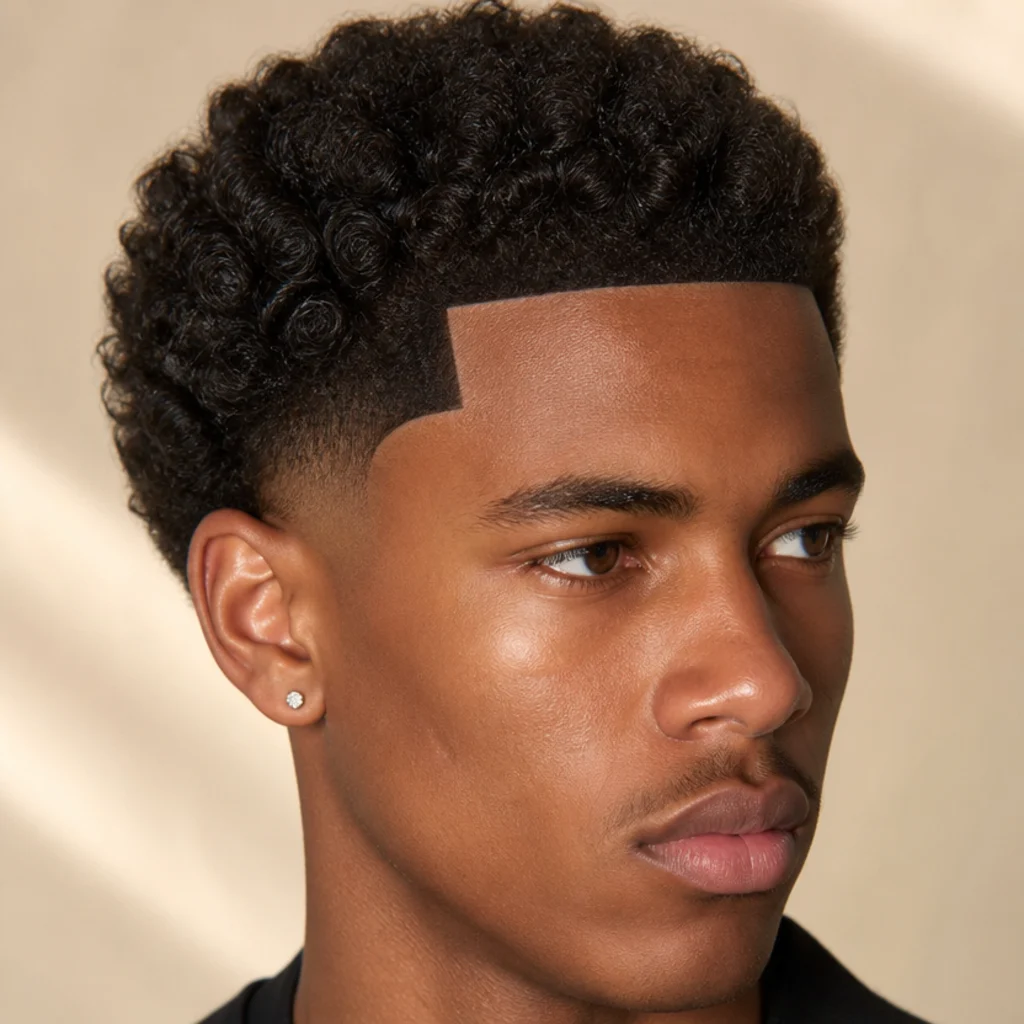
Adding a crisp line-up sharpens the whole edgar and defines exactly where curl meets skin, which is striking on coily 3C to 4C textures where the contrast is highest. The barber squares off the fringe and temples with a trimmer, building clean geometry against soft curl. It suits strong, angular features and anyone who wants a deliberate, polished finish. Be honest about upkeep, because this is the highest-maintenance styling choice on the list: a line-up grows out visibly within seven to ten days, and stubble along the carved edge reads messy fast. There is also a real trade-off to weigh, since repeatedly lining up the same edge can stress a fragile hairline over time, so a softer natural line is the safer long-term call for delicate or receding fronts. Keep the carved edge hydrated and avoid picking at regrowth. If your hairline is uneven, ask your barber to follow its natural shape rather than forcing a straight line, and request an edgar with a squared line-up at the front and temples.
08Wavy Edgar for Looser Curls

Not everyone has tight coils, and the wavy edgar is built for looser 2A to 2C patterns that bend in an S rather than spiral. Because waves shrink far less than coils, the fringe sits longer here and your barber can keep that blunt edge close to the brow without it jumping up when dry. The overall effect is soft and relaxed, less architectural than a coily version, which suits people who want the shape without the sharpness. It flatters oval and heart faces and works nicely for fine-to-medium density hair, where the fringe adds the illusion of fullness at the front. Maintenance is moderate, roughly every three weeks, since less shrinkage means the line stays honest longer. A sea-salt spray scrunched into damp hair boosts the natural bend and adds grip, though go light so it doesn't dry the ends. Ask your barber for an edgar fringe kept longer for minimal wave shrinkage and lightly tapered sides.
09Short Coily Edgar
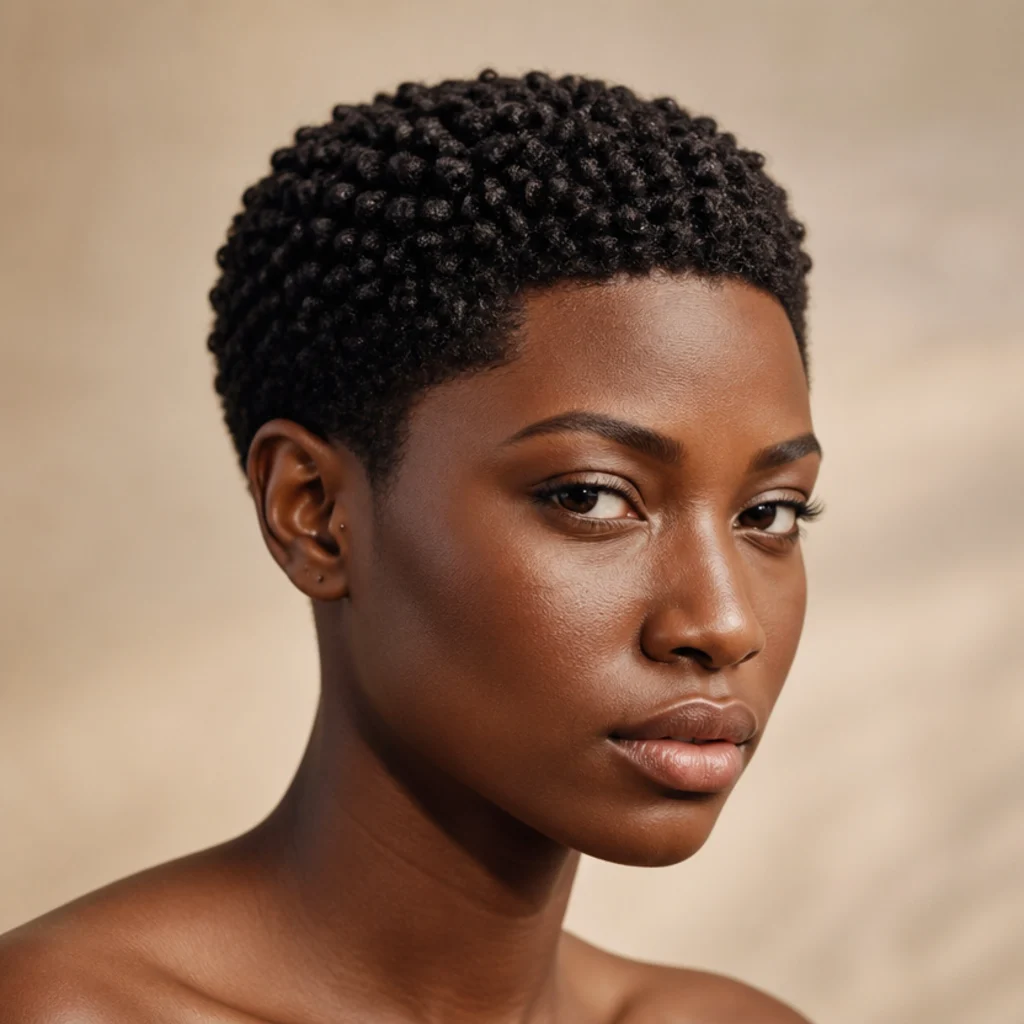
Tight 4A to 4C coils earn their own treatment: kept short and uniform, they form a dense, sculptural top that pairs cleanly with a blunt edgar front. At short length the curls sit close and even, and the fringe line stays crisp because there is little weight pulling it down. This suits round and oval faces and is low-fuss to wear day to day, though the shape depends on regular upkeep. Plan on shaping every two to three weeks to keep the coils uniform, and pair that with daily moisture, because tight textures lose water fastest and a dry coil loses both definition and shine. A curl butter or a rich leave-in worked into damp hair, then sealed with a light oil, keeps things hydrated and springy. Sleeping on a satin or silk surface protects the shape overnight and cuts down on frizz. Ask your barber for short, even length on top with a defined edgar fringe and neatly tapered sides.
10Mid Fade Curly Edgar
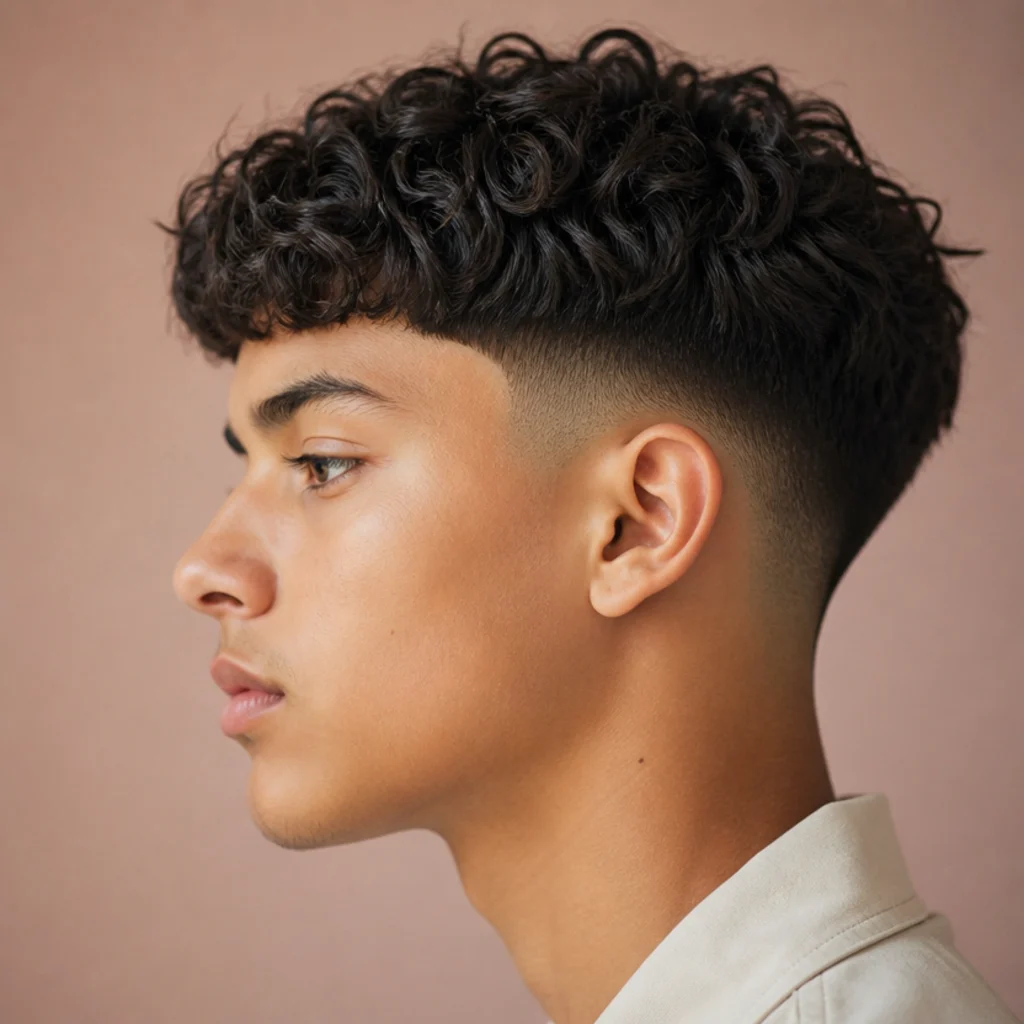
The mid fade splits the difference between low and high, starting the taper around the temple for a balanced, versatile finish. It's arguably the most universally flattering fade because it adds definition without dramatically shortening the sides, so it neither widens nor narrows the face in a way you have to plan around. Curls on top get a clean stage, and the blunt fringe stands out against the faded temple. Nearly every face shape and curl type works with it, which is exactly why it is the safest first-timer choice and the one most barbers will default to if you are unsure. Maintenance runs every two to three weeks to keep the gradient smooth, and styling stays simple with a curl cream on damp hair. If you are choosing your very first edgar and don't want to overthink it, this is the version to name. Tell your barber you want a mid fade with an edgar fringe and enough top length to keep your natural curl visible.
Save this to Pinterest if you're still deciding on a fade height.
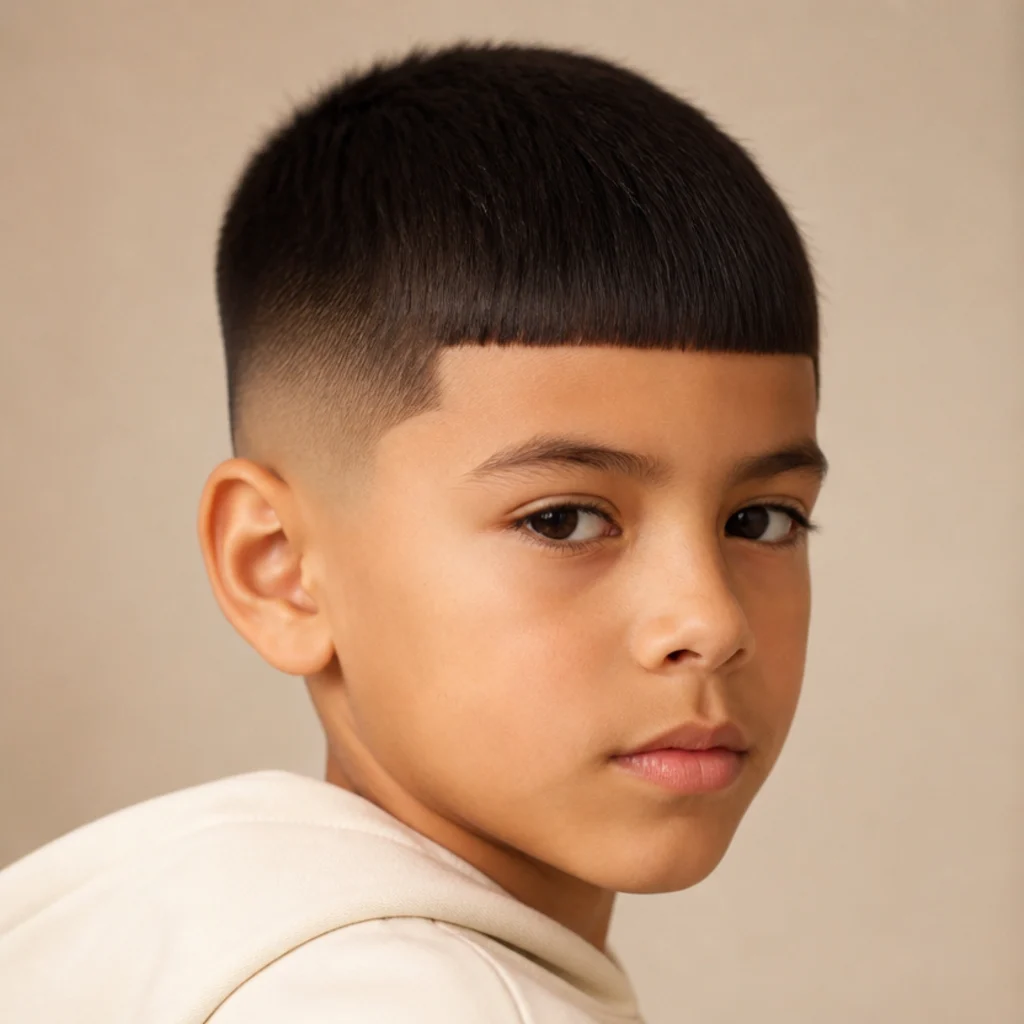
11Curly Edgar for Boys
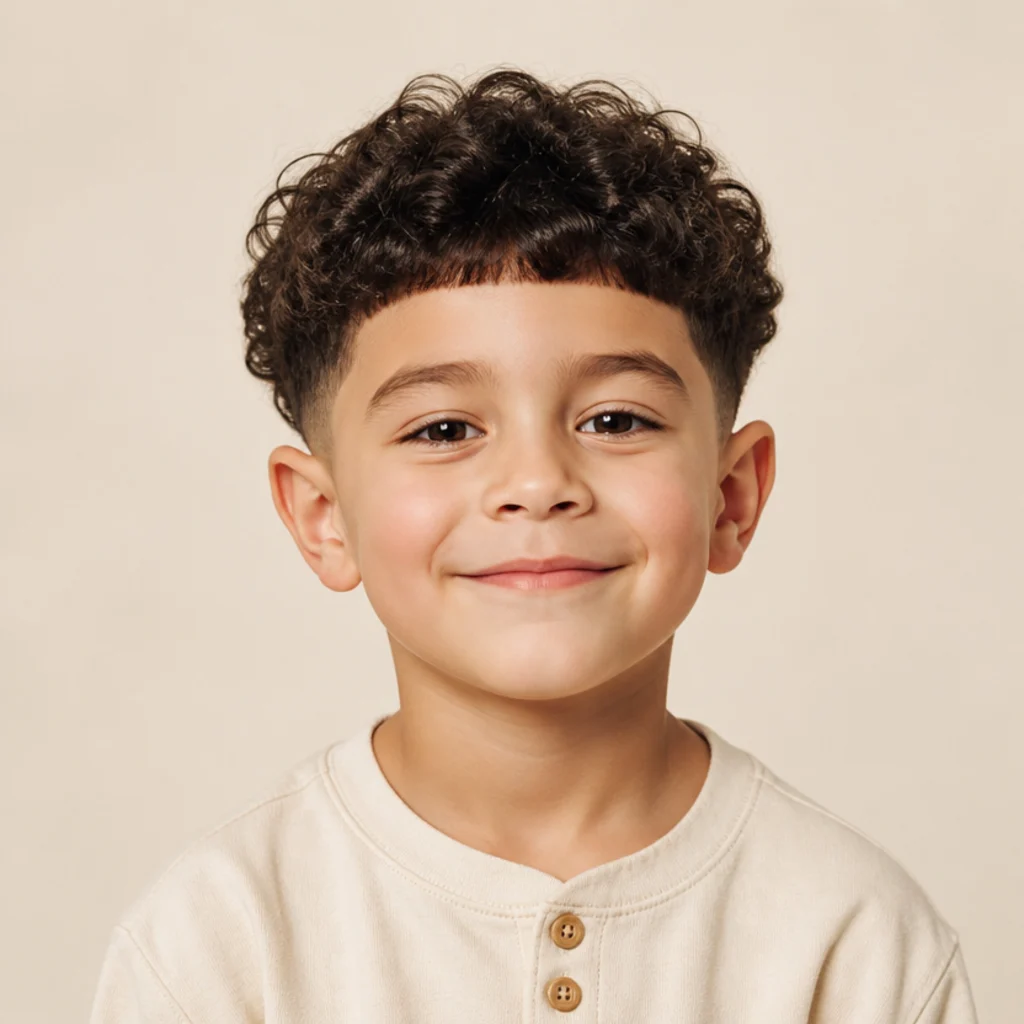
The edgar cut for boys is popular because it is tidy, recognizable, and realistic for a kid to manage. On curly hair a softer, shorter take keeps the signature front without demanding much styling or product, which matters when the morning routine is a rushed comb-through. A low or mid taper keeps it neat for school, and a slightly rounded fringe is far more forgiving as it grows and as an active kid runs around than a razor-hard edge would be. It suits most children's face shapes and holds up to sports and playgrounds. Maintenance is simple but regular, roughly every two to three weeks, and a spray of water plus a quick comb or finger-rake revives it most mornings with no product at all. Keep any line-up soft and natural on a young hairline rather than sharply carved. For your barber, ask for a kid-friendly edgar with a soft fringe, short low-taper sides, and a shape that needs minimal product.
12Disconnected Curly Edgar
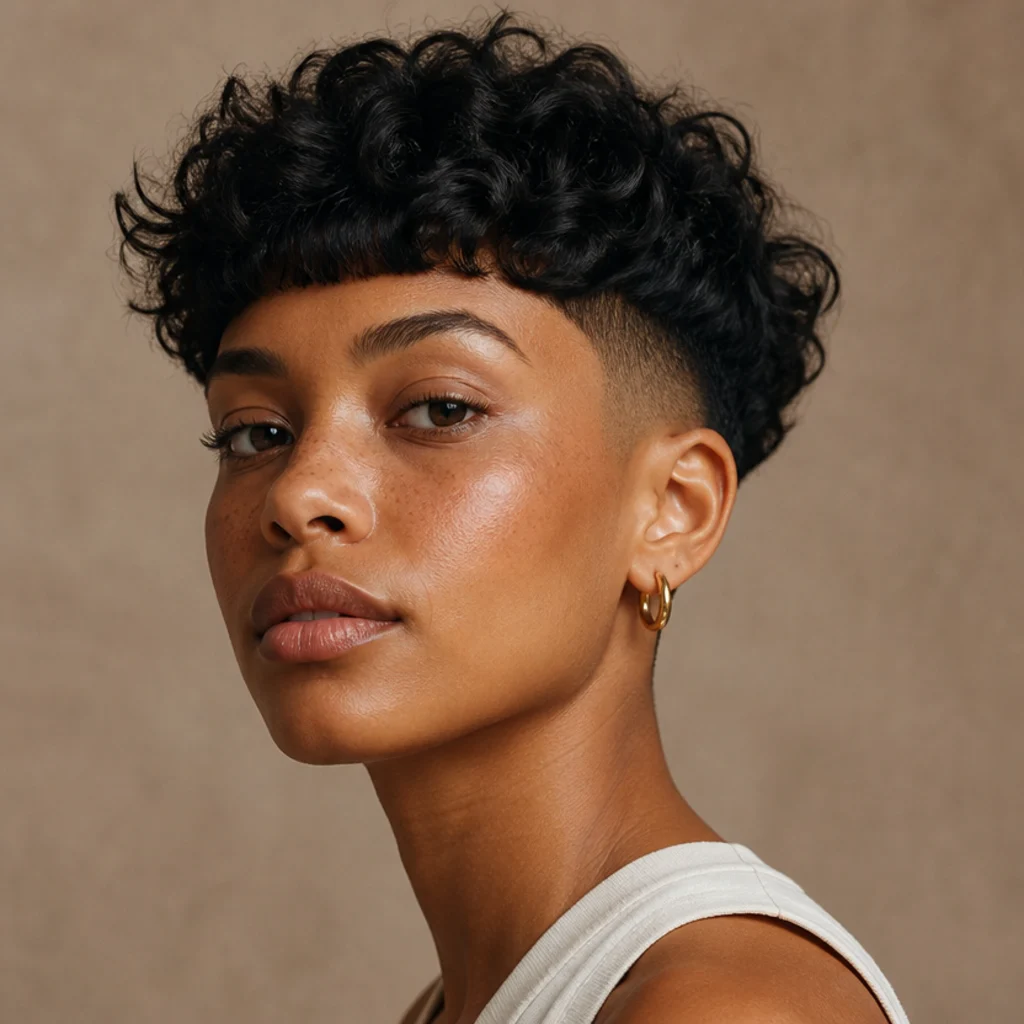
A disconnected edgar skips the gradual fade entirely and instead builds a sharp, deliberate contrast between long curls on top and very short sides. There's no blending, so the line where the two lengths meet is bold and graphic, almost like a step. This high-impact look suits confident wearers and strong features, and it photographs well precisely because of that contrast. It needs medium-to-thick 3B to 4B density to work, since the top has to carry real volume to justify the disconnect; thin hair leaves the contrast looking accidental rather than intentional. Maintenance is split, moderate on top but frequent on the sides, roughly every two weeks, to keep the short length from creeping up and blurring the line. Style the top with a curl cream or a firm gel for hold and shape. Because barbers often default to a fade, be explicit: ask for a disconnected top rather than a fade, with short sides and an edgar fringe up front.
13Burst Fade Curly Edgar
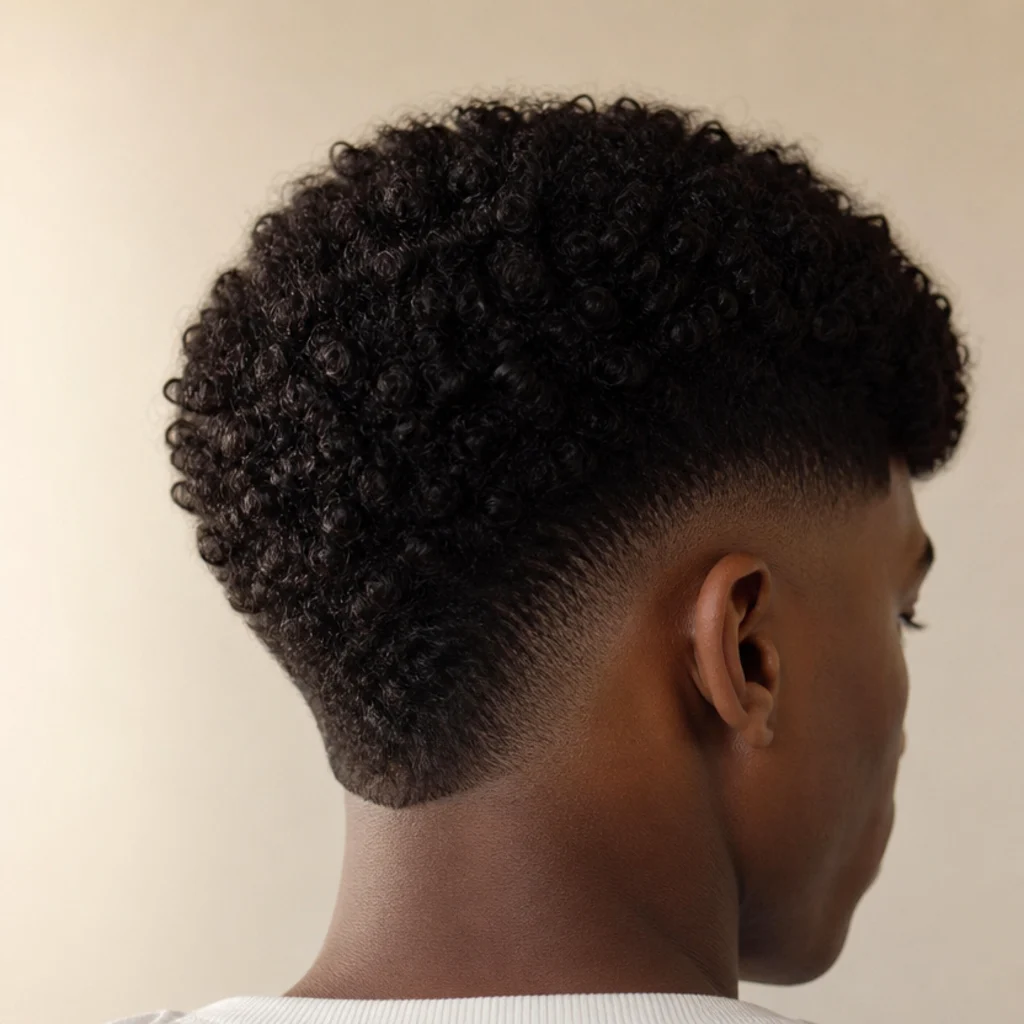
The burst fade arcs the taper in a semicircle around the ear, leaving weight along the back of the neck for a rounded, distinctive finish that echoes the movement of curls. It is a more stylized fade than a straight vertical one, and that curved shape mirrors coil texture, so the two read as one intentional design rather than a cut plus a top. It works best for people who want something a step beyond a standard fade and photographs well from the side and back. It is face-shape friendly across the board but especially suits oval and diamond shapes, and it flatters 3A through 4A curls that fill the top. Upkeep sits on the higher side, every two weeks, because the arc has two edges to keep clean and both soften as curl grows in. A curl cream on top keeps the contrast crisp. Ask your barber for a burst fade arcing around the ears with an edgar fringe and curl length kept on top.
14Curly Edgar with Design Part
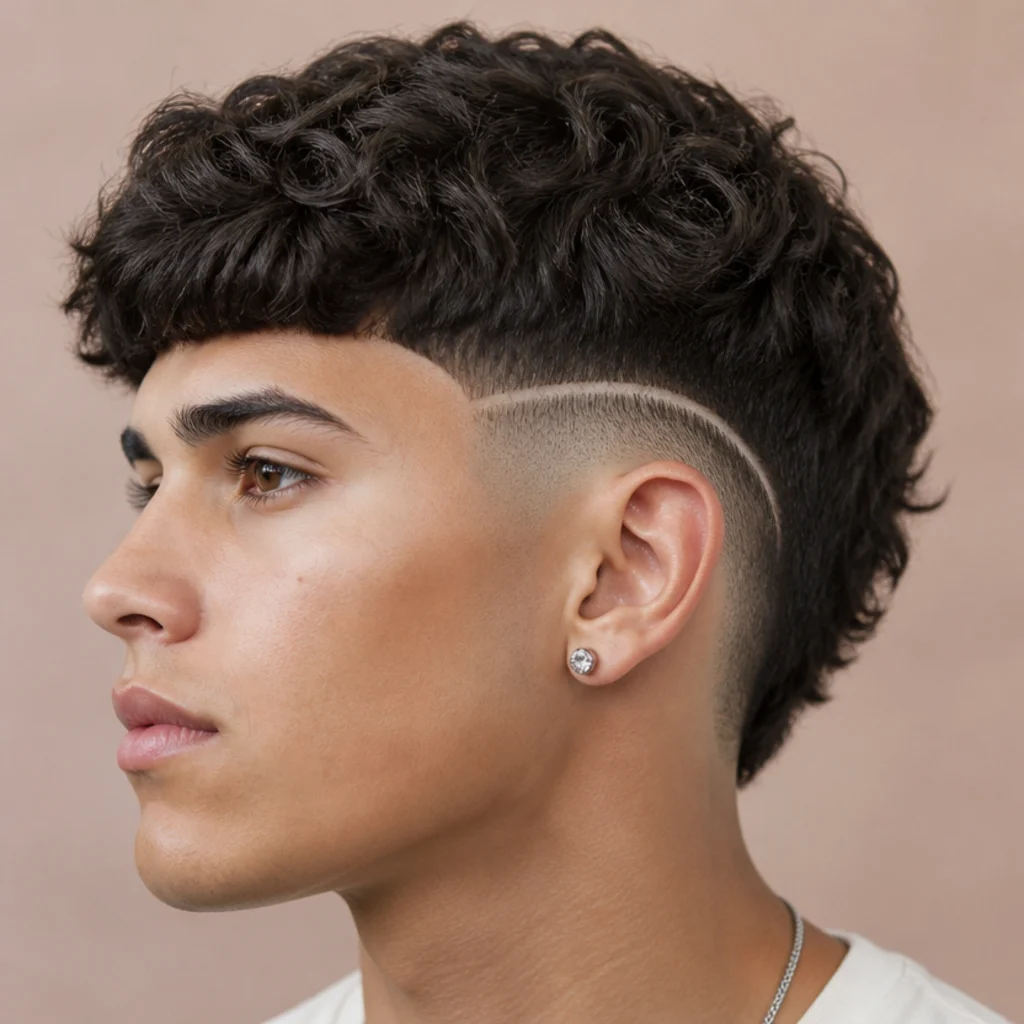
For extra personality, a razored design part drops a clean line or simple pattern into the faded side, setting sharp geometry against soft curl. It's an easy way to customize the edgar without touching the core shape, and a single hard part is the most versatile and beginner-friendly choice; intricate multi-line patterns look impressive fresh but blur faster and demand more chair time. This suits anyone who wants a signature detail and is realistic about the upkeep. The carved line fills in as hair grows, so plan a touch-up every one to two weeks to keep it visible, and know that between visits the design softens before the rest of the cut does. Otherwise it behaves like a standard curly edgar, so the base maintenance is the same. Keep the carved area clean and moisturized so the skin around it stays even. Ask your barber for your edgar with a single hard part, or a small carved design on one side if you want more.
15Grown-Out Curly Edgar
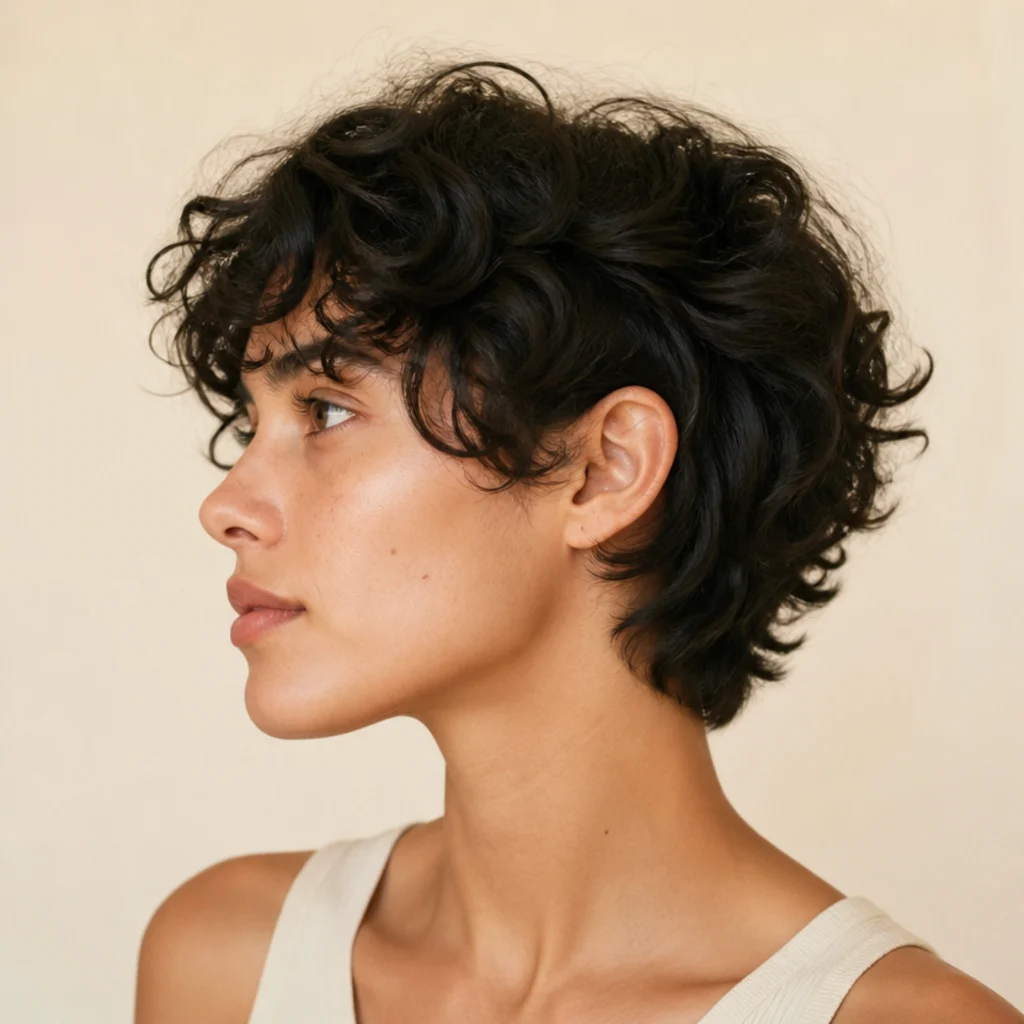
Not every edgar has to be freshly sharp. The grown-out version embraces softened lines, a longer fringe, and looser sides for a lived-in, low-commitment feel that many people quietly prefer over the crisp stage. It's the smart pick if you can't get to the barber often, and it's the natural four-to-six-week point of any edgar, just claimed on purpose instead of tolerated. The longer fringe frames the face more gently, which softens strong features and suits nearly every face shape and curl type. Maintenance is the lowest on the list, stretching to four or five weeks between trims, though you will want to keep the length hydrated as it grows. A leave-in scrunched through damp hair, refreshed midweek with a water-and-conditioner spritz, keeps the length defined rather than fuzzy. If you like this stage, ask your barber to trim only lightly, tidy the neckline, and preserve the softer grown-out fringe and sides.
Pro Tips from the Editor
- Cut the fringe wet-long, judge it dry. Ask your barber to leave the front a finger-width longer than your target, then check it after it dries and shrinks; you can always take more, but you can't add a curl back.
- Name your curl type, not just "curly." Saying 3B, 4A, or "loose 2C waves" tells your barber how much shrinkage to plan for and how the fringe will sit, which is the single most useful thing you can bring besides a photo.
- Bring two reference photos, both dry. One straight-on for the fringe line and one profile for the fade height. Wet or freshly-styled inspo photos hide how the cut actually falls.
- Match product to the goal, not the curl. Gel and foam for hold and height, cream and butter for definition and moisture, matte paste for a piecey dry finish. Apply to soaking-wet hair for the cleanest clump.
- Protect the shape overnight. A satin or silk pillowcase or bonnet keeps a tight coily or high-volume top from flattening and cuts frizz, which stretches the days between good hair mornings.
- Book the refresh before you leave. Blunt fringes and taper edges look intentional for about 10-14 days on texture; a standing two-to-three-week slot keeps you ahead of the blur instead of chasing it.
- Go softer on a delicate hairline. If your front is fine, uneven, or receding, choose a natural line over a razor-hard one; the edge will still read as an edgar without the long-term stress on the hairline.
How to Choose / Get the Look
Start with two honest inputs: your curl pattern and how much upkeep you'll actually keep up with. Tighter 4-type coils hold short, sculptural shapes and pair cleanly with a sharp fringe, while looser 2-type waves usually need a longer fringe because they shrink less. If you want the lowest effort, look at the buzz blend, short coily, or grown-out versions; if you want maximum impact, the high-volume top, disconnected, or design-part options deliver but demand more chair time.
Use this as a quick shortlist by priority:
| If your priority is... | Best picks | Refresh cycle | Product to bring |
|---|---|---|---|
| Lowest maintenance | Grown-out, buzz blend, low fade | 3-5 weeks | Leave-in conditioner |
| Maximum volume | High-volume top, disconnected | 2-3 weeks | Curl gel or foam |
| Cleanest, sharpest finish | Line-up, taper fade, burst fade | 1.5-2 weeks | Curl cream |
| Safest all-rounder / first edgar | Mid fade, classic curly edgar | 2-3 weeks | Curl cream |
| Kid-friendly | Curly edgar for boys | 2-3 weeks | Water + comb |
Fade height changes everything, so decide how much natural density you want to keep. A low fade is subtle and forgiving, a mid fade is the safe all-rounder, and a taper, burst, or disconnected finish is sharper and higher maintenance. Bring a clear dry reference photo and describe the fringe length relative to your eyebrows, since shrinkage makes "short" mean different things on curls. Finally, ask your barber how often they'd want to see you to hold the shape, and be honest about whether that cadence fits your life before you commit to a crisp line-up or a carved detail.
Frequently Asked Questions
Does the edgar cut work on curly hair?
Yes, and it often looks more distinctive on texture than on straight hair. The blunt fringe fractures into ridges and coils, so it reads bolder and less rigid than the edgar cut straight hair version. The one thing that changes is fringe placement: your barber cuts it slightly long to account for shrinkage, because a curl that sits at the brow when wet can lift above it once dry.
How much does curl shrinkage affect the edgar fringe?
A lot, which is why it's the detail to get right. Depending on pattern, curls can lose 30 to 50 percent of their stretched length when they dry, so a fringe cut exactly to the brow wet may end up well above it. Tighter 4-type coils shrink most and need the most extra length left on; looser 2-type waves shrink least and can be cut closer to the final position.
How often does a curly edgar need a trim?
Most versions need a sides-and-fringe refresh every two to three weeks to stay crisp. Line-ups and carved designs blur faster, closer to one to two weeks, while grown-out styles stretch comfortably to four or five. The look stays wearable for about 10 to 14 days after a cut before the edges soften.
What's the difference between an edgar taper fade and a buzz cut version?
An edgar cut taper fade keeps full curl volume on top with the sides blended down toward the skin, for a look with height and contrast. An edgar buzz cut shortens the top into a close, uniform coil crop with the blunt front still defined, trading volume for a true wash-and-go finish. Choose the taper for impact, the buzz for the lowest daily effort.
Which curl types and face shapes suit a curly edgar best?
It spans the range from 2B waves to 4C coils, with the styling and fringe length adjusted for shrinkage on each. Face-shape wise, the horizontal fringe most flatters oval, square, and round faces by balancing forehead height and width. Long faces do better with a lower, longer fringe and some volume up top; very fine or low-density hair may struggle to fill a blunt front line.
Is the curly edgar a good choice for boys?
It's a popular kid-friendly cut because it's tidy, recognizable, and easy to manage. A softer, shorter version with a low taper needs little to no product and revives with just water and a comb most mornings, and a rounded fringe grows out more gracefully than a razor-hard edge, which suits an active kid and a fast routine.
Will frequent line-ups damage my hairline?
Repeatedly carving the same sharp edge can stress a fine or receding hairline over time, so it's worth weighing against the crisp look. If your front is delicate, ask your barber to follow its natural shape rather than forcing a straight line, and space out aggressive line-ups. The cut still reads clearly as an edgar with a softer edge.
What products actually hold curls in an edgar?
Match the product to the goal. Curl gel or foam gives the strongest hold and the most height, which suits the high-volume and disconnected tops. Curl cream or butter prioritizes definition and moisture, ideal for coily and grown-out shapes. A matte paste creates a dry, piecey finish for the textured crop. Apply to soaking-wet hair, scrunch, and let it dry undisturbed for the cleanest clump.
How do I ask my barber for a curly edgar?
Describe three things in order: the fringe (blunt, at or above the eyebrows, cut long for shrinkage), the sides (fade height or a disconnect), and the top length you want kept. Add your curl type, such as 3B or loose 2C, and bring a dry, straight-on reference photo. That combination gives a barber everything they need to plan around your shrinkage.