5 Hair Tinsel Mistakes to Avoid and How to Fix Them
Hair tinsel reads as weightless, lit-from-within shimmer in photos, yet the same five missteps flatten the sparkle, loosen the knots, and cut your wear time in half. Here's exactly what goes wrong, why, and the fix for each.
 Edited by Lena Rose · Published July 11, 2026 · 15 min read
Quick Answer
- Best for: Anyone wanting fine, movable sparkle without color commitment, especially hair tinsel black hair pairings where cool metallics glow against deep tones
- Who might skip it: Very fine or actively shedding hair that struggles to anchor a tie-in knot, and anyone who heat-styles daily and can't work around the strands
- Maintenance: Low to moderate; sleep in a loose braid or satin wrap, keep direct heat off the film, and expect strands to migrate down as hair grows
- Difficulty: Beginner-friendly with the tie-in knot method; bead-crimp and dazzle-glue methods are harder to place evenly and to remove
- Cost: Variable; a DIY tie-in kit typically runs in the lower double digits, while a salon install with dense, even placement sits at a mid-range service price
- Wear time / longevity: Roughly 4 to 6 weeks per strand when tied correctly, growing out gradually rather than dropping overnight
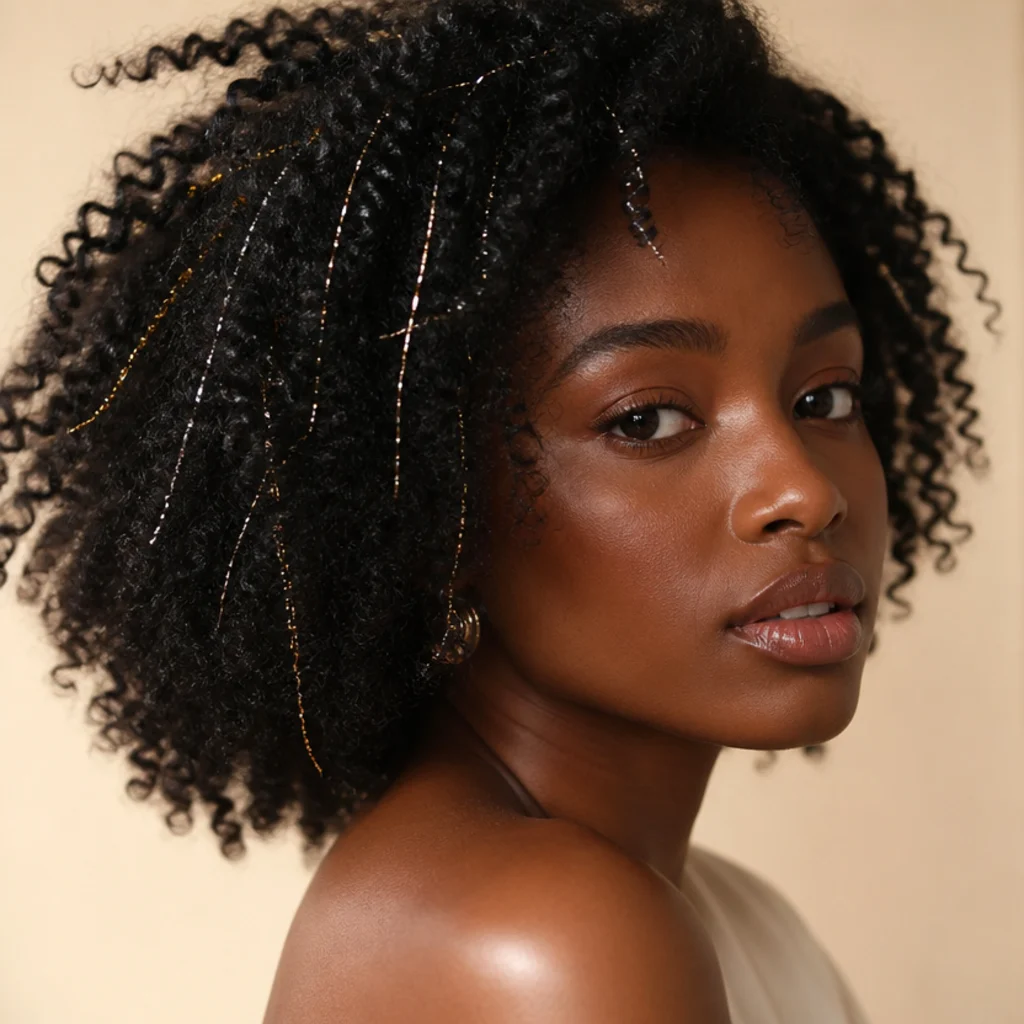
- Standout variation: Fine silver or rainbow-iridescent tinsel scattered along the crown and mid-lengths for a lit-from-within hair tinsel aesthetic
- How to ask your stylist: Ask for scattered tie-in tinsel with silk or cotton thread anchored on a small pinch of hair, placed across the crown and layers, not clustered at the front
In This Guide
Intro
Hair tinsel is one of the lowest-commitment ways to add sparkle, which is exactly why it feels foolproof right up until the strands slip out, tangle into the ends, or vanish into your hair like static. The look is forgiving. The technique is where results are won or lost, and most disappointing outcomes trace back to a small cluster of avoidable errors rather than the product itself. Placement, color contrast, and knot tension do more work than sheer strand count. That's doubly true for hair tinsel black hair looks, where a shade with too little reflectivity photographs as frizz instead of shine, and a scattered layout reads as effortless while a front cluster reads as a stripe. You control density and position, so tinsel adapts to nearly any face shape or hair texture, and it delivers festival-grade shimmer without dye, bleach, or bonded extensions. Here are the five mistakes that show up most often, from clumping and heat damage to rough removal, each with a specific fix. Whether you're learning how to put tinsel in hair for the first time or refreshing curly hair tinsel you already wear, these notes should help your shimmer sit cleaner and last longer.
01Clustering Tinsel in One Obvious Spot
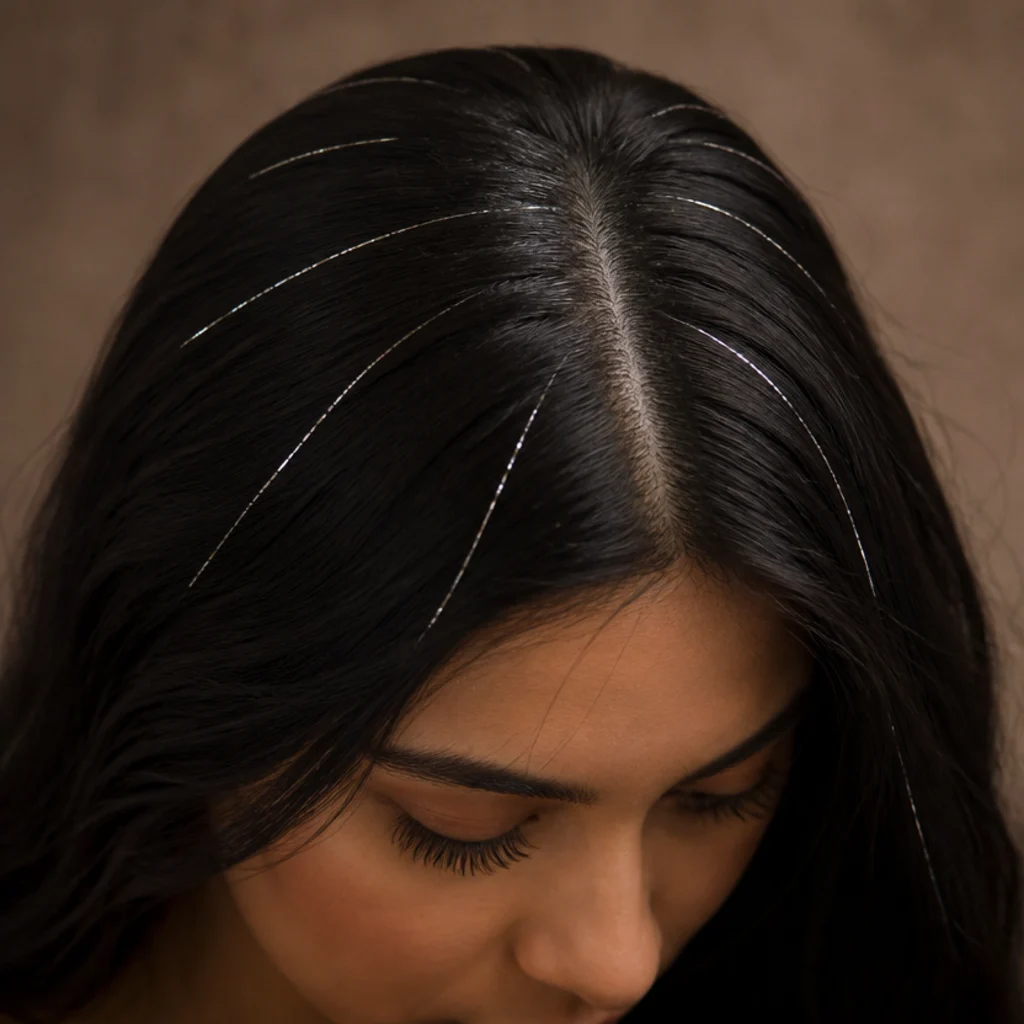
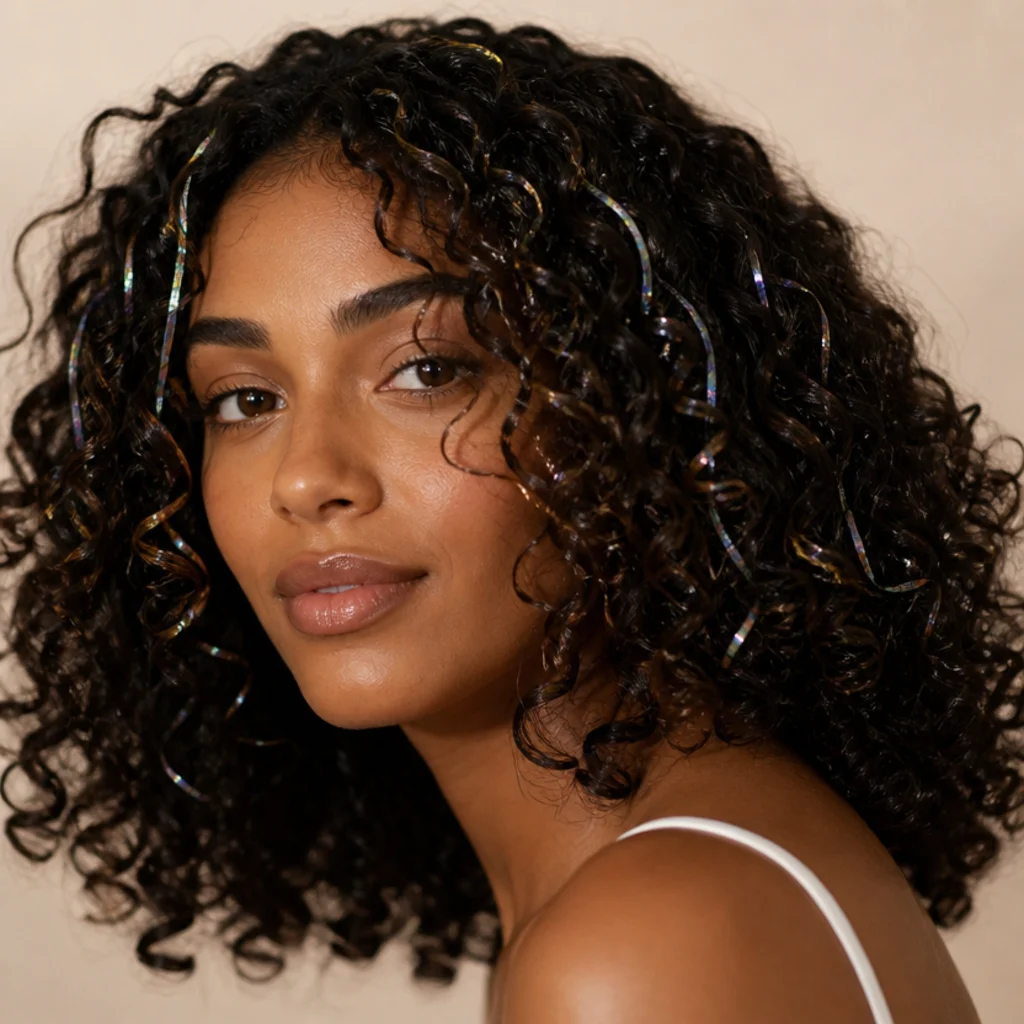
The most common beginner error is tying every strand into one reachable patch near the front hairline, which turns fluid shimmer into a stiff, static block. Light needs distance between strands to travel across your head as you move. Bunched tinsel moves as a single unit and catches one flat highlight instead of flickering. Distribute strands across three zones, the crown, the mid-lengths, and a few deeper interior layers, so sparkle appears and disappears with motion instead of sitting in one fixed spot. Space strands at least an inch to two inches apart, and tuck a portion under the top layer so they peek through rather than lying on the surface. On curly hair tinsel, thread individual strands into separate curl clumps so the film follows the coil pattern and stays airy. For density, 20 to 40 fine strands reads believable on most heads; go denser only for stage or event looks.
Part your hair the way you actually wear it, then place strands along both sides of that part so the shimmer stays visible day to day. Ask your stylist for a randomized scatter across the top three layers, not a single panel.
02Choosing a Color That Disappears
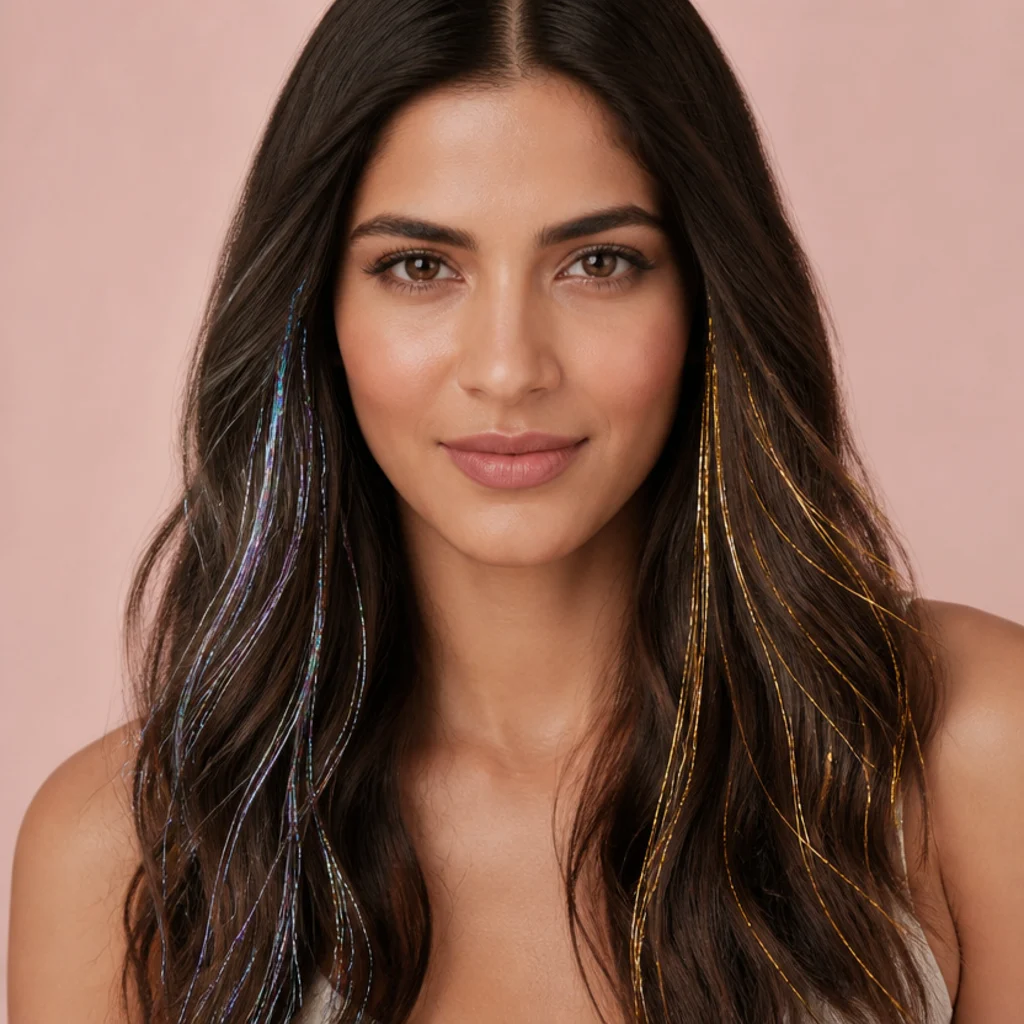
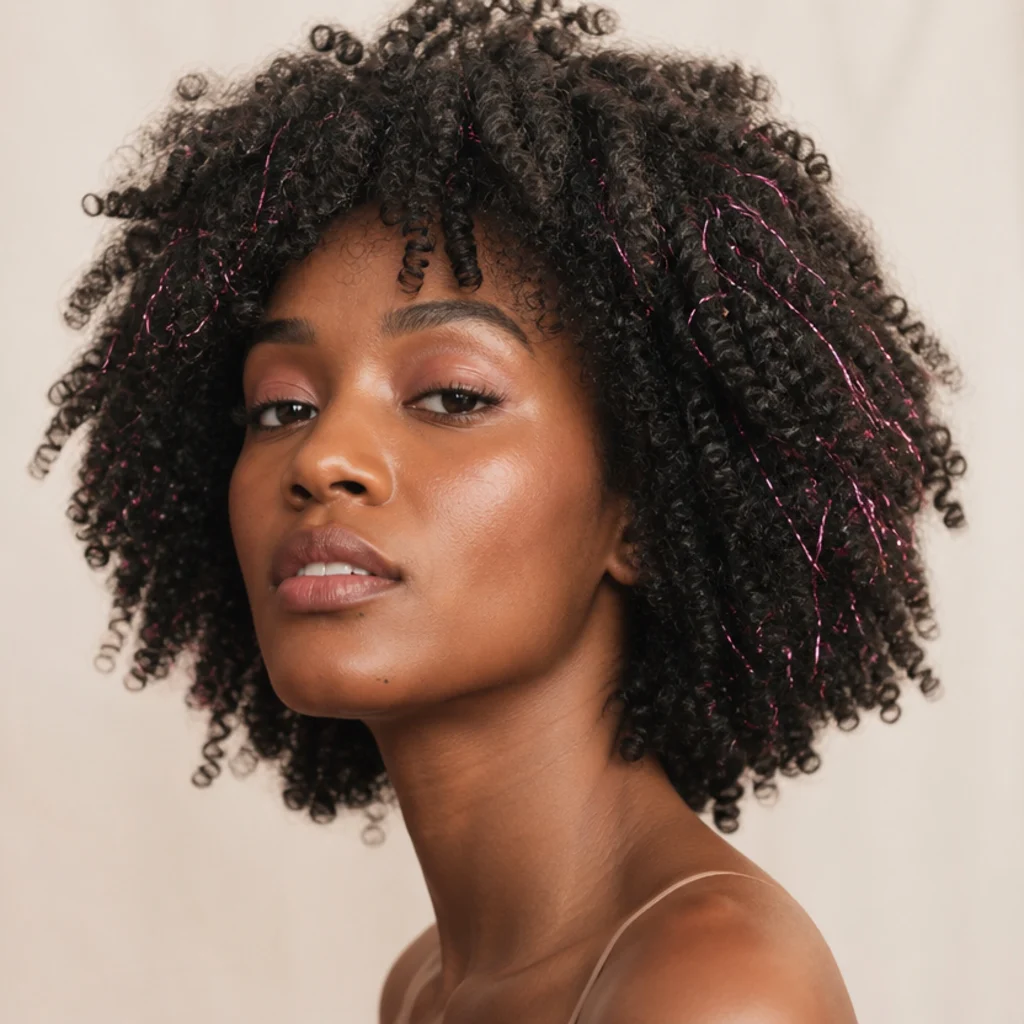
Color and finish decide whether tinsel glows or reads as frizz, and dark hair is the least forgiving canvas for a weak pick. Matte or deep-toned strands sink into black and espresso hair and photograph as texture rather than shine, while high-reflectivity finishes, holographic, iridescent, and cool silver, bounce light and separate cleanly from the base. For hair tinsel black hair, cool silver and rainbow-iridescent tones pop hardest because the contrast is maximal; warm gold gives a softer, candlelit glow that suits olive and golden undertones. Want pigment instead of pure metallic shimmer? Pink hair tinsel is versatile: rose and bubblegum shades flatter warm and cool skin alike and stay visible on both dark and light hair. Highlighted, blonde, and balayage bases carry pastel, rose-gold, and opal tones well, since the lower contrast still registers against lighter strands. Finish matters as much as hue. A holographic film shifts color as you move, while a solid metallic gives a steadier gleam.
Hold a small bundle against your hair in direct daylight before you commit; indoor bulbs flatten exactly the reflectivity you're shopping for. Ask your colorist which finish reads best against your specific base and undertone.
03Tying It in Too Loose or Too Tight
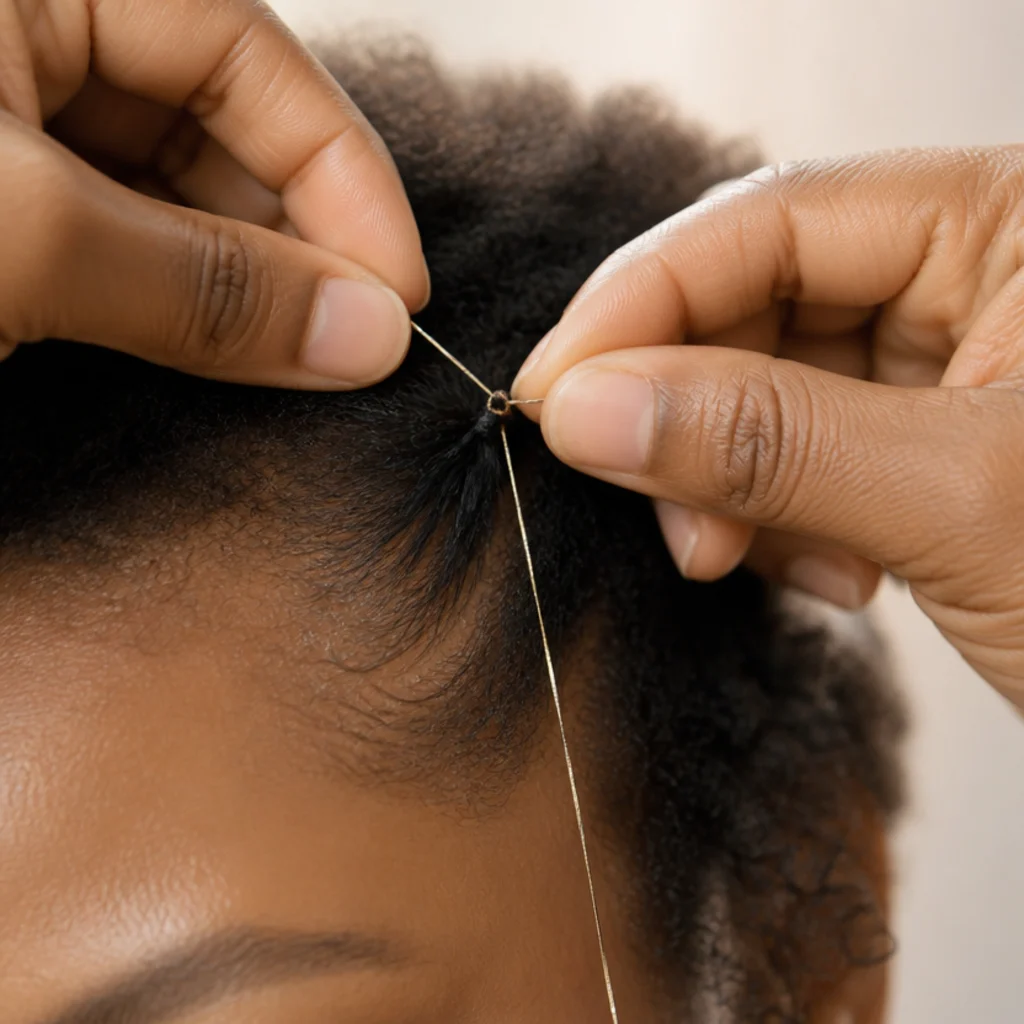
When you learn how to put tinsel in hair, the anchor knot turns out to be the single biggest variable in wear time. Tied too loose, a strand slides free within a day. Cinched too tight against the scalp, it tugs at the follicle and stresses the hair as it grows out. The reliable method: fold a strand in half over a small pinch of hair, roughly the width of a few grains of rice, about a quarter inch from the scalp, then tie two to three gentle overhand knots down the length so the loop sits snug but not welded to the root. It should hold when you tug lightly yet leave a little breathing room at the base. Never anchor to just one or two hairs, since that snaps under a brush and takes your own strand with it. On fine or fragile hair, use a slightly larger pinch and fewer, looser knots to spread the tension. A correctly tied strand rides out roughly 4 to 6 weeks, migrating down with natural growth rather than dropping overnight.
Seat the knot at the top of a section you can hide under, so as it grows down it stays camouflaged. Ask your stylist to use thread-reinforced knots on fine hair for extra grip without extra tightness.
04Applying Heat Straight to the Strands
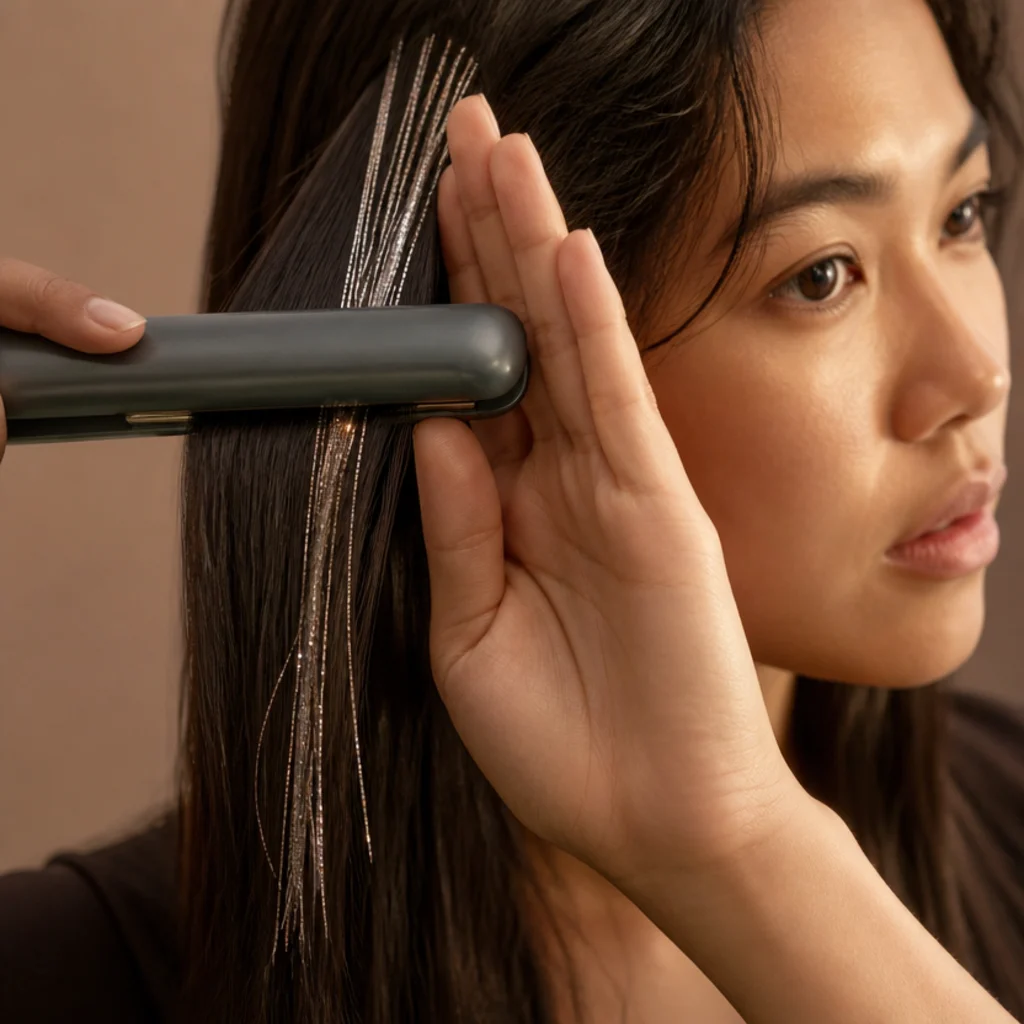
Most tinsel is thin polyester or mylar film with a low melting threshold, so direct contact from a flat iron or curling wand warps, shrivels, and dulls it in one pass, leaving a crinkled, faintly singed strand that never recovers its shine. Sequencing is the whole fix: heat-style your hair completely first, then tie in the tinsel, so the tools never meet the film. When you restyle later, work around the strands and keep irons and wands from touching them. If you have to pass a hot tool nearby, keep it moving and shield the tinsel behind a comb or your fingers. Cool or low-heat blow-drying is generally safe. A heat protectant on the hair itself does nothing for the film, so physical distance is your real protection. For curly hair tinsel, refresh coils with a diffuser on low heat and low airflow rather than a hot iron, which keeps both the curl pattern and the strands intact through wash days.
On wash day, clip tinsel sections up and out of the way before you reach for any hot tool, so you're not styling blind. Ask your stylist which heat-free refresh, roller-set or diffused air-dry, best protects your texture and your sparkle.
05Yanking It Out at Removal
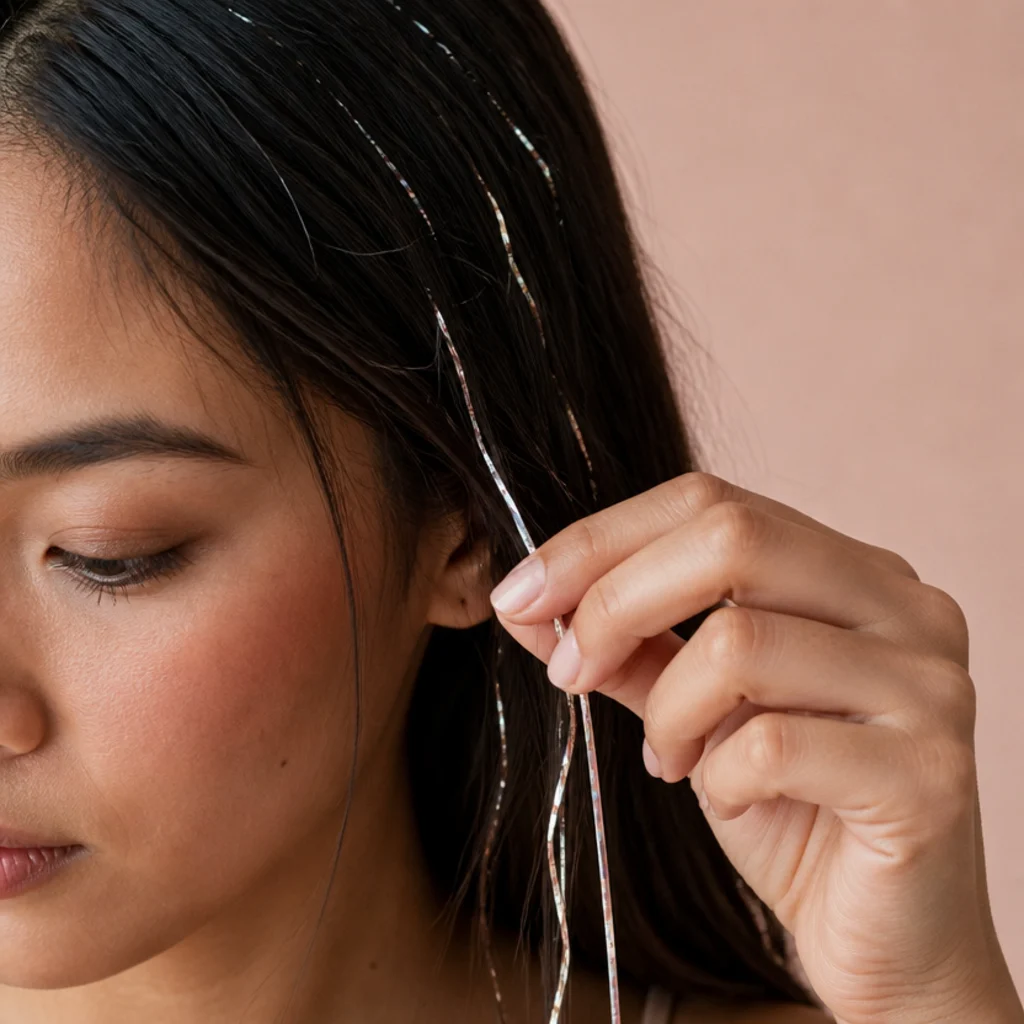
Removal is where an otherwise clean tinsel run ends in avoidable breakage, because tie-in strands are knotted at the root, and pulling straight out drags your own hair with them. The correct method: snip the folded loop of the tinsel just below the knot, which releases the tension, then slide the freed knot down and off the hair shaft the way you'd ease out a tangle. If a knot resists, work a drop of conditioner or a slip serum into it for lubrication rather than forcing the slide. Remove strands on a schedule as they migrate toward the ends, generally around the 4 to 6 week mark, since strands left too long start to mat into the surrounding hair and collect at the ends. Take strands out before a wash rather than after, when hair is dry and less prone to stretching and snapping.
Remove under bright light with a fine-tooth comb nearby so you can spot each knot precisely instead of tugging at the whole section. Handled this way, your length and edges stay intact, so your next round of tinsel starts from healthy hair. Ask your stylist to remove dense or grown-out installs if you can't see the knots clearly yourself.
Save this to Pinterest and pull it up right before you start tying in.
Pro Tips from the Editor
- Match thread to finish: use clear or silver thread for cool metallics and a soft nude thread for warm gold, so the anchor point disappears instead of showing at the root.
- Reflectivity beats quantity. Ten strands in a true holographic finish out-sparkle thirty matte ones on dark hair, so buy for finish first and count second.
- Place strands along the sides of your everyday part, not just the crown, since that's where light actually hits in most photos and mirror checks.
- Do a daylight test swatch before any full install. Indoor lighting hides the exact shimmer you're paying for and leads to picking a shade that flattens in person.
- Protect overnight with a loose three-strand braid or a satin bonnet; friction from cotton pillowcases is what tangles and dulls the film between washes.
- Cleanse at the scalp with sulfate-free shampoo and let suds rinse down the lengths rather than scrubbing the tinsel directly, which loosens knots prematurely.
- Keep a small pair of blunt-tip scissors with your kit and remove any strand that starts to mat immediately, rather than waiting for wash day.
How to Choose / Get the Look
Work through four decisions in order and the rest falls into place.
1. Color and finish. Start from your base. On black and dark brown hair, prioritize cool silver, holographic, and rainbow-iridescent finishes for maximum contrast; choose warm gold for a softer candlelit glow on warm undertones. Blonde and highlighted hair can carry pastel, rose-gold, and opal tones. For a color pop on any base, pink hair tinsel is the most flattering non-metallic option.
2. Attachment method. Choose tie-in thread tinsel for an easy, residue-free, low-commitment install you can remove yourself. Bead-crimp installs hold firmly but need a tool and even spacing. Skip dazzle glue unless you want a one-day look, since it's the hardest to remove cleanly.
3. Density and placement. Aim for 20 to 40 fine strands for an airy, believable everyday effect, or more for events. Scatter across the crown, mid-lengths, and interior layers, spaced an inch or two apart, rather than clustering at the front.
4. Upkeep commitment. If you heat-style daily or wear tight protective styles, factor in working around the strands and plan removal at 4 to 6 weeks. For curly hair tinsel, thread strands into separate curl clumps and refresh with a low-heat diffuser.
| Decision | DIY tie-in | Salon install |
|---|---|---|
| Best for | Light density, budget, flexibility | Dense, evenly scattered placement |
| Typical cost | Lower double digits (kit) | Mid-range salon service |
| Skill needed | Beginner-friendly knots | Done for you |
| Wear time | 4 to 6 weeks per strand | 4 to 6 weeks per strand |
| Removal | Snip below knot, slide off | Book a removal visit if grown out |
Book a stylist when you want dense, evenly distributed tinsel without the fiddly self-tie work, or if your hair is too fine to anchor knots confidently on your own.
Frequently Asked Questions
Does hair tinsel show up on black hair?
Yes, provided you choose a high-reflectivity finish. Cool silver, holographic, and rainbow-iridescent strands separate cleanly from black and espresso hair and catch light as you move. Matte, dark, or low-shine strands sink into the base and photograph as frizz, so contrast and finish matter far more than strand count on dark hair.
How long does tie-in hair tinsel last?
A correctly tied strand lasts roughly 4 to 6 weeks, growing out gradually with your hair rather than falling overnight. Longevity drops sharply with loose knots or single-hair anchoring. A snug, not tight, knot tied on a small pinch of hair a quarter inch from the scalp holds best and grows out cleanly.
How do you put tinsel in hair at home?
Fold a strand in half over a small pinch of hair near the root, then secure it with two or three gentle overhand knots, leaving slight breathing room at the scalp. Scatter strands across the crown, mid-lengths, and a few deeper layers, spaced an inch or two apart, rather than clustering them in one front patch.
Can you use heat tools with hair tinsel?
Heat-style your hair first, then add tinsel, and keep flat irons and wands from touching the strands directly. Tinsel is a heat-sensitive film that warps and dulls on contact. Cool or low blow-drying is generally safe, and a low-heat diffuser is the safest way to refresh curls without harming the strands.
Is hair tinsel safe for curly hair?
Yes. Thread strands into individual curl clumps for even, pattern-following placement, avoid direct high heat, and refresh with a low diffuser on low airflow. Remove strands gently by snipping below the knot and sliding them off, which protects both the curl and your length.
What color hair tinsel is best for dark hair?
Cool silver and rainbow-iridescent finishes give the strongest contrast and pop hardest on black and dark brown hair, while warm gold reads softer and suits warm undertones. For a pigment pop rather than metallic shine, pink hair tinsel stays visible on dark bases and flatters both warm and cool skin.
How many strands of tinsel should I use?
For an everyday, airy hair tinsel aesthetic, 20 to 40 fine strands is a believable range on most heads. Go denser only for events or stage looks. Reflectivity matters more than quantity, so a smaller number of high-shine strands often out-sparkles a dense batch of matte ones.
Does hair tinsel damage your hair?
Not when tied and removed correctly. Damage comes from knots cinched too tight at the follicle, heat applied directly to the film, or yanking strands out at removal. Tie snug rather than tight, keep hot tools off the strands, and remove by snipping below the knot and sliding off.
Can you wash and sleep in hair tinsel?
Yes. Cleanse at the scalp with sulfate-free shampoo and let suds rinse down the lengths instead of scrubbing the strands directly. Sleep in a loose braid or satin bonnet to cut friction, which is the main cause of tangling and dulling between washes.