3 Things to Know Before Adding Hair Tinsel
Hair tinsel looks effortless in photos, but three quiet decisions separate sparkle that survives a work week from sparkle that sheds onto your pillow by morning. Get placement, attachment, and upkeep right, and the fairy-hair glimmer reads intentional on every texture, especially dark, curly, and color-treated hair.
 Edited by Lena Rose · Published July 11, 2026 · 12 min read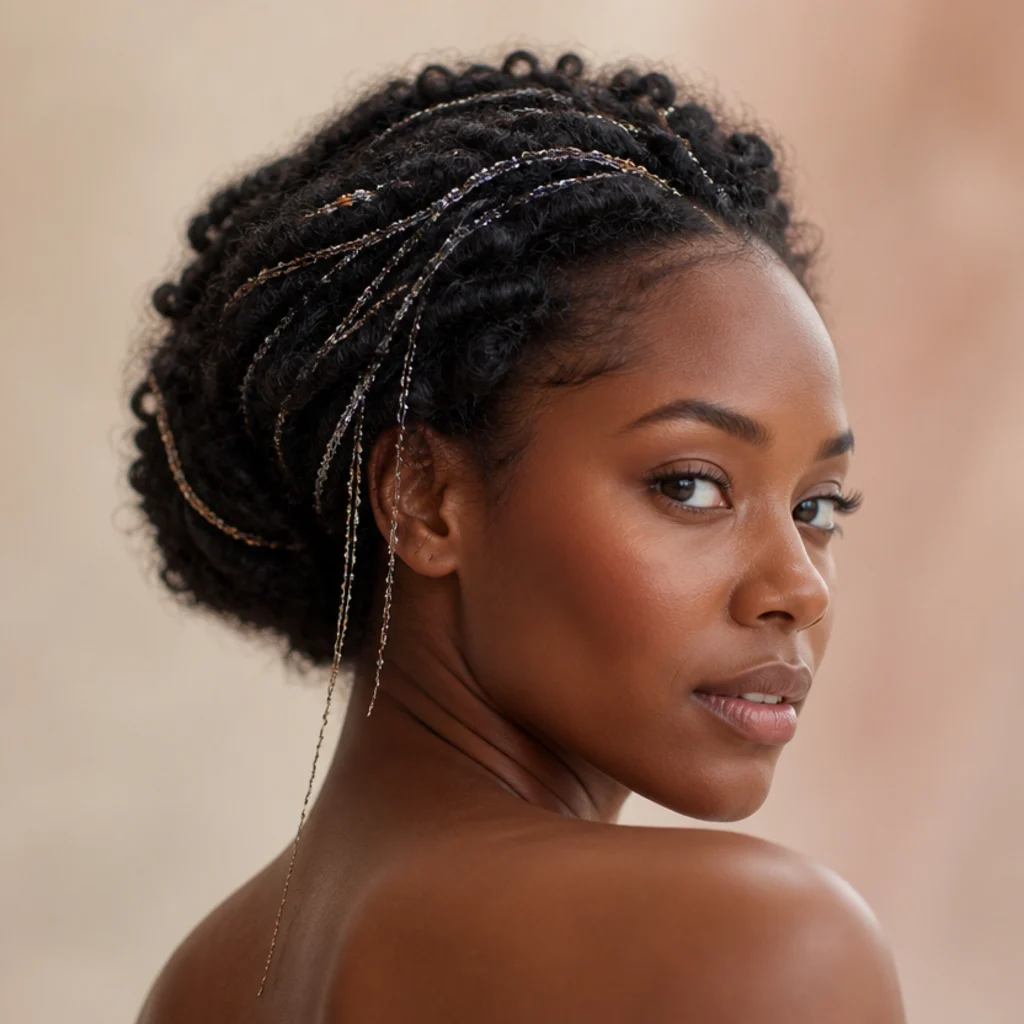
Quick Answer
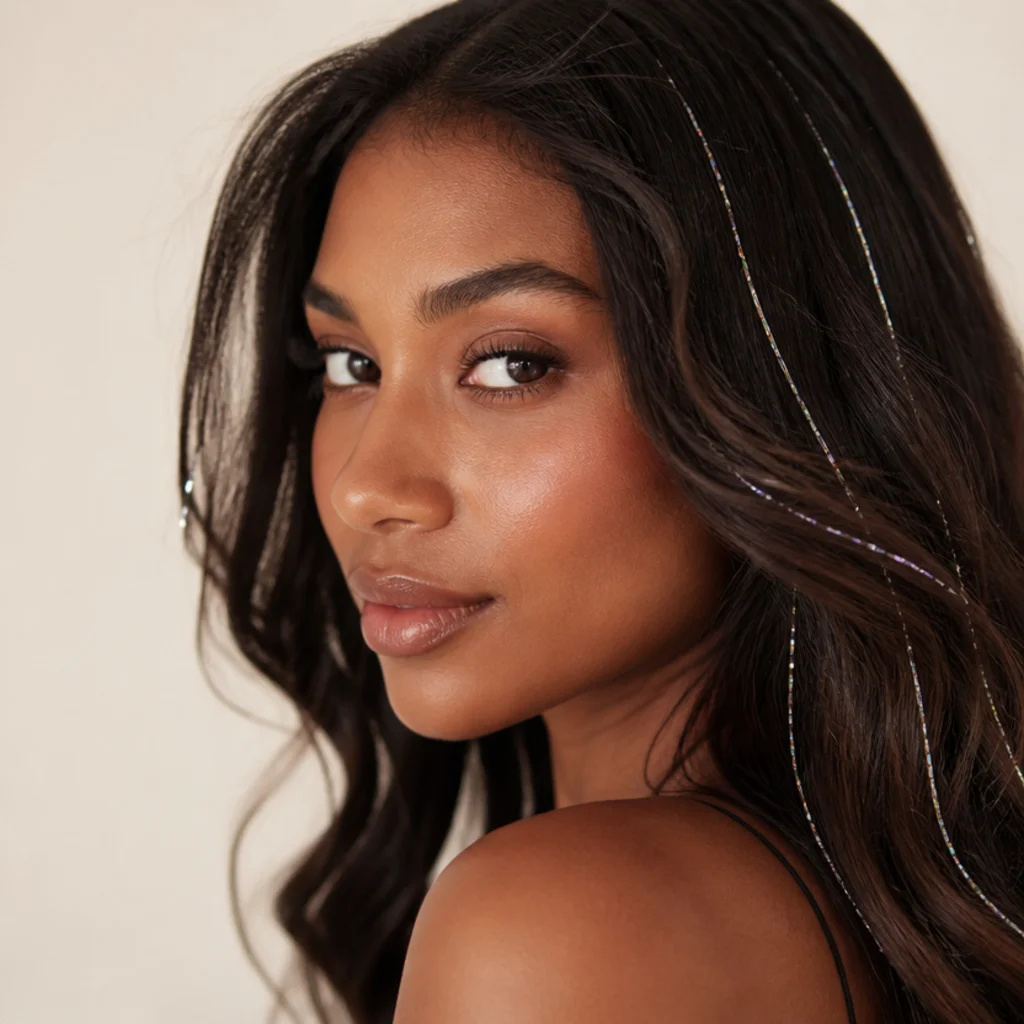
- Best for: Low-commitment shine on almost any base; especially striking as hair tinsel black hair, where dark strands throw metallic threads into high relief.
- Who might skip it: Anyone with very fine, fragile, or actively shedding hair, freshly relaxed or bleached ends, or a scalp condition that makes root-level knots uncomfortable.
- Maintenance: Low day to day; gentle detangling only. Strands loosen over 3-6 weeks and need re-tying or clean removal.
- Difficulty: Easy to moderate for tie-in strands solo; moderate for micro-ring beads, where a second set of hands helps with the back.
- Cost: Roughly $8-$20 for a DIY tie-in multipack; a salon "tinsel install" typically ranges from about $30 for a few accent strands to $80+ for a dense, multi-color set.
- Wear time / longevity: Tie-in knots hold about 3-4 weeks; micro-ring beads can last 5-8 weeks and be repositioned.
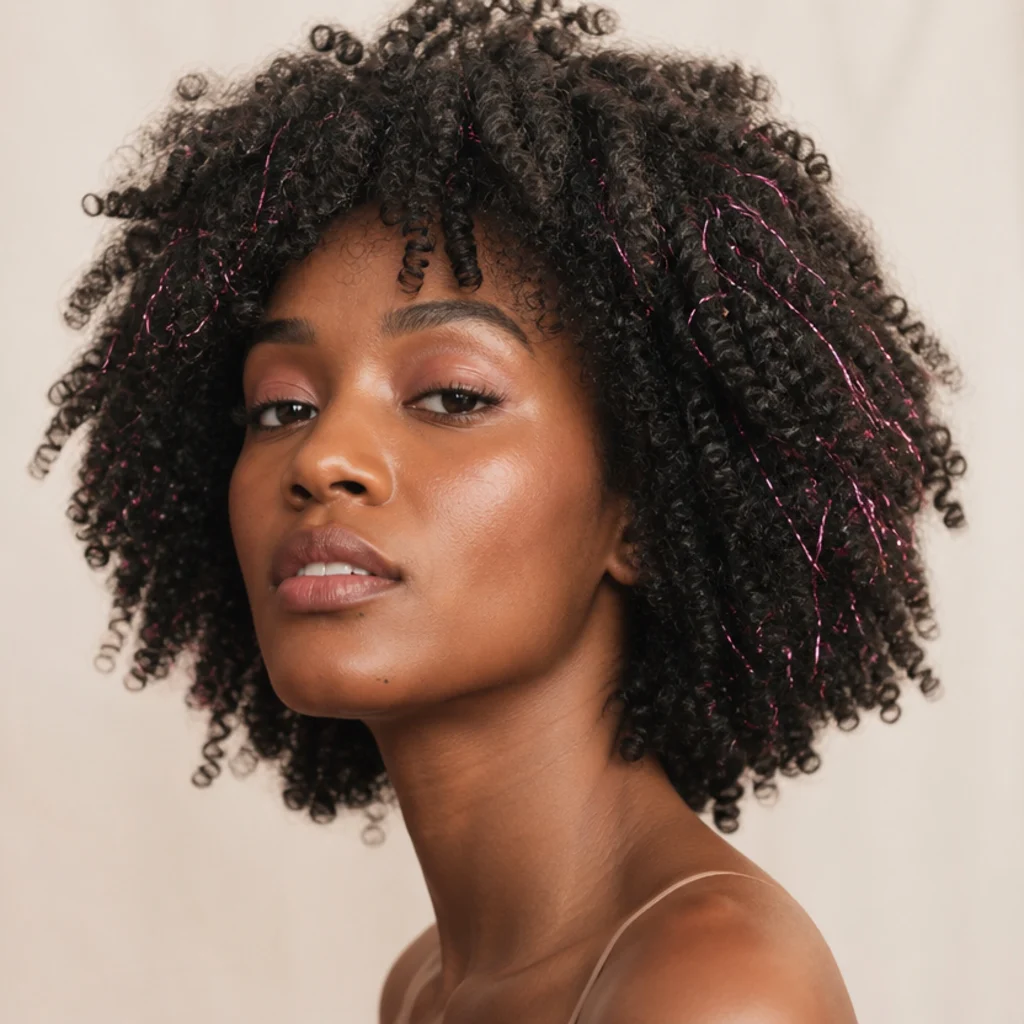
- Standout variation: Pink hair tinsel scattered through curly hair for a soft, diffused glow that catches light as the coils move.
- How to ask your stylist: Request a "tinsel install," name your method (tie-in vs. bead), give a rough strand count, and flag where you use heat so they place strands out of the iron's path.
In This Guide
Hair tinsel is one of the lowest-commitment ways to change your look: fine, reflective filaments, usually flat Mylar or a silky heat-blend, tied or clamped into your hair for shine that fades in weeks, not months. The trend photographs beautifully, which is part of why the hair tinsel aesthetic keeps resurfacing on Pinterest each festival and holiday season. But those filaments behave differently depending on texture, color, and how they anchor. Hair tinsel black hair reads as sharp, high-contrast sparkle; pastel and iridescent strands melt more softly into blonde and light brown, so density has to climb to register. Curly and coily textures hide knots generously but demand gentler detangling. Color-treated hair adds another variable, since porous, previously lightened strands grip differently than virgin hair. Before you buy a pack and start tying, it pays to understand how placement, attachment, and upkeep actually play out across a real week of washing, sleeping, and styling. These three points cover the decisions that determine whether your tinsel looks deliberate and lasts, or slips loose and frays within days.
01Placement and Contrast Matter Most
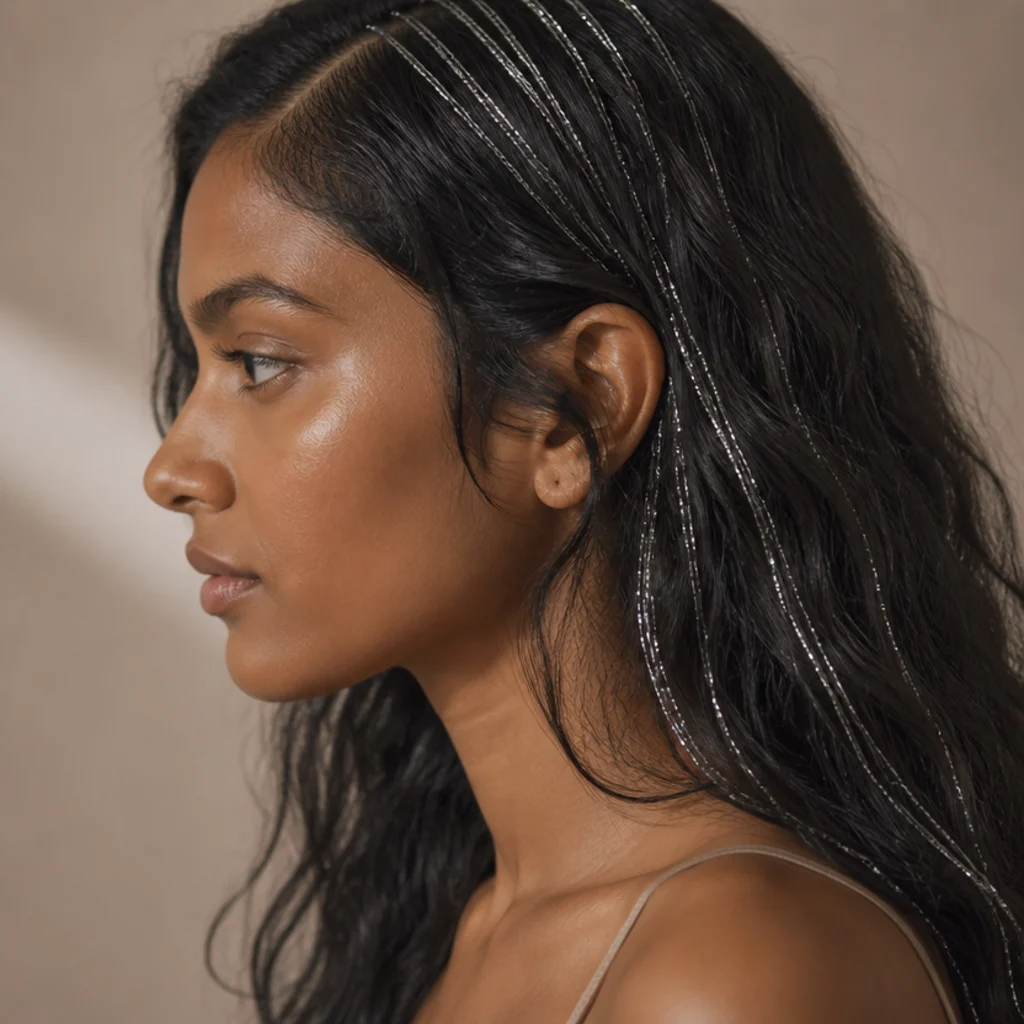
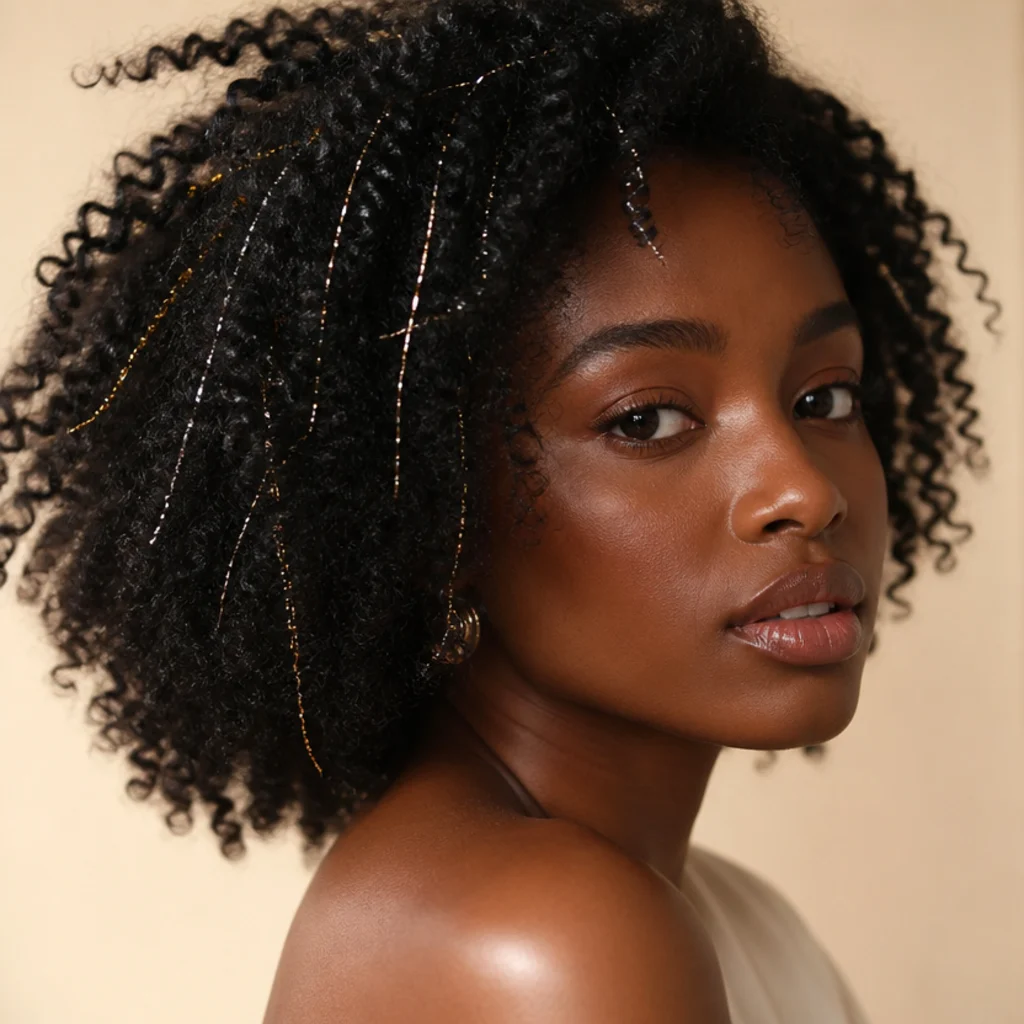
Where you anchor tinsel changes the entire read. Strands set within an inch or two of a center or side part, and along the crown, flash light with every turn of the head, while pieces tucked below the occipital bone deliver quieter flickers that surface only in motion. Contrast is the other half of the equation. On hair tinsel black hair, silver, holographic, and rose-gold catch the eye at even a dozen strands, so restraint reads as luxe. Pink hair tinsel and other pastels also pop against deep brown and black, but soften almost to a highlight on blonde, where you may want 40-plus strands to register. For curly hair tinsel, follow the curl's spiral and tie into the underside of a coil so the strand travels with the pattern instead of spiking straight out. Distribute in an asymmetric scatter rather than a rigid row, which looks more organic on camera. Pro tip: part your hair the way you actually wear it before placing a single strand, since a fresh part relocates every glimmer. If you're booking a pro, ask your stylist for a "face-framing plus scattered crown" placement so shine reads from the front and in selfies.
02Attachment Method Decides How Long It Lasts
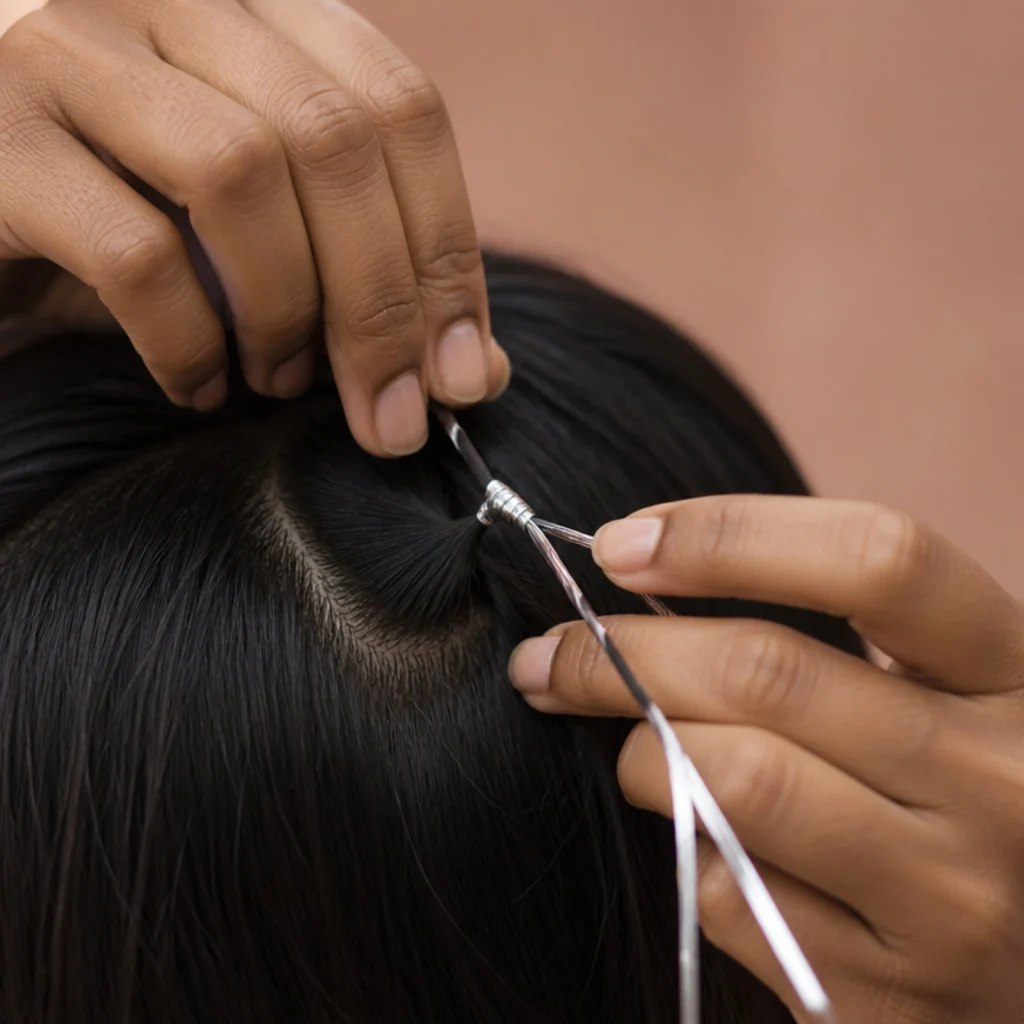
There are two dominant ways to learn how to put tinsel in hair, and they age very differently. The knot method folds a strand in half, loops it around a section near the root, and locks it with a double or surgeon's knot; it's beginner-friendly, needs no adhesive, and typically holds three to four weeks as new growth carries it down the shaft. The bead or micro-ring method threads the strand and a few of your own hairs through a silicone-lined ring, then crimps it flat with pliers. It's more secure, repositionable, and reusable, but slower going, and easier with a helper for the back. Whichever you choose, anchor to a section no wider than a grain of rice, four to eight strands, so the tinsel never tugs the follicle or feels heavy. Oversized sections loosen fast and slide free. On color-treated or bleached hair, keep sections even smaller, since porous strands grip less. Pro tip: seat knots and beads a quarter-inch off the scalp, not flush, so brushing and sleep don't lever them against the root. Ask your stylist for micro-rings if you want to redo the placement in a few weeks without re-buying strands.
| Attachment | Wear time | Removal | Best for |
|---|---|---|---|
| Tie-in knot | ~3-4 weeks | Snip knot, slide out | Beginners, DIY, sensitive scalps |
| Micro-ring bead | ~5-8 weeks | Open ring with pliers | Longevity, repositioning, reuse |
03Upkeep, Heat, and Removal Are Part of the Deal
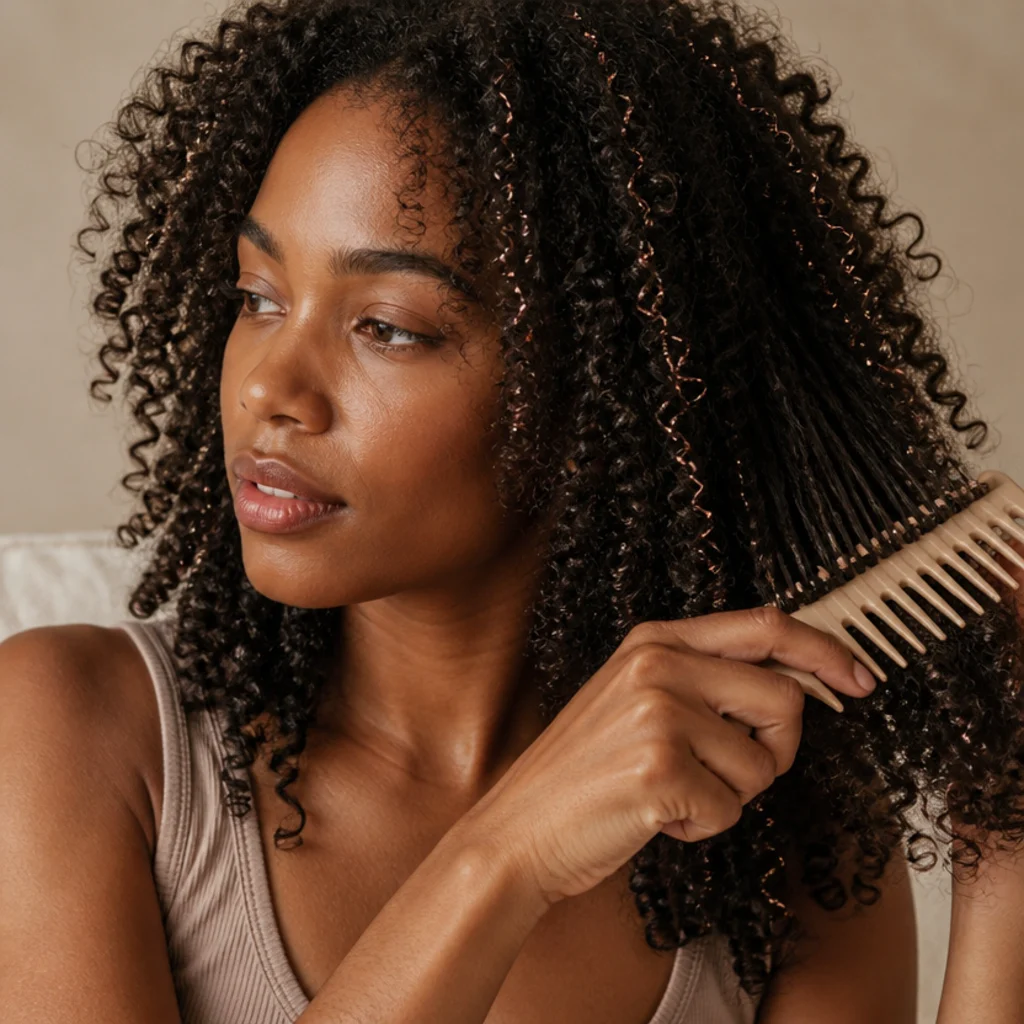
Tinsel is low-maintenance, not no-maintenance. Standard Mylar strands aren't heat-safe and will melt, curl, or shrivel on contact with a flat iron or curling wand, so style first and thread second, or work tools carefully around finished placements. If you crave heat flexibility, seek out heat-resistant "silk" or fiber tinsel rated to roughly 300-360 F and still keep direct contact brief. Cleanse with a gentle, sulfate-light shampoo, work a wide-tooth comb or your fingers around knots instead of raking through them, and smooth serum on lengths while avoiding the metallic strands, which can slip if over-conditioned at the root. Expect gradual loosening over three to six weeks. When a knot migrates to the ends, snip just above it and slide the strand out rather than yanking, which protects your natural hair. For curly hair tinsel, detangle damp and in sections so filaments don't braid into your coils. Pro tip: tie a loose silk scarf or bonnet at night to stop strands catching on cotton. Ask your stylist to remove and reset any survivors at your next cut so the look stays crisp from install to finish.
Pro Tips from the Editor
- Buy one shade cooler than you think for dark hair: true silver and pewter photograph brighter than "chrome" packs, which can flash blue on black bases.
- Under salon or ring light, tinsel reads roughly twice as dense as it does in daylight; place for the room you'll be in most.
- Cluster two or three strands per anchor point for a bolder glint without adding more knots to detangle around.
- Keep a spare pack in your exact shade; you'll lose a few strands a week, and topping up beats a patchy-looking install.
- Skip tinsel on wash day plans that involve clarifying or protein treatments, which can stiffen synthetic filaments and speed fraying.
- If your part shifts often, place a few strands on both sides of the crown so shine survives whichever way you flip it.
- For an event, install one to two days ahead, not the morning of, so knots settle and you can trim any that sit awkwardly.
How to Choose / Get the Look
Start with your base, then layer three decisions: color, density, and method. Color: for maximum sparkle, hair tinsel black hair pairs cleanly with silver, iridescent, or rose-gold; deep brown flatters copper, bronze, and warm gold; blonde suits champagne, pearl, and soft pastels; and pink hair tinsel woven through mid-lengths gives the most romantic, diffused effect. Density: 10-20 strands reads as a subtle accent, 30-50 makes a clear statement, and 60-plus enters full festival territory, so scale to the occasion, not the impulse. Method: choose tie-in kits for easy, adhesive-free DIY and at-home removal, and micro-rings when you want weeks of wear and the option to reposition. Place near the part and crown for shine that shows head-on, and along the curl pattern if you have texture. Prefer a pro? Ask your stylist for a "tinsel install," specify tie-in versus bead, give a strand count, and describe your styling routine so strands land clear of your heat tools. Always test a small section first, sleep on it one night, and confirm you like the color and placement before committing to a full head.
Frequently Asked Questions
Does hair tinsel damage your hair?
Tie-in tinsel is generally gentle, since it loops around a small section with no adhesive. Damage usually traces to three habits: pulling strands out instead of untying them, anchoring to sections that are too large and tug the follicle, or leaving knots in so long that new growth pulls them taut. Keep sections tiny and remove on schedule and most hair, including color-treated, stays happy.
How long does hair tinsel last?
Tie-in knots typically hold three to four weeks; micro-ring beads can last five to eight and be repositioned. Longevity drops with frequent washing, heavy conditioner at the roots, tight ponytails, and high-friction cotton pillowcases. Fine or slick hair sheds strands faster than coarse or textured hair, which grips knots more securely.
Can you put tinsel in curly hair?
Yes, and curly hair tinsel is one of the most forgiving applications. Place strands along the curl pattern and tie into the underside of a coil so knots hide while shine peeks through. Detangle damp and in sections with a wide-tooth comb, never dry-raking, so filaments don't braid into your texture. Coily and 4-type hair holds tie-ins especially well.
Is hair tinsel heat-safe?
Most standard Mylar tinsel isn't; it melts or shrivels against flat irons and curling wands. Style your hair first, then add strands, or work heat tools carefully around them. If you want to heat-style afterward, buy heat-resistant fiber or "silk" tinsel rated to roughly 300-360 F and still limit direct contact.
What colors work best on dark hair?
Silver, holographic, iridescent, gunmetal, and rose-gold stand out most on black and deep brown, delivering the high-contrast hair tinsel aesthetic. Pink hair tinsel and cool pastels also read clearly against dark bases. Skip pale champagne and clear-ish "crystal" shades on very dark hair, since they can disappear rather than sparkle.
How many strands of tinsel should I start with?
For a first install, 15-25 strands is a safe, natural-looking amount you can build on. It's far easier to add strands than to remove an over-scattered set that looks busy. On blonde or light hair, lean toward the higher end, since low-contrast shades need more density to register.
How do I sleep with hair tinsel in?
Loosely braid or pineapple your hair and cover it with a silk or satin scarf or bonnet. That cuts the friction and snagging that loosen knots and fray filaments overnight. Avoid tight elastics and cotton pillowcases, and never sleep on damp, tangled tinsel, which can knot into your natural hair.
Can you dye or bleach hair with tinsel in it?
No. Color and bleach can discolor, stiffen, or degrade synthetic strands, and processing chemicals aren't designed to touch them. Complete any color service first, let hair settle, then install tinsel, or ask your colorist to add strands at the very end of your appointment once all chemical work is done.
Is tinsel reusable?
Micro-ring strands are the most reusable, since you can open the ring, remove the filament, and re-crimp it elsewhere. Tie-in strands are usually single-use because removal involves snipping the knot. Either way, keep a spare pack in your shade to replace the few strands you naturally lose each week.