5 Dimensional Brunette Mistakes to Avoid
Rich, moving brunette and flat, muddy brunette are separated by five decisions, most of them made before the foils go in. Here's exactly where warm dimensional brunette goes wrong, and how a colorist actually fixes each one.
 Edited by Lena Rose · Published July 11, 2026 · 16 min read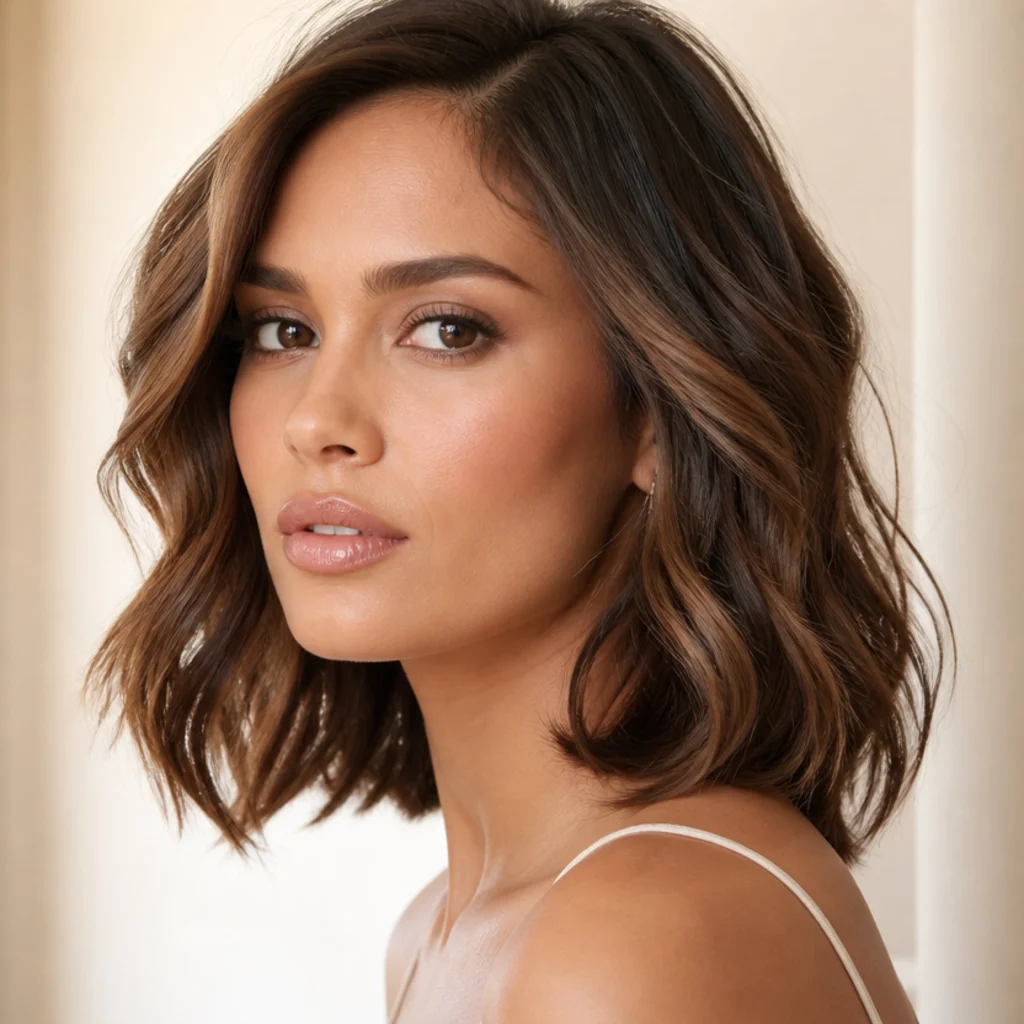
Quick Answer
- Best for: Anyone booking warm dimensional brunette — natural levels 3 to 6, any texture — who wants tone and placement decided before the appointment, not improvised in the chair.
- Who might skip it: Anyone chasing a solid single-process brown, a high-contrast blonde balayage, or a color-corrective session on heavy box dye, which needs its own plan.
- Maintenance: Moderate. A gloss or toning refresh every 4 to 6 weeks; a color-safe, sulfate-conscious wash routine; heat protection on the lifted pieces that fade first.
- Difficulty: Salon-recommended. The lifting, placement mapping, and toning are where these mistakes are made — and where they are prevented.
- Cost: Variable. A partial highlight-and-gloss refresh typically sits in the lower-to-mid range for your market; a full dimensional balayage plus toner runs higher, and a gloss-only visit is the most affordable touchpoint.
- Wear time / longevity: Placement holds 10 to 14 weeks; tone is the first thing to drift, usually within 4 to 6 weeks as warmth oxidizes or cool ash fades.
- Standout variation: A multi dimensional brunette with warm caramel face-framing money pieces over a cooler mushroom-leaning base — contrast where the eye lands, restraint everywhere else.
- How to ask your colorist: "I want lived-in dimension with varied ribbon widths, brightness concentrated at the face, and a warm — not neutralized — tone. Map it to my cut, and give me a between-visit gloss schedule."
In This Guide
Intro
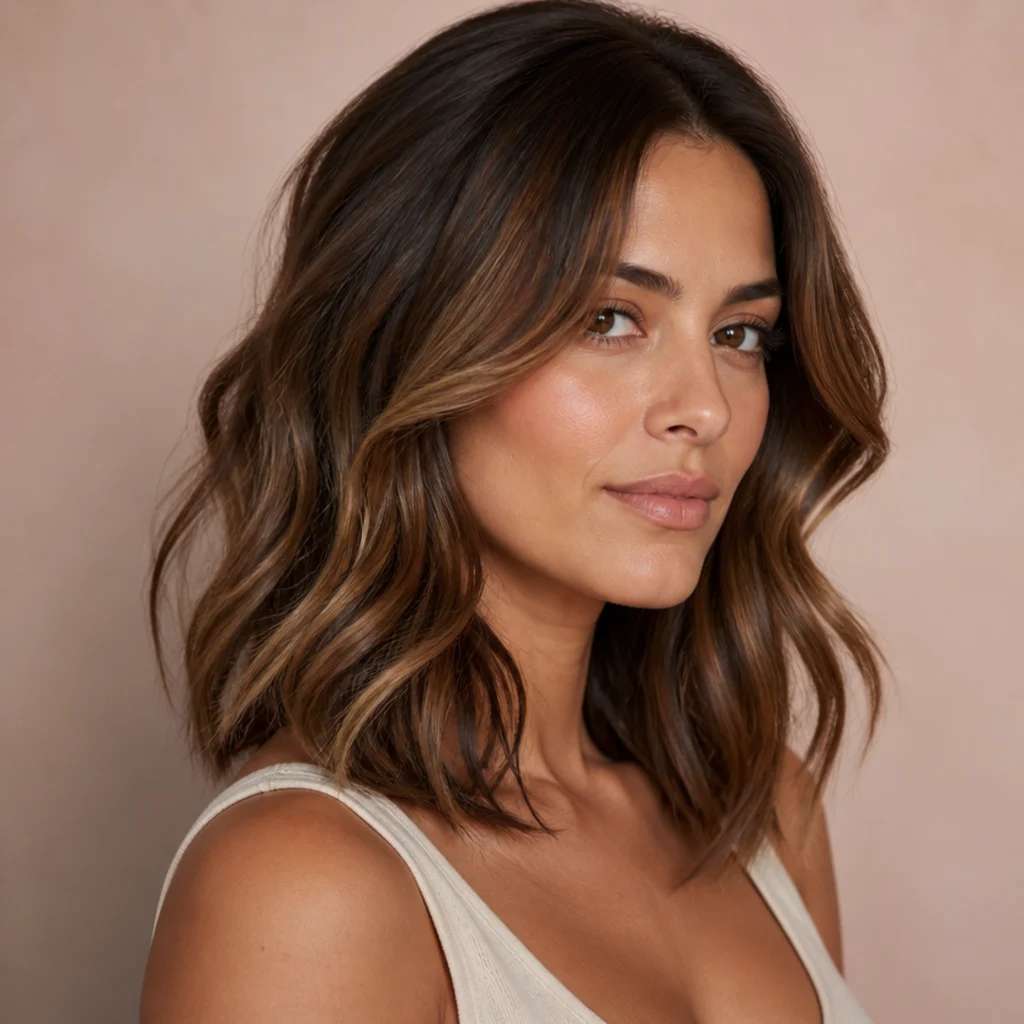
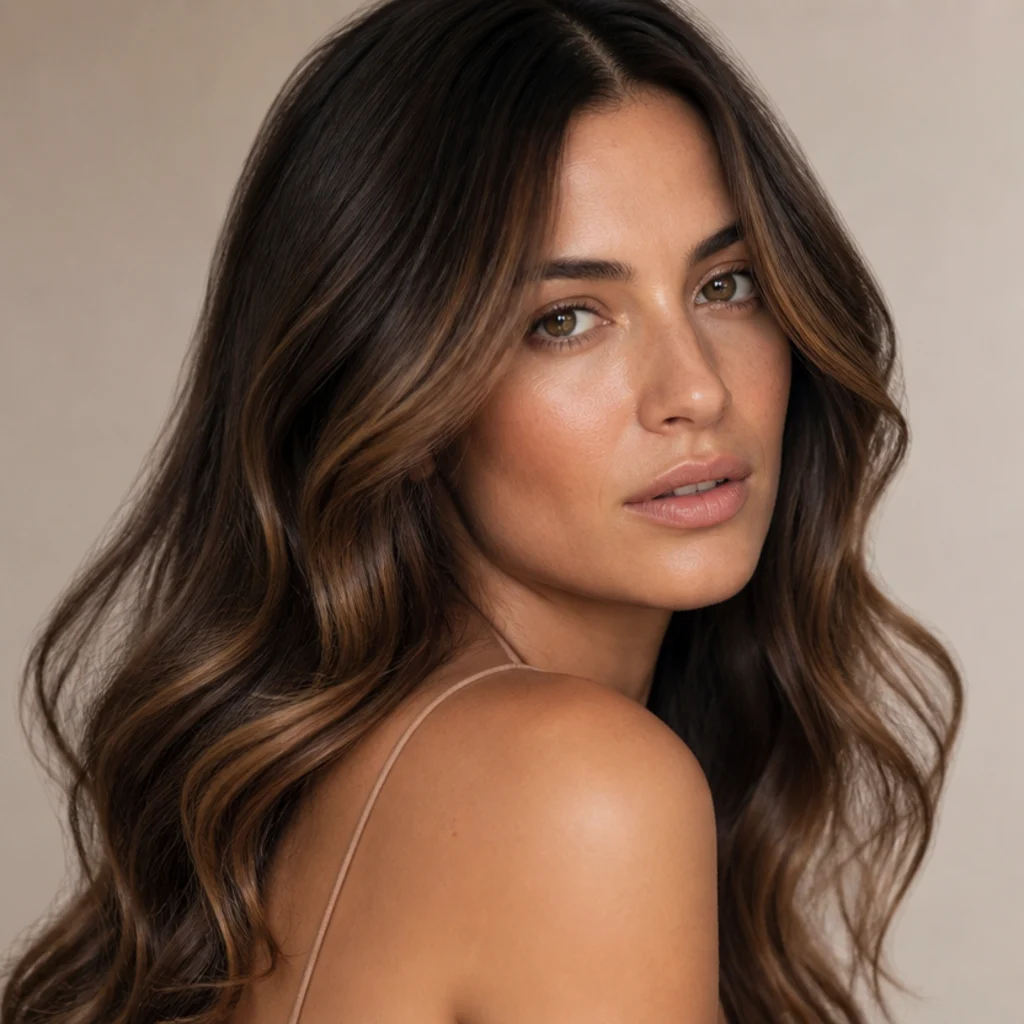
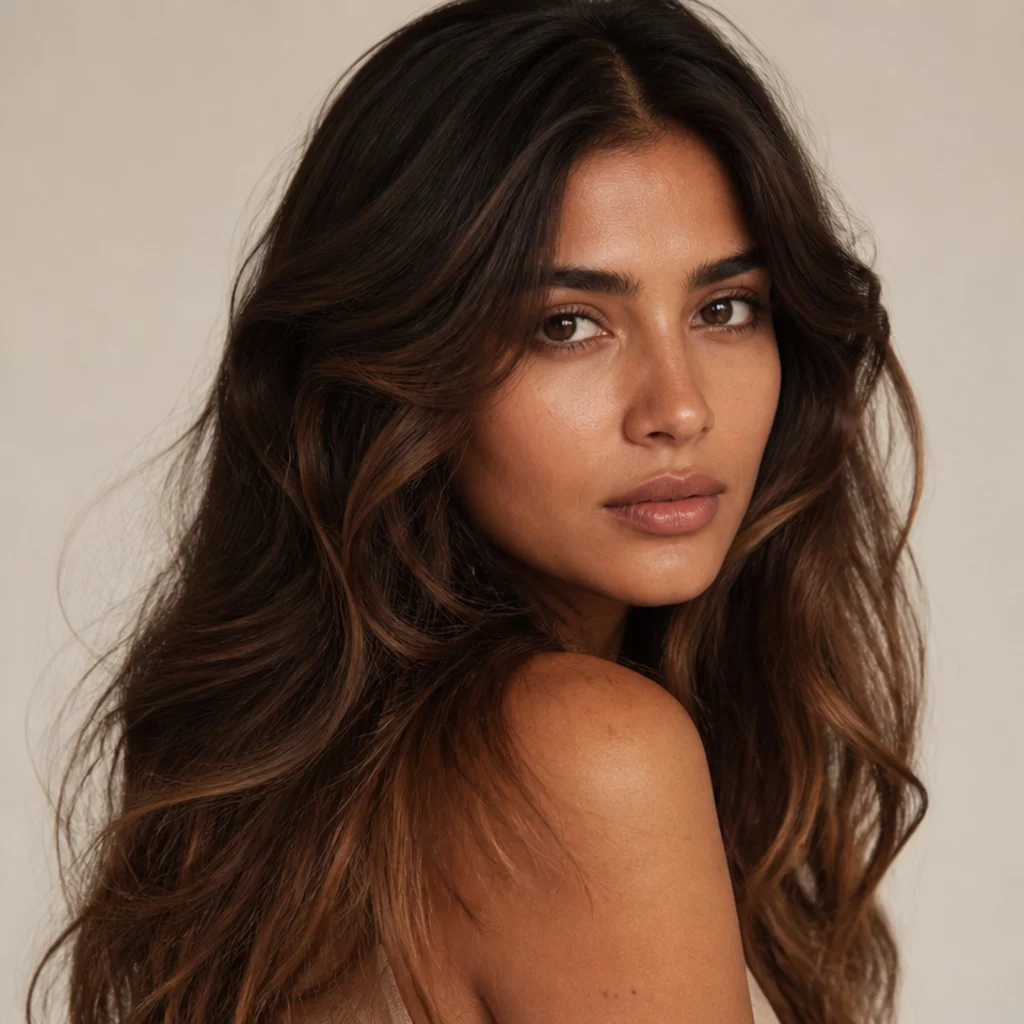
The entire point of warm dimensional brunette is movement: brown that travels between deeper roots and lit-up mid-lengths as light crosses it, so it never flattens into one note. That effect is engineered, not lucky, and it falls apart when a handful of technical decisions go sideways. Most disappointing brunette color isn't a wrong base shade; the base is usually fine. It's even placement that erases contrast, toning that grays out the gold or lets brass take over, upkeep that lets shine and depth dull, and a reference photo that quietly promised something your starting level could never deliver in one sitting. A subtle dimensional brunette still needs enough contrast to read in real light; a multi dimensional brunette needs that contrast controlled so it stays cohesive rather than busy. Every one of these is preventable with the right conversation before your colorist mixes anything. Below are the five mistakes that most reliably turn a promising idea into a mirror regret, each paired with the fix a professional would actually use and the exact language to bring so you walk out with brown that moves, whether you're after money pieces, an all-over blend, or a dimensional brunette bob.
01Going Too Uniform With Placement
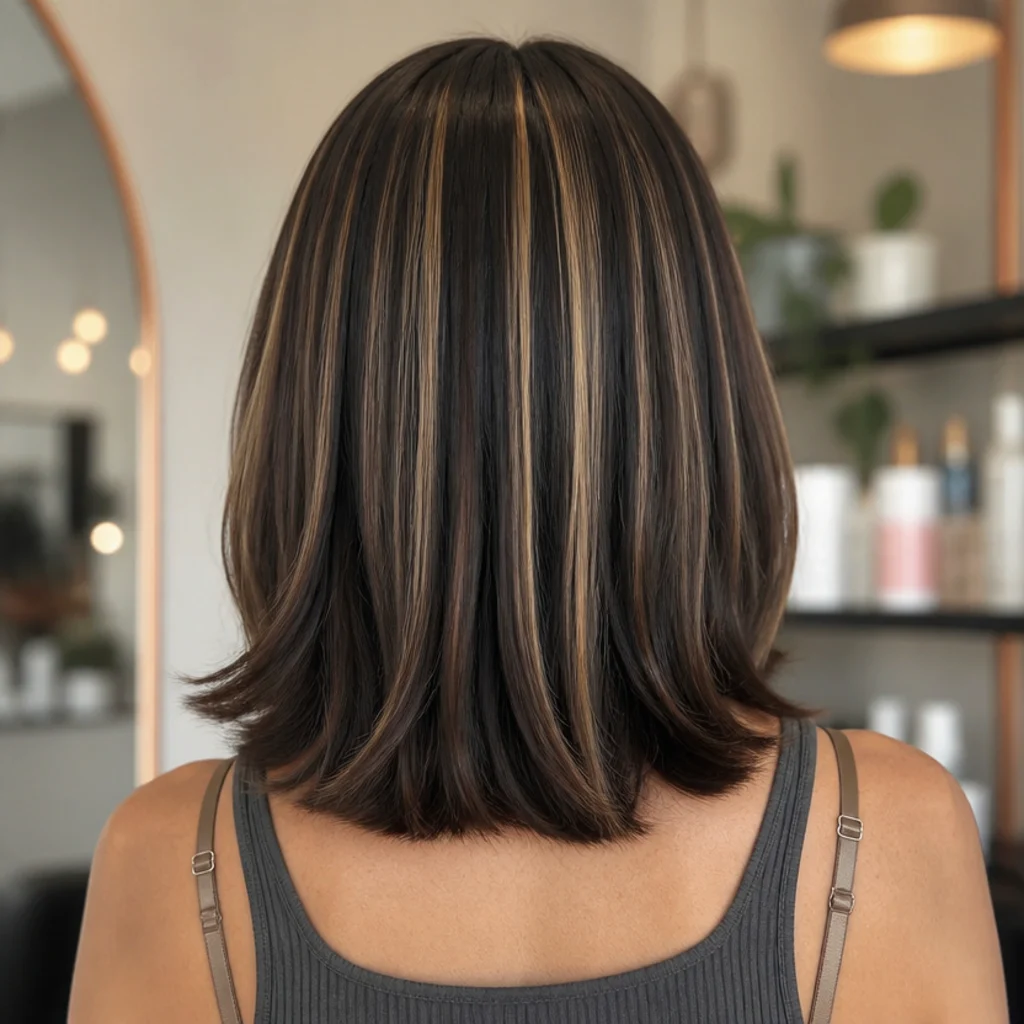
Evenly spaced, same-width ribbons at the same depth are the fastest way to kill dimension. When the eye reads a repeating interval, it stops seeing movement and starts seeing a pattern — stripes in harsh light, a flat wash in soft light. Genuine dimension comes from deliberate irregularity: fine babylights woven against thicker balayage sweeps, brightness clustered around the face and through the mid-lengths where light naturally catches, and roots left shadowed so there's somewhere for the lift to travel from. Placement should also read your texture. On fine, straight hair, keep ribbons narrow and diffused so nothing looks like a foil line; on thick or wavy hair you can carry more contrast without it turning stripey. On curly and coily patterns, brightness belongs on the curl clumps where the pattern turns, never in horizontal rows that fragment the coil. Face and eye shape matter too: softer money pieces flatter round and heart shapes, while a stronger jaw-level pop can sharpen a longer face. On maintenance, varied placement grows out far more gracefully than uniform foils, buying you 10-plus weeks before a hard line appears. Pro tip: ask to see the placement mapped dry, in your natural part, before a single section is lifted. Tell your colorist you want contrast that "looks organic, not measured, with the brightness weighted to my face."
02Letting the Tone Turn Muddy
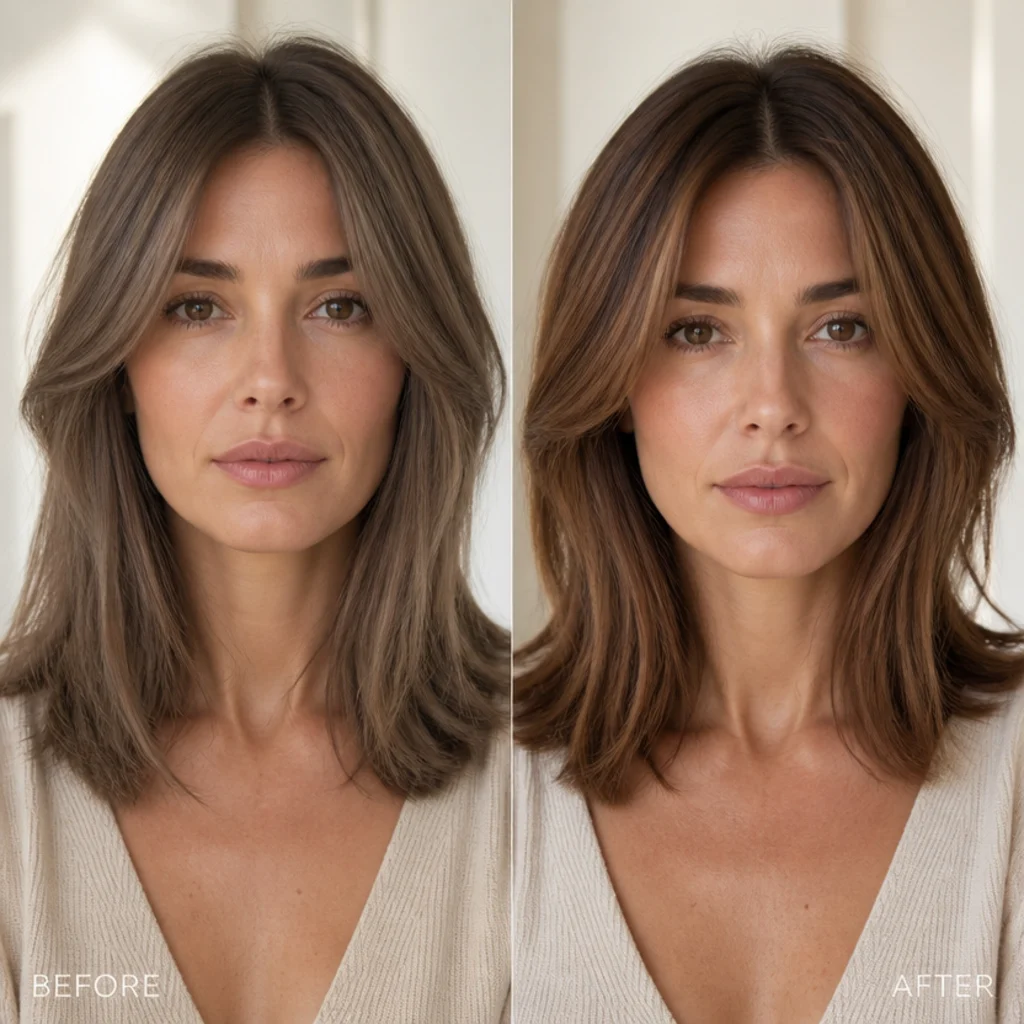
Muddy is the signature warm dimensional brunette failure, and it's almost always a toning decision rather than a lifting one. It happens when highlights are under-lifted, stalled at an orange level 6 or 7, and then over-toned to hide the warmth, or when a cool ash toner is dropped over the whole head with no plan and the lifted pieces gray out into flat, lifeless brown. The fix is committing to a temperature and toning toward it, not against it. For warm dimension, protect the gold: a demi-permanent gloss in a caramel, toffee, or chestnut direction (think warm-neutral base plus a copper or gold reflect) enriches the lift instead of muting it. For cool dimension, lean mushroom or soft ash, but only on hair lifted clean enough to receive it without turning muddy khaki. The real culprit is often the underlying pigment: level 3 to 5 brunettes lift through red and orange, so a colorist has to lift far enough that the toner corrects rather than fights. Pro tip: bring a photo of the undertone you want, not just the depth. Two browns at the same level can read completely different once temperature is set. If your hair pulls brassy within weeks, ask your colorist for a low-commitment demi-gloss that "corrects tone without dulling the dimension," plus the matching at-home version.
03Ignoring Your Haircut and Length
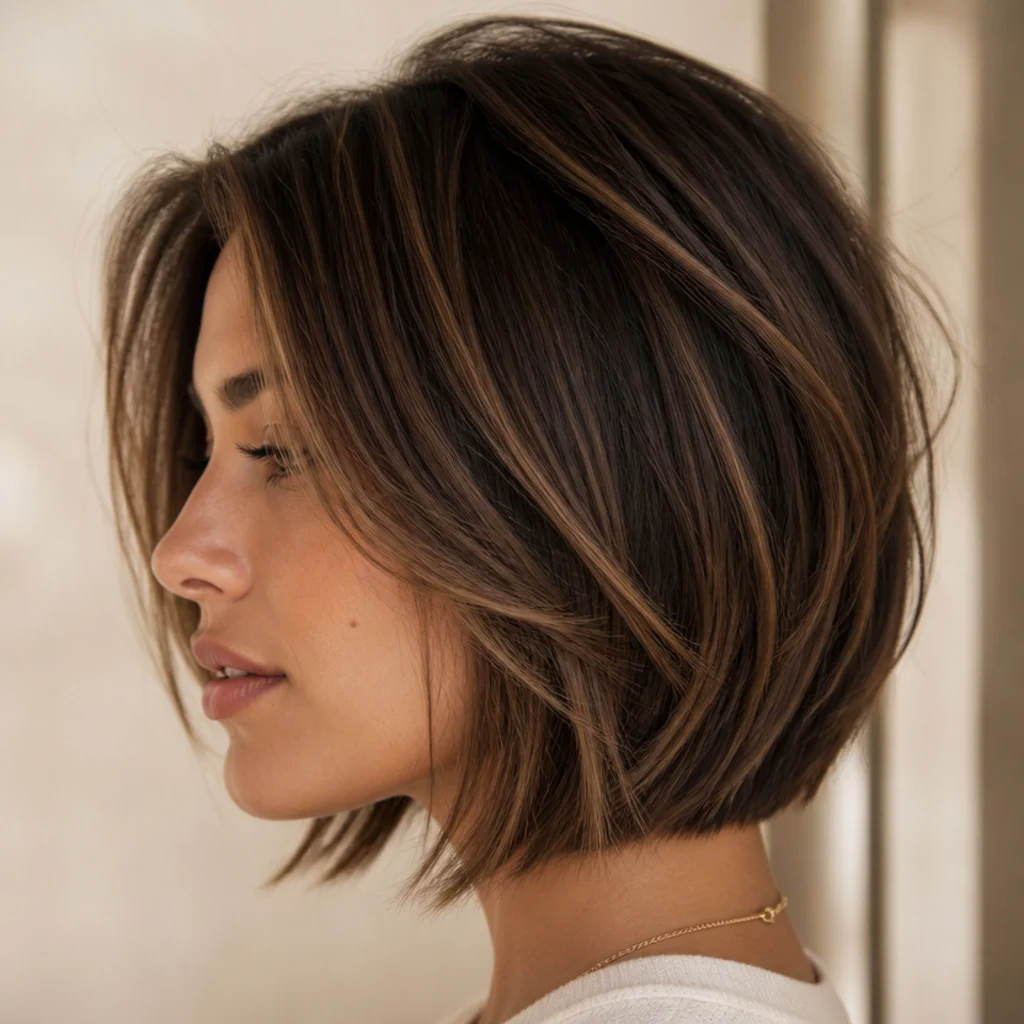
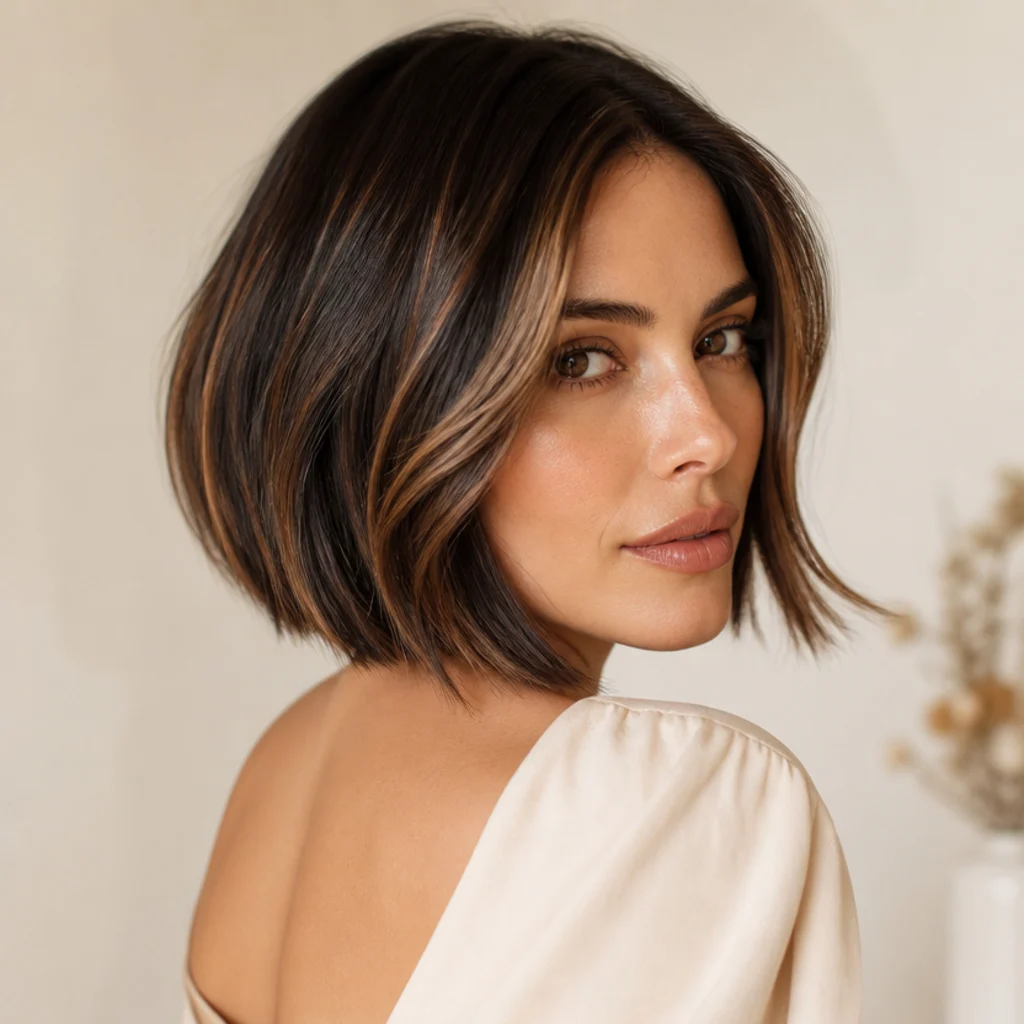
Color and cut are one decision, not two, and treating them separately is why dimension so often lands in the wrong place. A gradient engineered for long layers can vanish on a blunt bob, and brightness placed for a lob ends up floating in the wrong zone once inches come off. Length dictates how far a gradient can travel: on long hair you have room for a slow root-to-end melt, while a dimensional brunette bob needs its contrast compressed, typically lighter through the ends and around the jaw so the color echoes the shape and frames the face where there's no length to carry a gradient. Density and cut style matter as much as length. Heavy one-length hair swallows internal highlights, so ask for a little more surface brightness and teasing at the root to keep placement from looking blocky; heavily layered cuts expose interior pieces, so brightness woven inside actually shows. Coordinate the sequence: if a haircut is coming, color after it, or map placement to the finished shape rather than the current one. Pro tip: if you're growing out a shape, tell your colorist the length you're heading toward, not just where you are today. Show them the cut you have or want and ask them to "map the dimension to this shape, not a generic long-hair template."
04Skipping the Gloss and Upkeep
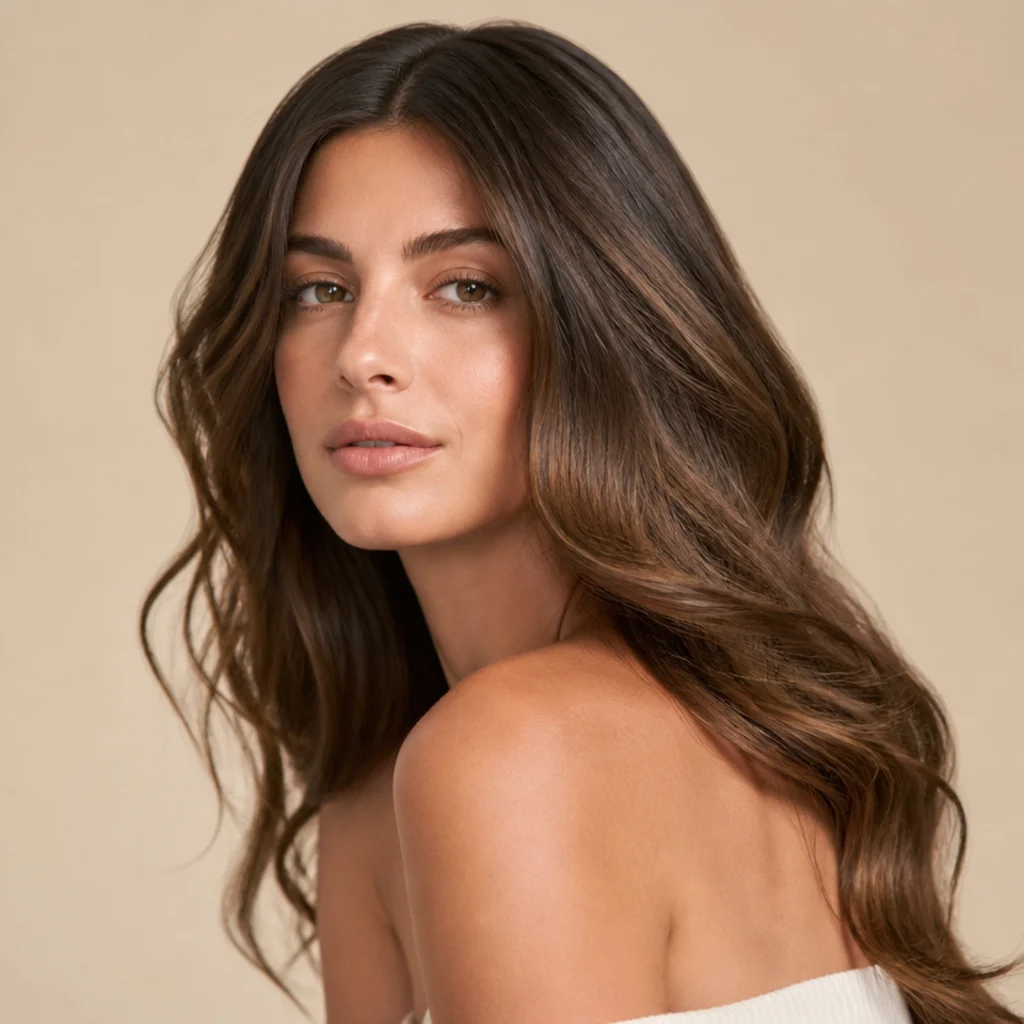
Dimensional brown doesn't hold its position on its own. Warm tones oxidize and creep brassy, cool tones fade and go flat and dull, and surface shine erodes under hard water, chlorine, UV, and repeated heat, so color that looked rich under salon lights can read tired within four to six weeks with nothing maintaining it. The single highest-leverage habit is a periodic gloss or toning refresh: a demi-permanent glaze every four to six weeks between full appointments that revives tone and adds shine without touching your lift or your placement. It's the difference between a subtle dimensional brunette that looks deliberate for three months and one that muddies by week five. Support it structurally: a color-safe, sulfate-conscious shampoo, a weekly bond or moisture treatment, lukewarm rinses, and heat protection on the lighter pieces, which are the most porous and always the first to fade and fry. If brass is your particular enemy, fold in a gentle blue- or purple-based toning wash once a week, but sparingly, since overuse dulls warm dimension too. Pro tip: book your gloss refreshes at the time of your main appointment so the cadence is locked in. Ask your colorist for a take-home gloss or a written toning schedule so the multi dimensional brunette you paid for actually lasts its full window.
Save this to Pinterest to keep the upkeep schedule handy between appointments.
05Bringing a Reference Photo That Misleads
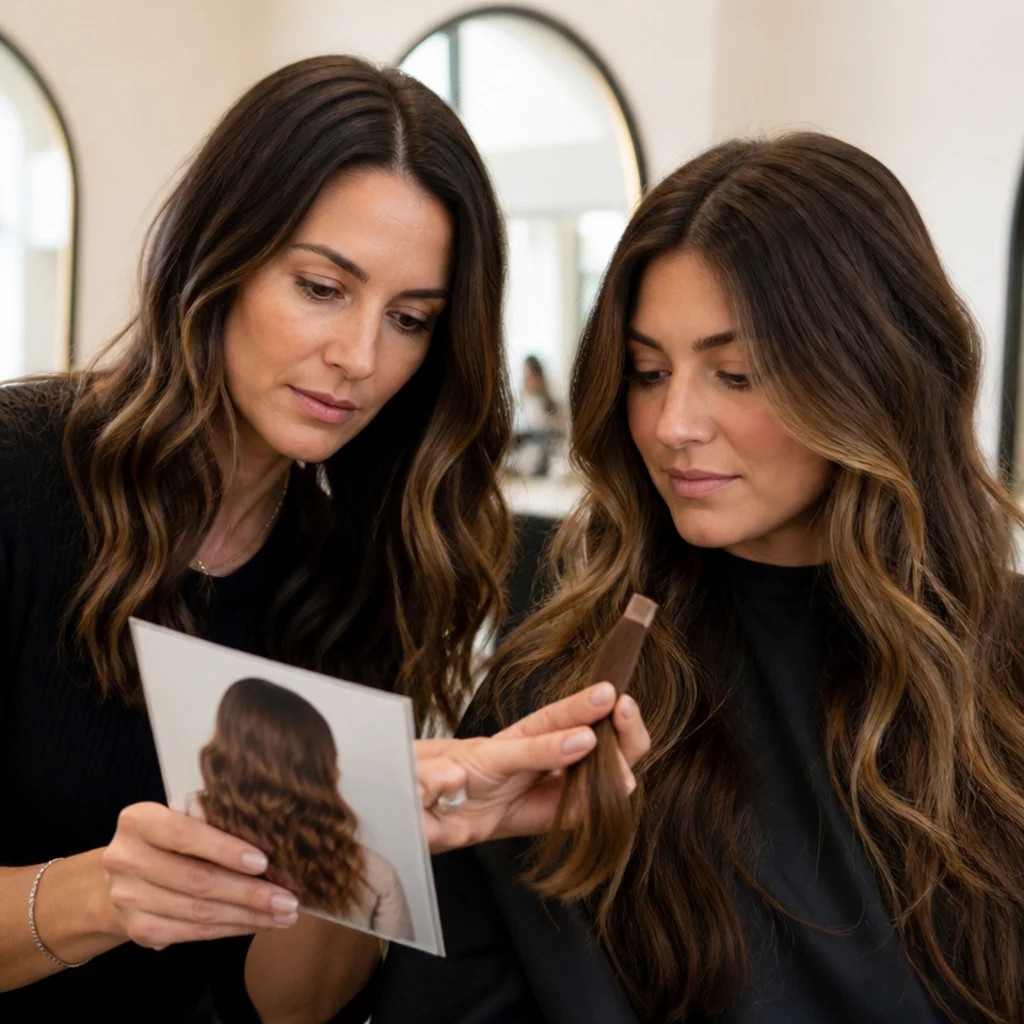
A single filtered photo is where more dimensional brunette plans quietly fail than anywhere else. Screen warmth, editing, salon-window lighting, and — most importantly — a stranger's starting level all conspire to make a color look brighter, warmer, or more contrasted than it could ever be on your hair. A model who began at a natural level 6 will read completely differently from someone beginning at a level 3, even with identical toner. The fix is to bring two or three references, ideally shot in natural daylight, and to narrate exactly what you're pointing at: the warmth of the face-framing pieces, the depth held at the roots, the softness of the grow-out, the width of the money pieces. Just as usefully, bring a "no" photo: an example of the tone or contrast you want to avoid, so your colorist can calibrate from both ends. Be candid about hair history: box dye, henna, old lowlights, and previous lightening all cap how much dimension is realistic in one session and may require a plan across two visits. Pro tip: photograph your own hair in natural light before the appointment so your colorist can see your true base, not the salon's bulbs. The goal is a shared, specific target for dimensional brunette money pieces or an all-over blend: a brief you both agree on, not a filtered image that sets you up to be let down.
Pro Tips from the Editor
- Set the root shadow first. Leaving roots one to two levels deeper than the lift is what makes dimension read as movement rather than a solid highlight job, and it's what buys you a soft, line-free grow-out.
- Lift clean before you tone. Muddiness is a lifting problem disguised as a toning problem; a toner can only correct warmth, not replace lift that never happened. Ask where your pieces are landing on the level scale.
- Weight brightness to the front. The face-framing and part area do the visual heavy lifting. A partial that concentrates money pieces there often looks richer, and costs less to maintain, than a full head of uniform foils.
- Gloss on a calendar, not a whim. Booking the four-to-six-week refresh at your main appointment is the difference between color that ages well and color that muddies before you notice.
- Match your home range to your temperature. Warm dimension wants a gold- or copper-leaning gloss and a color-safe wash; reaching for a purple shampoo built for blondes will flatten and dull warm brunette fast.
- Protect the porous pieces. Lifted ribbons are the most fragile and fade first: heat protectant and a weekly bond treatment keep them from turning brittle and losing tone ahead of the rest.
- Photograph the result under two lights. Check your fresh color in daylight and indoor light before you leave; tone that looks perfect under warm salon bulbs can read differently at home.
Warm vs. Cool Dimensional Brunette at a Glance
| Factor | Warm Dimensional Brunette | Cool Dimensional Brunette |
|---|---|---|
| Signature tones | Caramel, toffee, chestnut, honey | Mushroom, ash, espresso, smoke |
| Flatters | Warm, neutral, and deep skin tones | Olive, cool, and fair undertones |
| Base level range | Best from levels 3–6 | Best from levels 4–7 (needs cleaner lift) |
| Biggest risk | Brassy oxidation over time | Graying out into muddy or flat brown |
| Upkeep tone tool | Gold/caramel demi-gloss | Ash or blue-based toning gloss |
| Grow-out feel | Soft, sun-kissed | Cool, expensive-looking, more contrast |
How to Choose / Get the Look
Work through it as a sequence, not a wish list. First, set your temperature. Warm dimensional brunette leans caramel, toffee, and chestnut and flatters warm, neutral, and deep complexions; cool dimension leans mushroom and ash and suits olive and cool undertones. Hold gold and silver jewelry to your face if you are unsure which way you read. Second, choose where brightness lives. Face-framing money pieces are the most flattering and the cheapest to maintain; all-over babylights give a softer, more diffuse glow but cost more upkeep; a combination — money pieces over a subtly brightened base — gives the richest multi dimensional brunette. Third, map it to your cut and texture. Blunt bobs and shorter shapes want contrast compressed toward the ends and jaw; long layers can carry a full root-to-tip gradient; curls and coils want brightness on the clumps. Fourth, be honest about history and level so your colorist can tell you what is achievable in one session versus two — box dye and previous lightening change the math entirely. Fifth, lock in upkeep from day one: a gloss every four to six weeks, a color-safe routine, and heat protection. Finally, book a colorist who does dimensional work regularly, bring natural-light references plus one "no" photo, and agree on a specific brief before anything is mixed.
Frequently Asked Questions
What is the most common dimensional brunette mistake?
Even, uniform highlight placement. Same-width ribbons at the same depth and interval remove contrast, so the hair reads flat in soft light and striped in harsh light instead of showing the movement dimensional brunette is meant to have. Varied widths, a shadowed root, and brightness weighted to the face fix it.
Why does my dimensional brunette look muddy?
Muddiness is usually a lifting problem wearing a toning disguise: highlights stalled at an orange level, then over-toned to hide the warmth, or a cool toner dropped over the whole head with no plan. Commit to a warm or cool direction, lift clean enough that the toner corrects rather than fights, and tone toward your temperature instead of neutralizing everything into flat brown.
How often should I refresh warm dimensional brunette?
Placement holds 10 to 14 weeks between full appointments, but tone drifts first, usually within four to six weeks. A demi-permanent gloss or toning refresh every four to six weeks revives tone and shine without disturbing your lift, and it's the single habit that keeps the color looking deliberate.
Does dimensional color work on a bob?
Yes, but the placement has to follow the shorter shape. A dimensional brunette bob usually needs contrast compressed through the ends and around the jaw, since there's less length for a gradient to travel. On blunt, heavy bobs, ask for a little more surface brightness and root teasing so the dimension doesn't look blocky.
How do I keep my brunette from going brassy?
Protect it structurally and tonally. Use a color-safe, sulfate-conscious wash, rinse cool, limit heat on the lifted pieces, and add a gentle blue-based toning wash about once a week, but sparingly, since overuse dulls warm dimension. A gloss refresh every four to six weeks resets any oxidation before it becomes obvious.
Can I get warm dimensional brunette over box dye or old highlights?
Often, but not always in one session. Box dye, henna, and previous lightening cap how much clean lift is realistic in a single sitting and can create uneven or muddy results if pushed too fast. Be upfront about your full color history so your colorist can plan a safe single visit or stage it across two.
What is the difference between subtle and multi dimensional brunette?
A subtle dimensional brunette uses low, soft contrast, fine babylights and a close-to-base tone, for a lived-in glow that reads almost natural. A multi dimensional brunette layers more depth and brightness, often money pieces over a shadowed base, for visible movement. Both need controlled placement; the difference is how much contrast you build in.
How do I explain what I want to my colorist?
Bring two or three natural-light references plus one "no" photo, point to the specific parts you like — the warmth of the money pieces, the depth of the roots, the softness of the grow-out — name your temperature, and be honest about your natural level and any old color. Ask them to map the dimension to your cut and give you a between-visit gloss schedule.
Is warm or cool dimensional brunette lower maintenance?
Cool dimension often looks "grown out" more gracefully but needs cleaner lift and can gray out if under-maintained, while warm dimension is more forgiving on the lift but drifts brassy and wants a gold-leaning gloss to stay clean. Whichever you choose, the four-to-six-week gloss and a temperature-matched home routine are what actually determine upkeep.