20 Subtle Dimensional Brunette Highlights
Deep brown reads rich in the mirror and flat in photos for one reason: it lacks tonal contrast. These 20 dimensional looks weave warm and cool reflects through a brunette base so your color shifts as you move — no drastic lift, no hard grow-out line, no brass takeover.
 Edited by Lena Rose · Published July 11, 2026 · 30 min read
Quick Answer
- Best for: Brunettes who want depth, movement, and a lit-from-within finish without going noticeably lighter — works across skin tones and most textures.
- Who might skip it: Anyone wanting a dramatic all-over transformation, a true blonde, or a wash-and-go color with zero toning; dimension is about nuance, not contrast.
- Maintenance: Low to moderate. Placement-driven looks (balayage, root melt, peekaboos) stretch 12–16 weeks; ash- and copper-forward looks want a toning gloss every 6–8 weeks.
- Difficulty: Salon-recommended. Placement is learnable, but toning and formulating for depth is where dimension is won or lost — this is not a box-dye job.
- Cost: Variable. Expect a mid-to-higher partial or full foil/balayage range plus a gloss add-on; multi-tone and corrective work sits at the top of that range.
- Wear time / longevity: Tone holds roughly 8–12 weeks before warm reflects soften and cool tones fade first; the underlying dimension lasts until significant regrowth.
- Standout variation: Warm caramel money pieces framing the face over a cool chestnut base — the highest impact for the least upkeep.
- How to ask your colorist: Bring 2–3 references, name the level (how light) and the undertone (warm/neutral/cool), and say where the brightness should start and how you want grow-out to behave.
In This Guide
- Caramel Ribbon Balayage
- Cool Chestnut Base with Warm Ends
- Money Piece Face Frame
- Dimensional Brunette Bob
- Espresso Base with Toffee Ribbons
- Soft Babylights Throughout
- Chocolate Cherry Undertone
- Sun-Kissed Root Melt
- Mushroom Brown Multi-Tone
- Warm Honey Peekaboos
- Cool Ash Contrast Panels
- Golden Bronde Blend
- Chestnut Curtain Bangs Frame
- Copper-Kissed Brunette
- Dimensional Brunette for Curls
- Smoky Mocha Lowlights
- Warm Beige Teasylights
- Hazelnut Ombre Shift
- Dimensional Brunette Lob
- Multi-Tonal Face-Framing Layers
Intro
A single flat brown can look expensive in the mirror and lifeless in a photo, and the fix is almost never "go lighter." Dimension works by weaving strands at two or three different levels through the same base so light catches some pieces and skips others as you move — the same trick that makes natural, sun-touched hair look full and reflective. A warm dimensional brunette leans into golden, caramel, and toffee reflects (think levels 5–7 with gold or copper undertones), while cooler, multi dimensional brunette versions balance those with ash, mushroom, or smoky mocha to keep brass from creeping in. The real control lever is placement plus tone: you decide how much brightness lands near the face versus deep in the interior, and how warm the whole thing reads once it's glossed.
This roundup gives you 20 distinct directions — from a dimensional brunette bob to soft money pieces, curl-mapped balayage, teasylights, and root melts built for lazy grow-out. Each idea names the shades and undertones in play, who it flatters by skin tone and hair texture, a realistic maintenance timeline, one pro tip, and the exact phrasing to use so you leave with the subtle dimensional brunette you actually pictured.
01Caramel Ribbon Balayage
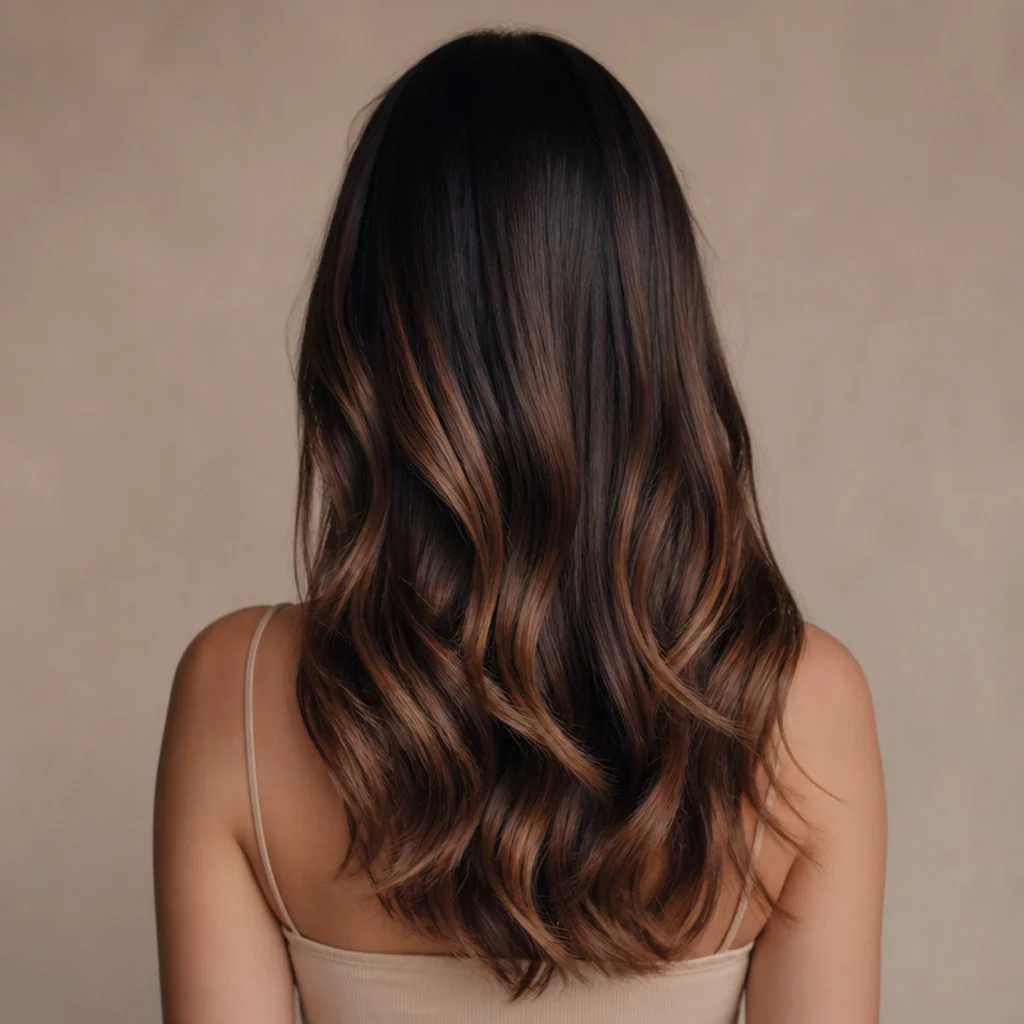
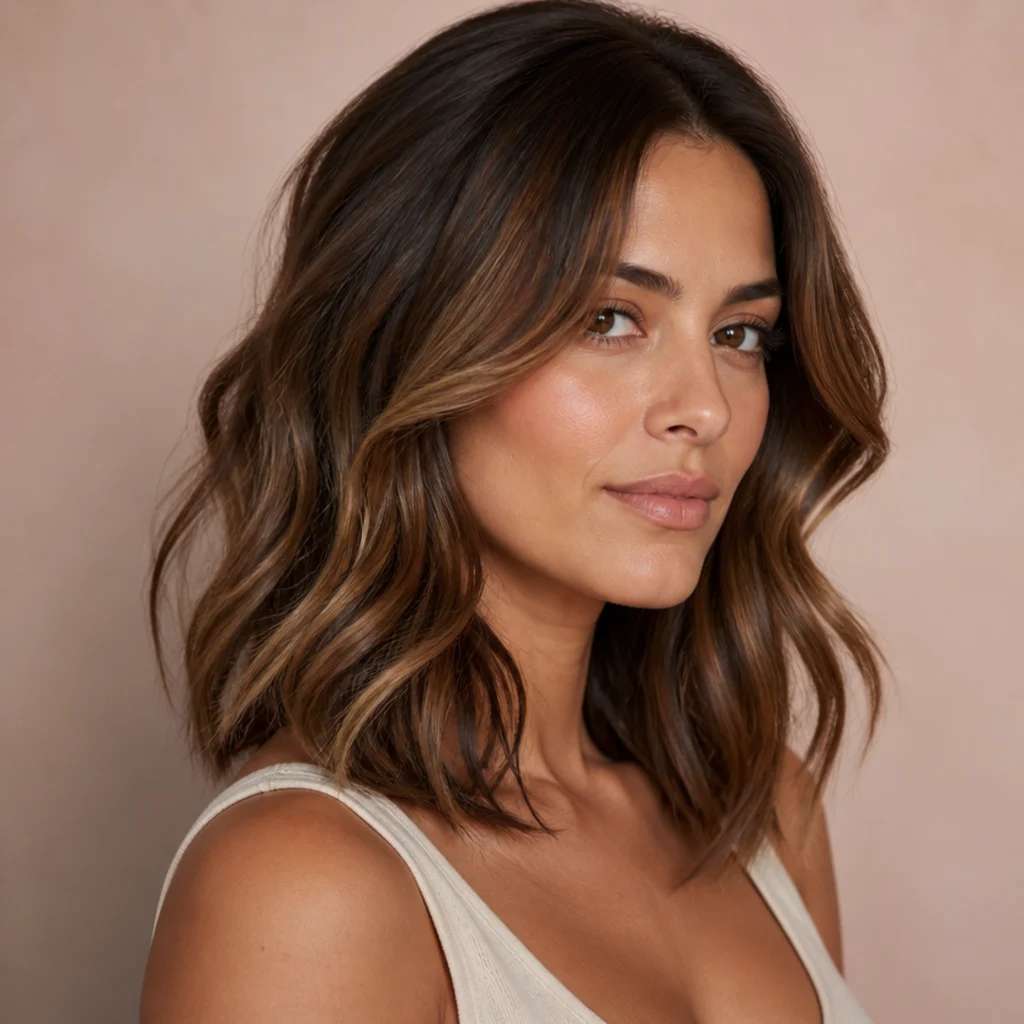
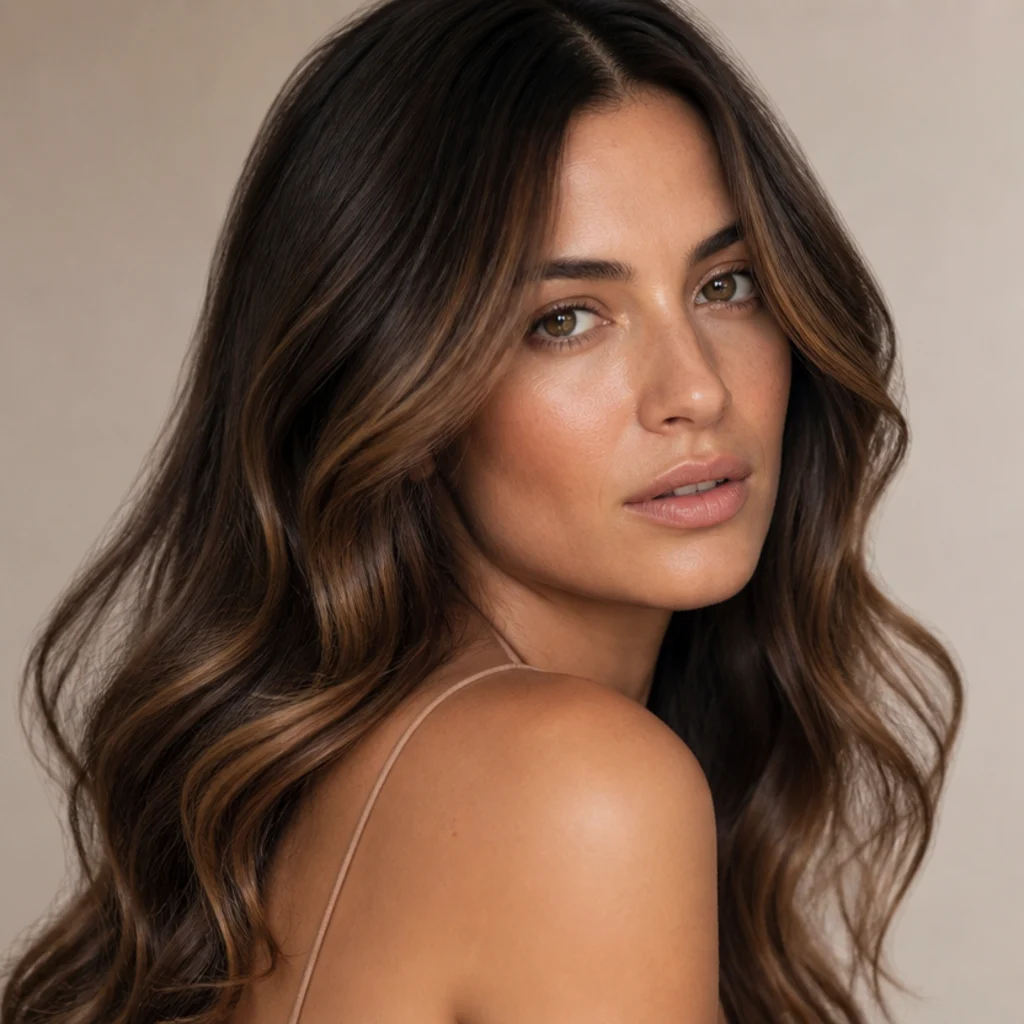
Hand-painted caramel ribbons are the gateway to a multi dimensional brunette because the freehand, foil-free technique diffuses at the root and never leaves a hard regrowth line. Your colorist sweeps a lightener through the mid-lengths and ends, saturating the surface pieces more heavily than the underneath so brightness reads where light actually hits. It flatters medium to long hair, since the painted sweeps need 4+ inches of travel to look intentional, and it sits most naturally on warm and neutral undertones. Target a level 6–7 caramel over a level 4–5 base for a two-to-three-level lift that glows without stripes. Maintenance is low: many people stretch four to five months and book a gloss to revive the caramel. Pro tip: ask for the brightness to start below the earlobe on the surface but a touch higher on the face-framing pieces, so movement reads without widening the root. Ask your colorist for "balayage with warm caramel ribbons, natural shadow root, seamless blend, glossed neutral so the ends don't grab gold."
02Cool Chestnut Base with Warm Ends
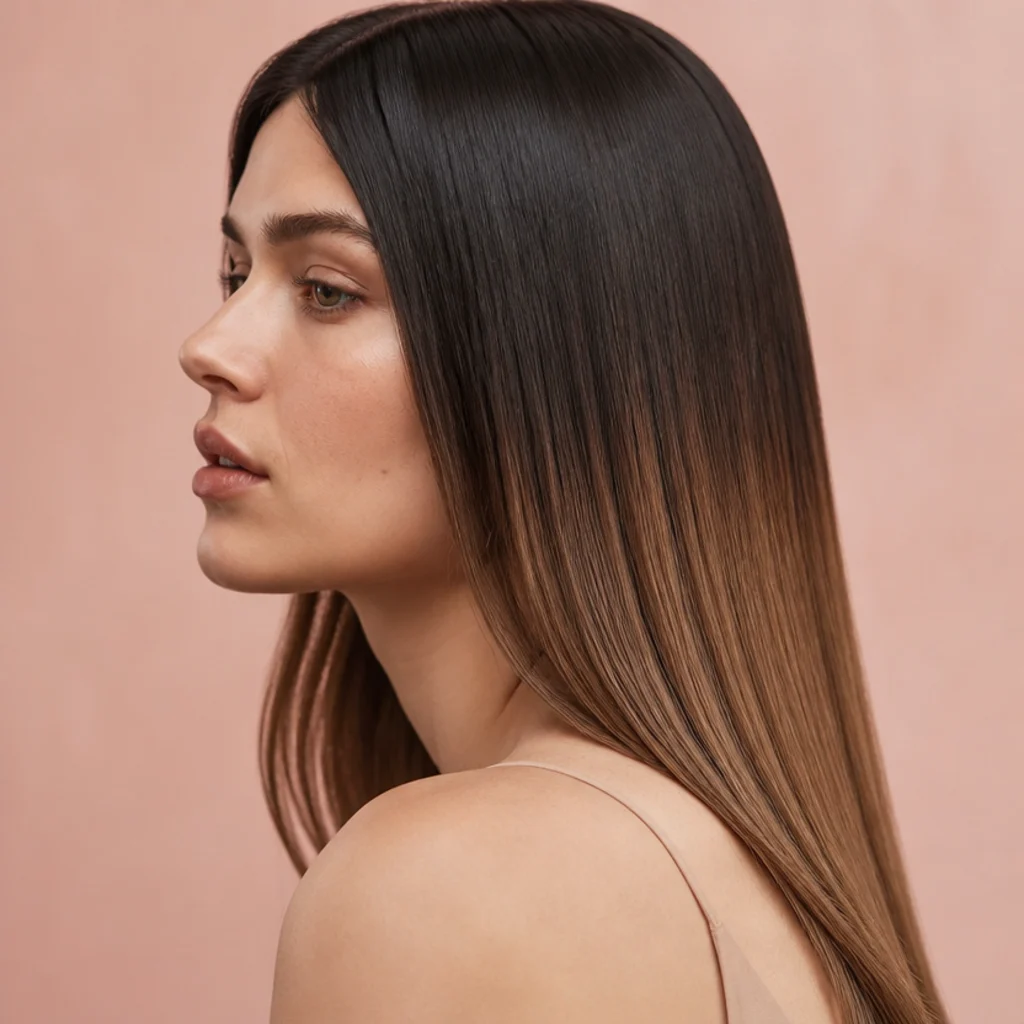
This is contrast built vertically: a cool chestnut crown that warms as it descends. The ashy top neutralizes red and orange where oxidation and heat styling usually push warmth, while honey-brown ends keep the look inviting rather than severe. It's the smart pick if your natural base runs cool or ashy but you want warmth without full brassiness, a common request from anyone who has fought a "muddy" grow-out. It shows best on straight and blown-out wavy hair, where the gradient is legible along the length. Think level 5 cool chestnut at the root drifting to level 7 warm honey through the last third. Maintenance is moderate: the cool root wants a toning refresh every eight to ten weeks before it slides warm. Pro tip: concentrate the warm shift below the cheekbone so it frames the jaw and collarbone, not the scalp. Ask your colorist for a "cool-to-warm gradient, ashy chestnut root, honey-brown ends, warmth kept below the cheekbone."
03Money Piece Face Frame
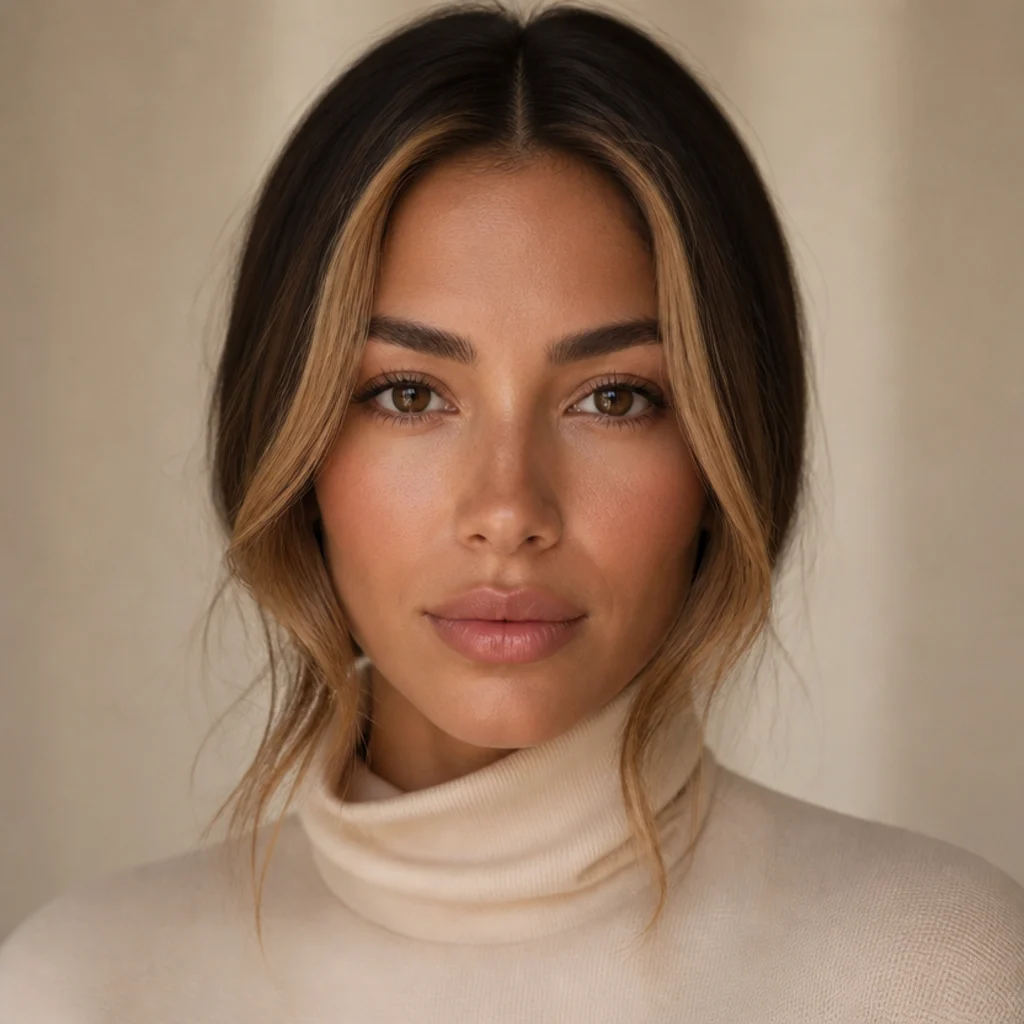
Dimensional brunette money pieces are the highest-impact, lowest-commitment way to brighten your face without an all-over service. Two brighter panels sit at the very front, lifted two to three shades warmer than the base so they flash every time you tuck hair behind an ear. They flatter every face shape: a rounder face benefits from starting the panel slightly lower to elongate, an angular face from starting it at the cheekbone to soften. They're especially kind to deep skin tones kept in the caramel-to-toffee family rather than pushed pale. Because the lift is concentrated and visible, touch-ups are quick and cheap. Maintenance is easy to eyeball; refresh when the root shadow at the part gets obvious, usually every 10–12 weeks. Pro tip: for a side part, weight the brighter, wider piece toward the heavier side so it reads balanced when the hair falls. Ask your colorist for "face-framing money pieces, warm caramel, starting at the cheekbone, symmetrical for a center part."
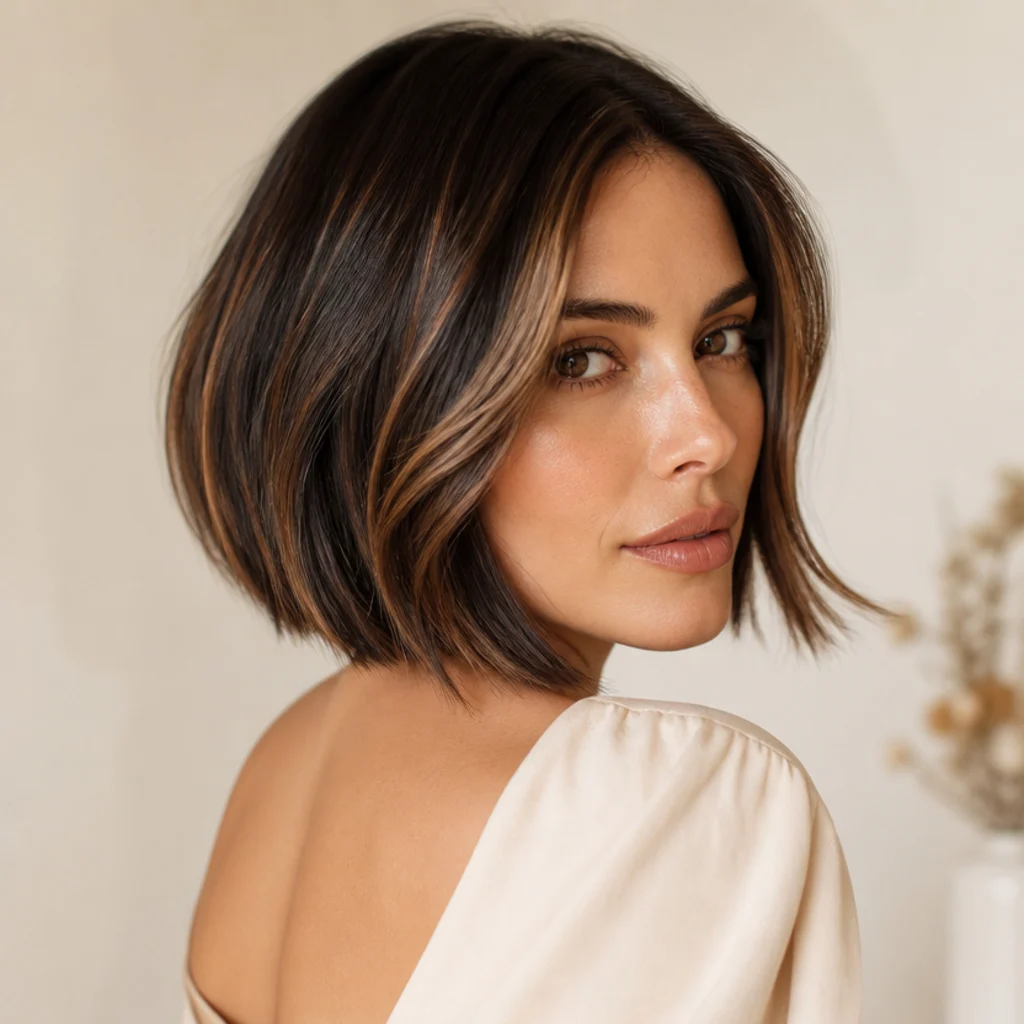
04Dimensional Brunette Bob
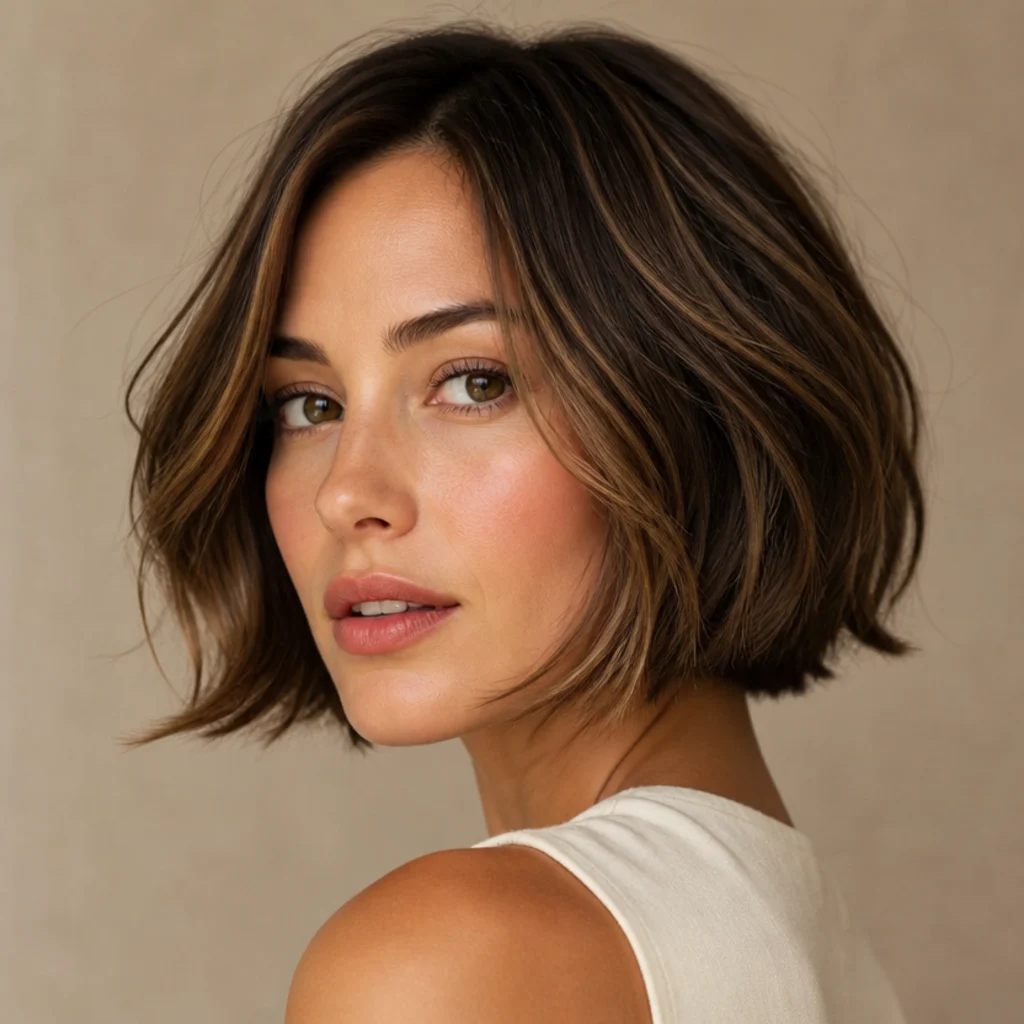
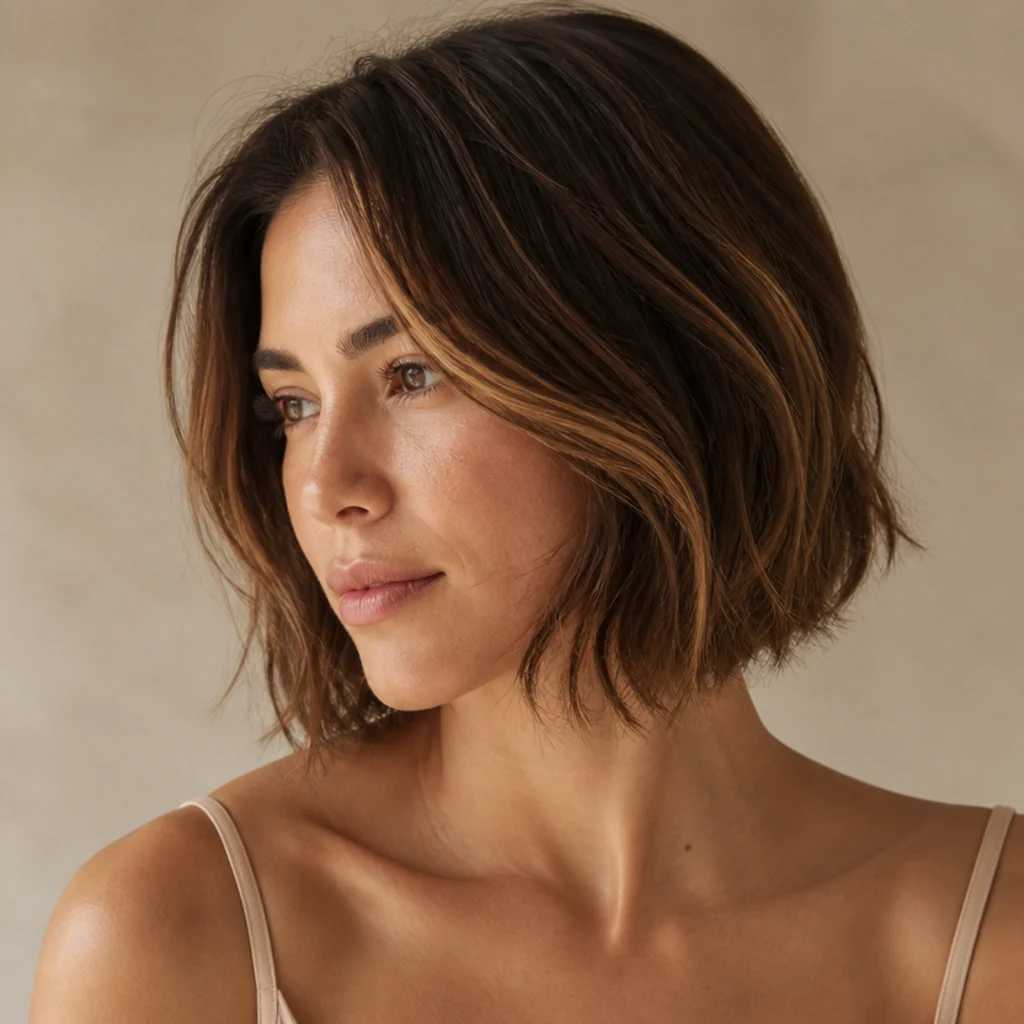
On a bob, dimension does the structural work that length normally provides — with less hair to create movement, tonal shift becomes the illusion of volume. Fine babylights woven through a chin-length cut make the shape look denser and give that expensive, lit-from-within finish, particularly on fine or straight hair where a solid color falls flat. A dimensional brunette bob suits straight and wavy textures and reads best when the interior stays deep and the surface pieces carry the glow. Keep the root a full level darker than the babylights so regrowth blends instead of banding. Maintenance is moderate: bobs need a shape-up every eight to ten weeks, so fold color into those trims. Pro tip: ask to keep brightness off the very nape and the occipital bone so the back view stays clean and the color doesn't look bottom-heavy. Ask your stylist for "fine babylights on a bob, deep chocolate root, warm golden tone, brightness kept away from the nape."
05Espresso Base with Toffee Ribbons
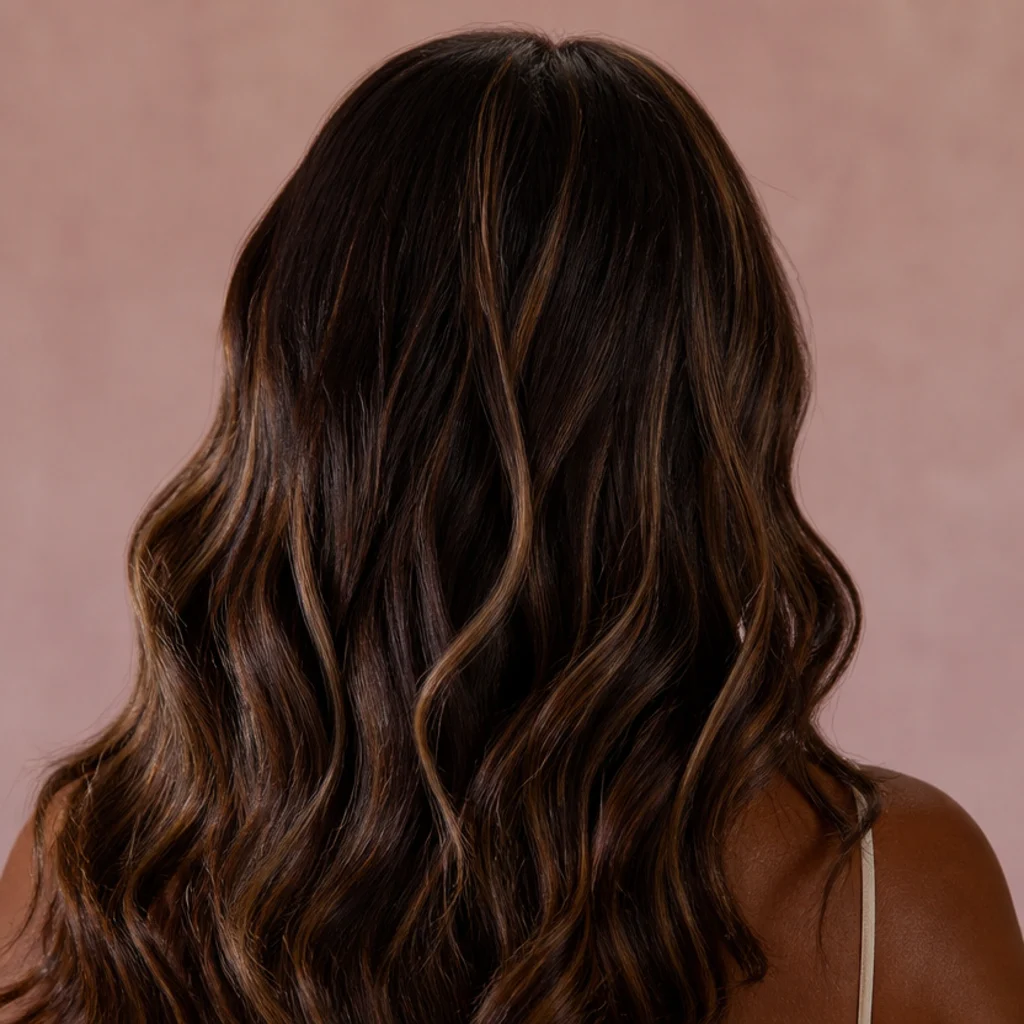
If your natural color runs very dark, espresso with toffee ribbons keeps you in deep territory while still catching light. The base stays a near-black level 2–3, and thin toffee pieces (a soft level 6, warm but not gold) are painted only where light naturally lands: the crown, the surface waves, the pieces that fall forward around the face. This is one of the lowest-contrast routes to a warm dimensional brunette without ever reading "highlighted," and it photographs with real depth on deep and cool skin tones. Maintenance is minimal: the dark base swallows regrowth for months, but the toffee is the fade risk, drifting orange as it lightens. Pro tip: a glossing toner at the sink every second wash-and-style visit keeps the ribbons on the warm-neutral side of copper. Ask your colorist for "espresso base, thin toffee ribbons, low contrast, kept warm not brassy, surface placement only."
Save this to Pinterest — the espresso-and-toffee combo is a favorite for dark bases that still want warmth.
06Soft Babylights Throughout
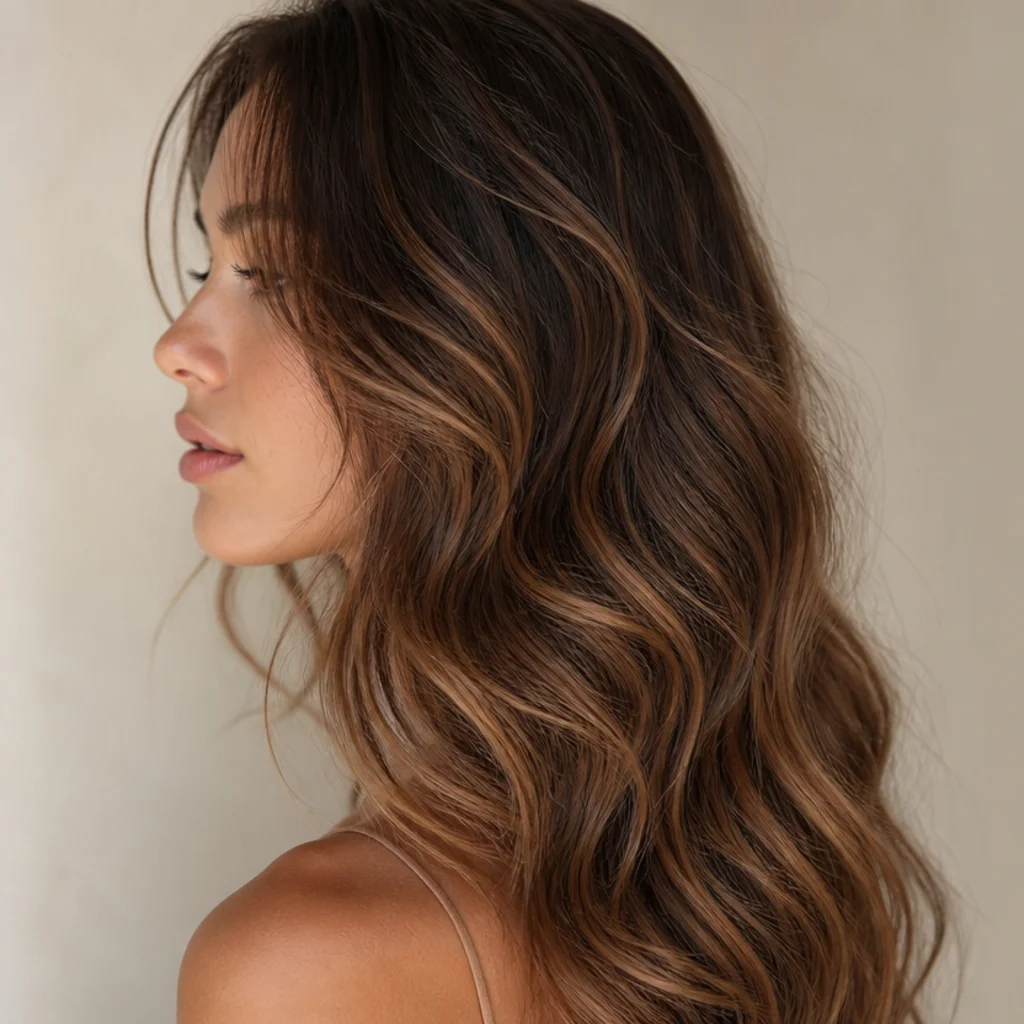
Babylights are the finest highlights a colorist can weave — hair-thin sections that mimic the diffuse lift children get from a summer outdoors. Spread evenly through the head rather than clustered, they create a soft glow instead of defined streaks, which makes this the ideal subtle dimensional brunette for anyone who wants dimension felt more than seen. Because there's no sharp contrast, it flatters nearly every texture and skin tone and rarely clashes with undertone. The honest trade-off is chair time and cost: fine weaving across a full head is labor-intensive and priced accordingly. Grow-out, though, is forgiving, since the pieces are so slim that regrowth reads as softness, not a line. Pro tip: specify a warm-neutral toner rather than a bright one so the babylights read like light rather than color. Ask your colorist for "all-over babylights, low contrast, warm-neutral tone, softness over brightness so the sections stay delicate."
07Chocolate Cherry Undertone
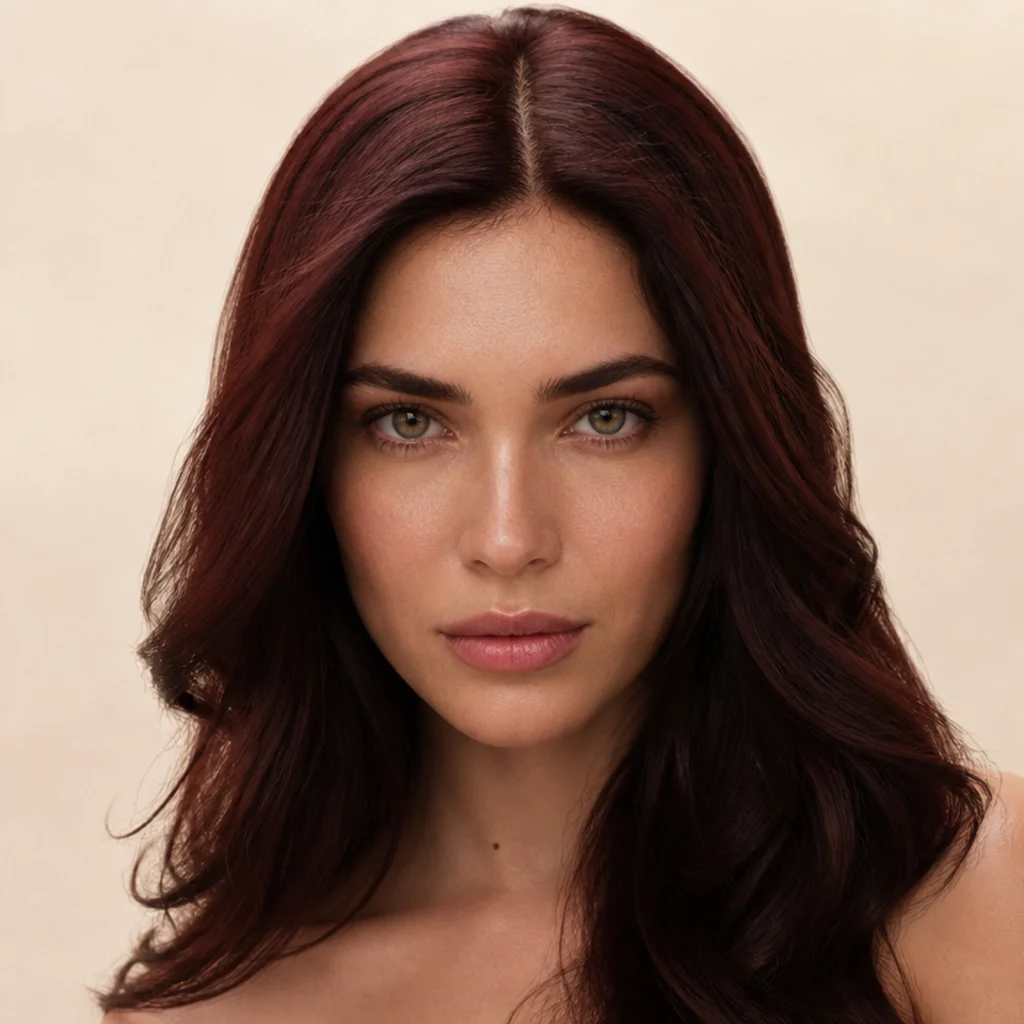
Not all dimension comes from lighter pieces — a chocolate base with cherry reflects builds depth through tone alone. Subtle red-brown undertones ignite when light passes through, giving cool brunettes a warmer read with zero bright highlights to maintain. It flatters fair and medium skin with pink or peach undertones especially well, and it's a good option if brightness washes you out but you still want richness. Because it's a deposit-only or very low-lift service (often a level 4 base with a cherry or mahogany reflect), it's gentle on the hair and grows out invisibly. Maintenance comes down to gloss refreshes, since red molecules are the smallest and fade first. Expect the cherry to soften every six to eight weeks. Pro tip: skip this if your skin leans distinctly olive, where red-brown can read sallow rather than rich; a neutral-warm chocolate suits olive better. Ask your colorist for "chocolate base with soft cherry reflects, no visible highlights, warm depth, glossed to hold the red."
08Sun-Kissed Root Melt
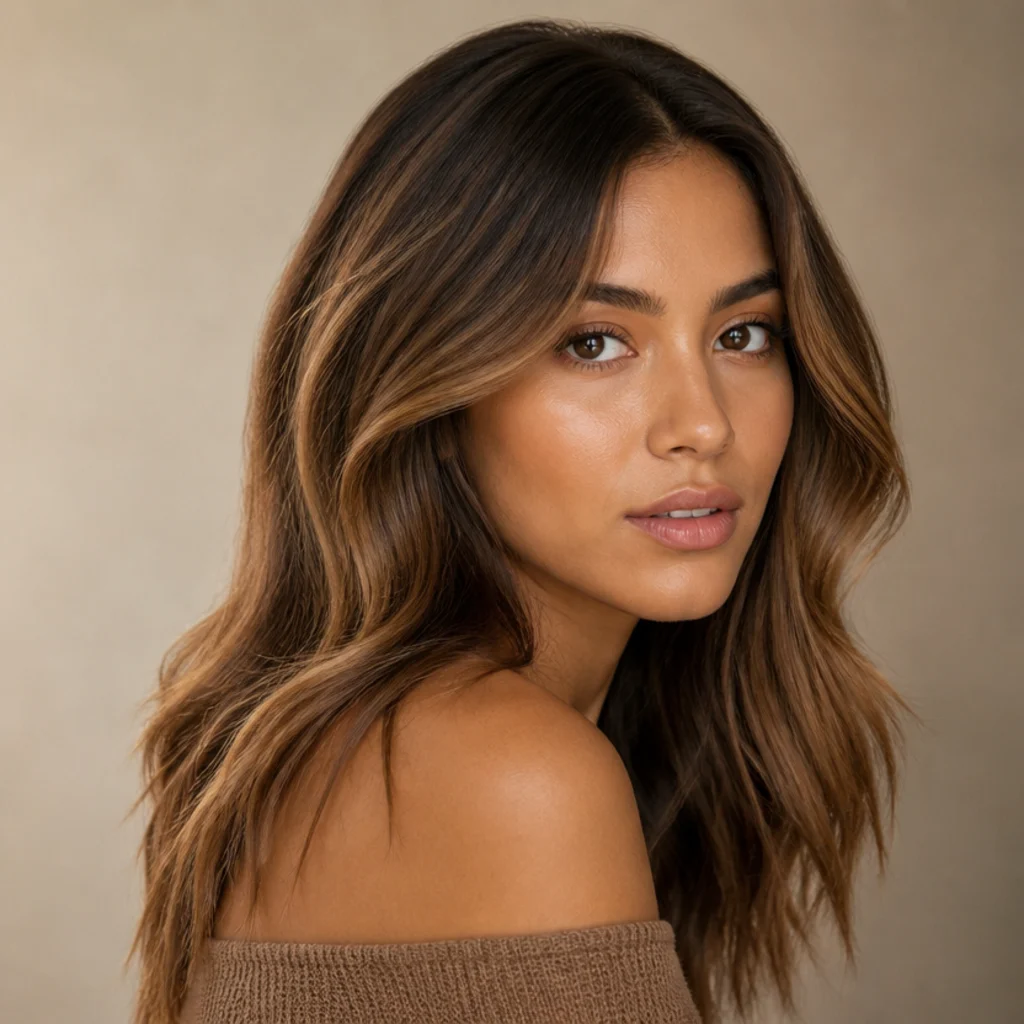
A root melt blurs the seam between your natural base and lighter lengths so there is never a visible regrowth stripe. The colorist smudges a deep shadow at the root and drags it down into warmer, brighter mid-lengths and ends, so the color has no defined start point to grow out. That makes it the most low-maintenance dimensional look here. Many people go three to four months untouched, and it layers over any technique on this list to extend the calendar. It suits every length and shows best on longer hair, where the gradient has room to develop from a level 4 shadow to a level 7 caramel. Pro tip: bring a photo of your hair at four months post-color, not day one, so your colorist places the shadow to flatter your real grow-out speed. Ask your colorist for a "seamless root melt, deep brown shadow into warm caramel lengths, no line of demarcation, built to grow out soft."
09Mushroom Brown Multi-Tone
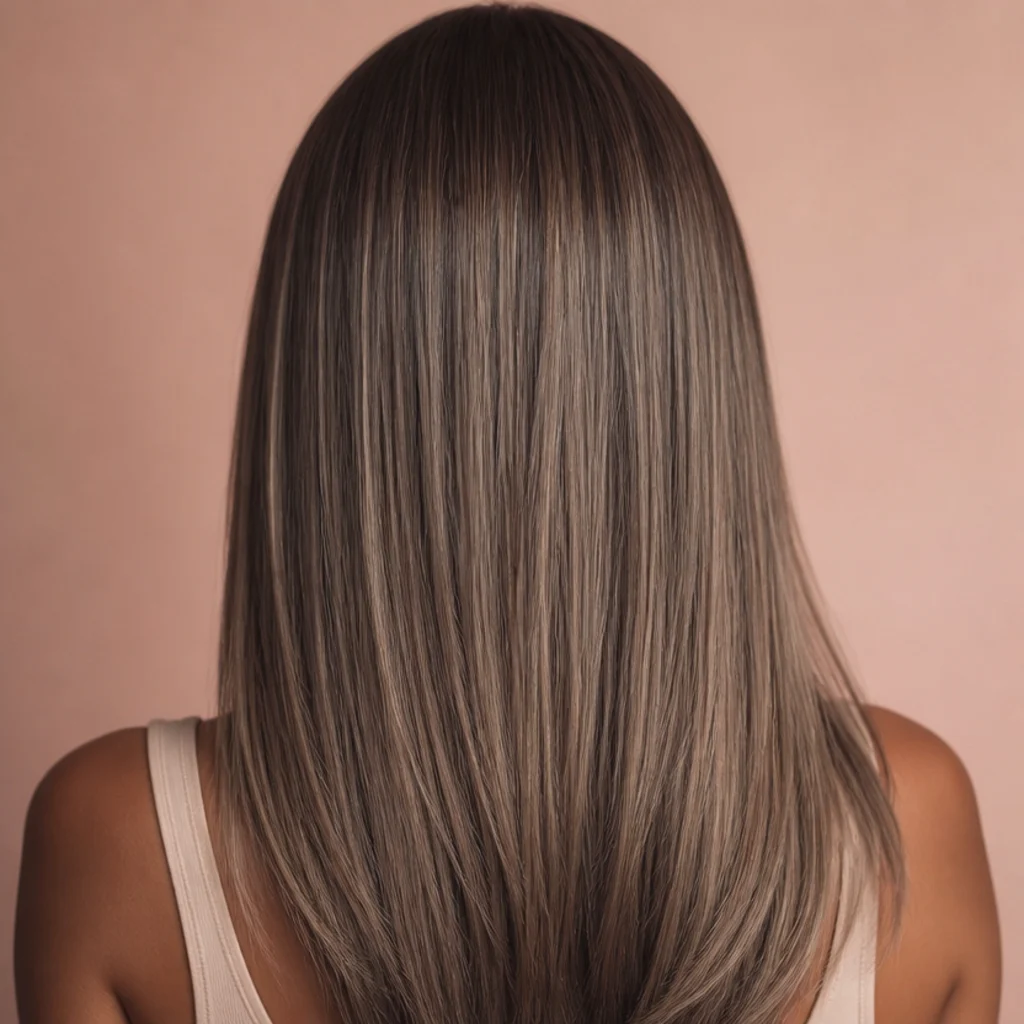
Mushroom brown balances cool ash against a whisper of warm taupe, producing a multi dimensional brunette that never tips brassy — the go-to for anyone who has spent years fighting orange. The trick is interplay: cool strands and soft-warm strands sit side by side so the head reads deep and sophisticated rather than muted and dull. It flatters cool and neutral undertones and looks especially modern on sleek, straight hair where the tonal weave is visible. Formula-wise, think a level 6 base with ash and taupe reflects, deliberately kept out of true silver. Maintenance leans moderate because the ash component fades fastest, so plan a gloss every six to eight weeks to hold it true. Pro tip: "mushroom" means different things to different colorists, so bring a reference and say exactly how cool you want to go, since over-ashing can read gray on warm skin. Ask your colorist for "mushroom brown, cool base with soft taupe warmth, anti-brass toning, kept out of silver."
10Warm Honey Peekaboos
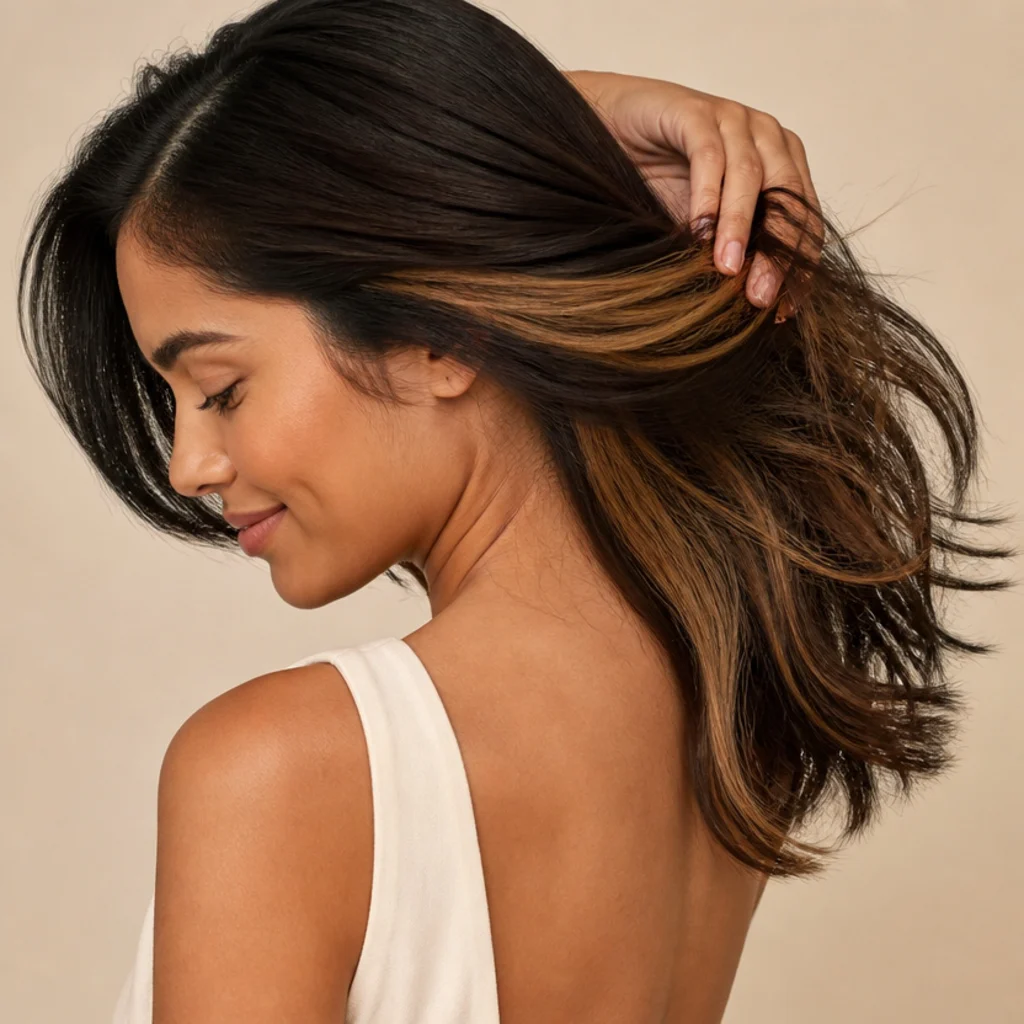
Peekaboos hide warmer honey pieces beneath the top layer, so your color reads deep and solid until you flip, tuck, or style it up. It's dimension with a reveal, playful with no surface commitment, which makes it ideal for conservative workplaces or anyone who wants a secret rather than a statement. Because the brightness lives underneath, grow-out is completely concealed and upkeep is minimal, often just a gloss when the honey fades. It flatters every skin tone since the warmth only shows on your terms. Target a level 7 honey against your natural base for a glow that appears intentional when revealed. Pro tip: tell your colorist exactly how you wear your hair (always down, frequent half-up, regular ponytail) so the bright pieces are mapped to where they will actually surface. Ask your colorist for "honey peekaboo highlights placed under the top section, warm tone, hidden until styled, mapped to my usual ponytail height."
Save this to Pinterest — peekaboos are the sleeper hit for anyone who wants dimension they can hide.
11Cool Ash Contrast Panels
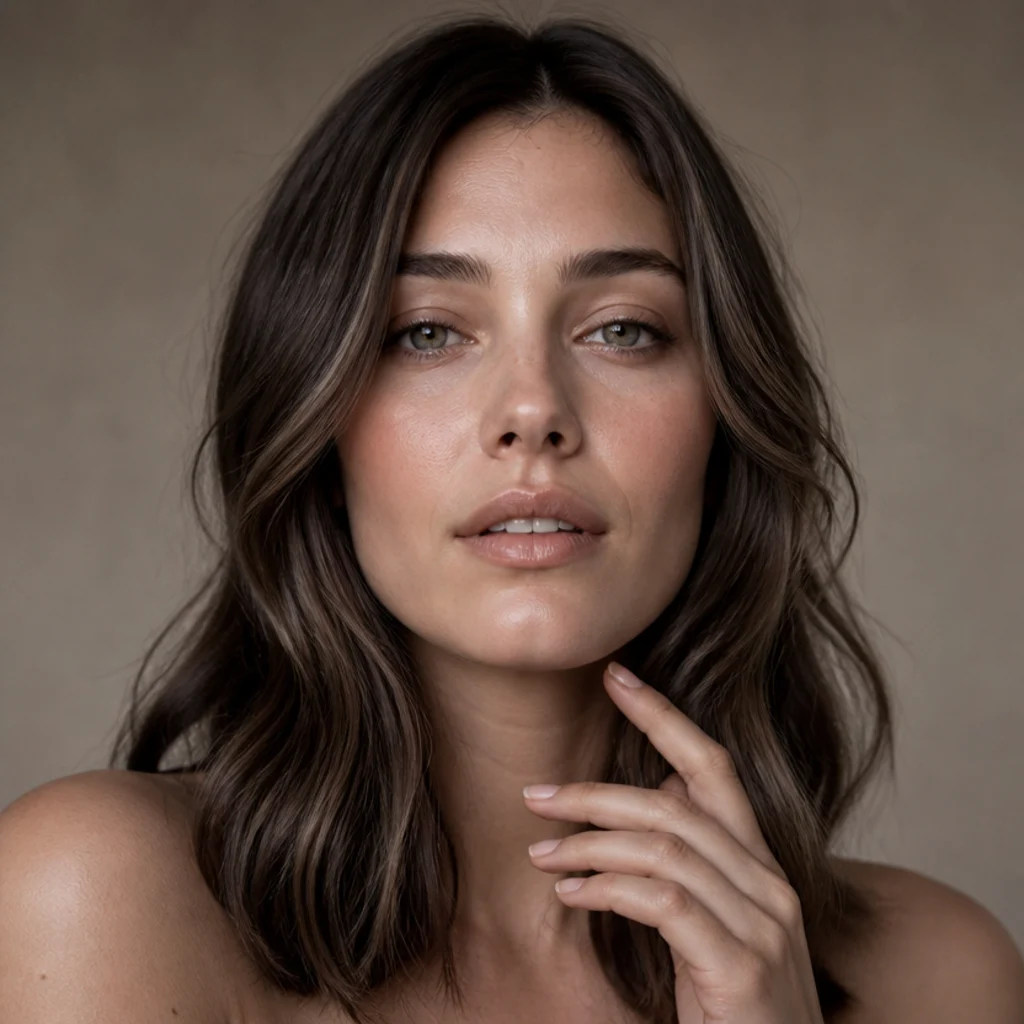
For brunettes whose warmth runs hot, cool ash panels are corrective dimension. Placed deliberately rather than woven evenly, ashy sections cut through a warm chestnut base to add contrast and stop the whole head from reading one flat golden note. The overall effect still counts as a warm dimensional brunette; the ash just keeps it in balance and stops the color looking one-dimensional. It works best on medium to long hair where the panels have room to show and flatters cool and neutral undertones. Because ash is the fastest tone to fade, maintenance is moderate: refresh the toner every couple of months before the panels drift warm and disappear. Pro tip: keep the panels the minority so the warm base stays the dominant read — over-panelling can look striped and cold. Ask your colorist for "cool ash panels through a warm base for contrast, kept balanced not silver, base stays the dominant tone."
12Golden Bronde Blend
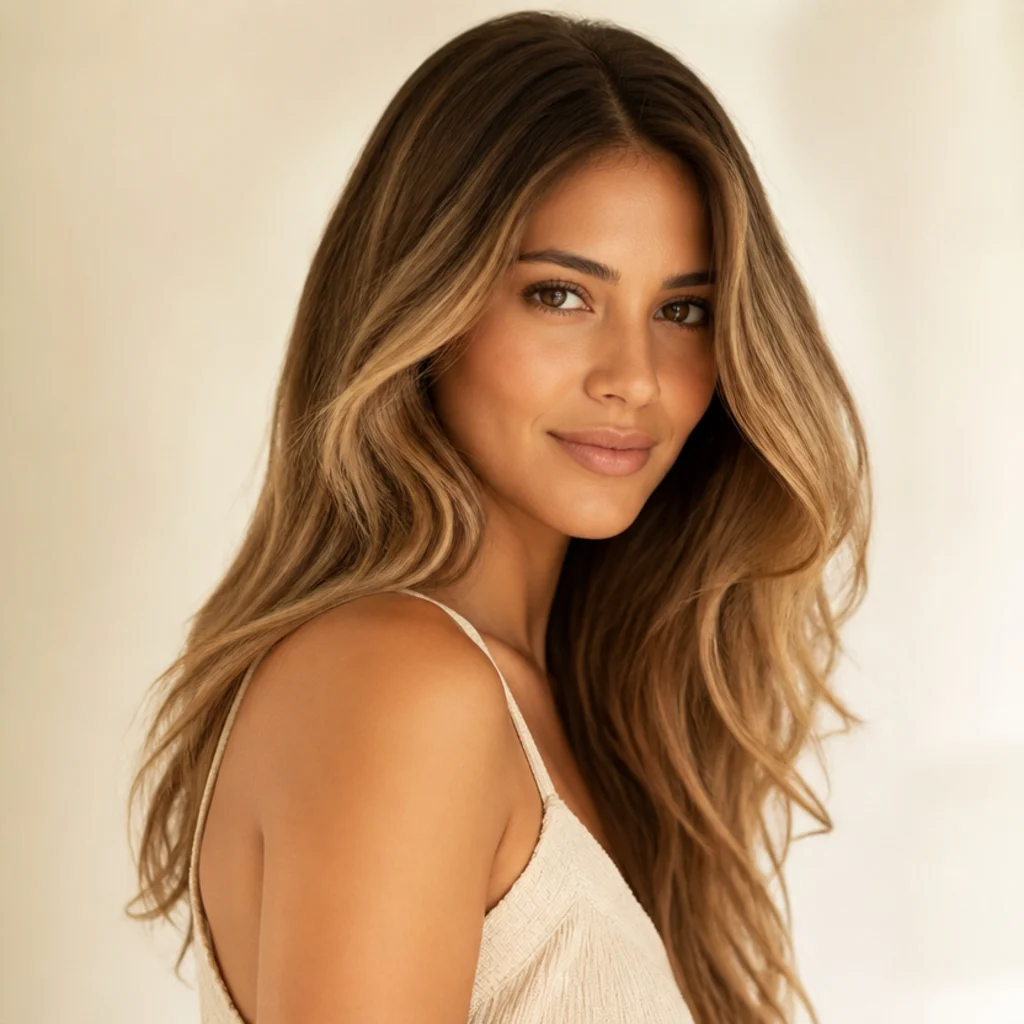
Bronde lives right where brown meets blonde, and a golden bronde blend is the brightest look here that still legitimately reads brunette. Warm golden highlights are melted so thoroughly into a light-brown base that there is no clear line — just an all-over, sunlit wash. It's a strong pick for warm and olive undertones and works on most textures, though longer hair displays the blend best. You're carrying more lift here (a level 7–8 gold over a level 6 base), so maintenance runs moderate to high: expect a toner every six to eight weeks to keep it golden rather than muddy or yellow. Pro tip: insist on a root smudge even though the look is bright. It's the single thing that keeps grow-out gentle when you're running this much lift. Ask your colorist for "golden bronde, seamless blend, warm not ashy, smudged brunette root so it grows out soft."
13Chestnut Curtain Bangs Frame
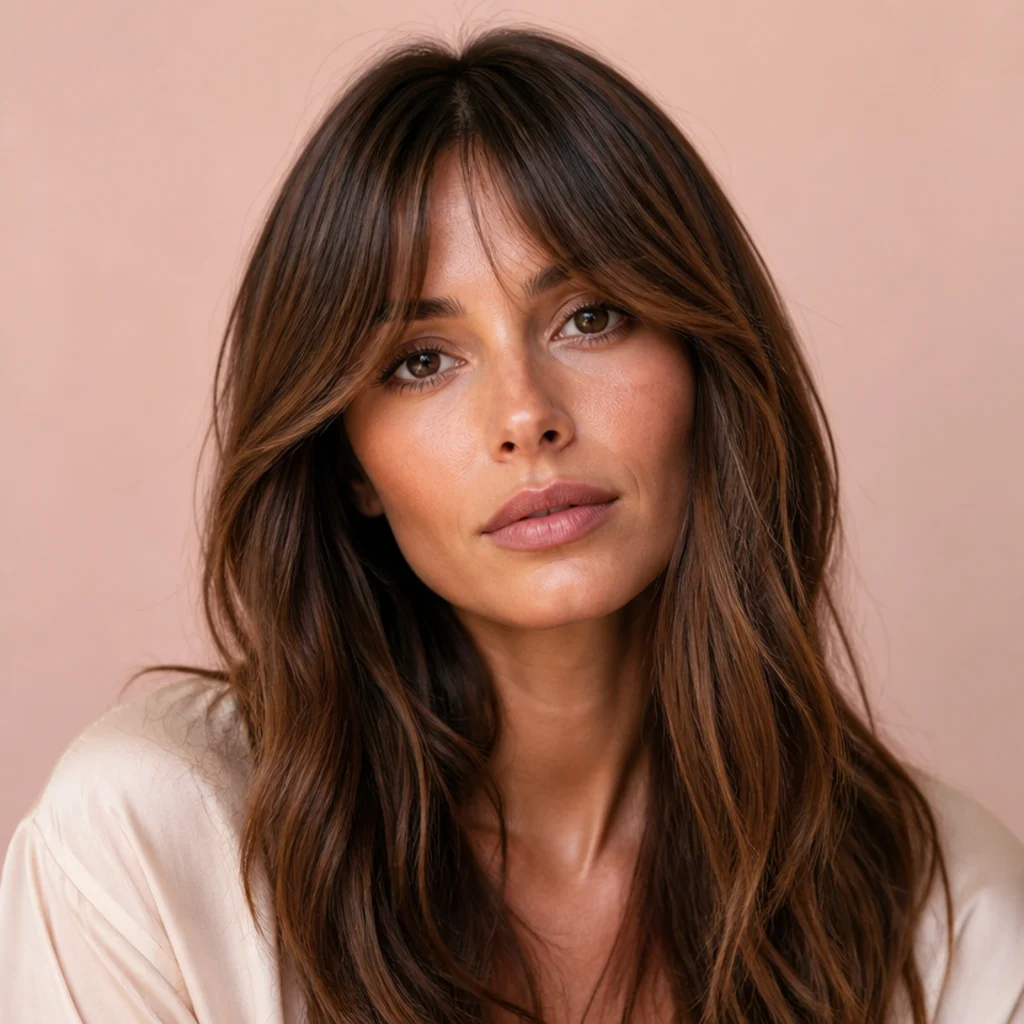
Curtain bangs beg for a little brightness at the split, and warm chestnut highlights placed right along the fringe make the whole frame glow as the bangs fall open. This pairs a face-framing color technique with the cut itself, so the dimension follows the shape and sweeps back into the lengths instead of stopping abruptly. It flatters most face shapes (curtain bangs already soften angles and shorten a long face), and chestnut reads warm across a wide range of skin tones without demanding heavy lift. Upkeep is tied to your fringe: because bangs need trimming every three to four weeks, fold color refreshes into a longer cadence around those visits. Pro tip: tell your colorist your exact resting parting so the brighter pieces land on the surfaces the bangs actually expose, not hidden underneath. Ask your colorist for "highlights following the curtain-bang split, warm chestnut, blending into the lengths, placed to my natural parting."
14Copper-Kissed Brunette
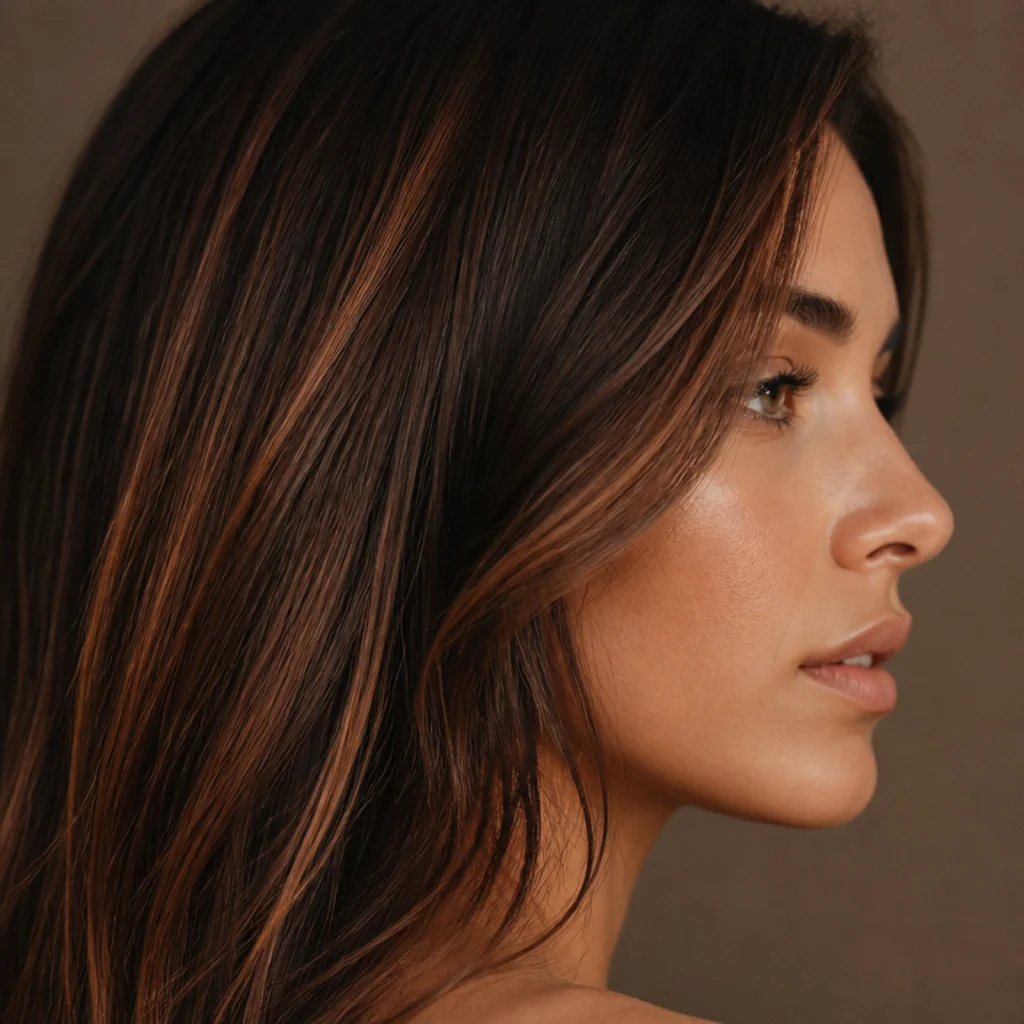
A hint of copper takes a warm dimensional brunette somewhere richer without committing to full red. Fine copper-toned pieces are woven through a deep brown base so the warmth flashes amber in direct light and settles back to brown in shade — a seasonal favorite that reads especially alive in autumn light. It suits warm and golden undertones best; on cool or pink skin, keep the copper sheer so it doesn't overwhelm. The catch is longevity: copper is a fugitive tone with large, quick-to-escape molecules, so maintenance runs moderate with regular gloss refreshes. Pro tip: use a copper- or red-depositing conditioner at home every few washes so the highlights stay lively instead of washing down to plain brown within a month. Ask your colorist for "copper-kissed highlights through a brown base, warm amber glow, subtle not orange, glossed to slow the fade."
15Dimensional Brunette for Curls
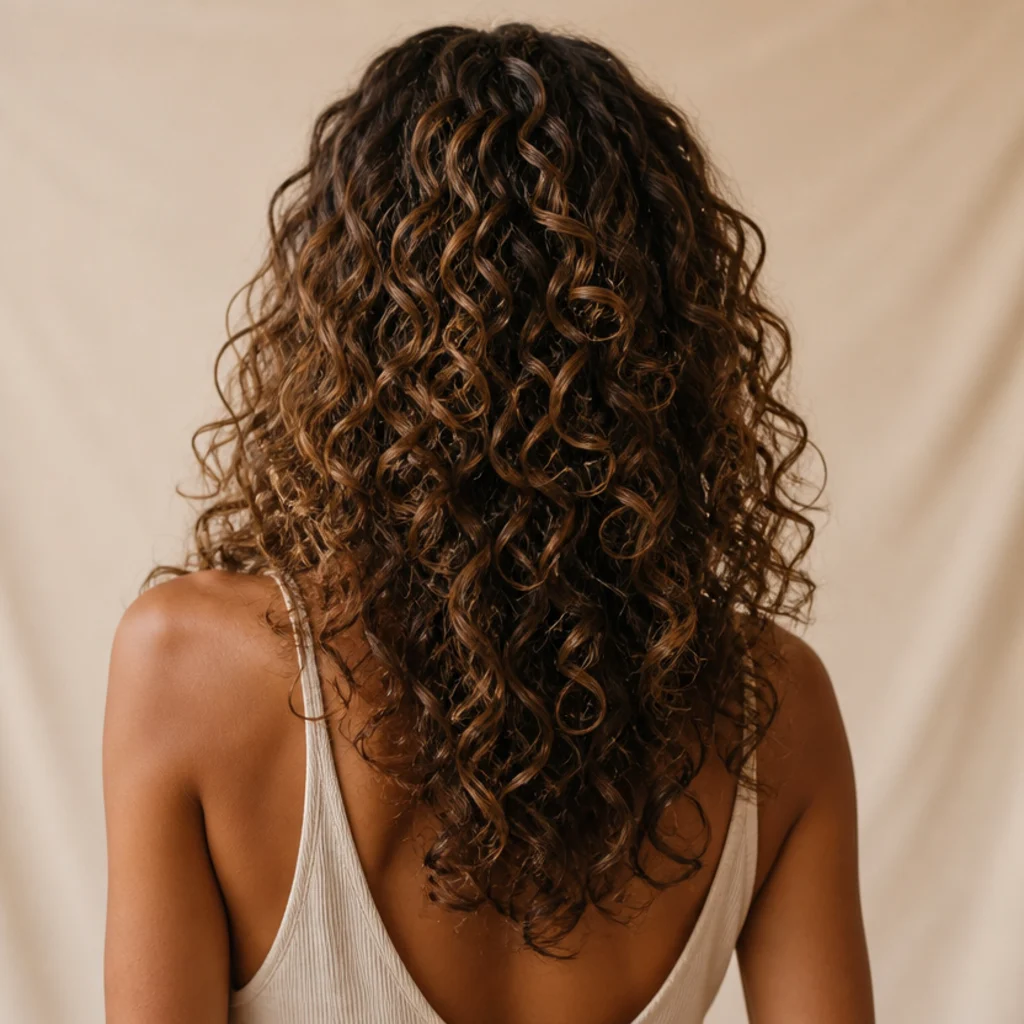
Curls carry dimension differently, so placement has to respect the curl pattern — brightness needs to land on the surfaces of the coils that catch light as they turn, not get buried in the interior. Painted with the curl in mind (often dry, curl-by-curl, so the colorist sees exactly where each piece will sit), warm caramel pieces make a curly or coily head look full of movement. It flatters all skin tones and is most striking on defined curls and coils, where every ringlet shows its own tonal shift. Because textured hair is naturally drier and more porous, keep the lift gentle and treat bond protection as non-negotiable. Upkeep is low on grow-out but high on conditioning, since porosity makes tone grab and fade unevenly. Pro tip: book specifically with a colorist who cuts and colors textured hair, since generic foil placement fights the curl. Ask your colorist for "balayage painted to follow my curl pattern, warm caramel, minimal lift, bond protection, placed on the surface of the coils."
Save this to Pinterest — placement on curls is technique-specific, so the reference photo matters.
16Smoky Mocha Lowlights
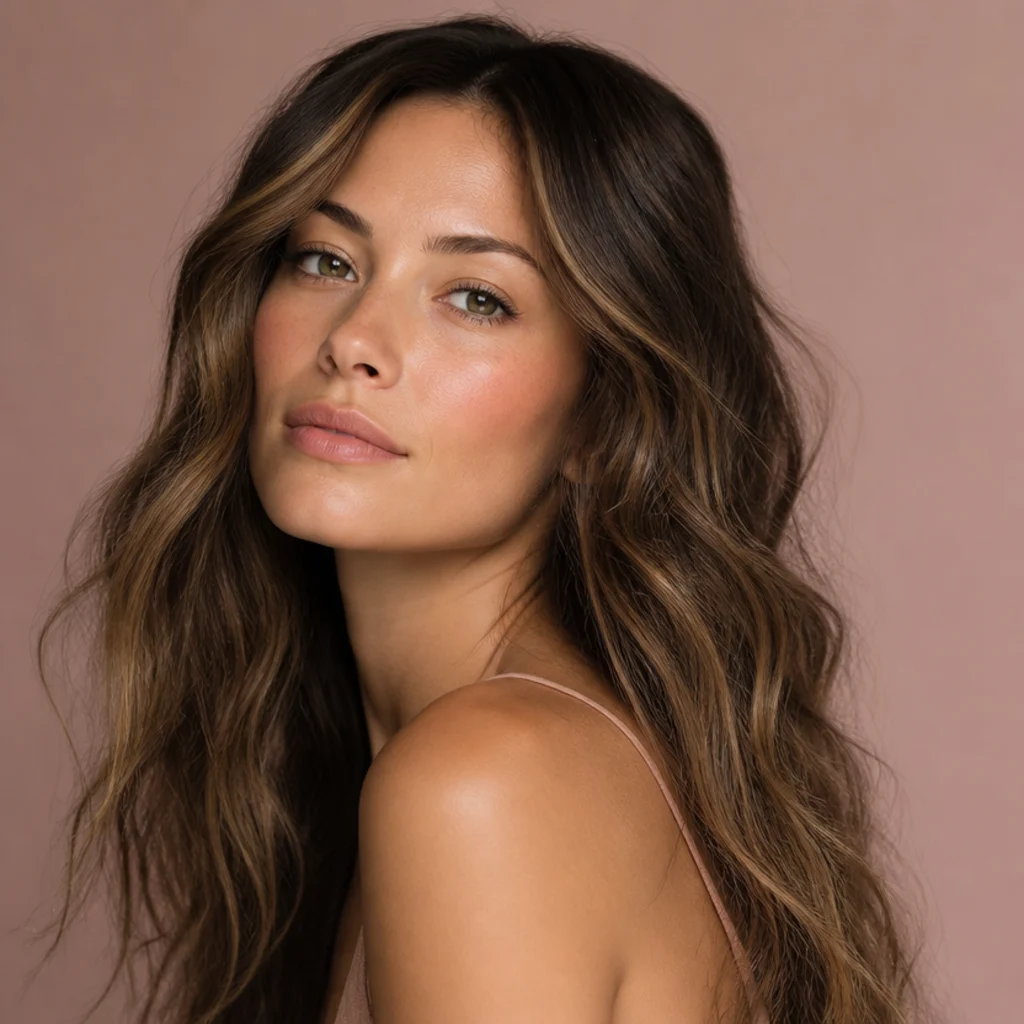
Lowlights add dimension by going darker, not lighter — the fix for a brunette that has drifted over-highlighted, pale, or one-note. Smoky mocha pieces (a cool level 5 with a mocha reflect) woven back into a lightened base restore depth and make the remaining brightness look intentional rather than blown out. It's as much a rescue technique as a style, ideal when years of highlighting have left the color flat and washed. Because you're adding richness rather than contrast, it flatters every skin tone, and it's one of the most low-maintenance services here: darker pieces grow out invisibly with no toning stripe. Pro tip: ask for a mix of two lowlight depths rather than a single flat one, so the added pieces read dimensional too instead of blocky. Ask your colorist for "smoky mocha lowlights to add depth and break up the lightness, cool-warm balance, two depths so it doesn't go flat."
17Warm Beige Teasylights
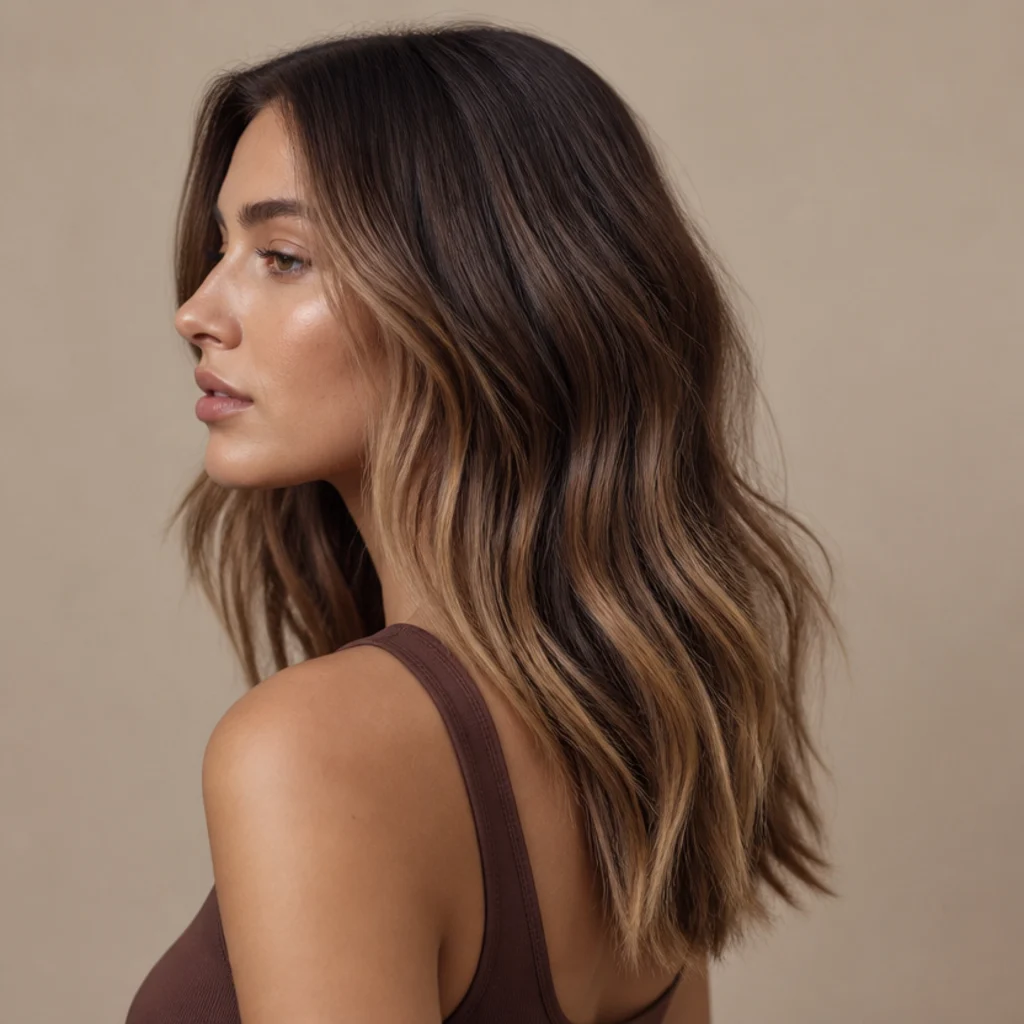
Teasylights combine backcombing and foils so the color diffuses at the root, mimicking a naturally grown-out, lived-in finish from day one. In a warm beige tone, they deliver the polish and brightness of foils without the razor-sharp regrowth line traditional foils leave behind — a genuine middle ground between foil precision and balayage softness. They suit people who want the crispness of highlights but the low upkeep of hand-painting, and the beige reads flattering on neutral and warm undertones across most textures. Maintenance is low to moderate thanks to the blended root, which buys you 10–14 weeks. Pro tip: this is the technique to request if you love foil brightness but have historically hated your grow-out. The teasing is the entire reason the root stays soft. Ask your colorist for "teasylights in warm beige, softly teased root, lived-in finish, foil brightness without the regrowth stripe."
18Hazelnut Ombre Shift
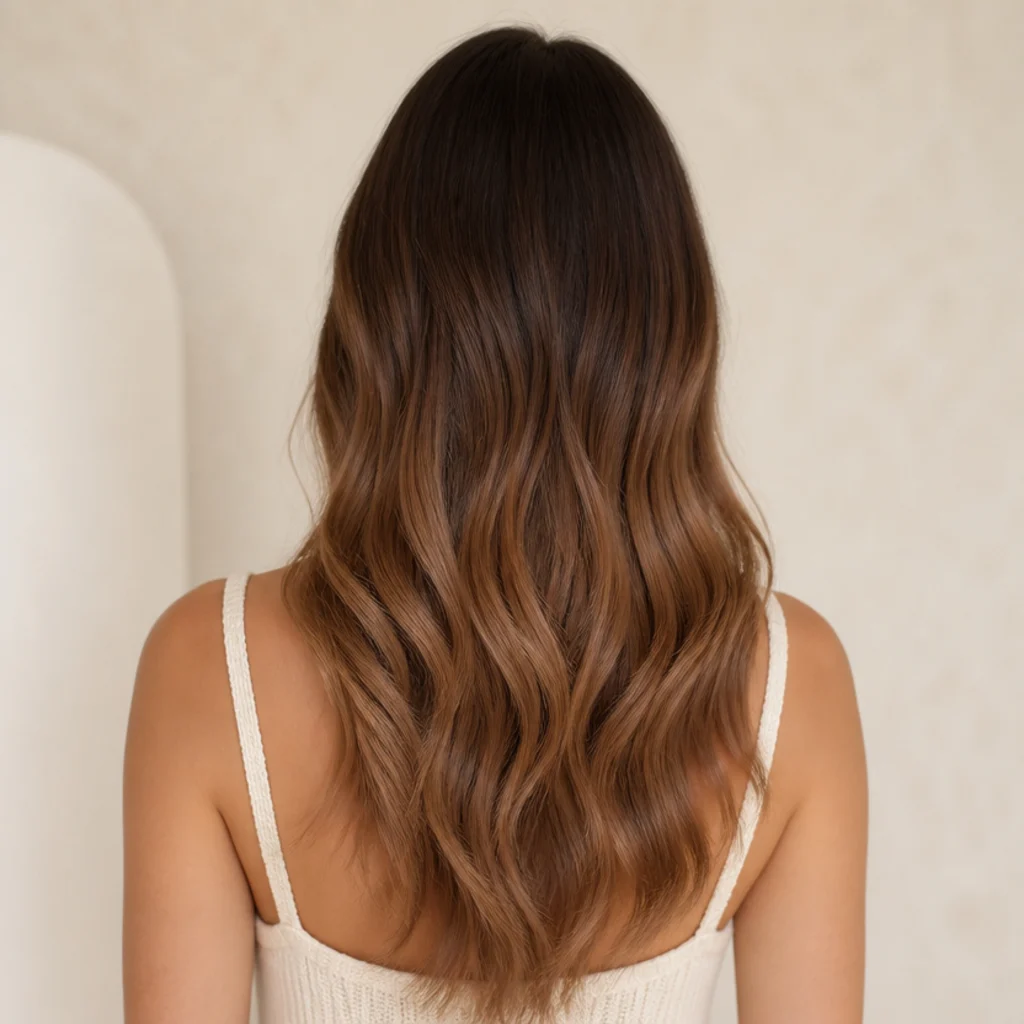
Ombre keeps depth up top and concentrates brightness in the ends, and in hazelnut it stays firmly in warm brunette territory rather than tipping into the harsh, high-contrast ombres of a decade ago. The modern version is a gentle, smudged shift — a level 4 hazelnut root melting to level 7 warm ends over a long, blurred transition. It flatters warm and neutral undertones and displays best on long hair, where the gradient has real length to travel and develop. Because all the color lives in the mid-lengths and ends, root upkeep is essentially zero; you're refreshing tone on the ends, not chasing regrowth. Pro tip: specify a gradual, feathered blend with no defined start point. A hard ombre line is what dates this look instantly. Ask your colorist for "soft hazelnut ombre, deep root, warm lighter ends, smooth feathered transition, no visible line."
19Dimensional Brunette Lob
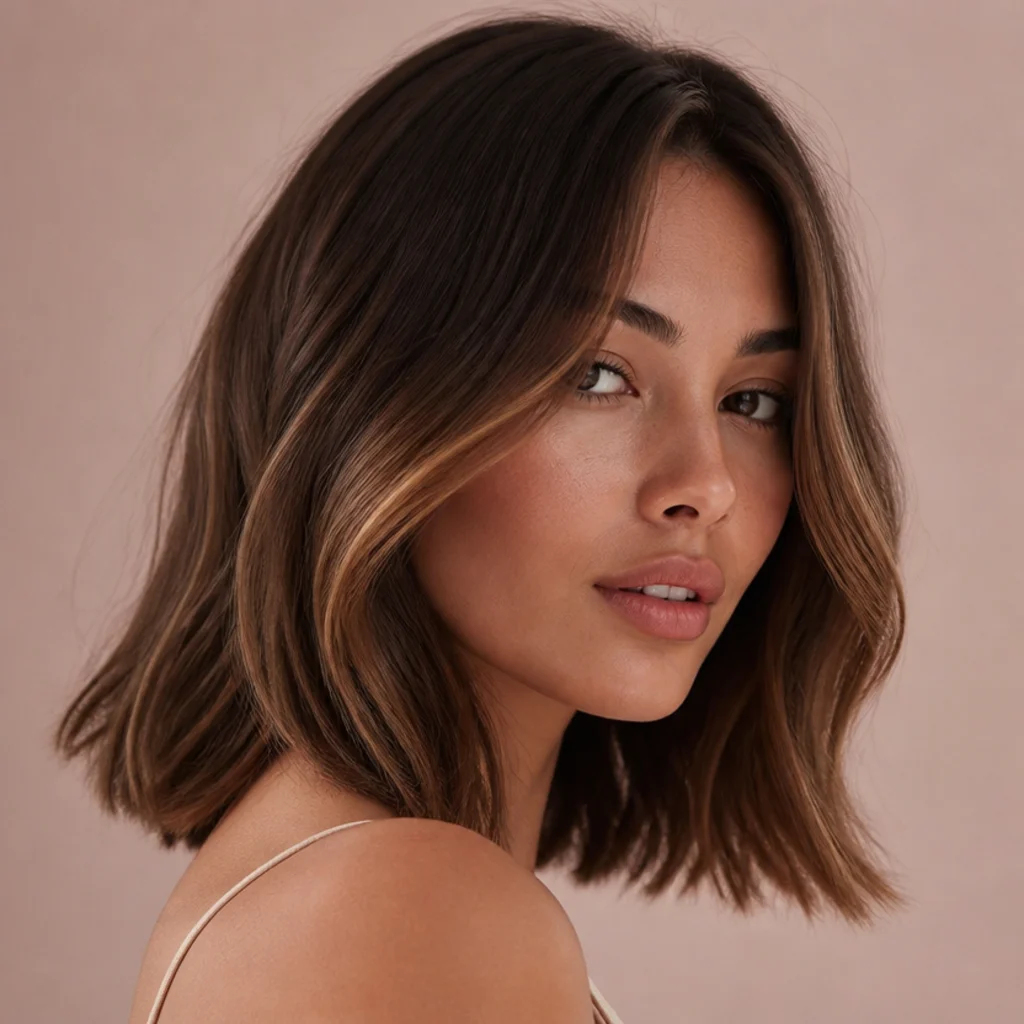
The lob is the sweet spot between a bob and long hair, and it holds dimension beautifully because it has just enough length for tone to travel while keeping a sharp, modern line. Warm toffee highlights through a shoulder-length cut give movement through the mid-lengths without softening the shape, and the length is forgiving for anyone growing out a shorter cut. A dimensional brunette lob suits nearly every face shape and texture, and toffee (a warm level 6) reads rich across most skin tones. Upkeep is moderate: lobs need regular trims to hold their line, so schedule color alongside them roughly every ten weeks. Pro tip: tell your colorist whether you wear it poker-straight or with a bend, since the brighter pieces should be placed where your everyday styling makes the surface catch light. Ask your colorist for "dimensional highlights on a lob, warm toffee tone, movement through the mid-lengths, placed for how I usually style it."
20Multi-Tonal Face-Framing Layers
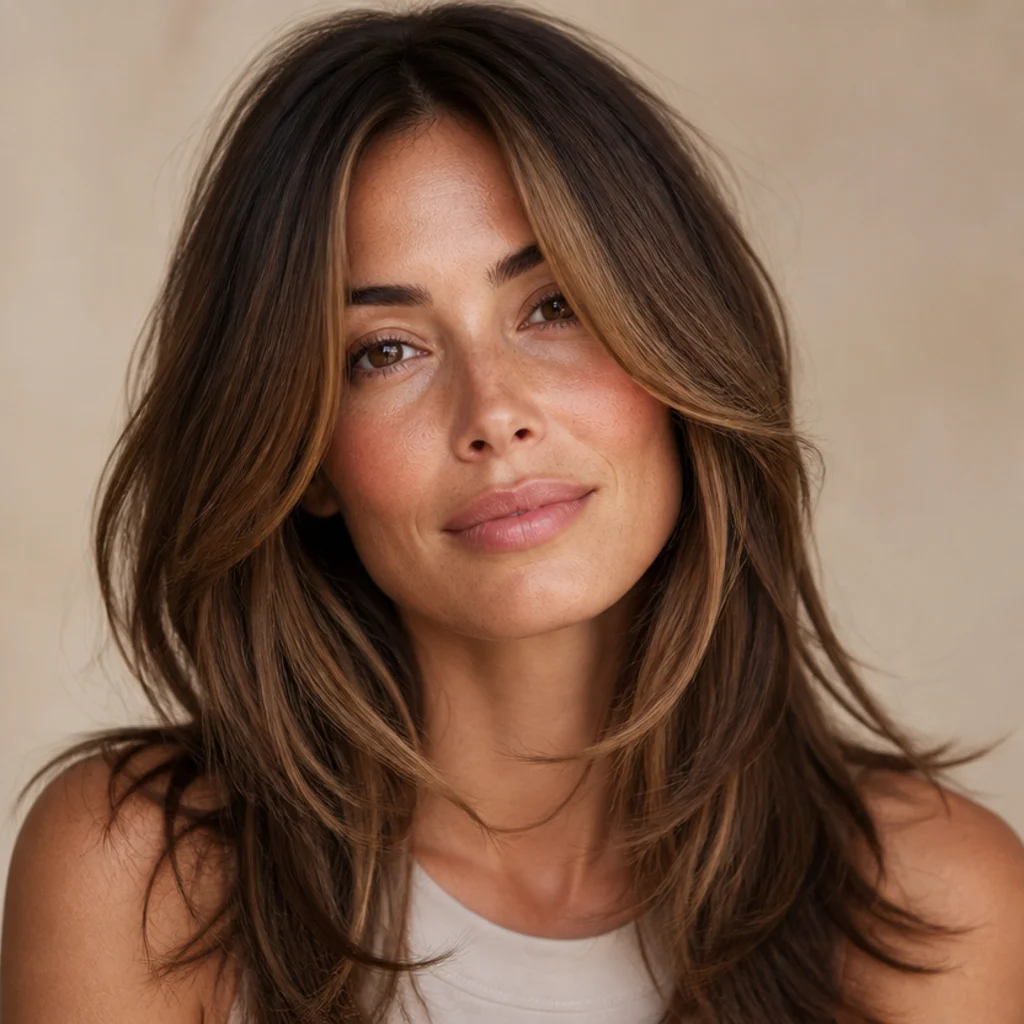
The most complete look here stacks several tones (caramel, toffee, and chestnut) through face-framing pieces, so the front of your hair reads multi-dimensional instead of flat. Instead of one brighter panel, three levels sit near the face and shift as you move, which is the fullest expression of a multi dimensional brunette. The layered brightness draws the eye upward and flatters every face shape, though it needs medium to long hair with actual layers to carry and separate the tones. Maintenance is moderate given that several shades all need toning to stay balanced: plan a gloss every eight weeks. Pro tip: ask your colorist to place the lightest tone at your part and the deepest against your skin, so the frame brightens the face without washing it out. Ask your colorist for "multi-tonal face-framing highlights in caramel, toffee, and chestnut, layered for depth, lightest at the part."
Pro Tips from the Editor
- Name the level and the undertone, not just the color. "Warm caramel" tells your colorist nothing about how light. "Two levels lighter than my base, warm-gold undertone" is a formula they can actually mix.
- Book the gloss before you need it. Warm reflects soften and cool tones vanish first; a standalone toning gloss at week 6–8 costs a fraction of a full color and resets the whole look.
- Ash and copper are the fade risks — plan around them. Mushroom, ash panels, and copper-kissed looks want the tightest toning cadence; balayage, root melts, and lowlights buy you the most time.
- Insist on a root smudge on anything with real lift. It is the single technique that turns a hard regrowth stripe into a soft shadow and adds weeks between appointments.
- Match brightness to how you actually wear your hair. Peekaboos and interior pieces are wasted if you always wear a high pony; surface and face-framing placement is what shows.
- Treat bond-building as part of the service, not an upsell — especially on textured or previously colored hair. It protects integrity during lift so tone deposits evenly and fades cleaner.
- Bring a four-months-later photo, not just an inspo pic. Showing your real grow-out lets your colorist place the shadow and brightness to flatter how your color will look most of the year, not just day one.
Technique at a Glance
| Technique | Contrast | Upkeep window | Best texture / length | Watch-out |
|---|---|---|---|---|
| Balayage (caramel/toffee) | Low–medium | 12–16 weeks | Medium to long, all textures | Ends can grab gold without a neutral gloss |
| Babylights | Very low | 10–14 weeks | Fine to medium, most lengths | Chair time and cost run high |
| Money piece | Medium (localized) | 10–12 weeks | Any length | Asymmetry if the part isn't accounted for |
| Root melt / ombre | Low | 14–16 weeks | Longer hair shows it best | Needs length for the gradient to read |
| Foils / teasylights | Medium–high | 8–12 weeks | Straight to wavy | Ash tones fade fastest; toning required |
| Lowlights | Adds depth | 12–16 weeks | Over-lightened or flat hair | Keep two depths so it doesn't go blocky |
How to Choose / Get the Look
Work through four decisions in order and you will walk into the salon with a brief, not a vague wish.
1. Undertone first. Decide whether your dimension should read golden and sunny (caramel, toffee, honey, copper) or balanced and muted (mushroom, ash, smoky mocha). Skin undertone is the most reliable guide: warm and olive complexions usually love golden reflects, while cool and pink undertones stay flattering when a little ash keeps the warmth in check. If you're unsure, neutral-warm is the safest default for brunette dimension.
2. Contrast level. Babylights, peekaboos, and espresso-and-toffee whisper; money pieces, bronde, and ash panels speak up. If you're nervous, start subtle. You can always add brightness at the next visit, but pulling lift back out of the hair is harder, slower, and more damaging than adding it.
3. Upkeep honesty. Root melts, ombre, lowlights, and balayage stretch the longest between appointments; foil-heavy, ash-forward, and copper looks need toning every six to eight weeks to stay true. Pick the tone your calendar and budget can actually sustain, because a faded, unglossed version of an ambitious look reads worse than a well-maintained simple one.
4. Placement to your styling. Map brightness to how you actually wear your hair (part, ponytail height, straight versus bent) so the pieces show where you will see them.
Whatever you choose, bring two or three reference photos, name the specific tones and the level, and ask your colorist exactly where the brightness will start and how the grow-out will behave. Add a bond-building service to protect your strands during any lift, and keep a home gloss or color-depositing conditioner on hand to stop warm tones fading flat between visits.
Frequently Asked Questions
What's the difference between dimensional highlights and regular highlights?
Regular highlights lift strands to a single lighter shade, which can look striped and one-note as it grows. Dimensional highlights use multiple tones at different levels (some lighter, some deeper) placed to mimic how light naturally hits hair, so the color shifts as you move and reads fuller and more expensive rather than flat.
How do I keep my warm dimensional brunette from turning brassy?
Wash with a color-safe, sulfate-free shampoo, limit hot water and heat styling (both accelerate warm oxidation), and book a toning gloss every six to eight weeks. If your warmth runs hot, ask your colorist for a slightly cooler toner and use a blue- or purple-toned conditioner occasionally to neutralize orange and yellow between visits.
Is a dimensional brunette bob good for fine hair?
Yes, it's one of the best uses of dimension. On fine hair, tonal contrast reads as thickness and movement, so a dimensional brunette bob looks fuller than a solid color. Keep the root a level deeper than the babylights and keep the sections fine so the effect stays soft and dense rather than striped.
How long do dimensional brunette money pieces last?
Because the brightness is concentrated and visible at the front, money pieces typically look good for eight to twelve weeks. Grow-out is gentle since the lift blends into your natural base as it moves down, and refreshing just the two front panels is far quicker and cheaper than a full head of foils.
Can I get dimensional brunette highlights on curly hair?
Absolutely, but placement is everything. Highlights should be mapped to your curl pattern (often painted on dry, curl by curl) so brightness lands on the surfaces that catch light as coils turn. Choose a colorist experienced with textured hair, keep the lift gentle because curls are more porous, and pair it with a bond-building treatment.
Should I choose balayage or foils for a dimensional brunette?
Balayage is hand-painted and diffuses at the root, so it grows out soft and stretches longest between visits — ideal for a low-maintenance, sun-touched effect. Foils (and teasylights) give brighter, more uniform lift and precise placement, better if you want more overall brightness or crisper money pieces, at the cost of a tighter toning schedule.
How many salon sessions does it take to get a dimensional brunette?
Most dimensional brunette looks are achievable in one appointment if you're starting from a natural or previously brown base, since you're not chasing dramatic lift. If you're correcting old highlights, going noticeably lighter for bronde, or coming from a box-dye or dark-dyed base, expect two sessions spaced a few weeks apart to protect the hair.
Which dimensional brunette look is the lowest maintenance?
Root melts, soft ombre, peekaboos, and lowlights are the most forgiving because there is no defined regrowth line to chase — many people stretch these three to four months. The espresso-with-toffee look is also very low upkeep, since a dark base hides regrowth for months and only the surface toffee needs an occasional gloss.
Will dimensional highlights damage my brunette hair?
Because dimension relies on subtle, low-to-moderate lift rather than heavy lightening, it's gentler than going blonde. Damage risk rises with the amount of lift and the hair's history, so add a bond-building service during any lightening, keep heat styling moderate, and use a weekly reparative mask to keep the tone reflective and the ends healthy.