15 Dimensional Brunette Bob Ideas to Love
A flat, single-note brunette can read heavy on a short cut, but a bob built from layered tones does the opposite: it fakes volume, softens the jaw, and catches light with every turn of the head. These 15 ideas break down the exact tones, placement, and upkeep so you book with precision, not guesswork.
 Edited by Lena Rose · Published July 11, 2026 · 25 min read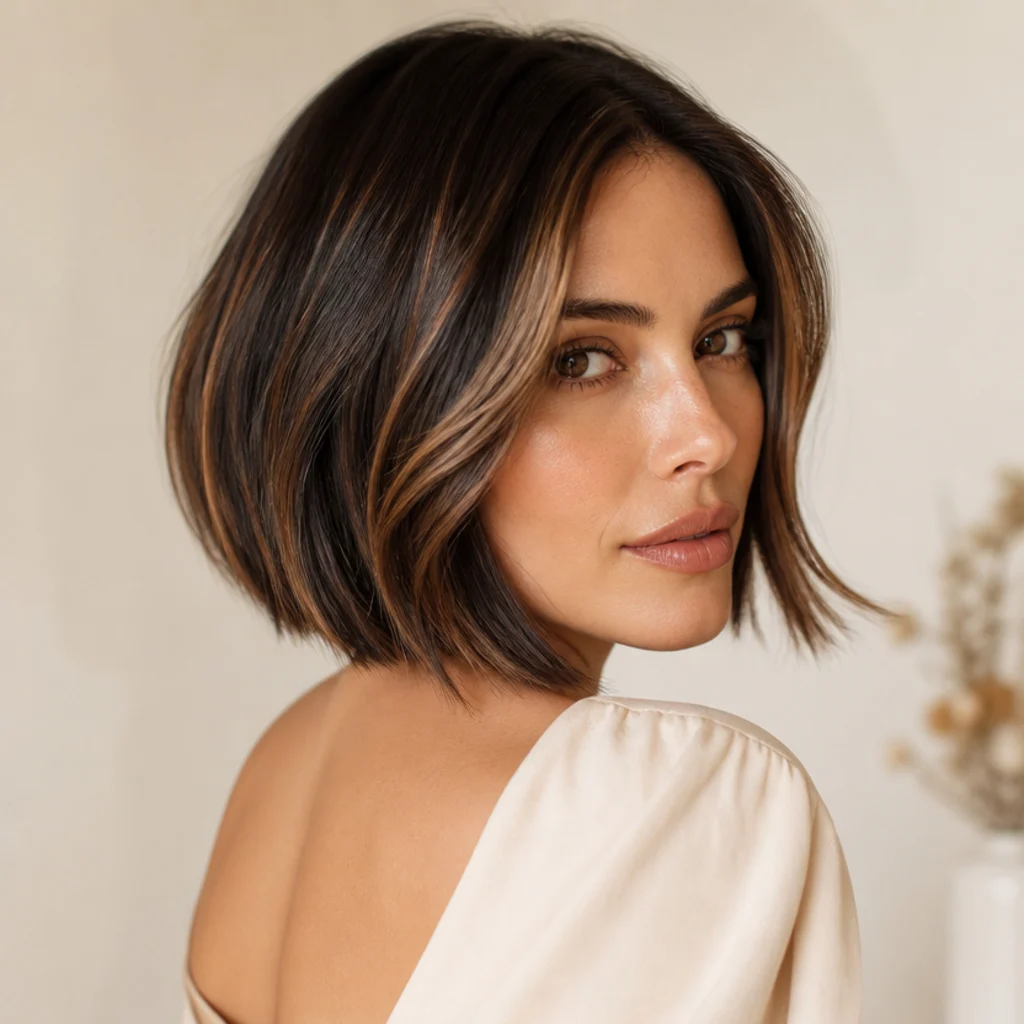
Quick Answer
- Best for: Anyone who loves brunette but wants more light, depth, and the illusion of volume in a short cut.
- Who might skip it: Those wanting one uniform, box-dye-simple shade, or anyone unwilling to swap in color-safe, sulfate-free products between visits.
- Maintenance: Low to moderate. Dark-rooted melts and babylights stretch 8-12 weeks; money pieces, copper, and auburn need a gloss every 4-6.
- Difficulty: Salon-level for the color placement; the bob itself is easy to style and grow out at home.
- Cost: Variable. A partial balayage or babylight service typically runs in the mid-to-upper range at most salons, with glosses billed as a smaller add-on; a full lift to bronde sits higher.
- Wear time / longevity: Placement lasts months as it grows; tone is the variable, with cool ash and red-family shades shifting first.
- Standout variation: Warm caramel ribbons on a chin-length bob, the most universally flattering glow for medium and warm skin.
- How to ask your colorist: Bring two or three photos, name the technique (balayage, babylights, or money piece), and say "root shadow for soft grow-out."
In This Guide
- Warm Caramel Ribbon Bob
- Subtle Chocolate Babylight Bob
- Money Piece Chin Bob
- Espresso Root With Toffee Ends
- Cool Mushroom Brown Bob
- Golden Bronde Bob Melt
- Chestnut Ribbon Lob
- Copper-Kissed Brunette Bob
- Smoky Cocoa Balayage Bob
- Honey Face-Frame Blunt Bob
- Multi Dimensional Brunette Shag Bob
- Warm Auburn-Brown Bob
- Sun-Kissed Tortoiseshell Bob
- Cool Ash-Brown Ribbon Bob
- Rich Mocha Glass Bob
Introduction
Brunette gets called safe, but it holds more tonal range than almost any other shade family, spanning cool ash levels through golden bronde with dozens of stops between. A warm dimensional brunette layers two, three, or four of those tones so light breaks across the hair as it moves, which is precisely what keeps a short cut from reading blocky. On a bob the payoff is doubled: strategic lightness fakes volume where a blunt perimeter tends to fall heavy, and softer, lit-from-within pieces around the face flatter the jaw and cheekbones. The trick is contrast control. Too much and you get stripes; too little and the depth disappears in indoor light. Whether you want a subtle dimensional brunette that reads solid from across a room or a bolder multi dimensional brunette with obvious caramel and cocoa ribbons, the bob is a forgiving canvas because its shorter length shows placement clearly and grows out over a manageable window. Dimensional brunette money pieces, root melts, and babylights all read as current right now, replacing the chunky, high-contrast highlights of a decade ago. These 15 ideas map the exact tones, placement, suitability, and upkeep so you walk in knowing what to ask for and walk out with color that lasts.
01Warm Caramel Ribbon Bob
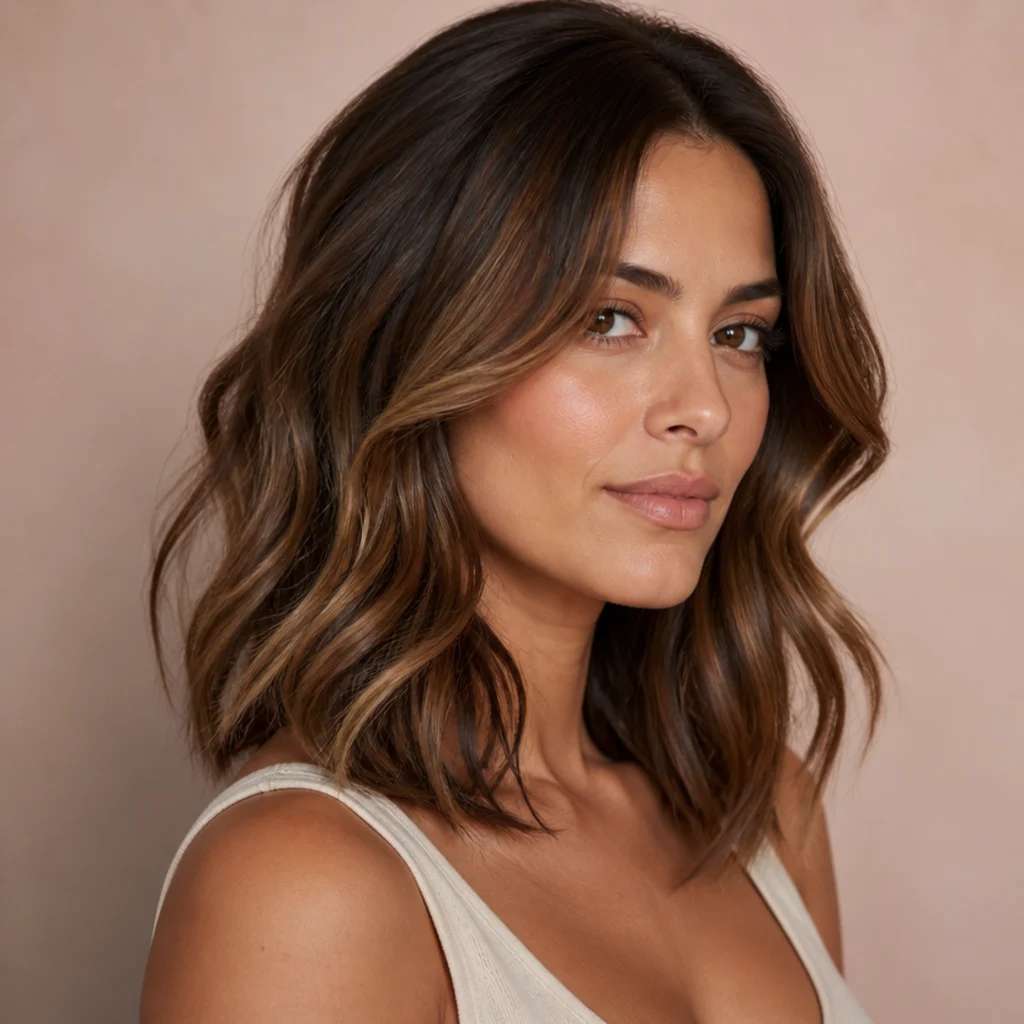
Thin ribbons of golden caramel, roughly a level 7 to 8, woven through a level 4 to 5 chocolate base give this bob its lit-from-within glow. A colorist keeps the root deep and hand-paints the lightest pieces from the mid-shaft down, so the finish reads rich rather than striped and the money is concentrated where light naturally hits. Warm and neutral undertones get the most out of this one: the golden pull softens strong features and warms up sallow skin. Keep the length at chin to just-below-jaw, where medium-density hair shows the ribbons instead of swallowing them. Ask for a balayage placement with a root shadow so grow-out stays gentle and appointments stretch to eight weeks, with a gloss between to keep the caramel from creeping brassy. Pro tip: request the brightest ribbon to fall just below the cheekbone on your part side, where it lifts the face most in photos. Ask your colorist for "teasylights at the hairline" if you want the caramel to read smooth rather than painted-on. This is the strongest entry point into warm dimensional brunette.
02Subtle Chocolate Babylight Bob
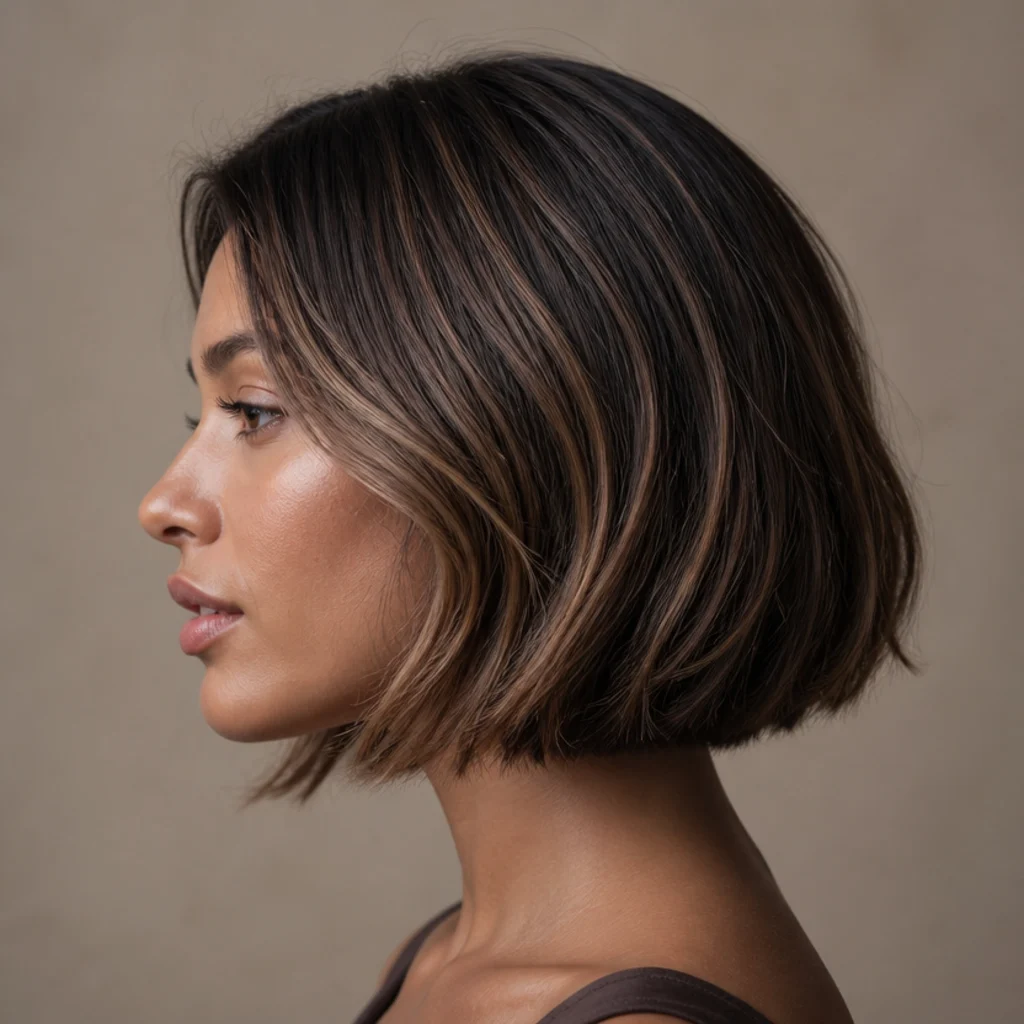
Babylights are the finest highlights a colorist can weave, mimicking the delicate lightness hair holds naturally in childhood. On a level 5 chocolate bob they build depth you feel more than see, lifting only a shade or two so the effect stays quiet. This is the definition of a subtle dimensional brunette: solid from a distance, full of tiny light breaks up close. First-timers, anyone on a corporate dress code, or anyone who wants dimension without visible regrowth will get along with this best. Fine and thin hair benefits most, since the low contrast reads as density rather than stripes and adds the look of a fuller bob. Because the pieces are so fine and blended, root regrowth is soft and forgiving, easily stretching color appointments to ten weeks. The trade-off is time: babylighting a full head takes careful, section-by-section work, so book a longer appointment and expect it to price above a partial. Pro tip: keep them tonally matched to your base, warm on warm, so they never flash lighter than intended in sunlight. Ask your colorist for "babylights, base plus one to two levels only."
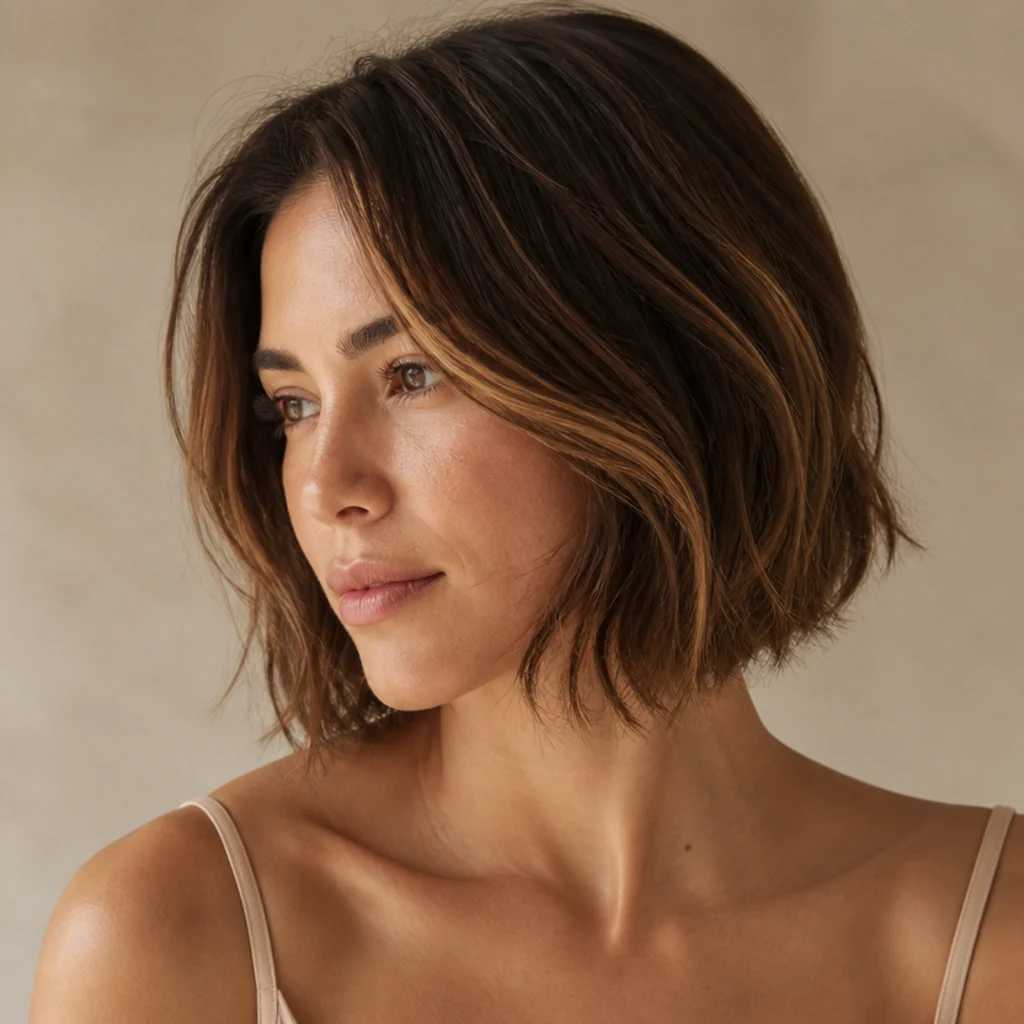
03Money Piece Chin Bob
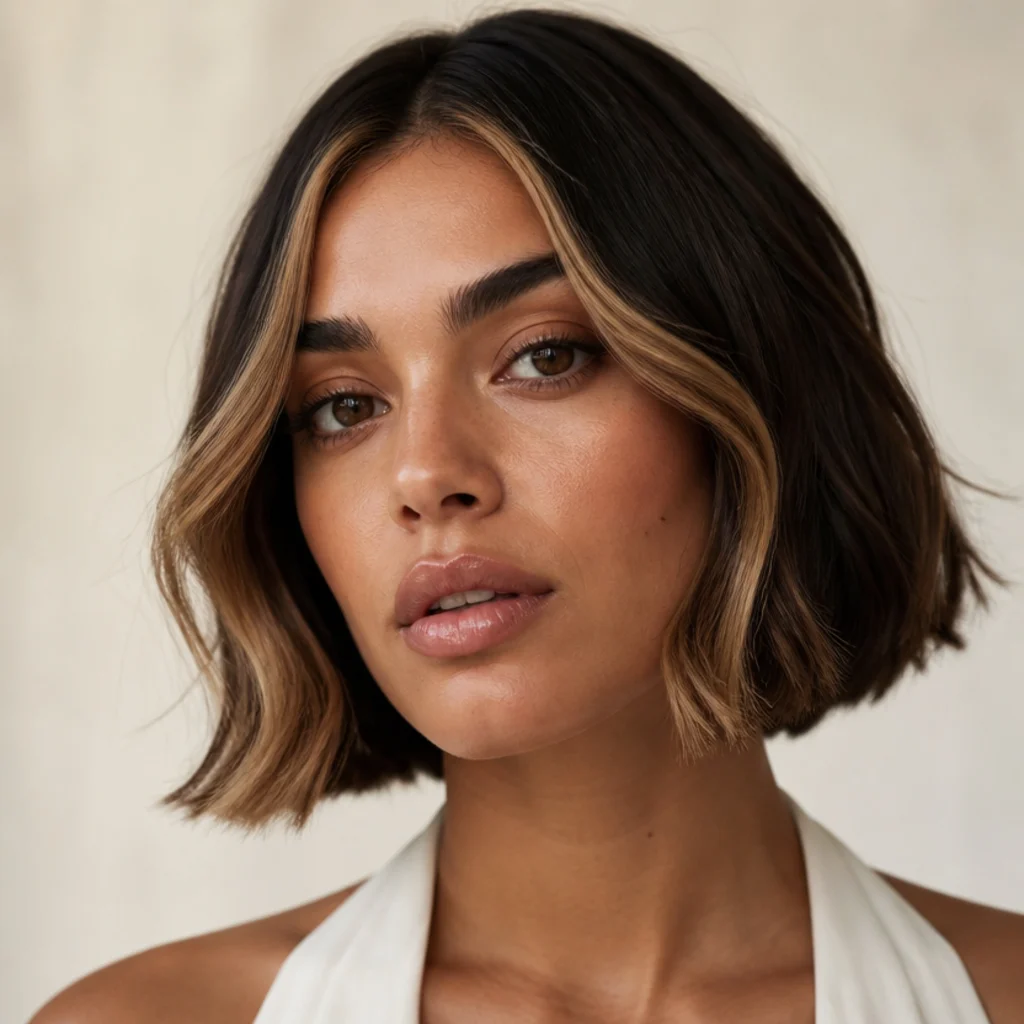
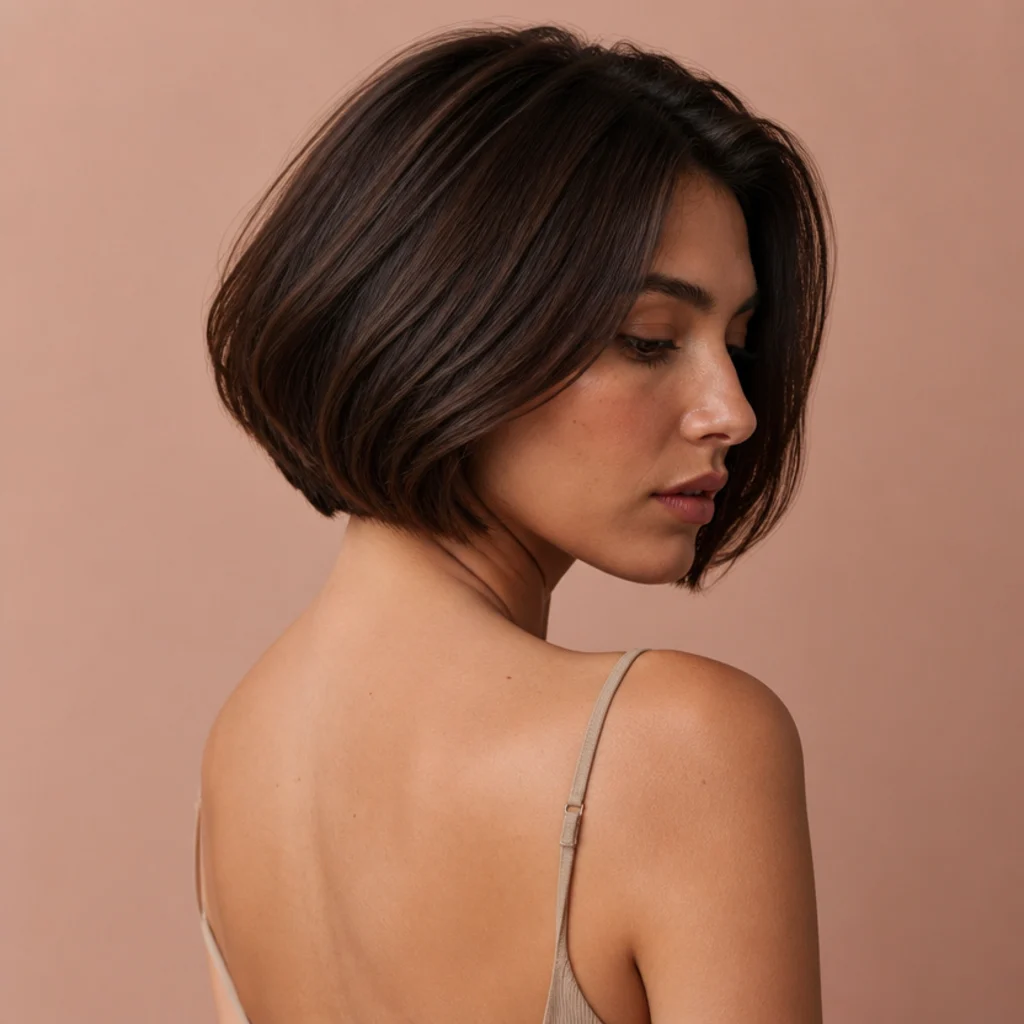
The money piece brightens the two front sections that land right at the jaw on a chin bob, pulling light straight to the eyes and cheekbones. Dimensional brunette money pieces work because the rest of the hair stays deep, so the contrast reads intentional and modern rather than the dated chunky streak of the early 2000s. Lift the front two levels and no more if you want it wearable; go three or four for a bolder, near-blonde frame. It works on most face shapes and is especially good at softening a square or heavy jaw by pulling the eye upward. It photographs beautifully, which is why it trends on Pinterest and social. Keep the base natural and only lift the front to contain upkeep, though expect a toner touch-up every six weeks since the exposed front pieces oxidize fastest. Pro tip: have the color start a half-inch below the part, not at the scalp, so regrowth doesn't create a hard demarcation line. Ask your colorist for a "curtain money piece that softens at the cheekbone."
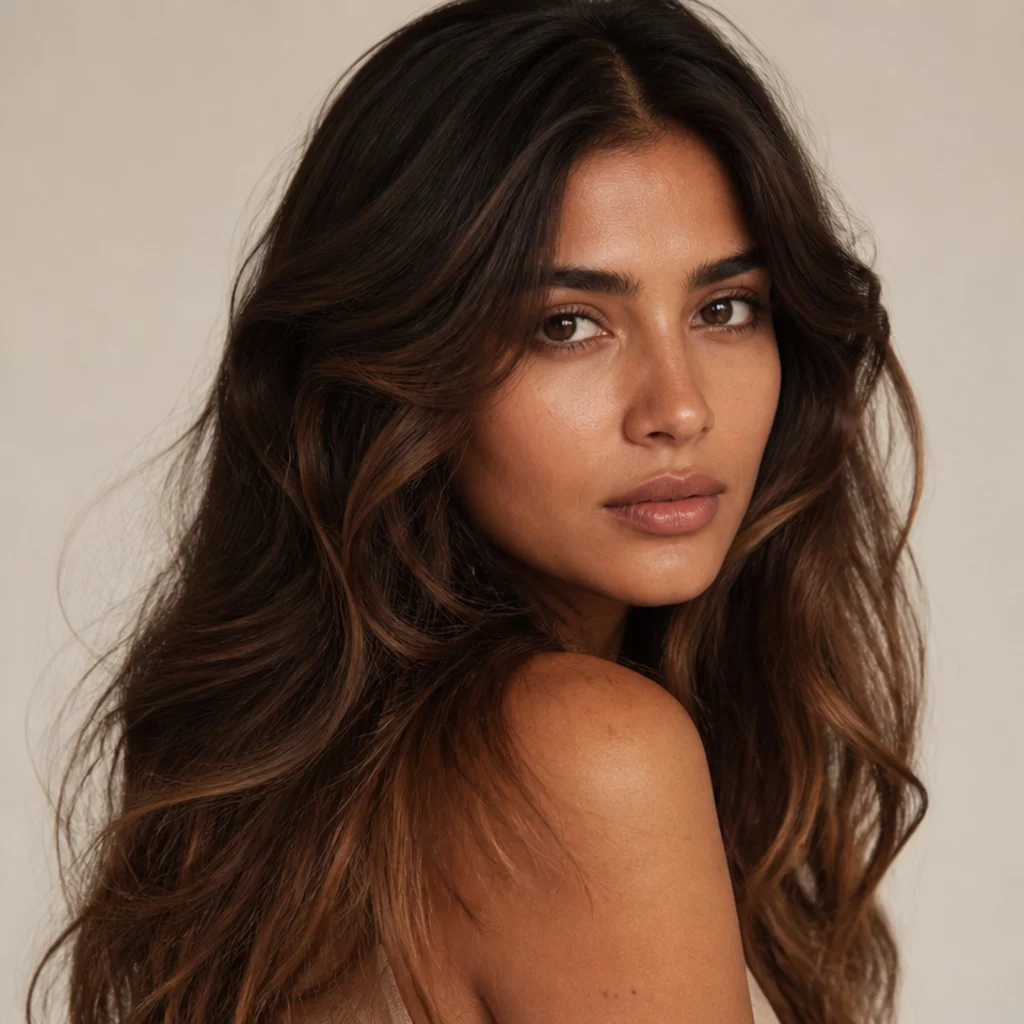
04Espresso Root With Toffee Ends
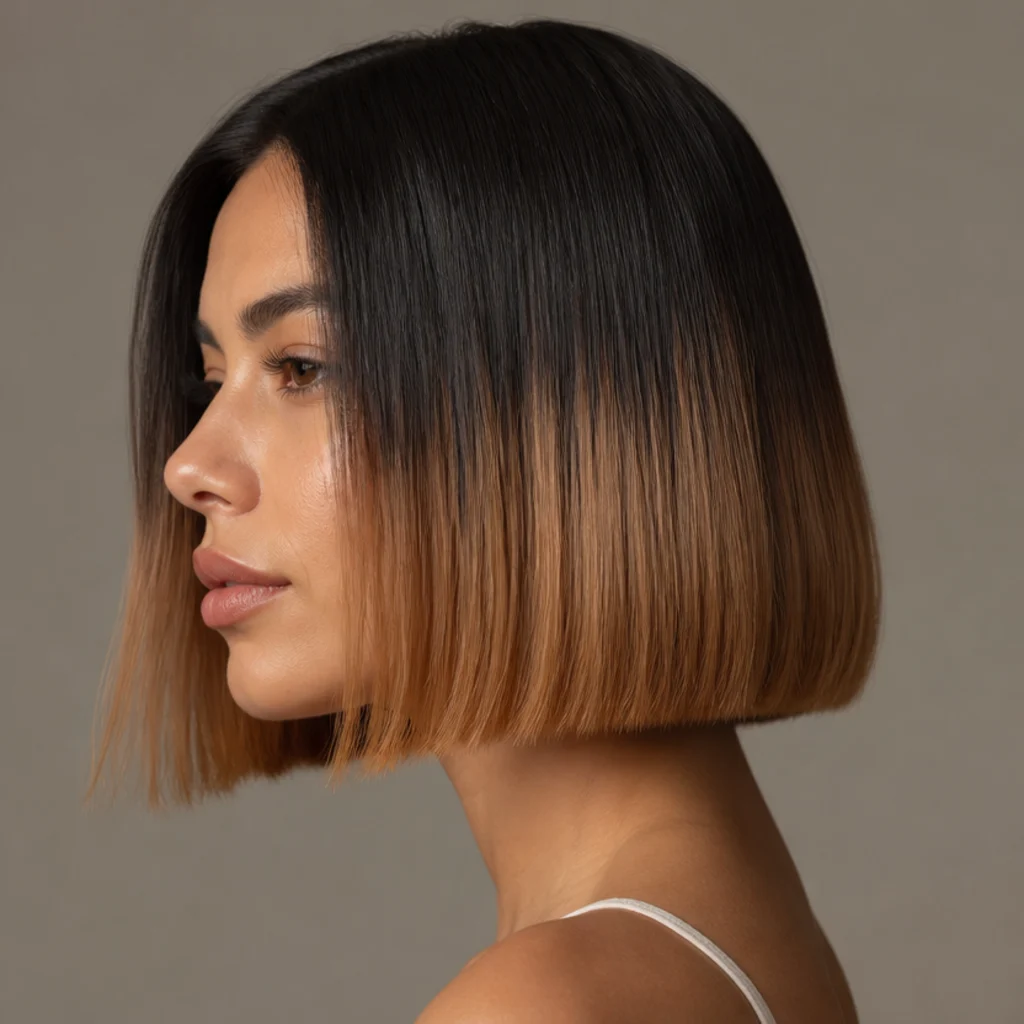
This look runs a dark espresso, around level 2 to 3, through the roots and melts into warm toffee by the ends, a vertical gradient that adds the illusion of length and movement to a blunt bob. The deep root is practical as well as pretty, camouflaging regrowth and reinforcing shine, while the lighter perimeter keeps the shape from looking dense. Deep and olive skin tones look especially good with this, and it's a smart choice for thick or coarse hair that needs lift at the ends without going all-over lighter. Because the root stays dark, grow-out is nearly invisible, making this one of the lowest-maintenance options here, with real appointments needed only every ten to twelve weeks. A mid-cycle gloss keeps the toffee from muddying. Pro tip: on a one-length blunt bob, ask for the melt to begin higher at the back than the front so the gradient still reads when the shape is styled under. Ask your colorist for a "seamless root melt into toffee balayage."
05Cool Mushroom Brown Bob
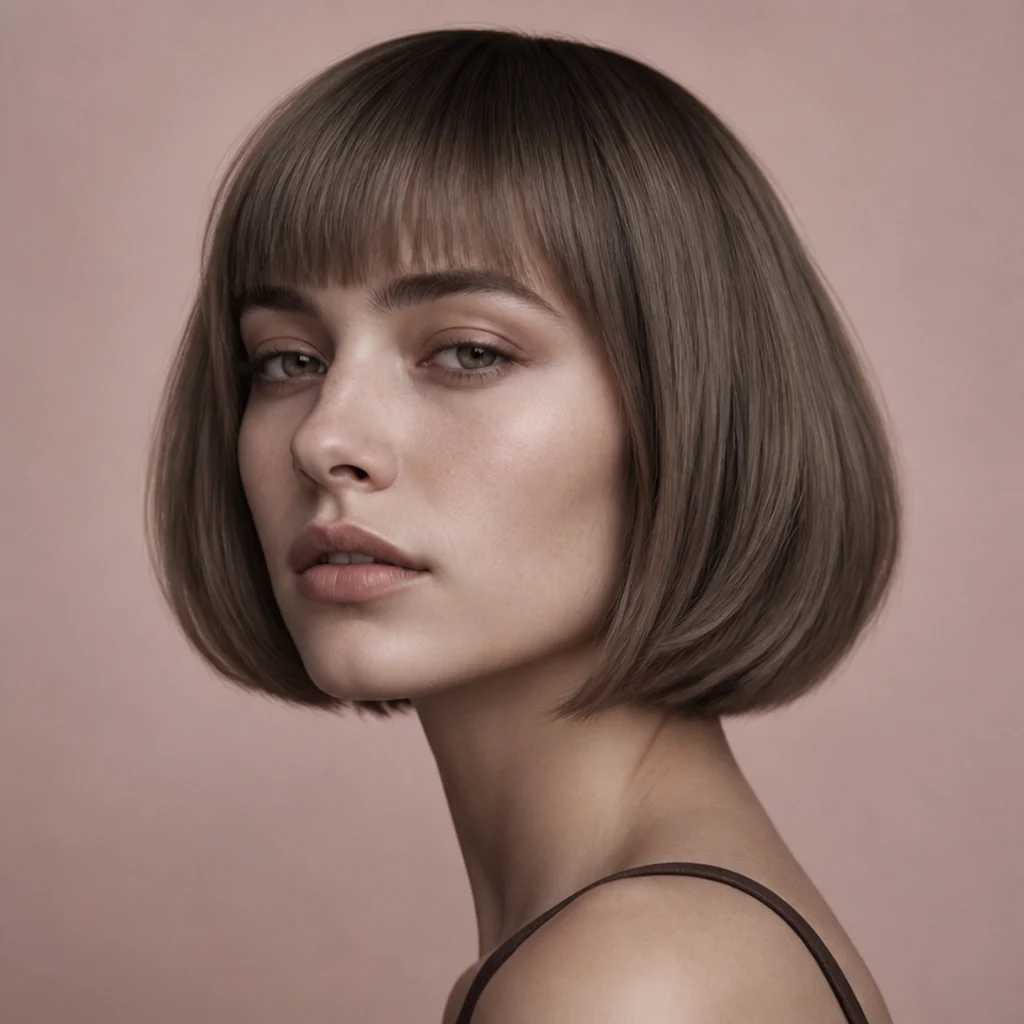
Mushroom brown blends taupe, soft ash, and neutral brown for a muted, smoky finish that still carries genuine dimension. It's the answer for anyone whose warm highlights keep turning brassy, or for anyone who prefers a cooler register outright. Cool and neutral undertones wear the neutral-to-cool cast best, and it sits beautifully against pink-based skin, though very warm complexions can find it draining. This look leans on toner and controlled lift rather than high lightening, so the pigment is deposited more than pulled. Plan a gloss every five to six weeks, because ash is the first tone to fade and warmth creeps back as it does. A sulfate-free, color-safe routine and cooler wash water extend the cool cast noticeably between visits. Pro tip: ask for a violet-based, not blue-based, toner if your hair tends to pull red, since violet neutralizes the underlying warmth brown hair exposes when lifted. Ask your colorist for "a mushroom brown with a neutral-cool root, no gold."
Save this to Pinterest to compare warm and cool dimensional brunettes side by side.
06Golden Bronde Bob Melt
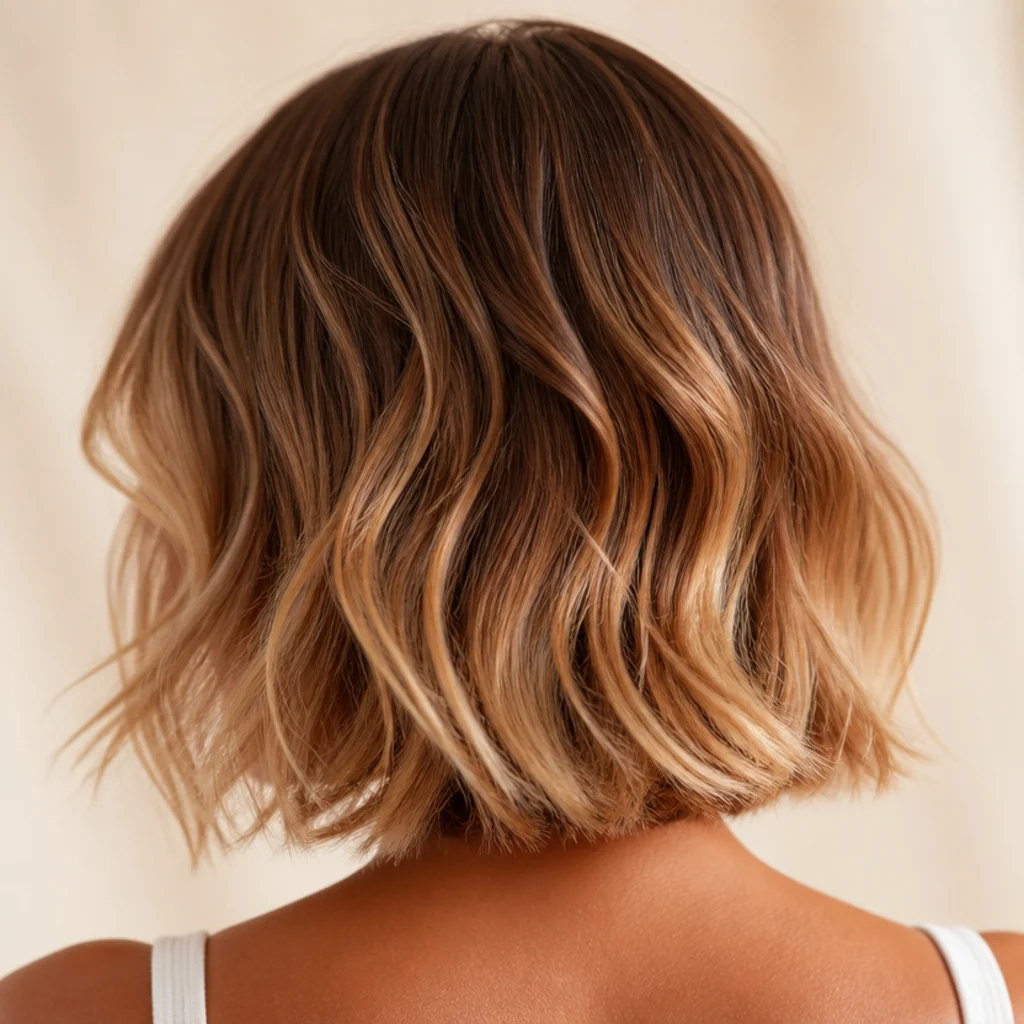
Bronde sits at the border of brunette and blonde, and on a bob it reads as the brightest end of the dimensional spectrum. Golden ribbons melt through a level 7 light-brown base for a sunlit finish that suits warm and tan skin, and green or amber eyes pick up the gold nicely. This is a meaningful lift, so budget a longer first appointment, a bond-building additive in the lightener, and a higher price point than the darker looks here. Upkeep runs higher too: root touch-ups every six weeks and regular glossing to keep the gold clean rather than yellow. Medium to thick hair handles the lift best, since fine hair can feel fragile once taken this light. Pro tip: ask for a lived-in or shadow root so you can stretch grow-out to eight weeks without a harsh line, which offsets the higher maintenance. Choose this if you want your brunette to skew as light and warm as the shade family allows. Ask your colorist for a "golden bronde balayage with a smudged root."
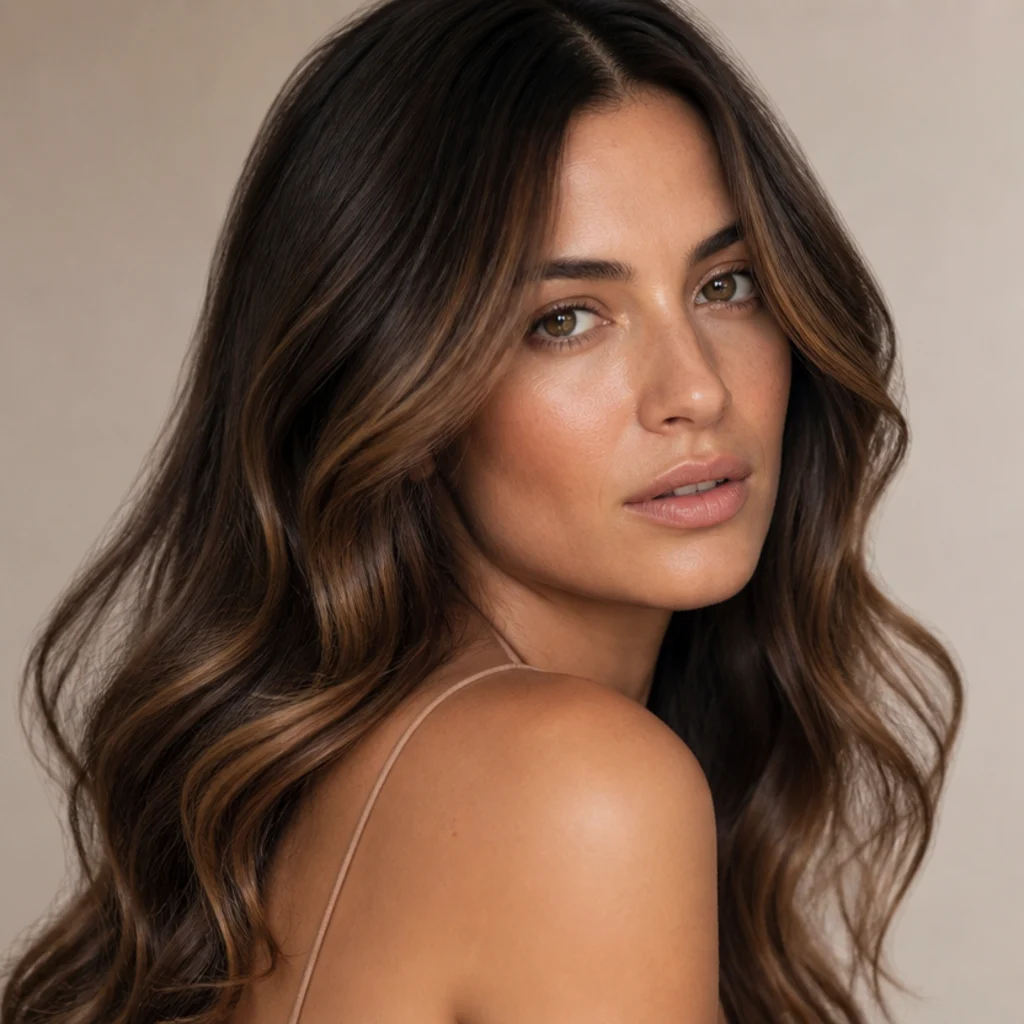
07Chestnut Ribbon Lob
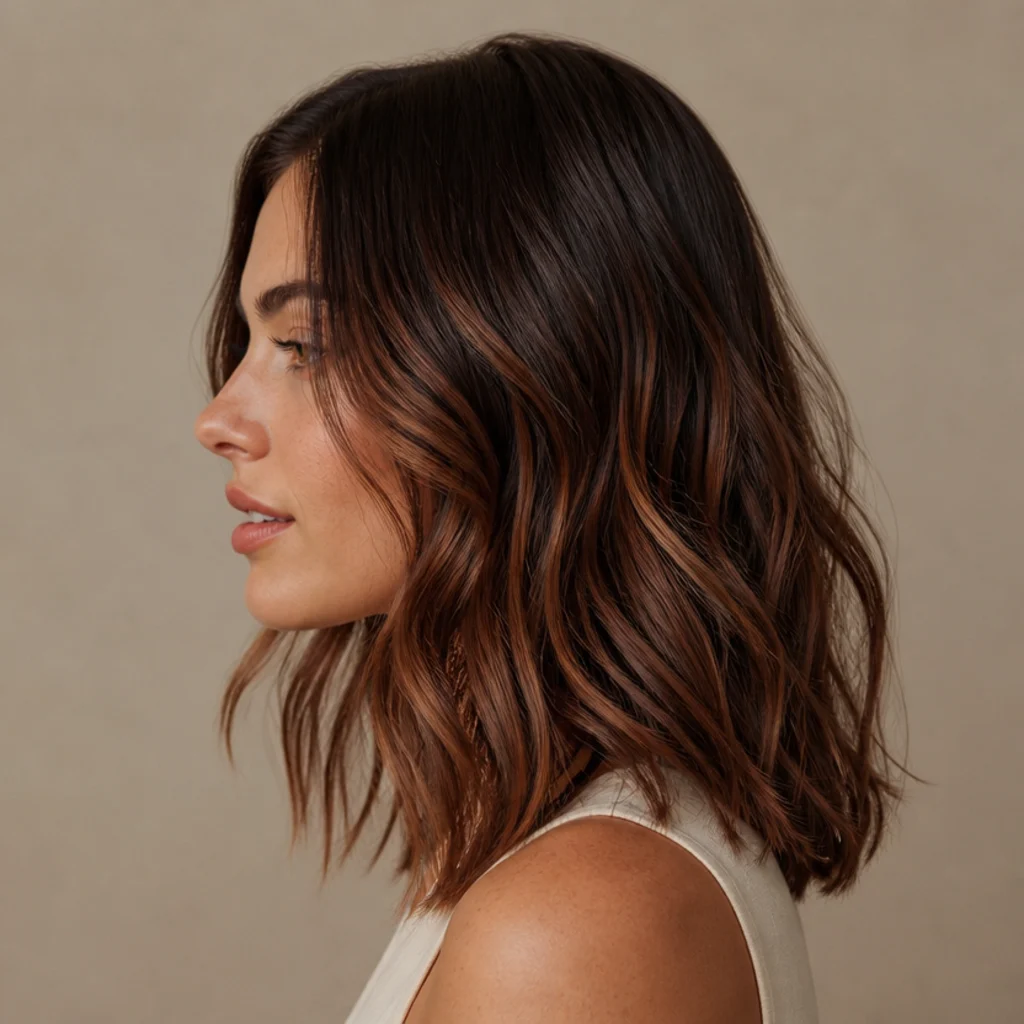
A lob, the longer cousin of the bob that grazes the collarbone, gives ribbons more room to travel and melt gradually. Chestnut brings a red-brown warmth, think level 5 with a copper-red base tone, that glows against a deeper brown and reads romantic rather than bold. The extra length lets the color transition softly, so there's no abrupt line between base and ribbon. Warm and neutral undertones suit it well, and so does anyone not ready to lose all their length to a true bob. Be realistic about longevity: red-family molecules are the largest and sit closest to the cuticle surface, so they wash out fastest. A color-depositing gloss or a red-safe conditioning mask every couple of weeks keeps the chestnut from going muddy or ashy. Pro tip: cut back to two or three washes a week and use lukewarm water, since heat opens the cuticle and speeds red fade more than any other tone. Ask your colorist for "chestnut ribbons over a level 5 base, warm not orange."
08Copper-Kissed Brunette Bob
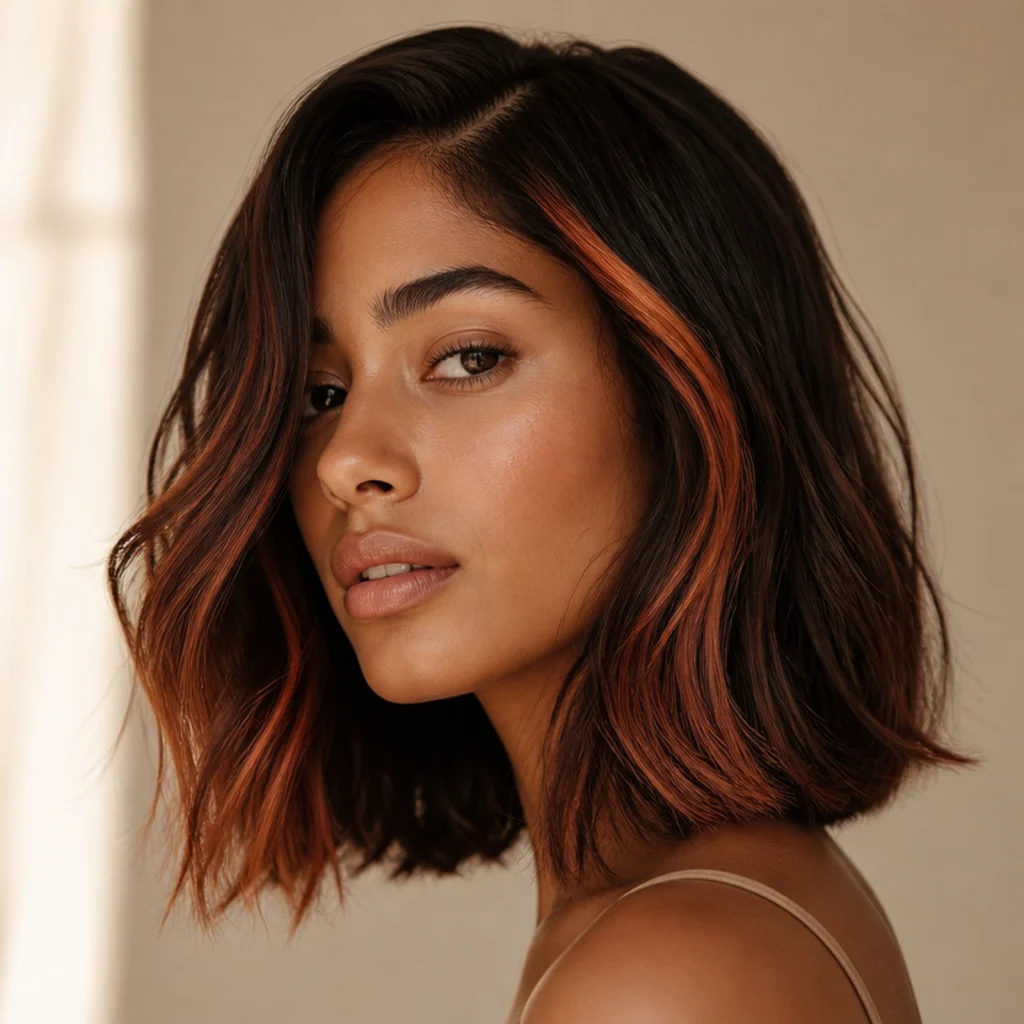
Copper threaded through brown adds a flash of warmth that stops short of full red, a spicy, autumnal read that suits the season without the commitment of an all-over copper. On a bob, the copper pieces are placed to catch light around the face and through the ends, so movement reveals them. Warm and golden undertones wear it best, and it revives deep brunettes who feel washed out by cool tones or gray-drab regrowth. Copper is a fugitive pigment, one of the fastest to fade, so a refreshing gloss every four to six weeks and a copper- or red-depositing conditioner between visits are essential, not optional. Fine hair shows the copper vividly; coarse hair may need slightly more saturation to read. Pro tip: apply a color-depositing gloss the same day you notice the shine dulling rather than waiting for a salon slot, since copper looks best refreshed early. Ask your colorist to "place the copper where the light hits the perimeter" for the biggest payoff per foil.
09Smoky Cocoa Balayage Bob
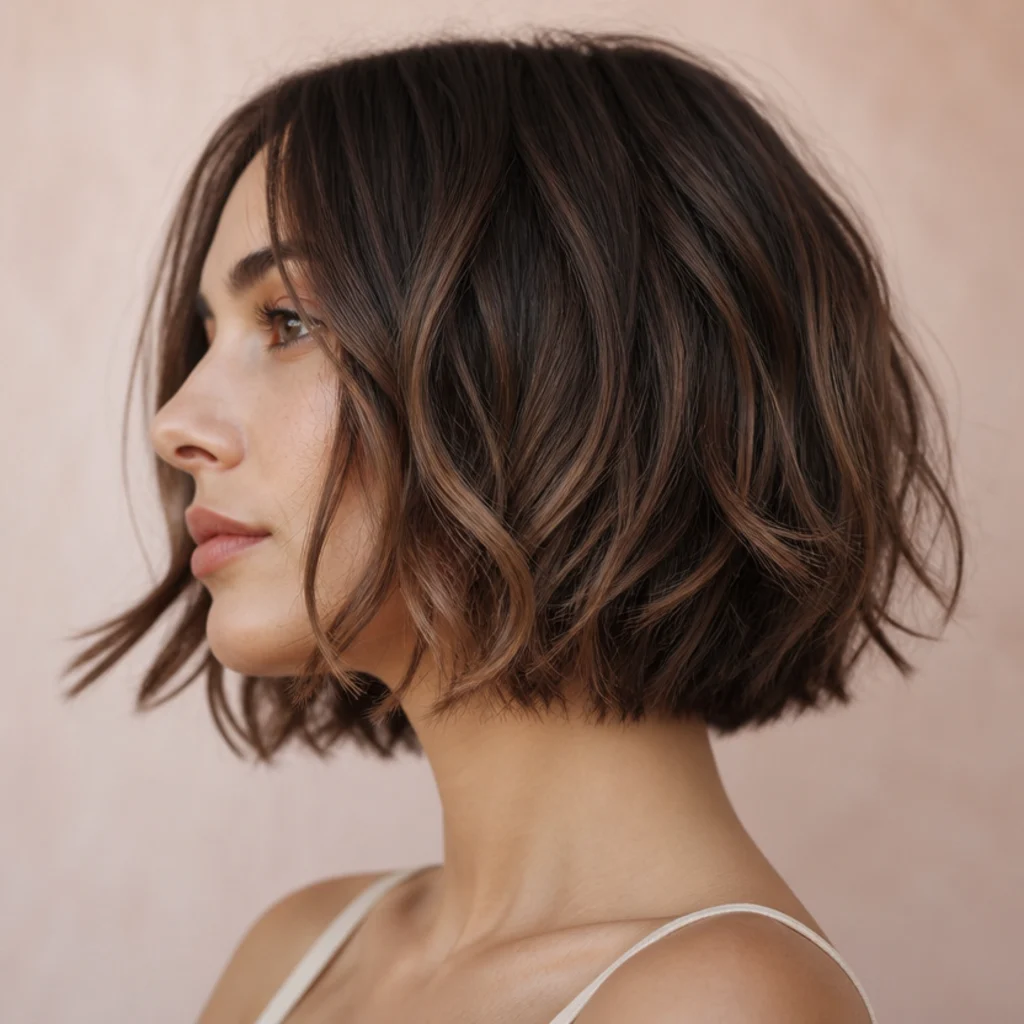
Balayage is freehand hand-painting, and on a level 4 cocoa bob it creates a smoky, lived-in depth that grows out gracefully because there are no hard foil lines. The colorist sweeps softer cocoa tones through the mid-lengths and ends while keeping a deliberate root shadow up top, so the transition looks smooth from any angle. Almost every undertone can wear it thanks to the balanced, neutral-warm cast, and it's ideal for busy schedules since the diffused grow-out stretches to ten or twelve weeks between full services. It reads as a warm dimensional brunette with a modern, undone edge that feels expensive rather than done. A gloss between cuts keeps the cocoa from shifting brassy while you wait out the longer cycle. Pro tip: ask for the balayage to stay below the occipital bone at the crown so the top layer keeps its depth and the whole look reads richer. Ask your colorist for a "soft cocoa balayage with a smudged, shadowed root."
10Honey Face-Frame Blunt Bob
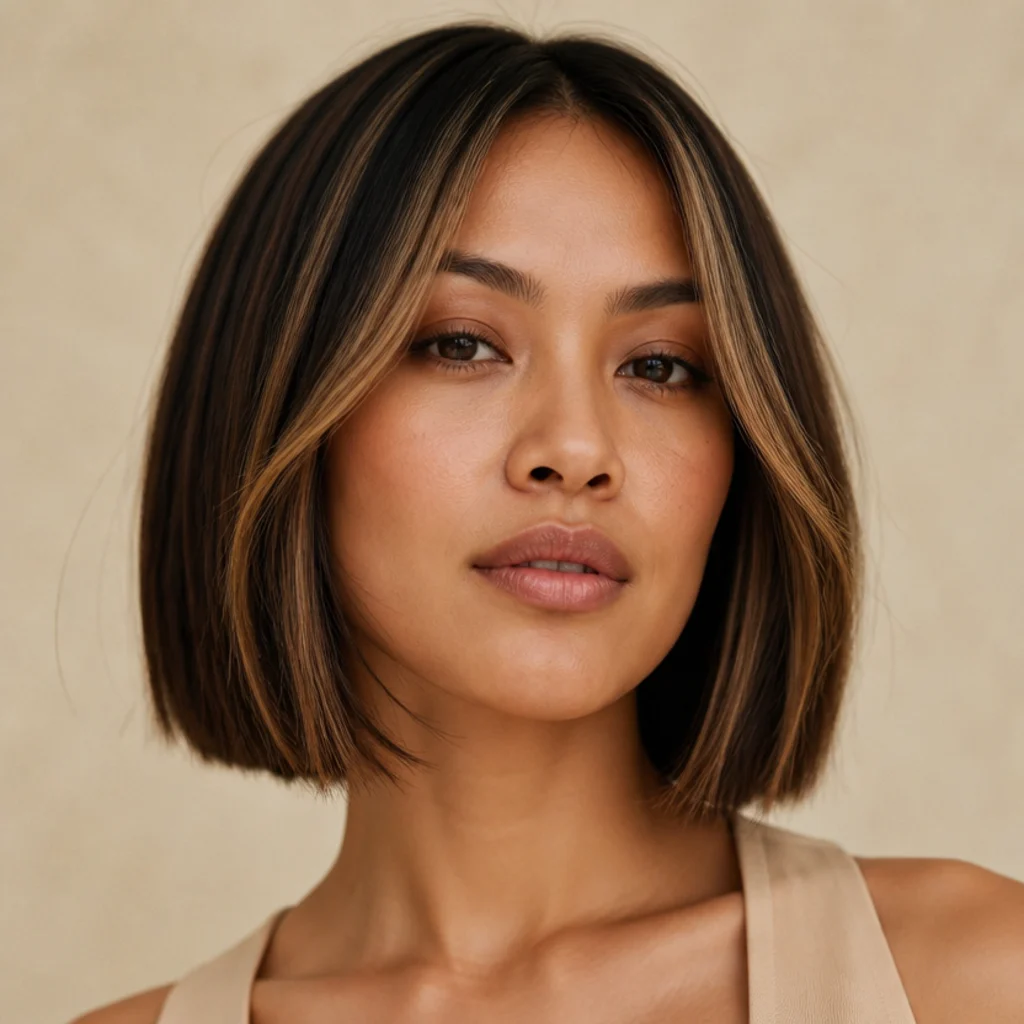
A blunt bob has a strong, graphic perimeter, and honey face-framing pieces soften that line without breaking the shape. Honey, a golden level 7 to 8, sits at the front and lightly through the top layers, adding a glow that suits warm and neutral complexions. Unlike a high-contrast money piece, this framing is gradual and diffused, so it feels understated and grown-up, better suited to those who want brightness that flatters the skin rather than a statement piece. It works on straight and wavy textures where the blunt line stays crisp. Plan a toner refresh every six weeks to hold the honey golden rather than letting it slide orange as it oxidizes. Pro tip: on a blunt one-length bob, ask for the face-frame to be slightly lighter at the tips than the mid-shaft, which draws the eye down the line and elongates a round face. Ask your colorist for "diffused honey face-framing, no hard money-piece edge."
11Multi Dimensional Brunette Shag Bob
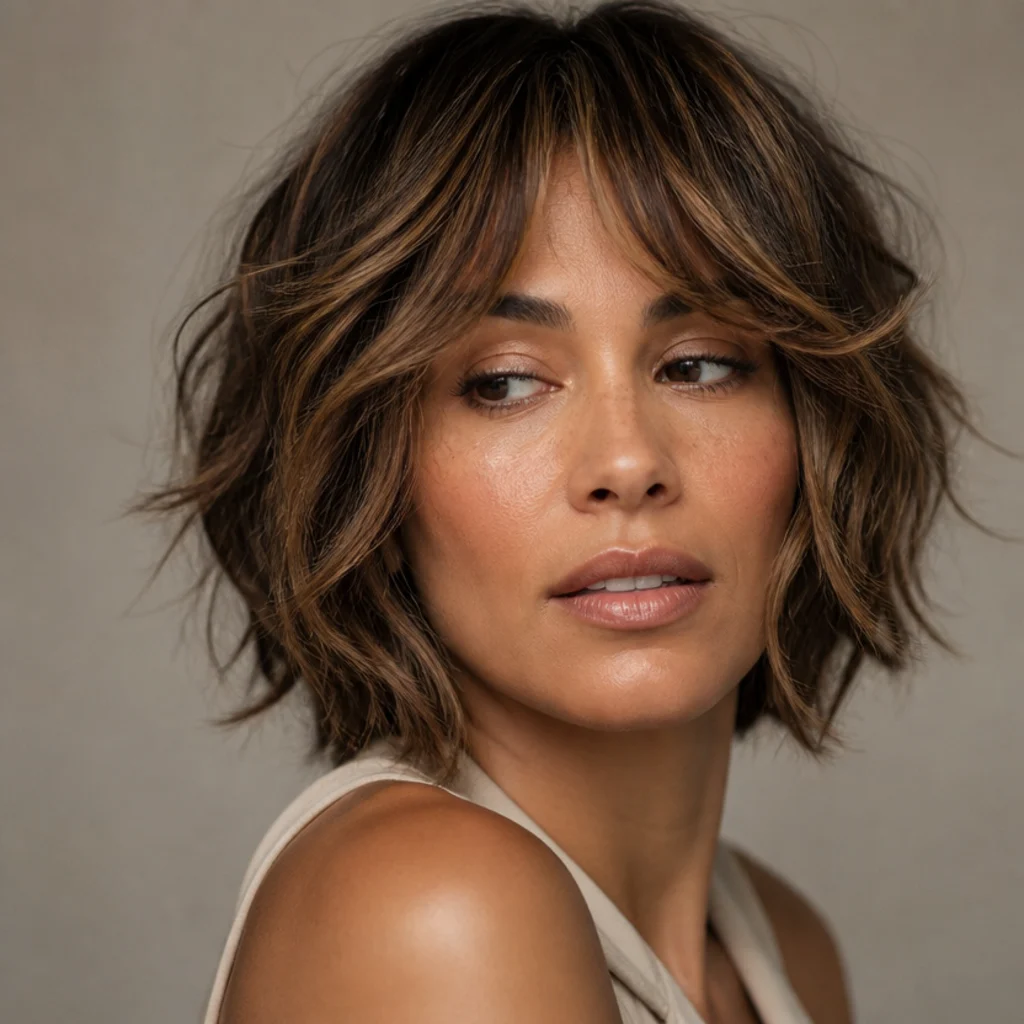
A shag bob is built on visible layers and texture, and those choppy layers are the ideal home for multiple tones. Caramel, cocoa, and a soft toffee weave through the shape so every flick and piece reveals a different shade, making this the fullest expression of a multi dimensional brunette. The layered texture also hides regrowth exceptionally well, so grow-out is a non-event. Wavy and curly textures suit it best, since movement animates the color and the shag's layers are built around natural bend. Fine hair gains the most apparent volume from the tonal variety, while thick hair gets a lived-in, effortless read. Air-dry with a lightweight curl cream or texture spray to let the layers separate and the dimension show at its best; smoothing it flat mutes the effect. Pro tip: ask for the lightest tone to sit on the layers that fall forward around the face, so the brightness frames you as the shape moves. Ask your colorist for "multi-tonal balayage mapped to the shag's layers."
12Warm Auburn-Brown Bob
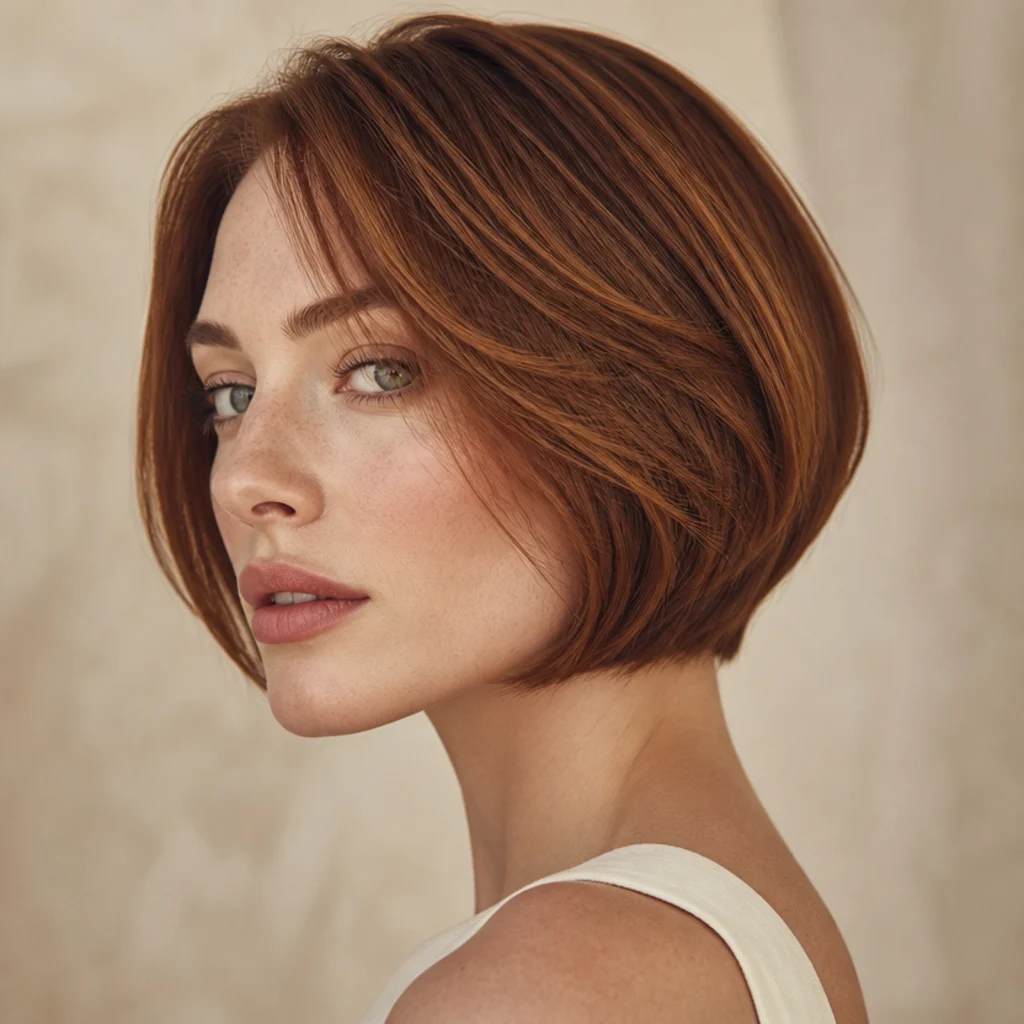
Auburn brings a red-gold warmth that turns a plain brown bob into something with genuine glow and depth. Kept dimensional, the auburn is placed as ribbons over a deeper level 4 brown so it stays wearable rather than flat and uniform. Warm undertones benefit most, and it pairs beautifully with green, hazel, and amber eyes, echoing their warmth. Be clear-eyed about upkeep: red-family tones fade fastest of all, so a color-depositing conditioner, cooler wash water, and fewer washes are non-negotiable to hold the shade. Refresh with a gloss every four to six weeks and the auburn stays rich instead of drifting to a dull orange or washed pink. Medium density shows the ribbon-over-base contrast best. Pro tip: ask your colorist to add a small amount of the red gloss into your take-home conditioner ratio, or recommend a matched red mask, so you can top up tone at home between visits. Ask your colorist for "auburn ribbons, red-gold not brassy, over a deep base."
13Sun-Kissed Tortoiseshell Bob
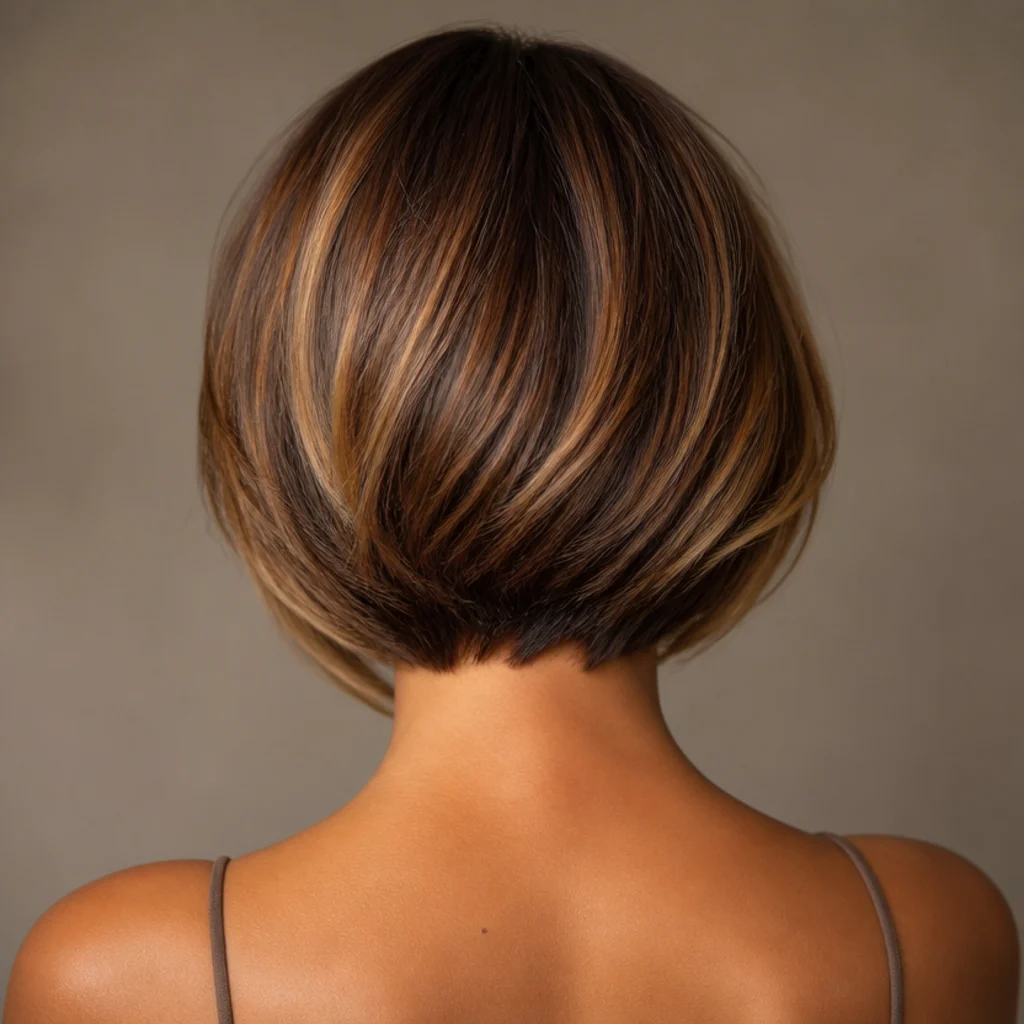
Tortoiseshell, sometimes called ecaille, blends chocolate, caramel, and honey the way a real tortoise shell mixes tones, for a warm, glowy, high-value result. On a bob the closely woven shades create soft dimension with no harsh lines, so it reads polished and expensive precisely because the transitions are so gradual. Warm and neutral skin tones look best in it, especially if you want warmth and depth without obvious, traceable highlights. The intricately blended placement makes grow-out gentle, stretching appointments to eight or ten weeks, though the artistry means a longer chair time and a higher initial price. Straight and softly waved bobs show the tonal blend most clearly. Pro tip: bring a photo in indoor light, not just bright sun, so your colorist calibrates the caramel-to-honey ratio for how you'll actually see it day to day. Ask your colorist for "an ecaille tortoiseshell melt, chocolate through honey."
14Cool Ash-Brown Ribbon Bob
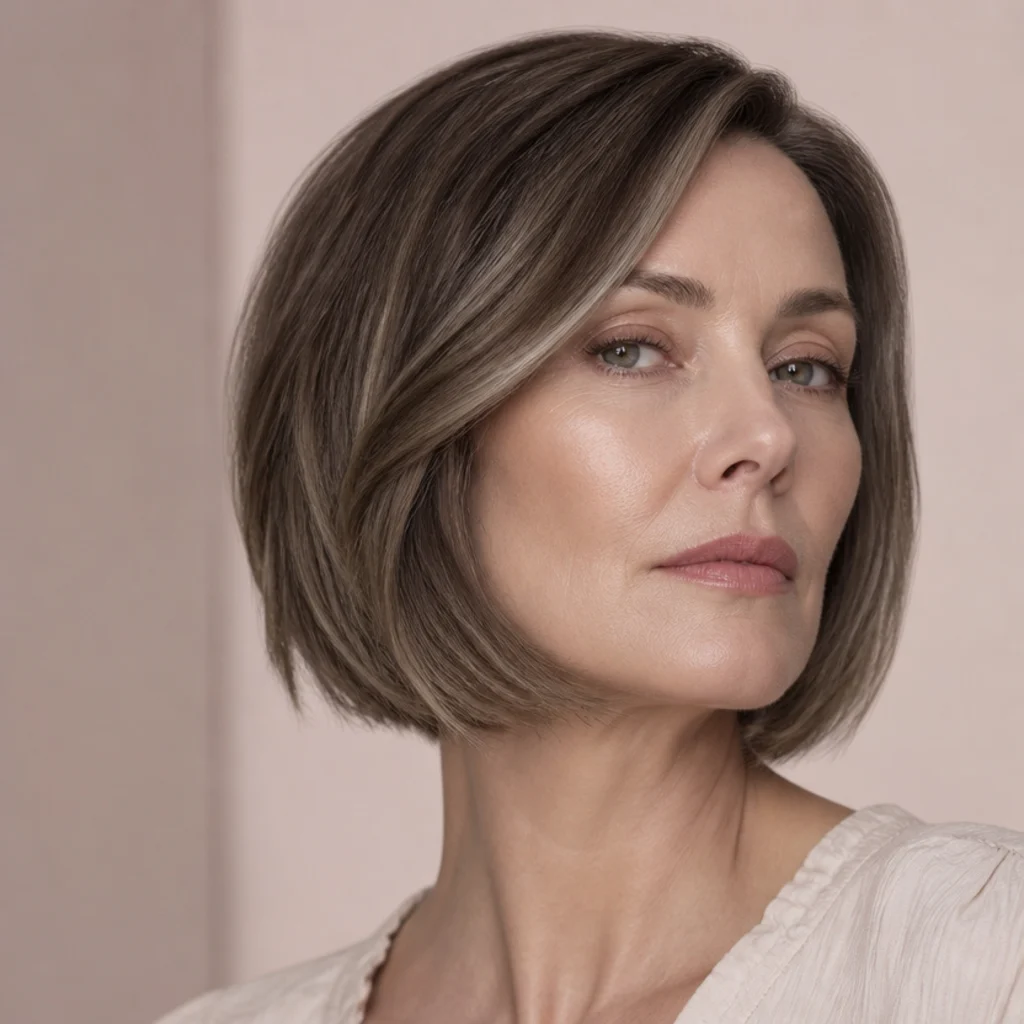
For anyone who wants dimension without a hint of warmth, ash-brown ribbons deliver a cool, matte depth. Soft ash pieces, a level 5 to 6 with a green-blue base tone, break up a neutral-brown base so the hair keeps movement in a distinctly cooler register. Cool and neutral undertones wear it best, along with anyone whose skin competes with golden tones or looks ruddier beside warm shades. Ash is high-maintenance in the tone department: it needs frequent refreshing because the underlying warmth in brown hair reasserts itself quickly. Plan a gloss every five to six weeks and use a blue-based, not purple, shampoo once or twice weekly to counter orange rather than yellow. Fine and medium hair take ash cleanly; very coarse or previously warm-dyed hair may resist and pull muddy. Pro tip: skip clarifying and hard-water buildup, which both dull ash to a flat gray, and consider a shower filter if your water runs hard. Ask your colorist for "cool ash-brown ribbons with a blue-green base, matte finish."
15Rich Mocha Glass Bob
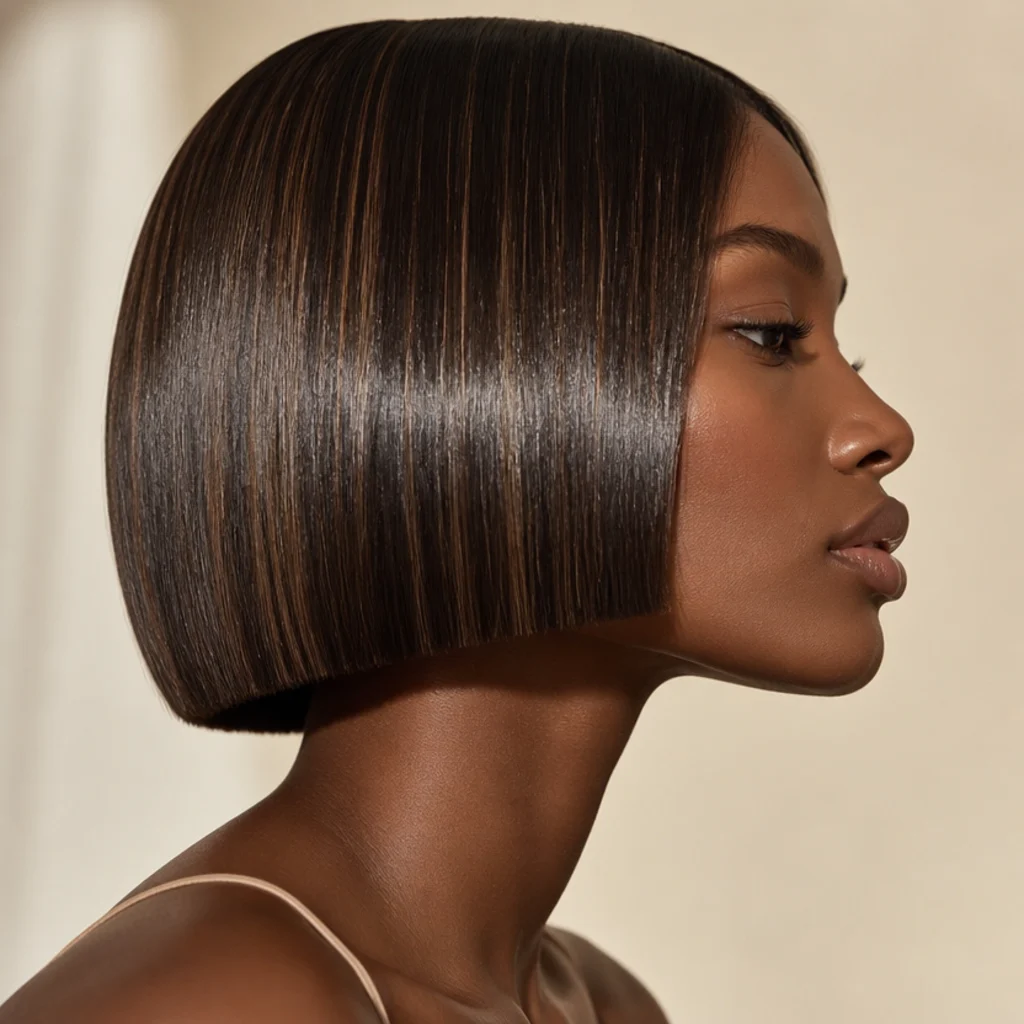
A glass bob is engineered around shine, and a rich mocha base with fine tonal depth makes that gloss look liquid. The dimension here is deliberately quiet, built from soft mocha and warm-brown lowlights rather than bright highlights, so the surface stays sleek and mirror-like. Anyone who prefers polish over contrast will like this, and it works across all textures when styled smooth, though a blunt, one-length cut with a clean perimeter shows it off best. The look lives and dies on finish: a shine-boosting glaze or acidic gloss, a smoothing blow-dry with the nozzle pointed down the cuticle, and a drop of oil on the ends are what sell the glass effect. Because the depth is tonal rather than lightened, upkeep is mostly glossing to keep the mocha deep and reflective, roughly every six to eight weeks. Pro tip: finish with a cool-shot blast on the last pass of the dryer, which flattens the cuticle and is the single biggest lever on how glassy the surface reads. Ask your colorist for "a mocha base with subtle lowlights and a high-shine acidic gloss."
Pro Tips from the Editor
- Match placement to your part. Most people wear a bob on one habitual part, so ask your colorist to weight the brightest pieces on the side that shows, not evenly around the head where half is hidden.
- Book the gloss, not just the cut. Dimensional brunette is a tone-maintenance game more than a lift game. A standalone gloss every 5-6 weeks costs a fraction of a full service and does the most to keep color from going brassy or muddy.
- Warmer tones fade faster, full stop. Copper, auburn, and chestnut sit highest on the fade-speed list, followed by ash. If you refuse to adjust your washing, choose a neutral cocoa or dark-rooted melt instead.
- Lower the water temperature before you buy any product. Hot water opens the cuticle and strips tone faster than the wrong shampoo ever will; lukewarm rinses are the cheapest color insurance there is.
- On fine hair, contrast reads as thickness. Fine babylights and low-contrast ribbons create the optical density thin bobs lack, so lean subtle rather than into big blonde money pieces that can expose the scalp.
- Ask for a root shadow if you hate salon frequency. A smudged or shadowed root turns a hard grow-out line into a gradient, which is the single best way to buy weeks between appointments.
- Bring indoor and outdoor photos. Color looks lighter and warmer in sun; showing your colorist both lighting conditions prevents an "it looked different in the salon" surprise.
How to Choose / Get the Look
| Tone family | Best undertone | Fade speed | Gloss cadence |
|---|---|---|---|
| Neutral cocoa / espresso melt | All | Slow | 8-12 weeks |
| Caramel / honey / tortoiseshell | Warm, neutral | Moderate | 6-8 weeks |
| Bronde / money piece | Warm, neutral | Moderate-fast | 6 weeks |
| Mushroom / ash | Cool, neutral | Fast (tone) | 5-6 weeks |
| Copper / auburn / chestnut | Warm | Fastest | 4-6 weeks |
Work through four decisions in order. First, undertone. Warm and golden skin glows next to caramel, honey, copper, auburn, chestnut, and tortoiseshell; cool and pink-based skin stays fresh with mushroom, ash, and smoky cocoa; neutral undertones can wear almost anything, so choose by mood and eye color. Second, your maintenance ceiling. Be honest: red, copper, and auburn tones fade fastest and demand color-safe products plus glosses every four to six weeks, while dark-rooted melts, babylights, and tortoiseshell stretch to eight, ten, or twelve. If you will not change your routine, pick from the low-upkeep column. Third, texture and cut. Layered, shag, and curly shapes show multi-tonal color beautifully because movement reveals the tones, while blunt one-length bobs suit smoother, glass-like finishes and diffused face-framing over busy ribbons. Fine hair wants low contrast for the illusion of density; thick hair can carry more separation. Fourth, the booking language. Bring two or three photos in mixed lighting and use precise words: root shadow or root melt for soft grow-out, balayage or babylights for the technique, money piece for face-framing brightness, and a level number if you know it. Tell your colorist your true wash frequency and heat-styling habits so placement lands where it flatters and lasts, and ask about a bond-building treatment any time you lift more than a couple of levels. If in doubt, book a consultation before the color appointment so the plan and price are set before the timer starts.
Frequently Asked Questions
What makes a brunette look dimensional?
Dimension comes from layering two or more tones, typically a deeper base with lighter ribbons, babylights, or a melt, so light catches the hair as it moves instead of reflecting off one flat color. The illusion depends on controlled contrast: enough tonal difference to read in indoor light, but soft enough that it looks natural rather than striped.
Is dimensional color harder to maintain on a bob?
Not usually, and often it's easier. A short cut grows out over a shorter window before your next trim, and dark-rooted melts or babylights blend regrowth so well you can go eight to twelve weeks. The variable is tone, not placement: bright money pieces and warm shades need a gloss every four to six weeks regardless of length.
Will dimensional highlights make my thin bob look fuller?
Yes, this is one of the best reasons to do it. Fine babylights and low-contrast ribbons create the optical illusion of density and movement, so thin or fine hair reads noticeably thicker than it does in a single flat shade. Keep the contrast subtle, since very light money pieces on a thin bob can expose the scalp instead.
How do I keep warm tones from fading brassy?
Wash less often and in lukewarm water, switch to sulfate-free color-safe shampoo, and book a gloss every five to six weeks. A color-depositing conditioner refreshes warmth between visits, and limiting hot tools and sun exposure slows the fade, since heat and UV both accelerate tonal loss.
What should I ask for to get soft grow-out?
Ask for a root shadow or root melt paired with balayage placement rather than foils that start at the scalp. Keeping the root deep means regrowth blends into a gradient instead of forming a hard demarcation line, which is what lets low-maintenance clients stretch to ten or twelve weeks.
Which dimensional brunette shade lasts the longest between salon visits?
An espresso-root melt into toffee, or a soft cocoa balayage, lasts longest because the dark root hides regrowth and the neutral tones fade slowly and gracefully. Ash and every red-family tone (copper, auburn, chestnut) fade fastest and need the most frequent glossing, so choose the darker, warmer-neutral options if longevity is your priority.
Can I get a dimensional brunette bob if my hair is previously box-dyed or dark?
Often yes, but expect a longer process and a consultation first. Box dye and old dark color can sit unevenly and pull warm or muddy when lifted, so your colorist may need multiple sessions or a color remover before placing ribbons. Be upfront about your full color history, since it changes both the plan and the price.
Does dimensional color work on curly or coily bob textures?
Very well. Curls and coils naturally bend light, so multi-tonal placement like the shag or tortoiseshell reads even richer as the pattern moves. Ask your colorist to paint the color in your hair's natural curl formation, not stretched straight, so the brightness lands where the curl actually falls.
How much lighter than my base should the highlights be?
For a subtle dimensional brunette, one to two levels lighter than your base keeps it believable and low-maintenance. For a bolder multi dimensional brunette or a money piece, three to four levels creates obvious ribbons and more drama. Going beyond four levels moves you toward bronde territory, which means a bigger lift, a bond-builder, and higher upkeep.