15 Warm Dimensional Brunette Hair Ideas
Dimension is what makes brown hair look expensive instead of flat. These 15 warm brunette ideas weave caramel, honey, chestnut, cinnamon and mocha through a deeper base so color catches the light from every angle, with exact tones, honest upkeep windows, who each look flatters, and the precise words to brief your colorist.
 Edited by Lena Rose · Published July 11, 2026 · 26 min read
Quick Answer
- Best for: Natural levels 3-7 (dark brown to dark blonde) who want depth, shine and movement without committing to all-over blonde; strongest on warm and neutral undertones, though a soft warm melt can flatter cool tones too.
- Who might skip it: Anyone chasing a cool, ashy or "icy" brunette, or someone who wants zero salon visits, warm dimension relies on toner refreshes to stay intentional rather than muddy.
- Maintenance: Moderate. Most looks need a gloss every 6-8 weeks; foil or balayage lift is refreshed every 10-14 weeks depending on contrast.
- Difficulty: Salon-level for balayage, babylights, melts and money pieces; at-home tools cap out at a warm-depositing gloss between visits.
- Cost: Variable, typically low-to-mid three figures for a partial or balayage in most metros, more for full-head foils, corrective work, or long, dense hair that eats product and time.
- Wear time / longevity: The dimension itself lasts months; the warm tone is the thing that fades, expect noticeable shift by weeks 4-6 on copper and cinnamon, weeks 6-8 on caramel and honey.
- Standout variation: Dimensional brunette money pieces, the highest payoff for the lowest overall commitment.
- How to ask your colorist: Bring 2-3 photos, name the exact tone family (caramel vs honey vs mocha), say "low-contrast and root-deep" or "bright and face-framing," and always add "gloss or shine treatment at the same visit."
In This Guide
- Caramel Balayage on Chestnut Base
- Honey Money Pieces
- Subtle Dimensional Brunette Babylights
- Mocha and Toffee Melt
- Dimensional Brunette Bob
- Golden Chestnut Ribbons
- Cinnamon Face-Framing Highlights
- Warm Bronde Blend
- Copper-Kissed Brunette
- Chocolate with Amber Lowlights
- Sun-Kissed Warm Ends
- Hazelnut Curtain Frame
- Multi Dimensional Brunette Curls
- Warm Mushroom-to-Caramel Gradient
- Gilded Espresso with Soft Highlights
Warm dimensional brunette is the color that makes brown hair look deliberate rather than default. Instead of one flat brown, it layers lighter warm tones, caramel, honey, cinnamon, toffee, through a deeper base so the hair shifts as you move; that interplay of light and shadow is what the eye reads as shine, depth and thickness, both in daylight and in a phone camera. The warmth is doing real work: golden, amber and copper undertones bounce warm light back into the skin, so they flatter a wider range of complexions than a cool ashy brown, and they grow out more forgivingly because the line between root and mids stays soft instead of stark. The craft is all in contrast level and placement. A low-contrast, root-deep design (babylights, a smooth melt) reads as a subtle dimensional brunette you can stretch for months; a high-contrast, face-forward design (money pieces, ribbons, bronde) reads bold but asks for more frequent toning. Below are 15 warm dimensional brunette ideas, from barely-there glow to a statement dimensional brunette bob, each with who it suits, a realistic upkeep window, and how to ask for it.
01Caramel Balayage on Chestnut Base
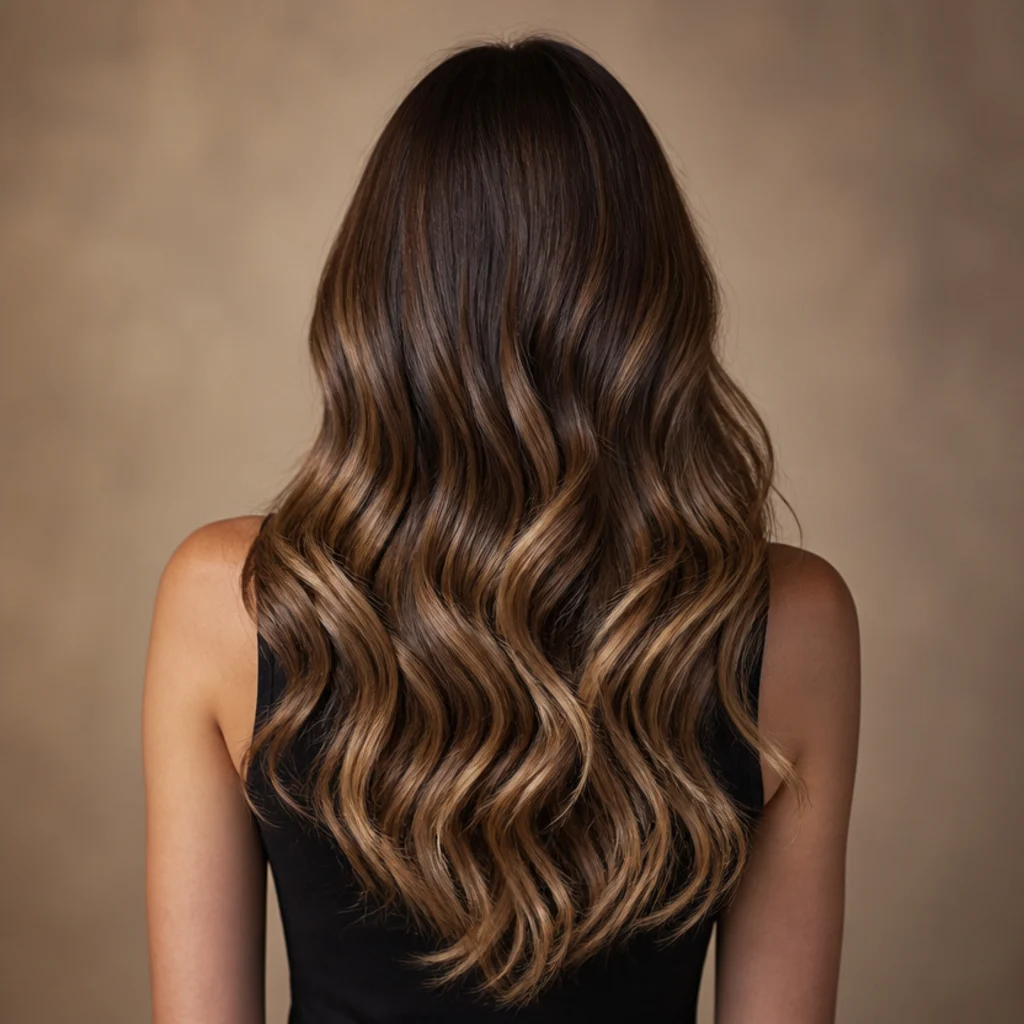
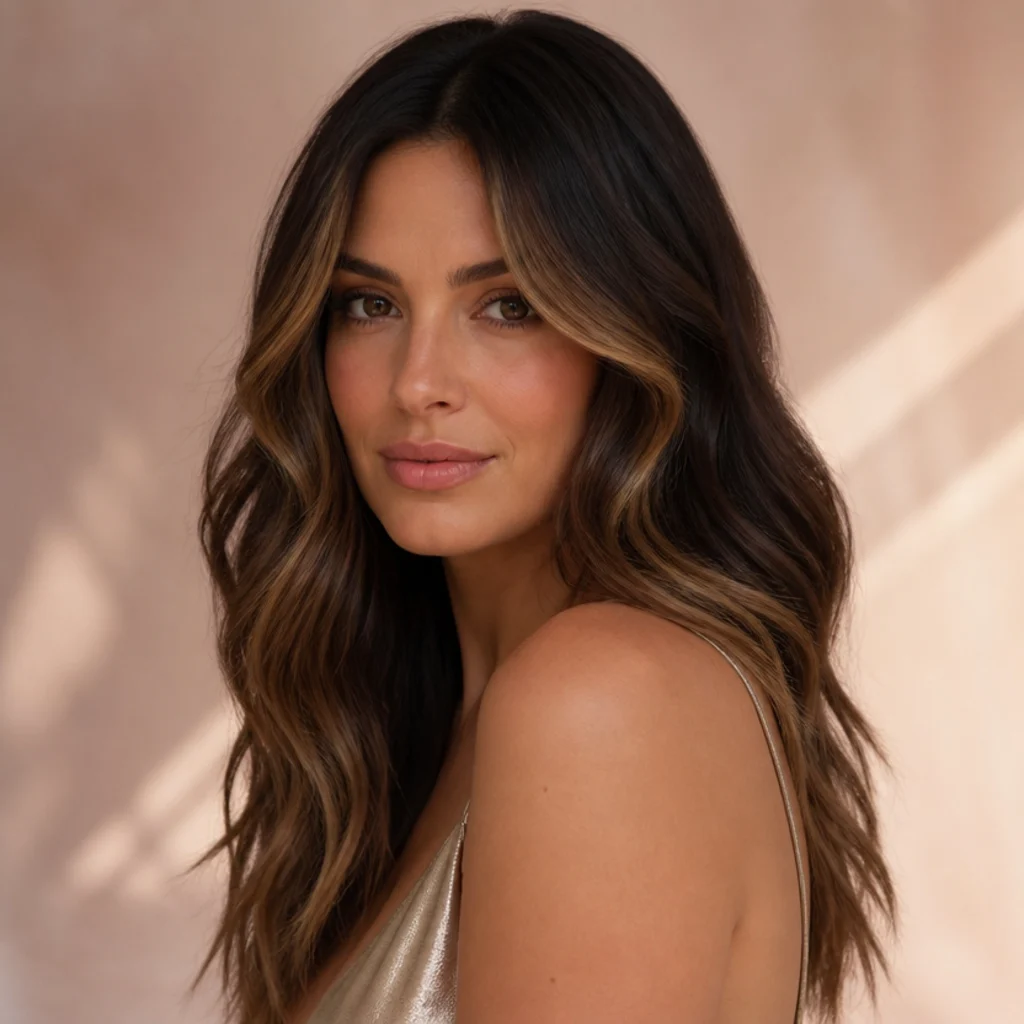
Caramel balayage over a chestnut base (roughly levels 5-6 with a warm golden toner) is the most-requested warm dimensional brunette because the payoff-to-upkeep ratio is unbeatable. The pigment is hand-painted freehand, concentrated through mid-lengths and ends and feathered, not saturated, at the top, so regrowth diffuses instead of forming a hard demarcation line. It flatters medium-to-thick hair from collarbone length down, where the sweeps have room to travel, and it sings on warm and neutral undertones that already carry gold. Because the root stays deep, you can honestly stretch lift to every 12-14 weeks, with a gloss around week 7 to keep the caramel buttery rather than orange. Pro tip: ask for the brightest pieces to land where you naturally part and where hair falls over the shoulder, that is where light hits and photographs. Ask your colorist for a "low-contrast freehand balayage, caramel not gold, painted open-air, not in foils," plus a warm bond-building gloss the same day.
02Honey Money Pieces
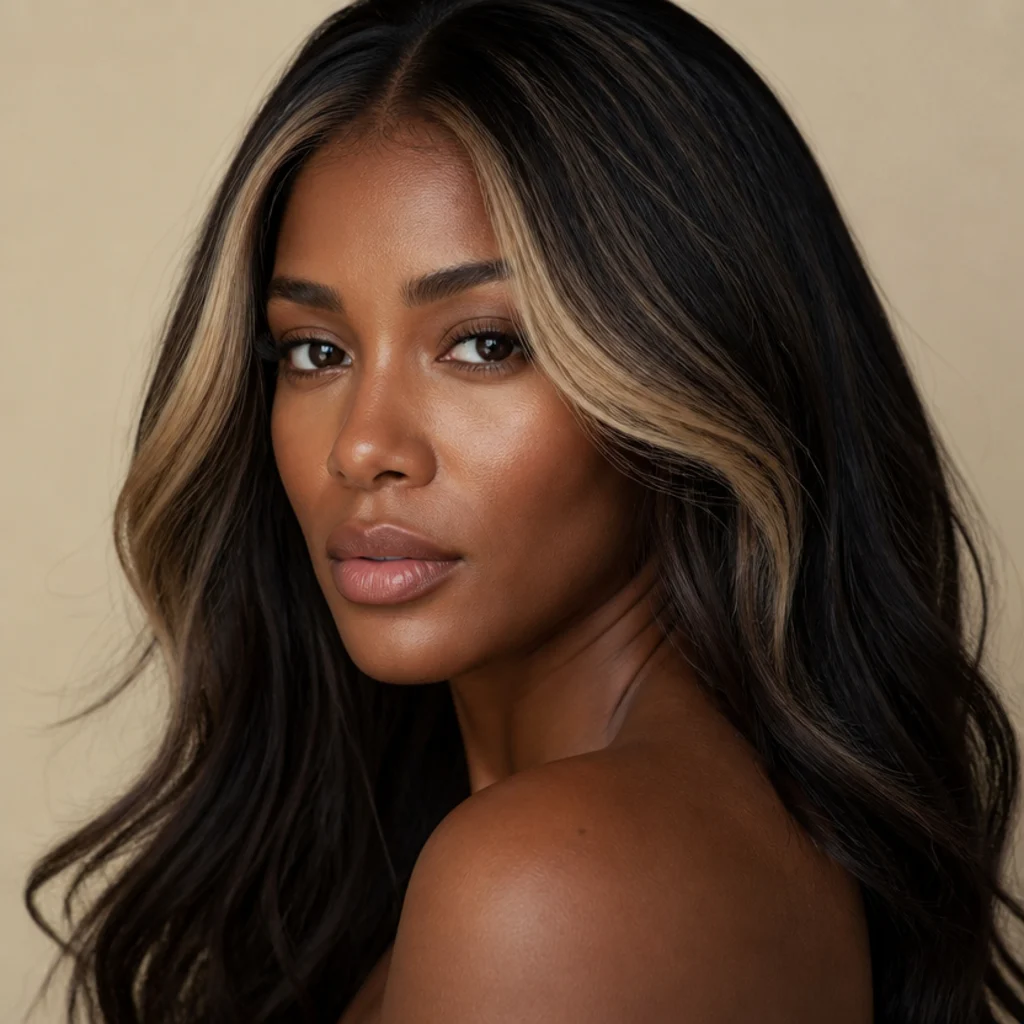
Dimensional brunette money pieces put the brightest warmth exactly where it flatters most, two honey-toned panels bracketing the face, brightest near the cheekbone and softening toward the ends. Because you are only lightening a small section, you get a lit-from-within effect for a fraction of a full head's commitment, and the look works on nearly everyone: on deeper skin tones the honey-against-dark contrast lifts the whole face, on fair warm tones it reads sun-touched. Grow-out is gentle since the pieces blur back into your base rather than leaving a stripe at the part. Plan a toner refresh every 6-8 weeks to hold honey before it slides brassy; the lightening itself can wait longer. Pro tip: have your colorist "bookend" the money piece by carrying a whisper of the same tone to the very ends, so the front doesn't float disconnected from the rest. Ask for a "warm honey money piece, brightest at the cheekbone," and specify how far back from your parting the brightness should begin.
03Subtle Dimensional Brunette Babylights
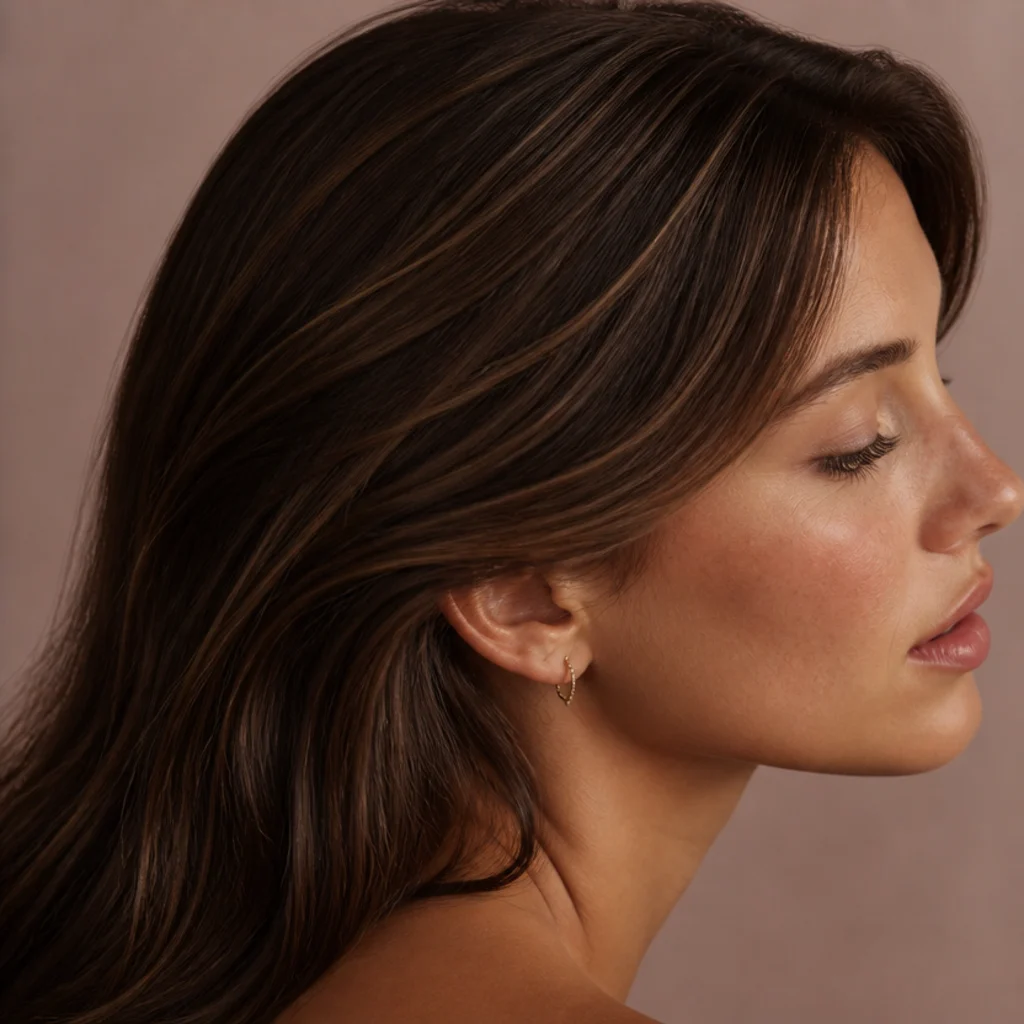
For the most natural subtle dimensional brunette, babylights are the quietest tool in the book, ultrafine highlights placed densely and only a level or two above your base, so the eye registers warmth and glow rather than any individual streak. They are ideal for anyone nervous about a visible change, for fine hair that wants the illusion of density, and for polished professional settings where "did she do something?" is the goal. Their fineness is also what keeps them low-maintenance: as they grow, the delicate pieces just soften, so a 12-week window is realistic, longer if you gloss between. Concentrate them around the crown, hairline and part, where sun would naturally lift, and keep the tone warm-neutral so it never turns silvery. Pro tip: on second-day hair the dimension actually reads stronger, so don't over-wash. Ask your colorist for "warm babylights, one to two levels up, dense placement through the crown and face," finished with a sheer glossing service for cohesion and shine.
04Mocha and Toffee Melt
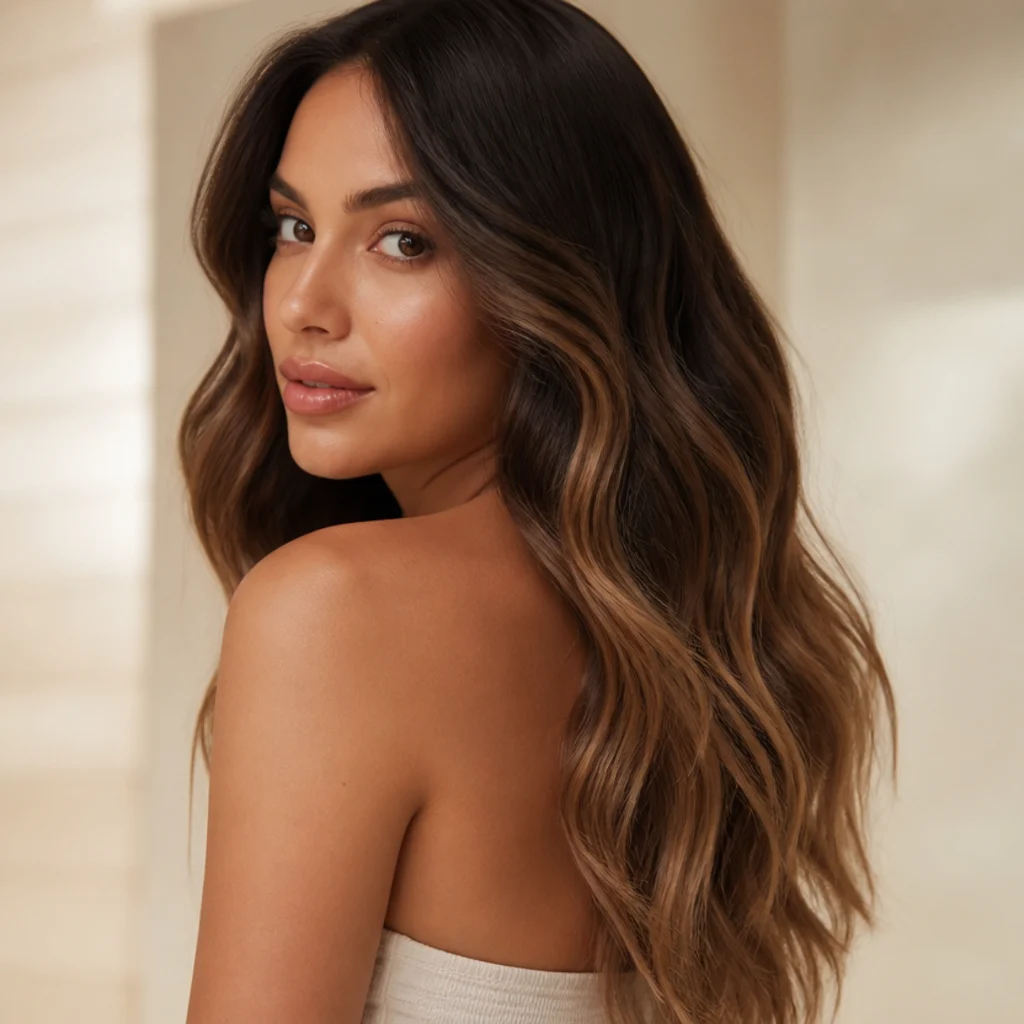
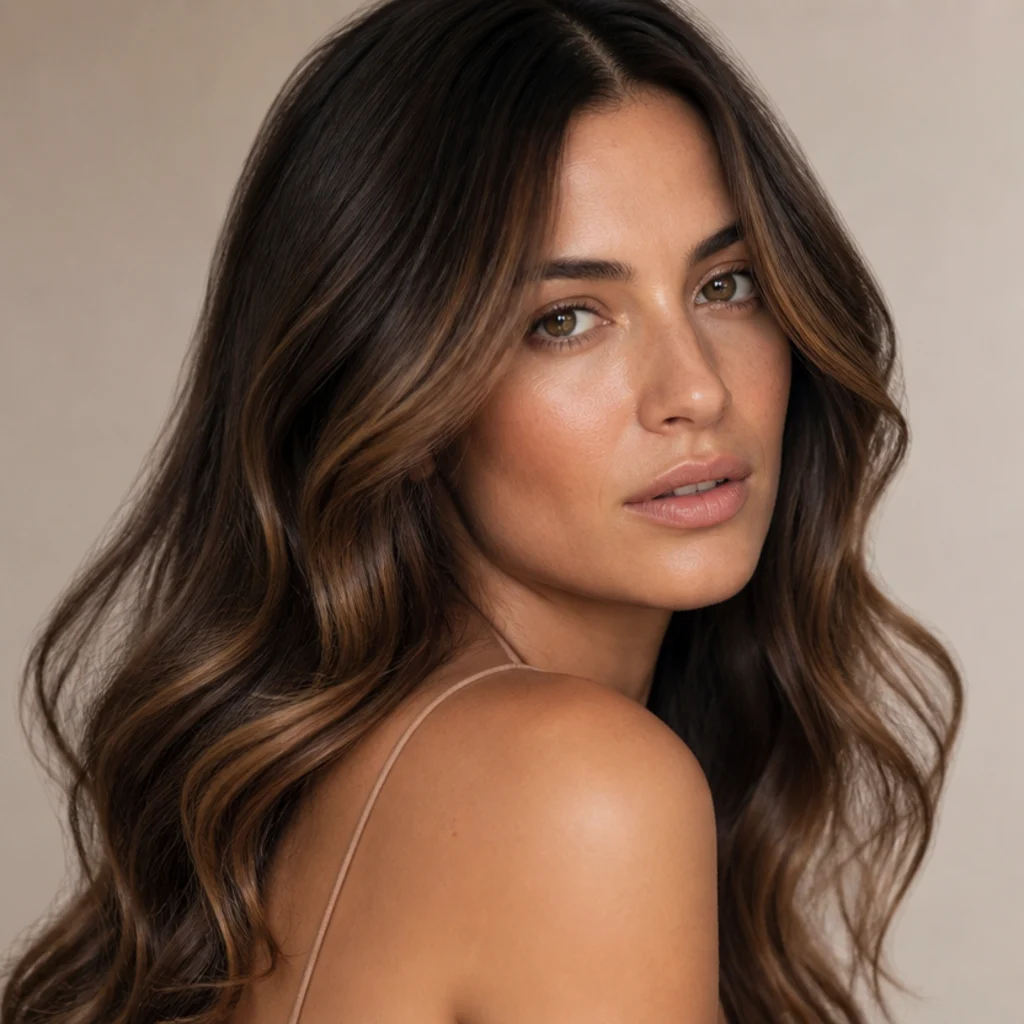
A color melt erases the start-and-stop line entirely, blending deep mocha at the root into warm toffee at the ends so the shift feels like one continuous drift rather than two separate colors. It shows off best on wavy or straight hair, where the gradient has an uninterrupted surface to travel across, and it adapts to almost any skin tone because you dial exactly how warm the toffee reads, more golden for warm skin, more neutral-caramel for cooler complexions. Maintenance is among the friendliest here: with no bright regrowth line, 12-16 weeks between color is realistic, bridged by a single gloss. The make-or-break is the midsection; if it turns ashy the whole melt looks muddy. Pro tip: ask to see the toner processing on a mid-strand before it's rinsed, warm melts are easy to over-cool. Ask your colorist for a "smooth root melt, mocha into toffee, warm through the middle, no visible transition," and mention you want richness at the ends, not just lightness.
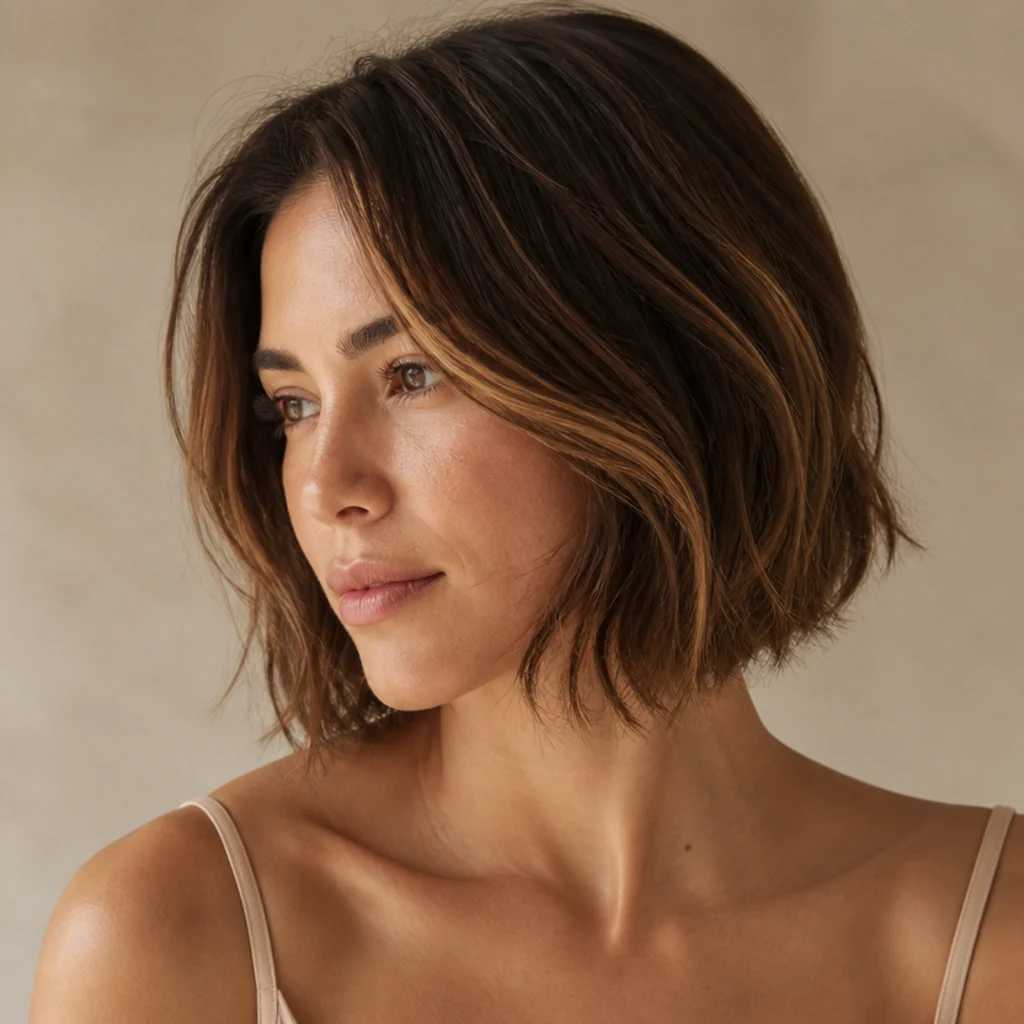
05Dimensional Brunette Bob
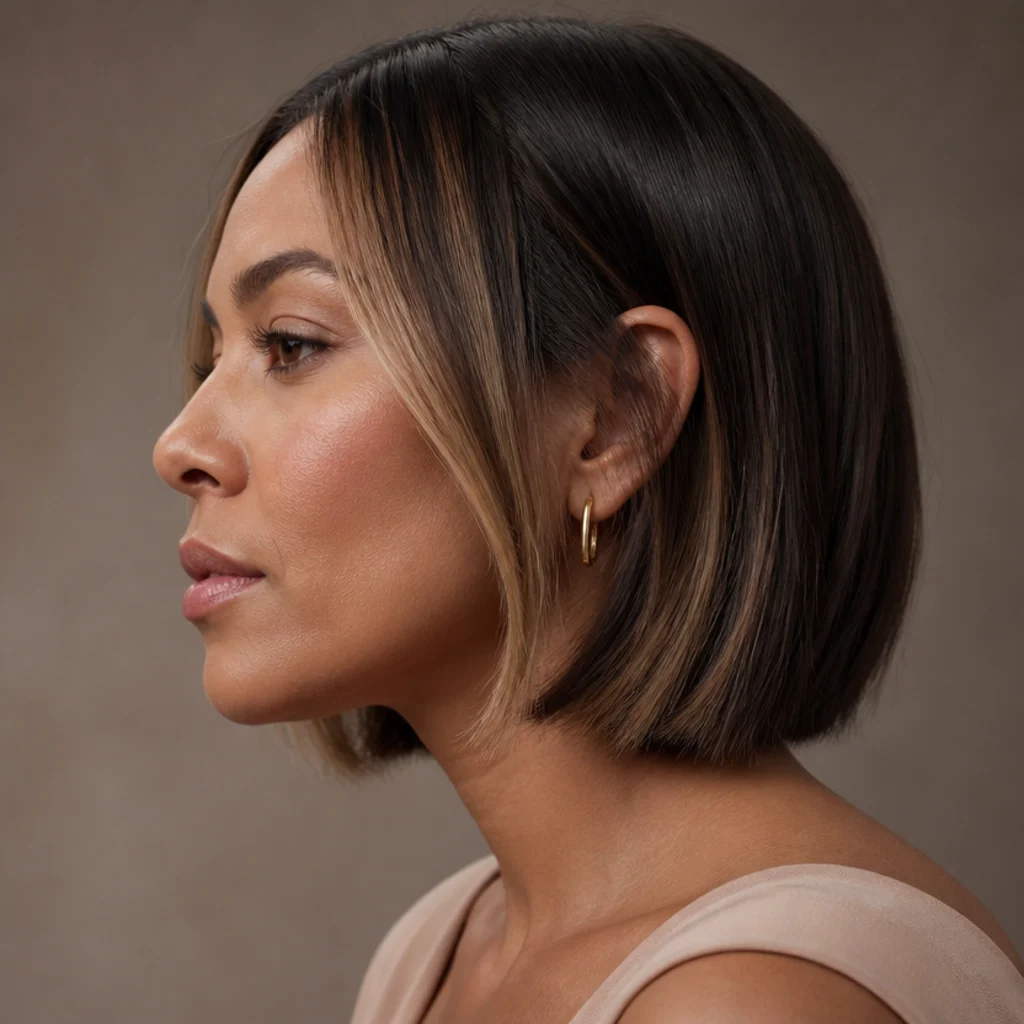
A dimensional brunette bob proves short hair holds depth just as well as long, sometimes better, because every highlight sits closer to eye level. On a blunt or softly graduated chin-to-collarbone cut, warm caramel placed around the face and threaded through the ends makes the perimeter look thicker and the whole shape read more three-dimensional. It's a standout for fine or straight hair, where dimension does the visual work that density can't, and for anyone who wants a low-fuss cut that still looks styled. Because the cut is short, growth shows faster in the shape than the color, so pair a trim and gloss roughly every 8-10 weeks and refresh lift as needed. Pro tip: ask for a couple of brighter "pop" ribbons underneath the top layer so warmth flashes when you tuck the hair behind your ear or it moves. Ask your colorist for "face-framing caramel plus a few brighter internal ribbons on a bob, brightness weighted to the front."
Save this to Pinterest to compare the bob against the longer looks below.
06Golden Chestnut Ribbons
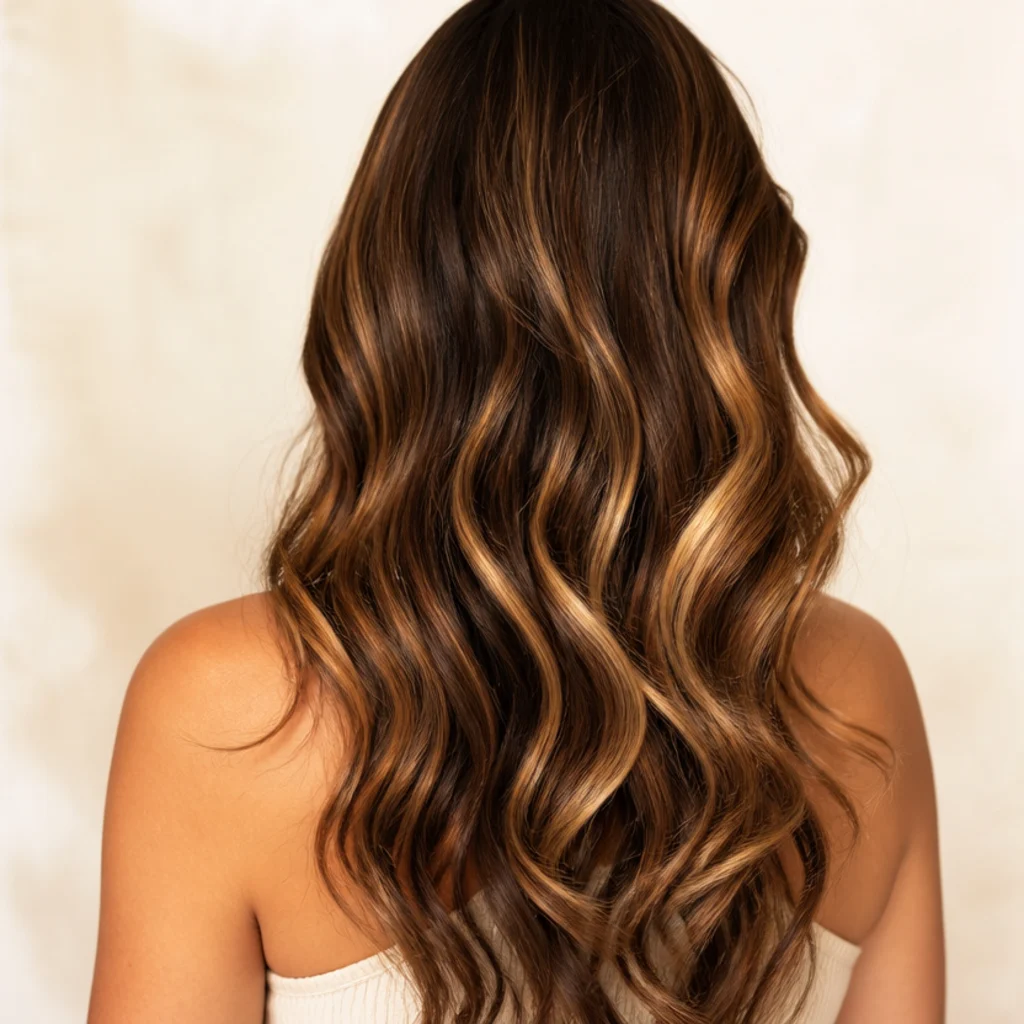
Ribbons are the bolder cousin of babylights, wider, more deliberate golden sweeps set against a rich chestnut base for unmistakable high-contrast movement. This is the look for people who want their color to be seen: it photographs with real dimension and reads glamorous in motion. It needs a canvas that can carry the weight, medium-to-thick hair of at least mid-length, so the ribbons blend rather than stripe; on fine or very short hair the contrast can look gappy. Upkeep sits in the moderate-to-committed range: refresh toner every 6-8 weeks so the gold stays warm instead of yellow, and lift regrowth every 10-12 weeks. Pro tip: insist on a few finer "connector" pieces painted between the thick ribbons, that intermediate level is what stops bold highlights from reading as harsh chunks. Ask your colorist for "chunkier golden ribbons hand-painted through the mid-lengths on a chestnut base, with fine connecting pieces and a warm toner to keep them buttery."
07Cinnamon Face-Framing Highlights
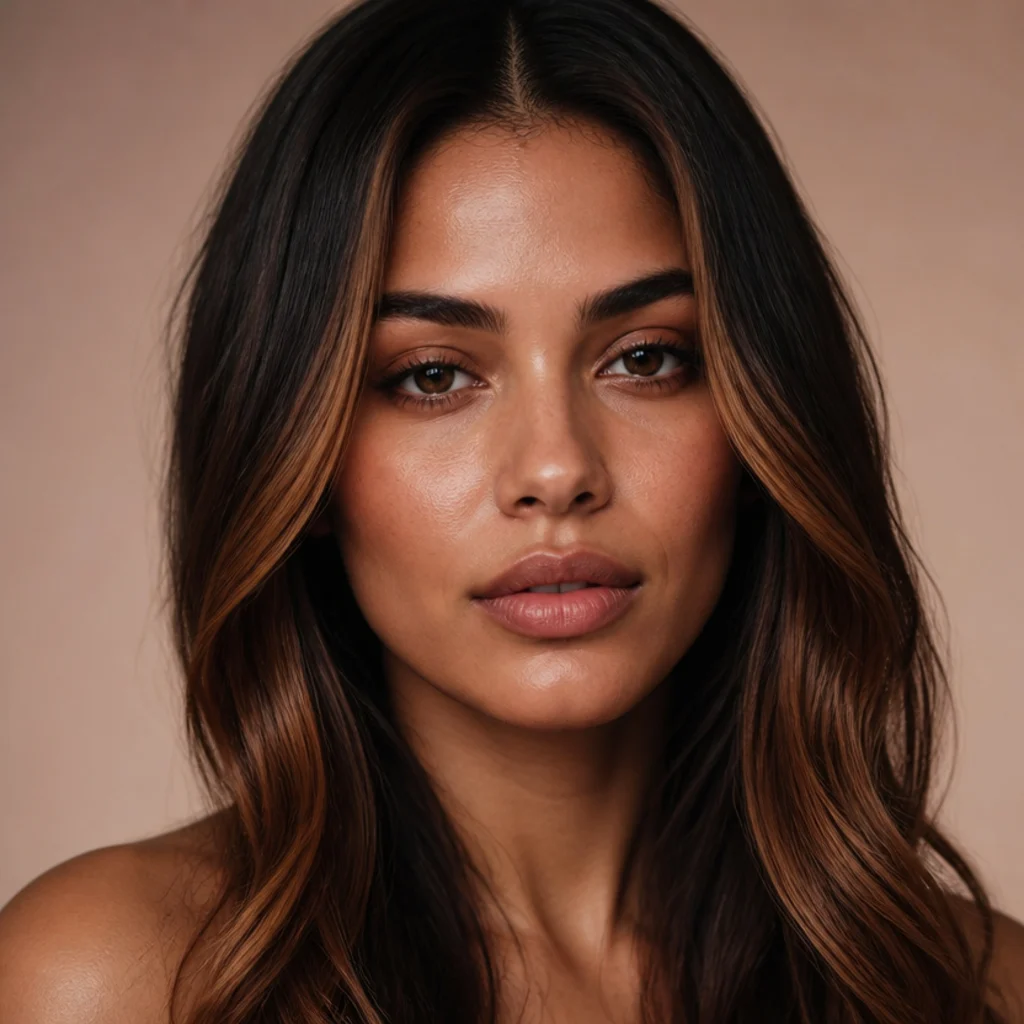
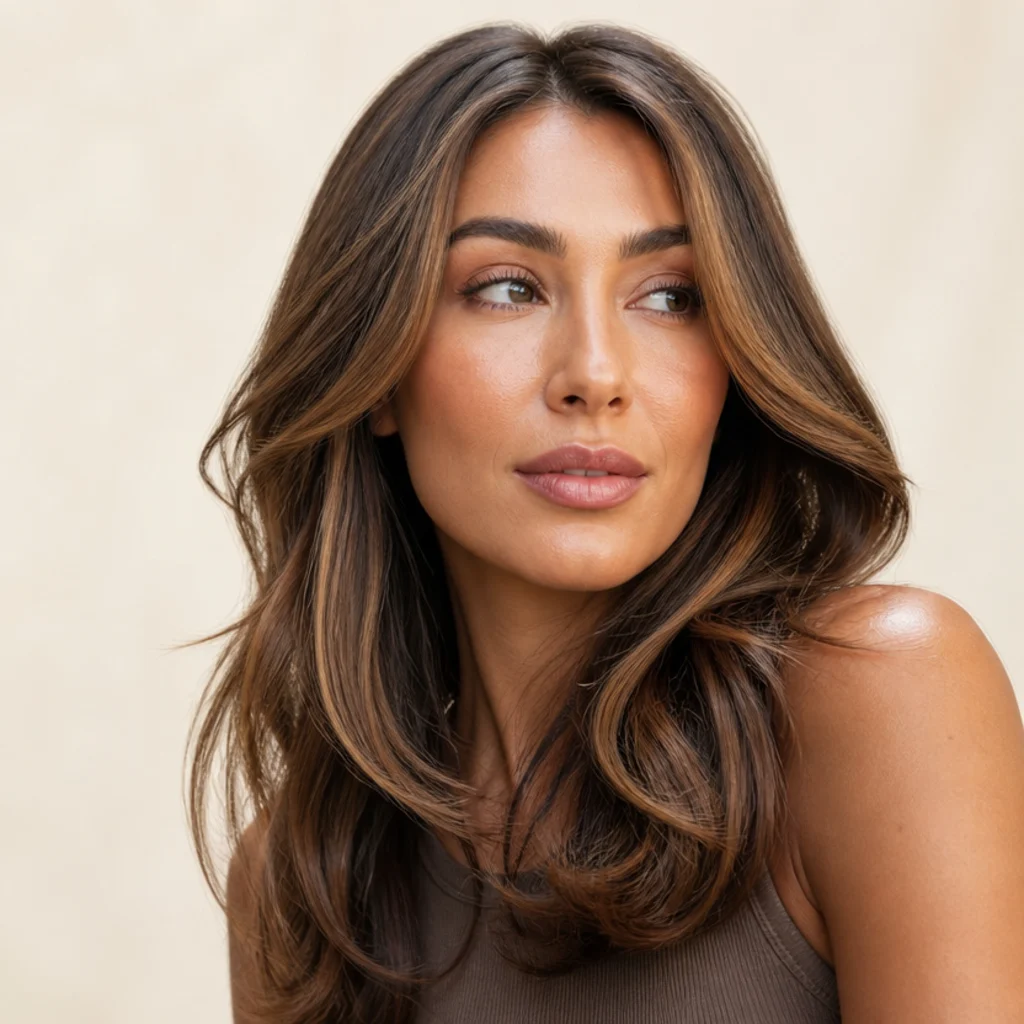
Cinnamon face-framing highlights bring a red-warm glow to the front sections, giving brunette a cozy, autumnal richness that a straight-gold highlight can't. The red-brown pigment is especially flattering on warm and olive undertones, where it echoes the warmth already in the skin and makes the eyes look brighter. Keeping the brightness at the face means the rest of your color stays quiet and the grow-out is soft, but there's a catch: red molecules are the smallest and fade first, so a warm gloss every 6-8 weeks is non-negotiable if you want the cinnamon to stay vivid rather than washing to a dull copper-brown. Pro tip: switch to a sulfate-free, color-safe wash and a cool-water final rinse, heat and harsh surfactants strip warm reds fastest. Ask your colorist for "warm cinnamon or copper-brown face-framing pieces, kept a touch deeper than a blonde highlight so it stays brunette," and pick up a color-depositing gloss to top up warmth at home between visits.
08Warm Bronde Blend
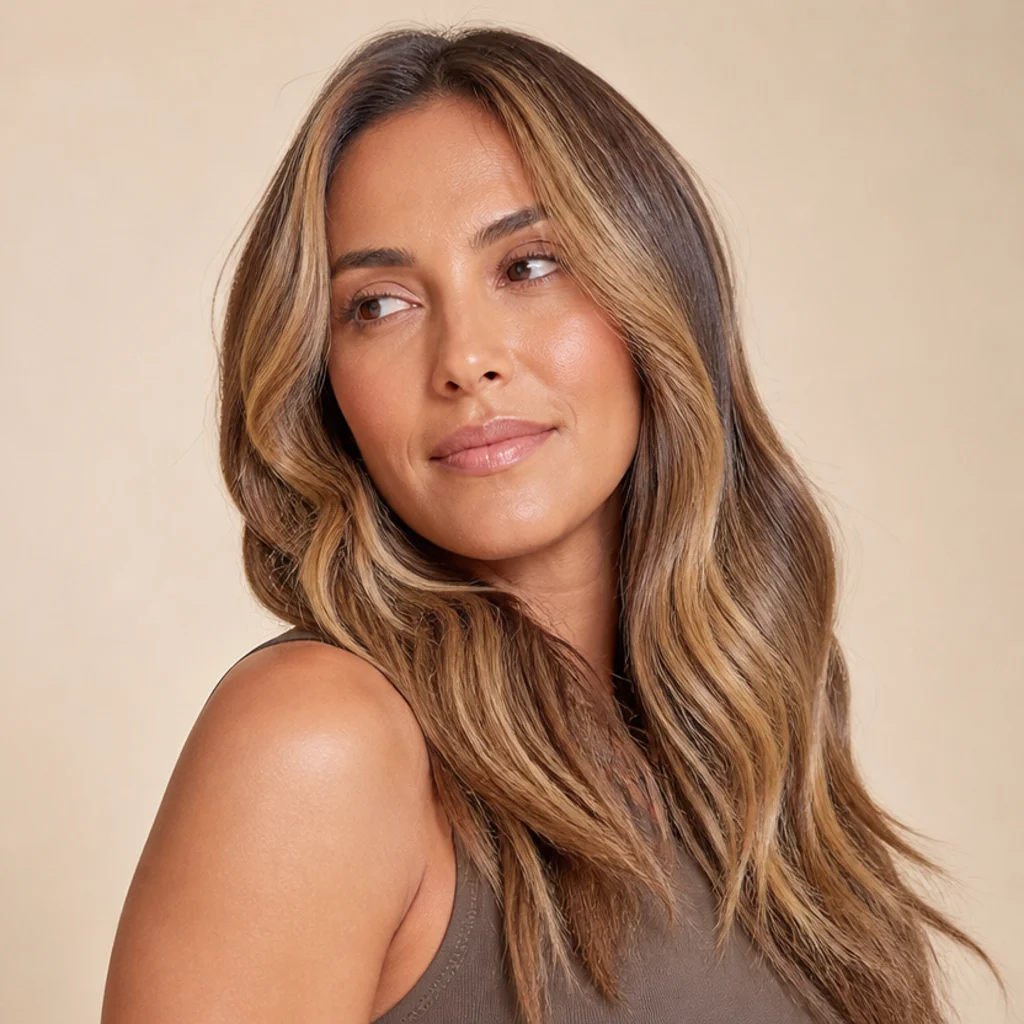
Bronde lives in the doorway between brown and blonde, and a warm version leans firmly golden rather than beige or ashy. It's the most dimensional option on this list because it spans the widest range of levels at once, deep brown lowlights sitting right beside golden-blonde highlights, all melted so nothing looks striped. It suits anyone ready for a brighter overall result while staying anchored in brunette, and it flatters light-to-medium warm skin especially. Be honest with yourself about upkeep: this is the highest-maintenance look here, expect a gloss around every 6 weeks and fresh highlights every 8-10 to keep the blonde from turning brassy at the part. Pro tip: the lowlights are what keep bronde from flattening into "grown-out blonde," so never let a colorist skip them to save time. Ask your colorist for a "warm bronde with both lowlights and highlights, golden not beige, melted at the root," so dimension stays balanced instead of one-note bright.
09Copper-Kissed Brunette
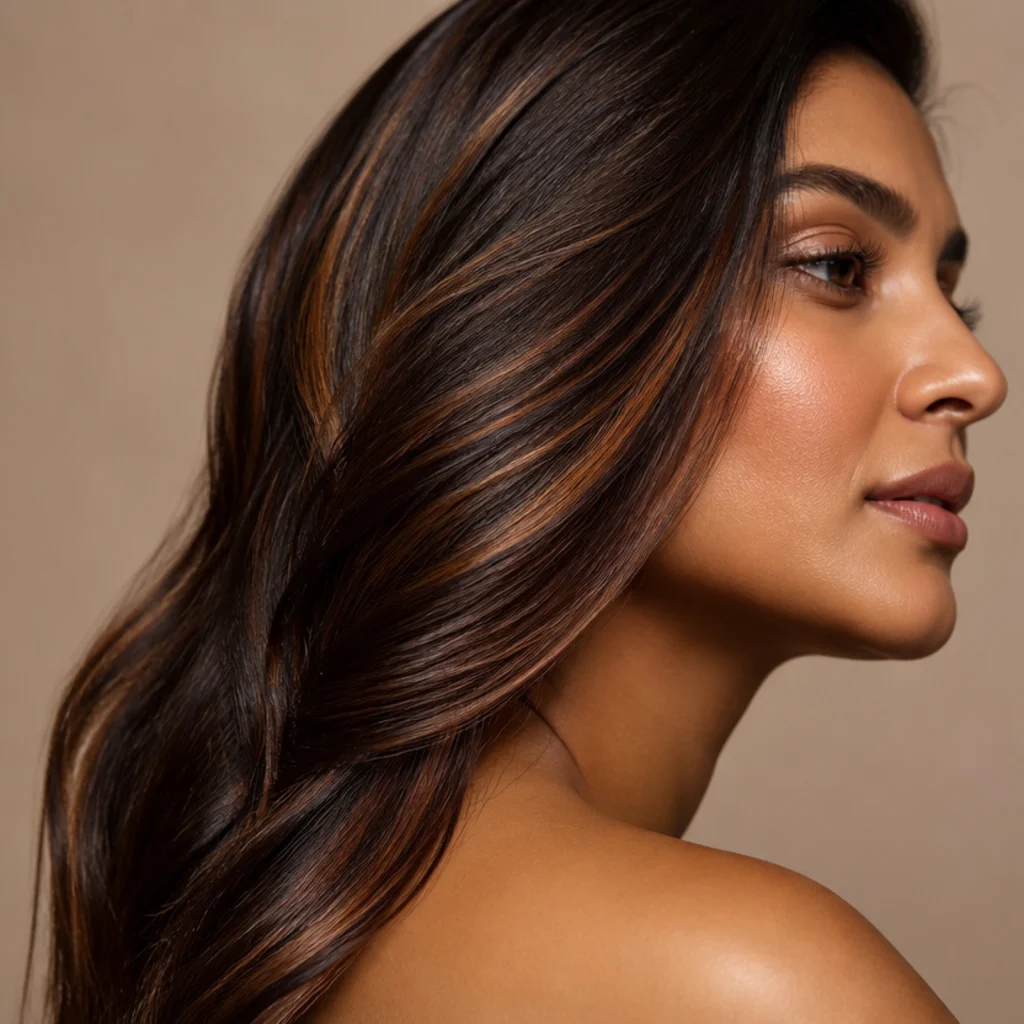
Copper-kissed brunette threads soft copper through a dark base for a warmth that ignites in sunlight without tipping you into full-redhead territory. Kept subtle, it reads as a shimmer rather than a stripe, which makes it a smart gateway if you're curious about red and want the option to intensify it later. It's beautiful on warm, golden and olive skin, where copper light flatters the complexion. The trade-off is fade speed: copper is the shortest-lived tone in the warm family, so a color-refreshing gloss every 4-6 weeks earns its keep here. Pro tip: a copper-depositing conditioner used once a week at home is the cheapest way to stretch the vibrancy between salon visits, just apply to lengths, not roots, so it doesn't stain your part. Ask your colorist for "fine copper highlights or a sheer copper gloss over my base, brunette with a copper glow, not a full copper," so the depth of your brown survives.
10Chocolate with Amber Lowlights
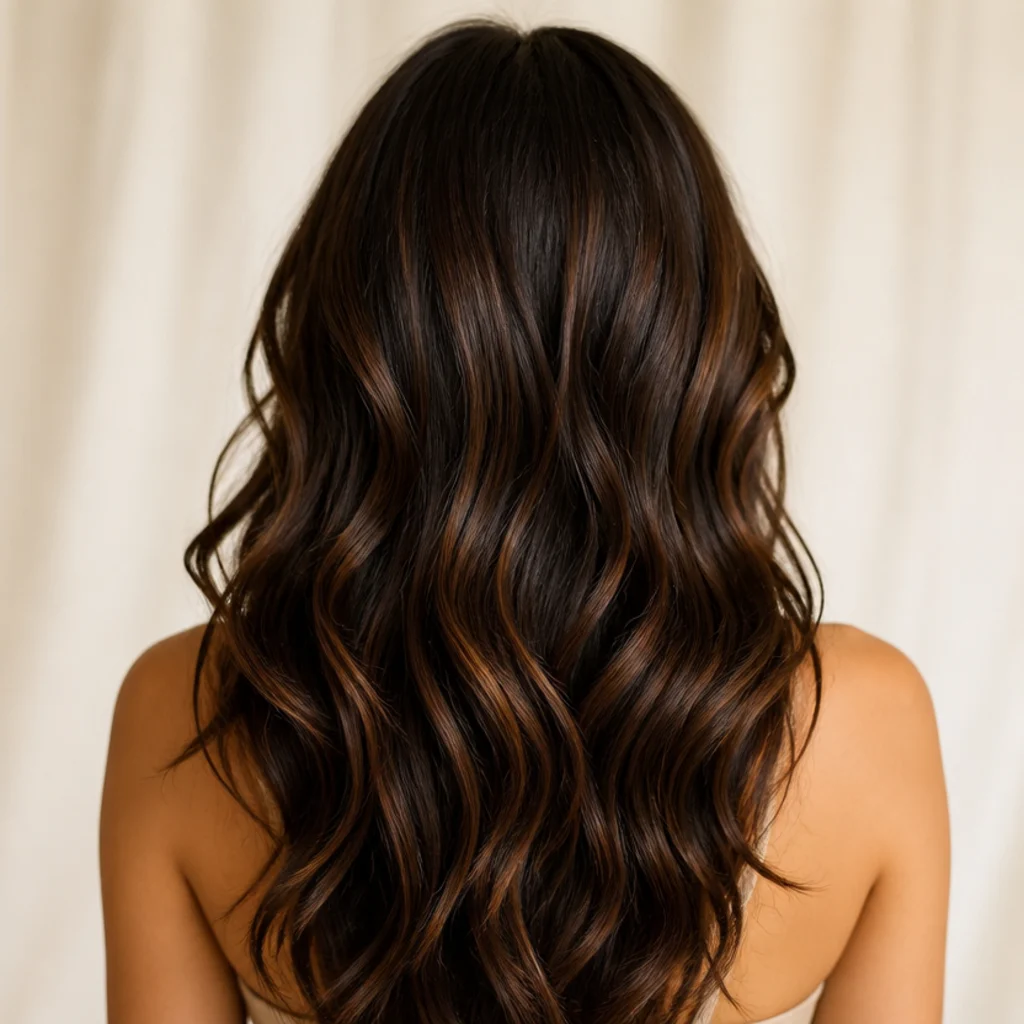
Dimension doesn't only come from going lighter, and this look is the proof. Amber lowlights woven into a chocolate base build depth by darkening select sections, which tricks the eye into reading the surrounding hair as brighter and richer by contrast. It's the ideal corrective move when old highlights have grown flat, over-uniform or brassy and the hair needs warmth and shadow put back in, and it looks especially lush on thick, dark hair. Because lowlights create no bright regrowth line, it's low-maintenance: a 12-16 week window is realistic. Pro tip: this is also the smartest first step before adding warm highlights later, laying lowlights first gives future brightness something to contrast against, so the finished result looks deeper and more expensive. Ask your colorist for "warm amber lowlights placed underneath and around the parting to rebuild depth and shine on a chocolate base," and mention if you're planning to add face-framing brightness at a later visit.
11Sun-Kissed Warm Ends
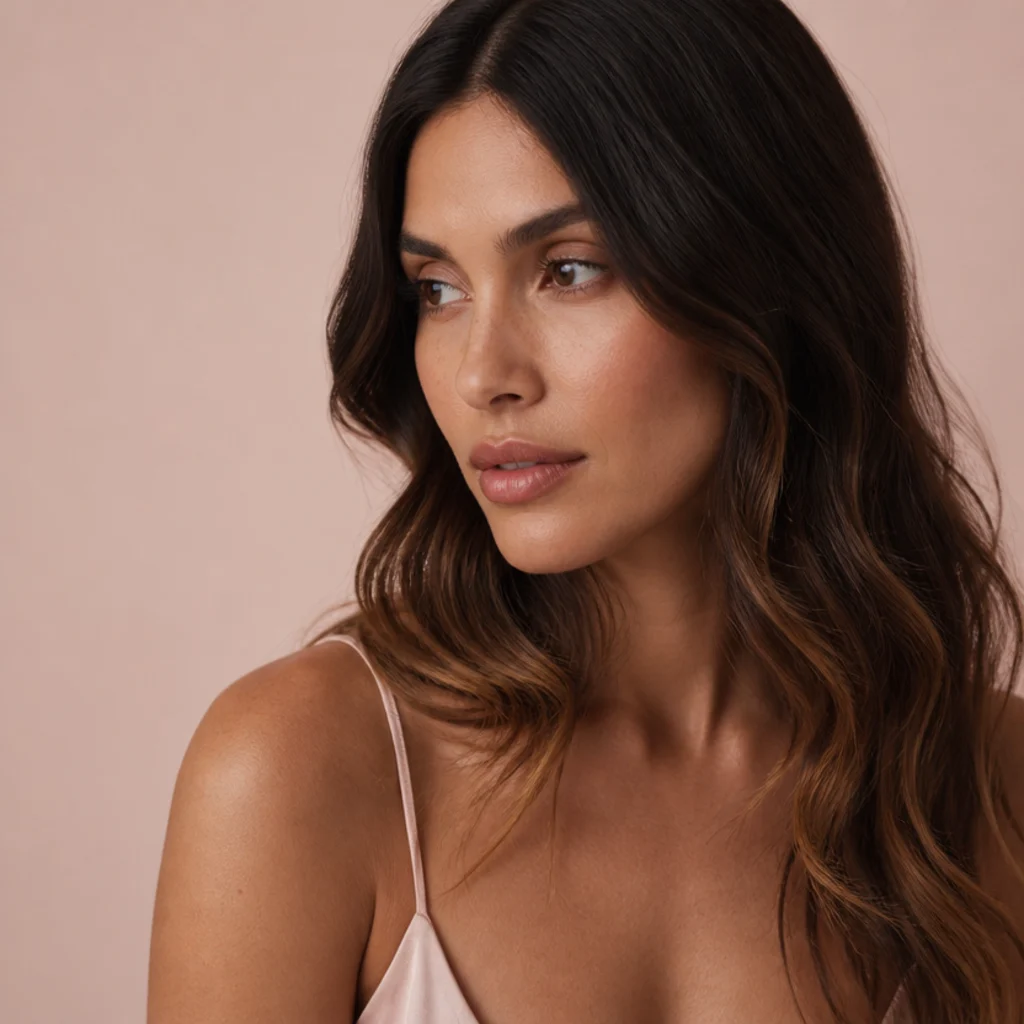
Sun-kissed warm ends recreate the way hair naturally lightens at the tips after a long summer, deep and untouched at the root, warming as it travels down, brightest in the final few inches. It's an easy, lived-in look that suits long and mid-length hair and reads relaxed rather than freshly-done, which is exactly its appeal. Because the brightness lives at the ends, regrowth isn't a problem, so 14-16 weeks between full appointments is comfortable, one of the lowest-commitment options here. The whole effect hinges on how deep you keep the root: too little top-to-bottom contrast and it looks washed out, too much and it looks ombré. Pro tip: bring a photo that shows the root depth you want, not just the ends, that's the detail most people forget to specify and the one that makes or breaks it. Ask your colorist for "a warm balayage focused on the last few inches with a golden-caramel toner on the ends, keeping the root rich and deep."
12Hazelnut Curtain Frame
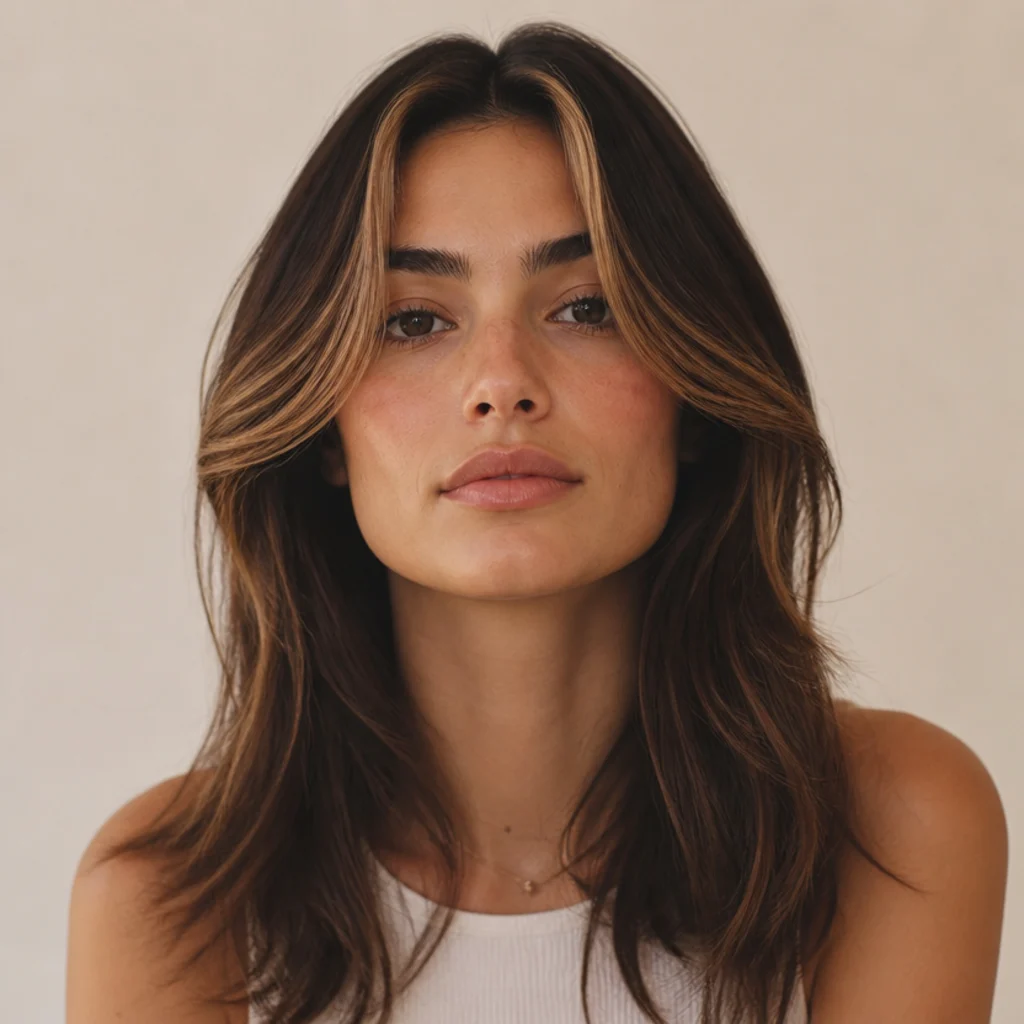
Pairing warm dimension with a curtain fringe puts brightness precisely where a curtain cut opens and sweeps away from the face. Hazelnut, a soft golden-brown that behaves like a warm neutral, lights up the swept-back pieces so the whole shape frames your features rather than just hanging there. It's a favorite for anyone growing out a fringe, or for making existing long layers feel intentional instead of accidental, and hazelnut's near-universal warmth flatters most undertones. Upkeep is a two-part rhythm: a warm gloss every 6-8 weeks plus fringe trims every 4-6 to keep the curtain sitting cleanly. Pro tip: ask the colorist to keep the very tips of the curtain pieces a hair brighter than the roots of them, so the frame catches light as it falls away from your cheekbones. Ask your colorist to "concentrate warm hazelnut on the curtain and front layers, blending softly into the rest so the face frame gets the emphasis," and to leave the interior slightly deeper for contrast.
13Multi Dimensional Brunette Curls
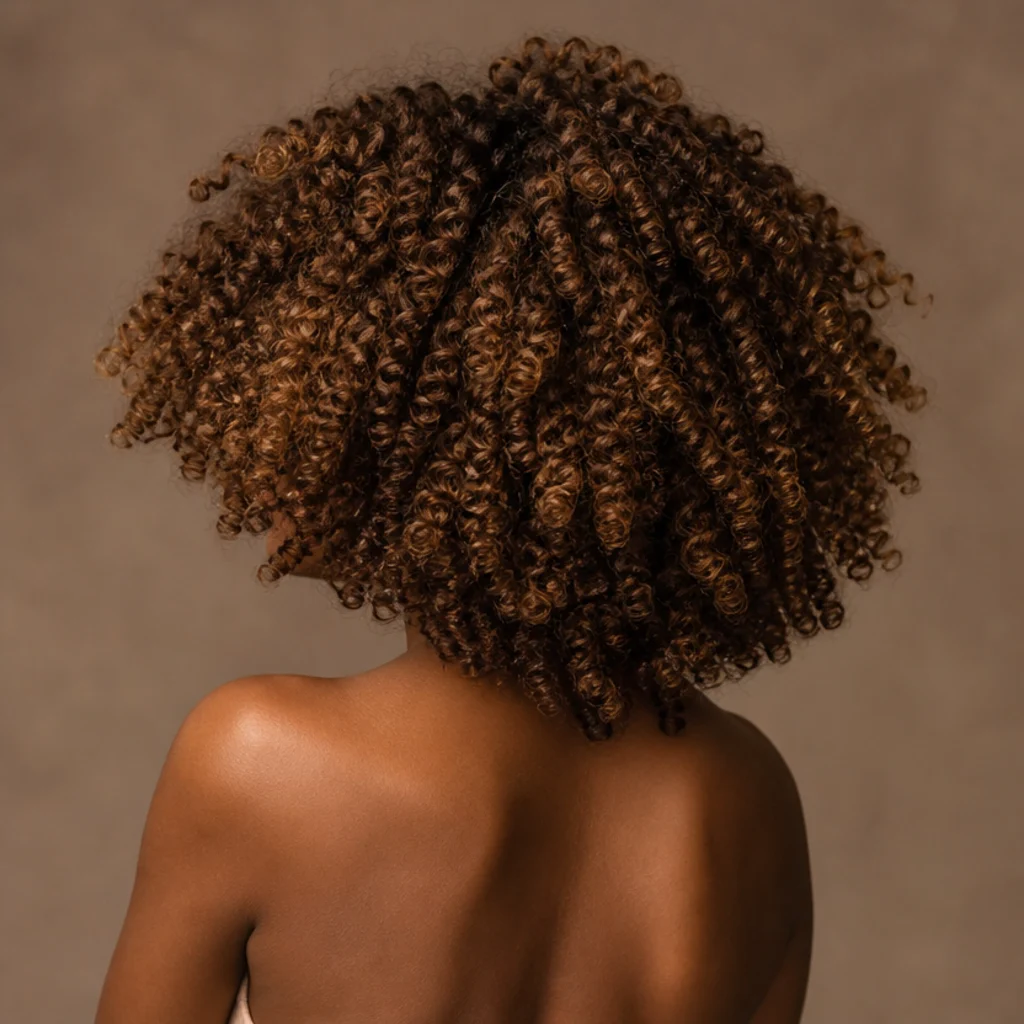
On curly and coily hair, a multi dimensional brunette does something straight hair can't, it lets every coil catch light on its own curve, so warm caramel and honey woven through the texture makes curls look more defined and the whole head look fuller. It works across every curl pattern from loose waves to tight coils; success is entirely about placement that follows the curl's natural fall rather than slicing through it in flat panels. One real caution: curly hair is more porous, so warm pigment grabs fast and can over-deposit, which is why a gentle, lived-in application plus a bond-building treatment matters here more than anywhere else on this list. Refresh gloss roughly every 8 weeks and keep to sulfate-free, moisture-rich washing so both the curl and the tone hold. Pro tip: have color painted on stretched, not shrunken, curls so the brightness lands where the coil actually shows. Ask your colorist for "dimension curl by curl, warmth woven throughout, no solid panels, with a bond treatment."
14Warm Mushroom-to-Caramel Gradient
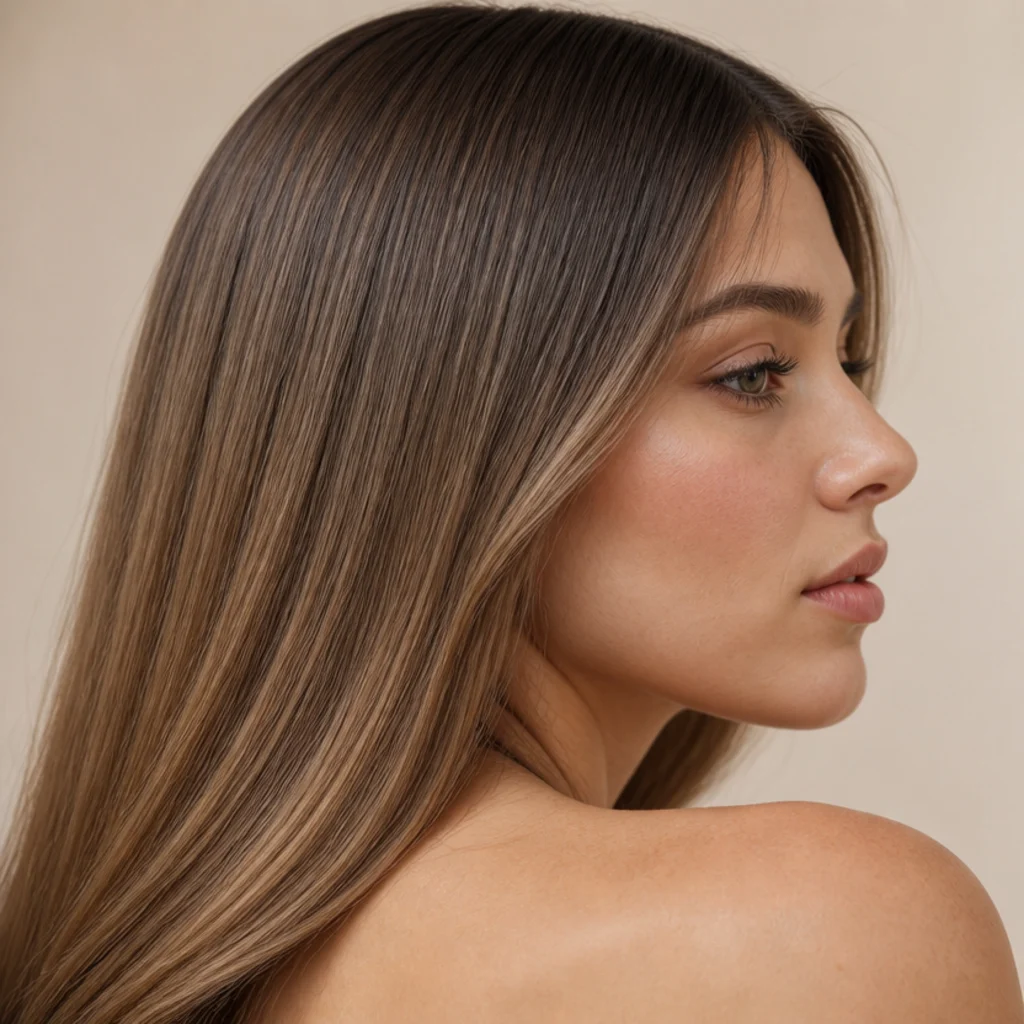
Mushroom brown is usually filed under cool, smoky and taupe, but a warm interpretation balances that muted root against a caramel drift through the lengths for a gradient that reads muted-luxe up top and glowing below. It's the clever pick for neutral and even cool skin tones who want a whisper of warmth without a full golden commitment, and the smoky mushroom root keeps regrowth exceptionally soft. This is a nuanced, high-end subtle dimensional brunette, the kind of color people notice without being able to name. Maintenance is moderate: a gloss every 8 weeks keeps the two ends of the gradient, cool root and warm length, in balance so neither takes over. Pro tip: the mushroom needs a violet-leaning toner at the root and a gold-leaning one on the ends, so ask whether your colorist plans to use two toners, one flat tone can't do this look justice. Ask your colorist for "a warm mushroom root melting smoothly into caramel, the two tones meeting with no visible block."
15Gilded Espresso with Soft Highlights
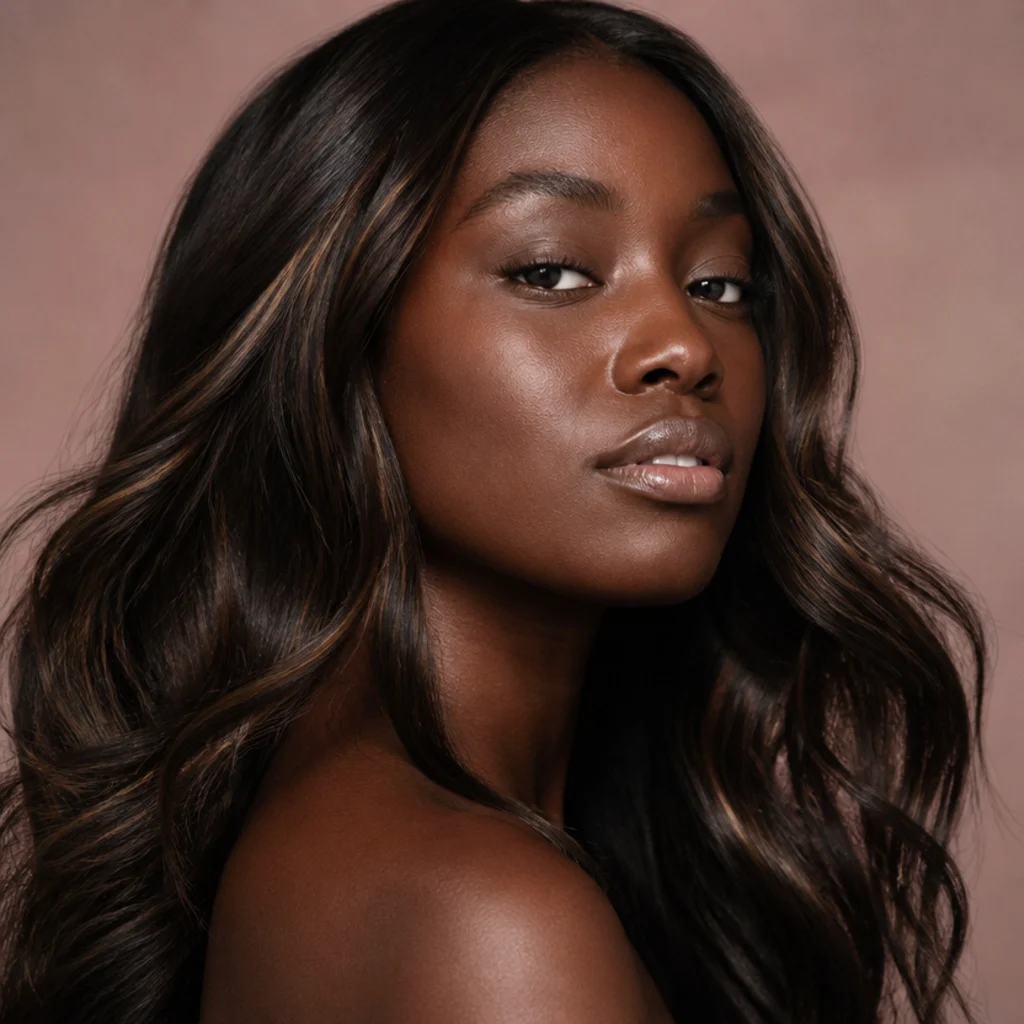
For the deepest brunettes, gilded espresso keeps the base dark, glossy and rich while fine warm highlights add just enough gold to catch light, dimension without ever announcing itself as "lighter hair." It's the single subtlest way to bring life to very dark hair (levels 2-3), turning what can photograph as a flat black-brown into something with visible shine and movement. It suits anyone who loves their dark brown but wants it to stop reading matte, and it's especially flattering on deep and cool complexions where an obvious warm highlight would feel out of place. Because the highlights sit only one to two levels above the base and are placed finely, upkeep is low, roughly every 12-14 weeks, with a warm gloss between to stop the gold from dulling. Pro tip: on hair this dark, a high-shine gloss does more visible work than the highlights themselves, so never skip it. Ask your colorist for "delicate warm highlights one to two levels up from espresso, kept golden, for a lit-from-within finish, plus a shine gloss."
Pro Tips from the Editor
- Book the gloss, not just the lift. The single thing that separates expensive-looking warm brunette from brassy warm brunette is a warm-depositing gloss at the same visit and again around the mid-point, put it on the schedule before you leave the chair.
- Match the tool to the fade rate. Copper and cinnamon fade first (weeks 4-6), caramel and honey hold longer (6-8). If you can't commit to frequent toning, choose caramel, toffee or amber over red-warm tones.
- Ask where the brightness lands, not just what color. "Caramel balayage" tells a colorist the shade; "brightest at the part and where hair falls over the shoulder" tells them the placement that actually photographs.
- Lowlights are anti-brassy insurance. If your dimension has gone flat or orange, adding warm lowlights restores contrast faster and gentler than re-lifting, and it protects the hair.
- Protect the bond on porous hair. Curly, previously-lightened, or very dry hair grabs warm pigment unevenly, insist on a bond-building additive and a lived-in, not saturated, application.
- Second-day hair shows more dimension. Freshly washed hair lies too uniformly for contrast to read; a day of natural texture and separation makes the same color look richer.
- Photograph your color in real light. Bring reference photos shot in daylight, not under salon or store bulbs, warm tones shift dramatically under artificial light and cause most "that's not what I asked for" moments.
How to Choose / Get the Look
Start with two honest inputs: your natural level and your upkeep tolerance. Everything else follows from there.
| If you want... | Choose | Realistic upkeep | Best on |
|---|---|---|---|
| Lowest maintenance | Babylights, mocha-to-toffee melt, sun-kissed ends, amber lowlights | Gloss + lift every 12-16 wks | Any base; great for fine or dark hair |
| Visible face brightness | Honey money pieces, cinnamon or hazelnut face-framing | Toner every 6-8 wks | Warm/olive skin; all lengths |
| Bold, seen-across-the-room contrast | Golden chestnut ribbons, warm bronde | Gloss ~6 wks, lift 8-10 wks | Medium-to-thick, mid-length+ |
| Subtle, expensive, "can't-name-it" depth | Warm mushroom-to-caramel, gilded espresso | Gloss every 8-12 wks | Neutral/cool skin, very dark hair |
| A hint of red without going redhead | Copper-kissed brunette | Gloss every 4-6 wks | Warm/golden/olive skin |
Then match the warmth to your skin: golden and caramel flatter warm and neutral undertones; cinnamon and copper suit warm and olive complexions; and even cool undertones can wear a warm root melt or mushroom-to-caramel as long as the brightness stays soft and the root stays muted. Factor in your cut, a dimensional brunette bob concentrates contrast at the perimeter and face, while long layers and curls need warmth distributed throughout to avoid gaps. At the appointment, bring two or three daylight reference photos, name the exact tone family out loud (caramel versus honey versus mocha reads very differently), state your contrast preference in plain words ("low-contrast and root-deep" or "bright and face-forward"), and be candid about how often you can realistically return. Always add a gloss or shine treatment to the same visit; it's the finishing step that keeps warm dimensional brunette looking intentional instead of brassy as it grows out.
Frequently Asked Questions
How is warm dimensional brunette different from regular brown hair?
Regular brown is usually one flat, single-level shade. A warm dimensional brunette layers multiple warm tones, caramel, honey, cinnamon, toffee, mocha, over a deeper base, so light reflects at different points along each strand. That contrast of highlight and shadow is what the eye reads as shine, movement and thickness, which is why the same face looks more dimensional in photos with it.
How often will I need to maintain warm dimensional brunette?
It scales with contrast. Low-contrast, root-deep designs like balayage, babylights, melts and lowlights can go 12-16 weeks between lift, bridged by one gloss. Brighter designs, money pieces, ribbons, bronde, need fresh highlights every 8-10 weeks and a toning gloss every 6-8 to stay warm rather than brassy. The tone always fades before the dimension does, so glossing is the recurring cost, not re-lightening.
Will warm tones turn brassy over time?
Warm brunettes are meant to be warm, so they don't "go brassy" the way a cool blonde does; instead they fade unevenly, warm-to-dull, if left alone. A warm-depositing gloss re-saturates the caramel or honey so it looks deliberate again. Copper and cinnamon fade fastest because red pigment molecules are smallest, so those benefit most from a color-refreshing gloss or conditioner at home between salon visits.
Does dimensional brunette work on dark or curly hair?
Yes, and it's often more effective there. On very dark hair, fine gilded highlights one to two levels up add shine and movement without obvious lightening. On curly and coily hair, warmth woven curl-by-curl defines each coil and adds the appearance of volume; because curls are more porous, ask for a gentle, lived-in application on stretched curls plus a bond-building treatment so the tone deposits evenly.
What's the best low-maintenance warm dimensional brunette?
Anything root-deep with warmth built toward the ends: a mocha-to-toffee melt, sun-kissed warm ends, or amber lowlights on a chocolate base. Because none of these creates a bright regrowth line at the part, you can comfortably stretch appointments to 12-16 weeks while the color stays rich. A single mid-cycle gloss keeps the tone from dulling.
How do I keep warm brunette from fading between salon visits?
Wash less often and cooler, warm pigment lifts out with heat and frequent shampooing. Use a sulfate-free, color-safe wash, finish with a cool rinse, and add a warm- or copper-depositing conditioner once a week on the lengths (never the roots, so it won't stain your part). A UV or heat-protectant spray also slows fade, since sun and hot tools both oxidize warm tones toward brass.
Which warm brunette shade suits my skin tone?
Warm and neutral undertones wear caramel, honey and golden chestnut most easily. Olive and warm complexions glow in cinnamon, copper and hazelnut. Cool and neutral undertones who still want warmth are best served by a warm mushroom-to-caramel gradient or a soft root melt, where a muted root keeps the overall look from reading too gold against cooler skin.
Can I get dimensional brunette without foils or bleach?
Often, yes, if you're only deepening or warming rather than lifting several levels. Lowlights, glosses and demi-permanent color build dimension by adding depth and tone rather than removing it, no bleach required. To go meaningfully lighter than your base (bronde, bright money pieces, ribbons), some lift is necessary; ask for a bond-building additive in the lightener to protect the hair.
Is warm dimensional brunette worth it on fine or thinning hair?
It's one of the most flattering choices for fine hair, because contrast reads as density. Babylights and face-framing caramel on a bob create the optical impression of thicker, fuller hair by casting light and shadow across the surface. Keep the placement fine and close in level to your base so it looks like natural depth rather than gappy streaks.