25 Dreamy Dimensional Brunette Hair Ideas
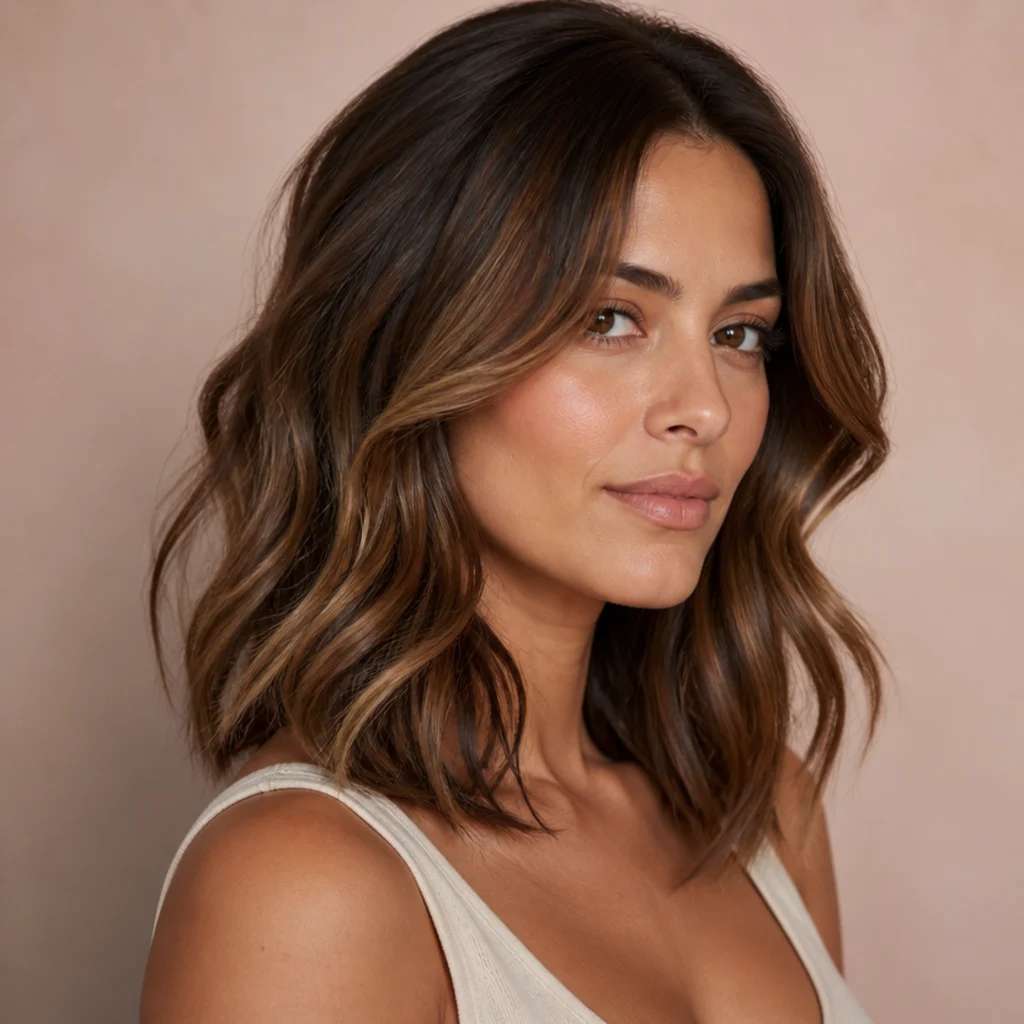
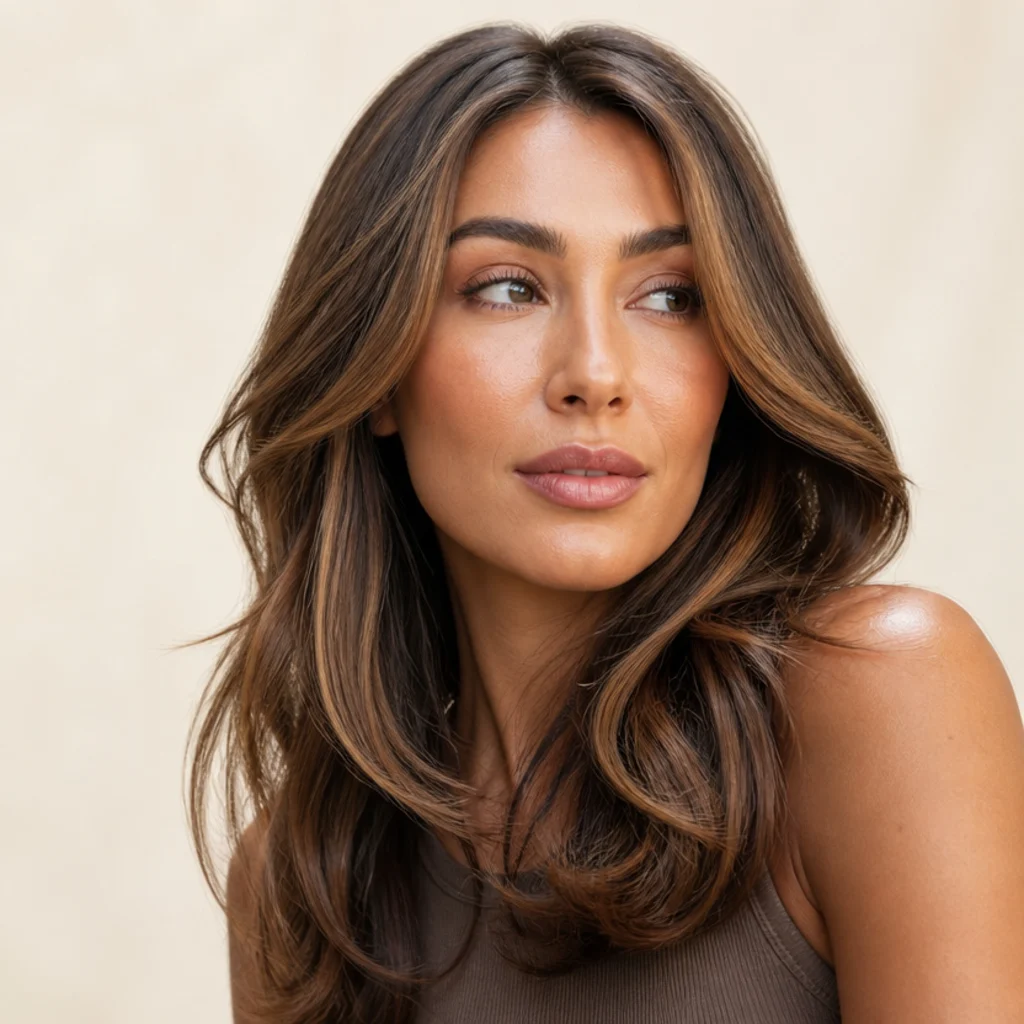
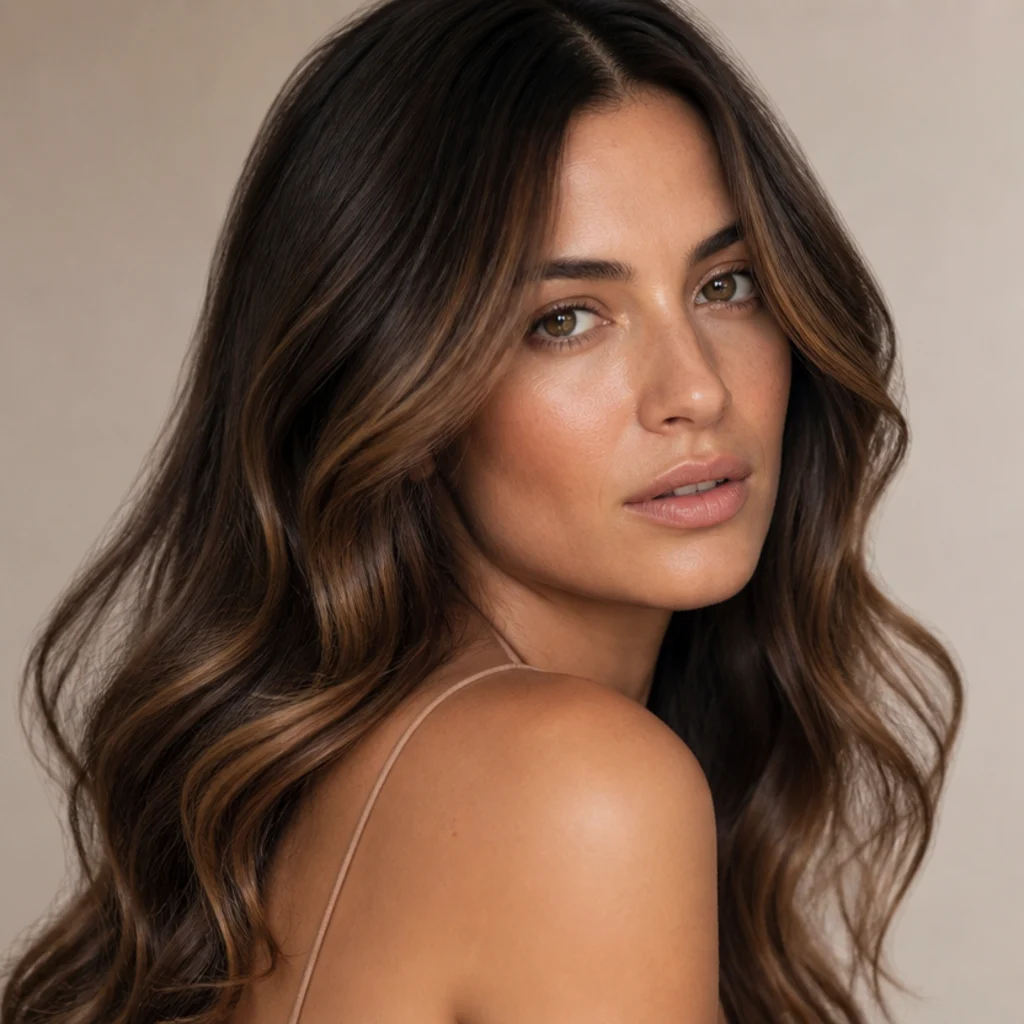
Flat, one-note brown reads heavy and eats light. Dimensional brunette weaves warm ribbons of chestnut, caramel, toffee and mocha through a rich base so your color reflects unevenly, shifts as you move, and looks twice as expensive. Here are 25 ways to wear it, from money pieces and melts to a soft bob and beyond, each with exact tones, who it flatters, and the words to hand your colorist.
 Edited by Lena Rose · Published July 11, 2026 · 36 min read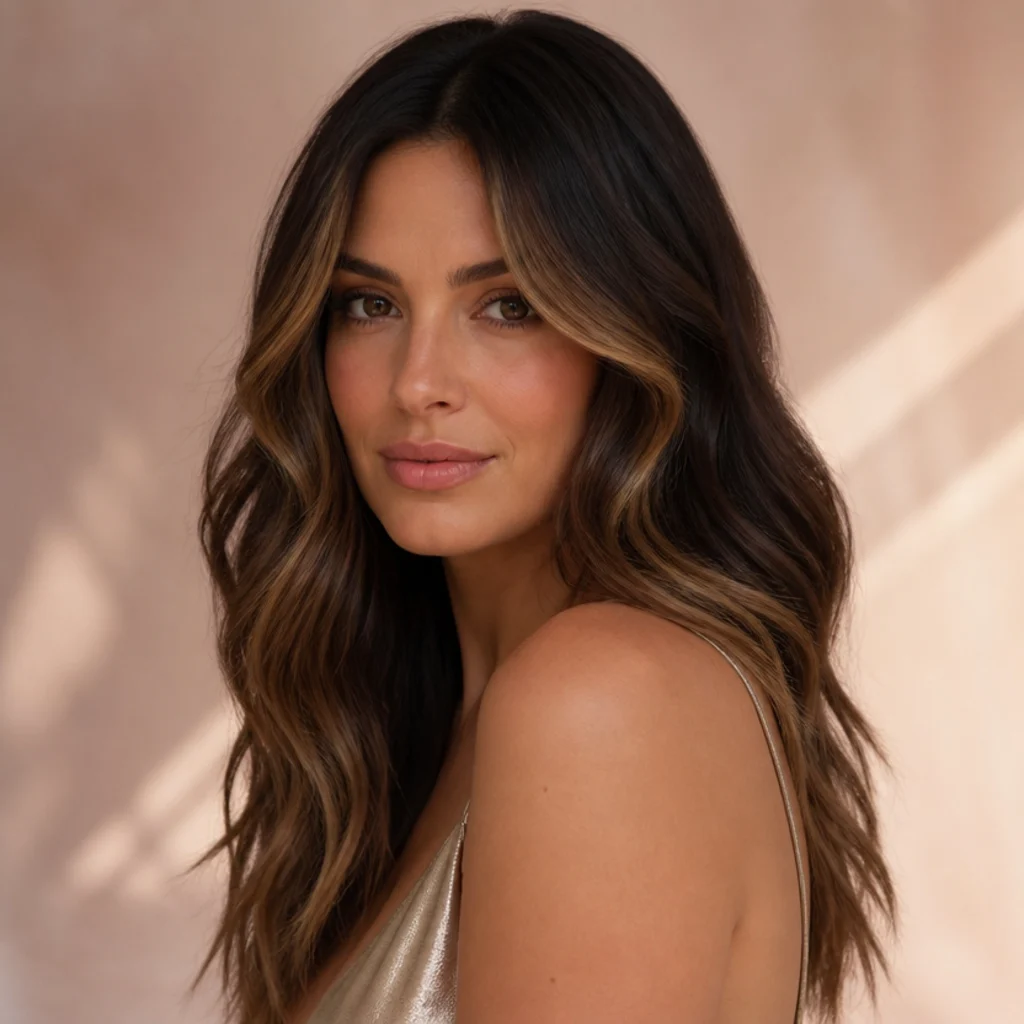
Quick Answer
- Best for: Anyone with a natural or previously colored brown base (roughly level 3–6) who wants depth and light-catching movement without committing to full blonde lift.
- Who might skip it: Anyone chasing a true cool, ashy result, brand-new grey coverage that needs single-process consistency, or hair too compromised from prior bleach to lift safely.
- Maintenance: Moderate. A toning or color-depositing gloss every 8–12 weeks; foil or balayage refreshes roughly two to three times a year depending on placement.
- Difficulty: Salon-recommended for multi-tonal foil-and-balayage work; single money pieces, a peekaboo panel or an at-home gloss are lower-commitment entry points.
- Cost: Variable. Expect single-service pricing from a gloss at the low end up to a multi-hour dimensional highlight-and-tone at the high end; corrective or multi-session builds cost more.
- Wear time / longevity: The lightened dimension is permanent; the tone is what shifts, with warm and red pigments softening first over 6–10 weeks.
- Standout variation: Warm caramel money pieces: the fastest, lowest-upkeep way to add face-brightening dimension.
- How to ask your colorist: "I want warm dimensional brunette — a deep base with caramel/chestnut brightness woven through, blended not striped, with a lived-in root." Bring two or three photos and name your natural depth.
In This Guide
- Cool-to-Warm Espresso Balayage
- Chestnut Ribbons on Dark Brown
- Warm Caramel Money Pieces
- Subtle Mushroom Brown Melt
- Golden Mahogany Dimension
- Bronde Face-Framing Layers
- Toffee Babylights
- Dimensional Brunette Bob
- Chocolate Cherry Undertones
- Sun-Kissed Beachy Brunette
- Copper-Kissed Brunette
- Ash-and-Warm Contrast Brunette
- Honey Ribbon Highlights
- Rooted Bronde Lob
- Deep Espresso with Amber Ends
- Cinnamon Swirl Waves
- Warm Brunette Curtain Bangs Blend
- Gingerbread Balayage
- Hazelnut Highlighted Curls
- Multi-Dimensional Brunette Ombré
- Warm Mocha Melt
- Peekaboo Caramel Underlayer
- Bronzed Brunette Shag
- Deep Dimensional Brunette for Rich Skin
- Warm Brunette Pixie with Depth
Brown is the most common hair color in the world, which is exactly why a flat, single-process version can feel forgettable. It reflects light uniformly and reads as one heavy block. Dimensional brunette solves that with contrast: a deeper base (usually a level 3–5) with lighter, warmer strands lifted one to three levels through it, so light bounces unevenly and the color appears to move. A warm dimensional brunette leans deliberately into chestnut, caramel, toffee and amber rather than icy platinum, which is why it flatters most complexions in real, low-temperature indoor light and holds its richness between appointments instead of going flat. Where you place the brightness (face-framing, mid-lengths, ends, or hidden underneath) changes the whole effect, as does whether it's foiled for punch or hand-painted for softness. This guide walks through 25 distinct takes, from a low-lift subtle dimensional brunette melt to a bold multi dimensional brunette ombré, plus bobs, lobs, money pieces, curls and pixie versions. For each, you'll get the exact tones, who it suits by skin undertone and hair type, a realistic upkeep timeline, and the precise words to describe it to your colorist.
01Cool-to-Warm Espresso Balayage
This is the workhorse of dimensional color: a deep espresso root (level 3, cool-neutral) melting into hand-painted warm balayage that opens to a caramel level 6–7 through the mid-lengths and ends. Because the lightening is freehand and feathered rather than foiled to the scalp, there's no hard demarcation line and regrowth stays soft for months. It suits medium to long hair where painted pieces have room to travel and graduate, and it flatters warm and neutral undertones especially — the cool root keeps it from tipping brassy while the warm ends glow. Realistically, plan a toning gloss every 8–10 weeks to keep the caramel from oxidizing orange, and a balayage top-up roughly every four to six months. Pair it with loose bends from a 1.25-inch iron so the painted ribbons stack and catch light. Pro tip: ask for the money-piece brightness to start no higher than your chin so the face-frame reads intentional. Ask your colorist for a "smooth espresso-to-caramel balayage with a shadow root," and mark on a photo exactly where you want brightness to begin.
02Chestnut Ribbons on Dark Brown
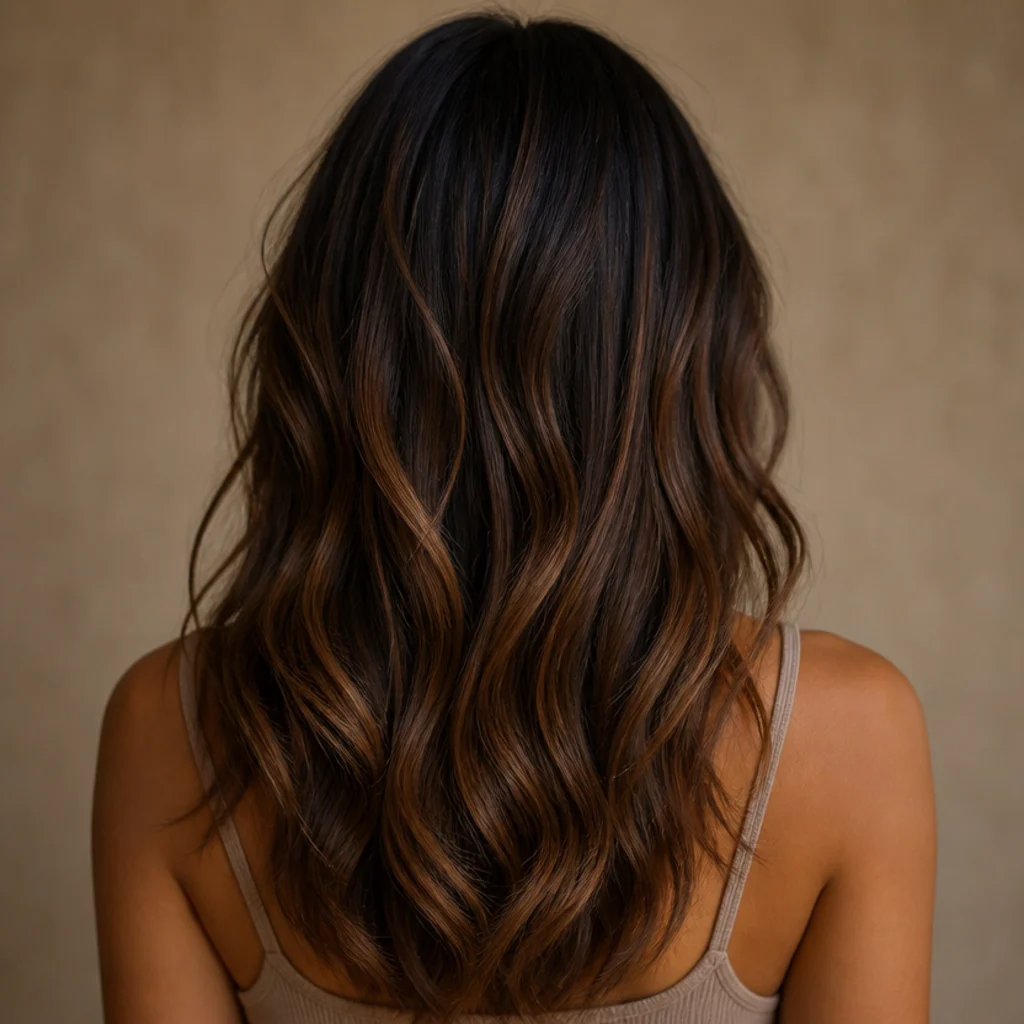
If your base is naturally dark and you want dimension without meaningful lift, fine chestnut ribbons are the move. These are closely woven highlights only one to two levels lighter than your base (think a level 4 chestnut through a level 3 brown), so the effect is depth and warmth rather than contrast. Alternating a few lowlights half a level deeper keeps the ribbons from ever reading striped, and light catches them for that quietly expensive, lit-from-within look. Best for cool-to-neutral deep brunettes who want a low-drama refresh, and forgiving on nearly every face shape since the placement is all-over rather than framing. Maintenance is easy: with so little lift, many people stretch four to five months between services and gloss in between. Pro tip: book this as a "teasylight" or root-shadowed foil so the ribbons diffuse at the scalp and never grow out as pin lines. Ask for "fine chestnut lowlight-and-highlight ribbons kept close to my natural depth, blended at the root."
03Warm Caramel Money Pieces
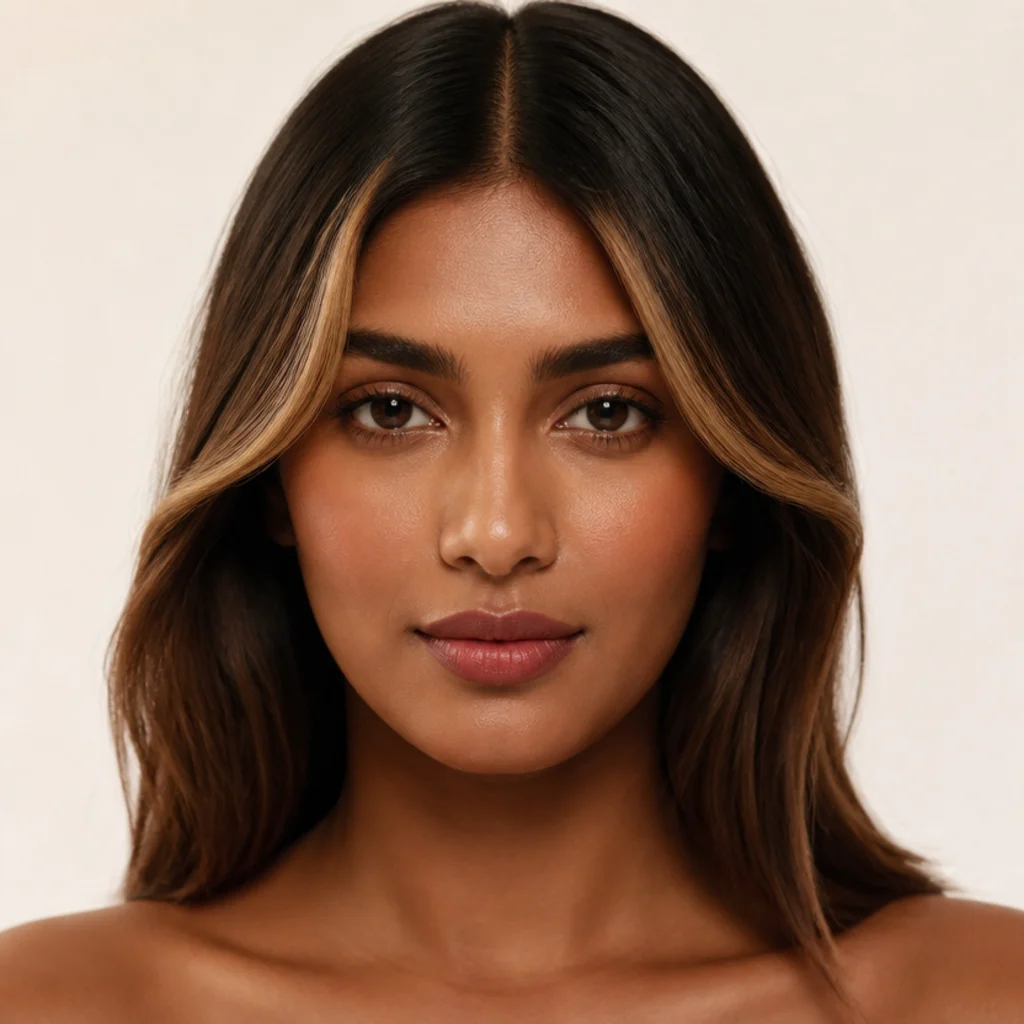
Dimensional brunette money pieces are the highest-impact, lowest-commitment entry point here. Two brighter caramel sections (a level 7 warm gold against a level 4–5 base) frame the face and instantly lift and warm the complexion, while the rest of your hair stays deep. Because the brightness is concentrated at the front, you skip a full head of foils, so both the price and the upkeep drop sharply. This is the single best-value dimensional service on the list. It suits almost everyone; slide the placement to hit your best feature, usually starting just below the cheekbone so the color draws the eye up and out. Round and square faces benefit from a slightly lower, softer start that elongates. Refresh the front pieces with a gloss every eight weeks or so, since face-framing hair sees the most heat and product. Pro tip: part your hair where you actually wear it before the color goes on, so the pieces sit right when you style at home. Ask for "warm caramel money pieces, brightest around my face, blended into a darker base."
04Subtle Mushroom Brown Melt
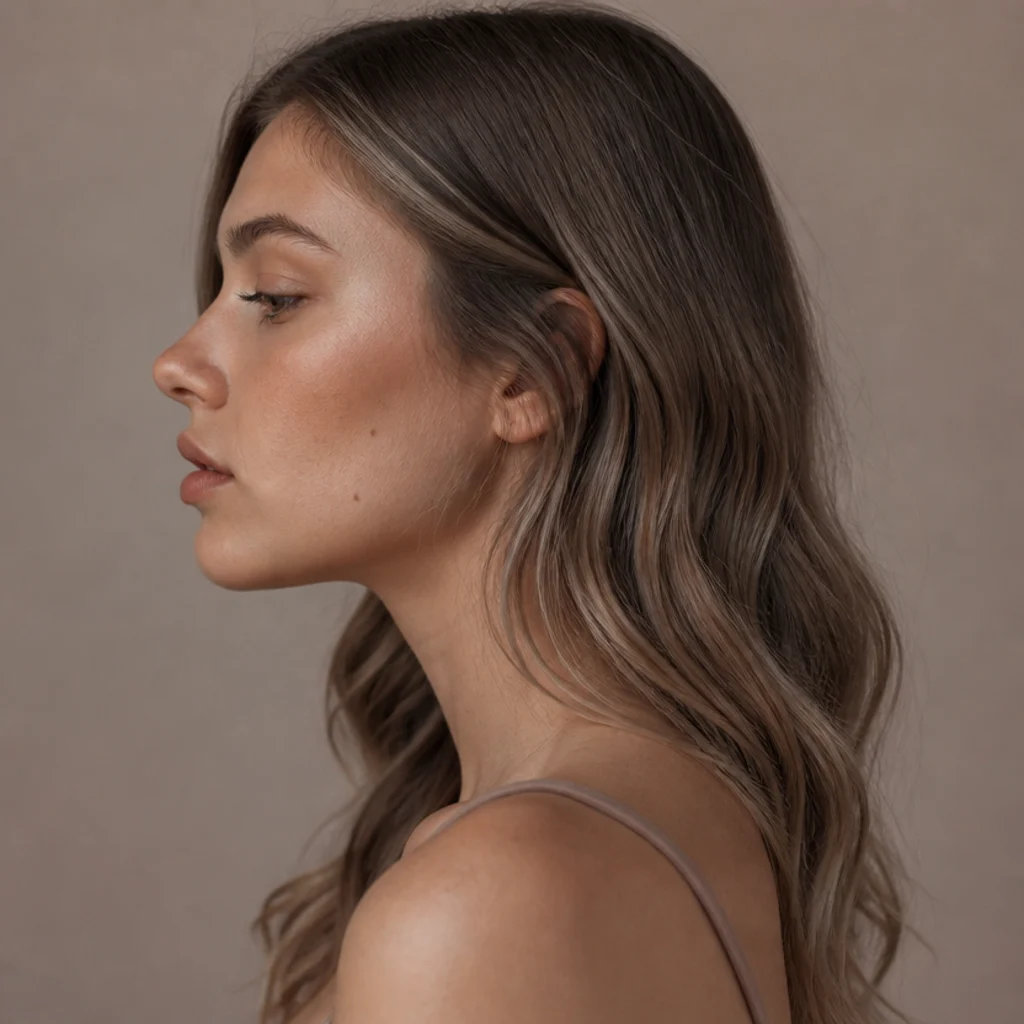
Mushroom brown balances a cool taupe root (level 5 with a violet-ash base) against warmer beige-brown mid-lengths and ends for a soft, smoky melt. It's the answer if you love dimension but find bright caramel too warm for your skin. The near-neutral tone reads modern and understated. It flatters fair-to-medium skin with pink, olive or neutral undertones especially, and it's a genuine subtle dimensional brunette: the shifts are gentle, so grow-out is quiet and gloss refreshes keep it from sliding green or muddy. Difficulty runs moderate to high because balancing cool root and warm ends without either winning takes a skilled formulator and precise toning. Longevity-wise, the ash component fades first, so build a periodic cool gloss into your routine every eight to ten weeks. Pro tip: use a blue-violet-toning shampoo no more than once a week; overusing it is what pushes mushroom into flat grey. Ask for a "mushroom brown melt with a cool taupe root and slightly warmer beige ends, kept soft and blended."
05Golden Mahogany Dimension
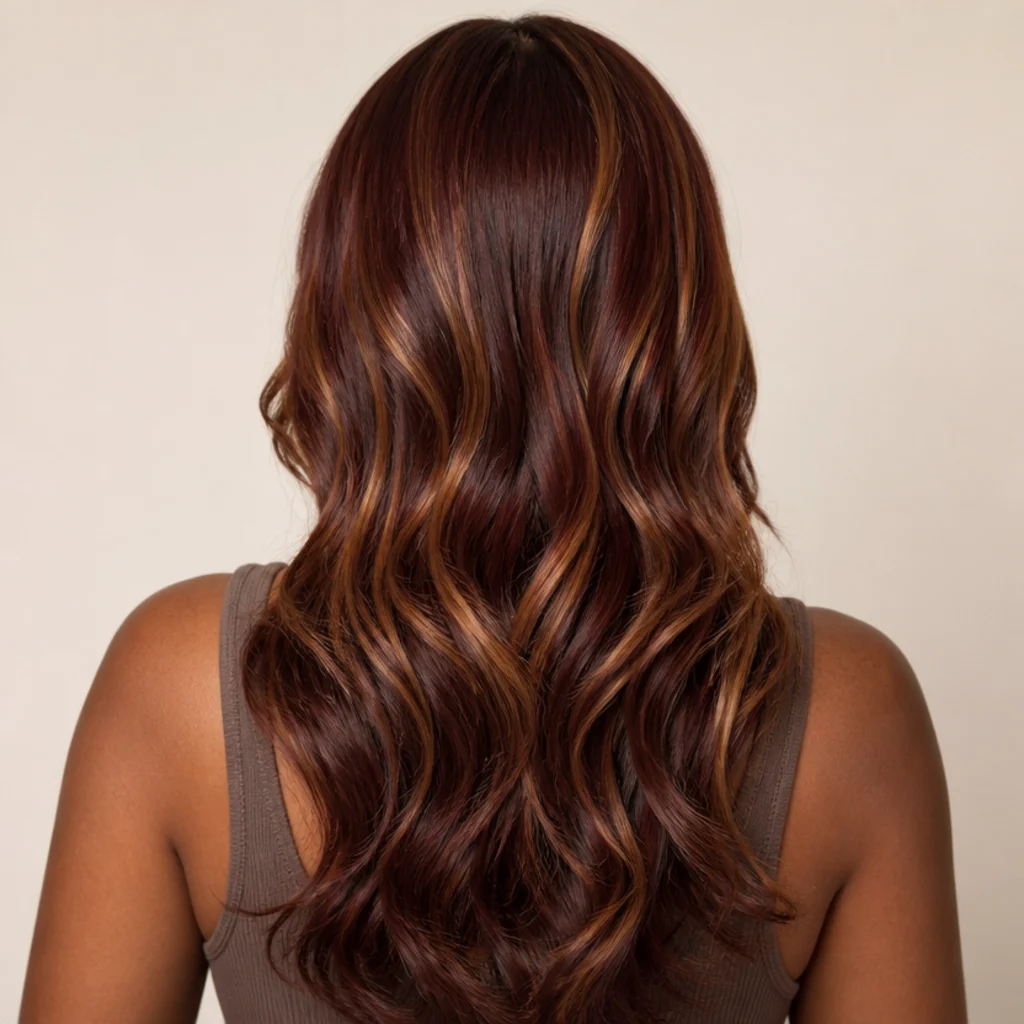
Mahogany brings a red-brown warmth (a level 4–5 with red-violet reflect) that photographs beautifully in warm, low light, and weaving golden highlights through it keeps the color from going flat or too monochrome-red. The interplay of mahogany depth and golden lift is what creates genuine multi-tonal movement rather than a solid dye job. This suits warm and olive skin tones and anyone who feels drained by ashier browns. Be realistic about upkeep: red-family pigment is the largest dye molecule to deposit but the fastest to wash out, so a color-depositing gloss or a mahogany-safe toning conditioner every one to two weeks is the difference between rich and rusty. Refresh professionally roughly every 10–12 weeks. Pro tip: wash in cool water and skip clarifying shampoo, which strips red fastest of all. Ask for "a mahogany base with soft golden dimension, not a solid red," and say whether you want it to read more brown or more auburn in the light.
Save this to Pinterest and start a board for your colorist consultation.
06Bronde Face-Framing Layers
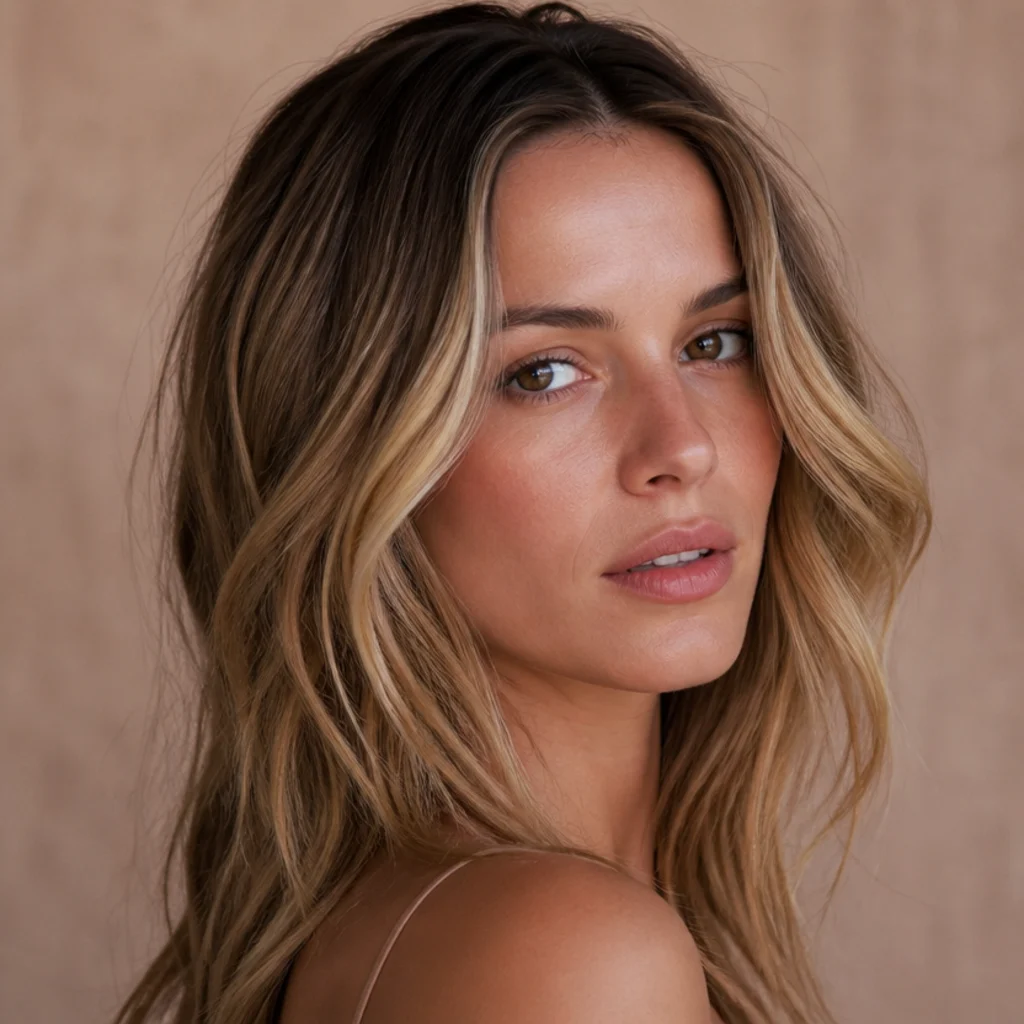
Bronde lives right between brown and blonde (roughly a level 6–7 warm blend), and concentrating it in your face-framing layers gives you brightness where it flatters without committing your whole head to lift. A long-layered or face-framing cut lets the lighter and darker strands interlace as they fall, which the eye reads as effortless, natural dimension. It's a strong pick for medium-to-light brunettes edging lighter for summer, and it's especially flattering on longer layers around an oval or heart face. Because the brightness sits in the front and surface rather than scalp-to-tip, root regrowth stays subtle and you can stretch to three or four months between full services. Pro tip: ask for a "root smudge" or shadow root at the same appointment so the bronde never grows out as a harsh regrowth line. Ask for "warm bronde placed in my face-framing layers with a lived-in root," and name a level you're comfortable with so it doesn't drift blonder than you want.
07Toffee Babylights
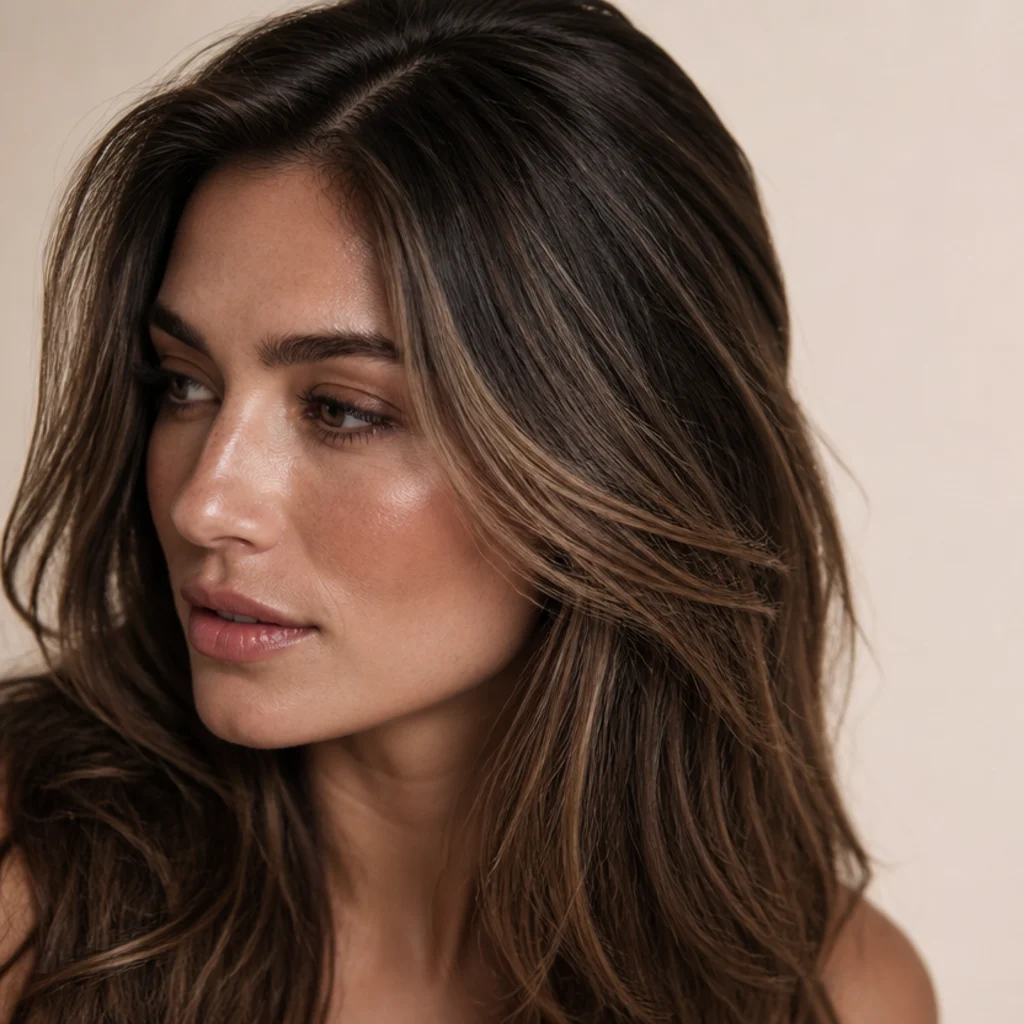
Babylights are ultra-fine, tightly woven highlights that mimic the delicate lightness sun gives natural hair, and in a warm toffee tone (a soft level 6 gold-beige) they scatter a low, believable glow through a brunette base with zero chunky separation. Because each foiled piece is so thin, the effect is refined and grows out almost invisibly, ideal if you want polish more than punch. This suits every face shape and is particularly clever for fine or thin hair, since the micro-highlights create the optical illusion of more texture and density around the crown and part. Upkeep is low on the calendar but the technique is time-intensive and therefore pricier per session because of the sheer number of foils. Refresh every four to five months with a gloss in between. Pro tip: concentrate them at the part and hairline first, where sun would naturally hit and the glow reads most real. Ask for "fine toffee babylights for a soft, sun-glow dimension, no thick pieces."
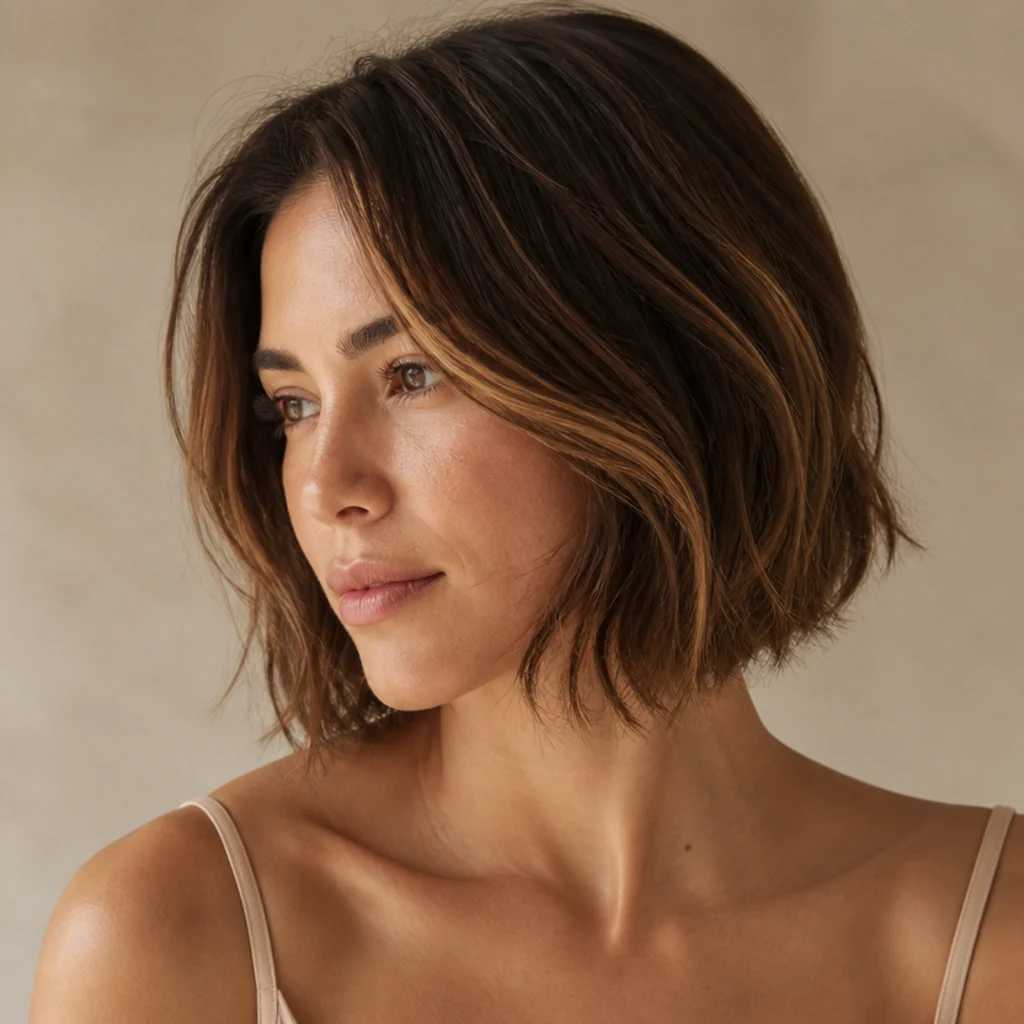
08Dimensional Brunette Bob
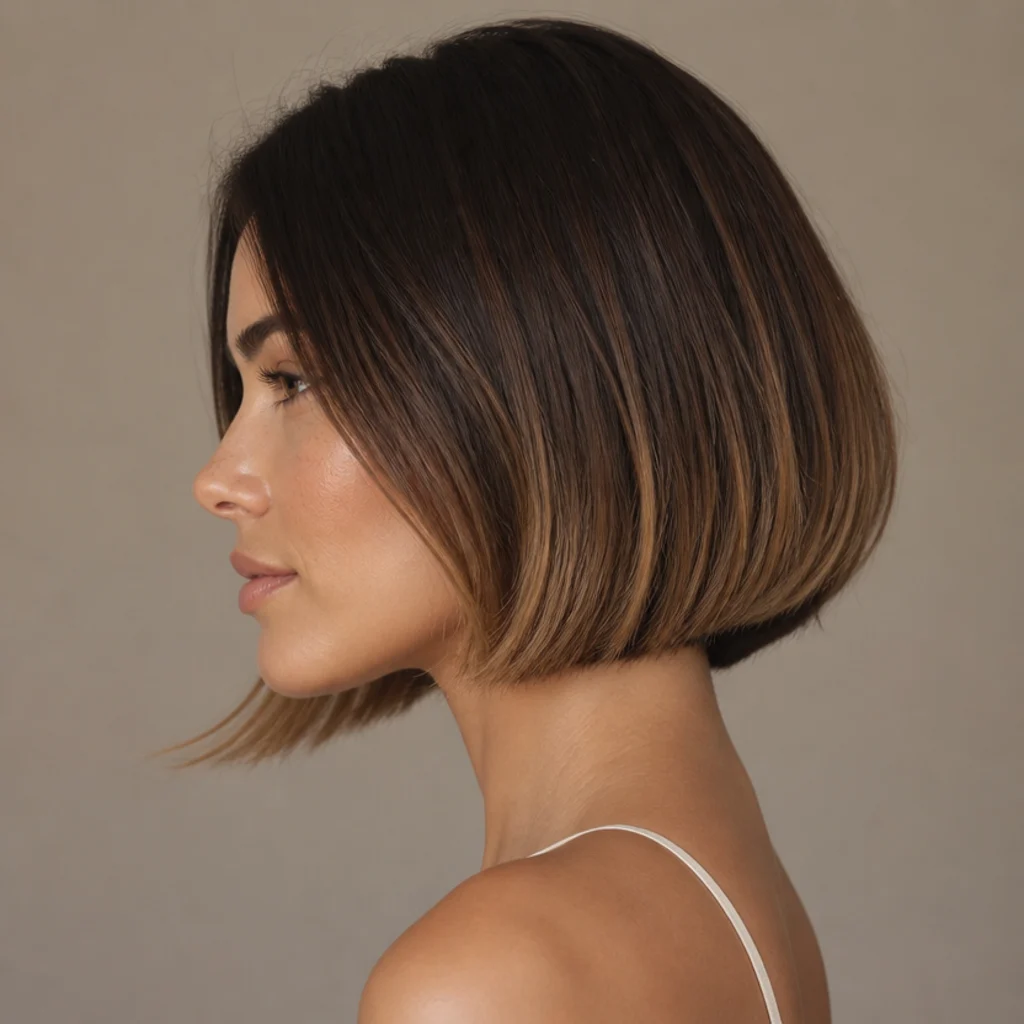
A dimensional brunette bob proves you don't need length to show movement. On a chin-to-jaw cut, balayage weighted toward the ends softens the blunt perimeter and makes the whole shape feel fuller and more expensive. A deeper root (level 3–4) keeps it grounded while brighter caramel ends draw the eye down and out, slimming on rounder faces. It flatters oval and heart shapes especially, and the shorter canvas means color services run quicker and cost less than the same work on long hair. Because bob ends live under a flat iron and see a lot of heat, a bond-building in-salon treatment and a weekly mask keep the caramel glossy rather than straw-like. Refresh the ends roughly every 10–12 weeks. Pro tip: on a blunt bob, ask for the brightness to sit slightly underneath the top layer so it glows through when you tuck a side back. Ask for a "chin-length bob with balayage weighted to the ends and a soft shadow root."
09Chocolate Cherry Undertones
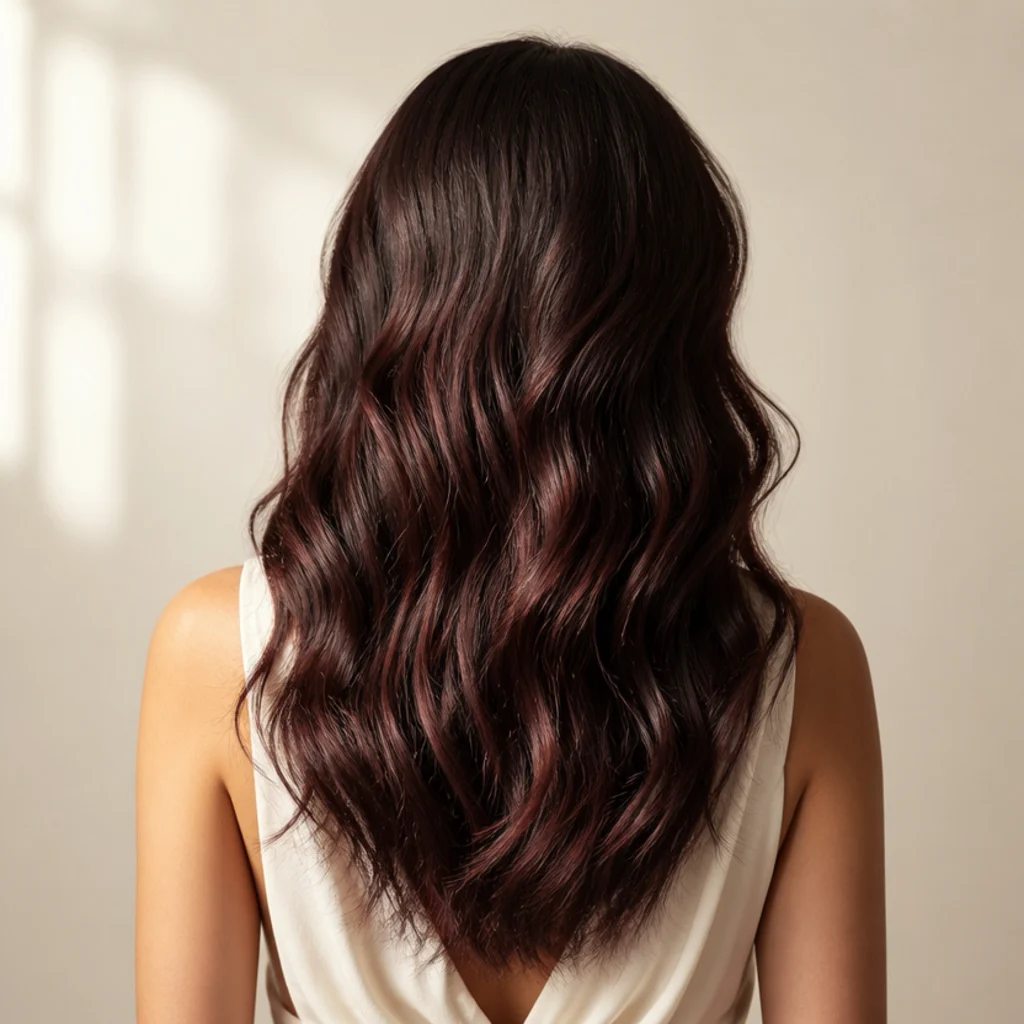
This one keeps the surface a deep chocolate (level 3–4) but tucks cherry-red undertones underneath, so the warmth only reveals itself when light moves through your hair. It's dimension built from tone rather than lightness, which makes it a smart choice when your workplace or preference calls for something that reads dark and professional at first glance. The hidden red flatters warm, olive and deep skin tones and adds a jewel-like richness without any visible highlights or regrowth line. It's arguably the lowest-maintenance lift on this list, since nothing is actually lightened. The catch is tonal fade: red pigment washes out fastest, so a color-refreshing gloss or a red-depositing conditioner every one to two weeks keeps the cherry from dulling to plain brown. Pro tip: apply the depositing conditioner to damp, towel-dried hair and leave it the full recommended time; deposit needs contact to build. Ask for a "dark chocolate base with cherry undertones underneath, visible only in the light."
10Sun-Kissed Beachy Brunette
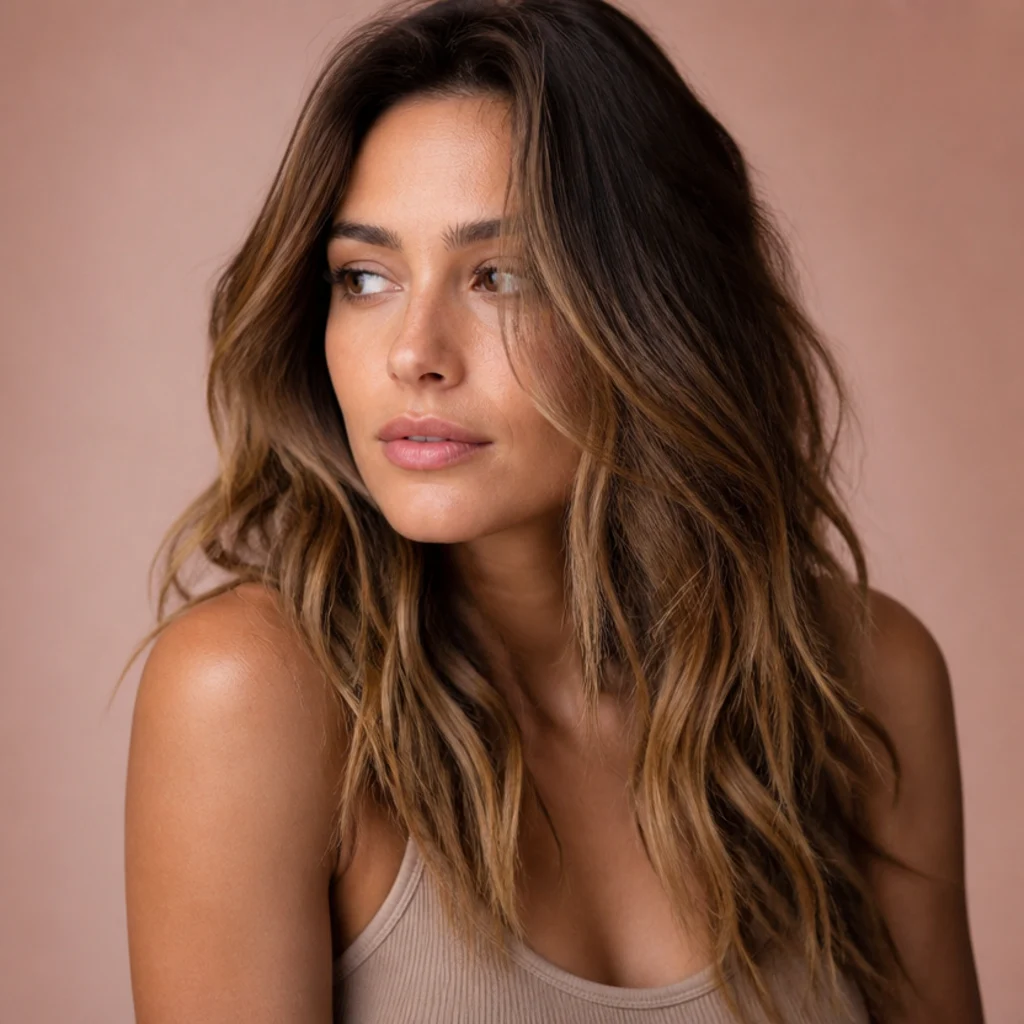
Think of the color your hair turns after a slow summer outdoors: brighter around the surface and ends, deeper underneath. Colorists build this with sparse, surface-placed balayage rather than uniform foils, so the brightness looks organic and slightly random instead of engineered. Worn on loose, tousled waves, the scattered lift reads as pure, undone dimension. It suits relaxed, low-maintenance types and works across most brunette depths, from level 4 to level 6. Because the placement is intentionally imperfect and skips the underneath layers, grow-out is a non-issue. This is designed to look a little lived-in. Keep it fresh with a gloss every 10–12 weeks and a UV-protectant spray in summer so the sun doesn't push your real caramel toward brass. Pro tip: air-dry with a texturizing sea-salt spray so the wave separates and shows off the surface brightness; sleek blowouts hide this effect. Ask for "sun-kissed, surface-placed highlights concentrated at my ends for a beachy, undone brunette."
Save this to Pinterest before you keep scrolling — the next batch gets bolder.
11Copper-Kissed Brunette
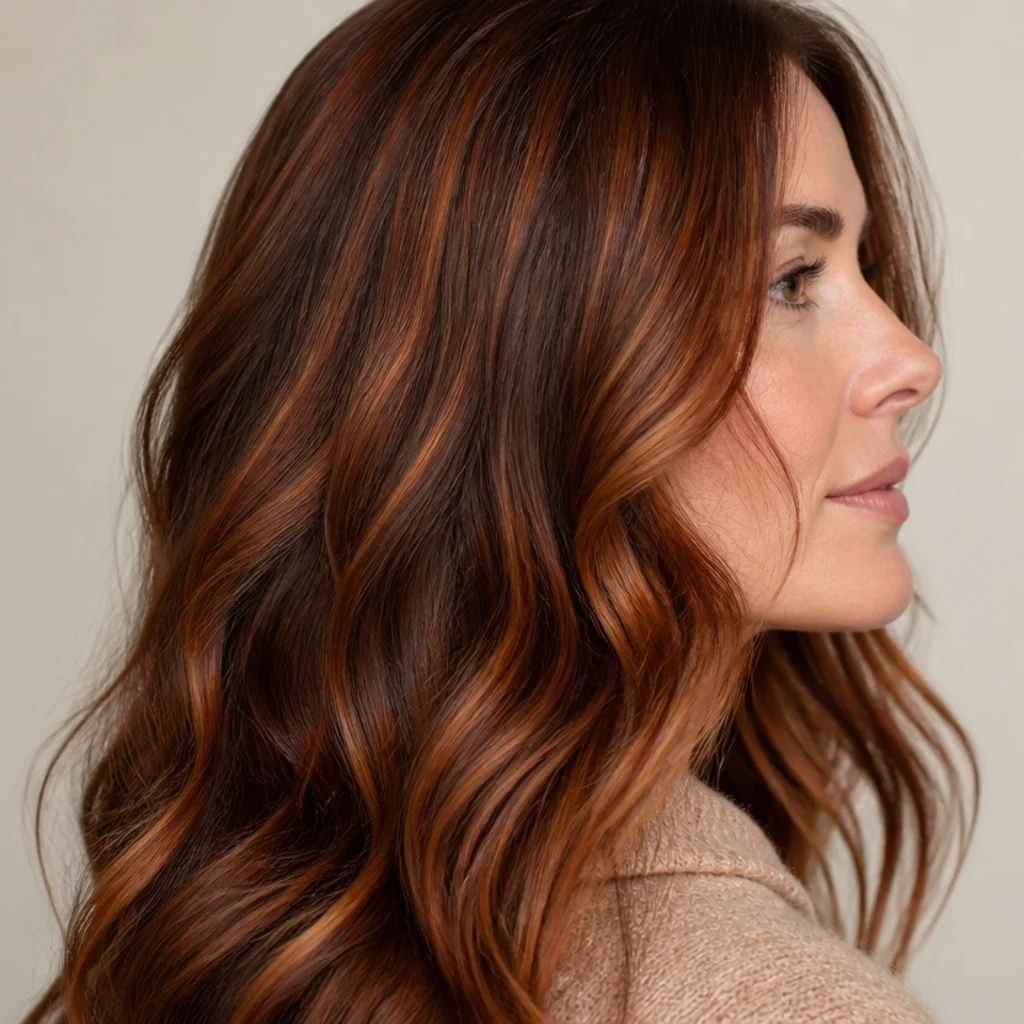
For warmth a step past caramel, copper highlights (a level 6–7 orange-gold) bring a glowing, autumnal edge to a brown base. Kept fine and woven rather than solid, the copper adds a lit-from-within quality without tipping you into full-redhead territory, so it's a low-risk way to test warmth. It flatters warm and golden undertones and looks striking on medium to deep brunettes; if you have cool, pink-based skin, keep the copper concentrated at the ends rather than the face. Copper is a bold but notoriously fast-fading pigment (smaller molecule, quicker to rinse), so plan on a copper- or orange-depositing conditioner every one to two weeks plus a gloss refresh every eight to ten weeks. Difficulty runs moderate to high because copper placement needs a confident eye to stay balanced. Pro tip: avoid purple shampoo entirely; it neutralizes exactly the gold you're paying to keep. Ask for "woven copper dimension through my brown base, warm but not fully red."
12Ash-and-Warm Contrast Brunette
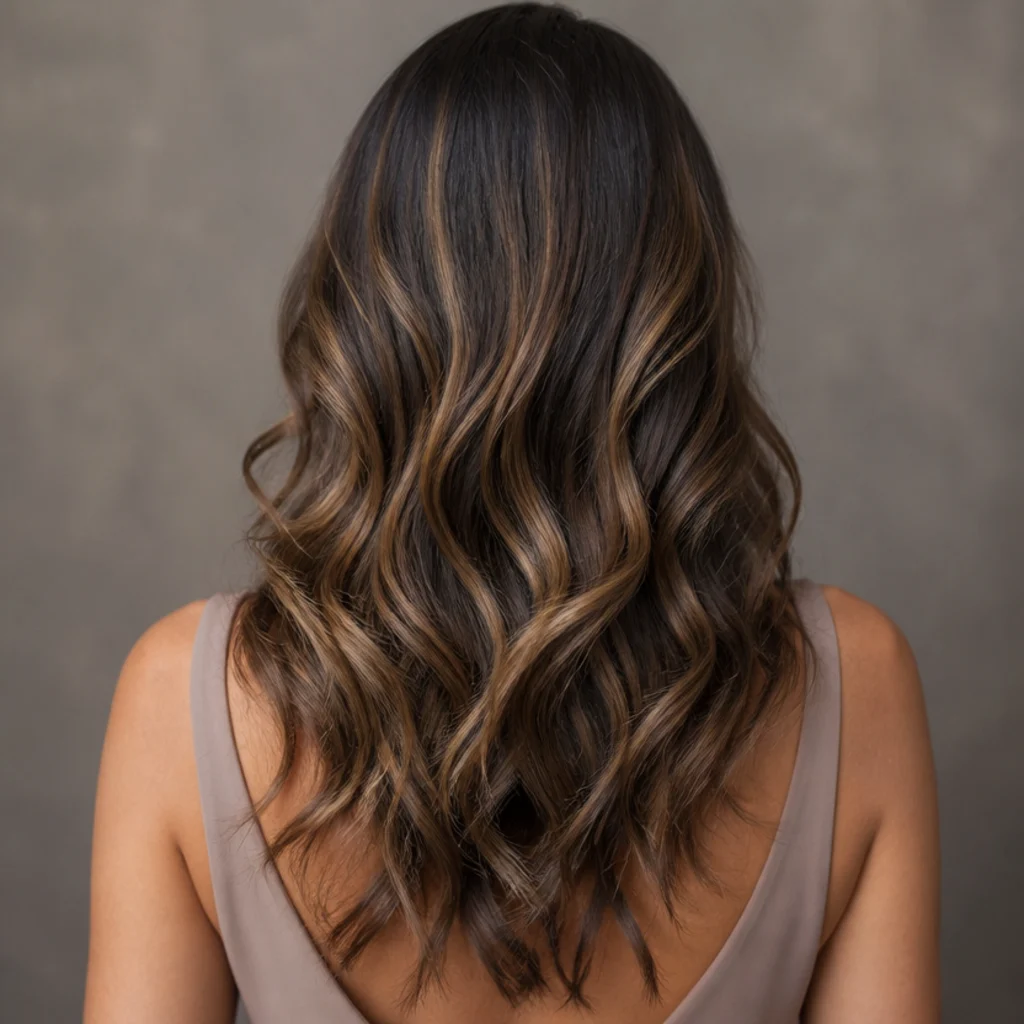
Playing cool ash lowlights against warm caramel highlights delivers the most three-dimensional effect on this list, because the eye reads temperature contrast as depth even more strongly than it reads lightness. The whole trick is balance: too much ash goes flat and muddy, too much warm goes brassy, and the ratio has to be dialed to your base. Done well, it's a true multi dimensional brunette that appears to shift between cool and warm as light hits it from different angles. It suits neutral undertones best, since the finish carries both temperatures at once and won't fight your skin. Upkeep is moderate: a carefully balanced neutral gloss every eight to ten weeks keeps both tones honest and stops the warm from overtaking the cool. Pro tip: ask your colorist to place the ash lowlights underneath and the caramel on the surface, so the warmth is what catches the light first. Ask for "a mix of cool ash lowlights and warm caramel highlights for maximum contrast and depth."
13Honey Ribbon Highlights
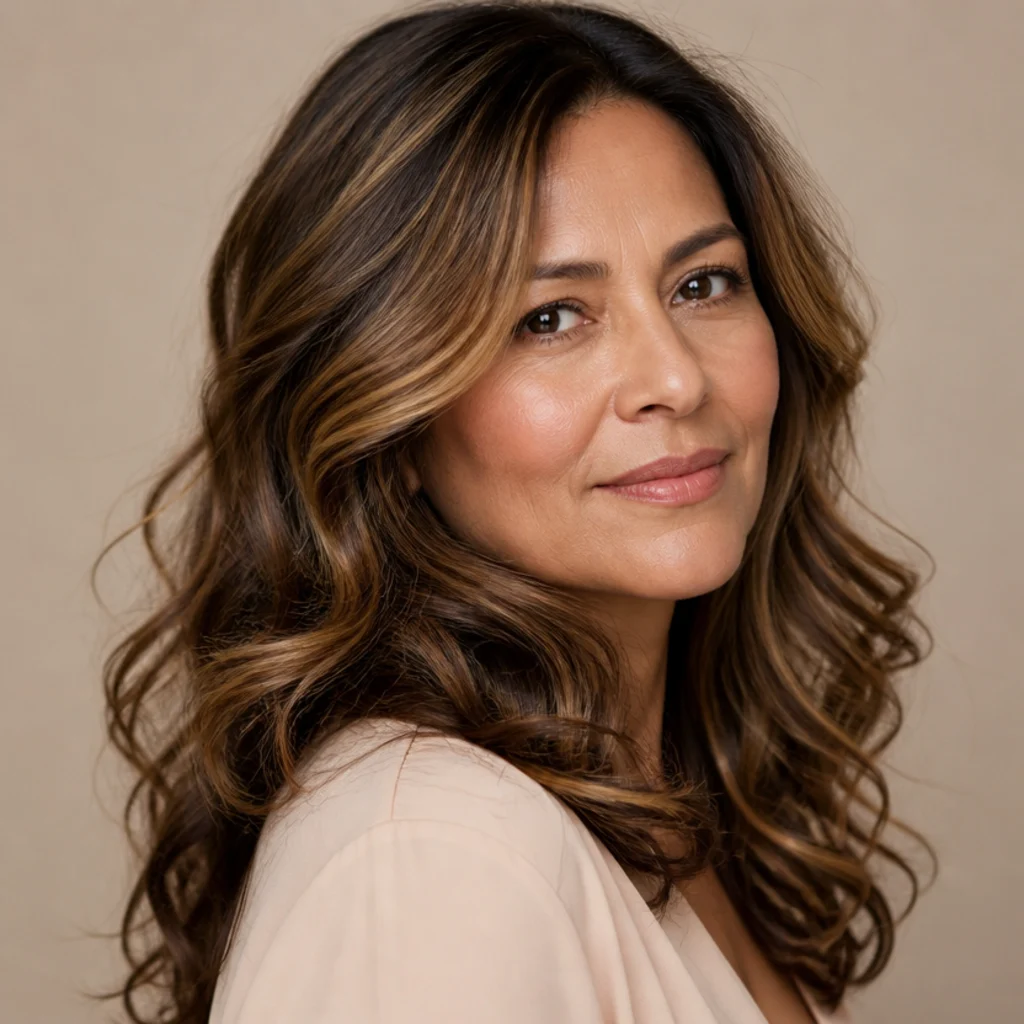
Honey sits between caramel and gold — a warm, soft level 7 that's about as universally flattering as a highlight tone gets. Applied as slightly wider ribbons than babylights, honey highlights give a brighter, more visible lift while still melting into brown rather than reading as stripes. On curls or waves the ribbons spiral and stack, catching light for a lot of movement per foil. It works across skin tones and is a friendly first step for brunettes nervous about going too light, since honey stays warm and forgiving as it fades. Maintenance is moderate: a gloss every eight to ten weeks keeps the honey from yellowing or going brassy, and a color-safe, sulfate-free wash protects the tone. Pro tip: on curly or wavy hair, ask for the ribbons to be painted following the curl pattern so the brightness lands on the crest of each wave, not buried inside it. Ask for "honey-toned highlight ribbons blended through my base, brighter than babylights but still soft."
14Rooted Bronde Lob
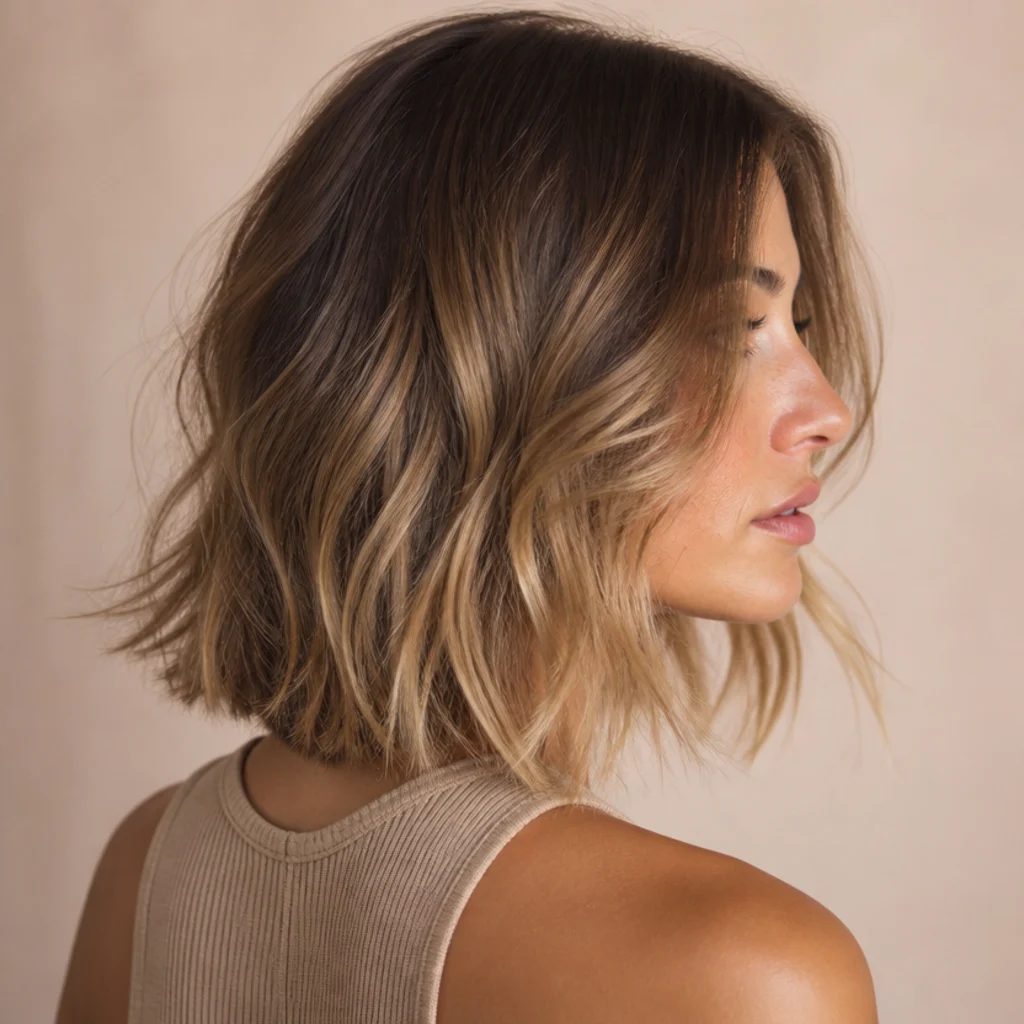
A rooted bronde lob pairs a smart shoulder-length cut with a deliberately deep root (level 4–5) that melts into warm blonde-brown lengths around level 7. The dark root isn't a compromise you tolerate — it's the design, keeping the look grounded and stretching your time between appointments dramatically, since regrowth is meant to blend. The lob length flatters almost every face shape and gives the bronde room to graduate convincingly from dark to light. Because the root is engineered to be shadowy, most people go four to five months between full services and only gloss the ends in between. Pro tip: ask the root shadow to feather to the tops of your cheekbones so, when you wear your hair down, the transition frames your face rather than cutting straight across it. Ask for a "rooted bronde lob with a deep shadow root melting into warm lengths," and confirm exactly how dark you want the root to stay so it isn't smudged heavier than you pictured.
15Deep Espresso with Amber Ends
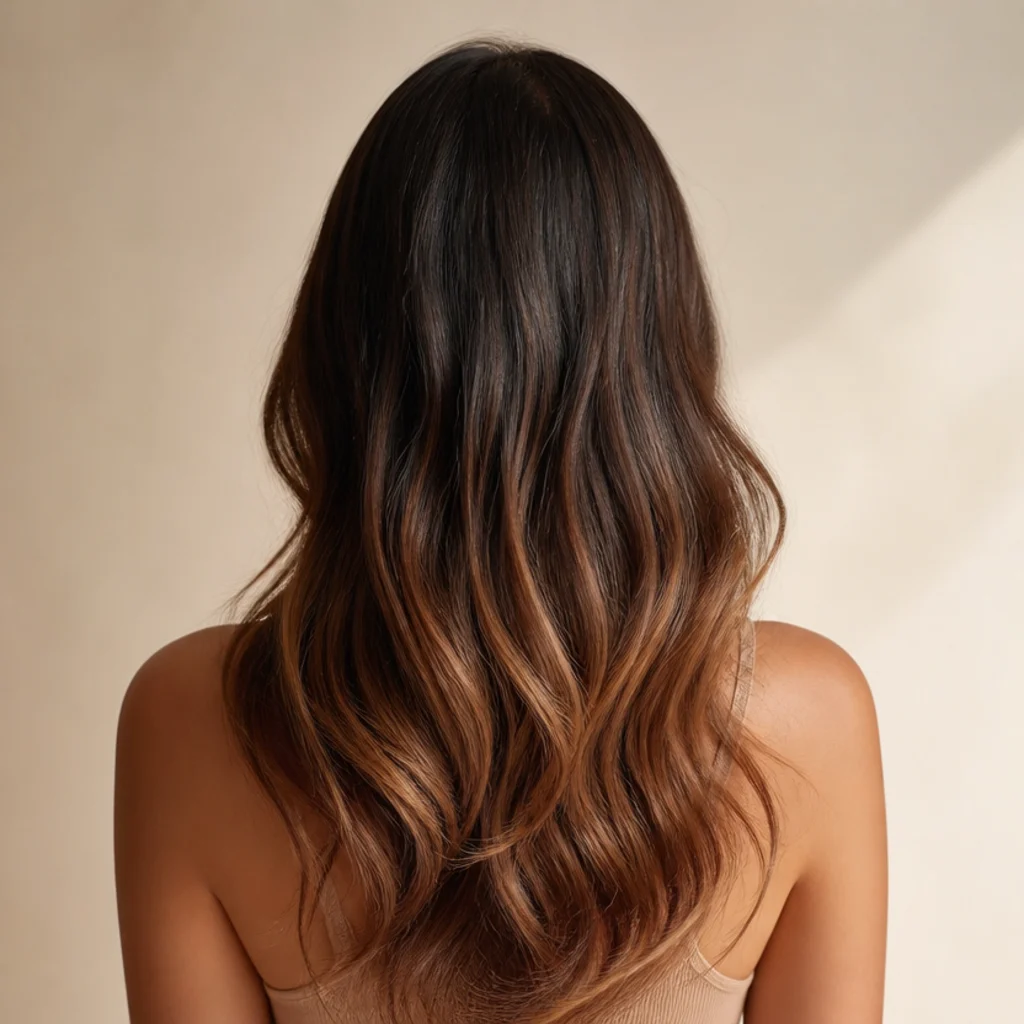
Here the dimension lives entirely at the bottom: a rich espresso length (level 3) that warms into amber (level 6 gold-orange) through the last several inches. It's a soft gradient rather than a hard ombré, so the amber glows as though the tips have been sun-warmed instead of dip-dyed. It flatters deep and warm skin tones and looks especially strong on long hair, where the transition has room to unfold slowly and never looks abrupt. Because the lift sits only at the ends, root upkeep is minimal, a great option if you dislike frequent scalp appointments, though the amber will want a warm gloss every eight to ten weeks to stay bright rather than washing to beige. Pro tip: a bond-building treatment on the ends matters here, since they carry both the most lift and the most heat damage; without it the amber goes porous and dull. Ask for "espresso lengths with a soft amber warmth at the ends, blended not blocky."
16Cinnamon Swirl Waves
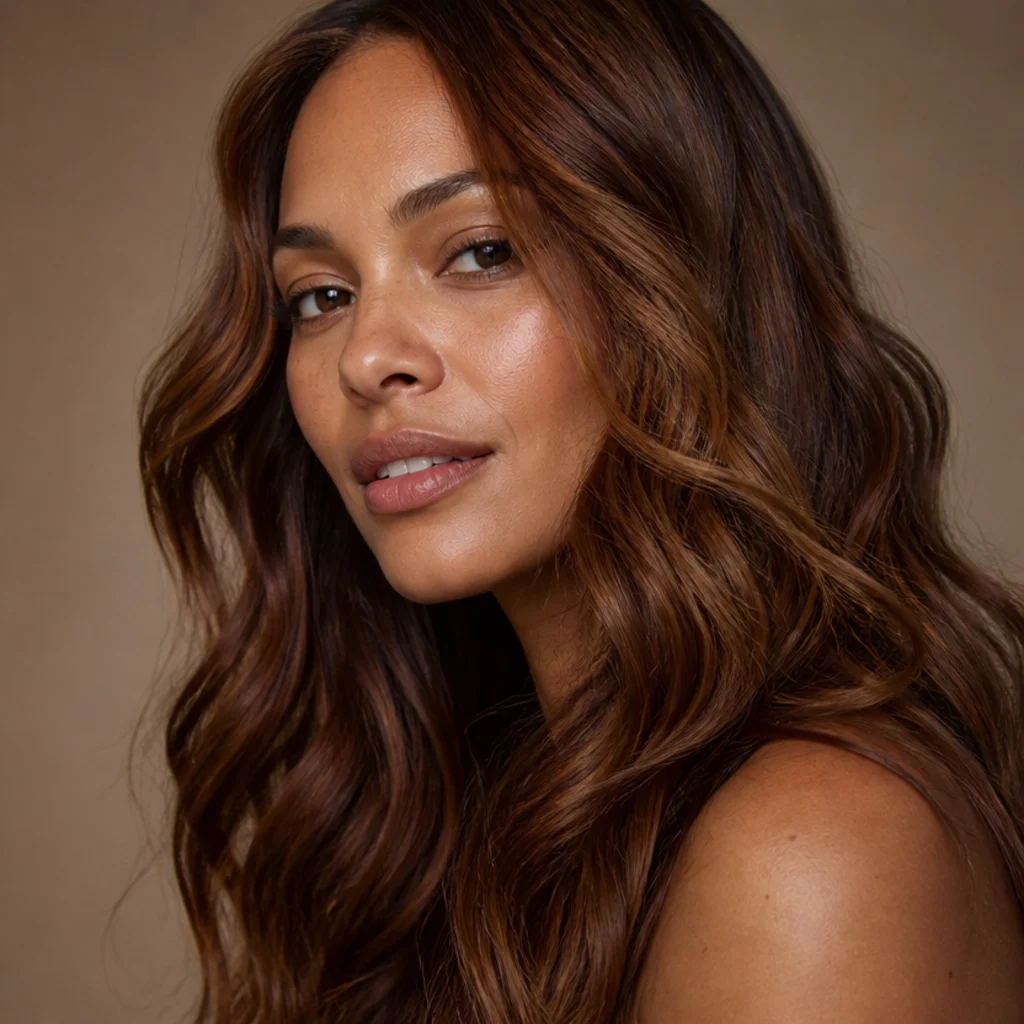
Cinnamon brown folds reddish and golden warmth into one spiced, multi-tonal shade that sits around a level 5. Rather than distinct highlights, colorists blend two or three cinnamon-family tones (a red-brown, a gold-brown and a lighter caramel) so the color swirls through your waves instead of striping them. The effect is cozy and rich, ideal for fall but flattering year-round on warm and olive complexions. Because the tones sit close in depth, grow-out stays gentle and forgiving, though the red-gold warmth benefits from a color-safe, cool-water routine to hold its glow. Refresh the blend with a gloss roughly every 10 weeks. Pro tip: style with a large-barrel wand and alternate curl directions so the different tones fold over each other — uniform curls flatten the swirl. Ask for a "blended cinnamon brunette with a mix of red and gold warmth, swirled not striped," and note whether you want it to lean more red or more caramel.
17Warm Brunette Curtain Bangs Blend
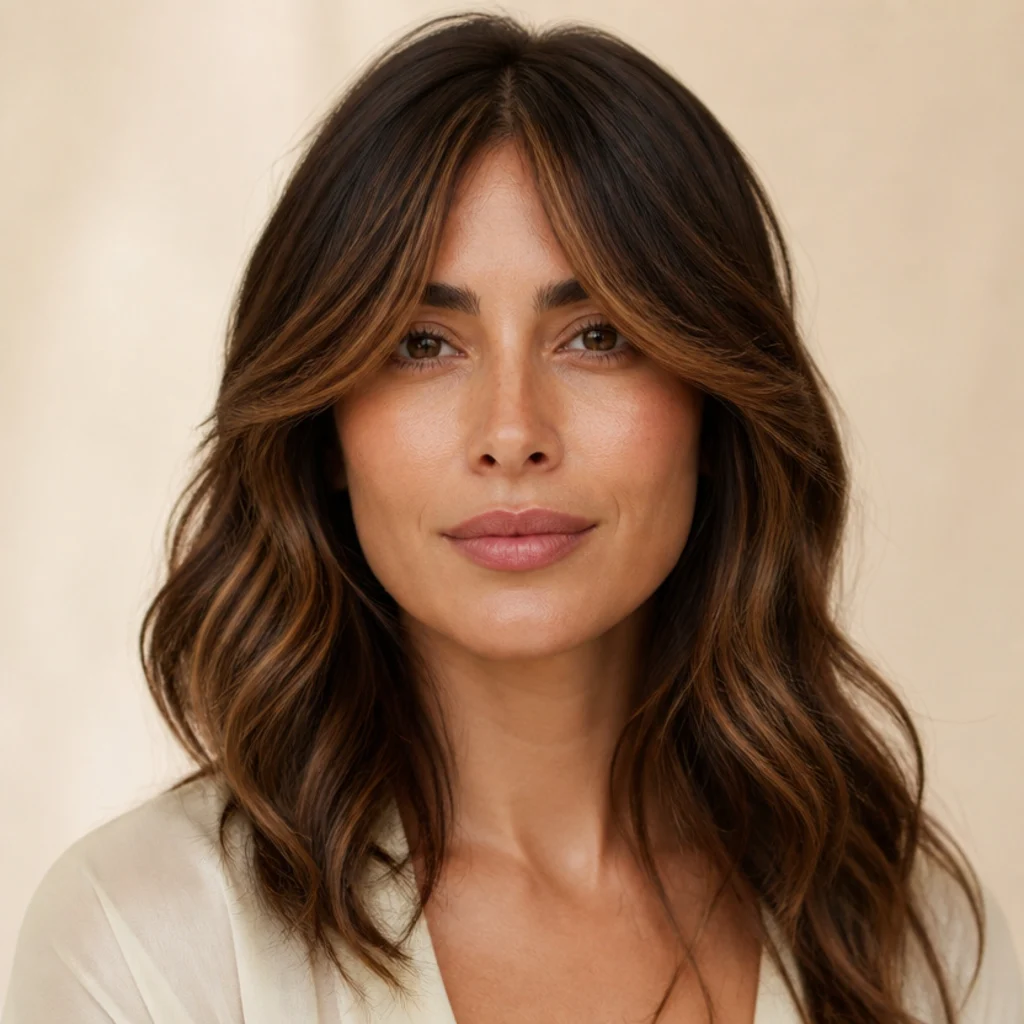
Curtain bangs and dimensional color are a natural pair: the sweep of the fringe puts brightness exactly where it frames your eyes and cheekbones. Concentrating warm caramel (level 6–7) through the bang and front layers makes the whole cut look intentional and glowy rather than accidental. It suits nearly every face shape (curtain bangs are famously forgiving, softening square jaws and shortening long faces) and it's a smart way to freshen a grown-out fringe with color instead of committing to a big cut. The front pieces see the most blow-drying and clipping, so keep them glossed every eight weeks and heat-protected daily. Pro tip: ask for the brightest caramel to sit on the inner edge of each curtain piece, where it sweeps back toward your cheekbone. That's what makes the fringe look lit from the center. Ask for "warm dimension through my curtain bangs and face-framing pieces to make the fringe pop."
18Gingerbread Balayage
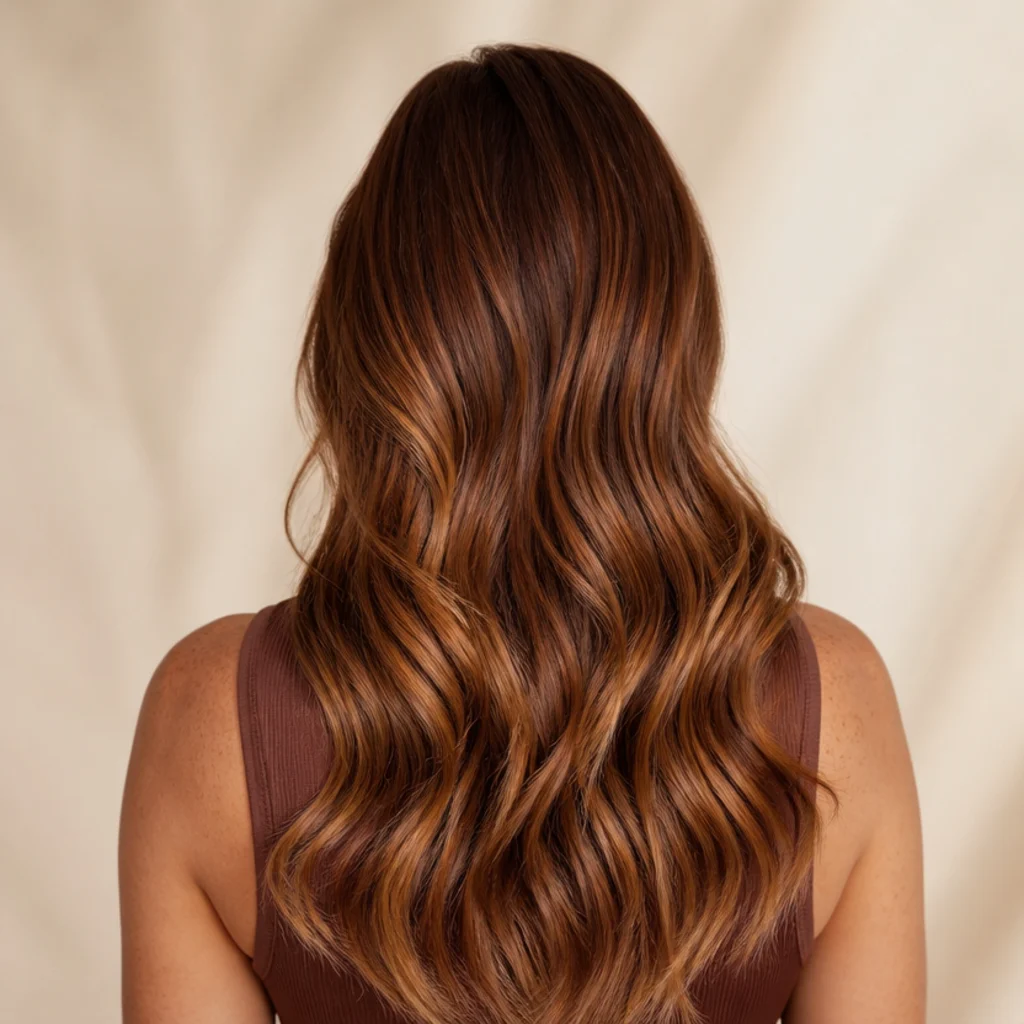
Gingerbread is a warm, spiced brunette that folds ginger and caramel into a brown base, cozier than plain balayage and less committal than full copper. Hand-painted so the ginger (level 6 warm) and caramel (level 7 gold) melt together over a level 4 base, it gives rich, edible-looking dimension that flatters warm and golden skin beautifully. It's a favorite transitional shade heading into cooler months, warm enough to feel autumnal without reading as a full redhead. Like all warm-heavy color, it holds best with a color-depositing gloss every one to two weeks to fend off the inevitable warm-tone fade, plus a professional refresh every 10–12 weeks. Difficulty runs moderate since it blends several warm tones that have to stay distinct yet cohesive. Pro tip: show your colorist a photo in indoor light, not bright sun. Gingerbread reads very differently under warm bulbs, which is where you'll actually see it most. Ask for a "gingerbread balayage — warm brown with ginger and caramel melted together, not a solid color."
19Hazelnut Highlighted Curls
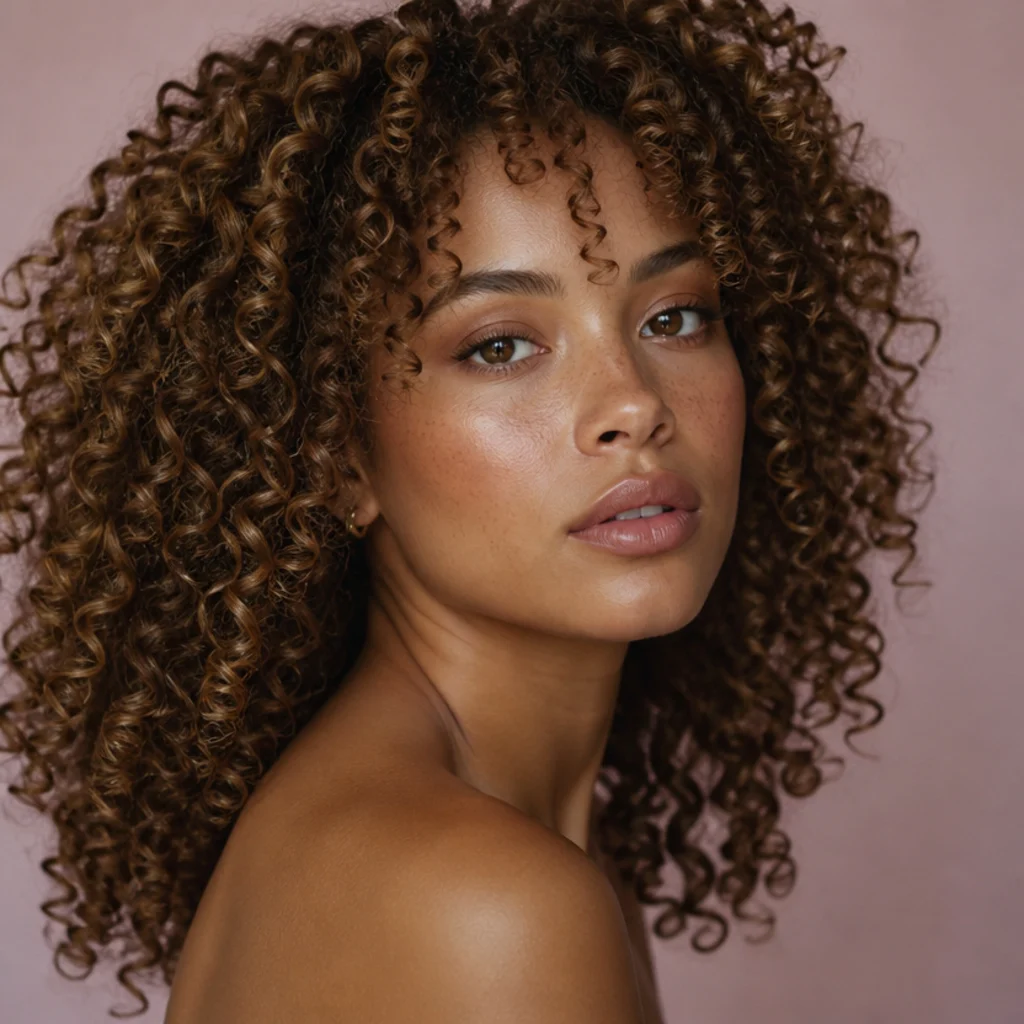
On curly and coily hair, dimension does something no straight texture can match: fine hazelnut highlights (a warm, nutty level 5–6) trace the curl pattern so every coil pops with individual definition. The soft, nutty tone keeps the finish natural rather than high-contrast, which is what you want on curls where misplaced brightness shows instantly. Placement is everything here: an experienced colorist paints with your natural pattern, on dry curls when possible, so the highlights follow each coil instead of scattering into patchy spots. It suits all curl types (2A through 4C) and warm-to-neutral skin. Because any lift raises the cuticle and curls are already moisture-hungry, pair the service with a bond-builder and a rich leave-in and deep-conditioning routine. Pro tip: never brush this out dry to "check" it — assess and refresh curl by curl to protect both the pattern and the placement. Ask for "fine hazelnut highlights painted to follow my curl pattern for definition and depth."
20Multi-Dimensional Brunette Ombré
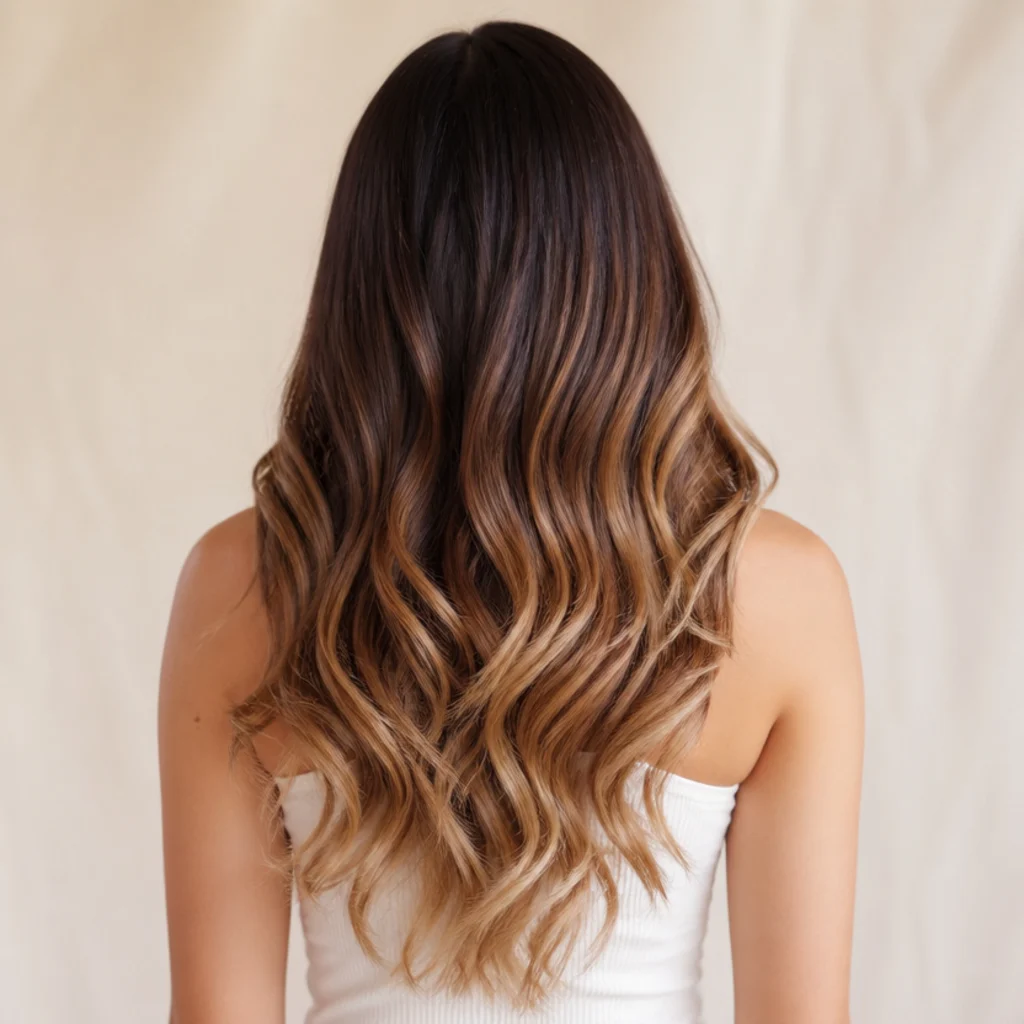
For maximum drama, a multi dimensional brunette ombré stacks several tones from dark root to bright ends: a level 3 deep brown into chestnut, then caramel, then a lift at the very tips. Unlike a flat two-tone ombré, the layered, stepped transition is what keeps it from looking dated or harsh; each tone hands off to the next so the eye never lands on a hard line. It's best on long hair where the gradient can build slowly over many inches, and it flatters anyone who wants a noticeable, statement version of dimensional brunette rather than a whisper of it. This is the most involved option here, so budget for real chair time, likely a bond-builder for the lifted ends, and a maintenance gloss every eight to ten weeks. Pro tip: ask for the brightest lift to stay below your collarbone so the drama reads as elegant length rather than a heavy dip-dye. Ask for a "multi-tonal brunette ombré with several steps from dark root to bright ends, kept blended."
Save this to Pinterest — pin your top three so you can compare tones side by side.
21Warm Mocha Melt
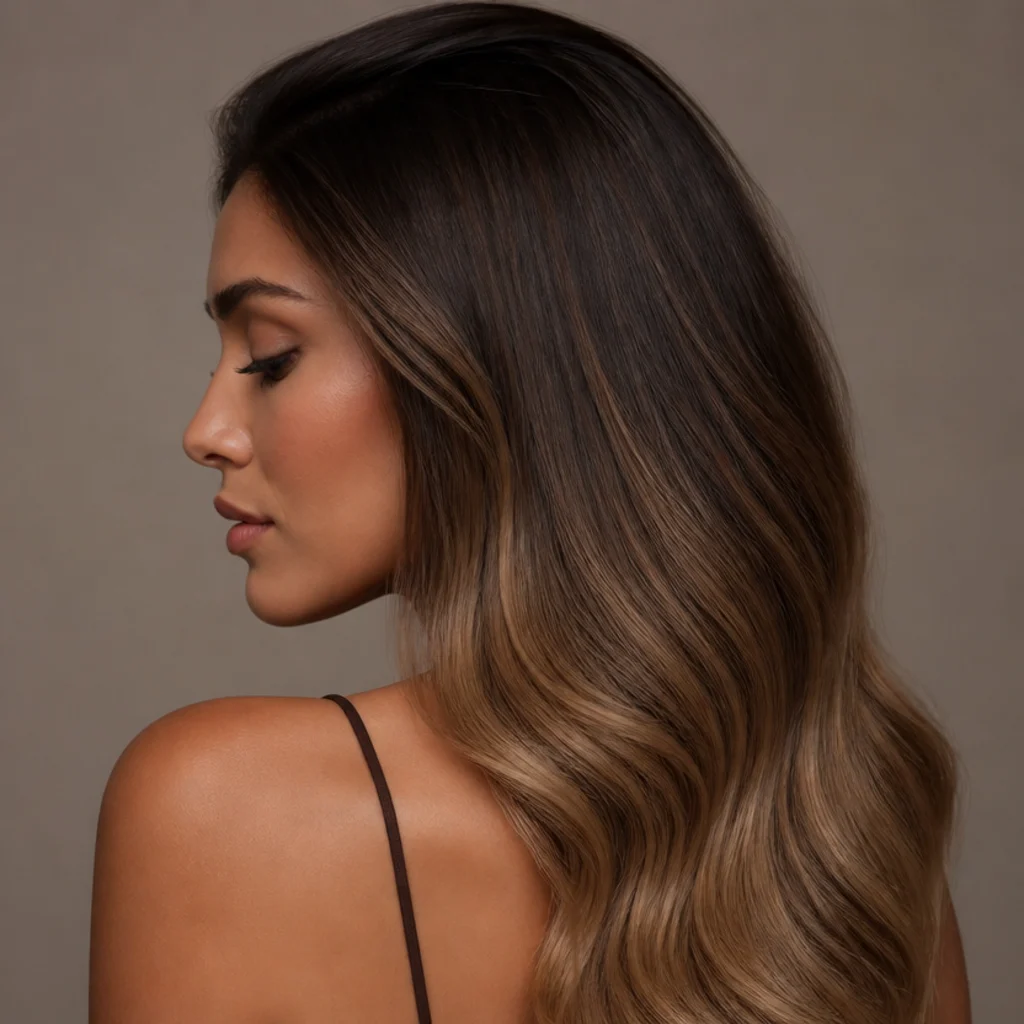
Mocha is a warm coffee brown, and a mocha melt blends a deep root (level 4) smoothly into softly lightened, latte-toned ends (level 6) with no distinct highlights at all. The whole look is a smooth gradient within one warm family, which is exactly what makes it read polished and effortless rather than "done." It's an easy, wearable warm dimensional brunette for anyone who wants richness and subtle movement without visible contrast or a maintenance-heavy foil pattern. Because it's tonal rather than heavily lifted, upkeep is gentle: grow-out is soft, and a warm gloss every 10–12 weeks keeps the latte ends from dulling. It flatters warm and neutral undertones across most skin depths. Pro tip: this is one of the most beginner-friendly looks to maintain at home with a warm-brown depositing gloss between salon visits — just keep it off the root to preserve the melt. Ask for a "warm mocha melt — deep coffee root blending into a lighter latte tone through the ends."
22Peekaboo Caramel Underlayer
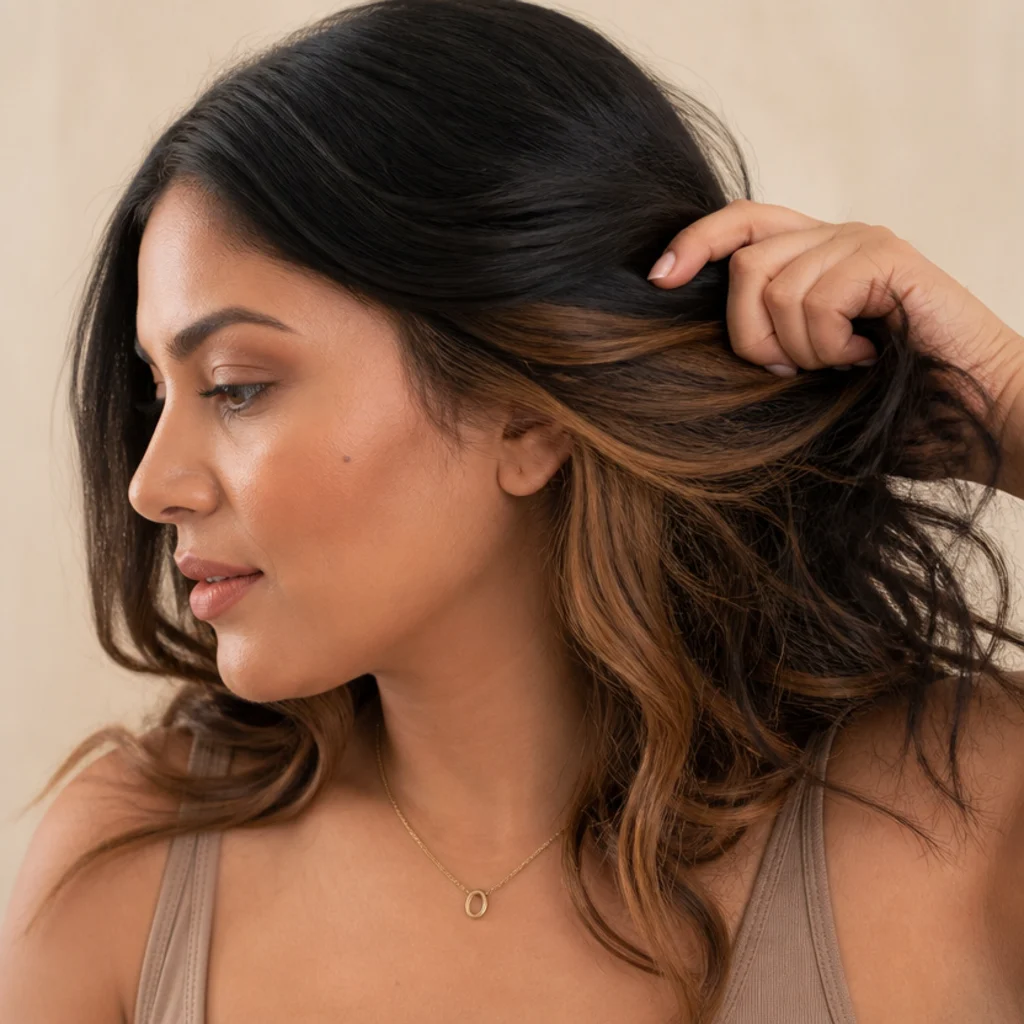
A peekaboo underlayer hides warm caramel (level 7) beneath a dark top section, so the dimension only shows when you move, tuck a side back, or wear an updo. It's playful and surprisingly low-maintenance, because the lightened hair is physically protected under the top layer: it sees less sun, less product and less styling, so both tonal fade and regrowth are slow to show. It suits anyone who wants a hidden pop of warmth or has to keep the surface conservative for work, and it reads especially fun on medium to long hair where there's enough length to flash the color. Pro tip: ask for the panel to start at the temple on your dominant styling side, so it peeks out naturally every time you tuck your hair behind that ear. Placement is what makes a peekaboo feel deliberate. Ask for a "caramel peekaboo underlayer beneath my natural top, so the warmth only shows when my hair moves," and point to where you tuck or part.
23Bronzed Brunette Shag
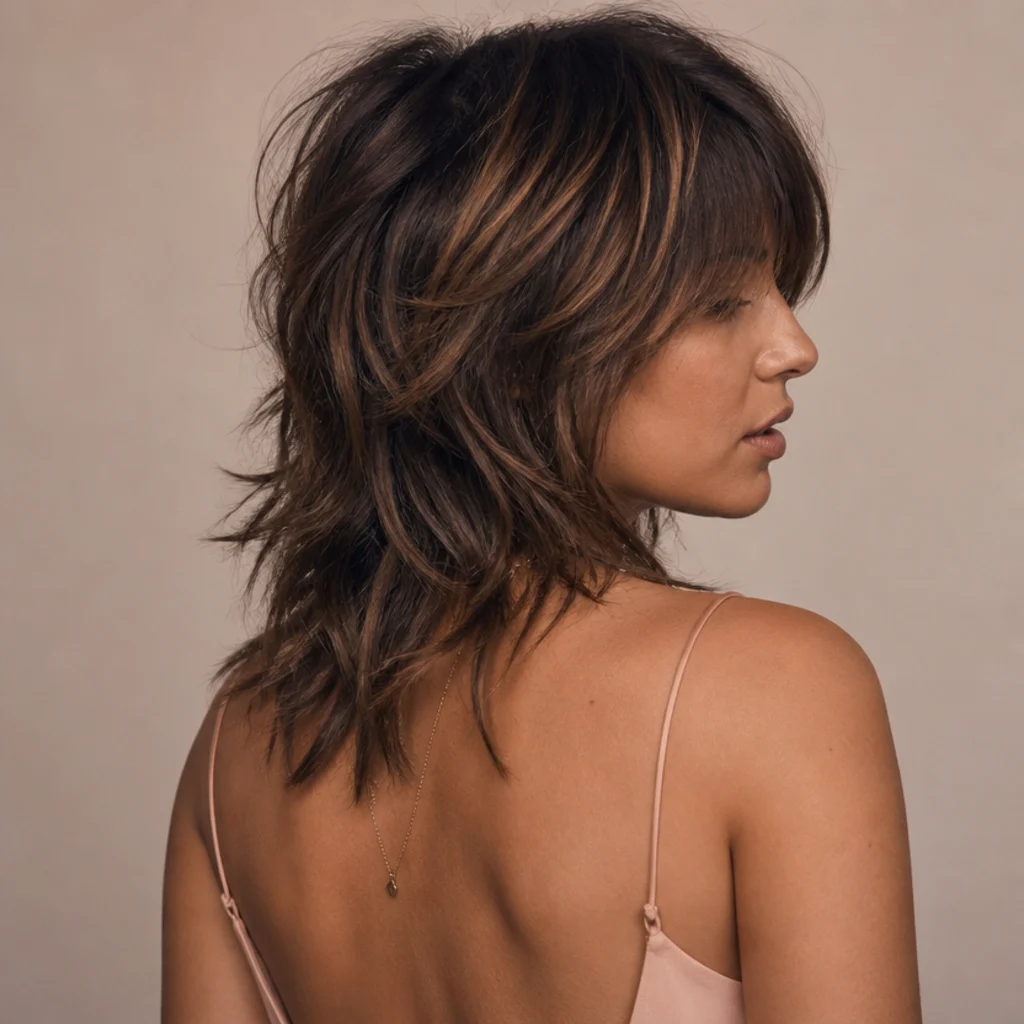
A shag's choppy, textured layers are the ideal canvas for dimensional color, and a bronzed warm tone (a gold-forward level 6) makes every layer read separately instead of blurring together. The highlights are placed to accent the cut's built-in movement, so texture and color amplify each other and the whole thing looks intentionally undone. It flatters those who want an edgy, lived-in look and works on wavy to straight hair; on very fine hair, keep the pieces face-framing so the shag still reads full. The messy-by-design styling means grow-out is easy to live with, and a gloss every 10–12 weeks keeps the bronze from dulling. Pro tip: rough-dry with your fingers and a texture spray rather than a round brush; a smooth blowout collapses the separation the color is meant to show. Ask for "bronzed warm highlights placed to define the layers of my shag," and bring a photo of the cut so your colorist can map placement to the layers.
24Deep Dimensional Brunette for Rich Skin
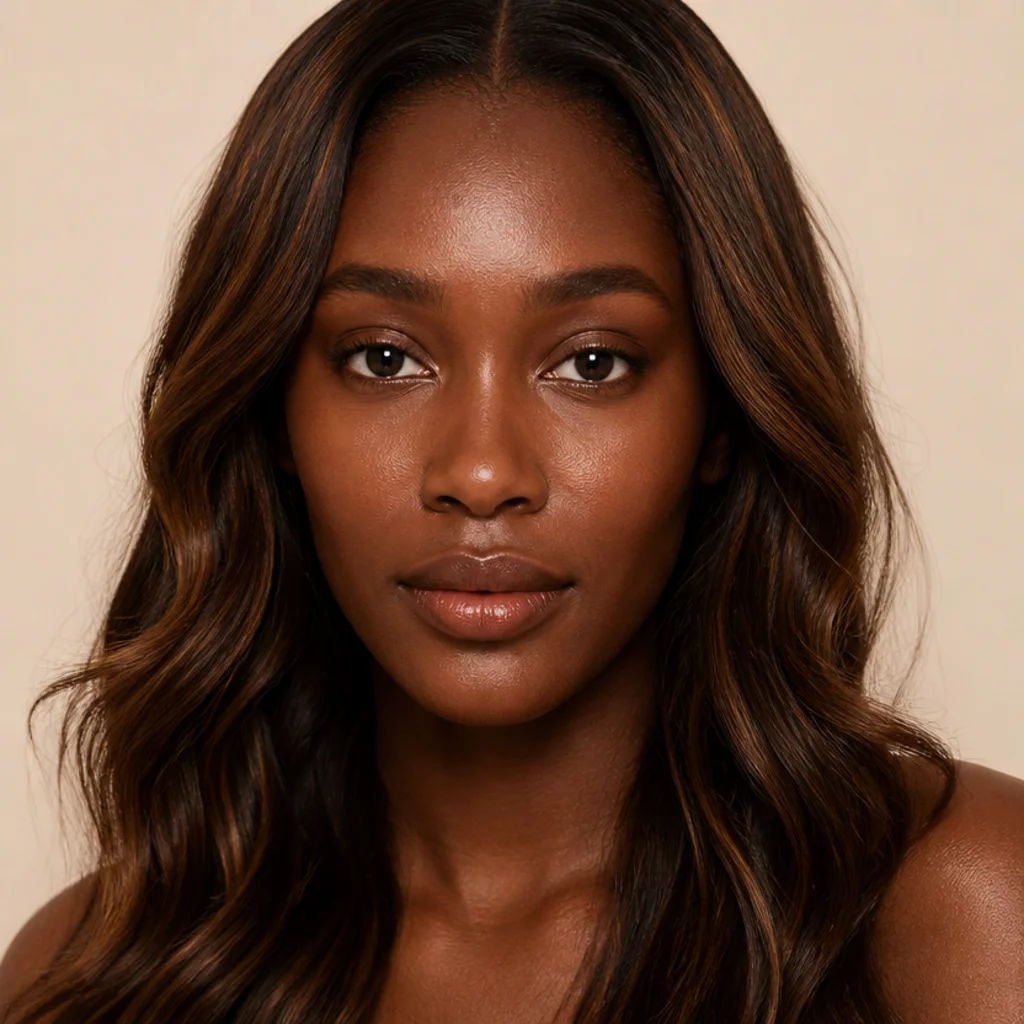
On deep and rich skin tones, warm dimensional brunette looks its best when the tones stay saturated rather than washed out. A deep brown base (level 3) with mahogany and warm caramel (levels 5–6) woven through complements golden and red undertones in the skin and sidesteps the ashy greyness that flat, under-toned lightening can leave behind. The technical key is depositing warmth as you lift: a colorist should tone in the same warm family the moment the highlights are placed, so they land golden and rich instead of muddy or pale. Upkeep centers on glossing every eight to ten weeks to keep the warmth true, plus a color-depositing conditioner for the red-family tones that fade first. Pro tip: ask specifically for a "warm, low-lift" formula and no violet toner — purple-based toners are what dull warm caramel to grey on deep bases. Ask for "warm, saturated dimension — mahogany and caramel kept rich, not ashy — to complement my skin's warm undertones."
25Warm Brunette Pixie with Depth
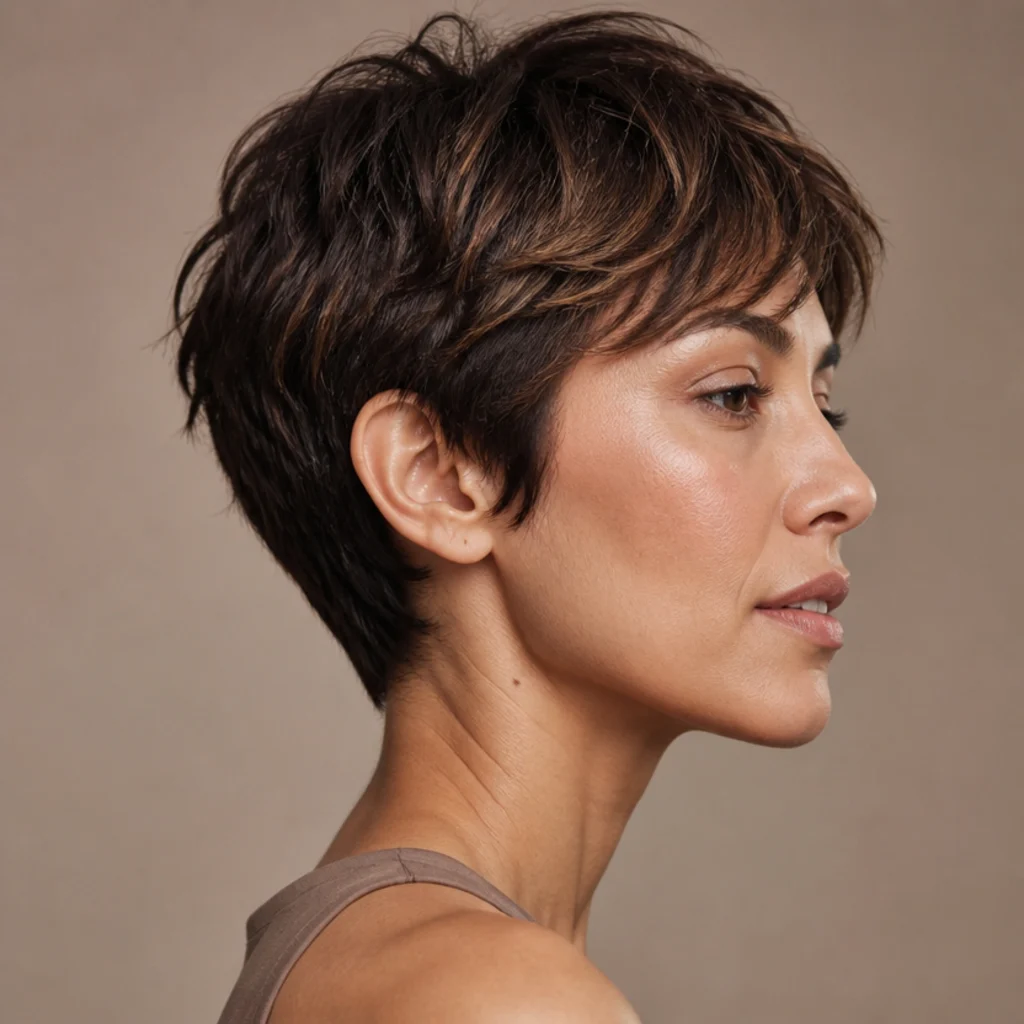
Short hair can be dimensional too. On a textured pixie, a few warm caramel highlights (level 7) around the crown and fringe add depth and make piece-y styling pop, drawing light exactly where the cut has movement. Because there's so little hair, a little brightness goes a long way. Over-highlighting a pixie is the fastest route to a striped, heavy look, so restraint and placement matter far more than volume of color. It flatters bold, low-fuss types and shows off strong bone structure and features. The short length means frequent shape-up trims (every four to six weeks) but quick, affordable color, since a few foils take minutes. Pro tip: ask for the highlights to be concentrated at the fringe and the pieces you push up or forward, so the depth shows in your actual finished style rather than lying flat against the head. Ask for "a few warm caramel pieces around my crown and fringe to add depth to my pixie, kept subtle."
Pro Tips from the Editor
- Match temperature before you match tone. Warm/golden undertones glow with caramel, honey, mocha, copper and gingerbread; cool or neutral skin usually looks better in mushroom, chestnut ribbons, or an ash-and-warm balance. Get the temperature right and almost any level will flatter you.
- Ask for a shadow root every time. A smudged or root-melted regrowth zone is the single biggest factor in how "grown-out" your color looks at week ten. It turns a six-week appointment into a three-to-five-month one.
- Glossing is the whole maintenance game. The lift is permanent; the tone is not. A gloss every 8–12 weeks (or a depositing conditioner at home) is what separates rich, expensive-looking dimension from faded brass.
- Warm and red pigments fade first. Wash in cool water, skip clarifying and purple shampoos on warm tones, and use a color-depositing conditioner in your exact family (caramel, copper, mahogany or cherry) to hold it.
- Where the brightness sits changes everything. Face-framing and surface placement flatter and read brighter; underneath and peekaboo placement is subtle and low-maintenance. Decide the effect you want, then let placement follow.
- Bring photos in the light you live in. Warm dimensional brunette looks dramatically different under salon LEDs, daylight and warm home bulbs — show your colorist a reference lit the way you'll actually see it most.
- Respect your hair's history. Deep, believable dimension is often built over two visits, especially on previously colored or box-dyed hair. Ask what's realistic in one session before you sit down, so you're not disappointed by a single-appointment ceiling.
How to Choose / Get the Look
Work through four decisions in order and the right idea narrows itself quickly.
1. Temperature. Warm or golden undertones lean into caramel, honey, mocha, copper and gingerbread; cool or neutral skin flatters mushroom, chestnut ribbons and the ash-and-warm blend. This choice matters more than the technique.
2. Contrast level. A subtle dimensional brunette (babylights, ribbons, a tonal melt, a peekaboo panel) grows out nearly invisibly and asks the least of your calendar. A multi dimensional brunette ombré or heavy balayage makes a statement but wants more chair time, glossing and often two sessions.
3. Length and cut. Money pieces, curtain-bang blends and peekaboo layers shine on medium-to-long hair; a dimensional brunette bob, lob, shag or pixie needs placement weighted toward the ends and face so short hair never reads striped.
4. Upkeep you'll actually do. Be honest about whether you'll gloss on schedule and switch to color-safe products.
| Commitment | Best techniques | Refresh cadence | Relative cost |
|---|---|---|---|
| Low | Money pieces, babylights, chestnut ribbons, peekaboo, tonal melt | 3–5 months + at-home gloss | $ |
| Medium | Balayage, honey ribbons, bronde layers, gingerbread, shag | 10–12 weeks | $$ |
| High | Multi-tonal ombré, ash-and-warm contrast, copper, full mahogany | 8–10 weeks + depositing conditioner | $$$ |
Across the board: book a toning gloss every 8–12 weeks to fight brassiness, wash with a sulfate-free color-safe shampoo in cool water, add a bond-building treatment if your hair was lifted, and heat-protect daily. At the consultation, bring two or three photos, name your natural base depth and level, be specific about tone (warm caramel versus cool taupe) and exactly where you want brightness to land, then ask what's realistic for your hair's history in a single session.
Frequently Asked Questions
What exactly makes brunette hair "dimensional"?
Dimension comes from layering multiple tones and levels: a deeper base with lighter and sometimes cooler strands woven through, so light reflects unevenly and the color appears to shift and move as you turn. Flat, single-process brown reflects light uniformly, which reads heavier and less lively. Even a difference of one to two levels between base and highlight is enough to create the effect.
Is warm dimensional brunette high maintenance?
It's moderate and largely within your control. Balayage and melt techniques with a shadow root grow out softly, so many people go three to five months between full services. The real ongoing task is a toning or depositing gloss every 8–12 weeks to keep warm tones from turning brassy, plus a color-safe washing routine. Foil-heavy or high-contrast looks need refreshing more often.
Will dimensional color damage my hair?
Any lightening involves some processing, but sectional techniques like babylights, ribbons and balayage are gentler than all-over bleach because they treat only portions of the hair and rarely sit at the scalp. Pairing the service with an in-salon bond-building treatment and a sulfate-free, moisturizing home routine keeps hair in good condition. Previously bleached or over-processed hair should be assessed before adding more lift.
Can I get dimensional brunette on short hair?
Yes. A dimensional brunette bob, lob or pixie all take color beautifully. The key is weighting brightness toward the ends and face and keeping highlights fine so short hair doesn't look striped. Placement matters far more than the volume of color on short cuts; a few well-placed pieces around the crown and fringe do more than a full head of foils.
How do I keep the warm tones from fading?
Warm and red-family tones fade fastest because they're smaller or more washout-prone pigments. Use a color-depositing or color-safe conditioner in your tone's family, wash less frequently and in cooler water, protect hair from heat and UV, skip clarifying and (for warm looks) purple shampoos, and book a refreshing gloss between highlight services to keep caramel, copper and mahogany vivid.
How is balayage different from foil highlights for dimensional brunette?
Balayage is hand-painted freehand, so it's softer, more surface-placed and grows out with no hard line, ideal for a lived-in, blended look. Foils wrap each section and process hotter and more evenly, giving brighter, more uniform lift and better reach at the scalp. Many dimensional looks actually combine both: foils for controlled brightness up top, balayage for soft movement through the lengths.
Which dimensional brunette is best for fine or thin hair?
Fine hair benefits most from babylights and toffee or chestnut ribbons, which create the optical illusion of texture and density, especially around the part and crown. Keep the contrast low and the placement close to your base so the highlights read as depth rather than gaps. Avoid heavy, chunky highlights, which can make sparse areas look see-through.
Can I go dimensional brunette over box dye or previously colored hair?
Often yes, but honestly it depends on the buildup and any previous lightening. Box dye and repeated permanent color deposit layers that can lift unevenly or expose unexpected warmth, so a skilled colorist may need a color remover or two sessions to reach a clean, even canvas. Always disclose your full color history — including how long ago and how many times — at the consultation.
How many salon visits does it take to build dimensional brunette?
A subtle look (money pieces, ribbons, a tonal melt) is usually one appointment. A high-contrast or multi-tonal result on dark, virgin or previously colored hair is frequently built over two visits spaced a few weeks apart, both to protect the hair and to reach believable brightness safely. Ask your colorist for a realistic single-session ceiling before you begin.