20 Stylish Dimensional Brunette for Short Hair
Short hair rewards color that is placed, not just applied: with less length to carry the eye, every ribbon, lowlight, and root shadow reads instantly. These 20 warm dimensional brunette looks show exactly how bobs, pixies, and crops hold depth and shine, plus the tones, upkeep, and colorist language to get each one right.
 Edited by Lena Rose · Published July 11, 2026 · 29 min read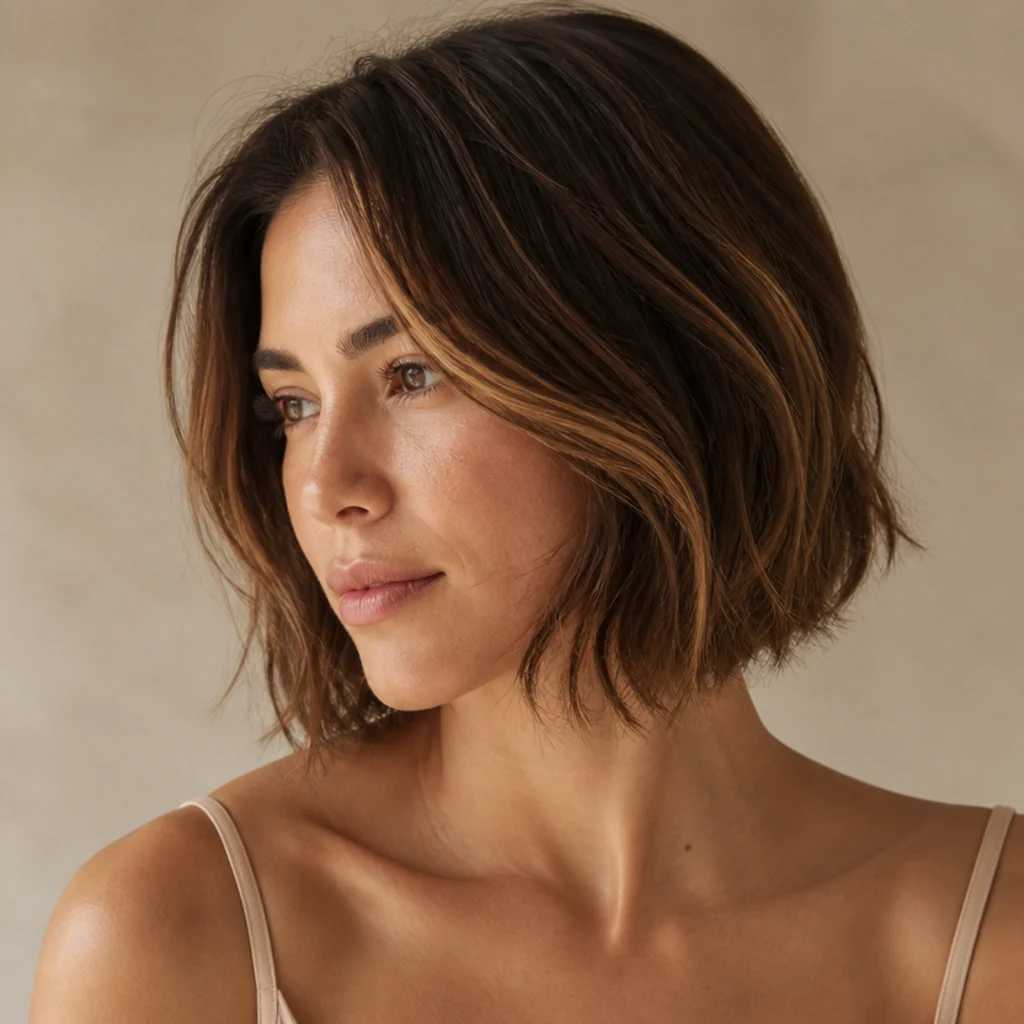
Quick Answer
- Best for: Anyone with a bob, lob, pixie, bixie, or crop who wants brown hair to read rich and lit-from-within rather than flat and single-process.
- Who might skip it: Anyone committed to a true cool-ash brunette, hair that is heavily damaged and porous (warm ribbons grab unevenly), or people who'd rather skip salon visits altogether.
- Maintenance: Moderate overall. Face-framing and copper accents want toning every 6 to 8 weeks; root shadows, lowlights, and teasylights stretch to 10 to 14 weeks.
- Difficulty: Salon-level for most placement-based looks; root shadows and lowlights are the most forgiving, money pieces the most exacting.
- Cost: Variable. A gloss or toner refresh typically sits at the low end of a salon's color menu; a full balayage or foilyage with dimension is a mid-to-high investment. Ask for a written quote at consultation.
- Wear time / longevity: Placement lasts 3 to 5 months before it needs reshaping; tone drifts warm-to-brassy in 6 to 10 weeks without a gloss.
- Standout variation: A warm dimensional brunette bob with money-piece framing and a soft shadowed root: high impact at the face, forgiving at the part.
- How to ask your colorist: Bring two or three photos, name the technique and the level of lift ("one to two levels," "two to three shades brighter"), and specify placement at the root and face.
In This Guide
- Warm Chestnut Dimensional Bob
- Subtle Ribbon Balayage Lob
- Money-Piece Framed Crop
- Espresso-to-Caramel Melt Pixie
- Cinnamon Babylights Bob
- Milk-Chocolate Root Shadow Lob
- Toffee Face-Frame Bixie
- Auburn-Kissed Chin Bob
- Soft Mocha Teasylights
- Copper-Threaded Textured Crop
- Golden-Brown Curtain Fringe Lob
- Bronde Blended Stacked Bob
- Hazelnut Lowlight Pixie
- Warm Sand Peekaboo Bob
- Chestnut Curly Dimensional Crop
- Amber Ends French Bob
- Cocoa Sliced Balayage Lob
- Warm Bronze Shag Bob
- Praline Money-Piece Pixie
- Gilded Chocolate Blunt Bob
Intro
A warm dimensional brunette is brown hair built from more than one tone: a deeper base, a few lit-from-within ribbons, and warmth that leans caramel, chestnut, or toffee instead of ashy. On short hair, that depth earns its keep. There's less length to carry the eye down, so every highlight, lowlight, and root shadow sits close to the face, and the color reads the second you walk in. A subtle dimensional brunette on a bob can look expensive with only a handful of placed pieces, while a multi dimensional brunette on a pixie turns short texture into visible movement. The key variables are level (how deep the base is, roughly a 3 to a 6 on the standard color scale), tone (how warm the reflect runs), and placement (where the light lands relative to your features). Warm dimension has stayed in demand because it flatters more undertones than high-contrast blonde and grows out without a harsh line. Below you'll find 20 distinct ways to wear it, from a dimensional brunette bob to face-brightening money pieces and hidden peekaboo panels, each with notes on who it suits, the exact tone to picture, the maintenance timeline, and the language to hand your colorist so you leave with the result you saved.
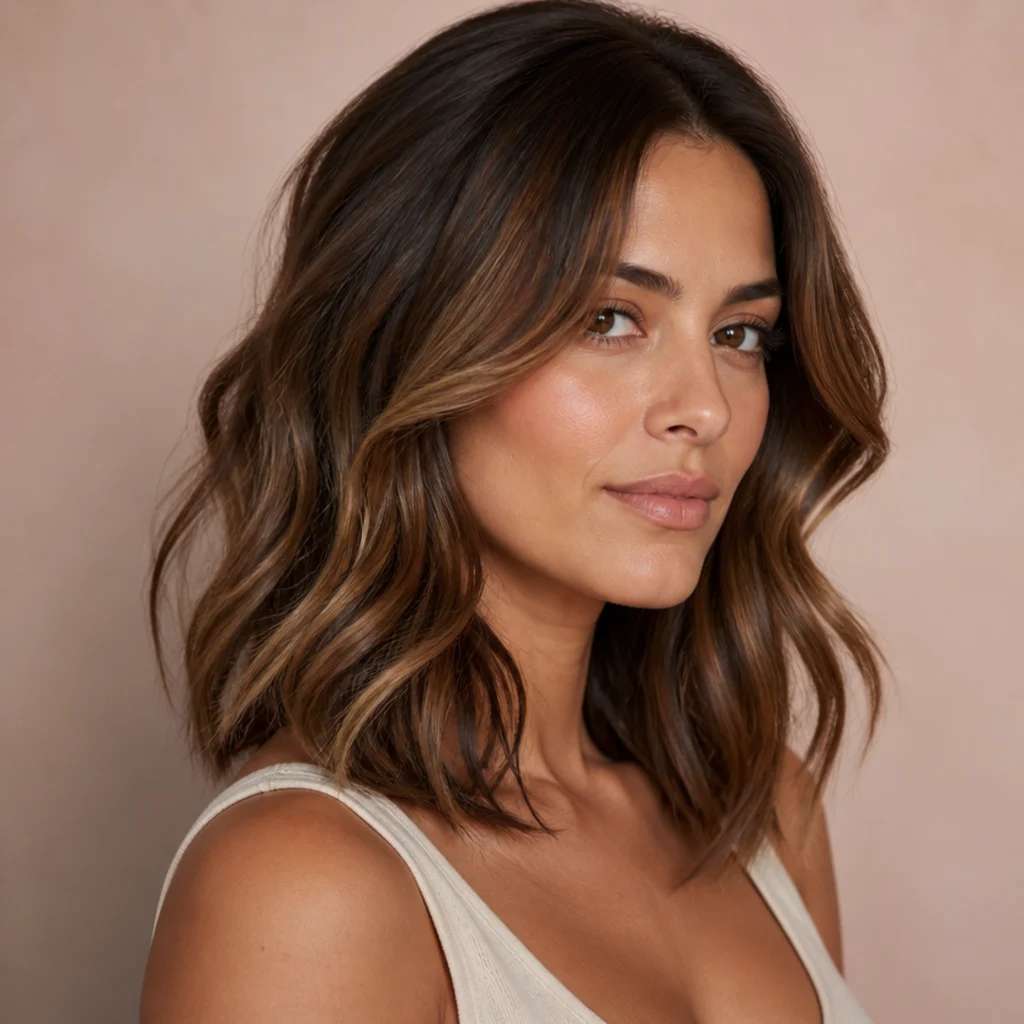
01Warm Chestnut Dimensional Bob
This is the anchor look of the whole list: a chin-length bob in a rich chestnut base (roughly a level 4 to 5 with a golden-red reflect) threaded with fine caramel ribbons from mid-shaft to ends. The warmth keeps the shape from reading severe, and the shorter length concentrates shine right at the jaw where light naturally pools. Medium to deep skin with golden or olive undertones gets the most out of it, since chestnut echoes that warmth back. Straight and lightly waved textures both show the ribboning clearly; a blunt-ish line under the chin frames it. Expect a warm gloss refresh every 8 weeks so the caramel doesn't oxidize brassy, plus a trim every 6 to 8 to keep the line crisp. Pro tip: have your stylist paint the ribbons following where you naturally part and tuck, not in even rows, so movement looks organic. Ask your colorist for a "chestnut base with hand-painted caramel through the mid-lengths, kept soft and shadowed at the root" so the grow-out stays forgiving.
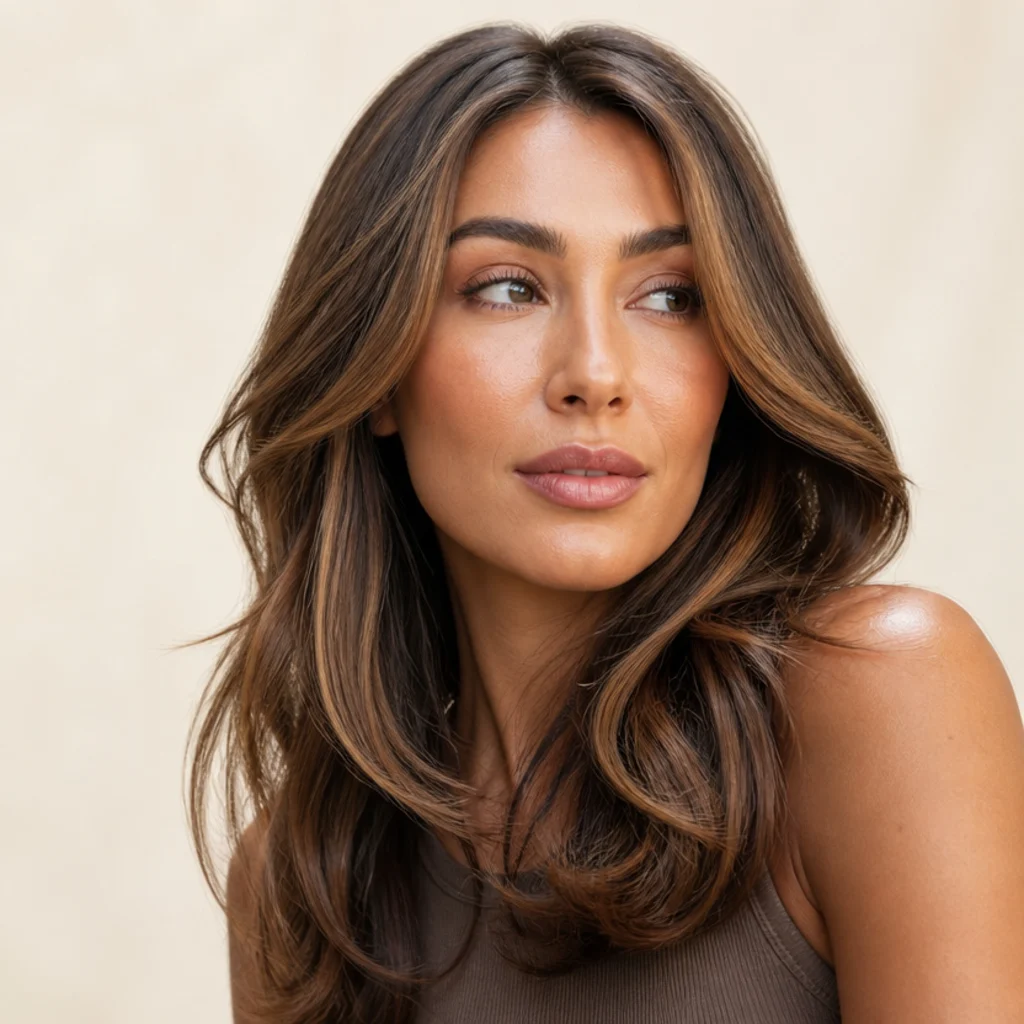
02Subtle Ribbon Balayage Lob
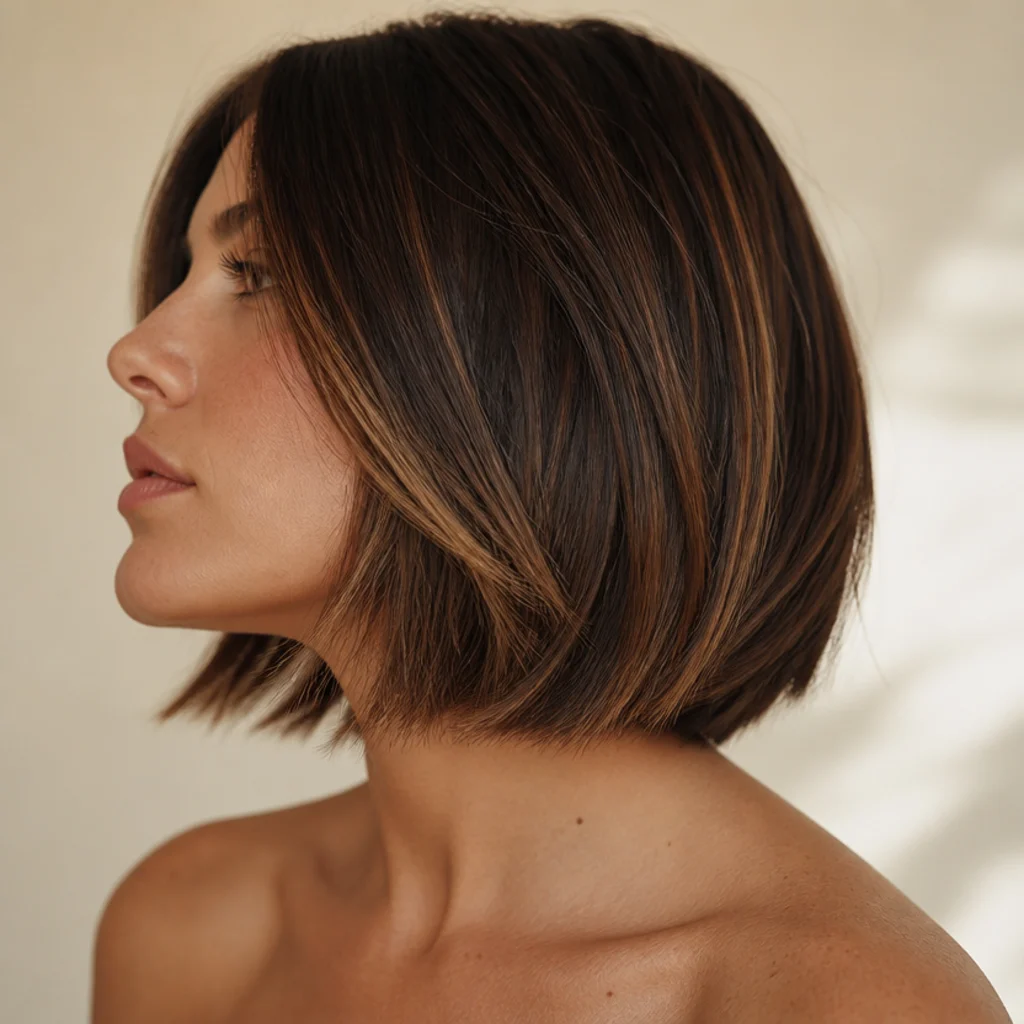
If you want dimension that whispers rather than announces, this subtle dimensional brunette lob is the entry point. The colorist hand-paints only a few tone-on-tone ribbons, lifting the base one to two levels so the color shifts in daylight but reads solid indoors. Fair to medium skin and neutral undertones suit it best, and it's a good pick if you've never colored your hair before. Because the contrast is gentle and the ribbons stop short of the root, regrowth is nearly invisible, stretching salon visits to 12 weeks or more. A lob length (grazing the collarbone) gives the painted pieces enough room to graduate without looking striped. Pro tip: ask for the lift to stay below eye level so it brightens the lengths without a hard band at the crown. Tell your colorist you want "quiet balayage, one to two levels of lift, tone-on-tone, no visible line up front and nothing at the root."
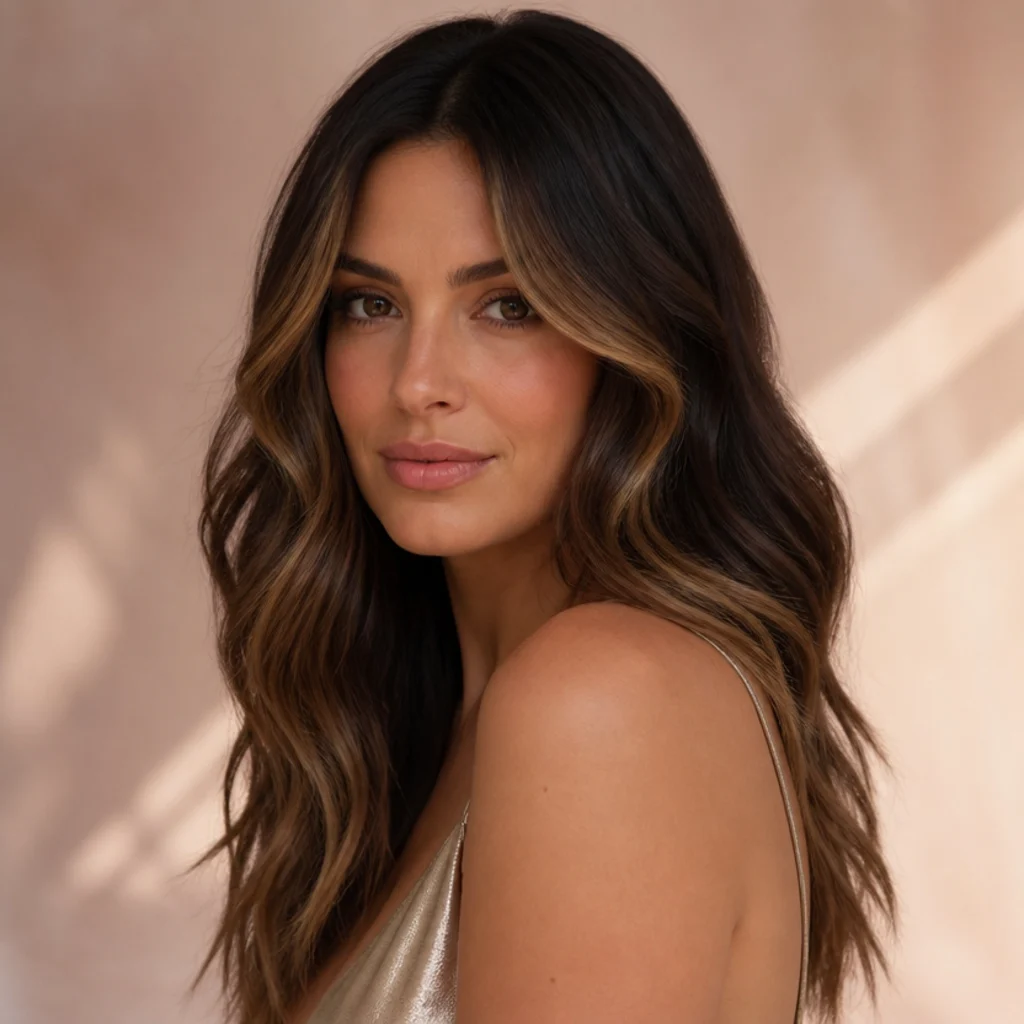
03Money-Piece Framed Crop
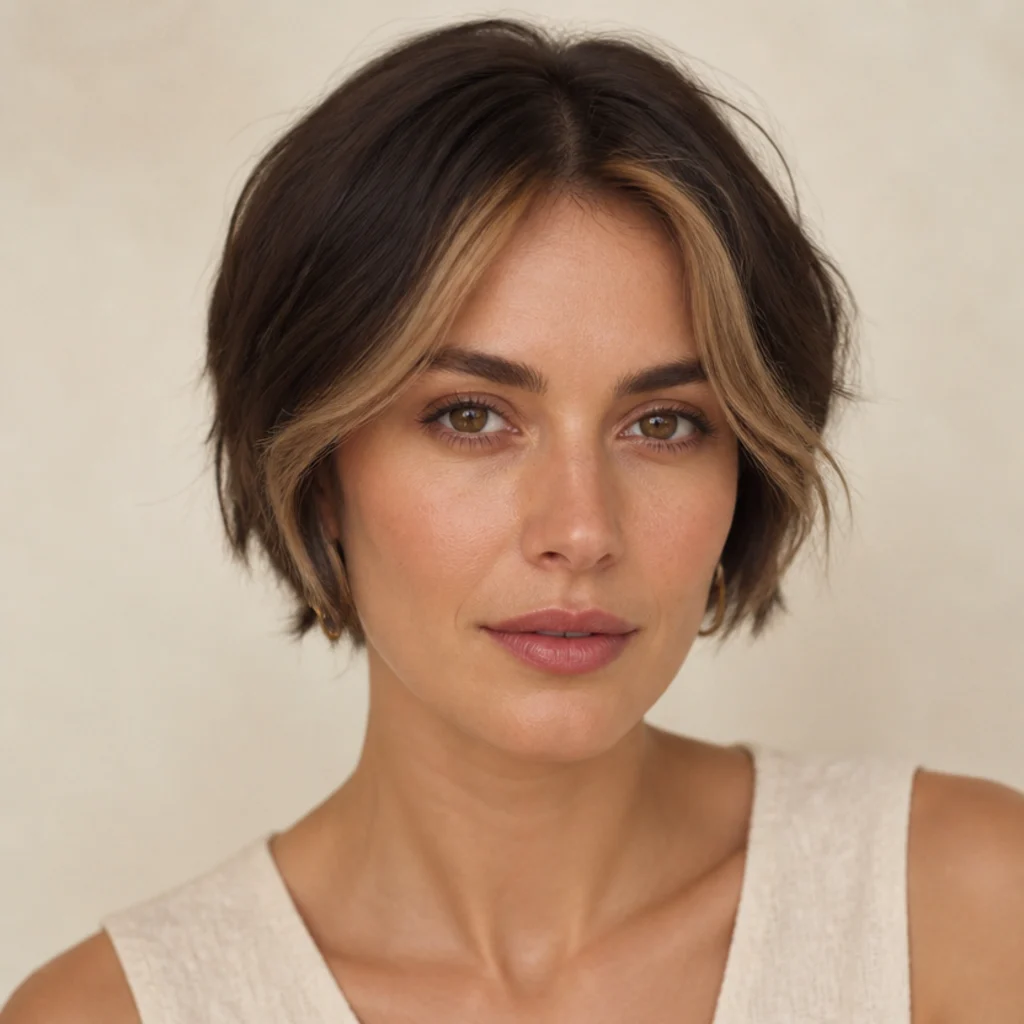
Dimensional brunette money pieces put the brightest color exactly where it lifts the complexion: the two front sections that frame the face. On a short crop, those pieces do the heavy styling, drawing the eye up and softening angular features. The rest stays a deep, even brown (a level 4 to 5) so the contrast reads intentional rather than accidental. Round and square face shapes wanting a slimming vertical line get the most out of it; tone the pieces beige for cool-to-neutral undertones or caramel if your skin runs warmer. Money pieces sit front and center, so they need toning every 6 to 8 weeks and will show regrowth first. Pro tip: keep the brightest point at the cheekbone, not the temple, so the lift lands where you want the eye. Ask for "face-framing money pieces two to three shades brighter than my base, blended and shadowed at the root, not blocky, toned to match my undertone."
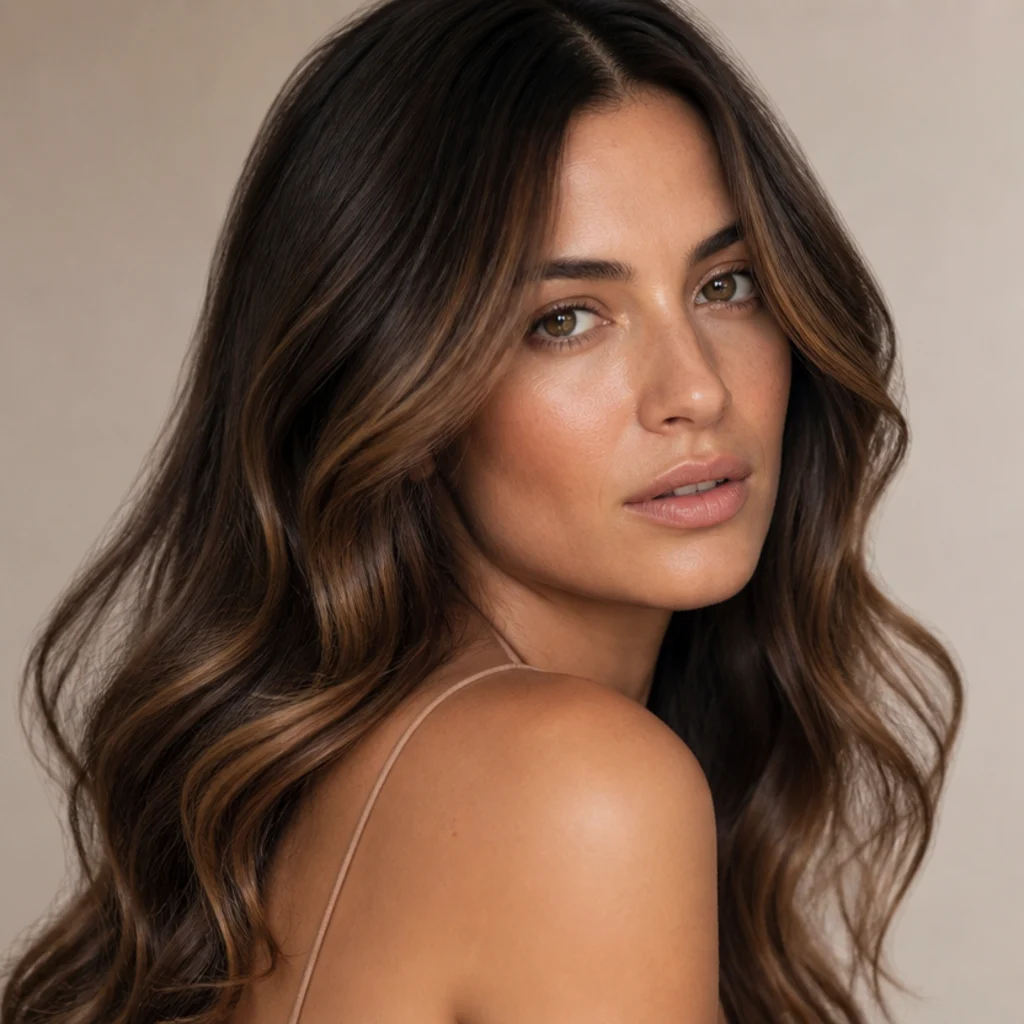
04Espresso-to-Caramel Melt Pixie
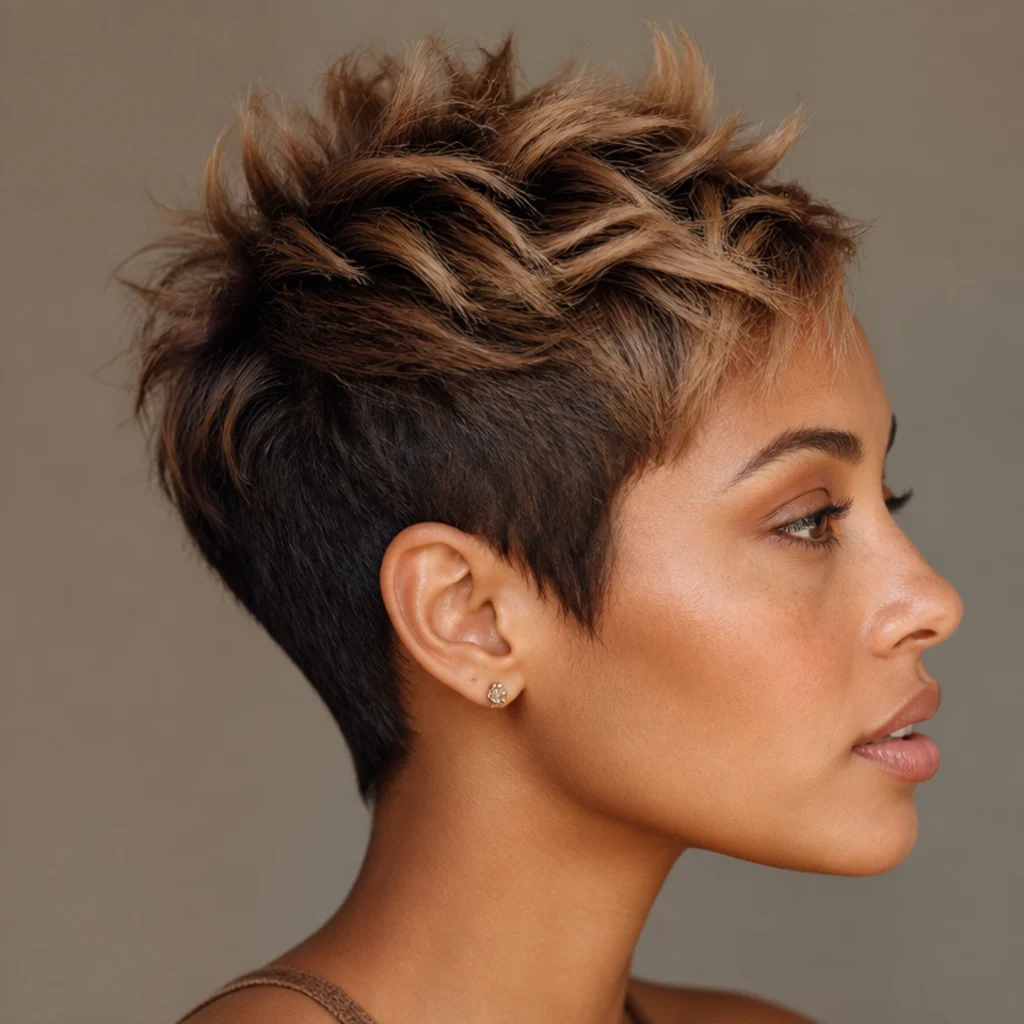
A color melt blends dark roots into lighter ends with no hard line, and on a pixie it turns short texture into a gradient. Espresso at the crown (level 3) fades to caramel at the piecey tips (level 6 to 7), so every spike catches a different tone as you style. Defined pixie layers on medium-to-thick density hold the spike best here, and warm to olive undertones get the most from it. It grows out gracefully because the root is meant to be dark, so there's no obvious regrowth line. Refresh the caramel ends every 8 to 10 weeks; the darker root can wait longer. Pro tip: style with a matte clay rather than shine paste so the tonal shift reads as texture, not grease. Request "a smooth espresso-to-caramel melt, darkest at the root, warmest at the tips, with the transition kept low so the ends do the brightening."
05Cinnamon Babylights Bob
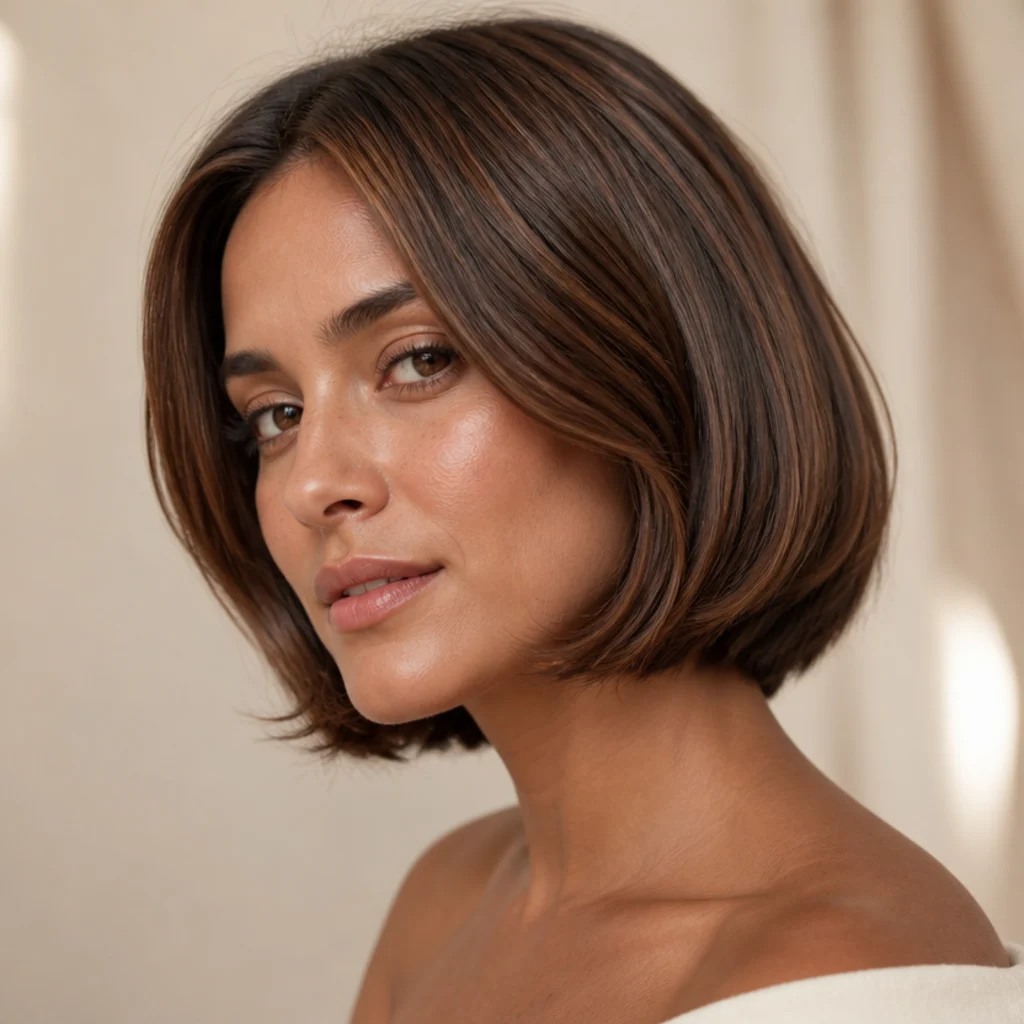
Babylights are ultra-fine highlights that mimic the natural sun-lift of childhood hair. In a warm cinnamon tone against a brown base, they give a dimensional brunette bob a soft, all-over glow instead of chunky stripes. The delicacy suits fine and low-density hair best, since thin sections skip the heaviness thicker foils create and read fuller, and cinnamon itself works best on light-to-medium skin with warm or peach undertones. Upkeep is moderate: a gloss every 8 weeks keeps the babylights from going flat or muddy, and because they're so fine, regrowth blurs rather than lines up. Pro tip: on fine hair, ask for babylights placed slightly denser around the crown to fake volume through contrast. Ask your colorist for "fine cinnamon babylights, densely placed but low contrast, warm-toned, for an all-over lit look on fine hair."
Save this to Pinterest to compare bob options side by side.
06Milk-Chocolate Root Shadow Lob
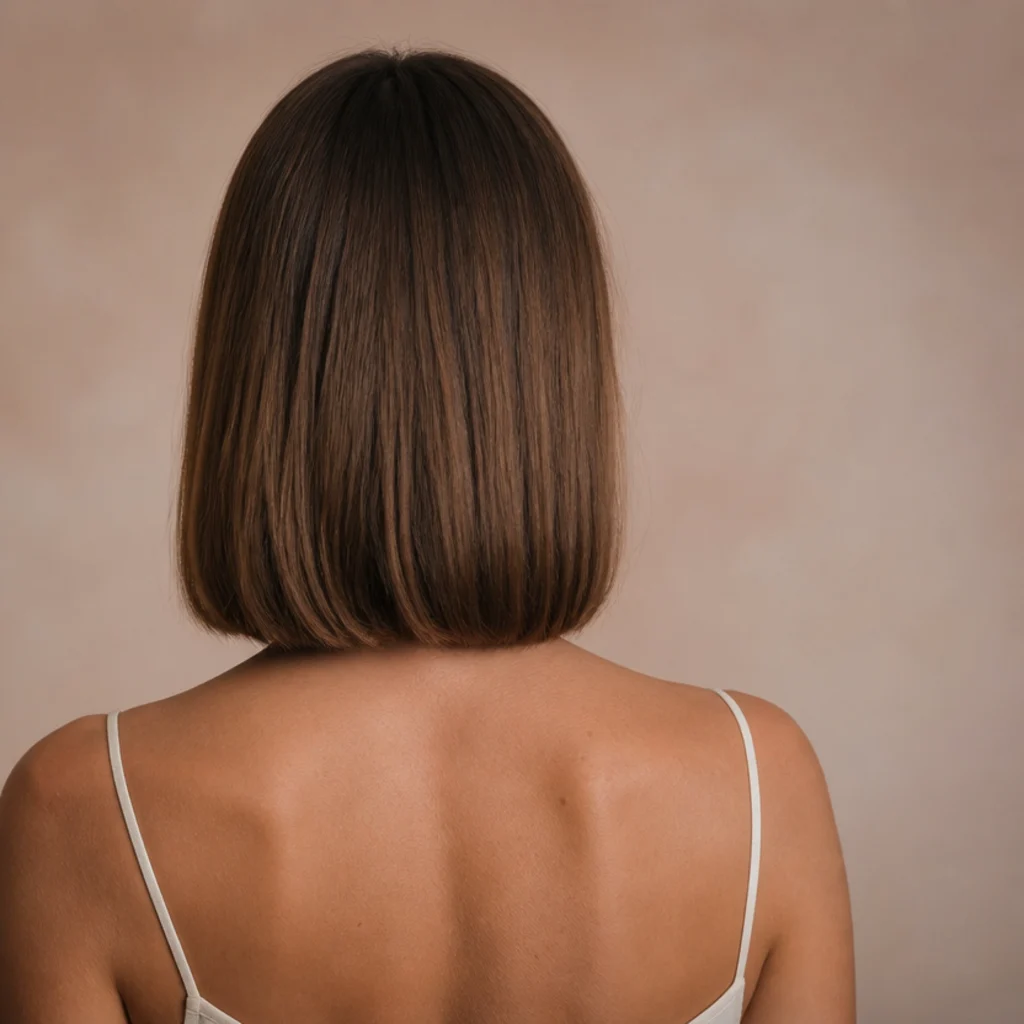
A root shadow, sometimes called a root smudge, deepens the color at the scalp so highlights lower down look softer and grow out without a line. On a milk-chocolate lob (level 5 with a neutral-warm reflect), that shadowed base makes the warmer lengths glow by contrast. This is one of the most low-maintenance dimensional options, since the shadow is built to blur regrowth, and milk chocolate reads true neutral-warm, so it suits nearly every skin tone. Stretch appointments to 10 to 12 weeks, and the shadow only deepens gracefully as your own roots come in. Pro tip: if you're covering early grays, a root shadow one level darker than your base disguises the demarcation line better than an exact match. Tell your stylist you want "a soft root shadow, one level down, melting into a warm milk-chocolate mid-length, nothing harsh at the parting."
07Toffee Face-Frame Bixie
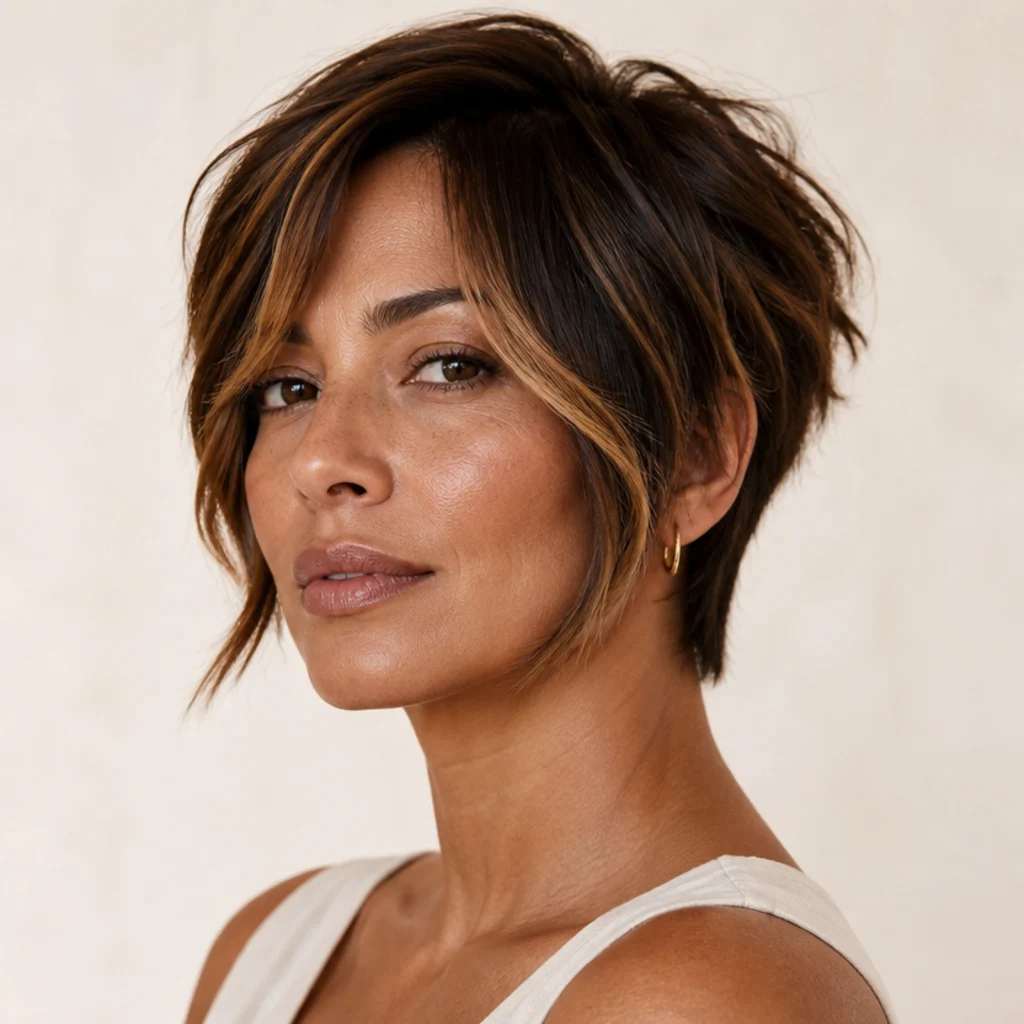
A bixie sits between a bob and a pixie: short and stacked in back, longer and piecey around the face. Toffee-toned framing pieces (level 6, golden) make that front length pop and soften the jaw and cheekbone. It's a good fit if you want an edgy shape but still want brightness near the skin, and warm-to-neutral undertones carry the toffee well. Because the framing pieces are longer than a true pixie's, they blend regrowth a little better and give you more styling flexibility. Plan a toner every 7 to 9 weeks and a shape trim every 5 to 6. Pro tip: ask your stylist to point-cut the framing pieces so the toffee reads on the ends where the texture separates, maximizing the dimensional flash. Ask for "toffee face-framing on a bixie, keeping the back deep and the front lit, with the brightness carried onto the piecey ends."
08Auburn-Kissed Chin Bob
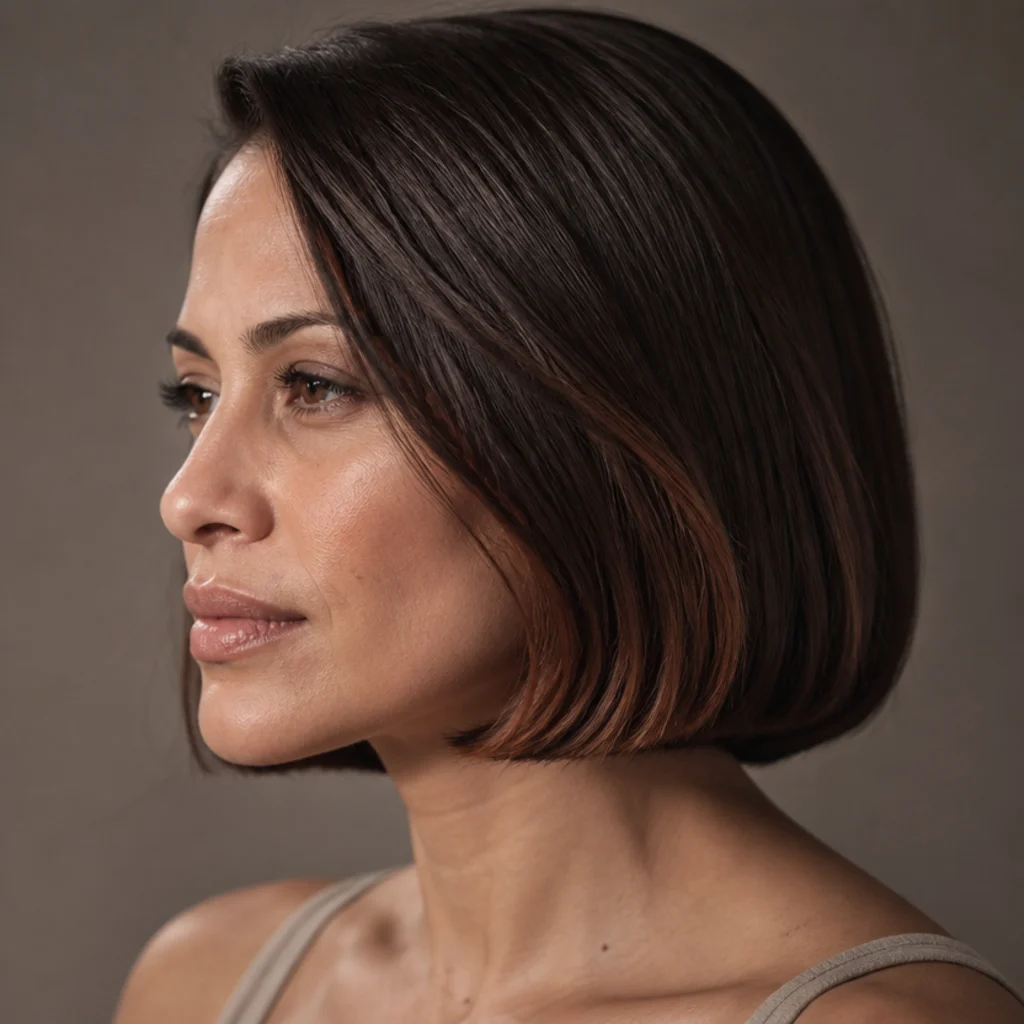
For warmth that edges toward red without a full copper commitment, fine auburn ribbons through a brown base add a glint that flatters warm, olive, and golden undertones. On a precise chin bob, the auburn shows most at the ends where the hair curves under and catches light. It's a smart pick for anyone who feels drained by cool browns but isn't ready for all-over red. The trade-off is longevity: red and auburn molecules are the largest and fade fastest, so a color-depositing gloss every 6 to 8 weeks keeps them from washing to orange. Pro tip: wash in cooler water and skip clarifying shampoos, which strip warm reflect quickest. Request "a warm brown base with fine auburn ribbons through the ends, kept subtle so it reads glossy and expensive, never brassy-orange."
09Soft Mocha Teasylights
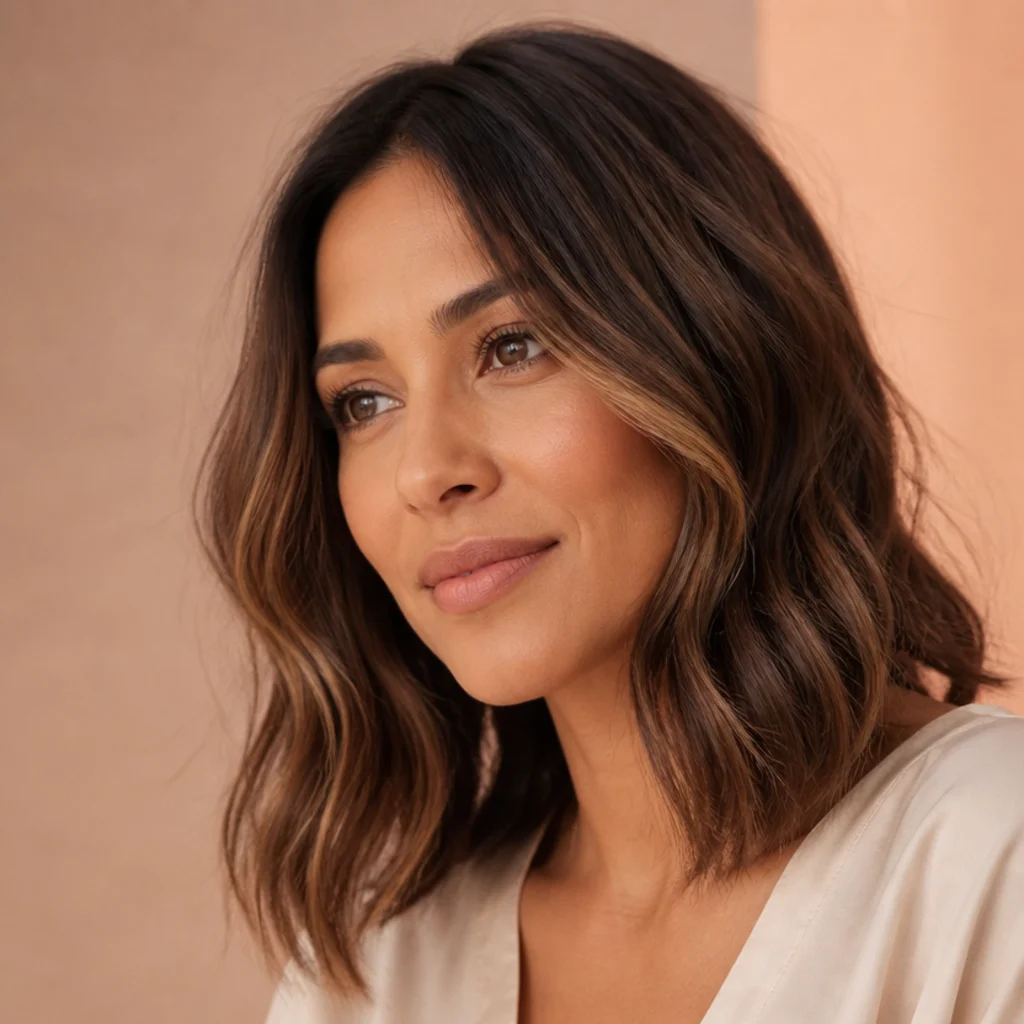
Teasylights combine backcombing and foils so each highlight fades into the root instead of starting with a sharp line, giving an especially soft, diffused grow-out. In a mocha tone (level 5, cool-neutral warmth), they create a subtle dimensional brunette that looks lived-in from day one. If you love the brightness foils give but hate the crisp regrowth line, this is the fix, and because mocha is balanced, it works across most undertones. The diffused base means you can comfortably wait 10 to 12 weeks between visits. Pro tip: teasylights are technique-dependent, so book a colorist who names the method specifically rather than substituting standard foils, which will line up as you grow out. Ask your colorist for "teasylights, not standard foils, in a warm mocha, backcombed and blended at the root for the softest possible regrowth."
10Copper-Threaded Textured Crop
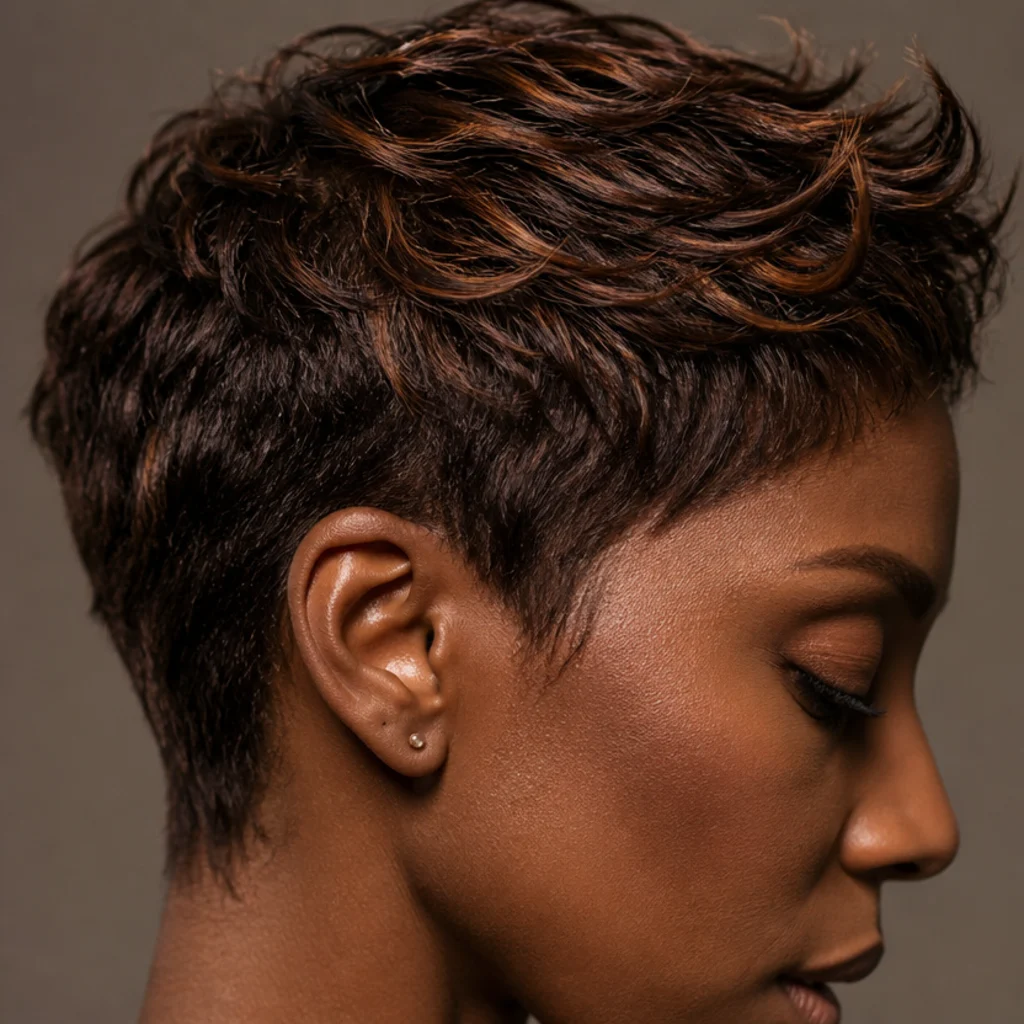
Copper threading takes a deep brown crop and runs a few warm copper pieces through the top texture, so the color flashes when the hair moves. Bold, low-fuss wearers who style with a texture spray or clay are the target audience, and copper carries beautifully on warm and deep skin with golden undertones. The catch is that copper is a fugitive tone: it will soften noticeably, so a refresh every 6 to 8 weeks keeps it vivid, or you can let it fade intentionally to a rustier brown between visits. Pro tip: keep the threading strictly to the top surface layers, because copper buried underneath is invisible and wasted. Tell your stylist you want "a deep brown crop with fine copper threading through the top surface only, kept minimal so it accents the texture and flashes with movement."
Save this to Pinterest for your bolder color mood board.
11Golden-Brown Curtain Fringe Lob
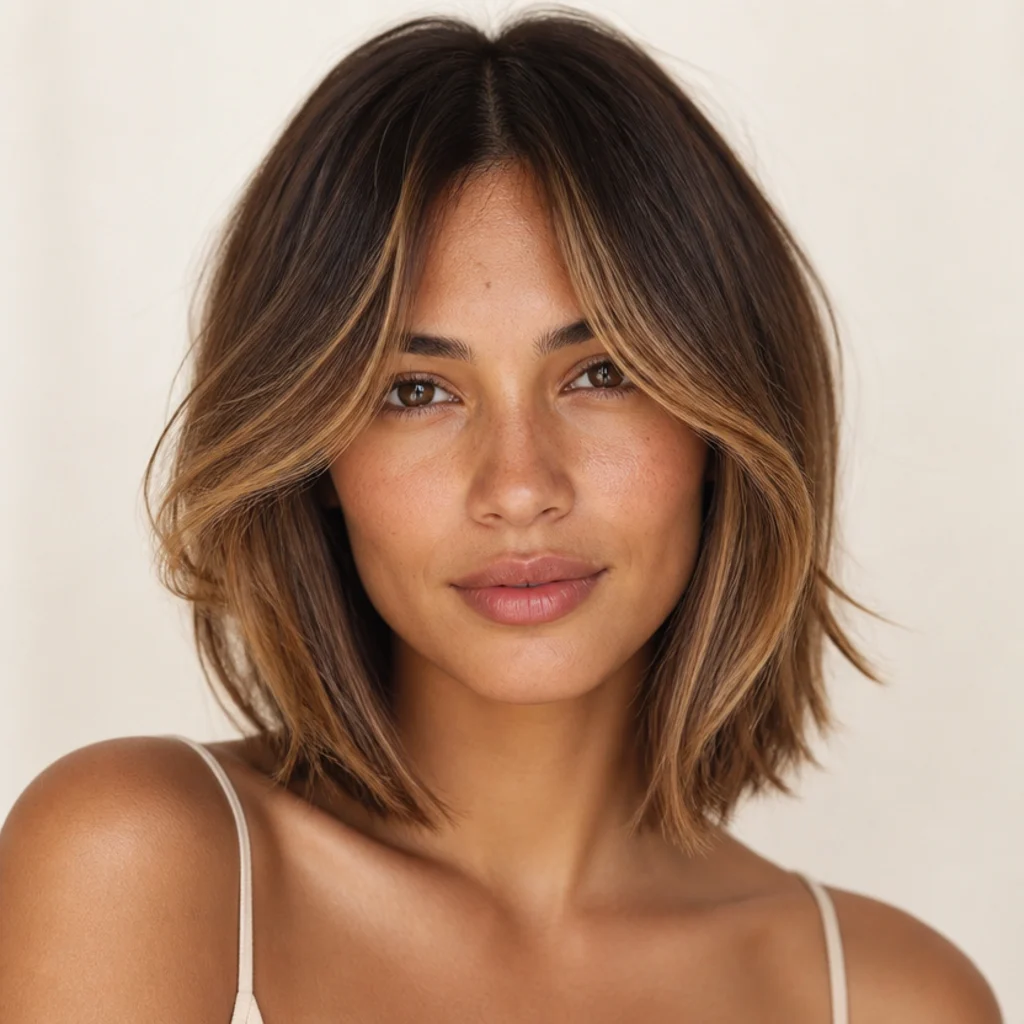
A curtain fringe splits softly at the center and sweeps to either side, and golden-brown highlights (level 6, warm) placed along that sweep brighten the whole face. On a lob, the fringe frames the eyes while the dimension carries back through the lengths so the front isn't disconnected from the rest. Oval and heart face shapes that already carry a center part well get the most from this one, with warm-to-neutral undertones a natural match. The color itself can wait 9 weeks, but the fringe needs a trim every 4 to 6 to keep the sweep from overgrowing into the eyeline. Pro tip: ask for the brightest pieces to start right at the inner edge of the fringe so they open up the eyes, then taper as they sweep back. Ask for "golden-brown highlights concentrated around a curtain fringe so the front reads brightest and the color still connects through the lengths."
12Bronde Blended Stacked Bob
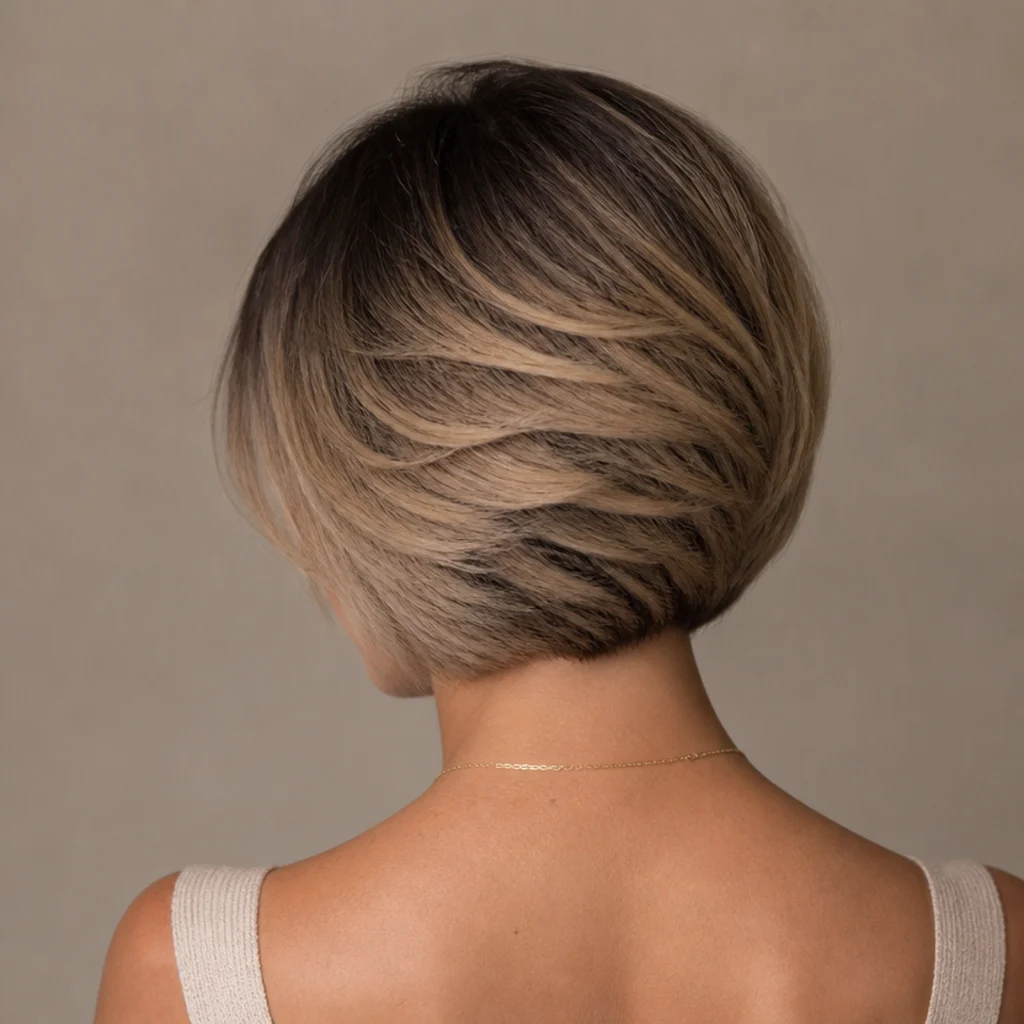
Bronde sits between brown and blonde (roughly a level 6 to 7 with warm reflect), and on a stacked bob it lets the graduated back show off the tonal shift. The roots stay brown and melt into a sandy bronde through the stack, so the cut and the color emphasize each other layer by layer. It's the move if you want noticeable lift but still want to read as a brunette, and it can suit many undertones depending on how warm or neutral you tone the bronde. Because it involves real lift, plan a gloss every 8 weeks and a toner sooner if it drifts yellow. Pro tip: on a stacked shape, ask for the lift to intensify toward the exposed underlayers so the stack reads dimensional from behind, where a stacked bob is most seen. Request "a brown-to-bronde blend that follows the stack, warm-to-neutral toned, with the darkest color kept at the root and the lift building through the layers."
13Hazelnut Lowlight Pixie
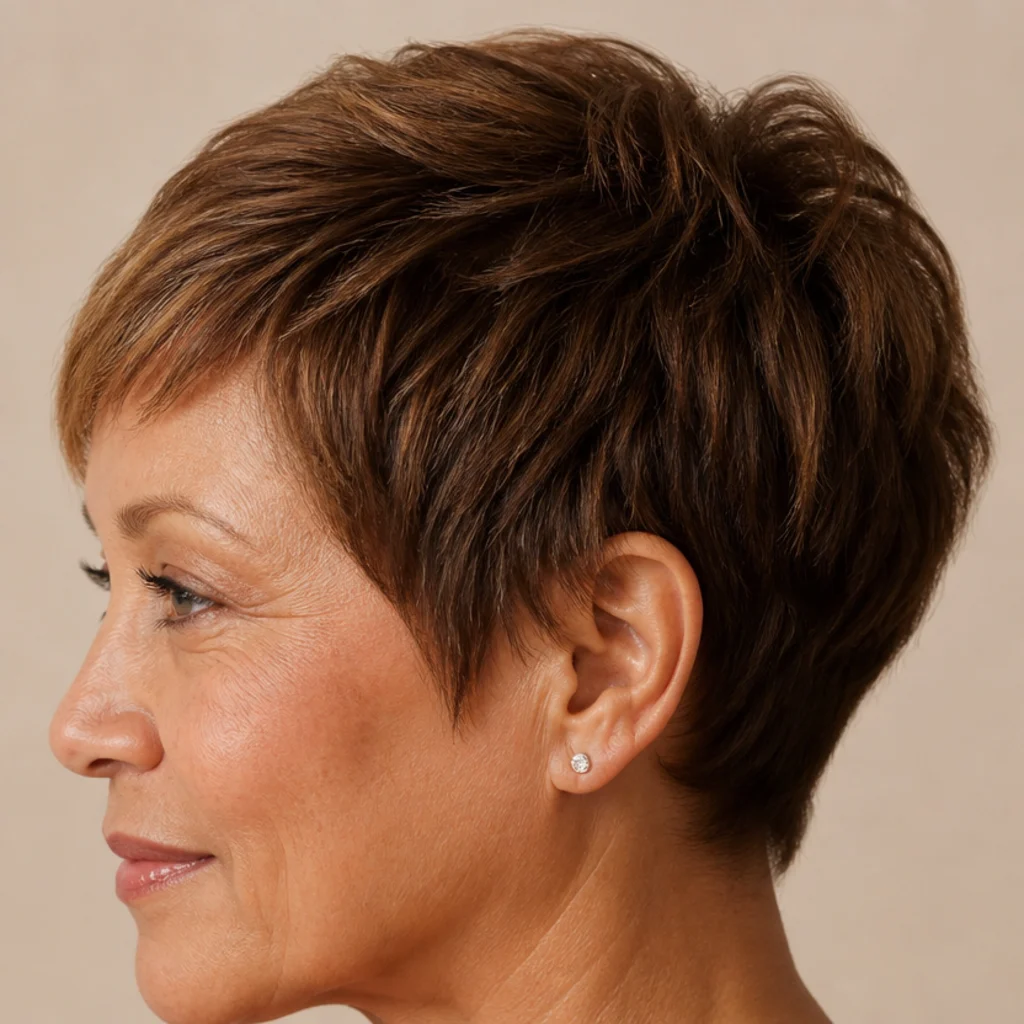
Not all dimension comes from going lighter. Lowlights add deeper tones to a lighter or flat brown, and on a pixie they build depth around the crown so the shape looks fuller and more sculpted. Hazelnut lowlights (level 4) woven into a warm base give a rich, layered brown that never looks one-note, and they're the go-to fix for color that has gone brassy or washed-out flat. Fine or over-highlighted hair that needs richness restored is the best candidate, and it works across most undertones. Lowlights are among the lowest-upkeep options, often holding 10 to 14 weeks with no obvious regrowth. Pro tip: on a pixie, ask for lowlights concentrated at the crown and occipital bone to fake density exactly where fine hair looks thinnest. Ask for "warm hazelnut lowlights to add depth and dimension, placed around the crown to build fullness, over my current base."
14Warm Sand Peekaboo Bob
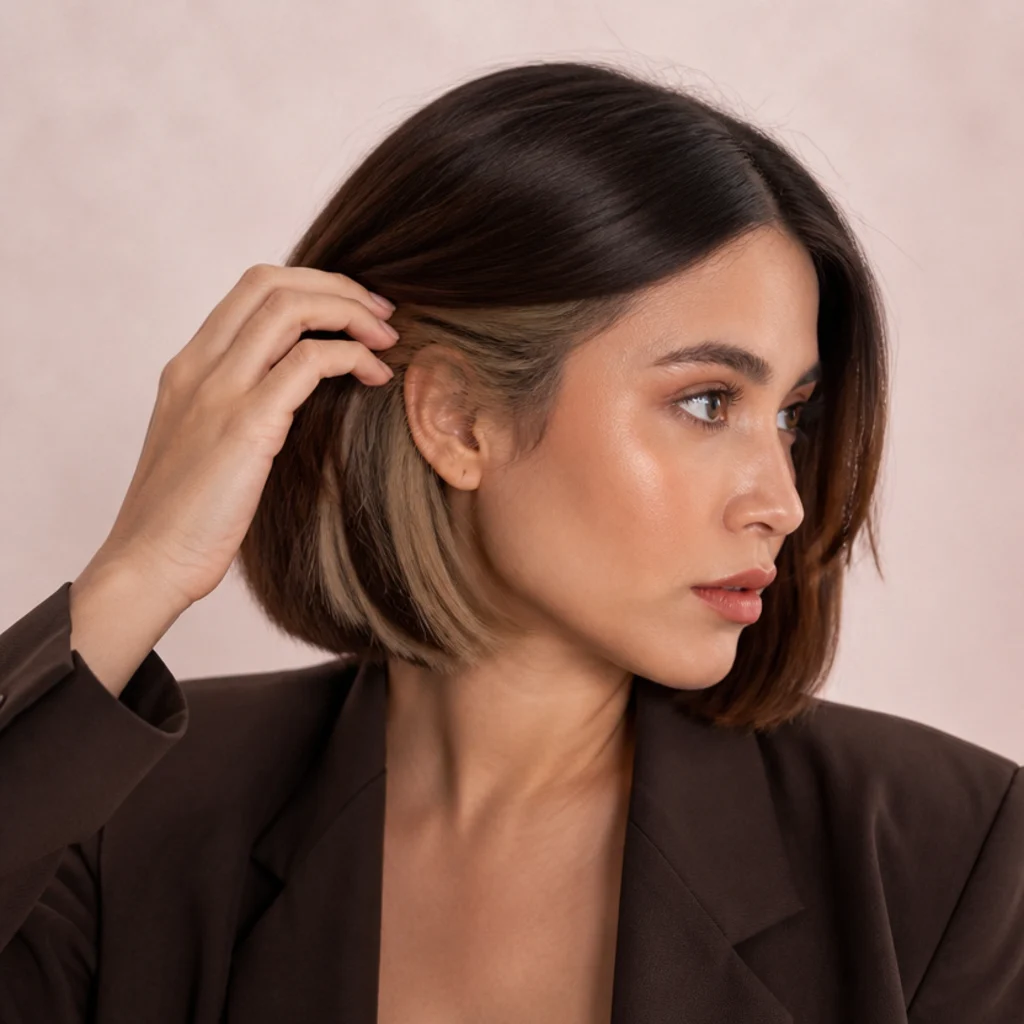
Peekaboo color hides brighter tones under the top layer, so a warm-sand panel (level 7) only shows when the hair moves or is tucked back. On a bob, that hidden brightness adds a surprise dimension without changing the surface color at all. It is the smart choice for workplaces or settings with visible-color limits, or anyone who likes a subtle secret they control. Because the panels sit entirely underneath, regrowth is easy to disguise, stretching visits to 10 to 12 weeks. Pro tip: place the panels at the lower occipital area rather than right under the part, so they flash when you tuck behind the ear but stay invisible when you want them to. Tell your colorist you want "warm-sand peekaboo panels placed under the top section at the lower crown, so they only show when I tuck or move my hair."
15Chestnut Curly Dimensional Crop
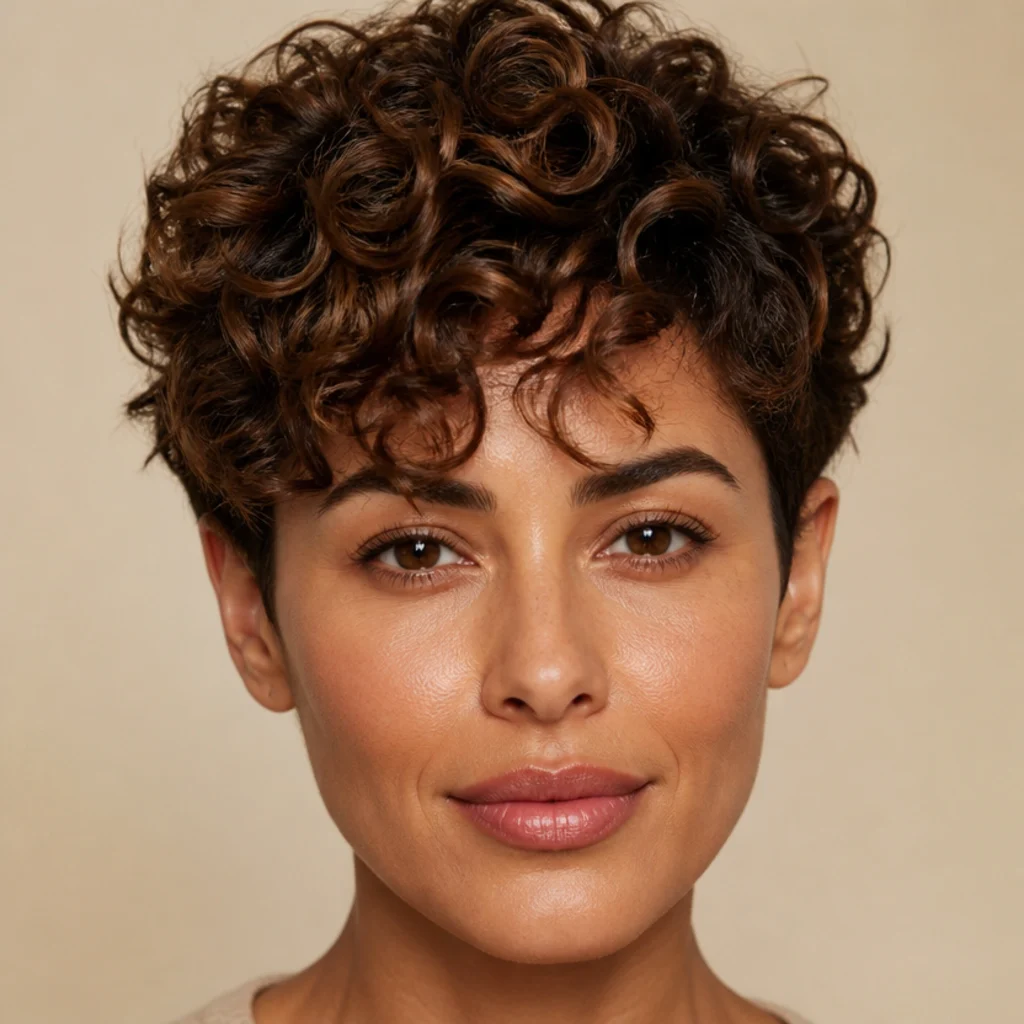
Curly and coily texture shows dimension differently, because each coil bends light on its own axis. A chestnut base with caramel painted onto the outside of the curls makes a short crop look full of movement even at minimal length. It works across natural textures, from loose waves to tight coils, and looks especially good on warm-to-deep skin. Placement matters far more than volume here: painting into the interior gets swallowed by the coil pattern, and too many pieces muddy the definition, so the color must follow the curl's surface. Refresh every 8 to 10 weeks, and always color on dry, styled hair so the painter can see where each coil actually falls. Pro tip: book a colorist who paints curls dry and in their natural pattern, not wet and stretched, or the dimension will land in the wrong places once it dries. Request "caramel hand-painted on the surface of my curls over a chestnut base, done on dry hair, placed to catch light on the coils."
Save this to Pinterest for textured and curly inspiration.
16Amber Ends French Bob
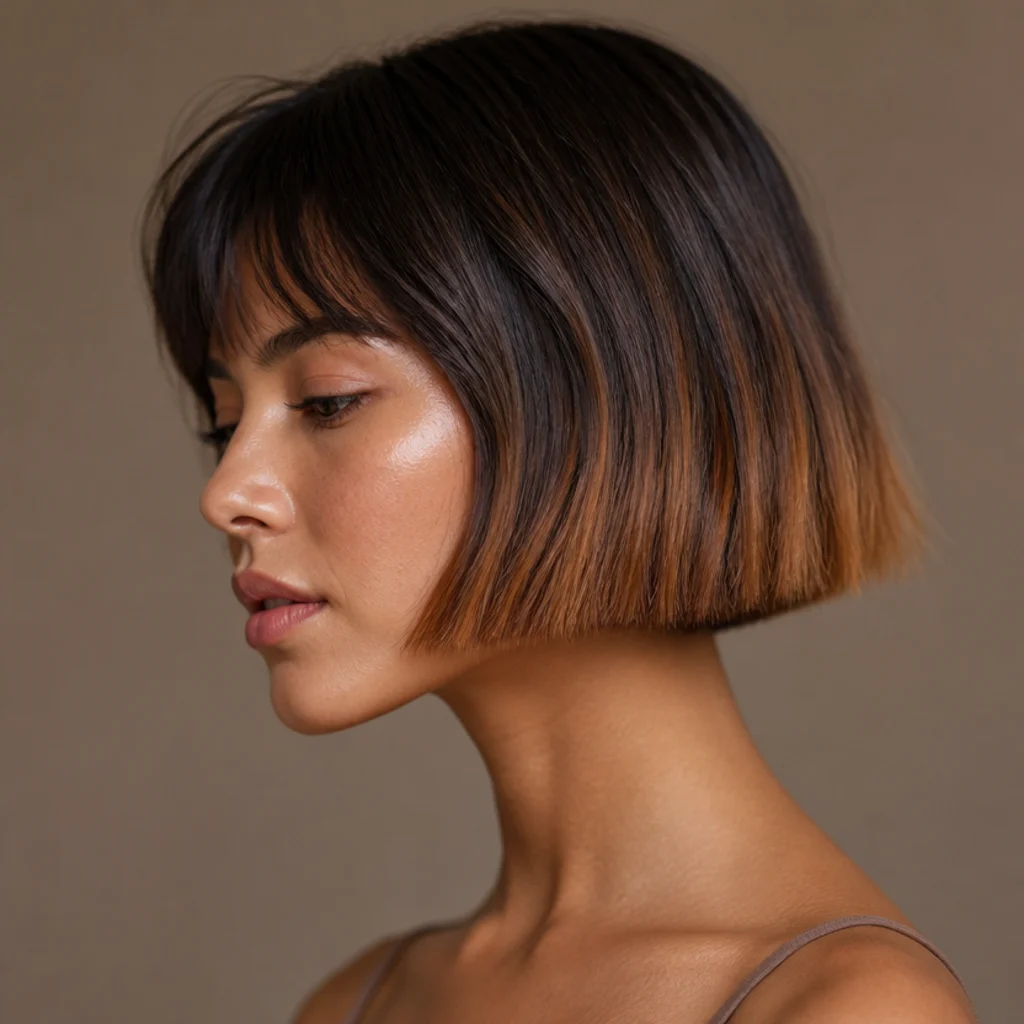
A French bob is short and blunt, usually hitting mid-cheek to jaw with a slightly heavy line, and warming just the ends with amber gives it a modern, softened dip-dye. The deep brown top (level 4) keeps it polished while the amber ends (level 6, golden-orange) add a warm flicker exactly where the blunt line sits. Sharp, minimalist cuts that still want a hint of color interest are the target here, and it works on warm undertones that can carry amber without looking sallow. Because only the ends are treated, upkeep essentially follows your trim schedule, roughly every 6 to 8 weeks, with no root maintenance at all. Pro tip: ask for the amber to be feathered up into the lengths a couple of inches rather than stopped in a straight band, so a blunt cut doesn't read as a hard dip-dye stripe. Ask for "a deep brown base with warm amber concentrated at the blunt ends, feathered up softly, not a hard horizontal line."
17Cocoa Sliced Balayage Lob
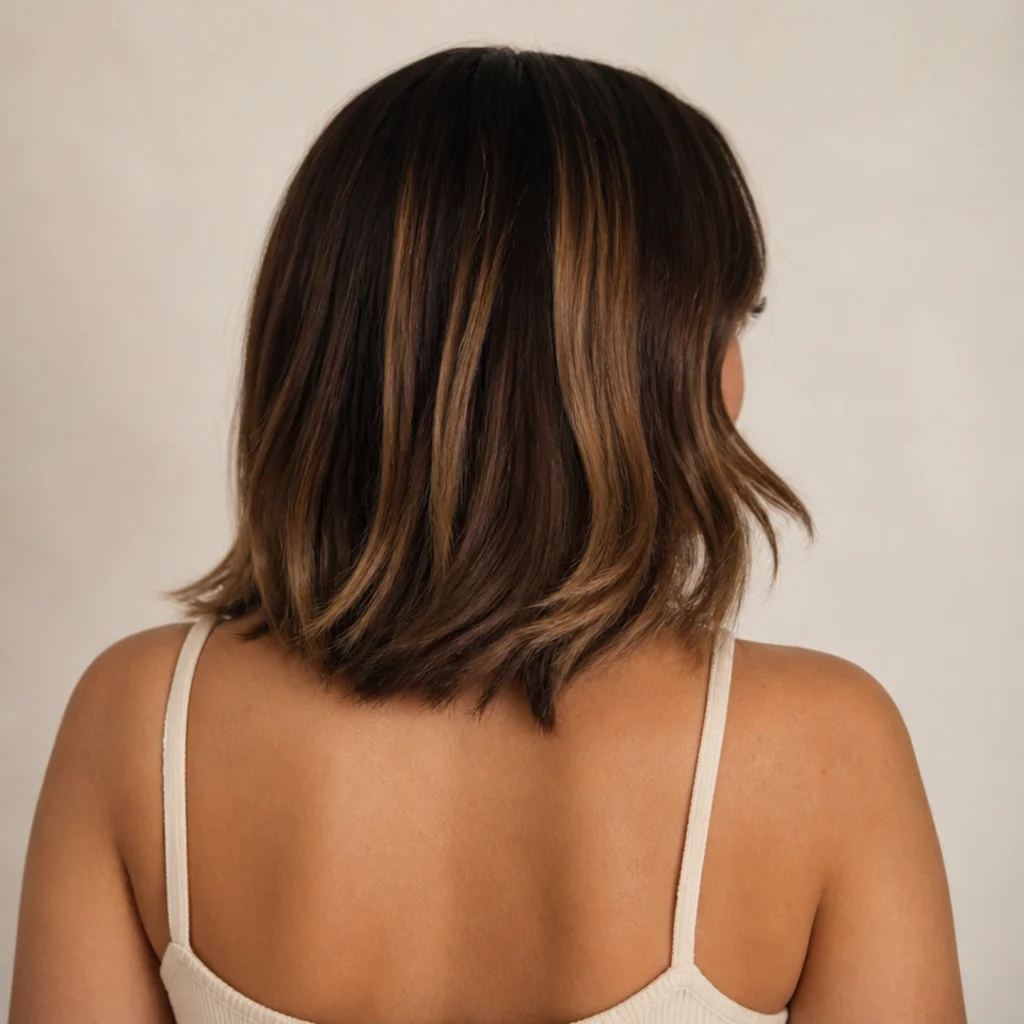
Slicing takes wider sections than babylights, so the resulting ribbons are bolder, more saturated, and clearly visible. On a cocoa-brown lob (level 5), sliced balayage creates broad, sunlit streaks that read even on darker hair where fine highlights would disappear. It's built for medium-to-thick density and anyone who wants obvious contrast and movement rather than a whisper. The wider pieces mean regrowth shows a little sooner, so plan a gloss and a possible face-frame touch-up every 7 to 9 weeks. Pro tip: on thick hair, ask for the slices to be placed diagonally following your part and fall so the streaks look like where the sun would naturally hit, not in vertical stripes. Tell your stylist you want "sliced balayage in warm ribbons over a cocoa base, wider than babylights, placed on the diagonal for visible, sun-hit dimension."
18Warm Bronze Shag Bob
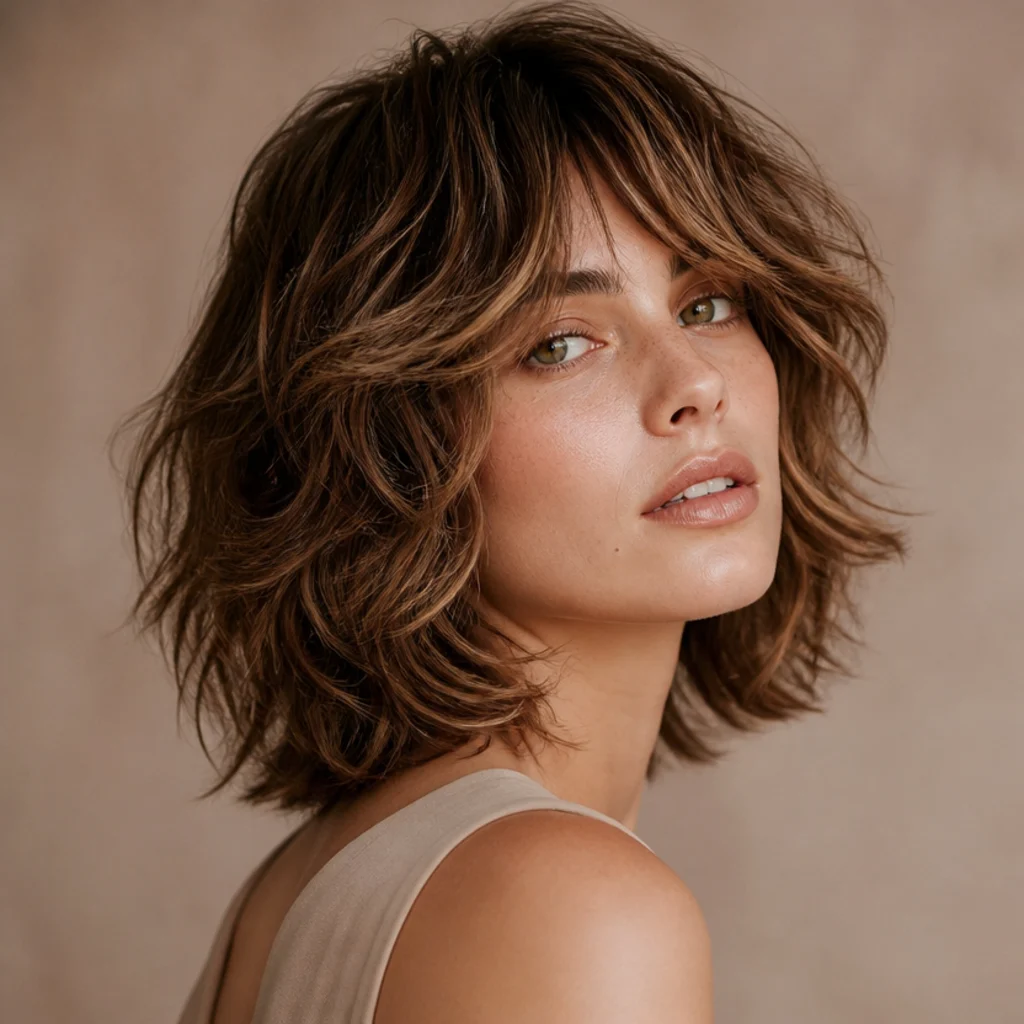
A shag bob is built on choppy, disconnected layers, and warm bronze color makes each layer read separately for maximum movement. Lighter pieces placed specifically on the face-framing and top layers brighten the front while the interior stays deep, so the shape looks even more textured than it is. Wavy and naturally textured hair that already has movement to amplify makes the best canvas, and warm-to-neutral undertones suit it well. The layered cut carries color forgivingly, so grow-out is soft; refresh every 8 to 10 weeks. Pro tip: ask your colorist to brighten the top curtain layers rather than the underneath, since a shag flips and separates those top pieces most, putting the dimension on display. Ask for "warm bronze dimension that follows the shag layers, with the face-framing and top curtain pieces kept brightest and the interior deep."
19Praline Money-Piece Pixie
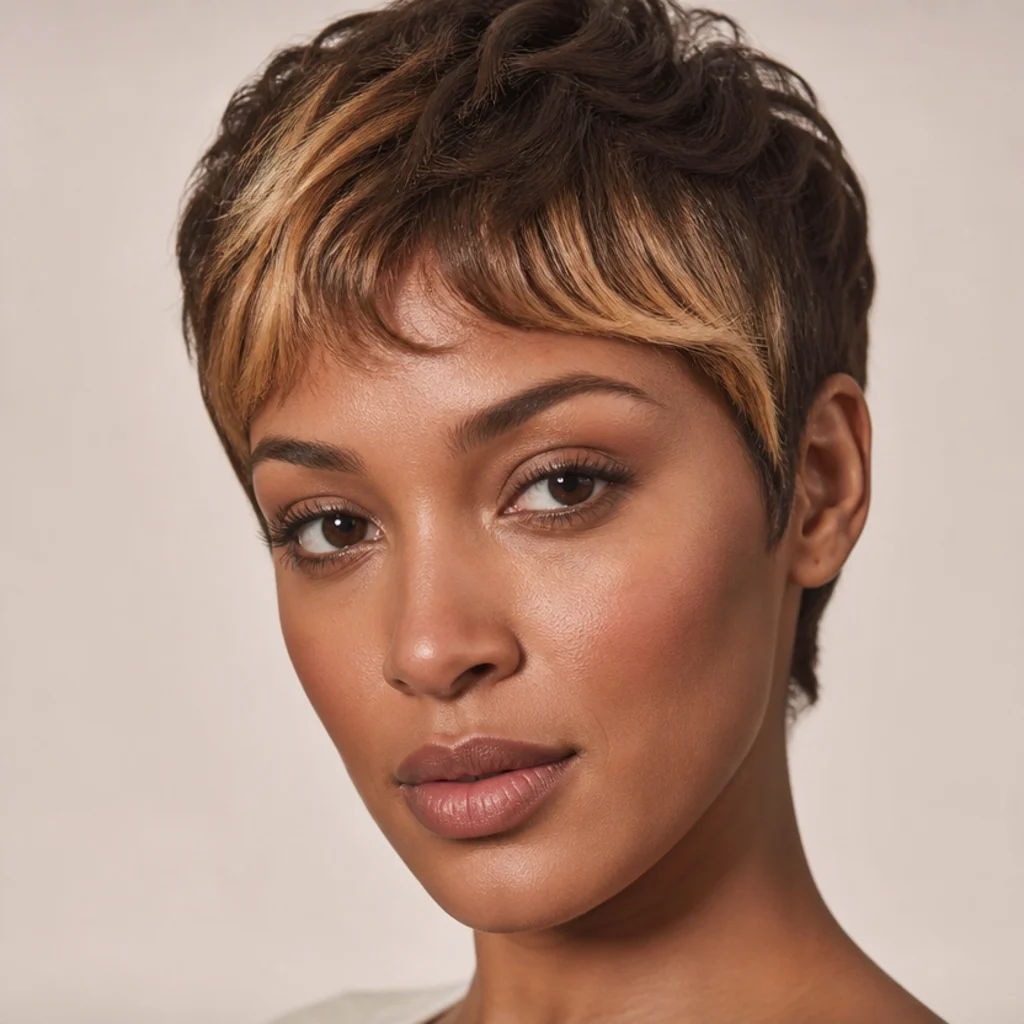
Money pieces are not only for longer cuts. On a pixie, brightening just the front framing sections in a warm praline tone (level 7, soft golden-beige) lifts the whole face while the crown stays a rich brown. This is one of the most impactful short looks because the contrast sits right at eye level with nothing to dilute it. It suits people who want a bold, editorial pixie and have the styling confidence to wear brightness at the hairline; warm-to-neutral undertones carry praline best. The front placement means frequent toning, roughly every 6 weeks, since those pieces fade and shift fastest. Pro tip: ask for the money pieces to be swept slightly to one side rather than symmetrical, which reads more modern and softens a strong forehead. Request "praline money pieces framing the face on a pixie, two to three shades brighter than the crown, swept to one side and blended at the root."
20Gilded Chocolate Blunt Bob
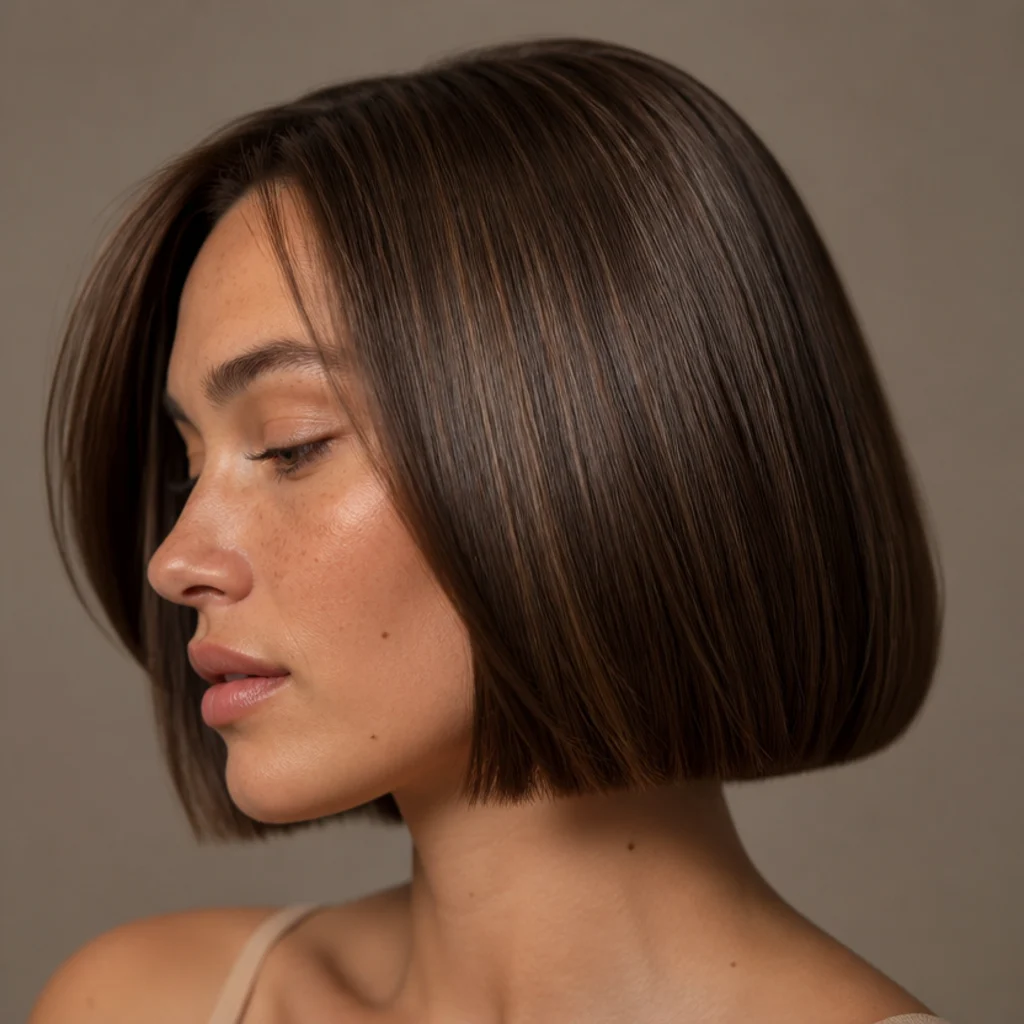
To close, a polished blunt bob in deep chocolate (level 3 to 4) with the finest gilded highlights scattered throughout. There's no bold contrast here, just enough warm lift (a level or two, densely and delicately placed) to make the glossy blunt line look expensive under any light. It's the pick for a refined, grown-up finish with minimal fuss, and cool-to-neutral skin benefits most since the base stays deep while the reflect stays soft-warm. The delicate highlights blur regrowth, so a gloss every 9 to 10 weeks keeps the shine true. Pro tip: a clear or warm gloss at every visit is what actually sells this look, because on deep brown the shine reads more than the lift does. Ask for "a deep chocolate blunt bob with the finest gilded highlights for shine, not stripes, finished with a warm gloss and kept soft at the root."
Pro Tips from the Editor
- Always book a gloss or toner into your calendar for the 6-to-10-week mark; warm dimensional brunette doesn't fail because of the lift, it fails when the tone drifts brassy and no one refreshes it.
- On short hair, tell your colorist to think in placement, not percentage. Ten well-placed pieces at the face beat a full head of foils buried where a bob never shows them.
- Match the technique to your density: babylights and gilded highlights for fine hair, lowlights to fake fullness, sliced balayage for thick hair that swallows fine work.
- For curls and coils, insist on painting done dry and in-pattern; wet-stretched painting lands the dimension in the wrong spots once the hair springs back.
- Warm and red-leaning tones (auburn, copper, amber) fade first. Wash in cooler water, skip clarifying and sulfate shampoos, and use a color-depositing conditioner to buy weeks between salon visits.
- A root shadow is the single most forgiving move for stretching appointments and hiding early grays; ask for it one level deeper than your base rather than an exact match.
- Bring photos that show the back and the placement, not just a pretty front angle, so your colorist can actually replicate where the light lands.
How to Choose / Get the Look
Work through four decisions in order. First, undertone and level: if cool browns wash you out, lean caramel, toffee, amber, or auburn; if you love a crisp look or have cool skin, keep warmth to a whisper and stay closer to mocha or a gilded deep chocolate. Decide how deep the base should sit, roughly a level 3 to 4 for high-shine depth or a 5 to 6 for softer, more liftable dimension.
Second, maintenance appetite. Money pieces, copper, and auburn sit near the face or fade fast and want toning every 6 to 8 weeks; root shadows, lowlights, teasylights, and peekaboo panels are engineered to grow out and stretch to 10 to 14 weeks. Be honest about how often you'll actually sit in the chair.
Third, texture and density. Fine hair reads best with fine work (babylights, gilded highlights) and can borrow fullness from crown lowlights; thick hair needs sliced balayage or wider ribbons to show at all; curls need surface painting that follows the coil.
Fourth, face shape and placement. Round and square shapes gain a slimming line from vertical money pieces; oval and heart shapes carry a center-part curtain sweep; a strong jaw softens under face-framing toffee or praline.
Then bring two or three saved photos to your consultation, point out the exact placement (not just the color), ask for a written price and a gloss schedule up front, and remember that on a short cut, precise placement always matters more than volume.
Frequently Asked Questions
What makes a brunette look "dimensional"?
Dimension comes from using more than one brown tone: a base, plus lighter highlights and often darker lowlights, placed so light reveals the shift as you move. Flat, single-process brown reads as one solid block, while a dimensional brunette changes subtly in different light. The three levers are level (how deep the base is), tone (how warm the reflect runs), and placement (where the contrast sits relative to your features).
Does dimensional color really work on very short hair?
Yes, and arguably better than on long hair. On short cuts the color sits close to the face, so even a handful of placed pieces read clearly and immediately. Techniques like money pieces, color melts, and crown lowlights are especially effective because they concentrate the effect exactly where a bob, pixie, or crop shows it.
How do I keep warm brunette tones from going brassy?
Glossing is the main tool: a warm-toned gloss every 6 to 10 weeks refreshes caramel, toffee, and auburn before they oxidize. Between visits, wash in cooler water, use a color-safe sulfate-free shampoo, avoid clarifying products, and add a color-depositing conditioner in your reflect. Brassiness is usually faded warmth, not "too much" warmth, so replacing tone works better than stripping it.
Is a subtle dimensional brunette actually lower maintenance?
Generally yes. Lower-contrast techniques like babylights, teasylights, and root shadows blur the regrowth line, so grow-out is soft and appointments stretch further apart, often 10 to 14 weeks. High-contrast, face-forward placements like money pieces or copper threading look striking but demand toning every 6 to 8 weeks, because any fade or regrowth shows first at the hairline.
How should I describe the look to my colorist?
Name the technique, the level of lift, and the placement, then back it with photos. Say "money pieces two to three shades brighter, blended at the root" or "a soft root shadow one level down into warm mid-lengths" rather than just "dimensional brunette," which means different things to different colorists. Specific placement language, plus where you part and tuck, gets you a far more accurate result.
How much does a warm dimensional brunette cost?
It varies widely by region, salon tier, and how much lift is involved. A gloss or toner refresh typically sits at the lower end of a color menu, while a full balayage or foilyage with custom dimension is a mid-to-high investment and often priced by time or hair length. Ask for a written quote at consultation and factor in the recurring gloss appointments, not just the first service.
Will dimensional color damage short, fine, or previously colored hair?
Any lightening involves some level of processing, but dimensional work is often gentler than an all-over lift because only sections are treated. Root shadows, lowlights, and glosses are deposit-only and essentially non-damaging. If your hair is fine, porous, or previously colored, tell your colorist so they can choose a lower-volume developer and add a bond-building step, and hold realistic expectations about how light the ribbons can safely go in one visit.
How long before I need to redo dimensional brunette?
The tone needs refreshing every 6 to 10 weeks depending on how warm and face-forward it is, while the actual placement lasts 3 to 5 months before it needs reshaping. Root shadows and lowlights can go longest; money pieces and copper the shortest. A good rhythm for many people is a gloss halfway between full color appointments.
Can I maintain warm dimensional brunette at home between salon visits?
You can protect and extend it, though the lift itself should stay with a professional. Use a sulfate-free color-safe shampoo, a weekly color-depositing mask in your warm reflect, a heat protectant before styling, and a shine or gloss serum to keep the reflect looking fresh. These slow fading and preserve tone, but they maintain the look rather than recreate the placement.