20 Dimensional Brunette Before and After Looks
A colorist-built map of warm dimensional brunette, from a whisper of gloss to full multi-tonal contrast, so you can see exactly how far your brown can travel and choose the stopping point that fits your base, your face and your upkeep budget.
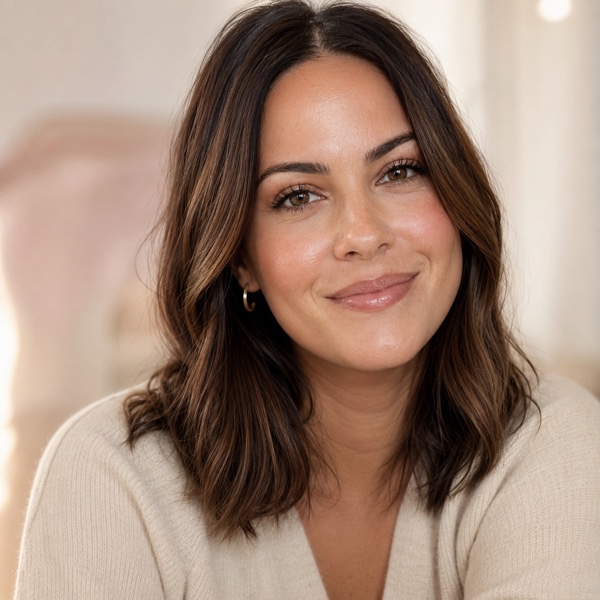 Edited by Lena Rose · Published July 11, 2026 · 32 min read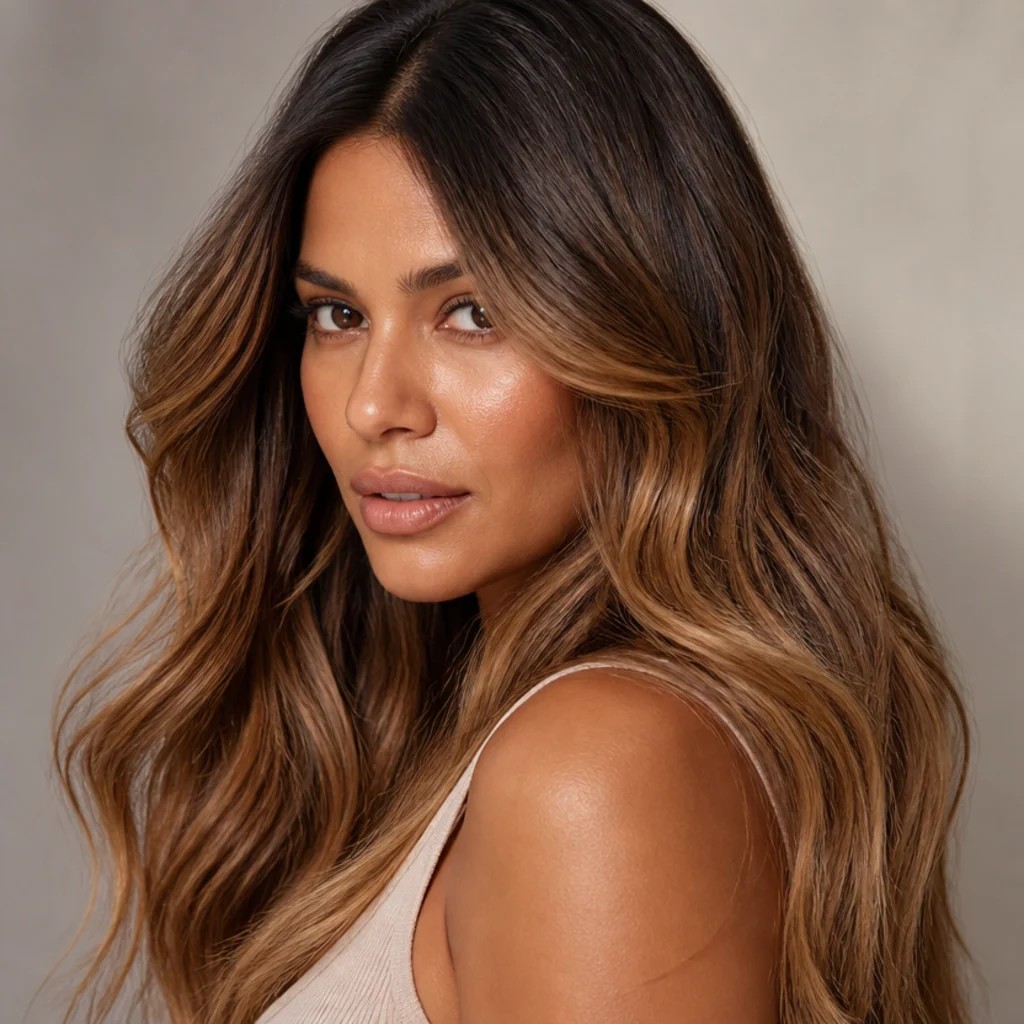
Quick Answer
- Best for: Anyone at level 3-7 (dark espresso to dark blonde) who wants to see how much dimension they actually want before committing, from a barely-there warm gloss to bold face-framing brightness.
- Who might skip it: Cool-toned brunettes who love an ashy, matte finish, and anyone whose hair is compromised by recent lightening or heavy heat damage until a bond-repair reset is done.
- Maintenance: Low for root-deep gloss and lowlight looks (glossed every 12-16 weeks) up to high for bright multi-tonal and money-piece looks (toner every 4-6 weeks, foils every 8-10 weeks).
- Difficulty: Salon-level for placement; only at-home glossing between visits is DIY-friendly.
- Cost: Roughly a single gloss at the low end, a partial balayage in the mid-range, and a full multi-tonal service plus gloss and bond treatment at the top; ask for a written quote since long, dense hair adds product and time.
- Wear time / longevity: Placement (balayage, babylights, melts) lasts 3-4 months before regrowth shows; the warm toner on top fades in 4-8 weeks depending on how red the tone is.
- Standout variation: Dimensional brunette money pieces, the clearest before-and-after jump because the brightness lands right at the face.
- How to ask your colorist: Bring 2-3 references, name your target tones (caramel, toffee, honey, cinnamon) and your base level, and say how many weeks you can realistically go between visits so placement matches your upkeep.
In This Guide
- Single-Tone Brunette Starting Point
- Sheer Warm Gloss Refresh
- Subtle Dimensional Brunette Babylights
- Soft Amber Lowlights for Depth
- Root Shadow into Warm Mids
- Hazelnut Face-Framing Whisper
- Caramel Balayage on Chestnut Base
- Mocha-to-Toffee Color Melt
- Dimensional Brunette Bob
- Subtle Money Piece Introduction
- Golden Chestnut Ribbons
- Sun-Kissed Warm Ends
- Cinnamon Warmth Through the Lengths
- Multi Dimensional Brunette Curls
- Bold Honey Money Pieces
- Copper-Lit Brunette
- Warm Bronde Blend
- High-Contrast Caramel Ribbons
- Chunky Face-Framing Statement
- Full Multi-Tonal Brunette
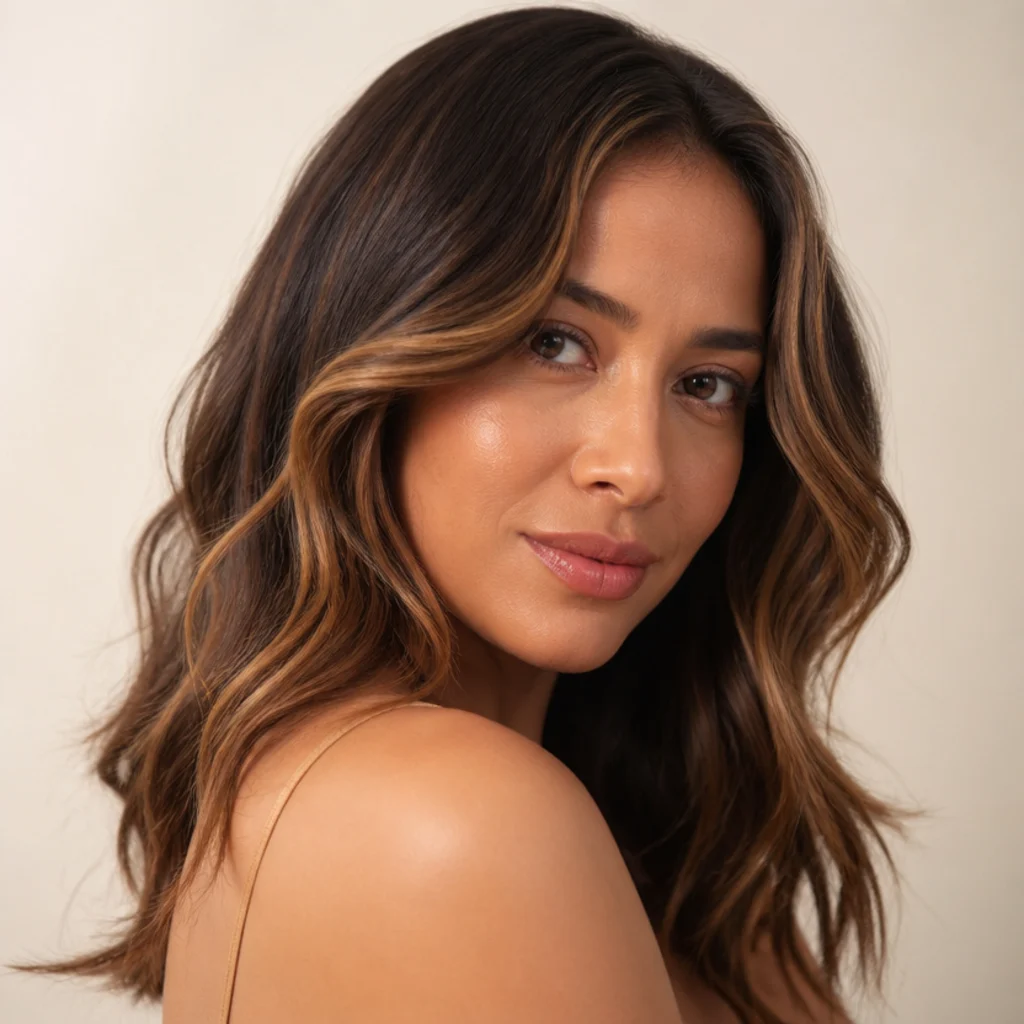
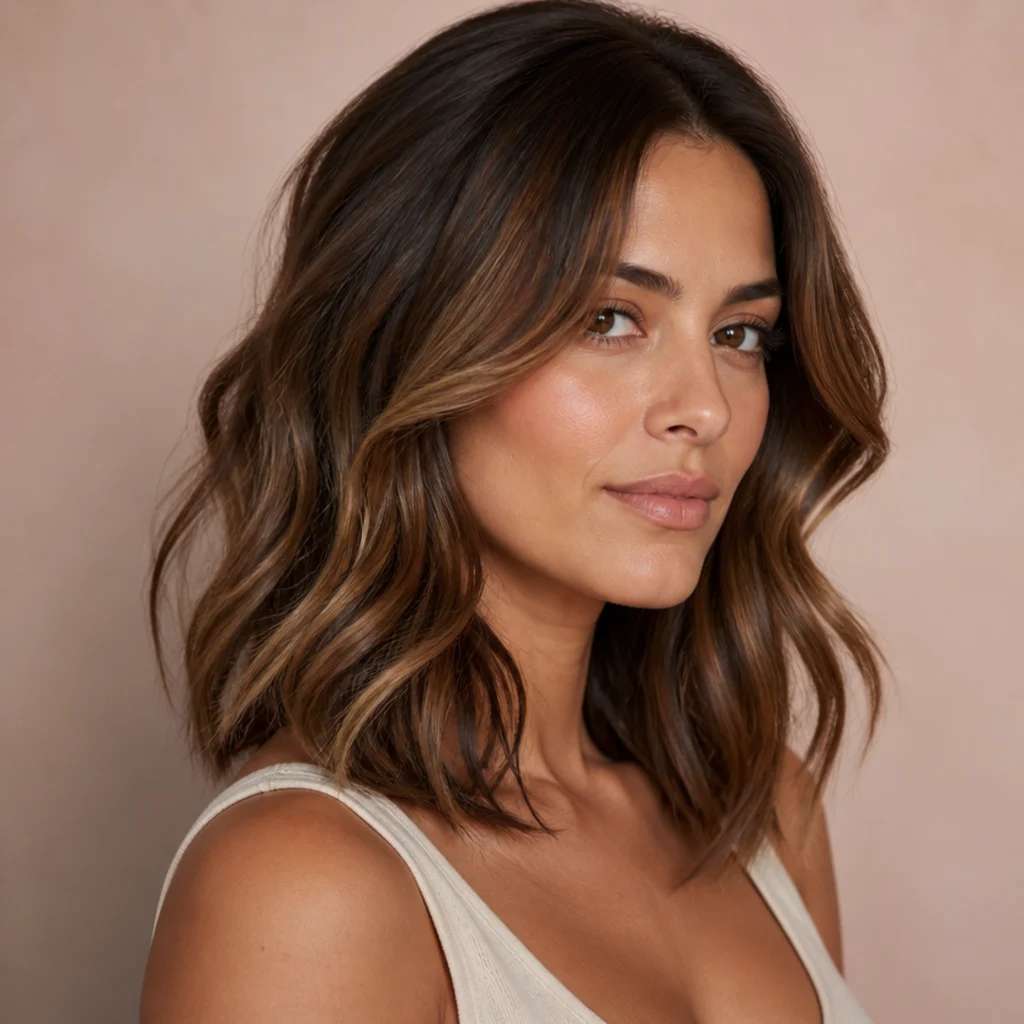
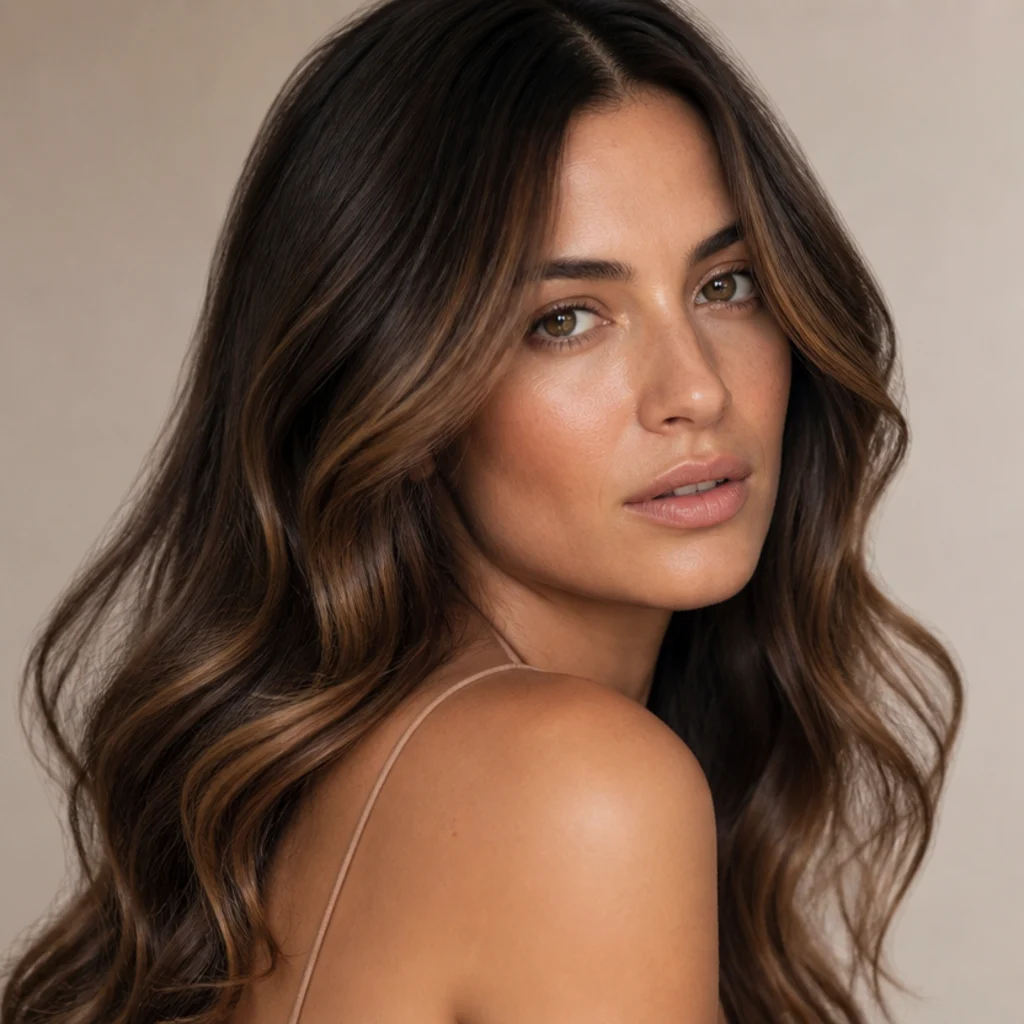
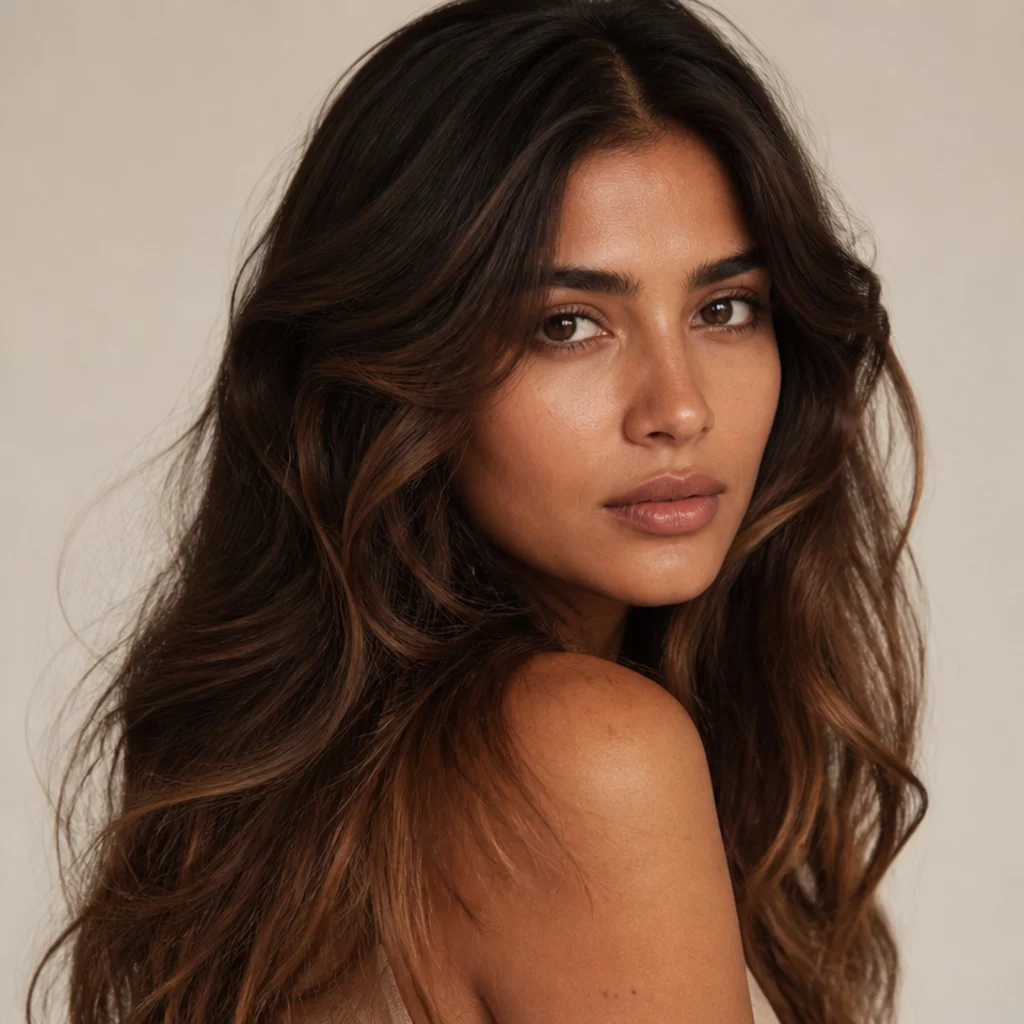
Dimension is what separates brown hair that looks intentional from brown hair that looks flat. A warm dimensional brunette weaves lighter, warmer tones, caramel, honey and cinnamon, through a deeper base so the color shifts as you move, catching light on the surface and settling into shadow underneath. But "dimensional" is a dial, not a single setting, and that's exactly what this progression is built to show. We start at a flat, single-level base and add contrast one controlled step at a time: first a sheer demi-gloss, then fine babylights, then amber lowlights, root melts, balayage, money pieces, ribbons and finally a full multi-tonal blend. Two variables move together the whole way down, level (how light) and tone (how warm), and knowing which one you're actually adding is what keeps a result rich instead of muddy or brassy. These are illustrative examples arranged as a subtle-to-bold map, not real client before-and-after photos, so treat them as a planning tool rather than a promise of an exact outcome. Somewhere along this line is the amount of warmth and contrast that fits your natural level, your undertone, your hair's density and porosity, and how often you can honestly get back to the salon. Below are 20 warm dimensional brunette looks, each with who it flatters, a realistic upkeep timeline and the exact wording to ask for it.
01Single-Tone Brunette Starting Point
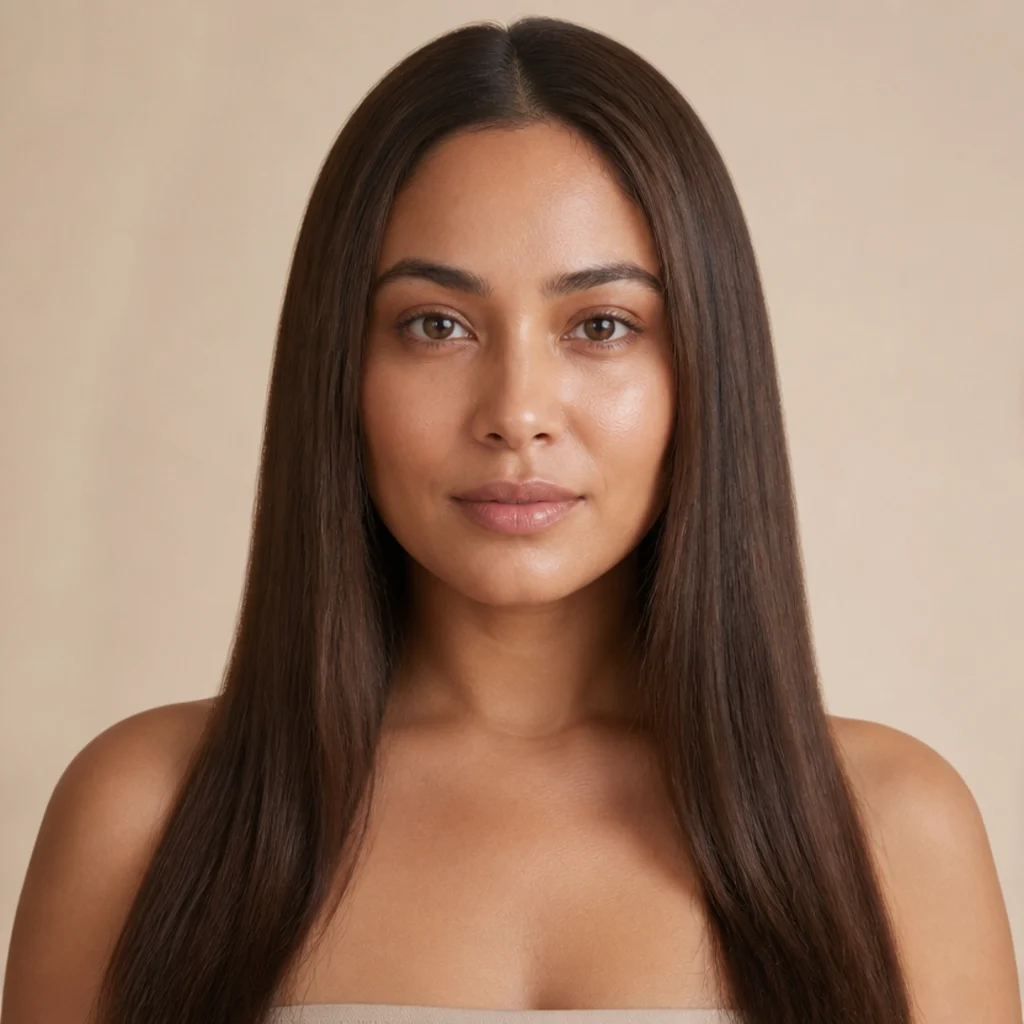
Every progression needs a baseline, and this is it: a solid, single-level brown sitting around level 4-5 with no highlights or lowlights and one uniform note from root to tip. It reads clean and healthy in person, but light hits it evenly, so it flattens in photos and loses the illusion of shape as it grows. This is the true "before" for most people, whether from box dye, a grown-out salon color or virgin hair that has never been touched. It suits anyone who wants zero upkeep and likes a matte, uniform finish, and it's the safest canvas of all because nothing has been lightened. Before you add anything, ask your colorist to read your natural level and underlying pigment. Brunettes expose warm orange and red pigment as they lift, and that undertone dictates how caramel or how brassy added pieces will read. Pro tip: photograph this base in bright, indirect daylight from three angles; it becomes the reference your colorist maps every brighter step against.
02Sheer Warm Gloss Refresh
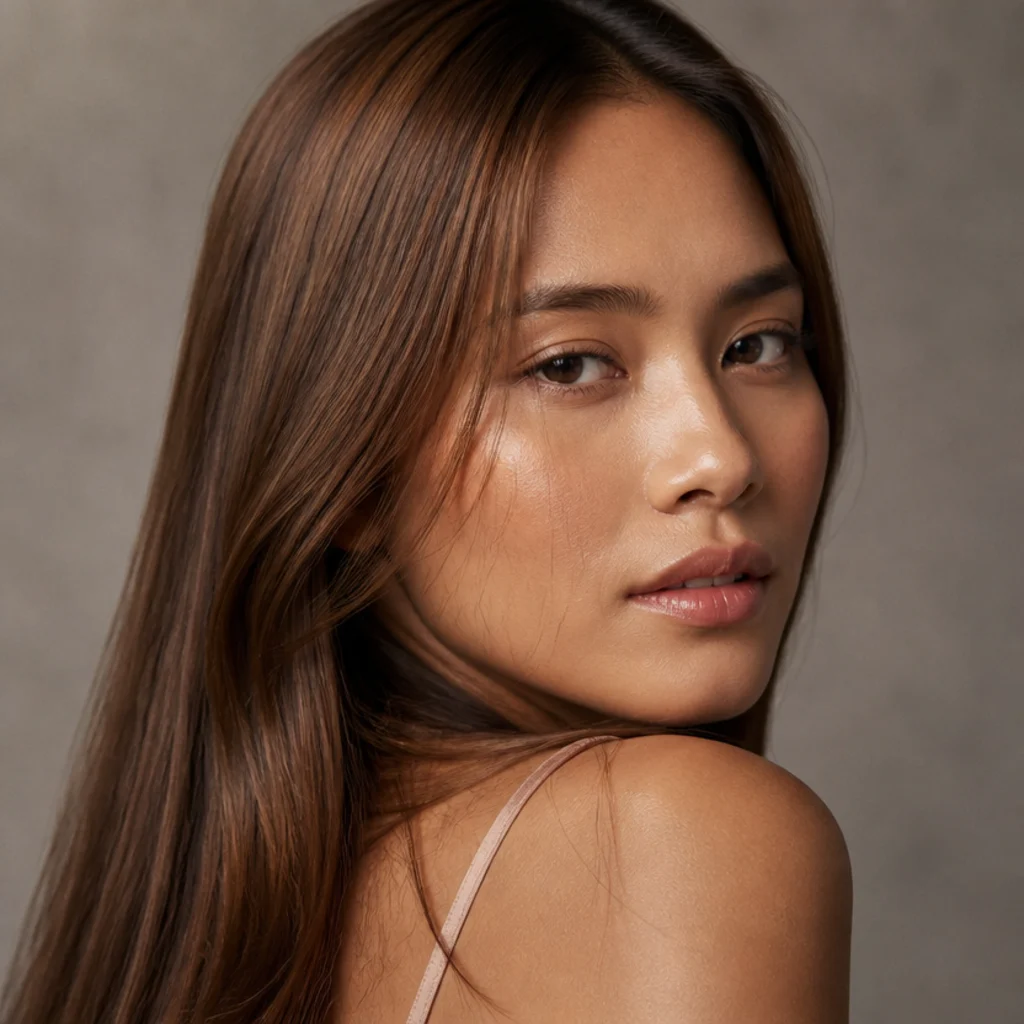
The gentlest possible step up is a sheer warm gloss with no lightening at all. A demi-permanent gloss deposits translucent warm pigment over your existing base, adding mirror shine and a hint of golden or caramel warmth that makes a single tone look richer and more expensive without changing its level. This is the lowest-commitment entry into a warm dimensional brunette, and it flatters every skin tone because the shift is so quiet it reads as condition rather than color. It's also the easiest to maintain: because a gloss only deposits and can't create a regrowth line, you refresh the whole head every 6-8 weeks. It's the smartest trial run before committing to any foil or freehand work, and it doubles as a brass-corrector between bigger appointments later in the progression. Ask your colorist for a "warm demi-gloss a half-level warmer than my base," and say you want shine and warmth, not a visible color change. Pro tip: book it two days before an event, glossed hair photographs at its glassiest in the first week.
03Subtle Dimensional Brunette Babylights
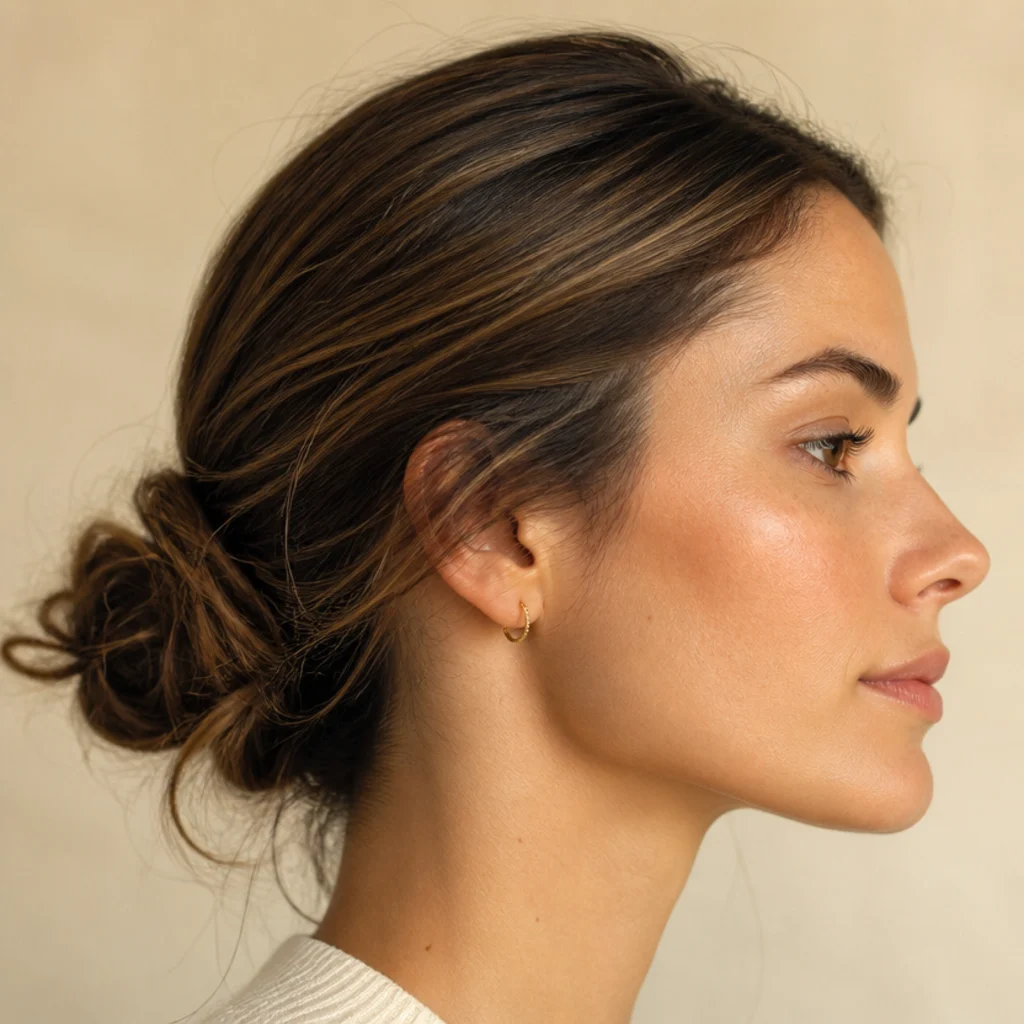
Babylights are the first true dimension in the progression, the finest highlights in a colorist's toolkit. Woven in delicate, closely spaced weaves just one or two levels lighter than your base, they mimic the way a child's hair naturally catches sun, so they read as soft warmth rather than obvious streaks. This subtle dimensional brunette suits anyone nervous about a dramatic change, anyone in a conservative professional setting, and fine-to-medium hair where a heavier highlight would look stripy. Because each piece is so slim, it blurs rather than lines up as it grows, so regrowth stays gentle and appointments comfortably stretch to 10-12 weeks with a gloss in between. Concentrate the placement around the crown, part and hairline, the "halo" where daylight would naturally lift, and always seal with a sheer warm gloss so the new pieces marry into the base instead of jumping out. Ask for "fine warm babylights through the halo, glossed to blend." Pro tip: request a teasylight or root-tap finish so brightness starts a shade below the scalp and grow-out stays invisible.
04Soft Amber Lowlights for Depth
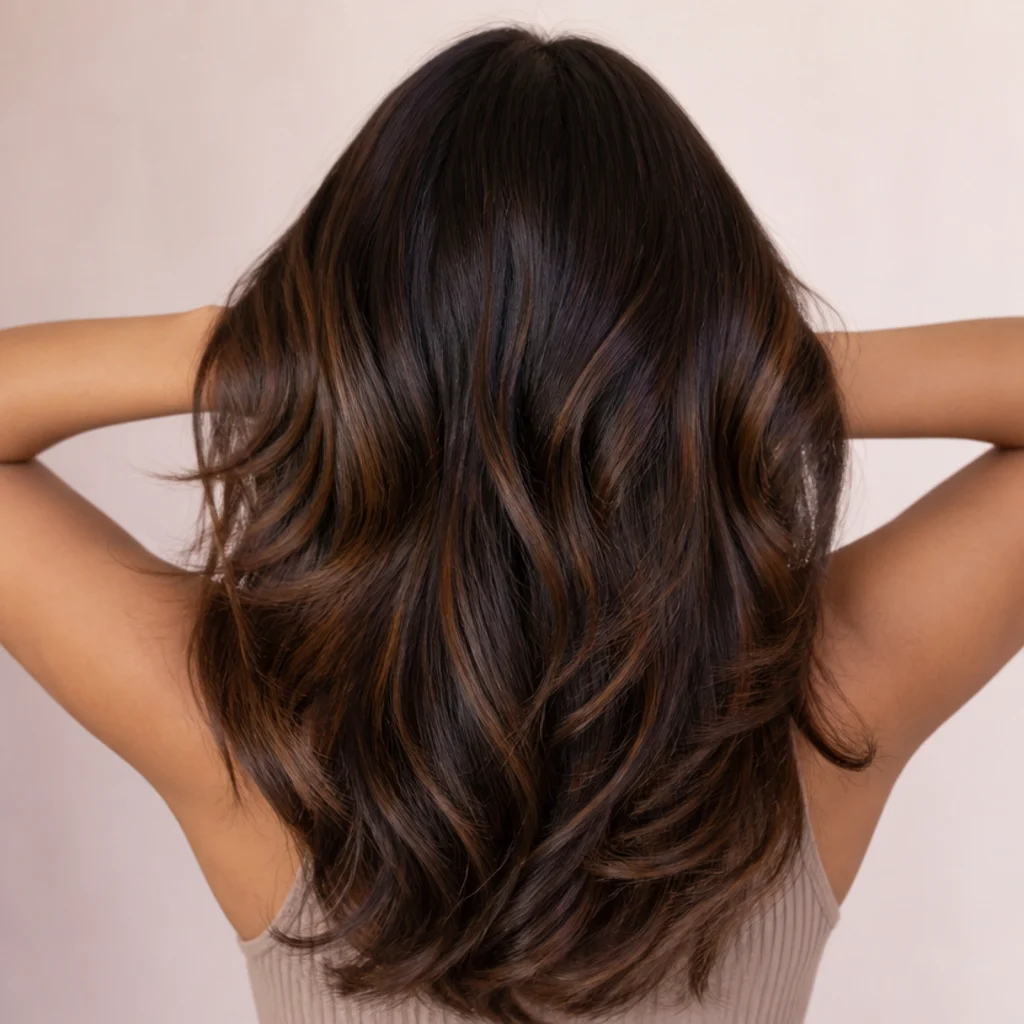
Not all dimension comes from going lighter, and this is the step that proves it. Amber lowlights darken select ribbons a level or two below the base, which makes the surrounding hair look brighter by contrast and rebuilds the shadow that flat or over-highlighted color loses. This suits anyone whose color has drifted too uniform, anyone who over-lifted and now looks one-note, and anyone who wants richness without touching a lightener at all, it's additive and fully reversible. It works beautifully on thick, dark hair that can carry depth, and it's one of the lowest-maintenance moves here: lowlights create no bright regrowth line, so you can comfortably stretch to 12-16 weeks. Place them underneath the top layer and around the parting so they read as natural undergrowth, and choose amber rather than a flat cool brown so the shadow still glows warm. Ask for "warm amber lowlights woven under the canopy for depth." Pro tip: add lowlights to previously highlighted hair to reset dimension without another round of lift, kinder to the hair and the wallet.
05Root Shadow into Warm Mids
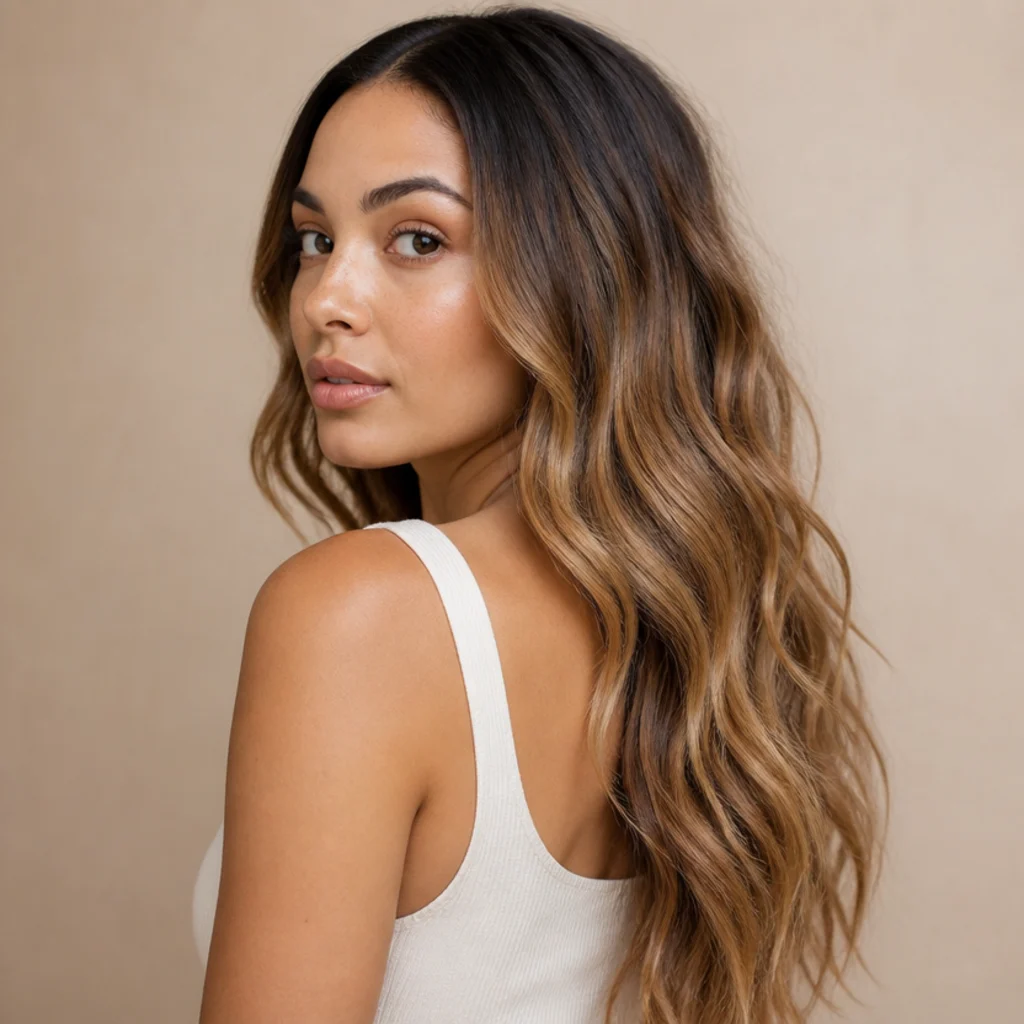
A root shadow (or shadow root) keeps the base deliberately deep and lets warmth build gradually into the mid-lengths, creating a smooth vertical gradient instead of horizontal streaks. It's the most grow-out-friendly move in the whole set, because the darkest point is at the scalp, there's no line of demarcation to betray your last appointment, just softness drifting down. It flatters wavy and straight hair where the top-to-bottom drift is visible, and it's a smart way to reintroduce depth over old highlights that have crept too high. With the root anchored dark, you can go 12-16 weeks between services with a mid-length gloss in between. Ask for a "root melt blending my natural depth into warm caramel or toffee through the mids," and specify how many inches of dark you want at the top. Pro tip: if your regrowth is more than an inch, have the shadow applied slightly past your current root so the transition never stacks into a visible band.
Save this to Pinterest to mark the point where soft dimension becomes visible movement.
06Hazelnut Face-Framing Whisper
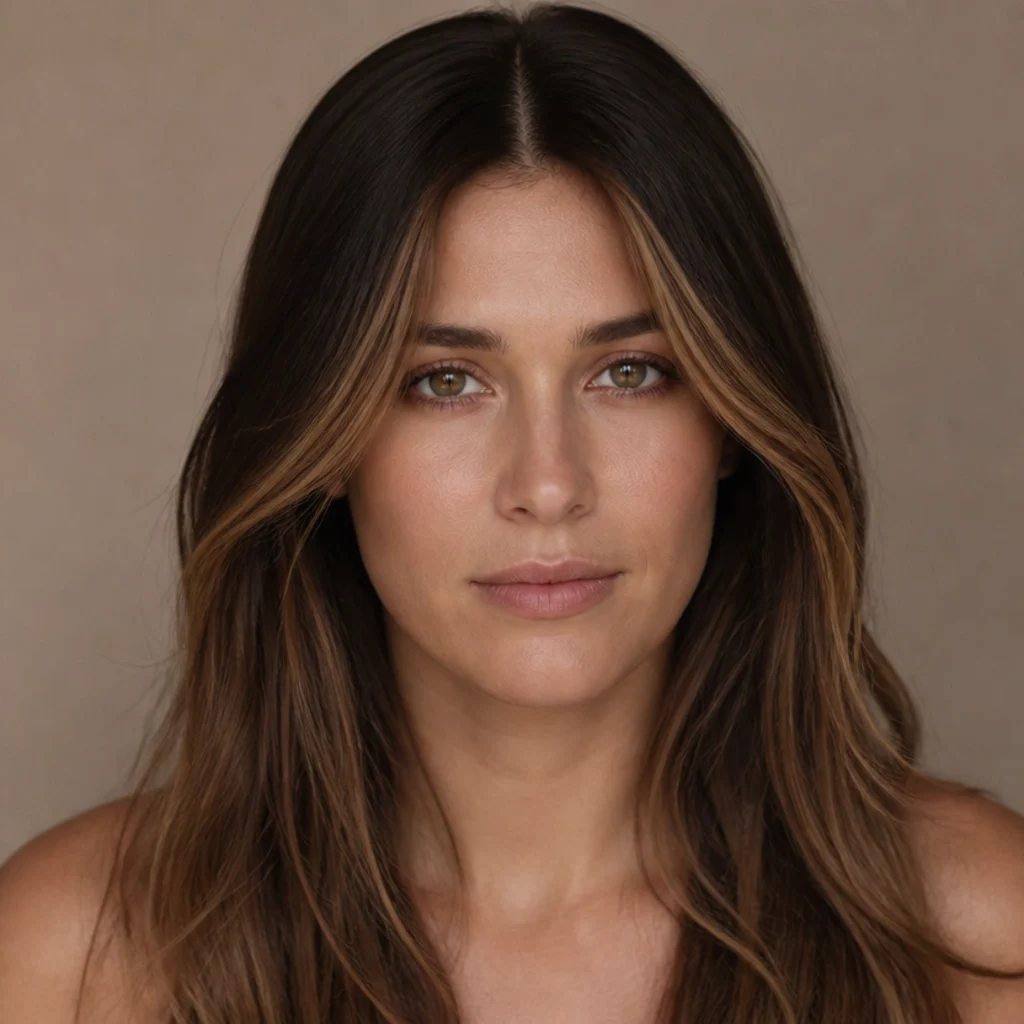
Now the brightness moves to where it does the most work: the face. A hazelnut face-framing whisper adds soft golden-brown pieces to the front sections only, brightening the frame and lifting the complexion without touching the interior color. Hazelnut is a warm neutral that sits between caramel and taupe, which makes it one of the most universally flattering added tones. It warms cool complexions, calms very warm ones, and plays nicely with hazel, brown and green eyes alike. Because the brightness is focused on a small amount of hair and blended softly, grow-out stays easy; pair a gloss every 6-8 weeks with your regular trims. Ask your colorist to "keep warm hazelnut on the front layers and the pieces that fall at my cheekbones, one to two levels above my base." Have them curl those front sections toward the face at the finish so you can confirm the brightness lands where you actually want it. Pro tip: point out your best feature, eyes or cheekbones, and ask for the lightest weave to sit level with it.
07Caramel Balayage on Chestnut Base
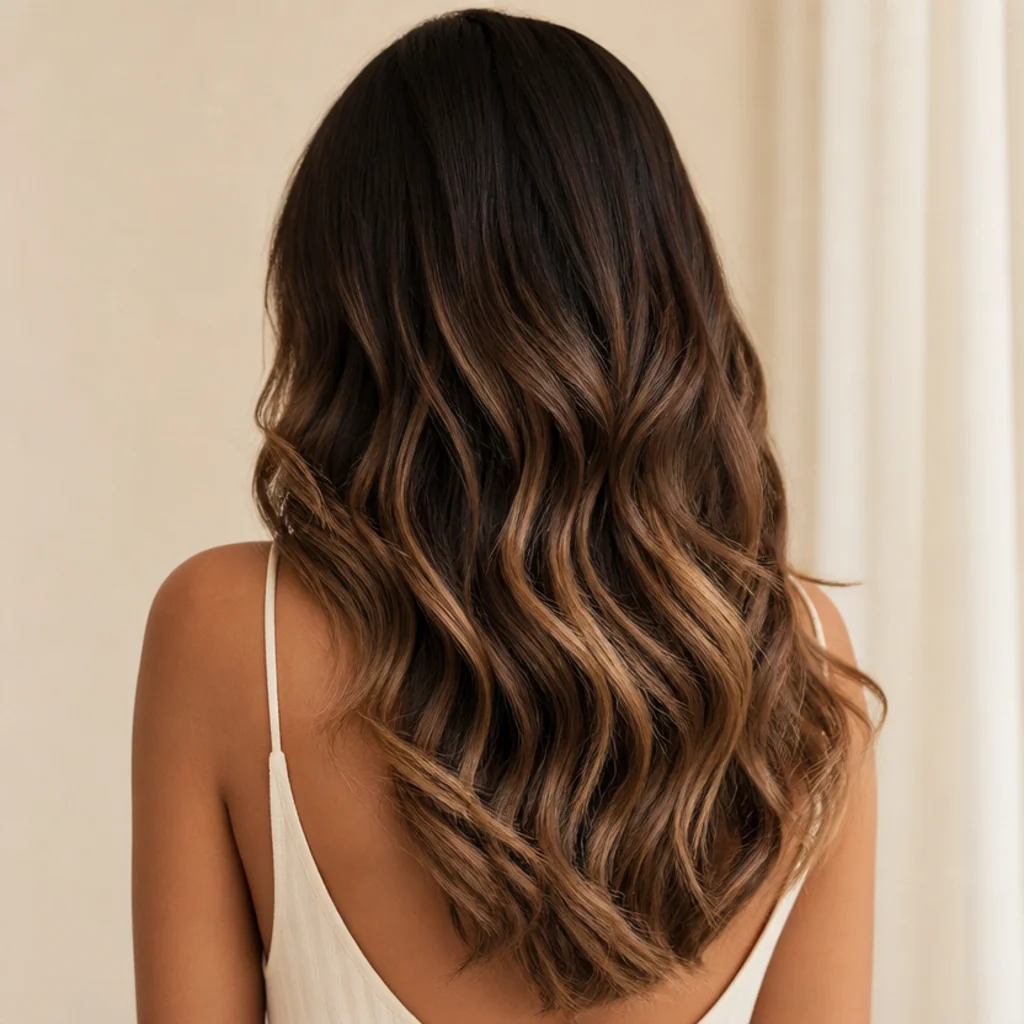
Caramel balayage over a chestnut base is the single most requested warm dimensional brunette, and the natural mid-point of this progression. Because the color is hand-painted freehand, the sweeps sit mostly through the mid-lengths and ends with the brightness feathered out toward the tips, so regrowth stays nearly invisible while the contrast reads clearly. It flatters medium-to-long hair and warm or neutral undertones, where a golden caramel echoes the warmth already in the skin. With the root left deep, you can stretch appointments to 12-14 weeks. It's one of the best effort-to-payoff ratios on this list. Ask for a "soft, low-contrast caramel balayage painted freehand, not in foils, with a warm toner so it stays buttery rather than brassy," and request a shine or bond treatment at the same visit to seal the newly lifted ends. Pro tip: balayage lifts more gently than foil, so if your hair is fine or fragile this is the safest way to reach real brightness without over-processing.
08Mocha-to-Toffee Color Melt
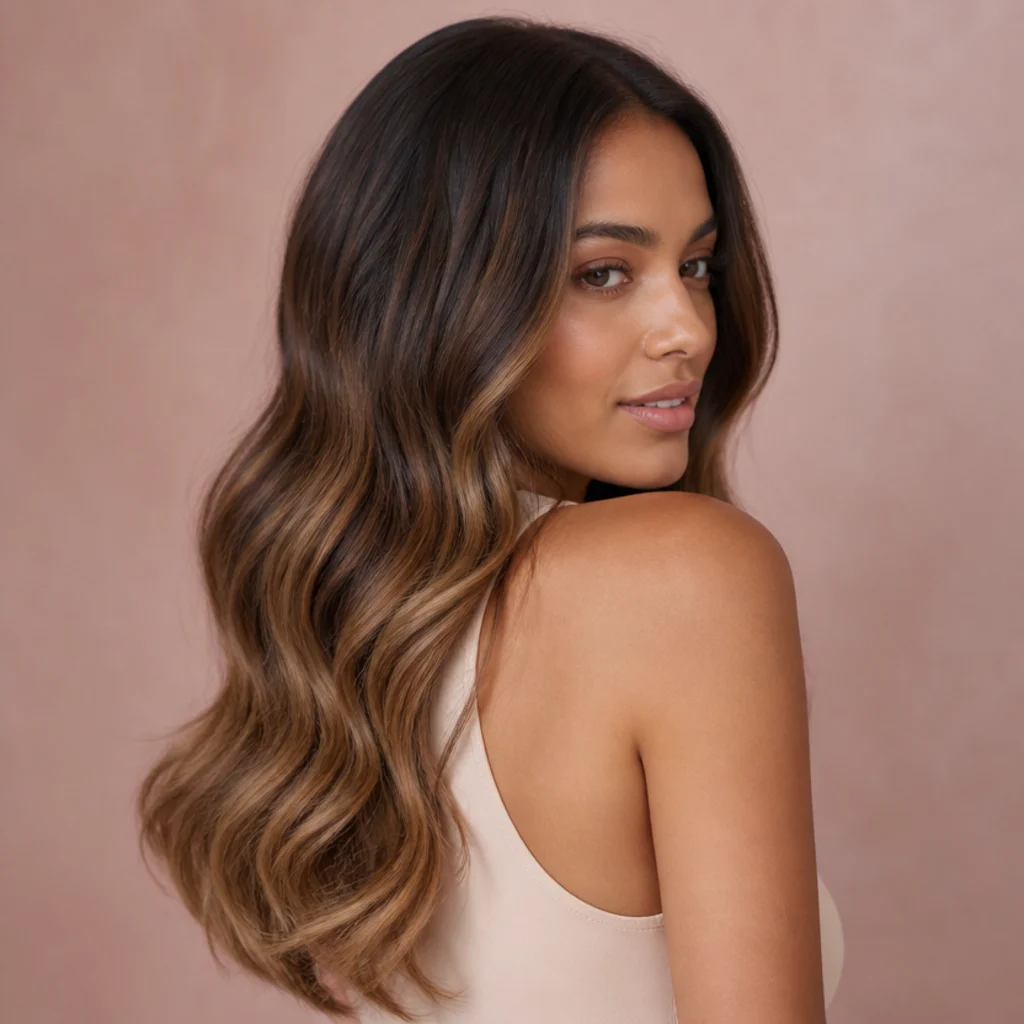
A color melt blurs the line between shades so there's no visible start or stop, just a smooth drift from deep mocha at the root to warm toffee at the ends. Where balayage places brightness, a melt orchestrates the transition, the colorist processes several tones together so they bleed into one another vertically. It's a clear step up in overall brightness from the balayage yet stays soft because nothing has a hard edge. It flatters wavy and straight hair where the gradient is on display, and it works across skin tones because you dial exactly how warm the toffee reads. Maintenance stays friendly: with no harsh regrowth line, 12-16 weeks with a gloss between is realistic. Ask for a "seamless melt from mocha to toffee, kept warm and not ashy through the midsection," so it stays rich all the way down instead of going hollow in the middle. Pro tip: name three connected tones (mocha, chestnut, toffee) rather than just "dark to light" — it tells your colorist to build a true gradient, not a two-tone dip-dye.
09Dimensional Brunette Bob
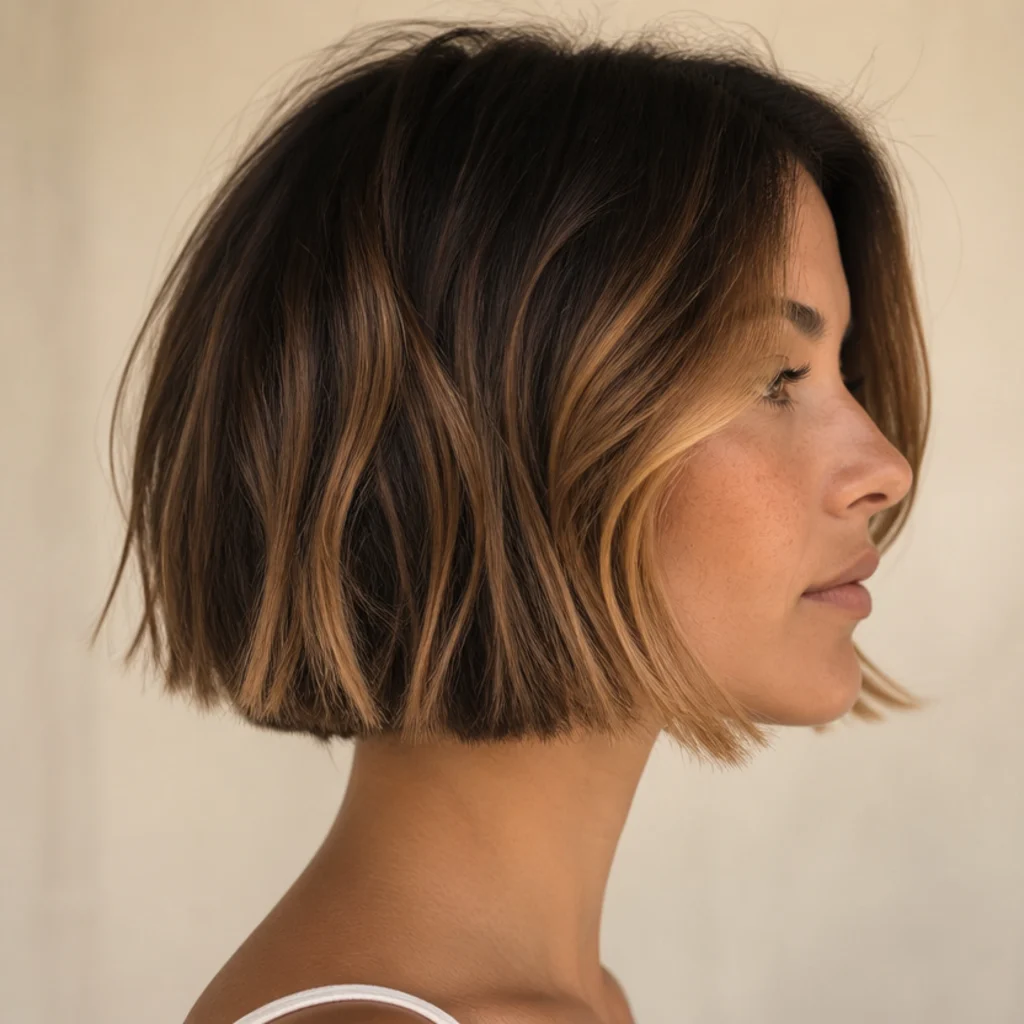
A dimensional brunette bob proves short hair holds just as much depth as long, sometimes more, because the color has less length to travel and reads concentrated. On a blunt or slightly graduated cut, warm highlights placed around the face and threaded through the ends make the shape look thicker and add visible texture to a solid perimeter. It's especially effective on fine hair, where strategic brightness on the interior mimics density and stops a one-length bob from looking heavy or helmet-like. Because the canvas is short, plan the cut and color together roughly every 8-10 weeks. The shape blunts faster than the color fades, so the trim usually drives the schedule. Ask for "face-framing caramel pieces plus a few brighter ribbons at the ends so movement shows when I tuck it behind my ear." Pro tip: on a bob, ask for a shade of contrast on the underneath layer too; when you tuck or flip it, that hidden warmth flashes and makes the cut look custom.
10Subtle Money Piece Introduction
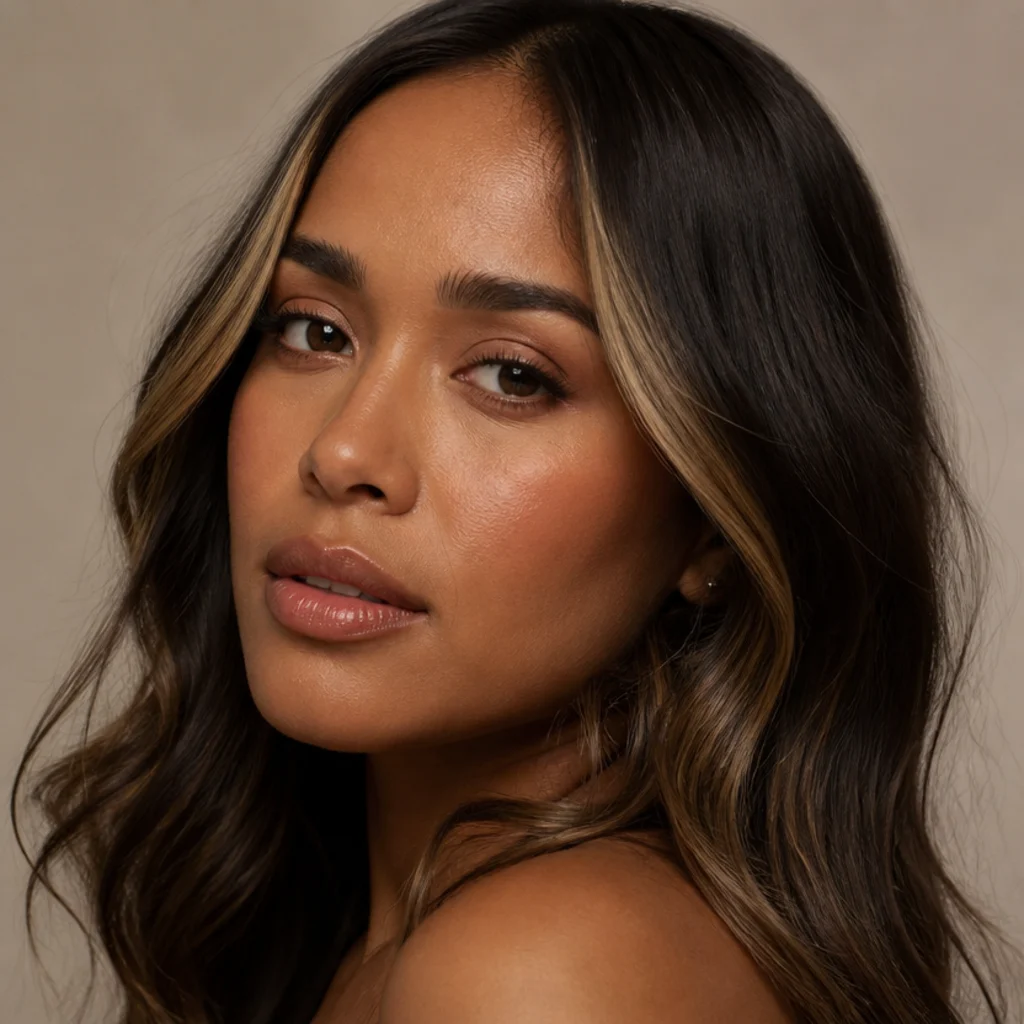
Here the money piece arrives, gently. Dimensional brunette money pieces concentrate the brightest warmth in two sections right at the front, and this subtle version keeps them soft and caramel-toned so the effect is lit-from-within rather than a bold stripe. It suits anyone who wants a visible payoff without much all-over work, since it's limited to a small amount of hair, and it flatters deeper skin tones especially, because drawing brightness up to the face lifts the whole complexion. It grows out softly as the two pieces blur into the base, and a toner refresh every 6-8 weeks keeps the caramel from dulling. Ask for a "soft caramel money piece," and be specific about two things: how far back from your part the brightness should begin, and how bright it should get near the cheekbone. Pro tip: ask the colorist to feather the top of the money piece into fine babylights instead of starting it as a solid block. That soft top edge is what separates a modern money piece from an early-2000s chunk.
Save this to Pinterest, this is the halfway mark between subtle and bold.
11Golden Chestnut Ribbons
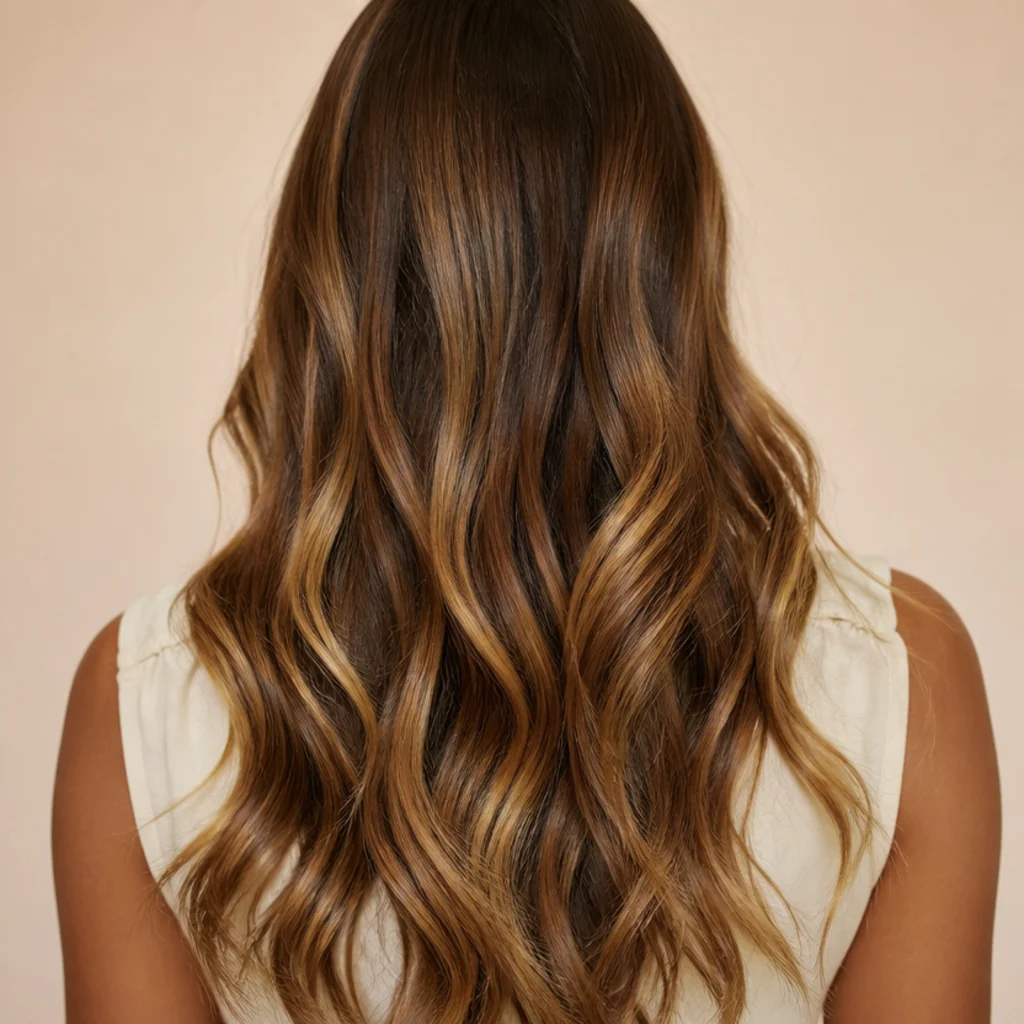
Ribbons are thicker, more deliberate highlights than babylights, wider painted sweeps that give noticeable golden streaks against a chestnut base. This is where contrast becomes the point rather than a whisper: the look reads glamorous and photographs with real movement, so it suits anyone ready for their color to be seen. It carries best on medium-to-thick hair that can hold bold pieces without them merging into a solid highlight; on very fine hair, wide ribbons can read as a half-head of blonde rather than dimension. Upkeep is moderate: refresh the toner every 6-8 weeks so the gold stays warm rather than yellowing, and lift regrowth every 10-12 weeks. Ask for "chunkier golden ribbons hand-painted through the mid-lengths with a warm toner, plus a few finer pieces woven between them to keep the blend soft." Pro tip: don't let a ribbon start at the scalp on both sides of your part at once. Staggering where they begin keeps a strong regrowth line from forming across your hairline.
12Sun-Kissed Warm Ends
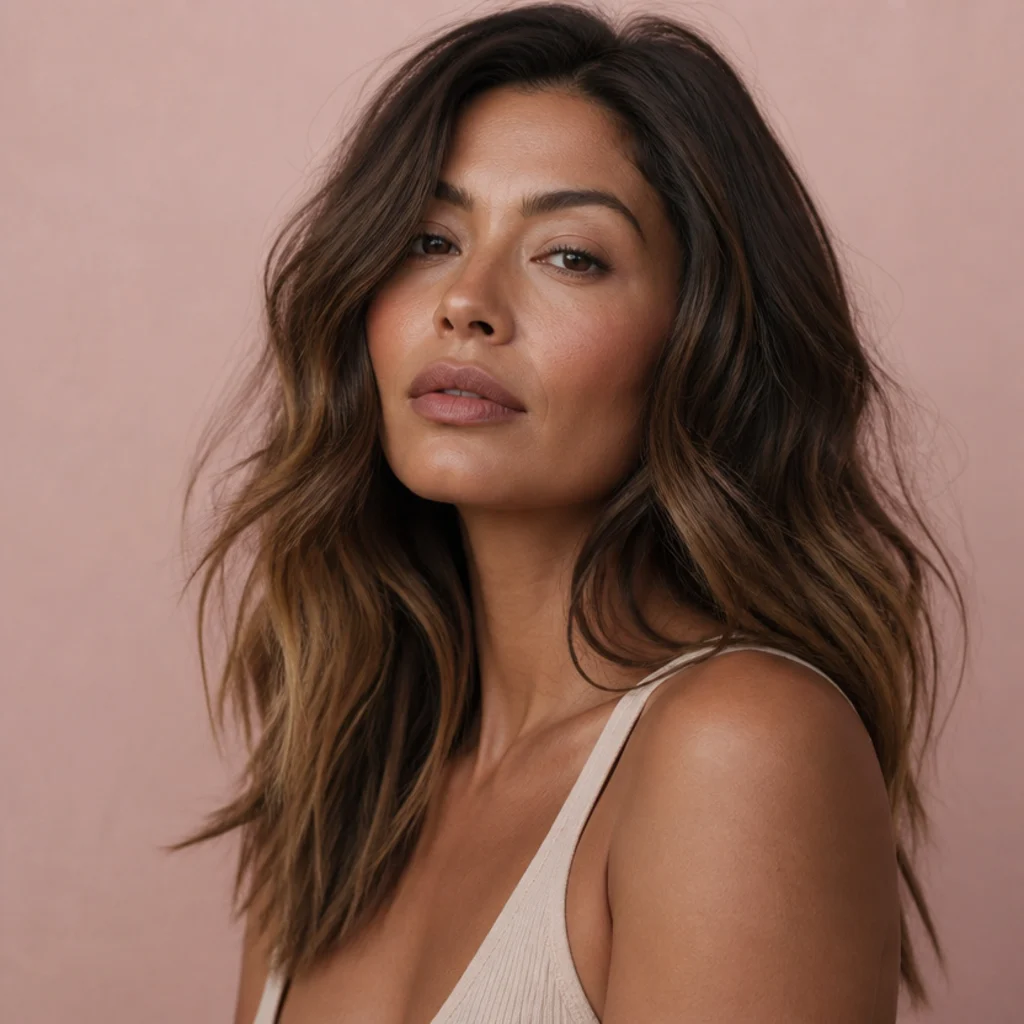
Sun-kissed warm ends mimic the way hair naturally lightens at the tips after a long summer: the root stays deep and warmth pools toward the bottom third. It's the most easygoing, lived-in look in the bright half of this list, reading relaxed rather than "done," and it suits long and mid-length hair where there's enough length for the fade to develop. Because all the brightness lives at the ends, regrowth is a non-issue and you can go 14-16 weeks between full services; the ends may need a toner refresh sooner if they fade warm-to-brassy. Ask for a "warm balayage focused on the last few inches with a golden or caramel toner on the ends," and bring a reference showing exactly how deep you want the root to stay, since this entire look lives or dies on that top-to-bottom contrast. Pro tip: if your ends are porous from past color, ask for a filler or a warmer toner than you think you need. Faded ends grab cool tones and can turn muddy or ashy fast.
13Cinnamon Warmth Through the Lengths
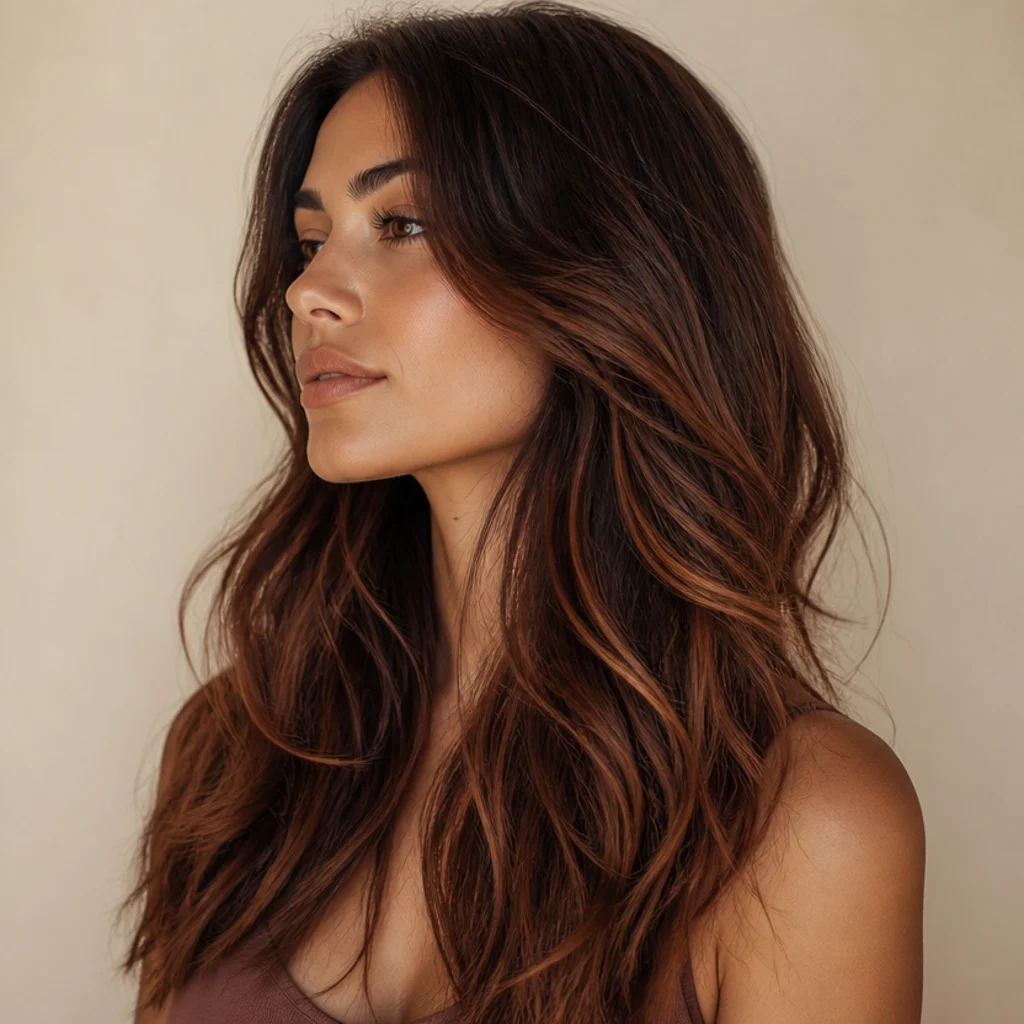
Cinnamon is where warmth stops being about brightness and starts being about tone. A red-warm glow woven through the lengths gives brunette hair a cozy, autumnal richness that golden looks can't replicate. Cinnamon flatters warm and olive undertones especially, echoing the warmth in the skin, and it's a good way to add life to dark hair without lifting to true blonde. Because it's a deeper, red-based tone rather than a lightened one, it keeps the hair reading unmistakably brunette. The trade-off is fade: red and copper molecules are the smallest and wash out fastest, so plan a gloss every 6-8 weeks, or maintain with a color-depositing conditioner at home between visits. Ask for "warm cinnamon or copper-brown woven through the mid-lengths and ends, kept a level deeper than a blonde highlight so it stays brunette." Pro tip: wash cinnamon tones in cool water with a sulfate-free, color-safe shampoo. Hot water swells the cuticle and is the single biggest reason warm red tones fade early.
14Multi Dimensional Brunette Curls
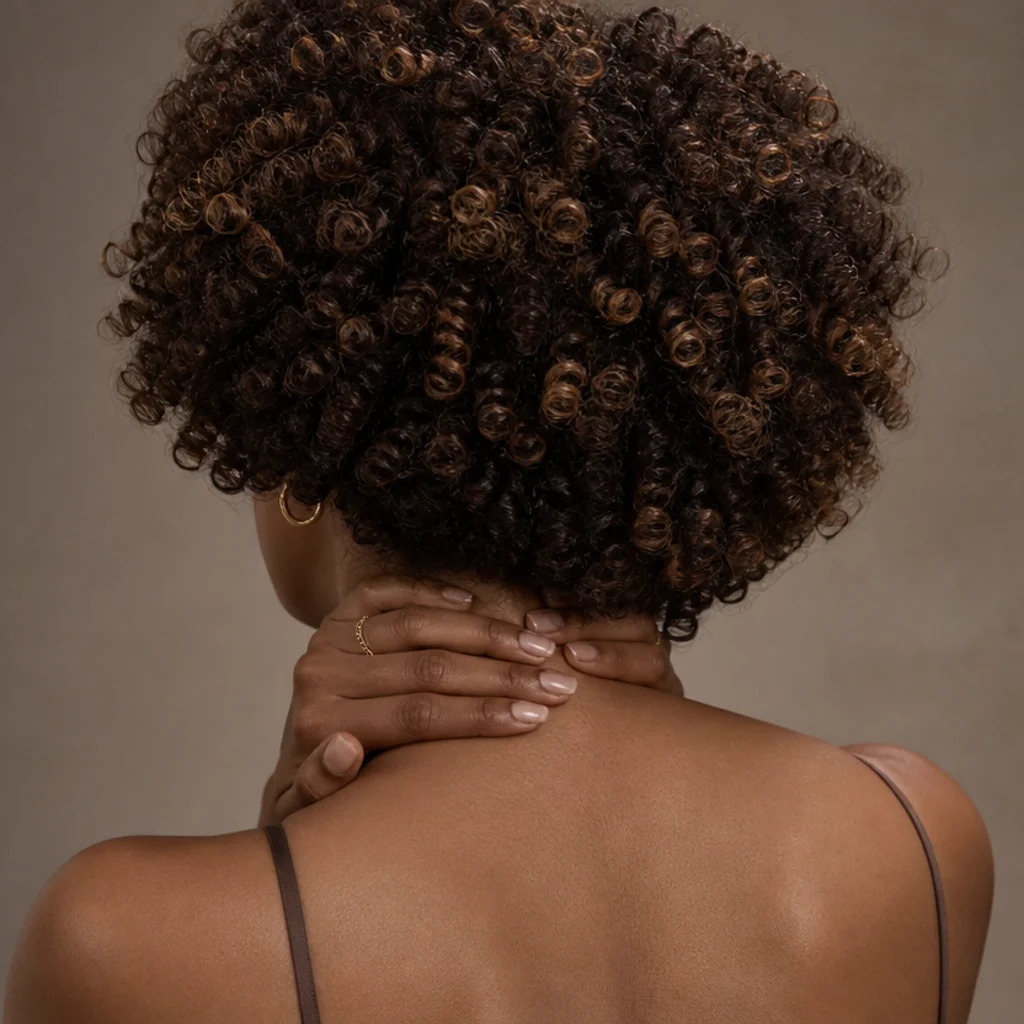
On curly and coily hair, a multi dimensional brunette shows off every coil. Because a curl folds and reflects light differently than straight hair, warm caramel and honey tones placed throughout make the texture pop and read as extra volume, dimension does the work that a highlight can't do on straight hair. It suits every curl pattern from loose waves to tight coils; the craft is in placing color to follow the curl formation rather than slicing across it. Curly hair also tends to be more porous, so warm tones grab quickly and unevenly. Ask for a gentle, lived-in application and insist on a bond-building treatment to protect the curl's integrity through the lift. A gloss refresh every 8 weeks keeps the tones honeyed rather than orange. Tell your colorist you want dimension "curl by curl, woven throughout rather than in solid panels," so definition stays natural in every direction. Pro tip: book a colorist who cuts and colors curls dry. Painting on dry, formed curls is the only way to guarantee brightness lands on the parts of each coil that actually catch light.
15Bold Honey Money Pieces
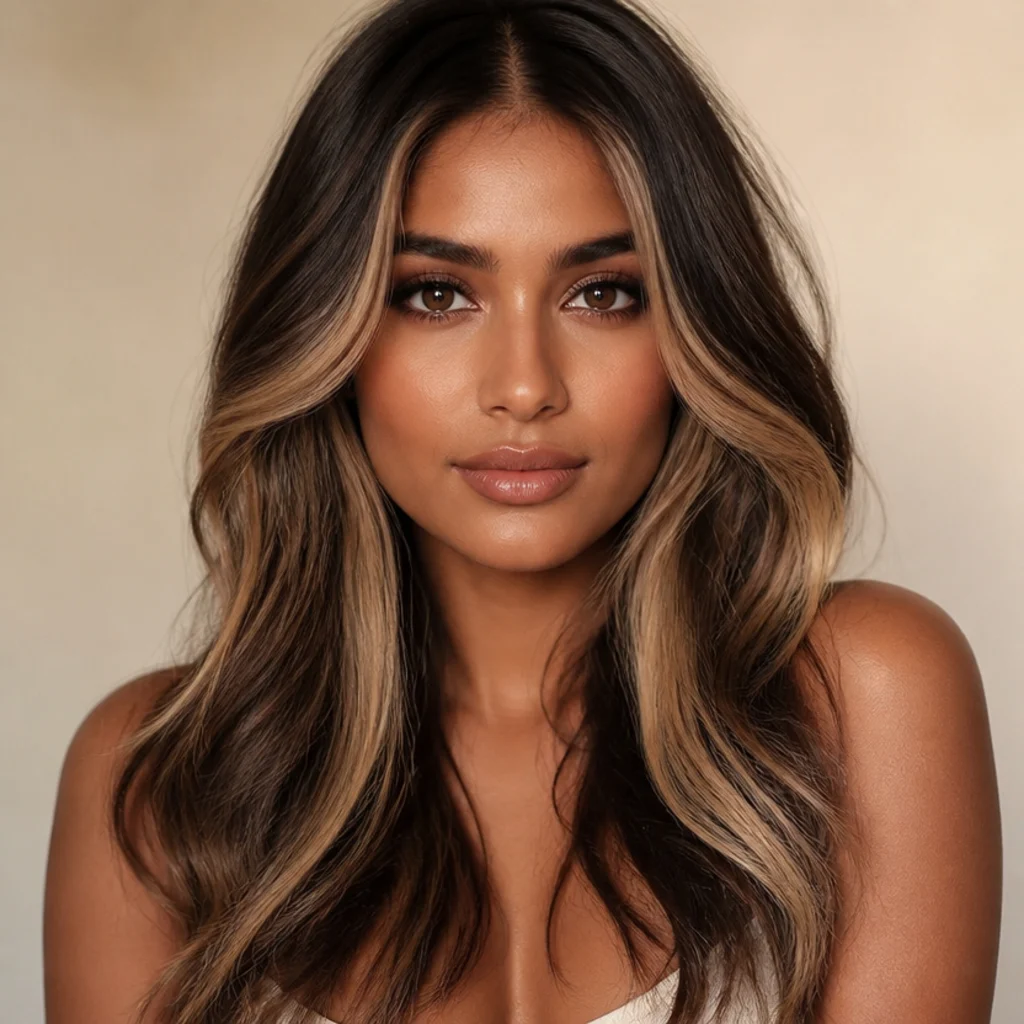
Now the money piece goes bold. Two bright honey-toned sections sit at the front, lightest right at the cheekbone, for maximum face-framing impact against a dark base. This is the dialed-up version of look ten, and the contrast is deliberately visible. It flatters deeper skin tones beautifully, because the concentrated brightness draws light upward and warms the face, and it still keeps overall maintenance lower than all-over lightening since the work stays contained to the front. The catch is placement visibility: money pieces sit exactly where regrowth shows, so a toner refresh every 6-8 weeks is non-negotiable to hold the honey. Ask for a "bold money piece" or "bookend placement in warm honey," and be precise about how light you want it near the face versus where it blends back. Pro tip: ask for the money piece to be built to your part's natural fall and swept slightly diagonally toward the cheekbone. A vertical block ages a face; a soft diagonal lifts it.
16Copper-Lit Brunette
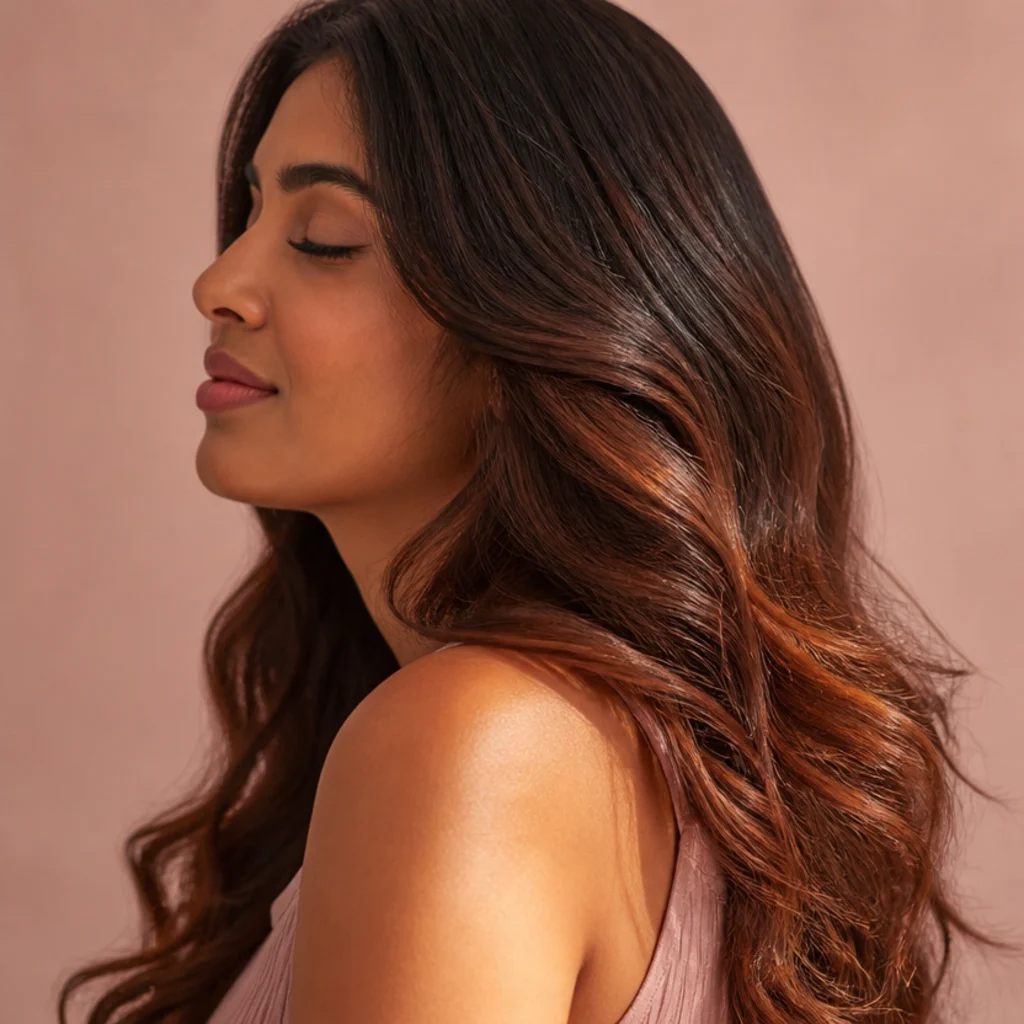
Copper-lit brunette threads bright copper through a dark base for a glow that ignites in direct sunlight and calms to a warm shimmer indoors, edging toward red without going full redhead. Here the copper is more visible than the earlier cinnamon, a real shimmer rather than a whisper, so it suits anyone who wants a genuine hint of red they can build on over future visits. It flatters warm, golden and olive skin tones and brings green and hazel eyes forward. Copper is the fastest-fading tone family of all, so a color-refreshing gloss every 4-6 weeks, plus a copper-depositing conditioner at home, is what keeps it from washing to a dull tea-stain. Ask for "copper highlights or a copper gloss over my base, kept brunette with a copper glow" so the underlying depth stays intact and the effect reads dimensional, not solid. Pro tip: copper photographs warmer than it looks in the mirror, so if you want it subtle in person, ask for a half-step softer than your reference.
17Warm Bronde Blend
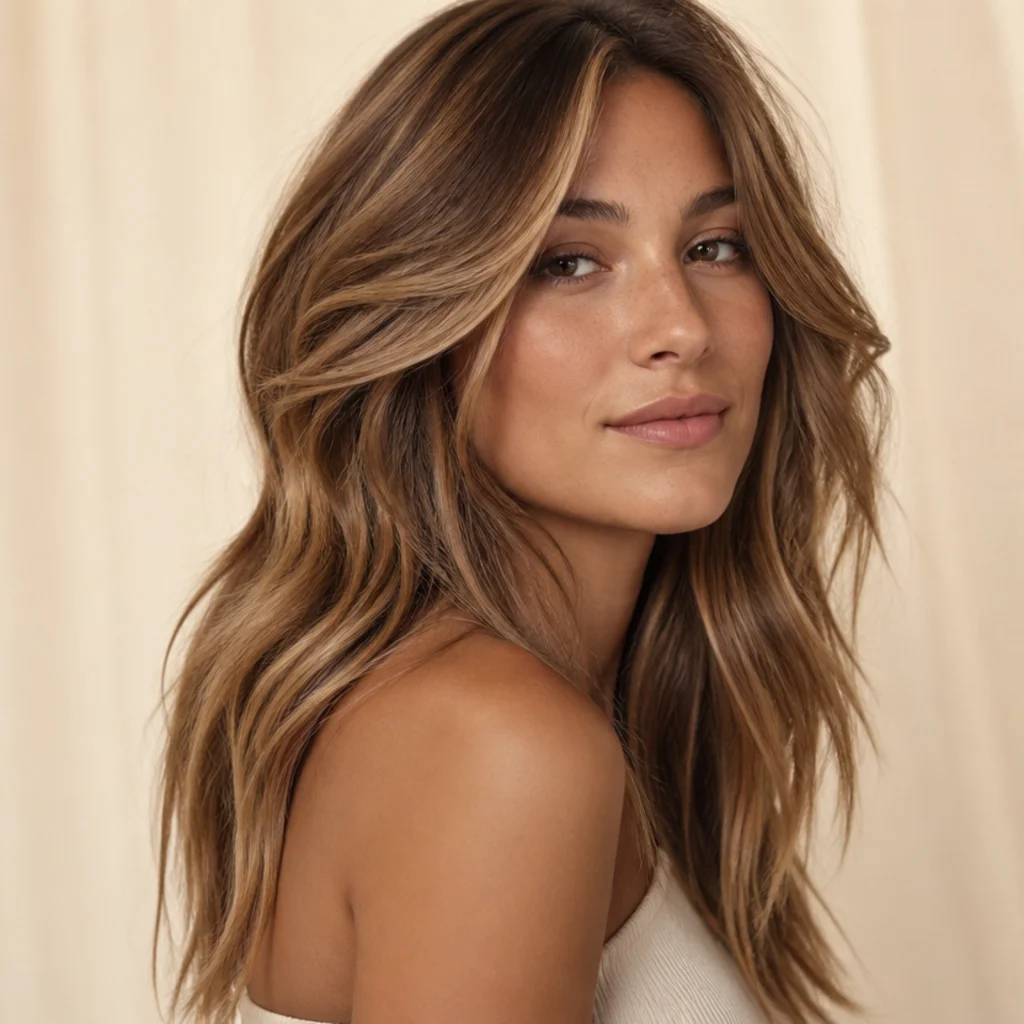
Bronde lives right between brown and blonde, and a warm version leans golden rather than ashy. It's arguably the most dimensional look on this list because it carries the widest range of levels at once, deep brown lowlights sitting directly against golden-blonde highlights, all melted together so the eye reads richness rather than stripes. It suits anyone ready for a brighter overall result while staying anchored in brunette, and it flatters light-to-medium warm skin best. This is where maintenance climbs into committed territory: expect a gloss roughly every 6 weeks and highlights every 8-10 weeks to keep the blonde portions from turning brassy as they grow and fade. Ask for a "warm bronde with both lowlights and highlights so the dimension stays balanced, not just lightened all over." The lowlights are what keep bronde from flattening into a solid dark blonde. Pro tip: stick to a purple-free, warm-safe toning shampoo; standard purple shampoo will strip the golden warmth that makes bronde read expensive and leave it cool and flat.
18High-Contrast Caramel Ribbons
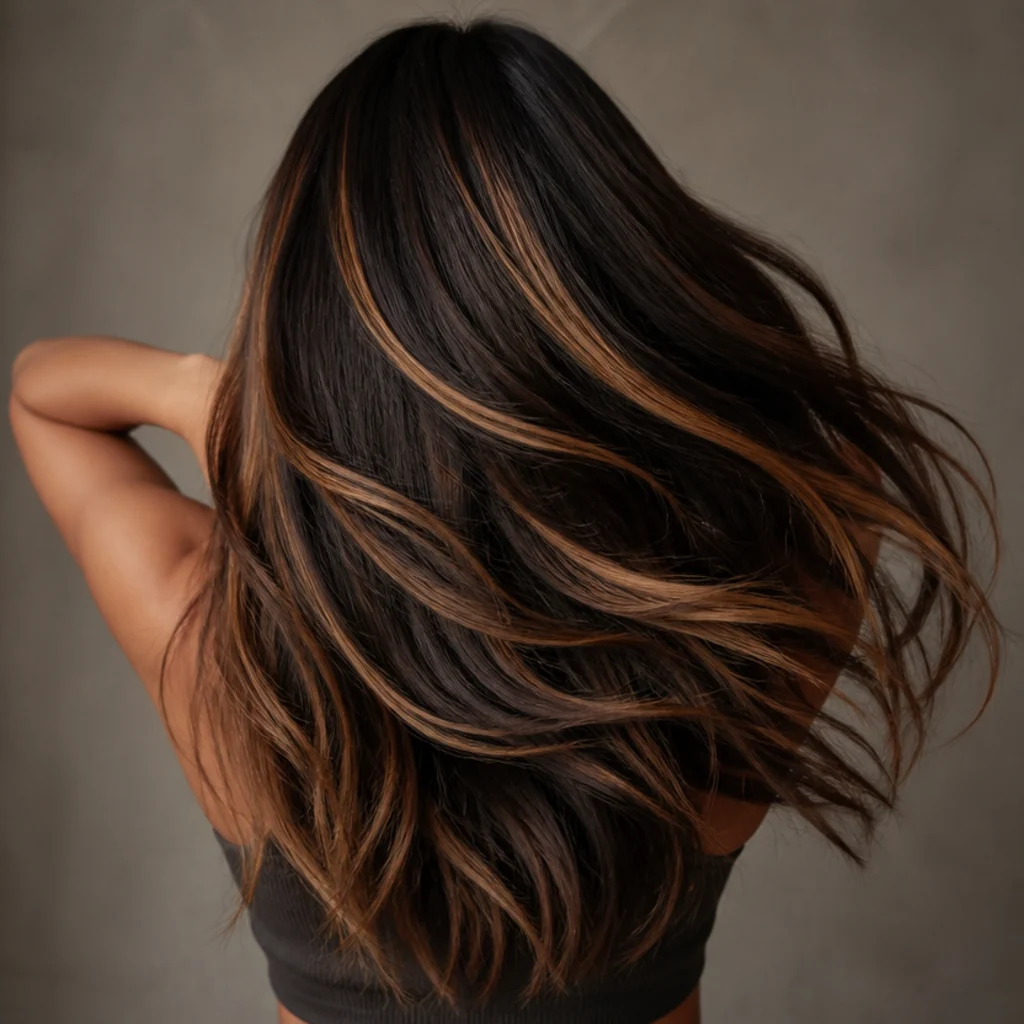
This look pushes the caramel ribbons of earlier steps to their brightest, wide, high-contrast panels of warm caramel set against a deliberately deep base for maximum drama and swing. It photographs boldly and needs the hair to carry it: thick-to-medium density holds strong contrast without looking gappy, while very fine hair can start to read as a two-tone stripe. Upkeep climbs accordingly, a toner every 6 weeks to keep the caramel warm and regrowth lifted every 8-10 weeks, so this is a look for someone who's committed to the salon calendar. Ask for "high-contrast caramel placed for visible sweep and shine, with a few softer transition pieces between the panels so they do not read as hard stripes." Those transition pieces are the difference between editorial and dated. Pro tip: ask your colorist to root-tap the base darker if it's started to look too light. Contrast comes from the shadow as much as the brightness, and a base that's too light collapses the whole effect.
19Chunky Face-Framing Statement
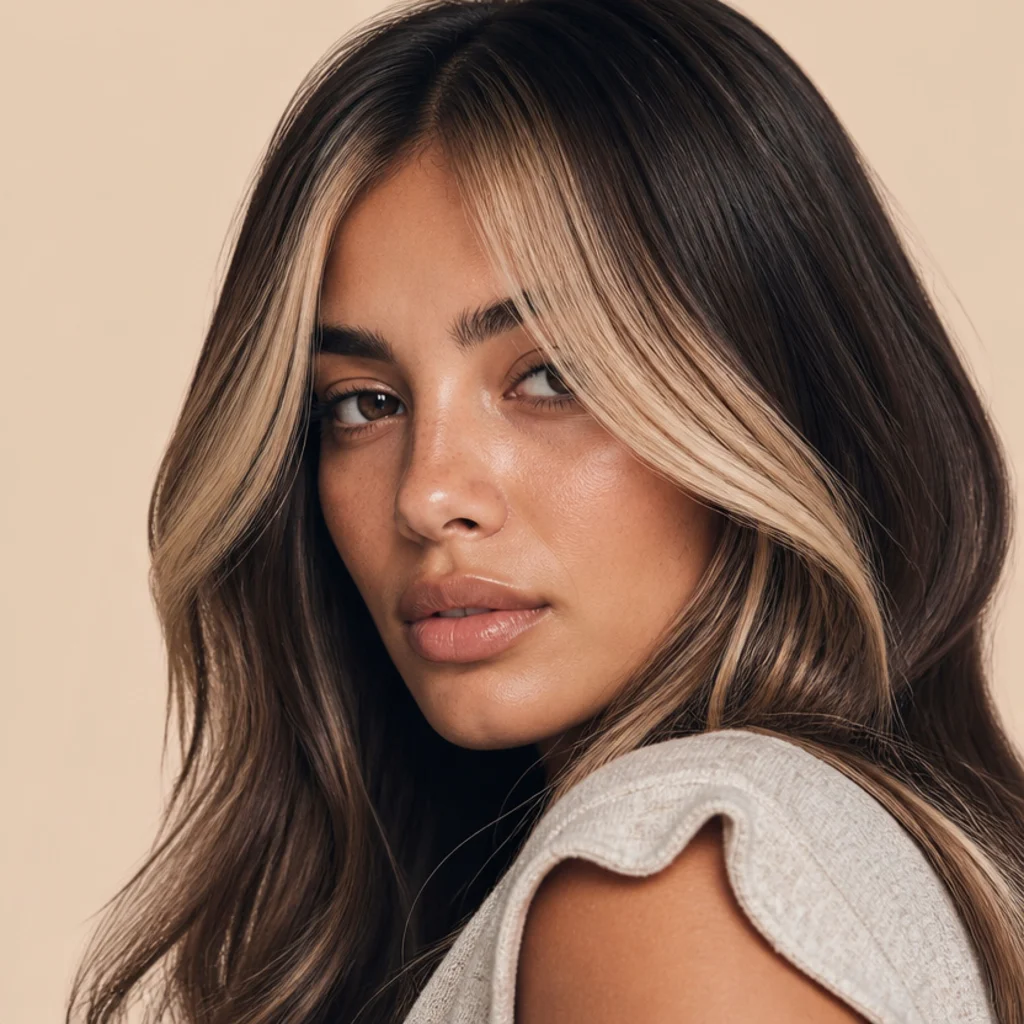
For a true statement, chunky face-framing highlights turn the money-piece idea up to its boldest. Wider, brighter sections frame the face with unmistakable contrast, a deliberately visible, editorial look that references the '90s and '00s but stays modern when the placement is precise. It suits anyone who wants their color to lead the whole look, and it works across skin tones as long as the width and brightness are matched to your features and bone structure rather than copied wholesale from a reference. This is firmly high-maintenance: the brightness sits right where regrowth shows, so plan a toner every 6 weeks and a lift every 8 weeks. Ask for "chunky face-framing pieces," and bring a reference so your colorist can calibrate width and brightness to your face shape. Wider softens an angular face; finer flatters a round one. Pro tip: ask for the chunk to start a centimeter below the scalp with a root smudge; a hard bright piece straight from the roots reads costume rather than considered.
20Full Multi-Tonal Brunette
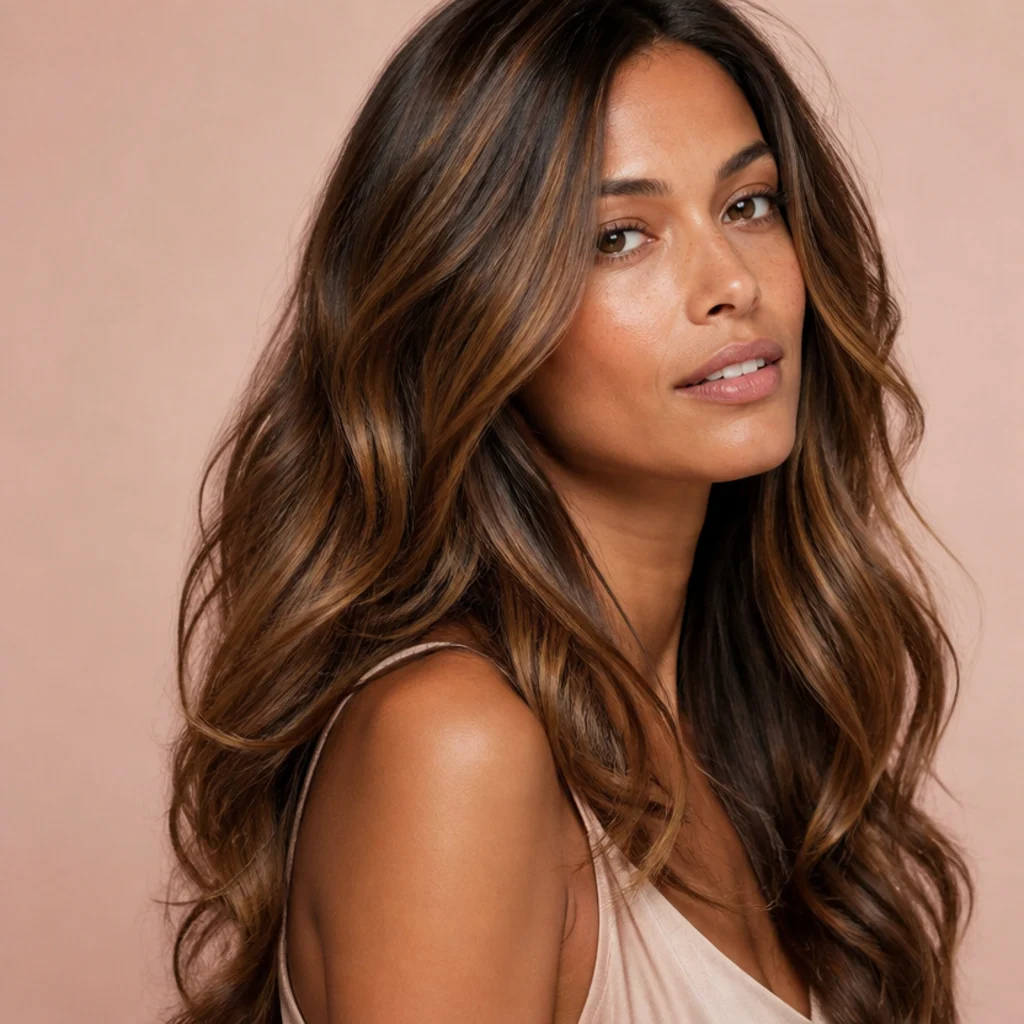
The boldest stop on the progression brings everything together: caramel, honey and cinnamon brights, amber lowlights and a warm gloss, all blended through a deep base for maximum multi dimensional brunette impact. This is the fullest "after," where the hair shifts through several tones as it moves and reads unmistakably rich, expensive and worked. It suits anyone who loves visible, high-payoff color and is happy to keep up with it: expect a gloss every 6 weeks, foils or freehand lift every 8-10 weeks, and a bond-repair treatment at every lifting visit to keep multi-processed hair healthy. Because so many tones are in play, precision in the formula is everything. Name each one so nothing turns muddy where they overlap. Ask for a "full multi-tonal brunette," list your exact tones (for example caramel, honey, cinnamon over an espresso base), and ask for lowlights woven in as well as highlights so it stays dimensional rather than just bright. Pro tip: book this as your winter-to-spring transition and ask the colorist to log the exact formulas in your client file; a multi-tonal result is only repeatable if the recipe is written down.
Pro Tips from the Editor
- Always add a gloss to every visit. A warm demi-gloss is the single line item that keeps a dimensional brunette reading expensive instead of brassy as it grows, and it costs a fraction of a full highlight service. Skipping it is the most common reason color looks cheap three weeks later.
- Add before you subtract. Lowlights, root shadows and glosses build dimension without lifting the hair. If your color already looks over-highlighted or flat, reach for depth first, it's kinder to the hair and usually cheaper than another round of foils.
- Match your placement to your calendar, not your Pinterest board. Brightness near the scalp (money pieces, chunky framing) shows regrowth in weeks; brightness at the ends (balayage, sun-kissed) hides it for months. Choose the look whose upkeep you'll actually stick with.
- Warm and red tones fade fastest. Copper, cinnamon and honey wash out first because their pigment molecules are smallest. Wash in cool water, use a sulfate-free color-safe shampoo, and keep a color-depositing conditioner on hand between glosses.
- Bond-repair is not optional on multi-processed hair. Any look that lifts more than two levels or layers highlights over old color should include an in-salon bond treatment; it protects the integrity that makes shine and dimension possible.
- Book cut and color to the right clock. On a bob, the cut usually needs refreshing (8-10 weeks) before the color does; on long hair, the color drives the schedule. Align them so you're not paying for two trips.
- Bring your color history along with your goal. Tell your colorist about box dye, henna, past keratin treatments and how many weeks since your last lift. Old pigment and treatments change how new color takes, and honesty here prevents muddy or uneven results.
How to Choose / Get the Look
Use this as a decision framework rather than a menu, and work through it in order.
Step 1: Decide how far down the dial you want to live. You don't have to reach look twenty. If you love your dark brown but want it less flat, stop early: a sheer gloss, babylights or amber lowlights give shine and depth with minimal upkeep. For a clear but manageable change, the middle looks (balayage, a color melt, a subtle money piece, a dimensional brunette bob) deliver visible dimension with soft grow-out. The bold end (honey money pieces, bronde, high-contrast ribbons, full multi-tonal) makes the biggest statement but asks for toners roughly every six weeks.
Step 2: Match warmth to your undertone. Golden and caramel flatter warm and neutral skin; hazelnut is the safe universal; cinnamon and copper suit olive and warm complexions; keep pieces a touch deeper if your skin is cool so warmth doesn't overwhelm.
Step 3: Match contrast to your hair. Fine or fragile hair takes gentle, freehand lift and finer weaves best; thick or dense hair can carry ribbons and high contrast; curly hair wants curl-by-curl placement and bond protection.
Step 4: Be honest about upkeep and budget before you book, then bring two or three reference photos, name your exact target tones and your natural level, and always request a gloss at the same visit.
| Look tier | Example looks | Upkeep window | Best for |
|---|---|---|---|
| Subtle | Warm gloss, babylights, amber lowlights | 12-16 weeks | First-timers, low maintenance, fine hair |
| Middle | Balayage, color melt, subtle money piece, brunette bob | 10-14 weeks | Visible change with soft grow-out |
| Bold | Honey money pieces, bronde, high-contrast ribbons, chunky framing | 4-8 weeks | Statement color, committed upkeep |
| Tonal | Cinnamon, copper-lit, full multi-tonal | 6-8 weeks (fast fade) | Warm/olive undertones wanting a tone shift |
Frequently Asked Questions
Are these real before and after photos?
No. These are illustrative examples arranged as a subtle-to-bold progression, not photographs of real clients. They exist to show how much dimension is possible, from a flat single tone to a full multi-tonal brunette, so you can identify the point that suits your hair, undertone and lifestyle before you sit in the chair.
How much dimension should I ask for the first time?
If you're new to color, start early in the progression: a warm gloss, babylights or a soft root melt. These read natural, grow out gently and let you judge how much contrast you actually like before committing to brighter money pieces or ribbons at a later appointment. You can always add more; going back darker after over-lightening is trickier and harder on the hair.
Which looks are the lowest maintenance?
Anything root-deep with warmth toward the ends: a gloss refresh, amber lowlights, a mocha-to-toffee melt or sun-kissed ends. With no harsh regrowth line, you can stretch appointments to 12-16 weeks while a gloss keeps the tone rich between visits. The rule of thumb: the further brightness sits from your scalp, the longer you can wait.
Will warm dimensional brunette turn brassy?
Warm brunettes are meant to be warm, so they don't "go brassy" the way cool blondes do, but they can fade unevenly toward orange as the gloss wears off. A warm-depositing gloss every few weeks keeps caramel and honey looking intentional. Copper and cinnamon fade fastest and benefit from a color-depositing conditioner at home between salon visits.
How do I keep the warm tones from fading so fast?
Wash less often and always in cool water, hot water opens the cuticle and flushes pigment. Use a sulfate-free, color-safe shampoo, limit clarifying washes, wear UV or heat protection, and keep a tone-matched color-depositing conditioner on hand. Red-based tones (copper, cinnamon) will still need a salon gloss soonest; golden and caramel hold longest.
Can I do a dimensional brunette on a bob or on curls?
Yes to both. A dimensional brunette bob places warm pieces around the face and ends so a short shape looks fuller and more textured. On curly hair, warmth woven curl by curl on dry, formed coils defines each one and reads as extra volume, best applied gently with a bond-building treatment since curls are more porous and grab warm tone quickly.
How many levels lighter should the dimension be?
For a natural, subtle result, keep highlights one to two levels above your base; for a bold, high-contrast look, three or more. The bigger the gap between your base and your brightest piece, the more dramatic and the higher the upkeep. Warm tones read softer than cool ones at the same level, so warmth lets you go slightly brighter before it looks stark.
Is balayage or foil better for a dimensional brunette?
It depends on the effect. Freehand balayage gives soft, sun-drifted, low-maintenance brightness concentrated in the mid-lengths and ends, ideal for a lived-in look and gentler on fragile hair. Foils give more lift, crisper placement and brightness closer to the root, better for money pieces, bronde and high contrast. Many dimensional looks use both in one appointment.
Will going dimensional damage my hair?
Adding dimension with a gloss or lowlights causes essentially no damage, since nothing is lifted. Highlights, balayage and multi-tonal work do lighten the hair and carry some risk, which is why a reputable colorist pairs any lift with a bond-repair treatment and avoids over-processing. Be honest about past color and treatments so your colorist can lift safely and keep the hair healthy.