30 Butterfly Locs Ideas for Every Occasion
Butterfly locs give you the soft, lived-in texture of distressed locs without the years-long commitment of the real thing. This guide breaks down 30 distinct looks, from cropped bobs to waist-length color, with editor-level notes on loc diameter, tension, wear time, cost, and the exact language to use when you sit in the chair.
 Edited by Lena Rose · Published July 11, 2026 · 42 min read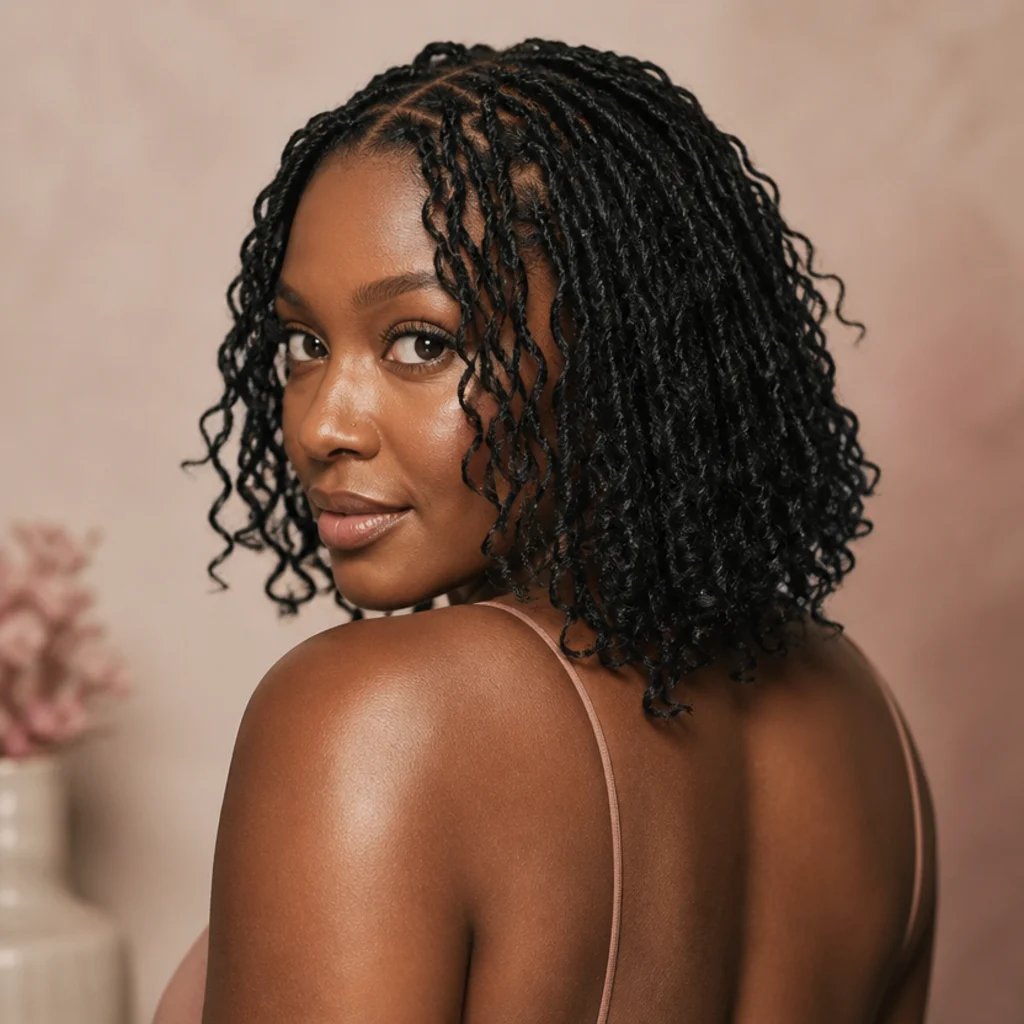
Quick Answer
- Best for: Anyone who wants a low-tension, textured protective style with a soft, distressed finish that looks relaxed while tucking your natural hair away for a full install cycle.
- Who might skip it: If you need a wash-and-go you can restyle daily with heat, or you have an active hairline that reacts to any added weight, a lighter twist or a wig may serve you better.
- Maintenance: Moderate. Light re-wrapping of loose or frizzed loops every two to three weeks, plus nightly satin protection and a diluted scalp refresh once or twice a week.
- Difficulty: Intermediate to advanced at home; the crochet-and-wrap rhythm takes practice, so most people book a stylist for an even, symmetrical set.
- Cost: Variable. Budget salons and independent braiders often sit at the lower end, while long, micro, or heavily customized color sets run toward the higher end; hair, length, and region all move the number.
- Wear time / longevity: Roughly four to six weeks looking crisp, with many wearers stretching to eight with diligent upkeep before takedown protects the hair underneath.
- Standout variation: Short butterfly locs in a chin-length bob, which reads modern, keeps weight off the neck, and installs fastest.
- How to ask your stylist: "I want distressed butterfly locs, [length] with a [medium/jumbo] diameter, airy loops, and [curly/tapered] ends, kept lightweight at the root."
In This Guide
- Short Butterfly Locs Bob
- Long Butterfly Locs
- Butterfly Faux Locs Foundation
- Butterfly Locs With Color Panels
- Red Butterfly Locs
- Honey Blonde Butterfly Locs
- Burgundy Butterfly Locs
- Ombre Butterfly Locs
- Shoulder-Length Butterfly Locs
- Waist-Length Butterfly Locs
- Jumbo Butterfly Locs
- Micro Butterfly Locs
- Half-Up Half-Down Butterfly Locs
- High Bun Butterfly Locs
- Side-Swept Butterfly Locs
- Butterfly Locs With Curly Ends
- Butterfly Locs With Beads and Cuffs
- Butterfly Locs Ponytail
- Butterfly Locs With Highlights
- Blue Butterfly Locs
- Short Butterfly Locs Bob With Bangs
- Butterfly Locs With Sleek Edges
- Chunky Distressed Butterfly Locs
- Two-Tone Butterfly Locs
- Butterfly Locs Wedding Updo
- Middle-Part Butterfly Locs
- Deep Side-Part Butterfly Locs
- Copper Butterfly Locs
- Butterfly Locs Half Crown
- Space Bun Butterfly Locs
Butterfly locs get their name from the airy, looped texture running along each strand — little pockets of loosened hair that give the style its soft, unfinished look. They sit between faux locs and goddess locs: less sealed than a smooth wrapped set, more romantic than a tight two-strand twist. Most stylists build them by crocheting or wrapping water-wave or wavy braiding hair around a small braided or twisted base, then loosening sections on purpose so the loops bloom. Because the technique leans on wrapping instead of heavy braided tension, a well-installed set feels light on the scalp, which explains a lot of its staying power over stiffer protective styles. The looped surface also hides regrowth well, so the look ages softly instead of growing out in an obvious line. What follows are 30 lengths, diameters, parts, colors, and updos matched to specific face shapes, hair densities, and occasions, whether you're after a work-friendly bob or waist-length color for a shoot. Read each entry for who it flatters and how to keep it fresh, then save the ones worth showing your stylist.
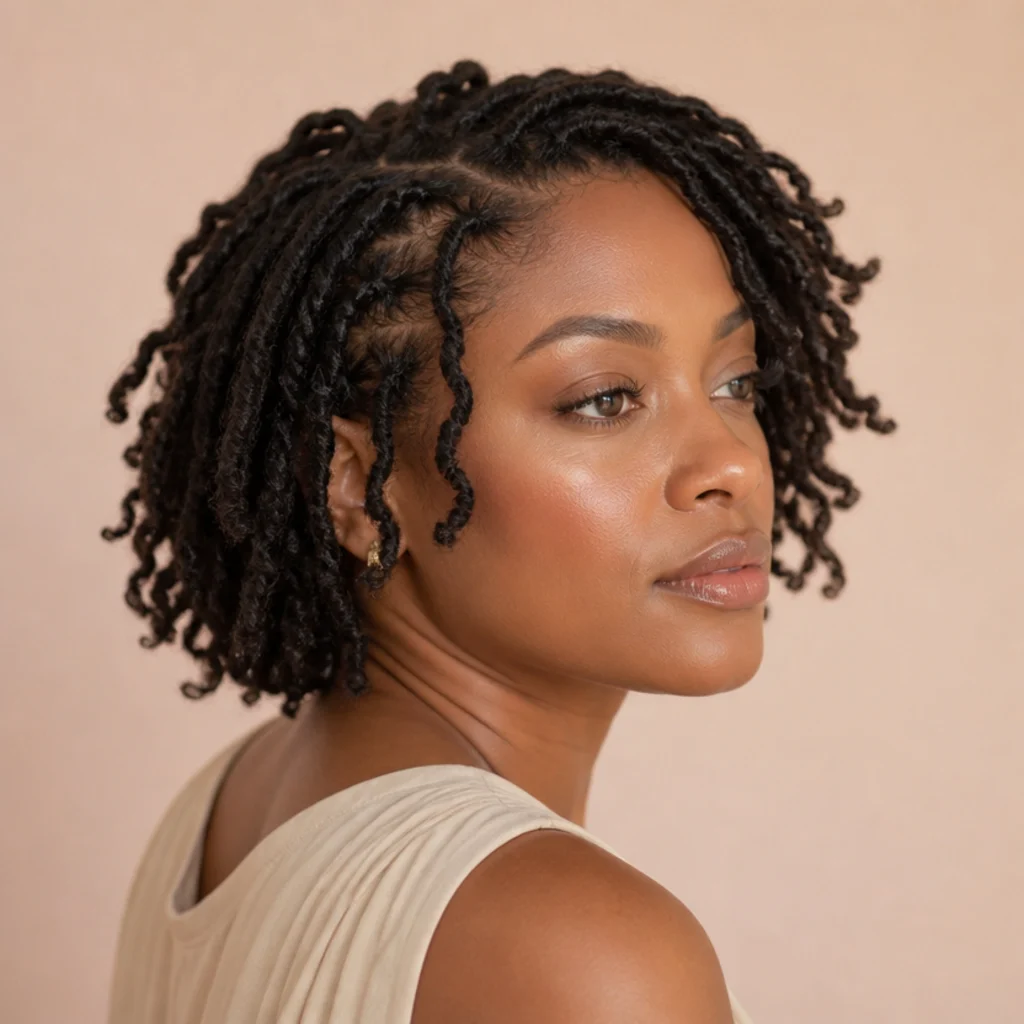
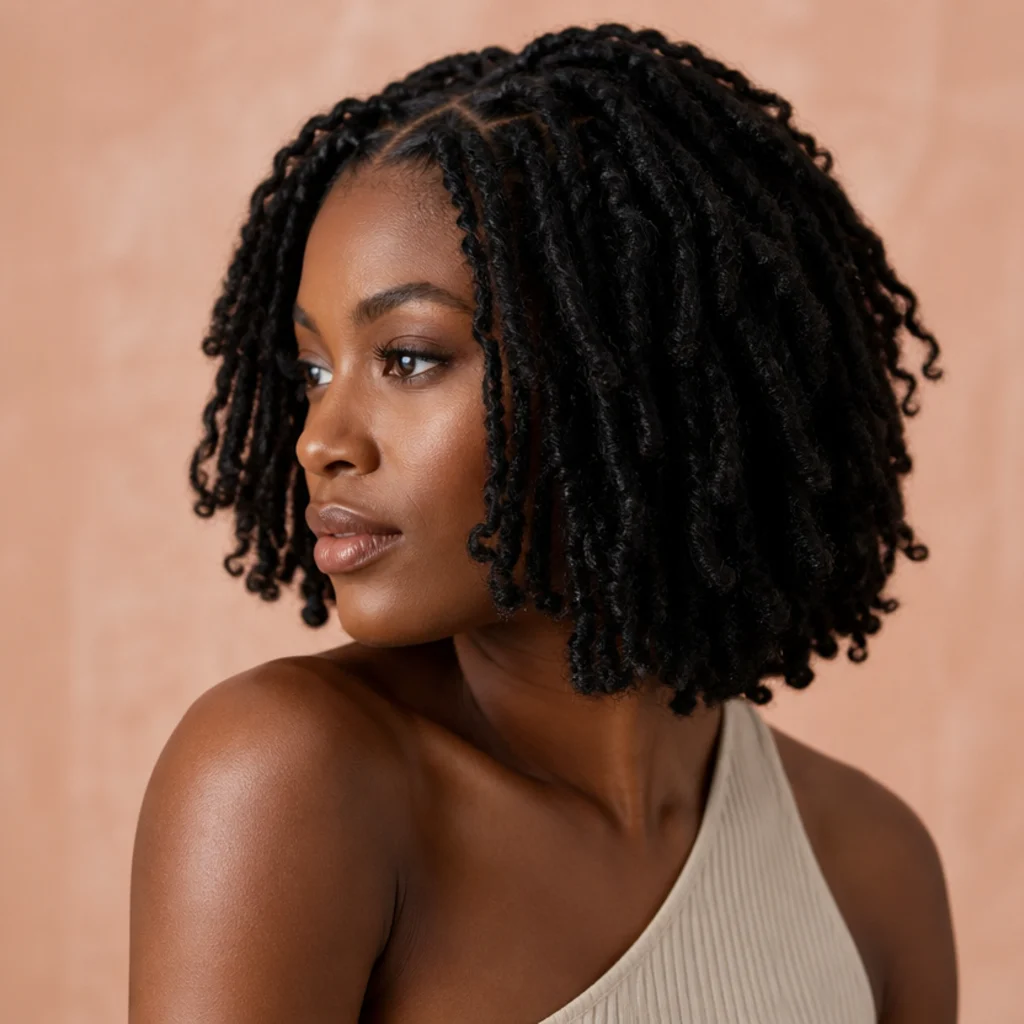
01Short Butterfly Locs Bob
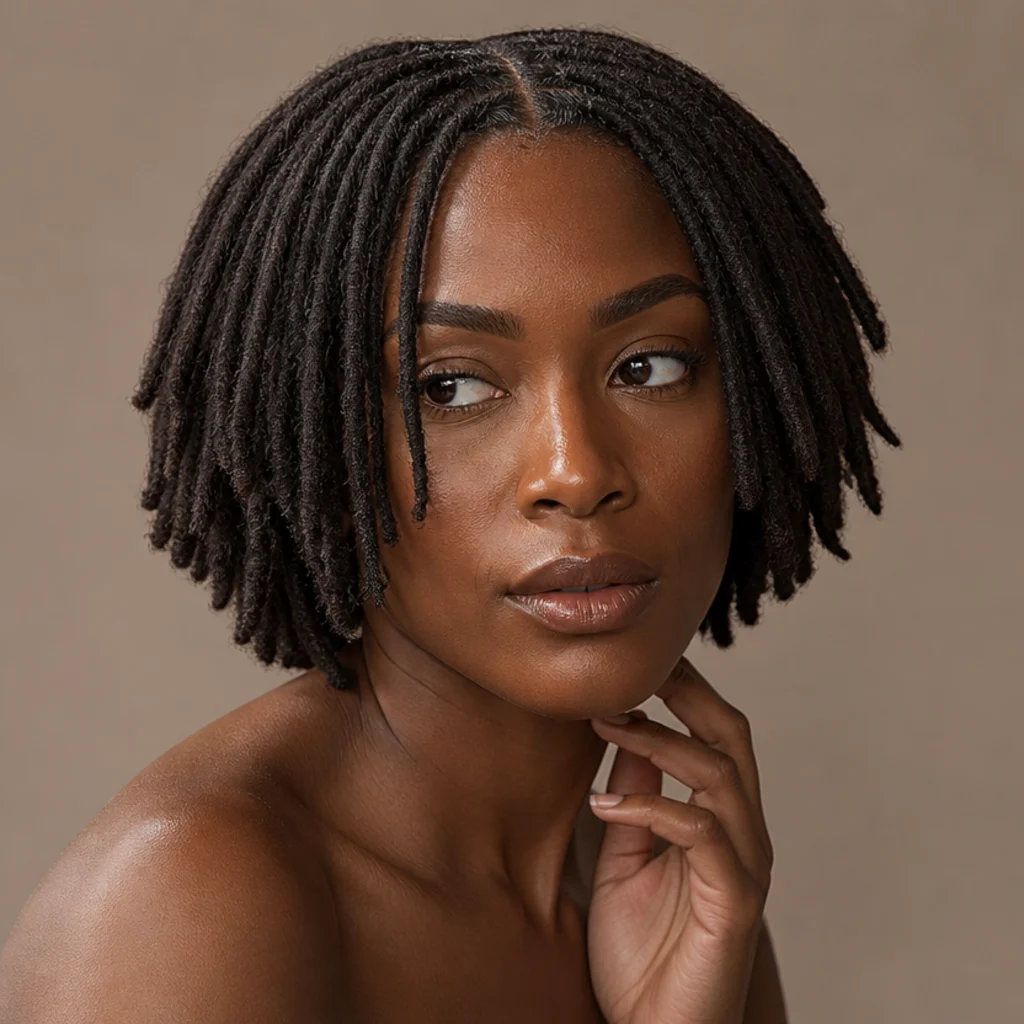
A chin- to collarbone-length bob is the most requested version of short butterfly locs, and the appeal is as practical as it is pretty. The cropped shape frames the face, keeps weight off the neck, and reads polished with almost no daily effort. Round and heart faces do especially well here, since the graduated ends draw the eye down toward the jaw and add definition where those shapes need it. On fine or low-density hair, a medium diameter keeps the bob from looking sparse; on thick hair, it installs fast because there's little length to wrap. Upkeep is the lightest of any length in this guide: a quick nightly scarf and a two- to three-week loop refresh. It's the smartest entry point for first-timers, too — a short set weighs little and comes down fast if the texture turns out not to be for you. Ask your stylist for a jaw-grazing bob with slightly stacked, tapered ends so the shape stays soft rather than blunt, and confirm the loops sit airy at the perimeter.
02Long Butterfly Locs
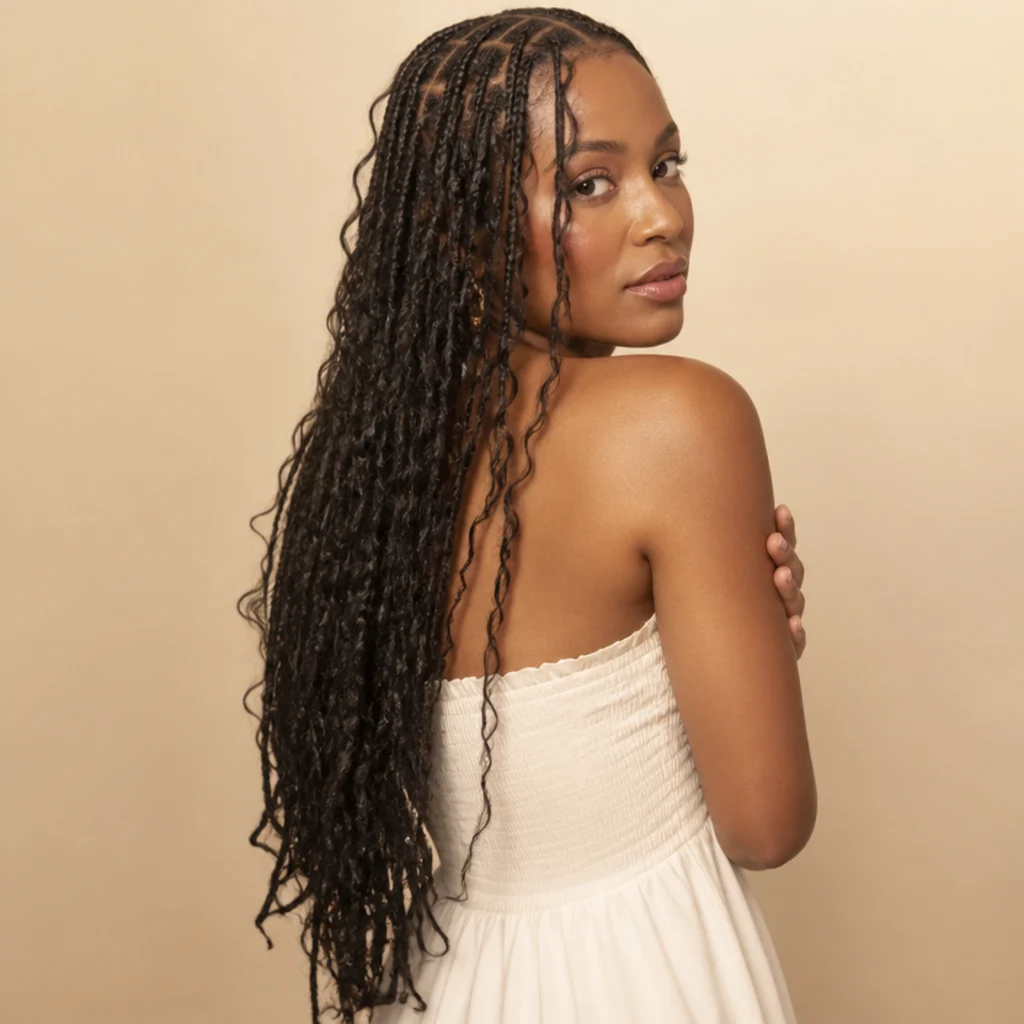
Long butterfly locs bring movement and unmistakable drama, falling anywhere from mid-back to the waist, and the added length is what lets the distressed loops show off. Taller frames and anyone chasing a statement wear it well, and it photographs beautifully since the texture catches light down the whole length. That drama has a cost: weight. A dense long set can tug at the hairline, so comfortable root tension is non-negotiable, and a medium (not jumbo) diameter keeps the overall load down. Expect a longer install and a higher price, since more braiding hair and more chair time go into it. Maintenance climbs too, with nightly wrapping of the lengths and loose-spot refreshes every couple of weeks. This length rewards people who actually enjoy the upkeep ritual, not just the look of it. Ask your stylist for medium-thickness locs and curly or tapered ends so the set stays light and graceful rather than heavy and blunt, and flag any pulling the moment you feel it during install.
03Butterfly Faux Locs Foundation
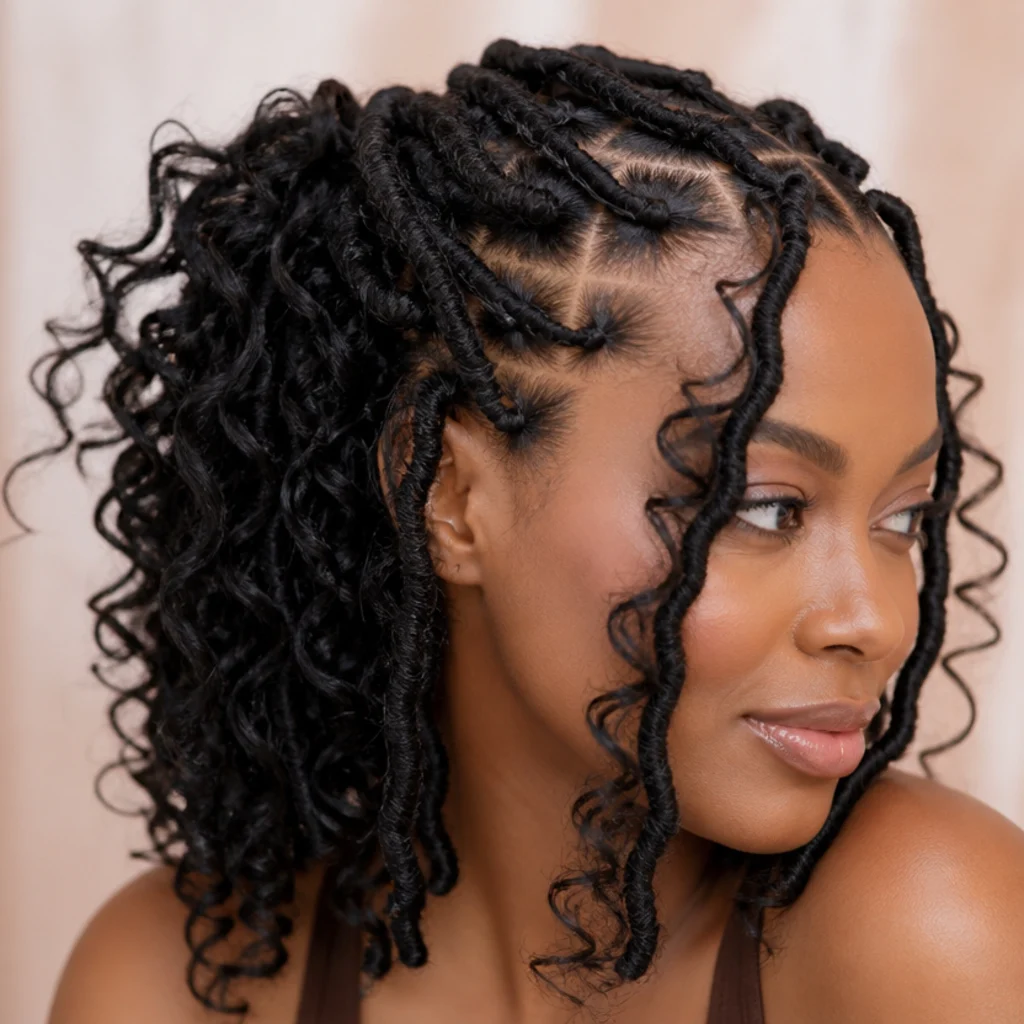
Butterfly faux locs are the base technique behind every look in this guide, so it helps to understand it before you brief a stylist. Unlike traditional locs that mat and form over months, these are built by wrapping water-wave braiding hair around a braided or twisted foundation, then pinching and loosening sections to create the signature loops. The result reads as a distressed, semi-freeform loc with zero permanent commitment, and it comes down in an afternoon instead of being cut. The base choice matters more than most people realize: a braid base grips extension hair firmly and lasts, while a twist base is gentler, unravels faster at takedown, but can loosen sooner. Difficulty is intermediate to advanced at home, since the wrapping rhythm and consistent loop spacing take real practice. Water-wave hair is the standard because its pre-set texture creates the loops naturally. Ask your stylist whether they crochet or hand-wrap, and whether they build on a braid or a twist — that choice shapes both the texture and how comfortably the style comes down.
04Butterfly Locs With Color Panels
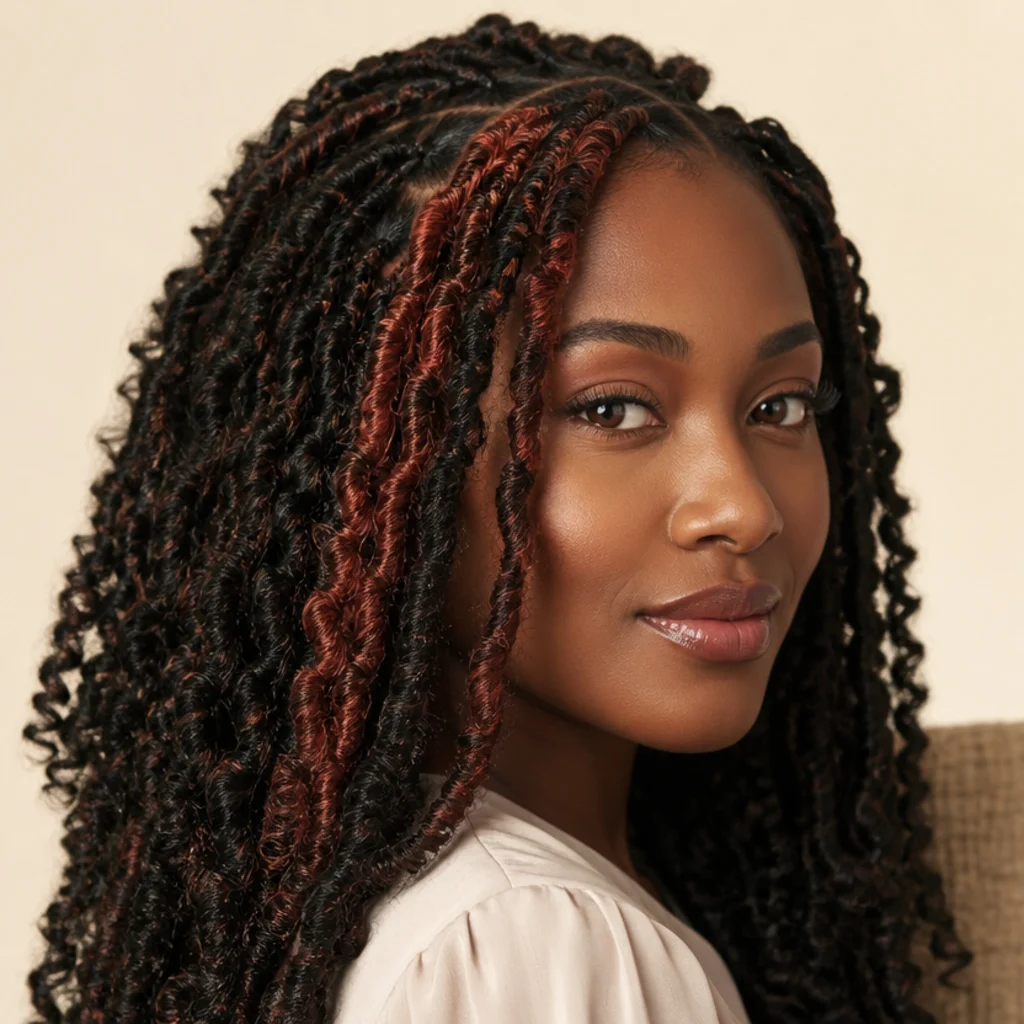
Color panels let you add personality without committing to an all-over dye. A handful of tinted locs cluster around the face or through one interior section, so the shade only peeks out when you move or tuck the surrounding hair. It's one of the lowest-risk ways to try a bold tone, since the color lives entirely in the extension hair and your own strands never touch a lightener. Placement sets the mood: a money-piece framing the face reads editorial and dressy, while panels hidden under the top layer give a subtle flash that's more office-friendly. Anyone testing a color commitment before going all in should start here, and maintenance matches a standard set. Bring a reference photo marking exactly where you want the panel to fall, and ask your stylist to cluster the tinted locs near a part or the hairline so they catch light instead of disappearing into the mass. Two or three related tones in the panel add more depth than a single flat block.
05Red Butterfly Locs
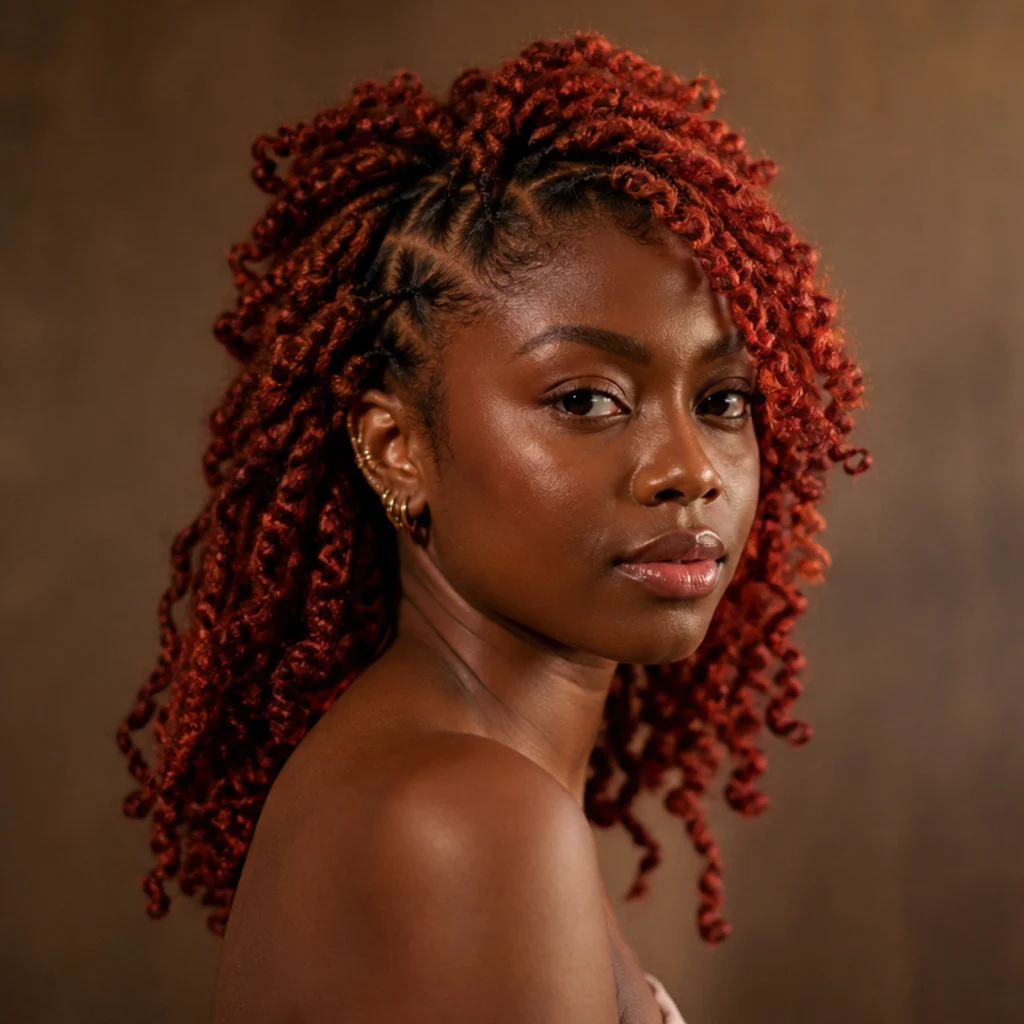
Red butterfly locs are a genuine standout: the warm, saturated tone plays beautifully against deep and medium skin, and it lends the distressed loops extra richness and dimension. You can dial the intensity from a soft auburn to a true fire red, depending on how much attention you want. Because the shade is pre-built into the extension hair, you skip the commitment, upkeep, and potential damage of lightening and dyeing your own hair. The look reads especially well in fall and winter and pairs naturally with warm makeup. Undertone decides the shade: cool skin wears a cherry or blue-red more comfortably, while warm skin glows in brick, rust, and copper-reds. Red braiding hair can also stain light collars and pillowcases when it's brand new, so rinse it before install if your stylist hasn't already. Ask for a red that suits your undertone, request a couple of slightly deeper locs woven in for dimension, and pair with gold jewelry to let the color sing.
Save this to Pinterest to compare your favorite colors side by side.
06Honey Blonde Butterfly Locs
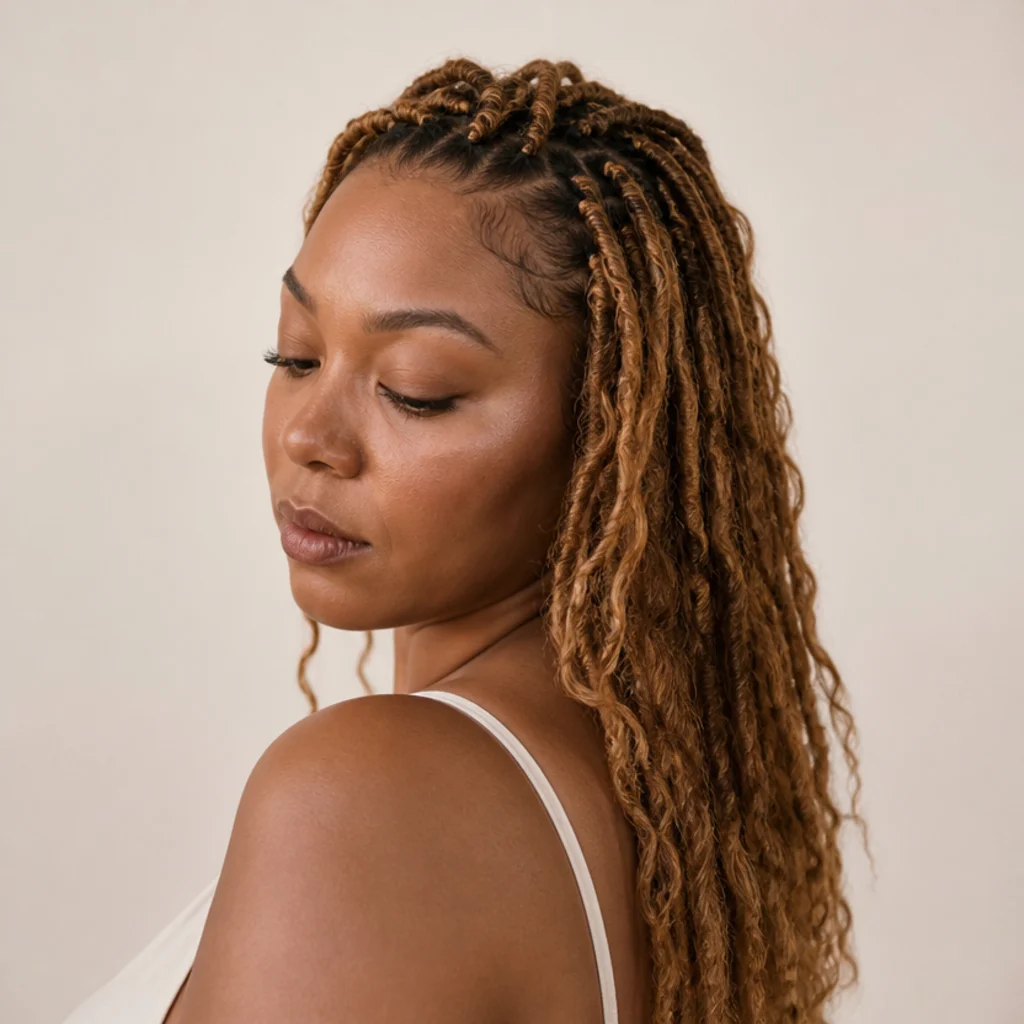
Honey blonde brings warmth and brightness that suits a wide range of complexions, landing most naturally on warm and neutral undertones. The soft golden shade keeps the distressed texture looking sun-touched rather than stark, so it moves easily from casual daytime to dressy evening. One practical note: pre-colored blonde braiding hair often feels drier and slightly coarser than darker fibers, so a lightweight oil or a diluted leave-in on the lengths keeps the loops supple and holds off the frizz that ages a light set fast. A shadow root does a lot of quiet work here, too. Anyone who wants lift without going platinum-cool should reach for this one. Ask your stylist for a honey or caramel blonde rather than an ashy or brassy tone, and request roots kept a shade or two deeper so the color looks natural, softens against your scalp, and grows out over the weeks without showing a hard line.
07Burgundy Butterfly Locs
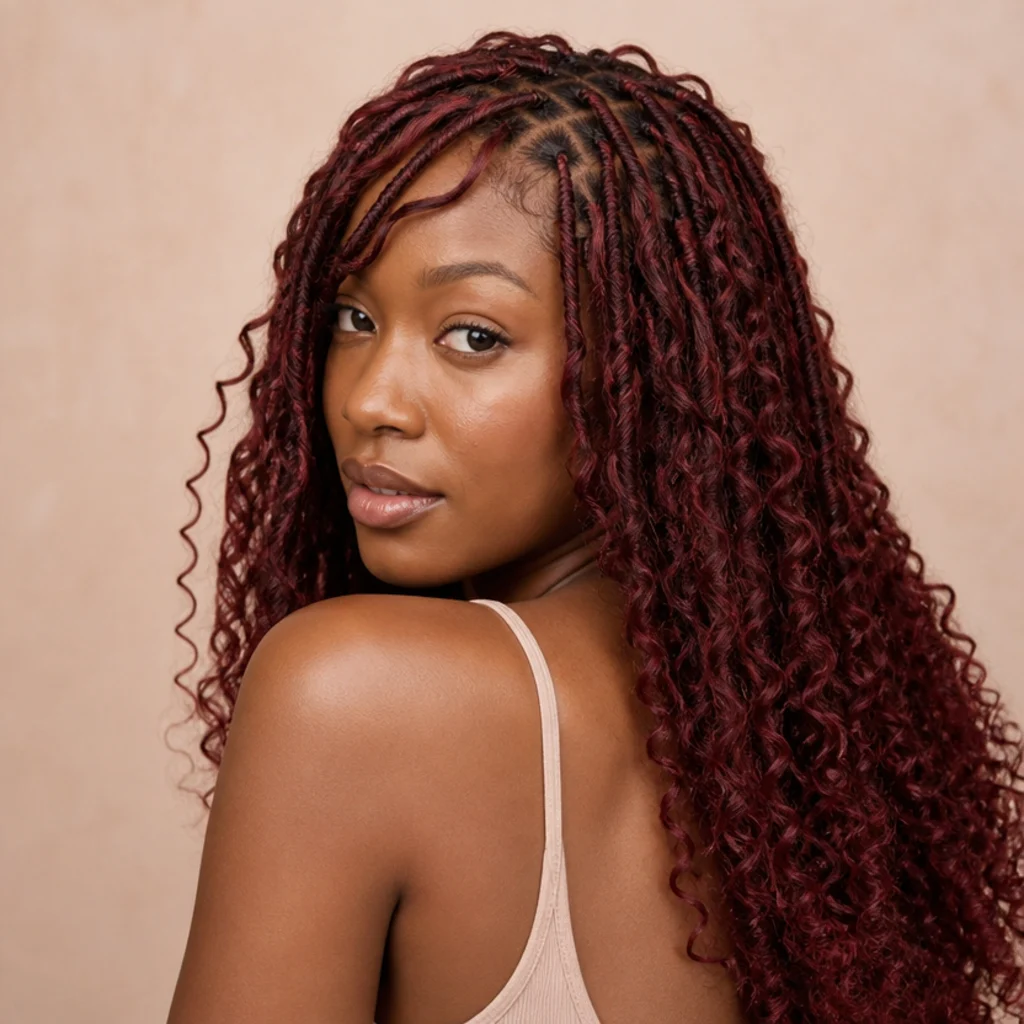
Burgundy sits between red and plum, a deep, wine-toned finish that feels luxe without shouting for attention. Cool and neutral undertones wear it especially well, and the darkness adds quiet dimension to the looped texture that comes alive in soft, low light. Because it reads darker and more muted than a bright red, burgundy is one of the more office-friendly color choices while still feeling deliberate rather than accidental. Upkeep matches a standard set, and the depth of the shade hides frizz better than lighter colors do, so the gap between refreshes stretches out. If you want color that signals sophistication over playfulness, this is the shade. Ask your stylist for a burgundy with tonal depth rather than a flat, single-note block, and request a few locs a shade lighter — a plum or a wine-red — mixed through so the color catches light and shows off the wrapped loops instead of reading as a solid dark mass from a distance.
08Ombre Butterfly Locs
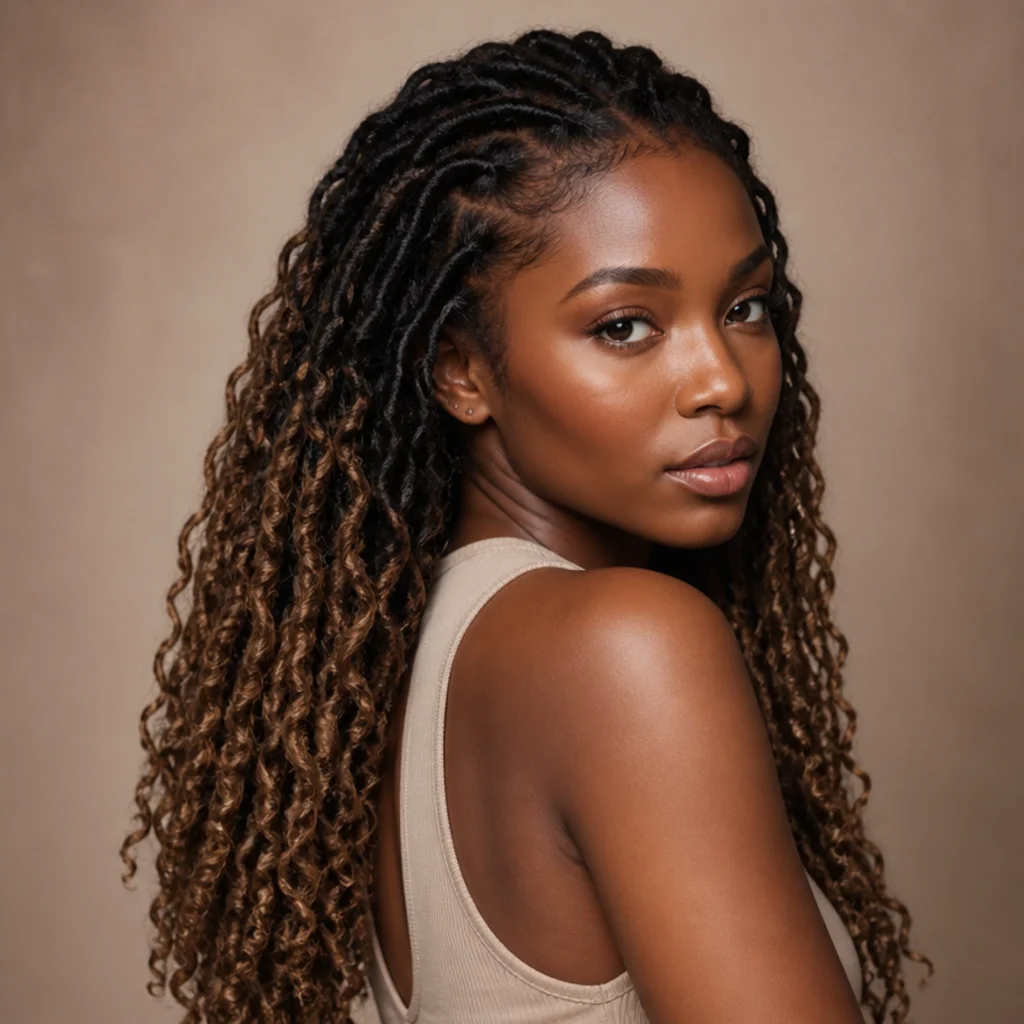
Ombre butterfly locs melt one shade at the root into another toward the ends, a gradual, lived-in fade that feels expensive and sun-grown. A dark-to-light blend, black into caramel say, keeps roots low-maintenance while putting the brightness exactly where it shows most, so regrowth just disappears into the dark base. It's a flattering option for anyone who wants dimension without committing to all-over color. The gradient needs room to transition, which is why ombre reads best on medium to waist lengths; on a short bob the fade compresses and can look like an abrupt two-tone rather than a smooth melt. Maintenance stays easy thanks to that forgiving dark root. Ask your stylist to keep the transition soft and diffused across several inches rather than a hard horizontal line, and pick end tones that suit your undertone — warm caramels and honeys for warm skin, cooler beiges and mushroom tones for cool skin. Water-wave hair in a pre-ombre pack saves install time.
09Shoulder-Length Butterfly Locs
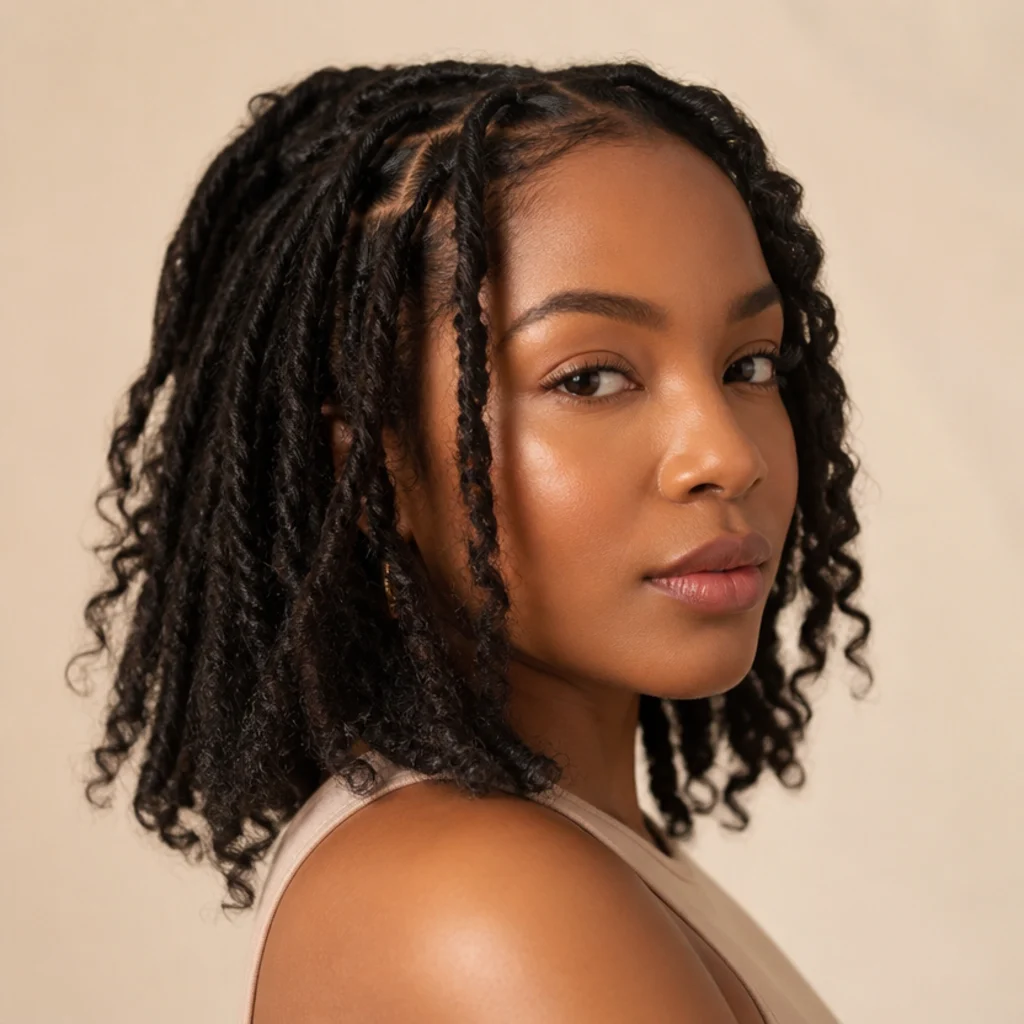
Shoulder-length is the practical sweet spot between a cropped bob and a full-length set: long enough to gather into a half-up style or a low pony, short enough to stay comfortable and quick to wrap at night. Nearly every face shape wears it well, and it's forgiving for anyone who found a waist-length set too heavy or high-maintenance to enjoy. At this length the distressed texture shows clearly without overwhelming a smaller frame, and the weight stays light enough that the hairline rarely complains. Maintenance is moderate and manageable even on a busy schedule. It handles ponytails, buns, half-styles, and loose wear equally well, which makes it the most versatile everyday choice on this list. Ask your stylist for locs that hit right at or just below the shoulder with soft, tapered or lightly curled ends so the shape stays airy rather than blunt, and request a medium diameter to keep the set full-looking without adding weight.
10Waist-Length Butterfly Locs
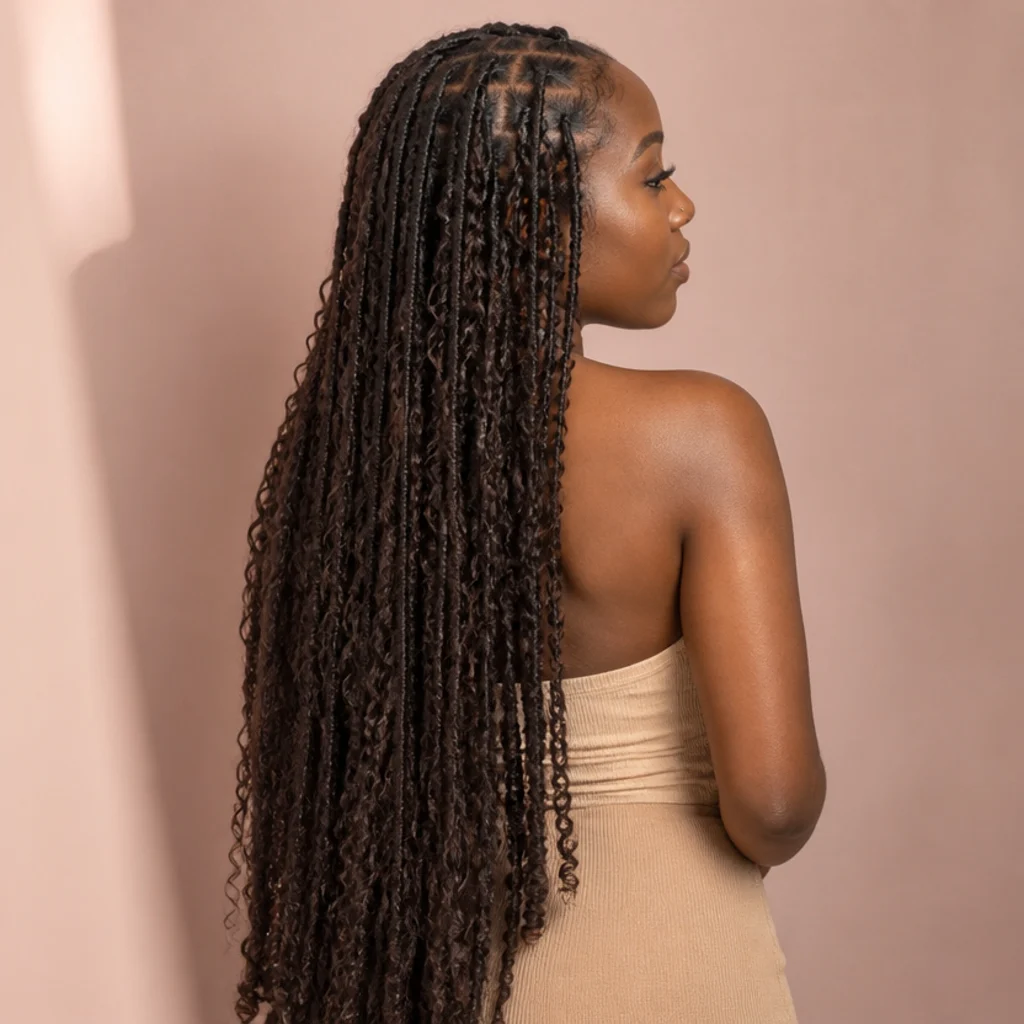
Waist-length butterfly locs are pure statement styling, made for weddings, shoots, milestone events, or anyone who just loves long hair and the way the distressed loops cascade. The length puts the texture on display and opens up nearly limitless updo and half-style options. It also demands the most from your install: this is the heaviest set here, so a skilled hand, comfortable root tension, and a lighter medium diameter are essential to protect your hairline. Expect the longest appointment and the highest cost, since the length eats braiding hair and hours. You'll need to wrap and protect the lengths nightly, and loose-spot refreshes come around every couple of weeks. This length is for people fully committed to the upkeep and comfortable managing a lot of hair. Ask your stylist about the total weight and a slightly thinner loc diameter before you commit, and request curly or tapered ends so the length stays graceful and moves rather than hanging bulky and dense against your back.
Save this to Pinterest and note which length suits your lifestyle.
11Jumbo Butterfly Locs
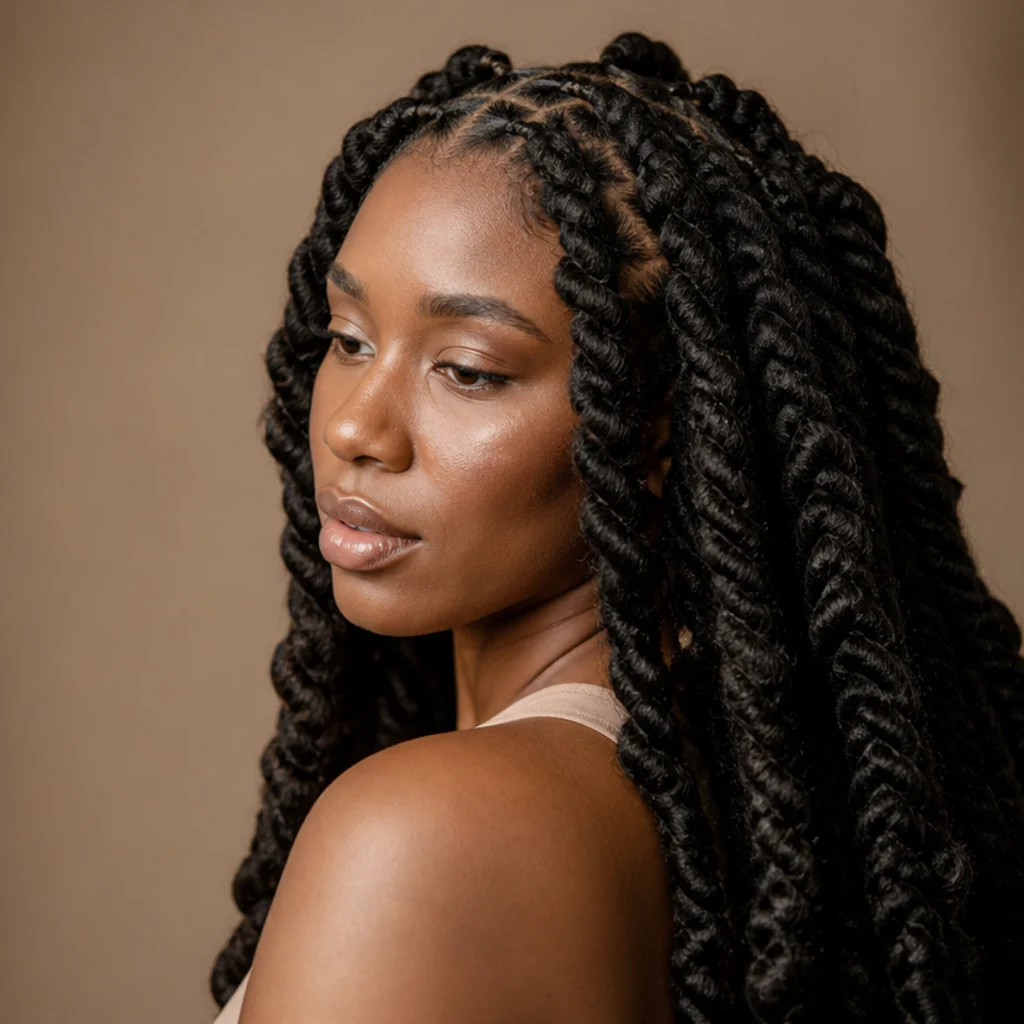
Jumbo butterfly locs use a thicker diameter, which means fewer individual locs, larger sections, and a dramatically faster install — often finishing in a fraction of the time a fine set takes. The chunky texture reads bold and modern, and because fewer parts are distributing the weight, a well-built jumbo set can feel lighter and less pinch-prone at the scalp than you'd expect. Anyone short on chair time, drawn to a relaxed statement texture, or working with thick natural hair that fills large sections easily should look here first. The trade-off is that big locs and big partings can expose the scalp, so distressing the loops generously is what keeps the look full rather than sparse and gappy. Ask your stylist for a jumbo size that still leaves clean, even partings so the scalp reads neat, and request heavily loosened loops for that lived-in finish. It's the go-to for a quick, high-impact refresh when you want maximum effect for minimum sitting.
12Micro Butterfly Locs
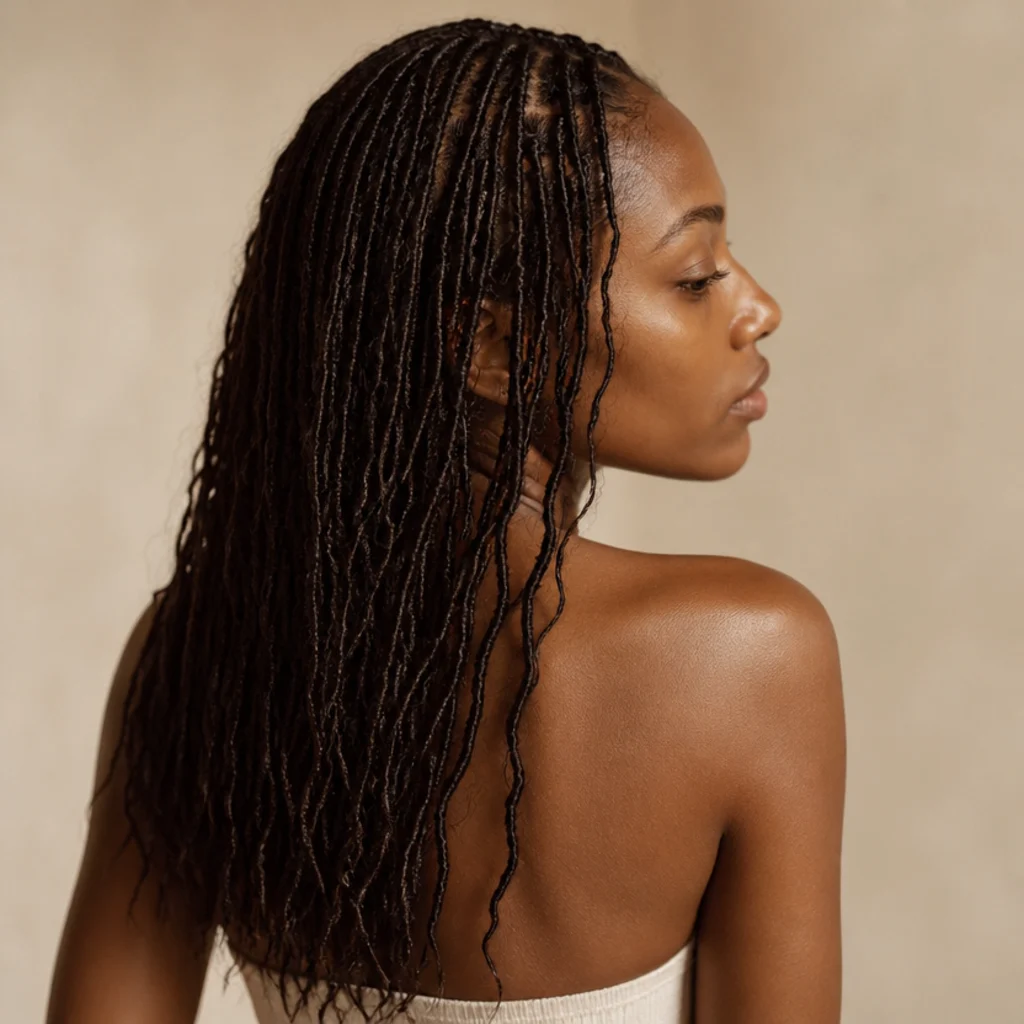
At the opposite end of the diameter scale, micro butterfly locs use a fine gauge to build a dense, detailed set of dozens — sometimes hundreds — of slim locs. The result is delicate and refined, with the looped texture reading almost like fine, closely spaced ripples that move with unusual fluidity. This one's for people who want a polished, intricate finish and don't mind the trade-offs: micro sets carry the longest install time and the highest cost on this list, since more locs mean more sectioning, more wrapping, more chair hours. The payoff is a set that drapes beautifully and pulls into the most intricate braided updos. Maintenance is standard per loc, but there are just more of them to wrap, so budget extra nightly time. It's gentle on the scalp when the sections stay small and even. Ask your stylist to confirm the finished install length before booking — fine locs can read shorter than expected — and be upfront about your time and budget so the long appointment runs smoothly.
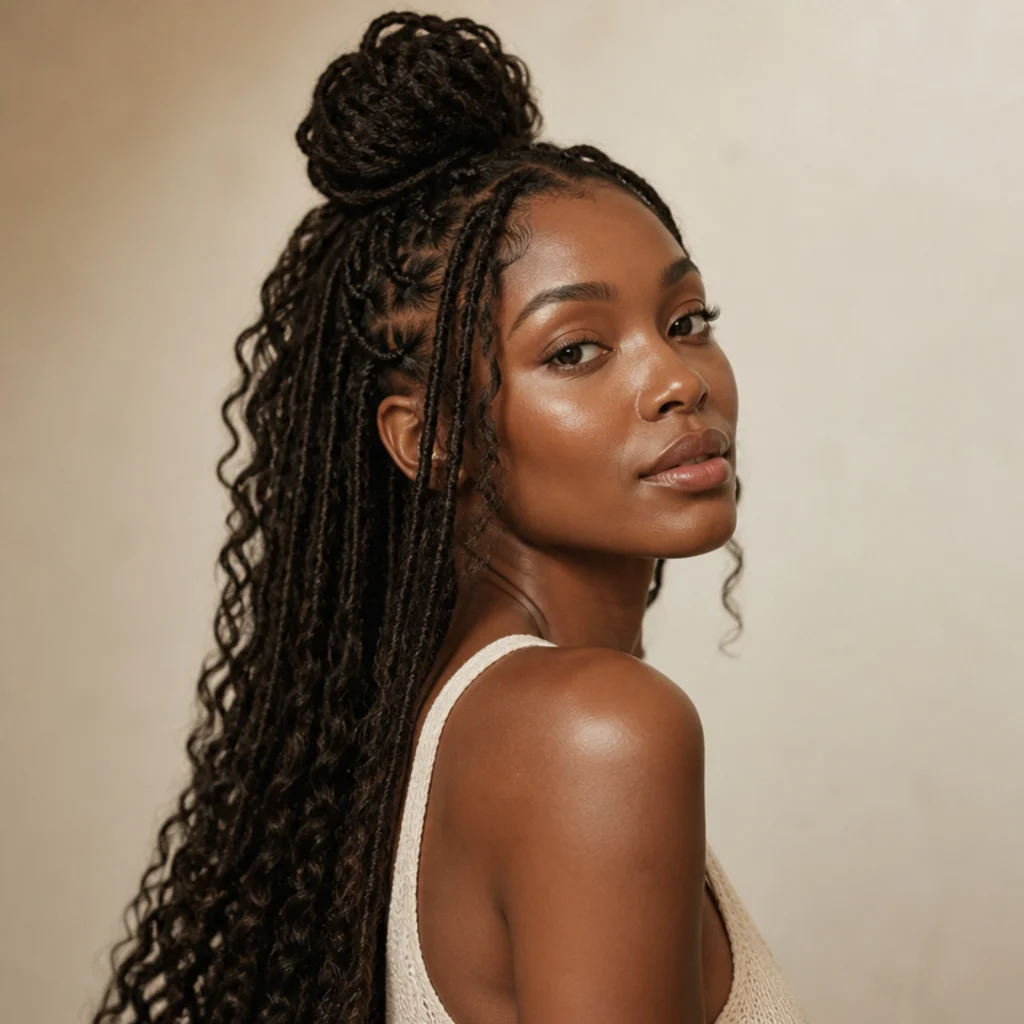
13Half-Up Half-Down Butterfly Locs
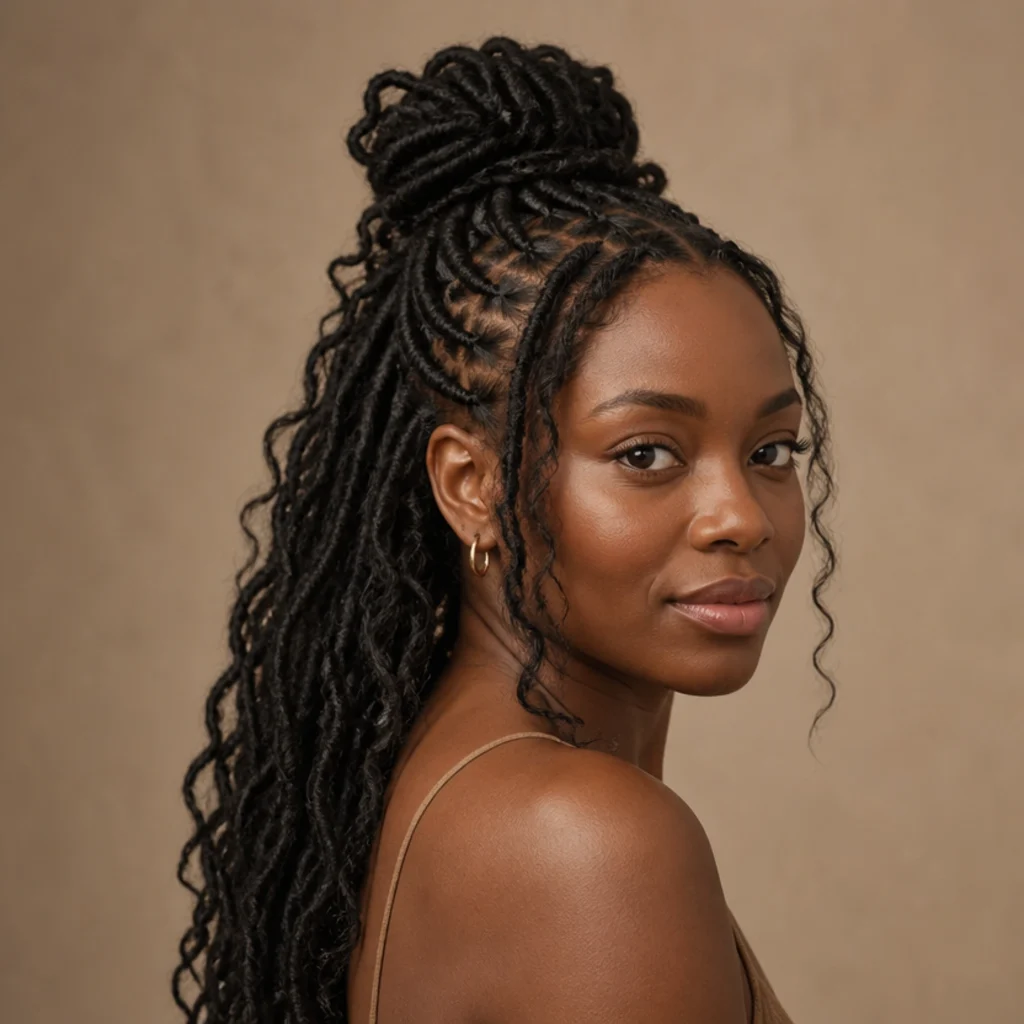
The half-up half-down pulls the top section into a bun or ponytail while the rest falls loose, mixing polish with ease in under a minute. It keeps hair off your face without committing to a full updo, and it suits most face shapes because you control exactly how much height and volume sit on top — lift for a rounder face, softness for a longer one. It works on shoulder-length sets and longer, anything with enough crown length to gather cleanly. Because butterfly locs are lightweight, the gathered top rarely strains the hairline, but keep the gather loose at the temples to protect your edges over weeks of repeat styling. This is the everyday go-to when you want to look pulled-together with zero planning. Add a silk scarf tied at the base, a couple of gold cuffs, or a claw clip at the gathered section for a finished touch, and vary the gather height day to day so you're not pulling the same spot every time.
14High Bun Butterfly Locs
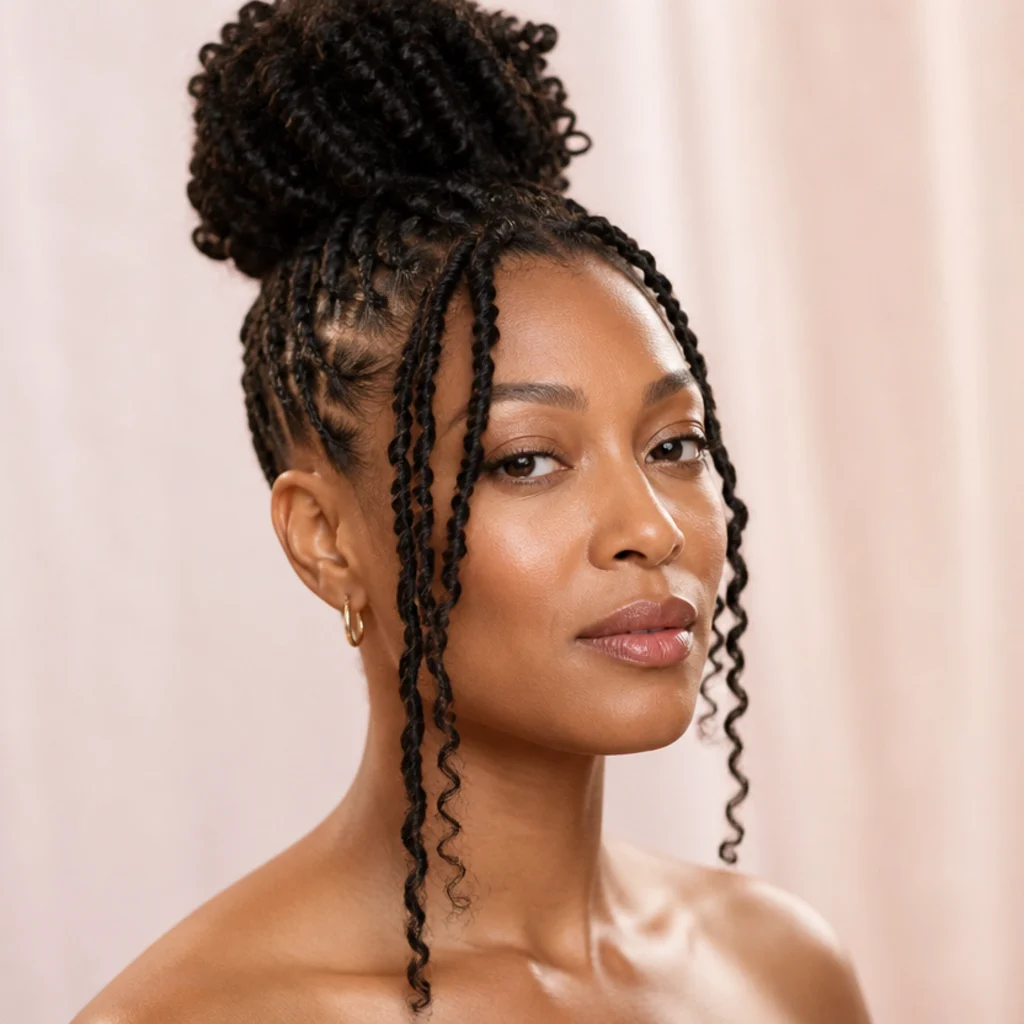
A high bun stacks the locs into a sculptural topknot that puts the texture on full display and lifts the whole look, elongating the neck and reading polished or sporty depending on how tightly you wrap it. It's the answer for warm weather, workouts, and busy days when you want everything up and off your neck. Butterfly locs are light enough that a full bun usually sits comfortably without the dragging weight a heavy braided style would create. It works best on medium to long sets that give you enough length to wrap a full, rounded shape rather than a stubby knot. Guard your edges here: gather gently, choose a fabric-covered or spiral tie over a tight elastic, and never wrap so tight it strains the hairline, since a high anchor point concentrates tension. Ask your stylist to show you how to build a secure, balanced bun at home, and leave a few face-framing locs loose at the temples to soften the silhouette.
15Side-Swept Butterfly Locs
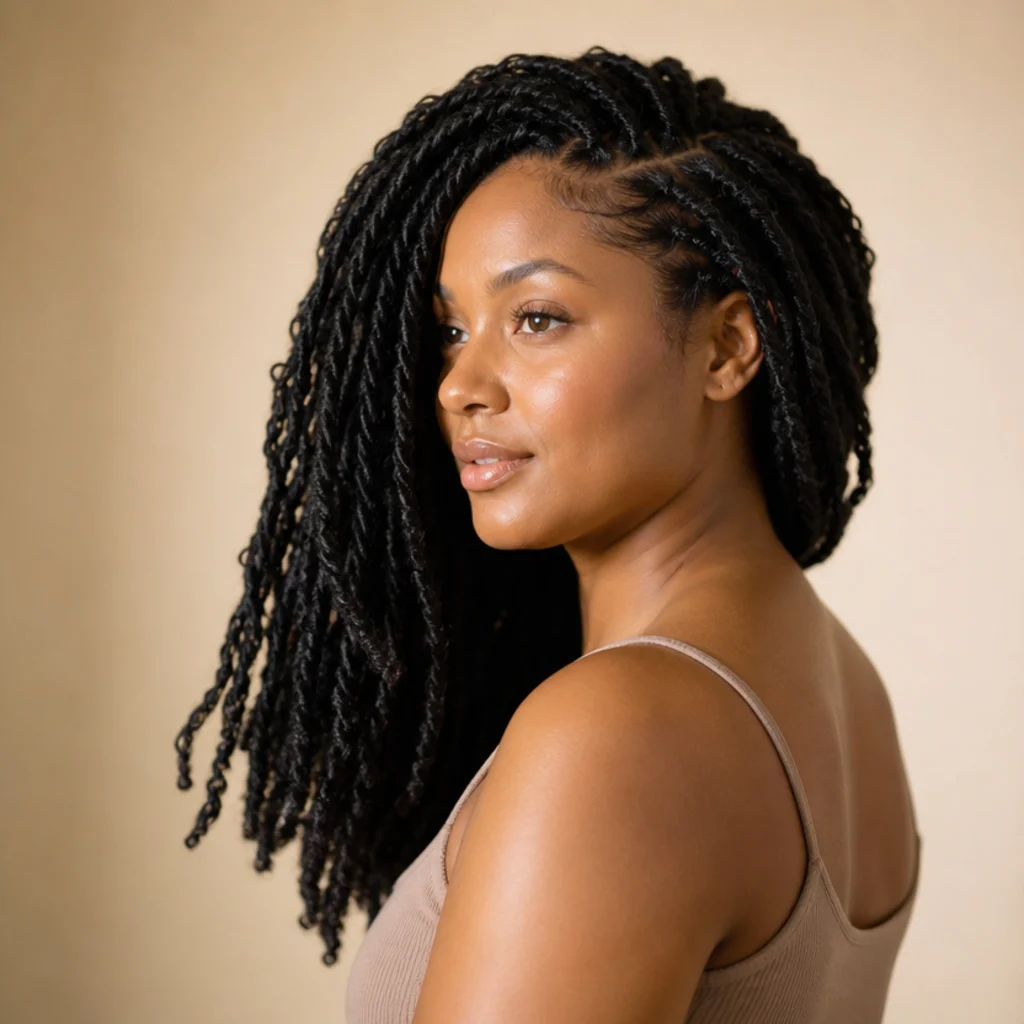
Sweeping all the length over one shoulder is the simplest styling trick on this list, and it reads elegant instantly — hence its status as a red-carpet and event staple. The asymmetry flatters round and square faces by breaking up their natural symmetry, and it puts the distressed texture on full display down one visible side while baring the neck and collarbone on the other. No special install is required beyond a part that supports the direction, so a deep side part lets the locs fall and stay swept naturally rather than fighting to slide back. Medium and long lengths show it off best, since the drape needs room to move. For an event, pin the shorter opposite side discreetly behind the ear with a couple of matching bobby pins so the sweep holds through the night. It's the easiest way to dress up an everyday set for a dinner, wedding, or photo without adding color, length, or a new install.
Save this to Pinterest to build your styling shortlist.
16Butterfly Locs With Curly Ends
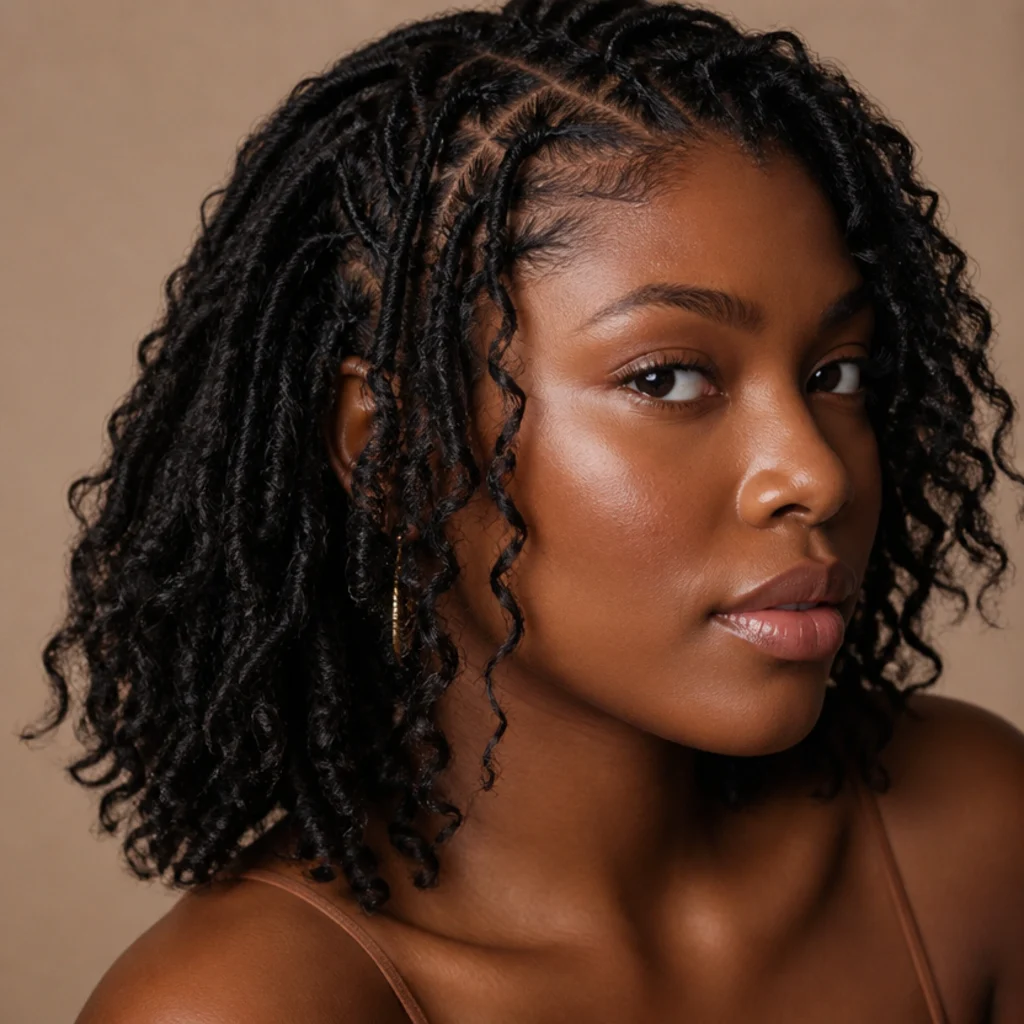
Leaving the last few inches curly rather than sealed keeps the bottom of each loc soft, springy, and romantic, giving the whole set an undone, goddess-adjacent finish. The curl breaks up the vertical line of the length and stops longer sets from looking heavy or bluntly cut at the bottom. Anyone who loves visible texture and movement should ask for this, and it pairs especially well with ombre, honey, and copper tones, since the coils catch and scatter light where the color is brightest. Maintenance is light but not zero: the curls flatten and frizz over time and want an occasional refresh with a spray of water or a dime of lightweight mousse scrunched in, then air-dried. Skip heavy oils on the ends, which weigh the curl down. Ask your stylist to leave two to three inches unwrapped and to confirm whether the curl pattern is pre-set into the water-wave hair or something you'll need to define and maintain yourself at home.
17Butterfly Locs With Beads and Cuffs
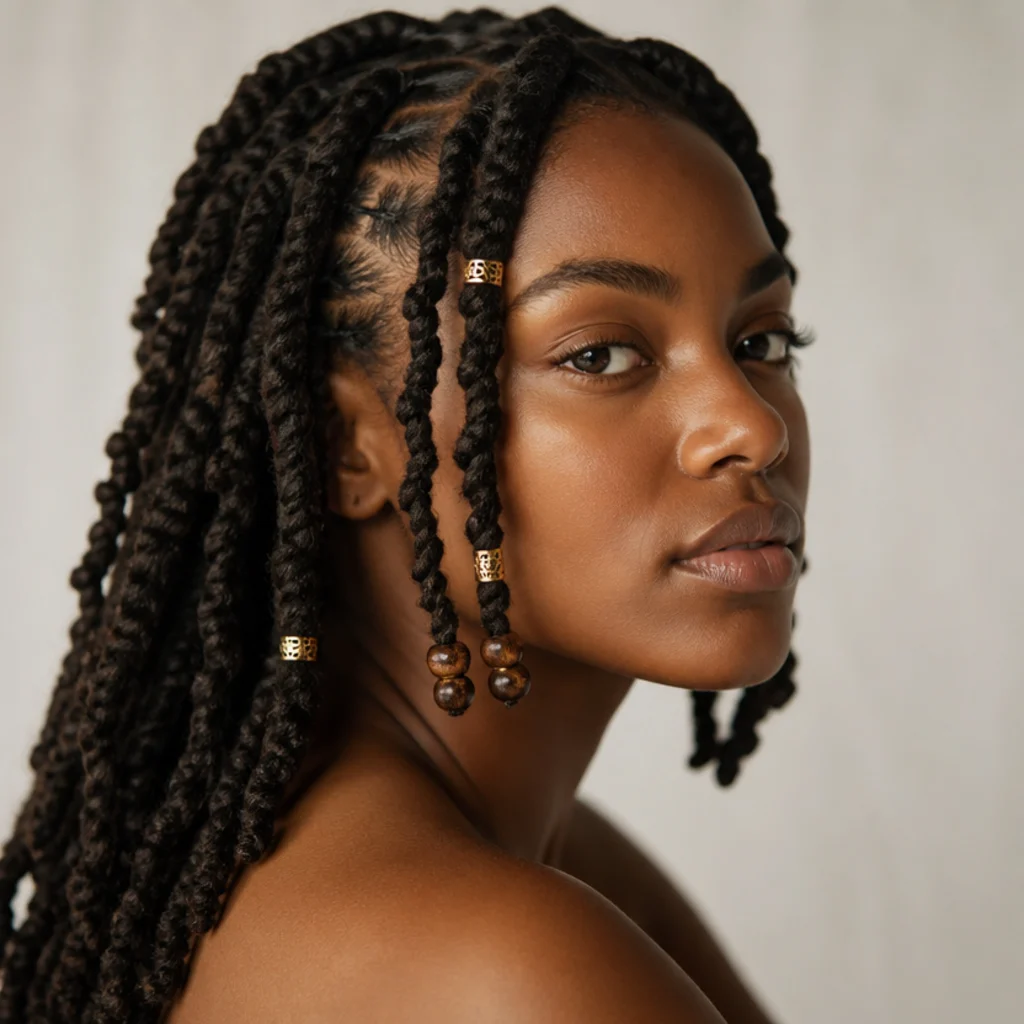
Threading beads, metal cuffs, or shells onto a few locs adds instant personality and nods to a long tradition of adornment across the diaspora. The material sets the mood: gold and brass cuffs read luxe and modern, wooden beads feel earthy and bohemian, colorful glass or acrylic beads bring a playful, festival-ready edge. Placement is the whole game — cluster a few near the face for a framing effect, or scatter them lightly and asymmetrically for balance without clutter. This is the move for anyone who wants to personalize a plain set without a new install or color. Keep the count sensible, especially near the hairline, since even small metal pieces add up to real weight that can tug delicate edges. Ask your stylist to secure cuffs snugly enough to stay put but not so tight they crimp or dent the loc, and take the heavier pieces off before bed so they don't pull, snag your scarf, or press into your scalp while you sleep.
18Butterfly Locs Ponytail
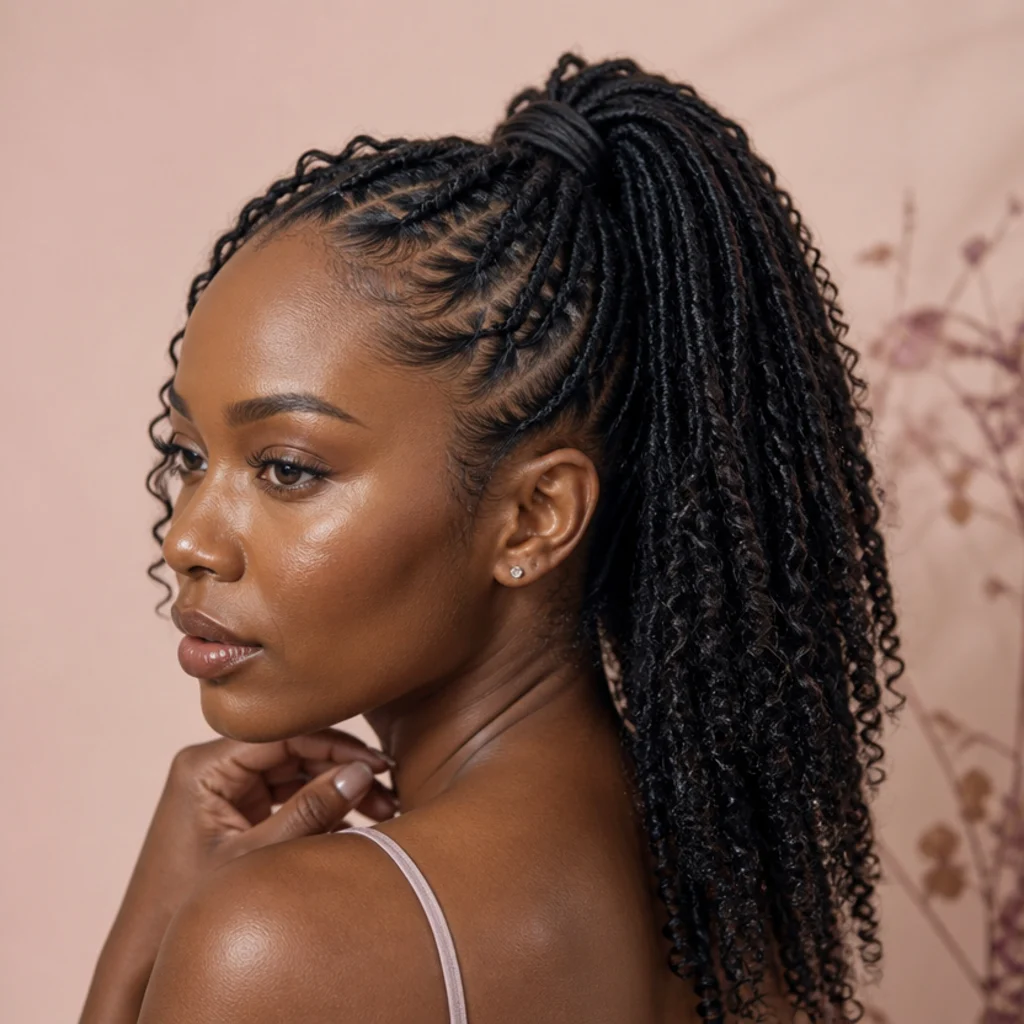
Gathering the full set into a low or high ponytail is one of the fastest ways to change the whole style, taking it from loose and casual to pulled-together in seconds. A sleek, low gathered pony reads polished and office-appropriate, while a high, voluminous one feels sporty and youthful. Butterfly locs hold a ponytail well thanks to their light weight, though a very long set creates a heavier tail that concentrates pull at whatever spot you anchor it, so mind the tension and don't make a high pony your daily default. It works on shoulder-length and longer. For a clean finish, wrap one loc around the base and tuck the end to hide the tie entirely. Ask your stylist for tips on securing a pony without stressing your edges (a spiral or fabric tie helps), and alternate high, mid, and low placement day to day so any repeated tension spreads across the hairline instead of settling on one point.
19Butterfly Locs With Highlights
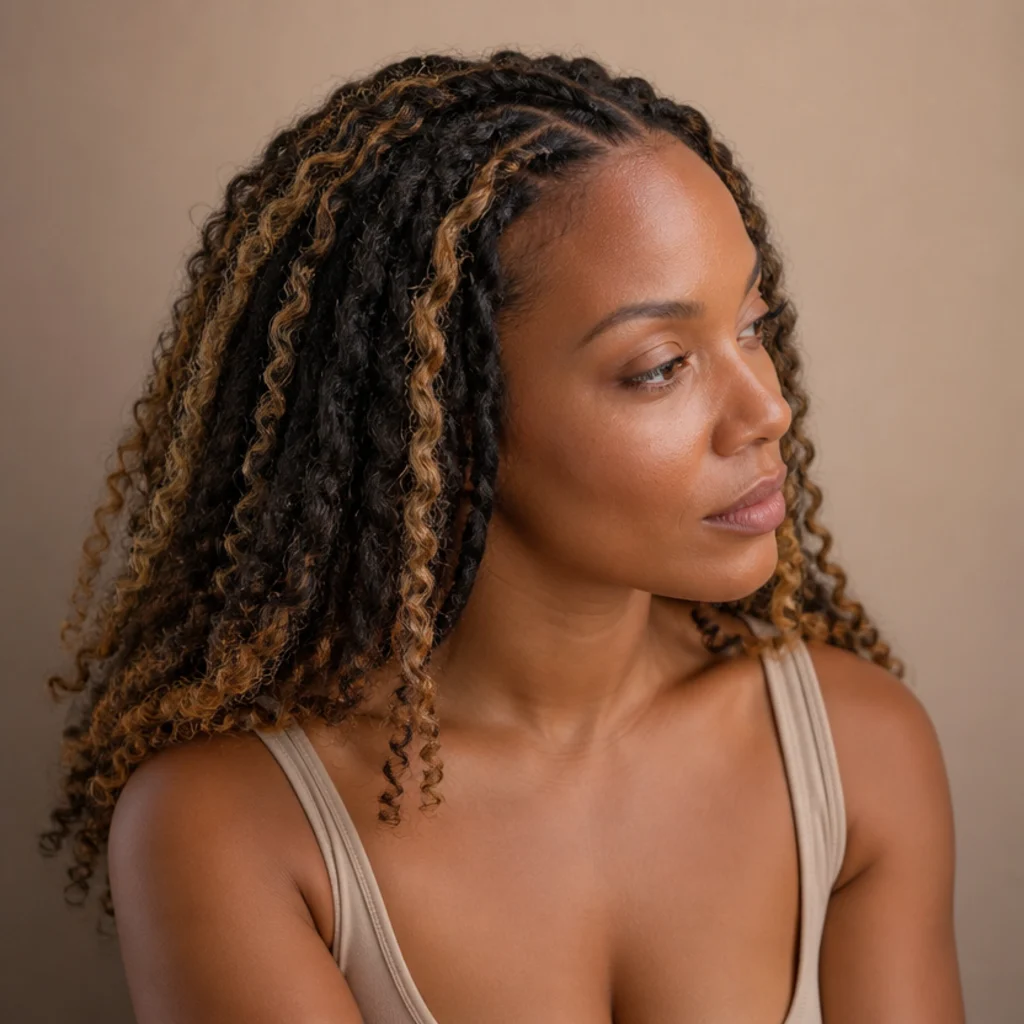
Highlights weave a lighter shade through a base color to build depth and movement, a softer, lower-commitment alternative to all-over dye. A caramel highlight threaded through dark brown, for instance, adds warmth and dimension that makes the looped texture pop and reads as natural sun-lightening rather than an obvious color job. Anyone who wants subtle brightness without a dramatic change should ask for this, and it grows out gracefully since the base stays close to your natural tone with no visible regrowth line. Maintenance is standard. Distribution is what separates a professional-looking highlight from a stripey one, so ask your stylist to scatter the highlighted locs evenly across the whole head with a slightly denser cluster near the face where they frame your features. Choose a highlight shade only one to two levels lighter than your base for a soft, sun-kissed effect; jumping four or more levels reads as a hard contrast that fights the lived-in softness butterfly locs are known for.
20Blue Butterfly Locs
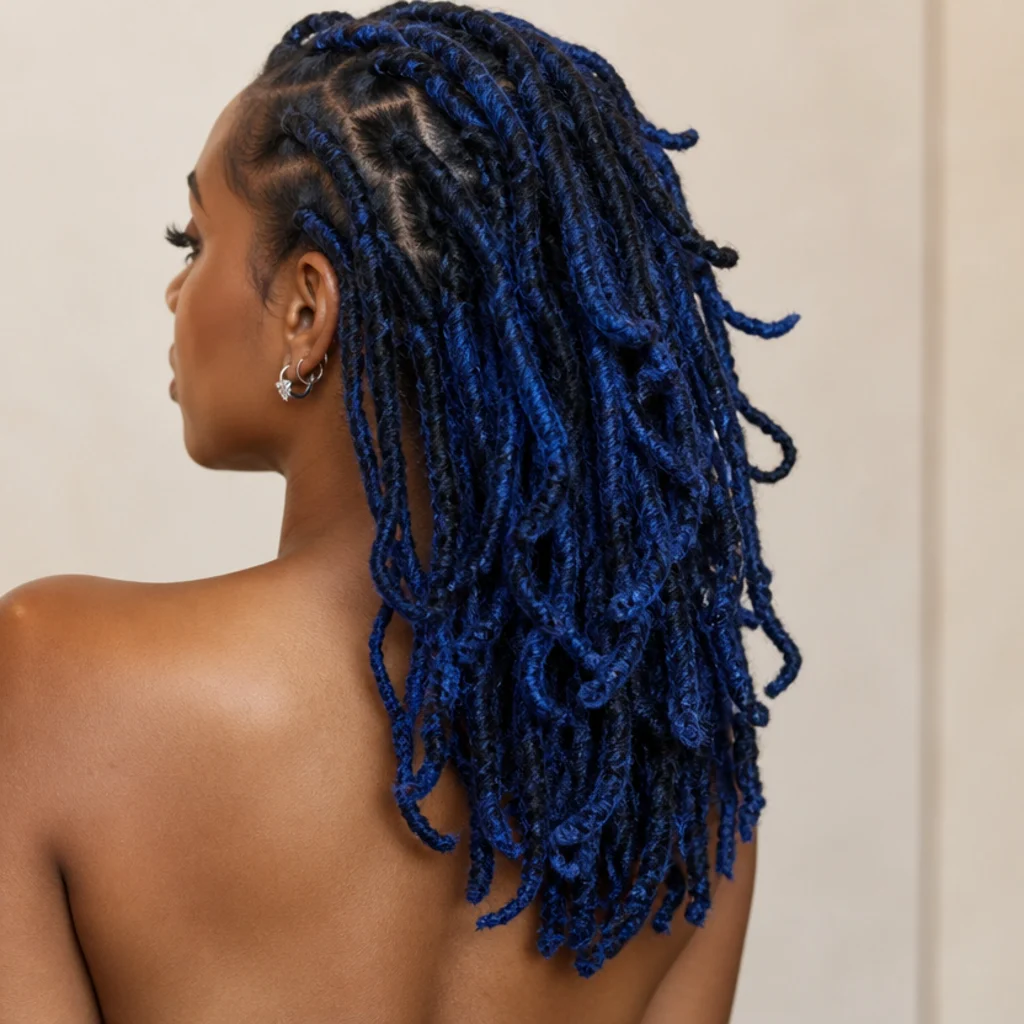
Blue is a high-impact color that spans an enormous range, from a nearly-black navy to an electric cobalt, and it stands out dramatically against the distressed texture because it's a shade you rarely see grown from the scalp. Darker blues read moody, editorial, and surprisingly wearable, while brighter cobalts and electric tones feel expressive and festival-ready. Because the color is pre-set in the extension hair, you get a striking result with zero lightening or scalp risk. This one's for confident dressers and anyone ready to be noticed. One honest caveat: vivid blue braiding hair, like most fashion colors, can bleed when it first gets wet, so rinse it before install and be cautious with light clothing on humid days early on. Ask your stylist to blend two or three related blue tones — say midnight, royal, and a hint of cobalt — for real dimension rather than a single flat shade, and pair the finished set with silver or gunmetal jewelry to keep the cool tone crisp and intentional.
Save this to Pinterest and pin your boldest color picks.
21Short Butterfly Locs Bob With Bangs
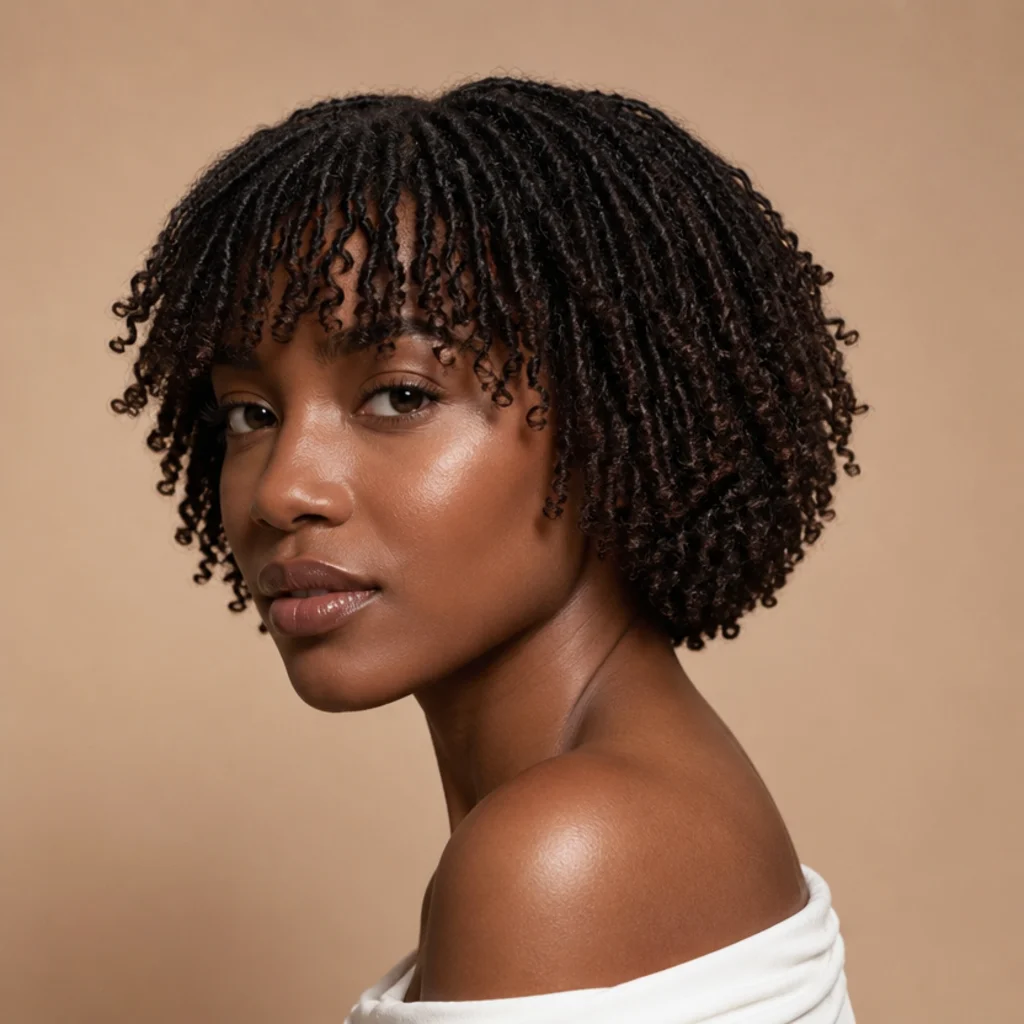
Adding a fringe to a short butterfly locs bob frames the face and gives the whole look a fresh, editorial edge a plain bob can't match. The bang can be a full, blunt brow-grazing fringe for a graphic statement or a softer, parted curtain piece for something more forgiving and low-commitment. Longer and oval face shapes benefit most, since a fringe visually shortens the face and fills the forehead to balance the proportions; if your face is rounder, a softer side-swept fringe avoids widening it. Upkeep stays low overall thanks to the cropped length, though the bang itself needs occasional nudging to sit right and can loosen faster than the rest. Make sure your stylist builds the fringe from a dedicated section of locs rather than cutting into your own natural hair, and agree on the exact finished length so it clears your eyes, doesn't itch, and stays comfortable for the full install.
22Butterfly Locs With Sleek Edges
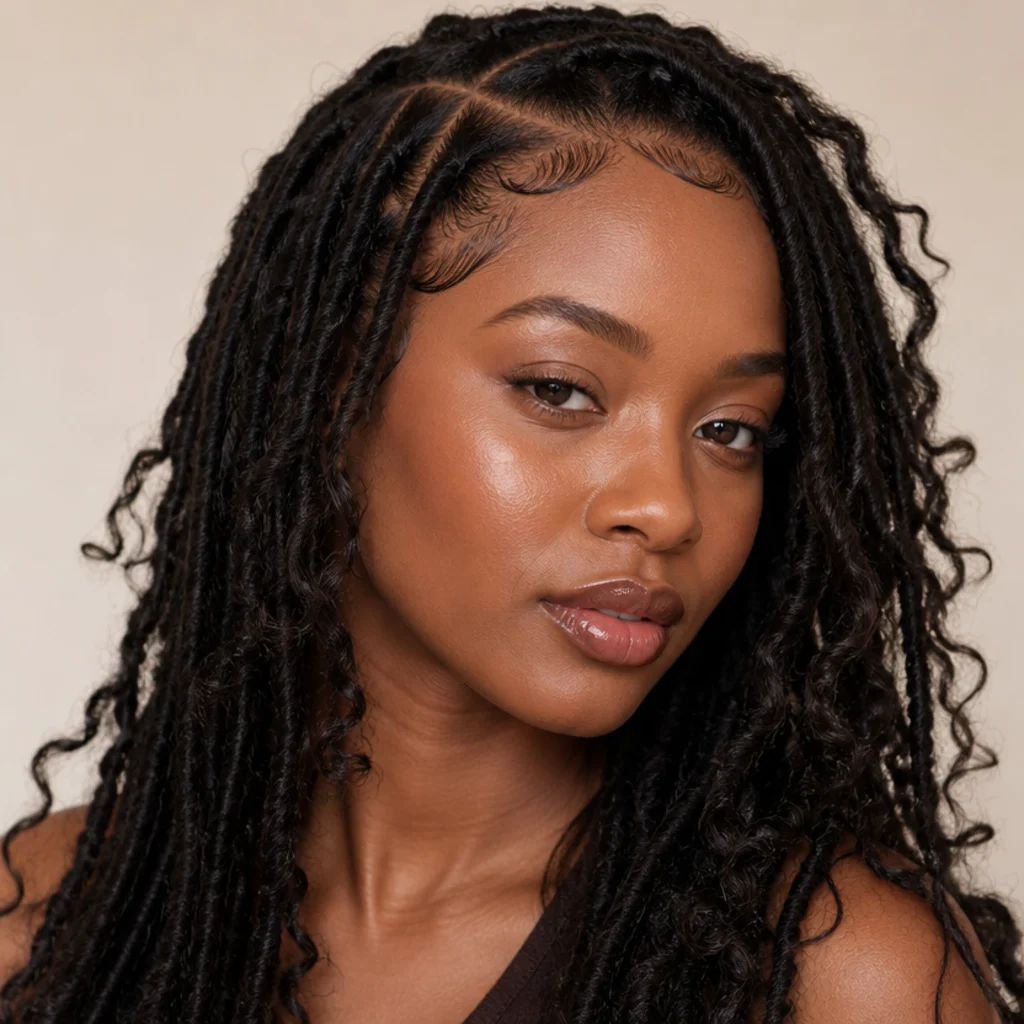
Laying and defining your edges gives a distressed set a crisp, finished contrast that reads polished instantly. The interplay is what makes it work: soft, loosened loops against smooth, sculpted baby hair create a high-low balance that photographs beautifully for weddings, shoots, and events. Since this is a styling choice rather than an install technique, it layers over any length, diameter, or color. The catch is that your natural edges are the most fragile hair you have, and they sit under an added-weight style for weeks, so protect them: use a gentle, non-flaking edge control, a soft-bristle edge brush, and lay them only when you actually need the polished look rather than every day. Over-brushing and heavy holds are the fastest route to thinning. Ask your stylist to show you a simple, repeatable edge pattern you can recreate at home with a light-hold gel, and to keep the install tension off your hairline so the natural edges stay healthy underneath the whole time.
23Chunky Distressed Butterfly Locs
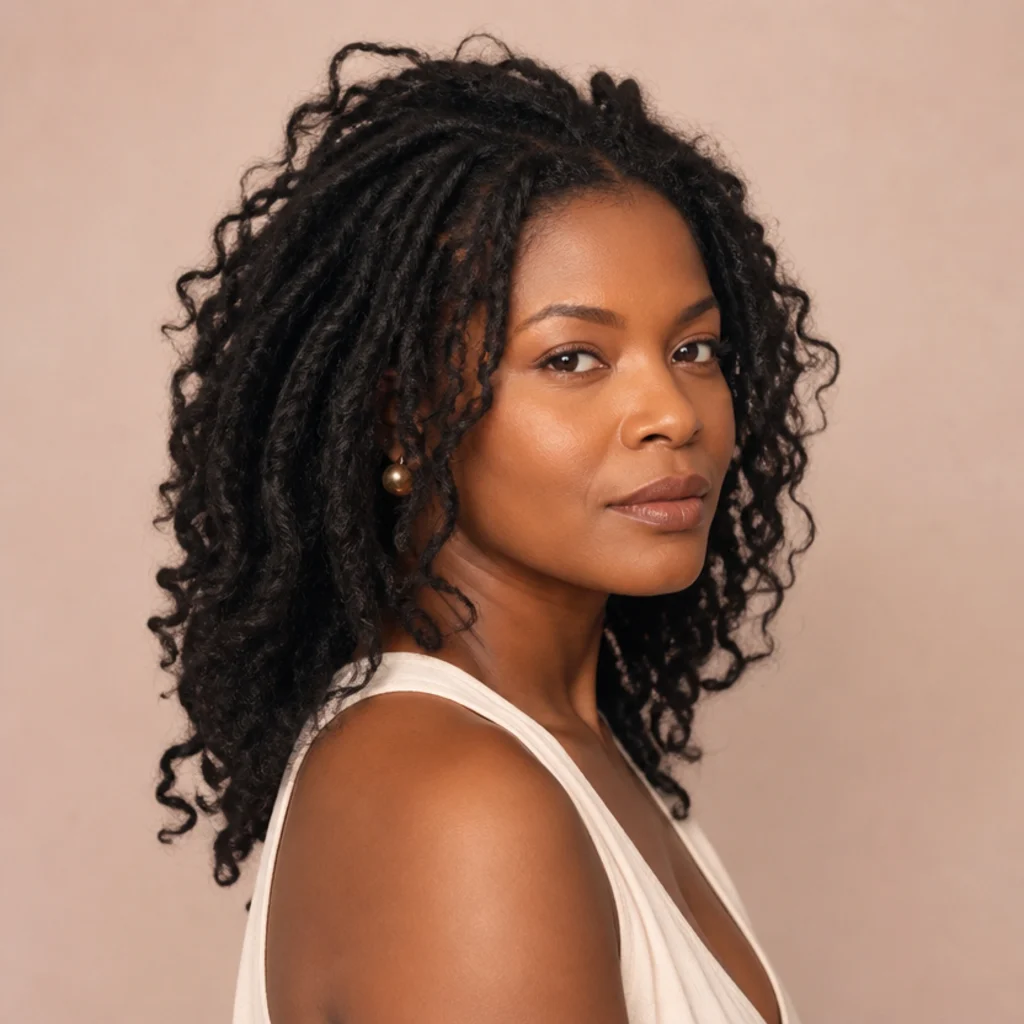
Leaning fully into the distress means loosening the loops far more aggressively for a bold, textured, almost freeform finish that looks like it's been lived in for weeks, in the best way. The chunky, airy loops read relaxed and easy, ideal for anyone drawn to an undone aesthetic over a neat, uniform one. This texture is the most forgiving on the list: it hides regrowth exceptionally well and tends to look better as it softens and expands over time, which stretches the interval between refreshes and makes it one of the best-value long-wear choices. Medium and jumbo diameters suit it best, since the loosened loops need room and body to show. Ask your stylist for heavily distressed, airy loops rather than tight, controlled ones, and bring a clear reference photo — distress level is the single most variable detail between stylists and the most common source of a set that doesn't match your expectation. It's a low-fuss, high-payoff pick for casual, textured everyday wear.
24Two-Tone Butterfly Locs
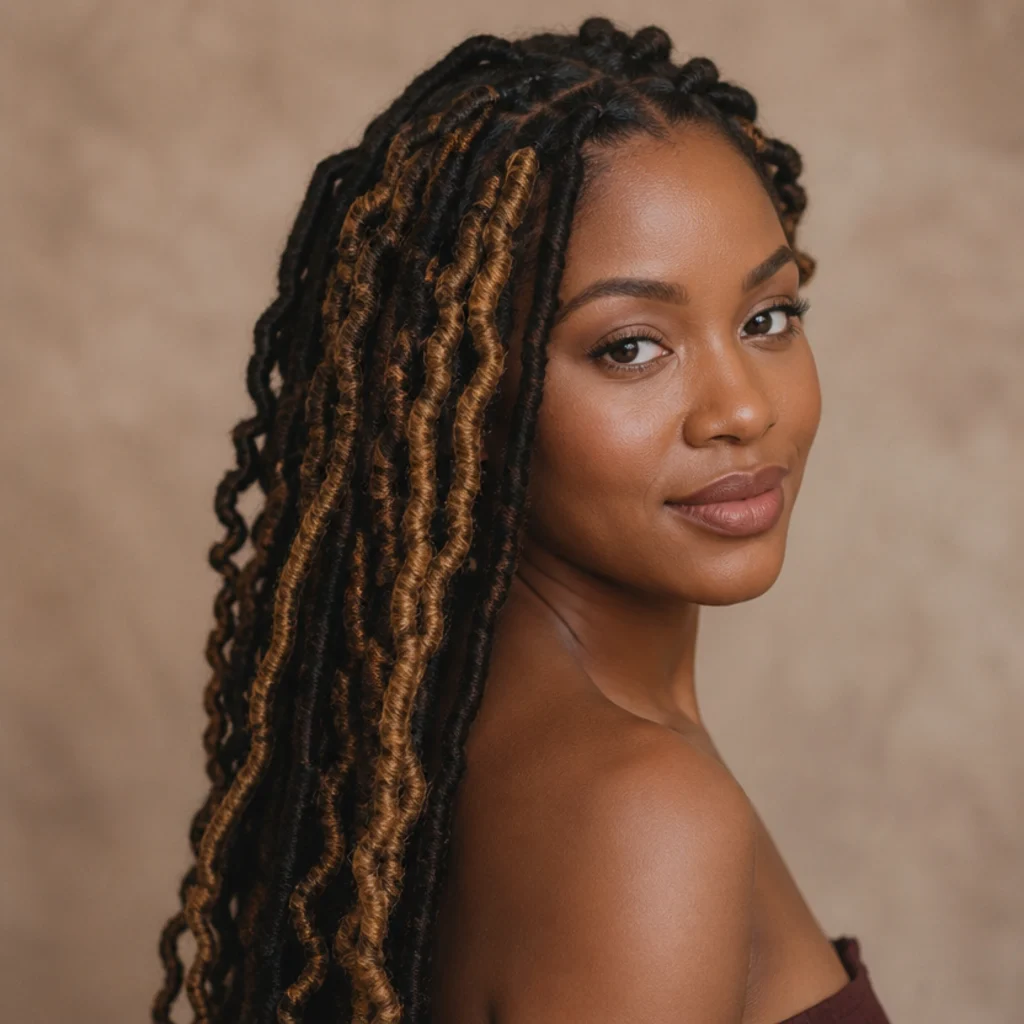
Two-tone butterfly locs alternate two distinct shades throughout the set for a graphic, dimensional effect — more overt than a subtle highlight, more wearable than a single loud fashion color. Think black and honey, brown and burgundy, or navy and gray, mixed evenly so both tones stay clearly legible from across a room. It's a satisfying middle ground for anyone who wants unmistakable dimension without going fully bold, and choosing two shades that both work on your skin means your undertone gets flattered twice over. The install runs slightly longer since the stylist alternates two hair colors on purpose rather than working from one pack. Maintenance is standard. Ask your stylist to balance the two tones evenly across the entire head so neither color pools in one section and throws off the symmetry, and choose shades with enough contrast to read as two-tone but enough tonal harmony — both warm or both cool — that the result looks cohesive rather than clashing.
25Butterfly Locs Wedding Updo
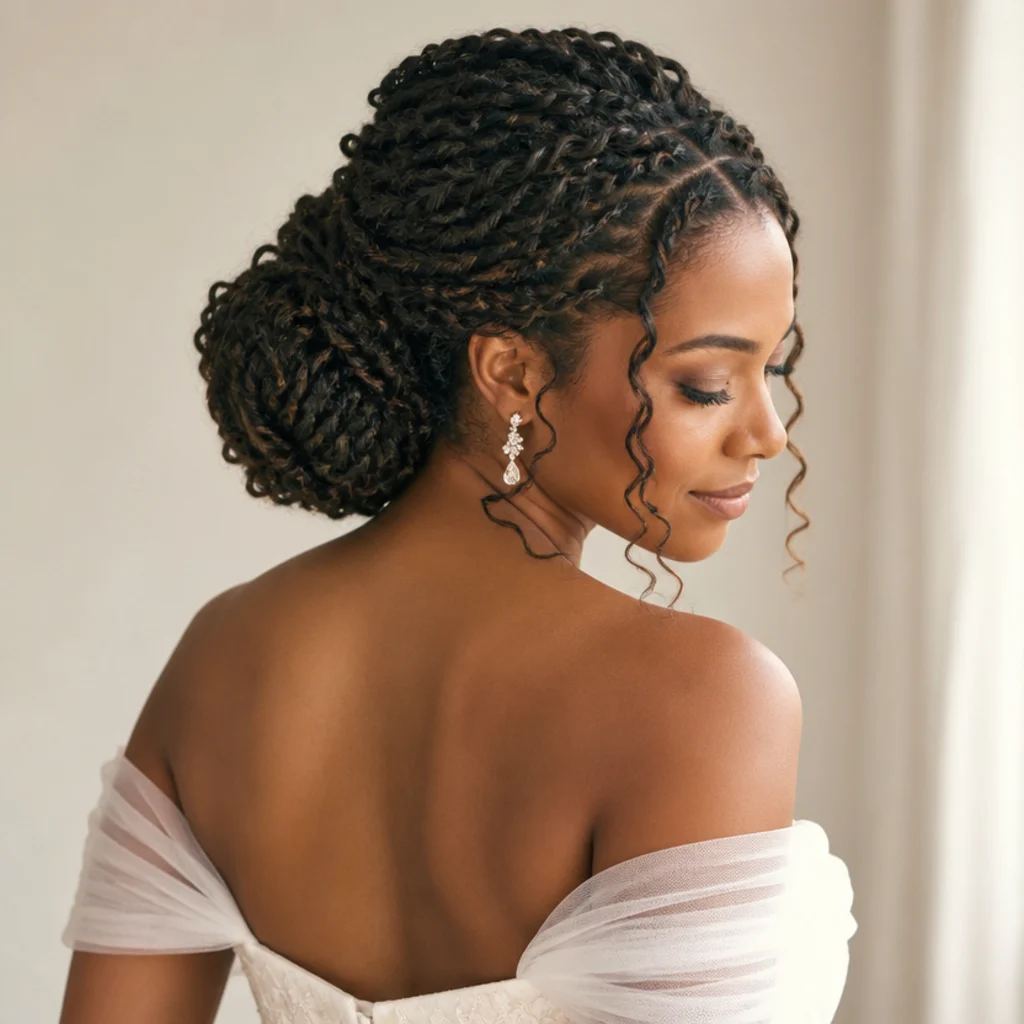
For weddings and formal events, butterfly locs sculpt into elegant updos, from a low chignon to a soft, wrapped crown. The distressed texture does a lot of the work here, keeping the style romantic and dimensional rather than stiff and lacquered the way sleek hair can look. A few loose, curly face-framing locs soften the whole design and photograph beautifully. Long and medium sets work best, since the stylist needs enough length to shape, tuck, and pin cleanly. Because the texture is light, even an elaborate updo tends to hold comfortably through a long event without the headache heavier styles cause. The most important step is logistical: book a trial run well before the day so you and your stylist can perfect the shape, test how it holds, and time the install. Ask for a design that leaves a few curly ends free at the nape and temples, and bring photos of your dress neckline and any veil, comb, or accessory so the updo is built to work with them, not against them.
Save this to Pinterest for event-day inspiration.
26Middle-Part Butterfly Locs
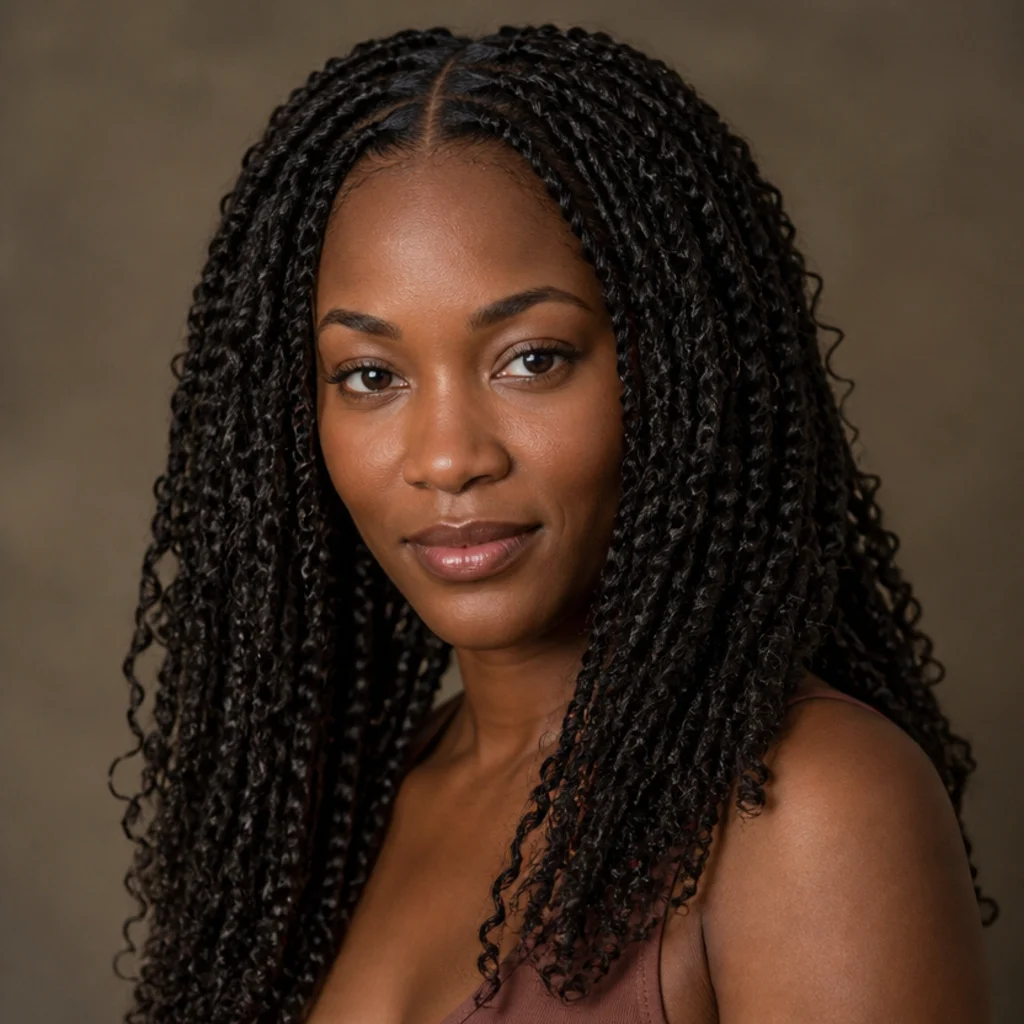
A clean middle part creates symmetry and a classic, balanced frame that flatters oval and heart face shapes in particular, since the even split emphasizes their natural proportion. It divides the locs cleanly on either side for a tidy, structured look that doesn't date. Because a center part is fully visible down to the scalp, clean, straight sectioning at install is what makes or breaks it: neat parts read polished, uneven ones look patchy and expose the scalp. It works at any length and pairs especially well with sleek, laid edges for a crisp, finished contrast. There's a shaping bonus, too — on a fuller or rounder face, a center part draws a vertical line that elongates and slims the frame slightly. Ask your stylist for a sharp, ruler-straight center part with even density on both sides so neither half looks heavier, and to keep the parted scalp line clean rather than zigzagged. It's a low-effort choice that suits almost everyone.
27Deep Side-Part Butterfly Locs
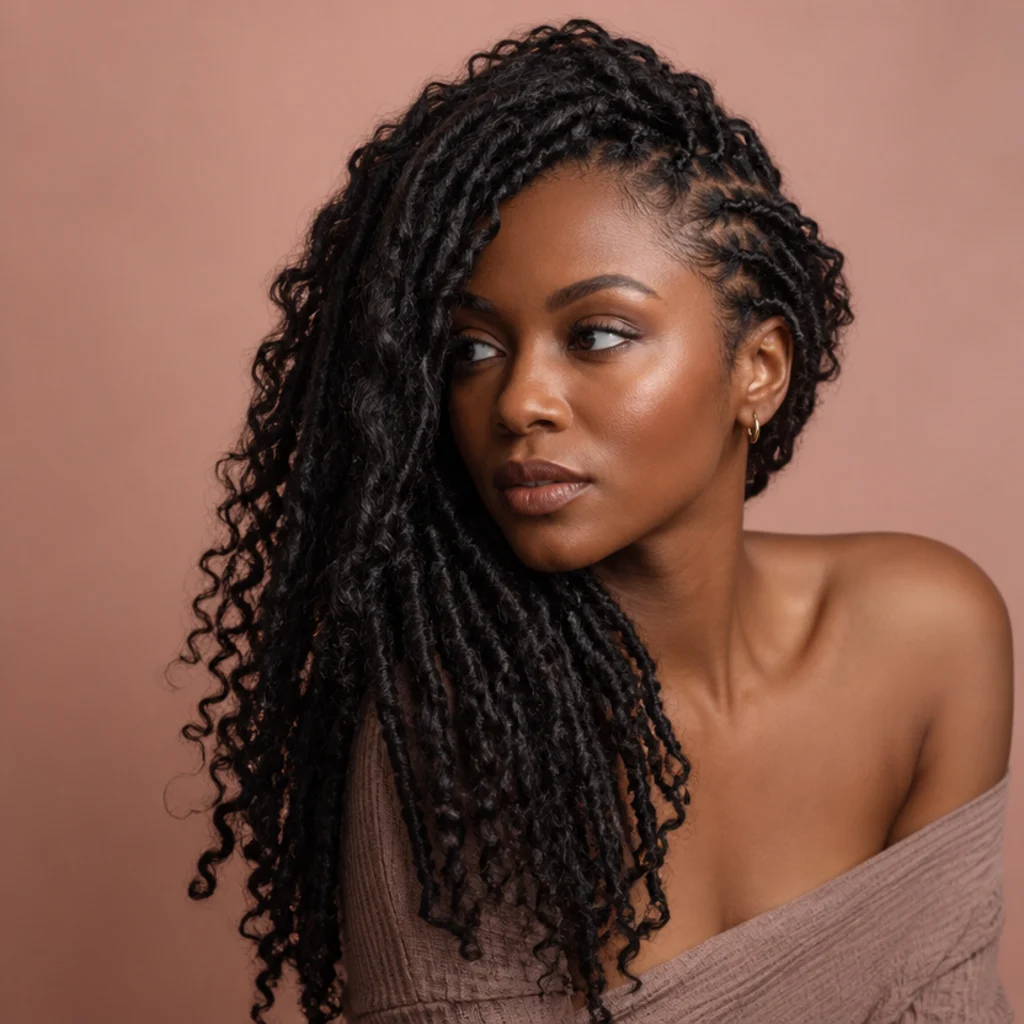
A deep side part shifts the bulk of the locs to one side, creating a flattering, slightly asymmetrical drape with built-in volume and a touch of old-Hollywood drama compared with a center part. That asymmetry does real work: it breaks up the symmetry of round and square faces, softening their angles and adding the illusion of length. It naturally supports side-swept styling and gives the fuller side real presence, which is why it looks especially striking on medium to long sets where the heavier side falls over one shoulder. It works at any length. The depth of the part is the whole point, so ask your stylist to place it well past the arch of your brow for real lift and volume on the fuller side, while keeping the sectioning clean so the exposed part line still reads neat. It's one of the easiest ways to make a simple, single-color set feel deliberately styled, and it pairs beautifully with color, ombre, or curly ends.
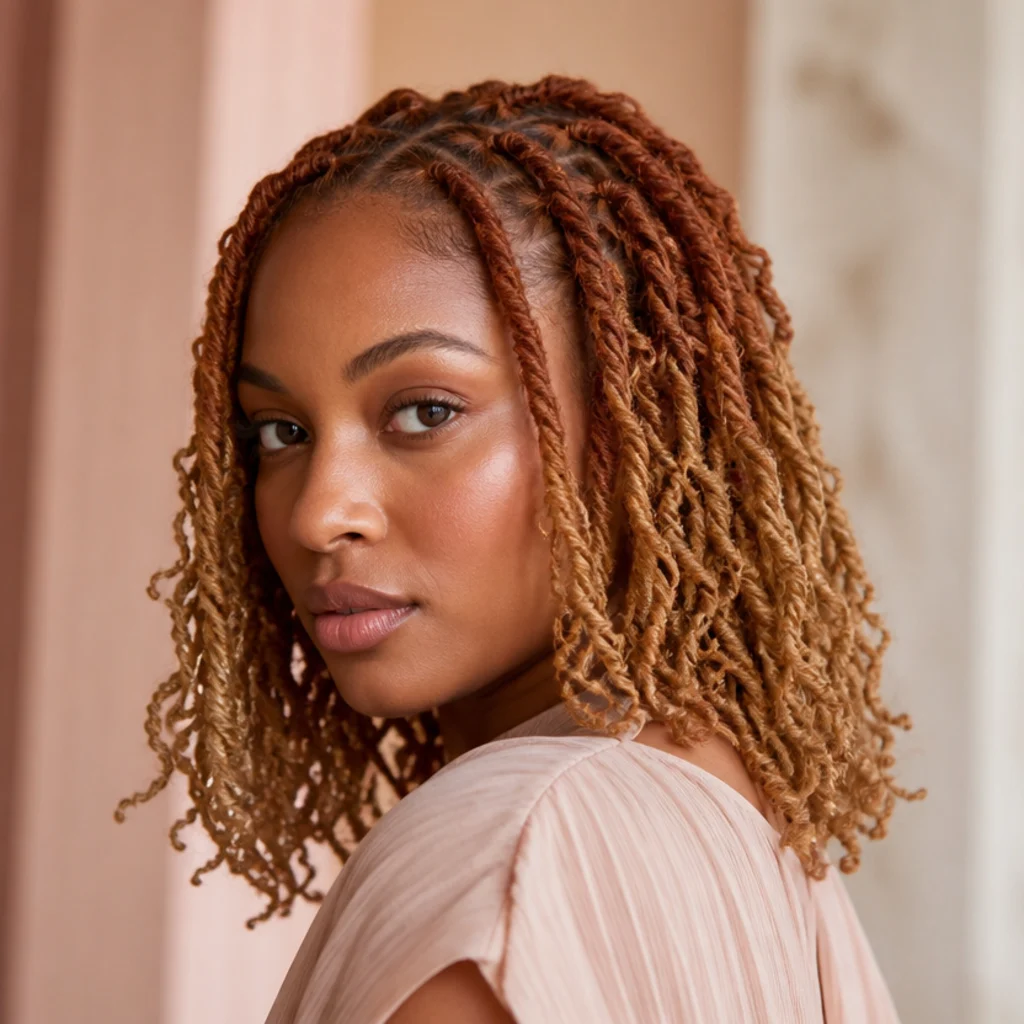
28Copper Butterfly Locs
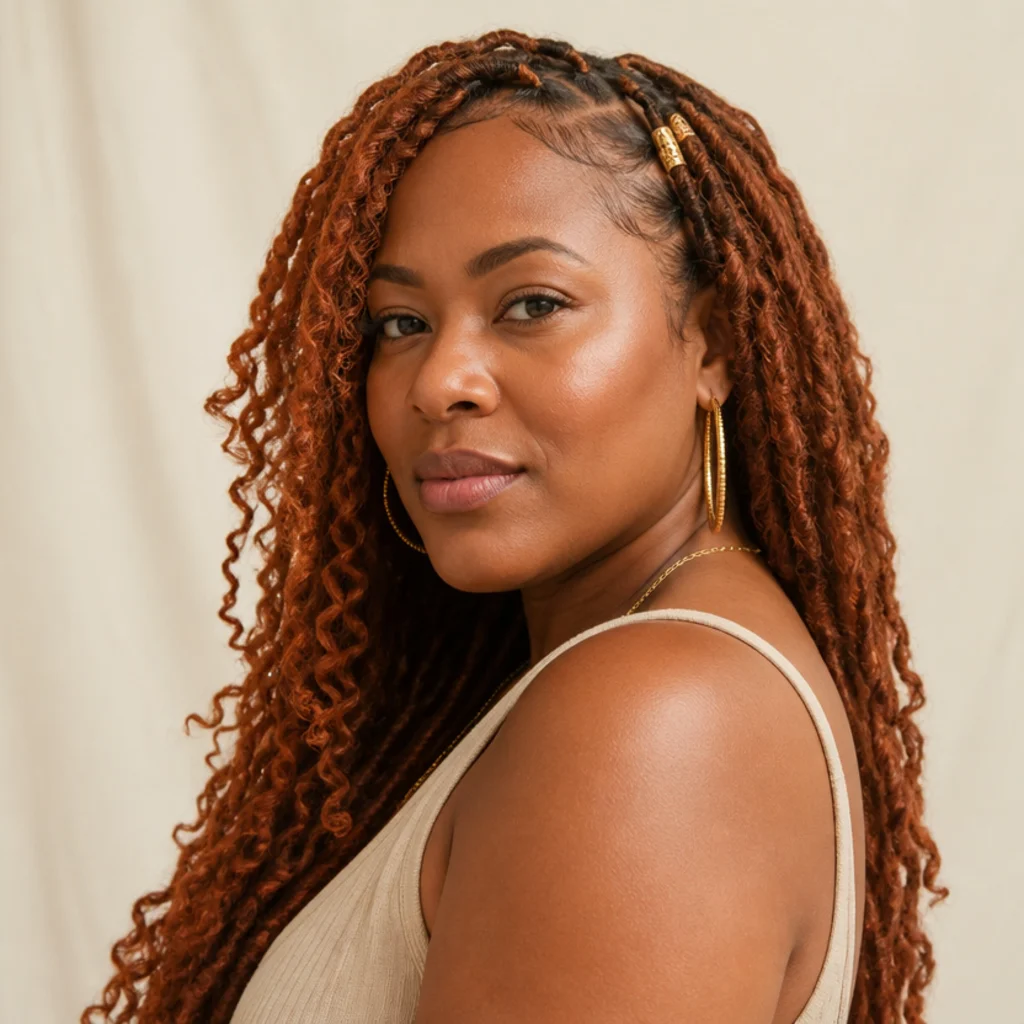
Copper is a warm, metallic orange-brown that glows against deep and medium skin and pours a rich, autumnal warmth into the distressed texture. It lives between red and blonde on the spectrum, a rare balance of bold and eye-catching yet still earthy enough for everyday wear. Because the shade is pre-built into the extension hair, you get the full effect with no lightening of your own strands and none of the brass-management upkeep a real copper dye job demands. Warm undertones wear it most naturally, and it peaks in fall styling alongside warm makeup. Ask your stylist for a copper with real tonal depth rather than a flat, single-note orange, and consider a subtle root melt into a darker brown or auburn base so the color reads dimensional and grows out softly rather than showing a hard line. Gold jewelry, warm blush, and bronze eye tones round out the palette and let the copper glow at its brightest.
29Butterfly Locs Half Crown
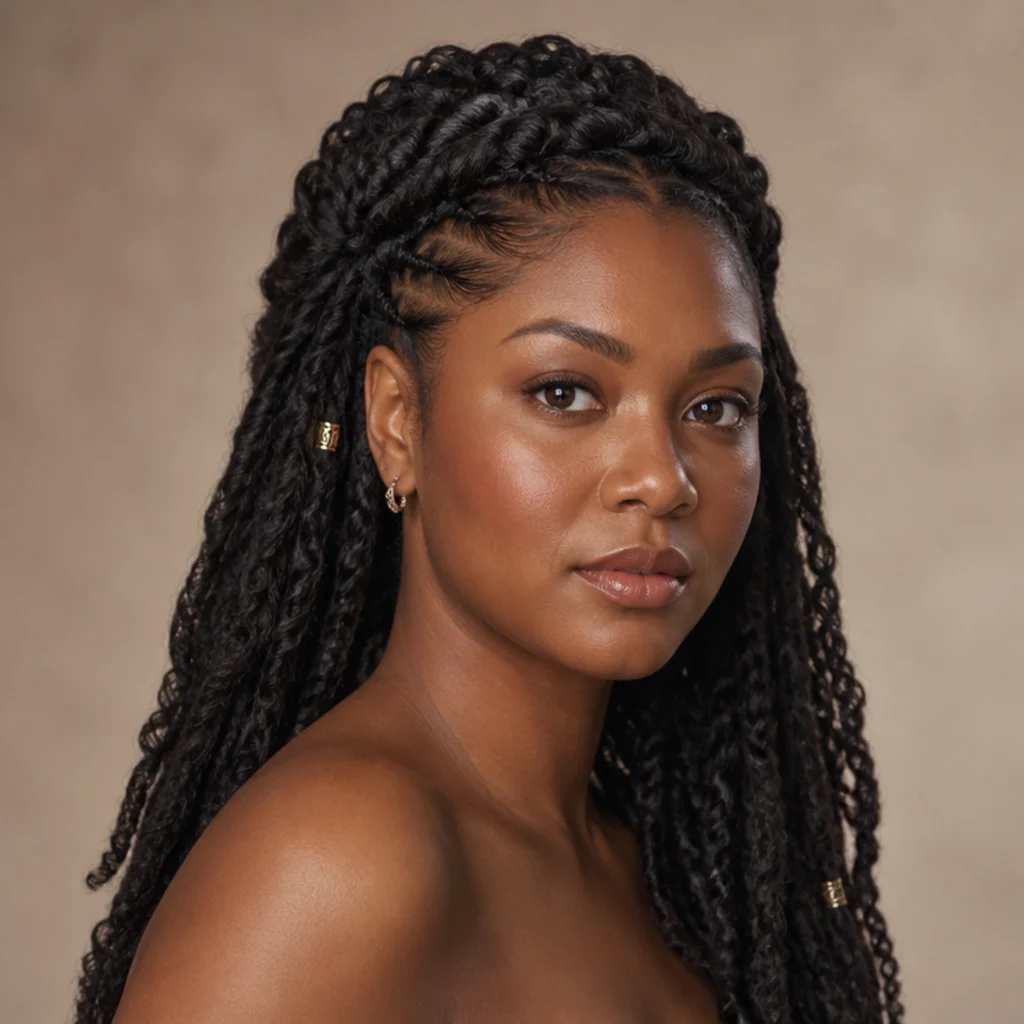
The half crown braids or twists a section of locs across the top of the head like a soft, built-in headband, leaving the rest to fall free below. It keeps hair off your face with a romantic, bohemian feel that suits festivals, brunches, garden parties, and outdoor events. Medium and long sets work best, since the crown section needs enough length to lift, cross, and pin cleanly without straining. No special install is needed, just enough length across the front to braid from one side to the other and secure. Because the crown pulls a defined section repeatedly, keep the braid tension gentle at the temples to protect your edges over multiple wears. Ask your stylist to walk you through creating, crossing, and pinning the crown yourself so you can recreate it on the fly, and add a few small gold cuffs or a thin ribbon woven along the braid for extra detail. It's an easy, high-romance way to restyle a set you've worn loose all week.
30Space Bun Butterfly Locs
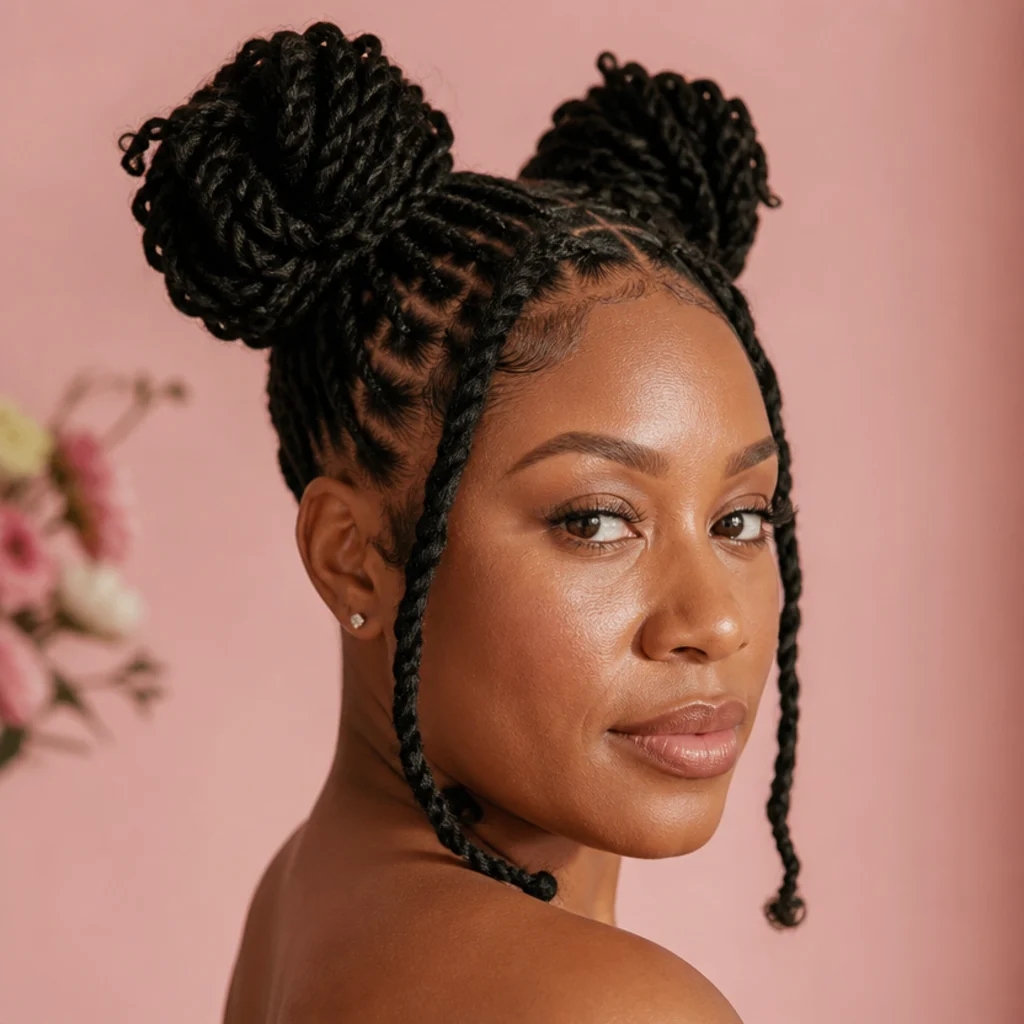
Space buns split the hair into two high buns for a playful, youthful finish that suits festivals, casual outings, concerts, and any day you want your hair to feel as fun as your mood. The paired buns show off the looped texture from every angle and read spirited without needing much skill or time to build. Butterfly locs hold the twin shapes well thanks to their light weight, and leaving a few locs loose around the face and nape keeps the look soft rather than severe. Medium and long sets work best here, with enough length to build two full, rounded buns rather than two small knots. Watch tension carefully, because two high anchor points double the number of spots pulling at your hairline, so keep both gathers loose at the temples and don't make this an everyday default. Ask your stylist for tips on parting the hair evenly down the center and balancing the two buns at matching heights, and vary the height and placement to match the occasion.
Pro Tips from the Editor
- Rinse fashion-colored hair before install. Red, blue, burgundy, and other vivid braiding hair can bleed the first time it gets wet. A quick pre-soak in cool water with a splash of vinegar (then air-dry) sets the dye and saves your pillowcases and collars.
- Match diameter to your density, not just the trend. Fine or thinning hair looks fullest in medium locs; very thick natural hair fills jumbo sections without exposing scalp. The wrong diameter is the top reason a set reads sparse or bulky.
- Dilute your scalp refresh. Spray a mix of water, a little leave-in, and a few drops of light oil at the roots once or twice a week, then let it dry fully. Heavy oils and thick creams sit in the loops, attract lint, and speed up frizz.
- Protect the perimeter every night. A satin scarf or bonnet is non-negotiable; cotton pillowcases friz the loops and rough up your edges. For long sets, loosely gather the length first so you are not sleeping on tension.
- Book a takedown window, not just an install. Butterfly locs are meant to come down at four to eight weeks. Wearing them past the point of matting or hairline tension is where protective styling starts to damage rather than protect.
- Bring three photos, not one. Stylists read length, color, diameter, and distress level from different angles. One front-facing photo leaves too much to interpretation, and distress level especially varies enormously between artists.
- Keep the first 48 hours dry-ish and low-tension. Skip a tight updo right after install while the base braids settle; giving the roots a couple of days loose reduces early pulling and helps the set last its full run.
How to Choose / Get the Look
Treat the decision as four stacked questions: length, diameter, color, and part.
1. Length and lifestyle. Short butterfly locs (chin bob to shoulder) are the easiest to live with: lighter, faster to wrap, gentlest on the hairline. That makes them the right call for first-timers, active schedules, or sensitive edges. Long and waist-length sets deliver drama and updo range but demand more upkeep, more chair time, more money, and comfortable root tension throughout, so speak up the moment anything feels tight.
2. Diameter. This is the detail most people skip and later regret. Use the spec table below to match loc size to your goal and your natural density.
| Loc size | Approx. install time | Scalp feel | Best for | Watch-out |
|---|---|---|---|---|
| Micro | Longest | Very light, gentle | Refined, intricate looks; fuller updos | Highest cost; can read shorter |
| Medium | Moderate | Balanced | Most people; fine or thinning hair | The safe all-rounder |
| Jumbo | Shortest | Light (fewer parts) | Quick installs; thick natural hair | Big parts can expose scalp |
3. Color. Built-in shades (red, burgundy, honey, copper, blue) let you experiment with zero lightening of your own hair, so match the tone to your undertone, cool skin favors cherry-reds, burgundy, and cool blues; warm skin glows in copper, honey, brick-red, and caramel. Want lower commitment? Color panels, highlights, ombre, and two-tone give you dimension without an all-over statement.
4. Part and face shape. Middle parts balance oval and heart faces and slim fuller ones; deep side parts flatter round and square shapes by breaking symmetry; a fringe suits longer faces. Layer styling (half-up, bun, sweep, crown) on top for occasion-specific range.
When you book: bring two or three reference photos covering length, color, diameter, and distress level; ask about total install time, finished weight, and takedown; and confirm whether they build on a braid or twist base and whether they crochet or hand-wrap. Then protect the investment, wrap nightly, keep the scalp and lengths lightly and evenly moisturized, and refresh loose loops before they unravel.
Frequently Asked Questions
How long do butterfly locs last?
Most sets look their crispest for about four to six weeks, and many wearers stretch to eight with diligent refreshing. The distressed, looped texture hides regrowth unusually well, so the style softens and ages gracefully rather than growing out in an obvious line. Take them down once you notice matting at the base, product buildup, or any tension and thinning at the hairline — those are the signs the style has moved from protecting your hair to stressing it.
How much do butterfly locs cost?
Cost varies quite a bit and depends on length, loc diameter, the amount of braiding hair, your region, and the stylist's experience. As a rule of thumb within this style, short and jumbo sets sit at the lower end because they install fastest, while long, micro, and heavily customized color sets land at the higher end. Ask for an all-in quote that includes the hair, and confirm whether takedown is a separate charge.
Are butterfly locs heavy or hard on your hair?
Installed with comfortable tension and the right loc size, they're relatively lightweight because they're wrapped rather than densely braided. Weight climbs with length and diameter, so if your hairline is sensitive, favor shorter lengths and a medium diameter over a long, jumbo set. Speak up during install the instant a root feels tight, skip tight high updos on the daily, and give your natural hair a rest between protective styles.
Can I get butterfly locs on short natural hair?
Yes, in most cases. Stylists anchor each loc on a small braided or twisted base, so you generally need only a few inches of length to hold them securely. If your hair is very short, tapered, or recently cut, ask your stylist to confirm they can build a stable base before you book, since too little length can cause the base to slip and the loc to loosen early.
How do I keep the loops from unraveling and frizzing?
Wrap your locs in a satin scarf or bonnet every night to cut the friction that loosens loops, and avoid heavy pulling, tight styling, and constant manipulation. Loose loops can be gently re-wrapped by hand or tightened by your stylist at a mid-cycle refresh. Keep product light, a diluted leave-in and a little oil, since heavy creams sit in the loops, attract lint, and accelerate the frizz that makes a set look old.
Can I wash butterfly locs?
Yes, gently. Dilute a sulfate-free shampoo in water, apply it to the scalp with your fingertips or an applicator bottle, and let the suds run down the length rather than scrubbing and roughing up the loops. Rinse thoroughly, squeeze (don't wring) out excess water, and let them air-dry completely before wrapping or styling, since locs sealed away damp can develop odor or mildew at the base.
What is the difference between butterfly locs and goddess locs?
Butterfly locs have a distressed, looped texture created by loosening the wrap on purpose, giving an undone, airy finish. Goddess locs are typically smoother and more sealed, with defined curly ends left out for a polished, romantic look. Both are temporary protective styles built on extension hair, so it comes down to texture preference: butterfly for relaxed and lived-in, goddess for refined and glossy.
How is the butterfly loop effect actually created?
Stylists wrap water-wave or wavy braiding hair around a braided or twisted base, then pinch and push small sections of that wrap upward to form the open loops that give the style its name. Water-wave hair is standard because its pre-set texture makes the loops bloom naturally. The number and looseness of those loops is the distress level — which is why bringing a reference photo matters so much.
Do butterfly locs work for all hair textures?
Yes. Because the look lives in the extension hair wrapped around a base, the technique adapts to fine, coarse, straight-textured, or tightly coiled natural hair — the base braid just anchors it. The main variable is density: fine or low-density hair looks fullest with a medium diameter and neat parts, while thick hair fills larger sections easily. Ask your stylist to match loc size to your density so the finished set looks even and full.