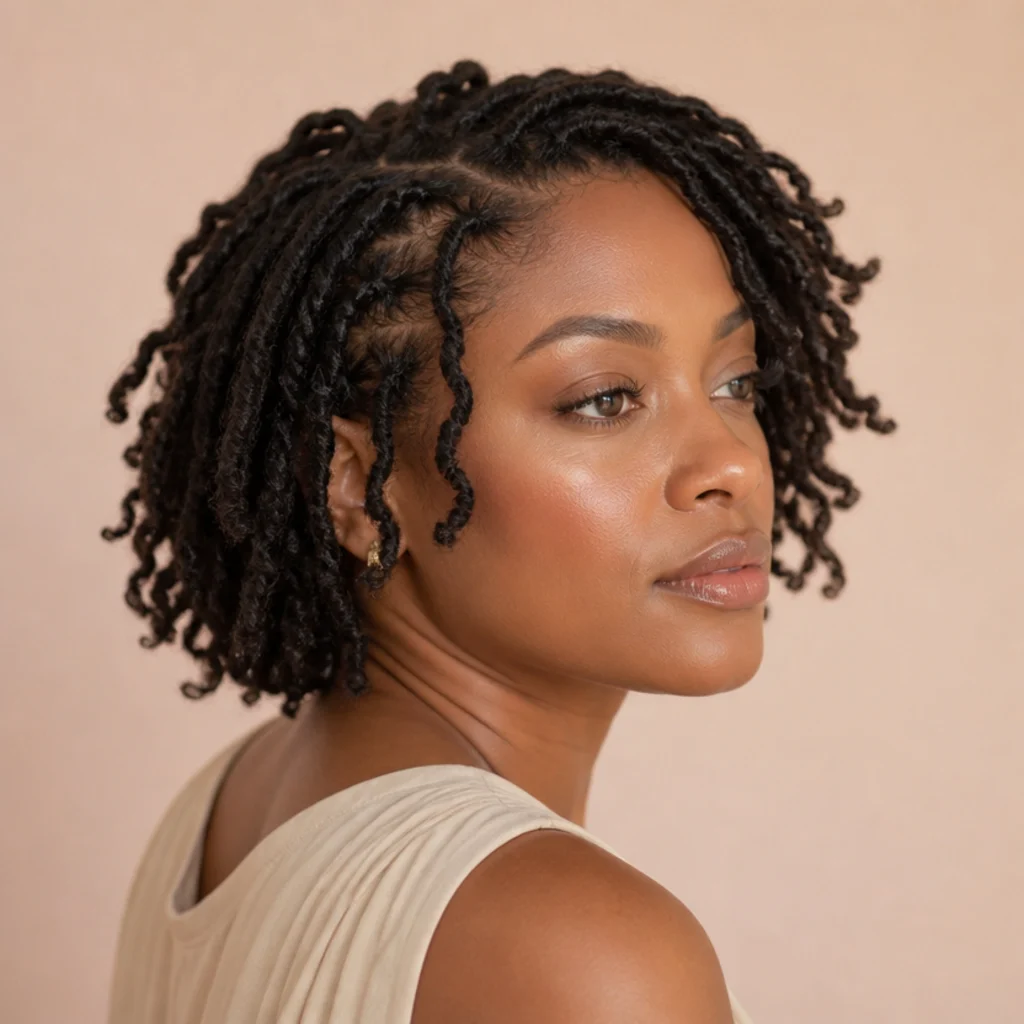
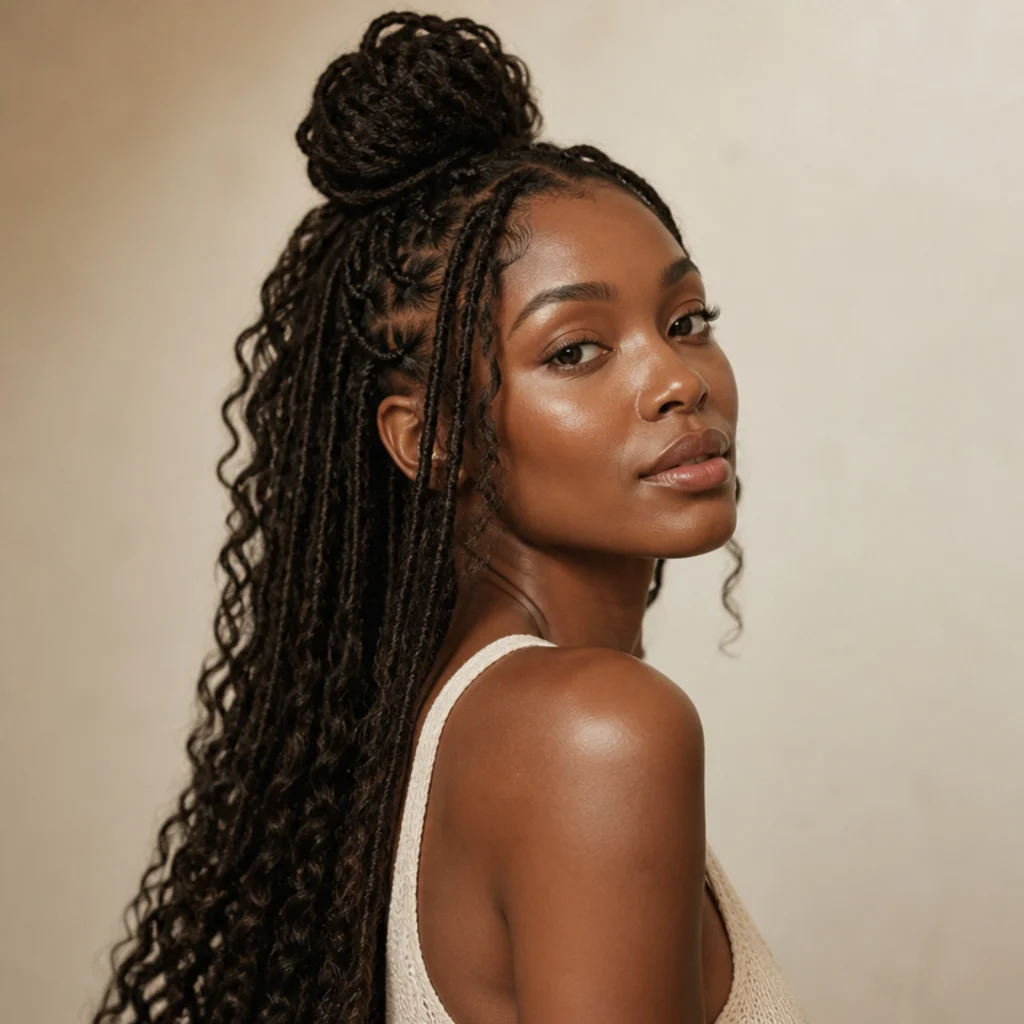
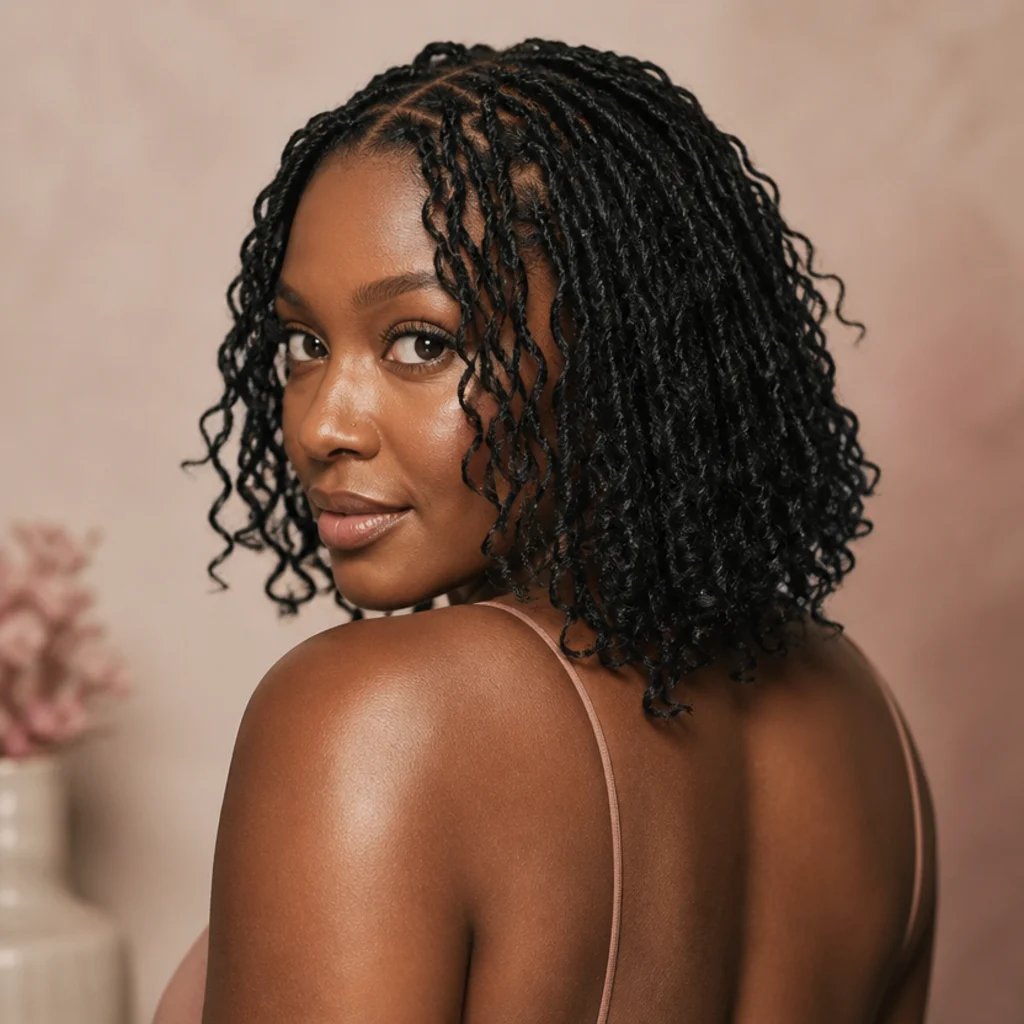
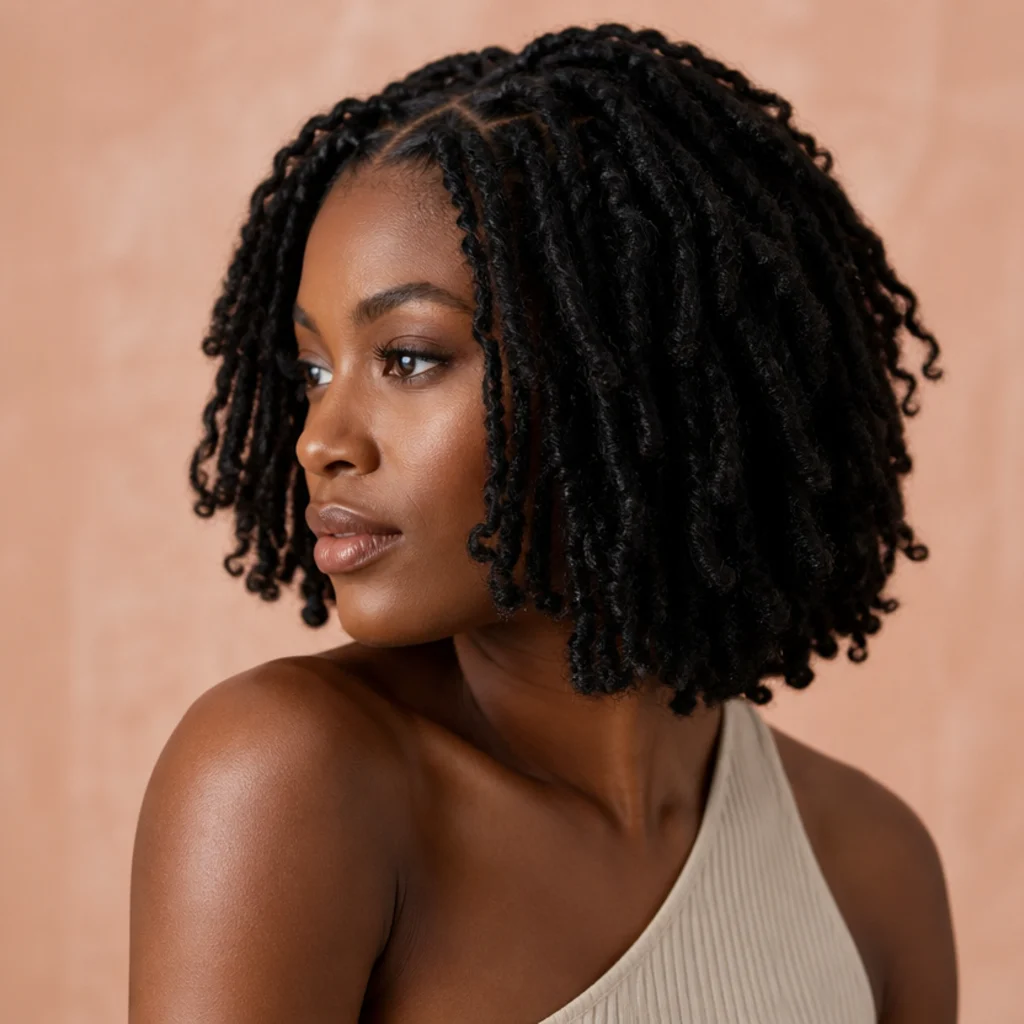
20 Creative Butterfly Locs With Color Ideas
Color is where butterfly locs earn their reputation. Below are 20 distinct ways to add red, blonde, ombre, plum, or pastel to your locs, each with the exact shade to name, the undertone it flatters, the length that carries it best, and the real upkeep rhythm that keeps it looking fresh past week one.
 Edited by Lena Rose · Published July 11, 2026 · 35 min read
Quick Answer
- Best for: Anyone who wants a bold shade without dyeing or bleaching their own hair. Because the color lives in the extension hair (usually a water-wave or Freetress-type braiding hair wrapped over a base loc), it suits every natural texture from 3B to 4C and works on any face shape once you tune the part and length.
- Who might skip it: Anyone needing a corporate-conservative look with zero color, anyone with a very tender scalp who struggles with the wrap tension, or anyone who can't commit to a light oil and a satin bonnet, since colored fibers dull fastest when neglected.
- Maintenance: Low to moderate. Re-wrap loose loops at the crown and hairline every 2-3 weeks, cleanse the scalp with diluted shampoo, and mist with a leave-in weekly. Lighter shades want a lightweight oil (jojoba or grapeseed) every few days.
- Difficulty: Intermediate to advanced install. Multi-tone melts, marble blends, and color blocks are firmly a salon job; single all-over shades and dipped tips are the most DIY-friendly.
- Cost: Variable. Expect a lower range for short single-color sets and a higher range for long, multi-tone, or hand-blended color, plus the cost of colored hair (typically 6-10 packs). Short sets install fastest and cost least.
- Wear time / longevity: 4-6 weeks before loops loosen enough to warrant takedown; color itself doesn't shorten this, though pastels and silver read faded soonest.
- Standout variation: A copper-to-honey color melt on shoulder-length locs, dimensional in every light without a single flat stripe.
- How to ask your stylist: Bring one clear reference photo, name the exact shade (not just "red" or "blonde"), and specify placement, all-over, ombre line height, accent count, or block layout, before hair is pre-sorted.
In This Guide
- Classic Red Butterfly Locs
- Copper-to-Honey Color Melt
- Honey Blonde Butterfly Locs
- Burgundy Ombre Butterfly Locs
- Ginger Spice Short Butterfly Locs
- Platinum Money-Piece Locs
- Chocolate Brown With Caramel Highlights
- Deep Plum Butterfly Faux Locs
- Sunset Ombre Long Butterfly Locs
- Peekaboo Color Butterfly Locs
- Ash Blonde and Brown Blend
- Cherry Cola Red Butterfly Locs
- Pastel Pink Butterfly Locs
- Teal and Black Color Block
- Golden Blonde Tips
- Auburn and Black Marble Blend
- Silver Gray Butterfly Locs
- Rose Gold Short Butterfly Locs
- Two-Tone Half-and-Half Locs
- Rainbow Accent Butterfly Locs
Butterfly locs already carry a soft, deliberately distressed texture, those signature loops pulled out along the length, and color multiplies what that texture does with light. Because the shade lives in the wrapped extension hair rather than your own strands, color here is low-commitment: you can wear copper for one six-week install and platinum the next without a single developer touching your natural hair, no line of regrowth, no bleach damage, no grow-out. That's why the look took off across Pinterest and salon chairs alike. Short butterfly locs, roughly chin to collarbone, are the smartest place to start, since less length means a faster install, fewer packs of colored hair, and a lower cost while you test a shade. Long butterfly locs, past the bust, give ombres and multi-tone melts the runway they need to develop. The 20 ideas below span the full spectrum, warm reds, cool blondes, moody plums, editorial neutrals, and playful pastels, across all-over, ombre, peekaboo, marble, and color-block placements. Each entry names the exact shade to request, the undertone and face shape it flatters, how the color behaves as it settles, and the precise phrase to give your stylist so you leave with the look you actually saved.
01Classic Red Butterfly Locs
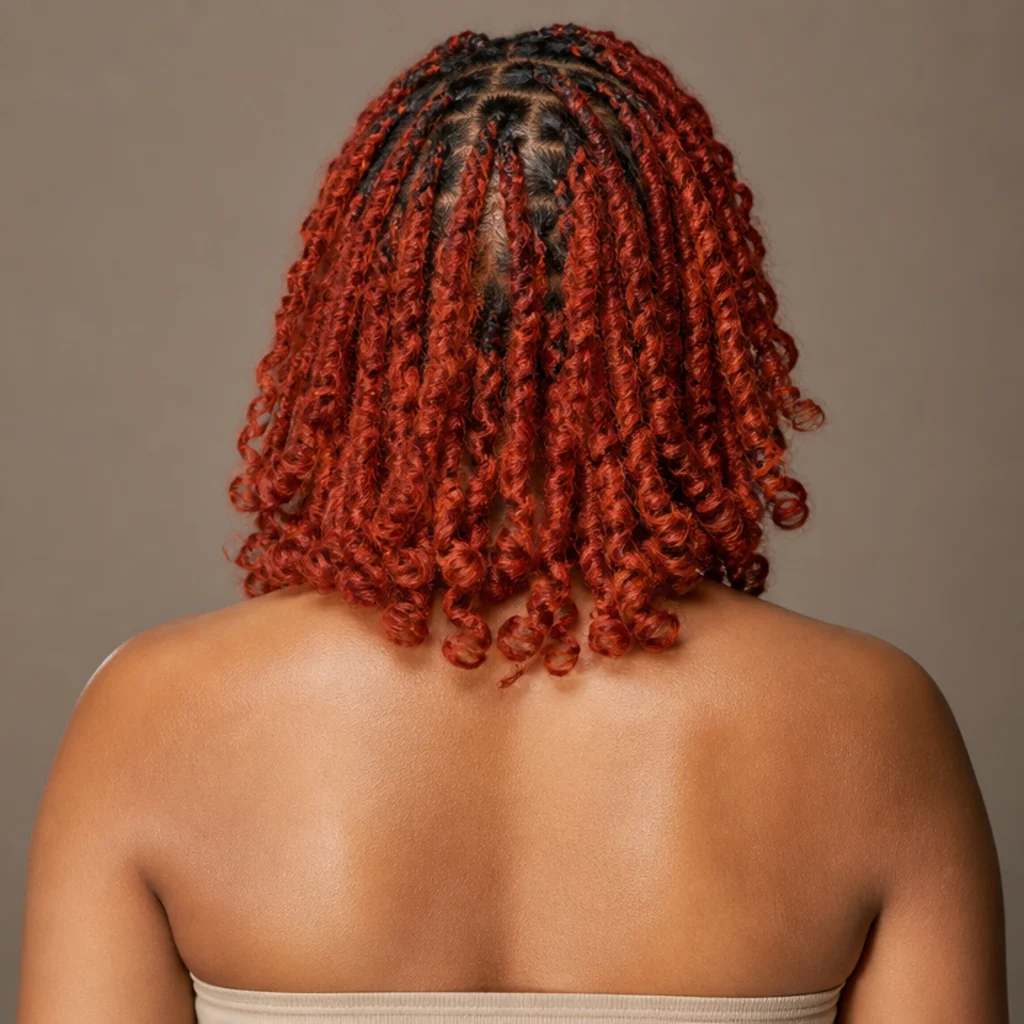
Red is the shade that turned butterfly locs into a viral request, and a true warm red, think fire-engine with a hint of orange rather than a cool blue-red, remains the most-booked color of the category. That warmth is what makes it sing against deep and rich skin tones: the saturation gives even a plain center-part set a finished, high-impact frame. Red fiber is also the most fade-prone of the saturated shades, so a color-safe cleanser, a satin bonnet nightly, and minimal direct sun are what keep it from oxidizing toward brick by week four. It flatters nearly every face shape because you control the frame through part placement and length; a deep side part softens a square jaw, a center part balances a round face. Wear it in a high pineapple to show the loop texture, or half-up to keep length around the shoulders. Pro tip: photograph your reference in daylight, since a true red and a muted brick read almost identical under salon fluorescents but wildly different outdoors. Ask your stylist for a "true warm red, not brick," and confirm the pack shade before install. Expect the standard 4-6 week wear window.
02Copper-to-Honey Color Melt
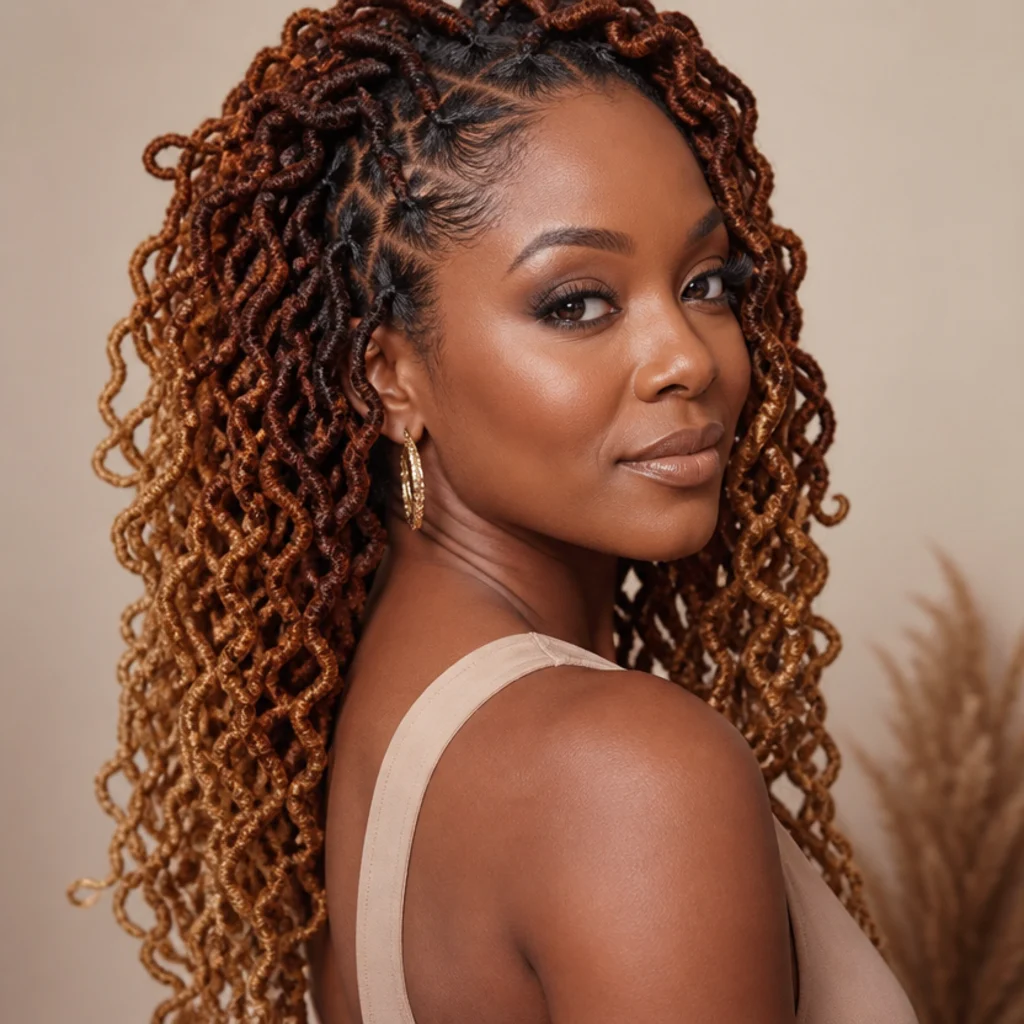
A color melt blends two shades so gradually there's no visible transition line, just a slow warm-to-warmer drift down the length. Copper roots easing into honey ends is the most flattering pairing in the melt family because both tones live in the same warm-gold family, so the effect reads dimensional and sunlit rather than striped or grown-out. This is the editorial pick for anyone who wants butterfly locs with color that looks expensive without committing to one flat shade. The downward gradient draws the eye vertically, which visually lengthens the face and softens rounder or heart shapes especially well. A clean blend depends on the colored hair being pre-sorted from dark to light before a single loc is wrapped, so this is a salon look, not a first DIY attempt. Maintenance mirrors an uncolored set, though the lighter honey ends drink up a little jojoba oil to stay supple. Wear it down and slightly tousled so the melt stays visible along the length. Pro tip: ask for the copper-to-honey break to sit around ear level, dropping it lower makes the melt look like tips, higher can muddy the roots. Ask your stylist for a "seamless two-tone melt, copper root to honey end."
03Honey Blonde Butterfly Locs
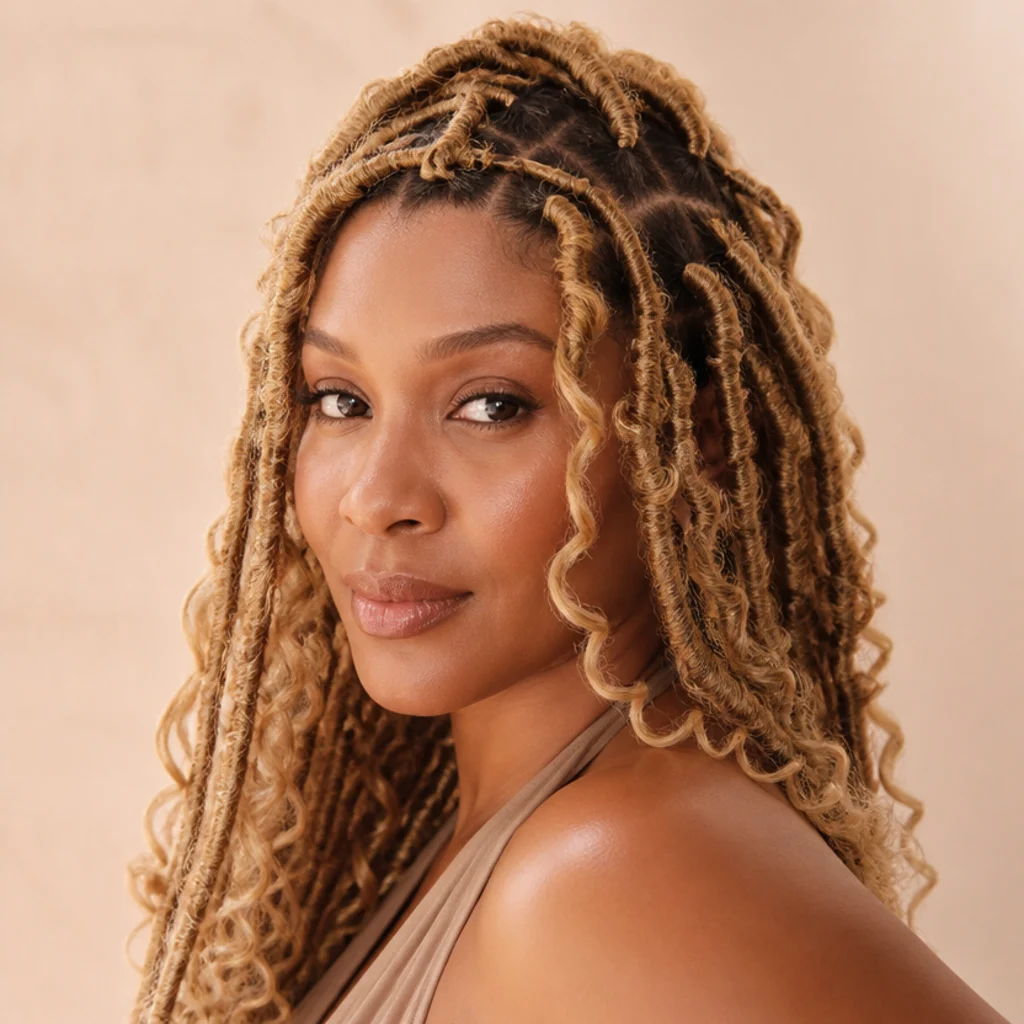
Honey blonde is arguably the most universally flattering blonde in the butterfly locs with color spectrum because its golden warmth complements deep, rich, and medium skin tones without the ashy wash-out that cool blondes can cause. Worn all over, it brightens the whole face and gives the loops a soft, backlit glow. Since the lift lives entirely in the extension hair, you get every bit of the blonde drama with none of the bleach commitment on your own strands, a genuine advantage over dyeing natural hair to this depth. Blonde fiber reads drier than dark, so a lightweight oil (jojoba or grapeseed, not a heavy butter that flattens the loops) along the length keeps it supple and knocks down frizz between refreshes. It suits every face shape; frame the cheekbones with a slightly off-center part to add lift. Pro tip: bring a reference showing the exact depth, warm honey versus cooler beige-blonde, because "blonde" alone leads salons to grab whatever pack is stocked. Ask your stylist for "warm honey blonde, medium depth, no beige," and have them match the pack against your reference in daylight before installing.
04Burgundy Ombre Butterfly Locs
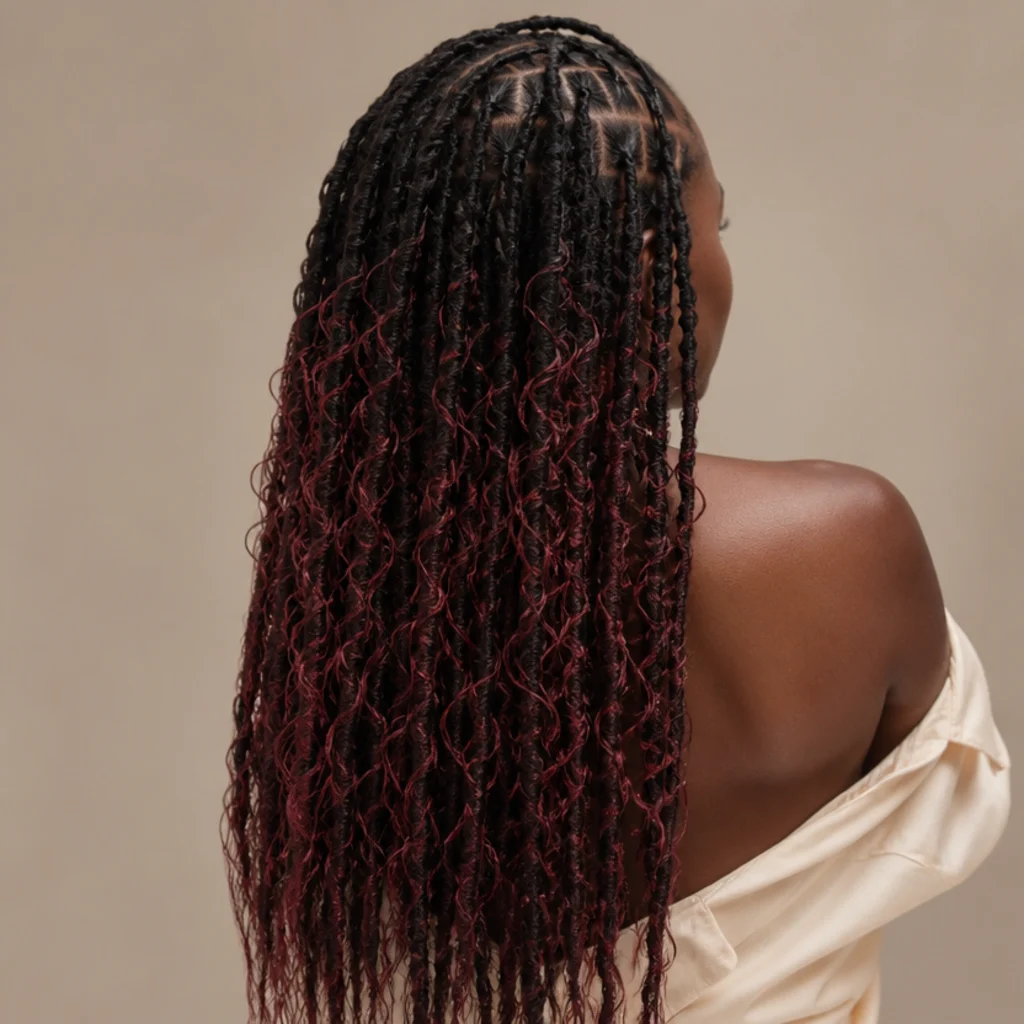
Burgundy ombre keeps a natural dark root and drops into a deep wine red toward the ends, and it's the gentlest on-ramp to red butterfly locs when a full head of bright color feels like too much. The dark crown grounds the look, keeps regrowth invisible, and lets the wine tone flash through only on the length. That deep wine reads richest on cool and neutral undertones, photographing dimensional in nearly any light and hiding settling far better than a lifted shade. Length matters here: long butterfly locs give the fade the room it needs, so the burgundy has space to develop instead of tipping only the last inch. Try it in a low half-up to spotlight the transition, or fully down for the most gradient movement. A deeper base anchors the color, so upkeep is standard, with a light oil keeping the wine section glossy. Pro tip: set the ombre break high, around jaw to collarbone, so the burgundy reads as a real color story rather than dip-dyed ends. Ask your stylist for a "dark-root to wine burgundy ombre with a high transition line."
05Ginger Spice Short Butterfly Locs
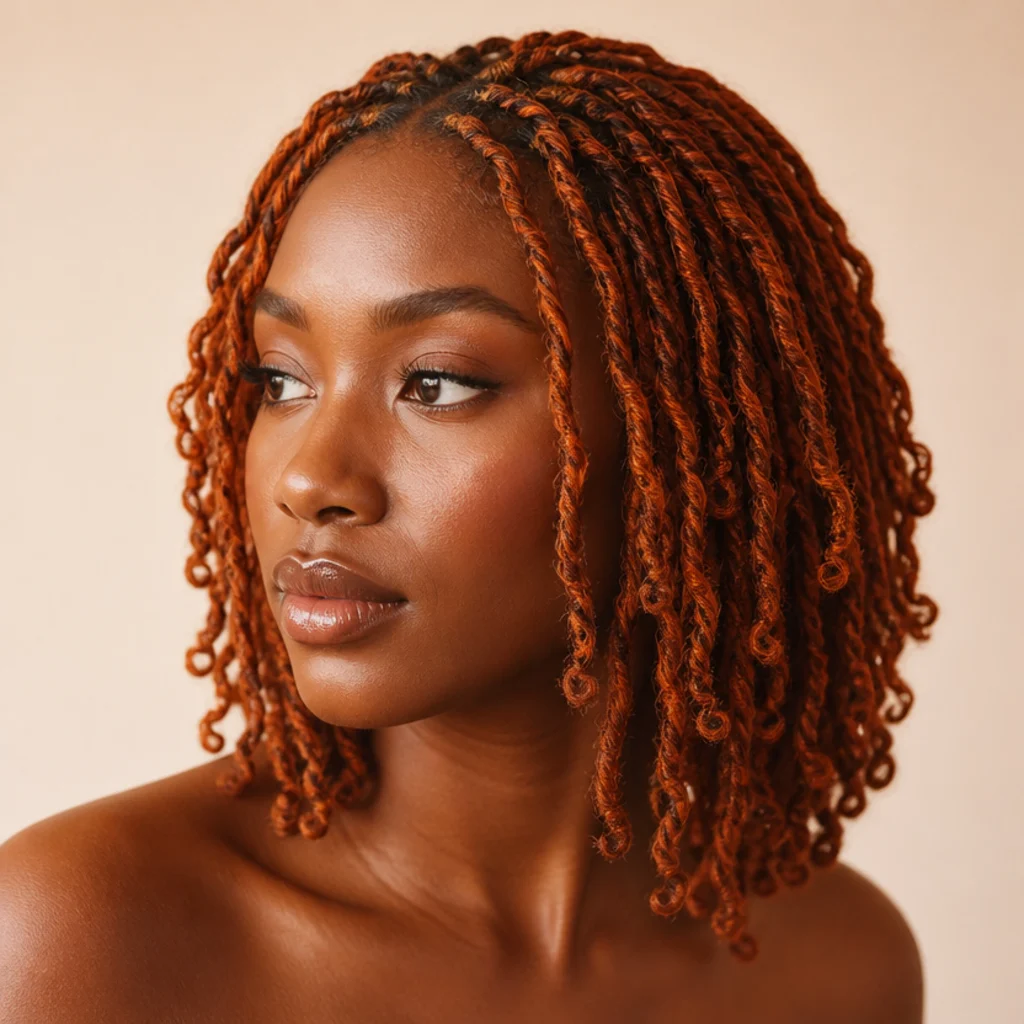
Ginger spice sits precisely between copper and auburn, a warm, earthy orange-red that feels seasonal and grown without tipping into costume territory. On short butterfly locs it reads especially fresh: the shorter length keeps the whole look lightweight, brightens the face, and stays easy to wear from a workday to a weekend. It flatters warm and golden undertones best and pairs naturally with gold jewelry and warm makeup. As a mid-depth warm shade, it's forgiving, hiding settling and frizz better than any light blonde, which makes it low-fuss between refreshes and ideal for a first color experiment. Wear it in a blunt bob-length down-do or a half-up puff to show the loop texture. Pro tip: salons stock several near-identical warm reds, so name "true ginger, earthy not neon copper" and confirm the pack, otherwise you may leave brighter than you pictured. The shorter length also keeps install time and pack count, and therefore cost, at the bottom of the range. Ask your stylist for "earthy ginger spice, mid-depth, on short locs."
Save this to Pinterest to build a color mood board for your next loc appointment.
06Platinum Money-Piece Locs
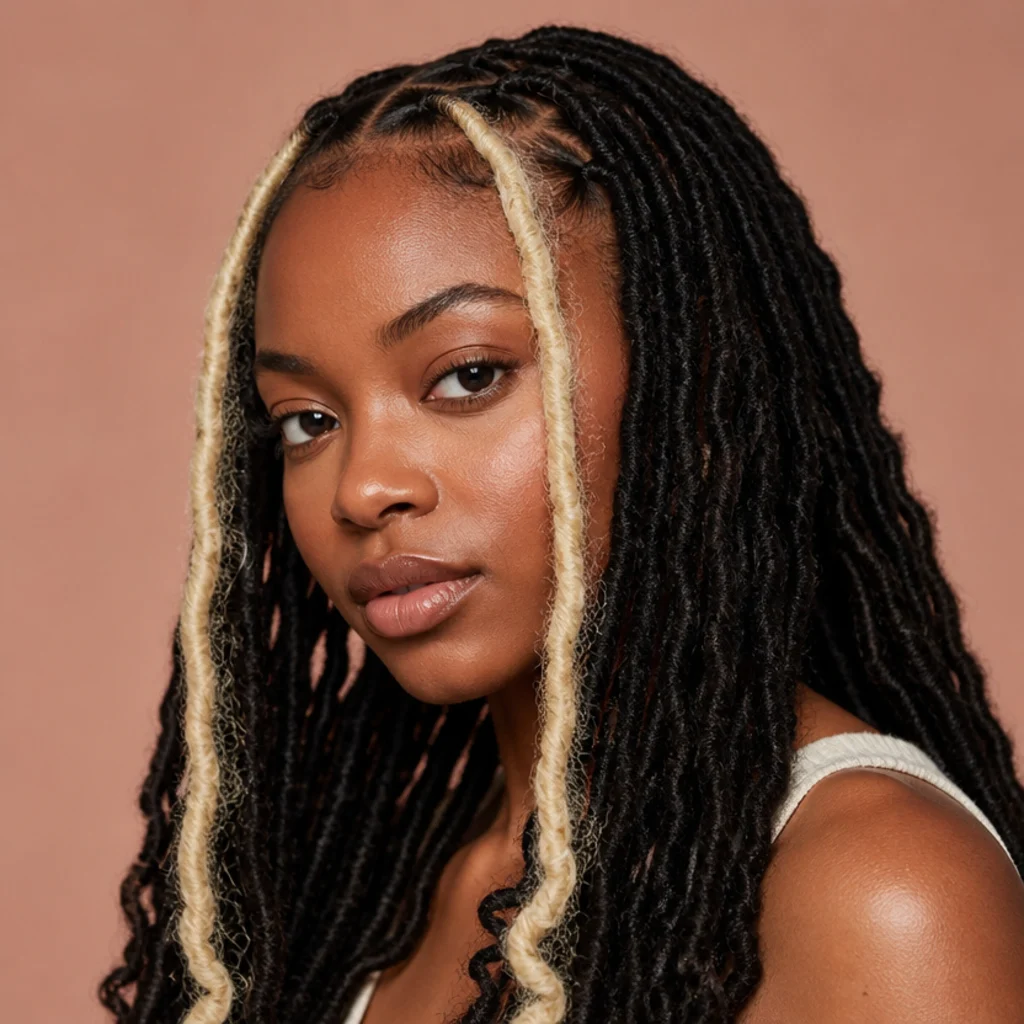
A money piece keeps the bulk of your locs dark and places just a few bright platinum locs right at the front to frame the face, borrowed straight from foiled salon color but here entirely in the extension hair. It's one of the lowest-effort ways to try butterfly locs with color because the contrast does all the work, drawing light to your features without an all-over commitment. The platinum pop flatters most skin tones since it sits against your natural dark base, and because only a small section uses colored hair, it's one of the most budget-friendly entries here. Placement is everything: the bright pieces should fall where they graze your cheekbones, so they read as a designed frame rather than random streaks. Keep a clean center or deep side part to keep the money piece symmetrical and visible. Very light hair looks driest fastest, so those two locs want a touch of oil more often than the dark base. Pro tip: ask for the platinum to start right at the hairline, not an inch back, so it frames from the very front. Ask your stylist to "place two to four platinum money-piece locs at the cheekbone hairline."
07Chocolate Brown With Caramel Highlights
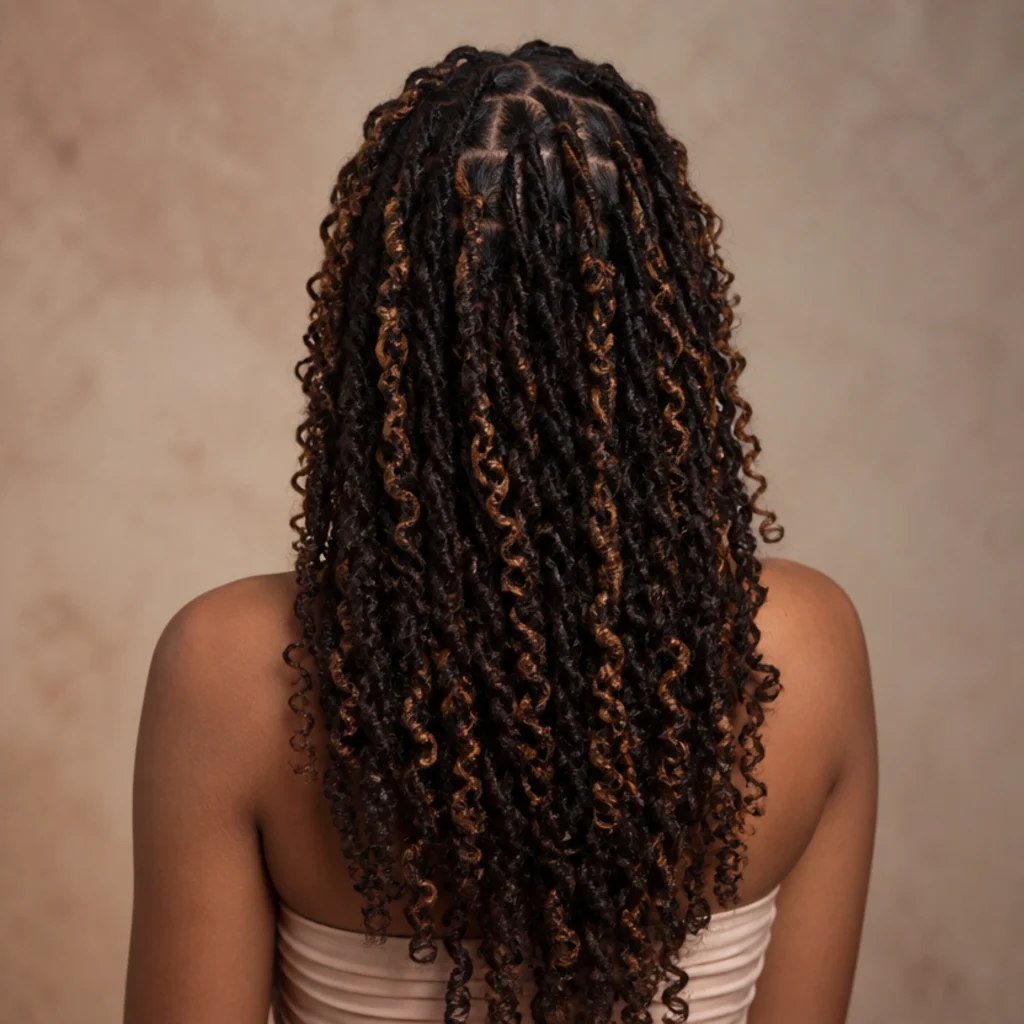
For dimension without a dramatic departure from natural, chocolate brown locs woven with caramel highlights hit a warm, wearable middle ground, the loc equivalent of a lived-in balayage. The two tones sit close enough to read as sun-kissed depth rather than a statement, which makes this a favorite for work-friendly and conservative settings. The scattered caramel pieces catch light and add movement, so even a plain down style looks layered and dimensional. It flatters warm and neutral undertones and suits every face shape. The key is distribution: caramel locs need to be scattered evenly throughout, not clustered on one side, or the highlight reads patchy instead of natural. Wear it down with a slight tousle so the caramel peeks through the chocolate at every angle. The base is a forgiving mid-brown, so settling and frizz stay discreet between refreshes, and upkeep is fully standard. Pro tip: aim for roughly one caramel loc to every four brown for a believable sun-kissed ratio, more and it tips into a full two-tone. Ask your stylist to "scatter caramel highlight locs one-in-four throughout a chocolate base."
08Deep Plum Butterfly Faux Locs
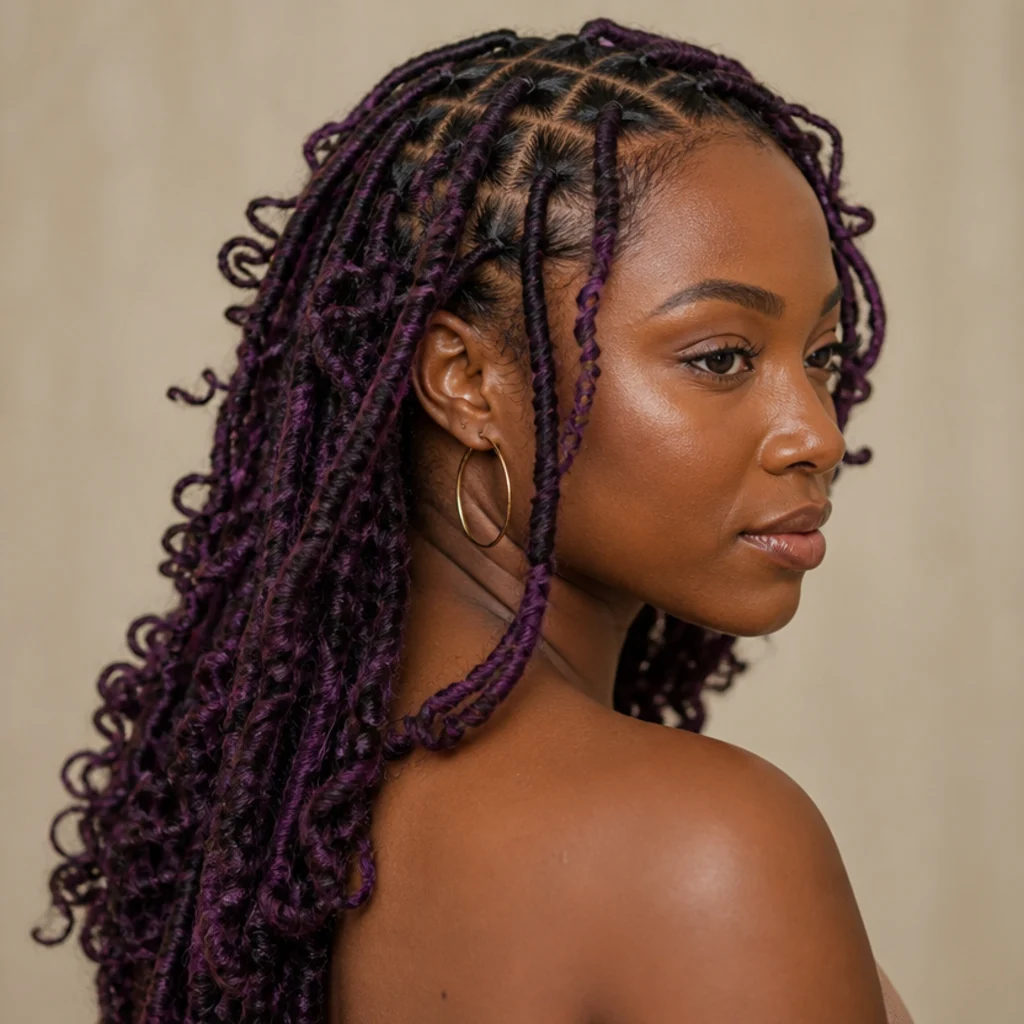
Deep plum is the most sophisticated way to wear colored butterfly faux locs: a purple dark enough to read almost black indoors, yet flashing rich violet the moment sun hits it. Subtle in the office, striking in daylight, without you changing a thing. Plum flatters cool and neutral undertones particularly well, and because the base reads so dark, it's remarkably forgiving as the loops settle, hiding frizz far better than any lifted shade. The undertone within the plum is what sets the mood, so decide early whether you want a redder, warmer plum or a cooler blue-violet, since they read as two different colors. Wear it down to let the violet flash along the length, or up to concentrate the depth at the crown. Standard upkeep applies, with a light oil keeping the depth glossy rather than matte. Pro tip: shoot your reference both indoors and in sun so your stylist matches the exact flash you want, plum packs vary widely in how much violet they throw. Ask your stylist for "deep plum, red-violet not blue-violet" (or the reverse).
09Sunset Ombre Long Butterfly Locs
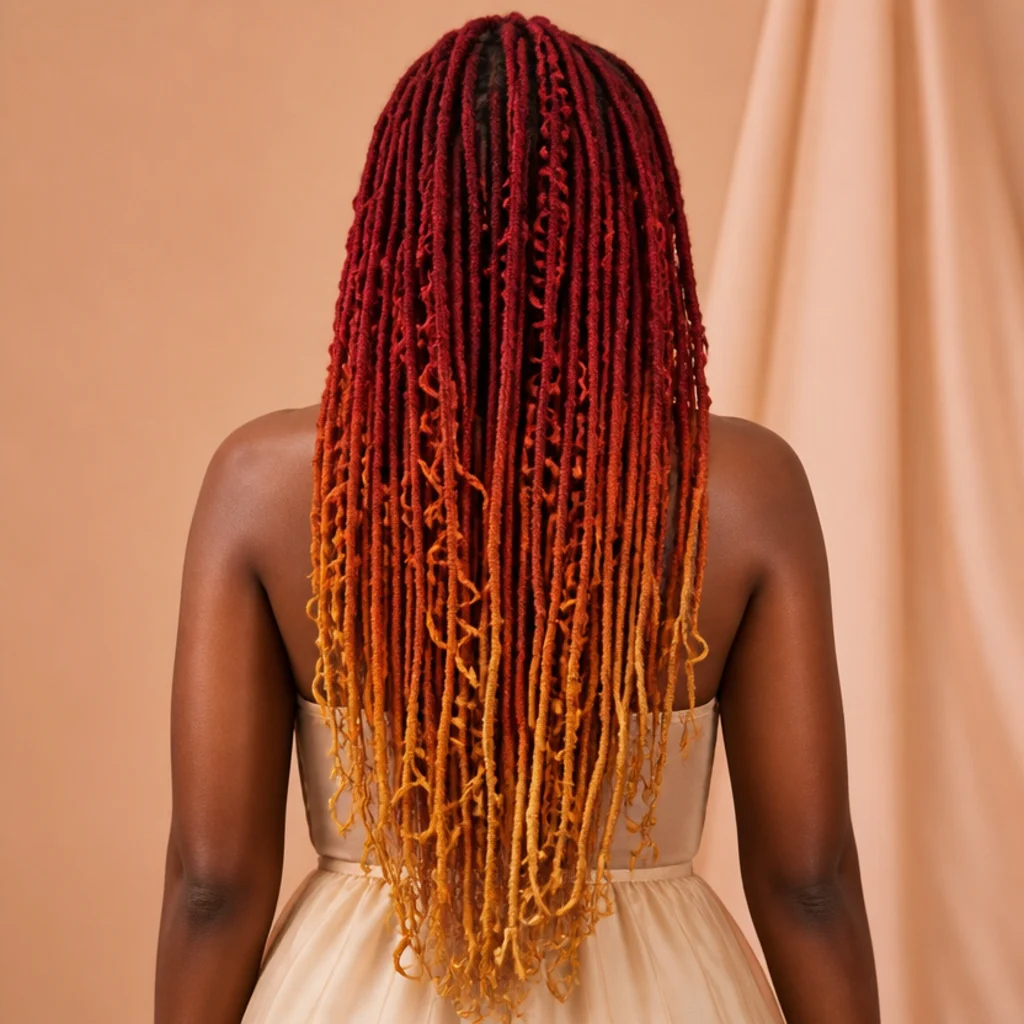
A sunset ombre stacks three warm tones, deep red at the roots easing through orange into golden ends, so the color literally reads like a sky at dusk. Three shades need room to breathe, which makes long butterfly locs the ideal canvas: the extra length lets each tone fully develop before melting into the next, where a shorter set would compress the whole gradient into a muddy inch. The all-warm palette flatters golden and deep skin tones and glows richest in natural light. Because three colors are hand-blended and pre-sorted, this is firmly a book-a-stylist look; ask them to plan the transitions so red-to-orange lands mid-back and orange-to-gold near the ends. Keep it down and loose so the full sunset is visible top to bottom. The golden ends, being the lightest section, want the most oil, since they read driest as the set wears. Pro tip: request the darkest tone stay concentrated through the crown so roots look intentional rather than grown-out. Ask your stylist for a "three-tone sunset ombre, red root through orange to golden ends, on long locs."
10Peekaboo Color Butterfly Locs
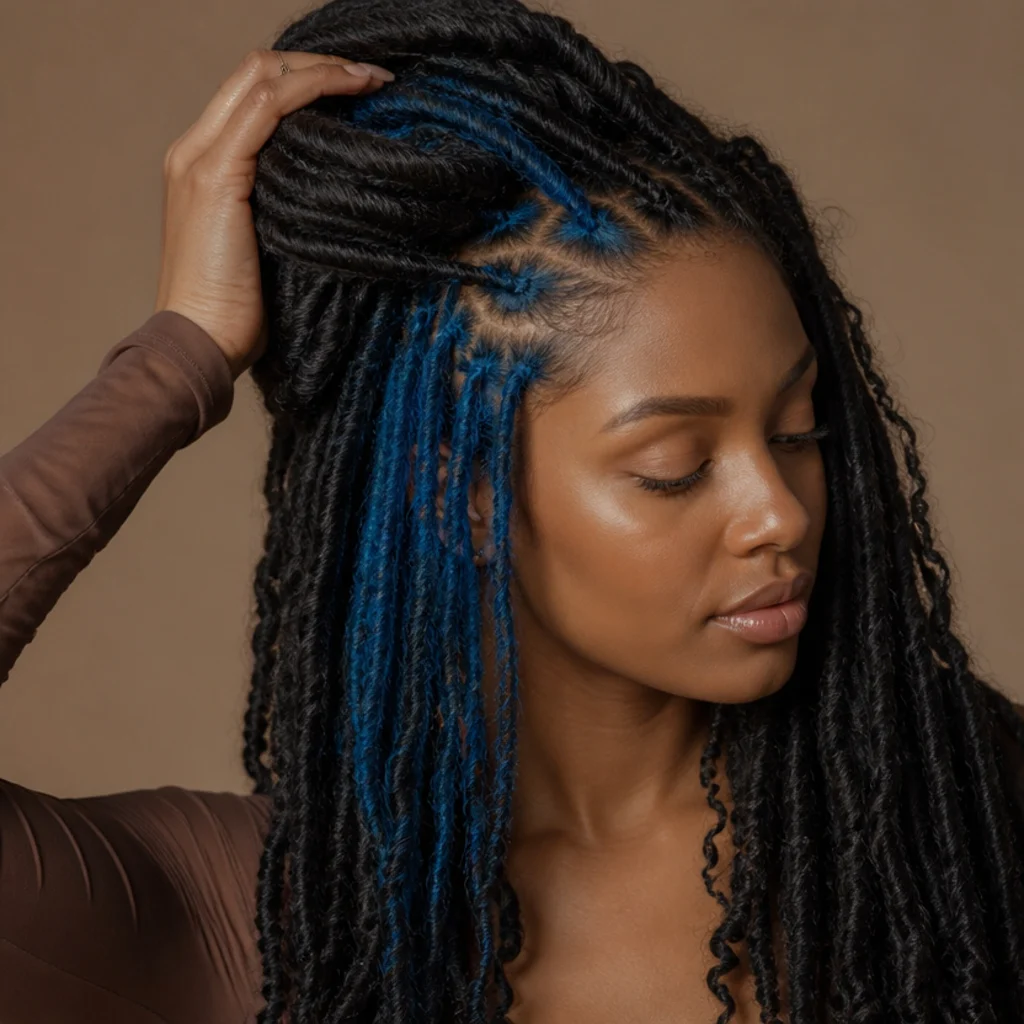
Peekaboo color hides a bright shade, blue, magenta, or emerald green, underneath a dark top layer, so the color only flashes when you move, tie your locs up, or flip your part. This is arguably the most versatile way to wear color on butterfly locs: a boardroom-neutral dark surface with a hidden pop for after hours, all in one install. Because the surprise lives underneath, it suits anyone who wants optionality more than constant boldness. The technique hinges on placement, the colored locs need to sit in the mid and under sections, fully covered by a dark canopy, so nothing shows until you reveal it. The hidden position is a bonus for longevity too, since the bright fiber sees far less sun and stays vivid longer than an exposed bright shade would. Wear it up in a high bun to flash the color, or down to conceal it completely. Upkeep matches a standard set. Pro tip: a middle or zigzag part reveals the peekaboo most dramatically, tell your stylist which part you actually wear so the color lands where you flip it. Ask your stylist to "place the bright peekaboo in the under and nape sections only."
Save this to Pinterest to compare bold and subtle color placements side by side.
11Ash Blonde and Brown Blend
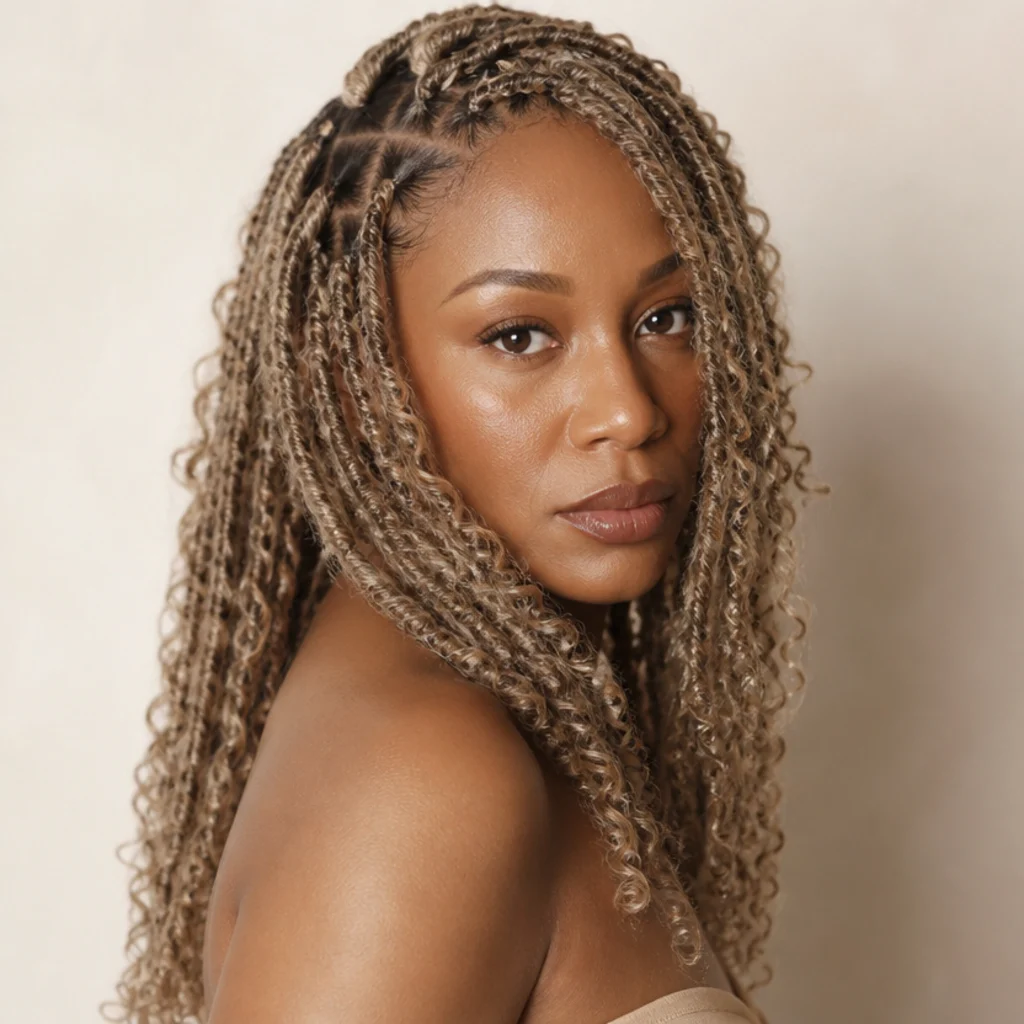
For anyone who leans cool rather than warm, an ash blonde and brown blend swaps honey and gold for smoky, muted neutrals, the understated, editorial end of blonde. The cool ash reads modern and quiet, especially against neutral and cool undertones, and blending it with a soft brown keeps the whole look grounded and dimensional instead of flat. This is color that adds interest without announcing itself, ideal if you want something current but subtle. Ash fiber tends to pull drier than warm blonde, so a lightweight oil is non-negotiable to prevent that straw-like finish along the length. Wear it down and sleek to lean editorial, or in a low bun to spotlight the smoky contrast at the crown. Standard 4-6 week wear applies. Pro tip: be emphatic that you want ash, not golden, blonde. Salons default warm, and once the wrong pack is installed there's no correcting it without a full takedown. Ask your stylist for a "cool ash blonde blended with soft brown, no gold or honey."
12Cherry Cola Red Butterfly Locs
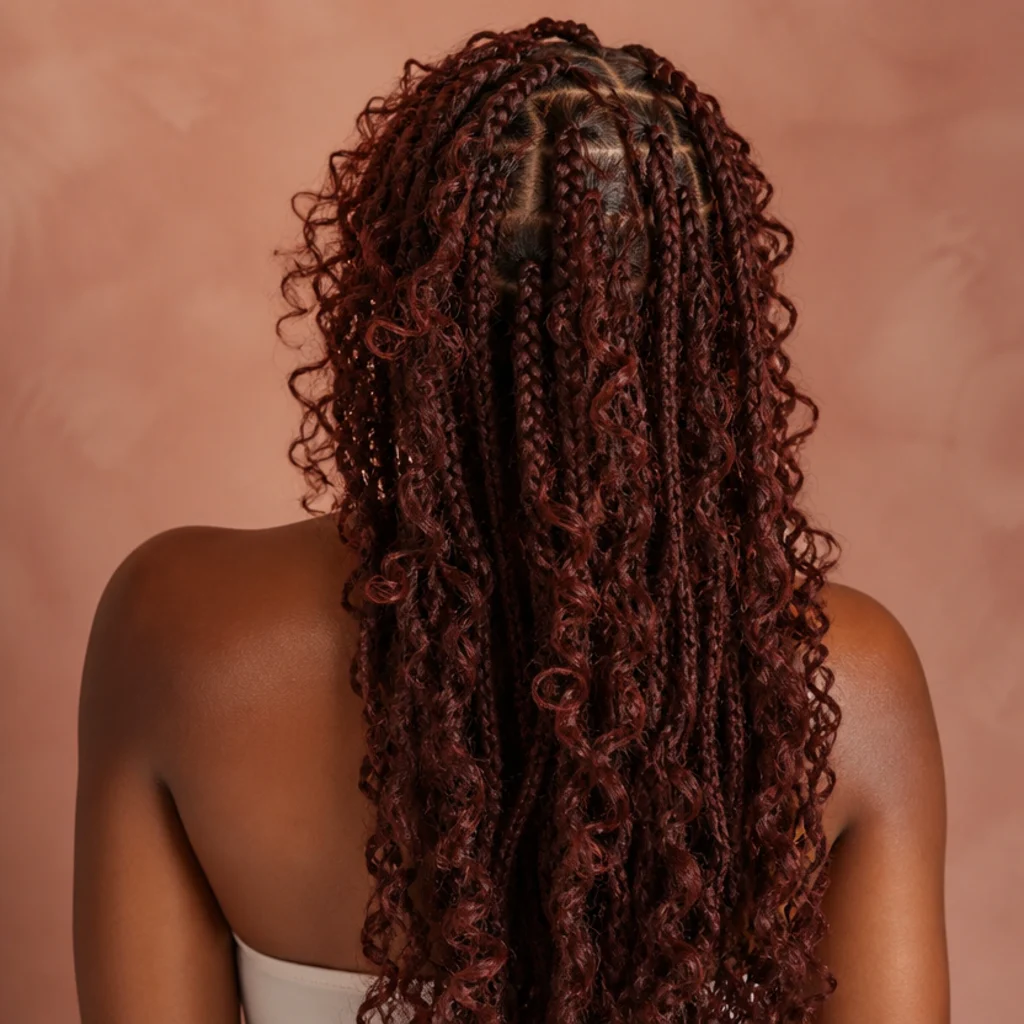
Cherry cola is a deep, brownish red, the exact color of dark soda, that delivers red butterfly locs with far more restraint than a bright true red. The brown undertone keeps it grounded and office-appropriate while the red flashes through in light, so you get warmth and dimension without a loud statement. It's one of the most universal reds on this list, flattering warm, cool, and neutral undertones alike, which makes it the safest first step into the red family. Being a deeper shade, it hides settling and frizz well, so it stays polished between refreshes with minimal fuss. Wear it down to catch the red flash along the length, or half-up to keep it subtle around the face. Pro tip: the brown-to-red ratio is what shifts cherry cola from subtle to bold, so name whether you want it reading more brown (workday-quiet) or more red (dimensional pop) before the hair is chosen. Ask your stylist for "cherry cola, deeper brown-red base with a red flash." Upkeep is standard, with a light oil keeping the depth glossy.
13Pastel Pink Butterfly Locs
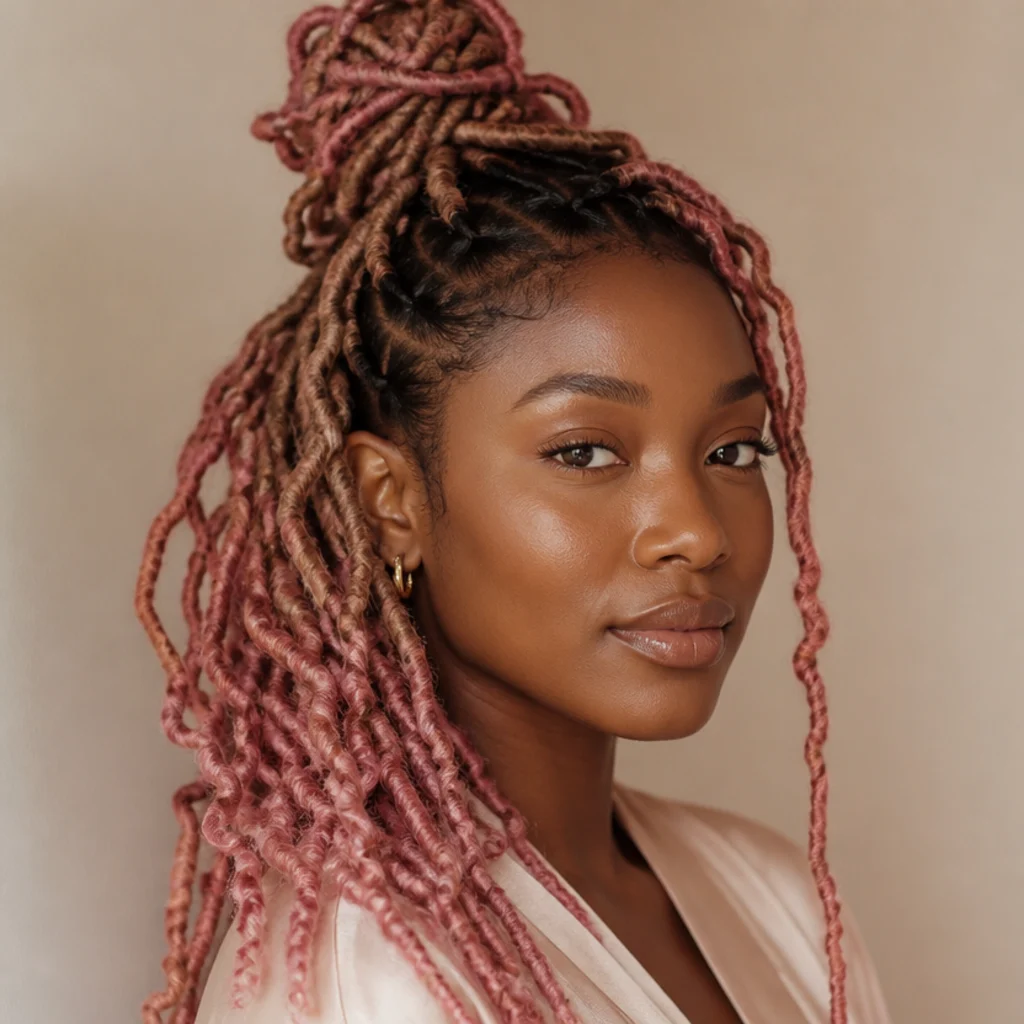
Pastel pink is the softest, dreamiest way to wear butterfly locs with color, a muted rose that stays playful without tipping into neon. The low saturation is what makes it flattering across a wide range of skin tones: gentle rather than harsh, and beautiful in soft, diffused light. Pastels are pre-lightened to a very pale base, so they demand the most conditioning care of any shade here. A lightweight oil every few days and a satin bonnet nightly keep the pink from turning dry and dull. It rewards a cohesive wardrobe, reading best against neutrals, cream, gray, soft denim, rather than competing brights. Wear it half-up to frame the face, or in loose down waves for a romantic finish. Pro tip: pastel fiber fades fastest of everything on this list, so if you have a big event, book the install within a week of it rather than a month out. Ask your stylist whether you want "an even pastel rose throughout, or pink concentrated at the ends for a soft gradient."
14Teal and Black Color Block
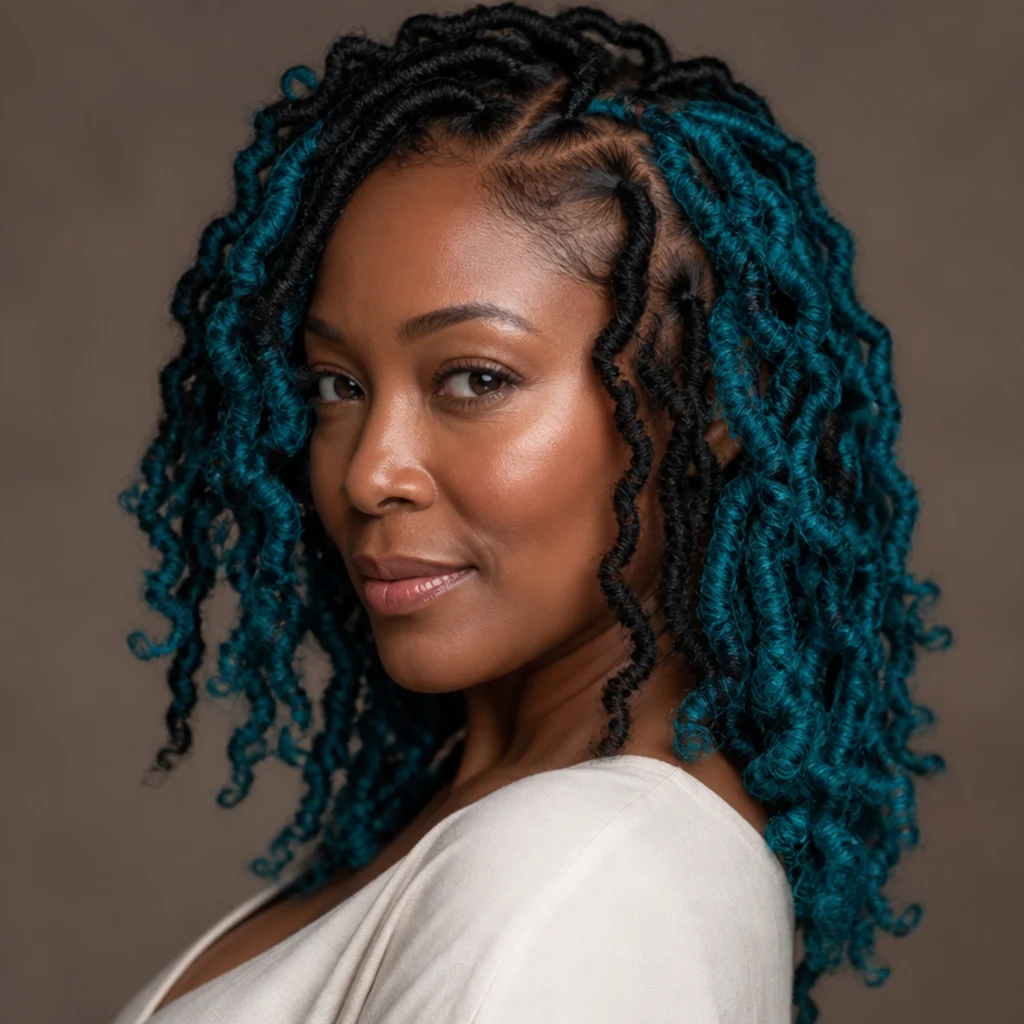
Color blocking places two distinct shades in clean, deliberate sections rather than blending them, and teal against black is a high-contrast pairing that reads graphic and confident. Unlike an ombre, the entire point is the sharp division, so the two colors must stay crisp and un-melted at the seam. It suits anyone who wants a strong statement and is comfortable with color that commands attention. The black sections do real work here, anchoring and balancing the vivid teal so the effect stays wearable rather than overwhelming. Layout defines the whole look, so decide up front whether you want the blocks split left-to-right, front-to-back, or a horizontal top-to-bottom, since each reads completely differently. Wear it in a half-up to show both sections at once, or a side sweep to spotlight one block. Pro tip: teal is a cool bright that oxidizes with sun and hard water, so a color-safe routine and a bonnet keep the seam vivid longest. Ask your stylist to "color-block clean teal against black, left-to-right split, no blending at the seam."
15Golden Blonde Tips
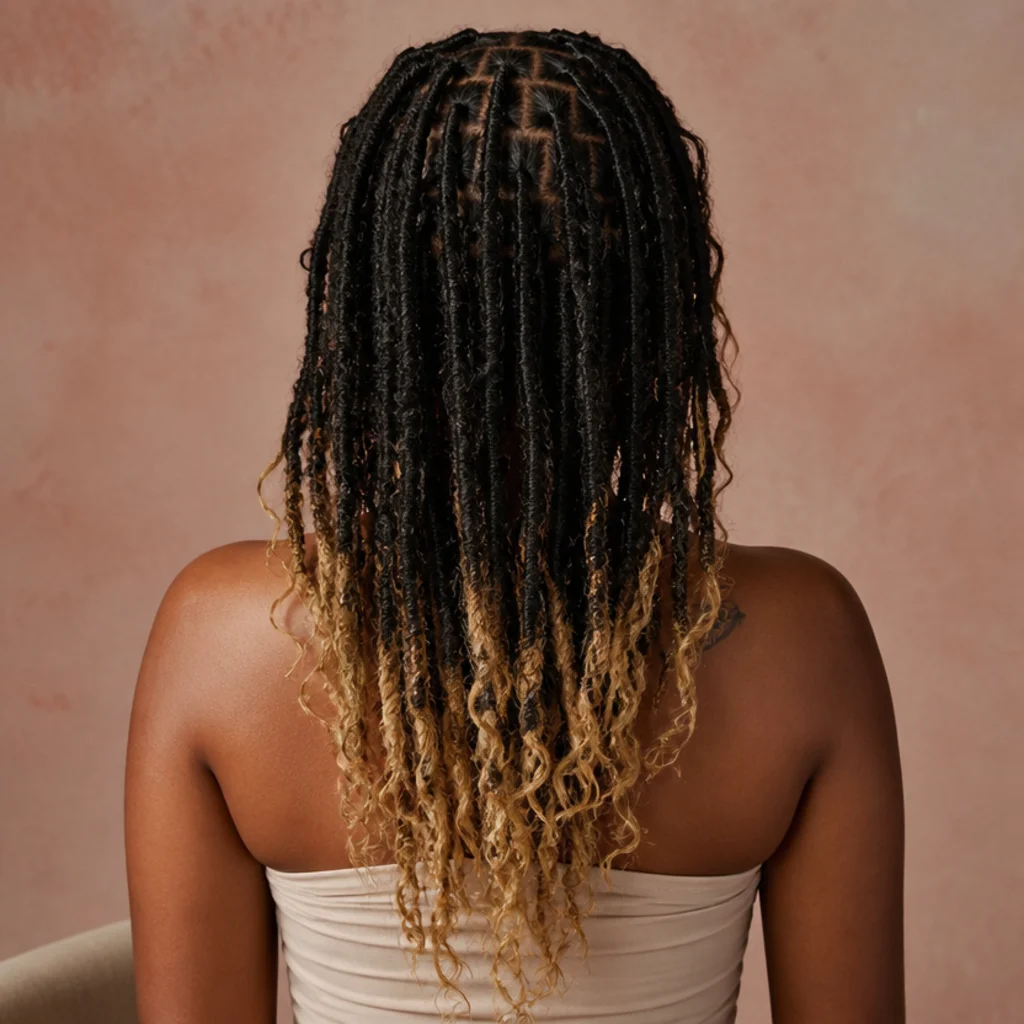
Dipping only the last few inches of dark locs into golden blonde gives you a subtle, low-commitment pop that brightens the ends without a full ombre. It's one of the easiest colored looks to wear because dark roots and mid-lengths keep everything grounded while the blonde tips add a flash of warmth as the locs swing. It suits anyone curious about color but not ready for an all-over shade, and it flatters most undertones since the base stays natural. The single variable is where the blonde starts: keeping it to the very ends reads as tips, while raising the line past the mid-length turns it into an ombre, two different looks from the same technique. Wear it down so the tips catch light, or in a low ponytail that gathers the golden ends into a single bright sweep. The blonde ends benefit from a little oil to stay supple. Pro tip: request the blonde begin below the point where you usually tie your locs, so a ponytail keeps the color hanging free rather than bunched at the base. Ask your stylist for "golden blonde on the last three to four inches only, dipped-tip height."
Save this to Pinterest so you can show your stylist exactly where you want the color to land.
16Auburn and Black Marble Blend
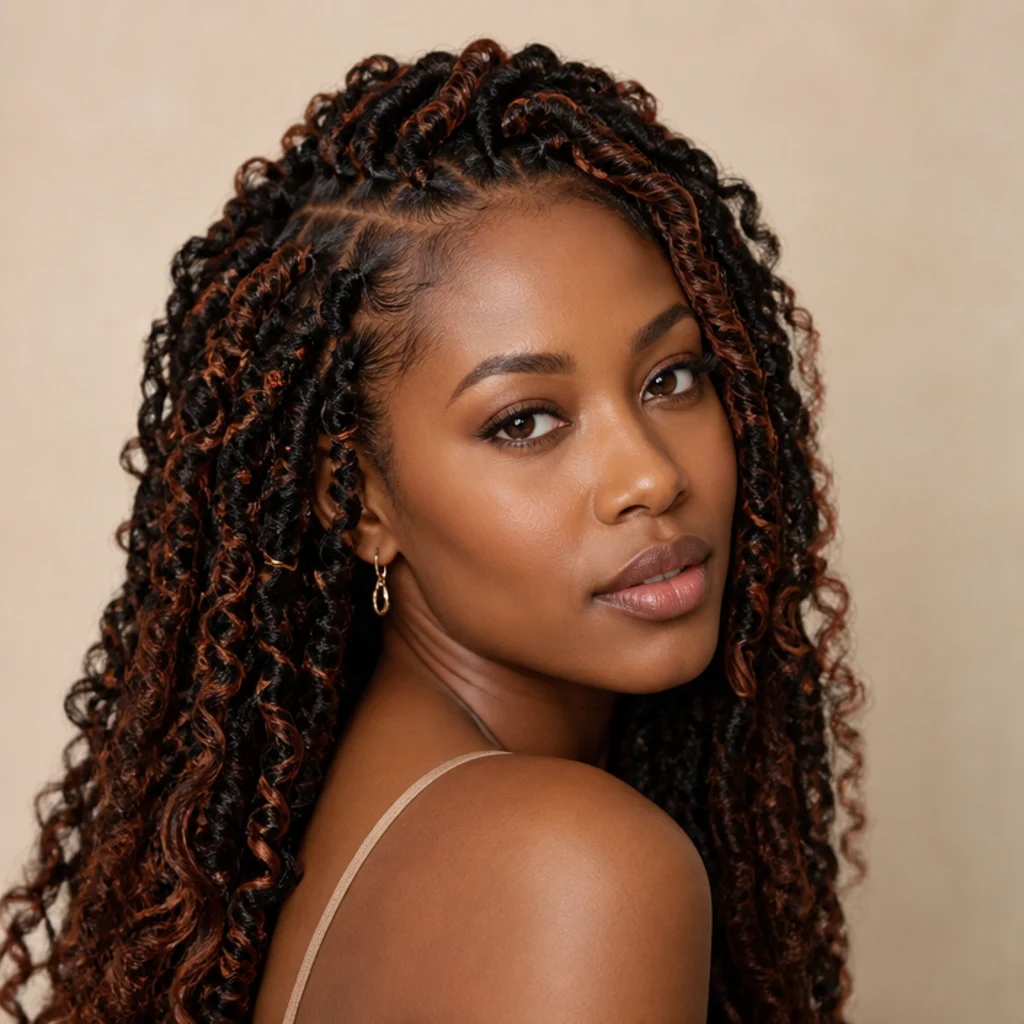
A marble blend twists two shades together within the locs so the colors swirl through each other rather than sitting in separate sections. Deep auburn marbled with black gives a rich, multidimensional effect that shifts as light moves across it, reading near-black at one angle and glowing warm red at the next. This is the pick if you love red butterfly locs but want more depth and movement than any single flat shade can offer. The mix flatters warm and neutral undertones, and because black anchors the auburn throughout, it hides frizz and settling as well as a solid dark set. Wear it down and loose so the marble catches light along the full length, where an updo would hide the swirl. Pro tip: the auburn-to-black dominance is the dial, more auburn glows brighter and warmer, more black keeps it moody, so name your ratio before the hair is combined. Ask your stylist for a "marbled, twisted blend, not color blocking," with your preferred auburn-versus-black balance. Standard upkeep and a light oil keep it glossy.
17Silver Gray Butterfly Locs
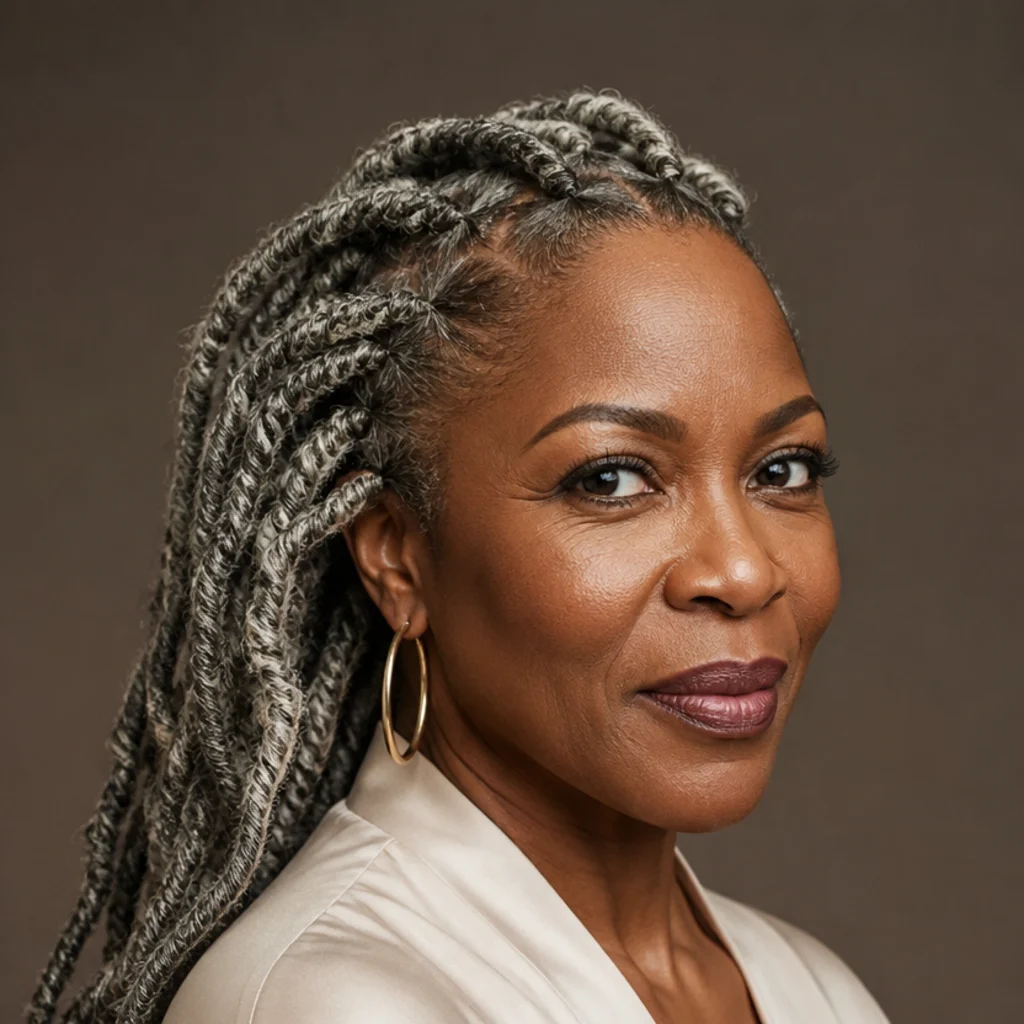
Silver gray is the boldest high-fashion choice on this list, reading cool, modern, and unmistakably confident. The metallic tone makes a striking contrast against deep skin and photographs with a soft, editorial glow that few colors match. Like every very light shade, silver lives on heavily pre-lightened fiber, so these locs demand the most moisture care of anything here. A lightweight oil is essential, not optional, to keep them from looking dry and cottony. Silver flatters cool and neutral undertones best, though warm skin can wear it too when the gray leans slightly warm rather than icy blue. The mood pivots on depth: a bright silver reads futuristic and loud, while a smoky charcoal gray reads soft and sophisticated, decide which before booking. Wear it off the face in a sleek high bun to lean editorial, or down for full metallic impact. Pro tip: silver shows hard-water mineral buildup faster than any shade, so a clarifying rinse and filtered or bottled final rinse keep it from going dull-yellow. Ask your stylist for "cool bright silver" or "smoky charcoal gray," and commit to the extra conditioning between refreshes.
18Rose Gold Short Butterfly Locs
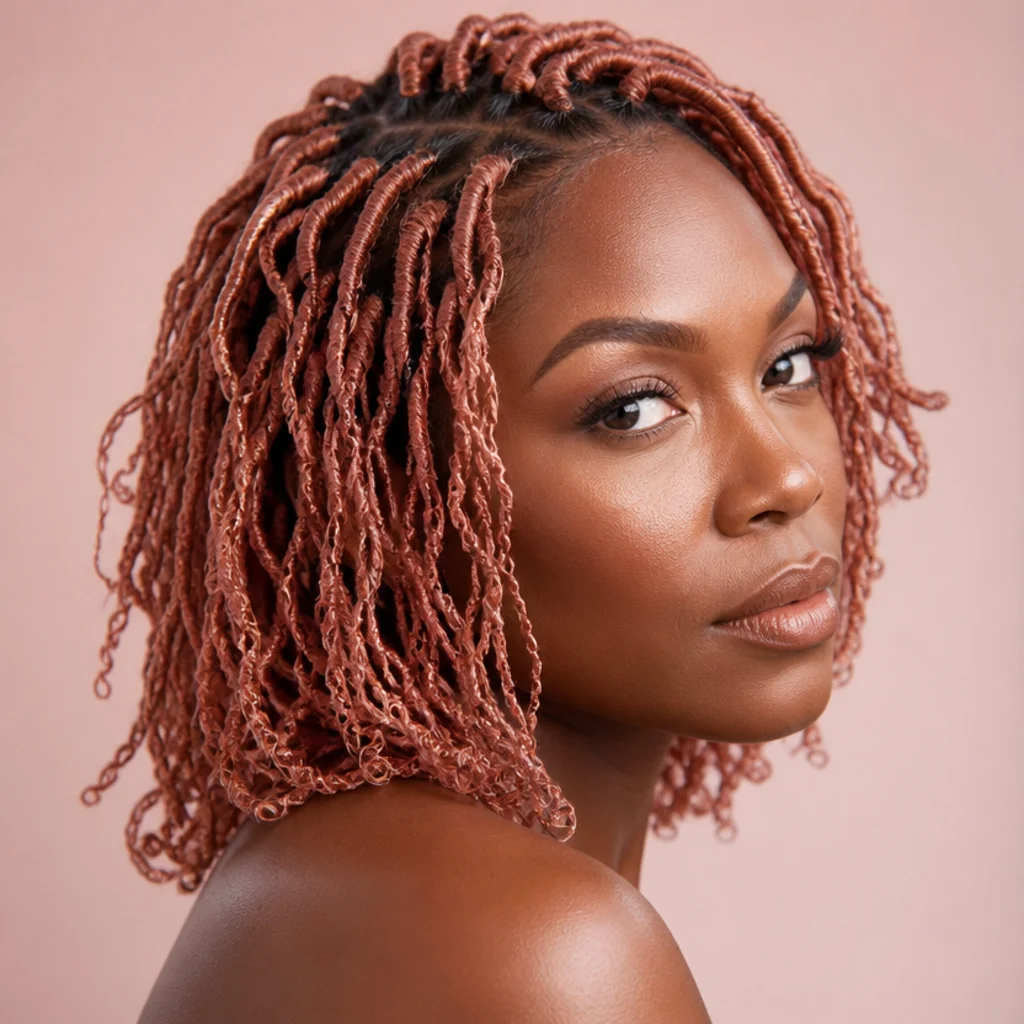
Rose gold blends pink and copper into a warm metallic that feels soft and rich at once, the grown-up cousin of a straight pastel. On short butterfly locs it's especially flattering: the shorter length keeps the look lightweight while the rosy-copper warmth brightens the face and warms the complexion. Because it marries a pastel-adjacent pink with a grounding copper, rose gold reads more wearable and far more forgiving than a pure pastel, hiding settling better and flattering warm and neutral undertones beautifully. The pink elements, being lighter, still want oil to stay supple, though less obsessively than a full pastel. Wear it in a shoulder-length down-do or a soft half-up to keep the metallic warmth around the face. Pro tip: the pink-to-copper balance is the whole shade, more pink reads candy-soft and romantic, more copper reads burnished and warm, so name which you want dominant before the hair is chosen. Ask your stylist for "rose gold, pink-forward" or "rose gold, copper-forward," on short locs to keep upkeep and install time low.
19Two-Tone Half-and-Half Locs
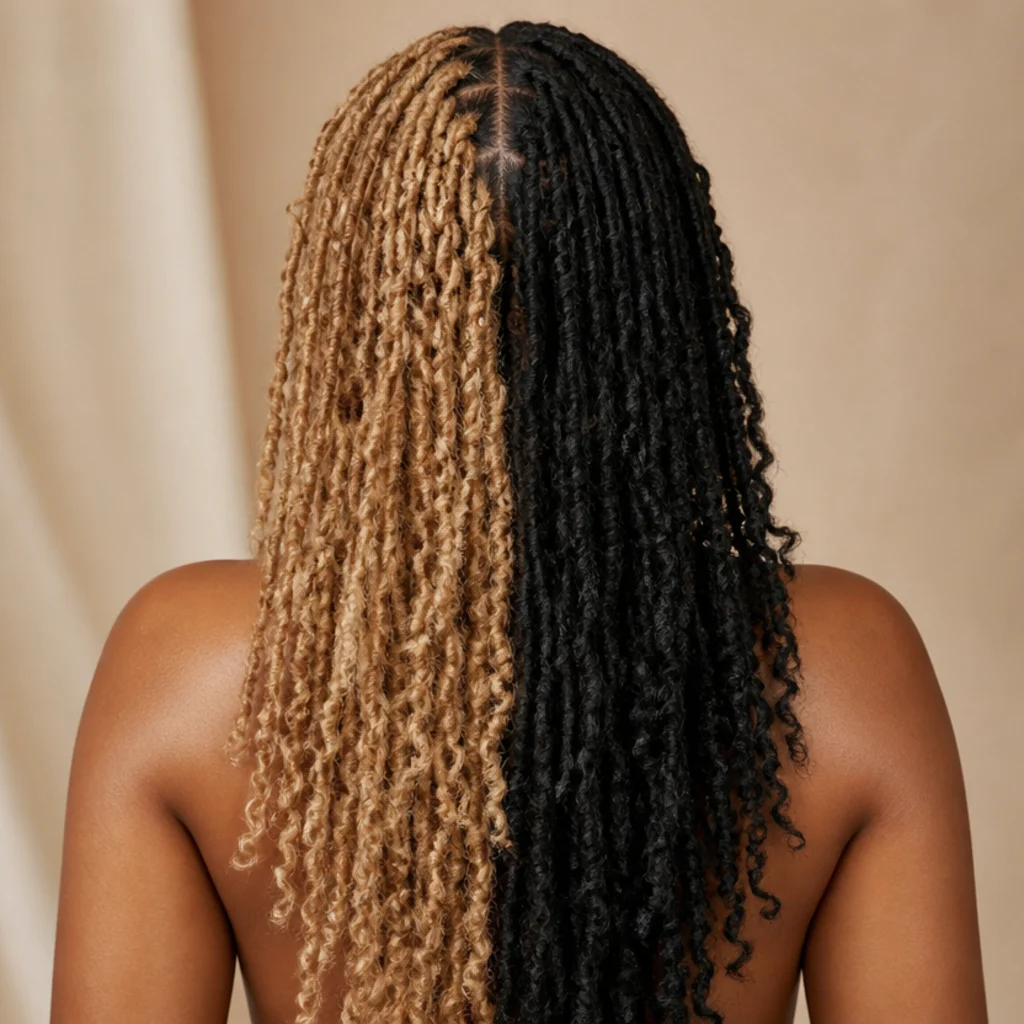
The half-and-half look splits your head straight down the middle into two colors, one shade on the left, another on the right, and it has become a signature of creative loc styling. It's a bold, symmetrical statement, and the contrast is yours to dial: dramatic, like platinum blonde against black, or softer, like copper against chocolate brown, depending on how much attention you want. It flatters anyone comfortable with a strong graphic effect, and it reads cleanest when your part is dead-center so the divide stays crisp and the two sides balance. An off-center part throws the whole symmetry, so this look depends entirely on precise placement before a single loc is wrapped. Wear it down with a sharp center part to keep the split reading intentional, or in two space buns to show one color per side. Upkeep depends on your two shades, with any lighter half needing more oil than its darker partner. Pro tip: if you part off-center in daily life, choose a softer two-tone rather than a high-contrast split, since a maximal contrast punishes any part drift. Ask your stylist to "map a clean center split before installing, left half and right half planned separately."
20Rainbow Accent Butterfly Locs
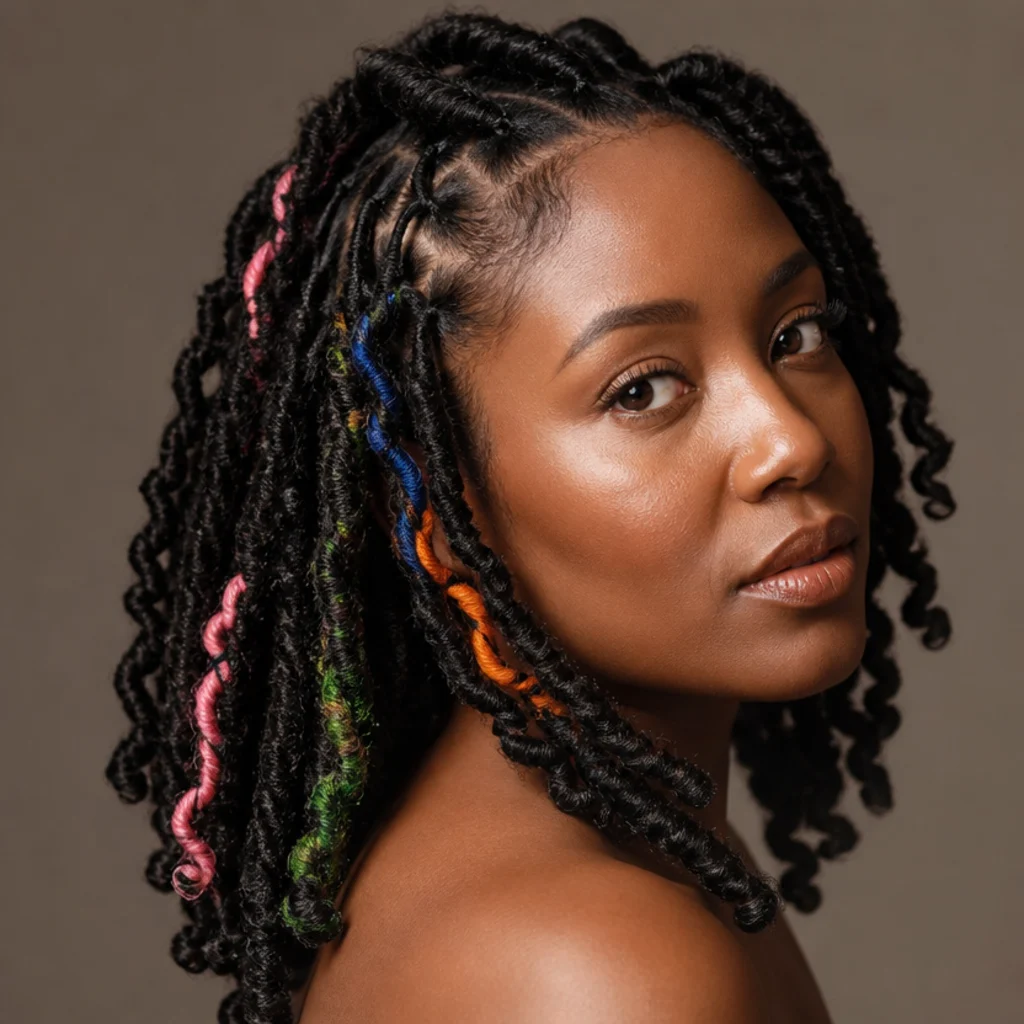
Rainbow accents scatter a handful of individually colored locs, one pink, one blue, one green, one orange, throughout an otherwise dark set. It's the most joyful, festival-ready way to add color to butterfly locs while keeping most of your hair natural, so the effect lands playful rather than overwhelming. Because only a few locs carry color, it's both budget-friendly and low-maintenance, and it flatters anyone who wants personality without a full commitment. The trick is distribution: the accent locs should peek out from different angles, front, side, and nape, rather than clustering in one spot, so the color feels sprinkled through the whole set. Wear it half-up to reveal accents at the crown, or down so they surface as you move. The bright accent fiber holds best away from heavy sun, and each colored loc appreciates a touch of oil to stay vivid. Pro tip: pick accent colors that share a temperature (all jewel-tones, or all pastels) for a pulled-together look rather than a random confetti effect. Ask your stylist to "scatter four to six accent locs across the front, sides, and nape, evenly spaced."
Pro Tips from the Editor
- Match the fiber temperature to your undertone first, the shade second. Warm and golden skin glows in coppers, gingers, honey, and auburn; cool and neutral skin holds burgundy, plum, ash, and silver. A shade you love in the wrong temperature can still fall flat against your face.
- Name the exact shade and confirm the pack in daylight. "Red," "blonde," and "plum" each cover a dozen packs. Say "true warm red, not brick" or "warm honey, not beige," and have your stylist hold the actual hair to your reference under a window before wrapping.
- Pre-sort is what separates a melt from a mess. For any ombre, melt, marble, or block, the colored hair must be organized before the first loc goes in. If a stylist wants to start without sorting, that's your cue to reschedule.
- Lighter fiber equals more oil, always. Blonde, silver, pastel, and rose gold are pre-lightened and read driest. A few drops of jojoba or grapeseed on the length every few days, plus a satin bonnet nightly, is the difference between supple and cottony.
- Time bright and pastel installs to your events. Cool brights (teal, blue) and pastels fade fastest with sun and hard water, so book them close to when you most want them looking fresh, not four weeks ahead.
- Protect the color, not just the style. A color-safe, sulfate-free cleanser diluted on the scalp, a filtered final rinse to dodge mineral dulling, and limited direct sun keep every shade from oxidizing before the standard 4-6 week takedown.
- Short lengths de-risk a first color. Fewer packs, faster install, lower cost, and mid-depth warm shades hide settling, so a short ginger or cherry cola set is the smartest way to test whether color is for you.
How to Choose / Get the Look
Start with undertone, then commitment, then length. Undertone is the anchor: warm and golden skin tends to glow in coppers, gingers, honey, and auburn, while cool and neutral skin often prefers burgundy, plum, ash blonde, and silver, though these are starting points, not rules, and a well-chosen version of almost any shade can work. Commitment decides placement: an accent piece, peekaboo layer, money piece, or dipped tips let you test color with minimal cost and effort, while all-over shades, melts, and multi-tone ombres make a fuller statement, take longer to install, and cost more in both time and packs. Length shapes what a technique can do: short butterfly locs keep colorful looks lightweight, faster, and cheaper, ideal for a first experiment or a forgiving mid-depth warm shade, while long butterfly locs give ombres, melts, and sunset fades the runway they need to develop without muddying. Use the quick reference below to narrow it fast.
| If you want… | Choose | Best undertone | Length that carries it | Upkeep effort |
|---|---|---|---|---|
| Lowest-commitment test | Money piece, dipped tips, rainbow accents | Any (dark base) | Any | Low |
| Bold all-over statement | Classic red, honey blonde, silver, plum | Match shade to undertone | Any | Low-moderate; high for silver |
| Dimensional, expensive look | Copper-honey melt, auburn marble, caramel highlights | Warm/neutral | Medium to long | Moderate |
| Gradient color story | Burgundy ombre, sunset ombre | Warm (sunset), cool (burgundy) | Long | Moderate |
| Graphic, high-contrast | Teal-black block, half-and-half | Any (dark anchors it) | Any | Moderate |
| Soft and romantic | Pastel pink, rose gold | Neutral (pastel), warm (rose gold) | Short to medium | High (pastel), moderate (rose gold) |
Whatever you land on, bring one clear daylight reference photo and name the exact shade and placement, since salons stock several near-identical tones and default to warm. Because every shade here lives in the extension hair and never touches your natural strands, you can change your mind entirely next install, no grow-out, no damage. Lighter colors, blondes, pastels, silver, rose gold, benefit most from a lightweight oil and a satin bonnet, and every colored set holds longest with limited sun, a filtered final rinse, and a gentle, color-safe routine. Expect 4-6 weeks of wear before the loops loosen enough to refresh.
Frequently Asked Questions
Do colored butterfly locs damage your natural hair?
No. The color lives entirely in the wrapped extension hair, never your own strands, so you get the look of a bold or lifted shade with zero dye or bleach on your natural texture, no line of regrowth and no chemical grow-out. As with any protective style, the real variables are install tension (it should never feel tight or painful at the roots) and gentle, unhurried takedown. Keep the scalp clean and moisturized underneath and your natural hair stays protected for the full wear.
How long do butterfly locs with color last?
Most sets wear 4-6 weeks, identical to uncolored butterfly locs, with takedown driven by loops loosening and roots growing out rather than by the color itself. That said, very light and cool-bright shades, blonde, pastel, silver, and teal, visibly fade or dull faster than deep shades, so if longevity of the color specifically matters, a deeper tone like cherry cola or plum holds its look longest. A satin bonnet, color-safe cleanser, and limited sun extend the vibrancy of any shade.
Which color is best for short butterfly locs?
Warm, mid-depth shades, ginger, copper, honey, and cherry cola, are the most flattering on short butterfly locs because they brighten the face while hiding the settling and frizz that shorter lengths show sooner. Rose gold and dipped golden-blonde tips also read beautifully at chin-to-collarbone lengths and keep upkeep easy. Short lengths also install faster and use fewer packs, so they're the lowest-cost, lowest-risk way to try color for the first time.
Can I get red butterfly locs without an all-over bold color?
Yes, and there are three strong routes. Burgundy ombre keeps dark roots and drops into wine only on the length; cherry cola is a deep brown-red that flashes only in the light; and an auburn-and-black marble blend swirls red through a dark anchor. All three give you genuine red butterfly locs with far more restraint than a bright true red, because the darker base grounds the look and keeps it office-friendly while the red still reads dimensional.
How do I keep colored loc hair from looking dry?
Lighter, pre-lightened fibers, blonde, silver, pastel, rose gold, are the most prone to a dry, cottony finish because the hair has been lifted. A few drops of a lightweight oil like jojoba or grapeseed worked along the length every few days keeps the loops supple without weighing down the loop texture. Pair that with a satin bonnet nightly, a color-safe sulfate-free cleanser diluted on the scalp, and limited direct sun, and every shade holds its richness far better between refreshes.
Can I install colored butterfly locs myself, or do I need a stylist?
Single all-over shades, dipped tips, and simple rainbow accents are the most realistic DIY projects if you're comfortable with the wrap or crochet method and have the patience for a full head. Anything involving blended color, melts, ombres, marble twists, color blocks, and half-and-half splits is a salon job, because the result depends on the colored hair being pre-sorted and mapped before the first loc is wrapped. If your look has more than one tone interacting, book a stylist experienced specifically in colored locs.
How many packs of colored hair do I need?
Most full sets use roughly 6-10 packs of water-wave or braiding hair, depending on length, density, and how many locs you want. Short sets sit at the lower end, long or very full sets at the higher end. Multi-tone looks require buying each shade separately and often an extra pack or two for blending flexibility, so confirm the exact count and colors with your stylist before you shop, running short mid-install forces a color mismatch.
Will color make my butterfly locs heavier or more damaging to my scalp?
No, colored extension hair weighs essentially the same as uncolored, so the load on your scalp comes from the number and length of locs, not the shade. The comfort variables are the same for any butterfly locs: reasonable install tension, not too many locs for your density, and a length your scalp can carry comfortably. If a set ever feels tight or tender at the roots, that's a tension issue to address with your stylist, unrelated to the color.
What is the difference between butterfly locs and butterfly faux locs?
The terms are used almost interchangeably, both describe the soft, distressed, looped style created by wrapping textured extension hair over a base rather than growing traditional locs. "Faux" just underlines that they're temporary and removable, which is what makes color so low-risk here. Everything in this guide, every shade, placement, and upkeep note, applies equally whether your stylist calls them butterfly locs or butterfly faux locs.