15 Easy Short Butterfly Locs Styles
Short butterfly locs give you the airy, distressed loop texture the trend is known for, without the weight, the neck strain, and the long install of a full-length set. Below are 15 ways to shape, part, color, and accessorize them, each with honest notes on who it flatters, how it installs, and the upkeep to plan for.
 Edited by Lena Rose · Published July 11, 2026 · 29 min read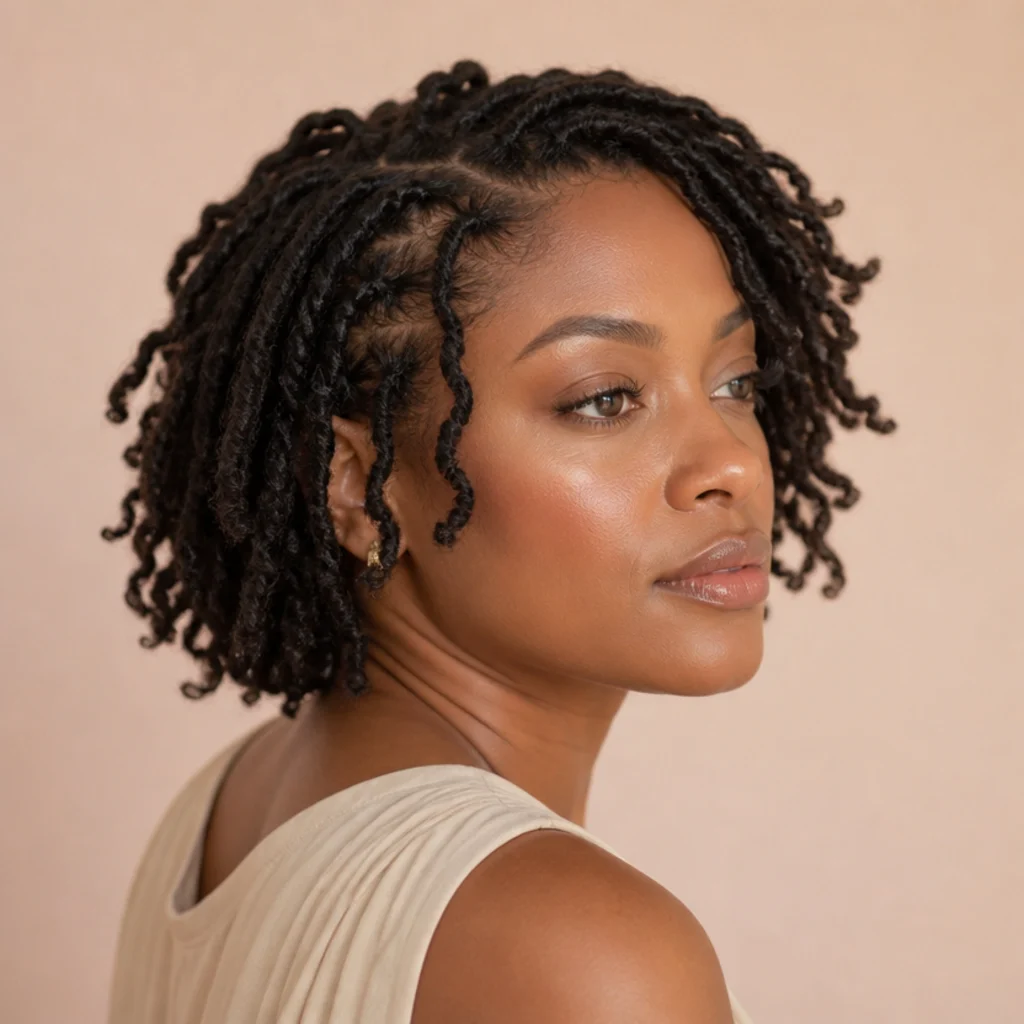
Quick Answer
- Best for: Anyone wanting a lightweight, low-commitment protective style; short butterfly locs flatter round, oval, heart, and square face shapes and install on 4A through 4C textures as well as looser curl patterns.
- Who might skip it: Anyone with very fine or actively shedding hair who needs to avoid added tension at the roots, or anyone who wants a permanent locked style rather than a temporary extension look.
- Maintenance: Low to moderate. Re-wrap loosening loops every 2-3 weeks, tie down with a satin scarf or bonnet nightly, and cleanse the scalp with diluted shampoo or an applicator bottle roughly every 1-2 weeks.
- Difficulty: Intermediate to install; most people book a stylist for the wrap or crochet method rather than attempting a first set at home.
- Cost: Variable. Expect a mid-range salon range for a standard short set, more for micro sizing or custom color blends, and less if you use the crochet method or install yourself. Wrapping hair adds a modest supply cost.
- Wear time / longevity: Typically 4-6 weeks looking crisp, with careful wearers stretching toward 8 weeks before takedown.
- Standout variation: A chin-length blunt bob with copper melted through the last few inches.
- How to ask your stylist: Request "short butterfly locs, [chin/collarbone] length, [small/medium/jumbo] sizing, distressed loops" and bring two reference photos, one for shape and one for color depth.
In This Guide
- Classic Chin-Length Butterfly Bob
- Tapered Short Butterfly Locs
- Honey-Blonde Short Butterfly Locs
- Red Butterfly Locs Bob
- Center-Part Short Butterfly Locs
- Side-Swept Short Butterfly Locs
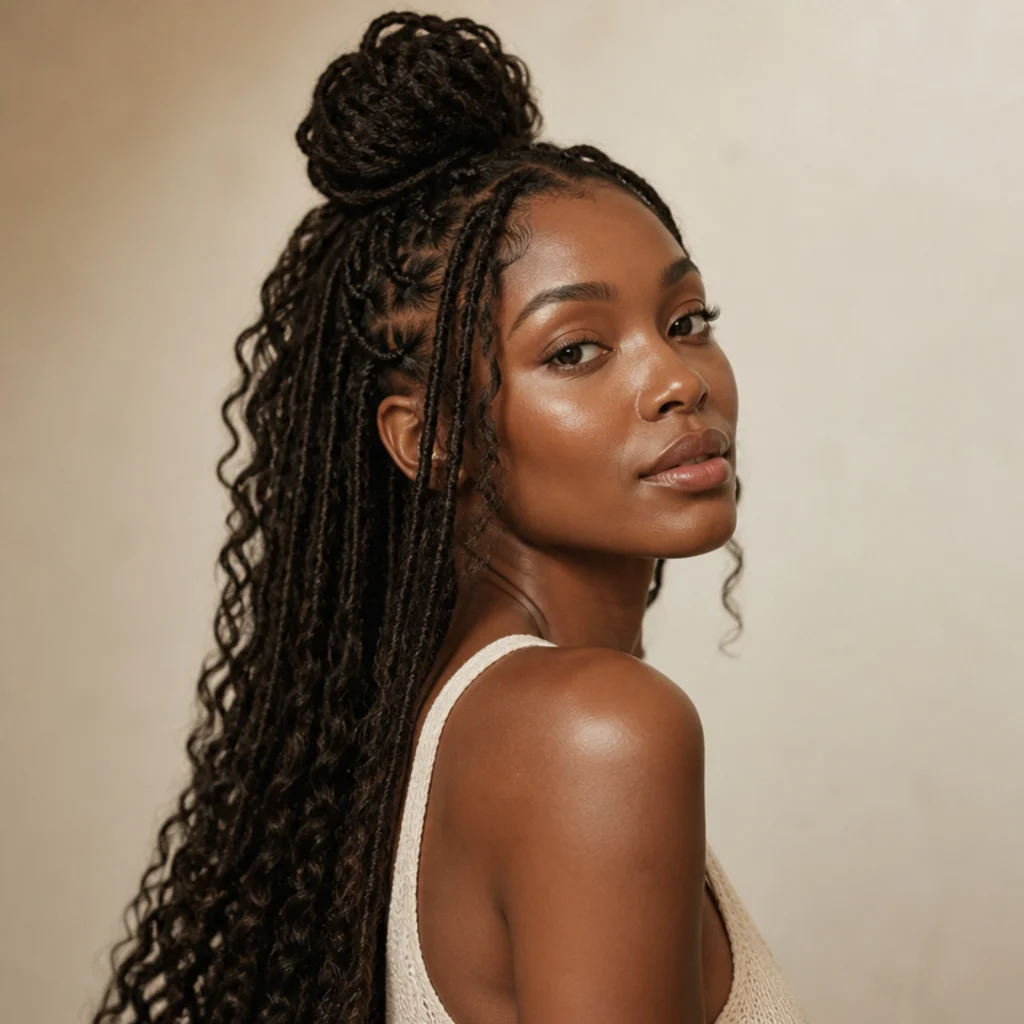
- Half-Up Butterfly Loc Bun
- Curly-Ended Short Butterfly Locs
- Burgundy Ombre Short Butterfly Locs
- Short Butterfly Faux Locs with Cuffs
- Asymmetric Short Butterfly Locs
- Jumbo Short Butterfly Locs
- Micro Short Butterfly Locs
- Pulled-Back Short Butterfly Ponytail
- Two-Tone Short Butterfly Locs
Short butterfly locs are the trend's most wearable length, and there's a physical reason for that, not just an aesthetic one. The distressed, looped texture that defines butterfly locs comes from wrapping loc hair over a braided or twisted base and leaving deliberate gaps, and that texture reads softer and lighter once the locs stop somewhere between the ear and the collarbone. Less length means less leverage pulling on each attachment point, so you get the signature airy movement without the scalp fatigue a hip-length set can cause by week three. That shorter drop also makes them a friendly entry into faux locs: fewer inches of wrapping hair means a faster install, a lighter head, and a much simpler wash day. The length has stuck around because it photographs well, works from office to weekend, and forgives the small imperfections that come with a first set. Below you'll find blunt bobs, tapered shapes, colored and ombre sets, accessory-forward looks, and easy updos, ranging from polished and structured to undone and beachy. Whatever your face shape, hair texture, or color appetite, each entry lays out who it flatters, how it installs, and what upkeep to plan before you book.
01Classic Chin-Length Butterfly Bob
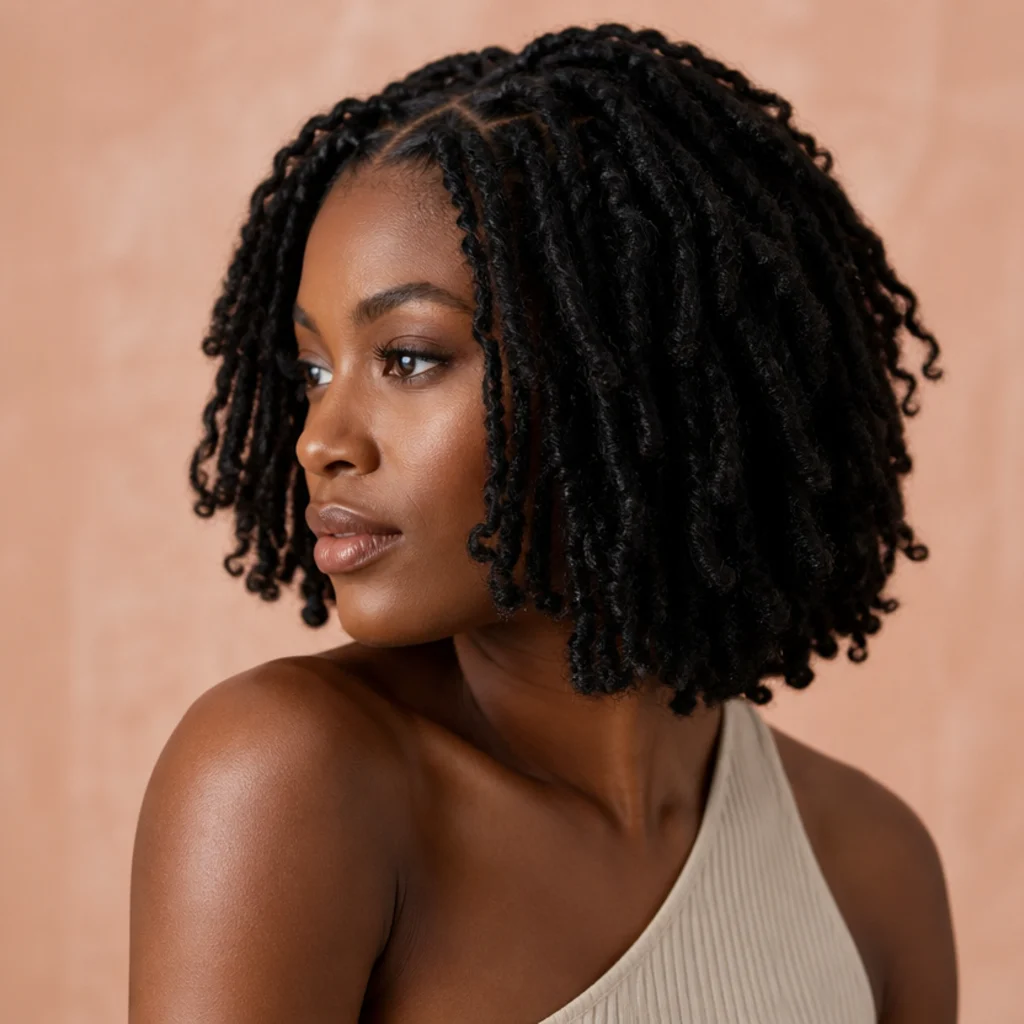
The chin-length bob is the reference point for short butterfly locs, and it earns that spot through proportion. Ending the locs right at the jaw draws the eye up toward the face and builds a rounded, full silhouette that flatters heart and oval shapes especially well; the horizontal weight at the jaw balances a narrower chin. Medium sizing keeps the distressed loops close enough together to read intentional rather than sparse. It's also one of the more forgiving first sets, since there's less hair at chin length to loosen: a light re-wrap of stray loops every two weeks keeps it crisp, and most sets hold four to six weeks with nightly satin coverage. The blunt line is the whole point here, so precision matters more than volume. Ask your stylist for a uniform blunt perimeter at the bottom and a slightly built-up crown so the bob keeps its dome as it settles. Pro tip: have them cut and seal the ends after the full set is installed and you're sitting upright, so gravity and real drape decide the line instead of a guess. Pair it with a bold lip and hoop earrings for a retro-mod edge.
02Tapered Short Butterfly Locs
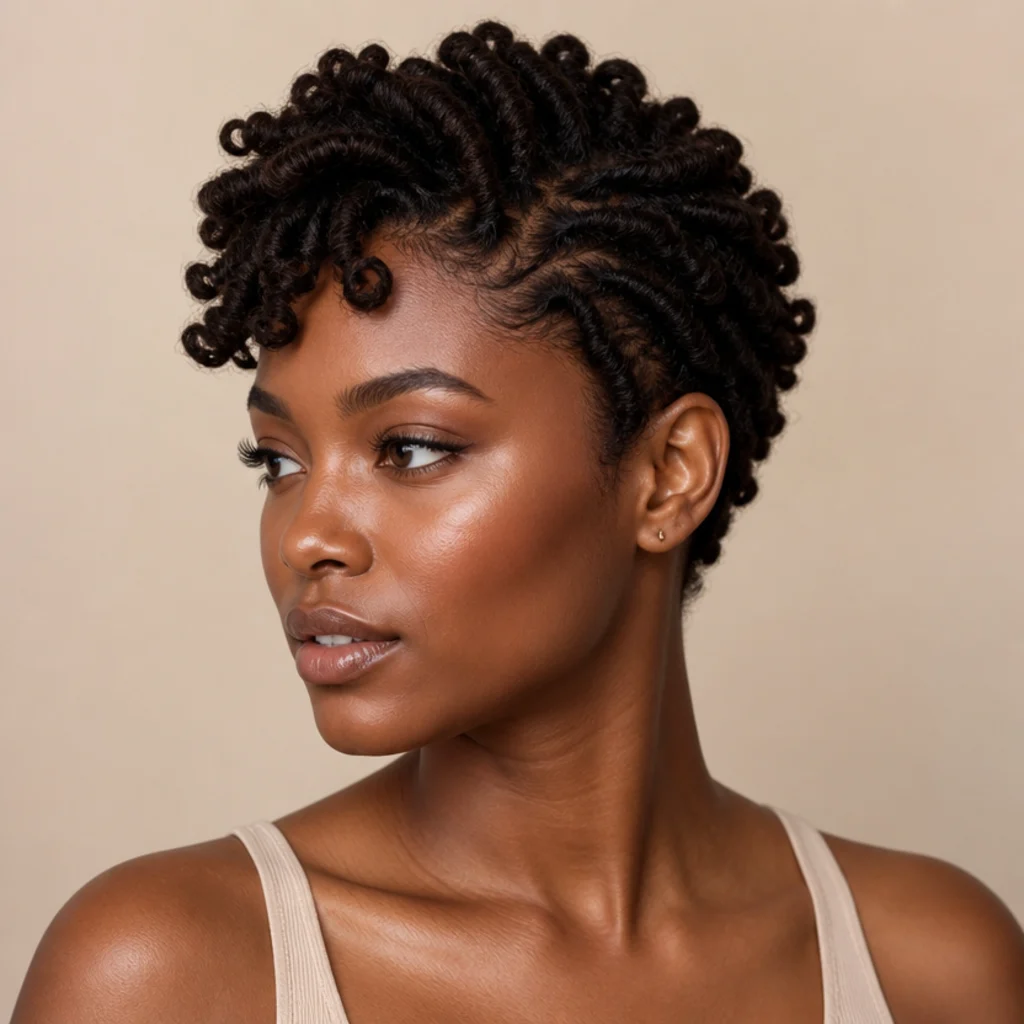
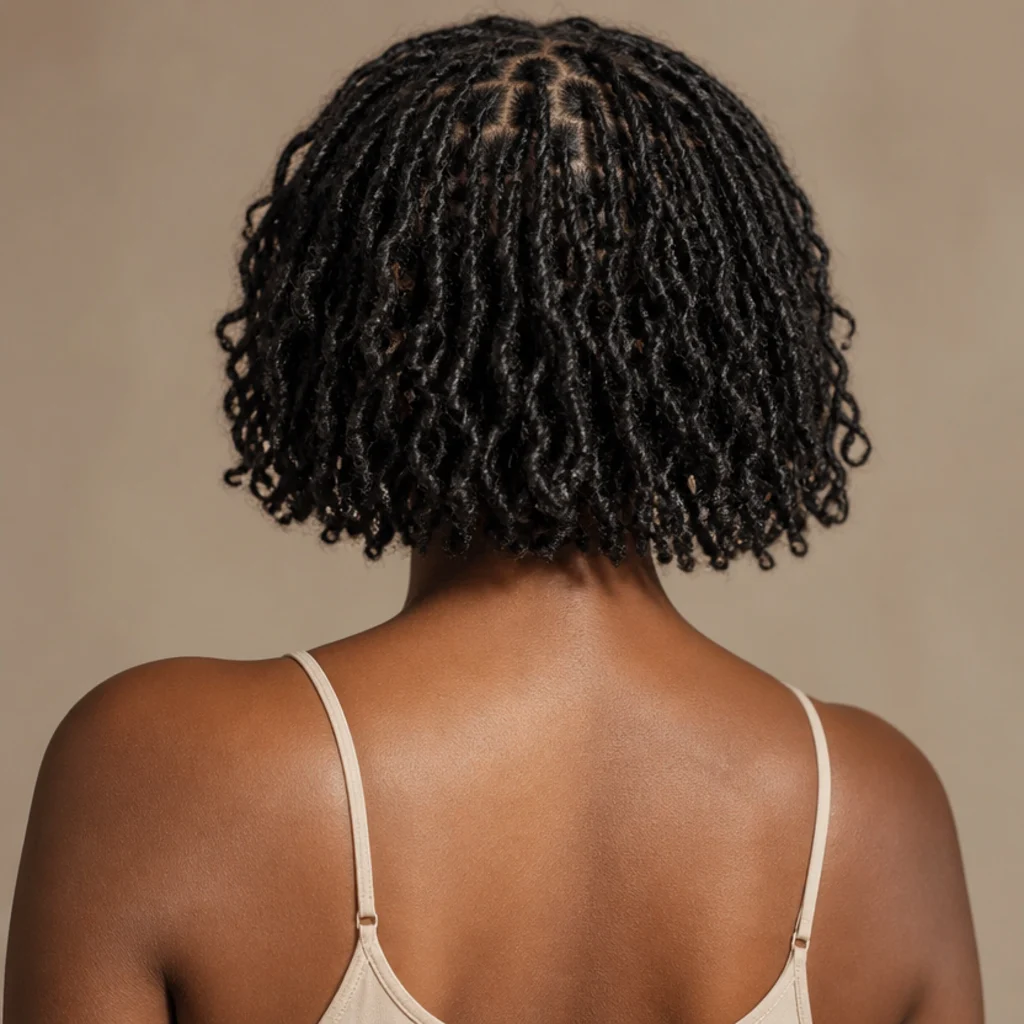
A taper keeps length and fullness through the crown while graduating the locs shorter toward the nape. The result has real architecture and needs very little daily effort. It suits anyone who wants something less rounded than a bob, and it flatters square and oval faces by keeping visual weight high. The cropped nape is a warm-weather plus, too: less bulk against the neck means less heat and sweat trapped at the hairline. Because the graduation has to be planned rather than improvised, this belongs to a stylist who maps loc placement and length zones before installing, sizing the pieces smaller near the nape so the taper stays clean. Maintenance is light overall thanks to the reduced volume at the back, but the shortest nape pieces loosen and slip first, so expect to re-tuck or re-wrap that zone a week ahead of the rest. Pro tip: ask for the nape locs to be sealed a touch shorter than you think you want, since butterfly loops soften and appear to lengthen as they relax. Ask your stylist for a "stacked graduation" if you want the taper to look sharper from the side.
03Honey-Blonde Short Butterfly Locs
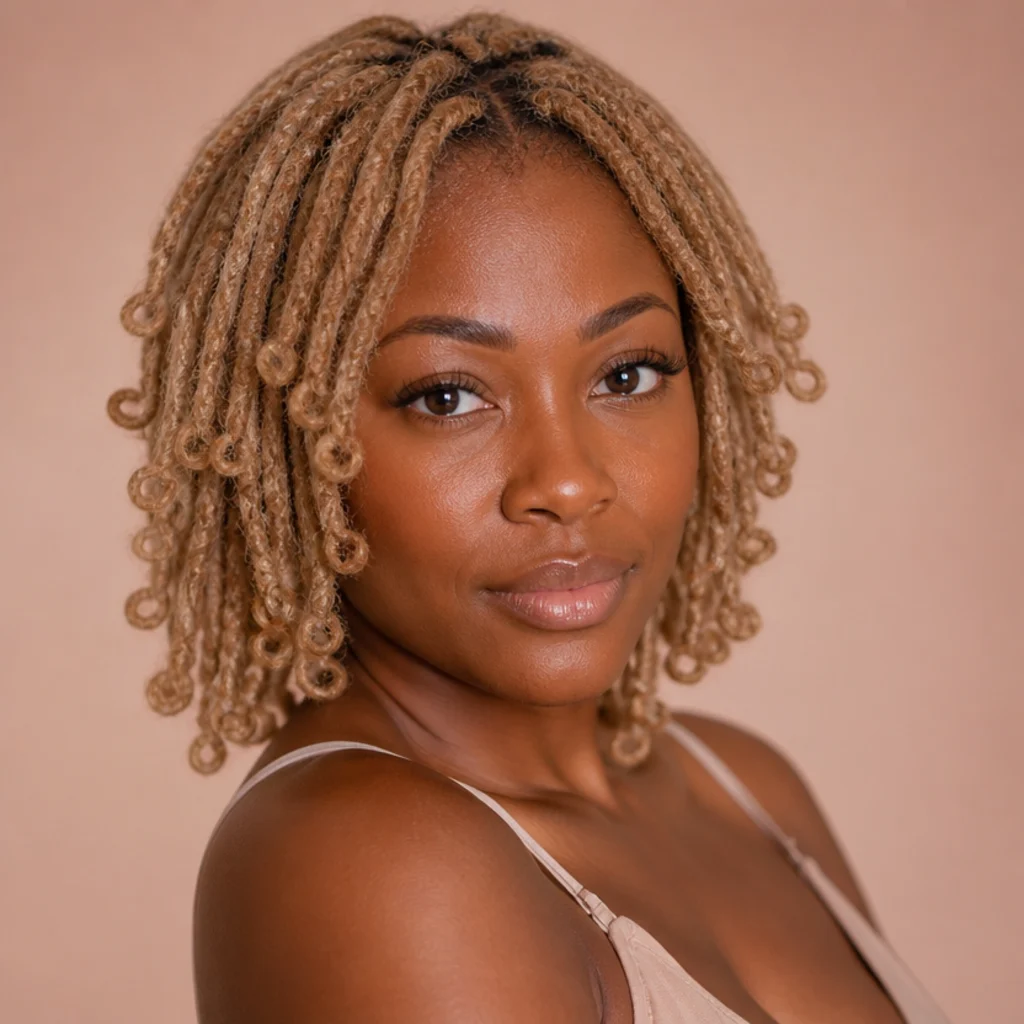
Honey blonde is one of the more universally flattering butterfly locs with color options, because its golden, warm-neutral depth complements deep, medium, and olive-leaning skin tones without washing anyone out. At a short length the lighter shade brightens the whole face and acts almost like reflected light along the jaw, and none of it touches your own strands since the color lives entirely in the extension hair. There is a trade-off worth knowing: pre-colored blonde loc hair is processed, so it can read slightly drier and coarser than dark hair, and it shows product buildup faster. A pea-sized amount of lightweight oil worked through the length two or three times a week keeps the loops supple and stops the tone from going brassy. When you book, bring a reference showing the exact depth you want, warm honey, cool beige-blonde, or caramel, so your stylist can select matching pre-looped hair instead of blending on the fly. Expect the standard four-to-six-week window. Pro tip: rinse blonde hair in cool water with a pinch of purple shampoo mid-wear to knock back any warmth that creeps in. Ask your stylist for a "rooted blonde" if you want dark bases so regrowth stays invisible.
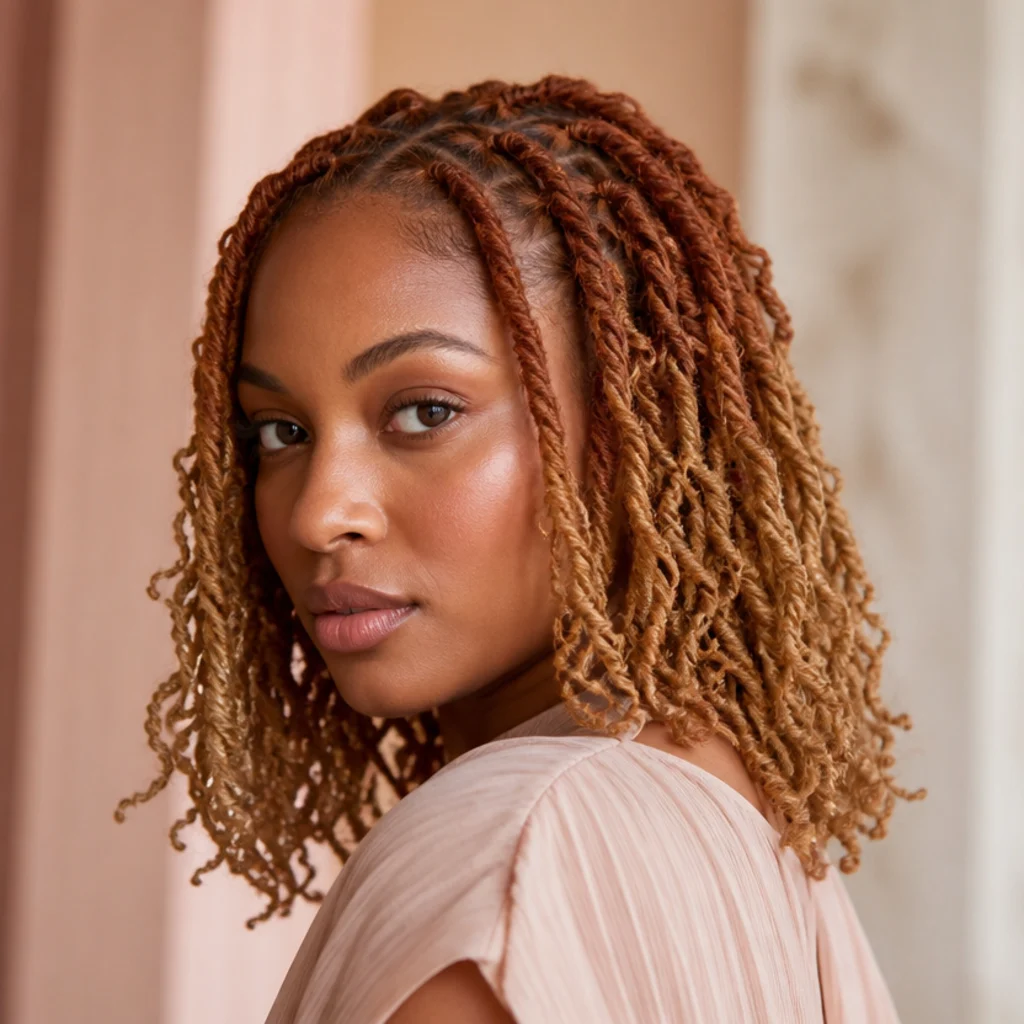
04Red Butterfly Locs Bob
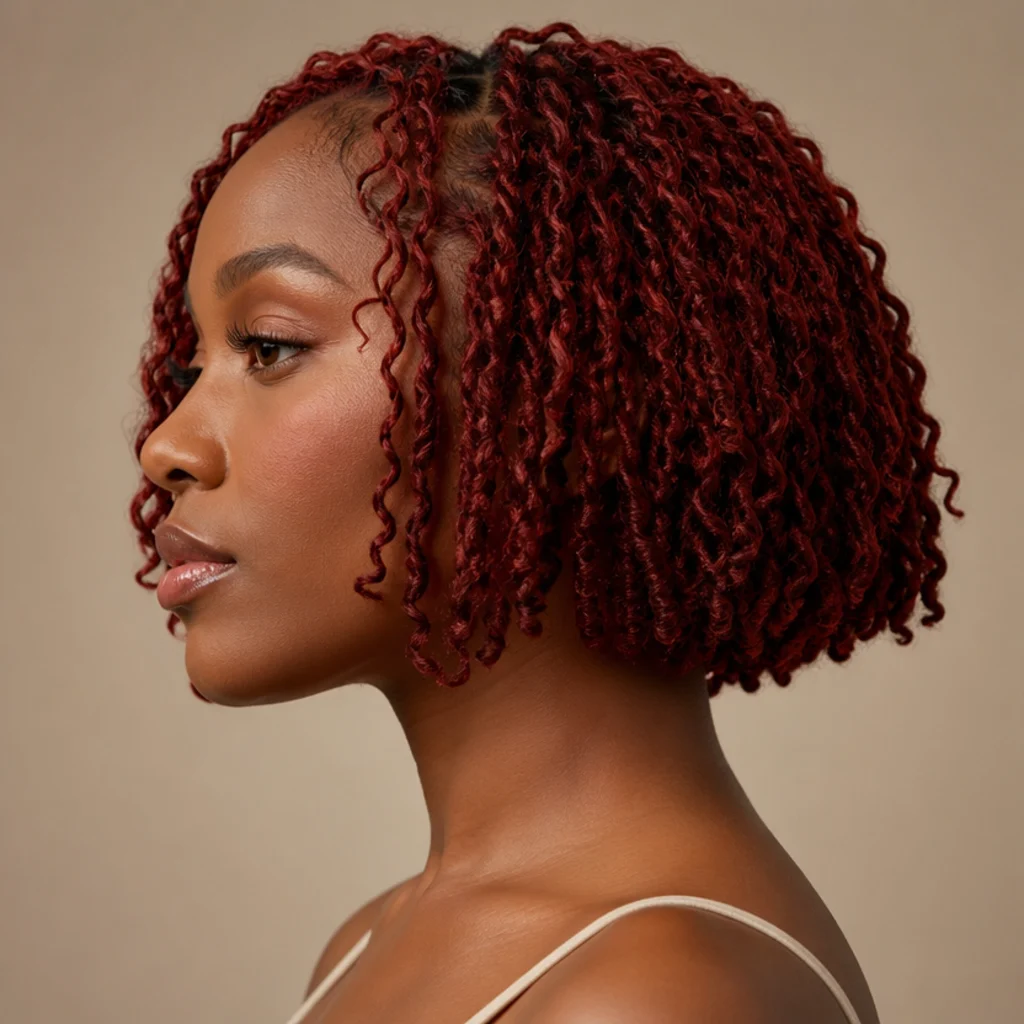
Red butterfly locs make a statement, and keeping them at bob length is what makes that statement wearable to an office or a school run instead of a costume party. A jaw-skimming red bob puts the color exactly where it frames the face, and the shade you pick sets the whole mood: deep auburn reads sophisticated and autumnal, brick and copper glow against warm and golden undertones, and blue-based cherry or wine flatter cool and neutral undertones by keeping the red from turning muddy. Match the red to your undertone, not your favorite crayon, and if you're unsure, hold the hair against the inside of your wrist in daylight. Freshly manufactured red extension hair is notorious for color transfer onto pale collars and pillowcases, so soak it in cool water with a splash of white vinegar and rinse until the water runs clear before install. Care otherwise mirrors any short set: occasional re-wraps keep loops defined, satin at night stops the color from friction-fading, and four to six weeks is a realistic wear window. Pro tip: a color-depositing conditioner in a matching red, used sparingly mid-wear, revives saturation without a reinstall. Ask your colorist or loc stylist for "1B roots melting into [your red]" for a lived-in, dimensional finish.
05Center-Part Short Butterfly Locs
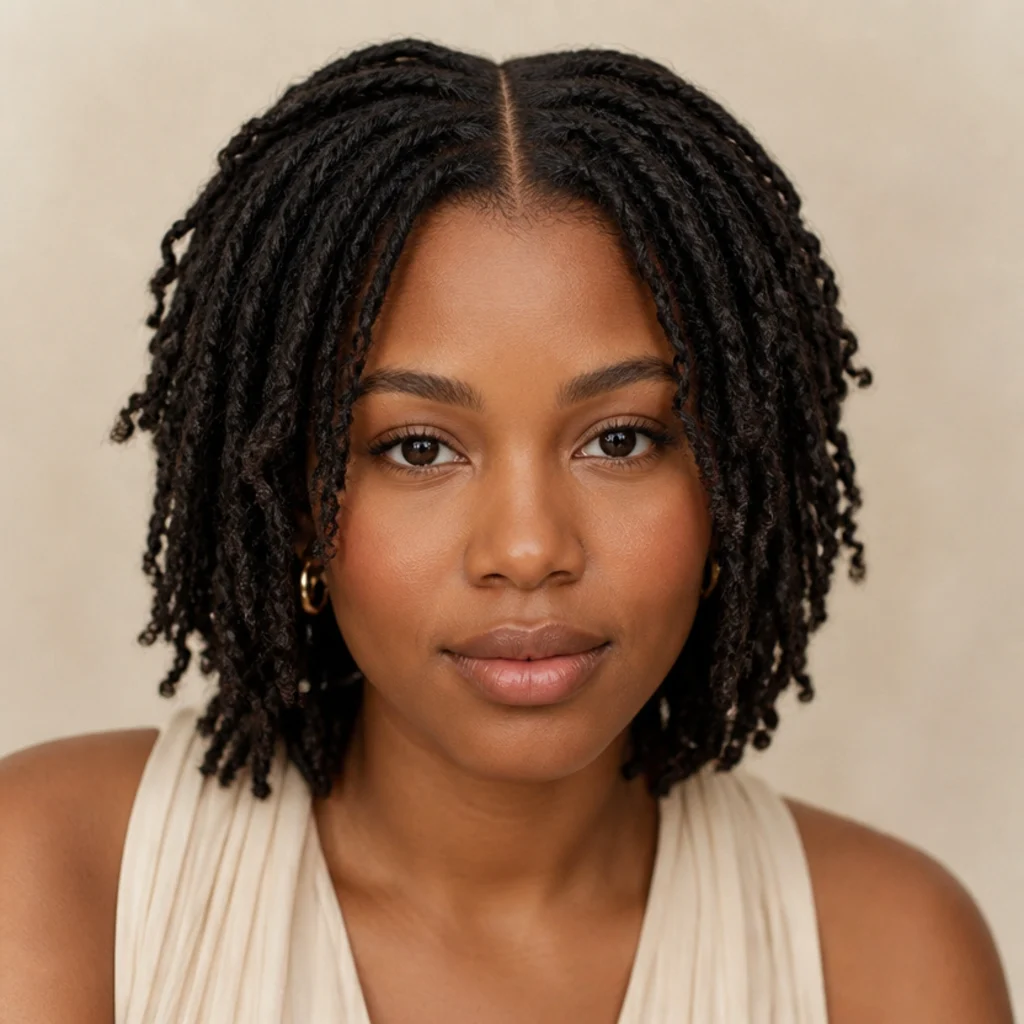
A crisp center part gives short butterfly locs a symmetrical, deliberate frame that flatters oval and square faces best, since the vertical line lengthens and balances a strong or wide jaw. The clean parting shows off a healthy-looking scalp and needs almost no daily input; because the locs fall evenly on both sides, the style photographs symmetrically from the front with no coaxing required. Two things make or break it: part precision and edge health. Ask your stylist for a straight, rat-tail-defined part and, crucially, light, comfortable tension along the front hairline. A center part puts the most delicate hairs on full display, so over-tight installs here are where thinning shows first. Maintain the line with a cotton swab of light scalp oil every couple of days, and re-part gently after washing before the hair dries in the wrong direction. Pro tip: if your natural part drifts, have your stylist wrap the two locs flanking the part a hair tighter at the root so the channel holds its shape. Ask your stylist for a "defined skin part" if you want the parting line to look sleek and scalp-forward.
Save this to Pinterest to compare parting styles side by side.
06Side-Swept Short Butterfly Locs
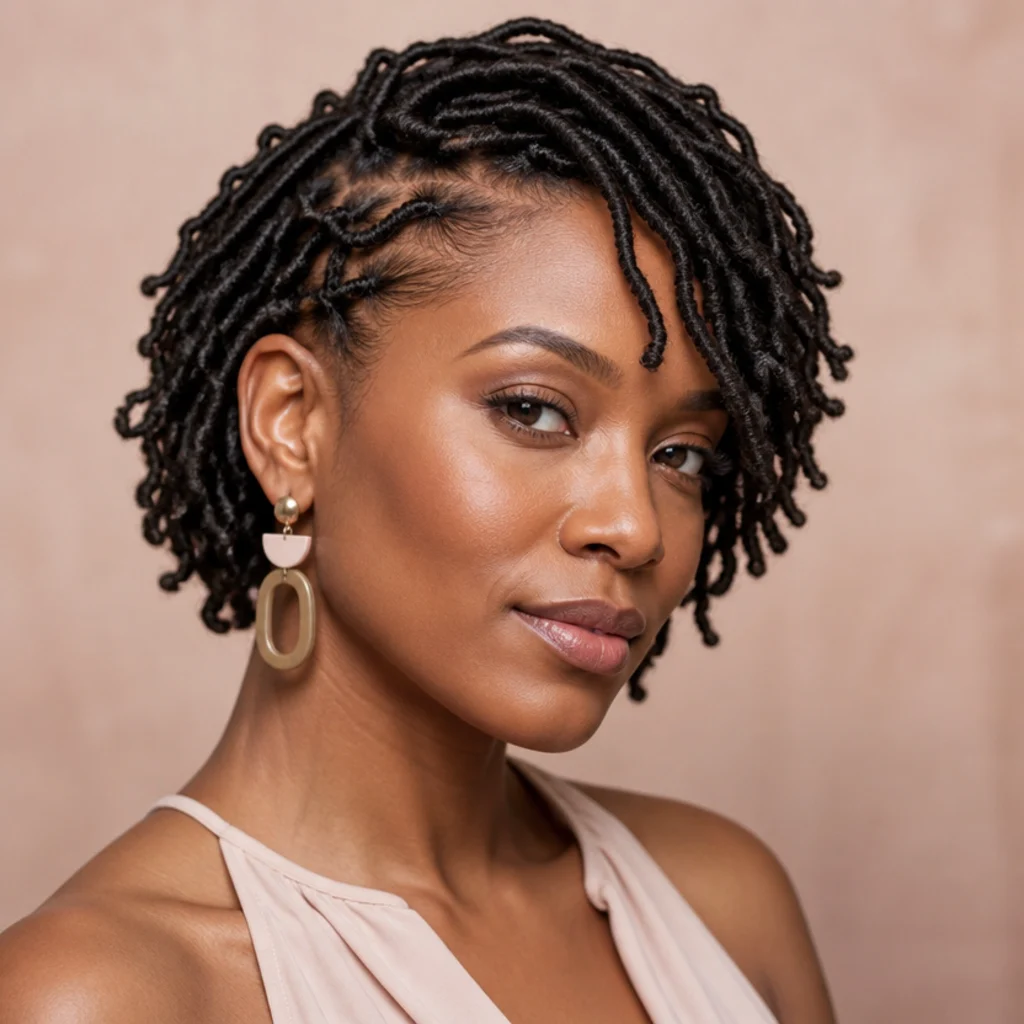
A deep side part softens the face instantly and adds a glamorous, asymmetric tilt to short butterfly locs. Sweeping the locs diagonally across the forehead covers one side partially, which flatters rounder and fuller faces because the diagonal line breaks up width and creates the illusion of length. Best part: it costs nothing to do. You simply set the part deeper than center and let the locs fall, no heat or tools involved. To make the sweep actually hold its direction instead of drifting back to center, ask your stylist to install the front locs on an angle, anchored toward the heavier side, so the fall is built in rather than styled in each morning. It pairs well with a statement earring on the exposed side, since one ear stays fully visible while the other is softly veiled. Upkeep matches any short set, with a little extra attention to keeping the deep part line clean and oiled. Pro tip: pin the sweep flat with a small snag-free clip for the first hour after washing so it dries in the direction you want. Ask your stylist for a "deep 7-part" if you want a dramatic, editorial diagonal.
07Half-Up Butterfly Loc Bun
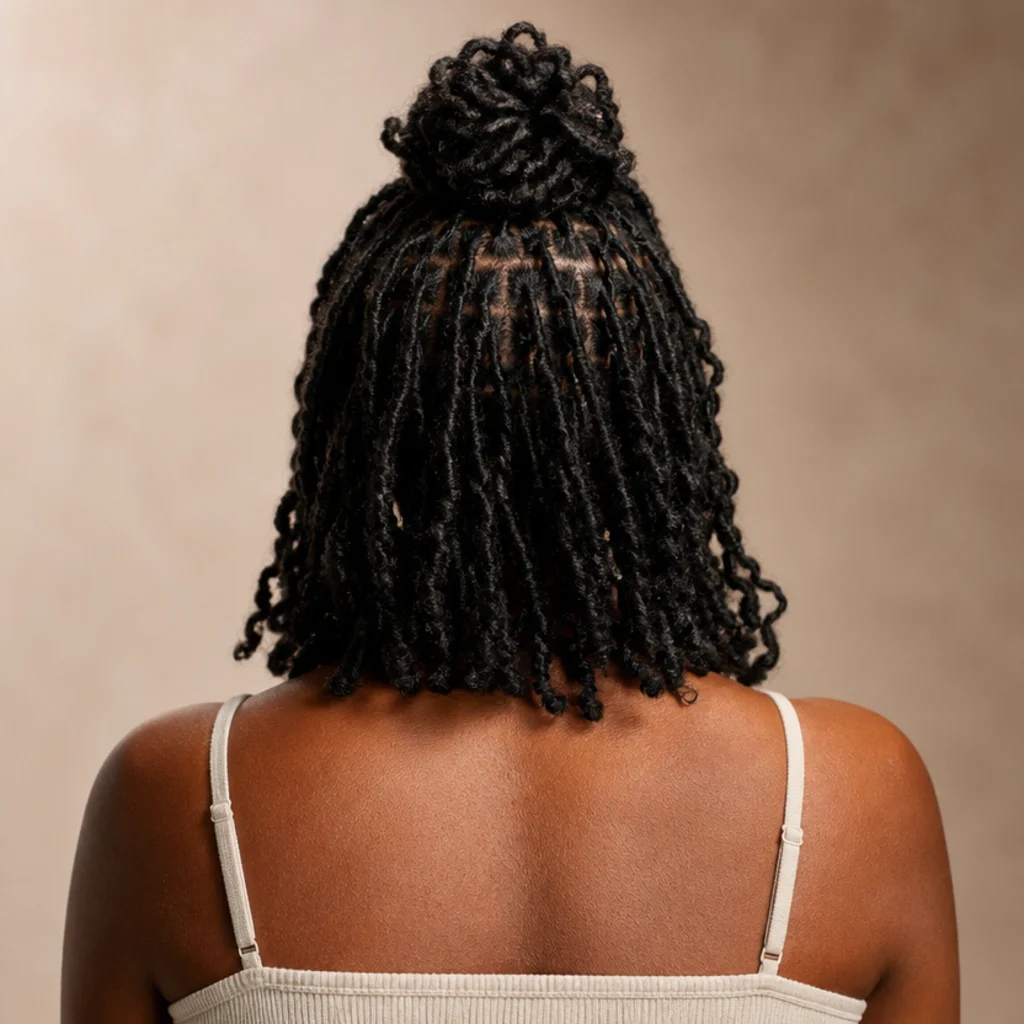
The half-up bun proves short butterfly locs can still do updos. Gathering the top and crown section into a small bun or top-knot lifts the hair off the face and neck while leaving the lower locs to frame the jaw, so you keep the softness of the style while solving the practical problem of hair in your eyes. It's a good in-between for warm days, workouts, or a video call, when you want structure up top and movement below. Because short locs are light, the section holds without heavy pinning, which spares the loops the stress. Use a soft, snag-free spiral or fabric tie rather than a rubber elastic, and keep the gathered base loose enough to sit comfortably without tugging the crown roots, exactly where repeated tight buns cause tension over time. Refresh the bun daily and smooth flyaway loops with a fingertip of oil. Pro tip: gather from slightly higher than you'd expect, near the crown's high point, so the bun reads intentional and lifts the whole silhouette instead of sitting flat. Ask your stylist to leave a few face-framing front locs slightly longer at install so this style always has soft pieces to work with.
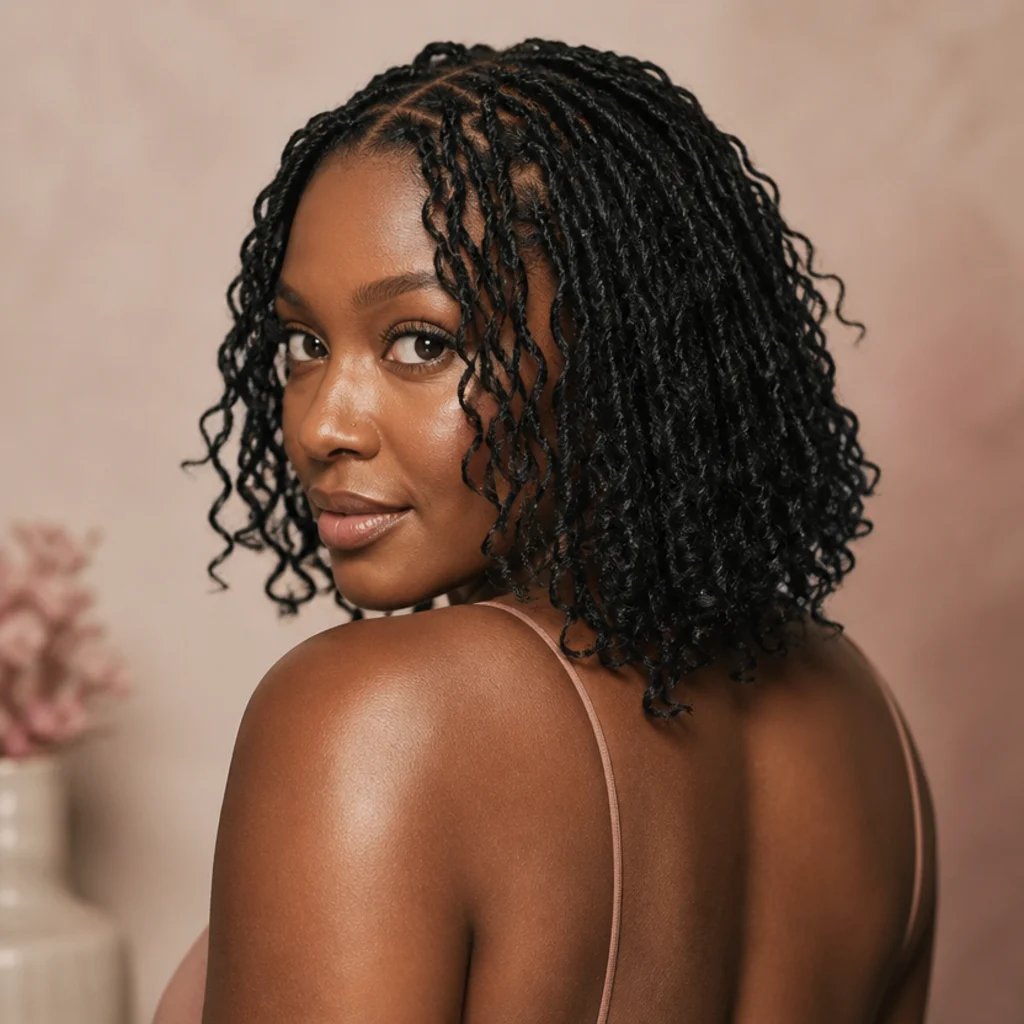
08Curly-Ended Short Butterfly Locs
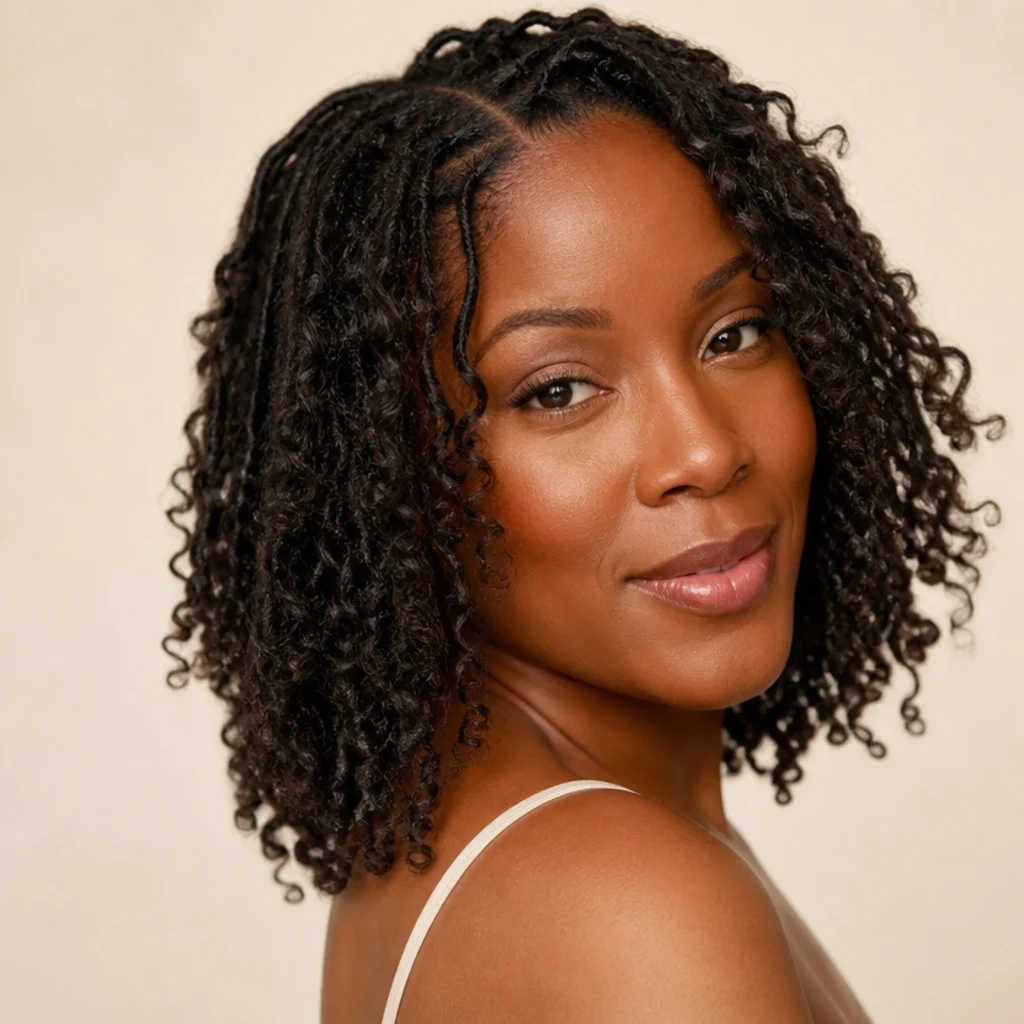
Leaving the ends of short butterfly locs curly instead of sealed adds a romantic, feminine finish that softens the whole shape and breaks up the graphic line of a blunt bob. The coiled tips add a second texture, straighter looped mid-lengths flowing into springy ends, and that contrast is what makes the look feel considered rather than unfinished. It suits nearly every face shape because the curls add width and softness wherever they fall. The finish is a technique decision made at install: the wrapping hair is left open and the water-set curl pattern of the ends is preserved, so ask specifically for "curly ends" or "feathered, unsealed tips" when booking, since the default is often a sealed or burned end. To revive curls that relax over a few weeks, dip just the tips in warm-to-hot water for a few seconds and let them air-dry without touching, which re-sets the coil. Pro tip: sleep with the ends loosely gathered inside your bonnet rather than crushed flat, so the curls keep their spring. Ask your stylist which curl pattern the hair holds; a tight coil versus a loose wave gives very different moods.
09Burgundy Ombre Short Butterfly Locs
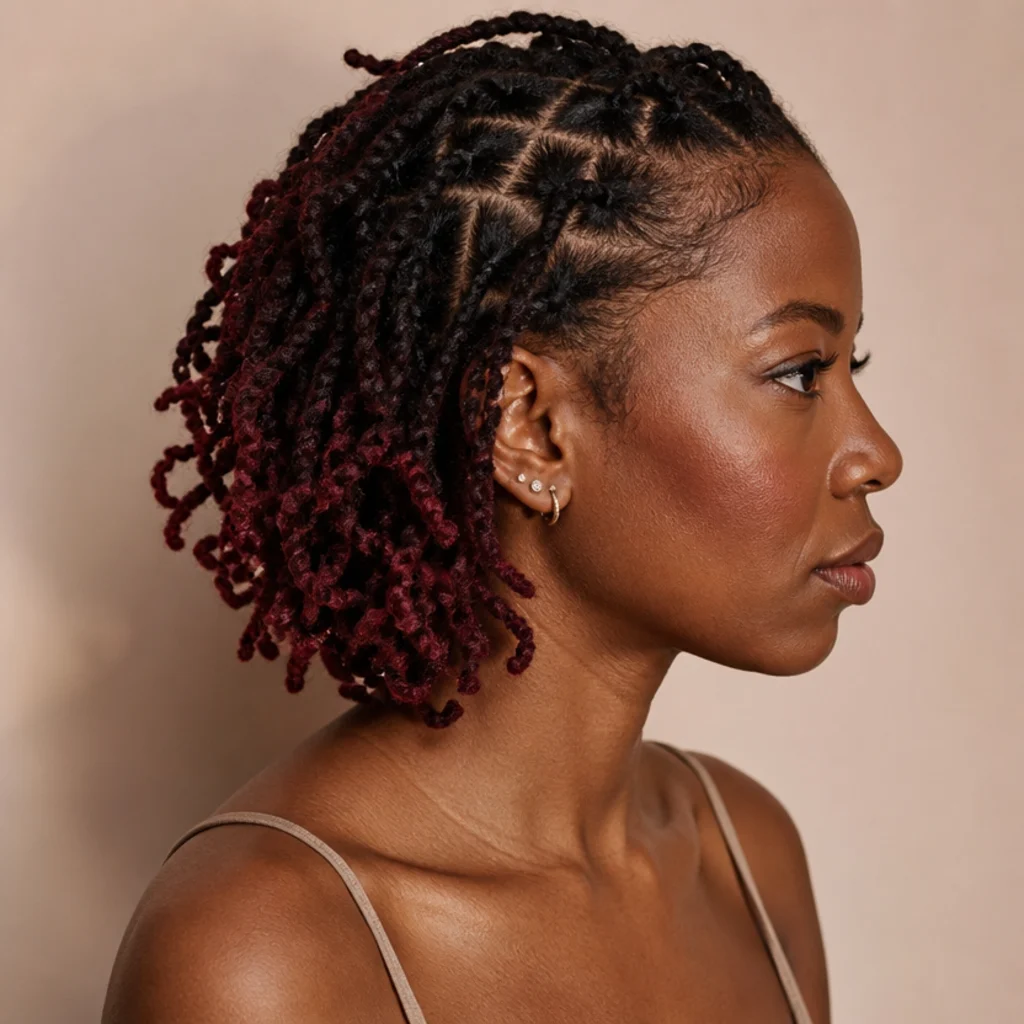
Ombre keeps a short set visually interesting by fading dark roots into a richer shade toward the ends, and burgundy stands out among butterfly locs with color because it stays deep and sophisticated where a brighter red might read loud. The vertical gradient adds a dimension a single flat color can't, and it flatters most undertones since the dark root grounds the face while the wine tips catch light at the jaw. Because the shift lives in the extension hair, your stylist blends two shades of pre-looped hair during install, typically a 1B or 2 root melting into burgundy, so bring a clear reference marking exactly where you want the fade to begin. On short lengths the transition happens over just a few inches, which reads bold and graphic rather than subtle, so decide up front whether you want a high melt near the ear or a low pop of color only at the tips. Care mirrors any colored set, with gentle handling and a color-safe rinse to keep the burgundy saturated. Pro tip: position the darkest hair at your face-framing pieces so regrowth stays invisible for weeks. Ask your stylist for a "seamless melt" if you want the fade blended rather than a hard color block.
10Short Butterfly Faux Locs with Cuffs
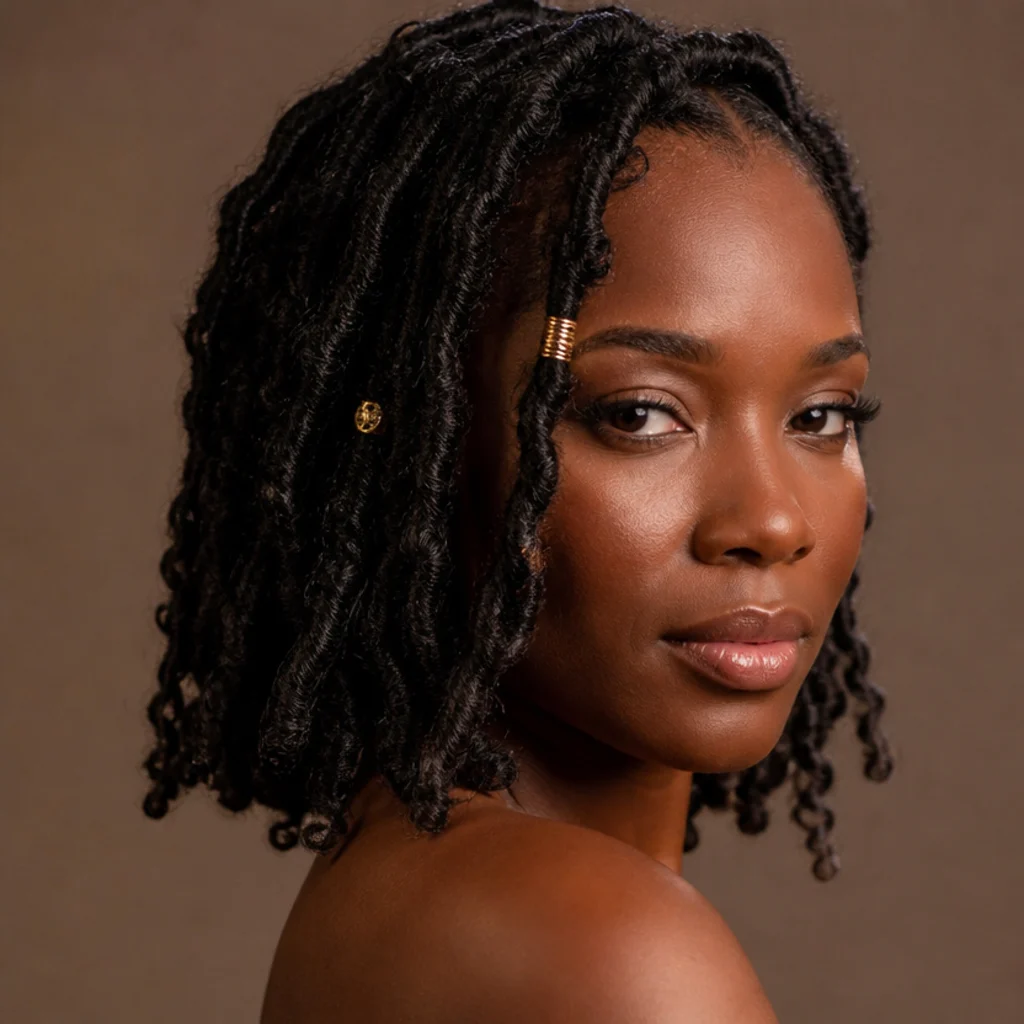
Adding cuffs, rings, or beads to short butterfly faux locs is the fastest, cheapest way to personalize a set without changing the cut or the color, which makes it a good mid-wear refresh around week three when the install starts to feel familiar. Gold and brass cuffs catch light and pull the eye straight to the loop texture, and a few placed near the face work like jewelry framing your features. The design logic is simple: scatter three to five cuffs asymmetrically for an editorial, effortless feel, or cluster six to eight in one zone for a bolder, more tribal-inspired statement. Weight discipline matters here. Keep cuffs lightweight, slide them onto the sturdier locs rather than the fine face-framing ones, and leave them loose enough to remove entirely on wash day so they never trap water or product. Because they add nothing permanent, this is beginner-friendly and fully reversible. Pro tip: pinch the cuff closed with flat-nose pliers over a soft cloth so it grips without denting, and note that heavier metal near the hairline can create tension over a full day, so save the face for the lightest pieces. Ask your stylist to leave a handful of locs cuff-ready at a slightly firmer wrap so accessories sit securely.
11Asymmetric Short Butterfly Locs
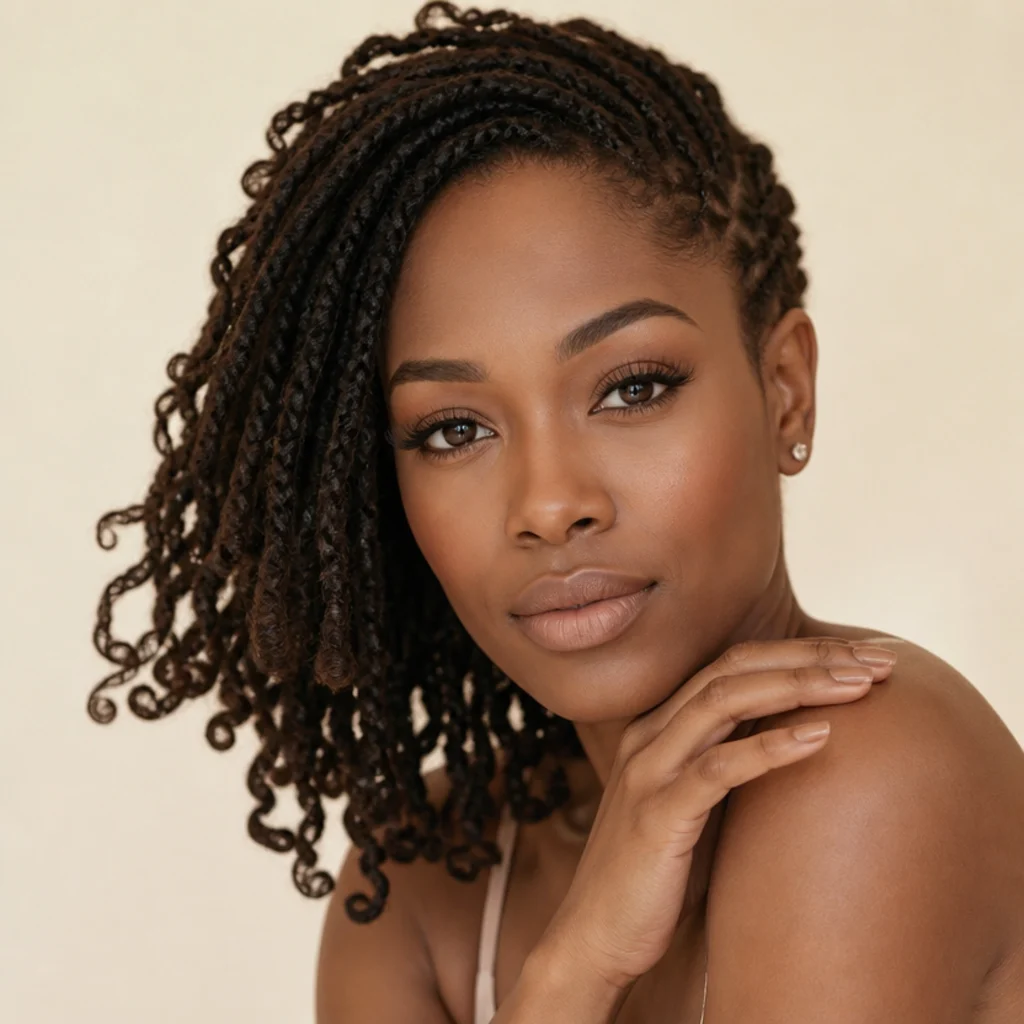
An asymmetric cut, noticeably longer on one side and shorter on the other, gives short butterfly locs a fashion-forward, architectural edge without adding daily upkeep. The uneven perimeter creates built-in movement and pulls the eye along a diagonal, which visually slims and lengthens rounder and fuller faces better than most shapes manage. It's a confident, high-impact choice that needs no daily heat styling to look deliberate. The catch: the shape depends entirely on precise length planning, so work with a stylist who maps the graduation, deciding the long-side and short-side zones and how steeply they transition, before installing rather than trimming to correct afterward. Style it by tucking the shorter side behind one ear to maximize the contrast, or let both sides fall for a softer read. Because butterfly loops relax and appear to lengthen as they settle, the asymmetry can soften over the first week. Pro tip: ask for the short side to be sealed slightly shorter than your target so it lands right once the loops loosen. Ask your stylist for a "diagonal-forward graduation" if you want the long side to sweep toward the front.
12Jumbo Short Butterfly Locs
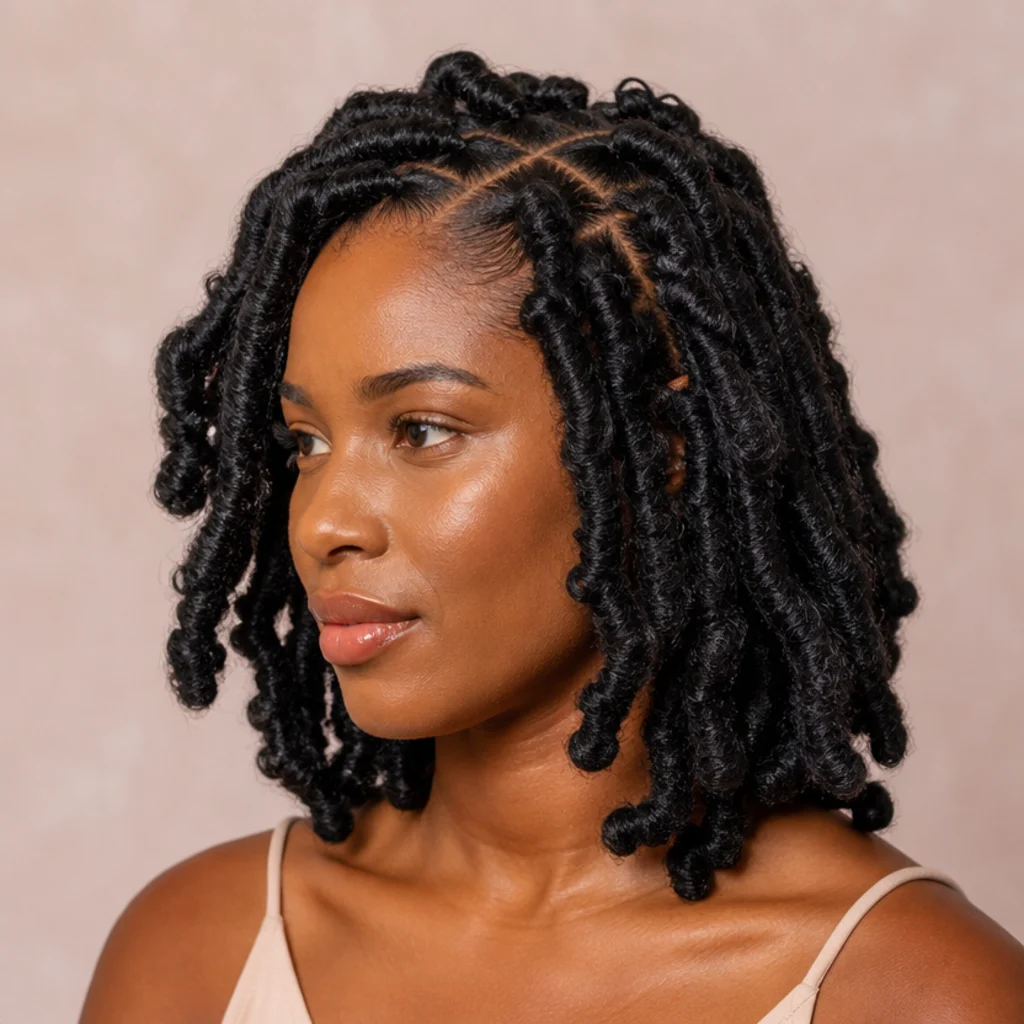
Jumbo locs use fewer, thicker sections, which means a much faster install, often half the chair time of a small set, and a bold, chunky texture that shows off the distressed butterfly effect at its largest, most graphic scale. At a short length jumbo butterfly locs make a statement without the heaviness that jumbo hip-length sets can bring, which makes them the smart pick when you want maximum visual impact in minimum salon time. Wash day is quicker too, since there are fewer locs to cleanse and dry. The physics trade-off is real and worth planning for: fewer, thicker locs concentrate more weight onto each attachment point, so comfortable root tension matters even more here, and a base section that's too small under a heavy loc is where tension shows first. Insist on even sizing across the whole head so the chunky shape stays balanced rather than lumpy, and make sure the base sections are proportioned to carry the weight. Pro tip: jumbo locs dry slowly at the core, so squeeze them in a microfiber towel and give them extra air-dry time to prevent a mildew smell. Ask your stylist to keep the base parts generous so each heavy loc has a stable anchor.
13Micro Short Butterfly Locs
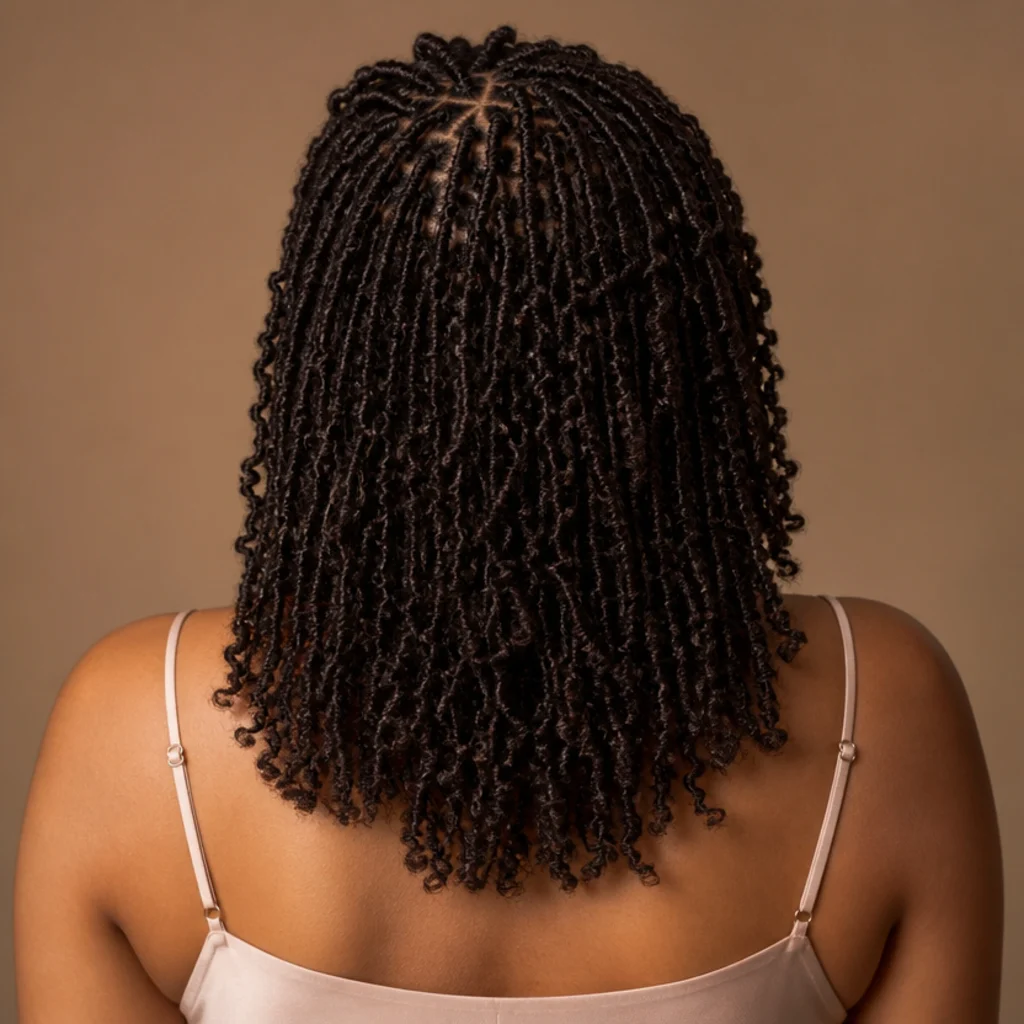
At the opposite end from jumbo, micro locs use many fine sections for a delicate, densely packed finish that reads refined and full. Short micro butterfly locs give a more uniform, finely textured surface, and because there are so many of them, the set moves fluidly and gathers into small, neat updos more easily than a chunky set ever could. The honest trade-off is time and budget: the sheer number of locs makes this the most labor-intensive version to install, often a multi-hour or split-session appointment, and it typically sits at the higher end of the cost range. Fine locs also loosen a touch faster at the roots simply because each base section is small, so plan light, targeted re-wraps as needed and stay gentle at the hairline. The payoff is versatility and a polished, grown-in look that flatters anyone who likes detail. Pro tip: because micro sets are dense, focus your scalp cleansing time on actually reaching the scalp with a diluted-shampoo applicator bottle rather than just the length, or buildup hides between the locs. Ask your stylist for realistic sizing guidance for your density; truly micro on thick hair can mean a very long chair day, and a small-but-not-micro compromise often wears just as well.
14Pulled-Back Short Butterfly Ponytail
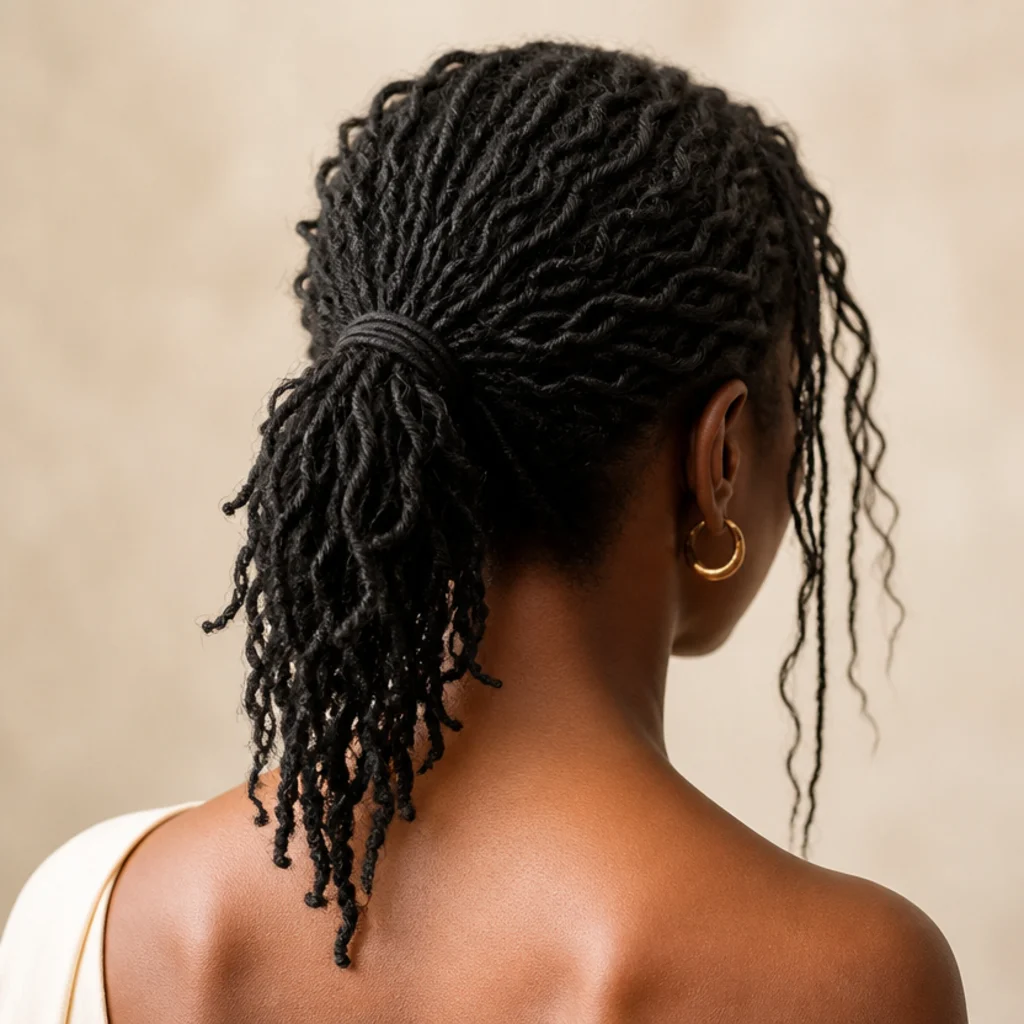
Even at a short length, most butterfly locs reach just far enough to sweep into a low, textured ponytail, which makes this the fastest way to change your look, under a minute, no tools needed. Gathering everything back clears the face completely for workouts, hot days, or a cleaner, more formal look, while a few loose front pieces keep it soft rather than severe. Because short locs are light, the ponytail sits comfortably at the nape without the dragging weight a long set creates. Protect your edges by using a fabric-friendly spiral or scrunchie tie and gathering with a low, gentle hand at the hairline rather than slicking it tight; repeated tight low ponytails are a quiet cause of edge thinning over time. Some of the shortest nape locs will slip free of the tie, and that reads as intentional, piece-y face-framing rather than a flaw, so lean into it. Pro tip: mist the front pieces lightly and finger-coil them for a second of definition before you head out, so the loose bits look designed rather than escaped. Ask your stylist to install a few slightly longer locs at the nape if a secure, full ponytail is a look you plan to wear often.
15Two-Tone Short Butterfly Locs
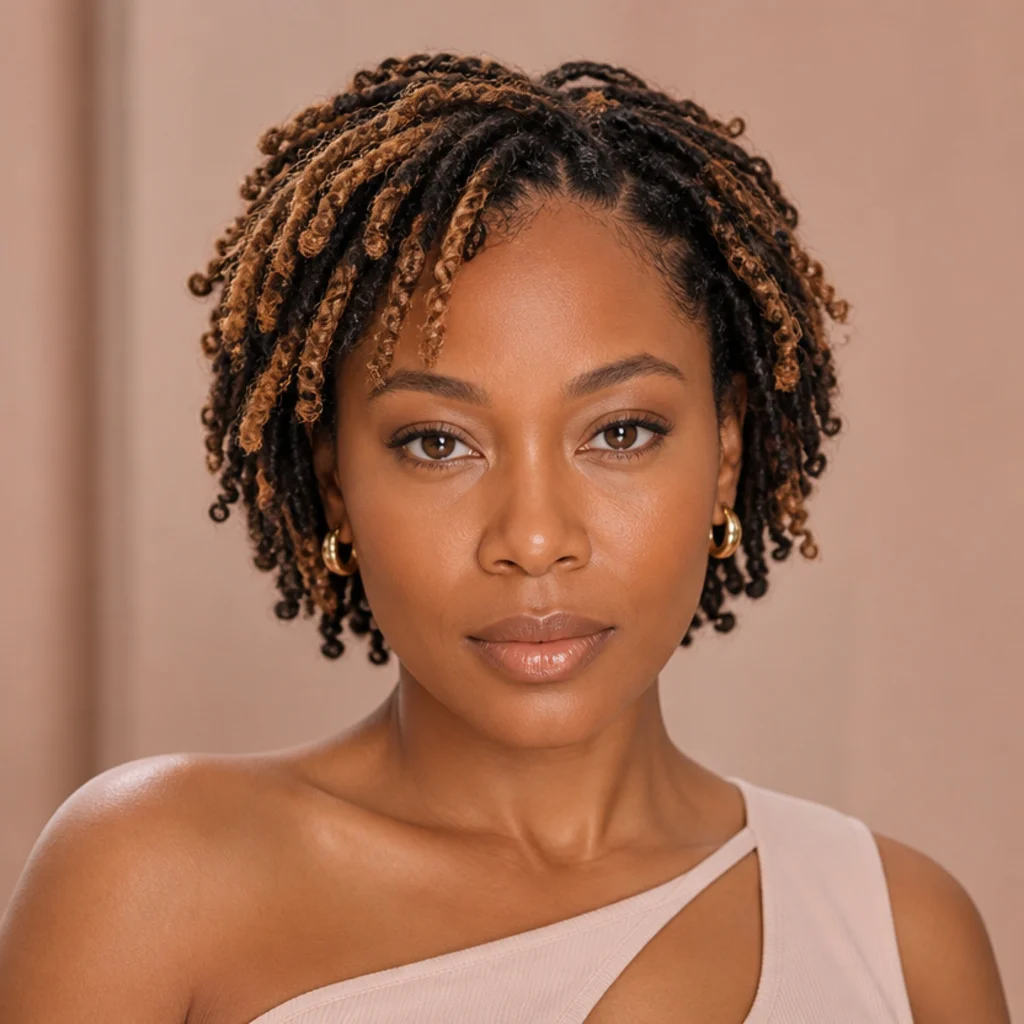
Two-tone locs weave two colors throughout the whole head instead of fading top to bottom, so both shades mingle in every section and the eye reads a rich, dimensional blend instead of a single flat color. On short butterfly locs a pairing like black and caramel, deep brown and copper, or off-black and honey adds the kind of depth that makes distressed loop texture pop, since the color variation plays up the light and shadow of the loops. It's also the most forgiving color approach to grow out, since there's no single hard regrowth line, and it lets you test a brighter shade in small, low-risk doses instead of committing your whole head to it. The key to a balanced result is distribution: ask your stylist to alternate the two hair colors evenly and randomly during install so neither shade clusters on one side or forms an accidental stripe. Care mirrors any colored set. Pro tip: choose two colors within two or three levels of each other for a blended, expensive-looking result, or push the contrast wide for a deliberately graphic, playful effect. Ask your stylist for a "salt-and-pepper distribution" if you want the two tones fully intermingled rather than paneled.
Pro Tips from the Editor
- Protect the perimeter first. The chin-to-collarbone length lives right where fabric collars, seatbelts, and pillow friction rub. Sleep in a satin bonnet or on a satin pillowcase from night one to stop the outer loops from frizzing and the color from fading early.
- Dilute everything you put on your scalp. Use an applicator bottle with diluted, sulfate-free shampoo aimed at the scalp, not the length, then rinse thoroughly. Undiluted product and heavy oils sink into butterfly loops and cause buildup and odor that no amount of re-wrapping fixes.
- Tension is the whole game. A set that hurts, throbs, or pulls at the hairline on day one is installed too tight and won't "settle." Speak up in the chair; comfortable tension protects your edges and is non-negotiable, especially on center parts and slick-back styles.
- Dry them properly. Butterfly locs hold water in their core. Press them in a microfiber towel and allow real air-dry time, or sit under a hooded dryer on low, before bonneting. Trapping moisture is the number-one cause of a mildew smell mid-wear.
- Budget for a mid-wear refresh. Around week three, re-wrap loosened loops (especially at the nape and part), re-oil the scalp lightly, and consider adding cuffs or switching to an updo. A ten-minute refresh buys you another two weeks of polish.
- Take them down gently and on time. Don't stretch a set past the point where locs mat at the root; matting pulls on your natural hair at takedown. Unravel the wrapping hair carefully, detangle in sections with conditioner, and give your scalp a wash and a rest before reinstalling.
- Reference photos beat descriptions. Bring one photo for shape and one for exact color depth, and confirm sizing (small, medium, jumbo) and finished length out loud before any hair goes in. Loops relax and appear longer over the first week, so seal a touch shorter than your target.
Butterfly Locs Size & Style Comparison
| Sizing | Approx. install time | Relative cost | Wear feel | Best for |
|---|---|---|---|---|
| Micro / small | Longest (often multi-session) | Highest | Lightest, most refined, most versatile for updos | Detail-lovers, fuller natural density, polished looks |
| Medium | Moderate | Mid-range | Balanced weight, classic butterfly texture | First-timers, blunt bobs, most face shapes |
| Jumbo | Shortest | Lower per set | Chunky, bold, more weight per attachment | Fast install, statement texture, quick wash days |
How to Choose / Get the Look
Work through four decisions in order, and the rest of the appointment plans itself.
1. Shape and length. This drives everything, so decide it first. A blunt chin-length bob reads polished and retro; a taper or asymmetric cut feels edgier and more architectural; curly ends soften the whole thing. Match the shape to your face: rounder and fuller faces are flattered by deep side sweeps, asymmetry, and diagonal lines that add length, while oval, heart, and square faces carry center parts and blunt bobs easily.
2. Sizing. Micro and small locs look refined and move beautifully but take the longest to install and cost the most; jumbo locs go in fast and make a chunky statement but concentrate weight on each root; medium is the balanced, first-timer-friendly middle. Use the table above to weigh chair time against the look you want.
3. Color. Natural black and brown are effortless and grow out invisibly. Honey blonde brightens, red and burgundy make a statement, ombre adds vertical dimension, and two-tone blends are the easiest to grow out. Because the color lives entirely in the extension hair, you can experiment freely without bleaching your own strands, so match the shade to your undertone, not just your mood.
4. Logistics and care. Ask honestly how long you can sit and what your budget allows, then book accordingly. In the chair, bring two reference photos, insist on comfortable hairline tension, and confirm finished length before work begins. Plan light re-wraps every two to three weeks, satin at night, diluted scalp cleansing every one to two weeks, and a four-to-six-week wear window with careful takedown after. If it's your first set, a medium chin-length bob is the most forgiving place to start.
Frequently Asked Questions
How long do short butterfly locs last?
Most short butterfly locs sets look their best for about four to six weeks, and careful wearers stretch toward eight before takedown. Shorter lengths often stay tidy toward the upper end of that range because there's less hair to loosen. Light re-wraps of stray loops around week three, nightly satin coverage, and gentle handling all extend the life. Take them down before the roots begin to mat, since matting stresses your natural hair at removal.
Are short butterfly locs lighter than long ones?
Yes, noticeably. Short butterfly locs use far less extension hair, so they weigh much less than long butterfly locs and put less leverage on each attachment point. That reduced weight means less scalp tension, more comfort in heat, and less neck fatigue by the third week, which is a big part of why the length gets recommended for first-timers and for anyone with finer natural hair.
How much do short butterfly locs cost?
Cost varies widely by region, salon, sizing, length, and whether you add custom color. As a rule of thumb, a standard medium short set sits in the mid-range, jumbo sets often cost less because they install faster, and micro or small sets plus custom ombre and two-tone blends land at the higher end because of the labor and materials involved. Installing yourself with the crochet method is the most economical route, with the wrapping hair as your main supply cost.
What is the difference between butterfly locs and butterfly faux locs?
The terms overlap almost completely and get used interchangeably. "Butterfly faux locs" simply emphasizes that these are temporary, extension-based locs, wrapped over a braided or twisted base and removable in weeks, rather than permanent locked hair. Both deliver the same signature distressed, looped, airy butterfly-effect texture. If someone says butterfly locs, they nearly always mean the faux, temporary style.
Are short butterfly locs good for beginners?
They're one of the friendliest entry points into faux locs. A shorter length means a faster install, a lighter head, simpler wash days, and less to get used to when sleeping. A medium chin-length bob is especially forgiving while you learn to bonnet, cleanse, and re-wrap. Beginners should prioritize comfortable tension at install and satin protection at night over any complex shape or bold color for a first set.
Can I get butterfly locs with color without dyeing my own hair?
Yes. The color in any butterfly locs with color, red, burgundy, honey blonde, ombre, or two-tone, comes entirely from the pre-colored extension hair your stylist selects, not from bleaching or dyeing your natural strands. That makes even dramatic shades low-commitment and fully reversible: when you take the set down, your own hair is untouched. Bring a reference photo of the exact depth so your stylist matches the hair precisely.
How do I wash short butterfly locs without ruining the loops?
Use a diluted, sulfate-free shampoo in an applicator bottle, aim it at the scalp in sections, gently massage, and rinse thoroughly, avoiding vigorous scrubbing that frizzes the loops. Press excess water out with a microfiber towel rather than wringing, then air-dry fully or sit under a hooded dryer on low before bonneting. Trapped moisture is the top cause of a mildew smell, so never bonnet or sleep on locs that are still damp at the core.
Can I put short butterfly locs in a ponytail or bun?
Usually yes, though it depends on length. Collarbone-length sets sweep easily into a low ponytail or half-up bun, while true chin-length bobs may only gather a top-knot or half-up section, with the shortest nape pieces slipping free as face-framing. Use snag-free fabric ties, gather with a gentle hand to protect your edges, and ask your stylist at install to leave a few slightly longer pieces if updos are a look you plan to wear often.
Do short butterfly locs damage your natural hair?
They don't inherently damage healthy hair and can even protect it, but tension and neglect can undo that. The two real risks are an over-tight install pulling on the hairline and leaving a set in so long the roots mat and stress your strands at takedown. Avoid both by insisting on comfortable tension, moisturizing your scalp lightly during wear, taking the set down on time, and giving your hair a wash and a rest before reinstalling.