15 Long Butterfly Locs Styles to Try
Long butterfly locs take the airy, distressed loc look and give it real length to sweep, sculpt, and dress up. This guide breaks down 15 distinct styles, from color-melted waterfalls to sleek high ponytails, with honest upkeep, weight, and loctician-consult notes so you walk into your appointment knowing exactly what to ask for.
 Edited by Lena Rose · Published July 11, 2026 · 27 min read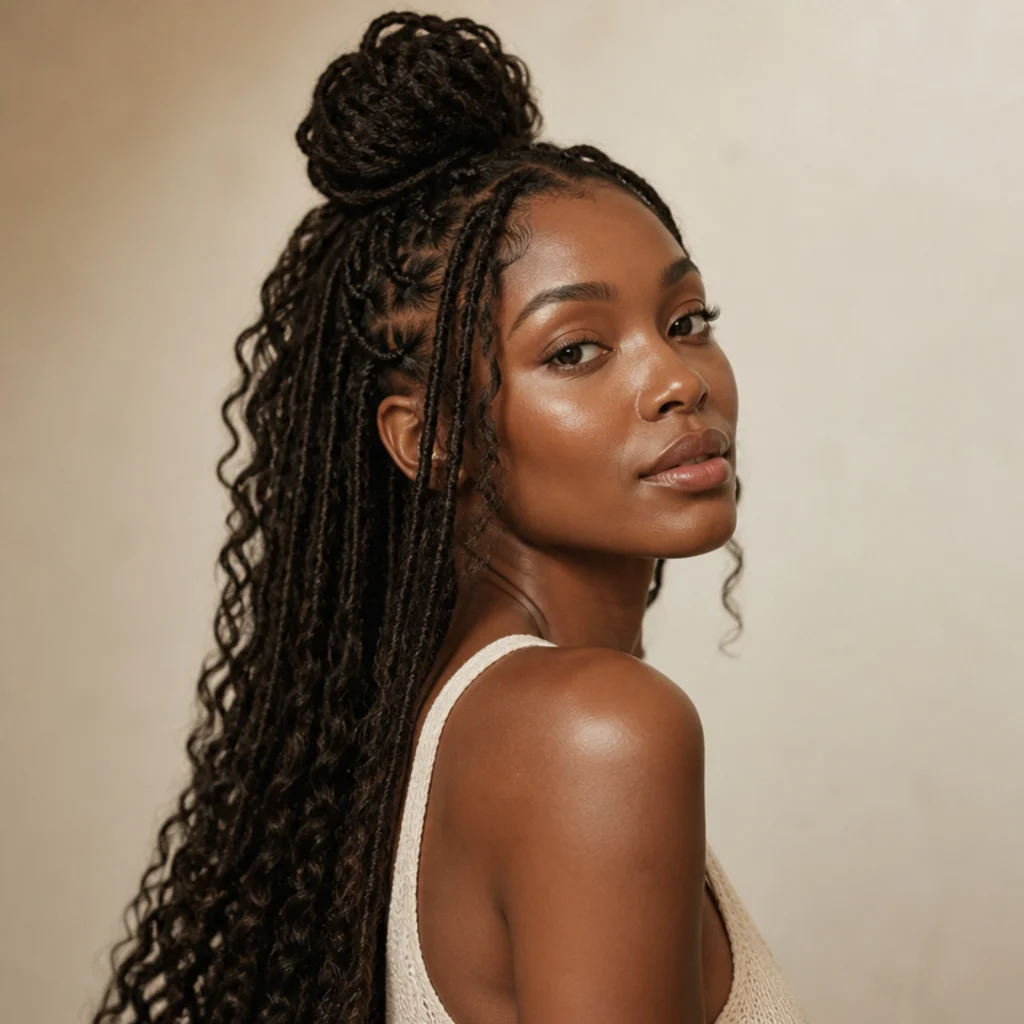
Quick Answer
- Best for: Anyone who loves the bohemian, looped butterfly loc texture but wants length for high ponytails, waterfall sweeps, and sculptural buns.
- Who might skip it: Fine, fragile, or actively shedding hair with delicate edges, and anyone who needs a wash-and-go they can restyle daily with no scalp downtime.
- Maintenance: Moderate. Hairline and crown re-looping every 2 to 3 weeks, a satin scarf nightly, and diluted-shampoo scalp cleansing every 1 to 2 weeks.
- Difficulty: Intermediate to advanced install. Best left to a loctician; patient DIYers should master short butterfly locs before attempting long lengths.
- Cost: Variable. Long installs typically run higher than short sets because of added hair and hours; color melts and detailed distressing add to the range. Ask for a written quote that separates labor from hair.
- Wear time / longevity: 6 to 8 weeks for most installs before new growth and matting warrant a takedown.
- Standout variation: Waist-length locs with a warm auburn or honey color melt read as the most editorial.
- How to ask your loctician: Bring 2 to 3 photos showing length, part, and where the color should start; specify section size at the hairline and the finished weight you can comfortably carry.
In This Guide
- Classic Waist-Length Butterfly Locs
- Honey-Blonde Color Melt Locs
- Red Butterfly Locs
- Half-Up Half-Down Bohemian Locs
- Butterfly Faux Locs with Curly Ends
- Chunky Jumbo Long Locs
- Sleek High Ponytail Locs
- Burgundy and Black Blended Locs
- Center-Part Curtain Locs
- Beaded and Cuffed Long Locs
- Ombre Caramel Waterfall Locs
- Long Locs with Side-Swept Undercut Illusion
- Boho Bun with Face-Framing Tendrils
- Deep-Water Wave Distressed Locs
- Grey and Silver Statement Locs
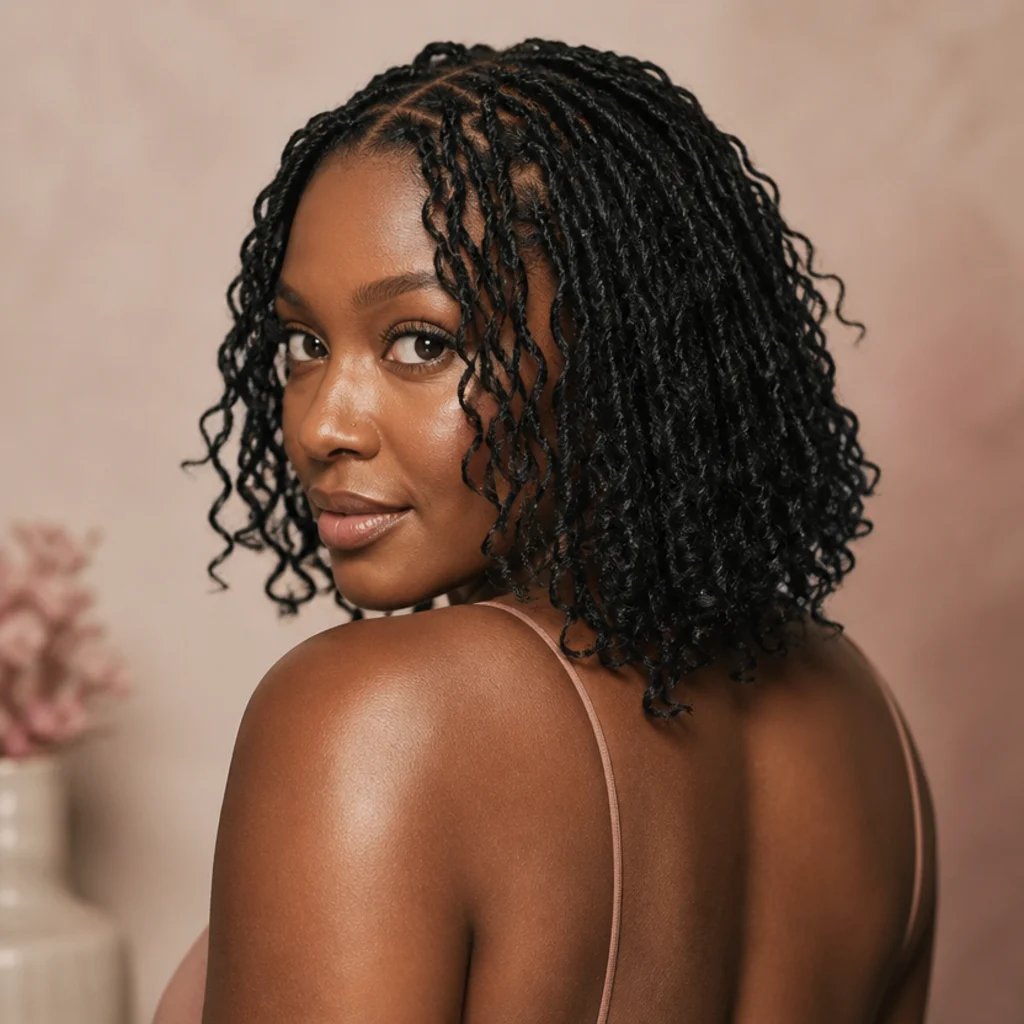
Butterfly locs earn their name from the airy, looped texture that peeks out along each strand, a deliberately distressed, wrapped-and-looped finish rather than a smooth, uniform rope. Short butterfly locs are the low-commitment entry point, but long butterfly locs open up a whole styling wardrobe: crown-height ponytails, waterfall drapes over one shoulder, and boho buns that shorter lengths physically can't hold. Length changes the math, though. More hair means more weight at the root, so the conversation shifts from "which color" to "how do I carry this comfortably for eight weeks." This roundup leans into that reality. You'll find cool cherry reds and forgiving caramel melts, chunky jumbo sets and finely sectioned bohemian installs, plus grounded notes on face-shape and undertone suitability, realistic maintenance timelines, and the exact phrasing to use in your consultation. Whether you're graduating from short butterfly locs, weighing butterfly faux locs against traditional twists, or planning your very first set, use these 15 ideas to lock in your length, color placement, and part before you ever sit in the chair. Consider it your pre-appointment cheat sheet.
01Classic Waist-Length Butterfly Locs
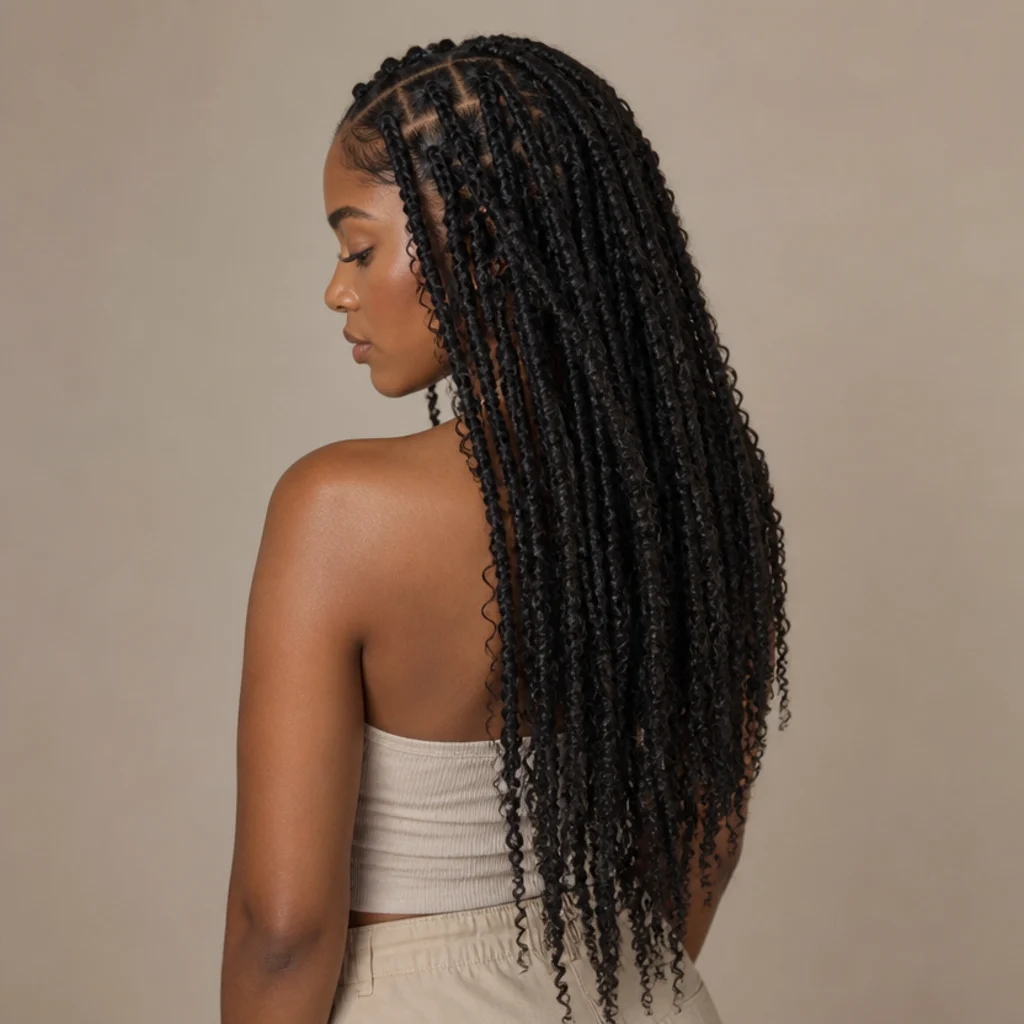
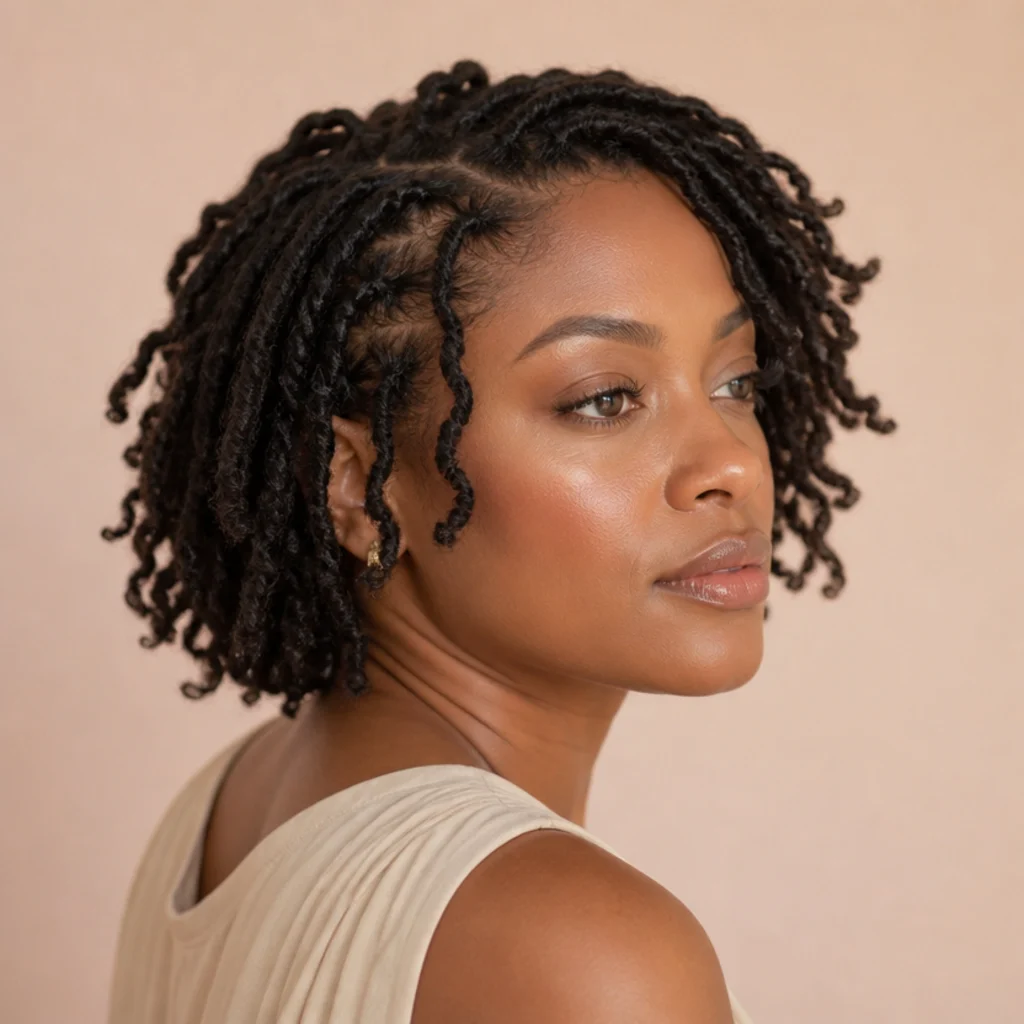
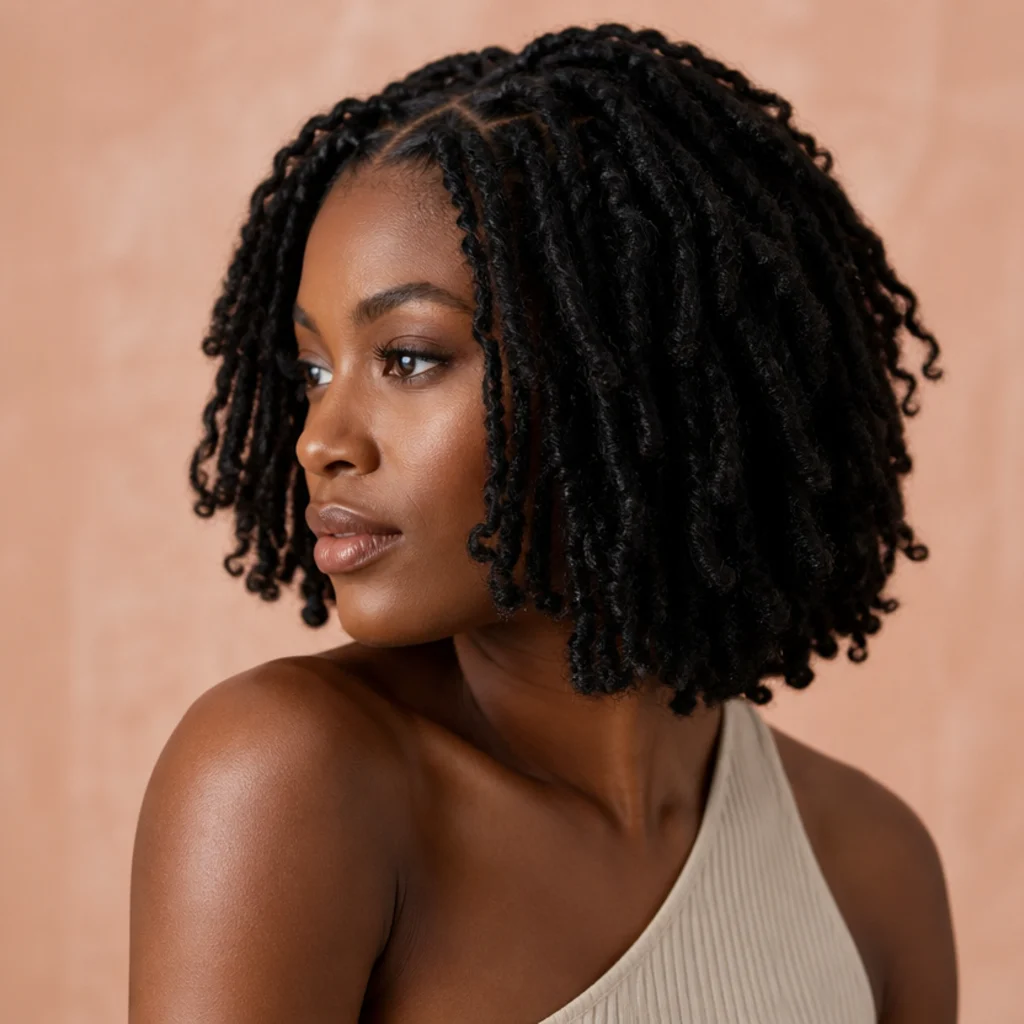
The waist-length classic is the benchmark every other look in this guide is built on. In natural black (a true 1B rather than a flat jet) with visible distressed loops, it flatters nearly every face shape: the vertical line elongates round and heart frames while the soft looping breaks up sharp jaws and square angles. It suits medium-to-thick natural hair with resilient edges that can anchor the added length without root strain. Expect standard butterfly-loc technique repeated over more inches, so the install runs long but the skill ceiling is intermediate. Maintenance is honest and simple: a satin scarf nightly, weekly diluted-shampoo cleansing at the scalp, and light re-looping of crown frizz every 2 to 3 weeks. Plan a takedown around week 6 to 8 before new growth matts at the base. Style it down for drama, or a low bun for polish. Pro tip: at consultation, ask your loctician to keep hairline sections smaller than the body sections so the perimeter weight doesn't tug your edges over two months.
02Honey-Blonde Color Melt Locs
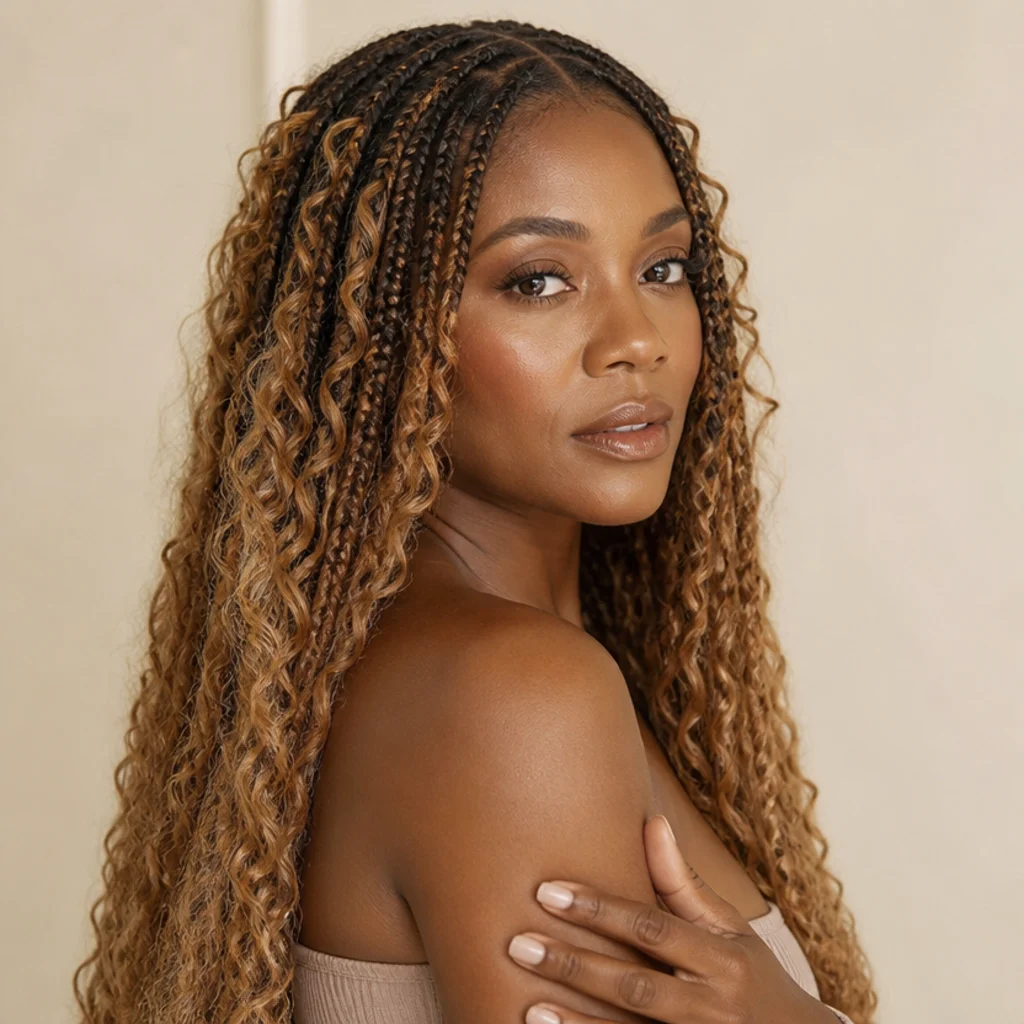
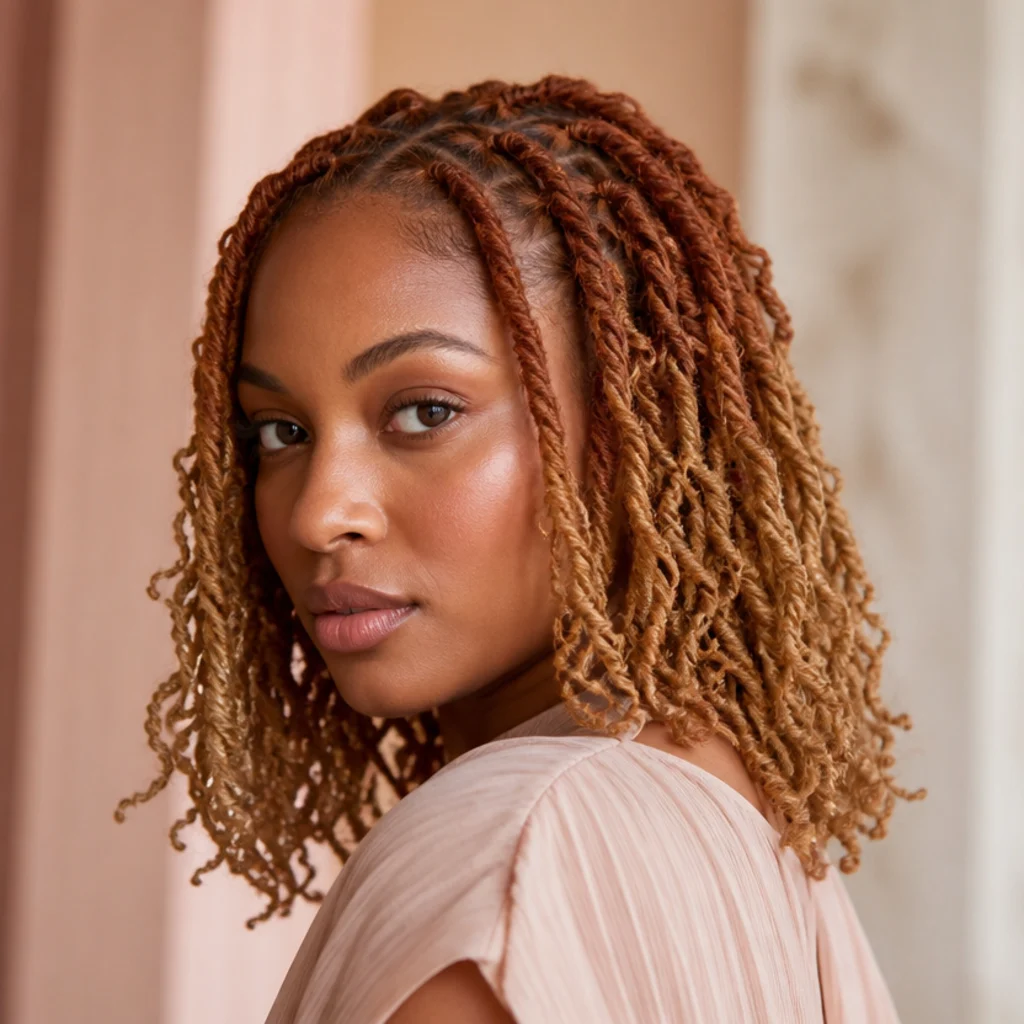
A honey-blonde melt keeps the roots deep and gradually warms to a golden mid-shaft and end, which reads far more natural than a solid bleach-blonde and grows out gracefully with no harsh line. The warm, buttery undertone flatters deep and rich complexions especially well, echoing golden skin, while medium tones can carry it if the honey stays soft rather than brassy. Because the color lives in pre-colored loc hair rather than your own strands, there's zero chemical processing on your scalp. Maintenance mirrors any long set with one caveat: lighter, pre-lightened ends are more porous, so rinse gently and follow with a hydrating leave-in to prevent the tips tangling and looking dry. Best for someone wanting dimension and light without a bold single-tone commitment. Pro tip: photograph the exact melt point and brief it plainly, "dark roots through the crown, honey from the ears down," so placement isn't left to guesswork. Ask your loctician for a diffused, blended transition rather than a defined ombre band.
03Red Butterfly Locs
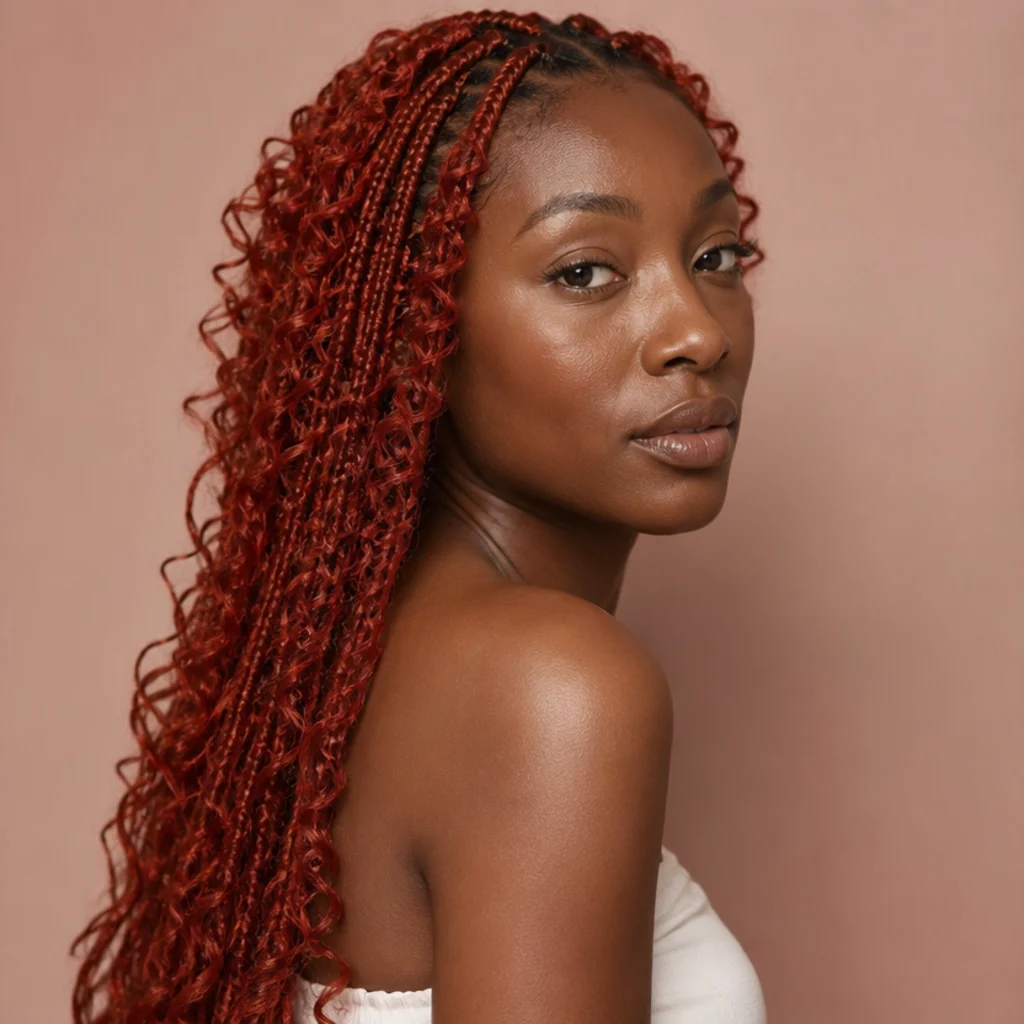
Red butterfly locs are the high-drama option, and length lets the color travel head to hip for maximum payoff. The shade decision matters most: cool cherry and blue-reds pop cleanly against deep skin, while warm copper-reds and auburns flatter medium-tan, olive, and golden undertones without competing with them. The look is bold enough to carry a plain outfit, making it a genuine statement piece rather than an accessory. Upkeep matches any long install, with one addition, direct sun and chlorinated water can shift red toward muddy over weeks, so a UV-protective leave-in and a rinse after swimming keep the tone true. Always request pre-colored red loc hair rather than dyeing your natural strands post-install; it keeps the tone even root to tip and spares your scalp. Pro tip: scatter three or four thin gold cuffs through the front locs; the metal warms the red and reads intentional in photos. Ask your loctician whether they carry a cherry versus copper base so the red matches your undertone from the start.
04Half-Up Half-Down Bohemian Locs
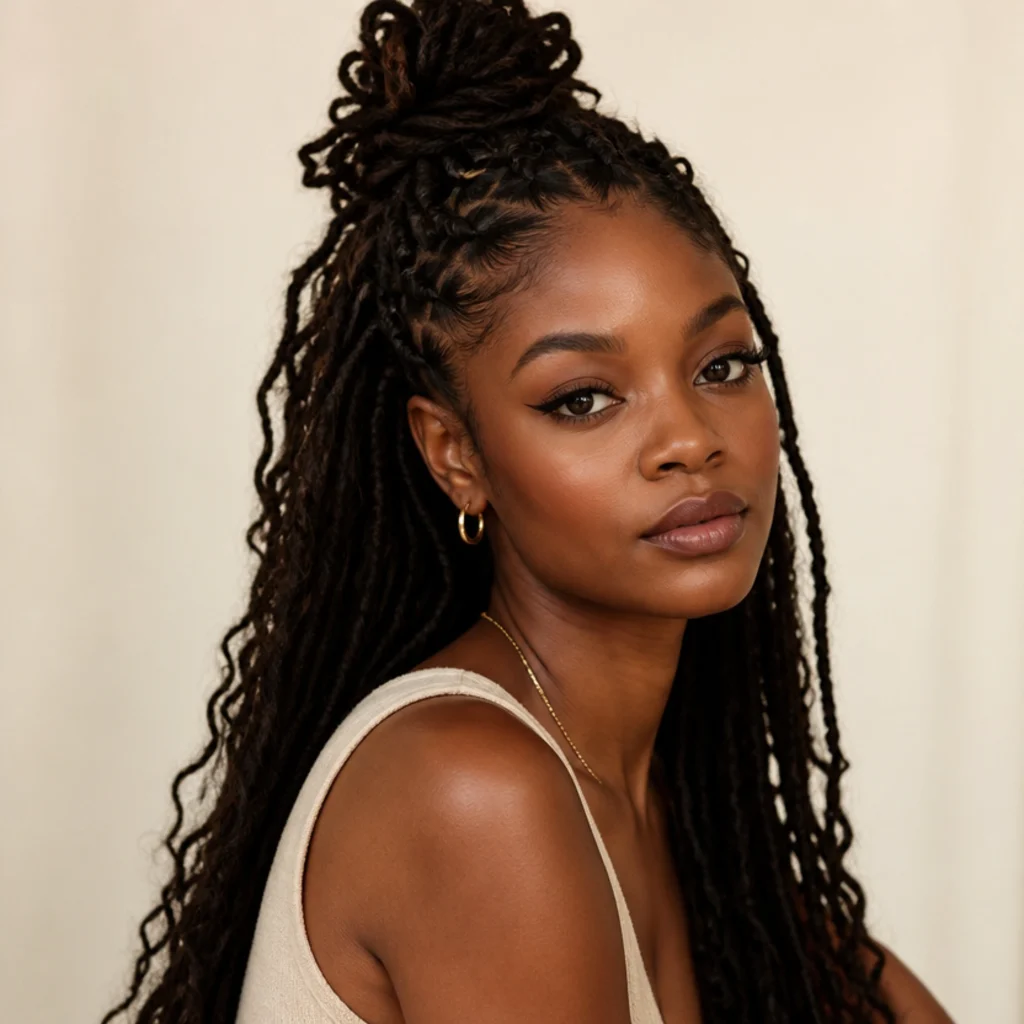
Gathering the top half into a loose knot or puff while the rest falls free is the everyday workhorse of long locs, the style you reach for on a Tuesday. It clears length off your face for work, workouts, or a warm commute while showing off the full drape below, and it flatters every face shape because you control how much height and face-framing to leave. Difficulty is low once the locs are installed: section from temple to temple, sweep back, and secure with a soft spiral tie that won't dent the locs. Maintenance is minimal, with one smart habit, rotate exactly where you gather the top section so you aren't loading tension on the same crown spot daily. It's also the kindest style for anyone nursing their edges, since the front stays gently placed rather than pulled. Pro tip: leave two face-framing locs loose at the temples to soften the gather. Ask your loctician to install a slightly finer section at the crown so the half-up knot sits neat rather than bulky.
Save this to Pinterest to build a mood board of your favorite lengths and colors.
05Butterfly Faux Locs with Curly Ends
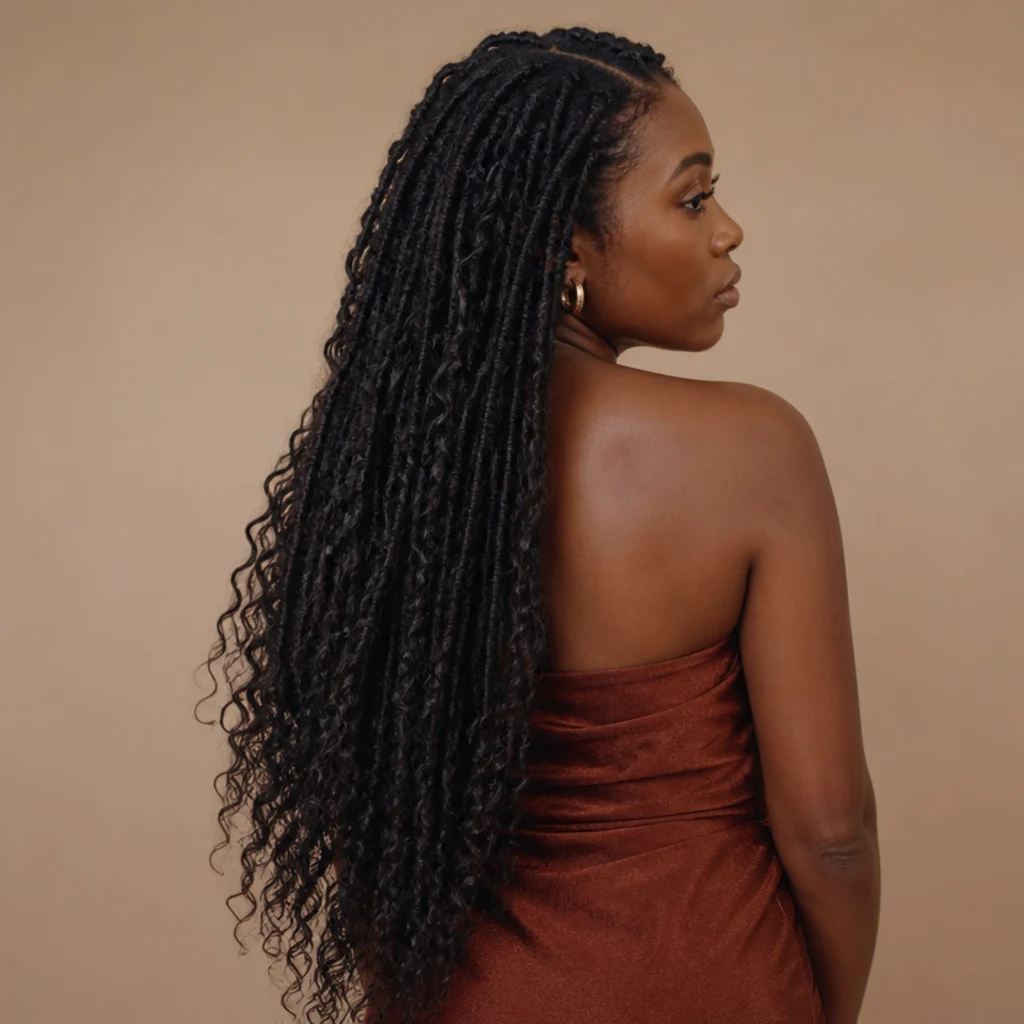
Leaving the final few inches un-looped so they burst into soft curls gives butterfly faux locs a romantic, unfinished edge, a favorite for softening an otherwise structured protective style. The contrast between the distressed loc body and the wavy, springy tips adds movement that catches light and reads younger and airier than a blunt sealed end. It suits anyone who finds heavy, capped loc ends too severe or who wants a silhouette that blurs the line between locs and boho braids. The trade-off is upkeep at the tips: a dime of curl mousse or a water-and-leave-in refresher keeps the curls defined, and you must finger-detangle the ends gently every few days or the loose hair will creep up and matt into the loc body. At consultation, specify how many inches of curl to leave out, 3 to 4 inches for a subtle flick, 6 or more for full boho volume. Pro tip: refresh curls in the morning, never at night, so they dry defined. Ask your loctician which curl pattern their hair holds best.
06Chunky Jumbo Long Locs
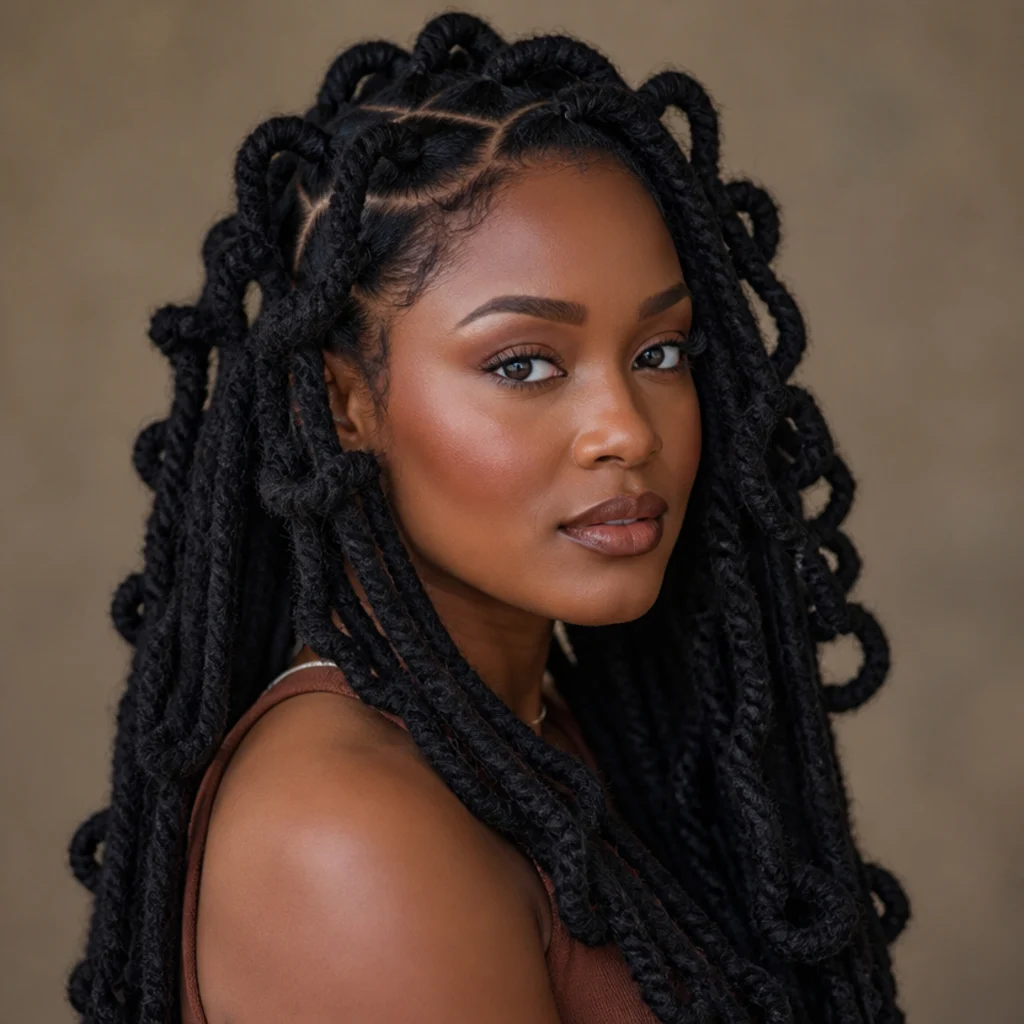
Jumbo locs use fewer, thicker sections, which means a noticeably faster install and a bold, sculptural silhouette at length, the modern, low-fuss end of the butterfly spectrum. Because there are fewer locs overall, each one can feel lighter to manage day to day, and there's less surface to re-loop, so weekly upkeep is quick. That said, thicker locs concentrate weight, so the collective pull at the root still adds up; ask your loctician to weigh section size against your hair's strength, especially at the nape and hairline. Jumbo scale flatters bigger, bolder features and longer faces, and it is the most comfortable way to trial dramatic length if you have only worn short butterfly locs before, all the drama, none of the five-hour density. Style it in a low side-sweep to show the chunky texture, or a single fat braid for contrast. Pro tip: because gaps between jumbo locs show more scalp, keep your parting oiled and clean. Ask your loctician for a brick-lay parting pattern so no scalp gaps line up in an obvious row.
07Sleek High Ponytail Locs
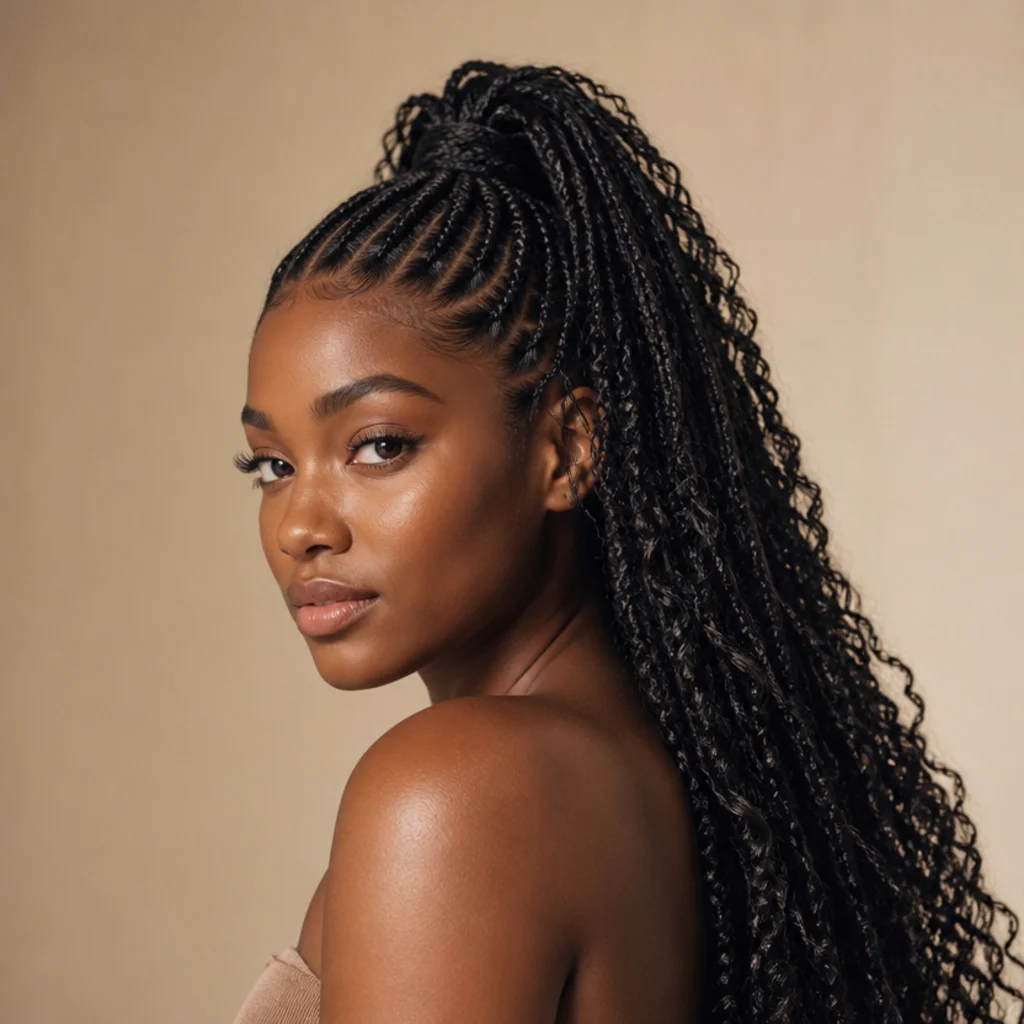
Length is what makes the high ponytail possible, and few styles look this put-together this fast. Sweeping every loc up to a crown-height gather creates a smooth, sculpted base that spills into distressed length below, the exact tension between sleek and boho that makes the look photograph so well. It flatters longer, oval, and heart-shaped faces by lifting the eye and exposing the jaw and cheekbones. The catch is tension: a true high pony loads steady pull on the hairline and nape, so treat it as an occasion style rather than a daily default, and never cinch it to the point of scalp soreness or you risk traction over time. Wrap one loc around the base to conceal the tie for a finished, salon look. Maintenance is essentially nil beyond smoothing flyaways with a little edge control and a boar brush. Pro tip: mist the crown lightly and tie over a soft spiral coil, not a thin elastic, to spread the tension. Ask your loctician to leave a few crown locs slightly longer so the base wraps cleanly.
08Burgundy and Black Blended Locs
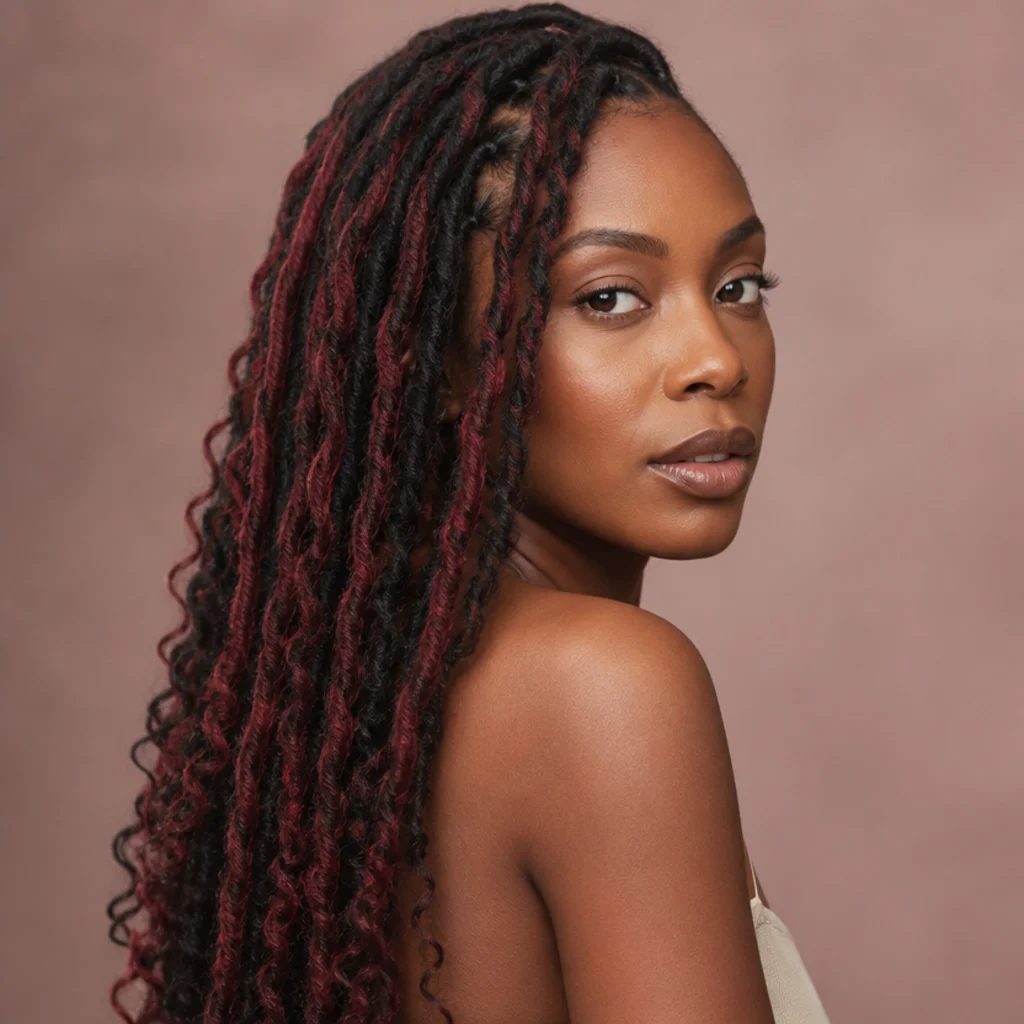
Alternating burgundy and black locs delivers depth that is bolder than a subtle melt but far more wearable than an all-over red, the office-friendly way to flirt with color. The two tones interlace as you move, so the burgundy flashes through the black under light and the effect shifts with every turn of your head. Burgundy's cool, wine undertone tends to flatter deep and neutral complexions and pairs beautifully with jewel-tone clothing. The key to keeping it looking intentional rather than striped is placement: ask your loctician to pre-blend the colored and black locs strand by strand during install rather than sectioning them into obvious blocks, so the result stays organic and dimensional. Maintenance matches any long set, plus the same UV-aware leave-in you would use for a full red to stop the burgundy dulling in sun. Pro tip: a roughly 1-to-3 burgundy-to-black ratio reads dimensional without tipping into full color. Ask your loctician to concentrate a touch more burgundy around the face for a flattering, lit-from-within frame.
09Center-Part Curtain Locs
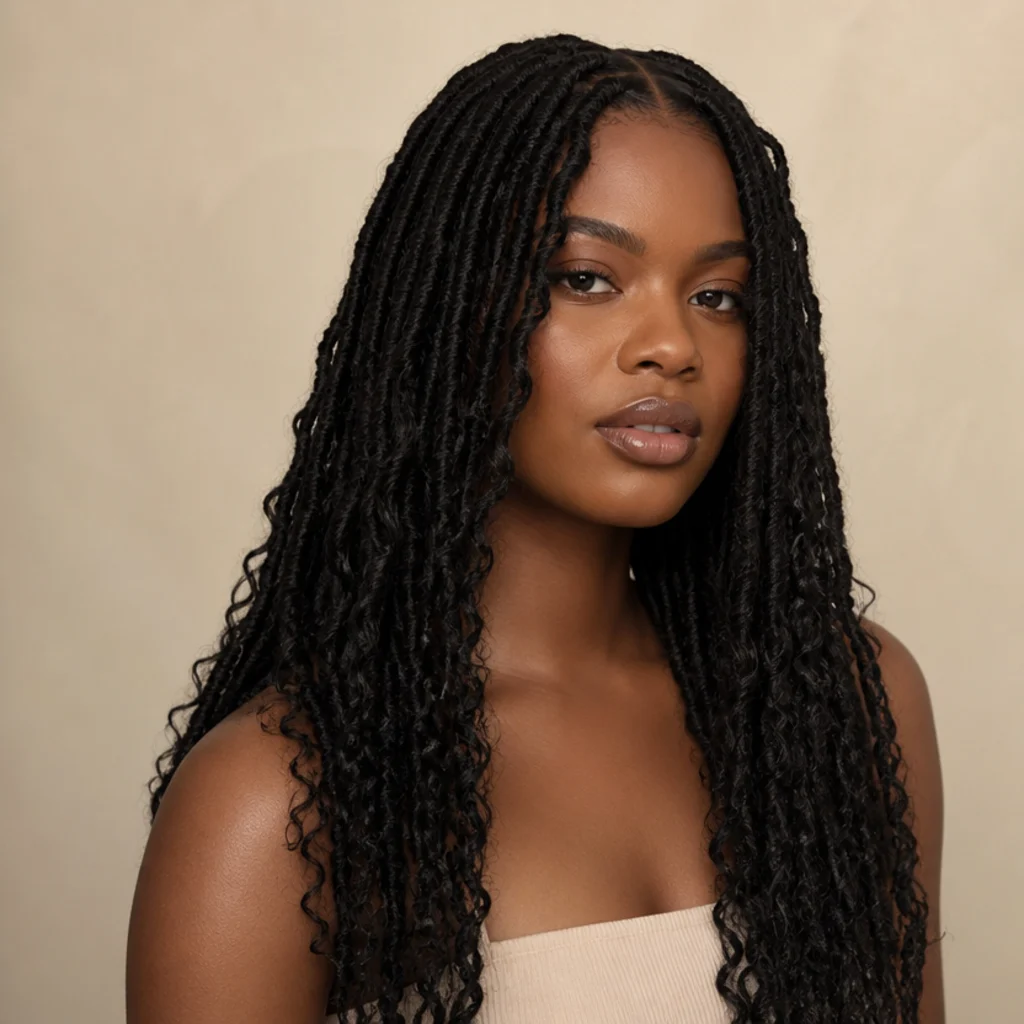
A crisp center part lets long locs fall like curtains on either side of the face, a clean, symmetrical look that feels effortless and quietly expensive. It flatters oval and square faces particularly well and softens a strong jawline by drawing two vertical frames alongside it; longer faces should keep some volume at the sides so the part doesn't narrow the look further. Everything depends on the parting, so ask your loctician for a defined, ruler-straight middle part with tidy, evenly matched front sections, this is the detail that separates polished from messy. Once installed, upkeep is easy: keep the exposed part line clean and lightly moisturized, and tuck the front locs behind alternating ears rather than always the same side to avoid one-sided strain. It transitions from desk to dinner with zero restyling. Pro tip: run a little lightweight oil down just the part line, not the locs, to keep the scalp from looking dry or flaky in photos. Ask your loctician to reinforce the front sections so the curtain drapes without slipping.
10Beaded and Cuffed Long Locs
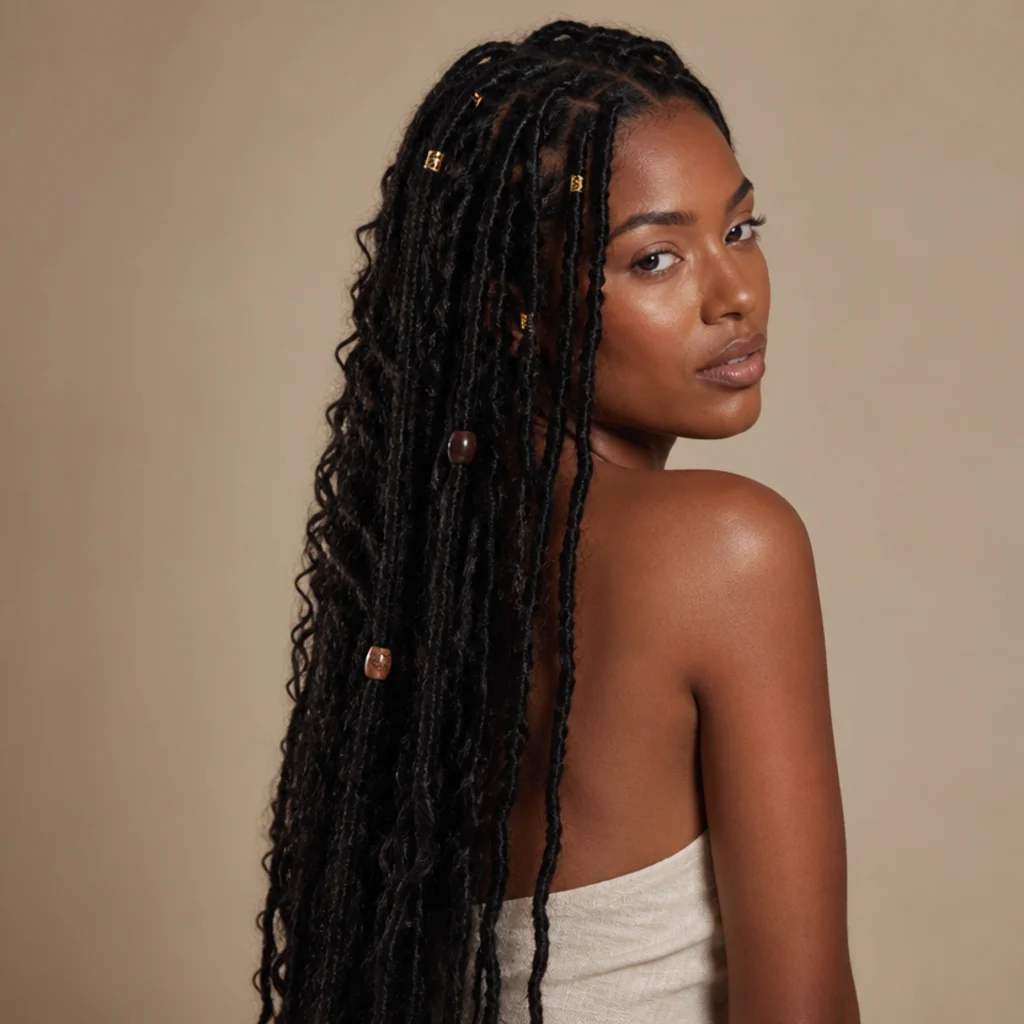
Accessories turn a simple set into something unmistakably personal, and long locs give hardware room to sit and swing. Scattering gold cuffs, carved wooden beads, or shell rings across a handful of locs adds craft, texture, and a catch of light with every movement, ideal for festivals, weddings, or a milestone photo shoot. The discipline here is restraint and balance: concentrate hardware on a few locs rather than every strand, both to keep the eye focused and to avoid loading extra weight onto already length-heavy roots. Slide cuffs on loosely so they don't crimp or dent the loc, position beads at varied heights for an organic scatter, and remove heavier pieces before sleeping to protect both the locs and your pillow. Otherwise maintenance is completely standard. It's also the easiest way to refresh a set you've already worn for a few weeks without a full restyle. Pro tip: mix two metals, warm gold and a little antique brass, for depth rather than a single shiny finish. Ask your loctician to install a few slightly denser locs where the heaviest beads will sit.
Save this to Pinterest and tag the accessories you want to recreate.
11Ombre Caramel Waterfall Locs
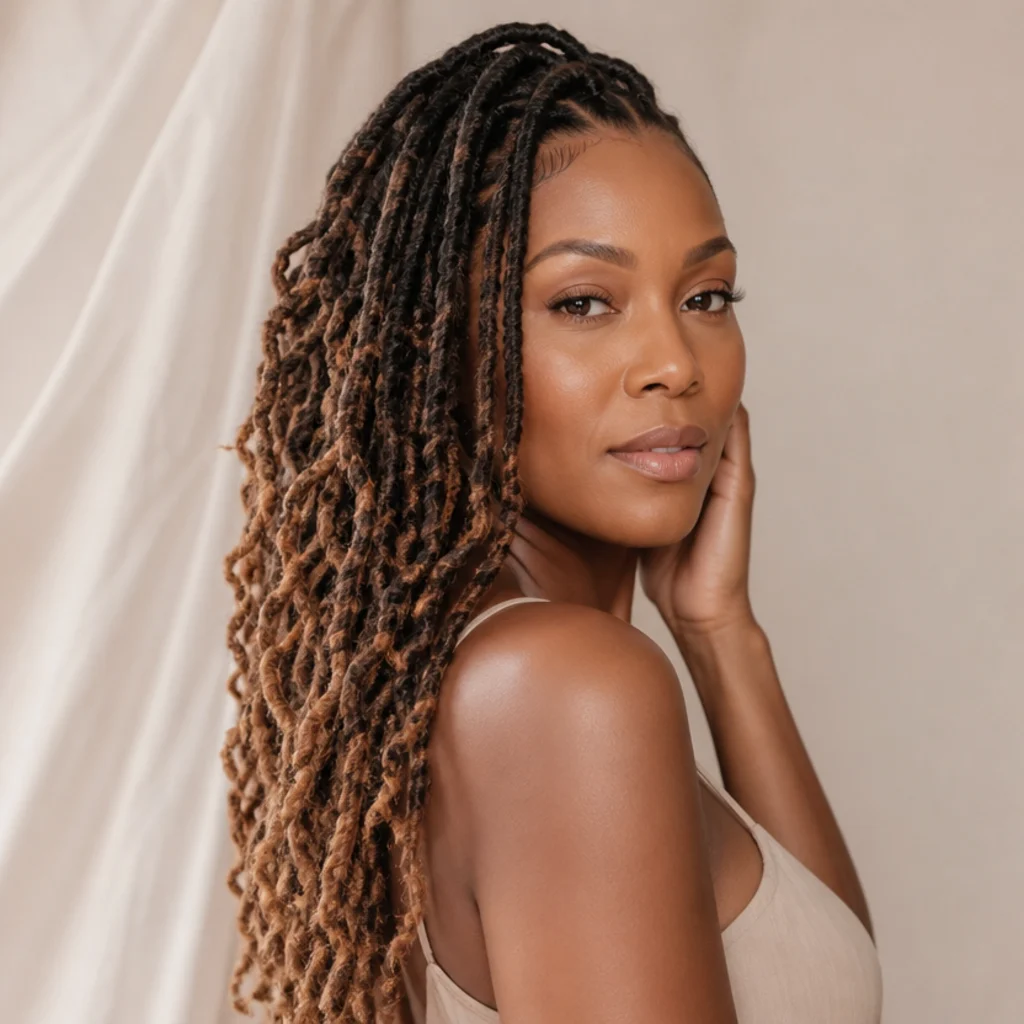
A caramel ombre that stays deep at the roots and warms toward toffee ends looks richest when the locs are swept over one shoulder in a waterfall drape, the diagonal placement puts the whole gradient on display and softens the neckline right away. Caramel is one of the most forgiving colored options because its warm, neutral-gold cast flatters nearly every complexion from fair to deep, which is why it is such a reliable first color for the color-curious. Styling is pure placement: direct all the length to your stronger side, then pin two or three locs discreetly at the crown to hold the sweep without a hard line. Maintenance follows color-melt rules, gentle rinsing, a hydrating leave-in for the more porous ends, and a satin scarf that keeps the drape smooth overnight. It's the low-effort choice that still reads styled for events or photos. Pro tip: sweep to the side opposite your part so the crown locs have somewhere to hide the pins. Ask your loctician where the caramel should begin relative to your chin for the most flattering face-framing glow.
12Long Locs with Side-Swept Undercut Illusion
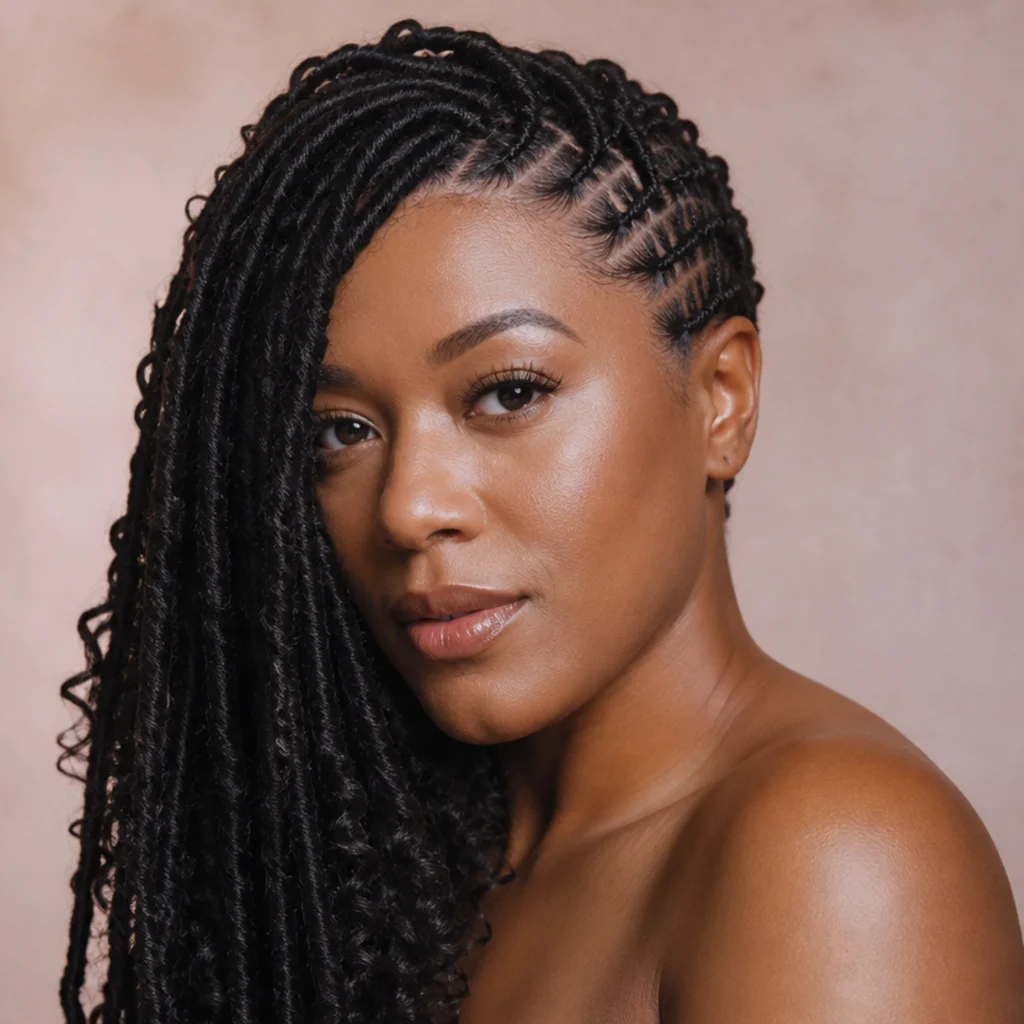
You don't have to shave a thing to get an edgy, asymmetric shape. Sweeping the full length hard to one side and pinning the opposite section flat against the scalp fakes the drama of an undercut while every loc stays intact, a reversible styling trick, not a different install, so any long set can pull it off. The off-center silhouette flatters angular and oval faces and adds night-out attitude fast, especially with a bold lip. Secure the pinned side with a small ladder of bobby pins tucked and crossed under the top locs so they disappear, then mist the swept side lightly and smooth it so the flat section reads sleek against the voluminous fall. Because all the weight now hangs on one side, keep this for events rather than sleeping in the shape, which would stress the loaded hairline. Pro tip: cross bobby pins into an X for grip that holds heavy locs all night. Ask your loctician for slightly longer perimeter locs if you know you love a dramatic deep side sweep.
13Boho Bun with Face-Framing Tendrils
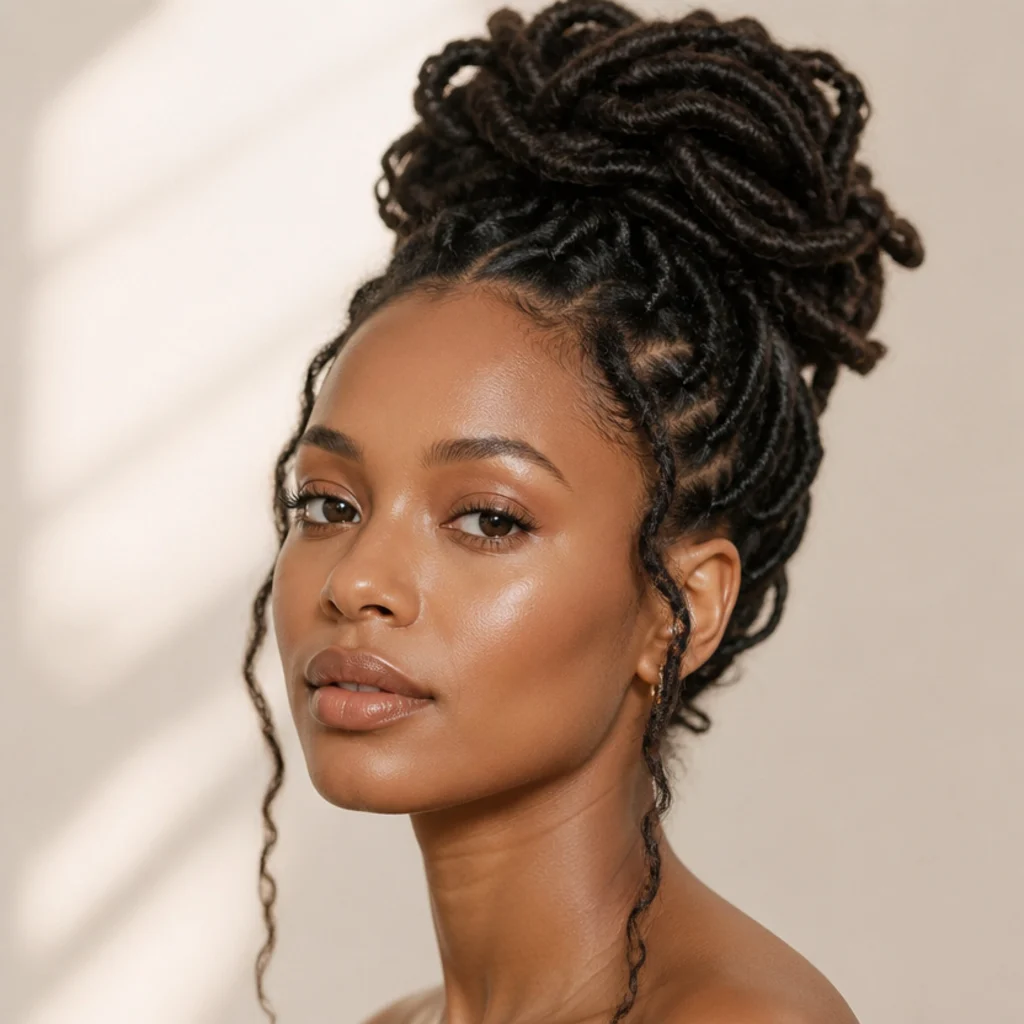
A loose, textured bun with a couple of locs left free at the temples is the relaxed updo that long locs do best, effortless without looking like you gave up. The bun clears length off the neck for hot days, travel, or a busy week, while the face-framing tendrils keep the whole thing soft rather than severe. The bun works for every face shape since you control its height and how much face-framing to leave loose. Difficulty is low: twist the length up, coil it into a bun, and secure with a spiral scrunchie or a few U-pins, then pull one loc loose on each side at the front. Maintenance is easy, with the same tension-smart habit as the ponytail, vary the bun's height and position day to day so you aren't stressing one crown spot repeatedly. Pro tip: build the bun slightly off-center and undone rather than tight and round; the imperfect shape is what makes it read boho. Ask your loctician to keep your overall length past the shoulder blades so the bun has enough to coil full.
14Deep-Water Wave Distressed Locs
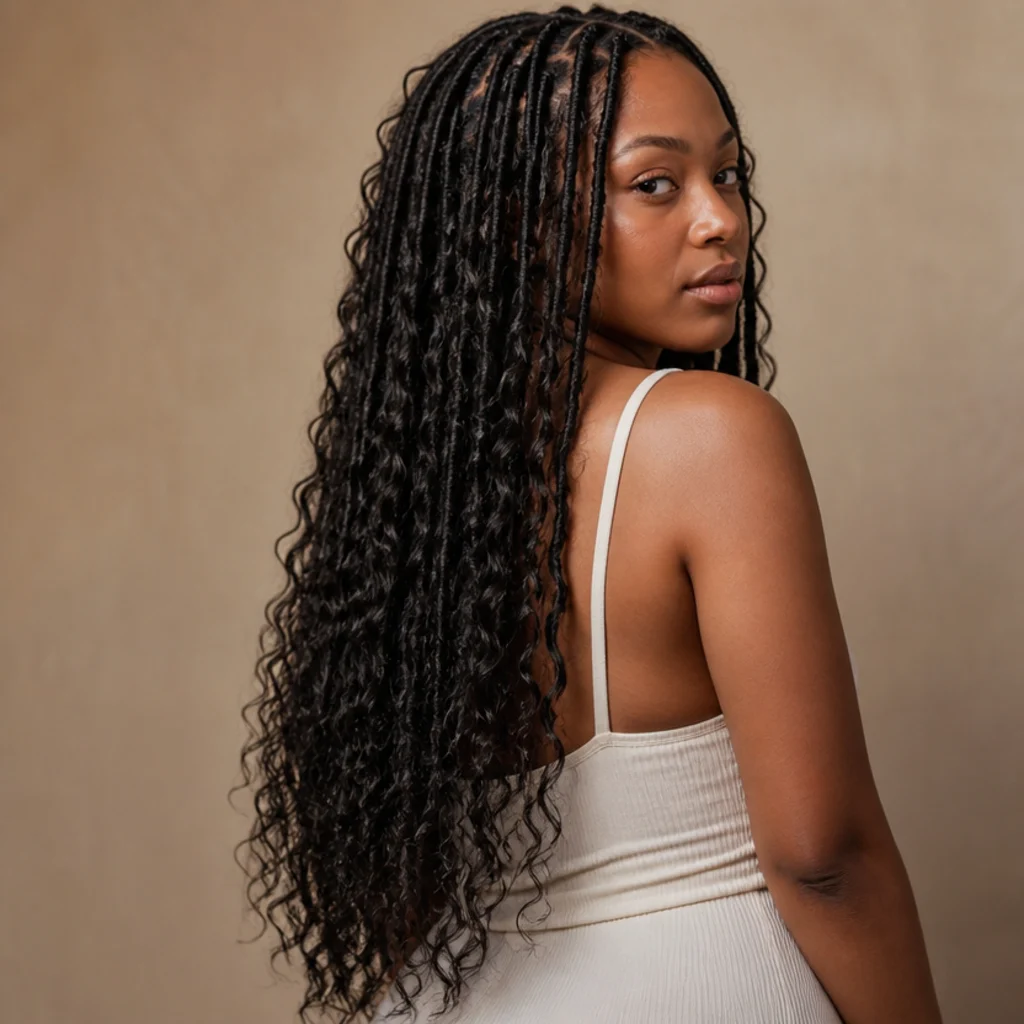
Turning the distressing all the way up gives a heavily looped, water-wave texture that looks lush, full, and romantic at length, the most maximalist option in this lineup. More loops mean more visible movement and a soft, lived-in finish that reads undone by design, which is exactly why it is so forgiving of natural frizz and everyday wear; the look is meant to look touched. It suits anyone chasing peak texture and volume, and it photographs beautifully because the heavy looping catches light from every angle. The honest trade-off is upkeep: all those extra loops have more surface to tangle, so a nightly satin scarf and a gentle daily finger-separation are non-negotiable if you want to avoid matting at the roots by week four. At booking, ask specifically for a heavier butterfly loop technique or a "deep distressed" finish, since a standard install loops far more subtly than this. Pro tip: separate the loops with fingers only, never a comb, which would shred the texture. Ask your loctician how much extra install time the heavier looping adds so you can plan the appointment.
15Grey and Silver Statement Locs
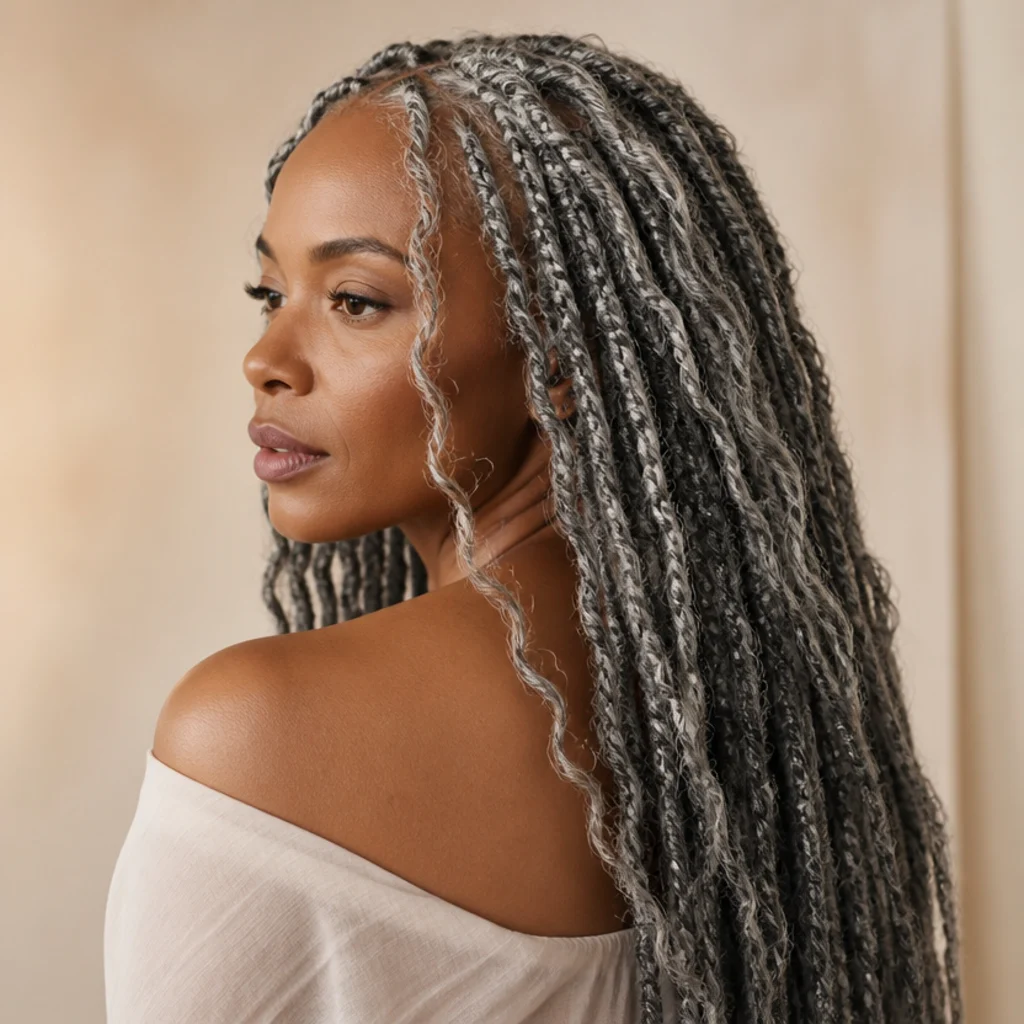
Cool grey and silver locs are a striking, high-fashion choice that reads deliberate and confident at any age, worlds away from anything that looks accidental. The muted metallic tones look sophisticated against warm and deep complexions in particular, and the length amplifies the editorial drama. As with every colored look here, use pre-colored loc hair rather than lightening your own strands, silver requires heavy lifting that has no business happening on your scalp. Flat, one-note silver can look dull, so the pro move is dimension: ask your loctician to blend a soft charcoal and a lighter platinum through the set so the color has depth and movement rather than reading like a solid grey cap. Maintenance mirrors other long sets, plus an occasional color-safe purple-toned rinse to keep cool greys from drifting brassy or yellow. Style it sleek and center-parted to lean full high-fashion, or in a low bun for restrained elegance. Pro tip: use the purple rinse sparingly, over-toning turns silver lilac. Ask your loctician to place the lightest silvers around the face where they brighten and lift your features most.
Pro Tips from the Editor
- Protect the perimeter first. Whatever length or color you choose, insist on smaller sections at the hairline and nape than through the body. Length concentrates pull exactly where your hair is most fragile, and a comfortable install should never feel tight or tender at the edges on day one.
- Buy color, don't process it. For any red, melt, burgundy, silver, or caramel, request pre-colored loc hair. It keeps the tone even root to tip, spares your scalp from lightener, and lets you change colors next install with zero regrowth to manage.
- A real cleanse beats a refresh. Locs still need a clean scalp. Use a diluted clarifying shampoo in an applicator bottle down the parts every 1 to 2 weeks, then dry thoroughly, damp roots at the base are the fast track to mildew smell and matting.
- Separate with fingers, seal with intention. A boar brush shreds distressed loops and a comb is worse. Finger-separate at the roots every few days, and reserve product for the ends, where porous pre-lightened or curly hair actually needs the moisture.
- Match tension to your calendar. High ponytails, tight buns, and hard side sweeps are occasion styles. Rotate low, loose, and varied placements the rest of the week so you aren't loading the same follicles daily for eight weeks.
- Take it down on time. Book the removal appointment when you book the install, ideally 6 to 8 weeks out. Stretching a set past its window is where matting, breakage, and a painful takedown begin.
- Photograph the placement, not the vibe. Bring reference images that show where color starts and where the part sits, more than a general mood shot. Locticians place what they can see; "honey from the ears down, straight center part" removes the guesswork.
Butterfly Locs Length and Style Comparison
| Style focus | Best face shapes | Undertone that flatters | Relative install time | Maintenance level | Occasion vs daily |
|---|---|---|---|---|---|
| Classic waist-length (black) | Most, esp. round & heart | Any | Long | Moderate | Both |
| Honey / caramel melt | Most | Warm, deep, golden | Long | Moderate (porous ends) | Both |
| Red / burgundy | Oval, angular | Cool reds on deep; copper on medium/olive | Long | Moderate (UV-aware) | Statement / both |
| Jumbo chunky | Longer, bolder features | Any | Shorter | Low | Both |
| High ponytail / hard side sweep | Oval, heart, longer | Any | Styling only | Low (tension-limited) | Occasion |
| Grey / silver | Warm, deep | Cool, muted | Long | Moderate (toning rinse) | Statement |
How to Choose / Get the Look
Work through four decisions in order and the rest falls into place. First, length and weight. Long butterfly locs are meaningfully heavier than short butterfly locs, so if your natural hair, density, or edges run fine, ask your loctician to keep front sections small and tension comfortable, nothing should feel painful, and if it does on day one, say so before you leave. Second, color. Pre-colored loc hair, whether a honey melt, cherry red, burgundy blend, caramel ombre, or cool silver, means no chemicals touch your scalp and the tone stays even; decide where the color should start relative to your chin for the most flattering frame. Third, how you'll actually wear it. Ponytails, high buns, and boho updos need enough length to gather comfortably past the shoulder blades, while curtain parts and half-up looks suit almost any length, so pick the install length for your everyday styling first and let the photo follow. Fourth, upkeep honesty. Heavier distressing and lighter colors demand more attention; be realistic about how much nightly and weekly care you'll actually do. For the consultation itself, bring two or three photos showing length, part, and color placement, and ask three concrete questions: how many hours the install takes, how heavy the finished set will feel, and when to book the takedown, usually 6 to 8 weeks out. Then protect the investment with a satin scarf nightly, a hydrating leave-in on the ends, diluted-shampoo scalp cleansing, and gentle finger-separating of frizz rather than heavy manipulation.
Frequently Asked Questions
How long do long butterfly locs last?
Most sets stay comfortable and healthy for 6 to 8 weeks. Beyond that window, new growth at the roots begins to matt with the added hair and the weight strains your natural strands, so plan a takedown rather than stretching the install. Book the removal appointment at the same time as the install so you aren't tempted to overwear it.
Are long butterfly locs heavier than short ones, and will they damage my hair?
Yes, added length means added weight, which puts more pull on your roots and edges. The style itself isn't damaging when installed and worn correctly, but tension and time are. Ask for smaller sections at the hairline, avoid tight high styles daily, keep the set no longer than 8 weeks, and stop if anything feels tender.
Can I get butterfly locs with color without dyeing my own hair?
Absolutely, and it is the recommended route. The color lives in pre-colored loc hair added during install, so reds, honey and caramel melts, burgundy blends, and silvers all appear with zero chemical processing on your own strands or scalp. It also makes switching colors at your next install effortless, since there is no regrowth to correct.
How much do long butterfly locs cost?
Cost varies widely by region, the loctician's experience, the amount of hair, and the level of color or distressing, and long installs run higher than short sets because they use more hair and more hours. Rather than chase a single number, ask for a written quote that separates labor from the cost of hair, and confirm whether color melts or heavy distressing add to it.
How do I keep long butterfly locs from frizzing and tangling?
Wrap them in a satin scarf nightly, sleep on a satin pillowcase, and gently finger-separate stray frizz at the crown instead of over-handling or brushing. A light leave-in on the ends keeps texture soft, and a diluted-shampoo scalp cleanse every 1 to 2 weeks prevents buildup that accelerates matting. Heavier water-wave distressing needs this daily, not weekly.
How do I wash long butterfly locs without ruining them?
Dilute a gentle or clarifying shampoo in an applicator bottle and apply it directly to the scalp along the parts, then massage lightly and rinse without scrubbing the loc lengths, which would frizz them. The most important step is drying: blot with a microfiber towel and air-dry or sit under a hooded dryer until the roots are fully dry, since trapped moisture at the base causes odor and mildew.
Can I swim with long butterfly locs?
Yes, with care. Rinse the locs in clean water before swimming so they absorb less chlorine or salt, and rinse again immediately after. Chlorine and salt water can dull colored locs, especially reds and silvers, and repeated soaking adds drying time, so plan a thorough dry afterward and keep colored sets out of direct pool sun where you can.
Do butterfly faux locs and butterfly locs mean the same thing?
They are used interchangeably by most stylists. Both describe the distressed, looped protective style made with added hair; "faux" just emphasizes that the locs are temporary and installed rather than grown and permanent. If you see either term in a booking listing, it refers to the same looped, wrapped technique shown throughout this guide.
Which long butterfly loc color is easiest for a first-timer?
Caramel and honey melts are the most forgiving because their warm, neutral-gold tones flatter nearly every complexion and grow out softly with no harsh line. Burgundy-and-black blends are the safest way to test a red without full commitment. Save vivid single-tone reds and cool silvers for when you know you love the upkeep, since both show fading and demand a little more color-specific care.