15 Butterfly Locs Bob Styles for a Fresh Look
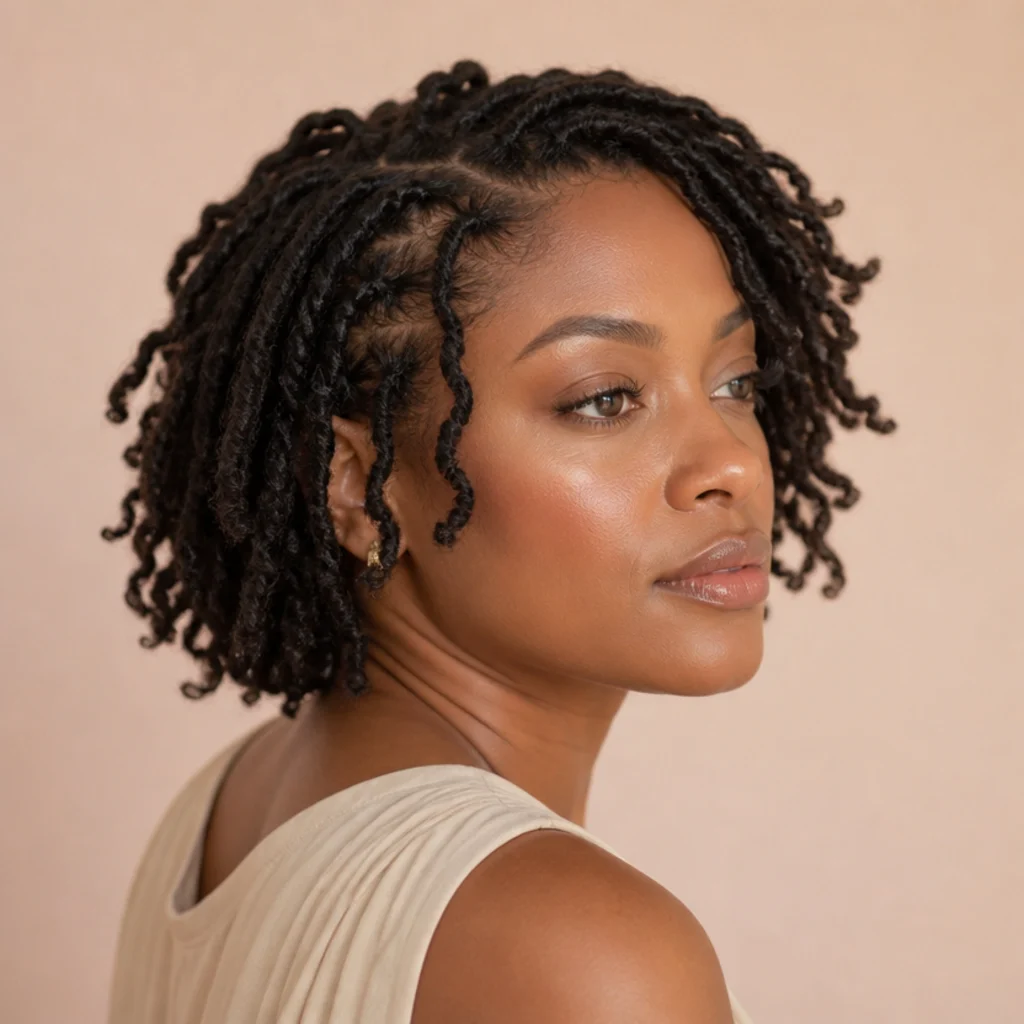
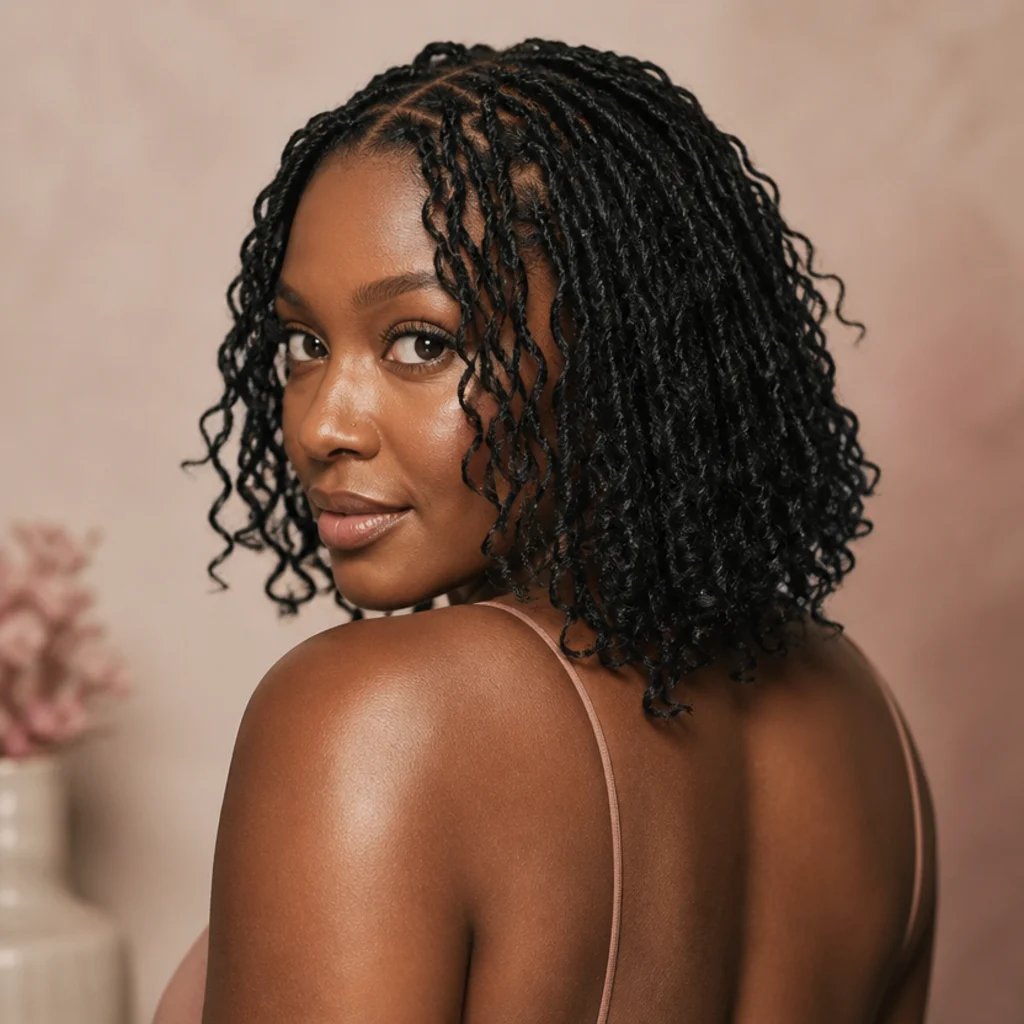
The bob is where short butterfly locs feel most modern: light on the neck, face-framing, and quick to install. Below are 15 shapes, parts, and colors, each with real notes on face shape, tension, install time, and upkeep, so you'll know exactly what to ask for before you sit in the chair.
 Edited by Lena Rose · Published July 11, 2026 · 26 min read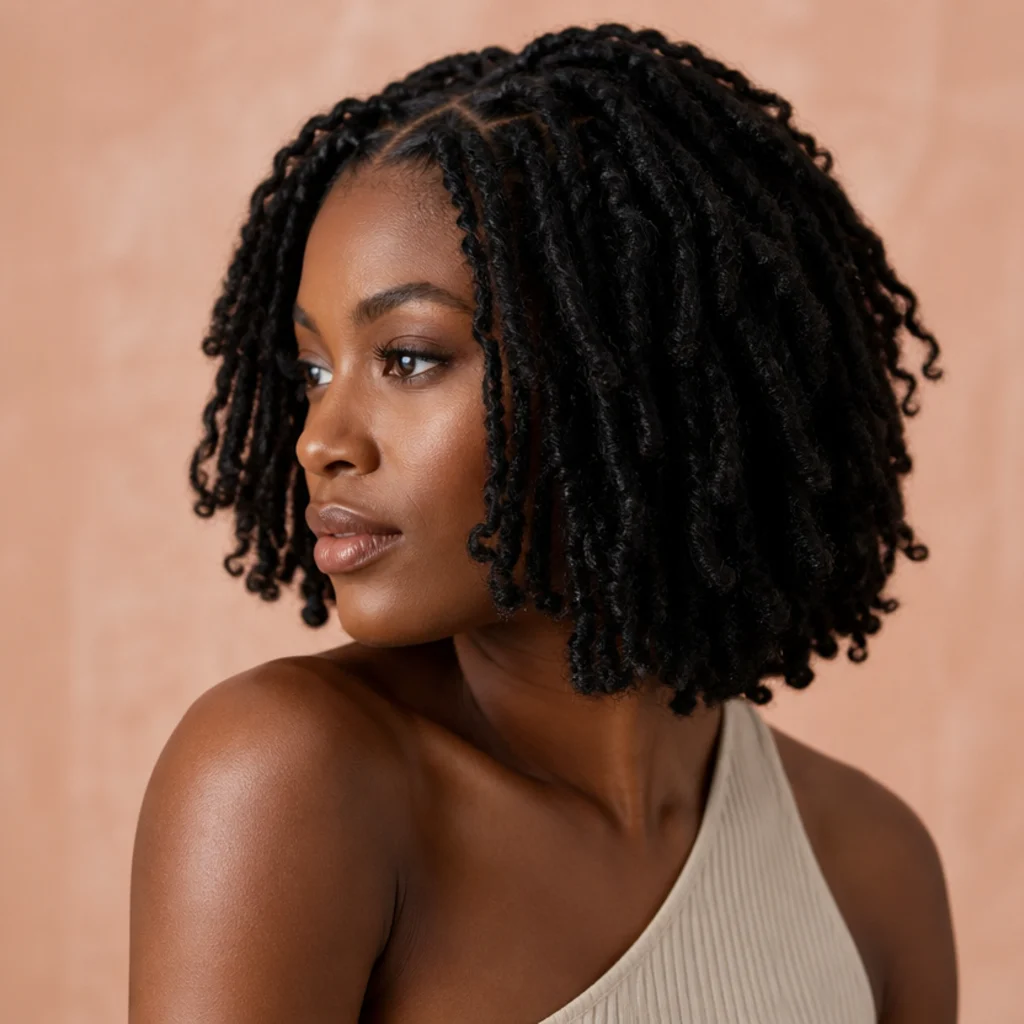
Quick Answer
- Best for: A lightweight, face-framing protective style with the airy distressed loops of butterfly faux locs, shaped short so it flatters round, oval, heart, and square faces and works on most textures from 3B curls to 4C coils.
- Who might skip it: Anyone wanting waist-grazing length, a super-sleek non-textured finish, or a set that needs zero refreshing, since loose loops need periodic re-wrapping.
- Maintenance: Low to moderate; re-wrap stray loops every 2 to 3 weeks, cleanse the scalp with diluted shampoo weekly to biweekly, and wrap in satin nightly.
- Difficulty: Intermediate to install (wrap or crochet method); most people book a stylist rather than DIY.
- Cost: Variable; short sets typically run lower than long installs, with jumbo bobs at the fast, budget-friendly end and micro sets at the higher, labor-intensive end. Colored or ombre hair can add to the materials cost.
- Wear time / longevity: 4 to 6 weeks; short lengths often hold tidy toward the upper end because there is less hair to loosen.
- Standout variation: A blunt chin-length bob with copper or burgundy melted through the ends.
- How to ask your stylist: Bring two reference photos, name your length ("ends at the jaw" or "grazing the collarbone"), specify wrap vs. crochet, loc size, and any color depth, and ask for comfortable tension at the hairline to protect your edges.
In This Guide
- Classic Chin-Length Butterfly Bob
- Blunt Neck-Length Butterfly Bob
- Angled A-Line Butterfly Bob
- Center-Part Butterfly Bob
- Deep Side-Part Butterfly Bob
- Curly-Ended Butterfly Bob
- Honey-Blonde Butterfly Bob
- Red Butterfly Locs Bob
- Burgundy Ombre Butterfly Bob
- Jumbo Butterfly Locs Bob
- Micro Butterfly Locs Bob
- Asymmetric Butterfly Bob
- Bob with Face-Framing Layers
- Half-Up Butterfly Bob
- Two-Tone Butterfly Bob
The bob is the shape that pushed short butterfly locs from trend into mainstay. Cut the distressed, looped texture to somewhere between the earlobe and the collarbone, and the set stays light on your neck while still framing your jaw and cheekbones — all the movement of butterfly faux locs, without the drag of a waist-length install. The shorter drop matters in practical terms too: fewer inches of extension hair means a faster appointment, less load on your roots, and easier wash days. That's why a bob is usually the best place to start if you've never worn locs before. The looped, "unfinished" butterfly texture comes from wrapping the hair loosely and pushing it back on itself, and at bob length that airy effect looks especially crisp against a clean cut line. Below you'll find blunt and angled shapes, center parts and deep sweeps, colored sets from honey blonde to cherry red, and a couple of updos that prove short locs still gather. Some of these read polished and architectural; others are soft and beachy. Each entry covers who it flatters, how long it takes, and what upkeep to expect.
01Classic Chin-Length Butterfly Bob
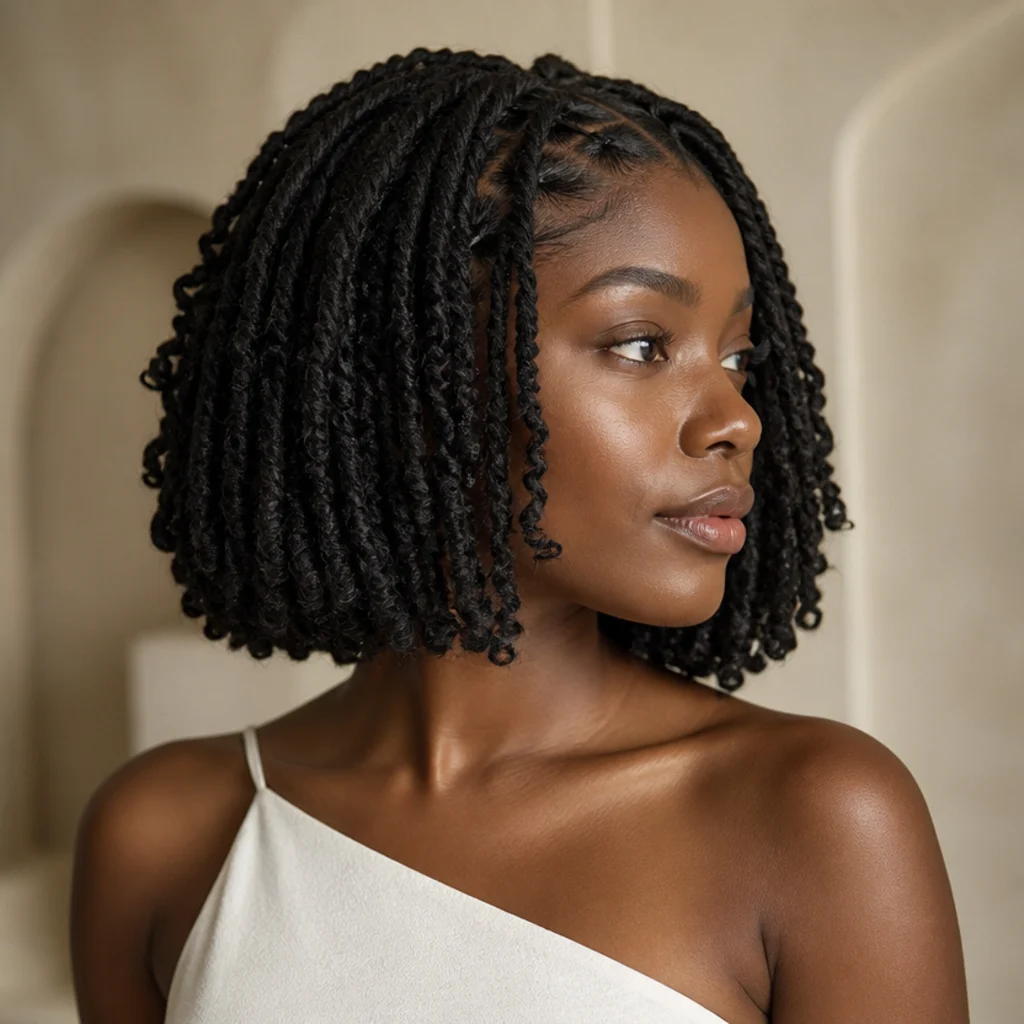
The chin-length bob is the reference point for short butterfly locs — the length just works. Ending the locs right at the jawline draws the eye up and builds a rounded, full interior curve that flatters heart and oval faces especially well, since it adds soft width right where those shapes taper. Loops sit close together here, so they read intentional rather than sparse; small or medium loc sizing (roughly pencil to marker width) keeps the surface uniform. Plan a moderate install window and light re-wraps every two to three weeks. The short perimeter loosens slowly, so upkeep stays low. Ask your stylist for a uniform blunt bottom line and a slightly built-up crown, so the shape holds volume as it settles and the ends don't splay. Style it in a deep side sweep for evening, or tuck one side back for clean daytime lines. Pro tip: sleep with the ends resting on a satin pillowcase rather than tucked under a tight scarf, so the blunt line stays smooth instead of creasing.
02Blunt Neck-Length Butterfly Bob
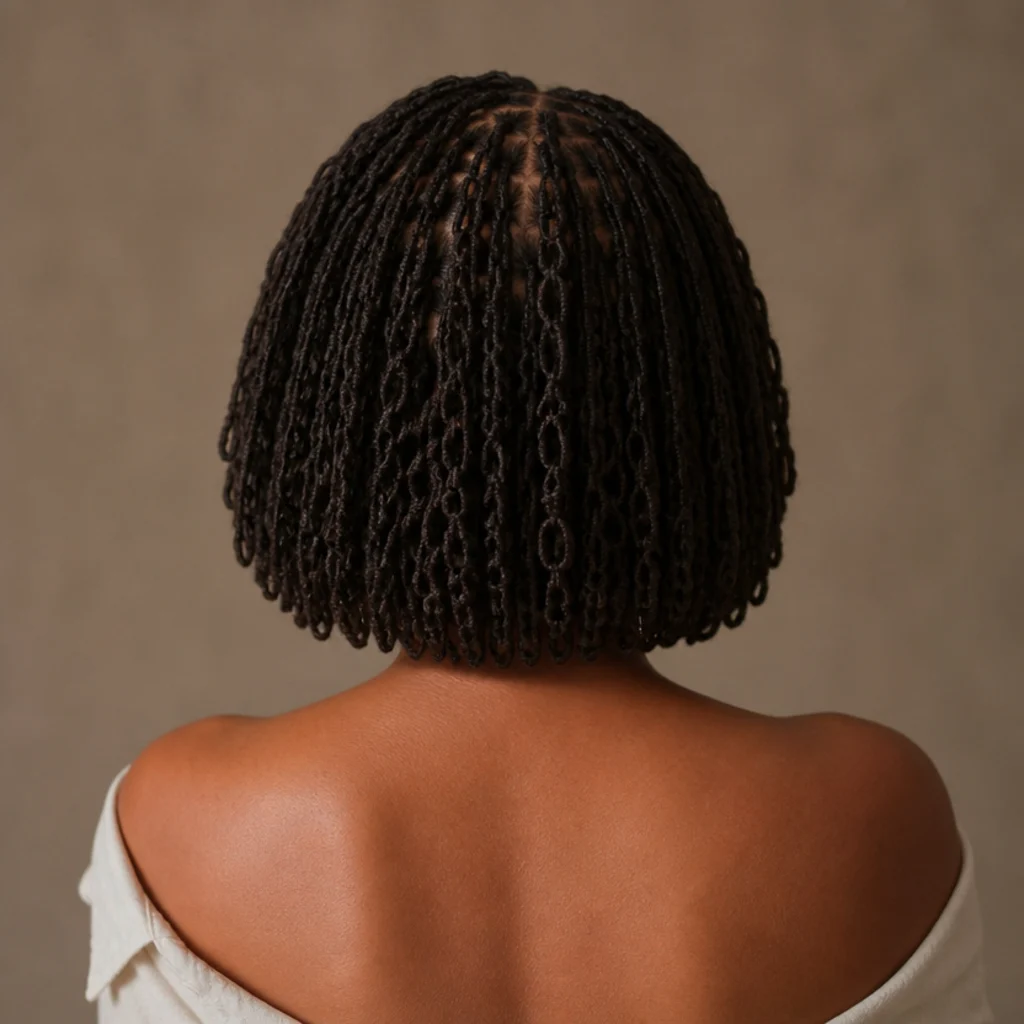
Dropping the bob to neck length adds a touch more drama while staying firmly short. The extra inch or two gives the locs room to swing and reads elegant and grown-up — a good pick if chin-length feels too cropped for your proportions. A crisp, weighty blunt line is what sells this shape. Ask your stylist to keep the ends even and dense rather than feathered, and to distribute the loc count so the perimeter stays full. The strong horizontal edge flatters square and oblong faces, balancing a longer chin or a defined jaw with a clean counter-line. Medium loc sizing holds the blunt shape best; go too fine and the edge softens, too chunky and it can look blocky. Maintenance stays low, though the slightly longer back pieces do better with a satin scarf at night to keep that edge from folding. Pro tip: ask for the back sections to be sealed a hair longer than the sides, so the line still reads blunt after the first week of natural settling.
03Angled A-Line Butterfly Bob
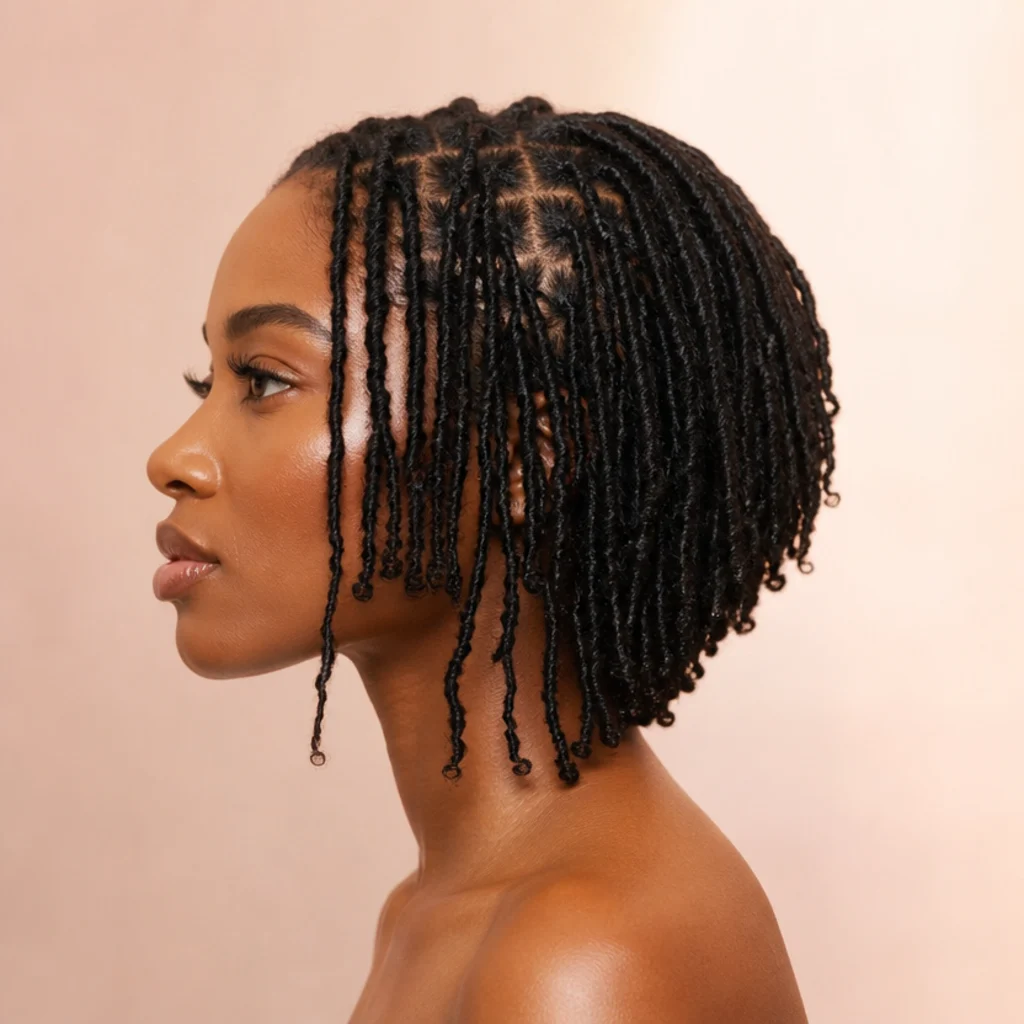
An A-line keeps the front locs longer and graduates them shorter toward the nape. The result is a forward-leaning shape that feels sleek and deliberate. Longer front pieces skim the jaw and draw a flattering diagonal that visually slims rounder and fuller faces, while the cropped back adds lift and keeps weight off your neck. The effect depends on precise length planning, so this one's worth leaving to a stylist who maps the graduation before installing rather than trimming after. Ask them to walk you through where the shortest nape point and longest front point will land. Small to medium locs let the angle read cleanly. Style it by tucking the shorter side behind one ear to show off the line. Upkeep is easy given the reduced back volume, though the fine nape pieces loosen and need re-tucking sooner than the front. Pro tip: ask your stylist for a slightly steeper angle than your reference photo — the front pieces settle and lift a little over the first two weeks.
04Center-Part Butterfly Bob
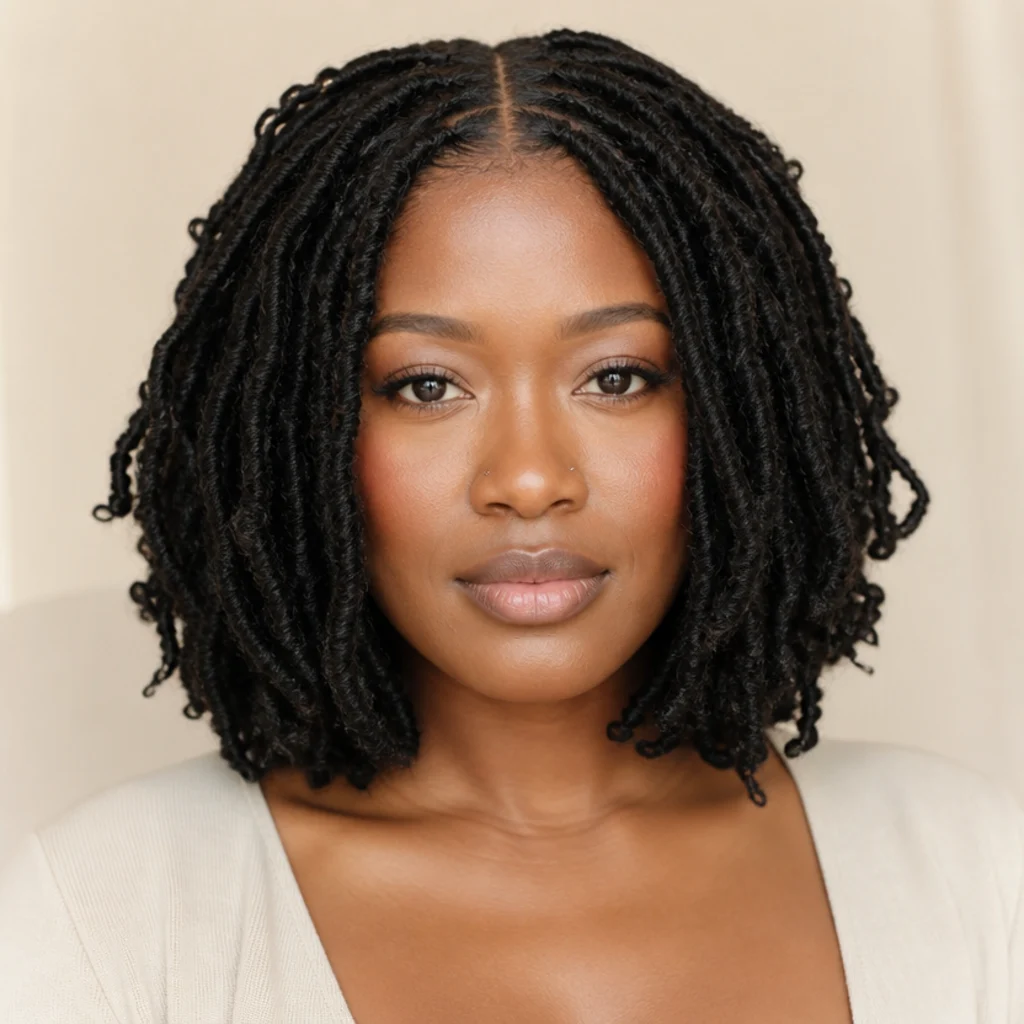
A crisp center part gives a butterfly bob a symmetrical, polished frame that suits oval and square faces particularly well — the vertical line lengthens and balances a strong or wide structure. The clean parting shows off a healthy-looking scalp and makes the whole style feel considered rather than casual. Locs fall evenly on each side, so this look photographs well and needs almost no daily styling; it's the lowest-effort morning of any bob here. Ask your stylist for a straight, well-defined part and gentle tension at the front hairline, which is what actually protects your edges over the weeks. Keep the parting fresh with a small dab of light scalp oil worked along the line, never flooded. If your face is very round, a center part can emphasize width, so consider the deep side part next for more diagonal movement. Pro tip: part your natural hair down the true center before the appointment, so the finished locs mirror your own crown pattern and sit flat.
05Deep Side-Part Butterfly Bob
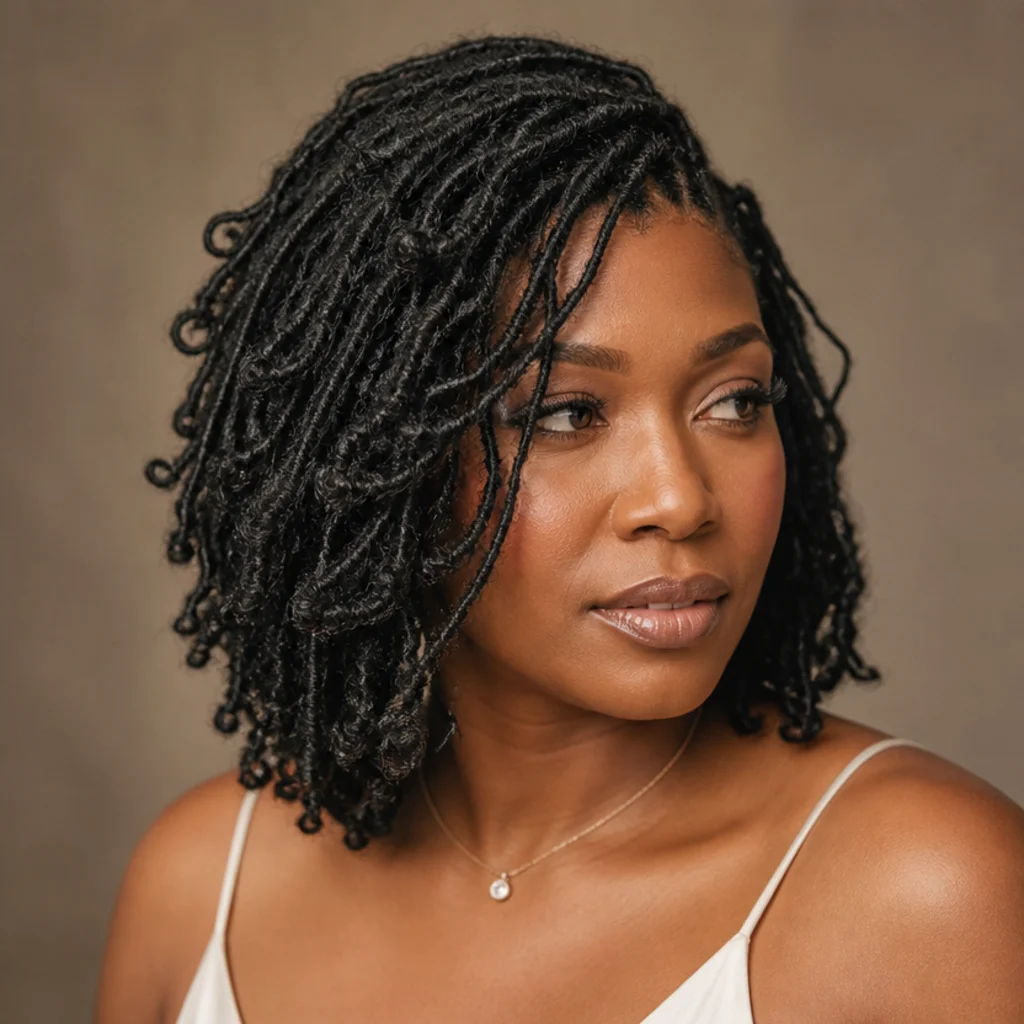
A deep side part instantly softens the face and adds a glamorous, asymmetric tilt to a butterfly bob. Sweeping the locs across the forehead partially veils one side, which flatters rounder faces by adding a diagonal and stacking extra body on the heavier side. It's a no-tools change day to day: set the part deeper than center and let gravity do the rest. To make the sweep hold its direction, ask your stylist to install the front locs angled toward the heavier side rather than straight down, so the volume is built in rather than coaxed. The look pairs well with statement earrings, since one ear stays on show. Upkeep matches any short set, with a little extra attention to keeping the deep part line clean and free of buildup. Pro tip: on the lighter side, tuck one or two front locs behind the ear with a small clip at the root to lock the asymmetry in place for events.
Save this to Pinterest to compare parting styles side by side.
06Curly-Ended Butterfly Bob
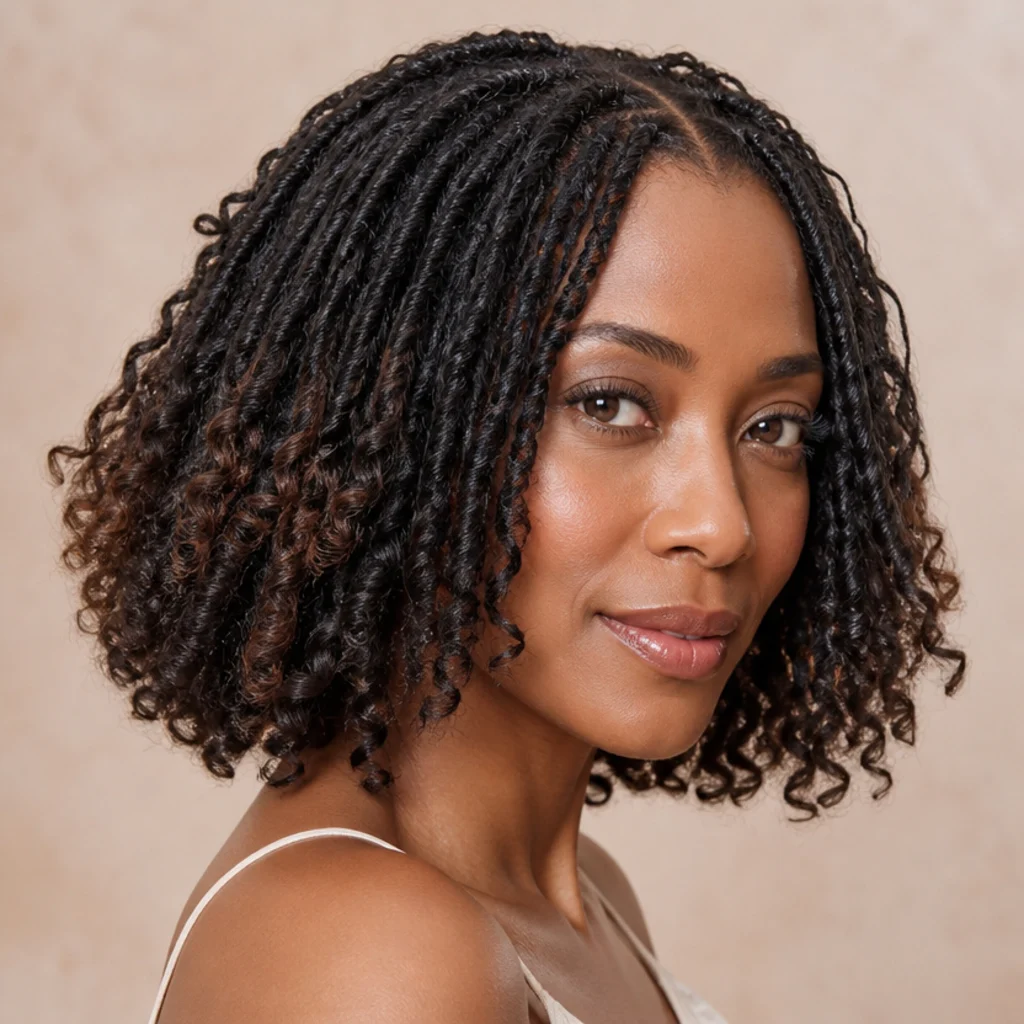
Leaving the ends curly rather than sealed adds a playful finish that softens the whole silhouette. The coiled tips break up the blunt cut line and give a romantic, undone effect that suits nearly every face shape — and they're forgiving on rounder faces, since the curl adds soft height rather than width at the jaw. The finish comes from how the loc hair is wrapped and left open at the bottom, often over a water-set curl pattern, so ask specifically for "curly" or "spiral" ends when you book rather than assuming that's the default. Over the weeks, dip the tips briefly in warm water and scrunch to reset any curls that have relaxed. It's the texture contrast between the wrapped mid-lengths and the coiled tips that makes this bob feel special, and it reads soft from every angle. Pro tip: a light mousse or flexible mousse-to-water mix refreshes the coils better than oil, which can weigh curly ends down and drop the pattern.
07Honey-Blonde Butterfly Bob
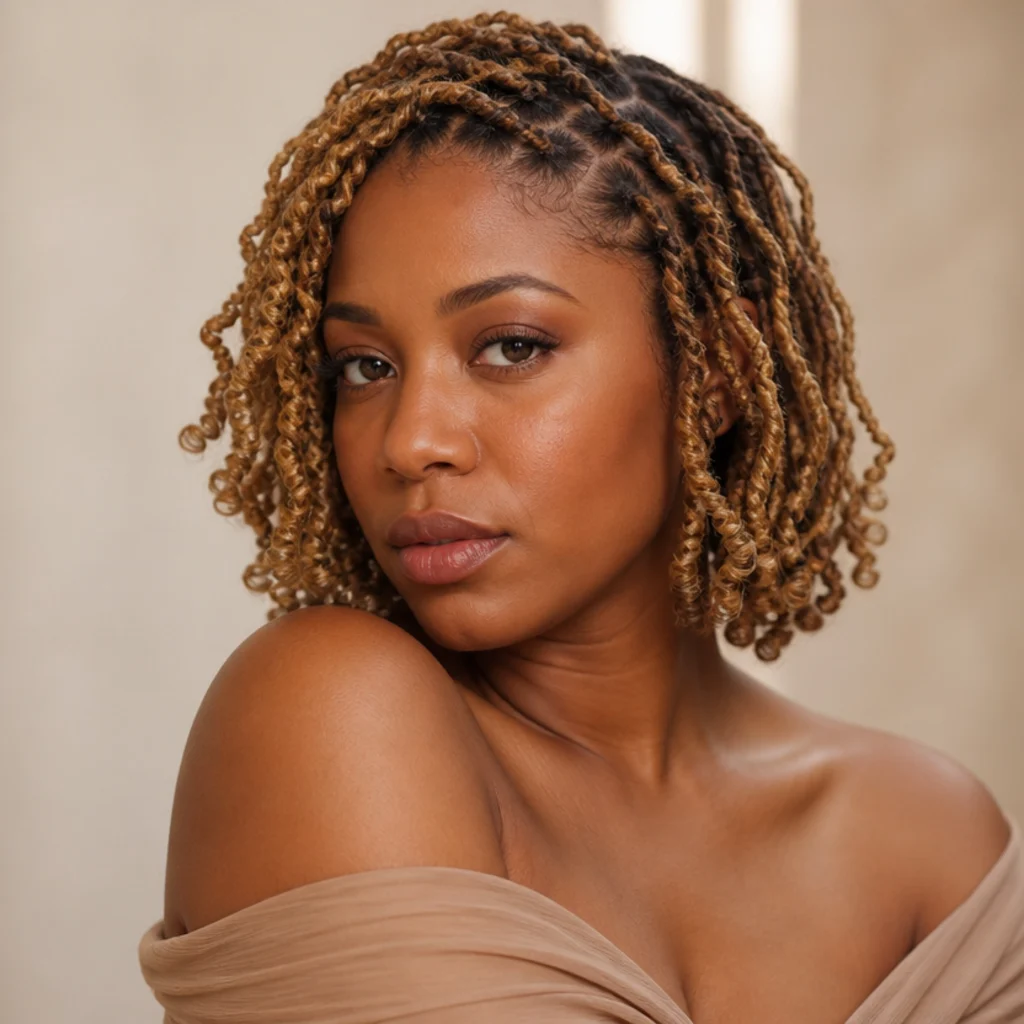
Honey blonde is one of the most flattering butterfly locs with color choices, since its warm, golden depth complements a wide range of deeper skin tones without washing anyone out. On a bob, the lighter shade bounces light up onto the face and brightens your whole complexion — no need to lift your own hair, since the color lives entirely in the extension. Blonde loc hair often reads slightly drier in texture than dark hair, so a light oil worked through the length keeps the loops supple and stops that frizzy, cottony look before it starts. When you book, bring a reference showing the exact depth you want: warm honey, caramel, and cooler beige-blonde photograph very differently against skin, and the wrong undertone is the usual reason a colored set disappoints. Expect the same 4 to 6 week wear window as an uncolored bob, with occasional re-wraps to keep the shape crisp. Pro tip: ask your stylist to place a few slightly darker locs near the root for a rooted, dimensional blonde that grows out far more gracefully than a solid block.
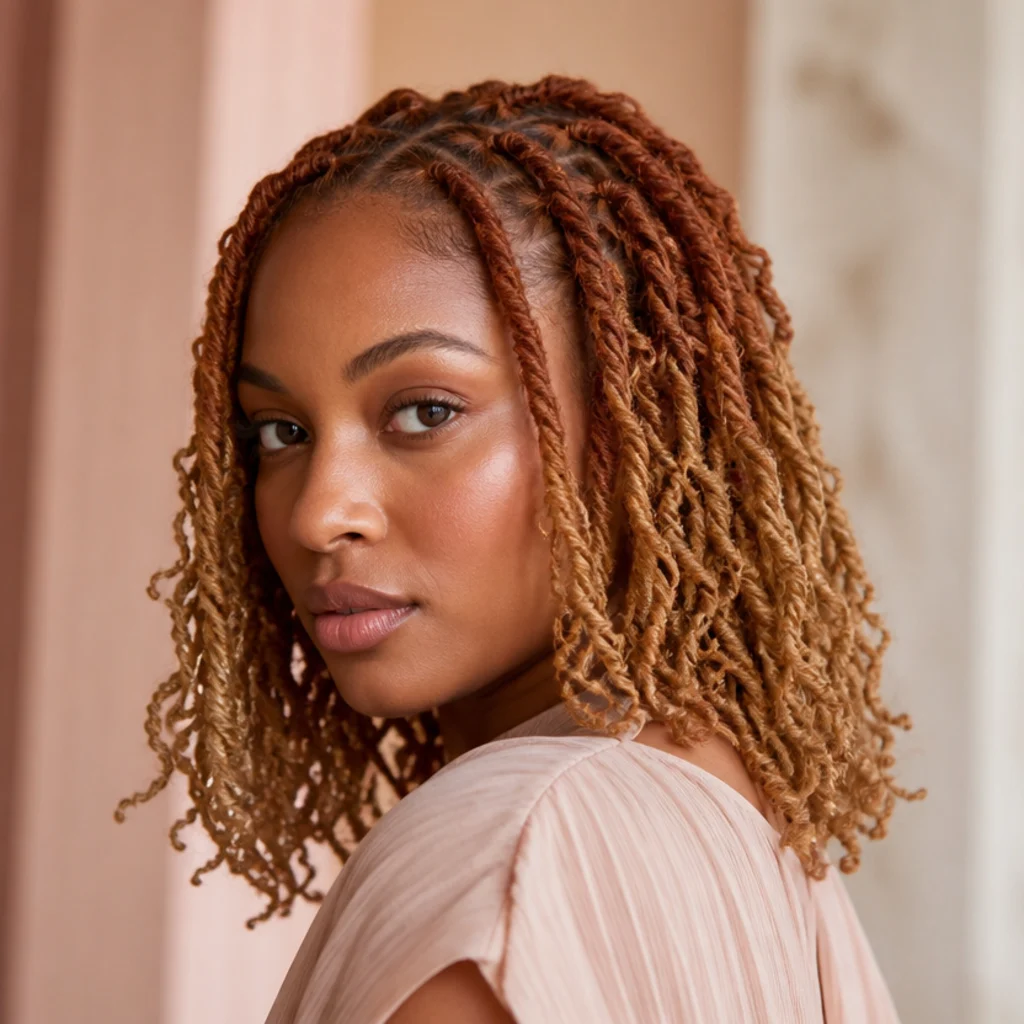
08Red Butterfly Locs Bob
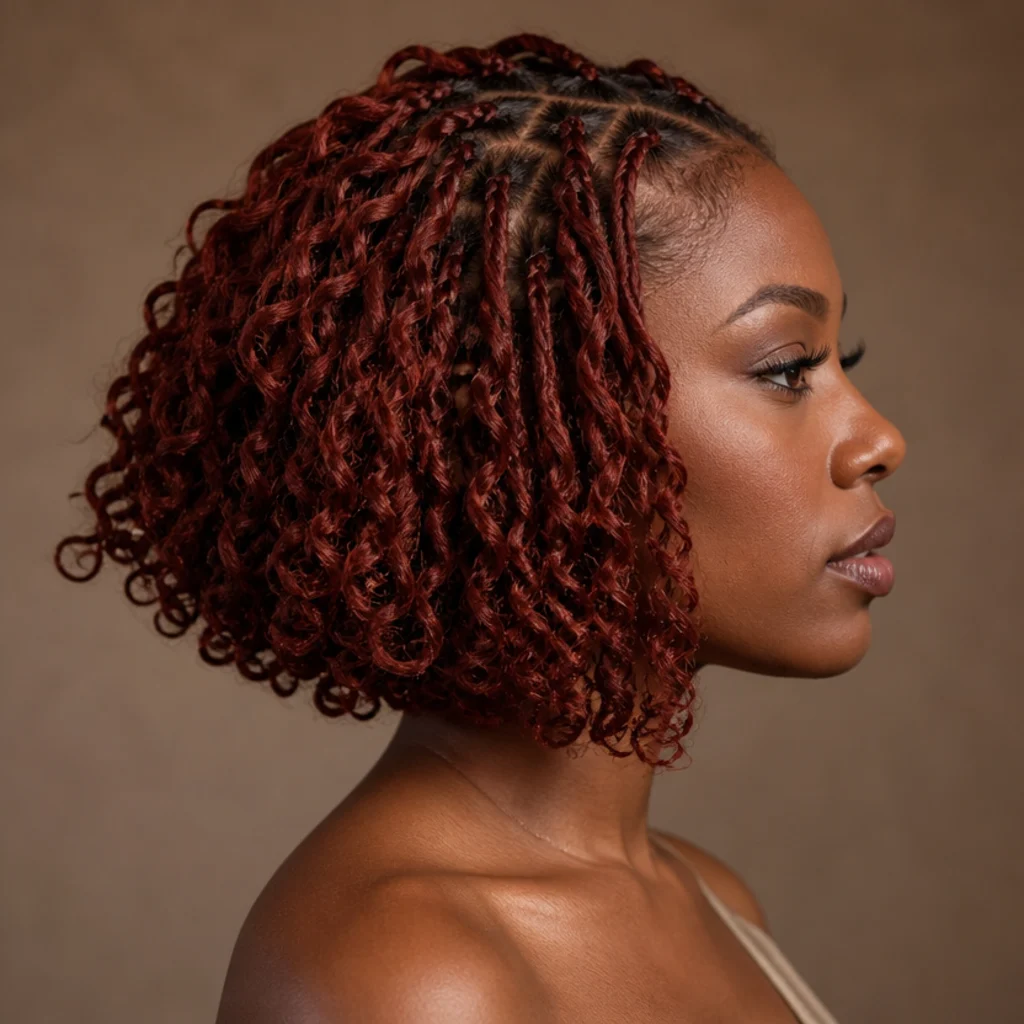
Red butterfly locs make a statement, and bob length keeps that statement wearable rather than costume. A jaw-skimming red bob concentrates the color right where it frames the face, and the shade you choose sets the mood: deep auburn reads rich and autumnal, true red is bold and retro, bright cherry is high-impact. Undertone decides which works. Cooler skin tones tend to glow against blue-based reds and berry-reds, while warm and olive undertones come alive next to copper-leaning and brick shades. New red extension hair can transfer a little dye onto light clothing at first, so rinse it in cool water before install to release excess pigment. Care is otherwise identical to any short set, with occasional re-wraps to keep loops defined and the red saturated at the ends. Pro tip: rinse your set with cool rather than warm water on wash days — heat fades red faster than any other shade.
09Burgundy Ombre Butterfly Bob
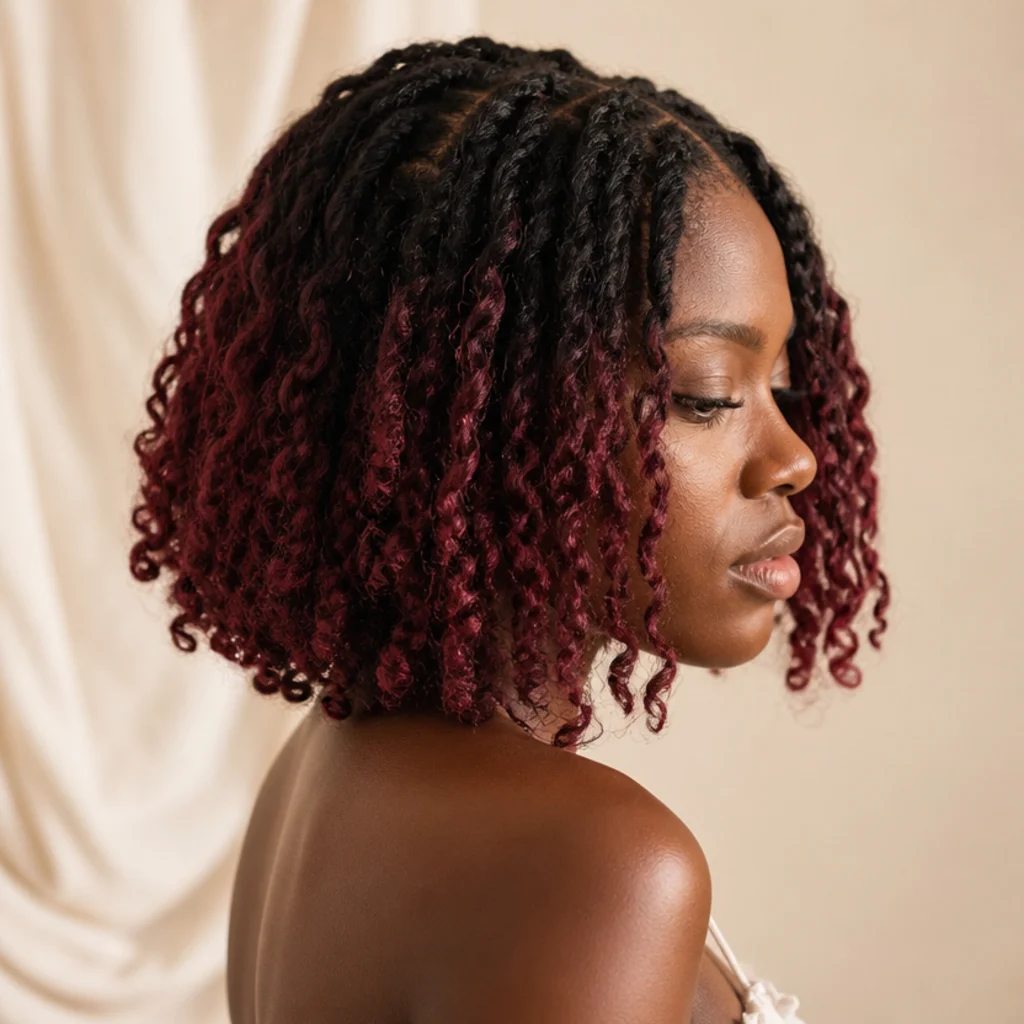
Ombre keeps a bob interesting by fading dark roots into a richer tone toward the ends, and burgundy stands out in the butterfly locs with color family because it stays sophisticated where a bright color might read loud. The gradient adds depth a single flat shade can't match, and on skin it flatters both warm and cool undertones thanks to its balanced red-violet base. The shift lives entirely in the extension hair — your stylist blends two shades of loc hair during install rather than dyeing anything — so bring clear reference images showing exactly where you want the fade to begin. On a short bob the transition happens fast, which reads bold and graphic against a blunt line; on an A-line or curly-ended shape it looks softer and more melted. Care mirrors any colored set. Pro tip: ask for the color break to start at eye level or lower on a short bob, since a fade that begins too high can look stripey at this length.
10Jumbo Butterfly Locs Bob
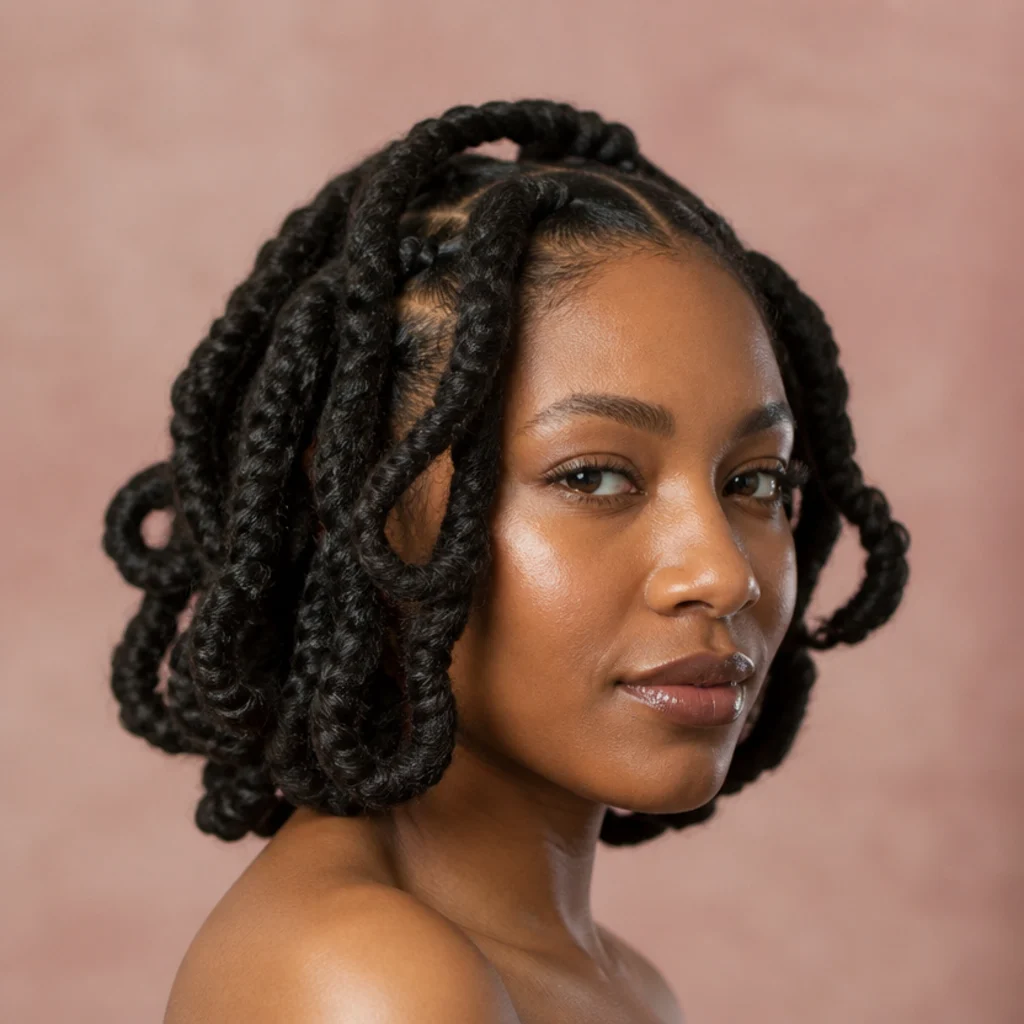
Jumbo locs use fewer, thicker sections, which means a much faster appointment and a bold, sculptural texture. In a bob, jumbo butterfly locs feel statement-making without the weight of a long jumbo set — maximum impact, minimum salon time, often the quickest install in this guide. The wide loops show off the distressed butterfly effect at a larger scale, and the short length stops the chunky volume from overwhelming a smaller frame or a delicate neck. Fewer locs also make wash day quick. The trade-off is load: thicker locs concentrate more weight on each attachment point, so gentle, comfortable root tension matters even more here to protect your edges and prevent soreness. Ask your stylist for even sizing across the head, so the bold shape stays balanced rather than lopsided. Pro tip: request slightly smaller locs through the nape and hairline, so the perimeter looks intentional and the bulk sits where it flatters, up top.
Save this to Pinterest for install-size inspiration.
11Micro Butterfly Locs Bob
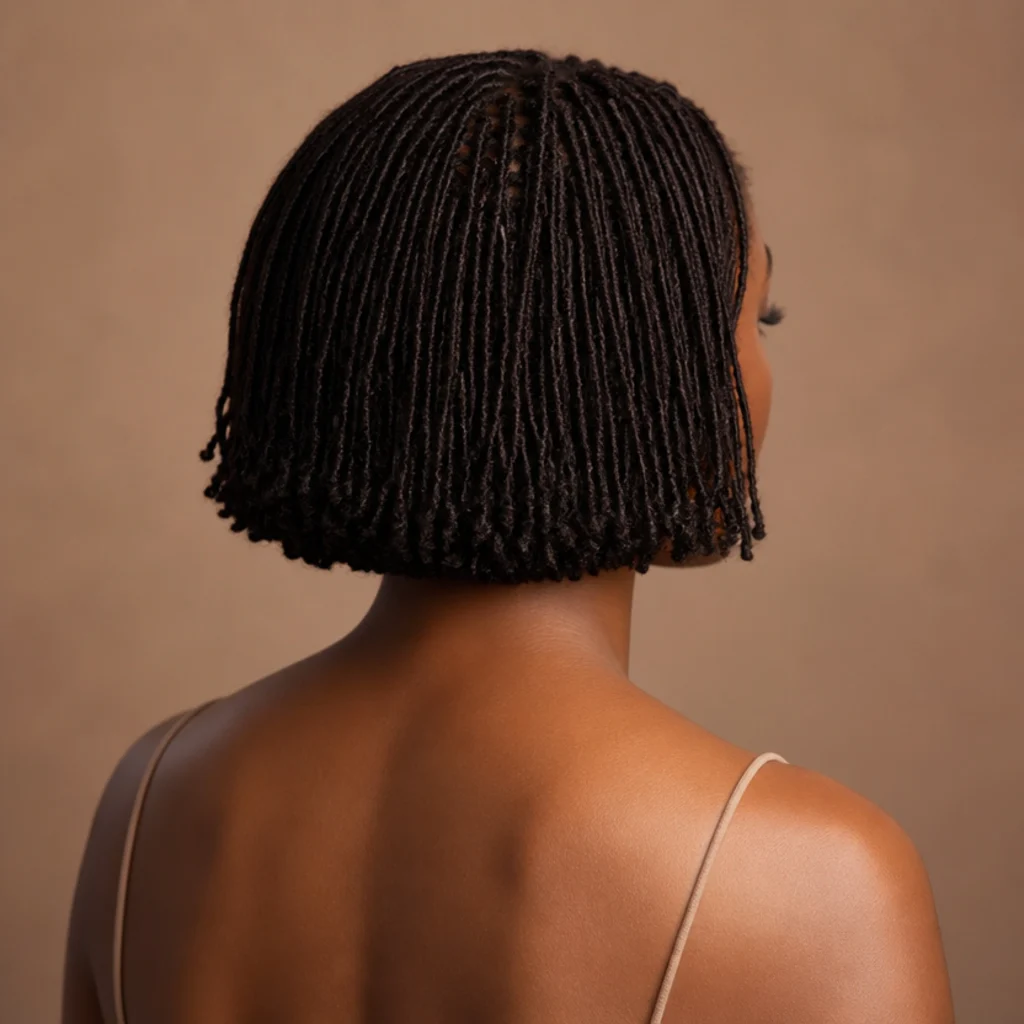
At the opposite end from jumbo, micro locs use many fine sections for a delicate, densely packed bob. Micro butterfly locs read refined and full, and the smaller loops create a uniform, finely textured surface that holds a blunt bob line especially crisply — arguably the sharpest edge of any size here. It's the most time-intensive version to install because of the sheer loc count, so budget for a notably longer appointment and, often, a higher cost. The payoff is versatility: fine locs move easily, gather into small updos and half-up styles, and suit nearly every face shape. They do loosen a touch faster at the roots, so plan light re-wraps as they show. Choose this bob if you love detail and don't mind the upfront time. Pro tip: book the first appointment of the day for a micro set. A fresh, unhurried stylist keeps sizing consistent across hundreds of locs, and that's what makes or breaks the finished look.
12Asymmetric Butterfly Bob
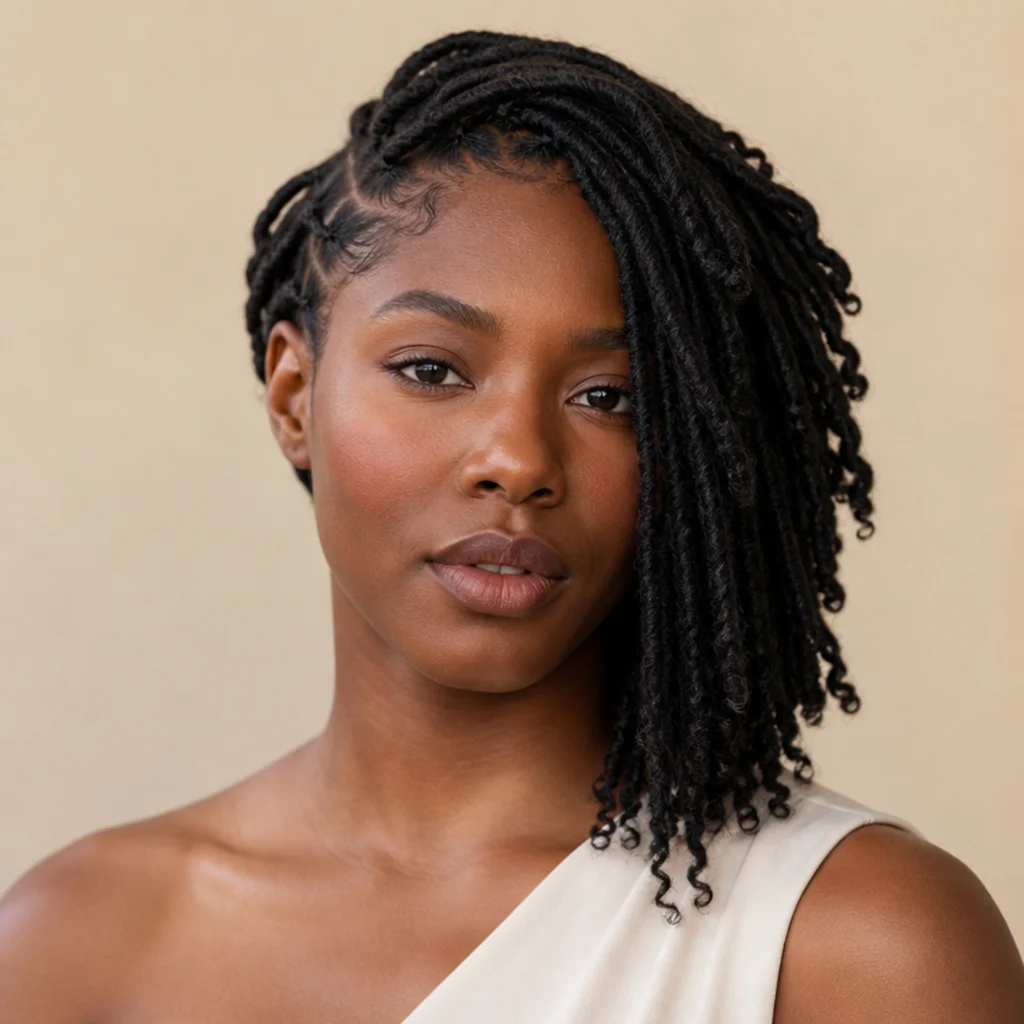
An asymmetric bob, longer on one side and shorter on the other, gives butterfly locs a fashion-forward, architectural edge. The uneven line creates movement and pulls the eye along a diagonal, which lengthens and slims a rounder or fuller face while adding instant attitude to a soft one. It's a confident choice that still stays low-maintenance day to day. The shape depends on precise length planning, so find a stylist who maps the graduation before installing rather than cutting afterward, and agree ahead of time on how dramatic the difference should be — a subtle inch reads chic, several inches reads editorial. Small to medium locs keep the line clean. Style it by tucking the shorter side behind one ear to sharpen the contrast, or sweep the longer side across for a deep-part hybrid. Pro tip: choose which side goes long based on your natural part. Keeping the length on your heavier-fringe side makes the asymmetry look organic rather than forced.
13Bob with Face-Framing Layers
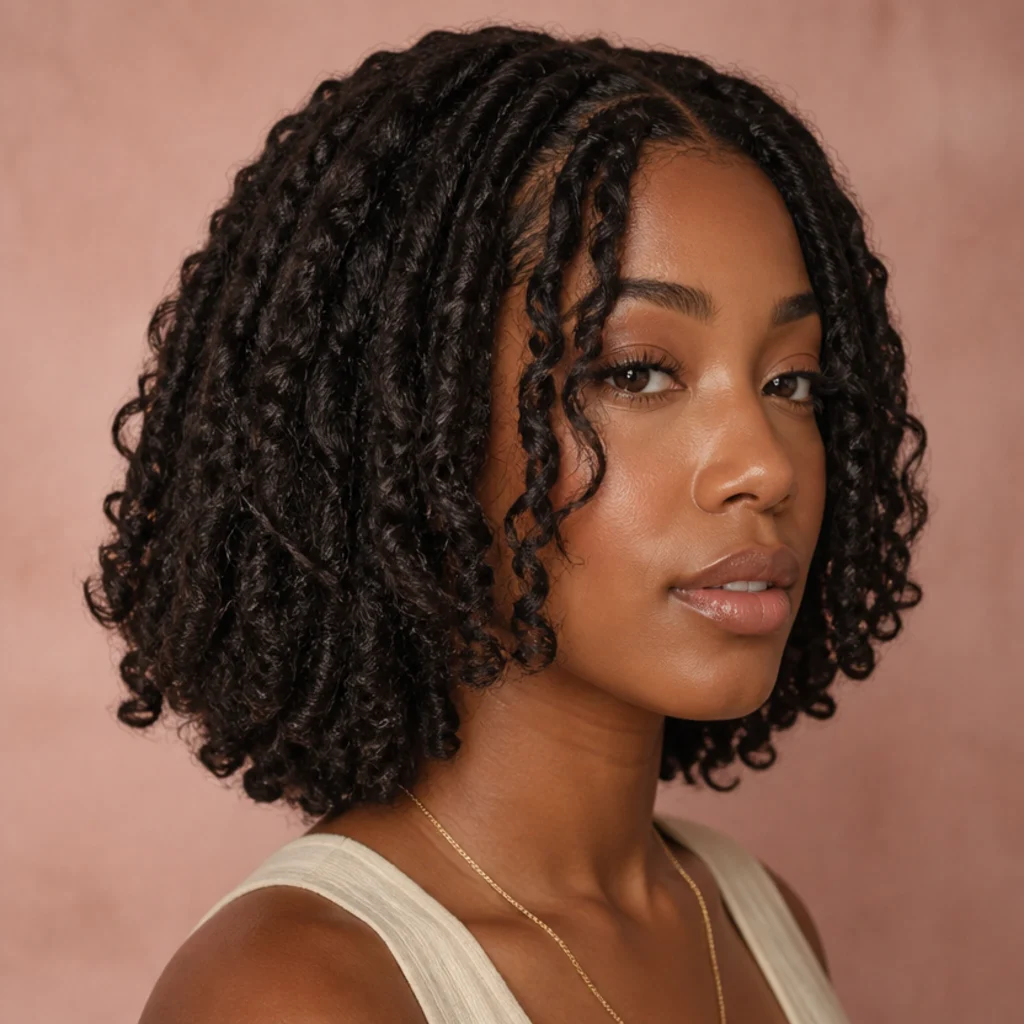
Adding a few shorter locs around the face gives a bob soft, curtain-like layers that highlight your cheekbones and eyes. The face-framing pieces sit higher than the perimeter, so they break up a single blunt line and add gentle, modern movement — almost like a textured fringe without the commitment of cutting one. This flatters longer and oval faces especially, since the shorter front locs add width at the cheeks and shorten the visual face length. Ask your stylist to install a handful of face-framing locs an inch or two shorter than the perimeter, angled inward toward your features rather than straight down. The layers are built in during install, so there's no daily styling; tuck them or leave them loose. Upkeep matches any short set, though the shorter front pieces catch the eye, so keep those loops re-wrapped first. Pro tip: start the shortest framing loc at your cheekbone, not your brow, so the layers open up the face instead of closing it in.
14Half-Up Butterfly Bob
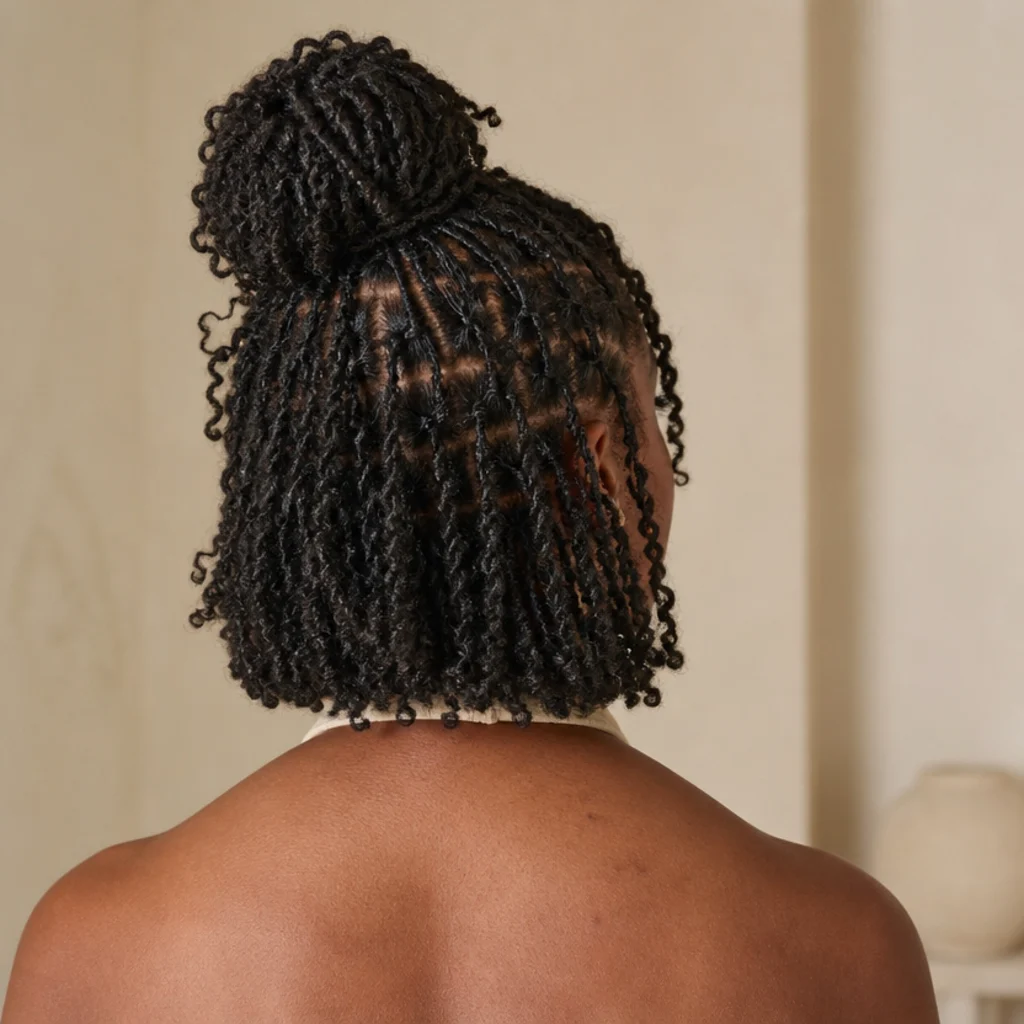
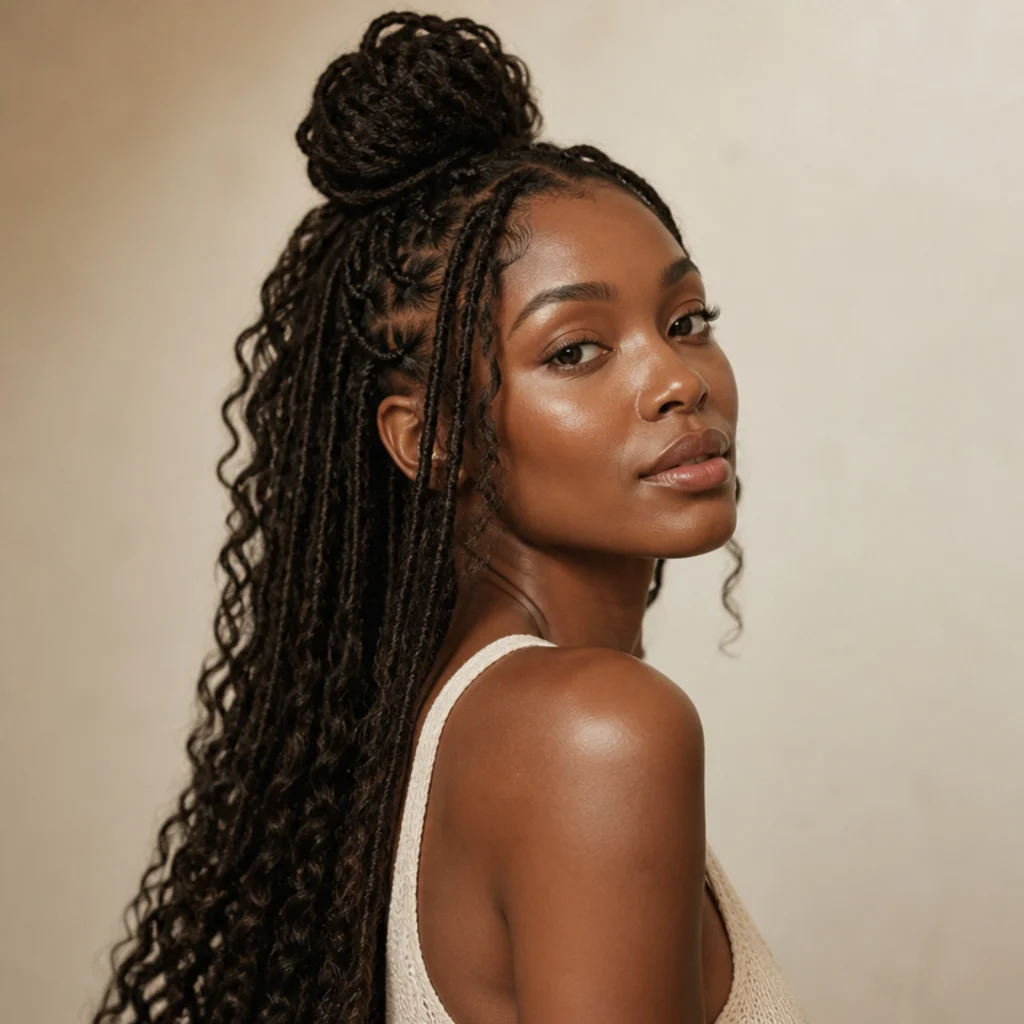
The half-up bun is proof that a butterfly bob still does updos. Gather the top section into a small bun or top-knot and you lift the hair off your face while the lower locs stay down to frame your jaw — an instant style refresh with zero heat. It's the ideal in-between look for warm days, workouts, or a second-week bob that needs a break from re-wrapping. Use a soft, snag-free tie or a spiral coil band to avoid stressing the loops at the gather point, and keep the gathered section loose enough to stay comfortable and protect your edges. A short bob is light, so the half-up holds without heavy pinning or a pile of bobby pins. Refresh the bun daily and smooth any flyaway loops with a whisper of oil along the crown. Pro tip: shift the bun's placement every few days, higher one day, lower the next, so you're not tensioning the same roots repeatedly. That keeps your edges healthy.
15Two-Tone Butterfly Bob
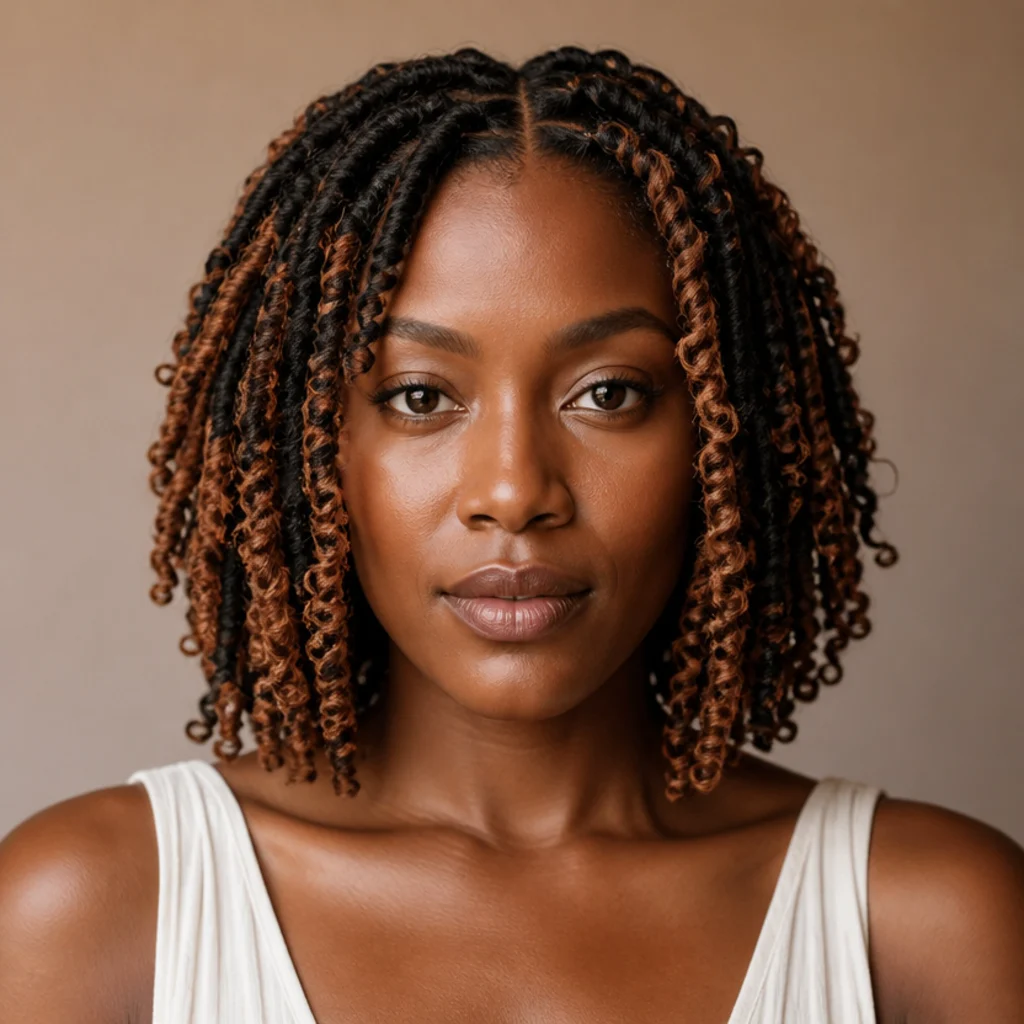
Two-tone locs weave two colors throughout the head rather than fading top to bottom, so both shades mingle in every section of the bob. A pairing like black and caramel, deep brown and copper, or off-black and honey adds dimension and makes the looped texture pop, especially against a blunt line where the contrast shows most. The blended approach is far more forgiving to grow out than a single bold block, and it lets you road-test a brighter shade in small, low-risk doses. Ask your stylist to alternate the two hair colors evenly and randomly during install, rather than in obvious stripes, so the result reads mixed rather than patterned. It's a creative, personality-forward finish that stays easy to wear across the usual 4 to 6 week window. Pro tip: choose two colors within two or three levels of each other for a soft, sun-kissed blend, or push the contrast wide (black and blonde) if you want the two-tone effect to be the whole statement.
Pro Tips from the Editor
- Protect your edges from minute one. Gentle root tension is the single biggest factor in whether your hairline survives the set. If the front locs feel tight or sting when you raise your eyebrows, ask your stylist to loosen them before you leave the chair, not after.
- Cleanse the scalp, not just the locs. Dilute a clarifying or gentle shampoo in an applicator bottle, aim it at your scalp in sections, and let the runoff clean the locs. Skipping washes to protect the style causes buildup and itch faster than washing ever does.
- Water is your reset button. Loosened butterfly loops, dropped curls, and frizz all respond to a quick warm-water dip and re-scrunch. Keep a spray bottle handy between salon re-wraps.
- Match loc size to your goal, not the trend. Micro and small locs hold blunt lines and updos crisply; jumbo locs cut install time and cost but concentrate weight. Decide what matters most to you before booking.
- Rooted and rinsed beats brand-new for color. Pre-rinse red and burgundy hair to stop dye transfer, and ask for a darker root on blonde and vivid sets so the grow-out looks intentional for the full six weeks.
- Sleep is styling. A satin or silk scarf, bonnet, or pillowcase every night keeps the blunt line smooth and the loops from matting. Skip it and week four won't look nearly as good.
- Book your take-down, don't rip it. Unravel and cut carefully, or go back to your stylist. Yanking a set out is the most common cause of breakage and edge loss after an otherwise healthy install.
How to Choose / Get the Look
Work through four decisions in order and the rest falls into place.
1. Length and shape. A blunt chin- or neck-length bob reads polished and structured; an A-line or asymmetric cut feels edgy and directional; curly ends or face-framing layers soften everything. Decide how sharp versus soft you want to look before anything else.
2. Face shape. Rounder and fuller faces are flattered by deep side parts, diagonal sweeps, and angled or asymmetric cuts that add vertical movement. Oval, heart, and square faces carry center parts and blunt bobs easily; square and oblong faces especially suit a strong blunt line.
3. Color. Natural black and brown need the least upkeep and grow out invisibly. Honey blonde brightens the complexion, red makes a statement, and burgundy ombre or two-tone adds dimension. The color lives in the extension hair, so you can experiment without ever touching your own strands — pick by undertone: cool skin loves blue-based reds and beige blondes, warm skin glows with copper, honey, and brick.
4. Install time and budget. Micro and small locs take the longest and usually cost the most; jumbo bobs are the fastest and most budget-friendly; medium sits in between and holds a blunt line well.
Use this quick reference when you book:
| Priority | Best pick | Loc size | Install time | Upkeep |
|---|---|---|---|---|
| First-ever set, low fuss | Classic chin-length blunt | Small–medium | Moderate | Low |
| Fastest install / bold look | Jumbo bob | Jumbo | Shortest | Low–moderate |
| Sharpest line, most detail | Micro bob | Micro | Longest | Moderate |
| Slimming a round face | A-line or asymmetric | Small–medium | Moderate | Low–moderate |
| Statement color, wearable | Red or burgundy ombre | Small–medium | Moderate | Moderate |
| Soft, romantic finish | Curly-ended or layers | Small–medium | Moderate | Moderate |
When you sit in the chair, bring two clear reference photos (one front, one side), name your exact finished length, confirm wrap versus crochet method, ask for comfortable tension at the hairline, and agree on loc size before work begins. Plan light re-wraps every two to three weeks and a typical wear window of four to six weeks. If it's your first set, a simple blunt chin-length bob is the most forgiving place to start.
Frequently Asked Questions
How long does a butterfly locs bob last?
Most butterfly locs bobs look their best for about four to six weeks. Shorter lengths often hold tidy toward the upper end of that range because there's less hair to loosen and swing. Light re-wraps of stray loops every two to three weeks extend the life of the shape considerably. Past six weeks, new growth at the root usually makes the set look grown-out, and that's your cue to take it down.
Is a butterfly bob lighter than long butterfly locs?
Yes, noticeably. A bob uses far less extension hair than long butterfly locs, so it weighs less, puts less tension on your scalp, and feels far cooler in warm weather. That reduced load is a big part of why the bob length appeals to first-timers and to anyone whose edges felt strained by a heavier long set.
Can I get a butterfly bob with color without dyeing my own hair?
You can. The color in any butterfly locs with color look comes from the extension hair your stylist selects, not from bleaching or dyeing your natural strands. That makes shades like red, burgundy, honey blonde, and two-tone easy to try on a bob and completely reversible when the set comes out — ideal if you're color-curious but not ready to commit your own hair.
What is the difference between butterfly locs and butterfly faux locs?
The terms overlap almost entirely. "Butterfly faux locs" just emphasizes that these are temporary, extension-based locs rather than permanent, matured natural locs. Both describe the same distressed, looped protective style with the signature airy "butterfly" texture, and both work in any bob shape here.
How do I stop butterfly loc loops from frizzing or unraveling?
Two habits do most of the work: wrap your hair in satin or silk every night, and reset loosened loops with a quick warm-water dip and re-scrunch between salon visits. A light oil or mousse smooths surface frizz without weighing the loops down. Avoid over-touching or picking at the loops during the day, which is the fastest way to loosen a wrap.
Can I wash a short butterfly locs bob?
Yes, and you should. Dilute a gentle shampoo in water, apply it to your scalp in sections, gently massage, and let the runoff cleanse the locs before rinsing thoroughly. Squeeze out excess water in a microfiber towel and air-dry fully, since trapped moisture at the root causes odor and mildew. Washing every one to two weeks keeps the scalp healthy without disturbing the style.
Do butterfly locs damage your natural hair?
Worn correctly, they're a protective style that tucks your own hair away from daily manipulation. Damage comes from install tension that's too tight, leaving a set in past six weeks, or ripping it out at take-down. Keep the hairline loose, cleanse regularly, take the set down gently, and give your hair a wash-and-condition break before reinstalling.
Which butterfly bob is best for a round face?
Look for shapes that add vertical or diagonal movement rather than width at the jaw: a deep side part, an A-line, an asymmetric cut, or curly ends that lift height at the crown. A dead-center part and a very blunt, jaw-wide line can emphasize roundness, so if you love the blunt look, drop it to neck length to lengthen the overall frame.
How much does a butterfly locs bob cost?
Cost varies widely by region, stylist experience, loc size, and whether you supply the hair. As a rule, jumbo bobs sit at the lower, faster end because they use fewer locs, while micro and small sets cost more for the labor-intensive install. Colored, ombre, or two-tone hair can add to the materials cost. Ask your stylist for a quote that specifies whether hair is included before you book.