3 Things to Know Before Choosing Butterfly Locs
Butterfly locs read soft, airy, and lived-in because of that deliberately distressed loop texture, but the version that flatters you comes down to three levers: length, upkeep, and color. Get those right before you book and you walk out with a style you actually want to keep.
 Edited by Lena Rose · Published July 11, 2026 · 13 min read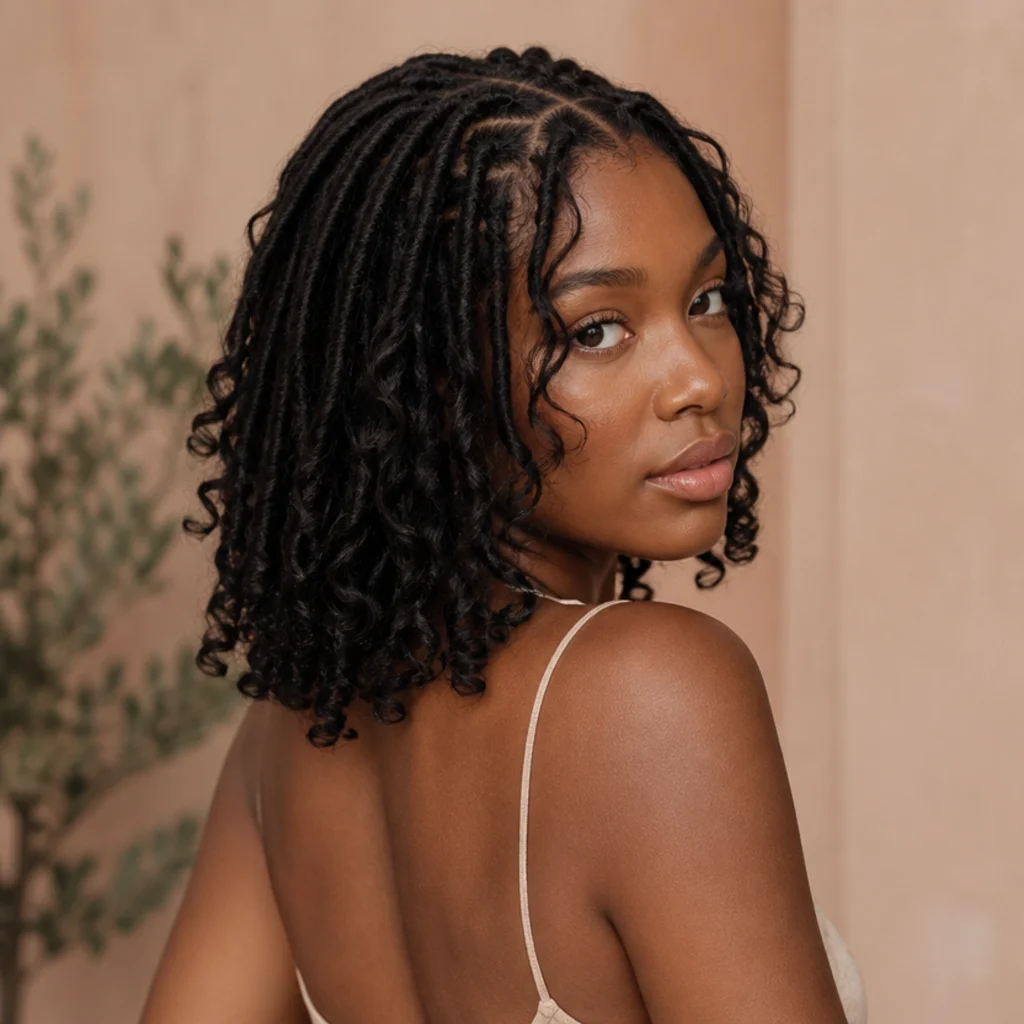
Quick Answer
- Best for: Anyone who wants a low-manipulation protective style with soft, boho, distressed-loop character, and the flexibility to test a new length or color with zero permanent commitment.
- Who might skip it: Very fine or fragile edges prone to traction, active swimmers (repeated saltwater or chlorine dulls the wrap), and anyone who cannot commit to nightly wrapping.
- Maintenance: Moderate. Nightly satin wrapping, weekly diluted scalp cleanses, and light edge control; frizz and slippage are the natural end signals.
- Difficulty: Salon-recommended for a first install; DIY is doable but typically a 5-8 hour project solo.
- Cost: Variable, commonly mid-range in most US markets, scaling up with length, density, and hand-distressed loop work; premium wrapping hair adds to the total.
- Wear time / longevity: Best window is roughly 4-6 weeks, stretching toward 8 with diligent care before frizz and slippage take over.
- Standout variation: Short butterfly locs, chin to shoulder, for lightweight movement and the most forgiving first install.
- How to ask your loctician: "I want distressed butterfly faux locs at [length], [density], in [shade], with light tension at my temples, please walk me through your base method and aftercare."
In This Guide
Intro
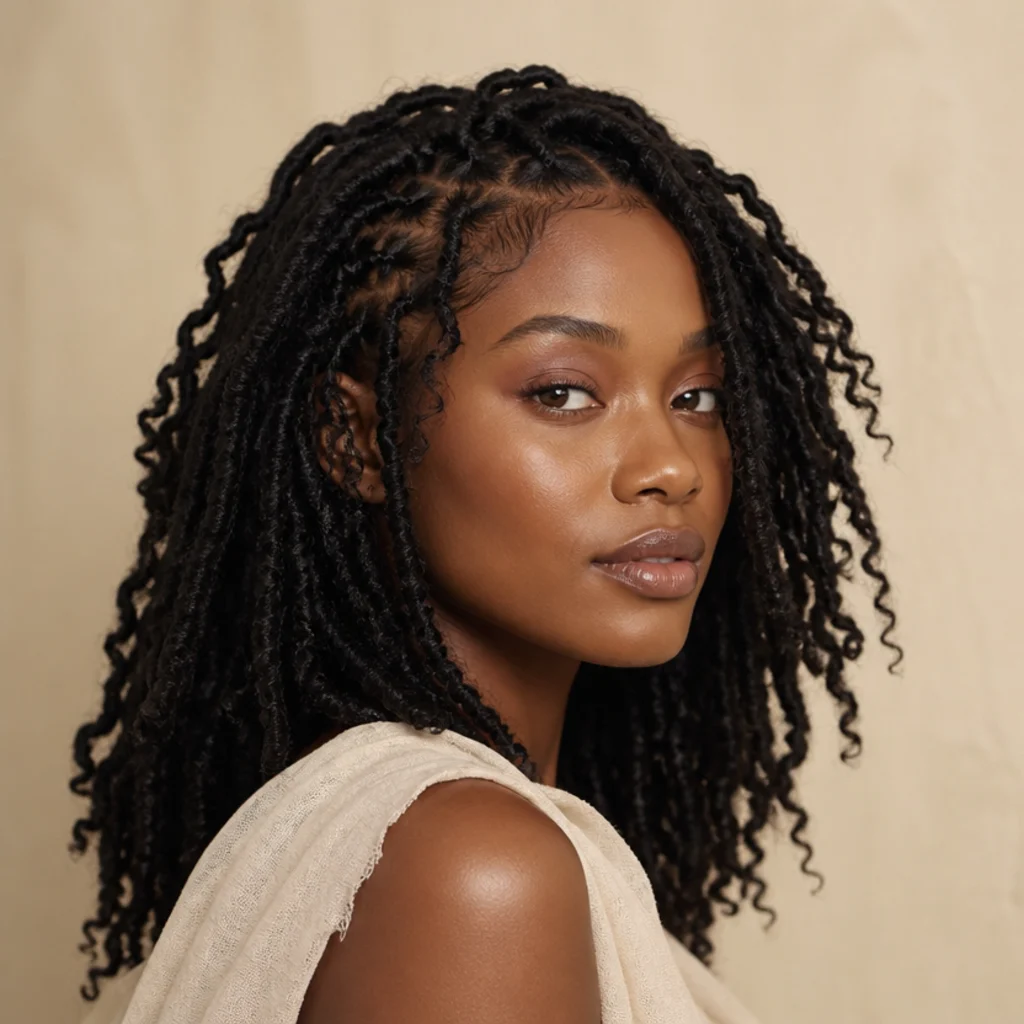
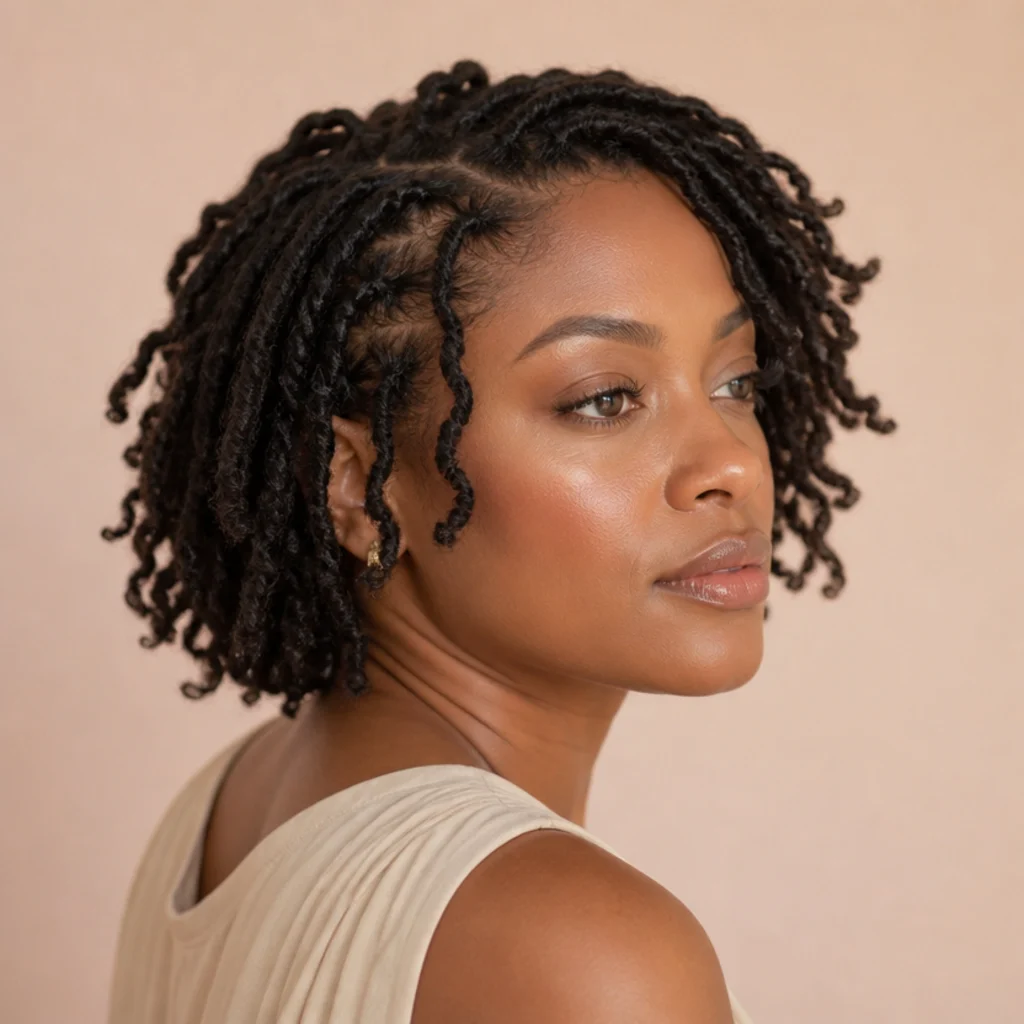
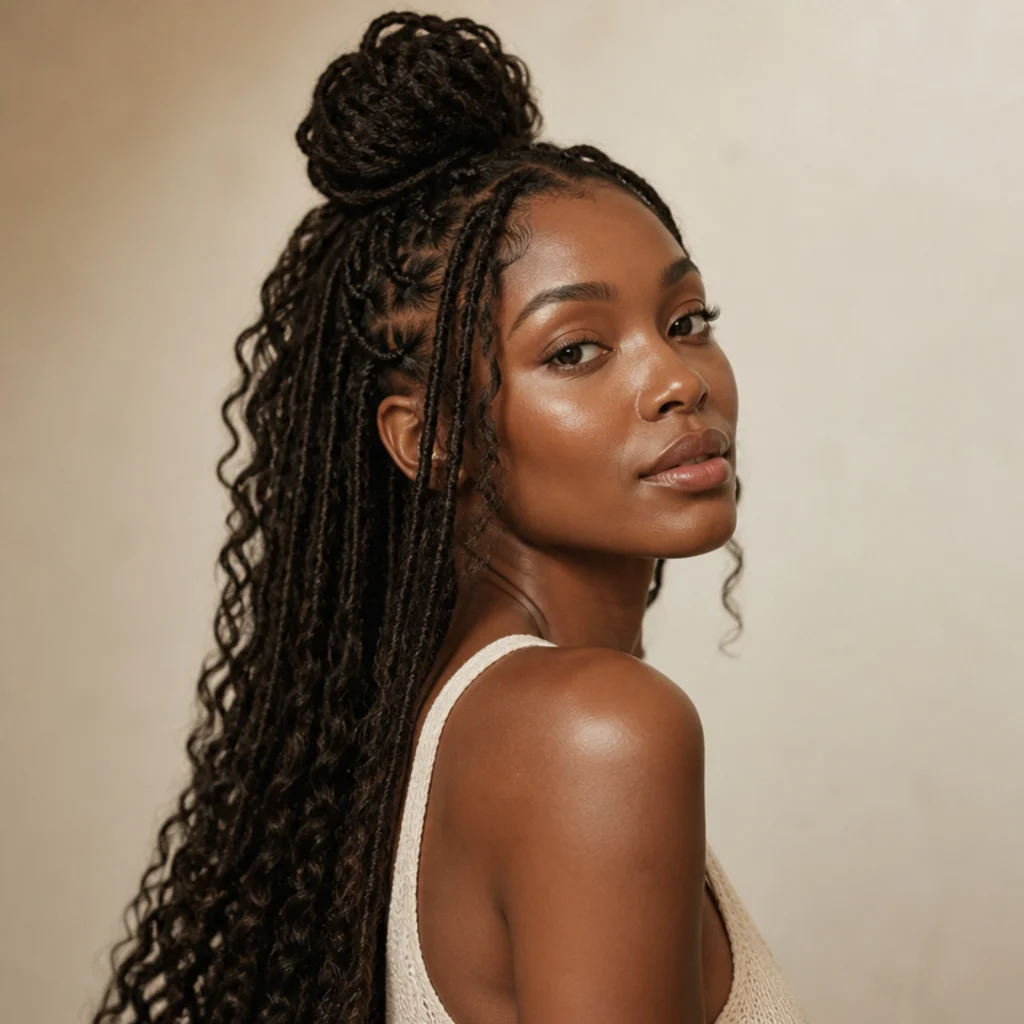
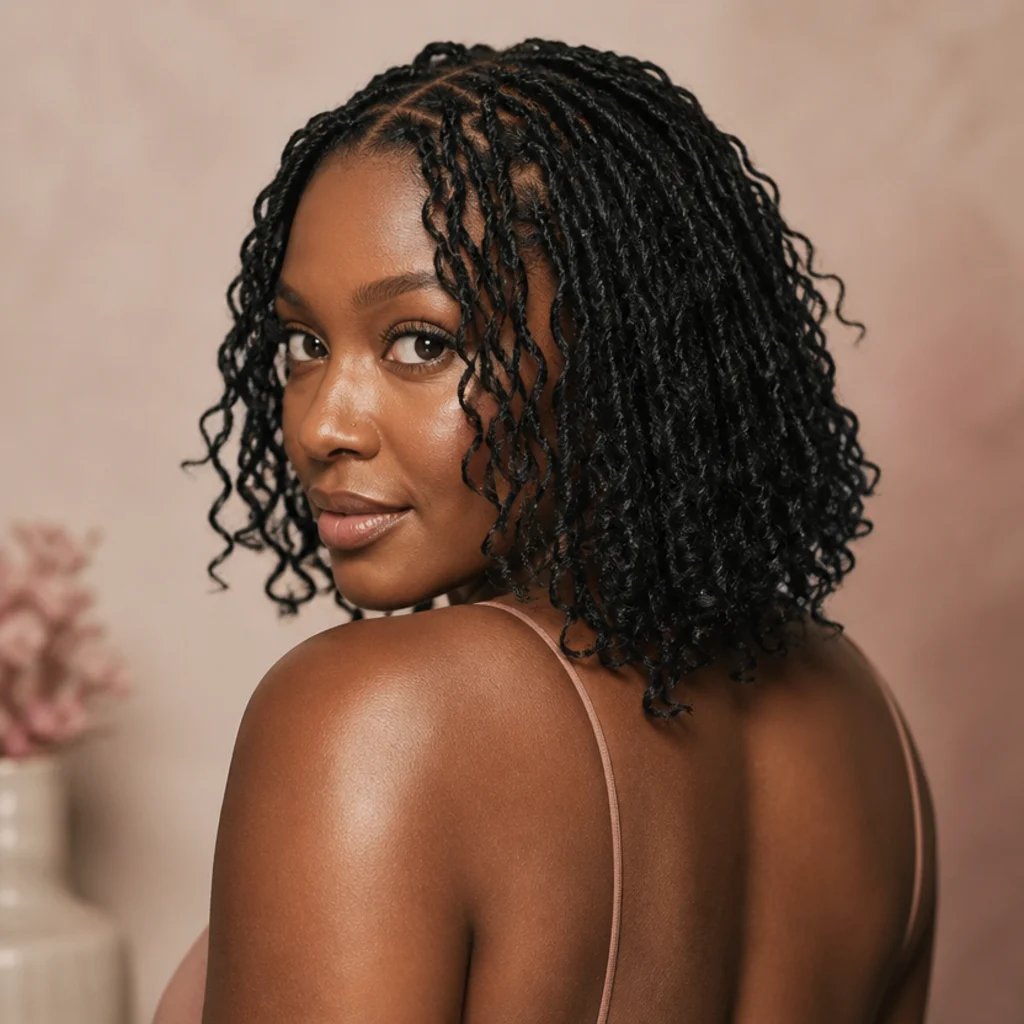
Butterfly locs get their name from the loose, looped strands pulled out along each loc, which gives a distressed, undone finish instead of a smooth, uniform rope. They're a faux loc style, so wrapping hair gets coiled and looped over your own braided or two-strand base, and the whole look is temporary and fully removable. That's why so many people start with short butterfly locs first: they test the texture and the time commitment, then move on to long butterfly locs or a bold color once they know they like it. The style flatters a wide range of faces because the airy loops soften a jaw and add width and volume around the crown, and it works on most hair textures since your natural pattern hides inside the wrap. It's stayed near the top of protective-style requests because it photographs well and reads intentional without the permanence of true locs. Still, the finish you admire on Pinterest can behave very differently once it's on your head, and length, upkeep, and color each change comfort, budget, and how often you restyle. Read the three considerations below first, then walk into your appointment knowing what to ask for and what to expect after you leave the chair.
01Length Changes Everything
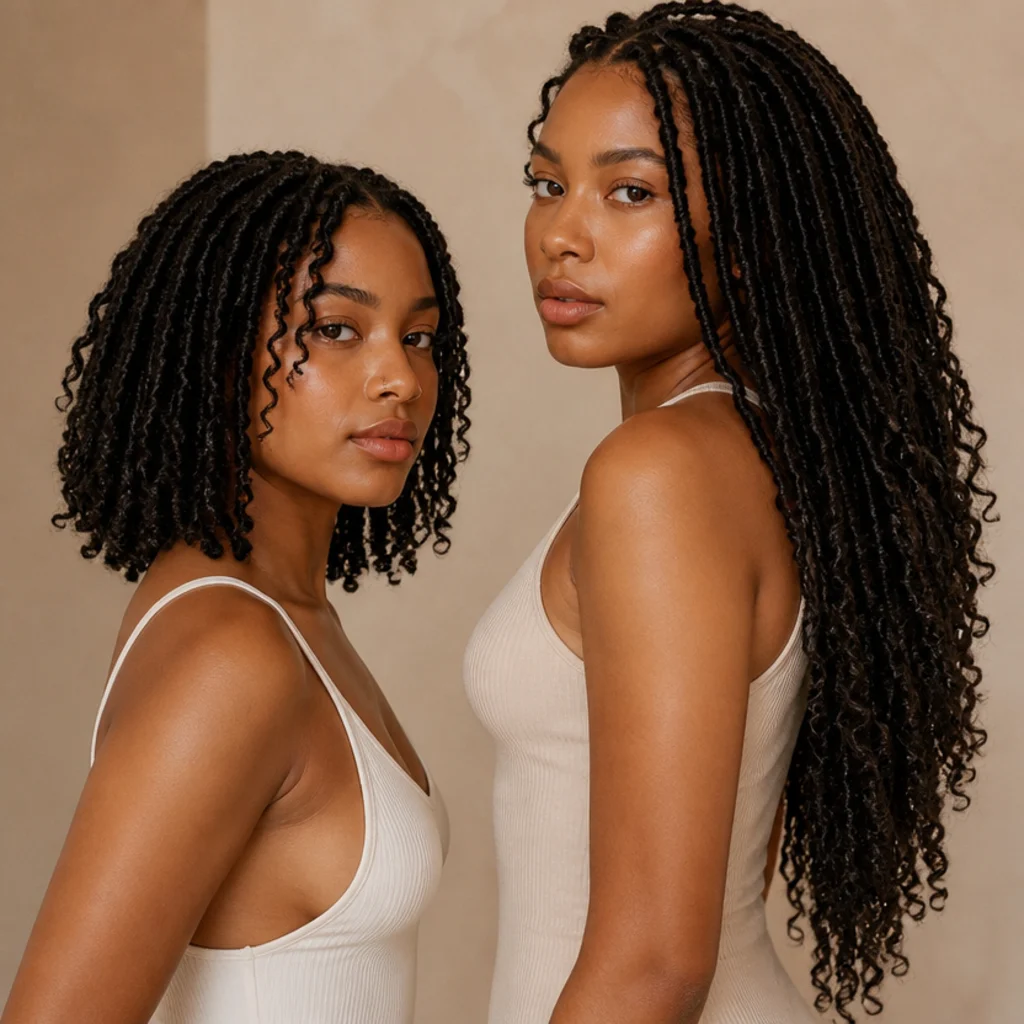
Length is the first real decision, and it shapes far more than the silhouette. Short butterfly locs, roughly chin to collarbone, sit lightweight, dry in a fraction of the time, and place minimal tension on your edges, so they're the most forgiving entry point and the easiest to remove. They move well in humidity, tuck behind the ears, and flatter round and heart faces by keeping volume up near the cheekbones. Long butterfly locs, from mid-back down, deliver dramatic swing and elongate the frame, but the added wrapping hair means real weight on your scalp, longer install and dry times, and more nightly management. If your strands are fine, low-density, or your scalp runs sensitive, start shorter, tension you can feel on day one only worsens. Length affects lifespan too: longer locs catch on seatbelts and bag straps, and that speeds frizz at the mid-lengths. Pro tip: knot or lightly gather long locs before sleep so you're not lying on the full weight all night. Ask your loctician for a weight-conscious install and, if you're torn, a shoulder-grazing medium that balances drama with daily ease.
02Upkeep and Lifespan Are Non-Negotiable
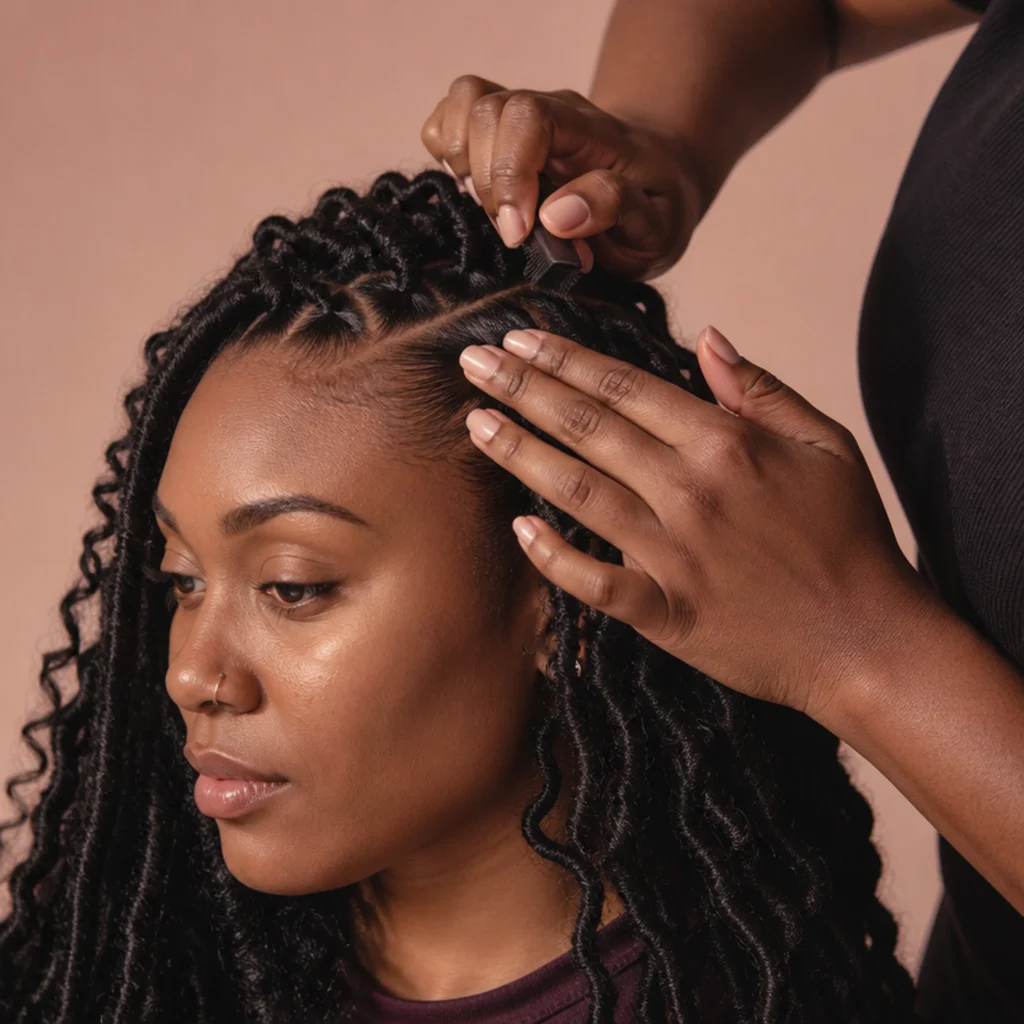
Butterfly faux locs are protective, not maintenance-free, and the routine is what separates a set that reads crisp at week five from one that looks frayed at week two. Most installs peak for about four to six weeks, stretching toward eight with disciplined care, before frizz and slippage signal it's time to remove. Wrap the length in a satin or silk scarf or bonnet every night, cotton pillowcases wick moisture and rough up the loops that give the style its whole character. Cleanse weekly with a diluted, sulfate-free wash from an applicator bottle aimed at the scalp, not the lengths, then dry thoroughly with a cool blow-dryer: trapped moisture at the root is the fastest route to odor and itch. Keep edges tidy with a light, flake-free gel or mousse instead of heavy daily slicking, which loosens the base and shortens wear. A weekly diluted-oil scalp massage keeps things comfortable without saturating the wrap. Pro tip: refresh a fuzzy hairline by re-laying edges every few days rather than reinstalling. Budget honestly for the product and the fifteen nightly minutes this takes, and set a removal date so you take the locs down on your own terms. Ask your loctician which cleanser and edge product they recommend for your specific wrap.
03Color and Texture Set the Mood
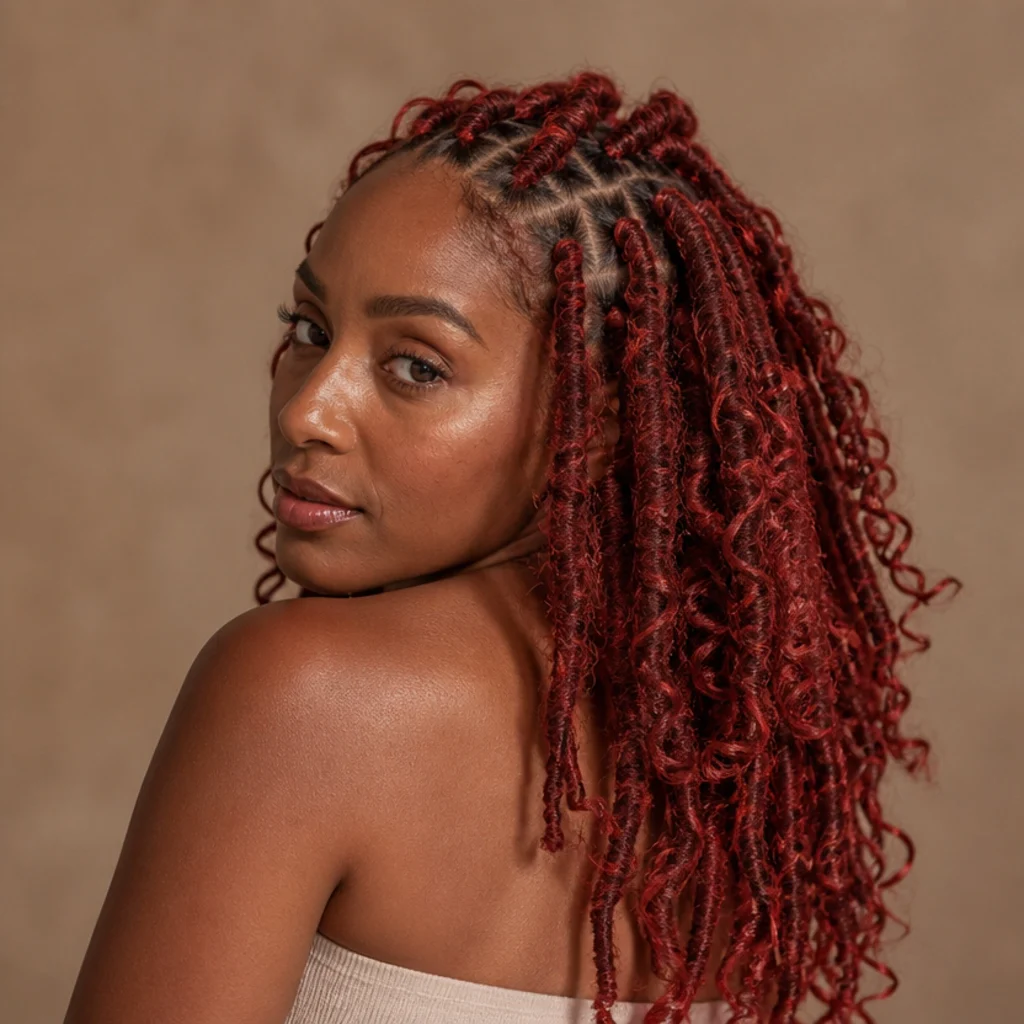
Color is where the style gets personal, and because these are faux locs, you get bold shades without the commitment or damage of dyeing your own hair. Butterfly locs with color run from subtle honey-blonde money pieces framing the face, to cool ashy browns, to a full head of red butterfly locs for maximum impact. Warm reds, copper, and auburn tend to glow against deep and rich skin tones, while golden and honey blondes lift warm-neutral complexions; cool espresso and mushroom browns read the most everyday and office-safe. For placement, a face-framing contrast or a subtle ombre through the mid-lengths adds contrast without going all-over. Texture matters just as much: tightly wrapped, defined loops look polished and structured, looser, more pulled-out loops feel relaxed and boho, and larger-diameter locs finish chunkier and more dramatic than fine ones. Pro tip: mix two adjacent shades, say a base brown with caramel highlights, for a lived-in, expensive-looking blend instead of a flat single color. Bring three to four reference photos and ask your colorist, or loctician, to match the shade placement and the loop density you have in mind, since the same "butterfly locs" label covers wildly different finishes.
Pro Tips from the Editor
- Vet the base method first. Ask whether your stylist braids or two-strand twists the base under the wrap; a braided base holds longer and grips finer hair better, while twists can feel lighter but loosen sooner.
- Count the packs. Confirm how many packs of wrapping hair the install uses and the loc diameter, this drives both the fullness of the finished look and the final price more than length alone.
- Protect the perimeter. Your hairline and nape take the most tension and friction; keep those locs slightly lighter and tension deliberately loose to avoid traction on the most delicate edges.
- Dry like you mean it. After every cleanse, sit under a cool dryer or air-dry fully before bed, a damp base overnight is the single most common cause of scalp odor and itch in faux locs.
- Don't over-wear them. Past the eight-week mark, wrapping hair can start to matte at the root and tangle with new growth, and that makes takedown longer and rougher on your strands.
- Budget the takedown too. Removal takes real time and patience; unpick rather than yank, and deep-condition immediately after to restore moisture before your next style.
- Photograph the loop texture, too. Loop density and distress level vary a lot between installs, so your references need to show the exact texture you want, not just the color and length.
Butterfly Locs at a Glance
| Factor | Short (chin-shoulder) | Medium (shoulder-bra strap) | Long (mid-back+) |
|---|---|---|---|
| Weight on scalp | Light | Moderate | Heavy |
| Approx. install time | Shorter | Moderate | Longest |
| Dry time | Fast | Moderate | Slow |
| Edge tension risk | Lowest | Moderate | Highest |
| Nightly management | Easiest | Moderate | Most involved |
| Best for | First-timers, fine hair | Everyday versatility | Drama, sturdy strands |
How to Choose / Get the Look
Work through the decision in order, and each choice narrows the next. First, match length to your lifestyle and scalp comfort. If this is your first set, if your edges are fine, or if you're unsure how you'll feel about the weight, start with short butterfly locs; they're the easiest to live with, the fastest to install, and the most forgiving to remove. Second, decide density and loop texture. Tighter, more defined loops photograph polished and last a touch cleaner; looser, pulled-out loops read boho but frizz sooner, so factor that into your maintenance appetite. Third, layer in color once length and texture are settled. Choose shade placement based on your undertone, not just the trend photo you're chasing. Then save three to four reference images showing the precise length, loop density, and color placement you want, because "butterfly locs" looks radically different from one install to the next. At consultation, ask how much hair the stylist uses per loc, whether they braid or twist the base, how they'll protect your hairline, and the realistic install time and full aftercare. Ask directly: "Can we keep tension light at my temples?" and "What length keeps the weight comfortable for my density?" A good loctician will talk through parting, density, and a realistic lifespan before any hair goes in, and will tell you honestly if your goal length suits your strand strength rather than upselling you into a set that will strain your edges.
Frequently Asked Questions
Are short butterfly locs better for beginners?
Generally yes. Short butterfly locs are lighter, install and dry faster, and place noticeably less tension on your edges, so they're a lower-commitment introduction. They're also the most forgiving to remove if the style isn't for you, so they're the smartest way to test the texture before investing in a longer set.
How long do butterfly locs last?
Most sets look their best for about four to six weeks and can stretch toward eight with diligent care: nightly satin wrapping, weekly diluted scalp cleansing, thorough drying, and minimal manipulation. Past that window, wrapping hair tends to matte at the root and tangle with new growth, which is your cue to book a takedown.
Do butterfly faux locs damage your hair?
As a protective style they cut down on daily combing and manipulation, which can help. The risk comes from tension that's too tight at install, or leaving locs in well past their window, both of which stress the hairline. Keep tension comfortable from day one, remove on schedule, and deep-condition after takedown to keep your natural strands healthy.
Can I get butterfly locs with color without dyeing my hair?
Yes, and it's one of the style's biggest draws. Because the color lives in the wrapping hair rather than your own strands, you can wear red butterfly locs, honey blonde, or a two-tone blend and return to your natural shade the moment you remove them, with no chemical process and no long-term commitment.
What color butterfly locs suit my skin tone?
Warm reds, copper, and auburn tend to glow against deep and rich skin tones, while golden and honey blondes flatter warm-neutral complexions. Cool espresso and mushroom browns read the most everyday and versatile across the board. If you're unsure, a face-framing money piece lets you test a brighter shade without committing to a full head of color.
How do I sleep in butterfly locs?
Wrap the length in a satin or silk scarf or bonnet every night. This preserves the distressed loop texture, cuts the friction that causes frizz, and helps your install last closer to its full lifespan. For long butterfly locs, loosely gather or knot the length first so you're not lying on the full weight all night.
How much do butterfly locs cost?
Cost varies widely by region, length, density, and the amount of hand-distressing involved, and it typically lands in the mid-range for most US salons. Longer, fuller installs and premium wrapping hair push the price up. Ask for an all-in quote that includes the hair, and confirm whether takedown is a separate charge.
Can I wash butterfly locs?
Yes, and you should. Cleanse weekly with a diluted, sulfate-free wash applied to the scalp through an applicator bottle, and avoid heavy scrubbing of the lengths so you don't disturb the loops. Rinse well and dry the base thoroughly with a cool dryer, since trapped moisture at the root is the most common cause of odor and itch.
How long does it take to install butterfly locs?
A professional install usually runs several hours depending on length and density; long, full sets take the longest. Done solo at home, expect roughly a five-to-eight-hour project. Ask your loctician for a realistic time estimate up front so you can plan the day and confirm whether the quote covers that full window.