20 Butterfly Locs Before and After Transformations
Butterfly locs move so fluidly between quiet and dramatic that one change in length, color, or accessory can reshape the entire look. This guide walks through 20 illustrative progressions, each shifting from soft and natural toward bold and expressive, with the shade families, install specifics, and upkeep rhythms that actually separate one from the next. These are original illustrative examples, not real client photos.
 Edited by Lena Rose · Published July 11, 2026 · 35 min read
Quick Answer
- Best for: Anyone who wants a lightweight protective style with airy, distressed texture and real length-and-color range, from chin bobs to floor-grazing installs, across all skin tones and coil patterns.
- Who might skip it: Anyone needing an ultra-low-effort style with zero nightly wrapping, a scalp mid-flare-up, or those who dislike the wispy, deliberately unfinished loops (a smooth Senegalese twist or soft locs will feel neater).
- Maintenance: Moderate. A nightly satin scarf or bonnet, edge and scalp oiling two to three times a week, diluted spray cleansing of the roots, and light frizz control on loose loops.
- Difficulty: Intermediate to advanced. Wrapping crochet or individual locs is time-intensive; short refreshes are DIY-friendly, full long installs are salon work.
- Cost: Variable. DIY hair-and-supplies runs on the lower end; a salon install typically lands mid-range, with waist-length, jumbo, or multi-tone color pushing toward the higher end. Confirm whether hair is included when you book.
- Wear time / longevity: Roughly six to eight weeks. Short blunt styles start fraying at the perimeter sooner; longer installs loosen at the root as new growth lifts.
- Standout variation: Red butterfly locs, consistently the boldest single-color moment in nearly every progression here.
- How to ask your stylist: Bring two or three references and specify length, thickness (mini, medium, or jumbo), finish (lightly sealed vs. heavily distressed), color placement, and total weight so they can protect your edges.
In This Guide
- The Soft Start: Natural-Toned Short Bob
- Chin-Length Distressed Locs
- Warm Honey Highlights Woven Through
- Shoulder-Grazing Everyday Locs
- Half-Up Bun With Face-Framing Pieces
- Long Butterfly Locs, Center Part
- Butterfly Faux Locs With Curly Ends
- Copper Ombre Transition
- Waist-Length Statement Locs
- Chunky High Ponytail
- Burgundy Depth on Dark Roots
- Gold Cuffs and Beaded Accents
- Side-Swept Glam Drape
- Two-Tone Blonde Money Piece
- Bold Red Butterfly Locs
- Deep Plum Evening Look
- Braided Crown With Locs
- Bright Fantasy Pastel Ends
- Jumbo Bohemian Volume
- Floor-Grazing Dramatic Finale
Butterfly locs earn their name from the airy, looped texture created by wrapping bohemian or wavy hair back over itself so the surface blooms into soft, feathered gaps. They sit between polished faux locs and a loose bohemian twist, and that in-between quality is why they read so well as a progression: the same wrapping technique can look nearly invisible in a natural dark brown or theatrical in vivid red. In this guide the looks build gradually. The earliest numbers lean into short butterfly locs and undertone-matched neutrals that pass as your own hair, while the later ones move into length, saturated color, and structured accessories that register across a room. That range is the whole appeal, and it's also where people get stuck, because a photo rarely tells you the weight, the install time, or the nightly upkeep behind it. Whether you're drawn to a wash-and-go short butterfly locs bob or a waist-skimming statement, seeing the options side by side, with the trade-offs named, makes it easier to decide where on the spectrum you actually want to land. Every look below is an original illustrative example built to show that progression, not a real before-and-after photo.
01The Soft Start: Natural-Toned Short Bob {#1}
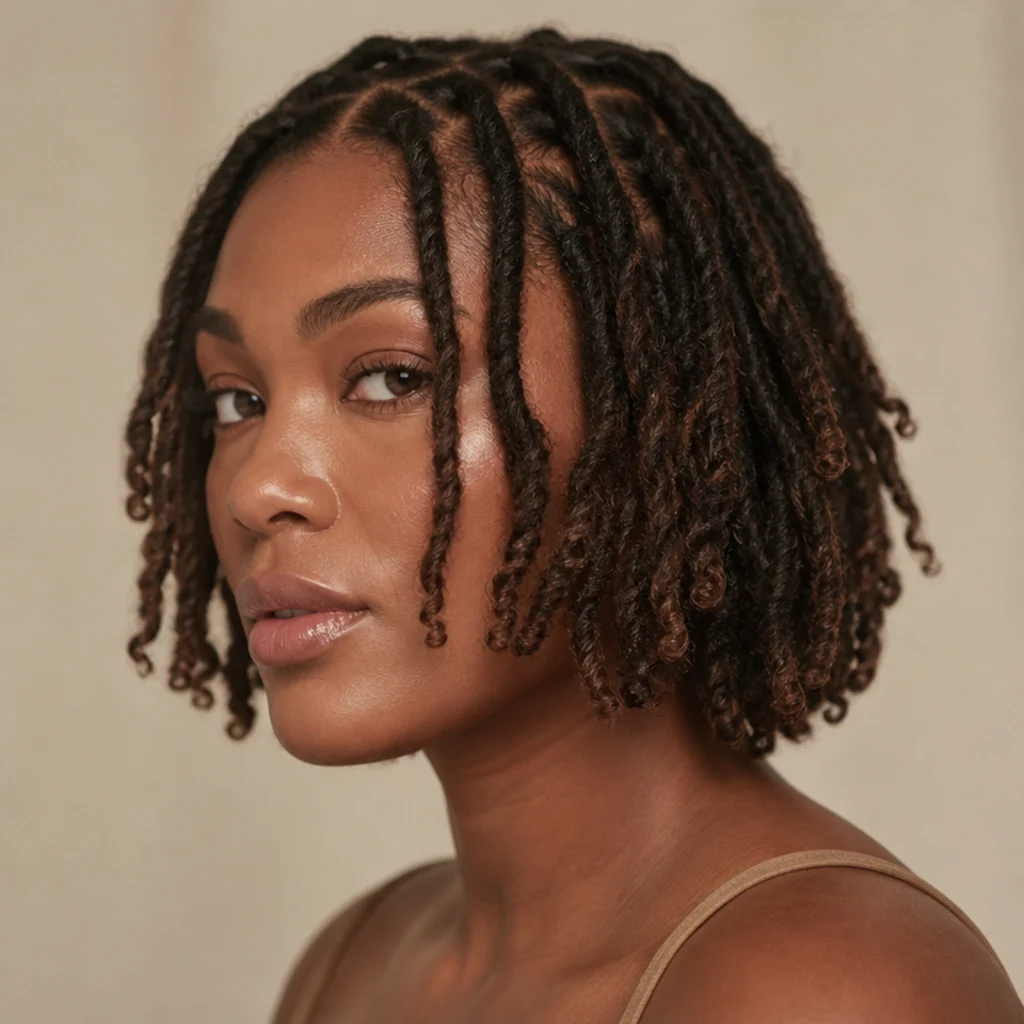
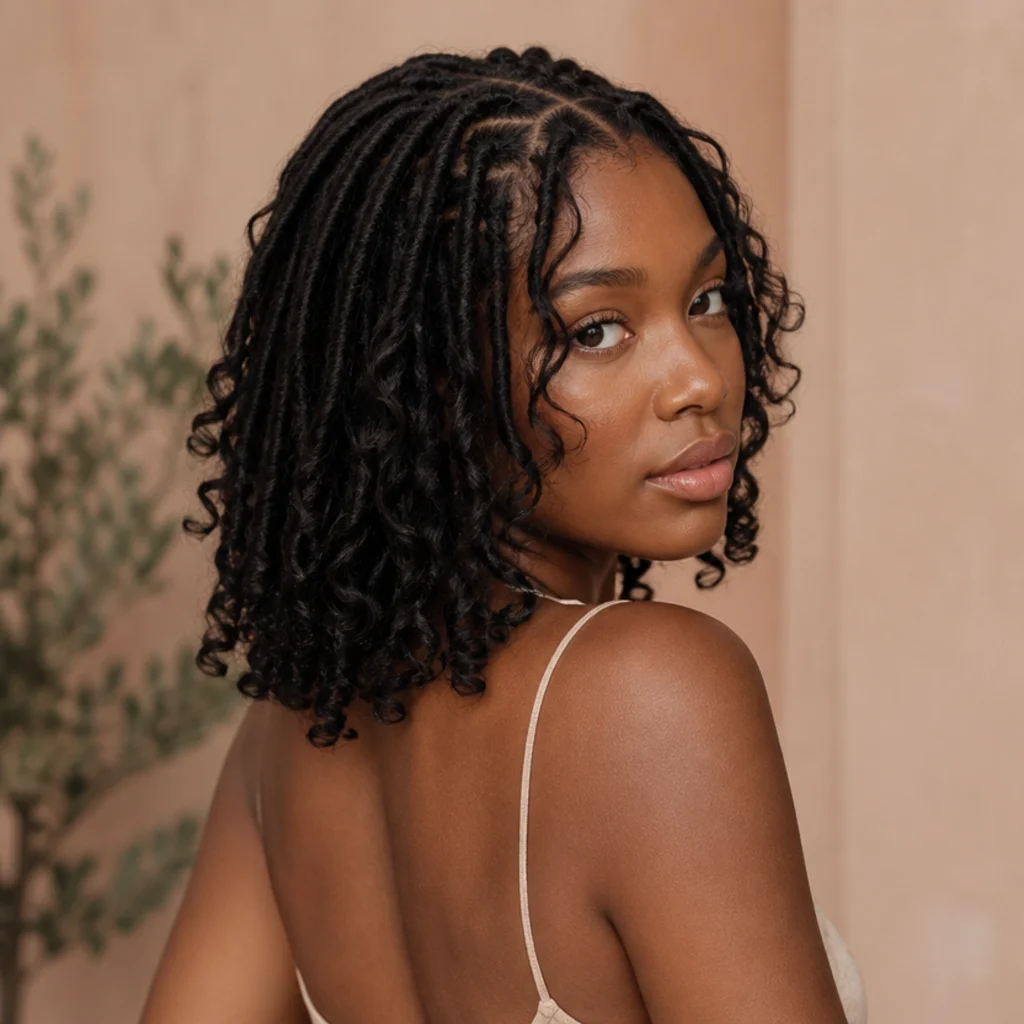
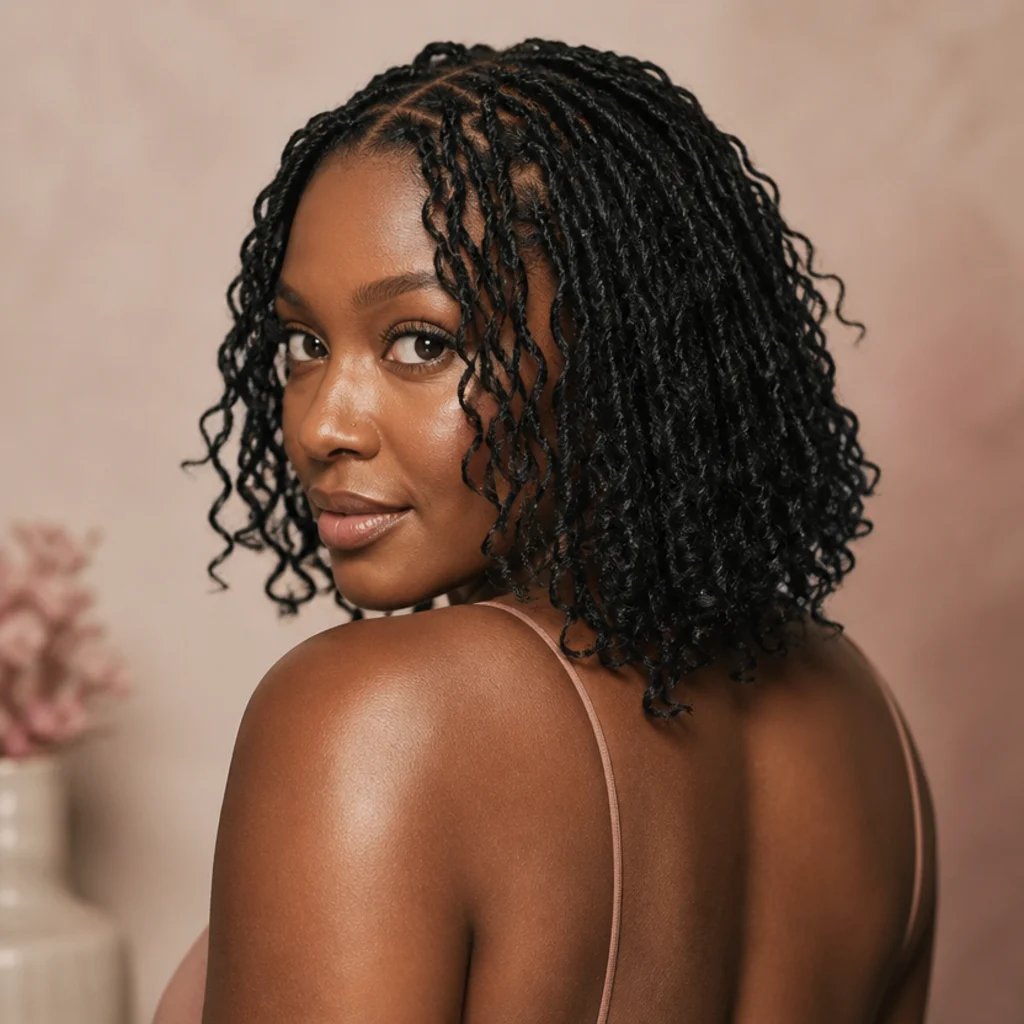
This is the quietest point on the spectrum: a short butterfly locs bob in a natural off-black or dark brown (think 1B to 2) that reads as an extension of your own texture rather than a hairstyle announcing itself. Cut to graze the chin with medium-thin locs, it keeps the distressed loops subtle and the silhouette clean. It's a smart pick for first-timers, and because the ends land right at the jaw it suits round and heart shapes by drawing a soft vertical line down the face; if your face is long, keep a little more volume at the sides. Upkeep is the lightest of any look here, though the blunt perimeter frays faster than a tapered one, so plan a quick loose-piece trim every two to three weeks and a scarf every night to keep the surface crisp. Expect to wear it six weeks before the roots ask for attention. Pair it with a bold lip and hoops, since the hair stays understated. Pro tip: mist the roots with diluted witch hazel on a cotton round mid-cycle to lift buildup without soaking the locs. Ask your stylist for a natural-color chin-length install with softly sealed, lightly distressed ends rather than heavy fraying.
02Chin-Length Distressed Locs {#2}
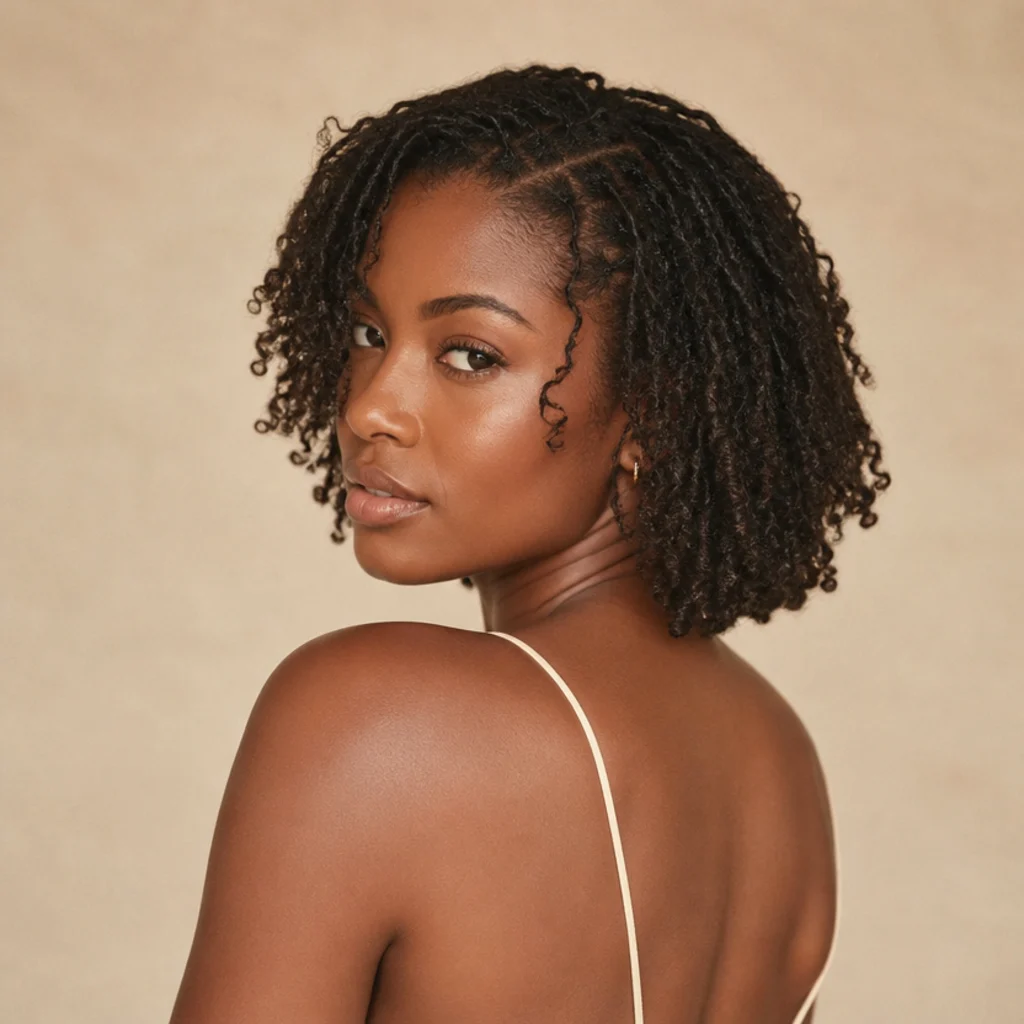
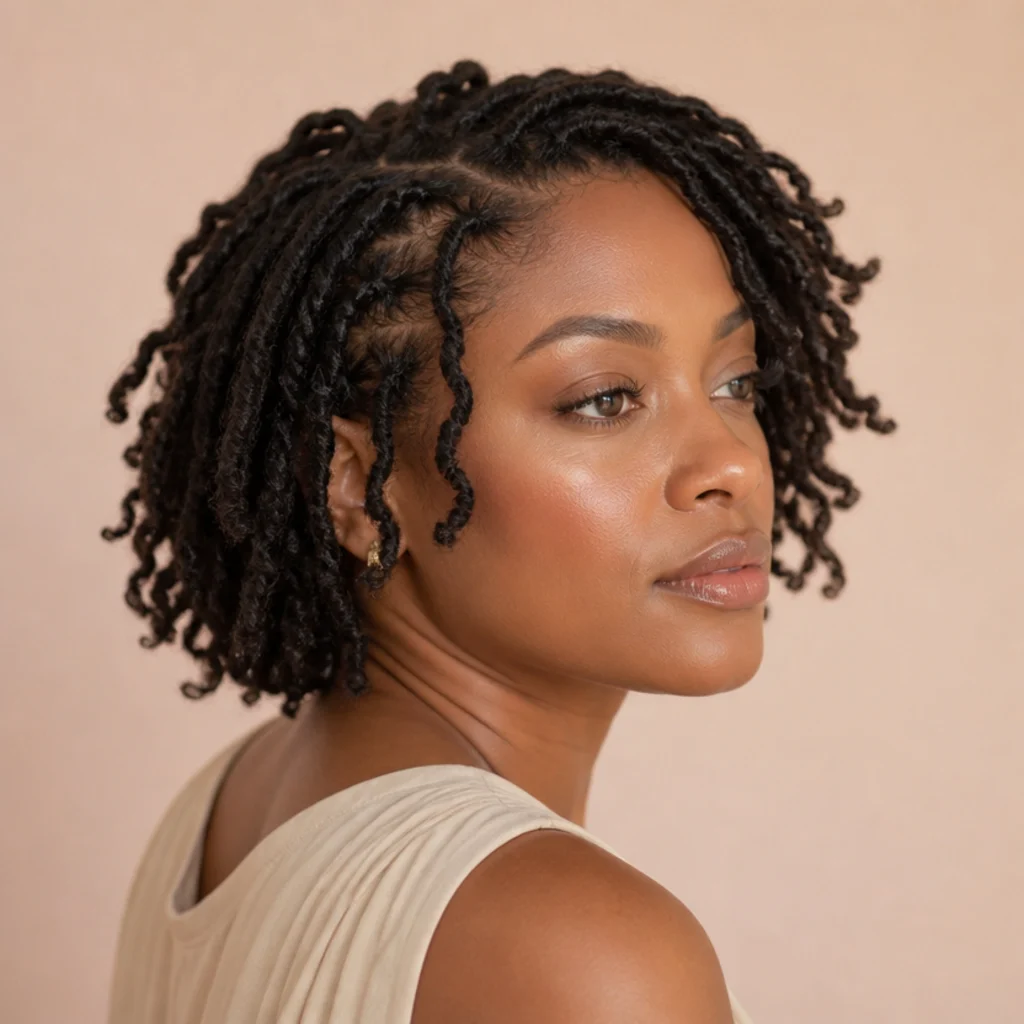
Take that first bob and dial up the texture. Here the loops are pulled looser and the wispy fly-away pieces are left more pronounced, so the identical length reads relaxed, lived-in, and a touch bohemian. It's the natural next step for anyone who liked look one but wanted more visible butterfly texture without adding a single inch, and the extra distressing works as a smart illusion of density, which suits fine and medium-density hair especially well. The trade-off is real: looser loops catch frizz and lint faster, so a satin bonnet becomes non-negotiable and a light anti-frizz mist two or three times a week keeps the surface from fuzzing prematurely. Longevity holds around six weeks, though the loose loops may start looking shaggy a little sooner than a sealed style. Because the texture is doing the talking, keep the styling minimal, tucked behind one ear or under a thin headscarf. Pro tip: reactivate flattened loops by steaming lightly over a mug of hot water and finger-separating, rather than re-wrapping. When booking, ask your stylist for a heavily distressed finish with looser loops kept at a short, chin-skimming length.
03Warm Honey Highlights Woven Through {#3}
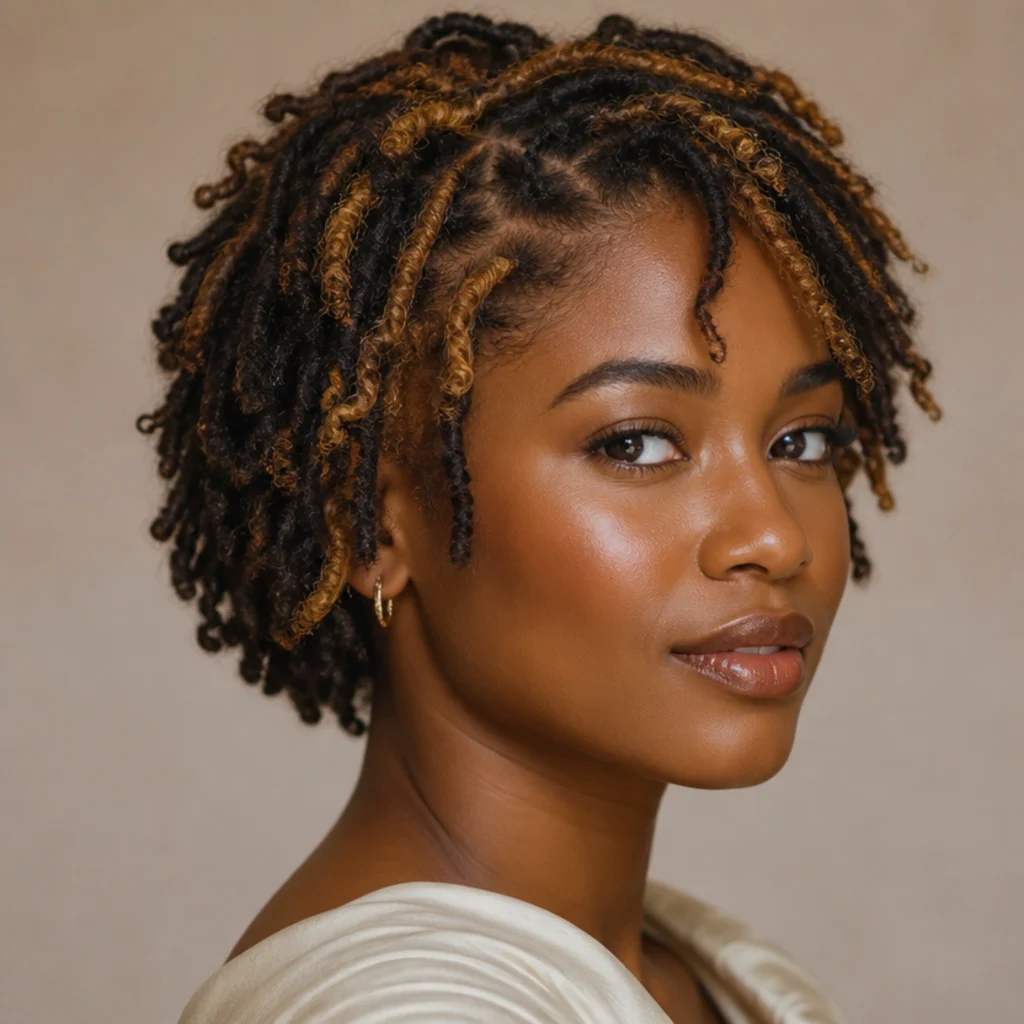
Color enters gently here. A scattering of honey and caramel-toned locs (roughly a level 27 to 30) is ribboned through the dark base so the style catches light and gains dimension without any real commitment. This is the first true step toward butterfly locs with color, and warm honey looks most natural on warm and neutral undertones; if you skew cool, nudge the highlight toward a soft beige-blonde so it doesn't turn brassy against your skin. The best part is that the tone lives in pre-colored extension hair, so there's no lightening of your own strands and no new chemical upkeep, and the difficulty stays low since it's still a short install. Concentrating the brighter pieces toward the front and part gives a face-lit, dimensional effect that photographs as understated glow rather than a color job. Maintenance matches a natural install, six to eight weeks, with the usual nightly wrap. Pro tip: place highlights on the pieces that fall in your everyday part so the dimension shows even on a low-effort day. Ask your stylist for a dark base with honey or caramel pieces face-framed and lightly clustered at the crown.
04Shoulder-Grazing Everyday Locs {#4}
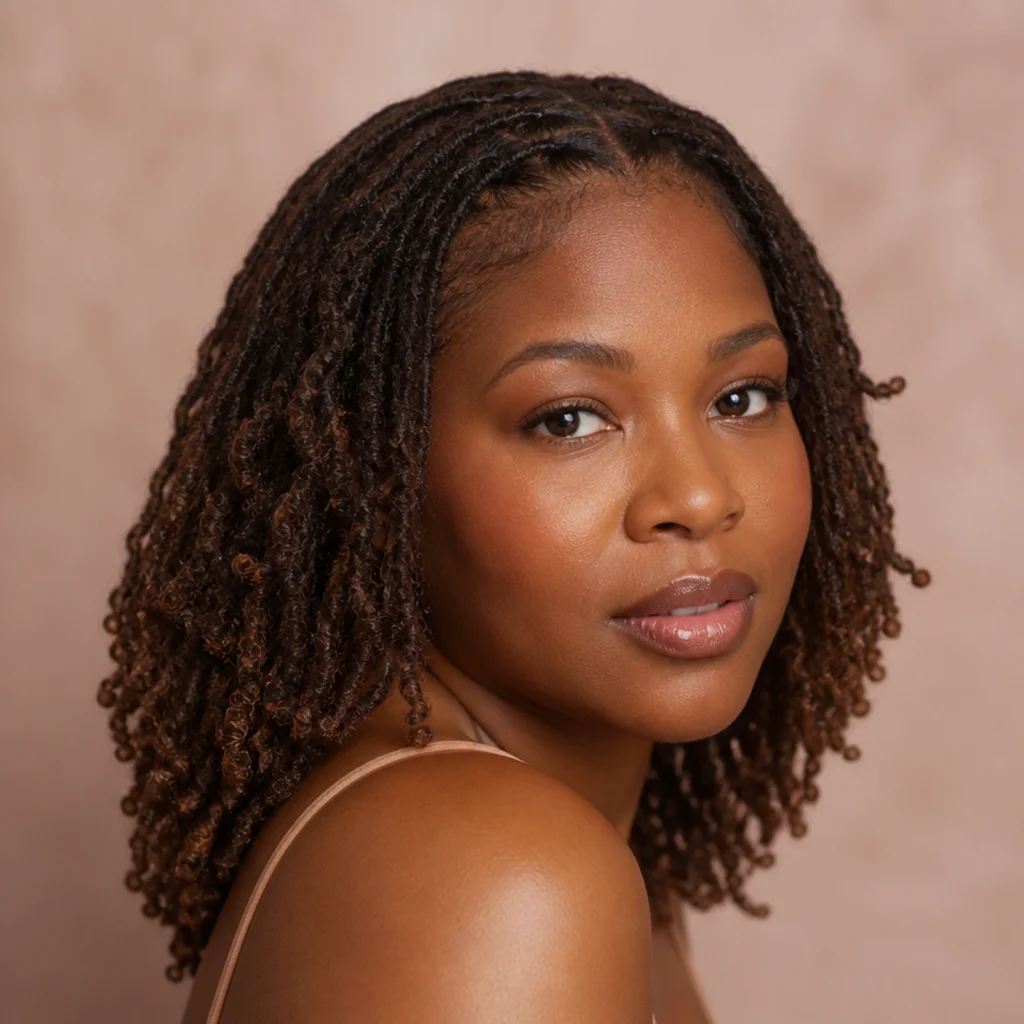
Length arrives, and with it the most wearable everyday sweet spot in the guide. Extending to the shoulders opens up real styling range, low ponies, half-ups, a side part, while staying light enough that you'll forget you're wearing it. This is the answer for anyone who found a short bob limiting but isn't ready for the weight and salon hours of a waist install. Shoulder length is the great neutral: it balances nearly every face shape and carries comfortably across coil patterns because the added weight is modest. Maintenance is moderate, a nightly scarf and a mid-week edge oiling, and the locs are long enough to pull back yet short enough to stay easy on the scalp, so a well-tensioned install should wear the full six to eight weeks without strain. It reads as an approachable, go-anywhere style that pairs with everything from gym clothes to a blazer. Pro tip: ask for a slightly tapered rather than blunt hemline so the ends move naturally and hide loosening as they age. When booking, ask your stylist for shoulder-length butterfly locs in a soft natural brown at medium thickness for a comfortable, wearable install.
05Half-Up Bun With Face-Framing Pieces {#5}
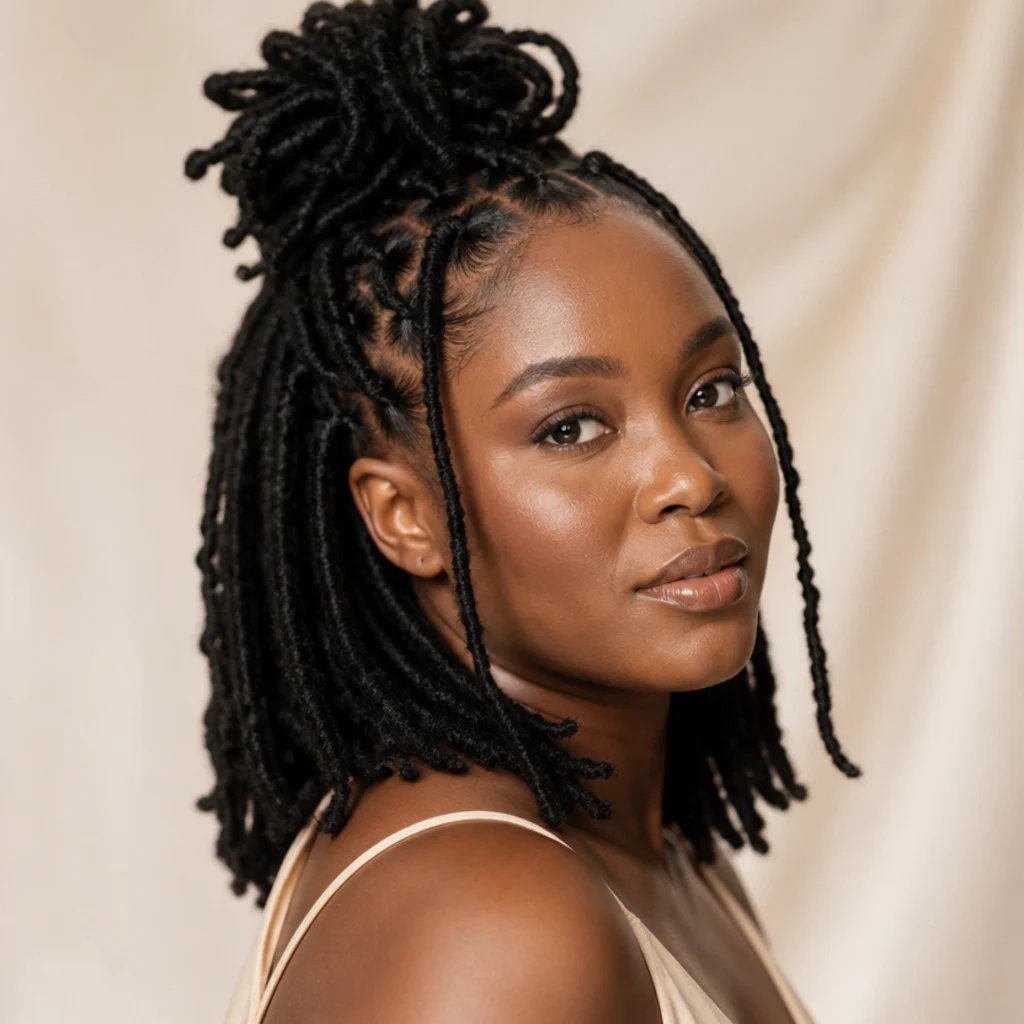
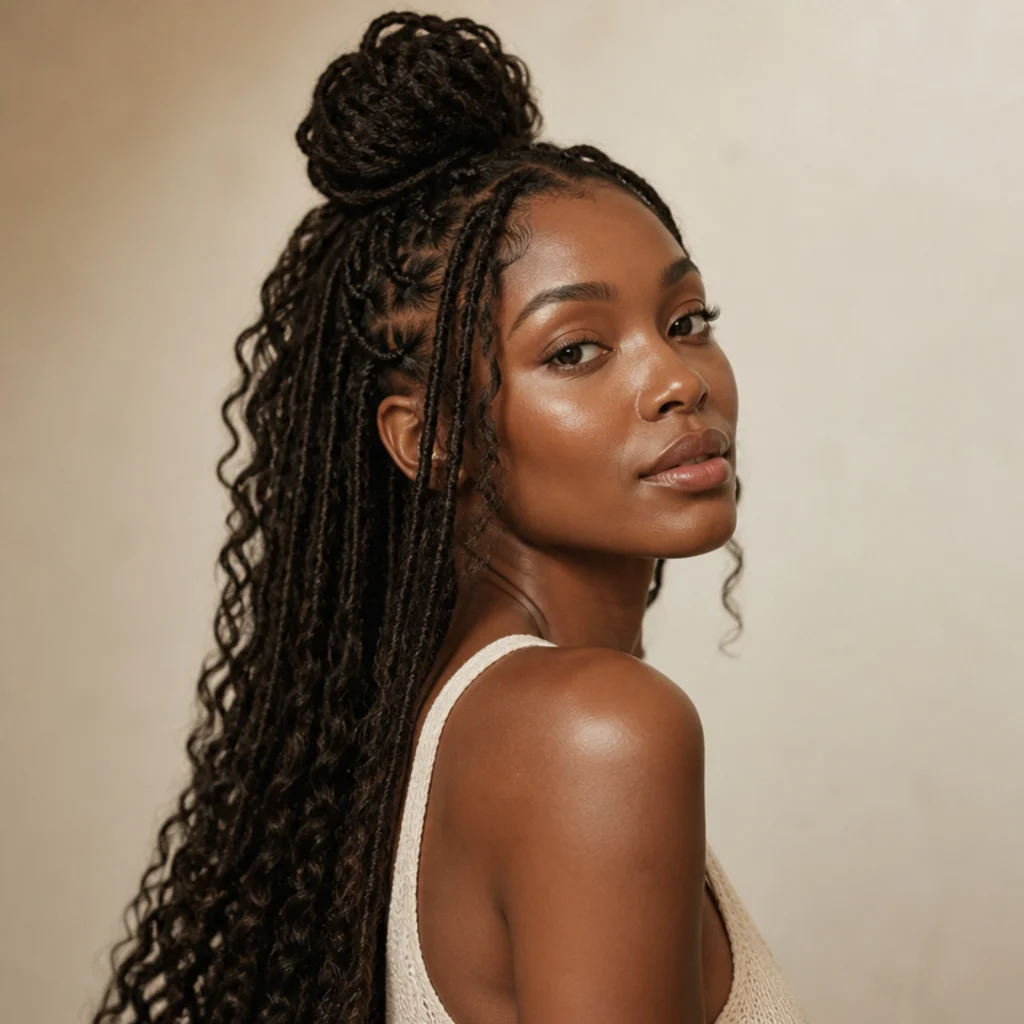
Same install, new shape, and proof that styling changes a look as much as length or color does. Gathering the crown into a soft half-up bun and leaving two locs to trail at the temples is a real five-minute change that instantly reads dressier, which makes it the practical hero for anyone who needs one install to cover the workday and dinner after. It suits longer and rectangular face shapes especially well, because the loose face-framing pieces add width at the cheekbones and break up vertical length; if your face is round, take the bun higher to lengthen instead. There's zero added maintenance, and the bun quietly protects your ends by keeping them off collars and seatbelts all day. It photographs polished without looking fussy. Pro tip: leave out the two pieces that naturally fall in front of your ears, then bend them with a flat iron on low or a few finger-coils so they curve toward the face instead of hanging straight. To recreate it, gather the top third at the crown, twist into a loose knot, secure with a loc-safe tie, and free two locs at the hairline. Ask your stylist to show you a low-tension bun placement that keeps your edges relaxed.
Save this to Pinterest so you can show your stylist exactly which length-and-style combination you mean.
06Long Butterfly Locs, Center Part {#6}
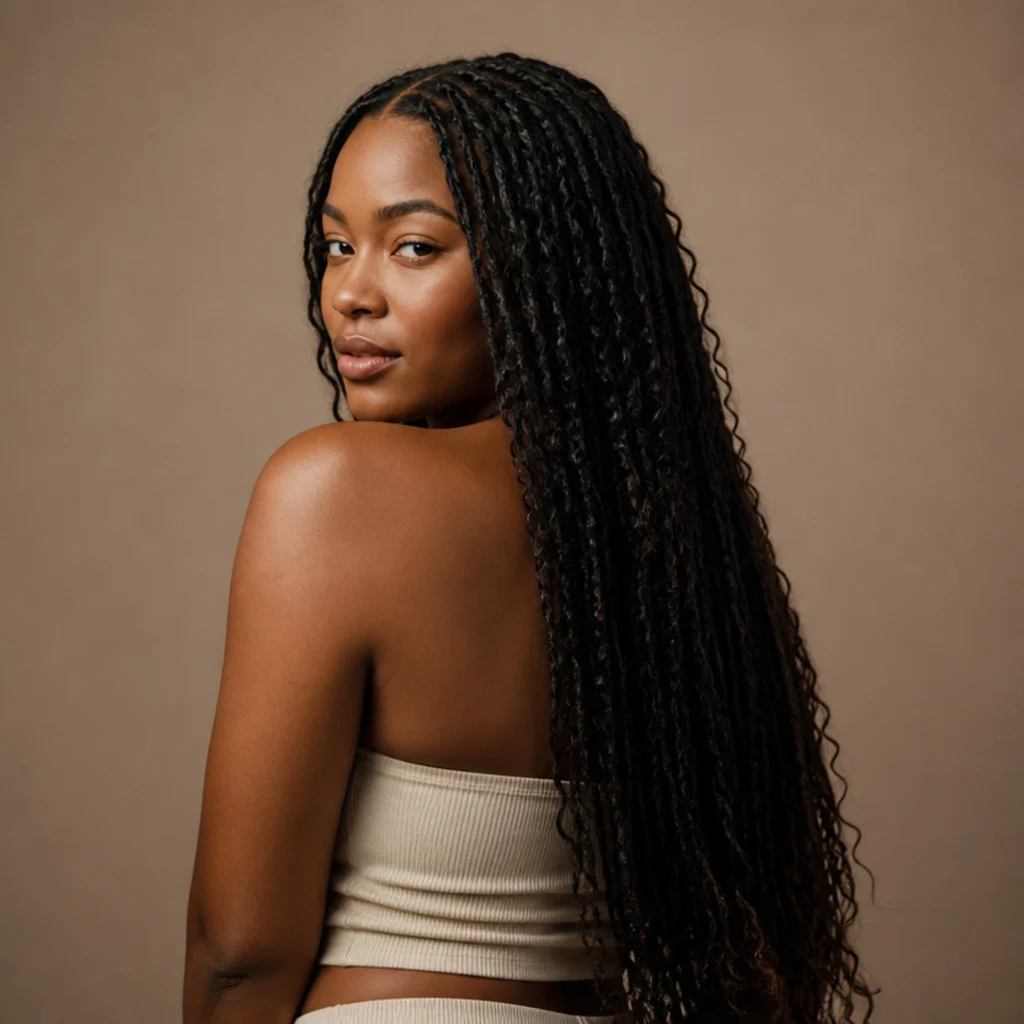
Now the progression commits to length. Long butterfly locs falling past the chest with a crisp center part deliver the classic bohemian drape most people picture when they hear the style, and the symmetry of a center part reads modern and clean against all that texture. It suits oval and square faces particularly well because the straight part balances a strong jaw and elongates gently; if your face is round, a center part can be lengthening too, just keep a little loft at the roots. Longer locs mean noticeably more weight, so a secure, even-tension install matters more here than anywhere so far, and a good stylist will keep the base sections small and comfortable to spare your edges. Upkeep climbs a step because there's more hair to wrap, stretch, and refresh each night, and you should expect to loosely braid or pineapple the length to prevent tangling. Wear time still lands around six to eight weeks. Pro tip: sleep with the length gathered into two loose braids so the loops stay defined and the ends don't matte overnight. Ask your stylist for long butterfly locs with a defined center part and lightweight, minimally bulky sealing at the ends.
07Butterfly Faux Locs With Curly Ends {#7}
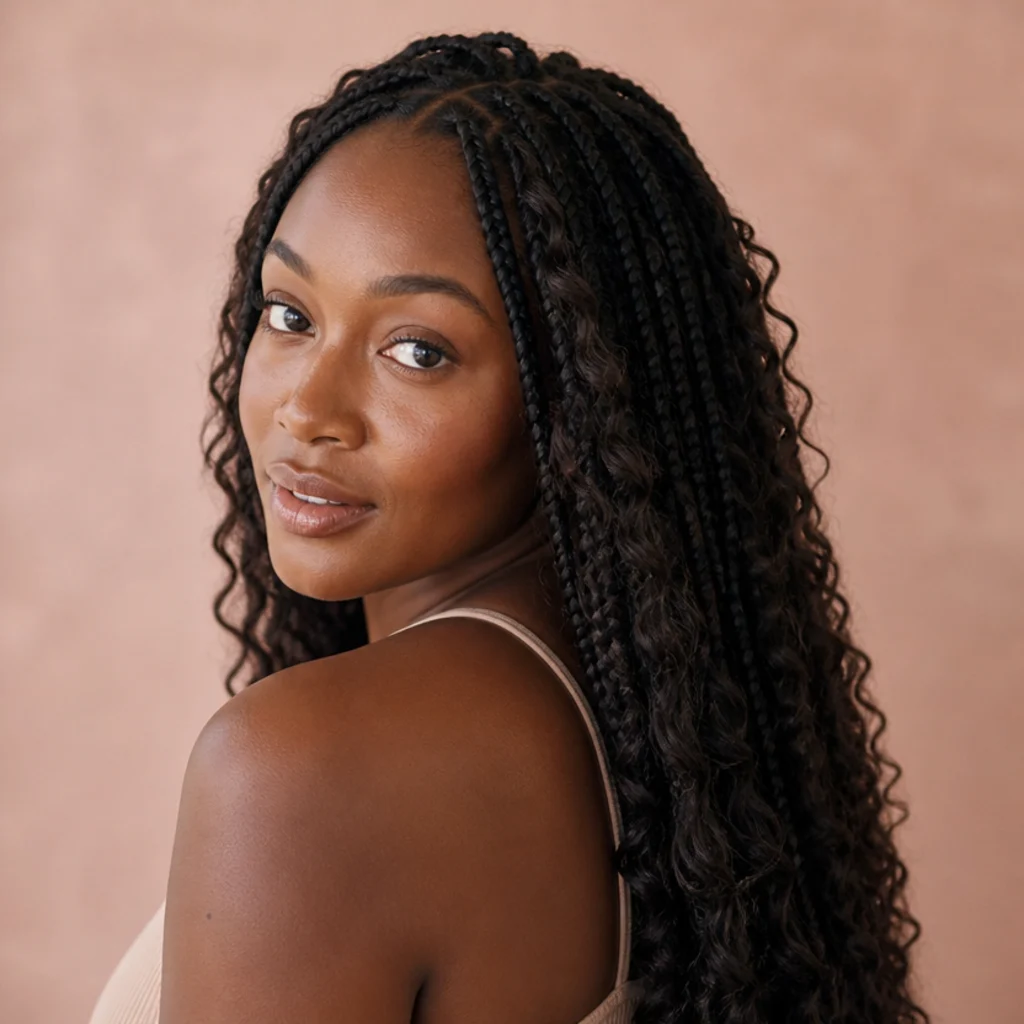
Here the finish changes rather than the length. These butterfly faux locs are left with soft, unsealed curly ends so the bottom few inches bloom into loose spirals instead of tapering to a wrapped tip, which reads playful, romantic, and undeniably beachy. Curly ends add visible movement right at the hem and suit heart and diamond face shapes beautifully, since the softness around the shoulders balances a narrower chin. The trade-off lives entirely at the tips: unsealed curls tangle and can frizz, so they need a dedicated routine, a little leave-in or curl cream worked through the ends, gentle finger-detangling, and a re-dip in hot water if the pattern falls. Manage that and the install still wears six to eight weeks. It's the most texturally interesting finish in the guide, the one that reads as a distinct bohemian style rather than a straight loc. Pro tip: refresh drooping curls by dipping just the ends in near-boiling water for a few seconds, then scrunching, no product buildup required. Ask your stylist for butterfly faux locs with the last three to four inches left curly and unsealed rather than wrapped and dipped.
08Copper Ombre Transition {#8}
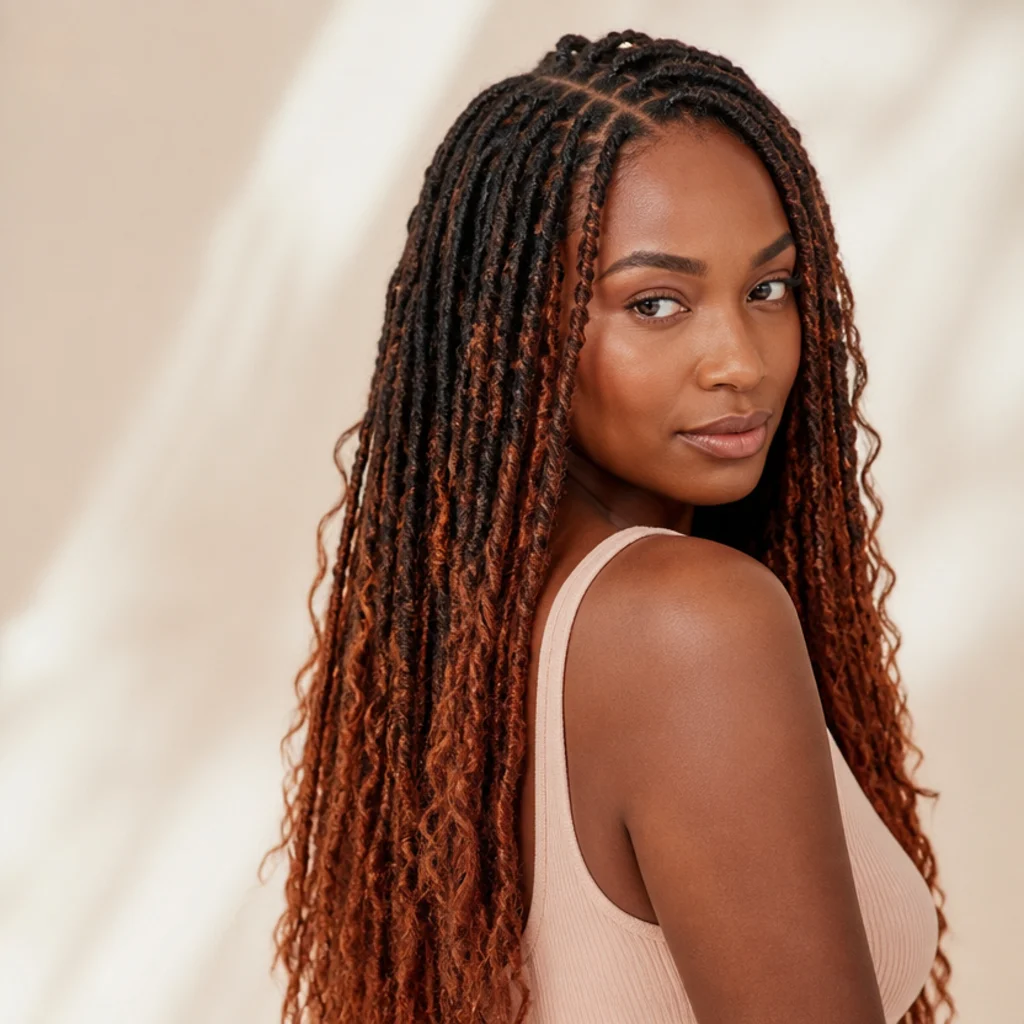
Color deepens and spreads down the length. A dark-to-copper ombre keeps natural roots and warms toward the ends, a clear intensity step up from the earlier honey highlights while still reading grounded rather than loud. This is butterfly locs with color at a confident mid-level: the copper is noticeable and flattering on warm and deep skin tones especially, yet the dark roots keep it office-appropriate and forgiving. Because the melt lives in the extension hair, there's no regrowth line to chase and no scalp lightening, so upkeep stays identical to a natural install even though the payoff looks like a full color service. The gradient also does something clever with proportion, drawing the eye downward to emphasize the added length and slim the overall silhouette. Wear time holds at six to eight weeks. Pro tip: choose a copper with a hint of brown rather than pure orange so it fades gracefully instead of turning brassy in week five. Ask your stylist for a dark root melting into copper through the mid-lengths and ends, kept dimensional rather than a hard, blocky line.
09Waist-Length Statement Locs {#9}
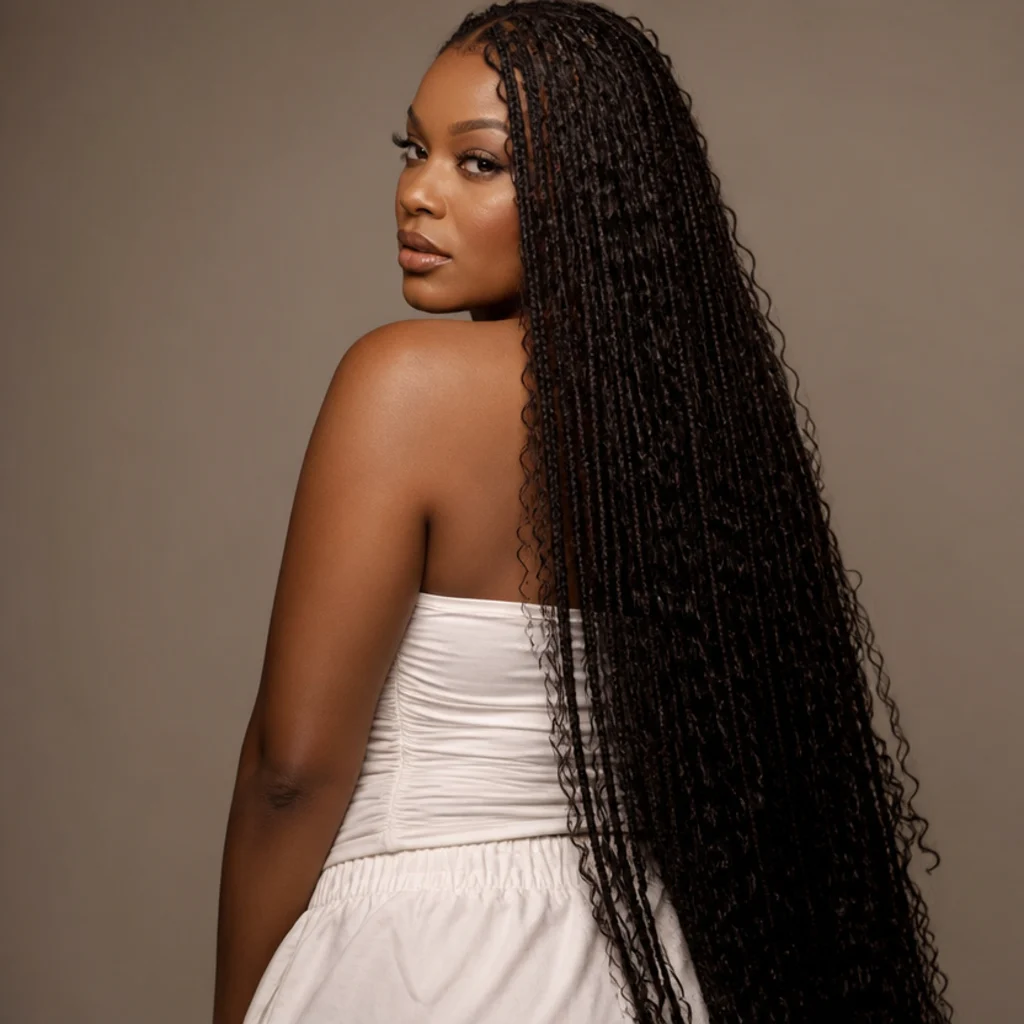
Length reaches its natural-tone peak here, and it makes a statement on drama alone with no color required. Waist-length butterfly locs are a genuine commitment: the install is significantly longer, the weight is real, and nightly care adds a few minutes because all that length wants to tangle if left loose. Taller frames carry the length more easily, but a skilled stylist can balance density and thickness so it suits most heights, the trick is medium rather than heavy density so the mane doesn't overwhelm a petite frame. Because the locs are long, stretch or loosely braid them at night without exception, and expect the roots to loosen visibly by week six as new growth lifts. This is elegant, editorial, and, once installed, low-effort in simple down styling. Watch the front hairline, since the extra weight pulls hardest there. Pro tip: separate a heavy install into two or three loose braids before bed, then unravel and finger-fluff in the morning for defined, tangle-free loops. When booking, ask your stylist for waist-length butterfly locs at medium density so the install stays wearable rather than punishingly heavy.
10Chunky High Ponytail {#10}
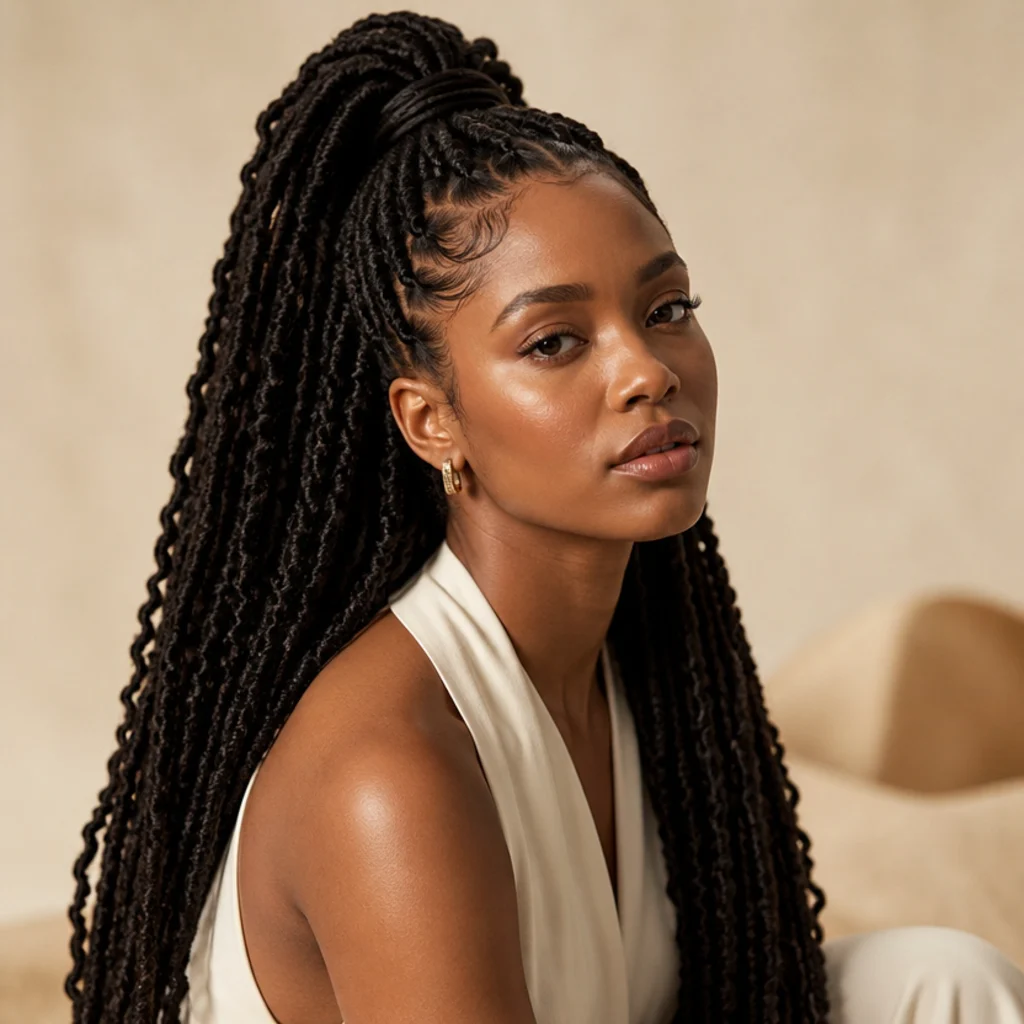
Take that length and lift it. Gathering long locs into a high ponytail turns the exact same install into something sleek and sculptural, with the whole length now cascading dramatically from the crown, an instant reset that costs no salon time. It's the go-to for heat waves, workouts, and busy days, and it puts your edges, jawline, and neck on display, so it rewards a little baby-hair styling up front. It suits most face shapes precisely because you control the height and volume: place it high to lengthen a round face, or lower and softer to balance a long one. The one real caution is tension, since a very high, tight pony pulls directly on an already loaded hairline, so keep it comfortably secured and schedule real down-days between updos to let your edges recover. Pro tip: support the weight with two loc-safe elastics stacked rather than one cranked tight, then wrap a single loc around the base to hide them. To style, gather all locs at the crown, secure, and smooth the front with a soft edge control. Ask your stylist how high your specific install can safely sit without stressing your hairline.
Save this to Pinterest for an easy reference on styling long locs without extra tools.
11Burgundy Depth on Dark Roots {#11}
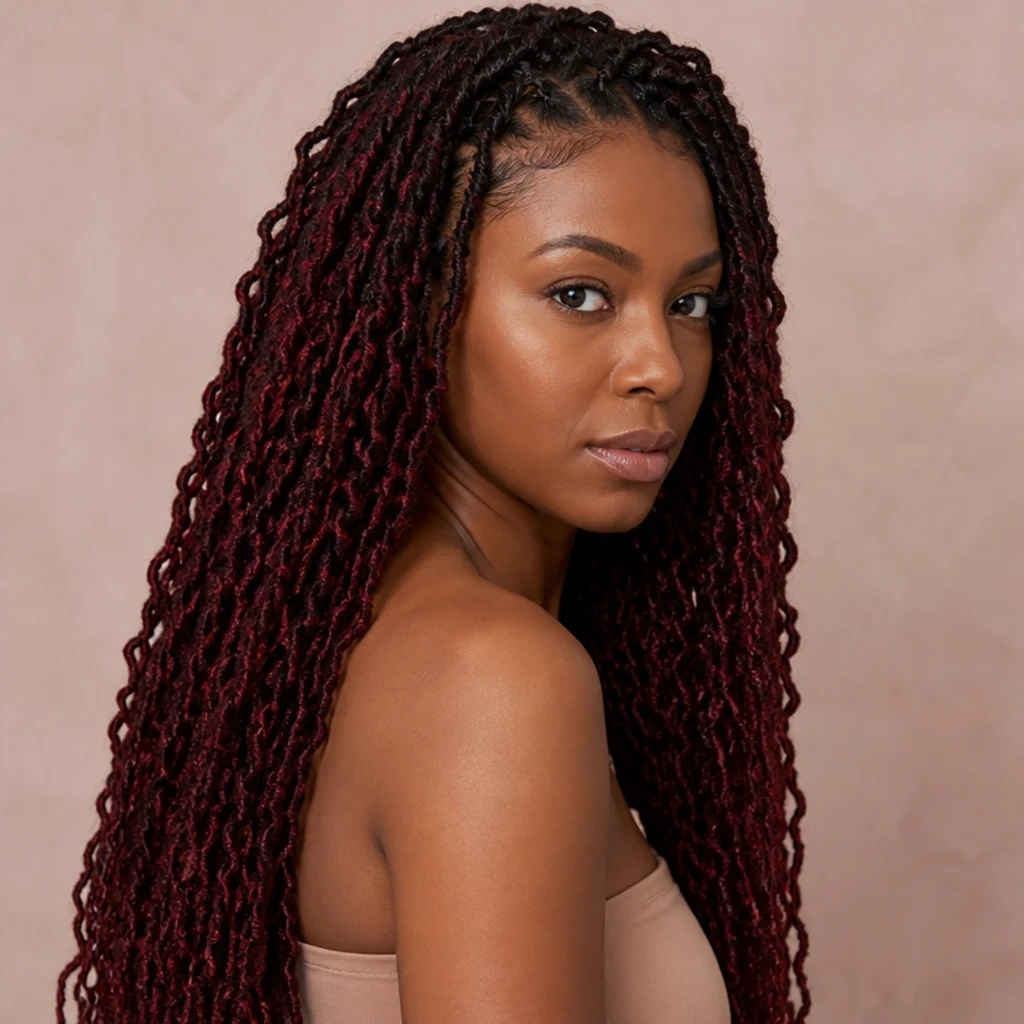
Color turns richer and more grown-up. Deep burgundy melted over dark roots adds a wine-toned warmth that flares bold in bright sun and reads nearly black indoors, which is exactly what makes it such a versatile middle ground between natural and vivid. Burgundy suits cool and neutral undertones and looks especially rich against deep and medium-deep skin, where the red pulls forward; if you're very warm-toned, lean toward a brick-leaning burgundy so it harmonizes. As with every colored look here, the shade lives in the extension hair, so upkeep is no different from a natural install, six to eight weeks with a nightly wrap. Burgundy is the classic gateway into bolder color because it feels sophisticated rather than costume, and the dark roots keep it entirely workplace-safe while the wine tones come alive in photos and evening light. Pair it with gold jewelry to warm the tone further. Pro tip: choose a burgundy with visible dark dimension rather than a flat, single-note wine so it looks expensive instead of one-dimensional. Ask your stylist for a burgundy or wine shade melted over dark roots and kept dimensional, not flat.
12Gold Cuffs and Beaded Accents {#12}
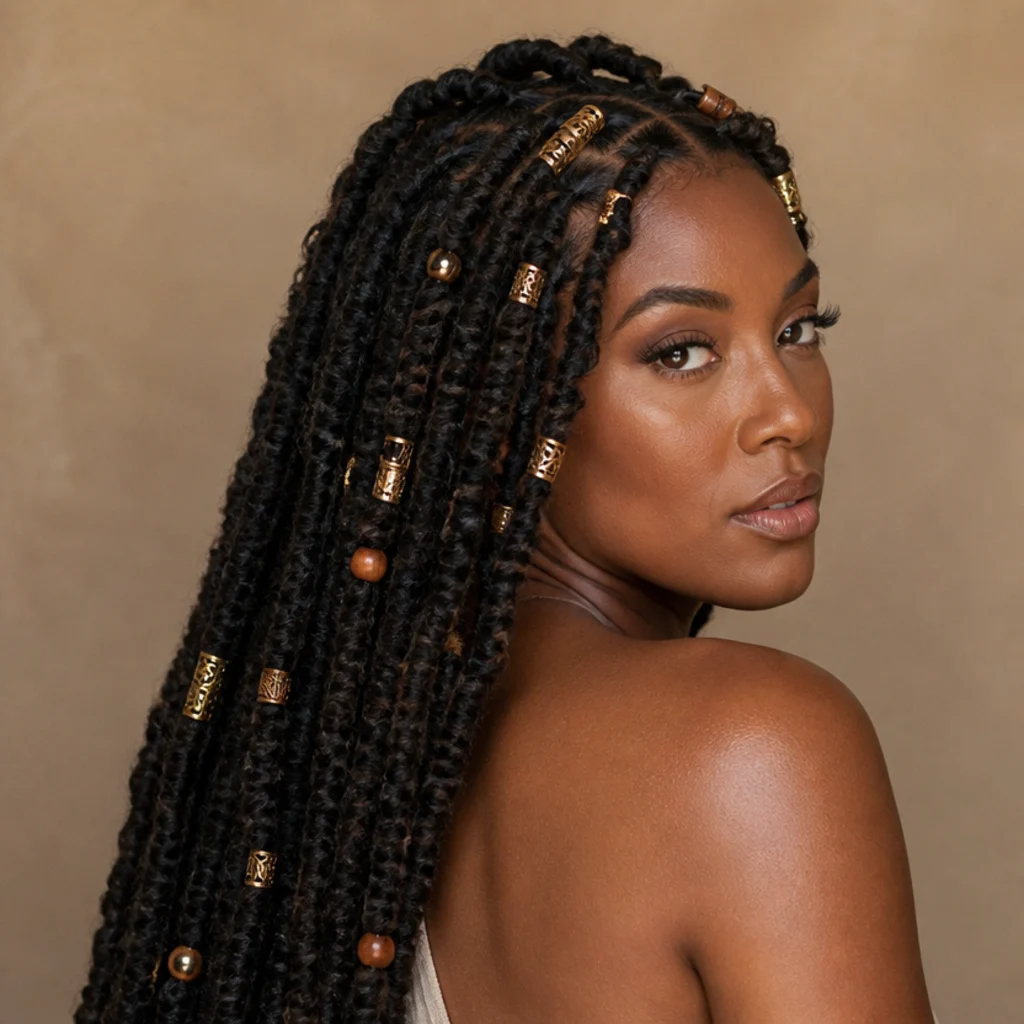
Accessories join the story, and they're the lowest-effort change in the entire guide. Sliding a handful of gold cuffs and a few wooden beads onto select locs adds personality and a hand-finished, styled feel without touching color or length, and the whole change takes minutes. It works on any length, though longer locs give the metal and beads more room to catch light and swing. The one rule is restraint on weight: keep accents light and spread across many locs rather than loading a few, because concentrated hardware strains individual locs and can stress the root over a long wear. Cuffs suit anyone who wants to personalize an install and photograph as intentional detail rather than clutter, and they're especially effective clustered around the face and part where they frame. Pro tip: position cuffs an inch or two below the root, not right at the scalp, so they slide freely and never dig in as the loc loosens. To recreate it, thread cuffs and beads onto locs around the face and crown, then gently crimp each cuff just enough to hold without crushing. Ask your stylist to place a few and check that none pull uncomfortably.
13Side-Swept Glam Drape {#13}
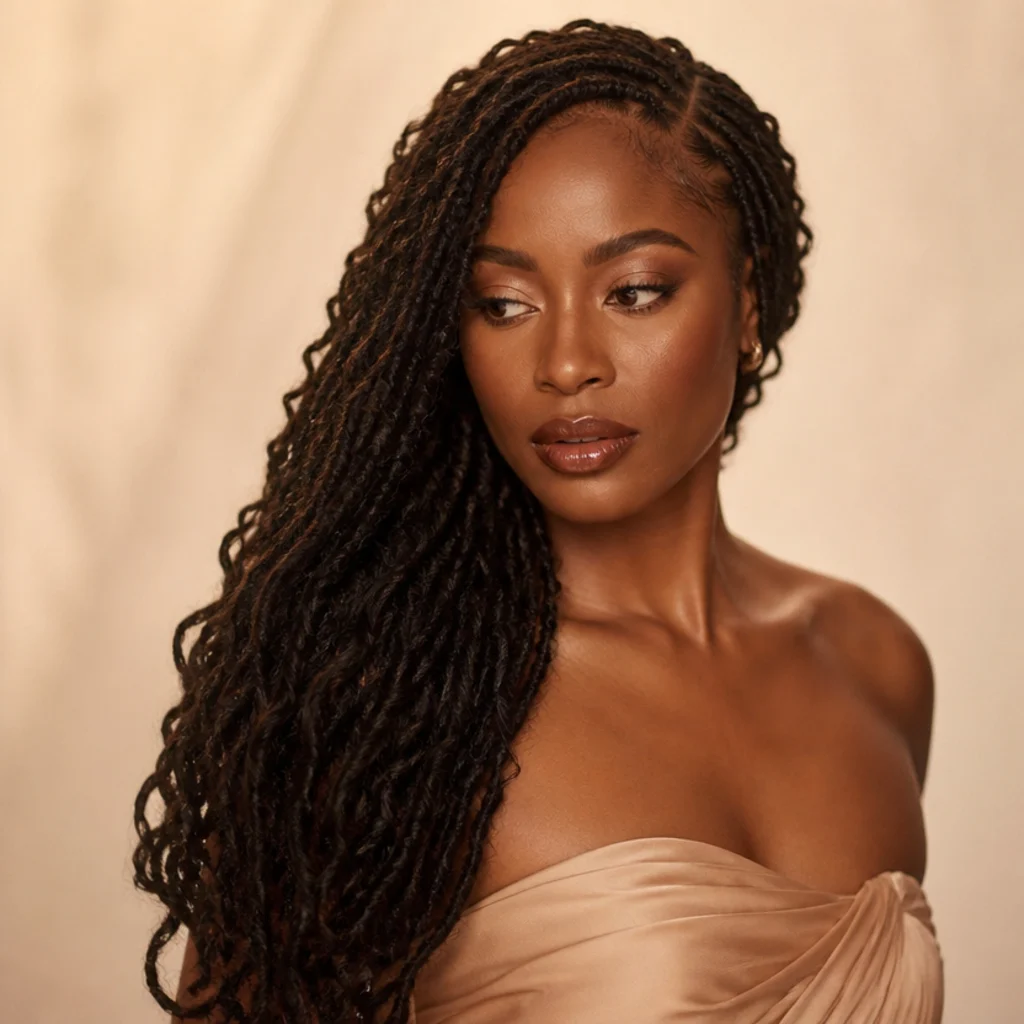
The styling turns red-carpet glamorous with nothing but a deep part. Sweeping all the length over one shoulder creates an asymmetric drape that flatters the neckline, bares one side of the jaw, and adds instant drama with zero color change and no heat. The diagonal line is slimming, which is why it suits square and round faces so well, breaking up width and drawing a long angle across the face. This is one of the quickest evening upgrades possible: a deep side part, a smooth sweep, and one discreet pin. The only care note is creasing, since keeping the length pressed to one side overnight can bend the locs, so reset the part fresh before you style rather than sleeping in it. It reads polished, deliberate, and expensive in photos. Pro tip: to lock the drape without visible pins, cross two locs behind the opposite ear and bobby-pin them to each other rather than to your scalp. To style, part deeply to one side, sweep everything across, and secure a small hidden section behind the far ear. Ask your stylist which part direction best flatters your face before your install so the drape falls naturally.
14Two-Tone Blonde Money Piece {#14}
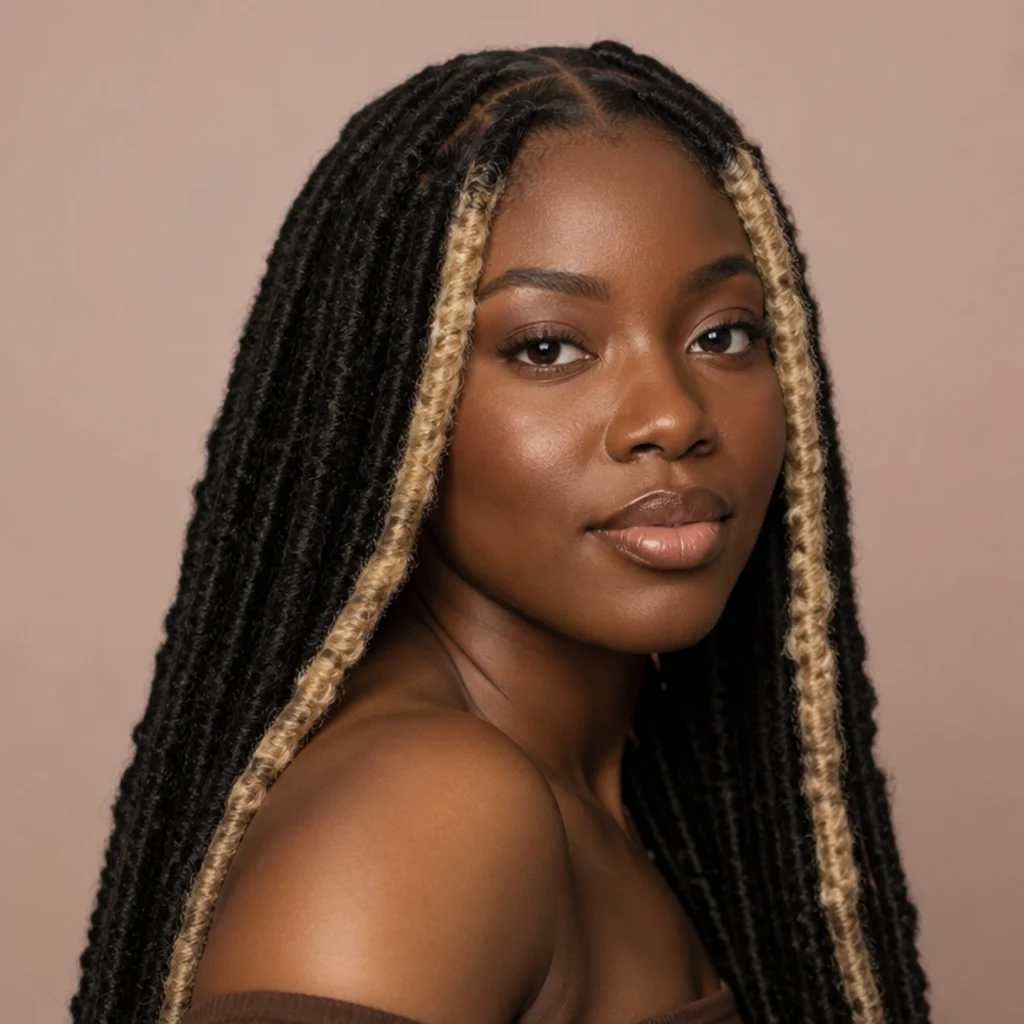
Contrast sharpens into a real color statement. A bright blonde money piece framing the face against a dark base is a bolder move than the earlier honey and copper looks because it relies on high contrast rather than blended dimension, and that contrast pulls attention straight to the eyes and cheekbones. It's a good match for anyone who wants a bright, deliberate spot up front, and it suits warm and neutral undertones best, though the quiet magic of extension color is that you can wear a platinum or buttery blonde you'd never lighten your own hair to reach. Upkeep is unchanged from a natural install because the color sits in the hair, not on your scalp, so there's no toning or root chasing, just the usual six-to-eight-week loc care. The two-tone effect also lets you go dramatic while keeping most of your head grounded and low-key. Pro tip: match the blonde to your part, warmer honey-blonde for warm skin, cooler beige-blonde for neutral to cool, so it flatters rather than fights your complexion. Ask your stylist for a dark base with one to two bright face-framing locs on each side, placed to sit right at your cheekbone.
15Bold Red Butterfly Locs {#15}
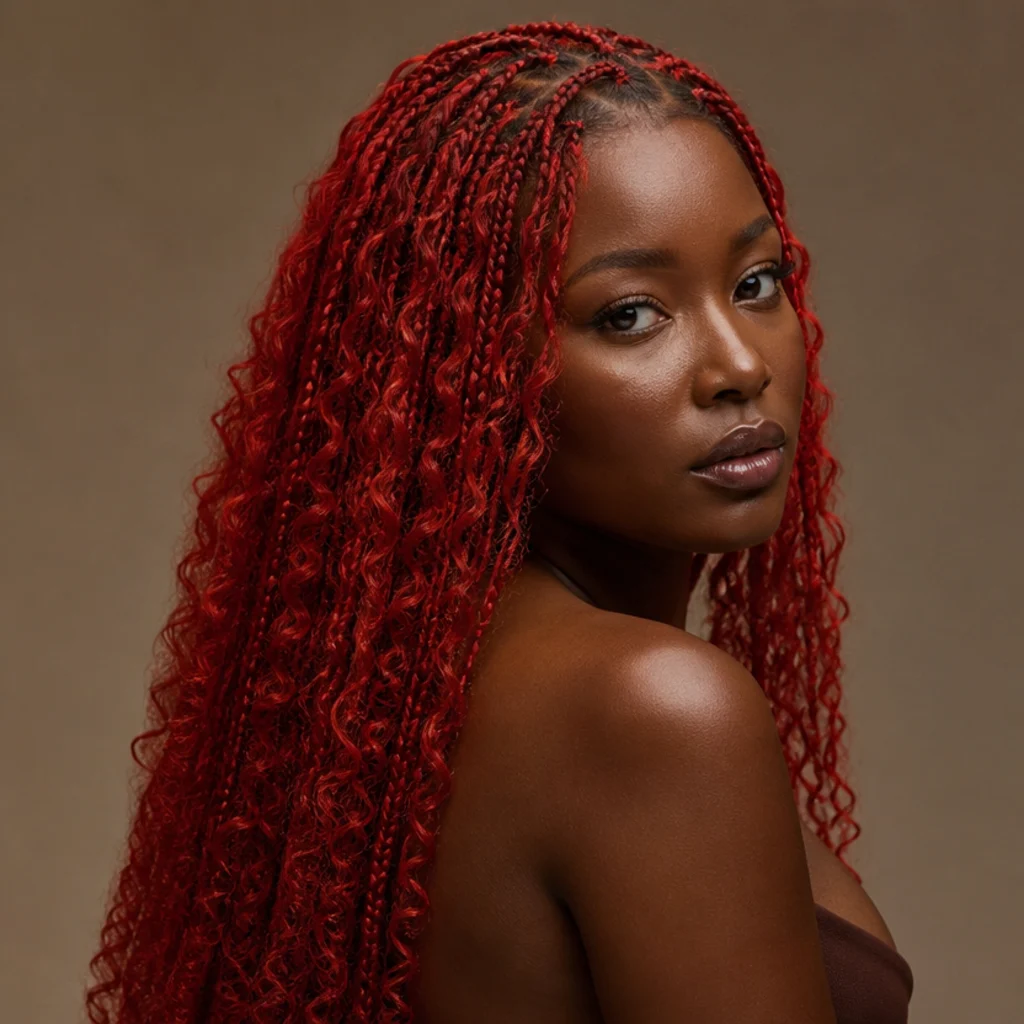
This is the boldest single-color moment in the guide: all-over red butterfly locs. Vivid red reads as confident and magnetic, and it's consistently the most dramatic point in any soft-to-bold progression, which is why it earns its own spot. Red is also far more universal than people expect, because the family runs from cool blue-based cherry to warm rust and copper-red, so a good colorist can match the undertone to your complexion, cooler reds for cool and deep skin, warmer rust for golden and olive tones. Because it's a full statement shade living in extension hair, there's no bleaching and no regrowth upkeep at all, just standard loc care over the usual six to eight weeks. It photographs vividly in any light and pairs beautifully with gold accessories and a warm or berry lip. This is the look to bring a precise reference for, since red is the shade most likely to disappoint if the family is wrong. Pro tip: view your reference in natural daylight, not phone-screen glow, so the red you approve is the red you actually get. Ask your stylist for full red butterfly locs and bring a photo of the exact red family, cherry, ruby, or rust, you want.
Save this to Pinterest if red is calling your name, so you can compare undertones later.
16Deep Plum Evening Look {#16}
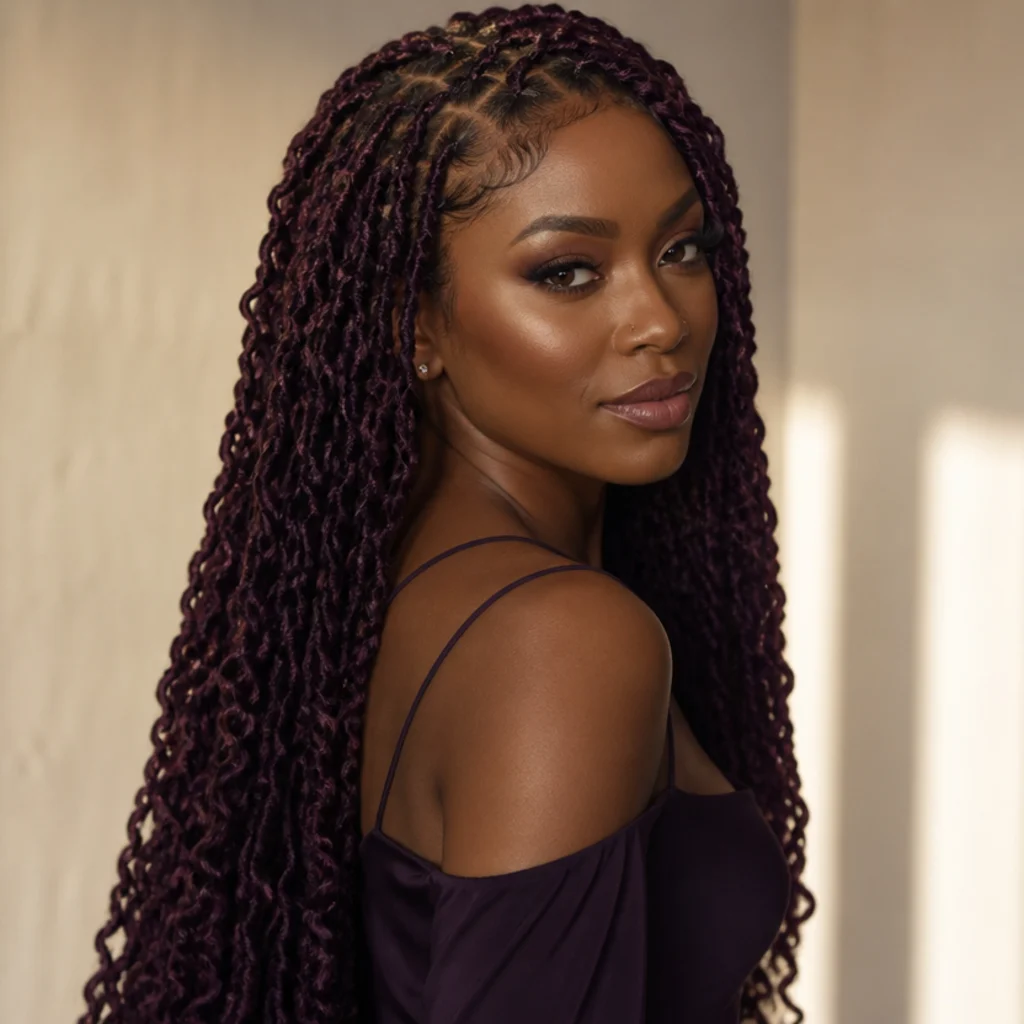
Bold turns moody. A deep plum-violet keeps the saturation and confidence of red but shifts cooler, landing on an evening, slightly mysterious mood that feels more grown-up than a bright fantasy shade. Plum flatters cool and neutral undertones and looks luxurious against deep skin, where the violet reads jewel-toned rather than costume; warmer complexions can lean toward an aubergine with more red in it so it doesn't go ashy. It sits firmly at the bold end of the spectrum yet stays dinner-appropriate, which is a rare and useful combination, statement color you can wear to an event without it stealing the whole outfit. Care is standard because the shade is in the extensions, so expect the same six-to-eight-week window. The color also shifts with light, warming toward berry under lamplight and cooling toward violet in daylight, which gives it range across settings. Pro tip: style it with silver or cool-toned jewelry, which echoes the violet base and makes the whole look intentional. Ask your stylist for a deep plum or aubergine shade kept saturated and even from root to tip.
17Braided Crown With Locs {#17}
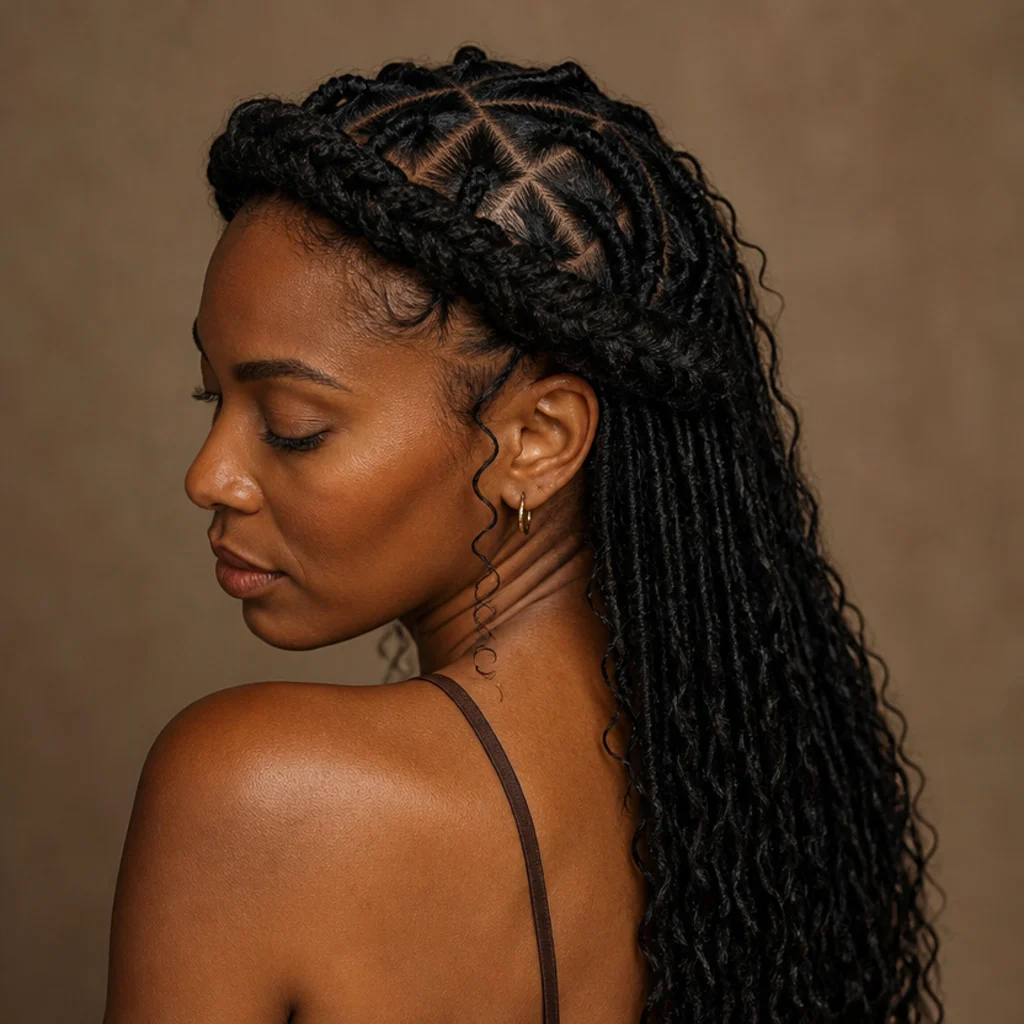
Structure becomes the statement. Braiding the front locs into a crown that wraps the head turns a simple install into an intricate, sculptural style while the rest falls loose behind, and it's the most formal look in the guide. It suits every face shape because the lifted crown opens the forehead and elongates the whole face, and it's the natural choice for weddings, galas, or any event that calls for something deliberate. The honest trade-off is effort: it takes real styling time, benefits enormously from a second pair of hands, and is more of an occasion look than a Tuesday one. Keep the crown snug but never tight, since the tension sits right on your most fragile edges. It photographs polished and hand-finished, the kind of look people assume took a stylist. Pro tip: mist the braided sections with a light hold spray and smooth flyaways with a soft brush so the crown stays crisp through a long evening. To recreate it, braid two front sections along the hairline, wrap them around the crown, and pin securely at the back. Ask your stylist to teach you a low-tension crown wrap you can redo at home.
18Bright Fantasy Pastel Ends {#18}
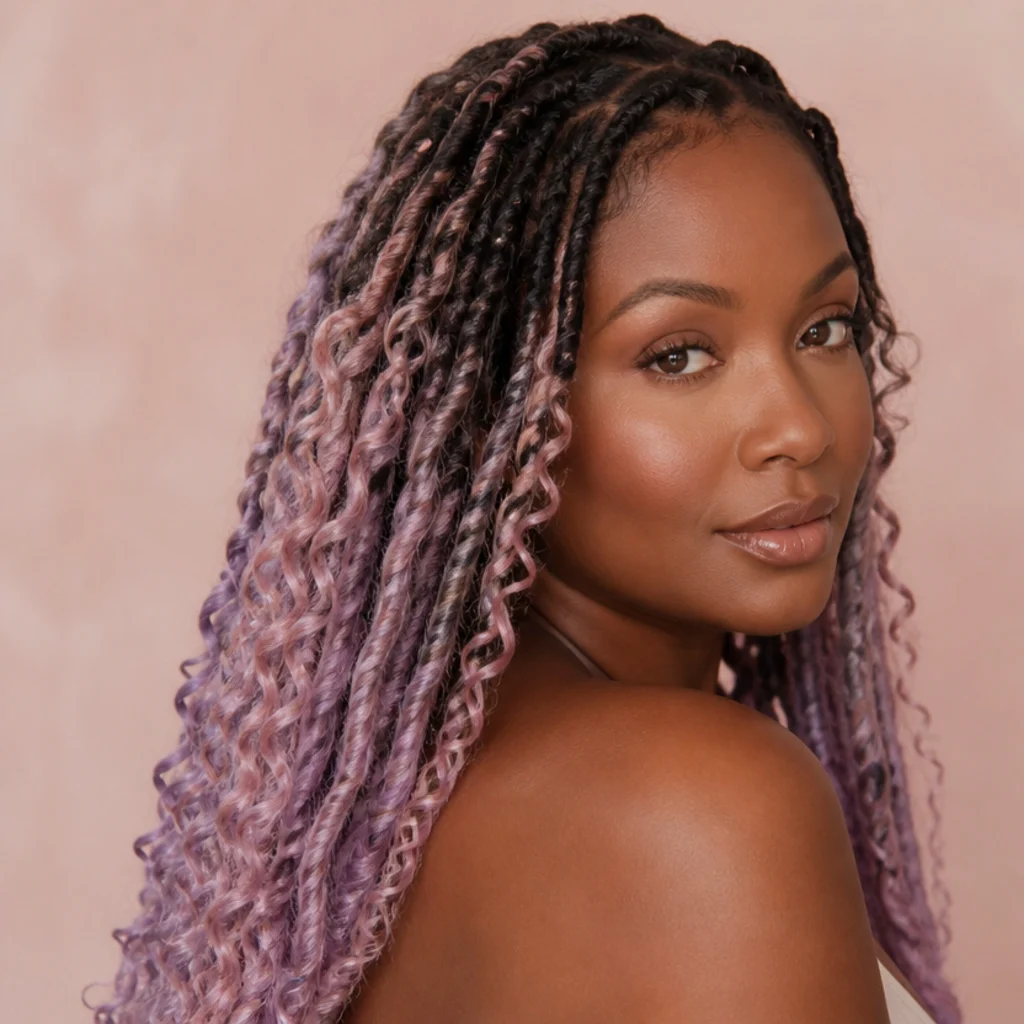
Color goes playful. Dark roots melting into pastel lavender and pink ends push the look into full fantasy territory while keeping a wearable, natural top, which is the trick that makes soft brights feel intentional rather than random. This is butterfly locs with color at its most expressive, made for festivals, shoots, and anyone who loves a dreamy palette, and the dark roots ground the pastels so they flatter a surprisingly wide range of skin tones. The biggest advantage is obvious: you get a full pastel result with none of the double-bleaching your own hair would need to hold lavender, because it all lives in the extension hair. Care matches any install at six to eight weeks, though pale ends show lint and dinginess faster, so a nightly bonnet matters here. Pastels also photograph cool and soft, catching light gently. Pro tip: keep the brightest pastel to the bottom third and let the melt transition through a muted mid-tone so the gradient looks blended, not striped. Ask your stylist for a dark-to-pastel melt with lavender and pink concentrated in the bottom third of the locs.
19Jumbo Bohemian Volume {#19}
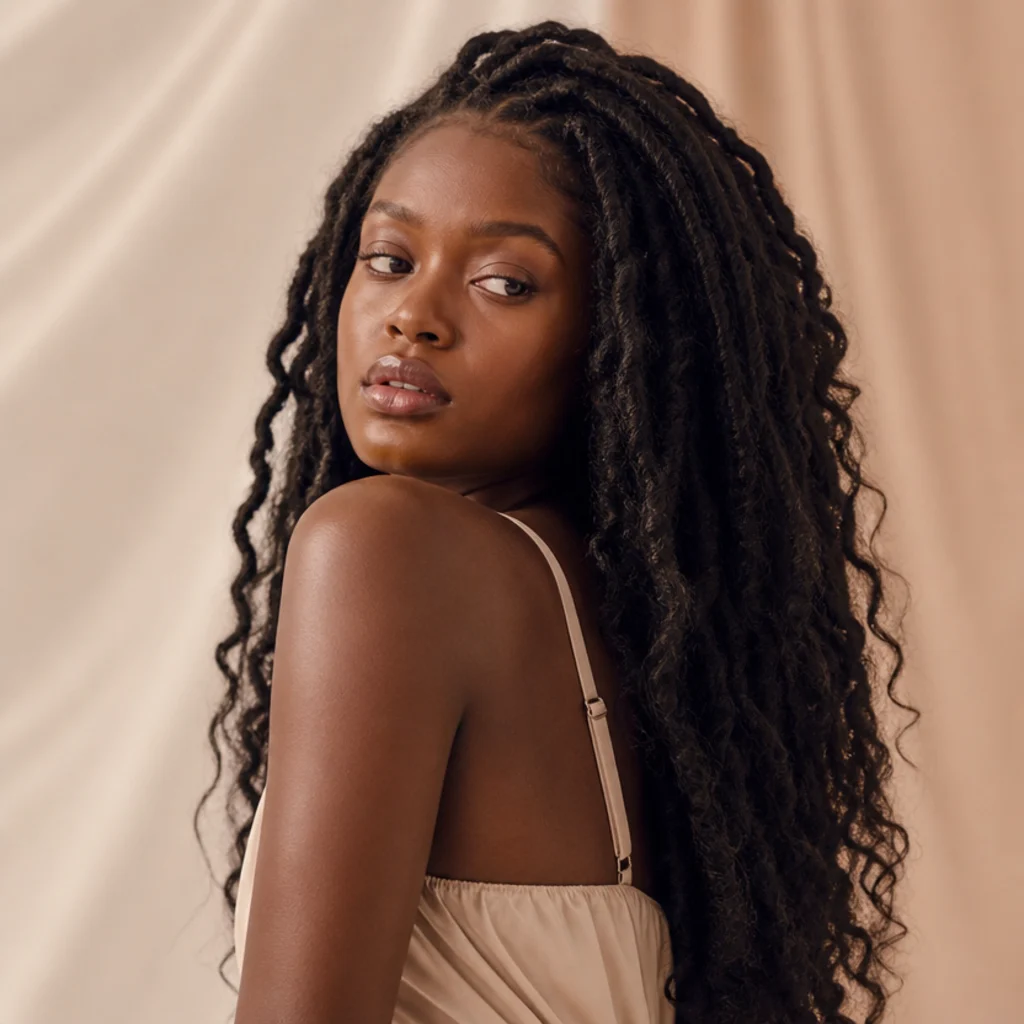
Volume peaks. Jumbo-thickness butterfly locs with heavy distressing create a full, undeniably bohemian mane that's all about presence and scale. The practical upside is real: fewer, thicker locs mean a noticeably faster install and fewer individual pieces to wrap at night, so despite the drama this is one of the lower-maintenance options here in terms of headcount. The trade-off is weight per loc, so a comfortable, well-tensioned install matters, and each jumbo loc is heavier and slightly more awkward to wrap than a fine one. Jumbo locs flatter fuller and rounder faces because the generous volume balances the proportions, and they photograph big, editorial, and effortless. They wear the usual six to eight weeks, with loosening at the root the main sign it's time to refresh. Pro tip: because the locs are large, rope the whole head into two or three loose braids at night rather than wrapping each one, which keeps the texture without the tedium. Ask your stylist for jumbo butterfly locs with heavy distressed texture, and confirm the total density stays comfortable on your scalp before they commit to a count.
20Floor-Grazing Dramatic Finale {#20}
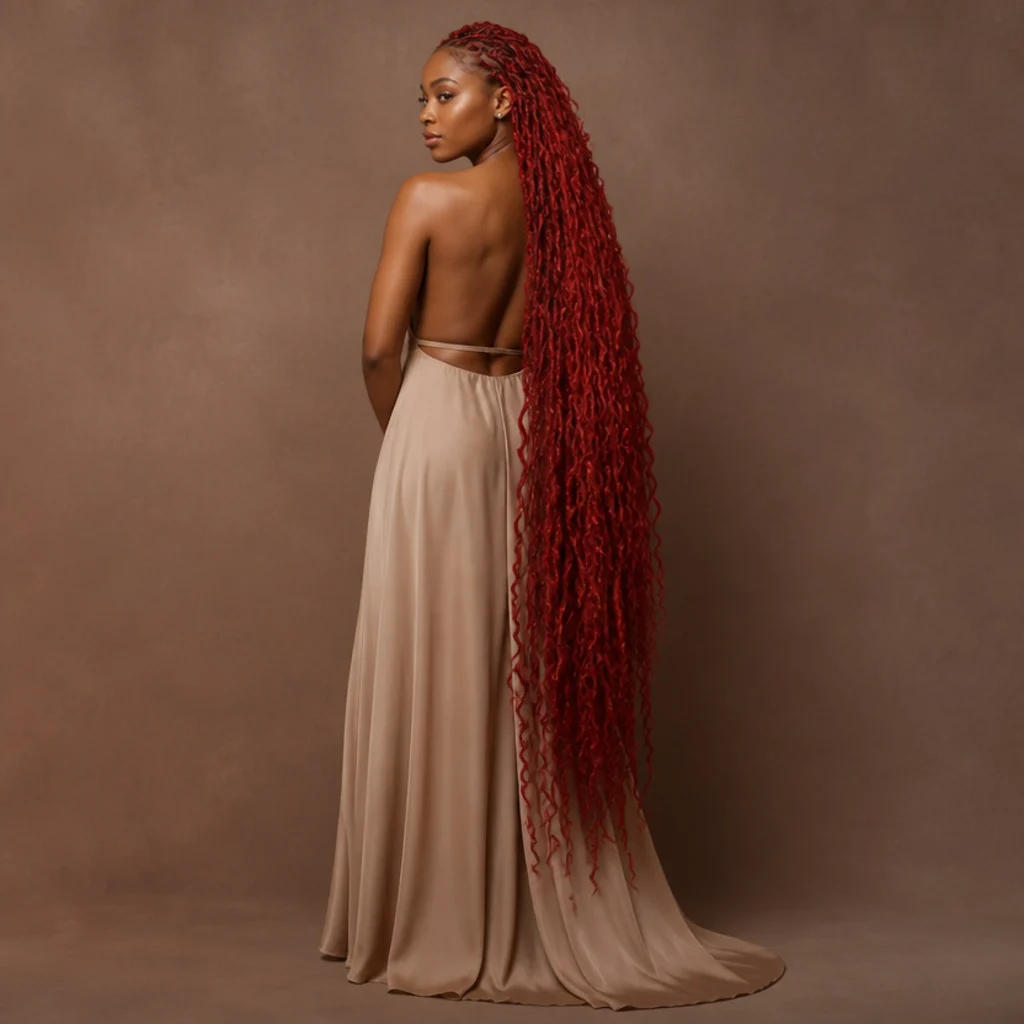
The finale goes all in: extra-long, floor-grazing butterfly locs in a bold shade, combining maximum length with statement color for the loudest possible point on the spectrum and the furthest cry from the soft natural bob at number one. It's unapologetically theatrical, best reserved for photo shoots, performances, stage, or a milestone event rather than everyday errands, because the practicalities are serious. Extreme length means real commitment: substantial weight on the scalp, a long install and an equally long takedown, and careful nightly stretching, braiding, or wrapping to keep the floor-length ends from matting. A skilled stylist will balance density carefully and may recommend medium thickness so the sheer length doesn't become unbearable, and they should check in on scalp comfort throughout. Watch your edges closely, since this is the most tension-prone look in the guide. Pro tip: gather the full length into two loose braids and drape them forward over your shoulders before bed so you're not lying on the ends all night. It's the exclamation point of the whole soft-to-bold journey. Ask your stylist for floor-length butterfly locs and discuss weight, wear time, and comfort honestly before you book.
Pro Tips from the Editor
- Buy pre-stretched, water-wave or bohemian hair for the wraps. The wave pattern is what gives butterfly locs their signature loops; straight or kinky-straight hair wrapped the same way reads as plain faux locs, not butterfly.
- Protect the base install, not just the surface. The looped texture is decorative, but the crochet or wrapped foundation underneath is load-bearing. Keep base sections small and tension even so the weight never concentrates on your edges.
- Dilute everything you spray on the roots. A witch-hazel or diluted-shampoo mist on a cotton round cleans the scalp without soaking the loops, which prevents the mildew smell and slow-drying that comes from drenching a full install.
- Refresh loops with steam, not re-wrapping. A quick pass over a mug of hot water plus finger-separating revives flattened texture around week four, buying you another week or two before a real refresh.
- Match color undertone to skin, not to the reference model. Reds, coppers, and plums each split into warm and cool families; picking the family that suits your complexion matters more than the exact shade name.
- Schedule edge rest between updos. High ponytails and crowns look incredible but pull hardest on the hairline, so alternate them with worn-down days and keep an edge-and-scalp oil in rotation two to three times a week.
- Take them down at six to eight weeks, no stretching it. Loosened roots and new growth make the style look untidy and, more importantly, leaving any protective style in too long stresses your natural hair at the root.
Butterfly Locs at a Glance
| Look factor | Lower effort / weight | Higher effort / weight |
|---|---|---|
| Length | Chin to shoulder (looks 1–5) | Waist to floor (looks 9, 20) |
| Thickness | Jumbo (fewer locs, faster) | Mini/medium (more locs, finer) |
| Color | Natural, dark roots kept | All-over bold, pastel ends |
| Finish | Sealed, lightly distressed | Unsealed curly or heavy fray |
| Typical wear | 6–8 weeks | 6–8 weeks (roots loosen sooner) |
| DIY-friendly | Short refreshes, accessories | Long or multi-tone installs |
Ranges are general guidance for planning your appointment, not fixed rules; your stylist will tailor them to your hair.
How to Choose / Get the Look
Start by deciding where on the soft-to-bold spectrum you actually want to live day to day, not just in the photo that made you save this. Work through four variables in order. First, length, which is the biggest lifestyle factor: short butterfly locs give you the texture and protective benefits with the least weight, the fastest install, and the lowest nightly upkeep, making them the low-risk starting point for a first install, while long, waist, and floor lengths are striking but heavier, slower to install, and demand real nightly stretching, so be honest about the minutes you'll spend wrapping. Second, thickness: jumbo means fewer locs, a quicker install, and a bolder silhouette that suits fuller faces, while mini and medium give a finer, more classic look with more pieces to manage. Third, color, the easiest place to be adventurous, because pre-colored extension hair lets you try butterfly locs with color, red butterfly locs, plum, or pastels, with no bleaching of your own strands; just match the undertone family to your skin. Fourth, finish: sealed lightly-distressed ends stay neat, while unsealed curly or heavily frayed ends read bohemian but tangle more. When you book, bring two or three references, specify length, thickness, color placement, and finish, confirm whether hair is included in the price, and ask directly about tension and total weight to protect your edges and scalp. A short bob or an accessory refresh is manageable at home; a long, jumbo, or multi-tone install is worth a professional. Above all, prioritize comfortable tension over a tighter, longer-lasting result, because no style is worth your hairline.
Frequently Asked Questions
Are short butterfly locs easier to maintain than long ones?
Generally yes. Short butterfly locs weigh less, wrap faster at night, and put far less strain on your edges, which makes them the friendliest first install. The main trade-off is that a blunt short perimeter shows fraying at the ends sooner, so you may want to tidy loose pieces every two to three weeks, whereas a long install hides fraying but asks for more nightly stretching and root care.
How long do butterfly locs usually last?
Most people wear them around six to eight weeks. Beyond that, new growth lifts the roots and the loops loosen, so the style reads untidy and is harder to keep neat. Just as important, leaving any protective style in longer than that window can stress and matte your natural hair at the root, so plan a refresh or full takedown within six to eight weeks rather than pushing it.
Can I get bold colors like red without damaging my hair?
Yes. The color lives in pre-colored extension hair, not on your own strands, so red butterfly locs, burgundy, plum, and pastels all involve zero bleaching of your natural hair. The only real consideration is matching the shade to your complexion; a good stylist or colorist will steer you to the right undertone family, cooler or warmer, so the color flatters rather than fights your skin.
What is the difference between butterfly locs and butterfly faux locs?
The terms overlap heavily, and both describe a temporary, wrapped protective style rather than permanent locs grown from your own hair. Both use a wrapping technique that creates the looped, distressed texture. When people say butterfly faux locs, they're usually just emphasizing the faux, temporary nature of the install; functionally you're choosing the same style and asking your stylist for the same technique.
Do butterfly locs work on all hair textures?
They do. The wrapping method secures around your natural hair regardless of curl pattern, and the distressed loops help disguise the base, so the style suits everyone from fine loose curls to dense coils. Finer or lower-density hair often looks fuller with medium or jumbo thickness, while thick, dense hair can carry any density comfortably. The one prerequisite is enough length to braid or crochet a secure base.
How much do butterfly locs cost?
Cost is variable. A DIY install using purchased water-wave hair and supplies sits at the lower end, while a salon install typically lands mid-range, and waist-length, jumbo, floor-grazing, or multi-tone color pushes toward the higher end because of the hours and hair involved. Always confirm two things when you book: whether the price includes the hair, and roughly how many hours the install will take, since long styles can run all day.
What hair should I ask for to get the butterfly loc texture?
Ask for water-wave or bohemian-textured hair, which is the key to the looped, feathered surface; regular straight bulk hair wrapped the same way produces flat faux locs instead. Most installs use a crochet or individual wrapping method over pre-stretched braiding hair. If you are unsure, tell your stylist you want the airy, distressed butterfly texture specifically and let them select a wave pattern that holds the loops.
How do I keep butterfly locs from getting frizzy?
Frizz control starts at night with a satin scarf or bonnet, which prevents friction from bedding. During the week, a light anti-frizz or setting mist two or three times refreshes the loops, and a quick steam over hot water plus finger-separating revives flattened texture around week four. Avoid over-touching and over-spraying, since product buildup dulls the loops faster than frizz does and can leave the roots slow to dry.
Can I wash butterfly locs while they are installed?
Yes, gently. Focus on cleansing the scalp with a diluted shampoo or witch hazel on a cotton round or applicator bottle rather than lathering the length, which protects the loops and prevents mildew from a soaked install. Rinse carefully, then dry the roots as thoroughly as you can with a microfiber towel and air, because trapped moisture at the base is the main cause of odor and loosening in any wrapped protective style.